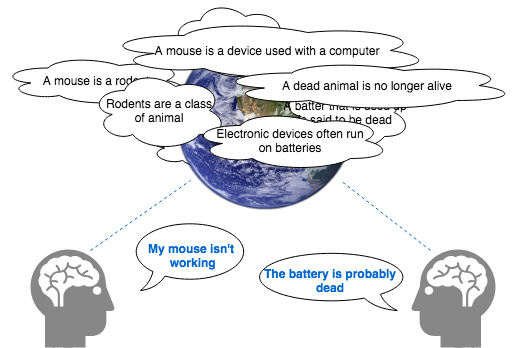
The lede is buried near the end of this post: "In early 2018, Concentric Sky and partners BrightHive and the DXtera Institute proposed such a blockchain ecosystem, called EdRec. EdRec is a learner-centric, open standards approach to learning record storage 'on the blockchain,' with self-sovereignty of learner data as its key design principle." What I've l.earned over the last year is that while it's relatively easy to store information in a blockchain, maintaining it as a network is generates wider social and technical issues. See other winners of the US Department of Education's Reimagining the Higher Education Ecosystem Challenge from last eyar.
It was never a landmark, but the two-storey building on the southwest corner of Cambie and Broadway was well-known merely because of its location. A lot of meals got served in its various restaurant guises, mostly recently Original Joe’s. Now it’s toast.
To be replaced by this:
Like the six-storey office building on the northwest corner, it’s a definite upgrade from its predecessor but will never be considered architecture worthy of its location – in less than a decade, a major exchange point between the Broadway subway and Canada Line. Likely the same will be true for the northeast corner, currently home to a billboard and assorted fast-food joints. Though owned by the City, the site is constrained by the view corridor that ensures the mountains and downtown skyline will remain visible from City Hall. In particular, the Mayor’s office.
The only corner that may eventually get something architecturally significant is the southeast block, where the entry to the Canada Line station will continue to hug the corner.
The City also owns the entire block, and has held the site with the intention of expanding the government campus, perhaps including a new council chamber and offices, as it exhausts the stock of nearby lease-able space. Like the buildings that have held one of the most strategic intersections in the city, this is all tentative, no doubt to be rethought along with the rest of the Broadway corridor as planning proceeds for the SkyTrain extension.
Metaphor for blockchain-centred systems—when a part becomes the whole
Why Blockchains?
The rationale for the initial development of blockchain technologies like Bitcoins, was to solve the problem of double spending while simultaneously:
Getting rid of regulatory bodies — the dream of the proponents of anarcho-capitalism also called libertarian anarchy, one of the ideologies widely shared between the alt-right, Trump and Silicon Valley (c.f. their track-record in tax dodging).
Getting rid of the need for trusted authorities to secure transactions — which resulted in creating an ecosystem that works best when everybody is at war with everybody. Trust is a mortal sin as trust between the miners could lead to collusion and cheating.
“Cryptocurrencies are among the largest unregulated markets in the world. We find that approximately one-quarter of bitcoin users are involved in illegal activity. We estimate that around $76 billion of illegal activity per year involves bitcoin (46% of bitcoin transactions), which is close to the scale of the US and European markets for illegal drugs.” – Foley, Karlsen, Putniņš, Sex, Drugs, and Bitcoin: How Much Illegal Activity Is Financed Through Cryptocurrencies?
This created the conditions for:
Bitcoin becoming the cybercash of choice for criminals and crooks— who are a common species of libertarian anarchists (that is… until they grab power!);
Bitcoin becoming the cybercash of choice for speculators—another species of parasites;
Bitcoin becoming the playground shared by “innovators” oblivious (or not) of the favour they do to money launderers, murderers for hire and the likes.
The blockchain technology might be clever, but it does very stupid things:
Public blockchains based on Proof of Work (PoW) are actively contributing to global warming—Bitcoin operations consume the annual energy of New Zealand, and growing!
Public blockchains are not just ledgers, they are stupid ledgers — they are unable to do what “standard” ledgers have done for millenia: differentiate between the active ledger, where one writes the current year’s transactions, and the archives from previous years that you don’t need1, except for a possible audit. Public blockchains are literally collectors of garbage, a garbage that is actively sucking the energy from the planet.
The discourse on blockchains is dominated by “concepts” that in reality mask a trivial reality or pure fantasies (and nightmares):
“Smart contracts” are nothing more than a hyped name for “[stupid] code”
Public blockchains are not “trustless” but based on distrust (c.f. above)
Decentralised Autonomous Organisation (DAO), the dystopian vision of people interacting with each other according to a protocol specified in code and enforced on the blockchain!
The description of the DAO in the article “What is a DAO” is what one would expect of a dysfunctional organisation lead by paranoia, distrust and a psycho-rigid sociopathic management! Here is how this “revolutionary concept” (LOL) is presented:
“Instead of a hierarchical structure managed by a set of humans interacting in person and controlling property via the legal system, a decentralized organization involves a set of people interacting with each other according to a protocol specified in code and enforced on the blockchain.” [“no employment contracts!” indicates the accompanying graphic, exclamation mark included!!!]
If humans have to act according to what has been enshrined into lines of code, then aren’t we expected to behave like brainless robots? One could add extremely stupid robots like the dumb terminals of the early ages of computers. In fact, humans are not even being reduced to robots: the DAO is the robot, and humans are just its sensors and actuators. The underpinning dystopian vision of DAOs would make Charlie Chaplin’s Modern Times and Fritz Lang‘s Metropolis pass for Utopia!
The underpinning discourse on blockchains is:
Don’t trust people—they are a liability therefore avoid building anything based on their independent judgement, only trust technology and mathematics… which leads to
Don’t trust organisations, transform them into automata dictating to people how to behave through lines of code. Code is law (LOL)!
Bitcoin-based credentials: an unwitting support of criminal activities?
The question of whether Bitcoin and cryptocurrency publicists are acting consciously or not as agents of criminals is a bit like asking whether Trump and his goons are wittingly acting as agents of Russia… At this stage of the Mueller investigation, the only thing one can say is: it might be unwittingly. And when a university uses and promotes Bitcoin-based authentication as a means to make its credentials more secure, it unwittingly contributes to legitimise one of the criminals’ currencies of choice.
How could a university be certain that the Bitcoins they bought to put (the hash of) their credentials on the Bitcoin Blockchain are 100% “clean”? Do they ask for a certificate of provenance attesting that they do not contain any trace of crypto-money once used in a criminal activity? Of course not, as one of the “beauties” of Bitcoins is that they come with their own simple and effective way to launder criminal gains: “tumblers”:
“Tumblers are conceptually quite simple. You send your dirty bitcoins to a tumbler’s address along with a brand new “clean” address of your own, the tumbler mixes in bitcoin from lots of different wallets (some clean, some dirty) into the tumbler’s own wallet, and finally the tumbler has that wallet pay out to the “clean” wallet you provided (after extracting a service fee, of course).” -Tyler Elliot Bettilyon, Cryptocurrency’s Criminal Revolution
If the report outlining that 46% of Bitcoin transactions are the result of criminal activities is only half accurate, it is not unlikely that the Bitcoins bought to store (the hash of) credentials come from dirty sources. Even if the sums involved in the process are infinitesimal, and if the credentials have any value, storing (the hash of) a credential on the Bitcoin blockchain would be a bit like scattering the ashes of a beloved one on a landfill managed by the Camorra—an organisation specialised in “self-governed, distributed landfill operations!”
Storing (the hash of) diplomas on the Bitcoin blockchain is a bit like scattering the ashes of the beloved ones on a landfill managed by the Camorra
Let’s imagine for a second that governments, i.e. the people representing us, decided to declare Bitcoins transactions illegal and offered to those who used Bitcoins for a legitimate purpose (we shouldn’t consider speculation as legitimate) to convert their Bitcoins into official currencies —at a value to be established by national treasuries. Criminals and speculators would have a hard time to recover their assets, and loose a key incentive in using Bitcoins. For them, it is critical that non-criminals are actively involved in the Bitcoin ecosystem: it is a means to provide legitimacy to a channel they use to support their operations and cash in the fruit of their criminal activities.
The point here is not to claim that, when something can be used to facilitate criminal activities, it should be banned, as that would apply, not just to luxury cars, speed boats or real estate, but also knives, public transport, email, cryptography, official currencies and the very air we breath, to name a few. Bitcoins (and a number of other cryptocurrencies) have a unique selling point: a series of features that have a transformative and multiplier effect on criminal operations.
Those who use and promote Bitcoins are nolens volens complicit in the hiding in plain sight of criminals activities. It is a moral responsibility they should not be allowed to escape any longer.
How to resist blockchain mania?
Getting funding and clients is a permanent challenge and jumping on the blockchain bandwagon could sometimes be a prerequisite to be listened to by funding bodies and clients altogether. In the current strands for European funding, knowing that the European Union has decided to establish a “European blockchain infrastructure” in 2019, who will dare not to mention blockchains in their responses to the calls for tenders? And if you are a business and a client asks “when will you have a blockchain solution” what is the response most likely to get her attention: that’s not relevant to your problem or we have a blockchain solution that just matches your needs? How to resist the blockchain mania while providing clients and investors with something that sounds like what they want to hear?
One of the “beauties” of Blockchains you might want to exploit to your advantage is that you can claim almost anything in favour of blockchains with very little chance of being challenged. And if the challenges come from a heathen (someone who doesn’t believe in the Blockspell) it is most unlikely that they will sift through the walls of the blockchain echochamber. Blockchains offer many opportunities to say n’importe quoi to B.S. your way to [temporary] success. What is important is not what you writeor say, but to say or write something that is consistent with the expectations of your clients and funding bodies. Don’t lose sight that most of your interlocutors will be primarily looking for a confirmation of their believes: in blockchain we [dis]trust.
For example, you could practise l’art de la litote.My attention was recently attracted to an article describing blockchains as “distributed trust” which they are not, but makes a nice and closer to the truth acronym: dis-trust… Another article describes blockchains as “minimising trust” which is yet another cute litote. If you are not an expert in l’art de la litote, or find it too subtle for your taste, you could decide to take a “concept” like DAO and imagine some wild scenario in line with the expectations of your audience. In the next post you will discover an article published by Springer presenting smart contracts as a means to “verify the consistency of the teaching design and practice” (LOL). The authors who obviously don’t have even the most elementary clue of what learning and teaching are about, certainly know how to B.S. their way to a prestigious publisher…
Going back to the fundamentals, Blockchains are a special species of distributed databases—and there are many sub-species that have emerged to fit different ecosystems. So, as almost all projects need some form of a database, you can always select an innocuous element of your design using some kind of a blockchain and make it look more or less prominent, according to the degree of gullibility of your audience and the requirements of the tender. Don’t worry if your design looks as ridiculous as the photo of the monowheel on the front-page: as long as there is a reference to blockchains and you use the right keywords—distributed, ledger, immutability (LOL), consensus, etc.—it is likely that it will be received with utmost respect. Once you have the money and delivered a functional product without a blockchain, or used it as a non-essential element, you should be safe—unless your client or sponsor is a blockhead.
Projects using blockchains don’t have to be “blockchain projects”
A project using blockchains is not necessarily a “blockchain project” nor a project to build a vehicle a “tire project” or a “fuel project.” One could of course design a vehicle that is entirely imagined from one of its parts, like the monowheel in the picture on the front-page. And that’s how many blockchain projects are currently designed, transforming Sullivan’s famous axiom “form follows function” into “everything should look like a blockchain.”
It is time for a copernican revolution, moving Blockchains from the centre of all designs to its periphery, as an accessory worth exploiting, or not. If there is a need for a database, the database doesn’t have to be distributed, if there are decisions to be made, they do not have to be left to an inflexible algorithm. On the other hand, if the design requires computer synchronisation, then blockchains might be one of the possible solutions, though not the only one.
The Mattereum project (link to description) led by Vinay Gupta one of the founders of Ethereum, might be an early sign of a new understanding of the place of blockchains. The project is about how to control assets with code so the contracts attached to them become legally binding or at least legally disputable. The ecosystem comprises “custodians” which own an asset as a proxy for some other actor in the system and execute the [smart] contracts / run the code.
Disputes are settled through international arbitrators: “Mattereum provides an international panel of arbitrators who are technically competent to interpret the facts of smart contract and blockchain disputes. […] Arbitrators must be assessed as competent before being accepted onto the Mattereum list.” (link).
Well, so much for the “self-governed, decentralised” blockchain and the “Decentralised Autonomous Organisation!” To make the whole thing work, humans have been reintroduced in the guise of highly paid lawyers—the average cost of an international arbitration is around 2 million Euros2… Which means that the [smart] contracts will have to also be drafted by highly paid lawyers and programmers, who in turn will probably have to pay premium insurances, in case of a bug… If it were a physical chain, it would not be made of ordinary platinum but Californium which costs USD 27 million per gram…
Vinay Gupta writes:
“my contention is that global trade is either going to be completely centralised, or you’re going to have to synchronise computers internationally to conduct global trade, and for that it’s either going to be a blockchain or something equivalent.” (ibid., my highlights)
If the blockchain is freed from the ideological B.S., the Bollockschain, and is presented as a means to synchronise computers, it’s already a significant improvement in the right direction. And of course, blockchains are a great way to synchronise computers, but as Vinay Gupta aptly writes, it could be “something equivalent.” And there are many ways to synchronise computers that work pretty well (think of DNS, which is slow but efficient and resilient3). What Mattereum shows is that a system based on “pure distribution” with no central authority, no external regulation is a fallacy (or a criminals’ delight): in the Mattereum case, there is a central authority which is the international arbitrators, as is Mattereum who will pick and choose the arbitrators, and may be also the lawyers and programmers who will write the [not so smart] contracts.
Trust has been reintroduced. It had to be, as it’s trust that makes business possible. It’s about trust, stupid!
I am offering Bicycle Frame Building Classes again. I have reconfigured the class curriculum from my old classes, in a way that is more conducive to the home builder.
Details are on the new page linked below. Please get in contact with any questions.
You won't be able to access this Wall Street Journal report unless you've paid for a subscription, but this post from Bryan Alexander will do the job just fine. Here's the gist: " American senior citizens are holding a growing amount of student loan debt." There are numbers and statistics showing the student debt held by people in their golden years remains in the billions of dollars. To put the issue in local context here in Ontario, about 40% of students qualified for free-tuition grants to low-income students under a program recently cancelled by the provincial government. Now these students will carry this cost as student debt after they graduate. Many others - especially older and lower income students - will not be able to afford tuition at all.
Web authors often need to know when a particular element on a page becomes visible. The element could be an ad or a video whose viewability we want to compute. Or we might want to defer loading an image until it is visible. A common way to solve this problem is using polling, periodically computing the position of an element with respect to the viewport. However, polling is inefficient, wastes battery life, and doesn’t work for cross-origin content. The IntersectionObserver API offers a better solution to this problem, and is now available in Safari Technology Preview, macOS 10.14.4 beta, and iOS 12.2 beta.
API Overview
Each IntersectionObserver has a set of target elements and observes the intersection of these targets with a particular root element or with the viewport. When the intersection of a target and root crosses a specified threshold, the observer invokes a callback. Here’s a simple example to get started:
var intersectionCount = 0;
function callback(entries) {
    entries.forEach((entry) => {
        if (entry.isIntersecting)
            intersectionCount++;
    });
}
var observer = new IntersectionObserver(callback);
observer.observe(target);
In the example above, we haven’t specified a root element so we’re observing intersections with the viewport. We pass the IntersectionObserver constructor the callback function we want it to use. We’ll get a callback as soon as any portion of the target intersects the viewport, and we’ll get another callback as soon as the target has no intersection with the viewport.
What if we want to know when all or most of an element is visible, not just any portion of it? We can specify an intersection threshold when constructing the observer:
observer = new IntersectionObserver(callback, { threshold: 0.95 } );
Now, we’ll get a callback once 95% of a target intersects the viewport and another callback once the intersection ratio drops below 95%.
Extending this idea, we can provide a list of thresholds that we’re interested in:
Here’s a live demo that uses a list of thresholds. Scroll the target into view, and then slowly scroll it out of view and back into view, and notice observations getting logged as the intersection ratio crosses a threshold.
The same idea works for a target that’s inside an iframe (demo). In this case, there are two ways to scroll the target out of view — scrolling the window so that the iframe is out of view, and scrolling the iframe itself — and both will trigger IntersectionObserver callbacks.
Suppose we want advance notice that an element is about to become visible. The IntersectionObserver constructor lets us specify a margin by which to expand the root when computing intersections.
observer = new IntersectionObserver(callback, { rootMargin: '100px 0px' } );
When computing intersections, the viewport will be expanded by 100 pixels at the top and bottom, and will not be expanded on the left or right.
Using negative root margin values, we can shrink the root when computing intersections. For example, in this demo, we shrink the viewport by 50px on all four sides:
Finally, we can specify a particular element to intersect with rather than the viewport:
observer = new IntersectionObserver(callback, { root: someElement } );
Let’s now take a look at the entries that get passed to the callback each time it is invoked. Suppose we want to to compute how long an element is at least 80% visible:
observer = new IntersectionObserver((entries) => {
    entries.forEach((entry) => {
        if (entry.isIntersecting)
            entry.target.startTime = entry.time;
        else if (entry.target.startTime)
            entry.target.duration = entry.time - entry.target.startTime;
    });
}, { threshold: 0.8 });
Each intersection observer entry is a dictionary containing details about the intersection between a particular target and the root. This includes a timestamp, the intersection rectangle, and an intersection ratio that represents the fraction of the target that’s contained within the intersection rectangle.
More examples
Lazy image load
Suppose we have a long page with many images. Rather than loading all these images at once, including those that are off-screen, we can start with low-resolution placeholder images, and defer loading high-resolution versions until an image starts to intersect (or, using rootMargin, is about to intersect) with the viewport. Here’s a demo illustrating this approach. To make it easier to see the high-resolution images getting loaded, the demo doesn’t use rootMargin, and waits 500ms after an image starts to intersect the viewport before switching to a high-res version.
Triggering an animation when an element becomes visible
To ensure that an animation only starts once the animated content is visible, we can trigger the animation inside an IntersectionObserver callback:
function intersectionCallback(entries) {
    for (let entry of entries) {
        if (entry.isIntersecting) {
            entry.target.style.transform = 'translateX(20px)';
            entry.target.style.transition = 'transform 2s';
        } else {
            entry.target.style.transform = 'none';
            entry.target.style.transition-property = 'none';
        }
    }
}
Every time a target element starts intersecting the viewport, we’ll start an animation to slide it to the left, and we’ll put the element back to its original position once it no longer intersects. This demo has a few examples of animations that get triggered by intersection observations.
Feedback
We’re excited to have IntersectionObserver available in Safari Technology Preview, macOS 10.14.4 beta, and iOS 12.2 beta! Please try it out and file bugs for any issues you run into.
The ‘on this day in earlier years‘ plugin I recently installed on this blog is already proving to be useful in the way I hoped: creating somewhat coincidental feedback loops to my earlier blogposts, self serendipity.
Last week I had lunch with Lilia and Robert, and 15 years ago today another lunch with Lilia prompted a posting on lurking in social networks / blog networks. With seventeen comments, many of them pointing to other blogposts it’s a good example of the type of distributed conversations blogging can create. Or could, 15 years ago. Re-reading that posting now, it is still relevant to me. And a timely reminder. I think it would be worth some time to go through more of my postings about information strategies from back then, and see how they compare to now, and how they would translate to now.
I briefly thought the Lenovo tablet with Show Mode could replace the old Echo Show, but it cannot. It will need several software updates until it reaches the stability and ease of use of the Echo Show. The tablet had a terrible WAF so it had to go back in the box. I will revisit it once Lenovo has attempted to fix it.
Unlike @Facebook, which has no real competition, @Apples app ecosystem is dwarfed by Android and its apps. If you prefer much looser enforcement vs bad actors, more malware, less privacy and a platform maker that itself collects private information by the ton, you have a choice.
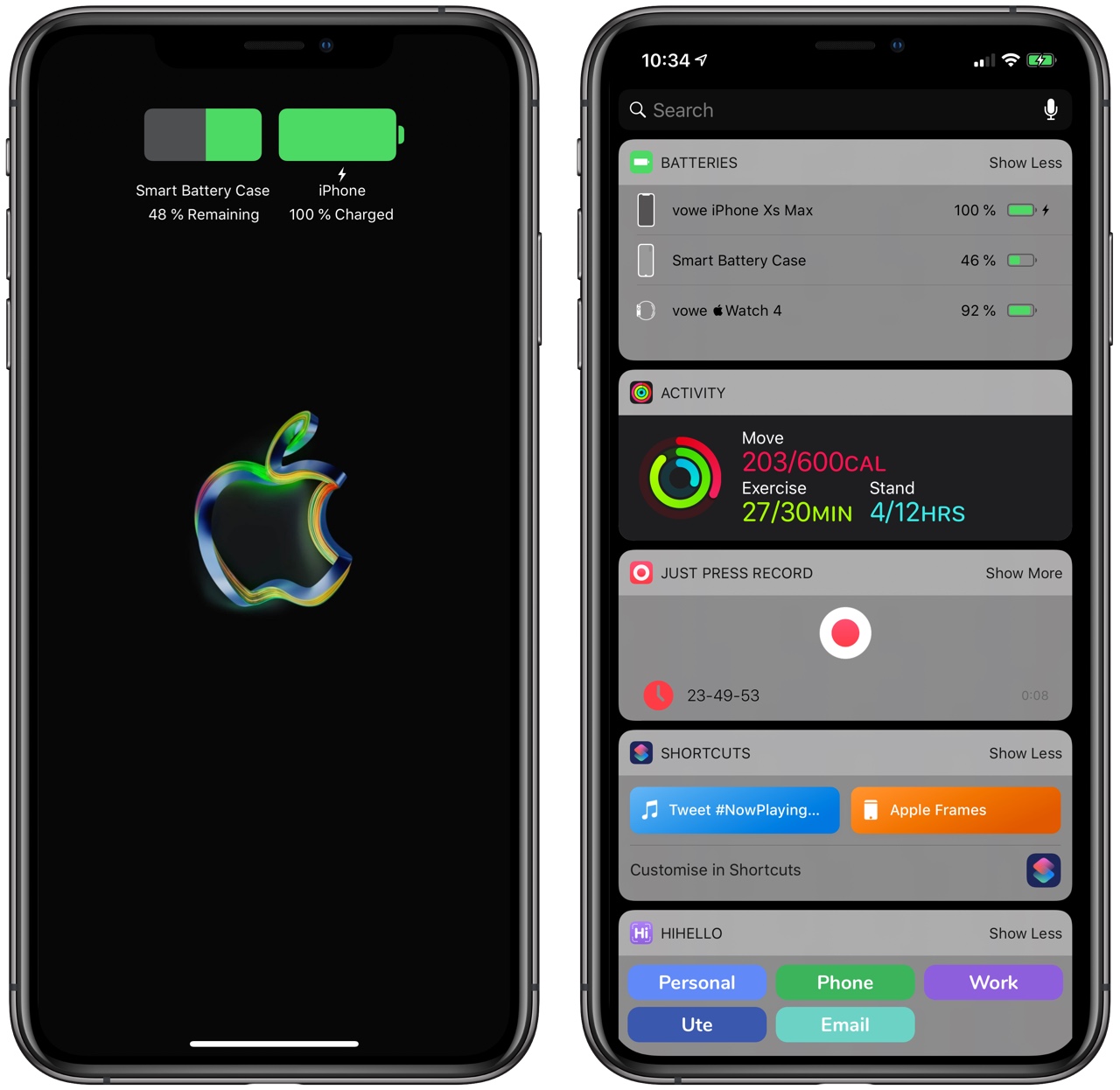
Man muss diese Bilder erst mal auf sich wirken lassen. Das Smart Battery Case für das iPhone XS Max ist ein absolutes Monster. 316 Gramm für beide, nichts für den feinen Anzug – das Sakko sitzt garantiert schief. Auch nicht so richtig was für die Hipster-Jeans, denn das Silikon hat Grip. Aus einer engen Tasche kriegt man das so leicht gar nicht raus.
Und ich find's klasse!
Das Smart Battery Case für das iPhone 7 sah noch so aus, als stecke huckepack ein SE drin. Diesmal stimmt das Design. Und vor allem stimmt die Funktion. Das ist ein typisches Apple-Produkt, durchdacht bis ins Kleinste.
Wo fangen wir an? Natürlich die Stromversorgung. Das Case erweitert die ohnehin sehr ordentliche Kapazität des iPhone XS Max um nochmal 70%. Und es entlädt sich stets zuerst selbst. Das iPhone bleibt bei 100% und nutzt unter normalen Bedingungen seinen Akku gar nicht mehr. Die 70% reichen für einen ganzen Tag.
Stets geht das iPhone vor. Es wird zuerst geladen und zuletzt entladen. Das ist gut, denn so kann man das Case auch mal abnehmen, wenn es leer ist und woanders laden, während man das iPhone weiter benutzt. Auch das ist normalerweise nicht nötig. Denn das Case funktioniert überall, wo vorher auch das iPhone war. Also etwa auf einem Induktionslader.
Oben, wo die Antenne für NFC ist, macht sich das Case schlank, um nicht im Weg zu sein. Und es hält sich durch den Hubbel auch sehr gut. Bei mir greift der Zeigefinger sofort an diese Kante. Man sollte meinen, so ein Monster sei schwieriger zu halten. Das Gegenteil ist der Fall. Auch ein ordentliches Stativ wie das Shoulderpod hat keine Probleme, das Case bombenfest zu greifen.
Man sollte sich übrigens nicht von Reviews ins Bockshorn jagen lassen, die "so wenig mAh" beklagen. Die Kapazität wird nicht in mAh gemessen, sondern in Wh. Volt * Ampere = Watt. Amperestunden kann man nur vergleichen, wenn man von der gleichen Spannung spricht.
Faruk hat es (wie immer) kapiert:
Anders als andere Apple-Geräte wird das Case komplett entladen geliefert. Das hat was mit Logistik zu tun, denn niemand will einen Container voll geladener Akkus transportieren. Ohne eine Restladung funktioniert aber das Induktionsladen nicht. Deshalb muss das ganz neue Case erst mal ans Kabel.
Das Case umgreift das iPhone komplett, anders als die normale Silikonhülle. Man setzt das iPhone deshalb auch anders ein: Erst das Case oben zurückbiegen, dann das iPhone von oben reinschieben, bis es unten in den Lightning-Adapter einrastet, dann oben einsetzen. Alle Knöpfe, Lautsprecher- und Mikrofon-Öffnungen passen perfekt. Apple halt.
Das Vergleichsphoto mit den beiden weißen iPhone-Cases ist übrigens gemein. In das obere passt nur ein X, kein XS Max. Und man kriegt es für alle drei aktuellen iPhones: XR, XS und XS Max. Ich habe mal ein X in das Case gesteckt und das hat ebenfalls funktioniert.
Tim Cook about the aftermath of the Group FaceTime fiasco:
We want to assure our customers that as soon as our engineering team became aware of the details necessary to reproduce the bug, they quickly disabled Group FaceTime and began work on the fix. We are committed to improving the process by which we receive and escalate these reports, in order to get them to the right people as fast as possible.
What happened? A kid found the serious bug, his mother tried to tell Apple and they would not listen. That is not an Apple problem itself. All support people work on the premise that they are trying to fix user error, not a system error.
I have a frustrating bug myself and I have no way of telling Apple about it. And I am really well connected. I have known the Apple PR contact for dozens of years and I consider him a friend. I have met the man who is responsible for the Apple Watch development and I have told him about the bug. I followed up with an email. But my complaint is just too small to register. It won't blow up to the same dimensions as the Group Facetime bug.
What is it about? I want my friends to be able to locate me by showing my location in "Find Friends". That is easy, if you carry your iPhone. But I don't carry my iPhone all the time. I want them to be able to spot me by the location of my Apple Watch.
And this has been broken forever.
The Watch is connected via LTE, I can find it in "Find iPhone" (App and iCloud), but "Find Friend" only ever shows my iPhone location. Yes, it is supposed to work as explained in a support document about the Watch Series 3 LTE. In my frustration I go on Twitter:
So, here we go. @AppleSupport is going to find and fix the user error. I reach out and send them the requested information, explaining all the things I tried to fix it. Resetting Watch and iPhone, pairing multiple watches, etc.
Thank you for the information about your Apple Watch and iPhone today. To transmit your location from your Apple Watch series 4, it would need to be away from your paired iPhone, and have access to cellular data. We'd like to check your cellular settings on your Apple Watch. Do you mind sharing a screenshot of the information found in the My Watch tab of the Watch app > Cellular?
Oh yes, I know that. I can see the location of both the Apple Watch and the iPhone in two different places. And I have told you. Anyway, here is that information you requested.
We appreciate those screenshots. We'd like to gather some additional information to help us facilitate the appropriate next steps. Would you mind providing us with your country or region?
Well, my screenshots already provided that country or region. They contained my effing precise address. Anyway, since it did not register, I send it again. At which point the communication ends.
Game Over. I give up.
You cannot tell Apple that something is broken at their end without raising a shitstorm.
It is such a small error. Apple has both locations. They just report the wrong one. And they can't fix it.
Marques Brownlee zeigt wieder einmal eindrucksvoll, warum er aktuell der beste Youtube-Reviewer ist. Die Sony WH-1000XM3 haben es ihm angetan. Super Klang, beste ANC. Und er sagt auch klar, was schwierig an ihnen ist: Touchbedienung, Case und Bluetooth mit nur einem Gerät. Er kennt die Microsoft Surface Headphones, die mir in der Sammlung noch fehlen. Und bei denen liebt er das, was mich auch interessiert: Die Bedienung mit den mechanischen Rädern. Das hatte ich schon mal bei den ersten Backbeat Pro und fand es super.
Bluetooth kann heute mehr. Die Voyagers verbinden sich alle mit zwei Endgeräten gleichzeitig, also etwa iPhone und Laptop. Die Beats haben wie die AirPods eine tolle Integration in Apples Ökosysten. Das ist einer der Gründe, warum ich aktuell vor allem die Beats benutze. Klang prima, ANC OK, Wechsel zwischen iPhone und iPad super easy.
Ich bin mir bei den Sony einfach nicht sicher. ANC können die Bose auch, und die haben physische Knöpfe, die man greifen kann. Auf Reisen sicherlich besser als Touch.
Wie ich letztens schrieb, rotiere ich zwischen iPad Pro, Yoga C930 und Microsoft Surface. Nicht weil ich muss, sondern weil ich kann. Was vor drei Monaten als Experiment begann, hat funktioniert. Ich kann alles auf dem iPad Pro machen, manches dank Shortcuts sogar viel effektiver als auf dem PC.
Das entscheidende Programm war für mich PDF Expert. Danke an Ole für den Tipp. Das hat mir die Bearbeitung von PDFs ermöglicht und bringt auch gleich das ganze File Management von Documents by Readdle mit. Wenn ich eine Rechnung bekomme, dann Share ich die mit PDF Expert, drucke sie aus und lade sie auf mein NAS. Alles in einem Programm. Die Software hat die unfassbar hohe Bewertung von 4.7/5 bei beinahe 8000 Bewertungen und das ist mehr als verdient.
Und ja, ich sitze tatsächlich mit dem iPad Pro vor einem ausgewachsenen iMac. Weniger Ablenkung, näher an meinen alten Augen. Je älter, desto mehr Brillen. In dieser Entfernung brauche ich gar keine. Gleitsicht hilft im Alltag, stört aber beim Arbeiten.
Das ist das Triumvirat: iPad Pro, iPhone XS, Apple Watch. Perfekt.
Letzte Woche ist ein Fehler der Kategorie "sollte nicht passieren" aufgeflogen. Wenn man ein Group FaceTime initiierte, dann öffnete die Software den Audio-Kanal des Angerufenen, ohne dass der den Anruf angenommen hatte. Taugt nicht wirklich zum Abhören, weil man ja sehen kann, wer angerufen hat, aber darf nicht sein. Apple reagierte umgehend und schaltete Group FaceTime auf dem Server aus. Diese Woche kommt iOS 12.1.4 und das hat diesen Fehler nicht mehr. Dann geht der Server wieder in Betrieb, nimmt aber natürlich nur Clients an, die den Fehler nicht haben.
Ich will mich nicht der Frage widmen, wie das passieren konnte. Interessanter finde ich, was man daraus lernen kann:
Jede Software, die Zugriff auf ein Mikro hat, kann mithören.
Es muss nicht mal ein Mikro sein. Auch ein Lautsprecher wird durch Schallwellen angeregt. Wenn man seine Auslenkungen in Software messen kann, ist das einem Mikro beinahe gleichwertig. Selbes Wirkprinzip: Wandler zwischen Schall und Strom.
Wir haben Aus-Knöpfe an Alexa & Co. Kann man die in Software überlisten?
Es bleibt eine Frage des Vertrauens und des Kopfgeldes. Wer "Snowden" gesehen hat, kann sich sicher daran erinnert, dass er alle Handys in den Zimmersafe schließt. Damit sie gar nicht können.
Ich sehe bei mir kein Kopfgeld, aber ich lösche alle Apps und Skills, die ich nicht wirklich brauche. Android-Handys sind nur eingeschaltet, wenn ich sie brauche. Apple vertraue ich, das Richtige zu tun, aber Hinz & Kunz sicher nicht. Bei Facebook gehe ich sogar davon aus, dass sie garantiert das Falsche tun. Glaubst Du nicht?
When Google bought the advertising network DoubleClick in 2007, Google founder Sergey Brin said that privacy would be the companys number one priority when we contemplate new kinds of advertising products.
And, for nearly a decade, Google did in fact keep DoubleClicks massive database of web-browsing records separate by default from the names and other personally identifiable information Google has collected from Gmail and its other login accounts.
But this summer, Google quietly erased that last privacy line in the sand literally crossing out the lines in its privacy policy that promised to keep the two pots of data separate by default. In its place, Google substituted new language that says browsing habits may be combined with what the company learns from the use Gmail and other tools.
The alternate title for this post was “Why things suck.” I’ve been analyzing corporate behavior for 25 years. I’ve covered Microsoft, Comcast, Facebook, sports leagues, and government. And one simple statement — monopolies prioritize strategy over customers — explains so much. Monopolies are not evil. It’s not that they don’t care. It’s just that once … Continued
sillygwailo
shared this story
from Women in Machine Learning Program – Silverpond.
We are publishing a blog series on the brilliant women we had involved in the Women in Machine Learning program last year.
Whoever you are, and whatever your background we are sure you will find their thoughts on Machine Learning, inclusion and their stories inspirational and inspiring.
Millie McDonald
Millie is currently completing a PhD in Experimental Particle Physics at the University of Melbourne. Part of her research has led to collaborations with scientists at CERN, the European Centre for Nuclear Research. In addition to her research, she is also a demonstrator and examiner.
What gets you excited about Machine Learning, and what makes you want to learn more?
I am excited by the seemingly endless applications of Machine Learning. It has the promise to make life both easier and more fascinating. I find myself asking questions like, “Could I connect this device or that device to a Neural Network to perform this task or save myself that expense?” This is what makes me want to learn more – the potential to innovate and create with ML.
What diversity initiatives would you like to see in the MLAI industry?
I think it’s always a fantastic thing to have those already in an industry learn why diversity initiatives are needed. Otherwise the work of reform tends to fall on those who need it least – the ones already being pushed out of the industry! Workshops designed to educate on unconscious bias and the ways it can manifest are a great start. I’d also love to see increased advocacy for policies that promote an inclusive culture, eg. easier access to maternity/paternity leave for parents, visible acceptance and support of minority groups from leadership, greater flexibility in working hours, and dedicated days/weeks of celebration to promote visibility (e.g., NAIDOC week, Wear It Purple day, Headspace Day, etc).
What was your favourite part of the Women in Machine Learning program, or what did you get most out of?
I really enjoyed learning some of the theory that underpins ML and applying that knowledge to a practical, real-world problem. It was also amazing to share a room with so many passionate, skilled, and creative individuals – it was truly a novel experience to be a woman and in the majority at a tech-oriented event.
What is next for you on your Machine Learning journey?
I have been inundated with ideas for practical applications of ML since completing the Women in Machine Learning program. I already have an app in the works and several options to explore. My ML journey is taking flight.
What advice do you have for anyone from an underrepresented group in entering a career in tech?
My advice would be to persist. As a member of an underrepresented group, the pressure to perform at an above-average level is immense. But there is also great reward. And every bit of representation counts!
Do you or your company what to support the Women in Machine Learning program in 2019? Register your interest here.
fangmeli@pangmeli
'toronto tap water tastes bad' well sure if you don't appreciate lake terroir, complex salt & mineral notes and a peaty finish I guess
The saying “a picture is worth a thousand words” does something of an injustice to the medium of language. It suggests that words are an inefficient form of communication when in fact the opposite is true. When humans use language to communicate, so much is left out because the speaker and listener share experience of the same world, which makes explicit statements about that shared world unnecessary in everyday speech. For example, if I say to you “the vase is on its side, rolling along the table,” I don’t need to also tell you that the vase is made of fragile stuff (it’s a reasonable assumption that it is), or that the table doesn’t have edges that will stop the vase’s rolling, or that as a result the vase will likely roll off the table, or that gravity will make the vase to fall to the floor, which is hard and will therefore cause the fragile vase to shatter. It’s enough for me to say “the vase is on its side, rolling along the table” for you to know the vase will likely smash to pieces unless someone intervenes.
Our shared world is left out of our utterances
What we leave out of our talk is all the knowledge that we can reasonably assume that our listeners also possess. Quite literally, an entire world is left out, and that’s what makes Natural Language Processing (NLP), the field concerned with getting machines to make sense of language, so difficult. While a picture may be worth a thousand words, they are mostly words that nobody would ever bother to utter. Imagine a picture of a dog running for a ball in a park. If you were looking at such a picture and were asked to describe what you saw, would you mention that the grass is green? That’s the kind of information that comes for free in image recognition tasks, but is totally absent from the data used for NLP tasks.
To my mind, these facts make NLP by far the most interesting area in Artificial Intelligence. Currently, machines have no knowledge at all of the world, and as a result no ability to truly understand language. So all the incredible advances in NLP recently, such as the great leaps in Machine Translation capability, have happened in spite of this lack of understanding. This raises two interesting questions:
Will we ever get machines to possess knowledge of the world that would be sufficient for understanding language as well as humans do?
What are the limits of NLP in the absence of understanding?
We can’t know the answer to the first question, although it’s an interesting one to explore. Does imbuing computers with knowledge of the world, i.e., commonsense knowledge, amount to creating so-called Artificial General Intelligence (AGI)? Or are there ways of supplying such knowledge that stop short of AGI but are sufficient to the task of Natural Language Understanding (NLU)? Perhaps knowledge graphs are the key? Or maybe it’s something else entirely. DARPA recently launched the Machine Common Sense program to tackle exactly this problem. It’s also a primary focus of the Allen Institute for AI. While I agree that such research is immensely important for getting a handle on the scope of the problem and how to measure progress towards solving it, I must confess to being skeptical about practical or useful outcomes here. And as someone who works in industry and is looking to solve current business problems using NLP, I can’t help finding the second question much more compelling. We need to be able to recognise the limits of NLP in the absence of true understanding, because that’s the actual state of play on the ground today.
Looking at current NLP applications, Machine Translation (MT) is one that is widely used. Google Translate translates more than 100 billion words per day right now, so it’s clearly providing useful translations. But it’s not going to take over completely from human translators any time soon (in fact, the US bureau of labor statistics predicts much higher than average employment growth for translators and interpreters between now and 2026). Formal translations, where the text in the target language must be of as high quality as the input — as in the case of legal documents, or literature — still require human translators. There are certain types of blunders that are commonly made by MT systems and without NLU these can’t be reliably guarded against. One example is pronouns (“he”, “she”, “it”, “his”, “hers”, “they”, “their”, etc.), which are notoriously difficult for MT. Cognitive Scientist Douglas Hofstadter wrote last year about what he called the “shallowness” of Google Translate, pointing to its inability to “understand” what it’s translating. Many of Hofstadter’s examples involve mistranslations of pronouns. The reason these cases are so difficult for MT is that to translate a pronoun correctly, you have to know what it’s referring to. We humans perform this task so easily using our knowledge of the world that we hardly even notice we’re doing it. But that’s precisely the skill that machines lack.
Gendered pronouns make the problem especially clear. In some languages, there are no gendered pronouns at all; in others, such as French, the gender of a possessive pronoun agrees with the noun, not with the possessor as in English: the correct translation of the French “sa maison” into English could be either “his house” or “her house”, depending on whose house we’re talking about. While some simple heuristics can help in many cases (e.g., assuming that the pronoun refers to the last mentioned noun), decades of AI research have revealed the general inadequacy of rule-based approaches to natural language. Furthermore, gendered pronouns are probably the most obvious place where bias shows itself in MT applications. You may have seen examples of Turkish sentences translated into English where a genderless pronoun becomes gendered according to what the noun is: “he” for a doctor, “she” for a nurse, and so on. Even giving a massive hint as to what the correct gendered pronoun should be, Google Translate today still defaults to biased guesses:
The fact that we’re talking about John’s sister is a big hint that “she” is the correct pronoun here, not “he”, unless we’re so biased that we assume all doctors must be men.
Seen as an AI problem, this pronoun problem is difficult to solve. Progress to date has mostly come in the form of establishing ways to measure progress on it (see e.g., the GLUE benchmark and the Winograd Schema Challenge). But seen as a software application problem, the pronoun problem is actually easy to solve. In this case, the software application in question is a translation app, and the solution is simply to offer the user a choice of translations in the UI: either “he is a doctor” or “she is a doctor”. To the human user, the answer is obvious and simple. So why not let the user decide? As it happens, that’s exactly the change Google announced recently in their post, Reducing gender bias in Google Translate. But from the screenshot above it’s clear that the solution has only been partially implemented. If you just enter a sentence like the Turkish “o bir doktor”, you’ll get the two gender-specific options, but it seems that if you provide any context at all, the system still trusts itself, so to speak, to guess the correct pronoun from the context. But that’s precisely what it can’t be trusted to get right, for the reasons outlined above.
Something interesting to note about this example is that when there’s no context given, multiple answers are correct, and if a system makes a guess and picks one of them it might simply show off its bias, but it won’t be incorrect. But when context is provided, there’s really only one correct answer, and choosing the other answer will not only (in some cases) show off bias, it’ll just be patently wrong. So it seems to me that it’s actually more important for the system not to guess when context is provided, because in that case it risks a bad translation. And yet Google chose only to implement the fix where just one problem is solved, i.e., the problem of perpetuating gender stereotypes. But it left the problem of mistranslations unaddressed.
Certainly with longer pieces of text it becomes less feasible to offer separate translations, but in these cases problematic pronouns could at least be flagged in some way for the user to handle. In the case of an API call, the caller could specify how they should be handled. The important point is that a straight-up engineering solution is what’s required here, not an AI solution (because currently there isn’t one).
Yoshua Bengio, a core figure in the history of Deep Learning (and in particular, Deep Learning for NLP), was recently asked in a survey of NLP experts about the current direction of the field and the biggest unsolved problems. In response, he spoke about the need for “grounded language learning” and “commonsense understanding” and was critical of current purely data-driven approaches that attempt to make progress without these key elements. He even claimed that attempts to train models that really understand language will be futile “if we do not also solve the harder problem of building world models, i.e., models which understand how our world works, with humans and other agents in it. We need instead to bite the bullet and go for the bigger prize of solving AI altogether with NLP.”
While academic researchers may start to aim for this bigger prize, those of us in industry looking to solve business problems with NLP today need to make do with the techniques that we already have at our disposal, limited as they may be. Neural Network based approaches to NLP have proven to be an enormous step forward when it comes to tasks like text classification, sentiment analysis, and of course machine translation. These methods learn useful numeric representations of words and phrases by consuming vast amounts of text data. The architectures involved in training these systems are getting evermoresophisticated, and pre-trained representations and models are being made available for general use. This is all great, but the sophistication of these models and architectures cannot overcome their inherent limitations: the lack of understanding remains and will inevitably produce errors. Designing applications that use these techniques must include designing for the mistakes they’ll make, even if it means providing a UI that is upfront about the application’s lack of intelligence. I’m betting users will value that honesty, not to mention the improved usefulness of the application.
Google revealed the timeline for the impending shutdown of its Google+ social network on Wednesday, and it’s clear that the Mountain View search giant is not wasting any time.
According to a January 30th, 2019 Google+ support page, consumer Google+ accounts will shut down on April 2nd, 2019.
Google+ will remain live for enterprise users through the search giant’s G Suite service.
In preparation for the April 2019 shutdown, Google will prevent users from creating new Google+ profile pages, communities or events on February 4th, 2019.
Google+ for website comments will also be removed from Blogger on February 4th. Other sites will lose Google+ comments by March 7th, 2019.
As of April 2nd, all Google+ comments on all sites will be deleted.
Google says Google+ sign-in buttons will stop working in the coming weeks and may be replaced by Google sign-in buttons in some cases.
Additionally, community owners and moderators downloading their community data will gain additional data for download in March 2019, including author, body and photos for every community post in a public community.
It’s worth noting that the search giant will delete content from consumer Google+ accounts, including photos and videos stored in users’ Album Archive and stored on Google+ pages. However, photos and videos saved in Google Photos won’t be deleted.
Google says the deletion process may take a few months, so users might still be able to access some of their content after April 2nd.
Okay, youngsters, gather ’round while Grandma tells you about the old days.
As we’re seeing bubbling pots of protest in West Vancouver, Surrey and Vancouver over transit, just a reminder of some of the history.
Does anyone recall the massive opposition to the Granville B-Line — it did actually cost the NPA councillors a ton of political capital. They didn’t lose the election, but their wave of support definitely receded. Below is a story from July 1998 about the final vote, which describes the massive opposition along the way.
I won’t attempt to link to all the anti-Canada Line stories (or, as they were then, anti-RAV (Richmond-Airport-Vancouver) stories. But here is one that includes some interesting information on whether the P3 for that project really benefitted taxpayers. Don’t be influenced by the somewhat misleading headline.
Granville rapid bus service okayed despite opposition: City council voted unanimously to support the plan but critics vow to continue battle.: [Final Edition]
In spite of some of the stiffest opposition seen at Vancouver city hall in years, council voted unanimously Tuesday to support a rapid bus along Granville that will add 200 buses a day between Richmond and downtown Vancouver.
“If we are committed to reducing the use of the automobile, I think this is the only thing that we can do,” said Councillor Nancy Chiavario, who introduced the motions in front of about 100 people who heckled, jeered, and carried signs warning councillors of their imminent political demise.
Councillor Gordon Price, who had trouble getting through his speech because of persistent catcalling from the crowd, said Vancouver had no choice.
“If we fail to show respect and concern for our neighbours, how can we expect them to be concerned when our issues are at stake? If we say no to rapid bus, it is quite clear how it will be understood in Richmond. They will join together with others to push through whatever route in Vancouver they think is expedient.”
Staff and councillors argued that more buses on Granville would actually reduce traffic — up to 8,000 cars a day — and that the new bus service would benefit more people in Vancouver than in Richmond, because more Vancouver residents now commute to work in Richmond than the other way around. As well, they argued, the buses will pick up people in Vancouver, unlike the current express buses.
But opponents were unimpressed, calling out that Richmond people are blocking their streets and that other streets should have to share the bus traffic.
“I was disgusted,” said Elsie Sands after the meeting. Sands, who lives a block and a half off Granville in the Marpole area, promised residents would now start getting militant.
“Our group is not giving up. We are going to do what’s necessary to protect our neighbourhood. We’re not going to be bullied by these councillors.
“I don’t think that the first rapid bus that tries to proceed down Granville Street will have an easy time. And if all this means campaigning to make sure these people are never elected again, we’ll do it.”
The plan approved Tuesday has been significantly changed from the original proposed by BC Transit in December 1997, after several hostile public meetings over the past six months. There will be no dedicated bus lane, the number of parking spaces expropriated outside the downtown core has dropped from about 200 to 37. As well, staff specifically included a recommendation in Tuesday’s motions that BC Transit look at redirecting to Cambie some of the express buses from Richmond, Surrey, Delta and White Rock now using Granville.
As well, the motions passed Tuesday reiterate council’s position that any future light-rail transit should not go down Granville.
But residents remain enraged that the rapid bus line is on Granville at all, a street they feel has taken a disproportionate share of traffic in general and bus traffic in particular.
Currently, 1,100 BC Transit buses a day use Granville, along with 52,000 cars, private buses, trucks and taxis. Cambie — an alternative route the residents pushed — only has about 300.
About 800 people attended three public meetings on the issue in the past two weeks, most arguing against the rapid bus on Granville.
They argued diesel buses produce a high percentage of fine particulate matter, the most damaging type of pollution for respiratory problems.
Dr. John Blatherwick, of the Vancouver/Richmond health board, told council that environmental studies confirm that assessment. But he also admitted that one bus producing a higher level of pollutants would be preferable to having the 80 people riding that bus than driving cars.
BC Transit first introduced the idea of a rapid bus service in 1994, in an attempt to improve service for Richmond, which has the lowest bus ridership of any municipality in the region. Its staff says Granville is the preferred route because it has a fast travel time and is already established as the main north-south route.
The rapid bus will mean that, by 2006, up to 75 buses an hour will travel Granville in peak times, carrying 30,000 passengers a day. The new route will be accompanied by new bus shelters that give real-time information on bus arrivals. Richmond’s bus service will also be reorganized to coordinate with the new line.
The cost of new buses, a new maintenance centre in Richmond, and accompanying improvements will be $75 million.
Apple is planning to include a new system-wide ‘Dark Mode’ in the next iteration of its mobile operating system, resulting in “easier nighttime viewing,” according to a report from Bloomberg.
Though various iOS apps already feature built-in dark modes, this feature would bring system-wide support for the functionality. As a result, all of iOS would feature darker colours, resulting in the operating system being easier on the eyes. Apple recently brought an official Dark Mode to macOS Mojave, the company’s desktop operating system.
Further, iOS 13 is also tipped to feature a revamped iPad home screen. It’s unclear precisely what this new home screen will look like, but given this isn’t the first time we’ve heard about the revamp, there is likely at least some truth to the rumours.
Other upcoming iOS 13 features cited in the report include CarPlay improvements and the integration of new services in the operating system, including a new magazine subscription service built from Texture, an app once partially owned by Rogers.
Apple is also expected to finally launch its movie and television streaming service. The company is rumoured to be planning a keynote for this coming March. It’s likely that we’ll have to wait until June’s WWDC before we learn more about iOS 13.
Given iOS 12’s emphasis on stability and performance improvements, it makes sense that Apple would begin to introduce new features to its mobile operating system with iOS 13.
In a sweeping new report detailing Apple’s device plans moving into 2020, Bloomberg‘s Mark Gurman says Apple plans an aggressive push in augmented reality (AR) with next year’s iPhone lineup.
According to Gurman, Apple’s 2020 iPhone lineup will feature an advanced new 3D camera system that will integrate laser projection technology, allowing Apple to significantly build on its existing ARKit framework.
Sources who spoke with Bloomberg on the condition of anonymity said that the new camera system is capable of scanning and interpreting environmental features up to a distance of approximately 4.56 metres. Apple is also expected to redesign its 2020 lineup to accommodate the physical design needs of providing 5G connectivity.
Apple will reportedly introduce the new camera system in the next iteration of the iPad Pro, which the company plans to release sometime in spring 2020. The company has employed a similar strategy in the past, using new iPad models to preview features expected to come to new iPhones.
In addition to the company’s iPhone and iPad models, Apple is working on an augmented reality headset it plans on releasing alongside the two devices in 2020.
As for this year’s iPhone lineup, Gurman reports Apple is set to release three new smartphones in 2019, echoing two Wall Street Journal reports from earlier in the month.
The company plans to release updates to the iPhone XS and iPhone XS Max, codenamed D42 and D43, respectively. Apple is also expected to launch a new iPhone XR-like LCD display model smartphone.
According to Gurman, the 2019 iPhone XS Max will feature three rear-facing cameras, corroborating an earlier report from noted leaker Steve Hemmerstoffer, who shared two disparate renders of the upcoming device. The third camera will enable the new iPhone XS Max model to capture photos with a larger field of view, as well as enable a wider range of zoom.
Apple also plans to enhance its Live Photos functionality to allow users to capture six seconds of pre-shutter press footage instead of three seconds. The new iPhones will reportedly also include a new chipset, as well as improvements to the company’s FaceID authentication feature.
What might be the most interesting aspect of the 2019 iPhone lineup is the rumour that Apple might drop its longstanding Lightning port in favour of USB-C.
This would make the new iPhones compatible with a wide-range of USB-C accessories, including Apple’s own MacBook chargers, as well as Android handset chargers.
Read our the full Corporate Longevity forecast and report
Economic turbulence and technological change in 2018 continued to roil major industry sectors, particularly in media, healthcare, and energy.
In our biennial Corporate Longevity report, Innosight tracks what economist Joseph Schumpter called “creative destruction” by using turnover in the S&P 500 index as a proxy for disruptive change. Our most recent projections, based on 2017 data, forecasts a steady decline in tenure over the next decade.
Checking in on S&P turnover in 2018, a total of 23 companies dropped out of the S&P 500 and were replaced by new ones. That makes four years in a row the number has been above 20 firms (28 in 2015 and 2016 and 26 in 2017).
The 2018 turnover rate is roughly in line with our forecast that the longevity rate of corporations in the S&P will nudge down slowly until 2020. We had forecast the 2018 rolling 7-year average tenure to be 21.4 years–and it came in at 22.3 years.
Among the year’s dropouts were some major acquisition targets such as Aetna, Monsanto, Time Warner, Express Scripts, and Scripps Interactive Networks.
Among the new S&P entrants replacing them were Twitter, WellCare, Abiomed, IPG Photonics, and Keysight Technologies.
Healthcare was one of the most active sectors, with five drop-outs and three additions. The Aetna-CVS merger as well as the Cigna acquisition of ExpressScripts are not just about consolidation but about leaping across prior business boundaries to forge a new customer-centric health experience.
In the energy space, four firms dropped out and four entered the index, as the sector continues to be among the most turbulent, due to the changing mix of fuel sources and the challenges posed by climate change.
In media, just two companies were removed from the index, but they were the result of ground-shifting deals. AT&T’s $100 billion buyout of Time Warner showcased the convergence of distribution and content, while Discovery’s $12 billion buyout of Scripps creates one of the largest content companies for both cable and digital distribution.
We expect transformational change in these and other industries to accelerate. Our longer-term forecast expects the longevity rate to plunge during the next decade—dropping down to a 12-year average lifespan by 2027.
Amazon’s Alexa has been a huge, impressive and unexpected achievement. Amazon created a category from scratch and left both the AI leader Google and the device leader Apple scrambling in its wake. It’s now sold 100m units (including third party devices with Alexa embedded) - not all of these will equate to active users, but if even 50m are in use this is still a significant proportion of Amazon accounts. After the very limited success of the Fire tablet and the failure of the Fire Phone, Amazon has a big success.
So far, though, this success is pretty contingent - we do still have to ask what Amazon actually gains from this. What do consumers do with these devices that helps Amazon? What fundamental strategic benefit does it get? Amazon has put an end-point into tens of millions of homes - what does it do with it?
Answering this question would be much easier for Google, Apple or Facebook’s equivalent devices:
Google and Facebook are fundamentally about reach. Satellite devices that make it easier to touch their services give them more ways to make your use sticky, and more ways to learn about you and give more relevant data.
Some people worry about whether Google or Facebook can put advertising on devices that don’t have conventional ad inventory or even surface area that could support it (especially audio-only devices), but I strongly doubt that the core revenue-generating behaviors (sharing, feed browsing, searches and purchase funnels) will move to audio-only modes at scale any time soon - this is an accessory to drive additional use (and data), not a replacement
And Apple, obviously, sells devices to make money, so aims first to make an actual margin from them and second to use them to link you more closely into their ecosystem - if you buy a HomePod or Apple TV you’re more likely to replace your current iPhone with a new iPhone rather than an Android.
For these three companies, if you buy the thing and use it for the most basic use cases that it comes with out of the box, then the strategic aim is met.
Amazon, on the other hand, sells things. Its TV shows help it sell things by driving Prime, which pulls your purchase of children’s shoes or soap into Amazon. It’s not yet clear what Alexa does for this. Indeed, the bear case for Alexa is that Amazon has succeeded in selling a huge number of glorified clock-radios - today, the survey data suggests that people mostly use these for audio (music and podcasts), the weather and kitchen timers, plus maybe trivia questions and controlling a smart light. If that’s all that people ever do, then as far as Amazon is concerned, Alexa is at best just a form of marketing.
That is, one could say that Alexa has achieved some level of product-market fit for consumers, but not for Amazon.
Hence, we’ve had two statistics recently from Amazon about Alexa: that 100m units have been sold, and that Amazon has 10,000 people working on it. This is vastly more people than one would normally expect to get the device made and the software working, especially given that the Echos themselves are produced by contract manufacturers. Rather, this is about experimentation and iteration: “what can we do with this and how can we expand the use case?”
There are a couple of obvious strands to think about. Alexa’s capability to control ‘smart home’ devices might expand to enable more delivery models (‘open the garage door automatically when an Amazon delivery robot arrives’, or more prosaically just ‘unlock the door for the Fedex delivery’, and send me a video of it happening), or more automated ordering (the washing machine can order more soap for itself, perhaps). Another thing to ponder is the ways that brands can use Alexa to help customers with products. For example, there could be an Alexa skill that talks you through how to use a product when you need ongoing instructions and can’t use your hands. I don’t know what the answer is, and that’s really the point - Amazon is deep in experimentation mode. Indeed, this is an experimentation company, as seen in the Fire Phone and Tablet and indeed in the new crop of retail store pilots.
The same experimentation, I think, also applies to the Skills developer mode, which is another contingent success. Yes, thousands of ‘skills’ have been created, but it’s not clear how many of them get used, let alone drive purchasing. There is a fundamental UX puzzle to solve: the paradox of an audio-only interface is that it looks like a much more flexible and free-form interface than a graphical interface, but in fact it has no way to tell you what it can do. If it has 5,000 ‘skills’, you can’t ask it to recite them, one by one. Solving this discoverability problem is one reason both Amazon and Google are exploring devices with small screens (through that doesn’t help the devices that are already out there).
Taking a step back, though, I think there is a deeper strategic value to Alexa - option value.
One of the fundamental shifts that came with mobile was that the users’ device became a lot less neutral. On the desktop, there were pretty narrow limits to what a web browser could do to control the economic models and interaction models of websites. On a smartphone, the management of everything from system permissions to default apps to notifications and interaction models (not to mention in-app purchase) means that Apple and Android are in much more direct control of what companies using these devices to reach customers can do. Ironically, a major reason why Google bought and built Android in the first place was fear of what Microsoft and Nokia might do with such power. Now Amazon is faced with this. The end point has become much more strategic for web platform companies. So, anything you can do to get an end-point of your own has value for the future, even if no-one today uses it to buy soap powder.



















 Women in Machine Learning Program – Silverpond.