Shared posts

11 Feb 15:56

A way to do CSS for applications

by Tom MacWright

There are lots of ways to style webpages. So many that it’s now a common thing to argue about - whether you should be writing your CSS in JavaScript, or as Sass, or some other hip new framework.

My work, though, is building products, not arguing on the internet, or showing off. My approach to CSS is both boring and, in a certain light, ludicrous. Here it goes:

Never(ish) to write new CSS. The application should grow, but the stylesheet shouldn’t. If you find yourself writing CSS, it’s because you need something very custom and particular to this specific application.

Just use a CSS file, and the most vanilla user-facing setup possible. With a small or medium-sized stylesheet, you don’t have to think about the size of the styles because they’re always a tiny percentage of the total application size. Observable’s full stylesheet is 20kb. We don’t slice and dice it, we just point to it with an old-fashioned link tag.

Fall back to inline style properties for one-off styling. Regular refactoring rules apply here: whenever we write inline styles, we do a second pass to see if they can’t be represented by classes, and then if the same inline style pops up in multiple places, it’s considered for inclusion as a class.

Use native CSS features as much as possible. I’ve never used Sass or Less, and always stuck to what works in browsers. Luckily in 2019 what works in browsers is a frankly incredible set of primitives. CSS Variables, for example, work in all our target browsers, so we ship them directly and then are able to refer to the variables in style properties, to keep everything consistent.

CSS frameworks should provide you with standardized values for things like colors, dimensions, and fonts. They should also provide you with the benefits of classes - pseudo-selectors and media queries. Beyond that, you shouldn’t expect them to make your website responsive or look pretty.


This all brings me to tachyons, the framework of choice. Admittedly I didn’t arrive there directly, but there’s a line of succession from Mapbox’s base.css to assembly, and then basscss, which I used on a number of side projects. They’re all within the same general school of thought: one that emphasizes tiny, composable classes. So, in my case the basic ideas for this were given to me by Young Hahn and some of the designers at Mapbox.

The best way to summarize how these frameworks are different than, say, Primer or Bootstrap is that there’s no button.

See, a lot of frameworks have high-level concepts baked in: you might write

<button class=btn type=button>Button</button>

To show a button on screen. Whereas, to take a live example from Observable, a button looks like:

<button class="ph3 pv2 f6 fw6 white bg-blue
  hover-bg-dark-blue pointer br2 bn"
  type="button">Edit collection</button>

Linebreaks added for readability.

You might recoil in horror. That’s fine - this approach might not be for everyone. Don’t @ me.

But it grows on you, and then you can’t imagine doing it any other way.

Why? Well, for one thing, Observable is an application, and it’s one with some relatively subtle style challenges. A few buttons have to be responsive and lose some padding when the viewport is small. Others have to be links, but look like buttons.

Thanks to the extreme granularity of classes in Tachyons, there’s never a case where I need to write a new class to describe a new variation of a button, or for that matter, almost anything else.

And when we want to change something globally, we can do so with precision: tweaking the color of dark-blue on the site tweaks it everywhere.


There are disadvantages to Tachyons.

You’re only going to be fast using it if you can memorize the class name structure, and, well, there are lots of class names. It’s another thing to learn.

The defaults aren’t going to make your site beautiful. We use a private fork of tachyons-custom that makes some changes, like slightly different colors and tweaked font stacks. This isn’t purely a disadvantage, though, because if Tachyons had distinctive and beautiful defaults, you’d also have to swap them to avoid looking cookie-cutter.


Should you use Tachyons? Or CSS-in-JS? Who am I to tell you. This approach works for me and my coworkers tolerate it. CSS, like all programming seems a little nuts, but it’s not all bad. Arguably, with things like grid, flexbox, and variables, CSS is better than it’s ever been before.

And another obligatory note that every problem area is different. This blog doesn’t use Tachyons (or React, or much of anything). It’s a blog, not an application, and it needs very few styles and the design changes very slowly. If I was building websites that were product brochures or something else, I’d also make different technology choices based on what fit the problem.

But I build applications, and in my experience, this approach works well for them. Just be prepared to remember some classes.

10 Feb 06:21

Twitter Favorites: [davewiner] If it doesn't have a feed it isn't a podcast.

scripting.com @davewiner
If it doesn't have a feed it isn't a podcast.
10 Feb 06:21

Twitter Favorites: [50ShadesofVan] Couldn’t resist sitting in front of the skytrain like a little kid. https://t.co/9IYVpls4XS

Tyler Hamilton @50ShadesofVan
Couldn’t resist sitting in front of the skytrain like a little kid. pic.twitter.com/9IYVpls4XS
10 Feb 06:20

Should This Exist?

by Caterina Fake

It’s live! The preview of my upcoming podcast Should This Exist! Go subscribe and listen to the preview, and if you like it, please leave a rating!

proxy.duckduckgo

Here’s the official blurb about it:

About Caterina Fake

Caterina Fake is Silicon Valley’s most eloquent commentator and dot-connector on technology and the human condition. As a humanist with a deep passion for history, literature, arts and culture, she has a unique perspective on the myriad unforeseen ways technology can impact our world. And as a celebrated tech pioneer herself, Caterina brings a deep knowledge of technology and an optimistic enthusiasm for entrepreneurs. In the early 2000s, Caterina co-founded Flickr and introduced many of the innovations — newsfeeds, hashtags, “followers,” “likes” — that laid the foundation for modern social media. (Though she’s quick to point out where social media has gone wrong). As an angel investor, advisor and board member, she helped build companies like Etsy, Kickstarter and Stack Overflow — which defined and nurtured new types of human-centered online communities. She’s now co-founder of Yes VC, an investment fund focused on early stage startups. For Caterina, hosting Should This Exist? reflects her career-long dedication to help technology fulfill its promise.

About ‘Should This Exist?’

Premiering on Thursday, February 21, Should this Exist? leads a new conversation to answer the question of our times: How is technology impacting our humanity? On each episode, an entrepreneur or scientist with a radical new technology will join Caterina on a journey to peer around corners, and glimpse their technology’s wildest potential to change human lives for the better — and the hidden forces that might send their vision sideways. A sneak preview of the first season is now available on the Should this Exist? page on Apple Podcasts.

The show’s first season will include the visionaries behind a headset that hacks your brain with electric fields so you can learn like a kid again; a fully automated chatbot that offers one-on-one therapy; a next-generation supersonic plane; a device that can read the expression on your face and know how you’re feeling; software that will translate between human and animal languages; and a scientific approach that allows humans to modify entire species of animals in the wild —among other unprecedented firsts.

Should this Exist? models a new kind of conversation between the entrepreneur or inventor and the world. Drawing on a wide range of fields — history, psychology, philosophy, the arts — Caterina leads the inventor through a conversation that sets aside the business model and examines the human case more closely. 

10 Feb 06:15

Twitter Favorites: [PearlChen] Business idea: Like pull request reviews but for email. At least 2 people need to approve an email before it can go… https://t.co/EaWPHoKiQ4

Pearl Chen @PearlChen
Business idea: Like pull request reviews but for email. At least 2 people need to approve an email before it can go… twitter.com/i/web/status/1…
10 Feb 06:15

Snowed in Seattle

by Rui Carmo
A week in sub-zero temperatures, along with 5.000 other Microsoft folk...

10 Feb 06:15

On Selling Access to Your Data and Ownership of Data

by Ton Zijlstra

To me there seems to be something fundamentally wrong with plans I come across where companies would pay people for access to their personal data. This is not a well articulated thing, it just feels like the entire framing of the issue is off, so the next paragraphs are a first attempt to jot down a few notions.

To me it looks very much like a projection by companies on people of what companies themselves would do: treating data as an asset you own outright and then charging for access. So that those companies can keep doing what they were doing with data about you. It doesn’t strike me as taking the person behind that data as the starting point, nor their interests. The starting point of any line of reasoning needs to be the person the data is about, not the entity intending to use the data.

Those plans make data release, or consent for using it, fully transactional. There are several things intuitively wrong with this.

One thing it does is put everything in the context of single transactions between individuals like you and me, and the company wanting to use data about you. That seems to be an active attempt to distract from the notion that there’s power in numbers. Reducing it to me dealing with a company, and you dealing with them separately makes it less likely groups of people will act in concert. It also distracts from the huge power difference between me selling some data attributes to some corp on one side, and that corp amassing those attributes over wide swaths of the population on the other.

Another thing is it implies that the value is in the data you likely think of as yours, your date of birth, residence, some conscious preferences, type of car you drive, health care issues, finances etc. But a lot of value is in data you actually don’t have about you but create all the time: your behaviour over time, clicks on a site, reading speed and pauses in an e-book, minutes watched in a movie, engagement with online videos, the cell towers your phone pinged, the logs about your driving style of your car’s computer, likes etc. It’s not that the data you’ll think of as your own is without value, but that it feels like the magician wants you to focus on the flower in his left hand, so you don’t notice what he does with his right hand.
On top of that it also means that whatever they offer to pay you will be too cheap: your data is never worth much in itself, only in aggregate. Offering to pay on individual transaction basis is an escape for companies, not an emancipation of citizens.

One more element is the suggestion that once such a transaction has taken place everything is ok, all rights have been transferred (even if limited to a specific context and use case) and that all obligations have been met. It strikes me as extremely reductionist. When it comes to copyright authors can transfer some rights, but usually not their moral rights to their work. I feel something similar is at play here. Moral rights attached to data that describes a person, which can’t be transferred when data is transacted. Is it ok to manipulate you into a specific bubble and influence how you vote, if they paid you first for the type of stuff they needed to be able to do that to you? The EU GDPR I think takes that approach too, taking moral rights into account. It’s not about ownership of data per se, but the rights I have if your data describes me, regardless of whether it was collected with consent.

The whole ownership notion is difficult to me in itself. As stated above, a lot of data about me is not necessarily data I am aware of creating or ‘having’, and likely don’t see a need for to collect about myself. Unless paying me is meant as incentive to start collecting stuff about me for the sole purpose of selling it to a company, who then doesn’t need my consent nor make the effort to collect it about me themselves. There are other instances where me being the only one able to determine to share some data or withhold it mean risks or negative impact for others. It’s why cadastral records and company beneficial ownership records are public. So you can verify that the house or company I’m trying to sell you is mine to sell, who else has a stake or claim on the same asset, and to what amount. Similar cases might be made for new and closely guarded data, such as DNA profiles. Is it your sole individual right to keep those data closed, or has society a reasonable claim to it, for instance in the search for the cure for cancer? All that to say, that seeing data as a mere commodity is a very limited take, and that ownership of data isn’t a clear cut thing. Because of its content, as well as its provenance. And because it is digital data, meaning it has non-rivalrous and non-excludable characteristics, making it akin to a public good. There is definitely a communal and network side to holding, sharing and processing data, currently conveniently ignored in discussions about data ownership.

In short talking about paying for personal data and data lockers under my control seem to be a framing that presents data issues as straightforward but doesn’t solve any of data’s ethical aspects, just pretends that it’s taken care of. So that things may continue as usual. And that’s even before looking into the potential unintended consequences of payments.

10 Feb 06:14

On renting cars

by Doc Searls

I came up with that law in the last millennium and it applied until Chevy discontinued the Cavalier in 2005. Now it should say, “You’re going to get whatever they’ve got.”

The difference is that every car rental agency in days of yore tended to get their cars from a single car maker, and now they don’t. Back then, if an agency’s relationship was with General Motors, which most of them seemed to be, the lot would have more of GM’s worst car than of any other kind of car. Now the car you rent truly is whatever. In the last year we’ve rented at least one Kia, Hyundai, Chevy, Nissan, Volkswagen, Ford and Toyota, and that’s just off the top of my head. (By far the best was a Chevy Impala. I actually loved it. So, naturally, it’s being discontinued.)

All of that, of course, applies only in the U.S. I know less about car rental verities in Europe, since I haven’t rented a car there since (let’s see…) 2011.

Anyway, when I looked up doc searls chevy cavalier to find whatever I’d written about my felicitous Fourth Law, the results included this, from my blog in 2004…

Five years later, the train pulls into Madison Avenue

ADJUSTING TO THE REALITY OF A CONSUMER-CONTROLLED MARKET, by Scott Donathon in Advertising Age. An excerpt:

Larry Light, global chief marketing officer at McDonald’s, once again publicly declared the death of the broadcast-centric ad model: “Mass marketing today is a mass mistake.” McDonald’s used to spend two-thirds of its ad budget on network prime time; that figure is now down to less than one-third.

General Motors’ Roger Adams, noting the automaker’s experimentation with less-intrusive forms of marketing, said, “The consumer wants to be in control, and we want to put them in control.” Echoed Saatchi & Saatchi chief Kevin Roberts, “The consumer now has absolute power.”

“It is not your goddamn brand,” he told marketers.

This consumer empowerment is at the heart of everything. End users are now in control of how, whether and where they consume information and entertainment. Whatever they don’t want to interact with is gone. That upends the intrusive model the advertising business has been sustained by for decades.

This is still fucked, of course. Advertising is one thing. Customer relationships are another.

“Consumer empowerment” is an oxymoron. Try telling McDonalds you want a hamburger that doesn’t taste like a horse hoof. Or try telling General Motors that nobody other than rental car agencies wants to buy a Chevy Cavalier or a Chevy Classic; or that it’s time, after 60 years of making crap fixtures and upholstery, to put an extra ten bucks (or whatever it costs) into trunk rugs that don’t seem like the company works to make them look and feel like shit. Feel that “absolute power?” Or like you’re yelling at the pyramids?

Real demand-side empowerment will come when it’s possible for any customer to have a meaningful — and truly valued — conversation with people in actual power on the supply side. And those conversations turn into relationships. And those relationships guide the company.

I’ll believe it when I see it.

Meanwhile the decline of old-fashioned brand advertising on network TV (which now amounts to a smaller percentage of all TV in any case) sounds more to me like budget rationalization than meaningful change where it counts.

Thanks to Terry for the pointer.

Three things about that.

First, my original blog (which ran from 1999 to 2007) is still up, thanks to Jake Savin and Dave Winer, at http://weblog.searls.com. (Adjust your pointers. It’ll help Google and Bing forget the old address.)

Second, I’ve been told by rental car people that the big American car makers actually got tired of hurting their brands by making shitty cars and scraping them off on rental agencies. So now the agencies mostly populate their lots surplus cars that don’t make it to dealers for various reasons. They also let their cars pile up 50k miles or more before selling them off. Also, the quality of cars in general is much higher than it used to be, and the experience of operating them is much more uniform—meaning blah in nearly identical ways.

Third, I’ve changed my mind on brand advertising since I wrote that. Two reasons. One is that brand advertising sponsors the media it runs on, which is a valuable thing. The other is that brand advertising really does make a brand familiar, which is transcendently valuable to the brand itself. There is no way personalized and/or behavioral advertising can do the same. Perhaps as much as $2trillion has been spent on tracking-based digital advertising, and not one brand known to the world has been made by it.

And one more thing: since we don’t commute, and we don’t need a car most of the time, we now favor renting cars over owning them. Much simpler and much cheaper. And the cars we rent tend to be nicer than the used cars we’ve owned and mostly driven into the ground. You never know what you’re going to get, but generally they’re not bad, and not our problem if something goes wrong with one, which almost never happens.


10 Feb 06:13

Quick Hit: Speeding Up a Slow/Mundane Task with a Little Rcpp

by hrbrmstr

Over at $DAYJOB’s blog I’ve queued up a post that shows how to use our new ropendata? package to work with our Open Data portal’s API. I’m not super-sure when it’s going to be posted so keep an RSS reader fixed on https://blog.rapid7.com/ if you’re interested in seeing it (I may make a small note of it here so it can wind its way into R Weekly & R-bloggers).

The example data used in the post is the public version of what I talked about in a recent post here, namely the devices discovered exposing the Ubiquity Discovery Protocol.

I’m quite blessed at work since we have virtually all of our icky payload data pre-processed and in parquet map columns in Athena so I don’t really have to do much data wrangling once we’ve fully baked a new study.

The format of the public data for the Ubiquiti discovery protocol scan results is a bit different than the base64 encoded data in the previous post in that the payload response is a hex-encoded character string; e.g.

0100009302000a002722bccf9db126fa9a02000a002722bdcf9dc0a80101010006002722bccf9d0a000400006ae40b000c626a732e6572656e696c646f0c00064147352d48500d00104d6f72726f5f446f757261646f5f30330e000102030022584d2e6172373234302e76352e362e332e32383539312e3135313133302e31373439100002e24514000d41697247726964204d35204850

So, every two characters is a byte (e.g. "01" is 0x01).

R has a nice strtoi() function for converting a hex-encoded byte into a raw value but it only works for one byte. We can split a string (like the one above) into a character vector of length 2 hex strings in many ways, one of which is using helper functions from the stringi package:

library(stringi)
library(magrittr) # for %>%

x <- "0100009302000a002722bccf9db126fa9a02000a002722bdcf9dc0a80101010006002722bccf9d0a000400006ae40b000c626a732e6572656e696c646f0c00064147352d48500d00104d6f72726f5f446f757261646f5f30330e000102030022584d2e6172373234302e76352e362e332e32383539312e3135313133302e31373439100002e24514000d41697247726964204d35204850"

stri_sub(x, seq(1, stri_length(x), by = 2), length = 2)
##   [1] "01" "00" "00" "93" "02" "00" "0a" "00" "27" "22" "bc" "cf" "9d" "b1" "26" "fa" "9a"
##  [18] "02" "00" "0a" "00" "27" "22" "bd" "cf" "9d" "c0" "a8" "01" "01" "01" "00" "06" "00"
##  [35] "27" "22" "bc" "cf" "9d" "0a" "00" "04" "00" "00" "6a" "e4" "0b" "00" "0c" "62" "6a"
##  [52] "73" "2e" "65" "72" "65" "6e" "69" "6c" "64" "6f" "0c" "00" "06" "41" "47" "35" "2d"
##  [69] "48" "50" "0d" "00" "10" "4d" "6f" "72" "72" "6f" "5f" "44" "6f" "75" "72" "61" "64"
##  [86] "6f" "5f" "30" "33" "0e" "00" "01" "02" "03" "00" "22" "58" "4d" "2e" "61" "72" "37"
## [103] "32" "34" "30" "2e" "76" "35" "2e" "36" "2e" "33" "2e" "32" "38" "35" "39" "31" "2e"
## [120] "31" "35" "31" "31" "33" "30" "2e" "31" "37" "34" "39" "10" "00" "02" "e2" "45" "14"
## [137] "00" "0d" "41" "69" "72" "47" "72" "69" "64" "20" "4d" "35" "20" "48" "50"

We still need to run that through strtoi() and turn it into a raw vector (at least for this use-case):

stri_sub(x, seq(1, stri_length(x), by = 2), length = 2) %>%
  strtoi(base = 16) %>%
  as.raw()
##   [1] 01 00 00 93 02 00 0a 00 27 22 bc cf 9d b1 26 fa 9a 02 00 0a 00 27 22 bd cf 9d c0 a8 01
##  [30] 01 01 00 06 00 27 22 bc cf 9d 0a 00 04 00 00 6a e4 0b 00 0c 62 6a 73 2e 65 72 65 6e 69
##  [59] 6c 64 6f 0c 00 06 41 47 35 2d 48 50 0d 00 10 4d 6f 72 72 6f 5f 44 6f 75 72 61 64 6f 5f
##  [88] 30 33 0e 00 01 02 03 00 22 58 4d 2e 61 72 37 32 34 30 2e 76 35 2e 36 2e 33 2e 32 38 35
## [117] 39 31 2e 31 35 31 31 33 30 2e 31 37 34 39 10 00 02 e2 45 14 00 0d 41 69 72 47 72 69 64
## [146] 20 4d 35 20 48 50

On one of my systems, an individual use of that full processing pipeline with the sample string takes about 170μs which is not bad. But, what if we have half a million of them (as was the case with the blog post for work)? I mean, sure, it’s only about a minute and a half of processing time (with some variance as each bit of input will be of different lengths), but that’s a painful interactive 1.5 minutes and we still need to wrap that bit of code in a function with some vectorization so it can be used easily.

This is a good example of where the complexity introduced by using a little C++/Rcpp may be warranted, especially since the BH package—which brings us a ton of capabilities from the Boost C++ library—has some handy string utilities, including an boost::algorithm::unhex() function.

Here’s one way to attack the problem in C++/Rcpp within a plain ol’ R session:

library(Rcpp)

cppFunction(depends = "BH", '
  List dehexify_cpp(StringVector input) {

    List out(input.size()); // make room for our return value

    for (unsigned int i=0; i<input.size(); i++) { // iterate over the input 

      if (StringVector::is_na(input[i]) || (input[i].size() == 0)) {
        out[i] = StringVector::create(NA_STRING); // bad input
      } else if (input[i].size() % 2 == 0) { // likey to be ok input

        RawVector tmp(input[i].size() / 2); // only need half the space
        std::string h = boost::algorithm::unhex(Rcpp::as<std::string>(input[i])); // do the work
        std::copy(h.begin(), h.end(), tmp.begin()); // copy it to our raw vector

        out[i] = tmp; // save it to the List

      } else {
        out[i] =  StringVector::create(NA_STRING); // bad input
      }

    }

    return(out);

  }
', includes = c('#include <boost/algorithm/hex.hpp>')
)

Now, we have a dehexify_cpp() function in our environment, so we can use it on any valid R data. Let’s see if we get the same results as the stringi R version:

dehexify_cpp(x)
## [[1]]
##   [1] 01 00 00 93 02 00 0a 00 27 22 bc cf 9d b1 26 fa 9a 02 00 0a 00 27 22 bd cf 9d c0 a8 01
##  [30] 01 01 00 06 00 27 22 bc cf 9d 0a 00 04 00 00 6a e4 0b 00 0c 62 6a 73 2e 65 72 65 6e 69
##  [59] 6c 64 6f 0c 00 06 41 47 35 2d 48 50 0d 00 10 4d 6f 72 72 6f 5f 44 6f 75 72 61 64 6f 5f
##  [88] 30 33 0e 00 01 02 03 00 22 58 4d 2e 61 72 37 32 34 30 2e 76 35 2e 36 2e 33 2e 32 38 35
## [117] 39 31 2e 31 35 31 31 33 30 2e 31 37 34 39 10 00 02 e2 45 14 00 0d 41 69 72 47 72 69 64
## [146] 20 4d 35 20 48 50

Apart from it being a list (since we took care of vectorization at the same time) it is, indeed, the same data.

With that tiny bit of fairly straightforward Rcpp/C++ code we get a substantially faster execution time of around 4μs. Yep, that’s not a typo: four microseconds.

We’ll give it a real world test with the payload data from work:

# This assumes you have a "~/Data" directory. Put it somewhere
# else if you don't have a "~/Data" directory.

if (!file.exists("~/Data/dehexify-sample-data.txt.gz")) {
  download.file(
    url = "https://rud.is/dl/dehexify-sample-data.txt.gz", 
    destfile = "~/Data/dehexify-sample-data.txt.gz"
  )
}

char_hex_lines <- readr::read_lines("~/Data/dehexify-sample-data.txt.gz")

length(char_hex_lines)
## [1] 501926

res <- dehexify_cpp(char_hex_lines)

That took just over a second to run on my main development system. But, did it really work? I chose index 998 at random so let’s poke at it with the tool from the other blog post:

udpprobe::parse_ubnt_discovery_response(res[[998]])
## [Model: N5N; Firmware: XW.ar934x.v5.5.9.21734.140403.1801; Uptime: 13.1 (hrs)

Aye, it did, indeed, work.

FIN

It’s still early in 2019 and if you haven’t settled on any resolutions yet or want to substitute out one that isn’t working so well (who wants to drive to the gym anyway?) with another, perhaps add “experiment with Rcpp” to the list since a tiny dose of it can go a very long way into speeding up some tasks.

10 Feb 06:13

BEET

by peter@rukavina.net (Peter Rukavina)

Every Saturday afternoon, en route to Crapaud, Oliver and I have lunch at A&W followed by a drink at Starbucks.

The drive-thru line at Starbucks today was really long, so we opted to go inside to order, and I was asked for my name by the order-taker.

“Pete,” I told her, using the pseudonym I fall back on for such purposes.

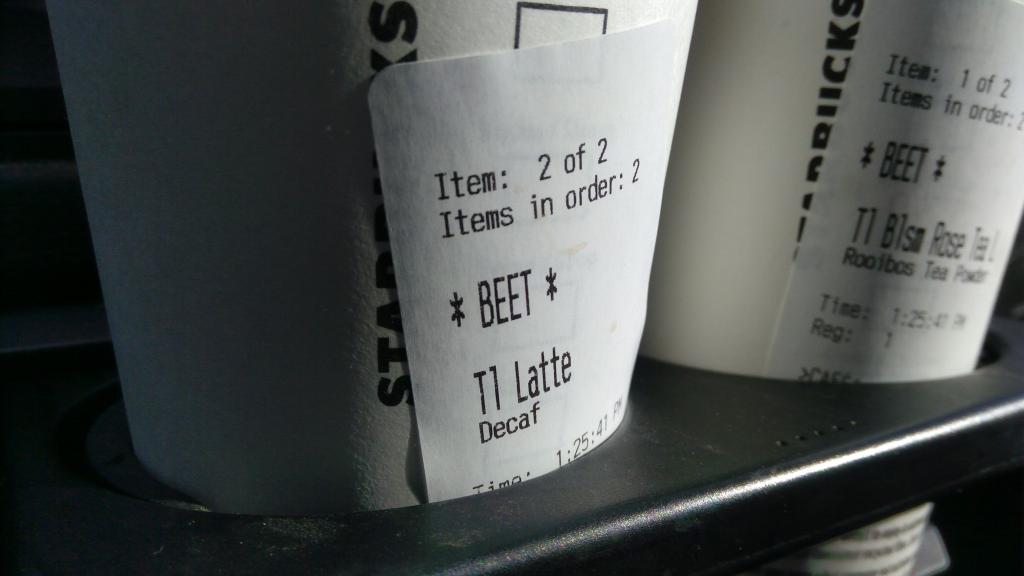
Seeing through my charade—he’s obviously not a Pete, she realized—my cup was labeled BEET.

10 Feb 06:13

Consent management: can it even work?

Read the whole thing: Why Data Privacy Based on Consent Is Impossible, an interview with Helen Nissenbaum.

The farce of consent as currently deployed is probably doing more harm as it gives the misimpression of meaningful control that we are guiltily ceding because we are too ignorant to do otherwise and are impatient for, or need, the proffered service. There is a strong sense that consent is still fundamental to respecting people’s privacy. In some cases, yes, consent is essential. But what we have today is not really consent.

And, in Big Data's End Run Around Anonymity and Consent (PDF):

So long as a data collector can overcome sampling bias with a relatively small proportion of the consenting population, this minority will determine the range of what can be inferred for the majority and it will discourage firms from investing their resources in procedures that help garner the will- ing consent of more than the bare minimum number of people. In other words, once a critical threshold has been reached, data collectors can rely on more easily observable information to situate all individuals according to these patterns, rendering irrelevant whether or not those individuals have consented to allowing access to the critical information in question. Withholding consent will make no difference to how they are treated!

Is consent management even possible? Is a large company that seeks consent from an individual similar to a Freedom Monster?

What would happen if consent had to be informed?

And what's going on with Judge Judy and skin care products? There are thousands of skin care scams on Facebook and other places on the internet that falsely state that their product is endorsed by celebrities. These scams all advertise a free sample of their product if you pay $4.95 for the shipping. Along the way, you have to agree to the terms and conditions....The terms and conditions are only viewable through a link you have to click, which most of these people never do.

Or Martin Lewis and fake bitcoin ads? He launched a lawsuit in April 2018, claiming scammers are using his trusted reputation to ensnare people into bitcoin and Cloud Trader "get-rich-quick schemes" on Facebook.

The problem is that ad media that have more data, and are better at facilitating targeting, are also better for deceptive advertisers. Somehow an ad-supported medium needs consent for just enough data to make the ads saleable, no more. As soon as excess consent enters the system, the incentive to produce ad-supported news and cultural works goes down, and the returns to scamming goes up.

See you at Mozfest? Related sessions: Consent management at Mozfest 2018

bonus links

FBI Brings Gun to Advertising Knife Fight

John Hegarty: Globalisation has hurt the marketing industry

What's There To Laugh About?

Advertising only ever works by consent

Mainstream Advertising is Still Showing Up on Conspiracy and Extremist Websites

Some dark thoughts on content marketing.

10 Feb 06:13

memo to self: learn CSS grid

I need to make a new chart of different kinds of third parties that we will need in the post-creepy ad world.

One area that tends to get overlooked in the data-driven marketing world is defense.

Just a few examples.

  • Amazon stopped sending email receipts, to keep email services from targeting people with ads based on their Amazon shopping habits.

  • Google's Ads Data Hub restricts how advertisers can combine Google and non-Google data.

  • Facebook announced it would eliminate all third-party data brokers.

What do these companies have in common? They're marketing's winners. Meanwhile, publishers festoon their sites with consent management platforms that capture consent for all surveillance marketing, everywhere. They'll even get consent for tracking by third parties that the publisher doesn't even use. Why play to lose? If you run a trusted site in a position to get consent and prove you got it, you want fewer other companies getting that user's data, not more.

So the obvious counterpart to the consent amplification carried out by CMPs is some kind of objection amplification.

If the user clicks something other than "OK" on the GDPR consent dialog, don't just set their consent to zero. That non-consenting user needs to have their voice heard, not just filed away. Ask: Do you want to deny tracking just by our site, or by all these third parties? Then show them a list of Lumascape firms, most of which look like they were named not by branding experts, but by some guy in Florida who mainly communicates by "finger guns". When the user says, hell yeah, I don't want to be tracked by all those companies either, then that's when the objection amplification starts. Generate a Article 21 objection for every company you can think of, get the user to sign off on them, and send them out. (This is why it has to be a platform. Could be quite a bit of verbiage here.)

Now the record of objections sent is a piece of data for ad sales. "Buy ads here because x% of our users can't even legally be targeted by those other companies."

Internet platform companies play defense all the time. Will publishers?

Bonus links

Capitalism, Competition And Microsoft Antitrust Action

We are Google employees. Google must drop Dragonfly.

Targeted Advertising Is Ruining the Internet and Breaking the World

Don’t work “remotely”

Is The IAB’s Consent Framework In Trouble?

Mark Ritson: Gary Vaynerchuk is wrong, wrong, wrong, wrong, wrong about media

How a small French privacy ruling could remake adtech for good

Further protections from harmful ad experiences on the web

10 Feb 06:12

What's so bad about the pay to avoid ads model?

A lot of people have come up with the idea of a system that lets readers of a web site pay to avoid the advertising. This is obviously bad, wrong and dangerous, for several reasons.

  1. The model assumes that advertising is unredeemably awful, and walks away from future revenue that would be made possible from fixing advertising. (So far, Online Ads Haven't Built Brands, but what if they could?)

  2. The model creates incentives to make advertising worse. Ever since we started running the auto-playing video campaign for MIRACLE ASS FUNGUS CURE, our subscriptions are through the roof! Bonuses for all!

  3. Because the ads on news sites will keep getting worse and worse, non-subscribers will get more and more of their news from biased sources that re-report and spin it. (The most common sound effect on Rush Limbaugh's radio show, last I heard it, was him flipping the pages of the New York Times as he selectively quoted from news stories.)

  4. As soon as site owners realize that number 3 is growing, and won't go away, they'll start lobbying for extensive copyright expansion laws that limit fair use, or create new exclusive rights. Freedom-hostile companies will repurpose these laws for censorship.

Bonus links

‘A daily, hourly fight’: Digital ad fraud is worse than ever

NOT Predictions for Digital Ad Fraud in 2019

Advertising Activism Has Impact

Journalists are rightly suspicious of ad tech. They also depend on it.

10 Feb 06:12

Consent UX, €50 million mistakes, and new approaches

In the news: The CNIL’s restricted committee imposes a financial penalty of 50 Million euros against GOOGLE LLC.

Phil Lee writes,

The complaints criticised Google for requiring users to “agree” to its privacy policy in order to use its services. While asking users to “agree” to a privacy policy is still common practice for many companies, privacy notices are too long and too complex to be something that users can realistically understand and “agree” to. Under GDPR consent needs to be freely given and specific, and must not be bundled - the user must be able to freely consent to specific activities on a case-by-case basis, e.g. consent to receive e-mails, or consent to use of their photograph within a promotional brochure etc. Privacy notices are still needed for transparency of course - but they should serve as just that: informational notices, not catch-all consent-gathering documents.

And from Thomas Baekdal on Twitter:

European regulators are paying attention to consent mangement UX, and the current approach, which is basically just click OK to make this annoying dialog go away (and consent to use of your data by 70 companies you've never heard of), is looking less and less likely to work.

Fortunately for reputable publishers, the regulatory pressure to clean up consent UX is likely to be a good thing for trusted sites. So this is great time to release the Global Consent Manager User Study. Global Consent Manager is a new approach to consent UX, made possible by IAB Europe's Transparency and Consent Framework.

The Framework standardises the presentation to users’ third-party data processing requests that require “informed” consent for data processing. The Framework enables “signaling” of user choice across the advertising supply chain. It is open-source, not-for-profit with consensus-based industry governance led by IAB Europe with significant support from industry parties and the IAB Tech Lab, which provides technical management of the open-source specifications and version control.

I'm a big supporter of the Transparency and Consent Framework, if you use it right. Consent UX is full of €50 million mistakes—but the consent data approach of the Transparency and Consent Framework can still be good if you put a decent UX on it. That's what Global Consent Manager aims to do.

Global Consent Manager applies the the same incremental approach that social and collaboration sites, such as LinkedIn and GitHub, use. LinkedIn doesn't ask you to build a complete profile and work history before you can use the site. Instead, you get to make an account and then get prompted to add more of your info as you use it. Global Consent Manager borrowed that idea, in a basic form. Instead of asking for consent for everybody to use your data everywhere before you even read the article, with Global Consent Manager you start off in a no consent state. A consent string with no consent is a valid consent string, and Global Consent Manager will auto-generate one for you on your first visit to a supported site.

Later, if you show that you're interested in the site, the site can ask for more consent. This approach gives a sustainable advantage to sites that users choose to trust, and limits the ability of sites whose traffic comes from deceptively obtained clicks to run saleable ads.

Results from the user research tend to indicate that users spend significantly more time on a news task when they get the Global Consent Manager experience, compared to the click OK to consent to everything default.

The standardization work for consent data, now being done at the Transparency and Consent Framework, really pays off if you put a sensible (more LinkedIn-like) UX on it.

Our next step is to extend server-side consent and data management, with a view to facilitating the needed data collection for publishers trusted by users to run high-value ads, without enabling data practices that fail to comply with regulations or with user norms. Please let me know if you're interested in participating or reviewing future data.

10 Feb 06:12

Attention humans.

Attention humans. We are in a life and death struggle with our enemies, the pathogenic bacteria. Our scientists have developed secret weapons, the antibiotics. It is vital to use these weapons only when they will make a difference, in overwhelming force, and to leave no survivors. The enemy must be prevented from developing countermeasures. Do you understand?

Can we just betray our most effective weapons to the enemy if it's in exchange for CHEAP MEAT?

(facepalm) Let me explain this again.

10 Feb 05:56

"Male fantasies, male fantasies, is everything run by male fantasies? Up on a pedestal or down on..."

“Male fantasies, male fantasies, is everything run by male fantasies? Up on a pedestal or down...
10 Feb 05:56

We are all talking about nothing as the clock ticks down to oblivion

mkalus shared this story .

Get past all the noise and the opinions and the news stories and the bilateral meetings and the foreign visits and the speeches and the articles and what do you have? What is the actual proposition that Theresa May is taking to Brussels over the backstop? Nothing. It it does not exist. It's an absence where a news story should be.

The prime minister met with her Irish counterpart Leo Varadkar today. She sat down with European Commission president Jean-Claude Juncker and European Council boss Donald Tusk yesterday. She delivered a speech in Belfast the day before that. But what was it all about? Nothing at all.

May said she needed a change to the backstop. She officially supported a policy of "alternative arrangements". But which specific alternative arrangement was she proposing? She would not say. So what did she actually want? It was not clear.

Her Belfast speech promised that she would prevent "any physical infrastructure" on the border. That means that the inane and pathetic Malthouse Compromise, as we all apparently have to call it, is dead in the water, given that it is just warmed-up max-fac and therefore entirely reliant, in any variant, on some infrastructure. But once the speech was over, Downing Street continued to have Brexit secretary Steve Barclay work with deluded Conservative backbenchers on the Malthouse ideas, with civil service support, for no discernible reason whatsoever. This is what the government is now. A prime minister ruling out the things she has tasked her own ministers with achieving.

The ERG or DUP will accept only two things: A time-limit mechanism on the backstop or a unilateral exit provision. They will not get them. They will not even be able to open up the withdrawal agreement to try to get them. At most they will be offered a legal guarantee of a comprehensive review years after the backstop comes into operation. And that won't be enough to get it through the Commons.

So it's not tech solutions and it's not a time limit and it's not unilateral extension. And after that May simply runs out of plans. She has not a word to say. Nothing to contribute at all. Her pitiful request this week was to get to the EU to agree to the principle of changes to the backstop, without being able to specify what those changes might be.

It is like calling up your spouse and asking them to agree to the principle of you doing an action without specifying what it is. Maybe it involves buying a coffee. Maybe it involves a drug-fuelled satanic sex ritual. Who knows? But just go ahead and sign off on the principle and we'll take it from there.

It is hard to fully describe the contempt felt towards May in Brussels right now. Just imagine sitting across a table from someone for two years and having them tell you that this is the plan they need, this is the plan they can get through the Commons, and then watch them delay a vote on it, lose catastrophically, whip their own MPs to vote against it, and then come back, cap in hand, asking for you to change the thing that they themselves proposed you must do. The shame of it. The sheer inadequacy.

This is humiliation on a historic scale. It is the single most incompetent act of British diplomacy we've witnessed in our lifetime. That's not hyperbole. That is a simple statement of fact. Quite apart from the core-function national downgrade which May is pursuing, her manner of going about it is so shambolic and disingenuous that our reputation as a serious country may never recover.

But instead of being outraged at those who have put us in this situation, the media and many MPs spent most of the week attacking Tusk for having the temerity of mentioning it out loud. He had committed the crime of speaking evocatively while European. This is obviously not allowed. Only the Boris Johnsons of the world are allowed to do this, like when he compared the EU with "Hitler", or the Nigel Farages, like when he compared it to the "Soviet Communists", who, incidentally, Tusk fought against as a young man.

So the Council president was systematically and vigorously misrepresented across media outlets for approximately 24 hours. Commons leader Andrea Leadsom said the comments were "disgraceful" and "spiteful". DUP Brexit spokesman Sammy Wilson called him a "devilish Euro maniac". Single market supporter Nick Boles said he had "encapsulated perfectly why I do not believe the UK can remain a member of the EU." Remain-voting Tory Tobias Ellwood said "democracy does not always yield perfect outcomes but they should be respected." Labour Brexiter Kate Hoey said it "sums up in one sentence why we cannot wait to get out of this deeply anti democratic institution". DUP leader Arlene Foster said it was a "disrespectful statement about the 17.4m of us who voted to leave".

What did Tusk actually say? That a "special place in hell" would be reserved for "those who promoted Brexit without even a sketch of a plan of how to carry it out safely".

He did not criticise Leave voters. He did not attack Britain. He did not try to 'undermine' the Brexit vote. He criticised precisely those who put the country in the situation it now finds itself in. And then, with grim and wearing predictability, the people he criticised misrepresented him and stoked the same tribal outrage they used to secure the result in the first place.

They don't even have the honour to take the comments at face value. No Brexit argument can ever be addressed on its own terms, because the facts are so demonstrable. So instead they have to feign outrage, wilfully misrepresent their opponent, and whip up tribal hatred. Because, at its heart, that's all this project ever was: the imagined grievances of the perpetually insecure.

Anytime the adults want to come back and take charge, they would be very welcome.

Ian Dunt is editor of Politics.co.uk and the author of Brexit: What The Hell Happens Now?

The opinions in politics.co.uk's Comment and Analysis section are those of the author and are no reflection of the views of the website or its owners.

10 Feb 05:55

Nicht ohne Beleg

by Udo Vetter
mkalus shared this story from law blog.

Ich habe es geahnt. Die 12-Euro-Posse war spätestens nach zwei Minuten Beschäftigung mit der Sache ein betriebswirtschaftliches Fiasko. Aber jetzt wird’s gerade lustig.

Es geht darum, dass andere Anwälte versehentlich 12 Euro Aktenversendungskosten an die Justiz gezahlt haben, die eigentlich wir zu zahlen hatten. Diese 12 Euro haben wir auch gezahlt, aber wohl wieder erstattet erhalten, weil ja die anderen Anwälte schon vor uns (versehentlich) den Betrag überwiesen hatten. Die Justiz hatte also 12 Euro zu viel, was die öffentliche Hand natürlich nicht dulden kann. Jetzt wollen die anderen Anwälte die 12 Euro von uns.

Grundsätzlich würde ich die Summe ja sogar zahlen. Allerdings ist mir klar, dass unsere ebenso liebe wie pingelige Steuerberaterin nachfragt, wenn wir 12 Euro ausgeben – ohne einen vernünftigen Beleg. Ich habe deshalb proaktiv bei ihr nachgefragt, durchaus in Kenntnis ihres Stundensatzes. Die Frage war, ob wir von den Anwälten nicht eine Rechnung brauchen. Denn nach meiner Meinung können wir die Zahlungsaufforderung der Justizkasse ja nicht guten Gewissens buchen, weil wir nix an die Justiz gezahlt haben.

Die Steuerberaterin meinte wenig überraschend, dass wir irgendeinen Beleg brauchen, am besten eine Rechnung von den Anwälten. Oder zumindest eine Art Bestätigung. Also schrieb ich den Anwälten eine Mail, die in Kenntnis meines eigenen Stundensatzes relativ kurz, aber dennoch höflich ausfiel. Ich bat um Übersendung einer Rechnung.

Die Antwort:

… teilen wir Ihnen mit, dass wir über die 12 Euro Akteneinsichtsgebühr keine Rechnung erstellen können. Es handelt sich um ungerechtfertigte Bereicherung gemäß § 812 BGB. Wir bitten daher um kurzfristige Anweisung.

Ich bin mir nicht ganz sicher, vor was ich jetzt mehr Angst habe. Vor den Anwälten, die mich auf 12 Euro verklagen. Oder meiner Steuerberaterin, die vielleicht am Ende unsere Bilanz nicht testiert, wenn ein Beleg fehlt. Ich habe mich jetzt gegen die Anwälte entschieden. Ausschlaggebend war natürlich auch die Aussicht auf eine Fortsetzungsgeschichte hier im Blog.

Auch wenn’s schon jetzt nicht ganz billig ist, haben wir am Ende wenigstens was zum lachen.

10 Feb 05:48

D&I Soundbites

I went to a two-day “D&I workshop for leaders”. Many in biz will know what that stands for: Diversity and Inclusion. The people facilitating were WMFDP, which stands for “White Men as Full Diversity Partners”. Having said that, only one of the two was a white man, and the audience was more gender-diverse than the high-tech norm. Everyone was senior, there were lots of VPs in the room. It had a strong effect on me.

Truths

In the technology space, we suck at diversity. We’re broadly better than average at LGBTQ, probably not far off the mainstream at Under-Represented Minorities, and terrible at gender. Tech leadership is by and large aware of the problem, takes it seriously, and would be very happy if there were a lever they could pull to fix it. They are investing considerable energy, including a nontrivial amount of leadership time, a very scarce resource.

Reportage

I’ve been trying for weeks to figure out my take on the workshop, turn it into a nice narrative with a story arc and Big Lessons. That hasn’t worked. But when I went back to review my notes I found a few really resonated. So what the hell, here are the ones I think worth reading. Draw your own conclusions.

Some of these are what the facilitators were saying. Some of them are quotes from other people. Some are me talking to myself. They start out pretty business-y but get personal.

  1. We were trying to close a $100M deal, and the customer wanted to see our D&I numbers, including diversity among our suppliers.

  2. In hiring, look for “Returnees”, people who’ve taken a break and want to come back to work. In practical terms, these are almost all women who’ve been doing family caregiving.

  3. Shortening the list of qualifications in job postings can be useful, because of men’s propensity to be aspirational in describing their qualifications.

  4. When we get women into the interview process, we hire them at the same rate as men. So we need to interview more.

  5. I am the tech business. I’ve had all the jobs, done all the things. If a diverse population doesn’t want to join it, I’m what they don’t want to join.

  6. If you look at the Fortune 500’s diversity programs, they’re basically all led by women. So we’re asking the outsider group to do all the work of fixing the discrimination against them. A few white guys running some of these things might not be a terrible thing. There’s a parallel with husbands who say they’re happy to help at home but ask their wives to do all the hard emotional/logistical work.

  7. The evidence of bias and anti-diversity prejudice is statistically overwhelming, no matter how many individual leaders deny having it.

  8. Men will remain indifferent unless they perceive they will benefit from D&I.

  9. In tech, the bias is present and measurable, but is rarely explicit or intentional, and the people who empirically must be responsible will hotly deny being part of the problem. (But maybe less so based on attendance at this exercise?)

  10. People don’t know how to talk about it. Talking about it is difficult, and that’s OK.

  11. Short meetings are a form of discrimination — shy people don’t get words in.

  12. This black guy in the sales organization, super senior and successful, says “I haven’t told anybody, but I’ve been keeping count, in meetings, of black people among the customers at my level. Still haven’t got to ten.”

  13. “Insider culture” — individualism — low tolerance for uncertainty — action vs reflection — rationality over emotion — time is linear and future-focused — status and rank win over correctness.

  14. The ultimate privilege is being listened to.

  15. When I mentor people, should I encourage them to be more like me?

  16. Who should be teaching about male privilege? Ideally not always women.

  17. Women say they have to do a lot more thinking before they get their clothes on and walk out the door.

  18. So disappointed at the times I’ve heard “I’m used to it.”

  19. Insiders are identified as individuals, not as members of a group.

  20. It’s totally reasonable for outsiders to see me as “just another white guy”.

  21. It’s not my fault but I’m responsible.

A conversation

In one of the exercises, we were in smallish groups and were asked: “Everyone look inside themselves and find a dimension along which you’re an outsider. Say a few words on what that is and how you feel about it.” Well… I came up empty, and said so. I’m white, male, live in the nation where I was born, straight, able-bodied, well-paid, lucky, and have mainstream tastes.

There was a short uneasy silence. Then this smart, polished, accomplished, person who unlike me is not an insider-on-every-axis looked me in the eye and said “So, why are you here?” The honest truth is I’m really freaking sick of spending all my time in rooms full of men, so I said that but it felt unsatisfactory. I looked for something deeper to say but came up empty.

My crazy idea

I think we in big tech companies should publicly face down our problems, starting with the worst ones. To start with, I’d like us to disclose the actual gender-diversity numbers in our engineering organizations and take a public goal of changing them, say by 5% over a couple of years, and then disclose the results.

Because here’s the thing: The people in the management ranks in big tech are, by and large, pretty smart and resourceful. Tell them they’re going to be judged on any given number, and they’ll figure out a way to move that number in the right direction.

“It’s not my fault but I’m responsible.”

08 Feb 23:44

RT @KeohaneDan: “Eight in 10 in the Irish Republic (79%) think their government should hold out for a legal guarantee that there will be no…

by KeohaneDan
mkalus shared this story from piris_jc on Twitter.

“Eight in 10 in the Irish Republic (79%) think their government should hold out for a legal guarantee that there will be no hard border, even if it risks a no-deal Brexit on 29 March.

Just 7% think they should prioritise avoiding a no-deal Brexit.” news.sky.com/story/sky-data…


Posted by KeohaneDan on Friday, February 8th, 2019 9:30am
Retweeted by piris_jc on Friday, February 8th, 2019 12:08pm


207 likes, 110 retweets
08 Feb 23:44

Cheri Baker writes about Spotify in Dear Podcas...

Cheri Baker writes about Spotify in Dear Podcasters…:

I fear we’ve seen this scenario before. A biggish company decides that they’ll aggregate an immense amount of creative work and monetize it. They’ll offer you tools to make “sharing” easy, and at first the terms of service will be reasonable. But once they’ve eaten a big enough chunk of content, they’ll lock the gates tighter, change the terms of service, and monetize the audience. By that point, customers would feel locked into Spotify, and podcasters would be afraid to leave.

08 Feb 23:44

The Searchers

This delightful old book was a pleasant companion during my recent visit to Santa Fe. It’s the story of two young men who are caught up in an act of terrorist violence and who head out to even the score. Other men spend a week or a month on the trail, but these two — for reasons they themselves can’t quite fathom — never stop. The underlying crime — the abduction of a young girl who is raised by and ultimately joins her captors — is handled less badly here than you might have expected for a book of this era. Now that the US had concentration camps for toddlers and is in the business of stealing migrant babies, it’s frighteningly pertinent.

08 Feb 23:43

The Fall Of Wisconsin

Wisconsin was settled in the mid-19th century by emigrants, chiefly from Sweden and Norway, who were inclined by background and experience to place a very high value on community. In the early 20th century, Wisconsin became a bastion of Progressive politics and the laboratory of social democracy. No state excelled Wisconsin in respect for the environment.

In the 21st century, Scott Walker rolled back all that. Wisconsin, heavily gerrymandered to create a permanent Republican majority, became an anti-union hotbed. The legislature repealed almost all meaningful environmental restrictions on mining and pollution, and gave billions of dollars to Foxconn for the promise of a new factory that might never open.

This sad, but not entirely pessimistic, overview of Wisconsin politics is a superb starting point for anyone interested in taking back our nation from the minions of ignorance and greed.

08 Feb 23:43

Optimized Brewery Road Trip, With Genetic Algorithm

by Nathan Yau

Visit the best American breweries of 2018, based on RateBeer rankings, while minimizing travel time and distance. Read More

08 Feb 23:43

2020 Tokyo Olympics medals could include recycled iPhone and Android smartphone parts

by Andrew Mohan

The 2020 Tokyo Olympic and Paralympic Games’ plan to make gold, silver and bronze medals using recycled electronic waste (e-waste) looks obtainable, according to Tokyo’s organizing committee.

The e-waste weighs around 47,488 tons and includes over five million discarded smartphones, reports The Verge.

This means that all of the 2020 Olympic medals will potentially have iPhone and Android parts in them.

There was “huge levels of support from the public and companies across Japan and from national and international athletes,” said the committee.

To collect the necessary materials to make the medals, people handed in their unused smartphones at NTT Docomo stores, which is one of Japan’s major national wireless network providers.

Stations located at post offices and other public buildings collected other electronic devices.

So far, Tokyo’s committee reached its bronze incentive, but it still around six percent off its 30.3 kg gold target and 15 percent of its 4,100 kg silver goal.

However, the Olympic committee believes that it will meet its incentive based on the number of devices being sent in.

The project ends on March 31st, with the Tokyo Olympic and Paralympic showing its medal designs sometime in the summer.

Source: 9to5Mac via The Verge

The post 2020 Tokyo Olympics medals could include recycled iPhone and Android smartphone parts appeared first on MobileSyrup.

08 Feb 23:43

Patent hints Apple’s HomePod 2 could feature Face ID and 3D hand gestures

by Patrick O'Rourke
HomePod

Although Apple’s HomePod has taken a backseat to the company’s other products lately, it seems company plans to add several innovative features to an inevitable HomePod successor.

A recently published patent application indicates that a future version of the HomePod could include 3D hand gesture support, Face ID and other new features.

The patent, which doesn’t refer to the HomePod by name, describes a voice-controlled smartspeaker that includes sensors, cameras and that can “gather hand gestures and other three-dimensional gesture input.” It’s unclear what these gestures could consist of, but they would likely be familiar movements such as clapping or waving.

Below is a brief quote from the patent describing the 3D sensing technology:

“Gestures described herein include focus gestures and unlock gestures. A focus gesture enables the user to engage (i.e., take control of) an inactive non-tactile 3D user interface. An unlock gesture enables the user to engage a locked non-tactile 3D user interface, as pressing a specific sequence of keys unlocks a locked cellular phone. In some embodiments, the non-tactile 3D user interface conveys visual feedback to the user performing the focus and the unlock gestures.”

The patent also goes on to describe other potential HomePod features including an ambient light sensor, icons that indicate the weather and a sports team’s logo appearing related to a specific game you’re tracking.

Most interestingly though, the patent hints that Face ID could be coming to Apple’s next HomePod. This unidentified speaker would be able to recognize “users in the vicinity of the speaker using facial recognition, as well as measure the distance of users [in relation] to the speaker.”

The U.S. Patent and Trademark Office lists the patent as being filed in July 2017, a date that’s actually six months before the launch of the HomePod in the United States. Apple’s smart speaker didn’t make its way to Canada until late May, 2018.

MacRumors speculates that the 3D hand gestures discussed in the patent could stem from PrimeSense, a company the tech giant acquired back in 2013.

While the HomePod is undeniably one of the priciest offerings in the crowded smart home speaker market, it also offers top-tier audio performance.

That said, beyond its superb sound quality, the HomePod doesn’t include many features that are unique. In fact, Amazon’s Echo speakers and Google’s Home devices are arguably more capable than the HomePod.

Source: United States Patent Application OfficeMacRumors

The post Patent hints Apple’s HomePod 2 could feature Face ID and 3D hand gestures appeared first on MobileSyrup.

08 Feb 23:42

Google may allow third-party messaging apps to us RCS in Android Q

by Jonathan Lamont
Android Messages

It appears Google may allow third-party apps to use RCS on supported carrier networks in Android Q.

Android Police unearthed several code changes — also known as commits — on the Android Open Source Project (AOSP) Gerrit, an online collaboration platform where developers share code and merge it into AOSP. The changes would open several RCS APIs for a future release of Android, which will likely be Android Q.

For the unfamiliar, an application programming interface (API) is a set of tools that allow software components to communicate. In other words, these APIs should enable third-party apps to hook into various RCS features and utilize the service.

Google already partnered with several Android manufacturers, including LG, Motorola, Sony, HTC, HMD Global (a.k.a. Nokia) to get them to use its Messages app for RCS. Other manufacturers, like Samsung, use their own SMS app for RCS.

RCS has had several issues since its debut, like a lack of carrier support. However, one of the biggest gripes users had with RCS was that it forced them to use specific apps. There are a wealth of SMS apps with great features, and adding RCS support would make them even better.

Further, it could help reduce some of the confusion around RCS, as users will have to worry less about which app they need to use and more about whether their carrier supports RCS.

However, I’m also concerned adding more apps to the mix could make things even more confusing for consumers. With the current state of RCS, more confusion won’t help matters.

Source: AOSP Gerrit Via: Android Police

The post Google may allow third-party messaging apps to us RCS in Android Q appeared first on MobileSyrup.

08 Feb 23:42

Amazon might reconsider its New York HQ2 location after pushback

by Shruti Shekar

Amazon is reportedly having trouble finalizing office space in the Long Island City area and in Arlington, Virginia and at this point could even move to a completely different state.

According to a report in the Washington Post, Amazon incurred opposition from local activist groups and politicians. The Post learned from two anonymous sources that the company is “reexamining” the deal and whether or not to move forward with it.

That location was supposed to have housed 25,000 employees. Approval for a space isn’t expected until 2020.

Amazon selected the two cities in November last year and said it plans to invest $5 billion USD (roughly $6.62 billion CAD) and hopes to create approximately 50,000 jobs divided between the two locations.

Toronto was in the riding to be one of the locations but lost out. It was the only Canadian city that was included in the list, despite bids from major cities across the country, including Vancouver, Edmonton, and Halifax.

Amazon subsequently opened a hub in Toronto in December. The e-commerce giant said at the time it was planning to create 600 new tech jobs in fields including software development, machine learning, cloud computing, digital advertising, and artificial intelligence.

Now though, Amazon faces pushback from several New York politicians including U.S. Democrat Alexandria Ocasio-Cortez, who said she was skeptical and outraged at the idea of giving one of the world’s largest and valuable companies tax subsidies in order to move into the boroughs of Queens.

The Post reported that Amazon hired lobby and public affairs firms in New York to manage its relationship with the residents and politicians.

An Amazon spokesperson in the article said the company was engaging with people in the community.

“Whether it’s building a pipeline of local jobs through workforce training or funding computer science classes for thousands of New York City students, we are working hard to demonstrate what kind of neighbour we will be,” Amazon said.

Source: Washington Post Via: The Verge

The post Amazon might reconsider its New York HQ2 location after pushback appeared first on MobileSyrup.

08 Feb 23:42

The Source deals include Nintendo Switch games, Apple Watches, GoPro

by Andrew Mohan
Apple Watch Series 3 on wrist

Nintendo Switch games, Apple Watches and GoPro cameras are on sale at The Source.

It’s important to note that some deals have different expiry dates, and others may need a promotion code.

The Nintendo Switch game promo is expiring at the end of today (February 8th), the Apple watches deal expires on February 14th and the GoPro deal ends February 21st.

Here are the products on sale along with its promo code:

Source: The Source

The post The Source deals include Nintendo Switch games, Apple Watches, GoPro appeared first on MobileSyrup.

08 Feb 23:42

Opera is testing a free, built-in VPN in its Android app

by Jonathan Lamont

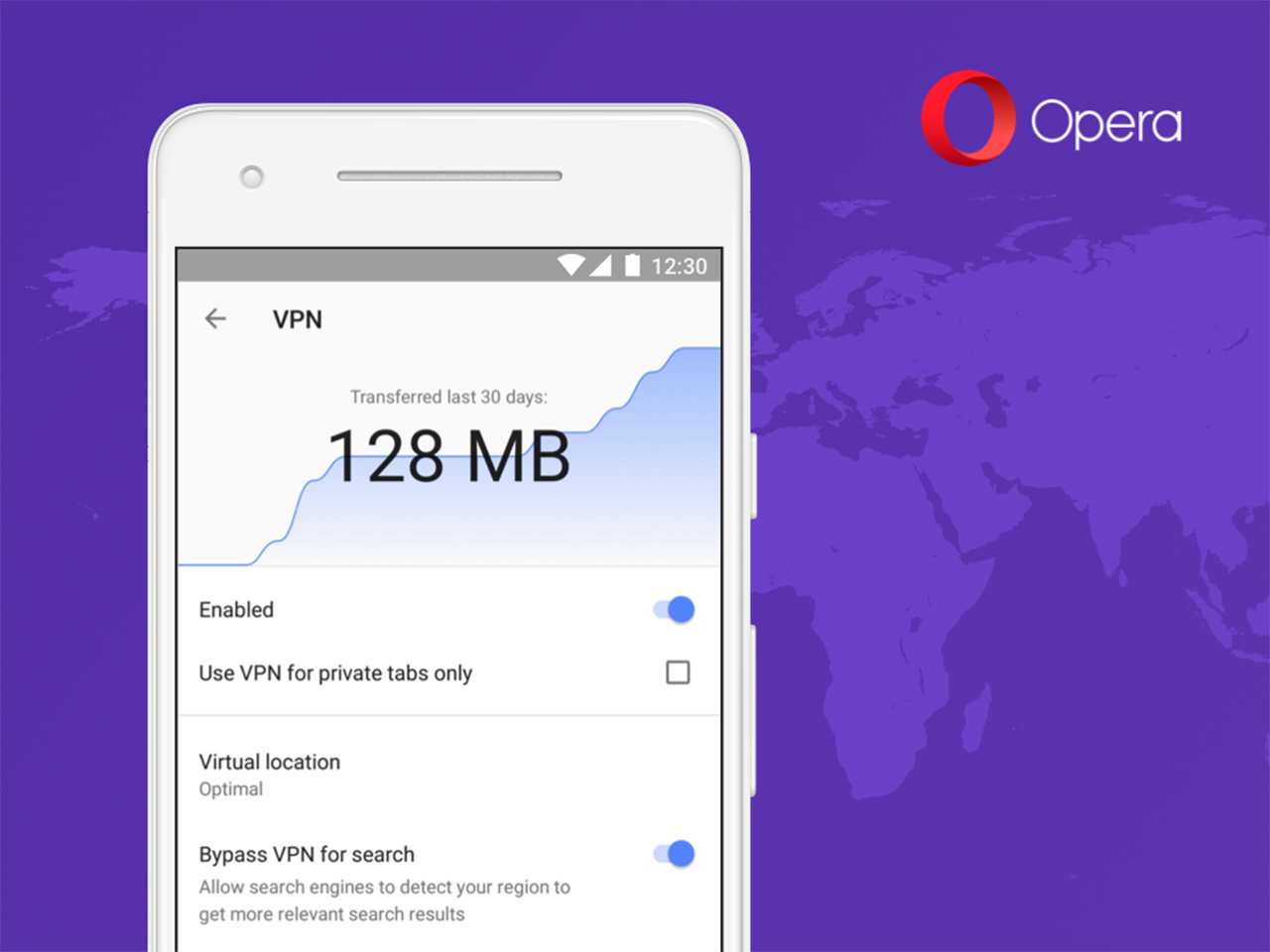
Opera’s Android browser is getting a free, built-in VPN service.

The company announced in a blog post that it’s testing the VPN in the beta version of its browser. It says the VPN has no limits and doesn’t log your traffic.

Opera was also one of the first major browsers to incorporate a free VPN service on desktop. While it’s a handy feature, unfortunately, it doesn’t work outside of the browser. On both desktop and Android, when the feature rolls out, users will only be protected in the app.

Opera VPN

That said, having access to a free VPN is better than nothing, and can encourage people to use the service and protect their privacy online.

The VPN works by replacing your IP address with a virtual IP address, which makes it more difficult for websites to track your location and identify your device.

Opera says it will gradually roll out the VPN to beta users for testing. Eventually, it will come to the regular version of the app.

If you want to test it out, you can download the beta version of Opera for Android here.

Source: Opera Via: The Verge

The post Opera is testing a free, built-in VPN in its Android app appeared first on MobileSyrup.