As only The Onion can report, they have narrowed down how pedestrians can stay safe crossing roads. While it is a spoof, it is telling.
Pedestrian Adam Hartsell in Chicago “reportedly made sure to look up at the driver of an approaching vehicle Thursday to ensure they would feel extra guilty in the event they failed to stop and ran him over. “
The 26-year-old pedestrian has two approaches walking across intersections~ he “emphasized the importance of not only locking eyes with each and every oncoming driver, but also delivering a hard stare that conveys a stern moral appraisal of any who would not brake their vehicle in time. “
“In this way, I will be able to haunt their dreams long after they’ve struck and killed me. If I have enough time, I also make sure to look any passengers dead in the eyes, so that they, too, will be hounded for years by debilitating remorse. It’s important to take these small precautions.”
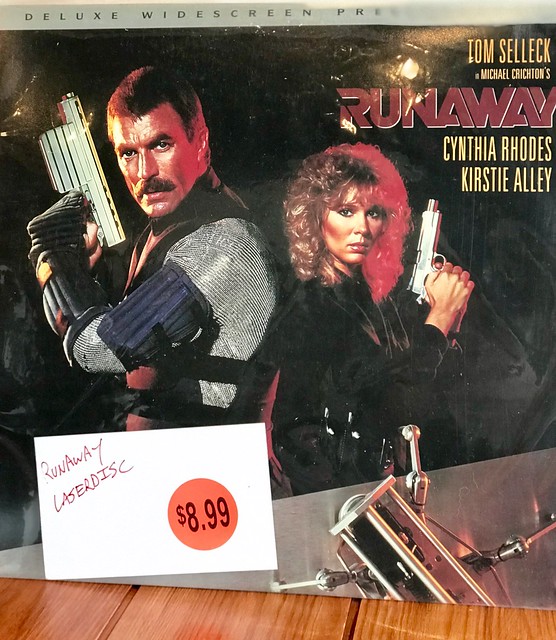
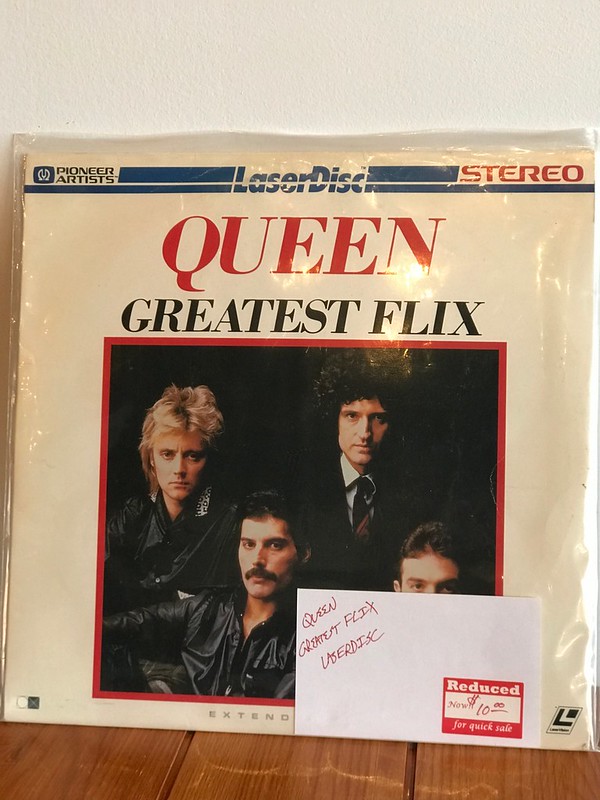
As soon as I got back into town on this last trip Tim and I immediately headed down to Ruther Glen, Virginia to pickup 1900 laserdiscs thanks to Fat Kat Records & Books. I first discovered this gem in 2015 when working on the UMW Console. We bought some vinyl as well as a SelectaVision player and over 75 videodiscs. They since moved from Fredericksburg to Ruther Glen, which was only 20 minutes south. There laserdisc collection is impressive, and Tim and I have probably bought 200-300 over the last year. A couple of months back the proprietor reached out letting us know the physical location is closing and they are going entirely online, and were wondering if we wanted to buy the entire 1900 laserdisic collection. And it did not take long for us to respond: “Why yes, yes we would!”
It’s massive, and our Reclaim Video employees Matt and Zander have already inventoried everything and we have gotten most of them them out of boxes and onto shelves.
I’ll try and get a picture when everything is done, but it is coming together beautifully. There are a ton of films to go through, and so far I watched The Fan (1981) and The Flamingo Kid (1984) from this lot. The audio was not perfect on The Flamingo Kid, which also happened with Magic (1978) —a laserdisc I bought earlier this year. You can almost see the disc rot on the screen:
The Fan was perfect though, and Lauren Bacall was pretty amazing in this film. While not a great film, it is an awesome look at early 80s NYC, and it was released soon after John Lennon was shot my a crazy fan, making it timely in a tragic way.
And the hits for Domains19 just keep on coming….and this one comes all the way from Scotland with none other than Martin Hawksey, who is both creating a surveillance installation for the conference as well as speaking to how he built it using services anyone can sign-up for and a Raspberry Pi while extrapolating the broader implications of this brave new world of ubiquitous surveillance. Here is the abstract:
Welcome to my world of good and bad, right and wrong, a neo-noir landscape where technology simultaneously creates possibilities to empower and reclaim part of the web, but also quickly reveals the extent of our data traces, the ease in which we can be surveilled, the dangers of walking through a world where ‘individual consent’ is replaced with ‘social consent’ where privacy has to asked for rather than assumed.
In this talk we’ll look at privacy and surveillance, data ownership and accessibility. As part of this we will cast a light on the shadowy world of face recognition, passive wifi tracking and more. As part of this we’ll look at issues such as personal rights as well as gender and racial bias. My plan is to ultimately make you all join #TeamLuddite – not against technology or inept at using it, not against “the future” but ready to interrogate the moral and ethical implications of the choices we make.
The idea for having Martin speak at Domains was a happy accident while speaking with both Maren Deepwell and Martin about ideas for OER19. He had done something wild with a Raspberry Pi and facial recognition at DevFest London in 2017, and when I was talking about the conference themes around Domains19 he linked me to his post on the talk. I was immediately sold, this kind of Minorty Report-esque installation that explores the ethical boundaries of the tech we have come to take for granted is exactly what we were hoping Domains19 would manifest, and Martin was soon after signed-on for the third, of what will be four, featured presentations/installation.
navneet alang@navalang
you could read a 20 tweet thread about the implications of the latest breaking news or you could just read fiction,… twitter.com/i/web/status/1…
Jeff Geerling@geerlingguy
It's not me, Google, it's you - here's how I switched from Google Analytics to Fathom to protect my users' privacy.… twitter.com/i/web/status/1…
Barack Obama@BarackObama
We lost two great Americans today – Frank Robinson and John Dingell – citizens who inspired me and so many others b… twitter.com/i/web/status/1…
We are happy to let you know that Friday, February 15th, we are organizing Firefox 66 Beta 8 Testday. We’ll be focusing our testing on: Storage Access API/Cookie Restrictions.
Check out the detailed instructions via this etherpad.
No previous testing experience is required, so feel free to join us on #qa IRC channel where our moderators will offer you guidance and answer your questions.
Google is searching for a new vice president of wearables hardware engineering, according to a recently posted job listing spotted by Android Police.
Google first uploaded the listing three days ago. The description for the job reads:
“You will lead and enable the effectiveness of a large engineering organization primarily based in Mountain View to develop multiple next-generation wearable products simultaneously.”
Given the seniority of the position, Google is looking for someone with a wealth of experience. To be considered for the position, candidates must have at least 15 years of experience “developing consumer electronics products,” says the company. Additionally, 12 years of manufacturing experience is a must.
The new job listings come after Google acquired Fossil’s smartwatch technology and talent for $40 million USD in January. All together, it’s likely we see Google put a greater emphasis on release wearables type products in the future.
Accenture Automates | Guardian Automates | America Automates | What Are People For?
Beacon NY — 2019–02–05 — Christopher Mims, who writes for the Wall Street Journal, asked yesterday on Twitter:
“Is there a word or phrase describing people losing or shifting jobs because of automation?”
To which I offered up ephemeralization, which I adopted years ago (see Quote of the Day, below). I think the term goes back to Buckminster Fuller, who used it to explain the capacity of technological advance ‘to do more with less and less until you can do everything with nothing’.
Today’s newsletter is 100% about the ephemeralization of work.
Read on.
…
If you’re getting this you probably signed up at workfutures.org (or one of its predecessors) or stoweboyd.com. If someone forwarded this to you, sign up here.
Consider becoming a paid sponsor to support our work, and to receive in-depth investigative reporting and discounts to other events, reports, and activities.
“The new platform, that’s been five years in development, suggests ways to streamline and automate processes in areas such as finance and accounting, marketing and procurement. Debbie Polishook, the group chief executive officer of Accenture Operations, said that all its workers affected have been retrained by the company for other jobs. Over the time the company was developing SynOps its headcount kept growing. It currently employs 469,000 people, up from 425,000 in 2017.
Accenture Operations, the company’s outsourcing unit, once used human workers in mostly low-wage countries such as India, to handle routine data entry and customer service tasks for clients. Now that unit is hoping this new software will help clients’ achieve further savings by — at least in some cases — eliminating the need for humans altogether.
[…]
Accenture’s clients can also set custom rules for whether a system will process something automatically based on how much confidence the artificial intelligence software has in its own predictions. For instance, if a system were handling routine insurance claims, a company might allow it to automatically pay those claims as long as it had at least a 95 percent confidence that the decision was correct, Polishook said. If its confidence fell below that threshold, then the claim would be routed to a human claims handler.”
The tool decides if it should approve the claims or not, which starts to sound like an edge case for autonomy, or the opening premise for a science fiction novel.
:::
Why I created a robot to write news stories | Nick Evershed at the Guardian Australia built a reporter bot. This news comes in a time when thousands are being laid off from new and old media firms like Vice, Buzzfeed, Huffpo, McClatchy, and so on.
“These days news organisations have fewer staff but still need to cover a large amount of news. And, despite having less time, journalists often have to write formulaic stories. Such as covering the weather — how hot is it? Is it a new record? Or recurring stories like politician’s expenses and political donations. Who spent the most? Who are the top five? Were donations more or less than last year?
These types of stories also often require some mathematical analysis, which can tie up other resources in the newsroom. Journalists would prefer to be spending time on deeper, more meaningful investigations, such as why the climate is changing, and how does it affect people? Or which politicians are abusing the expenses system?”
And next year’s model will be writing the more complex stories, based on more comprehensive analysis.
“The forecast of an America where robots do all the work while humans live off some yet-to-be-invented welfare program may be a Silicon Valley pipe dream. But automation is changing the nature of work, flushing workers without a college degree out of productive industries, like manufacturing and high-tech services, and into tasks with meager wages and no prospect for advancement.
Automation is splitting the American labor force into two worlds. There is a small island of highly educated professionals making good wages at corporations like Intel or Boeing, which reap hundreds of thousands of dollars in profit per employee. That island sits in the middle of a sea of less educated workers who are stuck at businesses like hotels, restaurants and nursing homes that generate much smaller profits per employee and stay viable primarily by keeping wages low.
In a new study, David Autor of the Massachusetts Institute of Technology and Anna Salomons of Utrecht University found that over the last 40 years, jobs have fallen in every single industry that introduced technologies to enhance productivity.
The only reason employment didn’t fall across the entire economy is that other industries, with less productivity growth, picked up the slack. “The challenge is not the quantity of jobs,” they wrote. “The challenge is the quality of jobs available to low- and medium-skill workers.”
The Autor/Salomons study is likely to be the centerpiece of tomorrow’s newsletter. Go read Porter’s piece, though, which includes an in depth examination of what’s going on in Phoenix, a microcosm of the US economy.
Quote of the Day
“The Web will be the single most foundational aspect of people’s lives in 2025. People’s companion devices — the 2025 equivalent of today’s phones and tablets — will be the first thing they touch in the morning and the last thing they put down to sleep. In fact, some people will go so far as to have elements of their devices embedded. The AI-mediated, goggle-channeled social interactions of the near future will be as unlike what we are doing today, as today’s social Web is to what came before. The ephemeralization of work by AI and bots will signal the outer boundary of the industrial age, when we first harnessed the power of steam and electricity to amplify and displace human labor, and now we see that culminating in a possible near-zero workforce. We have already entered the postnormal, where the economics of the late industrial era have turned inside out, where the complexity of interconnected globalism has led to uncertainty of such a degree that it is increasing impossible to find low-risk paths forward, or to even determine if they exist. A new set of principles is needed to operate in the world that the Web made, and we’d better figure them out damn fast. My bet is that the cure is more Web: a more connected world. But one connected in different ways, for different ends, and not as a way to prop up the mistakes and inequities of the past, but instead as a means to answer the key question of the new age we are barreling into: What are people for?”
From the beginning, our vision at Picr was to build a powerful platform that empowers freelancers to sell and manage their services in one convenient place. Month-by-month we have been building features of impact and focusing only on tools that make a big difference. And now, we are proud to announce that our greatest set of features, our biggest release, our most proud moment, is finally here!
It’s a new era for Picr and what it means for your business: We have re-envisioned how you book your clients. Namely, you can now create forms to capture leads, send questionnaires, schedule dates, sign contracts and even offer instant booking. Here’s how it works:
1. Create as many forms as you need and use them everywhere
Creating forms is the easiest and most effective way to gather information from your visitors and clients. With Picr, you can now create as many forms as you need and each form will have a customizable URL and embedding option. What this means, is that you can create a different form for your website, for your messenger, for your followup conversations, etc. You can even create a separate form and include it on your Instagram, Linkedin, Facebook, and other social channels. The goal is to let your visitors easily submit their information and book your services. The less friction, the more bookings. For example, Amazon increased their revenue by over $1,000,000,000 by introducing the 1-click checkout.
2. Send questionnaires for existing projects and leads
If you already have a project started and need to gather information, you can also use these forms to send out questionnaires. Simply select “send form” select the appropriate form from a drop-down, and ask your client to fill in the details.
3. Allow clients to instantly book your service from a link
Finally, and most excitingly, you can even send or embed forms from which clients can select a package, add-ons, date, sign contract, and make a payment—all in one beautiful and seamless experience.
Now imagine this, you can create a different form for each of your specialties, and send them to your leads or post them on your social profiles wherever appropriate. For example, on your Yelp headshot listing, you can have a link to your headshot booking form. The possibilities are endless!
But that’s not all…
Now that we’ve officially transitioned Picr out of Beta, we are also updating our package structure and introducing a starter plan. Here’s what this means:
If you’re just starting your freelancing business, you can use Picr for just $9/mo.
If you’re running a part-time freelancing business, you can get tons of features for only $29/mo.
If you have a full-time business, you can have all of the features without limits for only $49/mo.
But that’s not all…
And as a special thank you to all of our early users, we wanted to give you an option to lock-in an insanely low rate for 3yrs, 5yrs, or even 7yrs. Use this link to access this incredible deal! If you haven’t created an account, be sure to do so first.
Finally, if you didn’t have a chance to view our recent webinar where we walk through these features, you can check it out here.
What are you waiting for? Log in and start sending out forms right away!
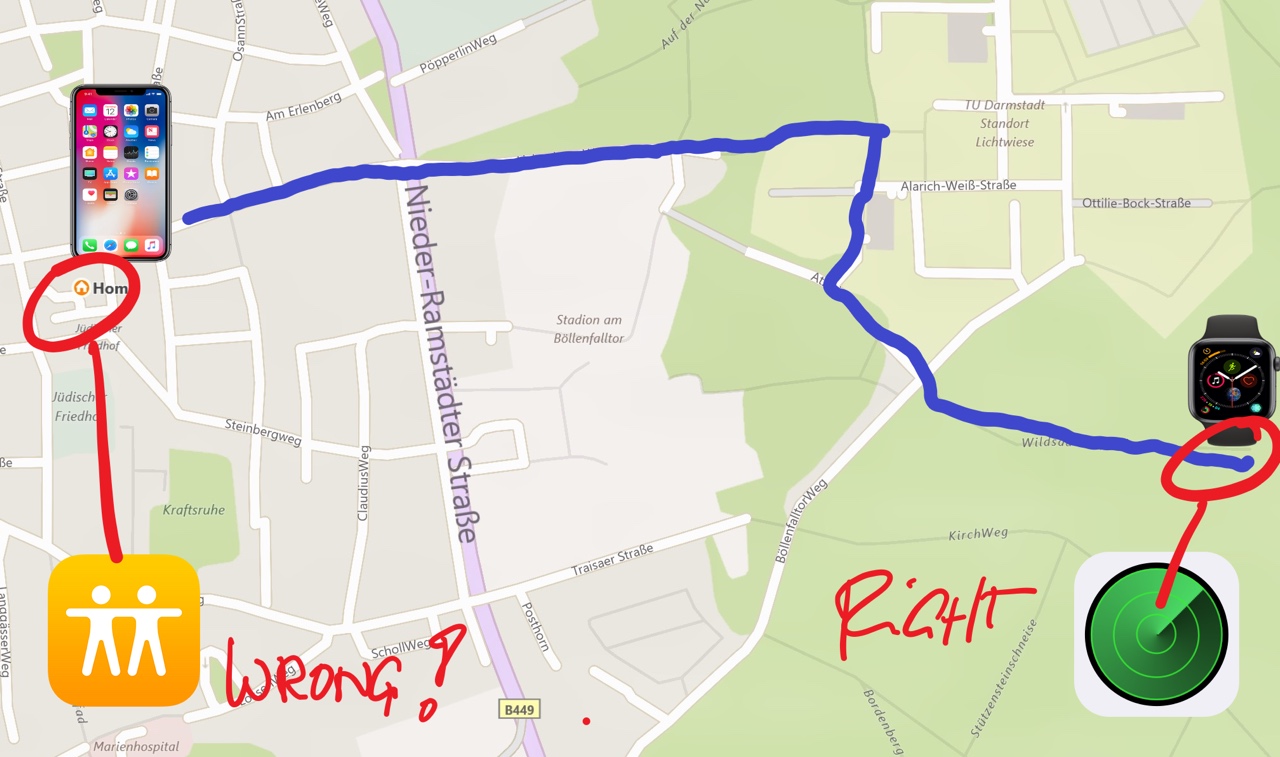
Ich schrieb ja neulich, wie schwer es ist, Apple zu sagen, dass was kaputt ist. Nun habe ich das mal in ein einziges Bild gefasst und bei Apple im Forum gepostet. Idee: Vielleicht könnte das jeder, der das gleiche Anliegen hat, dort auch mal unterstützen. Bisher sind alle meinen anderen Kanäle ausgetrocknet. Eigentlich sollte sich so ein simpler Fehler beheben lassen.
If you share your location from an iPhone thats paired with Apple Watch Series 3 (GPS + Cellular), your location is shared from your Apple Watch when youre out of range of your iPhone and Apple Watch is on your wrist.
Note: You can stop sharing your location from your Apple Watch. Go to Settings > General > Location Services,
Pause a moment and consider the way Jeff Bezos was being threatened. Now envision what Trump’s pal at the National Enquirer has on Ted Cruz, and ask yourself why Cruz went from hating Trump to loving him. Now do the same thing for Lindsey Graham. And all those Evangelicals. 😈
Posted by
RexHuppke
on Friday, February 8th, 2019 4:09am
Retweeted by
mrjamesob
on Friday, February 8th, 2019 9:14am
Samsung may offer a complimentary pair of its upcoming Galaxy Buds in-ear Bluetooth earbuds as a bonus for consumers who pre-order the company’s new Galaxy S10 smartphone, according to a line of code spotted by Dutch website Galaxy Club.
Galaxy Club found the code on the Russian Galaxy S10 teaser website. The same page also mentions that Russian consumers will be able to pre-order the S10 between February 20th and March 7th, which aligns with the launch dates we’ve seen leaks in the past. I wasn’t able to find a corresponding line of code on the Canadian Unpacked teaser website.
However, I think it’s safe to assume both Samsung and major Canadian carriers will offer at least some kind of pre-order incentive to Canadian consumers as they’ve done for past Galaxy launches. For example, when Samsung launched the Galaxy S8, Canadians were able to snag a free Gear VR headset if they pre-ordered the device.
Samsung will unveil the Galaxy S10 on February 20th at a launch event in San Francisco, California.
I thought this was a good conversation on the pull between personal learning on the one hand and ensuring all learning aligns with the institutional mission on the other hand. The problem I see in the workplace is that employers sometimes equate the latter - 'learning that aligns with vision' - with 'learning what you are told to learn'. But of course the two are not synonymous at all; visions are broad and aspirational, while specific mandates are task-centered and focused - and of limited value. That's why I agree with George Couros when he writes "Having the autonomy to create a pathway for your learning that ties to a more significant purpose of the organization can be something that benefits at the individual and organizational level."
Though this article is focused on push notifications about U.S. politics from U.S. mainstream media, the lessons to be drawn are, I think, more widely applicable. Take the time to read the sample notifications. I think that if you study anything - yes, including math and science - you're going to get a similar range of perspectives (this certainly applies in the field of ed tech). Some sources are inherently untrustworthy, some sources focus on specific types of stories, some sources have a certain point of view, and some sources are generally reliable (but with some glaring blind spots). You should never depend on any one source, and you should eliminate sources reluctantly, because even the propagandist is right once in a while.
Jeff Bezos, CEO of Amazon and owner of the Washington Post, received emails threatening blackmail from the parent company of the National Enquirer. Rather than knuckle under, he defiantly published the blackmail emails in his own post. If you want to write with conviction while under pressure, there’s a lot to learn here. Bezos’s post … Continued
You know them~those buildings you walk up to that look heritage and wonderful from the front but once you are in them they are kind of a modern box. In many cases these are heritage buildings that have had their facades maintained as part of the development permit process, with the new modern building tucked in behind.
Facade Retention 200 block of Knightsbridge, London
Christopher Cheung in this Tyee article explores why just maintaining a building’s old facade was perceived as conserving it, and why some developers will preserve the whole building, “Some developers will do more than the minimum preservation required if there’s an incentive: the prestige of saving a building beloved by the community; incorporating heritage features to make their condo project stand out; or to win extra density from the city.”
Christopher observes: “Density for preservation is a tricky exchange. Across the Salish Sea in Victoria, heritage advocates lobbied city council this month, worried that too much extra height and density is being offered to developers who are protecting too little heritage in the city’s Old Town.”
Architect Javier Campos, the president of Heritage Vancouver who bluntly states “Keeping a façade is an acceptable thing, and it was very popular in the 1980s and ’90s, but it’s so unidimensional. It’s such a shallow commemoration. To me, it’s one step above having a plaque. If it’s significant enough, the answer should be restoration.”
One project everyone is talking about is what is being called the “Up” house after the movie . An existing non conforming heritage house in the old Mount Pleasant industrial district at 37 west 6th is having its facade replicated to be the entrance to a “glass walled office building that wraps a century-old house in a tight hug” according to the Daily Hive.
Are these “hybrid” buildings really worthwhile? Do they give a context to how the house was situated, and is it enough to offer the gesture of a rebuilt facade as the memory of the building that used to be there? Heritage Vancouver’s Bill Yuen talks about the spirit or mission of a building continuing its importance.
“It may be for its aesthetic purposes,” he said. “It could be people’s association with the place. It could be for use. It could be because it’s affordable. If you remove a mission from a building, then I would say it loses some of its success.”
But these hybrid buildings are becoming very popular, and there are divided opinions on whether they are effective or not with both the conserved and the new style being read. Christopher Cheung cites the old downtown post office morphing in to “The Post” with two towers springing from the post office’s old roof to accommodate Amazon.
While the dialogue of what to preserve in building stock and also what to conserve as parts of buildings being redeveloped continues, Javier Campos states it succinctly.
“We have to realize we only have just over 100 years of history. Ninety percent of what we build will be torn down eventually. Give it 1,000 years. For people to think this is the best and greatest we can possibly do and that it’s finished and that we should keep it exactly the same — you’ve got to be crazy. We’re making heritage right now.”
Ride-Hailing Minimum Wage | Bystanders | The Problem With Work | Timeboxing | Google Troubles | Struggling Creatives
Beacon NY — 2019–02–04 — I am a supporter of the 4-Day Workweek (see the new Autonomy report) and to make that tangible I will be posting newsletters on Monday through Thursday for the indefinite future. Behind the scenes, I am working a day or so ahead on the posts, but it still gives me a longer break each week, anyway. I also need additional time for other pursuits, about which more later.
:::
If you’re getting this you probably signed up at workfutures.org (or one of its predecessors) or stoweboyd.com. If someone forwarded this to you, sign up here.
Consider becoming a paid sponsor to support our work, and to receive in-depth investigative reporting and discounts to other events, reports, and activities.
sponsor message from Boundaryless SRL
Platform Design 2-Day Masterclass New York City 18–19 March led by Simone Cicero
Look to the bottom of the newsletter for more information.
“In December, after a years-long push by drivers for companies like Uber, Lyft, and Juno, New York City signed off on a proposal that would grant them a minimum wage. The new minimum wage rules are set to go into effect on Friday, February 1, and will ensure that drivers in New York City earn a minimum of $17.22 per hour–the local minimum wage of $15 per hour, plus coverage additional fees like fuel and car maintenance. The wage floor would apply to time spent driving, even without a passenger in the car.
Getting to this point was complicated, and a big deal–it’s the first minimum pay ordinance for for-hire drivers passed in a U.S. city. The Independent Drivers Guild, a nonprofit labor organization that advocates on behalf of ride-hailing drivers, calculated that, after expenses like gas and lost time driving in between passenger pickups, drivers were only taking home an average of $11.09 per hour. To remedy that, the IDG proposed a new payment formula that would essentially require companies like Uber and Lyft to better compensate their drivers. With support from the City Council, New York City’s Taxi and Limousine Commission–a local agency that manages car transportation–voted to approve the new payment formula. They expect that the policy will raise wages for nearly 77,000 drivers by almost $10,000.”
If you’re interested in the fine print — which is complicated, and involves a lawsuit by Lyft and Juno, go read the piece: it has all the deets.
“A zero-tolerance policy might seem useful, but Rowe said that may be doing too much when it comes to promoting a safe office culture; employees could dislike or be uncomfortable with being required to turn in their colleagues.
“You want people to have options — perhaps to take action themselves, perhaps to report it immediately to authorities,” Rowe said. “You want them to have the option to be able to talk it over with somebody else.”
That’s often the most natural and sometimes the best way to handle a situation, she said. Consider two co-workers who both realize something wasn’t right about the flirtatious behavior of a visiting client. They need support and an opportunity to share what happened, without having to worry — as a first step — about introducing a compliance officer or a shoot-first-ask-questions-later manager into the situation.
“One failsafe is to have a culture where people do talk with each other, where responsible employees and managers do feel free to check in with each other,” Rowe said. “And a second one is to have a place where you lose nothing at all by going in to discuss the issue.”
Really good and direct advice to put into practice. A must read.
:::
The problem with work | Steve Levine spoke with Oren Cass, the author of The Once and Future Worker. Cass is Mitt Romney’s former domestic policy adviser and a fellow at the Manhattan Institute, so I wouldn’t expect a social democrat pitch railing against hyper capitalism, the rise of AI, and taxing the rich to redistribute money via a Universal Basic Income, for example. But, what he recommends is not trickle-down nonsense, and in fact reminds me of the regional development policy paper Saving the heartland: Place-based policies in 21st Century America by Benjamin Austin, Edward Glaeser, and Lawrence Summers.
Here’s Levine:
“His new book, “The Once and Future Worker,” rejects the usual explanations — that the problem is robots and automation. Rather, he says, public policy has pushed many workers away from physical labor, to which most are suited, and meanwhile taken whacks at the industrial economy, including extraction industries, that might employ these workers.
Cass told me that the entire economic system should be reordered away from a worship of greater GDP and toward wage growth, higher participation of workers in the labor force and a higher savings rate. The focus of policy should not be on supporting college for everyone, but on skills education. “What we want for society is more than just a larger economic pie,” he says.
Evidence that the system has failed, he argues, is that, although GDP has tripled since 1975 and spending on lower-income families has quadrupled, poverty has risen and wages have been flat.
As a remedy, Cass, like Trump, takes a gigantic step away from decades of orthodoxy, urging an abandonment of both Great Society anti-poverty programs and supply-side tax cuts, arguing that both have resulted in the swath of Americans left behind.
Public policy ought to attend primarily not to the health of companies nor the support of poor people, but specifically to workers — building a system in which people of all abilities can obtain a productive job. He calls this “productive pluralism.”
How about ‘public policy should attend to citizens, and especially those who lack political power, such as the poor, blue collar, and middle class workers’? But — leaving to one side ‘the abandonment of anti-poverty programs’ — what he says isn’t from crazy town, at least, which is what we are getting from most ‘conservatives’ these days.
:::
How Timeboxing Works and Why It Will Make You More Productive | Marc Zao-Sanders says that five years ago he read To-Do Lists Don’t Work by Dan Markovitz and applied his ideas about timeboxing, and he’s never been happier. I am not totally sold on moving everything into the calendar, but I do favor having a calendar view of my prospective and retrospective work, and I agree strongly with a daily regimen of deciding what to do today.
“Asked whether they have confidence in CEO Sundar Pichai and his management team to “effectively lead in the future,” 74 percent of employees responded “positive,” as opposed to “neutral” or “negative,” in late 2018, down from 92 percent “positive” the year before. The 18-point drop left employee confidence at its lowest point in at least six years. The results of the survey, known internally as Googlegeist, also showed a decline in employees’ satisfaction with their compensation, with 54 percent saying they were satisfied, compared with 64 percent the prior year.”
In a surprisingly tone-deaf presentation of these results, even more dissatisfaction was sparked:
“The meeting was to discuss the Googlegeist results, where managers attempted to put a positive spin on the decline in confidence. Prasad Setty, Google’s vice president of people operations, told the room that dissatisfaction around compensation came from employees who didn’t get promoted and don’t understand how compensation at Google works, according to people familiar with the matter.
The meeting sparked angry commentary about executives on Google’s internal message board for memes, according to employees. Some workers found management’s approach patronizing. One Google employee was frustrated with management’s evasiveness, but wondered if the employee backlash stemmed from the fact that executives were trying to explain individual compensation practices, when activist employees wanted answers to demands for pay equity for contractors, women, and others, first raised during the November walkout.”
Another bit of data, regarding Google expense cutting through the use of non-employees:
“In July, Bloomberg reported that, for the first time, more than 50 percent of Google’s workforce were temps, contractors, and vendors.”
Tiku also returns to the simmering issue of gender pay disparity and gender bias:
“A gender bias lawsuit filed in 2017 claims Google assigned new female hires to lower levels and denied them promotions.The November walkout was prompted by a New York Times report that Android founder Andy Rubin received a $90 million exit package, even after a sexual harassment complaint the company found credible.”
“Creative” can be traced to the Latin creare, meaning to beget or to bring forth. In philosophical classical Latin, the verb was sometimes used in reference to the ultimate creative act, divine creation. The English adjective “creative” dates to the 17th century; it was likely during the Enlightenment that it gained wide use as a descriptor for human endeavors, often artistic or literary, that have qualities of originality and excellence. Today, in any case, we deploy the term far more promiscuously. A label once reserved for the grandest artistic undertakings and the most exalted creators, from God to da Vinci to the mother who birthed you, is now applied willy-nilly to such activities as scrapbooking and bicycle-frame building, to the person who pulled your morning latte or designed the logo for your calorie-counting app.”
A great read, with lines that skewer, like this:
“The sickly odor of snake oil hovers over much of the “creative living” enterprise.”
Quote of the Day
Apropos of Jody Rosen’s essay cited above, Miranda Campbell wrote Culture Isn’t Free a few years back, and channeled David Rakoff:
“We’re living in an era where fame does not mean fortune, despite dominant perceptions that achieving visibility equates with financial success. Essayist David Rakoff lampooned the “old fantasy of carnal chaos of drop cloths, easels, turpentine, raffia-wrapped Chianti bottles holding drippy candle ends, and cavorting nude models,” highlighting instead how painful, tedious, and lonely artistic work can be.
Making art “requires the precise opposite of hanging out” and is often “a deeply lonely and unglamorous task of tolerating oneself long enough to push something out,” characterized by a “lack of financial security and the necessary hours and hours of solitude spent fucking up over and over again.”
sponsor message from Boundaryless SRL
Platform Design 2-Day Masterclass New York City 18–19 March led by Simone Cicero
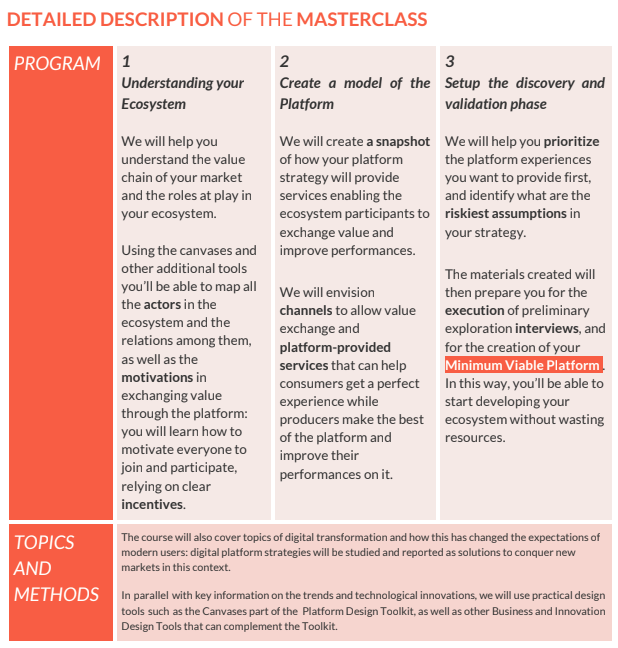
A moment of training and strategic thinking at the same time: two days in which you will learn — either independently or in a team — to use the Platform Design Toolkit, the most comprehensive set of tools for the design and prototyping platform strategies, used by thousands of practitioners around the world.
You’ll be able to apply it directly to your product, a process, or to the whole organization, a new service, a startup idea or to explore a market that you care about.
After building your strategic vision, we will help you prepare an implementation plan to validate your platform idea and test it through a lean prototyping approach that will avoid mistakes and waste of energy and money.
We will help you to get straight to a Minimum Viable Platform that will validate the appeal for your reference ecosystem, and we will prepare you to grow after. These two days will:
save you from bad investments and wasted expenses
take you from zero to a clear execution plan for the coming months.
“I recently experienced a presentation by Simone Cicero about the strategy and economics of platform organizations, and he is the real deal. If you or your organization is interested in getting up to speed on the economics of platform ecosystems, this is an essential investment.”
Most members aren’t going to open your communications, read the copy on the website, and can’t tell you if you even have a terms and conditions section.
Every extra word reduces the chance the member will read the message. Worse yet, every extra point reduces the chances a member will remember any points.
Go through your announcements, web copy, emails, welcome videos, notifications, podcasts and anything else and cut the length by at least a 1/3rd.
You might be surprised just how much this helps get your point across.
The shorter the message, the more members remember.
If you want to earn more attention, you have to use the attention you have wisely.
I've been thinking recently about what it takes to learn web technologies today. We've come a long was from copying the source on a web page. Even the sort of instructions we give computers have changed - we don't tell them to "let variable x be 12" any more - it's more like "imagine an infinite plane filled with objects" or some such thing. We need new mental patterns - "ways to frame the problem in our heads, so we can break problems into their constituent parts and notice recurring patterns." That's why our services are called things like Docker or Digital Ocean. But we also need a path into the technology. See also Where do you learn CSS and HTML in 2019. And HTML, CSS and our Vanishing Entry Points.
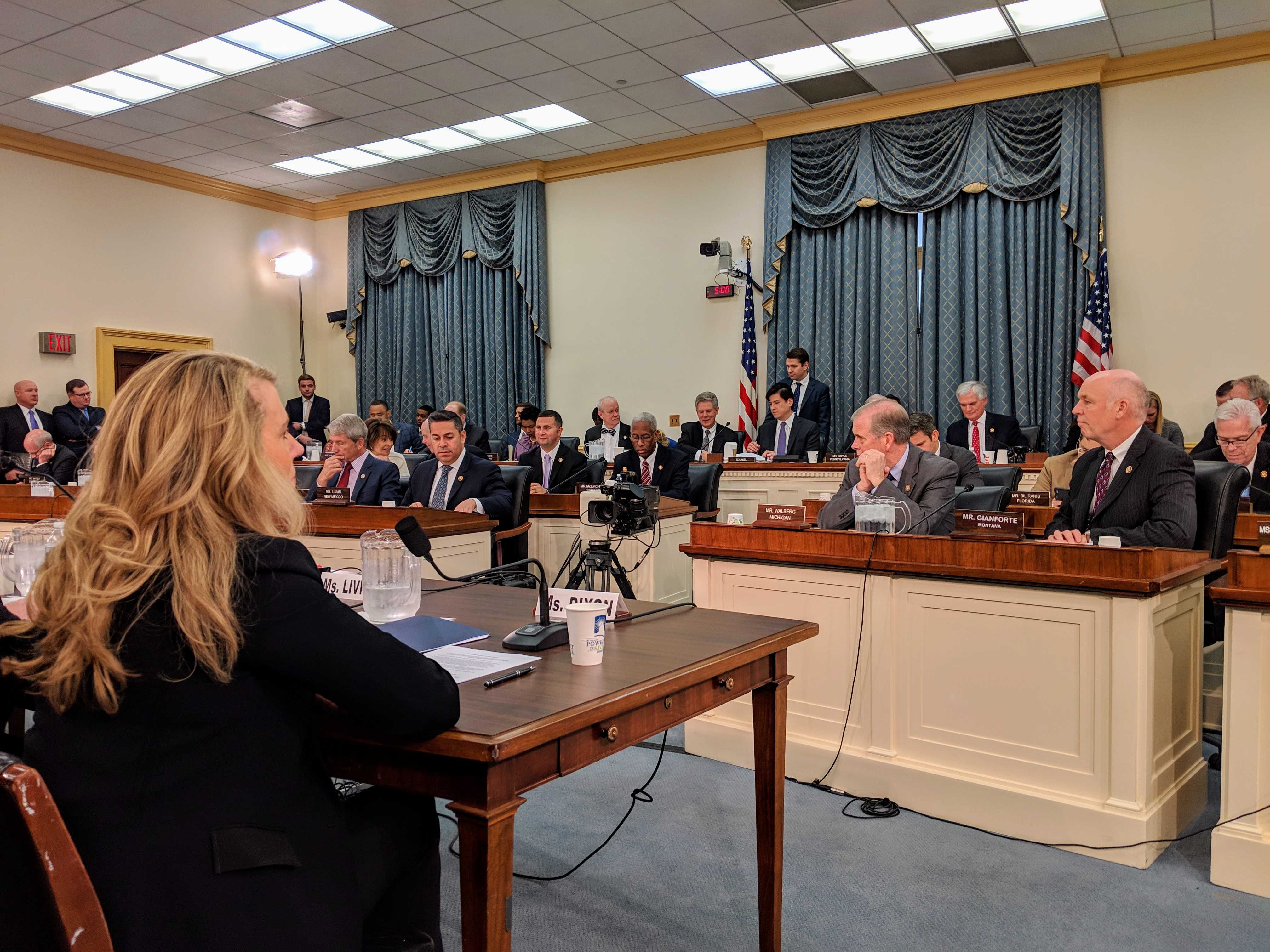
Today Denelle Dixon, Mozilla COO, had the honor of testifying on behalf of Mozilla before a packed United States House of Representatives Energy & Commerce Telecommunications Subcommittee in support of our ongoing fight for net neutrality. It was clear: net neutrality principles are broadly embraced, even in partisan Washington.
Dixon in front of the United States House of Representatives Energy & Commerce Telecommunications Subcommittee
Our work to restore net neutrality is driven by our mission to build a better, healthier internet that puts users first. And we believe that net neutrality is fundamental to preserving an open internet that creates room for new businesses and new ideas to emerge and flourish, and where internet users can choose freely the companies, products, and services that put their interests first.
We are committed to restoring the protections users deserve and will continue to go wherever the fight for net neutrality takes us.
For more, check out the replay of the hearing or read Denelle’s prepared written testimony to the subcommittee.
Something unusual happened to me yesterday. Actually, for me it wasn’t just unusual — it was a first. I was made an offer I couldn’t refuse. Or at least that’s what the top people at the National Enquirer thought. I’m glad they thought that, because it emboldened them to put it all in writing. Rather than capitulate to extortion and blackmail, I’ve decided to publish exactly what they sent me, despite the personal cost and embarrassment they threaten.
AMI, the owner of the National Enquirer, led by David Pecker, recently entered into an immunity deal with the Department of Justice related to their role in the so-called “Catch and Kill” process on behalf of President Trump and his election campaign. Mr. Pecker and his company have also been investigated for various actions they’ve taken on behalf of the Saudi Government.
And sometimes Mr. Pecker mixes it all together:
“After Mr. Trump became president, he rewarded Mr. Pecker’s loyalty with a White House dinner to which the media executive brought a guest with important ties to the royals in Saudi Arabia. At the time, Mr. Pecker was pursuing business there while also hunting for financing for acquisitions…”
Federal investigators and legitimate media have of course suspected and proved that Mr. Pecker has used the Enquirer and AMI for political reasons. And yet AMI keeps claiming otherwise:
“American Media emphatically rejects any assertion that its reporting was instigated, dictated or influenced in any manner by external forces, political or otherwise.”
Of course, legitimate media have been challenging that assertion for a long time:
Mystery Grows Over Pro-Saudi Tabloid: Embassy Got Sneak Peek
I didn’t know much about most of that a few weeks ago when intimate texts messages from me were published in the National Enquirer. I engaged investigators to learn how those texts were obtained, and to determine the motives for the many unusual actions taken by the Enquirer. As it turns out, there are now several independent investigations looking into this matter.
To lead my investigation, I retained Gavin de Becker. I’ve known Mr. de Becker for twenty years, his expertise in this arena is excellent, and he’s one of the smartest and most capable leaders I know. I asked him to prioritize protecting my time since I have other things I prefer to work on and to proceed with whatever budget he needed to pursue the facts in this matter.
Here’s a piece of context: My ownership of the Washington Post is a complexifier for me. It’s unavoidable that certain powerful people who experience Washington Post news coverage will wrongly conclude I am their enemy.
President Trump is one of those people, obvious by his many tweets. Also, The Post’s essential and unrelenting coverage of the murder of its columnist Jamal Khashoggi is undoubtedly unpopular in certain circles.
(Even though The Post is a complexifier for me, I do not at all regret my investment. The Post is a critical institution with a critical mission. My stewardship of The Post and my support of its mission, which will remain unswerving, is something I will be most proud of when I’m 90 and reviewing my life, if I’m lucky enough to live that long, regardless of any complexities it creates for me.)
Back to the story: Several days ago, an AMI leader advised us that Mr. Pecker is “apoplectic” about our investigation. For reasons still to be better understood, the Saudi angle seems to hit a particularly sensitive nerve.
A few days after hearing about Mr. Pecker’s apoplexy, we were approached, verbally at first, with an offer. They said they had more of my text messages and photos that they would publish if we didn’t stop our investigation.
My lawyers argued that AMI has no right to publish photos since any person holds the copyright to their own photos, and since the photos in themselves don’t add anything newsworthy.
AMI’s claim of newsworthiness is that the photos are necessary to show Amazon shareholders that my business judgment is terrible. I founded Amazon in my garage 24 years ago, and drove all the packages to the post office myself. Today, Amazon employs more than 600,000 people, just finished its most profitable year ever, even while investing heavily in new initiatives, and it’s usually somewhere between the #1 and #5 most valuable company in the world. I will let those results speak for themselves.
OK, back to their threat to publish intimate photos of me. I guess we (me, my lawyers, and Gavinde Becker) didn’t react to the generalized threat with enough fear, so they sent this:
From: Howard, Dylan [dhoward@amilink.com] (Chief Content Officer, AMI) Sent: Tuesday, February 5, 2019 3:33 PM To: Martin Singer (litigation counsel for Mr. de Becker) Subject:. Jeff Bezos & Ms. Lauren Sanchez Photos
CONFIDENTIAL & NOT FOR DISTRIBIUTION
Marty:
I am leaving the office for the night. I will be available on my cell — 917 XXX-XXXX.
However, in the interests of expediating this situation, and with The Washington Post poised to publish unsubstantiated rumors of The National Enquirer’s initial report, I wanted to describe to you the photos obtained during our newsgathering.
In addition to the “below the belt selfie — otherwise colloquially known as a ‘d*ck pick’” — The Enquirer obtained a further nine images. These include:
· Mr. Bezos face selfie at what appears to be a business meeting.
· Ms. Sanchez response — a photograph of her smoking a cigar in what appears to be a simulated oral sex scene.
· A shirtless Mr. Bezos holding his phone in his left hand — while wearing his wedding ring. He’s wearing either tight black cargo pants or shorts — and his semi-erect manhood is penetrating the zipper of said garment.
· A full-length body selfie of Mr. Bezos wearing just a pair of tight black boxer-briefs or trunks, with his phone in his left hand — while wearing his wedding ring.
· A selfie of Mr. Bezos fully clothed.
· A full-length scantily-clad body shot with short trunks.
· A naked selfie in a bathroom — while wearing his wedding ring. Mr. Bezos is wearing nothing but a white towel — and the top of his pubic region can be seen.
· Ms. Sanchez wearing a plunging red neckline dress revealing her cleavage and a glimpse of her nether region.
· Ms. Sanchez wearing a two-piece red bikini with gold detail dress revealing her cleavage.
It would give no editor pleasure to send this email. I hope common sense can prevail — and quickly.
Dylan.
Well, that got my attention. But not in the way they likely hoped. Any personal embarrassment AMI could cause me takes a back seat because there’s a much more important matter involved here. If in my position I can’t stand up to this kind of extortion, how many people can? (On that point, numerous people have contacted our investigation team about their similar experiences with AMI, and how they needed to capitulate because, for example, their livelihoods were at stake.)
In the AMI letters I’m making public, you will see the precise details of their extortionate proposal: They will publish the personal photos unless Gavin de Becker and I make the specific false public statement to the press that we “have no knowledge or basis for suggesting that AMI’s coverage was politically motivated or influenced by political forces.”
If we do not agree to affirmatively publicize that specific lie, they say they’ll publish the photos, and quickly. And there’s an associated threat: They’ll keep the photos on hand and publish them in the future if we ever deviate from that lie.
Be assured, no real journalists ever propose anything like what is happening here: I will not report embarrassing information about you if you do X for me. And if you don’t do X quickly, I will report the embarrassing information.
Nothing I might write here could tell the National Enquirer story as eloquently as their own words below.
These communications cement AMI’s long-earned reputation for weaponizing journalistic privileges, hiding behind important protections, and ignoring the tenets and purpose of true journalism. Of course I don’t want personal photos published, but I also won’t participate in their well-known practice of blackmail, political favors, political attacks, and corruption. I prefer to stand up, roll this log over, and see what crawls out.
Sincerely,
Jeff Bezos
From: Fine, Jon [jfine@amilink.com] (Deputy General Counsel, AMI) Sent: Wednesday, February 6, 2019 5:57 PM To: Martin Singer (Mr de Becker’s attorney) Subject: Re: EXTERNAL* RE: Bezos et al / American Media et al
Marty -
Here are our proposed terms:
1. A full and complete mutual release of all claims that American Media, on the one hand, and Jeff Bezos and Gavin de Becker (the “Bezos Parties”), on the other, may have against each other.
2. A public, mutually-agreed upon acknowledgment from the Bezos Parties, released through a mutually-agreeable news outlet, affirming that they have no knowledge or basis for suggesting that AM’s coverage was politically motivated or influenced by political forces, and an agreement that they will cease referring to such a possibility.
3. AM agrees not to publish, distribute, share, or describe unpublished texts and photos (the “Unpublished Materials”).
4. AM affirms that it undertook no electronic eavesdropping in connection with its reporting and has no knowledge of such conduct.
5. The agreement is completely confidential.
6. In the case of a breach of the agreement by one or more of the Bezos Parties, AM is released from its obligations under the agreement, and may publish the Unpublished Materials.
7. Any other disputes arising out of this agreement shall first be submitted to JAMS mediation in California
Thank you,
Jon
Deputy General Counsel, Media
American Media, LLC
Jon P. Fine
Deputy General Counsel, Media
O: (212) 743–6513 C: (347) 920–6541
jfine@amilink.com
February 5, 2019
Via email:
mdsinger@lavelysinger.com
Martin D. Singer
Laveley & Singer
Re: Jeff Bezos / American Media, LLC, et al.
Dear Mr. Singer:
I write in response to your February 4, 2019, letter to Dylan Howard, and to address serious concerns we have regarding the continuing defamatory activities of your client and his representatives regarding American Media’s motivations in its recent reporting about your client.
As a primary matter, please be advised that our newsgathering and reporting on matters involving your client, including any use of your client’s “private photographs,” has been, and will continue to be, consistent with applicable laws. As you know, “the fair use of a copyrighted work, including such use by reproduction in copies . . . for purposes such as criticism, comment, news reporting . . . is not an infringement of copyright.” 17 USC Sec. 107. With millions of Americans having a vested interest in the success of Amazon, of which your client remains founder, chairman, CEO, and president, an exploration of Mr. Bezos’ judgment as reflected by his texts and photos is indeed newsworthy and in the public interest.
Beyond the copyright issues you raise, we also find it necessary to address various unsubstantiated defamatory statements and scurrilous rumors attributed to your client’s representatives in the press suggesting that “strong leads point to political motives”1 in the publication of The National Enquirer story. Indeed, you yourself declared the “politically motivated underpinnings” of our reporting to be “self-evident” in your correspondence on Mr. de Becker’s behalf to Mr. Howard dated January 31, 2019.
Once again, as I advised you in my February 1 response to your January 31 correspondence, American Media emphatically rejects any assertion that its reporting was instigated, dictated or influenced in any manner by external forces, political or otherwise. Simply put, this was and is a news story.
Yet, it is our understanding that your client’s representatives, including the Washington Post, continue to pursue and to disseminate these false and spurious allegations in a manner that is injurious to American Media and its executives.
Accordingly, we hereby demand that you cease and desist such defamatory conduct immediately. Any further dissemination of these false, vicious, speculative and unsubstantiated statements is done at your client’s peril. Absent the immediate cessation of the defamatory conduct, we will have no choice but to pursue all remedies available under applicable law.
As I advised previously, we stand by the legality of our newsgathering and reporting on this matter of public interest and concern. Moreover, American Media is undeterred from continuing its reporting on a story that is unambiguously in the public interest — a position Mr. Bezos clearly appreciates as reflected in Boies Schiller January 9 letter to American Media stating that your client “does not intend to discourage reporting about him” and “supports journalistic efforts.”
That said, if your client agrees to cease and desist such defamatory behavior, we are willing to engage in constructive conversations regarding the texts and photos which we have in our possession. Dylan Howard stands ready to discuss the matter at your convenience.
All other rights, claims, counterclaims and defenses are specifically reserved and not waived.
mkalus
shared this story
from Comments on: Theresa May Is Negotiating Like Yasser Arafat.
A few weeks after the 2016 Brexit referendum I got chatting with a Palestinian journalist at a wine bar in London. “How did you vote?” I asked, as the conversation turned to the inevitable subject.
“Leave,” he said.
“Why?” I asked.
“Immigration,” he replied.
Palestinian nationalism can fairly be described, in part, as an anti-immigration movement, so perhaps his position was not so shocking. What’s more surprising is British Prime Minister Theresa May’s negotiating strategy since 2016—which is looking more and more like the late Palestinian leader Yasser Arafat’s with each passing day.
Arafat’s legendary “three noes” were no to peace with Israel, no to recognition of Israel, and no to negotiations with Israel. May began, at her speech on the future of U.K.-European Union relations at Lancaster House in 2017, by saying she would take back control of “our laws, our money, and our borders”—or as Arafat might have put it: no to jurisdiction from the European Court of Justice, no to freedom of movement, and no deal is better than a bad deal.
Like Arafat, she has been forced to cave in on all three issues, while simultaneously choosing to acquiesce to the demands of her own hard-liners.
Like Arafat, she has been forced to cave in on all three issues, while simultaneously choosing to acquiesce to the demands of her own hard-liners.
And all the while, May and her government refused to acknowledge the obvious: that they were negotiating against a larger, stronger power that needs Britain far less than Britain needs the European Union.
Like Arafat, she has been forced to cave in on all three issues, while simultaneously choosing to acquiesce to the demands of her own hard-liners.
In the era of Donald Trump and Benjamin Netanyahu, it can be difficult to recall the Middle East peace process. For those who remember, that much-touted diplomatic marathon ended with no deal. The current talks over the British-EU Withdrawal Agreement boiled down to three “phase one” issues. The Middle East peace negotiations turned on three “final status” ones. Instead of money, migrants’ and citizens’ rights, and the Irish border, negotiations between Israel and the Palestinians centered on Jerusalem, refugees’ rights, and borders.
An agreement was actually reached on two of them, just before lame-duck President Bill Clinton left office in early 2001: The pre-1967 borders would be modified by land swaps, and Jerusalem was to be divided. Of particular ingenuity was the solution to Jerusalem. It wouldn’t only be divided horizontally, but vertically, too. The territory below the dome of the rock—the ruins of the ancient Jewish temple—would go to Israel, while everything from the ground upward, where the mosques were built, would belong to Palestine.
The Withdrawal Agreement reached between the EU and the British government was an equally fine piece of work. It resolved how Britain would pay its liabilities to the EU, it set up a framework for how the U.K. and EU would look after their respective citizens living in the other’s territory, and it set limits on the eventual U.K.-EU relationship without needing to specify exactly what shape it took. It provided for up to four years of negotiations where that could be hammered out. To be sure, May had her own views of what it would be, expressed in the nonbinding “Political Declaration,” but these had no formal force.
That gave May the flexibility to say to all but the most fanatical opponents on either side: If you vote for my deal, you can get the Brexit you want, or if you don’t really want Brexit at all, you can at least have one you can live with, without plunging the country into a divisive second Brexit vote.
Yet May did the opposite. Rather than selling her deal as a centrist compromise that could please all sides, she cast this monument of subtlety as having two simultaneous and incompatible endpoints.
Rather than selling her deal as a centrist compromise that could please all sides, she cast this monument of subtlety as having two simultaneous and incompatible endpoints.
She told Remainers that the only alternative to her agreement was to leave without a deal. And she told Brexiteers that the only alternative to hers was no Brexit at all. They all smelled a rat, and when her deal was finally put to Parliament, it was defeated resoundingly by 432 votes to 202.
Rather than selling her deal as a centrist compromise that could please all sides, she cast this monument of subtlety as having two simultaneous and incompatible endpoints.
Whereas the Middle East negotiations failed on the issue of the refugees of 1948, the Brexit deal has come unstuck on the Northern Irish border. The provisions to address it, known as the “backstop,” are designed to implement the agreement the U.K. and EU made in December 2017 to avoid having to put up a hard border, with customs posts and security infrastructure, between Northern Ireland and the Republic of Ireland.
Britain finds itself in this quagmire because, after squandering the majority David Cameron had won in 2015 in an unnecessary general election, the ostensibly secular nationalist May was forced to rely on the religious fundamentalists of the Northern Irish Democratic Unionist Party (one of whose more hard-line members, Sammy Wilson, even told the BBC recently, in what many viewed as a Freudian slip: “We fought a terrorist campaign to stay part of the United Kingdom.”)
The British political system today, like the Palestinian one in 2000, has maneuvered itself into setting conditions that cannot possibly be accepted by the other side.
The British political system today, like the Palestinian one in 2000, has maneuvered itself into setting conditions that cannot possibly be accepted by the other side.
The Palestinians wanted the descendants of everyone who fled or was expelled by Israel in 1948 (what actually happened is a matter of dispute between the two sides) to be resettled not to the new state of Palestine but in their original towns in what had since become Israel. The Israeli offer wasn’t good enough for Hamas and other hard-line Palestinian factions, however. They, too, preferred “no deal” and were willing to fight a terrorist campaign to protect their red lines.
The British political system today, like the Palestinian one in 2000, has maneuvered itself into setting conditions that cannot possibly be accepted by the other side.
Like Arafat, May found herself trapped by her own side. So last week she threw her weight behind a parliamentary amendment demanding that the backstop, which had been negotiated at Britain’s request, be replaced by unspecified “alternative arrangements.” It proved a disastrous miscalculation and was rejected by the EU within three minutes.
Just as Arab leaders told the Palestinians that they were central to the struggle against the “Zionist entity” while in fact coming to terms with Israel, European leaders say they want Britain to abandon Brexit, but they no longer really mean it. Despite prominent Europeans expressing their love of Britain in a mawkish letter about milky tea and ale drunk after work, they have not allowed sentimentality to cloud their practical judgement. Instead, the European Commission and national governments have stepped up their no-deal contingency plans.
May’s problem was not so much Britain’s relative weakness in the negotiations (it’s one-fifth the size of the rest of the EU) but her failure to calibrate her strategy to this fact. She could have brought the U.K. together around a soft Brexit that reflected the 52 percent to 48 percent Brexit referendum margin; she could have made tactical concessions at the outset to win friends across the continent; she could have retained her parliamentary majority by avoiding an election; she could even have sought a wider range of partners instead of cementing her dependence on the Democratic Unionists; and she could even at this late stage have sold her deal as one that left the final shape of Brexit open. Arafat, it is said, never missed an opportunity to miss an opportunity. May has given him a run for his money.
After all, weaker countries can obtain satisfactory outcomes with guile, focus, and ingenuity, as indeed Israel itself did when battling five Arab armies in 1948. Britain’s mistake was, like that of the Palestinians, thinking it could simply coerce a stronger opponent.
Britain’s mistake was, like that of the Palestinians, thinking it could simply coerce a stronger opponent.
Britain’s mistake was, like that of the Palestinians, thinking it could simply coerce a stronger opponent.
As a matter of brute logic, membership of the EU confers benefits to its members that aren’t available outside. As a matter of brute fact, the EU is economically more important to Britain than Britain is to the EU. And, as a matter of brute administrative capacity, the EU has been able to establish clear priorities and mitigate its risks, whereas Britain has dithered—making the price it would have to pay if there were no deal higher than it needs to be.
Rather than strengthen its position by preparing for no deal, Britain has weakened it by believing its own propaganda. Leavers have told themselves that “no deal is better than a bad deal,” while Remainers imagine the EU is in a mood to further appease idiosyncratic British demands. They are guilty of what Alexander Clarkson of King’s College London regards as the two characteristic mistakes made about the EU: Leavers believe it’s weak, while Remainers think it’s nice.
The British government now finds itself in a mess entirely of its own making. In December 2017, it agreed that any deal with the EU would require sufficient alignment of regulations and customs procedures to make the resurrection of border infrastructure in Northern Ireland unnecessary. In March 2018, it repeated its promise. And earlier this week May was in Belfast promising to do so again.
In the withdrawal agreement itself, the British government agreed with the EU on how it would put this promise into practice. The EU considers this agreement to have involved significant concessions to Britain. Then, on Jan. 29, May instructed her party to vote against this key plank of the agreement she had painstakingly negotiated.
The British political debate continues oblivious to the fact that the country is actually negotiating with someone else.
The British political debate continues oblivious to the fact that the country is actually negotiating with someone else.
Even serious newspapers declare that unilateral acts of the British Parliament can stop a no-deal Brexit, or that an extension to the Article 50 negotiating period is inevitable—they might as well insist that Israel will end its occupation of the West Bank tomorrow without checking to see if the Israeli side is willing to do so.
The British political debate continues oblivious to the fact that the country is actually negotiating with someone else.
The veteran BBC Radio presenter John Humphrys even asked an Irish minister whether her country should seek to rejoin the U.K. instead. I struggle to imagine Israeli Prime Minister Benjamin Netanyahu being asked why, with all of Israel’s problems, he doesn’t simply bring back the British Mandate in Palestine.
A century ago, Britain still had the power to force the other side to come up with alternatives. The memory of that power inspired the belief that Britain could recover its sovereignty by leaving the EU. Yet the sovereign Britain they imagine only prospered at the expense of the sovereignty of others. Gunboats steaming toward the Río de la Plata to recover unpaid debt may have seemed sovereign to London. They didn’t enhance the sovereignty of Argentina.
Brexit was a decision to leave the EU system and its legal regulation of national power and return to the old rules where size matters. Britain’s fatal mistake was to get its opponent’s size wrong. Brexiteers like to describe the country as the fifth-largest economy in the world, of around the same size as France, Germany, Italy, and Japan. But global economic power is now consolidated in blocs, not nations, and the EU27, as a bloc, is five times bigger than Britain. Thus, May’s characterization of Ireland as a small country that should count for less was worse than rude; it was a profound strategic misunderstanding.
By choosing Brexit, the U.K. challenged the EU to a fight according to the old rules. And in a fight where size matters, the EU is trouncing Britain.
By choosing Brexit, the U.K. challenged the EU to a fight according to the old rules. And in a fight where size matters, the EU is trouncing Britain.
Parliament’s own three noes—no to the deal, no to no-deal, and no to the backstop—in turn reflect Britain’s inability to accept the reality of a midsized power’s relationship to a huge global bloc from which it has excluded itself.
By choosing Brexit, the U.K. challenged the EU to a fight according to the old rules. And in a fight where size matters, the EU is trouncing Britain.
The U.K. has less than 60 days to accommodate itself to these facts. Perhaps time pressure will finally force it to confront this reality. If it does, and Parliament passes May’s Withdrawal Agreement, it will give itself four more years to decide precisely which compromises it should make.
If not, it will have accomplished what Israel’s government is strenuously seeking to avoid—Britain will have unilaterally imposed Boycott and Disinvestment, if not quite Sanctions, on itself.
I’ve seen this in a widening group of people in my network, and I welcome it. Very much so. At the same time though, I realise that mostly we’re returning to the open web. As we were already there for a long time before the silo’s Sirens lured us in, silos started by people who like us knew the open web. For us the open web has always been the default.
Returning to the open web is in that sense not a difficult step to make. Yes, you need to overcome the FOMO induced by the silo’s endless scrolling timeline. But after that withdrawal it is a return to the things still retained in your muscle memory. Dusting off the domain name you never let lapse anyway. Repopulating the feed reader. Finding some old blogging contacts back, and like in the golden era of blogging, triangulate from their blog roll and published feeds to new voices, and subscribe to them. It’s a familiar rhythm that never was truly forgotten. It’s comforting to return, and in some ways privilege rather than a risky break from the mainstream.
It makes me wonder how we can bring others along with us. The people for whom it’s not a return, but striking out into the wilderness outside the walled garden they are familiar with. We say it’s easy to claim your own space, but is it really if you haven’t done it before? And beyond the tech basics of creating that space, what can we do to make the social aspects of that space, the network and communal aspects easier? When was the last time you helped someone get started on the open web? When was the last time I did? Where can we encounter those that want and need help getting started? Outside of education I mean, because people like Greg McVerry have been doing great work there.
When Juul released its original 5% nicotine pods in the United States in 2015, the majority of competing products came in 1% to 2% concentrations, according to study author Dr. Robert Jackler, founder of
. Now, a number of competing brands reach into the 5% to 7% range.
Experts say that a single 5% pod delivers the same amount of nicotine to the body as a pack of cigarettes.
"That may be a benefit to addicted adult smokers, but it also makes it potently addictive to nicotine-naive teenagers," Jackler said.
Juul increased its own nicotine concentrations using a patented "nicotine salt." By combining nicotine -- a bitter base in its natural form -- with an organic acid, vape manufacturers can mask nicotine's naturally unpleasant taste and create higher-concentration products, experts say.
"As a consequence of that, nicotine gets delivered to the brain very rapidly," said Dr. Frank T. Leone, director of the Comprehensive Smoking Treatment Program at Penn Medicine. Leone was not involved with the new paper.
Leone said there are so many variations of pods, liquids and tank systems that it's been almost "impossible to put any regulatory guardrails around these products."
, health advocates have called on the US Food and Drug Administration for more regulation -- including on the high nicotine concentrations and variety of flavors these products come in.
Instead of requiring e-cigarettes to undergo FDA approval before they could be sold, the agency
that it is "committed to encouraging innovations that have the potential to make a notable public health difference and inform policies and efforts that will best protect kids and help smokers quit cigarettes," thus extending the review timelines for certain products. "This action will afford the agency time to explore clear and meaningful measures to make tobacco products less toxic, appealing and addictive," the agency said.
But some experts think the agency could do more."FDA should ... require pre-market review and authorization for any e-cigarettes that are sold," said Lauren Lempert, a law and policy specialist for the Center for Tobacco Control Research and Education at the University of California, San Francisco.
'The cost of nicotine addiction' has fallen
In a statement, Juul spokeswoman Victoria Davis said the company has
against knockoffs and other products that it says shouldn't be on the market.
"As part of our commitment to prevent underage use, we are taking swift and decisive action against counterfeit and infringing products," she said. These actions include lawsuits and referring cases to law enforcement, according to a company
She also asserted that there were products on the market in the 4% to 5% nicotine range "prior to the rise of popularity of the JUUL device." However, Jackler said the majority of products were much lower when Juul launched, and it was indeed the popularity of Juul that sent nicotine concentrations soaring. His research group has been tracking the industry for nearly a decade.
"When Juul came out with very high-nicotine electronic cigarettes, it triggered a nicotine arms race amongst competitive companies seeking to emulate the success of Juul," Jackler said.
It wasn't just nicotine concentrations other companies were mirroring, Jackler argued. Some of the products he catalogs in the new study are Juul-compatible pods offering higher nicotine concentrations than Juul itself.
Other products offering higher nicotine concentrations include e-cigarettes that resemble Juul, as well as bottles of e-liquid that allow vapers to buy in bulk. Many of these products undercut Juul's prices, as well.
"The rush to higher and higher nicotine concentration has reduced the cost of nicotine addiction," Jackler said.
It also comes with "a huge poisoning risk," with some bottles lacking childproof caps and containing enough nicotine to kill
an entire preschool class, he said. With the rise in e-cig popularity has come a rise in calls to
Phillip Fuhrman, 15, first tried a Juul in the eighth grade. A friend offered it to him, and he "didn't really know what it was." Before long, it became a habit he couldn't shake.
"I realized that I couldn't stop," he said. "When I started hearing all the facts and everything bad about it, it was already too late. I was already hooked onto it."
At his peak, he estimated, he was going through a pod roughly every day and a half.
"The 5% thing, I've always seen since I started it -- on Juul packs and everything -- but I never knew what it was," Fuhrman said. "Five percent doesn't seem like that much, out of 100%."
Davis said Juul decided on its signature 5% nicotine pods in order to draw to adult smokers to what the company says is a less harmful alternative. The company also offers 3% pods, but only in tobacco and mint flavors. "We continually evaluate our product portfolio to meet the needs and preferences of adult smokers who want to switch from combustible cigarettes," she said.
In other countries, such as the UK and Israel, Juul markets 1.7% pods because regulations prohibit the concentrations sold in the United States, Davis said.
Fuhrman ultimately ditched his vaping habit and focused his sights on becoming a teen anti-vaping advocate -- along with his friends and mother, Dorian Fuhrman, a co-founder of the group


 BelfastAgmt on Twitter.




 That’s just one of two shelves full of laserdiscs that are
  And another one….








 mrjamesob on Twitter.





 Facade Retention 200 block of Knightsbridge, London






 Comments on: Theresa May Is Negotiating Like Yasser Arafat.