Trying to explain to people why you put an open license on something like this blog can be tricky if you don’t (like me) have a stock answer. This blog is openly licensed, I guess primarily as I feel that it is good practice and a “good thing” to do. Over the years, blogging has become a central part of my open education practice, and I have used a creative commons licence as a statement of that.
Last week, I took part in a seminar with our 4th year cyber psychology students who have a blogging assignment during this trimester. I was asked to share my experiences of blogging with the students. My colleague and open education advocate from our Library, Marian Kelt, also joined the session. Partly because Marion was talking about copyright issues including open licences, I did highlight that all posts on my blog are available via a creative commons license. However, I had almost become complacent about making sure that the open license was obvious to others.
I updated my site theme last year and didn’t actually realise the the CC license statement had inadvertently disappeared. That was until a couple of weeks ago when I got this tweet from Royce Kimmon
@sheilmcn Hi Sheila, I’d like to include two great posts from your blog (Kindness of blogging & Lecture capture…) in my open EdTech book https://t.co/V8xOyZMFAF , but I didn’t see a CC license on it. May I get your permission to do this? Thanks!— Royce Kimmons (@roycekimmons) 12 February 2019
What a great prompt to sort out that “oops” moment and get that CC statement back on the front page. It was also a great reminder of why open is good.
I know I don’t have the biggest readership in the world, that’s not why I continue to keep writing blog posts. I am continually surprised and thankful when I get positive reactions through retweets and comments (the ultimate pay back imho). So this request from Royce illustrated to me once more why open is a “good thing”.
One of the things I highlighted to the students last week was that the reason I have been blogging for so long (12 years and counting now) is that it gives me a place to express myself that I control. One that is free from the conventions of traditional academic writing. In many ways I do write “in the wild”.
I love the idea that anyone can stumble across my ramblings, or like Royce take a more structured foraging approach and create a book from a range blog posts and perspectives that are all openly licensed. Much simpler and quicker than a traditional, edited collection – though I’m sure it did still take a considerable amount of time in selecting and mixing together this collection. I’m included with a some of my blogging heroes so I am quite humbled to be included in Ed Tech in the Wild. A positive reminder of why sharing openly is good.
I also love this rationale for the book:
“In this volume, we want to bring these blog posts together for future reading and dialogue. Blogs don’t live forever, but their ideas can as we archive them and share them in helpful ways.”
“Historic preservationists are hoping that the upcoming 50th anniversary of the Apollo 11 moon landing this summer will persuade the United Nations to do something to protect Neil Armstrong’s footprints in the lunar dust.
Some of his boot marks are still up there, after all, along with other precious artifacts from humanity’s first steps on another world. Armstrong and Buzz Aldrin left behind tools and science equipment, a plaque that read, “We came in peace for all mankind” and the U.S. flag, which has likely been bleached white by five decades of harsh ultraviolet light.
Other than a dusting of lunar soil or the random micrometeorite impact, Tranquility Base has been an untouched time capsule since the astronauts departed — though that could change as more nations and even commercial companies start to explore the moon.
“There has never been historic preservation off our planet. It’s a really difficult subject,” says Michelle Hanlon, a law professor and space law expert at the University of Mississippi who co-founded For All Moonkind, a nonprofit group devoted to protecting historic sites in space.”
I struggle to have good conversations about my concerns about Artificial intelligence as a learning tool.
I ended up in an excellent chat with my colleague Lawrie Phipps discussing the last 10 years of the Post-Digital conversation and ended up in a bit of a rant about AI tutors. Like many I have had a vague sense of discomfort around thinking of AI as something that replaces humans in the ways in which we validate what it means to know in our society. I don’t particularly care ‘exactly’ what a person knows, no one, in any profession or field of knowledge is going to be able to ‘remember’ every facet of a particular issue… or being able to balance all its subtleties. We are all imperfect knowers. But what it means to know, on the other hand, what we can look at as ‘the quality that makes you someone who knows about that’ that lives at the foundation of what it means to be human… and every generation gets to involve itself in defining it for their era.
There are many different angles to approaching this discussion. These questions, and the thought that follow, are my attempt to provide some structure to thinking about the impact of AI on our learning culture.
What does it mean to know?
How does a learner know what they want to know?
What’s AI really?
Who decides what a learner needs to learn when AI is only perceiving the learner?
What does it mean when AI perceives what it means to know in a field?
What are the implications if AI perceives both the learner and what it means to know?
Why “what it means to know?” matters
It is my belief that deep at the bottom of most debates around how we should do education is a lack of clarity about what it actually means to ‘learn’ something or, more to the point, to ‘know’ something. Educators and philosophers have been arguing this point for millennia, and I will not try and rehash the whole thing here, but suffice it to say that our current education models are a little conflicted about it. All of our design and most of our assessments are created in an effort to help people know things… and yet there is no clear agreement in education on what learning actually is. It’s complex, which is the problem. Learning totally depends on what the learning is intended for. I may be only average at parallel parking, and don’t really remember any of the bits of information i was taught many moons ago when i learned… but i can mostly park… so i ‘know how’. Would i pass a test on it? Probably not… but i didn’t hit any cars, so i ‘know how’. I’m clear about what my goal is and therefore the judgement, for me, is fine. The guy behind me last week who didn’t like the fact i didn’t signal properly to parallel park is POSITIVE that i don’t know how to park. He told me so. Do I know how?
What does it mean to learn in all situations? I don’t know. What i believe is that each time you enter into a learning situation you have to ask yourself (and ideally get students to ask themselves) “what does it means for them to ‘know'”?
Are you going to talk about the ‘real’ AI?
Anytime an educator gets involved in a discussion about AI with a computer scientist, you can be pretty much be guaranteed that the sentence “that’s not REALLY AI” is going to follow. From Wikipedia,
Computer science defines AI research as the study of “intelligent agents”: any device that perceives its environment and takes actions that maximize its chance of successfully achieving its goals.
Using this simplistic definition, then, Artificial intelligence
perceives the learner
perceives knowledge in a field
perceives the learner and knowledge in a field
and takes action based on this to help the learner successfully achieve their goal.
AI and students knowing what to ask
On multiple, painful, occasions I have asked students what they wanted to learn in my class. I have tried to follow the great androgogists by having students define for themselves in a learning contract what they want to learn at the beginning of a course. I have mostly failed… I now wait until we’ve got a good 8 hours behind us before i enter into any of these kinds of discussions. I then set aside a long time for those things to be renegotiated the deeper a learner gets into a given field of knowing. You don’t know what you don’t know… and if you don’t know, you can’t ask good questions about what to know.
So. Students come to classes (often) because they don’t know something and have some desire to know it. We, as providers of education services, ostensibly have some plan for how they are going to come to know that thing. Learners coming to a classroom often
don’t know what they need to know
want to know things that aren’t knowable
think they know things that are actually wrong
want to know things that there are multiple reasonable answers to
know actual things that are useful
don’t really want to know some things
and… and… and…
And each one of those students comes to your class with a different set of these qualities. What is a learner’s goal when they start the learning process? I don’t know. No one does.
AI perceives the learner
So. What does this mean for AI? If AI is following the input from a student and deciding what to give them next… how is it supposed to respond to this much complexity in the learner? It does it by simplifying it. And, I would argue, there are some very concerning implications to that.
I can understand how AI can perceive a learner and adapt to giving them a particular resource based on their responses. They can use the responses of other people who’ve been in the same situation to help give reasonable recommendations. 72% of people who answered this question incorrectly improved when given this resource. Of those that remained, some were helped by this other resource… etc…
But in this case, and i can’t emphasize this enough, someone behind the algorithm has DECIDED what the correct answers are. If we’re solving for a quadratic equation, i’m less concerned about this, but if we’re training people to be good managers, I become very concerned about it. What’s a good manager? It totally, totally depends. It’s going to be different for different people. Helping people come to know in a complex knowledge space is a combination of their experience, them exploring other people’s experience and mentorship. Imagine a teacher asking an algorithm how to teach properly. Who’s answers to that question is the teacher going to get?
AI perceives knowledge in a field
Lets say that I want to make dovetail box joints.
From a simple perspective making this join is easy
draw on the flat side of the board
cut that out
put that board on the edge of the other board
cut that and they fit together.
That is a straight up answer to the question “how do I make a dovetail joint?”, that probably doesn’t leave you able to actually make a dovetail joint. So lets imagine an AI system that rifles through every youtube video with the word ‘dovetail’ in it, can exclude all the videos about birds that come back from that search and can actually see and understand every technique used in those videos. Now, lets assume that it judges the value of those videos based on likes, total views, and positive comments in the comments that refer to ‘quality of instruction’. (I have built a very smart algorithm here)
My algorithm is going to come up with a list of ‘must dos’ that are related to the creation of dovetails. Those must dos will be a little slanted to carpenters who are appealing or entertaining. It will also lean towards carpenters who show the easiest way to do something (not necessarily the best way). Once people know about the algorithm, of course, those people who want more hits and attention will start to adjust their approaches to make them more likely to be found and used as exemplar resources by the algorithm. And… you can see one field slowly drifting towards the simplistic and the easy and away from craft. You could imagine any other kinds of drift based on an algorithm with different values.
Now… that’s me talking about carpentry. Imagine the same scenario when we are talking about ethics… or social presence. It gets a bit more concerning. Algorithms will privilege some forms of ‘knowing’ over others, and the person writing that algorithm is going to get to decide what it means to know… not precisely, like in the former example, but through their values. If they value knowledge that is popular, then knowledge slowly drifts towards knowledge that is popular.
AI is sensing the learner and knowledge in the field
Lets put those two things together and imagine a perfect machine that both senses the learner and senses knowledge in a field. How does the feedback loop between students who may not know what they want and an algorithm that privileges ‘likeable knowledge’ over other kinds of knowing, going to impact what students are going to learn? How is it going to impact what it MEANS to know?
One last question.
What is the increased value of having an algorithm process youtube videos instead of you actually watching them?
In one word, the smart home has been disappointing. Episode 142 is focused on why the way we think about digital homes is in need of a major reset. After going over my thoughts on the current state of the smart home, we take a closer look at Apple’s vision for the home and why the company is likely looking to revamp its broader home strategy. Additional topics include how Amazon and Google have used voice to hijack the smart home in order to push alternative visions and Apple hiring Sam Jadallah to lead its various home initiatives. We also discuss how Apple can revamp its home strategy and why the smart home path is going to be bumpy going forward.
TL;DR: Social networks promise an audience in exchange for your list; this price is too great. It’s time to write your own deal. I’m an addict. That’s an overstatement. I have an addictive personality. Give me a drink, and I’ll reach for a second. Now happy, I’ll reason that a third is a good idea. […]
Theo (5.5 years old) has started asking for stairs and a basement after seeing a few friends’ houses who have such things. And not once or twice but quite regularly. I stifled my first response which was to be upset or disappointed that he would want something other than our tiny home and instead asked questions about why these things were important to him. I pointed out all the great things about our space or his room like his cool bunk beds or the ladder or all his great toys. He was pretty adamant that none of those things equaled stairs.
So we’ve had a few conversations with him about what adding stairs to our home would mean for us. I explained that I pick him up from school most days and Dad comes home from work for dinner every night. In the city we live in, if we wanted a bigger home these are things we would need to give up because Mom and Dad would have to work more to pay for the stairs. He also loves going on vacation, especially to beaches and we explained we wouldn’t be able to do that either (or at least not as often as we currently do). We didn’t dismiss his request, we let him know that we would have to decide as a family what was most important to us and weigh what things we were willing to give up to get other things we really want. I recognize he is starting to assert some independence and request some privacy and I want to honour that. But I also think it’s our job as parents to ensure he is grateful for what we have. While we may not have a large home, we are still so privileged to live where and how we live.
He has also been making some adorable “Keep Out” signs for the kids bedroom where no adults are allowed (until he wants one of us to tuck him in to bed). But, he is still the kid who sits on my shoulders when I try and get any work done on my laptop. And he is always playing with and on top of his sister, even if there is another room he could be playing in and his own bunk to escape to.
What I am getting at is… his requests for space are more hypothetical than based in reality at this moment in time. I knew the day would come when the kids would ask for more space and I kind of figured it would be around kindergarten but I still found this moment a bit tough. But we are taking note of this change and starting to consider ways to offer him the space and privacy he will eventually need in this space or another future space, while above all trying to instil in both kids a sense of gratitude for what we have (phew… parenting is no joke!).
This is a graduate mini-seminar (i.e. a half-semester course), and the companion to the Data Visualization mini taught in the second half of the semester. It provides an opinionated but undogmatic overview of tools and techniques you can use when doing quantitative or mixed-methods social science research. It does not teach you methods or statistics; instead it teaches you about the stuff that your methods and statistics instructors assume you already know about, and that you spend your time googling trying to find out how to fix.
While playing around with querying ElasticSearch I bumped into something that I hadn't really understood explicitly before about monads, nesting, and IO. Rather than blather on, I'm going to share a "literate" ghci session that demonstrates the point. Main editing change I made was to remove duplication in the output from querying the type :t in ghci.
Being asked to keynote code4lib was a literal dream come true for me. I shared some of the diversity and inclusion work we’re doing at Mozilla, called out whiteness and racism in libraries and shared some personal stuff.
This wasn’t the first time I’ve cried while giving a talk, but this was the first time the tears weren’t about trauma. I was overwhelmed with the feeling of what is possible when you are loved and supported by friends and community. I had some of my dearest library friends sitting in the front row holding space for me.
In my 20s and 30s my work was often fuelled by anger and I was all about burning systems down. Now that I’m in my 40s I’m exploring what it means to be fuelled by love and interdependence. I’m exploring what it means to have privilege and responsibility, and the type of work it takes to build the systems that are liberatory. It’s a new kind of vulnerability that is terrifying, yet incredibly freeing.
I want to acknowledge that we are on the occupied territory of the Tamyen Ohlone (?) My research and daily work are about power dynamics, so for me it’s essential to acknowledge some of the fundamental truths of colonization, land theft, and the resilience of Indigenous people.
I am so excited and delighted to be invited here. Some of my favourite people in libraries are in this room and it’s such an honor to be invited to give this talk.
Finding the right title is something that I’m not very good at. I’m going to mostly talk about my work at Mozilla but I’m going to take some detours and blah blah blah.
bit.ly/tara-c4l has the links from this talk that I’m going to reference.
Thank you
Hello! I’m Tara…
I was born in Vancouver and grew up in a logging town called Prince George. Prince George is 800km north of Vancouver. Growing up most towns in a 10 hour radius didn’t have a McDonald’s and Prince George, population 75,000, had 4. This is Mr. PG, the town mascot. 8m tall, originally made of wood, he rotted and the replacement is built to last out of fibreglass and sheet metal.
My mom is Japanese-Canadian and my dad is white, of Scottish and Irish ancestry. I’ve lived in 7 different countries including Scotland and Japan–partly to learn about the world but I think I was also looking for a sense of belonging and home. Being mixed race and queer means I’ve spent most of my life feeling like I don’t belong and that I don’t fit. This has also given me a first hand, personal view of group dynamics–I see things that many people do not.
Before Mozilla I was a librarian for 12 years working mostly in post-secondary institutions. People often ask me about my odd career path from libraries to doing diversity and inclusion work in the tech sector. I was active in the code4lib and Access communities where I helped make our conferences safer and more inclusive. For the last 5 years of my librarian career I managed an accessibility organization that served students with print disabilities. I’m still very passionate about accessibility and universal design.
A year and a half ago I joined Mozilla’s Diversity and Inclusion team. As the Diversity and Inclusion Strategic Partner I’m the data person on our team. I’ve been building out our infrastructure so we can measure progress on key diversity and inclusion metrics. I partner with different organizations on specific strategies for cultural inclusion. I’ve led projects on trans inclusion and continue to advocate for accessibility.
Key questions
These are two questions that have guided my work.
In most social situations, I think it’s always important to observe:
Who is in the room?
Who is at the table?
Who speaks a lot?
Who has social capital?
Who feels welcome?
Whose ideas are respected and centered by default?
I think even more telling to note:
Who is missing?
Who is sitting on the margins?
Who doesn’t feel welcome?
Who has to fight to have their viewpoints heard and respected?
I invite you to look around this room and answer these questions for yourself.
For the last year and a half I’ve been trying to find the answers to these questions at Mozilla.
Mozilla!
Who here is familiar with Mozilla?
Mozilla has 1200 staff and 10,000 volunteer community members worldwide. Our mission is to ensure the Internet is a global public resource, open and accessible to all. The way we do this is with open source products, like the Firefox web browser, that give people more control over their lives online and shape the future of the internet for the public good. If you’re not using Firefox I suggest you give it a try as it’s fast and we don’t do creepy things with your data.
Mozilla is a company that has one shareholder, the not-for-profit Mozilla Foundation.
Diversity
The Foundation does awesome work on policy, publishes the Internet Health Report, hosts MozFest in London, and offers fellowships to 26 technologists, activists, and scientists from more than 10 countries.
At the start of our D&I journey at Mozilla we did a bunch of focus groups with Mozillians. We heard about many diversity dimensions in our findings and they have shaped the way we define diversity. Diversity is all the things that make us who we are…it is our specific, unique, beautiful mix of people.
In the top right hand corner there’s MoFo and MoCo. MoCo is our internal shorthand for the Mozilla Corporation. We call people who work for the Foundation MoFos.
Inclusion
So, then, what is inclusion? We believe inclusion is getting our specific mix of people to work well together, to invite voices forward, to speak boldly but respectfully, and listen intently. Inclusion is about how each of us wants to be treated.
How diversity makes us smarter
For groups that value innovation and new ideas, diversity is key. There’s plenty of social science research that demonstrates this but one of my favourite articles is by Dr. Katherine Phillips, Professor of Leadership and Ethics at Columbia Business School. Her article How Diversity Makes Us Smarter in Scientific American is an accessible summary of some of the key research in this area.
Dr. Phillips says that diverse groups tend to outperform homogeneous ones. When we’re around people like us, whether it’s people who are the same race, gender, have the same political viewpoints as us, it leads us to think we all hold the same information and share the same perspective. When we hear dissent from someone who is different from us, it provokes more thought than when it comes from someone who looks like us. Diversity jolts us into cognitive action in ways that homogeneity does not. Simply by being in the presence of someone who is not like you, you will be more diligent and open-minded. You will work harder on explaining your rationale and anticipating alternatives than you would have otherwise.
There’s a couple of other important points in Dr. Phillips’ article. While diverse groups performed better than homogeneous groups, they also had more conflict and enjoyed working together less. As someone works in D&I this means that as we build more diverse teams we also need to also build people’s skills on giving and receiving feedback and communicating when there’s conflict.
Mozilla’s mission is to ensure the Internet is a global public resource, open and accessible to all–how can we do that if we don’t have everyone at the table building the tools to do this? It’s not just about diversity, people need to feel that they can bring their whole selves to the table and that difference will be accepted and valued. This is the inclusion piece.
Quote from Mitchell Baker, Mozilla Chairwoman
Being explicit about how we work together, both the behaviors we want to see and those we don’t tolerate, is foundational for inclusion at Mozilla.
This quote is from Mitchell Baker, our Chairwoman.
Mozilla’s mission is to build the Internet as a global public resource, open and accessible to all. ‘Open and accessible to all’ implies a deep commitment to inclusion, and to building inclusive practices. As part of this commitment we describe a set of ‘behaviors of inclusion’ that we aspire to. These are set out in Mozilla’s Community Participation Guidelines.
The CPG is the Code of Conduct at Mozilla. It outlines both behaviours we want to see and behaviours that are unacceptable.
One of the expected behaviours is: Be Direct but Professional.
We are likely to have some discussions about if and when criticism is respectful and when it’s not. We must be able to speak directly when we disagree and when we think we need to improve. We cannot withhold hard truths. Doing so respectfully is hard, doing so when others don’t seem to be listening is harder, and hearing such comments when one is the recipient can be even harder still. We need to be honest and direct, as well as respectful.
I love that this is written in plain English. Recently I found myself dragging my feet on having a hard conversation with someone I care about at work. When I was writing this talk I heard myself saying “We cannot withhold hard truths. We need to be honest and direct, as well as respectful.” This was the nudge I needed to have this conversation.
The CPG also outlines behaviours that are not tolerated. These include:
violence
threats of violence
personal attacks
derogatory language
disruptive behaviour (like heckling speakers)
and unwelcome sexual attention or physical contact.
This includes touching a person without permission, including sensitive areas such as their hair, pregnant stomach, mobility device (wheelchair, scooter, etc) or tattoos. This also includes physically blocking or intimidating another person. Physical contact or simulated physical contact (such as emojis like “kiss”) without affirmative consent is not acceptable.
I love that the CPG includes these concrete examples–some of them, like the emoji, I hadn’t thought about before.
The CPG also includes information about consequences of unacceptable behaviours and information on how to report. It is open licensed under a CC-BY-SA license.
The work we all do has a ripple effect in the world. Mozillians in Brazil used our CPG as the base of their open letter to a JS conference to call out a transphobic incident. And last fall the SQLite community adopted our CPG as their code of conduct.
Debiasing hiring
At Mozilla we’ve been examining our hiring process, learning more about unconscious bias and leveraging these learnings to hire the best people. We’ve been inspired by the work that happened in orchestras.
In the 1970s, top orchestras in the US were only 5% women. At that time there were lots of reasons given for this including:
“women have smaller techniques than men,”
“women more temperamental and more likely to demand special attention or treatment,” and that
“the more women, the poorer the sound.”
One conductor said bluntly: “I just don’t think women should be in an orchestra.” (Goldin and Rouse, p 719)
By 2000, orchestras were up to almost 30% women. The main driver for this change was the introduction of “blind auditions”, where the musicians literally auditioned behind a curtain so that the panel couldn’t see them. They were only assessing candidates based on how they sounded. They found that even with the curtain that there were other telltale signs, like the click clack of women’s high heels. They either added a carpet or got women to take their shoes off and had a man make clomp clomp clomp noises with his shoes. Now most US orchestras are 40-50% women, though there are very few women who are conductors or who play in the brass section. They call this The Brass Ceiling.
At Mozilla our version of the blind audition is a tool called HackerRank. This enables hiring managers to evaluate candidates based on their code, not their name, perceived gender or race, or the university that they graduated from.
HackerRank at Mozilla
We started using HackerRank to select candidates for our internships in 2015. There was big, measurable improvement.
Over 4 years the intern cohort shifted:
From 6% women, to 43% women
From 7 colleges to 41 colleges. This was the biggest increase in diversity! You can probably make an educated guess about which colleges were in the original 7 that we were recruiting interns from. Smart and talented people can come from a variety of educational institutions, even code academies.
From 54 to 75% of the 2018 cohort were women and/or People of Color
“the open source development community remains startlingly white and male—even by the tech industry’s dismal standards.”
I had a lot of imposter syndrome throughout the application process for Mozilla. I was just a librarian at a college in Canada that no one had heard of. Who did I think I was applying to work for Mozilla?
There were 3 sentences in the job posting that made me apply:
You demonstrate a history of working in a collaborative and open manner—whether that be in open source projects or simply openly discussing projects and questions.
You should apply even if you don’t feel that your credentials are a 100% match with the position description.
We are looking for relevant skills and experience, not a checklist that exactly matches the position itself.
Of course this was by design. Knowing that open source skews white and male, requiring open source experience would limit the people who would choose to apply, and likely some excellent candidates would self select out. The key experience is open collaboration, not open source experience.
We also use a tool called Textio to make sure that our job postings use balanced language. Thankfully we don’t post job ads for code ninjas and rockstar developers anymore.
How diverse are libraries? Who is missing? Who does not feel included?
Librarianship: startlingly white
We know that librarianship is a profession that is predominantly female, but there’s not much data about the racial makeup of librarians in Canada and the US.
In Canada there was one study done by the Canadian Association of Professional Academic Librarians of, not surprisingly academic librarians. They collected about 1700 names and email addresses by looking at college and university websites. From the 1700 emails they received about 900 responses. 91% of respondents were white. Only 2% of respondents identified as Indigenous–First Nations, Metis or Inuit.
According to ALISE: Library and Information Science Education Statistical Report in 2015, 79% of students at ALA accredited universities in the US are white. This means that the pipeline for future librarians is only slightly more diverse than the workforce.
The sparse or non-existent data tells a story by what’s missing. We measure what we care about. I hope that our library associations or researchers will take on this important work. We need to know what our baseline is and we need to be able to track change over time.
My grandparents
As a content warning, in the next few slides I’m going to talk about how institutions choose to uncritically adhere to standards in ways that are racist and violent. I will be quoting racial slurs that refer to Japanese and Vietnamese people.
Before I get into those hard examples I want to introduce you to my grandparents: Eddie Kiyoshi Nakata and Sue Sueko Nakata. They used their English names, Eddie and Sue, to try and fit in. Growing up we would drive 10 hours to visit them in the Okanagan, the area of BC that’s known for fruit and wine. They were farmers from the 40s and were able to buy their own small orchard in 1964. They mostly grew stone fruit like peaches, cherries, plums and apricots. I reckon I get my love of early mornings, comfort in daily routines and strong work ethic from them. They lived a frugal lifestyle and were generous with their grandkids. After Grade 8 my Grandma left school and trained to be a seamstress. Until her 80s she sewed most of her clothes from remnants, so when I mend someone’s clothes with her sewing supplies I honour her memory.
Someone on social media tagged me on a post from Library and Archives Canada announcing a bunch of content from Japanese-Canadian internment had been digitized by Landscapes of Injustice, a research project at the University of Victoria.
I’m not sure if most of you know that similar to what happened in the US, Japanese-Canadians were forcibly moved away from the coast, and interned by the government during WWII. In 1942 the Canadian government uprooted over 21,000 Japanese Canadians from coastal British Columbia and began the forced sale of Japanese-Canadian property and businesses to pay for their internment. This policy was not rooted in national safety, but in racism and fear.
I recently learned that my family was not interned. This was because they were already living inland, away from coast.
Here’s one of the 180 photos that Landscapes of Injustice digitized. This lives in digital collections of Library and Archives Canada.
The title for this photo is “On the coast the T.B. rate amongst the Japs was fairly high, but moved to the drier atmosphere inland and given a moer (sic) varied diet, they are much healthier.”
Seeing the racial slur “Japs” was a punch in the gut for me. Once I got over that I noticed that the tone was pretty fucked up and told me more about the person taking the photo and how they viewed Japanese-Canadians than the people in the photo. Internment wasn’t a benevolent act done for the health of “those people”. I hate how the passive voice “the Japs were moved” glosses over who moved them and why. I also noticed the typo.
I’m curious about the people in this photo–who are they? What were their stories? What did they do before they were interned? Did they take on English names like my grandparents? Who are these people’s grandkids? Did they move back to the coast after internment ended? Do I know them? Do they also think that canned peaches taste like sunshine?
I know that faithfully transcribing the words on the item is standard practice. However, this is an act of institutional violence and racism. We need to do better. I want my national library to do better.
WHAT THE ACTUAL FUCK is this title?
When I’m outraged, I’m not the most eloquent or diplomatic. I quickly tweeted “i’m happy that these photos of the Japanese-Canadian internment have been digitized, but WHAT THE ACTUAL FUCK is this title?”
I was impressed that the research project replied and said they would look into it. They did, which I appreciated. Library and Archives Canada did not reply and took down the initial blog post that I saw on social media.
Linking back to the stats I shared about libraries being so white, I can’t help but think that there were no Japanese-Canadians involved in this process. Throughout the whole process of digitizing this item didn’t anyone say “Hey, this seems messed up. Can’t we do better?”
Another example of racist metadata: Vietnam Center & Archive
Of course, this isn’t the only example of standards causing harm. Mark Matienzo shared this tweet with me.
OMG, attending a talk by Professor Long T. Bui talk about the Vietnam War and refugee memory. Apparently the biggest archive (that’s not the National Archive) is the Vietnam Center & Archive at Texas Tech.
When he tried to look for materials on their catalog for Vietnamese or South Vietnamese, he couldn’t find anything. When he asked the librarian what’s going on, he was told that he has to use the term “gooks.”
We all know that that’s a racist term, so why would an archive use that term? He was actually told that the archive is neutral (!), and they have to use the term or titles given to photographs/materials given by the donors, most of whom are American soldiers.
I know so many librarians who buy into the myth that libraries are neutral. This is one good example that it isn’t. You are centering a specific POV/experience. By using such a term only as the access point, you are preventing access to these materials by specific populations.
Much like I would be flipping tables if I required to use “Japs” as a search term to look for images of my family, I imagine Vietnamese-Americans would feel the same way. Jade Alburo makes an excellent point–who is the user presumed to be? Whose worldview is left out?
At last year’s OpenCon, Stacy Allison-Cassin addresses this in her talk on Indigenous Knowledge & Infrastructure in the Open. She says that “Because colonial terminology is so integrated into the systems and platforms we use, it can go unnoticed, by most. But it is vitally important to stop referring to people with names they do not call themselves.”
While I shared examples of racist slurs against Japanese-Canadians and Vietnamese people, I know libraries and archives do this to Black and Indigenous people too.
People you should know
Here are 3 amazing Indigenous knowledge workers and thought leaders who inspire me.
Last November I was invited to keynote the National Digital Forum in New Zealand and learned so much from people who are doing good work in Aotearoa. I highly recommend you listen to the recordings of these keynotes.
Professor Kukutai specializes in Māori and indigenous demographic research and is a founding member of the Māori Data Sovereignty Network.
Shaun Angeles Penangke is the Men’s Collection Researcher at the Strehlow Research Centre in Alice Springs, Australia. He manages a highly restricted collection of Central Australian Aboriginal men’s cultural heritage material consisting of sacred artifacts, archival documents, genealogies, and a digitized catalogue of ceremonial film and song recordings.
Tuaratini is a professional storyteller who shared her wisdom on collecting, preserving and accessing cultural heritage collections in culturally appropriate and ethical ways.
On January 21st Jessamyn West tweeted: “There is something wrong at the Library of Congress. This tweet should not have happened. Librarianship has a whiteness problem. #MLKDay”. Jessamyn is referring to the Library of Congress tweeting “Today in History: Confederate General Thomas “Stonewall” Jackson born.” The Confederate Army was the side that was fighting to keep slavery, right?
LoC on MLK Day
Like, how do you even send both these tweets on the same day? It became obvious that the tweets were scheduled and I’m assuming that no one was monitoring that LoC Twitter account either.
Much like the racist Gucci sweater and Katy Perry’s blackface inspired shoes, I wonder how diverse LoC’s social media team is? if there are People of Colour do their colleagues listen when they raise legitimate concerns about bad decisions?
Our actual standards on acceptable behaviour aren’t what is outlined in our CoCs, but rather the shitty behaviour we’re willing to put up with without doing anything. That’s actually where the bar is set.
I invite you to think about what you are going to do the next time you witness something like this.
One of my colleagues says, “We don’t say things like that here” or the “That’s not OK, you need to stop.” I think these are both excellent responses for many uncomfortable situations where you see racist, sexist or transphobic behaviour.
Should the MLIS/MLS be a requirement for all librarian jobs? (No.)
I want to link back to key criteria for jobs and how we hire. We need to interrogate all our assumptions about what is necessary to be a librarian.
If we go back to the arguments around diversity and innovation, working to make our workplaces more diverse is something that libraries must do to survive and be relevant. Also, there’s additional arguments about reflecting the diversity of our user groups and society.
Seeing the lack of racial diversity in the library school student data, which is our pipeline, we need to to rethink the MLIS/MLS as a requirement for all librarian jobs. We need to articulate the core competencies for what is important in libraries now and broaden our view of whose qualifications are relevant. We need to recruit from a more diverse pool of candidates. I’m not talking about lowering the bar, rather being more critical of what libraries need, which might raise the bar.
We need to stop talking about cultural fit on our hiring committees. Culture fit means that we’re perpetuating a monoculture of people who look just like us and think just like us–this isn’t what we need to be relevant now, or in the future.
In addition to rethinking our hiring pool, we need to build in additional scaffolding so that people from underrepresented backgrounds in libraries can imagine a future for themselves in libraries, where there’s mentorship and a promotion path is clear. As diversity and inclusion are intertwined we need to work to change the culture of libraries so that people of colour can bring their full selves to work and that that difference would be valued. This will mean some hard and necessary conversations about our culture and whiteness.
Some of the initial comments from men who had been in the community longer than me bummed me out.
These comments included:
“I enjoy taking candid photos of people at the conference and no one seems to mind.”
“My old Hippy soul cringes at unnecessary paperwork. A consent form means nothing. Situations change. Even a well-intended agreement sometimes needs to be reneged on.”
I was able to get enough support to get this off the ground. Shoutout to Ranti Junus, who helped me pull together a consent form and talk to all of the speakers. Thankfully things have changed a lot and this is now standard practice here at code4lib and many other conferences have followed suit.
Consent and digitization ethics
Consent is something that’s really important to me as a feminist. I want to take a quick detour and share a personal story.
So, I know what it’s like to have content about myself online that I didn’t consent to. In my case, it’s a newspaper article that appeared in a major Canadian newspaper that identifies me as a sex worker and a librarian. For most of my career I’d been terrified that my employer or my colleagues would find this out. We live in a judgmental society where there are many negative stereotypes about sex workers. I was worried that this would undermine my professional reputation.
I think that we would all agree that open access to information is a good thing. However, over the last couple of years I’ve come to realize that this isn’t an absolute and that there are some times where it’s not appropriate or ethical for information to be open to all.
In 2016 I learned that Reveal Digital, a nonprofit that works with libraries, digitized On Our Backs, a lesbian porn magazine that ran from 1984-2004. For a brief moment I was really excited — porn that was nostalgic for me was online! Then I quickly thought about friends who appeared in this magazine before the internet existed. I was worried that this kind of exposure could be personally or professionally harmful for them. There are ethical issues with digitizing collections like this. Consenting to a porn shoot that would be in a queer magazine with a limited print run is a different thing to consenting to have your porn shoot be available online.
For a year I kept digging and researching this topic. I found the contributor contracts at Cornell’s Rare Book and Manuscripts Collection, learned a lot more about US copyright law, and most importantly I talked to queer women who modeled for On Our Backs to hear what they had to say.
Quote from On Our Backs model
This is a quote from one of the models from an email to me.
She writes: “People can cut up my body and make a collage. My professional and personal life can be high jacked. These are uses I never intended and still don’t want.”
I was successful in getting this collection taken down from Reveal Digital’s collection by publicly questioning the ethics of digitization projects like this and amplifying the voices of models who appeared in On Our Backs. I learned that 10 days ago Reveal Digital is now part of ITHAKA, that also owns JSTOR and Artstor.
I have favor to ask you all–especially those of you who work at research institutions, especially ones with partnerships with Revel Digital or ITHAKA. Can you keep an eye on these folks and what they’re digitizing? Can we all hold them accountable together?
Over the last few weeks, I’ve spoken with quite a few people working on a Masters or Doctoral level thesis. Some of them are planning to continue into a career in academia, but most are not. While their questions to me are all slightly different, the tension feels similar: how can I reconcile all of this stuff?
Drop-out rates, especially at doctoral level, are pretty high. Even those who don’t do so are likely to experience a significant ‘dip’. There are many factors for this, but my hunch is that it’s not primarily because there’s too much work involved. I think that it’s more to do with the overwhelming number of possible areas of research. In other words, it’s all to do with scope.
So, I’d like to offer some help. My only experience is in the Humanities, so take this with a pinch of salt and in the spirit it’s intended. If you’re mid-way in your dissertation or thesis and you’re feeling a bit stuck, here’s what I suggest you do.
1. Stop
Go back to your proposal. What does it say? What did you and your thesis supervisor agree upon?
If it helps, put the different elements of what you’re studying into one of three buckets:
Thesis — areas within the scope of your thesis, as outlined in your proposal.
Follow-up — things that are slightly outside the scope of your thesis but which you could investigate once you’ve submitted your thesis (e.g. for post-doctoral research)
Out of scope — things that, while potentially fascinating, are not helping you earn this Masters degree or doctorate.
In other words, there are things that you have to do to complete the requirements of your postgraduate degree, and there are really interesting other things that get in the way. Make sure you know the difference between them.
2. Look
Whether or not you’ve used them before, mindmaps can be really handy when you’re feeling overwhelmed. They give you a visual overview of the territory you’re exploring, and can help you synthesise disparate ideas and concepts.
Somewhat incredibly, the mindmap I created a decade ago when I was in the midst of my doctoral work is still available online. It’s perhaps one of the most useful things I’ve ever done; not only was the output useful when talking with my thesis supervisor, but the process of creating it was helpful beyond words.
It can take days to create a large mindmap, and to begin with it can feel a bit like a waste of time. However, as you pull together notes from various systems (notebooks, online bookmarks, thoughts in your head, etc.) it starts to become a map of the territory of your thesis.
You could do this on paper, but the value of doing it digitally is that you can move things around and make connections between related ideas much more easily.
3. Listen
Whether learning a language or writing a thesis, difficult things are best approached little and often. Trying to cram them in to a single day per week (or the occasional weekend) doesn’t really work.
I found that getting up early and spending at least an hour on my thesis before work suited me best. Others might find this better late at night. Either way, if you work on your mindmap every day for a few days, I guarantee that it will begin to ‘speak’ back to you.
Things that previously seemed unrelated will become connected in your mind in new and interesting ways. You will start to understand where the boundaries of your work are. It’s at this point that you’re ready to take a chainsaw to the branches of your mindmap!
You have to be ruthless. If you want to complete your thesis, you need to kill your darlings. While it can feel a bit sad to say goodbye to things you’ve researched and found interesting, it’s actually quite liberating. After all, postgraduate study is hard enough without adding to your burden.
In addition, getting used to ruthlessly pruning your work at this stage is really good preparation. In the writing-up phase you will write many more words than you actually submit, and you will have to decide which ones don’t make it. For example, with a 100,000 word thesis you may end up writing at least 20-25% more than that, and then have to cut whole sections with which you were very pleased.
…and finally
Work openly and talk to other people about your experiences and struggles. You are not alone on this journey, and many have trod this path before you. Share what you’re doing, what you’re thinking, and what you’re feeling. Good luck!
If the latest tech revelations have proven anything, it’s that the endless cycle of jaw-dropping headlines and concomitant corporate apologetics has changed exactly nothing.
Over and over, the pattern repeats. A journalist, researcher, or concerned citizen finds some appalling externality associated with one of our largest technology platforms. Representatives from the indicted company wring their hands, take down the offending content and/or de-platform the offending accounts, all the while assuring us “we actively police violations of our terms of service and are always looking to improve our service.”
Let’s look at this past week’s YouTube debacle as an exemplar.
Day one, a former YouTuber posts a video and commentary on Reddit laying out how YouTube’s recommendation algorithms have enabled pedophiliacs to thrive on the platform.
Day two, a handful of advertisers declare their shock, pulling ads from the platform.
Day three, YouTube issues a statement: …”we have clear policies prohibiting this on YouTube….We enforce these policies aggressively, reporting it to the relevant authorities, removing it from our platform and terminating accounts. We continue to invest heavily in technology, teams and partnerships with charities to tackle this issue.” The company also deletes hundreds of accounts and tens of millions of pedophilic comments.
Advertisers shrug, wait for the controversy to die out, then renew their buys. According to industry publication Digiday, most advertisers simply ignored the issue altogether. “YouTube is such a brand-unsafe environment. But it works. They give you the views, they give you the conversions,” is how an advertising agency executive responded to the story.
“It works.”
That simple phrase explains the root problem with all our tech platforms, whether it’s Uber hollowing out our public infrastructure, Facebook hollowing out our civic discourse, Instagram hollowing out our children’s self esteem and civility, Amazon hollowing out our commercial marketplaces, or Airbnb (yes, sorry, same business, better branding) hollowing out our cities’ economic and cultural diversity. These platforms *work* for their intended constituents – whether they be advertisers, consumers, or shareholders (especially shareholders). They are radically efficient artificial business intelligences doing exactly what they’ve been programmed to do. They work.
These are our most celebrated economic successes, paragons of a forty-year march of neoliberal economic theory in lock step with automated, data-driven technologies. They are uniquely American – prizing the convenience, liberty, and agency of the individual (and the shareholder) above all else.
And we are finally realizing they – and by extension we – are destroying our social fabric.
After years of growing dissent, a burgeoning coalition of academics, policymakers, journalists and yes, even a few techno-capitalists have come to realize that it’s time to change our definition of what “working” really means.
It won’t be easy. We Americans prize convenience and winning over pretty much everything else. Amazon, Google, Facebook, Uber – these companies are massively convenient winners – at least by the definitions that have framed the American political economy these past four decades. Forcing this change will test our society’s ability to work together toward a common good. But if our industry doesn’t change fundamentally, I’m increasingly convinced it will fail – slowly first, then all at once. More on that in the next post.
Passive voice is so pervasive in news articles that an Alabama.com reporter, writing about a domestic violence shooting, managed to write nearly a whole article in it. In Hoover, Alabama, people get shot, investigated, transported, and placed on leave but it’s a mystery who did any of this stuff. I recommend articles like this as … Continued
Along his namesake trail on banks of Lynn Creek comes story of Group of 7 bohemian painter Frederick Varley’s 10 wild years in Vancouver teaching and founding art schools, developing new aesthetics and shacking up in an $8 mountain home with mistress.
I try not to think about people not vaccinating their children. I nearly died as a result of having a terrible case of chickenpox during a blizzard. I live every day with damaged eyesight.
There was no chickenpox vaccine in those days. I sure wish there had been.
The ODB Editor suite — which came up on the latest The Talk Show podcast — happens to be something I know about.
Here’s what I remember about how it happened… (Dave Winer or Rich Siegel may remember more, or better, and may correct me, and maybe not.)
I was working at UserLand, or maybe still doing contracting, or maybe I was still just an enthusiastic member of the community. I forget. But I was nearby when this happened.
Dave had written a website rendering framework for UserLand Frontier that generated static sites. This was the mid-to-late 1990s. The pages were stored in Frontier’s object database, which had its own text editor.
The problem was that some people wanted to use BBEdit instead of Frontier’s built-in text editor, because, well BBEdit was (and still is) awesome.
So we wanted to make it so you could be looking at text in Frontier, and then choose a menu command to open it in BBEdit for editing — and then have it automatically update in Frontier’s object database when you close it in BBEdit.
In other words, we wanted BBEdit to be an external editor for Frontier’s object database.
So Dave — working with Rich? Doug Baron? Jim Correia? I honestly don’t know who all worked on the details, though it wasn’t me — came up with the ODB Editor suite, which any text editor could support. (The BBEdit site has documentation.) BBEdit supported it, and other text editors added support too over the years.
The ODB part stands for Object Database.
Years later, for MarsEdit 1.0 (or some early version), I implemented the server side of the ODB Editor suite, so you could open something in MarsEdit in BBEdit, and have it save back to MarsEdit.
PS I use MarsEdit to this day. MarsEdit and BBEdit still support the ODB Editor Suite. Just to try it out, I’m writing this post in BBEdit, and it automatically updates the text in MarsEdit. It still works. :)
‘Roma’ star Yalitza Aparicio is so much more than her Oscar fairy tale Cory Doctorow: Disruption for Thee, But Not for Me Technological disruption is everywhere from AirBnB to Uber to… Mr. Doctorow hits the nail on the head on the Silicon Valley’s obsession with disrupting industries as toxic, his solution though is a bit... Read more »
It’s been just a little over two weeks since my last update, so let’s see where we are!
A number of our projects are centered around trying to improve start-up time. Start-up can mean a lot of things, so we’re focused specifically on cold start-up on the Windows 10 2018 reference device when the machine is at rest.
If you want to improve something, the first thing to do is measure it. There are lots of ways to measure start-up time, and one of the ways we’ve been starting to measure is by doing frame recording analysis. This is when we capture display output from a testing device, and then analyze the videos.
This animated GIF shows eight videos. The four on the left are Firefox Nightly, and the four on the right are Google Chrome (71.0.3578.98). The videos are aligned so that both browsers are started at the same time.
The four on the left are Firefox Nightly, and the four on the right are Google Chrome (71.0.3578.98)
Some immediate observations:
Firefox Nightly is consistently faster to reach first paint (that’s the big white window)
Firefox Nightly is consistently faster to draw its toolbar and browser UI
Google Chrome is faster at painting its initial content
This last bullet is where the team will be focusing its efforts – we want to have the initial content painted and settled much sooner than we currently do.
Document Splitting Foundations (In-Progress by Doug Thayer)
After some pretty significant refactorings to work better with APZ, Doug posted a new stack of patches late last week which will sit upon the already large stack of patches that have already landed. There are still a number of reviews pending on the main stack, but this work appears to be getting pretty close to conclusion, as the patches are in the final review and polish stage.
After this, once retained display lists are enabled in the parent process, and an API is introduced to WebRender to generate frames for multiple documents in a single transaction, we can start thinking about enabling document splitting by default.
Warm-up Service (In-Progress by Doug Thayer)
A Heartbeat survey went out a week or so back to get some user feedback about a service that would speed up the launching of Firefox at the cost of adding some boot time to Windows. The responses we’ve gotten back have been quite varied, but can be generally bucketed into three (unsurprising) groups:
Users who say they do not want to make this trade
Users who say they would love to make this trade
Users who don’t care at all about this trade
Each group is sufficiently large to warrant further exploration. Our next step is to build a version of this service that we can turn on and off with a pref and test either in a lab and/or out in the wild with a SHIELD study.
Startup Cache Telemetry (In-Progress by Doug Thayer)
We do a number of things to try to improve real and perceived start-up time. One of those things is to cache things that we calculate at runtime during start-up to the disk, so that for subsequent start-ups, we don’t have to do those calculations again.
There are a number of mechanisms that use this technique, and Doug is currently adding some Telemetry to see how they’re behaving in the wild. We want to measure cache hits and misses, so that we know how healthy our cache system is out in the wild. If we get signals back that our start-up caches are missing more than we expect, this will highlight an important area for us to focus on.
Smoother Tab Animations (In-Progress by Felipe Gomes)
UX has gotten back to us with valuable feedback on the current implementation, and Felipe is going through it and trying to find the simplest way forward to address their concerns.
Having been available (though disabled by default) on Nightly, we’ve discovered one bug where the tab strip can become unresponsive to mouse events. Felipe is currently working on this.
Lazy Hidden Window (In-Progress by Felipe Gomes)
Under the hood, Firefox’s front-end has a notion of a “hidden window”. This mysterious hidden window was originally introduced long long ago1 for MacOS, where it’s possible to close all windows yet keep the application running.
Since then, it’s been (ab)used for Linux and Windows as well, as a safe-ish place to do various operations that require a window (since that window will always be around, and not go away until shutdown).
Browser Adjustment Project (In-Progress by Gijs Kruitbosch)
Gijs updated the patch so that the adjustment causes the main thread to skip every other VSync rather than swithing us to 30fps globally2.
We passed the patch off to Denis Palmeiro, who has a sophisticated set-up that allows him to measure a pageload benchmark using frame recording. Unfortunately, the results we got back suggested that the new approach regressed visual page load time significantly in the majority of cases.
We’re in the midst of using the same testing rig to test the original global 30fps patch to get a sense of the magnitude of any improvements we could get here. Denis is also graciously measuring the newer patch to see if it has any positive benefits towards power consumption.
Better about:newtab Preloading (In-Progress by Gijs Kruitbosch)
By default, users see about:newtab / a.k.a Activity Stream when they open new tabs. One of the perceived performance optimizations we’ve done for many years now is to preload the next about:newtab in the background so that the next time that the user opens a tab, the about:newtab is all ready to roll.
This is a perceived performance optimization where we’re moving work around rather than doing less work.
Right now, we preload a tab almost immediately after the first tab is opened in a window. That means that the first opened tab is never preloaded, but the second one is. This is for historical reasons, but we think we can do better.
Gijs is working on making it so that we choose a better time to preload the tab – namely, when we’ve found an idle pocket of time where the user doesn’t appear to be doing anything. This should also mean that the first new tab that gets opened might also be preloaded, assuming that enough idle time was made available to trigger the preload. And if there wasn’t any idle time, that’s also good news – we never got in the users way by preloading when it’s clear they were busy doing something else
Experiments with the Process Priority Manager (In-Progress by Mike Conley)
The Process Priority Manager has been enabled on Nightly for a few weeks now. Except for a (now fixed) issue where audio playing in background tabs would drop samples periodically, it’s been all quiet for regression reports.
The next step is to file a bug to run an experiment on Beta to see how this work impacts page load time.
Enable the separate Activity Stream content process by default (Stalled by Mike Conley)
This work is temporarily stalled while I work on other things, so there’s not too much to report here.
Can you imagine a brand website that only offered a list of solutions to potential product problems?
No information for new customers, job opportunities, about pages, latest news, case studies etc…just an online product manual.
Likewise, it’s hard to imagine a brand website which was just a digital product catalogue.
We’ve long accepted that a website offers multiple benefits to multiple audiences. There aren’t many single-function websites these days.
But there are still plenty of single-function communities.
The same people who want answers to questions also, by nature, want to use the product better. They want case studies, to get to know the staff, and to share their ideas for developing better products. They want the full range of things a community can provide.
If you’re not giving members the ability to do this, you’re only offering a tiny fraction of the value a community can offer.
The reason we haven’t seen many single-function brand websites in the past 20 years is no-one wants to miss out on the full benefits a website provides.
That logic applies to community too. If you’re focusing on only a single benefit you’re missing out on the full range of benefits a community offers.
Quartz published an awesome analysis of how teachers are attempting to teach kids to spot fake news — and how bad we all are at it. Here are some highlights from the article: “In the age of fake news, here’s how schools are teaching kids to think like fact-checkers,” by Annabelle Timsit: About Stanford University … Continued
Wireless gaming mice were once compromised by frequent connection drops, abysmal battery life, and lag. But after testing nine wireless gaming mice, we’ve determined that the Logitech G703 Lightspeed is the best because it’s as comfortable, reliable, and accurate as its wired counterparts. Its right-handed shape fits most hand sizes and grips and it has six responsive buttons.
The unconference is by invitation only; think of it more as a “party of friends and familiars with intention” and less “we need to get the word out on the socials.”
That said, if you are reading this, it’s entirely possible that you’re exactly the kind of person it would be great to have there, and I didn’t invite you either because (a) we’ve never met, (b) we have met but we’ve never exchanged email, so I had no way of getting in touch.
Ich mag dieses Battery Case, sehr. Das iPhone hat scheinbar ohne Ende Strom. Wenn ich es ganz viel benutze, dann ist abends gerade erst der Akku angebrochen, so als sei es sieben Uhr und ich hätte schon ein wenig im Bett gelesen. Powerbank hat sich erledigt, auch wenn das Flugzeug erst abends um 21:00 Uhr startet.
Man könnte meinen, das brauche man so selten, dass das Case kaum zum Einsatz kommt. Ich sehe das anders. Das Case ist durch das Silikon supergriffig, der Schwerpunkt des iPhones ist weiter unten, und durch die Kante auf der Rückseite findet mein Zeigefinger einen zusätzlichen Griff. Ich mag es gar nicht mehr missen. Ja, das ist ein schwerer Klopper und dick ist er auch. Aber die Solidität suggeriert mir, das iPhone sei unzerstörbar.
Probieren muss ich das nicht. Mit dem Case liegt das XS Max besser in der Hand als je zuvor. Ich bekomme es immer noch super in der Jeans verstaut. Ein Jacket aber würde immer schief sitzen, es sei denn, man packt sich auf der anderen Seite einen kleinen 250g-Hammer ein.
It’s 2019 and even Mozilla has abandoned reasonable support for discovering and using RSS feeds in their browser. Shame on them! But perhaps I’m a dinosaur and RSS really is a thing of the past? Not by far! When I count the list of web sites of people and organizations I follow in my RSS aggregator platform I run at home since 2013, I come to the conclusion that this way of reading news is as strong as ever.
Some Statistics
At last count today, I follow 74 web sites via their RSS feed. Out of those 74, only 16 did not have a new article in the last 30 days. In other words, 80% of the web sites I follow are quite active. And the majority of the remaining 20% are not stale either. Usually written by individuals, they don’t have something to say very often, but when they do, what they write is very relevant to me.
Another interesting number in this regard is the split between web sites of individuals and larger companies. In total 35 feeds are from individual people, that’s about half my blog roll!
Why? Why? Why?
So why am I following companies and individuals via RSS and not occasionally go to their websites to keep track of what they do? Well, for one thing, bookmarking 74 sites and visiting them manually every now and them is obviously impractical. Using a feed aggregator at home such as Selfoss and automatically looking for updates twice an hour is much more convenient and timely.
So some people would say, most of your sources use Twitter or Facebook to spread their message so just follow them there. Most of them perhaps but most likely not all of them. And even if all of them did, the last thing I would want is for those platforms to know and track my interests, analyze me to death and bombard me with advertisement, irrelevant information I’m not interested in and present me the information in a way I would still have to go to those web sites to read it. No thanks, I like my privacy. The web was designed for decentralization and RSS feeds are about as decentralized as it gets.
And while we are at it, I can mark and save articles locally and can easily search and get to them years later, again without being analyzed and tracked. Sometimes, it feels good and empowering to be different when you think about it.
Apple's Home app is great when it comes to controlling your smart home accessories. But once you start adding automations to your home, you quickly encounter the limits of the Home app. HomeKit is much more capable and flexible than what Apple has to offer.
There is another Home app in the App Store developed by Matthias Hochgatterer. This app has been around for over 3 years and was released long before Apple introduced its Home app with iOS 10. The app is a full-featured HomeKit app that lets you configure, control and automate your HomeKit accessories.
You can configure your home, create rooms and zones, and arrange accessories as you like. You can create accessory groups to group multiple devices together. The app even creates smart groups for you, so you can turn off all lights in your home with a single tap.
The app offers multiple Today widgets and a watchOS app to view your most important accessories at a glance too. There is even dedicated camera widget, where all your favorite cameras are listed.
One of the most beloved features of the Home app is that you can create automations
that are not possible with any other HomeKit app. For example, you can turn on your heater when the current temperature drops below a certain threshold. There are endless possibilities to create your own smart home with HomeKit and the alternative Home app.
Now is the best time to get a copy of Matthias Hochgatterer's Home app because it's 30% off until March 4, 2019. To learn more about the app and HomeKit in general, visit the Home website.
Support MacStories Directly
Club MacStories offers exclusive access to extra MacStories content, delivered every week; it's also a way to support us directly.
Club MacStories will help you discover the best apps for your devices and get the most out of your iPhone, iPad, and Mac. Plus, it's made in Italy.
Every few months, I like to use Twitter's official app for iPhone and iPad for a while and reassess its advantages over third-party clients, as well as its shortcomings. This is something I've been doing for several years now. While I've often come away unimpressed with Twitter's native offerings, switching back to Tweetbot or Twitterrific after a couple of days, it's been a week since I started using the official Twitter app on my iPhone and iPad again and I don't find myself craving Tweetbot's UI design or timeline as much as I thought I would.
Part of this, I believe, has to be attributed to the limitations Twitter has imposed on third-party clients over the past year. With the removal of streaming and real-time push notifications from third-party clients, Twitter has eliminated two of the key features I sought in my ideal Twitter experience. Now every Twitter app on my iOS devices has to be manually refreshed, while Twitter's official app is the only one that delivers push notifications for DMs as soon as they're sent to me. But I think there's more at play here. For a long time, the Twitter app has offered the ability to search for every tweet ever shared; as the years roll by, I find great utility in being able to easily retrieve old links and articles posted from my account. And that's not to mention the slew of other handy features exclusive to the official app, from pinned tweets and polls to engagement data for every tweet (likes, retweets, etc.) and the quality filter. Also, I, like others, have noticed that the Twitter app has gotten much better at saving and restoring its timeline state across relaunches – which is particularly useful thanks to the comeback of the reverse chronological timeline.
There are many things I don't like about the official Twitter app still – most of them beyond the scope of this article. Their iPad app is still an affront to decent iPad software. The built-in reporting and blocking tools could use serious improvements. Long threads of replies and interjected conversations are hard to read. There's nothing I can do about these issues but complain about them and hope Twitter's product team will eventually address them.
But I think I've come up with a pretty good solution to a smaller problem that can be worked around using the tools Twitter makes available to users. One of the features I miss from Tweetbot is how Tapbots' app presents both @replies and quoted tweets (what Twitter calls retweets with comments) in its Mentions tab. Tapbots' approach makes sense: in the same view, you can see what people are saying to you or about you when they retweet one of your tweets and add their own comments.
The Twitter app doesn't work this way: the Mentions tab of the Notifications page only shows you replies or tweets that include your username; to see retweets with comments, you have to switch to the All section, which lists every single engagement point such as likes, retweets, and follows. There is no way to filter out stats from the All view or decide which data points you're interested in; as a result, in my previous experiments with the Twitter app I often forgot to take a look at other users' retweets with comments because they were getting lost in a stream of engagement stats and activity updates.
It's not a perfect fix, but I've come up with a decent workaround to view a single timeline of replies, mentions, and retweets with comments in Twitter for iOS by using a custom search syntax. To open this view, all I need to do is open this saved search in the Twitter app:
to:viticci OR url:viticci OR "@viticci" -from:viticci
Twitter's advanced search is perhaps one of the most underrated functionalities of the service. In addition to filtering tweets by date, it's possible to use advanced search operators to specify senders and recipients, tweet formats, search queries, and more. In this case, I built a search that uses the OR operator to match one or multiple conditions:
Replies sent to me
Links that contain my username (if someone quotes one of my tweets, their tweet will always have a twitter.com/viticci URL in it, which can be filtered)
Mentions of my @username
As you can see, at the end of the search query there's also an exclusion filter. This was necessary to remove tweets sent by me from the list of results, so the custom search only returns replies, mentions, and retweets with comments from other users. I highly recommend taking a look at Twitter's documentation for search rules and filters to get an idea of the advanced searches you can build in just a few minutes.
All you need to do to adapt my search to your account is replace 'viticci' with your username and paste the search query in the Twitter's app search field. Better yet, you can save the search using Twitter's desktop website1 or use Launch Center Pro's Twitter ⇾ Search action to create a convenient launcher for it.
The only downside is that you'll have to tap the 'Latest' tab every time you launch the custom search because, to the best of my knowledge, Twitter doesn't provide filtering parameters to always load search results in reverse chronological order.
Despite the annoyance derived by the fact that I have to open this search manually and tap on the 'Latest' button every time, this method has mostly solved my problem with the lack of a unified mentions/quoted tweets view in the official Twitter app for iOS. Perhaps one day we'll be able to add these custom searches to a second column on the iPad. Or perhaps I'm asking too much of a company that can't even figure out how to let users fix their typos.
For some reason, it's not possible to create saved searches using the Twitter app for iOS or their mobile website. ↩︎
Support MacStories Directly
Club MacStories offers exclusive access to extra MacStories content, delivered every week; it's also a way to support us directly.
Club MacStories will help you discover the best apps for your devices and get the most out of your iPhone, iPad, and Mac. Plus, it's made in Italy.
… people who feel disempowered figure there’s nothing they can do, no one would listen to me anyway, so I’ll just go on doing what I do. I know I feel that way.
He’s talking in the context of the US political landscape, but it applies in general too. Part of the solution he suggests is to
Invest in local news. And btw, I have a lot more to invest than money.
Two things stand out for me.
One is, that we’ve come accustomed to view everything through the lens of individualism. Yes, we’ve gained much from individualism, but by now we’ve also landed in a false dichotomy. The false dichotomy is the presumption that you need to solve something as an individual, or if you individually can’t then all is lost. It puts all responsibility for any change on the individual, while it is clear no-one can change the world on their own. It pitches individuals against society as a whole, but ignores the intermediate level: groups with agency.
The second false dichotomy is the choice between either the (hyper)local or the global. You remove litter from your street, or you set out to save the ozone layer. Here again there’s a bridge possible between those two extremes, the (hyper)local and the global. Where you do something useful locally that also has some impact on a global issue. Or where you translate a global issue to how it manifests locally and solves a local need. You can worry about global fossil fuel use and with a cooperative in your area generate green energy. You can run your own parts of a global infrastructure, while basically only looking to create a local service. It is not either local or global. It can be local action, leveraging the opportunities global connection brings, or to mitigate the fall-out of global issues. It can be global, as scaling of local efforts.
Local / global, individual / society aren’t opposites, they’re layers. Complexity resides in that layeredness. To help deal with complexity the intermediate levels between the individual and the masses, bridging the local and the global (note: the national level is not that bridge) is what counts. The false dichotomies, and the narratives they are used in, obscure that, and create disempowerment that way.
Disempowerment is a kind of despair. The answer to despair isn’t hope but action. Networked agency, looks at groups in context to solve their own issues, in the full awareness of the global networks that surrounds us. Group action in its own context, overlapping into other contexts, layered into global context, like Russian dolls.
Forget phones with triple or quad-cameras at its back. HMD Global-owned Nokia is here to take things to the next level with the Nokia 9 PureView. As the PureView branding suggests, the Nokia 9 is a camera powerhouse featuring 5 rear cameras. It is a unique setup which makes use of five camera sensors of the same focal length and resolution — 12MP and f/1.8 aperture.
Continue reading →




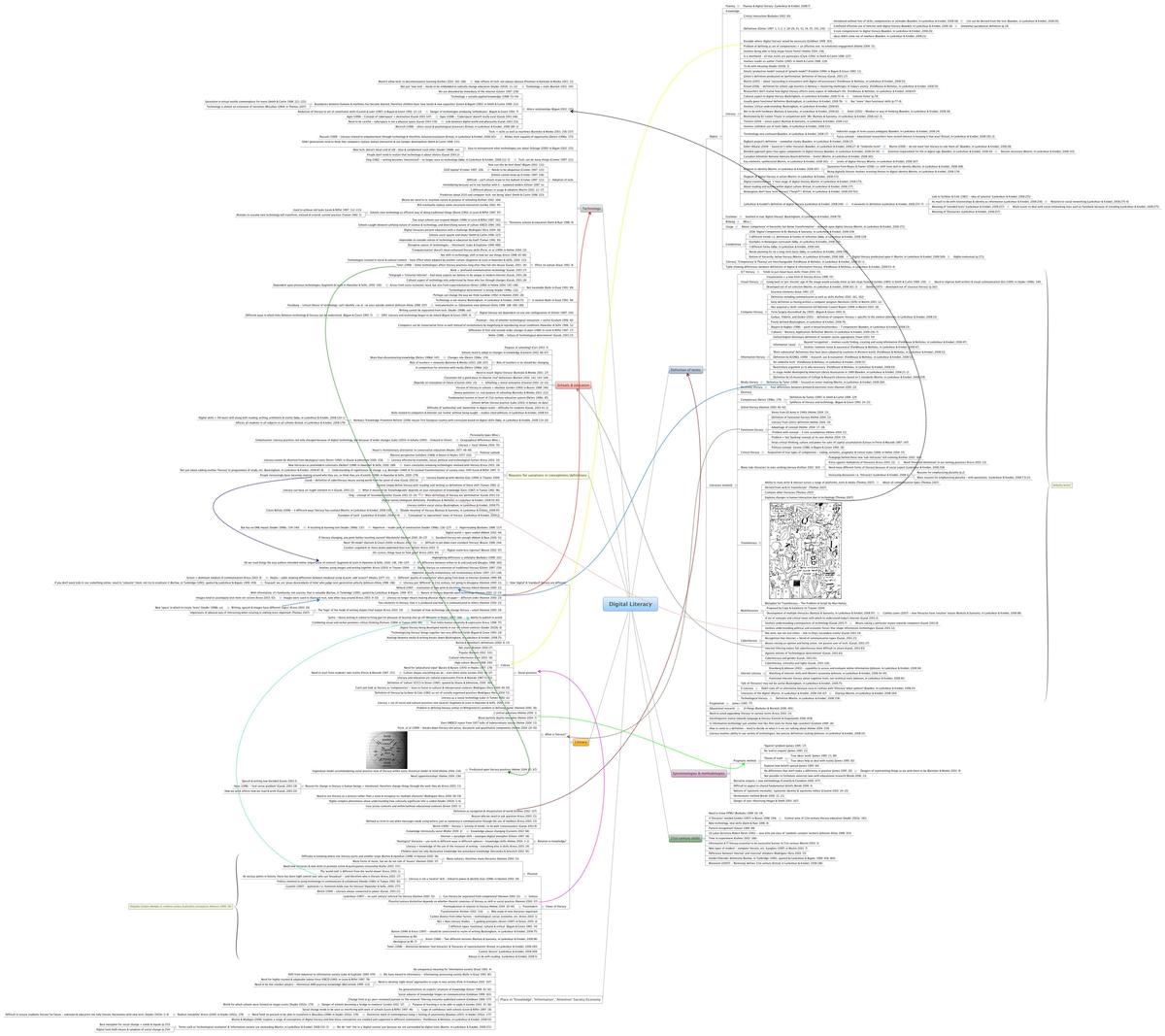


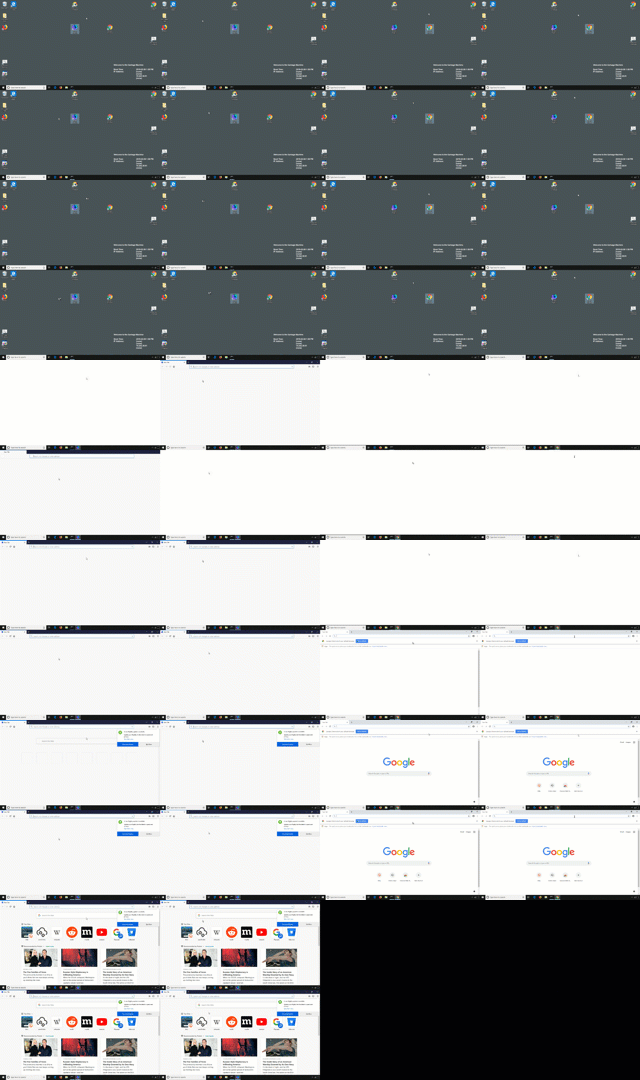



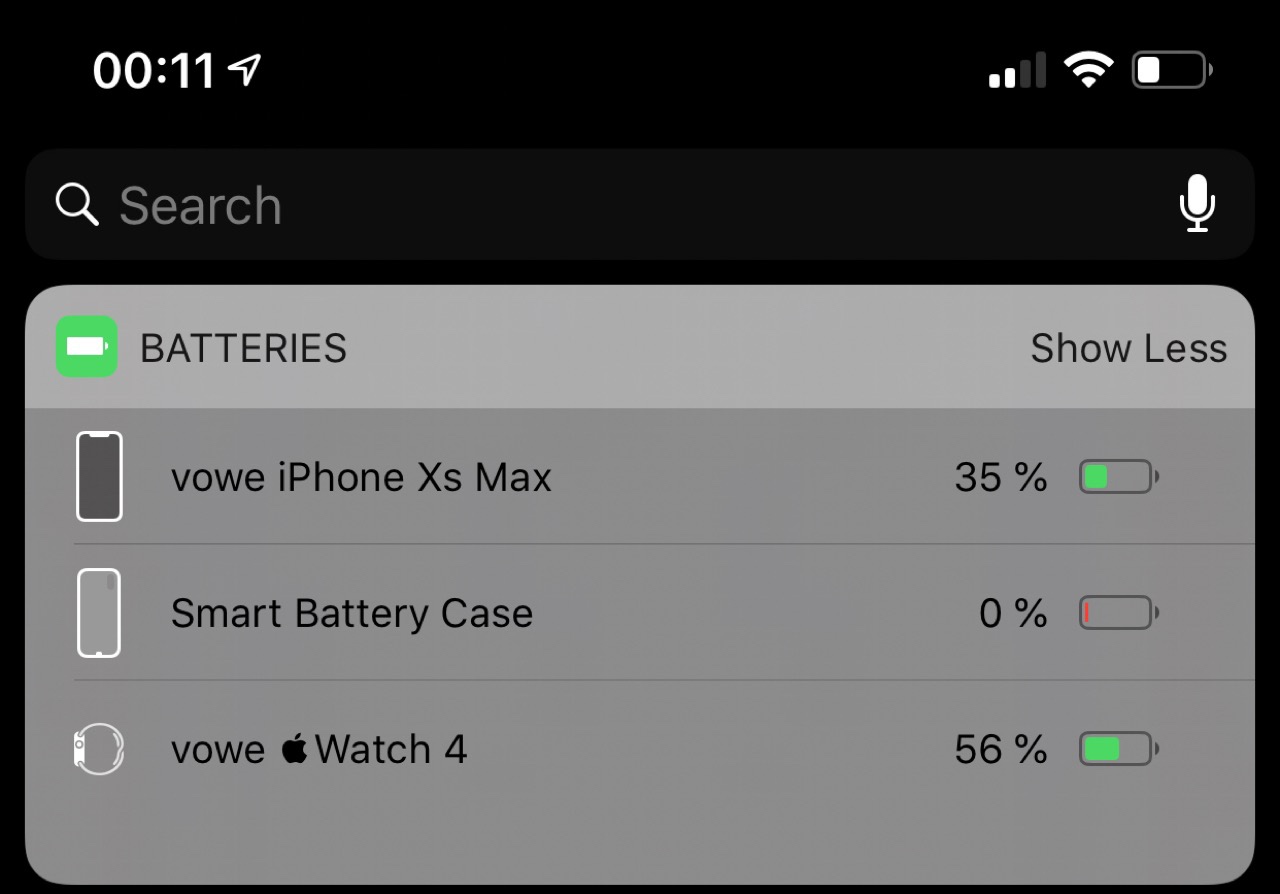


 Forget phones with triple or quad-cameras at its back. HMD Global-owned Nokia is here to take things to the next level with the Nokia 9 PureView. As the PureView branding suggests, the Nokia 9 is a camera powerhouse featuring 5 rear cameras. It is a unique setup which makes use of five camera sensors of the same focal length and resolution — 12MP and f/1.8 aperture.