Shared posts

23 Mar 07:36

10 things R can do that might surprise you

Over the last few weeks I’ve had a couple of interactions with folks from the computer science world who were pretty disparaging of the R programming language. A lot of the critism focused on perceived limitations of R to statistical analysis.

It’s true, R does have a hugely comprehensive list of analysis packages on CRAN, Bioconductor, Neuroconductor, and ROpenSci as well as great package management. As I was having these conversations I realized that R has grown into a multi-purpose connective language for things beyond just data analysis. But that the functionality isn’t always as well known outside of the R community. So this post is about some of the ridiculously awesome features of R that may or may not be as widely known. Here are 10 things R can do you might not have known about, building on Kara’s great tweet thread about lighthearted things to do with R.

1. You can write reproducible Word or Powerpoint documents from R markdown

The rmarkdown package lets you create reproducible Word documents and reproducible Powerpoint Presentations from your R markdown code just by changing one line in the YAML!

2. You can build and host interactive web apps in just a few lines of code

In just a few lines of code you can create interactive web apps in R. For example, in just 36 lines of code you can create an interactive dashboard to explore your BMI in relation to the NHANES sample using the flexdashboard package.

3. You can host your web apps in one more line of R code

The other cool thing about building web apps in R is that you can get them up on the web with just another line or two of R code using the rsconnect package. You can put them up on your own server or, even easier, host them on a cloud server like shinyapps.io.

4. You can connect to almost any database under the sun and pull data with dplyr/dbplyr

It is really easy to connect to almost any database (local or remote) using the dbplyr package. This makes it possible for an R user to work independently pulling data from almost all common database types. You can also use specialized packages like bigrquery to work directly with BigQuery and other high performance data stores.

5. You can use the same dplyr grammar locally or on data on multiple different data stores

Once you learn how to do basic data tranforms with dplyr, you can apply the same code to analyze data locally on your computer or remotely on any of the above databases or data stores. This simplifies and unifies data manipulation across multiple different databases and languages.

6. You can fit deep learning models with keras and Tensorflow

The keras package allows you to fit both pre-trained and denovo deep learning models directly from R. You can also work with the direct TensorFlow interface to fit the same kind of models.

7. You can build APIs and serve them from R

The plumbr R package lets you convert R functions to web APIs that can be integrated into downstream applications. If you have Rstudio Connect you can also deploy them as easily as you deploy web apps.

8. You can make video game interfaces with R

Not only can you deploy web apps, you can make them into awesome video games in R. The nessy package lets you create NES looking Shiny apps and deploy them just like you would any other Shiny app.

9. You can analyze data using Spark clusters right from R

Want to fit big, gnarly machine learning models on huge data sets? You can do that right from R using the sparklyr package. You can use spark on your Desktop or a monster Spark cluster.

10. You can build and learn R interactively in R

The swirl package is an R package that lets you build interactive tutorials for R, right inside R.

This is by no means a comprehensive list. You can also connect to AWS Polly and write text to speech synthesis software or build Shiny apps that respond to voice commands or build apps that let you combine deep learning and accelerometry data to cast Harry Potter spells. The point is that R has become much more than just a data analysis language (although its still good at that!) and being good at R opens the door to lots of practical and cool applications.

23 Mar 07:28

Some More RSS-y Things

I didn’t know that NewsBlur was open source — including the iOS app — and that David Sinclair works on it. Very cool.

* * *

The iDownloadBlog ends an article on Reeder 4 beta with this:

Is there anyone out there still using RSS?

Don’t tell me I’m the only one…

I get it. And I realize the person was kind of joking around.

But here’s the thing: tons of people use RSS readers. There’s no shame in it; you’re not the last person; there’s not going to be a last person.

This category of software is not going away, and no one needs to be meek about it. There are probably more RSS reader apps these days than ever before.

Other services for getting news and links exist too. But there are lots and lots of people who use RSS readers. Not still using them, as if they’re stuck in the mud. No: they are people who like them and see no reason to stop liking them! (Many of those people use other services too. Of course!)

* * *

Nick Heer writes about developments on the RSS front:

I think the hardest question for RSS readers is how it could gain broader interest outside of the more technically sophisticated user group.

I agree that that’s a hard question, but I’m also not sure if it’s the most important challenge. I’m not writing an RSS reader because I expect a mass market to use it. I think lots of people will, but nothing like the number of Mac users who use Twitter, Facebook, or even Apple News.

That said… we should be trying to bring the benefits of RSS readers to more people based on ethical grounds. Deliberately — or through inaction — reserving technology for a sophisticated group is Not a Good Thing.

The answer is probably a collection of answers, and the way to get there is step by step.

23 Mar 07:28

We Can’t Imagine

by Dave Pollard


image from spirit111 at pixabay cc0

to see that there is no ‘us’, nothing apart,
that everything is just a wondrous appearance,
that there is only ‘oneness’
(though that poor word doesn’t begin to describe it,
it’s as close as a ‘language of separation’ can come).

to see that nothing is personal, or important,
nothing is about us, or happening to us or to anyone,
it is just what is appearing to happen, outside of space and time.

to see that it’s just an amazing show of serendipity and joy
a magical expression of endless possibility,
a gentle, eternal wow.

we can’t imagine how perfect this is, right here, now,
unceasingly and everywhere,
as long as we are caught in the terrible prison of our self,
sentenced to life without the possibility of parole.

we can’t imagine how it is to be free,
to see everything as it really is, to be everything,
a song and celebration without end.

but we will.
even for ‘us’,
(though there will then be no ‘us’),
beyond the struggle and the suffering,
beyond the anger and fear and sorrow,
one day everything will be free.

it is already,
but we can’t imagine.

23 Mar 07:28

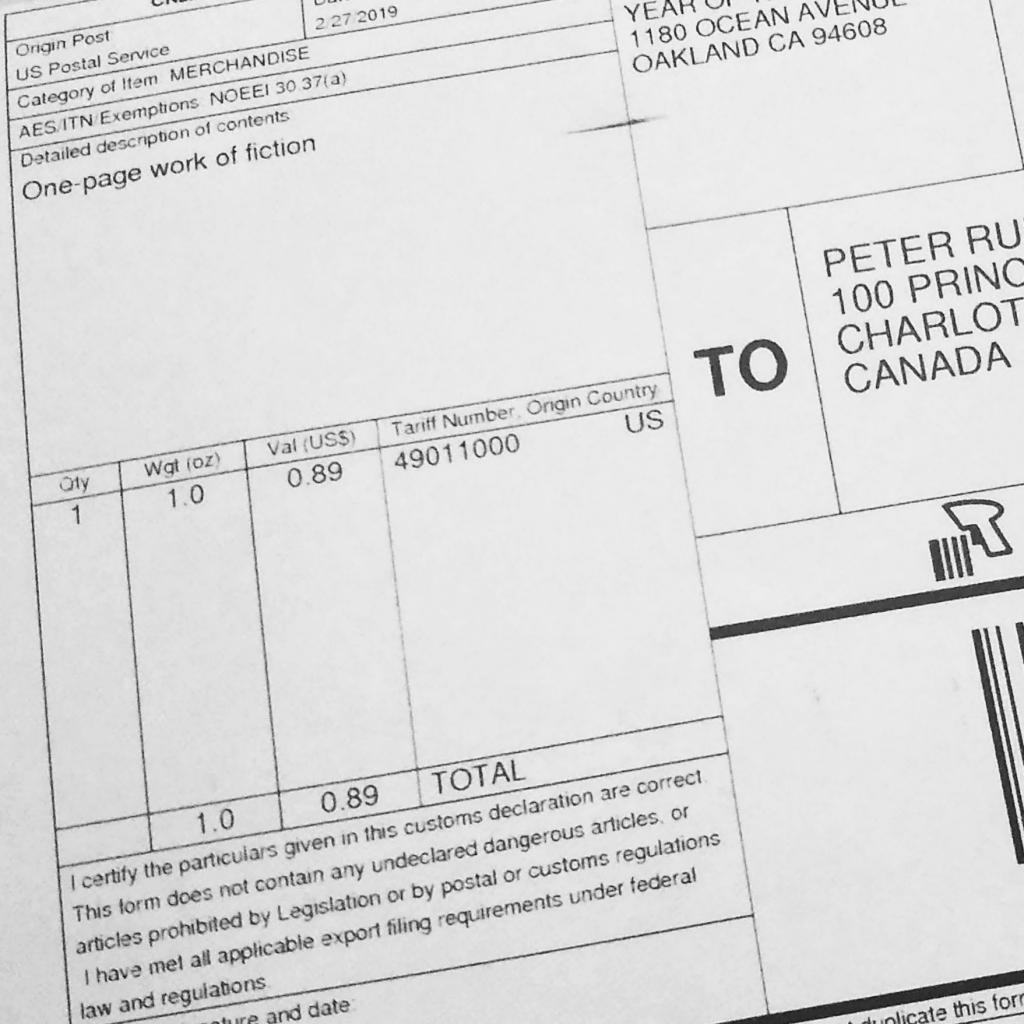
"One-page work of fiction"

by peter@rukavina.net (Peter Rukavina)

I received my copy of Robin Sloan’s Treasured Subscribers, today in the post.

The “detailed description of contents” on the USPS customs form reads “One-page work of fiction.”

Which is exactly what it is.

The best 89¢ I’ve ever spent.

23 Mar 07:27

What is idempotence?

by Eric Normand

Idempotence means duplicates don’t matter. It means you can safely retry an operation with no issues. The classic example is the elevator button: you press it twice and it does not call two elevators. We explore why we would want that property in an email server.

Transcript

Eric Normand: What is idempotence? Why does it help so much with programming in distributed systems? By the end of this episode, you will know how to implement idempotence in your own system.

Hi, my name is Eric Normand, and I help people thrive with functional programming. Idempotence is important because it captures the essence of the safe retry. Without safe retries, you really cannot implement safe distributed protocols.

What is idempotence? The essence of it is that if you ask twice, it’s the same as asking once. It has the same effect. The classic example is the elevator button. You go into a bank of elevators. You press the button. It lights up. It calls the elevator. Then someone else comes in, and they go and they press the button, too, the same button. It’s already lit up.

We know that that doesn’t have an effect. We still want to do it for some reason. It’s a just-in-case. Maybe they’re right, maybe the signal didn’t get to the elevator. It’s worth trying because it can’t hurt anything. That’s the kind of thing that we want to instill in our distributed systems. Technically, it is an algebraic property.

When you’re talking about pressing a button, this is an active effect you’re having on the world. Whereas in algebra, it’s a property of pure functions, mathematical functions. It means, if you capitalize the letters of a string twice, it doesn’t matter. The first time is enough. Technically, if you apply F to a value, let’s say F(x), it’s the same as applying F to applying F(x).

You do the double application of F. It has the same effect as the single application. You could just say that it means duplicates don’t matter. I pressed the button twice. The second one doesn’t matter. If I apply the same function twice, the second time does not matter. The first time matters. The second time, the third time, the fifth time, those do not matter.

Why is this important? In a distributed system, especially in a distributed system, we have this problem where messages over the network are unreliable. Basically, if you send a message, it might not get there and you won’t know. You cannot know if it got there.

Sometimes, you know if it didn’t get there. You get some connection-broken message, but sometimes you just don’t hear back. It timed out.

Did it get there and the acknowledgement timed out, or did it never get there? Did the other system crash? Did it crash before it sent my email or after it sent my email? You don’t know. It crashed, it’s too late. Email is actually a good example because you don’t want to send the same email twice.

Let’s say you have an email server and you send it a message saying, “Please send this email to my customer.” You don’t hear back. You just don’t hear an answer. What do you do? What happened? Do you send it again?

What if it did already send the email? Is it going to send the same email a second time? If it didn’t send it and I don’t send the message again, then the customer won’t get the email.

This is really a real business problem. Idempotence would solve that. If I could send the same message again, and it won’t break anything, it won’t have a second effect. Just like that elevator button, I could send this message all day. I could send it a hundred times, and the email would only get sent once. That’s a good thing.

What it lets you do is decouple. It’s decoupling the number of effects that happen with the number of times that you request that effect. I can request it a hundred times, but it will only get sent once. That is something that you really want to have. You want to be able to retry safely with limited information.

I don’t know if this went through, but I’m going to try again. That is a very nice property to have in your system.

How do you implement idempotence? The simple way if we look at this email server, is you need some way of identifying the email. Some way of saying, “This is the ID of the email that I want to send. If I send you the same email with the same ID, an email with the same ID again, don’t send it a second time.”

The server that’s receiving it has to remember all of the IDs of the emails it has ever sent. That is for total complete idempotence. Usually, that’s not practical. You can’t remember every ID because it could be in the millions. They could date back for many years. It is unlikely that you’re going to get a request that takes years to arrive.

In a practical case, you might have a window that says, “Well, we keep three days of IDs.” That means that you can resend the same ID within those three days, and we won’t send it a second time. You have to find some practical limit that balances the memory requirements and the retries that you’re doing in your system.

Notice, it’s very important, this concept of identity is very important. If you don’t have a concept of identity, what does it mean to send the same message again? If I want to send two emails to this person, I need to be able to send two emails to them. I need some way of saying that they’re different. If I want to retry, I want some way to say that this one is the same as that one.

You need some identity on your requests. If you’re looking at an elevator button, there’s probably an identity, deep in the electronics of this elevator service. It knows what button I pressed. It’s third-floor-up, or fourth-floor-down. There’s some identifier for that button, which allows it to light up, first of all, and stay lit until it needs to be turned off.

That identifier is probably used in multiple places. It puts in a request, “Oh, we need an up-elevator on the third floor because we know that button and what it means.” It’s also used to say, “Hey, I’m already sending that third floor elevator. I don’t need to do that again.” It’s using that identifier.

Let’s recap on this. Wait, no, I did not say how. I did halfway of how. The first half is you need an identity. The second one is once you have that identity, you use a data structure with an operation that is already idempotent. A common idempotent data structure with an idempotent operation is a set, like an in-memory set.

If you have a set of numbers, you give each email a unique number. As the email server sends off emails, it remembers the number in a set, and just adds it to that set. If you add the set, add it twice, you’ve got idempotence already.

Same for an elevator. If you have a button that has an ID, let’s say it’s like the string third-floor-up, or third-floor-down, or fourth-floor-up, fourth-floor-down, you save that into a set that says it’s active. It’s been requested. That means you can send it twice, and it won’t have any effect, to send it twice.

Now, of course, this does not take into account the actual action, the effect that happens by pressing that button, which is to send an elevator to that floor. Same with the email. It doesn’t take into account sending the email or not sending the email.

To determine whether you want to send it, it’s pretty simple. Before you add the thing to the set, the ID, you ask the set, “Do you contain this ID?” If it does, then you’re done. If it doesn’t, you send the email and then you put the ID in the set. There are other data structures that are idempotent. If you have hash maps, those are idempotent.

If you add the same key and value twice, then it has no extra effect. Another thing that you could consider idempotent is something like adding zero to a number. If you need some kind of idempotent addition, you can do that.

There are other data structures that have idempotence in them. They’re more complicated and they’re specialized usage. I’m not going to go into them.

Imagine they’re like sets with other properties. You can add things in, but maybe they don’t grow as fast as a set would grow. They’re like more probabilistic, the kinds of data structures.

I mentioned strings being uppercased. That’s something that’s idempotent as an operation. You could use that if you need to write, like uppercase name means something different from regular case name.

That means that you could do it twice, and it wouldn’t have any extra effect. You probably use this in something, like your email system might lowercase all email addresses before it compares them. What if it’s already lowercased? That doesn’t matter. It’s just going to lowercase everything. If it’s already lowercased, there’s no problem.

Let’s recap. Idempotence means duplicates don’t matter. It’s an algebraic property of certain functions, certain operations, but we extend it to actions in the world. We extend it to effects that we can have on the world, where we’re saying requesting that effect twice is the same as requesting it once. Those duplicates don’t matter there, also.

We need it in distributed systems so that we can have safe retries. It lets us decouple what gets done from how many times we request that it’s done. You can easily implement it using idempotent data structures and operations. It requires a sense, a notion of identity in the messages.

Do yourselves a favor and look for some services that need to happen exactly once. Could be something like sending an email. Could be writing a message to a log. Could be some user setting in your user-panel, and wrap them in something like a data structure that makes them idempotent.

Do me a favor please and share this with friends. If you found it valuable, they might find it valuable, too. Also, if you found it valuable, you probably want to subscribe. That way you’ll get all of the other new episodes as they come out. You won’t miss that value that you have already discovered.

I like to be in deep discussions with smart people. Please email me. I’m eric@lispcast.com or get in a discussion on Twitter. I try to use Twitter as a discussion medium. I’m @ericnormand with a D there.

Also, you can find me on LinkedIn. I’m trying to get better at LinkedIn. It’s a little hard for me. If that’s where you like to connect, let’s connect and start having a conversation.

All right. See you later.

The post What is idempotence? appeared first on LispCast.

23 Mar 07:27

Basic Platform Optimization Tips

by Richard Millington

There are a bunch of basic platform optimization tips.

  • Have a dynamic banner at the top of the page adapted to members by level of activity/tenure in community.
  • Feature the latest activity above the fold on the community homepage.
  • Reduce the size of the banner/top image to 1/3rd of above-the-fold area.
  • Provide an area for people new to the topic (not to the community) to quickly get the best resources and reduce the sense of overwhelm.
  • Search box at the top of the page (esp. for customer support).
  • Clear contrasts between text and background images/colors.
  • Static copy is kept to a minimum and dynamic copy fills most of the page to always provide regulars something new to see.
  • Members can quickly scan the latest content for activity they want to participate in and respond to.
  • Separate most popular from most recent and show members both simultaneously (in 2 or more separate areas on the homepage).
  • Pinned discussions featuring most exciting content at the top.
  • Avoid stock photos where possible, use photos of your members.
  • Clear calls to action based upon desired contributions from community members.
  • Community is linked to from a tab on company homepage (and ideally contributions are featured on the homepage).
  • Navigation bar at the top or left-hand side.
  • All content is a maximum ‘three clicks deep’.
  • Long-scroll showing multiple types of engagement.
  • Banner shrinks to fit mobile – with swipe option to remove.
  • Static copy removed in favour of a one-screen view of community activity.
  • Calls to action significantly enlarged.
  • Member can easily tap/swipe to like/share community activity.

p.s. Full list of optimization is part of our benchmarks.

23 Mar 07:27

Helping companies through the Microsoft for Sta...

Helping companies through the Microsoft for Startups program has reinforced my feeling that many problems companies face as they grow are really people problems in disguise. To help figure out what a startup needs to focus on at each phase of the startup lifecycle, Wendy van Ierschot gives us a road map.

We’ve identified five stages, each pegged to a certain number of employees. For each stage, we’ve established which areas an organisation should put its HR focus on.

The diagram in the article showing what to focus on at each stage feels about right, and it’s a better starting point to implementing HR strategy in a startup than having nothing at all.

23 Mar 07:27

Of course Kubernetes isn’t always the answer

Kubernetes is the new hotness, for sure, and pretty awesome to boot. But is it really needed, especially when you’re bootstrapping a new idea? Maybe not. UK-based Freetrade started out with a decently designed Kubernetes-based stack, complete with all the bells and whistles, but ended up scrapping that plan and launching with Firebase functions.

Even now at 20k users, it’s been the right decision for them.

In fact, not only did we not need it - but if we’d launched with this stack with just two engineers (our launch team size!) I’m confident our customers would have been very unhappy.

As they continue to grow, I’m sure that Freetrade may end up putting some functionality into on-demand container instances or even spin up a Kubertnetes cluster to handle the parts of their app that need it. When they do, however, I’m sure they’ll be able to leave a significant portion of their application surface in functions.

23 Mar 07:27

Five-word movie review: “Captain Marvel”

by sheppy

Phenomenal cosmic power! Amazing movie!

23 Mar 07:27

Always On

by L. M. Sacasas

In December, it’s common for writers to highlight some of their best work from the year in Twitter threads. Almost without exception, these threads seem laced with self-deprecating humor, irony, or, more often, some combination of both. A more matter-of-fact or even earnest tone was somehow not an option; instead what seemed required was a kind of ironic disavowal of disavowal with regard to our online presentation: The tone foregrounds the idea that we all must put on an act that fools no one. I was sympathetic myself. Truth be known, I didn’t post such a thread precisely because I didn’t think I could pull that tone off.

That tone’s peculiar kind of self-consciousness seemed to me connected to the anecdotes of depleted willpower that Anne Helen Petersen described in “How Millennials Became the Burnout Generation.” Take, for example, Tim, who could not quite manage to register to vote ahead of the 2018 elections, or Petersen herself, who admits to what she calls “errand paralysis”: “I’d put something on my weekly to-do list, and it’d roll over, one week to the next, haunting me for months.”

If writing had heightened consciousness to extend the self, newer technologies may heighten it to a point where it no longer sustains the self but undermines it

Millennials, of course, are not the first to feel a persistent sense of depletion. Among the historical antecedents, as Petersen notes, is neurasthenia, a nervous condition frequently diagnosed in the 19th century. Another antecedent is acedia, a combination of indifference, apathy, carelessness, self-loathing, and sleepiness that early Christian monks called the “noonday devil.” The term referred to an inability to get things done, especially the seemingly straightforward daily tasks it was a monk’s duty to perform, such as reading and prayer. Over time, acedia slipped loose of the monastery and was supplanted by words like sloth or laziness, although ennui may best capture its spiritual valence.

The self-conscious online tone is not exactly an expression of acedia in itself but could perhaps be seen as a leading indicator. Petersen suggests that social media platforms — she cites LinkedIn, Instagram, Facebook, and Twitter — contribute to burnout: They reinforce the idea that people should always be working by providing another arena for invidious comparison, self-branding, and optimization. But something more subtle may be happening as well. Social media platforms, like all technologies that mediate the self, “heighten consciousness,” in media scholar Walter Ong’s words. But if earlier technological developments, like writing, heightened consciousness to extend the self, newer technologies may heighten it to a point where it no longer sustains the self but undermines it.

Ong, a student of Marshall McLuhan, is perhaps best remembered for Orality and Literacy, his book about the social impact of the invention of writing on oral cultures. Writing, Ong repeatedly reminded readers, must be deliberately learned. “There is,” he notes, “no way to write naturally.” But this artificiality is not, in his view, a bad thing — far from it. “Alienation from a natural milieu can be good for us and indeed is in many ways essential for full human life,” he argued. “To live and to understand fully, we need not only proximity but also distance. This writing provides for consciousness as nothing else does.” By externalizing thought and expression, writing — the “technologizing of the word,” as Ong described it — distanced us from the flux of immediate experience and expanded consciousness into space and across time. The diary could be considered paradigmatic: It makes subjectivity an object of reflection, both in the moment of composition and for future readers as well.

Writing’s extension of consciousness has a direct effect on identity. As philosopher Robert Spaemann argued in Persons: The Difference Between ‘Someone’ and ‘Something,’ “the constitution of personal identity is inseparable from the process of self-externalizing.” This process, in his view, took place in recollection rather than direct experience. “It is memory,” he claimed, “that really reveals us to ourselves.” Spaemann was thinking chiefly of unaided or organic memory, but in Ong’s view, writing externalizes this memory work, encouraging and sustaining deeper self-explorations of the psyche and novel forms of self-expression. Just as a musician who interiorizes how to play an instrument can more fully realize the human potential for musical expression, likewise, Ong argues, the interiorization of writing allows for a fuller realization of human consciousness in general.

Social media platforms, like writing (or any other representational media), also externalize and heighten consciousness through self-alienating or distancing effects: To glance at your profile, to frame an image or message for posting, or to scroll through an algorithmically sorted feed is to see at least some aspect of yourself suspended in time and space. But the audience we address through these platforms, especially with communication broadcast to no one in particular, is quite different from the audience presumed by writing, let alone the interior audience of one in our memory that Spaemann highlighted. This online audience is simultaneously ever-present but elusive, especially through mobile devices. It remains at a physical remove, but our interactions with it can approximate the immediacy of face-to-face communication, in that reactions can be instantaneous and pointed directly at us. Response can also trickle in over time, from respondents that range from expected to unanticipated to unwanted. The audience’s resulting dispersal through space and time leads to a sporadic and unpredictable set of interactions, which can anchor habits of continual checking or an intensified susceptibility to push notifications (part of how platforms try to elicit compulsive engagement). The result is that we can’t help but be aware of ourselves through these platforms as continual performers, moment by moment.

To glance at your profile, to frame an image or message for posting, or to scroll through an algorithmically sorted feed is to see at least some aspect of yourself suspended in time

This audience elicits a different kind of performance from writing, “heightening consciousness” in a different way. Writing, in Ong’s view, generated an individuating and interiorizing experience of the self. But the perpetual, open-ended encounters through social media retrieve certain dynamics of oral societies, integrating us into what seems like a live audience but is in fact stripped of many of the vital cues we read to make sense of our situation and act accordingly. The rich array of handles supplied to communication when bodies share a physical space are lost, so interactions become marked by heightened volatility, uncertainty, and anxiety. If the self we become aware of when we write (or read) appears to us as a solitary reality encountered within, broadcast-oriented social media posits an immanent, exteriorized self contingent on continued exposure.

What kind of self derives from this condition? Imagine a wedding photographer who circulates, trying to capture candid images of spontaneous or unscripted moments. “Act naturally,” they might joke, before encouraging everyone to “pretend I’m not here,” ironically vocalizing the impossible possibility to diffuse some of the pressure of doing as they say. Now imagine that you are that photographer, but that it is also your wedding. And imagine also that the wedding never ends.

Acting “naturally” implies a measure of self-forgetfulness, but foregrounding the camera and the stakes of the images precludes that. It achieves the contrary, heightening self-awareness, leaving people trapped in a state of perpetual consciousness of performing, referencing it repeatedly in an effort to disavow or mitigate it. To borrow sociologist Erving Goffman’s terminology, broadcasting on social media amounts to a substantial expansion of what he called our “front stage,” where we are consciously and continually involved in the work of impression management. In his metaphor of social life as theater, Goffman presumed the existence of a backstage, where we can let down our guard, but the open-ended communication in time and space on social media expands our front stage, divorcing it from any particular place that we could choose to leave. The audience is always potentially there with us, always soliciting new material, prompting us to think of our lives in terms of material. Those who give the appearance of inviting an audience into the intimacy of the backstage realm, in fact, often seem the most adept at using social media, as if this were the fundamental skill it hones. But they have really mastered the art of transforming the backstage into another front stage.

The front stage thus begins to colonize the backstage. Provided you have a connected mobile device, you can always be involved in impression management, even if you find yourself alone. Indeed, we seem to crave the front-stage experience to the degree that we find it difficult to tolerate solitude.


It may seem that we’ve come a long way from “millennial burnout,” so let me try to make the connection more apparent by way of Hamlet, another person who had trouble getting things done. His “To be or not to be” soliloquy is, among other things, about “errand paralysis,” giving voice to the paralyzing power of his unrelenting self-consciousness:

Thus conscience does make cowards of us all,
And thus the native hue of resolution
Is sicklied o’er with the pale cast of thought,
And enterprises of great pitch and moment
With this regard their currents turn awry,
And lose the name of action.

Though we may not be contemplating literal revenge killings, our social media use still may have something in common with what Hamlet articulates in these lines. Our own unrelenting self-consciousness may similarly cause our “enterprises,” be they great or trivial, to “lose the name of action.” The self that experiences itself chiefly in front-stage mode — owning the conspicuous artificiality of its situation and trying to manage the impressions of how much impression management it’s doing — may discover that it is both exhausted and no longer sure of itself. Whatever assurance we might have about our motives, intentions, and purposes dissolves under the withering light of such unrelenting self-consciousness. Hence the paralysis of will.

We can understand backstage experience, then, as a respite not only from the gaze of an audience but also the gaze we must fix on ourselves to pull off our performances. By colonizing the comparatively unguarded and relaxed backstage, the front-stage social-media experience deprives the self of a space for renewal. “If you tell people how they can sublimate,” the psychologist Harry Stack Sullivan once quipped, “they can’t sublimate.” Likewise, if you perpetually involve people in the work of becoming themselves, they will never be themselves.

But this is, in fact, only part of the picture. If platforms deplete our willpower by making us hyper-self-conscious, they also are increasingly structured to make us experience the will as beside the point. Platforms are designed to make us less conscious of our decisions about how we spend time on them, attempting to automate decision-making with auto-play, notifications, and algorithmically optimized feeds to generate compulsive “engagement.” The algorithms that ostensibly reveal what your “true” or “authentic” self would choose for itself feed off the very exhaustion that the platforms generate, offering refuge from the burden of identity work in the automation of the will. Our noonday devil thus takes the form of the infinite scroll and the listlessness it induces. (It is suggestive that a popular tool for online time management is called Freedom.)

If platforms deplete our willpower by making us hyper-self-conscious, they also are increasingly structured to make us experience the will as beside the point

Social media platforms, then, heighten our consciousness of the performative aspects of our identity and simultaneously aim to diminish our consciousness of how we use them. These two seemingly opposed tendencies transform the platforms into powerful dissolvers of will, leaving us more susceptible to the algorithms and the marketing that powers their economic model, as well as structuring a particular form of social order. Rather than foster the display our individuality, they devolve into mechanisms of conditioning. The cumulative effect of the networks of surveillance, self-monitoring, operant conditioning, automation, routinization, and programmed predictability in which we are enmeshed is not enhanced freedom, individuality, spontaneity, thoughtfulness, or joy. Their effect is to stabilize us into routine and predictable patterns of behavior and consumption.


In The Origins of Totalitarianism, Hannah Arendt argues that “totalitarianism strives not toward despotic rule over men, but toward a system in which men are superfluous.” Superfluity, as Arendt uses the term, suggests some combination of thoughtless automatism, interchangeability, and expendability. A person is superfluous when they operate within a system in a completely predictable way and can, as a consequence, be easily replaced. Individuality is worse than meaningless in this context; it threatens the system and must be eradicated.

Arendt saw concentration camps as the prototypical fulfillment of the totalitarian threat to individuality: “The society of the dying established in the camps is the only form of society in which it is possible to dominate man entirely.” But the dark genius of our age has been to put a Huxleyan spin on that Orwellian threat, trading on the apparent expression of individuality rather than its suppression. Algorithmically driven social media platforms appear to encourage the expression of individuality, not only by inviting us to showcase our memories, tastes, preferences, aspirations, beliefs, and values but also by making those things appear to operate directly on the flow of material we will see. In reality, they aspire to be Skinner boxes. Spontaneous desire, serendipity, much of what Arendt classified as “natality” — the capacity to make a beginning at the heart of our individuality — all of it is invoked only to serve the purposes of achieving programmed predictability.

Perhaps it seems that Arendt’s theorizing about 20th century totalitarianism has little to do with the ephemeral and trivial nature of so much of what transpires on social media platforms. However, as Arendt warned, “totalitarian solutions may well survive the fall of totalitarian regimes in the form of strong temptations which will come up whenever it seems impossible to alleviate political, social, or economic misery in a manner worthy of man.” Or, we might add, when the temptation is the banal aim of maximizing profit by hijacking the all too human desire to appear before others and perhaps be affirmed in our distinctive particularity.

In a 1954 essay, “The Crisis in Education,” Arendt observed that “everything that lives, not vegetative life alone, emerges from darkness and, however strong its natural tendency to thrust itself into the light, it nevertheless needs the security of darkness to grow at all.” She has in mind the place of security that is necessary for a child’s healthy development, but the observation applies more widely. The self, at whatever stage of maturity, may need a place of darkness if it is to continue to grow. But in our current situation, the self is continuously bathed in the light of heightened self-consciousness. Along similar lines, one of Arendt’s first professors at the University of Berlin, Romano Guardini, wrote, “Life needs the protection of nonawareness.” “Our action is constantly interrupted by reflection on it,” he added. “Thus all our life bears the distinctive character of what is interrupted, broken. It does not have the great line that is sure of itself, the confident movement deriving from the self.”

The practice of performing our lives before a diffuse, semi-present, always available audience has brought a withering light to bear upon our inner lives while suffusing our public acts with doubt, half-heartedness, and hesitation. But that doesn’t mean we should be striving to return to some more authentic or unmediated self that might now seem as though it had been available to us in the age before social media. Rather the point is that the experience of the self always emerges in relation to the media used to express it. These media are neither neutral nor interchangeable in how they give particular form to the self and circulate it. The question we should ask, then, is whether the distinctive experience of the self implicit in how we now communicate is conducive to our flourishing and to the cultivation of a more just society. We have reason to be skeptical on both counts.

23 Mar 07:27

Time travel in The Peripheral

Time » Time travel in William Gibson's 2014 novel The Peripheral seems to obey a relatively straightforward forking model with a few sensible twists which facilitate the plot and bring forward some themes very familiar to those familiar with time travel stories. I'm going to avoid specifics, but read on with caution. * More than a century into the future, there is, somewhere, a server of unclear provenance, construction and purpose. Using this server, it is possible to send information back in time and interfere with the past. The first act of interference causes the timeline to fork. The present timeline where our characters dwell remains unaffected. Meanwhile, a new timeline (referred to as a "continuum" or "stub") spins off from the original at the point of the fork, and begins to chart its own history, unconstrained by anything which happened in the original timeline. As we would guess, it's likely that events in the new timeline will, for the medium-term at least, play out largely as...
23 Mar 07:27

Facebook, Microsoft, and malware

by Benedict Evans
  • Facebook’s struggle with abusive behavior today looks a lot like Microsoft’s struggles with malware 20 years ago: people take advantage of an open platform, and you have to work out how far you can close the holes, how much you can scan for bad things, and whether you need to change the whole concept from the ground up.

  • For Microsoft’s malware problem, however, this was not the long-term answer: instead the industry changed what security looked like by moving to SaaS and the cloud and then to fundamentally different operating system models (ChromeOS, iOS) that make the malware threat close to irrelevant.

  • Facebook’s pivot towards messaging and end-to-end encryption is (partly) an attempt to do the same: changing the model so that the threat is irrelevant. But where the move to SaaS and new operating systems happened largely without Microsoft, Facebook is trying to drive the change itself.


Way back in 1995, when there were just a hundred and fifty million PCs on Earth, somebody had a wonderful idea. Or, as the Grinch would say, a wonderful, terrible idea.  

Microsoft had put a huge amount of effort into turning Office into an open development platform. All sorts of large and small businesses had created programs (‘macros’) that were embedded inside Office documents and allowed them to create wonderful automated workflows, and there was a big developer community around creating and extending this.

But the Grinch realized that there was an API for looking at your address book, an API for sending email and an API for making a macro run automatically when you opened a document. If you put these together in the right order, then you had a virus that would email itself to everybody you knew inside an innocuous-looking Word document, and as soon as they opened it it would spread to everyone they knew.

This was the ‘Concept’ virus, and it actually only infected about 35,000 computers. But four years later ‘Melissa’, doing much the same thing, really did go viral: at one point it even shut down parts of the Pentagon.

I've been reminded of this ancient history a lot in the last year or two as I’ve looked at news around abuse and ‘hostile state activity’ on Facebook, YouTube and other social platforms, because much like the Microsoft macro viruses, the ‘bad actors’ on Facebook did things that were in the manual. They didn’t prise open a locked window at the back of the building - they knocked on the front door and walked in. They did things that you were meant to be able to do, but combined them in an order and with intent that hadn’t really been anticipated.

It’s also interesting to compare the public discussion of Microsoft and of Facebook before these events. In the 1990s, Microsoft was the ‘evil empire’, and a lot of the narrative within tech focused on how it should be more open, make it easier for people to develop software that worked with the Office monopoly, and make it easier to move information in and out of its products. Microsoft was ‘evil’ if it did anything to make life harder for developers. Unfortunately, whatever you thought of this narrative, it pointed in the wrong direction when it came to this issue. Here, Microsoft was too open, not too closed.

Equally, in the last 10 years many people have argued that Facebook is too much of a ‘walled garden’ - that is is too hard to get your information out and too hard for researchers to pull information from across the platform. People have argued that Facebook was too restrictive on how third party developers could use the platform. And people have objected to Facebook's attempts to enforce the single real identities of accounts. As with Microsoft, there may well have been justice in all of these arguments, but also as with Microsoft, they pointed in the wrong direction when it came to this particular scenario. For the Internet Research Agency, it was too easy to develop for Facebook, too easy to get data out, and too easy to change your identity. The walled garden wasn’t walled enough. 

The parallel continues when we think about how these companies and the industry around them tried to react to this abuse of their platforms:

  • In 2002, Bill Gates wrote a company-wide memo entitled ‘Trustworthy Computing, which signaled a shift in how the company thought about the security of its products. Microsoft would try to think much more systematically about avoiding creating vulnerabilities and about how ‘bad actors’ might use the tools it chose to create, to try to reduce the number opportunities for abuse 

  • At the same time, there was a boom in security software (first from third parties and then from Microsoft as well) that tried to scan for known bad software, and scan the behavior of software already on the computer for things that might signal it’s a previously unknown bad actor. 

Conceptually, this is almost exactly what Facebook has done: try to remove existing opportunities for abuse and avoid creating new ones, and scan for bad actors. 

Microsoft Facebook
Remove openings for abuse Close down APIs and look for vulnerabilities Close down APIs and look for vulnerabilities
Scan for bad behavior Virus and malware scanners Human moderation

It’s worth noting that these steps were precisely what people had previously insisted was evil - Microsoft deciding what code you can run on your own computer and what APIs developers can use, and Facebook deciding (people demanding that Facebook decide) who and what it distributes. 

However, while Microsoft’s approach was all about trying to make the existing model safe from abuse, over the last two decades the industry has moved to new models that make the kinds of abuse that targeted Microsoft increasingly irrelevant. The development environment moved from Win32 to the cloud, and the client moved from Windows (and occasionally Mac) to the web browser and then increasingly to devices where the whole concept of viruses and malware is either impossible or orders of magnitude more difficult, in the form of ChromeOS, iOS and to some extent also Android.  

If there is no data stored on your computer then compromising the computer doesn’t get an attacker much. An application can’t steal your data if it’s sandboxed and can’t read other applications’ data. An application can’t run in the background and steal your passwords if applications can’t run in the background. And you can’t trick a user into installing a bad app if there are no apps. Of course, human ingenuity is infinite, and this change just led to the creation of new attack models, most obviously phishing, but either way, none of this had much to do with Microsoft. We ‘solved’ viruses by moving to new architectures that removed the mechanics that viruses need, and where Microsoft wasn’t present.  

In other words, where Microsoft put better locks and a motion sensor on the windows, the world is moving to a model where the windows are 200 feet off the ground and don’t open.

So. 

Last week Mark Zuckerberg wrote his version of Bill Gates’ ‘Trustworthy Computing’ memo - ‘A Privacy-Focused Vision for Social Networking’. There are a lot of interesting things in this, but in the context of this discussion, two things matter: 

  • Most of Facebook use (he expects) will be person-to-person messaging, not one-to-many sharing

  • All of that messaging will use end-to-end encryption. 

Much like moving from Windows to cloud and ChromeOS, you could see this as an attempt to remove the problem rather than patch it. Russians can't go viral in your newsfeed if there is no newsfeed. ‘Researchers’ can’t scrape your data if Facebook doesn't have your data. You solve the problem by making it irrelevant. 

This is one way to solve the problem by changing the core mechanics, but there are others. For example, Instagram does have a one-to-many feed but does not suggest content from people you don’t yourself follow in the main feed and does not allow you to repost things into your friends’ feeds. There might be anti-vax content in your feed, but only if one of your actual friends decided to share it with you. Conversely, problems such as the spread of dangerous rumours in India rely on messaging rather than sharing - messaging isn’t a panacea. 

Indeed, as it stands Mr Zuckerberg’s memo raises as many questions as it answers - most obviously, how does advertising work? Is there advertising in messaging, and if so, how is it targeted? Encryption means Facebook doesn’t know what you’re talking about, but the Facebook apps on your phone necessarily would know (before they encrypt it), so does targeting happen locally? Meanwhile, encryption in particular poses problems for tackling other kinds of abuse: how do you help law enforcement deal with child exploitation if you can’t read the exploiters’ messages (the memo explicitly talks about this as a challenge)? Where does Facebook’s Blockchain project sit in all of this? 

There are lots of big questions, though of course there would also have been lots of questions if in 2002 you’d said that all enterprise software would go to the cloud. But the difference here is that Facebook is trying (or talking about trying) to do the judo move itself, and to make a fundamental architectural change that Microsoft could not. 

23 Mar 07:27

π day

by Ines Mendes

Consider doing something round, today.

Pi Day is celebrated everywhere on March 14th (3/14), since π is the mathematical symbol for the ratio of the circumference of a circle to its diameter – numerically, approximately 3.14159.

But this irrational and transcendental number can go on and on, millions of digits beyond the decimal point, never repeating itself, never forming a pattern.

We know we had you at ‘irrational and transcendental’.

So let’s celebrate. Recite as many of the infinite digits of Pi as you can remember, memorizing is good for the brain anyway. Organize π-reciting contests. Eat pie. Eat pizza, it counts as pie. Eat anything round (and edible, please). Eat cake with friends (it’s also Einstein’s birthday, if you need a reason); eat donuts, eat cookies. Walk around in circles, have circular thoughts, throw pies at your colleagues, appreciate the casual relation between the ratio of the circumference of a circle and the English word for pastries filled with sweet goodness.

Or savory. We don’t want to impose. And have a nice π day.

The post π day appeared first on Purism.

23 Mar 07:27

A Window Into Our SQL Interviews

by The Times Open Team

How We SELECT Data Analysts At The New York Times

Continue reading on Times Open »

22 Mar 18:04

Work Futures Daily-Sunlight

by Stowe Boyd

Women spend nearly an hour a day on hair and makeup.

Beacon NY — 2019–03–07 — Gender is wired into the human brain at a very deep level, and — no surprise — it winds up cross-wired into company DNA, too. Today’s stories reflect that, like Google’s pay gap, and Virgin Atlantic’s recent dress code changes regarding flight attendant’s make up.

And of course, more on workism, which is apparently institutionalized in the world of game development.

:::

If you’re getting this you probably signed up at workfutures.org (or one of its predecessors) or stoweboyd.com. If someone forwarded this to you, sign up here.

Consider becoming a paid sponsor to support our work, and to receive in-depth investigative reporting and discounts to other events, reports, and activities.

sponsor message from Boundaryless SRL

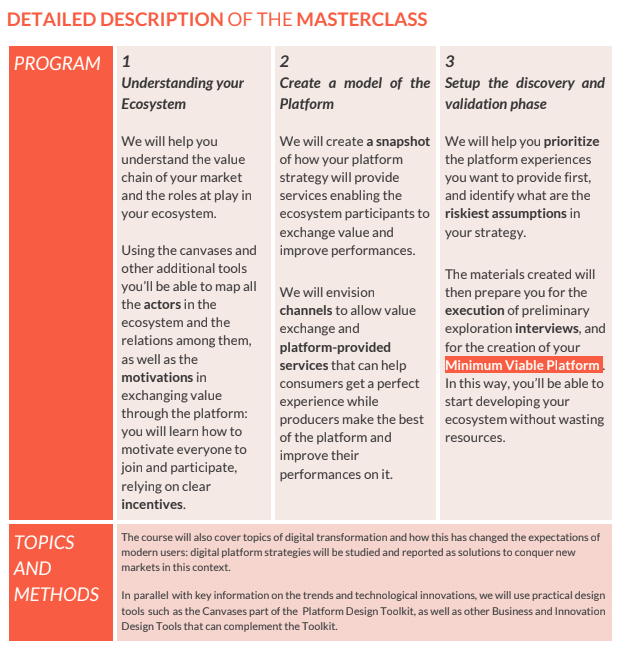
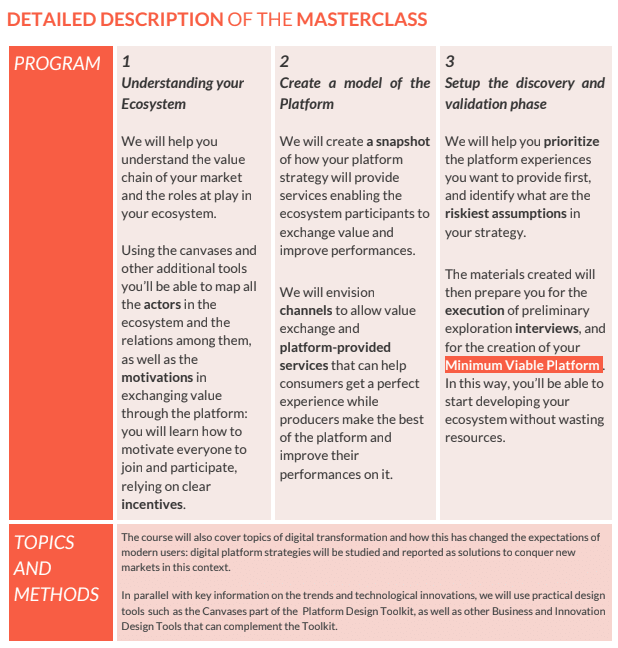
Platform Design 2-Day Masterclass New York City 18–19 March led by Simone Cicero

Look to the bottom of the newsletter for more information.

Links

Even Google Can No Longer Hide Its Gender Pay Gap | Bryce Covert digs into the Google pay equity story:

‘The company says that it was about to make changes this year that would have compensated many men less than women in a certain job category, so it headed off that inequity. But the analysis appears to leave out many of the factors that women at the company say have led them to be paid less. The company’s annual reviews only compare people in the same job categories, yet women say the problem is that they are hired into lower-tier and lower-pay positions while men start in higher-level jobs with higher pay brackets.
It’s hard to know for sure what’s going on with Google’s wage gap, because the company won’t release all of its data publicly. In prior years it claimed that it had no gap in pay between men and women, while arguing that it shouldn’t have to hand over detailed data to the Department of Labor, which analyzes pay practices at government contractors. Yet in 2016 the Labor Department found that Google had “systemic” disparities, which an official called “quite extreme.”

The backdrop for this is that a federal judge has ruled an Obama-era program to have companies with 100 or more employees ‘collect and report their pay scales broken down by gender and race’. Trump stalled that but the judge didn’t agree it caused any undue burden on the companies, and so we seem to be headed into an era of pay transparency. Note that Google would be among the companies being compelled to reveal the date they currently withhold, along with thousands of others.

Covert continues:

There’s good reason to think this rule could reduce the pay imbalance in the United States, which hasn’t made much progress over the last decade, by shedding light on companies’ pay inequities. Recent research on pay transparency in Denmark found that it reduced the gender wage gap by slowing men’s salary growth. A study looking at a British survey found that making pay practices transparent raised all employees’ wages. And gender wage gaps are far smaller in both unionized workplaces and the public sector, where pay scales are usually available to anyone. In other words, sunlight’s disinfecting qualities are quite powerful for combating unequal pay.
[…]
Other countries have gone much further on public disclosure of pay equity gaps. In 2018, Britain began requiring companies with more than 250 employees to report their mean and median gender pay gaps. Australia and Germany recently passed similar mandates. Iceland makes companies undergo yearly audits to prove that they pay men and women equally and to fix any gaps larger than 5 percent. France has also started requiring companies to report how much they pay women compared with men and, if the gaps aren’t fixed within three years, will fine them up to 1 percent of their payroll.”

:::

The Latest Changes to Buffer’s Salary Formula (2019) | Buffer is well-known a company that established transparent salaries over five years ago. Jenny Terry explains why and how they are updating their salary formula:

“We’ve adapted the formula by making smaller changes that align with our changing team needs and structure. We still have a remote-first formula that is benchmarked to the San Francisco labor market, but this next iteration brings some key new aspects: integration with our new team-wide career frameworks, a new compensation data source, and a new opportunity for teammates to receive raises outside of larger promotions.”

A fascinating evolution, especially the career frameworks, which spells out how individual contributors can rise in pay scale without having to become a manager to do so.

:::

‘Red Dead Redemption 2’ and the problems with creative work | Will Partin subtitles his essay like this:

“If you want to understand the hellish demands of modern labor, look no further than video games.”

It’s not reasonable to consider this piece an exposé, since the ‘hellish demands’ of making video games is well-known. But the October release of Red Dead Redemption 2seemed to collide with rising appreciation of the degree of ‘crunch time’ involved. Which raise the question of motivation of companies like Rockstar Games and execs like co-founder Dan Houser, who boasted about 100 hour weeks by game developers:

“The rising class consciousness of (some) game developers and their media allies, along with the growing calls for unionization, is obviously a good thing, and long overdue. But while the critical consensus around RDR2 — that opportunistic managers have shamelessly exploited their workers’ passion for games — is plainly true, this is not the whole story. This account misses, for example, larger shifts in what workers in the post-industrial West have come to expect from their work. Likewise, the focus on British and American developers also risks obscuring how and where this work fits in a global system of production, as capitalism leverages colonialism’s legacy of uneven global development to its advantage. In fact, if you are interested in understanding the global state of work under a capitalism that gets later by the quarter, then there is no industry more telling than that of video games.
But if we want to understand work today, it helps to know how we got here. One reason the video game industry gets away with “crunch” is that we tend to have a higher tolerance for long hours in creative industries because we believe that its workers are doing what they love (and given the number of stories we have about the sacrifices art supposedly demands, we may even expect it). But, like so many things in culture industries, these are simply exaggerated versions of broader phenomena: namely the expectation that we should find “meaning” in our work.”

More workism at work (see Workism), but the world of game development has carried this to a ridiculous level.

:::

Virgin Atlantic will allow female cabin crew to work without makeup | Rosie Spinksreports:

“Virgin Atlantic, one of Britain’s top transatlantic carriers, announced today that it would no longer require its female cabin crew to wear makeup while working.
As a nod to the fact that it’s now 2019 and not 1950, the standard uniform issued to female crew will now also include trousers, rather than requiring workers to specially request them.
[…]
The working lives of airline cabin crew have long been wracked with sexism. Virgin Atlantic is certainly not the only airline to have required more stringent grooming and appearance requirements of its female staff than of males. Though Virgin is calling its move a “a significant change for the aviation industry,” it’s hard to say if Virgin is the first to explicitly make makeup optional, but it’s true that numerous airlines still have makeup guidelines for female staff.”

Men are allowed mascara and make-up ‘as long as you can’t tell’. Virgin continues with its anti-stubble policy for men, who can have beards but not stubble which ‘some guests see as untidy’.

Originally published at workfutures.org.


Work Futures Daily-Sunlight was originally published in Work Futures Institute on Medium, where people are continuing the conversation by highlighting and responding to this story.

22 Mar 18:01

Hard Truths, Soft Lies

by Stowe Boyd

Beacon NY — 2019–03–10 — There is a great deal of confrontation in the discourse around the future of work.

In this issue — Hard Truths, Soft Lies — we start with Tomas Chamorro-Premuzic’s new book that directly confronts a hard truth: while men make up a majority of leaders, they underperform when compared with female leaders. A great many who hear that might simply dismiss it as a lie, despite the author’s research.

Next we have Jill Lepore’s Are Robots Competing for Your Job?, which winds up in a muddle by he said, she said rhetoric, and a sort of soft lie by explicitly saying that those that fear automation are as extreme as those that are afraid of immigration.

Everything in this issue falls into the hard truth, soft lies dichotomy, alas. But don’t expect me to start searching for feel-good stories; however, I will remain hopeful.

:::

If you’re getting this you probably signed up at workfutures.org (or one of its predecessors) or stoweboyd.com. If someone forwarded this to you, sign up here.

Consider becoming a paid sponsor to support our work, and to receive in-depth investigative reporting and discounts to other events, reports, and activities.

sponsor message from Boundaryless SRL

Platform Design 2-Day Masterclass New York City 18–19 March led by Simone Cicero

Look to the bottom of the newsletter for more information.

Links

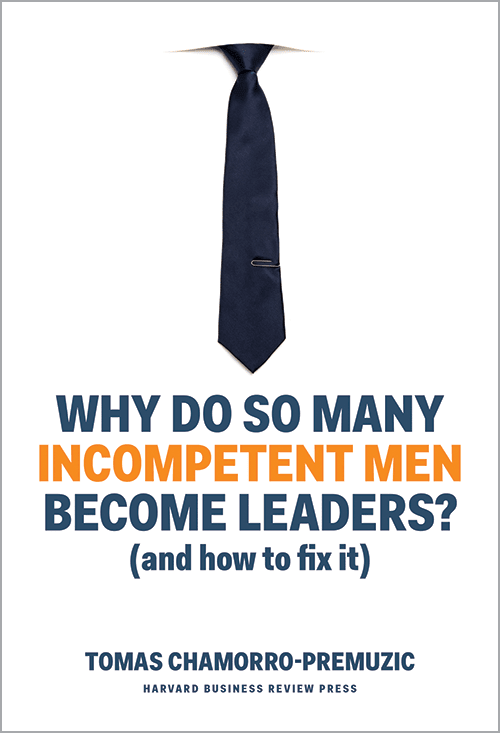
One of the thinkers I admire most, Tomas Chamorro-Premuzic, has a new book –Why Do So Many Incompetent Men Become Leaders?: (And How to Fix It) and I love the publisher’s blurb [emphasis mine]:

“Look around your office. Turn on the TV. Incompetent leadership is everywhere, and there’s no denying that most of these leaders are men. In this timely and provocative book, Tomas Chamorro-Premuzic asks two powerful questions: Why is it so easy for incompetent men to become leaders? And why is it so hard for competent people–especially competent women–to advance? Marshaling decades of rigorous research, Chamorro-Premuzic points out that although men make up a majority of leaders, they underperform when compared with female leaders. In fact, most organizations equate leadership potential with a handful of destructive personality traits, like overconfidence and narcissism. In other words, these traits may help someone get selected for a leadership role, but they backfire once the person has the job. When competent women–and men who don’t fit the stereotype–are unfairly overlooked, we all suffer the consequences. The result is a deeply flawed system that rewards arrogance rather than humility, and loudness rather than wisdom. There is a better way. With clarity and verve, Chamorro-Premuzic shows us what it really takes to lead and how new systems and processes can help us put the right people in charge.”

I have to read this. Add to the reading pile.

:::

Are Robots Competing for Your Job? | Jill Lepore researches the impact of automation by reading a series of books by a long list of policy wonks, historians, journals, and futurists (who she reserves the largest amount of contempt for).

In principle Lepore has limited her scope to the impact of automation (aka robots) on work. Somehow Lepore has decided that fear of robots displacing our jobs and fear of immigrants stealing our jobs are in some metaphysical way two sides of one coin.

“Fear of a robot invasion is the obverse of fear of an immigrant invasion, a partisan coin: heads, you’re worried about robots; tails, you’re worried about immigrants. There’s just the one coin. Both fears have to do with jobs, whose loss produces suffering, want, and despair, and whose future scarcity represents a terrifying prospect. Misery likes a scapegoat: heads, blame machines; tails, foreigners. But is the present alarm warranted? Panic is not evidence of danger; it’s evidence of panic. Stoking fear of invading robots and of invading immigrants has been going on for a long time, and the predictions of disaster have, generally, been bananas. Oh, but this time it’s different, the robotomizers insist.”

The result is an uneven, see-sawing of thumbnail sketches from a seemingly random selection of future of work books from which she extracts from each a few sentences of thoughts on automation.

I truly loved Lepore’s debunking of Clay Christensen’s theories about disruption (The Disruption Machine), but in that case she had the advantage of looking back at Christensen’s pronouncements and how they failed to predict what has actually taken place in technology (like his literally crazy idea that the iPhone wasn’t a disruptive innovation).

In this case, Lepore is not a historian, but playing a second-order futurist — despite her disdain for them — reading the tealeaves about what is to come in the near future, based on how convincing or not this crowd of writers are regarding the hypothetical impacts of automation. I would have enjoyed an essay that examined this more from what is actually going on in industry — like how many robots are being deployed, or how many jobs are being impacted by rules- and AI-based automation — rather than suggesting that we can understand what’s happening by examining the rhetoric of business best sellers.

Perhaps her piece is a good example of the theoretically neutral — and anti-alarmist — observers of the discourse about automation that lend credence to do-nothingism. Behind her apparent scorn for those foretelling massive disruption on the horizon, she’s advocating implicitly for business as usual, and suggesting that anyone alarmed about the rise of automation is an extremist or scared of the shadow of just-another-technological-advance. But in the final analysis, her essay reads like a he says, she sayskind of journalism, which winds up advocating nothing much, aside from implying concerns of automation are too radical, as radical as Trump’s boarder wall antics:

“Heads, the robots are coming! Accept the inevitability of near-universal unemployment! Tails, the Mexicans are coming! Close the borders! So far, the only other choice, aside from helplessly watching the rise of extremism, is to mint a new coin. Heat a forge. Smelt a blank. Engrave two dies. Put your blank in between them. Strike the whole thing with a hammer. Anyone can do it.”

I wish she had talked to serious economists, folks like David Autor, Anna Salomons, Daron Acemoglu, and Lawrence Summers, about the impacts that automation and offshoring of work have already had in America, and how continuing on as we are will have large and negative impacts, particularly on the working and middle class. Maybe she’ll write that essay someday.

:::

Most workers feel disempowered to speak out against gender discrimination | Valerie Bolden-Barrett reports on a study by Randstat:

“Half of respondents in a Randstad US study admitted they did not take action after witnessing a colleague make an inappropriate comment to a person of the opposite sex, according to a press release emailed to HR Dive. Slightly more than half said they know a woman who was been sexually assaulted at work, and 24% of women said they believe their careers suffered because they refused romantic attention from a direct supervisor. More than a third of respondents said they’ve seen someone in a powerful position take advantage of subordinates of the opposite sex. Overall, women and men who belong to racial and ethnic minorities face more gender discrimination and harassment in the workplace, the report found.
Other key findings focused on pay; 36% of men said they believe women shouldn’t get equal pay if they receive more time off for family leave. Almost two-thirds of female respondents said they’d leave their job over pay inequality, but 71% said they didn’t care if they earn less than men “as long as they personally feel they’re fairly compensated,” the study said.
Survey results indicate that most employees aren’t sure how to address sexism in the workplace; 53% said they don’t know what they can do personally to improve gender equality at work. Three-quarters of respondents said a workplace featuring men who will speak out about gender inequality will create a more equal workplace.”

We have a long way to go.

Following up on the discussion of Workism, I thought I’d share Andrew Taggart’s Aeon essay on Josef Pieper’s Total Work, which is just another name for Workism.

Tweet of the Day

“I’m continuously amazed by how many people have to ask permission to buy a $50 book, yet are empowered to call a meeting that costs tens of thousands of dollars.”

| Corey Quinn

Quote of the Day

“The belief that merit rather than luck determines success or failure in the world is demonstrably false.”

| Clifton Mark, A belief in meritocracy is not only false: it’s morally wrong

Even if we would like it to be true. Paradoxically, in companies where meritocracy is an expressed company value, managers assigned greater rewards to men over womenwith identical performance assessments. This effect disappeared when meritocracy is not an explicit value.

sponsor message from Boundaryless SRL

Platform Design 2-Day Masterclass New York City 18–19 March led by Simone Cicero

A moment of training and strategic thinking at the same time: two days in which you will learn — either independently or in a team — to use the Platform Design Toolkit, the most comprehensive set of tools for the design and prototyping platform strategies, used by thousands of practitioners around the world.

You’ll be able to apply it directly to your product, a process, or to the whole organization, a new service, a startup idea or to explore a market that you care about.

After building your strategic vision, we will help you prepare an implementation plan to validate your platform idea and test it through a lean prototyping approach that will avoid mistakes and waste of energy and money.

We will help you to get straight to a Minimum Viable Platform that will validate the appeal for your reference ecosystem, and we will prepare you to grow after. These two days will:

  • save you from bad investments and wasted expenses
  • take you from zero to a clear execution plan for the coming months.

Click to register, or for more information.

Stowe’s endorsement:

“I recently experienced a presentation by Simone Cicero about the strategy and economics of platform organizations, and he is the real deal. If you or your organization is interested in getting up to speed on the economics of platform ecosystems, this is an essential investment.”

Originally published at workfutures.org.


Hard Truths, Soft Lies was originally published in Work Futures Institute on Medium, where people are continuing the conversation by highlighting and responding to this story.

22 Mar 18:01

Be Somebody Or Do Something

by Stowe Boyd

Beacon NY — 2019–03–12 — A rare bit of serendipity, today. Within two hours, I discovered Venkatesh Rao’s magisterial post about the role of ‘executive sponsors’ in business model change, and then Adam Grant’s chronicle of Brad Bird’s impact at Pixar, a perfect pairing. However, I will choose to use the term ‘change sponsors’ because it’s potentially independent of hierarchic rank or title.

It was also fun to come across Pournelle’s Iron Law of Bureaucracy, something I hadn’t heard mentioned in a decade or so.

The title of this issue is taken from the John Boyd quote in Rao’s piece. [No known relation, although he looks like family, and it was my great-grandfather’s name.] Here’s the full quote from To Be or To Do: John Boyd’s Roll Call:

“And you’re going to have to make a decision about which direction you want to go.” He raised his hand and pointed. “If you go that way you can be somebody. You will have to make compromises and you will have to turn your back on your friends. But you will be a member of the club and you will get promoted and you will get good assignments.” Then Boyd raised his other hand and pointed another direction. “Or you can go that way and you can do something — something for your country and for your Air Force and for yourself. If you decide you want to do something, you may not get promoted and you may not get the good assignments and you certainly will not be a favorite of your superiors. But you won’t have to compromise yourself. You will be true to your friends and to yourself. And your work might make a difference. To be somebody or to do something. In life there is often a roll call. That’s when you will have to make a decision. To be or to do? Which way will you go?”

:::

If you’re getting this you probably signed up at workfutures.org (or one of its predecessors) or stoweboyd.com. If someone forwarded this to you, sign up here.

Consider becoming a paid sponsor to support our work, and to receive in-depth investigative reporting and discounts to other events, reports, and activities.

sponsor message from Boundaryless SRL

Platform Design 2-Day Masterclass New York City 18–19 March led by Simone Cicero

Look to the bottom of the newsletter for more information.

Links

What “Executive Sponsorship” Actually Means | Venkatesh Rao deep dives into how companies really acquire new capabilities and then apply them:

“Organizations typically frame behavioral change as a response to the external environment. A trend presents an opportunity or threat. The wise and courageous leader inspires a “culture change” with the support of imaginative and intelligent advisors, and charts a new course. The loyal rank-and-file learn the new skills needed, and head in the new direction with enthusiasm.
This model is, of course, complete bullshit.
[…]
So the real answer to how organizational behavior actually changes is: “through executive sponsorship.” Sponsorship of what, and how?
[…]
1/ A truism in the management and leadership game is that most change initiatives, on the order of 50–70%%, fail. John Kotter is the best known authority on this subject. His books are among the rare ones that frame the stark reality of change honestly.
2/ It is widely recognized that one of the necessary conditions for successful change is executive sponsorship. But people rarely explain what this “sponsorship” process entails, how it works, or just how central it actually is. “Executive sponsorship” is invoked like it is a fairy-dust success factor, like Cinderalla’s fairy godmother showing up.
3/ To first order, if you’re not a powerful executive, any effort to change an organization boils down to a two-part plan: 1) nurture the acquisition of a new capability 2) get a senior executive to use the capability to do things differently.
4/ As I argued last time, nurturing a new capability is not about “capability maturity models” that end in gleeful bureaucracy growth. It is about getting to the “unconscious competence” level of tacit, culturally embodied deep skill. This requires this mysterious “executive sponsorship.”
5/ John Boyd’s “be somebody, or do something” challenge frames it right. A new capability is a “do something” project. This means it typically languishes in the shadows and margins for years, away from the glare of the spotlight of visible career progression.
6/ Not only do the capability acquisition activities — side projects, experimental prototypes — not attract rewards and promotions, they in fact typically attract active contempt, derision, and hostility. You might live in the “first they laugh at you” doghouse for years.
7/ The researcher in the obscure lab being the lonely champion of an out-there idea for years. The mediocre-sales salesperson championing a novel go-to-market playbook for years. The overenthusiastic customer. These are the patient zeros of change. True “change agents.”

Go read the whole thing, which ends up 67 points long. One of the very smartest thinkers around.

:::

Frustrated at Work? That Might Just Lead to Your Next Breakthrough | Adam Grantdetails how Brad Bird joined Pixar, as its first outside director leading to The Incredibles, and who was that change sponsor that Pixar needed. This perfectly mirrors Venkat’s post, above.

And how did Bird create massive change at Pixar? [Emphasis mine.]

“Mr. Bird’s most recent film, “Iron Giant,” had flopped financially, and when he pitched his idea for a new movie to Pixar, he was told it would never work: It would take 10 years and cost $500 million to animate.
But Mr. Bird persisted. He recruited a band of disgruntled people inside Pixar — misfits whose ideas had been ignored — to work with him. The resulting movie, “The Incredibles,” won two Oscars and grossed $631 million worldwide, outdoing all of Pixar’s previous successes. (And, for the record, it ended up costing less than $100 million to make.)”

And how did Bird motivate his misfits?

“He told his newfound flock of black sheep that everyone thought the task was impossible.”

But just as important was the time they spent in the shadows, building up skills that the company — even Pixar! — was not interested in:

“When Mr. Bird recruited disgruntled people at Pixar, he wasn’t just looking for angry animators.
“I want people who are disgruntled because they have a better way of doing things and they are having trouble finding an avenue,” Mr. Bird told me. “Racing cars that are just spinning their wheels in a garage instead of racing.” He found people who were frustrated because they cared, and he started listening to them.”

Remember the dynamic here is the institutional inertia that makes companies innately conservative, and despite the inspirational posters in the cafeteria bureaucratic management is deeply anti-creative and anti-creatives.

What we learn from Grant and Rao is that the right change sponsor, given a crisis and a cadre of disgruntled misfits, can accomplish what was formerly impossible.

:::

Employee loyalty is down — and weak company culture is to blame | Valerie Bolden-Barrett jumps on the weak culture bandwagon, and like the TINYpulse report she’s writing about, she never defines what weak culture is, exactly. The report, The End Of Employee Loyalty never defines weak culture, either. We learn what they are getting at a baby step at a time:

“Only two in five people strongly agree that their managers have clearly defined their roles and responsibilities, and how they contribute to the success of the organization. Furthermore, only one in four employees strongly agree with the statement, “My company takes my feedback and suggestions seriously and effectively”.
Even more concerning is the gap in perception between how managers and employees experience their company culture. While 40% of managers strongly agree that management within the organization is transparent, only 22% of employees feel the same way. This pervasive blind spot must be addressed in order for employees to function effectively in their roles. Taking proactive steps such as sending regular leadership updates, and including training during onboarding for how to access important resources can help close the information gap between managers and employees.”

The TINYpulse folks are conflating a bunch of very different things. The ‘2 in 5’ comment is about lack of management discipline in clarifying authority and responsibilities. The feedback issue is is about poor communication, or specifically, management’s lack of listening (which probably means management doesn’t believe the rank-and-file should be listened to). It seems that these and other problems are being bundled into the non-specific ‘weak culture’ bucket, which does not help.

Likewise, despite touching on a long list of factors, they never define strong culture in the report. And although they ask respondents if they have one, it’s not at all clear they defined it for the survey, either

“We found that only 29% of people believe they have a strong culture.”

I wish product companies would be a little more analytical in their research, otherwise it’s just mumbo jumbo. If I were writing a report about reports, it might include this:

“We find that only 29% of product companies define the terms they use, either in surveys or in the reports they publish.”

:::

Leading the way towards an autonomous industrial future | ABB presents a techno-utopian vision of the near future that isn’t too creepy, but the meme of robots building new robots pushes my buttons a little.

“As the 2019 World Economic Forum Annual Meeting in Davos spotlights a new era of greater global cooperation, a further evolution of the Fourth Industrial Revolution, autonomous systems, will be a key technology influencing the future of how we power, produce, work, live and move. And ABB technology is at the heart of it.”

Quote of the Day

“After willfully ignoring the intelligences of others for so long, the centrality of human intelligence is on the point of being knocked violently aside by our own inventions. A new Copernican trauma looms, wherein we find ourselves standing upon a ruined planet, not smart enough to save ourselves, and no longer by any stretch of the imagination the smartest ones around.”

| Jame Bridle, Life Rewired Reads #1

Life Rewired is a project of the Barbican, with contributions by many others as well.

sponsor message from Boundaryless SRL

Platform Design 2-Day Masterclass New York City 18–19 March led by Simone Cicero

A moment of training and strategic thinking at the same time: two days in which you will learn — either independently or in a team — to use the Platform Design Toolkit, the most comprehensive set of tools for the design and prototyping platform strategies, used by thousands of practitioners around the world.

You’ll be able to apply it directly to your product, a process, or to the whole organization, a new service, a startup idea or to explore a market that you care about.

After building your strategic vision, we will help you prepare an implementation plan to validate your platform idea and test it through a lean prototyping approach that will avoid mistakes and waste of energy and money.

We will help you to get straight to a Minimum Viable Platform that will validate the appeal for your reference ecosystem, and we will prepare you to grow after. These two days will:

  • save you from bad investments and wasted expenses
  • take you from zero to a clear execution plan for the coming months.

Click to register, or for more information.

Stowe’s endorsement:

“I recently experienced a presentation by Simone Cicero about the strategy and economics of platform organizations, and he is the real deal. If you or your organization is interested in getting up to speed on the economics of platform ecosystems, this is an essential investment.”

Originally published at workfutures.org.


Be Somebody Or Do Something was originally published in Work Futures Institute on Medium, where people are continuing the conversation by highlighting and responding to this story.

22 Mar 18:01

Medium can sell advertising on personal content or content on publications. That sucks.

by Stowe Boyd

Medium can sell advertising on personal content or content on publications. That sucks.

22 Mar 17:58

Owning up to your Facebook codependency

by Josh Bernoff

I’ve characterized Facebook as an addiction. I think I was wrong. After yesterday’s outage, now I think the correct way to describe our relationship with Facebook is as codependency. Codependency is “a psychological condition or a relationship in which a person is controlled or manipulated by another who is affected with a pathological condition.” (Merriam-Webster). … Continued

The post Owning up to your Facebook codependency appeared first on without bullshit.

21 Mar 23:02

How People Meet Their Partners

by Nathan Yau

"So how'd you two meet?" There's always a story, but the general ways people meet are usually similar. Here are the most common. Read More

21 Mar 23:02

✚ Forcing You to See the Data

by Nathan Yau

John Tukey wrote, "The greatest value of a picture is when it forces us to notice what we never expected to see." Not everyone wants to see though. Read More

21 Mar 22:15

Digital Transformation: A Caterpillar or a Butterfly?

John O'Brien, EDUCAUSE Review, Mar 13, 2019

This article examines a phenomenon that has been labeled Digital Transformation (Dx). "Rather than dismiss Dx," writes John O'Brien, "we can intentionally embrace digital transformation as a powerful, deliberate choice and can work to energize our institutions around the ideas it encompasses." But what does that mean? "The technologies that enable Dx (e.g., analytics, artificial intelligence, the cloud, mobile, consumerization, social networks, and storage capacities) constitute only one of the levers involved," writes O'Brien. "True Dx goes far beyond tools to include cultural and workforce changes in how we teach, learn, enroll, and engage in scholarship and research." You'll probably want to follow the links in the references following this short article to get a more in-depth account.

Web: [Direct Link] [This Post]
21 Mar 21:30

IBM didn’t inform people when it used their Flickr photos for facial recognition training

Shannon Liao, The Verge, Mar 14, 2019
Icon

In a story that broke a couple of days ago it was revealed that IBM used about a million open-access photos on Flickr to train their facial recognition software. The first response was in the form of complaints that they didn't inform anybody. Of course, this sort of use occurs all the time, and it's not just faces, and it's not just IBM. Here's a report from IEEE Spectrum about a database of a million video clips of hundreds of common actions called Moments in Time. Facebook is using datasets that include billions of images. And as the Verge notes, the photos IBM usedwere part of "a larger collection of 99.2 million photos, known as the YFCC100M, which former Flickr owner Yahoo originally put together to conduct research." In a statement yesterday, Creative Commons points out that "copyright is not a good tool to protect individual privacy, to address research ethics in AI development, or to regulate the use of surveillance tools employed online." Right. Different principles are at play here, and this is as good a time as any to have a discussion about those principles.

Web: [Direct Link] [This Post]
19 Mar 18:23

Invoxia Triby :: Demnächst in diesem Theater

by Volker Weber

8cd6e99a27582da9d28216c8d615dc89

Der ausführliche Test des Invoxia Pet Trackers hat ein wenig gedauert. Morgen erscheint der c't Artikel dazu. Ich schreib dann auch noch mal hier was.

Im Laufe der sehr offenen Kommunikation mit Invoxia habe ich mich noch mal an Triby erinnert, das ich schon vor vier (oder fünf) Jahren in einer ersten Version auf der IFA gesehen habe. Das habe ich gestern bestellt und werde es wohl morgen in ein paar Tagen bekommen.

Invoxia kennt sich vor allem mit Audio und Kommunikation aus. Und Triby ist ein derart mächtiges Produkt, dass sie kaum erklären können, was es eigentlich macht. Nur ein paar Stichworte: Akku, WLAN, Bluetooth, Alexa, HomeKit, Spotify Connect, Internet Radio, mit Magnet am Kühlschrank zu befestigen.

Eigentlich habe ich gar keine Verwendung dafür, so viele Lautsprecher ich bereits habe. Aber das wird voraussichtlich ein wunderbares Bastelprojekt, bei dem mir viele Use Cases einfallen, die ich erzählen kann. Also musste es her.

Demnächst mehr.

More >

14 Mar 21:33

Android Q Beta: How to Install on Google Pixel, Pixel 2, Pixel 3

by Rajesh Pandey
Google today released the first beta of Android Q, the next major version of the OS. While the final version of Android Q will be released to the public in Q3, Google is taking the time in between to refine the OS and take developer feedback to further improve it. For this, it has released a beta version of Android Q as well. Continue reading →
14 Mar 20:19

The 25 Best Android Q Features

by Khamosh Pathak
Android Q is here. Well, at least the first developer beta of Android Q is here. This gives us a sneak peek into the next major version of Android a couple of months early. Android Q Beta 1 can be installed on all Pixel devices – from Pixel 1 to Pixel 3 XL. While most of the awesome features are either half baked or hidden, it gives us an idea as to what Android Q will look like. Here are the top Android Q features you should know about. Continue reading →
14 Mar 20:19

Sketchy Google Pixel 4 XL design surfaces online

by Dean Daley

It’s important to look at this leak with a heavy amount skepticism, but below is allegedly a Google Pixel 4 XL design document.

The leak, which comes from SlashLeaks, features a rudimentary design and comes accompanied with an unreliable 30 percent trust score. Usually, SlashLeaks reveals the user who posts the leak, but in this case that section is blank, making this already sketchy-looking leak even less credible.

With that out of the way, let’s get to the design purported document.

The handset sports a hole-punch display with two camera sensors similar to the Galaxy S10+. Oddly enough, one of the camera lenses looks larger than the other, suggesting that they likely feature two different aperture sizes. A recent rumour suggests that Samsung is in talks with Google and Apple regarding its foldable display technology. As a result, it’s possible the companies are discussing hole-punch display technology as well. After all, Samsung did manufacture the Google Pixel 3 XL’s screen.

The document indicates that the Pixel 4 XL will feature a large, full screen, which is something many Pixel users are likely pleased to see given the controversy surrounding the Pixel 3 XL’s notch. The device continues to sport two front-firing speakers that sit within the phone’s tiny top and bottom bezels.

On the rear, the handset sports a dual camera setup. This dual camera further indicates that the leak is most likely untrustworthy, as Google repeatedly states that the Pixel line is capable of taking great pictures with a single camera thanks to its clever software features.

However, it’s possible that the rear of the phone sports a single shooter with a time-of-flight sensor for improved depth-sensing, similar to the Galaxy S10 5G, which features three cameras and a fourth TOF sensor that gives the illusion of a quad-camera setup. It’s also possible that Google has changed its mind regarding dual cameras.

The phone also sports a backing that looks very similar to what has been featured in other Pixel devices.

Additionally, the handset lacks a physical fingerprint scanner, suggesting it likely includes an in-display fingerprint sensor. If Google actually releases a Pixel device that looks like this, the in-display fingerprint scanner will probably work very similar to the Galaxy S10’s scanner considering Google will probably opt to utilize Qualcomm’s ultrasonic fingerprint technology.

As mentioned previously, take this leak with a grain of salt. Google usually reveals its newest Pixel phone in the latter half of the year, typically in October.

Image credit: PhoneArena

Source: SlashLeaks

The post Sketchy Google Pixel 4 XL design surfaces online appeared first on MobileSyrup.

14 Mar 20:19

Pixel 3 and 3 XL on sale for $250 off in the Canadian Google Store

by Dean Daley

The Google Pixel 3 and Pixel 3 XL are currently on sale for $250 CAD off in the tech giant’s Canadian store.

  • 64GB Pixel 3 is now $749 CAD from its original $999 pricing
  • 128GB Pixel 3 variant is $879 from its regular $1,129 pricing
  • 64GB Pixel 3 XL is now $879 from its original $1,129 pricing
  • 128GB variant Pixel 3 XL is currently $1,009 down from its regular $1,259 pricing

The promotion continues until March 31st at 11:59pm PT (April 1st 2:59am ET). Google also says this deal is available while supplies last and is subject to availability. The customer must also have a Canadian address.

For those who buy a Pixel before September 30th, they’ll also get six months free for YouTube Music Premium. Music Premium lets users listen to music ad-free as well as download music for offline listening. You can also listen to YouTube content with your phone’s screen locked.

The Pixel 3 features a 5.5-inch display with a 1080 x 2160-pixel resolution, 4GB of RAM, dual front-firing stereo speakers, a Snapdragon 845 processor and comes in ‘Clearly White,’ ‘Just Black’ and ‘Not Pink.’

Whereas the Pixel 3 XL sports a 6.3-inch with a 1,440 x 2,960-pixel resolution display, as well as a Snapdragon 845 processor and 4GB of RAM.

The phones take incredible low light pictures thanks to Google’s ‘Night Sight’ functionality and both feature Android 9 Pie.

Both deals are available on Google Canada’s website.

The post Pixel 3 and 3 XL on sale for $250 off in the Canadian Google Store appeared first on MobileSyrup.

14 Mar 20:18

It turns out Android Q’s beta includes a few ways to enable ‘Dark Mode’

by Brad Bennett

Android Q’s first developer beta is here and it includes a dark mode, but it’s hidden in a few new places this time around.

Anyone running the beta can enable the dark theme by navigating to ‘Settings’ and selecting ‘Battery.’ From there, tap on and enable ‘Battery Saver.’ Now, some of Android’s system-level features will turn to black instead of white. This is the easiest way to turn on Android Q’s dark mode feature.

Two similar features are available in Android 9 Pie. One is a ‘Dark Theme under the ‘Advanced’ ‘Display Settings.’ The second is called ‘Night Mode,’ a feature users can through the phone’s ‘Developer Options.’ All versions of Android Q’s dark theme more closely resemble Night Mode.

Take note though, enabling dark mode via Battery Saver includes all of the features and drawbacks that come along with it. Battery Saver results in apps not refreshing their content until a user looks at them. It also turns off location services when the screen isn’t active and stops apps from performing background tasks, according to the Google Pixel support page. On the other hand, it also extends your battery life considerably. 

This also isn’t the exact type of forced third-party dark mode that popped up in January. While the feature is similar, XDA recognized a developer setting that was able to force third-party apps to adopt darker elements. This is how Kiwi Browser is able to force webpages into the dark. This option could still be somewhere within Android Q, or make its way to users in a future release.

Instead, the dark modes you can try in Q only change the notification shade, settings app, homescreen folder shade, the files app and Google Feed.

There are other ways to enable the dark mode in the beta, but they’re more difficult to pull off. Twitter user @HANI_4k, who reached out to MobileSyrup, says that if you turn on Night Mode on a Pixel phone running Android 9 in the ‘Developer Settings’ and then update to Q, the beta then features a dark theme if you’re using a dark wallpaper.

Users can also turn on the dark setting in the Android Debug Bridge (ADB), according to XDA Developers. For a complete guide on how to do this, check out this post on XDA developers.

These methods don’t use Battery Saver.

Source: @HANI_4K, XDA Developers Via: Android Authority

The post It turns out Android Q’s beta includes a few ways to enable ‘Dark Mode’ appeared first on MobileSyrup.

14 Mar 20:18

Android Q image format to allow apps to offer post-capture depth editing

by Igor Bonifacic

Alongside additions like a new share sheet and support for foldable display devices, Google is introducing a Dynamic Depth image format to Android Q,.

The company’s vice president of engineering, Dave Burke, detailed the format on the official Android Developers Blog.

“Starting in Android Q, apps can request a Dynamic Depth image which consists of a JPEG, XMP metadata related to depth elements, and a depth and confidence map embedded in the same file on devices that advertise support,” wrote Burke.

With access to all the data housed in a Dynamic Depth image, third-party app developers will have the ability to create apps that allow users to add blur and bokeh effects to their photos. Currently, with the exception of Google Photos and a couple of first-party camera apps, this is something that’s difficult to do on Android.

Once Android Q filters out to the public, we’ll likely see a variety of photo editing apps take advantage of Dynamic Depth images to offer post-capture depth editing.

What’s more, Burke says developers will even be able to use the data from Dynamic Depth images to create apps that include 3D and augmented reality functionality.

Burke says Google plan  to make the Dynamic Depth image format an open standard so that OEMs can easily add the feature to their apps.

Source: Google

The post Android Q image format to allow apps to offer post-capture depth editing appeared first on MobileSyrup.