Shared posts

04 Apr 06:52

An exception to our ‘No Guerrilla Research’ practice: A tale of user research at MozFest

by Jennifer Davidson

Authors: Jennifer Davidson, Emanuela Damiani, Meridel Walkington, and Philip Walmsley

Sometimes, when you’re doing user research, things just don’t quite go as planned. MozFest was one of those times for us.

MozFest, the Mozilla Festival, is a vibrant conference and week-long “celebration for, by, and about people who love the internet.” Held at a Ravensbourne university in London, the festival features nine floors of simultaneous sessions. The Add-ons UX team had the opportunity to host a workshop at MozFest about co-designing a new submission flow for browser extensions and themes. The workshop was a version of the Add-ons community workshop we held the previous day.

On the morning of our workshop, we showed up bright-eyed, bushy-tailed, and fully caffeinated. Materials in place, slides loaded…we were ready. And then, no one showed up.

Perhaps because 1) there was too much awesome stuff going on at the same time as our workshop, 2) we were in a back corner, and 3) we didn’t proactively advertise our talk enough.

After processing our initial heartache and disappointment, Emanuela, a designer on the team, suggested we try something we don’t do often at Mozilla, if at all: guerrilla research. Guerrilla user research usually means getting research participants from “the street.” For example, a researcher could stand in front of a grocery store with a tablet computer and ask people to use a new app. This type of research method is different than “normal” user research methods (e.g. field research in a person’s home, interviewing someone remotely over video call, conducting a usability study in a conference room at an office) because there is much less control in screening participants, and all the research is conducted in the public eye [1].

Guerrilla research is a polarizing topic in the broader user research field, and with good reason: while there are many reasons one might employ this method, it can and is used as a means of getting research done on the cheap. The same thing that makes guerrilla research cheaper — convenient, easy data collection in one location — can also mean compromised research quality. Because we don’t have the same level of care and control with this method, the results of the work can be less effective compared to a study conducted with careful recruitment and facilitation.

For these reasons, we intentionally don’t use guerrilla research as a core part of the Firefox UX practice. However, on that brisk London day, with no participants in sight and our dreams of a facilitated session dashed, guerrilla research presented itself as a last-resort option, as a way we could salvage some of our time investment AND still get some valuable feedback from people on the ground. We were already there, we had the materials, and we had a potential pool of participants — people who, given their conference attendance, were more informed about our particular topic than those you would find in a random coffee shop. It was time to make the best of a tough situation and learn what we could.

And that’s just what we did.

Thankfully, we had four workshop facilitators, which meant we could evolve our roles to the new reality. Emanuela and Jennifer were traveling workshop facilitators. Phil, another designer on the team, took photos. Meridel, our content strategist, stationed herself at our original workshop location in case anyone showed up there, taking advantage of that time to work through content-related submission issues with our engineers.

A photo of Jennifer and Emanuela taking the workshop “on the road”

We boldly went into the halls at MozFest and introduced ourselves and our project. We had printouts and pens to capture ideas and get some sketching done with our participants.
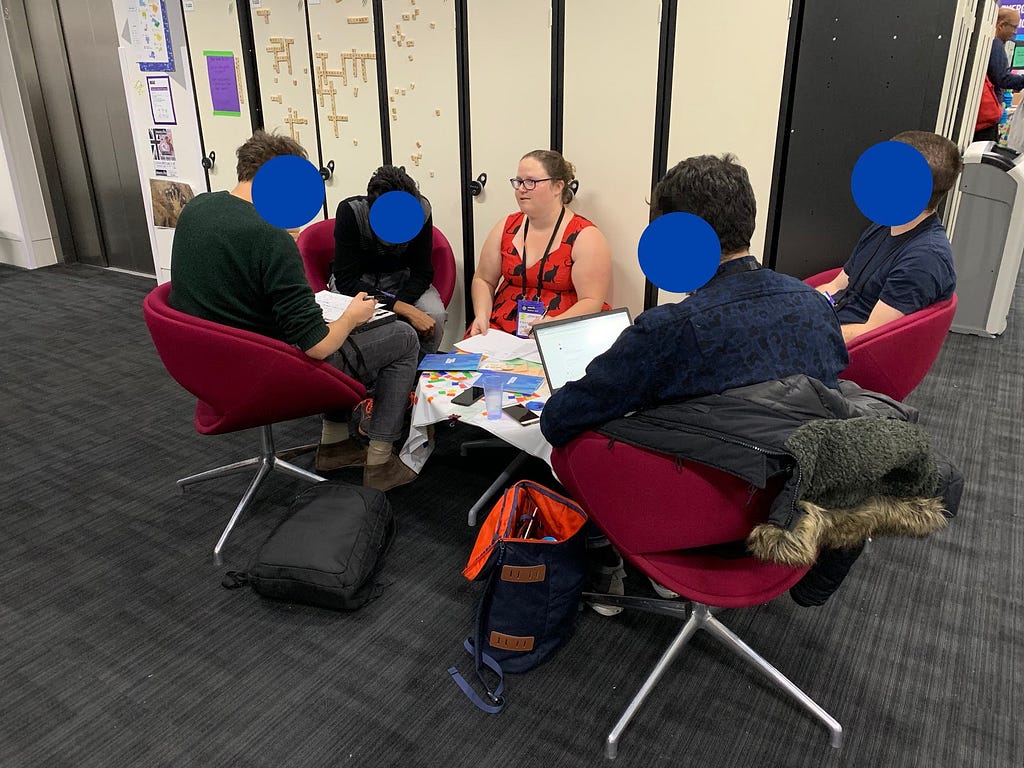
A photo of Jennifer with four participants

In the end, seven people participated in our on-the-road co-design workshop. Because MozFest tends to attract a diverse group of attendees from journalists to developers to academics, some of these participants had experience creating and submitting browser extensions and themes. For each participant we:

  1. Approached them and introduced ourselves and the research we were trying to do. Asked if they wanted to participate. If they did, we proceeded with the following steps.
  2. Asked them if they had experience with extensions and themes and discussed that experience.
  3. Introduced the sketching exercise, where we asked them to come up with ideas about an ideal process to submit an extension or theme.
  4. Watched as the participant sketched ideas for the ideal submission flow.
  5. Asked the participant to explain their sketches, and took notes during their explanation.
  6. Asked participants if we could use their sketches and our discussion in our research. If they agreed, we asked them to read and sign a consent form.

The participants’ ideas, perspectives, and workflows fed into our subsequent team analysis and design time. Combined with materials and learnings from a prior co-design workshop on the same topic, the Add-ons UX team developed creator personas. We used those personas’ needs and workflows to create a submission flow “blueprint” (like a flowchart) that would match each persona.
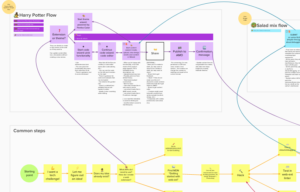
A snippet of our submission flow “blueprint”

In the end, the lack of workshop attendance was a good opportunity to learn from MozFest attendees we may not have otherwise heard from, and grow closer as a team as we had to think on our feet and adapt quickly.

Guerrilla research needs to be handled with care, and the realities of its limitations taken into account. Happily, we were able to get real value out of our particular application, with note that the insights we gleaned from it were just one input into our final deliverables and not the sole source of research. We encourage other researchers and designers doing user research to consider adapting your methods when things don’t go as planned. It could recoup some of the resources and time you have invested, and potentially give you some valuable insights for your product design process.

Questions for us? Want to share your experiences with being adaptable in the field? Leave us a comment!

Acknowledgements

Much gratitude to our colleagues who created the workshop with us and helped us edit this blog post! In alphabetical order, thanks to Stuart Colville, Mike Conca, Kev Needham, Caitlin Neiman, Gemma Petrie, Mara Schwarzlose, Amy Tsay, and Jorge Villalobos.

Reference

[1] “The Pros and Cons of Guerrilla Research for Your UX Project.” The Interaction Design Foundation, 2016, www.interaction-design.org/literature/article/the-pros-and-cons-of-guerrilla-research-for-your-ux-project.

Also published on Firefox UX Blog.


An exception to our ‘No Guerrilla Research’ practice: A tale of user research at MozFest was originally published in Firefox User Experience on Medium, where people are continuing the conversation by highlighting and responding to this story.


04 Apr 06:51

A Walk in the Woods with Oysters

by peter@rukavina.net (Peter Rukavina)

In addition to reviewing analytics, planning future projects, and solving perplexing technical issues, today’s work schedule here in New Hampshire included a walk in Shieling Forest with my Yankee Publishing colleagues. Winter is holding on here a little longer than everyone would like, and the woods still had patches of snow and ice, but the temperature was 10ºC and there was a hint of sun.

Walking in the woods with colleagues

After our walk, we regrouped at Pearl, where, among other delights, we enjoyed Prince Edward Island oysters:

PEI oysters at Pearl

Pearl Oyster Menu

04 Apr 06:51

Digits to Dollars :: Verraten und verkauft

by Volker Weber
However, for the majority of the industry, the hard, cold reality is that handset profits are non-existent. And the only way for these companies to remain viable is to sell out their users. The foundations of Surveillance Capitalism are built on this. And the only way out of this is to change the underlying economics of handsets. It is not clear how that would come about. Certainly, the rise in phone prices seen in recent years may help. But those phones are only viable for a small segment of the population.

Interessante Geschichte. Zusammenfassung: Kaufst Du ein billiges Telefon, wirst du verraten.

More >

04 Apr 06:51

Improving The Sense of Community

by Richard Millington

The purpose of a sense of community survey isn’t to discover whether members feel connected to one another, it’s to identify the areas where you can have the biggest impact.

The end result of the survey is a scorecard broken down by four categories. You then design interventions to improve the scoring in the weakest areas. For example:

If members score low in membership, you might narrow the focus of the community (or create more sub-groups), solicit more immediate personal investments in the community, nurture in-jokes and reference past history, talk about more emotive topics, and initiate projects members can work on together.

If members score low in influence, you might provide members with more opportunities to run areas of the community, create groups for members who want to give their input into the community’s future, feature more contributions from members, and nurture stars among your audience.

If members score low in integration of needs, you might focus on turning active membership into a status symbol. You might introduce badges members will be proud to display, highlight relevant media reports on the community, share community success stories, create the community’s core values, and spend more time bringing the top experts in to the community in highly visible roles.

If members score low in shared emotional connection, you might create a shared history/timeline of the community, host online or offline events, introduce more bonding-related discussions, and increase the level of ‘fun’ discussions you initiate.

It’s hard to do everything well at the same time. So run the survey in your community and design your interventions to improve your community.

04 Apr 06:51

Xiaomi forms chipmaking company to advance AIoT strategy

by Jill Shen
Xiaomi will hold 25% of the new chipmaking subsidiary, with the balance to be held by company employees.
04 Apr 06:51

Where the IRS most likely audits

by Nathan Yau

Using estimates from a study on regional bias in tax audits, ProPublica mapped the likelihood of getting audited by the IRS. They then turn their attention to Humphreys County, Mississippi:

In a baffling twist of logic, the intense IRS focus on Humphreys County is actually because so many of its taxpayers are poor. More than half of the county’s taxpayers claim the earned income tax credit, a program designed to help boost low-income workers out of poverty. As we reported last year, the IRS audits EITC recipients at higher rates than all but the richest Americans, a response to pressure from congressional Republicans to root out incorrect payments of the credit.

Tags: IRS, ProPublica, taxes

04 Apr 06:51

Census data downloader to reformat for humans

by Nathan Yau

There is a lot of Census data. You can grab most of the recent aggregates through the American FactFinder or via FTP or some obscure Census page that hasn’t been updated in a decade. It’s, uh, not always the best experience. The Census Data Downloader from the Los Angeles Times data desk is a Python library that streamlines the download process, if just a little bit.

The main added value comes from a way to use existing definitions or make your own to download tables as CSV. That way you get readable headers instead of meaningless table codes.

Tags: census, formatting, Los Angeles Times

04 Apr 06:51

Game Day: Rolando Rolls Back Onto the App Store

by John Voorhees

Today, HandCircus, the creator of Rolando, has released an excellent remastered version of the classic iOS game called Rolando: Royal Edition.

If you were playing iOS games in the early days of the App Store, you are probably familiar with Rolando. The game wasn’t on the Store day one but came a few months later at the end of 2008.

Rolando was one of the early break-out hits on the App Store. The game was downloaded by millions of fans worldwide who loved its colorful, round characters. Rolando was also one of the first games to incorporate the iPhone’s accelerometer into its gameplay in a way that was tightly integrated with the game instead of feeling gimmicky.

However, the original game was a victim of Apple’s 2017 transition to a 64-bit architecture. Although many cherished classics were updated in time, a large number of games fell by the wayside. Until today, one of the most beloved of those titles was Rolando.

With Rolando: Royal Edition, HandCircus has remained true to the game’s roots, while simultaneously making it feel at home on current iPhones. I expect anyone who played the original game and loved it to enjoy Royal Edition too.

I was immediately filled with a sense of nostalgia when I first laid eyes on the Rolando icon on my iPhone’s home screen. Firing up the game, I wasn’t disappointed. Everything was immediately familiar but also new and fresh. However, it wasn’t until I studied side-by-side screenshots provided by HandCircus that I realized that when the studio says ‘every interaction, every course, flower, trampoline, bomb, catapult and squirrel has been given a thorough scrub, buff and shine,’ they weren’t exaggerating. As the screenshots below show, the new level of detail is striking.

The original (left) and Rolando: Royal Edition (right).

The original (left) and Rolando: Royal Edition (right).

Simon Oliver, the founder and CEO of HandCircus, elaborated for me in an interview, the full version of which will appear on Friday in this week’s Club MacStories newsletter, MacStories Weekly:

We ended up taking the whole game apart - polishing and reworking every piece. It started with a transition from our original bespoke engine to Unity, which gave us a ton of new opportunities to raise the visual fidelity and richness of the game. As we rebuilt the game piece-by-piece, we took the opportunity to evaluate each bit as it went in - some felt pretty good as they were, but others (such as the camera system) were candidates for a complete rewrite.

Get More with Club MacStories

With a Club MacStories subscription, you'll gain access to weekly iOS shortcuts, app and game recommendations, and other exclusive extras.

Starting at $5/month, Club MacStories includes MacStories Weekly – a newsletter delivered every Friday with a focus on iOS productivity, showcasing new and interesting iOS apps and games, interviews with creators, and more.

As a new member, you'll also receive complete access to our back catalogue of over 180 newsletters starting from September 2015.
 
You can find out more about Club MacStories here, or subscribe directly below.


If you played the original version of Rolando, everything you’ll remember is here, but it’s been enhanced for modern hardware. The most obvious change is to the visuals. Each level is true to the mechanics of the original, but the artwork has significantly more detail and has a depth that the original didn’t. Instead of a strictly 2D straight-on perspective featuring large blocks of solid colors, Royal Edition is presented off axis, which provides depth to the worlds without changing the gameplay. Levels have also been enhanced with layered backgrounds, textures, and lots of other details that make each world more engaging and immersive.

At the core of Royal Edition is the same hybrid platform/puzzle-based game fans fell in love with initially. You control a squad of Rolandos, round characters that you maneuver through four different worlds by tilting your iPhone, swiping up to jump, and directly manipulating other elements in each level. Along the way, you’ll encounter environmental obstacles as well as Shadow Creatures, which can kill your Rolandos.

The game’s controls, which were designed for a time with much smaller, lower-resolution screens, work just as well today as ever. The soundtrack by DJ Mr Scruff and sound design of the game are as fantastic as the original too but benefit from the improvements made to iOS device speakers.

Royal Edition is universal, so it’s also playable on an iPad, but the game is meant first and foremost to be played on an iPhone. Royal Edition looks great on the iPad, but on bigger iPads, the tilt mechanics become awkward. I also missed the haptic feedback of the iPhone version when I tried Royal Edition on my iPad Pro.


When Rolando debuted in December 2008, it demonstrated that iOS was a viable game platform in its own right and not just a place for dumbed-down ports of existing games. There are plenty of those sorts of games on iOS, but Rolando helped pave the way for more ambitious, premium, iOS-first games that are my favorites.

I highly recommend Rolando: Royal Edition. HandCircus has struck a perfect balance between being true to the original game and updating the experience for today’s devices. The game delivers a fantastic blend of nostalgia combined with the polish and rich experience that a modern game engine and hardware can provide.

Rolando Royal Edition is available on the App Store for $2.99.


Support MacStories Directly

Club MacStories offers exclusive access to extra MacStories content, delivered every week; it's also a way to support us directly.

Club MacStories will help you discover the best apps for your devices and get the most out of your iPhone, iPad, and Mac. Plus, it's made in Italy.

Join Now
04 Apr 06:50

Twitter Favorites: [jbgreenan] Die-hard partisans have a hell of time appreciating that most of the population doesn’t believe partisan loyalty ou… https://t.co/RRMvj8vYDZ

Jonathan Greenan @jbgreenan
Die-hard partisans have a hell of time appreciating that most of the population doesn’t believe partisan loyalty ou… twitter.com/i/web/status/1…
04 Apr 06:50

First legal cannabis in-store pick up app launches this April in Ontario and Alberta

by Patrick O'Rourke
Grab App

Grab App aims to be the first cannabis smartphone app in Canada that is 100 percent compliant with provincial and federal marijuana regulations.

The app is set to first launch in Alberta and Ontario in April of 2019. A press release states that Grab has been designed with the “cannabis consumer in mind” and that its developers, Buddy-Tech, have done ‘extensive research’ to create a convenient shopping experience.

“Grab lets you browse current menus from government licensed cannabis stores in your area. You can reserve products and build your order online then skip the line-ups when you pick up your order at the store.” said lead app developer David Ramsaran in a recent press release. 

“With Grab, you can browse more strains than you ever knew existed. You can research them before you buy, then rate, share, and review your new favourite strains with your friends afterwards.”

Further, Grab states that it has close relationships with legal cannabis stores across Canada. It’s unclear if Buddy-Tech has plans to expand Grab to other provinces in the future, though the app’s website currently lists all provinces across the country. According to Grab App’s website, the cannabis ordering platform is coming to both Apple’s App Store and the Google Play Store.

Although there are a number of active black market services that allow users to purchase cannabis for delivery, none of them are legal. In-store pick-up could add a much-needed additional level of convenience to purchasing marijuana from legal cannabis stores in Ontario and Alberta.

The Ontario Cannabis Store (OCS) delivers the plant to buyers via Canada Post.

Ontario’s first physical cannabis stores opened earlier this week, though only a few of the 25 locations are actually open in the province. Alberta had 17 legal marijuana stores selling the plant on the first day of legalization back in October.

The post First legal cannabis in-store pick up app launches this April in Ontario and Alberta appeared first on MobileSyrup.

04 Apr 06:50

Quad camera Moto smartphone render surfaces online

by Dean Daley

An image of a quad camera Moto smartphone render has surfaced on the web.

The leak, courtesy of Steve Hemmerstoffer (@OnLeaks) with CashKaro, shows an unknown Moto smartphone with four rear-facing shooters and a front-facing waterdrop notch.

Additionally, the handset will reportedly sport a 6.2-inch display, an in-display fingerprint scanner, USB Type-C port and a 3.5mm headphone jack. Beside all four cameras it reads ’48MP’, which likely means that at least one of these shooters features a 48-megapixel shooter.

It’s unclear why this unnamed Moto handset features four cameras. It’s possible that the cameras serve different purposes, with one being time of flight and another for wide-angle pictures.

HMD recently unveiled the Nokia 9 Pureview, a smartphone with all five of its rear-facing cameras featuring 12-megapixel shooters and f/1.8 aperture lenses. It’s possible that Moto might imitate the 9 PureView and instead of having specific cameras capture pictures it will use all four at once.

OnLeaks does not indicate the name of this premium Moto handset or when it will come out.

The post Quad camera Moto smartphone render surfaces online appeared first on MobileSyrup.

04 Apr 06:50

Connected, Episode 237: All the Different Flavors of iCloud

by Federico Viticci

AirPower is dead, Powerbeats Pro are here, Federico is having a good week on Twitter and iCloud Drive deserves some attention from Apple.

A good episode of Connected this week – we talk about wireless chargers, new Beats headphones, and a whole list of suggestions on how to improve iCloud Drive. You can listen here.

Sponsored by:

  • Hullo: A simple, natural pillow designed for comfort. Try it for 60 days.
  • Hover: Extensions for anything you’re passionate about. Grab a .ME domain for $9.99.
  • ExpressVPN: High-Speed, Secure & Anonymous VPN Service. Get 3 months free with a 1-year package.

→ Source: relay.fm

04 Apr 06:47

Twitter Favorites: [skinnylatte] My super easy 8 min meal prep for office lunch boxes: slab of butter in skillet, sauté mushrooms and sausages with… https://t.co/WLPBDQNENb

Adrianna Tan @skinnylatte
My super easy 8 min meal prep for office lunch boxes: slab of butter in skillet, sauté mushrooms and sausages with… twitter.com/i/web/status/1…
03 Apr 21:56

YouTube Executives Ignored Warnings, Letting Toxic Videos Run Rampant

Mark Bergen, Bloomberg, Apr 03, 2019
Icon

Make no mistake. I think YouTube is a fantastic resource. But it has problems because of the way it rewards engagement and views, and because it's recommendation engine can be manipulated by controversy and outrage. "The massive 'library,' generated by users with little editorial oversight, is bound to have untrue nonsense. Instead, YouTube’s problem is that it allows the nonsense to flourish. And, in some cases, through its powerful artificial intelligence system, it even provides the fuel that lets it spread." Good article, takes a bit to get going, but provides a good insight in the end.

Web: [Direct Link] [This Post]
03 Apr 21:56

Shark on the Roof in Oxford Great Britain

by Sandy James Planner

GREAT WHITE SHARK IN OXFORD ROOF MAY BECOME A LISTED MONUMENT

GREAT WHITE SHARK IN OXFORD ROOF MAY BECOME A LISTED MONUMENT


An American named Bill Heine moved  to Oxford Great Britain and ran two cinemas. This gentleman had studied law before turning to running movie houses.

But in 1986 Mr. Heine had a Big Idea and commissioned a fibreglass shark which he craned to the top of his house. The timing of his installation of a headless shark on the roof of his 1860 British townhouse was the  “41st anniversary of the dropping of the atomic bomb on Nagasaki.” The piece was created by artist John Buckley.

The shark weighs 400 pounds and is 25 feet from its headless body to its tail.  As this web page on the Hedlington Shark attests  the placing of such a large object on the roof of a pretty ordinary residence sprung the local Oxford city council to action.

First city council said the shark had to go because it was a dangerous hazard. But when the shark installation was inspected, it was carefully installed and was safe. Then Council used Section 22 of the Town and Country Planning Act that had no provision for the placement of large things like sharks on roofs within the municipality.

Mr. Heine went through the process of appealing the decision which in true civic fashion took years. The best part? The appeal was allowed, and the ruling in favour of the shark stated:

It is not in dispute that this is a large and prominent feature. That was the intention, but the intention of the appellant and the artist is not an issue as far as planning permission is concerned. The case should be decided on its planning merits, not by resorting to “utilitarianism”, in the sense of the greatest good to the greatest number. And it is necessary to consider the relationship between the shark and its setting…. In this case it is not in dispute that the shark is not in harmony with its surroundings, but then it is not intended to be in harmony with them…

And here is the best part. “The hearing decided that there would not be a proliferation of sharks on the roofs of Oxford houses.  “An incongruous object can become accepted as a landmark after a time, becoming well-known, even well-loved in the process. Something of this sort seems to have happened, for many people, to the so-called “Oxford shark”. The Council is understandably concerned about precedent here. The first concern is simple: proliferation with sharks (and Heaven knows what else) crashing through roofs all over the City. This fear is exaggerated. In the five years since the shark was erected, no other examples have occurred. Only very recently has there been a proposal for twin baby sharks in the Iffley Road.”

Mr. Heine subsequently wrote a book about the shark on its 25th anniversary of its installation. Today Mr. Heine’s son runs an Air Bnb at the “shark” house and you can stay there with twelve other guests. Mr. Heine has recently passed away, but his shark will remain and in fact is being listed as a significant monument.

You can take a look at the YouTube video below of the shark, local reaction, and  the planning permissions process that tried to deshark Mr. Heine’s installation.

03 Apr 21:56

Recently

by Tom MacWright

“I’m sleep-deprived, so please plan to write all my answers,” she emails me. “Make them a bit quirky yet deep, moving, indelible.”

Jenny Holzer Made Good Things Out of Horror. My appreciation of Jenny Holzer’s art goes pretty far back. I loved this interview.

Then in the late 1940’s, the nation embarked on the course that led to the perception that public housing doesn’t work: the construction of enormous high-rise projects. It wasn’t just the architecture, or the mere presence of Government subsidies, that caused these places to go so horribly awry. There was also a big change in the tenant population, from carefully screened working people to the very poor. Because of changes in Federal rules, people who got jobs actually had to leave the building, and it became nearly impossible to kick out tenants who were criminals.

The Public Housing That Succeeds via Alex Baca is a cutting look at what’s wrong with public housing in the US.

In 2016, Lyft’s co-founder, John Zimmer, spun a fantasy on Medium in which driverless vehicles would account for the majority of Lyft rides within five years (i.e., 2021). For backup, he cited Tesla CEO Elon Musk, whose own ability to turn his own fantasies into reality lately has come into question.

Lyft’s IPO disclosure shows it’s not close to profitability and has no good way to get there includes this, one of many failed predictions about self-driving cars. Remember October 2016, when Elon Musk said a Driverless Tesla will Travel from L.A. to NYC by 2017?

Hedge-parking: where your vehicle overbooks a number physical parking spaces based on your preferences of timing, location, flexibility and willingness to pay, but is unable to offload the unused spaces on the open market by the time comes to actually park.

Twelve Concepts in Autonomous Mobility by Jan Chipcase, accomplished researcher and also maker of fancy messenger bags. It’s a fun read in part because it highlights how absolutely insane cars are as a format, regardless of whether they’re self-driving or not. The analysis of parking, as a market, a public good, or a government-subsidized giveaway to the rich, makes clear that it’s already a bad idea.

Most people, given the choice, will continue to take the path that avoids being judged. Calling our products “developer kits”, “innovator editions”, and “beta” has been an explicit strategy along those lines. To avoid being judged on our software, we largely just don’t ship it.

John Carmack’s letter to Oculus in 2015 is a kind of leadership tone I’ve rarely heard. I don’t think it’s entirely correct or admirable – revering executives is rarely a good idea – but it does push back on vagueness and corporate speak in a rare way.

The ships hung in the sky in much the same way that bricks don’t.

From Hitchhikers Guide to the Galaxy, a book for teens I read last month.

Americans love to tell themselves lies about class. And of course, wealthy Americans like to tell the biggest lies about class. And I feel like having this money, it was like I was a secret trust-fund kid. I hadn’t grown up with that kind of money, but the fact that I got it in this weird and unexpected way wound up giving me insight into the bubble that people who have a lot of available money live in. I’d like to say that it made me realize how soulless it is inside that bubble. But in fact, it’s super nice inside that bubble. And I only wish that my own version of the bubble had been bigger, such that I feel like I could still be living inside it. But it doesn’t quite feel that way.

From Financial Windfalls: 15 Stories of the Money That Changed Everything.

She brought up transportation issues. We both nodded vigorously at the problem of the subway system in New York. Public transportation is no great shakes in New Orleans, but the city is bikeable, it’s walkable, and we are both fortunate enough to have cars. When I read tales of my friends’ morning commutes in New York on social media, and see the crowded platforms on their Instagram stories, I often worry the world is coming to an end, and this is just one of the signs of the apocalypse.

From Bright lights, small city. I’ll close with this one. There’s a lot to unpack here. It’s from another article about someone moving from a major city (New York) to a minor one (New Orleans). The ‘exodus’ from major cities is something I have strong feelings about because I see it in the lives of my friends and in the ghosts of my future. And it’s hard to tell how it’s different from white flight, and how transplants will grapple with their inevitable effect on the cheap cities they occupy. But moreso, how moving to low-density transit-weak places like New Orleans is just returning to car-dependent lives that hold a lot more responsibility for the end of the world than the inconvenient but exceedingly energy-efficient transit systems in a place like New York.

03 Apr 21:56

On the latest episode of The Omni Show, Annette...

On the latest episode of The Omni Show, Annette Fuller, Support Human, joins the show to talk about writing, storytelling, and helping people. And the Marvel Universe. And Harry Potter. And more.

I love doing this show — it’s now about a year-and-a-half old. This is the 37th episode. (We publish every other Wednesday.)

I love that it serves as a kind of documentation for a specific company with specific people at a specific place and time — and it’s also a good look away from the celebrities of the podcast world.

What are the people like who — sensibly! — have hobbies other than recording podcasts? (Well, they’re pretty cool!)

03 Apr 21:56

Beats Announces Powerbeats Pro Wireless Workout Headphones

by John Voorhees

Apple subsidiary Beats has announced the Powerbeats Pro, $250 H1-powered workout-oriented headphones that dispense with all wires. Apple purchased Beats in 2014 and has incorporated some of its technologies like the W1 chip into its Powerbeats and Beats Solo3 headphones, but until now, Beats didn’t offer headphones that competed directly with AirPods.

The Powerbeats Pros aren’t entirely a surprise. As Guilherme Rambo reported for 9to5Mac last week, iOS 12.2 includes hidden images of the Powerbeats Pro headphones. However, the new headphones’ official announcement provides additional details.

The Powerbeats Pros will be available starting in May in the US and 20 other countries and come in four different colors: black, ivory, navy, and moss. The water and sweat resistant Pros are a significant step up from the existing Powerbeats because they are truly wireless in the same way AirPods are wireless. Unlike the original Powerbeats, which will continue to be available and have a wire that connects one ear to the other and wraps around your head, the Pros are independent wireless headphones that benefit from the quick connectivity afforded by the H1 chip. The Powerbeats Pro also include physical controls and charge via a Lightning connector using an AirPods-like charging case instead of the micro USB connector used in the Powerbeats model. However, unlike the latest iteration of AirPods, Powerbeats Pro do not support wireless Qi charging.

Also, the H1 chip means that the Powerbeats Pro headphones can be controlled with ‘Hey Siri’ commands. There are four sizes of headphone tips to fit a range of ear sizes, and the earhook that wraps around your ear is adjustable. Beats says that the new headphones have up to 4 hours more battery life than AirPods for a total of 9 hours of playback time, which exceeds 24 hours when charged using the case.

The Verge got early access to the Powerbeats Pro and has a hands-on review of the headphones. The assessment by Chris Welch is generally positive, and although I haven’t had the opportunity to try the Powerbeats Pros yet myself, they look like a good option for anyone for whom AirPods don’t fit well and who works out regularly. That said, at $250, the Powerbeats Pros are pricey compared to competing third-party products, so it’s worth considering other available options before purchasing the Pros.


Support MacStories Directly

Club MacStories offers exclusive access to extra MacStories content, delivered every week; it's also a way to support us directly.

Club MacStories will help you discover the best apps for your devices and get the most out of your iPhone, iPad, and Mac. Plus, it's made in Italy.

Join Now
03 Apr 21:55

EU says it would not open talks with UK after no-deal Brexit until it agrees to divorce bill and Irish backstop

mkalus shared this story .

The EU would refuse to open trade talks with Britain after a no-deal Brexit until the UK decided to sign up to the main elements of the withdrawal agreement anyway, the European Commission has said.

Speaking in the European parliament on Wednesday, Jean-Claude Juncker said the Irish border, citizens’ rights and the divorce bill would need to be agreed before any other negotiations could begin.

He also warned that no further short Article 50 extension would be possible, and that the UK would have to commit to European parliament elections and a longer delay if it wanted to put back its deadline again.

We’ll tell you what’s true. You can form your own view.

From 15p €0.18 $0.18 USD 0.27 a day, more exclusives, analysis and extras.

The announcement that the EU would refuse to back down after a no-deal pours cold water on Brexiteer hopes that the UK could get a better deal by refusing to pay the unpopular £39bn financial settlement or sign up to the controversial backstop and then negotiate a separate trade agreement.

“The UK will be more affected than the EU because a managed or negotiated no-deal does not exist, any more so than a transition period for a no-deal,” Mr Juncker told MEPs.

“Whatever happens the UK will have to respond to the three main questions of the separation: one, citizens’ rights, they must be respected and protected. Two, the UK will have to continue to honour its financial commitments taken as a member state. And three, a solution will have to be found for the island of Ireland, preserving peace and the single market. 

Pro-Brexit leave the European Union supporters attend a rally in Parliament Square after the final leg of the "March to Leave" in London

AP

The protest march which started on March 16 in Sunderland, north east England, finished on what was the original date for Brexit to happen before the recent extension

Reuters

A Brexit supporter sips a can of Stella in protests outside of the Houses of Parliament

AFP/Getty

Dedicated anti-Brexit campaigner Steve Bray and likewise pro-Brexit campaigner Joseph Afrane go head to head near the Houses of Parliament

AFP/Getty

A pro-Brexit marching band in Parliament Square

Getty

Remain supporters wave EU flags from a bus in Parliament Square

PA

A Brexit supporter shouts slogans outside parliament

EPA

A Brexit supporter protests outside parliament

Reuters

A Brexit supporter protests outside of the Houses of Parliament

Getty

Brexit supporters protest outside of the Houses of Parliament

REUTERS

A pro-Brexit flag is waved in Parliament Square

AP

The March to Leave nears the Houses of Parliament

Reuters

A Brexit protester holds a sign outside parliament

EPA

Brexit supporters carry the coffin of democracy

AFP/Getty

Brexit supporters march outside parliament

AFP/Getty

Brexit supporters take part in the March to Leave protest in London

PA

Brexit supporters protest outside parliament

AFP/Getty

A Brexit supporter holds a sign outside the Houses of Parliament

Getty

A man holds satirical paintings of politicians

Reuters

An pro-Brexit float on the March to Leave march in London

Reuters

Far-right activist Tommy Robinson addresses protesters outside the Houses of Parliament

Getty

A Brexit supporter outside the Houses of Parliament

Reuters

A Tommy Robinson supporter arrives at the Houses of Parliament

Getty

A jogger gestures rudely at a Brexit supporter outside of the Houses of Parliament

AFP/Getty

A Brexit supporter outside the Houses of Parliament

PA

“The UK must respect the spirit and the letter of the Good Friday Agreement. No withdrawal agreement does not mean no commitment and the three questions that I have just mentioned will not disappear overnight: they will constitute strict conditions for rebuilding trust and launching discussions on the future.”

But in a small boost for Theresa May, the European Commission president also said member states should approve her request for a short extension until 22 May, but only “if the United Kingdom is in a position to approve the withdrawal agreement with a sustainable majority” before a planned summit next week.

Leaders had previously said the withdrawal agreement would have to be formally approved by 29 March to get the 22 May extension, but Mr Juncker said the prime minister’s statement to the commons on Tuesday night had bought “a few more days”.

But he stuck to the EU’s guns and warned: “If it has not done so by then, no further short extension will be possible. After 12 April, we risk jeopardising the European parliament elections and so threaten the functioning of the European Union.”

Mr Juncker, who heads up the EU’s executive, said Brussels would do “everything possible” to prevent a disorderly Brexit, but that one was increasingly likely.

“The only ones that would benefit from a no-deal are those that are against a world order based on rules, the only ones that would be strengthened would be the populists and nationalists,” he said.

“The only ones who will be delighted will be those who wish to weaken the European Union and of course, the UK.”

Mr Juncker’s comments on Wednesday echo a similar warning by his chief negotiator Michel Barnier on Tuesday. EU officials worry that a no-deal Brexit is more likely than ever because of political deadlock in Westminster.

03 Apr 21:55

Inlineskating 1923

by Ronny
mkalus shared this story from Das Kraftfuttermischwerk.

Offenbar die Ursprünge des Inlineskatens. Paris 1923. Ich erinnere mich dabei an die „Schlittschuhe“, die ich mir als Kind noch mit Schrauben in den Schuhsohlen befestigt hatte.

Men is Paris enjoy the new sport of 1923, Cycle-skating – new sport which involves strapping a wheel to the side of the feet and skating.


(Direktlink)

03 Apr 21:55

What Would A No-Deal Brexit Mean For The UK?

mkalus shared this story .

Signed in as mkalus

Share this story on NewsBlur

Share this story

Subscribe to this site

Shared stories are on their way...

03 Apr 21:55

Android Q Beta 2 Now Available

by Evan Selleck
Back in March, Google launched the first beta of Android Q, the newest version of its Android operating system. Now, almost a month later, and the company is back at it again with the second beta. Continue reading →
03 Apr 21:54

Android TV casting from Google Assistant is still broken nearly one month later

by Bradly Shankar
Google Home

Last month, some Google customers reported that their Android TV-based televisions were inadvertently adding other Google accounts as linked Google Photos users.

As a temporary fix, Google disabled the ability to cast content to Android TVs using Google Assistant. While this solved the Google Photos issue, it also prevented users from casting any of their other apps like YouTube or Spotify.

According to various Twitter users, this functionality has yet to be restored, even though the Google Photos issue originally popped up in early March.

In response to a Twitter user, the Made by Google Twitter account confirmed that it is aware of the issue and working to resolve it. However, no ETA was given on when the fix might roll out.

In the meantime, users can still cast content to Android TV directly from apps on mobile or computers, just not with any voice command support.

Via: Android Police

The post Android TV casting from Google Assistant is still broken nearly one month later appeared first on MobileSyrup.

03 Apr 21:54

Apple’s 5G iPhone will likely launch in 2021: analyst

by Patrick O'Rourke
iPhone XR

Just like previous rumours and analysts notes have indicated, a UBS analyst says there is an increasing likelihood that Apple won’t have a 5G iPhone ready for 2020.

UBS analyst Timothy Arcuri’s main argument surrounding the delay is the fact that Apple doesn’t have a clear choice for a 5G modem supplier.

Apple is currently involved in an unresolved legal dispute with the mobile industry’s main modem manufacturer, Qualcomm. As a result, a 5G-capable iPhone featuring Qualcomm’s equipment is currently off the table.

There’s “increasing potential that Apple may not be able to ship a 5G iPhone for 2020,” writes Arcuri in the note. He goes on to say that the tech giant’s first 5G-capable phone likely won’t drop until 2021.

As a result of its ongoing battle with Qualcomm, the iPhone XS and iPhone XR only use Intel modems following Apple moving away from using the San Diego, California-based company’s hardware with the last few iterations of the iPhone.

For example, starting with the iPhone 7 and 7 Plus, only some versions of Apple’s iPhones featured Qualcomm modems while others included Intel modems.

Intel’s 5G modem roadmap indicates that the company’s 5G chipsets will likely be released by the end of next year, but Arcuri says that the company will likely miss this deadline. There’s also a possibility Apple could manufacture its own modems, though this is unlikely.

The earliest we’ll likely see a 5G iPhone is 2021, according to UBS. In the Canadian market, this won’t be a significant issue given 5G networks aren’t expected to be available until 2020 and 2021. Rogers is currently working on a multi-year 5G strategy with Swedish manufacturer Ericsson. Bell and Telus are currently running various 5G trials with Huawei.

That said, the Chinese smartphone and equipment manufacturer has found itself in the middle of a furor of controversy following the arrest of Huawei’s global CFO Meng Wanzhou. She faces extradition to the U.S. after the country’s Justice Department laid 13 charges of bank and wire fraud against her, Huawei and its subsidiary Skycom.

Via: Mashable

The post Apple’s 5G iPhone will likely launch in 2021: analyst appeared first on MobileSyrup.

03 Apr 19:48

Microsoft Canada sale brings discounts on Surface products, laptops and accessories

by Ian Hardy
Surface Pro

Microsoft Canada is holding a sale that offers deep discounts on various computers, laptops, and accessories from Acer, Dell, Samsung, and Microsoft.

Source: Microsoft Canada

The post Microsoft Canada sale brings discounts on Surface products, laptops and accessories appeared first on MobileSyrup.

03 Apr 19:48

DAZN Canada signs exclusive agreement to stream all 380 Premier League matches

by Ian Hardy
DAZN

DAZN continues to aim to appeal to Canadian sports enthusiast looking to cut the cord.

While the streaming service is known for providing access to select European soccer, MLS, NFL, MLB games, the streaming platform has announced it has signed the exclusive rights in Canada to all 380 Premier League soccer matches, including UEFA Champions League, UEFA Europa League, Serie A TIM, LaLiga Santander and Ligue 1 Conforama.

“European soccer fandom in Canada is more fervent than ever, and we are proud to be at the epicentre of this trend,” said Joseph Markowski, DAZN EVP, North America, in a recent press release. “The addition of the Premier League will give Canadian fans access to some of the world’s best clubs, and cements DAZN’s position as the home of European soccer in Canada.”

Of course, similar to other streaming services, this does come at a cost. The price for a 1-year subscription is $150 CAD. The company also offers a 1-month trial or you can also subscribe for $20 per month.

Source: DAZN

The post DAZN Canada signs exclusive agreement to stream all 380 Premier League matches appeared first on MobileSyrup.

03 Apr 19:48

Study finds that the average Canadian only drives for about 380 hours per year

by Brad Bennett

Canadian research firm Angus Reid and the car-sharing company Turo found that Canadians’ cars are sitting idle about 96 percent of the time on average.

The study found that the average Canadian drives for 380 hours per year while their vehicle remains idle for the remainder, which comes to 8,380 hours.

Forty-one percent of people who own more than one vehicle said that their secondary car almost never gets used.

Even with these low statistics, “78 percent of Canadians think that it would be impossible for them to not have a car,” according to the study. Specifically, 49 percent of Canadians say they would have to find a new job if they didn’t own a car. In rural Canada, these statistics jump to 89 percent and 58 percent respectively.

Even though this is the case, Canada is still very much a “car-owning culture,” with 84 percent of people owning a vehicle. To break this down a bit, the firm says that only 64 percent of Canadians aged 18 to 34 own a vehicle.

On a lighter note, 55 percent of Canadians said, “they feel emotionally attached to their cars, and 61 percent of respondents saying that they have a “dream car” that they would like to own.

Interestingly, in the 18 to 34-year-old age group, 18 percent of people said their dream car is a Tesla.

“The fact that young Canadians think of Tesla as their number one dream car shows that the future of the car industry will be very much driven by technology and clean energy,” said Cedric Mathieu, the managing director of Turo Canada, in a recent press release.

As more ride-sharing, car-sharing and self-driving transportation options begin to appear in the next few years, Canadians still want to own cars. The report clarifies that only 11 percent of Canadian car owners have plans to get rid of their car within the next 10 years.

The firm’s study took place from February 12th to 15th and included 2,017 Canadians.

The post Study finds that the average Canadian only drives for about 380 hours per year appeared first on MobileSyrup.

03 Apr 19:43

Google killed Inbox, but these fans found ways to bring it back

by Jonathan Lamont
Inbox by Gmail

Inbox fans saddened by the shut down of one of the best email apps on the market might be able to save it, at least on Android.

Starting on April 2nd, users who opened the Inbox app were met with a splash screen noting the app was “no longer available” followed by directions to download Gmail.

Several enterprising users have discovered ways to bypass the lockout and keep the Inbox app alive on Android devices, from using older APK versions to even modifying the time on their smartphone.

Redditors on ‘r/Android‘ discovered that older variants of Inbox (specifically, version 1.76) don’t have the lockout screen, allowing you to keep using the app.

Unfortunately, to get an older version, you’ll need to download the APK outside of the Play Store. If you aren’t sure what you’re doing, or if you’re uncomfortable with going outside the Play Store, you’ll want to skip this.

However, if you’re aware of the risks and really want Inbox, head over to an APK site that you trust — I typically use APK mirror — and find Inbox 1.76 for your device.

This loophole probably won’t stay open forever. It’s more of a stop-gap to hold you over until you find a suitable replacement for the app.

You can keep Inbox for longer, but you’ll need to root your device

Alternatively, if you want to hold onto Inbox for longer, you can do so if your phone is rooted.

XDA Developers discovered in the Inbox APK code that the lockout screen is time-based. In other words, when you launch the app, it checks to see if its after midnight of April 2nd (GMT). If it is, the app displays the lockout.

While you could bypass this by changing the date and time in the settings menu, but that would likely mess with other apps. But if you have a rooted phone, you can set a timer flag to bypass the Inbox lock without messing up other apps.

To activate it, you’ll need to run the following command:

su
am start -n “com.google.android.apps.inbox/com.google.android.apps.bigtop.activities.SwitchActivity” –ez “countDown” true

After running that command, Inbox will present you with a splash screen, but you can tap ‘Not Now’ to close it and keep using the app. As long as Inbox remains in memory, this will work. However, if the system closes the app, you’ll have to enter the code again.

Thankfully, XDA made a Tasker recipe that runs the command for you. You can download it and add it to your Tasker. Then, when you want to run Inbox, just tap on ‘Start Inbox’ to launch it with the command.

If neither of those solutions work for you, unfortunately, you’ll have to wave goodbye to Inbox. These solutions won’t work on the iOS version of the app or desktop. You can, however, use a Chrome extension to make Gmail look like Inbox.

Source: Reddit, XDA Via: 9to5Google

The post Google killed Inbox, but these fans found ways to bring it back appeared first on MobileSyrup.

03 Apr 19:42

Apple’s $329 CAD ‘Powerbeats Pro’ wireless earbuds officially revealed

by Patrick O'Rourke
power-beats-pro

After weeks of rumours, Apple’s AirPod-like Powerbeats Pro wireless earbuds have been officially revealed with a price tag of $329 CAD.

As expected, the PowerBeats Pro feature ‘Hey Siri’ voice-activated integration, as well as Apple’s new H1 headphone chip, the same silicon featured in the company’ recently released AirPods.

The PowerBeats Pro are sweat and water resistant, and feature volume, track and play/pause controls built-in. Further, the headphones include Class 1 Bluetooth, which Apple says results in extended range and fewer dropouts, as well as the ability to take calls from either earbud. Rather than USB-C, the Powerbeats Pro’s charging case feature Apple’s proprietary Lightning connector, just like the second-gen AirPods.

Other specs listed on Apple’s website include 9 hours of listening time and 24 hours with the included charging case.

Unlike Apple’s AirPods, which tend to fall out of the wearer’s ears, especially while exercising, the PowerBeats Pro feature a wrap-around design that secures each bud snuggly. The headphones are available in ‘Ivory,’ ‘Moss,’ ‘Navy,’ and ‘Black.’

Before the official reveal of Apple’s Beats branded ‘PowerBeats Pro’ earbuds, an ad for the completely wireless headphones was spotted in Hollywood, according to 9to5Mac.

Apple’s new Powerbeats Pro wireless earbuds are priced at $329 CAD. For comparison, Apple’s second-gen AirPods cost $269 with the charging case coming in at $99. The first-gen AirPods are priced at $219. The Powerbeats Pro are listed as ‘coming soon’ on Apple’s website.

We’ve reached out to Apple for more information regarding the wireless earbuds Canadian release date.

Via: 9to5Mac 

The post Apple’s $329 CAD ‘Powerbeats Pro’ wireless earbuds officially revealed appeared first on MobileSyrup.

03 Apr 19:42

Android Q Beta 2 available now with stability improvements, new features

by Jonathan Lamont

Google has broken tradition this year, releasing the second Android Developer Preview ahead of it’s big I/O conference.

Typically, the search giant rolls out the second beta with some fanfare at the conference, but not with Android Q. The second beta is out now for Pixel phones.

The Android Q Beta 2 system images are available now. You can flash those on your Pixel phone to get Q — instructions on how to do that is here. Alternatively, you can manually flash the OTA update or enroll in the Android Beta Program to get the update.

Beta 2 sports build number QPP2.190228.021 and include the April security patch. Further, despite Google intending the update for “early test and development” use, the update is relatively stable. That said, it’s still a beta, so you probably shouldn’t install it on your daily driver.

New features and changes in Android Q

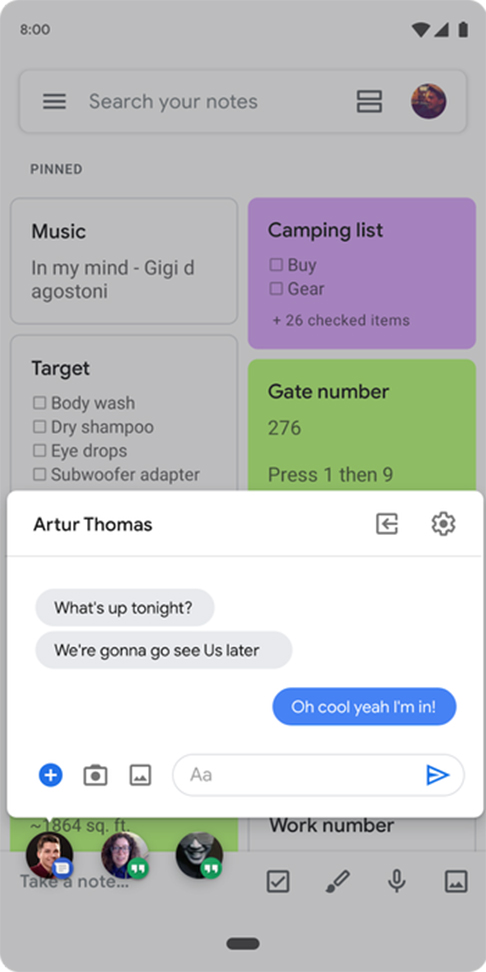
Android Q Beta 2 also includes some new features. While we haven’t had a chance to dive deep into it yet, one we noticed right off the top is called ‘Bubbles.’

Android Q Bubbles

Bubbles are essentially Google’s take on the ‘chat heads’ feature pioneered by Facebook Messenger. However, because Google built Bubbles into Android, it benefits from consistency, improved privacy and reduced development time.

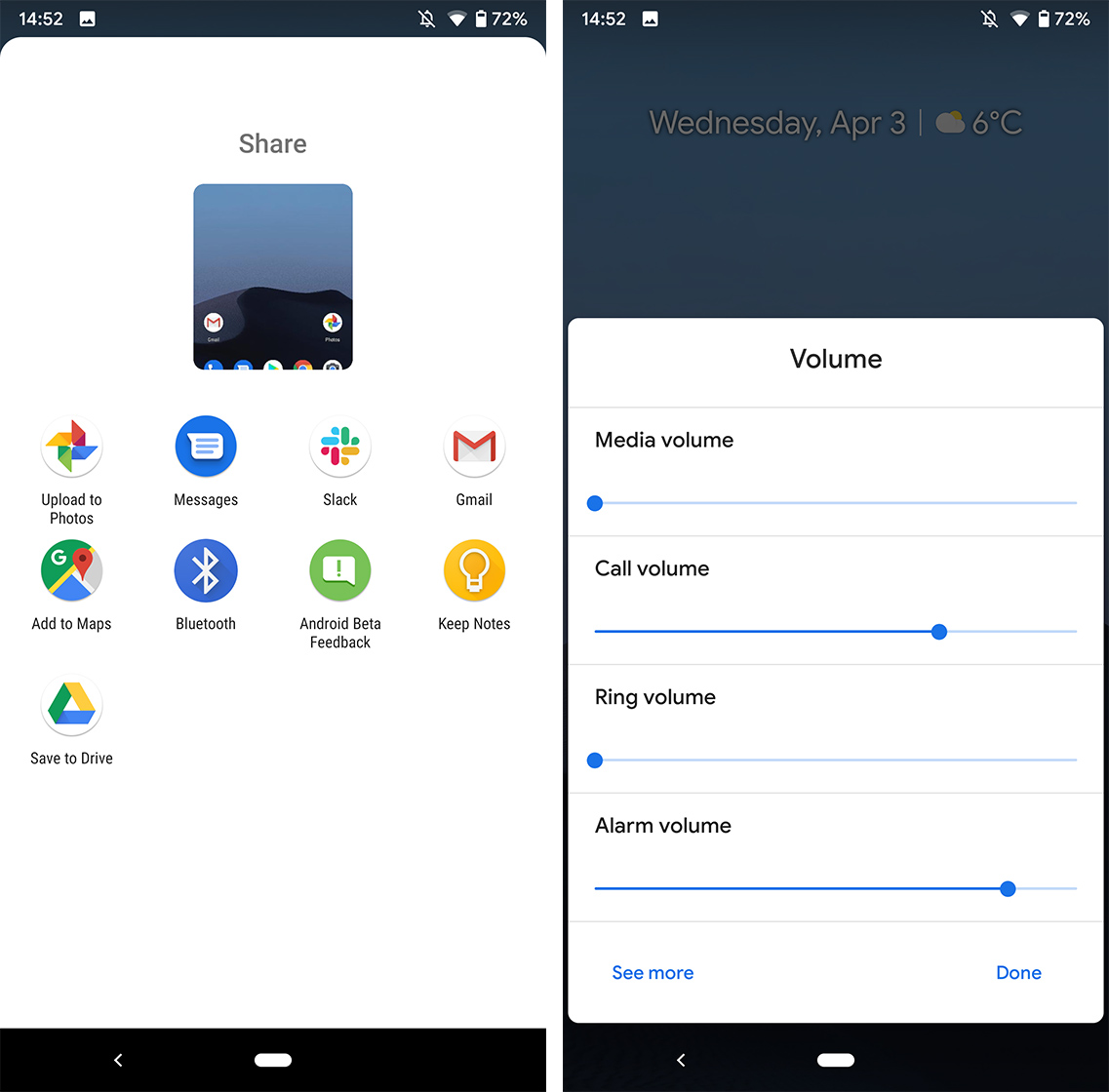
Along with Bubbles, Q Beta 2 brings a refresh to the sharing menu. Now, it has rounded corners and includes a small image preview of the item you’re sharing.

Android Q Beta sharing menu and volume

Google added an option to expand the volume settings menu to the volume slider. The expanded menu gives quick access to the media, call, ring and alarm volumes.

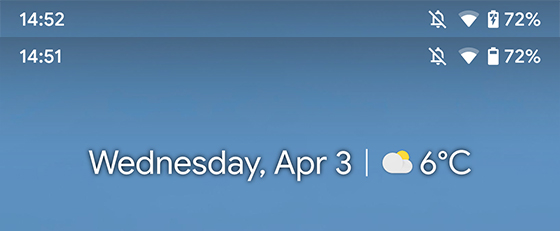
Android Q battery icon

There’s also a new battery icon that fits better with Google’s new Material Design. Unlike the old battery icon, this one has a white border around the battery level.

Further, Google made tweaks to its gesture navigation as spotted in the first beta. Now, swiping between apps works better and acts more like iOS. However, it’s still quite buggy. When I swiped left, it seemed to work fine. But swiping right would open an app and stop the gesture for a moment.

Android Q Beta 2 multitasking gesture

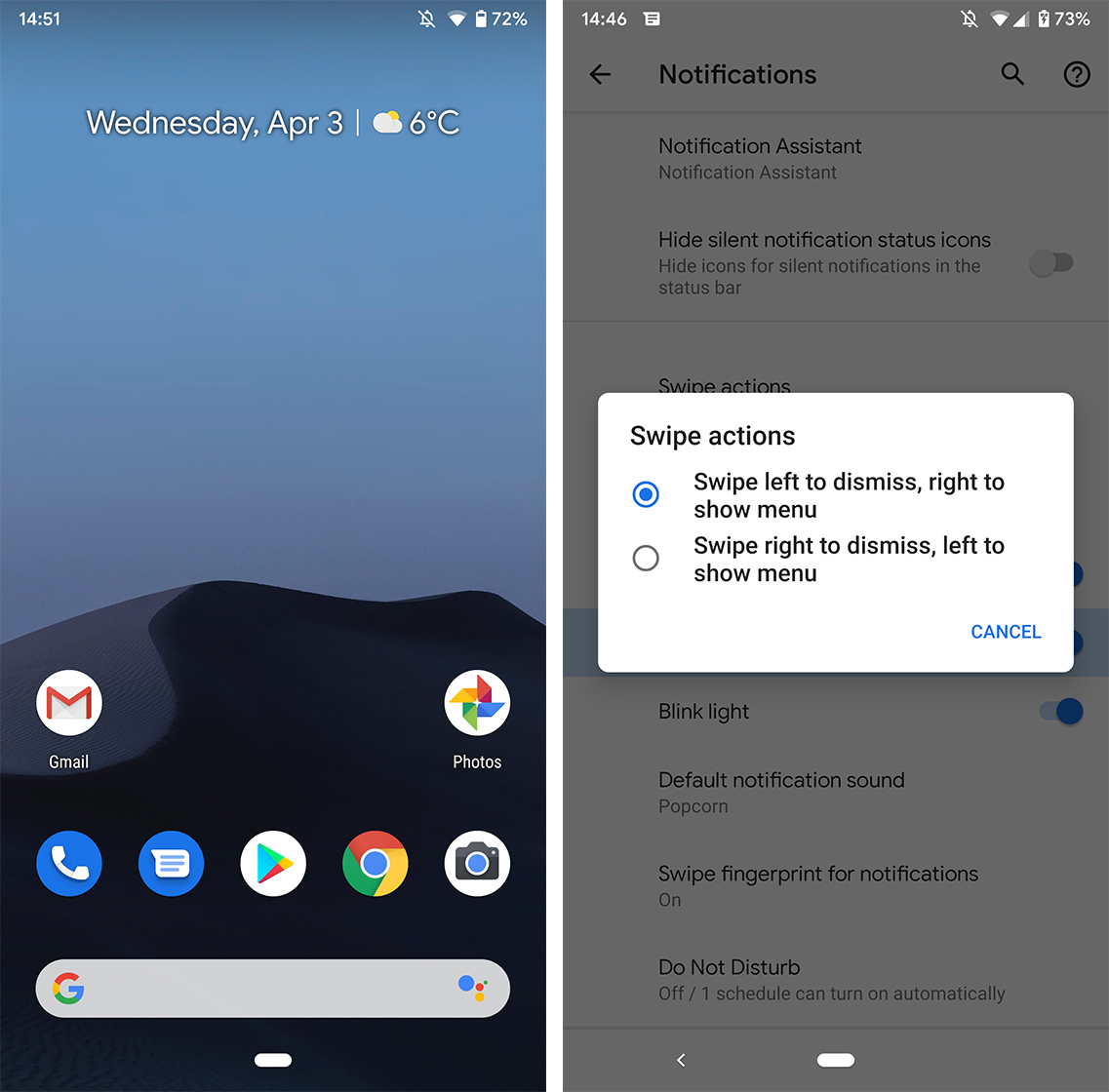
There are also a few small quality-of-life improvements, like the addition of a menu to change the notification swipe direction. You also may have noticed screenshots no longer show rounded corners and notch cut-outs and a new progress bar in media notifications.

Android Q Beta swipe direction

Additionally, Google added a new API in Q that allows apps to specify which microphone they want to use. This may seem like a small thing, but it can help in a lot of situations by letting apps pull audio from specific microphones on a device. You can learn more here.

Finally, there’s a number of new settings for folding phones — although we can’t test them without a folding phone. Both Beta 2 and Android Studio 3.5 include a foldable emulator with two hardware configurations: 7.3-inch screen with a 4.6-inch fold, or an 8-inch screen with a 6.6-inch fold.

There’s likely much more as well, so keep your eyes on MobileSyrup for the latest on new Q features.

We expect Google release another four betas before a final launch of Android Q in third quarter 2019. Further, Google will likely announce new features and partner devices that can enroll in the beta program at Google I/O in May.

Source: 9to5Google

The post Android Q Beta 2 available now with stability improvements, new features appeared first on MobileSyrup.