4. What is the unique value of the community to the organization? What does the community offer to the organization it couldn’t get from elsewhere?
5. How the community survives in a changing world (i.e. incorporates trends). What are the major trends in the sector and how does the community negate them/thrive within them?
6. What is the key challenge that must be overcome? Most communities have a key challenge they must overcome to succeed. It might be getting questions, competing for experts, or budget issues. What is yours and how will it be tackled?
Guiding principles aren’t plucked from thin air in some virtuoso act of creativity. They’re the summation of everything the organization knows about its members, the sector, and itself.
For example, a set of guiding principles might include:
Our community is for newcomers to our sector. We aim to help newcomers progress quickly up the learning curve. We acknowledge we, therefore, won’t be the destination for experts looking for advanced, niche, tips.
The community drives retention of free trials to paying customers. Too many customers are lost to churn. The purpose of the community is to increase retention of customers through the trial to paid accounts.
The community reduces frustration for members. The community provides members with an easy way to get quickly up to speed. We filter out the best content for newcomers, proactively tackle their most likely questions, and do everything we can to reduce their sense of frustration.
The community will be distributed across many platforms. We expect less traffic to come from Google in the future. We will therefore proactively share the best members tips and address questions across any platform mentioned, used by more than 50% of our members.
While the strategy might change over the years, the guiding principles generally don’t.
The guiding principles act as constraints that focus everything you do. Once you know you’re building a community to reduce the frustration of newcomers, you can design an entire experience, recruit members, and take steps specifically to satisfy that strategy.
Develop your community guiding principles and share them with your colleagues, you might be surprised just how much it improves all your strategic efforts.
As I noted in my other article, Nikon effectively ghosted their Nikon 1 customers for over two years between the quiet introduction of the last Nikon 1 (J5) and the complete discontinuation of Nikon 1 gear.
The failed DL launch—a compact camera line that used the same 1" sensors—probably had a lot to do with that. …
Now that everyone is playing at the mirrorless camera table, we basically have a duality in product that customers face: (1) full frame and larger sensor models; and (2) crop sensor models (APS-C and m4/3). I deal with what I find strange about the full frame competition in another article. …
We're slowly getting more and more details from the camera makers in terms of their overall product positioning as they all get settled in with their full frame cameras and we get hints on what's coming. Yet as I see, read, and hear these details, they still leave me scratching my head at times.
Die Analysten schauen auf die abflachende Nachfrage für das iPhone und suchen Apples nächstes dickes Ding. Wer sagt, dass das ein Produkt sein muss? Und damit meine ich nicht die vielen Services, die Apple neulich angekündigt hat. Die sind wichtig, weil sie die Abhängigkeit vom iPhone-Umsatz mindern.
Für mich ist die wichtigste Entwicklung, dass Apple in das Thema Gesundheit investiert. Die Apple Watch ist nicht einfach eine coole Smartwatch mit Apps, sondern ein Sensorenpaket, das Frühwarnungen für gesundheitliche Probleme liefert. Sensoren kann jeder bauen, aber dahinter steckt noch eine Menge Software. Apple hat vor Jahren begonnen, zusammen mit der Stanford Universität an der Erkennung von Herzkrankheiten zu forschen. Die Muckibude auf dem Apple Campus ist eigentlich ein riesiges Labor. Und aus der großen Zahl von Apple-Watch-Trägern kann man immer wieder Probanden für Studien rekrutieren. Alle Gesundheitsdaten laufen in einer Datenbasis zusammen, mit der man Voraussagen machen kann. Aktuell liefert die Apple Watch nur Warnungen bei zu niedrigem oder zu hohem Puls, gemessen an der aktuellen Belastung, und bei Rhythmusstörungen. Aber das ist doch nur der Anfang. Was wird passieren, wenn die Watch einmal den aktuellen Blutzuckerwert ermitteln kann?
Ich habe einige Tracker und Smartwatches probiert, aber die Apple Watch ist für mich konkurrenzlos. 2017 hat sie mich mit hoher Wahrscheinlichkeit vor Schlimmem bewahrt. Apple Watch heißt iPhone und niemand kann ein Smartphone bauen, für das ich die Apple Watch aufgeben würde.
Ähnlich konkurrenzlos ist übrigens auch das iPad. Es gibt kein anderes Tablet mit diesem Preisleistungsverhältnis. Es gibt kein anderes Tablet mit einer so breiten Softwareunterstützung.
Und die AirPods. Ja, was haben wir gelacht, am Anfang. Und jetzt schaut Euch um. Das ist vom Stand weg eines der besten Apple-Produkte aller Zeiten geworden. Sie sind so gut, dass mittlerweile viele Blender existieren, von Huawei bis zu anderen Chinakrachern. Aber trotz guter Vorlage schaffen sie nicht die gleiche Integration. Podcast auf iPhone hören und einfach ohne iPhone aus dem Haus gehen? Die Apple Watch übernimmt nahtlos. Wer nur andere Bluetooth-Ohrstöpsel kennt, hat keine Ahnung, wie toll sowas sein kann.
Ich mache mir keine besonderen Sorgen um Apples nächstes dickes Ding. Der eigentliche Zauber liegt nicht in einem Produkt, sondern in der Integration aller. Dass Apple gerade das MacBook versemmelt, bleibt da eher eine Anekdote.
The date is set. On April 9th, the incredible, AI-powered Pixelmator Photo will be released on the App Store. And you can make sure Pixelmator Photo makes its way onto your iPad the second it becomes available by pre-ordering it today. If you want a little taste of what the app’s about, check out this short video we whipped up.
The initial price of Pixelmator Photo will be $4.99. That’s a one-time purchase. No subscriptions and no in-app purchases for additional tools. And, for pre-orders, we’re knocking 20% off the price so you can get it for $3.99. $3.99!
All the feedback we’ve had over the beta period has us incredibly excited for the release as well as the future of Pixelmator Photo — the future of photo editing on iPad. If you have an iPad and take photos, Pixelmator Photo is a must-have. Just 7 short days to go until you can all get your hands on it. We can’t wait.
Design editor Lloyd Alter of Tree Hugger sums up what is truly happening in the “sharing the road” adage that is so popular these days. As Lloyd recalls in this article in Mnn.com “Everyone hates everyone”. That is a pretty true statement and we have to do a better job and get that done now.
Lloyd Alter states “Unless we start planning now and figuring out how to share the space we have equitably, in 10 years it won’t be drivers hating pedestrians hating cyclists, It will be everybody hating old people. Because we will be everywhere.”
It really is not about a demographic time bomb of old people showing up on adult tricycles scooting along bike lanes. It is really about our discussion on why when talking about sharing space, we still pit pedestrians against cyclists, giving vehicular users a relatively free pass to the rest of the street without much discussion.
I wrote about the unfortunate bicycle crash that happened with City of Vancouver’s Transportation manager (and all around nice guy) Dale Bracewell who suffered a shattered elbow when a vehicle literally debiked him. Both Lloyd Alter and Dale quoted the just released study from Australia which suggests that many motorists don’t see cyclists as real people and vulnerable road users with as much right to the road space as they do. You can take a look at that study here.
If you have been a cyclist or a pedestrian in Australian cities you will know it is still a bit like the wild west, with vehicles having priority on streets, and state government at odds with the big cities who want to traffic calm on state run road networks and give pedestrians priority at signalized intersections.
Of course there are issues between cyclists and pedestrians as well.
Cyclists will often hop their bikes on a sidewalk for safety or convenience reasons. But the work done by Jan Garrard for Victoria Walks in Australia shows that seniors use walking as their major mode of transport, and require a higher standard of design and street maintenance to stay mobile and safe. Bikes, dogs and distractions on sidewalks can result in seniors falling. As Garrard notes:
“Just as older adults can be more vulnerable to environmental hazards while walking,they also express high levels of concern about the behaviours of other road/path users. These concerns may be heightened for older adults because of their reduced ability to avoid a collision in the event of the sudden, unexpected movement of another road/path user,and increased likelihood that a collision (or the avoidance manoeuvre) will result in a fall and/or injury”.
Garrard’s work also shows that for older seniors there is a high likelihood that senior to be deceased within several months after a traumatic fall on a city sidewalk or street. There is a reason seniors fear falling.
As Lloyd Alter surmises talking about seniors in the United States “In 10 years, when the oldest of 70 million boomers are in their 80s, the drivers are going to have a lot more to complain about — millions of old people who take too long to cross the street, many more crosswalks and traffic islands taking up space, wider sidewalks and wider bike lanes to handle an explosion in the numbers of e-bikes and mobility devices.”
The time to have the serious conversation on how we share the city street and road surface needs to happen now. It’s time to humanize the pedestrian and cyclist by applying the Safe Road System~Vision Zero approach and nix the 85 percentile way of building road space solely for vehicular traffic. Better design, lower speeds and changing driver behaviour on city streets are mandatory. We need good street infrastructure, delight, visual interest, benches and public washrooms for vulnerable road users. And we also need a new way of looking at road share.
As this article by the Brookings Institute observes its no longer good enough to measure street use by a level of service. New standards measuring “broader community goals around accessibility, economic development, sustainability and livability” need to be immediately instituted.
.
We are all going to be using those streets in the future, and moving sustainably by cycle and foot will not only be a necessity, but a way to keep an older population agile, connected and fit, making communities more cohesive. The health of the population, our spaces and our streets depend upon that.
We'd like to call this an *Explainer, but we can't, because, well, it's kind of inexplicable
by Albert Koehl
Does Picasso paint Toronto’s bike lanes? You might think so when comparing the $11 million in capital spending on cycling last year with the 8.5 km of bike lanes that were actually created. Following the money offers a better, even if less satisfying, explanation. The bottom line is that only 11.5 percent of last year’s spending (plus some amount for painting the lines) from the cycling infrastructure budget went to what most people would expect from such a budget – new bike lanes.
In the spring of 2016, community advocates fought hard to secure $16 million in annual funding for cycling infrastructure. At the time, there was hope this higher funding could accelerate the Bike Plan’s ten-year timeframe for the 335-km of anticipated new bike lanes (including sidewalk level paths).
So how did we get so few bike lanes from the $16 million capital budget for cycling – of which $11 million was actually spent?
The question isn’t simply academic. Toronto’s bike infrastructure falls far short of cities like Montreal, where 90 km of new lanes were installed over the last three years alone. In fact, forty years after our first bike lane, there are bike lanes on a mere two percent of Toronto roads -- and we’re still a long way from having a coherent bike network. The lack of progress is disturbing for a year when there were five cycling fatalities – a toll not exceeded since 1998.
In 2018, only $1.26 million (11.5 percent) of the $11 million of actual capital spending went to installing new bike lanes -- the 8.5 kilometres documented in a previous article. Some additional amount (likely in the range of a few hundred thousand dollars) was spent on painting the lines.
New bike lane installed on Shoreham Dr. in 2018 above.
Can the $5 million in the unspent 2018 budget be carried forward to 2019? According to city staff, some portion of last year’s unspent capital funds might be carried over for projects that were already underway last year. As well, the city’s cycling budget is augmented by $20 million from the federal Public Transit Infrastructure Fund (PTIF) – money that has to be spent by the end of next year or risk being lost. In short, it doesn’t look like money is the problem.
When the approximately $1.26 million spent on bike lanes last year is added to other dollars that are plausibly related to on-road infrastructure, the total still doesn’t reach 30 percent of actual capital spending. These additional amounts include design work for future bike lanes (we’re including the West Railpath because it would be useful to commuters), ‘pavement markings’ (some portion of which was for bike lane upgrades), and bollards.
The remaining 70% of capital spending in 2018 included $1.43 million for bike parking, $5.775 million for bike trails, and $0.5 million for guidelines for bike lanes -- the latter somewhat ironic given how few bike lanes were actually installed. (The Province has similar guidelines.)
The point isn’t that City Hall should never spend on ‘soft’ initiatives like parking, sharrows, guidelines, or trails but the priority must be the everyday cyclist – indeed, no one should be surprised if City Hall will be judged based on how many new bike lanes are installed -- precisely what the Bike Plan was supposed to deliver.
New "bike lane" on Dovehouse Ave installed in 2018 above.
Last year’s capital spending on bike lanes is absurdly out of whack with spending on items that should be adjuncts, not priorities. The imbalance might be treated as an anomaly, but for the fact that we’ve seen it all before – over many years. Indeed, the current Bike Plan has troubling parallels to the failed 2001 plan. In each case, the plan was preceded by a few years of intense study (requiring significant resources), then the announcement of a major bike plan, and followed by a lack of action.
Curiously, despite an apparent lack of staff resources to oversee capital projects, City Hall’s Cycling Unit still has a number of unfilled staff positions.
Cyclists might take at face value assertions from City Hall that Bike Plan spending is ramping up, and great things are soon to come. Unfortunately, we’ve been hearing similar things for years. The city is forever turning the (same) corner on creating cycling infrastructure. The lack of political accountability for cycling plans remains a key problem.
In May 2016, Councillor Jaye Robinson, head of public works, said the new Bike Plan would not repeat the mistakes of the old plan. She said, the $16 million budget “shows a strong commitment to the cycling network.” She nonetheless succeeded on a motion to put on hold 6 of 8 studies for key connecting routes along roads like Danforth. The idea was to first learn from studies that were apparently underway (“locked and loaded,” in the words of Robinson), with a review before the end of 2018. Instead, we got more of the same: about eight km of new bike lanes in each of 2016, 2017 and 2018, inaction on a key study supposedly underway (for Bloor), and the failure to conduct the two-year review. Robinson has, not surprisingly, moved on to another portfolio.
Picasso is dead, and so too will our Bike Plan if the public doesn’t start getting value from dollars dedicated to bike infrastructure. Asking cyclists to admire beautiful bike plans is no substitute for getting real bike lanes under our tires.
Albert Koehl is an environmental lawyer, road safety advocate, and founder of Bells on Bloor.
This is open source the way I understand it too. "I'm beginning to think of open source as operating like a union... in the open source movement, developers all act together to build products that counterbalance the impact of high-growth platforms in order to create a better ecosystem. I think there's value in standing in opposition to the status quo. Open source is a bottom-up, worker-led movement. The means and outputs of production are available to everybody. I think that's beautiful - and, in a world where every aspect of our lives has been packaged and monopolized for profit, a powerful force for good." Plus this: "I'm pretty sure Eric Raymond, who originally coined "open source" because he felt the free software movement was associated with communism, would hate this framing. Too bad." And all this is something various proponents of commercial OER should note well.
It's interesting to see that some of the issues we've had around open educational resources have also been at play in the world of free and open source software. Steve Klabnik authors two posts (first, second) on the subject. Here's the crux: people are concerned not just about the redistribution of software, but also (and mainly) about the production of software - that users of open source contribute to the community, fix bugs, include documentation, etc. Licenses, for the most part, don't speak about the mechanism of production, which allows companies to abuse them but complying with the letter, but not the spirit, of free and open software.
Cynthia from Clean Technica is an avid Blix rider throughout Sarasota, Florida. After her first review of her Aveny Step-through, she has continued to explore how an electric bike can replace a car! As she learns how to navigate proper bike safety practices and find her own comfort level riding, Cynthia has expanded her riding. Learn why Cynthia loves riding her Blix Aveny throughout her city.
Maintaining an Active Lifestyle
Maintaining an active lifestyle as we age is highly important to prevent multiple health issues. This is one reason Cynthia aims to ride her Aveny daily! She says she "rides to prevent cognitive decline as much as possible." Some days, Cynthia pedals hard and uses lower levels of assist, if she uses any at all. However, sometimes under that Florida Sun and a full day of pedaling, a little extra push is needed to get home. On days like these, Cynthia enjoys the throttle option on her Aveny because it allows her to reduce the effort she is exerting when tired or feeling overheated and overworked.
Love for Pedal Assist & Throttles
Cynthia describes the pedal assist on her Aveny as "smooth and helpful" and "quite perfect for cruising home on back streets!"While she often chooses to use different levels of assist based on her riding intentions, Cynthia does explain that the "nice thing about the Blix Aveny is that one can simply use the [throttle] to add the electrical component."
Pedal assist is different than using a throttle because it requires riders to pedal in addition to the motor helping to push the bike forward. Each level of assist varies in the speed at which it will get the bike as well as how hard a rider needs to pedal. High levels of pedal assist will reach higher speeds and provide greater help to the rider. This is great for riders wanting exercise, looking to conquer hills, or ride farther!
The throttle works by pushing down on the lever which, in turn, engages the motor and propels the bike forward without any pedaling needed. It is one of the most sought after features on the Blix Aveny! It is a great option if riders are tired, want to maintain a 20mph riding speed, or are unable to pedal to mobility issues!
City riding is a staple in Cynthia's lifestyle and with her Aveny she has been able to replace her car!
Thank you Cynthia for sharing your continued experiences on your Aveny!
Let me set the tone by using a quote from a great person of history:
“The ultimate tragedy is not the oppression and cruelty by the bad people, but the silence over that by the good people.” ~ Martin Luther King Jr.
Let me start by stating: I believe we can change the future of computing for the better. However, currently something is wrong with our digital world; something basic, something is rotten at the core. I want to talk to you about what that is, how it came to be, and why we must change it. And I want you to care… because:
“A person who won’t care, has no advantage over one who doesn’t care.” ~ Mark Twain
This talk comes in three parts:
Part 1. History
The history of the mistreatment of our digital rights.
Most Big Tech companies that abuse people are based in the US, therefore I will describe the history from that perspective. Some things you need to understand: Governments write the rules of the game that society plays. There are always rules, and governments influenced by Big Tech are writing those rules. If you are somebody who wants no rules whatsoever, you will quickly realize rules will be written that govern you, without your involvement.
My sage advice to you: Write the rules. Let’s write the rules that we want to see in an ethical society that respects freedoms and liberties.
Nearly everybody knows that exploitative Big Tech abuse our digital rights, because it’s at the core of their business. It’s the root problem. It will not “get better” unless any one of three things happen:
Government regulation (that is ethical for society)
Business models change (to something ethical for society)
People switch (to something ethical for society)
Big Tech—corporations whose business model exploits humanity for profit—they all suffer from a systemic toxin, that discourages personal freedoms and removes any digital rights we as society demand. Big Tech corporations are already starting the marketing to try to differentiate themselves from it. But marketing alone will not remove the poison within their business model.
Minor disclaimer: You may ask “But… You’re a Company?” Actually, we’re a Social Purpose Corporation (SPC). And that is not just a series of buzzwords, it’s a legal framework of a business that carries with it significant importance. it is the reason we can’t ever exploit people for profit, it is the reason we are unlike all Big Tech who were formed to strip your digital rights in the name of maximizing shareholder value.
There was a recent article in Inc. magazine about us:
“Purism is what is called a ‘Social Purpose Corporation,’ which allows a business to prioritize social objectives over fiduciary duties.” ~ Christine Lagorio-Chafkin – Senior writer Inc.
Let me dive deeper into the problem. All corporations, including all Big Tech giants, have a single goal: Maximize Shareholder Value. That’s it. That’s the only goal. But it’s not just a goal. Under eBay v. Newman, a lawsuit setting legal precedent stating:
The law makes it literally malfeasance for a corporation not to do everything it legally can to maximize its profits.
So if given the choice of making $1 by exploiting people online, or opting to treat people ethically, the Corporation must exploit people online for the dollar, or the board of directors and executives could face a lawsuit from any shareholder that claims they did not maximize the value of their shares.
The regulations at the foundation of Big Tech are forcing the exploitation of our digital rights.
Quoting Chancellor William B. Chandler, III who sums up the problem perfectly in his Delaware Court opinion when eBay sued Craigslist for not maximizing its shares:
“Having chosen a for-profit corporate form, the directors are bound by the fiduciary duties to promote the value of the corporation for the benefit of its stockholders.” ~ Chancellor William B. Chandler, III
We have centuries of legal precedent in the physical world, advanced by science and society guiding our moral compass, trespassing laws, freedom of speech, privacy rights, protection against personal harm and abuse. We have nearly no digital rights. Big Tech trespasses on your data, restricts speech, obliterates privacy entirely. Big Tech exploits people, causes harm and inflicts abuse upon our society.
If somebody approached your bedroom window from outside, put a camera up and started recording, you would immediately call the authorities and report the numerous laws broken—a case would be opened, arrests could be made, charges could be pressed, trials could ensue, criminals could go to jail; but in the digital world none of that exists—you are forced to leak far more details than a camera in your bedroom would share, and you are forced to leak that personal data from your phone all the time.
Big Tech exploits you every millisecond of every day.
All future government regulation will be influenced, funded, and lobbied by Big Tech. Could you imagine a future regulation where Big Tech wins to cryptographically sign everything with their keys, under their control on their products? What a nightmare scenario… Could you imagine your mobile phone under the complete control of Apple or Google?
We need to write the rules based on values we want in society.
AI algorithms from Big Tech have one input variable: $Maximize_Shareholder_Value. That translates directly into
Gather everything on all of the society
Keep people digitally captive
Maximize exposure time
Polarize opinion to elicit more profit
That is not what AI should be taught. Due to data manipulation, no two people in society are getting the same information; it is impossible to have a sane debate about any polarizing topic because we aren’t starting with a foundation of shared knowledge. What if the input request to AI algorithms was “Build an ethical society that respects freedoms and digital rights”? What would society look like then?
Maximizing shareholder value in a society that has nearly no digital rights, guarantees exploitation of that society. Why did we let this happen? How did we let this happen? I know why. Because… It’s convenient to give up control. It is convenient for you to download a proprietary application that exploits you, agree to the legal binding terms of service you didn’t read, and blissfully believe Big Tech is helping you in the digital world. It’s inconvenient to stand up for your freedom.
It seems we are offered to choose between convenience and control or inconvenience and freedom
I believe we can have both convenience AND freedom. We can actually build technology that benefits society faster when they are based on principles we deem ethical.
Society’s technology genius is not lacking, its moral genius is. Trust in Big Tech is eroding rapidly. No Big Tech company has core values that help our digital rights. The largest challenge we will face is the marketing budgets of Big Tech, when they claim things like:
“We protect your privacy” ~ Big Tech
Actually, You exploit personal private data without a persons knowledge
“We use encryption” ~ Big Tech
Actually, It’s inside proprietary apps that you control
“We are secure” ~ Big Tech
Actually, You hold the master keys controlling society
“You can trust us” ~ Big Tech
Actually, You won’t let anybody verify anything
Part 2: The present
Currently, Big Tech is maximizing shareholder value without values. The products, software, and services offered by Big Tech will continue to mistreat people unless we can establish what digital rights are and change society for the better.
Then we advocate, regulate, and build products that adhere to those digital rights.
Mark Twain famously wrote:
“It is curious that physical courage should be so common in the world and moral courage so rare.” ~ Mark Twain
I believe there are five fundamental digital rights:
1. Right to Change Providers
If a person wants to change a service provider, they can easily move to another. (Decentralized Services)
2. Right to Protect Personal Data
A person owns and controls their own master keys to encrypt all data and communication, nobody else. (User-controlled Encryption)
3. Right to Verify
Society has the freedom to inspect the source of all software used, and can run it as they wish, for any purpose. (Software Freedom)
4. Right to be Forgotten
A service provider only stores the minimal personal data necessary to provide the service. Once the data is no longer required, it is deleted. (Minimal Data Retention)
5. Right to Access
A person must not be discriminated against nor forced to agree to any terms and conditions before accessing a service. (Personal Liberty)
If we can do those things, we can change the future of computing for the better.
Part 3: The future
As technology gets closer and closer to our brain, the moral issues of digital rights become clearer and clearer.
It started with computers, where we would leave them and come back to them. Then phones, that we always have on or near us with millisecond leakage of personal data beyond human comprehension. Then wearables, that are tracking very private details. IOT devices are everywhere— I have to stop to remind everybody: “The S in IOT is for Security” ~ Anonymous—and finally, surgically implanted.
A question to consider: What Big Tech Company would you purchase your future brain implant from? This is coming.
However, I believe we can change the future of computing for the better. Let’s stand together and invest, use, and recommend products and services that respect society.
Later today, Google will be shutting down Inbox for good. And right on time, the Readdle team has released the Android version of Spark, its popular and feature-filled email client for iOS and Mac.
Continue reading →
HMD Global has officially launched the Nokia X71 smartphone, which boasts a 48-megapixel camera on the back, and an edge-to-edge display design.
Continue reading →
At Mobile World Congress 2019, HMD Global, the owner of the Nokia smartphone brand, launched a variety of new handsets, including the flagship Nokia 9 PureView. While the phone is a mixed bag of features — with a dated front-facing aesthetic, a processor from 2018 and a rear camera array with five cameras — it definitely caught my attention.
HMD hasn’t said if the 9 PureView is coming to Canada, but either way I briefly went hands-on with the device.
2017 Aesthetic
From the front, the Nokia 9 PureView looks like a lot of smartphones from 2017.
It features considerable top and bottom bezels and a single front-facing camera with an Nokia logo adjacent. While some dislike display notches, they add extra screen real estate and that’s something the PureView could use more of: the phone features a modest 79.7 percent screen-to-body ratio.
The device reminds me of handsets like the LG G6 and the OnePlus 5T. With it being 2019, the smartphone would have benefitted from a slimmer profile.
Flipping the 9 PureView over reveals the handset’s almost circular seven-sensor camera array. Even by 2019 standards, the setup is impressive. It includes a time of flight sensor, a dual LED flash module and five camera sensors.
The handset also includes an in-display fingerprint sensor, which further accentuates its mixed bag of features.
The 9 PureView feels quite light. Weighing in at 172g, it’s lighter than the OnePlus 6 and iPhone XS. With its light body and slightly rounded corners, the device was easy to hold, but it felt slippery and the back glass was a fingerprint magnet.
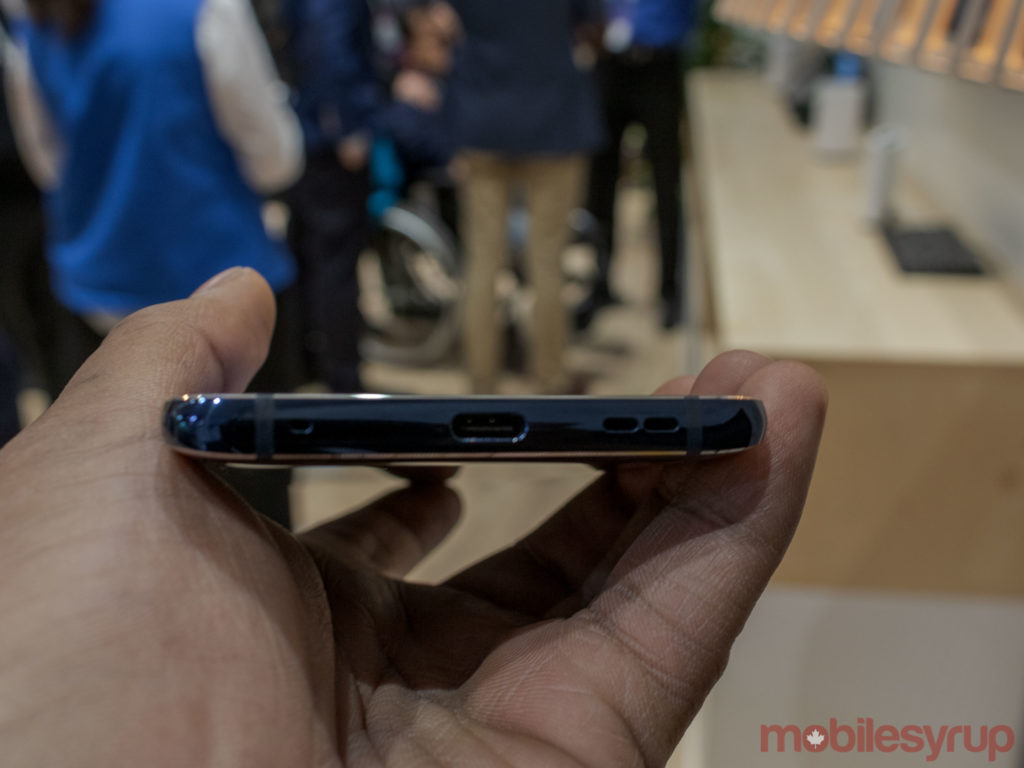
The handset sports a unibody design with 6,000 series aluminium that seamlessly blends into a Gorilla Glass 5 display. On the bottom, there’s no 3.5mm headphone port, but there is a USB-C port for charging.
On the right side, you can find the volume rocker and power button.
Display-wise, the handset features a 5.99-inch P-OLED screen with a 2,880 x 1,440-pixel resolution and HDR10. The screen wasn’t perfect, especially when compared to screens on phones like the Samsung Galaxy S10 or LG G8, but it offered rich blacks and a lot of colour. The screen was a bit on the saturated side. However, it still depicted colours accurately and pictures looked great and true-to-life.
Say cheese x 5
HMD used Nokia’s PureView, a brand that was previously associated with Lumia phones. Both the Nokia Lumia 920 and 930 were PureView Lumia devices, that featured on-chip image processors for — at the time — better image sampling, digital zoom and reduced noise. It’s safe to say that Nokia associates its PureView brand with phones with high-level camera performance.
The main highlight of this phone is its five rear-facing cameras. HMD has placed three monochromatic sensors for contrast, depth and exposure, as well as two RGB sensors for colour. Each of the five cameras sport 12-megapixel sensors, which can shoot simultaneously.
HMD says some of the advantages of its camera is the ability to capture 1200 layers of depth, capture more detail and that it has a better high dynamic range than phones that use fewer cameras.
I thought the images I took looked decent, though I took them while in a convention centre that didn’t have the best lighting. What I found interesting was the ability to take a picture in the normal camera mode then being able to go into the Photos app and change the depth of field on any of subject, whether the subject was in the foreground, the background or in between. HMD says it’s able to make these depths of field effect changes by producing 1200 layers of depth with each subject having its own layer of depth.
Phones like the iPhone XS and Samsung’s Galaxy Note 9 and S10 can change depth after taking pictures, however, being able to specifically pick a subject and change the depth around it is something that the Nokia 9 PureView was able to do easily.
During the hands-on, HMD Global showed off some of the native black and white photography that they allegedly took with the Nokia 9 PureView. I was impressed by the pictures and I’m looking forward to testing out its monochrome mode. When taking pictures in black and white, the 9 PureView uses its three monochrome sensors, so that the resulting photos are better exposed and feature more detail than photos taken by phones with a single monochrome sensor.
HMD says that its pictures can capture anywhere from 60 megapixels worth of data up to 240 megapixels worth of data when each camera shoots four times and fuses all of the data that is captured into one image.
On top of all of this, the 9 PureView can capture images in RAW and allows users to edit these images in Adobe Lightroom on-device.
HMD worked with Zeiss Optics, camera startup Light and Qualcomm on the five-camera setup. The Snapdragon 845 actually only supports three rear-facing cameras but Qualcomm optimized the chip to work with all the 9 PureView’s cameras.
Nokia 9 PureView processor, battery and availability
The Nokia 9 PureView sports a Snapdragon 845 processor, 6GB of RAM, Android 9 Pie and a 3,320mAh battery. I thought the 9 PureView ran pretty quickly, though I didn’t get the chance to truly put it through its paces. That said, its 2018 processor is definitely not on par with phones like the S10 and the LG G8 with their Snapdragon 855 chipset. Additionally, the device runs Android One, a near-stock version of Android used by many of the company’s other handsets.
Alongside a 2018 processor the 9 PureView sports wireless charging.
The Nokia 9 PureView isn’t the best out there, nor is it the showiest, but it can take a good picture.
Apple will release three OLED display iPhones in 2020, according to a new report from Taiwan’s DigiTimes.
DigiTimes reports that the three new iPhones will feature displays measuring in at 5.42-, 6.06- and 6.67-inches, respectively. Apple’s current iPhone lineup includes two OLED iPhones, the iPhone XS and iPhone XS Max, with 5.8-inch and 6.5-inch displays and the 6.1-inch iPhone XR with LCD panel.
The website adds the smallest of the three models will include technology from Samsung or LG that will make the phone’s display thinner.
The report also reiterates that Apple will launch two new OLED model iPhones and one LCD model iPhone in 2019.
One thing to note is that DigiTimes has a decidedly mixed track record when it comes to predicting Apple’s product lineup, particularly in the aftermath of AirPower’s cancellation. As recently as two weeks ago, the website published a report that said the launch of AirPower was imminent. One week later, Apple announced the cancellation of the accessory.
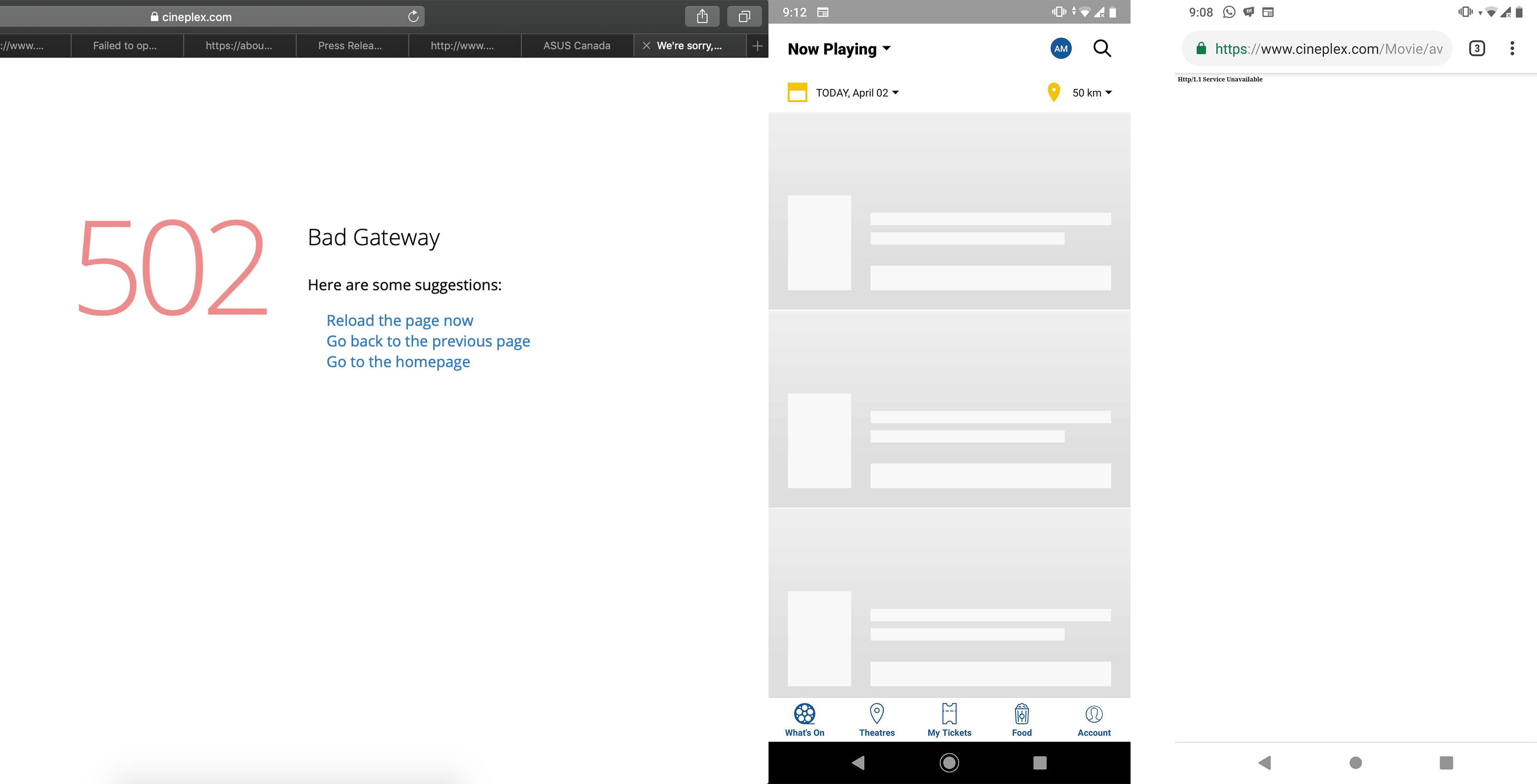
Just as Cineplex started selling tickets for Avengers: Endgame, Marvel’s upcoming blockbuster superhero movie, it looks like the entertainment company’s site has crashed
When multiple people from the MobileSyrup office attempted to score the tickets on the morning of April 2nd, the site displayed a ‘502 Bad Gateway’ error message.
In addition to the site being down, users are unable to buy tickets through the Cineplex mobile app.
The website ‘Is it Down Right Now’claims that the Cineplex site isn’t working for everyone and cites server issues as the main problem.
Hello Simon,
Apologies for the inconvenience, but yes we are having an issue with the Cinpelex site at this time. Our IT department is aware and working to restore as quickly as possible.
Today is the day that Inbox is shutting down, much to the disappointment of many users, including myself. However, a new Chrome extension hopes to ease the pain for Inbox fans.
Unfortunately, there’s no real replacement out there yet. If you’re like me, you’ve probably spent last few months trying — and ultimately disliking — several email apps. Nothing quite has the flair of Inbox.
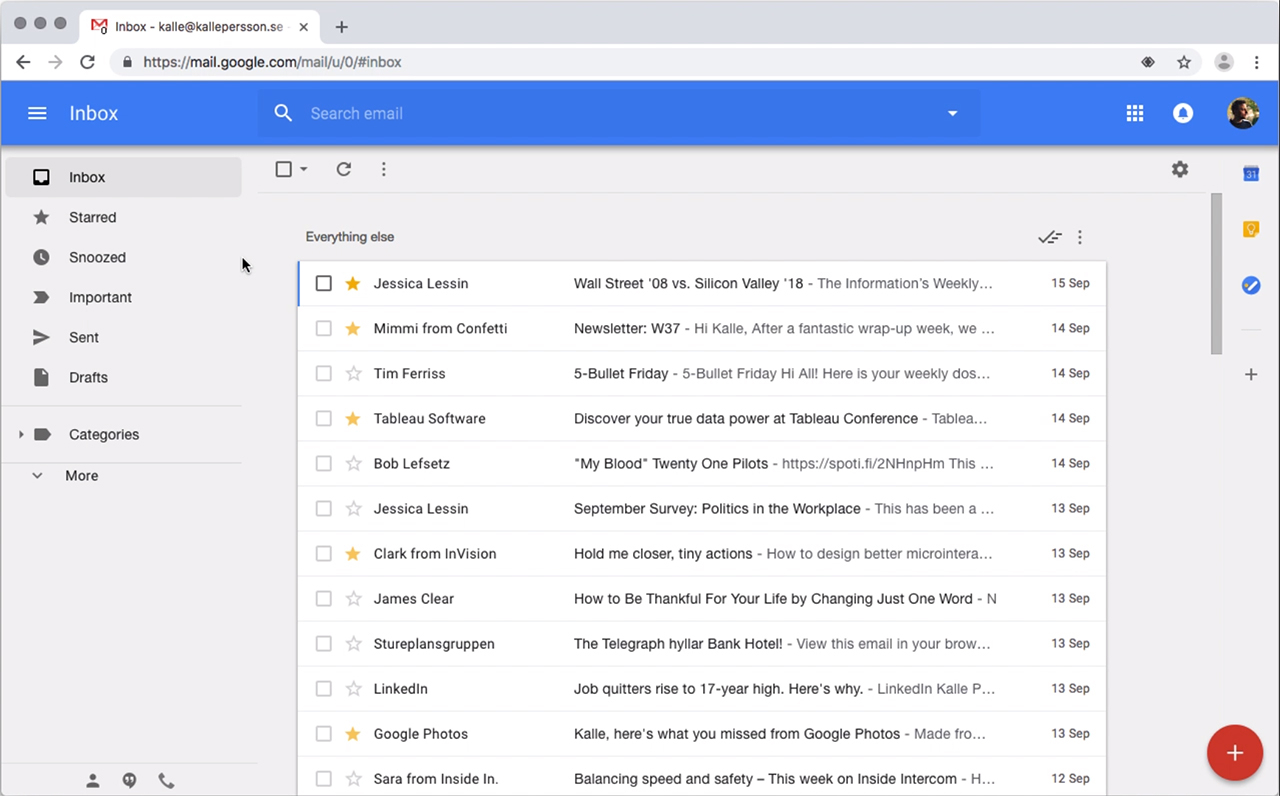
Most users will probably find themselves using Gmail again, which means they can take advantage of the free ‘Inbox Theme for Gmail’ Chrome extension on the desktop. The extension transforms Gmail’s interface to look like Inbox.
While this doesn’t bring Inbox’s missing features, like bundles or pinned messages, it does bring the aesthetics of Inbox, such as a cleaner look.
Personally, I’ve never been a fan of Inbox’s web interface, but it’s much better than Gmail’s UI. Plus, with the extension enabled, it’ll almost be like Inbox never left.
Further, the extension works with all Gmail accounts, including G Suite managed accounts. The developers also have plans to bring the extension to Firefox and Safari in the future.
To get the extension, you can head over to the Chrome Web Store, or check out the developers’ website here.
Volkswagen is reportedly manufacturing a new electric-focused platform that will allow its EVs to be more affordable.
One of these cars is aiming to cost less than €20,000 (approximately $30,000 CAD) and will be marketed under its SEAT brand.
“The planned starting price of under €20,000 means it would be the cheapest electric car on the market, one that many ordinary car buyers could afford,” said Seat’s CEO Luca de Meo to the Financial Times.
The German automaker also plans to sell millions of these vehicles by 2025.
Seat is known for producing low-cost vehicles, so it makes sense that this cheaper EV will adopt the Spanish automotive company’s branding.
If Volkswagen does bring this car overseas with the same price, it would be the most affordable EV available, as most start from roughly $40,000.
For now, the German company is focusing on its MEB platform, which is a modular design that standardizes EV models to increase production and performance.
Seat is also using this platform for its first electric car, the el-Born, which was revealed at the 2019 Geneva Motor Show.
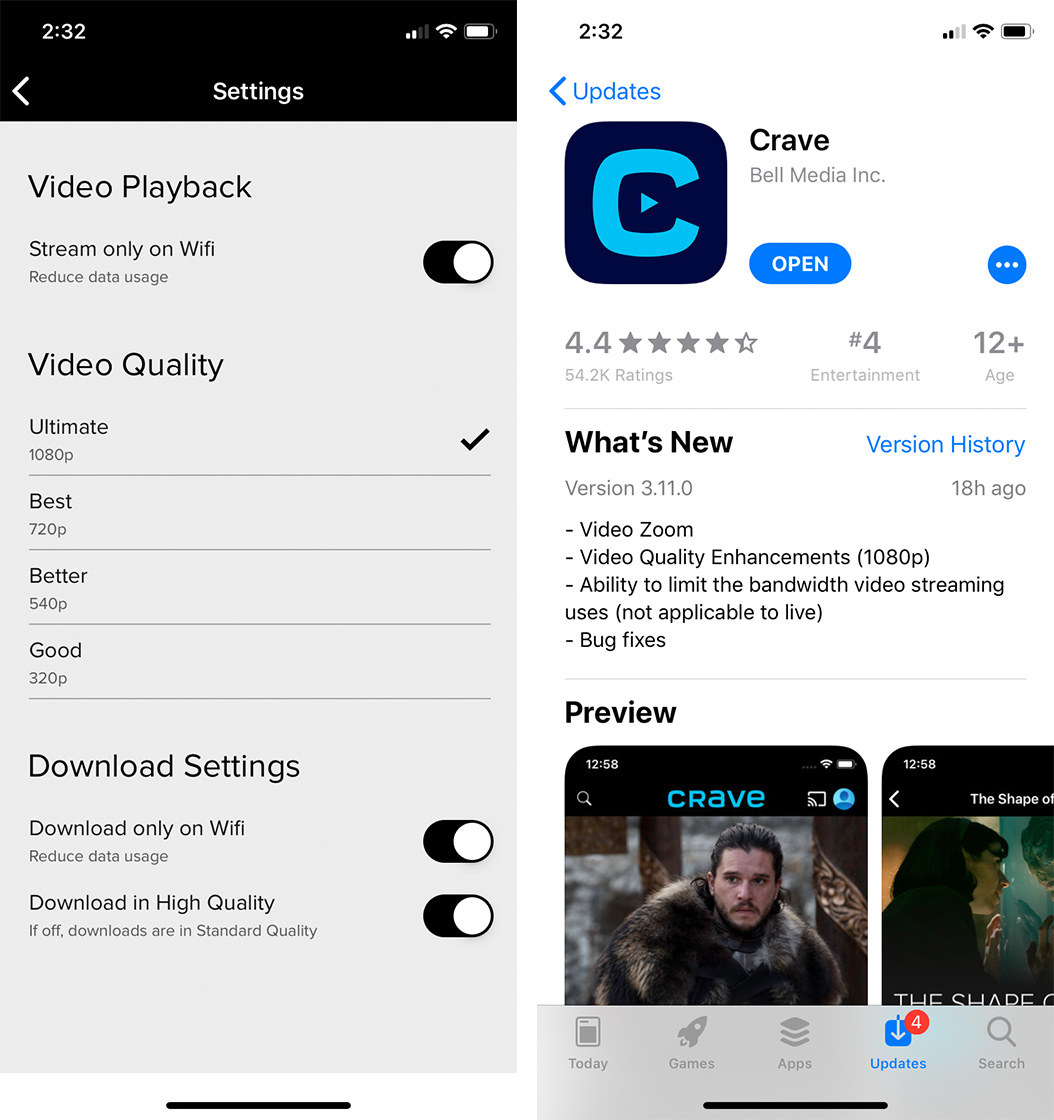
Although Bell’s Crave streaming service likely should have launched with the ability to stream content in 1080p when it first relaunched, until now the platform was locked to 720p with the only exception being Apple’s 4th-generation Apple TV.
Now, a new update to Bell’s mobile Crave app allows subscribers to stream content in 1080p on the iPhone, iPad and Android devices. Previously the maximum resolution you were able to stream to these platforms was 720p.
Further, Crave now allows users to limit the bandwidth the platform through new settings. The first option is ‘Good,’ which locks all content to 320p, with the next being ‘Better’ or 540p. The final two options are ‘Best,’ which is 720p and the aptly named ‘Ultimate,’ or 1080p.
The timing of this latest update to Crave makes a lot of sense given the final season of Game of Thrones is set to launch on April 14th.
While CraveTV first launched back in 2016, Bell recently relaunched the streaming platform as Crave in November 2018. Along with a redesigned user-interface, this revamped version of the streaming service includes current HBO content for an additional $9.99 CAD per month.
The base level of Crave starts at $9.99. The platform also offers a new Starz subscription for an additional $5.99 a month. Crave is available on iOS, Android, Xbox One and Apple TV. It’s unclear if the Xbox One version of Crave has been updated to 1080p but we’ve reached out to Bell for clarification.
What’s a little confusing about this update is why it took Bell so long to start streaming content in 1080p on more platforms given that 4K is now the standard across competing services like Netflix and Amazon Prime Video.
April has just started and the Pixel leak season is already ramping up, with the Pixel 4 making a small appearance.
You may remember that 2018’s Google Pixel 3 and 3 XL devices were some of the most leaked phones ever. Many renders, photos and even videos of the device surface, plus it was spotted here in Toronto as well.
Google’s Pixel 4 has already turned up, but not in a video (for now, at least). Instead, a Google developer working on the Android Open Source Project (AOSP) mentioned the phone by name in a comment on a code change submitted to the AOSP Gerrit, an online collaboration tool for submitting and reviewing code.
Not only does this confirm that the Pixel 4 is in development, but it suggests some developers might already have a preproduction unit for testing — although not this developer.
As for the code change, it holds little information about the future device. Instead, Google’s making changes to the Linux kernel used by Android. The comment mentioning the Pixel 4 is part of a conversation about a fix for an issue with Google’s ‘KASAN’ memory error detection tool.
This isn’t the first Pixel 4 news to show up, but other than sketchy design mockups, some nice looking renders and guesses based on features found in Android Q, this is the first legit leak for the new device.
MobileSyrup has learned from an anonymous source that Bell will be preemptively contacting customers that might be affected by the first GPS Week Number rollover expected to take place on April 6th.
The GPS Week Number rollover impacts the ability of GPS-enabled devices, including some smartphones, to provide accurate location information. As the Boston Globereports, think of it as a Y2K crisis, but for GPS navigation systems. The last time a rollover took place was about 20 years ago.
Services that might get affected include calling 911 and other platforms that utilize location data. While most phone manufacturers have configured their device in order to manage this rollover, Bell has learned that chips manufactured by MediaTek could be impacted.
Bell has started sending texts to customers that might be affected and redirecting them to the Bell.ca/GPSinfo website for more information.
The webpage will include information on how to address the issue and for the most part, customers might only need to make sure their smartphone is updated with the most recent software.
Phones that may be affected could be those that were sold in 2013 or before, including models from Alcatel (1 and A50, OneTouch Pixi 3, Idol X and Idol Mini), LG (Optimus L5 II), Sonim (Bolt SL, 2 and 2 IS) and Sony (Xperia XA).
The Canadian Wireless Telecommunications Association (CWTA) is working with Bell as well as other carriers to alert affected customers.
A meat burger that costs a dollar is just being paid for in other ways by someone or something else.
That reminds of something I heard Sharon Labchuk say once, many years ago, to the effect that the beauty of Prince Edward Island can exist, in part, because of ugliness that we outsource elsewhere.
Just because we don’t see many large factories on the Island polluting the air and water doesn’t mean that there aren’t factories polluting the air and water, making the cars and washing machines and paper plates and running shoes and kayaks and macaroni that we use.
Elizabeth Renzetti@lizrenzetti
To suffering Toronto, the Finns have a word for this. Takatalvi, literally ''back winter,'' when spring breaks your… twitter.com/i/web/status/1…
socketwench@socketwench
I don't want self driving cars.
I want boring things like public transit that comes so regularly I don't need to… twitter.com/i/web/status/1…
The AMP Project’s mission is to enable more user-first experiences on the web, including web-based technology like email. For most of us, not much has changed in email functionality since the first time we were introduced to email. Because AMP is inherently fast and secure, we brought AMP technology to email in order to give users an interactive, real-time experience that also keeps inboxes safe.
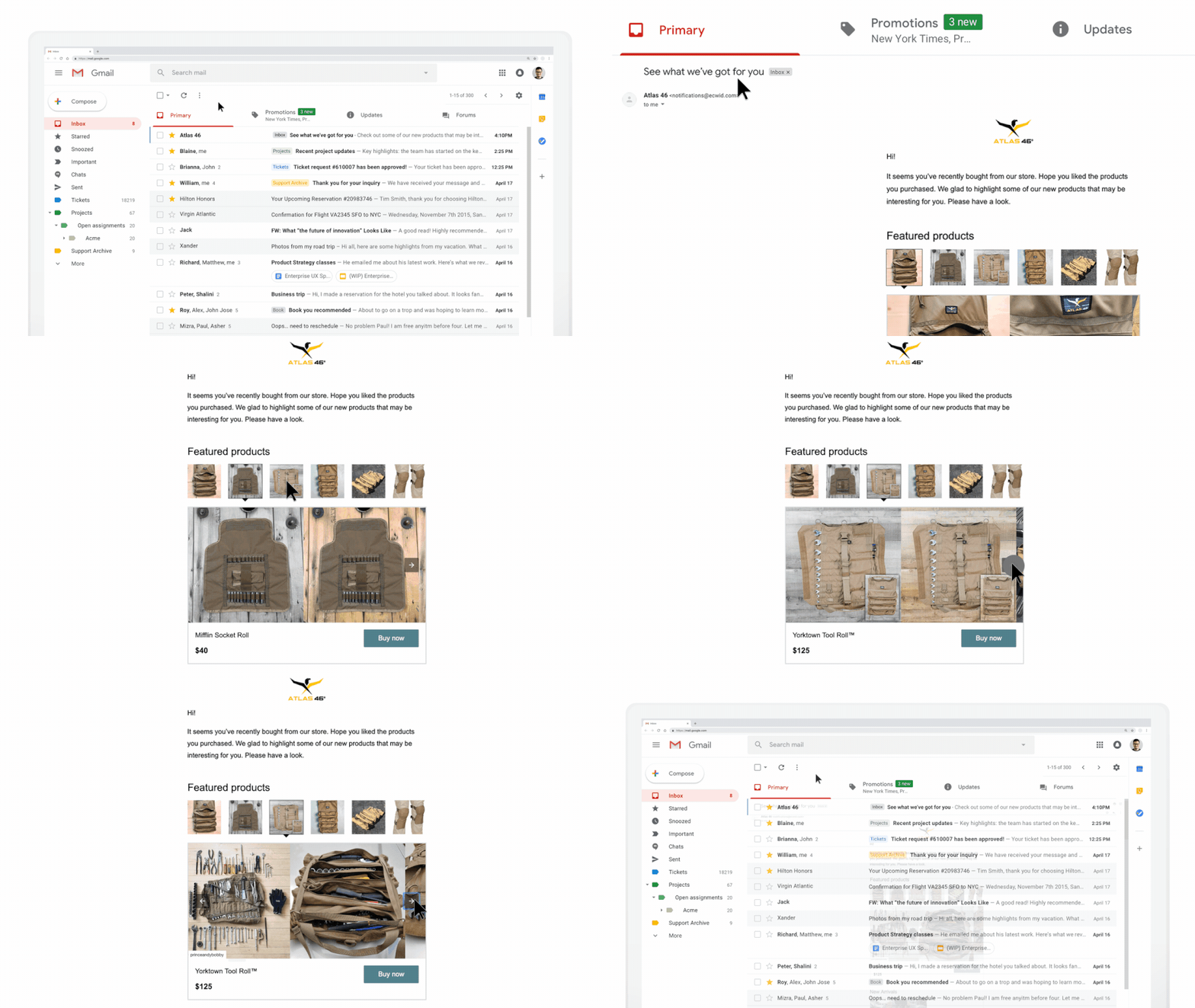
AMP now enables all-new email experiences like being able to submit RSVPs to events, fill out questionnaires, browse catalogs, or respond to comments right within the email. Emails can also stay up to date, displaying the freshest content from comment threads or the latest recommendations.
Dynamic email built using AMP by Ecwid
Bringing AMP emails to major email providers
The AMP for email spec has engagement from major email providers around the world including Gmail, Yahoo Mail, Outlook.com, and Mail.Ru. As each of these providers launches support, senders will scale the reach of their AMP emails to users.
After a developer preview with top email senders, Gmail is launching general availability of AMP for Email today. You can head to the Gmail blog to see some illustrative examples of the email recipient experience. You can also check out these provider specific pages for additional information:
We aim to provide the highest quality email experiences for our consumers and we are excited to be one of the first providers to participate in the AMP for email spec. This allows us to enable fast, responsive, and high-performing experiences right within email.
Marcel Becker, Director Product Management for Yahoo Mail
If you develop an email provider and would like to consider adding AMP for email support, you can find more information here.
Start creating AMP emails today
Email senders can begin creating AMP emails by using the playground which allows you to edit markup and see real-time changes to your email. For more information about the supported features and syntax, head over to amp.dev. It’s important to note that some providers may have sender whitelists that limit who is eligible to send AMP emails, so be sure to register with providers if that’s the case.
If you rely on a third party for your emails, please ensure they have AMP support. The following email products already support the AMP spec or in the process of launching support soon:
SparkPost, an email delivery and analytics platform
Twilio SendGrid, an email platform for transactional and marketing emails that is used by over 80,000 companies.
Amazon SES and Amazon Pinpoint, cloud-based email sending and analytics services for transactional and marketing emails
More are in progress, so contact your email service providers to find out if they support AMP email
AMP emails are designed to be compatible in the current email ecosystem with the introduction of a new MIME part. This design allows emails to fall back to HTML if a provider or email client doesn’t support AMP emails yet—learn more about the spec and recommended guidelines.
New AMP email working group
To make AMP the best user-friendly email experience, we need your help to contribute to its direction. This is why we created the AMP for email working group under AMP’s governance model, a way to channel feedback from senders and providers to support ongoing spec improvements.
The two goals of this group are to:
Increase email provider knowledge sharing to promote higher cross-provider compatibility of sender emails
Channel community feedback to senders and providers to support ongoing innovation of the spec
With the email spec being open source, strong multi-vendor support, a gradual migration strategy, and an open working group to have everyone’s voice heard, we’re looking forward to building a better email experience for everyone.
We look forward to your involvement!
Posted by Vamsee Jasti, Product Manager, AMP Project
US consumers would run out of avocados in three weeks if Donald Trump makes good on his threat to close down the US–Mexico border.
Trump said on Friday that there was a “very good likelihood” he would close the border this week if Mexico did not stop immigrants from reaching the United States.
But a complete shutdown would disrupt millions of legal border crossings in addition to asylum seekers, as well as billions of dollars in trade, about $137bn of which is in food imports.
From the avocados on avocado toast, to the limes and tequila in margaritas, the US is heavily reliant on Mexican imports of fruit, vegetables and alcohol to meet consumer demand.
Nearly half of all imported US vegetables and 40% of imported fruit are grown in Mexico, according to the latest data from the United States Department of Agriculture.
Avocados would run out in three weeks if imports from Mexico were stopped, said Steve Barnard, president and chief executive of Mission Produce, the largest distributor and grower of avocados in the world.
“You couldn’t pick a worse time of year because Mexico supplies virtually 100% of the avocados in the US right now. California is just starting and they have a very small crop, but they’re not relevant right now and won’t be for another month or so,” said Barnard.
Monica Ganley, principal at Quarterra, a consultancy specializing in Latin American agricultural issues and trade, said that a border closure would inevitably hit consumers.
“We’re absolutely going to see higher prices. This is a very real and very relevant concern for American consumers.”
The US and Mexico trade about $1.7bn in goods daily, according to the US Chamber of Commerce, which said closing the border would be “an unmitigated economic debacle” that would threaten 5m American jobs.
The effects of a shutdown would run both ways.
Mexico is the largest importer of US exports of refined fuels like diesel and gasoline, some of which moves by rail. It is unclear if rail terminals would be affected by closures.
As changing palates have increased demand for fresh produce, and a greater variety of it, the United States has increasingly come to depend on Mexico to meet that need.
Imports have nearly tripled since 1999. In that period, Mexico has gone from supplying less than a third of imported produce to 44% today.
In addition to avocados, the majority of imported tomatoes, cucumbers, blackberries and raspberries come from Mexico. While there are other producers of these goods globally, opening those trade channels would take time, said Ganley.
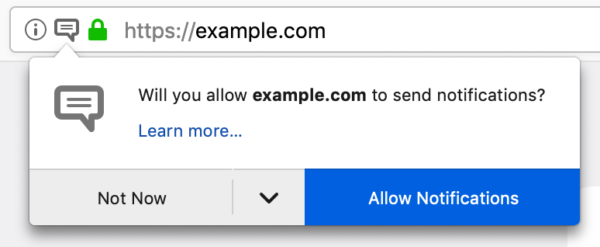
Permission prompts are a common sight on the web today. They allow websites to prompt for access to powerful features when needed, giving users granular and contextual choice about what to allow. The permission model has allowed browsers to ship features that would have presented risks to privacy and security otherwise.
However, over the last few years the ecosystem has seen a rise in unsolicited, out-of-context permission prompts being put in front of users, particularly ones that ask for permission to send push notifications.
In the interest of protecting our users and the web platform from this, we plan to experiment with restricting how and when websites can ask for notification permissions.
Rationalizing Push Notification Permission Spam
Push notifications are a powerful capability that enables new kinds of interactions with sites. It is hard to imagine a modern chat or social networking app that doesn’t send notifications. Since notifications can be sent after you leave a site, it is only natural that a site would need to ask for permission to show them.
Looks familiar?
But anecdotal evidence tells us that there is an issue with notification permission prompts among our user base. As we browse the web, we regularly encounter these prompts and more often than not we become annoyed at them or don’t understand the intent of the website requesting the permission.
According to our telemetry data, the notifications prompt is by far the most frequently shown permission prompt, with about 18 million prompts shown on Firefox Beta in the month from Dec 25 2018 to Jan 24 2019. Not even 3% of these prompts got accepted by users. Most prompts are dismissed, while almost 19% of prompts caused users to leave the site immediately after being confronted with them. This is in stark contrast to the camera/microphone prompt, which has an acceptance rate of about 85%!
This leads us to believe that
There are websites that show the notification prompt without the intent of using it to enhance the user experience, or that fail to convey this UX enhancement when prompting.
There are websites that prompt for notification permission “too early”, without giving users enough context or time to decide if they want them, even if push notifications would significantly enhance the user experience on that site.
Last year Firefox introduced a new setting that allows users to entirely opt out of receiving new push notification permission prompts. This feature was well received, among users that discovered it and understood the implications. But we still fail to protect the large part of our users that do not explore their notification settings or don’t want to enforce such drastic measures. Thus, we are starting to explore other methods of preventing “permission spam” with two new experiments.
Experiment 1: Requiring User Interaction for Notification Permission Prompts in Nightly 68
A frequently discussed mitigation for this problem is requiring a user gesture, like a click or a keystroke, to trigger the code that requests permission. User interaction is a popular measure because it is often seen as a proxy for user consent and engagement with the website.
Firefox Telemetry from pre-release channels shows that very few websites request push notifications from a user gesture, indicating that this may be too drastic of a measure.
We suspect that these numbers might not paint a full picture of the resulting user experience, and we would like to get a real world impression of how requiring user interaction for notification permission prompts affects sites in the wild.
Hence, we will temporarily deny requests for permission to use Notifications unless they follow a click or keystroke in Firefox Nightly from April 1st to April 29th.
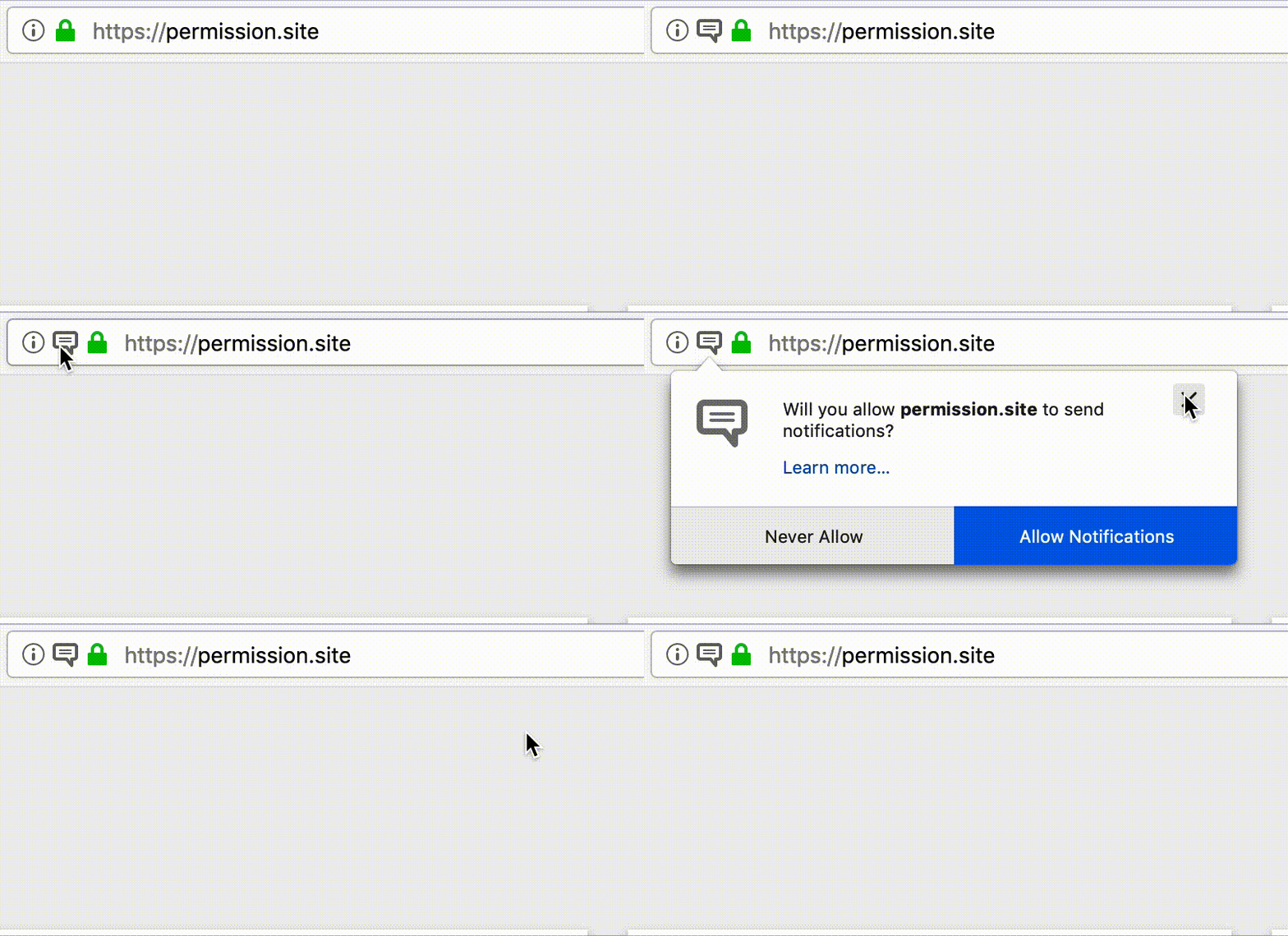
In the first two weeks of this experiment, Firefox will not show any user-facing notifications when the restriction is applied to a website. In the last two weeks of this experiment, Firefox will show an animated icon in the address bar (where our notification prompt normally would appear) when this restriction is applied. If the user clicks on the icon, they will be presented with the prompt at that time.
Prototype of new prompt without user interaction
During this time, we ask our Nightly audience to watch out for any sites that might want to show notifications, but are unable to do so. In such a case, you can file a new bug on Bugzilla, blocking bug 1536413.
Experiment 2: Collecting Interaction and Environment Data around Permission Prompts from Release Users
We suspect that requiring user interaction is not a perfect solution to this problem. To get to a better approach, we need to find out more about how our release user population interacts with permission prompts.
Hence, we are planning to launch a short-running experiment in Firefox Release 67 to gather information about the circumstances in which users interact with permission prompts. Have they been on the site for a long time? Have they rejected a lot of permission prompts before? The goal is to collect a set of possible heuristics for future permission prompt restrictions.
At Mozilla, this sort of data collection on a release channel is an exception to the rule, and requires strict data review. The experiment will run for a limited time, with a small percentage of our release user population.
Implications on Developers and User Experience
Web developers should anticipate that Firefox and other browsers may in the future decide to reject a website’s permission request based on automatically determined heuristics.
When such an automatic rejection happens, users may be able to revert this decision retroactively. The Permissions API offers an opportunity to monitor changes in permission state to handle this case.
As a general principle, prompting for permissions should be done based on user interaction. Offering your users additional context, and delaying the prompt until the user chooses to show it, will not only future-proof your site, but likely also increase your user engagement and prompt acceptance rates.






 Later today, Google will be shutting down Inbox for good. And right on time, the Readdle team has released the Android version of Spark, its popular and feature-filled email client for iOS and Mac.
 HMD Global has officially launched the Nokia X71 smartphone, which boasts a 48-megapixel camera on the back, and an edge-to-edge display design.












 AMPHTML Blog:
 The Guardian.