Shared posts

18 Apr 02:03

Oregon Looks at Adopting “Idaho Stops”

by Sandy James Planner

gtnh05252015_bikersrunningstopsigns_tnb_2

gtnh05252015_bikersrunningstopsigns_tnb_2

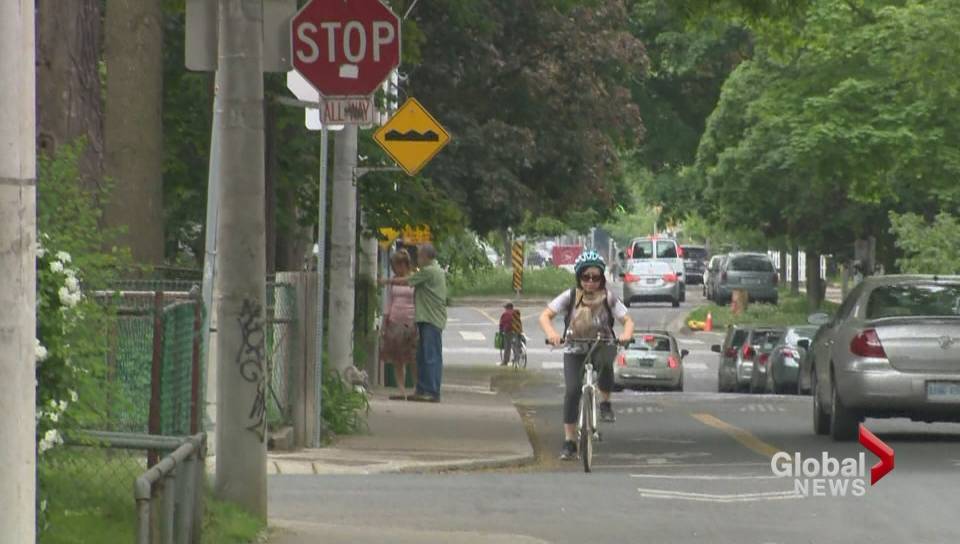
A few years back I wrote about the magic of the Idaho Stop.  In Idaho traffic laws were revised in 1982 with an innovative bicycle code that allowed  “bicyclists to do a “rolling stop” instead of a dead halt at stop signs~treating the “stop sign” like a “yield” sign. Some cyclists and police officers advocated for an amendment to this law which was passed in 2006. The amendment stated that cyclists must stop on red lights, and must yield before proceeding straight or making a left turn at an intersection. The benefits of the Idaho Stop according to two studies are that safety is improved, and cyclists can move to see around obstacles, lessening car collisions. “

You would think that this aptly named Idaho Stop would just be a good thing for cyclists to practice, keeping themselves safe and at the same time allowing them to review exactly what is happening in an intersection. They are not legal in British Columbia, as many a ticketed cyclist can attest. It is puzzling that the adoption of the Idaho Stop has been painfully slow, with even New York City’s Doug Gordon the co-host of “The War on Cars”podcast wondering why rolling stops are not allowed in T intersections.

Indeed Oregon is looking at adopting similar legislation to allow cyclists to have leeway approaching a stop sign or a “blinking” red light~ If there are no other vehicles with the right of way, cyclists could legally proceed without coming to a complete stop. Oregon has a champion in the state senate who has brought this concept forward several times.

Senator Floyd Prozanski who is also a cyclist introduced legalizing Idaho Stops  on April 5 “amending a placeholder bill to serve as a vessel for his idea”. Turns out Senator Prozanski is also the committee chair of the group that will review the bill allowing Idaho Stops, and this means it just might be successful.  Meanwhile Arkansas has just passed laws allowing for Idaho Stops, and Utah is now pondering the same changes in legislation.

Prozanski believes that once  cyclists are legally allowed to do Idaho Stops, the initiative will take off. As the senator bluntly says”“I just think it will do well if we move it forward.” 

You can take a look at this YouTube video below that talks about California turning down the Idaho Stop in 2017. The video also illustrates the history and why the Idaho Stop is effective in keeping cyclists moving and connected. The author also points out that bicycles are not cars, and should not be seen as vehicles from a legislative regulation sense. Is it a  compelling argument?


17 Apr 18:45

ripgrep is faster than {grep, ag, git grep, ucg, pt, sift}

ripgrep is faster than {grep, ag, git grep, ucg, pt, sift}

Andrew Gallant's post from September 2016 introducing ripgrep, the command-line grep tool he wrote using Rust (on top of the Rust regular expression library also written by Andrew). ripgrep is a beautifully designed CLI interface and is crazy fast, and this post describes how it gets its performance in a huge amount of detail, right down to comparing the different algorithmic approaches used by other similar tools. I recently learned that ripgrep ships as part of VS Code, which is why VS Code's search-across-project feature is so fast. In fact, if you dig around in the OS X package you can find the rg binary already installed on your mac: find /Applications/Visual* | grep bin/rg

Via Ripgrep 11 Released

17 Apr 18:45

Wasmer: a Python library for executing WebAssembly binaries

Wasmer: a Python library for executing WebAssembly binaries

This is a really interesting new tool: "pip install wasmer" and now you can load code that has been compiled to WebAssembly and call those functions directly from Python. It's built on top of the wasmer universal WebAssembly runtime, written over just the past year in Rust by a team lead by Syrus Akbary, the author of the Graphene GraphQL library for Python.

17 Apr 18:45

Perfektes Foto-Erklärbärvideo

by Volker Weber

Jetzt verstehe auch ich die technischen Zusammenhänge.

17 Apr 18:45

Latest Firefox for iOS Now Available

by Mozilla

Today’s Firefox for iPhone and iPad users offers enhancements that will make it easier to get you to what you want faster, from new links within your library and managing your logins and passwords, plus deleting your history as recent as the last hour.

Leave no trace with your web history

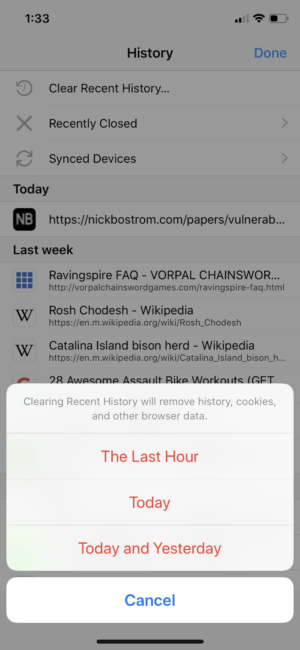
With today’s release, we made it easier to clear your web history with one tap on the history page. In the menu or on the Firefox Home page, tap ‘Your Library’, then ‘History’, and ‘Clear Recent History’.

Because we all make wrong turns on the web from time to time, you can now choose to delete your history from the last hour, that specific day, and the one before or, as it has always been, your full browsing history.

Clear your web history with one tap

Shortcuts in your library

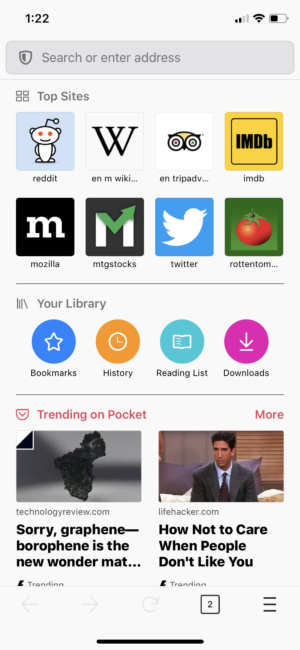
Everyone likes a shortcut that gets you quickly to the place you need to go. We created links in your library to get you to your bookmarks, history, reading list and downloads all from the Firefox Home screen.

Get you to your bookmarks, history, reading list and downloads all from the Firefox Home screen

Get to your logins and passwords faster

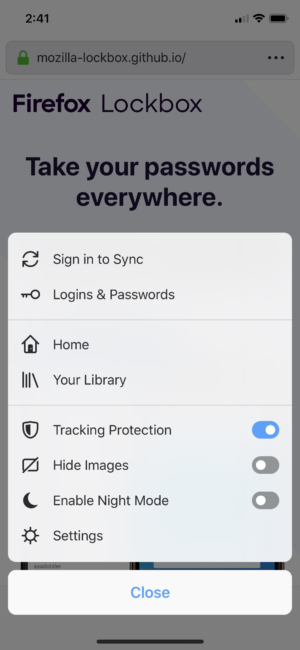
We simplified the place where you can find your logins and passwords in the menu. Go to the menu and tap ‘Logins & Passwords’. Also, from there you can enable Face ID or password authentication in Settings to keep your passwords even more secure. It’s located in the Face ID & Passcode option.

Find your logins and passwords easily

To get the latest version of Firefox for iOS, visit the App Store.


The post Latest Firefox for iOS Now Available appeared first on The Mozilla Blog.

17 Apr 17:19

Twitter confirms it is experimenting with a ‘Hide Replies’ feature

by Dean Daley
Twitter

Twitter has confirmed plans to start experimenting with a new ‘Hide Replies’ feature beginning in June. Twitter wants to add this feature so users feel they have more control over their conversations online.

This will be an experimental feature, which means the company can change how it functions or scrap the idea completely.

Users will still be able to view hidden tweets by using a menu option.

One Twitter user pointed out how this sounds more like marking sensitive content than actual moderation.

However, this makes sense as politicians or public figures started hiding comments, that could be an issue. Donald Trump would probably over-use this feature.

‘Hide Replies’ is rolling out globally.

Additionally, Twitter is updating its rules within the next few weeks so that they’re more condensed and easier understand.

Within Twitter’s announcement, the company talked about its efforts in creating a healthier service by flagging and cutting down abusive tweets and spam and keeping its users safe is its top priority.

Twitter will also make it easier for people to share their specific issue when reporting a tweet, which should allow for Twitter to more quickly take action. Twitter will also add more notices and context to why certain tweets remain on the service even if they do break the company’s rules.

Check out the full blog post here.

The post Twitter confirms it is experimenting with a ‘Hide Replies’ feature appeared first on MobileSyrup.

16 Apr 21:39

Buses: you can’t do that here!

by Stephen Rees

This is a screenshot of my tweetdeck right now.

Increasing bus service has worked in Seattle and Auckland but could not possibly work in West Vancouver. Of course, they might change their minds tonight, in which case this post will vanish.

Screen Shot 2019-04-15 at 7.01.21 PM

So I looked her up on Twitter and found this tweet which, at 09:13 on Tuesday April 16 seems to be her most recent one

Screen Shot 2019-04-16 at 9.12.54 AM

But some people will prefer this version “West Van says no to B-Line past Park Royal” North Shore News 

16 Apr 21:38

Notre Dame

by Stephen Rees

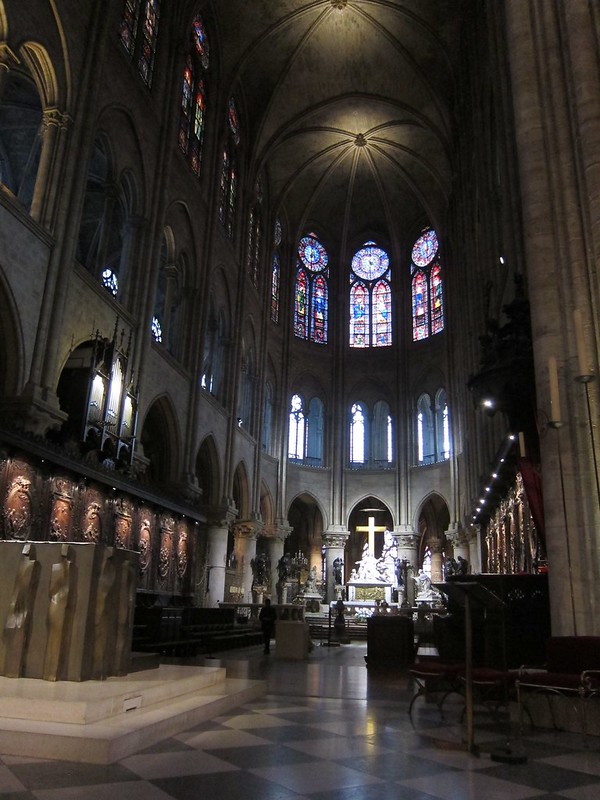
The fire was terrible. It was unintentional. It was the result of efforts to refurbish the cathedral. It has not been well looked after for a variety of reasons. I happen to have some pictures which include the ceiling and the roof – which is the greatest loss – and the spire. One thing I am sure of, it will be replaced, and it will look magnificent.

Notre Dame

Gothic excellence

Choir

Ceiling

Notre Dame from the Pantheon colonnade

Notre Dame

POSTSCRIPT

Shortly after posting this I came across this post by CityLab on Instagram

The extent of the fire damage at Notre-Dame Cathedral is still uncertain, but the good news is that the structure has survived. That’s because Gothic architecture is strong stuff, built to withstand even an inferno. In Notre-Dame, as in other Gothic cathedrals, the ceiling is a stone vault, and above that is the equivalent of a wooden attic space. Though the wooden roof is vulnerable to burning, the stone structure itself is fundamentally fireproof.
Over a long history of wars, accidents, and natural disasters, fires have claimed many of Europe’s cathedrals over the centuries, and some have been rebuilt with great success. While the damage is sure to be extensive, governments and institutions around the world will be standing by to help, @nylandmarks president Peg Breen told CityLab. Read more about how the cathedral’s architecture may have saved it

16 Apr 21:34

Our Favorite Wireless Charger Just Hit a New Low Price

by Alex Roth
Our Favorite Wireless Charger Just Hit a New Low Price
Photo: Sarah Kobos

The RAVPower Wireless Charging Stand (RP-PC069) emerged as the top pick in our recently updated guide to the best Qi wireless chargers, and it’s currently sitting at the lowest price we’ve seen. Although its typical street price is $35, Amazon has had an on-page coupon on it for a while. That coupon, combined with a recent price drop, brings the price down to just $28.

In his review, senior staff writer Nick Guy calls the RAVPower Wireless Charging Stand “the best option for anyone looking to wirelessly charge without having to buy any extra pieces like an AC adapter.” Nick continues, “Nothing we tested for this guide charges iPhone or Android devices faster than this stand, and it’s been certified by the WPC to be safe.”

Although this is as fast as wireless charging gets, wired charging is faster. As our review notes, “The fastest wired chargers are almost twice as fast, but the RAVPower’s performance was impressive when we compared it with other wireless chargers.” However, as someone who has several wireless chargers scattered around his home, I can say that you’re way more likely to keep your phone topped off when it’s just a matter of sitting your phone in a stand rather than fishing for a cable.

The RAVPower stand looks low-key, so it won’t be out of place at home, at work, or wherever you plug it in. Its green indicator light confirms that your phone is charging and shuts off when it’s done so you can tell at a glance when your phone is ready to go. The light is muted enough that it won’t keep you awake at night if your charging stand lives on your bedside table.

When it comes to the different styles of wireless chargers, we generally prefer a stand over a pad. Having the phone upright makes it easier to line the phone up properly and get it charging, and the positioning is convenient for seeing notifications or taking a video call.

16 Apr 21:34

AI And BS

by noreply@blogger.com (BOB HOFFMAN)

AI is now in the same fantasy phase that online advertising was in 20 years ago. We are being bombarded with horseshit about how AI has made everything so wonderful -- and in the future is going to make everything even wonderfuller.

Here are a couple of spots from AT&T and IBM going all goofy about AI.


And this...


As always with new technology, the benefits are easy to foresee and the dangers are either invisible or willfully ignored. Twenty years ago, when the ad world started to go all gaga over "interactive advertising," who could have foreseen...
The current mania for AI - and its relentless promotion as our fabulous future - ignores an enormous potential for mischief and danger. The brainless enthusiasm for every flavor of online advertising only cost us money (ok, and maybe a few elections, and our reputation as an industry, and our confidence in democratic institutions, and our privacy rights.) The same wide-eyed stampede into AI could be a lot more costly.

Stephen Hawking said, “Whereas the short-term impact of AI depends on who controls it, the long-term impact depends on whether it can be controlled at all.” Hawking went on to say that ignoring the dangers of AI “would be a mistake, and potentially our worst mistake ever." AI could "spell the end of the human race".
    Hawking is not alone. Elon Musk, hardly a technophobe, says, “I think we should be very careful about artificial intelligence. If I had to guess at what our biggest existential threat is, it’s probably that.” 

    Bill Gates, another famous Luddite dinosaur, says, "I agree with Elon Musk and some others on this and don't understand why some people are not concerned."

    Of course, the simple-minded marketing industry - armed with its usual obsessions and delusions - can't see anything in AI but 1) another miracle to promote, 2) a topic for dreadful gee-whiz "content", and 3) a great new jargon term to insert into every sentence.

    This time around, can we please be a little more mature and thoughtful?

    Us? Only kidding.


    16 Apr 21:33

    Executing WebAssembly Binaries From Python

    Wasmer is a Python library for executing WebAssembly binaries.

    There is a toy program in examples/simple.rs, written in Rust (or any other language that compiles to WebAssembly):

    #[no_mangle]
    pub extern fn sum(x: i32, y: i32) -> i32 {
    x + y
    }

    After compilation to WebAssembly, the examples/simple.wasm binary file is generated.

    Then, we can excecute it in Python:

    from wasmer import Instance

    wasm_bytes = open('simple.wasm', 'rb').read()
    instance = Instance(wasm_bytes)
    result = instance.exports.sum(5, 37)

    print(result) # 42!

    I know a lot of devs are ignoring WebAssembly, but I think it's very cool and might be pretty awesome for making desktop like applications run in a browser. I know if I was a desktop only vector illustration tool, I'd really be getting worried about it.

    And so much interesting work is being done server side with it- it's like a mini JVM with security in mind. LLVM 8 even has a target for WebAssembly now!

    16 Apr 21:32

    The Importance of Giving Credit in Context

    by Eugene Wallingford

    From James Propp's Prof. Engel's Marvelously Improbable Machines:

    Chip-firing has been rediscovered independently in three different academic communities: mathematics, physics, and computer science. However, its original discovery by Engel is in the field of math education, and I strongly feel that Engel deserves credit for having been the first to slide chips around following these sorts of rules. This isn't just for Engel's sake as an individual; it's also for the sake of the kind of work that Engel did, blending his expertise in mathematics with his experience in the classroom. We often think of mathematical sophistication as something that leads practitioners to create concepts that can only be understood by experts, but at the highest reaches of mathematical research, there's a love of clarity that sees the pinnacle of sophistication as being the achievement of hard-won simplicity in settings where before there was only complexity.

    First of all, Petri nets! I encountered Petri nets for the first time in a computer architecture course, probably as a master's student, and it immediately became my favorite thing about the course. I was never much into hardware and architecture, but Petri nets showed me a connection back to graph theory, which I loved. Later, I studied how to apply temporal logic to modeling hardware and found another way to appreciate my architecture courses.

    But I really love the point that Propp makes in this paragraph and the section it opens. Most people think of research and teaching as being different sort of activities. But the kind of thinking one does in one often crosses over into the other. The sophistication that researchers have and use help us make sense of complex ideas and, at their best, help us communicate that understanding to a wide audience, not just to researchers at the same level of sophistication. The focus that teachers put on communicating challenging ideas to relative novices can encourage us to seek new formulations for a complex idea and ways to construct more complex ideas out of the new formulations. Sometimes, that can lead to an insight we can use in research.

    In recent years, my research has benefited a couple times from trying to explain and demonstrate concatenative programming, as in Forth and Joy, to my undergraduate students. These haven't been breakthroughs of the sort that Engel made with his probability machines, but they've certainly help me grasp in new ways ideas I'd been struggling with.

    Propp argues convincingly that it's important that we tell stories like Engel's and recognize that his breakthrough came as a result of his work in the classroom. This might encourage more researchers to engage as deeply with their teaching as with their research. Everyone will benefit.

    Do you know any examples similar to the one Propp relates, but in the field of computer science? If so, I would love to hear about them. Drop me a line via email or Twitter.

    Oh, and if you like Petri nets, probability, or fun stories about teaching, do read Propp's entire piece. It's good fun and quite informative.

    16 Apr 21:32

    Indonesien-Wahl: So läuft die Abstimmung im Land der 18.000 Inseln

    mkalus shared this story from SPIEGEL ONLINE - Schlagzeilen.

    Wofür Indien sechs Wochen braucht, das schafft Indonesien an einem Tag: Während sich die Parlamentswahl in der größten Demokratie der Welt noch bis zum 19. Mai hinzieht, wählt die drittgrößte Demokratie der Welt am Mittwoch das Parlament und den Präsidenten. Knapp 193 Millionen Menschen sind in Indonesien zur Wahl aufgerufen.

    Wie ist die aktuelle Lage in Indonesien?

    Indonesien gilt als bevölkerungsreichster muslimischer Staat der Welt, fast 90 Prozent der Bevölkerung sind Muslime. Lange stand das Land für eine tolerante Form des Islam. Doch in den vergangenen Jahren haben fundamentalistische Kräfte deutlich an Einfluss gewonnen. Jakartas christlicher Ex-Gouverneur, genannt Ahok, verlor wegen angeblicher Verhöhnung des Korans nicht nur sein Amt, sondern musste auch ins Gefängnis. (Mehr zum Fall Ahok lesen Sie hier.)

    Präsident Joko Widodo bei einem Wahlkampftermin auf Java

    Tatan Syuflana/ AP

    Präsident Joko Widodo bei einem Wahlkampftermin auf Java

    In der Provinz Aceh gilt seit einigen Jahren im Strafrecht die Scharia. Hier werden unter anderem unverheiratete Paare wegen verbotenen Körperkontakts öffentlich mit Stockschlägen bestraft.

    Hinzu kommen Anschläge von Islamisten auf Kirchen: Im Mai vergangenen Jahres wurden bei Attacken auf drei Kirchen in Surabaya 13 Menschen getötet. Die Taten gingen auf das Konto von drei Familien. Sie missbrauchten sogar ihre eigenen Kinder als Selbstmordattentäter.

    Wer steht zur Wahl?

    Indonesiens Präsident Joko Widodo, auch bekannt als "Jokowi", tritt erneut für die Demokratische Partei des Kampfes Indonesiens an. Seit 2014 hat er seinen Posten inne. Damals war er mit dem Versprechen angetreten, sich vor allem für die Indonesier mit geringem Einkommen einzusetzen. Er gilt als volksnaher Politiker, als "Obama Indonesiens", der es vom Möbelhändler zum Präsidenten gebracht hat. Nun scheint sogar eine zweite Amtszeit wahrscheinlich: In den bisherigen Umfragen liegt Jokowi teils mit einem Vorsprung von 20 Prozentpunkten vorn.

    Jokowi mit Bundeskanzlerin Angela Merkel 2016 in Berlin

    Michael Sohn/ AP

    Jokowi mit Bundeskanzlerin Angela Merkel 2016 in Berlin

    Seine Kritiker werfen ihm allerdings vor, sich zu wenig für Menschenrechte in seinem Land eingesetzt zu haben. Mehrere Hinrichtungen in Indonesien wurden zuletzt trotz internationaler Proteste vollstreckt, zudem nimmt die Stimmungsmache gegen Homosexuelle wieder zu. Auch Korruption ist nach wie vor weit verbreitet, obwohl Jokowi den Kampf dagegen zu einem seiner wichtigsten Ziele ausgerufen hatte.

    Wer tritt gegen ihn an?

    Ein alter Rivale: Prabowo Subianto, der ihn schon im Präsidentschaftswahlkampf 2014 herausforderte. Damals sorgte Subianto für Aufsehen, als er in einem Wahlkampfspot einen Sänger in Heinrich Himmlers SS-Uniform auftreten ließ, der forderte "Indonesien erwache!".

    Als ehemaliger General, stets den Peci auf dem Kopf, die traditionelle Mütze der Indonesier, ist der 67-Jährige fast der Gegenentwurf zu Jokowi. Zudem war Prabowo Schwiegersohn des ehemaligen Diktators Suharto und gehört als strikter Nationalist zur militärischen Elite im Land.

    Prabowo Subianto beim Wahlkampfauftritt in Jakarta

    REUTERS

    Prabowo Subianto beim Wahlkampfauftritt in Jakarta

    Wie wird die Wahl ablaufen?

    Allein die Logistik ist in dem Land, das aus knapp 18.000 Inseln besteht, eine Herausforderung: Am Mittwoch werden mehr als 800.000 Wahllokale geöffnet sein. Dabei sollen sich die Indonesier nicht nur für einen Präsidentschaftskandidaten entscheiden, sondern auch die neuen Parlamentsmitglieder sowie lokale Vertretungen bestimmen. Insgesamt sind mehr als 20.000 Posten offen, es haben sich etwa 245.000 Kandidaten aufstellen lassen. Mitglieder von Polizei und Militär dürfen ihre Stimme allerdings nicht abgeben. Das ist eine Konsequenz aus der langen Militärdiktatur im Land, vom Ende des Zweiten Weltkrieges bis Ende der Neunzigerjahre. Die Wahlen am Mittwoch sind daher erst die vierten in der indonesischen Geschichte, die als frei und fair bezeichnet werden können.

    Der Wahlvorgang selbst ist ebenfalls ungewöhnlich. Die Wähler stanzen mit einem Nagel an insgesamt fünf Stellen ein Loch in den Wahlzettel. Das indonesische Wort für wählen heißt wörtlich übersetzt etwa "schlagen". Wahlbeobachter halten anschließend den Zettel in die Höhe, um zu prüfen, ob Licht durch die kleinen Löcher scheint. Anschließend wird ein Finger der Wahlberechtigten mit Tinte markiert. In manchen sehr ländlichen Gebieten stimmen die Anwohner auch nach dem sogenannten "Noken-System" ab. Dabei sammeln die Vorsteher einer Gemeinde die Stimmen in einer traditionellen Tasche - der Noken - ein und wählen anschließend nach dem Mehrheitsentscheid.

    Welche Rolle hat die Religion im Wahlkampf gespielt?

    Die Rolle des Islams in Politik und Gesellschaft war eines der bestimmenden Themen des diesjährigen Wahlkampfs. Jokowi gilt eigentlich als Vertreter eines moderaten Islam, doch er hat sich einen sehr konservativen Mitstreiter ausgesucht. Maruf Amin ist ein mächtiger Kleriker im Land und hat eine entscheidende Rolle im Fall Ahok gespielt. Wenn Jokowi erneut gewinnt, wird er ihn zu seinem Vize machen - ein Versuch, die konservativen Muslime im Land zu erreichen. Gleichzeitig könnte Jokowi damit aber auch Unterstützung aus dem moderaten Lager verlieren.

    Joko Widodo (l.) mit seinem Kandidaten für den Vize-Posten, Maruf Amin

    AP

    Joko Widodo (l.) mit seinem Kandidaten für den Vize-Posten, Maruf Amin

    Amin vertritt öffentlich die Meinung, das größte Problem im Land sei eine Krise des Glaubens, mehr noch als die schlechte Infrastruktur. Er werde mit Jokowi das Land wie bei einem "Badminton-Doppel" regieren, sagte er dem "Economist" zufolge. Immer wenn Jokowi einen Schritt nach links mache, werde er sich rechts davon aufstellen.

    Auch Herausforderer Prabowo machte den Glauben zum Wahlkampfthema. Er versprach unter anderem mehr Geld für islamische Schulen und bekam im Gegenzug die Unterstützung der größten islamistischen Partei im Parlament für seine Kandidatur.

    Welche Rolle spielen soziale Medien und "Fake News" bei der Wahl?

    Mehr als 40 Prozent der Wahlberechtigten in Indonesien sind zwischen 17 und 35 Jahre alt. Zudem hat Indonesien die vierthöchste Nutzungsrate von Facebook weltweit. Das bedeutet, dass ein großer Teil der Wähler in den sozialen Netzwerken erreicht werden kann. Prabowo hat sich bereits im Wahlkampf die Unterstützung von Influencern und YoutTubern gesichert. Gleichzeitig registrierte die indonesische Organisation Mafindo, die Falschinformationen im Netz ausfindig machen will, in den vergangenen Monaten einen deutlichen Anstieg von "Fake News" in den sozialen Netzwerken. Dies berichtet unter anderem "The Diplomat".

    Ein großer Teil der falschen Darstellungen sollen sich dabei mit Präsident Jokowi befassen und ihn als anti-islamischen Christen und Kommunisten bezeichnen. Septiaji Eko Nugroho von Mafindo sagte dem "Economist", eines der größten Probleme sei, dass die demokratische Wahl an sich in Zweifel gezogen werde. "Wenn der Wahlprozess angegriffen wird, dann werden die Menschen, ganz egal wer der Gewinner ist, dem Resultat nicht trauen. Dann droht Chaos."

    16 Apr 21:32

    New Ways of Seeing

    by James Bridle

    This is a lightly edited repost from my newsletter. Sign up to stay in touch, infrequently…

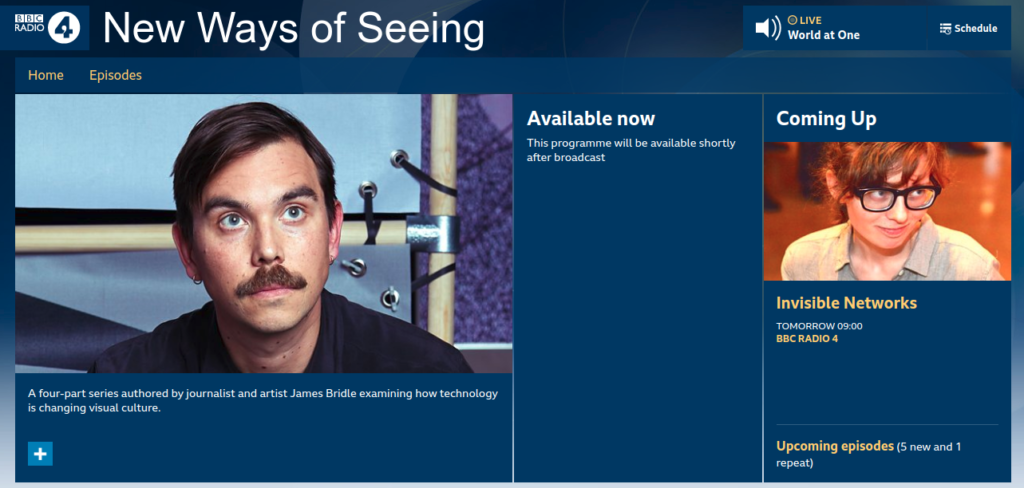
    New Ways of Seeing, a series I’ve written and presented about digital art and our present moment, begins on BBC Radio 4 tomorrow morning. You can listen on the radio in the UK (0900 and again at 2130), or online worldwide, and the series will remain available after broadcast.

    Over four episodes, I’ll be exploring internet infrastructure, digital images, network power and bias, the environment and education – in conversation with a number of brilliant friends and fellow artists. You can find out more about the subjects, and the artists’ works, on my website.

    The series is produced by Steve Urquhart and Reduced Listening, who have been great radio mentors and make everything sound amazing. The show has already made pick of the week in the Times, Guardian, and Radio Times, and I hope you get a chance to listen, and enjoy.

    I wrote an essay about Artificial Intelligence and animal cognition for the Barbican’s Life Rewired series, part of an ongoing series of projects exploring the connections between contemporary technology and urgent ecological consciousness. A new film work, entitled Se ti sabir, premiered at the Tomorrows exhibition at Le Lieu Unique in Nantes, and explores similar territory through the lens of Lingua Franca, the shared language of the Mediterranean. It will appear next in the Vienna Biennale, as part of Uncanny Values, opening at MAK in June. And last week I inaugurated what I hope will be the first of an ongoing series of meetings in Athens between artists and environmental practitioners in Greece and the Mediterranean region, under the auspices of the Onassis Foundation, and my friends at Kassandras (Seamless Transitions is part of the Onassis’ excellent new For Ever More Images?exhibition).

    I spoke recently with Andrew Keen for his podcast, where we discussed the New Dark Age and the technologies of democracy, from Ancient Athens to the present day. Some of these ideas were also present in an op-ed I wrote for the Guardian earlier this year on Brexit, sortition, and citizens’ assemblies. (I also wrote last month about Britain’s shameful history of citizenship abuse, in the context of Shamima Begum’s case.)

    State of Sin, my installation for Arts@CERN, has now travelled to the CCCB in Barcelona, where it will be on show for the next few months, and Citizen Ex and the Flag For No Nations are currently part of Digital Citizen at the Baltic in Gateshead. For all upcoming exhibitions and talks, as well as new writing, please keep an eye on my website.

    *

    And finally, here’s the paperback cover for New Dark Age. If you still haven’t read it, this new edition will be out next month – with translations in multiple languages due over the next year.

    16 Apr 21:31

    The fundamental question: Do you want answers or empathy?

    by Josh Bernoff

    Much of human conflict can be traced to a fundamental misunderstanding: giving people answers when they want empathy, or vice versa. Think about it. If you are in a serious relationship, what happens when your significant other comes to you in a state of upset about something happening in their life? When someone comes to … Continued

    The post The fundamental question: Do you want answers or empathy? appeared first on without bullshit.

    16 Apr 21:31

    From atoms to bits – edtech strategy sets the stage for Education 4.0

    Martin Hamilton, JISC, Apr 16, 2019
    Icon

    The thing, I think, to keep in mind about the concept of 'Education 4.0' is that it is directly linked to and derived from the concept of 'Industry 4.0', aka the "fourth industrial revolution", a term that has been making the rounds of the Davos set for the last couple of years. As Wikipedia explains, "Industry 4.0 is a name given to the current trend of automation and data exchange in manufacturing technologies." We've been talking about all these technologies for a while now. Education 4.0 isn't aboput the tech - it's about the uses to which it is put. If you're fine with pursuing the aims and objectives of Davos, you're probably fine with Education 4.0. If not, well...

    Web: [Direct Link] [This Post]
    16 Apr 21:31

    HyperDocs: Evolution, Purpose & Intention

    Greg Kulowiec, EdTechTeacher, Apr 16, 2019
    Icon

    This is part Google rolling a great new service and part Google taking one more step to destroy the open web. The concept of 'HyperDocs' emerges from the tools GSuite provides enabling teachers and students to create using Google Docs. Greg Kulowiec doesn't define 'HyperDocs' directly but instead talks about the ways student and teachers can interact using Google Docs. What would be really great would be an open web designed with that capacity - much the way Tim Berners-Lee intended it in the first place. Maybe something like that is coming. In the meantime, we can use Google Docs.

    Web: [Direct Link] [This Post]
    16 Apr 21:30

    We Built a (Legal) Facial Recognition Machine for $60

    Sahil Chinoy, New York Times, Apr 16, 2019
    Icon

    On the theme of what people can do with today's technology, here's a facial recognition machine. It uses input from publicly accessible web cameras showing people walking on the street, and compared the faces to images of people on nearby corporate websites. The facial recognition software is a service (on theoreti.ca Geoffrey Rockwell suggests it might be Amazon’s Rekognition). The Times article has a lot of background about privacy regulation, but I'm more interested in the implications of widely available AI services for the masses.

    Web: [Direct Link] [This Post]
    16 Apr 21:26

    Glide - Make Your Own App by Just Making a Spreadsheet

    Richard Byrne, Free Technology for Teachers, Apr 16, 2019
    Icon

    The product is exactly as advertised in the title. In this post, Richard Byrne introduces us to Glide. It works like this: put data into a Google Sheets database. Then go to the Glide website and tell it how to access the database. And your app has been created. They're not world-changing apps - mostly, they're just nice ways to look at the data in the database. But if that's all you need, this is perfect. And at the very least, it illustrates the sorts of things people can build these days. Here's a sample app.

    Web: [Direct Link] [This Post]
    16 Apr 21:24

    Apple and Qualcomm unexpectedly settle royalty dispute through new patent agreement

    by Patrick O'Rourke
    iPhone XS Max

    Just as Apple and Qualcomm’s patent dispute was beginning to get interesting, it looks like the bitter battle between the two companies has come to an abrupt end.

    The tech giants have settled their patent royalty dispute, halting all ongoing legal action between the two companies. Apple has reportedly agreed to pay Qualcomm an undisclosed amount of money, with both sides of the conflict agreeing to a six-year licensing deal and a multi-year chipset supply agreement. There is also a two-year option to extend this deal, according to Qualcomm.

    As a result, this likely means that iPhones will once again feature modems supplied by Qualcomm. This could also change the timeline regarding the rollout of a 5G-capable iPhone, which Apple was previously rumoured to be preparing to launch in 2021.

    While we’ll likely never know the exact reasons Apple decided to settle with Qualcomm, it’s likely Intel’s rumoured inability to deliver a 5G modem in time for the launch of the 2020 iPhone forced Apple’s hand.

    The legal conflict between Apple and Qualcomm has been ongoing for the last two years, with Apple contending that the chip-maker was charging it expensive fees for patents and taking advantage of its dominant position in the smartphone modem supplier space.

    Qualcomm has been sued over its licensing practices in the past. The company is currently waiting for the results of a lawsuit it fought against the U.S. Federal Trade Commission.

    Last month, Apple lost a case against Qualcomm regarding the infringement of the chip-maker’s patents. That case was settled in an agreement as well.

    With files from Bryson Masse.

    Source: Apple, Qualcomm CNBC 

    The post Apple and Qualcomm unexpectedly settle royalty dispute through new patent agreement appeared first on MobileSyrup.

    16 Apr 21:23

    Microsoft officially reveals $299 disc-less Xbox One S All-Digital Edition

    by Patrick O'Rourke
    Xbox One S All Digital

    Confirming months of rumours, Microsoft has officially revealed the Xbox One S All-Digital Edition console, a version of the Xbox One S that does not include a traditional disc drive.

    The system will launch on May 7th in Canada.

    Apart from being completely disc-less, the new All-Digital Edition system is identical to the standard Xbox One S in every way, according to Microsoft. This even includes the console’s 1TB hard drive and HDR video compatibility, though only through streaming services rather than physical discs.

    Overall, the Xbox One S All-Digital Edition looks like an Xbox One with the disc drive missing.

    Along with the console, Microsoft is packing in Minecraft, Forza Horizon 3, Sea of Thieves and an Xbox Game Pass free trial with the All-Digital Edition of the Xbox One S. Xbox Game Pass gives subscribers access to over 100 games digitally for $11.99 per month. All-Digital console owners will also be able to sign up for three months of Game Pass for $1 through their system.

    It’s also worth noting that the three pack-in games included with the All-Digital Edition Xbox One S are part of Xbox Game Pass.

    The console is set to cost $299 CAD, with Microsoft stating that the standard pricing for the Xbox One S All-Digital Edition will be $50 less than the standard Xbox One S. Though it’s often on sale for $299, the regular price for the Xbox One S is $379. The All-Digital Edition Xbox One’s pricing being so close to the standard Xbox One S could be an issue for Microsoft, especially during the holiday shopping season.

    In a way, Microsoft revealing a disc-less Xbox One S is the Xbox One brand coming full circle.

    While it feels like a distant memory at this point, under Vancouver-born executive Don Mattrick, the former head of Xbox at Microsoft, the Xbox One brand was poised to be very different. Back in 2013 when the Xbox One was first revealed, the still-unreleased video game console was set to be an always-online gaming device, along with the ability to loan and possibly even sell digital titles through the system.

    Following extensive pushback from gamers, that vision for Xbox One never saw the light of day, ultimately resulting in Mattrick departing Microsoft to join Zynga as the social game company’s CEO.

    Regarding Microsoft’s plans for its next-generation video game console, which is expected to be revealed at E3 this year in June, Jeff Gattis, the tech giant’s general manager of platform and devices marketing, said that the company doesn’t “see the disc going away.”

    “I think what is important is we have choice, I think that’s what we’re doing in this generation with three products…” said Gattis in a recent interview with MobileSyrup.

    Though someone cryptic, this is a strong indication that Microsoft’s next-generation game console will still feature a disc drive.

    Microsoft also confirmed the previous rumoured ‘Xbox Game Pass Ultimate‘ service that bundles together Xbox Game Pass and Xbox Live Gold at a lower price. There isn’t specific Canadian pricing at this time, but the service will cost $14.99 (roughly $20 CAD) when it launches later this year. This offers savings of $5 per month if you were to buy both services individually.

    Rumours also continue to circulate regarding Microsoft having plans to launch a platform, currently codenamed ‘Odessa,’ that allows users to trade in physical games for a token to download the digital version of specific titles. Microsoft has not yet revealed Odessa, however.

    The post Microsoft officially reveals $299 disc-less Xbox One S All-Digital Edition appeared first on MobileSyrup.

    16 Apr 17:29

    Blocking Software Updates

    by Martin

    Is has become common practice of PC and mobile operating systems to assume that Wifi connectivity means unlimited data volume and is pretty much seen as an invitation to download hundreds of megabytes of software updates. This wrecks havoc on many peoples volume cap when they offer tethered Internet access from one of their mobile devices to other devices while on the road. This really makes me wonder why Google or Apple haven’t yet done anything about this on their mobile devices!?

    Yes, I know, Windows, for example, has an option to declare a connection as “metered” which in turn is supposed to prevent the download of huge software updates. I am pretty sure, however, the 99.999% of users have no idea how to set the option or that it even exists. So I don’t think a ‘self’ controlled download ban on updates would ever work in practice, the process has to be prevented on the device that offers the metered Internet connection to other devices. But how?

    Blocking IP addresses of update servers doesn’t make a lot of sense as they probably change all the time. But one could return the local loopback address when tethered devices make DNS lookups for well known update server domain names. On rooted Android devices, putting such a list in place wouldn’t be much trouble, I’ve done it before to reduce ads in web pages. I had a bit of a look around but couldn’t find any update server lists that span all operating systems. Microsoft maintains a list of their update server domain names here (for the reverse purpose…), but others are more difficult to find.

    So I really wonder why neither Apple nor Google has a feature that blocks DNS lookups for update servers. It could even be an optional feature that is off by default so nobody could blame them for actively sabotaging overall security. And while they are at it, the feature should of course occasionally update the list on its own.

    16 Apr 17:29

    The People Who Set Up The Chairs is Us

    by peter@rukavina.net (Peter Rukavina)

    Giving up Sunday morning waffles is, in our family, the greatest sacrifice; I have gone as far as rearranging air tickets so as to ensure my Sunday morning waffle-making availability.

    But this Sunday morning there was a call for Green Party supporters to travel out to Brookvale for a video shoot, and Oliver and I resolved to attend, setting waffles aside for a week so as to ensure a better future for our grandchildren.

    It was a lovely spring day, and among the ragtag crowd of Greens were many friends.

    Alas a video shoot is, it turns out, filled with many strict instructions: go here, do this, don’t stand so close, shout this, look that way.

    Delivered, I must say, with kindness by the director. But strict instructions nonetheless, and, on a waffleless Sunday morning enough of a source of anxiety that, when he ended up stepping on Ethan the Dog amidst their execution, Oliver tipped over into irreversible anxiety and we escaped back to town. Beyond the stress of the go-here-do-this, Oliver’s primary concern on the drive home was that he would be kicked out of the Green Party for violating the Culture of Peace core value, and it took a lot of convincing to convince him that getting freaked out by something isn’t an act of violence, even if it does involve walloping your father.

    I sought reassurances, on Oliver’s behalf, that his party membership was secure and, when this was forthcoming, he and Catherine, after lunch, decamped to Green HQ to make some flags for a Monday night rally in Summerside. After supper, Oliver and I went back and powered through a bunch of campaign button-making in service to the same event.

    By Monday morning the halo of anxiety was staunched, and all was calm.

    Late last week I’d signed up for “drive voters to the polls” duty on a lark; after working in the digital engine room of the campaign for the past couple of weeks, I had an appetite for meeting actual electors, and I thought driving duty would be a handy conceit. On the space on the online form where I was asked to indicate the furthest distance I would be willing to drive to get someone to the polls, I cheekily entered “an infinite distance.” So I could hardly be surprised when the call came to drive out to Hunter River on Monday morning for 10:00 a.m.; not quite an infinite distance, but proof that cheekiness comes at a cost.

    Detail from Green Party drives-to-the-polls form.

    Regardless of the infinite distance of Hunter River from town, I thoroughly enjoyed the experience: my passenger-voter and I had a good chat on the way there and back, and I ended up giving them a referral to Dave’s Service Centre, as, in addition to needing a new government and a better future, they also needed a good mechanic.

    After a return to civilian life for the rest of the morning, I found myself finishing up lunch at Mad Wok facing a soggy walk back to the Reinventorium, as it was raining cats and dogs, so I made the best of a bad situation and ran through the rain, around the corner to Green HQ, and made another cache of buttons for the Summerside rally.

    A friendly Green gave me a ride back to the office an hour later, and after getting some more paid work done, just before 5:00 p.m. I went home, collected Oliver, and headed off to the advance poll so I could vote (I was mindful of how I forgot to vote in 2003 in the Hurricane Election, and I couldn’t conscience a repeat of that).

    After voting, Oliver and I headed up to the Farm Centre to set up chairs for Tuesday’s lunch with Elizabeth May, an experience facilitated by excellent instructions from Volunteer Coordinator Barbara. We made quick work of the rearrangement; when we left the hall looked like this:

    The Farm Centre meeting room with Green Party chairs set up.

    It was the perfect job for two people like us who like lining things up in rows.

    All across Prince Edward Island there are Green volunteers driving people to the polls, making campaign buttons and setting up chairs in their local hall, most of them devoting many more hours in the day than I’ve been able to afford. Watching all this happening, and dipping my toe in its waters, has been a revelation to me: heretofore I’d never seen myself as part of the group of people who does things like this; I’d simply assumed there were people–other people–who handled it. It turns out that the people who put up the chairs, and make the buttons and the flags, and drive people to the polls, is us.

    That will be the signature takeaway for me from this campaign; it’s also a pretty good metaphor for why I’m doing all of this, contrary to type: the revelation, which I keep returning to, that “there’s no us and them, there is only us.” In other words, If I don’t like the way things are working, it’s up to me to step forward, set up the chairs, and help develop a plan to make them work better.

    After setting up the chairs, Oliver and I hopped back in the car and drove up to Summerside for the rally at the College of Piping (it was only my third such event: I went to an Ann Richards rally in El Paso, Texas in 1990, and, before that, a Pierre Trudeau rally in Hamilton, Ontario in 1980). There were speeches and songs and fundraising and more songs. I got to hear Elizabeth May speak for the first time (she was, I must say, a fantastic orator). And we met a woman named Beulah and her husband, sitting next to Oliver, and had a nice chat.

    When the rally was over we got back in the car and drove the misty 50 km back to Charlottetown, talking about politics and voting and Oliver’s popular music appreciation course in school. And that has been the other gift this campaign has given me, the gift of being able to work along side my son on a project that we’re both passionate about.

    This is turning out to be a very interesting week.

    16 Apr 17:18

    Simple Script for Grabbing BBC Programme Info

    by Tony Hirst

    It’s been a long time since I used to play with BBC data (old examples here) but whilst trying to grab some top level programme names / identifiers / descriptions of BBC programme content that we might be able to make use of in an upcoming course revision, I thought I’d have a quick play to so see if any of the JSON feeds were still there.

    It seems they are, so I popped together a quick throwaway thing for grabbing some programme info by series and programme ID, with the code available via this gist.

    (Folk don’t necessarily believe that I write code every day. But I do, most days. Things like this… “disposable helper scripts”, developed over a coffee break rather than doing a Killer Sudoku or trying a crossword, treated as a simple throwaway coding puzzle with the off chance that they’re temporarily OUseful.)

    PS I’ve think I’ve posted noticings like this before, but always useful to remark on every so often… Using contextual natural / organic advertising for recruitment…

    BBC_-_Programmes.png

    I wonder what percentage of computing academics are aware that such things go on?!

    16 Apr 17:18

    Keeping up with the Insta-Joneses

    by df897FDRIORhjflkgfd
    Trying to keep up with the Joneses is giving us anxiety and debt, and now that millions of Insta-Joneses live in our pockets, ready to be envied at the press of a button we need to work at curbing this desire to keep up. It’s a social arms race, much like a military one, where no one actually wins.
    16 Apr 17:18

    Samsung Galaxy Fold Hands-on: Not just a tech demo

    by Patrick O'Rourke
    Galaxy Fold header

    Despite the Galaxy Fold’s apparent shortcomings, I can’t help but be excited a foldable smartphone finally exists after so many years of concept designs, patents and neverending rumours.

    Overall the device is far more polished and stable than I expected, both in terms of hardware and software. Android Pie and Samsung’s One UI seem to handle the Fold’s multiple displays with ease, the camera performance is top notch, and in general, the Fold feels well-made, despite its noticeable bulk.

    Still, it’s impossible to ignore the fact that the Fold is an incredibly pricey smartphone. While Canadian carriers and the final price haven’t officially been confirmed by Samsung yet, the Fold will likely cost somewhere in the $2,600 CAD range.
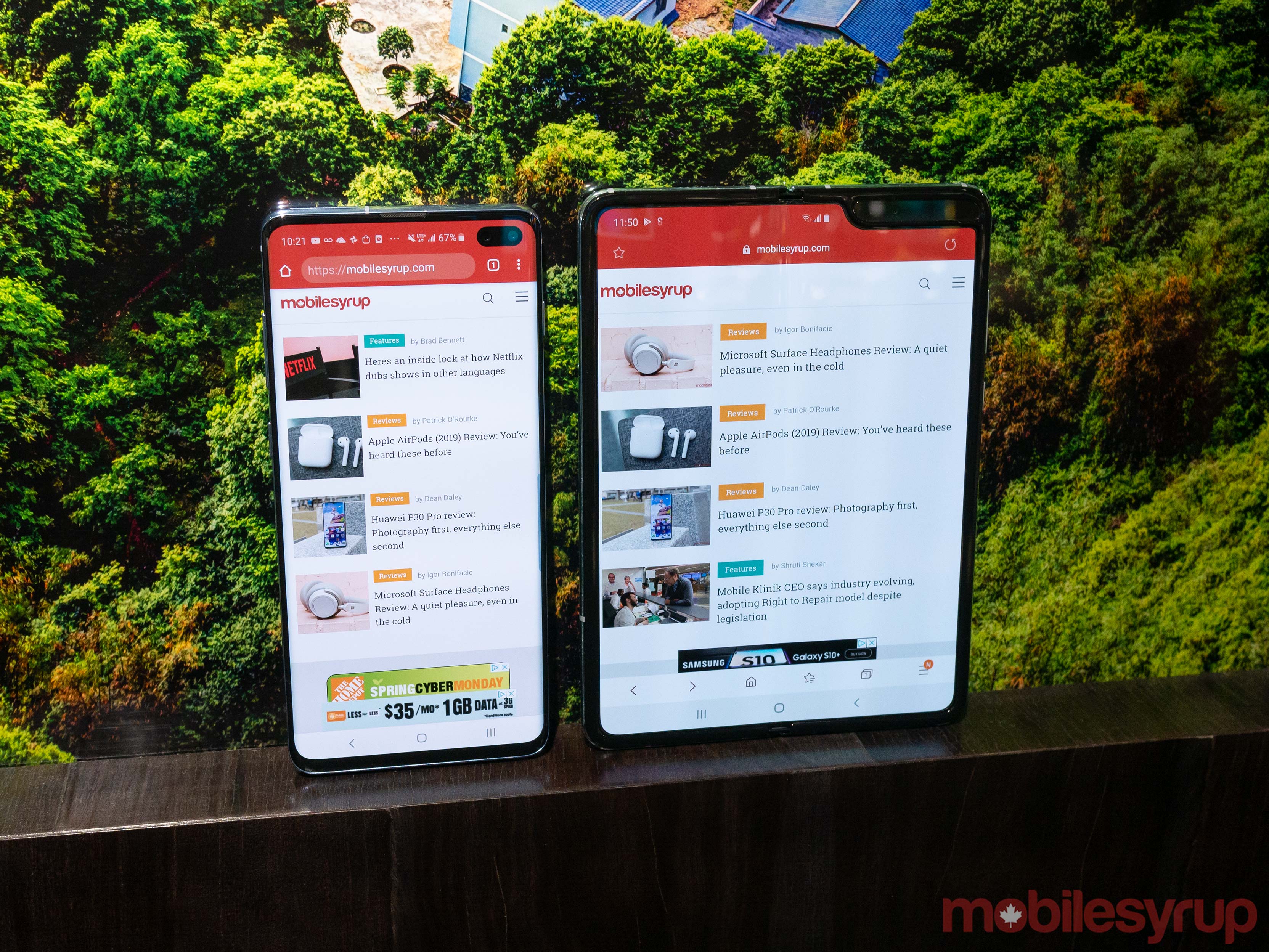
    Galaxy Fold beside the S10

    This puts the device out of the financial reach of most people, relegating its audience likely only to wealthy smartphone enthusiasts interested in its fascinating and groundbreaking design.

    Even then, those who do pick up the smartphone will be forced to deal with several drawbacks, especially in the design department.

    Any way you look at it, the Galaxy Fold is a ridiculously expensive experiment regarding the future direction of smartphone design.

    The foldable display

    First off, let’s talk about the Fold’s undeniable main draw: its foldable display. The device’s front-facing 4.6-inch screen is comically small and features massive bezels on the top and bottom. The interior displays fold out to reveal what is essentially a 7.3-inch tablet-sized panel inside.

    The 4.6-inch screen is exceptionally tiny when compared to today’s modern, nearly bezel-less smartphones. The phone itself is also incredibly chunky when folded and feels like a flip phone from the early 2000s. In fact, after handling the Fold for just a few minutes, I told MobileSyrup staff writer Brad Bennett that the device feels like the classic clamshell mobile flip phone I had as a teenager.

    To be clear, I don’t necessarily think this is bad given my tendency to appreciate nostalgia, but some people may take issue with the Fold’s undeniably bulky look. That said, the tiny 4.6-inch display is difficult to excuse. I found it so small in part because of how narrow the phone feels when you’re holding the Fold in your hand. I’d even go so far as to say that the Fold’s external display is borderline unusable depending on what app you’re running on it.

    Though I’ve always thought about the Fold as a folding smartphone, when the 7.3-inch screen expands it feels more like a tablet. I’d say the closest comparison in terms of size when you’re holding the device in your hand is Apple’s 7.9-inch iPad Mini. It’s worth noting that apps transition seamlessly between the outer 4.6-inch and inner 7.3-inch screen when folding the phone, which is a welcome user interface design move on Samsung’s part.

    The inner screen’s 7.3-inch QHD+ Dynamic AMOLED display has a plastic-like feel thanks to its ‘advanced composite polymer’ build, but generally looks almost identical to the S10’s display in terms of brightness, vibrancy and overall display quality. It surprisingly even supports HDR10+, according to Samsung, which isn’t something I expected.

    The display crease, which was a significant point of contention leading up to the Fold’s reveal, is still somewhat present but nowhere near as prominent as it was in leaked hands-on videos.

    Galaxy fold front display

    I found I was able to view the crease when I looked at the 7.3-inch display from an angle, but when using the phone head-on, the slight indent was barely visible. Regardless, you can feel the crease when you run your fingers across it, which could be an issue for some people. It’s also possible the crease could deepen and wear over time.

    Further, as you likely noticed from the pictures included in this hands-on, the Fold is also even more of a grease, smudge and dust magnet than even the Galaxy S10. For someone like myself who typically keeps my portable electronics pretty clean, this is pretty disappointing.

    What about that hinge though?
    Galaxy Fold hinge

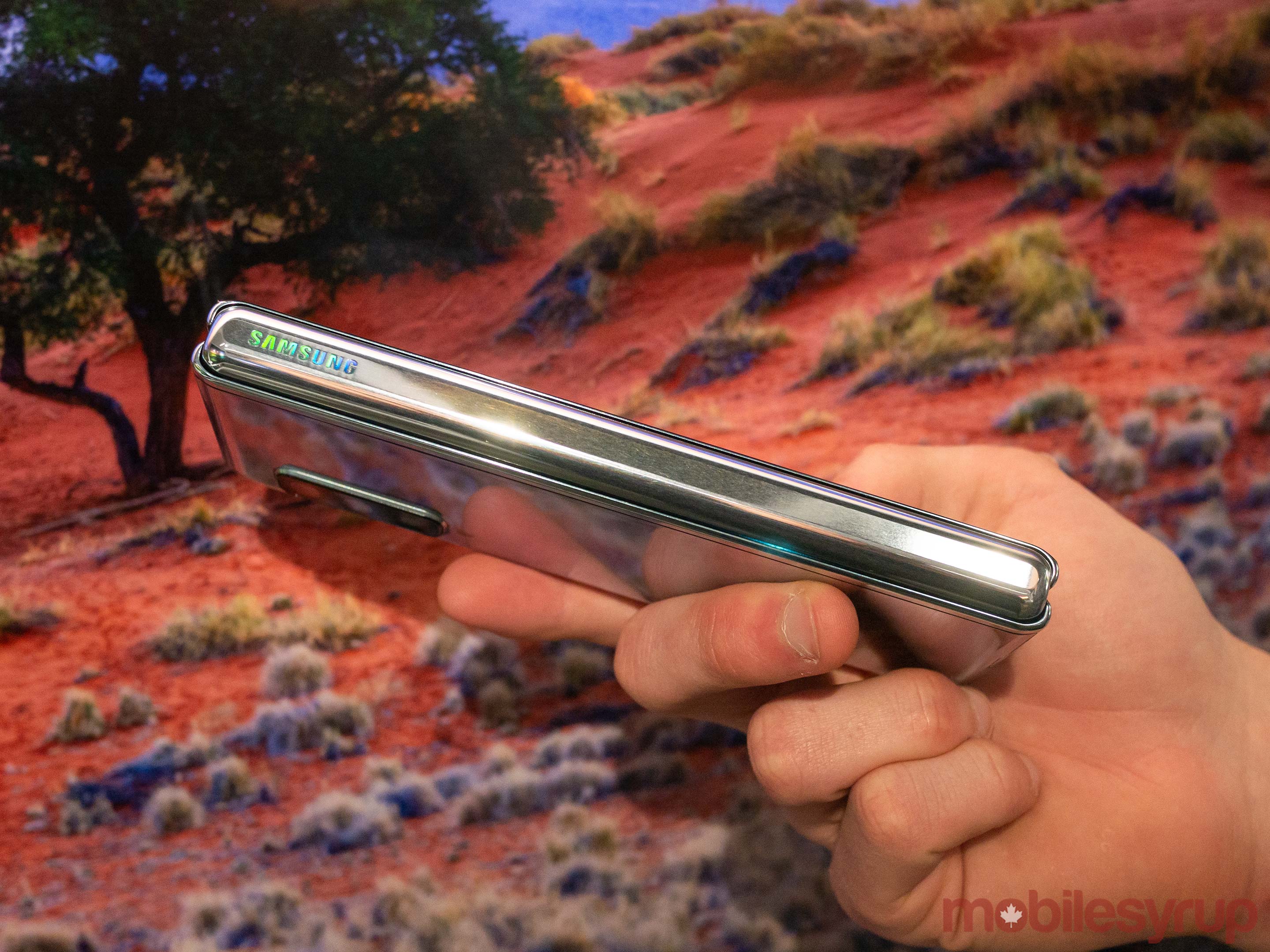
    The Fold’s hinge mechanism feels surprisingly reliable and satisfying. Whether you’re folding the phone in, or back out again, the device makes a satisfying ‘click’ noise that I grew to like during my brief hands-on time with the device. Moreover, magnets hold the display firmly closed, so if you have the fold in a pocket or backpack, it shouldn’t easily accidentally unfold. There is a bit of flex where the hinge and the front-facing display connect, but it’s not that severe.

    Though I’m not sure anyone would do this, you can even use the Fold’s 7.3-inch display half unfolded like a book. Furthermore, it’s worth mentioning the camera notch located in the top right corner of the screen is rather substantial.

    It’s particularly noticeable when you’re watching YouTube videos, with the content often being cut off by the Fold’s display. Other than this though I found that the notch fades into the background, similar to my experience with the iPhone XS Max and Pixel 3 XL.
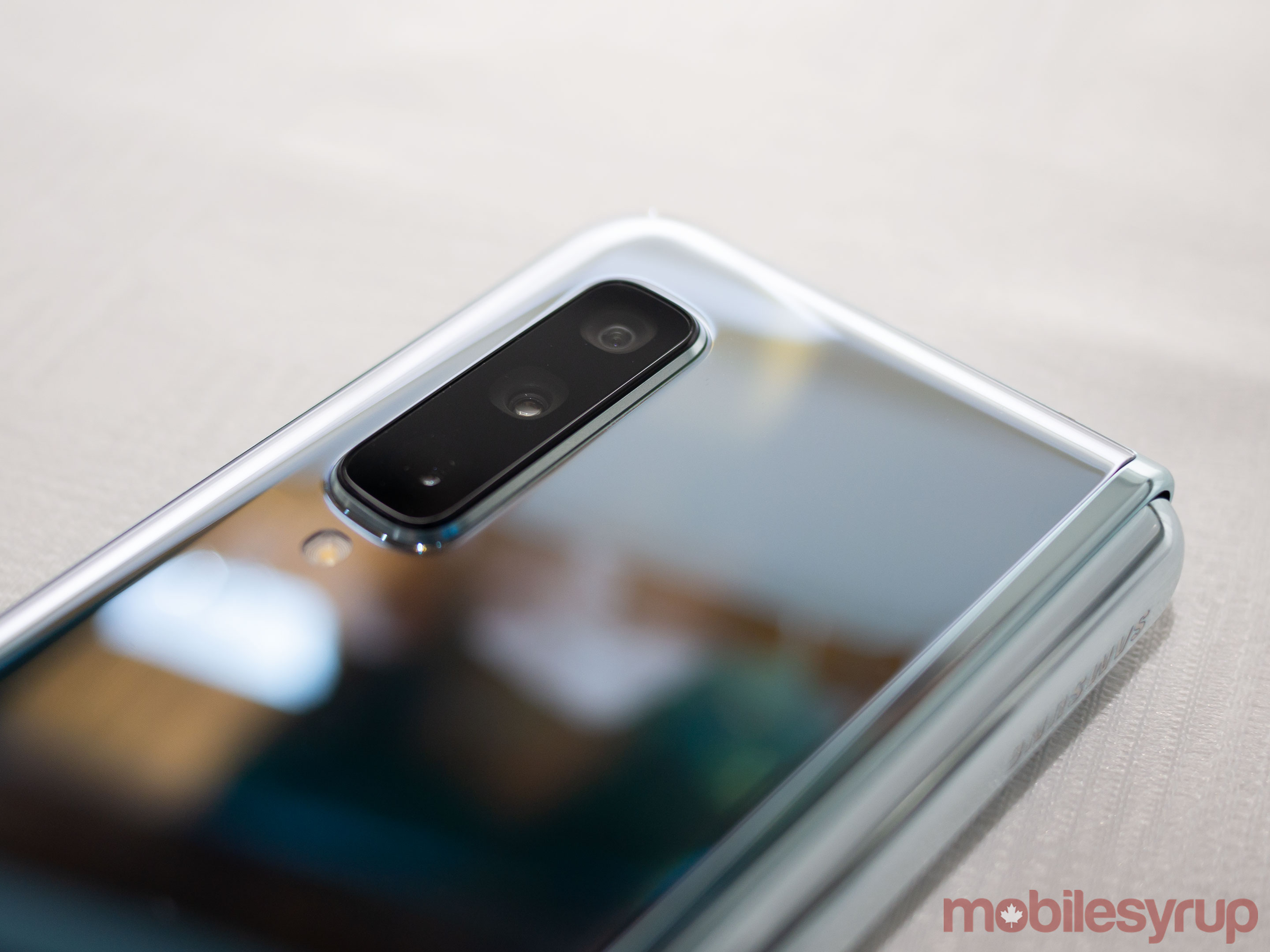
    Galaxy Fold camera

    Although I didn’t spend much time testing it out, you can also efficiently multitask by swiping from the right of the smartphone’s unfolded display to launch a list of recently used apps. These apps can then be dragged around and resized, with the Fold allowing three apps to run simultaneously.

    To my surprise, every app I tested out responded well when multitasking, though I’m sure I’ll run into compatibility issues the more time I spend with the Fold.

    The S10, other Samsung phones and Android devices in general, are capable of similar multi-tasking functionality, but I’ve never found that they featured enough screen real-estate.
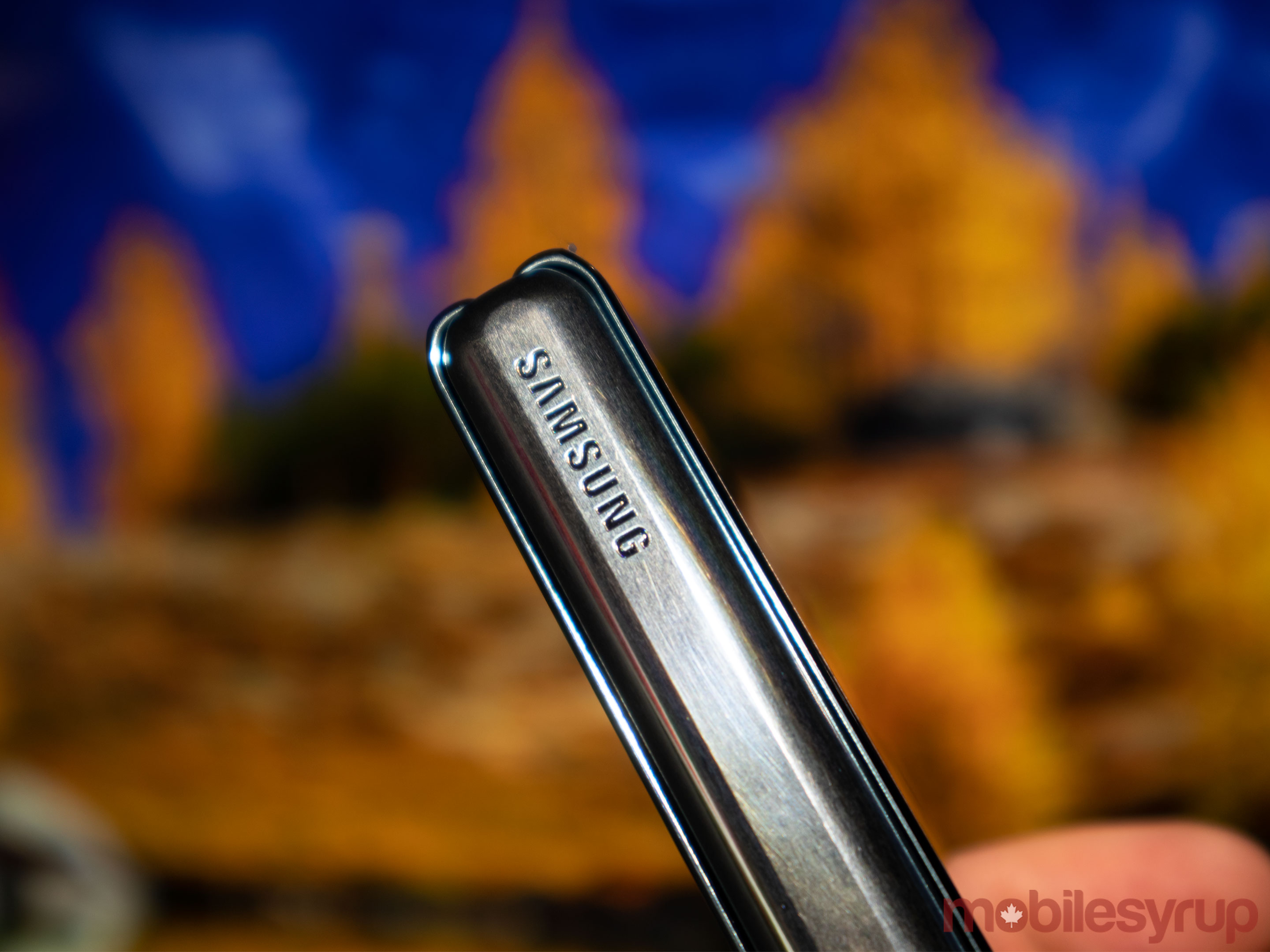
    Regarding specs, the Fold is nearly identical to the S10+ in almost every respect. The phone features a Snapdragon 855 processor, 12GB of RAM and 512GB of storage. The battery is also sizable, coming in at 4,380mAh, with parts of the cell located in both sides of the phone. More testing is needed to determine if the fold actually hits Samsung’s full-day battery life claim.

    The rear of the phone features a three-camera setup, just like the S10+: a 12-megapixel wide angle shooter, a 12-megapixel telephoto camera and a 16-megapixel ultra-wide angle lens. On the other side, the front of the phone rocks a single 10-megapixel shooter.

    Then, when Fold is open, there is yet another 10-megapixel camera housed in the notch, along with an 8-megapixel RGB depth-sensing camera, bringing the total number of cameras to a borderline ridiculous six.
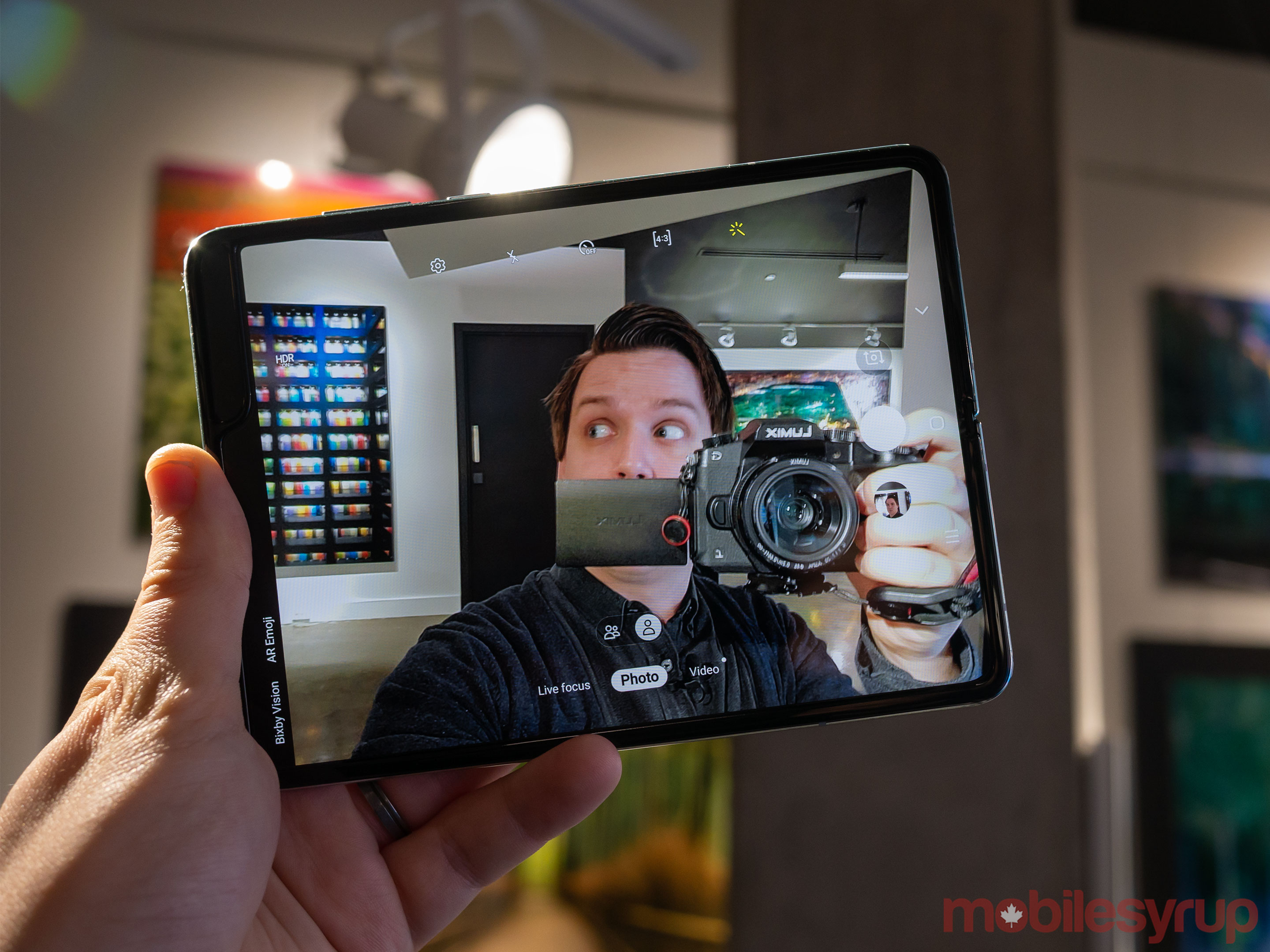
    Galaxy Fold camera

    Though I only snapped a few images, camera performance with the fold is identical to the S10 and S10+.

    Other technical specifications worth mentioning include that the Fold features a USB-C port, a speedy side fingerprint sensor and surprisingly loud stereo speakers.

    Almost ready for prime time

    What shocked me the most about the Galaxy Fold is just how smooth the experience of using the foldable device is.

    While I didn’t expect the Fold to be a disaster given it’s coming from Samsung, I assumed the experimental smartphone would suffer from software issues, that the often-discussed foldable display crease would be more prominent and in general, I would be disappointed with its overall build quality.

    There are drawbacks to be sure, with the Fold’s thickness being the most apparent issue many will likely have with the phone. It’s evident the Fold is still somewhat of a tech demo designed for smartphone enthusiasts and those with massive amounts of expendable income, but at least foldable phones finally exist.

    With likely one to two design iterations and what hopefully amounts to a significant price drop, Samsung’s new Fold line could be ready for the masses. Whether or not foldable phones really need to exist is another question altogether, however.

    Regardless, it’s hard not to be impressed that they’re finally here.

    Samsung says the Galaxy Fold is coming to Canada in “summer 2019.” It’s unclear what carriers will sell the phone, but the South Korean manufacturer has confirmed to MobileSyrup that the foldable phone will be sold through partners as well as directly from Samsung.

    All six Galaxy Fold colours, including ‘Space Silver,’ ‘Cosmos Black,’ ‘Martian Green’ and ‘Astro Blue’ are coming to Canada. Carriers will sell the ‘Space Silver’ version, with ‘Cosmos Black’ being exclusive to Samsung Stores. The Martian Green and Astro Blue devices can be customized with either a gold, or silver hinge.

    Photography by Patrick O’Rourke and Bradley Bennett. Videography by Bradley Bennett. 

    The post Samsung Galaxy Fold Hands-on: Not just a tech demo appeared first on MobileSyrup.

    16 Apr 17:18

    Leaked docs show Facebook’s user data favouritism

    by Bryson Masse
    Facebook

    In 2014, Facebook had plans to sell user data to select companies and remove access to others which fell out of favour, according to documents leaked to NBC News.

    The leaked information revealed that Facebook granted Amazon increased access as the company was purchasing a significant amount of advertising on the platform and working together to promote the Amazon fire phone. In another case, Facebook discussed revoking access to another application it felt was a viable competitor.

    This was at the same time as the Menlo Park-based company told customers they were making these changes to protect users’ privacy. At the end of the day, Facebook did eventually make the call to not sell user data on its own — but continued to offer it to companies which Zuckerberg saw as “friends,” according to NBC News.

    The documents are connected to the ongoing court case between Facebook and the developers of a photo searching app which would find pictures of Facebook users’ friends in bikinis. The documents were originally made public by the United Kingdom’s Digital, Culture, Media and Sport Committee on fake news and Facebook’s involvement in elections meddling. In that case, 400 pages of about 4,000 were released. Now NBC News says they have the rest.

    “As we’ve said many times, Six4Three — creators of the Pikinis app — cherry picked these documents from years ago as part of a lawsuit to force Facebook to share information on friends of the app’s users,” said Paul Grewal, vice president and deputy general counsel at Facebook, in a statement released by the company to NBC.

    “The set of documents, by design, tells only one side of the story and omits important context. We still stand by the platform changes we made in 2014/2015 to prevent people from sharing their friends’ information with developers like the creators of Pikinis.”

    Facebook CEO Mark Zuckerberg is also amongst the tech leaders invited to participate in the next Grand Committee on Disinformation and ‘Fake News,’ scheduled to be held on May 28 in Ottawa.

    Source: NBC News

    The post Leaked docs show Facebook’s user data favouritism appeared first on MobileSyrup.

    16 Apr 17:18

    SyrupCast Podcast Ep. 195: What does the 600Mhz spectrum auction mean?

    by Robyn Edgar
    cellphone tower in the sky

    This week on the SyrupCast, MobileSyrup staff reporter Shruti Shekar talks to Gregory Taylor, an assistant professor at the University of Calgary, about the recent 600 MHz spectrum auction.

    When the auction first started last month on March 12th, Shruti spoke with The Globe and Mail telecom reporter Christine Dobby about what Spectrum is and how companies go about acquiring it. Now that the auction is over and has resulted in $3.47 billion CAD, the conversation has shifted.

    Shruti and Gregory talk about what companies were awarded spectrum and why one of Canada’s biggest telecom providers opted out of purchasing 600MHz altogether. They also dig into whether or not the 600 MHz spectrum will truly benefit rural areas the way it has been touted to.

    Tune in to hear their thoughts.

    Subscribe on iTunes

    Direct download link

    Do you have questions, comments, thoughts, or anything you would like addressed on the podcast? Send us an email to podcast@mobilesyrup.com. If you’re feeling extra adventurous, send us a voice recording of your question or comment and you may end up featured in a future episode!

    Total runtime: 36:30

    The post SyrupCast Podcast Ep. 195: What does the 600Mhz spectrum auction mean? appeared first on MobileSyrup.

    16 Apr 17:17

    Climate change makes berries ripen faster, and that's bad news for bears, Calgary-led research says

    mkalus shared this story .

    Climate change is predicted to make buffaloberries ripen much faster than they do now, and that could make life difficult for Rocky Mountain grizzly bears, which need to feast on them before they hibernate for the winter, University of Calgary researchers say.

    Projections done by the U of C's department of geology show that in as little 60 years, buffaloberries in the Rockies will ripen three weeks earlier than they do now, according to a study published in the journal Nature Climate Change by David Laskin and several colleagues, including his PhD supervisor, U of C professor Greg McDermid.

    This will shorten the duration of the berries' availability to the grizzly bears as they prepare for winter, says Laskin.

    This means that the bears will have less time to forage for their most important caloric food source before hibernation, he said.

    "So they're going to have to look for alternate food resources, before that time, to gain enough weight to make it through the winter," he said.

    Climate research done at the University of Calgary's department of geology suggests that in as little as 60 years, buffaloberries in the Rockies will ripen three weeks earlier than they do now. (Dave Gilson/CBC)

    "This might lead them into places where they wouldn't normally go. Places where they might get themselves into trouble."

    The discovery about the predicted early fruiting of the buffaloberries and its impact on bears arose from another breakthrough — a new way of tracking the phenology of plants beneath the forest canopy.

    Phenology is the timing of seasonal activities in plants and animals, such as the stage in which a plant moves from flowering to fruiting.

    Satellites are already used routinely to track major phenological events, such as spring green-up, across the globe, the release said.

    Geologist David Laskin and his colleagues used thermal sensors on two satellites that pass over Alberta to conclude that buffaloberries are ripening earlier because of climate change, and that this will affect grizzly bears. (CBC)

    But most satellites can't see what's going on in the understorey, beneath the forest canopy, said Laskin. 

    Laskin developed a new way of tracking the phenology of plants in the understorey by using the satellite-collected information as it relates to temperature accumulation.

    "So we used thermal sensors on two satellites that pass over Alberta about four times a day. And that way we can get a nearly real-time view of the understorey. And it's temperature that really drives the development of plants," he said.

    Laskin said it was fascinating how precisely the researchers were able to predict the timing of the various stages of phenological development in the buffaloberries using the thermal sensing satellites.

    "With peak ripeness, we can predict that within two and half days anywhere in the province," he said.

    Laskin says the technique will be applicable to broader areas of study.

    "This was just applied to grizzly bears, this interaction between grizzly bears and this critical berry resource. But we can apply this methodology and this remote sensing framework to any plant in seasonal latitude that has a distinct phenology," he said.

    16 Apr 17:17

    Abgasskandal: Gericht moniert Bundesimmissionsschutzgesetz - SPIEGEL ONLINE

    mkalus shared this story from SPIEGEL ONLINE - Schlagzeilen.

    Die Bundesregierung hat nach SPIEGEL-Informationen mit ihrer Strategie gegen Diesel-Fahrverbote einen schweren juristischen Dämpfer bekommen, der Auswirkungen auf viele Städte in Deutschland haben dürfte. Der Verwaltungsgerichtshof Baden-Württemberg hat die Novelle des Bundesimmissionsschutzgesetzes (BImschG) für gesetzeswidrig erklärt. Mit der im Bundestag verabschiedeten Änderung wollte die Regierung Fahrverbote in Städten verhindern, in denen die Belastung mit Stickstoffdioxid nur knapp über dem Grenzwert liegt.

    Der Bundestag hatte dazu eine "Toleranzgrenze" von 50 statt der gesetzlich festgelegten 40 Mikrogramm Stickoxide pro Kubikmeter Luft beschlossen. Demnach mussten Städte, die den derzeit gültigen Stickoxidgrenzwert von 40 Mikrogramm pro Kubikmeter Luft um bis zu zehn Mikrogramm verfehlen, keine Fahrverbote aussprechen, um die Konzentration des giftigen Gases in der Stadt herunterzubringen. Denn diese seien, so argumentiert die Regierung in ihrer Gesetzesnovelle, "unverhältnismäßig".

    Doch diese Regelung, die zwar vom Bundestag beschlossen, aber noch nicht in Kraft getreten ist, hat der 10. Senat des Verwaltungsgerichtshofes jetzt als einen "klaren Verstoß" gegen das europäische Recht gewertet. So steht es in der Urteilsbegründung, die heute verschickt wurde und dem SPIEGEL vorliegt.

    Reutlingen muss Fahrverbote verhängen

    In dem Urteil ging es um die Stadt Reutlingen, die in ihrem Luftreinhalteplan keine Fahrverbote vorsieht. Ihr Argument: Aktuell betrage die Stickoxid-Konzentration 53 Mikrogramm, sie werde aber in den kommenden Jahren auf deutlich unter 50 Mikrogramm absinken. Doch dem machen die Richter in Stuttgart einen Strich durch die Rechnung. Die Richter halten es nicht für verantwortbar, "massive Überschreitungen des Grenzwertes um bis zu 25 Prozent zu tolerieren", heißt es weiter. Konkret heißt das: das Land Baden-Württemberg muss Fahrverbote in den Luftreinhalteplan aufnehmen.

    Damit steht die Regelung der Bundesregierung schon vor dem Aus, ehe sie hätte wirksam werden können. Erstritten hat diese Klage die Deutsche Umwelthilfe, die gegen den Luftreinhalteplan der Stadt Reutlingen geklagt hat.

    Blamage für die Bundesregierung

    Der nächste Streitfall dürfte sich in Stuttgart abspielen: Dort hat die Landesregierung, mit Verweis auf die Toleranz-Grenze von 50 Mikrogramm aus der BImschG-Novelle, zonale Fahrverbote für die Stadt Stuttgart für Dieselautos der Schadstoffarm Euro 5 abgelehnt. Ministerpräsident Winfried Kretschmann (Grüne) und seine CDU-Koalitionspartner hatten sich gerade erst für diesen Plan gefeiert. Doch die DUH hat nach SPIEGEL-Informationen gegen diese Regelung des Verkehrsministeriums bereits Vollstreckungsklage eingereicht.

    Blamiert wäre auch Bundesverkehrsminister Andreas Scheuer (CSU), der die Gefahr von Fahrverboten für eine Vielzahl von Städten durch die vermeintliche List mit dem BImschG für gebannt hält. Gegen das Urteil ist eine Revision möglich. Diese würde, falls die Stadt Reutlingen sie anstrengt, vor dem Bundesverwaltungsgericht in Leipzig stattfinden.