Shared posts

16 Apr 17:49

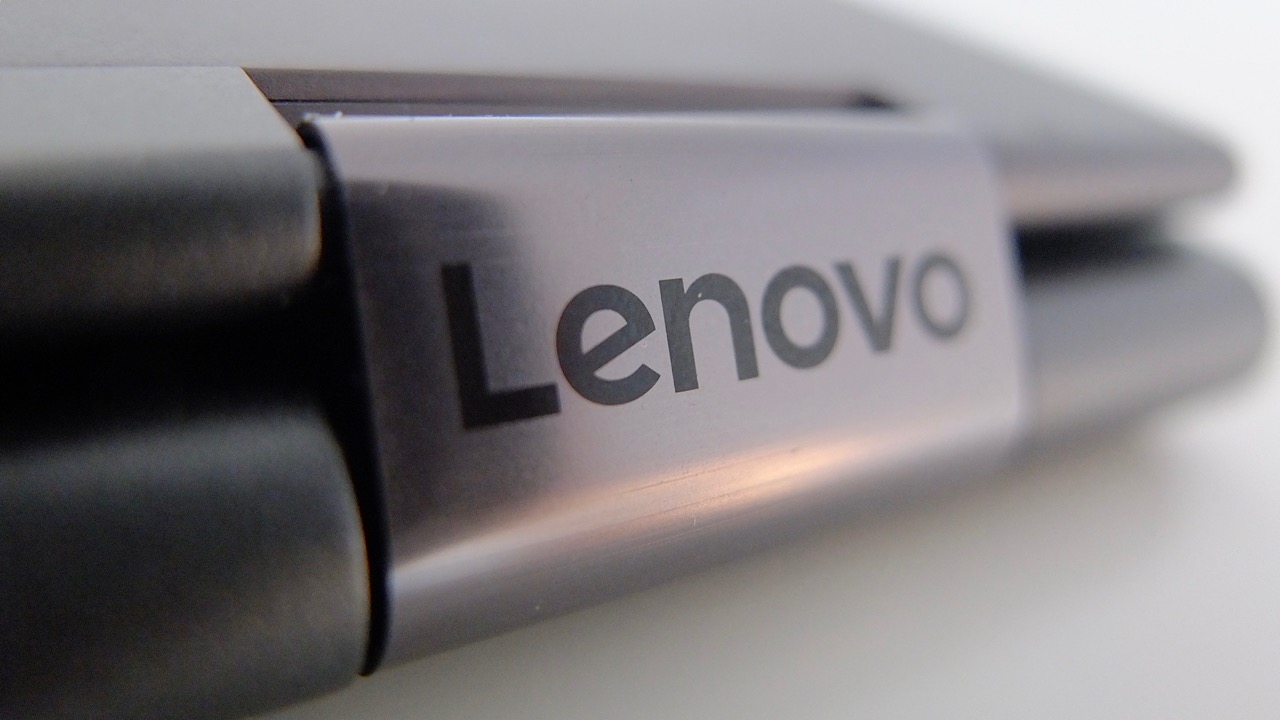
Lenovo Yoga C930 :: My favorite laptop

by Volker Weber

e756fd30505f4647f3eeb3e5e77dd77f

I have three machines I use almost every single day: a 2017 Surface Pro, a 2018 iPad Pro 12.9, and the Yoga C930. And that is the machine I start the day with. As much as I love the Surface Pro, it has been sidelined by the Yoga C930.

1ba86cd99ba46a78ce5698afd909d734

I was in love with the Yoga as soon as I got it out of the box. This slim all metal body just feels so premium. It has a very unique design, not to be confused with any other brand.

15f4e83039757196e0858a3f3850bb27

And a laptop it is. Although it can be folded backwards, I hardly ever do that. Occasionally I pull the included pen out of its silo and start marking up a screenshot. I have also taken notes in OneNote, but both the Surface Pro and the iPad Pro are better suited for this task.

ce73c9bdb8ee295c6be0beef837acf08

I was a bit concerned about the Thunderbolt/USB-C ports at first. But this turned out to be one of my favorite features. I don't ever use the included 65 W power brick. Instead I always charge it with my 60 W tizi Tankstation. An iPad Pro charger isn't strong enough to even get the charging process started. 27 W is delivered by 3 A at 9 V, which isn't sufficient. The 60 W tizi delivers 3 A at 20 V, which charges the C930 in no time.

89d10d2b3983d586ee63e9e11606648b

My Yoga has a beautiful 4K screen, but I would advise to go with the Full HD panel instead. It's just more practical in terms of battery performance. I am getting through most of the day, but only the HD screen provides for more than ten hours of battery life.

006f4e8219b5aed59a5f43e6894dc61a

Although I have been using this laptop every single day, it does not have the smallest scratch. And I am not very good with hardware. It is thin and light, but not to the point where it becomes delicate. Although it is as thin as a modern MacBook Pro or MacBook Air, it does not suffer from similar keyboard issues. The trackpad works well, as most precision trackpad these days. I love the keyboard. It is not as hard as a 2018 MacBook Pro keyboard, and not as squishy as a 2015 MacBook Pro variant. It feels ... right.

84d1ead6942c9a325bea404f2dc01f32

The fingerprint reader is working well. I have registered six fingers, and it never fails to recognize any of them, no matter which way I am holding the machine. It is not as fiddly as a camera-based Windows Hello setup, and I never ever had to enter my passcode to unlock.

c25d911919ee3bc8d5a8dfde1706e2b7

The keyboard layout is perfect, without any compromise. It can provide the wide return key for US keyboard layouts and the tall return key for the German one, without needing two different top cases.

17ba55be9da57a6ad92a3b66549242dc

The soundbar that is situated in the hinge provides the treble whereas the mids are coming from the bottom. There is no bass, and although it bears the Atmos branding, I don't experience an Atmos 3D sound. In any case it sounds way better than Surface Pro and is on par with the iPad Pro. I have been watching a lot of video content on this machine. And that is where that Yoga hinge comes into play, when I fold it backwards into tent mode.

Tl;dr: this is one great laptop that has it all. It's fast, it's quality design, it has touch and pen, with its own silo. Great keyboard, great sound, great battery life. My only niggle is the flashing power button. That signal is pretty useless. Give me green for almost full, red for almost empty, yellow for charging and white for on.

I dread the day I have to give this back. Holding on to it as long as I can.

More >

16 Apr 17:47

In which I finally stop using Patreon

Fluffy, Plaidophile, Apr 15, 2019
Icon

Tnhe title refers to the author (someone called 'Fluffy'), not me - I considered but never did use Patreon. I was about to, but their misstep a year ago scared me off, and I never did set up a creator account. And I can certainly feel Fluffy's angst about "using a platform, Patreon, that had absolutely no integration with outside sources. There was no way to republish RSS on Patreon, there was no way to subscribe to Patreon via RSS, it doesn’t even provide a way for a creator to export their own content off the platform." Also, "they’ve also been showing signs of collapsing under their own weight of needing to pay back their venture capital... How long will it be before they start increasing their cut, delisting underperforming creators, taking on more exclusive content distribution deals with top-tier earners?" I will eventually open a tip jar again (if for no other reason than to supplement my retirement income or to attend conferences) but it probably won't be Patreon. Via Aaron Davis.

Web: [Direct Link] [This Post]
16 Apr 17:47

How Do We Get Middle School Students Excited About Science? Make It Hands-On

Katrina Schwartz, Mind/Shift, Apr 15, 2019
Icon

I don't understand why parents have to send children to 'alternate schools' for this. I studied science and technology at a public school in Ontario several decades ago and had plenty of hands-on experience (though admittedly, despite my best efforts, I never blew up a chem lab). We did physics experiments, biosphere studies, industrial design - a whole host of things. And it wasn't just Activity Day stuff - we made scientific notebooks and presented our results. It's not hard to make science and technology hands-on, it doesn't require special schools, and I think it's something most students (at least, those around here) are still doing. I never forgot those early activities, and what I learned is that it is the approach and process - being curious, asking questions, testing theories, talking about ideas - that matter, not the specific set of facts.

Web: [Direct Link] [This Post]
16 Apr 17:46

8 reasons why my students lead their own conferences

Rayna Freedman, eSchool News, Apr 15, 2019
Icon

This is an example of what I would call good online learning - indeed, just good learning in general. The setting is parent-teacher conferences for fifth-graders. The only people not there are the students! So this teacher had the student manage their own conference, presenting their work and interacting with both parent and teacher (and sharing their portfolio with caregivers who cannot attend). I would expand this as much as I could, having students manage their own learning activities as much as possible. Sure, they would mess it up - at first. But let them see examples of how it's done, given them responsibility for parts of conferences (like, say, conference reporting, or maybe recording the video archives), let them try it a few times, and they'll pick it up.

Web: [Direct Link] [This Post]
16 Apr 17:46

Your brain probably is a computer, whatever that means

Kevin Lande, Aeon, Apr 15, 2019
Icon

"The common claim that the brain is a computer is not, at the moment, a concrete, precise, well-understood scientific hypothesis," writes the author, "Still, the claim is almost certainly true." Whether or not the claim is true depends on what you mean by "is a computer", and in this case, what the author is saying is that "the brain performs specific computations," for example, it performs edge-detection in visual perception, or identifies location from sound. So far so good.

But I would say a lot depends on interpretation. When we say "performs specific computations," we imply that it does such-and-such in order to accomplish the result - for example, we might say that the purpose of neural processing is to identify the edges of objects. That certainly is a useful outcome of visual processing. But it's not the intent - it's just what visual perception happens to do. (By analogy: by the same logic, a river can also be said to perform calculations, finding the best way to move water to the ocean. But nobody would say that the river is created the way it is for the purpose of performing these calculations - see the difference?). Anyhow, great article, worth a read.

Web: [Direct Link] [This Post]
16 Apr 17:39

The Best Cheap Scanner

by Ben Keough
The Best Cheap Scanner

We’ve spent nearly 70 hours testing inexpensive flatbed scanners, and we’re convinced that the Canon CanoScan LiDE 300 is the best one for everyday users. While it’s not the quickest or most powerful scanner, it hits a sweet spot with great out-of-the-box image quality, and a simple setup, compact size, light weight, and low price that puts it in a class of its own.

16 Apr 17:35

Mozilla’s Common CA Database (CCADB) promotes Transparency and Collaboration

by Kathleen Wilson

The Common CA Database (CCADB) is helping us protect individuals’ security and privacy on the internet and deliver on our commitment to use transparent community-based processes to promote participation, accountability and trust. It is a repository of information about Certificate Authorities (CAs) and their root and subordinate certificates that are used in the web PKI, the publicly-trusted system which underpins secure connections on the web. The Common CA Database (CCADB) paves the way for more efficient and cost-effective management of root stores and helps make the internet safer for everyone. For example, the CCADB automatically detects and alerts root store operators when a root CA has outdated audit statements or a gap between audit periods. This is important, because audit statements provide assurance that a CA is following required procedures so that they do not issue fraudulent certificates.

Through the CCADB we are extending the checks and balances on root CAs to subordinate CAs to provide similar assurance that the subordinate CAs are not issuing fraudulent certificates. Root CAs, who are directly included in Mozilla’s program, can have subordinate CAs who also issue SSL/TLS certificates that are trusted by Firefox. There are currently about 150 root certificates in Mozilla’s root store, which leads to over 3,100 subordinate CA certificates that are trusted by Firefox. In our efforts to ensure that all subordinate CAs follow the rules, we require that they be disclosed in the CCADB along with their audit statements.

Additionally, the CCADB is making it possible for Mozilla to implement Intermediate CA Preloading in Firefox, with the goal of improving performance and privacy. Intermediate CA Preloading is a new way to hande websites that are not properly configured to serve up the intermediate certificate along with its SSL/TLS certificate. When other browsers encounter such websites they use a mechanism to connect to the CA and download the certificate just-in-time. Preloading the intermediate certificate data (aka subordinate CA data) from the CCADB avoids the just-in-time network fetch, which delays the connection. Avoiding the network fetch improves privacy, because it prevents disclosing user browsing patterns to the CA that issued the certificate for the misconfigured website.

Mozilla created and runs the CCADB, which is also used and contributed to by Microsoft, Google, Cisco, and Apple. Even though the common CA data is shared, each root store operator has a customized experience in the CCADB, allowing each root store operator to see the data sets that are important for managing root certificates included in their program.

The CCADB:

  • Makes root stores more transparent through public-facing reports, encouraging community involvement to help ensure that CAs and subordinate CAs are correctly issuing certificates.
    • For example the crt.sh website combines information from the CCADB and Certificate Transparency (CT) logs to identify problematic certificates.
  • Adds automation to improve the level and accuracy of management and rule enforcement. For example the CCADB automates:
  • Enables CAs to provide their annual updates in one centralized system, rather than communicating those updates to each root store separately; and in the future will enable CAs to apply to multiple root stores with a single application process.

Maintaining a root store containing only credible CAs is vital to the security of our products and the web in general. The major root store operators are using the CCADB to promote efficiency in maintaining root stores, to improve internet security by raising the quality and transparency of CA and subordinate CA data, and to make the internet safer by enforcing regular and contiguous audits that provide assurances that root and subordinate CAs do not issue fraudulent certificates. As such, the CCADB is enabling us to help ensure individuals’ security and privacy on the internet and deliver on our commitment to use transparent community-based processes to promote participation, accountability and trust.

The post Mozilla’s Common CA Database (CCADB) promotes Transparency and Collaboration appeared first on Mozilla Security Blog.

16 Apr 17:35

Plastic, paper, or cotton bags?

by Andrea

NPR Planet Money: Are Plastic Bag Bans Garbage?

“It was only about 40 years ago that plastic bags became standard at U.S. grocery stores. This also made them standard in sewers, landfills, rivers and the Great Pacific Garbage Patch. They clog drains and cause floods, litter landscapes and kill wildlife. The national movement to get rid of them is gaining steam — with more than 240 cities and counties passing laws that ban or tax them since 2007. New York recently became the second U.S. state to ban them. But these bans may be hurting the environment more than helping it.
[…]
Plastic haters, it’s time to brace yourselves. A bunch of studies find that paper bags are actually worse for the environment. They require cutting down and processing trees, which involves lots of water, toxic chemicals, fuel and heavy machinery. While paper is biodegradable and avoids some of the problems of plastic, Taylor says, the huge increase of paper, together with the uptick in plastic trash bags, means banning plastic shopping bags increases greenhouse gas emissions. That said, these bans do reduce nonbiodegradable litter.
[…]
A 2011 study by the U.K. government found a person would have to reuse a cotton tote bag 131 times before it was better for climate change than using a plastic grocery bag once. The Danish government recently did a study that took into account environmental impacts beyond simply greenhouse gas emissions, including water use, damage to ecosystems and air pollution. These factors make cloth bags even worse. They estimate you would have to use an organic cotton bag 20,000 times more than a plastic grocery bag to make using it better for the environment.”

16 Apr 17:35

Chic Over 50 stays active on an Aveny!

by Blix PR

Over the last month, Shauna, the creator of Chic Over 50, added a Blix Aveny Step-through electric bike to her lifestyle. With her Blix, she has explored more of her beautiful city and gained a new perspective on staying active while having fun! In our latest Blix rider journal, learn why Shauna fell in love with her Blix Aveny and how it has helped her regain a passion for the outdoors.


The First Ride:

Before trying the Blix Aveny, Shauna "had only heard of electric bikes"  and was unsure if having pedal assist would remove all aspects of a workout. However, it only took one ride for Shauna's opinion of electric bikes to change. She states, "my thinking totally shifted perspective when I sat on my Blix for the first time and had the ride of my life!" The thrill of riding faster and farther down the bike path made her "feel like a kid again."

While Shauna did enjoy pedaling with little to no assist, she also liked how the Aveny has a throttle, allowing the bike to move on its own without requiring her to pedal. As she experimented increasing the pedal assist to ride faster, Shauna said she "loved every single second! The feeling of riding through the streets again, and with the wind in [her] face was nothing short of exhilarating!"

Staying Chic and Active Over 50:

One of the reasons why we chose to collaborate with Shauna is because of her dedication to helping women stay active, confident, and having fun regardless of their age. Sedentary lifestyles become more common as we age and as Shauna stresses, "being out and about is so important to our overall health!"

Shauna feels as though her "Blix bike has given [her] an excuse to get out and about" and explore her favorite spots in southern Utah. She has had a "blast riding along all the trails in the clean air" and choosing her level of pedaling based on her exercise goals for the day. Whether you are just starting to get back into exercising or wish to ride a bike once again, Shauna says an electric bike will "give you a way to be out in the fresh air enjoying your surroundings, but with the option of how hard you want to work!"

We would like to thank Shauna for sharing her experiences on the Blix Aveny.


Her entire blog can be found here.
More information on the Blix Aveny can be found here.
Follow us for more e-bike lifestyle stories:


16 Apr 17:35

Briefing: Toyota sells EV tech to Singulato, gains green-car credit rights

by Miles Goscha
This is Toyota’s first sale of EV tech to a Chinese startup.
16 Apr 17:35

Postbox 6.1.14 is Now Available!

Postbox 6.1.14 is Now Available!

Here's what's new in this release...

  • Added ellipses to the Quick Bar to accommodate long folder names or deeply nested folder paths
  • Improved the way Postbox automatically indexes messages for search
  • Added preference for the number of idle seconds to wait before indexing in Preferences | Options > Advanced > General
  • Added preference that will automatically download message bodies for folders marked for offline in Preferences | Options > Advanced > General
  • Implemented change that will always force a selection in the Focus Pane when it is opened
  • Improved the accuracy of S/MIME icons in the message header
  • Better and more complete fix for "efail" security issue
  • Fixed a bug caused signature defaults to not display properly in the Identity preference panel
  • Fixed a bug that would prevent subsequent Topic selections from working in the MacBook Pro Touch Bar
  • Fixed a bug that could cause content to be duplicated when jumping from Quick Reply to a full composition window
  • Fixed a regression that prevented Topics from being properly removed
  • Fixed a bug that prevented search results from displaying when an Account Group is selected
  • Fixed a bug that could cause new messages to not appear when Focus Pane attributes are selected
  • Fixed several theme/UI issues
16 Apr 17:35

K3s - Lightweight Kubernetes

by Rui Carmo

Another thing I’ve been tinkering with for a while–in this case since the initial release. It is still a bit broken networking-wise but shows great promise for on-premises setups, and I’m currently trying to get it to work on my ARM cluster (which relies on oubound NAT through the master node, something that gets k3s quite confused).


16 Apr 17:34

Twitter Favorites: [GraphicMatt] Congrats to First Name, Last Name for being named new chair of the Toronto Community Housing Board of Directors, as… https://t.co/FqGu0TSNNo

Matt Elliott @GraphicMatt
Congrats to First Name, Last Name for being named new chair of the Toronto Community Housing Board of Directors, as… twitter.com/i/web/status/1…
16 Apr 17:34

Twitter Favorites: [cqwww] opensource problems. awesome tool, fail2ban, is version 0.9.6 on debian 9. Their docs repository is at 0.7 (… https://t.co/DppvvzClOM

Kris Constable @cqwww
opensource problems. awesome tool, fail2ban, is version 0.9.6 on debian 9. Their docs repository is at 0.7 (… twitter.com/i/web/status/1…
16 Apr 17:31

Supporting Members Who Stumble

by Richard Millington

What do you do when someone in your community stumbles (professionally or personally)?

Do a number of members respond with encouraging words to cheer them up?

“You’ll do better next time!”

“Don’t worry, things will be ok!”

“You deserve better than that anyway!”

While well intentioned, the authors would probably admit they really have no idea if these are true.  

Blind empathy between strangers isn’t very useful in the long-term. Any random group of friends can give the member the same blind empathy. The power of an online community is to provide practical support. It’s to have members who can step in and say:

This happened to me too, here are 3 things you can do to do better next time…”

“You can get help from these sources….”

“A few things to consider if this is the right path for you..”

Don’t just commiserate with members, help them put together a practical plan of action to do better next time.

Not as heartwarming perhaps, but in the long-term, it’s far more valuable to members.

Your challenge when you see members who are sharing a struggle is to have you, your team or volunteers step in and challenge members to provide their best advice to help members…not just encouraging words.

16 Apr 17:29

Why new Netflix series Street Food highlights Asian countries, but ignores Hong Kong

by Bernice Chan
The makers of Chef’s Table and The Final Table have found another way to make foodies hungry with a new series, Street Food, that starts on April 26.There are nine episodes, each featuring one destination: Thailand, India, Taiwan, Japan, South Korea, Singapore, Indonesia, the Philippines and Vietnam.But wait – where’s Hong Kong?When the show visits Thailand, they feature Jay Fai, or Auntie Fai in Bangkok, who is in her early 70s, wears a thick gold necklace around her neck, and puts on lipstick…
16 Apr 17:29

The Shed :: Kinetic Architecture

by Volker Weber

This is an impressive building.

16 Apr 17:22

API Secrets Mean the End of Standalone Single Page Web Apps and Why Serverless Isn’t Exactly What it Says on the Tin

by Tony Hirst

The web used to be such a simple place: write some HTML+CSS, perhaps add in a little bit of javascript, all of it readable via View Source, upload it to a webserver somewhere, and job done.

It soon got a bit more complicated. If you run a company that’s actually doing something with information retrieved from the web page, you need scripts on the backend:

But the web page code was often still quite straightforward to look through.

The arrival of web APIs meant that you could call on other people’s webservices and add them into your own. Want to add a Google map to your web page for example? That could all be done, via Javascript, in the browser client:

What this meant was that you could build quite rich applications with just HTML, CSS and Javascript; you didn’t necessarily need to run server scripts and you could het away with very simple web hosting: nothing more than a place to upload you files. Any execution of (Javascript) code would happen on the client side, in the browser.

In recent years, however, there has been a tendency for web APIs to require an API token to access the API. The token allows the API publisher to track, and limit, use of the API from a particular user; tokens should also be kept secret.

So for example, you can’t just call the Youtube API to search for videos on a particular topic. Instead, you have to make a request using your key as part of the search query. You can still list the results and add video players to your page which will play without the need for a token, but the initial API request needs a key.

What this does is place a burden on someone wanting to call the API. No longer can they publish a single web page app, where everything is contained in a single web page. Instead, they have do do some code execution on the server side so they can keep their token secret:

A single page, self-contained web app is still possible, but you give your token away so that anyone else can use it, and run up (mis)usage on your account…

This is a real pain and represents another way in which powerful features (the ability to easily call third party APIs) is denied to novices, making the on ramp harder. You can’t just hack together some HTML’n’JS and post it somewhere, letting the browser run the Javascript code and calling the third party APIs. You need to solve another problem first — finding somewhere to run chunks of your code in private to call the API services using your private key, building the page  based on the response from the API and then serving that in public.

Just by the by, web pages have also got harder to read when you View Source. Many of them dynamically create HTML elements from Javascript, which means if you View Source, all you see is the JS code.

(You can still get to see the HTML, but it means you have to go into the browser’s developer tools area so you can inspect what the browser is actually rendering.)

Another shift that is happening is the shift to so called “serverless” models for publishing web applications. In this case, the idea is not that you upload your website code (HTML, Javascript, CSS, server scripts) to a web server somewhere, but you upload it to a potential webserver. When a request to view the website comes in, a server is launched dynamically to serve the application.

If your application is on a server that was created for a previous visitor, and that server is still running, will be used to serve the application rather than a new one being launched. Unless your application is receiving lots of visitors at the same time, in which case the serverless host may autoscale it for you, and launch additional servers running your web application to cope with the load. (Autoscaling can also be applied to “traditional” web servers.)

What’s important to realise about serverless web application architectures is that they aren’t serverless: a web server is still required to serve the application. The serverless property means that there is no webserver unless someone makes a request to view the site.

For some examples of serverless approaches via lambda functions, see Implementing Slack Slash Commands Using Amazon Lambda Functions – Getting Started and Searching the UK Parliament API from Slack Slash Commands Using a Python Microservice via Hook.io Webhooks.

One of the early, easy to use serverless providers was Zeit.Now (see for example: Publish Static Websites, Docker Containers or Node.js Apps Just by Typing: now). An attractive feature of the Zeit offering was that it could launch web applications packaged in Docker containers in a serverless way, but this seems to have been deprecated  recently (for example, see this post from Simon Willison).

However, it seems that Google have just announced a new service that launches Docker containers in a serverless way: Google Cloud Run. For a third party review, see here.


16 Apr 17:21

The freedom of living undocumented

by Lilia

You either live, or write is still true.

The last two months were quite intensive in terms of events – visits of family and friends, travel and making long-term choices with lots of impact. It’s not over yet, but I do have a quiet moment now to think and write before the next wave begins.

Beginning of the year I was eager to jump back to online conversations, with “back to Twitter”, blogging and talking, online and off, that comes from it. What I have seen more obviously than before that being able to do so requires being present in all those spaces and being present requires a dedicated effort to login, read and write. Moreover, those years of conditioning on FB create a feeling that “just text” is nog enough and there have to be a visial coming with it, which asks for more work (especially now when I am transitioning between devices and programs).

Of course, being present online doesn’t have to feel so much work – it is just a sign that it became a work on its own and not an embedded and blended part of doing things. But as long as it feels as an extra I am letting it go.

And, not suprisingly, it gives a sense of freedom. Freedom of being present in the moment and not thinking that I should do something else to be present somewhere else.

On the bridge. It doesn’t say much unless you know how many times in my life I walked that bridge and what does it mean to be there with the kids, just after we managed to see the expo of Ilya Repin that was already fully booked when we decided to fly to Moscow.


The post The freedom of living undocumented appeared first on Mathemagenic.

16 Apr 17:21

Gerüchte um neues Riesen-Handy Samsung Galaxy Note10 Pro

by Carsten Thomas
Frühere Gerüchte haben behauptet, dass Samsung aktuell an nicht weniger als vier Versionen des kommenden Galaxy Note10 arbeitet, von denen zwei 5G eingebaut haben werden. Laut einer neuen Quelle ist nun bekannt, dass es auch ein zusätzliches Pro-Modell geben wird.Frühere Gerüchte haben behauptet, dass Samsung aktuell an nicht weniger als vier Versionen des kommenden Galaxy Note10 arbeitet, von denen zwei 5G eingebaut haben werden. Ihre Modellnummern sind vor Kurzem bekannt geworden. Laut einer neuen [...]
16 Apr 17:21

Google Teases Pixel 3a Launch on Google Store Using ‘Avengers: Endgame’ Tagline

by Rajesh Pandey
Google has a new teaser up on its Google Store which hints at the impending launch of the Pixel 3a and Pixel 3a XL. The handsets will be unveiled by Google at its I/O 2019 conference scheduled to start on May 7th. The “Help is on the way” teaser on the Google Store points to the Google and Marvel’s Avengers tie-up. Continue reading →
16 Apr 17:21

The Daily Edit – Kodachrome: the lab, the article, the movie.

by Heidi Volpe

Photo by Steve Herbert for the New York Times

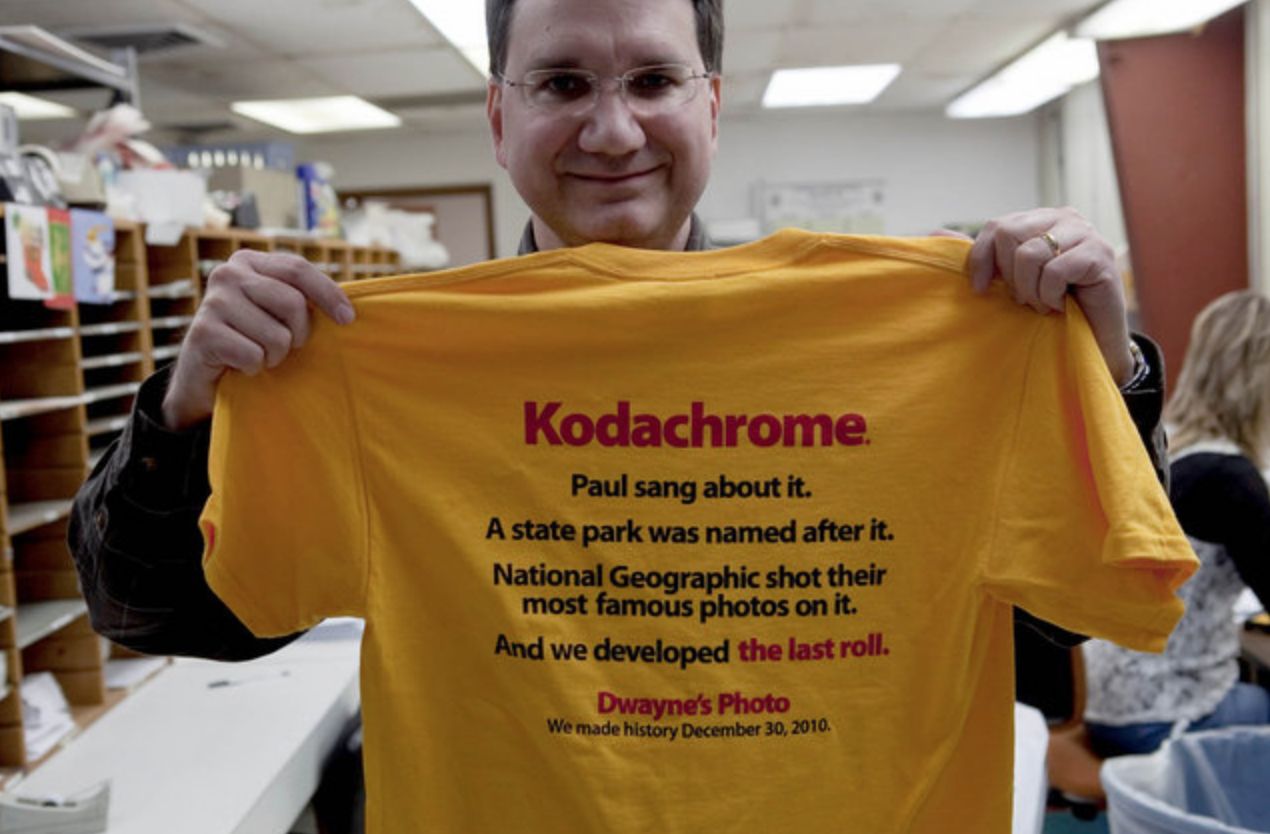
For 75 years Dwyane’s photo lab in Parsons, Kansas had been processing Kodachrome film. It’s closing in 2010 inspired many photographers to make the trek to the lab back then, and more recently, a Netflix film called Kodachrome.  The New York Times published an article in 2010 about the lab’s closing and it sparked the idea for the film. The last roll of Kodachrome 64 was handed to none other than Steve McCurry, a long time fan of the film, and you can read about his process along with the 36 images he shot here. Closing credits from the movie include McCurry’s images below


Photography by Steve McCurry: Villagers Celebrating the Festival of Holi, Vrindavan, Rajasthan, India, 1996

Photography by Steve McCurry: Djenne, Mali

The post The Daily Edit – Kodachrome: the lab, the article, the movie. appeared first on A Photo Editor.

------------------------

Visit our sponsor Photo Folio, providing websites to professional photographers for over 10 years. Featuring the only customizable template in the world.

------------------------

16 Apr 17:21

‘Tim Cook: The Genius Who Took Apple to the Next Level’ Is an Insightful Look at the Values that Guide the Company’s CEO

by John Voorhees

Leander Kahney, who has previously published books about Steve Jobs and Jony Ive, takes on the ascent of Apple’s current CEO in a new book titled Tim Cook: The Genius Who Took Apple to the Next Level. When Steve Jobs passed away in 2011, many people doubted that Tim Cook, an operations expert, was up to the job of CEO. As Kahney summarizes in his book’s introduction titled ‘Killing It,’ the numbers have proven the doubters wrong. By exploring Cook’s early influences and how they have affected his leadership of Apple, Kahney sheds light on the values and other qualities that have led to Cook’s success. The result is an interesting look at Cook’s background growing up in Alabama and his career before joining Apple, about which little has been previously written, but the book's recounting of Cook’s Apple years may be less informative to close observers of the company.

Before he became CEO of Apple, not a lot was known about Tim Cook. He was the company’s Chief Operating Officer and was recognized by observers for his supply chain expertise, but he kept a relatively low profile until he filled in for Jobs as CEO during Jobs’ battle with pancreatic cancer. As Kahney explains in chapter one, Cook’s low profile was in stark contrast with Jobs’, which fed the skepticism that Apple’s new CEO would succeed. Instead of trying to imitate Jobs though, Cook brought his own values and experiences to his new role, which as Kahney suggests has been the secret of his success.

The early chapters of Cook are by far my favorites because they fill in a lot of gaps about Tim Cook’s life leading up to being named Apple’s CEO. Kahney traces Cook’s path from growing up in Alabama through his early career at IBM and other companies. In doing so, Kahney visited Cook’s hometown and spoke to people who knew him growing up and interviewed former colleagues at the companies for which he worked. The interviews are paired with Cook’s own words from speeches he’s given in the past, which is effective in portraying events that have shaped everything from his work ethic to his perspective on diversity.

Kahney does a fantastic job weaving these threads together into a compelling portrait of Cook’s early life. The stories told by Cook in his speeches have been reported elsewhere, but supplemented by recollections of friends and colleagues, they have more context, and I came away feeling as though I have a better understanding of their impact on Cook.

The same is true of Cook’s early days at Apple where he led the effort to streamline the company’s supply chain. It was the late 90s, Apple was in dire financial straits, and it was Cook’s job to straighten out operations. Despite the constraints that Apple’s financial troubles undoubtedly placed on Cook, Kahney reports that he managed to reduce inventory, helping return the company to profitability rapidly.

One interesting side note about Tim Cook is that Kahney had the opportunity to interview some of Apple’s current and recently retired executives. He didn’t interview Cook himself, but he interviewed Lisa Jackson, Deidre O’Brien, Greg Joswiak, Bruce Sewell, and a couple of anonymous sources. Those interviews resulted in a few interesting quotes about Cook, but nothing that strays in any meaningful way from the messaging of Apple’s PR team, which is not surprising given that all but Sewell still work for Cook at Apple.

The middle few chapters of the book focus on Cook’s first three years as CEO. This was a period of intense scrutiny and regular declarations by pundits that Apple was doomed. The results of Cook’s early days were mixed. 2012 saw John Browett come and go as Apple’s Senior Vice President of Retail. That same year, Apple introduced its Maps, which was a buggy mess. When Cook reportedly demanded that Scott Forstall apologize to customers for the problems with Maps, for which he was responsible, he refused and was fired. The same year though, Cook significantly broadened Apple’s charitable giving and began addressing worker safety in the company’s supply chain.

The chapters that follow and cover 2013 and 2014 chronicle a similar mix of successes and setbacks. It’s also where I began to lose interest in the book. The trouble I have with these chapters and some of the latter part of the book is that they are primarily chronologies of the Apple news from those years. That’s fine for a general audience that is familiar with Apple but doesn’t follow the company carefully, but for a lot of MacStories readers, I suspect this part of the book may feel like a rehash of year-end Apple news round-ups.

The rest of the book shifts its focus to the six core values that guide Cook’s leadership of Apple: accessibility, education, environment, inclusion and diversity, privacy and security, and supplier responsibility. At its best, Kahney’s book synthesizes long timelines with the help of industry experts who provide perspective and context. One of the strongest examples of this is the chapter on the environment and supplier responsibility that tracks Apple’s environmental efforts from Steve Jobs’ tenure through to present day. Kahney not only explains what Apple has done to become a more environmentally-friendly company, but compares how Apple stacks up against other tech companies in the eyes of groups like Greenpeace. In contrast, the discussion of Apple’s efforts in education doesn’t add much insight into Apple’s efforts beyond what can be gleaned from press releases and keynotes.

Kahney concludes by asking whether Tim Cook is Apple’s best CEO. Without expressly saying so, it’s clear that Kahney believes the answer is yes, but I appreciate that he doesn’t answer the question directly because after finishing the book, Tim Cook doesn’t strike me as the sort of person who would care for that sort of debate. He’s proven doomsayers wrong, despite occasional setbacks on the way to helping Apple become the world’s biggest company, and by any measure that’s quite an accomplishment, especially following Steve Jobs.

Tim Cook is an excellent overview and at times insightful look at Cook’s life and career at Apple. If you’ve followed the company closely for years, you will probably find yourself skimming through some sections quickly, but I’d still recommend reading the book. The stories of Cook’s early life animate the company’s core values that give them substance. I suspect that even the most cynical tech pundit would have a hard time doubting the sincerity of Cook’s beliefs after reading Kahney’s book.

Tim Cook: The Genius Who Took Apple to the Next Level is available from Amazon, Apple’s Books app, and elsewhere.


Support MacStories Directly

Club MacStories offers exclusive access to extra MacStories content, delivered every week; it's also a way to support us directly.

Club MacStories will help you discover the best apps for your devices and get the most out of your iPhone, iPad, and Mac. Plus, it's made in Italy.

Join Now

16 Apr 17:19

GoPro is bringing its camera replacement service to Canada

by Igor Bonifacic
GoPro display at a store

GoPro announced on Monday that it’s bringing its GoPro Plus camera replacement subscription to Canada.

Priced at $5 per month, GoPro Plus offers up to two no-questions-asked device replacements per 12 months to GoPro camera owners.

In addition to Canada, GoPro plans to expand the availability of GoPro Plus to 24 other countries, including Australia, France, Germany and the U.K.

“Part of what makes a GoPro special is that you can use it in any situation,” said GoPro’s CEO Nick Woodman. “With the GoPro Plus damaged camera replacement benefit, subscribers can have the confidence their camera is covered, no questions asked.”

GoPro first started replacing cameras as part of its GoPro Plus service at the start of this year. Other perks of the service include unlimited cloud storage and half-priced accessories.

MobileSyrup has reached out to GoPro to find out additional details about its plans for the service in Canada. The article will be updated with a response.

Via: Engadget

The post GoPro is bringing its camera replacement service to Canada appeared first on MobileSyrup.

16 Apr 17:19

Algorithm ‘wrong call’ caused YouTube to fact check Notre Dame fire with 9/11 attacks

by Bryson Masse

As the Notre Dame Basilica in Paris, France caught fire and burned on Monday, social media users noticed that YouTube’s new fact checking system seemed to associate the event with the 9/11 terrorist attacks in New York City.

The erroneous fact check “information box” was found on the live streams of CBS and NBC news broadcasts. Twitter user Matthew Harrison took a screenshot of the fact check.

“We are deeply saddened by the ongoing fire at the Notre Dame Cathedral. Last year, we launched information panels with links to third party sources like Encyclopedia Britannica and Wikipedia for subjects subject to misinformation,” said a YouTube spokesperson in a statement to MobileSyrup. “These panels are triggered algorithmically and our systems sometimes make the wrong call. We are disabling these panels for live streams related to the fire.”

YouTube also said it had disabled the fact checking panels on videos of the fire. Since last summer, YouTube has pulled information from different sources like Wikipedia to provide contextual info for potentially misleading claims.

An additional system was rolled out last month, with a fact check information panel appearing when users search for certain terms and phrases. It was launched in India to combat misinformation in the region.

According to reports in Buzzfeed, the current fact checking system sources the information from already-agreed upon fact-checking sites automatically. YouTube went further and explained to Poynter that it’s using the Schema.org ClaimReview markup which can ID fact checks from different kinds of searches. In this case, the 9/11 information was from the Encyclopedia Britannica.

It’s unclear why the association of the Notre Dame fire was made with the 2001 terrorist attack, as there is no evidence that the fire was caused by an attack or set on purpose. The Verge speculated that it could be the tower of smoke rising from the 800-year old building. Currently, French fire services have said the start of the fire could be related to ongoing renovations inside the cathedral. 

That is not to say that the event doesn’t require verification against misinformation, as different conspiracy theories linked to the fire had already picked up steam by that afternoon, as documented by Buzzfeed’s Jane Lytvynenko.

Reminder of challenges when stopping misinformation

This mistake comes at a time when governments domestic and abroad are looking for more ways to combat online misinformation. It reveals that there is still much work to be done to perfect these automated systems. In another indication of how difficult this task is, Google announced a ban on Canadian political ads on its platform last month, admitting it could not adhere to the federal government’s transparency requirements.

Democratic Institutions Minister Karina Gould told CBC News that Google could “ultimately” change its mind, and “we will encourage them to do so. However, that’s Google’s decision as to how they comply with the law.”

In January, the Government of Canada committed funds to combat foreign election interference and more recently it said it was considering social media regulation to stymie the spread of online misinformation.

The post Algorithm ‘wrong call’ caused YouTube to fact check Notre Dame fire with 9/11 attacks appeared first on MobileSyrup.

16 Apr 17:19

Microsoft developing ‘Surface Buds’ to compete with AirPods: report

by Jonathan Lamont
Surface Buds render

It seems like every company is unveiling headphones to compete with the Apple AirPods. This time around, Microsoft is reportedly joining the fray with ‘Surface Buds.’

According to a Thurrott report, the Surface Buds, codenamed ‘Morrison,’ will be wireless earbuds powered by Cortana.

Further, the earbuds will reportedly feature noise cancellation, similar to the company’s Surface Headphones.

While Microsoft might not be the first company you think of when it comes to audio hardware, its Surface Headphones were pretty good, which gives me hope that its new earbuds will also work well.

That said, the Surface Headphones were pricey, selling at $450 CAD. If the Surface Buds follow in the footsteps of the Headphones, that could be an issue. Apple’s AirPods also come at a premium, but if Microsoft’s offering can undercut the AirPods while offering premium sound, they could prove popular.

Unfortunately, the earbuds are still just a rumour, with no hint of release date or anything else about the earbuds.

Image credit: Thurrott

Source: Thurrott Via: Windows Central

The post Microsoft developing ‘Surface Buds’ to compete with AirPods: report appeared first on MobileSyrup.

16 Apr 17:19

Motorola Razr and One Vision spotted in Bluetooth SIG

by Dean Daley

The Motorola Razr and Motorola One Vision were spotted in the Bluetooth Special Interest Group (SIG)’s Launching Studio platform.

The Motorola Razr listing shows the model number ‘XT2000-1’ with the name ‘Motorola Razr mobile phone for Verizon Wireless carrier.’ Additionally, it indicates that the foldable smartphone sports Bluetooth 5.0.

Previous rumours suggested that the handset’s codename is ‘Voyager,’ and that it features a Snapdragon 710 chipset, a 6.2-inch primary display, an 8-core CPU, an Adreno 616 GPU, up to 6GB of RAM, 128GB of storage and a 2,730mAh battery.

The next device spotted on the Launching Studio platform was the Motorola One Vision. The handset will reportedly have a dual SIM Model and will come with Android 9 Pie. The listing also indicates the handset features Bluetooth 5.0.

Other rumours regarding the Motorola One Vision suggest that the phone sports a flat 6.2-inch display with an ‘HD+’ resolution, a Snapdragon 675 processor, up to 128GB of storage and 6GB of RAM.

It’s unclear if either handset will be released in Canada. As of right now the Motorola One line has yet to come to Canada and the Razr phone might be a Verizon exclusive.

Source: Bluetooth Launch Studio, (2), Via: XDA Developers 

The post Motorola Razr and One Vision spotted in Bluetooth SIG appeared first on MobileSyrup.

16 Apr 17:19

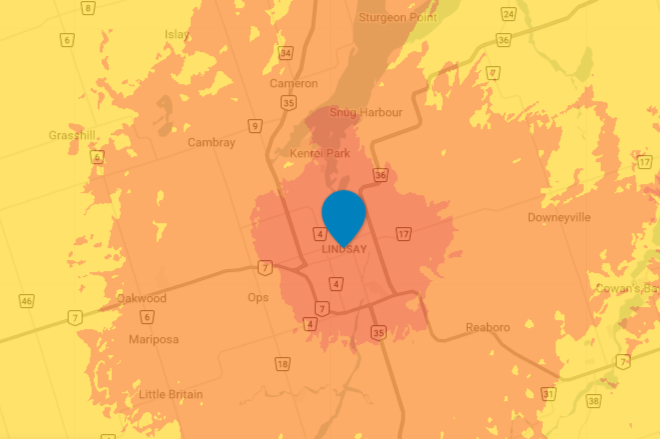
Freedom Mobile turns on wireless network in Lindsay, Ontario

by Ian Hardy

Freedom Mobile, Shaw’s wireless brand, has quietly expanded its network coverage to Lindsay, Ontario.

Lindsay has a population just over 20,000 and the coverage map on its website reports the network is active within the core of the area.

In a statement to MobileSyrup, Chethan Lakshman, Vice President External Affairs at Shaw Communications, stated, “We can confirm that our Freedom Network is now live in Lindsay, Ontario. Residents and visitors to Lindsay have access to our rapidly-improving network, and can take advantage of the affordable plans and abundance of data we offer our customers.”

This is just one of the locations Freedom Mobile is going live with. In the coming months, Medicine Hat, Lethbridge, Prince George, and Namaimo are expected to be active this year.

Shaw recently announced that its wireless brand Freedom Mobile has amassed a total of 1,516,256 subscribers. Earlier this month, the carrier introduced new ‘Nationwide’ coverage and prepaid plans.

The post Freedom Mobile turns on wireless network in Lindsay, Ontario appeared first on MobileSyrup.

16 Apr 17:18

Google will reportedly rebrand the Home Hub as ‘Nest Hub’

by Bradly Shankar

Google is planning to rebrand its Home Hub smart display as “Nest Hub,” according to a report from 9to5Google.

Citing an unnamed “reliable source familiar with the matter,” the outlet states that Google intends to put the Home Hub in line with the 10-inch version of the device, which is called the Google Nest Hub Max.

This appears to be an attempt by Google to better differentiate between its smart displays and smart speakers. Otherwise, there is no indication that Google is looking to change the Home Hub itself.

As noted by 9to5Google, Google is reportedly set to launch its Pixel 3a on May 7th, which would also be a good time for the company to relaunch the Home Hub under a new name.

Source: 9t05Google

The post Google will reportedly rebrand the Home Hub as ‘Nest Hub’ appeared first on MobileSyrup.

16 Apr 17:17

RT @DaleVince: Hello to the Brexiteers who complained about our EU flag to the local council. They contacted us yesterday and told us we ne…

by DaleVince
mkalus shared this story from mrjamesob on Twitter.

Hello to the Brexiteers who complained about our EU flag to the local council. They contacted us yesterday and told us we needed planning permission as an advert. We checked national planning regs, and the EU flag is specifically allowed without planning permission. Ours stays 😎 pic.twitter.com/b1KIdpV9i2


Posted by DaleVince on Tuesday, April 16th, 2019 11:27am
Retweeted by mrjamesob on Tuesday, April 16th, 2019 11:34am


1368 likes, 223 retweets