Shared posts

01 Jun 21:01

Local Software and Gevulot

by Ton Zijlstra

I need to write more extensively about two things that I for now want to link / bookmark here, both coming from Neil Mather.

One is local-first software, an article by Ink and Switch:

In this article we propose “local-first software”: a set of principles for software that enables both collaboration and ownership for users. Local-first ideals include the ability to work offline and collaborate across multiple devices, while also improving the security, privacy, long-term preservation, and user control of data.

This resonates with me on two frequencies, one the notion that tools need to be useful on their own, and more useful when connected across instances, the other that information strategies and agency in my mind correlate with social distance.

The second thing is Neil’s reference to Gevulot. At IndieWebCamp Utrecht one session took place around oversharing and conditional sharing. Gevulot is a device that allows for very precise contextual sharing, in the SF trilogy The Quantum Thief by Finnish author Hannu Rajaniemi (previously mentioned in this blog).

Gevulot is a form of privacy practised in the Oubliette. It involved complex cryptography and the exchange of public and private keys, to ensure that individuals only shared that information or sensory data that they wished to. Gevulot was disabled in agoras.

This resonates again with information strategies and the role of social distance, but also with how I think that our tools need to align with how we humans actually interact such as flexibly and fluently switching between different levels of disclosure for different aspects of our lives in conversation with someone. That link to a posting on what I’d like my tools to do is from 2006, and my description of a ideal reader more recently is still consistent with it over a decade later (albeit from the reading perspective, not the sharing perspective). Gevulot from now is definitely the shorthand I will use for these type of explorations.

01 Jun 14:15

Meanwhile, in the next millennium...

by peter@rukavina.net (Peter Rukavina)

Twenty years ago today I wrote the first post in this space.

Apparently the effort it took to do this was so Herculean that I didn’t get around to writing another post until two months later, a post wherein I linked to a description of how I maintained the “constantly updated collection of news and links” that we now call a blog, but didn’t yet really, at least in any popular sense.

I was 33 years old when I started writing here. I’d been with Catherine for 8 years, but Oliver was still seven months from conception, sixteen months from being born.

When the blog turned ten, in 2009, I marked the occasion with a statistical breakdown: 996,016 words written, in 5,388 posts.

Now, 20 years in, it’s 2,670,757 words in 8,970 posts

But a statistical breakdown doesn’t really say much about the last 20 years; so here’s a single post from each of those years as a kind of proxy:

That collection is more akin to a series of flashes of landscapes from a moving train than a comprehensive review. But if you want to get a hint of a taste of my last two decades, it’s a good place to start.

By lucky happenstance, this anniversary comes on the day that we’ve rendezvoused with Luisa and Olle here in Halifax. They have been such dear friends over such a large swath of these 20 years. Catherine and Oliver and Olle and Luisa and I went out for an excellent Japanese meal tonight and we continued the conversations we started many years ago. And started new ones. Kind of like this blog. It was an excellent way to mark the date.

31 May 21:33

What Happens When You Spend too Much Time in Thin Air

by Rex Hammock

Advertisers do the darndest things.

Like thinking the millions of people who have contributed their time to building and maintaining Wikipedia would not notice Northface and Leo Burnett wikihacking the site. Like the marketers not knowing hundreds of bots are constantly monitoring the site looking for just what Northface and Leo Burnett did.

I’m just curious how two companies like these could put their heads together and come up with something so stupid.


31 May 21:26

Innovation Minister announces Statistics Canada Centre for Gender, Diversity and Inclusion Statistics

by Aisha Malik

Innovation, Science and Economic Development Minister Navdeep Bains has announced the launch of Statistics Canada’s Centre for Gender, Diversity and Inclusion Statistics, an online data hub that will provide Canadians with timely and relevant statistics to support ‘evidence-based decision-making.’

The hub will provide easy access to data on topics such as families, education, health, and immigration, from a gender, diversity, and inclusion perspective.

“We want all Canadians to be able to access the information they need to help promote gender, diversity and inclusion in their businesses and communities. As a trusted source of information that Canadians know they can rely on, Statistics Canada has the tools and expertise to do just that with their new Centre for Gender, Diversity and Inclusion Statistics,” Bains told MobileSyrup.

The government says this initiative will allow Canadians to make informed decisions, and will also help city planners and business owners.

For instance, business owners will have the ability to obtain information about women-owned enterprises in order to promote female participation in on their boards, according to the government. City planners will also be able to learn about refugees and help to enhance the present community supports provided.

This new online data hub will add to the government’s new Digital Charter, which is an approach introduced by the government to ensure that Canadians can trust new digital technology, and can also trust that their data will be protected.

In Budget 2018, Statistics Canada received $6.7 million CAD in funding over five years, along with $600,000 CAD, to establish a Centre for Gender, Diversity and Inclusion Statistics.

The post Innovation Minister announces Statistics Canada Centre for Gender, Diversity and Inclusion Statistics appeared first on MobileSyrup.

31 May 21:26

Hover Feature Update: We’re Enabling Sign-In Notifications for All Accounts

by Hover

Improving The Security of Your Hover Account

Starting today, we’re automatically enabling the “Log Sign In Activity” feature for all Hover users to improve the security of your Hover account.

This means that Hover will send an email notification to your account email address whenever there is a successful sign in to your Hover account from a new browser. Many other online services send similar emails so it’s likely that you’ve seen these types of notifications before.

If it’s you that is signed in to your account, then you can simply ignore the notification and rest easy with the peace of mind that you’re able to easily monitor your account for suspicious activity.

On the other hand, if this sign-in was not initiated by you (or a co-worker, spouse, etc.), then you can take immediate action to safeguard your domain names and email accounts from harm. We include a special link in the notification email that takes you to a page where you can immediately kick everyone out of your account and lock it to prevent further sign-ins. If you lock your account this way, you’ll need to contact the Hover support team via phone, live chat, or email to verify your identity, get your password updated, and restore access to your account.

Why is Hover Auto-Enabling Sign-In Notifications?

Keeping your domain names and email addresses secure is important because websites and email often hold the keys to accessing other services by way of password resets and DNS updates. By enabling sign-in notifications for all users, we can add an additional layer to the security of your account alongside things like 2FA and strong password requirements.

Additional Steps to Take to Secure Your Hover Account

Choose a Strong and Unique Username and Password – It’s tempting to rely on repeated usernames and passwords, but this is not the best way to manage your account security. In security breaches, your username and password from other websites could be stolen and shared and then hackers can try to use these usernames and passwords to access your other accounts.

Always use unique passwords when creating online accounts to better protect yourself. Consider using unique usernames as well, as this makes it difficult for hackers to assemble a list of all the services you might use. You can use apps like 1Password or LastPass to help you  manage your passwords and help you create unique and strong passwords for all your accounts.

Enable Two-Step Signin (aka 2-Factor Authentication or 2FA) – Hover offers Two-Step Sign In for all users as an additional layer of protection even if your username and password are known by a hacker. With Two-Step Sign In enabled, you are required to provide a special code generated by an authenticator app on your phone or sent to you via SMS along with your username and password to access your account. Learn how to enable Two-Step Signin.

If you have any other questions about securing your account, please read through our security-focused HelpDesk articles. Your privacy and data security is important to us and we want to be sure you’re always protect when using Hover’s services.

31 May 21:26

Towards a Roadmap for Open Access Monographs

Janneke Adema, Knowledge Exchange, May 31, 2019
Icon

I learned through an email today that The Knowledge Exchange have just published the report Towards a Roadmap for Open Access Monographs (44 page PDF). The report contains recommendations that we hope will be building blocks for further development of OA monographs within the open research culture." The document summarizes the results of the Knowledge Exchange Stakeholder Workshop on Open Access and Monographs, which took place in Brussels in November 2018. There were two major workshops: a funder panel, and an author engagement workshop. The recommendations abre about what you would expect: models for sustainability, openness about publishing costs, technical requirements, and the need for data about open monographs.


Web: [Direct Link] [This Post]
31 May 21:26

Introducing Librem Social

by David Seaward

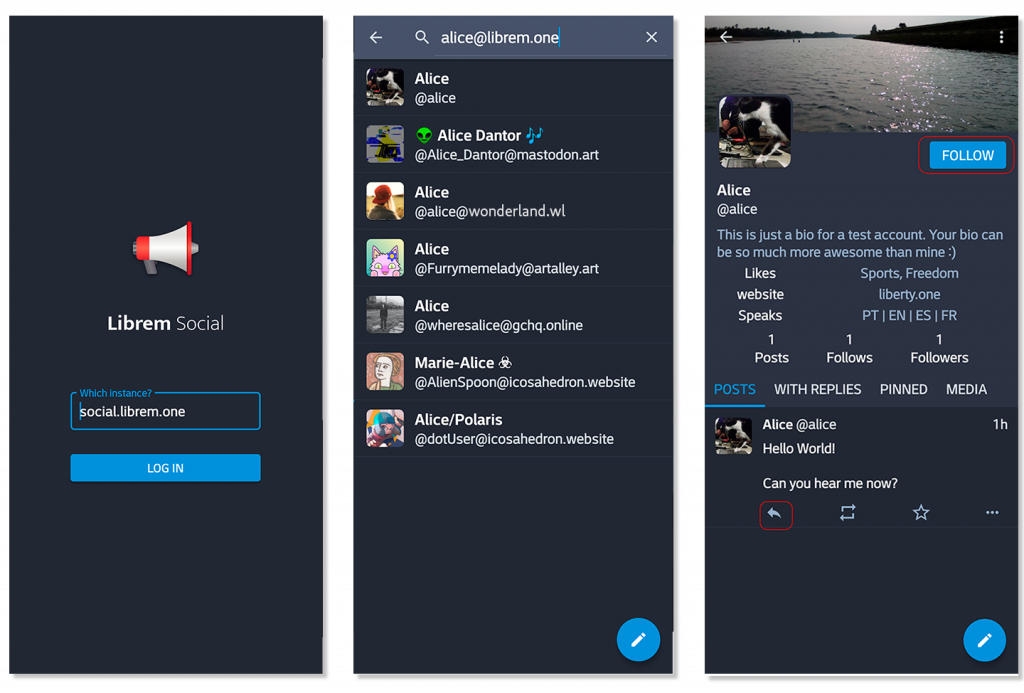
Hello there! Let’s talk about Librem Social.

Librem Social is a social network. Think Twitter… if Twitter respected your privacy and didn’t advertise to you.

Librem Social is part of Librem One, the suite of privacy-protecting, no-tracking apps and services created by our team at Purism. Librem One currently includes Librem Mail, Librem Chat, Librem Tunnel, and Librem Social.

Over 2,000,000+ people. Ready to follow.

Librem Social is part of a network of social network servers already boasting over 2,000,000 users!

Two Million!

Follow friends. Make new ones. Share stories, pictures, and videos with them. Librem One is ready and growing. Fast.

Librem Social

Opt-In, No Ads, No Tracking

One of Librem Social’s most important features is that, unlike all other social hosts, it is entirely opt-in. You only see posts from people you want to follow.

This means you are not force-fed an unrelenting stream of manipulated content specifically targeting you. No way, no how. Not on Librem One. On Librem One you see the posts from the people you want to see posts from – your friends, family, news sites and favorite celebrities. And that’s it. If you want, you can search for posts from across the Fediverse (more on that later).

We also do not advertise to you. Not at all.

Which means we have no reason to track you. Simple, right?

Available Wherever You Are

Librem One is accessible via:

What Technology Does Librem Social Use?

Librem Social is proudly built on Mastodon, part of what is known as “The Fediverse”, as well as many other Free Software projects that we actively work with and contribute to.

The Fediverse is the decentralized replacement to MySpace, Orkut, Friendster, Google+, Twitter and Facebook (can you spot the trend?). The Fediverse already exists, and it is growing. What makes the Fediverse different to its forebears is that it has no central domain – not even a central service. It’s composed of lots of services, all of them speaking (mostly) the same protocol, known as ActivityPub.

Fediverse developers are currently working on replacements for things we know (shout out to PixelFed!) and other things we can only dream of (shout out to Spritely!). When they do arrive, we can yell out a stretch goal, apply some elbow grease… and once we’re done you can start following them, breaking the cycle of needing a new account to join your friends on whatever’s hot right now.

Public service announcement:

As well as a purely opt-in workflow, we have another very distinguishing feature – that everything on Librem Social is public. Everything. Who you follow, who follows you, your announcements and your replies.

Why? Well, for two major reasons:

Because valuing your privacy doesn’t mean staying indoors with the curtains closed all day. Sometimes you want to go out, socialize, catch up on news – and share your own.

At the same time, you don’t want to blurt out something personal just because there’s a lull in the conversation (it happens). That’s what private chat is for. Librem Social is designed in the context of a service bundle, so you know what tool to use for the right job, with no oopsies – and, more importantly, with none of your personal details on our server.

What if… I don’t like what I see?

We don’t control the content of search results. If you are concerned, please read our quick guide to staying safe online. If you see something illegal, please report it to the relevant authorities, as they are best equipped to handle illegal content. If you are being harassed, or witness online harassment, block and flag the offending user and a moderator will take action. We do not tolerate harassment. This is an area of well-established rights, Librem Social is built on and with the expert policies of ACLU, FSF, and EFF, while avoiding the pitfalls of ham-fisted censorship we all dislike from Big Tech.

We are very pleased to see so many people socializing already. If you want to follow us, or ping us with your thoughts, our Librem Social / Fediverse address is @purism@librem.one – and you are always welcome!


Purism offers high-quality privacy, security, and freedom-focused computers, phones, and software. Our platform is meant to empower everyone. We believe people should have secure devices and services that protect them rather than exploit them, and we provide everything you need in a convenient product bundle.

We like to give back. Librem Chat is built with free software, created by security and privacy experts. Learn more about how Purism contributes to its community.

The post Introducing Librem Social appeared first on Purism.

31 May 21:23

Women’s minds matter

Sally Davies, Aeon, May 31, 2019
Icon

This is an interesting post on a number of levels. The central premise is essentially that cognitivism, by separating rationality from the influences of the human body, is "a profoundly gendered blueprint." It (cognitivism) is also wrong. I would like to argue, however, that it's wrong because it's wrong, not because it is gendered. It's being gendered is an undesirable consequence of the philosophy, and possibly a reason why so many people still cling to it, but at core it doesn't just deny women their humanity, it denies humans their humanity.

Let me explain (as this is is a position I have taken in the past and maintain to this day). "Within a broad church that can be called – not uncontentiously – embodied cognition, a growing number of psychologists, scientists and theorists are approaching mental life as something that is not just contingent on, but constituted by, the state of our bodies." The author cites, with approval, psychologist James J Gibson, who argued that the computational mind, manipulating content-bearing representations, was not the correct way to understand perception. This is also my view, and is one of the core differences between my own view of education and that of most other researchers in the field of education (at least, to my perception).

Web: [Direct Link] [This Post]
31 May 21:23

On abortion, Rep. Stephen Lynch loudly proclaims his nonexistent position

by Josh Bernoff

Massachusetts Congressman Stephen Lynch is that rarest of creatures, a pro-life Democrat. But the recent abortion bans passed in states like Alabama are too extreme even for many abortion opponents. Lynch has responded in the Boston Globe by emphatically saying . . . nothing. There are a number of positions a politician can take on … Continued

The post On abortion, Rep. Stephen Lynch loudly proclaims his nonexistent position appeared first on without bullshit.

31 May 21:23

The Best Ant Killer

by Doug Mahoney
The Best Ant Killer

If you try to kill household ants the wrong way, you can actually split apart the colony—and make the problem worse. That won’t happen with Terro T300 Liquid Ant Baits, a favorite among homeowners because it’s simple to use, it’s widely available, and its effective, slow-acting poison targets and eliminates the entire colony.

31 May 05:23

"Don’t try to make me stop thinking about death"

by peter@rukavina.net (Peter Rukavina)

Anne Boyer has a piece in the April 8, 2019 issue of The New Yorker, What Cancer Takes Away, where she writes, in part:

Being sick makes excessive space for thinking, and excessive thinking makes room for thoughts of death. But I was always starving for experience, not its cessation, and, if the experience of thought was the only experience my body could give me beyond the one of pain, then opening myself to wild, deathly thinking had to be allowed. I warned my friends in a set of e-mailed instructions: Don’t try to make me stop thinking about death.

In the you-or-someone-in-your-family-has-cancer world there’s a social prohibition about talking about death. As though talking about death will kill you. Or as though admitting the possibility of death is somehow bursting a bubble of hope, letting the team down; “don’t talk that way.”

It took me a while to be able to say “when Catherine dies” out loud. But as soon as I did, the monsters receded just a bit, as I’d taken away some of the power they have from being unspeakable.

31 May 05:23

Falsehoods Programmers Believe About Search

Falsehoods Programmers Believe About Search

These are great. "When you find the boolean operator ‘OR’, you always know it doesn’t mean Oregon".

Via Hacker News

31 May 05:22

Research quality data and research quality databases

When you are doing data science, you are doing research. You want to use data to answer a question, identify a new pattern, improve a current product, or come up with a new product. The common factor underlying each of these tasks is that you want to use the data to answer a question that you haven’t answered before. The most effective process we have come up for getting those answers is the scientific research process. That is why the key word in data science is not data, it is science.

No matter where you are doing data science - in academia, in a non-profit, or in a company - you are doing research. The data is the substrate you use to get the answers you care about. The first step most people take when using data is to collect the data and store it. This is a data engineering problem and is a necessary first step before you can do data science. But the state and quality of the data you have can make a huge amount of difference in how fast and accurately you can get answers. If the data is structured for analysis - if it is research quality - then it makes getting answers dramatically faster.

A common analogy says that data is the new oil. Using this analogy pulling the data from all of the different available sources is like mining and extracting the oil. Putting it in a data lake or warehouse is like storing the crude oil for use in different products. In this analogy research is like getting the cars to go using the oil. Crude oil extracted from the ground can be used for a lot of different products, but to make it really useful for cars you need to refine the oil into gas. Creating research quality data is the way that you refine and structure data to make it conducive to doing science. It means that the data is no longer as general purpose, but it means you can use it much, much more efficiently for the purpose you care about - getting answers to your questions.

Research quality data is data that:

  1. Is summarized the right amount
  2. Is formatted to work with the tools you are going to use
  3. Is easy to manipulate and use
  4. Is valid and accurately reflects the underlying data collection
  5. Has potential biases clearly documented.
  6. Combines all the relevant data types you need to answer questions

Let’s use an example to make this concrete. Suppose that you want to analyze data from an electronic health record. You want to do this to identify new potential efficiencies, find new therapies, and understand variation in prescribing within your medical system. The data that you have collected is in the form of billing records. They might be stored in a large database for a health system, where each record looks something like this:

An example electronic health record. Source: http://healthdesignchallenge.com/

These data are collected incidentally during the health process and are designed for billing, not for research. Often they contain information about what treatments patients received and were billed for, but they might not include information on the health of the patient and whether they had any health complications or relapses they weren’t billed for.

These data are great, but they aren’t research grade. They aren’t summarized in any meaningful way, can’t be manipulated with visualization or machine learning tools, are unwieldy and contain a lot of information we don’t need, are subject to all sorts of strange sampling biases, and aren’t merged with any of the health outcome data you might care about.

So let’s talk about how we would turn this pile of crude data into research quality data.

Turning raw data into research quality data.

Summarizing the data the right amount

To know how to summarize the data we need to know what are the most common types of questions we want to answer and what resolution we need to answer them. A good idea is to summarize things at the finest unit of analysis you think you will need - it is always easier to aggregate than disaggregate at the analysis level. So we might summarize at the patient and visit level. This would give us a data set where everything is indexed by patient and visit. If we want to answer something at a clinic, physician, or hospital level we can always aggregate there.

We also need to choose what to quantify. We might record for each visit the date, prescriptions with standardized codes, tests, and other metrics. Depending on the application we may store the free text of the physician notes as a text string - for potential later processing into specific tokens or words. Or if we already have a system for aggregating physicians notes we could apply it at this stage.

Is formatted to work with the tools you are going to use

Research quality data is organized so the most frequent tasks can be completed quickly and without large amounts of data processing and reformatting. Each data analytic tool has different requirements on the type of data you need to input. For example, many statistical modeling tools use “tidy data” so you might store the summarized data in a single tidy data set or a set of tidy data tables linked by a common set of indicators. Some software (for example in the analysis of human genomic data) require inputs in different formats - say as a set of objects in the R programming language. Others, like software to fit a convolutional neural network to a set of images, might require a set of image files organized in a directory in a particular way along with a metadata file providing information about each set of images. Or we might need to one hot encode categories that need to be classified.

In the case of our EHR data we might store everything in a set of tidy tables that can be used to quickly correlate different measurements. If we are going to integrate imaging, lab reports, and other documents we might store those in different formats to make integration with downstream tools easier.

Is easy to manipulate and use

This seems like it is just a re-hash of formatting the data to work with the tools you care about, but there are some subtle nuances. For example, if you have a huge amount of data (petabyes of images, for example) you might not want to do research on all of those data at once. It will be inefficient and expensive. So you might use sampling to get a smaller data set for your research quality data that is easier to use and manipulate. The data will also be easier to use if they are (a) stored in an easy to access database with security systems well documented, (b) have a data dictionary that makes it clear what the data are and where they come from, or © have a clear set of tutorials on how to perform common tasks on the data.

In our EHR example you might include a data dictionary that describes the dates of the data pull, the types of data pulled, the type of processing performed, and pointers to the scripts that pulled the data.

Is valid and accurately reflects the underlying data collection

Data can be invalid for a whole host of reasons. The data could be incorrectly formatted, input with error, could change over time, could be mislabeled, and more. All of these problems can occur on the original data pull or over time. Data can also be out of date as new data becomes available.

The research quality database should include only data that has been checked, validated, cleaned and QA’d so that it reflects the real state of the world. This process is not a one time effort, but an ongoing set of code, scripts, and processes that ensure the data you use for research are as accurate as possible.

In the EHR example there would be a series of data pulls, code to perform checks, and comparisons to additional data sources to validate the values, levels, variables, and other components of the research quality database.

Has potential biases clearly documented

A research quality data set is by definition a derived data set. So there is a danger that problems with the data will be glossed over since it has been processed and easy to use. To avoid this problem, there has to be documentation on where the data came from, what happened to them during processing, and any potential problems with the data.

With our EHR example this could include issues about how patients come into the system, what procedures can be billed (or not), what data was ignored in the research quality database, what are the time periods the data were collected, and more.

Combines all the relevant data types you need to answer questions

One big difference between a research quality data set/database and a raw database or even a general purpose tidy data set, is that it merges all of the relevant data you need to answer specific questions, even if they come from distinct sources. Research quality data pulls together and makes easy to access, all the information you need to answer your questions. This could still be in the form of a relational database - but the databases organization is driven by the research question, rather than driven by other purposes.

For example, EHR data may already be stored in a relational database. But it is stored in a way that makes it easy to understand billing and patient flow in a clinic. To answer a research question you might need to combine the billing data, with patient outcome data, and prescription fulfillment data, all processed and indexed so they are either already merged or can be easily merged.

Why do this?

So why build a research quality data set? It sure seems like a lot of work (and it is!). The reason is that this work will always be done, one way or the other. If you don’t invest in making a research quality data set up front, you will do it as a thousand papercuts over time. Each time you need to answer a new question or try a different model you’ll be slowed down by the friction of identifying, creating, and checking a new cleaned up data set. On the one hand this amortizes the work over the course of many projects. But by doing it piecemeal you also dramatically increase the chance of an error in processing, reduce answer time, slow down the research process, and make the investment for any individual project much higher.

Problem Forward Data Science

If you want help planning or building a research quality data set or database, we can help at Problem Forward Data Science. Get in touch here: https://problemforward.typeform.com/to/L4h89P

31 May 05:21

What makes a repl?

by Eric Normand

There’s a lot of discussion on Twitter about whether Node has a repl or Python has a repl. Do they have repls? How can we tell? Well, my opinion is that what’s important is how it’s used, not a set of features.

Transcript

Eric Normand: What makes a REPL a REPL? Does your language have a REPL? Does language X have a REPL?

My name is Eric Normand. I help people thrive with functional programming. There’s a lot of debate on Twitter right now, about whether Node has a REPL or Python has a REPL.

I see a lot of Lispers, Clojurists, common Lispers, schemers, replying and telling them, “No, it’s not really a REPL.” There’s a lot of outcry from both sides. Are these Lispers being smug like they always are? Do they have a point? Remember, they can’t explain themselves.

I use the Python prompt all the time. Isn’t that a REPL? What makes a REPL anyway? I don’t want to get into semantics. I don’t want to talk about what makes a REPL. It’s not about a list of features like, if a REPL can do X, Y, Z, if it can reload code in a running server, or whether it’s got a prompt or a printer.

I don’t want to go into those details. It might be important, but it doesn’t interest me. They can hash that out and other people can. What I want to talk about is the qualitative difference in the workflow between languages with…

Let me just be very, very clear between Lisps [laughs] and everything else. There might be other languages with good REPLs. I’m not trying to be so strict that it’s only Lisps have good REPLs. I’m not familiar with the other languages. You could say Fourth has a REPL. I don’t know. I’ve never done it. I’ve never seen someone program in fourth, so I can’t really say.

Smalltalk has a good interactive development. Is it a REPL? I don’t know. I’ve never used Smalltalk. I can’t really say. What I’m saying is, what makes Lisp special versus all the languages that I’ve tried. I’m talking about Java. Java now has something they call a REPL. JavaScript, they call it a REPL. Python has a REPL. Ruby has a REPL.

Haven’t done much Ruby, but I’ve seen it. I can generalize about it. What is the difference? That’s what I want to get into. I don’t want to mince words. Not saying that X, Y, Z language that I’ve never used doesn’t have a REPL.

What I want to talk about is this qualitative difference in the workflow from what I’ve seen in some languages versus what’s very common in Lisp. That’s what I’m trying to talk about. Here’s the difference. When you’re programming in Lisp, you’ve got enough experience. You have to be good enough at Lisp.

People execute code in the REPL continuously. I’m talking about if they’re deep in it, they’re executing their code like every 10 seconds. They type something in, execute. Type something in, execute. Type something in, execute. It’s a very, very interactive experience of programming in Lisp.

This is what we call REPL-driven Development. To give it a name, that you’re very involved in this running system, or you’re writing some code, and then executing it and seeing what it does, and doing a little experiment. Does my code even compile right now?

It’s very similar to what I’ve seen in the Ruby community because they’re really good at this is TDD, Test-driven Development, where you make a change, you run your tests. You make a change, you run your tests. You make a change, you run your tests.

The difference is the tests are this giant suite of tests. Then the REPL, it is a live system with all your code loaded and you’re now compiling or executing one small piece again or a large piece, depending. You can execute different sizes and things. It’s not running tests. It is executing whatever code you want to execute.

Usually, it’s what you’re working on. You’re editing a function, recompile the function. Editing a function, recompile the function. Did I do what I need to do? Let me test this function out myself manually. Let me add this a little bit to the function and compile it.

There’s a lot of stuff going on back and forth between you and then the REPL. What I think the difference is, I can’t boil it down to features. If you had this, then it’s a REPL, and REPL-driven development is possible.

What I can say is that, Lisp REPLs are designed for that. They are designed for this back and forth continuously, like 10 second increments of feedback. They’ve been optimized for that, for the past 60 years. That’s the difference. It’s not this feature or that feature. It’s that any sharp edges, any obstacles have been removed.

As an example, in Clojure, Clojure was designed to execute one expression at a time. If you’re in a file, the first expression gets executed, then the second one, then the next one, then the next one, then the next one, which is very similar to me typing in the expression, send it to the REPL. Type in the next expression, sent it to…

It goes through the same code paths. Your production code is running the same way as if you were typing it in at a REPL. It’s not like this thing bolted on, where we make a little loop that has a prompt that prints a prompt, and then can execute a thing so that you can try something out every now and then. It is designed that way.

The difference is that, when I’m using Python, and I had to code something in Python, I will often be coding and say, “How does this thing work?” I go to the terminal. I launch the Python and I type a thing or two in. Sometimes that answers my question.

I’m done and I close Python and I go back to my code. This is too slow. It’s too infrequent. It’s a qualitative difference that once you’re doing this very often, and things are just working, and you’re sending back and forth, and you’re getting lots of information about how your code is running all the time, it’s a totally qualitative difference.

Myself, other Lispers I talked to, when we tried to do a REPL-driven flow in Python or in JavaScript or what have you, we run into roadblocks and obstacles. We have to undo workarounds. How do you load the code in my project into Python into the REPL? How do you do that?

The years and years I’ve used Python, I’ve never figured out how to do that. There’s probably a way. This is like load file or something. Load the file. What functions are available? How do I do that? It’s not clear. It’s probably possible, but it’s not streamlined to be used that way. Likewise with JavaScript.

I just made a change in my file. How do I get it into the REPL? I don’t even mind copy pasting or whatever, but this file was required by this other file. How do I get the changes to propagate through the required statement? It’s not clear how to do that.

Whereas, in Clojure, that’s the default. Code executes in a namespace. You run this code in the namespace. This code replaces the old code, the old function. It’s just the way it works. It’s part of the semantics. It’s not a trick. It’s not software that will figure that out for you. It’s just you just do it, and it works.

What I’m saying is, it’s not that it’s impossible. It’s that just hasn’t been streamlined. I’d love to see someone write out. “Here’s how you do it in Python. It is that easy. Eric, you’re wrong.” I’d love to say and see someone do that. Please, if that’s you, if you know how to do this, come on. Bring it on.

Let’s get REPL-driven development going in Python. I haven’t seen it. I’ve tried and I couldn’t do it. That’s what I think is important about REPLs. It’s not a list of features. There is no like bar to get over. It’s more of a qualitative difference in workflow and usage. Lispers have always been doing this since Lisp was invented.

There’s a lot of history behind that. I don’t want to go into that right now. Lispers have always been about fast feedback with the running program. Other languages aren’t designed that way. They just aren’t. They’re designed to be like given to an interpreter, like a file given to an interpreter, not an individual expression run at the prompt.

I think that little design decision, that little change in the outlook and the design does have a big effect down the line when you’re talking about a developer in a workflow. That’s the difference.

Please go to lispcast.com/podcast if you want to find the past episodes, links to subscribe. You can get audio, video, and text versions. You can find ways of contacting me. I’d love to hear that you figured out how to do REPL-driven development in Node, for instance. That’d be awesome or in Python or Ruby. That’d be awesome. I’d love it.

I’d share with everyone I know because I love REPL-driven development. It’s amazing. I’m waiting for you. See you later.

The post What makes a repl? appeared first on LispCast.

31 May 05:19

Would you recognise yourself from your data?

Carl Miller, BBC News, May 30, 2019
Icon

Author Carl Miller doesn't recognize himself from his aggregated data - not surprising, given that he is characterized as "young and struggling", no "regular interest in book reading", and a "Netmums - women trying to conceive". So, OK, the technology that collects data about us hasn't fully matured yet. But should we be cheered or spooked by the prospect that it will eventually get it right? Even more concerning, it is difficult (and getting more difficult) to know how these companies are depicting us. Whether or not they get it right, we should be able to see the data. This data will be how employers assess our competencies and credentials in the future; companies that collect and create this data have an obligation to get it knowably and openly correct.

Web: [Direct Link] [This Post]
31 May 05:18

Nuss&Maus in #Bessungen

by Volker Weber

2f709f0d0dd3b2d845f05dde149f79af

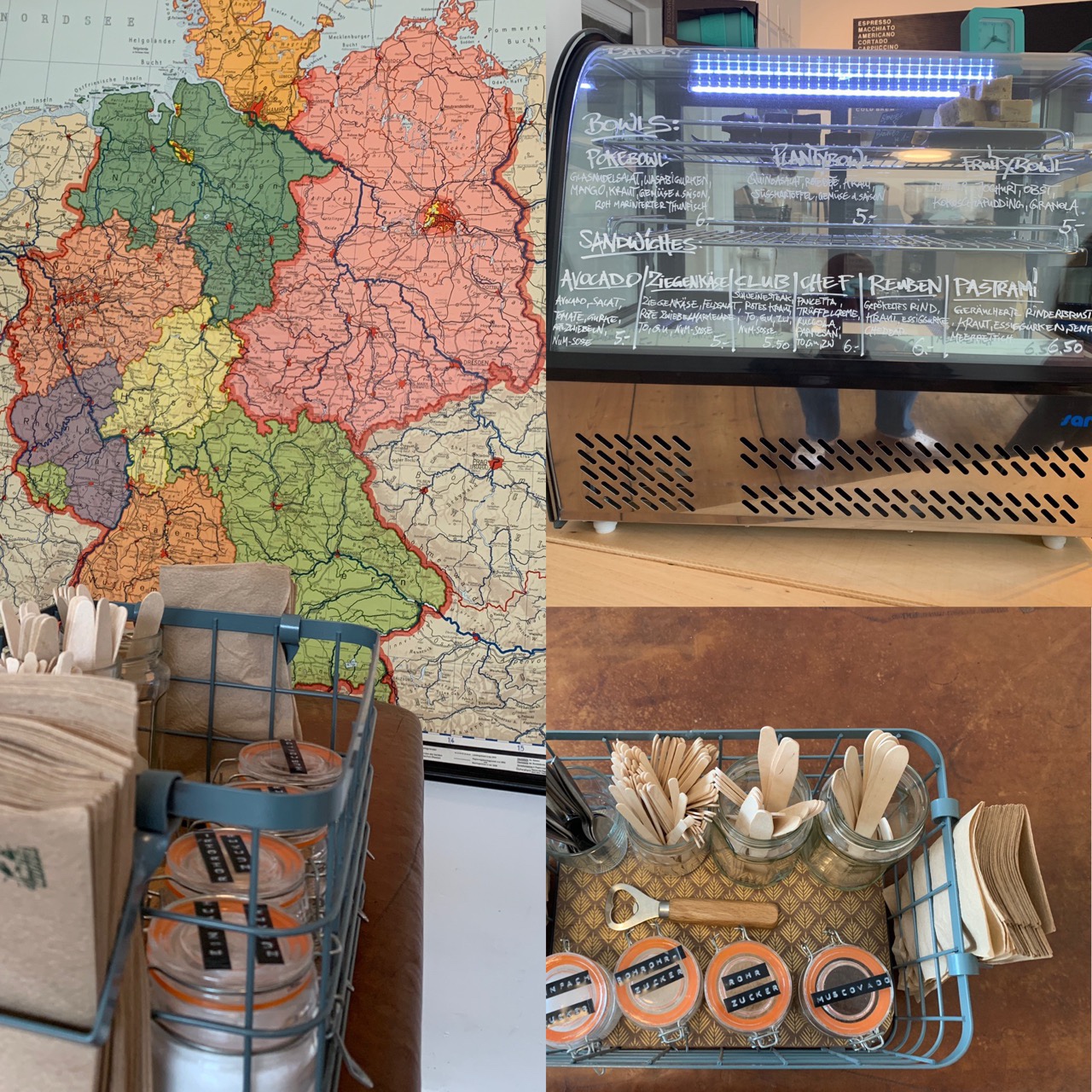
Links Poke-Bowl, rechts Planty-Bowl. Eine nette Empfehlung von Brigitte. Und jetzt auch von mir.

0e34e03e5a4531e050f2dff771a03c10

Das Essen wird frisch zubereitet und mitgenommen. Ein paar Stehplätze um einen Turnkasten gibt's auch. Eigenen Kaffeebecher mitbringen wird belohnt. Ungewöhnliche Öffnungszeiten: Mo-Fr 9-18 Uhr. Am besten zu Fuß gehen. Parken schwierig bis unmöglich.

ec9fc843b06f9ac242e76abe8deac828

Die Scheffin sagt: "Das war eine Superidee. Das hat mir ganz gut geschmeckt."

More >

31 May 05:16

Sneak peek at Pixelmator Pro 1.4

by admin

Today, we want to share an early look at the next major Pixelmator Pro update. We’ve been working on it over the past 6 months and it’s one of the craziest, most awesome things we’ve ever done. Here goes.

So, what is it? It’s a Pixelmator Pro editing extension for the Photos app. But this extension is unlike any other. We’ve put all of Pixelmator Pro — everything — inside Photos. Do you want to nondestructively edit your photos using our incredible photo editing tools? You can do that. Would you like to combine several different images and save your changes, layers and all, to your Photos library? Go for it. If you use iCloud, your changes will sync across your Mac devices. Heck, you can even create designs and slice them up using the Slice tool, exporting optimized images directly from Photos.

Crazy. Powerful. And just plain cool. That’s not the only thing we’ll be adding in Pixelmator Pro 1.4 but this was simply too awesome not to share. The release date is penciled in for the end of next month. We hope you’re as excited as we are!

In other news, we’ve also just launched a Pixelmator Pro upgrade bundle on the Mac App Store. Bundles are a relatively new addition to the App Store on macOS and we’re taking advantage of them to give a discount to existing Pixelmator users wishing to upgrade to Pixelmator Pro. Visit the Mac App Store to check out the new bundle.

P.S. If you’d like to stay up to do date with Pixelmator Pro news and happenings, now’s a great time to sign up for our newsletter.

31 May 05:16

Well Played: Imagined Homeland

by Vicky Osterweil

Well Played is a monthly column about video games and how they both reflect and shape capitalism’s development. What role do they play in reproducing society, transforming ideology, and sustaining capital’s pool of labor? The answers suggested here are meant as openings for debate rather than comprehensive, conclusive statements; exceptions to some claims may be obvious, but these don’t nullify the general trends, which must be met with social resistance. This series is offered as a contribution to a map of the territory for those who would join that conflict.


Fascism is on the rise around the world. This is visible in the electoral victories and soft coups of far-right politicians (Trump in the U.S., Modi in India, Erdogan in Turkey, Abe in Japan, Orbán in Hungary, Bolsonaro in Brazil, Duterte in the Philippines, the Brexiteers), and in the growth of fascist street movements, in the U.S. Latin America and Eastern Europe while far right ethnic and religious violence spreads across East Asia and North Africa. It also can be seen in the increasing authoritarianism and repressive violence in China, France, or Haiti, where it has been deployed to put down increasingly vibrant workers’ and social movements, and in Israel, Mexico, and Australia, where there have been accelerating decades of bloody border enforcement and ramped up settler colonialism.

Fascism emerges in response to the same trends in capitalism that have fatally weakened liberalism and are portending world-ending destruction: globalization, weakened nation-states, and the unwinding of Western economic hegemony; financialization; middle-class collapse; the unfolding eco-apocalypse. In response, revolutionary possibilities have already emerged, from 2011’s Arab Spring to the Ghezi Park uprisings in Turkey, from Occupy to Black Lives Matter, from London 2011 to Occupy Nigeria to the Mexican gasolinazo riots of 2017, from the Chinese workers’ struggle to ongoing uprisings in Sudan, Haiti, France, and Algeria.

Ignoring and misunderstanding Gamergate let many in the media be “shocked” by the rise of the alt-right. The misrecognition is by design

But fascists analyze these unsustainable conditions of capitalism differently, not as contradictions in its logic of accumulation and exploitation but as crises of immigration, racial impurity, effeminacy, degeneracy, and immorality that can be addressed by narrowing the definition of citizenship and violently dispossessing those excluded — beyond the extent to which this already occurs. Turn the world into a white-male bunker through genocide and war and maybe capitalism can survive the disasters that are at its door.

Most people are revolted by this program when it is stated baldly (even when they are otherwise sympathetic in practice). So until it achieves the sort of cultural centrality where conformity and coercion can kick in, it tends to find niches where it can establish itself without directly proclaiming its lust for blood and death. For the past decade, fascism has been expressing itself in the U.S. not through the sorts of overt things one might expect from World War II movies (though there is some outright Nazi fetishism on the fringes), so much as through video games and video game subculture.

In the context of such bleak, broad global political trends, it’s hard to consider gaming communities worthy of much attention. But these communities have established themselves as quasi safe spaces in which fascist ideology can hide in plain sight as it spreads. When the Christchurch mosque shooter said “Subscribe to PewDiePie” on the livestream of his murder spree — a reference to Felix Kjellberg, YouTube’s most successful let’s-play streamer and thus perhaps the world’s most famous gamer — Kjellberg disavowed the connection, moving quickly to shut down his Twitter page (which revealed he followed a who’s who of alt-light and crypto-fash red-pillers) and trying to hide behind the fact that “it was just a meme.”

Never mind that Kjellberg himself has repeatedly gotten in trouble for racist and anti-Semitic statements. Many in games journalism and the mainstream press still argued that we should read the Christchurch shooter’s references as ironic or misleading, as a series of “rabbit hole” traps that would send people down the wrong paths, chasing shadows. But to suggest that the killer was a master of deception and irony and that everything he referenced is just a smokescreen is doing the work of the fascists for them. Fascists have been claiming their hatred and resentment is merely “ironic” at least since Mussolini took over Italy with the slogan “me ne frego” (“I don’t give a damn”).

The shooter’s reference to a gamer was not an accident or ironic trick, any more than Gamergate’s producing fascist Breitbarter Milo Yiannopoulos was a coincidence. It instead reflects a social milieu, a pattern of consumption and entertainment from which support for genocidal fascist ultraviolence is systematically emerging. As I noted in a previous column, the young fascists of the alt-right met each other and sharpened their knives and their rhetorical techniques through Gamergate’s coordinated harassment campaign against women, queer, and nonwhite people. Journalists tended to cover this harassment on the harassers’ terms, performing mealy-mouthed both-sidesism and thus overlooking the real damage and danger: how the larger project of nascent fascist organization was being served through the publicized and implicitly sanctioned harassment of communities framed as marginal or expendable. Ignoring and misunderstanding Gamergate let many in the media be “shocked” by the rise of the alt-right two years later.

The misrecognition is by design: Gamergate agitators meant for their actions to be misconstrued by liberal commentators, garnering attention for the fascist ideology underlying them while fascism itself remained unnamed — sometimes even to its advocates — reconfigured instead as merely another side of the story. After its historical (but partial) defeat in the 1940s, open fascism of this sort cannot goose-step directly onto the world stage again. Before it can proclaim itself openly, while it is not yet a matter of belonging to an openly fascist party or a uniformed goon squad and is merely on the ascendant, it must find “local” spaces that afford it plausible disavowal, where it can incubate its ideology and accrue followers. In the 1980s and ’90s, punk and metal subcultures played this role, but punks organized and largely drove them out of their scenes. In the past decade, gaming (and tech more broadly) has become that space in the U.S. The fascist threat from creeps like Yiannopoulos and PewDiePie is serious and has an increasing body count. Anyone with media power in the gaming world who gave Gamergaters public support or credibility has blood on their hands.


Games make sense as a starting place for fascist mobilization because they are one of capitalism’s consolation prizes for the larger turmoil it has generated in the economy and the nation-state. The petty-bourgeois and middle classes — who do better under capitalism than most but still lack autonomy and power — have privileged access to games because of the relative wealth of money and time provided to them. Games allow them to see themselves as winners through literal competition. They are a place where “victory” can be staged and practiced and meaning and self-worth can be experienced within an otherwise rigged economic system.

Open fascism must find “local” spaces that afford it plausible disavowal

In this way, gaming’s role in current fascist mobilizations is little different from the role of sports, film, or propaganda in the 1920s and ’30s, when the spectacle of national victory on the global athletic stage — the Olympics were restarted at the beginning of the 20th century by radical right-nationalists — or of mass rallies like those designed by Albert Speer and Leni Riefenstahl compensated for systemic inequities and mundane everyday humiliations. Practicing victory over ultimately arbitrary enemies — e.g., opposing sports teams — also prepares one psychically for the pleasure of the production and destruction of racialized scapegoats. And like the Italian fascist fetishization of race cars, machine guns, and airplanes, or the Nazi adoration of popular media’s propagandistic potential, video games are at the cutting edge of modern technologies, pleasurably deploying the enormous power of global industrial and technical production for a mass audience.

While liberatory and marginalized projects have continued to flourish in the video game space, you wouldn’t get that impression from the way it is typically described. The industry still sees its typical “gamer” customer as an aggrieved, anti-PC white boy: This is demonstrated by how companies respond to criticism (e.g. two feminist ArenaNet developers were fired after online complaints about being rude on Twitter to someone who tried to mansplain video-game production to one of them), by how journalists cover it (industry press paid as much attention to the reactionary anger over game developer Riot hosting a women and gender-nonconforming-only panel at an industry conference as to the reports of sexual harassment at the company that necessitated the panel in the first place and sparked a recent employee walkout), and by the character of its celebrities (known misogynist racists like Thorin and GrandGrant remain prominent in the e-sports scene).

As I argued in this previous column, the actual fascists in gaming hope to keep that impression current and dominant: This conception of who “belongs” in games circles helps maintain gaming as a space of security and psychological comfort for them while driving out marginalized people from careers in the industry — the first step toward driving them out of jobs altogether and the country they’ve “stolen.” The territory of gaming is a metonym for the homeland: Defending it is like defending the status quo, and the processes of appropriation that renews the cultural terrain for profit and for consolation. Driving SJWs and queers out of video games so that you can enjoy them as the reparative safe space you’ve long experienced them as is good practice for driving them out of your country altogether. At the same time, the long history of white male corporate leadership in the industry and its conventions of gendered marketing have made it easy to drive out those trying to subvert games (and thereby cultural reproduction more generally).

Driving SJWs and queers out of video games so that you can enjoy them as the reparative safe space is good practice for driving them out of your country

Gaming is a crucial part of contemporary culture: If the truly dedicated fascists could be rooted out of gaming communities, it would be a huge blow to the current wave of far-right organizing. Yet Twitter, YouTube, Discord, Twitch, and the other gaming-related platforms where fascists thrive have been infamously slow to respond to this threat. It is not only because people like Jack Dorsey, Twitter’s CEO, appear to have fascist sympathies, although that’s certainly a part of it. It also has to do with the structuring of attention, desire, and revenue that shapes these services. As a series of exposés have uncovered about YouTube, its attention metrics and algorithms not only allow fascist content but facilitate it. This is often justified by the tech company’s equivalent of the journalist’s both-sidesism, or the same appeal to free speech absolutism that fascists have made so often in the past few years to explain their hate rallies. One finds it hard to imagine libertarian tech bros defending almost any other government statute limiting their power over their own platforms.

But antifascist activists have shown how these fascist redoubts can be taken back and how the fascists themselves can be disempowered and relegated to relative obscurity. After his online success with Gamergate, Yiannopoulos took his fash act to meat space and went on a Breitbart-funded tour of U.S. campuses, with the aim of spreading Islamophobia and transphobia and increasing the visibility and apparent legitimacy of campus far-right organizing. But on February 1, 2017, at the University of California, Berkeley, antifascist crowds rioted, breaking windows and burning college property, forcing the cancellation of his speaking engagement and putting his tour (and ultimately his career) into a death spiral. Liberal pundits, showing how little it takes to turn them into fascist sympathizers, spent months condemning the evening’s actions, but anti-fascists kept showing up to shut him down, and, despite liberals’ years of practice in backstabbing activists, they failed to snatch defeat from the jaws of victory.

As nerd culture generally and video games specifically become normal, central parts of modern American culture, fascists hope to normalize their politics along with it. But the mainstreaming of video games must not be allowed to become the mainstreaming of fascism, even if some aspects of gaming’s compensations (its catering to fantasies of supremacy and mastery, its glorifying of competition, its heroic narratives, and its reliance on globalized capitalist infrastructures) are seemingly attuned to the needs of a fascist movement. Struggle within gaming cultures — through organizing workers to take control of the industry and organizing fans to drive fascists out of community spaces — can go hand in hand with broader struggles for a better world.

The defeat of Yiannopoulos shows that fascism’s apparent spread into the general body politic does not mean that the fight against it is lost. Fascism wins over liberals through narratives of its inevitability, but there is nothing inevitable about it. Antifascist organizing can work, and it can work in gaming spaces too; it is a crucial part of the response to the various capitalist crises we face.

31 May 05:16

We’re Helping Times Photojournalists Deliver Images to the World Faster

by Jimmy Chion

A mobile 5G-enabled system could allow us to send raw, high-resolution photos from a camera to the cloud nearly instantaneously.

Continue reading on Times Open »

31 May 05:13

Apple's Billion Users

by Neil Cybart

Apple’s ecosystem is massive. Approximately a billion people are using more than 1.4 billion Apple devices. Even as iPhone sales decline, Apple is bringing tens of millions of new people into its ecosystem each year. However, we are getting to a point where it is prudent to begin thinking about what user growth actually means to Apple.

Number of Users

Estimating the total number of Apple users is a relatively straightforward exercise. This past January, Apple disclosed that there were more than 900 million iPhones in the wild. Given that iPhones are not typically shared, Apple’s disclosure implied that there were approximately 900 million people using iPhones. Since the exact number of iPhones in the wild likely now exceeds 925 million, there is some wiggle room in that 900 million user total for the rare instances of people using more than one iPhone.

Apple also disclosed that there were 1.4 billion active devices in the installed base as of January 2019. The total was up by 100 million devices over the preceding 12 months and up by 400 million devices over the preceding three years. This tells us that there are 500 million Apple devices being used that aren’t iPhones. A majority of those 500 million devices are iPads. The Mac represents another 110 million devices, and a collection of wearables and home accessories make up the remaining devices. Given my Mac and iPad installed base estimates, a conservative estimate is that there are at least 100 million people who use either an iPad or Mac but not an iPhone. Adding these 100 million users to the 900 million people with iPhones leads to a billion Apple users.

A billion users is quite the accomplishment for Apple considering how the company does not give away or subsidize hardware. For context, Amazon has approximately 100 million Prime users. Twitter sells a “free” product and has 125 million daily users. A “free” Google service is widely considered a success once it surpasses a billion users. WeChat recently surpassed a billion daily users. Facebook sells a “free” product and has 1.6 billion daily users.

Revenue Per User

Using Apple’s current revenue run rate and my estimate for the total number of users, the company earns on average $258 from every user per year. There are limitations found with relying on averages. Apple’s ecosystem strength is dependent on geography. In addition, other factors like the gray market distort averages. Accordingly, it makes sense to segment Apple’s user base to gain additional insight into revenue per user figures.

There are approximately 200 million Apple users who have never purchased a new product from Apple or a retailer. Instead, these users rely on Apple products acquired or obtained via the gray market. The overall contribution to Apple’s revenue from these users is likely not too great - a few dollars per month, if that.

On the other end of the spectrum, the U.S. represents Apple’s stronghold when it comes to ecosystem strength. Add to hardware revenue various subscriptions such as Apple Music, paid iCloud, and various third-party subscriptions through the App Store. It is not unreasonable to assume that approximately 50 million to 75 million users spend an average $500 per year on Apple products and services. There are then other pockets of “core” Apple users in various countries including China, Japan, the U.K., and Australia.

Based on Apple’s installed base disclosure, we know there are at least 400 million Apple users who use only one Apple device: an iPhone. The actual number could be much higher. Given an iPhone upgrade cycle of four years and an iPhone ASP of approximately $750, this tells us that at least 400 million people are likely spending somewhere around $200 per year.

Accordingly, Apple’s billion users can be broken into the following groupings:

  • 200 million people spending an average of $25 per year (people in the gray market).

  • 620 million people spending an average $260 per year (includes 400M iPhone-only users upgrading every four years).

  • 180 million people spending an average $500 per year (Apple’s core users in the U.S. and a handful of other countries buying a number of Apple products and paying for various services and subscriptions).

Growth Driver

The iPhone has been Apple’s primary vehicle for bringing people into the ecosystem. No other Apple product has come close to the iPhone in this respect. Exhibit 1 includes my estimates for the number of users purchasing their first new iPhone directly from Apple or a third-party retailer. This serves as a rough proxy for the number of people entering Apple’s ecosystem.

Exhibit 1: Number of Users Buying Their First New iPhone

Above Avalon Number of Users Buying Their First New iPhone

More information and discussion behind how I derived the preceding estimates is available here.

Based on recent iPhone sales trends, there is evidence of fewer users buying their first new iPhone. For example, my expectation is for 52 million people to buy their first new iPhone in 2019. This total is 60% less than the peak number seen in 2016.

After the iPhone, the iPad has been the second-largest driver bringing new users into the Apple ecosystem. However, given that the iPad installed base is a third of the size of the iPhone installed base, the new user totals just don’t compare to those of iPhone.

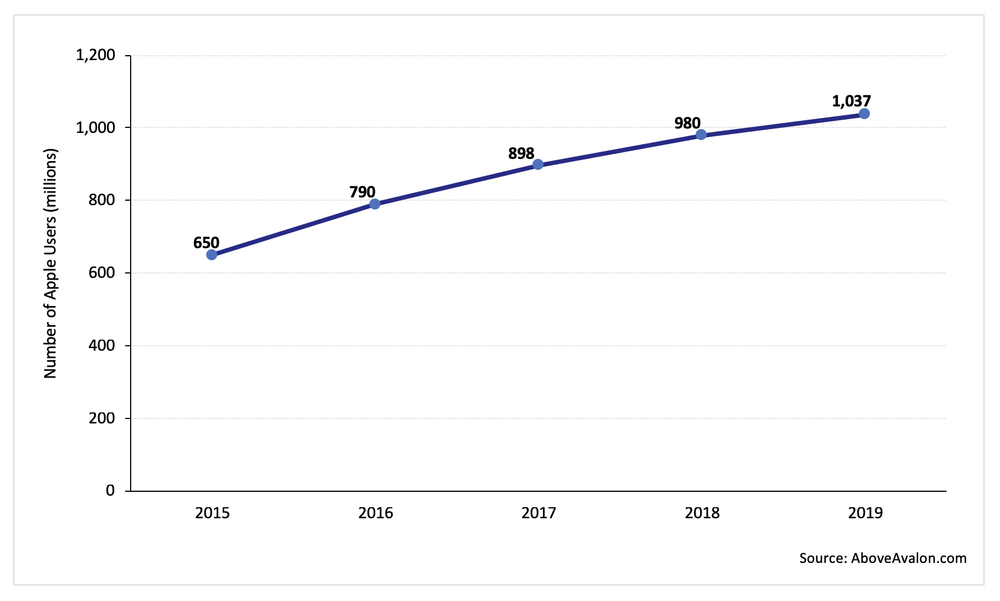
Putting all of the pieces together, Exhibit 2 includes my estimates for how Apple’s overall ecosystem has grown in terms of the number of users.

Exhibit 2: Number of Apple Users

Above Avalon Number of Apple Users

Slowing New User Growth

There is no question that Apple’s user growth is slowing. Much of this is due to Apple running out of premium smartphone users in key markets like China and India.

Some people are convinced slowing user growth represents a warning sign for Apple. The concern is that Apple will once again look to milk existing users with higher-priced products and services in an effort to offset slowing hardware sales. Much of this fear is based on how lack of new user growth nearly killed Apple in the 1990s. Instead of focusing on new user growth, Apple milked existing Mac users for as much money as possible. The end result was a complicated product line that lacked focus and vision.

In my view, this is an incorrect way of thinking about today’s situation.

Much has changed with Apple over the past 25 years. During the mid-1990s, Apple’s user base was a fraction of the size of today’s user base. Apple had around 25 million users in the mid-1990s. Simply put, Apple’s user base wasn’t large enough to reach sustainability. Instead of focusing on bringing in new users, Apple took the easy route and simply kept selling to existing users. Today, Apple has 40 times the number of users and is bringing in 25 million new users roughly every six months. Apple’s billion users comprise a self-sufficient ecosystem. The company is in a strong position to sell additional devices and services to these billion users without jeopardizing the long-term health of the ecosystem.

New User Plateau

While new user growth is slowing, it’s not a given that Apple will reach some type of user plateau. As Apple continues to move into more personal devices such as wearables, the company’s addressable market will expand, especially in emerging markets. In countries like India and Brazil, products like iPhones, iPads, and Macs may not be the best tools for bringing new users into the ecosystem. Instead, lower-priced wearables may eventually open the doors to tens, if not hundreds, of millions of new Apple users in markets that up to now have been largely out of reach.

Opportunity

Apple is a design company tasked with developing tools capable of improving people’s lives. Such a mission plays a critical role when figuring out how best to judge Apple.

Apple doesn’t think about financial items such as revenue or profit margins when developing products. The same principle applies to new user growth. Jony Ive and the industrial design group don’t sit around a table and come up with products for the purpose of bringing new users into the ecosystem or increasing revenue per user. Such motivation would have manifested itself in a less focused product line over time.

However, Apple does consider and think about how new products may fit within the existing product line. For example, Apple Watch was launched out of the gate as an iPhone accessory. A pair of smart glasses will likely be similarly positioned as an accessory out of the gate as well. These considerations are part of Apple’s long-standing goal of making technology more personal and having new products serve as simpler alternatives to existing products.

The implication found with this product strategy is that one of Apple’s key opportunities going forward is found with developing and then selling new tools to existing Apple users. A feedback loop can then be created as new tools and services drive higher user loyalty and engagement and subsequently even higher tools and services adoption. This will likely manifest itself in higher revenue per user over time as Apple users rely on additional Apple tools in their lives. As Jony has said in the past, financial items like revenue and profit end up being byproducts of a successful product strategy.

This brings us back to the Apple revenue per user calculations from up above.

  • 200 million people spending an average of $25 per year (people in the gray market).

  • 620 million people spending an average $260 per year (includes 400M iPhone-only users upgrading every four years).

  • 180 million people spending an average $500 per year (Apple’s core users in the U.S. and a handful of other countries buying a number of Apple products and paying for various services and subscriptions).

With wearables, Apple is in a good position to drive a portion of the 400 million users who likely only have an iPhone to begin using another Apple device. One way of measuring this opportunity is that if 200 million people spend more like $350 per year versus $260 per year, Apple could see an additional $18 billion of revenue per year. Another opportunity is found with the 200 million users who are part of the Apple ecosystem via the gray market. Assuming Apple can sell additional tools to a portion of those users, Apple would see something in the neighborhood of $12 billion of additional revenue per year (100 million people spend more like $150 per year versus just $25 per year). These are huge numbers that speak to how much room the company has for existing Apple users to become more engaged with the ecosystem. In the mid-1990s Apple simply tried to milk its limited number of users of more money. Apple is now engaged in expanding its users’ tool arsenal while continuing to add new users to the ecosystem.

While Apple will continue to face various risks when it comes to maintaining user loyalty and engagement, especially when it comes to factors outside of its control like economic and geopolitical developments, the big picture is that Apple’s billion users is a game changer. The company has reached a level of ecosystem strength that still hasn’t been fully digested by the marketplace.

Receive my analysis and perspective on Apple throughout the week via exclusive daily updates (2-3 stories per day, 10-12 stories per week). Available to Above Avalon members. To sign up and for more information on membership, visit the membership page.

31 May 05:11

Microsoft details modern operating system that sounds like ChromeOS

by Brad Bennett
Rolandt

jj

Aqua coloured windows arc mouse, surface pen and surface type cover

Microsoft is hinting at a new operating system for future devices that promises to be always connected, secure, lightweight and more.

In a blog post rounding up some of the more exciting announcements from Computex 2019, Microsoft shared a forward-looking blurb that explains its goals for this “modern OS.”

Throughout the post, the company outlined eight points that it thinks a modern operating system needs.

  1. Seamless updates
  2. Secure by default
  3. Always connected
  4. Sustained performance
  5. Cloud-connected
  6. AI
  7. Multi-sense
  8. Forum factor agility

A lot of these points, like seamless updates and cloud-connected, are very reminiscent of Google’s ChromeOS, which is the latest desktop class OS we’ve got in a long time.

Microsoft has been updating and innovating its Windows operating system for years, but it seems like the company might be trying to leave its legacy OS behind as we move into the future.

The blog post makes a lot of promises — and some of them likely won’t come true — but it would be super exciting for Microsoft to make a new OS that can run on a variety of devices like phones, tablets, PCs and more.

Source: Microsoft

The post Microsoft details modern operating system that sounds like ChromeOS appeared first on MobileSyrup.

31 May 05:10

Samsung rolls out new patch to fix issues caused by recent S10 update

by Dean Daley
Galaxy S10

Samsung has pulled a firmware update after it reportedly caused issues for Samsung Galaxy S10 owners.

Recently, Samsung rolled out a firmware update for the S10 that featured improvements to the camera’s night mode, as well as other fixes.

However, some users experienced problems after updating their devices, such as battery drainage, apps restarting and freezing.

Now, the update is no longer available on devices, according to SamMobile.

Additionally, SamMobile spotted a new update in Switzerland with a new XXU1ASE6 patch. It seems that Samsung is first rolling out this patch to users in Europe before sending it to other regions.

As of now, it’s unclear if the update fixed all of the previous issues, however.

Let us know in the comments below if you experienced these concerns and if you have the new update.

Source: SamMobile

The post Samsung rolls out new patch to fix issues caused by recent S10 update appeared first on MobileSyrup.

31 May 05:10

Bose’s new noise cancelling headphones pack AR, a new mic and more

by Brad Bennett

Bose has unveiled a new pair of over-ear noise cancelling headphones called the Bose Noise Cancelling Headphones 700.

The headphones are up for pre-orders in Canada and cost $499.99. They’re set to start shipping on June 30th.

Bose has packed a number of improvements into the new earphones including what the company is calling an unrivalled four-microphone system that can pick up the users voice in noisy rooms.

The mic upgrade is actually really necessary in these headphones since they’re able to connect to Google Assistant or Amazon’s Alexa voice assistant.

There are 11 levels of noise cancelling in the headphones and you can go through them by tapping on a button on the left earcup. There are touch inputs on the right ear, but they’re for volume and play/pause controls.

The most intriguing aspect of the new headphones is something the company calls Bose AR.

This feature has been in a few Bose products before and it partners with apps and services on your phone to help you navigate the real world. For example, if you use an app called GolfShot the AR functionality will guide you like a virtual caddy.

Other highlights include a 20-hour battery life, fold flat to store in a tapered hard case and you can use Alexa without tapping a button by just saying, “Alexa.”

Source: Bose, 1

The post Bose’s new noise cancelling headphones pack AR, a new mic and more appeared first on MobileSyrup.

31 May 05:09

This dock turns your phone into a full-blown desktop

by Bradly Shankar
Plugable dock

Redmond, Washington-based tech accessory maker Plugable has launched the Phone Cube, a mini docking station that turns Samsung DeX-capable mobile phones into fully functioning desktops.

To start, users will have to connect their Samsung phones via USB-C to the dock, as well as desktop accessories like a keyboard and mouse and widescreen monitor. The mini dock can then provide the phone with rapid charge functionality while also supporting wired Gigabit Ethernet.

The Cube’s setup can be customized for different output configurations, such as the phone screen receiving text messages and the desktop monitor supporting document viewing. Further, because the phone connects via USB-C, this means that you’ll be able to make phone calls still while it’s attached. Plugable also supports apps such as Microsoft Office Mobile, Skype, Adobe Sketch and G Suite & Google Drive.

In terms of supported phones, you’ll need a Galaxy S10/S10+/S10e, Note9, S9/S9+, Note8, or S8/S8+. The versatile dock brings the productivity of a large, extended monitor to your phone.

“We aim to make your desktop setup simple, mobile, affordable and productive so you can effectively work from the office, home or on the road, and the Phone Dock does this by transforming your phone into a PC in your pocket,” said Bernie Thompson, founder of Plugable, in a press statement. “The dock is ideal for Samsung phone owners now, and will work with even more Android devices when Android Q rolls out this year.”

The Plugable Phone Cube is available on Amazon.ca for $109.95.

The post This dock turns your phone into a full-blown desktop appeared first on MobileSyrup.

31 May 05:09

Google now requires Play Store apps to declare target audience

by Aisha Malik
Google Play Store

Google is taking steps towards making the Play Store more family-friendly by requiring apps to explicitly state their intended audience.

If an app developer says that its app is intended for children, Google will follow-up with more questions to ensure it actually is family-friendly.

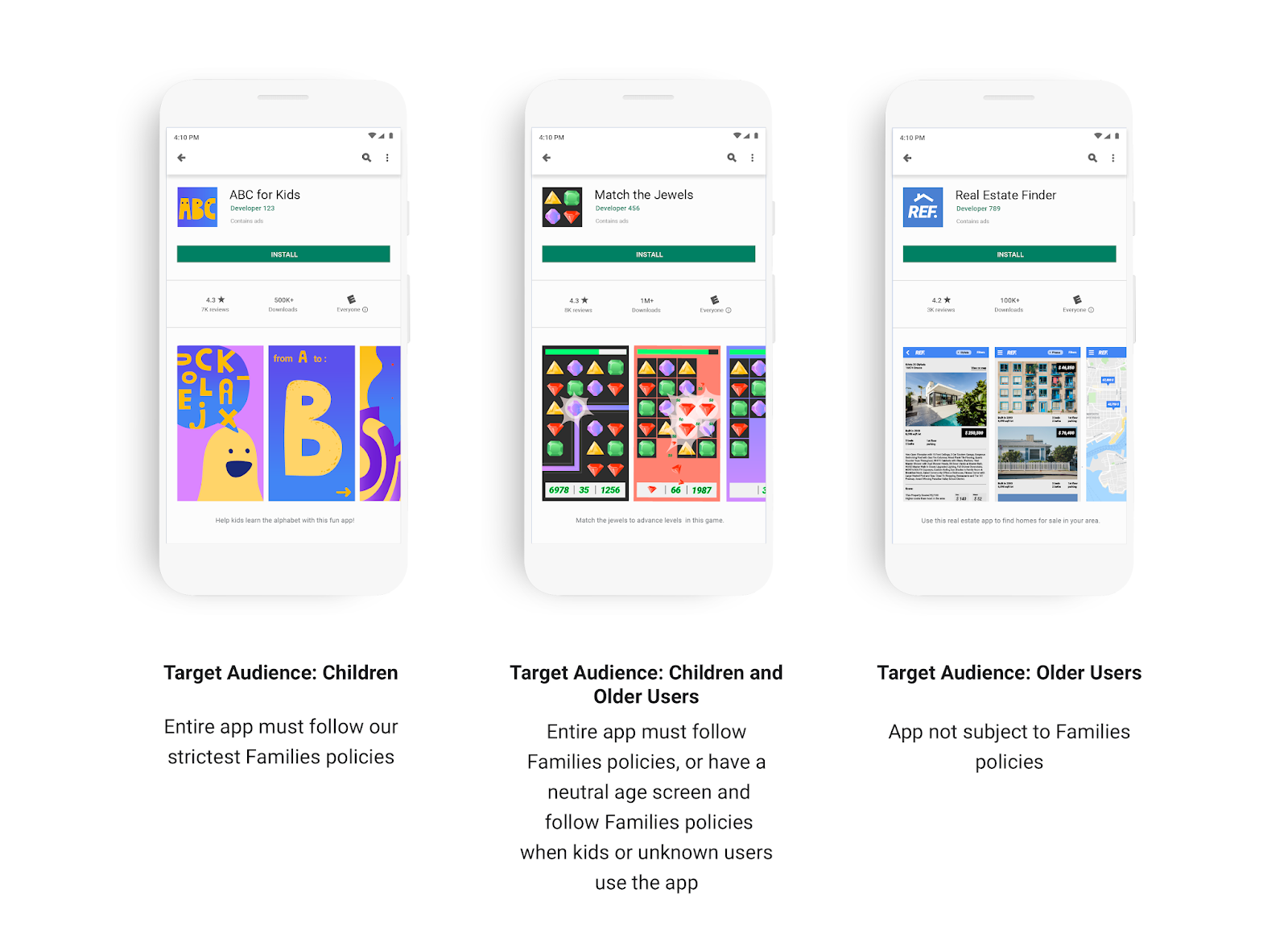
There are three categories for the intended audience: children, children and older users and older users. There will be different policies for each group that the apps must comply with.

Ads that are visible in apps directed towards children must be appropriate and from a source that has certified compliance with Google’s family policies.

Google has also said that if an app is not directed towards children, it should not look appealing to them. The company said it will double-check the apps and notify the developer if they need to make any changes.

The target audience section is currently available, and all new apps need to comply with the updated policy. Google has said that all existing apps have until September 1st to fill out the target audience section.

This update is part of Google’s new aim to make the Play Store safer for children.

Source: Google 

The post Google now requires Play Store apps to declare target audience appeared first on MobileSyrup.

31 May 05:09

Rogers vice-chair warns Canada of Huawei, Innovation Minister won’t speculate on delay in 5G rollout

by Shruti Shekar
Huawei

Rogers’ vice-chairman is warning Canada from letting Huawei be involved in the 5G rollout.

“Huawei is cheaper and quite sophisticated. But the fact is, they’re very, very close to the Chinese government. So for anyone to argue that they wouldn’t be compromised if the government said, ‘do this’ – they’d do it. They have to do it. They’re in that country,” Phil Lind said in an interview with BNN.

“The idea of Huawei controlling – or potentially controlling – our communication system in Canada is crazy. I don’t think they should be allowed to.”

Reports have been made that a decision could come before or after the federal election.

In an interview on May 30th, Innovation, Science and Economic Minister Navdeep Bains said he didn’t want to speculate on what would happen to the competition scene in Canada.

Asked if this will set Canada back in the 5G rollout, he said: “The question is based on the premise that we made a decision and there’s an outcome. We haven’t made a decision and I don’t want to speculate.”

Bains said that he’s continuously talking to the carriers about their needs.

“We are speaking with allies, looking at the telecommunications sector…fundamentally the decision we make is predicated on protecting and making sure Canadians are safe and secure. That ultimately will guide the decision and the timeline,” he said.

Tensions with Huawei began in December when its CFO Meng Wanzhou was arrested in Vancouver. The U.S. has charged Meng, Huawei and subsidiary Skycom with 13 counts of bank and wire fraud. Huawei denies the accusations. Meng is expected to learn more of her extradition in court in September.

In Canada, Bell and Telus have invested and worked with Huawei to roll out its 3G and 4G LTE networks. Neither company has decided on a 5G vendor, though Nokia Canada suggests they should decide by the end of this year if they want to be ready to roll out the technology when the spectrum is available.

Rogers selected Ericsson as its 5G vendor.

Source: BNN

The post Rogers vice-chair warns Canada of Huawei, Innovation Minister won’t speculate on delay in 5G rollout appeared first on MobileSyrup.

31 May 05:08

Here’s what to expect from Apple’s WWDC 2019

by Patrick O'Rourke

Next week thousands of developers will descend on San Jose, California, for Apple’s annual Worldwide Developers Conference (WWDC).

As usual, the event will focus on software, giving us our first glimpse at new versions of Apple’s upcoming operating systems. That said, there’s also a possibility we could finally get the first real look at the elusive update to Apple’s 2017 Mac Pro, a modular, desktop class Mac that’s more powerful than the Mac Mini.

Below is everything we expect to see at this years WWDC:

iOS 13

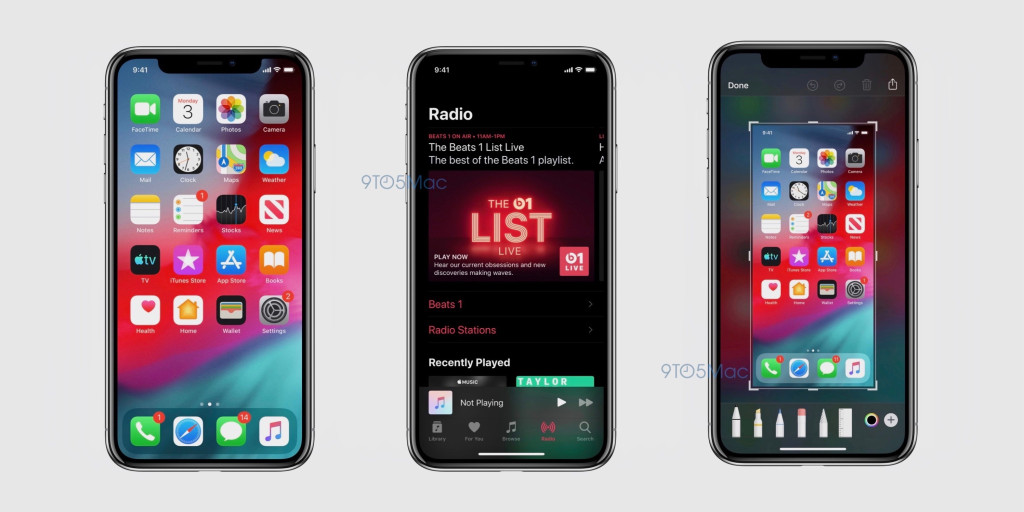
As is typical with WWDC every year, Apple is almost certainly set to reveal iOS 13. Rumours have been swirling regarding what to expect from iOS 13 for the last few months, including an operating system-wide dark mode plus a new sleep mode that mutes incoming notifications and darkens the iPhone’s lock screen.

Apple is expected to revamp the user interface of several apps, including Messages, Maps, Reminders and Health. The ‘Find My iPhone’ and ‘Find My Friends’ apps will also be merged into a new ‘Find My’ app. Similar to iOS 12, it’s expected iOS 13 will emphasize stability and bug fixes rather than flashy new features.

Regarding iOS 13 on the iPad, Apple is rumoured to be adding a feature that allows developers to display multiple windows within a single iPad app, along with a new multitasking feature that allows two windows to be opened simultaneously, side by side.

Stackable windows or ‘cards’ within apps are also rumoured to be coming to the iPad with iOS 13.

watchOS 6

Apple Watch Series 4

Several features are set to come to Apple’s smartwatch platform with watchOS 6. First and probably most notably, rumours indicate that the Apple Watch is getting its own App Store, allowing users to download apps directly from the wearable rather than via the Apple Watch iOS app.

Other new features include a ‘Dose’ app designed for pill reminders and a ‘Cycles’ app for tracking menstrual cycles. Other apps like a dedicated Calculator app (how is that not a stock watchOS app already?), a Voice Memos app and a new app for listening to audiobooks is coming as well.

More complications are coming to Apple Watch Series 4 Watch Faces, including an option for tracking hearing aids battery life, rain data, external noise and even audiobook progress tracking.

macOS 10.15

Surprisingly little is known about macOS 10.15 as it stands now. We’ll likely learn more about Apple’s universal apps Marzipan initiative, which was first shown off with macOS Mojave and iOS 12. Apple’s goal with Marzipan is to make it easy for developers to port iOS apps to macOS.

Apple will also likely reveal new Music, Podcasts and Books apps in macOS 10.15, as well as a completely overhauled TV app in preparation for the launch of Apple TV+ later this fall.

Moreover, the giant is reportedly allowing iPads to act as external displays for Mac devices. We’re also suspecting Screen Time and Siri Shortcuts, two features borrowed from iOS, will materialize in the new OS.

macOS 10.15 will also be the first time 32-bit apps stop working on Apple’s desktop operating system. As a result, some older macOS apps likely won’t be compatible with the latest version of Apple’s desktop operating system.

Everything else

tvOS 13, the operating system that powers the Apple TV, will arrive at WWDC though the update is expected to be minor, similar to tvOS 12.

While it’s a bit of a longshot, rumours also suggest that Apple’s outdated Mac Pro could finally receive an update at WWDC given that the original version was released all the way back in 2017.

The Mac Pro, as its name suggests, is targetted at ‘pro’ Apple customers who want to be able to customize their desktop. Apple has described the Pro in the past as featuring high-end components, adequate cooling and a modular, PC-like design that makes it easy to upgrade. This is unlike the more recent iMac Pro. 

Given WWDC is a developer focused event, Apple could see the conference as an opportunity to reveal the desktop in front of an audience that cares about it. On the other hand, WWDC is typically very software focused.

In that same vein, Apple could also finally reveal its often-rumoured external display. That said, the odds of this are minimal since Apple only recently launched a new 23.7-inch LG UltraFine 4K display.

Image credit: 9to5Mac, (1)

Source: 9to5Mac, (1)

The post Here’s what to expect from Apple’s WWDC 2019 appeared first on MobileSyrup.

31 May 05:08

Samsung’s Note 10 won’t feature a headphone jack or physical volume and power keys: rumour

by Jinqiao Wu
Samsung Store

The next Galaxy flagship may ditch the good-old 3.5mm headphone jack and, surprisingly, give up physical buttons, according to an insider who spoke to Android Police, and a concept render on Twitter.

The latest information reaffirms earlier rumours that the Galaxy Note 10 may undergo those two radical changes.

Android Police says those buttons, such as the power, volume, and even Bixby ones, will be replaced by “capacitive or pressure-sensitive areas” that are “highlighted by some kind of raised ‘bump’ and/or texture along the edge.” We will have to wait and see if Samsung’s implementation is similar to that of the HTC U12+ that has several pressure-sensitive ones. To help out U12+ users, HTC even wrote a guide on how to properly press those non-physical buttons.

But, aside from possibly not having a clicky button to summon Bixby, taking out the headphone jack on the Note 10 will mark the end to Samsung’s philosophy on keeping the connector in range-topping Galaxy models. Its disappearance will undoubtedly anger some dongle haters who clung onto Samsung for the increasingly rare analog feature.

If rumours turn out to be accurate, Samsung will finally jump on the bandwagon of companies that, despite backlashes, went all in for a future of wireless audio solutions and not-yet-universally-compatible USB-C headphones.

Source: Android Police 

The post Samsung’s Note 10 won’t feature a headphone jack or physical volume and power keys: rumour appeared first on MobileSyrup.

31 May 05:07

Waterloo-based North’s Focals AR smart glasses now feature Slack integration

by Patrick O'Rourke
Focals

It seems Waterloo-based North is adding new features to its Focals smart glasses rather quickly.

The latest new functionality to hit the wearable is Slack message integration.

According to a recent tweet from North, Slack messages will now appear on Focals. Users are also able to mark messages as ‘read,’ set a reminder to respond in 20 minutes and respond with pre-created ‘Smart Replies.’

In order to enable the feature on the Focals, navigate to ‘Abilities’ and tap the ‘Slack’ slider. Next, sign into your Slack workspace.

Slack integration is part of Focals new ‘version 1.95’ update. I just got my hands on a pair of Focals and will have more on the Canadian-made notification-focused smart glasses up on MobileSyrup in the coming weeks.

Source: Focals

The post Waterloo-based North’s Focals AR smart glasses now feature Slack integration appeared first on MobileSyrup.

31 May 05:07

B.C. aiming for 10 percent of cars sold by 2025 to be zero emissions

by Brad Bennett

British Columbia passed the Zero-Emission Vehicles Act (ZEVA) yesterday and as a result, 10 percent of all new light-duty cars and trucks sold in the province must be zero emission by 2025.

Beyond this, the province aims for all vehicles in this category sold by 2040 to be emissions-free. 

Reports that the legislation has passed initially came from the CBC.

The province has been pushing for this legislation since November 21st of last year, and then tabled it on April 11th, 2019. Now, on May 29th, 2019, the British Columbia has implemented the legislation.

B.C. has been pushing EV’s harder than most provinces with its own provincial EV rebate for up to $5,000 CAD and up to $6,000 for hydrogen vehicles. 

Speaking of Hydrogen-powered cars, Toyota just announced that the Toyota Mirai hydrogen fuel cell electric vehicle goes on sale at 12 Toyota dealerships in the Vancouver area starting in July.

Source: CBC, Toyota

The post B.C. aiming for 10 percent of cars sold by 2025 to be zero emissions appeared first on MobileSyrup.