Shared posts

25 Jun 06:41

Velo Orange is Hiring!

by noreply@blogger.com (VeloOrange)

Summer is full swing and we have a Customer Service position at Velo Orange we're excited to fill with the right individual.

The position would be full-time and permanent, 9-5 Monday through Friday with opportunities to attend trade shows for qualified and interested persons. Holidays off with an additional 2 weeks of paid vacation and a week of sick leave. We have a 401k with automatic 3% employer contribution on top of what you put in. We also close for the holidays at the end of the year so that we can all spend time with our families or squeeze out one more bike tour for the year (why not both!). Our warehouse and office is located just outside of Historic Downtown Annapolis, MD. This gives us easy access to everything within the DC-Baltimore Metro region, and the East Coast Corridor in general - lots of fun in close proximity.

Main responsibilities for this position include:
  • Resolving phone, email, and walk-in customer inquiries and orders
  • Coordinating with fellow VO staff to achieve goals
  • Processing and updating customer information as needed
  • Communicating with our partner representatives
  • Attending expos, events, and meet-ups
  • Other required tasks
A passion for cycling, knowledge of bicycle mechanics and bicycle parts, and being a generally enthusiastic and positive person is at the top of our list. We're a relaxed, open office environment, but work hard and focus on innovation and progress. We'd like someone who wants to have a voice in what we make, what we do, and we'd expect first-hand demo-ing and reviewing. Competitive salary is based on your qualifications. Experience in the cycling or outdoor industry is a must, and mechanic skills are highly valued.

Interested applicants please send your resume and cover letter to info@velo-orange.com

We look forward to welcoming you to the Velo Orange team!

Official job posting here: https://velo-orange.com/pages/full-time-customer-service-representative
25 Jun 06:38

Liked How news organisations are succeeding wit...

by Ton Zijlstra
Liked How news organisations are succeeding with reader-first digital transformation by Kevin Anderson, Author at Strange Attractor
I think his framing of how to become reader focused also made sense in terms of selling journalism as a process rather than as a product. By looking as journalism as a service to be sold instead of a product, then companies could re-orient around their “impact on the customer”, he said.

Journalism as a service, journalism as a process. And quoting The Guardian on how they diversify revenue streams, as different groups of readers are willing to pay for different things, despite reading the same stories. This ties into what Hossein Derakhshan talks about when he says journalism needs to leave ‘news’ as a format behind.

25 Jun 06:37

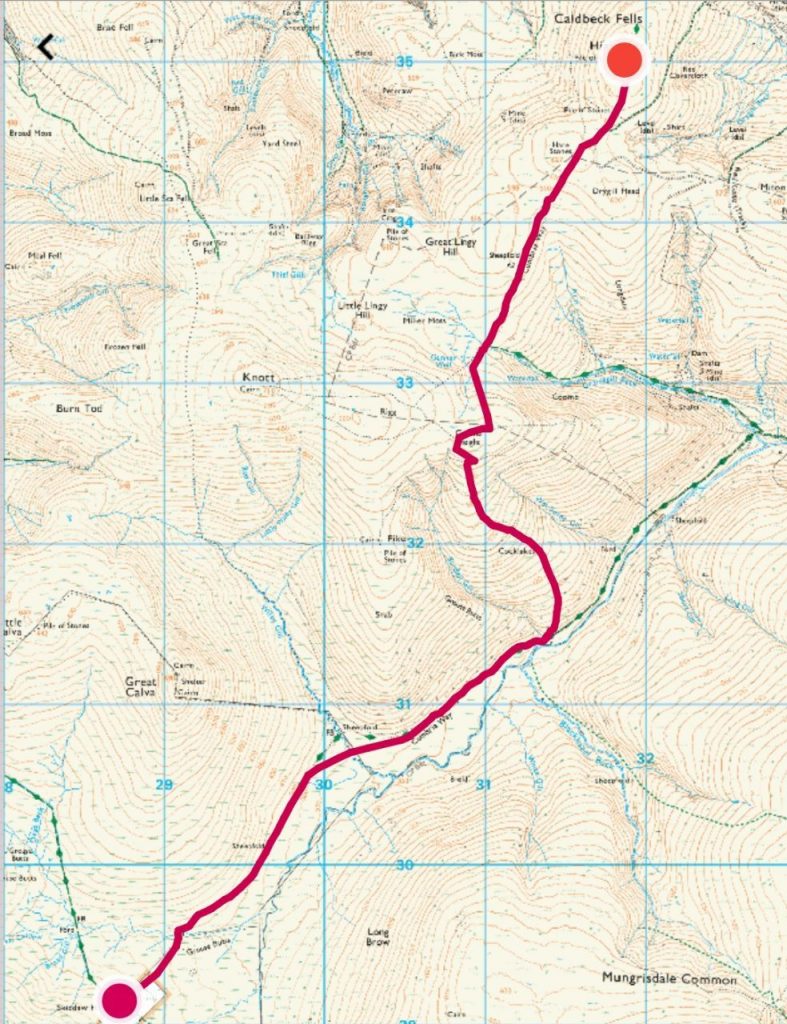
Quality Mountain Days 17 & 18: Skiddaw, Great Calva, High Pike, and Carrock Fell

by Doug Belshaw

Note: I’m near to completing the twenty Quality Mountain Days (QMDs) required to book myself on a a Mountain Leader course.


I’m sitting writing this in our garden in the blazing sunshine. In front of me, my tent, which I only put up again to dry out about 10 minutes ago, is ready to be put away.

A day only counts as a QMD if you do something that takes you out of your comfort zone a bit. So, if you go up the same mountain by the same route a couple of times, it only counts as one QMD. This time, I thought I’d throw some camping into the mix.

I haven’t been camping by myself before, ever. To ease myself in gently, I thought I’d camp outside a hostel, although to add a bit of spice I thought I’d make it Skiddaw House, the highest hostel in Britain.

As a result, I had to carry my tent, sleeping bag, and other equipment I’d need for an overnight stay, to the hostel. I planned my routes accordingly:

  • QMD 17 (planned)
  • QMD 18 (planned)

QMD 17

On the first day, I’d planned to walk up from the public car park next to the Blencathra Field Centre, leave my large rucksack, and then do a circular route around Helvellyn while carrying my smaller rucksack. On the second, I planned to walk to High Pike, come back to Skiddaw House and pack up my tent, and then head back down to the car.

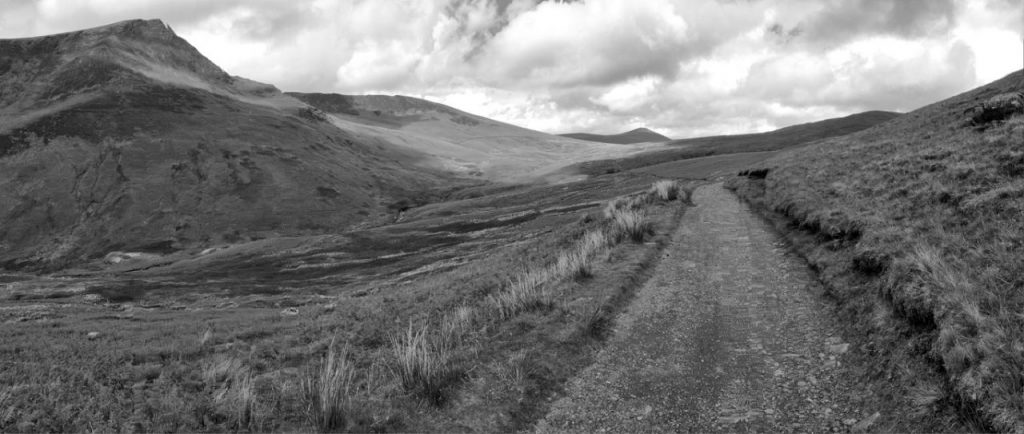
Setting off towards Skiddaw House

Neither went as planned, for a couple of reasons. Firstly, unlike Santa Claus, when I make a list I have a habit of forgetting to check it twice. As a result, I didn’t take my gaiters or walking poles. Second, the routes I’d planned weren’t really long enough.

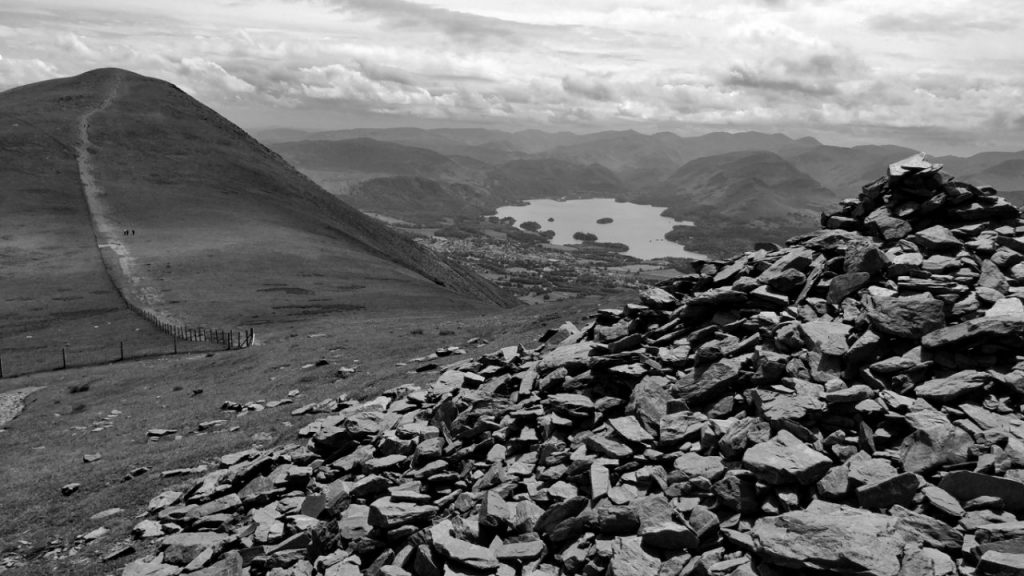
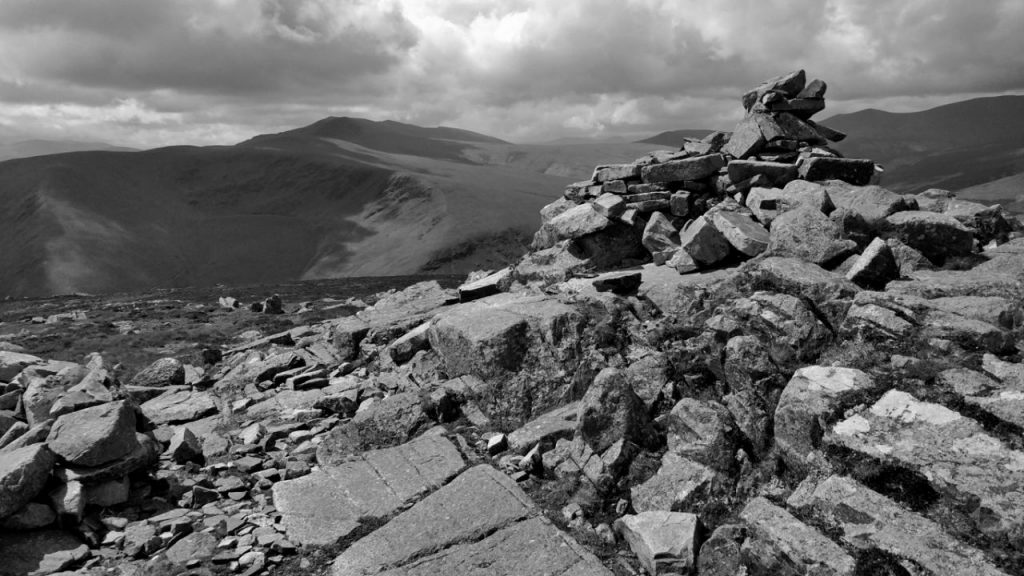
View from near the top of Skiddaw

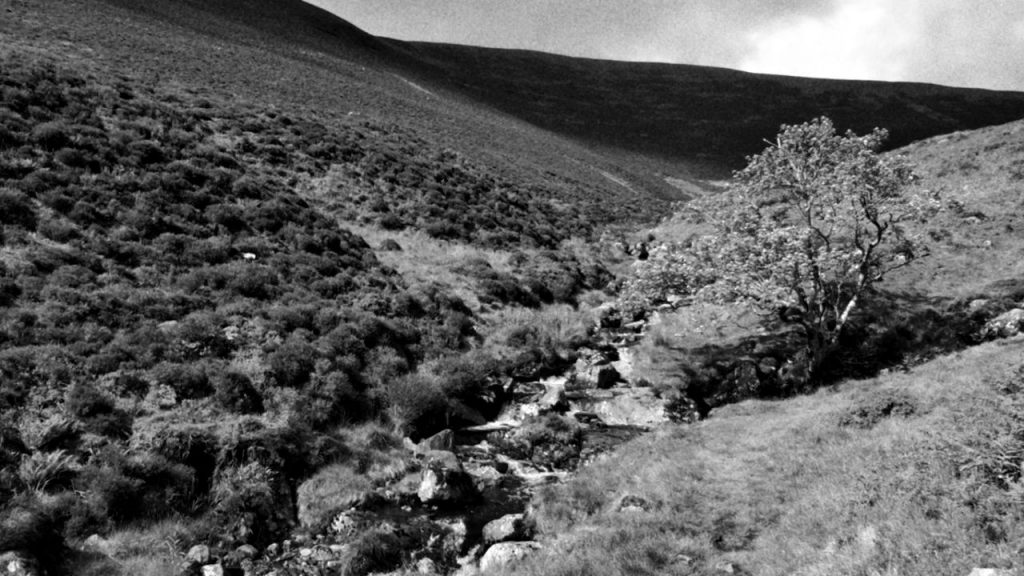
As a result, on the first day, after ascending Sale How and Skiddaw, I amended my route to also head up Little Calva and Great Calva. After a very steep ascent up Dry Gill, a few spots of rain turned into a downpour and, despite putting on my waterproofs, I got absolutely soaking. Trudging down through the heather back to Skiddaw House wasn’t an enjoyable experience.

The rain coming in as I ascended Great Calva

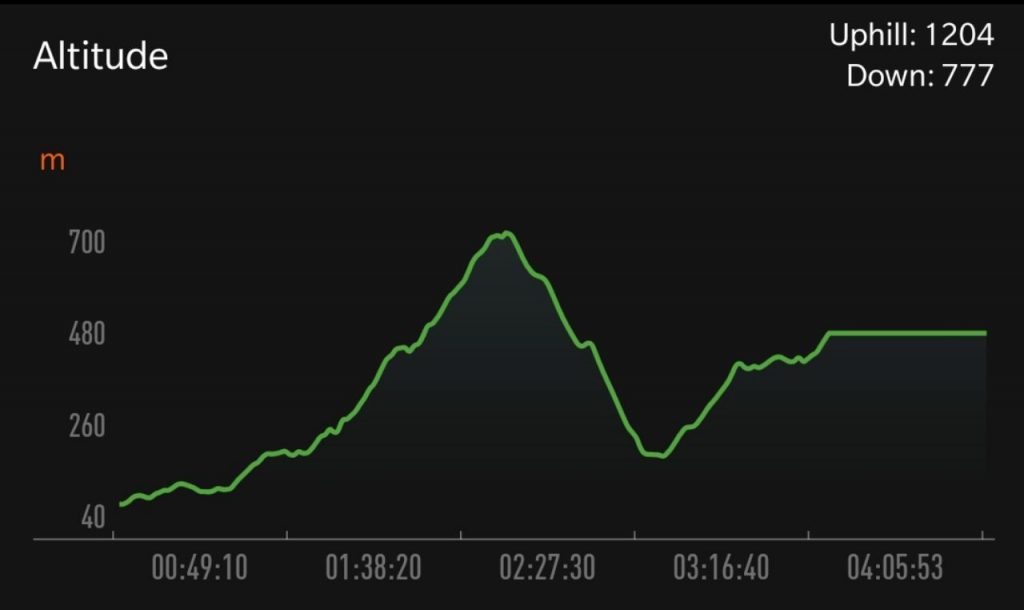
Although I tracked my route using my smartwatch, I kept forgetting to press ‘continue’ after any short rests or breaks. As a result, I’ve only got the first four hours of data for the QMD 17, but I was definitely out for over five hours in total!

Altitude over the first four hours of QMD 17

That night, after pitching my tent on wet ground in the rain, I went inside and spent a very enjoyable evening making dinner, conversing with those staying in the hostel itself, and drinking whisky.

Skiddaw House

When I reluctantly headed out to my tent, it rained until midnight, but according to my stats, I did manage to get some deep sleep in before waking at 05:30.

QMD 18

The next morning, I went into the hostel for breakfast and to get changed. Given how wet my tent was, I left it up to dry out as best it could, made some lunch, and started striding out towards High Pike.

Heading out for QMD 18

My boots gave me some problems on this trip. They’re about 12 years old, and so had many pairs of insoles. Unfortunately, while the most recent gel insoles I’d purchases are comfortable, the bottom of them have lost all stickiness, meaning they roll around my boot. I kept having to stop to sort them out and, indeed, I’ve got a few blisters.

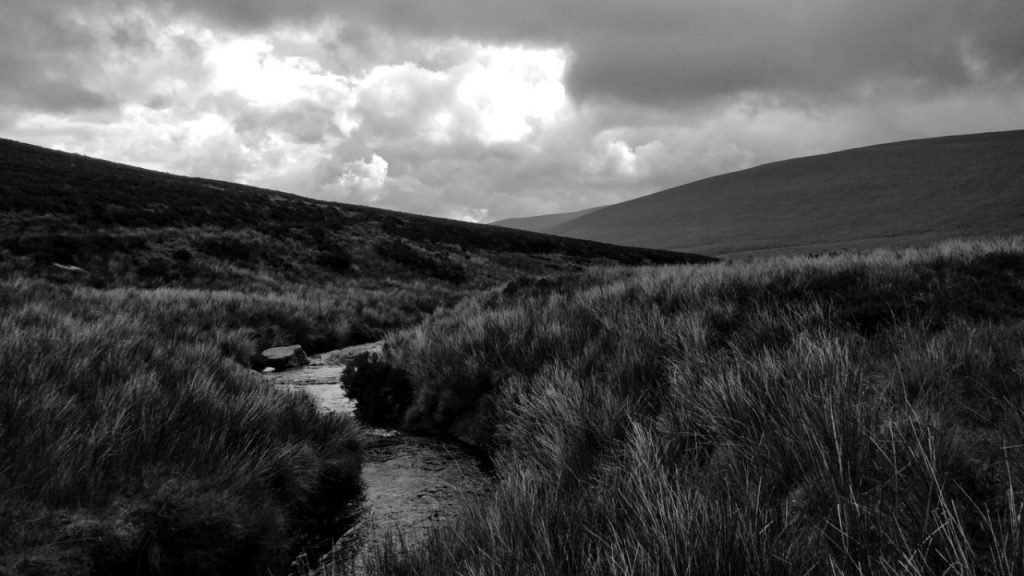
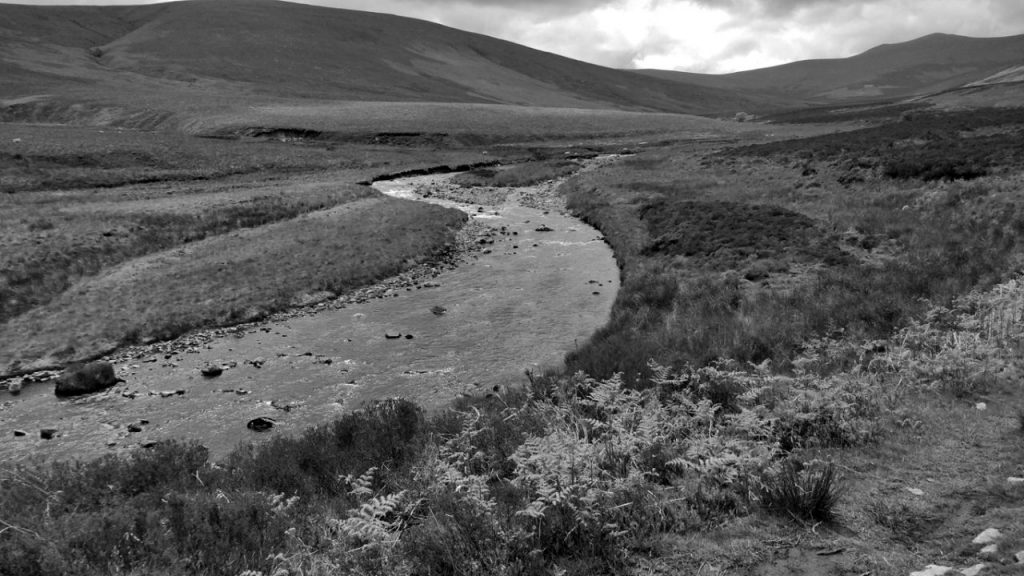
Walking along a river

Towards the end of last year, I gave up drinking coffee as part of my daily routine. I discovered that it was correlated with me getting migraines. What I had found, however, was that Lucozade, coffee, and other caffeine-based stimulants, seemed fine when I was doing any kind of exercise (like walking).

High Pike

Unfortunately, that wasn’t the case this time around. After dragging myself up High Pike, I decided to head towards Carrock Fell, as we’d talked about the remnants of an Iron Age hill fort there the previous evening. It was extremely windy. I was struggling a bit. A fell runner nonchalantly ran past me.

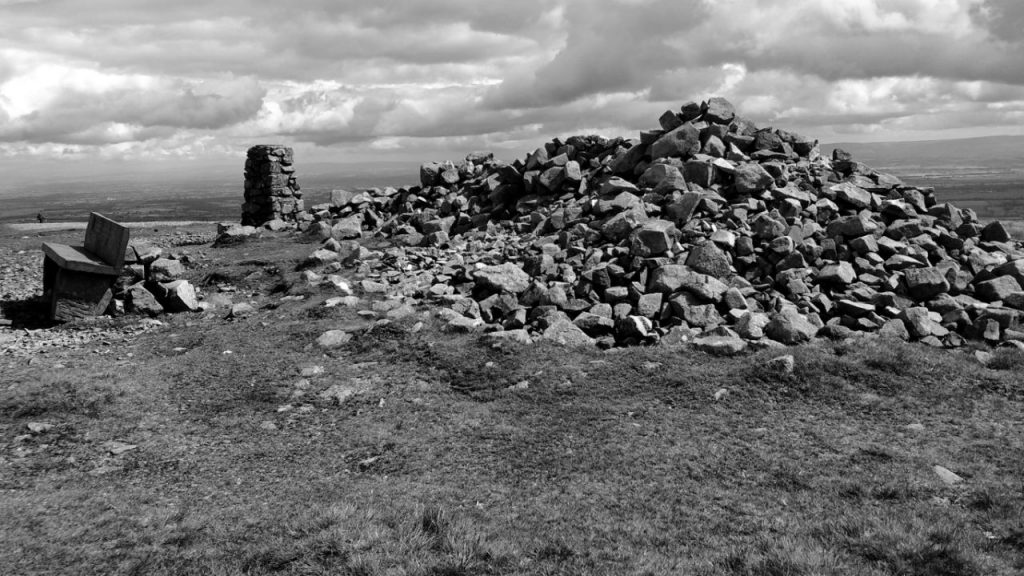
Carrock Fell

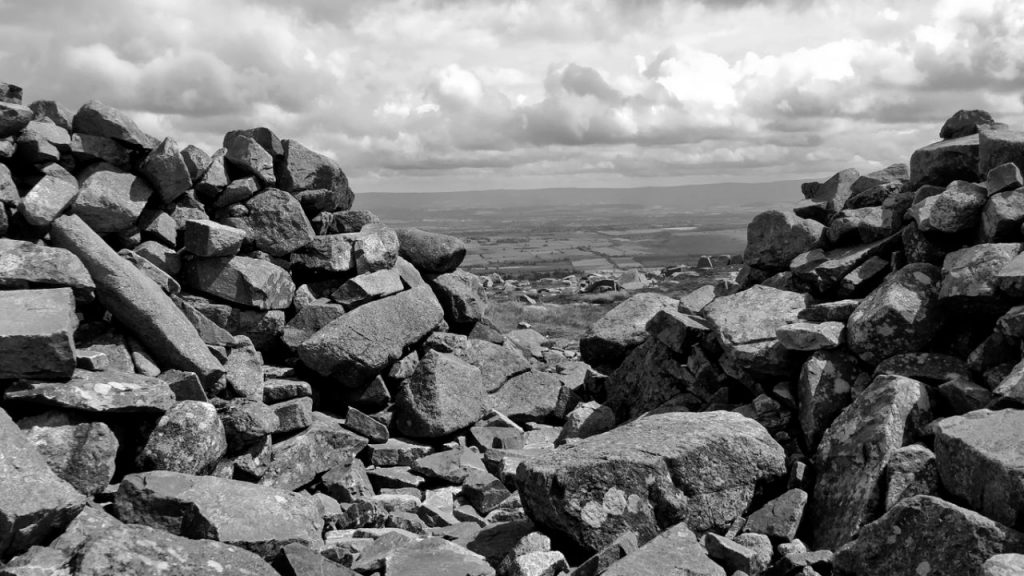
I kept on plugging away when the tell-tale signs of migraine started to appear; that little coloured shimmer that appears in the corner of your eye and starts working its way over. I took one of my Rizatriptan tablets and drank plenty of water. I made it to the top of Carrock Fell, and flopped into a little circular shelter made of stones.

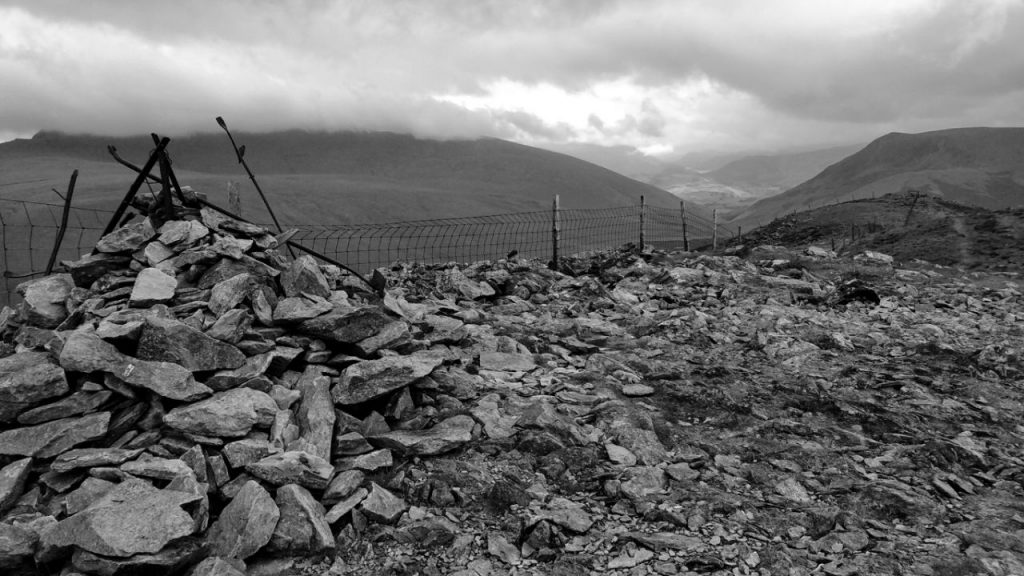
Sheltering at the top of Carrock Fell

By this point, I knew that this was going to be a longer walk than I’d planned, so I tried to shave some time off by traversing the side of Carrock Fell and making my way down to the path. In my migrainey state, I tripped and fell a couple of times, but only into the bracken and long grass.

Walking back to Skiddaw House

Once I made my way to the path back to Skiddaw House, I once again took off my boots, sorted out the insoles, and removed my waterproofs. The 5km from there back to the hostel was entirely on autopilot. I felt like a broken man.

Back at Skiddaw House

Back at the hostel (finally!) I sat down for a minute, then set to work packing up the tent. It was still a bit wet, and I didn’t have the energy to take it down properly, so I stuffed it in its bag, and packed everything inside the larger rucksack that I’d left inside the hostel.

Almost back to the car

The walk down from the hostel to the car was another 5km, but this time with my large rucksack on my back. It felt like double that. I would have collapsed at the boot of my car, to be honest, had there not been a group of schoolchildren listening to their teacher pontificating.

Conclusion

As I’ve mentioned before, every time I go on a walk I have a music track that ends up playing on repeat in my head. This isn’t something I choose, it’s just something that happens. Quite appropriately, this time around it was Got To Keep On by The Chemical Brothers. The lyrics are simple but were oh-so-appropriate:

Gotta keep on, gotta keep on

[…]

And the rain comes down
Like tears, like tears
And the rain comes down
Like tears, like tears

There are many things I learned about myself and about spending time in the mountains during this trip. These include:

  • Camping isn’t such a big deal when you’re staying next to a hostel
  • Double-check equipment lists before leaving
  • Don’t drink coffee, even when doing exercise

I’ve only got a couple of QMDs left to do now, and I plan to do at least one of them with one other person. Although yesterday in particular was hard-going, I’m really glad I did it, and can definitely see why this is a requirement of getting on the Mountain Leader course!

25 Jun 06:37

The Future of Docker Desktop for Windows

by Rui Carmo

Considering that Docker Desktop has been feeling largely neglected for a long while (I subscribe to a handful of long-standing bugs, and keep having to remove the auto-start registry keys it insists on leaving behind), this is a good thing.

But the best thing for me is that, with WSL 2, you have zero need for it if (like me) you live inside a terminal, and I wish the same were effectively possible on the Mac (which it mostly is, but I don’t want to maintain my own HyperKit hacks).


25 Jun 06:36

We have a little rooftop terrace and I am using...

by Ton Zijlstra

We have a little rooftop terrace and I am using it to try to grow berries and other things with the little one. The roof terrace has two advantages over the garden: it catches more sunlight, and the cats don’t go up there.

The plants have taken well it seems, are blooming, and even providing some harvest already.

20190617_193455roofterrace

20190617_193401 20190617_193410
tomatoes and red pepper

20190617_193330 20190617_193336
blossoming blackberries and red currants

20190617_193352 20190617_193344
blueberries underway, and first raspberries

20190617_193441cucumbers coming up

25 Jun 06:36

Three years on, the arsonists still walk among ...

by Ton Zijlstra

Three years on, the arsonists still walk among us, and walk proud, aiming to be PM even. As I wrote a week before the Brexit referendum:

The question is how much of a Herr Biedermann I will be, you will be, we will be, before we learn to send the arsonists packing.

Do we even know anymore how to do that?

25 Jun 06:35

Weight Wise - Pound Foolish

by noreply@blogger.com (VeloOrange)
By Scott

There seems at times to be a divide between two sides in the cycling world. No, I'm not talking about flat bar vs drop bar or 650B vs everything else under the sun, but rather those cyclists who weigh everything they put on the bike vs those that just put parts on and don't care.


I'm brought to this thought as a month back I took my rear rack and rack bag off my touring bike. I'd had that rack for all 17 1/2 years that I've owned my bike and I've had the rack top bag for almost 12 years now. I never really gave them a second thought. They were where I put my spare parts/tubes/cell phone/wallet/keys when out on a ride.  However, this past year, my wife has been training for a 1/2 ironman triathlon on a carbon fibre tri bike. On the weekends, we'd go out and do training rides, with her on the tri bike and me on my touring bike. I never really weighed anything until we got Melissa's new-to-her bike and she was curious about it's weight. We weighted it on our industrial scale we use for heavy shipments, and it came out to right around 18lbs.

As Melissa's training for the triathlon increased, the distances and speed increased as well. So in an effort to try and reduce the distance between us, I thought I would take off the rack and bag and start using our Mini-Rando Handlebar Bag instead.  So the net result was that I lost 4 lbs off the bike and I still have the tubes/wrenches that I carry every ride and room for the phone/wallet/keys as well.


What have I learned? Well, perhaps paying attention to weight can be an advantage. I've not caught up to Melissa, but I have cut down the gap between us. I still have all the stuff I need with me should I get a flat or such on the ride, but without the weight penalty. I'm not planning on a tour this summer, so I don't need the rack and bag. I don't really see much else on the bike that can be taken off and replaced or just left off.


Are you a weight obsessed cyclist, weighing the rack and bag to get the lightest possible combination or are you more concerned with the look of it/compatibility of it all and weight be damned? Let us know in the comments.
25 Jun 06:34

Announcing Envoy Mobile

Announcing Envoy Mobile

This is a fascinating development: Lyft's Envoy proxy / service mesh has been widely adopted across the industry as a server-side component for adding smart routing and observability to the network calls made between services in microservice architectures. "The reality is that three 9s at the server-side edge is meaningless if the user of a mobile application is only able to complete the desired product flows a fraction of the time" - so Lyft are building a C++ embedded library companion to Envoy which is designed to be shipped as part of iOS and Android client applications. "Envoy Mobile in conjunction with Envoy in the data center will provide the ability to reason about the entire distributed system network, not just the server-side portion." Their decision to release an early working prototype and then conduct ongoing development entirely in the open is interesting too.

25 Jun 06:33

Quick hit: Some ggplot2 Stat 💙 for {logspline}

by hrbrmstr

I’ve become a big fan of the {logspline} package over the past ~6 months and decided to wrap up a manual ggplot2 plotting process (well, it was at least in an RStudio snippet) into a small {ggplot2} Stat to make it easier to visualize various components of the fitted model.

If you’re new to logspline density estimation this paper by Stone, Hansen, Kooperberg, and Truong is a pretty accessible introduction to the methodology and the (primary) algorithm used in the {logspline} package.

If you’re already a user of the {logspline} package and have been just using the package’s base S3 plot function but wanted the functionality in {ggplot2} this was pretty much designed for you.

If you hit up https://git.rud.is/hrbrmstr/gglogspline there are links to all your fav social code collaboration services plus installation instructions. There’s a single Statstat_logspline() — which does all the hard work. By default it will make y the stat(density) computed field but there are other computed fields you can use as well:

  • count: computed count estimates (similar to ggplot2::stat_density())
  • probs: distribution function
  • survival: survival function
  • hazard : hazard function

You can take a look at the (light) comparison between geom_histogram(), geom_density(), ggalt::geom_bkde(), and gglogspline::stat_logspline() below (or use this link to bust the iframe):

FIN

For “general purpose” density estimation you can likely still rely on stat_density() but after you dig into the background of logspline and try it out in some appropriate use-cases you may grow to like it as much as I have.

The package itself is super-small and focused. One reason for that is it may be helpful for those who want to create or customize their own ggplot2 Stats. (I think I forgot to change the license to MIT before this post so I’ll rectify that ASAP; I default to AGPL in a fairly pathetic attempt to stop skeezy cybersecurity startups — pretty much 99% of them — from stealing code without giving back to the community).

As usual, kick the tyres and file issues or PRs as you feel moved (and wherever you feel comfortable social coding).

25 Jun 06:33

Announcing the Winner of a Set of reTyres – Skins for Bike Tires!

by Average Joe Cyclist

Introducing reTyre – Skins for Bike Tires! Enter to win a set.What do you do if you’re halfway home on your bike, and it starts snowing? You could carry on cycling, hoping you’re not going to slide out and hurt yourself. Or, you could stop and grab the studded tire skins you keep in your pannier, quickly zip them over your bike tires, and then continue on your way safely. That’s the genius of reTyre! It’s a new product that launched on KickStarter last year, and is now doing well. reTyres is a modular tire system that lets you quickly adapt your bike tires to meet changing conditions, such as off-road cycling, or snow. Check out videos that show how they work.

The post Announcing the Winner of a Set of reTyres – Skins for Bike Tires! appeared first on Average Joe Cyclist.

25 Jun 06:30

Setting Precise Targets For Your Community Work

by Richard Millington

Community goals tend to fall into two buckets, umbrella targets and precision targets.

If your target is to increase the number of active participants, reduce churn rates, or increase the number of posts with a response, you have umbrella targets.

Umbrella targets reduce the sum of all community activity into a trackable metric to determine if the community is doing ‘well’.

Umbrella targets are clunky, confusing, and tend to reflect a lack of strategy, understanding of the community’s value, or limited access to data.

Umbrella targets also often reveal entirely the wrong thing. For example, a customer support community which answers an increasing number of potential questions will see a decline in active contributors (members find their answer without having to ask the question) while delivering an increase in community value.

Worse yet, umbrella targets don’t easily lend themselves to strategy. Want to increase active contributors? There are a dozen good (and bad) things you can do to achieve that.

The better approach is to set precision targets.

Precision targets highlight very specific metrics which yield the biggest results.

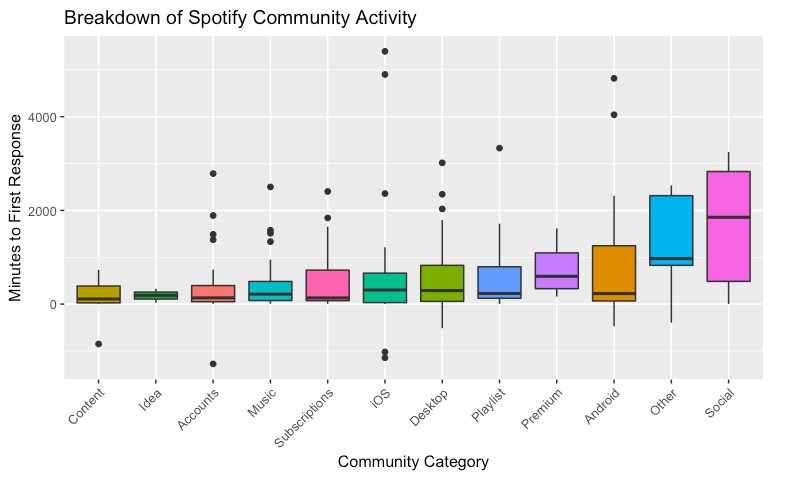
For example, here is a sample of a thousand posts on Spotify’s community I scraped, broken down by time to first response:

My data scraper tells me the community has:

  • Response rate: 40.7%
  • Accepted solution rate: 6.18%

But if we dig deeper, we get some really interesting results:

(click here for full image)

If we’re only looking at median time (please don’t use averages!) to first response, all the categories and elements of the community are treated with equal value. i.e. a response on an off-topic discussion is treated as valuable as an urgent question from a premium customer locked out of their account.

That doesn’t make sense.

This is why we need precision targets such as:

  • Reduce the median time and range (IQR) to responses to questions in accounts, subscriptions, and premium from [x] to [y].

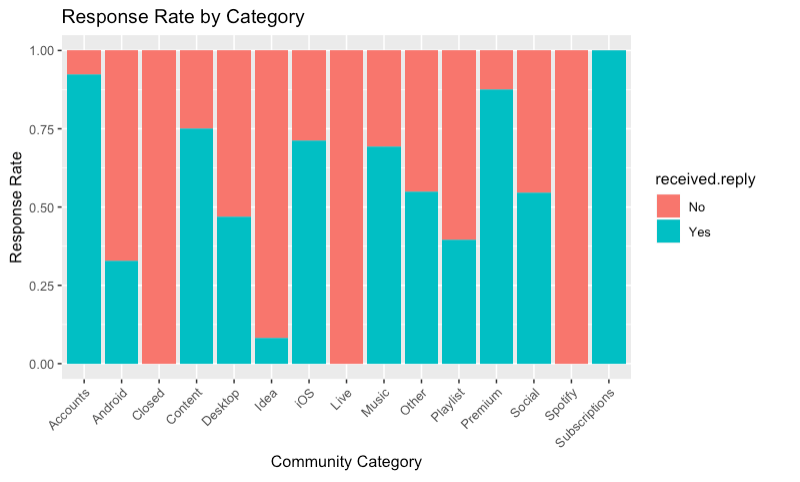
We can also look at not only the time to first response, but also whether questions even receive a response.

(click here for full image)

We can see above the response rate per category and see some areas (like accounts, premium, and subscriptions) do get high response rates while others have far lower response rates.

This is how it should be – some questions are more valuable than others.

Our precision targets might be:

  • Increase the response rate to questions in ‘accounts’ and ‘premium’ to 100%.

Now you have achievable precise targets which reflect the most valuable aspects of your community.

These are easier to explain to your boss than vague umbrella targets about increasing activity.

They are also things which you can generally control and lend themselves to strategy.

For example, if you want to reduce time to first/answer rate in accounts, you might:

  • Hire community managers/moderators in other regions to provide 24/7 coverage.
  • Increase points for MVPs who provide the first answer to questions in accounts.
  • Have an alert system which emails MVPs of questions in accounts which are unanswered for 5+ hours.
  • Prioritise showing account questions on the landing page of the community.

Believe me, it’s a lot more motivating to work towards a specific target this quarter over which you have control than chasing some vague umbrella target which you don’t.

p.s. I’m hosting a workshop for community professionals looking to move to an advanced level at CMXSummit on September 4.

25 Jun 06:30

HTML as the Frontest Front-End, as the Web Itself

by Ton Zijlstra

HTML Tag
HTML graffity tag, image by Markus Tacker, license CC-BY-ND

In developing for the web HTML is the very frontest of the front-end, and if you’re a front-end person, you do need to know your HTML. It helps keeping things simple and allows people like me to hit ‘view source’ and figure out how something is done, so I can use it on my own site. I started out writing HTML decades ago in simple text editors like notepad. I still write on my blog in text mode exclusively, never in visual or wysiwyg mode, and add a lot of my html in postings by hand (sometimes aided by keyboard shortcuts that make things easier and avoid repetition)

HTML is the web. And it is useful and powerful in its own right. Without embellishments through scripts etc.
It is in part why I like the IndieWeb, as it seeks to use HTML itself to make webpages machine readable, and to add things that take the best of the social media silos, without all the ajax stuff for instance. So that it works, because it is made of the web, on the web, for the web.

When organising the IndieWebCamp Utrecht last month I realised how little connection I still have to coders and developers for the web in my network. Many people I approached with an invitation to participate told me ‘I don’t develop much for the web really.’, they’re more into all kinds of frameworks and work on things like algorithms, machine learning and data analysis. Cool stuff I heartily agree, but ultimately it mostly ends up being shown in a browser. In HTML. So in a way it is disappointing to encounter a certain disdain here and there for HTML.

For me, I need to dive more deeply in the various ways HTML is currently used to add machine readability to web pages.

25 Jun 06:30

Home zoning in major cities

by Nathan Yau

The single-family home. It’s part of the American dream, but it can be awfully expensive when land grows scarce. Emily Badger and Quoctrung Bui for The Upshot map and discuss the current approaches of major cities:

A reckoning with single-family zoning is necessary, they say, amid mounting crises over housing affordability, racial inequality and climate change. But take these laws away, many homeowners fear, and their property values and quality of life will suffer. The changes, opponents in Minneapolis have warned, amount to nothing less than an effort to “bulldoze” their neighborhoods.

Using building footprints instead of just colored polygons provide nice depth and detail.

Tags: housing, New York Times, zoning

25 Jun 06:30

Why Bandcamp: Part Two

by Steve

Yesterday I wrote about what Bandcamp offers me as a music fan. Today it’s all about how I use it as an artist.

First some background: My solo career started before the age of download sales. My first 6 albums were all pressed as CDs, and sold via a range of online eCommerce solutions – from a shop set up by my friend Tim to help his friends sell their CDs, to CDBaby, back when it was offering a truly revolutionary solution for independent artists trying to work out how best to leverage the internet for global reach. The streaming media of choice was Real Audio – generally terribly low res, but it was the stuff that generated enough interest in my music to result in me turning those live recordings into my first album! When download sales became a thing and CDBaby worked out a deal to get our music onto iTunes, I did that too, and slowly onto the other emerging download stores – Amazon, Google Play, eMusic… I also had a self-hosted download store of my own, and mistakenly sold 128k MP3s from it… I was learning all along and made a number of fairly heinous mistakes.

Restless by Steve Lawson and Pete Fraser

Then in 2008 Bandcamp came along. I still had my hand-rolled sales site, so it took me a few months to sign up, but from mid 2009, I started selling my music on there. Immediately, the possibilities became apparent. The first things I uploaded were my existing albums, and added CD sales too, but then in mid 2010, Lo and I were on a house concert tour in the US, I’d just bought a MOTU soundcard, and we’d worked out how to multitrack record all our gigs (Geek facts: I was running Reaper on a Hackintosh’d Dell MINI 10v, and recording EIGHT TRACKS!) As the tour progressed, I was mixing the live recordings on off-days, and uploaded the first six tracks of what straight away promised to be our first updateable album. Live So Far ended up being 10 tracks long, captured a number of lovely spontaneous musical happenings along the way, and helped fund the tour as it progressed. When we eventually made a limited edition CD run, we sold that on Bandcamp too.

My first solo album to come out on Bandcamp was 11 Reasons Why 3 Is Greater Than Everything. I experimented with pricing that scaled over time, with free download codes, and found that there was a direct link between streaming numbers and sales – the more people heard it, the more were likely to buy it. So I just kept directing people to Bandcamp to hear it – no 30 second previews, no tricking people into buying shit they might not like. Just ‘here, fall in love with this…’ – and they did. Because, as we know, music is the one artform you’re more likely to spend money on it the more you experience it – listening to an album a lot so rarely causes us to get bored of it. Listening to it a lot is evidence that it means a lot to us, so encouraging people to do that invests it with increasing levels of value, not decreasing. This flies in the face of music marketing logic, but the clever people at Bandcamp understood it and we’ve been leveraging it ever since. The flipside is, of course, that a ton of people have been able to audition my music to see if it was for them and decide not to buy it, but that’s great too – I have no interest in subsisting on the poor choices of people conned by duplicitous marketing…

PS, You Are Brilliant by Steve Lawson

My next album was another live album – recorded in Minneapolis, Believe In Peace was the first album I put out exclusively on Bandcamp. In all honesty, I think I intended to put it out on all the other platforms, I just never got round to it. I was having way too much fun getting to know the people who were discovering the music.
This was possible because Bandcamp really values the relationship between artists and listeners. It has the option to have an email link on your page, it gathers together the email addresses of everyone who buys your stuff, allowing you to stay in touch with them via whatever platform works best for you. It has built in ‘tweet this’ links for albums and at the sales completion stage, and it has fan collections where you can see everything that someone has bought.

The value of this is SO much greater for niche artists than a bunch of algorithmic aggregate data. Because it’s about forming relationships not gathering information. I know what my listeners like because I follow the fan account of everyone who subscribes to me. I find a LOT of music because of their discoveries getting passed on to me. I can see what really works for them in my catalogue by how they review it – and in the stats portion of the Bandcamp For Artists App – or in the case of the subscribers by how they comment on it in the subscriber discussion thread. They’re real people not data points that represent financial transactions from months ago. I have no idea who it is that buys my music on iTunes each month (I get about £20 every couple of months from them) – I don’t know who they are or what they like. But with Bandcamp, I get to learn a bit about them.

Surprise by Steve Lawson and Corey Mwamba

And I get to enrich the experience of my listeners with extra info. Every Bandcamp album page has a section for a description that I fill up with sleeve-notes – I accompany everything I release with an essay. Sometimes I write track-by-track explanations of what’s going on, and I bundle those with the download as a PDF and include in the lyric field for each track. Everything gets uploaded as 24bit audio, and the listener can decide what resolution and file type works for them, knowing that whatever they get, it’ll have all the correct metadata and info with it, and they won’t be left having to pay more for a high res file like it’s 2003 or something…

Because there are few digital things that annoy me as much as buying music with either messed up – or no – metadata. Selling WAV files is completely insane, given how hard it is to attach info to them, or embed artwork (can you embed artwork in a WAV? I’ve never ever had one arrive with track data embedded, let alone artwork) – FLAC sounds identical (is genuinely lossless) but has fields for all the info you could ever need.

Over Time by Steve Lawson and Andy Edwards

I occasionally get asked why I don’t run my own download site, but having never ever seen one where the experience for the buyer is even a quarter as good as Bandcamp, it strikes me as a really bizarre question. Running a successful ecommerce business if you want to sell multiple file types and resolutions with accurate metadata, streaming possibilities, payment options and have the audience trust what you’re doing is such a massive, massive task, there’s really no reason to think that it’ll be worth the 10% you’ll ‘save’ by not having Bandcamp do it. But you’ll also almost certainly make less money. Because all the stuff I said yesterday about how I find music applies to how people find me. Bandcamp is such an incredible discovery platform. It makes it so easy to share music, to find things, hear them, follow a trail of connections, browse what other people are listening to… You’ll see the players littered throughout this post and the last – imagine trying to code all the possible variations yourself. Imagine hosting all that bandwidth, imagine trying to build a platform in which your fans can show off how much they love your music on a page of their own. You can’t imagine doing it, because what you’d be imaging is Bandcamp, and it already exists.

Five years ago, I realised that my shift to all-improv shows was producing a crazy amount of release quality music. That set-up I’d started with in 2009 that allowed me to multitrack gigs had been refined with every single gig, getting better and better recordings, getting better at mixing… I did a mastering course to learn how to make the end product better, and in 2013 released a 10 album set of live recordings (all exclusively on Bandcamp), and was able to do a presale for them, sell the USB Stick physical bundle, and offer download codes to my collaborators so they could use them to add value to other sales, or just sell full sets of download codes at gigs. The pricing was wholly variable, and we could do discount codes and sales and free download days and…

Referendum by Steve Lawson

Well, I’d started to meet up with Ethan Diamond, the founder of Bandcamp, every January while in California, and he mooted their idea to launch a subscription service. I was asked what kind of features I’d want, and I was then invited to be one of the three artists who trialled it, and I properly found the home for my musical output. I didn’t want what some of the subscription services were offering in terms of charging my subscribers more if I released more, instead I wanted to be able to increase the sense of value for them over time if I happened to make more great music. Gratitude is the essential currency of the indie music economy. People will pay for things they are grateful for. I didn’t want to be releasing music for the sake of it, just music that was amazing, so the actual promise of the subscription is about a third of what I actually put out in a year – the extra 200% on top is there because it deserves to be there, not because I feel obliged to release it…

But I now get the economic latitude to mix and master every quality gig that I do, release it and tell the story of its genesis. I get to throw it out to the subscribers for discussion, offer them exclusive video, essays about the motivation and technology behind the music, and even eBooks about playing music, or my novel. It’s my ever-expanding digital box set, but without the crazy premium cost that comes with reissues of classic albums.

Diversion by Steve Lawson with Jon Thorne

The community of subscribers is now big enough that they almost cover our rent for the entire year. I’m about 30 subscribers short of covering it all at this point. That for me is a sustainable practice. I’m not having to pay for billboards or Facebook ads, or trying to get radio play for particular tracks or promoting a single with a promo tour… I get to make albums that I’ll never be able to play live, release them and get on with the next one. I recently put out three albums in a month, because I did three gigs that were really, really good. Subscribers got them all, and even though not many of them had time to digest all that music there and then, it’s theirs for good. They own it, whether or not they remain as subscribers. And we get to revisit not only the music, but the story that those three gigs tell in aggregate. John Coltrane would record multiple albums in a week, Miles Davis recorded Agartha and Pangea on the same day, but they were released detached from that context – presented purely as ‘albums’ not as episodes in a longer story…

I’m not trying to get rich, I’m not trying to be famous, I don’t want the audience of hundreds of thousands of listeners that I’d need to make Spotify sustainable. I really don’t. I love having a community of people who are invested in what I’m doing that I can talk to about it, that I recognise when they turn up to gigs, that I get birthday messages from, who make suggestions about what the music means to them…

Invenzioni by Steve Lawson and Mike Outram

Back in mid 2016, one of my subscribers sent me a set of incredibly detailed notes he’d taken about how he understood what I was doing as an improvisor and performer. It was meticulous and filled with care and attention, and he’d written it while in hospital, I still get emotional thinking about it. He died not that long after he sent it, but the sense that somehow I’d ended up in this space where the people who find the music not only get to enjoy it but may want to spend time thinking how it represents new ways to think about music making and why we release music was such an inspiring one. The feedback I get from my subscribers is irrevocably woven into the way I make music, and the permission I get from them to continue on this path is a motivator like no other.

Bandcamp is the mechanism that makes all of this possible. It doesn’t force it to happen, and I’ve not found that many other musicians who’ve managed to leverage its affordances to the same degree (I know a lot of people who sell more music than me on there, but not as many whose music life is as heavily entwined – maybe my commitment to it as a music listener as well has helped build those relationships…)

Grace And Gratitude by Steve Lawson

I can’t at this point imagine wanting to release music any other way. I’d rather wait til someone eventually finds a way to buy it on Bandcamp than pander to whatever preconceived notions they have about where they want to find music. The idea that we have to be ‘everywhere’ in order to reach our audience is only true if you don’t see the experience of your music as concretely wedded to the context – the words, the connection, the artwork, even the delivery mechanism. So if you currently buy music on iTunes, that’s OK, eventually you may decide that your desire to investigate my music is strong enough that working out what Bandcamp does is worthwhile. But if it doesn’t, I don’t feel any burning need to water down the experience of my music in order to put it out in an inferior form in a worse context.

I’d love it if you subscribed to me on Bandcamp. The current offering is (I think) 47 albums the moment you sign up, and then everything I release in the next 12 months – go check it out, and have a listen to the albums throughout this article to see if any of it takes your fancy. If it does, come join the party – you’ll be a tangible part of the sustainability revolution.

25 Jun 06:30

Whence the Virtue of Open

by Stephen Downes
The word 'whence' means "from what place, source, or cause", and that is the question I would like to address with respect to the virtue of 'open'.

The question is raised in the context of Heather Morrison's recent comments on The Dialectic of Open. Unfortunately I don't have the full text of the remarks, but I have a detailed abstract and slides, which is enough to work from. 

Morrison's argument is straightforward and effective. Not all instances of 'open' are virtuous. It is not hard to think of instances of 'open' which are bad - an 'open wound', for example, or leaving your front door open while you're on a business trip. 

Morrison focuses on one of those contradictions, where 'open' is reified to the point where it means 'open for business' (ie., open for commercial exploitation). For example, she writes, "The province of Ontario under the Ford government describes itself as open for business. In this context, open means open for exploitation, and closure is protection for the environment and vulnerable people."

In the academic context, the meaning of 'open' is equally problematic, she writes. "Open education can be seen as the next phase in the democratization of education, a new field for capitalist expansion, a tool for authoritarian control and/or a tool for further control of the next generation proletariat or precariat."

Because Morrison is operating from a Marxist perspective, she focuses on the contradictions inherent in our use of the term open. One good example (page 20) is sufficient to make the point:
  • On the one hand, the government's open data policy says, "The information provider grants you a worldwide, royalty-free, perpetual, non-exclusive licence to use the information, including for commercial purposes...”
  • On the other hand, the First Nations Governance Information Centre's policy vision is that "every First Nation will achieve data sovereignty in alignment with its distinct worldview."
We could just say that one interpretation overrules another, or that one of these approaches is simply wrong, but none of these responses will satisfy. There are many cases where we say that access to and use of knowledge and data should be open, but where access to and use of knowledge and data should be limited or even closed.

We don't have to adopt a Marxist perspective to see the difficulty here. In my own discussions about open content and open access, I get the same sort of pushback. There are numerous reasons (many of them really good reasons) for access and use to be limited.

Indeed, Morrison's argument keys in on one limitation I have consistently advocated for my own work: the limitation on commercial use. I use a Creative Commons By-NC-SA license on all my content because I don't want my work to be enclosed by commercial providers and eventually converted to a commercial work. Morrison lists a number of cases where this has happened to open access scholarly work.

Other reasons for limiting access abound:

  • Access and use should be limited because the content is just a draft and should not be taken as final and fully-formed work
  • Or if it's something I've saved to my own computer, I shouldn't be required to grant open access to my computer
  • Or it should be limited to provide a safe space for people to make mistakes and try things out
  • Or (from my days sitting on governing boards) it should be closed so people will feel free to speak openly and honestly
  • Or limitations should exist because its cultural or heritage content, and use would amount to cultural appropriation
  • Or it's things like credit card numbers, passwords, or private keys
  • Or it's private and personal data, such as employment records, financial information or health care information
  • Or (as we often hear inside NRC) it should be limited because it's intellectual property, and being managed as a trade secret
  • Or it's information that pertains to national security, where the release of it would create danger to individuals, enterprises, or society as a whole
  • Or where the information is false and misleading, or libelous, or slanderous
  • Or it reflects an individual or company (or your employer) in a bad light
It's easy to find examples of each of these arguments being made. I think that the case can be pretty unequivocally made that open access is not always a virtue.

So why would I say it's a virtue, and what could I possibly mean by that?

In an interview yesterday I explored the second of these questions: what I mean by that. And what I mean is this: not simply that everything should be open, but rather, that we should start with a preference for open as the default position. That is to say, instead of arguing for, or giving reasons why, something should be open, we should be required to argue for, or give reasons why, something should be closed.

Right now the opposite is generally the case. It is certainly the case in my workplace, where they require me to submit a 'Request to Disclose' form every time I want to publish an article or give a talk (fortunately this does not apply to my blog posts or newsletters, and fortunately this is loosely interpreted, but I could imagine a much more stringent application of this requirement, and know it applies in other government departments).

The opposite is also the default case for society at large. While historically any work was what we would consider to be open unless unless it was copyrighted, the law changed a number of years ago to the effect that everything is presumed to be covered under full copyright (ie., "all rights reserved") unless explicitly stipulated otherwise. That's why we need something like Creative Commons.

Now it's probably impractical to expect that the law will revert to the status where you had to register your ownership in order to be protected by copyright law. And there are good reasons why the law exists as it does (for one thing, it means we no longer need to pay money or hire lawyers to protect our content (contrast this with the cost and complexity of registering a patent)).

So what I'm saying is that, from the perspective of the owner, who is currently protected under copyright, it is preferable to license content and data as 'open access' as a default, reserving the closing of access for cases where it is required or warranted.

Astute readers will note that I have not yet defined open access. I'm not the sort of person who likes definitions; I think that for the most part, people know open access when they see it, and can recognize when access is being limited. 

And I should be clear that I consider commercial use of content to be a way if limiting access. Heather Morrison's examples make this clear. When content and data are used commercially, it is for the purpose of generating revenue by in some way limiting access. There are many way to limit access for commercial gain; charging money directly for access is only one of those: require them to submit information, require them to view advertisements, require them to purchase software as a condition of viewing, require them to endorse or offer some service (aka 'viral' marketing), etc. 

So what I mean by open is very closely aligned with UNESCO's most recent statement regarding open educational resources, specifically, resources that "in any format and medium that reside in the public domain or are under copyright that have been released under an open license, that permit no-cost access, re-use, re-purpose, adaptation and redistribution by others."

Now if there's a 'commercial use' that doesn't violate the "no-cost access, re-use, re-purpose, adaptation and redistribution" then I don't really have a problem with it. But there aren't too many commercial activities that exist where that condition is not violated. 

But now we get to the core issue: what distinguishes cases where 'open' is a virtue from those where it is not? Morrison writes, "Whether a particular instance of 'open' is a good thing depends on the context and one’s perspective." Even if this is true, I don't think it's helpful. What does it mean to say it depends on the context? By virtue of what features of the context is open virtuous or not? And how do we resolve cases where there are multiple conflicting perspectives?

I've suggested above that what I mean is that we should be 'open' by default. The question then becomes, what arguments could we make to limit access? The answer isn't exactly the same as the list of arguments I provided above. Rather, what we want to know is when arguments like the ones above are successful, and when they are not.

Let's take the case of cultural appropriation as a way to address this. In particular, I can recall debates and disputes about the teaching of yoga. One person expresses the divide this way: "It isn’t cultural appropriation to practice yoga. It is cultural appropriation to take the practice of yoga, minimize it into a trendy exercise routine, and slap on a religious prayer at the end that you don’t even believe in."

I can imagine a similar argument being made in other contexts. It isn't cultural appropriation, for example, to use the words 'sweat lodge', to build one in your back yard, or to use it for yourself and friends. But it is cultural appropriation to put up a big sign saying "Fred Smith's Authentic Indian Sweat Lodge" and charge people for admission.

Interestingly, I think, this applies even within the cultural tradition. For example, I was raised in a more-or-less protestant Christian environment (my mother was United and my father was Anglican). But if I were to build my own church building, advertise it as "authentic western Christianity", and use it to serve burgers and hold late-night parties, I would be engaged in the same sort of disrespect.

And I think there's an important distinction to be drawn here. It's not about ownership, in the sense that there is a commodity that can be bought and sold. It's about control. People of Indian descent, people of First Nations descent, people of Christian descent, see these institutions and practices as part of their identity. To take something like this, and turn it into Mulan, is to trivialize it, and in an important sense take away their individuality or group identity.

This matters. And in general, other things besides 'open' matter. Open isn't the one and only virtue in our society or in our lives. Many other things matter as well. 

So how do we decide what matters? I've discussed this a lot elsewhere. For me, it boils down to what I have called 'the Semantic Condition', which overall is a good candidate as describing the basis for meaning, truth and value in a society.

The Semantic Condition contains four elements: openness, autonomy, diversity, and interactivity. I've written about these four conditions over the years, and will do so again. So now the question resolves to: whence the virtue of the Semantic Condition? And how do the elements of the semantic condition trade off with respect to each other.

I have elsewhere written that the basis for the semantic condition is that these conditions are what enable a network (whether an individual or a society) to grow and develop, to learn from experience, to know, and to continue to exist. They do so by creating the conditions in which a network is resistant to cascade phenomena, stagnation, and network death. (And let me be very clear here: these conditions constitute a hypothesis - there may be additional conditions, there may be different conditions; this is a matter for empirical study).

A simple example: vision functions because each retinal cell functions independently, stimulated by photons unique to it, and to no other. Otherwise, there would be no variation in our visual field - no objects, no change, no colours. Someone like Kant might deduce that autonomy of the retinal cell is a necessary condition for the possibility of perception, but I can be less stringent, and say simply that it works this way. 

So from where I stand, the issue of cultural appropriation isn't one of property - it isn't a question of ownership per se. It's a question of autonomy - by acting in a way that minimizes and trivializes a culture (whether or not for commercial gain) you are infringing on the individual autonomy of people who actually belong to that culture. It's not that you have stolen their property (the whole language of 'property' is really inappropriate in this context) it is that you have limited their possibility of fully expressing who they are.

So, sometimes things like autonomy are more important than openness. Sometimes we have to prioritize the measures we take to preserve an individual's capacity for agency, for personal self-identification, or (moreover) to protect the diversity of society, or to ensure that no single voice prevails over the interactivity required for a community to function. 

So how do we make that calculation?

The first thing to understand is: it isn't a calculation. When we 'balance' openness against the other elements of the Semantic Condition we aren't measuring and weighing outcomes and impacts, harms and benefits. As I said the other day, these are tools that are empty of value, and not instruments for defining value.

No, the trade off between these different virtues is whatever we say it is, where 'we' is defined as society as a whole. Ideally, in a well-functioning society, we are already operating according to these principles, and hence have the mechanisms qua society to address these questions. Less ideally, we need to approach them by describing and defining society in such a way that best supports these principles - that is, best supports a society's capacity to grow and develop, to learn from experience, to know, and to continue to exist.

How might this be accomplished? In some more recent work I've been looking at the idea of community as consensus where there are mechanisms in place for us to arrive at statements of meaning, truth, value and the rest in a consistent and fault-tolerant way.

And this, finally, takes us to the question of the role openness plays in the creation of consensus and of the mechanisms of society more generally. 

And viewed from this perspective, the virtue of openness reveals itself almost naturally and inevitably: without openness, communication is impossible. There is a long list of types of openness that make this clear.

For example: the openness of words. If we cannot exchange words with each other, and moreover, words about which we share our understanding of meaning and intent, then each person is speaking a secret language, and we cannot communicate. 

For example: an open medium. If we cannot all share the same airspace in which words are exchanged, such that a word uttered by you can be heard by me, then communication is impossible. Communication, literally, requires a commons. 

When viewed from the perspective of society as a network, openness is essentially the capacity of each individual entity to interact with another, such that (as I've said on various occasions) a change of state in the one, may result in a change of state in the other. Without this, it is not possible for entities in the network to change, they so they remain unchanged and unchangeable, in a state of network death.

We will find, over time and as a society, that just as there is a sweet spot for connectivity, there is a sweet spot for openness. And that point where be where the default for openness meets the push-back from people on the basis of other values such as autonomy, diversity and interactivity. And where, exactly, this sweet spot is, needs to be defined by the community, and achieved as a consensus.

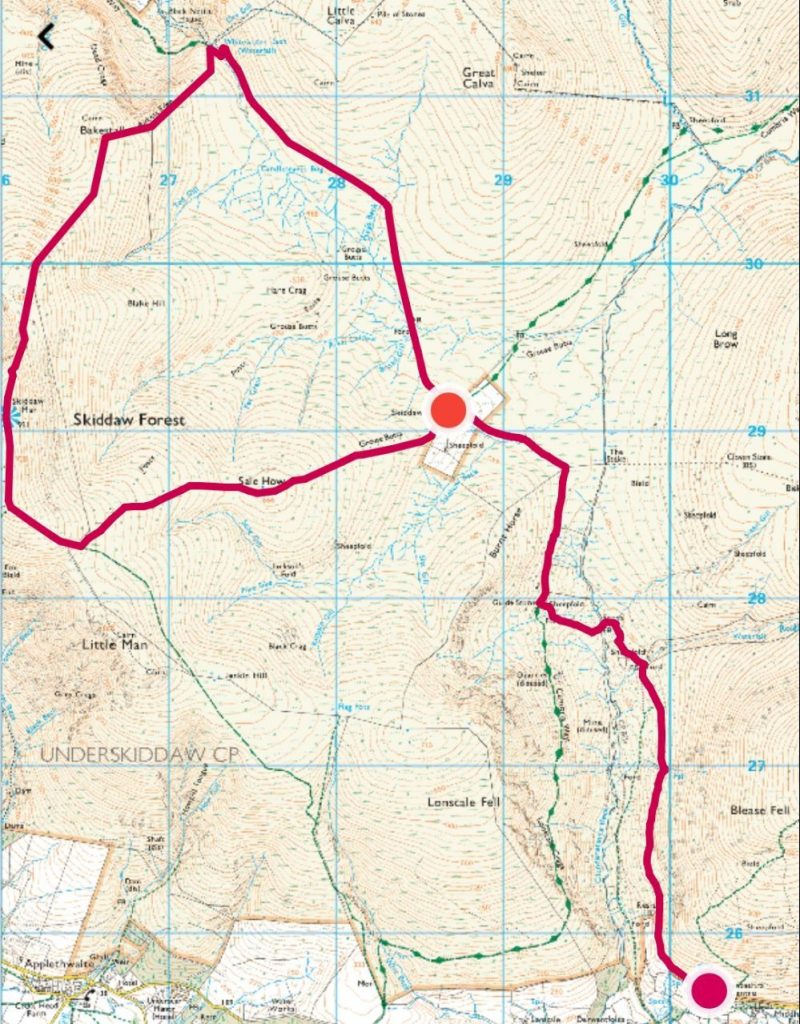
Image Source: Notes from Stillsong Hermitage

25 Jun 06:30

The One About Sugar

by rands

In our eighteenth episode, I can’t stop giggling about my problems with sugar. Lyle deftly navigates us through all the sugar vectors, proper movie candy protocol, the perils of cinnamon, and why candy corns… are the best.

Enjoy it now or download for later. Here’s a handy feed or subscribe via Overcast or iTunes.

25 Jun 06:30

"Name them over and over and over again."

by peter@rukavina.net (Peter Rukavina)

In 2017 Nell Bang-Jensen wrote down a set of guiding principles for her work, which includes:

Know everyone’s name. Name them over and over and over again.

This called to mind my Morgan/Joel Strategy that I outlined in 2017, and that I’ve been working to follow ever since.

Yesterday I was at a meeting of the Stars for Life board and, a few minutes after we got started, a person I’d never met walked down the stairs into the meeting room and took a place at the table. He wasn’t introduced to us, and nobody thought to ask who he was. As a result I thought there was a (remote) possibility that I was hallucinating.

Finally, after 20 minutes of meeting business, at a break in the proceedings, I looked his way and said “I’m afraid I don’t know who you are.”

At which point he was introduced as a new board member, someone we’d approved the appointment of at a previous meeting, sight-unseen. He knew almost everyone else at the meeting, which is why he wasn’t introduced.

I’m glad I said something, because it turned out that a couple of the other board members were also wondering who this interloper was.

Know everyone’s name. Name them over and over and over again.

25 Jun 06:26

The Best Ductless Mini Split Air Conditioner

by Doug Mahoney and Harry Sawyers
The Best Ductless Mini Split Air Conditioner

A mini-split is an efficient, scalable way to add cooling or heating to specific rooms of a home. Also known as ductless mini-split air conditioners and heaters, they consist of one or more wall-mounted indoor units connected to an outdoor compressor. They’re easier to install than a full ducted system, more efficient than window units or central HVAC, and they often make sense as a supplement to your existing heating and cooling equipment. Add in thermostat-like controls alongside smart-home integration and mini-splits start to sound pretty great—but they aren’t cheap, with installation costs that can reach into the five figures. (Many local utility companies offer rebates to offset some of that.)

24 Jun 04:54

Saskatoon Rips Out Downtown Bike Lane because of “Unsafe Situation for Drivers”

by Sandy James Planner


saskatoon-bike-lanes

saskatoon-bike-lanes

While most cities are now embracing the importance of ensuring that cyclists and sidewalk users have safe accessible ways to travel to services, shops and schools, Saskatoon has proven to be the remarkable disappointment, choosing hyperbole and conjecture instead of good data and researched example in ripping out their existing protected downtown bike lane.

We talk about equity, sharing the road and giving the most vulnerable road users priority,  but places deeply entrenched in vehicular movement use those politics to continue the 20th century domination of road space. I have written about the Transport for London study released this spring that shows that street improvements for walking and cycling increased time on retail streets by 216 percent, with retail space vacancies declining 17 percent. Best of all, and just like studies conducted in New York and Toronto “people walking, cycling and using public transport spend the most in their local shops, spending 40% more each month than car drivers”.

Back to Saskatoon. This is a perfect place to put in protected bike lanes, and they are needed to provide connected, safe travel. But imagine this~in April Saskatoon City Council voted to remove the protected bike lanes on Fourth Avenue North which had been in place for two years. Why? Because of “member of the public” complaints about limited parking space. What that really meant is that drivers could not park in front of businesses as they had been accustomed to.  Drivers were also concerned that bike lanes were cleared of snow before vehicle lanes, and that cyclists were in danger in drivers’ “blind spots”.

At Council it was clear that for many members of the public it was not a negotiation of where the bike lane would go, but a call for no bike lanes anywhere. Calling the lanes “confusing” Saskatoon council voted six to five in favour to “consult” the public about future bike lanes elsewhere,  and began ripping the bike lanes out on Fourth Avenue. That bike lane demolition is now completed.

This bike lane unfortunately did not connect up in a legible way to the bicycle network, and now never will.

You can listen to Brent Penner, the Executive Director of Downtown Saskatoon describe why bus lanes are needed instead of bike lanes. Pity Saskatoon cannot find a way to do both like other cities in Canada.

protected-bike-lanes-on-4th-ave-may-15-2016

protected-bike-lanes-on-4th-ave-may-15-2016


24 Jun 04:54

Midblock Crossings, Raised Crosswalks, and StreetsBlog’s List of Best Pedestrian Practices

by Sandy James Planner

Boston_PeterFurth

Boston_PeterFurth

I have previously been writing about  midblock crossings and raised crosswalks on this blog as well as on Walk Metro Vancouver’s website.

There is always lots of discussion about midblock crossings, and the term “jaywalking” was developed in the 1920’s to refer to those pedestrians who darted mid-block instead of freeing up that road space for rapidly moving vehicles. Pedestrians were moved to intersections controlled by engineering traffic standards, as the assumption was that traffic engineers were better judges of pedestrian safety than the pedestrians themselves.The American  Federal Highway Administration (FHA) striped highway pavements with the assumption that pedestrians are safer crossing at intersections with traffic lights and with all kinds of turning movements versus mid block two-way vehicular traffic.

I have also written about my involvement with the installation of the first permanent raised crosswalk in Vancouver located at East 22nd Avenue and Commercial Street north of Lord Selkirk Elementary School. The raised crosswalk is a walkable speed hump that is at the same grade as the sidewalk on either side of the street. The raised crosswalk serves to  elevate the pedestrian, and slows vehicular traffic which should be travelling the posted school speed limit anyway. You have probably driven over the  raised crosswalks located outside the Vancouver Airport.

So how effective are mid-block crossings and raised crosswalks at making pedestrians safer, more comfortable and secure on the street?Angie Schmitt of StreetsBlog has been collecting data on pedestrians and crossing safely, and the statistics she has found are quite shocking. In looking at how many drivers yield to pedestrians at a crosswalk without a traffic signal or signage, she found that only 16 to 32 percent of drivers will stop for those pedestrians.

She’s  also created her top five list for pedestrian crossing improvements, and I  have included her thoughts and  illustrations below.

  1. Signs within a crosswalk
Photo: Greg Voltz
Photo: Greg Voltz

“Those little yellow “State Law Stop for Pedestrian” signs that sit right in the middle of the street are technically called R1-6 signs. They’re cheap and easy. But they shouldn’t be underestimated. They work…Cities should be installing these everywhere. Some of the most progressive cities are already doing so. Brookline, Massachusetts, for example, has installed 50.”


2. Rapid Flashing Beacon

RRFB
Photo: FHWA

“That is a fancy word for flashing lights that warn drivers a pedestrian is trying to cross the street. They require pedestrians to press a button when they are waiting to cross…The Federal Highway Administration reports this treatment been shown to reduce pedestrian-car crashes 47 percent, A St. Petersburg, Florida, study cited by the local ABC affiliate found they improved driver yielding by an astounding 85 percent.”

3.  Raised Crosswalks

Photo: Safe Routes to School


One of the best ways to make a mid-block crosswalk safer is simply lift it off the ground. Raised crosswalks are perfect for making pedestrians safer because they literally force drivers to slow down..A 2008 study by the Federal Highway Administration found these reduced vehicle-pedestrian crashes by 46 percent.”

4. Refuge islands

Photo: NACTO
Photo: NACTO

A great way to upgrade a mid-block crossing is to pour some concrete right in the middle and make pedestrians a refuge from traffic. Pedestrian refuge islands make crossing “easier and safer” for pedestrians, according to the National Association for City Transportation Officials, “because they reduce the exposure time experienced by a pedestrian in the intersection.”

5. Hawk Signals

Photo: Mike Cynecki via FHWA

]These operate like traffic lights, but they are used mid block specifically for pedestrian protection.HAWK signs are activated by a button.There’s good support for their safety benefits. The Federal Highway Administration says these have been shown to reduce pedestrian crashes 69 percent and overall crashes 19 percent.

You can read the full text of Ms. Schmitt’s article here.


24 Jun 04:54

E-Bikes Are Coming & Research Shows Users are Happier

by Sandy James Planner

Everyone has an opinion on them and in Asia there are over two hundred million in use. Although the technology is twenty years old, “e-bikes” or electric bikes originally had cumbersome heavy batteries that did not last long. Lithium ion batteries now replace those huge early batteries and can weigh ten pounds or less, half the weight of earlier e-bike batteries, and have a range of up to 60 miles or nearly 100 kilometers.

Technically the difference between an electric bike and a regular one is an electric drive system and a power control.  An e-bike can level the playing field for people of all ages and fitness levels to ride hills and shorten the time it takes to travel. While there is an electric motor to provide a power assist, it does not need to be used all the time, and e-bikes can also be used for small shopping errands that normally would require a car.

The Province of British Columbia has just announced that a bigger rebate of $850 to purchase an e-bike will be given to people who junk cars through their program.While only 2.5 percent of people in this province are currently biking, the Province’s mandate is to double active transportation trips~those by walking, rolling or cycling~by 2030. E-bikes are on the verge of becoming the next big thing in Metro Vancouver, and it turns out that electric bikers might actually be happier too.

There’s a new article in the Journal of Transport and Health coming out in September that examines the qualitative reasons that people on e-bike have adjusted to this form of travel. It turns out that people on e-bikes identify four main reasons for happiness:

  1. Having reliance and comfort in controlling the commute and having dependable reliability on arrival times, regardless of  traffic;
  2. Being able to be outdoors, with the sights, sounds, and nature visible on the commute;
  3. Enjoying the impact of moderate intensity exercise to and from destinations;
  4. Having the chance for enhanced social interaction with others along the route.

The researchers concluded that a shift needs to be made from researching solely on cycling safety concerns  to embracing the positive impact of active transport pleasures and understanding the importance of the qualitative cycling experience. Electric bicycles may indeed enhance cycling mode satisfaction, and more research is needed to be on the positive impact of using e-bikes. By owning an electric bicycle as well as a standard bicycle cyclist satisfaction appears to increase, which helps promote the more universal use of bicycle as a mode of travel and commuting.

Photo by PhotoMIX Ltd. on Pexels.com


24 Jun 04:54

Washington State Going for Electric Transit Buses with Volkswagen’s Settlement Funds

by Sandy James Planner

Electric_Bus

Electric_Bus

Via Tom Durning this story from Washington State which is just starting to receive the settlement that Volkswagen is required to pay to all fifty states. In 2015 Volkswagen was found liable for working around emission standards on their diesel vehicles and were required to pay out almost three billion dollars to the states to “reduce diesel dependency and related pollution” as Hannah Weinberger describes in Crosscut.

Washington State allocated the first $13.3 million dollars among six transit companies that purchased fifty zero-emission electric transit buses, and plans to also invest in electric school buses. In total Washington State  will receive $112.7 million from the settlement, and will be directing half of those funds to electrifying existing buses and trucks. Of the nearly 3,500 transit buses in the state, many use diesel as their fuel.

Volkswagen settlement funds represent a critical opportunity for states to accelerate the transition to zero-emission vehicles. Washington is taking a big step in the right direction here, and we hope other states — some of which are still spending on dirty diesel buses — will take heed,” says the National Resources Defense Council’s Luke Tonachel, who directs its Clean Vehicles and Fuels Group.

In the state large diesel engines are a large air pollution and greenhouse gas source. Diesel pollution exposure in Seattle and surrounding King County is the worst in the state, with the Puget Sound Clean Air Agency estimating that over a thousand deaths a year are caused by air pollution state wide.

Electric buses are more costly than diesel and the aim is to get transit agencies past the demonstration phase of just having one or two electric buses in their fleets. King County has 11 electric buses that cost just under one million dollars each.  Transit agencies in Washington State have a commitment to work towards zero emissions, and the settlement funds from Volkswagen are a good first step. In fact King County hopes to upgrade its electric fleet from those 11 buses to 120 electric buses by 2021, which is a remarkably quick adaptation.

NewFlyer-Xcelsior-Charge

NewFlyer-Xcelsior-Charge


24 Jun 04:46

jExcel v3

Paul Hodel, Jun 18, 2019
Icon

So this is pretty neat: "jExcel is a lightweight vanilla javascript plugin to create amazing web-based interactive tables and spreadsheets compatible with Excel or any other spreadsheet software. You can create an online spreadsheet table from a JS array, JSON, CSV or XSLX files. You can copy from excel and paste straight to your jExcel spreadsheet and vice versa. It is very easy to integrate any third party javascript plugins to create your own custom columns, custom editors, and customize any feature into your application." Free and open source; read the information at the bottom of the jExcel page.

Web: [Direct Link] [This Post]
24 Jun 04:44

Can Khan Academy Scale to Educate Anyone, Anywhere?

Brian Kenny, Bill Sahlman, Harvard Business Review, Jun 18, 2019
Icon

The answer is 'probably not'. But we'll get to that. The article is an interview with Bill Sahlman, who authored a HBS case study of Khan Academy (you have to pay for it, because that's how Harvard rolls, but I wouldn't). The discussion is more or less an annotated history of Khan. But it's sort of funny how it works out. It's also the way the company worked out. It began with Sal Khan making simple videos that anyone could access and that became really popular without any marketing, then along the line, someone convinces him he needs to do adaptive content recommendations, and so now it needs marketing and revenue and a business plan, and I guess this is deemed a success. But from where I sit, 'probably not'.

Web: [Direct Link] [This Post]
23 Jun 16:34

Sommer-Kollektion Apple Watch

by Volker Weber

10e0e851f9fa95890ff78d6c06f00067

Die Scheffin hängt nach fünf Monaten nun ebenfalls voll an der Apple Watch. Die vier Jahre vorher hatte sie stets betont, dass nichts und niemand sie von der geliebten mechanischen Uhr trennen kann, die sie seit mehr als zwölf Jahren trug. Ein Fitness Band am anderen Arm musste es tun. Nachdem sie immer wieder über die schleppende Synchronisation mit dem iPhone geschimpft hat, habe ich dieses Jahr einen neuen Anlauf gemacht. Nun hat sie ebenfalls damit begonnen, jeden Tag alle Ringe zu schließen. Weil sie oft viele Stunden in Meetings sitzen muss, hat sie angefangen, das Treppenhaus im Büro zu einem Fitness-Center umzuwidmen. Wenn sie nicht genug Bewegung hat, läuft sie einfach komplett rauf und wieder runter. Oder andersrum.

Wie ich schon mal geschrieben habe, muss man sich wegen des ersten Watch Band nicht so stressen. Man wird sowieso mehr als eins haben. Mit der Uhr kam das weiße Sportband. Das ist schon mal ein guter Anfang. Aber jetzt brachte Apple die Sommerkollektion und davon gefiel ihr vor allem eine Farbe: Kornblume. Das hat sie jetzt als Sportband und als Sport Loop. Dazu gesellte sich das Papaya-Band vom Frühjahr und mein Lieblingsklassiker, das weiße Nike-Band, das ich auch dauernd trage.

Mein eigenes Sommerband in kräftigem Hellblau ist erkennbar nicht in der aktuellen Kollektion. Die beiden Uhren-Größen 40 mm und 44 mm haben unterschiedlich breite Bänder, die alten Bänder der ersten drei Generationen der Apple Watch passen weiterhin, auch wenn damals 38 mm und 42 mm auf der Verpackung standen. Apple beweist hier eine ruhige Hand. Bei den Sportbändern werden zwei unterschiedlich lange Lochbänder — das ist das untere im Bild — mitgeliefert. Wir brauchen beide jeweils das kurze.

23 Jun 16:34

Lisa reviews the Lenovo S940

by Volker Weber

I talked about this laptop when it was introduced. Oh, so pretty. And I was confused because Lenovo called it Yoga, but it did not bend over. At least for the US, Lenovo has decided to call it IdeaPad and not confuse the Yoga brand.

In short, it is a Lenovo Laptop Air. Very thin and light, no touch screen. I immediately noticed that Lisa already scratched the lid. Aluminium is a delicate material. My Yoga C930 is still pristine. I have used it a lot, but somehow treated it better than usual.

The S940 is clearly not a device for me. I want touch and I want pen. But for anybody who is looking for a MacBook Air alternative, that has a decent keyboard, this is it.

23 Jun 16:32

Kindle Oasis mit neuem Display

by Volker Weber

25b462cd1d3e2bd624c8c3f3ea679703

Amazon bringt einen neuen Kindle Oasis, und die gute Nachricht vorweg: Er sieht genauso aus wie der "alte". Was sich ändert, ist das Display. Man kann die Farbtemperatur der Beleuchtung nun in 24 Stufen einstellen, sodass man nachts nicht mit zu weißem Licht angestrahlt wird.

Oasis ist der teuerste Kindle. Die Preise beginnen ab 230 Euro für das Modell mit 8 GB Speicher. Das reicht für alle Leseratten dicke aus, da hier bereits tausende von Büchern Platz finden. Weitere 30 Euro erhöhen den Speicher auf 32 GB und das braucht man, wenn man Kindle auch zum Hören von Audible-Books nutzen will. Für 320 Euro gibt es LTE inklusive Datentarif dazu, so dass man jederzeit neue Bücher nachladen kann, ohne sich eine WLAN zu suchen. Der Kindle kann übrigens an jeder Stelle nahtlos zwischen Audiobook und Lesebuch umschalten. Allerdings muss man dazu beide erwerben.

Billiger als der Oasis, aber ähnlich leistungsfähig ist der Kindle Paperwhite. Der einfache Kindle hat mittlerweile ebenfalls eine Hintergrund-Beleuchtung, aber nur 167 Pixel pro Inch statt der 300 ppi von Paperwhite und Oasis. Dieses Modell empfehle ich deshalb nicht.

Oasis bleibt mein Lieblings-Kindle, wegen drei Eigenschaften: Er hat das etwas größere Display, lässt sich perfekt mit einer Hand halten und hat am Rand zwei Hardwaretasten zum Blättern. Ob man ihn rechts oder linksrum hält, erkennt ein Lagesensor und dreht das Display um 180 Grad. Liegt man auf der Seite beim Lesen, dreht sich das Bild nicht. Man muss den Oasis schon auf den Kopf stellen, damit das auslöst. Der Oasis ist erstaunlich preisstabil. Während man den Kindle Paperwhite immer wieder mal deutlich günstiger bekommt, kann man Oasis eigentlich jederzeit kaufen, ohne sich hinterher zu ärgern. Eine um zwanzig Euro verbilligte Version mit Werbung auf dem Sperrbildschirm gibt es bei Oasis auch nicht.

Der neue Oasis kann ab heute bestellt werden und wird ab 24. Juli ausgeliefert.

More >

23 Jun 16:18

Twitter Favorites: [skinnylatte] This chilli sauce from my ancestral hometown (Swatow) is the OG Sriracha. I really can’t abide US Sriracha, which m… https://t.co/fLr7QWdVwK

Adrianna Tan @skinnylatte
This chilli sauce from my ancestral hometown (Swatow) is the OG Sriracha. I really can’t abide US Sriracha, which m… twitter.com/i/web/status/1…
23 Jun 15:50

Noone is above the law

by Andrea

Last Week Tonight with John Oliver (HBO): Impeachment. (YouTube, 20:20min) “With a national conversation underway about the possibility of impeachment, John Oliver discusses whether the benefits outweigh the potential risks.”

Link via MetaFilter.

23 Jun 15:50

“I’ll just keep talking to people — I like talking to people.”

by Andrea

The New York Times Magazine: Elizabeth Warren Is Completely Serious. “About income inequality. About corporate power. About corrupt politics. And about being America’s next president.”

“Warren, like everyone in the race, has yet to prove that she has the political skills and broad-enough support to become president. But a parallel from another country suggests that perhaps bearing down on policy is the best strategy against right-wing populism. Luigi Zingales, the University of Chicago economist, comes from Italy, and he feared Trump’s rise back in 2011, having watched the ascension of Silvio Berlusconi, the corrupt billionaire tycoon who was elected prime minister of Italy in the 2000s as a right-wing populist. After Trump’s victory in 2016, Zingales pointed out in a New York Times Op-Ed that the two candidates who defeated Berlusconi treated him as “an ordinary opponent,” focusing on policy issues rather than his character. “The Democratic Party should learn this lesson,” Zingales wrote. He now thinks that Warren is positioned to mount that kind of challenge. “I think so,” he said, “if she does not fall for his provocations.””

Link via MetaFilter.