Brexit makes liars of everyone who tries to enact it, even if they are not by nature as mendacious as Johnson or as destructive as Cummings. For it derives ultimately from the lies within the Vote Leave campaign itself which, at heart, promised that Brexit could be done without negative consequences. This led May into such tortured positions on, for example, maintaining ‘frictionless trade’ whilst leaving the institutions that make that possible. It is still present in Johnson and the Brexiters’ underlying position that there can be an open border in Ireland whilst leaving the institutions that make that possible.
Chris Grey’s Brexit blog is a very worthwile read, bringing up the energy to weekly take a detailed look at what is happening in the UK regarding Brexit. Where many others run screaming frustratedly, or deludedly shout ‘get it over with’ as if there’s a simple Gordian knot style solution to solving the complexity of Brexit, especially as it has become based on mutually exclusive notions, as per the quote. Getting it over with simply means you return to the exact same issues the next day, after having needlessly created a gaping hole in your legal framework as well as economy which do nothing but undermine your ability to solve those issues, merely having taken them from ‘important to solve’ to ‘extremely urgent to solve’.
I will experimentally follow Frank’s process for ‘easter egg’ postings. Specifically to move my Weeknotes out of regular view. As an experiment in having different ‘layers’ of content for different parts of my readership/network. Regular readers will still see them and be able to interact with them, but accidental visitors or one time readers won’t.
In the recent history of Vancouver, it’s unusual when the built-out parts of the city – places where people happily live and work – suddenly change scale and character, when a new urban form, usually larger and different in use, replaces the local urban landscape.
Sudden change was the way we used to do it: when a single rezoning swept away the architecture (and many of the people) in early streetcar neighbourhoods, and converted them into the concrete highrise versions. (See Kerrisdale Village, Ambleside, the West End). It can also happen where obsolete uses and rising land values come together, when industrial lands convert to residential megaprojects. (See Collingwood Village).
Or where new transportation infrastructure aligns with new land use. See the impact of the Canada Line on Cambie Street.
Here’s the northwest corner of Cambie and King Edward in May, 2015 – a half decade after the Canada Line opened:
And in September, 2019:
Along the Cambie boulevard, the shift in scale is dramatic.
… compared to what was there just five years before:
It won’t take too long to get comfortable with this scale of change. In fact, the spectacularly treed boulevard will be so much more appreciated now with gallery walls of apartment buildings, all about the same height and setback. The parkway becomes more an elongated arboretum, less a well-treed highway median. The entire landscape shifts with your viewpoint on the elegant curves that so gently rise and descend over Queen Elizabeth Park. On the Cambie Boulevard, the tradition of Olmstedian landscape architecture lives on.
When Oakridge was laid out, this was the best of Motordom in the City Beautiful, designed for the aesthetic and practical experience of moving by car. Now, underneath, real change has come but out of sight.
The consequences of planning done after the Canada Line corridor have accelerated; the transformation is apparent, and a little jarring. But because what was best about the boulevard looks like its being respected, what could have been traumatic change looks like it will be just fine.
When you’re hoping that Vancouverites will come to accept more sudden change in scale and character of the city and its neighbourhoods, it’s helpful to have something done well to show them.
A few days ago Frank Meeuwsen wrote a posting only available through his RSS feed, not otherwise easily visible on his blog. His RSS only postings do still have URLs of course and can be directly accessed that way. But they do not show up on the front page, in search, or as part of archive overviews. It’s open secret so to say. Public but somewhat hidden.
He’s replicating an idea by Dave Rupert, who started what he called RSS Club early last year. More on RSS Club further down.
Limiting Weeknotes to RSS readership
I find this interesting to experiment with, as I am interested in playing with which content is visible to which reader of my blog. Regular readers will follow my writing through RSS, and incidental readers will probably go to my site. This makes the RSS feed an interesting place to share things that I’d like my ‘reader in-crowd’ to read, but I feel are less relevant to have ‘out there’.
Specifically my weekly notes about my activities fall into this category. They are primarily a reminder to self, and also a very good way to casually share with readers who are closer to me what I’m up to, and what I found noteworthy in the past 7 days. They don’t serve any specific purpose for accidental readers, and I’m not particularly interested in having them very visible on my site. Currently, like a range of other postings, I post them in the Day to Day page on my site. That content isn’t shown on the front page, to not confront visitors with ‘firehose’ type of content flows.
So what’s RSS Club?
RSS Club, is a ‘secret’ club of bloggers posting some content only to their RSS feeds (and the URI of the posting itself), but keep those postings otherwise invisible on their site. An overview of bloggers having RSS specific content is kept by Dave Rupert.
As with any ‘secret society’ there are rules, the first one of which is likely familiar to you.
1st rule of RSS Club is “Don’t Talk About RSS Club”.
2nd rule of RSS Club is “Don’t Share on Social Media”.
3rd rule of RSS Club is “Provide Value”.
Don’t talk about it. Let people find it. Make it worthwhile. These rules are completely non-enforceable.
I’m using the Ultimate Category Excluder plugin to exclude content from front page, overviews and search, and only show them in RSS. This WordPress plugin I already use to leave out Day to Day postings from the front page, and e.g. keep my geolocation logins outside of my RSS feed.
I’ll mark the RSS only postings, so that readers know they are reading ‘extra’ material. This does not imply secrecy or confidentiality of the post itself, nor will the ability to comment send webmentions or pingbacks be in any way affected.
This is a RSS only posting. Not secret but not actively public either! You, reading this through RSS, are considered a regular reader, and thus provided with some additional postings. Read more about RSS Club.
Vor ein paar Wochen gab es bei den iOS Betas eine unangenehme Überraschung. Statt sich langsam dem Golden Master von iOS 13.0 zu nähern, startete Apple eine neue Beta von 13.1 und setzte den Zähler wieder auf 1. Auf diesem Pfad bin ich aktuell mit iPad Pro und iPhone Xs. Mittlerweile ist der iOS 13 GM für das iPhone auf der Developer Site verfügbar, so wie auch der von watchOS 6. Meine Series 4 läuft mit diesem Build und erweist sich als sehr stabil.
Was war passiert? Die neuen iPhone 11 brauchten iOS 13 und das war einfach noch nicht fertig. Also spaltete Apple den Entwicklungszweig für das iPhone und die Watch ab. iOS 13.0 wird mit watchOS 6 nächsten Donnerstag ausgeliefert, auch für alte iPhones und die Watch Series 3 und 4. Watch Series 1 und 2 müssen noch warten; offensichtlich hat Apple da noch ein paar Showstopper Bugs drin.
Von iPadOS 13.0 gibt es jedoch keinen GM Build. Hier ist es für Apple noch nicht so dringend, dass sie vorab liefern müssten. Erst am 30.September erscheint das neue iPad der 7 Generation. Und bis dahin muss das iPadOS fertig sein. Ich rechne mit einem GM Build von 13.1 am Abend des 22. Septembers. Und wahrscheinlich zieht auch iOS 13 auf dem iPhone an diesem Tag nach.
Ich hatte mich ein bisschen von den Gerüchten um ein neues iPad Pro blenden lassen und vermutet, dass 13.1 dafür benötigt werde. Das hat sich als falsch herausgestellt. Statt ein neues Pro zu liefern, kündigte Apple das neue iPad an, diesmal auch mit Smart Connector für Tastaturen. Alle iPads bis auf das Mini haben jetzt diesen Verbinder.
Wenn ich was raten darf: Spielt Euch nächste Woche nicht unbedingt das 13.0 Update ein, sondern wartet einfach noch zwei Wochen. Dann könnt Ihr gleich auf 13.1 gehen. Das ist der Hauptentwicklungpfad. Ich rechne auch bei den HomePods und Apple TV erst dann mit dem Update.
Und was ist mit einem neuen iPad Pro? Ich habe keine Ahnung. Alle anderen auch nicht. Denkbar ist, dass Apple das iPad Pro auf einen A13x heben will, damit es wieder mehr Wupp als das iPhone hat. Aber Eile besteht da wirklich nicht. Auch jetzt wartet man beim iPad Pro auf gar nichts.
Last week an email hit my inbox with a simple and powerful sentiment. “I miss your writing,” it said. The person who sent it was a longtime reader of this site.
I miss writing too. But there’s a reason I’ve been quiet here and on other platforms – I wrote a very short post about that earlier this summer. To summarize, last year I decided to take the leap, for the seventh time, and start a company with my dear friend and frequent co-conspirator John Heilemann. John and I have worked on projects for the better part of three decades, but we’d never started a company together. Now we have: Recount Media is an entirely new approach to video about politics. And the truth is, Recount Media not only requires all of my time, it’s also in fields that seem pretty orthogonal to my previous career trajectory.
That reader’s email reminded me: I’ve not really explained the connection between what I “used to do” – write about the impact of tech on society, advise startups, work on boards, start or run tech-related media companies – and what it is I’m doing now. Turns out, the two are deeply connected. Explaining why takes a bit of exposition – hence this longish post. But in short, the idea is this: The tech story is now a political story, and the political story is, well, a mess. I’m motivated by creating companies and media around consequential, messy stories. Tech used to be the biggest and most poorly covered of the bunch. But now, I’m convinced politics holds that honor.
This post is my attempt to tie together my past, rooted mostly in the West Coast technology culture, with my present, now based in New York and focused almost entirely on politics and video. I hope by thinking out loud here, I might help make it make sense for not only you, my readers, but also for myself as I continue on this journey.
On its face it doesn’t make much sense. A guy who has made his living writing – either coding words into posts, or starting companies that, in essence, were word factories (Wired, The Standard, Federated Media, etc.) – is now co-founder of a company that makes only video. A guy who has specialized in reporting on and sense making around technology is now deep in the utterly foreign world (for me, anyway) of politics. What gives?
I realized that the tech story had morphed into something else back in 2015, when I was running an events business called NewCo. To support that business, I decided to create a small publication focused on the intersection of technology, policy, and business. We called it Shift. To launch that brand, I wrote “The Tech Story Is Over,” a framework of sorts for why I thought the biggest story in our economy had moved from “tech” to the wholesale reinvention of capitalism. From that piece:
Tech hasn’t gone mainstream — it is the mainstream. It’s our cultural dowser, our lens for interpreting an increasingly complex society.Our new cultural heroes are Internet billionaires; our newly minted college graduates all want to start tech companies.
All of which leaves me wondering : What’s the next big story on the horizon, the narrative most people are missing that will shape our future just as technology did for the past 30 years?
I think the answer lies in the reinvention of capitalism.
While tech had been the defining story of the past few decades, I argued that the story of the next few would be how our society rethought the rules governing corporations. And once you start thinking about the way corporations were governed, your attention naturally turns to politics. Politics, after all, is how we collectively determine the rules of the road.
At the same time we launched Shift, we also started a new conference of the same name, dedicated to convening a fresh conversation about business and politics. I asked Heilemann to bring his deep understanding of Washington to the stage each year. John curated the political piece, I ran the business programming. The event was very well received, and we both noticed how engaged folks were around the political conversation in particular. The first Shift event was one week after Trump’s inauguration, and nearly every business and tech leader was leaning into issues they had previously ignored or, in some cases, actively ducked. It was clear: Politics was on its way to permeating every aspect of our society, and business was a leading indicator of that trend.
We increased the amount of political programming in the second Shift event, and once again, folks loved it. By now I was certain that the tech and business narrative I’d been chasing for so many years had grown stale – the changes wrought by tech were no longer the story – now the story was how we as a society would respond. And just as with business, that response requires wading directly into the world of politics.
It was after the second Shift conference that I decided to move to New York. The Bay area is a lovely, inspirational place, but the conversation was dominated by entrepreneurship, and it was beginning to feel like a monoculture. I wanted to live in a place where the conversation had more hybrid vigor. I called my friend John to let him know about the move, and, turns out, he had an idea about starting a political platform devoted to covering US politics in a new way. We spent a week talking about it over the summer, got pretty excited about where it might go, and … well, that’s how we got to now.
In the past year, I’ve come to realize that while I thought I was pretty well informed about how our political system worked, I was in fact wandering in the dark. I had spent nearly my entire career in media and tech in the Bay area, but I had managed to fundamentally avoid engaging in the national political discourse. I don’t think I’m alone – the past few years have delivered a crash course in political realities for the entire technology industry – and for business overall. When hundreds of leading CEOs sign a letter claiming profit will no longer be the true north of their firms, something pretty fundamental has shifted.
We announced Recount Media’s public beta this past July, and we’ll have a lot more to announce later this Fall, including dates for two new Shift events, which are now part of our new company. I’m excited about the work we’re doing, and I hope those of you who’ve followed my journey from Wired through to NewCo will come along for the ride with The Recount. You can sign up for our beta newsletter here. Thanks for reading, and thanks for all your comments and encouragement along the way.
Serbia’s plan to join a Russian-led economic union is drawing ire from the European Union, which the Balkan nation says it wants to be part of.
This is a bit of a surprising move by the Serbian government to me, given the EU candidate status of Serbia. Even if the two directions in which Serbia’s government and different generations look, the EU on one side, and Russia on the other, stand out clearly for all who visit.
When I was regularly working in Kyrgyzstan a few years ago Kyrgyzstan joined the EAEU, in my perception halfheartedly. Mostly because there seemed to be no consequence free way to not do so, as their neighbours Kazachstan and Russia basically are responsible for absorbing most of their exports, transports through Kyrgyzstan from China, as well as Russia being the biggest source of remittances of by Kyrgyz working in Russia.
I don't agree with most of what Rosie DiManno says in this column opposing the Ontario government's proposal to require students to take e-learning courses. Everybody DiManno talks to hates the idea, which leads me to wonder just what exactly she is saying to them. And she thinks this is better? "To keep students in the classroom, minimize distractions and promote coursework engagement with teachers, as well as each other." When I was in school the classroom was the last place I wanted to be. Sure, there will probably be errors in the way the Ontario government rolls out e-learning. But there will be creative successes, too. And the government can access people with a lot of background in the field who already work for them - the people at eCampus Ontario or Contact North, for example.
I'll let you read this for yourself and draw your own conclusions, but my take is the Josh Simmons felt better after quitting social media, but he wondered why he was still taking photos. Fair enough. But I have a different take on all this. To me, social media is like radio. I like radio - real radio, not automated stations pumping out playlists - because of the immediacy. I like the idea that there is this person on the radio playing stuff, and if the world were to blow up, this person would tell me (unlike the automated radio station, which would keep playing old Beatles tunes through doomsday). I also like being the one that would tell other people things. If we don't have social media, or if we don't have live radio, then we're living in a small narrow little world, and while some people may feel that this is healthier, I don't.
This is the second in a series of posts examining some of the systemic problems that organisations tend to rub up against as they seek to ‘scale’ research activity in their organisation. We are looking particularly at ‘dysfunctions’ that can result in at best, ineffective work and at worst, misleading and risky outcomes. You can start with the first post in this series here.
Here are five common dysfunctions that we are contending with.
In this post, we’re looking at the impact of our organisation structure on research outcomes.
Dysfunction #2 – Researching within our silos leads to false positives
Always design a thing by considering it in its next larger context – a chair in a room, a room in a house, a house in an environment, an environment in a city plan. – Eliel Saarinen
The larger the organisation, the more fragmentation and dependencies you tend to get across teams. Teams are organised by product or platform, and then often by the feature set they work on. Occasionally teams are organised by a user type, and very rarely you find some arranged by user journey.
Even in this complex ecosystem of teams where dependencies are rife, the desire for autonomy in teams remains. Between teams, we tend to seek to avoid reliance other teams where possible. We don’t want our own team velocity or ability to ship to be decreased by anyone else. In this environment, collaboration between teams tough. It can be hard to coordinate, there’s no incentive to take this time and trouble. And this leads to greater focus, which, in theory is great, except….
Beware the Query Effect
When it comes to research, we know how critical getting the right research question is. Getting the ‘framing’ of the research right is crucial because, as the Query Effect tells us (and as we know from our own personal experience) you can ask people any question you like and you’ll very likely get data in return.
Whenever you do ask users for their opinions, watch out for the query effect:
People can make up an opinion about anything, and they’ll do so if asked. You can thus get users to comment at great length about something that doesn’t matter, and which they wouldn’t have given a second thought to if left to their own devices. – Jakob Nielsen
By focussing our research around the specific thing our team is responsible for, we increase our vulnerability to the query effect. That little feature is everything to our product team and we want to understand everything our users might think or feel about it, but are we perhaps less inclined to question our team’s own existence in our research?
Researchers are encouraged to keep the focus tight, to not concern themselves with questions or context that the team cannot control or influence.
I like to use this visual illustration of what that is problematic. Take a quick look at the image below. What strange sea creature do we have here do you think? Looks quite scary, right?
Oh but wait, when you pull back just a little more you realise the story is completely different, and all we have here is a little duck, off for a swim, nothing to worry us at all.
How often is our research so tightly framed on the feature our team is interested in that we make this mistake?
We think something is important when in actually, in proper context of the real user need, it is not so important at all? Or conversely, we focus so tightly on something we think is important when what our users care about is just out of frame. Just outside the questions we are asking, that they are so busy now, helpfully answering. Even though it is not the important thing.
I fear this is one of the most common dysfunctions that we see in product teams doing research in the absence of people who are sufficiently experienced and with seniority and confidence to encourage teams to reshape their thinking.
What is the risk?
Research that is focussed too tightly on a product or a feature increases the risk of a false positive result. A false positive is a research result which wrongly indicates that a particular condition or attribute is present.
False positives are problematic for at least two reasons. Firstly they can lead teams to believe that there is a greater success rate or demand for the product or feature they are researching than is actually the case when experienced in a more realistic context. And secondly, they can lead to a lack of trust in research – teams are frustrated because they have done all this research and it didn’t help them to succeed. This is not a good outcome for anyone.
The role of the trained and experienced researcher is to not only have expertise in methodology but also to help guide teams to set focus at the right level, to avoid misleading ourselves with data. To ensure we not only gather data, but we are confident we are gathering data on the things that really matter. Even if that requires us to do research on things our team doesn’t own and cannot fix or to collaborate with others in our organisation. In many cases, the additional scope and effort can be essential to achieving a valid outcome from research that teams can trust to use to move forward.
NetNewsWire 5.0.1 is almost entirely a bug-fix release — see the release notes for the full scoop.
It includes one sort-of new feature: there’s now a checkbox in Preferences for turning off the unread count in the Dock. (It was a hidden pref — now it’s visible.)
Status
Here’s what else we’re working on:
iOS/iPadOS app
NetNewsWire 5.0.2 for Mac — which will mainly be about performance (yes, we can make it even faster)
NetNewsWire 5.1 for Mac — tentative feature list includes content extraction and at least one more syncing option (but we might change our minds on these: anything can happen between now and then)
We might also distribute NetNewsWire 5.0.2 for Mac on the Mac App Store. No guarantees yet, of course, but work is happening in that direction. This goes to our goal of getting as many people as possible using RSS readers.
So the Sage Air Defense system, which never produced a single
usable line of software running on any piece of hardware -- we
spent more on the Sage Air Defense System than we did on the
entire Manhattan Project. And it was in one sense the ultimate
government Defense Department boondoggle. But on the other hand
it trained a whole generation of computer programmers at a time
when very little else was useful that computer programmers could
exercise their skills on.
And by the time the 1960s rolled around we not only ... the fact
that Sage had almost worked provided say American Airlines with
the idea that maybe they should do a computer-driven reservations
system for their air travel, which I think was the next big
Manhattan Project-scale computer programming project.
And as that moved on the computer programmers began finding more
and more things to do, especially after IBM developed its System
360.
And we were off and running.
As DeLong says earlier in the conversation, this development
upended IBM president Thomas Watson's alleged claim that there
was "a use for maybe five computers in the world". This famous
quote is almost certainly
an urban legend,
but Watson would not have been as off-base as people claim even
if he had said it. In the 1950s, there was not yet a widespread
need for what computers did, precisely because most people did
not yet understand how computing could change the landscape of
every activity. Training a slew of programmers for a project
that ultimately failed had the unexpected consequence of
creating the intellectual and creative capital necessary to
begin exploring the ubiquitous applications of computing. Money
unexpectedly well spent.
I’d like to add a Content Note: this piece contains mentions of child abuse, rape, and other upsetting topics. An appendix of additional information has also been added at the bottom.
I’m writing this because at 11AM on Wednesday, September 11th 2019, my friend sent me an email that was sent to an MIT Computer Science and Artificial Intelligence Laboratory (CSAIL) mailing list.
In it, he’s responding to a female student’s email about this Facebook event, which calls for a protest by MIT students and affiliates regarding Jeffrey Epstein’s donation.
The announcement of the Friday event does an injustice to Marvin Minsky:
“deceased AI ‘pioneer’ Marvin Minsky (who is accused of assaulting one of Epstein’s victims [2])”
The injustice is in the word “assaulting”. The term “sexual assault” is so vague and slippery that it facilitates accusation inflation: taking claims that someone did X and leading people to think of it as Y, which is much worse than X.
The word “assaulting” presumes that he applied force or violence, in some unspecified way, but the article itself says no such thing. Only that they had sex.
We can imagine many scenarios, but the most plausible scenario is that she presented herself to him as entirely willing. Assuming she was being coerced by Epstein, he would have had every reason to tell her to conceal that from most of his associates.
I’ve concluded from various examples of accusation inflation that it is absolutely wrong to use the term “sexual assault” in an accusation.
Whatever conduct you want to criticize, you should describe it with a specific term that avoids moral vagueness about the nature of the criticism.
There are so many things wrong with what Richard Stallman said I hardly know where to begin. First, he didn’t even give the typical, whiney, ‘he’s accused but not convicted’ defense. No, Stallman went much further than that. Instead, Stallman said “Let’s assume that Marvin Minsky had sex with an underage girl who was a victim of child sex trafficking”…
The reference reports the claim that Minsky had sex with one of Epstein’s harem…Let’s presume that was true (I see no reason to disbelieve it).
…and then he says that an enslaved child could, somehow, be “entirely willing”. Let’s also note that he called a group of child sex trafficking victims a ‘harem’, a terrible word choice.
We can imagine many scenarios, but the most plausible scenario is that she presented herself to him as entirely willing.
This is someone who is respected far and wide by the technology community.
This is someone who is a Visiting Scientist at MIT.
MIT claims it never wanted to elevate Epstein’s reputation by allowing him to donate. But, here they are, not only elevating but funding and endorsing a person like Richard Stallman as a visiting scientist.
What’s more, somehow Richard Stallman decided it was appropriate to email his opinion to an almost department-wide mailing list (“csail-related”) which had undergraduate students on it. In an email further down the thread, he also said,
“I think it is morally absurd to define “rape” in a way that depends on minor details such as which country it was in or whether the victim was 18 years old or 17.”
in response to a student who said “Giuffre [the victim who testified] was 17 at the time, this makes it __rape__ [sic] in the virgin islands” .
Again, this mailing list has undergraduate students on it. It is likely some of them are “18 years old or 17”.
I was shocked. I continued talking to my friend, a female graduate student in CSAIL, about everything, trying to get the full email thread (I wasn’t on the mailing list). I even started emailing reporters — local and national, news sites, newspapers, radio stations. I couldn’t stop thinking about it. During my 45-minute drive home, when I normally listen to podcasts or music, I just sat in complete silence.
The only reporter who responded quickly was one from WBUR, and they didn’t seem to be in a rush to publish this information. So, I told my friends that I would just write a story myself. I’d planned to do it after work today; instead, because I can’t possibly focus, I’m working on it now.
MIT does not deserve its women.
The world does not deserve them either. I thought back to every person who has ever asked me how to “fix” the gender problems in STEM, how to “get more girls” to join STEM programs. I thought about every time that someone has suggested “men are better at spacial thinking” and that “testosterone is linked to better performance in math”.
In my mind I look at all these people, a crowd that is gathered. And in my mind, I stand up and I scream at them. I would put my hands around their shoulders and shake sense into all of them, individually, if I had enough time and enough hands
The problems are so obvious.
There is nothing wrong with women. There is nothing wrong with girls in STEM. There are many women and many girls who, in spite of everything, love STEM-related disciplines. Some of them even go through 4-year bachelors degrees at MIT, maybe even 7 years of a PhD, and then begin questioning whether they should continue in these fields, because they are filled to the brim with so, so many shitty men.
Jeffrey Epstein. Marvin Minsky.
Richard Stallman.
Travis Kalanick. James Damore. The laundry list of men in tech and academia who have continued this pattern of harassment, misogyny, and discrimination.
Richard Stallman was known to be problematic long before this. This is the door to his office:
A relatively less serious or even funny gaffe, but I’m told he’s sent incendiary emails to the CSAIL list before. One friend joked that they have an email filter explicitly for Stallman’s emails, to always remove them from their inbox.
Why do we tolerate this?
Why do we allow the jokes and the comments and everything small to just ‘slide’?
Why do we wait until it becomes bad and public and unbearable and people like me have to write posts like this?
Why do we ponder the low enrollment of female and minority graduate students at MIT with one hand and endorse shitty men in science with the other? Not only endorse them — we invite them to our campus where they will brush shoulders with those same female and minority students.
Why do we excuse people simply because they are “geniuses”?
As Michelle Obama says, “they are not that smart”. Even in STEM fields, I have to agree.
There is nothing I have seen a man in tech do that a woman could not. What’s more, the woman would probably be less egotistical and more team-oriented about it.
There is no single person that is so deserving of praise their comments deprecating others should be allowed to slide. Particularly when those comments are excuses about rape, assault, and child sex trafficking.
Child.
Sex.
Trafficking.
This reminds me of Sandy Hook. We knew, then, that if America would do nothing in response to the deaths of children, we would do nothing, ever.
I know, now, that if prominent technology institutions won’t start firing their problematic men left right and center, we will do nothing. Ever.
I don’t care anymore that the Epstein issue is airing the dirty laundry within our community, even though Harvard has certainly taken far more Epstein funding and stayed far more silent about the matter. I understand, now, that powerful institutions will not remove their problematic members until we make it messy and public and awful. I am ready, now, to join others in calling for burning everything to the ground.
I have a great love for my home institution. It’s where I wanted to go to college since I was 7 years old. When asked, I still say that my happiest memory so far in life, or the accomplishment I’m most proud of, is that day on 12/14/13 at 12:14 PM when I received my letter of acceptance. I write this with the fervent wish that it changes for the better, along with all other institutions in tech and in STEM, along with all other institutions in the country and the world.
This behavior cannot go unchecked, simply because someone is seen as a “genius”. Simply because they are powerful, influential, or have friends in high places.
Those are the same forces that allowed Jeffrey Epstein to rape and traffick children for so long.
At least Richard Stallman is not accused of raping anyone. But is that our highest standard? The standard that this prestigious institution holds itself to? If this is what MIT wants to defend; if this is what MIT wants to stand for, then, yes, burn it to the ground.
Or remove them. Remove men like Richard Stallman and, I’m sure, the many others that are now hiding. #MeToo showed us that they are not safe, not as isolated as we thought in their towers of power and prestige.
Remove everyone, if we must, and let something much better be built from the ashes.
Addendum:
I honestly did not think about it that hard when I wrote this post, which is probably why I wrote it and shared it publicly. Had I thought a little harder, maybe I would have thought about my reputation, the fact that I was insulting someone well respected who I had never met, and doing that on so insignificant a whim as wanting to stand up for a close friend of mine in the MIT CSAIL department. Maybe I would have thought about what might happen to me if this were to go viral, that maybe my own already insignificant reputation would go down the toilet and the reputation of this person further elevated.
But I didn’t think about any of those things, and here I am. There have been a few “viral moments” in my life but I think this is the most attention I have ever single-handedly generated on the internet.
I would like to add some information that may be helpful for context. First, screenshots of some similar “incendiary comments” I alluded to, provided by another student:
Additionally, a catalogue of other problematic things Stallman has said in the past:
A direct quote which stands out: “ I am skeptical of the claim that voluntarily [sic] pedophilia harms children.”
This was not, actually, all that much about Richard Stallman. Stallman was just the last straw. This was really about all the times I have heard about a classmate’s advisor crushing her dreams, about Seth Lloyd mocking female students, the number of women alumni that were too jaded to feel surprised by this revelation, the story I read from a 1987 alumn about the trauma she experienced at the MIT and the world of that era. This was really about everything that has come out before and after the Epstein revelations, before and after Richard Stallman’s emails.
Perhaps the only criticism I will accept is that I, personally, have been lucky enough to avoid a lot of gender-related discrimination in comparison to my peers. I, personally, was not someone with a terrible advisor or a sexist professor or lecturer and while I am often the only woman in a room or the only woman in the section of my office building, I am surrounded by mostly nice, well-meaning men who have taught me a lot about engineering. I acknowledge that this is a privilege I have. The privilege to face only microaggressions.
Did I even really know who Richard Stallman was before those emails? To be honest, not really — I’m a mechanical engineer who didn’t pay enough attention, apparently. I did not possess the awe and reverence many people commenting and retweeting seemed to. Maybe if I had known I would have been more “careful”. Maybe if I had known I, too, would have been able to let such comments and behavior slide because of “genius”.
This past week @propublica linked to a really spiffy resource for getting an overview of a Twitter user’s profile and activity called accountanalysis. It has a beautiful interface that works as well on mobile as it does in a real browser. It also is fully interactive and supports cross-filtering (zoom in on the timeline and the other graphs change). It’s especially great if you’re not a coder, but if you are, @kearneymw’s {rtweet} can get you all this info and more, putting the power of R behind data frames full of tweet inanity.
While we covered quite a bit of {rtweet} ground in the 21 Recipes book, summarizing an account to the degree that accountanalysis does is not in there. To rectify this oversight, I threw together a static clone of accountanalysis that can make standalone HTML reports like this one.
It’s a fully parameterized R markdown document, meaning you can run it as just a function call (or change the parameter and knit it by hand):
It will also, by default, save a date-stamped copy of the user info and retrieved timeline into the directory you generate the report from (add a prefix path to the save portion in the Rmd to store it in a better place).
With all the data available, you can dig in and extract all the information you want/need.
FIN
You can get the Rmd at your favorite social coding service:
Apple announced another phone, but pretty much all phones are great now, and most of the dramatic innovation is behind us as the market matures. The one place for really obvious improvement is in cameras, where Apple and Google are using computational photography to get more and more out of the laws of physics
It’s more interesting to look at accessories and services, where Apple is building layer on layer of defensive fortification - hardware and software, free and subscription, high margin and low margin, all of which support the core product and some of which bring in a few billion of spare change. This is the iteration/optimisation/execution phase of the market.
I’m pretty unconvinced by Apple’s TV service - the shows might be good but there’s nothing unique to Apple’s capabilities or sensibility here and Apple isn’t iTunesing or Napstering TV here. That partly reflects the tech industry’s general failure to break into TV, but maybe it doesn’t matter - Apple‘s budget for buying shows is more than its total cashflow in 2007, the year it announced the original Apple TV and something called an iPhone.
It’s now over a decade since Apple launched the first modern smartphones, and we’re well into diminishing returns. Most of the obvious dramatic improvements have been made, and there’s not much scope for radical innovation left. Smartphones are now pretty much where PCs were in 2007 - it’s not so much that Apple has somehow ‘forgotten how to innovate’ as that the smartphone, like the PC, has passed that stage in the S-curve. Apple and its competitors keep making great phones, and we care less and less.
The one place where obvious improvement is still possible is in the camera. Apple and Google are now leapfrogging each other every year (portrait mode, night mode), and it’s worth noting that most of the improvement is actually from software - integrating multiple sensors and the GPU with software and especially machine learning (this is why they call it a camera system). I wrote about this trend for ‘computational photography’ earlier this year.
The other half of the iPhone story, though, is all the stuff that Apple builds around the iPhone. We often separate this into ‘accessories’ and ‘services’ (especially as Apple talks up ‘services revenue’), but I think we could group all of these together as ‘outworks’.
In this image, there’s the central bastioned fortress itself, and then there are layer upon layer of outworks - structures, earthworks, moats and firing points that create a carefully worked-out system of mutual support and flanking fire, and push the enemy further and further away.
Hence, everything from the HomePod and Watch to Apple TV, the credit card or iMessage make it more likely that you’ll stay on iPhone, and this applies whether they’re hardware or software, whether they’re paid-for or free, and whether they’re high margin or low margin. This of course goes right back to the original iTunes Music Store, where it was very clear that Apple got far more financial value from all of the iPods bought to use the store than from its commission on sales on the store itself. This was why in 2007 Jeff Zucker (then CEO of NBC Universal) said that Apple should give TV companies a share of revenue from iPod Video sales. Today Apple makes a lot of money from some of these things (when you have a billion users, ancillary revenue adds up), but the defensive value is key.
There’s the defensive value, and the money, but I think another interesting lens for all of these things is to ask how ‘Appley’ they are. How much do they bring some unique Apple sensibility or unique Apple technical capability, around, say, chip design or hardware/software integration?
First, at one end of the spectrum, the watch or the AirPods involve industry-leading semiconductor work, hardware-software integration, power optimisation, efficient manufacturing at massive scale and a sense of user experience that are all very specific to Apple and very hard for other more modular companies to match. All of Apple’s various capabilities are brought together at a single point (which is why it’s a functional organisation rather than a product organisation).
Second, there are things where there may not necessarily be any unique primary technology or especially difficult integration, but there is some unique Apple sensibility. Increasingly, I look at this as Apple extending from being a trusted party in your computing experience to being a trusted party in your online experience. The old Mac proposition was that you don’t have to worry if this hardware will work, or if you’re going to break your computer if you do something wrong. The Mac was friendly and safe, whereas the command line was a buzzsaw with no guards. Today the sphere for worry and danger has moved from hardware to news, or online privacy, or business models. That means we go from plug&play hardware or sandboxed apps to curated content:
Can I trust this news? Apple curates what’s in the News app
Can I trust this game with my child? Are there loot boxes and adult themes? Apple curates Arcade
The same applies to the credit card, or indeed to the health tools. These do rely on a fair amount of clever engineering and integration, but they also bring a specific brand promise. A points guru might not be particularly impressed with the card’s rewards, but there are no fees, no charges, and a UI that is designed around trying to help you understand what you spend and break down psychological barriers to thinking about it. And, of course, Apple talks a lot about privacy, which is a self-serving point (it has no ad business) but not diminished for that.
However, the third category, I think, is stuff that a cynic might say Apple is doing because it can, and perhaps should, but where it can be hard to see what Apple is doing differently. Apple was obviously rather late to streaming, subscription music. It does bring a story around manual curation of playlists on top of an essentially commodity streaming product. But, it’s not quite clear to me how important that curation really is as a selling proposition.
This applies even more to the new ‘Apple TV Plus’ subscription TV service. We’ve seen promotion reels and trailers for what look like good TV shows, but absolutely nothing that’s specific to Apple. They’re not solving a problem or changing anything about the TV experience or product. Apple just paid a bunch of LA people to do LA stuff, and put the result in an app. The shows might all be great, but any of them could be on Netflix, Amazon or HBO. Apple is using this to drive purchase and retention of iPhones, with free access for a year, and it may well be effective at that, but it’s no more ‘Appley’ than free pizza for a year.
I’m also not sure how ‘defensive’ TV is, or indeed any content, given there is now little or no lock-in from content. As I wrote here, in the old days, when you bought music on iTunes (or indeed bought VHS tapes), you were locked into that platform, and if you switched to a different device you lost access to everything you’d bought. But music is a streamed subscription now, so you lose very little by switching between Apple Music and Spotify. Unlike music, the subscription TV platforms, Apple TV Plus included, have exclusive content, but if you cancel them you’re not losing anything you ever felt you owned, any more than you were if you cancelled HBO or AMC, and you can always turn it on again. There’s no lock-in. These platforms have to keep you month by month with each new show - unlike iTunes, they’re not locking you in with what you already committed to. That in turns means that content has marketing and retention value - but then so does free pizza.
There’s also an irony here. The reason that people wanted Apple to get into TV in the past was that the TV experience was terrible, especially in the USA, and people wanted Apple to transform it in the same way it had transformed music. Apple has been trying for a long time - the original Apple TV device was announced in late 2006, and indeed the broader tech industry has been trying since at least the early 1990s. Now it’s finally happening, but it’s not being driven by Apple or Microsoft or any of the big tech platforms. Tech has created new alternatives to long-form TV (everything from Youtube to Twitch or Tiktok), but the changes in television are coming from within the TV business, and though arguably Netflix has catalysed that, Netflix is a TV company, not a tech company.
This is why Apple and Google’s TV dongles feel like such an anti-climax, and it also makes me think that Apple’s decision to spend actual money commissioning TV shows is an admission of failure - after all, it never set up a record company or a mobile network (or MVNO). TV isn‘t getting Napstered or iTunesed - it isn’t getting swallowed by someone else’s aggregation platform (or at least, not so far). And yet, Apple is reportedly spending $6bn (over an undefined period) on commissioning TV shows, which is more than its total operating cash flow in the year the iPhone and Apple TV were first announced ($5.47bn), but now just a line-item in the marketing budget. A mobile computer turned out to be a much bigger opportunity than TV.
It should be clear that I’m pretty skeptical of the TV Plus project, but that shouldn’t take away from the broader story - that Apple is, mostly, doing things that are entirely natural and correct for this stage of the smartphone S Curve. 4bn people now have a smartphone, 5bn have a mobile phone and there are only about 5.5bn people over 14 on earth - this is a maturing market, with a maturing product. Apple won the high-end, Google won the rest, and this is now the time to optimise, iterate and execute, while thinking about what might be next. Glasses? Cars? Remember, Apple was working on the iPhone for 5 years before it launched, and Apple’s R&D budget is now larger than its total revenue in 2005.
(In case it isn’t obvious, this article is meant as satire.) image from The Daily Show
Canadians go to the polls for a federal election this fall; Americans do so next fall. There is already evidence of large-scale election meddling through social media, with campaigns of misinformation attempting to convince target demographics to change their votes or their views on particular subjects.
These misinformation campaigns prey on the fact that, under our hopelessly broken first-past-the-post electoral system, people vote against the party/candidate they least want to win, rather than for anyone or anything. And in referenda, they are much more likely to show up and vote against a resolution if they’re unsure or frightened about it, than to support it if they’re OK with it.
The objective of misinformation campaigns is usually to find ways to outrage one side, or sometimes both sides of an issue simultaneously, in order to polarize, obfuscate, and/or distract. To polarize so that reasonable consensus can never be reached; to obfuscate so that the important aspects of an issue, or the important positions of the candidates, get lost in the shouting over one particular (usually misrepresented) fact, issue or position; and to distract so that no one is paying attention, either to what’s really important or to those who are coherently offering understanding and new ideas about the real issues and crises we’re facing.
Danah Boyd recently wrote a fascinating article about the deliberate propagation of misinformation through social and mainstream media, including gaslighting (the systematic, psychological manipulation used by cults and abusive partners to the point the victim begins to doubt their perceptions, reality or even sanity), using untruths to encourage conspiracy theories, and flooding the Internet, its bubbles, and the faux-news channels and talk-shows, with inflammatory made-up phrases (“partial-birth abortion”; “death taxes”) for which there is no rebutting or factual information available, because there are no links to articles where the correct terms are explained. In other words, this is the business of deliberately manufacturing ignorance, misunderstanding, and conflict to subvert the political process.
Such misinformation campaigns are not used exclusively by the Russians and Chinese (though there is evidence they have become particularly advanced in those heavily repressed countries). They are increasingly used everywhere in campaigns by the parties and candidates themselves, and especially by special-interest groups with a vested interest in keeping the public uninformed, misinformed, distracted and put off by the whole political process to the point they cease participating in it, so the special-interest groups’ political power and influence is unchallenged.
This is not hard to do. But why would anyone want to do this? Several reasons: To change the results in favour of candidates the saboteurs prefer, most obviously — candidates who are dysfunctional or easily corruptible and/or who share the saboteurs agendas. Or simply to destabilize the country’s body politic to weaken its global influence. So much power is at stake there is always great motivation to try to steal it, and misinformation (in both mainstream and social media) is an increasingly effective way to do it.
If you wanted to sabotage the upcoming Canadian or US elections, here are a few things you might do, if you had the money and power (that probably lets you and me out):
Propagate demoralizing stories that suggest a tight hegemony of powerful interests will override the will of any elected government, so that “it doesn’t matter who wins”. In some of these stories, you could paint this hegemony as left-wing (and throw in the name ‘Soros’), and in others, you could paint it as right-wing (and throw in the name ‘Koch’). This would outrage and frustrate some older and more polarized voters, and discourage many younger and more moderate voters. Especially in missives that will be read by the young and others with very limited power, you might reinforce that (a) all politicians are liars, (b) all parties are the same, and (c) what happens is unaffected by whoever gets into power — to discourage people from voting — this is particularly easy and effective because it is more than slightly true.
Infiltrate public demonstrations, and counter-demonstrations, with paid agents who identify themselves as ‘anarchists’ (or some other title almost no one wants to be associated with). You might ensure these agents are masked, and suggest they randomly but ferociously confront authorities, provoke counter-demonstrators, use obscene, inflammatory and threatening language, and commit meaningless and visually-spectacular acts of property destruction. This would demoralize both sides and polarize them at the same time, as they point fingers at each other.
Fiercely defend the current electoral system, especially the first-past-the-post electoral system, to encourage fewer and fewer parties to run, and to discourage supporters of third parties from bothering to show up. This way, only two parties will be left for you to bribe and control, and they will generally have close-to-identical platforms (for fear of alienating the mythical ‘moderate’ voter). You would of course run misinformation/fear campaigns to ensure all attempts at electoral reform fail. Likewise, you would (through op-eds and lobbying) defend gerrymandering (but call it ‘redistricting’), and encourage large-scale voter disenfranchisement (but call it ‘reducing voter fraud’). This can further discourage voters from showing up, and ensure that incumbents already under your control are not challenged.
Hack voting machines. This is incredibly easy to do, and has the advantage of frightening voters of all political stripes into believing that perhaps their votes don’t/didn’t count and the election has been stolen. Outrage and helplessness — great combination for manipulating voters!
Distribute wildly inflated, conflated and invented stories about political correctness, especially at universities. Nothing enrages struggling people across the political spectrum as much as the fiction that privileged students are boycotting their English literature classes because some of the books have ‘trigger words’, and nothing infuriates traditionalists as much as the insistence that in most contexts the word ‘Christmas’ be dropped in favour of ‘holiday’. You might therefore insist that all candidates denounce political correctness as something that ‘was well-intended but has gone too far’ and then leave them to fight over what the hell that means. This is especially effective when there’s a need to distract people who want to hear candidates’ positions on real issues like climate change, gun control and reproductive choice.
Finance single-issue negative candidates, and, if it’s not too unpleasant or dangerous, hate groups. This helps them get more media attention, so that extremists are emboldened to make outrageous statements, terrifying much of the electorate and focusing them on that particular single issue, and distracting from other issues you don’t want talked about.
Support candidates who play on people’s fear and shame over being poor, sick, or uneducated, especially by exaggerating (or fabricating) isolated stories of misbehaving poor, sick and uneducated people. This will distance people from the victims (particularly if they appear ridiculous or inarticulate on camera), make progressives feel more defensive about supporting social programs, make conservatives feel more self-righteous about cutting social instead of military programs, and make those struggling feel too ashamed to speak up. Triple win!
Propagate conspiracy theories. Finance candidates and ‘experts’ who whip up fears of government conspiracies on issues like 5G, 911 and vaccines. These are perfect issues for turning progressives against each other and hence neutralizing their momentum on other issues, because it’s essentially impossible to prove conclusively that something didn’t happen. They also help foment further anti-government sentiment among conservatives, but then again, there are so many conspiracy theories that you can use to work up anti-anything fervour among conservatives that it’s not even a fair fight. Several can be squeezed into a single sound bit.
Invent and redefine words and phrases. Deliberately and repeatedly use words that misrepresent and connotatively slur perfectly acceptable and desirable projects and groups. A great example: “entitlements” — a way better word to use than “pensions for public service workers” if you want to make people think there’s something wrong about them.
Use lawyers to scare advocates and opponents. Lawyers should be employed liberally to support and enhance your democratic subversion efforts — that’s what they’re there for! For example, enable parties and governments to launch or threaten legal actions against each other’s supporters, or against your opponents. This can have a particularly chilling effect on any free speech you want to squelch. Just make sure not to call your witch hunts by that name: they’re ‘investigations into possible impropriety’. Best to say the investigation is focused on unnamed ‘foreign interest groups’ to get the xenophobes whipped up into a fury too.
Blame ‘foreigners’. You don’t have to name which ‘foreigners’ specifically, but be sure to blame ‘them’ generously for everything, including your election hacking. If you can work in ‘illegal immigrants’ or the subtler ‘political refugees’ into your statement of blame that’s a bonus — thanks to the media, even liberals are afraid of them now, and they can’t defend themselves! Particularly effective is to blame ‘foreign influence’ and ‘foreign money’, which sounds shady as long as it isn’t referring to what your country does elsewhere, and it’s so vague you can’t really be called on it.
Paint both sides as anti-semitic, anti-democracy, or anti-(your country name here). No one wants to be labelled any of these things, since they’re anathema to every part of the political spectrum. And it doesn’t take much to get the label to stick (supporting a boycott of Israeli goods, or opposing holding a referendum before electoral reform can occur, or ‘disrespecting’ the flag, should be enough to deep-six the labelled candidate or group for at least one election).
Create out-of-context and faked videos: This is the newest and sexiest way to disrupt any campaign. Issue lots of videos of candidates that have been altered by selective mixing and editing to convey a completely different picture from what actually happened, and which make what was said or done look particularly egregious. If that isn’t convincing enough, create faked videos from scratch using new digital graphics, sound and animation technologies to show something that never happened at all, and then attribute the video to an ‘anonymous source’ that sent it indirectly to you. Act concerned and alarmed, and be agnostic about its veracity, putting the onus on the victim to ‘prove’ it is altered or faked.
Then again, you may not need to do any of these things. The political parties and candidates in both countries seem bent on sabotaging their election campaigns all by themselves. Nevertheless, I think we may be unnerved by what may happen over the next months and years about how election processes work, and don’t work, in the 21st century. There are some rumblings that the entire idea of (at least representative) democracy is in inevitable and permanent decline. Whether that happens or not, we should be prepared for a roller-coaster ride, and some big surprises, in the elections to come. The voters, in both countries, and across the political spectrum, are not happy with the current processes, or the candidates and actions they produce.
A feature of the iPhone 11 and 11 Pro that didn’t get stage time this week was Apple’s new U1 chip, which adopts the relatively new Ultra Wideband wireless technology. The UWB Alliance, an industry trade group, describes the technology as follows:
UWB is a unique radio technology that can use extremely low energy levels for short-range, high-bandwidth communications over a large portion of the radio spectrum. Devices powered by a coin cell can operate for a period of years without recharge or replacement. UWB technology enables a broad range of applications, from real-time locating and tracking, to sensing and radar, to secure wireless access, and short message communication. The flexibility, precision and low-power characteristics of UWB give it a unique set of capabilities unlike any other wireless technology.
For now, all Apple has said is that the U1 chip will permit users to point an iPhone 11 at another iPhone 11 and “and AirDrop will prioritize that device so you can share files faster.” However, the same iPhone 11 Pro preview page also notes that the U1 is “going to lead to amazing new capabilities.” In light of recent rumors that Apple is developing a hardware tag for tracking your belongings, it’s not hard to imagine at least one application that the company probably has in mind. However, Tile-like item tracking is just the tip of the iceberg.
Over on Six Colors, Jason Snell has dug deeper into UWB technology. Snell spoke to Mickael Viot, the VP of marketing at UWB chipmaker Decawave, to better understand other use cases for UWB:
But the possible applications of UWB go way beyond AirDrop and tracking tags. Decawave’s Viot says potential applications include smart home tech, augmented reality, mobile payments, the aforementioned keyless car entry, and even indoor navigation. (And it’s not a power hog, either—Viot says that Decawave’s latest UWB chip uses one-third of the power of a Bluetooth LE chip when in beacon mode, as a tracking tile would be.)
It’s interesting to consider what UWB could enable, especially inside the home. Apple will expand the automation capabilities of NFC tags, which are useful for home automation setups, in iOS and iPadOS 13.1. However, NFC tags still need to be scanned to trigger actions. UWB has the potential to go well beyond NFC by using spatial awareness and presence to expand how we interact and automate all sorts of smart devices.
It isn’t a terrible thing, but a revealing thing, that when I give a short description of the game project I’m working on, and include that you can play a blind or Deaf/deaf person or wheelchair user, people tend to make several assumptions. That the game is about the experience of frustration or pain, about inaccessibility, about barriers. And, that it’s for able bodied people to develop understanding or empathy. I’ve gotten this response so many times that I’ve stopped being surprised. But, how odd!
The reason I’m writing these possible points of view in the game is so that I and other disabled/blind/deaf folks can feel some part of their own experience reflected. It’s a game with fantasy and magic and time travel, it’s about feeling connected to your local geography and history and people and having a sense of place in the world, with a bunch of goofy puzzles. It’s supposed to be fun and amusing. The wheelchair using point of view character might “notice” the bumpiness of pavement or need to use the elevator in train stations instead of the stairs. The blind character gets to use a little audio guide to the train station environs instead of looking at the murals and signs and maps. That’s about it! It’s so that we get to play a fun game without feeling jarred out of what would be our own experience, on some level, and get to feel the pleasure and validation of being represented.
It’s like assuming that a farming or spy game where you can choose your gender, is “for” men to understand women or NB people’s experience, and to show how frustrating it is to be a non-male farmer or assassin or whatever. No, it’s to play the game with a sense of identity that you want to play as, not to play a game about being constantly sexually harassed and shooting powerful lasers out of your boobs, though I’m sure that would be fun in the right context.
Forty years ago, in the autumn of 1979, I was 20 years old and a new graduate from the Polytechnic of Central London (PCL). I was active in the Anti-Nazi League and the Socialist Workers party, joining demonstrations and picket lines and attending earnest meetings in dingy pubs. I’d just started my first job as a trainee journalist. I was living with my boyfriend on the notorious North Peckham estate in south London.
The boyfriend was also a member of the SWP and a dominant figure in PCL’s student union, first as the editor of the student paper, and then – twice – as president. Alaric Bamping had a reputation as a leftwing firebrand, leading sit-ins and protests and conducting long, fierce arguments with anyone who disagreed with him.
So how the hell, 40 years on, has he ended up as a parliamentary candidate for the Brexit party?
Nearly everyone shifts over the years: I ceased parroting ultra-left rhetoric in the early 1980s, and I’m more inclined to gentle reform than revolution these days. But Brexit and the fracturing of traditional tribes and loyalties has exposed and exacerbated our political journeys, sometimes causing acrimonious or painful rifts within families and testing friendships to destruction.
Another friend from my student days alerted me to Alaric’s news. “What happened to swing him from the far left in PCL days to far right now?” he asked in a text. It’s a good question; I went to find out.
Alaric and I parted in early 1982; neither of us could recall the exact date or circumstances. Last week, at the kitchen table of the north London house he shares with his wife, Julia Hobsbawm, the daughter of the acclaimed Marxist historian Eric Hobsbawm, we first caught up on the personal stuff.
The 1980s and 1990s were “all a bit messy”, he said. For a while, he maintained two simultaneous relationships, producing two children with one partner, before finally settling down with Julia – also a former PCL student – with whom he had three more children. Throughout, he ran “a couple of businesses” – antiquarian books and student property rentals – but mainly shouldered responsibility for childcare while his partners pursued their careers.
In 1985, five years after he “fell out” with the SWP, he joined the Labour party and became a constituency political officer in east London. It didn’t last; he “drifted away” a few years later.
By 1997, he was back with Julia, whose PR company Hobsbawm Macaulay Communications was then at the heart of the New Labour project. She founded the company with her old school friend, Sarah Macaulay, who married Gordon Brown in 2000. In Alaric and Julia’s downstairs loo, along with a photograph of Brown and another of Julia receiving an OBE at Buckingham Palace a few years ago, hangs a framed graphic from the Guardian in May 1997. Headlined The In-crowd, it shows the “intricate amalgam of friends and advisers of Tony Blair”. Julia Hobsbawm and Sarah Macaulay are at the centre of the web.
The old school friends have long since fallen out. “I didn’t help,” said Alaric. “I avoided Gordon Brown like the plague. I was around them, but I was considered awkward squad. I didn’t really like the Blairites at all, they didn’t appeal to me. I was on the edge of the Stop The War campaign, but not to a significant degree.” There must have been some uncomfortable dinner parties.
Alaric stayed away from political party membership until David Cameron was elected leader of the Conservatives in 2005. “I quite liked Cameron.” He joined the party. Why? “I don’t know. Because I’m unorthodox? I used to describe myself as a Tory Trot. I just thought Labour was irredeemably awful. And I always got on with Tories – they’re able to think for themselves, whereas in Labour just follow the line. But I was never active.”
When the MPs’ expenses scandal erupted in 2009, Alaric left party politics again. “I thought, Christ, these people – all of them – are awful. It was back to stasis.”
But three years ago, the issue of Europe focused his mind. “For most of my life, I’ve tried to avoid single-issue politics. You get tunnel vision. But I didn’t like the European Commission behaving like a nation state in its own right. There was no ambiguity in my mind that we should leave, and leave on World Trade rules.”
He placed several bets on Leave winning the referendum. “On the morning, the bookies were offering 7-1 against. I couldn’t believe my luck.” He wagered some more money before heading to the Groucho Club for a referendum party, where there were “probably four Leavers among about 200 Remainers”. How did he feel when the result came through? “Vindicated.” And rich? “Richer than I had been in the morning.” He wouldn’t say how much he won.
A brief diversion along his political road came the following year when Jeremy Corbyn faced a challenge to his leadership by mainstream members of the parliamentary Labour party. Alaric rejoined the party in order to back Corbyn in the one-member one-vote contest. “I’m not really a Corbynista – I don’t like all that old statist stuff – but I’m interested in anything that challenges conventional thinking and frees up people’s minds.”
The latest, perhaps final, stop on the road came this summer. Claire Fox, an ex-Revolutionary Communist party libertarian and a friend of Alaric and Julia’s, had won a seat as an MEP for the Brexit party. “I suddenly realised that the nascent Brexit party wasn’t Ukip. And I thought opportunities like this, to change the course of politics, don’t turn up very often. Who wouldn’t want to be a part of it? So I filled in my application form.”
Did he have a copy of the form? “Yes, but I’m not going to show it to you. It’s a long form, asking things like what experience do you bring?” What did he write? “Forty years of campaigning, on and off. A good strategist.” Application successful, he was interviewed by a panel of three. “They put me through the mangle. Then I was made a candidate, 20 days after I joined the party.”
In his Twitter video pitch to the people of Dartford, whose MP he hopes to become in the coming months, he says he views the European Commission as a “slightly dangerous body in that it behaves like a state in its own right”. His Anti-Nazi League activism gets a mention, but not the SWP.
The Brexit party, he says in the video, is “a diverse and interesting party of people who don’t feel bound to follow the old rules about how we think about the issues of the day. We are free thinkers, prepared to tackle difficult issues without being shackled to the old means of doing it.”
I asked him about the party’s policies, beyond a hard, no-deal Brexit. There weren’t any yet, but “it’s all up for grabs”, he said. In an email after we met, he mentioned tackling regional imbalances, scrapping HS2, putting wifi on public transport, and zero interest on student loans. He favours controlled immigration, with fairer access to Commonwealth citizens, and a “transparent” tax system.
He was “content” with Nigel Farage’s leadership of the party, admiring him for “moving the dial on British politics”. Later, by email, he added: “I have nothing in my archive which suggests that [Farage] is anything more than rather blunt and brash for liberal sensibilities. He speaks truth to power, never comfortable for those on the receiving end.”
At this point in political history, he added, the impetus was with “disruptive, insurgent, grassroots-led politics like the Brexit party … However unpalatable this may be to the liberal left, the Brexit party has real political bite.”
He was “bothered” by my suggestion that his latest incarnation was a game for him, a new guise for a political maverick. “True, I enjoy being disruptive but no one joining the Brexit party or arguing to leave the EU can be under any possible illusions as to the level of hostility bordering on violence that it entails.” He, a Jew, had received emails accusing him of becoming “a fucking fascist”.
Julia, he said, was “stoic” about his new political incarnation. “She is a Remainer, albeit a leave-means-leave kind. But she is fair and loyal.” Had they argued about it? “No. We discussed it. The question is how many of our friends will disown us.” How many will? “There have been a few.” What would his late father-in-law, Eric Hobsbawm, think? “I don’t think Eric would have been surprised by the Brexit party as he had spent a good portion of his life studying insurgent movements. He might even have been mildly amused that he had one right there at the breakfast table.” And his children? “They don’t express much opinion about it. I don’t tell them what to think.”
Unlike me, he “looked back fondly” at his SWP days. “I personally feel as radical as I ever did. I’m not less radical, I’ve just changed direction. I don’t think I’ve changed very much over the past 40 years.”
After three hours of conversation, this was one thing we could agree on: Alaric always relished being on the outside. He stayed in student politics for so long because he “enjoyed being a big fish in a small pond”. Perhaps the Brexit party gives him the same opportunity. But, whatever his intentions or motives, he is part of a movement that relies on nationalism and rightwing populism, and dismisses liberal values of tolerance and inclusivity. Forty years ago, I admired his provocative nonconformism; now it leaves me bemused and despondent.
Why are you publishing this book now? I still feel that the way that we talk about climate change is too compartmentalised, too siloed from the other crises we face. A really strong theme running through the book is the links between it and the crisis of rising white supremacy, the various forms of nationalism and the fact that so many people are being forced from their homelands, and the war that is waged on our attention spans. These are intersecting and interconnecting crises and so the solutions have to be as well.
The book collects essays from the last decade, have you changed your mind about anything? When I look back, I don’t think I placed enough emphasis on the challenge climate change poses to the left. It’s more obvious the way the climate crisis challenges a rightwing dominant worldview, and the cult of serious centrism that never wants to do anything big, that’s always looking to split the difference. But this is also a challenge to a left worldview that is essentially only interested in redistributing the spoils of extractivism [the process of extracting natural resources from the earth] and not reckoning with the limits of endless consumption.
In a North American context, it’s the greatest taboo of all to actually admit that there are going to be limits. You see that in the way Fox News has gone after the Green New Deal – they are coming after your hamburgers! It cuts to the heart of the American dream – every generation gets more than the last, there is always a new frontier to expand to, the whole idea of settler colonial nations like ours. When somebody comes along and says, actually, there are limits, we’ve got some tough decisions, we need to figure out how to manage what’s left, we’ve got to share equitably – it is a psychic attack. And so the response [on the left] has been to avoid, and say no, no, we’re not coming to take away your stuff, there are going to be all kinds of benefits. And there are going to be benefits: we’ll have more livable cities, we’ll have less polluted air, we’ll spend less time stuck in traffic, we can design happier, richer lives in so many ways. But we are going to have to contract on the endless, disposable consumption side.
Do you feel encouraged by talk of the Green New Deal? I feel a tremendous excitement and a sense of relief, that we are finally talking about solutions on the scale of the crisis we face. That we’re not talking about a little carbon tax or a cap and trade scheme as a silver bullet. We’re talking about transforming our economy. This system is failing the majority of people anyway, which is why we’re in this period of such profound political destabilisation – that is giving us the Trumps and the Brexits, and all of these strongman leaders – so why don’t we figure out how to change everything from bottom to top, and do it in a way that addresses all of these other crises at the same time? There is every chance we will miss the mark, but every fraction of a degree warming that we are able to hold off is a victory and every policy that we are able to win that makes our societies more humane, the more we will weather the inevitable shocks and storms to come without slipping into barbarism. Because what really terrifies me is what we are seeing at our borders in Europe and North America and Australia – I don’t think it’s coincidental that the settler colonial states and the countries that are the engines of that colonialism are at the forefront of this. We are seeing the beginnings of the era of climate barbarism. We saw it in Christchurch, we saw it in El Paso, where you have this marrying of white supremacist violence with vicious anti-immigrant racism.
That is one of the most chilling sections of your book: I thinkthat’s a link a lot of people haven’t made. This pattern has been clear for a while. White supremacy emerged not just because people felt like thinking up ideas that were going to get a lot of people killed but because it was useful to protect barbaric but highly profitable actions. The age of scientific racism begins alongside the transatlantic slave trade, it is a rationale for that brutality. If we are going to respond to climate change by fortressing our borders, then of course the theories that would justify that, that create these hierarchies of humanity, will come surging back. There have been signs of that for years, but it is getting harder to deny because you have killers who are screaming it from the rooftops.
One criticism you hear about the environment movement is that it is dominated by white people. How do you address that? When you have a movement that is overwhelmingly representative of the most privileged sector of society then the approach is going to be much more fearful of change, because people who have a lot to lose tend to be more fearful of change, whereas people who have a lot to gain will tend to fight harder for it. That’s the big benefit of having an approach to climate change that links it to those so called bread and butter issues: how are we going to get better paid jobs, affordable housing, a way for people to take care of their families? I have had many conversations with environmentalists over the years where they seem really to believe that by linking fighting climate change with fighting poverty, or fighting for racial justice, it’s going to make the fight harder. We have to get out of this “my crisis is bigger than your crisis: first we save the planet and then we fight poverty and racism, and violence against women”. That doesn’t work. That alienates the people who would fight hardest for change. This debate has shifted a huge amount in the US because of the leadership of the climate justice movement and because it is congresswomen of colour who are championing the Green New Deal. Alexandria Ocasio-Cortez, Ilhan Omar, Ayanna Pressley and Rashida Tlaib come from communities that have gotten such a raw deal under the years of neoliberalism and longer, and are determined to represent, truly represent, the interests of those communities. They’re not afraid of deep change because their communities desperately need it.
In the book, you write: “The hard truth is that the answer to the question ‘What can I, as an individual, do to stop climate change?’ is: nothing.” Do you still believe that? In terms of the carbon, the individual decisions that we make are not going to add up to anything like the kind of scale of change that we need. And I do believe that the fact that for so many people it’s so much more comfortable to talk about our own personal consumption, than to talk about systemic change, is a product of neoliberalism, that we have been trained to see ourselves as consumers first. To me that’s the benefit of bringing up these historical analogies, like the New Deal or the Marshall Plan – it brings our minds back to a time when we were able to think of change on that scale. Because we’ve been trained to think very small. It is incredibly significant that Greta Thunberg has turned her life into a living emergency.
Yes, she set sail for the UN climate summit in New York on a zero carbon yacht ... Exactly. But this isn’t about what Greta is doing as an individual. It’s about what Greta is broadcasting in the choices that she makes as an activist, and I absolutely respect that. I think it’s magnificent. She is using the power that she has to broadcast that this is an emergency, and trying to inspire politicians to treat it as an emergency. I don’t think anybody is exempt from scrutinising their own decisions and behaviours but I think it is possible to overemphasise the individual choices. I have made a choice – and this has been true since I wrote No Logo, and I started getting these “what should I buy, where should I shop, what are the ethical clothes?” questions. My answer continues to be that I am not a lifestyle adviser, I am not anyone’s shopping guru, and I make these decisions in my own life but I’m under no illusion that these decisions are going to make the difference.
Some people are choosing to go on birth strikes. What do you think about that? I’m happy these discussions are coming into the public domain as opposed to being furtive issues we’re afraid to talk about. It’s been very isolating for people. It certainly was for me. One of the reasons I waited as long as I did to try and get pregnant, and I would say this to my partner all the time – what, you want to have a Mad Max water warrior fighting with their friends for food and water? It wasn’t until I was part of the climate justice movement and I could see a path forward that I could even imagine having a kid. But I would never tell anybody how to answer this most intimate of questions. As a feminist who knows the brutal history of forced sterilisation and the ways in which women’s bodies become battle zones when policymakers decide that they are going to try and control population, I think that the idea that there are regulatory solutions when it comes to whether or not to have kids is catastrophically ahistorical. We need to be struggling with our climate grief together and our climate fears together, through whatever decision we decide to make, but the discussion we need to have is how do we build a world so that those kids can have thriving, zero-carbon lives?
Over the summer, you encouraged people to read Richard Powers’s novel, The Overstory. Why? It’s been incredibly important to me and I’m happy that so many people have written to me since. What Powers is writing about trees: that trees live in communities and are in communication, and plan and react together, and we’ve been completely wrong in the way we conceptualise them. It’s the same conversation we’re having about whether we are going to solve this as individuals or whether we are going to save the collective organism. It’s also rare, in good fiction, to valorise activism, to treat it with real respect, failures and all, to acknowledge the heroism of the people who put their bodies on the line. I thought Powers did that in a really extraordinary way.
What are you views on what Extinction Rebellion has achieved? One thing they have done so well is break us out of this classic campaign model we have been in for a long time, where you tell someone something scary, you ask them to click on something to do something about it, you skip out the whole phase where we need to grieve together and feel together and process what it is that we just saw. Because what I hear a lot from people is, ok, maybe those people back in the 1930s or 40s could organise neighbourhood by neighbourhood or workplace by workplace but we can’t. We believe we’ve been so downgraded as a species that we are incapable of that. The only thing that is going to change that belief is getting face to face, in community, having experiences, off our screens, with one another on the streets and in nature, and winning some things and feeling that power.
You talk about stamina in the book. How do you keep going? Do you feel hopeful? I have complicated feelings about the hope question. Not a day goes by that I don’t have a moment of sheer panic, raw terror, complete conviction that we are doomed, and then I do pull myself out of it. I’m renewed by this new generation that is so determined, so forceful. I’m inspired by the willingness to engage in electoral politics, because my generation, when we were in our 20s and 30s, there was so much suspicion around getting our hands dirty with electoral politics that we lost a lot of opportunities. What gives me the most hope right now is that we’ve finally got the vision for what we want instead, or at least the first rough draft of it. This is the first time this has happened in my lifetime. And also, I did decide to have kids. I have a seven year old who is so completely obsessed and in love with the natural world. When I think about him, after we’ve spent an entire summer talking about the role of salmon in feeding the forests where he was born in British Columbia, and how they are linked to the health of the trees and the soil and the bears and the orcas and this entire magnificent ecosystem, and I think about what it would be like to have to tell him that there are no more salmon, it kills me. So that motivates me. And slays me.
• Naomi Klein will be in conversation with Katharine Viner at a Guardian Live event on 15 October.
While reverse wireless charging was long-rumoured iPhone 11 feature, Apple made no mention of the functionality during its recent fall hardware keynote.
Reliable sources are saying iPhone 11 and 11 Pro do include the hardware for bilateral charging, but that it is software disabled. Uncertain whether this was removed prior to final production run.
If this rumour is accurate, it’s possible Apple could enable the feature through an upcoming software update. This wouldn’t be the first time Apple pushed out additional functionality to an iPhone via a software update.
Reverse wireless charging, also referred to as bilateral charging, would allow Apple’s AirPods (2019) to charge on the rear of the iPhone 11. Unless Apple disables compatibility, iPhone 11 owners should be able to charge any Qi-compatible device on the iPhone’s 11 back. In fact, I once charged the iPhone XS Max on the back of Galaxy S10+, like a true baller.
Back in April Apple analyst Ming-Chi Kuo reported that Apple’s iPhone 11 line would feature reverse wireless charging. There’s also speculation the Apple logo shifting to the center of the iPhone 11’s rear is an indication wireless charging could still be coming to the iPhone 11.
Samsung’s Galaxy S10 and Note 10 as well Huawei’s P30 Pro feature bilateral charging, so it makes sense for Apple to have at least strongly considered bringing the feature to its devices.
Montreal is looking to solve traffic congestion and reduce greenhouses gasses within the city with new small electric powered courier vehicles.
The plan is launching with a year-long pilot project called, Colibri, in the Ville-Marie borough. Delivery trucks will transport packages and other items in the mail to an old bus station in the area that the city converted into a delivery hub.
The plan is to route large delivery trucks to the hub where the packages will be distributed to smaller electric and other zero-emission delivery vehicles, which will take them the final leg to their destination.
The project is utilizing four bike couriering companies and Purolator. A city council member even thinks that the new method will offer faster delivery times since smaller bikes can avoid traffic, according to CBC News.
Establish a comprehensive project framework for the development of transportation solutions that reduce congestion, barriers, greenhouse gas emissions and pollution.
Establish and implement new freight transportation strategies in downtown Montreal.
Set up the old bus station site and develop an experimental center.
Test different forms of amenities on a human scale, more respectful of the environment and adaptive.
Countries in Europe have been running versions of this project for years, but Canada and the rest of North America have yet to catch on, reads the report.
Every week, MobileSyrup goes over some of the most notable movies and TV shows to recently hit Canadian streaming platforms.
Typically, this column will focus on content from Amazon Prime Video Canada, Crave and Netflix Canada, although other streaming services may be mentioned when relevant.
Shows or movies that are made in Canada, involve notable Canadian cast or crew and/or are filmed in Canada will also be highlighted.
Amazon Prime Video
Undone [Prime Original]
A young woman named Alma discovers she has time travel abilities after a near-fatal car accident. With these strange powers, she begins to investigate the truth of her father’s death.
Undone was created by Raphael Bob-Waksberg and Kate Burdy (Bojack Horseman) and features the voices and likenesses of Rosa Salazar (Alita: Battle Angel), Bob Odenkirk (Better Call Saul), Angelique Cabral (Life in Pieces) and Daveed Diggs (Blindspotting).
Amazon Prime Video Canada release date: September 13th, 2019 Genre: Animation, comedy, drama Runtime: Eight episodes (22-23 minutes each) Rotten Tomatoes score: 100 percent
The full list of movies and shows hitting Amazon Prime Video Canada this month can be found here.
Crave
Amazing Race Canada (Season 7)
Another 10 Canadian teams compete in the ultimate race across Canada. The show is hosted by Russell, Manitoba-born skeleton racer Jon Montgomery.
Original TV broadcast run: July to September 2019 (CTV) Crave release date: September 13th, 2019 Genre: Reality Runtime: 11 episodes (around 42 minutes each) Rotten Tomatoes score: N/A
Stream the seventh season of Amazing Race Canada here.
Arrow (Season 7)
After outing himself as the Green Arrow to save his friends, Oliver Queen must fight to survive in prison, all while a new threat from his past emerges.
Notably, the DC Comics-adapted series is filmed in Vancouver, while stars Stephen Amell and Emily Bett Rickards hail from Toronto and Vancouver, respectively. David Ramsey (Blue Bloods), Katie Cassidy Rogers (Gossip Girl), Colton Haynes (Teen Wolf), Rick Gonzalez (Reaper) and Juliana Harkavy (The Walking Dead) co-star.
It’s also worth noting that the series’ eighth and final season — which has a shortened 10-episode run — is set to premiere on CTV on October 15th.
Original TV broadcast run: October 2018 to May 2019 (The CW/CTV) Crave release date: September 13th, 2019 Genre: Action, drama, superhero Runtime: 22 episodes (around 42 minutes each) Rotten Tomatoes score: 88 percent
Stream all episodes of Arrow‘s seventh season here.
The Deuce (Season 3)
The third and final season of The Deuce takes place in 1985 and chronicles the end of an era in the American sex trade and the impact of the AIDS epidemic.
The series was created by David Simon and George Pelecanos (The Wire) and stars James Franco (The Disaster Artist), Maggie Gyllenhaal (The Honourable Woman), Chris Bauer (The Wire) and Chris Coy (The Walking Dead).
HBO/Crave premiere date: September 9th (new episodes to come every Monday at 9pm ET) Genre: Drama Runtime: Six episodes (around 42 minutes each) Rotten Tomatoes score: 82 percent (first episode)
Stream the first episode of The Deuce Season 3 here. Note that a $19.98 CAD/month Crave + Movies + HBO subscription is required.
The Hummingbird Project
In this Canadian-Belgian co-production, two traders face off against their old boss in an effort to make millions in the fibre-optic cable business.
Montreal-born Kim Nguyen (Eye on Juliet) wrote and directed the film, which was shot in Quebec. Further, co-star Michael Mando (Better Call Saul) hails from Quebec City. The film also stars Jesse Eisenberg (The Social Network), Alexander Skarsgard (True Blood) and Salma Hayek (Frida).
Original theatrical release date: March 15th, 2019 Crave release date: September 13th Genre: Drama, thriller Runtime: 1 hour, 51 minutes Rotten Tomatoes score: 58 percent
Stream The Hummingbird Project here. Note that a $19.98/month Crave + Movies + HBO subscription is required.
Crave is now streaming all 11 seasons of popular drag-focused reality show RuPaul’s Drag Race, as well as all four seasons of the tie-in All Stars program. The main show sees drag queens face off to become the ultimate drag superstar. All Stars, meanwhile, brings back past contestants and gives them a chance to enter the Drag Race Hall of Fame.
Original TV broadcast run: February 2009 to present (Drag Race), October 2012 to present (All Stars) Crave release date: September 13th, 2019 (both series) Genre: Reality Rotten Tomatoes score: 83 percent (Drag Race), 70 percent (All Stars) Runtime: 145 episodes (42 to 60 minutes each) for Drag Race, 33 episodes (42 to 60 minutes each) for All Stars
In the second volume of his Chef Show, Iron Man director Favreau has on significantly fewer celebrities and instead takes a deeper dive at the restaurants and food. That’s not to say he has no guests, however, with Vancouver funnyman Seth Rogen (Superbad) and Star Wars: The Clone Wars showrunner Dave Filoni popping up in two different episodes.
Netflix Canada release date: September 13th, 2019 Runtime: Six episodes (29 to 34 minutes each) Genre: Cooking Rotten Tomatoes score: N/A
The first half of the final season of Netflix’s The Ranch is now streaming. The series follows a failed semi-pro football athlete who returns to his Denver home to run a ranch with his family.
The Ranch was created by Don Reo (Everybody Hates Chris) and Jim Patterson (Two and a Half Men) and stars Ashton Kutcher (Punk’d), Sam Elliott (A Star is Born), Debra Winger (Terms of Endearment) and Calgary-born Elisha Cuthbert (24).
In this timely new series inspired by true events, two female detectives investigate a woman who has been charged with lying about having been raped.
Unbelievable was created by Susannah Grant (Erin Brockovich) and novelists Ayelet Waldman (Bad Mother) and Michael Chabon (The Amazing Adventures of Kavalier & Clay) and stars Toni Collette (Hereditary), Merrit Wever (Nurse Jackie), Kaitlyn Dever (Booksmart) and Danielle Macdonald (Bird Box).
Netflix Canada release date: September 13th, 2019 Runtime: Eight episodes (45 to 59 minutes each) Genre: Drama Rotten Tomatoes score: 93 percent
A second Game of Thrones prequel series is in the works at HBO, according to a report from The Hollywood Reporter.
Citing anonymous sources, the outlet reports that HBO is nearing a deal to order a pilot episode for the series, which would take place 300 years before Game of Thrones.
Specifically, the series is said to draw from franchise creator George R.R. Martin’s Fire & Blood, which chronicles the history of the Targaryen dynasty. R.R. Martin will pen the script for the currently untitled series alongside Colony co-creator Ryan Condal.
This would be the second Game of Thrones prequel series to be in active development. The first, which has been filming in Belfast under the working title of Bloodmoon, will take place thousands of years before Game of Thrones. Naomi Watts (The Impossible) leads the series’ ensemble cast, with Jane Goldman (the Kingsman franchise) producing.
As with all other HBO shows, including Game of Thrones, Bell’s Crave service would eventually begin streaming the Targaryen-focused prequel, assuming it goes forward.
While HBO hasn’t commented on the series, the network has said that it is planning five Game of Thrones series. However, the Targaryen prequel is not a part of this quintet, according to The Hollywood Reporter.
What is known about all of the otherwise mysterious series, however, is that controversial Game of Thrones creators David Benioff and Dan Weiss will not be creatively involved in them. The pair recently signed a $200 million content deal with Netflix.
It seems that for the last few days, no matter where you go, there’s a Pixel 4 or 4 XL leak. Now, those leaks are creating new leaks.
Vietnamese YouTube channel Re.lab, which shared details of how the Pixel 4 XL handles gaming, recently shared the phone’s camera app with XDA Developers’ Mishaal Rahman. Sporting APK version 7.0, Rahman was able to install it on a Pixel 2 XL and 3 XL and get it running.
Camera 7.0 features a new interface and several new features that hint at what’s to come in the Pixel 4 and 4 XL. Below is a breakdown of what’s new in the Camera app.
Changes to the Camera app design
On the interface side, Rahman notes that the camera modes now sit below the shutter button, camera switch and gallery. Additionally, the camera switch button now resides within a circle to match the other buttons.
Additionally, when taking a 16:9 photo, almost the entire screen is used, save a small space along the bottom where the gesture navigation sits. The camera controls float over the viewfinder. As with previous versions of the camera app, users can still swipe left or right on the viewfinder the cycle through camera modes.
It’s also worth noting that Camera 7.0 does away with the top bar, which featured controls for Motion Photos, timer and flash. Instead, users can tap on a dropdown arrow or swipe down on the viewfinder to open a box with all these controls. The box features different controls depending on which camera mode you’re using. There’s also a button to jump into the app’s Settings, so you don’t have to go to the ‘More’ page anymore.
Google’s Night Sight mode now has a new ‘Infinity’ focus option, which may help with the leaked ‘astrophotography’ feature. The night photography mode previously offered three focus levels: Autofocus, ‘Near’ and ‘Far.’ Google says Near focusses at about four feet while Far focusses at about 12.
Camera 7.0 also tweaks the zoom and exposure sliders, making them smoother. Additionally, the zoom slider now tells you the zoom level, and the exposure slider no longer shows you the exposure level.
Users can long-press the shutter button in the Camera mode to start recording a video for as long as you hold the button. This functionality appears similar to that found in apps like Snapchat, or in Apple’s recently announced iPhone 11, 11 Pro and 11 Pro Max camera app.
Finally, Camera 7.0 adds suggestions to the Time Lapse mode to indicate which speed works best for which scenario and there’s a new horizon levelling circle to help straighten your phone.
Changes to the Camera app’s Settings
In the Camera’s Settings menu, Rahman uncovered a new ‘Camera coaching’ feature that provides tips on how to take better photos based on the scene. XDA also spotted some related scene detection code in the app. Turning off the setting disables hints like ‘Try Night Sight’ when there are low lighting conditions or ‘Try Portrait Mode’ when it detects a face.
Settings also features two resolution options for photos: Full and Medium. Medium produces 4.1MP, 16:9 photos on the Pixel 3 XL, according to XDA.
Under the Advanced Settings section, there is also an option to ‘save selfie as previewed’ which, when disabled, turns off mirroring of front-facing camera shots.
Finally, one option Rahman managed to pull up on the Pixel 3 XL exclusively was ‘HDR+ control.’ It isn’t really a new feature, but it allows you to show the manual control for HDR+ in the settings box in the primary Camera mode.
Overall, it looks like there’s a bunch of new stuff coming in the next Camera app, even for current Pixel owners. The breakdown hinted at a few new Pixel 4 and 4 XL features as well.








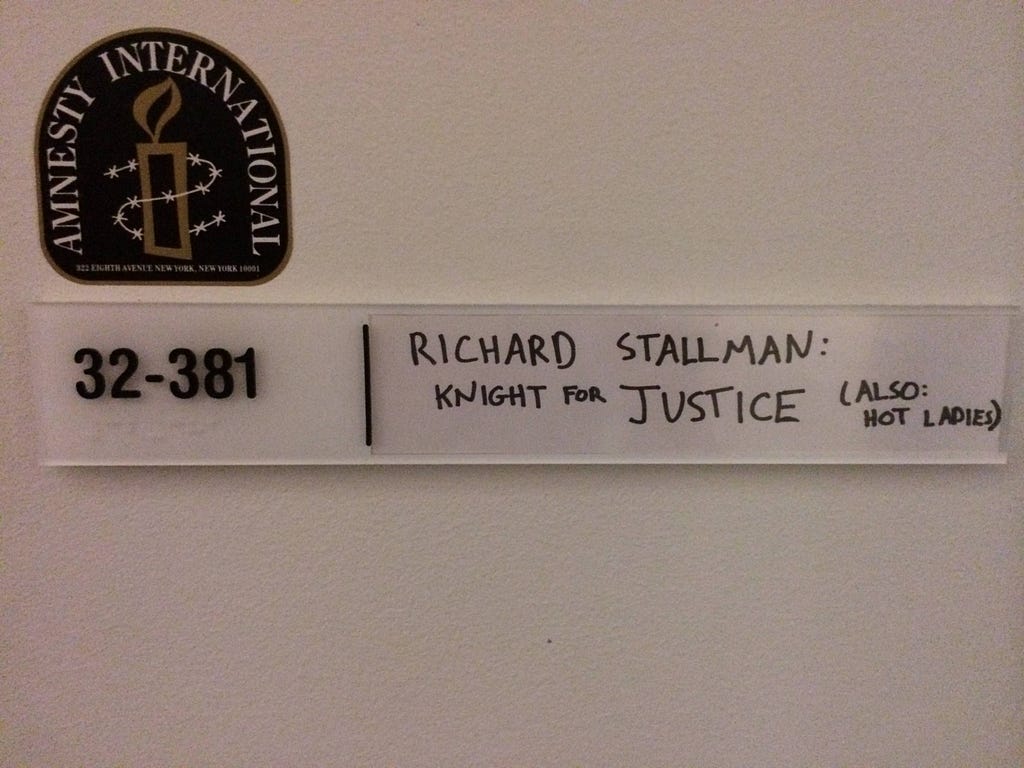
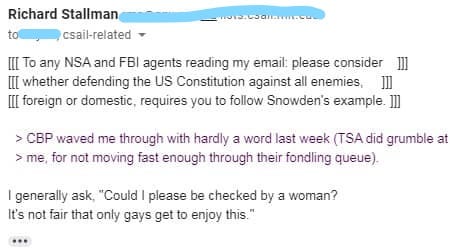
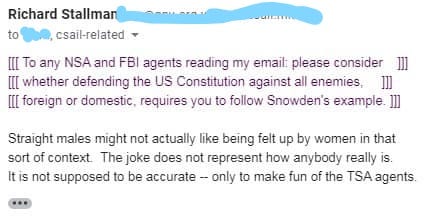




 The Guardian.
 The Guardian.


