This week Brexit, like parliament, seems to have been in a state of suspension. That might seem like a welcome lull after the drama of the last couple of weeks. In fact, it is the tense, humid moment before the inevitable thunder and lightning start; a pregnant pause with an unknowable but possibly freakish, phosphorescent and two-headed offspring.
Known unknowns
So we don’t know, but await, the Supreme Court’s judgment on the legality of prorogation. Well-informed people seem to be evenly split in their predictions, and speculation about the outcome, expected next week, is probably pointless. Nor do we know what would happen if the government loses (e.g. whether parliament immediately resumes and if so what it does, whether the government tries to prorogue again) much of which will depend on the terms of any such judgment.
Equally, but much more shockingly, we simply don’t know what the government is doing or planning as regards Brexit itself. Again, well-informed opinion seems almost evenly split between thinking the government is seriously pursuing a deal with the EU (and, then, split as to whether that is likely to yield a deal) and that it is just going through the motions as a prelude to announcing that no-deal Brexit is the only possibility, despite the supposed best endeavours.
It is all but impossible to really be sure what is going on, not just because interpretations vary but because so much of what is reported is the result of ‘spin’ operations of different politicians and officials with different interests feeding often contradictory information to journalists, think tanks and other intermediaries.
Renegotiations?
If there is a serious attempt at negotiation, it appears to be very low-key, for all Johnson’s vapid talk of oomph and positivity. Such sloganising is entirely inadequate because what is at stake isn’t having a ‘can do’ attitude’ but the hard, technical detail which he constantly avoids. Indeed, reports of his meeting this week with Jean-Claude Juncker suggest that it was only then that “the penny dropped” with Johnson that the idea he has been floating recently of an Ireland-wide food and livestock area could not provide an alternative to the backstop.
It is still the case that no detailed written proposals have been formally tabled, still less discussed, with the EU although since the Juncker meeting it has been reported that there has been a sharing of some confidential documents setting out the government’s ‘ideas’. By definition, we don’t know their content, but the horrible suspicion must be that they are some version of the already-leaked ‘secret papers’ on the agrifood idea plus, presumably, the old chestnut of ‘alternative arrangements’.
These reports also suggest that no formal proposals will be made until it is clear that the EU will “engage constructively” with them. This seems a curiously ‘chicken and egg’ approach, which has the potential to drag on forever – when time is already beyond tight. It is small wonder that Michel Barnier is asking Johnson to “stop pretending to negotiate”.
Indeed much else that is being said makes little sense. For example, the British negotiating team apparently “took comfort” from Juncker’s comment about having “no emotional attachment to the backstop”. Later, Johnson took the same message from it, claiming it to be a shift in position. But all this means is what the EU has always said – that some different arrangement that offered the same guarantees for an open border would be possible, not that the ragbag of undeveloped ‘ideas’ would be a viable alternative.
Even now, we seem to be going round the same old circles that have characterised the UK’s approach to Brexit since the beginning – a mixture of incompetence, lack of realism and, as in Steve Barclay’s Madrid speech on Thursday, an unpleasant and counterproductive bellicosity (nicely taken apart by Peter Foster of the Daily Telegraph).
It is almost as if, as happened during May’s premiership, the UK is again expecting, or hoping, that the EU will turn British aspirations into a legal text. There is no sign that the EU will do this, but evidence – in the comments of Xavier Bettel this week – of mounting frustration and bemusement. It was a high-profile example of something well-known to behind the scenes observers: Brexit is comprehensively shredding the UK’s international reputation.
Back to May?
Given this total lack of new initiatives, perhaps it is still the case that Johnson will end up presenting a (Northern Ireland only) version of May’s deal as his own, and spring it on the ERG and DUP at the last minute. That would entail rapidly ramming it through parliament using every piece of processual chicanery possible against the Ultras’ opposition. As I’ve noted before on this blog, the Ultras always assume that parliamentary scrutiny is their enemy and yet have often been proved wrong about that and been grateful for having use of it (for example in the meaningful votes), courtesy of the remainers they revile as undemocratic.
If we are just seeing a countdown to announcing that no deal has been reached, then we don’t know what Johnson’s intention is with respect to the Benn Act, requiring an extension be sought. He still talks as if he will ignore it, and Jolyon Maugham, the highly respected QC and anti-Brexit campaigner, has identified a possible loophole that might allow him to circumvent it if parliament is unable to close it. But it is equally possible that that will then trigger an election.
So we drift on, rudderless, with no way of knowing whether this is part of some strategic master plan cooked up in Downing Street or whether, indeed, the Emperor is stark naked. Very conceivably, it is both: there is a master plan, but it is utterly bereft of realistic substance. It is a monumental failure of political leadership, further exacerbating the woeful uncertainty besetting individuals and families – most viciously EU nationals in the UK and vice versa - as well as businesses and other institutions.
We literally have no idea of the terms in which we will relate to the outside world (not just the EU, and not just for trade) in just six weeks’ time, or even what kinds of food and medicines will be readily available. We’ve lived with this for so long that there is a danger of forgetting just how disgraceful it is.
The LibDem revoke policy
There seems little point in speculating further on the multiple scenarios that may now play out, but there have been some developments of potential importance. These include the new LibDem policy of - if they form the next government, and assuming that this occurs before Brexit - revoking the Article 50 notification.
If your current phone is on iOS 13.1 beta, you cannot directly migrate to your new iPhone 11 because that ships with iOS 13.0. This is what I did:
Put SIM in Pro, activate and do initial setup. Don't try to migrate data.
Download beta profile, reboot, upgrade.
Reset all settings and content.
After reboot bring both phones close to each other and you will be guided.
I migrated all data and settings from old phone to new phone via peer-to-peer Wifi. It will ignore existing Wifi access points and connect directly. Took me about an hour for 160 GB of data.
This process cannot migrate data protected inside the secure enclave. You will need to set credentials which are not stored in iCloud keychain. Also you need to enable apps like TAN generators or OTP wallets.
The interesting part of this article isn't the 'boring technology' used by a one-person start-up, nor even the start-up itself (though I must confess I'm enthusiastic about both) but rather the fact that such technology exists. I've been thinking in recent months that innovation in technology these days might now be the exclusive domain of large enterprises with a lot of resources and expertise in fields like cloud management, database technology, user interface design, and the rest. But, maybe I was wrong to think this. It's from 2018 but appeared in O'Reilly's '4 short links' today.
I still remember when I understood how immigration approvals actually work. I was in Vancouver airport, at the immigration office, a no-man's land, applying for a temporary Canadian work permit. For a software engineer like me there was a specific category to fast track approvals, with a few criteria. This meant I could gather the necessary paperwork and references, and "just" hop on a plane, applying on entry instead of through an embassy first. Hence what usually takes place behind the walls of administration was handled immediately and face-to-face; or at least, immediately after the obligatory 1-2 hours of waiting in line.
A funny moment was when the officer asked me which languages I knew, and I told him I spoke Dutch, French and English. Speaking both Canadian languages was a big plus. "No." he said, looking back at his monitor. "Uh... Computer languages." Ah. It was time to speak the magic incantation: "PHP, MySQL, Java." I knew exactly which table this man was looking at, of which a valid applicant needed to know 3. But the words in it were gobbledygook to him, and had I said my experience as a web developer had made me an excellent Fortran or COBOL programmer, he would've taken my word for it.
You might think the lesson is "immigration has to judge people on things they have no ability to evaluate," and that's true, but that's baby's first disenchantment. Most of this interaction took place at a big long counter in an open waiting room, so you got to listen in on everyone ahead of you. I went through this gauntlet multiple times over the years. You see a lot.
Immigrants or visitors with a poor grasp of the language often struggled. Some arrived entirely unprepared, family in tow. Some were left to sit for hours in a corner upon rejection, or just waiting for an interpreter. Derpy Australian snowboard instructors were also a frequent sight, fast tracked as Anglos unless they messed something up. For the most part though, people who were there were pretty sure to be approved, they just had to show their work.
One time an officer did in fact excuse himself to call up my new employer and confirm a few things, which we'd pre-arranged just in case. Eventually they started noticing in their system I was a repeat customer and eased up. I was also a western, educated person, who by then had gone native. The officer isn't just checking a list, they are trying to determine if what you are presenting is a coherent picture with multiple independent pieces of evidence that add up. Forging a degree, a job reference or a background story is not hard, the hard part is playing the part, which would require conning someone whose job it is to spot liars.
Their job is not to verify the information, rather their job is to compare the information and see if if it all matches. They're not just reading the paper, they're reading the person too. If you're nervous and fidgeting, expect to be there for a while as they tease everything apart. If you're confident, you'll blaze through. e.g. Losing my accent took work, you can't fake that, and that said more about my ability to be an integrated resident than a stack of papers ever could.
The entry criteria of degree, skill and means aren't actually evaluated. Only proxies, like a piece of paper that claims you received a degree from University X, or a person they can call who claims to be an employer at a company that exists and who believes in your value. If you can fake those convincingly enough, they'd never know.
The purpose of the gauntlet is mostly the gauntlet itself: it's a process that makes people jump through hoops. Ostensibly this is meant to catch the unqualified, but the thing is, nobody honest is going to try to apply to something they know they don't qualify for. Especially not when it comes to immigration, whose admission rules are signposted, and which requires a significant investment of time and resources. So what they're really looking for is people who are so underinformed they think they are qualified (Dunning-Krugers), or people who pretend to be qualified but are not (Liars).
This isn't even unique to immigration by the way: how many employers have actually called up their employees' colleges to verify they graduated, or even just asked them for a diploma or transcript? They'll call up a reference or two, for sure, but how deep do they really want to go? They'll only do that if the new hire turns out to be incompetent. Or, as in one company I worked at, you suspect someone has a gambling problem, and that their company laptop which was "stolen" was actually pawned off to pay debts. But I digress.
Think of college admissions, political parties, or just dating. We're all trying to figure out if people are qualified or suitable, but all we can see is whether they can convincingly play the part. Whether the person is qualified is mostly irrelevant, and only comes into play if it makes them act visibly insecure and nervous. Only the bad liars get caught this way. The good liars must be revealed over time, as the difference between competence and confidence becomes apparent.
An important difference is between earning respect and demanding respect. Someone who is competent can earn respect through their work, and gain status among their peers as a result. Someone who is not competent, but confident, can project status or maneuver their way into it, and use that to demand respect. That is, honest people tend to derive status from respect, dishonest people tend to derive respect from status.
Badges, degrees and certificates have been around forever, so this is a pretty old dynamic of tension. Are they called a senior engineer because juniors come to them with questions, or do they want underlings so they'll be seen as senior? Is their degree a sign of genuine talent and interest, or a sign of someone who expertly used group exercises and copied notes to get that paper at all costs? Does that certificate of compliance represent verified principles, or the authority of someone bribed to look the other way?
This is also why this post is titled "Know your Bluecheck." These little blue checkmarks of Twitter and other similar platforms were originally intended as mere verifications of identity, to avoid impersonation. But the people who have one are usually notable in one way or another, so the association between status and the badge was inevitable. The effect is that having a bluecheck confers status rather than just communicating the pre-existence of it. Any time someone publishes a ruleset, those rules can be gamed, and we've gamified status. So now the causal arrow goes predominantly from status to respect, instead of from respect to status.
I don't mean to swerve into "who bluechecks the bluechecks," no, I just wanted to highlight this point because there is also an enormous gap between how the media talks about immigration and how it feels to go through immigration. Very few bluechecks seem to get it these days, and they're the ones supposed to be good at explaining it. There is something nobody talks about and which is nevertheless universal for fellow immigrants I've spoken to.
Anyone who lives on any kind of temporary visa has an expiration date on their life as they know it. Their house, their job, their social circle, their local assets, all are tied to a piece of paper that's valid for only a few years at most. It's like a permanent Sword of Damocles hanging over your head, only it's worse, because this sword is always slowly descending. The only way to crank it back up is to run another gauntlet, to file more things, to accept not being able to travel if they take too long, and risk rejection if the political climate veers particularly conservative for a few years, or some email gets routed to the wrong inbox.
Employers don't understand this either. To the person assigned to help support your case from their end, you're just another item on their to do list, one they'd much rather procrastinate on. Because they don't realize failure means nuking a person's entire life over an avoidable screw up.
Converting this into permanent residency is often hard, and can take years even after having lived there for several, during which you're bound even more tightly to your job. Until you have it, you don't actually get to experience what it's truly like to live in a place. To feel free to put down roots, form long lasting bonds, pursue opportunities, and just accumulate life. To finally be sure you're never gonna have to pack it all up again unless you want to. It puts a damper on any long term plans and your willingness to invest yourself. The little indignities of having to deal with an at-times ridiculous bureaucracy are nothing compared to that sense of perma-dread, or the relief you feel when it's finally gone.
I can't say my foibles with immigration have been particularly tough, I had it easy all things considered, but I do know what it's like to become illegal and be told you have to leave through no fault of your own. Illegal immigrants who have no prospects of ever legitimizing, or ever returning, and who cannot enter the job market, have it far worse. They have to give up on a peace of mind so basic, most citizens don't even realize they have it, and cannot truly empathize with those who lack it.
The framing of either opening borders indiscriminately, or tightening the border checks misses the point. You don't want people who are unqualified, and you don't want frauds, but you can't evaluate qualifications or spot good liars at the border anyway. They pretend they can, but anyone with the means can and does work around them. Meanwhile, the dehumanizing aspects of having to justify your worth over and over to someone who doesn't have the first clue about you or what you do remains. As do the seedy alternatives people pursue in desperation.
I can also tell you a story. About a contractor who's auditing a struggling startup and learns that the product they failed to build was mostly a pretense for the multi-millionaire founder to become a "legitimate businessman" again. Because he wanted to overturn a travel ban due to multiple sexual assault convictions. Who then pulled the plug to cut his losses, and didn't pay his last invoices, cos he already spent over $1m on this.
Visas and passports are some of the most desirable documents of our day. Some people get them because they deserve them, others because they want them. The system can't really tell them apart, it only serves as a bottleneck, to limit the flow and eliminate the obvious mistakes, by inflicting mild to severe inconvenience and indignity on everyone who tries.
Suppose something goes wrong with your immigration paperwork, out of your own control, e.g. because the person responsible let something sit for a few weeks past some crucial deadlines. As a result, you, an entirely qualified person, cannot re-apply without raising some red flags of issuing dates that don't match up, risking rejection. In that case, hypothetically, you may discover that a certain kind of immigration lawyer will tell you you need to be one of the good liars, just for a while. To run the in-person gauntlet in that mode, so that it is resolved with the least amount of conflict for all parties involved. You may also discover their reasoning is sound, and all alternatives worse.
That might be a moment at which you truly understand how immigration works.
After you go through with it I mean, and emerge unscathed and paper in hand, having worked on your mime and diction. Hypothetically.
Apple’s rumoured Tile-like Bluetooth tracker may still be alive and well, despite not getting an announcement at the company’s iPhone launch event.
It appears work on the tracker is still underway, according to screenshots obtained by MacRumors. The screenshots show a new ‘Items’ tab in the revamped Find My app included in iOS 13. However, the tab isn’t available in the current public version of the app available with the iOS 13 software update. The screenshots came from an internal iOS 13 build.
The Items tab resembles the existing ‘People’ and ‘Devices’ tabs and presents a map at the top with a list of objects associated with your Apple ID below. In the screenshot, the Items tab takes the place of the ‘Me’ tab currently present in the Find My app. Instead, users can access ‘Me’ from a button floating over the map in the top right corner.
MacRumors reports that the new tab will be closely linked to Apple’s rumoured tracking device. Codenamed ‘B389,’ it’s rumoured to be called ‘Apple Tag.’ The screenshots show a button to add ‘B389,’ which will likely change to ‘Apple Tag’ before release. When users tap add, they’ll be able to track the location of items bearing the Apple Tag.
The Items tab also features a small description that reads “tag your everyday items with B389 and never lose them again.”
Find My will include features for locating Apple Tags
According to past rumours, iPhone users will be notified when separated from an Apple Tag. Additionally, the Find My app will include a button users can press to make the Apple Tag play a chiming sound to help locate it.
Users can also place items into ‘Lost Mode,’ which will provide contact info to other iPhone users who find the item.
Finally, users will be able to set ‘Safe Locations’ within the Find My app where they can leave items without getting notified that the object is missing. Users can also share item locations with friends and family members.
Find My will also reportedly include AR features. The internal iOS 13 build included a 3D red ballon asset that could be placed over tracked items to help users find it when scanning a room with their iPhone.
MacRumors says that the internal iOS 13 build that contained the screenshots was from June, so it’s possible that some or all of the details have changed. It’s also possible that Apple may not release the tags, but it’s clear that the Cupertino-based company has worked on the technology and software extensively.
While Apple didn’t unveil the tracker hardware at its September event, it could do so at a rumoured upcoming iPad Pro event in October.
One of the cooler features Apple packed into iOS 13 is ‘Audio Sharing,’ which allows two users to connect their Apple-owned headphones to an iPhone and listen to the same audio. On September 23rd Apple is adding support for even more Beats branded headphones with the W1 and H1 chips.
When the new feature launched on the 19th as part of the full version of iOS 13, it only supported AirPods and the high-end Powerbeats Pros. Since it supported both generations of AirPods, it was odd that Apple wasn’t supporting older generations of Beats headphones that also utilize the company’s W1 chip.
Now, Engadgetis reporting that Apple will allow users with older wireless Beats headphones with the W1 chip to be able to take advantage of the feature.
That means that all of these headphones should work with Audio Sharing:
A while ago, I worked on a simple side project to explore React’s Context API and higher-order components (HOCs), as well as the ES7 decorator syntax. While making this project, I read many articles and blogs that explained, or attempted to explain, these concepts and how to use them. Unfortunately, many of them were not very helpful. Some were too high-level and some didn’t help me make the logical connections needed to understand why things were done in a certain way. Others were so technical that I wound up spending so much energy and time wading through the jargon, that I didn’t even get to what I wanted to learn in the first place.
Fortunately, not all of the articles were bad, and the ones that were easy to follow helped me build a solid understanding of the concepts I was exploring. I wanted to be able to do the same for other engineers at The Times, so I decided to present a step-by-step demo on how to use the things I learned at JavaScript+ Talks, a bi-weekly forum we have to present anything JavaScript-related. My presentation wound up being deemed the “standard for all presentations moving forward” by one of the forum’s organizers! (If you want to take a look, see my repo.)
I’ve put together a quick guide based on my experience and the feedback I received that can help you ensure your demo is successful.
Bounce the idea off people representative of your audience
This may sound obvious, but it is a great first step to understand what assumptions you’re making of your audience and whether those assumptions are valid. Did you assume that everyone already knew what Context was for? Or what an HOC is? Find out what knowledge gaps you need to fill.
Also, what level of engineer are you making this for? Keep in mind that an associate engineer may not have been exposed to the same jargon or programming concepts as a senior engineer.
Explain the problem
Not everyone is going to understand why you’re doing things a certain way. For my demo, my audience needed to understand why I used Context in the first place. I illustrated that I had sibling components, ChildA and ChildB, that needed to share the same state and update at the same time. If we put state management in the parent component, we’d have to pass props into those children components. What if ChildA and ChildB were each nested 4 or 5 levels deep in other components? We’d have to drill those props all the way down!
Now that you’ve presented the issue, demonstrate how your approach solves that problem; Make the logical connection so that your audience understands why you’re doing what you’re doing. For my demo, I explained that Context solves the problem of passing props down into deeply nested components by serving as the master state by which our components can get the information they need to function.
… and provide an alternative approach, but explain why you chose yours
People may ask why they should use your approach and not some other one they’ve used or seen. That’s normal. Acknowledge that there are other approaches, but explain why you chose yours. For the issue of passing props to nested components, I explained that I could’ve used Redux to handle state management, but I didn’t want to add so much overhead for such a simple app.
Provide a step-by-step walkthrough of your code
Pretend that your audience does not understand a single thing you’re doing and add detailed comments to your functions. Even better, number those comments so that the reader knows the sequence of steps you took.
Within each of my branch’s README, I wrote a top level explanation of the steps to follow and in what files, and also left numbered comments explaining what my code does.
I also found that it’s helpful to provide a short summary of the walkthrough so that your audience can easily remember it before you go into the details of the implementation; for example, “In order to use Context, we must create it, provide it, and consume it.”
Provide links for further reading
If you feel like there’s someone else out there that has a better or extended explanation, provide a link to it. Chances are, your audience will also find it useful.
Start demoing!
These basic steps should help you develop an outline or framework for your demo. However, each demo is different and audience needs will differ, so ask your peers for advice and don’t be afraid to adapt the process. And if you have tips, please share!
Angie Siu is a frontend engineer on the Inbox Engagement team at The New York Times. She’s a native New Yorker and spends a lot of time thinking about food.
You can increase the response rate easily enough, just spend more time answering questions.
The problem is answering questions in a community instead of via customer support is nowhere near as valuable as encouraging members to answer each other’s questions.
This is better known as the organic response rate. It’s the % of questions answered by fellow members.
The only way to boost this metric (without sneakily removing posts) is by making members smarter and more motivated to help each other.
This is why a superuser program is typically the best approach to increasing the organic response rate. You’re supporting and training the very members who are eager to listen and have already indicated a willingness to help.
The more posts you receive, the more superusers you need. If the organic response rate is declining, you typically need more superusers or to do a better job supporting and motivating the superusers you do have.
This makes the organic response rate a far better measure of your work than most other metrics.
This is the start of a five part series of blog posts on Task-Specific Programming in Precalculus, subtitled “What Mark Did This Summer.” I wrote several blog posts in the Spring (last in May, linked here) about “task-specific programming languages.” I’ve been thinking a lot about them over the summer, and built my first prototypes for two task-specific programming environments. In these blog posts, I’m describing the two prototypes, and then considering the interaction with research on programming, on education, and on computing education research.
Both of my prototypes are built around teaching precalculus. My goal is to use computing to make precalculus less abstract and more relevant. I am inspired by Phil Sadler and Gerhard Sonnert’s work supporting the argument that precalculus is the most important set of concepts for students to succeed at college calculus (even more than high school calculus). I want to provide a programming experience that can be used in five minutes which can be integrated into a precalculus class.
The first prototype is for constructing image filters from simple matrix manipulations that are part of many precalculus texts. In a digitized picture, each pixel has a red, green, and blue component (or channel) for its color. All the red values from the pixels can be described as a matrix for the red channel in the picture.
This is the opening screen for the prototype.
The image being manipulated is on the left. The list of matrix manipulations appears in the upper left. The manipulated image is on the upper right.
Across the bottom appear the matrices for the red, blue, and green pixels of this picture. A text description explains where these matrices come from. I tried hard to get the matrix representation close to what students might see in a precalculus textbook. That’s part of being able to be “integrated into a precalculus course.” The teachers I’ve shown this to have appreciated that attention — they don’t want to have to explain differences between the user interface and the textbook.
Changing the picture (see the button under the source picture), updates the matrices, the description, and re-runs the matrix transformation steps on the new input picture.
The lower right hand corner is an inspector to check individual pixel values. This was a suggestion from Line Have Musaeus from Aarhus when I demonstrated this prototype at ICER in Toronto. Precalculus teachers want students to understand how the math is working at the matrix-element level, so I give them a way to check individual matrix values. That’s when I added the block-color picture into the picture set — it makes it easier to understand the four quadrants, what the base colors are, and how the transformations change them.
Each of the matrix transformations appears on a separate card in a deck. Here’s one:
This transformation does a scalar multiplication of 0.5 (which the user sets by changing the text field in the statement). A pull-down lets the user pick which matrix they want to modify. When the user picks a matrix, the display in the lower left updates to show the new matrix. Again, I’m trying to get the formatting for scalar multiplication right from the textbook. The text description on the right updates to describe the selected transformation, and the text and matrix displayed on the lower right updates to show how that matrix is being transformed by this operation.
Here’s the other possible transformation (selected by radio button):
Here, we’re changing one of the channel matrices (pull down for red, green, or blue) to basic element-by-element arithmetic (addition or subtraction) of two selected matrices: red, green, blue, or a matrix of all-255’s. (I’ve had several suggestions to also provide the option of having a matrix of all the same number — all 1’s, all 0’s, or something like all-7’s).
I’m using a semi-transparent gray graphic to “hide” the unselected operation on the card. I want students to know that they can do either operation, so I don’t want it to disappear, but I want to show that it’s not selected.
Currently, the user presses the “Do It” button to process the individual transformations, or to do the whole program of transformations. You can have an arbitrary number of operations, and you can do some interesting transformations, like image negation:
Or making a scene look like it’s nearing sunset:
Press the Change Picture button to get a different input picture. So, the list of operations specifies a process which can be applied to an arbitrary input. It’s a program (for a specific task), but it’s not coding (an important distinction that Wil Doane pointed out to me at ICER this year).
I built these in Livecode. The source file is available here. I’m also making binaries available for Macintosh and for Windows. (Yes, I can provide Linux, if someone’s interested.) These are provided with no warranty or guarantee — these barely do what I describe, and probably have lots of other mistakes, holes, weaknesses, and vulnerabilities. They’re slow as molasses. I strongly discourage you from using my prototypes with students. As I describe in Part 4 of this series, this is nowhere near where it needs to be in order to be useful.
If this is you, then you are not alone. Thunderbird 68 comes with this fancy new profile per install thing that the Firefox folk invented with Firefox 67. It serves a purpose, but for the vast majority of users it is nothing but a nuisance that offers yet another reason for things to go wrong. But it can be beaten and once set should remain the same basically forever. The current issues are mostly about changing from 32 to 64 bit builds and once that is done should not have to be repeated.
In my instruction I assume that the profile is located in the default location. if you changed this default to some other drive for space reasons for example, you will need to correct my instructions so your looking in the right place for your old profile.
First navigate to the Troubleshooting information on the help menu. Scroll to the bottom of the "Application Basics" information and select the last entry. About:profiles.
This will open a new tab showing the about profiles information.
This heading is followed by all the registered profiles Thunderbird currently has registered.
If you have more than the current default profile listed, it is worth noting the name of the current default and clicking the "Launch profile in a new browser" button for other profiles shown. The label is incorrect and awaits correction. But clicking the button will launch Thunderbird in a new window with the selected profile loaded. If it happens to be what you are looking for. Click the Set as default button and you good to restart.
If none of the profiles listed here are your missing one, you will need to move on to creating a new profile that is in the same location as the old profile. Use the "Create a new profile" button at the top of the about:profiles page to start Thunderbirds Create profile wizard.
The action here is to use the Create profile button. This will open a Create profile Wizard dialog.
Lots of information here, but just click Next.
This dialog is upset because the name already exists, as does the location, so change the name. To anything. Something like OldProfile or MyProfile might be a good easy name to remember if you ever have issues in the future.
Now click the choose folder button. This will open a standard open dialog in the default location of the profiles. What I see looks like this
This list of files with their random characters and "profile names" on the end is the same list as shown in the about:profiles page. But there should be one more profile listed here than is shown in the about:profiles page. Select it as the location for your new profile and click ok. Then in the profile wizard click finish.
You will be returned to the about profiles page and the list will be refreshed with your new profile name which will show as default. A restart of Thunderbird should see the correct profile launched.
Profile per install and downgrade protection
Thunderbird 68 also introduced a Mozilla feature, profile per install and picked up the downgrade protection along with it. This actively prevents downgrading from one version to another. Mozilla also introduced a new command line option to override the downgrade protection.
For those using Thunderbird this command line also works. So I suppose I need to offer instructions for that.
For Windows users,
using the run command (Windows key+R)
Entering the following command line for 32 bit Thunderbird
Huawei’s CEO Richard Yu said if the U.S. lifts its ban over the company then it will push an over-the-air update to include Google’s services to its Mate 30 phones “over one night.”
Android Authority reported that the executive said he would double down on ensuring the update was done.
That means the phone won’t have critical apps like Google’s Photos, Messages, YouTube, Keep, Google Maps, Google Drive, Duo, Google Assistant, Gmail, and more.
During the event, Yu announced Huawei’s Mobile Services, its replacement for the lack of Android. This will include apps like Huawei Music, Huawei Video, Huawei Browser and its own Huawei App Gallery. The HMS is open to third-party developers, and Huawei has provided a variety of software development kits to help third-party developers create apps.
Yu, however, indicated that he wasn’t so sure how soon the U.S. would lift that ban.
During the interview with reporters after the company’s event, Yu said the company was a “bargaining chip” in the trade currently occurring between the U.S. and China.
He added that the war was “damaging two great nations.”
U.S. President Donald Trump placed the China-based company on an Entity List, which means it is not allowed to work with any U.S.-based companies. The ban was slightly lifted in June. It also announced that it was extending restrictions to companies currently working with Huawei to find alternative measures by 90 days.
As of now, more than 130 companies have applied for licences to work with Huawei, but the Commerce Department has not approved any of them. It is unknown if Google has applied to work with Huawei.
MobileSyrup has also learned that the first release of the Mate 30 Pro will be on September 26th in China, with pre-orders starting on September 19th.
The phone series will then launch in Malaysia, the Philippines, Singapore and Thailand in October and after that will launch in Europe.
I wasn’t planning on upgrading until 13.1 anyway because I wanted to make sure I was running the same version on the iPad as well, but apparently that’s been moved up to the 24th, which is great news.
This large slab office, seen here in 1981, has been recently replaced by the Trump Tower. It started life as the Shell Oil building, completed in 1957. It was built by Dominion Construction, who designed it in-house. Although there was an architect employed by the company, engineer John McLaren was credited with the design, although it should have had an accredited architect to sign off. It was initially headquarters for Shell’s Western Division. Initially established in Canada in Montreal, Shell, like other North American oil companies established a new office in Vancouver, then moved operations to Alberta some years later as oil exploration and exploitation shifted the centre of Canadian activity. (The company headquarters moved there from Toronto in 1984). The office uses continued, with the building apparently renamed as the Weststar Building, (although that could be an error, as the Westar Building was next door).
Plans were approved to reuse the abandoned building. In 1994 it was proposed for reuse as the Newport City Club – but that project failed part way through redevelopment. The Vancouver Sun reported the project: “Six floors of the Weststar Building on 1188 West Georgia are being converted into the Newport City Club that will house three restaurants, a health club, meeting and reading rooms. Final approvals have been received for construction in north Squamish of the companion Newport Ridge Golf and Country Club, a 5,800-yard executive-type course, 900 residences (single units and townhouses) and a 100,000 square foot clubhouse. “Due to geographic limitations there’s only 90 acres for golf we’re developing a course with 7 par-threes and 11 par-fours,” says Newport vice-president Peter Heenan, a Vancouver businessman.” The project was developed by Andrew Leung, who had previously developed resorts and golf courses in the Dominican Republic, and the financial backing was supposedly coming from three Hong Kong businesspeople.
By 1996, the 1957 structure had been stripped of its exterior walls and interior finishes, but within a year the project was in financial trouble, and soon in receivership with a number of court actions and builders liens. A new proposal was submitted to replace it with a 27 storey office tower to be called Golden Ocean Plaza, but the project never proceeded. The site would sit as a vacant and derelict frame for many years. It was later owned by Cadillac Fairview, and in 2003 they sold it to the Holborn Group, who had already acquired the adjacent Terasen Building. The Trump Tower (with no financial involvement by the Trump organization; just a management and branding role), took several years to develop. Initial designs were rejected, until the Arthur Erickson inspired ‘twisting’ tower was approved, with an initial sales launch as the Residences at Ritz-Carlton, but the market for luxury residential towers in 2008 was depressed, and the deal fell through, to be relaunched four years later under the Trump brand, finally opening in 2016.
Image source: City of Vancouver Archives CVA 779-W14.13.
Technologies are often created with good intent, to make our life easier, to solve problems in a convenient way. The Management Engine in Intel’s CPUs, for instance, was intended to make the life of admins easier. It allowed for remote access on a very low level, so they could even do complete remote reinstalls of a machine. And if you have to manage a large fleet of machines, distributed within a larger enterprise, this can save huge amounts of effort, time–and thus money.
Implementation details matter
Sadly, many of these technologies that were meant as good are implemented in a way that bears more harm than advantages. The ME, for example, is fully proprietary and closed. It is even undocumented in most parts, so it can not be publicly reviewed and audited. It is a piece of software, software has bugs and so has the ME implementation; the news are full of it lately.
The same is true for something that many mobile phone users are totally unaware of–the SIM Application Toolkit, also called SIM Toolkit, SAT/USAT or STK.
The SIM Application Toolkit
Its name already points to the origin: the SIM card. It is the tiny chip card you insert into your phone, to get access to the cellular network of an operator. The SIM card used to be a fairly simple device, which you can imagine as the key to unlock the access to the network: i.e., it stores a secret (a cryptographic key) along with an ID (the IMSI) and some details about the issuing operator, etc. This data set grants you access to the operator’s network.
But phones [also called handset, or ‘terminal equipment’ (TE), in mobile terms] have become more and more powerful. And setting up these cards has become more and more complicated; you need an SMS center number, details for the MMS server, mailbox dial-in number… and a lot more. All this needs to be properly set up in the mobile, to make full use of both the mobile and the network. To make this even more complicated, these details (and the way to set them up) are different from operator to operator. The process for this initial setup is (also) called provisioning. It was to make this (and other things) as convenient and least painful as possible for users that SAT was invented.
The name SAT tells us not only that it is SIM-related, but also that it contains the term application: SIM cards can, and today they usually do, indeed contain small applications or applets. They are small computers on their own, they run code, and they can indeed be programmed. Most are based on the JavaCard standard and can be programmed with small Java applets. The SAT defines a standard way to interface the SAT applets with the modem and the phone.
Here comes the tricky part
SAT applets can have access to modem traffic, especially to SMS. They can execute on the SIM card–pretty much without any knowledge from the user. SAT applets can even initiate unsolicited communication (e.g. sending SMS) and can get updated and/or changed by the operator, over the air. All this is part of the 3GPP standards. SAT applets can also interact with the user, if the handset implements the user interface parts of SAT with simple menus, limited icon display and reading input from the ‘dial pad’.
SAT applets are an important part of the provisioning by the operators, when new SIM cards get activated. But their implementation details are not public. Their code is not public, and is thus likely to contain security flaws.
The SIM Jacker and the S@T Browser
One of these flaws has just surfaced: it is called SIM Jacker, and it exploits the S@T Browser component, found in many SIM cards. It allows for exposing critical user data, like the currently connected cell tower ID. The cell tower ID can easily be matched against databases, and is pretty much equal to having a geographical position. An attacker would thus be able to locate a user–accurately enough to determine, for example, if someone is at home or not. And it must be assumed that more information about the user can very well be extracted in a similar way.
This is possible when attackers send a specially crafted SMS to a mobile. It is not visible to the user and will initiate, again without the user knowing, an automated response by the mobile. The mobile then sends it back to the attacker, exposing for example what the user cell tower ID is.
Protecting the Librem 5
Purism is actively working with its modem manufacturers in order to protect Librem 5 users from such exploits. We are also investigating how to have a configuration option: how to opt-in to SAT, if you really need it (e.g. for initial provisioning), and disable it again afterwards–in order to avoid any such forms of exploitation.
Discover the Librem 5
Purism believes building the Librem 5 is just one step on the road to launching a digital rights movement, where we—the people—stand up for our digital rights, where we place the control of your data and your family’s data back where it belongs: in your own hands.
After updating our entire line of Blix ebikes earlier this year, we decided to push ourselves one step further and launch an entire line of unique and versatile accessories including racks, baskets, and bags. All accessories are 100% compatible with all recently updated Blix models with the built in modular rack system. In this Blix blog we will provide overviews of each of the new accessories ready to help make your riding even more stylish and practical!
Blix Branded Bags:
All Blix bags are water resistant, have plenty of pockets, and can be used on a Blix bike or as a shoulder bag. All bags fit every Blix model, regardless of model year! Add style and utility to your bike with the knowledge that your belongings will be kept safe and dry while you ride.
Everyday Bag:This bag is perfect for everyday adventures. Pack your laptop, gym clothes, or lunch for a hike. Double clips on the front keep your belongings extra secure for all rides.
Tote:This bag is perfect for beach days, farmer's market runs, and work! You can fold the top over or pack it full. Clip it onto the pannier rail or grab the tote and go.
Smart Pannier:Double your cargo and still have access to your rear rack for even more belongings! You really can bring all you need with the Smart Pannier, and you can turn it into a cross-body bag in a matter of seconds.
Top Rack:Perfect for the Vika+, this bag straps to the top of the rear rack and still lets you fold your ebike. Outer and inner pockets make this bag perfect for lunch, work supplies, and storing your phone and keys while you ride.
Better with Baskets:
Front Basket:This stylish basket directly attaches to the front headtube and stays straight when you turn and when you stop. It also includes a bamboo plate and cup holder for your coffee, tea, or water bottle. Fill your basket with flowers, farmers' market goodies, or a gym bag!
Large Basket:This super versatile basket is great for larger loads and can be mounted to the front or rear rack. Fill this basket with groceries, sports equipment, or camping gear and be ready for your adventure.
Practical Platforms:
Front Rack: This rack connects directly to the headtube for great weight distribution and easy handling when riding. This rack can be used on its own to carry cargo or add the large platform or large basket on top for even more cargo space.
Platform: This platform can handle everything and anything. Itmounts to both the front and rear rack. Grab the pizza, coolers, gym bag, you name it. The cargo possibilities are endless!
More information on the updated lineup can be found here!
Anyone buying a monitor in 2019 should consider a 4K monitor first: They don’t cost much more than non-4K models, and they look a hell of a lot better. After spending 50 hours researching nearly 60 monitors and testing six finalists, we found that the HP Z27 is still the best 4K monitor for most people. It’s extremely color accurate, it can charge your laptop from its USB-C port, and it has a highly ergonomic stand.
I don't know why publications continue to promote this tired - and wrong - argument (I'll put it in the list of academic papers I need to write, offering a refutation of the view). It is ironic that the example in this argument actually proves the opposite of the point. “Using the analogy was not hard; the problem was thinking to use it in the first place,” Willingham explained. Well that's right. Unless you understand that analogy works independently of domain, you wouldn't think to use it.
Today Automattic announced it has closed a new $300 million Series D, with Salesforce Ventures taking the entire round. This puts us at a post-round valuation of $3 billion, three times what it was after our last fundraising round in 2014. It’s a tremendous vote of confidence for Automattic and for the open web.
I met Marc Benioff earlier this year, and it became obvious to both of us that Salesforce and Automattic shared a lot of principles and philosophies. Marc is a mindful leader and his sensibilities and sense of purpose feel well aligned with our own mission to make the web a better place. He also helped open my eyes to the incredible traction WordPress and WP VIP has seen in the enterprise market, and how much potential there still is there. I’ve also loved re-connecting with Bret Taylor who is now Salesforce’s President and Chief Product Officer. Bret’s experience across Google Maps, Friendfeed, Facebook, Quip, and now transforming Salesforce makes him one of the singular product thinkers out there and our discussion of Automattic’s portfolio of services have been very helpful already.
For Automattic, the funding will allow us to accelerate our roadmap (perhaps by double) and scale up our existing products—including WordPress.com, WordPress VIP, WooCommerce, Jetpack, and (in a few days when it closes) Tumblr. It will also allow us to increase investing our time and energy into the future of the open source WordPress and Gutenberg.
The Salesforce funding is also a vote of confidence for the future of work. Automattic has grown to more than 950 employees working from 71 countries, with no central office for several years now. Distributed work is going to reshape how we spread opportunity more equitably around the world. There continue to be new heights shown of what can be achieved in a distributed fashion, with Gitlab announcing a round at $2.75B earlier this week.
Next year Automattic celebrates 15 years as a company! The timing is fortuitous as we’ve all just returned from Automattic’s annual Grand Meetup, where more than 800 of us got together in person to share our experiences, explore new ideas, and have some fun. I am giddy to work alongside these wonderful people for another 15 years and beyond.
I’m at the ID2020 (@ID2020) Summit in New York. The theme is “Rising to the Good ID Challenge.” My notes here are accumulating at the bottom, not the top. Okay, here goes…
At that last link it says, “The ID2020 Alliance is setting the course of digital ID through a multi-stakeholder partnership, ensuring digital ID is responsibly implemented and widely accessible.”
I find myself wondering if individuals are among the stakeholders. Also this:
There is also a manifesto. It says, among other things, “The ability to prove one’s identity is a fundamental and universal human right.” and “We live in a digital era. Individuals need a trusted, verifiable way to prove who they are, both in the physical world and online.”
That’s good. I’d also want more than one way, which may be the implication here.
The first speaker is from Caribou Digital. What follows is from her talk.
“1. It’s about the user, not just the use case.”
Hmm… I believe identity needs to be about independent human beings, not just “users” of systems.
“2. Intermediaries are still critical.”
The focus here is on family and institutional intermediaries, especially in the less developed world. Which is fine; but people should not need intermediaries in all cases. If you tell someone your name, or give them a business card no intermediary is involved. That same convention should be available online.
“3. It’s not just about an ‘ID.’ It’s not even about an identity system. It’s about an identification ecosystem.”
This is fine, but identification is about what systems do, not about what individuals do or have; and by itself tends to exclude self-sovereign identity. Self-sovereign is how identity works in the physical world. Here we are nameless (literally, anonymous) to most others, and reveal information about who we are (business cards, student ID, drivers license) on an as-needed basis that obeys Kim Cameron’s Laws of Identity, notably “minimum disclosure for a constrained use,” “justifiable parties” and “personal control and consent.”
4. “A human-centered, inclusive, respectful vision for the next stage of identification in a digital age.”
We need human-driven. Explained long ago here and here.
That’s over and the first panel is on now. Most of it is inaudible where I sit. The topic now is self-sovereign and decentralized. The audience seems to be pushing that. @MatthewDavie just said something sensible, I think, but don’t have a quote.
For the interested, @identitywoman, @windley and I (@dsearls) put on the Internet Identity Workshop, October 1-3 at the Computer History Museum in Silicon Valley. This one will be our 29th. (The first was in 2005 and there are two per year.) It’s an unconference: no keynotes or panels, just breakouts on topics attendees choose and lead. It’s the most consequential conference I know.
@MatthewDavie: “If we do this, and it doesn’t work with the current power players, we’re going to end up with a second-class system.” I suspect this makes sense, but I’m not sure what “this” is.
“Sovereign ownership of data” just came up from the audience. I think it’s possible for individuals to act in a self-sovereign way in sharing identity data, but not that this data is exclusively own-able. Some thoughts on that from Elizabeth Renieris (@HackyLawyER). Mine agree.
The second panel is on now. It’s mostly inauduble.
Now Dakota Gruener (@DakotaGruener), Executive Director of ID2020 is speaking. She’s telling a moving story about a homeless neighbor, Colin, who is denied services for lack of official ID(s).
New panel: Decentralization in National ID Programs.
Kim Cameron is on the panel now: “I spent thirty years building the world’s identity systems.” There were gasps. I yelled “It’s true.” He continued: “I’m now trying to rile up the world’s populations…”
John Jordan just made a point about how logins are a screwed up way to do things online and don’t map to what we know well and do in the everyday world. (I think that’s close. The sound system is dim at this end of the room.)
Kim just sourced my wife (who is here and now deeper than I am in this identity stuff), adding that “people know something is wrong” when they mention shoes somewhere and then see ads for shoes online. “We have technology. We have consciousness. We have will. So let’s do something.”
John: “What we want is to be in control of our relationships. Those are ours. Those are decentralized… People are decentralized.”
Kim: “What it means is recognizing that identity is who we are. It begins with us. .. only we know the aggregate of these attributes. In daily life we reveal some of those attributes, but never the aggregate. We need a system that begins with the indi and recognizes that they are in control, and choose what they reveal separately. We don’t want aggregates of ourselves to be everywhere. We need systems that recognize that, and are based on control by the individual, consent of the individual.”
“We do need assertions from people other than ourselves. The government can provide useful claims about a person. So can a university, or a bank. I can say somebody is a great guy. The identity fabric is all these claims.” Not quite verbatim, but close.
John: “Personal data should never be presented in a non-cryptographic way.” Something like that.
Kim on the GDPR: “We have it because the population demanded it… what will happen is this vision of people in control of their identity, and the Internet becoming reliable and trustworthy and probabilistic (meaning you’re being guessed at) rather than fully useful. Let’s give people their own wallets, let them run their own lives, make up their own minds… the world of legislation will grow, and it will do that around the will of people. … they need an identity system based on individuals rather than institutions overstepping their bounds… and we will see conflicts around this, with both good and bad government interventions.”
John: “I’d like to see legislation that forbids companies from holding personal information they don’t have to.” (Not verbatim, but maybe close. Again, hard to hear.)
Kim: “The current identity systems of the world are collapsing… you will have major institutions switching over to these decentralized identity systems, not from altruism, but from liability.”
Elizabeth heard and tweeted about one of the thing that was inaudible to me at this end of the room: “Thank you @LudaBujoreanu for addressing the deep disconnect between the reality on the ground of those without ID and the privileged POV from which many of these #digitalid systems are built @ID2020’s #id2020summit cc @WomeninID”
Next panel: “Cities Driving Innovation in Good ID.”
Scott David from the audience just talked about “Turning troubles into problems,” and the challenge of doing that for individuals in an identity context.”
This reminds me of what Gideon Litchfield said about the difference between debates and conflicts, and I expanded on a bit here. Our point was that there are some issues that become locked in conflict with no real debate between sides. Scott’s distinction is toward a way out. Interesting. I’d like to know more.
He adds, “Already lots of talk of putting people first. Hopefully the #digitalidentity community will deliver, and not fall into the trap of saying one thing and doing another, a common issue with in the tech-for-development/#ICT4D sector. #ID2020#GoodID“
Two tweets…
@Gavi: “Government representatives, tech experts & civil society will gather at #UNGA74 today to discuss the potential of #DigitalID. Biometric ID data could help us better monitor which children need to be vaccinated and when. #ID2020”
Now I can’t find the other one. It argued that there is a 2-3% error rate for biomentric.
For lunch David Carroll (@ProfCarroll) of The New School (@thenewschool) is talking. Title: A data quest: holding tech to account. He starred in The Great Hack, on Netflix.
He’s sourcing Democracy Disrupted, by the UK ICO. “the sortable, addressable… algorithmic democracy. “Couterveillance: advertisers get all the privacy. We get none.”
“Parable of the great hadk: data rights must externd to digital creditoship. Identity depends on it.”
200 million America has no access to data held about them, by, for istance, Acxiom.
“A simple bill of data rights. Creditorship, objection, control, knowledge.” (Here’s something that’s not it, but interesting enough for me to flag for later reading.)
Now a panel moderated by Raffi Kirkorian. Also Cameron Birge of Microsoft and the Emerson Collective, Karen Ottoni, Demora Compari, Matthew Yarger and Christine Leong. (Again the sound is weak at this end of the room. Not picking up much here.)
Okay, that’s it. I’ll say more after I pull some pix together and complete these public notes…
Well, I have the pix, but the upload thing here in WordPress gives me an “http error” when I try to upload them. And now I’ve gotta drive to Boston, so that’ll have to wait.
I am very busy with serious work but I took a few hours out of my schedule to upgrade from iPhone Xs Max to iPhone 11 Pro and from Watch Series 4 to Series 5. There is soooo much to talk about, but for now let me just say that the camera on the 11 Pro is beyond amazing and the always-on-display on Series 5 changes the game once more.
I also used a new migration process on iPhone without iTunes and iCloud backup. Peer-to-peer Wifi from phone to phone. I am loving it. I did have to go through a bit of a process because 11 Pro was on iOS 13.0 and Xs Max already on 13.1 beta 4. Now they both are on 13.1.
And yes, smaller iPhone once again. Now I can go commando again (without a case on iPhone). Series 4 and 5 are both Steel, but I switched from silver to black. And the 11 Pro is green, of course!
Justin Trudeau@JustinTrudeau
What I did was hurtful to people who live with intolerance and discrimination every day. I recognize that, and I ta… twitter.com/i/web/status/1…
It is almost too obvious now to point out the rank hypocrisy of the Trudeau brand: one that has zero tolerance for inappropriate touching, except for his own; one that preaches respect for Indigenous Canadians, except when you can get a cheap laugh at a Liberal fundraiser.
One that claims to run government differently, but uses the same old tactics to get its way; one that lectures about standing up to oppression, except oppression in certain ridings.
One that insists it is working in the interests of the average Canadian, but tries to curry favour with the above-average Canadian in private. One that renounces the politics of fear and division, except when the politics of fear and division can be politically advantageous.
And one that has spent its entire political existence proselytizing about tolerance, inclusivity, sensitivity and acceptance, all the while knowing — and hiding — a past that includes multiple instances of dressing up in blackface.
Liberal Leader Justin Trudeau made one good point while delivering his apology Wednesday, after Time magazine published a 2001 photo of him wearing brownface as a 29-year-old teacher at an Arabian Nights-themed school party.
"If everyone who is going to be standing for office needs to demonstrate they've been perfect every step of their lives," Trudeau said, "there is going to be a shortage of people running for office."
Putting aside the enormous chasm between being "perfect" and wearing blackface three times, Trudeau makes a valid point about the need for a political machine that makes allowances for human flaws. If we don't allow people to grow and change, we end up with slates of sanitized candidates who planned their political careers from birth and wore suits to middle school, which is, without a doubt, a most hellish version of politics.
But Trudeau's argument would carry more weight had his war room not spent the week prior furiously digging up reasons why his opponents should be disqualified — reasons that include what they once said, once advocated for, or with whom they previously associated.
None of those claims were close to as bad as a grown man wearing blackface on multiple occasions. Had Trudeau been a regular candidate of any party, including the Liberals, he would've been closing up his campaign office by now.
Earlier this year, the United States was grappling with a political blackface scandal of its own: Virginia Gov. Ralph Northam was accused of wearing blackface in a 1984 yearbook photo.
That was the time, if ever, for Trudeau to own his actions, instead of being cornered into acknowledging them, as he has been now.
Instead, Trudeau carried on as if — to borrow his own words — he had been perfect every step of his life, with the Liberals then launching a co-ordinated attack on the Conservatives, accusing them of being soft on white supremacy.
Knowing what we know now, if you imagine Trudeau wearing black makeup and singing Day O while accusing Conservative Leader Andrew Scheer of refusing to take racism seriously, the attack loses its potency.
There is no question that the revelations of the last 24 hours are shocking, and that they could very well shift the direction of the federal election campaign.
But at the same time, for those familiar with the ways the karma gods of politics operate, they are wholly unsurprising, particularly considering the cracks in the Trudeau brand that have given way thus far.
It follows that the politician who preaches most about loving his wife probably loves his mistress more, and the one who rails against gay marriage would never do so in front of his secret male lover. The most sanctimonious of leaders are so often the sinners.
And Justin Trudeau is a perfect example: a self-appointed moral steward in a turban and dark makeup.
When you run on sanctimony, govern on arrogance and expect perfection, you find yourself in an awful quandary when you fall short of your own standards.
Each Canadian will decide for themselves whether Trudeau's actions — and failure to disclose those actions — warrant forgiveness. But his days as a progressive icon — the one who quipped "Because it's 2015" when asked why he prioritized gender parity in his cabinet, and boasted that "Canada is back" after his election — are over.
Trudeau truly has done some important, progressive things for Canada: from opening the door to those fleeing violence and persecution, to putting climate at the forefront of our national agenda (however lacklustre his actual policies might be). But from now on, Trudeau will never be able to separate his record from a few photos of him participating in a racist, ignorant, foolish act.
Maybe that's unfair. Blame the guy who made the rules.
This column is part of CBC's Opinion section. For more information about this section, please read our FAQ.
It didn’t take long for critics to go after Apple’s recent product event at Steve Jobs Theater. However, the backlash had a dramatically different tone this time around. Instead of focusing on the new products unveiled on stage, much of the criticism was aimed at the event itself.
The New York Times ran an opinion piece calling for the end of Apple keynotes and claiming there is no longer a place for such “pageants” in today’s polarizing world. Others took to Twitter to say how Apple’s dessert offerings suggested the company is tone deaf or to complain about members of the audience becoming too emotional while hearing Apple Watch users tell stories of how the device saved their lives.
While Apple cynicism isn’t new, the preceding opinions represent a new kind of outrage. Apple keynotes remain some of the most valuable marketing events in today’s media landscape. In addition, keynotes provide a number of intangibles that it would be difficult for Apple to communicate any other way. It is in Apple’s best interest to continue hosting keynotes and product events, especially as the company moves into the wearables era.
“But what started as a Steve Jobs TED talk has become a parody — a decadent pageant of Palo Alto executives, clothed in their finest Dad Casual, reading ad copy as lead-ins for vaguely sexual jump-cut videos of brushed aluminum under nightclub lighting. The events are exhausting love letters to consumerism complete with rounds of applause from the laptop-lit faces of the tech blogging audience when executives mention that you (yes you!) can hold the future in your hands for just $24.95 per month or $599 with trade-in.
The entire event is at odds with our current moment — one in which inequality, economic precarity and populist frustration have infiltrated our politics and reshaped our relationships with once-adored tech companies. But it’s not just the tech backlash. When the world feels increasingly volatile and fragile, it feels a little obscene to gather to worship a $1,000 phone. Serving journalists pastries topped with gold leaf doesn’t do much to help either.”
My initial reaction to Warzel’s article was that it must have been some kind of manufactured outrage piece since the “pageant” he describes didn't come close to describing an actual Apple keynote. The media doesn’t “worship” Apple at these events. The rounds of applause aren’t coming from the media / press.
The following screenshot from inside Steve Jobs Theater during the recent Apple event does a good job of showing who attends Apple keynotes at Steve Jobs Theater. Contrary to what some may think, the media and press, denoted by the laptops in use, make up 55% to 60% of the audience. The rest of the crowd is comprised of Apple employees, guests, and VIPs.
Apple’s decision to serve refreshments, which did include delicious desserts, isn’t obscene. Instead, it’s a courtesy extended to guests who wouldn’t otherwise have a chance to eat anything. Many tech writers and reviewers spend up to six hours on Apple event days doing their jobs (shooting videos, taking photographs, getting hands-on time with the products, filing reports by strict deadlines).
After reading Warzel’s piece a few times, the only logical takeaway was that the Apple keynote was a victim of a deeper discontent that he holds towards Apple. Warzel sounded uncomfortable with the idea of Apple having the audacity to sell approachable luxury in a world that is apparently turning against tech companies.
Value
Not surprisingly, Warzel failed to recognize any reason why Apple keynotes still matter and are of immense value in today’s media landscape.
Apple derives three primary benefits from its keynotes:
Earned Media. Apple keynotes command days of media coverage during an era when the news cycle is measured in hours. No other company is able to grab the kind of attention that Apple earns. When taking into account previews published ahead of Apple events and the various reviews in the days that follow, it is conceivable that Apple receives hundreds of millions of dollars of free press from a single keynote.
Theater and Design. Apple events are productions built and designed to provide an experience to those in attendance. This is one reason why Steve Jobs Theater is so important to Apple. The event venue ends up telling guests a little bit about the people who built the products announced on stage. The typical Apple keynote audience will include representatives from various Apple partners, industry leaders, and special guests.
Employee Morale Boost. No one wants the product that they have spent two or more years working on to be unveiled to the world in a press release. Instead, to have that new idea unveiled on stage at an event watched by a few million people provides an amount of satisfaction and accomplishment that goes a long way given the sacrifice that went into making that product a reality.
Any one of those items by themselves would be reason enough for Apple to continue putting on keynotes. With all three factors on display at most keynotes, there is no valid or logical reason for Apple to stop hosting these events. Holding keynotes is a smart and rational business decision for Apple.
Evolution
The Apple keynote isn’t a static entity. What used to be smaller affairs targeting technology writers and gadget reviewers have evolved into global events bringing together people from different continents and diverse backgrounds.
Although it is now difficult to believe, Apple keynotes weren’t even live-streamed as recently as a few years ago. Instead, event live blogs were the only way to find out what Apple was even announcing. Meanwhile, the recent event at Steve Jobs Theater was live-streamed on YouTube for the first time and reportedly had three million viewers.
The now iconic iPod unveiling at Apple’s Town Hall auditorium back in 2001 doesn’t look anything like the modern day Apple keynote.
Apple events used to be targeted toward tech writers and gadget reviewers who would publish the all-important “yes” or “no” decision as to whether or not a new Apple product was worthy of purchase. Walt Mossberg, the dean of gadget reviewers, symbolized this era. Things are dramatically different today. No single reviewer or publication holds enough influence to make or break a new Apple product.
The Apple keynote presentation itself has changed dramatically as well. Fifteen years ago, Apple keynotes consisted primarily of Steve Jobs going through slide after slide with a few demoes here and there. In January 2007, during the iPhone unveiling, Steve Jobs was on stage by himself for 88% of the 103-minute presentation. Much of his focus was spent on making the case for why a certain new Apple product should exist. Apple had a user base that was a fraction of its current size. Steve ended up selling more than just the product announced on stage. Steve was selling Apple.
In contrast, last week’s Apple keynote had nine different presenters, Apple employees who worked on the product being unveiled. Tim Cook, in what has become his usual role of a master of ceremonies, was on stage for approximately 14% of the time.
Leveraging Video
A few years ago, the Apple keynote was thought to be on its last legs. Thanks to the rise of social media, Apple events were expected to have trouble remaining relevant in the news cycle for longer than a few hours. In addition, it wasn’t entirely clear how Apple would handle critical product unveilings, demos, and “one more things” that had been handled by Steve.
As it turned out, the Apple keynote went on to not just maintain its influence, but to actually gain value in today’s media landscape.
What changed?
Apple bet big on video.
Apple keynotes now include a heavy reliance on video for handling many segments of the traditional presentation. Everything from showing off products for the first time to going over the product’s sales pitch is handled by video. It helps that these videos are very well done.
While Apple’s initial move to video was viewed as a way to handle the presentation role that had been given to Steve, the increased usage of videos began to serve other purposes. Videos shown during Apple events now go on to be watched and passed around on social media. In 2007, the iPhone unveiling consisted of six short videos, most of which were just clips of TV shows and movies, representing 2% of stage time. At last week’s Apple event at Steve Jobs Theater, 11 videos were shown, representing nearly 22% of stage time. Three of those videos, some of which went on to be included in ad campaigns, have a collective 55M views on YouTube.
Apple extended this bet on video to include 120-second comical recaps of its keynotes. The videos have been receiving rave reviews after each event. Such recap videos were unimaginable just a few years ago as they would have been looked at as Apple essentially telling people not to bother watching the full presentation. As it turned out, the recap videos have become a great way for Apple to bring the keynotes to life. Recap videos receive four to five times the number of views as the full keynotes. Relatively speaking, few people go back to rewatch a 100-minute Apple keynote. However, people do go back and watch a two-minute recap video of that 100-minute Apple keynote.
Improvement
Apple is in a league of its own when it comes to product unveilings. Amazon’s strategy of shipping duds and failures in an attempt to find something that people will like doesn’t support large-scale product keynotes and events.
Google has tried to get into the hardware event mindset, but the company just doesn’t seem interested in following Apple down the big keynote path. Microsoft and Samsung try to emulate Apple keynotes with both companies going heavy on the theatrical side of things. At the end of the day, keynotes from these companies just aren’t able to generate and sustain the level of buzz and interest that Apple creates.
There are two areas in which Apple can improve the keynote.
Onstage demoes need to be rethought.
Aim for greater secrecy.
Giving precious stage time to game or app demoes is increasingly questionable. This isn’t meant to say that we have moved past demoes altogether and Apple should simply fill the time with more videos. There is a role for demoes to play if showing something in the flesh can prove a point more effectively than a simple video can - not an easy thing to accomplish given how good Apple’s marketing videos have become. However, a balance is needed between the tangible demo and video.
It’s been a while since there has been a memorable demo at an Apple keynote. One example that jumps out at me is from 20 years ago when Phil Schiller, Apple’s SVP marketing, jumped off a 20-foot ledge.
Another example is the Steve Jobs’ hula hoop demo. In both cases, the demoes were a clever way of highlighting the “freedom” associated with Wi-Fi on an iBook.
One reason the preceding demos worked so well was that they were performed in front of a massive audience of developers. Even today, Apple’s WWDC keynotes have a different vibe than events at Steve Jobs Theater given the 5,000 developers in the audience.
With on stage demos come risks, and it is understandable that Apple would want to de-risk its keynotes as much as possible. Two years ago, a minor mishap with a Face ID demo ended up being one of the most talked about items from Apple’s event with some going so far as to say the demo failure meant the feature wasn’t ready for prime time. Such a demo failure probably wouldn’t have been made into as big of a deal ten years earlier.
Well-done demos can give keynotes a certain amount of soul. During Apple’s Services event this past March, the “demo” involving Hollywood celebrities played out well from the perspective of being in the audience. Apple had a message that it wanted to push forward - it had the ability to grab the biggest names in Hollywood for Apple TV+, and the “demo” effectively reflected that message.
As we move further into the wearables era, Apple demoes involving smart glasses could prove to be a great way of unveiling new ideas and concepts to the world. The recent string of AR demoes at Apple keynotes have left much to be desired as people simply run around empty tables or desks with iPads in hand.
The other area that can always be improved upon is secrecy. There is something about seeing or learning about a product for the first time when it is announced on stage. Google’s decision to soft unveil the Pixel 4 removes much of the oxygen from its upcoming Pixel hardware event. While it’s not easy for Apple to maintain secrecy around unannounced products, the company has seen more success on the secrecy front recently. Last week, Apple was able to surprise the world by positioning an always-on display as a key feature of the Apple Watch Series 5. The feature didn’t leak beforehand.
Products
Apple keynotes end up reminding me a lot of Apple retail stores. The success found with each item ultimately depends on the product being sold. If Apple doesn’t have compelling products that people are interested in, the keynotes used to demonstrate such products will fall flat.
While some may hold cynicism towards a trillion dollar company unveiling $1,400 Apple Watches and $1,100 iPhones in an underground theater that cost more than $100M to build, such a stance ignores the impact Apple products are having on people’s lives. Apple keynotes end up being a way for the people building these tools to tell the world why such products should exist and how they can be used to improve the lives of a billion people. There is still a role for the Apple keynote to play in today’s always-changing world.
Receive my analysis and perspective on Apple throughout the week via exclusive daily updates (2-3 stories per day, 10-12 stories per week). Available to Above Avalon members. To sign up and for more information on membership, visit the membership page.
However, there are a number of other inclusions in iOS 13 that aren’t as well-known.
One of the most notable of these features is mouse support for iPhone and iPad. Now, you’ll be able to use a mouse or trackpad to navigate your phone or tablet.
It’s worth noting that this isn’t a typical mouse pointer, as it uses a cursor that, for all intents and purposes, mimics your finger. You’ll also be able to assign shortcuts for specific tasks like returning to the home screen.
To use the feature, connect a mouse via Bluetooth to the iPhone or iPad then visit Settings –> Accessibility –> Touch –> Assistive Touch (you’ll need to turn this on) –> Pointing Devices for customization options.
Another major addition to iPhones that comes packed with iOS 13 is Apple Arcade. For more information on the major mobile gaming subscription service, check out this primer.
Huawei has unveiled the Mate 30 Pro, the company’s latest and greatest.
The phone offers top of the line specifications and seemingly great hardware. With a quad-camera setup, a notch with a 32-megapixel camera, 3D time-of-flight sensor and a gesture sensor, Huawei’s Horizon display and a 4,500mAh battery.
Even though the hardware sounds great, Huawei’s Mate 30 Pro will lack Google Services meaning it doesn’t have access to Google’s apps like Maps, YouTube, Keep, Assistant and most importantly the Play Store.
The 4G model of the Mate 30 Pro costs 1099€ (about $1609.77 CAD).
In addition, Huawei said that it will launch the Mate 30 Pro in a few Asian countries, Europe, but has not yet confirmed a Canadian release.
So there’s a significant upside to the Mate 30 Pro, but it also has some major drawbacks.
We’re curious about what our Canadian readers think about this handset.
Would you buy a Mate 30 Pro knowing that it lacks the licensed version of Android? Is good hardware enough for you to consider the Mate 30 Pro? Even though it lacks Android, would you purchase the Mate 30 Pro if the handset was a lot cheaper?
It all boils down to, would you consider a phone without iOS or Android and are you willing to try out a handset with a foreign form app store?
Let us know what you think about the Mate 30 Pro in the comments below.
Apple has launched its Reality Composer augmented reality utility app on iPhone and iPad.
With the app, creators are able to prototype and produce AR experiences that can be integrated in apps using Xcode or exported to AR Quick Look. In Reality Composer, users can build animations and interactions to enhance 3D content.
Altogether, there are hundreds of customizable virtual objects that can be used from the built-in AR library. Users can also import their own USDZ files. Meanwhile, animations and audio can be added and customized as well.
Through the app, users can also record sensor and camera data in the location where the AR experience will take place. This footage can then be replayed on an iOS device while building the app for reference.
Reality Composer can be downloaded from the App Store here.
Roku is launching three new streaming sticks in Canada, ranging from $39.99 to $89.99 CAD.
If you’re unfamiliar with Roku, it’s an easy to use smart TV platform that’s built into TVs from TCL and four other brands. It also builds hardware that turns any HDMI equipped TV into a smart TV.
The first of the new hardware devices is called the Roku Express, and it only plays content in regular 1080p high-definition and costs $39.99.
The second is called the Roku Premiere and it plays 4K content with support for the HDR10 standard. Roku is going to sell it for $49.99.
Both of these devices look similar to little black pucks, but they’re a bit smaller. They’re also both flat on one edge so you can stick them to the underside of a TV or maybe somewhere else inconspicuous in a TV stand.
Both devices feature IR blasters so you’ll need to make sure the front is visible when you set them up. They are both so power efficient that they can be powered by pretty much every TV on the markets USB port.
The third new device, the Roku Streaming Stick+, is already out and is just receiving a small upgrade. The new remote that comes with the Streaming Stick+ features a mute button. Since it can act as a universal remote for your TV, Roku wanted to make sure people only really needed the Roku remote.
Beyond the new hardware, Roku is also launching ‘Live Linear’ TV on the Roku Channel. The Roku Channel is the company’s streaming service that aggregates free content from other apps on the Roku platform and provides movies and TV shows through licensing deals with studios.
Live Linear TV adds to that mix by adding in 14 live channels. Roku describes the new channels as such:
Law & Crime — Watch the courtroom drama unfold live and get in-depth legal analysis on the day’s biggest crime and legal stories.
Now This — Now This is the most-watched mobile news brand in the world, providing the latest in video news, investigative reports, interviews and original series.
AllTime — AllTime aims to bring you the most informative, fascinating and engaging top 10 videos.
TMZ — Get your daily dose of pop culture from the TMZ channel featuring programs such as TMZ Sports, The Hollywood Beatdown, TMZ TV, TMZ Chatter and more.
AFV — America’s Funniest Home Videos (AFV) shines the spotlight on hilarious videos to bring you America’s ‘real-life’ funny moments captured on video.
FailArmy — FailArmy is the world’s number one source for epic fail videos and hilarious compilations.
Pet Collective — The Pet Collective is home to the top trending clips, most entertaining memes, and funniest animal videos.
People Are Awesome — People Are Awesome is the number one destination for amazing, original videos and compilations of ordinary people doing extraordinary things.
Adventure Sports Network — Adventure Sports Network (ASN) is the worldwide leader in adventure sports, outdoor, lifestyle and travel.
Food52 — Come on by the Food52 test kitchen. Our award-winning editors and kitchen experts — like Genius Recipes‘s Kristen Miglore and Dear Test Kitchen‘s Josh Cohen — are here to help with dinner tonight, weekend meal prep, cookie emergencies, you name it.
Tastemade — Planning your next adventure abroad or at home? Tastemade shows you how it’s done. Whether expanding your palate or your itinerary, Tastemade presents even more of the things you love. Hundreds of hours of original shows, streaming straight to you.
FilmRise Free Movies — Catch film stars like Owen Wilson, Emma Stone, Morgan Freeman and more in our massive selection of free blockbusters.
FilmRise Crime — The best Crime TV to satisfy the sleuths among us.
FilmRise Classic TV — Catch primetime smash hits like 21 Jump Street and Hunter all day long.
Since this content is on the Roku Channel, it will all be free with ads. Roku is still committed to making sure there are less total ads than traditional TV, and those ads repeat less. It aims to have about eight minutes of commercials per hour of TV.
Roku says the new devices will launch at a variety of retailers like Walmart, Best Buy The Source and other in early October.
Live Linear streaming TV will launch on September 19th.
I think the biggest problem is that the actual “construction” ended right at the intersection instead of incorporating it. Some plastic barrier to prevent cars from going straight does little. It’s also “amazing” how short the bike light is going east in order to allow cars to get onto main or the viaduct from Union.
I have also seen a few accidents involving cyclists. Mostly car drivers that seem to want to make a right turn onto Union seem to hit cyclists going through bike light.
From Ian W:
Any of the already mentioned parking entrances, designed decades ago when design guidelines did not prioritize the pedestrians, are all much safer than the intersection of Main and Union.
That intersection, the closure of the west block of Union, and addition of the bike lanes, dedicated and shared, alternately protected and not, islands lost in the middle of nowhere, two lanes turning onto the viaduct with one ending within a car’s length, non-orthogonal bike lane, unclear direction and movements and bizarre light sequencing, make the intersectio much more dangerous than probably all the ramps mentioned, combined! I’m sure ICBC’s and the ER reporting statistics will back than claim up in spades.
That bikeway and intersection was configured in the last decade with cyclists and pedestrians as a priority. It has also been showcased by CoV as a great example of “mobility improvements”.
OK, so it’s not downtown and it’s not a sidewalk but if you’re going to point out bad design, let’s start with the worst and most unsafe, not just the car-centric.

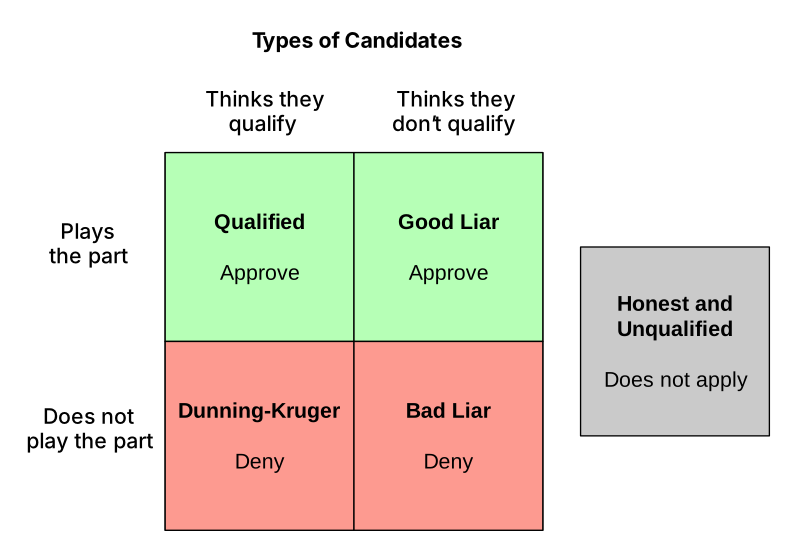

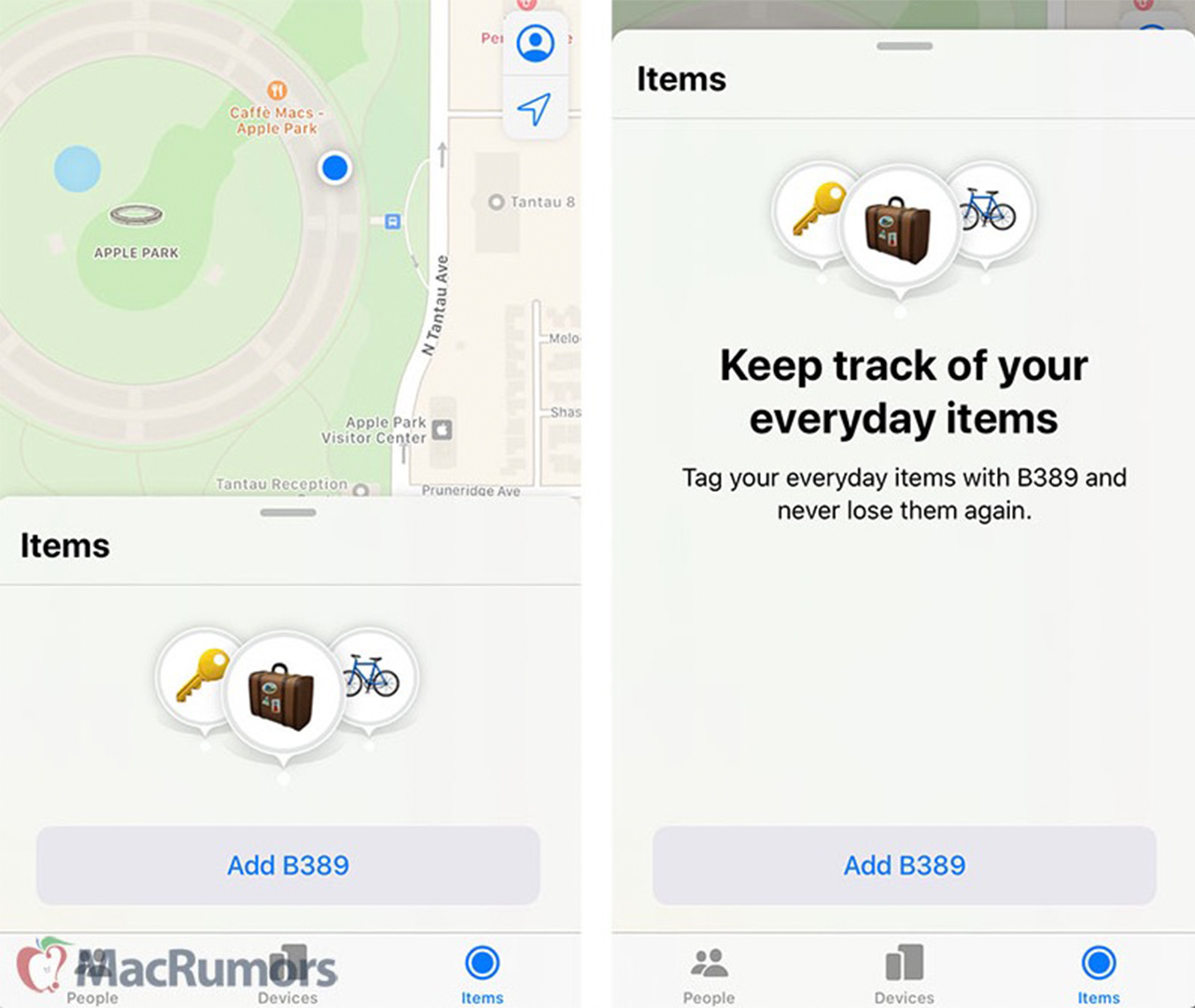


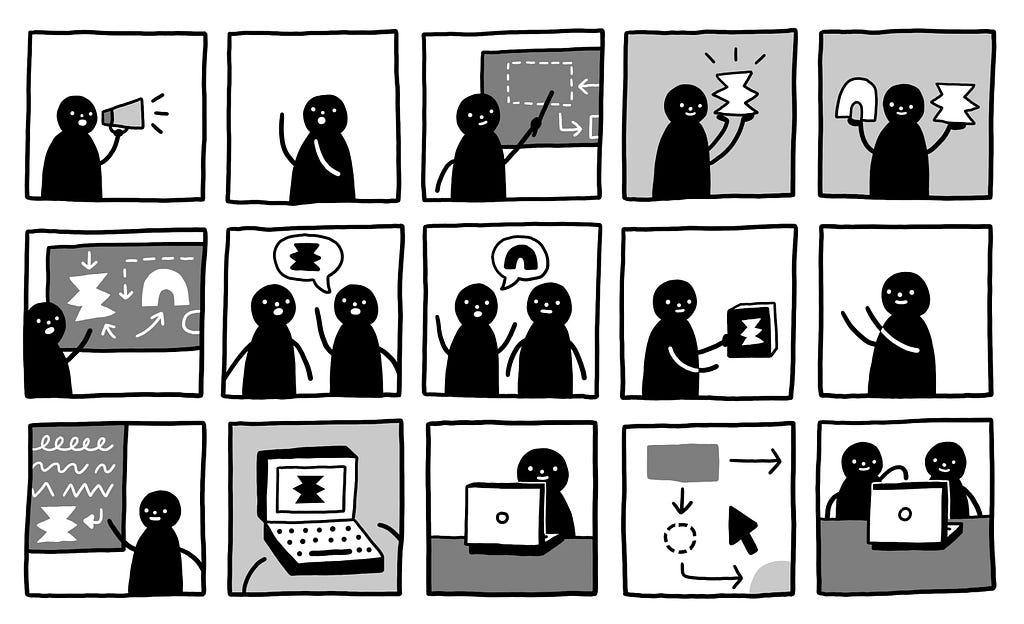


 This will open a new tab showing the about profiles information.
 If you have more than the current default profile listed, it is worth noting the name of the current default and clicking the "Launch profile in a new browser" button for other profiles shown. The label is incorrect and awaits correction. But clicking the button will launch Thunderbird in a new window with the selected profile loaded. If it happens to be what you are looking for. Click the Set as default button and you good to restart.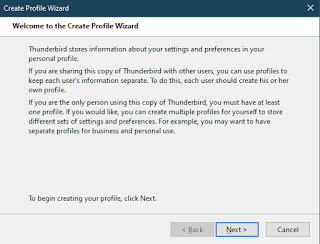

 This list of files with their random characters and "profile names" on the end is the same list as shown in the about:profiles page. But there should be one more profile listed here than is shown in the about:profiles page. Select it as the location for your new profile and click ok. Then in the profile wizard click finish.

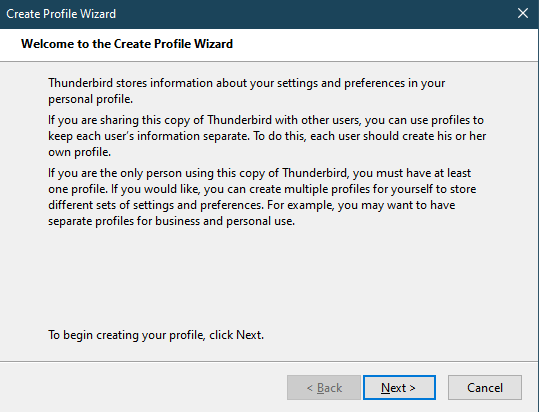


 Following years of a judicious union between platforms, it's time for iPad to embark on its own journey.










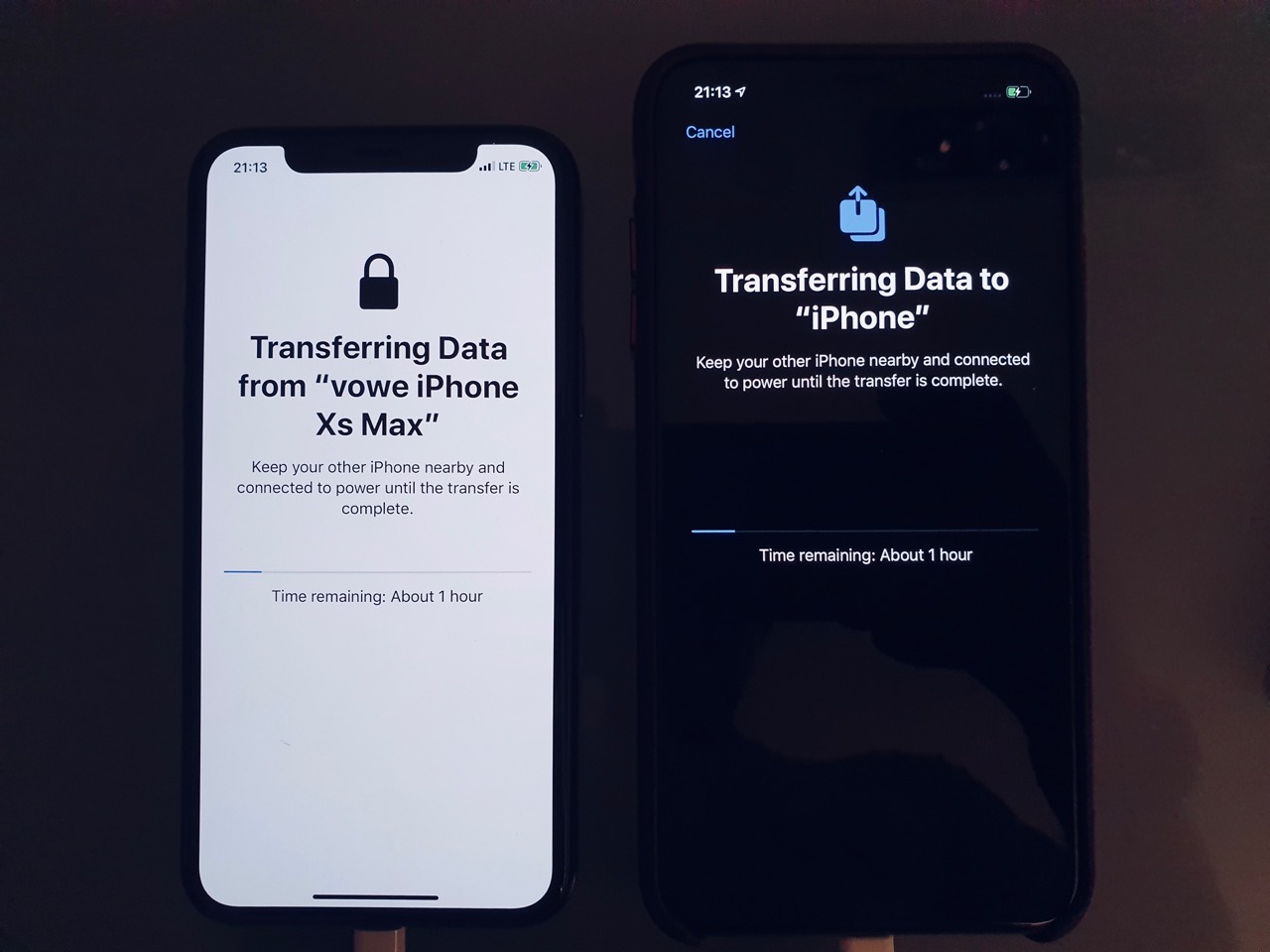
 Justin Trudeau @JustinTrudeau



 Price Tags:

