NaNoWriMo is next month, and I will continue my streak of not participating in it. I’m super-impressed by the people who do, though.
It would take me a month of hard, solid work all November to decide on an idea to write about, then another month to think it through some more — or two months, really, because the holidays get in the way — and then about a year of nightly work to decide on a plot outline and characters and tone, and then another year of refining that outline, and then, by NaNoWriMo 2021 or 2022, I’d be ready to start writing. I suspect I’d average about 300 words a day, which would get me about 9,000 words for the month — which is well less than a novel or even the 50,000 words goal.
Janie Larson writes about being bullied, and you should read it.
It’s natural to wonder who the bully is and who the conference organizers are — but I’m resisting the temptation to spend any time on it. It’s not a puzzle to be solved. Janie’s explicit that she doesn’t want this to result in anyone getting harassed, and she doesn’t want to start a feud. Respect that.
Instead, she talks about the human cost of being bullied, and she presents a guide for handling bullying — which is written especially for people witnessing it.
Even if you think it’s unlikely that you yourself will ever be bullied (and you might not think that), it’s worth remembering that you might see it happen to someone else. I hope you and I would do the right thing.
At a deep level, the language of climate denialism is tied up with a form of masculine identity predicated on modern industrial capitalism – specifically, the Promethean idea of the conquest of nature by man, in a world especially made for men. By attacking industrial capitalism, and its ethos of politics as usual, Thunberg is not only attacking the core beliefs and world view of certain sorts of men, but also their sense of masculine self-worth. Male rage is their knee-jerk response.
... What certain kinds of men do not wish to acknowledge is that asking for action on climate change is entirely rational.
It surfaces and visualises all the amazing things happening in the world. The things we don’t see because we’re fixated on the drama and horror of the news.
It’s been a year in the making – research, visualisation and design. And it will gently unfold over this coming year – a chart a day.
Bloomberg reports that Apple will open up Siri to third-party messaging apps with a software update later this year. Third-party phone apps will be added later. According to Bloomberg’s Mark Gurman:
When the software refresh kicks in, Siri will default to the apps that people use frequently to communicate with their contacts. For example, if an iPhone user always messages another person via WhatsApp, Siri will automatically launch WhatsApp, rather than iMessage. It will decide which service to use based on interactions with specific contacts. Developers will need to enable the new Siri functionality in their apps. This will be expanded later to phone apps for calls as well.
As Gurman notes, the company’s change in approach comes as Apple is facing scrutiny over the competitive implications of its dual role as app maker and App Store gatekeeper in the US and elsewhere.
It’s interesting that the update is a Siri-only change. Users will still not be able to replace Messages with WhatsApp or Phone with Skype as their default messaging and phone apps for instance, but it strikes me as a step in the right direction and a change that I hope leads to broader customization options on iOS and iPadOS.
Captions are so much fun. Why stop with one? “Dervish Airlines. How may I help you?” “I’m so sorry, Mr. Bond, but we’ve had some difficulty preparing the martini in the fashion that you requested.” “To get this claim started properly, could you please describe for me exactly how the accident occurred?” “The UK Brexiting: … Continued
Here's a free tip for you weirdos like me who still use private torrent trackers. If you want to earn consistently good upload credit, you only need to seed one show, two at most. Namely, Star Trek: The Next Generation, and Deep Space Nine. Preferably the later seasons on Blu-ray. I'm not sure why this is, but I have a few theories. And what the internet definitely needs is more commentary on Star Trek.
The most obvious reason is that older shows come from a time when there just wasn't as much saturation in the market. Each show could capture a much larger chunk of the audience, both nationally and internationally in syndication. This is reflected in their long-term staying power by way of nostalgia. If you investigate the top seeded torrents on a decent tracker, for content from the late 80s and early 90s, you will find that the top spots are usually captured by season packs of The Simpsons, Seinfeld, and once it appeared in 1994, Friends, which is no surprise at all if you lived through those years.
In between these behemoth shows, you will also spot the other consistent trend, namely the Treks. It shouldn't be a surprise that torrent sites are frequented by nerds with nerdy interests, but what is noticeable is that in the years where they have to compete, Treks rank consistently at the top, higher than even cult classic The X-Files. This was a show which was far less embarrassing to be seen watching at the time, scheduled explicitly for adults, with its two iconic leads, its clever appropriation of deep state intrigue, and an at times fearless exploration of the grotesque and macabre.
If you look up the US viewership numbers, X-Files had about twice as many on average as TNG, ~20 million vs ~10 million. It was clearly the more popular show. Compared to today though, TNG consistently exceeded even the premiere of Star Trek: Discovery 30 years later, at 9 million viewers, despite the fact that the US population has grown by over 30% since, and that Trek is now mainstream.
You could argue that The X-Files sabotaged itself for re-watching, by blue-balling its audience, offering tantalizing Lost-style glimpses of a larger mythos that ultimately didn't go anywhere. It's also hard to ignore that the cultural interest in UFOs and aliens vanished almost entirely once everyone had a digital camera in their pocket. However, most of the X-Files didn't even involve aliens, and instead featured an unrelated mystery-of-the-week. The overall quality is definitely more consistent than TNG too.
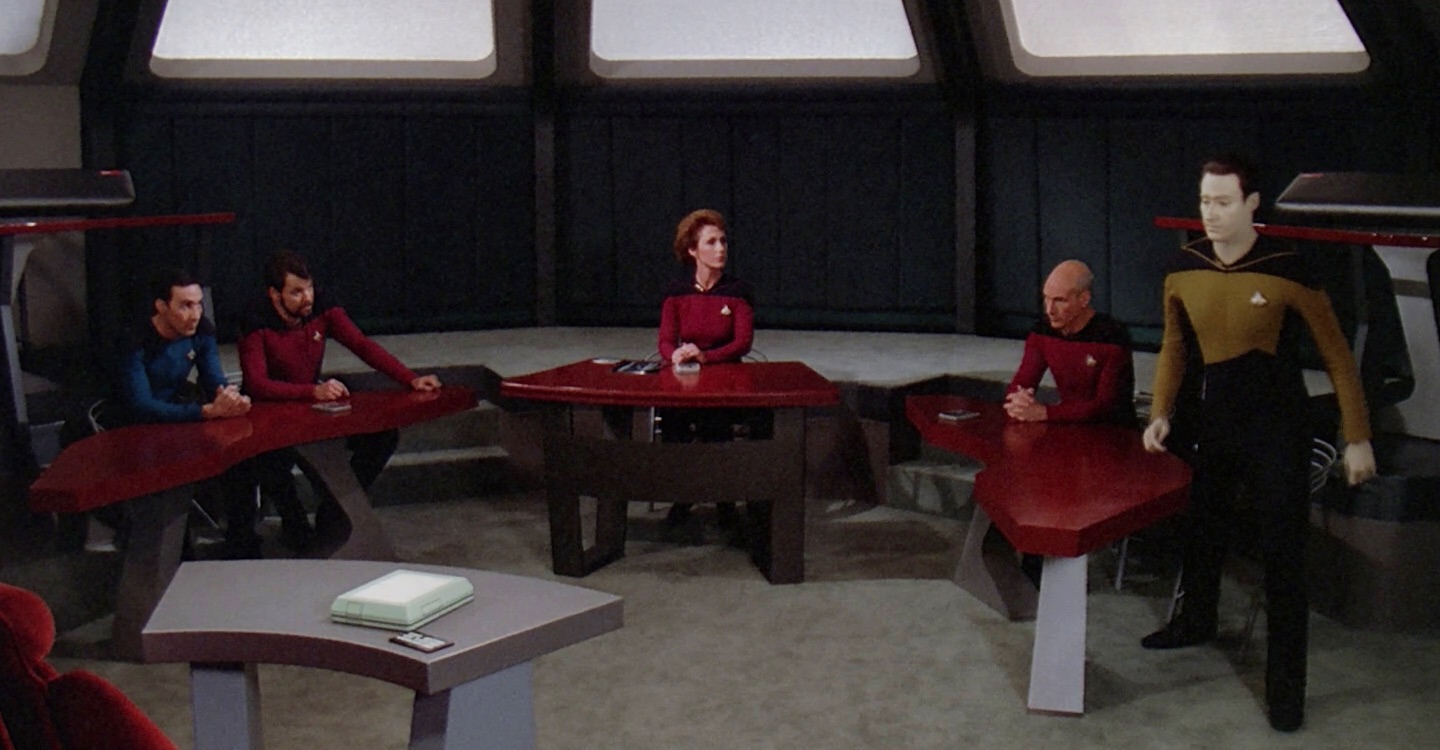
It's easy to forget just how out-of-touch culture was with popular science fiction at the time, now that nerds are cool. Luckily there is a wonderful time capsule to remind us, in the form of an episode of Good Morning America from 1992. In this show, cringe inducing for any Trek fan, the set of the USS Enterprise is host to a cast of TV anchors out of their depth. They marvel at the decor, the whacky aliens and costumes, the futuristic props and consoles, the trekkie lingo, and so on. Throughout it's pretty obvious that none of them have ever actually watched the show. This is also why Patrick Stewart doesn't appear: he refused, insulted by the disrespect they had for the material.
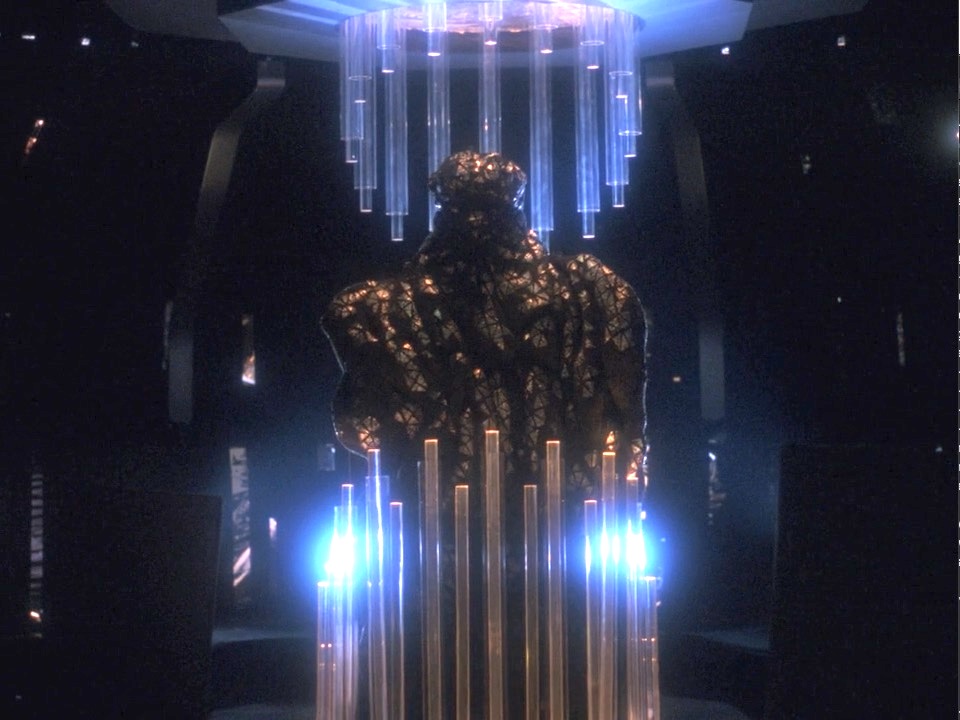
By then the show was in the middle of its fifth season, and had featured episodes with numerous serious, well-executed topics. The Measure of a Man debated the human rights of Data, the sentient android, in a court room setting. Who Watches the Watchers explored the policies of non-interference with primitive cultures, the immorality of false deities, and the power of the scientific method. Sins of the Father challenged the notion of inherited sin in an honor-based culture, as well as the fish-out-of-water aspects of an exile in his own culture. The High Ground was about terrorism and how people are driven to it by desperation, not broadcast in Ireland at the time, ostensibly due to a throwaway line about Irish unification. Darmok was a prescient linguistic take on the memes we now take for granted. There was also the legendary season-cliffhanger The Best of Both Worlds, in which Picard was abducted by his mortal enemy, and forced to do their bidding in conquering humanity.
None of this is even remotely featured in the few clips shown, and instead they show meaningless treknobabble, some phasers and torpedoes, Deanna Troi sensing nothing (as usual), and a dry explanation of asphyxiation in a vacuum. The interviews with the cast members mostly revolve around trivia, from how long it takes to do their makeup to whether they get recognized on the street. Gates McFadden, to her credit, manages to salvage every bit she's in. At one point, an anchor does say the show addresses more serious topics, but then she fails to mention any, stalling the conversation with some awkward glances. Granted, this was an early morning show mainly designed to fill air time, mixed with a presidential election (health care costs are rising!) and some disastrous weather, but even then this is painfully embarrassing.
When she asks the cast whether they think they'll be as famous as the original Trek characters, and whether this will define their careers, Jonathan Frakes says he's just happy to have a job. Marina Sirtis says she thinks it's unlikely she'll still be wearing the uniform 25 years later. Well, technically it ended up being only 10 years, but she's still doing Trek conventions today. Clearly they didn't think what they were doing was remotely as iconic as the original, and the exact opposite is true.
The original Trek is too awkward, too out of touch to watch today, so instead it has been pilfered and repurposed, turning its characters into hot, juvenile blowhards in JJ-Trek. But TNG endures on its own terms, and what's more, its dorky PADDs and omnipresent touch screens turned out to be prophetic. It's fascinating to rewatch today, and realize that eating lunch while holding a tablet is an entirely normal thing now. This is only slightly marred by the fact that they still treat them like pieces of paper, handing over the device instead of just transferring a file. I guess the DRM is really bad in the future.
So why on earth do I think TNG ruined a generation? If it wasn't obvious, I love this show. I still have the collectible card game in a box right behind me.
It has to do with the way they staged their moral dilemmas, because there are two kinds of Trek episodes.
In the first kind, Type 1, a moral dilemma happens to a character. Data's rights are threatened. Worf's honor is at risk. Picard's dignity has been stripped. Or as in The Drumhead, one of the best episodes, the Enterprise's own crew participates in an investigation that turns into a bona-fide witch hunt. These are the good ones, because they start with real characters and put them in credible jeopardy. Secondary characters are fleshed out as well, with conflicting views and interests, and serve to challenge the assumptions the show and its main characters embody.
In the second kind, Type 2, there is a planet or a species, with a unified culture and philosophy. This is usually centered around one particular extreme. The Ferengi are greedy chauvinists. The Sheliak are xenophobic supremacists. The J'naii are monogender puritans. The species is a trope, a stand-in for an Other who is Different, and the full implications of this conceit are never actually fleshed out. In pretty much every case, the crew is tasked with outsmarting them, and to demonstrate that their values, morals or tactics are better, even if it takes a while to figure out how and why. The drama is a result of fighting this good fight, and results in either a moral victory or defeat. But the matter of which side was right is never in question. The underlying assumption is pretty hard to miss: people who look a certain way act a certain way, and judging the book by its cover is correct. These episodes are actively and shamelessly racist.
Of course it's not a completely rigid binary. The goofy Ferengi of TNG ended up being fleshed out more in DS9, though they never managed to fully escape from the shadow of caricature. The DS9 Cardassians remained unrepentant imperialists, with only the odd exception presented as one of the few "good ones." On the other hand, some brief planets-of-the-week ended up hosting a variety of characters and factions, and let them speak fully for themselves. But the dichotomy still exists, and it's bizarre that the two kinds of stories live together under the same roof.
It's particularly noticeable given the emphasis the show placed on empathy, in the form of Deanna Troi. She was the left hand of the captain, a character whose main function was to sense and regulate people's feelings, and the perfect embodiment of the New Age beliefs popular at the time.
Empathy is actually a pretty difficult aspect of televised sci-fi. A classic complaint is that almost all the aliens are humans with bumpy foreheads, and this is true, but also entirely necessary. Whenever shows have featured distinctly non-humanoid characters, it weirds people out, because we can't read them at all. Like the aforementioned Sheliak, whose inhuman mime telegraphs no useful information, an aspect which was actually pertinent to the story. For the most part, Trek has wisely avoided this trap. Other shows tried and failed, like Babylon 5, which featured an insectoid crime boss whose animatronic chittering and spasms completely failed to intimidate. It was quietly shelved in subsequent seasons.
As a result, any show that is all about meeting strange new aliens on strange new worlds actually puts an incredibly high premium on human emotions and human behaviors, and can only explore them in two ways... first, by making the aliens just like humans, with the same moral failings, ideological disagreements and conflicting interests, which makes them not aliens... or two, by making the aliens inhuman in some way, and hence somewhat incomprehensible, which automatically otherizes them and makes their way of life undesirable. Unless the writers make an effort, they're not actually going to challenge the audience's preconceptions at all. Less ambitious sci-fi shows like Stargate SG-1 run almost entirely on this formula, contrasting the plucky always-right hero team with the backwards primitives they must liberate and the alien villains who hold them hostage.
When this becomes the lens that you use to relate to Others, you're not actually relating at all.
As tentative evidence that this is a real thing and not just some cultivation theory in disguise, I offer the closest thing we have to a TNG reboot, The Orville. Created by bona fide uber-trekkie Seth McFarlane, you'd expect it to embody all the good parts of TNG. Yet the show had a few whopper Type 2 episodes in its first season, and no real Type 1s. This should be supremely remarkable, and yet has mostly passed by unnoticed, as the people with opinions appear to have confused the trappings of the show it copied for its substance.
In Krill, the captain and his pilot infiltrate an enemy vessel in disguise. They blunder through, bluffing their way through conversations only the dumbest adversary could not suss out. They do this without taking any of the expected precautions, and they end up winning by doing the equivalent of setting the aliens' thermostat to 100ºC and boiling them alive. Yes, this show actually wants you to believe that aliens who are extremely light-sensitive would put lethal light bulbs on their space ships and just never turn the dimmer up past 5%. They're religious fundamentalists though, and we all know how stupid they are, right?
In About a Girl, the show seems to imitate both TNG's occasional court room proceedings and gender morality plays. It features a trial over whether a newborn girl should be allowed to remain female, in a species of male chauvinists who make the Ferengi seem downright tolerant. The amazing part is that the supposedly devastating argument, made by the female second-in-command who is counsel for the defendant, is based on easily dismissed false equivalences, assumed superiority and non-sequiturs. She ought to have them howling with laughter in minutes. Instead, this society of aliens who don't take women seriously takes this woman's poor excuse for reason and logic entirely seriously. Because sexism is bad, you guys.
The second season managed to bring a little bit more substance and new material, but couldn't drop the habit completely, in the form of All the World Is Birthday Cake. It's about a planet of astrologers, who rigidly organize their society according to horoscopes by birth sign, including a particular class of untouchables. The resolution comes from the main characters outsmarting them with a non-credible deception, which a first year physics student could poke numerous holes in. To add insult to injury, the writers apparently don't know the difference between a satellite and a satellite dish. Fuck yeah science! Astrology is dumb!
It feels more like Team Earth: Galaxy Police than Star Trek: The Funny Generation, only the satire isn't intentional, and isn't mocking who they think it is. Nevertheless its first season won a "Best Science Fiction Television Series" award.
If that's what TNG's legacy looks like in 2019, then I'm afraid some people have missed the point entirely.
There's a particular phrase you hear a lot these days. "We're on the right side of history." I'm not saying it's all TNG's fault, but it's hard to imagine how it didn't contribute, given how pervasive Trek references and memes are, even today. There is a similar dichotomy in handling moral dilemmas... whether we look for nuance to understand one of our own who is struggling, or whether we consider someone an outsider, representative of a foreign monoculture, and which needs to be outsmarted and defeated, ideally using their weaknesses against them. Both approaches live under the same roof of compassion, empathy, justice and progress, despite being polar opposites.
The real lesson was that principles are important, vital even. But they must be moderated, by checking ourselves before we chastize others.
When my depression was at its worst, it felt almost like a constant, physical pain. Getting away from that crushing weight felt as urgent as pulling my hand away from a hot stove, but I couldn’t do it. I couldn’t even imagine a respite or a pause in the misery, let alone conceive of a day when I wouldn’t have to think about it, when just lifting that weight off my chest wasn’t the singular concern of my every waking hour.
But I’m getting ahead of myself. First, to start: I’m an incredibly fortunate person, with a wonderful family, a thriving career, and a platform that lets me speak my mind to the world. I’m thankful every day for these blessings, and try to be worthy of the gifts I’ve been given. What’s more, I am privileged enough to have some stability and kindness in my life, granting me a resiliency I am deeply grateful for. I want to start by reciting how appreciative I am for my life now because it’s the thing I most wish I could tell my younger self as I was struggling.
For most of my teens and twenties, I wrestled with depression as either a specter that lingered over everything, threatening to yank away any joy or peace that I found, or worse as a predator that stalked me and actively fought me finding any happiness or comfort. In reading other people’s stories, I find that the details of my experience are maybe a little different, but the high level pain of feeling overwhelmed and exhausted seems very similar to what so many have endured.
I don't feel a stigma, but the world expects me to
The truth is, I’ve never kept my struggles with mental health a secret; I wrote about it all on this site back when blogging was still vibrant and booming before social networks took off. And my personal view was that I didn’t have any more stigma about mental illness than about, say, acid reflux. “Here’s a health challenge I had. It was serious. Because I was fortunate enough to have good medical care and a solid support network, I was able to treat it. A combination of the right medication, changes in diet and sleep and exercise, and being mindful about my wellness overall helped me manage it and make it something I live with but don’t have to worry about on a daily basis anymore.”
But I’ll be real: I’ve been quiet about it. When, after a decade and a half of people asking me, I finally started a podcast last year, I figured I’d just be talking about tech and software. I did not think I’d start a new season of the podcast by talking about the fact that I’d once wanted to kill myself.
I don’t mean to be glib about it, because it still terrifies me to say it out loud. I’m not ashamed, but I worry about my family or loved ones having to face the stigma over my own issues. I worry about my colleagues and coworkers feeling unsettled or uncomfortable with me talking about this, even though they’ve been nothing but sensitive and supportive. I worry about still having to do business in a tech industry that struggles with issues of inclusion on the best of days, and how it will react to me being fairly visible while sharing this kind of message. And I care deeply about being an advocate for universal, freely available access to vital mental health care when I also know that our American healthcare system is so screwed up its hard for me to get every detail right at the company that I lead.
They’re going to say I’m crazy. They’re going to say I’m a hypocrite. They’re going to say it’s not that bad and I’m pretentious for pretending I’ve struggled. They’re going to say nothing, and just uncomfortably back away, forever thinking less of me and embarrassed by what I said.
Building Something New
So today, I‘ve spoken about my experiences more directly and more publicly than I have in decades. I of course want everybody to reach out for help and support if needed, but I also want to tell the story of how it’s possible to make a new life where you’re thriving and joyous, not just enduring the pain. Not everybody gets there, and no two people follow the same path, but it absolutely can happen. I’m living proof.
I’ve also found something that brings me joy and inspiration today: seeing others take care of themselves. When I was at my lowest, my hardest struggle was to forgive myself for not fixing everything all at once. The most significant breakthrough I had was reframing my challenge as just trying to do one thing a little bit better, every day. A small, incremental change that felt manageable would be the thing that saved my life, not some monumental effort to transform everything at once.
Few things have brought me more joy than seeing my professional work at Glitch, where people can create anything they want on the web, become a place that people make tools that help them do a little better every day for themselves. Almost from the first day, we’ve seen people make little reminders or nudges or assurances that, while certainly not displacing the need for therapy or medication or proper treatment, become part of a larger effort to take care of themselves.
I’m really proud of the work our community and team have done to tell these stories, and I’m appreciative that I get to tell my own story as part of a larger effort to remove stigma and ensure that people get the care and support that they need and deserve. I do hope you’ll give this story a listen.
One final note: I’m far from a mental health professional. My experiences may well be completely non-standard and certainly don’t reflect what many other people go through. So while I’m happy to talk about my story and open to connecting with people around it, I’ll be setting boundaries around how much I can help people who may be struggling with similar challenges. Please know that doesn’t mean I don’t want to help, or that you can’t overcome your own challenges, but simply me trying to manage my ability to be supportive without being overwhelmed.
I am a bedding princess. My sheets have to meet a certain standard of softness, my comforter has to keep me warm without overheating me, and I require no fewer than three pillows on my side of the bed at any given time. It may seem excessive, but I value comfort, especially at the end of a long day.
If you’re ready to follow suit and cocoon your home in coziness, now is the time to do it (seriously, now, since the sale ends today): The Company Store—whose tagline reads “We’re All About Comfort”—is holding a “friends and family” sale offering 25 percent off all items and free shipping with the code J19FRIENDS.
To help you sift through the site to find the items most worth your time and money, we’ve pulled together a list of Wirecutter picks that promote maximum hygge. The Company Store’s sitewide discount, coupled with free shipping, makes this sale a good chance to snag a few particularly good deals—and an opportunity to purchase some other picks at a lower price.
In New York hat Microsoft eine Reihe neuer Surface-Geräte vorgestellt:
Das 7,3 mm dünne Surface Pro X ist ein neues Tablet mit SQ1 Chipset, gemeinsam mit Qualcomm entwickelt, LTE und dem typischen Kickstand. 13-Zoll-PixelSense-Display, zwei USB-C Anschlüsse und eine Schnellladefunktion.Verfügbar wird Surface Pro X in der Farbe Mattschwarz. Als Zubehör sind ein extra für Surface Pro X entwickeltes Signature Keyboard und ein Slim Pen erhältlich, der sich innerhalb der Tastatur transportieren und aufladen lässt. Preislich startet Surface Pro X für Privatkunden auf dem deutschen Markt ab einem Preis von 1.149 Euro (UVP, inkl. MwSt.).Surface Pro X ist ab heute vorbestellbar und ab 19. November 2019 in Deutschland verfügbar
Ausgestattet mit den neuesten Intel Core Prozessoren der 10. Generation hat Surface Pro 7 einen USB-C-Anschluss statt Display Port. Der Rest ist bekannt. Surface Pro 7 kommt in den Farben Mattschwarz und Platin auf den Markt und kann mit Signature Type Covern in den neuen Farben Mohnrot und Eisblau oder den bekannten Modellen in Schwarz und Platin kombiniert werden. Surface Pro 7 startet auf dem deutschen Markt für Endkunden ab einem Preis von 899 Euro (UVP, inkl. MwSt.). Für Enterprise-Kunden gibt es eigene SKUs mit Windows 10 Pro statt Windows 10 Home.
Surface Laptop 3 wird es zum ersten Mal auch in einer 15-Zoll-Variante und mit komplett metallischem Gehäuse geben. Privatkunden erhalten die 15-Zoll-Geräte erstmals mit Prozessoren von AMD. In allen Devices mit 13,5-Bildschirm sowie in den 15-Zoll-Varianten für Geschäftskunden arbeiten Intel Core Prozessoren der 10. Generation. Surface Laptop 3 verfügt über eine austauschbare SSD-Festplatte, einen USB-C und einen USB-A Anschluss sowie überarbeitete Dual Fernfeld Mikrofone. In der 13,5-Zoll-Variante ist Surface Laptop 3 mit komplett metallischem Gehäuse in Mattschwarz und Sandstein erhältlich und mit Alcantara in Platin und Kobaltblau. Surface Laptop 3 mit 15-Zoll-Display ist in den Farben Mattschwarz und Platin in Metallausführung verfügbar. Für private Anwender wird Surface Laptop 3 mit 13,5-Zoll-Display in Deutschland ab einem Preis von 1.149 Euro (UVP, inkl. MwSt.) erhältlich sein, in der 15-Zoll-Variante ab 1.349 Euro (UVP, inkl. MwSt.).
Dazu bringt Microsoft vor Ende des Jahres noch Surface Earbuds.
One more thing: Surface Neo kommt Ende nächsten Jahres. Dual Screen mit 360-Grad-Scharnier. Tastatur hält sich auf der Rückseite magnetisch fest. Klappt man die Tastatur über einen der Bildschirme, wird aus dem Neo ein Laptop. Surface Neo hat einen ziemlich großen Haben-Will-Faktor. Das muss man sich anschauen:
And another one: Surface Duo vereint Surface und Android. Gleiches Design wie Surface Neo, nur kleiner. Dual Screen, faltbar, zwei Apps nebeneinander, nutzbar auch als Telefon.
Surface Neo und Surface Duo soll es "Holiday 2020" geben.
So much to unpack with some of the City of Vancouver’s most recent initiatives, so let’s get started. If you have been anywhere near Broadway, you may have seen the street appearing~well, red. It appears the City of Vancouver and TransLink decided it would be a Good Idea to use this rather berryfruit juicy colour as a demonstration project to show where the B-Line bus stop zones are.
The City of Vancouver in the twitterverse got right on the messaging by warning drivers to “Steer clear of the red zone! Along with @Translink, we’re piloting red zones at key bus stops to remind people bus stops aren’t for cars. A single stopped car can slow down hundreds of people. If the red zones work, we’ll look for rolling out more in the future”.
Just a small quibble, people don’t need to be reminded that bus stop zones are not for cars, drivers do. And those drivers would also react just as well to increased enforcement at bus zones, so hopefully the Police will work in partnership with TransLink to enhance monitoring.
But back to the temporary installation of this strange red paint on city streets-what is with the really bright colour? Take a look at the Washington D.C. bus lane below which at least is in the more muted burgundy palette and edged and stenciled as a “bus only zone”.
So while the colour plonked down by the City for this temporary installation is a little questionable, PriceTags is hoping that stenciling indicating what the berry red colour is for and some edge treatment is also on the way.
Hopefully there will be some public dialogue and evaluation on the colour and features of the bus’s magic carpet, moving to a more muted colour tone. In the interim, we welcome your creative comment below on what can be done with this current colour, along with any suggestion for a creative edge treatment.
I have a lot of checklists in my workflow. An outliner list of faculty applying for promotion (heading of Assistant Professor, Associate Professor, Professor. The children of those headings are the faculty names added as I receive applications. The list can be sorted by last name (sorts on the last word) And I put a checkmark to the left of their name if their application was approved. Later in the process, I copy that entire outline to a new outline for which faculty followed up by the deadline date with a packet. That outline is copied to a third with which faculty made it through the first committee, and so on.
I create flow charts in Omnigraffle for each curriculum in Nursing and Allied Health (about 30 flow charts). I check off which ones are completed, then a second copy allows me to check off which charts were approved by the 30 program directors, and so on.
The name of my Notetaker file is "Checklist Manifesto.ntx".
My biggest project to date was the implementation of web-based part-time teaching contracts. Learning the product, with its arcane screen names and arcane codes that go into arcane fields was only manageable by making numerous lists and searching them globally in NT. I have a few dozen web URLs that are clickable. The file is indexed (you create an index section), and that index has grouping for each word (listed by first letter), dates, tags, files, and priorities)
I'll never use all of the features. The only feature I would like them to consider is being able to define my outlining labels. I came up with a system of labels in GrandView. Omnioutliner can do that, but formatting in Omnioutline is a nightmare.
Microsoft has announced the Surface Pro X, a new 2-in-1 device category for the tech giant.
The device is 5.3mm thin and weighs 1.6lbs. It also features a 13-inch PixelSense display. Further, the screen has a 2880 x 1920-pixel resolution with a 267ppi and 1400:1 contrast ratio.
The Pro X also features USB-C, fast charging, LTE and a custom Microsoft SQ1 processor developed through a partnership with Qualcomm. The laptop also features LTE connectivity.
The Pro X is ARM-based and is the first laptop since 2013’s Surface 2 to be powered by this chip. With being in the ARM category, it lacks an Intel Core chip and features a Qualcomm Snapdragon 8cx processor.
Surface Chief Panos Panay says the product features three times more performance per watt than the Surface Pro 6. And will reportedly sport unprecedented speed.
The Surface Slim Pen integrates into the keyboard and that’s how the accessory charges. As soon as you take out the pen, a new context menu appears allowing users to access apps like Whiteboard.
Additionally, the Pro X has a removable solid-state drive.
The Pixelmator Photo 1.1 major update is here! And it really is a big one. We’ve added full compatibility with iPadOS 13, full-featured batch editing, an all-new and improved workflow, export resizing, and some smaller improvements and fixes.
iPadOS 13
Everything seems really cool in its own right so it’s difficult to pick just one headline feature but let’s start with iPadOS. iPad OS 13 support is a very big part of this update and with our Files-based design, you can now take full advantage of support for external drives and new external locations.
Batch Editing
Batch editing is huge! We’ve brought a really full-featured batch editing experience to iPad that’s, let’s face it, even better than what we currently have on the Mac with Pixelmator Pro. A lot of that is down to Pixelmator Photo being a dedicated photo editor, of course, but it’s amazing to see all the incredible machine learning features now being available for batch editing on iPad.
All-New Workflow
The one new feature that might not be as flashy but will directly affect every single current and future Pixelmator Photo user is the all-new workflow and direct integration with your iCloud Photos library. Gone are the days of having to import photos and manage separate Pixelmator Photo files, everything is now simple and intuitive.If you’re editing in your Photos library, edits are automatically saved to the same images you open. Nondestructive edits are preserved too! And if you’re editing in Files, Pixelmator Photo does some magic to save changes back to the same image while preserving nondestructive edits in a linked file.
Export Sizes
Finally, we’ve also added the ability to export images at different sizes, which is a nice little extra that we found time to squeeze in between all the other huge things and foundational changes to Pixelmator Photo.
Josh Kepkay is a realtor, and now a podcaster – an opportunity, of course, to increase his profile while having conversations with “thought leaders, personalities and interesting people in the Vancouver Real Estate world with a story to share.”
As someone who always enjoys a little thought leading, I took him up on his invitation. And here’s the result:
Click on the second podcast on the list: “What the future holds with Gordon Price”.
And yes, we go well outside the topic of the local real-estate market. Of special interest to those interested in the strategies of city council in the ’80s and ’90s (as well as backstories on the West End) for lessons that might apply to the city’s future.
I've written on consciousness in the past, and so readers will not be surprised to find I am in general agreement with this article. "The subjective world of phenomenal consciousness is a fiction written by our brains in order to help us track the impact that the world makes on us. To call it a fiction is not to disparage it... But you shouldn’t mistake it for reality either."
I visit SFMOMA pretty often. I miss Washington DC’s free and easy Smithsonian museums, which you could walk through on the middle of a run if you wanted to. SFMOMA is the standout for me - easier to navigate than the de Young, far more diverse than the Legion of Honor, located right near most people’s offices.
This visit Sara Cwynar’s pieces took me by surprise. The charm and multi-scale power of her prints are a bridge between the past and future – digital aesthetics with analog techniques.
I’ve been listening to Divine Fits, a short-lived supergroup with Britt Daniel (Spoon) and Dan Boeckner (Wolf Parade). Each of the Wolf Parade-associated bands have had some effect on me, especially Sunset Rubdown – which featured heavily in now-embarrassing AIM Instant Messenger away messages at one point, and Handsome Furs. ‘My Love is Real’ is the hit on this one.
Also this piece, New Productivity, about ‘spreadsheet-ish productivity startups.’ I’m not sure how long it’s been, but, well – there aren’t many things happening in technology that seem right to me. Medium-to-large companies are union-busting. The VR boom is consolidating, AI is consolidating, blockchain seems to be fading (phew). Maybe top-line trends are never the interesting stuff, or the dominance of big tech is snuffing out truly eccentric ideas.
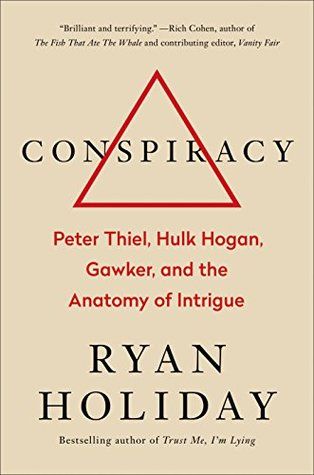
Conspiracy: Peter Thiel, Hulk Hogan, Gawker, and the Anatomy of Intrigue by Ryan Holiday
The story of how Gawker was taken down by Hulk Hogan a few years ago developed a new twist when it turned out that Hogan was only able to actually do it because Peter Thiel, the billionaire tech investor who also support(ed) Donald Trump bankrolled him.
In “Conspiracy” Ryan Holiday is re-telling the story of this conspiracy. He seems to have spoken extensively with both Thiel and Nick Denton. The latter being the founder of Gawker and the one who had set the tonen of the publication.
Personally I admit that when I heard Gawker had last the lawsuit by Hogan and was basically bankrupt I was a bit delighted. I wasn’t a huge follower of Gawker but I was aware of the kind of stuff they were publishing. What fascinated me was how many people in the media tried to make it about freedom of the press.
In the book Holiday analyses both the nature of conspiracies as well as the the conspiracy that ended up bringing down Gawker. Interestingly enough though even in his summary in the end he leaves it open if the lawsuit, and the conspiracy behind it, was a net-good or -bad thing.
The greatest weakness for me in the book though is that Holiday has a tendency to meander. He takes long, winding detours through history and philosophy, including ample quoting of Machiavelli, to make his point. At times it seems he forgets that he is trying to write about a specific conspiracy.
Rating: 3.5/5
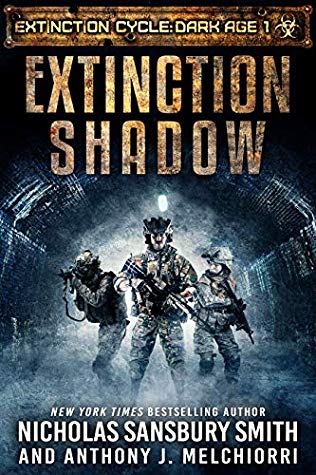
Extinction Cycle: Dark Age - Book 1 - Extinction Shadow by Nicholas SansburySmith & Anthony J. Melchiorri
I really greatly enjoyed the original seven books in the Extinction cycle series even though much like Marvel the whole Zombie thing was sort of had tired me out.
But this was a bit of a different approach. Instead of the “slouching death” it was more an action packed Michael Bay movie, with a stronger emphasis on a bit more of a scientific explanation. The books are pretty graphic at times, though much less so than other, similar, books or most modern slasher films.
The new book series is set eight years after the ending of the first cycle and…. Well, something has happened in the “badlands”. Humanity has been reduced to small islands of modern society with the rest of North America essentially given over to the Variants. They are back now, and the little bit of modern life that has survived is now challenged again.
This isn’t high literature. It’s a fast paced, action driven writing. Think a better Michael Bay movie in book form.
For what it is, I rate it:
Rating: 4.5/5
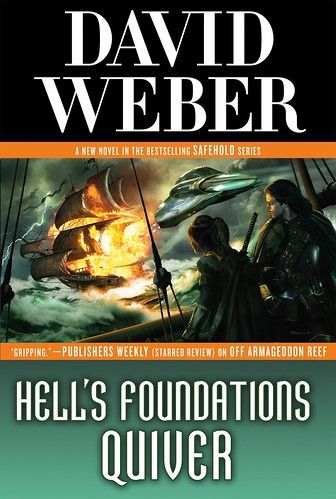
Safehold - Book 8 - Hell's Foundations Quiver by David Weber
This series really is still growing on me. It wasn’t what I had expected when I started reading it at first, after all going back to the end of the dark ages is usually not really SciFi scenery. But despite this, or maybe because I also like historical fiction, I continue to find myself getting drawn into the books.
The story in book 8 picks up right were it left off in the previous one left off with the war in full succession.
Over the course of the book Weber continues to “deep dive” into the technologies that get developed which I personally find one of the big appeals.
At the overall story ark we are seeming to come close to the end. The church seems to be close to financial ruin and the internal divisions are growing.
Rating: 4/5
This Is the Way the World Ends: How Droughts and Die-offs, Heat Waves and Hurricanes Are Converging on America by Jeff Nesbit
Not depressed yet? This book can change that rather quickly. Nesbit goes to great lengths to explain the changes we are already witnessing and how they will affect us. He takes his focus away from North America and Europe and also looks at the “forgotten” parts of the world. Countries like Indonesia or the Philippines that rarely factor into our world perception or news cycle.
The picture he paints is anything but pretty. Droughts, floods and heat-waves will all leave their make and cause massive relocation of people and the probable die off of thousands of species.
It is not a happy read, it’s not meant to be. But I think it is the read required for people to wake up to the realities.
In a way though, I admit it’s a bit of disaster porn. Will change your mind? You’re probably already of the opinion things will need to change, and the people who don’t probably won’t be convinced by yet another book.
So, in a way it is self-serving.
Rating: 4/5
Bottle of Lies - The Inside Story of the Generic Drug Boom by Katherine Eban
A few years ago I was prescribed a new medication. It seemed to do what it was supposed to do but I also started noticing some weird changes. My muscles seem to “glue together” and my blood values were starting to get out of whack.
It took me a good two yeas to figure out that it was the medication that did it. In none of the materials for the medication did it indicate any of these side effects.
But: It wasn’t the brand name. It was a generic. I opted for it because I presumed that a generic is the same as the brand. That’s after all what we were told and when it comes to “off brand” food it is usually very similar to the brand name.
Yet, as “Bottle of Lies” chronicles, this could be far from the truth. At the core it is the story about an Indian pharmaceutical company who cons the system for market share. From faked test results to outright falsifying data, they do whatever they can in order to get into the lucrative western markets. The health of their customers be damned. And in the US and Europe they were outright honest, the way they behave in other parts of the world is even more abusive.
The book makes clear though it isn’t just this one company, there is a systemic problem in the production and selling of pharmaceuticals.
If you ever had a negative response to a generic, you really should read that book. If you consider taking a generic, you should as well.
Rating: 5/5
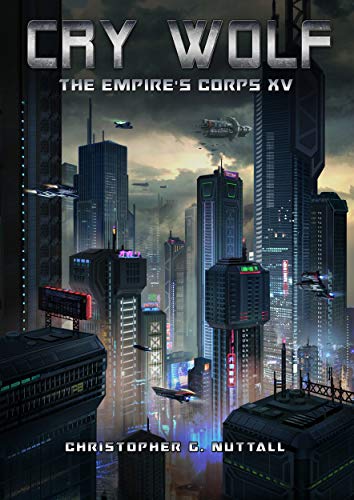
The Empire's Corps - Book 15 - Cry Wolf by Christopher Nuttal
You would think a book series 15 books in would be running out of steam about now, and yet, the “Empire’s Corps” series continues to engage. It is probably in no small part because the series does what good SciFi does: It holds up a mirror to the present and projects it out into the distant future. I think in political circles one refers to this as “plausible deniability”.
Series Overview
As this is the first review I am writing on the series a quick overview. The series started out at the “fall of the human empire”. The series goes into great detail as to why this is happening and how it is being perceived by Marines that find themselves abandoned on a far away planet. This is more or less the first ark.
The story is framed by notes / book excerpts from a professor who was banished from Earth for “having the wrong opinions” and who in the new colonial world he lands in continues to write his analysis on how the empire fell.
In the second ark Nuttal takes us to individual stories and places throughout the Empire and how it is being experienced by the people there. Sometimes with lots of violence, other times quite despair.
The Review
If you want to give the book a subtitled it would be: “Fake News”. The theme of the book is the story of an individual journalist who finds himself uncovering some Government misbehaviour and fired the next day before the story he filed gets published.
By chance he gets a chance to work for “alternative media” and he finds himself playing a major role in an attempt to overthrow the Government.
You could call the book a bit naive but all the core story elements are there, the characters are more than just a cutout or archetype and the pace is relatively quick. Nuttal’s writing is similar to Dan Brown in that every chapter almost comes off as an episode of a TV Show.
This is not high literature, but it is entertaining and the theme and the world are interesting.
Rating: 4/5
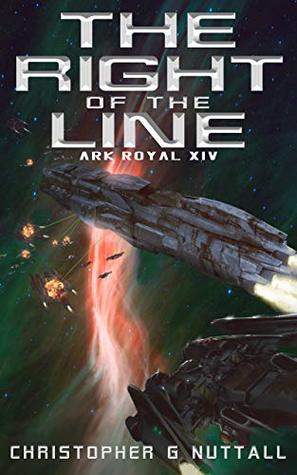
Ark Royal - Book 14 - The Right of the Line by Christopher Nuttal
So what I said about the previous book by him that that many books in I should start getting bored? Well, as untrue as it is for the other series, Ark Royal is starting to get a bit long in the tooth.
We are more or less in the second story ark now but I find myself much less excited this time around than I was the first time. Part of the reason lies in that the focus of it is much more narrow. It’s more about the military life and once one crisis is over the next one is just around the corner.
The characters themselves start become interchangeably as they are being killed off to be replaced with a very similar character to take their place.
To be fair it is not all bad, there are still interesting moments, but at times there seems to be confusion as to what is more a driver, interpersonal drama or the overarching events.
I think Nuttal bridges this much better in “The Empire’s Corps” series than he does in Ark Royal.
Rating: 3/5
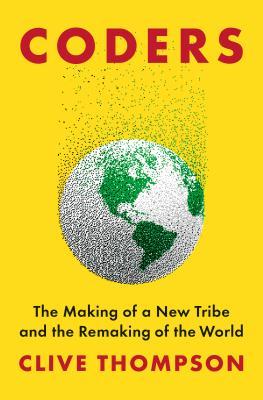
Coders: The Making of a New Tribe and the Remaking of the World by Clive Thompson
The Future is Code, or so you could think if you listen / talk to the media at the moment. Thompson’s book is…. A weird combination of things. On the one hand he retells the story of early coders, then veers off into the current “Brogrammer” problem and tries to finish with a statement that could either be: Everybody should learn to code” or “You should only code if you want to”. In between we get lessons on how women’s work is undervalued and how …. Well, not quite sure. He meanders a bit all over the place in the book.
I thought the historic retelling was interesting, the place code plays in the world as well and the discussion towards the end of the book as to what makes or not makes a good programmer was all enjoyable. It just seems at times the book doesn’t really know what the core messaging is.
Rating: 4/5
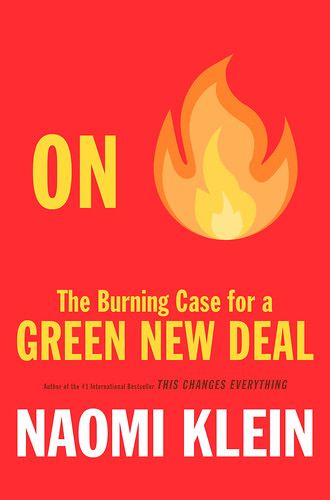
On Fire - The (Burning) Case for a Green New Deal by Naomi Klein
Back in 1999 Naomi Klein released “No Logo” inspired / driven by “The Battle of Seattle” and a call against consumerism and branding. It kicked off a bunch of similar books / events and movements. Morgan Spurlocks “Supersize Me” being another example.
Now 20 years later Klein is writing on climate change and, I presume, hopes to spur a similar mass movement as her first book did.
“On Fire” though is not a book in the conventional sense, it is more a collection of her past decade of writing around climate, globalization and economics. It is an interesting summary of many arguments that often only get little air time.
If you are already “tuned in” there probably won’t be a whole lot new here for you. But if you want to get an overview over what is going on and what the arguments and concerns are, this book is definitely a recommendation.
Rating: 4/5
Kochland - The Secret History of Koch Industries and corporate power in America by Christopher Leonard
Most people who are following the US politics over the last decade or so will have heard of “the Kochs”. A rich family who runs a multibillion dollar business empire, mostly based around fossil fuels and heavy industry.
In “Kochland” Christopher Leonard tells the rise of the business, the internal fights in the family and the attempt by the Kochs to shape US politics and create a more “business friendly” environment.
Looking at comments on the book online it seems people in general fall into one of two camps:
They love the ideas the Kochs represent and consider the book a hatchet job.
People who despise the ideas the Kochs represent and find themselves affirmed in their believes.
Being a bit more on the outside I would say the book definitely does not paint a “nice picture” of the Kochs, especially if you do not believe in their libertarian worldview. But it is far from a hatchet job. The book is interestingly written, it showcases the people that worked side by side with the Kochs on various projects. Either with them or against them.
Rating: 4/5
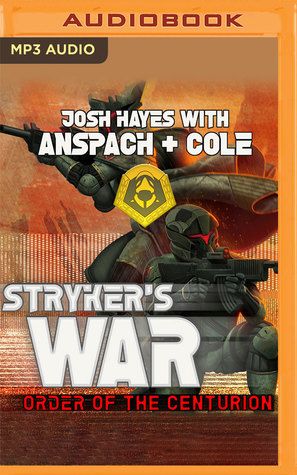
Order of the Centurion - Book 3 - Stryker’s War by Josh Hayes
The Order of the Centurion series is a spinoff of the “Galaxy’s Edge” book series that I discovered last year and found myself enjoying. It’s fast paced, full of action and with characters that are a bit more than two dimensional.
In the world of “Galaxy’s Edge” the “Order of the Centurion” is an award given to exemplary soldiers. Often after death, think Victoria Cross as a contemporary example.
The series picks individuals, often minor characters in the main series, and delves deeper into their lives and how, in the end, they earned the Order of the Centurion.
“Stryker’s War” is the third book in the series and is just as fast driven as the other books in the series.
As a “standalone” book it isn’t really noteworthy or a must read. But if you enjoy the Galaxy’s Edge series, this spin-off and this book in the series are definitely worth it.
Rating: 4/5
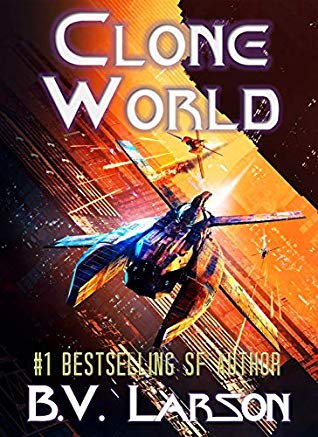
Undying Mercenaries - Book 12 - Clone World by B. V. Larson
Well this was a pleasant surprise. Usually it takes Larson around six months between books, but this one dropped all of the sudden and continues the story at the same pace.
McGill gets a chance to finally go after his arch nemesis Claver and discovers along the way that for some mercenaries loyalty even to the home planet is somewhat optional.
Things end up getting really interesting when the Earth force finds itself in a battle between their old Masters and another old race that really does like Earths neck of the woods.
The scope of the series keeps expanding and we are left with the cliff hanger that apparently now full blown civil war is going on at the galactic core.
It’ll be interesting to see where the next few books take us.
Rating: 4/5
The Edge - Book 1 - Edge of the future by Andria Stone
This is an interesting concept, bad people steal potentially devastating weapon, individuals get thrown into it and try to prevent it.
Yet, for some reason this didn’t click with me. At the end I really didn’t care much about the characters or how it would end.
Rating: 3/5
TV
Another Life
So Netflix tries again having a crack at the SciFi thing and….. misses.
The show is a mishmash of a variety of other SciFi shows / movies all put together in what feels like a rather disjointed way. I get why so many people / reviewers do not really like it.
The problem really isn’t in the acting or the production design / shooting. Rather the story seems to not know what it wants to do until way too late and by the time the main antagonist shows up I had sort of tuned out.
Here’s a rather extended discussion on what the story problems are:
Rating: 1/5
Good Omens
I am always wary when they adopt a book into a movie or a TV show. Usually this goes one of two ways:
They try to adopt the source material literally
They “re-interpret” it in some way.
They just steal the name.
The problem with the first version is that often the written word translates only half-assed onto the screen. It requires good writers and “visual” source material to really make that work.
The second version is usually the way to go, make it your own while retaining what makes the source material great. This is often the best way to go, but if there is a discrepancy between what the screen writer and the read consider “vital” it may end up as a disappointment.
The third one is essentially a bait and switch. Readers will never get anything out of the movie or show that they got from the book.
So where does “Good Omens” fall?
I would say in the second category. There are some departures from the book, but it is entertaining in it’s own right and it is not dancing on the books grave.
Especially Michael Sheen and David Tennant have a great chemistry together and it is fun to have them both on the screen at the same time.
It probably also helped that they decided to make it a mini series, so the risk of them watering the concept down in order to wring a few more seasons out of it was greatly diminished.
Rating: 4/5
Into the Dark (Anthology Series)
“Into the Dark” is an anthology series that ran for the last year. It consists of 12 90 minutes long horror movies with different themes.
I am not going to break out each individual entry here, but rather want to give a summary judgement on the (first?) season.
It’s good. It is nothing amazing, ideas and expectations aren’t really overturned. The writing is solid though and much better than what we saw for example with the 2019 “The Twilight Zone” earlier this year who had a lot of seriously atrocious writing.
If you do like horror movies, not the blood and gore type, this is an entertaining anthology series.
Rating: 3.5/5
Hold the Sunset (Season 1)
Oh boy. This was…. average. It is really too bad seeing how far John Cleese has fallen from his high-point with Python, Fawlty Towers and a Fish Called Wanda.
There just weren’t a whole lot of laughs in there. Maybe it is a generational thing, I am after all not in my 70s, but I think it just generally is…. Boring? There is nothing new here. There is no “bite” to the show at all.
To be brutal here: It’s as if Cleese and the writers called it in from a retirement home.
Rating: 2/5
Disenchantment (Season 2)
I did find myself enjoying the first season last year and was happy to see that the second season was finally released this month.
What’s there to say but: More of the same. It is still enjoyable and the characters are still fun. It is a little bit less crazy than the previous season, but overall much more even.
Greatly enjoyable.
Rating: 4.5/5
Preacher - Season 4
All good things have to come to an end. And so, this year, Preacher has ended.
It was a bit of a bittersweet last season, at times it felt a bit rushed, but the trademark craziness from the comic was still around.
God being an asshole? Absolutely. And in the end we still get a “happy ending” of sorts. Apocalypse avoided, though not for lack of trying.
A good ending for the show.
Rating: 4.5/5
Movies
Der Goldene Handschuh (2019)
This is an ugly movie. I do not mean this in the context of “a bad movie”. Quite the opposite it is a remarkably good movie.
What makes the movie ugly is firstly the theme, that of a serial killer. But more importantly that, as it isn’t a Hollywood movie, it does not have the “pretty ugliness” that is so common in US movies.
It is too bad that the movie will probably not see a wide release in most parts of the world.
Rating: 5/5
SpiderMan: Far From Home
Okay, I have to say it is probably me, not them. But I just generally didn’t find this too engaging on the whole. To my surprise earlier this year I found myself enjoying the first, Homecoming, and Animated Spiderman, but on this one… Dunno.
I think in a big way it may have been the moping over the rest of the MCU that puts me off a bit. I am not that invested in the MCU as a whole and the last few movies in that area didn’t do it for me already. So this was another one of those “meh” type of movies.
If you are into Superheros I think you find all the bits and pieces here that make it sing though. So ignore my rating on this one.
Rating: 3/5
Toy Story 4
Maybe I am growing up, but Toy Story 4 did not draw me in to the same degree as the first two movies did. Having said this though, it is impressive how far computer animation has come since the first movie. If you look at it now it really does look ugly by todays standard.
But maybe that’s also the reason why it worked. It didn’t try to be “real” and now with highly realistic rendering these movies come at times close to the uncanny valley.
I am sure sooner or later Disney will make a full live action version out of it. Just like they have done with their other classics.
Rating: 3/5
Supersize Me 2: Holy Chicken
Morgan Spurlock’s back and goes behind the scenes of fast food chicken by opening his own restaurant.
The odd thing about this is that all of this was apparently being shot back in 2016 but only now got released.
As far as a Spurlock movie goes it is well made and entertaining. It also shines a light on the practices of Americas (and Canadas) favourite protein: The chicken.
Rating: 4/5
Online Reads
The air conditioning trap: how cold air is heating the world
The Northern Ireland economy office suggests that some 40,000 jobs would be at risk. London’s own no-deal planning, officials say, also assumes businesses would close. The British government has said it will allow goods to flow tariff-free from the Irish Republic. But that would mean Northern Irish farmers being thrown under the bus. Or as Declan Billington, a respected former chair of CBI Northern Ireland, puts it, “Not thrown under the bus. Thrown under the convoy of European lorries bringing tariff-free food into the UK via Northern Ireland, driving past the Northern Irish farms that have no export market in Ireland or Europe. Good luck with cross-border relations with that one.” Which is why you’ve got to wonder whether the Brexiteer’s clean-break unilateral free trade could ever work. Some officials think there is a good chance that Northern Irish farmers will try to barricade those roads—as one puts it, “tyres will soon be burning.”
The Nerd Crew: D23, Star Wars, D23, Disney+ and Streaming Services
Red Letter Media takes on Disney and the idiocy of the n+ streaming services.
Best of the Worst: The Instructor, Through Doohan's Eye, and Twisted Pair
Panzer IV vs. Sherman
In this video we take a closer look at the Panzerkampfwagen IV Ausführung G and M4A1 Sherman in their Summer/Fall 1942 configurations.
3 Sausage Roll Recipes... but which is best? Quick vs Vegan vs Gourmet
Today, you’re in for an absolute treat! Sausage roll recipes compared. As well as the ULTIMATE version of this classic snack with homemade puff pastry, these VEGAN rolls will blow you away.
This channel is basically TopGear (Clarkson years) but with food.
Automated Chess - Losing to a Ghost
I remember a store near where I lived having something like this. They had it play against itself and it was fascinating to watch it play. Of course after a few weeks you saw scratches in the wood from all the pieces moving.
World of Batshit - #10: Size
Part 10 in a series examining some of the most ridiculous claims. In this part we look at a channel claiming that there's a conspiracy to lie about the size of pretty much everything.
This October, Blix is turning 5 years old and it is because of you all that we are able to continue to create ebikes for every adventure and encourage more people to live fun and healthy lifestyles! When deciding how to celebrate our 5th year of business, we thought a giveaway would be the perfect option. Learn how you can enter to win a 36V/11Ah Vika+ Model during the month of October and see why the Vika+ is so fun! One lucky winner will win a 36V/11Ah Vika+ model in green!
How to Enter:
To enter the Blix 5th Birthday giveaway head to our giveaway page on our website or Facebook page.
A valid email address and name is required to be properly entered.
Gain extra entries for sharing the giveaway on Facebook, email, Pinterest, and Twitter.
Giveaway runs until October 31st, 2019 11:59 PM PST
Rules and regulations located on entry form. This giveaway is in no way sponsored by Facebook or Instagram.
All about the 2018 Vika+:
Whether you are looking to get active, find a new way to commute, or add a little fun to your camping trips, the Blix foldable Vika+ ebike is perfect! This Vika+ model has a 350W motor, 36V/11Ah battery, and comes with included fenders, rear rack, and lights! It has a range of up to 40 miles per charge and reaches 20mph. With four levels of pedal assist and a throttle, the Vika+ is powerful on both flat and hilly terrain. Conquer those hills with ease, ride farther distances, and don't let your physical limitations stop you from getting outside and active once again. An electric bike helps make exercise fun and doable for everyone!
Additionally, the Vika+ easily folds to fit in most small spaces such as the trunk of your car, your RV, apartment, or public transportation. Taking your Blix on road trips, to the lake, or with you to work is hassle free. Moreover, the smaller frame is accessible to riders of most heights providing effortless on/off maneuvering. Help us celebrate Blix turning 5 and get ready to unlock endless adventures riding your own Blix!
According to TechCrunch’s Matthew Panzarino, Apple will roll out the Deep Fusion camera feature announced at the company’s fall iPhone event today as part of the iOS developer beta program.
Deep Fusion is Apple’s new method of combining several images exposures at the pixel level for enhanced definition and color range beyond what is possible with traditional HDR techniques. Panzarino explains how Deep Fusion works:
The camera shoots a ‘short’ frame, at a negative EV value. Basically a slightly darker image than you’d like, and pulls sharpness from this frame. It then shoots 3 regular EV0 photos and a ‘long’ EV+ frame, registers alignment and blends those together.
This produces two 12MP photos – 24MP worth of data – which are combined into one 12MP result photo. The combination of the two is done using 4 separate neural networks which take into account the noise characteristics of Apple’s camera sensors as well as the subject matter in the image.
Apple told Panzarino that the technique “results in better skin transitions, better clothing detail and better crispness at the edges of moving subjects.”
There is no button or switch to turn Deep Fusion on. Like the over-crop feature that uses the ultra wide lens to allow photo reframing after the fact, Deep Fusion is engaged automatically depending on the camera lens used and light characteristics of the shot being taken. Panzarino also notes that Deep Fusion, which is only available for iPhones that use the A13 processor, does not work when the over-crop feature is turned on.
I’ve been curious about Deep Fusion since it was announced. It’s remarkable that photography has become as much about machine learning as it is about the physics of light and lenses. Deep Fusion is also the sort of feature that can’t be demonstrated well onstage, so I’m eager to get my hands on the beta and try it myself.
I use the WP Plugin Post Kinds here, which lets me blog things like Replies, Likes, etc. This plugin has a setting that determines the order in which my own remarks with a Reply or Like and the thing I am replying to or liking are shown.
The default order is [the thing I respond to] [my response], but here in this blog I have changed that, because I like to have my own response first. This ensures for instance that my own words, and not someone else’s get posted to Twitter if I share my post directly to Twitter.
This setting does not change the way the same blogpost gets added to the RSS feed. This means that my regular readers do not get the content of a posting as I intend it, which is in the same order as a website visitor.
In addition it causes anything that consumes my feed, such as my Micro.blog account to show the post I am responding to first (someone else’s words) and not my remarks. Below in three images is how that looks in practice:
The old version: the order is as I want it on the site.
The old version: the order is reversed for the same item in my feed
Micro.blog posts from my feed, and therefore shows not my words first but the words I’m reacting to, which makes them appear as if they are my words
I figured out where in the plugin files (in class-kind-view.php) the feed gets created and how it is different from how the posting is created for the site. Then I added the conditional code from the latter to the former. This works on my site, as shown by the following three images:
Testing the new code: on my site the item is in the right order
In the RSS feed, the content of the item is now in the right order too
And the right order now shows up in Micro.blog, showing my own words first
Then I tried to let the creator of the WP Plugin know I made this change, through a Pull Request on GitHub. I’v never done this before. It’s basically a message ‘I changed this file here’ which the original creator can then adopt in the original code. Making that message meant engaging with concepts such as forks, branches, commits and then the Pull Request. I think I pulled if off, but I will only know when David Shanske, who makes Post Kinds indeed incorporates it in the plugin.
Hoping I’ve submitted my first ever PR the right way
This leaked audio from Facebook — where Mark Zuckerberg promises that “you go to the mat and you fight” Elizabeth Warren — is a reminder: any corporation that has power over the speech of billions of people is still a corporation with its own interests. And those interests don’t match yours or mine or the interests of democracy.
You don’t have to support, or even like, Elizabeth Warren to understand that.
Do you trust Facebook not to tip the scales in favor of Zuckerberg’s interests? I sure don’t.
This is about Facebook and a specific presidential candidate — and it’s also about giant corporate communications platforms and how they subvert civilization.
Like the Liberals, if elected, Conservative Leader Andrew Scheer said he would get international tech giants to pay a “fair share” in taxes if operating in Canada.
Scheer told Radio-Canada’s Tout le monde en parle that he would get these tech giants to “contribute to our society.” They would include giants like Facebook and Google.
On September 30th, Scheer told reporters that his policy regarding this would be to make “sure massively profitable companies…pay their fair share, just like every other Canadian company,” The Toronto Star reported. Though he did not further explain what this would look like.
“What I’m talking about is ensuring, the same way all Canadian companies pay a certain percentage of their revenues to the Canadian government, just as has always been the case, that foreign multibillion-dollar corporations who are collecting hundreds of millions of dollars’ worth of ad revenues, or subscription fees out of Canada pay their fair share,” Scheer told reporters, according to The Toronto Star.
Scheer also indicated that there should be “subscription fees” that internet giants, like Netflix, should be accounting for.
The last time the Conservatives suggested something like this was in 2015, when former prime minister Stephen Harper said Netflix should be paying tax. Currently, the Broadcasting and Telecommunications Legislative Review is taking place that would look into whether or not Netflix should be taxed.
The Liberals have also suggested taxing tech giants. According to their platform, a three percent tax would be implemented for companies that generate a certain amount of revenue from Canadian consumers.
Apple’s upcoming ‘Deep Fusion’ iOS feature, affectionately referred to as ‘Sweater Mode,’ is now available on the iPhone 11, 11 Pro and 11 Pro Max through a new developer beta update.
Deep Fusion combines multiple exposures together, similar to HDR, to create more detailed images. Unlike HDR, Apple says these exposures are blended at the pixel level. The feature is also optimized to work with textures like skin, clothing and foliage.
Deep Fusion is compatible with the iPhone 11’s wide camera, while the iPhone 11 Pro and Pro Max are capable of using the feature with their telephoto and wide-angle shooter, but not their ultra-wide lens.
Apple says that Deep Fusion is only compatible with its A13 chip, the processor featured in the iPhone 11 and 11 Pro. This means that it’s unlikely the new advanced photography feature will eventually make its way to older iPhones.
By the time you’ve pressed the shutter button, the iPhone 11 has already snapped three frames at a fast shutter speed to prevent motion. Touching the shutter then takes three additional shots, along with a final longer exposure that captures more detail. These images are next merged into what Apple calls a “synthetic long” photograph.
Deep Fusion then selects the short exposure image that features the most detail and merges it with the synthetic long image. These two images are processed to reduce noise through a method that is optimized for Deep Fusion and not the same as smart HDR.
Finally, the images are processed pixel by pixel by Apple’s algorithm before the final photo is complete. This portion of the process takes place behind the scenes, and you’ll see a “proxy image” in your camera roll until the photo is ready.
Deep Fusion is currently only available in iOS 13’s iPhone 11 and 11 Pro developer beta, but will likely soon make its way to the OS’ public beta and final release.
We’ll have more on Deep Fusion in the coming weeks.
Update 01/10/2019 4:46 PM ET: iMore is reporting that the new ‘Capture Outside of Frame’ feature on the iPhone 11 and iPhone 11 Pro-series has to be disabled before users can take Deep Fusion pictures.
Capture Outside of Frame is a setting on the new iPhones that captures a wider view of some photos to give users more photo to work with in post.
A Reddit user is reporting that an update to the Google Photos app adds a section for controlling what pictures appear on your smart displays and other Cast-enabled devices.
Both Cast devices, Android TVs and Chromecast, along with smart displays, feature screen saver modes that display a user’s photos. This feature has been a hit among smart display owners and is useful on Cast devices too.
Until now, it was a struggle to find the right setting within the confusing Google Home app, so it looks like Google is adding the feature to its Photos app instead.
This should make it a little easier for users to update their selected albums more often, and if the update adds more functionality that would be great as well. For instance, the option to pick and choose photos without needing to build an album would save a lot of time when setting up a digital photo frame.
The service lets users watch two games simultaneously thanks to a split-screen feature. It also allows users to watch full game replays shortly after the game has ended.
It should be noted that if you purchase a pass once, it will automatically renew each NHL season until you cancel it.
Sportsnet
Sportsnet offers SN NOW, which gives subscribers the ability to livestream sports events, including NHL games.
The annual streaming pass for the NHL games is currently on sale for $199.99 CAD, discounted from $249.99 until October 15th. The streaming pass is blackout-free, which means all games will be available and aren’t subject to regional restrictions.
A monthly pass is also available for $19.99 CAD. However, regional blackouts do apply for the monthly pass.
GoPro is looking to build on the technology from its excellent Hero 7 Black with its two new cameras, the new Hero8 Black and the MAX.
The Hero8 is the company’s flagship and GoPro says it has made its ‘Hypersmooth’ video stabilization technology twice as good this time around.
There are also a handful of new add-ons for the Hero8, including a new ‘Media Mod’ with shotgun-mic directional audio, a ‘Display Mod’ with a built-in display for vlogging and a ‘Light Mod’ that can connect to the side of the camera.
The Max is a new type of camera for the company since it has lenses on both sides. You can even use this setup to shoot 360-degree video. It also features a tiny display on the front of it so it can be used for vlogging.
The Max is now the company’s most expensive camera and it costs $669 CAD and the Hero8 Black costs $529 CAD. Both the Media Mod and the Display Mod are $109 CAD and the Lighting Mod is $70.

















 The old version: the order is as I want it on the site.
 The old version: the order is reversed for the same item in my feed
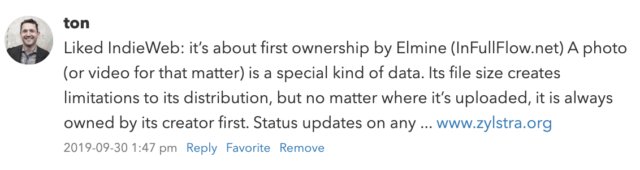 Micro.blog posts from my feed, and therefore shows not my words first but the words I’m reacting to, which makes them appear as if they are my words
 Testing the new code: on my site the item is in the right order
 In the RSS feed, the content of the item is now in the right order too
 And the right order now shows up in Micro.blog, showing my own words first
 Hoping I’ve submitted my first ever PR the right way