
Glaciers flow towards Baffin Bay in late October.
Glaciers flow towards Baffin Bay in late October.
Hi, this is Anna. I’m responsible for the maps you can find in our choropleth and symbol map editor. Last week, Hans showed Antarctica from a slightly different perspective. I realized that we didn’t have any maps of Antarctica – so I decided to go ahead and add one to our base map collection.

Antarctica is the only continent that does not have any permanent inhabitants (if you don’t count all the penguins, sea lions etc.). Still, 7 states have territorial claims in Antarctica. At the turn of the 20th century, many explorers made expeditions to this cold and inhospitable part of the world. At this time, colonial powers claimed the large parts of the world that did not have a national flag on their ground yet – including Antarctica. A “first come, first served” principle applied. France was the first country to claim all of Antarctica in 1840, but eventually gave up their all-encompassing claim. Since then, the borders have changed many times. Today, Argentina, Australia, Chile, France, Norway, New Zealand and the United Kingdom all have territorial claims in Antarctica.
Since Antarctica mostly consists of ice and there are no natural borders, the continent was split into territorial sectors aligned with the longitude, which make the map of the territorial claims look almost like a pie chart! The map above shows each state’s stake on Antarctica. Some of the territories are claimed by more than one nation (Chile, Argentina and the United Kingdom).
Even though states don’t profit directly (yet?) from claims on Antarctica, giving up a claim would have changed the power balance in the world especially during the Cold War.
In 1961, the Antarctic Treaty was signed by 54 states. They agreed on using Antarctica for peaceful purposes only – allowing free scientific investigation, prohibiting mining and banning military activity. The signing countries also decided that no new land claims can be made on Antarctica.
It is still uncertain what resources in terms of minerals and oil Antarctica holds and in 2048, the Antarctica Treaty will be open for re-negotiantions.
If you want to make your own Antarctica map, create a choropleth or symbol map by clicking on “Create a map” on our maps page. Thanks for reading, until next time!

FraidyCat is content syndication without the syndication. It's a Firefox and Chrome plugin that allows you to follow individuals across multiple social media accounts (at present: blogs, Tumblr, Medium, Mastodon, micro.blog, Wikipedia, Kickstarter, Stack Overflow, Twitter, Instagram, SoundCloud, Pinboard, YouTube and Reddit, and even TiddlyWiki). Even better, "Fraidycat doesn't communicate with a central server, so it's not capturing all this user data for some company. It's open source; find it here. What I'd really like to see is something like this in its own application; an Electron app, for example. Caution: this is "brand-new, quite experimental", so don't just install it without expecting any side-effects.
Web: [Direct Link] [This Post]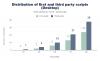
As CSS-Tricks reports, "The HTTP Archive dropped this big 'state of the web' report called Web Almanac with guest writers exploring data from 5.8 million websites." According to the website, "The Web Almanac is a comprehensive report on the state of the web, backed by real data and trusted web experts. It is comprised of 20 chapters spanning aspects of page content, user experience, publishing, and distribution." Needless to say, I haven't read it all (though I did read CSS-Tricks' summary of the chapter on CSS, which was quite detailed). The Almanac focuses on quantities, for example, "we (the web as a whole) use 373 KB of JavaScript at the 50th percentile, or median." There are no doubt thousands of nuggets to be mined in the Almanac that talk about web usability and interactivity.
Web: [Direct Link] [This Post]Good article from Alex Usher pointing to an inherent contradiction in criticisms of Canadian universities. Ther criticisms are these:
Usher writes, "If you want credits to be transferable, you need standardization. If you want differentiation, you can’t expect full transferability." But the goodness in the article is what follows, a quite nuanced view of how universities design programs and make decisions in a way that results in a lot of variety even for common credentials.
Web: [Direct Link] [This Post]I don’t watch much reality television but this summer, I found myself obsessed with the MTV reality dating show Are You the One. This was the infamous “sexually fluid” eighth season and I came mostly for the thrill of messy queer drama on national television. But, as the show went on, I found myself fascinated by the premise: 16 singles must determine who in the house is their “perfect match,” as determined by a complex matchmaking algorithm which takes into account interviews with friends, family, and exes; a personality test; and a thousand-page questionnaire.
The contestants alternate between playing with “heart” and “strategy” — seeing who they naturally connected with, and trying to solve who the algorithm might have picked out for them based on math and deduction. Leading with heart is encouraged: the premise of the show suggests that someone’s true feelings should lead them to their algorithmic match. If a contestant happens to fall in love with a “no match,” their feelings are taken to be incorrect, and they are urged to get back out there and do better.
This MTV reality dating show deliberately casts contestants who are “bad at relationships” to show how the algorithm knows best
One of the defining story arcs of AYTO’s eighth season revolves around Max: a self-proclaimed “straight in Ohio / bi in LA” #ravegod party boy who meets and falls in love with the highly sought-after Justin. Being with his first boyfriend is a deeply formative, potentially life-changing experience for Max. But the algorithm is not a deity that can be appealed to. The verdict? Not a perfect match.
Max is heartbroken, but there’s no time to wallow: the gang has only two more episodes to sort out the correct matches if they want to win the money. Fortunately, great agony leads to great clarity. In a pivotal moment, Max finds himself red-faced with revelation during a conversation with Kari, a party planner from New Jersey who he’s been at odds with all season. “It’s Kari! She’s my match!” he insists, overcome. Kari tells him everything he told the matchmakers he wanted, before he discovered that what he really wanted was Justin. He isn’t recognizing his soulmate, but rather the data soulmate of his data double. Max fed the matchmakers the sum total of his emotional data, and the machine responded with Kari.
AYTO deliberately casts contestants who are “bad at relationships,” and throughout the season they repeat (likely per their contract) how they are ready to find their perfect match, how the algorithm knows best, how it can do what they, as ordinary humans, cannot. Although the contestants are supposedly there to fall in love, their real task is to discover who they’ve been profiled to fall in love with. The show rewards a very specific digital literacy: In order to win, the AYTO cast has to find their algorithmic soulmate by divining their algorithmically legible self.
Watching the contestants struggle to put aside their own instincts and desires and trust in the algorithm felt very familiar — it is something that is asked of us every day. The Spotify algorithm determines what I listen to; the Facebook/Instagram/Twitter algorithms determine whose lives I keep up with, what events I am aware of, what ads I see, even what news I read. I try to practice active browsing, but inevitably slide back into the algorithmic stream. The thing is, it’s not totally wrong. Most of the time the algorithm guesses accurately, or accurately enough, and I am comforted by the customized ease of my digital environment.
Meanwhile, everything hidden from me slips smoothly out of my awareness. I am only jarred to the curated nature of my reality when something obfuscated inexplicably reappears at the edges of my digital periphery. Where has this person been? How could I have forgotten them? What coincidence of data has brought them back?
The algorithms encase me in a bubble of “me,” or at least a bubble of who they think I am. It’s not a particularly deep assessment. If I’m listening to “female fronted pop-punk” it will return more of the same (or, usually, gender-segregated bands from different genres). It won’t venture to give me country or harsh noise, though I love those artists who work in those modes as well. The algorithm lets me reify certain choices, but it doesn’t let me grow.
As humans, we have our own internal algorithms for reading people around us, with our own biases. When I see a large man in salmon shorts I might think “bro,” and depending on how he moves I might sort him into “dangerous” or “chill.” A person with brightly dyed hair and a septum ring might scan as “queer” or “alt.” I will scan as “ma’am” and “sir” to different people’s algorithms, often over the course of a single hour. The data our algorithms take in is largely visual, but incorporates other factors such as body language, conversation, smell.
The algorithms encase me in a bubble of “me.” It’s not a particularly deep assessment
Like digital algorithms, ours are based on information we’ve been trained on over the course of our lives. (Unlike digital algorithms, we do not factor in where someone has been over the last week or how they spend their money, at least not without extensive stalking.) Human algorithms are equipped with plenty of bias, as any woman whose pain is ignored by a doctor or person of color who is routinely stopped by the police can attest. It’s difficult enough to hold humans accountable: even with anti-discrimination laws in place, it can be hard to prove that a human-made hiring decision was a result of someone’s name or gender marker and not just someone not being “the right fit for the job.” Algorithmic evangelists believe machines can rectify our human faults with a divine mathematical mandate of pure truth. But we create our machines, and, when we do, we pass our flaws down to them. And when we do, machines turn our most damaging myths into mathematical truths, applied across a massive scale.
Most of us are warned of the potential human biases acting against, and within us, from an early age. This information is passed down from parents, older siblings, friends. We learn to code-switch to get what we want, or to achieve a sense of safety. We try to develop an awareness of these shifts to maintain a consistent sense of self outside of someone else’s gaze. But most of us still have no idea how to code-switch before the algorithm, or even which of our data points we would need to modify. In many cases the option might not even be available to us. While human beings largely profile each other based on immediately visible data, digital algorithms often pull from data long buried in the past, fostering a feeling of helplessness and codifying disposability. It can feel impossible.
Just sitting with that despair is a part of working toward undoing it. Algorithmic literacy is not necessarily about cracking the code but just realizing that there is one: that the everydayness of our lives is intensely mediated.
In 2016, Cathy O’Neill’s Weapons of Math Destruction dove into the effect algorithms have on our material circumstances, whether it’s a company deciding not to hire someone based on a history of mental illness illegally detected through a personality test, or a predictive policing model that turns using arrest histories (regardless of conviction or severity of crime) into self-fulfilling prophecies by overpolicing areas where arrest rates are already high. Repetition shapes reality. Without an awareness of the algorithms at work, those affected start to believe that they are somehow fundamentally broken. Their suspicions are dismissed as paranoia. The prevailing belief is still that computers are meant to eliminate human error, not perpetuate it.
The algorithms that shape and determine our lives are necessarily complex: job candidates aren’t flagged for any one answer but rather for certain patterns; car insurance payments are calculated not only based on a customer’s driving history but also on their credit score, zip code, and the routes they take. The government will not reveal why someone has ended up on the No Fly List even after multiple challenges by the ACLU. These algorithms are often described as a sort of “black box”: their compounded nature makes it impossible to see what goes on inside. But even though their machinery is obfuscated, we can sometimes sense when they are acting upon us. And just as we can follow a feeling of dissonance to the version of ourselves another human has created in their mind, we can sometimes follow our unease to discover the outline of our algorithmically legible self: our data double.
As anyone who’s looked up their Facebook targeted ads knows, our data refracts an uncanny version of ourselves that is only partially accurate. This “data double,” as coined by Kevin D. Haggerty and Richard F. Ericson, is the sum total of what is visible to our surveillants, a “decorporealized body of pure virtuality.” Our data doubles are similar enough to be recognizable, but distorted enough to be disturbing, built out of our clicks and likes and digital movements. “Google tells me she loves American football, and I wonder what twist / of data gave her this quirk, this sweet brave way in which she diverges / from me, diverts surveillance, leads the advertisers astray,” writes Navya Dasari in her poem “Data Double.” Our double’s glitches reassure us that we are still the most authentic version of ourselves.
Scrolling through Instagram, my data double and I read our advertisements. We’re both tempted by knockoff Balenciagas and discount CrunchyRoll subscriptions. Like me, the data double has moved recently, judging from the furniture and mattress ads, but somehow they got to stay in New York. We both used to fall for androgynous goth couture but recently it seems like they’re becoming the type of person that’s more lured in by cookware and vegan bath products. Which of us has changed? Also — when did they get a dog?
During one post-election cybersecurity workshop I tried to look through my computer from a stranger’s point of view. What kind of person would keep a drive like this? Are they a person who would have an easy or a hard time getting past airport security? In a dystopian secret police raid, would this be the kind of person flagged for extermination? As countries begin asking people for their social media information at the border, I consider whether my Twitter (which an IBM personality metric rated as “inconsiderate” and “disagreeable” after incorrectly guessing that I didn’t listen to country music) resembles that of a welcome guest.
We try to gather a sense of self from the world being created around us. Just like the “attractiveness” of people being shown to users on OkCupid reflects how the app perceives their “attractiveness,” or like the tone of my classroom reflects my energy for the day, I try to assemble every ad and alert shown to me into an algorithmic portrait.
When my Lyft driver drops my ride at 4 a.m. I have to wonder — did they change their mind, or is my Lyft rating dangerously low? My financial data affects whether I’m approved for a credit card or a house; my health data determines my insurance premiums. For a while, something about my data meant I was repeatedly being pulled into secondary screenings while traveling, until, just as mysteriously, it stopped.
We are told to delete drunken college photos, to watch what we post lest it’s used to justify an arrest (particularly for already-targeted populations), to turn off Location Services whenever possible, to get a VPN or open Tor when reaching for privacy. We guess cash is digitally clear (though not untrackable), Signal is more or less encrypted, and the safest conversation is one where your phone is in the other room. There are several guides for guarding our digital personas; few for totally disguising them. While these measures offer a feeling of control, we are inherently leaky beings. There is no data double charm school I know of.
I run my Facebook through Apply Magic Sauce, which promises to show “what your digital footprint says about your psychological profile” and experience momentary disappointment in how bad of a psychic it is. It gets my age and gender mostly right, but the similarities stop there. Further, it pulls back the curtain and reveals which values it assigns to various Likes. Liking Canadian nu metal band Kittie marks me as “more feminine,” “conservative,” “contemplative,” “easily stressed,” and “less intelligent.” Liking techno live-stream session platform Boiler Room marks me as “younger,” “hard working,” “laid back,” “married,” and “more Catholic.” The whole illusion is shattered.
Which of us has changed, me or my data double? Also, when did they get a dog? I had a perverse need to have them resemble me more closely
As Facebook and other social data repositories integrate with other surveillant assemblages, reading our data doubles is likely to prove increasingly material. In O’Neill’s book, when a Vanderbilt student named Kyle Behm is repeatedly rejected from minimum-wage jobs, his friend is able to find out that Kyle had been red-lighted by the personality test. Kyle’s father, an attorney, discerns that the personality test flagged Kyle for bipolar disorder — something that is both misguided and illegal under the Americans With Disabilities act. Most people do not have the resources or the access to determine where their ill fortune comes from. Without an awareness of how algorithms interpret our digital footprints, we run the risk of correlating the material consequences with our own perceived failings, believing that we are unqualified or unworthy, rather than trailed by data doubles who unwittingly set off algorithmic alarms.
In Kyle’s case, algorithmic literacy led to material change: His father filed a suit and at least one company Kyle had applied to changed their application process. In other cases, the effects of algorithmic literacy might be merely existential. But that itself is no small victory.
According to a self-help meme that my algorithm thought I might like, one thing I can never control is what other people think of me. This is supposed to be reassuring. After being locked out of account after account due to forgetting my new super-strong passwords and learning that nearly every securitizing mechanism I have the capacity to understand is always-already compromised, I start to wonder if it isn’t better to just own our vulnerabilities rather than pretend we don’t have any. I know that I have to keep my data double in check, even if I can’t yet grasp or anticipate the full scope of why. But I also want to ignore them, to let us lead our separate lives and be confident in our differences. That is, until the next time they’re called upon to represent us.
Chasing one’s data double is a lifelong project. Regardless of how effective it is, it gives me a sense of control in a digital space that’s simultaneously wholly personalized and wholly alienating. And, psychologically, I take solace in the fact that there are some things the AI can’t see: perhaps how we are feeling (though with the advent of affect surveillance, not for much longer). Perhaps our dreams (though sometimes I am certain there are major blockbusters pulled straight from my nightmares). Perhaps what this literacy offers is a hard-won sense that we are more than the sum total of our likes.
As with many algorithmic ventures, the algorithm on Are You the One inevitably lets the contestants down. Only one confirmed “perfect match” is still together, while plenty of “no match” couples are dating happily. After the season wrapped, Kari, the party planner from New Jersey, expressed an enduring faith in the algorithm and a desire to make it work with Max despite glaring red flags in their relationship. “I don’t speak to Kari. I don’t want any sort of relationship with Kari after she hooked up with Justin in the hotel,” Max said during a reunion special, adding: “Kari and I never really got along. I found out she was my match and that was that. I never wanted any relationship with Kari outside of that.”
Watching the show was both hopeful and sobering. Despite their best attempts, algorithms still can’t fully gauge our true selves or desires. Call it a “soul” or a “vibe,” a kind of light that doesn’t reach into the uncanny valley. Whatever it is, it is the ultimate romantic notion: that something ineffable in us is still, for the time being, unsurveilled.
In my own life I’ve alternated between running from my data double, trying to shape them in my image, and trying to build a safe dummy data double to hide behind. (As my favorite Privacy Issues song goes, “Every day you watch me, so / I change the way I speak / I change the way I speak.”) For a brief, paranoid period of time, I debated keeping my legal name as my byline long after I stopped using it in meatspace. I wanted to plan a good life for her — one that could go on separate from myself. I would keep up the data trail that kept her going, I reasoned, and she would in turn sneak me safely past hawk-eyed gatekeepers. A past self as an alter ego — a ghost I could wrap around myself like a soft sheet.
It didn’t work for long. I was no Norman Bates — the deadname had lived a good life and deserved to be laid to rest with dignity. Despite my understanding of security culture and my keen post-Soviet paranoia, I was overcome with a perverse need to have my data double resemble me more closely. My own craving for data intimacy surprised me: Something in me was willing to sacrifice being safe for being known. Call it data dysphoria. I wanted to recognize myself in the black mirror.
At the end of Annihilation, Natalie Portman’s character is in an eerie dance with its alien twin. The twin crushes her against a wall. But when Portman collapses, the twin collapses as well. They engage in an eerie mirror dance. As Portman wraps her twin’s hands around a grenade and pulls the tab, the iridescent thing takes on her face.

It’s been rumoured for months that Apple could have plans to bundle all of its platforms under one fee to bolster its subscription offerings.
Now, according to a recent Bloomberg report, this shift might happen as soon as 2020. The publication states that Apple’s recent deal with publishers includes a provision that would allow News+ to be included in this bundle. Reports have also emerged regarding Apple working out a similar deal with record labels when it comes to Apple Music.
Packing all of its platforms — Apple News+, Apple TV+, Apple Music and Apple Arcade — under one unified banner makes sense given the company’s push to transition to services over the last few years.
What’s unclear is precisely how much this bundle might cost, particularly in Canada.
Apple News+ is priced at $12.99 CAD, Apple TV+ is $5.99, Apple Music costs $9.99 and Apple Arcade is $4.99. The price for all these services under one bundle would likely be somewhere in the $25 CAD range. There’s also a possibility that Apple could charge $30 and include some amount of addition iCloud storage.
It’s also unclear how the record label and publisher cut of subscription fees would change with this bundle.
As always, these are just rumours. We’ll have to wait for 2020 to know for sure what Apple’s plans to bundle its services are.
Source: Bloomberg
The post Apple might bundle TV, news and music under one subscription in 2020 appeared first on MobileSyrup.
I have a network that I didn’t set out to create. Curiosity and a specific type of work environment created it. I just needed to do my job and not be too much of an asshole. I’m terrible at networking. At events, I struggle to introduce myself to people. I don’t drink. I like to … Continued
The post How to cultivate a lifelong network when you suck at networking appeared first on without bullshit.
One of my main concerns when I see students seek advice online, as I’ve made explicit in earlier blog posts of mine, is that many folks recommend that they should ALWAYS SKIM EVERYTHING and later (at some undetermined point in time) they should choose which readings they must come back to and read in more depth. As I’ve said repeatedly, students and scholars alike should develop a broad repertoire of reading strategies. There is no magic bullet, and there are risks to the ALWAYS SKIM strategy which I outlined in a Twitter thread earlier this week.

I have 2 sub-pages under my Resources tab: Note-Taking Techniques https://t.co/lKZe0IgfGQ and Reading Strategies https://t.co/nJFSmuJNBm I suggest different reading strategies (skim/meso level/in depth) and note-taking techniques (index cards, Everything Notebook, Cornell Notes)
— Dr Raul Pacheco-Vega (@raulpacheco) November 5, 2019
I have read a ton of my fellow professors encourage students to “just skim and when you find the right article/book, THEN you can read in more depth”. I would be down with this strategy if students were used to reading in depth throughout their studies. I am not certain they are. There is a lot of heterogeneity in reading speeds/material density but also on the purpose of said reading materials. For example, in my class, I always tell my students: “this lecture will ABSOLUTELY REQUIRE that you read very much in depth article A, B and C. Skim D if need be”.
Example: if it’s a class on foundations of institutional theory, I can easily tell my students: “read Ostrom 1990 Ch 3 in depth, North 1990 Ch1 in depth, and Hall and Taylor 1996 – from H&T you should totally do a synthetic note that includes a table on 3 neoinstitutionalisms”. People who teach institutional theory may frown at the fact I didn’t include Williamson. Personally, I believe one can learn institutions with Ostrom, North, Hall and Taylor. THEN go in more depth with Williamson. Anyhow, this is just an example of guidance I offer my students.
The truth is, life in academia (as I tell my students) is about developing a repertoire of strategies. For reading. For writing. For organizing. There is no “one size fits all”. https://t.co/dQvzmr9lZx Skimming is suitable for when one is preparing to enter a new field, e.g.
— Dr Raul Pacheco-Vega (@raulpacheco) November 5, 2019
If you tell your students to just skim you can’t be surprised that they haven’t comprehended important concepts, Skimming and triaging are excellent skills to develop. But we need to teach students to read in depth first, to capture material and really absorb it, THEN skim.
— Dr Raul Pacheco-Vega (@raulpacheco) November 5, 2019
This second round entails going over your notes of these 30 articles (which you may have processed by reading quickly using AIC, then dropping your notes into an Excel Dump https://t.co/KljF5N1qml & triaging and saying “oh, I need to go back to X, Y and Z and read in more depth”
— Dr Raul Pacheco-Vega (@raulpacheco) November 5, 2019
P.S. Grateful to @jenfronc @GretchenSneegas and @MsHouseMD who recommended @jbhamilton__ to check my website. To this day, it still blows my mind how many people recommend my resources and how many faculty members assign my materials as support for their students. So thankful.
— Dr Raul Pacheco-Vega (@raulpacheco) November 5, 2019
I really do hope that folks in higher education will take to heart the message that if you teach your students to strategically choose and skim, you should also teach them to do The Second Round of in-depth reading.
Earlier this year, I was invited to Memorial University of Newfoundland (in St. John’s, Newfoundland, Canada) as the George M. Story Distinguished Lecturer (thanks to Drs. Amanda Bittner and Arn Keeling who successfully submitted an application for and won a grant to bring me to MUN).

I gave a public lecture, a research talks and a couple of workshops for graduate students. As I was preparing the one on academic writing, I got an insight that I hadn’t realized when presenting earlier versions of this talk: you can, if you want, write your literature review based on the “Cross-Reference” column of my Conceptual Synthesis Excel Dump (CSED).
In an annotated bibliography, you could simply dump your Synthetic Notes/AIC plus abstract: https://t.co/ECT6Rfw6I2 HOWEVER, in a literature review you MUST demonstrate that you know how different authors and bodies of work dialogue with each other. THAT is the purpose of…
— Dr Raul Pacheco-Vega (@raulpacheco) November 8, 2019
For example, this article I’m reading argues that waste pickers aren’t always precarious. If you remember the seminar I presented at @MUNGeog and @MemorialPoliSci I also mentioned that there’s enormous variation in degrees of précarité across waste pickers and across countries. pic.twitter.com/6CN1Sff55X
— Dr Raul Pacheco-Vega (@raulpacheco) November 8, 2019
Note how the paragraph above the purple highlight and the next one actually discuss how different scholars have argued about the variability in degree of precarity across waste pickers’ case studies. THAT is the kind of stuff I would write in my “Cross-Reference” column.
Basically, once you’ve surveyed the field, your “Cross-Reference” column gives you the foundations to start writing the literature review, because it allows you to see how the work you’re reading is connected with your own and with others’ scholarship.
Hopefully this blog post will help those who use my CSED method to write their literature reviews.

The answer to the question in the title is "no", and the reason for this - which you get to if you read far enough into this article - is that geowalling is not open access. Geowalling is the practice of blocking access to 'open' content by location. If you're in the wrong country, you don't get access. As the author notes, geowalling would require that authors give up their copyright, that licensing would have to change, and funders would have to give up their opposition to 'hybrid' publishing (that is, charging subscription fees for 'open' content). The article is in response to a Times Higher Education report quoting Jean-Claude Burgelman, the European Commission’s open access envoy, who floated the idea before saying “in a digital world that argument doesn’t make sense”.
Web: [Direct Link] [This Post]
mkalus
shared this story
from  mrjamesob on Twitter. mrjamesob on Twitter.
|
He’s been missing now for over a week since his appalling comments on Grenfell. Can you find Jacob Rees-Mogg? pic.twitter.com/rW9dsbgQ6v

 mrjamesob
on Thursday, November 14th, 2019 8:26am
mrjamesob
on Thursday, November 14th, 2019 8:26am
Disney+ has issued warnings to its subscribers about “outdated cultural depictions” in some of the classic titles on the streaming platform.
Several of the movies that are available on the platform include notes of caution in the plot descriptions. They outline how some of the depictions in the old movies are considered problematic.
One of the movies that includes a cautionary note is Peter Pan, which was released in 1953 and includes stereotypical depictions of Indigenous people.
The Aristocats, which was released in 1970, also contains a cautionary note as it features a scene where a Siamese cat is using chopsticks to play the piano.
The studio previously discussed how it would deal with insensitive scenes in its classic movies. It contemplated removing a racially insensitive scene in Dumbo that featured a bird named “Jim Crow.” However, this scene is still in the movie on the streaming platform, but now includes a cautionary note.
Disney has also added warnings about the use of tobacco in a number of films including Aladdin and Pinocchio.
Disney+ launched on November 12th and costs $8.99 CAD/month or $89.99/year in Canada. Here’s everything you need to know about the streaming platform in Canada.
Source: The Canadian Press
The post Disney+ warns users of ‘outdated cultural depictions’ in classic movies appeared first on MobileSyrup.
This past Tuesday, the Ward 4 bike advocacy group for Cycle Toronto had their latest meeting. Here are a few notes from the meeting.

Agenda:
1. Ellis/Lakeshore update
the crossing at Ellis and Lakeshore is in the process of being improved, with a northbound cyclist crossing promised to be complete by the end of the month. This was described in a previous blog post
2. College/Lansdowne/Dundas bike lane. Need feedback and a rep Nov 26th
The city is planning improvements at this very dangerous intersection. The current plan is to close off a short section of St. Helens Ave, and to put in a traffic light at the intersection of College and Dundas so that cyclists and pedestrians can cross. If you want to give comments on this, there is a public consultation meeting at 6:30 on November 26 at Casa Dos Acores, 1136 College Street. Rob will attend on behalf of our group.

3. Bloor stakeholder meeting – Jun will attend. In the meantime, the city has posted a page about the project concerning the westward extension of the Bloor bike lanes to Runnymede Ave. The next public consultation will be in January 2020.
4. We need a new captain.
Jun (me) has been anointed as the new Ward captain. Thanks to Helen for all her hard work over the years being the old Ward 14 captain, and working together with the group in the new Ward 4.
Other matters:
|
mkalus
shared this story
from mrjamesob on Twitter.
|
German Bundestag votes for compulsory #measles vaccination.
German Health Minister @jensspahn intends to use the law to
more effectively fight measles and increase vaccination rates.
More information here 👉 p.dw.com/p/3T0fW pic.twitter.com/lMHcC12aPT
mrjamesob
on Thursday, November 14th, 2019 1:16pm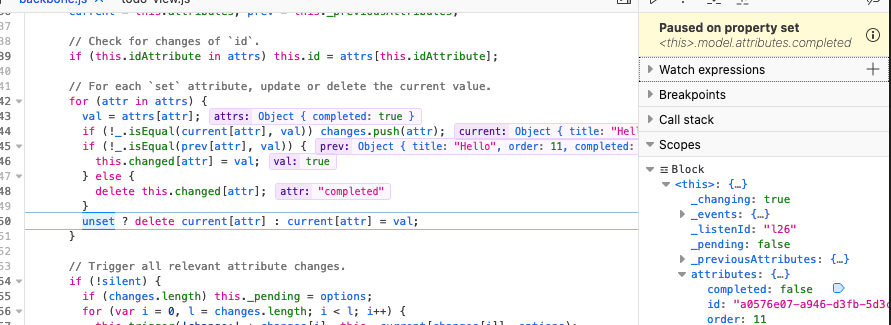
A watchpoint paused on this.model.attributes.completed being set.
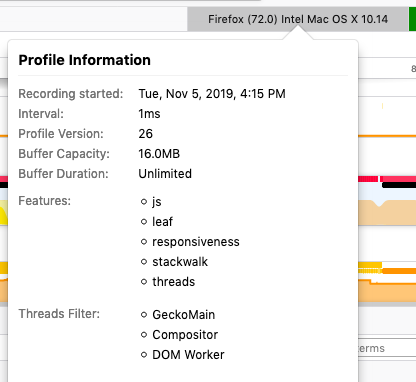
This helps us see at a glance how a profile was gathered, which can help explain some of the patterns within the profile.

The parent process appears to be sending quite a few IPC messages here.

Now all we need to do is wait for the new keyboard (which features an actual physical Esc key and a decent cursor layout) to ship on something that doesn’t cost an arm and a leg.
In a video shared earlier today, Tom Hogarty, who’s a Lightroom product manager at Adobe, demonstrated an upcoming feature of Lightroom for iPad – the ability to import photos from external devices (such as cameras, drives, or SD cards connected over USB-C) into Lightroom’s library without copying them to the Photos app first.
Here’s how it’s going to work:
The workflow looks very nice: an alert comes up as soon as an external device is detected, photos are previewed in a custom UI within Lightroom (no more Photos overlay) and they’re copied directly into the app. I think anyone who uses Lightroom for iPad to edit photos taken with a DSLR is going to appreciate this addition. Keep in mind that the 2018 iPad Pros support up to 10 Gbps transfers over USB-C, which should help when importing hundreds of RAW files into Lightroom.
Direct photo import from external USB storage devices was originally announced by Apple at WWDC 2019 as part of the “Image Capture API” for iPadOS. When I was working on my iOS and iPadOS 13 review, I searched for documentation to cover the feature, but I couldn’t find anything on Apple’s website (I wasn’t the only one). Eventually, I just assumed it was part of the functionalities Apple delayed until later in the iOS 13 cycle. It turns out that this feature was quietly introduced by Apple with iOS and iPadOS 13.2, as also suggested by Hogarty in the Lightroom video.
According to this thread on StackOverflow, direct photo import is part of the ImageCaptureCore framework, which is now also available for iOS and iPadOS. I still can’t find any documentation for it on Apple’s developer website.
→ Source: youtube.com
“That’s a nice song,” said young Sam, and Vimes remembered that he was hearing it for the first time.
“It’s an old soldiers’ song,” he said.
“Really, sarge? But it’s about angels.”
Yes, thought Vimes, and it’s amazing what bits those angels cause to rise up as the song progresses. It’s a real soldiers’ song: sentimental, with dirty bits.
“As I recall, they used to sing it after battles,” he said. “I’ve seen old men cry when they sing it,” he added.
“Why? It sounds cheerful.”
They were remembering who they were not singing it with, thought Vimes. You’ll learn. I know you will.
— Terry Pratchett, Night Watch
 |
sillygwailo
shared this story
from  The Omni Group. The Omni Group.
|
In the latest episode, April Ramm joins the show to talk about how she triages support email to make sure people who need urgent help are helped as quickly as possible.
We also talk about doing phone support and how rewarding it can be — and then we talk about how she makes jewelry. Check out the show notes for pictures of a couple of beautiful pieces she’s made.
Enjoy!
I have sometimes wondered how I would fare with a problem where the solution really isn’t in sight. I decided that I should give it a try before I get too old. I’m going to work on artificial general intelligence (AGI). I think it is possible, enormously valuable, and that I have a non-negligible chance of making a difference there, so by a Pascal’s Mugging sort of logic, I should be working on it.

Hot on the heels of Apple’s recently revealed 16-inch MacBook Pro, rumours surrounding the tech giant’s next iPad Pro and entry-level iPhone continue to swirl.
Often-accurate TF International Securities analyst Ming-Chi Kuo believes that Apple’s new iPad Pro, which he says will feature 3D sensing technology, will launch in early 2020 alongside the rumoured iPhone SE 2.
As first reported by MacRumors, Kuo goes on to say that the new iPad Pro’s 3D sensing will be powered by a dual rear-facing camera system that includes a time-of-flight sensor. This sensor measures the time it takes light to bounce off objects in a room to create a 3D map of the space.
This backs up previous rumours reported by Bloomberg’s Mark Gurman, who also stated that Apple plans to release a new iPad Pro with 3D sensing capabilities in early 2020.
It seems the iPhone SE 2 is also still set to release in early 2020, according to Kuo. The phone is tipped to be similar to the iPhone 8 and will include a 4.7-inch display, Touch ID, Apple’s A13 processor and 3GB of RAM. All of these rumours regarding the iPhone SE 2 fall in line with previous leaks about the smartphone.
While Apple could stick with the SE branding for its next entry-level iPhone, given the device seems set to look very different from its predecessor, it’s likely to feature a completely different name.
Source: MacRumors
The post Apple’s new iPad Pro and iPhone SE 2 are reportedly set to launch in early 2020 appeared first on MobileSyrup.
mkalus
shared this story
from  FAIL Blog. FAIL Blog.
|
This bicyclist, who was going the wrong way, hit a pedestrian who wasn't using the crosswalk. There's an argument to be made about who was more wrong, but these guys didn't have it. They had a very short conversation about their predicament and went their separate ways.
Submitted by: (via Thomas Mason)
To mark the release of the new 16-inch MacBook Pro, Roger Cheng of CNET interviewed Apple’s Phil Schiller. The interview begins with a discussion of the laptop’s new keyboard but covers the role of the iPad Pro in Apple’s hardware lineup as well as Macs in education too.
According to Schiller, Apple spent a lot of time talking to pro users in the wake of criticisms of the MacBook Pro’s butterfly keyboard and was told that pro users wanted something like the Magic Keyboard available for desktop Macs. Of that process Schiller told CNET:
There’s a bunch of learning that happened. Some because of moving the desktop keyboard to the notebook and some because we just learned more along the way and wanted to further advance the technology.
Conspicuously absent from the interview though is any mention of changing the keyboard in response to the hardware failures that many users reported.
Cheng also asked Schiller where the iPad Pro fits in Apple’s pro lineup and whether there are plans to merge it with the Mac lineup. As Apple executives have told CNET for years, Schiller was clear that the compromises that a hybrid touch-based Mac would require wouldn’t benefit either platform. Specifically with respect to the iPad Pro, Schiller said:
It was literally to create a different product category. A couple years ago, we split off and created the iPad Pro. This has been a wonderful thing because it allowed us to create two models where we can push the technology. It really accelerated the use cases for iPad.
So now there are a lot of cases where people will use iPad, especially with Pencil, as an artist-creation tool or as a field-compute tool. What we find is there’s a fair number of people who actually spend more of their compute time on their iPad than personal computer. They didn’t choose one or the other. That’s just where they spent a lot of their time.
It’s refreshing to hear Schiller push back on the notion that Macs and iPads will inevitably merge or that consumers need to choose between the two. As someone who uses a Mac and an iPad Pro, I know that’s nonsense, but I also understand that a ‘winner-takes-all’ narrative is more entertaining.
The interview closes with a short discussion of the Mac in the education market where it has struggled at times against Chromebooks. As a parent who’s seen two of my kids learn to code on a Mac while a cheap, locked-down Chromebook sits idle in my house, except when it’s used to turn in assignments and take tests, this from Schiller resonated with me as true:
Kids who are really into learning and want to learn will have better success. It’s not hard to understand why kids aren’t engaged in a classroom without applying technology in a way that inspires them. You need to have these cutting-edge learning tools to help kids really achieve their best results.
Yet Chromebooks don’t do that. Chromebooks have gotten to the classroom because, frankly, they’re cheap testing tools for required testing. If all you want to do is test kids, well, maybe a cheap notebook will do that. But they’re not going to succeed.
Don’t miss Roger Cheng’s full interview on CNET with Schiller. It’s one of the best articulations of Apple’s pro hardware perspective and the place of the iPad in the company’s hardware lineup that I’ve read in a long while.
→ Source: cnet.com

TechCrunch reports that Apple Music has added a new automatically-generated playlist called Replay that collects your top 100 songs for each year you’ve subscribed to the music streaming service. The concept is similar to Spotify’s year-end Wrapped playlist but differs in that it is updated every Sunday throughout the year.
According to Sarah Perez’s story on TechCrunch:
With Apple Music Replay, subscribers will get a playlist of their top songs from 2019, plus playlists for every year you’ve subscribed to Apple Music, retroactively. These can be added to your Apple Music Library, so you can stream them at any time, even when offline. Like any playlist, your Apple Music Replay can also be shared with others, allowing you to compare top songs with friends, for example, or post to social media.
If you don’t see your 2019 Replay playlist in Music, I was able to force it onto my devices by visiting replay.music.apple.com, adding my 2019 playlist, and then playing it. A couple of minute later it showed up in the Recently Played section of For You on iOS, though it seems to be taking longer to show up on my Mac.

I’ve always hoped Apple Music would do something like this, as has Federico who took matters into his own hands and created his Apple Music Wrapped Shortcut that you can find in the Music section of the MacStories Shortcuts Archive. I also appreciate that the playlist will be available throughout the year as a snapshot of my current favorite songs.
→ Source: techcrunch.com

The PDF export has been an important feature for all of our charts, tables and maps for quite a while now – with one exception: Locator maps. So far, you could only download your markers as editable vector shapes & text. The underlying map remained a raster image, even in a our otherwise vectorized PDF. This too was the case for our more recently added SVG Export (Custom & Enterprise plans only).
This changes today. We’re happy to announce the full vector export for locator maps, including the underlying map. That means you can now print locator maps in unlimited quality (tell us if you ever print a Datawrapper map on a billboard), change the colors of elements on your map or delete them selectively.

To download your locator map as a vector PDF or SVG, you need to be on the Custom or Enterprise plan.To export, go to step 4: Publish and click on the big PDF or SVG button:

Some extra options will open about the format and scale factor. Click on the button Download PDF/SVG and look for the downloaded file in your Downloads folder.
Vectors are delicate to work with, and our locator maps have some powerful features that don’t play together nicely with the vector export.
You will still get a raster map instead of a vector map when downloading…
In any case, if you prefer, you can still export an underlying raster map. To do so, disable this switch in the PDF/SVG settings:

Now the map layer will be a raster image, not a vector image.
All our PDFs are editable in vector graphics software like Adobe Illustrator or Inkscape. But the more elements are on your locator map (e.g. buildings), the heavier your exported PDF/SVG becomes. If your exported PDF is bigger than 300 KB it can happen that your graphics software gets a bit slow, so you might need to be a bit patient. But don’t worry we’re working to improve and optimise this. If you have access to SVG export, we recommend using that.
To try it out yourself, you can download a PDF and SVG sample export. You can find a sample PDF file here and a sample SVG file here. Open the links, right-click on the image, then choose Save as… and decide where you want to download the file.
We keep improving the PDF and SVG export for all our visualization types. If you have any feedback or comments, let us know at support@datawrapper.de. We’re looking forward to hearing from you.
Edit Dec 5, 2019: Updated which Datawrapper plans you need to use the SVG and PDF export.
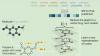
How does our knowledge of smells work? According to this work with machine learning, graphs. "Since molecules are analogous to graphs, with atoms forming the vertices and bonds forming the edges, Graph Neural Networks (GNNs) are the natural model of choice for their understanding.... (a) single vector, representing the entire molecule, can then be passed into a fully connected network as a learned molecular featurization. This network outputs a prediction for odor descriptors, as provided by perfume experts."
Web: [Direct Link] [This Post]
This booklet is intended to tell readers "where and how can you discern the critical skills your workers need to succeed in an age of digital transformation." The link provided currently results in a 404, so I can't verify that one way or another. But what caught my eye were some very odd "findings" listed in the blog post. For example, in finance, "several skills are essential to finance, cropping up in multiple functions—SQL, Python language, big data, and business analytics." These are the essential skills in finance? Or for professional services: "data-related skills including data-based decision making, blockchain, and machine learning are must-haves in professional services." It's hard to believe these lists are the result of any actual analysis, much less any consultation with the real world.
Web: [Direct Link] [This Post]
I personally think that innovative uses of blockchain in education ought to consist of more than just taking existing database content and putting it onto a blockchain, but the bar does not seem to have risen that far yet. Thus we are treated to these database contents being placed onto a blockchain and called innovation.
Web: [Direct Link] [This Post]
The Google Stadia app is now available on the iPhone, but not for what you think.
At launch, you won’t be able to play Stadia games on the iPhone, as Google’s upcoming video game streaming platform is limited to the Pixel 2, 3, 3a, and 4.
However, the iOS version of the app will let you manage your Stadia game library. You’ll also be able to cast Stadia from your iPhone to a Chromecast sharing the same Wi-Fi network.
We expect Stadia to function on other devices, in the future, but we’re not sure if those will include either the iPhone or the iPad.
Once users receive their Stadia invite, after purchasing a Founder’s or Premiere Edition kit, they’ll be able to use the code to unlock the Stadia app for iPhone.
The Stadia app also appeared on the Play Store recently. Stadia launches on November 19th in Canada, U.S., U.K. and other regions.
Check all the games hitting the streaming platform, here.
Source: 9to5Google
The post Google Stadia app is now available for iOS appeared first on MobileSyrup.


