Shared posts

21 Nov 04:56

Week Notes 19#46

by Ton Zijlstra

This week I

  • Visited Brussels for the Science Fiction Economics Lab, which was a lot of fun
  • Did a sprint review on the energy poverty project, as well as a briefing on a circular economy workshop for next week, both for a province
  • For another province sketched out the role and process for an open data coordinator
  • Worked one day from home, while also visiting the dentist
  • Prepared a workshop for the National Archives with my colleague Frank
  • Spent Friday with the 3yr old as usual, making her first web page with her a.o.
  • Had a lovely long dinner with E, while the little one was having a sleepover with her nieces

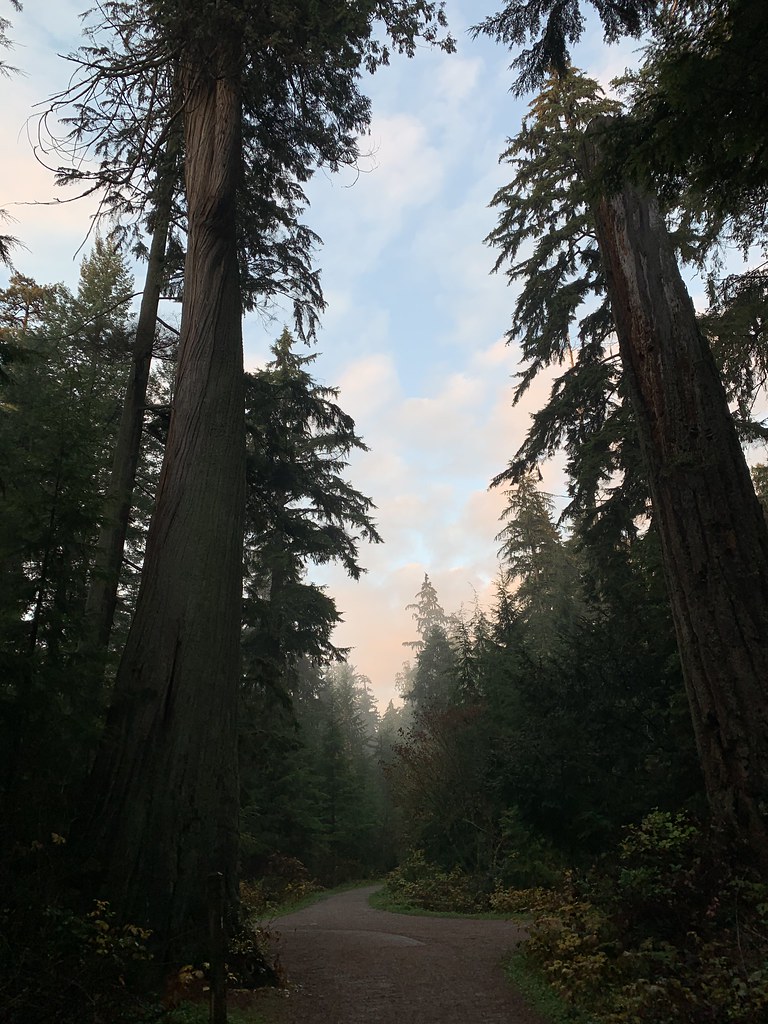
Belsize 46Belsize 46, by David Howard, license CC BY


This is a RSS only posting for regular readers. Not secret, just unlisted. Comments / webmention / pingback all ok.
Read more about RSS Club
21 Nov 04:55

The Future Perfect: Designing Reclaim Arcade

by Reverend

We will have built an arcade in Fredericksburg, Virginia by Spring 2020.

I have always sucked at grammar, but the future perfect tense finally makes sense to me. It indicates an action will have been completed at some point in the future, which is exactly the case for Reclaim Arcade. We officially announced our intentions with the arcade at the end of last month (check out the Facebook page, Instagram and Twitter–and like and subscribe for more!), but I was traveling much of the last 3 weeks so an update is in order given a lot has happened since the public announcement last month.

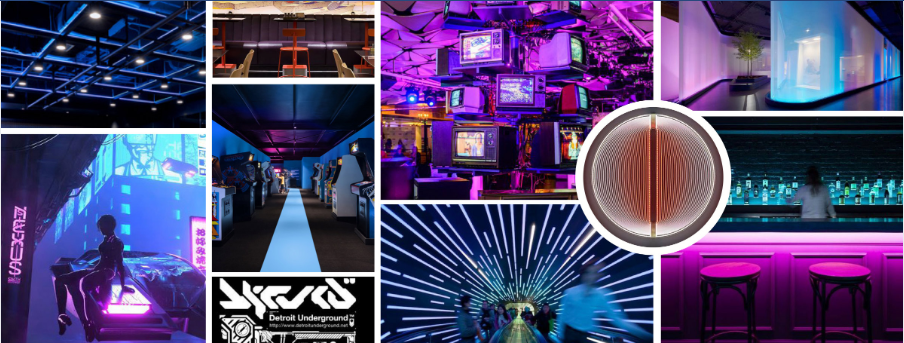
Visual aesthetic for Reclaim Arcade

Probably the biggest news is that last week Tim and I secured the funding we needed in the form of a bank loan to build a full blown 80s tech noir arcade to match our vision—which is bold! As you can see from the design reference points above, the arcade and bar will be inspired by a Blade Runner-esque aesthetic because the future is literally now!

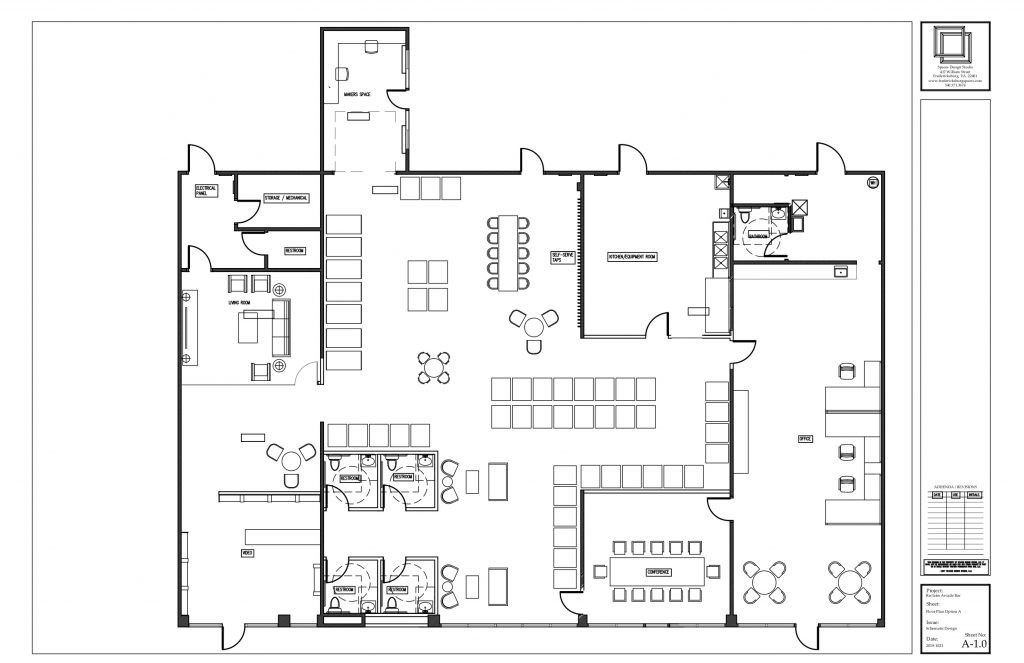
We will have at least 30 taps of a wide variety of beer, cider, and wine, and 50+ arcade games and pinball machines. We’ve been working with a local design firm, Spaces, and we have settled on a floor plan and design that is pretty awesome.

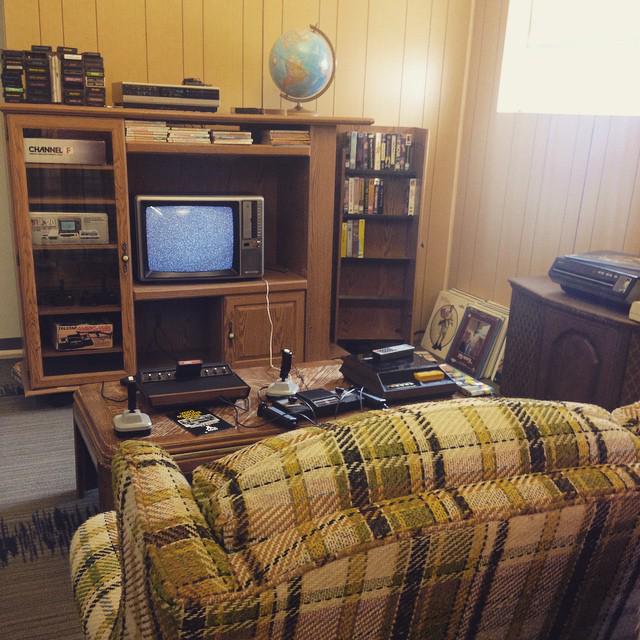
We took one of the five plans Spaces provided us, and did some small modifications to get the above layout. You will enter the space through Reclaim Video (at the lower, left-hand corner of the above plan), and  there will be no major changes to that space, other than enlarging the passage to the back room, a couple of mounted 32″ and 27″ Sony Trinitron CRTs and a much needed decluttering or VHS kipple. This will be where we welcome folks, ID any one who wants an adult beverage, and hopefully rent a video or two 🙂 After that, folks will go into the back of Reclaim Video and be immediately presented with a glass-enclosed 80s living room, a la the UMW Console Living Room:

Image of the UMW Console Living Room

UMW’s Console Living room in March 2015

This space will be a reproduction of a 1980s living room that will hit folks coming into Reclaim Arcade for the first time like a diamond through the forehead. You can hang out in the space and play one of several 80s gaming consoles (including Atari 5200), watch TV on several of the OG networks (ideally mixed with localized commercials and news content), and/or play something on VHS, Betamax, or laserdisc from Reclaim Video. The space will be reservable for parties, and like the VHS store, it will be one of several time capsule installations throughout the space. Moving on from there you will go into the actual arcade which will feature 50+ games, the pinball will be along the other-side of the wall from the living room, and you squares and rectangles in the main space represent pinball machines and arcade cabinets. It’s a fairly large open space where we’re currently running CoWork, the main difference will be the removal of the conference room (that glass will be repurposed for the living room) and two additional bathrooms. There will also be several areas to sit and imbibe from the self-pouring taps, order some food from the kitchen, or choose from a wide variety of games to play. 

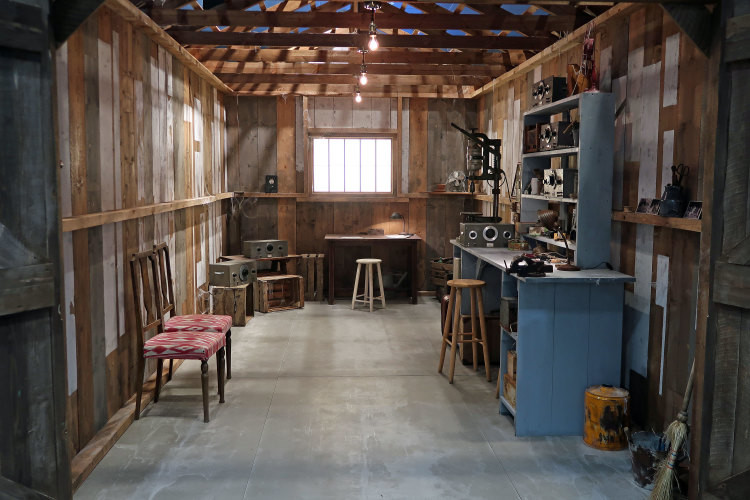
HP garage from the 1930s

Another cool feature of the space will be the 1930s garage jutting out the back of the building. It is currently office space, but it will be modeled on an exhibit I went to in the early 1990s at the LACMA that has stuck with me for 3 decades now. I have been unable to remember (or trace) the artist—I thought it was Edward Keinholz, but can’t find anything to back that up—but the installation may have been the best thing I ever saw. The artist re-created a 1930s garage, including the chirp of crickets, the smell of the past, and a ton of odd-ball screws, forgotten tools, and the necessary disarray. It will be kind of like the HP Garage museum that was considered the birthplace of Silicon Valley, but without all the venture capital 🙂  I see it as exposed 2 x 4s, a cement floor, as well as various tools hanging on the walls. The space (like all of them) will not simply be for show, rather it will have a garage door opening from within the main space and will be where we maintain and fix the various games that will inevitably break.

Animated GIF of Homer Simpson opening a garage door

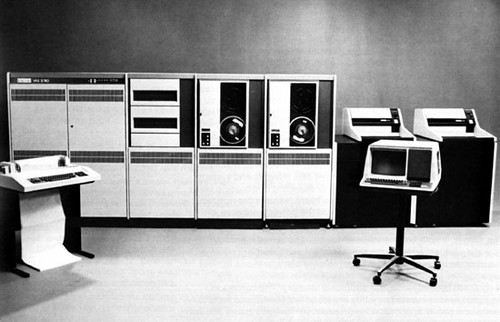
We will also have an area designated for food preparation behind the wall of self-pouring taps, and there will be a service window for picking up food, snacks, etc. If you are still following along, you will notice that this is just two-thirds of the space, “What about the other third?”, you ask. Well, thanks for asking, the other third of the space to the right-hand side of the above plan, including the conference room towards the bottom middle, will be the Reclaim Hosting office. So, let’s think about this for a second. To the far right is Reclaim Video, then Reclaim Arcade, and finally Reclaim Hosting (the entity make all of this even possible). We will have everything in the strip mall save the Dentist office, it will truly be a beautiful thing to see all that Reclaim signage side-by-side!!! Anyway, you may have noticed in the floor plan above that the conference room will be connected to the arcade. As of now, the arcade’s hours will not overlap with work day for Reclaim Hosting, so we figured we could make the conference room a dual-purpose space that can work for private parties in the arcade as well as a conference room for our office space from 9-5. We have not really settled on a design fro the conference room just yet, so that will be fun to imagine, but I do think we have an idea or two for Reclaim Hosting’s office. I was chatting with Tim (that’s how all good ideas start) and floated the idea of designing the offices in the spirit of a 1970s server room. Basically get some storage furniture in the wall to the right and make it look like a full blown DEC VAX 11/780:

This is an aesthetic I have been a fan of for a long while, and the idea of reproducing something like this  (which will actually be storage) with a roaming terminal, some tape machines, and a few punch cards would be amazing. I was thinking we could even have some lab coats hanging around for the occasional office photo op 🙂 It will be pretty awesome for Reclaim Hosting to have its own office space finally, and the idea of hearkening back to another era of the internet and hosting might be a fun aesthetic and history to play with, but as of now this is still a pretty nascent idea—although ideas move pretty quick around Reclaim: if you will it, it is no dream!  

21 Nov 04:55

MacBook Pro keyboard is just the old, good keyboard

by Rui Carmo

Fantastic news, and proof that if there is one aspect of hardware design where there is merit (and reliability) in traditional approaches, it’s basic mechanics. This is finally a keyboard people can trust.

Now let’s see if Apple can stay focused on things that actually matter to pros (like, maybe, easily serviceable laptop hardware?) and roll out a 13” version by next quarter.


Support this site
21 Nov 04:55

Free Basecamp Personal

by Volker Weber
... we’re formally introducing Basecamp Personal – a completely free Basecamp plan designed specifically for freelancers, students, families, and personal projects. Why should businesses be the only ones who get to use Basecamp to manage projects? We The People deserve a Basecamp for us, too!

This is a smart move. The company does not set out to harvest your data. They want to get you hooked so that you may feel inclined to buy this product for your business.

Basecamp Personal includes 3 projects, 20 users, and a gig of storage space. So kick off a couple projects, invite some friends, family, teammates, or volunteers. Stretch your wings a little, and discover the benefits of organizing your personal projects the Basecamp way.

No credit card required. No justification required. No obligation required. No ads. No selling your personal information. It’s Small Tech at its best. It’s The Basecamp Way. Basecamp Personal is on us, for you. Check it out and claim your free account today. We’d love to hear what you end up using it for.

You have to be creative to compete with Microsoft Teams.

More >

21 Nov 04:54

My First Semi-Autonomous Drive Experience

by Martin

When I was recently in the US, I had the opportunity to drive a Toyota RAV4 that came equipped with semi-autonomous driving features. A welcome opportunity to experience first hand over a few hours in dense metropolitan areas and overland routes the current state of driver assistance technology.

In addition to the standard cruise control feature, the car came equipped with a distance control feature to vehicles in front. In other words, on can set the cruise control to a certain speed and the distance control feature automatically accelerates, slows down and breaks to keep a safe distance. In addition, the car was equipped with a lane centering feature, i.e. it automatically steers to keep in the chosen lane.

At first it was a strange to feel the car not only accelerating and decelerating but actively breaking on its own, even to a complete standstill when approaching traffic jams. Even stranger was the feeling that the steering wheel turned on its own. Nevertheless, one gets used to it pretty quickly.

Driving becomes a lot more relaxed this way. One can take one’s hands of the steering wheel but not for more than 10 seconds. Any longer and a warning sound goes off, which, if ignored, triggers the termination of all automatic driving features and and an even stronger warning tone. However, what is possible, is to take a step back mentally from what I would call the ‘closed-loop control’ of the car, i.e actively monitoring the road and constantly making small corrections to stay in a lane. One still observes the road to be able to react quickly in case control has to be taken back, but in a somewhat more detached way. In an overland cruise I didn’t have to make any corrections or even touch the gas pedal or the break for over an hour at a time. Quite amazing! In metro areas, however, the lane assist and distance control features needed constant overrides, especially when the lane assistance software became confused by exits and to prevent the distance control feature from breaking late and too hard when approaching a traffic jam ahead. But even in such challenging environments with occasional overrides, it is a lot less stressful to drive than in fully manual mode.

All of this works great in countries with a speed limit and enough lanes so slow trucks don’t get in the way and no cars approaching from behind at much higher speeds that want to pass. So for German ‘Autobahns’, I have my doubt things would work that well.

So yes, I am very positively surprised and can see where this is going. But make no mistake this is a long way from fully autonomous vehicles that can navigate cities on their own.

21 Nov 04:54

"Democracy is not a unitary state that can be achieved, but a continuous process. We need to keep..."

“Democracy is not a unitary state that can be achieved, but a continuous process. We need to...
21 Nov 04:54

Weeknote 46/2019

by Doug Belshaw

This week my main, and to some extent, only focus has been on preparing for next week. I’m writing this on the flight to Barcelona, where I’ll be spending the next week in management meetings, at the first-ever Global MoodleMoot, and at the inaugural Open EdTech conference. It’s going to be pretty intense.

On Tuesday, I’ll presenting on-stage the beta demo of MoodleNet, which is something I’ve been working on at Moodle for the past couple of years. The reason it’s taken so long? Well, a combination of going through several research and design phases, and having a very small, part-time team. It’s an innovation project, but one I envisage having a high impact.

Consequently, and as always happens before something like this, the MoodleNet team has been all hands on deck getting things ready. The team, who all contracted for 2.5 days per week, have shifted their days to ‘front-load’ November. I’m ever so grateful, and very much appreciate them working this weekend too.

On Tuesday, Mayel and I showed Martin Dougiamas (Moodle’s Founder and CEO) the current status of MoodleNet. He asked lots of pertinent questions, and was overall impressed, calling MoodleNet ‘great’. I breathed a huge sigh of relief.

I had an unforgettable Friday, where I lost my passport for a good few hours. Given I go through periods of regular travel, I ensure it’s always in the same place. But it wasn’t there when I went for it on Friday afternoon which, on top of everything else, stressed me out quite a lot. I was on the phone with the UK Passport Office, who told me I wouldn’t be able to get a new one for at least seven days.

Eventually, my wife found it in a place both of us had already looked several times previously. It’s an object lesson in what stress can do to your perception. Right after that, I went out for dinner with the family, and my heart rate returned to a normal level.

Then, on Friday evening, Bryan Alexander got in touch, asking if I’d like to go to NYC at the beginning of December to speak about digital literacies. I instantly replied “YES” in all-caps, and told my wife, who’s always wanted to go to New York – especially at Christmas shopping time!

It’s amazing how you can read as much Stoic philosophy as you want, but controlling one’s emotions remains a lifelong project. This week, I’ve been getting out of bed at 06:00 to spend half an hour reading Marcus Aurelius’ Meditations, and Baltasar Gracian’s The Pocket Oracle and Art of Prudence. I’ve also been throwing The Oxford Book of Aphorisms into the mix this week, which I found particularly useful. I shudder to think how I would have reacted to the ups-and-downs of this week without a combination of early-morning reading, cups of tea, and L-Theanine.

Finally, as I’ve already said where I’ll be and what I’m doing next week, just a quick reflection on remote working. I received the results of my 360-degree feedback recently, which scored me as either ‘Good’ or ‘Excellent’ across all 25 categories other than the couple that involved dealing with conflict in the workplace. It’s human nature to focus on the negatives, so instead, and especially this week, I’m just going to celebrate the fact that my colleagues rate me highly for ‘visionary leadership’!


Photo of black truffle pizza taken in Parking Pizza, Barcelona when out for dinner with Noel De Martin (who’s joining Moodle next week!)

21 Nov 04:54

note on adversarial interoperability

(update 11 Dec 2019: copy edit, add links.)

Read the whole thing: alt.interoperability.adversarial by Cory Doctorow.

The story of the alt. hierarchy is an important lesson about the nearly forgotten art of "adversarial interoperability," in which new services can be plugged into existing ones, without permission or cooperation from the operators of the dominant service.

Today, we're told that Facebook will dominate forever because everyone you want to talk to is already there. But that was true of the backbone cabal's alt.-free version of Usenet, which controlled approximately one hundred percent of the socializing on the nascent Internet. Luckily, the alt. hierarchy was created before Facebook distorted the Computer Fraud and Abuse Act to try to criminalize terms of service violations.

Usenet was a good example of a decentralized service that could support both free speech and commercial publishing. Usenet supported adversarial interoperability (a25y?) about as well as you can. Any individual could pick their own client software. Any site could choose which newsgroups to offer, and which other sites to share them with. Users could filter messages with killfiles, and even run their own "cancelbots" to share filtering decisions out on the network.

Usenet is also a good example of the best "white hat" case against adversarial interoperability, because Usenet isn't really much of a thing any more. Usenet spammers buried the legit users, even though many tried to fight back, as creatively as they could. Would better spam filters on the client side have helped? What if the scoring algorithms used to rank stories on Slashdot-style boards had made it into Usenet newsreaders? If Usenet had held its own, things might have gone very differently. But we lost Usenet—not because of policies and lawyers, but because spammers killed Usenet while the market incentives for developers encouraged work on web boards, which were mostly ad-supported.

I still like adversarial interoperability and agree with Cory that we need more of it. The best recent example I can think of is ProPublica's Facebook Ad Collector extension, which was later blocked by Facebook. Why was Facebook management so willing to take the bad publicity that came with hiding which users see which ads? The easy answer, of course, is that Facebook is eevill, funded by Russian interests to undermine US public health and promote right-wing causes. But when a big company does something, there's always a "because they're just evil lol" reason and a legit-sounding reason. You have to pick whether they're the real reason and the cover story, or the conspiracy theory and the real reason.

If you want the legit-sounding reason to avoid adversarial interoperabilty, here it is. The two easiest kinds of adversarial interoperability, by far, are:

  • Ad blocking: Removing advertising from a medium.

  • Spamming: Adding advertising that does not pay to support the medium in which it appears.

Twitter is a good example here. Twitter limited third-party apps and dropped RSS support, to keep third parties from offering either convenient ad blockers or ad-supported clients. (Or both: before they made the change, you could make a Twitter client that stripped out Twitter's ads and put yours in.) Twitter also bought and stifled TweetDeck, the popular third-party client.

  • The easier you make it for people to read your service with their own choice of client, the more ads they will block.

  • The easier you make it for people to post to your service with their own choice of client, the more spam they will send.

In Facebook's case, the HTML they send to your browser is a convoluted mass of HTML elements with randomized classes and ids, to make things harder for ad blockers—and either as collataral damage or on purpose depending on who you believe, for ProPublica. (In native apps, ad blocking is even harder.)

Facebook has to pull horrible, ever-changing, HTML stunts to get their ads through to the user, because those ads don't pay their way, and the people receiving them have no reason to keep them. Advertising is only sustainable when it's an exchange of economic signal for attention. In order to carry the signal needed to earn attention, an ad has to be:

  • credible

  • from an identifiable and significant sender

  • related to a market in which the reader is a participant

Only the last one might apply to social ads. On Facebook, I have no incentive to let an ad through, because I have no reason to trust it. That also applies to "programmatic" ads on the web.hey kids! scientific literature! In any ad-supported medium where blocking is the best choice for a member of the audience, then adversarial interoperability is not an option, because the obvious low-hanging fruit of adversarial interoperability is ad blocking.

It seems like we would need ads to start paying their way, and for ad blocking online to be less of a rational bargain for the reader, for adversarial interoperability to catch on.

Bonus links

The Early History of Usenet on Prof. Steven M. Bellovin's blog.

CCPA Means It’s An Opt-Out World Now

How Nestle is trying to trim ad tech middlemen

Consumers in control.

Microsoft will honor California’s new privacy rights throughout the United States

“Programmatic doesn’t survive in its current form”: Ad tech’s quest for an open and alternative ID

Ad tech vendor Sharethrough to shut European operations, blames GDPR

21 Nov 04:54

The enemy

I’ve noticed a concerning trend lately: small business owners who sell anything are being seen and labelled as the enemy by some folks online. The logic I assume goes: a few people online do shitty th...
21 Nov 04:24

Microsoft to shut down Cortana app for iOS and Android

by Aisha Malik

Microsoft says it is discontinuing its Cortana mobile app for iOS and Android in several countries, including Canada.

The virtual assistant app will no longer have support starting January 31st. The lists and reminders that users have created can still be accessible through Cortana on Windows.

The reminders and lists will also be automatically synced to the Microsoft ‘To Do’ app, which can be downloaded for free on iOS and Android.

“To make your personal digital assistant as helpful as possible, we’re integrating Cortana into your Microsoft 365 productivity apps. As part of this evolution, on January 31st, 2020, we’re ending support for the Cortana app on Android and iOS,” Microsoft wrote in a blog post.

The tech giant says that it sees Cortana as a helper specific to Office 365, which is the subscription-based version of Microsoft’s productivity suite.

Other countries that will also lose support for the app include China, Germany, India, Mexico, Spain and Australia. Microsoft has not stated what it plans to do with the app in the rest of the world.

After January 31st, Microsoft plans to release an updated version of Microsoft Launcher with Cortana removed.

Source: Microsoft Via: CNET 

The post Microsoft to shut down Cortana app for iOS and Android appeared first on MobileSyrup.

21 Nov 04:24

Developer of ‘Magic: The Gathering’ exposed hundreds of thousands of players’ data

by Aisha Malik
cybersecurity

The developer of popular game Magic: The Gathering, has disclosed that a security lapse exposed the data of hundreds of thousands of players.

Washington-based developer, Wizards of the Coast, left a file in a public Amazon Web Services storage bucket, as reported by TechCrunch. The file was left on the web without a password, allowing anyone to have access to the content.

The file contained 452,634 players’ information and around 470 staff email addresses. It included players’ usernames and email addresses.

Researchers at Fidus Information Security, a U.K. cybersecurity firm, found the exposed database and say it was available since September. Wizards of the Coast did not take down the database once Fidus disclosed it, and only pulled the file once TechCrunch reached out.

The information in the file included account data from 2012 to 2018. None of the data on the file was encrypted.

The developer has said that “this was an isolated incident and we have no reason to believe that any malicious use has been made of the data.”

Wizards of the Coast has sent out emails to affected users and is urging all players to change their passwords within the next week. After seven days, the developer will manually reset all account passwords.

Source: TechCrunch 

The post Developer of ‘Magic: The Gathering’ exposed hundreds of thousands of players’ data appeared first on MobileSyrup.

17 Nov 03:29

Between the Rain

by Michael Kalus
Between the Rain
Between the Rain
Between the Rain
Between the Rain
Between the Rain
Between the Rain
17 Nov 03:29

Twitter Favorites: [RachaelAshe] A sneak peek of another one of the new large-scale laser cut pieces I’m debuting @culturecrawl. This one is cut fro… https://t.co/bQi5nWPd5h

Rachael Ashe @RachaelAshe
A sneak peek of another one of the new large-scale laser cut pieces I’m debuting @CultureCrawl. This one is cut fro… twitter.com/i/web/status/1…
17 Nov 03:28

Twitter Favorites: [ReneeStephen] Extremely unpopular opinion: quality entertainment costs money. https://t.co/ighwe2vv8t

Renée Stephen @ReneeStephen
Extremely unpopular opinion: quality entertainment costs money. twitter.com/rickhanlonii/s…
17 Nov 03:28

Twitter Favorites: [the_moviebob] Damn near nobody in sci-fi film scores can step to Wendy Carlos' street cred - so hardcore, she turned her studio i… https://t.co/YoWq7snru9

Bob Chipman @the_moviebob
Damn near nobody in sci-fi film scores can step to Wendy Carlos' street cred - so hardcore, she turned her studio i… twitter.com/i/web/status/1…
17 Nov 03:28

Twitter Favorites: [CultureCrawl] "As proven at this year’s vast Eastside Culture Crawl, there are a thousand ways to paint a picture." Check out som… https://t.co/incEnijIzY

Eside Culture Crawl @CultureCrawl
"As proven at this year’s vast Eastside Culture Crawl, there are a thousand ways to paint a picture." Check out som… twitter.com/i/web/status/1…
17 Nov 03:28

NoiseBuddy: Control Noise Cancellation and Transparency Modes of AirPods Pro on a Mac

by John Voorhees

Earlier this week, Guilherme Rambo released a new Mac utility called NoiseBuddy that toggles between the noise cancellation and Transparency modes of AirPods Pro and the Beats Solo Pro headphones when they’re connected to a Mac. The app can place an icon in your Mac’s menu bar or on the Touch Bar and uses the same noise cancellation and Transparency iconography found in Control Center on iOS and iPadOS. The app’s settings allow you to run NoiseBuddy in the menu bar, on the Touch Bar, or in both places. To switch modes, simply click the icon in the menu bar or tap the Touch Bar button.

The Touch Bar in transparency mode.

The Touch Bar in transparency mode.

This isn’t Rambo’s first time working with Bluetooth headphones and the Mac. He also created AirBuddy, which we covered previously. AirBuddy is a Mac utility that displays the charge status of AirPods and Beats headphones that use Apple’s proprietary wireless chips. The app also allows users to connect those headphones to their Macs via Bluetooth with a single click.

NoiseBuddy’s menu bar app in transparency mode.

NoiseBuddy’s menu bar app in transparency mode.

NoiseBuddy is the kind of Mac utility that I love. It takes overly fiddly aspect of interacting with macOS and makes it dead simple. The free app is available from Rambo’s GitHub repo, where it can be downloaded as a ZIP archive and then dragged into your Applications folder.


Support MacStories Directly

Club MacStories offers exclusive access to extra MacStories content, delivered every week; it’s also a way to support us directly.

Club MacStories will help you discover the best apps for your devices and get the most out of your iPhone, iPad, and Mac. Plus, it’s made in Italy.

Join Now
17 Nov 03:28

Rivian R1T electric pickup spotted in B.C. during promotional shoot

by Jonathan Lamont

Rivian’s R1T electric pickup prototype was spotted cruising around Ucluelet on Vancouver Island in British Columbia.

It appears Rivian was filming the prototype, likely to create promotional material for it.

Since unveiling the R1T last year, the pickup hasn’t made many appearances outside of its silver and grey configuration. However, the R1T spotted in B.C. was blue, marking the first time we’ve seen a different configuration in the wild.

Rivian’s R1T boasts some unbelievable specs. It sports four electric motors, each with a 147 kW power capacity at the wheel. The total power output can be configured for different levels ranging from 300 kW to 562 kW at the gearbox.

These varied power levels correspond with different battery packs, another area where Rivian impresses. The R1T boasts some of the highest capacity batteries in passenger electric vehicles with 105 kWh, 134 kWh and 180 kWh options. The company says these capacities translate to 230+ mile, 300+ mile and 400+ mile ranges.

On the charging front, Rivian claims a rate of up to 160 kW at fast-charging stations and an 11 kW onboard charger for level 2 charging.

Finally, the R1T features a towing capacity of 5,000kg (11,000lbs).

It’s expected to go into production late next year and start at $69,000 USD (about $91,204 CAD).

However, Rivian is no longer set to be the only pickup in the electric space. Ford has confirmed plans to make its own electric F150 truck after investing $500 million USD in Rivian while Tesla is expected to unveil its own electric pickup next week.

Ultimately, the electric pickup space will soon have three viable contenders in about a year’s time. Considering the popularity of trucks in North America, that may be a good thing for the environment.

Source: Ukeedaze (YouTube) Via: Electrek

The post Rivian R1T electric pickup spotted in B.C. during promotional shoot appeared first on MobileSyrup.

17 Nov 03:28

Between the Rain

by Michael Kalus
mkalus shared this story from Michael Kalus.ca.

Between the Rain
Between the Rain
Between the Rain
Between the Rain
Between the Rain
Between the Rain
17 Nov 03:27

The Netherlands Slowing Highway Speeds to Limit Nitrogen Oxide Emissions

by Sandy James Planner
mkalus shared this story from Price Tags.

photo_verybig_182999photo_verybig_182999

Last week I attended the International Road Safety Symposium that was hosted by UBC’s Integrated Safety and Advanced Mobility Bureau as well as by the B.C. Centre for Disease Control. This team brought in practitioners from Australia and the Netherlands, where policy work and research mirrors or is ahead of our local policy. A mix of physicians,  police officers , engineers and consultants presented and debated current issues and trends in road safety and active transportation, providing a very thoughtful discussion on how to make streets and roads safer for all users.

Speaker Dr. Fred Wegman is an emeritus professor of traffic safety at Delft University of Technology and is the individual credited with the development of the “safe systems” approach, “based on the principle that our life and health should not be compromised by our need to travel. No level of death or serious injury is acceptable in our road transport network.”

IMG_9550.jpgIMG_9550.jpg

It was Fred  that described the tremendous gains in the Netherlands where there has been a 49 percent reduction in fatalities/serious injuries with the safe systems approach. He also noted the importance of reducing speed as a basic tenet for safety, and that politically elected officials would not be reducing speed to save lives, but would be doing it for basic sustainability reasons. And tied into a greener, cleaner environment and the future, such speed reductions would be accepted nationally.

We didn’t need to wait long to hear the result of Fred’s prediction. The BBC News has just reported that  in 2020 “the daytime speed limit on Dutch roads is to be cut to 100km/h (62mph) in a bid to tackle a nitrogen oxide pollution crisis” 

This information is still confidential, but the disclosed report suggests that the current speed limit of up to 130 km/h would be allowed only in  the night hours.

The Netherlands has been trying to deal with nitrogen oxide emissions that under European law must be mitigated before roads, housing and airports are built.  With a plan to provide 75,000 new dwelling units in 2020, the Dutch government has proposed the lower daytime highway speeds, and also considered a ban on vehicles on Sundays.

The lowering of  daytime speed will reduce auto emissions, although the more congested cities of Amsterdam, Rotterdam, The Hague and Utrecht will still need to find other ways to reduce emissions. The lower daytime speed limit of 100 km/h will make the Netherlands’ daytime highway speed the lowest in Europe, “on par with Cyprus.”

No word yet how such a policy could impact travel in North America, or factor into reducing nitrogen oxide emissions.

forced perspective photography of cars running on road below smartphone
forced perspective photography of cars running on road below smartphone Photo by Matheus Bertelli on Pexels.com
17 Nov 03:27

Senakw Is Not a Gift

by Gordon Price
mkalus shared this story from Price Tags.

From the CBC:

“I really think this is a real gift to the city,” said Stewart. “Everything we can do to make this project be successful is at the top of my list.”


Be careful.  If Senakw, the Squamish Burrard Bridge project, is a gift to the city, other proponents will come bearing gifts for similar considerations.

From Expo 86 to the 2010 Olympics, the City has seen almost a dozen megaprojects appear on the skyline – developer-driven, comprehensively designed and built, beginning with Concord Pacific in the late eighties.  All through the nineties, megaprojects sprouted – from Coal Harbour to Collingwood Village to Fraser Lands.

They all had to meet standards for complete communities, based originally on what we had learned when the City created the South Shore of False Creek, followed by Granville Island.  If a developer came to the City with a megaproject proposal, they came with a plan that met the council-approved megaproject standards.

The City extracted huge wealth from the value it created through those zoning approvals.  Lots of parkland and seawall extensions, in addition to the basic infrastructure – pipes, cables and roads.  As well: social amenities and necessities – schools, community centres, child care as a priority; housing percents for families with children, for social equity. There were design standards: for cycling, for sustainability, for the arts.  And more.  That’s what we meant by ‘complete communities’ – and you can go walk around in the results.

Developers paid for all this through direct provision of the benefits, like a child-care centre, or through ‘contributions’ – those CACs you hear about without quite understanding how they work.

In the case of Senakw, it could be the other way around.

Ginger Gosnell-Myers (Vancouver’s first aboriginal relations manager) said Senakw will give future Vancouverites the chance to live in the city and it’s up to the city to respond to concerns about infrastructure and capacity.

Stewart say he is up to the challenge, including working with the park board, the school board and the province to ensure community services are available when the neighbourhood’s new residents arrive.

At 10- to 12,000 residents, there is no way Senakw could meet some of the established standards.  Concord Pacific had to provide 2.75 acres of park for every thousand residents.  Senakw would need more than twice the area of its entire 11-acre site.  While it’s not yet clear what Senakw will  provide, it isn’t obligated.  Nor is it yet clear (or even negotiated), but the City looks like it’s committing itself to providing significant amenities and necessities – accepting density and paying for impacts.

So if the development itself – the thousands of market rental apartments – is the gift, then why would the City not be open to receiving more gifts from other developers.  Yes, Senakw is unique given its status as a reserve, so developers wouldn’t expect the same deal.  They’d just expect the amenity bar to be lowered.

How the relationship develops and negotiations occur is what reconciliation is seriously about – a relationship based on mutual interests levered for maximum value. One of the values of the City is the building of complete communities.  Squamish would point to their own history for examples.  It shouldn’t be hard to come to a consensus.

Squamish has an interest in a successful development in every respect.  The city has to demonstrate respect.  Together, they’re negotiating our collective interests.

This is the reality of reconciliation.  It’s not about gifts, or reparations.  It’s about building the latest version of a complete community, together.

17 Nov 03:25

Twitter Favorites: [anildash] I wish every restaurant (especially fast casual) had clear signage on how and where and when you should pay, whethe… https://t.co/LzBM13WIva

Anil Dash 🥭 @anildash
I wish every restaurant (especially fast casual) had clear signage on how and where and when you should pay, whethe… twitter.com/i/web/status/1…
16 Nov 05:09

Librem 5 Birch’s 10kΩ Resistor Fun, Devices Prepping for Shipping

by Todd Weaver

Purism is working to solve no shortage of problems; making a phone with a never-before used CPU for mobile, to authoring a mobile OS, to designing the hardware from scratch. Not to forget forging a social purpose company, avoiding toxic funding, and solving digital civil rights by creating products that are convenient to use and look good. All because of your continued support.

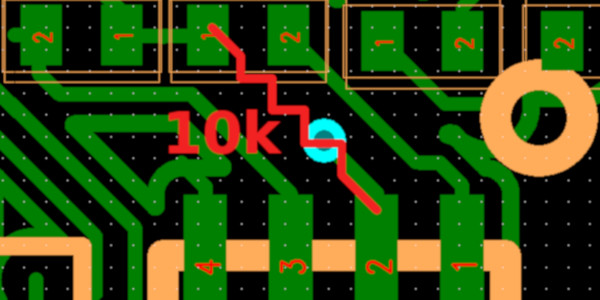
Many of our customers are interested in what goes on behind the scenes when making a phone, so we wanted to share for transparency the kinds of issues that can come up. For instance, with our Birch batch, we sent our hardware engineers the very first phones off of the line ahead of schedule so they could perform quality control testing. We discovered a 10kΩ resistor was missing from the PCBA!

This manifested itself into a non-working USB. We are fortunate to have incredibly talented engineers on our team who quickly traced this error down so we could add the resistor to the remaining Birch devices, restore USB, and keep us on track to ship all Birch devices to backers without changing the Birch shipping window.

Thank you for the continued support and spreading the great news about the Librem 5, it is the single best way to make sure we all have a mobile phone that respects society.

The post Librem 5 Birch’s 10kΩ Resistor Fun, Devices Prepping for Shipping appeared first on Purism.

16 Nov 05:09

Librem 5 October 2019 Software Update

by Purism

The Librem 5 software team were busy in October, improving power consumption and heat generation through kernel and driver changes. The team also refactored and improved integration between various apps by using libfolks as a common foundation, added new features to keyboard, Settings, Shell and Compositor and squashed many bugs.

Here’s a list of the top things the Librem 5 software team worked on during October:

Note: Some of the changes mentioned below refer to amber (PureOS stable) and amber-phone (PureOS phone specific packages).

Kernel

Our ongoing improvements to frequency management in linux-imx8 and linux-next and general improvements to mxsfb have improved battery life.

S3-suspend/resume has been looked into again and should be functional.

Version v7 of the nwl mipi dsl host controller driver has been submitted for review upstream.

Patches to fix probing of the Rohm bd718x7 power regulator when built as a module were submitted upstream.

Improvements to GPU thermal throttling behavior have been submitted and accepted upstream.

Version v1 of the mxsfb patch to handle nwl timing requirements was submitted for review upstream.

Support for max17055 has been added to the 17042 fuel gauge driver.

Work to enable the devfreq driver for the development kit continues.

Got busfreq (devfreq) kernel, ATF, DDR firmware and U-Boot working, as well as U-Boot booting from eMMC.

To ease the transition to a softpinned Mesa, this change keeps both the old and new memory allocation strategies around so that old and new versions of Mesa will still work.

Some issues with the module that provides Wireless LAN and Bluetooth have been completed, solving problems with firmware version reporting, slow connections and inconsistent throughput.

Keyboard

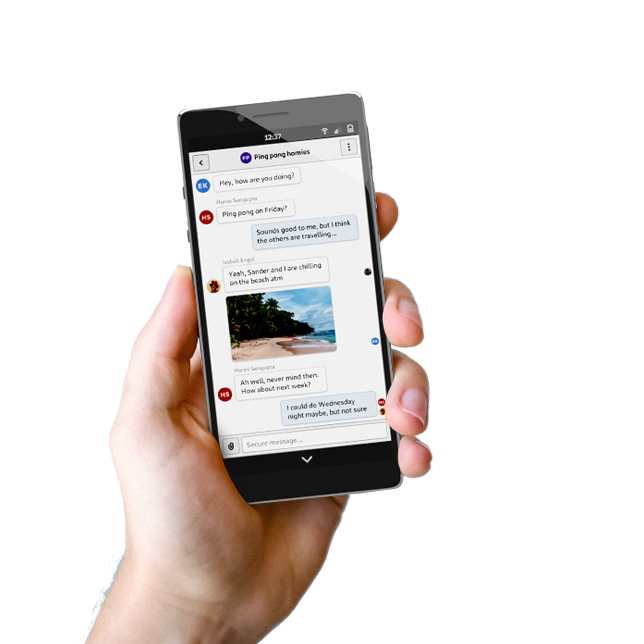
A new release of Squeekboard brings together efforts in a number of areas, both from the Purism team and from contributors from the forums and elsewhere.

Work on the keyboard layout for landscape screen orientation was completed, which overlaps with the more general problem of adjusting the keyboard to any display size.

The touchable area of buttons were made bigger to make typing easier and less error-prone.

The implementation of the keyboard is now approaching the original design with our first implementation of the language switcher, allowing users to easily switch between keyboard layouts.
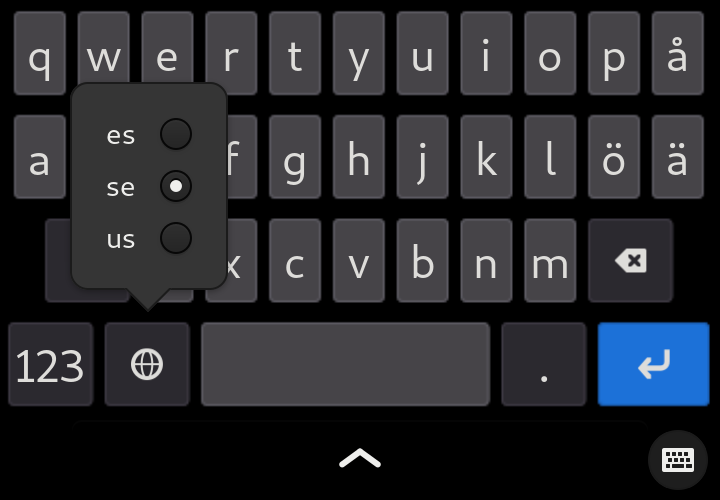
Librem 5 Onscreen Keyboard

Support for multi-codepoint sequences has enabled layouts to be created for more complex writing systems, such as Japanese Kana scripts.

Contributors have been submitting layouts for different languages in the simple YAML format that Squeekboard uses to describe where all the symbols are placed. Here’s a list of layouts that appeared or were updated in October:

Translation activity continues to be discussed in the forum.

Messaging

Chatty has been renamed to Chats to aligne with the naming standard of other GNOME applications.

Interoperability between Chats and Contacts was improved to make it easier to access contacts in Chats.

Translations have been updated from the Zanata translation service.

Flatpak builds of Chats now include libphonenumber and enable it in Evolution Data Server.

We fixed the following issues:

Shell and Compositor

Phosh 0.1.2 has been released. You can find the code, tagged in the repository.

Previously in October, we released Phosh 0.1.1, with contributions from Hysterical Raisins and Bart Ribbers. In tandem with this, Phoc 0.1.1 was also released, with contributions from Simon Ser, Aleksis and Bart Ribbers. Phoc was uploaded to the amber distribution of PureOS, making it available to all PureOS users.

Phoc now handles power button presses to blank/unblank the display.

Unix signal handling were simplified.

Although not purely a shell feature, an on-screen keyboard stub was added to Phosh. The is the final piece to allow the usage of Phosh’s PureOS packages without any special hacks.
On a similar theme, a gbp.conf file was added to the repository to make releases of Phosh simpler.

Meanwhile, Phoc started using its own defines for XWayland selection instead of relying on those from wlroots, and keybinding handling was improved.

A number of fixes were ported between rootston and Phoc, preparing us for switching to a newer version of wlroots. This needed doing because our fork of wlroots was getting old.

To help improve performance, we started packaging a softpinned Mesa that improves performance by employing a different memory allocation strategy.
Looking ahead, a fix to the Debian Bullseye build of Phoc anticipates future updates to the distribution used, and this is also reflected in the work to enable Phosh builds for Bullseye, too.

Also with future features in mind, the display server was turned into a GObject in preparation for dynamic keyboard layout switching.

We fixed the following issues:

  • missing icons in activity switcher for GNOME apps
  • GLib signal emission on layer-surface size changes
  • choosing an existing running application activates it instead of launching another instance now
  • running in a gdm session is detected to avoid double unlock

We fixed the following issues:

Calls and Audio Subsystems

Initial support for libfolks has been added to Calls, making it easier to integrate the application with others that use contact information.

More of interest to development kit users, Aleksander Morgado’s independent upstream port of SIM7100 voice support has now been merged. We’re very grateful for Aleksander’s efforts to support the SIM7100.

Wys now uses a machine-specific configuration database to discover the audio codec and modem in use. This means we no longer need device-specific packages to provide hardware configuration via systemd unit configuration files, as was previously the case.

Aleksander Morgado’s work on ModemManager emergency call support has been merged upstream, providing low-level support for emergency call provision.

Applications

Efforts to make GNOME Calculator adaptive have begun, though how it should be implemented is being reviewed by the Purism and GNOME designers.

GNOME Settings (Control Center) has seen gradual improvements over the month, with a new design for the information panel, a refactored cellular panel sent upstream. Now that the new gnome-bluetooth module has been packaged, the Bluetooth panel should work as expected. A new D-Bus API also enables the SIM card to be automatically unlocked when the phone starts up.
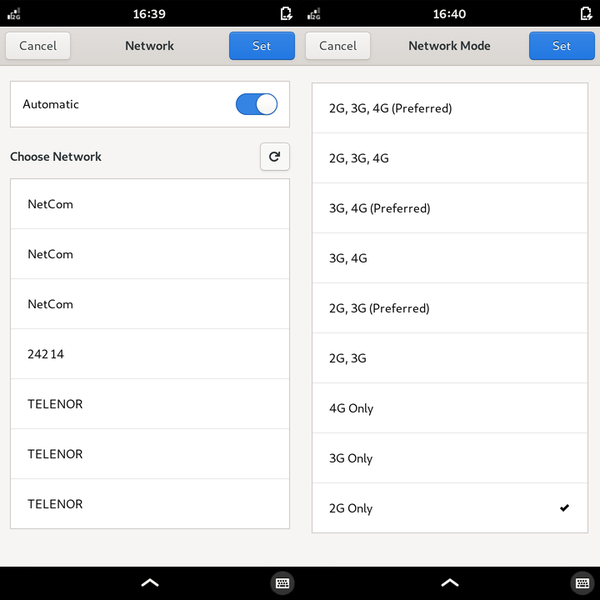
Librem 5 Cellular Settings

Since the phone is currently limited to using simple passcodes, a modification to pam (the Pluggable Authentication Modules library) allows simple numeric passwords to be used. This limitation is expected to be lifted in the near future.

Because it was previously very easy to accidentally dim the screen to a level where use of the GUI was very difficult, a fix to set the minimum brightness to 10 percent is much appreciated by those with development kits who were relying on the touchscreen as their only input device.

Support for NetworkManager secrets improves the experience of network authentication and connecting to wireless networks in general.

Some user experience improvements are needed to make the phone easier to use, even if they duplicate functionality that already exists. One of these involves asking the user to unlock the SIM card automatically when the user starts the phone and the modem is enabled using the hardware switch.

Design

The Design team has been reviewing merge requests to the Podcasts application, including one to port it to use HdyViewSwitcher.

Mockups for Phosh landscape mode were created, anticipating how the shell will look in landscape mode.

Infrastructure

Documentation for the available image types is lagging behind the state of the art. Until the developer documentation catches up, see this snippet for hints and tips on the naming scheme in use.

Packages for the phone are being built for PureOS. With that in mind, it’s useful to provide separate debug packages, to keep packages small for users while still providing debugging symbols for developers.

To make things work well on PureOS, we need to work around the use of an older version of systemd in the PureOS amber distribution.

When developing software on a platform, it can be useful to have a collection of tools that assist in development. The librem5-dev-tools package is used to conveniently install such tools in a similar way to the standard Debian/PureOS devscripts package.

Documentation

October is the month where our focus shifted onto the user documentation. Despite this, contributors made sure that parts of the developer documentation were kept up-to-date.

Christophe Roux submitted a documentation hint for downloading Librem 5 system images and Julian Hofer submitted a change to remove direct DConf access from the Flatpak permissions guide.
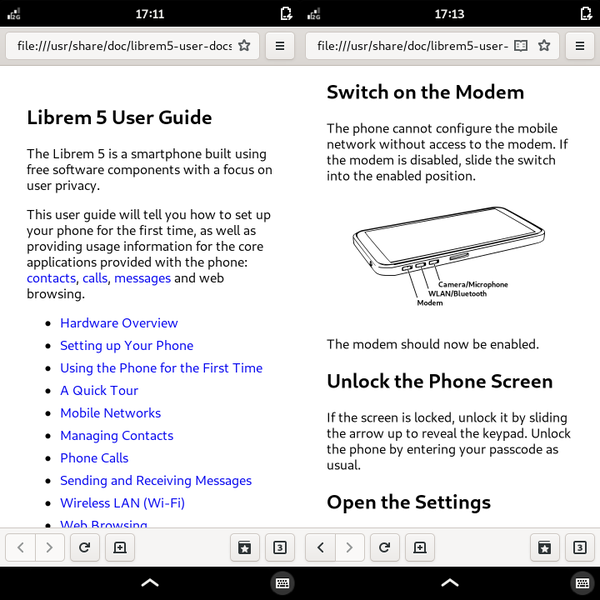
Initial versions of the phone’s user documentation, including the user guide and quick start guide, were produced. These are expected to evolve over time, especially between batches of phones, as the software and hardware are updated and upgraded.

Until next month!
The Librem 5 Software Team

Discover the Librem 5

Purism believes building the Librem 5 is just one step on the road to launching a digital rights movement, where we—the people—stand up for our digital rights, where we place the control of your data and your family’s data back where it belongs: in your own hands.

Preorder now

The post Librem 5 October 2019 Software Update appeared first on Purism.

16 Nov 05:07

The Insanity of Rachel Celler, the 'Forensic Nurse'

by RottingLepha
mkalus shared this story from RottingLepha's YouTube Videos.

From: RottingLepha
Duration: 21:16

Rachel thinks vaccines are the GMO CANCER WITHCRAFT ARMAGEDDON!

That's not really an exaggeration.

Come watch me make some of these videos live on Twitch:
http://www.twitch.tv/RealJeffHoliday

Send us mail!
P.O. Box #40583
Eugene OR, 97404

If sending through UPS or FedX please use:
255 River Ave #40583
Eugene OR, 97404

Buy our shirts and stuff!
https://www.teepublic.com/user/holiday

http://www.jeffholiday.com

Jeff Holiday theme song by: www.myroomrecords.com

Extra EXTRA big thanks to my Patreons.
$50
Elias VO
I Know a Fat Guy
Mortifero
Whiskey & Cheese

$20
Ben C
Brett M
Carl M
Czarisyn
David F
Erdanya
Fyshhh
Jauna F
Jessica B
JL NotHere
Kendal K
Leesa M
Lucas F
P1GP3NZ
NeoGibu
Petra C-M
Raksada
Red Royals
TBrown
Tim K
William R

$10
Aeribelle
ALittleBeast
Antonovich
Arjan S
Astraea N
BRNWSH
Capras12
Cyan Ablaze
Donny
Drew D
Elizabeth B
Gabriel M
Heather A
Jacqi B
Jingui
Kirstie R
Larry K
LolaBohemia
MetalDooley
Mimi Loo
Nameless Coder
Nathan H
Sarah A
Smart Pig
Steven L

My second channel for stupid random vids and my livestreams:
https://www.youtube.com/channel/UCs7e8iCJhj0E7LxsoH6n_gw

Third channel for nerd culture, reviews, etc:
https://www.youtube.com/channel/UCK57ReVCCXxqSUVGjHGXakw

My Subreddit:
http://www.reddit.com/r/jeffholiday

And my Facebook fan page:
https://www.facebook.com/serialshiller

If you wish to support me on Patreon:
http://www.patreon.com/jeffholiday

#RachelCeller
#VaccinesAreSafe
#Vaccines

16 Nov 05:07

What Would Net Zero Emissions by 2025 Look Like?

by Dave Pollard


graph by Our World in Data

The latest IPCC report says that in order to prevent catastrophic climate change global net CO2 emissions will have to reach net zero by 2050, from their current levels of 33-38B tons rising by nearly 2%/year. The IPCC’s past reports have been almost laughably conservative and optimistic, which is just one of the reasons Extinction Rebellion have set a net-zero deadline of 2025, just 6 years from now.

It should be noted that total greenhouse gases will continue to rise for at least another 15-20 years after net zero CO2 is achieved, due to the ongoing run-on effects of other greenhouse gases, notably methane, that have been unleashed ‘naturally’ as a result of the damage we have already done to the atmosphere. And it is at best a long shot that even if we were to achieve net zero CO2 by 2025, it isn’t already too late to prevent climate collapse. Our knowledge of the science remains abysmal and every new report paints a bleaker picture. Expect a fierce anti-science, anti-reality backlash as more and more climate scientists concur that runaway, civilization-ending climate change is inevitable no matter what we do, or don’t do.

So what would be required to reduce the course of the hockey-stick trajectory shown in the chart above and achieve net zero CO2 in just 6 years, for a population that will at current rates be 7% (at least 1/2 billion people) greater than it is now?

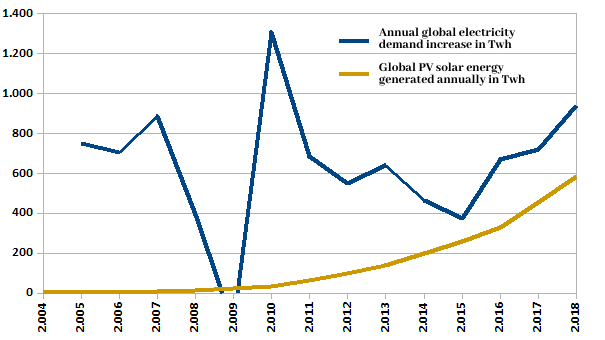
I think the reason that, while parliaments and political parties and scientists will readily accept XR’s first demand of proclaiming a climate emergency “and communicating the urgency for change”, for most the second demand of achieving net zero greenhouse gas emissions and biodiversity loss to zero by 2025 is simply absurd. Western economies have merely shifted production to Asia; their accelerating consumption of CO2-produced goods continues unabated. Our global economy depends utterly on cheap hydrocarbon energy. It’s completely preposterous to think a short-term shift is even vaguely possible. Renewables won’t help us; as the chart below shows, new solar energy isn’t even keeping up with the annual increases in demand, let alone cutting into the still-accelerating need for hydrocarbon energy:

graph by Pedro Prieto, cited by Bill Rees

So let’s be preposterous. What would have to happen, at a minimum, to achieve this valiant goal? Based on what I’ve read and on my understanding of complex systems, here’s just a few of the things that I think would have to happen:

  1. An immediate, complete and permanent grounding of all air traffic. That means no executive jets, no flying for diplomatic or business meetings or emergency family reasons — or military adventures. Achieving meaningful carbon reductions is simply impossible as long as planes are flying.
  2. Immediate rationing of liquid/gas hydrocarbons for essential and community purposes only. To get all the hydrocarbon-fuelled cars and trucks off the road in six years no more travel in personal hydrocarbon-burning vehicles could be permitted. And we’d have to work hard to convert all public buses, trains and ships to non-CO2 producing vehicles in that time. If you look at supply/demand curves for gasoline, we’d be looking at carbon taxes in the area of 1000% to ‘incent’ such conversions. My guess is that most shipping and much ‘privatized’ public transit would not be able to stay in business with these constraints. So say goodbye to most imported goods.
  3. All hydrocarbons in the ground would have to stay there, all over the world, effective immediately. We’d have to make do with existing reserves for a few years until everything had been converted to renewable resources.
  4. Industrial manufacturing based on fossil fuel use would have to convert in equal steps over the six year timeframe, and any plants failing to do so would have to be shuttered.
  5. Construction of new buildings and facilities would have to stop entirely. Existing buildings would have to phase out use of fossil fuels over the six years through rationing and cut-offs for non-compliance, and they would have to be remodelled to meet stringent net-zero energy standards and to accommodate all new building needs.
  6. Trillions of trees would have to be planted, and all forestry and forest clearing stopped entirely. Likewise, production of other new high-energy-use building materials (especially concrete) would have to cease. We’d have to quickly learn to re-use the wood and other building materials we have now.
  7. All this centralized, ‘unprofitable’ activity (and enforcement of the restrictions) would need to be funded through taxes. As during the great depression, the rich could expect tax rates north of 90% on income. And a very large wealth tax would be needed to quickly redistribute wealth so that the poor didn’t overwhelmingly suffer from the new restrictions.
  8. The consequences of the above would be an immediate and total collapse of stock and real estate markets and the flow of capital. The 90% of the world’s wealth that is purely financial and not real (stocks, bonds, pensions etc) would quickly become substantially worthless in a ‘negative-growth’ economy, adding a complete economic collapse to the crises the governments trying to administer the transition to net-zero were trying to manage. In such an economic collapse, many governments would simply fail, leaving communities in their jurisdictions to fend for themselves, and making it likely that much of the world would abandon the constraints of net-zero transition because they wouldn’t have the power or resources to even begin to enforce them.

Of course, none of this will happen. Even if governments had the power and wisdom to understand what was really required to make the net-zero transition, it would be political suicide for them to implement it. It won’t happen by 2025. It won’t happen by 2050. It won’t and wouldn’t happen by 2100 even if we had that long, which we do not.

The message of all this is that we cannot save our globalized civilization from the imminent end of stable climate, affordable energy, and the industrial economy — all of which are interdependent. No one (and no group) has the power to shift these massive global systems to a radically new trajectory, without which (and perhaps even with which) our world and its human civilization are soon going to look very different.

No one knows how and how quickly this will all play out, and the scenarios under which collapse will occur vary from humane, collaborative and relatively free from suffering, to the very dystopian. There is therefore no point dwelling on them, or even trying to plan for them. As always, we will continue to do our best, each of us, with the situation that presents itself each day, and our love for our planet and its wondrous diversity will play into that. Our best will not be enough, but we will do it anyway.

15 Nov 23:28

The best way to blog in 2020

Ben Werdmuller, Nov 15, 2019

I can endorse pretty much everything Ben Werdmuller says about blogging in this post, including his recommendations for blogging platforms. But this is the bit that's the most important: "When you blog, you're building up a body of work that represents you online. It's a gateway into your thought process more than anything else. So do what moves you.... The only thing that's really important is that you keep doing it. I can tie every single major advance in my career to blogging. It's been hugely important in my personal life, too. I couldn't recommend it more." Same here. I wouldn't have a career without blogging. And for all my professional output, my blog posts are the best of me.

Web: [Direct Link] [This Post]
15 Nov 23:14

RT @Saggydaddy: I don't know who did this to @bbcquestiontime but it's a thing of sheer genius. #bbcqt pic.twitter.com/c47qmKneCw

by Saggydaddy
mkalus shared this story from ottocrat on Twitter.

I don't know who did this to @bbcquestiontime but it's a thing of sheer genius. #bbcqt pic.twitter.com/c47qmKneCw


Retweeted by ottocrat on Friday, November 15th, 2019 9:46pm


3745 likes, 1611 retweets
15 Nov 23:14

'You are looking at the most dangerous animal in the world. It alone of all the animals that ever lived can exterminate (and has) entire species of animals. Now it has achieved the power to wipe out all life on earth.' Installation - Bronx Zoo, NYC 1963 pic.twitter.com/OJIvMsGiMD

by moodvintage
mkalus shared this story from moodvintage on Twitter.

'You are looking at the most dangerous animal in the world. It alone of all the animals that ever lived can exterminate (and has) entire species of animals. Now it has achieved the power to wipe out all life on earth.'

Installation - Bronx Zoo, NYC 1963 pic.twitter.com/OJIvMsGiMD


350 likes, 142 retweets
15 Nov 23:12

Something is wrong with computers

by Tom MacWright

The world is changing faster than ever before, with the data we collect growing by the day and technology developing at a breakneck pace.

That’s the sort of boilerplate introduction that props us countless content farm articles and CEO-thought leader LinkedIn posts. Besides the inexorable and terrifying advance of climate change, there’s a lot to doubt in that kind of futurism.

In particular, computers. Hardware. Ignorant of their teleological duty to constantly improve, the computers that we interact with daily have either stalled or declined in the past five years.

Take for example the new MacBook Pro, Apple’s 16” top-of-the-line laptop. Three of its headline features - a scissor-mechanism keyboard, a physical Escape key, and inverted-T arrow keys, are not new. They existed in every MacBook Pro produced between 2006 and 2016.

So the main selling point of this new, $2,399 computer is that it fixes some of the unforced errors that Apple made in 2016. You’re paying to get the same sort of keyboard, the same escape key, the same arrow keys that you could buy in 2015. Apple fans would pay even more to get the MagSafe charger they had back then, too, or to not have the TouchBar at all.

But the problem runs deeper than that. By the numbers, the clock speed, storage capacity, and RAM specifications of MacBooks have stalled since 2013, six years ago. Here are the charts to prove it.

I’m using the venerable everymac.com for these statistics, and taking the highest-spec configuration.

RAM

RAM comes in new, faster varieties, but there has never been a MacBook with over 16 gigabytes of it.

20082010201220142016201824816

Storage

Like RAM, storage hasn’t budged in the past six years. In fact, it has never recovered to the peak of 750 gigabytes with the MacBookPro9,1 in 2012.

200820102012201420162018128256512

Clock speed

Mid-2017 still claims the peak clock speed of 3.5GHz.

200820102012201420162018123

What about cores?

Clock speed has stalled but processors have gained more cores, keeping Moore’s Law pedantically correct, and giving Apple the chance to show promising performance bar charts. But multi-core machines are arguably less than the sum of their parts: software development is still figuring out how to make the most of those cores and an huge amount of software is single-threaded. The computing speed recession has real-world ramifications: the programmer-friendly frameworks of fifteen years ago, written in anticipation of faster computers, never got those faster computers. Trendy languages now are winning on their speed or ability to do threading and multiprocessing. Programming languages that emphasized programmer-friendly ways of working are out of vogue.

Why is this happening?

I’m not a hardware scientist, so I can only venture a few guesses. I’d be interested to hear what you think.

I think we’re hitting physical limits in terms of what hardware can do. Multicore processors and the disastrous idea of hyper-threading kept speed technically increasing but thermodynamic and speed-of-light problems are starting to kick in.

Big computer companies are starting to look at the hardware business as a game for suckers. IBM led the way with a big, potentially mistaken pivot to services, one that involved them selling one of the most trusted brands in computing, ThinkPad. Now Apple is trying to do the same, to make more money on the App Store, streaming, or music than it does on hardware.

Everyone got confused about what phones mean for computers. A few years ago, I remember how strong the idea of ‘mobile-first’ stuck in the minds of tech founders. Everyone would be using phones for the vast majority of their screentime. Nobody was quite sure how this would square with work, which continues to be a big chunk of people’s computing time, but nevertheless, phones were the future. Impossibly hyped off of this realization, laptops started unsuccessfully absorbing phone-like traits: Windows computers got touchscreens that you tap in laptop mode and jiggle around on the weak display hinge, and MacBooks got the perplexing TouchBar.

Mac users are a captive audience. I’m typing this now on a MacBook Pro. It’s the same kind of computer most of my friends and all of my coworkers use. The same model that huge companies order by the hundreds. Switching costs are high and even the absurdity of the terrible keyboard isn’t enough to force people off the platform.


Everything’s getting better, and sometimes worse, all the time. Nothing stays the same, with a few exceptions.