Shared posts

21 Nov 15:27

Librem 5 Birch Shipping update — delay of just a few days.

by Purism

We want to give everyone a super quick update on shipping of the current batch of Librem 5 smartphones.

There’s a delay. But, never fear, it’s only a delay of just a couple days.

We had hoped, and expected, that the resistor issue (mentioned in this post last week) wouldn’t delay shipping, but it turns out it has caused a few days’ delay.

We have just received official word that final parts for Birch are shipping to us as we speak — and we expect to have them on Tuesday, November 26 (next week). At which point we will be shipping phones out those receiving this batch of Librem 5’s next week.  (There is always a chance the final parts will be delivered early, but the tracking currently says November 26.)

Thank you again to all of you for your patience and support as we ship the world’s most privacy and Freedom respecting smartphone. We’re excited for many of you to be receiving yours in the next week.

The post Librem 5 Birch Shipping update — delay of just a few days. appeared first on Purism.

21 Nov 15:27

A primer on South Asians and Desis

by Anil Dash
A primer on South Asians and Desis

I often talk about South Asian people, or how I identify as being an American of South Asian descent. Many folks outside of our communities don’t always know the details of how to understand our identities, so I wanted to share some generally useful info, in hopes that it answers a bunch of questions that maybe people are uncomfortable asking, or don't quite know how to Google.

Disclaimer: I'm far from an expert! This is just me sharing my own understandings, and others will disagree with some of these interpretations.


First, "South Asia" is different from Southeast Asia, a term which also commonly used in the U.S. Specifically, South Asia encompasses countries and cultures like India, Pakistan, Bangladesh, Sri Lanka, Nepal, The Maldives, Afghanistan, and Bhutan. (This isn't comprehensive — the boundaries can be fuzzy, and there are longstanding South Asian cultures in other countries like China.) By contrast, Southeast Asia typically refers to countries like Indonesia, Vietnam, Thailand, Malaysia, and Laos. So, though both terms are imprecise, there's a distinct geographic separation, and an even more distinct cultural separation.

We talk about South Asian cultures collectively because the political boundaries are relatively recent and were greatly influenced by violent colonialism, and becsuse there are often cultural connections that transcend borders. Events like Partition (one of the largest, most brutal forced migrations in human history) happened in living memory. The net effect is that we often share culture and deeply personal aspects of identity like language, religion, cuisine, music and arts across these relatively young boundaries. This is notwithstanding the reality of political tensions between some South Asian countries. Also, much of the diaspora lives outside of South Asia, and millions have never been to the subcontinent but have lived in parts of Africa, Asia or the Americas for generations.

Sometimes our people in the South Asian diaspora are referred to as “desi” people. This is essentially an in-group term meaning “a person of South Asian descent”. It’s not offensive if other people use it, though it may sound a bit affected. Do note, though, that some people don’t like the use of “desi” as a demonym, as it elides the history of marginalized cultures in the subcontinent, and can be seen to perpetuate casteism in the diaspora. I didn’t grow up using the word, and don’t speak Hindi, so I’m still learning about this connotation myself.

Many people I know in the diaspora identify first, or primarily, with the regional culture they’re from. For example, you may know people who are Punjabi; this can imply a connection to language, food, clothing, music, even faith in a way that crosses political boundaries. This can also explain why diaspora comminities are rarely a monolith. For example, I grew up around very few people of South Asian descent, but even within that small group, almost none were from the region (meaning language & culture) that my family is from. Another confounding thing to outsiders is that nearly every region has its own unique language, both written & spoken, and some languages (like Hindustani/Urdu) are similar when spoken but have wildly different written forms. Regions in South Asia are more analogous to countries in the E.U. than to states in the U.S. in terms of their unique cultural identities.

Also surprising to many outside the community is that nearly all South Asian countries (and thus South Asian diaspora communities) are very multi-religious. You know of Hinduism & Islam, but Sikhism, Jainism, Buddhism, Christianity, Zoroastrianism & other faiths have more than 100 million collective followers in South Asia, and in many cases these communities have strong representation amongst diaspora. This is true despite the sometimes severe political oppression that many groups face, especially in a time of rising religious fundamentalism from a lot of the people in power.


This stuff can feel a little complicated, and that's made even more fraught because we’re so marginalized in countries like the U.S. There are roughly 6 million South Asian Americans in the U.S. — nearly 2% of the population. That makes us collectively more populous than the 30 smallest U.S. states are. Despite this, we’re never even mentioned in political polls.

That invisibility is particularly dramatic when you consider that there have been South Asian immigrants in the United States for more than 200 years. Our first significant presence began in the 1800s, when we were welcomed into Black neighborhoods in New Orleans, Harlem & Baltimore. Later, South Asian workers came to the west coast to build rails & farms. At each new stage of South Asian immigration, we faced barriers both political & social. The Asian Exclusion Act barred our immigration & eventually led to revoking citizenship for desi immigrants. South Asians were also subject to violence, including lynchings and mass killings. We’ve also faced deep struggles within our community. Tensions often arise between immigrant & native-born desis, and we can carry forward animosities that are grounded in tensions between our countries of origin. Casteism and colorism plague our community, and the systemic protections against bias that are encoded in American laws haven't yet veen extended to fight caste-based prejudice. A painful anti-Blackness often poisons our solidarity with a community that we've been connected to, and allied with, for more than a century, though organizers and activists have been working diligently to mend these rifts. Within our community, domestic violence and structural misogyny are often epidemic as well.

Despite all these challenges, and the often-tenuous grasp we have on our identity in the U.S., the last few years have seen an unprecedented visibility and presence for South Asian Americans even in the face of white supremacy. We’ve got our first TV shows, first feature films, a real presidential candidate [update: Vice President!], and a number of prominent business leaders. Our cuisines have become a daily staple for millions, and the undeniable beautfy of the many musical and fashion styles of the subcontinent have influenced nearly every creator working in these fields today. We finally exist in American culture.

It makes me optimistic that  people are even curious about these topics and want to know more about us. I hope that interest promises to yield more acceptance and support in the years to come.

21 Nov 15:27

Bits On the Wire

Exactly 100% of everything on the Internet involves exchanging messages which represent items of interest to humans. These items can be classified into three baskets: One for “media” (images, sound, video), one for text (HTML, PDF, XML), and one for “objects” (chat messages, payments, love poems, order statuses). This is a survey of how Object data is encoded for transmission over the Internet. Discussed: JSON, binary formats like Avro and Protobufs, and the trade-offs. Much of what people believe to be true is not.

History sidebar

The first ever cross-systems data interchange format was ASN.1, still used in some low-level Internet protocols and crypto frameworks. ASN.1 had a pretty good data-type story, but not much in the way of labeling. Unfortunately, this was in the days before Open Source, so the ASN.1 software I encountered was slow, buggy, and expensive.

Then XML came along in 1998. It had no data-typing at all but sensibly labeled nested document-like data structures. More important, it had lots of fast solid open-source software you could download and use for free, so everybody started using it for everything.

Then sometime after 2005, a lot of people noticed JSON. The “O” stands for “Object” and for shipping objects around the network, it was way slicker than XML. By 2010 or so, the virtuous wrath of the RESTafarians had swept away the pathetic remnants of the WS-* cabal. Most REST APIs are JSON, so the Internet’s wires filled up with media, text, and JSON.

On JSON

I think there’s still more of it out there than anything else, if only because there are so many incumbent REST CRUD APIs that are humming along staying out of the way and getting shit done.

JSON pros:

  1. Readers and writers are implemented in every computer language known to humankind, and they tend to interoperate correctly and frictionlessly with each other, particularly if you follow the interoperability guidelines in RFC 8259, which all the software I use seems to.

  2. It does a pretty good job of modeling nested-record structures.

  3. It’s all-text, so humans can read it, which is super extra helpful.

  4. You can receive a JSON message you know nothing about and pick it apart successfully without knowing its schema, assuming it has one, which it probably doesn’t. So you can accomplish a task like “Pull out the item-count and item-price fields that are nested in the top-level order-detail field” with pretty good results given just a blob of raw JSON.

  5. You can reliably distinguish between numbers, strings, booleans, and null.

JSON cons:

  1. The type system is impoverished. There is no timestamp type, no way to know whether a number should be treated as an integer or float or Bignum, no way to signal when string values are really enums, and so on.

  2. Numbers are specially impoverished; in general you should assume that your repertoire is that of an IEEE double-precision float (but without NaN or ∞) which is adequate for most purposes, as long as you’re OK with an integer range of ±253 (which you probably should be).

  3. Since JSON is textual, there is a temptation to edit it by hand, and this is painful since it’s nearly impossible to get the commas in the right places. On top of which there are no comments.

  4. JSON’s textuality, and the fact that it carries its field labels along, no matter how deeply nested and often repeated, suggest that it is unnecessarily verbose, particularly when numeric values are represented in textual form. Also, the text needs to be converted into binary form to be loaded into objects (or structs, or dicts) for processing by code in memory.

  5. JSON doesn’t have a universally-accepted schema language. I have been publicly disappointed over “JSON Schema”, the leading contender in that space; it’s just not very good. For a long time, the popular Swagger (now OpenAPI) protocols for specifying APIs used a variant version of a years-old release of JSON Schema; those are stable and well-tooled.

Avro

Mainstream binary formats

I think that once you get past JSON, Apache Avro might be the largest non-text non-media consumer of network bandwidth. This is due to its being wired into Hadoop and, more recently, the surging volume of Kafka traffic. Confluent, the makers of Kafka, provide good Avro-specific tooling. Most people who use Avro seem to be reasonably happy with it.

Protobufs

Protobufs (short for “Protocol Buffers”) I think would be the next-biggest non-media eater of network bandwidth. It’s out of Google and is used in gRPC which, as an AWS employee, I occasionally get bitched at for not supporting. When I worked at Google I heard lots of whining about having to use Protobufs, and it’s fair to say that they are not universally loved.

Next in line would be Thrift, which is kind of abstract and includes its own RPC protocol and is out of Facebook and I’ve never been near it.

JSON vs binary

This is a super-interesting topic. It is frequently declaimed that only an idiot would use JSON for anything because it’s faster to translate back and forth between data types in memory with Avro/Protobufs/Thrift/Whatever (hereinafter “binary”) than it is with JSON, and because binary is hugely more compact. Also binary comes with schemas, unlike JSON. And furthermore, binary lets you use gRPC, which must be brilliant since it’s from Google, and so much faster because it’s compact and can stream. So, get with it!

Is binary more compact than JSON?

Yes, but it depends. In one respect, absolutely, because JSON carries all its field labels along with it.

Also, binary represents numbers as native hardware numbers, while JSON uses strings of decimal digits. Which must be faster, right? Except for your typical hardware number these days occupies 8 bytes if it’s a float, and I can write lots of interesting floats in less than 8 digits; or 4 bytes for integers, and I can… hold on, a smart binary encoder can switch between 1, 2, 4, and 8-byte representations. As for strings, they’re all just the same UTF-8 bytes either way. But binary should win big on enums, which can be represented as small numbers.

So let’s grant that binary is going to be more compact as long as your data isn’t mostly all strings, and the string values aren’t massively longer than the field labels. But maybe not as much as you thought.

Unless of course you compress. This changes the picture and there are a few more it-depends clauses, but compression, in those scenarios where you can afford it, probably reduces the difference dramatically. And if you really care about size enough that it affects your format choices, you should be seriously looking at compression, because there are lots of cases where you’ve got CPU to spare and are network-limited.

Is binary faster than JSON?

Yes, but it depends. Here’s an interesting benchmark from Auth0 showing that if you’re working in JavaScript, the fact that JSON is built-in to the platform makes Protobuf’s advantages mostly disappear; but in an equivalent Java app, protobuf wins big-time.

Whether or not your data is number- or string-heavy matters in this context too, because serializing or deserializing strings is just copying UTF-8bytes.

I mentioned gRPC above, and one aspect of speed heavily touted by the binary tribe is in protobufs-on-gRPC which, they say, is obviously much faster than JSON over HTTP. Except for HTTP is increasingly HTTP/2, with longer-lived connections and interleaved requests. And is soon going to be QUIC, with UDP and no streams at all. And I wonder how “obvious” the speed advantage of gRPC is going to be in that world?

I linked to that one benchmark just now but that path leads to a slippery slope; the Web is positively stuffed with serialization/deserialization benchmarks, many of them suffering from various combinations of bias and incompetence. Which raises a question:

Do speed and size matter?

Can I be seriously asking that question? Sure, because lots of times the size and processing speed of your serialization format just don’t matter in the slightest, because your app is bottlenecked on database, or on garbage collection, or on a matrix inversion or an FFT or whatever.

What you should do about this

Start with the simplest possible thing that could possibly work. Then benchmark using your data with your messaging patterns. In the possible but not terribly likely case that your message transmission and serialization is a limiting factor in what you’re trying to do, go shopping for a better data encoding.

The data format long tail

Amazon Ion has been around for years running big systems inside Amazon, and decloaked in 2015-16. It’s a JSON superset with a usefully-enriched type system that comes in fully interoperable binary and textual formats. It has a schema facility. I’ve never used Ion but people at Amazon whose opinion I respect swear by it. Among other things, it’s used heavily in QLDB, which is my personal favorite new AWS service of recent years.

CBOR is another binary format, also a superset of JSON. I am super-impressed with the encoding and tagging designs. It also has a schema facility called CDDL that I haven’t really looked at. CBOR has implementations in really a lot of different languages.

I know of one very busy data stream at AWS that’s running at a couple of million objects a second where you inject JSON and receive JSON, but the data in the pipe is CBOR because at that volume size really starts to matter. It helped that the service is implemented in Java and the popular Jackson library handles CBOR in a way that’s totally transparent to the developer.

I hadn’t really heard much about MessagePack until I was researching this piece. It’s yet another “efficient binary serialization format”. The thing that strikes me is that every single person who’s used it seems to have positive things to say, and I haven’t encountered a “why this sucks” rant of the form that it’s pretty easy to find for every other object encoding mentioned in this piece. Checking it out is on my to-do list.

While on the subject of efficient something something binary somethings, I should mention Cap’n Proto and FlatBuffers, both of which seem to be like Avro only more so, and make extravagant claims about how you can encode/decode in negative nanoseconds. Neither seems to have swept away the opposition yet, though.

 [Shouldn’t you mention YAML? —Ed.]
 [No, this piece is about data on the
network. —T.]

On Schemas

Binary really needs schemas to work, because unless you know what those bits all snuggled up together mean, you can’t un-snuggle them into your software’s data structures. This creates a problem because the sender and receiver need to use the same (or at least compatible) schemas, and, well, they’re in different places, aren’t they? Otherwise what’s the point of having messaging software?

Now there are some systems, for example Hadoop, where you deal with huge streams of records all of which are the same type. So you only have to communicate the schema once. A useful trick is to have the first record you send be the schema which then lets you reliably parse all the others.

Avro’s wire format on Kafka has a neat trick: The second through fifth byte encode a 4-byte integer that identifies the schema. The number has no meaning, the schema registry assigns them one-by-one as you add new schemas. So assuming both the sender and the receiver are using the same schema registry, everything should work out fine. One can imagine a world in which you might want to share schemas widely and give them globally-unique names. But those 32-bit numbers are deliciously compact and stylishly postmodern in their minimalism, no syntax to worry about.

Some factions of the developer population are disturbed and upset that a whole lot of JSON is processed by programmers who don’t trouble themselves much about schemas. Let me tell you a story about that.

Back in 2015, I was working on the AWS service that launched as CloudWatch Events and is now known as EventBridge. It carries events from a huge number of AWS services in a huger number of distinct types. When we were designing it, I was challenged “Shouldn’t we require schemas for all the event types?” I made the call that no, we shouldn’t, because we wanted to make it super-easy for AWS services to onboard, and in a lot of cases the events were generated by procedural code and never had a schema anyhow.

We’ve taken a lot of flak for that, but I think it was the right call, because we did onboard all those services and now there are a huge number of customers getting good value out of EventBridge. Having said that, I think it’d be a good idea at some future point to have schemas for those events to make developers’ lives easier.

Not that most developers actually care about schemas as such. But they would like autocomplete to work in their IDEs, and they’d like to make it easy to transmogrify a JSON blob into a nice programming-language object. And schemas make that possible.

But let’s not kid ourselves; schemas aren’t free. You have to coördinate between sender and receiver, and you have to worry what happens when someone wants to add a new field to a message type — but in raw JSON, you don’t have to worry, you just toss in the new field and things don’t break. Flexibility is a good thing.

Events, pub/sub, and inertia

Speaking of changes in message formats, here’s something I’ve learned in recent years while working on AWS eventing technology: It’s really hard to change them. Publish/subscribe is basic to event-driven software, and the whole point of pub/sub is that the event generator needn’t know, and doesn’t have to care, about who’s going to be catching and processing those events. This buys valuable decoupling between services; the bigger your apps get and the higher the traffic volume, the more valuable the decoupling becomes. But it also means that you really really can’t make any backward-incompatible changes in your event formats because you will for damn sure break downstream software you probably never knew existed. I speak from bitter experience here.

Now, if your messages are in JSON, you can probably get away with throwing in new fields. But almost certainly not if you’re using a binary encoding.

What this means in practice is that if you have a good reason to update your event format, you can go ahead and do it, but then you probably have to emit a stream of new-style events while you keep emitting the old-style events too, because if you cut them off, cue more downstream breakage.

The take-away is that if you’re going to start emitting events from a piece of software, put just as much care into it as you would as you do in specifying an API. Because event formats are a contract, too. And never forget Hyrum’s Law:

With a sufficient number of users of an API,
it does not matter what you promise in the contract:
all observable behaviors of your system
will be depended on by somebody.

Messages too!

The single true answer to all questions about data encoding formats

“It depends.”

21 Nov 15:25

A Good Time To Specialise

by Richard Millington

There’s plenty of opportunities.

Specialise in community migration, platform development, and establishing a community.

Specialise in measuring and reporting. Help others quantify the impact of the community, and develop systems to pull/analyze content from Google Reports, different platforms etc…make sure you can visualise the data beautifully too.

Specialise in running MVP programs that transform how organisations engage with their top customers.

Specialise in running large conferences and in-person events for huge communities.

Specialise in launching new communities from scratch.

Specialise in creating 10x content which attracts members indefinitely.

Specialise in setting up and running video channels for communities.

Specialise in running community teams and knowing how to attract, motivate, and drive key people.

Specialise in localisation of large communities to each region. How do you support conflicting needs of members by language and culture?

Specialise in ideation and building the right internal systems to utilize external ideas.

Specialise in moderation. Both reducing costs, improving results, and implementing policies which find that balance between freedom of speech and freedom from abuse.

Specialise in gamification programs that are unique, different, and game-changing for their hosts.

This isn’t an exhaustive list. But judging by the queries we’re getting today, you can get a head start if you specialise now.

21 Nov 15:25

Twitter Favorites: [skinnylatte] Dropbox is less and less essential, as a product, these days. Disappointing. Evernote as well. I’m migrating all of… https://t.co/X93IDrr3XO

Adrianna Tan @skinnylatte
Dropbox is less and less essential, as a product, these days. Disappointing. Evernote as well. I’m migrating all of… twitter.com/i/web/status/1…
21 Nov 15:25

Huawei Canada president says company would survive 5G ban, but will lose revenue

by Shruti Shekar
Huawei P30 Pro Amber Sunrise

Huawei Canada’s president says that the company will incur a significant loss if it is banned from participating in 5G infrastructure development across the country, but urged that the Chinese tech giant will continue its investment in Canada regardless.

Prime Minister Justin Trudeau has selected his next cabinet, and while he holds a minority government, Huawei executives insist the company’s lobbying and Canadian strategy moving forward will be “diplomatically forceful.”

In interviews with MobileSyrup at its Toronto headquarters in Markham, Ontario, Huawei Canada detailed where it aims to focus its efforts if the company is banned from 5G infrastructure development, as well as its future plans for investing in the country.

Eric Li, the president of Huawei Canada, said that while the company has other partnerships with carriers, not being part of the deployment of 5G will result in a significant monetary loss for the China-based tech giant.

“Yes. I think we will lose revenue,” Li said. “5G is currently the most important technology and we would lose [revenue] for sure [if we are banned]. But we hope to gain from the other sides of business we have, which is our consumer side and enterprise side.”

In its 2018 sales revenue, Huawei Canada revealed it made approximately $566 million CAD, which includes earnings from its carrier and consumer businesses.

Speaking through a translator in February 2019, Liang Hua, one of Huawei’s chairmen, said that number broke down to about $270 million USD (roughly $357 million CAD) in sales revenue from its telecom business and about approximately $150 million USD (about $198 million CAD) from its consumer device business in the Canadian market.

Most of its business is from partnerships with Telus and Bell, the former of which uses 100 percent of network infrastructure in its last-mile network, as well as cellular towers. Telus and Bell have both confirmed that they don’t use Huawei equipment in their core network infrastructure, which is where the most sensitive and vulnerable information is stored.

Li said the company isn’t concerned because it intends to continue its focus on expanding 4G LTE services in rural and remote areas of Canada. Huawei also aims to work on enterprise business solutions such as providing technology for smart agriculture.

Smartphones in Canada

Despite the U.S. ban, Huawei Technologies’ vice-president of public affairs and communications Liu Wei said in an interview that the company felt there was still a space for its products.

“We still have space. We still believe we have some space and our income is rising because our products are really, really good,” Liu said. “But for sure [with no] Google services, for sure, it’s a big matter.”

He said it might take some time, but “one day we will get back to a normal business relationship.”

In May 2019, U.S. President Donald Trump placed Huawei on an Entity List banning the company from working with any U.S.-based company.

The June the ban was lifted to an extent, allowing some companies to apply for a conditional licence. The U.S. also indicated that it was giving companies that currently work with Huawei yet another 90-day extension to find alternative business sources. More recently, the U.S. started granting some companies conditional licences, but it is unclear if Google has made that list.

When Huawei was first placed on the Entity List, Google pulled its business from the company, which meant that future phones would not have access to Google services like YouTube, Maps and thousands of apps in the Play Store.

Globally, Huawei reported a 27 percent revenue jump in Q3 2019 as a result of an increase in smartphone shipments before the U.S. blacklisted the company

Huawei doesn’t break down revenue, but in its earnings said that during the first three quarters of the year, revenue grew 24.4 percent to 610.8 billion yuan (about $113.7 billion CAD).

The first major phone the company released in Canada was the Nova Plus in 2016, followed by the P10 in 2017 and the P20 in 2018. Last year Huawei also launched the Mate 20, its flagship phone.

However, it remains unclear if future Huawei smartphones will be released in Canada.

The company launched its Mate 30 series but indicated that only certain markets would get the phone. The phone lacks Google services and Huawei stated the device would run on the company’s own operating system called HarmonyOS. Huawei has not indicated if the phone will come to Canada.

Recent rumours have indicated that the company’s P40 series will launch in early 2020 to a global audience. Reports suggest that the phone will be similar to the P30 and P30 Pro regarding hardware and software, which means the phone’s operating system would work without Google’s services but would be limited.

Huawei will continue investing in Canada, though U.S. ban creates complex layer

Chris Pereira, director of public affairs at Huawei, said that the company prefers to work with companies it has a long relationship with and regardless of the situation, will continue to prefer working with those companies.

However, Pereira did indicate that this will be challenging for Huawei Canada because of the U.S. ban.

“It will add a layer of complexity in the business for sure. It might change how we approach the strategy, but it won’t change our dedication to Canada” he said, adding that it would try to work with companies to alleviate U.S. ban challenges.

“For example, research and development. It is definitely going to expand because it’s stable and a secure place,” he said. “Ok, there’s a blacklist, but this is not impossible to overcome…we’re still working.”

Huawei P30 Pro holding phone

As previously reported, Huawei Canada has said it wants to expand its already big research and development team in Canada.

In early January, the company reported that it had nearly 1,000 Canadian employees, of which 500 are dedicated to research and development. Huawei announced in February that it was going to invest about $2.6 billion more over five years in research and development and hire 200 more people for the department.

Pereira said that this number is set to grow and that the company will experience a 10 to 15 percent increase in its employees working out of Montreal. There are 50 employees in that location right now.

He also added that the Huawei plans to focus more on enterprise development equipment and artificial intelligence, noting that “Canada has a better environment” for manufacturing.

Liu stated that along with continued efforts concerning investments and products sold in Canada, he isn’t concerned with Huawei Canada’s partnerships.

Huawei has partnered with universities across the country to do research on the future of 5G. Huawei advertisements can also be found on highway billboards, plastered on the walls of malls and even prominently on display during Hockey Night in Canada, of which the company is a title sponsor.

“We are waiting to continue this. We are willing to continue it,” Liu said. “Our contract for Hockey Night in Canada isn’t up for renewal until next year. We have not heard of anything as of now.”

The post Huawei Canada president says company would survive 5G ban, but will lose revenue appeared first on MobileSyrup.

21 Nov 15:21

Apple has a new strategy to prevent another buggy launch like iOS 13

by Aisha Malik
Apple

Apple is changing the way it tests new versions of iOS and iPadOS to prevent another buggy debut like the launch of iOS 13 in September.

The tech giant is working on a way to ensure that test versions of upcoming software updates disable incomplete or buggy features by default, according to a recent report from Bloomberg.

The software testers will then be able to use a new settings menu called ‘Flags,’ which allows them to isolate the effect of each new addition to the system. This would allow Apple to identify when a recently added feature or line of code isn’t functioning, and then be able to issue a fix for the problem before it reaches customers.

It’s not surprising that Apple is changing that way it tests its software updates considering how the launch of iOS 13 was a bug-filled mess. Apps were launching slowly or crashing altogether, and there were issues with the Messages and Mail apps.

There was also a bug that would allow third-party keyboards to gain full access permission, allowing them to communicate with other apps and capture keystroke data.

Bloomberg reports that the new software strategy will be used for all of Apple’s platforms including watchOS, macOS and tvOS.

Apple is in the process of developing iOS 14 and is debating if it should push some of the features to iOS 15 to allow for more time in development.

Source: Bloomberg 

The post Apple has a new strategy to prevent another buggy launch like iOS 13 appeared first on MobileSyrup.

21 Nov 15:21

(via Junya Watanabe MAN | SS18 Now Available | HAVEN) I like...


(via Junya Watanabe MAN | SS18 Now Available | HAVEN)

I like the idea of a backpack integrated into a jacket, except the issue of having to take off the jacket to get at the contents.

21 Nov 15:21

This is why Alexa and Google no longer have access to my home automation

by Volker Weber

e5c11878402af7c1b279d556f7f33433

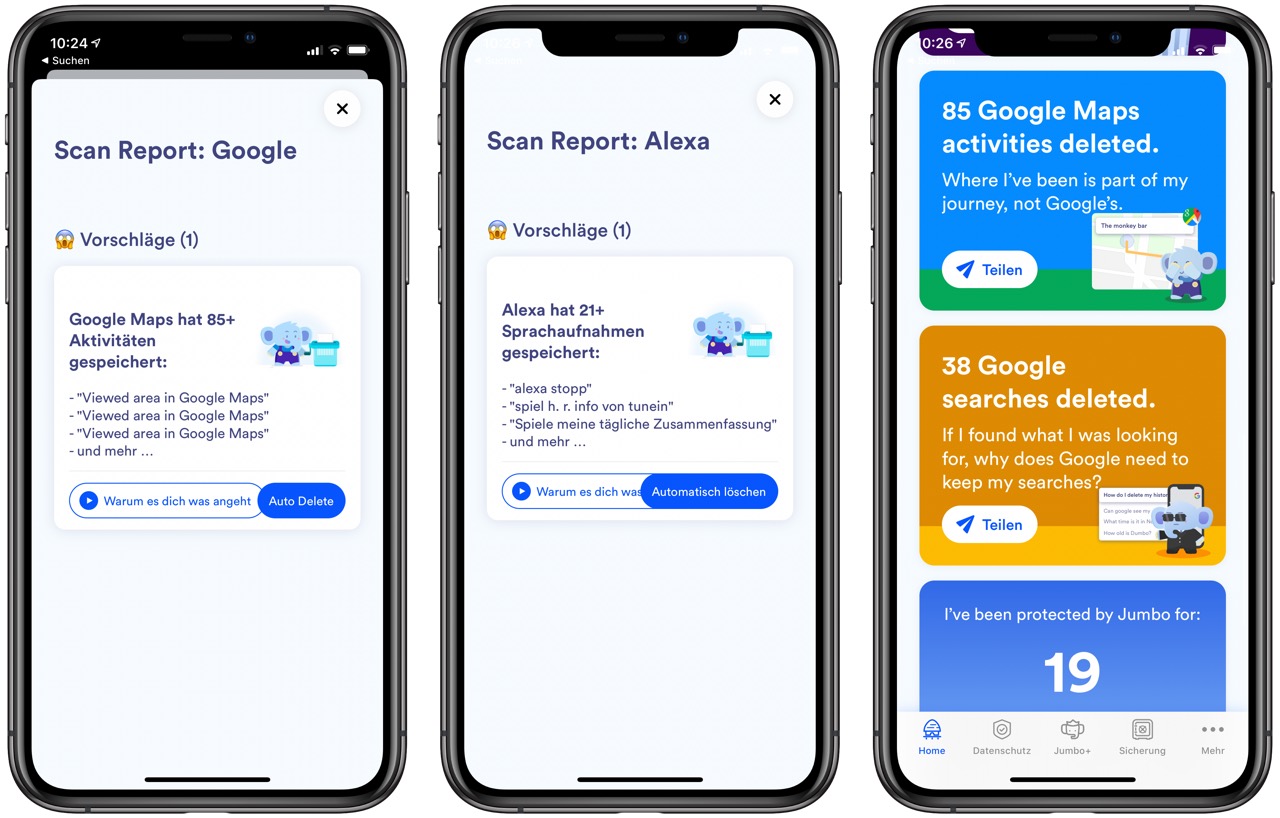
I have installed Google Maps for a single day in London and then removed it. It tried to convince me to enable location history so that it could track me. I declined. Try to use Google Home without sweeping authorizations to track everything.

If you have an iPhone, install and use Jumbo Privacy to clean up behind you.

More >

Update: As I have learned today, Jumbo Privacy is also available for Android.

21 Nov 15:21

Huawei Canada to be ‘diplomatically forceful’ in lobbying Trudeau’s minority government

by Shruti Shekar

Prime Minister Justin Trudeau has selected his next cabinet, and while he has a minority government, Huawei executives have insisted the company’s lobbying and Canadian strategy moving forward will be “diplomatically forceful.”

In interviews with MobileSyrup at the company’s Toronto headquarters in Markham, Ontario, Huawei Canada detailed how it plans to lobby the federal government and what that will mean for the company’s future concerning participating in 5G network development.

Morgan Elliott, vice-president of government affairs at Huawei Canada, said the minute the federal election was called, the company had already started working on its government relations map to target specific Members of Parliament. They include the Minister of Innovation, Finance, the Privy Council, Global Affairs and International Trade. Elliott said the hope is to educate those willing to hear more about the company’s plans.

The task isn’t going to be easy: Elliott

“It is a minority government which makes it more difficult. I think the rhetoric will be a lot louder and a lot stronger,” he said, adding that there seems to be a “legitimate desire” to solve issues surrounding Huawei, the arrest of two Canadian citizens and Canada-China relations.

Huawei’s relationship with Canada soured when Vancouver authorities arrested its chief financial officer Meng Wanzhou in December 2018. She currently awaits extradition to the U.S. to face a trial.

The U.S. has accused Huawei of using backdoors installed in its equipment to spy on citizens, which was then given to the Chinese government. The U.S. has charged the company, Meng and it’s subsidiary Skycom with 13 counts of bank and wire fraud. These accusations have yet to be proven in court and Huawei has repeatedly denied them.

China has also detained two Canadians in a move that is believed to be a retaliation for arresting Meng. The country alleges they were part of a national security threat.

In Canada, Huawei heavily lobbied the federal government in October 2018, but quieted its efforts shortly after. As tensions increased between China and the U.S., Huawei Canada switched gears and began working on expanding partnerships to broaden rural broadband network infrastructure by announcing an agreement with Ice Wireless.

The company also opted to stay mum during the election.

Prior to the election, several MPs who have been lobbied suggested that speaking with Huawei may not change Canada’s view regarding whether the company should be banned from participating in the rollout of 5G networks.

However, more recently, Canadian Security Intelligence Service (CSIS) and the Communications Security Establishment (CSE) have been at odds concerning a potential Huawei ban.

Former Public Safety Minister Ralph Goodale said that a decision regarding Huawei would come after the election.

“There’s always going to be naysayers that they don’t want to meet with you…[but] there are a lot of smart parliamentarians who were either re-elected or newly elected,” Elliott said. “They may have some hesitancy, but, you know, this is a democracy and lobbying is a very valid activity. And it is okay if they have a healthy level of skepticism.”

From left: Liu Wei, Morgan Elliott, Chris Pereira

Chris Pereira, director of public affairs at Huawei Technologies, said that it was “impossible to tell” what was going to happen next but as the company has said in the past, it is committed to the country regardless of a decision.

“Canada has an opportunity here…[if a company] meets the standards for this industry, you should be allowed market access until you prove yourself wrong,” he said. “Regardless, we would say that we will always 100 percent be dedicated to Canada. We don’t want to speculate on things that have not happened.”

Pereira stressed that any decision that is made on Huawei, “should be based on technology and not politics.”

“We don’t want to be part of politics. We don’t want to get involved in politics because we don’t think the decision should be at that level. We think that the 5G decision should be a technical decision and that’s just a logical thing,” he said.

He also stressed that Huawei has always felt welcomed in Canada because of how multicultural and open the country is. Pereira says he hopes the country’s politicians make a decision based on this value.

Huawei will comply with government: Liu Wei

Liu Wei, vice-president of public affairs and communications at Huawei Technologies, further reiterated Pereira’s sentiment that the only thing Huawei can do is continue with its existing strategy.

“The structure is to move forward. We will always have altercations. We are in 170 countries and almost every year there is a different election. We have built a long term and stable strategy for Canada,” he said. “There is still no decision and at the end of the day, the consumer will make the choice. We are confident and we will work closely with our operator customers.”

Liu had received specific instructions on its Canadian strategy from Huawei in China a week before the interview. He said the company is waiting to communicate with the government and willing to have a transparent and open conversation.

“If they have any concern we will answer it. If they want to make tests, let’s do the tests… We can create a no back-door agreement [if they want it]. Let there be a legal power to it,” he said.

These types of commitments from Huawei have not stopped the U.S. from urging Canada to ban the company. More recently, even a former Obama administration advisor indicated Canada should ban Huawei.

“I think the number one [issue] from the U.S. is that it is very politically driven,” Liu said. “If you are going to ban Huawei, find the evidence first. We already work with the government [in Canada] and operators for several years. We also do cybersecurity tests. All of our records are good.”

Huawei will be ‘diplomatically forceful’

Elliott said the company’s lobbying strategy was “diplomatically forceful,” and will be sticking to what it always has done.

“We’ve always been transparent. We’re happy to show anything that [MPs] want to see. We work with security agencies. We’ve been in Canada for 10 years. It’s a good story. Will there be ones that don’t want to meet with us? I think the ones that are closed-minded already, yeah for sure, they don’t. Do we ignore them? No, we will still reach out to them.”

Huawei Canada came into the country in 2008. In 2012, former Conservative prime minister Stephen Harper said that the company would not be allowed to bid on government contracts. Huawei was also not allowed to provide equipment to the core of a telecom carrier’s network infrastructure.

While Rogers does work with Huawei in some instances, Bell and Telus have a higher stake. 5G networks are also not publically available in Canada yet and are expected to roll out in 2021. Carriers have suggested that a delay in deciding Huawei’s future could push back the rollout of 5G in Canada.

In particular, Bell and Telus are partnered with Huawei to provide last-mile infrastructure. A potential ban could cost the companies an estimated $1 billion CAD.

In January, former Innovation, Science and Economic Development Minister Navdeep Bains told MobileSyrup that whatever decision was made, the government would help and work with carriers concerning 5G’s rollout.

The post Huawei Canada to be ‘diplomatically forceful’ in lobbying Trudeau’s minority government appeared first on MobileSyrup.

21 Nov 04:56

Quantifier l’inquantifiable

A person who wishes to remain anonymous was kind enough to translate Counting the Countless into French!

Transcription d’un exposé que j’ai (Os Keyes, NDT) donné plus tôt cette année (2019, NDT) à l’Université de Seattle.

Bonsoir tout le monde ! Je m’appelle Os, et je suis étudiant.e au doctorat à l’Université de Washington. Selon mon site web, j’étudie le genre, les données, la technologie et le contrôle; il est aussi fait mention que je suis un.e bénéficiaire de la première série des bourses Ada Lovelace. Je suis ici pour des raisons multiples, mais la principale est que j’aime beaucoup présenter des exposés. Plus particulièrement, j’aime les exposés orientés vers la communauté; être centré.e vers mes communautés est important pour moi, et me permet d’assurer l’efficacité de mon travail. C’est pourquoi j’étais très content.e quand, suite à mon dernier exposé ici, le Seattle Non-Binary Collective [Collectif Non-Binaire de Seattle, NDT] est entré en contact. Iels m’ont dit: “il paraît que tu es un.e expert.e en science des données. Pourrais-tu faire un exposé sur les façons que les personnes trans et non-binaires peuvent s’impliquer dans la science des données?”

Je leur ai répondu que pour être parfaitement honnête, je pense que la science des données est une grave menace pour l’existence des personnes queer. Et alors, pour des raisons qui m’échappent, ils ont cessé de répondre ! Qui peut me dire pourquoi ? Alors quand Jodi m’a demandé de choisir ce dont j’aimerais parler dans cette série de conférences / exposés, je me suis dit que j’allais faire un exposé sur ça. Bref, pourquoi je pense que la science des données est une grave menace pour l’existence des personnes queer ?

La difficulté de définir

Commençons par quelques définitions. Que veut-on dire lorsqu’on affirme qu’une personne est queer ? Lorsqu’on affirme qu’il.elle est trans ? Dans les deux cas, il n’existe pas vraiment de définition universelle. L’identité trans est contextuelle, et fluide; elle est aussi autonome. Il n’y a pas de test que l’on peut faire passer à une personne pour déterminer qu’elle est “vraiment” trans, sauf si vous êtes un.e docteur.e ou un.e chercheur.euse en neurosciences ou une personne intolérante (mais là, comme souvent, je me répète).

Par contre, une chose qui ne change habituellement pas est que vivre en tant que personne trans est souvent difficile (https://www.tandfonline.com/doi/abs/10.3109/09540261.2015.1073143). Pas parce que nous sommes trans, mais parce que nous existons dans ce que hooks (bell hooks, NDT) réfère comme étant le “capitalisme patriarcal et suprémaciste blanc”. Nous vivons dans un environnement qui est fondamentalement raciste; fondamentalement construit autour du capitalisme; fondamentalement ancré sur des rôles de genres rigides et oppressants. Comme personnes trans, nous souffrons à cause de toutes ces facettes de la société, tant collectivement qu’individuellement. Les personnes trans et racisées font l’expérience du racisme et de la transphobie, cette dernière découlant de normes patriarcales rigides. Les personnes trans pauvres - dont la majeure partie d’entre nous font parties, étant donné la façon dont la pauvreté est liée avec l’ostracisation sociale - souffrent autant de la transphobie que du capitalisme. Ceux d’entre nous qui sommes en situation de handicap, et qui donc ne rentrent pas dans les normes d’un travailleur “productif”, vivent cette pauvreté de façon décuplée.

La violence administrative

Ces normes et ces formes de violence n’existent pas de façon arbitraire : elles existent comme un système qui s’auto-perpétue, dans lequel nous sommes obligé.e.s de nous conformer au moule de ce qu’une personne “devrait être”. Ceux et celles qui le peuvent sont encouragé.e.s à le faire; celles et ceux qui ne le peuvent pas, ou qui refusent, sont punis. Dean Spade, un extraordinaire penseur des questions trans et de la loi, a inventé le terme de “violence administrative” pour désigner la façon qu’ont les systèmes administratifs comme le droit - gouverné par l’État, par le capitalisme patriarcal et suprémaciste blanc - “de créer des catégories strictes de genre et de forcer les gens à s’y plier comme condition à la satisfaction de leurs besoin fondamentaux”, un exemple commun de cette sorte de violence et de normalisation.

Prenons un exemple; supposons que vous voulez changer le nom et le genre associé à votre numéro de téléphone cellulaire, d’accord ?

  1. Vous allez chez le commerçant et ce dernier vous dit que vous avez besoin d’une pièce d’identification légale faisant mention du nouveau nom et du nouveau genre.

  2. Alors vous allez voir le gouvernement et vous dites: alors, pourrais-je avoir une nouvelle pièce d’identification ? Et eux de répondre: bien, seulement si vous êtes officiellement trans.

  3. Alors vous allez voir un médecin et vous dites: hey, puis-je avoir une lettre confirmant que je suis suis trans ? Et le médecin dit: bien, vous avez besoins des symptômes X, Y et Z.

… et puis, quand vous faites cela, quand vous passez au travers de chaque étape de gatekeeping[0], tout se brise car tout à coup, le nom auquel votre compte bancaire est associé n’existe plus. Vous avez essayé de vous conformer, et vous vous êtes fait.e avoir.

Cette étude de cas démontre bien ce à quoi peut ressembler la “violence administrative” et ce qu’elle fait. Elle renforce la binarité du genre (bonne chance à quiconque veut obtenir une pièce d’identification ne faisant pas mention d’un genre binaire); elle renforce le modèle médicalisé des vies trans; elle communique que le genre n’est pas contextuel, que l’on ne peut être qu’une chose, partout, tout le temp ; elle rend possible le contrôle et la surveillance, parce que désormais, même si l’on met de côté toute ce strict gatekeeping, beaucoup de gens ont transcrit quelque part que vous êtes trans.

Donc: pourrait-on réformer ceci ? Spade nous dirait : non. Ceci - cette préservation stricte des hiérarchies et des normes - est le rôle véritable de l’État. De plus, toute tentative de réformer cela mettent souvent à l’écart les plus marginalisé.e.s d’entre nous; celles et ceux d’entre nous qui ont des marginalités multiples seront encore moins écouté.e.s. Les efforts pour rendre possible la multiplicité des genres sur les documents d’identification sont excellents, lorsqu’on peut se permettre une nouvelle pièce d’identification, et lorsqu’on peut se permettre d’attirer l’attention de l’État, et d’une certaine façon, ces efforts restent contre-productifs (https://www.emeraldinsight.com/doi/abs/10.1108/S1529-212620170000024014). Nous essayons de négocier avec un système qui est fondamentalement en train de nous contraindre.

Définir la science des données

Ceci a pu paraître comme une diversion importante, mais j’aimerais que vous le gardiez en tête pendant que l’on retourne vers la science des données. Qu’est-ce que la science des données, après tout ? Il y a plusieurs définitions mais j’aime bien celle-ci:

    **L'analyse quantitative de quantités massives de données ayant comme objectif la prise de décision.**

Il y a plusieurs éléments dans cet énoncé, alors nous allons le décortiquer.

En premier lieu: analyse quantitative. Un domaine basé sur l’analyse quantitative, sur des nombres, soulève plusieurs questions. Par exemple: que peut-on compter ? Qui peut-on compter ? Si nous avons décidé de prendre une approche quantitative pour tout ce qui concerne l’univers, alors par définition nous nous devons d’exclure toute variable ou tout facteur ne pouvant être résumé de façon propre par des chiffres - et nous devons contraindre et standardiser tout ce qui peut l’être, pour s’assurer qu’il sera aisé d’en faire un résumé.

En deuxième lieu: de quantités massives de données, ces mégadonnées dont on a tellement entendu parler. Une approche issue de la science des données encourage la collection d’autant de données possibles (encore mieux pour vous mesurer). Ces données s’étendent dans le temps: nous devrions avoir autant de votre historique que possible, et ce, dans ce format propre et standard dont nous parlions plus tôt. Elles sont aussi étendues dans l’espace: nous devions être capables de mesurer autant de gens que possible, dans ce format propre et standard. Nos données devraient être collectées en toute occasion, elles devraient être collectées de façon cohérente et perpétuelle, et toute variation qui complique notre collecte de données devrait être éliminée. Le système idéal de science de données est un système qui est optimisé pour capturer et consommer notre monde et notre vie autant que possible.

Et enfin nous avons l’objectif d’accompagnement de la prise de décision, qui est la partie sur laquelle les partisans de la science des données semblent vraiment s’enthousiasmer. Nous pouvons utiliser des systèmes datalogiques (NDT: en anglais dans la version originale, datalogical) afin d’améliorer l’efficacité ou la cohérence ; nous pouvons enlever ce facteur humain, si faillible et irrégulier, dans la façon dont nous prenons des décisions, et nous pourrons alors travailler plus constamment et un million de fois plus rapidement. Ce qui est, après tout, acceptable, en quelque sorte, mais par définition retirer l’humanité d’un système le rend - et bien - inhumain !

Alors, peut-être qu’une définition plus adéquate de la science des données serait:

    **La réduction inhumaine de l'humanité à ce qui peut être compté.**

La violence par les données

Ceci semble concorder avec les travaux de Spade. Ainsi, Anna Lauren Hoffmann (https://twitter.com/annaeveryday), un.e de mes académicien.ne.s et de mes êtres humains et inspiration préféré.e (et je ne dis pas ça simplement parce qu’elle est aussi la personne qui décide si j’obtiens mon diplôme ou non) a créé l’expression “violence par les données “. Sans vouloir être réductrice.eur ou lui voler la vedette, pensons à cette expression comme à la perpétuation de la violence au travers de systèmes logiques de données (NDT, datalogical systems), de la même façon que la violence administrative fait référence à la perpétuation de la violence par le biais des systèmes administratifs.

Il y a tout de même certaines différences; premièrement, l’omniprésence avec laquelle cette violence opère (l’état n’est pas la seule entité perpétuant la violence par les données) et deuxièmement, l’échelle à laquelle elle opère, ainsi que la fluidité de celle-ci. Les systèmes de collecte et de traitement des données sont flexibles, omniprésents et constamment présentés comme le futur: la direction vers laquelle nous devrions pointer. Ils peuvent capturer une plus grande partie de votre vie que le DMV (Department of Motor Vehicles)[1]. Ce n’est pas une coïncidence; c’est le but.

Regardons notre étude de cas précédente; changement de nom !

  1. Vous allez chez le commerçant et ce dernier vous dit que vous avez besoin d’une pièce d’identification légale faisant mention du nouveau nom et du nouveau genre.

  2. Alors vous allez voir le gouvernement et vous dites: alors, pourrais-je avoir une nouvelle pièce d’identification ? Et eux de répondre: bien, seulement si vous êtes officiellement trans.

  3. Alors vous allez voir un médecin et vous dites: hey, puis-je avoir une lettre confirmant que je suis suis trans ? Et le médecin dit: bien, vous avez besoins des symptômes X, Y et Z.

… et puis, quand vous faites cela, quand vous passez au travers de chaque étape de gatekeeping, tout se brise car tout à coup, le nom auquel votre compte bancaire est associé n’existe plus. Vous avez essayé de vous conformer, et vous vous êtes fait.e avoir.

… et alors quand vous trouvez la solution à cela, vous vous déplacardez , et vous vous marquez, pour toujours. Tout le monde et son chien a une trace écrite que vous êtes trans; tous les systèmes de données avec lesquels vous êtes amenés à interagir sont construits de façon à le garder en mémoire, pour aussi longtemps que possible, au cas où cela ne devienne pertinent pour leur modèle. Et même lorsque ce n’est pas le cas, alors un de ces sites webs de vérification d’antécédents, qui utilise des données invalides, inclut votre morinom (NDT, de l’anglais deadname) avec ces données, s’assurant ainsi que vous êtes exposés chaque fois que quelqu’un cherche votre numéro. Votre transition administrative est une aubaine pour vous, mais c’est aussi une aubaine pour le grand nombre de systèmes dédiés à suivre votre parcours de vie, pour leurs propres (et pas nécessairement bienveillantes) fins. Et ce suivi est réducteur; il est effectué uniquement sur les choses qui lui font du sens, de façons qui lui sont acceptables, en vous punissant quand vous vous en écartez.

Marquer & punir

Un exemple de cette punition qui peut être vue comme étant moins centrée sur l’État (ainsi que moins centrée sur la réalité trans) nous vient de Forbes, dans un article sur lequel je suis tombé.e récemment; le sujet était le pistage des achats de nourriture d’une personne, effectué par les compagnies d’assurances médicales. Si vous mangez des aliments bons pour la santé, vous avez une prime plus basse que si vous mangez de la nourriture lui étant nocif.

Pour le moment, nous allons mettre de côté les aspects plus évidents reliés à la quantification de l’apport nutritif de la nourriture. Disons que vous pistez les achats de nourriture par le biais d’une application pour téléphone intelligent et par le biais d’achats en supermarché et en magasin. Qui se fait pister, et qui ne se fait pas pister ? On peut supposer que, si je vais dans un endroit comme Trader Joe’s (magasin américain d’alimentation de type biologique) le système est alors bien intégré et ma compagnie d’assurance obtient toutes mes données. Le hic, c’est que je ne vais pas chez Trader Joe’s: j’habite Central District, et il n’y a absolument rien là-bas sauf le restaurant de poulet frit Chez Ezel, où je me goinfre une fois par mois, et une épicerie de quartier, où je fais mes achats. Et si cette épicerie n’est pas intégrée avec le nouveau système sophistiqué de science de données de ma compagnie d’assurance servant à déterminer les primes, alors selon leur système, je subsiste sur du poulet frit consommé une fois par mois environ, et rien d’autre. J’imagine que ma prime va être plutôt élevée !

Et de même façon qu’avec la violence administrative, nous devons demander: qui sont les personnes les plus affectées par tout ceci ? Le Central District est le quartier noir historique de Seattle; les gens qui sont ainsi pistés sont, de façon disproportionnée, probablement déjà marginalisés, déjà marqués. L’intégration du système avec des objets comme les applications pour téléphones intelligents, pour les rabais et les coupons, efface encore plus les gens sans ces téléphones - qui sont, encore, de façon disproportionnée, les personnes pauvres, immigrantes, ou racisées. L’attribution des coûts de cette réduction au quantifiable et au comptable n’est pas équitable. Et la réponse à cette critique qu’auront les gens en charge du programme sera probablement: tu as raison ! Nous devrions nous assurer qu’il y ait également un système de collecte dans mon épicerie de quartier. Bref: je ne sais pas trop pour vous, mais mon idée d’une solution au problème d’être altérisé.e par des systèmes de pistages omniprésents n’est pas “piste-moi mieux”.

En résumé, le fait est que la version présente de la science des données est fondée sur une vision réductrice de l’humanité - et utilise cette vision pour contrôler et standardiser les chemins que nos vies peuvent suivre, en ne répondant à la critique qu’afin d’élargir le champ de surveillance.

Réformer la science des données ?

Bref: pouvons-nous réformer ces systèmes ? Pouvons-nous jouer avec les variables, les mécanismes de responsabilisation, les humaniser ? Je dirais que non. Avec la violence administrative, Spade souligne qu’une “réforme” ne bénéficie qu’à ceux et celles qui sont moins marginalisé.e.s, tout en légitimant le système et en lui permettant de sauver les apparences, lui permettant ainsi de continuer la violence envers celles et ceux étant réduit.e.s au silence. La même chose est vraie ici, et un exemple intéressant peut être trouvé dans les tentatives de réformer les systèmes de reconnaissance faciale.

En 2018, une personne faisant de la recherche au MIT a publié une analyse intersectionnelle des algorithmes de reconnaissance du genre: des systèmes de reconnaissance faciale qui identifient le genre d’une personne, et qui utilisent cette information afin de guider des décisions, des plus petites (analyses démographiques) aux plus vastes (qui peut accéder aux toilettes). Elle a trouvé que ces systèmes - dont elle souligne la vision essentialiste, biologique de la notion de genre - sont biaisés, plus particulièrement envers les personnes ayant la peau foncée et étant habituellement identifiées comme femmes. Dans un papier ultérieur, elle recommande aux gens construisant ces systèmes de reconnaissance faciale d’utiliser des jeux de données plus diversifiés. Dans d’autres mots, c’est une vision fondamentalement réformiste.

Il y a deux problèmes évidents avec ceci. Le premier est que les systèmes de reconnaissance du genre sont fondamentalement contrôlants et dangereux pour les personnes trans, et ne peuvent tout simplement pas être réformés pour ne pas être violents envers nous. Ils sont construits exactement pour normaliser et réduire une certaine vision du genre. Curieusement , le deuxième article - celui applaudissant l’amélioration de la diversité des données - n’a pas fait mention de la définition restrictive du genre prise par ces systèmes. L’autre problème est qu’inclure plus de personnes dans des systèmes de reconnaissance faciale n’est pas une bonne chose, même pour ces derniers. Comme Zoé Samudzi le note, les systèmes de reconnaissance faciale sont construits pour le contrôle, principalement par les autorités.

Le fait que les visages de personnes noires sont mal reconnus n’est pas le problème avec ces systèmes - et les efforts pour les améliorer en les rendant plus efficaces ne font qu’augmenter l’efficacité d’un système de collecte massif dirigé vers des gens qui sont déjà la cible des autorités pour le harcèlement, la violence physique et d’autres formes de violence.

Ainsi, cette approche réformiste à la reconnaissance faciale - rendre le système plus “inclusif” - n’a pas vraiment réduit la violence subie par les gens qui, dans les faits, en sont victimes. Ce contrôle et cette normalisation est un peu le but de la science des données. C’est nécessaire pour que sa logique fonctionne. Tout ce que les approches basées sur des réformes ont faites est de rendre plus efficace dans leur violence des systèmes déjà violents, sous le couvert d’être éthique et inclusif, tout en sacrifiant les gens - dans ce cas-ci, les personnes trans de couleur.

La science des données radicale

En résumé, la science des données telle que construite présentement:

  1. Fournit de nouveaux outils de surveillance et de contrôle à l’État et aux entreprises.

  2. Exige, de façon discursive et récursive, une plus grande implication dans ces outils lorsque ceux-ci sont déficients.

  3. Désire, par le biais de ce contrôle, communiquer des versions standardisées de ce que les humains peuvent être, tout en nous y restreignant.

Cela ne me semble pas compatible avec le fait d’être queer, à mes yeux. Bien au contraire: cela me semble comme un cadre dont le résultat fondamental est l’élimination de l’essence queer; la destruction de l’autonomie, de la contextualité et de la fluidité, tout ce qui fait en sorte que nous sommes qui nous sommes, et qui est souvent nécessaire à notre sécurité.

Maintenant que ceci est dit: si vous êtes une personne trans ou une personne queer et que vous êtes intéressé.e.s par la science des données, je ne vous dit de ne pas devenir un.e expert.e en science des données sous aucun prétexte: je ne suis pas votre parent, et je comprends que les gens doivent manger pour survivre. J’explique simplement pourquoi je refuse d’enseigner ou de former les gens afin qu’il.le.s le deviennent; pourquoi je pense que les approches réformistes à la science des données sont insuffisantes, mêmes si elles aident, et que vouloir s’insérer dans le domaine de la science des données, même pour réparer le système, est fondamentalement adverse à toute réparation, sauf si la question d’intérêt que l’on se pose est de demander qui est mis de côté par ces ajustements. Vous devez prendre la décision qui concorde avec votre éthique de la sollicitude.

Pour moi, mon éthique de la sollicitude dit que nous devrions travailler sur une science des données radicale; une science des données qui ne soit pas vouée à contrôler, éliminer, assimiler; une science des données ayant pour prémisses la possibilité d’un contrôle autonome des données, qui rende possible des façons diversifiées, plurielles, d’exister; une science des données qui prendrait en compte le contexte et qui ne punirait pas celleux ne participant pas au système.

Je travaille encore sur la façon d’atteindre ces objectifs. En attendant, ce que vous pouvez faire dès maintenant est de construire un contre-pouvoir; des façons alternatives d’exister, de vivre et de savoir. Vous pouvez refuser de participer à ces systèmes, lorsque possible, afin de les délégitimiser. Et vous pouvez vous rappeler que vous n’êtes pas le.a consommateur.trice, mais le consommé.e - vous pouvez choisir de ne jamais oublier que la violence commise par ces systèmes leur est inhérente.

===== [0] Gatekeeping: étapes servant à protéger l’accès à de l’information, à un statut, à un groupe, etc. Traduction littérale: garde-barrière.

[1] Department of Motor Vehicles: Acronyme qui désigne divers agences gouvernementales des États-Unis. Ces agences sont des prérogatives de chaque État fédéré, et une de leurs tâches principales est la délivrance de permis de conduire, qui sont, avec le passeport (lui délivré par l’État fédéral), les principales pièces d’identification possibles pour un.e citoyen.ne des États-Unis. Traduction littérale: département des véhicules motorisés.

=====

Pour plus de renseignements sur la rédaction épicène: Office québécois de la langue française, Banque de dépannage linguistique - Épicène, neutre, non binaire et inclusif: http://bdl.oqlf.gouv.qc.ca/bdl/gabarit_bdl.asp?id=5421 Gouvernement du Canada, Lexique sur la diversité sexuelle et de genre: https://www.btb.termiumplus.gc.ca/publications/diversite-diversity-fra.html


21 Nov 04:29

Kamera und Stativ :: What's in my bag

by Volker Weber

e2d1786dc13cc4634fd03517b1e9d044

Ich schleppe seit Jahren keine Kamera mehr mit mir rum. Weder meine Nikon, noch meine Fujifilm. Das iPhone 11 Pro reicht mir als Kamera mehr als aus. Aber ich benötige manchmal ein Stativ, ein Monopod, ein Tischstativ, einfach nur einen Griff, eine Fernsteuerung etc. Alles das finde ich in zwei Produkten:

  1. Shoulderpod ist die meiner Ansicht nach beste Klemme für ein Smartphone. Superstabil, nichts wackelt und dabei beliebig kraftvoll. Ich habe es so eingestellt, dass ich das iPhone von der Seite reinschieben kann, ohne eine Schraube lösen zu müssen. Der feste Griff, die rutschhemmenden Gummis und der präzise Druck reichen aus, um das iPhone sicher zu halten. Mit dem Shoulderpod als Griff fühlt sich das iPhone eher wie eine normale Kamera an. Ausgelöst wird dann mit dem Daumen auf dem Display oder den Volume-Tasten links "unter" dem iPhone.
  2. Als Stativ benutze ich einen X-Stick von Crosscall, der für Outdoor-Einsatz konzipiert ist. Keine wackelige Angelegenheit eines Chinakracher-Selfiestick sondern grundsolide. Oben gibt es eine Stativschraube und ein Kugelgelenk, in der Sektion darunter steckt eine Bluetooth-Fernbedienung, die ich abnehmen kann. Der Corpus darunter enhält die beiden Auszüge, mit denen sich der Stick verlängern lässt. Auch das kleine Tischstativ ist in dem Paket von Crosscall enthalten, dazu eine Tasche für das ganze Zubehör.

7e120e938725b7c8162d3171f4ef580a

So sieht das komplett montiert aus. Die Höhe reicht aus, um das iPhone in Augenhöhe zu haben, wenn man in einem Sessel sitzt. Auf einen Tisch stelle ich den Stick mit eingeschobenen Auszügen oder schraube das kleine Tischstativ direkt an den Shoulderpod. So könnte es auch als Kameragriff dienen, aber ich bevorzuge es, den zusammengeschobenen Stick als Griff zu verwenden, weil er als Gegengewicht zum iPhone dient. Wenn ich ein Monopod brauche, das mehr als Tischhöhe schafft, dann klemme ich einen Bindfaden zwischen Stativ und Stick, knote unten eine Schleife und trete dann mit dem Fuß dort hinein. Leicht nach oben ziehen und man hält das iPhone in zwei Achsen stabil. Die dritte braucht man für Schwenks.

21 Nov 04:29

Apple’s Cycle Tracking: A Personal Review

by Rosemary Orchard
The Cycle Tracking app on watchOS and inside Health on iOS.

The Cycle Tracking app on watchOS and inside Health on iOS.

Menstruation is often forgotten or overlooked – ironic considering that 50% of the population experiences it. This applied to health tracking on Apple Watch and iPhone too, which for the first year offered nothing related to menstruation, but this year Apple Watch received a dedicated Cycle Tracking app, and symptom tracking in the Health app which includes fertility tracking as well. The previous absence of this feature was notable, primarily because other competing health trackers like Fitbit offered it a long time ago.

Everyone who menstruates has different needs when it comes to tracking cycles – if you should track birth control, sexual activity, fertility, and more. What I like most about Apple’s implementation of this feature is that you can turn off elements which aren’t useful for you; I’m sure many others will do the same as me and turn off the vast majority of the options. I personally get the impression that a lot of the features are targeting people trying to conceive, and honestly, that’s not me. That said, I’ve spent a few months evaluating this setup, and comparing it to previous systems I’ve tried, and now I’m ready to talk about it.

What Can You Track?

Tracking on the Apple Watch.

Tracking on the Apple Watch.

Cycle Tracking combines both tracking and prediction, which in many cases go hand in hand. There’s a comprehensive range of features too, so let’s see how they do.

First of all, you have the actual flow tracking. This is something that almost everyone who menstruates needs. You can provide boolean information, such as logging that there was flow or no flow, and also get more detailed by specifying low, medium, or heavy. Personally, I’ve always struggled to decide which measurement to use on a given day, but ultimately it’s entirely subjective so that’s fine; while my historical tracking may appear all over the place when I look back, it reflects how I judged things in the moment, which is what’s most important. Unfortunately, this information can only be specified once per day, so if your bleeding starts in the evening this isn’t something you can see when reviewing the information.

I’m personally a little envious of anyone who has zero symptoms to go alongside their periods, but very pleased that Apple’s system allows logging symptoms without logging flow. This is most important for the symptoms which let you know menstruation is ready to start, but also useful for those who experience ovulation cramps, letting you log throughout the approximately monthly cycle. My favourite part of this feature is that it puts your three most recent symptoms at the top, allowing you to easily access them. Unfortunately, that is limited to just three, and there’s no prediction here suggesting appropriate symptoms (based on historical tracking or otherwise) at the appropriate part of your cycle.

The sexual activity part of cycle tracking is limited. There’s simply the option to log “had sex”, and whether or not protection was used; there are no options to log which kind(s) of protection, or to log more than once in a day – the latter omission seems odd considering that the following three tracking items are focused on fertility.

The fertility tracking features, like everything else in Cycle Tracking, can be turned off – which is good for those who aren’t trying to have children, and means that anyone who has had fertility difficulties can turn off what could be a painful reminder. The three features are Ovulation Test Results, Cervical Mucus Quality, and Basal Body Temperature. Only fertility tests are actually used as part of the fertility prediction feature, but all of these features can be used if you are trying to conceive.

Spotting is perhaps one of the most useful features. For those starting to menstruate they can track this data early on, which can help give them a feeling of control or awareness regarding their body. Some people also spot when they ovulate, or for a few days before their period starts, making this an important piece of information to track if it is relevant.

Predictions

Predictions in Health.

Predictions in Health.

Cycle Tracking offers two kinds of predictions, both of which can be enabled or disabled independently of one another: period tracking and fertility tracking.

A notification of an upcoming period - the cycle and period lengths weren't specified in the app, leading it to make its best, vague, guess.

A notification of an upcoming period - the cycle and period lengths weren’t specified in the app, leading it to make its best, vague, guess.

Period tracking works off of the data you give it about your last period. The less data it has, the more vague it gets – the example notification above is as vague as I managed to get from it: I set my cycle length and period length to undefined, and removed all data except that of my last period. While saying that my period will start sometime in the next two weeks is far from precise, it was working with a poor data set and did make a guess at least. If your menstruation is regular you can set the length of your overall cycle, and that of your period, in the options. This naturally increases the accuracy of predictions. Fertility is predicted based on the expected date of your period (13 days before it starts), and any ovulation tests you take.

Shortcuts Support

Shortcuts has support for most, but not all, health data types, and as far as menstruation goes it is only missing symptoms (which I and I’m sure many others have filed feedback on), though I should highlight that it’s also missing several other new health data types which were added recently, such as tooth brushing.

With the data available in Shortcuts though, it’s possible to log nearly everything you could wish from within a shortcut. I even built one which I can include in my night time shutdown shortcut: it checks when my last period was, and if it was within the last few days, or is expected to start, allows me to log any flow directly, and then opens Health on my iPhone to let me log any symptoms. I have found this the least intrusive way of logging data, because aside from the period predictions, I’ve not found that Health or Cycle Tracking has prompted me to log data during the actual periods, so this is the most practical workaround I’ve found.

Log Menstruation

Check if you recently logged menstruation or if you might be due to log it again and prompt to log bleeding if that is the case.

Get the shortcut here.

I am disappointed that Shortcuts doesn’t have support for symptom tracking out of the gate, but considering that other recent additions to health data like dental care haven’t been added, I hope we’ll get all of these in an update in the not too distant future.

My Experience

Over the years I’ve had issues with my cycles and periods, and have tried tracking them on paper, and with various apps. With apps there’s always a concern – what are they doing with this data? Are they offering this purely out of the goodness of their hearts, or if there’s an ulterior motive behind it? Fortunately, I know I don’t need to worry about this with Apple, so I’m pleased to see that I have an option to track this information in a way that’s convenient to me, without needing to worry about how my data is being used. Some apps have even branched out into fertility products, which can be extremely off-putting.

Let’s start with the good: Apple’s system works, the predictions have been accurate, and the ability to quickly log data through the Apple Watch app means that when I am lying in bed at the end of the day and realize I forgot to log data, I can do it without reaching for my iPhone. The top symptoms are also useful as I (un?)fortunately tend to log the same ones again and again – though I would like to be able to prioritize some consistently.

I sincerely wish Apple offered an optional extra iPhone and iPad app which integrated with Health to display this information, both to promote the feature in the App Store, as well as to display the information differently. If you search for Cycle Tracking in the App Store, among the first results are Flo, Clue, and Ovia (Apple you can buy ads in the App Store, maybe promote your own apps every once in a while?). For me the current horizontal scrolling calendar is lacking – while it eliminates the mental calculation required when you try to map a cycle that doesn’t divide equally by 7 onto a standard calendar (a reality for many women), life means that we are familiar with it. You can sort of see a regular calendar by scrolling down to period predictions, but this only works if you have period predictions turned on. Additionally, there is no calendar format for historical data, and you can’t see anything in a calendar format without these predictions.

The lack of prompts to log information really bugs me – these apps are only as accurate as the data we put in them, so it seems like Apple missed a big opportunity to help users improve accuracy and track data. They do prompt you at the start and end of your period, but they’re missing the opportunity to get data during your actual period - something we often forget or will misremember after the fact. There are apps that keep prompting you constantly, and that can be aggravating or even overbearing or insensitive at times, but a simple “Log Cycle Data” prompt that each user could enable or disable would be useful and hopefully strike a good balance for users.

I’ve been using the cycle tracking feature since I installed the iOS 13 betas, and over time I’m finding that it works really well for me. I’ve disabled most of the options to just leave the ones I care about, which fortunately syncs over to the Apple Watch. I personally haven’t yet found any utility for the Watch complication – it’s a relatively discreet icon which doesn’t change (at least I haven’t seen it change), meaning that I went numb to it in a few days and ignored it before replacing it with something more useful.

A Note on Gender Targeting

I was pleased to see that Apple didn’t make cycle tracking and menstruation tracking into a “ladies only” event, though their keynote announcement could have done a better job acknowledging that this is for everyone who menstruates, not just those who identify as female – but the watchOS app is decidedly gender-neutral, and the Health app as a whole is not targeted at any gender. This is in stark contrast to a number of apps out there which, to my mind, do not handle this deeply personal topic with any sensitivity whatsoever.


Apple didn’t miss the mark on cycle tracking, but they got to the game late and frankly didn’t pull out the marketing guns they could have to properly promote this feature and make it a success. For me the feature works well, but as everyone has different needs I can only hope it serves a good portion of the population. My verdict: give it a try. It probably has data from any other apps you’ve been using, which will give you a head start, and if you don’t like it you can switch back to the app you’re used to.


Support MacStories Directly

Club MacStories offers exclusive access to extra MacStories content, delivered every week; it’s also a way to support us directly.

Club MacStories will help you discover the best apps for your devices and get the most out of your iPhone, iPad, and Mac. Plus, it’s made in Italy.

Join Now
21 Nov 04:29

Data life cycle

by Nathan Yau

Summarizing a talk by Xaquín G.V., Natalie Gerhardstein for Delano:

Among González’ takeaways were that, in order to avoid misunderstandings or bias in data visualisation, it helps to be aware of the pitfalls across the lifecycle–from collection through analysis, to the visualisation itself–and, of course, the final story the data is helping to tell. Question, for example, whether correlations being made are legitimate, be transparent and be aware of the visuals aligning with words in the story, he argues.

There are always compromises and possible mistakes upstream before the data comes out as a nicely formatted delimited text file. The more you understand about what happens upstream, the more you can do downstream.

Tags: life cycle, Xaquín G.V.

21 Nov 04:29

Oxidizing Squeekboard

by Purism

Abstract

Oxidation is a process of adding oxygen to a chemical compound. Some examples are burning, and rusting. This experiment concerns the Rusting of a compound called Squeekboard: a derivative of Eekboard, originally containing high quantities of C, and reacting eagerly with GObject, GTK, and the X windowing system.

The goal of the ongoing experiment is to measure properties of Rust and the consequences of its application in real-world conditions. Due to safety and time concerns, the widely popular approach of Rewrite it in Rust (RiiR) was dismissed in favor of a gradual oxidation process.

Tested hypotheses were:

  • does replacing C code with Rust reduce overall compound size?
  • does using Rust instead of C reduce the incidence of uncontrollable reactions with memory (e.g. segfaults)?
  • how to oxidize existing compounds rich in C?
  • can compounds with Rust in them be manufactured using existing industrial processes?

Methodology

The experiment relies entirely on Squeekboard as the subject. It has been chosen due to the need to redesign it for a new process (X.org to Wayland), and due to being relatively easy to separate.

Because Rust is an element belonging to the programming language group, this analysis ignores all other constituents of Squeekboard. Squeekboard’s programming languages are almost exclusively Rust and C, with some shell and Meson impurities, which are subsequently ignored, as replacing them with Rust is not expected to yield useful results.

Quantities of programming languages are measured in Significant Lines of Code (SLOC) as determined by the cloc tool.

The measure of memory reactions is the sum of anecdotal crashes, and filed memory-related issues in the bug tracker.

Unfortunately, some factors could not be rigorously accounted for due to the Squeekboard compound being under active development. For that reason, all conclusions relating measurements to macroscopic properties carry a significant margin of error.

Size changes

Squeekboard was separated from Eekboard when it contained about 15 thousands SLOC of C. At the time of this analysis, it contained 5567 SLOC, out of which 3526 are of C, and 2041 of Rust, dropping from 14862 lines of C before the oxidation, for a reduction of 62.5%.

Lines of code by language

Figure 1: Lines of code by language. This figure approximates the timeline of the changes within the Squeekboard compound. Commits were ordered according to git log. Because several changes could happen in parallel, there are artifacts in form of spikes and troughs resulting from one set of changes being displayed, then seemingly reversed (parallel set of changes displayed), ending with the first applied again (merge commit).

The general trend of size change is steeply downwards, owing chiefly to the removal of unnecessary DBus complexes, custom types, and the simplification of objects. A large drop in the middle of the figure stands out, corresponding to commit c7d5e8d, which replaced custom styling with a GTK calls. Two less pronounced drops in C size happened before that event: 4bf4500 and 6f5f497, cleaning up previously unconnected pieces. A later commit (521796a) removes a quantity of Rust by replacing an included copy of bitflags, relying instead on one provided externally.

With most recent changes, the trend flattens out, however. Considering that there are very few unnecessary components within Squeekboard, and the future need to make it exhibit new properties and behaviours, it can be expected that the trend will soon reverse.

The oxidation timeline contains three main phases: the introduction of Rust, which held at several hundred lines of code for a significant number of commits, followed by the phase of rapid increase (starting with the inclusion of bitflags in a6ee303), and a final flat phase of no increase. The general trend of the increase of Rust content seems to be matched by an opposite, but stronger trend of C content decrease, resulting in overall decrease.

Increase in Rust content versus total size, by commit

Figure 2: Increase in Rust content versus total size, by commit. The red line is a least squares fit with slope equal to 0.53.

Increase in Rust content versus total size, by commit, zoomed in

Figure 3: Increase in Rust content versus total size, by commit, zoomed in.

In order to determine if adding Rust lines correlates with a change in total size, a correlation factor was calculated. The resulting value equals 0.196, suggesting a weak positive correlation. It suggests that on a short time scale, changing the amount of Rust does not correlate with total size changes a lot.

Additional least squares fit was calculated to determine whether adding Rust is the cause of total code changes. The value obtained is equal 0.53, meaning that for each added line of Rust code, the total size changes by about 0.53 lines.

At a glance, it means that C is not being converted to Rust much at all, which is inconsistent with the large scale trend. Unfortunately, this kind of analysis is only concerned with single commits, and therefore only confirms that C to Rust conversion does not happen on the scale of single commits.

The 0.53 value could mean that adding a line of Rust removes 0.47 lines of C on average, however it’s difficult to verify due to the binomial distribution of commits: most are either concerned exclusively with C or in Rust.

Reactions with memory

The remaining question regarding the properties of a mixed C and Rust compound concerns its reactions with memory. Rust is regarded as a highly controllable element, as opposed to C. In the process of creating the converted version of Squeekboard, it has proven to be true so far. Before the conversion, spontaneous disintegration was a regular part of the development process, occurring at unpredictable intervals across most development activities. As the conversion progressed, such incidents became less common, and instead when mistakes are made, Squeekboard simply cannot be built.

However, such protection is not perfect. There is still danger of making undetected mistakes at the C/Rust interface, including the risk of leaking memory through it. considering that Squeekboard still relies on C bases, careful memory interactions will always be necessary in some places, especially in Rust FFI parts that receive calls from or call C.

While analyzing memory interaction anomalies with tools like memcheck, heaptrack, and massif, the Rust contents didn’t cause any obvious issues.

Oxidation process

The process of removing C groups and replacing them with Rust is best done in small chunks. Since the conversion itself must be done in a single step, it’s generally advisable to break down any conversion into a series of smaller ones whenever possible.

The first step for any conversion is identifying the property to be bestowed upon the compound: e.g. easier interaction with JSON, or less time spent changing some internal part while developing. Following that, we will get an early idea of what kind of work needs to be done. Such work will generally involve several objects. In Squeekboard, the best strategy seemed to be converting each object separately in a change on its own, slowly approaching the core needed change.

The general advice for such conversion is: pass trivial structures like Rectangle, Point by value, using repr(C). Store CStrings if the C side needs to read their contents. And finally, pass complicated Rust/C objects as pointers. C objects can be represented in Rust as struct MyCObbj(*const c_void);, whereas Rust must be kept boxed since creation: Box::into_raw(boxobj) gives a pointer to an instance of struct rustobj;. Such objects still need to be freed manually using Box::from_raw(rawobj), but allow more freedom as more objects are converted.

Industrial process

In order to build Squeekboard in significant quantities, the Meson build system is used. While it’s perfectly suited for pure C compounds, integrating Rust poses new challenges.

Initial additions of Rust required not many changes: adding rust to the project specification, the relevant .rs files, and linking the results together. That approach had a large shortcoming: ready-made Rust parts are not contained in single files, and often use a complicated synthesis process, orchestrated by Cargo.

While Cargo is also a build system, and Meson’s counterpart, it really works much better as a package manager, while Meson is light years ahead of it as a build system. for this reason, the Squeekboard process team decided not to switch to Cargo wholesale, but rather use a Cargo process as subservient to the orchestrating Meson one.

In order to achieve this, Cargo configuration and some glue has been added to the project, and the result of the Cargo process (librs) has been carefully and statically linked to the rest of results as a custom_target. That procedure required Meson 0.51, which complicated matters a bit.

Ultimately, even Cargo tests are useable through Meson, although they are not linked to the C components, and therefore cannot test C interactions (this area has not been explored yet).

Debian

As Squeekboard is further integrated into the Debian process, it has been important to test its building in a Debian environment. The first snag was hit with Meson 0.51, which was not available in Buster. After packaging Meson, the packaging of Squeekboard itself posed some issues related to Debian versions of Rust pieces not necessarily corresponding to crates.io (Cargo repository) ones. It has been resolved by removing the Cargo.lock as part of the build process, although it is clearly not a perfect solution.

General remarks

The conversion of C to Rust caused Squeekboard’s structure to change considerably, with some costs and benefits. The most important benefit was replacing the bloated XML receptor with a YAML one based on serde, saving on the order of a thousand lines, while improving validation. Another benefit is the usage of typed hash tables and arrays, reducing the possibility of errors.

One big downside of conversion is the need to add glue parts between C and Rust for every conversion. While they are strictly Rust, their structure is often exactly like C, operating on raw pointers, with the added overhead of converting to Boxes and managing their locations, negating many of the benefits of Rust. Thankfully, as oxidation progresses, and the objects they deal with receive no more attention from C, they either mature to idiomatic Rust, or get removed entirely.

Experiences interfacing with external parts have been mostly positive: Wayland interfaces can be created using the same rules as internal ones, and calling Wayland functions directly in Rust is easier than connecting through C-based types. GTK usage in the recently finished popover experiment has been more mixed, degrading to “C-in-Rust” for some holes in GVariant support, while still allowing to manipulate data more easily.

Summary

As the progress of Squeekboard oxidation progressed, its size was greatly reduced (by 62.5%). However, it’s difficult to attribute those changes to oxidation alone, as many unused and unnecessary pieces have been removed or replaced. At the same time, additional properties have been added, muddling the picture even more.

On the scale of a commit, no reduction of total size as a function of Rust additions had been found either. This result is also quite uncertain, with a low correlation factor of 0.196.

There exists anecdotal evidence for having more Rust making memory errors more obvious and easier to remedy, based on the development process itself.

The oxidation experiment being successful itself proved that coexistence of C and Rust is possible, and achievable with some build process changes, and even adhering to Debian-like processes.

Credits

The authors of this paper would like to acknowledge the #debian-rust channel and the patient Debian wizards at Purism for process help, the Veusz project, Python, and LibreOffice for data analysis, and the Rust, Meson, and Cargo projects for providing tools necessary for the experiment.

Discover the Librem 5

Purism believes building the Librem 5 is just one step on the road to launching a digital rights movement, where we—the people—stand up for our digital rights, where we place the control of your data and your family’s data back where it belongs: in your own hands.

Preorder now

The post Oxidizing Squeekboard appeared first on Purism.

21 Nov 04:28

The Best Headlamp

by Eve O'Neill
The Best Headlamp

Whether you’re headed into the backcountry or taking your dog for the night’s last walk, a good headlamp means you’ll never be stuck in the dark. We’ve been testing headlamps since 2012, including 40 hours of research and testing in 2019 alone, and we still think the latest version of the Black Diamond Spot, the Spot 325, is the best headlamp. Its long-lasting battery, bright beam, and ease of use continue to keep our paths well-lit, year after year.

21 Nov 04:28

On Sleep Divorce

A year or so ago, I began to sleep apart from my wife a few nights a week, particularly when I...
21 Nov 04:28

It’s a Noisy World

In Why Is the World So Loud?, Bianca Bosker investigates data center noises from the cooling...
21 Nov 04:28

10 Deals Already at Their Best Black Friday Prices

by Elissa Sanci
10 Deals Already at Their Best Black Friday Prices

There’s nothing quite like the thrill of scoring something you’ve always wanted for a fraction of the price—that’s what makes Black Friday so appealing to casual shoppers and bargain hunters alike. Though you can expect to see steep discounts, flash sales, and all-time price lows come November 29, many Wirecutter-tested picks have already hit rock bottom a few days ahead of schedule, selling at Black Friday prices that are unlikely to go any lower.

21 Nov 04:28

Can Your Holiday Gift Spy on You?

by Mozilla

Mozilla is unveiling its annual holiday ranking of the creepiest and safest connected devices. Our researchers reviewed the security and privacy features and flaws of 76 popular gifts for 2019’s *Privacy Not Included guide


Mozilla today launches the third-annual *Privacy Not Included, a report and shopping guide identifying which connected gadgets and toys are secure and trustworthy — and which aren’t. The goal is two-fold: arm shoppers with the information they need to choose gifts that protect the privacy of their friends and family. And, spur the tech industry to do more to safeguard consumers.

Mozilla researchers reviewed 76 popular connected gifts available for purchase in the United States across six categories: Toys & Games; Smart Home; Entertainment; Wearables; Health & Exercise; and Pets. Researchers combed through privacy policies, sifted through product and app specifications, reached out to companies about their encryption and bug bounty programs, and more. As a result, we can answer questions like: How accessible is the privacy policy, if there is one? Does the product require strong passwords? Does it collect biometric data? And, Are there automatic security updates?

The guide also showcases the Creep-O-Meter, an interactive tool allowing shoppers to rate the creepiness of a product using an emoji sliding scale from “Super Creepy” to “Not Creepy.

Says Ashley Boyd, Mozilla’s Vice President of Advocacy: “This year we found that many of the big tech companies like Apple and Google are doing pretty well at securing their products, and you’ll see that most products in the guide meet our Minimum Security Standards. But don’t let that fool you. Even though devices are secure, we found they are collecting more and more personal information on users, who often don’t have a whole lot of control over that data.”

For the first time ever, this year’s guide is launching alongside new longform research from Mozilla’s Internet Health Report. Two companion articles are debuting alongside the guide and provide additional context and insight into the realm of connected devices: what’s working, what’s not, and how consumers can wrestle back control. The articles include “How Smart Homes Could Be Wiser,” an exploration of why trustworthy connected devices are so scarce, and what consumers can do to remedy this. And “5 key decisions for every smart device,” a look at five key areas manufacturers should address when designing private and secure connected devices.

*Privacy Not Included highlights include:

Top trends identified by Mozilla researchers include:

  • Good on security, questionable on privacy: Many of the big tech companies like Apple and Google are doing pretty well at securing their products. But even when devices are secure, they can still collect a lot of data about users. This year saw an expansion of smart home ecosystems from big tech companies, allowing companies like Amazon to reach deeper into user’s lives. Customer data is also being used in ways users may not have anticipated, even if it’s stated in the privacy policy. For instance, Ring users may not realize their videos are being used in marketing campaigns and that photos of all visitors are stored on servers.
  • Small companies are not doing so well on privacy and security: Smaller companies often do not have the resources to prioritize the privacy and security of their products. Many of the products in the pet category, for example, seem weak on privacy and security. Mozilla could only confirm four of the 13 products meet our Minimum Security Standards. The $500 Litter Robot 3 Connect didn’t even have a privacy policy for the device or the app the device uses. Also, it appears to use the default password “neverscoop” to connect the device to WiFi.
  • Privacy policy readability is improving: Companies are making strides in how they present privacy information, with a lot more privacy pages — like those by Roomba and Apple — being written in simple, accessible language and housed in one central place.
  • Products are becoming more privacy friendly, but sometimes at a cost to consumers: Sonos removed the microphone for the Sonos One SL to make it more privacy-friendly, while Parrot, which made one of the creepiest products in the 2018 guide, launched the Anafi drone, which met the Minimum Security Standards. However, Parrot left the low end consumer market: the Anafi drone costs $700.


*Privacy Not Included builds on Mozilla’s work to ensure the internet remains open, safe, and accessible to all people. Mozilla’s initiatives include its annual Internet Health Report; its roster of Fellows who develop research, policies, and products around privacy, security, and other internet health issues; and its advocacy campaigns, such as putting public pressure on apps like Snapchat and Instagram to let users know if they are using facial emotion recognition software.


About Mozilla

Mozilla is a nonprofit that believes the internet must always remain a global public resource, open and accessible to all. Its work is guided by the Mozilla Manifesto. The direct work of the Mozilla Foundation focuses on fueling the movement for an open Internet. Mozilla does this by connecting open Internet leaders with each other and by mobilizing grassroots activists around the world. The Foundation is also the sole shareholder in the Mozilla Corporation, the maker of Firefox and other open source tools. Mozilla Corporation functions as a self-sustaining social enterprise — money earned through its products is reinvested into the organization.

The post Can Your Holiday Gift Spy on You? appeared first on The Mozilla Blog.

21 Nov 04:28

West Pacific: What We Satirize

by Gordon Price

A satirical celebration of the 99 B-Line by Punjabi singer Amrit Bains that could only have come out of Vancouver.


21 Nov 04:28

Thousands flock to Wikipedia founder's 'Facebook rival'

BBC News, Nov 20, 2019
Icon

This is an overnight success story that has been several years in the making. The announcement this week of a new ad-free social network by Wikipedia founder Jimmy Wales immediately (that is, within a day) attracted more than 160,000 users (I am number 195,812 on the waiting list (update; I paid the $12 and joined (update: and created an Open Learning and Online Learning subwiki))). It's an outgrowth of WikiTribune (see also), a site launched in 2017, "a news wiki where volunteers write and curate articles about widely publicised news." Note, however, that Wikipedia and the Wikimedia Foundation have stated that they "are separate and independent from WT:Social (and) have no connection to the social networking site."

WT:Social is the next-generation attempt. "We will empower you to make your own choices about what content you are served, and to directly edit misleading headlines, or flag problem posts," reads the introduction to WT:Social. "We will foster an environment where bad actors are removed because it is right, not because it suddenly affects our bottom-line." More: Forbes, Independent, betanews, Mario Peshev, ITPro, Hindustan Times, The Week, Engadget.

Web: [Direct Link] [This Post]
21 Nov 04:27

Apple Releases Smart Battery Case for iPhone 11 and 11 Pro with Dedicated Camera Button

by Ryan Christoffel

Today Apple has launched new versions of its Smart Battery Case for the latest iPhone models, the iPhone 11, 11 Pro, and 11 Pro Max, which are available to order now from the company’s website with November 25 delivery, which is the same date the case will be available in local stores.

Like previous editions of the Smart Battery Case, the case’s exterior is made of silicone. There are three color options for the 11 Pro and 11 Pro Max case: Pink Sand, White, and Black. The standard 11 case, however, is only available in Soft White and Black. All different versions of the Smart Battery Case are available at the same price: $129.

Links:

Each version of the Smart Battery Case offers a quoted 50% longer battery life, making the already-excellent battery life of this year’s iPhones even better. They also all come with a new feature not available with any other previous case: a dedicated button for launching the camera, which sits on the lower-right side of the case.

From the product listing:

The case features a dedicated camera button that launches the Camera app whether the iPhone is locked or unlocked. A quick press of the button takes a photo and a longer press captures QuickTake video. It works for selfies, too.

This is a very intriguing development, and one that’s particularly fitting for the iPhone 11 lineup due to its heavy emphasis on cameras. Now with the Smart Battery Case, you can shoot photos and videos for much longer than before without killing your battery, while also gaining more convenient access to the Camera app than is possible without the case.


Support MacStories Directly

Club MacStories offers exclusive access to extra MacStories content, delivered every week; it’s also a way to support us directly.

Club MacStories will help you discover the best apps for your devices and get the most out of your iPhone, iPad, and Mac. Plus, it’s made in Italy.

Join Now
21 Nov 04:27

Gut gemacht, Microsoft!

by Volker Weber

photo 2019-11-20 16-20-37
Foto: Nils Michael Becker, RA

Microsoft hat tatsächlich mein knapp vier Jahre altes, gebraucht gekauftes Surface Pro 4 binnen drei Tagen ohne jedes Federlesen und Berechnung getauscht.

Was war passiert? Der Bildschirm von Nils' Surface Pro 4 fing an zu flackern und das Gerät war nicht mehr benutzbar. Surface Pro sind schwer bis gar nicht zu reparieren und Microsoft hat das Gerät ratzfatz einfach getauscht. Außerhalb jeder Garantie und Gewährleistung. Und ohne "Beziehungen".

Gut gemacht, Microsoft!

21 Nov 04:27

Apple Smart Battery Case für die neuen iPhones

by Volker Weber

MWVM2 AV5
Foto Apple

Nun gibt es auch für die neuen iPhone 11 Pro ein Smart Battery Case. Und dieses kommt mit einem neuen Trick:

Das Case kommt mit einer eigenen Kamera­taste, um die Kamera App zu starten, egal ob das iPhone gesperrt ist oder nicht. Wenn du die Taste kurz berührst, nimmst du ein Foto auf, wenn du sie länger berührst, ein Video. Das funktioniert auch für Selfies.

Das habe ich vermisst, seit ich von den Lumias auf iPhone umgestellt habe. Haben will.

More >

21 Nov 04:24

Twitter Favorites: [MVMerilainen] Lovely quote from @cheeflo on neutrality: "If your car is halfway up a hill and you put it on neutral, there's only one way to go."

Mikko Meriläinen @MVMerilainen
Lovely quote from @cheeflo on neutrality: "If your car is halfway up a hill and you put it on neutral, there's only one way to go."
21 Nov 04:24

Twitter Favorites: [joshtpm] There’s no honor under the bus.

Josh Marshall @joshtpm
There’s no honor under the bus.
21 Nov 04:24

The Biscayne - Chevrolet’s Motorama dream car for 1955 pic.twitter.com/fqEn4su5E5

by moodvintage
mkalus shared this story from moodvintage on Twitter.

The Biscayne - Chevrolet’s Motorama dream car for 1955 pic.twitter.com/fqEn4su5E5


88 likes, 18 retweets
21 Nov 04:22

Apple announces expanded ‘Everyone Can Code’ curriculum

by Jonathan Lamont

Apple announced that it’s rolling out redesigned ‘Everyone Can Code’ curriculum made to help introduce more elementary and middle school students to coding.

The Cupertino, California-based company says the new curriculum includes more resources for teachers, a brand new guide for students and updated Swift Coding Club materials. The company said the millions of students in over 5,000 schools worldwide already use Everyone Can Code curriculum.

Everyone Can Code’s new curriculum builds on existing puzzles, guides and activities designed to make learning code approachable. For example, the all-new student guide to Swift Playgrounds, Everyone Can Code Puzzles, helps students build on what they already know and experiment with new coding concepts.

There’s a companion teacher guide as well, which supports educators in bringing coding into the classroom. Plus, Apple says it designed Everyone Can Code to support all students and optimized it for VoiceOver. The curriculum also includes close-captioned videos, audio descriptions and videos in American Sign Language.

Further, Apple also announced that starting November 20th, learners worldwide can register for thousands of free Today at Apple coding sessions taking place in December at all Apple Stores in celebration of Computer Science Education Week.

From December 1st to 15th, Apple Stores around the world will increase Today at Apple coding sessions. These free, interactive sessions provide opportunities for participants at a variety of skill levels to get started with coding. Plus, Apple offers sessions for every level, such as block-based coding with robots for beginners and Swift Playgrounds sessions for the more experienced.

Finally, more advanced learners in high school and college can utilize the Develop in Swift curriculum which provides practical tools for and techniques for futures jobs. Apple says the curriculum is great for both beginners and for those looking to expand on previous experience.

You can learn more about Everyone Can Code on Apple’s website.

The post Apple announces expanded ‘Everyone Can Code’ curriculum appeared first on MobileSyrup.

21 Nov 04:22

Navdeep Bains stays on as Innovation Minister, more revealed in Trudeau’s new cabinet

by Shruti Shekar

Prime Minister Justin Trudeau has selected his cabinet ministers, which include some familiar faces along with new ones.

The Liberal Party currently holds a minority government, meaning that the new government will have to work alongside other party members efficiently when making new legislation.

Navdeep Bains

Unsurprisingly, Navdeep Bains remains in the same portfolio he held in the previous government. Unlike the last term though, his title is now Innovation, Science and Industry.

Bains was one of the few cabinet ministers in the last government who was not shuffled out of his role.

In the previous government, Bains created a policy directive that required the Canadian Radio-television and Telecommunications Commission (CRTC) to consider affordability and fairness for Canadians when making decisions.

He also has been involved in the decision regarding whether Huawei should be banned from participating in 5G network development in Canada. Bains more recently introduced the Digital Charter, a 10 point principled plan that would guide policymakers on future legislation of digital platforms. The Digital Charter does not have any concrete forms of regulation.

Bill Blair

The new Public Safety Minister will be Bill Blair. In the last government, Blair was the Minister of Border Security and Organized Crime Reduction, and before that, he was the Parliamentary Secretary to the Minister of Justice and Attorney General of Canada and to the Minister of Health. Blair is also the former chief of police in Toronto.

He takes on the new file from Ralph Goodale, who was not re-elected in the most recent election. Goodale was heavily involved in the decision regarding Huawei and had announced that a decision regarding the company will come after the federal election.

David Lametti

David Lametti was appointed as Justice Minister once again. In his role, he could eventually have the final say concerning the extradition case of Huawei’s global chief financial officer Meng Wanzhou. Before taking on the role in the previous government, he was the Parliamentary Secretary to Bains and was heavily involved in technology policy creation.

Maryam Monsef

Maryam Monsef has been appointed as the new Minister for Women and Gender Equality and Rural Economic Development.

The latter part of her title, Rural Economic Development, was previously its own ministry that was led by Bernadette Jordan. Jordan is now the Minister of Fisheries, Oceans and the Canadian Coast Guard.

Monsef held several roles in the previous government. The rookie Member of Parliament at the time was first sworn in as Minister of Democratic Institutions. She was then Minister of Status of Women, then Minister of Women and Gender Equality, and finally ended the previous government as Minister of International Development.

It is not entirely clear if the Rural Economic Development file will be comprised of the same issues as before, but if this is the case then Monsef will be in charge of broadband services in Canada.

In the file, Jordan announced the ‘Connectivity Strategy,’ which detailed how the Liberal government would connect 100 percent of Canadians to high-speed internet by 2030.

Steven Guilbeault

The brand new Quebec MP will be the new Minister of Canadian Heritage, taking on the role from Pablo Rodriguez. Rodriguez will now be the Government House Leader.

Guilbeault will be in charge of several issues related to Canadian content and streaming services.

Joyce Murray

Joyce Murray has been appointed a new role called the Minister of Digital Government. At this moment it is unclear what exactly her role will be in charge of, but once mandate letters are released we will be able to detail this with more information.

The post Navdeep Bains stays on as Innovation Minister, more revealed in Trudeau’s new cabinet appeared first on MobileSyrup.