Shared posts

08 Dec 01:54

Killing Giants

by Nina Medvedeva

Giants walk among us. Unlike the giants of yore, leviathans breaching the raging sea or towering behemoths of glass and steel, today’s giants are unfathomable and yet strangely intimate. Our giants are technology platforms.

The big five — Google, Amazon, Facebook, Apple, and Microsoft — are being joined by newer fledglings: Airbnb, Uber, and Lime among others. They reshape the world in their image while jolting us awake, sharing our commute, helping us with our work, bringing us things from the store, and lying beside us as we doze. As they reshape our lives, they seem untouchable. You can boycott Facebook or Uber, but as you move about the world, you are perpetually confronted by their presence. They are too massive to ignore, too powerful for an individual to fight alone. If Google or Amazon offer to headquarter in your town, is there any alternative but to prostrate yourself and give tribute of labor, space, and tax breaks lest they change their minds?

In the rush to frame platforms as behemoths, we risk losing track of the material conditions that undergird their existence

Political theorist Nick Srnicek theorizes the rise of platform giants in Platform Capitalism, arguing that they have become the backbone of the global economy, key avenues for capital investment and growth in the wake of the earlier popped tech bubble of the 1990s and the 2008 financial crash. In the wake of these financial crises, he explains, Western governments adopted a loose monetary policy that led to lower corporate yields and surging stock markets. This, in turn, led investors to seek higher yields by investing in risky assets in the form of new platform companies. The glut of free-flowing investment cash was matched by broader corporate tax evasion, an austerity state, and low employment, which makes workers more likely to labor in exploitative conditions and seek ways to buttress their income through unconventional means, like offering services through platforms.

These factors combined to create an environment where powerful tech companies kept their wealth offshore while new platforms were flush with investment capital. Governments and workers in need of funds looked to these resource-rich corporations for help in creating jobs and funding government programs. Tech became giant, a salvific power against financial woes. In the face of this behemoth, it could seem impossible to fight back, lest one face tech’s wrath in court or get passed over for its rewards. The only way to challenge tech, it seems, would be to turn the tide of global capital flows against them — to make them manageable in scale for governments and workers to face again.

Yet in the rush to frame platforms as behemoths, we risk losing track of the material conditions that undergird their existence. It is imperative to pay attention to the social relations that permit their extraction of value — the boring, rote conversations in stuffy rooms, the long discussions of zoning codes and tax revenue, the politics and contingencies that allow platforms to exist. Capital must reckon with bureaucracies, laws and regulations, local resistances, and the powers that make its circulation possible. These are spaces where one can begin to challenge the giant, to find points of vulnerability that loosen the giant’s grasp on our lives.

Airbnb is one such giant. Alongside similar, smaller companies like Flipkey and VRBO, it has reinvigorated the short-term rental market as part of the online platform economy. Historically, the short-term rental market was composed of boarding houses and rooming houses for workers and travelers as well as single-room-occupancy hotels for students, seasonal workers, and single tenants who would share a kitchen, toilets, and other forms of common space with one another. In the mid-1900s, progressive moral reformers, urban planners, and city health officials worked to shut down these rental options in favor of monthly-rental apartments and single-family homes. These reformers argued that boarding and hotel living was unsanitary, immoral, and riddled with crime. At the same time, real estate developers used fast-track foreclosure, public health scares, and fears of race and class mixture to buy single-room-occupancy hotels and boarding houses at a low price, evict residents, and sell them high for single-family and multi-family unit development. While boarding houses, rooming houses, and single-room occupancy hotels still exist today, they are difficult to open and operate. They require an extended process of licensure and government inspections, and are subject to other regulations limiting what kind of tenants can stay, where the property can be built, and the length, quality, and safety of the stay.

Unlike short-term rentals of the past, these platforms do not offer housing for working class people or ease conditions of housing scarcity

The new short-term rental platforms, however, don’t fit into the regulatory infrastructure devised for hotels, single-room occupancy hotels, boarding houses, and rooming houses. Unlike the short-term rental providers of the past, they do not offer housing for working class people and “transients” or ease contemporary conditions of housing scarcity. Instead, the new platforms have positioned themselves as sharing platforms that allow travelers to connect with welcoming people from around the world — shifting the property from a housing rental to a temporary travel rental. What this utopian sharing economy rhetoric masks is that, by favoring travelers over permanent residents, platforms create greater potential for displacement. New short-term rentals enable landlords, homeowners, and even lease holders to exploit “rent gaps”: the opportunity to make more from a property by renting it by the day to tourists and business travelers rather than by the month to locals. Research by grassroots activists in D.C. and San Francisco, geographers, lawyers, urban planners, and economists have shown how this short-term rental rent gap is partly responsible for rising rents and evictions of low-income tenants.

How, then, does one fight back against the platforms laying ruin to the city’s housing? Srnicek offers three models for action against platform capitalism: replacing private platforms with public utilities, developing platforms that are democratically run and cooperatively owned by their users, and empowering the state to regulate private platforms. With respect to Airbnb, and the short-term rental market it has facilitated, we can see examples of these three responses. Recent proposals for states to create registries of housing stock — which would demarcate which properties are rentable, by whom, and by how many people — gesture toward the public utility option, as they would effectively make these agencies online brokers. And Fairbnb.coop, an alternative to Airbnb, is an example of the second approach: It’s a cooperative platform committed to data transparency, community donations, and a one-host-per-home policy, which keeps short-term rentals small-scale.

But to think of an ethical platform for home sharing, it is not enough to enact Airbnb with different ethics. To fight Airbnb demands a reckoning with the historical processes that produced the housing crisis in the first place. One cannot go back 10 years and hope to address the tensions at the heart of platform capitalism; one must go back to the economic and social foundations that made it possible: the relationships between property and land, the zoning ordinances and bureaucratic mechanisms that regulate the city, and the laboring bodies corralled and shuffled throughout urban space.

Seeking regulation, Srnicek’s third option, opens the space to deal with these questions in the present moment. Activism at the municipal level allows these historical processes to be examined through the creation of political coalitions around shared interests and antagonisms. While far from perfect, regulation activism creates the potential to go beyond platforms and tinker with the heart of what makes city life possible. And in navigating the political work of holding a coalition together, regulation activism reveals what forces and interests seek to limit engagement with these questions more broadly. While the regulations themselves may not be particularly revolutionary, their potential unrealized scope may provide a surer way to kill giants, opening an avenue for building a new world in the shell of the old.

Fighting platform capitalism does not strictly have to happen at the level of worldwide capital flows. It can happen on the level of identifying tactical coalitional possibilities that might otherwise seem unlikely and unrealized. The recent regulatory victories in San Francisco and Washington, D.C. are illustrative of this. Residents challenged Airbnb’s presence in their cities by working to pass legislation to delimit the kind of short-term rentals their city would allow (by length of stay, type of residence, number of residences, and safety requirements for the dwelling). In 2015, coalition groups formed in these cities to argue for their preferred form of regulation at city council hearings. They also wrote op-eds, held rallies, visited legislators, collected petition signatures, funded political ads, and employed other grassroots strategies to move their vision forward. Landlord associations, the hotel industry, and tech platforms are rarely depicted as friends to individual residents or homeowners, yet they played a pivotal role in shaping and deciding the short-term regulation fights. Similarly, individual Airbnb users and tenants are often depicted as having material interests tied to their financial and class status, yet in these regulatory debates, the alignments took unexpected turns, with some tenants speaking up in favor of Airbnb and Airbnb users raising their voices against gentrification. For those who seek to kill giants, it’s worth noting how these pieces can fall into place in unexpected ways.

The three largest coalitions that emerged in D.C. and San Francisco were (1) a pro-regulation, odd-fellows coalition of landlord associations in favor of long-term rentals, Airbnb hosts concerned with the potential abuse of short-term rentals, neighborhood associations, tenants’ rights groups, hotel workers, and members of the traditional hospitality and lodging industry such as hotels and boarding houses; (2) a pro-platform contingent of Airbnb hosts, tenants’ rights groups, and neighborhood associations in favor of limited regulations; and (3) the platform corporations proper. These coalitions coalesced over different visions of what housing in the city ought to be.

By favoring travelers over permanent residents, platforms create greater potential for displacement

The pro-regulation coalition agreed on a common vision of the city: a place where homes are for workers, the hospitality industry is for tourists, and these discrete spaces are subject to specific government regulations that maintains this urban homeostasis. The pro-platform contingent recognized the importance of long-term rentals but worried that, in pursuing regulations, the city would squash an emerging economy of hosts who depend on rental income to stay in their homes and pay their bills. Likewise, some tenants’ rights groups saw Airbnb as a valuable corporate partner that could fund their organizations’ affordable housing development. This coalition’s vision of the city was much more laissez-faire, with room for only limited regulation codifying a short-term rental host’s right to do business and creating a common safety standard. Finally, the platforms themselves pushed for “sensible regulations” that codified their ability to do business in the city while allowing them to self-regulate — a negotiated governance where corporations complied with basic requests from the city but ultimately ran their platforms how they pleased.

Surprisingly, when I spoke with city residents in the pro-regulation and pro-platform coalitions for my research on short-term rental regulations, they shared similar reactions to the impact of short-term rentals on their city’s housing supply. Airbnb hosts, a majority of who were owner-occupants who strove to obey their city’s and the platform’s rules and regulations, worried about the potential of short-term rentals moving from a small, supplementary practice to a profit-driven enterprise operating at a scale that could be damaging to city housing stock. For hotel workers, the emergence of a noncompliant short-term rental industry threatened their unionized livelihood. Likewise, hotel industry representatives felt like they were overburdened by regulations compared with a new nimble actor engaged in the same industry. And tenants’ rights groups and landlord associations feared that short-term rentals, if unregulated, threatened the long-term housing stock.

Each of these actors also understood the position of members in the opposing coalitions. Pro-regulation coalition members would tell me that they supported the right of “grandma to rent a room in her house” and that the pro-platform coalition was misled about what regulations were going to do. On the other side, pro-platform coalition members were sympathetic to the plight of various industries and the need to protect and inspect housing stock. However, they believed that regulations went too far in their fees, penalties, and restrictions — unnecessary burdens they saw as protecting the interests of dominant lodging and rental industries at the expense of small-scale short-term rental hosts. These alternative interpretations of intent and need were crystallized in Airbnb’s call for “sensible regulations.” While everyone in the coalitions agreed that some regulations were necessary, they disagreed about what constituted sensibleness.

These differing political economies show how platforms depend on contested discussions among city residents of what capital accumulation ought to look like. What cut across these debates were the important questions of what a home is and who home is for. Residents, legislators, and affected parties debated the acceptability of the shifts that Airbnb brought to the space of the residential home: Who should occupy residential spaces? What commercial activities should be permitted inside them?

The importance of the long-term rental, and the industries and livelihoods constructed around this housing formation, proved to be a crucible for unexpected alliances among actors who would otherwise be at odds — hotel workers and the hotel industry, tenant’s rights groups and landlord associations. In this alliance, these actors and interests entrenched a hegemonic vision of their preferred composition of city housing against the platform’s call to move housing into a short-term industry. They fortified a regime of governance that defends the particular arrangement of economy and life that seeks to provide, however imperfectly, long-term housing for all city residents and restrict travel to designated zones and industries.

Ultimately, San Francisco ended up passing regulations on short-term rentals in 2015 and Washington D.C. passed similar regulations in 2018. Short-term rentals were limited to dwellings that were owner-occupied, and the owner had to be present at the dwelling for 275 days out of the year. This is becoming a broader trend: Airbnb and similar platforms are becoming increasingly regulated, both within the short-term rental industry and by individual states. Platforms have also started to begrudgingly collaborate with the cities passing laws and doing their own data gathering and regulatory enforcement. In the past month, Airbnb has committed to a year-long census to vet the listings on its platform for accuracy and safety.

While these efforts are commendable in the short term, they do not go far enough. The home, and the hegemony of interests that defends and defines it, remains untouched and unexamined in the break created by Airbnb and short-term rentals. The regulations and reforms pursued by coalitions that arose to regulate Airbnb are limited in their scope by the actors that played a part in them: by regimes of accumulation that allow for property ownership, by structures of labor that make hotels and the hospitality industry possible, by dominant conceptions of who a resident is and what a resident wants, and by a financialized world that underwrites it all.

While far from perfect, regulation activism creates the potential to go beyond platforms and tinker with the heart of what makes city life possible

The challenge Airbnb poses is one part of a larger problem surrounding housing and property in urban settings. The home is not just a refuge for the family; it is a site structured by histories of power where societal hierarchies and exclusions are reproduced. Scholarship in indigenous studies, like Natchee Blu Barnd’s Native Space, Glen Coulthard’s Red Skin, White Masks, and Mishuana Goeman’s Mark My Words, show how the dispossession of indigenous lands and the struggle against these processes are ongoing features of our urban landscapes. Theories of colonization, like Iyko Day’s Alien Capital, Tiffany Lethabo King’s The Black Shoals, and Patrick Wolfe’s Settler Colonialism, emphasize that the colonial process of settling on indigenous lands and its attendant dispossessions of racialized peoples were not a singular event relegated to the past but are an ongoing process of conquest and violence that shape our daily lives. Likewise, studies on housing discrimination and property by indigenous studies, black studies, Asian American and Pacific Islander studies, and critical ethnic studies scholars, like Brenna Bhandar’s Colonial Lives of Property, Cheryl Harris’ “Whiteness as Property,” and George Lipsitz’s The Possessive Investment in Whiteness, have shown how U.S. property law has created a “possessive investment in whiteness” at the expense of communities of color. Redlining, the destruction of historical communities, eminent domain, policing and surveillance, confiscation, and sequestering populations in toxic sites are all part of a longer legacy of racist housing and development.

For those of us seeking to build a more just world, we must take advantage of the breaks created through the regulation of platforms like Airbnb. The regulatory coalitions that are created are temporary — falling apart just as we begin to question the conditions of possibility that underlie our world. To kill giants, it is not enough to create another giant or tether them and hope they do not get loose.

While reforms of Airbnb often bill themselves as “ethical” and responsible interventions in the short-term rental industry, we should also ask broader questions of what kinds of property and travel are ethical. Answering these questions requires the difficult work of unearthing the messy history of our cities and their patterns of uneven development. We must work to reverse these larger patterns through the same avenues used to constrain (and empower) platforms. It is not enough to call for more housing but to question what it means to have housing entirely.

The local legislature is one immediately accessible avenue to do this work, but it is far from the only one. The legislature provides an avenue for residents to come together and contest the power of platforms by forging alliances. However, the power of state regulators depends on the foundational conditions of the state itself — on governance founded in dispossession, discrimination, criminalization, and violence in service of capital expansion. To answer the broader questions of ethics requires a fundamental restructuring of the state and the socio-economic conditions that make it possible. It is not enough to only use state power. We must question the capacity that state power endows to us and whether this capacity may be more of a limit than an endowment.

To use the law for immediate ends while building power to change governance itself, we must not shy away from the stages where these conversations were once had, the legislative spaces that established property, housing, and monetary extraction as it is today, and instead work to bring them to the fore. We must also reckon with the imperfect alignments of power that make these choices possible — the industries and regimes of monetization that fund and fuel legislative activism, but also delimit the terrain of struggle — and think through where we can stomach alliances with existing giants and where we must draw the line.

How does one kill a giant? One piece at a time. But one must not stop in the vain confidence that one has mortally wounded a behemoth when one has merely given it a scratch.


08 Dec 01:52

The LMS is dead! What next?

kgq962, Random Access Learning, Dec 05, 2019
Icon

I wonder whether we've reached a tipping point on self-managed learning (what I have for many years been calling 'personal learning' and people before me have called heutagogy (among other names)). First, the Inside Higher Ed post, and now this, from a completely different community: "From my viewpoint, the key is to think ecosystems not platforms. We should be encouraging learners to develop a self-managing mindset. Most importantly we need to realise that most learning doesn’t happen on the platforms we provide but 'out in the wild'." This time credit is being given to Dani Johnson and Priyanka Mehotra from Redthread Research; eventually the concept will be 'invented' by a researcher from MIT or Stanford and it will be a thing. (p.s. to the author of this blog: why don't you put your name on it?)

Web: [Direct Link] [This Post]
08 Dec 01:52

How Tiktok oversees its users

Matthias Eberl, Süddeutsche Zeitung, Dec 05, 2019
Icon

Tiktok is spying on and manipulating its users, but not in the way you may think. "The analysis of the data streams shows that Tiktok in his logic is not a surveillance network from the Communist Politburo, but follows a very Western, capitalist concept. Critics call the business model 'People Farming': people are held with psychological tricks as long as possible on a platform and look content that they have ideally created themselves. Then they will be shown advertisements, the resulting data about them will be re-marketed." Translated from the original German and based on a longish Mastodon thread which includes numerous technical details not covered in the article.

Web: [Direct Link] [This Post]
08 Dec 01:52

Chirp 2.0 Offers a Remarkably Full-Featured Twitter Experience on Apple Watch

by Ryan Christoffel

It’s time for Apple Watch apps to grow up, and Chirp for Twitter is leading the charge.

Chirp 2.0 debuted today, offering a full-featured Twitter experience on the Apple Watch. Chirp was already the prime Twitter client on watchOS, but with version 2 the app becomes something truly special: an iPhone-quality app on the Watch. Thanks to SwiftUI and other new developer tools Apple has built for watchOS, Chirp can do all the things you would expect from a full-featured iOS app, such as load your whole timeline, with liking and retweeting functionality, display videos and open links embedded in tweets, offer tweet composition, full user profiles, DMs, and much, much more.

Watch developer Will Bishop has been shipping impressive apps for a while, but Chirp 2.0 undoubtedly represents his best work yet.

When the Apple Watch first debuted, it would have been absolutely impossible to deliver a full Twitter client on the wrist. For a while, Twitter itself offered a first-party Watch app with a limited browsing experience, but that app was eventually discontinued. With the Apple Watch’s advancements since that time, however, in both hardware and software, including the recent debut of SwiftUI for watchOS development, there’s never been a better time for a new wave of powerful Watch apps to debut.

Browsing the timeline (left), and searching for and viewing a user profile (right).

Browsing the timeline (left), and searching for and viewing a user profile (right).

When I say that Chirp offers an iOS-level full-featured Twitter experience, I’m not kidding. Look at everything the app lets you do:

  • Browse your full timeline
  • Play videos found in tweets
  • Open links from tweets
  • Like and retweet
  • Tap usernames to view full user profiles
  • Tap followers and following to view all those people
  • Tweet using dictation, Scribble, emoji, or the FlickType keyboard
  • Delete tweets
  • View and send DMs
  • Access Trending, Mentions, Lists, Likes, Your Profile, and Search
  • Adjust app settings entirely on the Watch

Much of this functionality was available in previous versions of Chirp, but it fell short in several ways, such as videos not playing reliably, DMs being unable to display images or linked tweets, or everything just loading slowly. For version 2.0, all of the app’s previous low-hanging fruit has been addressed, enabling Chirp to truly fulfill its vision of being a full-featured Twitter client. And it’s remarkable how well Twitter works on the wrist.

From left to right: Videos, username colors, links, and multi-image grids.

From left to right: Videos, username colors, links, and multi-image grids.

The biggest under-the-hood change in Chirp is that the timeline was completely rewritten for watchOS 6 using SwiftUI. Bishop outlined his first SwiftUI experiences in a recent Club MacStories interview:

I’ll admit, I was quite sceptical at first. I’d never used a declarative language outside of HTML, so it all seemed quite foreign to me…But as I used it more and more I began to see its potential, and decided to lean right into it to rewrite the largest part of Chirp. This new timeline brings some new features that weren’t possible before too, such as endless scrolling.

SwiftUI not only enabled endless scrolling, it also made the whole timeline more responsive and reliable. For example, memory issues that Bishop ran into with the former timeline implementation were solved thanks to SwiftUI. These improvements don’t just fuel the timeline either, because the same approach was applied to almost every other part of the app: Mentions, Likes, Trending, Hashtags, Lists, and Search all use the SwiftUI implementation.

As you browse your timeline, you can like and retweet anything you come across with a single tap. Tweets in the timeline can now display up to four images at once in a grid, just like on other devices’ Twitter apps. Amazingly, links can be accessed and read in a stripped-down view; videos, likewise, can be played right from a tweet view. The latter feature had reliability issues in previous versions, but it’s been completely rewritten for much better performance.

Composing a tweet with Chirp.

Composing a tweet with Chirp.

If you want to compose a tweet, you can do that by first using Force Touch from nearly any screen in the app, then choosing from a variety of input options, including the excellent FlickType keyboard which works surprisingly well on my 44mm Watch. Tapping on a tweet enables the option of replying, but quote tweets, as far as I can tell, can’t be created with Chirp, which is the only noteworthy limitation I’ve found.

Chirp is a free download, with certain features unlocked via In-App Purchases.

Chirp is a free download, with certain features unlocked via In-App Purchases.

Chirp 2.0 also adds a username colors feature, whereby you can set a custom color for your username to appear in the timeline. This custom color displays not just for yourself, but for all other Chirp users, so if you browse the timeline and come across a user’s rainbow-colored username, or some other custom color, you’ll know they use Chirp.


I won’t pretend that Chirp is a replacement for a proper iOS Twitter client, because I’d choose Twitter on my iPhone or iPad over the Watch any time I can. But for those moments when I don’t have another device on me, it’s incredible that full Twitter access now lives on my wrist.

What Will Bishop has accomplished with Chirp is strong proof that now is the perfect time for developers to give the Apple Watch a second look. With more capable hardware than ever, truly independent apps, and the advent of SwiftUI, many of the limitations of years past are gone. It’s time to reimagine what a Watch app can be.

Chirp for Twitter is available on the App Store.


Support MacStories Directly

Club MacStories offers exclusive access to extra MacStories content, delivered every week; it’s also a way to support us directly.

Club MacStories will help you discover the best apps for your devices and get the most out of your iPhone, iPad, and Mac. Plus, it’s made in Italy.

Join Now
08 Dec 01:52

Remembrance

by Greg Wilson

Thirty years on, most Canadians instantly recognize the name of their murderer. I’d rather remember theirs:

  • Annie Turcotte would have turned 50 this year
  • Geneviève Bergeron, Anne-Marie Edward, and Michèle Richard would have been 51
  • Barbara Daigneault and Anne-Marie Lemay would have been 52
  • Hélène Colgan, Nathalie Croteau, Maryse Leclair, and Annie St-Arneault would have been 53
  • Maryse Laganière would have been the same age as me
  • Sonia Pelletier would have been 58, Maud Haviernick would have been 59, and Barbara Klucznik-Widajewicz would have been 61

The 14

Qu’elles reposent en paix.

08 Dec 01:52

It’s time. Let’s turn the tide on climate.

08 Dec 01:52

Cracking the Code to Mobile Productivity :: Microsoft

by Volker Weber

Read on for a behind-the-scenes look at our research, design process, and future vision for Microsoft 365 mobile experiences.

First you task 40 designers to build the components and then you craft the experience. And then there is research on microtasks and microproductivity. Quite some work going on here.

More >

08 Dec 01:52

Working With Tinderbox

A short video on researching a policy question with Tinderbox maps and its Hyperbolic view.

08 Dec 01:52

Machines

by Bryan Mathers
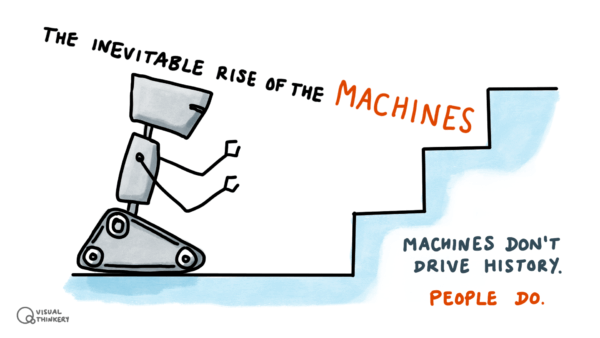
The inevitable rise of the machines

If you’re anywhere near the land of EdTech, then it’s worth reading this piece on Edtech Agitprop by Audrey Watters from top to bottom. It’s straight up. And I like straight up…

The post Machines appeared first on Visual Thinkery.

08 Dec 01:52

Librem 5 USA

by Kyle Rankin

Announcing the Librem 5 USA–the same freedom, security, and privacy-respecting phone, now with Made in USA electronic fabrication

We continue to enjoy seeing the reactions from customers who have received their Librem 5 units from the Birch batch. Now that Birch is out and we continue to make progress on the Librem 5 (with more updates to come!), we are excited to be able to reveal another important project we have been working on for many months. Purism now offers an important Librem 5 option for our customers that have particular concerns around security and the supply chain.

We are committed to constantly improving the security of our products. One concern we hear repeatedly from our customers is over attacks in the hardware and software supply chain. We have written about the importance of protecting the digital supply chain before, and as we grow we continue to find new opportunities to further strengthen the security of our own supply chain, including most recently by offering the PureBoot Bundle–tamper-evident firmware straight from our facility.

While we continue to improve the security of our Librem laptops, we also recognize that one of the most important computers many people own is their smart phone. This is the device you carry with you everywhere you go and likely has some of your most sensitive and personal data–it’s the device most at risk from a security and privacy standpoint. If there’s any device that should have as secure of a supply chain as possible, it’s a phone. Our experience in making our Librem 5 devkits in the USA and most recently moving Librem Key production to the same US facility has led to today, where we are excited to announce a new USA-produced version of the Librem 5 phone!

“Having a secure auditable US based supply chain including parts procurement, fabrication, testing, assembly, and fulfillment all from within the same facility is the best possible security story.” — Todd Weaver

The Librem 5 USA is similar to our existing Librem 5 on the outside and has the same form factor and specs, but on the inside the PCBA (Printed Circuit Board Assembly) will be fabricated in the same US facility that made our Librem 5 devkits and Librem Key. By moving the supply chain into the same facility complex as our assembly and fulfillment center, we can directly oversee each stage of the production. The Librem 5 USA exists alongside our regular Librem 5 as a premium product for customers who are concerned about the hardware supply chain and want to support us as we expand our own US operations.

Librem 5 PCB
Librem 5 PCBA

Since the Librem 5 USA is being made in parallel with the regular Librem 5, we are able to offer this version quickly with shipping starting in Q3 2020 (meaning about a 6 to 9 month lead time from order placement to order delivery). Existing Librem 5 orders can also upgrade to the Librem 5 USA without losing your place in line by using their order number as a coupon code. Pre-order now so you can reserve your place in line! For more information about the Librem 5 USA, check out our product page.


The post Librem 5 USA appeared first on Purism.

08 Dec 01:52

Librem 5 on the Free Software Foundation’s Ethical Tech Gift Giving Guide

by Sean Packham

The Free Software Foundation (FSF), like Purism believe in promoting worldwide user freedoms. The FSF have been championing people’s software freedom rights for 34 years and have created the guidelines and compliance that most of the free software world relies on. This is why we are so proud that our operating system, PureOS, has previously been certified by the FSF and now, our Librem 5 smartphone, has been added to their Ethical Tech Gift Giving guide. The FSF had this to say about why the Librem 5 is on their guide:

Although it won’t be released until Q2 2020, this phone is one to keep an eye on. We’re giving it a tentative recommendation because the company has publicly committed to doing the right things for prioritizing user freedom and privacy, and because we have evaluated and endorsed the operating system it will run.

The Ethical Tech Gift Giving guide is a list of gifts approved by the FSF for our loved ones this festive season. It prioritizes devices that respect the freedoms of our friends and families over the latest gadget from Facebook, Amazon, Apple, Google, and countless other companies because “freedom is the gift that keeps on giving”. Big Tech require our complete trust in their proprietary exploitative systems, whether using a free email account, buying a heavily subsidized phone or tablet and even using a search engine. We pay for them by giving up the freedom over our lives and give them control to exploit us and our loved ones to increase shareholder value.

The Librem 5, and all of Purism’s products and services, put people’s freedoms first. It is not an easy task, because Big Tech has tight control on so much of our world, but we are growing to create a better future. In some areas we are advancing on low-level freedoms and with the Librem 5 we are boldly marching forward to challenge a multi-trillion-dollar duopoly.

When you pre-order a Librem 5 today what you get is the peace of mind that you or your loved ones won’t be exploited or manipulated for profit and power. Putting your trust in us does not require you to give up any freedoms. In fact, your trust can be verified because the software and hardware of the Librem 5 are open and auditable. We don’t subsidize the cost of our hardware by selling your data or locking you in, you aren’t paying part of the cost with your privacy and your freedom.

Discover the Librem 5

Purism believes building the Librem 5 is just one step on the road to launching a digital rights movement, where we—the-people stand up for our digital rights, where we place the control of your data and your family’s data back where it belongs: in your own hands.

Preorder now

The post Librem 5 on the Free Software Foundation’s Ethical Tech Gift Giving Guide appeared first on Purism.

08 Dec 01:51

‘Take Notes’—Lessons from a Project Management Internship

by Madison Flanders

A summer 2019 Project Management intern shares five things she learned.

Illustration by Jiye Kim

One of the most memorable parts of my childhood is flipping through the stack of New York Times newspapers my dad kept on his desk. I would strike pages with a red crayon pretending I was a mean newspaper editor whose writing staff just wasn’t up to snuff. At that time, I would never have guessed that years later I would get the opportunity to intern at the paper I had destroyed with red crayon. When I was little I always thought I would be a reporter, which isn’t surprising considering most 7-year-olds don’t know about project management. In fact, even when I first started at The Times, my project management knowledge began and ended with scrum ceremonies. I had no idea about all of the intricacies that go into such a pivotal role.

While I learned a lot during my internship, I walked away with five big takeaways that I think would be helpful to any incoming intern or project manager.

It’s okay to be overwhelmed

My internship with The Times was in technical project management. This was a new field for me and it was terrifying, to say the least. During the first week of my internship, I would leave meetings feeling as if everyone had been speaking a foreign language. When I was at the point of feeling like I was drowning in unfamiliar technical acronyms, I started taking notes on everything going on around me.

When I wasn’t in meetings I would research different programming languages, map out our stakeholders, read every wiki relevant to our project and even work on a glossary of those pesky acronyms (if someone emailed about SQL I wanted to be in the loop). I realize now that letting myself feel overwhelmed was what forced me to take action. I knew that I would probably not learn any backend programming languages over the course of my two-month internship, but understanding the general concepts would take me farther than I could imagine. By taking things one step at a time, I found that I learned things I didn’t think I could.

Listen first

I always thought a “manager” should dive right in and start telling people what to do. It never occurred to me that one of the most important parts of starting a new job as a project manager would be to take a step back and really listen to the whole team.

Listening to members of the team can highlight gaps in the team’s process, which in turn can assist the product manager with prioritization. Evaluating the team’s health is a project manager’s first priority, and understanding each team member’s mindset when it comes to their work can be essential in ensuring your project runs smoothly.

Organization is key

If you were to search the words “project manager” on the web, you would most likely find the word “organized” in the search results. That’s because it is a project manager’s job to keep track of all of the moving parts in a project. This may sound easy, but when you have internal and external stakeholders, plus the members of your team coming at you from all directions, it can be quite the challenge. It’s good to have a system in place so nothing gets lost.

One thing I learned pretty early on was to save everything. You may not think that brief email from a team member is important now, but trust me, there is nothing worse than being in a meeting and having to explain you deleted a resource that may be vital to the project.

Iterate, iterate, iterate

It’s easy to believe that your team of highly skilled engineers is close to perfect, especially when they rarely have tech debt and love going to scrum ceremonies. But even for perfect-seeming teams, everything can be improved upon.

Through my experience shadowing project managers at The Times, I learned these iterations can lead to improvement and innovation. Every team I had the chance to meet had their own way of iterating on process and not letting mistakes go unnoticed. Through learning reviews or long discussions in their retros, they always found different ways to improve.

A strong team isn’t built in a day

Great communication between team members requires constant tweaking and is something to actively monitor — building a strong community takes time. With that being said, the best advice I could give to an incoming project manager is to put processes in place that will continue to pay off.

The teams I shadowed during my internship had project managers who worked to bring people together. Whether they scheduled monthly surveys to check in on team health or created fun traditions in their scrum ceremonies (like playing a game at the beginning of each retro), the project managers established processes for team building.

My summer internship at The Times helped me grow exponentially. Getting to understand the intricacies of what goes on in the background of a project, as well as the ins and outs of a role in project management will always serve as a great foundation for my career. I’m glad to have had the opportunity to collaborate with some of the teams at The Times, and to learn the true value of building a strong community within a team.

Madison Flanders was a 2019 project management intern with the Technology department at The New York Times.


‘Take Notes’—Lessons from a Project Management Internship was originally published in NYT Open on Medium, where people are continuing the conversation by highlighting and responding to this story.

08 Dec 01:51

On Blockchain Disrupting Higher Education

D'Arcy Norman, D'Arcy Norman Dot Net, Dec 06, 2019
Icon

There has been a lot of coverage of the idea that blockchain will disrupt education. Martin Weller (for some reason) picks a paywalled article as his foil to make the case that blockchain will not be disruptive. "How will blockchain do it better? How will it overcome the problems that over a decade of eportfolio work has not quite managed to address?" Fair enough, but other (more open) work has addressed those questions. In the current post, D'Arcy Norman picks up on Weller's critique, finding the right path forward. "Will it disrupt higher ed? I don't think so. Will it transform how some services are run? Absolutely."

Web: [Direct Link] [This Post]
08 Dec 01:50

«Окей, бумер»: ForbesLife Russia interview, December ’19

by AG

Pursuant to my recent trip to St Petersburg, the cats at ForbesLife Russia wanted to chat with me about “my attitude to some controversial urban technologies.” Herewith the results.

What is the future of e-cars and self-driving cars? How soon they will replace regular drivers? Would it change the transport system in cities?
It’s pretty well-known by now that the first estimates of when autonomous vehicles would replace conventional ones were wildly optimistic, and at the moment even the best autonomous guidance systems can evidently still be fooled by rain, or fog, or light coming from an unexpected angle. I think autonomous vehicles will eventually be the norm, but the word “eventually” is doing a lot of work in that sentence.

When they do become the norm, though, I very much hope they’re imagined as collective means of mobility, rather than a fleet of isolated, individual, private pods taking up as much space as conventional cars do now.

How do you feel about Uber?
I don’t think they have much of a future as presently constituted. Personally, I would be very surprised if they’re still a going concern by mid-2021.

Are smartphones and smartwatches helping to collect data from citizens. Is it new possibilities for city and technology development or danger?
It’s both, obviously. The trouble is that most of the danger has already been realized, while, as ever, the new possibilities remain endlessly deferred.

Do we really need smart houses?
No. We need decent, actually affordable houses, and many more of them.

Will the increase of the AI-robots use influence the economic growth?
Well, look — I’m a degrowthist, which is to say that I believe that prosperity and the growth of the economy as conventionally measured are two entirely different things, and that unlimited growth is civilizationally untenable. So let’s be clear that if AI and automation drive growth, that’s a bad thing — a terrible thing, in fact, as they can only increase the efficiency with which we strip the planet of its final remaining organic resources and transform them into plastic in the landfills and oceans and waste heat in the atmosphere. AI-driven automation might well have been designed as formal proof of the Jevons Paradox.

Now there is a general trend towards automation of production. Is it possible that humans and robots will complement each other, or will robots inevitably replace humans?
That very much depends on the task in question, as well as the political economy and type of society in which that task is embedded. A just society would be more likely to make choices around automation that tended towards producing complementarity. You may have noticed, however, that we don’t happen to live in a just society.

What do you think about work automation? How do you think automation is likely to reshape our economy and society?
You know I don’t use the word “inevitable,” because very little is inevitable other than change and death. But some degree of automation certainly does seem overdetermined at the moment, and I don’t think you need to be any kind of a genius to predict that the consequences when deployed at scale will be economically and socially salient.

Lots of new technologies collect and monetize citizens data. What do you think about governance of this huge about data?
“If you can’t protect it, don’t collect it.”

What is the future of mass media? Will be they replaced by news aggregators and AI writing news reports?
I can’t see how that would be particularly worse or any shallower than the situation we contend with right now. The concentration of corporate and billionaire ownership in the media sector means that honest, accurate reportage about the circumstances of our lives is increasingly vulnerable to suppression, from the mass, mainstream outlets right down to niche outlets like Gawker, Deadspin and Splinter.

You have said that technical feasibility is not key to the development, and [that it is] more important to change politics. How do you see the future of digital governance?
As far less important than the collective task of becoming what the geographers Danny MacKinnon and Kate Driscoll Derickson call “resourceful.” We desperately need to recover our competence for being public, for being civic, simply for being together. The means via which we enact that being-together could be the human voice or pencil and paper every bit as much as some elaborate, digitally-mediated delegation network — the mechanics of implementation matter much less than the fundamental skills and attitudes necessary to self-determination and collective stewardship.

Are there any others controversial technologies that are overestimated? Could you please list and briefly describe them?
Blockchain in particular seems like a mass exercise in hype and self-delusion, in which the grifters and scam artists are hard to tell from the willing sheep (and neither cohort is particularly comprised of people I’d want to have a drink with). Cryptobros gonna cryptobro, I guess.

08 Dec 01:50

Every year, remembering when our dreams turned to icicles

by Chris Corrigan

It has been thirty years since 14 women were killed at the Ecole Polytechnique in Montreal, and every year I mark their passing here.

I’ve always associated this song with that event, and I’ve even asked Lynn Miles about it, and she has said to me, despite her introduction in the above video, “yeah, I guess it’s also about that.”

And let’s remember their names and what they were studying or working on that day because they were our peers and their deaths marked a whole generation of us.

  • Geneviève Bergeron, 21, was a second year scholarship student in civil engineering.
  • Hélène Colgan, 23, was in her final year of mechanical engineering and planned to take her Master’s degree.
  • Nathalie Croteau, 23, was in her final year of mechanical engineering.
  • Barbara Daigneault, 22, was in her final year of mechanical engineering and held a teaching assistantship.
  • Anne-Marie Edward, 21, was a first year student in chemical engineering.
  • Maud Haviernick, 29, was a second year student in engineering materials, a branch of metallurgy, and a graduate in environmental design.
  • Barbara Maria Klucznik, 31, was a second year nursing student.
  • Maryse Laganière, 25, worked in the budget department of the Polytechnique.
  • Maryse Leclair, 23, was a fourth year student in engineering materials.
  • Anne-Marie Lemay, 27, was a fourth year student in mechanical engineering.
  • Sonia Pelletier, 28, was to graduate the next day in mechanical engineering. She was awarded a degree posthumously.
  • Michèle Richard, 21, was a second year student in engineering materials.
  • Annie St-Arneault, 23, was a mechanical engineering student.
  • Annie Turcotte, 20, was a materials engineering student.

Take a moment, and listen to Lynn’s song, a piece that always reminds me of what we lost on December 6 1989 and what work we still have to do.

08 Dec 01:49

Three Metro Vancouver Pedestrians Die in 30 Hours-This is Not Okay

by Sandy James Planner
crime scene do not cross signage
crime scene do not cross signage Photo by kat wilcox on Pexels.com

Last week three people within 30 hours in Metro Vancouver lost their lives doing a very simple act-walking on the street. A senior was mowed down by a truck driver in the early afternoon. And a 40 year old woman and a  man in his thirties lost their lives at 5:00 a.m. and 5:50 p.m., both times on dark streets. The man had tried to cross the street near the Ladner McDonald’s,had tripped on the median and was then struck by a vehicle driver. He was the father of three children ranging from 13 years to 18 months. His eldest children had lost their mother ten years ago.

There is already a go fund me page for the young family of that  Dad, Robbie Oliver, who was self-employed as a roofer. He was well loved and respected in Ladner, and the community has already held a candlelight vigil for him at the site of the accident.

We somehow have to stop thinking that  these needless deaths are necessary collateral to the use of vehicles. This CBC article with author Neil Aranson  talks about making cars smarter . The large denlike vehicles so popular today increase the likelihood of a pedestrian fatality by 50 percent. Neil who wrote ” No Accident: Eliminating Injury and Death on Canadian Roads” also suggests that while the European Union and Japan require pedestrian survivable design in their manufacturing rules, North America does not.  Outrage and insistence is needed to get vehicular manufacturers to do better.

But there is more to safe streets than vehicular design. Speed, visibility, road design, and driver behaviour  are also important factors.  The B.C. Coroners Service in their 2019 report identified that “from 2008 to 2016, more than one-third of traffic fatalities involved drugs or alcohol.

Of the 314 traffic fatalities in B.C. in 2018, 18 percent were pedestrians. Across the province 43 pedestrians died in 2017; that number increased to 58 people in 2018. ICBC, the insurance corporation estimates that in Metro Vancouver 2,100 vehicular crashes involve a pedestrian annually. A study done by Transport Canada in 2011 showed that 63 percent of fatalities at urban intersections were pedestrians aged 65 or older.

November, December and January are the danger months for pedestrians in Metro Vancouver. There is darkness, rain, and road glare and many intersections are not well lit. The City of Vancouver has hinted at installing more Leading Pedestrian Intervals (LPIs) which allow a pedestrian a “lead green time” when crossing. NACTO (the National Association of City and Transportation Officials) cite LPIs as reducing pedestrian crashes by 60 percent. There are several thousand LPIs installed in New York City, and the cost per intersection is minimal at $1,200 U.S. dollars.

Reducing speed at intersections allows for drivers to have more reaction time. And in Europe as part of Vision Zero (Zero deaths on the road) Finland requires pedestrians to wear some type of small reflective toggle.

Finland actually developed the pedestrian reflector in the 1960’s and as part of an overall strategy to reduce pedestrian deaths has been relatively successful.  Finland’s rate of pedestrian deaths to all road deaths is 11%. Canada’s rate of pedestrian deaths to all road deaths is 18%.

Each school child must have three reflectors on their clothing or backpack. This allows for an increased visibility from 150 meters to 600 meters. Adults are also required to wear this reflectivity, and there is a 50 percent compliance rate in the cities, and 75 percent compliance in the rural areas. In Vancouver Sabina Harpe and Lynn Shepherd explored the use of reflectivity in their Walk and Be Seen project at the Westside Seniors Hub.

It is one more dark, rainy night tool for pedestrian safety while the wild west of vehicular driver dominance-which has little legal punitive repercussions for deaths-still thrives.

Hearing that the “driver remained at the scene” is not enough to address road violence. It is a multi-pronged approach of insisting on better vehicular design, slower speeds in poor visibility , well lit intersections, and finding some acceptance for wearing small reflective products.

Will three pedestrian deaths in thirty hours be the road violence wake up call in Metro Vancouver?

accident broken pieces shards
accident broken pieces shards Photo by Snapwire on Pexels.com


08 Dec 01:49

Dylan Kruger: “I’m voting yes”

by Gordon Price
Around the region, a new generation of civic leaders is emerging – councillors like Nathan Pachal in Langley, Patrick Johnstone in New West, Matthew Bond and Jordan Back in North Vancouver District, Tony Valente in North Van City – GenXers and first of the Millenniums.
.
Like Dylan Kruger – at 23, the youngest councillor to be elected in the history of Delta.
.
.
These newcomers do not all fall on one part of the ideological spectrum, but they do share a common generational perspective.  As described by Dylan in his notes on a divisive rezoning this week:
.
It is not sustainable in the long run, to see a vast exodus of folks in their 20s and 30s (from Delta). We cannot have an exclusionary community based on income, any more than we can have a community segregated by age. Delta needs to be what it has always been – a place where everyone is welcome, and where there are housing options for you, regardless of what the numbers are on your birth certificate or your income tax return.
.
The proposal in question was for a 35-storey high-rise on Scott Road and 75A, which included an affordable housing component that would see 70 units (20%) offered under the Affordable Home Ownership Program in partnership with BC Housing. 
.
Cllr Dylan Kruger voted in favour, along with Mayor Harvie, but the rest of council voted against and the proposal, after a contentious public hearing, decisively lost.  Knowing this was a critical vote, Kruger took the opportunity to write out his position.   Here is an abridged version (the full text can be found here).
.
.
A Vote for Delta’s Future
.
I think this is a well-put together application. The building is aesthetically pleasing, and would certainly be a Delta landmark if approved. The unit mix is appropriate for the desired market, which is first time home owners, young professionals, young families and seniors looking to downsize. …

I am really excited about the BC Housing component of this application. By focusing specifically on assisting middle income earners who could probably afford monthly payments but need a bit of help with the mortgage, we are helping to make the dream of home ownership attainable for an entire generation that has been shut out of the housing market.
.
Further, first time buyers who take advantage of this program will free up critical rental supply in our community, providing more rental spaces for those who need them the most. The rental vacancy rate in our community is less than 1%, so any action that frees up desperately needed rental is a positive for me.
.
TRAFFIC
.
On traffic, I have heard that people don’t believe the traffic study. It is really important to me that we have conversations based on facts, and not anecdotes or hearsay. … Time and time again, when projects are built, the impact is less than what is assumed in the study.
For example, a traffic study was conducted for the Delta Rise both before and after construction.  …. after the Rise was built, peak AM traffic volumes on Scott and 80th were actually 28% lower than projected.
.
Further, the study for 75A is looking at traffic patterns under existing transit conditions. It doesn’t even begin to take into consideration the effect the new B-line will have on traffic patterns in North Delta.
.
Over the long run, building higher density housing projects along frequent transit corridors will reduce congestion. This is what we need to do – build housing along Scott Road to help more people take public transit to and from work. To allow people to walk to the grocery store and the doctor, and all other forms of shops and services they require.
.
.
ENVIRONMENT AND LAND USE
.
I was so proud that this council voted unanimously to take bold steps to address climate change last month. In many ways, the 20th century suburban mentality was detrimental to our planet’s health. The old adage was that everybody gets space – a big house with a white picket fence and a big back yard. In order to have space, you need land. And so we started land use planning.
.
We put all of the residences on one side of town and all of the retail, shops, and services on the other. So whatever you do, whether you need to run to the store, go to the post office, go to the doctor, or go out for dinner, you need to get into your car. …
.
To aid in the transition to a green economy … we need to densify. In Delta, we know that this needs to take place on Scott Road, our busiest transit corridor, in close proximity to shops and services.
.
My wife and I live in a 700 square foot condo. I also have a few friends who live in the Delta Rise, and other highrise projects across Metro Vancouver. This amazing thing happens when you put people together. They talk to each other. Instead of retreating into the privacy of a back yard we don’t have, we socialize with our neighbours in our common areas. Instead of taking up space at the public recreation centres, we use our strata gym and fitness space. When we need to go outside, we walk out the door and we are steps away from every possible public amenity, shop or service we could need. Unfortunately I still need to use a car to get to work every day because it’s not accessible by bus. I hope that changes one day. But condo living has freed me from the need to get into a car on a Thursday night because I need milk, or on Saturday morning to go to the bank.
.
.
HOUSING
.
On project location and neighbourhood impact, I have grappled with this because I understand how hard change is. Our neighbourhoods today look nothing like they did 50 years ago. And 50 years from now, they will look nothing like they do today. We are averse to change, and homeowners certainly have a stake in keeping the status quo, because the status quo is what worked for them. But there is a large and growing number of people for which the status quo is not working.
.
From Surrey Now-Leader.  More on public hearing here.
.
This is a question of equity that councils must consider when making big decisions like this. I have to ask myself, who are we excluding from our existing neighbourhoods? The fact is, only 11% of our city is zoned for multi-family living. That means only 11% of our city is eligible for a BC Housing project. Only 11% of our city is even hypothetically open to our most vulnerable.
.
The last purpose built rental housing in North Delta was built in 1970 – almost 50 years ago. Just last week, Goodman came out with a report showing that out of 15 suburban communities in Metro Vancouver, Delta was the only one that didn’t have either a completed rental project or one in the pipeline for 2019.
.
This project, if it passes, will provide homes for many first time buyers. And yes, there will absolutely be some investors. That’s not a bad word. That means dozens of these units will be opened up to the secondary rental market, providing desperately needed rentals on a transit corridor and within walking distance to everything one could need in Delta.
.
Some speakers have mentioned that nobody has the right or privilege to live anywhere. I agree. We all need to work hard, pay our dues, rent, and save our money. I had to do that. For a lot of people this means moving further away from home for a time. That’s part of life.
But one piece that has been missing in this discussion is the social benefit to a city of having younger people, families, and seniors living together. …
.
I’m going to vote to give 70 first time buyers the opportunity to stay in Delta and put roots in our community – just like we were able to do. I’m voting to help 335 young professionals, families, and seniors get into safe housing, in a livable, walkable neighbourhood, in a great city.
I’m voting yes.


08 Dec 01:48

Weeknote 49/2019

by Doug Belshaw

This week has been all about my trip to New York for ITHAKA’s Next Wave conference. You can find my slides here. Given that I was speaking immediately before a session featuring a representative from Facebook, I took the opportunity to lift the veil on surveillance capitalism. As a result, at least one person deleted their account!

Clay Shirky was in the audience for the event which blew my mind as he’s been such an influence on my thinking over the last decade. I’m pretty sure it’s the first time I’ve ever asked someone for a selfie. I also had the privilege of meeting up with Jess Klein, friend and former Mozilla colleague who is now at the Wikimedia Foundation.

As I flew out and back in two days, there wasn’t much point in putting my body through the torture of changing timezones. That’s why you would have found me in Times Square at 04:30 on Wednesday morning taking a video to share with my family back home, who were five hours “in the future”.


Other than that, I worked on MoodleNet-related stuff on Monday and Friday (and, let’s face it, plenty other times inbetween). The team is nearly done fixing the issues that prevented us from doing a live demo at the Global Moot. I’ve been working on a draft roadmap with Mayel and other members of the team, and I’ve got a three-hour meeting scheduled with Martin Dougiamas next week to get that nailed-down.


I’m off social media now for December and have downed tools on Thought Shrapnel until 2020. However, if I was composing a newsletter this weekend, I’d include this post from Jason Kottke that he wrote a few weeks ago about how he’s learning to love winter:

Sometime this fall — using a combination of Stoicism, stubbornness, and a sort of magical thinking that Jason-in-his-30s would have dismissed as woo-woo bullshit — I decided that because I live in Vermont, there is nothing I can do about it being winter, so it was unhelpful for me to be upset about it. I stopped complaining about it getting cold and dark, I stopped dreading the arrival of snow. I told myself that I just wasn’t going to feel like I felt in the summer and that’s ok — winter is a time for different feelings.

[…]

So how has this tiny shift in mindset been working for me so far? It’s only mid-November — albeit a mid-November where it’s already been 5°F, has been mostly below freezing for the past week, and with a good 6 inches of snow on the ground — but I have been feeling not only not bad, but actually good. My early fall had some seasonally-unrelated tough moments, but I’ve experienced none of last year’s pre-winter despondency.

Jason Kottke

Great stuff. I think the run-up to last Christmas was the first one I actually enjoyed. I’m endeavouring to ensure this year will be similar.


Next week I’m working on MoodleNet from Monday to Thursday, and then attending the CoTech Winter Gathering on Friday and Saturday, rather handily located this time around in Newcastle-upon-Tyne!


Photo of me presenting from a tweet by Christine Wolff-Eisenberg

08 Dec 01:47

After 5,981 sexual assaults, is Uber safe? Look deeper . . .

by Josh Bernoff

Uber released its safety report for the years 2017 and 2018 for the US. It documents 5,981 sexual assaults. Ergo, Uber is a menace, right? Before you read on, please know that I consider sexual assault to be evil and awful. Anyone who commits one should be punished and, to the extent possible, prevented from … Continued

The post After 5,981 sexual assaults, is Uber safe? Look deeper . . . appeared first on without bullshit.

08 Dec 01:47

Carl Phillis

by peter@rukavina.net (Peter Rukavina)

Our friend and neighbour Carl Phillis has died.

I couldn’t tell you how I came to know Carl: I just kind of woke up one day and he was ever-present in my life; we would often find ourselves walking along Richmond Street together from our neighbourhood toward Queen Street, and would chat about whatever was on his mind that day. Reading others’ messages of condolence, I realized that I was but one of hundreds of people he had a similar relationship with: having a regular chat with Carl was something, it seems, many of us shared.

I also knew him as a potter, of course. And as an activist. And as enthusiastic Green Party volunteer (the last time I saw him was when we sat beside each other at the federal candidates debate at UPEI in October where we cheered for Darcie together; he had his sketchbook at the ready, as he always seemed to, and sketched throughout).

Carl was opinionated, passionate, an enormously talented artist, and the kind of person you treasure as a neighbour.

I will miss him.

08 Dec 01:43

I Think I Found a Massive Memory Leak in Core Graphics

A Retrobatch customer recently wrote in with a problem where it was crashing when processing a bunch of images overnight, seemingly from gobbling up all the available memory on the system. After a bit of questioning I've narrowed down at least one source of the problem- Core Graphics is leaking like a sieve when generating thumbnails from 16 bit per component tiff files.

I have a sample project which simply opens up an image source and then loads the thumbnail 500 times in a loop. It releases the thumbnail immediately so the system can reclaim the memory for other operations.

When run against an 8bpc tiff file, memory grows to around 75 megabytes. When run against a 16bpc image, memory spikes to almost 4 gigabytes, and the memory is never reclaimed.

Obviously most apps don't open up 16bpc tiff images 500 times in a row, but this is exactly what Retrobatch was designed in part to do.

Filed as FB7482388.

08 Dec 01:43

WebAssembly Becomes a W3C Recommendation

At its core, WebAssembly is a virtual instruction set architecture that enables high-performance applications on the Web, and can be employed in many other environments. There are multiple implementations of WebAssembly, including browsers and stand-alone systems. WebAssembly can be used for applications like video and audio codecs, graphics and 3D, multi-media and games, cryptographic computations or portable language implementations.

I'm pretty excited about WebAssembly in the browser, and outside of it as well. Being able to compile from any number of languages into a bytecode format that can be executed alongside JavaScript in the browser is cool. But I'm interested in how it could be used to extend desktop applications as well.

08 Dec 01:35

Twitter Favorites: [Stv] Had a lovely lunch with my new boss and now I will replay and over-analyze every word I didn’t and didn’t say for hours. Thanks brain.

Steve @Stv
Had a lovely lunch with my new boss and now I will replay and over-analyze every word I didn’t and didn’t say for hours. Thanks brain.
08 Dec 01:35

Twitter Favorites: [MetroManTO] Hey @AppleTVPlus and @DisneyPlus, why does *everything* have to come out on a Friday? Would be nice to have these s… https://t.co/UKqZgpI5AQ

Pedro Marques @MetroManTO
Hey @AppleTVPlus and @disneyplus, why does *everything* have to come out on a Friday? Would be nice to have these s… twitter.com/i/web/status/1…
08 Dec 01:35

"Get Brexit Done" is a powerful slogan because it's versatile. To Brexiteers, the emphasis is on the "Brexit." A promise to finally deliver the long-promised dream. To those exhausted of the whole thing, the emphasis is on the "done." Finish it. Move on.

by DmitryOpines
mkalus shared this story from DmitryOpines on Twitter.

"Get Brexit Done" is a powerful slogan because it's versatile.

To Brexiteers, the emphasis is on the "Brexit." A promise to finally deliver the long-promised dream.

To those exhausted of the whole thing, the emphasis is on the "done." Finish it. Move on.


42 likes, 10 retweets
08 Dec 01:34

@mrjamesob Any economic damage: "We always said there would be some bumps in the road." Negotiations ongoing forever: "We always made clear we'd be talking to our European Friends after Brexit." Transition extended: "We're extending some boring technical details, Brexit was Jan 31st."

by DmitryOpines
mkalus shared this story from DmitryOpines on Twitter.

@mrjamesob Any economic damage:
"We always said there would be some bumps in the road."

Negotiations ongoing forever:
"We always made clear we'd be talking to our European Friends after Brexit."

Transition extended:
"We're extending some boring technical details, Brexit was Jan 31st."


80 likes, 22 retweets
08 Dec 01:33

Apple’s iPhone SE 2 might be called iPhone 9

by Dean Daley

Previous rumours suggest that Apple would launch the iPhone SE 2 in 2020; however, a recent leak indicates that the phone might sport the name ‘iPhone 9,’ according to an “informed source,’ featured in Mac Otakara, a Japanese blog.

The report suggests the phone will sport a design similar to the iPhone 8 with a 4.7-inch display with bezels and Touch ID, alongside an A13 Bionic chip. Additionally, it’ll have 3GB of RAM and would not support 3D Touch.

Apple analyst Ming-Chi Kuo predicts the device will cost $399 USD (about $529 USD) for the 64GB of storage. The phone is to launch in Space Gray, Silver and Red.

Source: MacRumors

The post Apple’s iPhone SE 2 might be called iPhone 9 appeared first on MobileSyrup.

08 Dec 01:33

Are you ready for a completely wireless iPhone?

by Dean Daley

A recent report from Ming-Chi Kuo predicted that Apple would launch a high-end iPhone in 2021 that would lack a USB-C port for charging. The report said that the phone would work completely wirelessly, which means that you’d need to charge it wirelessly and also use wireless headphones or earphones to listen to music.

It’s unclear if the device would come with a wireless charger in the box and free AirPods, but that’s sort of what you’d expect considering the lack of any ports.

Earlier this year, Meizu revealed the world’s first holeless phone, it lacked ports for charging as well, however, this device failed to come to market. In 2019, we clearly weren’t ready for the technology, but 2021 might be a different story.

What do you think, are you be ready for a completely wireless phone? Do you think you could be ready by 2021? What stipulations would you have, would you expect Apple to supply AirPods and a wireless charger in the box and are you worried about how much that would cost?

Let us know in the comments below.

The post Are you ready for a completely wireless iPhone? appeared first on MobileSyrup.

08 Dec 01:33

iOS 13.3 reportedly set to release to the public by December 11

by Aisha Malik

Carrier documents suggest that iOS 13.3 and watchOS 6.1.1 are expected to be released to the public by December 11th.

9to5Mac notes that Vietnamese carrier Viettel has confirmed that the latest software releases will be coming sometime next week.

iOS 13.3 will come with a number of new features including the ability to set limits for contacts in Screen Time with new communication limits. Parents will get more control over their kids’ devices by restricting who their children are able to communicate with after a certain time.

For instance, they can choose to only allow calls from family after 9pm. However, these limitations can only be applied to the Phone app, Messages and FaceTime.

The software update will also come with the option to disable Memoji stickers. If you don’t like them you can revert back to just seeing standard emojis on your keyboard.

The iOS 13.3 developer beta 4 came out on December 5th and now the public version is expected to follow shortly.

Source: 9to5Mac 

The post iOS 13.3 reportedly set to release to the public by December 11 appeared first on MobileSyrup.

08 Dec 01:33

Apple to fix ‘speaker popping’ issue with 16-inch Macbook Pro

by Aisha Malik
16-inch MacBook Pro

Apple has acknowledged the popping sounds that a number of users have reported coming from their 16-inch Macbook Pro laptop speakers.

The tech giant says that the popping or cracking sounds coming from the speakers are a software issue, according to an internal document obtained by MacRumors.

Apple says that it is rolling out a fix for the issue with a future software update. The internal document was sent to Apple Authorized Service Providers telling them not to replace customers’ laptops because the issue is software-related.

The popping sound usually occurs after a user has stopped playing a video or audio. So far it seems that the popping sound happens for users despite the type of browser they are using, as reports are coming from Chrome and Safari users.

It is currently unknown when the software fix will be issued, but Apple is currently working on it.

Source: MacRumors 

The post Apple to fix ‘speaker popping’ issue with 16-inch Macbook Pro appeared first on MobileSyrup.