Shared posts

08 Dec 02:03

Community Guide vs. Guidelines

by Richard Millington

Replace your community guidelines with a guide.

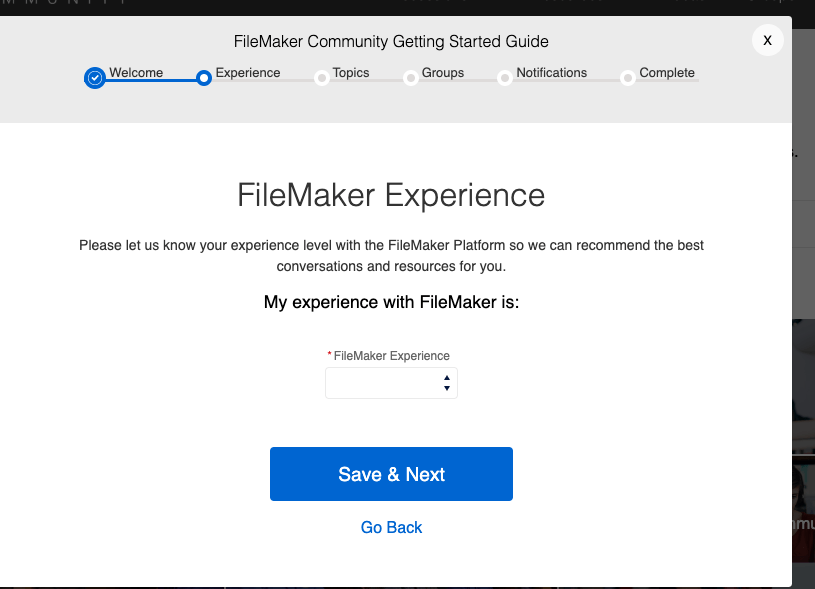
Filemaker (a client) is a great example.

When you join, you’re taken through a guide that deeply engages you in key areas of the community.

You can join groups for newcomers, follow key topics, and decide how many notifications you want.

Even this only scratches the surface of what’s possible today.

Community guidelines are good, a community guide is much better.

08 Dec 02:03

Motorola One Hyper

by Volker Weber

motorola one hyper Dunkelblau (23)

Vor einem Jahr hätte ich auf die Zukunft von Motorola nicht mehr wetten wollen. Langweilige Telefone der E und G-Serie, schleppende Software-Updates, sinkende Marktanteile. Aber dieser Eindruck ändert sich gerade massiv. Mit Android One setzt(e) Motorola auf einfach upzudatende Software, mit dem neuen Razr zeigt die Firma Ambitionen, wieder emotionale Produkte anzubieten.

Und jetzt dieses Telefon zu diesem Preis. Das neue Hyper kostet 300 Euro (minus 1 ct), hat Quadpixel-Kameras vorne und hinten (aus 64 MPixel werden 16 MP-Bilder, aus 32 MP-Selfies dann welche mit 8), Normal und Weitwinkel-Objektiv, ein 6.5"-Display fast ohne Rand, Benachrichtigungs-LED um den Fingerabrucksensor. Einziger Gimmick: Die Selfie-Kamera ist ein Pop-Up. Immerhin weiß man, wohin man gucken muss. Die Hardware ist mit Snapdragon 675, 4 GB RAM und 128 GB Speicher prima ausgestattet. Mein Highlight ist USB-C Power Delivery mit bis zu 45 W. Im Karton ist zwar "nur" ein 27 W Lader, aber an einer tizi Tankstelle ist das Handy in 30 Minuten voll und schon 10 Minuten reichen für viele Stunden. Das ist ein praktikables Gerät zu einem sehr fairen Kurs!

More >

Update: Motorola hat sich einen Branding-Fauxpas geleistet. Die Motorola One Reihe stand für Android One, aber das gilt nicht mehr. Die neueren Modelle One Macro, One Zoom und One Hyper sind One-Geräte ohne Android One. Dafür gehören sie ausgebuht.

08 Dec 02:03

Two malicious Python libraries caught stealing SSH and GPG keys

Two malicious Python libraries caught stealing SSH and GPG keys

Nasty. Two typosquatting libraries were spotted on PyPI - targetting dateutil and jellyfish but with tricky variants of their names. They attempted to exfiltrate SSH and GPG keys and send them to an IP address defined server. npm has seen this kind of activity too - it's important to consider this when installing packages.

08 Dec 02:03

Elementary OS 5.1

by Rui Carmo

I’m still running Elementary on one of my laptops (and, since it’s based on Ubuntu LTS, on the house KVM server) and it is still the nicest, most user-friendly Linux desktop I’ve ever used. Zero hassles, smooth upgrades for the past three years. It just keeps ticking along.

Nice to see them shipping sane, useful and well thought-out incremental updates that (unlike modern macOS) actually improve the experience and don’t break things.


Support this site
08 Dec 02:03

Freedom vs safety – how fast should you be able to drive on highways?

Hi, this is Daniela. I am responsible for the administrative side and everything organizational at Datawrapper. In this Weekly Chart, I will take a look at the speed limits on highways throughout Europe.

During the Christmas season, many people visit their families all over the world. Others use the Christmas holidays to take a vacation and to travel. This fact made me think about speed limit policies throughout Europe: How fast can you drive in each country?

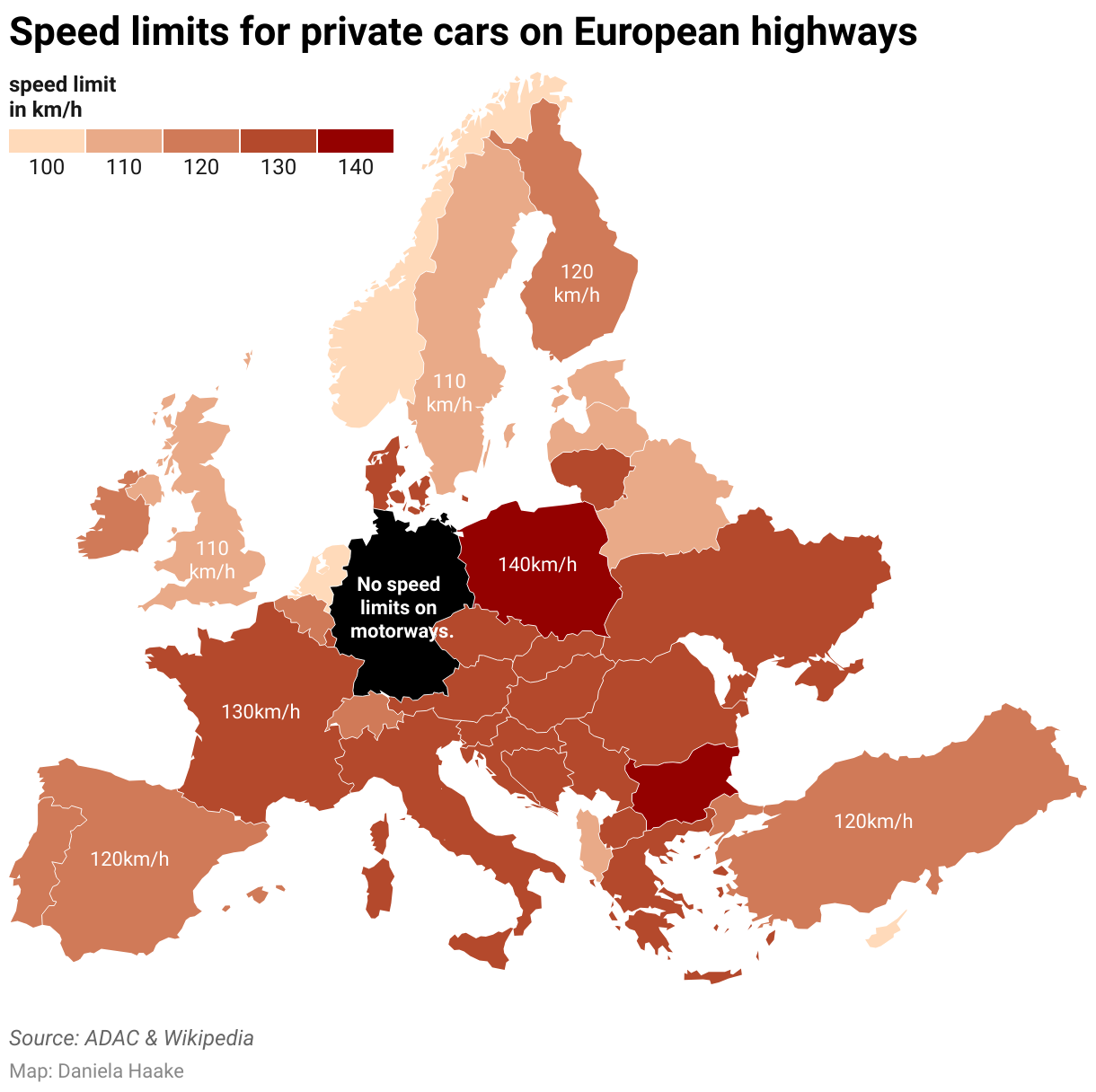
As we see on the map, speed limits on highways range between 100 km/h and 140 km/h. In addition, in some countries like Estonia and Finland, the speed limit differs during the summer and winter months.

Germany is the only European country (and one of the very few in the world besides Afghanistan, Bhutan, Haiti, Nepal, Somalia) without speed limits on highways. Although there is a recommended speed of 130 km/h, nobody must stick to it.

Why does Germany still have no speed limit?

In my perception, fewer subjects in Germany are discussed as passionately as the speed limit on highways. The introduction of a speed limit on German highways is a topic that occupies politics over and over again. Recently, an attempt by the green party „Die Grünen“ to introduce a general speed limit on German highways had failed in October 2019 in the Bundestag (German Parliament). The party wanted a speed limit on highways of 130 kilometers per hour, to come into effect on the 1st of January, 2020.

Let´s take a short look at the pros and cons which are discussed in Germany:

PRO: Above all environmental associations, climate activists and the trade union of the police recommend the speed limit. They argue that excessive speed and rage are still the biggest contributors to road accidents. Besides, a speed limit could lead to steadier traffic flow and less traffic congestion. Frequent lane changes by fast drivers who want to overtake other road users driving at the recommended speed of 130 km/h could also be avoided. So a speed limit means fewer traffic jams, less mileage, less CO2 output, less stress – for all involved.

CONTRA: Many opponents of the introduction of a general maximum speed call the speed limit an attack on their freedom and they are afraid of driving becoming less pleasurable. Besides, German car clubs doubt that a general speed limit would lead to fewer traffic accidents, because German streets are seen as relatively safe and highways belong to the safest roads in Germany. So car clubs argue that speed limits on accident-prone stretches and architectural safety measures would be more useful than a general speed limit.

Also, a lot of the opponents take the position that a speed limit would not contribute to climate protection. For example, the Federal Minister of Transport Andreas Scheuer (CSU) lists the reduction of the CO2 output at less than 0.5 percent.

A different approach in the Netherlands

In other countries, a decision has already been made: In November 2019, the Netherlands introduced a speed limit of 100 km/h on highways to lower the issues of nitric oxides.

After the introduction of a speed limit on highways in the Netherlands, the debate on a speed limit has broken out in Germany again. A survey has shown that more than every second German supports a speed limit of 130 km/h on the highway. Only 41 percent are against it. In my opinion, this fact alone should convince the politicians to introduce a maximum speed limit on highways.


No matter in which country you are and where you want to travel over Christmas: If you are traveling by car, keeping to the speed limit is only the obvious start. In principle, we should always be forward-looking and considerate when driving. The other road users will thank us and hopefully, we will arrive safely to be with our families. We’ll see you next week!

08 Dec 02:03

Please forward to high school history teachers: Task-specific programming in social studies data viz

by Mark Guzdial

Hi,

We built this tool, DV4L (Data Visualization for Literacy), to help teachers quickly create data visualizations for social study classes. This is currently a minimum viable product (MVP) version of our tool, and we would like to collect your feedback so that we can improve! 

  • Please take a few moments and try out our tool at http://b48ca06e.ngrok.io/index.html
  • We intend for DV4L to be intuitive and easy to use, so you shouldn’t need any instructions to start. (If you ever see a screen with ‘TOO MANY CONNECTIONS’ on the top, please just wait for a few seconds and refresh the page.)
  • After you have tried out the tool, please take a few minutes to fill out this survey at https://forms.gle/jASed4f7GfTZD9xa8

We would really appreciate it if you could do this by Sunday Dec 8th to meet our class requirements. 

Feel free to share this with any other teachers or students who would like to try this out. Thank you so much!

I have been working with a team of four University of Michigan Computer Science students (in a class with Elliot Soloway) to develop a data visualization tool for history classes. They have a prototype ready for testing, and they need user data for their class by Sunday, December 8. Could you please forward this to any high school (or middle school) history teachers you know? They would also love to get some feedback from high school history students, too.

Here are three reasons why I’m excited about this tool.

First, the team really listened to us, our history professor collaborator (Tammy Shreiner), and the social studies teachers who gave us feedback on different data visualization tools. One of the students drove 2.5 hours to attend a participatory design session with social studies teachers in October. As an example, there are driving questions for each database, to guide students in what they might inquire about — that’s a specific request from Tammy.

Second, this is a tool for history inquiry. Data visualization tools like Vega-Lite and CODAP are terrific. (Readers of this blog know how impressed I am by Vega-Lite.) But they’re not designed for inquiry. As Bob Bain has taught me, historical inquiry starts from two pieces of evidence or two accounts that disagree. This tool is designed to support comparing different pieces of evidence, and maintaining a trace of what you’ve explored. Inquiry is about comparison, not from building a single visualization.

Third, this is task-specific programming in a subtle and interesting way. You build visualizations by making choices from pull-down menus on the left. As you find interesting graphs, you save them to the right. When you want to remember what the graph is about, you hover over it and get a textual representation of what pull-down menus generated this graph. I’m arguing that hover text is a program —- it’s a representation of the process for generating that graph, and it serves as a reminder of where you’ve been. It’s a program whose value is in reading it, not executing it.

Amy Ko told me once (I’m paraphrasing) that a program is a description of a process for the future. Using a tool is for now. A program represents the future. This program could be executed by the user in the future — set the pop-up menus to the same values, and you’ll get the same visualization. More importantly, the program represents the past and serves as a reminder for what you can do next.

Please do pass this around so that our team can get a sense of what’s working and what’s not in this prototype. Thanks!

08 Dec 02:02

Are monads practical?

by Eric Normand

Bruno Ribeiro asked a great question about the practical uses of monads. Are they useful? Why are they used so much in Haskell? In this episode, we briefly go over the history of monads in Haskell and how they allow you to do imperative programming in a pure functional language.

The post Are monads practical? appeared first on LispCast.

08 Dec 02:02

Lee at 3.

Lee’s best friends

Lee,

It’s been a solid year since I wrote to you. It wasn’t for lack of time or laziness, I just didn’t want to bore you and I have decided to write once, at least for now, every year. So, let’s do a year in review. I will try to keep this short.

The Accident.

Exactly 21 days from today, last year, we had gone to see your grandparents. And with those trips, we have multiple friends and families to go see. On one of such visits, I took your grand father’s car and off we went.

On a freeway, I was averaging about 70 - 80km/hr, when the front axle gave in, I swerved and the car collided head-on with the streetlight barricade and spun 180 degrees. The airbags were engaged and the door close to the driver’s seat got really damaged, it narrowly missed my left foot. You sat behind with your mum, and because of the impact, you fell off your seat and collided with the passenger’s seat in front. Your mum also hit her head and face, you did same too and the funny thing is all of this happened in about 30 seconds.

When the car stopped, I managed to get out as quickly as I could from the passenger’s side. Forced open the back doors where you and your mum sat and helped both of you out. She laid on the ground crying, you cried too and at that point, I lost it. I cried, not because of an injury that I sustained but out of the fact that 30 seconds earlier, I could have lost my entire family. To this day, the memory of that event is still fresh in my head.

Luckily for us, your uncle, aunt and cousins were headed just towards us. Your uncle recognised your grand father’s car and stopped. I called Pastor Cyril Ntui, and between him and your uncle, I am not sure who took your mum to the hospital. Your aunt took you home and I stayed back to get your grand father’s car towed to a safe place. My consolation was that both you and your mum had people looking out for you two.

As soon as the towing van and mechanic arrived, they towed the car to the mechanic’s garage while I made my way to the hospital. I can’t remember what happened at the hospital, but I think I probably raised my voice at a medical staff. I am sorry I lost my cool, but I was just tired of their sluggish attitude.

You know something, there was a third person at the back seat with you and your mum, yup, your sister was with you, albeit she was just a fetus. Your mum was in the early stage of her first trimester. I was worried about her well being too. I was scared, to be honest, we conducted a series of test and the doctors confirmed she was fine. Thank God.

Well, that single incident led to so many hospital trips this year. As a family, we have collectively done more hospital trips this year than the last 3 years put together. Your mum is a strong woman, you and I will have to talk about all she went through this year, we will have that conversation over a bottle of wine and a fireplace.

Do you see the folks at Paystack? When you grow older, I will love you and your sister to send a “THANK YOU” card to them. They are amazing people. Send one to Uncle Kola Aina too. He’s an amazing man.

Milestones

Last year, I made you a promise, and that promise was that you will get your own room, well, promised fulfilled. But I have a grouse with you; learn to make your own bed young man and clean after yourself. This is the sign of maturity.

Also, you got into school too. Man, I can’t tell you how excited I am. You getting to school tops every other personal achievement this year. Here’s why you going to school meant a lot to me. For as long as I can remember, your grandfather had always drummed into our ears the importance of education. He kept reminding your uncles, aunts and I why we need to send his grandkids to school. Well, he never got much himself, so his wishes have always been that every one of his descendant must get an education. The day I paid your first school fee was easily one of the proudest moments of my life.

Still on the school front, I looked forward to you, beginning the school year. Your mum made sure all your supplies were intact. I probably asked your headteacher 1001 questions. Why wouldn’t I? I wanted to make sure you had the best experience we could possibly provide you.

On your first day in school, I woke you up, eagerly gave your bath, served your meal, packed your bags and drove you to school. Your mum, nanny, grandmum and I cheered you on. We were all excited. I drove you to school whistling. Man, I was excited, my tiny man was finally going to school. When I dropped you off and you ran after me crying, my heart melted. I held the tears as much as I could but when I got into the car, the whole thing came pouring. I got home and pretty much thought about you the entire time, to be honest, I was worried; how will you cope? How will you fit in? Will your teachers remember to serve you your snack?

By 12:45 PM I was already out to go pick you up. I couldn’t wait for the 1 PM closing time. But look at you today, you’re as eager as anything to get to school daily. Congrats son, a lot can happen in 10 weeks.

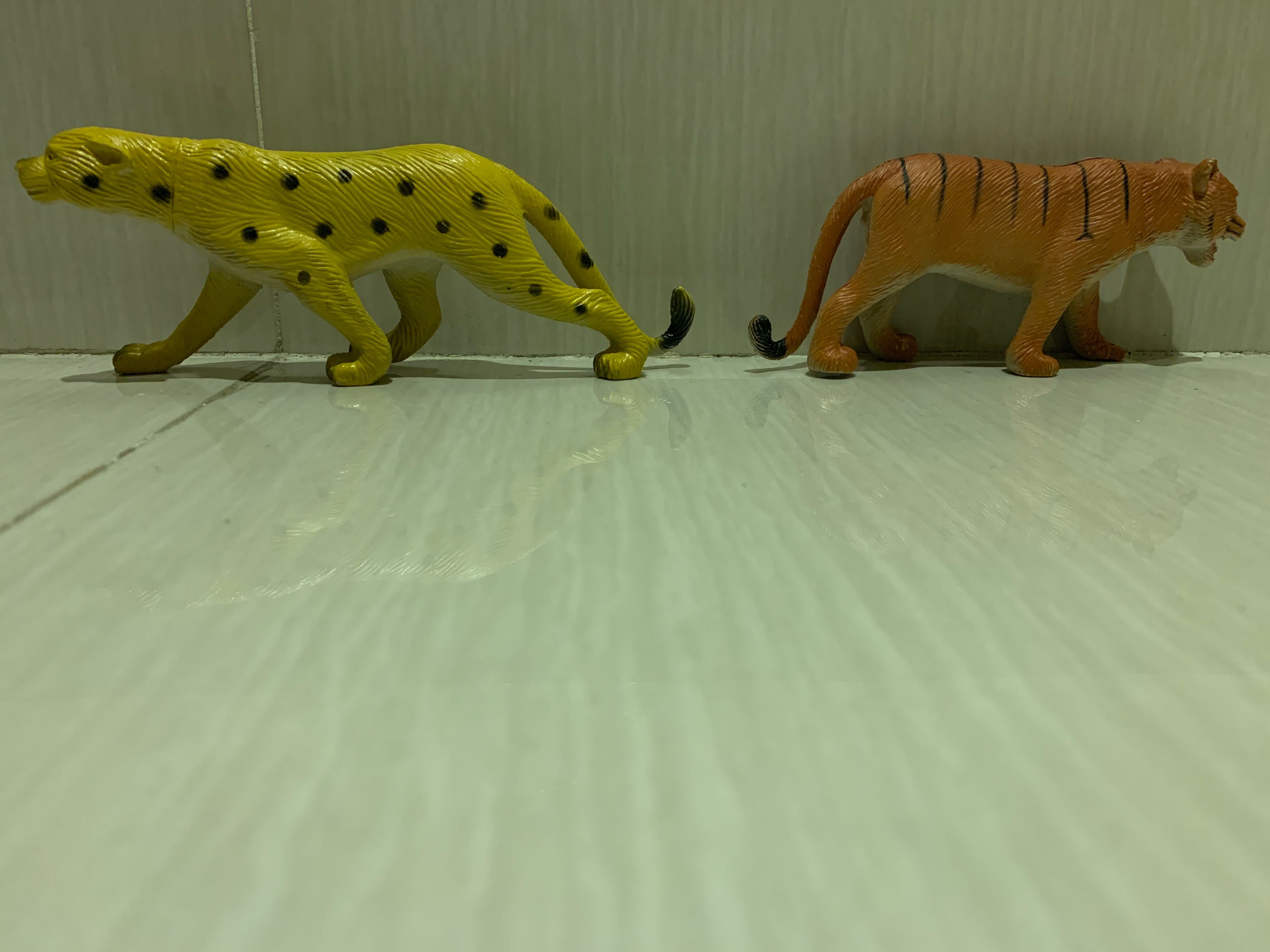
10 weeks later, you can confidently write from 0 - 5 and A-D. That’s a huge progress man. You are begining to speak clearly now. You have also finally figured out the difference between a leopard and a tiger. I am proud of you. Well done.

Big Brother

Your sister is here. Yup, God kept her, she is here, hale and hearty and man, she’s the most adorable younger sister any brother could ask for. I envy you, I never had a younger sister. I’m so sorry that for the last 4 months, most of the attention had somehow been diverted to her, but I am sure you understand, she is still a baby and needs us to pay that much attention to her. Don’t worry, there are enough love and attention to go round.

She’s beautiful and has the cutest smile you will ever see on a four months old. Even though she’s four months old, she’s already wearing clothes meant for 6 - 9 months old. She’s got big cheeks too. An amazing girl all-round. You see those onesies we got for her just a few months ago? She’s outgrown them.

Aside from your sister, you are now a big brother to 3 amazing cousins. A lot is now expected of you man, act the part. Your uncle and aunts all did great this year.

Random

After the birth of your sister, your grandmum came around and spent about 3 months with us. God bless her. Your sister got a huge diapers gift too from the good people of Patricia; thanks Hanu, Chika and team. I am learning a ton of patience too and most importantly, learning to breathe. Yeah, I know it sounds funny, but I found out that when things begin to get out of hand, walking and pacing my breathing helps a lot. It brings calm and helps me clear my head.

You’re becoming a lot more aware of yourself and surrounding. Daily, I ask myself if I am doing all the right things I should be doing; am I leading you right? Setting all the great examples? Where am I dropping the ball as a father? These questions and many more are what occupy’s my mind these days. I make mistakes, maybe daily, but here is one thing I am certain, I am learning as fast as I can and course-correcting as I go.

All of the clothes we got for you last year are no longer your size. It seems you grow by the second. So for this year’s shopping, we got you clothes that you will wear till your 5th birthday. I am sorry, but it had to happen.

The Road Ahead.

Three is a big milestone, you’re getting to know a lot about yourself. For one, you’re in school now, a part of me wants to believe you have already started forging relationships with your school mates, please do. These things are important. You can now feed yourself, you can now express yourself when you need anything or help; food, ease yourself or want to sleep. And man, stop throwing tantrums when you want anything, kings don’t behave like that. Just ask and you will get it.

Finally, I will love to leave you with these few life lessons, there are not different from what I said to you last year;

  • Work hard. There is absolutely no substitute for this. While there is such a thing as luck, but the harder you work, the luckier you will get. Put in the work.

  • God. Keep God at the centre of all you do. It’s impossible to go through life without God.

  • Relationship. This is one of life’s best gifts to us. Keep and maintain a healthy relationship with people. And when you get into one, don’t abuse it. Don’t take undue advantage of it. Seek to contribute more than you take. Don’t become a parasite.

  • Fairness and Equity. Treat people first as humans, irrespective of their social standing. Be fair and just in all your dealings. Do unto them, what you will like to be done to you. I can’t stress this enough, respect everyone.

  • Mistakes. There will always be mistakes. You will make them, consciously and unconsciously. But when you make them, learn from the experience and move on. Don’t dwell too much on it. Never accept a pity party. NEVER.

  • Peer pressure. We will do our best to show you the right way, don’t deviate from it. Don’t let anyone make you do what you know doesn’t align with your values as a person. Be your own man.

  • Finances. Keep an eye on your finances. Always SAVE. You will always need it.

  • Emotions. Watch your temperament. I haven’t done much of a great job here myself, but thanks to your mum, I am learning a lot from her. When you get angry, watch what you say. Never let anger get the best of you. There are always consequences when you can’t put your emotions in check.

  • Passion. Follow your passion, this will be your one true source of happiness.

These last 3 years has been super amazing, I feel incredibly honoured to be called your father, you make fatherhood fun and thank you for being an amazing kid. I love you.

A ton of your social media aunts and uncles sends their greetings; Aunty Chi, Aunty Tika, Uncle Tunde, Ebere, Samuel, Aunty Yetunde, Saheed and a host of other amazing people. God bless them all.

Happy birthday, King. Love, Dad.
08 Dec 01:54

Peloton’s “apology”

by Josh Bernoff

Peloton made a controversial holiday ad. Then it dug a deeper hole with a non-apology that blamed people for being offended. Here’s the ad. What do you think? What’s the problem here? For one, the woman is hella skinny even at the start of the ad. The implication is that her husband thinks she needs … Continued

The post Peloton’s “apology” appeared first on without bullshit.

05 Dec 03:11

'The Devils Hoverbike' taken from a design rejected by the U.S. Army in the 1950's. pic.twitter.com/7kOhPDyq8F

by moodvintage
mkalus shared this story from moodvintage on Twitter:
That looks “safe”. You won’t get chopped to bits when you fall off.

'The Devils Hoverbike' taken from a design rejected by the U.S. Army in the 1950's. pic.twitter.com/7kOhPDyq8F


88 likes, 26 retweets
05 Dec 03:11

Therefore be it resolved...

by peter@rukavina.net (Peter Rukavina)

One of the lovely things about participating in a grassroots movement like the PEI Home and School Federation is the pride one can take for seeing the collective will of parents, guardians, teachers, administrators and staff result in real changes to the PEI education system.

There have been two great examples of this in recent months.

The call for a return to elected school boards that PEIHSF members expressed in the 2018 resolution Request for a Revision of the Education Act and a Return to Elected School Boards saw practical action taken today with the announcement that elected school boards will, indeed, return.

And, in a move I take particular pride in helping work toward, over many years, the 2017 resolutions School Food Guiding Principles and Provincial School Food Strategy, and the 2015 resolution Establish a Provincial School Lunch Program for All Island Children, after some false starts and a lot of work by many, many people in and out of government, will finally be realized in 2020 with the announcement in the Legislative Assembly by Minister of Education Brad Trivers that “it is definitely my goal to have a universal school-food program in every school across Prince Edward Island by September 2020.”

The tiny kernel of the seed of this project started on a fall day in 2013 when parent Lisa MacDougall came to a home and school brainstorming meeting at Montague Consolidated School. At that meeting we talked about resolutions and policy making, and Lisa got engaged, ultimately spearheading the original resolution on the topic. By 2016 Lisa had become President of the PEIHSF, with the support of a broad team of people across the province, pushed the issue forward to the point where it achieved momentum and, ultimately, became government policy.

I believe strongly that deliberate, broad, inclusive policy-making can result in positive change, and the PEIHSF, which has been doing this for more than 65 years, is a good example of this: resolutions start in small meetings at local schools, get distributed to every school across the province for discussion, and are then debated at an annual meeting each spring. When a PEIHSF resolution passes, its grassroots provenance makes it more likely to be taken seriously. It can be a slow process to see concrete action taken–both the examples cited above started being discussed well before they reached the resolution stage–but it works.

If you’re involved in education in PEI and you have an idea, bring it forward to your local home and school: there’s a good chance that it can become a better idea as a result, and that the better idea can change the lives of thousands of children.

05 Dec 03:08

Is It That Weird? A Very Speedy Pass Hunter with Carbon Bits

by noreply@blogger.com (VeloOrange)
by Igor


"Whoa that's weird. But everything makes sense." That's what Adrian said when I first unveiled my completed Pass Hunter. I knew I wanted a lightweight bike, and this Pass Hunter would be the perfect testbed for such a rig featuring some major carbon components. It will be my road bike (I know, bad word today), credit card tourer, I'm-late-for-work commuter, and fast all-roader. Needless to say, as long as I have the legs, it'll be very speedy and fun. Now let's dig in.

One of the design intentions of the Pass Hunter was to ensure carbon fork compatibility, hence the tapered (1 1/8" to 1 1/2" ) headtube. We selected the Whisky RD9+ fork for a variety of reasons including: axle to crown and rake similar to the steel fork, nice fender mounting, easily obtained, and consistently stocked. I'm very pleased with the ride quality of the front end. It feels light when you throw it into a corner or around obstacles, confident on descents, and planted for long days in the saddle.

The wheels feature VO prototype thru-axle hubs laced to Nextie "gravel" 45mm deep-section carbon rims. Tommy of Cutlass Velo in Baltimore laced them up with Pillar PDB1416 spokes and brass nipples. He reported that they tensioned up well. He tubeless'ed them up with Rene Herse Babyshoe Pass in their Extralight carcass-way.


While the benefits of carbon rims are limited mostly to light and stiff, my real 'want' was the sound. That is, when you put the hammer down the hollow whoosh-whoosh-whoosh-whoosh sound the wheels generate is really intoxicating.

The wheels are all wrapped up with our Noir 58mm Wavy Fenders. The rounded details of the bike's tubes and bends pairs nicely with the flowy design of the fenders.


The bike features Campagnolo Athena 11sp inter-grifters, dangler, and pusher. This group, in my opinion, is the last generation of the beautiful and elegant shifting components. I really hope they bring a fully polished silver group back in the future, as I find the ergonomics of their inter-grifters are superior to other offerings.


The crankset is our 50.4 with 46/30 rings and the rear features a corn-cob of 11-25. I would have chosen an 11-29, but I already had the cassette from another build.


The cockpit features our Nouveau Randonneur Bars, Comfy Cotton Tape wrapped in our Leather Tape, and Alloy Bar Plugs.


A Mini-Rando Bag paired with a vintage Trek Bomber Saddle Bag is the perfect capacity for a moderate amount of stuff.


The perch features two VO prototypes. One is a medium setback post, and the other is a saddle with a cutout. The seatpost is good. The saddle will take more time to evaluate. Adrian is testing a different one with a cutout that has already become her saddle of choice.

While this build isn't for everyone, we (VO) must try new technologies and designs to see what they're about and how we actually feel about them. Dying on a hill without even giving something a chance stifles our growth as people and as a company. Sometimes it can feel uncomfortable to deviate from what you've grown accustomed to, and that's normal.


For example, I wrote a blog post nearly three years ago about tubeless rims and tires. I wrote it after a bad experience with a certain setup and frustration with the lack of standards. But then I gave it another shot with a new setup and with new prototype rims we had been developing. And you know what? Tubeless is pretty awesome and suggest it for most applications.

From a personal and business perspective, I've always been one to have a positive attitude with regards to different styles of bikes and builds. I'm happy to give my opinions on things, though. A rising tide lifts all boats as they say.
05 Dec 03:07

Apple releases support page for 2019 13-inch MacBook Pro shutdown issue

by Jonathan Lamont
MacBook Pro

Apple recently published a support document detailing what to do if your 2019 13-inch MacBook Pro keeps shutting down, essentially confirming the existence of the problem.

MacBook users have taken to the MacRumors forums to complain about the issue. According to posts on a thread about the laptop’s battery issues, the 13-inch MacBook Pro can shut down suddenly when the device falls between 50 and 25 percent battery life. The only way to turn it back on after is to plug in the charger.

The Apple support document directs MacBook owners to connect their laptop to a charger once it falls below 90 percent battery. Then, users should quit all applications and let the device sleep and charger for a minimum of eight hours. After that, update to the latest version of macOS. The Cupertino, California-based company says if that doesn’t resolve the issue, users should contact Apple to get the MacBook serviced.

While Apple hasn’t provided details on what’s causing the issue, the solution suggests it may be a software bug of some kind. Hopefully that’s all there is to it and the software update can resolve the issue. However, considering the company’s ongoing struggle with the butterfly keyboard — which it recently ditched on the 16-inch MacBook Pro — it’s possible this could be a bigger problem with 13-inch MacBooks.

Source: Apple, MacRumors Via: Engadget

The post Apple releases support page for 2019 13-inch MacBook Pro shutdown issue appeared first on MobileSyrup.

05 Dec 03:07

Instagram to bar users under 13 from signing up to the platform

by Aisha Malik

Instagram will now ask new users to submit their birthdate to verify their age in order to block people who are younger than 13 from joining the platform.

The social media giant won’t be asking current users to verify their age, which means that there could still be a number of underage users amongst the platform’s one billion members.

Instagram says it will also start offering educational tips about settings and privacy controls to younger users. It will also implement a feature where you can choose to only receive messages from people you follow.

The feature would also prevent users who you don’t follow from adding you to a group or replying to your story. The platform will also keep users’ birthdates private and will sync it with your Facebook profile.

Facebook, Snapchat and TikTok, which are all popular among young audiences, all require users to enter their birthdate during the sign-up process.

Although this is an important step for Instagram, it could consider doing more to address the current users on its platform who under 13 years of age.

Source: TechCrunch 

The post Instagram to bar users under 13 from signing up to the platform appeared first on MobileSyrup.

05 Dec 03:06

The Nokia 7.2 launches in Canada for $549

by Brad Bennett

Nokia has been releasing its low-cost phones in Canada throughout 2019, but the 7.2 is one phone that takes things to the next level.

The 7.2 is Nokia’s best camera phone in Canada since it has three lenses, and its primary shooter is 48MP. The other two lenses are 8MP. One is a 118-degree ultrawide and the other is a depth sensor.

While the phone might be lacking an OLED display, Nokia is pushing its always-on HDR technology, which it’s calling PureDisplay technology. This should help boost colours to make everything on the device really pop.

Unlike the other Nokia handsets in Canada, the 7.2 features a glass back that helps it stand out as a more premium device compared to other mid-range devices.

Nokia claims that the phone’s 3,500mAh battery can last for two days, but that’s something we’ll test once we get some hands-on time to review the phone.

The Qualcomm Snapdragon 660 chipset powers the phone, so it should be reasonably fast for a mid-range device.

You can buy the phone for $549 at Walmart, Best Buy, Amazon, Drexel and London Drugs.

Source: HMD

The post The Nokia 7.2 launches in Canada for $549 appeared first on MobileSyrup.

05 Dec 03:04

13+ Best Podcast Hosting Sites for 2020 (with Top 5 Free)

Adam Enfroy, Dec 04, 2019
Icon

While my website was down for the count earlier this week I looked for alternative hosting for my presentation audio. This is actually a good and fairly detailed article listing a number of podcast providers (including a number of 'free' services (that aren't really free, but have a very basic free tier)). What I like is that it makes very clear what services these sites offer, and it explains how podcast hosting and distribution networks (like iTunes or Spotify) are related. This latter is what I'm missing with my self-hosted podcasts; maybe there's some open source software out there I can use to distribute my audio. Something to look into.

Web: [Direct Link] [This Post]
05 Dec 03:03

Aus einem Nokia 3310 einen Hammer machen

by Ronny
mkalus shared this story from Das Kraftfuttermischwerk.

Hier wächst zusammen, was zusammen gehört. Hier folgt das gute alte Nokia 3310 einfach mal seiner Bestimmung. Perec Workshop macht einen echten und voll funktionstüchtigen Hammer draus. Bämm.


(Direktlink)

05 Dec 03:02

Make Your Code Say What You Say When You Describe It

by Eugene Wallingford

Brian Marick recently retweeted this old tweet from Ron Jeffries:

You: Explain this code to me, please.
They: blah blah blah.
You: Show me where the code says that.
They: <silence>
You: Let's make it say that.

I find this strategy quite helpful when writing my own code. If I can't explain any bit of code to myself clearly and succinctly, then I can take a step back and work on fixing my understanding before trying to fix the code. Once I understand, I'm a big fan of creating functions or methods whose names convey their meaning.

This is also a really handy strategy for me in my teaching. As a prof, I spend a fair amount of time explaining code I've written to students. The act of explaining a piece of code, whether written or spoken, often points me toward ways I can make the program better. If I find myself explaining the same piece of code to several students over time, I know the code can probably be better. So I try to fix it.

I also use a gentler variation of Jeffries' approach when working directly with students and their code. I try whenever I can to help my students learn how to write better programs. It can be tempting to start lecturing them on ways that their program could be better, but unsolicited advice of this sort rarely finds a happy place to land in their memory. Asking questions can be more effective, because questions can lead to a conversation in which students figure some things out on their own. Asking general questions usually isn't helpful, though, because students may not have enough experience to connect the general idea to the details of their program.

So: I find it helpful to ask a student to explain their code to me. Often they'll give me a beautiful answer, short and clear, that stands in obvious contrast to the code we are looking at out. This discrepancy leads to a natural follow-up question: How might we change the code so that it says that? The student can take the lead in improving their own programs, guided by me with bits of experience they haven't had yet.

Of course, sometimes the student's answer is complex or rambles off into silence. That's a cue to both of us that they don't really understand yet what they are trying to do. We can take a step back and help them fix their understanding -- of the problem or of the programming technique -- before trying to fix the code itself.

05 Dec 03:02

Purism Closes $2.5m Note Series

by Purism

Purism closes a $2.5m note series, all from inbound investment inquiries.

Purism as a Social Purpose Company (SPC) ensures the rights of humanity by creating products that fully respect people, and that mission has garnered a lot of attention and growth. One of the reasons Purism registered as an SPC was so that we could accept inbound investment without the risk that a toxic investor could force us to violate our values for profit (a common problem in C corporations). As a social purpose company Purism enshrines in its articles of incorporation that we must do what is good for society, therefore avoiding any and all toxic funding by virtue of the strictness of those articles.

Funding growth—in addition to the triple-digit (yes that is over doubling) shipped revenue growth year-over-year since 2014 that Purism has been fortunate to see—can come in many forms, be that inventory financing, lines of credit, investment, and equity financing, to name a few.

“Growth financing through convertible notes is an easy way secure the future of our vision, without compromising our beliefs. Having it come from inbound customers who love what we do is the best possible story.” — Todd Weaver

Convertible notes have a cap and ours has been reached–even if you have more investors who would oversubscribe the note. Like a show that sells out, you can either turn fans away or open a second night. While our growth has nearly entirely come from revenue, we continue to get inbound inquiries from people who believe in what we are doing and who would like to support us with investment. With this convertible note coming to a close yet still having investors who would like to participate, it opens the door to a second note series, so we can continue to invest in larger growth in US operations, and a future that we all can be proud to live in.

The post Purism Closes $2.5m Note Series appeared first on Purism.

05 Dec 03:02

coreboot 4.11: Leaving No Librem Behind

by MrChromebox

One of Purism’s core beliefs is to ensure that to the best of our ability, all new features, fixes, and improvements will be applied to all products, past and present. With that in mind, we’re excited to share with you the many improvements to our coreboot-based firmware over the past few months:

  • Updated to latest coreboot release (4.11)
  • Removed the VGA BIOS (VBIOS) blob from all firmware images
  • Eliminated display flicker from video mode changes at boot
  • Updated the CPU microcode to help mitigate speculative execution type vulnerabilities

We’ve also been busy improving our tamper-evident PureBoot firmware:

  • Fixed issue with Qubes VMs failing to run at startup
  • Fixed issue booting distros using a bootloader spec (BLS) format grub configuration (ie, Fedora 30/31 and derivatives)
  • Fixed graphical corruption/flicker when booting an OS (may still happen occasionally on the Librem 15v4)
  • Added automatic detection of boot device
  • Added a Factory Reset option to automatically reset and configure the TPM, Librem Key, and boot device
  • Improved error handling and status messages

coreboot 4.11 Update

coreboot 4.11 was mostly a clean-up release, but since we skipped over 4.10 (due to some regressions affecting Skylake/Kabylake platforms) this release effectively includes over a year’s progress on the coreboot codebase. Rather than enumerate all the changes, we’ll just link to the release notes:

coreboot 4.11 release notes
coreboot 4.10 release notes

VGA BIOS Removal

One of the biggest additions to coreboot as part of the 4.11 release was the addition of coreboot native graphics init (libgfxinit – a Spark-based ancillary project to coreboot) support for the Broadwell, Skylake, and Kabylake platforms. This allowed us to give the VBIOS the old heave-ho, and replace it with clean, auditable, safe code. Ditching this legacy blob also helped us with the next improvement…

Display Flicker Elimination

One of the biggest issues with the use of the VBIOS to initialize the display was we had no control over what it did. It would init the display in VGA text mode (640×400), switch to a VESA-compatible mode (1280×1024) to show the boot splash, switch back to VGA text mode before booting, and finally switch to the panel native resolution when the OS driver loads. Now, we use a single resolution up until the OS driver loads, and have ensured that the boot splash is the first thing displayed.

CPU Microcode Updates

Shortly after the first speculative execution vulnerabilities were discovered back in early 2018, Intel released microcode updates to help mitigate them, and has continued to do so in the time since. While microcode updates can also be loaded by the OS, the user is best protected when they are done by the system firmware, and applied in conjunction with mitigations at the OS level. To that end, Purism aims to release firmware updates quickly whenever new CPU microcodes are released. Our current 4.11-Purism-1 release (and PureBoot beta-11 release) include the latest microcode for each platform.

Qubes VM Autostart

A problem that had plagued all PureBoot betas to date, this issue was caused by HEADS not correctly passing some command-line arguments to the Xen hypervisor. Qubes 4.1 should now be fully functional on Librem devices running PureBoot, same as those running our standard coreboot/SeaBIOS firmware.

Bootloader Spec Distros

With the release of Fedora 30, a new dynamic format grub.cfg was introduced, which stores boot menu entries in individual files using bootloader spec (BLS) format. Patches were added to the upstream HEADS project to parse these files and allow booting of distros using them.

Display Corruption Elimination

Another long-standing issue had been the corruption of the display (often seen as a brief rainbow flicker) when booting an OS from PureBoot. This was caused by a misconfiguration of IOMMU for the HEADS Linux payload and has now been fixed.

Automatic Boot Device Detection

Until now, HEADS/PureBoot assumed a static default boot device, and if the user’s config differed, required non-trivial intervention to select and save the boot device, update the firmware, reboot, and then re-sign all files in the /boot partition. Now PureBoot will automatically detect the correct /boot device at startup (the user can still change/override if needed). Although a relatively small change, it has a big improvement in user experience, and is one of the many such improvements Purism has contributed to the HEADS project.

Factory Reset Function

On the flip side, the Factory/OEM Reset Function is one of the larger changes Purism has contributed. While the impetus for the change was to streamline setup at the factory, this can be used anytime a clean start is desired and essentially makes the configuration of PureBoot (and HEADS) a 1-click operation. It will reset the TPM, reset your Librem key, generate new GPG keys (and back up to USB), load them into the firmware, configure the boot device, and sign all files in /boot.

Improved Error Handling

We’re continually working to make the PureBoot user experience simpler, easier, and more friendly. One of the ways we do that is to provide error messages, dialogs, etc which give the user a clear understanding of what happened, why it happened, and what action they need to take. The past few PureBoot betas have made significant strides on that front.

On the Horizon

While there aren’t any specific feature of which to speak, we certainly have no intention of slowing down. For instance, PureBoot is currently undergoing an internal UX review and once we have smoothed out some more rough edges in the UI we hope to be announcing the 1.0 release of PureBoot. A big thanks to all our current beta testers who have provided their feedback and ideas.

The post coreboot 4.11: Leaving No Librem Behind appeared first on Purism.

05 Dec 03:02

Heartbroken

by alee9

A heartbreak is contagious. Been sleepless at its onset since I received this news in my mail as John Martone’s (Santoka) response to my Nov 15 submission for otata’s #49 issue:

“Dear Friends,

At the end of this month, otata will publish ebooks from David Miller and Romano Zeraschi. Suffering from an onset of heartbreak, otata will be unable to issue her 48th number. She extends her regrets to all who have contributed over the past four years. The email account will go on hiatus as well. In the spirit of Santoka’s last verse, please check the website in the future, in the (perhaps unlikely) event of a return.” — JM

I am really heartbroken having found in John’s “otata” my dream of a poetry journal. My first appearance in June of 2016 started a monthly run until last month with #48 October 2019. Two highlights kept me going though each submission just bounced me higher and higher—these two were both published for Christmas: “post perspective (on that night)” in #26, February 2018 and “reconfiguring if that night will come again” in #36 December 2018.

The first gained me this pennant:

Alegria,

It’s a masterwork.
The most splendid piece in 24 issues.
— John

https://jornales.wordpress.com/…/post-perspectives-on-that…/

The second this thrilling note:

You again?
You again!
(How otherwise?)

The Christmas poem reminds me of Dylan Thomas.
John

https://jornales.wordpress.com/…/reconfiguring-if-that…/xxxx

and a third:

Dear Imperial Joy,

This morning you conjure Dan Raphael but are a species all your own. I especially love that eel, that sky, that whale; the archaic imponderables of the second poem.

You are not losing your grip, you’re freeing the world.

#31, August 27, 2018
John

05 Dec 03:02

How to print newlines in command line output

by hello@victoria.dev (Victoria)

Surprisingly, getting computers to give humans readable output is no easy feat. With the introduction of standard streams and specifically standard output, programs gained a way to talk to each other using plain text streams; humanizing and displaying stdout is another matter. Technology throughout the computing age has tried to solve this problem, from the use of ASCII characters in video computer displays to modern shell commands like echo and printf.

These advancements have not been seamless. The job of printing output to a terminal is fraught with quirks for programmers to navigate, as exemplified by the deceptively nontrivial task of expanding an escape sequence to print newlines. The expansion of the placeholder \n can be accomplished in a multitude of ways, each with its own unique history and complications.

Using echo

From its appearance in Multics to its modern-day Unix-like system ubiquity, echo remains a familiar tool for getting your terminal to say “Hello world!” Unfortunately, inconsistent implementations across operating systems make its usage tricky. Where echo on some systems will automatically expand escape sequences, others require a -e option to do the same:

echo "the study of European nerves is \neurology"
# the study of European nerves is \neurology
echo -e "the study of European nerves is \neurology"
# the study of European nerves is
# eurology

Because of these inconsistencies in implementations, echo is considered non-portable. Additionally, its usage in conjunction with user input is relatively easy to corrupt through shell injection attack using command substitutions.

In modern systems, it is retained only to provide compatibility with the many programs that still use it. The POSIX specification recommends the use of printf in new programs.

Using printf

Since 4th Edition Unix, the portable printf command has essentially been the new and better echo. It allows you to use format specifiers to humanize input. To interpret backslash escape sequences, use %b. The character sequence \n ensures the output ends with a newline:

printf "%b\n" "Many females in Oble are \noblewomen"
# Many females in Oble are
# oblewomen

Though printf has further options that make it a far more powerful replacement of echo, this utility is not foolproof and can be vulnerable to an uncontrolled format string attack. It’s important for programmers to ensure they carefully handle user input.

Putting newlines in variables

In an effort to improve portability amongst compilers, the ANSI C Standard was established in 1983. With ANSI-C quoting using $'...', escape sequences are replaced in output according to the standard.

This allows us to store strings with newlines in variables that are printed with the newlines interpreted. You can do this by setting the variable, then calling it with printf using $:

puns=$'\number\narrow\nether\nice'
printf "%b\n" "These words started with n but don't make $puns"
# These words started with n but don't make
# umber
# arrow
# ether
# ice

The expanded variable is single-quoted, which is passed literally to printf. As always, it is important to properly handle the input.

Bonus round: shell parameter expansion

In my article explaining Bash and braces, I covered the magic of shell parameter expansion. We can use one expansion, ${parameter@operator}, to interpret escape sequences, too. We use printf’s %s specifier to print as a string, and the E operator will properly expand the escape sequences in our variable:

printf "%s\n" ${puns@E}
# umber
# arrow
# ether
# ice

The ongoing challenge of talking in human

String interpolation continues to be a chewy problem for programmers. Besides getting languages and shells to agree on what certain placeholders mean, properly using the correct escape sequences requires an eye for detail.

Poor string interpolation can lead to silly-looking output, as well as introduce security vulnerabilities, such as from injection attacks. Until the next evolution of the terminal has us talking in emojis, we’d best pay attention when printing output for humans.

05 Dec 03:01

best ways of structuring/organising info to find info you want near-immediately - doablesoftware

there are no softwares/sites/apps currently in this world that enable or helps you reach this goal:

* find the info you want near-immediately

* and without putting a high cognitive load on the user

but could apps/sites be designed in a better way to afford this? that's an interesting question but the answer is that there most likely would be. simply cos something isnt designed doesnt mean it cant be, obvisly

---

a simple example: one of the many things ive been looking for indirectly/passively over time is easy ways to do this: when computers starts, it shows a full screen list or full screen note on all virtual desktops

* i dunno if this would be found, but if it's unlikely that's oses and desktops arent designed for this

---

so when we think about what are the best ways of structuring/organising info to find info you want near-immediately

* that would ofc lead to the good designs of apps/sites

the ways that ppl have of structuring/organising info to find info you want near-immediately are commonly very complex, this is cos ppl are going around the extreme of current softwares, they're making workarounds for the bad poor design of continual status quo of softwareland

but in case someoen out tehre has best ways of structuring/organising info to find info you want near-immediately without putting a high cognitive load on the user, im interested in what they are

1 year from now is fine, i dont check things often anyhow, and i think my last post on this site was 2 years ago or something

if you knew about all best ways of structuring/organising info to find info you want near-immediately and are able to rank them, that would be great

if not, thats ok i can rank the options based on what options are mentioned in the comments


---

edit: one thing that comes to mind right now is distributing info across various software, a type of compartmentalization method, but ofc like with many things, there's lots of limits here like you have to remember where you have put things, and since softwares arent named apparioately for the info you've stored in said softwares, then isnt helpfuling either, nor can you changed/edit the name of the software on ur computer, whcih ofc is basic feature/function that should be possible

but having info distrubutied across many bad apps/sites isnt neccessarily any better than having them on one actually good tool

the brain obvisuly isnt a good softwaer, neurosci has shown there to be many many incredible flaws and limits to our otherwise incredible brains, and thats the purpose of software, to help our dumb brains just like ml-driven self-driving are there to help us also, as like with all other robots, digital or not

so we have a software problem for this simple goal right here: best ways of structuring/organising info to find info you want near-immediately, and maybe theres ppl in the world like 1 person who's working on this problem. bu its clearly not google

do you know how much spam and garbage is on google, do you know any of the highest qulaity things on the web could not easiely be found on google? are any other search engines better? i dunno, i dunno there's been any extensive/good meta-analysis tests on this

one thing that we do know is that we cant fundamentally change the nature of info, in the forms they come such as language, etc we can alter and modidry that in some ways but its very limited what we can do in terms of changing the forms in which info arrives and would pre-packaged, so we know that this is gonna be one set/default restriction/limitation/constraint to the overalll design

anyway, best ways of structuring/organising info to find info you want near-immediately without putting a high cognitive load on the user?


05 Dec 03:01

Episode 8: Three Mile Island

by wtyppod
mkalus shared this story from Well There's Your Problem.

Today @donoteat01, @aliceavizandum, and @oldmananders0n are joined by @LindsayPB to head to Central Pennsylvania to talk about the biggest civilian nuclear accident in the United States, which nonetheless didn't do very much
 
 
Here's the Patreon link so you can watch the Groverhaus episode: https://www.patreon.com/wtyppod


Download audio: https://mcdn.podbean.com/mf/web/pmev84/tmi_audio.mp3
05 Dec 03:01

best ways of structuring/organising info to find info you want near-immediately - doablesoftware

that&#8217;s cos oses and desktops arent designed for this* (and dont give the option to do so)
05 Dec 03:01

"Roam Research" -- New web-based personal wiki - Beck

Oh, it's all completely web-app, same as in any browser window, just evoked through an "app" named "Roam.app" and running it its own instance so I can easily &#8984;+Tab to it and the like. Sorry to be unclear.

Franz Grieser wrote:
Beck wrote:
>>I read the suggestion to use Nativefier with Roam over on Appademic and
>>installed it last night. Not offline, mind, but I appreciate the
>ability
>>to treat it as its own instance.
>
>And where does the "nativefied" Roam store the data?
05 Dec 03:01

Shopify CEO hosts game stream amid rumours of acquisition

by Bradly Shankar
Starcraft 2

On Wednesday, CNBC reported that two major Silicon Valley corporations are interested in acquiring Ottawa-based e-commerce company Shopify.

However, rather than respond to the reports, Shopify CEO Tobias Lutke took to Twitch to stream popular PC strategy game Starcraft II. During the stream, Lutke fielded questions unrelated to the acquisition rumours from both Shopify employees and fellow gamers. Altogether, more than 2,000 people tuned in.

CNBC notes that the two unnamed companies have a market valuation of more than $70 billion USD ($92.3 billion CAD). However, CNBC expects Shopify to remain independent.

Shopify has yet to comment on these reports.

Image credit: Blizzard Entertainment

Via: Bloomberg

The post Shopify CEO hosts game stream amid rumours of acquisition appeared first on MobileSyrup.

05 Dec 02:59

best ways of structuring/organising info to find info you want near-immediately - nirans@gmail.com

One thing that. I am realizing is that capturing information and putting information into a retrieval system should be two different activities. To reduce cognitive load, I am trying to just have one system where I can record my thoughts, so that I don't lose them - capture beginning far more important than anything else. If you lose the thought, you have nothing to categorize. Retrieval and **processing** has to occur at another level. [Processing ](https://zettelkasten.de/posts/collectors-fallacy/) is far more than simply storing, it is digesting captured notes and ideas.

I wish I had one system where my ideas could simply live in neat organized categories. But, in Devonthink hold records - professional notes and technical insights, and things I want to reference (primaries references) - the danger is just because I have something does not mean I understand it. The Archive holds connected thoughts and musings(ideas spur other ideas because they are connected). IA Writer, in a repository for lager notes about courses, blog posts, and longer miscellaneous thoughts and writing. Scrivener is for even longer writing. NVAlt for little notes that I want to reference quickly - but just seem to float in space- notes for shopping, products, things for out and about with no lasting value. Things/Noteplan for tasks.

Then there are the thought processors - omnioutliner, iThoughts, Scapple, Tinderbox...sometimes Curio.

Maybe with something like Hook (still playing) things won't get lost. That seems like a lot of apps when I look at the list - maybe there is something to be said about the plain text project.Org mode(Emacs) certainly looks interesting, and I have been playing with this for the last. few days instead of doing things - well there you go another app added to help me get "organized".
05 Dec 02:47

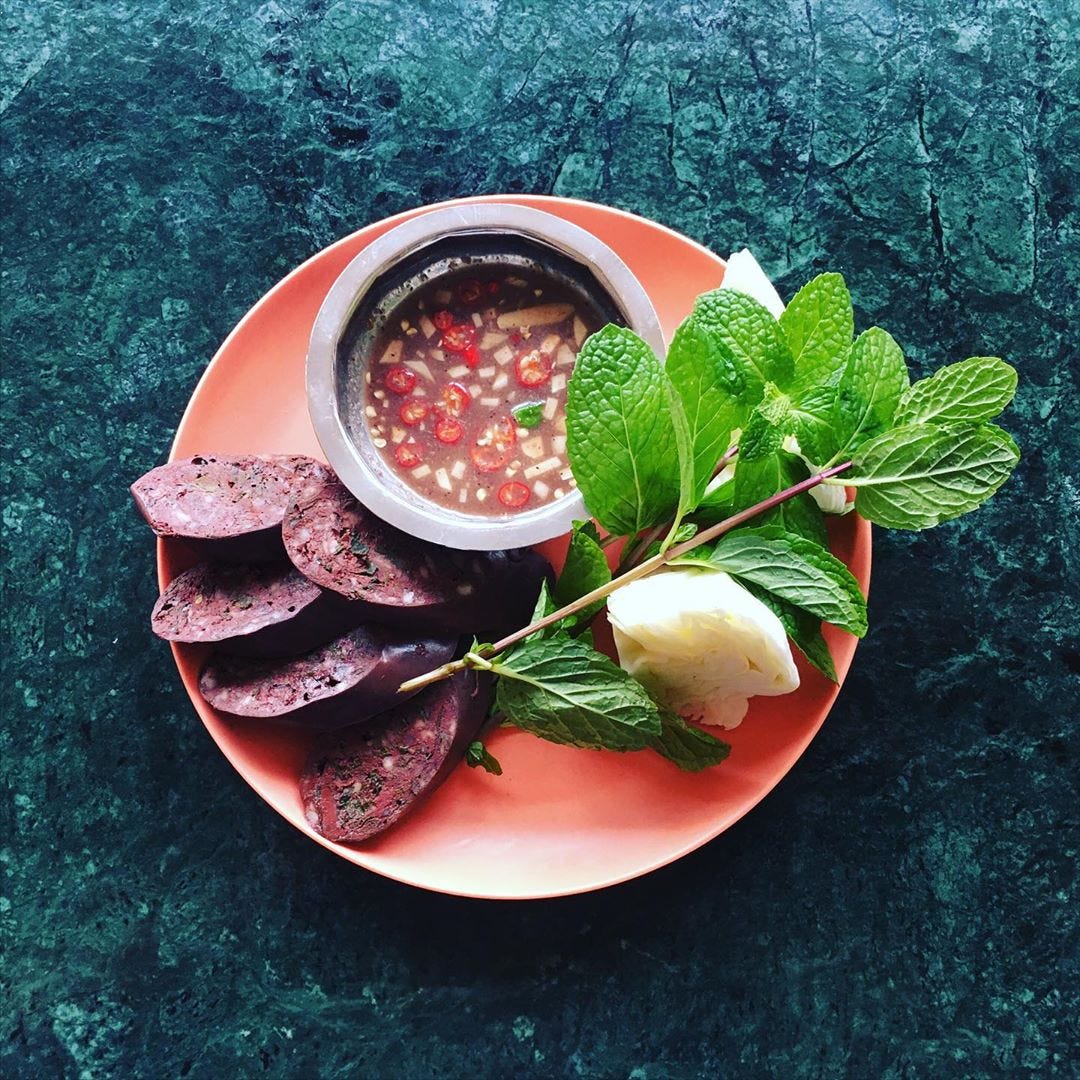
Recommended on Medium: Why Are Diners Suspicious of Toronto’s Most Exciting Thai Food?

For starters, they have a problem with cask-strength fish sauce

Continue reading on Heated »

05 Dec 02:47

I can’t help but wonder if — given equivalent k...

I can’t help but wonder if — given equivalent knowledge of UIKit and AppKit — iOS development isn’t harder now than Mac app development. At least for some kinds of apps.

Mac apps don’t have to deal with size classes, safe area insets, two very different classes of devices, getting killed by the system, a split view controller that isn’t suitable for some common purposes, presentation controllers, user activities, and — toughest of all — background app refreshing.

And some things that were Mac-only, such as multiple windows and contextual menus, are now iOS features too.

Even if I’m wrong, I can’t help but notice, as we work on NetNewsWire for iOS, that iOS development is starting to approach Mac-app-like complexity, and is already more complex in some areas.