Filmmaker Gary Hustwit is streaming his documentaries free worldwide during the global COVID crisis. Each week well be posting another film here. We hope you enjoy them, and please stay strong.
For the rest of the day, the free movie is Helvetica. He also made the documentary about legendary designer Dieter Rams.
It is also interesting that metaphorically speaking two last decades of my life was exactly about that. First learning to build bridges (to cross various chasms :)). And then learning to compost, because in an ecosystem there is always a way to turn wilting and redundant into a fertiliser.
There are some basic principles, which I learnt from John Krebs, former Chair of the Food Standard Agency, who had to deal with many crises. The first thing is that you should be communicating a lot, consistently and with trusted sources. You have to be open and transparent. You have to say what you do know and then you have to say what you don’t know. You have to emphasise, and keep emphasising, the uncertainty, the fact that there is much we don’t know. Then you have to say what you are planning to do and why. Finally, you have to say what people themselves can do, how they should act. The crucial thing to say is that this will change as we learn more.
Right-wing columnists are so lost without being able to blame Muslims, migrants, unemployed people or single mums for coronavirus that Richard Littlejohn is today reduced to having a pop at Arthur Scargill!1
A greater portion of the world’s work, organizing, and care-giving is moving onto digital platforms and tools that facilitate connection and productivity: video conferencing, messaging apps, healthcare and educational platforms, and more. It’s important to be aware of the ways these tools may impact your digital privacy and security during the COVID-19 crisis.
Here are a few things you should know in order to make informed decisions about what works best for you and your communities, and ways you can use security and privacy best practices to protect yourself and others.
Free Slacks
EFF has written a lot about Slack’s data retention issues when it comes to free versions of the software. With so many mutual aid networks and organizing groups coalescing on Slack to support our communities, it’s important that users are aware that the company retains their messages if they're using a free plan—and they can't automatically delete them. By default, Slack retains all the messages in a workspace or channel (including direct messages) for as long as the workspace exists.
If you are using a paid workspace, you can change how many messages are retained in Slack’s databases by setting shorter retention periods. If you’re using the free version though, that option is not available to you. Additionally, free workspace users only have the ability to search through the most recent 10,000 messages. And while users can’t see messages sent prior to the 10,000 message mark, they are still available to Slack, law enforcement, and any third-party hackers through a data breach. Leaking or sharing of this data could prove catastrophic, especially for groups who are working to provide aid and support for our most at-risk communities.
Zoom Conferencing
The best way to stave off the effects of isolation is to maintain contact with friends, family, and coworkers. Zoom has quickly become a popular option to work and keep in touch with others in the midst of social distancing and shelter-in-place protocols. There are a few things to keep in mind when using Zoom, particularly in instances where users are relying on the conferencing tool for their studies, or for work-related activities.
Attendee Attention-Tracking
The host of a Zoom call has the capacity to monitor the activities of attendees while screen-sharing. This functionality is available in Zoom version 4.0 and higher. If attendees of a meeting do not have the Zoom video window in focus during a call where the host is screen-sharing, after 30 seconds the host can see indicators next to each participant’s name indicating that the Zoom window is not active.
For any meeting that has occurred or is in-process, Zoom allows administrators to see the operating system, IP address, location data, and device information of each participant. This device information includes the type of machine (PC/Mac/Linux/mobile/etc), specs on the make/model of your peripheral audiovisual devices like cameras or speakers, and names for those devices (for example, the user-configurable names given to AirPods). Administrators also have the ability to join any call at any time on their organization’s instance of Zoom, without in-the-moment consent or warning for the attendees of the call.
Schools Moving to Online Learning
Surveillance shouldn’t be a prerequisite for getting an education. But even before more school districts started moving their classes and coursework to digital forums for purposes of social distancing, surveillance has become more and more common in schools. With the advent of COVID-19 and the associated uptick in distributed digital learning, the potential for this surveillance to ramp up is alarming.
This is true from kindergarten all the way through graduate school, though it is most prevalent and insidious in K-12 schools. School administrators are choosing to use tools and tactics that encroach on students’ privacy in ways that can break down trust amongst students and their peers, teachers, families, and administrators. Many K-12 schools offer or mandate the use of school-issued devices, and those devices come with pre-installed spyware that monitors all student activities and reports them to school administrators.
The HHS has altered HIPAA rules during the COVID-19 crisis, allowing health care providers to use applications such as FaceTime, Facebook Messenger, Hangouts, Skype, Zoom, etc so they are able to provide care to patients remotely:
During the COVID-19 national emergency, which also constitutes a nationwide public health emergency, covered health care providers subject to the HIPAA Rules may seek to communicate with patients, and provide telehealth services, through remote communications technologies. Some of these technologies, and the manner in which they are used by HIPAA covered health care providers, may not fully comply with the requirements of the HIPAA Rules.
If your healthcare provider is using an application or platform that is not covered under HIPAA, check with them on what safeguards they have in place to ensure your privacy is protected, and what their plans and timelines are for moving to platforms that do fall under HIPAA compliance.
Tools for Assessing Risk and Staying Safe Online
One of the best things you can do to keep yourself and others safe during this crisis is to learn how to minimize risk. Many of the problems presented in this post can be mitigated or circumvented with careful consideration of the risks, employing “privacy as a team sport” tactics, and minimizing the data that corporations, employers, and others can track. Our resource site, Surveillance Self-Defense, is full of practical tips, tools, how-to’s, and explainers for communicating safely online. Here’s a list of useful guides with concrete steps you can take to get started:
And lastly, remember—we’re all in this together. Take care of each other by safeguarding each others’ physical and digital health.
I’ve been interested and impressed by Toky Woky’s community platform recently.
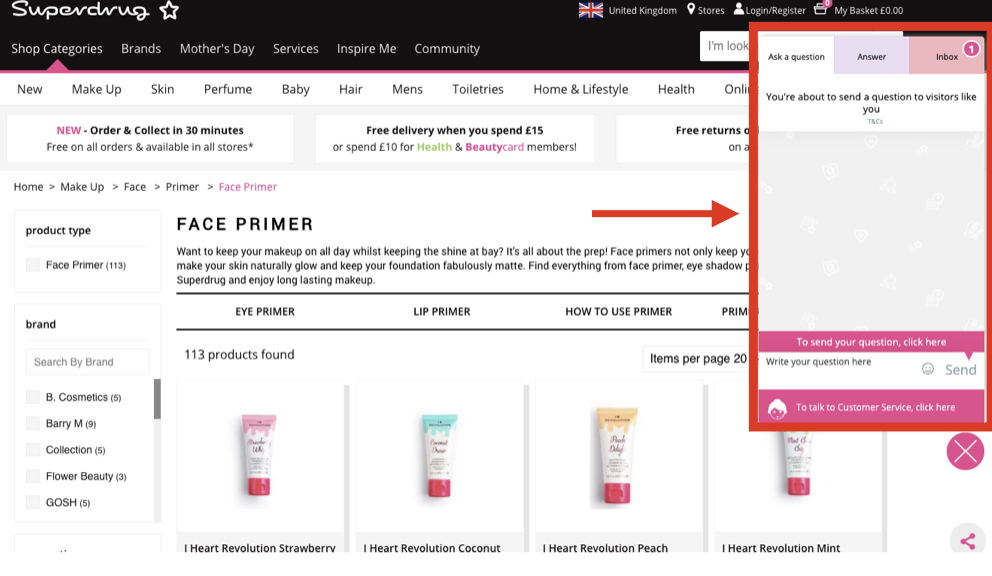
Visit Superdrug or Monki and you will see a community pop-up inviting you to ask the community for help or answer questions. This pop-up appears not only on the homepage but in two other important places.
1) Catalogue pages. If you’re not sure which item to buy, you can ask the community and get help from people just like you. This reduces the stress and fear members might have about making the wrong purchase.
2) Product pages. Members can ask specific product-related questions and get answers solely related to that product. When members ask a question from this page, the product in question is automatically tagged to make it easier for others to provide answers.
You can also directly visit the community for a chat-room experience with other customers.
This kind of integration demonstrates the indispensable value of a community in the retail sector. Visitors with questions about which product to buy or the specifics of a particular product will be far more receptive to the expertise of customers like themselves.
When you integrate your community’s incredible expertise into the shopping path, I suspect the improvement in sales conversions and customer satisfaction are easy to demonstrate.
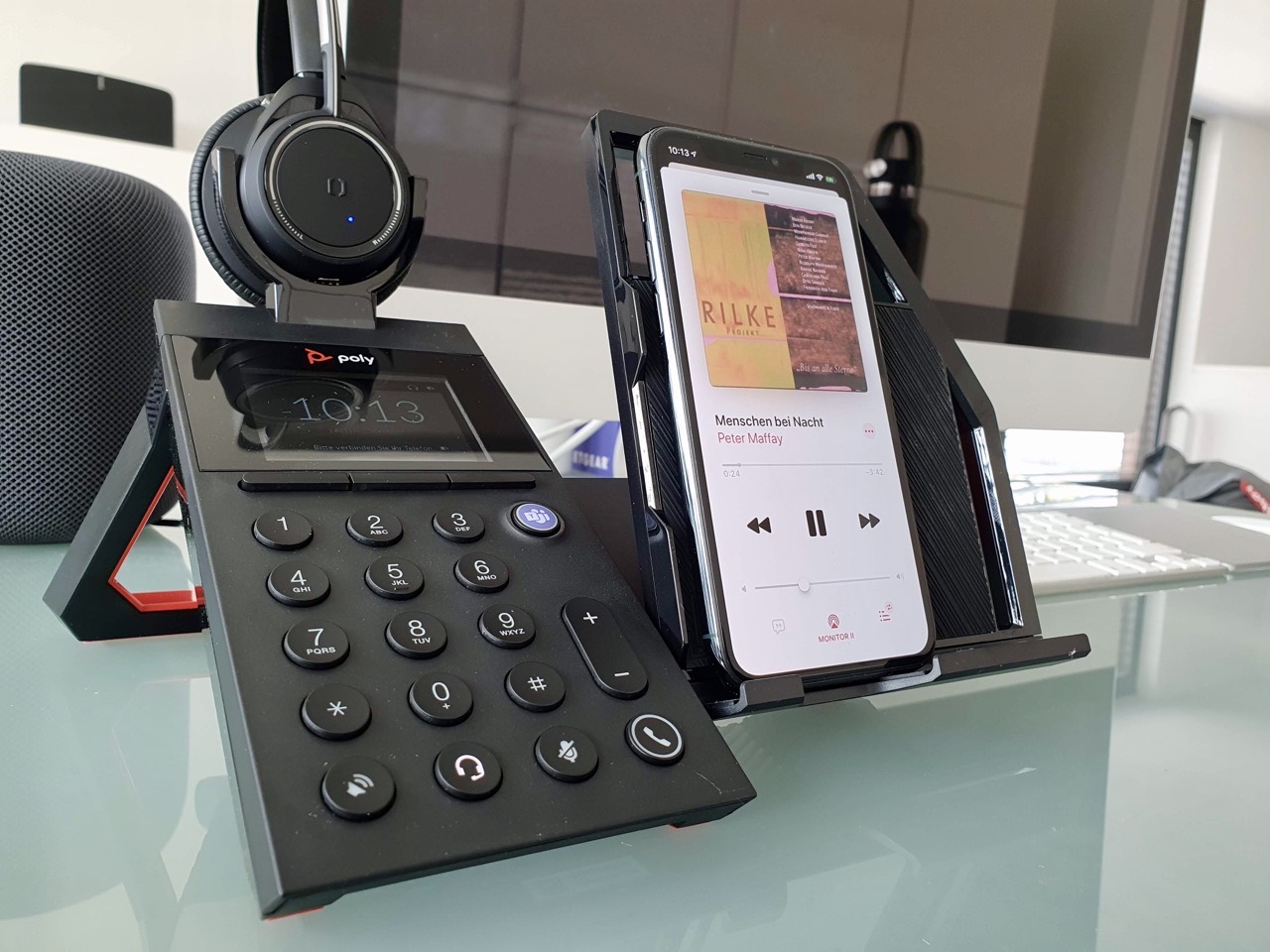
Seit das Poly Elara 60 vor bald zwei Jahren vorgestellt wurde, habe ich auf eine Gelegenheit gewartet, das auch mal in der Praxis auszuprobieren. Jetzt ist der beste Zeitpunkt, denn Elara macht aus einem Smartphone ein Tischtelefon. Das funktioniert richtig gut, hat aber auch einen dicken Pferdefuß.
Das Gerät trifft mit seinem klaren Design und roten Farbakzenten genau meinen Geschmack. Links gibt es eine Zehnertastatur mit Knöpfen für Mute und die Umschaltung zwischen Headset und Lautsprecher. Eine Hörertaste nimmt Gespräche an oder beeendet sie. Der jeweilige Zustand wird sehr klar durch die Beleuchtung der Tasten angezeigt. Eine Wippe passt die Lautstärke an und es gibt einen dedizierten Button, der auf dem Mobiltelefon den Teams Client startet. Der wesentliche Nutzen ist, dass alles greifbar wird, statt nur auf dem Display des Telefons angezeigt zu werden. Daran gewöhnt man sich sehr schnell.
Auf der rechten Seite hat das Elara eine Ablage für das Smartphone, auf die es sowohl quer als auch hochkant passt. Dabei wird es von dem eingebauten Qi-Lader induktiv geladen. Ein USB-A-Port auf der Rückseite nimmt ein Ladekabel für Telefone ohne Wireless Charging auf. Das dürfte aber in der Praxis zu fummelig sein. Die Ablage lässt sich in der Neigung verstellen, damit man bei einer Videokonferenz auch im Bild ist und nicht nur die Zimmerdecke.
Über der Zehnertastatur befindet sich ein Display ohne Touch. Drei Softbuttons unter dem Display werden mit wechselnden Funktionen belegt. Das finde ich ziemlich retro, in der Praxis stört es dagegen kein bisschen. Das Display zeigt sehr klar die Uhrzeit und den Verbindungsstatus an. Bei eingehenden Anrufen sieht man den Namen des Anrufenden, sofern er dem Smartphone bekann ist.
Über dem Display gibt es ein Ladedock für ein Plantronics Voyager Focus oder ein Plantronics Voyager 5200. Das sind meiner Ansicht nach die besten Headsets für den Büroeinsatz. Ich habe im Büro eine leichte Präferenz für das Focus, weil man es schneller aufsetzen kann.
Leider treiben einem die Preise des Elara sofort die Tränen in die Augen. Aktuell bietet Plantronics die Geräte 100 Euro billiger an, aber das reduziert den Schmerz nur ein wenig:
Elara 60 mit Voyager Focus 710,95 Euro
Elara 60 mit Voyager 5200 544,95 Euro
Elara 60 für Voyager Focus 410,95 Euro
Elara 60 für Voyager 5200 410,95 Euro
Man muss diese Listenpreise allerdings relativieren. So ruft Plantronics auf der eigenen Seite 419 Euro für das exzellente 8200 UC auf, während es bei Amazon auch für unter 200 Euro gehandelt wird. Bei dem Elara kann ich diesen Preisverfall noch nicht entdecken.
Sowohl Focus als auch 5200 haben Sensoren, mit denen das Headset erkennt, ob es aufgesetzt wird. So kann man einen Anruf auch einfach annehmen, in dem man das Headset aufsetzt. Das gilt natürlich auch für die Nutzung ohne das Elara.
Ich habe bei mir auch eine andere Nutzung des Headsets beobachtet. Ich habe es lediglich mit dem Elara, aber nicht dem PC gepairt. Damit funktioniert es ohne Wenn und Aber, egal, was der PC gerade macht. In dieser Konfiguration gibt es zwei Bluetooth-Verbindungen. Eine vom iPhone zum Elara, eine zweite von Elara zum Headset. Man könnte das Elara auch mit dem PC koppeln, aber müsste es dann umständlich umschalten. Man kann auch das Headset parallel mit dem iPhone verbinden, so dass man aufstehen und mit dem iPhone weggehen kann, ohne die Verbindung zu verlieren, aber auch darauf habe ich verzichtet. Das Headset "gehört" dem Elara. Punkt aus. Das verringert die Komplexität.
Auf der Habenseite bleibt ein perfekt funktionierendes Deskphone, auf der Sollseite steht der enorme Preis. Lohnt sich das? Das kann ich nicht klar beantworten. Ein Voyager Focus UC kann man direkt mit einem Ladedock kaufen. Ein aufrecht stehendes Ladedock wie das Belkin Boost-Up ermöglich ebenfalls Videotelefonate im Potrait- oder Landscape-Modus. Die Bedienung des Smartphones kennt man auch bereits. Es bleibt also die Haptik übrig.
Persönlich würde ich das Elara jedem Deskphone vorziehen. Aber ich käme auch sehr gut ganz ohne aus.
I wrote this post a month ago, before COVID-19 changed how a great many of us teach in higher education. It feels so long ago now. I thought about writing a different post for this week, one about how I’m managing my large (260+) Senior-level User Interface Development class with projects. But I realize — I have a ton of those kinds of posts in my to-read queue now. We’re all being bombarded with advice on how to take our classes on-line. I can’t read it all. I’m sure that you can’t either.
So instead, I decided to move this post up in the queue. It’s about taking the students’ perspective. I worry about what’s going to happen to students as we all move into on-line modes. I wrote my Blog@CACM post this week about how the lowest-performing students are the ones who will be most hurt by the move to on-line — you can find that post here. This is a related story: What I learned about MOOCs by taking a MOOC.
I received in February my certificate of success for the MOOC I took on Pharo. I have not, in general, been a big fan of MOOCs (among many other posts, here’s one I wrote in 2018 about MOOCs and ethics). This MOOC was perfect for what I needed and wanted. But I’m still not generally a MOOC fan.
I’m a long-time Smalltalk programmer and have written or edited a couple of books about Squeak. I’m building software again at the University of Michigan (see the task-specific programming environments I’ve posted about). Pharo is a terrific, modern Smalltalk that I’d like to use.
A MOOC on Pharo matched what I needed. I fit the demographics of a student who succeeds at a MOOC — I already know a lot about the material, and I’m looking for specific pieces of information. Pharo has a test-driven development model that is remarkable. You define your classes, then start writing tests, and then you execute them. You can then build your system from the Debugger! You get prompts like, “You’re referencing the instance variable window here, but it doesn’t exist. Shall I create it for you?” I’ve never programmed like that before, and it was great to learn all the support Pharo has for that style of programming.
Yes, it was in French. They provide versions of the videos dubbed in English, and the French version can display English captions. I preferred the latter. I had French in undergraduate, which means that I didn’t understand everything, but I understood occasional words which was enough to be able to synchronize between the video and the captions to figure out what was going on.
My favorite part of the MOOC was just watching the videos of Stéphane Ducasse programming. He’s a very expert Smalltalk programmer. It’s great seeing how he works and hearing him think aloud while he’s programming. But he’s very, very expert — there were things he did that I had to re-watch in slow motion to figure out, “Okay, how did he do that?”
The MOOC was better than just a set of videos. The exercises made sure I actually tried to think about what the videos were saying. But it’s clear that the exercises were not developed by assessment experts. There were lots of fill in the blanks like “Name the class that does X.” Who cares? I can always look that up. It’s a problem that the exercises were developed by Smalltalk experts. Some of the problems were of a form that would be simple, if you knew the right tool or the right option (e.g., “Which of the below is not a message that instances of the class Y understand?”), but I often couldn’t remember or find the right tool. Tools can fall into the experts’ blind spot. Good assessments should scaffold me in figuring out the answer (e.g., worked examples or subgoal labels).
I ran into one of the problems that MOOCs suffer — they’re really expensive to make and update. The Pharo MOOC was written for Pharo 6.0. Pharo 8.0 was just released. Not all the packages in the MOOC still work in 8.0, or there are updated versions that aren’t exactly the same as in the videos. There were things in the MOOC that I couldn’t do in modern Pharo. It’s hard and costly to keep a MOOC updated over time.
Closing One Chapter, Starting Another 2004 – 2014 were great, but everything has to end It’s a sobering experience when you realize that over the past 16 years you’ve written at least 2000 posts you can put your finger on. I’m guessing if you throw in all the posts I wrote as a professional blogger […]
I wouldn’t go as far as saying that I’ve been anti-bird, but I have seldom felt common-cause with the bird-watching set. For the past couple of weeks, though, birds, just the everyday around town birds, have fascinated me. Perhaps because I can see and hear them without the distractions of urban life that have largely melted away. Oliver and I spent 20 minutes just looking at the interplay between ducks and gulls and the outflow of Government Pond a couple of Sundays ago.
I often talk about the power of birds, but this year they take on an even more powerful meaning. They enliven our days, brighten the trees, serenade in our backyards and city parks, and bestow us with so much joy and hope, all bundled together in feathers and lively personalities.
That’s a paragraph that I’m particularly able to accept this morning.
Update: Wow! You all cleared out our garage amazingly fast. We're going to put more stuff up as we can, so keep your eyes peeled!
The garage sale is back on! Rather than postpone until later in the year, we are moving things online and making garage sale items available to our customers all over the world. We are also offering 20% off all regular-priced items in our online shop (with some exceptions - see the fine print below) starting Monday, March 23rd through Friday, March 27th at 11:59pm ET. Use the coupon code: GARAGESALE to get the deal! If you have any questions about how to enter the coupon code, please see this nifty how-to page.
We've scoured the shop to collect all the bikes, racks, fenders, accessories, and parts we could find. Consider it our secret menu. At bargain prices, they'll go quick. Disclaimer - wait too long and those bits and pieces left sitting in your cart might not be there when you go to check out.
We'll of course miss seeing you in the showroom, but we see it as a win-win. The garage sale is now open to customers who would not have been able to make the trip under even normal circumstances, and we get to gorge ourselves on coffee and doughnuts.
We know cycling is essential to our customer's daily lives. Hitting the road or trail is one of the few things that can bring about a sense of normalcy in these far from normal times. As we face a global pandemic and the great uncertainty that surrounds it, we appreciate the loyal customers who support small businesses like ours. We have been fortunate enough to continue regular operations, so we do not anticipate delays in processing or shipping orders (though delivery times might be affected).
Now for the fine print:
Garage sale items are sold as-is. All sales are final. No returns or exchanges.
The 20% off discount is available only to retail customers and does not apply to garage sale items.
Retail and wholesale customers get free shipping on orders with subtotals over $150 within the contiguous USA - no coupon code needed for this deal!
International shipping charges still apply.
20% applies to all in-stock products including stock complete bikes.
Not applicable to custom bike build deposits or third-party suppliers for custom builds. VO products within custom builds do get the deal.
Not applicable to any pre-sales or gift certificates.
For the last 2.5 years, I have been in therapy for Post Traumatic Stress Disorder, the main, unstated, point of which seems to have been to get me back to "normal" — normal responses to normal situations. Not to fear everything all the time.
When you're mentally ill, what that really means is your brain is maladjusted to a societally agreed-upon normal. What's the opposite of maladjusted? I, through therapy, was trying to make my brain... good-adjusted.
The problem is that things are no longer normal for me, anyone. There's no center to adjust to.
Scary.
Maybe this can be a freeing feeling, though—stop chasing the fleetingness of a normal that maybe never existed.
There was no normal before this either, right? People were still dying, duh. Capitalism still sucked, duh. Everything is just dying and sucking more now.
At first, people thought this would last a few weeks. Now we know it will last a few months. After that, we may or may not have an economy worse than at any point in the last 100 years. No one's life will be ~normal~ for a long time. This will undoubtedly suck. Great Depressions cause depression, suicide. It's facts. Because of that, I am not an accelerationist. We don't need to wait for the world to get worse to make it better. We should not have to go through this. Trauma is not good.
But we are going through it, and we will be going through it for a while. Thus I propose that because of all the pain and suffering we are about to endure, we don't make ourselves endure more of it by spending all our energy and money and hope returning to our terrible past.
I’m starting a Zoom room today at 4PM. Here’s what’s happening: A reading from a master of nonfiction writing. Discussion — how did he do it? Your questions Join me here: https://zoom.us/j/326376698 If this is useful, I’ll repeat. Hope to see you there. Put it in your calendar!
I saw Matt Haughey do a verse of Covid to the music of Jolene and thought Jolene could be reworked as a pro-quarantine ditty. I doubt I'm the first.
Quarantine, Quarantine, Quarantine, Quarantine I'm begging of you please just heed this plan Quarantine, Quarantine, Quarantine, Quarantine Please don't go out just because you can
Your boredom is beyond compare With endless naps and unwashed hair With pallid skin and eyes of glassy sheen You while away the death of spring Your voice is soft and full of pain And I cannot compete with you Quarantine
The kids refuse to go to sleep The mess is piled up too deep I'm buying another iPhone game Quarantine
And I can't easily understand Why most of us can't follow a plan To stay at home where we need to be Quarantine
Quarantine, Quarantine, Quarantine, Quarantine I'm begging of you please just heed this plan Quarantine, Quarantine, Quarantine, Quarantine Please don't go out just because you can
This is another ploy of men To keep you from leaving home again But it's the only place to be Quarantine
I had to have this talk with you My healthiness depends on you And whatever you decide to do Quarantine
Quarantine, Quarantine, Quarantine, Quarantine I'm begging of you please just heed this plan Quarantine, Quarantine, Quarantine, Quarantine Please don't go out just because you can
We have good news from our team that I believe some of you might’ve already known. Finally, Tasos will no longer be a lone coder in our team as now we have a new additional member in SUMO. Please, say hi to Leo McArdle.
I’m sure Leo is not a new name for most of you. He’s been involved in the community for so long (some of you might know him as a “Discourse guy”) and now he’s taking a new role as a software engineer working in SUMO team.
Hey all, I’m Leo and joining the SUMO team as a Software Engineer. I’m very excited to be working on the SUMO platform, as it was through this community that I first started contributing to Mozilla. This led me to pursue programming first as a hobby, then as a profession, and ultimately end up back here! When I’m not programming, I’m usually watching some kind of motor racing, or attempting to cook something adventurous in the kitchen… and usually failing! See you all around!
Plague Dinner update #3: roast chicken, purple sweet potatoes, broccoli sautéed in olive oil, Quinta de Chocalpha (Lisboa). Pecan pie.
Lacking foresight, I failed to brine the chicken and so I went for crispiness. 450F convection oven, lots of kosher salt, stuffed with a quartered yellow onion. The sweet potatoes were overdone — convection isn’t so good for them — but good enough in their way.
Nice pot roast of chuck, tomatoes, celery, onion, juniper and sage with a little hot pepper. I would have made some pasta, but we’re running low on eggs. There’s lots of sugo left, so fresh pasta next time.
Ruhlman 312 biscuits were good! These weeks will be the rennIsance of American baking if the King Arthur Flour people can keep it together.
The president last night floated a trial balloon to left the disease go ahead and run its course, killing perhaps 10 million Americans, in order to prop up the economy.
I’ve now got quite a few half written blog posts from the last week trying to share what I am thinking/experiencing around the COVID 19 pandemic. I keep getting to that point where I don’t really know where to go, so I just stop and don’t hit publish.
It’s been overwhelmingly positive to see the level of care and sharing around supporting staff and students across the education sector and an explosion of resource sharing. It’s really been open educational practice in action on a global scale. So many people have also shared tips on home working which can be a strange experience and lonely place. Of course, currently for many, there is a whole new set of juggling to be done with families all at home, trying to work, do school work, keep active (safely) and sane.
But, and of of course there is a but, in fact several of them! Whilst it’s been great to see so many people sharing their tips for home working, as I home worker I feel a bit distanced from some of the conversations. I don’t have/ or am part of a team – through choice! I do work with lots of different people but I took a decision to work on my own, partly so I could focus on other “stuff”. I don’t really have anything to add to those conversations, it’s all be covered really well. So I’ve just watch/read. RT’d a bit but not been very involved – a bit distant you might say.
For almost a year now I have been self employed, working from home with my own social distancing measures in place. Of course, as they were really only known to me, they were of a totally different scale to what is happening now. I had agency and choice around that decision. Like other home workers, I’ve created my routines that include exercise, plenty of breaks and the realisation that I don’t have to reply to every email immediately.
One of the first things I noticed when I started working for myself was the immediate tail off in emails. It’s amazing how much easier your inbox is to manage when you are not part of a large organisation. That Monday morning, being out of the office for any length of time, email dread disappeared. I suspect that’s not happening for many colleagues who are now working from home. The level of comms/emails has probably just ramped up another notch or seven over the past weeks.
But it’s not just that. Like most people I guess, my emotions have been swaying from keeping calm and carrying on to screaming WTF moments. What if I never work again, how long can I keep paying the mortgage, what support will there be for self employed people, what if I get sick, what if my family get sick, will I ever see my Mum again . . .
But this afternoon I had a small epiphany. I was listening to PM on radio 4 – an increasingly dangerous pass time – and there was an interview with an ex-pat Brit who is in Italy just now. He was explaining what lock down is actually like – no shortages when you go the supermarket, people being let in one at a time, getting permits to go anyway further that 50 meters from your home. When asked about social distancing, which is all we seem to be hearing about just now, he said (sic) what you should be talking about is physical distancing, that’s what you need to do – keep your physical distance not social distance.
Reader, it really was one of those light bulb moments. I think my inner worries have actually been about social distancing and losing connections with people. What I should really be thinking about, and actually what the experts want us to to, is just make sure I’m 2 meters away from anyone when I’m outside. A small but significant change, which has, for a couple of hours at least, made me feel a bit better about things. Like Lorna said on twitter what we need is physical distance and social connections.
Agreed. We need physical distance and social connection.
Thanks also to Evelyn who pointed out that the WHO use this terminology too.
Yeah folks in my HL group wrote this in an WHO doc and getting used now by them. Similar in a way to me not saying real world but physical world when talking about my PHD ….
— Dr Evelyn McElhinney PhD, RN (@evmcelhinney) March 23, 2020
Montgomery assumes that on average, someone infected by the coronavirus infects 3 others and that someone with the normal flu infects 1.3 to 1.4 others. There’s still more to find out about that 3x figure, but the main point — that staying at home right now is for the good of everyone — still holds.
Today's my first scruffy day. I got up, yoga-d, showered, dressed etc. But am scruffy. I thought about how much of what we do when we get ready is for everyone else. I'm not wearing my big silver friend-engagement ring from Sophie, which most people I know would never have seen me without. A few friends are saying they're wearing no makeup etc. I'm making jokes about when nudity will emerge.
The high-end 2020 iPhone expected to launch later this year could sport a larger sensor and new stabilization tech.
Currently, the iPhone 11 Pro and Pro Max offer lens-based optical image stabilization. However, according to a note from reliable Apple analyst Ming-Chi Kuo, the top-end 6.7-inch model will gain sensor-based stabilization. Based on Apple’s current naming scheme, the 6.7-inch model would likely be called the iPhone 12 Pro Max.
Along with sensor-based stabilization, the iPhone 12 Pro Max could include a larger 1/1.9-inch sensor. The iPhone 11 Pro, for comparison, sports a 1/3.6-inch sensor. Finally, Kuo notes that the new iPhone will have a new camera module for the wide-angle lens known as ‘7P.’
The most significant change here would be the larger sensor, which would greatly improve image quality, especially in low-light photography. Since more light can enter larger sensors, photos have less noise.
However, sensor-based stabilization is also a big change. According to 9to5Mac, stabilization systems built into the sensor typically allow for five-axis of stabilization:
Pitch (vertical rotation up or down)
Yaw (horizontal rotation left or right)
Vertical translation (up or down shift without rotation)
Horizontal translation (left or right shift without rotation)
Roll (one side dipping)
In other words, the iPhone 12 Pro Max could prove to have excellent stabilization.
Kuo also laid out predictions for what to expect from Apple in terms of iPhone later this year. The analyst notes there will be four models:
5.4-inch OLED with dual camera
6.1-inch OLED with dual camera
6.1-inch OLED with triple camera and Time of Flight (TOF) sensor
6.7-inch OLED with triple camera and TOF sensor
Only the 6.7-inch model will have the new camera tech, however. That said, Kuo expects the new camera tech will make its way to other iPhone models in 2021, and the sensor-based stabilization will come to the telephoto lens next year as well.
Instacart has announced that it plans to add 300,000 full-service shoppers in North America throughout the next three month in order to meet the demand for online grocery delivery and pickup in both U.S.
This news comes from Apoorva Mehta, the founder and CEO of Instacart.
For those worried about having others shop for them, Instacart says it has worked closely with health, food safety and disease control experts to create health and safety guidelines to help shoppers take precautionary food handling measures.
And to care for shoppers, any full-service or in-store shopper can get up to 14 days of extended pay if they’re diagnosed with COVID-19 or placed in mandatory isolation or quarantine.
Instacart also now has a ‘Leave at My Door Delivery’ so that there’s no direct contact between customer and shopper.
Additionally, Instacart has expanded ratings forgiveness and is easier to cancel batches.
Instacart says this past week has been its busiest week in the history of the company.
Social media has revolutionized information-sharing and, more specifically, the ubiquity of communication and connectivity between humans. Facebook has become a way to stay in touch with extended family, Twitter for following the general discourse, Instagram for a more visual look into one’s life, and so on. This connectivity—the ability to be everywhere and nowhere at the same time, to be alone yet engaged with the entire world—has been technology’s greatest achievement, but it has also revealed that online communication, amidst a global pandemic, has a precarious backstop.
When the posting stops, you’ll know they’re dead. Before the dawn of the internet, relationships were mainly centered around human-to-human interaction; you rarely heard about the goings-on of people’s everyday lives (and therefore made to care much less) unless they were public figures or members of your family or workplace. The reliance on one another, and therefore the need to be connected, was narrowed—the stakes were much lower, your knowledge and empathy more contained. The internet, however, has allowed us to place the lives of others on our ever-widening periphery; while you may have never met the vast majority of the people you interact with online, they are nonetheless there, with their postings—snippets of their lives as living, breathing creatures—becoming the only notifier of their existence at all.
As the days go on—the death toll rising by the hour—more and more people are posting that they are showing symptoms, or that they have tested positive for the virus. Did I know this person’s mother, father, brother, sister? How would I receive an update if their condition worsened? The only degree of separation between many people in this world seems to be the internet itself—this facade of meaning, of knowing someone, of reason and purpose—and I hoped that they would keep posting, that they would hold on, because otherwise, I would never know if they were still alive.
On March 18th, the Japan Medical Association announced that there were 290 cases of doctors deciding that a patient needed to be tested for coronavirus, and even then the patients were not tested. The term used by JMA “不適切事例” literally translated means “inappropriate/unsuitable cases”.
The government of Prime Minister Shinzo Abe seems intent on keeping the official numbers of infected down and that means not only making the standards for getting a test very high (for example, you must have a fever of over 37.5 degrees Celsius for four days) but it also seems to be actively discouraging tests.
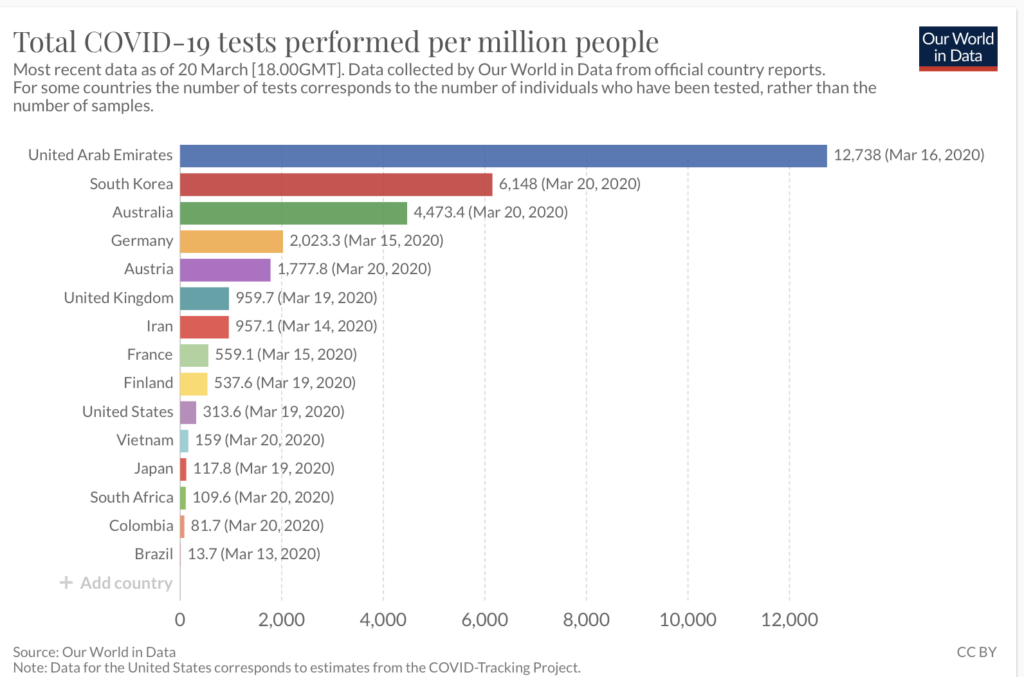
Japan’s testing for coronavirus falls severely behind many other countries. see https://ourworldindata.org/covid-testing
Nathalie Kyoko-Stucky interviewed one woman who was denied testing in Tokyo. This is her story.
Patient Zero, age 31 is a project manager in Japan working for an IT firm. She asked for her name to be omitted and some details of her story obscured for fear of being stigmatized socially. She lives in Tokyo.
“I started to feel very tired March 7th and had a low fever of 37.2. Thought i was just tired from work. On Monday, I felt really tired at work and on Tuesday, I struggled to go to the office and only stayed 2 hours and came home. Tuesday night, I started to get a cough and by 10pm I felt i was getting sick and my fever was 37.5 degrees.
Wednesday morning I woke up feeling sick and extremely tired and had a fever of 38 degrees.
Over the next few days, I stayed in bed sick. I started feeling a pain in my chest and it was getting painful to breathe. On Saturday, I called the Coronavirus hotline because by that point I had fever over 37.5 for 4 days.
I called them because I didn’t know what to do. I didn’t want to go to a normal hospital and accidentally spread it so I called for advice.
The lady told me that the Shinagawa Healthcare Center (品川保健所)is closed on the weekend, and I should call them on Monday when they opened. But, she said if I became sicker, I should just go to the hospital.
On Sunday there was still no improvement. I had pneumonia when I was in high school and my body felt similar to that time so I was a bit worried. So I called the hospital and told them my story and that at the minimum I wanted an x-ray. They told me, “Okay please come in.”
At the hospital they asked if I went to an onsen, had overseas travel, or if was in direct contact with a COVID-19 patient. I said no.
Luckily my x-ray came back clear for pneumonia, but the doctor diagnosed me with pleurisy.
Note:(Pleurisy (PLOOR-ih-see) is a condition in which the pleura — two large, thin layers of tissue that separate the lungs from the chest wall — becomes inflamed. Also called pleuritis, pleurisy causes sharp chest pain (pleuritic pain) that worsens during breathing.It can be caused by viral infections, pneumonia and other conditions
I felt the doctor was kind but his hands were tied.
On Monday, my fever was will going between 37.5-38, and my boyfriend called the health care center. It took hours to get through because the phone line was always busy.
After getting through to someone and explaining the situation, the women answering the phone said she can’t authorize a test because I have not traveled abroad and I have no direct contact with a COVID19 patient.
Her advice was, ” If it is still bad or gets worse in a few days, go back to the hospital and beg the doctor himself to call the healthcare center and request a test for me.
At that point I realized it’s impossible to get a test. I didn’t want to risk going outside and accidentally infecting someone.
Unfortunately, the part which is most frustrating for me now is that I don’t know if I actually have it or not.I was considering trying to go back to the US to help my mother who is in her seventies, but I cannot risk going back and spreading it to her.
Luckily today, on March 21, it was the first day that I haven’t had a fever since March 7. I lost my voice and talking still irritates my lungs but most of the chest pain is gone.
So I had fever for 14 days. It’s very surreal.
I was so surprised why they set up the hotline to call, but advice from both numbers was “just to go the hospital”.
I expected they would tell me where to go for example or perhaps advise me to stay home in quarantine.
What’s the point of a hotline if the advice is “just go to the hospital”?
Personally that made me feel like there is not much fear about it spreading in the medical establishment. This worries me.
Also as a side note, I had been extra careful , carrying hand sanitizer everywhere I went and also never was outside without a mask. I even was using taxis the majority of the time to avoid the train.
****
This is just one example of a person who most likely should have been tested for the virus and was not. If you have experienced something similar, please write us with the heading CVTESTS at japansubcultureresearchcenter@gmail.com
Mikel Jollett@Mikel_Jollett
Ok how about this:
No more billionaires. None.
After you reach $999 million, every red cent goes to schools and h… twitter.com/i/web/status/1…
My chess rating hovers around 1200, which puts me in the bottom 20% of people on the website. That isn’t very good. But I love the game anyway.
Chess is a scary game for people whose careers are built on their minds. Which is most. Even though we use our critical thinking, memory, or creativity every day, we no longer contend with the cold precision of an exam grade or an SAT score. We might be using a sliver of genius abilities, or squeezing every drop out of a low IQ by hard work and determination. We don’t know.
But chess knows. Most competitions and websites use the ELO system – a precise, mathematical calculation of wins and losses that produces a numerical rating. After every game, you see how many points you’ve lost or gained. The score comes with a deviation which indicates how accurately the machine can predict your performance: as it decreases, your winning odds should bend closer and closer to 50/50.
If chess ratings are precise and there are entire studies about how chess ability correlates with intelligence, then playing chess is confronting the possibility that we’re not as smart as we think we are.
Or is it? The more that I played, the more I realized that I was losing games because I was distracted. With Netflix in another tab, I’d accidentally lose key pieces.
Concentration is elusive. In “Conversations with Tyler”, the interview series with Tyler Cowen (ELO 2230), chess is frequently a topic. He’ll ask people like Peter Thiel (ELO 2199) about favorite openings and defenses. But curiously in Cowen’s interview with Garry Kasparov (ELO 2812), Garry talked about concentration, not intelligence.
The reason I put Wesley ahead of two others is that he has phenomenal concentration, absolutely phenomenal, and that’s very important. These days, concentration trumps everything.
There are levels of distraction below the threshold that I’d call myself distracted. Having a conversation while worrying about something. An emotional current running in a stream of thought. In meditation, you notice this and gently pull yourself toward the breath. In chess, you lose. You lose and you drag yourself back into focus and the feedback is immediate and gratifying. Chess is biofeedback.
Once you have concentration, you realize that there’s another layer: rigor. It’s checking the timer, checking for threats, checking for any of a litany of potential mistakes you might be about to make, a smorgasbord of straightforward opportunities you might miss. Simple rules are easy to forget when you’re feeling the rush of an advantage. But they never become less important.
And then there’s research. Grandmasters have formalized principles and strategies for centuries, passing down knowledge that makes 21st century gameplay starkly different than the stunts players were pulling in the 1850s. These patterns allow you to connect moments of games together. They let you look at a good move and say what makes it good.
COWEN: Someone who was in the candidates’ matches but never champion. You give them a 2017 openings database that they can use, and no one else ever has access to. How much stronger a player do they become?
KASPAROV: It could be quite a significant progress.
But then there’s intelligence, that thing, so hard to track down. It is the remainder. It’s the the part that exists between development, attacks, and counter-attacks. It is the part that makes Garry Kasparov Garry Kasparov and me not him. Does it furcate further - into multiple intelligences? Science uncomfortably suggests that it doesn’t, that there’s a single factor tying it all together.
When I came to chess, I feared what it would show me about my mind. I still do – that I’ll be unable to reach 1400 or beyond, and be found out. Whatever you worship eats you alive, and I’ll admit that I want to be smart.
But playing more I noticed that when I was calm and focused I did better, and that no amount of white-knuckled effort could make up for a lack of sleep. That reading theory was key to the game, and that few successful players have become great without study.
It broke apart a monolithic idea of intelligence, placing comfort and self-care right next to intellectual brawn. Maybe it’s appropriate, now that computers are the unquestioned champions of the game, that chess is now a vehicle for us fleshy vessels to better understand our complicated and finicky abilities.
The first of a series of weeks that likely will get filled with increasingly stranger things. We were at home of course, as were most people. Except for a walk every day, to get some fresh air and sunlight. I expect stronger isolation measures somewhere in the coming week, based on the fact that so many people ignored social distancing during the sunny weekend. Unless, and it’s a big if, the slightly lower jump in new cases (the day to day ratio fell below 1) is not just a one-off low due to less testing, but due to the ‘no handshake’ rules put in place earlier, to be followed by the stricter measures before last week. Then the spreading might be moving to a slower pace (it’s doubling every 4 days now).
This week I
Worked with colleagues and clients to find a new mode of working
Discussed longer term impact for our company, as well as the NGO I chair, to define measures to be taken
Worked on documenting our work for a province in the shape of check lists and tutorials
Discussed terms of service for sharing data from a province with a third party supplier
Discussed biodiversity datasets to potentially publish for a province
Had our monthly all hands meeting, this time in Zoom and without group dinner
Spent an awful lot of time in video conference calls, up to the point I felt I didn’t do any work but talk
Spent a lot of time with Y now she’s at home all week
Worked on the EU High Value Datasets study, albeit less speedy and effectively than I wanted
Took a walk with E and Y in the sun (and very chilly wind) in a remote spot in the woods, that E figured out on a map as potentially devoid of people. That was mostly true. Unpaved roads do keep people away it seems
Ended the week feeling restless.
The set-up for working at home, much the same as it has been for years, yet with a different feel to it.
This is a RSS only posting for regular readers. Not secret, just unlisted. Comments / webmention / pingback all ok. Read more about RSS Club

 mrjamesob on Twitter.

 wtyppod on Twitter.








![[click here if image doesn’t show]](https://www.feverbee.com/wp-content/uploads/2020/03/TokyWoky.001.jpeg)
![[click here if image doesn’t show]](https://www.feverbee.com/wp-content/uploads/2020/03/TokyWoky.002.jpeg)
![[click here if image doesn’t show]](https://www.feverbee.com/wp-content/uploads/2020/03/TokyWoky.003.jpeg)