Shared posts

01 Sep 00:12

Free Webinar~Funding Parks Through Land Trust Partnerships

by Sandy James Planner

IMG_0029

IMG_0029

With parks and recreation budgets shrinking, it’s increasingly important to leverage partnerships to get important work done. Partnering with land trusts can help communities create and steward equitable green space when it’s needed most.

On this webinar, you’ll learn from three land trusts that will discuss:
• How they fund projects.
• How they partner with agencies and other organizations in their work.
• Strategies for engaging the community throughout the process – through concept, design, construction, and stewardship.

By leveraging a land trust’s special abilities and expertise in areas such as legal work, fundraising, community engagement, and real estate transactions, agencies and other partners can collaborate with land trusts to complete projects that increase access to green space and recreational opportunities, leading to healthier residents.

Speakers:
Carolyn Buck, Red Rock Trail System Director, Freshwater Land Trust, Birmingham, Alabama
Jonathan Pacheco Bell, Program Manager, Los Angeles Neighborhood Land Trust
Kelly McCarthy, Urban Conservation Projects Coordinator, Thriving Communities, Western Reserve Land Conservancy, Ohio
Isaac Robb, Director of Urban Projects, Thriving Communities, Western Reserve Land Conservancy, Ohio

Moderator:
Kathy Blaha, President, Kathy Blaha Consulting

Date: Wed, Sep 16, 2020

Time: 11:00 AM – 12:00 PM PDT

You can register for this webinar by clicking this link.

20150330_175228

20150330_175228

Images: CityParksAlliance

01 Sep 00:12

What’s the purpose of Philosophy?

by Doug Belshaw

When I was 18 years of age, I left my home in an ex-mining town, and went to university. This in and of itself was nothing unusual, especially given that my parents are both graduates, and my father has a postgraduate degree.

What was unusual was that, having been to, let’s say, not the best school, I felt that this would be a good use of the next three years of my life. After all, I wasn’t sure what I was going to do afterwards.

Even more unusual, especially given the patriarchal culture of the north east of England at the time, was that my father fully supported me in this. Even now, he says it was one of the best decisions I’ve ever made.

Perhaps it was the influence of my mother, a graduate in Theology, but I’ve always been interested in life’s big questions. We’re here on Earth for too short a time not to wonder about everything and everyone around us.

Still, some people look at my CV and wonder how my academic history has led to my job history. They wonder about the value and purpose of Philosophy. What’s it for, they ask?

To ask what philosophy is for is to ask, implicitly or otherwise, about its value. The anxious parents asking what their child could ‘do’ with a philosophy degree are really asking what value that degree will bring to their child’s life and career. But as soon as you ask about value, you’re only one or two well-placed questions away from falling into philosophical inquiry. If philosophy is useless or a waste of time, what things are useful, or a good use of time? What makes those things preferable to philosophy? What measure of value are we using to compare these things? Are there other types of value? Which is the right one, and why? Don’t look now, but we’re doing philosophy.

Patrick Stokes, ‘What’s philosophy for?’, New Philosopher #29

The latest issue of New Philosopher, a magazine to which I subscribe and eagerly anticipate every quarter, focuses on ‘the purpose of life’. For me, philosophy, or at least a philosophical approach to life, helps me figure out that purpose.

One common, incomplete definition of philosophy is that it deals with certain types of problems that other disciplines generate but do not solve themselves. Mathematicians or doctors might run into questions like ‘Do numbers exist independently of human thought?’ or ‘Do people have a moral right to refuse medical treatment?’, but these are not, strictly speaking, mathematical or medical science questions. They’re problems for philosophers of mathematics and medical ethicists, respectively.

Patrick Stokes, ‘What’s philosophy for?’, New Philosopher #29

I’d agree with my father in saying that my Philosophy degree was a great decision. It comes with lots of upsides, including a resistance to the hedonic treadmill, and clarity of thought.

There are downsides, though. The main one is that you can’t just switch all of this off. The questions and analysis keep on coming no matter where you are or what situation you’re in. That’s more useful in my professional than my personal life, I’d say.

But for anyone thinking about studying Philosophy, in any form, I’d strongly endorse the idea. Anything which gets us question why we do the things we do is alright by me.

Where to start? I’d point you to the work.of Alain de Botton, and in particular The School of Life. Many of their books are excellent. It’s far too easy to get stuck in the ‘history of ideas’ approach to Philosophy, which, while interesting, isn’t always immediately applicable to your own life.


This post is Day 41 of my #100DaysToOffload challenge. Want to get involved? Find out more at 100daystooffload.com

The post What's the purpose of Philosophy? first appeared on Open Thinkering.

31 Aug 23:46

Study Shows E-Bike Users More than Double their Cycling

by Sandy James Planner

Sacto_Bikes

Sacto_Bikes

Do you have an E-bike? And if you do, how do you use it and does it increase the amount you bicycle?

I have an old used e-bike, a prototype that was developed for the City of Toronto. It is heavy to lift, has a cumbersome battery, but is absolutely reliable. I paid two hundred dollars for it years ago from a retired mechanic’s garage sale. He had kitted it out with a windshield and two wire mesh panniers which turned out to be perfect for hauling groceries and beer.  I would not part with my e-bike for anything.

Under current ICBC (Insurance Corporation of British Columbia) rules, the power output  of e-bikes cannot exceed 500 watts, and maximum speed cannot exceed 32 km/h.  It must have pedals,  cannot be gas powered and you must be 16 years or older to operate one.

Aslak Fyhri and Hanne Beate Sundfør at the Institute of Transport Economics in Oslo Norway have just published a study in Transport and Research asking the question: Do people with e-bikes cycle more?  And what is the best way to collect that data, through demonstration trials or by asking e-bike users for data?

The study and the results are open access  at Science Direct.

The researchers found that people that purchased an e-bike more than doubled their use of cycling.  They also found that the increase in cycling was not due to being part of a demonstration research project in that people who purchased e-bikes for their personal use also experienced more cycling for transport.

People who purchased an e-bike increased their bicycle use from 2.1 to 9.2 km per day on average, representing a change in bike as share of all transport from 17 to 49 percent.”

Previous studies of e-bike usage has been retrospective (talking about change of use after e-bike purchase) or cross-sectional (reviewing e-bike users with conventional cyclists at one point in time). This study included a before and after analysis with a “comparison group using a survey with a travel diary to capture changes in travel behaviour.”

The researchers found the “e-bike effect”, the change in kilometres cycled after purchase of an e-bike was 6.1 kilometres. This difference was the same for people who had an e-bike on loan for a short time and for people who had actually purchased e-bikes and used them daily.

The researchers conclude that e-bikes can reduce impact on the environment by moving people away from motorized transportation modes and that distance travelled more than doubled with an e-bike.

“We find that the increased cycling is not just a novelty effect, but appears to be more lasting. Our study thus indicates that policy makers can expect a positive return of policy measures aimed at increasing the uptake of e-bikes, such as subvention schemes etc.

You can read the whole study here.

Electric-Bike-City

Electric-Bike-CityImages:GearJunkie.com, NextCity.org
31 Aug 23:44

I am coming around to the notion that I may als...

by Ton Zijlstra

I am coming around to the notion that I may also want to stop using Things for keeping track of tasks, and do it through markdown text files, similarly to getting out of Evernote. There was a time I always did such things in straightforward text files. Being able to do so again but now with a much better way of viewing and navigating such text files and the connections between them (using Obsidian as a viewer for now), makes it easy to ‘revert’ to my old ways so to speak.

(This doesn’t say anything about Things, which is a beautiful tool, that I have been using ever since I became aware of the Cultured Code company in 2008.)

31 Aug 15:23

Not ‘Glorified Skype’

Colleen Flaherty, Inside Higher Ed, Aug 31, 2020
Icon

“When you take the experience out and go to all-remote learning, effectively what you have is a streaming video service that costs $58,000 a year,” Scott Galloway, professor of marketing at New York University, recently told CNN. OK, this is obviously exaggerated - you're definitely getting more than streaming video in online learning. But $58,000 worth of more? Here are some responses from Bryan Alexander's Twitter feed, and of course the existing model is defended, but (I have to say) not very well.

Web: [Direct Link] [This Post]
31 Aug 15:21

Is Fire Good for the Redwoods?

by Asa Dotzler

A friend asked me in a comment on one of my CZU fire posts whether fires were actually good for the forest. It’s a great question so I’m going to try to answer here where more people will see it.

Now, what I’ve got to say about this is my somewhat educated opinion, and I’m no expert so I welcome corrections. Also, I’m talking specifically about our coast redwood forest and not speaking about forests in general.

So, is fire good for our forest. Well, it depends. I think it boils down to whether the fire is a “normal” redwood forest fire or the kind of high intensity fire like the one we’re experiencing now.

In normal times, the redwood forest is very damp. During the rainy season, it’s obviously quite wet and the rest of the year heavy coastal fog blankets the forest. The redwoods catch the fog absorbing a bunch of it and also condensing and raining a lot down to the forest floor. The height of fire season around here is also usually a time of lots of coastal fog so if a fire does start, it doesn’t spread out and up quickly and it doesn’t burn with a lot of heat. This means that most of the redwoods easily survive the fire and can even benefit.

How do coast redwoods benefit from fire? One way is reproduction. Redwoods reproduce both sexually and asexually. Most of the time, the forest floor is so covered in duff and debris (and parasitic fungi) that seeds from sexual reproduction can’t really get down into the dirt to sprout. So, the redwoods reproduce asexually with clones sprouting from the existing root crowns, stumps, or fallen trees or branches. Eventually a (hopefully) low intensity fire comes through and burns some of the forest floor clearing all the duff and parasitic fungi and the redwoods can do more sexual reproduction. For diversity, we want both new trees and clonal trees so it is actually useful for for the forest to experience the occasional low intensity fire.

But the CZU Lightning Complex fire is not a typical low intensity redwood forest fire. Two factors seem to be the cause for an abnormally hot fire that spread out and up very quickly. The first is a longer term issue and that’s that it’s been a good while since the area experienced fire and so the forest floor is thick with fuel, the duff and debris that accumulate as the trees drop leaves and branches over the years and decades. The second factor is a shorter term issue and that’s that we went weeks without any significant coastal fog leading up to this fire and so the forest was all dried out. Combining those two factors and the duff and debris, and some trees, were primed to burn and burn hot.
So, are fires good for our forest? The simplest answer is yes, if they’re the right kind of fires.

31 Aug 15:07

On approach to Berlin Tegel (TXL) 🛫 Flying bac...

On approach to Berlin Tegel (TXL)

🛫 Flying back to Berlin yesterday was a lot easier for us than flying to Greece in July. Not because anything really changed, but more that we had a better sense of what to expect and do. It helped that ours was the only flight to depart Thessaloniki at the hour, and that Munich wasn’t busy at all during our connection. Parts of the experience were downright pleasant, in fact, due to the lack of crowds.

👜 This might have been my final trip through Tegal. The new Berlin airport is due to open at the end of October and I don’t have plans for the next few months to fly. I won’t miss the long baggage wait times on arrival at TXL at all.

🙉 While it’s been really nice to be in Europe during the COVID crisis, there certainly is our share of denial here. Thousands turned out in Berlin last Saturday to protest coronavirus measures. A subset of extremists rushed the Reichstag, and I was sad to see reports from people I know staying inside to avoid getting beat up for wearing a mask.

👩‍💼 I wasn’t a fan when manager READMEs starting being a thing. I think that the tone of some of the ones I saw really put me off. The writers really came off sounding like arrogant jerks. Kelly Shalk’s README, however, has changed my mind. It especially helps with expectation setting in these days where we’re all working online. I also really like Reid Hoffman’s About Me document. I might just have to join in on this one.

31 Aug 15:06

DAS 0 (2009)

by jnyyz

Bike messenger Darcy Allan Sheppard, a bike messenger, was killed by former Attorney General Michael Bryant on August 31, 2009. He died on Bloor St, just east of Avenue Rd, on the south side, when he was clinging onto the driver’s side door of Bryant’s car. Bryant swerved left (while westbound) almost to the south curb, whereupon Darcy was struck by a fire hydrant or mailbox, where he suffered fatal injuries. All charges against Bryant were dropped.

A memorial ride was hurriedly organized on Sept 2. Here are my photos from that day. I have never posted them before as they were taken before this blog was launched the following February. Nevertheless, if you look at the header photo of this blog, it came from this memorial ride.

A special note of thanks to Alan Wayne Scott, who has been pressing for justice to be served in this case, and who has organized an annual event in his memory. A few of these are documented on this blog.

31 Aug 15:06

Call me Trim Tab

by swissmiss

“Something hit me very hard once, thinking about what one little man could do. Think of the Queen Elizabeth — the whole ship goes by and then comes the rudder. And there’s a tiny thing at the edge of the rudder called a trim tab. It’s a miniature rudder. Just moving the little trim tab builds a low pressure that pulls the rudder around. Takes almost no effort at all. So I said that the little individual can be a trim tab. Society thinks it’s going right by you, that it’s left you altogether. But if you’re doing dynamic things mentally, the fact is that you can just put your foot out like that and the whole big ship of state is going to go. So I said, “Call me Trim Tab.”

The truth is that you get the low pressure to do things, rather than getting on the other side and trying to push the bow of the ship around. And you build that low pressure by getting rid of a little nonsense, getting rid of things that don’t work and aren’t true until you start to get that trim-tab motion. It works every time. That’s the grand strategy you’re going for. So I’m positive that what you do with yourself, just the little things you do yourself, these are the things that count. To be a real trim tab, you’ve got to start with yourself, and soon you’ll feel that low pressure, and suddenly things begin to work in a beautiful way.”
Buckminster Fuller

31 Aug 15:06

Apple rumoured to resurrect 12-inch MacBook with ARM processor and 15-20 hour battery life

by Patrick O'Rourke

It looks like the 12-inch MacBook might not be entirely dead after all.

A little over a year after discontinuing the laptop, a new supply-chain report courtesy of China Times, as first reported by 9to5Mac, indicates Apple could have plans to bring the laptop back before the end of 2020. This new version of the laptop would feature Apple’s own ARM-based silicon, resulting in an impressive 15-20 hours of battery life.

Following years of rumours and speculation, back in June Apple announced plans to shift its entire Mac line to its own processors, though the company stated it would still release Intel devices over the next two years as it slowly transitions.

While it makes sense for the 12-inch MacBook to be the tech giant’s first ARM-based computer, this contradicts a report from reliable Apple analyst Ming-Chi Kuo stating that a new 13.3-inch MacBook Pro and 24-inch iMac would be the first devices to feature the new processor.

China Times’ report states Apple’s A14x processor is ready and will start mass production “using TSMC’s 5nm process before the end of the year.” This processor is codenamed Tonga, and “supports a USB Type-C” interface. Given rumours indicate the upcoming iPhone 12 series will feature Apple’s A14 processor, it makes sense its first ARM-powered computer would feature an A14x chip given its ‘x’ chips are typically reserved for the iPad Pro.

The report goes on to state the laptop will weigh less than 1kg, and that thanks to the low-power consumption of Apple’s ARM-based processors, battery life will come in between 15 and 20 hours.

Finally, the publication says Apple is working on its own GPU technology and that the project is “progressing smoothly.” The codename for its GPU processor is ‘Lifuka,’ and just like the A14x chip, it’s set to be manufactured using TSMC’s 5nm process.

Apple’s iMac desktops launching next year are expected to feature these new GPUs. The new GPU will “provide better performance per watt and higher computing performance,” says China Times.

Given Microsoft’s first ARM-powered computer was the Surface Pro X, a new entry in the Surface line with an entirely different design, it makes sense for Apple to adopt a similar strategy when it comes to slowly shifting its entire computer line over to its own proprietary silicon.

Source: China Times, 9to5Mac

The post Apple rumoured to resurrect 12-inch MacBook with ARM processor and 15-20 hour battery life appeared first on MobileSyrup.

31 Aug 03:13

Twitter Favorites: [mathowie] my friends: you need to let it go and move on with your life me: https://t.co/7EsxXn4ttP

Matt Haughey 😷 @mathowie
my friends: you need to let it go and move on with your life me: pic.twitter.com/7EsxXn4ttP
31 Aug 03:13

Twitter Favorites: [chimeracoder] shuttering Google Reader is a major reason for why 2016-2020 happened the way they did, why fake news is such a maj… https://t.co/V42nY27rHk

Aditya Mukerjee, the Otterrific 🦦 🏳️‍🌈 @chimeracoder
shuttering Google Reader is a major reason for why 2016-2020 happened the way they did, why fake news is such a maj… twitter.com/i/web/status/1…
31 Aug 03:13

Twitter Favorites: [jaketobin] It’s #BookstoreDay! Support your local indie. Today’s a great day to buy a book (okay everyday is a great day to bu… https://t.co/VFcd0BbjBz

Jake Tobin Garrett @jaketobin
It’s #BookstoreDay! Support your local indie. Today’s a great day to buy a book (okay everyday is a great day to bu… twitter.com/i/web/status/1…
31 Aug 03:13

Twitter Favorites: [ReneeStephen] I think more people need to understand this: being an asshole is not a personality.

Renée @ReneeStephen
I think more people need to understand this: being an asshole is not a personality.
31 Aug 03:13

Twitter Favorites: [mcclure111] Periodic reminder to white people not to give Shaun King money, ever Tweet is directed to white people because I t… https://t.co/lflfUzDrg4

mcc @mcclure111
Periodic reminder to white people not to give Shaun King money, ever Tweet is directed to white people because I t… twitter.com/i/web/status/1…
31 Aug 03:12

Everlong :: Rick Astley and a ten year old drummer

by Volker Weber

Here comes Nandi:

And the ever awesome Dave Grohl:

31 Aug 03:12

Twitter Favorites: [revdanreeves] @ianhanomansing You’re Canadian. And you look like a Canadian. Perfect.

Just Dan @revdanreeves
@ianhanomansing You’re Canadian. And you look like a Canadian. Perfect.
31 Aug 03:12

Twitter Favorites: [ryanhealy] @NikolovScience I refuse to believe you have a PhD in anything.

Ryan @ryanhealy
@NikolovScience I refuse to believe you have a PhD in anything.
31 Aug 03:12

(via God Is Dead. So Is the Office. These People Want to Save...

31 Aug 03:12

Please exhale!

by swissmiss

I have been holding my breath since March. While trying to keep my companies alive and making sure my kids feel emotionally safe. ⁣

I am done holding my breath. ⁣

“At any point in our lives, we can choose to be happy, no matter the circumstances,” my wise friend @suefan once said. ⁣

Think about it. ⁣

At any time you can choose love over fear. ⁣

I refuse to let 2020 go down as an unlived year.⁣

I hereby exhale and surrender to what is. ⁣

I am going to breathe deeply and actively look for and celebrate anything that brings me joy:⁣

Be it this imperfectly perfect heart-shaped tomato.

Rollerskaters dancing. (Check my Instagram story highlight titled HAPPY) ⁣

Tending to my plants.⁣

Sitting with my neighbors on my stoop.⁣. …


Given that 2020 is one big dumpster fire, I am trying to think of joy-producing ideas that up the ante. ⁣

Here’s one that made me giggle: What if we muster up all of our courage and confess to our secret crushes?

“Hi [insert name],⁣

2020 sucks. But I figured it would make you happy to know that I have been secretly crushing on you.”⁣

Can you imagine how that would make your day? ⁣

There are 124 days left in 2020. Let’s live a little. Let’s be warriors of joy. ⁣

PS: Please, exhale. ⁣

(originally posted over on my Instagram account)

31 Aug 03:12

Weeknote 35/2020

by Doug Belshaw
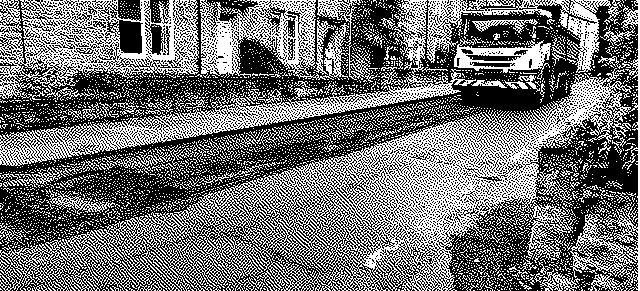
Road being resurfaced with lorry

I’ve spent this week looking forward to this Bank Holiday weekend. I’m not employed as such, so there’s no particular reason I have to take Monday off, but not only do I want to, I feel like I should. After all, public holidays were fought for by previous generations.

I spent the majority of Sunday afternoon with my neighbours at a pot luck on the back lane behind our terrace of houses. Thankfully, the sun came out after the wind and rain earlier in the week!

On the work front, we had the final deliverable meeting for the work we’ve been doing for Catalyst and the Social Mobility Commission. It’s a series of linked resources relating to charities taking their programmes online: a quality framework, benchmarking survey, and toolkit of resources.

For Outlandish, I’ve continued with the productisation work, thinking particularly about the product manager role in a co-operative, and about upcoming products and services around Sociocracy.

I had a chat with a couple of large tech companies this week about roles with them. One flat out told me I was over-qualified for the role I’d applied for, but it looks like we might get some consultancy through the co-op with them. The other is a work in progress.

I made the decision yesterday, after much deliberation, to delete my Patreon account. This means I’m no longer supporting a bunch of creators, and also means I’ve told the ~50 patrons of Thought Shrapnel that I’m taking it in a slightly different direction.

Other than that, I’ve been playing quite a bit of FIFA 20, going for a run and on our exercise bike, and hanging out with the family. One thing that’s had quite a big impact on my life over recent days is workmen re-doing the road surface right next to my home office. The noise!

Next week will be a four-day working week due to the Bank Holiday. I’ve got a couple of days lined up for Outlandish, and then will be applying for a couple of pots of funding and doing some business development. Let me know if you see anything Doug-shaped!


Image shows road being resurfaced next to my house.

The post Weeknote 35/2020 first appeared on Open Thinkering.

31 Aug 03:12

Extending Black life beyond death

by Desmond Cole

Screen Shot 2020-08-30 at 12.34.24 PM

Regis Korchinski-Paquet (October 4th 1990 – May 27th 2020), photo provided by Newediuk Funeral Home

Yes our Black lives matter, but more than that, our Black lives are sacred and invaluable, our spirits eternal. To say that our Black lives matter, here and now, is to say we matter forever, that time can never erase our worth. When a Black person dies, their life still matters, in the present tense. As we fight for every Black life being lived now, and for all those to come, we have yet another responsibility: to hold the preciousness of Black life beyond death.

On May 27 2020, Regis Korchinski-Paquet fell from the balcony of her 24th floor apartment building and died, after being confronted by several Toronto police officers. The Special Investigation Unit, which last week decided not to lay criminal charges against the cops who responded, says Korchinski-Paquet fell from the balcony at 5:39 p.m., and was pronounced dead just after 6 p.m. The report does not mention that Korchinski-Paquet’s body then remained on the ground, in front of the building and in proximity to her grieving family members, for more than five hours.

There has been almost no public reporting or conversation about this blatant act of disrespect and collective callousness by our public officials. The state and its agents can treat Black death as our natural state, devoid of any sanctity or need for care. Such neglect mirrors white indifference to our living struggle, and demonstrates that, within the context of this global white supremacist nightmare, our lives do not matter.

Six summers ago, Missouri police officer Darren Wilson murdered Mike Brown, a Black teenager who was walking in a Ferguson street with his friend. Brown’s body then lay in the street for four and a half hours. We know this because those who fought for Brown insisted we know. In December of 2014, Black Lives Matter demonstrators in Oakland shut down all local train traffic by locking themselves down to the safety rails inside a subway station. Their goal was to stay there for four and a half hours, to remind the world of the indignity of Brown’s death and the sacredness of his life.

Most people don’t know about the neglect that followed Korchinski-Paquet’s death, especially because the media failed to report it. CBC News, for example, cited the hours-long delay in attending to Korchinski-Paquet’s body as an unproven allegation by her family: “As controversy around Korchinski-Paquet’s story swirled, her family gathered for a news conference Thursday outside the highrise where they say she lay dead for some five hours before her body was retrieved.” [my emphasis]

I’m heartbroken that such an important and observable truth can be so easily trivialized as “they say”. On the night Korchinski-Paquet died, I arrived more than four hours after she fell, and I stood near an orange tarp on the lawn in front of the building. Several men in long coats finally removed that tarp around 11:20 p.m, and placed Korchinski-Paquet’s body, which was inside a quilted body bag, into and unmarked van.

Korchinski-Paquet’s body lay within meters of her grieving family, her neighbours, the police, and the swarm of reporters who gave live updates from the scene, for five hours and forty minutes. It should have been reported then, and it must never be forgotten as we continue to assert that Korchinski-Paquet’s life matters.

At a memorial service on July 25, Korchinski-Paquet’s family members gathered at that spot on the lawn of her High Park apartment building, and released twenty-nine white doves into the air, one for every year of their beloved’s life. I felt deep sadness but also gratitude as I watched the birds take flight. This honouring of a Black woman’s spirit, of the eternal within her and all of us, felt restorative and real.

I struggled to hold that feeling this past week as the SIU, as it almost does in nearly every case, refused to hold police legally accountable for Korchinski-Paquet’s death. The public details of the SIU’s investigation are grotesque, as are assertions from the family’s legal team that a second autopsy of Korchinski-Paquet’s body contains more clues about her death. The battle for legal accountability points us to the physical remains of a person whose body we failed to protect in life, and dishonoured in death. We owe Korchinski-Paquet and her family so much more than this.

Those who continue to say “Justice for Regis” know the peril of ongoing police responses to Black people and families in crisis. We know the true function of a months-long SIU investigation that will now be weaponized against Korchinski-Paquet’s family and the Black community at large.

We must also know and speak about the neglect and indifference we so often experience in death. Our liberation includes acts of dignity, ritual, and remembrance, in honour of the humanity that white supremacy is constantly trying to deny us. When we respond to fatal instances of anti-Blackness with acts of respect, love, and care, we extend Black life beyond our moment, back to the ancestors who made a path for us, and into a future where we can finally be free.

31 Aug 03:12

Week Notes 20#35

by Ton Zijlstra

It’s almost unbelievable that 2/3 of the year have already passed. It seems as if we’ve just returned from our week in the snow late February, a few days before the pandemic hit the Netherlands which then led to the lockdown on the Ides of March. And now, the summer months have passed already! Not that I’ve been doing nothing in between, on the contrary, I’ve worked a lot and hard. But there is a certain element of waiting, not for the way it was, more for a new normal or rather a new steadiness. There is a possibility that new normal will kick in next week, when school opens after the summer, and we are likely to have steady week rhythm that doesn’t change every other week. That element of waiting till now makes it feel more like the 183rd of March 2020, than the 30th of August 2020.

This week was a good week, one of relief. First, I finished my work for the European High Value Data study which I started in January. I’m satisfied with the outcome, and in the end the enormous struggle I had in May for the intermediate report made these last steps easier, as since that bottle neck in the work I basically breathe the narrative and results I came up with at that difficult stage. Next week we’ll do a presentation of the work, and there will be some edits afterwards, but that should be it. Although one never knows, as it is an EU project and they can bring unexpected surprises right until the end. Now we will have to wait and see in the coming months what from our output will end up in the new European open data law which enters into force next year.

Second, we came to the end of an intensive time at the NGO that I chair. In June the director announced she would be leaving by September, and that same day a senior project lead announced she had accepted a new job per mid August. With the outgoing director our board worked hard to find suitable replacements, and we have found two new senior project leads, and last Wednesday I signed the contract for a new director, who will start next week. This is good news, which we celebrated with an all hands meeting (half online, half in situ), where we could say goodbye properly to Wilma who is leaving to become deputy head of the national broadcaster’s editorial board, and welcome Serv, a former diplomat, elections observer, author and previously director at a similar NGO.

Things I worked on this week:

  • Wrote out the revised potential policy options for the EU high value study
  • Incorporated feedback into the final revisions of other chapters for the EU study
  • Reworked the macro-economic assessment of the thematic areas I lead for the EU study, and took another dive into the micro-economic costs and benefits to build up macro-economic arguments.
  • Negotiated the contract for the new director of the NGO I chair. Signed the contract during an all-hands meet-up. Phoned the candidates that didn’t make the cut to inform them about that.
  • Restarted our work on an open data publising platform for a province, now their team is back from summer holidays.
  • Worked on non-tech digital transformation aspects for another province.
  • Had a brief meeting with my company’s MT to sync after the others were away on vacation, and to agree on the contract we’ll offer one of our team whose contract is up for renewal at the end of September (we let her know before her own holiday already we’d like to renew her contract to prevent undue worries)
  • Friday E, Y and me drove to Leeuwarden in Friesland to take in an exhibit at the Fries museum, go out for lunch, and then drive on to a campground in Drenthe for the yearly family weekend. Although it is a socially distanced edition of the family meet-up it is good to see each other again, even if from further away than in previous years.
  • Today we celebrated E’s birthday (Which makes it two years since our last birthday unconference. It’s hard to imagine an event like that in our home now).

I did not blog this week at all I notice, due to the time I worked on the EU study and the NGO. This ate away the early morning time I usually use for writing.

This week in … 1913*
This week in 1913 the Peace Palace was opened in The Hague by Queen Wilhelmina. It houses the Permanent Court of Arbitration, and the International Court of Justice (which is the principal judicial body of the United Nations, and he only principal UN organ not located in New York City). It was opened in the midst of WWI, which was possible because the Netherlands remained a neutral country in WWI.

Peace Palace, The Hague
Peace Palace, image by Roman Boed, license CC-BY

(* I show an openly licensed image with (almost) each Week Notes posting, to showcase more open cultural material. See here why, and how I choose the images for 2020.)


This is a RSS only posting for regular readers. Not secret, just unlisted. Comments / webmention / pingback all ok.
Read more about RSS Club
31 Aug 03:11

TBN ride & ghost bike update

by jnyyz

Today was my first group ride with TBN since COVID. Since the route passed close to the Daniel Bertini ghost bike, I also took the opportunity to visit it along the way.

The club re started their riding programs about a month ago, and they have instituted new rules with only pre registered members being allow to go. This presumably helps with contact tracing.

Here are some of us gathered by Finch station on a sunny but windy morning.

Off we go.

This new bike lane along Centre St was a nice surprise. It wasn’t here last year.

There are also some improvements at the intersection with Dufferin.

The bike lanes end at Hwy 7.

Here’s another look at the end of the bike lane. Yes that is a hard curb, rather than a ramp down to the roadway.

Beautiful downtown Snowball provides the essentials for life in Canada.

By this time, I had been dropped by the lead group. The ride north was a bit of a slog since it was mostly uphill, and against a strong headwind. It was a relief to turn back south after Kettleby. On the way back I took a bit of a detour down Keele to see the ghost bike.

There have been some flowers and decorations left on the ghost bike since it was installed, which was nice to see.

I replaced the original hand lettered sign on the bike. Thanks to Yvonne for providing the new sign.

Another short bit of bike lane, on the south side of McNaughton between Jane and Major Mac. I wasn’t in love with this one as it brings bikes very close to cars entering and exiting the shopping center at Major Mac.

Here’s another look at the bike lanes along Centre St.

The sidewalk is separated from the bike lane by a row of concrete planters and a low curb as well. It’s nice to see what kind of infrastructure can be built when there is plenty of road width to play with.

Thanks to Danny Harvey for organizing this Tourist B ride. Sorry we didn’t get a chance to chat this time.

31 Aug 03:11

Apple’s next iPad may look pretty similar to the iPad Pro

by Aisha Malik

Apple’s next entry-level iPad may look similar to the iPad Pro but with a boxier design, according to a new leak.

91mobiles posted design schematics that show a device that has similar slim bezels to the iPad Pro. This iPad would however use Face ID instead of Touch ID. The design schematics also indicate that there may be Magic Keyboard support.

Earlier leaks have suggested that the new device will have a 10.8-inch screen with a single rear camera, as opposed to the two on the iPad Pro. The new iPad is also rumoured to have USB-C too.

It’s unknown what kind of performance the device will offer, but reports indicate that it’ll probably have a newer processor than the A10, which is currently used in the starter model.

As with another other leak, it’s important to take this one with a grain of salt since nothing had been confirmed.

Apple is rumoured to hold a virtual event in September to unveil the new iPhone 12 services, and it’s possible that it may showcase the new iPad alongside the phones as well. However, given the pandemic’s impact on production, there’s a chance that we may have to wait a bit before we see the new iPad.

Image credit: 91mobiles

Source: 91mobiles, Engadget

The post Apple’s next iPad may look pretty similar to the iPad Pro appeared first on MobileSyrup.

31 Aug 03:11

RT @drphiliplee1: Welcome to Britain, a country where the use of home heating systems is not determined by indoor temperature, but by calen…

by Dr Philip Lee (drphiliplee1)
mkalus shared this story from iandunt on Twitter.

Welcome to Britain, a country where the use of home heating systems is not determined by indoor temperature, but by calendar month and a matter of principle.


Retweeted by Ian Dunt (IanDunt) on Sunday, August 30th, 2020 11:59am


25444 likes, 2511 retweets
31 Aug 03:11

Chicken With 40 Cloves of Garlic | Nigella's Recipes | Nigella Lawson

31 Aug 03:10

RT @schadenfraade: A thousand urban planners locked in a room couldn’t come up with a better argument for implementing congestion pricing i…

by Jordan Fraade (schadenfraade)
mkalus shared this story from wtyppod on Twitter.

A thousand urban planners locked in a room couldn’t come up with a better argument for implementing congestion pricing in LA twitter.com/josie_huang/st…

What looks like more than 100 cars filled with Trump supporters caravaning & honking their way down a 10-mile stretch of Ventura Blvd from Woodland Hills to Studio City pic.twitter.com/2tgN4zUcAL


1429 likes, 701 retweets

Retweeted by Well There's Your Problem Podcast (wtyppod) on Sunday, August 30th, 2020 11:23pm


119 likes, 16 retweets
31 Aug 03:10

Building knowledge work toolsets

by Jim

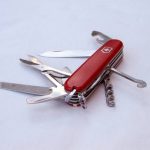
Swiss Army KnifeI first encountered the notion of “affordances” in Don Norman’s excellent The Psychology of Everyday Things (which was renamed The Design of Everyday Things a couple of years later).  From the world of design, an “affordance” is a characteristic of an object that offers clues about how to use or interact with that object; the design of a chair tells us it is something for sitting on, a pitcher is for holding and pouring things. Affordances can be difficult to design in a world of more complex physical objects; they can be nigh on impossible in the design of software tools and applications. One of the things that made early computer systems so confounding was that they offered no affordances to latch onto. Graphical user interfaces were a huge step forward in making software user friendly (or at least not overtly user hostile).

Affordances and the design thinking that goes into crafting good ones are rooted in the physical world; dexterity, reach, visual acuity, strength, all factor in to design. This is the world of ergonomics or human factors. Transferring that knowledge to the abstract world of software and the objects in our environment with significant software elements is no simple task. You need only think of the remote control for your DVR and set top box or the user interface of your bank’s ATM to appreciate how difficult this design work can be.

One failure (limitation?) of modern application design is affordances that run out of steam before users grasp the full capabilities of an application. If all chairs looked like a Shaker chair, how would we ever figure out what to do with a BarcaLounger; or the pilot’s cockpit seat in an F-16? The menus and window layouts of your typical desktop application (Word, Excel, Powerpoint, Outlook) get everyone up and running quickly, but they do nothing to hint at, much less reveal, any deeper capabilities or opportunities. So, for most users, most of the time, those opportunities go unrecognized and the capabilities never get exercised.

What separates power users from the rest of us, then, is a willingness to dig into users manuals (RTFM as a career advancement strategy) and to experiment and play with their tools to figure out what is possible. Otherwise smart people take marketing hype about “easy and intuitive” software seriously and judge themselves deficient when good software tools are often neither. The opportunity wasted is tremendously sad.

So, what do we do to help more people get more value out of their software? My specific interests happen to be about knowledge work. What can we do to help knowledge workers push their tools farther and better? Put another way, why do we settle for knowledge workers leveraging such limited subsets of the tools they already use or avoiding tools or techniques that might unlock significant new insights and outputs?

Although I’ve been talking about affordances I don’t think the blame or the answer lies exclusively with software designers. More realistic claims from software marketers wouldn’t hurt although I’m not holding my breath. As software users, one thing we can do is invest time to suss out more of the design models in the heads of the software developers who build the tools we are seeking to leverage.

Word processing software offers examples of what I’m thinking about.

Microsoft Word is likely the dominant word processor on the planet. You can find it installed on most any desktop or laptop computer you encounter. It ushered in the world of WYSIWYG computing where one goal of the interface was to represent your work in as close to final form as possible. Implicit in that design was that the “final form” was a printed page.

A consequence of that design choice was that you now had one tool that spanned what had once been a series of discrete stages in the process of bringing an idea to the printed page. Writing, editing, design, and layout are quite different cognitive activities. In a pre-WYSIWYG world, each of these steps had its own set of professionals, its own set of standards and practices, and its own set of tools. With Word you now have a single tool that can serve at all stages (at least for 80% of cases).

Whether that is a good thing is another question. Having one tool makes it more difficult to see that the activities in each stage are quite different. When you’re working out the structure of an argument, there’s little point to be worrying about what typeface and font size works best for a section heading. But a single tool blurs that distinction and boundary. You can be enticed into playing with those problems or thinking they are important to deal with now while your fundamental argument or storyline is still a mess.

A tool that is suitable across all these steps may be valuable within an organization. But at the price of obscuring the differences between different process stages. You could manage that problem if you made an effort to make the different stages of the process more explicit. But now the organization and its people need to work at cross purposes to the tools. You have a single tool obscuring the differences in the process while you try to highlight those same differences as you manage the development and evolution of any particular deliverable.

Scrivener is a popular word processing tool, especially among authors dealing with longer form writing projects. Its user experience embodies a very different model of the writing process than Microsoft Word. Scrivener makes the various stages of writing–drafting, editing, design, layout–visible and identifiable in its user interface. In particular, WYSIWYG is a secondary or even tertiary goal in the user experience.

Moreover, Scrivener was designed in a time when the printed page is only one of many target forms for final deliverables. It also supports multiple formats for electronic books, PDF files, and the web. To that end, the design of Scrivener separates the activities for structuring a draft output from formatting it for final output.

For users accustomed to the WYSIWYG model embodied in Microsoft Word this is a source of frequent confusion. Learning how to invoke specific functions and features in Scrivener isn’t terribly helpful until new users grasp the fundamentally different process model embedded in the design of the application.

Software marketers don’t like to acknowledge that software users require multiple individual software tools to handle the complexities of modern knowledge work.It is not their job to figure out how to fit multiple tools together to get work done.

This is an element of your job description that hasn’t been acknowledged or addressed in the average organization. You will likely be issued a starter set of basic tools. But don’t expect useful guidance on how to use them in concert to accomplish the work expected of you. It is yours if you hope to be an effective knowledge worker.

The post Building knowledge work toolsets appeared first on McGee's Musings.

31 Aug 03:08

Twitter Favorites: [bmann] Did an epic bike ride today with @RachaelAshe down to River District where @vanmuralfest murals are… https://t.co/MDMOD6891b

Boris Mann @bmann
Did an epic bike ride today with @RachaelAshe down to River District where @vanmuralfest murals are… twitter.com/i/web/status/1…