Shared posts

03 Oct 21:58

Marshall Headphones kündigt Major IV an

by Volker Weber

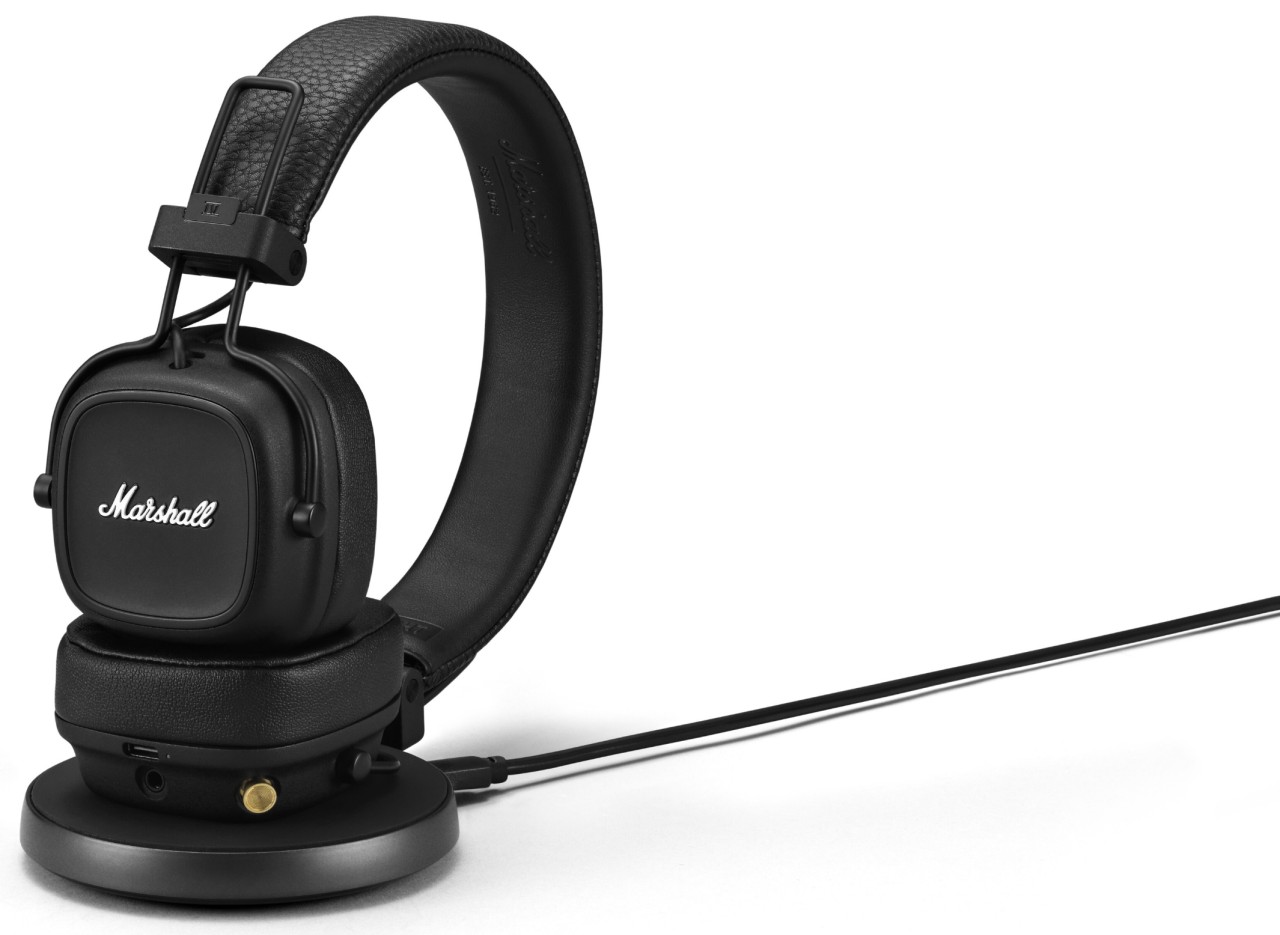
MarshallMajorIVQi612937123.jpg

Der vierte in einer langen Reihe klassisch anmutender Headsets. Der Major ist das Einstiegsmodell. On-Ear, klein und kompakt. Neu bei diesem Modell: Weichere Polster, Akku mit 80(!) Stunden Laufzeit, aufzuladen (auch) per Qi.

Wie immer tut der Einstiegspreis weh. Major IV soll zunächst 149 Euro kosten. Der Major III ist aktuell bei 87 Euro, ohne Bluetooth gar bei 53 Euro. Sehr interessante Alternative für 137 Euro ist der Marshall MID mit ANC. Das ist ein Over-Ear-Modell mit aktiver Geräuschunterdrückung und einem stabileren Bügel.

Der Marshall Major IV ist bestellt. Ich werde berichten.

03 Oct 21:58

Eduroam Setup for Ubuntu 20.04

by Martin

Image: Ubuntu 20.04 Eduroam Setup

Over the years, setting up a Linux notebook to access Eduroam Wifi networks around the world has become quite easy. While there is a generic installer script that institutions can customize to help their users to set up their Linux notebook, it has become easy enough in the meantime to just set it up with the standard network manager dialog when connecting to ‘Eduroam’ for the first time. As I recently migrated from Ubuntu 16.04 to 20.04, I had a look if anything had changed in the setup.

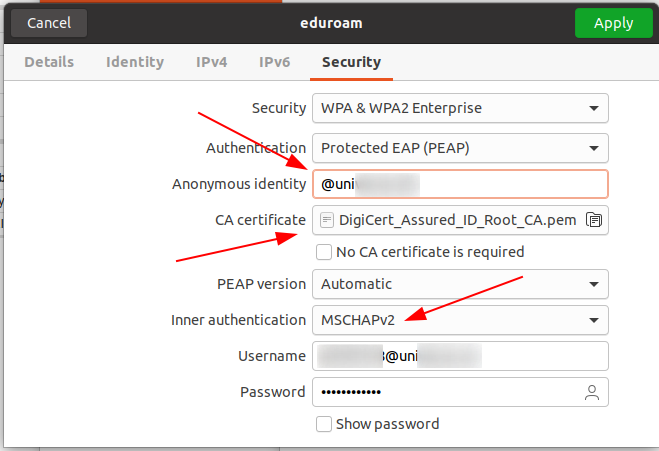
Fortunately it has not and the screenshot shows which parameters are important to set.

An Eduroam ID pretty much looks like an email address and the ‘Anonymous Identity’ should not contain the full ID but only the @ + the part after it. This part of the identity is required for roaming, so the eduroam network can find the authentication server of your home institution. The full ID can but should not be put in here, as it is sent over their air unencrypted.

In the past, many have Eduroam networks have used their own certificates to authenticate their subscribers, and these had to be downloaded from their website. Fortunately, many institutions now use well known and accepted root certificates that come with the operating system and are stored in /etc/ssl/certs. In my case above, Digicert’s root certificate is used.

The inner authentication method also differs between institutions and in my case, MSCHAPv2 is used. And finally the full Eduroam username has to be given as well as the password. And that’s pretty much it for the basic setup.

For added security, it’s good to check the domain suffix of the certificate given by the home network authentication gateway. This is not done by default and can be exploited by an attacker to get to the password by just sending any certificate that was signed, e.g. by Digicert in the example above. Unfortunately, there is no input field for this and hence, this part of the configuration has to be added manually to the configuration file that is created by NetworkManager. Also, it has to be put back into the configuration file manually whenever something is changed in the graphical network manger. Have a look at this post for the details.

03 Oct 21:58

COVID-19 Journal: Day 194

by george
Toast. It's great. And co-responsible for my descent/ascent into a somewhat ascetic diet. When I say ascetic, I mean very straightforward. My favourite meal has become a carrot and a cucumber chopped into brawny juliennes and served with hummus straight from the pot bought from the shop. It is now a personal pandemic victory to never have made my own hummus.But! Yesterday, I smashed my asceticism
03 Oct 21:58

Millions of people experienced unhealthy air in 2020

by Nathan Yau

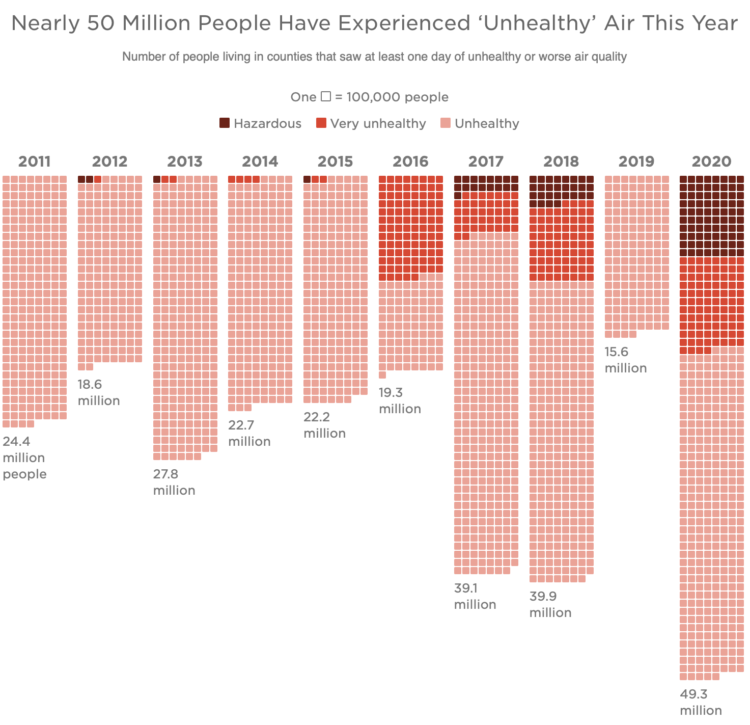
NPR estimated how many people have experienced unhealthy air this year, largely in part to the wildfires on the west coast:

An NPR analysis of U.S. Environmental Protection Agency air quality data found that nearly 50 million people in California, Oregon and Washington live in counties that experienced at least one day of “unhealthy” or worse air quality during wildfire season so far this year. That’s 1 in 7 Americans, an increase of more than 9 million people compared with 2018, the worst previous year.

Oh.

Tags: air quality, NPR, wildfire

03 Oct 21:58

Microsoft kündigt Surface Laptop Go an

by Volker Weber

Feature_08-40bf14e35f821a9e.jpg

O-Ton Microsoft:

Im neuen Surface Laptop Go vereint Microsoft hochwertiges Design mit Leistungsfähigkeit. Es ist der bislang leichteste sowie preiswerteste Surface Laptop. Ausgestattet ist das kompakte Device mit einem hochauflösenden 12,4-Zoll-PixelSense-Touchscreen-Display, einem großzügigen Präzisions-Touchpad und einer vollwertigen Tastatur mit 1,3 Millimeter Tastenhub für komfortables Tippen. Surface Laptop Go läuft mit der 10. Generation von Intels i5 Quad-Core-Prozessor und besitzt, je nach Variante, bis zu 16 GB RAM und bis zu 256 GB Speicher. Für eine sichere Geräteanmeldung verfügen bestimmte Modelle über einen Power Button mit Fingerabdruckleser, der via Windows Hello eine schnelle Authentifizierung mittels einer Berührung unterstützt – oder auch direkten Zugriff auf persönliche OneDrive-Dateien gewährt. Dank Schnellladefunktion und einer Akkulaufzeit von bis zu 13 Stunden hat Surface Laptop Go genug Ausdauer für einen ganzen Arbeitstag. Für eine hohe Video- und Soundqualität, beispielsweise bei Videokonferenzen, besitzt das Gerät eine 720p-HD-Kamera, Studio-Mikrofone sowie Omnisonic Lautsprecher und unterstützt Dolby Audio. Darüber hinaus besitzt das Device sowohl einen USB-A als auch einen USB-C-Anschluss. Surface Laptop Go kommt in drei Farben: Eisblau, Sandstein und Platin.

Mit seinem geringen Gewicht, der Eingabemöglichkeit via Touch und der vollwertigen Tastatur eignet sich Surface Laptop Go für den Einsatz im Bildungsbereich. Für Kund*innen aus Bildung und Forschung werden spezielle Modellvarianten des Geräts erhältlich sein.

Surface Laptop Go ist für Privat- wie Firmenkunden in Deutschland ab sofort vorbestellbar und ab dem 20. November 2020 verfügbar. Privatkunden erhalten Surface Laptop Go ab einem Preis von 613,14 Euro (UVP inkl. MwSt.). Bildungseinrichtungen bestellen Surface Laptop Go ab einem Preis von 613,14 Euro (UVP inkl. MwSt.) über autorisierte Reseller. Interessierte Firmenkunden beziehen Surface Laptop Go mit Windows 10 Pro über autorisierte Reseller ab einem Preis von 876,34 Euro (UVP inkl. MwSt.) und erhalten mehr Informationen unter Surface Laptop Go for Business.

Bildschirm vom Surface Pro, Design vom Surface Laptop. Kling spannend. Der Core i5 ist noch aus der 10. Generation, eine Hello-IR-Kamera fehlt. Von dem 4/64 Modell sollte man die Finger lassen, das Top-Modell gibt es nur für Firmenkunden.

Privatkunden:

  • Intel Core i5 | 4 GB RAM Arbeitsspeicher | 64 GB Speicher | Windows 10 Home im S Modus | 613,14 Euro (UVP, inkl. MwSt.) – in Platin
  • Intel Core i5 | 8 GB RAM Arbeitsspeicher | 128 GB Speicher | Windows 10 Home im S Modus | 778,86 Euro (UVP, inkl. MwSt.) – in Platin, Eisblau und Sandstein
  • Intel Core i5 | 8 GB RAM Arbeitsspeicher | 256 GB Speicher | Windows 10 Home im S Modus | 973,82 Euro (UVP, inkl. MwSt.) – in Platin, Eisblau und Sandstein

Firmenkunden:

  • Intel Core i5 | 8 GB RAM Arbeitsspeicher | 128 GB Speicher | Windows 10 Pro | 876,34 Euro (UVP, inkl. MwSt.) – in Platin, Eisblau und Sandstein
  • Intel Core i5 | 8 GB RAM Arbeitsspeicher | 256 GB Speicher | Windows 10 Pro | 1071,29 Euro (UVP, inkl. MwSt.) – in Platin, Eisblau und Sandstein
  • Intel Core i5 | 16 GB RAM Arbeitsspeicher | 256 GB Speicher | Windows 10 Pro | 1314,99 Euro (UVP, inkl. MwSt.) – in Platin, Eisblau und Sandstein

Bildungseinrichtungen:

  • Intel Core i5 | 4 GB RAM Arbeitsspeicher | 64 GB Speicher | Windows 10 Pro | 613,14 Euro (UVP, inkl. MwSt.) – in Platin
  • Intel Core i5 | 8 GB RAM Arbeitsspeicher | 128 GB Speicher | Windows 10 Pro | 778,86 Euro (UVP, inkl. MwSt.) – in Platin, Eisblau und Sandstein
  • Intel Core i5 | 8 GB RAM Arbeitsspeicher | 256 GB Speicher | Windows 10 Pro | 973,82 Euro (UVP, inkl. MwSt.) – in Platin, Eisblau und Sandstein
  • Intel Core i5 | 16 GB RAM Arbeitsspeicher | 256 GB Speicher | Windows 10 Pro | 1.217,51 Euro (UVP, inkl. MwSt.) – in Platin, Eisblau und Sandstein
03 Oct 21:58

Microsoft kündigt neue Versionen von Surface Pro X an

by Volker Weber

Feature_09_A_d-1000x562.jpg

O-Ton Microsoft:

Für Kunden, die insbesondere von unterwegs mehr Leistung benötigen, hat Microsoft die zwei bisher leistungsstärksten Ausstattungsvarianten von Surface Pro X aufgefrischt: Sie erhalten den neuen Microsoft SQ2-Prozessor. Optimierte Anwendungen sorgen darüber hinaus für eine längere Akkulaufzeit von bis zu 15 Stunden und eine verbesserte Performance über alle Konfigurationen hinweg – beispielsweise durch neue Versionen von Microsoft Edge und Microsoft Teams für Windows on ARM, die schneller und energieeffizienter laufen. Für Entwickler*innen wurde der Visual Studio Code aktualisiert und für Windows on ARM optimiert. Zudem hat Microsoft angekündigt, den Support für x64 Apps zu erweitern.

Surface Pro X gibt es künftig auch in der Farbe Platin. Die zwei neuen Surface Pro X Varianten mit Microsoft SQ2-Prozessor sind für Kund*innen in Deutschland ab sofort ab einem Preis von 1.656,17 Euro vorbestellbar und ab dem 27. Oktober 2020 erhältlich. Firmenkunden erhalten die neuen Modelle über autorisierte Reseller ab einem Preis von 1.753,65 Euro (UVP inkl. MwSt.) und erhalten mehr Informationen unter Surface Pro X for Business. Darüber hinaus hat Microsoft drei neue Farben für das Surface Pro X Signature Keyboard mit Slim Pen Bundle angekündigt: Platin, Eisblau und Mohnrot. Das neue Zubehör ist ebenfalls ab sofort für einen Preis von 287,55 Euro (UVP inkl. MwSt.) auf dem deutschen Markt vorbestellbar und wird am 27. Oktober 2020 verfügbar.

Privatkunden bekommen Windows 10 Home, Firmenkunden Windows 10 Pro.

Privatkunden:

  • Microsoft SQ2 | 16 GB RAM Arbeitsspeicher | 256 GB Speicher | Windows 10 Home on ARM | 1.656,17 Euro (UVP, inkl. MwSt.) - mit LTE in Platin und Mattschwarz
  • Microsoft SQ2 | 16 GB RAM Arbeitsspeicher | 512 GB Speicher | Windows 10 Home on ARM | 1.997,34 Euro (UVP, inkl. MwSt.) - mit LTE in Platin und Mattschwarz

Firmenkunden:

  • Microsoft SQ2 | 16 GB RAM Arbeitsspeicher | 256 GB Speicher | Windows 10 Pro on ARM | 1.753,65 Euro (UVP, inkl. MwSt.) - mit LTE in Platin und Mattschwarz
  • Microsoft SQ2 | 16 GB RAM Arbeitsspeicher | 512 GB Speicher | Windows 10 Pro on ARM | 2.094,82 Euro (UVP, inkl. MwSt.) - mit LTE in Platin und Mattschwarz

Dazu kommt noch Tastatur und Stift:

  • Surface Pro X Signature TypeCover mit Slim Pen, Eisblau, Mohnrot oder Platin – 287,99 Euro (UVP, inkl. Mwst.)

Der aktuelle Marktpreis für die Tastatur mit Stift liegt allerdings 100 Euro unter dem UVP.

Ich halte das für ein sehr schlankes Upgrade. SQ1 basiert auf Qualcomm Snapdragon 8cx, SQ2 sollte deshalb auf Qualcomm Snapdragon 8cx Gen 2 basieren, kommt aber nur mit LTE und nicht 5G. Spannender ist sicher die kommende 64bit x86-Emulation, die im November im Insider-Build Premiere haben soll.

03 Oct 21:57

Apple Watch 6 :: The best yet

by Volker Weber

80b674bb4621f8a0ffd6376b301ad65b

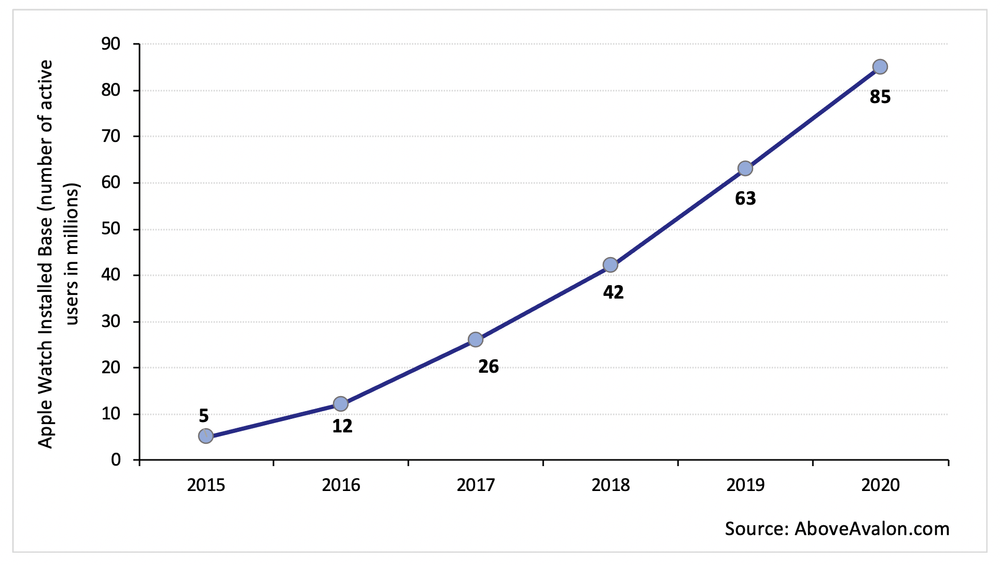
After having upgraded the Apple Watch Series 5 to watchOS 7 and then replacing Series 5 with Series 6, I thought about what possibly could be the outstanding feature. Here is the run-up so far:

  • Original Apple Watch (stainless steel): Finally an Apple Watch and the best fitness tracker yet. After the OS 2.0 update, apps became usable, because they could run on the watch itself.
  • Series 1: No idea, never had that one.
  • Series 2 (space grey aluminium): A welcome speed update, officially waterproof.
  • Series 3 (ceramic white): LTE made a huge difference, because I could leave the phone behind.
  • Series 4 (stainless steel): a new design with a larger and much better display.
  • Series 5 (black steel): the always-on display made this so much better.

Did you notice I never mentioned the GPS, the compass, the barometer, the ECG? Those were headline features, but I never noticed them in my daily use. Also, each watch was faster than the one before, and that just becomes normal.

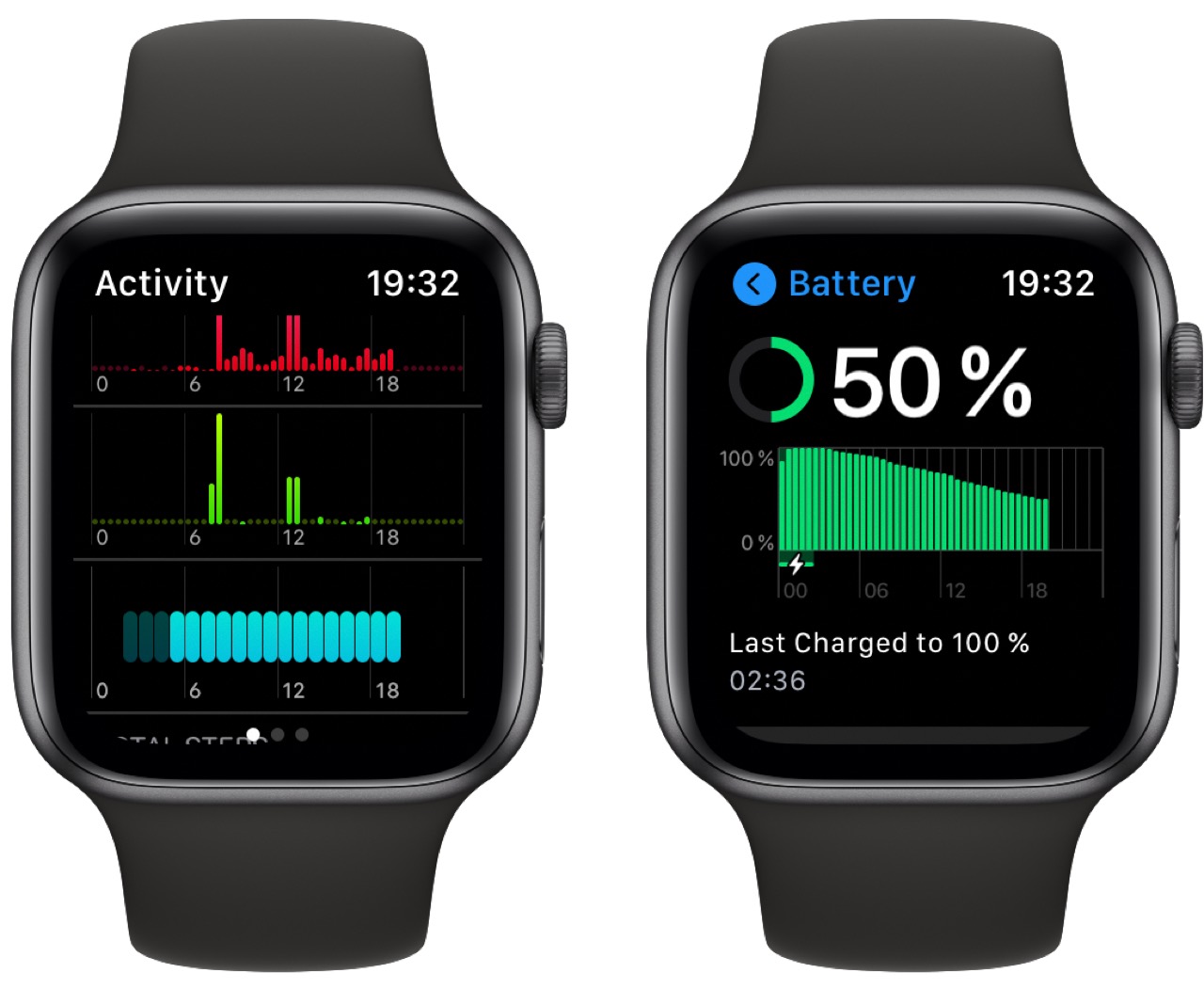
So what is the big thing in Series 6? The SpO2 sensor? The always-on altimeter? Actually, no. The big difference is battery life. While I was struggling with watchOS 7 on Series 5, even after resetting it, it's no concern now. I still have the battery widget on my watchface, but I do not need it anymore.

516a507bd358595a2b479c4658a07c83

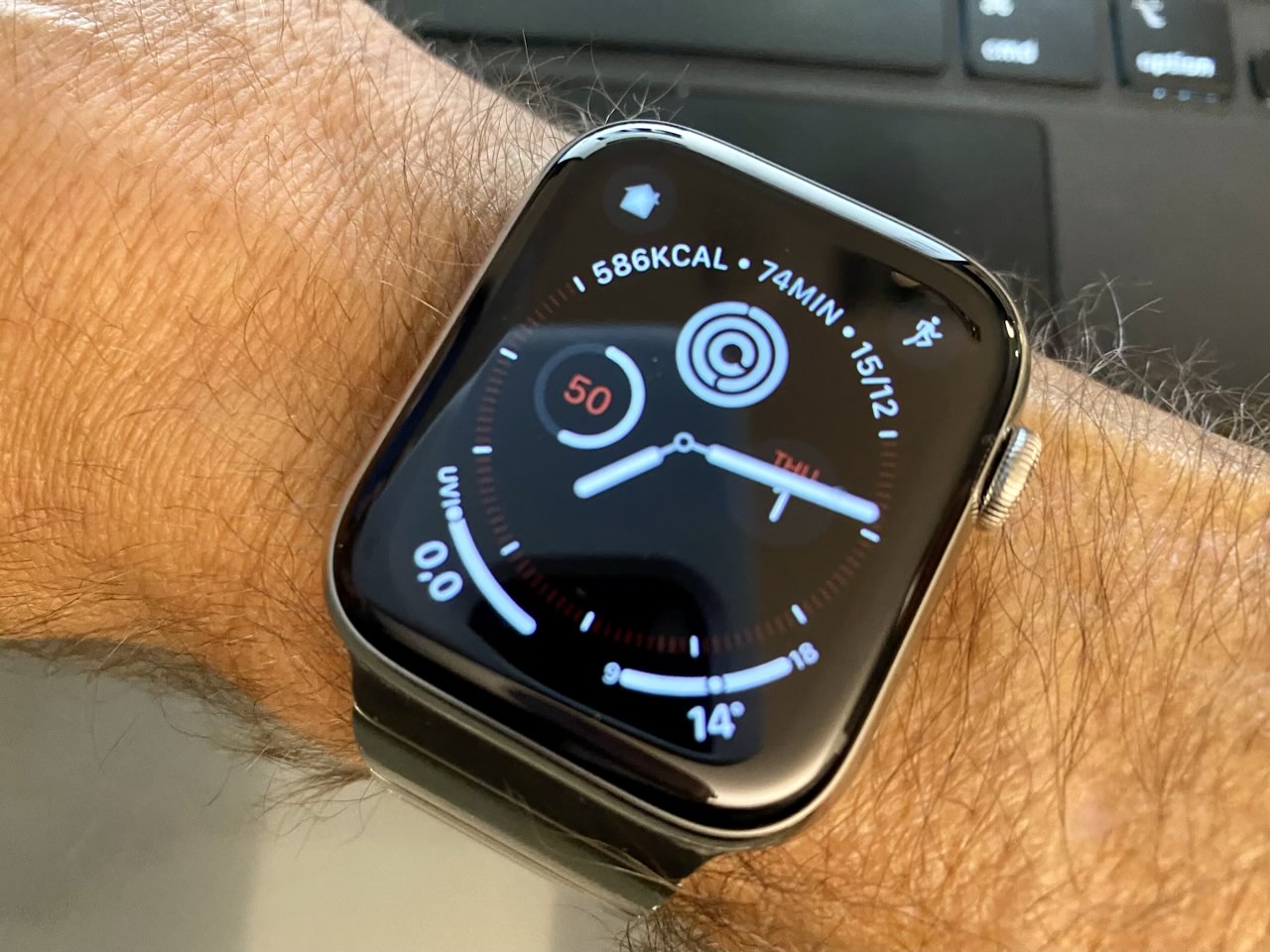
I tried sleep tracking for a week, but it stresses me out. I am back to taking Watch off in the evening, putting it on the charger, and then putting it back on when I wake up. After 3.5 hours of deep sleep I briefly woke up, put the watch back on at 2:30 in the morning, and 17 hours later, I am still at 50% charge. In the photo above, the display is in its off state. You see that only because there is no second hand which would need to be updated every second. I never bother to light up the display. That is how bright it is on Series 6.

That is the big difference for now. I will see what else comes up.

03 Oct 21:57

Meeting… Gaëlle Sharma, Technical Product Manager at The New York Times

by The NYT Open Team
Illustration by Claire Merchlinsky

“Meeting…” is an ongoing series from NYT Open that features New York Times employees from different corners of the company.

What is your name?
Gaëlle Sharma

What are your pronouns?
She/Her

What is your job?
I am the technical product manager on the Authentication team.

What does that mean?
I help make sure that New York Times readers can log-in and register seamlessly on our website and apps.

How long have you been at The Times?
A little less than a year.

Most Times employees are working remotely right now. Where are you working from these days?
I am working from Brooklyn. My office space also doubles as my living room, dining room and kitchen. We make the most of the space!

How do you start your day?
I start my day by brewing pour-over coffee while listening to “The Daily” podcast. I like to start slow and gradually take the day in before I dive into my to-do list.

What is something you’ve worked on recently?
Recently, the team worked on stress testing the Authentication system in preparation for the November election news cycle. We conduct periodic stress tests to observe how our login and registration reacts under heavy traffic and to identify any improvements we may need to make.

Tell us about a project you’ve worked on at The Times that you’re especially proud of.
Earlier this year, The Times added an option for readers to register and log-in to The Times using their Apple accounts. Launching this new feature required close coordination across many teams. However, a couple days before our scheduled launch, the entire company began working from home due to the pandemic. We found ourselves unable to collaborate in person, as planned. Despite this new challenge, none of the teams missed a beat.

What was your first job?
In my first job, I was a fellow at a community development bank on the South Side of Chicago. I’ve always been passionate about helping people.

What is something most people don’t know about you?
I used to compete in ballroom dancing and to this day I remain a big fan of the sport.

What is your secret to career success?
Always be learning!

What is your superpower?
I am extremely curious, which leads me to consistently discover new ideas.

What are you inspired by?
I am inspired by people who have changed the world for the better. For example, I marvel at the work of Dr. S. Josephine Baker who transformed the field of public health and child hygiene in New York City in the early 1900s.

What is your best advice for someone starting to work in your field?
Start by shadowing an experienced technical product manager and learn as much as you can from observing how they partner with their team.

More in “Meeting…”

Meeting… Jeremy Gayed, Lead Software Engineer
Meeting… Katerina Iliakopoulou, Lead Software Engineer
Meeting… Nimpee Kaul, Lead Program Manager at The New York Times


Meeting… Gaëlle Sharma, Technical Product Manager at The New York Times was originally published in NYT Open on Medium, where people are continuing the conversation by highlighting and responding to this story.

03 Oct 21:57

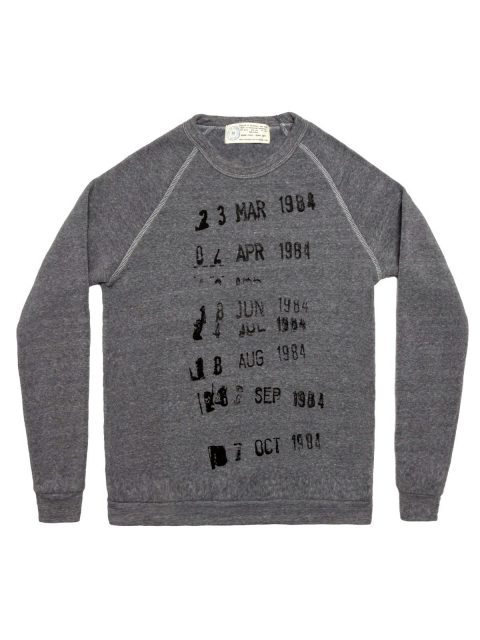
Library Stamp Jumper

by swissmiss


I hope this Library Stamp Jumper will be back in stock soon. So good.

03 Oct 21:57

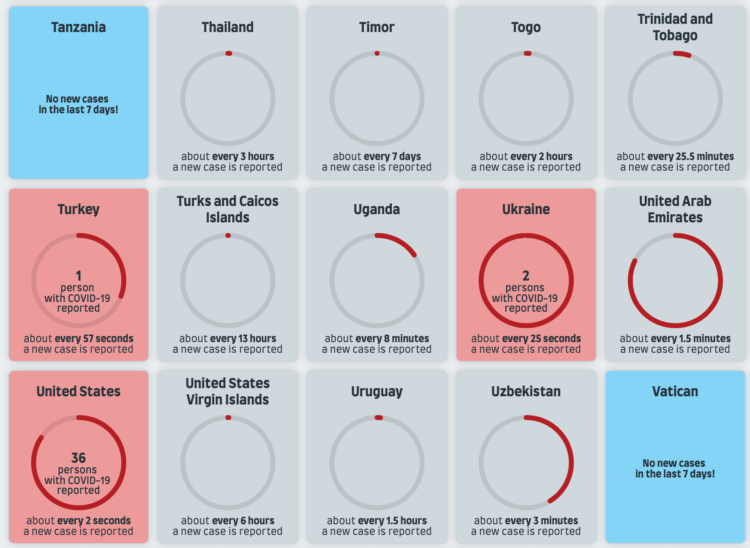
Sonification of Covid-19 rates

by Nathan Yau

You’ve seen the line charts showing case rates over time. The focus is on trends and whether things are getting better or worse. This piece by Jan Willem Tulp focuses on the current rates with tickers and a sonification of new cases.

Ding, ding, ding. There’s a new ding for each new case as you look at the page, based on a weekly average for each country tracked by Our World in Data.

Tags: coronavirus, Jan Willem Tulp, sonification

03 Oct 21:56

The internet needs our love

by Lindsey Shepard

It’s noisy out there. We are inundated with sensational headlines every minute, of every day. You almost could make a full-time job of sorting the fun, interesting or useful memes, feeds and reels from those that should be trashed. It’s hard to know what to pay attention to, and where to put your energy. With so much noise, chaos and division, it seems that one of the only things we all have in common is relying on the internet to help us navigate everything that’s happening in the world, and in our lives.

But the internet isn’t working.

I’m not talking about whether you have a wi-fi signal or can get online for work or school — in that sense the internet is doing its job for most of us, connecting billions of people around the globe. What I’m talking about is the magic. This amazing portal into the human experience has become a place filled with misinformation, corruption and greed. And in recent years we’ve seen those with power — Big Tech, governments, and bad actors — become more dominant, more brazen, and more dangerous. That’s a shame, because there’s still a lot to celebrate and do online. Whether it’s enjoying the absurd — long live cat videos — or addressing the downright critical, like beating back a global pandemic, we all need an internet where people, not profits, come first.

So it’s time to sound the alarm.

The internet we know and love is fcked up.

Let’s unfck it together. 

We are asking you to join us, and start a movement to create a better internet.

Let’s take back control from those who violate our privacy just to sell us stuff we don’t need. Let’s work to stop companies like Facebook and YouTube from contributing to the disastrous spread of misinformation and political manipulation. It’s time to take control over what we do and see online, and not let the algorithms feed us whatever they want.

You probably don’t know the name Mozilla. You might know Firefox. But we’ve been here, fighting for a better internet, for almost twenty years. We’re a non-profit backed organization that exists for the sole purpose of protecting the internet. Our products, like the Firefox browser, are designed with your privacy in mind. We’re here to prove that you can have an ethical tech business that works to make the internet a better place for all of us. We stand for people, not profit.

But we can’t fight this fight alone. Big tech has gotten too big. We need you. We need people who understand what it is to be part of something larger than themselves. People who love the internet and appreciate its magic. People who are looking for a company they can support because we are all on the same side.

We know it’s going to take more than provocative language to make this real. Which is why at the heart of this campaign are ways all of us can participate in changing the internet for the better. That’s what this is all about: working together to unfck the internet.

To start we’re giving you five concrete and shareable ways to reclaim what’s good about life online by clearing out the bad:

  1. Hold political ads accountable for misinformation: Download the Firefox extension that shares the political ads you see on Facebook to a public database so they can be tracked and monitored.
  2. Watch The Social Dilemma on Netflix & read our recommended readings from diverse voices: This #1 trending documentary unpacks the issues of the attention economy, and our compendium broadens the discussion by bringing more perspectives to the conversation.
  3. Get the Facebook Container extension: Prevent Facebook from following you around the rest of the web — which they can do even if you don’t have an account.
  4. Flag bad YouTube recommendations: This extension lets you report regrettable recos you’ve been served, so you can help make the engine better for everyone.
  5. Choose independent tech: Learn more about other independent tech companies and their products. Like shopping locally, using products like Firefox is a great way to vote your conscience online.

We’ll be updating the list frequently with new and timely ways you can take action, so check back regularly and bookmark or save the Unfck The Internet landing page.

Now, it’s time to get to work. We need you to speak up and own it. Tell your friends, your coworkers and your families. Tell the world that you’ve made the choice to “internet” with your values, and invite them to do the same.

It’s time to unfck the internet. For our kids, for society, for the climate. For the cats.

The post The internet needs our love appeared first on The Mozilla Blog.

03 Oct 21:56

Sts’úkwi7: Interconnectedness and balance

by Chris Corrigan

Sts’úkwi7 is the generic name for salmon in Skwxwú7mesh, and in our second module in the Mi tel’nexw leadership program, Lloyd Attig offered practical grounding in his teachings on the medicine wheel as a way of exploring balance.

My home island is a rock rising out of the fjord that makes up the southern half of Skwxwú7mesh Temíxw. We have a few lakes here and creeks that swell in the fall when the rains return and fill the sea with fresh water infused with the taste of our island. Salmon, who have been living their lives in the Pacific ocean for 2, 3, or 4 years since they hatched in these creeks are able to discern the taste of their home stream in the great mix of waters that fills the Salish Sea. They use all of their senses to find their way home at all costs where they spawn and then die, for their life cycle begins and ends in the same stream, and a powerful drive returns them to their source.

Because of this symmetry in their life cycles, the faithfulness of their return to their places of origin, and their crucial role in the ecology of the Pacific coast, salmon are deeply important animals in both traditional and settler cultures here. They are powerful symbols of active balance and they are essential to the health of coastal forests. Up to 30% of the nitrogen used by the giant trees of our temperate rainforests originates in the ocean and is carried to every part of the land through the capillary network of salmon coming home to spawn and die. In this sense they literally connect land and sea, trees and ocean, erasing the boundaries, mixing nutrients and diversifying the health and wellbeing of the entire ecosystem.

Lloyd Attig, used the salmon as his inspiration to lead us through a series of exercises based on the medicine wheel, to examine interconnection and balance in our own lives. Leadership of all kinds demands that we place ourselves in challenging positions where we are likely to be knocked around, knocked off balance and create damaging dynamics for ourselves and others. I know Lloyd is an accomplished boxer, and so his sense of balance and grounding is born of years of experience in the ring. Tip off balance and the moment you are pushed, you collapse and fall.

For Plains Cree people, and many other indigenous cultures the medicine wheel is a powerful symbol of balance and renewal, just as the salmon is here. Breaking the wholeness of the world into four quadrants, it gives meaning and coherence to the stages of life, the seasons of the year, and the interdependence of the human faculties of spiritual, mental, emotional and physical well being. In our course last week Lloyd led us through an exercise to look at how balanced our every day lives are. Working with the mundane – fine granularity and plenty of examples – helps to reveal patterns of behaviour that indicate where to place our attention to address a current imbalance. This kind of inventory is helpful not as a one time thing, but in an ongoing way, reflection within a framework to see where the attention needs to be.

But the medicine wheel is not simply a tool for personal self-development. Individuals are not solo practitioners in a world without influence. We are embedded in high and higher levels of organization, teams, families, circles of friends, organizations, communities, nations. And we are also embedded in time too, as products of everything we have inherited and living ancestors to the thousands of generations yet to come. For me, practicing the balance and interconnection of salmon is to place oneself in relation to everything upon which I am dependant and which, even in some small way, is dependant on me.

Pacific salmon really are amazing creatures because they embody this teaching so perfectly. All five species that make our coast home exhibit the same circular life cycle of hatching in freshwater, growing and travelling over thousands of kilometres during their short span and then fiercely making their way back to the very gravel bed where they were hatched. Their entire life cycle is in service of the next generation, and becasue they die right after spawning, they never meet their young and never pass on knowledge or guidance. As we say, salmon are born orphans and die childless and yet the cycle of life continues over generations.

As individuals, salmon do everything in their power to grow strong and healthy while they are at sea. Some species, like sockeye, stop eating once they return to freshwater, meaning that they face an upstream journey of sometimes hundreds of kilometres against an autumn freshet with only the fat and muscle in their bodies to power them. Their singular drive and commitment to return assures the survival of their line. When they die, their bodies decay in the river and become food for the tiny creatures upon which their offspring will feast, or are carried away by animals into the forest to feed to soil and provide fresh sources of nitrogen and minerals to the hungry trees of the temperate rainforest.

In terms of a model for living balance and interconnection, there is no better standard than the pacific salmon. Tools like Lloyd’s medicine wheel give us gateways through which we can explore this deep relationship our own self has to all the systems in which we are embedded. Leadership which is in the service of life, at a minimum, requires this perspective and practice.

03 Oct 21:56

I Have Opinions

by Greg Wilson

I’m very grateful to Prof. Peggy Storey for giving me a chance to talk with her students last week, and for posting the recording online. I was a bit jealous and completely unsurprised to discover that she has in fact met Bruce Springsteen…

03 Oct 21:55

Walk the Walk

The other day I was looking to make a bunch of graphs showing some recent data from the CDC about excess mortality due to COVID-19. The idea was to take weekly counts of deaths over the past few years, both overall and from various important causes, and then show how the weekly counts from this year compare so far. The United States has a very large population, which means that a fairly predictable number of people die each week. Over the course of a year, the average number of people expected to die moves around. More people die on average in the Winter rather than the Summer, for example. The smaller the population the noisier things will get but, on the whole, most U.S. states are large enough to have a fairly stable expectation of deaths per week. Some counties or cities are, too. Overall, our expectations for any large population will be reasonably steady—absent, of course, a shock like the arrival of a new virus.

Competing Risks

The proper estimation of excess mortality is not just a matter of reading off the difference between the average number of people who die in a given period and the number who die in some period of interest where conditions have changed. People can only die once. If someone dies of COVID-19, for example, they are no longer in a position to die of heart disease or complications of diabetes or some other cause. Had they not died of COVID-19, some victims of the disease would have passed away from one of these other causes during the year. This is the problem of competing risks, a member of the family of problems arising from censored data. Causes of death “compete”, so to speak, for the life of each person. In any particular case, if one of them “wins” then that person is no longer there to be claimed by one of the other potential causes later on. As an estimation issue, the problem has been recognised at least since 1760, when Daniel Bernoulli tried to assess the benefits of inoculation against smallpox. In his effort to figure out the quantity of counterfactual lives that would have been lost in the absence of inoculation, Bernoulli used what we’d now call a life table of chances of death at any given age. Science being the relatively compact enterprise that it was in the eighteenth century, that table had been constructed based on “curious tables of births and funerals at the city of Breslaw” [i.e. Breslau, or Wrocław] by the English astronomer Edmond Halley.

The problem is a subtle one with consequences for the interpretation of mortality rates. For example, in the wake of an epidemic that kills a lot of people, average mortality can decline in specific groups or across the population as a whole, simply because some of those who would (counterfactually) have been at higher risk of dying as part of the ordinary flow of events and passage of time instead (in fact) end being victims more or less all at once of the epidemic.

I set aside these complications here. All I wanted to do was show the prime facie evidence that there had been a clear and sudden increase in deaths in the wake of the arrival of COVID-19 in the United States. Precisely parceling out any suppressive effects on mortality rates from other causes is in some ways a secondary problem. COVID-19’s severity is clearly visible both in the spike in all-cause mortality that begins suddenly in March and in the unusual shifts in mortality rates from other casues, too. As we can see by looking at the graphs, COVID-19 has been a huge shock at the margin of death rates, not some sort of subtle signal that we need to work hard to tease out and make visible in the data.

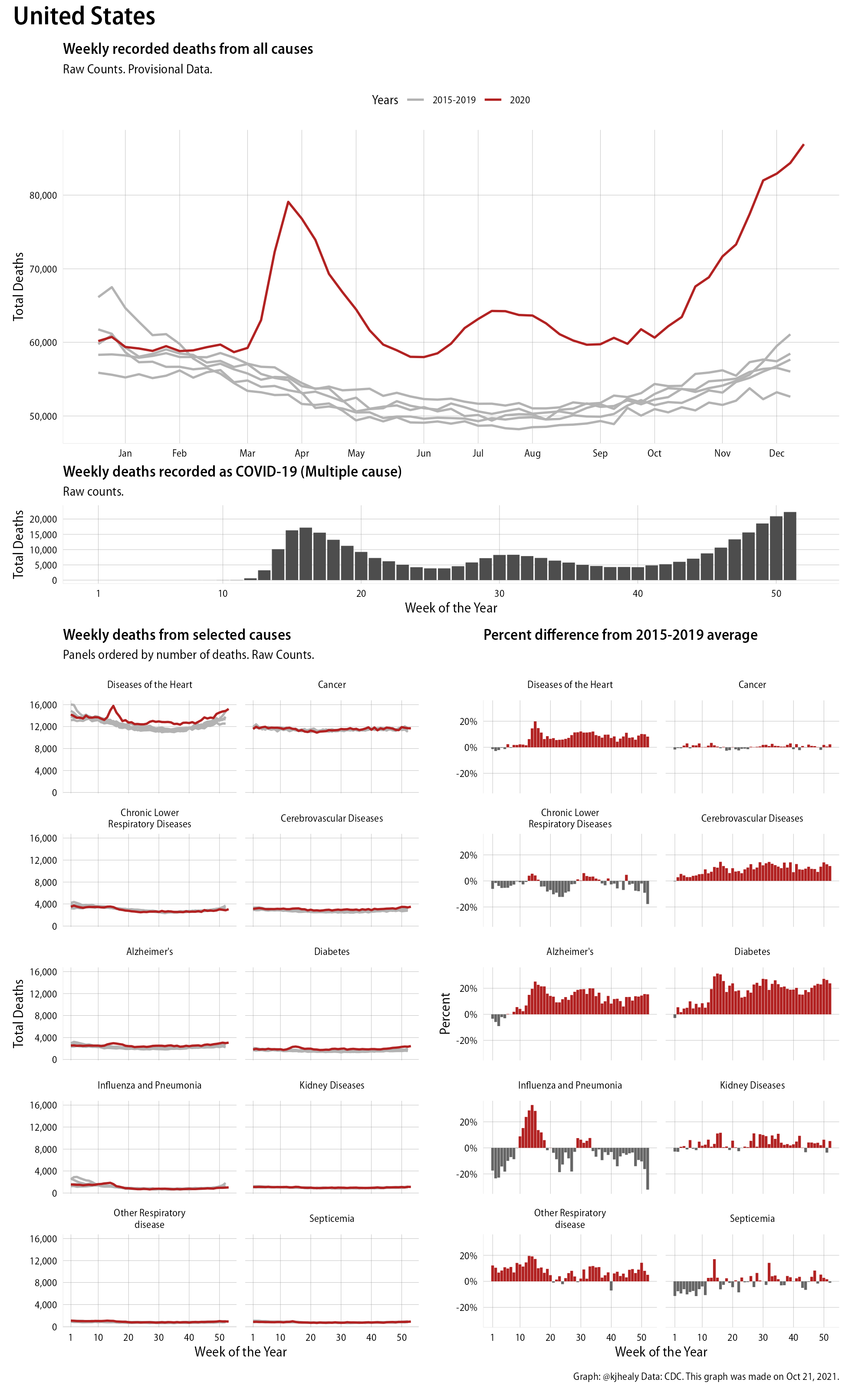
Here are a couple of examples of the plot I ended up making. This is the United States as a whole:

Evidence of excess mortality this year in the United States

Evidence of excess mortality this year in the United States

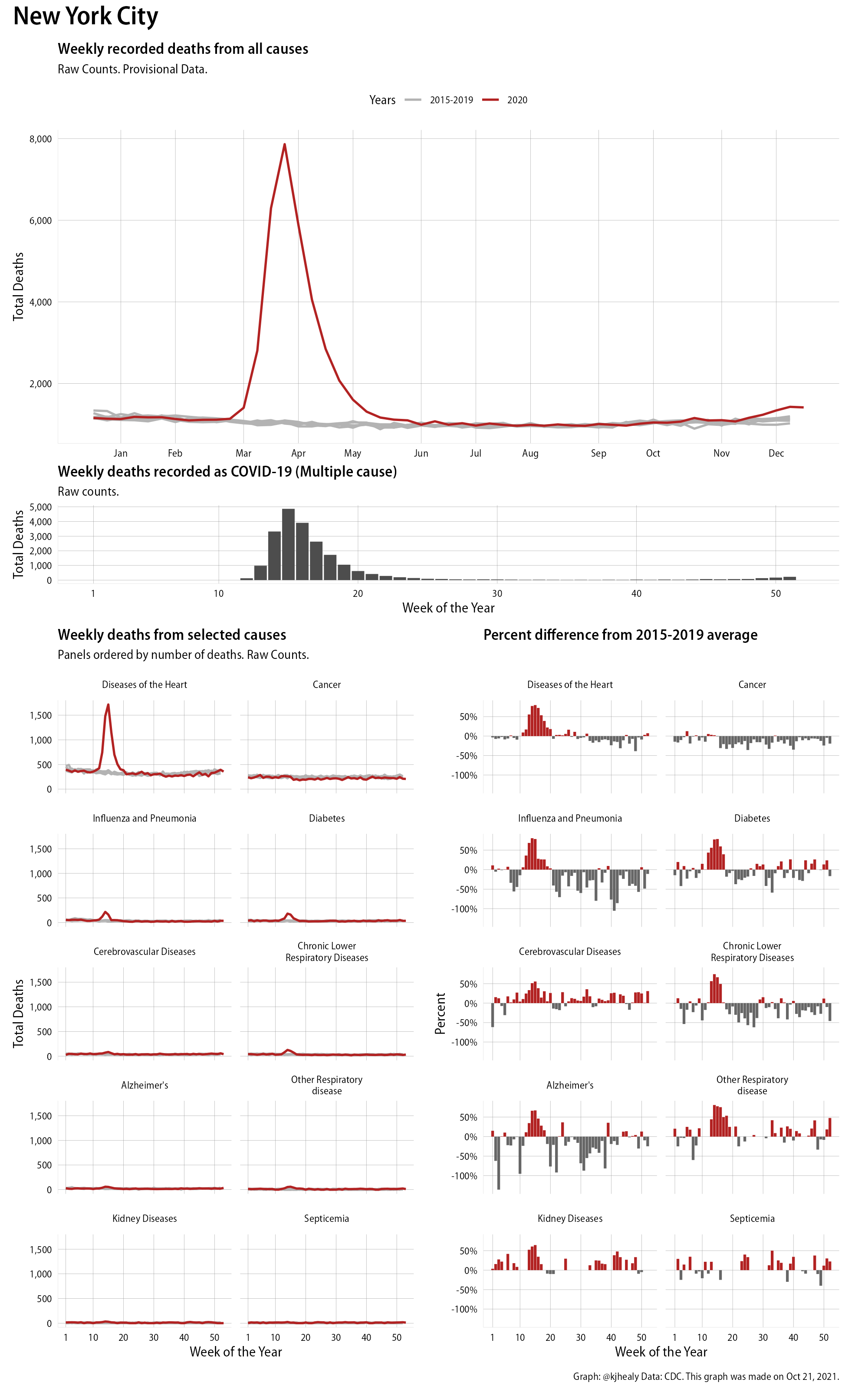
And this is New York City:

Evidence of excess mortality this year in New York City

Evidence of excess mortality this year in New York City

You can view the rest of them via the original post.

The upper panel shows the raw count of All-Cause mortality for the year so far (in red) in comparison to the weekly trends for each of the previous five years. This panel is a good example of how the rule of thumb that says “Start your y-axis at zero” is indeed just a rule of thumb and not a law of nature. The relevant comparison here is with the number of people who typically die in the United States each week, versus this year. No-one thinks there are weeks when zero people die. Instead, the grey lines give us the baseline (with the size of the count shown on the y-axis). It would also be reasonable to show this is as a percentage change rather than an absolute one, but I think in this case the best place is to start, for overall mortality, is with the raw counts. The lower panels, meanwhile, break out ten different causes of death and show both the trend in raw counts (in the line charts on the left) and the degree to which these causes have been knocked off-kilter in relative terms (in the bar charts on the right). Again, the terrible impact of the pandemic is immediately evident. The comparisons by cause are very interesting. A useful baseline is the rate of death from cancers, which has barely moved from its typical magnitude. Meanwhile the rate of deaths from heart disease, Alzheimer’s, diabetes, and pneumonia are all way above average. This is in addition, note, to deaths recorded as being directly from COVID-19, which in these data sum to about 190,000, up till the beginning of September. Not every one of the additional deaths in the other causes is attributable to things connected COVID, as some of those people would have died anyway. But I think it’s clear that the excess mortality associated with the pandemic is substantially higher than the single-cause count of COVID-19 fatalities.

Making the graphs

Each figure is made up of four pieces. Assembling them in an elegant way is made much easier by Thomas Lin Pedersen’s patchwork package. Let’s say we have done our data cleaning and calculations on our initial data and now have a tibble, df, that looks in part like this:

r
 1
 2
 3
 4
 5
 6
 7
 8
 9
10
11
12
13
14
15
> df %>% select(jurisdiction, year, week, cause, n, pct_diff)
# A tibble: 185,991 x 6
   jurisdiction  year  week cause                                  n pct_diff
   <chr>        <dbl> <dbl> <chr>                              <dbl>    <dbl>
 1 Alabama       2015     1 All Cause                           1139     1.79
 2 Alabama       2015     1 Alzheimer's                           59     4.75
 3 Alabama       2015     1 Cerebrovascular Diseases              48   -15.  
 4 Alabama       2015     1 Chronic Lower Respiratory Diseases    73    -4.93
 5 Alabama       2015     1 Diabetes                              36    17.2 
 6 Alabama       2015     1 Diseases of the Heart                273    -3.44
 7 Alabama       2015     1 Influenza and Pneumonia               48    30   
 8 Alabama       2015     1 Cancer                               200    -3   
 9 Alabama       2015     1 Kidney Diseases                       26    21.5 
10 Alabama       2015     1 Other Respiratory disease             30    32.  
# … with 185,981 more rows

This is a table of weekly numbers of deaths by each of eleven causes for each of fifty four jurisdictions over five years. The pct_diff column is how far a specific cause in that week in that jurisdiction differed from its 2015-2019 average.

For convenience we also have a table of the names of our 54 jurisdictions and we’ve made a column called fname that we’ll use later when saving each graph as a file.

r
 1
 2
 3
 4
 5
 6
 7
 8
 9
10
11
12
13
14
15
16
17
18
19
20
21
states <- nchs_wdc %>% 
  select(jurisdiction) %>% 
  unique() %>%
  mutate(fname = tolower(paste0("figures/", jurisdiction, "_patch")), 
         fname = stringr::str_replace_all(fname, " ", "_"))

> states
# A tibble: 54 x 2
   jurisdiction         fname                             
   <chr>                <chr>                             
 1 Alabama              figures/alabama_patch             
 2 Alaska               figures/alaska_patch              
 3 Arizona              figures/arizona_patch             
 4 Arkansas             figures/arkansas_patch            
 5 California           figures/california_patch          
 6 Colorado             figures/colorado_patch            
 7 Connecticut          figures/connecticut_patch         
 8 Delaware             figures/delaware_patch            
 9 District of Columbia figures/district_of_columbia_patch
10 Florida              figures/florida_patch             
# … with 44 more rows

What we do next is write a few functions that draw the plots we want. We’ll have one for each plot. For example, here’s a slightly simplified version of the patch_state_count() function that draws the top panel, the one showing the count of All Cause mortality:

r
 1
 2
 3
 4
 5
 6
 7
 8
 9
10
11
12
13
14
15
16
17
18
19
20
patch_state_count <- function(state) {

  out <- df %>% 
  filter(jurisdiction %in% state, cause == "All Cause") %>%
  group_by(year, week) %>% 
  mutate(yr_ind = year %in% 2020) %>%
  filter(!(year == 2020 & week > 30)) %>%
  ggplot(aes(x = week, y = n, color = yr_ind, group = year)) + 
  geom_line(size = 0.9) + 
  scale_color_manual(values = c("gray70", "firebrick"), labels = c("2015-2019", "2020")) +
  scale_y_continuous(labels = scales::comma) +
  labs(x = NULL, 
       y = "Total Deaths", 
       color = "Years",
       title = "Weekly recorded deaths from all causes", 
       subtitle = "2020 data are for Weeks 1 to 30. Raw Counts.") 
  
  out

}

These functions aren’t general-purpose. They depend on a specific tibble (df) and some other things that we know are present in our working environment. We write similar functions for the other three kinds of plot. Call them patch_state_covid(), patch_state_cause(), and patch_state_percent(). Give any one of them the name of a state and it will draw the requested plot for that state.

Next we write a convenience function to assemble each of the patches into a single image. Again, this one is slightly simplified.

r
 1
 2
 3
 4
 5
 6
 7
 8
 9
10
11
make_patchplot <- function(state){
  
timestamp <-  lubridate::stamp("March 1, 1999", "%B %d, %Y")(lubridate::ymd(Sys.Date()))   
  
(patch_state_count(state) + theme(plot.margin = unit(c(5,0,0,0), "pt"))) / patch_state_covid(state) / (patch_state_cause(state) + (patch_state_percent(state))) +  
    plot_layout(heights = c(2, 0.5, 4), guides = 'collect') + 
  plot_annotation(
  title = state_title,
  caption = paste0("Graph: @kjhealy Data: CDC. This graph was made on ", timestamp, "."), 
  theme = theme(plot.title = element_text(size = rel(2), hjust = 0, face = "plain")))
}

The patchwork package’s tremendous flexibility does all the work here. We just imagine each of our functions as making a plot and assemble it according to patchworks rules, where / signifies a new row and + adds a plot next to whatever is in the current row. Patchwork’s plot_layout() function lets us specify the relative heights of the panels, and its plot_annotation() function lets us add global titles and captions to the plot as a whole, just as we would for an individual ggplot.

At this stage we’re at the point where writing, say, make_patchplot("Michigan") will produce a nice multi-part plot for that state. All that remains is to do this for every jurisdiction. There are several ways we might do this, depending on whatever else we might have in mind for the plots. We could just write a for() loop that iterates over the names of the jurisdictions, makes a plot for each one, and saves it out to disk. Or we could use map() and some its relations to feed the name of each jurisdiction to our make_patchplot() function and bundle the results up in a tibble. Like this:

r
 1
 2
 3
 4
 5
 6
 7
 8
 9
10
11
12
13
14
15
16
17
18
out_patch <- states %>% 
  mutate(patch_plot = map(jurisdiction, make_patchplot))

> out_patch
# A tibble: 54 x 3
   jurisdiction         fname                              patch_plot
   <chr>                <chr>                              <list>    
 1 Alabama              figures/alabama_patch              <patchwrk>
 2 Alaska               figures/alaska_patch               <patchwrk>
 3 Arizona              figures/arizona_patch              <patchwrk>
 4 Arkansas             figures/arkansas_patch             <patchwrk>
 5 California           figures/california_patch           <patchwrk>
 6 Colorado             figures/colorado_patch             <patchwrk>
 7 Connecticut          figures/connecticut_patch          <patchwrk>
 8 Delaware             figures/delaware_patch             <patchwrk>
 9 District of Columbia figures/district_of_columbia_patch <patchwrk>
10 Florida              figures/florida_patch              <patchwrk>
# … with 44 more rows

Neat! We took our little states tibble from above and added a new list-column to it. Each <patchwrk> row is a fully-composed plot, sitting there waiting for us to do something with it. You could of course do something equivalent in Base R with lapply().

What we’ll do with it is save a PDF of each plot. We’ll use ggsave() for that. It will need to know the name of the file we’re creating and the object that contains the corresponding plot. To pass that information along, we could use map() again. Or, more quietly, we can use walk(), which is what you do when you just want to stroll down a list, feeding the list elements one at a time to a function in order to produce some side-effect (like saving a file) rather than returning some value or number that you want to do something else with.

To create a named file for each jurisdiction and have it actually contain the plot we need to provide two arguments: the file name and the plot itself. We assemble a valid file name using the fname column of out_patch. The plot is in the patch_plot column. When we need to map two arguments to a function in this way, we use map2() or its counterpart walk2().

r
1
2
3
4
5
walk2(paste0(out_patch$fname, ".pdf"), 
     out_patch$patch_plot, 
     ggsave, 
     height = 16, width = 9)
     

The first argument creates the filename, for example, "figures/alabama_patch.pdf". The second is the corresponding plot for that jurisdiction. The function we feed those two bits of information to is ggsave, and we also pass along a height and width instruction. Those will be the same for every plot.

The end result is a figures/ folder with fifty four PDF files in it. The GitHub repo that goes along with the earlier post provides the code to reproduce the steps here, assuming you have the covdata package installed (for the CDC mortality data) along with the usual tidyverse tools and of course the patchwork package.

03 Oct 21:55

Inter-Library Loan: Still working at this hour

by peter@rukavina.net (Peter Rukavina)

If the inter-library loan system can get this book to me, from Edmonton, it means modern civilization has not yet completely crumbled.

03 Oct 21:55

A good way to encourage voters

by Jon Udell

I tried to sign up for phone banking and I just couldn’t see doing it, I don’t answer unknown calls and I wouldn’t expect anyone else to right now. I wound up with the Vote Forward letter-writing system, votefwd.org, which I like for a variety of reasons.

It’s really well organized. You get batches of five or 20 letters that are for voters who are likely to be under-represented, and/or have not voted recently. The templates just ask the person to vote, not specifying for whom, and provide links to localized voter info.

They also leave space for you to hand-address the recipient, add a handwritten message, and sign your name.

The last couple of batches I prepared are heading to South Carolina. The letters won’t go out until October 17, though, for maximum impact. This was a compromise, the original plan — backed by research — was for letters to arrive closer to the election. But now that the threat model includes USPS sabotage, the date had to be moved earlier.

Vote Forward claims to have evidence showing that this method makes a difference on the margin. I haven’t seen that evidence, and would like to, but it seems plausible. The recipients are getting a hand-addressed stamped envelope with a return address that has my name atop an address in their region, which is slightly deceptive but feels like a good way to get them to open the letter.

You buy your stamps, so there’s a bit of financial contribution that way.

As a bonus I am re-learning cursive handwriting, which I forgot was primarily about speed. My fifth grade teacher, Mrs. Cloud, who tormented me about my handwriting, would approve.

I’m finding the process to be therapeutic, and it was a much better way to spend an hour and a half the other night than watching the so-called debate.

There’s plenty of time until October 17, so if you’ve been looking for a way to do something and haven’t found it yet, I can recommend this one. I’ve never done anything like this before, I hope the fact I am doing it now is representative of what a lot of others are doing in a lot of ways.

03 Oct 21:55

Memorial Ride for Inus

by jnyyz

Inus was a 37 year old architectural designer who was struck down by a driver on Dundas St W near Kensington Market a week ago. Today was the memorial ride and ghost bike installation in his memory.

We gather as usual at Matt Cohen Park.

Joey introduces our two speakers.

First up: MPP Jessica Bell (University-Rosedale), NDP Transport Critic. She has put forward several bills having to do with active transportation, including Vulnerable Road User legislation. She said that many people treat a death like this case as an isolated incident, but she points out that many have died over the years, and this calls for systemic solutions.

Next, longtime cycling advocate Hamish Wilson. He pointed out the role of streetcar tracks in this incident, and that the TTC has known about this type of hazard for years. He called for a coroner’s investigation that would identify all of the factors involved here.

Joey, Yvonne and Geoffrey confer before we set off.

Here we go, south on Spadina.

West on Dundas.

At the crash site.

The ghost bike.

One minute of silence.

Friends come forward with the flag of South Africa.

The crowd stays to chat as the rain moves in.

Thanks to MPP Jessica Bell, Hamish Wilson, Joey Schwartz, Geoffrey for the ghost bike, and Yvonne for the sign. Thanks also for everyone who rode tonight. It was good to see so many of the usual suspects; I just wish it was under better circumstances.

Deepest condolences to the family and friends of Inus.

UPDATES:

Brian’s video

03 Oct 21:55

Love as practice rather than product

by peter@rukavina.net (Peter Rukavina)

I was browsing the call-for-apprentices for a Costa Rican radical queer jungle/farm sanctuary for post-capitalism exploration yesterday, and came across this, one of its goals:

Developing love, care, relationship and eroticism as practice rather than product.

This morning, driving Oliver around the city to drop off slices of birthday cake at a curated collection of influential contributors to his life, I thought for a moment, at a stoplight, “why am I taking this entire day to help my son carry out a labyrinthian questing that involves cakes, Zoom and vodka soda?” It wasn’t so much that I was struggling for a rationale, as I was wondering why it seemed like exactly what I should be doing. 

The only reasonable answer I could come up with is that I love him. So much and so effortlessly that it would never occur to me to do otherwise on this day.

I have thought a lot about love over the last year, but this revelation on North River Road was more about feeling than thinking.

And it wasn’t about the “I love you” kind of love. And it wasn’t really even about the “I have loved you since the moment you were born, will always love you, and will do anything to protect you and encourage you and to help you thrive in this life” kind of love. It was the geothermal force that begets all that. 

Love as practice, rather than product.

We had a good day together, me and Oliver.

We started off with breakfast on the patio at Receiver Coffee: rum & banana french toast for him, vegan breakfast bowl for me. It was sunny and just warm enough: the perfect knife-edge between summer and fall. 

Oliver at breakfast at Receiver Coffee

After breakfast we walked home for Morning Birthday Zoom, held for those in Europe and points east. We were joined by Olle in Sweden, Juliane in Germany, and outliers Kali in Charlottetown, and Peter in Hampton. We had a lovely chat, sang happy birthday, and enjoyed our shared sunshines.

Next it was to Michaels, to purchase cake boxes and party decorations, and then to Sobeys, to pick up a couple of cakes.

Cake number one was a rectangular chocolate sheet cake, ultimately destined to be divided into nine for distribution; we had it iced with purple Os.

Cake number two was for the small face-to-face gathering planned for the evening; it was a round chocolate-raspberry cake, iced with “Happy 20th.”

Cakes in hand, we ducked in to Madame Vuong’s for lunch (Catherine’s voice in my head: “it’s going to be a long day, so don’t forget to eat lunch!”). Then home for cake slicing and boxing.

Cake boxing was perplexed by my inability to divide a rectangle into 9 (I started down the road to making 6 pieces, then caught myself at the last moment). Thirty minutes later we were on the road again.

Oliver’s birthday metaverse consisted of two separate but overlapping themes: “my teen years” and “change: death, retirement, gender.”

Overlapping these overlapping themes were people from nearby who would come to the house, people from nearby who would get cake delivered, and people from away.

On the “people from nearby who would get cake delivered” list were nine destinations: Prince Street School, Birchwood Intermediate School, Colonel Gray High School, UPEI, Stars for Life, the Provincial Palliative Care Centre, and three friends who’ve undergone transitions of one sort or another recently.

Our questing thus involved, among other things, negotiating the COVID regulations of the public school system, being serenaded with Happy Birthday by the administrative assistant at Prince Street from the front steps of the school, visiting Palliative Care for the first time since the night Catherine died (and getting a tour of the grounds from Blanche, who’s been so important to us over the last year), and leaving cake, anonymously, on the doorsteps of a couple of people who will, no doubt, be confused when they get home.

None of this made any sense at all to my neurotypical brain, but it made a heap of sense to Oliver and, of course, Oliver was right by any measure that involves human connection: we saw people and places we hadn’t seen in a long time, brought smiles to faces, and spent a couple of hours on an adventure together.

Besides, having to phone an elementary school office and explain how it is important to your son, who turns 20 today, to drop off a piece of cake at the school he once attended, and to have people get that, and agreed to meet him at the front door for the cake handover: that’s the kind of thing that makes the world seem right.

Deliveries complete, we rushed home so that Oliver could take in his British History lecture at 4:00 p.m., stopping at Hearts & Flowers for balloons and at Upstreet for party beer en route.

While Oliver learned about the 1906 Labour Manifesto on Zoom, I decorated the back deck, and then headed off to the liquor store to buy wine, and the corner store for chocolate milk.

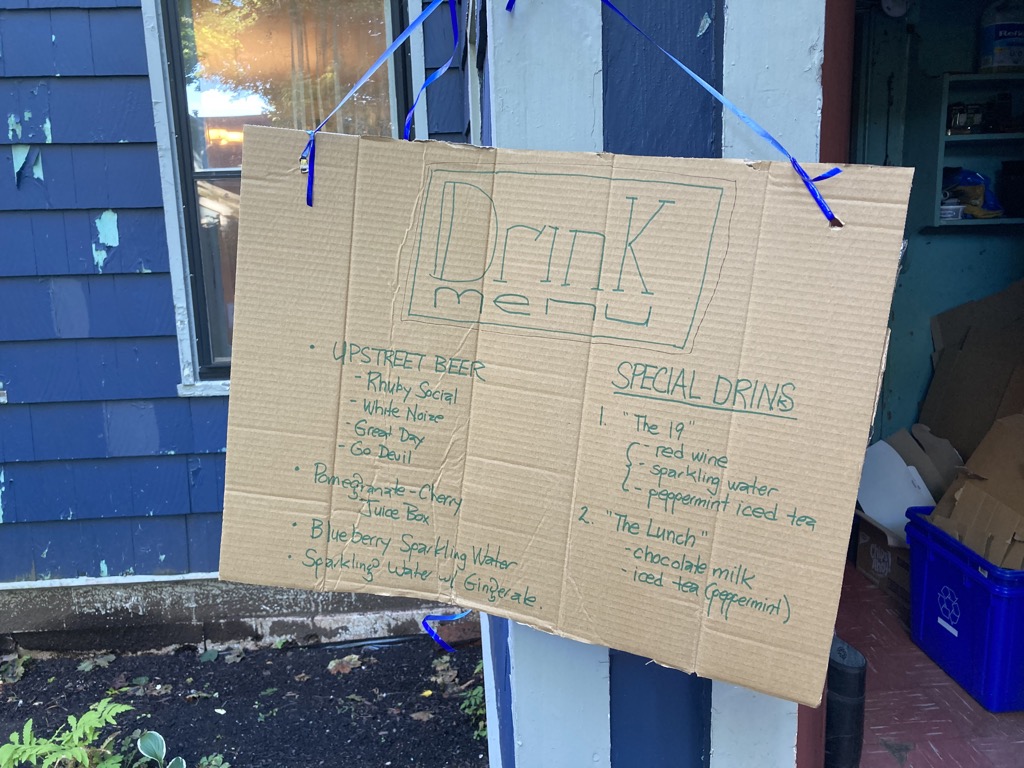
The wine and chocolate milk were in service of two last-minute additions from Oliver, drink specials:

  • “The 19” – wine, peppermint iced tea, soda water.
  • “The Lunch” – chocolate milk and peppermint iced tea.

Thus a drink menu was in order:

The Drink List for the party

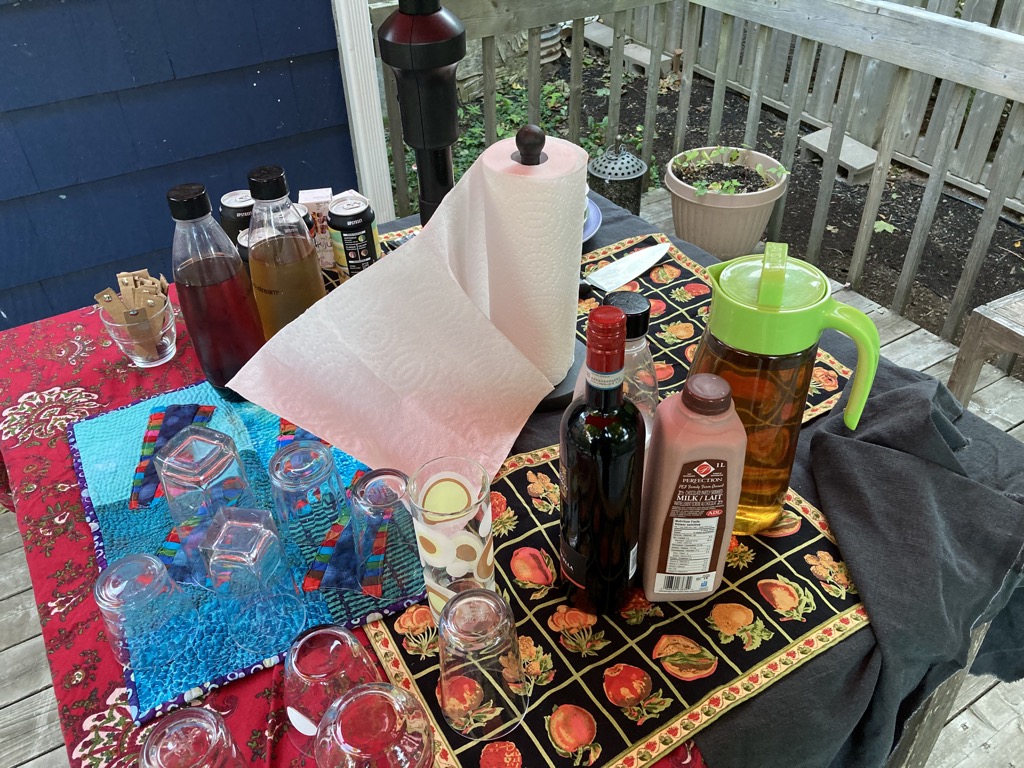
The table set for Oliver's birthday

Upon my return home, and the finish of the lecture, Oliver added some additional quests to the list: Oliver Trivia, Ton-style Questions,” and Oliver’s Interests, each of which required some attention by me and some typing by Oliver. We finished those up, hooked the Google Home up as a playlist speaker in the back yard and had a few minutes to relax before our first guests arrived.

Under the letter of “the new normal” COVID dictates released today, we were allowed a wild socially distanced rager of 20 people; I opted to limit things to 9 people, as otherwise we’d run out of chairs and plates and social distancing space. The question was then “which 9 people” (remembering that this is a young man who had 50 people at his 18th birthday). Oliver rose to the occasion, not an insignificant feat given his challenges with winnowing: he opted to celebrate “the teen years” by inviting important people from his education. 

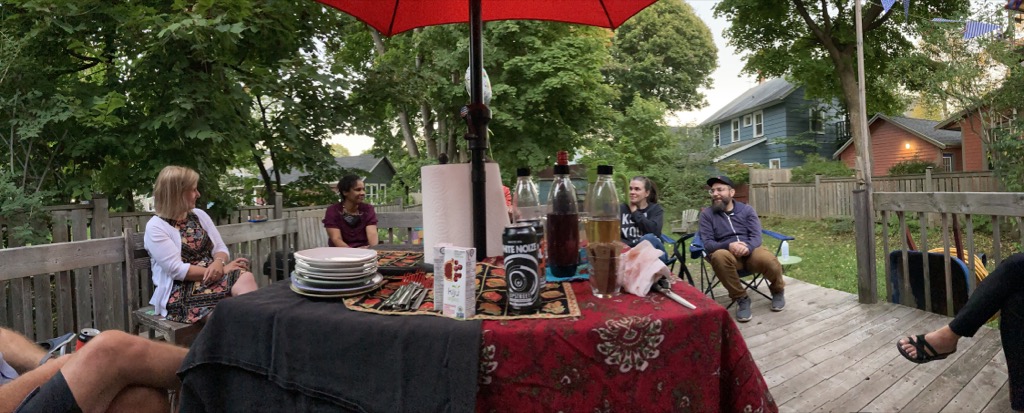
And so gathered in our back yard after 6:00 p.m. were his grade 7 and grade 9 home room teachers, his two educational assistants from high school, his current UPEI professor, and two of our closest friends. We were a motley bunch, but we were united in our connection to Oliver. We drank “The 19” and “The Lunch.” We played Oliver Trivia, told Oliver stories, answered Ton-style questions, and caught up on the months or years since we’d last seen each other.

almost forgot to bring the cake out; fortunately Oliver reminded me. And so we sang the second Happy Birthday of the day, and enjoyed a (surprisingly very good) cake. As we said our goodbyes, darkness had fallen and the Full Moon was just starting to rise.

Oliver's birthday party on our deck

As I cleaned up the deck, Oliver was warming up Birthday Zoom Two, the North American edition. This included Oliver and Cheryl in Portland,  Johnny and Kae, and nieces A. and M., in California, my mother, Mike and Karen in Burlington, Steve and Monique, and nephews V. and E., in Montreal, Marina in Napanee, and Sandy here in Charlottetown. We all got a chance to hold Oliver in high regard, got a chance to make (or renew) ties (“oh, you’re Riley and Bailey’s mother: we met you at Rainbow Valley when Oliver was little”), and enjoyed Happy Birthday Mark 3.

During early planning sessions with Oliver for this day, on a lark I added “father and son drink at Upstreet” at the end of the schedule, not realizing that at the end of the day I would be exhausted. But once something’s on the list, well, it’s on the list. And, besides, we needed to have supper (I forgot to listen to Catherine’s voice in my head telling me to not forget to have supper). So we got take-out chicken wings and a veggie burger from Hopyard, ate them on the patio at the Jean Canfield, and then looped back to Upstreet for a vodka soda (Oliver) and a kombucha (me).

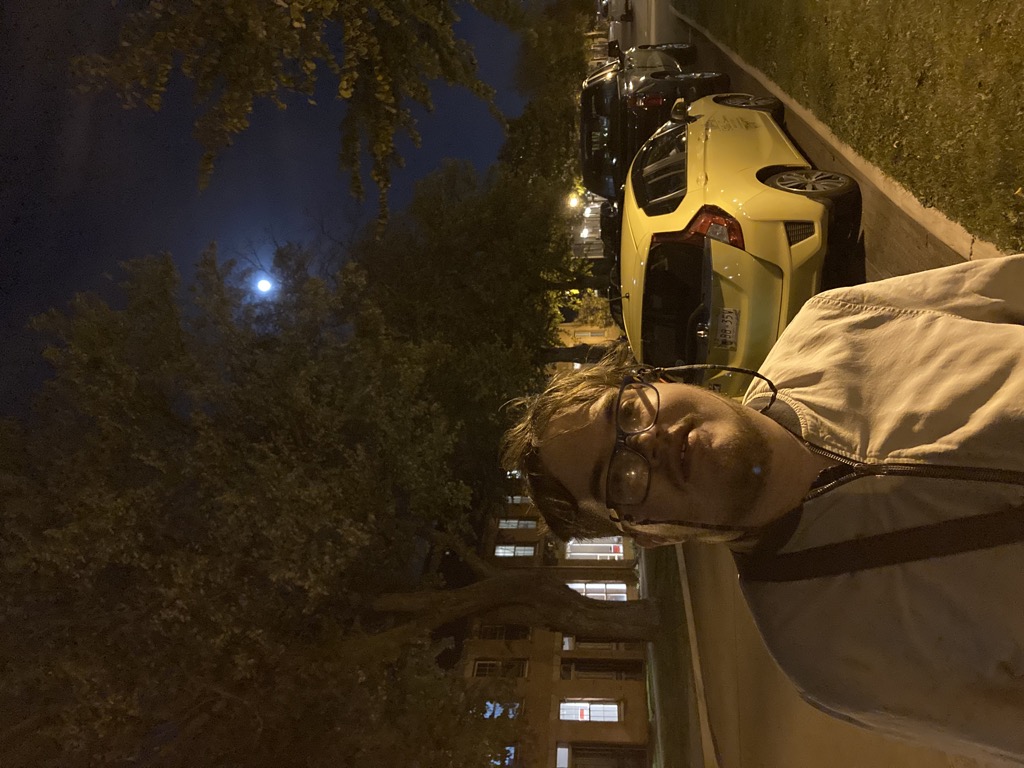
As we rolled home the Moon was high overhead, we were in a fine mood, and were in agreement that it had been a day well-spent.

Oliver under the Full Moon

Happy Birthday, my son.

03 Oct 21:55

Video: C Programming on System 6 - Intro

I’ve been writing an IMAP client for and on my Mac 512Ke over the past many weeks. Taking inspiration from Andreas Kling’s excellent YouTube videos documenting his development of the Serenity operating system, I thought I’d start screencasting some of my work.

This video is the first of hopefully many and presents a quick introduction to System 6, HFS resource forks, THINK C 5.0, and a look at some of the progress of my IMAP client so far.

Video notes:

Unfortunately I can’t do a live digital capture of the screen of my Mac, so I have to record its monitor with my phone in front of it. While this also allows the phone’s front-facing camera to record me narrating the video, the phone blocks my view of the monitor so I have to look at it through the phone which is awkward.

I have no interest in hosting my videos on YouTube or dealing with drive-by comments there, so please contact me with any feedback or questions for future videos. You can subscribe to my RSS feed to be notified of new videos and my other posts.

Update (2020-10-14): I’ve created an IRC channel on Freenode called #cyberpals if you are interested in following along with this series and have questions or would like to help others. I’m in the channel as jcs.

03 Oct 21:54

The theatricals of 'deal or no deal' are a distraction

by Chris Grey
As this supposedly final week of Brexit trade talks ends, the ‘will they, won’t they?’ show continues to play out like an amateur production of an absurdist play or, perhaps more appositely, a Whitehall farce.

At all events, a theatrical metaphor is called for because what we are seeing is a manufactured drama. It is manufactured in the most obvious sense by the fact that the impending end of year time limit, and with that the timescales for agreement and ratification, are entirely down to the UK government’s choice not to seek an extension to the Transition Period. Even more important, the choreography of there being two opposing ‘sides’ going mano a mano until one of them blinks is almost entirely the creation of British Brexiters who have antagonistically constructed the EU as ‘opponents’ to be outwitted in some macho battle of wills.

None of this was necessary. The EU response from the outset has been one of sadness rather than antagonism, and its approach one of dry technical rationality rather than histrionics. It is the Brexiters who have both chosen and needed to make it otherwise, which can be traced right back to 2016 when, far from revelling in their victory, they displayed a sullen suspicion that quickly escalated to bellicosity at the slightest trigger, as with the absurd sabre-rattling over Gibraltar in April 2017. Now, like neighbours from hell with whom all reasonable discussion has been tried, the UK has goaded the EU into starting legal proceedings.

As for who the audience for all this is, that’s a matter of interpretation. Brexiters would claim that it is the EU – to show them that Britain is a ‘sovereign equal’ and will not be pushed around. But of course that is just another line from the play rather than a serious analysis of it. All the signs are that the EU, and the wider world, looks on with bewilderment at the peculiar and undignified conduct of a country formerly seen as rather sensible.

It may, as some think, be the government playing tough for the gallery of the Brexit Ultras as a prelude to letting them down. It may be for leave voters, via the headlines that the government can get in the pro-Brexit press. It may be for the electorate as a whole, softening them up for what is to come – deal or no deal – as being the product of EU intransigence which plucky Britain has fought tooth and nail. Or it may be aimed, again at the whole electorate, as a prelude to a ‘triumphant’ announcement of a ‘great deal’ having been struck at the last minute, much as Johnson did with the Withdrawal Agreement last year.

But even to engage in such speculations is to get sucked into the performance that is being put on, for they are really just another version of the ‘will they, won’t they?’ script. So too are the endless and contradictory predictions of pundits about what the outcome will be, including those who declare that a deal was ‘always inevitable’ and the equal number who declare with equal certainty that no deal was ‘the plan all along’ (whatever happens, half of these are guaranteed their moment of triumph).

Deal or no deal, this isn’t what was promised

What we should be focussing on is that we are approaching the point where all the possible outcomes are hideously etiolated versions of what was promised by Brexiters, let alone of what Britain enjoyed as an EU member. Any deal that is likely to be made, and no deal, and no deal followed (as it probably would be) by some piecemeal deals are all to varying degrees bad outcomes. I’ve argued before (and continue to believe) that a deal of any sort would be the best – or perhaps one should say least-worst – of these available outcomes, but that is all it is.

Thinking just of trade - although that is far from all that matters, as leading security experts pointed out this week (£) -  it is bound to be worse than EU membership. To leave the largest, most integrated, transnational market in the world and the one which is also geographically closest can’t help but be highly damaging, whatever terms on which the UK then trades with it. That’s a truism, but it is worth noting that whenever it is pointed out – as, most recently, by Ursula von der Leyen in January – it is greeted by hardcore Brexiters with paroxysms of fury. So, truism as it may be, it contradicts what some still see as an entitlement.

But what is in prospect isn’t just worse than what we had as members, it’s also far worse than the Brexiters assured us would be the case as a non-member. The words of the Vote Leave campaign documents, repeated with such authority by Michael Gove and others so many times in 2016, should never be forgotten: “there is a free trade zone from Iceland to Turkey to the Russian border and we will be part of it”.

Whether this meant single market membership, as it seemed to imply, and they later reneged on it, or whether they really believed that some other “zone” existed doesn’t matter. It is clear that whatever happens now it will not be this, and it has been for a long time. But, during that long time, they made other promises – of a ‘deep and special partnership’, of a Canada + or even Canada +++ or Super-Canada trade deal. Indeed during the 2019 Election campaign Boris Johnson promised “a super Canada-plus” deal by the end of 2020. All that has disappeared, since the only meaning such terms could have had would have entailed far more extensive integration than the UK is now willing to countenance.

None of this is ancient history. The referendum campaign itself was only four years ago, and voters are entitled to recall that what is happening now flows from, and claims mandate from, the vote. Nor do we have to go back that far, since the groundwork for Johnson’s “super Canada-plus” deal was laid with the Political Declaration (PD) that was part of the ‘oven ready deal’ he was elected on just last December. Yet he immediately repudiated the key elements of that Declaration that would have made a more extensive deal possible, and since then the UK has insisted that it wants no more than a Canada-style deal, with no ‘pluses’ or ‘supers’.

It’s true that even within this there is considerable disingenuity, for two reasons. On the one hand the UK is actually asking for more than ‘Canada’ (e.g. in terms of cabotage rights). On the other hand, the EU has always made it plain, and in the PD the UK accepted but now denies, that any form of trade deal would come with level playing field conditions. But the point holds that all talk of an ambitious deal going well beyond a standard free trade agreement has now been dropped.

One aspect of that is that whereas under the terms of Theresa May’s Withdrawal Agreement (WA) there was the possibility that the trade deal could have had generous terms on ‘rules of origin’, Johnson’s WA removed that option and as a consequence it has just been revealed (though it was not a surprise) that such terms will not be agreed, with significant negative consequences for several industries, including car making. Again, this contradicts what Johnson promised during the election about protecting automotive supply chains.  (Rules of origin are complex but important, see the primer by Alex Stojanovic of the Institute for Government).

It beggars belief that the government should now be contemplating, not as its worst scenario but as its best and indeed preferred scenario, the thinnest of trade arrangements with the EU. It was not entailed by Brexit – even leaving aside the soft ‘Norway’ model, an Association Agreement of the Ukraine type was a possibility, albeit one open to criticism, or some more imaginative hybrid could have been constructed. But Britain has been driven by the implacable extremism of the Brexit Ultras to a situation where the only future relationship options are distance or dislocation.

This is not what was sold to the British people. Nor is it what they currently want, given opinion polls showing that 80% think maintaining a close relationship with the EU is important and that the biggest gap since the Referendum between those thinking leaving is wrong and those thinking it’s right (50% to 39%) has now opened.

Deal or no deal brinkmanship is itself damaging

All this is not just the context for, but is actually more important than, all the excited talk about whether or not – and, if so, when - the negotiators are going to enter ‘the tunnel’ to finalise a trade deal. That matters, but it is the sub-plot to the bigger story and in many ways a distraction from it.

For that matter, the manufactured drama of ‘brinkmanship’ is not just a distraction but itself has serious adverse consequences in terms of the uncertainties facing so many people and industries as a result. For example, for both the UK in general, and Northern Ireland in particular, the present situation calls into question the security of medical supplies, with one Irish MEP saying that “people’s lives are at risk”.

It should be noted that the issues here relate not just to the future terms talks but to the equally important operation of the Joint Committee (JC), charged with implementing the Withdrawal Agreement and Northern Ireland Protocol (NIP), which also met this week. For whilst these are separate processes they have become very much linked in recent weeks as a result of the ongoing row over the Internal Market Bill (IMB). This has created a huge trust problem with the EU over the UK’s willingness to abide by the NIP and work through the JC, rather than to make unilateral decisions that flout the Protocol and thereby, on the government’s own admission, to break international law.

At this week’s JC meeting Gove confirmed the UK was proceeding with the legislation and, contemptibly, the Bill passed its final reading in the House of Commons, with the Tory backbench rebellion fizzling out. Even Theresa May, despite her much-vaunted opposition, did not actually vote against it but abstained. It is a new and shameful low, showing the extent to which all constraints and norms are being jettisoned in the name of Brexit. Unsurprisingly, as it had indicated would happen if the offending clauses were still in play by the end of the month, the EU began legal action. However it has given the UK a month to respond to its initial legal notice (it could have been shorter) and is meanwhile willing to continue trade talks.

The IMB now goes to the House of Lords, where no doubt it will be mauled, but as trailed in my last two posts the government has delayed the timetable for this. Taken together with the terms of the EU’s legal action, this means that there is a tiny window in which the trade talks can proceed without the Bill actually becoming law. That creates a theoretical possibility that the illegal clauses might be dropped in the light of a deal being done, according to Simon Coveney, Ireland’s Minister for Foreign Affairs, and others. Thus by the middle of October, conceivably, there might be a trade deal and an end to the threatened international law breach.

But massive damage to trust has already been done, with the result that the issue of enforcement for the governance mechanism for any trade deal has now taken centre stage in the future terms negotiations. The obvious concern is that the Johnson will once again sign a rushed deal with implementation details to be filled out later, perhaps especially tempting given the ongoing coronavirus crisis, only to backtrack later when it comes to putting what was agreed into practice as has happened with the IMB. Shamefully, thanks to the behaviour of Johnson’s government, our country is no longer trusted to behave honestly.

Deal or no deal, the outlook is unremittingly grim

Meanwhile, all the costs and inconveniences of Brexit, deal or no deal, continue to rack up. Having already lost the European Medicines Agency and the European Banking Authority – inevitably, though Brexiters claimed otherwise (£) – it has now emerged that the UK-based European Centre for Medium Range Weather Forecasts (ECMWF), a key body for climate change research, is all but certain to be ineligible to go on hosting EU funded activities and programs. Month by month, Brexit is already inexorably impoverishing and damaging us, in ways small and large, and which, as in these cases, reach deep into the core strategic strengths and priorities of our country. But as Brendan Donnelly, Director of the Federal Trust, wrote in a hard-hitting blog this week, “the worst is yet to come”, and Simon Nixon in The Times was equally forceful in arguing that “business is about the be thrown under a bus” (£).

As a Select Committee heard this week from leading figures in the aerospace, chemicals, and pharmaceuticals industries – again, all key sectors – trade will become “a day-to-day struggle”, with huge new costs and paperwork, reduced investment and some products being unavailable. Each witness was asked if any reason could be given to welcome the impending end of the transition period. None of them could give one.

Separately, a new report (£) shows that leaving the EU platform for electricity trading will cost hundreds of millions of pounds in increased energy bills. The latest figures on the financial services sector suggest that it has moved 7,500 employees and more than £1.2 trillion (yes, that is trillion) of assets to the EU since the Referendum, with accelerating relocations as the end of transition approaches. And Michael Gove officially confirmed the long-touted figure of £1 billion as the cost of regulatory re-registrations in the chemicals industry. It remains unclear whether the new UK regulatory system will even be ready by the end of the year.

An obvious huge change in January will be the end of Freedom of Movement, which is set to cause serious problems for many sectors of the economy, with a particular and immediate impact on care homes, already in crisis because of coronavirus. And those EU nationals living in the UK with settled status face the nightmare caused by the government’s refusal to provide physical, documentary proof of their status. The digital-only system is unreliable and creates horrendous problems for accessing housing and services, heaping further pain on the already shameful way this group of our neighbours, friends, colleagues and families has been treated since 2016.

The adverse effects in prospect – again, regardless of whether there is a trade deal - will touch every aspect of daily life. The RSPCA is warning of shortages of pet foods and medicines (£) and, although it’s not exactly news, the BBC has produced a listing of things that will change at the end of the transition, mainly focussed on individuals and travel. Unsurprisingly, and in line with the government’s ‘Check, Change, Go’ information campaign, every single thing makes life worse and more difficult. Every single thing.

We are no longer at the point of debates and claims, in which ‘balanced’ coverage supposedly meant pitting a rosily optimistic Brexiter against a ‘Project Fear’ remainer. We are now at the point of news reporting, in which every Brexit story is a bad news story because there aren’t any good news stories.

Nor can this be ascribed to anti-government bias, because if the broadcasters did nothing but read out, North Korea style, every single page of the government’s ‘Check, Change, Go’ website then it would be an unrelenting diet of misery. And this isn’t precautionary stuff for the event of no deal. Everything on that site is bad news – there’s literally nothing that makes life easier or better - it’s just even worse if there were to be no deal. This all comes on top of the COVID-19 crisis but, unlike the virus, is entirely self-inflicted. Britain is doing this – not just Brexit, but the way it is going about Brexit – to itself.

Deal or no deal, the highest price of all?

The previous section summarised only a selection of stories and reports from the last week. Multiple other examples can be found, not least in many previous posts on this blog, all testifying to the terrible price – economic, political, cultural and even moral – of Brexit largely irrespective of a trade deal. The final example is at first sight more trivial. It was reported this week that the Tory MP Esther McVey has accused teachers of left-wing indoctrination of their pupils and more particularly that “white working-class lads” in Brexit-voting areas would be alienated by having “their family’s beliefs” questioned by anti-Brexit teachers.

Everything about this is obnoxious, not least its evidence-free assumptions about teachers’ beliefs and conduct, the homogenization of whole areas, social classes, and ethnicities in terms of their Brexit stance, its faux-egalitarianism - and, even were it all true, why is it only the ‘lads’ who are so delicate? Worse is the grotesque implication that teachers’ political views be monitored. Whilst only a fragment, it forms part of a bigger picture in which being pro-Brexit is being made a condition for appointment to public bodies, or for being rewarded with ennoblement, or is being used to re-shape the civil service – with supposed remainers within it being described by an ‘anonymous Whitehall source’ this week as “the enemy within” who “will be rooted out”.

The noisy barrage of the ‘enemies of the people’ headline is giving way to the quieter but more lethal seeping poison gas of political loyalty tests conducted under cover of populist rhetoric – populist, but not even popular given that support for Brexit is now a minority opinion. Each example in isolation seems trivial, or can be given some justificatory spin, but their accumulation may end up being the highest price of all that Brexit inflicts.

There is a telling line in Sam Byers’ post-Brexit satirical novel, Perfidious Albion: “Brexit was over, but the energy it accumulated had to be retained. Fears needed to be redirected. Hatred had to pivot” (2018, p.119). It seems prophetic in the light of Farage’s new hobby of hanging about grubbily on beaches looking for migrants to denounce. And it conjures up a country – of which the McVey story provides a tiny glimpse – in which the Brexit divide segues into a wider assault upon immigrants and intellectuals, on ‘woke’ culture in schools and universities, on ‘unelected judges’, on civil service neutrality, and on the rule of law (the latter link is to the first of a three-part blog by David Allen Green, so check the follow-on posts for the full argument).

There’s nothing new in the existence of such ideas, but this is the first time that Britain has had a government that subscribes to them. Governments doing so is the script of a story we know well, and it doesn’t have a happy ending.

So as the uncertainty over whether or not there will be a deal continues – and it will for a little while yet – and, for that matter, when that uncertainty ends, it’s important to see it for what it is. Not without any significance, certainly, but a distraction from what is much more significant: the damage, decay and danger of Brexit itself. That drama - of lies told, promises broken, and a country on the brink of calamity - is the etiology of what afflicts us, rather than the tedious theatrics and accompanying breathless predictions which are one of its symptoms.

Updated 04/10/20 to correct misleading phrasing of the story about the ECMWF.
03 Oct 21:51

A problem with my wifi, and wide causal systems

We’ve been having problems with video calls. Sometimes the connection seems to blink off, just for a fraction of a second, more than just a stutter. It’s intermittent, and doesn’t happen often, but perhaps slightly more regularly when there are multiple calls going on.

I found the solution by accident: tidying up some books, I noticed that the power cable to one of the wifi routers was frayed. Not much, just enough the expose the shielding near the plug. I swapped the cable. Our video calls have been stable since.

I can only speculate. Maybe streaming video means that the router works harder and needs more power. The increased power draw, with the damaged power cable, created radio interference, so the router automatically amplified the wifi to get through the noise – further increasing the power draw and therefore the interference. Then: a cascade upwards until there’s no more power to get, and the whole thing resets.

There’s a village in Wales that has had intermittent broadband outages for 18 months (BBC News): It turned out that at 7am every morning the occupant would switch on their old TV which would, in turn, knock out broadband for the entire village.

A SHINE event: The TV was found to be emitting a single high-level impulse noise (SHINE), which causes electrical interference in other devices.

I have no idea how I would have fixed my calls without

  • spotting the slightly frayed power cable, while tidying the front room,
  • and having a mental model of the internet, electricity, and radio that led me to recognise the frayed cable as the problem.

Some thoughts.

How many other people are living with this exact problem, but haven’t solved it because either they haven’t run across the cause, or don’t have the domain knowledge to recognise the frayed cable as the cause?

How many easily-solved problems am I living with, because I don’t have the knowledge to recognise a fixable cause in plain sight?

Can we call this a “wide” system? Video call stability is far removed from electrical interference. I don’t know what words to use to talk about the width of a causal system, but there are definitely “closer” potential causes. (For example: having a old version of Chrome, or our street having historically unreliable cable internet.)

So maybe it’s interesting to think about some phenomenon and its cause, and the situations in which they can’t be linked: either because the system is obscure (I lack medical knowledge to recognise the cause of a physical problem, say) or perhaps because the causal distance is too great for the human mind to recognise it.

In a technological world, are causal distances increasing?

What could help?

I think of House, M.D.

What would an artificial intelligence look like, specialised in technology and in differential diagnosis, for finding problems in my wide systems?

Could I google “what’s wrong with my video calls?” and get led through a series of machine-learning-chosen questions to most efficiently subdivide and traverse the causal graph until the actual fixable cause is found? (What we already know: it’s not lupus.)

You would optimise for questions that were easy to answer. For example, asking how to set the clock on my oven, I can easily tell you the make and how many buttons it has but not the model. Though the first question that my hypothetical House, M.L. would ask is “is this the same oven you had 6 months ago?” which would lead to a solution instantly.

I’m reminded of the old 20 questions website 20Q. It trained a neural network by asking site visitors “what question would you ask” whenever it failed to recognise a new animal, vegetable, or mineral. But interacting with the A.I., especially embedded in a handheld device, is uncanny: it asks questions and narrows down the domain in a thoroughly out-of-order and inhuman way.

So train House M.L. by starting simple, and handing diagnosis over to a human expert whenever boundaries are reached. Don’t worry about the efficiency of the human, just that they find an answer. The machine learning system will do efficient causal pathfinding later.

I wonder how many questions there are like this. 100,000? A million? Doable.

03 Oct 21:51

Music from the other side of the world

by Andrea

This is Tuvan Throat Singing and music at it’s finest:

Alash Ensemble Live in Chicago for 10th Anniversary Concert at Old Town School of Folk Music. (YouTube, 1 hour 20 min) “A live recording of Alash Ensemble’s 10th anniversary, Chicago concert hosted by The Old Town School of Folk Music in The Myron R. Szold Music & Dance Hall on February 20, 2016”

“The members of Alash are Tuvan throat singers, who use a remarkable technique for singing multiple pitches at the same time. Masters of traditional Tuvan instruments as well as the art of throat singing, they are deeply committed to traditional Tuvan music and culture. At the same time, they are fans of western music. Believing that traditional music must constantly evolve, Alash subtly infuse their songs with western elements, creating their own unique style that is fresh and new, yet true to their Tuvan musical heritage.”

Two of their albums are also available on YouTube: Achai and Buura. (Link to the first of 13 songs in each playlist.)

Huun-Huur-Tu at Fantasy Studios, Berkeley, California November 18, 2008. (YouTube, 1 hour 18 min) Their website doesn’t seem to exist any more, but you can read about them on Wikipedia: Huun-Huur-Tu.

03 Oct 21:47

Twitter Favorites: [joshtpm] I was also a Rhodes Scholar because I went to graduate school in Rhode Island.

Josh Marshall @joshtpm
I was also a Rhodes Scholar because I went to graduate school in Rhode Island.
03 Oct 21:47

Twitter Favorites: [seanorr] Did I get gerrymandered? How is this Mount Pleasant? https://t.co/9XekSYTyNh

SEAN ORR @seanorr
Did I get gerrymandered? How is this Mount Pleasant? pic.twitter.com/9XekSYTyNh
03 Oct 21:47

Twitter Favorites: [samaysham] You need a personal website. It's 2020. There's absolutely no reason why you should leave the website box empty o… https://t.co/k4U23eQMZC

Samay Shamdasani @samaysham
You need a personal website. It's 2020. There's absolutely no reason why you should leave the website box empty o… twitter.com/i/web/status/1…
03 Oct 07:05

Funny how they never mention those ‘Christian’ values when they talk about refugees & asylum seekers...

by James O'Brien (mrjamesob)
mkalus shared this story from mrjamesob on Twitter.

Funny how they never mention those ‘Christian’ values when they talk about refugees & asylum seekers...


1382 likes, 209 retweets
01 Oct 05:32

Revisiting cooperation

Harold Jarche, Oct 01, 2020
Icon

There are some good points here. Harold Jarche writes, "Shifting the emphasis of much of our work from collaboration — which still is required to get tasks done — to cooperation, in order to thrive in a networked enterprise, means reassessing some of our assumptions and work practices." For example, in cooperation we see "the lessening importance of teamwork, versus exploring outside the organization." Also, "detailed roles and job descriptions are inadequate for work at the edge." And "it also requires the casting-off of business metaphors based on military models (target markets, chain of command, strategic plans, line & staff). Cooperation is how we will find a vaccine for Covid-19."

Web: [Direct Link] [This Post]
01 Oct 05:32

Apple Watch Momentum Is Building

by Neil Cybart

In a few months, the number of people wearing an Apple Watch will surpass 100 million. While the tech press spent years infatuated with stationary smart speakers and the idea of voice-only interfaces, it was the Apple Watch and utility on the wrist that ushered in a new paradigm shift in computing. We are now seeing Apple leverage the growing number of Apple Watch wearers to build a formidable health platform. The Apple Watch is a runaway train with no company in a position to slow it down.

Mirages and Head Fakes

We are coming off of a weird stretch for the tech industry. As smartphone sales growth slowed in the mid-2010s, companies, analysts, and pundits began to search for the next big thing. The search landed on stationary smart speakers and voice interfaces.

Companies who weren’t able to leverage the smartphone revolution with their own hardware placed massive bets on digital voice assistants that would supposedly usher in the end of the smartphone era. These digital voice assistants would be delivered to consumers via cheap stationary speakers placed in the home. Massive PR campaigns were launched that attempted to convince people about this post-smartphone future. Unfortunately for these companies, glowing press coverage cannot hide a product category’s fundamental design shortcomings. 

At nearly every turn, Apple was said to be missing the voice train because of a dependency on iPhone revenue. Management was said to suffer from tunnel vision while the company’s approach to privacy was positioned as a long-term headwind that would lead to inferior results in AI relative to the competition. Simply put, Apple was viewed as losing control of where technology was headed following the mobile revolution.

There were glaring signs that narratives surrounding smart speakers and Apple lacking a coherent strategy for the future were off the mark. In November 2017, I wrote the following in an article titled, “A Stationary Smart Speaker Mirage”:

“On the surface, Amazon Echo sales point to a burgeoning product category. A 15M+ annual sales pace for a product category that is only three years old is quite the accomplishment. This has led to prognostications of stationary smart speakers representing a new paradigm in technology. However, relying too much on Echo sales will lead to incomplete or faulty conclusions. The image portrayed by Echo sales isn't what it seems. In fact, it is only a matter of time before it becomes clear the stationary home speaker is shaping up to be one of the largest head fakes in tech. We are already starting to see early signs of disappointment begin to appear…

I don’t think stationary smart speakers represent the future of computing. Instead, companies are using smart speakers to take advantage of an awkward phase of technology in which there doesn’t seem to be any clear direction as to where things are headed. Consumers are buying cheap smart speakers powered by digital voice assistants without having any strong convictions regarding how such voice assistants should or can be used. The major takeaway from customer surveys regarding smart speaker usage is that there isn’t any clear trend. If anything, smart speakers are being used for rudimentary tasks that can just as easily be done with digital voice assistants found on smartwatches or smartphones. This environment paints a very different picture of the current health of the smart speaker market. The narrative in the press is simply too rosy and optimistic.

Ultimately, smart speakers end up competing with a seemingly unlikely product category: wearables.”

Three years later, I wouldn’t change one thing found in the preceding three paragraphs. The smart speaker bubble popped less than 12 months after publishing that article. The product category no longer has a buzz factor, and despite the hopes of Amazon and Google, people are not using stationary speakers for much else besides listening to music and rudimentary tasks like setting kitchen timers.

The primary problem found with voice is that it’s not a great medium for transferring a lot of data, information, and context. As a result, companies like Amazon have needed to dial back their grandiose vision for voice-first and voice-only paradigms. Last week’s Amazon hardware event highlighted a growing bet on screens – a complete reversal from the second half of the 2010s. 

Betting on the Wrist 

As companies who missed the smartphone boat were placing bets on stationary speakers, Apple was placing a dramatically different bet on a small device with a screen. This device wouldn’t be stationary but instead push the definition of mobile by being worn on the wrist.

Jony Ive, who is credited with leading Apple’s push into wrist wearables, referred to the wrist as “the obvious and right place” for a different kind of computer. 

When Apple unveiled the Apple Watch in 2014, wearable computing on the wrist was more of a promise than anything else. Apple created an entirely new industry – something that isn’t found much in the traditional Apple playbook. 

After years of deep skepticism and cynicism, consensus reaction towards Apple Watch has changed and is now positive. Much of this is due to the fact that it’s impossible to miss Apple Watches appearing on wrists around the world. According to my estimates, approximately 35% of iPhone users in the U.S. now wear an Apple Watch. This is a shockingly high percentage for a five-year-old product category, and it says a lot about how Apple’s intuition about the wrist was right.

Apple Watch Installed Base 

The number of people wearing an Apple Watch continues to steadily increase. According to my estimate, there were 81 million people wearing an Apple Watch as of the end of June. According to Apple, 75% of Apple Watch sales are going to first-time customers. This means that 23 million people will have bought their first Apple Watch in 2020. To put that number in context, there are about 25 million people wearing a Fitbit. The Apple Watch installed base is increasing by the size of Fitbit’s overall installed base every 12 months. Exhibit 1 highlights the change in the Apple Watch installed base over the years. 

Exhibit 1: Apple Watch Installed Base (number of people wearing an Apple Watch)

Apple Watch Installed Base (Above Avalon)

(The calculations and methodology used to reach my Apple Watch installed base estimates is available here for Above Avalon members.)

Deriving Power

From where is Apple Watch deriving its momentum? The answer is found in The Grand Unified Theory of Apple Products. 

 
The Grand Unified Theory of Apple Products (Above Avalon)
 

One of the core tenets of my theory is that an Apple product category's design is tied to the role it is meant to play relative to other Apple products. The Apple Watch is designed to handle a growing number of tasks once given to the iPhone. Meanwhile, the iPhone is designed to handle a growing number of tasks given to the iPad. One can continue this exercise to cover all of Apple's major product categories.

Apple Watch is not an iPhone replacement because there are things done on an iPhone that can't be done on an Apple Watch. This ends up being a feature, not a bug. The Apple Watch’s design then allows the product to handle entirely new tasks that can’t be handled on an iPhone. This latter attribute goes a long way in explaining how Apple Watch has helped usher in a new paradigm shift in computing. Apple Watch wearers are able to interact with technology differently.

(More on The Grand Unified Theory of Apple Products is found in the Above Avalon Report, “Product Vision: How Apple Thinks About the World,” available here for Above Avalon members.)

A Health Platform

In January 2019, Tim Cook surprised many by saying Apple will be remembered more for its contributions to health than for any other reason. Here’s Cook: 

“I believe, if you zoom out into the future, and you look back, and you ask the question, ‘What was Apple’s greatest contribution to mankind?’ it will be about health.”

Many assumed that Cook’s comment hinted at Apple unveiling a portfolio of medical-grade devices that would go through the FDA approval process. Such thinking was based on a fundamental misunderstanding of Apple’s ambition and approach to product development. 

Apple’s health strategy is based on leveraging hardware, software, and services to rethink the way we approach health. This means Apple wasn’t going to just launch a depository for our health data – something that is needed but which ultimately falls short of being truly revolutionary. In addition, Apple wasn’t going to just offer health and fitness services that amount to counting steps or keeping track of miles run. 

By the time Cook gave his bullish comment about health, Apple had already placed its big bet on health four years earlier by unveiling the Apple Watch. In what ended up being one of Apple’s best decisions, the company avoided going the route of medical-grade devices requiring government agency approval to reach consumers. Instead, Apple framed its health platform as a new-age computer that ultimately is an iPhone alternative.

Health monitoring is one of the key new tasks that the Apple Watch, not iPhone, handles. To be more precise, Apple Watch is handling the following four health-related items: 

  1. Proactive monitoring (i.e. heart rate and blood oxygen)

  2. Well-being assistance (i.e. sleep monitoring including the runup to sleep)

  3. Fitness and activity tracking (i.e. Activity and Workout apps)

  4. Fitness and health activity (i.e. Apple Fitness+)

With Apple Fitness+, Apple didn’t just release a virtual fitness class service. Instead, Apple Fitness+ is an Apple Watch service.  In some ways, Apple Fitness+ reminds me of Apple TV+. A future in which Fitness+ workouts are available on third-party gym equipment displays including on treadmills and stationary bikes is not a stretch. In addition, classes from other companies such as Nike could further elevate Apple Fitness+. 

Competition

If the Apple Watch is a runaway train, there is no obvious candidate in a position to stop or even slow the train. While other companies are slowly waking up and seeing the momentum found with Apple Watch, there is still much indifference, mystery, and misunderstanding as to why people are buying wearables. Too many companies still think of wearables as glorified smartphone accessories. Such thinking makes it impossible for competitors to see how Apple Watch is ushering in a paradigm shift in computing by making technology more personal in a way that other devices have failed to accomplish or replicate.

One of the main takeaways from Apple’s product event earlier this month is how Apple is its own toughest competitor. The Apple Watch’s most legitimate competition is found with older Apple Watches and non-consumption (i.e. empty wrists). While this introduces its own set of risks and challenges, there is still no genuine Apple Watch competition from other companies after six years. This is an indication of the power found in controlling your own hardware, software, and services in order to get more out of technology without having technology take over people’s lives. 

Listen to the corresponding Above Avalon podcast episode for this article here.

Receive my analysis and perspective on Apple throughout the week via exclusive daily updates (2-3 stories per day, 10-12 stories per week). Available to Above Avalon members in both written and audio forms. To sign up and for more information on membership, visit the membership page.

For additional discussion on this topic, check out the Above Avalon daily update from October 1st.

01 Oct 01:47

Twitter Favorites: [phirephoenix] Has anyone written anything about the current product design trend of wanting to build “delightful” experiences and… https://t.co/sOkbGrGFeN

jenny (phire) zhang @phirephoenix
Has anyone written anything about the current product design trend of wanting to build “delightful” experiences and… twitter.com/i/web/status/1…
01 Oct 01:47

Twitter Favorites: [WaterfrontBIA] Check out ‘The Essentials’ public art projections at the Canadian Malting Silos on now until Saturday, October 3 //… https://t.co/wBU50srZZN

The Waterfront BIA @WaterfrontBIA
Check out ‘The Essentials’ public art projections at the Canadian Malting Silos on now until Saturday, October 3 //… twitter.com/i/web/status/1…