I had no idea Apple was including a shell tool as part of the OS distribution, specifically for making bootable disks. And apparently it's been around for quite some time. I always squirrel away all the OS releases for testing, so this is super helpful for me.
I am not sure which cliché to apply to the current Brexit situation. Nail biting? Like having teeth pulled? Like watching paint dry? Perhaps it is some grotesque combination of all three and is like watching someone having their fingernails pulled out. At all events it is still unclear what is going to happen as regards a deal.
Most reports are now giving the first half of next week as the absolute crunch point. It surely can’t be much later given there are already problems for how any deal would be ratified in time for the end of the transition period in terms of both the UK process and, even more, the EU process. That said, it was reported yesterday by RTE’s Tony Connelly (an invariably reliable source) that the EU is looking for workarounds on its process.
The now perennial ‘will there, won’t there be a deal’ question is actually one of those occasions where it would be quite legitimate to show ‘balance’ by reference to expert opinion on both sides of the debate. For it really is the case that highly well-informed people are split pretty much equally. For example, Mujtaba Rahman, Managing Director for Europe at the Eurasia Group cautiously envisages a deal whilst John Peet, Political and Brexit Editor of The Economist, is sceptical that it is in prospect.
There’s certainly little point in trying to decode the various leaks and speculations in the press since there’s no way of knowing to what extent these derive from the spin operations of politicians or political factions and, in some cases, they are reported by what are self-evidently client journalists. The wisest words, perhaps, about the growing speculation that a deal is about to be struck come from Katya Adler, the BBC’s Europe editor: “all the rumours and whispers you hear are just smoke and mirrors” so such speculation should be “handled with care”.
Meanwhile, there are now just 41 days to go, which include the Christmas holiday, before ‘economic Brexit’, and the country is in a mixture of lockdown and other restrictions due to the coronavirus. And the talks have been temporarily suspended because one of the negotiators has been infected, and Michel Barnier is in self-isolation.
It is a crazy way to be trying to settle an issue of such complexity and importance, and which will have such consequences for years to come.
The roots of this last-minute crisis
Despite the familiar Brexiter claim, we are not in this situation because ‘EU talks always go to the wire’. That is to confuse the internal talks at various summits between member states with those between the EU and third countries, which is what Britain now is. Rather, it arises because of the spectacularly incompetent way in which British governments, the Brexiters, and the wider British polity have conducted themselves since 2016.
That is most obvious in what almost everyone can now see was the utter foolishness of the government not requesting a transition period extension when it was possible, and saying it would not accept such a request from the EU. That period was always going to be too short and with Covid-19 impossibly so. The decision was not taken thoughtlessly, but derived from two things. The first was the belief – naïve in my view, but I suppose it remains to be seen for sure – that ‘the EU always blinks at the last minute’. From this perspective extension was pointless as it would only delay that last minute.
The second reason goes deep into the entire Brexit process. It was that any extension would immediately have been denounced by Brexiters as backsliding and betrayal. Their power and their paranoia have been recurrent themes since 2016 and are the main reason for the UK persistently boxing itself into time constraints and deadlines of its own making. The most obvious early example was that it led Theresa May in her 2016 party conference speech to promise to trigger Article 50 by the end of March 2017. That was a totally arbitrary date – there had been nothing in the Referendum result that dictated a time frame – and sticking to it meant that Britain entered the time-constrained Article 50 period with no real plan for how to enact Brexit.
That was part of a wider story of how much of the last four years has consisted of rushed decisions (such as Cameron’s resignation and the truncated leadership contest that installed May) and self-imposed deadlines some of which, unlike that for the Article 50 trigger, were then broken (such as May’s repeated pledges not to seek Article 50 extension and Johnson’s ‘die in a ditch’ promise). This story is in turn nested within an even wider one, which is that so much of the last four years has been about internal UK politics rather than about a negotiation with the EU.
On the one hand, there have been two general elections and two Tory leadership contests. On the other hand, there have been intense efforts to construct versions of Brexit that might get domestic political support (e.g. the first Brexit white paper, the Chequers proposal, the Malthouse compromise) without any consideration for the fact that they had no chance at all of being agreed with the EU. Then, when the outlines of future terms were agreed in the Political Declaration, Johnson, again for domestic reasons, repudiated it so that the negotiations during the transition period had effectively to go back to a blank sheet. And now, at this final moment of those negotiations, and amidst all the coronavirus disruption, the inner circle of the government – I don’t mean the cabinet, which hardly matters these days, but the unelected advisors formerly known as Vote Leave who have been running the country for the last year – has fallen into infighting and disarray.
I don’t think that Brexit could ever have had a good outcome, but for it even to have had a chance of avoiding total disaster what was needed was first to carefully build a domestic political consensus around something that could realistically be agreed with the EU, and only then to trigger Article 50, negotiate with the EU and, finally, to deliver something that might have at least been a stable end-state. In the meantime, the organizational preparations needed to implement this plan would have been made. But Brexiters were too impatient, too suspicious of betrayal, and simply insufficiently interested in the practicalities of Brexit for such a process to have been followed.
So the situation we now find ourselves in did not arise by accident and it isn’t just something to do with the current phase of Brexit. It is the latest stage and the latest consequence of years of incompetence, if not worse. For, of course, the incompetence is inextricably linked to the dishonesty of the claims and promises made. To give just one example – but a major one – the years of lying about how the UK could leave the single market and customs union but still have ‘frictionless trade’ or something very close to it explains both why no realistic plan for the future was developed and why preparations for border controls were not begun until far too late.
Paying the price
The price for all this is being, and will continue to be, paid by British businesses and their customers, and by the general public, in costs, inconvenience, job losses, and numerous other ways. There are now almost daily reports of the lack of readiness for the end of transition, irrespective of whether there is a deal, unless as part of a deal there is an agreed ‘adjustment’ or ‘implementation’ period as many business groups are now vociferously calling for.
Whilst much of this is indeed in prospect even if there is a deal, things will be even worse without one. Yet in an extraordinary interview last weekend, DEFRA Secretary George Eustice spoke of such a scenario in terms which suggested he has not the tiniest understanding of how business works, or of the impact of import tariffs on prices and consumer choice, and of export tariffs on costs and jobs. Blithely saying that he “didn’t accept” what a dairy industry leader warned the effect of tariffs to be, he went on to opine that Arla, the Danish manufacture of Lurpak butter, would re-locate to the UK in order to sell to the British market.
This provoked immediate incredulity but, in an interesting micro-example of how the Brexit narrative operates, that incredulity brought forth a torrent of (orchestrated?) social media comments that Lurpak was already produced in Leeds in the UK. In other words, that those deriding Eustice for his lack of realism were actually indulging in another bout of Project Fear, that everything would continue as usual and so on. Such claims get circulated so quickly and in such volume that they quickly lodge as established truth. But, in fact, as Lurpak subsequently clarified (no pun intended) it is not true – it is, and can only be, produced in Denmark. As with Eustice’s casual dismissal of industry expertise, it’s a minor, but revealing, illustration of how we got into this mess.
No deal is still the worst outcome
Eustice is evidently not alone in ignoring business concerns. It’s reported that some in the cabinet think that the difference between deal and no deal is too small to matter as no deal “would only be 20% worse than the deal on the table”. This is a dangerous myth which has been put about in recent weeks by some Brexiters and, it has to be said, by some erstwhile remainers. It is true that both outcomes are bad, in the sense of being very substantially worse than being an EU member, and substantially worse than a soft Brexit would have been. It is also true, and should never be forgotten, that both are far worse than what Brexiters promised in the referendum and for years afterwards. In that sense, the recently launched Voices for a Better Deal campaign is well justified.
But even as things stand the difference between deal and no deal is a very significant one for goods trade, because it is this which will be affected by tariffs. To belittle this as a minor matter is deeply irresponsible on economic grounds alone but, also, it shouldn’t be forgotten that this is not just a trade negotiation. No deal would also have other malign consequences, for example for security cooperation.
In addition, a deal, however limited, would be a basis for something better in the future, and might at least presage more harmonious relations, and of course any possibility of an ‘adjustment period’ is dependent upon there being a deal. Conversely, whatever ‘no-dealers’ may think, ending transition without a deal would not be an end-state. As I’ve been arguing for months now (and for years in relation to the original no deal scenario) It would simply initiate a whole new set of negotiations in the context of zero good will.
At first, these would be on the urgent mitigations needed to deal with the immediate disruptions. So, yet again, Britain would have imposed time pressure on itself and, crucially, would be entirely dependent on the EU to create those mitigations (e.g. to enable continued air travel). Then, shortly after that immediate crisis, all the other issues of trade, security, data, fisheries and so on would still be in need of resolution. They would not have disappeared by virtue of ‘no deal’, they would just have been postponed.
Moreover, the political implications of no deal for Northern Ireland could be considerable. Although in principle the Northern Ireland Protocol exists to cover this eventuality, in practice there would still be much detail to be worked out. Presumably in these circumstances the UK would enact and implement the illegal clauses of the Internal Market Bill that have caused such consternation, and perhaps would also make other unilateral decisions about the operation of the Protocol. This in turn would sour relations with Biden’s America as well as with the EU. Indeed, more widely, no deal would inevitably see the Brexiters pushing much harder in their campaign for the government to renege on the Withdrawal Agreement in toto, with dire consequences for Britain’s international relations.
For all these reasons, no deal would be the final folly of the botched implementation of the terrible idea of Brexit. I understand that some believe that, thereby, the entirety of the Brexit project would be discredited in a cathartic moment of truth. However, the practical consequences would be so dire as to make that a pyrrhic victory, and it is by no means certain that the scales would fall from the eyes of the public in general or of leave voters in particular. I am sure that it would not result in the leading Brexiters recanting and, actually, that it would cause them to become ever more extreme in their demands and ever more convinced of their rectitude.
Deal or no deal, the Brexiters will call it betrayal
It seems so obviously rational and sensible that there should be a deal that anyone waking from a coma would wonder (amongst many other things) why there is even any question of it not being done. But, alas, those of us who have been awake for the last four and a half years are only too well aware that rationality and sense have nothing to do with it. Indeed, the capacity of Brexiters, within and outside government, to in any given situation make foolish and irrational choices based on ignorance, prejudice and lies is so great that if a deal is done it will come as a surprise to many.
What will not be a surprise - because it is a certainty - is that, if a deal is done, it will be denounced by many Brexiters as a betrayal of ‘true Brexit’ (even though some of those saying this will have been advocating a free trade deal as their desired outcome). In the same way, if there is not a deal, they will say that this is because of EU ‘punishment’ (even though some of those saying this will have been advocating no deal as their desired outcome) and so ‘proves’ that we were right all along to leave, but also that it is because of the failure of the government to negotiate effectively, due to betrayal by remainer politicians and civil servants. (Needless to say, any delay in ending the transition period or even implementing anything agreed will also infuriate them).
These reactions are inevitable both because the promises made for Brexit were undeliverable, and because, as I wrote exactly four years ago today, some of its most enthusiastic adherents are so psychologically invested in victimhood that betrayal is not what they most fear but what they most crave.
That is the real tragedy of Brexit. Not just that it is being done against the wishes of so many of us – now, in fact, the majority – but that whatever now happens those who want it most will be the most unhappy with it. It is about as perfect a definition of a lose-lose situation as could be imagined.
As of December 2019, The USA Today puzzle is edited by Erik Agard, a 27-year old crossword champ who told me, “bringing some balance on the representation front is something I actively try to do.” A prominent crossword blogger called USA Today’s puzzle “the most interesting, innovative, and provocative daily crossword” out right now. Let’s take a look at how USA Today, and other publications, are taking a puzzle that’s been called too old, too white, too male, and changing it up.
I once worked with a client who wanted to build an exclusive community for top financial advisors.
Their approach thus far had been to use LinkedIn and Clearbit to gather and qualify a list of 700+ prospective members.
Then they sent a series of (unsolicited) emails inviting them to join this new community.
It had been 3 months and this legally ambiguous approach hadn’t succeeded.
A mass email from an unknown organisation inviting you to join something you have no interest in is almost certainly one you will ignore.
We took a different approach.
We identified 5 founding members and then asked them who else would be a good match. We then sent a personal email (cc’ing the person who recommended them) which read:
Subject: [friend] suggested I contact you
“Hi [name],
[Your friend] suggested I reach out to you.
We have an exclusive group of top [topic] professionals and your name has come up a few times.
I’d love to schedule a call and see if you would be a great fit for the group.
Let me know if you’re interested”
Aside from ‘out of office’ and ‘bouncebacks’ replies, the emails had a 100% response rate.
You can spot the psychological appeals here. The subject line is clear enough to be opened, credibility is established in the first sentence, and it provokes curiosity (as well as flattery).
We could have filled the email with more content about the community, its goals, and mission. But those aren’t the kind of emails people enjoy reading. That’s what the call is for.
In the call we asked prospects about their goals and vision for the topic, their passions, and who else might be a good match for the community. Around 65% of those who received our outreach messages went on to make at least 3 posts in the community.
Fixed an issue with built themes disappearing for one sessions after upgrading to Firefox 82 (fixed by Bug 1672314, caught due to the recent changes to the theme resource urls introduced in Bug 1660557)
Some minor follow ups related to the the new verified and mozilla badges in the about:addons extensions list (Bug 1666042, Bug 1666503)
Itiel contributed an RTL-related followup fix for the optional permissions list part of the about:addons detail view (Bug 1672502, follow up for Bug 1624513)
ntim contributed some small refactoring for about:addons (Bug 1676292, Bug 1677530), in preparation for completely removing the remaining bits of the legacy XUL-based about:addons page
WebExtensions Framework
Landed a fix to make sure that the extension messaging Ports are garbage collected when the related extension content is destroyed (Bug 1652925)
Brad Werth made sure that the extension popups and sidebar panels can be zoomed using the Ctrl-scroll wheel as in the browser tabs (Bug 1634556)
Mark Banner did make sure we reset/restore the default search engine when an addon did override it and then was uninstalled at early startup (Bug 1643858)
WebExtension APIs
Tom Schuster extended the browsingData API to support clearing the browsing data for a specific contained tab using a new optional cookieStoreId parameter (Bug 1670811, + follow up fix from Bug 1675643)
Bookmarks
“Other Bookmarks” Folder in Bookmarks Toolbar – If users have bookmarks stored in Other Bookmarks, a button for it will appear in the bookmarks toolbar (bug). An option to hide this folder from the toolbar is currently in progress (bug).
Bookmarks are stored in the Bookmarks Toolbar by default – For new users, the default location for storing bookmarks is now in the bookmarks toolbar (bug).
“Import Bookmarks” Button – New profiles will display an “import” button on the bookmarks toolbar (bug).
Showing the Bookmarks Toolbar on the New Tab page by default and replacing the Bookmarks Toolbar hide/show toggle – New options for showing the bookmarks toolbar: “Always”, “Never”, and “Only on New Tab” (bug).
A message describing the Bookmarks Toolbar and linking to the library is shown on the toolbar when it is blank – If there are any bookmarks in the “Bookmarks Toolbar” folder or any other widgets on the toolbar this message will not be shown (the “Other Bookmarks” symlink folder does not count)
Developer Tools
Network Panel – Introducing top level error component responsible for catching exceptions and rendering details, stack trace + link for filing bugzilla report (bug)
Performance panel – Building simple on-boarding UI for new performance panel (bug) The new profiler panel is based on Firefox profiler: profiler.firefox.com
Accessibility Panel – showing tab order on the current page, done by Yura Zenevich (bug), shipped in Firefox 84
DevTools Fission – Making DevTools Fission compatible
Continue making DevTools Fission compatible (wiki with known issues)
The project has 6 MVP remaining to be completed at Dec 14 – Dec 20
Marionette Fission – Making Marionette (the automation driver for Firefox) Fission compatible
The project has 13 MVP remaining to be completed at Nov 09 – Nov 22
Enabling Marionette new Fission compatible implementation (based on JSWindowActors) fixed an a memory leak and improved performance 15-20% across all platforms (bug).
Installer & Updater
mhowell is wrapping up work on thesemaphore, to prevent multiple instances from updating each other, and to let the user know when Firefox can’t update as a result
agashlin landed a new uninstall ping, so we should get more information about users explicitly leaving Firefox (as opposed to silently ceasing to use Firefox)
Sonia enabled all ESLint rules for widget/tests/*.xhtml – these were files where we had postponed fixing all the eslint issues when moving from xul to xhtml.
Kris made it so that the ESLint list of services that are accessible via Services.* is now semi-automatically generated.
emalysz is mentoring bugs to help us transition off of OSFile over to IOUtils! Interested contributors are most welcome to pick a bug blocking this meta.
mconley landed UserInteractions! These let us add BHR annotations for key user interaction flows, which will hopefully let us identify high-priority responsiveness issues from our BHR data.
dthayer and emalysz have been making the pre-XUL skeleton UI for faster startup responsiveness more comprehensive. This includes drawing the URL bar,toolbar buttons, rounded rects and correct theme colours at startup. We hope to enable this by default in Nightly sometime next week once dthayer is back from PTO.
This can be turned on by adding a browser.startup.preXulSkeletonUI pref set to true
Added a keyboard shortcut panel that is revealed by the shortcut “?”.
“Profile Info” panel now includes how many physical and logical CPU cores there are on the profiled machine.
Picture-in-Picture
We’ve introduced an experimental capability for having multiple concurrent Picture-in-Picture player windows. You can enable it in about:preferences#experimental. We’re very curious about how people might use multiple player windows – here’s a form to let us know if you find multiple player windows useful!
Lots of fixes in the past few weeks from our MSU students:
We are working with Ops and QA to coordinate testing (and setting up a staging server) for a major port of the Push Endpoint logic that was completed this past summer from python to Rust. Kudos to our intern mdrobnak for successfully completing this massive project. We expect to deploy to production in early 2021.
Search and Navigation
We’re running an holdback experiment to measure the impact of the new search mode feature on Release
We’re also working on various experiments related to vertical search in the Address Bar, both with partners, and with cool utils (weather, calculator, unit conversions)
Tweaked the tab-to-search onboarding result to not be dismissed too easily; now it requires 3 interactions (simply selecting the result counts as one) – Bug 1675611
Based on user-testing feedback, mostly to reduce the surprise impact, empty strings in search mode don’t show anymore the last executed searches – Bug 1675537
Search mode colors are now inverted on the Dark theme – Bug 1671668
Allow to complete @keywords with the Tab key – Bug 1669526
Url canonization (CTRL+Enter) does not happen anymore if a CTRL+V just happened and CTRL was not released before pressing Enter – Bug 1661000
Fixed an issue in both the search bar and the address bar causing the last keyup event to reach content – Bug 1641287, Bug 1673299
Fixed a regression where single words (like “space”) in search mode could open the “Did you mean to go to space” notification bar in case of a wildcard DNS. – Bug 1672509
Sync
The tokenserver (which runs python 2.7 and supports Firefox Sync) is being ported to Rust in Q4. You can follow along with progress here.
A minor change to better work with Spanner was made to our batch commit limit. See the Spanner docs for more details on mutation limits.
Considering that before my work laptop got an upgrade I had been thinking about building a PC solely for the sake of going back to doing some ML, these figures look pretty compelling (some folk on Twitter compare the results favorably with a NVIDIA 1080ti, at least).
Humans are culture creation machines. We stumble on some idea or thought, share it with other humans, and if the idea sticks and spreads faster than we forget about it, it becomes embedded in the way we do things together in the future. These are your inside jokes, your traditions and your cults. Many such ideas disappear as soon as they come, like fashion trends and popular culture. Some great ones stick around for a while and influence history, like Jazz or the Enlightenment. The few most powerful ones, like religion and democracy, embed themselves into the DNA of civilization, and they become institutions, inseparable from the species that conceived of it in the first place. Institutions are much harder to replace than other kinds of culture, because they go beyond simply being a part of life, and take root as an infrastructural piece of the way we navigate the world. They are fabric, more than threads. These institutions are pieces of culture immortalized. There’s nothing inherently inevitable about them – they are immortalized into humanity by virtue of their staying power in the way we live, and by how effectively they spread themselves amongst our communities.
One important invention of civilization is the university – a place with cultural and economic implications so complex I couldn’t possibly do it justice in one blog post. The university is an invention – there’s nothing fundamentally inevitable about it. The university is also an object of culture – universities play different roles in society and economy and life in different parts of the world, and at different points in history. The university is arbitrary in this way, but it’s also fundamental to the way the world works. The four-year research university has weaved itself deep into the fabric of society, from immigration and visa policies to the way science gets done to the coming-of-age culture in most developed countries. If it’s not an institution of civilization today, it’s rapidly becoming one.
But fundamental as it is, the university is still a human invention, and I still think it can be replaced. We can invent other ideas that compete in the same gene pool of culture and the same market for value, that might out-compete it to become a more dominant way we learn and build careers and find relationships. What would that new idea look like?
What would it take to kill the university?
Many smarter minds that I have tried to tackle this question from a problem of pure economic value proposition. When we study the university as a product – something that students pay to reap benefits of education, network, career development, and personal growth – it makes sense to try to invent ideas that compete in providing those values. So we invented better ways to learn, in the modern trade schools and bootcamps. We are inventing better ways to find a network, in cohort-based education products and professional communities. I think we’re still early in the rise of companies offering many other services in the university “package”, but it’s a matter of time.
No matter how competitive the newcomers to the scene, though, I think approaching the university as a bundled package of value propositions like this is only a part of the innovation. The best feature of the four-year research university isn’t career or education or personal development per se, but the ultimate community: a lifelong identity tied to a physical place, with thousands of other people, harboring hundreds of distinct self-sustaining tribes mired in decades and centuries of tradition and stories and identities. The university survives as a core community infrastructure of society, not just a company offering a product.
To kill the university, someone new must beat them at this game. Someone needs to invent a better way to build and grow this super-community of communities.
The super-community
Universities are some of the richest, most complex communities I’ve studied, due to their place in most people’s lives. Universities claim four years, nearly full-time, of the most formative and socially instrumental period of most of our lives, and generations overlap each other going back decades, often centuries. This makes it something akin to a primordial soup of communities and identities that will last the lifetime of students. All of the best ingredients for forming lasting, powerful communities are present in university campuses: a physical place, people willing to build new relationships, a shared common goal, sufficient diversity, an influx of new community members every year, and numerous activities for people to do together and build a collective identity. I could hardly imagine a more promising hotbed from which communities can spontaneously arise.
But a good university isn’t just one deep and lasting community. It’s a super-community, hosting the births of many more infinitely diverse communities every year interlinked by a higher level common identity of the university campus. This aspect of the university community, the ability to birth and grow new independent communities over time, is the best feature of universities.
I’ve written before about how communities can scale by growing a hierarchy of smaller “cells” of sub-communities. Many large communities are structured this way to become sustainable (imagine any regional chapter-based organization, as an easy example). The university, though, is one step above this. Because the kinds of communities created within universities are so culturally and topically diverse, many sub-communities brewed within universities grow to become great communities in their own right, creating impact in the world independently of the larger university community.
Included in this category of sub-communities are labs and academic groups, but also less formal kinds of communities like clubs, and the smaller networks of people that might exist within them. These sub-communities can be centered around any number of topics and purpose, from fraternities to career-oriented student organizations. The best of these sub-communities sustain themselves through generations of members who help each other navigate the life outside of the university, building each other’s careers and providing the community with a sense of direction and purpose. Because universities often claim the prime years of students' lives, these communities tend to have outsized impact to their members compared to other communities they’ll join in the future. The communities you join and build during the university years will carry for years and decades.
Even for those students less involved in communities and clubs in college, university communities end up shaping where they go next for work and life, and often determine the way they make sense of the world politically, philosophically, academically, and financially.
Good universities are factories for such communities. Beyond a career prospect or a well-rounded education or even a personal network, universities nurture these communities and provide them with fresh classes of potential new members every year, in a nearly guaranteed, self-sustaining cycle. No other piece of our culture meets the same challenge at the same scale. In this way, universities are a critical piece of the community infrastructure of the modern world.
Reinventing the community engine
Many years ago, at the start of my career, at a panel on entrepreneurship, I asked one of the investors gathered on stage:
Most of the productive innovation ecosystems I’ve encountered are built around universities. Do you think this is inevitable?
To my surprise, they answered, “yes.” They told me it was obvious that great startup ecosystems only form with universities at the hub of the flywheel of capital and network. I took their answer with reluctance at the time, but asking myself the same question now, it’s startlingly obvious. Universities don’t just produce research and new knowledge. Universities also produce communities and networks of optimistic and ambitious people that fuel entrepreneurial communities. These people, pulled up by their predecessors and their alumni, found new ventures. And when the best of them succeed, they’ll pull the successors in their communities to fill their shoes. And the flywheel keeps turning. Universities are community engines, attracting students from around the state or the world and producing networks and communities of people vectored towards similar purpose.
Productive engines as they are, universities are flawed. They’re expensive, inefficient bureaucracies that are often inequitable. I have confidence universities can be disrupted, and new, stronger ideas will take their place in society in due time – the imperfections are too fatal in the long term to brush away. There is no shortage of interesting companies and experimental policies trying to find alternatives to universities as a product. But whatever takes the place of universities will also have to fill the role they currently play to the communities that grow around and beyond it, into the rest of the world. And fortunately to those who manage to reinvent this community engine, with a strong and growing community by your side, building great products become much less risky.
Of the many ways universities tie into the fabric of our modern life, I think the most complex, and the most under-appreciated today, is that universities are astonishingly prolific, self-sustaining community factories. The reinvention of the university is inevitable, but a long road stretches ahead, and the job will not be complete until we build ourselves a better community engine.
Suppose all computers disappeared tomorrow from the Earth. No trace of transistors, microprocessors, electronic memory, even vacuum tubes or punchcards. Almost as if computers had never existed. But not all trace is gone. What remains is software – programs and data that computers could have used to perform useful work.
In this world of software sans computer, is software valuable?
Obviously, software without computers isn’t as useful, like a CD without a CD player. There’s no machine on which to execute software to produce useful effects, like playing a video or running a factory. But software without hardware is far from completely useless. Software is simply information about how to solve problems, and without special hardware on which to execute that solution efficiently, the solution still holds value as that knowledge. A program to compute a solution to an equation will still contain that same solution, if a person is capable of understanding it. A program to render some complex simulation still contains all the requisite knowledge, and a sufficiently dedicated scientist could reconstruct the solution perfectly, and recover that knowledge.
Now, imagine the alternative: what if all software disappeared from the planet, leaving only the shell of the hardware? Does an empty computer have value?
Again, obviously, a computer is at minimum valuable for its raw materials. The precious and pure metals used to construct a computer has some inherent, physical value. But the computer has lost most of the differentiating value as a machine – it can’t do anything useful. In fact, to recover the usefulness of a functional computer, the knowledge on which that computer operated must be completely re-constructed. The software must be created anew.
Software is the soul of a machine, the abstract essence that imbues the delicate, metamorphosed mazes of sand we call “computers” that divine ability to create and act on any knowledge, provided the right information. Conversely, the computer, the hardware, is only the means through which the physical world can experience software – it’s the interface between information and physics.
Software, the machine
Take almost any machine in your life – say, a food blender. The food blender is a useful machine, but it’s a special-purpose machine. It does one thing: blend food. It makes no sense to try to modify a blender to do any other task. To change the blender’s job would be to create an entirely new machine, one that is no longer a food blender.
Some machines are multi-purpose. A backup generator to a building may be both a battery and a power generator. But such a machine is still a special-purpose machine: it only has two jobs. To modify a backup generator to, say, blend food, would be to create an entirely new machine.
Computers are different. Computers can do nearly anything, from calculating the trajectory of a rocket entering orbit to rendering the scene of a 3D video game, provided the right software. A computer is a universal machine. In fact, it’s the only contraption of its kind, the only universal machine that we know of. No other machine is universal. The computer owes its omnipotent universality to software. Software can be special-purpose, and the software that the computer executes determines its purpose.
This is an interesting anomaly. Almost all machines are special purpose, except computer hardware, which is truly general but also nearly useless without software; software itself is special-purpose to every use case.
I think the best way to make sense of this is that the software is the machine, the special-purpose apparatus that embodies the knowledge of a solution to a problem. The hardware of a computer is merely the interface through which the abstract machine of software interacts with the physical world, and with humans. The true machine in a running computer is the software within, and software is a new kind of machine, one that’s constructed not of atoms and chemicals grinding together, but of raw information, bits and bytes, colliding against each other.
Software, the infinite
Software is a machine unlike any other, not just because of its abstract nature, but because software operates in infinite space and unbounded time, or at least, the illusion of infinite space and unbounded time.
The specification for any physical, mechanical machine contains constraints on space and time. A design of a physical machine contains measurements of the machine’s size, its precision, and its operational speed and efficiency. These impose limits within which the physical machine can operate. Software, by contrast, is designed with no such limits in mind. There are software algorithms designed to be correct under the availability of infinite memory, or when executed forever. There are programs proven never to stop, and even programs whose fate is provably unpredictable – we don’t know how much time or space some software may need to ever fully execute.
Software exists outside the conventional limits of space and time. It just so happens that, for most software, the computers on which they execute have enough memory and speed that these limits are rarely encountered in practice.
Software also rebels against the tyranny of entropy – the abstract software-machine does not rust or age or become grimy with time. A program, once written correctly, will continue to work forever and indefinitely until the end of time, because its precision is infinite, and its moving parts are pure information. Given the right physical substrate, the right computer hardware that it can use to affect the outside world, software will work infinitely and indefinitely, charting the course of its internal state in the infinite theoretical fabric of digital data.
My fascination and love for software comes from these peerless properties, that software is both information and machine, executing atop a theoretical substrate infinite in both time and space, communicating with reality through a universal mechanical interface, never rusting or going out of use and capable of truly omnipotent utility. A perfect, boundless machine.
My old Moto Z2 Play has seen better days. The glass has a little spiderweb of fine cracks around the earpiece. The screen is scuffed. There’s a deep chunk gouged from the top of the aluminium frame.
And I love it. I love the way it wears all its battered, imperfect history.
I can throw it in my pocket without worrying about it getting scratched, because it’s already scratched. I can use it without a case and enjoy the ludicrously slim metal design just as its creators intended. Not using a case also means there’s nothing in the way when I want to snap on a Moto Mod, which I do several times a day, alternating between the Hasselblad camera and the JBL speaker.
I rely on my phone as my main camera when I’m walking, kayaking and sailing. It keeps me company as a music or podcast player when I’m doing dusty, dirty jobs in the garden, the garage or at the allotment. It lives in a world of sawdust and mud and salty air.
Living by the beach, my pockets are almost always full of sand. I don’t put it there, but it finds a way. If you live on the coast you’ll know what I mean. Sand has a mind of its own. You can’t fight it. You can’t hide from it. It will find you.
I have other phones. They live on my desk. They have gloriously curved screens with perfect glass. I tried to take one out on a walk yesterday to shoot some photos. When I pulled it out of my pocket, it was covered in little grains of sand and grit. They were trapped between the plastic of the case and those delicate, beautiful curves at the edge of the screen. It took me a few minutes to carefully brush them off. I wrapped the phone in a plastic bag and stuffed it deep in my inside pocket, cocooned from harm, and there it stayed for the rest of the hike.
The curious thing is, I don’t want a rugged phone. I know they exist. ‘Mil spec’ and camo paint. Big chunky plastic accents. It’s not for me. No, what I want is not a rugged phone but rather a phone that’s rugged. A phone which was designed to be used in the real world, without needing to be hidden in a big case and without needing to be coddled. To me, that means some basic things:
Hard wearing materials, which age elegantly as they inevitably pick up bumps and scrapes.
A shape and texture which is inherently grippable and ergonomic.
A frame designed to minimise weakness and pressure points when dropped.
Priced low enough that, if the worst happens and I smash it beyond repair, I’m not going to be adding insult to injury by swallowing a significant financial hit.
I wonder how much of a minority I’m in with this? If I’m not alone, perhaps you would like to share a photo or story of your own beautifully imperfect phone?
There is a theory that when a shark bites a surfer, this is because they look like a seal, especially from 50 feet underwater. The shark circles, comes close, and sometimes it takes a bite out of a leg, and sometimes it takes a bite out of the surfboard and gets a mouthful of fibreglass. Generally, it realises the mistake and leaves, though this may or may not be any consolation to the surfer.
I think about this theory a fair bit when I talk to big companies worried that Amazon or Google seem to circling around them, getting closer, and bumping into their legs. Maybe you look like a seal. And of course, maybe you are a seal.
What does it mean to look like a ‘seal’, in this analogy, or indeed to be one? Well, a trillion dollar company with tens of thousands of engineers runs lots of projects and experiments, and there are lots of things that theoretically they could do, and that they might explore. But you have to ask not ‘would it be a problem for me if they got into my industry?’ but rather ‘would it make any sense for them to get into my industry?’
How do you tell if it would make sense for them? I’d suggest a few overlapping questions:
Can this naturally be added to the existing skills, assets and points of leverage that they already have? Might they squash you without noticing?
Can it scale massively with little incremental, marginal cost?
Can they turn it into that - can they turn it from offline manual processes into low-friction, automated, scalable software?
Would they have to grow a new limb to make it work - would they have to create an entirely new kind of capability?
How big is it? Larry Page talked about the ‘toothbrush test’ - will this be as widespread as a toothbrush? Is it worth the oppportunity cost? Is it worth growing a limb?
If Google can turn your business into a trivial part of Google, it will try. If it would have to recreate your entire company inside Google, it probably won’t.
The canonical example of this is Google buying dMarc in 2006 for $1.2bn to get into the radio advertising business. It thought that this could be scalable, self-service, automated software - that it could be turned into ‘Google’. When Google discovered that it would have to send thousands of actual human salespeople all over the country - that it would need to grow another limb - it shut it down. Another more recent example is in home security: Google seems to have decided that the only way to make this work is with the kind of very local, manual, physical route to market that companies like ADT already have, whereas Amazon is still pushing to try to convert this into software. We don’t yet know where this will end up, but we do know that neither Google nor Amazon want to have thousands of home service engineers driving around twenty countries in trucks, climbing up ladders to install cameras. They could do that - they have the money - but that’s not their business. Google bit radio ads and home security and got mouthfuls of fibreglass instead of a nice juicy seal.
Meanwhile, Apple never created a record label, nor an MVNO, and it didn’t buy a bank to launch a credit card. It partnered with people for whom that was their actual business, and added something specific and unique on top. It found a way to turn credit cards into ‘Apple’ without having to grow the entire thing itself. Most of what Apple does is very asset-light, and it’s very selective about going beyond that. That doesn’t mean it won’t - it created retail as a new ‘limb’, and did the same with chips. But there has to be a very strong strategic reason to grow a limb. Google expanded into YouTube and Android for the same reason - these were fundamental strategic vectors that were worth the effort. Google doesn’t want to employ thousands of people to install home security systems, but it does have thousands of people driving Streetview cars - that was a limb worth growing. Conversely, it’s spent a decade circling around making its own smartphone hardware without biting (you could see this as option value).
Conversely, a few year ago when Apple had hundreds of billions of cash and lots of people speculated about what it might buy - Best Buy! AT&T! A bank! A movie studio! - I used to make fun of this way of thinking by saying that Apple should buy Boeing, “because it could make a better in-flight entertainment system”. Yes, perhaps it could, but that’s not what it means to be in the airliner business (and the IFE isn’t supplied by Boeing anyway). You have to ask what makes sense for them, not what scares (or excites) you.
All of these questions, of course, apply just as much to other Silicon Valley tech companies, several thousand of which are founded every year without generally worrying much about ‘big tech’. When I worked at Andreessen Horowitz, we invested in Everlaw, which makes cloud-based legal discovery software, and Honor, which makes a two-sided network for home help for the elderly. Google could make Everlaw, and Facebook or LinkedIn could make Honor, but we never worried about that, because these are not incremental features you can bolt onto the side of Docs or Groups. You need a whole company thinking about how the product should work, and a whole company thinking about how you talk to lawyers and judges, and nurses and families. The only way for LinkedIn to compete with Honor would be for it to make another Honor - it can’t turn Honor into LinkedIn.
This take me back to sharks. A Great White might indeed be the scariest thing in the ocean (or perhapsnot), but is it interested in you? This was the problem with Jaws - the men in the boat care a lot about the shark, but there’s no particular reason for the shark to care about the men in the boat.
Looking for a gift for your favorite photographer but getting lost in the world of lighting, lenses, and general photography stuff? We’re not at all surprised. Photography gear can get complicated, and it’s tough to know what is actually useful (or at least beautifully decorative). The photographers at Wirecutter got together and came up with a list of our favorite accessories to help make shopping—whether the gift is for a beginner or a seasoned shooter—a little easier.
Hi, this is David. At Datawrapper, I work on the UI/UX and general design. For this Weekly Chart, let’s look at how to use Datawrapper to create an infographic.
Earlier this week, NASA’s SpaceX Crew-1 astronauts arrived at the International Space Station. That’s a big deal: Since NASA’s Space Shuttle program had been stopped in 2011, crewed spaceflights to the ISS were only possible with the Russian Soyuz spaceraft. Crew-1 was the first operational crewed flight of a commercially developed spacecraft into orbit and to the International Space Station (ISS).
So these are exciting times to have a look at planets around us. And that’s exactly what I’ve done for this week’s chart, an infographic about the distances in our solar system.
Datawrapper is a good tool to create charts, maps, and tables, but it’s not designed for creating infographics – but that won’t stop us :-) Here is a look behind the scenes of this graphic:
📐 Layout: Chart type
As a basis, I used a scatterplot, which offers a lot of freedom: It’s easy to scale the planets based on a certain variable (in this case the Equatorial radius (km)) and you can use both axes (horizontal and vertical) to encode additional data. This graphic uses the vertical axis to show the distance of the planets from the sun. When we’re talking about space, we’re talking about huge distances, and this long vertical format underlines the distances and helps to show the planets next to Earth. The horizontal axis help with this, too: it orders all the planets from left to right, giving the planets close to the sun some space to breathe.
🎨 Design: Range highlights and text annotations
If you don’t use a custom theme, all Datawrapper charts have a white background – but a dark background is more appropriate for this topic. So I used the recently redesignedrange highlight feature to create the different background shades that “shine” from the sun at the top to each planet. The colors of this gradient were generated by the Chroma.js Color Palette Helper that my colleague Gregor built. It really helps to create equally distant color stops of a gradient.
The second feature I used are our (also freshly redesigned) text annotations. Normally a scatterplot only shows the data points and labels for some of them. In this case, I wanted to show extra information like the mean distance from the sun for each planet. I also added information that is not in the dataset with the annotation feature, like the ISS and the Voyager.
(In case you are wondering: The arrows that explain the distance are also text annotations but have no text.)
👉 Interaction: Tooltips
Interactions can provide extra information or can offer a look at the data from a different perspective. Datawrapper doesn’t give us many ways to add interaction…but it does give us tooltips. You can use them to provide more information to your readers without cluttering the graphic.
Here I used the tooltips to show each planets’ characteristics and the travel time from Earth at different speeds. You really can get creative with tooltips: You can add variables from your dataset, <html> tags or inline CSS styles. For example, I used a <table> to show several values in a more organized style. I also placed the astronomical symbol in a colored circle with some simple HTML/CSS to show a little icon of each planet. (Both values, the symbol and the color, are stored in the dataset.)
You can go even further and also add little column charts into tooltips as Lisa explained last week.
📱Opimization for the Web: mobile/desktop
It’s always a good idea to view your chart (or, in this case, graphic) in different sizes to make sure it looks good and everything is readable wherever your chart will be embedded or viewed. In this case, it’s even more important because we use a lot of text annotations, and those can’t be scaled easily like most other things. Sometimes, it’s easier to design everything on a small size and make sure it looks good when increasing the size.
You can use the different preset buttons below a chart to preview it in different sizes in the Datawrapper app:
You can duplicate this chart by hovering over it and clicking on the top right button. Look at how this graphic was made or to use it as a starting point for your stellar infographic ✨. If you have any questions, let me know in the comments or write a mail to support@datawrapper.de. See you next week!
When you’re ordering prescription eyeglasses online instead of through an optician, there’s a wider variety of frame styles to choose from, and you can save up to hundreds of dollars on a single pair. But buying glasses online is not the best choice for everyone.
After eight years of research — including talking to nearly a dozen eye-care professionals and testing more than 50 comparable frame-and-lens pairings from 15 retailers — we recommend that you start your search at Zenni Optical.
Zenni has an easy-to-browse selection of over 2,000 frames, a helpful virtual try-on tool, multiple lens options, and more-affordable pricing than competitors.
Every subject is a little bit different, so the method of teaching creativity in journalism doesn't map perfectly to other disciplines, but quite a few bits of advice travel well. For example, "one of the most basic things we do in journalism education is to expose students to a wide range of journalism." This way, they know what has already been done, they have a source of inspiration to draw from, and they learn what counts as a good idea. These are tools you can use anywhere. Also this: "an interview may be dull or an interviewee pull out, events may be cancelled or underwhelm, a dataset is limited, or fails to show the pattern we were expecting... [but] we still find a story to tell." It's about learning to work with what the data give you, and again, this is advice that works in any discipline.
This article focuses entirely on two families, so it should not be taken as in any way representative. Overall, in Ottawa, " about 27 per cent of elementary students and 22 per cent of high school students chose online learning. The Ottawa Catholic School Board says roughly a quarter of its students are online." But there are interesting tidbits that fill out and give complexion to the story of learning from home during the pandemic. In one case, being online offered an escape from being bullied at school. In another, there's "the 'chill' morning routine, compared to the stress of physically getting to school." Nobody thought that the sudden pivot to online learning would be perfect. But getting 'mixed reviews' is far better than the disaster it could have been.
The Pixelmator team has released an extensive update to its image editing app, Pixelmator Pro. Version 2.0 is a Universal Mac app that supports both Intel and M1-based Macs. In addition to the under-the-hood support for Apple’s new SoC architecture, the update has an all-new Big Sur-style design and a host of new features like redesigned effects and presets browsers, the ability to customize the app’s layout, and a new app icon.
Pixelmator Pro’s new design is terrific, right down to its new Big Sur-style app icon. The app already featured a design with minimal chrome that stayed out of the way, focusing attention on the content, which is also a hallmark of Big Sur’s design. As a result, the update will look familiar to existing users but also fits right in with other apps designed for the latest version of macOS.
Changes big and small have been made throughout Pixelmator Pro’s UI. For example, like the Finder and Apple’s other system apps, button outlines are highlighted only when the pointer hovers over the icons in the app’s toolbar. The name of the document you’re working on has been left-justified too. Pixelmator Pro has also added a new zoom control to the toolbar for fast access to zooming in and out of an image using the pointer instead of a trackpad gesture or keyboard shortcut.
Pixelmator Pro’s new effects UI.
Although the order of the tools along the right edge of Pixelmator Pro is customizable, the default position of the effects tool has been moved near the top of the window. When active, the effects tool opens a panel that is divided into six default categories of image effects, which can be modified by the user. The design is more compact than before and provides a live thumbnail preview of what the effect will look like if applied, making it easier to find the look you’re after. With the addition of even more effects, the new UI is a much more efficient way to browse through them.
Pixelmator Pro features preset workspaces.
The update also features four preset workspaces in addition to the app’s default configuration, which each move the toolbar and panels to different positions in the app’s window to accommodate photography, design, illustration, and painting workflows. You can also design and save your own setup dragging the app’s two panels and toolbar into positions that suit you.
You can define your own workspaces.
Presets have been greatly expanded and enjoy the same sort of compact UI as effects too. The Pixelmator team says it has added over 200 new presets for photography, design, and illustration use cases, which allow users to work more efficiently. The app also has more than 50 new vector shapes in five categories from which to choose.
On the new M1 Macs, Pixelmator Pro benefits from its use of Apple’s Metal frameworks. The M1 Macs are designed to take advantage of Metal, which accelerates tasks in Pixelmator Pro like upscaling images using the app’s ML Super Resolution feature. The Pixelmator team says ML Super Resolution can be accomplished up to 15 times faster on an M1 Mac than was possible before.
I’ve said many times before that Pixelmator Pro is the image editor I use most often for my work at MacStories. The app is powerful but easy to use, dispensing with the steep learning curves of many other pro-level image editors. With version 2.0, the Pixelmator team continues to push the app forward with a design and underlying technologies that are perfectly aligned with where the Mac is heading, which is a reassuring indication that the app will continue to be one of the premier Mac image editors for a long time to come.
My great-grandfather, Edgar Caswell, wrote a brief history of the town of Cochrane, Ontario, where he lived for the balance of his life, in the program of the 1950 Cochrane Old Home Week:
Looking Back on the First Forty Years
Cochrane Town, and the District surrounding it, had its beginning some 40 years ago in an almost unknown part of Ontario—the country lying approximately half way between Quebec and Winnipeg, the Great Lakes and James Bay. In the heart of this territory, at the junction of the Transcontinental (now the CNR) and the Temiskaming and Northern Ontario (now the ONR) railways, the first town sprang up, and almost immediately began to function as the mother of this vast Northland.
Like mothers of those pioneer days, the new community had no easy life. It had to establish itself and provide everything—roads, sidewalks, waterworks, sewers, light and power, municipal organization and buildings, police and fire services, schools, churches—all the services that a modern municipality needs, besides housing for its own citizens and the “corners and goers”.
The infant town was hard hit at many times and in different ways, but its cruelest enemy was fire. It might be said that Cochrane was built on a brush pile, and the ground was never really cleared until the 1911 fire did it. Then the people of the town realized what they were up against and set themselves to guard against recurrence.
Despite their efforts, the business section of the town was nearly all burned out again in 1916. Since then we have had several very close calls as fire crept in on the community from almost all directions. The danger from fire actually increased as clearing progressed, as the ground, stumps and remaining brush dried out. Fire could travel more quickly, and on some occasions became so hard to control that all men of the town had to be called on to help save the buildings.
Then there was the typhoid fever epidemic of twenty-five years ago, to which one of every four residents fell victim.
It is plain that Cochrane did not make her start with a silver spoon in her mouth. But these obstacles only seemed to draw her citizens more closely together, as the necessity for working in harmony created a spirit of friendliness and good will. Through the courage and perseverance of its early pioneers the town has overcome many, if not all, its handicaps, and has played a major part in the peopling and development of the many towns and communities which have sprung up around — Timmins, Noranda, Kapuskasing, Kirkland Lake, Rouyn, Hearst, Iroquois Falls, Moosonee, Smooth Rock Falls, and almost every point between. Its people have both watched and helped in the development of the great Northland in things ma-terial, governmental, educational and spiritual.
Today the town of Cochrane well deserves the descriptive titles which have been given it — the Gem of the North, the Hub of the North, the Key of the North, the Mother of the North.
Total cases, 476… Eight Deaths, Water Supply Replaced. Board of Health Re-Organized.
The typhoid fever epidemic in Cochrane is now on the decline, according to an announcement last week by Dr. W. E. George, District Officer of Health, who spent two weeks in Cochrane in charge of the Provincial forces fighting the disease. The number of cases now total 476, there have been eight deaths, and the epidemic has resulted in a general rep!acement of the town’s present water supply. The local Board of Health which previously was in an unorganised state has been completed and consists of the Mayor, Dr. R. Iron, and J. Beeman, A chloration plant has been installed and arrangements made to secure the town’s water from a pure source of supply. The cost of fighting the epidemic, which included the installation of about 80 typhoid beds as well as the services of almost a dozen nurses, will amount to several thousand dollars and means an added burden to the already stringent condition of the municipal finances.
The fight against the epidemic during the recent severe weather was serious work. For many days the temperature was far below zero and on Tuesday last week was 25 below, below, with a bitter gale blowing 50 miles an hour. The work of visiting the various homes with information and supplies for treating contamination preventing further spread of the epidemic was done by four Provincial Health Nurses. Misses Halley, Heeley, MeEwan and Bowman. This is practically the first instance since the introduction of health nurses in the Province that their services have been organized with such effect. Besides these were done nurses recruited from New Liskeard, North Bay and Toronto.
Two weeks have not passed since the installation of the chlorine plant at Spring Lake, the source of the contamination, as as two weeks is the incubation period for germs, the physicians believe that further outbreaks of the disease will only result from infection of existing cases or the cases of exceptionally long incubation. The usual mortality rate in such epidemics is 15 per cent, and even though the death rate may be doubled, the mortal seriousness of the epidemic will have been low in comparison to the number of cases. A notable feature has been that in families of doctors and others where early precautions were taken and vaccine used there is no trace of typhoid.
Typhoid is “is a bacterial infection due to a specific type of Salmonella.”
While Spring Lake is no longer the source of the town’s drinking water–it’s served by groundwater from three wells–the water plant and the wells are on the shore of Spring Lake, so the geography of the town’s water supply remains much the same as it was a century ago.
I spotted a critical security vulnerability in my new datasette-indieauth plugin: it accepted the "me" profile URL value returned from the authorization server in the final step of the IndieAuth flow without verifying it, which means a malicious server could imitate any user. I've shipped 1.1 with a fix and posted a security advisory to the GitHub repository.
A fantastic new initiative from the Internet Archive: they're now archiving Flash (.swf) files and serving them for modern browsers using Ruffle, a Flash Player emulator written in Rust and compiled to WebAssembly. They are fully interactive and audio works too. Considering the enormous quantity of creative material released in Flash over the decades this helps fill a big hole in the Internet's cultural memory.
With the Mass-produced Evergreen phone now starting to ship, we put together a video walkthrough of the launch software as well as an overview of the final hardware.
The Librem 5 ships in a square box with a number of accessories like a SIM card extractor, headphones, and a wall charger.
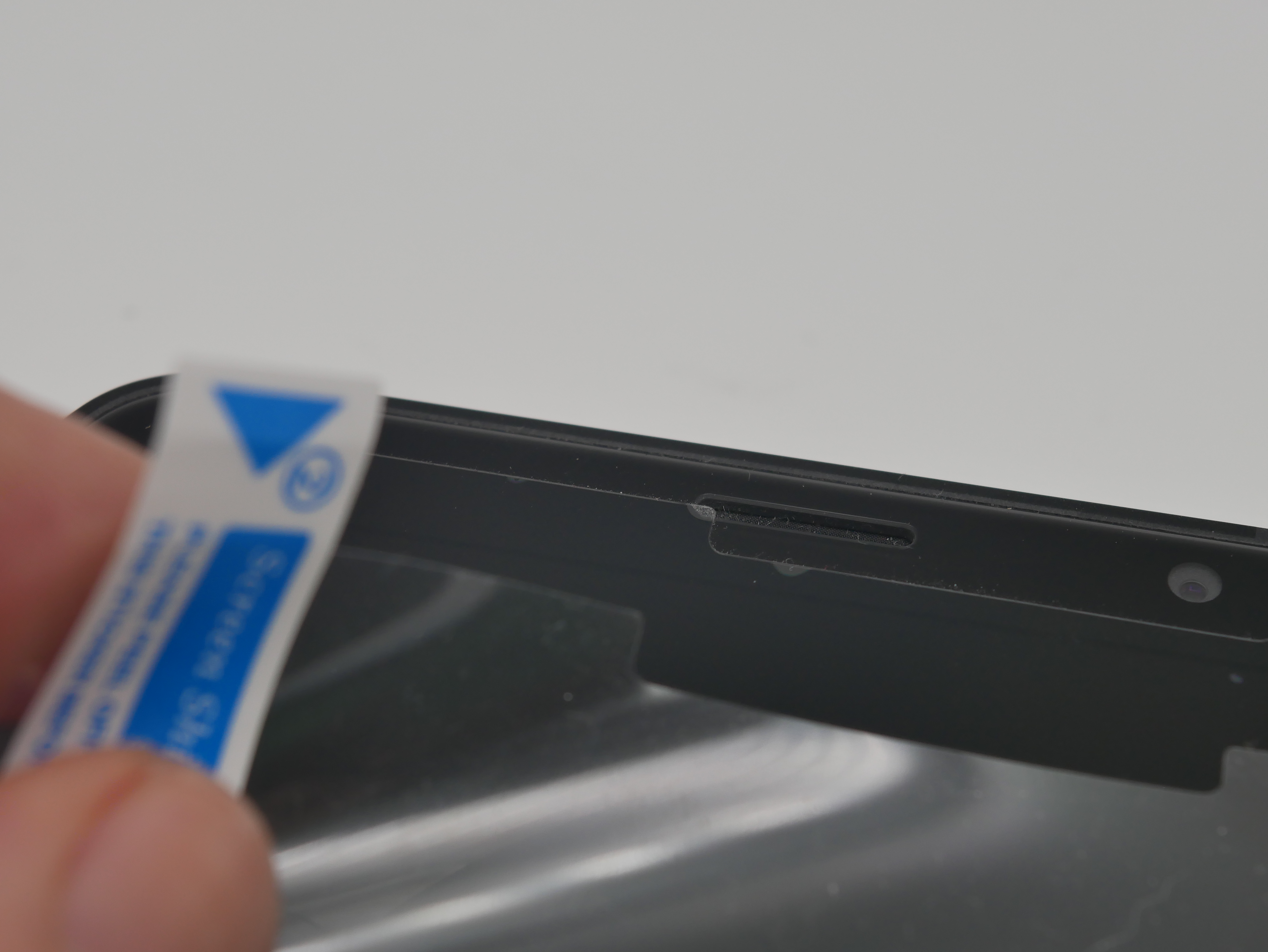
Make sure to remove the outside screen protector when your device arrives.
The tolerances around the hardware killswitch and back cover have improved dramatically from the previous batches. The kill switches are now labeled and the device is also branded.
When you first log in with the pin 123456, you’ll be greeted by the welcome dialog. Enter your basic info to start using your Librem 5.
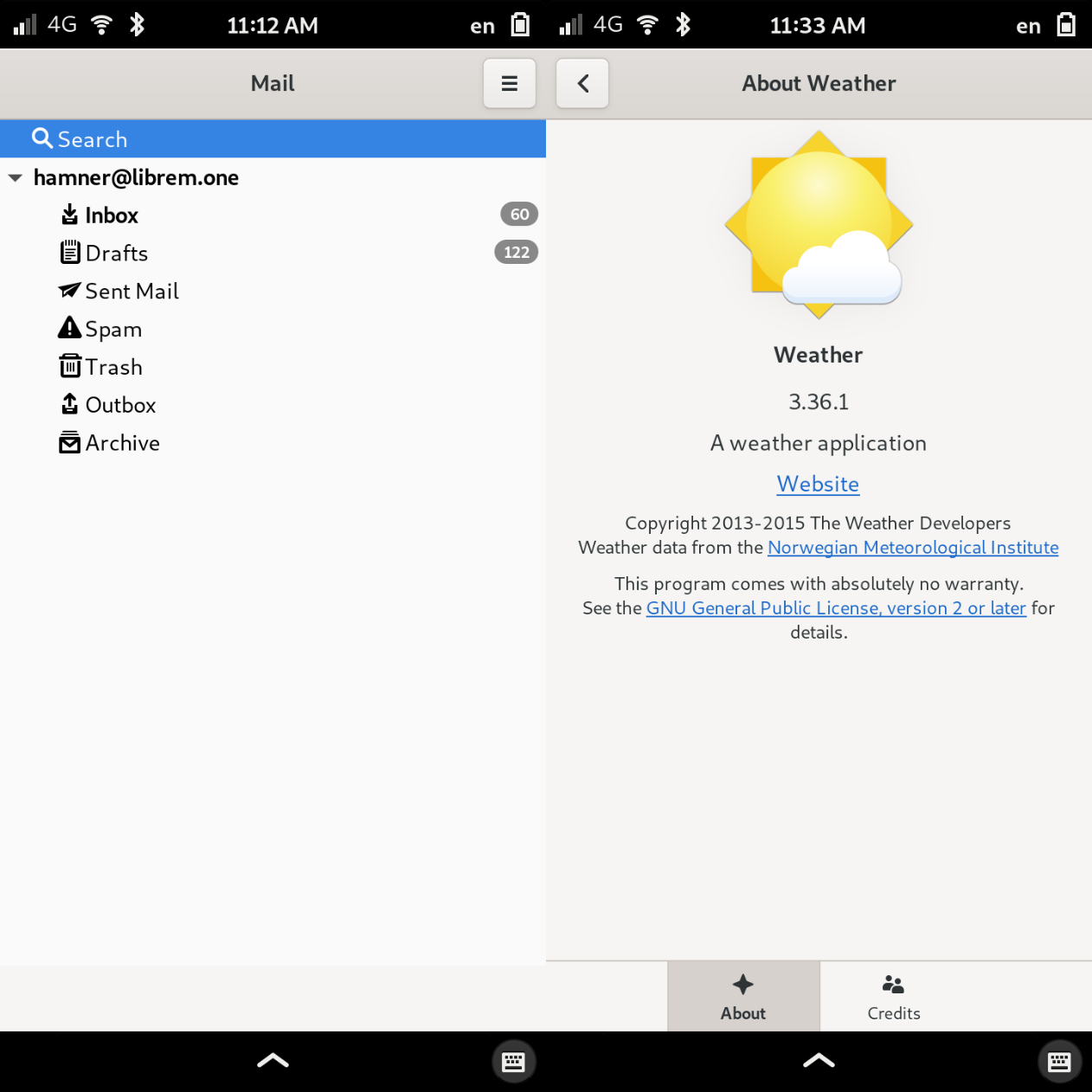
Here are the apps shipping with the Librem 5.
New to the lineup of apps is the Weather app, as well as an email client.
With so much new software being released it’s even more important to keep up with your updates.
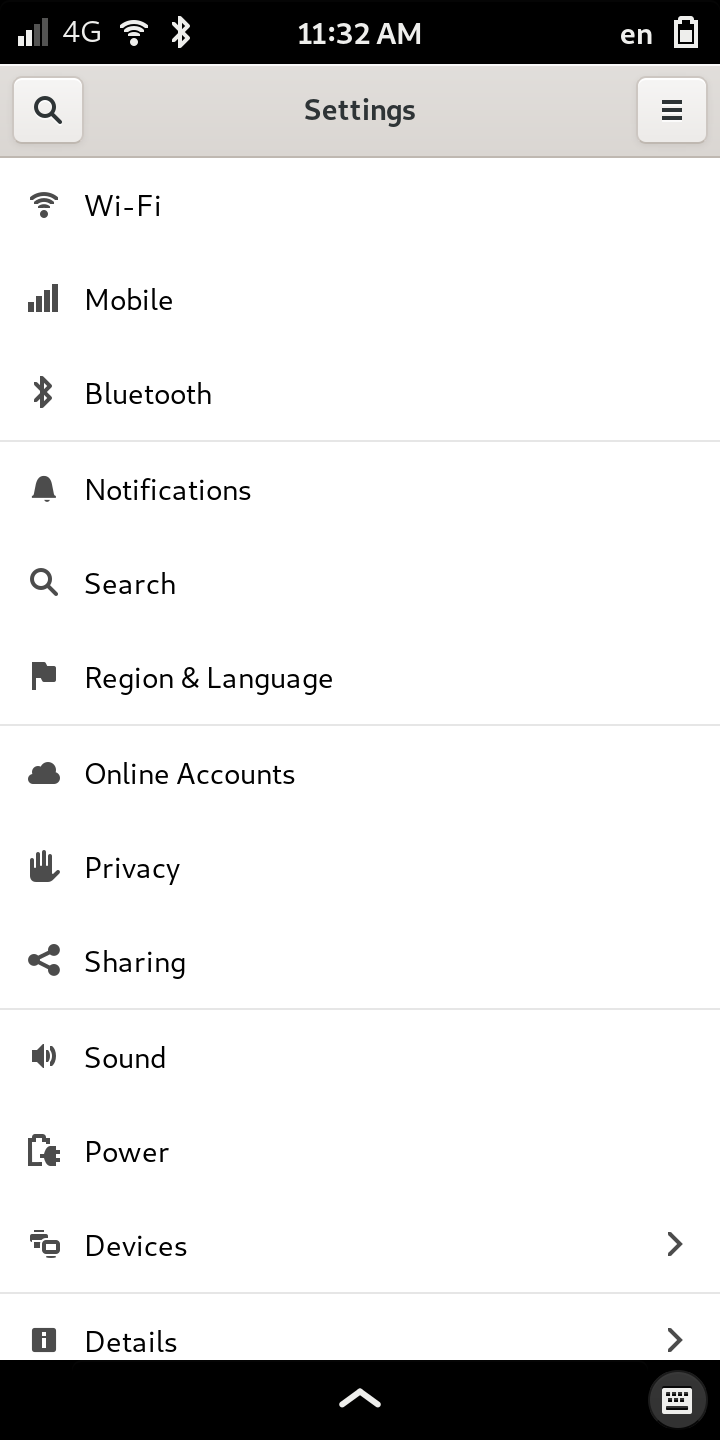
Librem 5 settings are well adapted for use on the go as well as Desktop use. Here you will find everything from Mobile data settings to a dialog to change your user pin code.
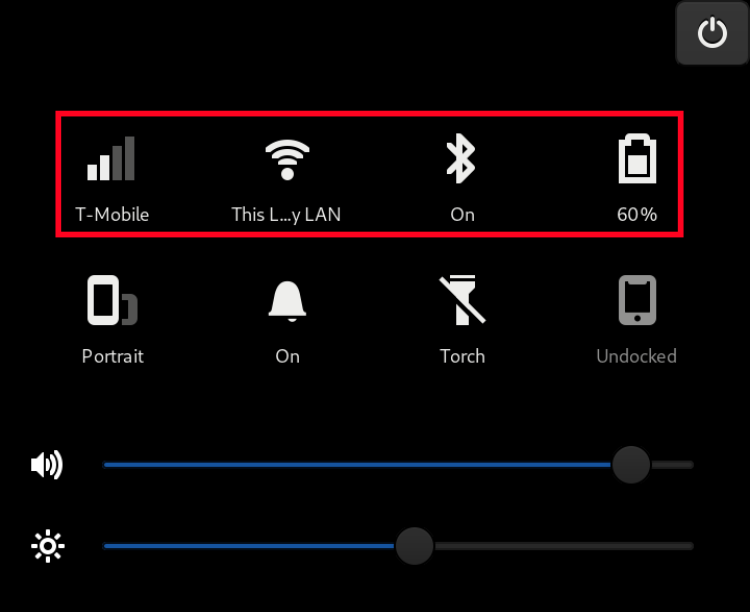
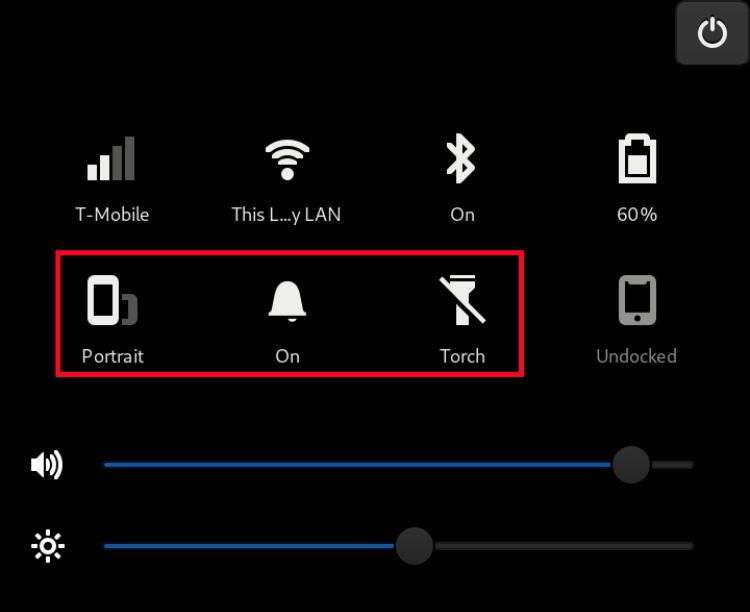
The top dropdown gives you quick access to a lot of important settings. You can quickly jump to mobile, WiFi, Bluetooth, or power settings.
We also have a toggle for portrait mode as well as notifications and flashlight.
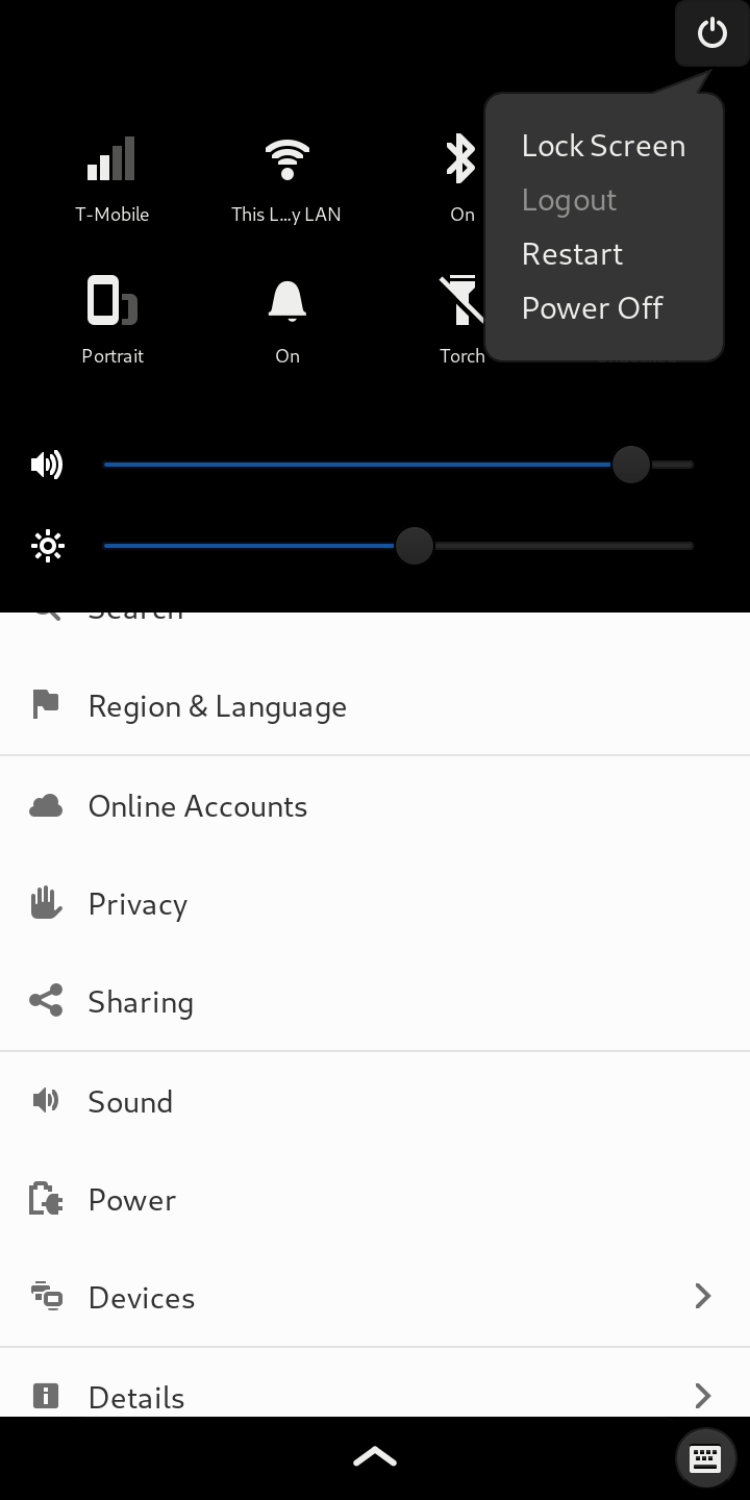
The top dropdown is also how you can lock the screen, restart or power off the device.
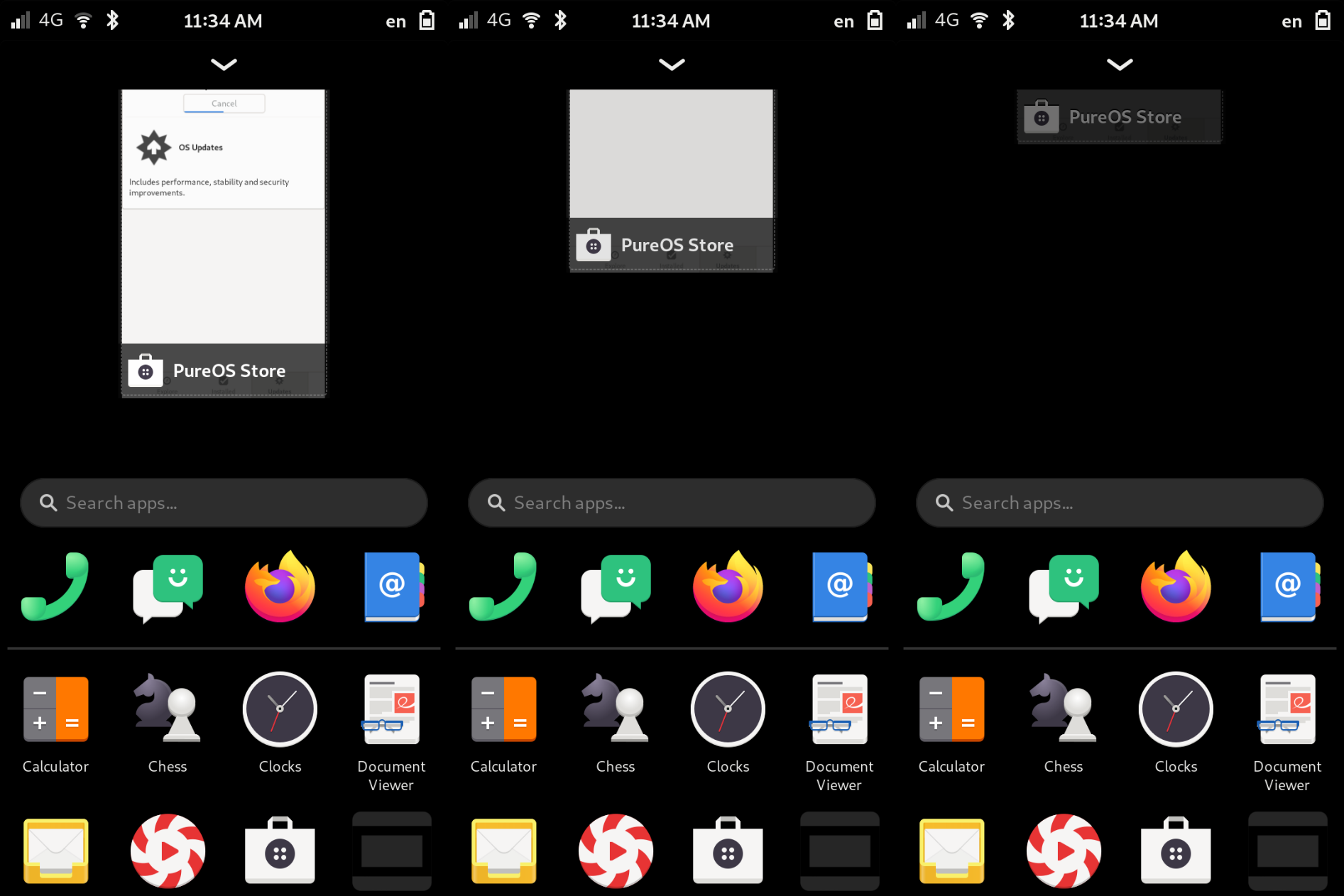
The way we close apps has also changed. Now, you can simply swipe up on the app preview to close it.
The path ahead:
We have made progress around the camera, but until we finish the kernel driver for the hardware it will be missing from the default apps. Dock support and convergence features are also not yet enabled by default as we finish up plug-and-play support in the kernel. We are also finishing up support for the OpenPGP smart card reader. All of these improvements will come with future software updates.
Thank you all for the support, we are excited to bring you the Librem 5 phone!
Discover the Librem 5
Purism believes building the Librem 5 is just one step on the road to launching a digital rights movement, where we—the-people stand up for our digital rights, where we place the control of your data and your family’s data back where it belongs: in your own hands.
Eventually, the current chaos will subside. What will the tech industry look like over the next four years? What should we expect?
These aren’t predictions as much as possibilities. The point here is not to magically assert the future, but rather to think about places where pressure is building up, and where things might change as a result. Also, after a year of mounting bad news, it’s very therapeutic to imagine some good news. Here are some things I’ll be watching.
The Big Changes
Regulation: There’ll be more
This one is obvious: There are going to be many more congressional hearings about social media, app store guidelines, platform lock-in, and the like. Policymakers will draft new regulations around transparency and labeling media sources. Maybe protecting consumer privacy sounds good, but much of this policy will simultaneously peck away at user privacy in the interests of law enforcement.
As this unfolds, copyright holders (news and other media) will line up asking for kickbacks from the social networks, and also will ask in many ways for the government to break (especially) Apple’s 30% lock on in-app purchases. European efforts like the GDPR or even the Right to Be Forgotten will be mined for inspiration.
All of this will come as a relief at first, and then cause a massive internet freakout as we see just how many things are being horse-traded in tech regulation’s name. Eventually, sure, the industry will just code the legislation into terms of service, make everything opt-in, and keep printing money. But there’ll be a lot to work out first.
Silicon Valley: It’ll be weird
It’s going to be an odd stretch for Silicon Valley. Lots of tech leaders abhor regulation, so there’ll be a lot of stomping around on Twitter and Clubhouse and Parler and wherever else tech libertarians go to farm their rage. Simultaneously, half of the USA sees “tech” as a democracy-destroying monster, which is bad for the brand. And, meanwhile, the pandemic has shown people how to work at home — and the FAANG companies will only become more physically decentralized, even as the services they provide (and acquire) will become more digitally centralized.
If I were being cynical I’d say that it’s a shame Halt and Catch Fire is already a TV show, because it’s a great way to describe Silicon Valley’s geopolitical future. And yet…I’m bullish, as usual. City-states are an ancient technology that work really well. A lot of people will work from home, and a lot of Twitter-account VCs will complain about the fascism of any form of regulation. But then they’ll invest in new startups that create marketplaces to trade around the new regulations, and everyone will go to The French Laundry to celebrate their C round, or whatever it is that VCs do. In the long run, tech is everywhere — when you pick up your phone, you don’t care that AT&T was a New York City company — but it’s still a long run, and Silicon Valley has a lot of money and ideas to go. It’ll keep breeding unicorns.
Civic tech: Lots to build on
The good people of the US Digital Service, 18F, and other civic tech ventures have all been working steadily over the past four years, like ambulance drivers in a bad hurricane. Many thanks to them!
Now it looks like a lot of energy is going to go into making a better, more responsive digital government, and instead of starting from scratch, this time there’s a ton of work done around accessible design systems, basic tech infrastructure, authentication and identity, and so forth. Which means that people working in civic tech with broad mandates should be able to ship meaningful services to civilians or servicemembers with months, not years, of work.
And you can increasingly expect government orgs to ship good stuff: open source code, scalable APIs optimized for reuse, and so on, rather than monolithic software. As a result, the U.S. government “platform” is going to keep growing and getting more valuable, month over month, and lots of people who wouldn’t have wanted to serve under Trump are going to want to help. Which is great, as long as they listen and learn before starting to code. (Check out Cyd Harrell’s book, A Civic Technologist’s Practice Guide.)
There’s one huge caveat here: Contracting. It’s still ridiculously difficult for smaller, more nimble organizations to work with the government. (For example, a few years ago I started talking with a government agency about some work it wanted Postlight to do, and it dragged on so long that my contact…retired.) So even if the tools are good, and the desire for progress is real, execution will be hard. Giant orgs will still take government money, burn it, and ship a month’s work in a year. And of course, we’ll still only be talking about a few systems out of thousands. Still! Fun to watch, with big impact.
Climate work: Here it comes
As climate guidelines get baked into law, and thus into business requirements, and money frees up to implement new climate guidelines, climate sensitivity will need to be baked into technology platforms. For example, if you’re a giant company deciding where to buy your aluminum, you’ll need to factor in the carbon involved in mining, refining, and shipping, and weigh that against a bunch of other factors. If you gain any kind of credit for that, how do you exchange it? (In Kim Stanley Robinson’s new book he posits a sort of blockchain for carbon credits, and I mean, whatever works.)
A lot of this has started already. But much more will need to happen in the big sleeping whales of software: inside enterprise resource planning systems, mapping tools, and the like, built into SDKs. It’ll be dry stuff, but there’s a lot to do. Judging from Postlight’s inbound queue of work, I expect this to be a major growth area for client services over the next…well, probably forever.
Social fragmentation: We can hope
The monolithic hold of social media over the internet’s attention is starting to fragment. First, self-regulation by orgs will change some dynamics — like Facebook’s promise to stop running political ads (eventually), or Twitter’s labeling of “disputed claims” on Trump’s tweets. Government regulation will change it further.
It seems inevitable that “third places” will show up — the “first place” is email and chat, the second is established social platforms with all their rules, and the third are places that are somewhat public but not open to all, new platforms where people can yell and stomp around and be themselves, like the far-right Twitter clone Parler, which will probably implode due to infighting but will lead to a lot of Mother Jones articles in the meantime. Or Mastodon instances, or small Slack communities. Ultimately it’s a pretty small percentage of people who want to fight all the time; most humans want to trade recipes, say stupid stuff about sports, and engage in mild piracy without anyone yelling at them. In addition to severely damaging democracy, the big social platforms are doing a bad job of filling that market need, so I’d expect other solutions to arise.
Be mindful, though: The social giants aren’t going away. Trump will still be tweeting in 2024, and hundreds of millions of people will be engaged/enraged. But the platforms can’t remain this monolithic and centralized; humans are just too inconsistent to keep this mess going.
So, what to do?
So how will this trickle down to we the people, who make the platforms and apps with our keyboard-typing and mouse-moving? This is obviously even more of a set of guesses than the above, but consider some new probabilities.
Expect a lot of opting in
The idea that you can track someone around the internet — because…well, because you want to — could fade away, partially because of moves by Apple, and probably because of some influence from the government. You’re going to have to ask people for data, not just help yourself, and you may need to give people the right to manage and erase their own data. I could even imagine that being automated — imagine a really big DO NOT EMAIL list controlled by the government, but with teeth. The right time to have started collecting opt-in email addresses that can be used as unique account IDs was 20 years ago; the second best time is today.
Start looking for ways to “climate enable”
Climate science is hard, and if you’re a tech-oriented person, it’s a little…well, boring. There’s no IDE or YouTube tutorials, just a lot of science. But it’s pretty likely that the next four years will involve a lot of global warming mitigation efforts, and that means lots of sensors out there, lots of data to analyze, lots of machine learning models to evaluate, lots of supply chains to optimize in new ways. It won’t all be carbon calculators.
It’ll trickle down. You might build accelerated insurance claims software for people whose homes are damaged by increased flooding. Or tools for notifying people about weather events. Or build tools for hardware chains to help people pick more sustainable, resistant home repair materials. Better fire notification systems. Platforms for emergency preparedness. Tools to help farmers manage and predict drought.
I know this sounds kind of dystopian. That’s because it is. But it’ll happen bit by bit, and as it happens, people will still be buying things through their phones and filling out forms. When you see that McKinsey is coming down hard on the need for organizations to adapt to climate change, you know that the rest of capitalism will eventually follow.
Light a candle in hopes of app store changes
This is a stretch, and wishful thinking, but just imagine for a moment if Apple suddenly was forced to charge 5% for in-app purchases instead of 30%. You’d see a vast, thriving ecosystem bloom in hours. It’s just a huge tax we all pay. Fun to think of what you’d do if you could get a quarter of your revenue back! You could do so many more interesting things with that money, whereas Apple will just use it to hold more events announcing updates to Apple Watch.
Social media plus Google ads have taken all the air out of every room and it’s essentially impossible to make something new and share it with an audience, without paying tons of money to billionaires, or turning everything you make into memes. Plus, no one visits home pages.
That’s why newsletters are big now: Because they provide reliable, predictable, cheap means of distribution since social won’t and can’t. Another means of distribution is phone notifications; the New York Times, for example, is hiring a full-time mobile notifications editor.
So even though one-off apps are weak sauce, people will keep making them because they let you regularly ask for attention and engagement without paying Facebook or Twitter for the privilege. You could even see a renaissance in RSS feed readers (Substack is apparently building its own!).
Creating audience without paying a huge tax to some utterly disinterested gatekeeper is the great challenge of our age.
Somehow podcasts will ignore all of this but keep doing fine.
Going big
Maybe over the next four years little changes: The social networks and Google agree to behave a little better. Fake news flare-ups are a normal part of life, but everyone follows a more transparent rulebook. The newsletter fad crashes because no one wants to pay for that much media, and big players like TheNew York Times and TheWashington Post keep growing. There are more privacy rules to follow, but in general, if you use well-known user tracking and analytics platforms, you don’t get into too much trouble.
Or perhaps it will come down to a change in tone: The Biden administration focuses on “de-polarization” (a little different than bipartisanship) and makes social media a big target of action while encouraging the Republicans to reject Trumpism, in the hope that America can just chill out. The FCC starts to keep closer tabs on a lot of FAANG companies, including bigger telecoms. As a result, the giant platforms go on a charm offensive and start working together around pandemic preparedness, climate, and so forth — i.e., helping the administration with its policy goals in their own self-interest. The changes start to trickle down at the API and SDK levels, with things like Apple’s CarbonKit.
For fun, let’s turn the dial all the way. Maybe we’re headed to a huge climate-driven economic reboot: VCs funding climate mitigation marketplaces, the option for every Amazon purchase to be offset, huge amounts of government spending, vast changes in finance, insurance, and real estate. Partnerships with China on climate start to change the trade relationships as well, and more Chinese software platforms get relaunched in the U.S., à la TikTok. TPP gets resurrected. Huawei is forgiven and buys the state of New Mexico!
Or maybe there will be pressure from all corners, leading to increased regulation and pressure to break up major components into multiple companies: Amazon to split off cloud, Apple to manage in-app purchase rates, rules about lock-in, everyone managing their own data. That’s a lot of change for four years, though.
And of course I’ve mostly neglected the gaggle of black swans out there flapping around. I’m assuming vaccines, stability, a relatively stable market — I left out a lot of the bad stuff, because I think we’ve been playing those scenarios out for years now. We already know what it looks like when tech treats humans like a cheap natural resource.
What’s obvious to me is that the next four years will be an opportunity for tech to de-center itself from every single conversation about politics and culture. It can do that by accepting that it’s…infrastructure. (I love infrastructure.) I know we’re supposed to be the most disruptive industry, but the world doesn’t seem to be craving any more disruption. Maybe we could focus on stabilizing institutions instead of destroying them. Just for a minute. Even half a minute. One can always hope.
In this episode of DevNews, hosts Saron Yitbarek and Josh Puetz, cover how Apple server problems caused slowdowns and crashes for app launching in all versions of MacOS, the rise of school districts being the targets of ransomware attacks, and GitHub reinstating youtube-dl, a program to download videos from YouTube and other video sites, after a Digital Millennium Copyright Act takedown. And then they chat with Senior Staff Writer at Motherboard, Joseph Cox, whose piece titled, “How the U.S. Military Buys Location Data from Ordinary Apps,” shines a spotlight on the location data industry, and who is being targeted.
Last week, I came across a new platform called Wonder which allows for participants to self-organise into video chat groups.
As an early product, it’s not without its quirks, but this kind of thing is gold for facilitators interested in more democratic and participatory workshops.
Here’s why I like it:
Participants can leave a group and join or form a new one at any time
Everyone entering the room can be asked an icebreaker question, the answer to which is displayed when you hover over their avatar
When you’re outside a group (like me in the screenshot above) you can see who’s talking in a group
It’s got all of the usual screensharing functionality you’d expect
Admins/facilitators can ‘broadcast’ to all groups (without having to recall them)
This is much better than Zoom rooms, which have to be set up by the facilitator, and which perpetuates a hierarchical power relationship.
It did take me back to a decade ago, wandering around a classroom when I ‘dropped in’ to groups. People stopped talking for a moment. But that’s always the case when someone joins a group that’s already having a conversation.
So long as the pricing doesn’t end up being ridiculous, I’m planning to use Wonder for any meetings where I need breakout rooms. Although Zoom has superior video quality (and backgrounds!) I’m very impressed with what Wonder offers me as a facilitator.
Jeff Geerling@geerlingguy
Learned a couple things after seeing this article about the Pi 400—it's a good summary of all the little details yo… twitter.com/i/web/status/1…
IndieAuth is a spiritual successor to OpenID, developed and maintained by the IndieWeb community and based on OAuth 2. This weekend I attended IndieWebCamp East Coast and was inspired to try my hand at an implementation. datasette-indieauth is the result, a new plugin which enables IndieAuth logins to a Datasette instance.
Surprisingly this was my first IndieWebCamp - I've been adjacent to that community for over a decade, but I'd never made it to one of their in-person events before. Now that everything's virtual I didn't even have to travel anywhere, so I finally got to break my streak of non-attendance.
Understanding IndieAuth
The key idea behind IndieAuth is to provide federated login based on URLs. Users enter a URL that they own (e.g. simonwillison.net), and the protocol then derives their identity provider, redirects the user there, waits for them to sign in and get redirected back and then uses tokens passed in the redirect to prove the user's ownership of the URL and sign them in.
IndieAuth works by scanning the linked page for a <link rel="authorization_endpoint" href="https://indieauth.com/auth"> HTML element which indicates a service that should be redirected to in order to authenticate the user.
I'm using IndieAuth.com for my own site's authorization endpoint, an identity provider run by IndieAuth spec author Aaron Parecki. IndieAuth.com implements RelMeAuth.
RelMeAuth is a neat hack where the authentication provider can scan the user's URL for a <link href="https://github.com/simonw" rel="me"> element, confirm that the GitHub profile in question links back to the same page, and then delegate to GitHub authentication for the actual sign-in.
Why implement this for Datasette?
A key goal of Datasette is to reduce the friction involved in publishing data online as much as possible.
The datasette publish command addresses this by providing a single CLI command for publishing a SQLite database to the internet and assigning it a new URL.
This command will create a new Google Cloud Run service, package up the ca-fires.db (created in this talk) along with the Datasette web application, and deploy the resulting site using Google Cloud Run.
It will output a URL that looks like this: https://ca-fires-j7hipcg4aq-uc.a.run.app
Datasette is unauthenticated by default - anyone can view the published data. If you want to add authentication you can do so using a plugin, for example datasette-auth-passwords.
Authentication without passwords is better. The datasette-auth-github plugin implements single-sign-on against the GitHub API, but comes with a slight disadvantage: you need to register and configure your application with GitHub in order to configure things like the redirect URL needed for authentication.
For most applications this isn't a problem, but when you're deploying dozens or potentially hundreds of applications with Datasette - each with initially unpredictable URLs - this can add quite a bit of friction.
The joy of IndieAuth (and OpenID before it) is that there's no centralized authority to register with. You can deploy an application to any URL, install the datasette-indieauth plugin and users can start authenticating with your site.
Even better... IndieAuth means you can grant people permission to access a site without them needing to create an account, provided they have their own domain with IndieAuth setup.
I took advantage of that in the design of datasette-indieauth. Say you want to publish a Datasette that only I can access - you can do that using the restrict_access plugin configuration setting like so:
The resulting Datasette instance will require the user to authenticate in order to view it - and will only allow access to the user who can use IndieAuth to prove that they are the owner of simonwillison.net.
Next steps
There are two sides to the IndieAuth specification: client sites that allow sign-in with IndieAuth, and authorization providers that handle that authentication.
datasette-indieauth currently acts as a client, allowing sign-in with IndieAuth.
I'm considering extending the plugin to act as an authorization provider as well. This is a bit more challenging as authentication providers need to maintain some small aspects of session state, but it would be good for the IndieAuth ecosystem for there to be more providers. The most widely used provider at the moment is the excellent IndieAuth WordPress plugin, which I used while testing my Datasette plugin and really was just a one-click install from the WordPress plugin directory.
datasette-indieauth has 100% test coverage, and I wrote the bulk of the logic in a standalone utils.py module which could potentially be extracted out of the plugin and used to implement IndieAuth in Python against other frameworks. A Django IndieAuth provider is another potential project, which could integrate directly with my Django blog.
Addendum: what about OpenID?
Fom 2006 to 2010 I was a passionate advocate for OpenID. It was clear to me that passwords were an increasingly unpleasant barrier to secure usage of the web, and that some form of federated sign-in was inevitable. I was terrified that Microsoft Passport would take over all authentication on the web!
With hindsight that's not quite what happened: for a while it looked like Facebook would win instead, but today it seems to be a fairly even balance between Facebook, Google, community-specific authentication providers like GitHub and Apple's iPhone-monopoly-enforced Sign in with Apple.
OpenID as an open standard didn't really make it. The specification grew in complicated new directions (Yadis, XRDS, i-names, OpenID Connect, OpenID 2.0) and it never quite overcame the usability hurdle of users having to understand URLs as identifiers.
IndieAuth is a much simpler specification, based on lessons learned from OAuth. I'm still worried about URLs as identifiers, but helping people reclaim their online presence and understand those concepts is core to what the IndieWeb movement is all about.
IndieAuth also has some clever additional tricks up its sleeve. My favourite is that IndieAuth can return an identifier for the user that's different from the one they typed in the box. This means that if a top-level domain with many users supports IndieAuth, each user can learn to just type example.com in (or click a branded button) to start the authentication flow - they'll be signed in as example.com/users/simonw based on who they authenticated as. This feels like an enormous usability improvement to me, and one that could really help avoid users having to remember their own profile URLs.
OpenID was trying to solve authentication for every user of the internet. IndieAuth is less ambitious - if it only takes off with the subset of people who embrace the IndieWeb movement I think that's OK.
The datasette-indieauth project is yet another example of the benefit of having a plugin ecosystem around Datasette: I can add support for technologies like IndieAuth without baking them into Datasette's core, which almost eliminates the risk to the integrity of the larger project of trying out something new.


 Das Kraftfuttermischwerk.

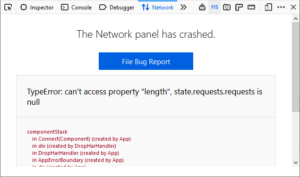

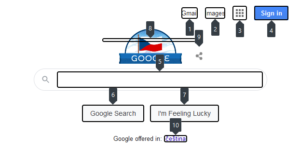
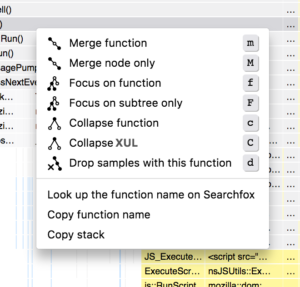
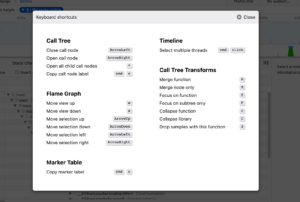





 Photo by