Shared posts

25 Nov 20:26

Brussels Belgium Skipped Apartments, Went to “Maisons de Maitre”.

by Sandy James Planner

Bloomberg’s Feargus O’Sullivan has been writing an interesting series on housing in world cities. He took a look at Brussels Belgium where instead of opting for tall apartment buildings as a 19th century solution to housing many in the downtown, stone and masonry decorated single family homes were adopted. These houses are tall, thin, and all have entranceways directly onto the street frontage.

These houses are fittingly called “maison de maitre”  or master’s house, for their size and facade splendour and were built and lived in by the “wealthy bourgeois”. Like the Goldilocks and the Three Bears story, these houses are not grand mansions for the truly rich aristocrat, nor were they as plonky as a standard townhouse. The main floor had three large reception rooms with dividing doors that could open, an open space concept way before its time.

 “The result is an interesting hybrid, combining floor plans reminiscent of London townhouses, plot sizes similar to old Amsterdam and servants attics like in Paris — all brought together with an elaborate, unmistakably Belgian decorative style.”

There’s a lot of ornamentation on the front facade of these structures which can be kindly called a “baroque streak” but were largely influenced by the aesthetic movement.

While Brussels did try a Paris redevelopment plan in their downtown similar to Baron Haussmann’s in the 1860’s, the locals hated “Haussmann-style” apartment living.

They hated it so much that no one tried to build apartments in the downtown again until the 1970’s, leaving downtown Brussels with much the same feel as Buenos Aires in Argentina, where older buildings still dominate the historic downtown.

As middle classes moved to new houses being built outside the city’s historic walls, Brussels’ “maisons de maitre” grew less popular with many of the houses being split into apartments. Redevelopment of roads and destruction of heritage buildings came to be known as “Brusselization”.

But in a surprising twist, the middle class came back to the centre city and the Maison de Maitre enjoyed a new popularity. Why? There was no run of investment in the downtown housing to make it out of reach of residents, with an entire house costing less than a one bedroom apartment in many larger American cities.

There is also less competition for house purchases in Brussels, with few international European Union workers competing against locals for purchase. A  Maison de Maitre house can cost as low as 600,000 Euros (930,000 dollars Canadian).

The YouTube video below shows a real estate offering for a maison de maitre and gives a sense of the house’s plan and interior.

Image:Lapresse

25 Nov 20:25

The Daily Edit – Manjari Sharma

by Heidi Volpe

Manjari Sharma

Heidi: How has your relationship with the work changed if at all since moving to the United States?
Manjari: It’s been an incredible journey, and one I wouldn’t change anything about. I came here to the USA at 21 and looking back I knew very little about the “history” of America. What I did know was I was going to make a lot of pictures, meet a lot of new people and ask a lot of questions. I wanted to grow and that curiosity led me across the globe. My relationship with my work over the years has become more intimate. I am more transparent with my practice and I think it’s because simplicity and complexity in equal parts are inextricably tied to aging. Time is certainly the best teacher. When I was younger things were more black and white and now I know there are multiple realities to most all stories. When I was younger I was honing my craft, and then I started telling my own stories. This is where my path changed, where the story became so important that it had to be told at any and all costs. It didn’t matter who was publishing the work or inviting it for a show. The work had its own preordained path and it had to be born.

As you gain distance, is it reinforcing something for you?
Gaining distance from that which we love is a double-edged sword. At twenty one I knew or cared very little about the duality of stepping away from my home and my family. The sense of adventure and the draw to pursue and carve my own unknown path was so strong, I wouldn’t have it any other way. I am fortunate that my family supported my unbridled wishes. Over the years I have both learned and unlearned a great deal about both my Indian descent and my adopted American culture and they are bittersweet truths. What this distance or as Pico Iyer calls it the “Gift of exile” is that it has allowed me to do is make up a culture of my own; A hybrid identity that draws from both these incredible countries that I am fortunate to straddle.

What marked a pivotal time in your career here in the US?
2008-2013 I photographed a series titled The Shower Series. I invited people I didn’t know very well to take a shower in my shower as I photograph them. The premise was risque and clothes were optional. I photographed a plethora of people showering and ended up having these unexpectedly disarming conversations with them. The water became a conduit and almost every single time I photographed someone, I felt entrusted with a really personal story. I made audio recordings of the protagonists’ short stories with their consent of course, and they were so honest and beautiful. A shower is such a sacred space that our intimacy and the cleansing aspect of water turned the experience into a really meaningful connection. I won’t lie I felt like I fell in love with every one of my subjects. I also found myself quite consumed by the process of making this work. I was addicted to hearing these raw and vulnerable stories because they turned my subjects into these complex, powerful characters that had so much depth. Somewhere during these sessions, several portraits were taken; My lens got fogged, my toes got wet and the photograph became a reason to connect to something beyond. This series was a pivotal point in my practice because I realized the camera had become an extension of my personality. Meeting a new human being, learning who they are, what takes them down, what makes them tick, is was what brought me to another country. So much of that series was a discovery that the lesson I learned here was to pay attention and follow the lure of my unconscious mind.

Now that you have lived almost half of your life in India and half in the US when you created this work, which part of you did you relate to the most?
When I look at my work I see a pluralistic lens. I am guided by American inquiry but I assess my work from an inner core that is rooted in Indian culture. Many of these experiences of growing up in India I am present with on a daily basis, and then there are others that time has made opaque, yet, I know they are deeply embedded in my inner landscape. The best example of this might be like the lyrics of a Hindi song that I forgot I knew verbatim. As an artist never losing sight of this unknown murky middle ground that lies between the known and the unknown is probably my most challenging yet rewarding part. Mining that cerebral interlude for answers is what I derive my greatest satisfaction from.

Are you talking about the lyrics to a particular song, why do you think it resonated?
Recently I was at my friend’s house Sarita, and she played a Hindi song I hadn’t listened to for a really long time, maybe even decades, but I found myself knowing it word for word. My palette for music was a gift from my mother. I specifically remember moments when she shook her head and wiped her tears because the melody and lyrics of a song could move her so much. The songs that had meaning to her were played and overplayed in my home. I listened to Indian music on my mom’s Panasonic cassette player and she exposed me to such terrific names RD Burman, Naushad, Mohammed Rafi to name a few. Anyway, I’m digressing I am using this as an analogy to share that formative experiences from 21 years in Bombay are burned and embedded into my psyche. I’m shaped by these and so is my art.

How did the sari impact you as a young woman, and how does it impact you as an adult? What life lessons can be drawn from this complex piece of fabric, once properly tied? or not tied?
Fabric in general holds a lot of meaning for me. Indian customs, rituals, and relationships are symbolically represented by color, textiles, and knots in an immense way. The act of tying and untying has great relevance in Indian culture. A knot represents a promise. The act of who ties a knot between the bride and the groom at an Indian wedding for example has ancestral significance. As a young woman, the Saree to me was regarded as a garment that commanded respect. I remember staring at my mother when she draped herself in one. Wearing a saree was an occasion in itself and from that perspective, as a young woman, I romanticized it. Walking gracefully in a saree took practice and poise and an improperly tied saree was not only sloppy but dysfunctional. In that sense spending time with folding, pleating, and draping nine-yards of fabric was a meditation in its own right. As an adult, I look at it a bit more microscopically because as life would have had it my mother (a dementia patient) can no longer drape herself in a saree. Also as I examine India from a sexist lens, I look at the saree not just as a delicate decorative but also as a symbol of patriarchal control. I have a deep and spiritual admiration for this garment, but I also critique it as a modern Indian woman. I had a teacher in a college in Bombay and her name was Putul Sathe she was a counter-culture spitfire who imbued me with radical liberal thought. The saree is incredible and incredibly limiting and I wanted to address both those aspects in my series “How to wear a saree

What was the tipping point for your recent letter titled “Love Letter to America?”
George Floyd’s death in particular shook me to the bone. “Love letter to America” as you know weaves my own experiences into the fold but what began with “Talking Pictures” came to more honest fruition with Love Letter to America. You can read it here


“Talking Pictures” was influenced by the 2016 elections, so here we are 4 years later, how has this current landscape informed your work?
Talking Pictures was an assignment through The Metropolitan Museum of Art and a big subject of that commission became the growing life inside my body as I discovered that I was pregnant during the course of the assignment. However, the outcome of the election, and particularly Donald Trump’s win was something I had to address as part of my work. Trump’s win was the first time I found myself traveling to DC on a bus at 4 am to exercise my rights and protest against the disturbing political landscape of America. I understand that we are bipartisan as a country but I have known, befriended, and even loved many republican leaning Americans. However, Donald Trump represented an America that was at odds with everything I understood and respected about this country. I am brown, grew up in India, and over the years my understanding of racism and white supremacy has grown steadily but Trump’s America permitted behaviors I didn’t realize this country was capable of. This speaks to my privilege of course, but my art practice could no longer ignore that I needed to headlong address certain racist inequities that I now found myself shielding.

There is so much expression of life in the streets of India, are you drawn to mural work?
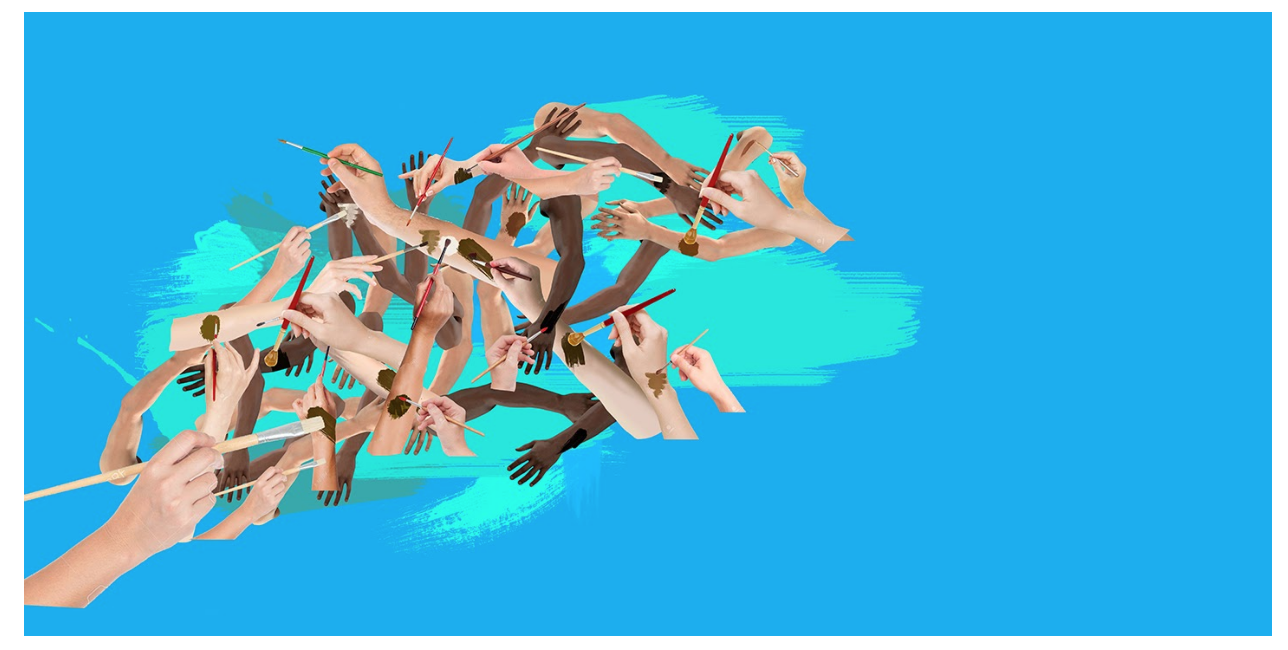
Yes public art was vivid in Mumbai and I certainly have a sense of belonging to it. With galleries and museums being shut down due to the Coronavirus pandemic, Public Art and the vitality it brings to communities is more important than ever. This mural, A cacophony of human hands rising like a wave, is also an extension of a recent piece I wrote “Love Letter to America”

What does it mean?
Sometimes we don’t see people for what they are, we see them for who “we think” they are. Are we programmed to misunderstand each other? Can we fight this programming? The purpose of the mural is to invite the viewer to examine and self-reflect on our racial lens and actions as a community.

I know you’re on the board of the organization Art Bridge, an initiative that helps early-career artists have a brilliant platform. Tell us about this piece “Simultaneous Contrast” pictured above, in a sketch and a comp.
Simultaneous contrast is a new body of work I’m only just beginning work on. Much like my series Darshan it is currently a sketch and is yet to be constructed. It is based on a phenomenon rooted in color theory. Simultaneous contrast is a term that refers to the influence of one color when in close proximity to another. The theory is that when placed side by side, one color can change how we perceive the tone and hue of another. In reality, the colors themselves never change, but in our recognition, we see them as altered. No normal eye, not even the most trained one can see color independently. This series is an exercise in challenging the framework of our consciousness. What does the color of our skin represent in society? What is our role in shaping the perception of colors around us? Simultaneous Contrast invites the viewer to examine the illusion of stereotypes, and question our role in altering the perceptions of implicit bias.

Artbridge has an auction up for about a week and people have the opportunity to grab amazing art. You can buy this piece from my series “Surface Tension” to support this incredible organization or browse some amazing other artists here. 

------------------------

Visit our sponsor Photo Folio, providing websites to professional photographers for over 10 years. Featuring the only customizable template in the world.

------------------------

25 Nov 20:25

Pratham Digital uses QR codes to help with logi...

by Laura
Pratham Digital uses QR codes to help with logistics of shared devices and students logins in very remote villages in India.
25 Nov 20:25

by Laura
25 Nov 20:25

by Laura
25 Nov 20:25

The Four Jobs of the Data Scientist

In 2019 I wrote a post about The Tentpoles of Data Science that tried to distill the key skills of the data scientist. In the post I wrote:

When I ask myself the question “What is data science?” I tend to think of the following five components. Data science is (1) the application of design thinking to data problems; (2) the creation and management of workflows for transforming and processing data; (3) the negotiation of human relationships to identify context, allocate resources, and characterize audiences for data analysis products; (4) the application of statistical methods to quantify evidence; and (5) the transformation of data analytic information into coherent narratives and stories.

My contention is that if you are a good data scientist, then you are good at all five of the tentpoles of data science. Conversely, if you are good at all five tentpoles, then you’ll likely be a good data scientist.

I still feel the same way about these skills but my feeling now is that actually that post made the job of the data scientist seem easier than it is. This is because it wrapped all of these skills into a single job when in reality data science requires being good at four jobs. In order to explain what I mean by this, we have to step back and ask a much more fundamental question.

What is the Core of Data Science?

This is a question that everyone is asking and I think struggling to answer. With any field there’s always a distinction between the questions of

  • What is the core of the field?
  • What do people in that field do on a regular basis?

In case it’s not clear, these are not the same question. For example, in Statistics, based on the curriculum from most PhD program, the core of the field involves statistical methods, statistical theory, probability, and maybe some computing. Data analysis is generally not formally taught (i.e. in the classroom), but rather picked up as part of a thesis or research project. Many classes labeled “Data Science” or “Data Analysis” simply teach more methods like machine learning, clustering, or dimension reduction. Formal software engineering techniques are also not generally taught, but in practice are often used.

One could argue that data analysis and software engineering is something that statisticians do but it’s not the core of the field. Whether that is correct or incorrect is not my point. I’m only saying that a distinction has to be made somewhere. Statisticians will always do more than what would be considered the core of the field.

With data science, I think we are collectively taking inventory of what data scientists tend to do. The problem is that at the moment it seems to be all over the map. Traditional statistics does tend to be central to the activity, but so does computer science, software engineering, cognitive science, ethics, communication, etc. This is hardly a definition of the core of a field but rather an enumeration of activities.

The question then is can we define something that all data scientists do? If we had to teach something to all data science students without knowing where they might end up afterwards, what would it be? My opinion is that at some point, all data scientists have to engage in the basic data analytic iteration.

Data Analytic Iteration

The basic data analytic iteration comes in four parts. Once a question has been established and a plan for obtaining or collecting data is available, we can do the following:

  1. Construct a set of expected outcomes
  2. Design/Build/Apply a data analytic system to the data
  3. Diagnose any anomalies in the analytic system output
  4. Make a decision about what to do next

While this iteration might be familiar or obvious to many, its familiarity masks the complexity involved. In particular, each step of the iteration requires that the data scientist play a different role involving very different skills. It’s like a one-person play where the data scientist has to change costumes when going from one step to the next. This is what I refer to as the the four jobs of the data scientist.

The Four Jobs

Each of the steps in the basic data analytic iteration requires the data scientist to be four different people: (1) Scientist; (2) Statistician; (3) Systems Engineer; and (4) Politician. Let’s take a look at each job in greater detail.

Scientist

The scientist develops and asks the question and is responsible for knowing the state of the science and what the key gaps are. The scientist also designs any experiments for collecting new data and executes the data collection. The scientist must work with the statistician to design a system for analyzing the data and ultimately construct a set of expected outcomes from any analysis of the data being collected.

The scientist plays a key role in developing the system that results in our set of expected outcomes. Components of this system might include a literature review, meta-analysis, preliminary data, or anecdotal data from colleagues. I use the term “Scientist” broadly here. In other settings this could be a policy-maker or product manager.

Statistician

The statistician, in concert with the scientist, designs the analytic system that will analyze the data generated by any data collection efforts. They specify how the system will operate, what outputs it will generate, and obtain any resources needed to implement the system. The statistician draws on statistical theory and personal experience to choose the different components of the analytic system that will be applied.

The statistician’s role here is to apply the data analytic system to the data and to produce the data analytic output. This output could be a regression coefficient, a mean, a plot, or a prediction. But there must be something produced that we can compare to our set of expected outcomes. If the output deviates from our set of expected outcomes, then the next task is to identify the reasons for that deviation.

Systems Engineer

Once the analytic system is applied to the data there are only two possible outcomes:

  1. The outputs meet our expectations, or
  2. The output does not meet our expectations (an anomaly).

In the case of an anomaly, the systems engineer’s responsibility is to diagnose the potential root causes of the anomaly, based on knowledge of the data collection process, the analytic system, and the state of scientific knowledge.

Recently, Emma Vitz wrote on Twitter:

How do you teach debugging to people who are more junior? I feel like it’s such an important skill and yet we seem to have no structured framework for teaching it

For software and for data analysis alike, the challenge is that bugs or unexpected behavior can originate from anywhere. Any complex system is composed of multiple components, some of which may be your responsibility and many of which are someone else’s. But bugs and anomalies do not respect those boundaries! There may be an issue that occurs in one component that only becomes known when you see the data analytic output.

So if you are responsible for diagnosing a problem, it is your responsibility to investigate the behavior of each component of the system. If it is something you are not that familiar with, then you need to become familiar with it, either by learning on your own or (more likely) talking to the person who is in fact responsible.

A common source of unexpected behavior in data analytic output is the data collection process, but the statistician who analyzes the data may not be responsible for that aspect of the project. Nevertheless, the systems engineer who identifies an anomaly has to go back through and talk to the statistician and the scientist to figure out exactly how each component works.

Ultimately, the systems engineer is tasked with taking a broad view of all the activities that affect the output from a data analysis in order to identify any deviations from what we would expect. Once those root causes have been explained, we can then move on to decide how we should act on this new information.

Politician

The politician’s job is to make decisions while balancing the needs of the various constituents to achieve a reasonable outcome. Most statisticians and scientist that I know would recoil at the idea of being considered a politician or that politics in any form would play a role in doing any sort of science. However, my thinking here is a bit more basic: In any data analysis iteration, we are constantly making decisions about what to do, keeping in mind a variety of conflicting factors. In order to resolve these conflicts and come to a reasonable agreement, one has to engage a key skill, which is negotiation.

At various stages of the data analytic iteration the politician must negotiate about (1) the definition of success in the analysis; (2) resources for executing the analysis; and (3) the decision for what to do after we have seen the output from the analytic system and have diagnosed the root causes of any anomalies. Decisions about what to do next fundamentally involve factors outside the data and the science.

Politicians have to identify who the stakeholders of the problem are and what is it that they ultimately want (as opposed to what their position is). For example, an investigator might say “We need a p-value less than 0.05”. That’s their position. But what they want is more likely “a publication in a high profile journal”. Another example might be an investigator who needs to meet a tight publication deadline while another investigator who wants to run a time-consuming (but more robust) analysis. Clearly, the positions conflict but arguably both investigators share the same goal, which is a rigorous high-impact publication.

Identifying positions versus underlying needs is a key task in negotiating a reasonable outcome for everyone involved. Rarely, in my experience, does this process have to do with the data (although data may be used to make certain arguments). The dominating elements of this process tend to be the nature of relationships between each constituent and the constraints on resources (such as time).

Applying the Iteration

If you’re reading this and find yourself saying “I’m not an X” where X is either scientist, statistician, systems engineer, or politician, then chances are that is where you are weak at data science. I think a good data scientist has to have some skill in each of these domains in order to be able to complete the basic data analytic iteration.

In any given analysis, the iteration may be applied anywhere from once to dozens if not hundreds of times. If you’ve ever made two plots of the same dataset, you’ve likely done two iterations. While the exact details and frequency of the iterations may vary widely across applications, the core nature and the skills involved do not change much.

25 Nov 20:24

Datasette Client for Observable

Datasette Client for Observable

Really elegant piece of code design from Alex Garcia: DatasetteClient is a client library he built designed to work in Observable notebooks, which uses JavaScript tagged template literals to allow SQL query results to be executed against a Datasette instance and displayed as inline tables in a notebook, or used to return JSON data for further processing. His example notebook includes a neat d3 stacked area chart example built against a Datasette of congresspeople, plus examples using interactive widgets to update the Notebook.

Via @agarcia_me

25 Nov 20:24

Reflections on the Futures of Education

Stephen Downes, Nov 24, 2020
Icon

This post is a series of short comments on the just-released document from the Canadian UNESCO chairs on the future of education. It consists of six short contributions from across the country from the various UNESCO chairs to a larger document, Humanistic Futures of Learning: Perspectives from UNESCO Chairs and UNITWIN Networks that was published in January.  So it's obviously an important snapshot. I hope that this short discussion not only offers an accurate summary of the different arguments but also makes clear where I think they're misdirected.

See also on [Original Location] [This Post]
25 Nov 20:24

Replied to Beyond Facebook Logic: Help us map alternative social media!

Chris Aldrich, Nov 24, 2020
Icon

This is a contribution to an ongoing (and worthwhile) effort toward digital public infrastructure. "The primary purpose of the IndieWeb space is to directly increase the ownership and control users have over their web identities and data," writes Chris Aldrich. "Since each site or sub-platform on the network may offer completely different or competing slate of functionalities, the range of affordances are seemingly limitless."

Web: [Direct Link] [This Post]
25 Nov 20:24

Is this the end of college as we know it?

Daniel Christian, Learning Ecosystems, Nov 24, 2020
Icon

Here's what the Wall Street Journal thinks is coming for education: "Faster, cheaper, specialized credentials closely aligned with the labor market and updated incrementally over a longer period, education experts say. These new credentials aren’t limited to traditional colleges and universities. Private industry has already begun to play a larger role in shaping what is taught and who is paying for it." If you think the desired outcome of education is "Faster, cheaper, specialized credentials closely aligned with the labor market" then this is probably what you'll get. But I think we can aspire to more.

Web: [Direct Link] [This Post]
25 Nov 20:24

The Devourers

I was reading yet another lament at the death of a much-loved publication because advertising doesn’t work any more and they couldn’t execute the pivot to subscription (fewer and fewer can). Ads no longer work because of the Google/Facebook duopoly; suddenly I was thinking “This reminds me of something.” After wandering the dusty back corridors of memory I came up with names that will be familiar to a few oldsters: Fafhrd and the Gray Mouser. No, really.

Bazaar of the Bizarre

Our Heroes

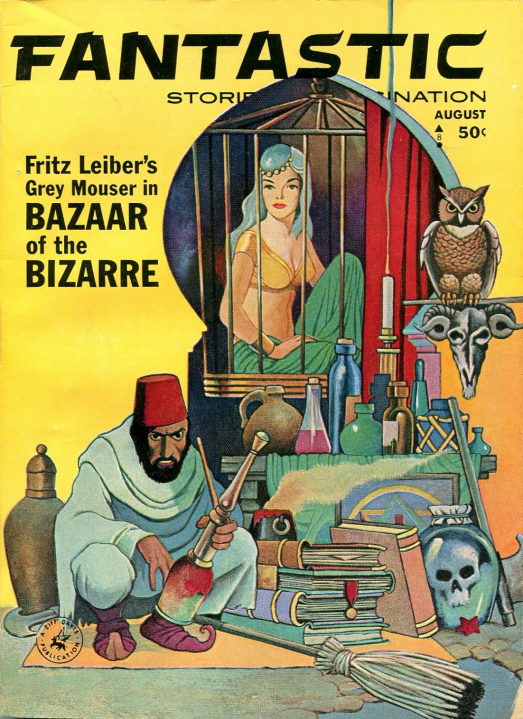
Fafhrd and the Gray Mouser, heroes both, appeared in stories written by Fritz Leiber between 1939 and 1988 (!). This is classic sword-and-sorcery stuff with all the usual flourishes. Yes, they’re sexist as hell (see the cover above) but not racist (despite the cover). In my youth, few fantasy worlds (and I visited a lot) offered me more pleasure.

It’s easy to understand why. The swordfighting is tasty, the sorcery is richly painted, and our two heroes are the most charming rogues imaginable. Also, none of the stories take themselves seriously in the slightest. For a combination of adventure, treachery, and laugh-your-face-off, you just can’t beat my favorite story in the series, Lean Times in Lankhmar, featuring that down-on-his-luck deity Issek Of The Jug.

You’ll notice that I haven’t linked to any opportunities to buy these stories. If you want to it’s not hard, Fafhrd and the Mouser have been anthologized any number of times and bootleg versions are out there. But I recommend dropping by your local library and checking a few out. After all, Fritz died in 1992 and doesn’t need the money.

The Devourers

They are the villains of a story entitled Bazaar of the Bizarre, first published in 1963. They arrive in the mighty and degenerate city of Lankhmar and set up an attractive storefront in the Plaza of Dark Delights.

It turns out they’re from another universe, and are described thus: “The Devourers are the most accomplished merchants in all the many universes … meaning simply that they sell and sell and sell! —sell trash and take good money and even finer things in exchange … they want all their customers reduced to a state of slavish and submissive suggestibility … eventually the Devourers’ customers will have nothing wherewith to pay the Devourers for their trash.”

Fafhrd and the Mouser end up tasked with expelling the Devourers. It turns out that the brightly-lit shop is full of exquisite and wonderful books and jewels and telescopes and pretty girls in cages, which are revealed, when Fafhrd dawns the Veil Of True Seeing, to really be noisome rotting rubbish. And giant spiders. The Mouser, without the advantage of the veil, is being led to his doom by the illusion. Then the iron statue awakens and… well anyhow, go read it if you want.

The Devourer duopoly

That’s what Facebook and Google are. They will sell ads to target any conceivable human interest, not on the quality publications that care about that interest, but on random lowest-possible-cost sites that are visited by what AdTech guesses is the same audience. I’ve linked to this before, but the best description of how this works is Data Lords: The Real Story of Big Data, Facebook and the Future of News by Josh Marshall.

Like the Devourers in Lankhmar, they will suck out the profit and the life from all the publishers with heart and replace them with AdTech, which I’d argue proffers the same kind of trash the Devourers in the story sell.

And like the Devourers, they’re destroying the ecosystem that they’re farming — eventually all the quality storytelling on the Internet will retreat behind the paywalls of the very few operations that can manage the pivot to subscriptions. Which, among other things leads to a future where The Truth Is Paywalled But The Lies Are Free, not exactly what our society needs right now.

The difference is that, unlike the Devourers, Facebook and Google can’t skip off to another universe after they’ve finished despoiling this one. That’s why busting them up and slapping a fierce regulatory framework on AdTech is among the single most important policy moves that our governments ought to be getting to work on, and I mean right now.

Because there are no vagabond swordsmen with wizardly mentors coming to clean out today’s Devourers.

Not that that wouldn’t be cool.

25 Nov 20:23

Vulkan 1.0 on Raspberry Pi

by Rui Carmo

This opens up some interesting possibilities. The Pi has always been somewhat hobbled by the GPU side of its Broadcom SoC (even though, ironically, it is a critical part of the boot process), and better graphics on it are always welcome, although I don’t expect it to become a gaming machine…


25 Nov 20:23

Note-taking Apps

by Rui Carmo

Some note-taking apps I’m keeping track of, since my site is essentially a folder tree with Markdown files and some of these may yet replace/complement it somehow:

Platform Date Link Notes
Cross-platform 2019 Simplenote Doesn't seem to allow for cross-links or attachments
Electron 2020 Obsidian Zettelkasten, no calendar integrations
macOS/iOS 2019 Agenda date-focused, excellent integration on iOS/macOS
2020 Noteplan 3 Uses plain Markdown as storage

25 Nov 20:22

Vulkan 1.0 on Raspberry Pi

by Rui Carmo

This opens up some interesting possibilities. The Pi has always been somewhat hobbled by the GPU side of its Broadcom SoC (even though, ironically, it is a critical part of the boot process), and better graphics on it are always welcome, although I don’t expect it to become a gaming machine…


25 Nov 20:22

Note-taking Apps

by Rui Carmo

Some note-taking apps I’m keeping track of, since my site is essentially a folder tree with Markdown files and some of these may yet replace/complement it somehow:

Platform Date Link Notes
Cross-platform 2019 Simplenote Doesn't seem to allow for cross-links or attachments
Electron 2020 Obsidian Zettelkasten, no calendar integrations
macOS/iOS 2019 Agenda date-focused, excellent integration on iOS/macOS
2020 Noteplan 3 Uses plain Markdown as storage

25 Nov 20:22

Interoperability is often good – but should not be mandated

by Dean Bubley

Note: this post was first published via my LinkedIn Newsletter. Please subscribe (here) & also join the comment & discussion thread on LI

Context: I'm going to be spending more time on telecom/tech policy & geopolitics over the next few months, spanning UK, US, Europe & Global issues. I'll be sharing opinions & analysis on the politics of 5G & Wi-Fi, spectrum, broadband plans, supply-chain diversity & competition.

Recently, I've seen more calls for governments to demand mandatory interoperability between technology systems (or between vendors) as a regulatory tool. I think this would be a mistake - although incentivising interop can sometimes be a good move for various reasons. This is a fairly long post to explain my thinking, with particular reference to Open RAN and messaging.

Background & history

The telecoms industry has thrived on interoperability. Phone calls work from anywhere to anywhere, while handsets and other devices are tested & certified for proper functioning on standardised networks. Famously, interoperability between different “islands” of SMS led to the creation of a huge market for mobile data services, although that didn't happen overnight in many countries.

Much the same is true in the IT world as well, with everything from email standards to USB connections and Wi-Fi certification proving the point. The web and open APIs make it easier for cloud applications to work together harmoniously.

Image source: https://pixabay.com/illustrations/rings-wooden-rings-intertwined-100181/

 But not everything valuable is interoperable. It isn't the only approach. Proprietary and vertically-integrated solutions remain important too.

Many social media and communications applications have very limited touch-points with each other. The largest 4G/5G equipment companies don’t allow operator customers to mix-and-match components in their radio systems. Many IT systems remain closed, without public APIs. Consumers can’t choose to subscribe to network connectivity from MNO A, but telephony & SMS from ISP B, and exclusive content belonging to cable company C.

This isn't just a telecom or IT thing. It’s difficult to get different industrial automation systems to work together. An airline can’t buy an airframe from Boeing, but insist that it has avionics from Airbus. The same is true for cars' sub-systems and software.

Tight coupling or vertical integration between different subsystems can enable better overall efficiency, or more fluid consumer experience - but at the cost of creating "islands". Sometimes that's a problem, but sometimes it's actually an advantage.

Well-known examples of interoperability in a narrow market subset can obscure broader use of proprietary systems in a wider domain. Most voice-related applications, beyond traditional "phone calls", do not interoperate by default. You could probably connect a podcast platform to a karaoke app, home voice assistant and a critical-communications push-to-talk system.... but why would you? (This is one reason why I always take care to never treat "voice" and "telephony" synonymously).

Hybrid, competitive markets are optimal

So there is value in interoperable systems, and also in proprietary alternatives and niches. Some sectors gravitate towards openness, such as federation between different email systems. Others may create de-facto proprietary appoaches - which might risk harmful monopolies, or which may be transferred to become open standards (for instance, Adobe's PDF document format).

And even if something is based on theoretically interoperable underpinnings, it might still not interoperate in practice. Most enterprise Private 4G and 5G networks are not connected to public mobile networks, even though they use the same standards.


Interoperability can be both a positive and negative for security. Open and published interfaces can be scrutinised for vulnerabilities, and third-parties can test anything that can be attached to something else. Yet closed systems have fewer entry points – the “attack surface” may be smaller. Having a private technology for a specific purpose – from a military communications infrastructure to a multiplayer gaming network – may make commercial or strategic sense.

In many all areas of technology, we see a natural pendulum swing between openness and proprietary. From open flexibility to closed-system optimisation, and back again. Often there are multiple layers of technology, where the pendulum swings with a different cadence for each. Software-isation of many hardware products means a given system might employ multiple layers at the same time.

 Consider this (incomplete and sometimes overlapping) set of scenarios for interoperability:

  • Between products: A device needs to be able to connect to a network, using the right radio frequencies and protocols. Or an electrical plug needs to fit into a standardised socket.
  • Within products or solutions (between components): A product or service can be considered to be just a collection of sub-systems. A computer might be able to support different suppliers’ memory chips or disks, using the same sockets. A browser could support multiple ad-blockers. A telco’s virtualised network could support different vendors for certain functions.
  • Application-to-application / service-to-service: An application can link to, integrate or federate with another - for instance a reader could share this article on their Twitter feed, or mobile user can roam onto another network, or a bank can share data access with an accounting tool.
  • Data portability: Data formats can be common from one system to another, so users can own and move their "state" data and history. This could range from a porting a phone number, to moving uploaded photos from one social platform to another.

There’s also a large and diverse industry dedicated to gluing together things which are not directly interoperable – and acting as important boundaries to enforce security, charging or other functions. Session Border Controllers link different voice systems, with transcoders to translate between different codecs. Gateways link Wi-Fi or Bluetooth IoT devices to fixed or wireless broadband backhaul. Connectors enable different software platforms to work together. Mapping functions will eventually allow 5G network slicing to work across core, transport and radio domains, abstracting the complexities at the boundaries.

Added to this is the entire sphere of systems integration – the practice of connecting disparate systems and components together, to create solutions. While interoperability helps SIs in some ways, it also commoditises some of their business.

Coexistence vs. interoperation

Yet another option for non-interoperable systems is rules for how they can coexist, without damaging each other’s operation. This is seen in unlicensed or shared wireless spectrum bands, to avoid “tragedies of the commons” where interference would jam all the disparate systems. Even licensed bands can be "technology neutral".

Analogous approaches enable the safe coexistence of different types of road users on the same highway - or in the voice/video arena, technologies such as WebRTC which embed "codec negotiation" procedures into the standards.

Arguably, improving software techniques, automation, containerisation and AI will make such interworking and coexistence approaches even easier in future. Such kludginess might not please engineering purists who value “elegance”, but that’s not the way the world works – and certainly shouldn’t be how it’s regulated.

In a healthy and competitive market, customers should be able to choose between open and closed options, understanding the various trade-offs involved, yet be protected from abusive anti-competitive power.

A great example of consumer gains and "generativity" in innovation is that of the Internet itself, which works alongside walled-garden, telco or private-network alternatives to access content and applications.

Customers can have the best of both worlds - accelerated, because of the competitive tensions involved. The only risk is that of monopolies or oligopolies, which requires oversight.

Where does government & regulatory policy fit in this?

This highlights an important and central point: the role of government, and its attitude to technology standards, interoperability and openness. This topic is exemplified by various recent initiatives, ranging from enthusiasm around Open RAN for 5G in the US, UK and elsewhere, to the EU’s growing attempts to force Internet platform businesses to interoperate and enable portability of data or content, as part of its Digital Services Act.

My view is that governments should, in general, let technology markets, vendors and suppliers make their own choices.

It is reasonable that governments often want to frame regulation in ways to protect citizens from monopolists, or risks of harm such as cybersecurity. In general, competition rules are developed across industries, without specific rules about products, unless there is unfair vertical integration and cross-subsidy.

Governments can certainly choose to adopt or even incentivise interoperability for various reasons – but they should not enshrine it in laws as mandatory. If you're a believer in interventionist policies, then incentivising market changes that favour national champions, foster inward investment and increase opportunities can make sense - although others will clearly differ.

(Personally, I think major tranches of intervention and state-aid should only apply to game-changers with huge investment needs - so perhaps for carbon capture technology, or hydrogen-powered aviation).

Open RAN may be incentivised, not mandated

A particular area of focus by many in telecoms is around open radio networks. The O-RAN Alliance and the TIP OpenRan project are at the forefront, with many genuinely impressive innovations and evolutions occurring. Rakuten's deployment is proving to be a beacon - at least for greenfield networks - while others such as Vodafone are using this architectural philosophy for rural coverage improvements.

Governments are increasingly involved as well - seeing a possible way to meet voters' desires for better/cheaper coverage, while also offsetting perceived risks from concentrations of power in a few large integrated vendors. This latter issue has been pushed further into the limelight by Huawei's fall from favour in a number of countries, which then see a challenge from a smaller number of alternative providers - Nokia, Ericsson and in some cases Samsung and NEC or niche providers.

This combination of factors then gets further conflated with industrial policy goals. For instance, if a country is good at creating software but not manufacturing radios, then Open RAN is an opportunity, that might merit some form of R&D stimulus, government-funded testbeds and so on.

So I can see some arguments for incentives - but I would be very wary of a step to enshrine any specific interop requirements into law (or rules for licenses), or for large-scale subsidies or plans for government-run national infrastructure. The world has largely moved to "tech neutral" approaches in areas such as spectrum awards. In the past, governments would mandate certain technologies for certain bands - but that is now generally frowned upon.

No, message apps should not interoperate

Another classic example of undesirable "forced interoperability" is in messaging applications. I've often heard many in the telecoms industry assert that it would be much better if WhatsApp, iMessage, Telegram, Snap - and of course the mobile industry's own useless RCS standard - could interconnect. Recently, some government and lobbying groups have suggested much the same, especially in Brussels.

Yet this would instantly hobble the best and most unique features of each - how would ephemeral (disappearing) messages work on systems that keep them stored perpetually? How would an encrypted platform interoperate with a non-encrypted platform? How could an invite/accept contact system interwork with a permissive any-to-any platform? How would a phone-number identity system work with a screen-name one?

... and that's before the real unintended consequences kick in, when people realise that their LinkedIn messages now interoperate with Tinder, corporate Slack and telemedicine messaging functions.

That doesn't mean there's never a reason to interoperate between message systems. In particular, if there's an acquisition it can be useful and imporant - imagine if Zoom and Slack merged, for instance. Or a gaming platform's messaging might want users to send invitations on social media. I could see some circumstances (for business) where it might be helpful linking Twitter and LinkedIn - but also others where it would be a disaster (I'm looking at you, Sales Navigator spamming tools).

So again - interoperability should be an option. Not a default. And in this case, I see zero reasons for governments to incentivise.

Conclusion

Interoperability between technology solutions or sub-systems should be possible - but it should not be assumed as a default, nor legislated in areas with high levels of innovation. It risks creating lowest-common denominators which do not align with users' needs or behaviours. Vertical integration often brings benefits, and as long as the upsides and downsides are transparent, users can make informed trade-offs and choices.

Lock-in effects can occur in both interoperable and proprietary systems. I'll be writing more about the concept of path dependence in future.

Regulating or mandating interoperability risks various harms - not just a reduction in innovation and differentiation, but also unexpected and unintended consequences. Many cite the European standardisation of GSM 2G/3G mobile networks as a triumph - yet the US, Korea, Japan, China and others allowed a mix of GSM, CDMA and local oddities such as iDen, WiBro and PHS. No prizes for guessing which parts of the world now lead in 5G, although correlation doesn't necessarily imply causation here.

There's also a big risk from setting precedents that could lead to unintended consequences. Perhaps car manufacturers would be next in line to be forced to have open interfaces for all the electronic systems, impacting many automakers' potential revenues. Politicians need to think more broadly. As a general rule, if someone uses the obsolete term "digital" in the context of interop, they're not thinking much at all.

I've written before about the possible risks to telcos from the very "platform neutrality" concept that many have campaigned for. Do they imagine regulators wouldn't notice that many have their own ambitions to be platform providers too?

In my view, an ideal market is made up of a competitive mix of interoperable and proprietary options. As long as abuses are policed effectively, customers should be able to make their own trade-offs - and their own mistakes.


As always - please comment and discuss this. I'll participate in the discussions as far as possible. If you've found this thought-provoking, please like and share on LinkedIn, Twitter and beyond. And get in touch if I can help you with internal advisory work, or external communications or speaking / keynote needs.

Note: this post was first published via my LinkedIn Newsletter. Please subscribe (here) & also join the comment & discussion thread on LI

#5G #openran #regulation #telecom #mobile #interoperability #competition #messaging #voice #innovation


25 Nov 20:22

Just did some bookkeeping for my company. I’m p...

by Ton Zijlstra

Just did some bookkeeping for my company. I’m pretty proud of our team this year. We’ll end up with 10% growth in 2020 despite the pandemic (and not having growth targets). Meaning we could offer a fixed contract to a colleague, and could hire one new colleague last September. That pleases me no end.


This is a RSS only posting for regular readers. Not secret, just unlisted. Comments / webmention / pingback all ok.
Read more about RSS Club
25 Nov 20:22

The 512KB Club

by Ton Zijlstra

Kevin Quirk has started the 512KB club, a list of websites that are under 512 kilobytes in size. It’s a counter to the massively bloated web. There are real costs attached to bloated websites in terms of server, bandwidth and thus energy usage. There are lots of things that can be optimised by lowering the complexity of a website. Low-Tech Magazine has a cool website looking to radically reduce the energy used to provide it. Part of such optimisation is the basic size of the page loaded. And that is what the 512KB club focuses on.

My site isn’t minimalist, one reason being I run WordPress so every page you see here is dynamically rendered each time you look at it. But still, reducing a site’s footprint has been a side interest, as I’m curious about the various dimensions and potential actions for ‘greening’ a website that also provide a better experience to the reader and lower hosting requirements.

At GT Metrix you can analyse your website’s behaviour, and have a look at e.g. its size. My site came in at 980KB about double the limit for the 512KB book club (the mentioned Low Tech magazine comes in at 470KB). Going through the list of files making up that almost 1MB, I noticed that just 2 image files were the main culprits. All it took was optimising those two images (the header image, and a sidebar image), reducing both of them by over 90%. That alone more than halved the size of my site to 487KB.

Image file size optimisation should probably be at the top of my list going forward.

25 Nov 20:22

Dagster

by Rui Carmo

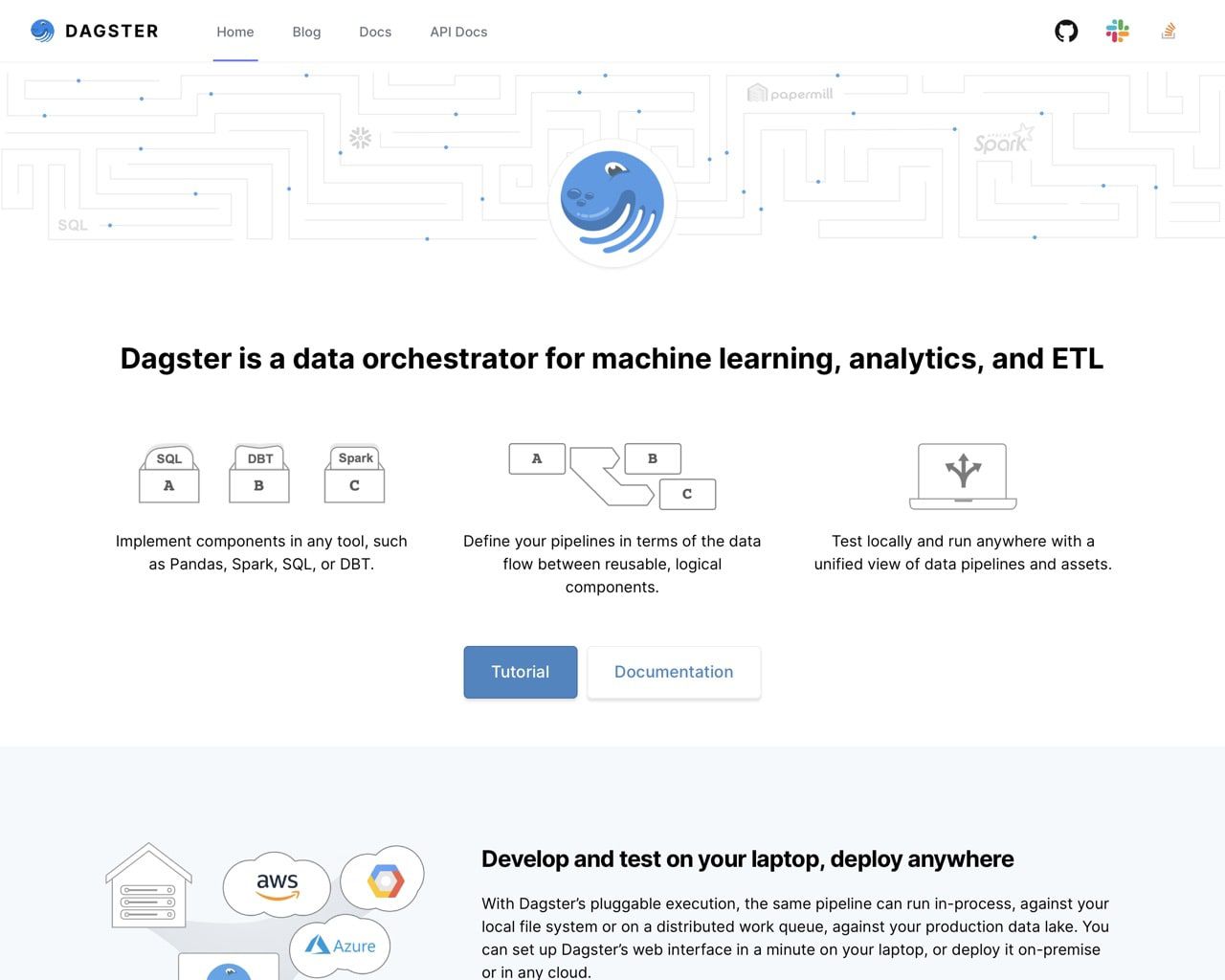
A friend of mine (hi pfig!) mentioned this while we were talking about Apache Airflow, which has been on my radar for automating a bunch of things (as has drone, which I’m already using to do private CI/CD for my own projects).

It seems exceedingly well thought out, and something worth investing some time in.


25 Nov 20:17

Twitter Favorites: [daphnekylee] My latest piece on debunking American stereotypes of Chinese food, with great recs & insights from @dearclarissa,… https://t.co/zSoL7QkHAd

Daphne K. Lee @daphnekylee
My latest piece on debunking American stereotypes of Chinese food, with great recs & insights from @dearclarissa,… twitter.com/i/web/status/1…
24 Nov 18:37

Convenience, UX, and ethics

by Doug Belshaw
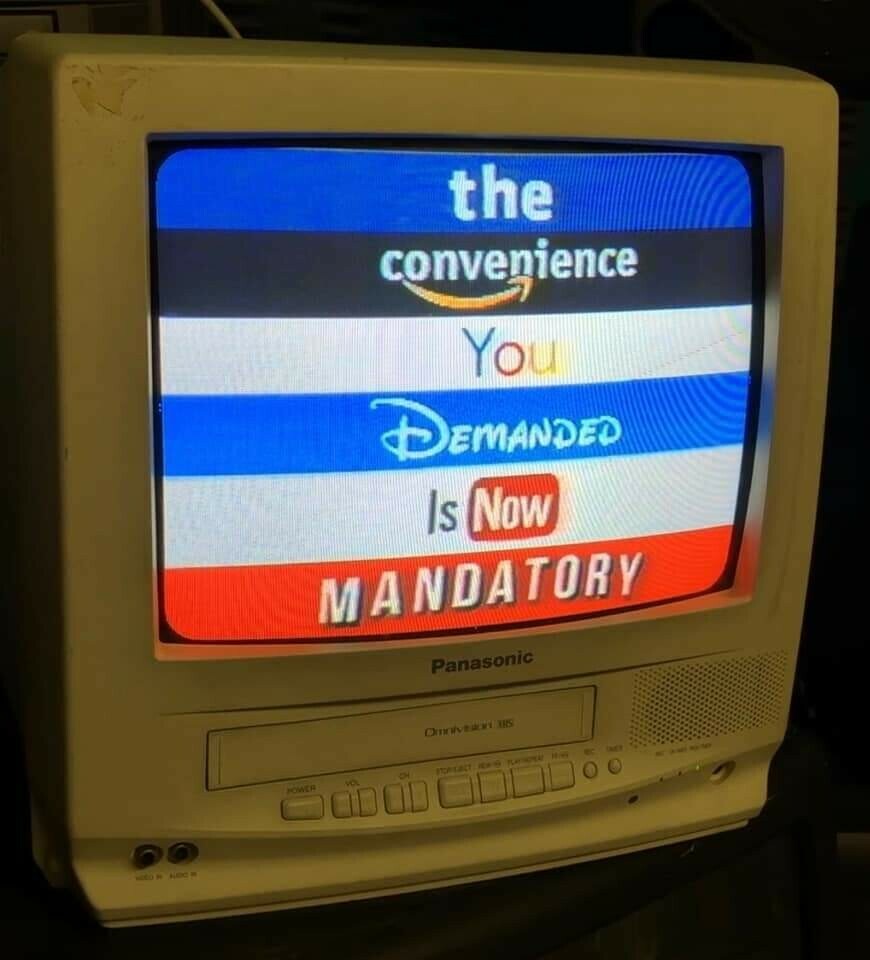
Old TV displaying the phrase "the convenience you demanded is now mandatory" with each word in the design of a big tech company (e.g. Amazon/Netflix)

At about this time of year (Frimaire, for those paying attention) I get a little more introspective. I tend to reconsider my relationship with technology more generally, and apps/platforms in particular.

This is because decisions I make about my relationship with tech are a proxy for my wider views about the world, including philosophy, politics, and society.

The meme at the top of this post went by my Mastodon timeline recently (thanks to Ali for re-finding it!) and perfectly encapsulated the relationship many of us have with tech. In a nutshell, convenience and good user experience (UX) trumps ethics and thoughtful decision-making every time.

It’s all very well wringing our hands and promising to use Amazon less, but we’re living in a world where regulators need to step in and ensure more competition.

In the meantime, there are small decisions we can all make which won’t inconvenience us too much. For me, that means having goals in mind about consumption, ethical principles, and the tools I use to communicate.


This post is Day 65 of my #100DaysToOffload challenge. Want to get involved? Find out more at 100daystooffload.com

The post Convenience, UX, and ethics first appeared on Open Thinkering.

24 Nov 18:37

Jobs Jar! Project Researcher for the Vancouver Heritage Foundation

by Sandy James Planner

Vancouver Heritage Foundation promotes the appreciation and conservation of our city’s historic places for current and future generations. VHF does this by creating opportunities and resources to learn about Vancouver’s history and heritage places, and providing practical support for the successful conservation of historic buildings and sites.

The Vancouver Heritage Foundation is located in a heritage building in Vancouver’s downtown core. We are a small but passionate team dedicated to supporting Vancouver’s heritage places and their conservation.

They have a position available for a Project Researcher in their library, either for a student or graduate.

Vancouver Heritage Foundation (VHF) is seeking a student or graduate intern (paid) to join our staff team as a Project Researcher for 8 weeks starting on January 4th 2021. The role is 15 – 30 hours per week with a wage of $16/hr, based in our downtown Vancouver office. Due to the current public health situation, the role is likely to be a combination of office-based and remote working. Hours can be flexible to fit around class schedules.

VHF is seeking a post-secondary student or graduate in Library Studies or a related field with a strong interest in local history and heritage conservation to join our team for 8 weeks. You will help shape plans for the future of the VHF Library including content, physical and digital access, cataloguing and acquisitions. The role offers an opportunity to contribute to enhancing VHF’s collection of books, periodicals and other materials to be a unique and valuable resource.

You can find information about the VHF Library and Reading Room by clicking this link.

For a full  list of the skills and experience needed for this position, please click on this link.

Applications close December 7th at midnight.

Image: VancouverHeritageFoundation


24 Nov 16:21

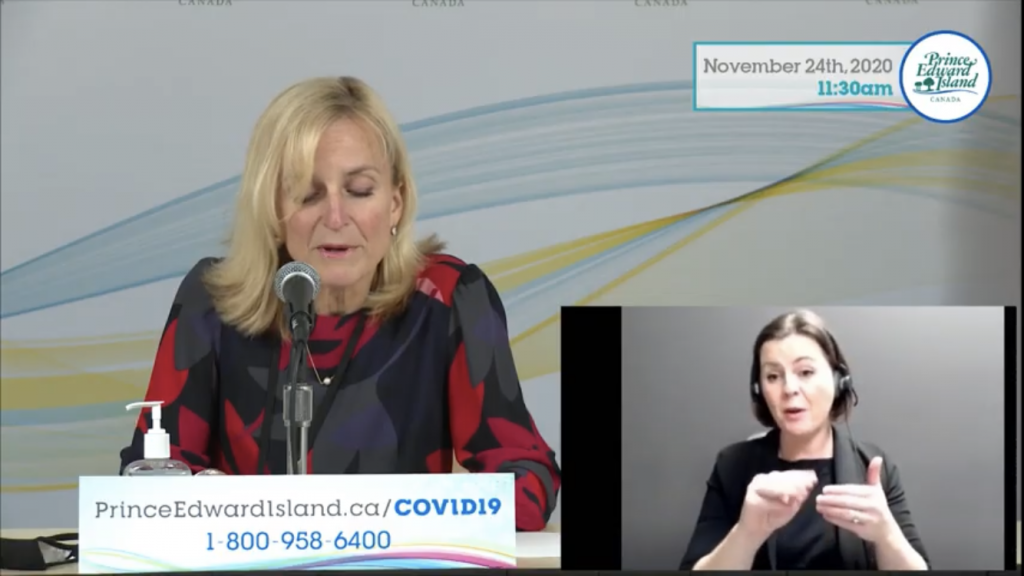
The Dr. Heather Morrison Show Adds Sign Language Interpretation

by peter@rukavina.net (Peter Rukavina)

Eight months in, the government adds simultaneous sign language interpretation to Dr. Heather Morrison’s COVID-19 updates. Let’s hope this becomes standard operating procedure for all government events.

24 Nov 16:08

BS-ing about BBS-es

Alan Levine, CogDogBlog, Nov 23, 2020
Icon

One comment in Alan Levine's reminiscences about using bulletin board services (BBS) to connect with students in the late 80s and early 90s: "What we discovered was that the journal gave a voice to silenced or marginalized students. For instance, a student who never spoke in class was very active on the journal, contributing over twenty thousand words in one semester." Around the same time, before I launched my own BBS, I was a regular visitor to local BBSs in Edmonton, including the Alberta Alcohol and Drug Abuse Commission (AADAC)'s EZoot (see also) and saw (and felt) much the same thing. Levine says, "There was a rich culture of text based technology, not just for communication, but for teaching and learning at Maricopa." This is true, and this pattern was repeated to the furthest reaches of the FidoNet (and the SpiderNet, and IMEXNet, and DriftNet, and WorldNet...).

Web: [Direct Link] [This Post]
24 Nov 16:04

An advertising awards show in the browser?

When adtech people, privacy developers, and the EFF can all agree that something is bad, it must be bad, right?

The proposed Federated Learning of Cohorts (FLoC) would replace the old-fashioned third-party cookie with a shorter identifier, calculated by a complex algorithm from your browsing activity. The cohort ID doesn't correspond to you individually but identifies you as part of a "cohort". Any site can call the JavaScript function document.interestCohort(); to find out which cohort you're in.

Cohort-based ads sound great, if you're in the cohort that gets ads featuring attractive Europeans driving new European cars on winding roads through the European woods. Or the cohort that gets ships cruising to scenic vacation destinations. But not all cohorts are going to get the good ads.

It's even worse when a cohort ID might leak a sensitive piece of information about you. There is no way to test FLoC with all the legacy sites on the web that might leak some kind of sensitive info. What if a user's pattern of play in a casual web game can leak something about their disability to the FLoC algorithm, and they stop getting certain job ads? Proving that FLoC protects user privacy is an unsolved problem, and might be mathematically impossible. So we have to assume that the a cohort ID leaks bits of sensitive personal info until it can be shown that it doesn't. And, of course, from the web publisher point of view, FLoC leakage is a business issue. The FLoC algorithm could "learn" the subscriber lists of niche publications that depend on ad revenue. Since any site can call interestCohort, a site like cheapAssCatGifs.com might be able to sell the audience of a site like expensiveCarTeardownReviews.com, just based on cohort ID.

The FLoC-powered awards show

So far, not so good. But offline, people actually buy posters and books of award-winning ads, so there must be some demand for the good ads. If only there were some way to get more of the good ads right in the browser.

That's where FLoC can really help.

Step one: Identify the good FLoC-based ads that appear on a set of sites, along with the cohort ID of the cohort that got them. For a first pass, pick out the ads that carry the most revenue for their weight. In general, the ad campaigns that are willing to pay more per impression are also the ones that have a budget for good creative work. At this point we have a first pass at a set of possibly good ads and can pick some good ones manually.

Step two: Keep track of which cohorts got the best ads, and share the highest ranking cohort with browsers that want to give their users the best experience.

Step three: the browser always responds to document.interestCohort(); with the winning cohort ID, for all users. No leakage of possibly sensitive info, the browser developers don't have to code and test a bunch of hard cohort math, and everybody gets the good ads. It's like an ad awards show in the browser. Could be updated every browser release.

What do you think?

Bonus links

Watch out, Facebook—Apple’s ad-tracking user protections are still on track

Once Again, Facebook Is Using Privacy As A Sword To Kill Independent Innovation

Introducing Cover Your Tracks!

YouTube will run ads on some creator videos, but it won’t give them any of the revenue

ID5 Is Building a Community to Bolster Its Universal ID

“Schrems III”? First Thoughts on the EDPB post-Schrems II Recommendations on International Data Transfers (Part 2)

What is header bidding?

Apple’s IDFA gets targeted in strategic EU privacy complaints

How the U.S. Military Buys Location Data From Ordinary Apps

CNAME Cloaking and Bounce Tracking Defense

The future of identity and addressability is people-based IDs

24 Nov 16:03

Using Gradual Release in Remote Learning

Barbara R. Blackburn, Middleweb, Nov 24, 2020
Icon

Gradual release or 'scaffolding' is the practice of removing teacher and community support for learning so as to enable individuals to practice on their own, "shifting ownership and responsibility by degrees from themselves to students in a way that provides scaffolding for success." This article describes a 'diamond process' that begins with 'me' (ie., the teacher) and ends up with 'you' (i.e., the learner). "In a remote setting, gradual release of responsibility is often even more important, as students need structure to learn – often alone and at a distance."

Web: [Direct Link] [This Post]
24 Nov 16:01

Trying WikiData

by Thejesh GN

I just finished a small personal data project. Once it was done. I wanted to modify it to use data from WikiData, and I wanted the labels in Kannada. So I tried to get a list of districts and wards from WikiData. That lead me to learn SPARQL. I can't say I am an expert, but I understood and got the queries running. The below query should give you the Wards of Bangalore with labels in Kannada.

SELECT DISTINCT ?SLabel ?SDescription WHERE {
  # where S is instance of 
  # 'electoral ward of the Bruhat Bengaluru Mahanagara Palike' 
  ?S wdt:P31 wd:Q58232822.
  FILTER(NOT EXISTS { ?S wdt:P576 ?dt. })
  #lets get the label in Kannada
  SERVICE wikibase:label { bd:serviceParam wikibase:language "kn". }
}

The below query should give you the districts of India. You can to the page with the results directly. Or run the queries at WikiData Query Service.

SELECT DISTINCT ?S ?SLabel ?SDescription WHERE {
  # where S is instance of 'district of India' 
  ?S wdt:P31 wd:Q1149652.
  # remove the ones with
  # S has the dissolved property, lets call it dt
  FILTER(NOT EXISTS { ?S wdt:P576 ?dt. })
  #lets get the label in Kannada
  SERVICE wikibase:label { bd:serviceParam wikibase:language "kn". }
}

It was lot fun to learn about triplets , how they work together and how to query them. Next step is to contribute :)

The post Trying WikiData first appeared on Thejesh GN.
24 Nov 16:01

Top of a post on a sidewalk • iPhone 12 portrai...

Top of a post on a sidewalk • iPhone 12 portrait mode

💻 Monospaced fonts are something of a geeky subject, even for developers, but if you’re looking for one that sparks joy, check out Mostafa Gaafar’s list of developer fonts. Cascadia Code is my current pick, but seeing a version of Consolas with ligatures makes me think about trying it again. (via @shanselman)

👑 Katerina and I just finished watching The Queen’s Gambit on Netflix. Convinced she recognized some of the locations, Katerina dug up a list of 12 locations where The Queen’s Gambit was filmed in Berlin.

🦠 Sadly, there are a lot of people here in Berlin protesting the coronavirus restrictions. The police had to break out the water cannons. The stupid is everywhere around the world at this point.

🗳 More GOP senators have COVID than have acknowledged that Joe Biden won the election. “Rick Scott of Florida announced Friday that he has tested positive for COVID-19, making him the seventh GOP senator infected by the deadly disease. The others are Chuck Grassley (Iowa), Mike Lee (Utah), Bill Cassidy (La.), Rand Paul (Ky.), Thom Tillis (N.C.) and Ron Johnson (Wis.)”

24 Nov 16:01

80

Empty swings in Mauerpark

🎂 My dad was born 80 years ago today, and it’s been almost a year since he died. What a year. I’m so glad that we weren’t dealing with COVID-19 last year during the aftermath of his stroke when I was flying back and forth between Texas and Germany every few weeks. But, I’m so sad that he’s not here right now.

🪦 Unfortunately, COVID-19 has interfered with my family’s plans to have a proper memorial. His cremated remains are still sitting in a box, waiting to be delivered to his desired resting place. One of many things that are on pause during the pandemic. At least I could say good-bye in person the day he died before the current limbo, unlike so many who are losing loved ones this year.

🚗 As soon as it’s feasible, I’ll fly back to Texas, and we’ll have one last road trip to drive him to the garden where we’ll put his ashes to rest. I hope that will be in the spring, but only time will tell.

🗳 He would have been glad to hear today’s news that the formal transition process has finally started, and would have considered that a nice birthday present. He also wouldn’t have been surprised at all that: “Trump did not concede, and vowed to persist with efforts to change the vote, which have so far proved fruitless.”

24 Nov 15:57

Telus launches $100 million social impact fund to invest in startups

by Aisha Malik

Telus is launching a new $100 million social impact fund to invest in startups with ideas to drive social change.

Investments will focus on for-profit companies and founders committed to driving social innovation and economic growth.

The fund, which is called the ‘Telus Pollinator Fund for Good,’ will invest in entrepreneurs who find ways to improve healthcare by making services accessible through digital solutions.

It will also invest in startups finding ways to further social and economic inclusion, along with companies building solutions to better protect the planet and reduce our environmental footprint. Lastly, Telus will also invest in companies providing technological solutions to enhance the agriculture industry.

“This $100 million investment will bring innovative and socially responsible products and services to market to address some of the most pressing social challenges facing our planet,” said Telus CEO Darren Entwistle in a press release.

Telus has already announced the first three companies that will be receiving funding. The first company receiving funding is called Windmill Microlending, which offers microloans to help skilled immigrants continue their careers in Canada.

The carrier is also investing in Rhiza Capital, an impact investment fund that invests in B.C.-based companies that drive both social and economic impact within the regions they serve.

Lastly, Telus is also investing in U.S.-based Tidal Vision, which has developed a process for upcycling crustacean shells to develop a non-toxic, zero waste biopolymer that could be used in many industries, including textiles, agriculture, and wastewater treatment.

This latest launch comes as Telus announced a new unit designed to support the agriculture industry with connected technology. The new unit aims to help build AI and machine learning-based tools for the industry.

The post Telus launches $100 million social impact fund to invest in startups appeared first on MobileSyrup.