Shared posts

18 Jan 02:42

Did COVID kill the climate?

by russell davies

I've spent quite a lot of the last four and half years thinking about how to get people to make a renewable, green energy choice. And I've not written much about it. 

That's mostly because I don't think I have loads of useful things to say. If I knew the answer I would tell you.

I do collect piles of potentially useful stuff though. Links, podcasts, readings, stray thoughts. So I'm going to try and be better at sharing those.

Here's one: David Runciman talks a lot about climate change and it's political interaction with COVID in this lecture. It's meaty, useful stuff. One spectre he raises, which hadn't occurred to me before, is Farage returning to activist politics as 'anti-green'. Anti wind farms, cycle lanes and green taxes. Pro motorists. (This is the relevant bit.)

He also points out how divided Western societies are: young people, broadly, are radically worried about climate change, old people, broadly, aren't. And "older voters decide elections". That's worth thinking about.


18 Jan 02:42

Why public phones still exist

by Jon Udell

My superpower has always been finding new uses for old tech. In the late 90s I dusted off the venerable NNTP server, which had been the backbone of the Usenet, and turned it into my team’s Slack. In the late 2000s I used iCalendar to make citywide event calendars. In the late 2010s I went deep into SQL.

It’s always intensely pragmatic. But also, I can’t deny, whimsical.

In that spirit, I offer you the public pay phone at the Pinnacles Visitor Center. I stayed in that campground on a road trip just before the election. Given the tense political and epidemiological situation, I’d promised to message home regularly. There was no cell service in the park so I headed over to the office. It was closed, so I sat on the bench and connected to their WiFi. Or tried to. You could connect, sometimes, but you couldn’t move any data. The router was clearly in need of a reboot.

The only option left was the public phone. I can’t remember the last time I used one. Most people alive today have, perhaps, never used one. But there it was, so I gave it a shot.

Once upon a time, you could pick up the handset, dial 0 for operator, and place a so-called collect (charge-reversed) call. Now dialing 0 gets you nowhere.

The instructions taped to the phone (in the 90s I’m guessing) say you can call an 800 number, or use a calling card. I remember calling cards, I had one once. Not a thing lately.

And then there was this: “Dial 611 for help.”

Me: 611

611: Hello, this is Steve.

Me: I’m at the Pinnacles Visitor Center trying to send a message.

Steve: Use the WiFi.

Me: I can’t, it’s broken.

Steve: Huh, that’s interesting. Let me see if I can reboot the router.

And he did. So there you have it. The public phone still provides a valuable service. Its mission has evolved over the years. Nowadays, it exists to summon Steve the IT guy who can fix the WiFi by turning it off and on again.

Works like a charm!

18 Jan 02:41

Run your 4K monitors alongside USB devices from a single USB-C laptop port

by danchar

Introduction

Suppose you have a 4K monitor or two high refresh rate 1080p/1440p monitors and a laptop with a single USB-C port supporting video output. What is a straightforward and economical approach to get the full refresh rate capabilities of the monitors while also being able to use USB devices like a mouse and thumbdrive?

On many laptops, USB-C port bandwidth is limited such that you can only use 4K @ 60Hz OR USB 3.x @ 5Gb/s+ speeds, not both. For such laptops, USB devices must be limited to USB 2.0 speeds (480Mb/s) in order to achieve 4K @ 60Hz via DisplayPort 1.2 (DP 1.2) alternate mode. Most hubs on the market are dumb and run USB devices at 5Gb/s which limits the monitor to 30Hz. For many users, this feels extremely slow/laggy. What’s worse is that marketing materials are rarely straightforward about monitor refresh rates. There are dozens of off-brand hubs on ebay, amazon, and aliexpress claiming 60Hz support (at least for 1080p) as well as 4K support. But what they don’t mention is that 4K runs at 30Hz. Some of these devices have logic built in such that a monitor will run at 4K60 as long as no USB devices are plugged in. But as soon as a USB 3.x device is plugged in, the 4K monitor drops to 30Hz. Similarly, some will automatically limit USB speeds when a 4K60Hz capable monitor is detected, but this detection doesn’t always work properly.

Some recent laptops like Surface Pro 7, Pro X, Laptop 3, and Book 3, implement DisplayPort 1.4 (DP 1.4) alternate mode with display stream compression (DSC) over USB-C which can run 2x 4K60 AND USB devices at 5Gb/s or faster simultaneously from the same USB-C port. Older hubs don’t take advantage of this capability and will still run monitors at 30Hz or limit USB speeds unnecessarily.

Below is a collection of economical USB-C hubs to extend your laptop to run 1x or 2x 4K monitors at 60Hz alongside USB devices. The minimum feature set to be considered for this list is:

  1. one or more HDMI or DisplayPort video ports supporting 4K60 via DP alt mode (not DisplayLink)
  2. one or more USB A-style ports
  3. 60W or more USB-C power delivery for laptop charging
  4. compact/portable
  5. $100 USD or less

4K60 USB-C hubs for laptops with DP 1.4

These hubs are well-suited for newer laptops which support DP1.4. Most of these hubs allow 1x 4K60 or 2x 4K30 monitors alongside 5Gb/s+ USB. Example laptops in this category are Surface Book 3, Surface Pro 7, Surface Pro X, and Surface Laptop 3/4. Older laptops will work OK, but will run in DP1.2 alt mode which may limit monitor bandwidth to 1x 4K30 or 2x1080p. Users of older laptops should consider the DP1.2 hubs.

Compatibility note: Even though spec sheets of various laptops may indicate DP1.4 and DSC capabilities, this technology is new and we’ve had many users reports of compatibility issues between various hubs and laptop brands when trying to get the highest monitor resolutions to work alongside USB 3.x devices. I haven’t tested all the combinations but this list includes what should work based on the specs. If you have problems getting 2x 4K60 working on hubs that also support USB 3.x devices, email the vendor and see if a firmware update is available. Many vendors have revised their specifications since launch to indicate only 1x 4K60 is possible. A hub that limits USB devices to 2.0 speeds instead such as Cable Matters 201046 or 201355 is a better bet until we see better dock designs in the $100 price class come to market.

Device Brand/Model Photo USB-C PD passthrough power Monitor
ports
Other ports Notes Power supply included? Cost
($USD)
Anker PowerExtreme A83800A1 100W (~85W laptop charging) 2x HDMI 2.0
(1x 4K60 or 2x 4K30)
– 2x USB 3.x 5Gb/s
– 1Gb/s Ethernet
– UHS-I SDCard reader
no ~50
Anker PowerExtreme A83830A1 100W (~85W laptop charging) 1x HDMI 2.0
(1x 4K60)
– 1x USB-C 10Gb/s
– 2x USB 3.x 10Gb/s
– 1Gb/s Ethernet
– UHS-I SDCard reader
– has 10Gb/s USB no ~60
Cable Matters 201046-BLK 60W 1x DP 1.4
(1x 8K30 or 1x 4K120)
2x USB 2.0
– 100Mb/s Ethernet
– 4K60 OK on DP 1.2 laptops no ~40
Cable Matters 201355-BLK 100W (~85W laptop charging) 2x DP 1.4
(2x 4K60)
2x USB 2.0
– 100Mb/s Ethernet
– PC must support DP 1.4 with DSC for 2x 4K60
-1x 4K60 OK on DP 1.2 laptops
no ~60
Cable Matters 201331-BLK 100W (~85W laptop charging) 3x DP 1.4
(1x 8K30 or 2x4K60 or 3x4K30)
– USB-C 5Gb/s
– 2x USB 3.x 5Gb/s
– 1Gb/s Ethernet
-PC must support DP 1.4 with DSC for 2x 4K60 no ~80
CalDigit SOHO 100W (~85W laptop charging) 1x DP 1.4
1x HDMI 2.0b
(1x 4K60 HDR or 2x 4K30)
– USB-C 10Gb/s
– USB 3.x 10Gb/s
– UHS-II SDCard reader
– detachable 0.5m USB-C cable
– has 10Gb/s USB
– has UHS-II support
no ~80
Club3D CSV-1593/
CE-Link UTC-C2UE2UHMS01-DP1.4-AL
100W (~85W laptop charging) 2x HDMI 2.0
(1x 4K60 or 2x 4K30)
– 2x USB 3.x 5Gb/s
– 1Gb/s Ethernet
– UHS-I SDCard reader
– DSC not working only 1x 4K60 no ~75
Dockteck DT0001 100W (~85W laptop charging) 1x HDMI 2.0
(1x 4K60)
– USB 3.x 5Gb/s – most barebones device on list
– Dockteck is an alternate brand name for CableCreation
no ~25
DockTeck DT0002 100W (~85W laptop charging) 1x HDMI 2.0
(1x 4K60)
– USB 3.x 5Gb/s
– 1Gb/s Ethernet
no ~30
DockTeck DT0008/
Techwolf hub
100W (~85W laptop charging) 1x HDMI 2.0
(1x 4K60)
– 3x USB 3.x 5Gb/s – multiple re-brands available no ~30
Dockteck DT0007 100W (~85W laptop charging) 1x HDMI 2.0
(1x 4K60)
– 2x USB 3.x 5Gb/s
– 1Gb/s Ethernet
– UHS-I SDCard reader
no ~30
Dockteck DT0009
100W (~85W laptop charging) 1x HDMI 2.0
(1x 4K60)
– 3x USB 3.x 5Gb/s
– 1Gb/s Ethernet
– UHS-I SDCard reader
no ~40
HyperDrive Gen2 6-port 100W (~85W laptop charging) 1x HDMI 2.0
(1x 4K60)
– USB 3.x 10Gb/s
– UHS-II SDCard reader
– 3.5mm TRRS audio
– has 10Gb/s USB
– has audio
– has UHS-II support
no ~100
Rosewill RHUB-100W /
Juiced NovaHub/
UpTab UP-TCHUBG2

100W (~85W laptop charging) 1x HDMI 2.0b
(1x 4K60 HDR)
– USB-C 10Gb/s
– 2x USB 3.x 10Gb/s
– 1Gb/s Ethernet
– UHS-I SDCard reader
– multiple re-brands available no ~40-75
Wavlink WL-UMD502 100W (~60W laptop charging) 1x DP
2x HDMI
(1x 4K60 or 2x 4K30 or 3x 1080p)
– 3x USB-C 5Gb/s
– 2x USB 2.0
– 1Gb/s Ethernet
– UHS-1 SDCard reader
– 3.5mm TRRS audio
– has audio no ~60

4K60 USB-C hubs for laptops with DP 1.2

These hubs limit USB peripheral speeds to USB 2.0 (480Mb/s) to ensure that a single monitor will run at 4K60 over DP1.2 alt mode. Example laptops in this category are Surface Book 2, Surface Go, Surface Go 2, and Surface Laptop Go. Newer, more capable laptops with DP1.4 will work fine, but DP1.4 hubs are a better choice for those systems.

Note: Unless otherwise indicated, external power supplies are sold separately.

Device Brand/Model Photo USB-C PD passthrough power Monitor
ports
Other ports Notes Power supply included? Cost ($USD)
Cable Matters 201055-BLK 60W 2x DP 1.2
(2x 4K30 or 1x 4K60)
– 2x USB 2.0
– 100Mb/s Ethernet
– also consider 201355-BLK and 201046-BLK no ~60
Cable Matters 201056-BLK 60W 2x HDMI
(2x 4K30 or 1x 4K60)
– 2x USB 2.0
– 100Mb/s Ethernet
no ~60
Cable Matters 201031-BLK 60W 1x DP 1.2 /
1x HDMI /
1x VGA
(1x 4K60)
– USB 2.0
– 100Mb/s Ethernet
– 3 video ports but only 1 distinct video output no ~50
Startech DK30C2DAGGPD 100W (~85W laptop charging) 2x DP
(2x 4K30 or 1x 4K60)
– USB 3.x
– USB 2.0
– 1Gb/s Ethernet
– Has physical switch to choose high bandwidth video or high bandwidth USB/Ethernet
– detachable USB-C cable
no ~100-125
Startech DK30C2HAGPD 100W (~85W laptop charging) 2x HDMI (2x 4K30 or 1x 4K60) – USB 3.x
– USB 2.0
– 1Gb/s Ethernet
– Has physical switch to choose high bandwidth video or high bandwidth USB/Ethernet
– detachable USB-C cable
no ~100
Ruiyushidai/UXD hub 100W (~85W laptop charging) 1x HDMI
(1x 4K60)
– 2x USB 2.0 no ~30

Why choose a portable hub vs a Desktop-class dock?

Characteristic Desktop-class Dock Portable Hub
Travel weight 1-1.5kg (2-3.25 pounds) 100-500g (0.25-1 pound) depending on external power supply
Cost ($ USD) ~$100-300 ~$30-100 (plus power adapter)
Power supply included; required to operate dock sold separately; recommended but not required to operate hub
Cable detachable 1m (3 feet) cable (typical) 15-30cm (6-12 inches) integrated cable (typical)
Cable management good; easy to route cables to work with other devices varies; port placement chosen for hub compactness, not convenience
PD laptop charging 85-100W (most) 60-85W (some power used by hub)
Reliability good good when external power supply attached;
fair when detached
# distinct monitor outputs 2-4 1-2
# USB ports 3-8 1-3
3.5mm Audio yes some
Ethernet yes some
Smartcard reader some some

Honorable mentions

Here are a handful of products that didn’t quite fit the defined criteria but are interesting nonetheless:

Please let me know of additional 4K60 capable hubs you’ve had good results with.

More reading

18 Jan 02:39

The Eerie Beauty Of The Apple Watch Solar Face

by Rui Carmo

This is the kind of detail that takes the Apple Watch a cut above the competition (if there even is any).

However, I would still love to have more control over complications, as well as being able to display different info during the day (the Siri watch face doesn’t surface relevant info from Outlook, for instance).


18 Jan 02:39

how to CCPA a game company

I was playing an online game the other night, and another player pointed out that the game had the Facebook SDK in it. This is a small piece of software that, well, I'll quote from their site. Facebook SDKs enable you to pass app event data from your app to Facebook.link added by me

Creepy, right? What can you do about it?

First, the easy answer. On Apple iOS, users are soon going to get an Ask App not to Track button that should help with this problem. You'll start getting dialogs with that option plus an Allow option. I don't have the budget for enough lawyer time to understand what I would be agreeing to if I click Allow, so I'm not going to select that. Keep an eye out for these dialogs, and select the Ask App not to Track button when you can.

Second, the almost as easy answer. Send a CCPA opt-out to the game company. Under the California Consumer Privacy Act, you can require a company to stop selling your personal information. A sale for CCPA purposes does not have to be an exchange of personal info for money. So even if the game company is just getting different data back in exchange for yours, the CCPA still covers it.

How to do that:

  1. Get a CCPA opt-out letter.

  2. Put your info in the blanks with double brackets (name, address, phone, email.)

  3. Find the game company's privacy email address, which is generally in their privacy policy somewhere, and send the email.

They will either act on the request (as they're required to by law) or write back with some instructions for extra stuff they want you to do, which is not exactly legal legal, but companies have been getting away with it. Follow the instructions and you should be good.

After a year of doing CCPA opt-outs, it looks like even if they make you do extra steps to do your opt-out, it's almost always faster to follow the instructions in the email than to try to find the right form on your own. And I use the email outbox as a way to check which companies I have already started the CCPA process with. Yes, there are going to be easier ways to make this stuff work including browser signals and authorized agent services. I'll update with links as they become available.

Bonus links

INTERVIEW: Facebook's policy and privacy director discusses the intentions behind its amped up anti-Apple campaign (FB, AAPL)

You Might Abandon Your New Year's Resolutions, But the Internet Never Will

Video games took on larger roles amid the pandemic

Crime Shouldn't Pay: Why Big Tech Executives Should Face Jail

At Least Now You Know Which Video Game Reviewers Are Sellout Clowns

The data that apps use to track you, according to Apple

Phase 1 Complete – Privacy Transparency Comes to the AppStore

Facebook Employees Leaving As Hate Speech Festers

18 Jan 02:39

Open source is stifling progress

by Jonathan Edwards

My previous post lamented the Great Software Stagnation. We could blame technology lock-in effects (the QWERTY syndrome). We could also blame civilization-wide decadence: the Great Stagnation that was alluded to. But a big part of the blame is something completely unique to software: the open source movement.

Open source is the ideology that all software should be free. This belief is unprecedented in the history of technology. It seems to be related to the fact that software is a form of abstract information. A lot of people seem to think music and movies should also be free, but not too many musicians or movie-makers agree. It is bizarre that open source has been promoted largely by software creators themselves.

Not much user-facing software is open source. But it has almost taken over software development tools. Building things for ourselves and other programmers tickles our nerd sensibilities. Nerd cred is a form of social status we have a shot at. Open source has certainly enabled a lot of software startups to get rich quickly building (closed source) software. But it also killed the market for development of better software tools. There used to be a cottage industry of small software tool vendors offering compilers, libraries, editors, even UI widgets. You can’t compete with free. You can’t even eat ramen on free. You get what you incent, and open source de-incentivizes progress in software tools.

Open source strongly favors maintenance and incremental improvement on a stable base. It also encourages cloning and porting. So we get an endless supply of slightly-different programming languages encouraging people to port everything over. It’s a hobby programming club that reproduces the same old crap with a slightly different style. Inventing really new ideas and building really new things is *hard*, with many trials and errors, and requires a small dedicated cohesive team. Invention can’t be crowdsourced, and it can’t be done on nights and weekends. So the only progress we get is the table scraps of the MegaTechCorps.

Open source and Unix and the internet boom are all wrapped up together. They took over around the same time, 1996, and I blame them for the lack of much progress since.

There are signs that open source is changing. Nadia Eghbal has shown a spotlight on the dark side of open source. There are attempts to convert it to a more sustainable charity model. However I believe the more fundamental change is the imposition of Codes of Conduct, which are trying to change the social norms of open source. Will it still function if it is no longer a private club for autism spectrum guys? Open source as we know it is over, for better or worse.

[See https://faircode.io/]

15 Jan 03:58

What’s In My Bag, 2020

by Matt

Instead of sharing what’s in my backpack this year, I want to share the apps and pandemic purchases that were meaningful to me, along with a few words on each. Something I haven’t shared with you yet on this blog is… I went down a #vanlife rabbit hole and ended up camping and working remotely a decent chunk of the year. I learned a ton and feel much more resilient. So this is a phoneful and truckful update of my year.

First I’ll start with apps, these all link to Apple’s app store but almost all have Android equivalents that I also use:

  • Calm and Waking Up — Very different but both incredibly valuable meditation apps. I had an 82-day streak with Calm this year! I wouldn’t have survived without these.
  • Fitbod — You tell the app what equipment you have, how much time you have, and it gives you a workout like a trainer would, rotating muscle groups.
  • Streaks — An app for starting and tracking habits. This is a funny one because I actually stopped using it because it worked. The things I was tracking on Streaks became daily habits and I stopped using the app every day. The same thing happened for me with Zero, my daily fast became part of my routine so I’d only use Zero if I was doing a longer one.
  • Tumblr — It was so nice to have a social network centered around creativity and humor.
  • Asana — Getting organized helped lessen anxiety.
  • Pocket Casts — I switched to this because it syncs between devices, and I used my Android device a lot especially while driving.
  • AllTrails — I spent more time in nature this year than almost any previous, and AllTrails was an amazing way to find great hikes.
  • The Economist — The most insightful news, and the weekly cadence helped me avoid the wild variance of the daily news cycle. My favorite news app.
  • YouTube — Wow, there’s a lot of stuff on here. This was the year I started to “get” why people spend so much time on YouTube. Some favorite finds were Jacob Collier and Mark Rober.
  • Walmart — Surprisingly good on road trips for curbside pickup orders scheduled a few hours ahead. Yes, I have now joined 95% of the US population.
  • Blueground and Avantstay — Good for longer stays in places. I found both through Airbnb, which is still the king.
  • Food apps in order of usage: DoorDash, Uber Eats, Tock, Toast TakeOut.
  • Camping apps in order of usage: AllTrails, Chimani, Recreation.gov, iOverlander, Boondocking, FreeRoam, Harvest Hosts.
  • App I deleted and re-added the most: Twitter. I love the things I learn from using it, but hate feeling like I’m wasting time.

When on road trips I found Android Auto running off the Pixel 5 much more reliable than CarPlay, which would frequently freeze up on me. Things have improved with iOS 14, but I still always use the Pixel when I’m on a longer drive.

I also have been living with my Mom since July, including her two cats and new Coton du Tulear puppy. Pets are humbling! It’s been great to learn how to support them best, as I last lived with animals when I was in high school and wasn’t that conscious of the responsibility then.

Amazon says I made over 850 orders this year, more than double from any previous year. Here are the non-tech purchases that ended up having a big impact on me:

Clothing and wearables, like much of the world I trended toward comfort and away from normal shoes and socks:

Electronics:

There you have it. As always, if you’ve tried something here and found an alternative that’s better, let me know in the comments!

03 Jan 02:28

Regular reading, playing, and listening: intentional media

Ben Werdmüller writes up monthly reading, watching, playing, using posts. I like these type of posts, and have been enjoying writing up some of my regular habits.

I’m doing reading for books and playing for video games.

The music category would be listening, although I guess it started as Bandcamp Fridays.

I’m unlikely to do watching: I don’t intentionally watch a lot of stuff other than perhaps an evening show that Rachael and I happen to be watching.

Using could be apps, but those usually are for work and end up elsewhere, like this Open Source Company Stack wiki page that I keep adding to.

I can already think of several more video games to post about - like my way-too-many-hours in the Tales of Maj’Eyal rogue-like, or the Vermintide II that I picked up and played for a couple of hours tonight.

I’m still looking through my long term music archive for old artists to revisit, as well as figuring out Bandcamp for discovery.

Here’s to a 2021 of intentional media consumption.

03 Jan 02:26

My two biggest insights from last year

by Doug Belshaw

Last year, the pandemic was more ‘annoying’ to me and my family than damaging to our health or finances. So, if there’s one thing that 2020 showed me, it was my privilege.

I turned 40 in December, which means I’m now inescapably middle-aged. I’m also a straight, white, male. Thankfully, somewhat unrelated to the pandemic, I also spent 2020 learning a bunch of things about myself and how I relate to others. This happened primarily through CBT, research and learning around the Black Lives Matter movement, and doing some work around Nonviolent Communication.

My two biggest takeaways from the above were:

  1. I don’t need to have an opinion about everything. As Marcus Aurelius said, “We have the power to hold no opinion about a thing and to not let it upset our state of mind—for things have no natural power to shape our judgments.”
  2. I should stick to only discussing my own experiences and context. I have no idea of the internal world of others, and how things which seem major/minor to me might be minor/major to them.

I guess this is a lo-fi version of Hume’s fork. In other words, there are statements that can be made about ideas (which are either true or false by definition) and statements that can be made about the world (which are true or false based on experience).

Over the last six months, I feel that there’s been a shift in my writing here since starting the #100DaysToOffload challenge. This has been incredibly useful in weaning me off assertions meant to provoke a response from others towards more introspection and self-documentation.


This post is Day 80 of my #100DaysToOffload challenge. Want to get involved? Find out more at 100daystooffload.com.

The post My two biggest insights from last year first appeared on Open Thinkering.
03 Jan 02:23

E-Readers and Non-Linear Reading

by Ton Zijlstra

It seems to me e-readers don’t fully exploit the affordances digital publishing provides. Specifically when it comes to non-linear reading of non-fiction.
My Nova2 at least allow me to see both the table of contents alongside my current page, as well as my notes. This makes flipping back and forth easier. Kindle doesn’t.

But other things that would be possible are missing. With a paper book you have an immediate sense of both the size of the document and your current point within it. My e-reader can show me I am at 12% or position 123 of 456, but not a visual cue that doesn’t require interpretation.

More importantly my e-readers don’t manipulate a book like they should be able to given it is digital. Why can’t I collapse a document in various ways? E.g. show me the first and last paragraph of each chapter. Now add in all subheadings. Now add in all first and last sentences of a sub header and show all images. Etc. More advanced things would be e.g. highlighting referenced books also in my library and being able to jump between them. Or am I overlooking functionalities in my e-readers?

Also welcome: more publishers that sell a combination of a the physical and digital book.

How do you read non-linearly in e-books? What are your practices?

03 Jan 02:22

Here’s how to remove Adobe Flash from your Windows or Mac computer

by Jonathan Lamont

With the official death of Adobe Flash on January 1st, you’ll likely want to remove the software from your computer if you’ve still got it installed.

Adobe officially dropped support for the ageing multimedia software after a long-running shutdown period. In about two weeks’ time, the company will block all Flash content from working in the player. Plus, Adobe advises users to remove Flash Player since it will no longer update the software. Those who leave Adobe installed could make themselves vulnerable to security exploits.

As such, we’ve included some details on how to uninstall Adobe Flash from your Windows or Mac computer. Don’t worry about removing Flash from your phone — chances are you aren’t using a device that still supports the software. Android stopped supporting Flash back in 2012 with version 4.1, while iOS never supported Flash.

Windows

If you have a Windows PC, uninstalling Adobe Flash should be fairly straightforward. Just head to Adobe’s website and download the Flash Player uninstaller. Run the program on your PC — it will check for and remove Flash.

Adobe recommends closing all browsers and apps that use Flash before running the uninstaller. Further, when the process is done, the uninstaller will ask you to restart your PC. Adobe’s website also lists steps for removing Flash files from your system.

Microsoft plans to push out a variety of updates to remove and disable Flash components in different parts of Windows, Legacy Edge and more. You can learn more about that here.

When you’re done, you can use this tool to double-check and ensure Flash is removed.

macOS

Uninstalling Flash on macOS is a bit trickier than Windows. To start, the process depends on your macOS version. You can check this by clicking the Apple icon > ‘About This Mac’ > look for the macOS version number. Then, download the corresponding uninstaller program from Adobe’s website.

Alternatively, you can open a Finder window on your Mac, select Applications > Utilities > Open Adobe Flash Player Install Manager > and follow the steps to uninstall Flash from your Mac.

9to5Mac also recommends deauthorizing Flash on your Mac by opening System Preferences > Flash Player > Advanced > Deauthorize This Computer.

When you’re done, use this tool to double-check that Flash was removed.

Flash in your web browser

It’s also worth noting that your web browser may still allow Flash content to play, although the circumstances depend on the browser. Apple already removed Flash from Safari in version 14, while Chromium version 88, due out in January 2021, will remove Flash for all browsers based on it, such as Google Chrome and the new Microsoft Edge. Firefox version 84 was the last to support Flash, and the version 85 update (due out January 26th, 2021) will not have Flash support.

Source: Adobe Via: 9to5Mac

The post Here’s how to remove Adobe Flash from your Windows or Mac computer appeared first on MobileSyrup.

03 Jan 02:22

A few AirPods Max users report condensation forming inside the earcups

by Brad Bennett
AirPods Max

A peculiar moisture problem seems to be affecting some AirPod Max units.

A Twitter user named Donald Filimon tweeted a picture of the inside of his earphones, showing off water droplets accumulating on the metal behind the earcups. He also reports the issue is breaking the auto-play/pause feature.

This seems like a pretty isolated incident so far, but a few people who also own the ‘Space Grey’ version of the AirPods Max have tweeted back at Filimon, stating that they’ve experienced similar issues.

Some people suggest that since the AirPods Max feature a metal design, condensation can form more easily given metal retains its temperature as you move from one environment to another. If you combine this with the wearer’s ears’ warmth, there’s potential for water to form.

That said, it remains to be seen if the moisture issue negatively impacts the headphones. Filimon says he’s having problems with the automatic play/pause feature due to the amount of condensation in the headphones, but other users seem to be getting along just fine. There’s also another tweet where Filimon replies to a deleted tweet saying he was wearing the headphones for “roughly 12 hours of constant use,” which is likely longer than the length most people will use them for.

However, other users who have this problem report wearing the units for a lot less time. You can check out the full Twitter thread here.

Source: Donald Filimon (@donaldfilimon)

The post A few AirPods Max users report condensation forming inside the earcups appeared first on MobileSyrup.

02 Jan 06:01

Air travel sucks so here’s an alternative future

So, that’s it, a year without flying. I didn’t expect I would ever say that. We landed into Heathrow a year and a day ago, at the end of 2019, returning from Christmas with family in Australia.

Flying is a miracle and also flying increasingly sucks.

To itemise:

Legroom has been decreasing for 70 years. Planes continue to be noisy and crowded, a stressful environment. Each act of terrorism, happened or hindered, has added a permanent step to the security checks. Yes it’s necessary I guess, but my goodness it means that the airport experience is dehumanising and adds substantial time to the travel. Now there are masks too, the need to get tested before flying, potentially self-isolating at both ends, and of course the risk of an unexpected pandemic outbreak meaning a planned trip will be cancelled or you won’t be able to get home.

Flying is like broadcast TV (replaced by streaming), newspapers (unbundled and replaced by social media and the rest), PCs (smartphones), etc, where there’s a decades-long boiling frog transition until everybody looks up and collectively says, you know this is really bad, maybe we could just not do this, and do something else instead.

So what happens instead of today’s air travel? What’s the long-term adjustment?

Business travel goes private.

I can see business travel changing radically.

After 2020, as many trips as possible will replaced by Zoom (and gradually businesses and the ecosystem will reorganise such that this doesn’t add friction). Even after this particular pandemic is over, carbon accounting is only going to get more pervasive from here on out, and cutting down on flights is an easy win.

The remaining trips will still need to happen. But how?

Business travel is sensitive to time, and not enormously sensitive to cash. Businesses care about comfort in-as-much as the employees are well rested at the other end, but the travel doesn’t need to be luxurious.

So the current “high end” of business travel - cabins, nice lounges - doesn’t really help. The airport itself is still the big time cost.

What would it mean to re-think not just the flight, but the end-to-end experience?

Maybe you could do away with security entirely if you had high trust in every passenger. Maybe you could route around big airports by using small ones.

What I imagine is that every big company has its own airline of private jets. If you’re a Nike employee, you fly with a dozen other Nike employees. Result: No big airport faff, no security, you get picked up from home and driven straight to the plane at a local airfield where you board directly.

Inside the jet, it looks less like a plane and more like a co-working space crossed with a high-end hotel lobby. There are places to work and places to sleep. This is because the flight takes a little longer: you have to hop between regional airports to pick up/drop off passengers and refuel.

All routes are dynamically calculated; there is no schedule. “Booking” a flight means putting in a request to be routed. The planes are always in the air.

(I imagine that there are actually only one or two underlying operators of the planes: it’s a virtual private fleet, except if the company is Google or Apple or something.)

Cargo for the rest of us.

Without business travel, economy has to lean into the suckness.

I remember hearing somewhere that each cabin is priced to pay for the whole plane. Meaning: if any of first class, business class, or economy is full, the rest is gravy. So what happens in the future where the premium cabins get replaced by private jets? Those economy seats are going to get really squeezed in.

Occasionally you see hear about those standing seats – but that’s just an incremental reduction of legroom. You’re going to hit limits of how many people can get on and off the plane in the turnaround time (or in an emergency), plus getting up and down aisles to feed people, etc. So let’s really go for it.

Replace the top of the plane with a scaffold that can hold shipping containers (or some other new standard).

Fill the containers with standing seats, and load all meals and entertainment right by the seat. When it’s time to board, load people into the containers, and swap the old containers out for the new ones with cranes.

(The old containers can be disinfected and restocked at your leisure, further reducing turnaround time.)

Safety’s a doddle. Each container has its own emergency exit and slide. But there’s no route to the pilot or the other passengers.

For entertainment, give everyone VR headsets. Who needs a window or personal space when they feel like they’re on their own in an empty theatre?

Bonus points: provide a choice of containers with different seating. Standing seats in some, capsule hotel-style beds in others, salt-water baths/sensory deprivation pods in a few more.

If you like, shunt the containers around like cargo: making a flight connection is a matter of bundling passengers with the same destination together, and moving them directly between scaffold-planes at hub airports. Put a container on the back of a truck and take it all the way to the destination hotel, if you like.

Slow travel.

While I might be able to tolerate being treated like cargo for an hour or two, I’m not convinced I would want to do it long haul – but I also don’t want to give up visiting long haul locations. So what gives?

If vacations weren’t so short, it wouldn’t be so important for long haul travel to also be quick. And maybe the trend towards remote work is relevant here.

Instead of taking a 2 week vacation, what if I took 6 weeks – but spent a month of that working remotely, or out of a regional office. I’d love to work during the day, but have a completely different country on my doorstep for evenings out and weekend hiking. Could that work? Has anybody tried negotiating something like this in their employment contract, and how would it be represented as a benefit?

Assuming that could work… perhaps travel by ship would be appropriate, or train, or airship. Dirigibles are due a comeback, I’m sure. It might take a few days or a couple weeks to cross the Atlantic, but treat it as working time with a Starlink internet connection, and maybe it wouldn’t be so bad.

Cruise ships are probably out, floating super spreader events that they are. So, avoiding those pandemic Petri dishes, maybe small yachts made just for coastal waters?

I have a completely unfounded hunch that self-driving yachts might provide much greater upside for AI than self-driving cars.

Perhaps, one day, there will be flocks of robot-piloted electric yachts on the open water, hopping auto-harbour to auto-harbour each summer around the Mediterranean, the whole season for a circuit; work and Zoom calls aboard, and after the day is done, while the boat recharges, a plate of frites with big crunchy crystals of salt, hot on the tongue, sitting in the navy light of the late evening on a wicker chair outside at the quayside cafe, the murmur of tourists and nomad workers and residents too, a cold glass of white, the dots of condensation gathering into larger beads, and coming together again, there, a droplet which momentarily catches and refracts the orange glow of the low setting sun, before it runs down the glass and down the stem and onto my finger where I feel its coolness.

02 Jan 04:19

Farewell, Mozilla

by Armen Zambrano

The summer of 2020 marked the end of 12 years of working for Mozilla. My career with Mozilla began with an internship during the summer of 2008 when I worked from Building K in 1981 Landings Drive, Mountain View, CA.

One of the two buildings Mozilla used at Landings Drive

Writing this post is hard since Mozilla was such a great place to work at, not only for its altruistic mission, but mostly because of the fantastic people I met during my time there.

I’m eternally grateful to my Lord Jesus Christ, Who placed me in a workplace where I could grow so much, both as a person and as an engineer.

Photo taken during the Release Engineering work week (Pre-internship)

I can count dozens of Mozillians I’ve talked and laughed with over the years. I could try unsuccessfully to list each and every one, however I believe it’s better to simply say that I’ve enjoyed every moment with each one of you.

It’s been a long time since I’ve spoken with many of you and some of you I may never get the chance to talk with again. Nevertheless, if you ever see me somewhere online, please be sure to say hi. I would love to hear from you.

Presentation slide from London All Hands

Mozilla, thank you for the opportunity to help further your mission. I wish you success in 2021 and beyond.

02 Jan 04:02

The Future of Software Supply Chain Security

by Kyle Rankin

All indications are that software supply chain security will be the biggest issue for the security industry in 2021. The largest security story of 2020 was the supply chain compromise of SolarWinds Orion which allowed attackers to ship malicious updates with backdoors to Orion customers with perfectly valid signatures. Once these updates were applied and attackers were in these networks, this access allowed a large-scale attack of government agencies and tech and security companies, perhaps one of the single largest attacks of US networks in history. In some cases the level of compromise was so deep, including compromised administrator credentials, that the general guidance has been for victims to rebuild infrastructure from the ground up.

Supply chain security is not a new concept (I wrote about how Purism protects the digital supply chain over two years ago) and many researchers have recognized it as a legitimate threat for a long time. Yet the industry overall has been slow to recognize the risk and in fact perverse incentives have led to many in the industry doubling-down on security solutions that rely heavily (in many cases rely entirely) on the exact kind of security measures supply chain hacks defeat.

The proprietary software industry can’t fix the software supply chain problem because they largely created it and depend on it to maintain control over customers. In this article I’m going to explain how this happened, and what the future of supply chain security looks like.

Perverse Incentives

The core problem with the security industry is the perverse incentives that drive security architects to design solutions where security is a secondary effect or sometimes even a marketing excuse, when the main priority is to increase a customer’s dependence on the vendor. The majority of professional security architects out there use the same playbook, and are unable to design secure software without falling back to chains of binaries signed with vendor keys.

There’s nothing wrong with code signing as a security measure when it’s limited to its intended purpose: a “seal of approval” assuring a customer that software has not been changed after it left a vendor. This seal is especially important when you are shipping software in binary form since you can’t as easily audit that software for malicious changes like you can with source code. Code signing is a widespread practice and even Linux distributions use it as a way for users to verify software packages came from that project.

The problem with code signing is in how it has been extended to exert control. In addition to verifying whether software has been modified, those signatures are also used to enforce policies that only allow software to be installed or to run that the vendor explicitly approves. The proprietary software industry is dependent on code signing with vendor keys as the foundation for most if not all of its security, because it enables vendors to exert this control over their customers in the name of security.

Exerting Control

Nowhere do these perverse incentives have a stronger impact than the smartphone industry, which has become the test bed for the most advanced applications of code signing to exert control, with Apple at the forefront. In the name of security, every piece of software you install or run on an iPhone must be approved by Apple. They act as the gatekeeper over what’s allowed in the App Store and can revoke previously-approved applications from competitors, which has led to lawsuits and anti-trust hearings.

In the beginning this control was enforced by comparing code signatures in software, but as customers have gotten more sophisticated in their ability to bypass this control (literally called jailbreaking because these controlled environments are called jails), vendors have doubled-down on code signatures backed by specialized hardware. From the moment the computer starts, code is sent to this hardware for approval–only if signatures match vendor approval does this hardware allow it to run.

While the explanations for these sophisticated measures is security–stopping hackers and even governments from breaking into your computer–the reality is that the majority of the time these measures just prevent end users and competitors from doing something the vendor doesn’t like. Worse, this approach anchors all security and all trust in the vendor and their signing keys. Compromise a signing key and the whole house of cards falls down.

The House of Cards

Most security experts agree that end-to-end (e2e) encryption (where only the two endpoints control the keys) is the best way to secure communication between two people. Experts also almost universally agree that adding an encryption backdoor–an extra key controlled by the vendor or handed over to authorities that can unlock e2e encrypted messages–cannot be done securely. This is because there is no such thing as a backdoor only authorities know about. Even if you trusted authorities to have a key, eventually attackers will get access or otherwise compromise that key and then the security of all of these previously-secure messages is defeated.

This, by the way, is why the NSA is known to store encrypted communication automatically and indefinitely. Even if they can’t decrypt it today, they might be able to decrypt it eventually, due to a future flaw discovered in the encryption, or the disclosure of the key.

Ironically, many of the same experts who speak out against encryption backdoors, design security systems that anchor all trust in their company’s signing key. Little effort is spent designing systems that can detect and respond in the event a signing key gets compromised. Yet we know these keys get compromised, and between the Stuxnet malware and the SolarWinds Orion supply chain compromise we have two large-scale global examples of how high security systems can be compromised for months without anyone knowing, when they blindly trust key signatures.

This contradiction between what security experts say is secure and what they design for their companies illustrates how perverse incentives compromise secure design in favor of control. Improving supply chain security requires giving up some or all of this control, which is why you will likely not see real solutions come from proprietary software vendors.

Canned Solutions

We could learn a lot about how to secure the software supply chain from how we secure the food supply chain, and in my article Protecting the Digital Supply Chain I draw many analogies between them:

The food supply chain is important. Food is sealed not just so that it will keep longer, but also so that you can trust that no one has tampered with it between the time it left the supplier to the time it goes in your grocery bag. Some food goes even further and provides a tamper-evident seal that makes it obvious if someone else opened it before you. Again, the concern isn’t just about food freshness, or even someone stealing food from a package, it’s about the supplier protecting you from a malicious person who might go as far as poisoning the food.

The supply chain ultimately comes down to trust and your ability to audit that trust. You trust the grocery and the supplier to protect the food you buy, but you still check the expiry date and whether it’s been opened before you buy it. The grocery then trusts and audits their suppliers and so on down the line until you get to a farm that produces the raw materials that go into your food. Of course it doesn’t stop there. In the case of organic farming, the farmer is also audited for the processes they use to fertilize and remove pests in their crops, and in the case of livestock this even extends to the supply chain behind the food the livestock eats.

If the food supply chain worked like the proprietary software supply chain, we’d buy food in opaque jars with a factory tamper seal on them, but without expiration dates, ingredient lists, food allergy warnings, or nutritional information. The factories would never get inspected for cleanliness or audited to see if they use spoiled ingredients or processed peanuts in the same facility. Most importantly, we wouldn’t be able to check the food ourselves beyond that tamper seal–we wouldn’t have a sense of smell, taste, or sight. The only way we’d know if the food was tainted is by eating it and waiting to see if we get sick.

The Future is Clear

To improve software supply chain security we need the ability to audit software like we audit food and this requires much more transparency–transparency beyond what proprietary software vendors allow. Tamper seals (code signing) are important, but not close to being sufficient to catch tainted software. As the SolarWinds Orion hack shows, food can be tainted at the factory before it gets into those tamper-sealed jars.

The software supply chain will get attacked, and third parties and motivated customers must have the ability to detect tainted code quickly, beyond simply relying on their vendor to notice, looking at a tamper seal, or waiting to see if their network gets sick. The best hope we have to improve supply chain security is in the combination of free software and Reproducible Builds.

Free Software

At the initial level free software and proprietary software use similar security measures to protect against supply chain attacks. A software repository is owned by a limited list of maintainers who control what source code and files are allowed in the repository and approve all changes. Both free and proprietary software developers these days typically sign their code changes with a personal signature verifying that the change came from them. When the software gets packaged, that binary package is also typically signed with a key owned by the company or software project so the end user can verify that the package hasn’t been modified by anyone else, before they install it.

Free software adds an additional layer of supply chain security that proprietary software simply can’t, due to the freedom of the code. While an attacker can try to sneak malicious code into the source code itself, it’s much more challenging to hide that code long-term, given that code changes are not only audited by the software maintainers themselves, but any interested third party as well as security researchers and even regular end users. While some security researchers are just as comfortable auditing binaries as source code, for many it’s a lot easier and faster to audit code for backdoors when the code is freely available.

This is one reason why Purism offers a 100% free software operating system, PureOS, on our computers. By only installing free software, all of the source code in the operating system can be audited by anyone for backdoors or other malicious code. For processed food to be labeled as organic, it must be made only from organic sources, and having our operating system certified as 100% free software means you can trust the software supply chain all the way to the source.

Reproducible Builds

Unlike proprietary software, free software can also address the risk from an attacker who can inject malicious code somewhere in the build process before it’s signed. With Reproducible Builds you can download the source code used to build your software, build it yourself, and compare your output with the output you get from a vendor. If the output matches, you can be assured that no malicious code was injected somewhere in the software supply chain and it 100% matches the public code that can be audited for backdoors. Think of it like the combination of a food safety inspector and an independent lab that verifies the nutrition claims on a box of cereal all rolled into one.

Much of PureOS is already reproducibly built, and we are working so that ultimately all software within PureOS can be reproducibly built starting with the base install and expanding from there. We not only intend on publishing our own reproducible build results, but also tools and guidance so third parties and customers can perform their own audits. That way, customers aren’t limited to learning about supply chain attacks from us, they can audit and detect attacks themselves.

Global Collaboration and Investment

While free software and Reproducible Builds don’t prevent supply chain hacks entirely, they make those attacks much more difficult to hide and provide valuable methods of detection you can’t find anywhere else. For instance, in the case of the SolarWinds Orion supply chain attack, if it had used free, reproducibly built software, third parties could have compared the tainted binary against their own audit infrastructure and detected the compromised software update within hours. Instead, the attack was only noticed over a year later when FireEye was investigating a hack that released their own internal tools.

If critical software were free and reproducibly built, even if companies didn’t audit every binary they get from a vendor, they might at least audit their highest-risk third-party software with the most access inside their network. Given the cost of repairing the damage from these kind of supply chain attacks on government and private infrastructure, building this audit infrastructure for critical software seems like a wise investment. The load could also be distributed among public and private agencies across the world, starting with critical software projects and expanding beyond that as resources allowed.

Over the next year or two you will likely see many vendors touting proprietary solutions for supply chain security that coincidentally require you to anchor all trust in them. Solutions to this problem won’t come from proprietary software and can’t come from any one vendor, it requires a collaborative approach that gives customers more control over their software, and grants them and independent third-parties the ability to audit the supply chain themselves.

The post The Future of Software Supply Chain Security appeared first on Purism.

02 Jan 00:24

2020 - A (media) review

by Michael Kalus
2020 - A (media) review

Well, thank god this is over, even though it’s merely symbolic. Most of the things that dogged us this year will be with us in 2021 as well, at least for a good chunk of it.

So without further ado, here is a selection of media recommendation and warnings to end 2020. Let’s see what 2021 brings.

Books

Fiction

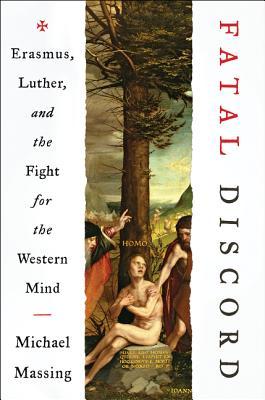
Michael Massig - Fatal Discord: Erasmus, Luther and the fight for the western mind.

2020 - A (media) review

The last book of the year I finished. It is still one of the most interesting non-fiction book I read this year. I pretty much knew nothing about Erasmus beyond his name, but his and Luther’s fights did shape Europe, and by extension the west.

Highly recommend if you want to know “how we got here”.

Non-Fiction

John Connolly - The Dirty South

2020 - A (media) review

I have been reading John Connolly since 2005 and greatly enjoyed all of his books. This years release in the Charlie Parker series was a bit of a departure in that it went back in time to a very young Parker and one of his earliest cases.

I read a lot of “purely for entertainment” stuff this year and this one def. stuck out and I can wholeheartedly recommend the entire series.

Movies

Best Movie - The Trial of the Chicago 7

This was a bit hard to find the “one” movie to put here, a few close runner ups exist:

  • 1917
  • Ready or Not
  • Knives Out

“1917” is great cinema, good story and wonderfully shot, “Ready or Not” and “Knives Out” are fun movies in their own right. They aren’t great cinema, but they are competent and entertaining.

What won me over for “The Trial of the Chicago 7” though was that I have a soft spot for well executed court room dramas, especially when based in reality. The movie manages to be entertaining and educational at the same time.

Worst Movie - Tenet

Don’t act surprised. I like Nolan as a film maker. Dunkirk is a master piece in visual story telling. But it seems when he’s left to his own devices he produces… this.

It’s not just a completely incomprehensible story, but it’s also the audio mix, which makes it at times almost impossible to understand the dialogue. No idea what drove Nolan to do this, but he needs an intervention or prevented from writing his own movies going forward.

Guilty Pleasure - Guns Akimbo

This really shouldn’t work as well as it does. It is, in the best way, a video game created as a movie. The story is bonkers, you wouldn’t think Harry Potter would make a good unwilling action-hero and yes, lots of stupid. But it is highly entertaining.

Music

1. Multiverse - Gadi Sassoon

This was not something I expected and yet, it landed with a surprise. This is one of these rare albums that are totally different experiences when listening to them on headphones vs. Large speakers. It is def. my album of the year and I highly encourage a listen. It’s available on all the streaming services and you can buy the album on Bandcamp.

2. Westworld - Season 3 Soundtrack

I have my problems with the show itself, I think it suffers, like “Tenet” from “Nolanism”, although this time by the brother. Having said that, Rami Djawadi’s soundtrack, especially the re-interpretation of popular songs for the show, is an excellent listen.

3. Live At Palo Alto High School, Palo Alto, CA / 1968

This was a surprise. I had missed the release when it first came out but came across it by chance late this year and it is a joy to listen to. Jazz live performances are always different than the albums that get released I find. Especially older recordings, there is a rawness to it that often gets mixed out in the studio.

4. Tripping with Nils Frahm

I am a big fan of Nils Frahm and this album is a joy. It’s a live recording and it gives Frahm’s work a completely new quality. It’s a good cross section of his work too if you have never heard him before.

TV

Best TV Show - Babylon Berlin - Season 3

I’m a sucker for period pieces. Babylon Berlin had me already with the first two seasons and it keeps going strong in the third. If you want to get a glimpse of live in Weimar Germany, this is as good as it gets.

Best TV Show - The New Pope

Yes, there are two best TV shows. My rules so that is totally okay. “The Young Pope” was a brilliant piece of story telling, especially visually and “The New Pope” continues this. Visually alone it is a feast, add to that the talent of John Malkovich and an excellent cast and you have an absolute jewel.

Worst TV Show - Picard

Much like Disney seems to be hellbent to “reinvent” Star Wars, so also is CBS hellbent on up-ending Star Trek. It’s…. Painful. Not only in comparison to what came before, but in the storytelling itself. What makes this really sad is that there was potential there which was all thrown away for…. I don’t even know.

Of course it has been extended already, so Season 2 is coming in soon. Oh joy.

Worst TV Show - Westworld - Season 3

Oh what a shame. The show has an excellent soundtrack, great production value and talented actors and totally incompetent writers. Much like “Tenet”, “Westworld” gets more stupid with every new season.

This time we also have Aaron Paul in it because…. Ummm…. I guess they needed someone with a recognizable name, because his character really doesn’t do a whole lot.

How far we have fallen from Anthony Hopkins in Season 1.

Games

Best Game - Cyberpunk 2077

Yes yes, how dare I go against the grain. I will have a longer review coming soon, but the reality is that Cyberpunk 2077 is a solid cyberpunk game. It is far from perfect, but it has character, the writing of the characters is believable and exploring the world enjoyable (if it isn’t bugged out).

The main gripe is the way too short main quest line, which comes in at around 20 hours. It’s a shame that CD Project Red didn’t create a longer story arc. There is supposedly more story DLC coming, which is good, but it does feel like it came out a bit too early.

Worst Game - Watchdogs Legion

It is a “typical Ubisoft game” and I admit. I like them. I have spent hundreds of hours exploring the world Ubi creates and yet…. There is something lacklustre about Legion. One part is that as you can play as any NPC in the game you don’t really have a main character. You do have a story, but I found it hard to feel like I was playing the story. The character you use changes as often as you want. This does make some of the missions more interesting as you can for example play as a cop that has access to otherwise restricted areas. The downside of this is that your characters have no real personality.

They all have a background story, but the dialogue and choices you have are quite generic. They have to be in order to work with all the different persons you could be playing at.

The end result is that this is a really interesting idea, but in execution it “falls flat” as they say.

On top of that, it is clear just how much “dollhouse” London / Ubi’s world really is. You predominantly are around on foot in the game, but many places you cannot enter. They are mere window dressing. This was less of a problem in the previous two games as you mostly traverse by car, so the idea to “quickly nick into a place” wasn’t really an option.

Not to mention whereas in Watchdogs 2 you could actually go into stores, this is pretty much no longer the case. You want to buy clothing or anything else you do it outside through a menu. It feels much more primitive and superficial than in previous games.

01 Jan 23:21

HTTP/2 in the 5G Core – How Does that Work In the Web Today?

by Martin
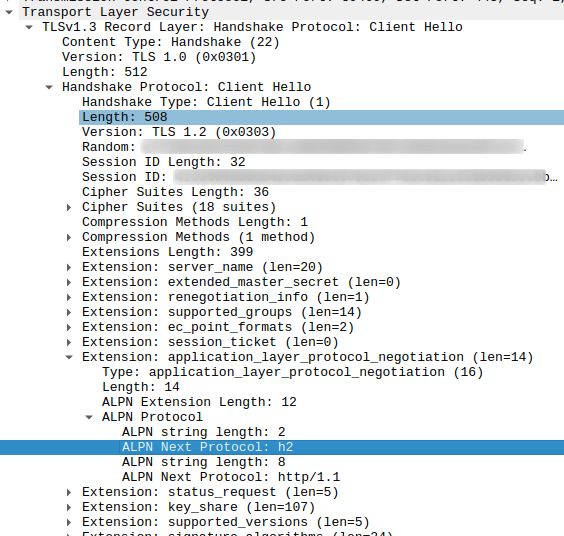
Image: HTTP/2 negotiation

When 3GPP set out to define the 5G core network (5GC), it used all the latest and greatest web technologies to radically reshape core network architecture. One tiny part of this is the use of HTTP/2 for signaling between functions. This made me wonder just how on the Internet today, web browsers and servers decide if HTTP/1.1 or HTTP/2 is used for communication. Yes, I went off a bit on a tangent there. It can’t be the TCP port, as port 443 is used with both protocols for encrypted connections. So there must be something else.

I didn’t know much about HTTP/2 so far, so my first thought was that maybe there is some backwards compatibility involved. But that’s not the case, HTTP/1.1 capable servers would not understand HTTP/2 requests at all. As one of the aims of HTTP/2 is to reduce the number of signaling round trips, I quickly discounted a separate negotiation phase after TCP session establishment as the potential solution as well. Instead, the HTTP protocol version negotiation is part of the TLS session establishment exchange. In 2014 I wrote about such a mechanism used by HTTP/2’s predecessor SPDY, but forgot all about it in the meantime. Today, the similar but nevertheless different implementation is referred to as ‘Application Layer Protocol Negotiation’ extension (ALPN). In short, the client (web browser) extends the TLS ‘Client Hello’ message with an ALPN extension and indicates that it supports h2 (HTTP/2) and http/1.1, in this order. The server then indicates in the TLS ‘Server Hello’ which of the two ‘application layer’ protocols it wants to use. So in principal, a straight forward thing.

The only slight problem when approaching this from a ‘seeing is believing’ point of view: When TLS 1.3 is used, most parts of the ‘Server Hello’ packet are already encrypted and the ALPN response part can’t be seen. Unfortunately, Wireshark doesn’t say so, which left me clueless for the better part of an hour. The ‘Internet’ wasn’t really helpful finding this fact as well. But I finally found a web server that was not yet supporing TLS 1.3 while supporing HTTP/2 (www.zeit.de). Here, the response can be decoded by Wireshark just fine. In case you want to try, here’s a Wireshark filter that tilters out TLS Client and Server ‘Hello’s’ that contain an ALPN extension:

tls.handshake.extension.type == 16

And another helpful tool when looking for this is ‘curl‘. In verbose mode, it indicates if the server returns HTTP/1.1 / HTTP/2 capabilities:

# curl -v --silent https://www.gitlab.com 2>&1 | grep "ALPN\|SSL connection using"

* ALPN, offering h2
* ALPN, offering http/1.1
* SSL connection using TLSv1.3 / TLS_AES_256_GCM_SHA384
* ALPN, server accepted to use h2
01 Jan 23:20

Good Riddance 2020

by ekai

Well, that’s been one helluva year. It can only get better from here, right?

01 Jan 23:19

Brave browser update adds native support for new M1 Macs

by Jonathan Lamont
M1 Mac lineup

Brave, a Chromium-based browser that touts a privacy focus and a new take on online advertising, now offers a version that works on Apple’s new M1 Macs.

In a recent tweet, Brave shared that its final desktop update for the year was available. ‘Version 1.18.77’ offers native support for M1 Macs, as well as other tweaks like a “localization fix for Brave Rewards” and a fix for an issue with playing videos on HBO Max and IMDb.

Now when users try to download Brave on their Mac computer, they’ll see a pop-up prompting them to choose between the Intel version or M1 version. The pop-up looks rather helpful, as it notes that Intel Chip Macs are “most common” while M1 Macs are ones available “Nov 2020 and later.”

Additionally, the pop-up explains how to check which Mac you have (Click the Apple icon in the top-left corner > select ‘About This Mac’ > Look for ‘Processor’ or ‘Chip’ in the ‘Overview’ tab > Check if it says Intel or Apple).

When you head to Brave’s website to download the browser, if it doesn’t show the pop-up, you can also download Brave for M1 Macs by selecting the ‘macOS ARM64’ option.

Native M1 support should bring noticeable performance improvements for apps on M1 Macs, as well as fix any issues caused by the Rosetta II translation layer that converts apps made for Intel Macs to run on M1 hardware. Both Google Chrome and Firefox have also launched M1 variants of their browsers.

The post Brave browser update adds native support for new M1 Macs appeared first on MobileSyrup.

01 Jan 23:19

This Version of the Facts

by Eugene Wallingford

The physicist Leo Szilard once announced to his friend Hans Bethe that he was thinking of keeping a diary: "I don't intend to publish it; I am merely going to record the facts for the information of God." "Don't you think God knows the facts?" Bethe asked. "Yes," said Szilard. "He knows the facts, but He does not know this version of the facts."

I began 2021 by starting to read Disturbing the Universe, Freeman Dyson's autobiographical attempt to explain to people who are not scientists what the human situation looks like to someone who is a scientist. The above passage opens the author's preface.

Szilard's motive seems like a pretty good reason to write a blog: to record the one's own version of the facts, for oneself and for the information of God. Unlike Szilard, we have an alternative in between publishing and not publishing. A blog is available for anyone to read, at almost no cost, but ultimately it is for the author, and maybe for God.

I've been using the long break between fall and spring semesters to strengthen my blogging muscle and redevelop my blogging habit. I hope to continue to write more regularly again in the coming year.

Dyson's book is a departure from my recent reading. During the tough fall semester, I found myself drawn to fiction, reading Franny and Zooey by J. D. Salinger, The Bell Jar by Sylvia Plath, The Lucky Ones by Rachel Cusk, and The Great Gatsby by F. Scott Fitzgerald, with occasional pages from André Gide's diary in the downtime between books.

I've written about my interactions with Cusk before [ Outline, Transit, Kudos ], so one of her novels is no surprise here, but what's with those classics from sixty years ago or more? These stories, told by deft and observant writers, seemed to soothe me. They took the edge off of the long days. Perhaps I could have seen a run of classic books coming... In the frustrating summer run-up to fall, I read Thomas Mann's Death in Venice and Ursula Le Guin's The Lathe of Heaven.

For some reason, yesterday I felt the urge to finally pick up Dyson's autobiography, which had been on my shelf for a few months. A couple of years ago, I read most of Dyson's memoir, Maker of Patterns, and found him an amiable and thoughtful writer. I even wrote a short post on one of his stories, in which Thomas Mann plays a key role. At the time, I said, "I've never read The Magic Mountain, or any Mann, for that matter. I will correct that soon. However, Mann will have to wait until I finish Dyson...". 2020 may have been a challenge in many ways, but it gave me at least two things: I read my first Mann (Death in Venice is much more approachable than The Magic Mountain...), and it returned me to Dyson.

Let's see where 2021 takes us.

01 Jan 23:19

Happy New Year! Went outside for a walk along a...

Happy New Year! Went outside for a walk along a soggy Jericho Beach. I’ve been sick for a week, with a negative COVID test in the middle. Glad to be feeling better and to have a new year ahead.

01 Jan 23:18

Removed London bike lane blocked by parked cars most of the time – study | London

mkalus shared this story from The Guardian:
Shocking. Car drivers just not caring about others. That never happens. /s

A much-used cycle lane in London that was removed because the local council said it was impeding the flow of motor vehicles has since been blocked by parked cars up to 80% of the time, a study by a campaign group has found.

Computer analysis of traffic cameras on Kensington High Street have also shown that average car journey times appear to have increased since officials took out the bike lane just seven weeks after it was installed.

Kensington and Chelsea council ripped out the £320,000 lane on the busy east-west thoroughfare in December, citing complaints from 322 people, about 0.2% of the borough’s population.

The Conservative-run authority said removing the cycle lane, which was used by up to 4,000 cyclists a day, would add extra space for motor traffic, and thus ease congestion and quicken journey times.

But the study, which involved analysing video footage from Transport for London traffic cameras using Google artificial intelligence tools, found that the space had instead been largely taken up by parked cars.

The analysis by Bike is Best, which groups together a series of organisations and companies from the cycling industry, found that in the week 21-28 December, what was formerly the eastbound cycle route was blocked by parked cars for 63.6% of the time.

Even greater use of the space for illegal parking was found at other times. The most recent data, from 29 December, found that between 7am and 7pm what was the eastbound bike lane was blocked by parked vehicles for 81.6% of the period, with some parked on double yellow lines for more than 10 hours.

Analysis of traffic camera footage from when London was still in the looser tier 2 coronavirus restrictions, during daytime hours from 14 to 18 December, showed the former lane blocked for 52.9% of the time.

The study assessed average car journey times on a sample 1.1-mile stretch of the street using Google Maps’ real time traffic data, finding that these had increased after the cycle lane was removed.

It calculated that average trip times eastbound increased from 5min 39sec to 8min 14sec, with those westbound rising from 5min 48sec to 6min 27sec.

The study will bolster complaints from critics that Kensington and Chelsea council is institutionally hostile towards safer cycling schemes, with London’s cycling and walking commissioner, Will Norman, having previously accused it of “putting the convenience of car drivers over the lives of local residents”.

In 2019 the council unilaterally vetoed a separate flagship east-west cycle scheme in the middle of a public consultation, citing complaints from 450 residents, or 0.3% of the borough’s population.

Bike is Best submitted a freedom of information request to ask how the council had formally assessed the success or otherwise of the Kensington High Street scheme. The council responded: “No criteria or metrics were developed by which the scheme was to be assessed.”

The campaign group is pushing for councils to use data analysis to properly assess the efficacy of cycling infrastructure.

Adam Tranter, the founder of Bike is Best, who has the role of bicycle mayor for Coventry, said: “Active travel is probably one of the only modes that can be removed based on local opinion without data or research; you wouldn’t build a new dual carriageway and close it a month later because it didn’t look like it was at full capacity.”

The Kensington High Street cycle lane was now “occupied by a handful of drivers of inconsiderately and illegally parked cars”, he said, adding: “The same councillors and residents who were up in arms about a cycle lane don’t seem to be too bothered about that. It was never about capacity, it was about something new that upset the status quo.”

A council spokesman said it was examining alternative schemes, including so-called school streets and 20mph zones.

He said: “Since the decision we have received a letter signed by 25 residents’ associations, which represent 3,400 households, welcoming the decision to remove the lanes. We have had over 1,300 emails from residents and 85% were against the cycle lane.”

This updated total of 1,300 residents represents 0.8% of the borough’s population.

01 Jan 23:16

What’s Ahead For 2021? Five Lessons For The Coming Year.

Josh Bersin, Jan 01, 2021
Icon

I am in my won way a futurist and so I feel obligated to post at least a couple sets of predictions from other people. The third and fourth predictions in this post are noteworthy (the rest are throwaways). The third looks at the difference between business-centered and people-centered leadership, and these (mostly) translate to education. The fourth looks at the topic of the 'employee experience' and while this might seem like a lark, the last year made clear just how important it is. This, again, translates to education, for both teachers and students. "It demands a whole nest of integrated digital tools (read about IBM’s focus here) that go from case management to knowledge management to safe workplace to daily productivity."

Web: [Direct Link] [This Post]
01 Jan 23:16

Predictions

Matthias Melcher, x28's New Blog, Jan 01, 2021
Icon

In a meeting a few days ago I was asked to predict what's upcoming. I had two items, one of which matches what Matthias Melcher in this post: the resurgence of anti-technology sentiment. A lot of it will be expressed as 'getting back to normal', and a lot of it will be expressed as 'what a disaster digital learning was in 2020'. As Melcher says, "people are craving for the real, the genuine and the authentic." Maybe. And maybe there's a point to what he describes as Luddism. But I think that a lot of people, for a lot of things, won't want to go back. (p.s. the second prediction? I think we'll begin in 2021 to consider the huge deficits the pandemic created, and that by 2022 education will be in a full-blown public funding crisis, the severity of which depends on your particular government). Image: Forbes predictions.

Web: [Direct Link] [This Post]
01 Jan 22:17

Long Links

Happy new year! Welcome to the first Long Links of 2021; this is a monthly curation of long-form pieces that I, due to being semiretired, have time to read. Probably, most people reading this have less time, but perhaps one or two will add value even for a busy person.

The last month of the year is an invitation to best-of pieces. Music is probably my chief recreation so I’m a sucker for this kind of piece. In The New Yorker, Amanda Petrusich’s The Best Music of 2020 showed me a couple of musical paths I hadn’t been aware of. Is it weird that every single best-music-of-the-year piece featured 79-year-old Bob Dylan’s Rough and Rowdy Ways? Then over at Discogs there’s The Most Popular Live Albums of 2020; close to my heart, since most of my very favorite recordings over the years have been live. Of particular note: The “Saucerful of Secrets” show that Pink Floyd drummer Nick Mason took on the road in 2019 and I enjoyed.

Erstwhile NFL quarterback Colin Kaepernick is now a publisher. He labels his flavor of activism “Abolitionism” and it’s strong stuff. This is a big collection of big pieces and even I haven’t made time for all of it. Abolition for the People is a good place to start.

The EU’s Digital Markets Act: There Is A Lot To Like, but Room for Improvement by Cory Doctorow and Christoph Schmon, is what it says on the label. Full of useful detail on what they’re up to over there. I read through the list of proposed reforms, reacting with “well, of course” to most, and then as the list got longer and longer and longer I realized how screwed-up the Internet economy is right now and how urgent the case is for radical reform.

Speaking of screwed-up, So *that's* how Breitbart is still making money, on the BRANDED substack, offers a tour of the grimy underbelly of how Internet ads are sold and how unscrupulous operators can arrange to sell ads while making it very hard for buyers to ascertain where their money is going. More reasons, were any needed, to think that the system needs blowing up and rebuilding from scratch.

In 1982, I wrote a hundred thousand lines of COBOL code. That’s not nearly as impressive as it sounds. First of all, COBOL is verbose. Second, this was the I/O module of a big airport-automation system with huge volumes of cut-n-paste code to provide a file abstraction over lots of different sources. In the rearview, I don’t even hate COBOL; there are things it’s good at. The Code That Controls Your Money, by Clive Thompson, is a highly readable tour through the history and culture of the trusty old language. The fact is that COBOL is still the incumbent technology in much of the finance sector, and Thompson has lots of smart things to say about the business effects, some of which surprised me.

Moving from old programming languages to a new one (Swift), here is a long entertaining Twitter thread, which begins “Alright folks, gather round and let me tell you the story of (almost) the biggest engineering disaster I’ve ever had the misfortune of being involved in. It’s a tale of politics, architecture and the sunk cost fallacy [I’m drinking an Aberlour Cask Strength Single Malt Scotch].” It’s a highly instructive tale of how Uber got themselves into big app-development crisis and then back out. Since I generally loathe the whole practice of dressing up labor-arbitrage operations as technology plays, and specifically loathe Uber, I think society might have been better served if they’d failed. But you have to have sympathy with the dev team.

The ergodicity problem in economics by Ole Peters, in Nature Physics, forsooth, is an important piece of work. It argues that current economics math is mostly broken because it makes entirely unjustified (and unjustifiable) assumptions of equilibrium. I did not take the time to stop and convince myself that I understood each equation, nor do I think I fully understand Peters’ alternative approach, but I found his criticism of the status quo compelling.

At the Columbia Journalism Review, Why Democrats lose on social media while Republicans lie and win big is subtitled By dominating Facebook, the world’s largest media platform, the GOP demonizes the Green New Deal. The Green New Deal, which should actually be a pretty easy program to sell, politically, now polls horribly when its name is mentioned. This piece dives into why that is and ends with a plea for progressives to focus on viral storytelling techniques. As a blogger, how can I disagree?

Let’s take an astrophysical excursion. Regular readers have probably noticed that I’m fascinated by the Dark-Matter controversy. Among the most visible of the skeptics, and definitely among the most eloquent, is Stacy McGaugh, a prof at Case Western. Big Trouble in a Deep Void, on McGaugh’s blog but by three guest authors, takes an eye-opening look at the large-scale structure of the universe — there’s good evidence that our galaxy inhabits a billion-light-year-across volume with much lower matter density than the universe’s average; thus the “Deep Void”. The standard Astrophysical model, ΛCDM, says that can’t happen. The discussion quickly gravitates (snicker) to the Dark-Matter-vs-MOND controversy. I think most lovers of science have to enjoy situations where the best available theories totally don’t explain the best available observations because that means discoveries are there to be made. I enjoyed the hell out of this one.

Noah Smith’s Techno-optimism for the 2020s has been pretty widely linked-to and isn’t that long so you may already have read it. I hadn’t thought about the larger-scale subject but the essay makes some strong points. In particular, and I quote, “But now, for the first time since the 60s, technology is going to make energy cheaper. ”

Ladies, gentlemen, and others, Section 230 is very important. As I write this, repealing it has become a Republican priority because it makes much of Big Tech possible and conservatives hate technology because it occasionally reflects progressive values. I’m not going to explain what Section 230 is or what it does, because Sue Holpern does so very well in How Joe Biden Could Help Internet Companies Moderate Harmful Content. The headline is lousy, it should be something like “The pros and cons of Section 230 and some plausible things to do to improve the situation.” Few Internet-related subjects are more important.

Few subjects, generally, are more important than that of truth and lies and how our widespread failure to discern between them is driving most of our important public pathologies. Jonathan Rauch, back in 2018 (but I didn’t notice it then) refers to this as “the problem of social epistemology” and in The Constitution of Knowledge, has really a lot of smart things to say on the subject. To start with: It’s not that, among educated people, we have huge genuine disagreements as to what the truth is; it’s that 21st-century conservatives have discerned that if they entirely abandon any regard for truth, they can score valuable political points by weaponizing falsehood at Internet scale. This piece is big and smart and eloquent. I quote: “There is nothing new about disinformation. Unlike ordinary lies and propaganda, which try to make you believe something, disinformation tries to make you disbelieve everything.”

Speaking of big lies, among the biggest are those that are driving the current Bitcoin bubble. In that menagerie of whoppers, among the biggest are those surrounding Tether. Patrick McKenzie offers Tether: The Story So Far which tells the awful truth (really, it is) in entertaining detail. If you haven’t already dumped your Bitcoin, you will after reading this.

Not all the big lies are about money. For example, QAnon. Reed Berkowitz’s A Game Designer’s Analysis Of QAnon tries, not to explain QAnon because who could, but to examine some of the dynamics of how and why it survives and infests so many minds. Useful.

The antidote to lies should be facts. But that doesn’t seem to be working well. Given that, Elizabeth Kolbert’s Why Facts Don’t Change Our Minds is obviously highly material to our current predicament. I’m not going to try to summarize because it respects the complexity of the subject and doesn’t hurry up in an effort to produce a sound bite. It’s full of quantitative social science; one researcher is quoted as saying “ways of thinking that now seem self-destructive must at some point have been adaptive.” Yep.

Look, I acknowledge that expressions of concern about Facebook and its ilk are not exactly new. But Adrienne LaFrance’s Facebook is a Doomsday Machine provide an excellent overview of the problem. I quote: “The social web is doing exactly what it was built for.” One really refreshing notion offered here is that Facebook, and social media generally, are just too freaking big. I can think of things that could be done about that.

Eric Alterman has been an intelligent, acerbic voice of the Left (and a really good rock-music critic) for many many years. During the last twenty-five of those years he’s been the media critic for The Nation. Look Beyond the Media Frenzy and Focus on the Fundamentals is his farewell column and it says things we need to be listening to. He’s not neutral or balanced at all: “If we look beneath the surface of our elections, we see a culture of plutocracy that has enabled the creation of an autocracy based on a foundation of purposeful dishonesty”.

I’ve long been interested in the economics of Internet publishing, and so should anyone who’s interested in the quality of our intellectual discourse as a civilization. Talking Points Memo is a twenty-year-old progressive-political blog that has morphed into a viable company and stayed alive, which is more than you can say about most such startups. Part of their 20th-anniversary celebration, The Business of TPM looks at how and why they survived while so many others didn’t.

Now for something much lighter-hearted: A fairy tale! No really, with a Cinderella-meets-Game-of-Thrones flavor: Stepsister. The way I found this is by impulse-grabbing a recent issue of Fantasy and Science Fiction from the library, then reading and recommending a nice story by Leah Cypess, which led me to her website, and thence to this story. Enjoy!

Speaking of stories, someone is writing a real-time alternate history of the future on Twitter, called Real-Time WW3 from 2033. It’s a little awkward, you have to start by scrolling all the way to the bottom then working your way back up. Some parts of the story fail my suspension-of-disbelief test, but a whole lot of it is clever, and I find the style vivid.

01 Jan 22:13

I have one hope for 2021

by Josh Bernoff

It is that our health officials and our government can accomplish enough to allow each of us to achieve our creative goals. When you are worried every day about your job, your loved ones, your relatives, and the state of the nation and the world, it’s difficult to do anything more than cope. Consider for … Continued

The post I have one hope for 2021 appeared first on without bullshit.

01 Jan 22:13

Predictions 2021: Disinformation, SPACs, Africa, Facebook, and a Return to Tech Optimism

by John Battelle

Never in my five-plus decades has a year been so eagerly anticipated, which makes this business of  prediction particularly daunting. I’m generally inclined to be optimistic, but rose-colored glasses stretch time. Good things always take longer to emerge than any of us would wish. Over 18 years of doing this I’ve learned that it’s best to not predict what I wish would happen, instead, it’s wise to go with what feels most likely in the worlds I find fascinating (for me, that’s media, technology, and business, with a dash of politics given my last two years at The Recount). As I do each year, I avoid reading other folks’ year-end predictions (though I plan on getting to them as soon as I hit publish!). Instead, I just sit down at my desk, and in one rather long session, I think out loud and see where things land.

And off we go….

1. Disinformation becomes the most important story of the year. In some ways, this is foolhardy – like predicting that the election would drive 2020, only to see it overwhelmed by COVID-19. The topic of disinformation feels a bit cerebral and hard to pin down – not as concrete as a pandemic or an election cycle. But I’m convinced 2021 will be the year we all realize that our media/information ecosystem is broken – with disinformation, propaganda, and brazen falsehood its most pernicious externality. Businesses are waking up to the threat this  poses to their bottom lines (and to society at large), most scholars and policymakers are already there. In the words of former Republican strategist Steve Schmidt, speaking on a recent Recount podcast: “In a society where there is no ability to distinguish between the truth and the lie, democracy will be lost.” 2021 will be a year where we search for the root causes of our failures over the past few years, and at the center of that failure is a communication system that mindlessly manufactures disinformation. A free and open democratic economy can’t run on bullshit. I’m personally devoting 2021 to exploring how we can navigate the collision of technology platforms, unfettered capitalism, broken media models, and feckless regulatory oversight. More on that soon…

2. Facebook’s chickens come home to roost. Related to #1, yes, and it’s certainly passé to beat up on Facebook. As an OG in the space (“Facebook Can’t Be Fixed,” et al), I’m reluctant to go there once more – our troubles are bigger than one company alone. And for years the company has steamed ever forward, its fortunes unaffected by endless cycles of bad PR. But in 2021, the good ship Facebook will start taking on serious water. Incoming President Joe Biden will set the tone with his distaste for the company, and company’s tone deaf approach to communications will finally fail to deliver the company a pass. (If you missed it, you must watch this insanely scripted game of dodgeball between journalist Tamron Hall and Facebook COO Sheryl Sandberg). The company’s own employees are increasingly uncomfortable with their leadership, and its consumers and marketing partners are increasingly looking for alternatives to a platform they see as toxic and unwilling to change. Toss in policymakers’ thirst for an easy target and a media industry tired of the doubletalk, false narratives, and outright lies, and 2021 will be a dismal year for Facebook – in particular in the United States, where the company will likely admit that it has failed to grow user engagement. And that, to put a fine point on it, will tank the stock, full stop.

3. AI has a mid-life crisis. The past few years have witnessed the shining resurgence of artificial intelligence – breakthrough after breakthrough has led to justifiable optimism that AI-driven innovation will solve both the mundane (Look! It can untangle corporate supply chains!) as well as the divine (Look! It can cure every disease known to humankind!). All of this and more is likely true, but humanity has yet to fully comprehend the potential negative externalities of AI, much less mitigate them. Chastened by our last bout with externality ignorance (see Facebook, above), 2021 will be the year society takes a step back and thinks hard about where this is all going. Setting up the narrative is Google’s mishandling of its relationship with leading AI critic Timit Gebru, but by year’s end, the AI narrative will be as much about hand wringing and regulatory oversight as it is about revolutionary breakthroughs.

4. Then again, a wave of optimism around tech-driven innovation takes root. This is the counter narrative to five-plus years of a “tech as bogeyman” trope. 2021’s optimism will be driven by two major factors: First, a belief that we’re on a path to correct the worst mistakes of the past decade (see #1 – #3 above). And second, a slew of long-developing and real world proofs that technology-driven breakthroughs will bring serious benefits to society at scale. Candidates include biotech and bioinformatics (the core technologies behind the COVID vaccine), blockchain (though I’m certain bitcoin will have at least one of its several crashes this year), and lithium batteries (giving us hope on climate change and driving my otherwise random prediction on gas-powered cars, below).

5. Google does in 2021 what I predicted it would in 2020. And what was that? That Google zags. I wrote: “Saddled with increasingly negative public opinion and driven in large part by concerns over retaining its workforce, Google will make a deeply surprising and game changing move in 2020.” I think this is even more likely given Google is fighting off a terrifying array of massive regulatory actions, and desperately needs to avoid looking like Facebook in the eyes of its employees, consumers, and business partners.

6. Nothing will get done on tech regulation in the US. Blame antitrust. Whether or not Biden decides to continue Trump’s FTC and DOJ actions, he will likely start his own, and keep the focus on antitrust, rather than more thoughtful legislation around disinformation, machine readable data portability, or privacy. There will be some movement – net neutrality will probably get reaffirmed and we’ll fix Trump’s H1-B messes, for example. But by year’s end folks will realize that antitrust suits are essentially kabuki, an exercise designed to go nowhere and maintain the status quo. When Facebook is aggressively calling on Washington to regulate the Internet, you know they’ve done the math and concluded nothing is really going to change. Everyone’s talking about how it’s about time for the government to step up and do something, but I’m deeply cynical about anything changing in 2021. That doesn’t mean we won’t (or shouldn’t) make progress…just that it won’t happen in a year.

7. A “new” social platform breaks out in 2021. I’ve made versions of this prediction in the past, but my timing was off. Given the handcuffs 2021 will place on the traditional players in Big Tech, this coming year presents a perfect opportunity for a breakout player to redefine the social media category. There’s plenty of VC money ready to invest here, and both Tik Tok and Snap  have had their moments in the sun. It won’t be some ripoff version of what already exists (sorry, Parler). I’d either look to something like an evolved Signal, an app that already has a growing user base, or a from-nowhere startup that gets super hot, super fast because it’s fundamentally rethought social media’s traditional, serotonin-driven models for engagement and advertising .

8. The markets take a breather, and SPACs get a bloody nose. Back in 1987 I was a cub reporter covering the technology industry. One of the first stories I ever wrote involved a software startup run by a fellow I immediately judged to be a hustler. In our initial interview, he laid out how he was going to use financial engineering to take his small company public via a shell company. It struck me as dodgy then, and it strikes me as dodgy now. I have plenty of industry pals who are involved in SPAC mania now, and as far as I can tell, they’re on the up and up. SPACs can be a healthy and innovative approach to financing companies. But alas, this SPAC trend stinks of easy money and honeytraps for unsophisticated investors and shady operators. So in 2021, SPACs will lose their luster, driven in large part by several spectacular failures (or worse). Related, overall stock markets won’t crash, but by year’s end, they’ll sputter as tech stocks fall out of favor and society begins to realize how much debt needs to be worked through before true growth can reassert itself.

9. 2021 will be prove to be the last year of growth in gas-powered automobiles. There, I did it – I wrote a prediction I wish for, rather than one I can back up with my own lived experience. That said, the aforementioned breakthroughs in lithium battery technology will lead to a wave of new options for vehicle buyers, and in the long lens of history, the early 2020s will be celebrated as the period where we finally overcame our addiction to burning fossil fuels. Please, MAKE IT SO.

10. Africa rising, China…in question. A few years ago, I predicted China was going to crash, but I now realize the world needs China to counter US hegemony. With that in mind, the breakout continent of 2021 will be Africa, home to many of the fastest growing countries in the world, and the focus of years of Chinese investment and diplomacy. After four years of US neglect, the Biden administration will realize it’s dangerously close to losing Africa altogether, and announce a massive investment in the continent. Biden’s China policy will be fascinating to watch, but I’d not wager a cent on where it lands this year.

11. Everyone loses their shit, in a good way. Because we deserve one big ass party, damnit, when this pandemic finally lifts. This is the easiest one to predict, because, well….I’ll be right there with you. Until then, folks, stay safe, wear a f*cking mask when in public, and do what you can to help others get through what is still a dark damn time in our history. See you on the other side.


Previous predictions:

Predictions 2020

2020: How I Did

Predictions 2019

2019: How I did

Predictions 2018

2018: How I Did

Predictions 2017

2017: How I Did

Predictions 2016

2016: How I Did

Predictions 2015

2015: How I Did

Predictions 2014

2014: How I Did

Predictions 2013

2013: How I Did

Predictions 2012

2012: How I Did

Predictions 2011

2011: How I Did

Predictions 2010

2010: How I Did

2009 Predictions

2009 How I Did

2008 Predictions

2008 How I Did

2007 Predictions

2007 How I Did

2006 Predictions

2006 How I Did

2005 Predictions

2005 How I Did

2004 Predictions

2004 How I Did

01 Jan 21:54

The Design of the Roland Juno oscillators

by Rui Carmo

Here’s a great way to start the New Year, by delving into what made the Roland Juno so great for its time. There are quite a few VST and AUv3 emulations of it out there that are well worth playing around with.


01 Jan 04:41

Happy New Trade Barriers! pic.twitter.com/FsxQGga5Np

by Dmitry Grozoubinski (DmitryOpines)
mkalus shared this story from DmitryOpines on Twitter.

Happy New Trade Barriers! pic.twitter.com/FsxQGga5Np


441 likes, 71 retweets
31 Dec 22:10

Go Home and Study

by Eugene Wallingford

In a conversation with Tyler Cowen, economist Garett Jones said:

... my job in the classroom is not to teach the details of any theory. My job is to give students a reason to feel passionate enough about the topic so that they'll go home for two or three hours and study it on their own.

Perhaps this is a matter of context, but I don't think this assetion is entirely accurate. It might give the wrong impression to the uninitiated by leaving an essential complementary task implicit.

One could read this as saying that the instructor's job is purely one of motivation. Closures! Rah-rah! Get students excited enough to go learn everything about them on the own, and the instructor has succeeded.

If you think that's true, then I can introduce you to many students who have struggled or failed to learn something new despite being excited to learn and putting in a lot of time. They were missing some prerequisite knowledge or didn't have the experience they needed to navigate the complexities of a new area of study. In principle, if they plugged away at it long enough, they would eventually get there, but then why bother having an instructor at all?

So I think that, as instructor, I have two jobs. I do need to motivate students to put in the time and effort they need to study. Learning happens inside the student, and that requires personal study. I also, though, have to help create the conditions under which they can succeed. This involves all sorts of things: giving them essential background, pointing them toward useful resources, helping them practice the skills they'll need to learn effectively, and so on.

Motivation is in some ways a necessary part of the instructor's job. If students don't want to invest time in study and practice, then they will not learn much. But motivation is not sufficient. The instructor must also put the student in position to succeed to learn effectively.