Where Is Now? has posted a comment:
awesome!

Going tribal is always fun.
Tell a group what they want to hear. Tell them they are special and unique. Tell them they are the future. Tell them they are better or superior to another group.
You can identify that other group too. Blame that group for your problems. Complain about what they are or aren’t doing to help. Almost any group will do.
This is an effective way to increase participation, build a stronger sense of community, and get things done.
But understand this approach isn’t relying on logic or reason. The very reason you indulge tribal instincts is because logical, reasoned, arguments failed you.
And once you go careering off the path of reason it becomes very difficult to get back on it. People aren’t looking to think or to be challenged, they’re looking for their next emotional hit. They’re looking for their next battle and to feel that sense of tribal unity again. And if you don’t give them that battle, that battle might well be with you (the sellout).
Going tribal can lead to great, positive, outcomes. But it should be the route of second resort. When facts aren’t finding their mark and members aren’t helping themselves.
 A couple of days after WhatsApp rolled out video calling for its Windows Phone client, the company has released a beta update of their Android client that enables the functionality on Android devices.
Continue reading →
A couple of days after WhatsApp rolled out video calling for its Windows Phone client, the company has released a beta update of their Android client that enables the functionality on Android devices.
Continue reading →

Still, no one knows why they should buy one.
Plans to cut 8% of workforce, hundreds of workers affected
Making things is challenging. Getting them to market is even harder. Finding an audience that cares? Damn—that’s a real toughy. So, it’s no wonder people often give up. If you’re a maker, you know what I’m talking about. Excitement turns to doubt awfully quick.
No shortage of trolls
Yesterday, I discovered a particularly shitty response (which he has since edited, to be less derogatory) on ProductHunt. The self-appointed critic called the maker’s idea “hideous,” “ugly,” and “stupid.” He then finished with a—rather perplexing—“No offense.” This made me angry. I kept wondering: Why did this commenter need to beat the crap out of someone who’d just tried to make something good? (I so wish he’d watch this video and ask himself why he’s not contributing something.)
Although I don’t know the creator of this product, I feel a sort of kinship with him. My take is that anyone who puts their time, money, and guts on the line deserves our respect. Such work isn’t easy, and most never even try. However, this guy did. And he responded thoughtfully to his critic’s remark—which didn’t warrant such grace.
I wonder why we pick one another apart. My hunch is that we hate on others not because of them, but due to our own inadequacies. We see someone ship an idea we once had—but never acted upon—and feel embarrassed to have missed the boat. Someone else’s product is a hit, and we become jealous of their glory. Or, we feel bad about what we’re working on, and think we’ll find some relief by criticizing another’s work.
Frankly, I stopped visiting Brand New (which is a great site) just because the comment threads got so sloppy and vicious. I suppose this shouldn’t be a surprise. As the old adage goes: everyone’s a critic. However, it’s not the common person’s negativity I take umbrage with. It’s when fellow creators exhibit such spite. I call these people “crehaters” (which seems only slightly clumsier than “Trumped-up trickle-down economics”).
Acting like losers
When Uncle Eddie shits on the new Verizon logo, I’m unfazed. He doesn’t make anything—other than snide remarks. What grinds my gears is when makers start treating creation as a zero-sum game—because it isn’t. It never was. It never will be. And the more you treat it in this way, the more we all (paradoxically) lose.
Speaking of losing, do you know what you lose when someone else makes something? Absolutely fucking zero. In fact, you benefit—because those creations might make your life better. Plus, we all feed off one another. If one of your peers innovates in some way, her/his lessons are there for you to learn from and build atop. No matter how good you think you are, you can’t go this alone. Your peers’ work is not a threat—it’s a gift.
Let’s get back to this criticism thing. There’s a difference between giving critical feedback and just being a dick. The latter is easy and requires no consideration or imagination. It’s not that different from making a yo-mama joke—and it’s equally pointless.
Building, not burning
Good criticism is about helping someone find alternate ways to look at a problem. You see, no one wants to make bad work—but sometimes we can’t help it.
Perhaps we chose an idea that wasn’t quite right. Maybe we took the wrong path. Could be that we stopped seeing what’s in front of us for what it truly is. And then we get stuck. In the worst case scenarios, we see what we just built as totally fine—even though it’s failing on some level.
At this stage, the last thing a creator needs to hear is trash-talk. In fact, that’s just the sort of thing that’ll stunt his/her work even further. This is because no one makes better work when they’re on the floor, getting kicked (while the attacking goon repeats, “hey—no offense”).
We need to be better than that. If this were a sport, and our teammate fell to the ground, we wouldn’t point fingers and talk about how stupid he looks. We’d pause, extend a hand, and speak some words of encouragement. I admire team sports for this. These activities build camaraderie, empathy, and community. This is something we can learn from.
We are the champions
Good creators don’t talk shit about their fellow creators. They champion the work of those around them. They know how hard this stuff is. They accept that stumbles are part of what we do. And they treat one another with respect—because we all deserve that.
When you see something great, let the maker know. She could be having a crummy day—and your words might rekindle her enthusiasm. When you admire what someone else has done, talk about it, share it with friends, and help spread the word. When you see something so good it intimidates you, take a moment to appreciate that we all have the capacity to make work that inspires awe.
And when you see something that isn’t what it could be, take pause. Re-holster your cheeky retort. Consider why this thing just doesn’t seem to work. Then ask if the creator wants feedback. If the answer is yes, you can share your thoughts—acknowledging that your perspective too might be flawed. The purpose in all of this isn’t to tear down—it’s to build up.
A few years back, Casey Hrynkow noted that her husband Ray (both distinguished Vancouver designers) wouldn’t allow anyone in his studio to bad-mouth others. He didn’t think any good came from such behavior, and he stuck to those ideals. In spite of the fact that I haven’t always done the same, I’m certainly trying to do as Ray did.
And now I ask you to follow Ray’s example. We’re a team. Let’s act like one.
This morning I read the latest news from MIT about their blockchain and badges project. It’s exciting news for those interested in high-stakes credentials such as university degrees. They’ve given this new standard a name: Blockcerts.
Many will think that this puts Blockcerts in competition with Open Badges, but, of course, nothing could be further from the truth. Philipp Schmidt, Director of Learning Innovation at the MIT Media Lab — and author of the post announcing Blockcerts — was one of the originators of Open Badges when he was at P2PU.
Schmidt writes:
Blockcerts provides a decentralized credentialing system. The Bitcoin blockchain acts as the provider of trust, and credentials are tamper-resistant and verifiable. Blockcerts can be used in the context of academic, professional, and workforce credentialing.
[…]
Certificates are open badges compliant, which is important, because there is an entire community of open badges issuers that we want to support, and because open badges is becoming an IMS standard.
He’s perhaps let the cat out of the bag with the last sentence. I’ve had conversations over the last few weeks which point to an upcoming Mozilla announcement in this regard.
Any way you look at it, this is a great move for those in the ecosystem. Blockcerts is Open Badges-compliant, and provides a solution for organisations dealing in high-stakes credentialing. I know the BadgeChain group will be pleased!
The thing that attracted me to Open Badges, and which remains my goal, is to explore alternative credentialing. While there’s definitely a need to move high-stakes credentialing into the digital realm, I’m interested in ways in which we can provide a much more holistic view of the learner.
Want to find out more about Open Badges? Check out the OB101 course that Bryan Mathers and I put together!
Michael Feldstein,
e-Literate,
Oct 28, 2016
Th unbundling of the university is more story than fact, writes Michael Feldstein, but the unbundling of publishing is imminent. This tipping point may be open educational resources (OER), which are making textbook publishing unprofitable. He writes, "The real money will be in a few areas:
Will these separate services be offered under a single brand, or are we seeing the beginning of a marketplace with multiple players? As usual, the answer is "yes".
[Link] [Comment]Out for a walk the other day, marveling that we’ve built a place with this in it.


Posting those sorts of stories either at workfutures.io or stoweboyd.com. Don’t need a third blog. More to follow on why, soon.
Netflix is betting big on the fact that originals are the future of its platform.
The popular streaming service is already $2.37 billion in debt, but now, the company has announced plans to raise another $800 million via a new debt offering in order to fund and create additional original content. In total, Netflix says that it will be $3 billion in debt once this plan has come to fruition, though the service also emphasizes that its predicted rapid subscriber growth will make up for this loss.
In the past Netflix CEO Ted Sarandos has said that his company plans to spend $6 billion on creating original series and films, with a small portion of that money also being used for acquiring content and signing exclusive deals. Sarandos says that he wants Netflix’s catalog to consist of approximately 50 percent original content — a fact he’s mentioned in the past — and a significant move for the company, but one that makes more sense now given its still somewhat recent global roll out.
With the international movie and television licensing system still operating as it always has, content is licensed by region, with production companies selling off rights on an individual basis in various countries. Netflix’s originals, however, aren’t restricted by this archaic system and can be released across the the 130 platforms the streaming service is available in.
This negates the issue of some regions having content that others do not, as well as gives subscribers less reasons to region-switch via proxy services, a process that is significantly more difficult than it once was thanks to Netflix’s new blocking efforts.
Sarandos also says that it’s Netflix’s subscriber growth and not ratings that drives his company’s business. He believes that having more original and exclusive content is key to Netflix’s future, though according to the service’s most recent quarterly earnings report, the platform is growing slower than it once was.
Related: Five series that showcase Canada’s contribution to the success of Netflix

Songrotek,
GitHub,
Oct 28, 2016
This is an unfinished work, but it illustrates nicely the use of academic papers as open educational resources by sequencing useful and important resources in such a way as to guide the reader through the essentials of a discipline. "The roadmap is constructed in accordance with the following four guidelines: from outline to detail; from old to state-of-the-art; from generic to specific areas (and) focus on state-of-the-art." It's best to think of this as a proto-MOOC. People can (and should) add resources (not just papers and books), and these can create branches and sub-branches. The resources themselves are all openly accessible. GitHub does provide limited social interaction, but you would expect a social network or community to grow around this collection. Actual MOOC classes would involve a self-managing cohort moving through the material together. Yes, it takes commitment and effort to learn a subject this way, and a lot of people don't have the skills. That's where educational institutions and student support should come in.
[Link] [Comment]Looking at his photos reminds me that photography cannot be too controlled. It cannot be predictable. It should have life and energy and risk. Sometimes that gets messy.
Source: Kathy Ryan, A tireless photo editor – The Eye of Photography
------------------------
Visit our sponsor Photo Folio, providing websites to professional photographers for over 9 years. Featuring the only customizable template in the world.
------------------------
This summer, speechwriters plagiarized several lines from Michelle Obama’s 2008 speech for Melania Trump’s at the 2016 Republican National Convention. Memes immediately began circulating that depicted Melania Trump as though she were a student cheating on a test.
The day the news broke, the Modern Language Association (MLA), which promotes standards for citational practices in the humanities, posted this tweet: “Avoiding plagiarism: It’s easy with the MLA’s free online guidelines.” Widely interpreted as a subtweet, it seemed to suggest that there’s no excuse for plagiarism — information about what constitutes stealing is widely available, taught to every high schooler. In reality, though, it’s easy enough for anyone to get citation wrong. A New York Times article documenting Trump’s plagiarism was soon enough itself amended: “An earlier version of this article incorrectly attributed a quotation.”
Giving credit where it’s due might seem basic, but in practice, it’s easier said than done. Practices of citation are “complicated ways of making meaning,” as Kathryn Valentine puts it in her essay “Plagiarism as Literacy Practice,” and the rules are fluid.
For many writers, the process of reworking familiar ideas is inherent to the craft. From The Anxiety of Influence by Harold Bloom to Jonathan Lethem’s “The Ecstasy of Influence,” thousands of words have been devoted to the gray areas between homage, collage, and forgery. Lethem and others suggest that writers should be generous with their ideas, given that they were probably borrowed in the first place.
In the realm of popular culture, writing not only involves the use of pre-existing material but is perhaps defined by it. In Love and Theft, Eric Lott describes popular culture as a space of stolen ideas, “a stage on which appropriated goods … are transformed into culture.” As Aria Dean argues, the internet “extends and exacerbates” offline relations of appropriation, for better or for worse. The appeal of memes, for example, is that they are up for grabs, even if some makers rightfully protest this careless stance toward borrowing. Imitation is the sincerest form of flattery, but only if accompanied by a royalty check.
Originality requires a respect for origins. Academic practices of reference achieve this by meticulously tracing lines of thought; researchers might spend weeks hunting for manuscripts at archives on foot, and they have developed commensurate systems of accreditation to document their processes. When researching online, however, even if one agrees that acknowledging sources is important, there is no consensus about if, why, and how to do so. You should definitely cite someone if you take their sentence, but what about their word, their topic, or their train of thought — their path through the online maze of content?
Citation is a method of attachment. Through reference, we stitch ourselves into networks of thought
Digital technologies make it easy to steal content — someone else’s good ideas are always a tab away — but they also produce new possibilities for tracing our thoughts, and platform interfaces both reflect and determine users’ expectations about citation. The affordance for tagging photos, for example, suggests that users care whom other people are hanging out with. Although these features come to seem like second nature, we could imagine alternative possibilities that emphasize different social values, such as intellectual integrity: for example, a field on social media profiles that tells our followers who told us about the link we’re sharing. In lieu of such functions, users devise their own citational habits: @ signs, shout-outs, HTs or a dozen other symbols that render social relations apparent.
With the increasing digitization of academic work, scholarly content now dwells alongside other genres of writing online. Academic writing thus becomes referenced using the methods offered by digital platforms, such as sharing and liking articles. Links operate much like footnotes, referring us to related content. In this diffuse world of digital expression, citations mingle on our screens with personal data like selfies, concert invitations, and blog posts. Our retweets, shares, and likes are interpreted by others as self-expression, whether or not we intend them as such. References are thus embedded in the performances of self so central to social media, and further, in the relation of ourselves to others.
Citation is, first and foremost, a method of attachment. Through reference, we stitch ourselves into networks of thought. Online, these attachments might manifest as friendship, fandom, nepotism, or, not uncommonly, as self-promotion. This makes it seem like online references are more personal than offline ones. But maybe digital practices like humble-bragging, name-dropping, and other conspicuous performances of self simply draw attention to the fact that print citations themselves have never been objective and value-neutral, just more opaque. Citation has been expressive all along, articulating desires for continuity and belonging.
Online, citations are not only expressive, but monetized. When we reference someone by sharing or retweeting their work, we are promoting it for them within an economy of ideas. Accordingly, failure to cite certain work can be thought to devalue it, both intellectually and financially. A recent article in the Chronicle of Higher Education criticized thinkpiece writers who fail to engage with academic research. The authors claim that “championing poorly researched pop-culture writing on the internet” devalues humanities scholarship by failing to acknowledge the “history, context, and deep study” that academic experts in media and popular culture offer; some academics feel that widespread lack of respect for the labor of scholarly research is a direct cause of the budget cuts widely experienced by humanities departments.
Scholarly writing is often opposed to journalism and popular criticism, but in practice, scholars and freelance writers have more in common than not: They experience shared challenges of writing in the gig economy, such as the constant pressure to work for “exposure.” Students, journalists, and other writers all build their careers by citing others — Google Scholar tallies how many times an author’s articles are mentioned, much in the way that social media profiles count shares and likes. Citation emerges as a way of distinguishing oneself from competitors, not only in the traditional sense of networking for the job market but through the expressive capacities of reference.
When quantities of reference are incentivized by digital platforms, the line between citation and advertisement blurs. The quantity of reactions to a piece competes with its quality for importance, and demand for quantity brings a similar need for speed of writing, reading, and distribution. Headlines and bylines become worth more than the actual content to which any reference refers, and a cascade of influence often determines what sort of content is published and circulated. Content itself is significant insofar as it seems likely to get referenced, whether or not it ever gets read.
Just because someone shared your article doesn’t mean they read the whole thing, let alone understood it, but the click gets counted nonetheless. Metrics-based publishing might have certain benefits, but it’s not conducive to rigorous research or careful reading. The more rapidly ideas are encountered online, the more they are encountered as surfaces, gestures of erudition devoid of meaning. In this environment, to slow down citation is to seem to slow down thought. Slowed-down thought would give time to not merely react to ideas, but actually respond. Citation itself might actually help with rather than hinder this process.
Writers cope with detachment by latching on to timeless texts and influential figures. Citations build our senses of self and reaffirm the status quo
Although scholars are pressured by speed and funding, the profession still rewards them for interrogating ideas and taking them seriously as such, at least in theory. Academic writing becomes academic, as Kathleen Fitzpatrick suggests, “precisely when it exposes its process to future correction.” Within scholarly conversations, writers have incentive to pause and check themselves. The point of citation — ideally, at least — is to make an author’s reasoning explicit, not to display it but to observe it from a distance. Academic citations chart not only influence but the repetitions and transformations of our thoughts over time, allowing us to trace them with more clarity and discover gaps in our thinking, the bounds of our knowledge.
Perhaps our timelines online function similarly, giving shape and order to our progressions of thought. If constructing our self is an ongoing project, then intentional citation helps structure this process of self-making. Through careful citation, selves might not only be created, but reconsidered or even re-created.
Deliberately chosen conventions of reference, such as retweeting oneself, then emerge as powerful statements. More than just self-aggrandizement, retweeting one’s own tweets makes public the processes of reconsideration and reflection that were, before social media, largely invisible. To retweet oneself is to say, “I gave it some thought, and I meant what I said.” Retweeting expresses a conviction that is the essence of reference, whatever its form: In case you missed it, here it is again.
Citational attachments can help enhance thought, but they can also degrade it. When writing online, tensions emerge between accuracy, accessibility, and aesthetics, and references weigh things down. In digital publications, citations crowd screens, and even more, if citations are tokens of economic value, they can start to feel like ads that detract from “real” content. The clean lines of a personal essay, for example, seem compromised by footnotes — the pleasure of reading such an essay can come from the sense that a writer is expressing a singular experience; references remind readers that originality is a ruse, albeit a pleasant one to enjoy vicariously.
Gestures of citation in writing are often motivated more by the compulsion to perform erudition than by any desire to faithfully attribute intellectual debts. Some “highly intellectualized people,” as Phil Ford writes, may suffer from an “inability to forget anything one has read, and, even more, a deep insecurity about letting anyone think you haven’t read it.” This recalls a Portlandia sketch in which two friends frantically compare reading lists at an accelerating pace. (“Have you read this? have you read that?”) The sketch captures the anxieties of erudition, of both over-performing and doubting your own knowledge.
Among intellectuals, this often leads to situations like the comedy of manners described in Rosa Lyster’s narrative of her encounter with a “Marxist bro.” In her story, she enrages the bro by pretending she has never heard of the widely cited philosopher Slavoj Žižek, which the bro can’t accept. Her game touches on a widespread sentiment: in Lyster’s words, “the disbelief that something you care about has failed to register on the consciousness of another,” a feeling experienced not only by condescending bros. Reference might in some senses be a reparative to this sense of intellectual alienation.
Further, attachment itself can be stylish, or even satisfying. In “Quick Fix,” Naomi Skwarna writes about what it actually feels like to copy and to paste, describing the “small, good feeling” of folding another’s words into one’s own. She points to the pleasures to be found in reference, in connecting ourselves to the logic, vocabulary, and concerns of other people — and further, in seeing our troubles as unoriginal, which can make them more bearable.
If we fail to make these attachments explicit, though, we risk accusations of plagiarism, theft, appropriation. And even if we do make our sources known, we still risk seeming nepotistic, pretentious, or as though we’re oversharing. If nothing else, citations appear to interfere with any pretense to spontaneity in writing; they betray the writer’s effort.
As for whether a writer should err on the side of the plagiarist or the pedant, it depends who you ask. No news is good news, but all press is good press.
Writers cope with detachment by latching on to ideas: timeless texts and influential figures, or viral content. In this way, citations not only build our senses of self, but when accumulated, collectively reaffirm the power of the status quo. As Sara Ahmed observes, citation is a “reproductive technology,” by which practices of citation help sustain the prominence of already dominant ideologies. The books we always cite out of convenience start to seem like the only books there are.
Whether I think to quote a particular source often has less to do with integrity — of lineage, of accuracy — than with ease. The labor of tracing the diffuse sources for our ideas is its own unpaid gig, requiring skills that Ahmed calls “techniques of selection,” by which we decide who to cite and when. Should we cite Foucault every time we use the word “power,” and if him, why not Mary Wollstonecraft instead? Inevitably, I grasp for what is nearby or familiar: the book at my bedside, the quote on the tip of my tongue.
It’s naive to think that writers always cite the “best” work on a topic, rather than the most available. Writers often cite W.E.B. Du Bois when they are feeling torn between two places; his idea of “double consciousness” has been widely applied. But why not quote his contemporary Jessie Fauset instead? Fauset’s writing was considered by some critics the most important of her peers, but her blend of emotionality and erudition prevented her work from achieving widespread appeal and inclusion in anthologies. Although she is remembered for mentoring young writers, it seems unlikely she will ever be canonized like Du Bois.
I’m aware that Gilles Deleuze developed extensive theories about rhizomes, but so do ordinary people on drugs
Overwhelmed by the arbitrariness of citation, sometimes I cite whomever I please: my brother, a lover, a text from last night. Why not cite a children’s book, a chatbot, a parrot? My diary entries: a folio of field notes, interviews with myself, rigorously researched auto-ethnographies. I’m aware that Gilles Deleuze developed extensive theories about rhizomes, but so do ordinary people on drugs. If Deleuze is a more legitimate source only because more people say so, this makes him a philosophical celebrity, a conflation of popularity and prestige.
Given how ambivalent and deeply personal the act of citation online can become, it makes sense that social media is littered with disclaimers about accreditation. “Retweets aren’t endorsements,” we say, trying to protect ourselves against accusations of referential irresponsibility. Cycles of social media seem to exacerbate the dangers of acknowledging bad ideas on the way to good ones. If we enable an idea’s circulation, even with the intention of critiquing it, we might be complicit in its potential misuse.
If you retweet spam, are you spam? The fact that “spam” is subjective is the very impetus for proper citation: spam, according to whom? When did the author say that, and who were they trying to impress? As Eric Lott puts it, simulations of previous ideas are almost always “compromised by the return of unwanted meanings, gestures, and relationships.” Theories accumulate baggage as they circulate in time, extracted from their contexts and put to uses that stray from their original purpose.
For example, Roland Barthes’s famous 1967 essay “Death of the Author,” which questioned assumptions of literary criticism such as the importance of authorial intent, came at an inconvenient time. Its circulation coincided with the emergence of feminist and postcolonial studies in the academy. The essay’s argument emphasized the way historical dynamics circumscribe an author’s agency, delimiting what they write — a reasonable claim, that no one writes in a vacuum. In practice, though, this line of thinking ended up taking authority away from authors who had fought for many years to claim it; many women, for example, finally found their voices just as poststructuralists began to say voices were passé.
Whether you should cite a piece might be less important than the tone that’s taken when you do. “Punch up, cite down,” goes a common rule-of-thumb for citational practice — the point being that it’s good to be skeptical of those more powerful than us, and to encourage those below by transferring power onto them. In this way, citation functions not only to perform, promote, and recreate the self, but to disperse it.
Each retweet ripples further from, yet remains attached to, its source. Just as many of us want to be seen online, but only on our terms, so do we want our words to circulate — but only the good sentences, not the mistaken, off, or boring ones, those that damage our persona or make us seem unbecoming. As Baudrillard writes, “The worst thing when your ideas are plundered is the fact of being taken for a wreck.”
Once, when I was younger, I was incensed to discover a former crush had quoted lines from some of my writing in one of his songs, without permission and without giving me any credit. When I told my mom about it, she had no sympathy for me. “You should be flattered,” she said. And then, a little bit wistfully, “I’ve always wanted to be a muse.” What she called homage, I called arrogance.
My mom didn’t seem to understand what Alexandra Molotkow has called “the pain of having your pain appropriated,” the muse’s burden. At the time, I found relief in a quote from Baudrillard, in which he suggests that the essence of our thoughts, that which makes them ours, is inimitable. “If it can be stolen from you, the fact is that it is not yours,” he writes. Inverting that logic, there are always aspects of our thoughts that others fail to capture, even when they try.
And no matter the lengths we go to trace our sources, there’s always an influence we miss. Maybe this is the only way anything gets said at all, each of us spilling over, referring to more than we know.
In a world weighed down by reference, I find myself dreaming of a feed lacking any mentions, a page of nothing but unprecedented thoughts. The most precious sources, in my mind, are the ones most rarely cited. My mom has never been retweeted, and she has never appeared in a footnote. Baudrillard lived for nearly 80 years without ever encountering her distinctively understated strands of thought — nor has she read a word by him. At the risk of sounding nepotistic, I’m pretty sure it was his loss.
Google’s interest in growing its virtual and augmented reality offerings becomes even more apparent with its latest acquisition.
For an undisclosed sum, Google has acquired Eyefluence, a company known for developing a suite of technologies for tracking eye behaviour for virtual reality and augmented reality purposes.
The company was founded in 2013 Jim Marggraff, who’s also known for launching the smart pen company Livescribe. Google’s acquisition of Eyefluence further supports their interest in leading the VR/AR ecosystem.
MobileSyrup recently reported that Google could be working on a standalone headset that won’t require the power of a smartphone, unlike its current platform, Daydream.
In a post on Eyefluence’s official website, it expressed its excitement at being able to push forward in its mission with Google’s support.
“Today, we are excited to announce that the Eyefluence team is joining Google! With our forces combined, we will continue to advance eye-interaction technology to expand human potential and empathy on an even larger scale. We look forward to the life-changing innovations we’ll create together!”
Related: Google reportedly working on a standalone eye-tracking mixed reality headset
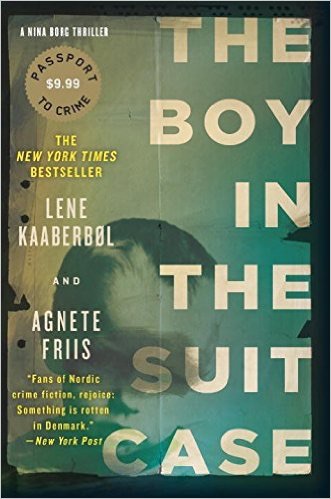
A Danish nurse-procedural: an old friend of Nina Borg asks her to pick up a parcel from a locker at Copenhagen’s central rail station. The parcel turns out to be a suitcase containing a naked 3-year-old boy who is unconscious and who, when he wakes up, doesn’t speak Danish. We are going to demand a good explanation from our old friend, but by the time we catch up with her, she’s been brutally murdered. A very interesting exploration of the mystery-thriller from the point of view of a wonderful (and bipolar) protagonist.
 Google wants to change the whiteboard, and they’re doing that with the newly-introduced “Jamboard,” set to launch next year.
Continue reading →
Google wants to change the whiteboard, and they’re doing that with the newly-introduced “Jamboard,” set to launch next year.
Continue reading →

Bloomberg’s Sarah Frier reports that Twitter is planning a major cut, up to 8% of its workforce, around 300 people. The timing of the announcement may come prior to the company’s third-quarter earnings announcement coming Thursday, and could be intended to act as a counter to bad news in the numbers. This is a repeat of the company’s earlier mass layoff, last October, when Jack Dorsey cut 8% soon after re-assuming the role of Twitter CEO.
This is a cascade of more bad news after the company’s failed effort to sell itself, and, finding no buyers, continues to struggle on alone.
If the downward spiral continues we have to imagine the price might drop to the point where a buyer might emerge.
Given all the bad news, perhaps the board might be rethinking Dorsey’s role, although I bet he’s not one of the 8% being let go this time. But maybe that will be the next headline about Twitter.
Twitter’s situation is truly odd. A central institution in our media culture, unable to make real money, unattractive to larger competitors, and hard to love. Perhaps we will only see real change if all the founders — Dorsey and Ev Williams — get out of the picture.

This article from Next City shows what happens when you have a very successful walking city like New York City. Those sidewalks get full and people spill onto the streets, which is not a good thing with traffic in the way.
Recently a city councillor introduced a bill that would require NYC DOT to study 10 locations with heavy pedestrian traffic and come up with a plan to alleviate the overcrowding. New York’s pedestrian fatalities sound staggering-over 85 pedestrians killed out of a population of 8.5 million and 7,000 injured since the start of the year-or one fatality for every 100,0000 population. (Just a quick note that Vancouver has a worse record with 11 pedestrian deaths this year and with a population of 603,000 has had one fatality for every 54,800 population) .
With Vision Zero in New York City Council is talking about a new era where pedestrian (and of course tourism by foot) gets priority. “Streets and sidewalks are 80 percent of public space in the city,” says Caroline Samponaro, deputy director for Transportation Alternatives. “This bill really gets at the importance of really making the most equitable, sane use of that public space. Many of our streets and sidewalks haven’t changed in more than 50 years even as travel habits and patterns have changed. We need to be able to do more than just stay alive while walking and biking,” she explains. “I think this bill calls that out in a good way. It forces the city to keep doing what they’re doing with pedestrian safety, but also push beyond that and think about what we are doing to make really dynamic public spaces.”
So it’s not just about using the street as transport whether you are on bike or foot, but actually using the space as public space to go to and linger in. Widening pedestrian spaces, providing places to sit in, and making a high quality pedestrian environment that everyone wants to use.
There’s still no date for when this bill will be going forward to New York City Council, but you can be sure it will be actively followed by many across North America, looking for groundbreaking ways to enact Vision Zero and enhanced walkability in our cities and spaces.


Peter Ladner writes in Business In Vancouver.
Topics? The Metro 2040 Regional Growth strategy, now officially honoured solely in the breach. Tsawassen Mills. Massey replacement bridge. And motordom.
A.K.A. freeways to farmland. Which seems to be our de facto growth strategy.

The justifications for the [Massey tunnel replacement] bridge have a Trump-like ring: instinctive gut appeal to frustrated SOV drivers, but making zero sense to anyone who knows how traffic congestion is really solved. The transportation minister’s claim that a big new bridge will reduce emissions from idling cars unbelievably ignores the massive increase in emissions from the new traffic that will inevitably rush in to fill a 10-lane bridge. The bridge is a desperation move to make the SOV great again, orchestrated by the same traffic engineers who keep making up claims about projected traffic increases on the money-bleeding $3.5 billion Port Mann Bridge that have never come to pass.
No one is suggesting the maddening congestion on Highway 99 doesn’t need fixing. Just not this fix. Nor is it reasonable to expect a future without cars, but we can’t afford the 25% efficiency of SOV traffic.
Projects like Tsawwassen Mills and the new 10-lane bridge are cementing Metro Vancouver into a heavily subsidized SOV-dependent future, in spite of overwhelming evidence that this will come at a huge cost to the social, economic and ecological health of the region.


I was in a classroom yesterday morning where yet another person, one of a series I’ve heard in the last week, talked about how important architect Bing Thom was to Vancouver.
Alden Habacon, UBC’s senior advisor on intercultural understanding, told the roomful of young people that Bing was the first person to say that Vancouver was essentially an Asian city, something that earned him a lot of negative backlash.
Others I’ve talked to in the past two weeks since the shocking news of Bing’s death came out have mentioned their own last encounters with him: a meeting where he was working with others to preserve and revitalize Chinatown or the lunch at his invitation because he wanted to talk about how academics could get involved in leading difficult conversations about Vancouver’s future.
All of that drove home what I noticed in the first few days, which was the way that Bing was loved by so many different people in Vancouver, people who sometimes aren’t even on speaking terms with each other in this fractious city, people who are bitterly divided on this issue or that issue. But Bing was somehow above that.
My colleagues Adele Weder and John Mackie did lovely tributes to Bing, detailing his graceful buildings (some built, others not) and his strong sense of social responsibility.
But, for many people, Bing’s impact was through his quiet conversations.
That was the case for me. Although I wrote stories about his graceful Sunset community centre, his innovative Surrey public library, his ideas about how to create community in a condo tower on Nelson, his campaign to keep the Vancouver Art Gallery in its present location, it was the non-news talks we had that stick with me.
The last one was in April. Bing called me — somewhat unusual — saying he had something he wanted to talk about.
It took a while to arrange an afternoon coffee because he was always busy, as usual. (Like many, I was surprised to hear he was 75 when he died of the brain aneurysm in Hong Kong because he seemed so youthful and active. He was well-known among Kits residents for his frequent swims at Kits Pool, which he walked to in his brown bathrobe from his house nearby.) When I went down to his office to meet him, he was just coming out of a meeting with a group of Asian investors.
We walked down to a cafe close to his office next to the Burrard Bridge, a place on the seawall.
There was a parade of people walking past. Bing, ever observant, looked at them going by and commented, “Look here, those are all young people. They are service workers who have the middle of the day to walk around. We may have to face the fact that we are a resort city. There is this generation that exists in this resort word. It’s amazing how many young people have no permanent jobs here, the game workers and film workers.”
That was so Bing, extrapolating a big observation about Vancouver by watching people strolling along in the middle of the day.
But that wasn’t why he had called.
He was worried about the anti-Chinese feelings that he saw coming to a boil in Vancouver.
He told me an anecdote that I later used in a story I was already working on, about mainland Chinese immigrants. He was in his car near his house on Point Grey Road when he got to a stop sign and there was some confusion between him and another driver about who should go first. The other man got upset and yelled at Bing, “You should go back to where you came from.”
“It’s the first time in 40 or 50 years where I’ve had this kind of encounter,” Bing said in his usual quiet, what-does-this-mean way. Bing had other friends, long-time Canadians like him, who’d experienced similar incidents.
It was worrying him. And this from a man who has not shied away from raising the alarm about the impact of investor money and global capital on Vancouver. It was Bing who first talked, in the early 2000s, about the danger of Vancouver turning into a resort city.
But, he said, things had gone too far. People were focusing on race now, or whether someone was from mainland China, not the real issue, which is global capital.
He was dismayed at some of the reporting he was seeing. One was a New York Times story that focused on the Lamborghini-driving fuerdai kids of Vancouver. “It’s so myopic, so transparently sensational.”
He didn’t deny that Vancouver is being shaped by global capital. But, he emphasized, it’s one that every major city has.
We talked a lot more, sitting in the afternoon sunshine. He told the story, again, of how his grandfather was the first in the family to come here, but his father, who got a pharmacy degree at a California university, went back to Hong Kong in disgust when he discovered that he couldn’t get a job anywhere in Vancouver because he was Chinese. Bing’s mother eventually moved back to Vancouver with the children, but his father refused to join them. “I think my family was the original astronaut family,” he joked.
I had already started talking to mainland Chinese families for a big feature I was working on (published later that year, in August) and he was curious about that. He had his own stories about some of the changes happening because of the mainland Chinese wave of immigration.
He talked about a terrific new restaurant in the city run by a woman from northern China. But only people from northern China were going to it at that point.
He told a story about how new immigrants do things that Canadians see as unacceptable, but those immigrants don’t even know it’s unacceptable.
He knew of a local family that had sold a house to a new immigrant family from China.
Then the new family couldn’t close right away, so they asked if they could rent. Then the new family started ripping out the kitchen in the house and moving it to the garage. Then they sublet the house to someone else. When the seller family found out about all this, they were horrified. Bing pondered that, musing aloud about how the family from China saw what they were doing as completely reasonable.
“Under the Chinese system, everything was state-controlled. And then there was private life. They were very separate. But here there’s mutual supervision. Everybody is in the middle ground between state and private.” This is a society that operates on a system of informal civil control, which people from Communist China aren’t used to.
It was so like him to take one story he heard from a friend and then start thinking aloud about how Canadian society operates compared to Chinese society. And then to share that on a sunny afternoon with a reporter, as part of his mission to be a bridge and translator for Vancouver’s many different groups.
I’ll miss all the buildings that he’ll never build now. But I’ll miss those conversations, where he would look at young workers strolling by in the sunshine or tell a story about a new immigrant family and then think aloud about what that all meant, even more.

One of best ways to learn visualization in any given software is to look at examples and apply to your own data. The R graph gallery helps you with the first part providing plenty of examples and the code snippets to make them. It’s still relatively new, but it should prove useful as it grows (hopefully). [via Revolutions]
Tags: R
Want to learn the latest about WebRTC inside of Firefox? Nils Ohlmeier from Mozilla sat down for an interview at the IIT RTC Conference last week with Mark Fletcher of the Avaya Podcast Network. I found it quite a useful explanation of what Mozilla is doing with Firefox and how different aspects of WebRTC come into play in different parts of Firefox. Give it a listen...
You have to deal with a staggering number of passwords nowadays. Each website you log in to requires one, and many apps do, too. So it’s not surprising that many people reuse simple, easily guessed passwords across multiple sites or keep their passwords written down on sticky notes next to their computer—and end up compromising their security. Luckily, it’s easy to increase your account security without needing to remember dozens of long strings of gibberish. Enter the password manager.
Sign up for our newsletter and let our experts help you find the things you need, even faster.
Let’s say you use the same password for everything across the Web: Twitter, Facebook, your bank, Amazon—everything. And then Best Buy gets hacked, exposing millions of passwords, including yours. Now those hackers have access to your entire digital life, including your bank account, because you secured everything using the same string of letters and numbers. But even if you’re diligent enough to use a different password for each login, you might be using weak passwords because you want them to be easy to type. A determined hacker can easily crack them.
A password manager makes good security as easy as possible. All you need to do is remember one master password (make it a good one!), and the password manager handles the rest, generating and saving a unique password for every account you need across the Internet. In addition to encrypting these login credentials, it stores them locally and syncs them across your various devices, where they can automatically fill the form on any website. You can even find a number of stand-alone third-party apps that support autofill for some password managers—1Password is particularly good in this regard. The better ones will remind you to change a password because it’s weak or because the website has been hacked. For instance, LastPass sent out an in-browser notification advising users to change their Yahoo-affiliated passwords after that high-profile breach became public.

1Password’s categories make storing and accessing data more convenient. LastPass has a similar feature.
Password managers can also store and autofill other important information such as credit card numbers, your contact information, insurance cards, and other data that you want to keep handy but protected. And you can categorize everything neatly by the type of information (finance, social media, shopping, and so on).
You can find dozens of password managers claiming to be the answer to your password woes. For comparative reviews, check out PCMag’s list of the best password managers of 2016, or Wired’s collection of free options. But when we polled the Wirecutter and Sweethome staffs about what they use every day, two password managers stood out: 1Password and LastPass. Both offer all the great organizational features we mention above. Which one is right for you comes down to which platforms you use and how much you’re willing to pay.

Photo: Michael Hession
We like LastPass because in addition to having all the important features we lay out above, it’s compatible with all modern platforms and is among the most affordable options available. That’s why most Wirecutter staffers who don’t use Apple products (and even some that do) use LastPass for all their password-saving needs. It’s also a PCMag Editor’s Choice. You can use a full-featured version of either the desktop app or the mobile app for free, or pay $12 per year for a premium subscription that syncs your passwords among all of your devices—a worthy and affordable upgrade that we highly recommend (unless you use only one device). The premium subscription also gives you priority tech support and the ability to share passwords with up to five family members.
LastPass is available for Mac, Windows, iOS, and Android, but you can also get apps for Chrome OS, Linux, Windows Phone, Firefox, and more. LastPass even offers a portable version that you can install on a flash drive for use at public computers—a feature that 1Password doesn’t yet have.
Once you install the app or plug-in, you’ll have offline access to all your information whenever you need it. Autofill functions as it should across a variety of forms, working particularly well with poorly coded or confusing website forms that might cause 1Password or other programs to falter. The Android app can fill forms within almost any other Android app if you enable access in the accessibility settings menu, as can 1Password’s. On the Apple side, LastPass is integrated into fewer third-party iOS apps than 1Password, so 1Password may be a better choice if you’re frequently on iOS.
LastPass’s interface hasn’t been the prettiest in comparison with that of 1Password and other more expensive options. But the most recent versions of LastPass have received a significant face-lift, and it now looks more iOS 10 than Windows XP.

Photo: Michael Hession
If you prefer an app with more polish, 1Password is the most popular password manager among our staff’s Mac and iOS users. It not only looks nicer, but its developer is also diligent about regularly updating its Mac and iOS apps. What makes it worth paying for if you’re an iOS user is that many more third-party iOS apps integrate 1Password than LastPass, so you can use 1Password to log in to an account within the app. (On Android, like LastPass, 1Password can fill forms in browsers and in most other apps.)
1Password currently costs $36 a year for individual users or $60 a year for families of up to five people. As with LastPass, the subscription includes unlimited use and secure data syncing across every platform 1Password supports, but for now that’s limited to Mac, iOS, Windows, and Android. However, the Windows and Android versions of the 1Password apps aren’t updated as frequently as the Mac and iOS versions. 1Password also doesn’t work on Chromebooks at the moment, because the Chrome plug-in requires either the Windows or Mac desktop app to function properly.
We’re not the only ones who like 1Password: Our friends at The Sweet Setup evaluated a number of password managers and found 1Password to be the best “because it does the best job of taking hold of our slippery digital identity, all the myriad digital bits of ourselves we use to prove who we are, and helps ease the friction of our travels through the digital world.”
Regardless of which one you choose, Lifehacker has a great guide on getting started with LastPass, and 1Password has its own setup guide.

You need a strong, unique password for each website.
You can find plenty of advice on how to generate strong passwords, as well as different schools of thought on what particular technique is best. If you use 1Password or LastPass, each password manager has built-in tools that make it easy to create especially secure passwords—they even indicate the strength of a given password with color-coded progress bars that get greener as you add levels of complexity.

Both LastPass and 1Password have password-generation tools. Photo: Michael Hession
Wired has a pretty solid primer on generating good passwords. For starters, the more characters you use, the better (as long as you’re not repeating the same characters over and over again). Similarly, the more complexity—uppercase and lowercase letters, numbers, and symbols—the better. Think about it this way: If someone is using a computer program to try to crack your password, a longer password with a greater variety of possible characters means that password will take (a lot) longer to guess.

Image: xkcd, used under Creative Commons Attribution-NonCommercial 2.5 License.
Some security experts advocate the use of passphrases made up of real words instead of long strings of random characters. As explained by Thomas Baekdal and the Web comic xkcd (above), the theory is that real-word passphrases are much easier to remember yet just as secure as random characters. However, a University of Cambridge study suggests that such passphrases may not be as secure as some other people say. The practical conclusion from that study is (as the xckd comic recommends) that you should create passphrases that aren’t common or don’t normally make sense in your language—“Rubber battery staple” is much better than “John likes pizza” or “To be or not to be, that is the question.” 1Password has built-in support for generating this kind of password, but LastPass does not.
Many websites, accounts, and services now support two-factor authentication (2FA), which adds an extra level of security by making you authenticate your identity with a code that you can access only from a trusted device. A website might text you a verification code, for example, the first time you log in from a new computer, or it could require you to use an authenticator app to provide a unique, time-sensitive code. Lifehacker has more on the specifics, and while 2FA is not a foolproof method (nothing is!), having it turned on is more secure than not. 1Password has a 2FA code generator built in; LastPass offers a stand-alone authenticator app and is compatible with many others. LastPass supports 2FA for logging in to your LastPass vault from a new device, and 1Password’s Account Key works in a similar fashion.

LastPass and 1Password both support fingerprint login, a much faster way to access your passwords than typing your master password. Photo: Michael Hession
If your phone has a fingerprint sensor, we recommend enabling fingerprint authentication for your password manager. Both 1Password and LastPass let you use your fingerprint—on a phone or tablet, for now—to access your passwords within the app or browser extension in place of typing your master password. While a password can be guessable, fingerprints are unique—and impossible to forget. (Yes, fingerprints are spoofable, but only in a spy-movie way.) It’s also much faster to log in with a fingerprint than to type a password, especially if it’s a complex password.
On Wednesday, October 26th, Microsoft is set to hold a special Windows-focused event in New York City.
MobileSyrup will be on the ground to bring you all of the company’s announcements from the day of the event. In the meantime, we’ve collected all the latest rumours relating to the event and put them in one place.
To start, it’s best to touch upon what we likely won’t see. Unlike the company’s fall event last year, new hardware announcements are not expected to be a focus this time around. Microsoft will not announce a new Band wearable — the company scrapped the project and reassigned members of the Band team to other projects — and with one exception, detailed below, we’re also unlikely to see new iterations of the company’s Surface lineup.
Microsoft is expected to release new Surface Pro and Surface Book models that feature Intel’s new Kaby Lake processors. However, it’s unlikely we’ll see them until sometime next year.
So, I do not believe that Microsoft will update Surface Book and Pro 4 with Kaby Lake this week. That said, they should.
— Paul Thurrott (@thurrott) October 24, 2016
Similarly, the long-rumoured Surface Phone probably won’t be at the event. Whether it actually exists or not, the consensus is that we won’t see a new smartphone from the Surface team.

However, that’s not to say Thursday’s event will be devoid of any hardware-related announcements. The most persistent rumour leading up to Thursday’s event is that Microsoft will unveil a new all-in-one PC called Surface Studio.
Like the company’s existing lineup of Surface devices, the all-in-one is expected to emphasize touch and stylus input, and may incorporate technology from Wacom, a Japanese company known for its digital pens.
Microsoft Surface Studio is such a clever name for the All In One.Totally make sense, can't wait for wednesday
— Cassim Ketfi (@NotCassim) October 24, 2016
A nifty-looking diagram sourced from the United States Patent and Trademark Office (seen above) suggests the Surface AIO will feature a hinge design that allows its screen to lie flat on a desk. Moreover, according to Windows Central‘s Daniel Rubino, the Surface AIO, similar to all other Surface devices, may feature a mechanism that allows users to detach the device’s screen from its base station.
We’ll have to wait until Thursday to see Surface Studio in full, but what is clear from the little information we do have is that the new Surface computer will be just a bit magical and potentially very expensive, especially here in Canada.

On a side note, Microsoft is also expected to show off a number of Surface-branded peripherals, including a keyboard and mouse (seen above), that look inspired by Apple’s current set of minimalist accessories.
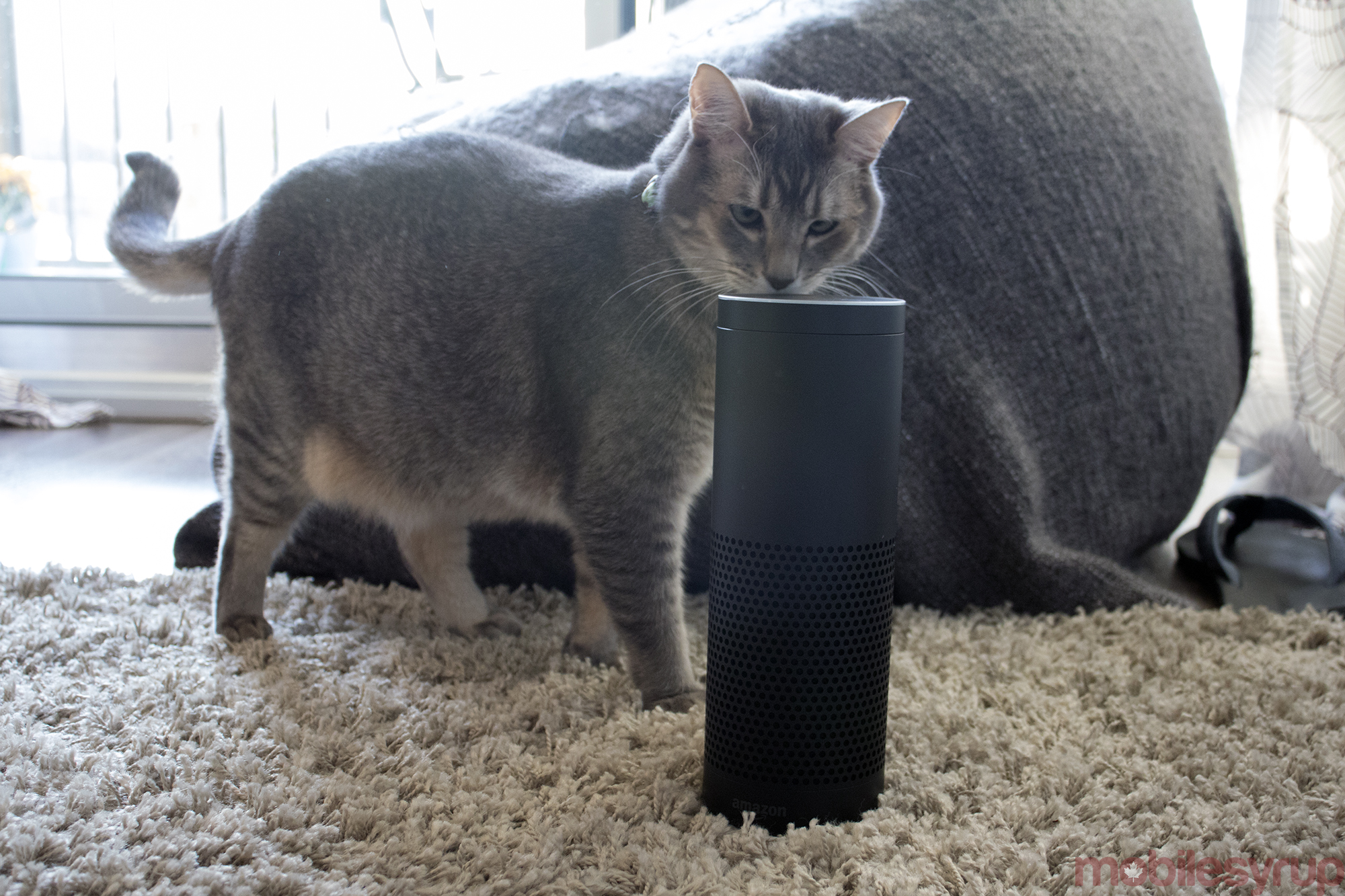
It wouldn’t be a major tech event in 2016 without an announcement related to a voice-activated personal assistant and speaker. With the success of Amazon’s Echo smart assistant, companies like Google have announced their own Echo competitors, and Microsoft may be the latest company to do so. According to Windows Central, the company will announce a smart assistant speaker.
We don’t know the name of the device, but it’s related to an upcoming Windows 10 feature called HomeHub. Similar to Apple’s own Home app, this functionality is expected to allow users to control all the smart home automation devices in their household. A separate Home Hub device that comes with Cortana, Microsoft’s personal assistant, will allow users to take advantage of this functionality, as well as do the standard set of smart assistant functionality like setting reminders, playing music and asking questions.

With Microsoft expected to release two major updates to Windows 10 next year, it’s likely the company will devote the majority of Wednesday’s event to detailing what’s next for the now year-old operating system.
The first of the two updates, codenamed ‘Redstone 2,’ is set to arrive sometime in and around March, and if we’re lucky, we’ll see Microsoft call upon ‘Fedora Guy’ Bryan Roper to show off some of the features coming to the OS next year.
Update 10/25/16: Rumours just Surfaced that Microsoft could also reveal a device called the ‘Surface Dial’ at its event. While not much is known about the Dial, speculation indicates it’s likely a radial controller designed specifically for Surface devices.
Related: Microsoft Q1 2017: Revenue skyrockets as Windows falls flat

Colleen Flaherty,
Inside Higher Ed,
Oct 28, 2016
I think we all knew this, but in this review of Yves Gingras's Bibliometrics and Research Evaluation: Uses and Abuses we read of a detailed examination of the topic. "While study of publication and citation patterns, “on the proper scale, provides a unique tool for analyzing global dynamics of science over time,” the book says, the 'entrenchment' of increasingly (and often ill-defined) quantitative indicators in the formal evaluation of institutions and researchers gives way to their abuses."
[Link] [Comment]
Screens 4, which I reviewed in April, improved the process of logging into and controlling a desktop computer remotely with a long list of features that eliminated hassles inherent in trying to control a desktop computer from a touchscreen display. Screens 4.2 continues down the same path offering a host of smaller refinements along with two headline features – Mobile Trackpad, which lets you use an iPhone as a trackpad for the computer you are connected to remotely, and Dark Mode.
With version 4.2, Screens' developer, Edovia, is taking its pricing model in a different direction. Without upgrade pricing in the App Store, economic realities make it hard for utility app developers to maintain and extend their apps. With that in mind, Edovia has made the two major features of this update, Mobile Trackpad and Dark Mode, separate In-App Purchases. That way, existing users of Screens 4 get the benefit of improvements to existing features at no extra cost and only customers who want the new features need to pay for them. In light of the difficulties of building a sustainable business from utility apps on the App Store today, Edovia's approach is a fair one.

Connecting Mobile Trackpad.
With Mobile Trackpad you can use a second iOS device as a trackpad to control the cursor of a remote computer. To start, I connected to my family's iMac using my iPad Pro and Screens. Next, I started Screens on my iPhone. At the bottom of my iPhone's screen was a button that said 'Start Mobile Trackpad.' Tapping the button displayed a list of nearby devices, which in my case, was my iPad. I tapped 'John's iPad' and Screens immediately began to initiate a connection between my iPhone and iPad. After a couple of second, the two devices were connected and my iPhone was transformed into a trackpad.
I immediately fell in love with Mobile Trackpad. One of the difficulties of remotely connecting to a computer with a touch-based device is controlling the remote computer's cursor. By separating control of the pointer from the display on which you are viewing a remote desktop, Mobile Trackpad makes using Screens feel more natural. The experience is different than using a Magic Trackpad because the iPhone wasn't designed as a trackpad, but the experience is nonetheless superior to viewing and controlling a remote desktop from the same screen.
Mobile Trackpad works just as you would expect. Swipe around on the surface of your iPhone to move the mouse pointer and tap to click. A two finger tap or tap-and-hold gesture is the equivalent of a right click, bringing up a contextual menu on your remote desktop.

Light and dark modes.
I like having dark modes as an option in my apps. Screens' dark mode is a handsome dark grey. Of course, once you connect to a remote computer, what's displayed on it will impact how light or dark Screens' interface is, but I know I'll appreciate Dark Mode at night when I'm lying in bed and remember that I should have checked something on my Mac that I don't want to get up to deal with.
In addition to the two paid features in Screens 4.2, the update includes many smaller improvements that will make the app more useable for everyone. For instance, there is a little indicator below each remote screen that you have saved. The indicators are red if the remote computer isn't available, green if it is, and yellow if it may be available. It's a small touch, but one that makes the UI more glanceable and, consequently, faster and easier to use. In addition, Screens' action popover now includes labels for each action making it more clear what each one does.
I move between iOS and macOS a lot and Screens continues to be my go-to app for accessing things on my Mac from my iPad and iPhone. Screens 4.2 is a solid overall update, but I'm especially happy about Mobile Trackpad, which will make interacting with my Macs remotely much easier.
Screens 4.2 is a free update on the App Store. Mobile Trackpad can be purchased for $2.99 and Dark Mode for $0.99 as In-App Purchases.
Club MacStories offers exclusive access to extra MacStories content, delivered every week; it’s also a way to support us directly.
Club MacStories will help you discover the best apps for your devices and get the most out of your iPhone, iPad, and Mac. Plus, it’s made in Italy.
Join NowThe Las Vegas Review-Journal — owned by the politically active casino owner Sheldon Adelson — just became the first major newspaper to endorse Donald Trump. Endorsements are supposed to be biased, but the more over-the-top they are, the less persuasive they are. This endorsement is so full of florid language that it strains credulity. To understand … Continued
The post The Las Vegas Review-Journal’s florid endorsement of Donald Trump appeared first on without bullshit.
Managing reviews of your drafts is a pervasive problem. At my talk to PR professionals this weekend, only one person out of an audience of 150 said her review process worked well. Today, I’ll describe a key element of a disciplined process for soliciting, collecting, and combining reviews: the memo you send to reviewers asking for feedback. The reviewers’ memo: an … Continued
The post The reviewers’ memo that will save your sanity appeared first on without bullshit.