Shared posts

22 Nov 05:19

Signal :: How do you get on my buddylist?

by Volker Weber

ZZ564C1C72 ZZ2D6477DB

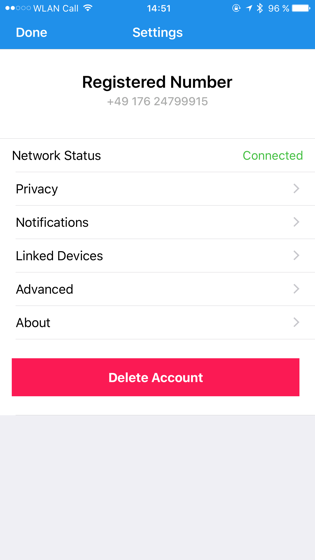
Signal works with phone numbers as IDs. If I have your phone number in my address book, then I am all set. You just need to add mine to yours.

If I don't have your complete address, why don't you send me a vcard? This is a good opportunity to update my address book. Here is my vcard.

How do you send your vcard? Go to your own entry in the address book on your phone and then share that contact via email for instance.

22 Nov 05:17

Kickstart – Nov 21

by pricetags

Gord Price: Put “Trump” in a PT head and it’s sure to elicit comments.  The Trump Divide: Rural and Urban from last Thursday has generated 30 comments (so far), and got a little hot and personal in the process.

But the post was meant to draw attention to the increasingly clear division in contemporary politics between voters in rural and urban constituencies.  A subsequent New York Times piece, summarized above, explains how that bias now benefits the rural vote because of locked-in constitutional structures from the 19th century and an innate anti-urban bias in the culture.  Yeah, urban voter, the system is rigged.

True in the States, true in Canada, as this post from 2014 argued – The Uncovered Issue: Danger of a Built-in Bias against Metro Vancouver.

The question for British Columbians now: How Trumpian will our provincial election in May get?  What similarities, what differences?


22 Nov 05:17

An Artist Re-Edited Cosmo with the Entire Text of 'Mein Kampf'

by Masha (Maria) Koblyakova for The Creators Project

MeinKampf_01.jpgImages Credits: Stela Salinas

The ways in which media forces women into gender roles collide with fascist ideology in artist Alvaro Carmona's re-edit of Cosmopolitan’s Spanish January 2016 issue. His hack? Replacing every single word with text from Adolf Hitler's Mein Kampf.

The article "How to fix your make-up after you cry" became a terminus quo for the Spanish conceptual artist. The header, which looked like advice for thousands of readers, shocked Carmona and inspired him to start the project Mein Kampf

MeinKampf_04.jpg

The result is a 172-page magazine where all the glamor edicts have been replaced by actual passages from Hitler’s autobiographical manifesto. Carmona overcame a very meticulous process to create it, changing every single word starting from the header, to the words on a label in a corner of a tiny picture, using the same color, font, format, and length. If you're so inclined (and can read German), you end up with a very peculiar read.

MeinKampf_11.jpg

Carmona's project seeks to draw attention to the potentially dangerous values that magazines plant in women's minds, influencing their core identities from extremely young ages. He wants people to see the incredible amount of indoctrination women are subconsciously exposed to every day. “I just want it to be seen by as many people as possible, women and men,” Carmona says. “I hope it'll make them think about the danger of letting the media in general, and these magazines in particular, dictate what the values of women should be.”

MeinKampf_12.jpg

Click here to read more about Alvaro Carmona’s Mein Kampf.

Related:

Revealing The Illusion Of Perfect Beauty With Art Series 'Law Of Averages'

Gory Anatomical Portraits Show Beloved Icons' Blood and Guts

This Magazine Challenges Mainstream Notions of Gender and Identity

Eye-Popping Photo Series Imagines Absurd Beauty Rituals

22 Nov 05:16

That’s senior programmer to you, buddy

by Kristina Chodorow

After about a decade of professional programming, I have finally gotten promoted. For the first time. This is a weird industry.

Regardless, I am now a “Senior Software Engineer.” Woo!

Thinking about it, this has been a goal of mine for a long time. Now that I’ve achieved it, I’m not sure what’s next.

“…and Alexander wept, for there were no more worlds to conquer.”

21 Nov 23:05

Hipster-Krippe

by Ronny
mkalus shared this story from Das Kraftfuttermischwerk.

home-hero_1024x1024

Bei Modern Nativity gibt es die gute, alte Weihnachtskrippe in einer Hipster-Edition. Ich weiß zwar nicht, wer sich die irgendwo hinstellen will, aber vielleicht findet sich da ja wer. Und eigentlich fehlt da noch ein Plattenspieler.

103a6339_1024x1024

103a6337_1024x1024

103a6359_1024x1024

103a6370_1024x1024

103a6341_1024x1024
(via Dangerous Minds)

21 Nov 23:05

Who Will Command The Robot Armies?

by russell davies

Maciej's latest talk is full of genius:

"Amazon hires such workers through a subsidiary called Integrity. If you know anything about American business culture, you’ll know that a company called “Integrity” can only be pure evil."

21 Nov 23:05

CSIS issues warning that Russia and China are targeting Canada’s secret intelligence

by Jessica Vomiero

In a briefing notes prepared for service director Michel Coulombe, CSIS is reportedly grappling with attempts by Moscow and Beijing to access Canadian intelligence.

CSIS reports that primarily Russia and China are targeting Canada’s classified information, advanced technology and government officials and systems. While the agency declined to elaborate on the nature of these threats, security professionals have said in the past that spying and espionage have continued on since the end of the Cold War.

A couple of years ago, 680 News reports that the Canadian government blamed a Chinese state-sponsored actor for hacking the National Research Council’s networks which reportedly resulted in a shut down of the organization’s platform for an extended period of time.

Beijing, however, denied ever leading the attack and accused Canadian intelligence of making false allegations. Furthermore, Chinese foreign ministry spokeswoman Hua Chunying declared last year that Beijing opposes all forms of cyberattacks and “commercial espionage.”

The Canadian Press used the Access to Information law to obtain briefing materials intended for use by Michel Coulombe at at March meeting of the Senate.

Related: Federal court ruling deems CSIS data mining actions unacceptable

Source680 News
21 Nov 23:05

The Atkin Solution for Chinatown: A Cultural Landscape

by pricetags

Price Tags asked historian and heritage advocate John Atkin how he would rezone Chinatown.  Here’s his solution:

A Cultural Landscape Not a Development Area

Chinatown is both a nationally recognized historic district spanning Pender to Gore with its distinctive and unique Society buildings, and it is the surrounding business district which maintains the area’s traditional retail of bbq meats, fruits, vegetables, and live fish. Together they form a cultural landscape that ‘provides the vitality and living colour that gives Chinatown its distinctive character.’

Neighbourhoods and communities do change and evolve and while no one wants to see Chinatown preserved as a theme park-like environment (we come close enough with the dragon street lights, the ginkgo trees and the ‘village’ street-style sidewalk paving patterns) the community deserves a careful, well thought out planning approach that builds upon the existing neighbourhood’s unique and quirky streets.

However as they stand now the proposed zoning revisions offer a conflicting vision for this important neighbourhood. On one hand there is a set of guidelines that riffs on the area’s pattern of development while the other promotes over scaled frontages and heights that threaten the very elements that makes Chinatown interesting.

atkin-3

Why not step back and look at Chinatown through a different lens; that of a cultural landscape. As defined by UNESCO, a cultural landscape is “that of which retains an active social role in contemporary society closely associated with the traditional way of life, and in which the evolutionary process is still in progress [and] at the same time it exhibits significant material evidence of its evolution over time.” With this in mind, a more holistic approach to Chinatown which included retail retention, incremental development and new residential space within the existing fabric would begin to build a complete community.

In that light, the proposed revisions to the zoning that respond to the existing building pattern offer a really good starting point. For Pender Street, the revisions acknowledge the significance of its built form and pattern of retail which makes up the core of the HA-1 zone (also the boundary of the National Historic District) with an outright 3.75 FSR, and a 50 ft. height. The conditional FSR rises to 5.45 providing 7 floors within a height of 75 ft. These revisions along with the maximum 50 ft retail frontage for new construction works well for the street. All that’s missing is some encouragement to create opportunities to reanimate the historic Market Alley with new retail opportunities.

atkin-1

Outside of Pender Street, the proposed revisions offers a fine grained approach for future development calling for a 6,5 FSR with 8 floors within a height of 90ft. Street frontages are set to a maximum of 75 ft., (In an ideal world the maximum frontage would be 50ft. providing two 25ft. store fronts) while maintaining a maximum 50 ft. shop frontage.

atkin-2

There are other welcome adjustments in building form including the retail with mezzanine requirement and the second floor commercial which could be social or seniors housing. There is even a modest bonus for laneway retail which over time could evolve into an intriguing set of secondary streets. This could be the start of providing a framework for the entire neighbourhood outside of the Pender Street core, including Main Street which has enough over-scaled development already.

Along with the above there are a few simple measures to help the area including:

  • a prohibition on rezoning within the larger Chinatown boundary. What’s the point of developing a set of parameters for development if the first thing a developer does is ask for changes. This would also allow the neighbourhood some breathing space and a chance for the development community to adapt to a new and different way of building.
  • Retail frontages should remain as individual shop fronts and not be allowed to be knocked together
  • A strategy for protecting existing and vital retail, necessary for a living community, should be developed. A stable and supported retail environment could encourage other stores to open
  • And for new construction, the Chinatown Design Guidelines should be thrown away since they only promote an inaccurate pastiche of Chinatown character based on a lack of understanding of the architecture of the neighbourhood. Each project should be considered on its own merit.

Chinatown speaks to a larger and more complex history of migration, survival and adaptation and it deserves careful consideration, care and attention, there’s more to revitalization than just tinkering with the zoning.


21 Nov 23:04

The Moto Z will be first third-party Android smartphone to get Daydream support

by Igor Bonifacic

Motorola’s latest flagship smartphone, the Moto Z, will be the first third-party Android device to support Google’s Daydream, the company announced today.

Motorola will begin rolling out Android Nougat to Verizon-branded Moto Z Force and Moto Z smartphones “this week.” The update will also make both devices compatible with Google’s recently released Daydream View headset.

On its support website, Motorola says Nougat will come to other Moto Z regional variants soon.

“These are the first smartphones from another manufacturer to be recognized by Google as Daydream-ready devices – a distinction given to phones that have been certified for the Daydream platform and are built for VR with high-resolution displays, ultra-smooth graphics and high-fidelity sensors for precise head tracking,” says the company on its blog.

We’ve reached out to Motorola to find out when Canadians can expect to get Android 7.0 on their Moto Z smartphones.

Related: Here’s the list of Motorola smartphones that will get Android 7.0 in Canada

SourceMotorla
21 Nov 23:04

The Values of Fandom: Collaboration

files/images/Collaboration_Value.jpg


Ted Gill, Fandom, Nov 24, 2016


If you're wondering whatever happened to Wikia, wonder no more - it was renamed  Fandom and has taken on a much more entertainment related theme. This I guess is where the money is. But now and then the site remembers its roots, as with this article on how staff use the wiki to collaborate. "Wikis are based around collaboration— we've talked about that before, and it's ingrained into the site's DNA," writes Ted Gill. "That started with Wikipedia, and it evolved into the many thousands of Fandom wikis we have today. That's how we were able to grow into the largest entertainment fan site in the world." So there you have it.

[Link] [Comment]
21 Nov 23:04

Apple is reportedly ending development of its AirPort wireless routers

by Rose Behar

Apple is shutting its doors on the division that makes its AirPort wireless router products, according to a report from Bloomberg reporter and long-time Apple tipster Mark Gurman.

The shutdown is reportedly an effort to “sharpen the company’s focus on consumer products that generate the bulk of its revenue.” Gurman adds that over the past year, engineers from the division have been dispersed to other development groups, including the one handling the Apple TV.

Apple hasn’t refreshed its line of routers, which include the AirPort Express ($199 CAD), AirPort Extreme ($249 CAD) and AirPort Time Capsule — a $379 CAD device that doubles as a hard drive — since 2013. While the routers lag behind those created by competitors like D-Link and Netgear when it comes to adopting advances made in chip technology, they had a core demographic of users that appreciated its design and easy integration with Mac products.

Apple wireless router division also has an important place in Wi-Fi history, helping to popularize the concept of wireless networking with the debut of the original AirPort Base Station and iBook laptop. This move, if it indeed comes to pass, echoes Apple’s decision in October 2016 to stop making its own external monitors, instead entering into a sales partnership with LG.

If you’d still like to get your hands on an AirPort, the devices remain available on Apple’s Canadian site.

Related: Apple’s MacBook Pro Touch Bar is a fascinating experiment full of untapped potential

SourceBloomberg
21 Nov 22:39

Calgary teen discusses what it takes to be the North American Pokémon champion

by Patrick O'Rourke

When it comes to Pokémon, 16-year-old Calgary-based Bennett Piercy is “the very best, like no one ever was,” at least in North America.

As a way to promote the release of Pokémon Sun and Moon, the latest entry in Gamefreak’s ultra-popular Pokémon series, Nintendo took the Canadian Pokémon champion on a press tour across Canada.

Piercy is the 2015 senior division national Pokémon champion. He competes at various Pokémon events around the world and plays the series at a level few people on earth are capable of.

starter_Litten_01_M_(1)_bmp_jpgcopy


We sat down with Piercy to discuss what it’s like to play Pokémon at such a high level and also where he thinks the series needs to go in order to grow its reach as an e-sports franchise.

Question: What is it like to be the North American Pokémon champion and what did it take for you to make it to that point?

Bennett Piercy: I play in the VGC competitive circuit and the tournament that I won was the U.S nationals. First of all, VGC is sort of like a fringe e-sport, but I think everyone that’s playing is hoping it will make the jump soon [to being more mainstream].

There are local events you can just go to for whatever and then regionals you can go to without any experience and then nationals you need to qualify but it’s pretty easy, and then worlds is invite only — there aren’t too many different kinds of tournaments. I’ve gone to worlds twice already for the two years that I’ve played and I really enjoy it.

trial_02_F_bmp_jpgcopy

In competitions, Pokémon are all capped at level 50 and the format changes everywhere for what Pokémon you’re allowed to use in battle. There’s always a set format

Q: What’s the competitive Pokémon scene like? Is it really collaborative or very adversarial? 

Piercy: It’s mostly collaborative. There are a few people at the top doing their own thing, but it’s a great community and basically everyone that’s successful is getting a lot of help from each other.

Q: Did you grow up playing Pokémon and what was your first game in the franchise? I’ve played for years, with Pokémon Red and Blue being my first games, but I imagine your first title was probably a more recent entry in the franchise? 

Piercy: My first games were Pearl and Diamond.

3ds-1

Q: I know it makes sense, but that blows my mind that the games where I lost touch with the series are the first ones you played. Some of my favourite memories of the Pokémon series are trading with friends in the school yard.

Even in high school for me when Pearl and Diamond came out, my friends would sit around the cafeteria playing Pokémon. Do you have any memories like that? 

Piercy: Pokémon has come a long way since you traded through a cable [laughs]. Obviously the social aspect is a big part of the game and you still battle and trade with friends but they’ve improved the online and stuff like that.

There’s ladders now for battling and for trading there’s something called the GTA (Global Trade System) where you can list a Pokémon for trade and trade with strangers. Trading in-person was something I did a lot as a kid and there’s still a good following for that. There’s a lot of people at my school and people I met through Pokémon who are in University that I play with.

Rowlet_vs_Salandit02_bmp_jpgcopy

Q: What does it take to play Pokémon competitively? I guess what I mean is, what is the difference between how you play the game and how someone like myself might play a Pokémon title? 

Piercy: I think part of it is through practising you become familiar with the meta and stuff like that.

Another big part of it is just putting the time in. There’s another side to that though because it’s really easy to learn to play and to start playing in competitions.

Q: Does your team focus on a specific type or do you have a more balanced squad? I’ve heard you have somewhat of an unorthodox team. 

Piercy: For all kinds of teams you need to have a pretty good mix. Obviously I’ve come to favour some types over time. Like for example, I always have a poison type just because that’s how it works out.

With this sort of character picking e-sports type of game a meta developers — what sort of types people use — so the team I ended up bringing I made a few months in advance for a friend because he didn’t know how to place and just knew he has things he wanted to use. Then I was practising with it to see if it was viable at all. I just sort of went with it and decided to go with a team that had a lot of unique stuff.

Litten_vs_Alolan_Raichu02_bmp_jpgcopy

The most interesting Pokémon in it is Nidoqueen — which is now my favourite Pokémon — it’s sort of the thing that only I used. It gives you a really big advantage to use Pokémon that people don’t expect. If you have a strategy with some of them that they don’t see coming and because it’s either or a best of one or a best of three and it makes it hard for them to adapt.

Q: In terms of Sun and Moon is there anything you’re excited about in the context or the competitive Pokémon scene? 

Piercy: We don’t have the actual format rules yet but we do sort of have an idea of what it’s going to be like. I think it’s going to be really similar to 2014 where they use a small regional Pokédex. I think this is a really good thing because it encourages players to be creative.

clothing_store_M_bmp_jpgcopy

We’re expecting you can use the Pokemon from the Aloha Pokédex, which isn’t all of them, but there will also be a national dex in the game that includes all of them.

Q: What needs to change in the competitive Pokémon scene for the game to become as popular as something like League of Legends of Star Craft?

Piercy: I think it definitely has the potential to go the distance. Obviously I think it’s going to take a little more time to gain a bigger player base. I’m not really sure what it would need to make it to the next level though. It’s sort of a unique situation because the game is played on the 3DS which is different from being a PC online game. There are a lot of advantages to that, but it’s just a different sort of situation.

Q: Have you ever gone back and played Pokémon Red and Blue? 

3DS_PokemonSun_01

Piercy: I mean, obviously the games get better over time and there’s been a lot of advancements but it’s really fun to go back and play the originals. Recently the Red and Blue games were rereleased again on the eshop and that was really fun.

21 Nov 22:38

Post-Truth and Fake News

by Stephen Downes
Yes, by all means, do something about the fake news that is propagating through Facebook and Twitter. But let's not forget that we have been in the post-truth era for some time (indeed, one wonders whether we ever entered the truth era in the first place).

After all, the rise of the post-truth era is made possible by the failures of the education system to prepare people to identify truth for themselves, and the failure of traditional media to present the news in an honest and forthright manner.

It's true, Facebook could easily cut down on the torrent of fake news stories circulating through social media simply by blocking access to a few sites. We could begin with the obvious: the Beaverton, the Onion, the Manatee. That would prevent sites like Infowars from portraying their parody as fact. And we could also cut off blatant miscreants like the Rightists.

Some of the more prominent election memes were instigated by abcnews.com.co for example: "I was paid $3000 to protest a Trump Rally"). No, it's not the ABC network. That's abcnews.go.com - the 'go.com' is in there because the news was lumped in with Disney's other properties for cross-promotion purposes.

But these 'fake news' sites are actually pretty funny. And it would be a shame to censor them. And if people can't tell the fake news from the real news, it's mostly because the real news does such an excellent job of parodying itself.

We would like to believe the real news can be trusted. But time and again it proves the opposite. Let's look at exactly the sort of thing we are faced with when truing to fine the 'truth' in traditional media:

  • Polls and Surveys. Yes we all love 538 (and in Canada, 308). But that doesn't make up for the plastering of almost-daily poll results in every media outlet in the country (along with the usual made-up 'expanations' of why the polls went up or down). Polls are not news; punditry about pools is barely disguised fiction.
  • Anniversaries. How much of traditional media 'news' content is filled with the observation that it was '50 years since...' or '100 years ago on this day...' and so on. We have holidays for that! But of course, the traditional media also reports that it's a holiday, same time, every year, as though it's news.
  • Endorsing the corporate candidate. In an article quoting Barack Obama as criticizing fake news the Providence Journal does not even not the irony of its lede: "Hillary Clinton was the choice of nearly every American newspaper editorial board. It didn't matter." In Canada, we had a similar case where every newspaper endorsed former prime minister Stephen  Harper. These newspapers are looking out for their corporate owners - and their readers see it plainly.
  • Uncritical reporting. It's not just Donald Trump who was allowed to say pretty much anything without correction. The news media is full of people making preposterous claims. Where is the filter that allows us to screen out claims that Mexico will pay for the wall, or that corporate tax cuts will create jobs? 
  • Reliable sources. They aren't. When factcheck.org analyzed the election, it found that the sources of most of the lies weren't the campaigns themselves, but the supposedly trustworthy institutions like the parties' national committees. We have to learn that institutions lie, they lie frequently, and they lie very well, and the traditional media actually helps them do this.
  • Media hype. Why do we even have a hype cycle?  It's driven by the traditionmal media's propensity to make (or repeat) outlandish claims for often dubious technologies. Even inventions of some value fall victim (and are therefore unfairly criticized). The hype has a predictable pattern than should make it clear it's not news: "a hotbed topic; a sexy, futuristic, ‘cyberpunk’ technology; and the potential for financial returns."
  • Fear. Irrational fear. I just got email from Forbes saying "what are you going to do when you lose your job in 6 months?" Never mind that this will happen to a small percentage of us (and that Forbes readers are generally able to bounce back). The purpose here is to make us terrified and afraid. Just as are the crime stories, the immigrant stories, etc.
  • Supermoon and other misleading trivia. To read the traditional media, it was a once-in-a-lifetime event to see a 'supermoon'. Not counting the supermoons of 2011, 2013, and 2014, to name a few. Glorifying even the most trivial (non-controversial) thing seems to be what the traditional media do. Even then, they get many of the details wrong. But it's far easier than reporting the news.
  • Advertorial - not to be confused with advertisements that look like news stories, these are news stories that are advertisements. You see them on your evening television news every day - a promotion for a new restaurant, a plug for a movie, a story about the next new Christmas toy 'craze'. Or those Black Friday stories (which are really odd coming from Canadian television).
  • Obsessively chasing non-scandals. For example, spending more time talking about Hillary Clinton's emails than all policy issues combined.Even it it were a scandal (and it genuinely wasn't) it wouldn't have deserved this much coverage. What wasn't covered? Anything to do with policy.
  • Unnamed sources. As Jeff Jarvis says, "the source matters". Yet in so many cases, the source in the traditional media is not named. We don't know whether it's a campaign insider or someone posing as a campaign insider.
  • The echo chamber. We hear many complaints about social media being an echo chamber. But traditional media are the biggest echo chamber of them all. We hear from the same sources, the same spokesmen, the same suits and the same pundits. 
  • Fake experts. Who are the experts called upon by traditional media? Often, they are sources provided by lobbyists and speakers' bureaus. As this article notes, "Being published in the media sometimes provides commentators with “expert” status even if they lack expertise on the subject matter being discussed and have no relevant research on the topic." 
  • Reposting press releases - when I ran the Moncton Free Press I would see the exact same content coming from the local newspaper site and Canada NewsWire. There's nothing inherently wrong with a press release, but the newspaper was attributing it to 'STAFF' and passing it off as news, which is blatantly dishonest. The practice never slowed, not even when they were called out on it.
  • Sloppy sloppy sloppy reasoning. The traditional media commits logical fallacies on a regular basis. Surprisingly, when I pointed this out to them, they changed nothing.
  • Poor design. We get reams of old articles shared through social media pretending to be articles from today. OK, sure, it was wrong of the conservative news site to promote this article on changing the electoral college vote in Maryland. But if NBC News made the date much more prominent, it would be impossible to fool people. But that would cut down on archive views.
  • Nationalism. Being Canadian, I am exposed to a lot of nationalism in media - not only our home-grown nationalism, but also from the U.S. (of course) and even from places like Britain, China and Russia. It just underlines to me how far at odd are nationalism and truth.And just how much it is relied upon by traditional media.
  • Think tanks. These supposedly 'independent' voices are not. They are funded by various interests (historically from the far right but now from across the spectrum) to spead misleading research and (sometimes) outright lies. In Canada we have the Fraser Institute, the C.D. Howe Institute, the Atlantic Institute for Market Studies and many more. These should never be given an uncritical platform. But this is what the traditional media gives them every day. 
  • Institution envy. There are a few sources that make the traditional media go gaga. Thus we get 'The Harvard Study...', the 'Oxford report...', a 'Yale analysis...' and so on. There's nothing about the source of these items that makes them more likely to be true, nor more important, yet traditional media can't get enough of them, even though they collectively exhibit a pronounced slant.
As Jessi Hempel writes, "In the past, the sources of accurate information were recognizable enough that phony news was relatively easy for a discerning reader to identify and discredit. The problem, (Snopes managing editor Brooke) Binkowski believes, is that the public has lost faith in the media broadly — therefore no media outlet is considered credible any longer"

We won't solve our problems with the truth by suppressing fake news. We see this in less democratic regimes, and it's never successful. We solve the problem only by having some news agencies that get it right - that are trustworthy, and can be known to be trustworthy.

And note: it's not enough to create a news media that I think can be trusted. The disaffected inhabit all sides of the political spectrum. The media needs to win back the Sanders supporters, the Trump supporters, and sceptical readers in Moscow and Beijing.

Yes, the failure of education and growth of inequality have been reported elsewhere. As Ben Williamson writes, " the statistics from the EU referendum indicate that the vote for leaving the EU was concentrated in geographical areas already most affected by growing economic, cultural and social inequalities, as well as by physical pain and mental ill-health and rising mortality rates."

And as he notes, "Jamie Bartlett and Carl Miller of the think tank Demos wrote a report 5 years ago that highlighted a need to teach young people critical thinking and scepticism online to ‘allow them to better identify outright lies, scams, hoaxes, selective half-truths, and mistakes.’"

But let's not blame the less-educated. The most educated people in society have made this the environment we're living in.


Reading

Backchannel - According to Snopes, fake news is not the problem
Code Acts in Education -Social media and public pedagogies of political mis-education
Digital Digs -Pluralism and the nonmodern, nonliberal society


FactCheck.org - How to spot fake news
Fast Company - How We Got to Post-Truth
Fast Company - Fake U.S. News is a Global Problem
Medium - A Call for Cooperation Against Fake News
Quartz - Oxford Dictionaries declare 'Post'Truth' the word of the year.
the Conversation (Andina Dwifatm) - Everyone’s an expert: in the digital era, fakes need to be exposed
Washington Post. Donald Trump is crashing the system. Journalists need to build a new one


21 Nov 22:38

Daylite: A Business Productivity App for Mac and iOS [Sponsor]

by Federico Viticci

Daylite is a business productivity app for Mac, iPhone, and iPad.

Organize you and your team’s contacts, calendars, projects, tasks, emails, notes, and new business opportunities all in one app.

Track sales and set reminders for follow-ups. See a full history of all emails, calls, and notes for each customer. Customize your own pipelines to track sales and projects. View your whole team’s calendar to make scheduling meetings simple. Daylite even integrates with Apple Mail so you can update customer info, set tasks and reminders, and add appointments to your calendar – all without leaving Mail.

Automate lead generation from online web forms with Daylite & Zapier integration. When someone fills out a form on your website through Google Forms or Wufoo, a new contact and business opportunity are creating in Daylite. You can then segment leads for specific email campaigns and track all of your communication with them in Daylite.

Always have your business info no matter where you go. Daylite is a native app so you can access your information on your Mac, iPhone, or iPad even when you don’t have an Internet connection.

Read how businesses all over the world are becoming more efficient with Daylite.

Our thanks to Daylite for sponsoring MacStories this week.


Support MacStories Directly

Club MacStories offers exclusive access to extra MacStories content, delivered every week; it’s also a way to support us directly.

Club MacStories will help you discover the best apps for your devices and get the most out of your iPhone, iPad, and Mac. Plus, it’s made in Italy.

Join Now
21 Nov 22:38

A Profile of Apple’s Impact on Employment in the US, Starring Austin

by John Voorhees

Many of Apple’s hardware products are built overseas, but that’s only part of the story. The New York Times takes a look at Apple’s impact on jobs in the United States, focusing special attention on Austin, Texas where Apple fills a seven-building complex of tech support specialists, microchip engineers, supply chain managers, and people who work in Apple Music, the App Store, and Maps:

Apple’s overall contribution to the American economy is significant. Beyond the 80,000 people it directly employs in the United States, it says 69 supplier facilities in 33 states manufacture parts that go into its products. Hundreds of thousands of software developers also write apps for iPhones and iPads.

Technical support call center employees earn around $30,000 per year, but the average in Austin is around $77,000. Asked by The New York Times whether it planned to expand operations in Austin, Apple said:

“Apple has created over two million jobs in the United States since the introduction of the iPhone nine years ago, including explosive growth in iOS developers, thousands of new supplier and manufacturing partners, and a 400 percent increase in our employee teams,” the company said in a statement. “We made the unique decision to keep and expand our contact centers for customers in the Americas in the United States, and Austin is home to many of those employees. We plan to continue to invest and grow across the U.S.”

Apple’s Austin offices have grown a lot over time, but don’t get much attention despite their size. The New York Times’ article is an interesting overview of the breadth of Apple’s impact on the US economy and peek inside Apple’s Texas offices.

→ Source: nytimes.com

21 Nov 22:38

Instagram is Rolling Out Live Video and Enhanced Direct Messages

by John Voorhees

Instagram announced two new features today. The first is live video in stories. Swiping right opens stories mode, a feature similar to Snapchat stories, which was introduced in August. Instagram is rolling out live worldwide video over the next few weeks. When you begin broadcasting live, your followers may receive a notification that you are live. In addition, Instagram says that:

When someone you follow starts a live story, you’ll see “Live” under their profile photo in the stories bar. During the broadcast, you can comment and like as much as you want. You can also check out new live stories on Explore. Tap “Top Live” to see exciting live stories happening at that moment and swipe right and left to easily skip around.

Comments can also be turned off altogether. When you are finished recording, your live story disappears.

Images courtesy of Instagram.

Images courtesy of Instagram.

The second feature rolled out by Instagram is disappearing photos and videos in Instagram Direct. Regular direct messages, which have been around since last year, will continue to work as they have in the past, but now you can also take a picture or video from within the stories UI and tap the right-facing arrow button to send it to a friend or group. After the photo or video has been viewed, it disappears. If the recipient takes a screenshot, you are sent a notification.

→ Source: blog.instagram.com

21 Nov 21:53

The Best USB Audio Interface

by Al Griffin
usb audio interface feature

If a friend—or bandmate—were to call me today and ask about a USB audio interface for beginners looking to branch out into DIY recording, I would recommend the Tascam US-2×2. After spending 30 hours researching the category, discussing key features with audio pros, and recording instrument and vocal samples on five models for evaluation by a panel of trained listeners, we chose the US-2×2 as our favorite. We found it to be the easiest model to work with, and setup in most cases is plug and play. It’s also one of the more affordable two-channel USB audio interfaces on the market, making it even easier to recommend.

21 Nov 17:59

Six Months with CarPlay

by John Voorhees

One hallmark of most Apple products is the tight integration between hardware and software. By controlling everything from the device to the apps running on it, Apple can design unique experiences that competitors have a hard time matching. Nothing highlights the advantage of that hardware/software interplay better than one of the few products where it's missing – CarPlay. It’s the exception that proves the rule.

Don’t get me wrong – I prefer CarPlay to any auto manufacturer’s entertainment system that I’ve used, but the projection of a custom iOS interface onto my Honda’s laggy touchscreen reminds me every time I poke at it that I’m seeing a mirage. It looks like an Apple product on the surface, but the resemblance is only skin deep. As soon as you interact with CarPlay on Honda’s hardware, the spell is broken. Siri goes a long way to help maintain the illusion, but it's a bridge too far that makes me long for an integrated solution that isn’t hamstrung by the Honda's hardware.

A Little History

This past June, I was suddenly thrown into the car market when the 2001 car I was trying to squeeze one last year of use from gave up the fight. The wheels literally fell off. The demise of my old car felt like bad luck at the time, but the timing was good in one sense. CarPlay was introduced at WWDC in 2013, but it took a couple years before it became widely available. Car manufacturers move at a glacially slow pace compared to tech companies. Aside from a few high-end models and after-market options,1 the choices in those early years were so limited, CarPlay wasn't a realistic option for most people.

The options are much better today. In contrast to WWDC 2014 where Apple demoed CarPlay in a $300,000+ Ferrari FF, Apple now lists forty-four manufacturers of over 100 models of cars that support CarPlay in 36 countries. Now the chances are better than not that you can find a car with CarPlay that meets your needs and budget. Consequently, it wasn't too hard for my wife and I to settle on a 2016 Honda Accord with CarPlay that worked for our family.

How It Works

CarPlay runs on a touchscreen in the center of my dashboard. A second display above it shows album art and other information.

CarPlay runs on a touchscreen in the center of my dashboard. A second display above it shows album art and other information.

At first glance, CarPlay looks and feels like its own operating system. It's not, which is important to keep in mind when using and evaluating it. CarPlay is a projection of iOS' UI onto car manufacturers' hardware optimized for in-car use.2 All computing and communication with your car's head unit occurs on, and is controlled by, your iPhone. Your in-car display is merely an accessory.

One of the chief benefits of this model is that it allows Apple to update CarPlay with iOS so users get upgrades to CarPlay without purchasing a new car or entertainment system. The downside is that any hardware limitations of your car are constraints that you'll have to live with far longer than you're likely to own your iPhone, unless you get a new car as often as you do a phone.

Setup

Car models currently for sale support CarPlay connections via USB only. My Honda has a USB outlet below the touchscreen at the level of the automatic transmission shifter. I plugged a Lightning cable into the outlet, connected my iPhone, and after I started the car, a CarPlay button appeared on the screen of my car's entertainment system. I tapped the button and CarPlay took over the screen, which displayed Apple's built-in apps and third-party apps on my iPhone that support CarPlay. That's all there is to it.

Wireless CarPlay connections were announced with iOS 9 in 2015, but are not available in any car models other than the BMWs yet. With wireless CarPlay, the initial CarPlay connection will be initiated by Bluetooth, but once connected, WiFi will take over passing audio and video between your car and iPhone, freeing you from tethering your phone with a Lightning cable.

Interaction

Maps' CarPlay interface received a major redesign with iOS 10.

Maps' CarPlay interface received a major redesign with iOS 10.

The CarPlay startup process is dead simple and painless, but at least in my car, it isn't fast. I can plug in my iPhone, pull out of the driveway, and get part way down the block before CarPlay shows up on my Honda's touchscreen. From the moment I start my car to CarPlay showing up on my car's touchscreen, it takes about thirty seconds. Much of that time is clearly Honda's entertainment system booting up. It's not a long time, but it's long enough to be annoying. I would much rather find what I want to listen to before I pull out of my driveway, but doing so feels like an eternity if you're used to starting your car and taking off.

The other pain point for me with CarPlay is my Honda's touchscreen. Honda says it’s capacitive, but it has that laggy, unresponsive feel of a resistive touchscreen, which is terrible for doing things like scrolling lists. Both this and the slow CarPlay startup process have more to do with Honda’s use of underpowered, inferior technology than any limitation of CarPlay, but it nonetheless makes for a subpar experience compared to using an iPhone.

Fortunately, there are other ways to control CarPlay, which supports physical buttons and knobs as well as Siri. My Honda has buttons to change the volume and skip forward and back among audio tracks. However, CarPlay also supports more complex knobs used for scrolling lists and selecting items.

Siri is invoked by pressing and holding the hands-free button on the steering wheel.

Siri is invoked by pressing and holding the hands-free button on the steering wheel.

All CarPlay implementations must also support Siri. Triggering Siri will be familiar to anyone who has used it on an iPhone. It works the same way, except that the button you hold down is on your steering wheel and you speak into your car's microphone.

Honda's system seems to lag a little compared to the iPhone, which took some getting used to, but once I did, using Siri in my car became my favorite way to control CarPlay. Siri is much easier to use than the touchscreen. In fact, the convenience of using Siri with CarPlay is so much greater than when I use it on my iPhone that it feels like Siri works better in the car. I know that's not the case, but such is the power of context.

When you disconnect your Phone from your car, CarPlay remembers where you left off and picks back up when you reconnect your iPhone later. I appreciate this feature the most on weekends when I'm out running errands that require me to make multiple stops.

Apps

A Castro update coming next week uses a tabbed interface that was introduced with iOS 10.

A Castro update coming next week uses a tabbed interface that was introduced with iOS 10.

CarPlay supports three types of apps: audio, messaging, and car manufacturers' own apps. The core built-in Apple apps are Phone, Messages, Music, Maps, and the Now Playing app that is effectively a shortcut to display whatever audio is playing in your car. The core Apple apps cannot be deleted, but they can be rearranged.

If you don’t like the default order of the icons on the CarPlay display, go to the Settings app on your iPhone and locate CarPlay Settings under General.3 Selecting your car displays the layout of the icons as they appear when you are using CarPlay. Long pressing an icon lifts it up so you can drag it to another position.

Rearranging and hiding CarPlay app icons is accomplished on your iPhone.

Rearranging and hiding CarPlay app icons is accomplished on your iPhone.

You don't have to do anything for third-party apps to show up in CarPlay. If you add an app to your iPhone that includes CarPlay support, it automatically shows up in CarPlay the next time you connect your iPhone to your car.

Third-party apps can be hidden from the CarPlay Settings on your iPhone. Each app that can be hidden has a little minus symbol in the corner of the app's icon. Tapping the minus sign hides the app from CarPlay and lists it below the CarPlay screen on your iPhone. The change can be reversed by dragging an app back onto the CarPlay screen. Apple has two apps, Podcasts and Audiobooks, that act like third-party apps in that, unlike the core Apple apps, they can be hidden.

Apple Apps

Phone

Sorry I called you at 10 PM, Myke.

Sorry I called you at 10 PM, Myke.

I find that the easiest way to call someone using CarPlay is with Siri by saying something like 'Call Myke Hurley,' but you can also scroll through your list of contacts or tap in the phone number with an on-screen keypad. iOS 10 opened Siri up to other telephony apps, which means you can also initiate calls through CarPlay using apps like Skype, WhatsApp, and Facebook Messenger. If Siri finds multiple ways to call a person, it asks you to pick one before initiating the call. Of course you can also accept calls via the in-car touchscreen or the phone button on your steering wheel if your car has one, and listen to voicemail messages.

Music and Now Playing

A surprising number of the features of Apple's iOS Music app are available via CarPlay.

A surprising number of the features of Apple's iOS Music app are available via CarPlay.

The Music app received a big update with iOS 10 that mirrored the new options available on the iPhone such as the 'For You' and 'Browse' sections by adding tabs for each across the top of the screen. Scrolling through long lists of songs, artists, and playlists is one of the things my car is not good at, but even if it were, that isn't a great idea to do while driving. Instead, I access music using Siri or just start a long playlist before I leave home.

iOS 10 also added new controls at the bottom of Music's now playing screen. The three dots access a popover that lets you love, dislike, or create an iTunes radio station from a song. There are also controls for shuffling songs and repeating one song or a set of songs, and a 'plus' button for adding a song to your Music library.

Now Playing is an app that doesn't have an analog on the iPhone unless you count Control Center. It resides on the Home screen of CarPlay to act as a shortcut to display whatever audio is playing, which is handy if you leave an audio app to check Maps or send a text message.

Maps

Maps includes information about nearby businesses.

Maps includes information about nearby businesses.

As on the iPhone, you can view your current location or get turn-by-turn directions using Maps via CarPlay. Maps got a design refresh in iOS 10 that carries over to CarPlay making it easier to read and find nearby locations like places to eat or get gas. iOS 10 sends you a notification on your iPhone that tells you where your car is parked if you are connected to your car's Bluetooth system, but with CarPlay, the feature works even if you've turned Bluetooth off.

Messages

When a message comes in, tap it to have Siri read it and then dictate a response.

When a message comes in, tap it to have Siri read it and then dictate a response.

Messages lets you send and receive texts via Siri. Text messages are never displayed on your car's touchscreen. Instead, Siri offers to read them to you and asks whether you want to dictate a reply. It's a handy feature and one I immediately wanted to see rolled out to other messaging services like Slack. iOS 10 promises to make my wishes come true because SiriKit allows third-party developers to access Siri for messaging. Slack hasn’t added CarPlay support yet, but I can send messages with WhatsApp or send (but not receive) email using Airmail for iOS.

Podcasts and Audiobooks

I don't use Apple's Podcasts app, but it lets you listen to podcasts in your car that you subscribe to via the iPhone app. Audiobooks has the look and feel of iBooks, but is limited to iBooks' audiobook content. Audiobooks you purchase or download in iBooks on you phone will show up in the Audiobooks library for listening in your car.

Third-Party Apps

The number of third-party apps available is limited.

The number of third-party apps available is limited.

There are not many CarPlay-ready apps from third parties. Apple highlights just sixteen CarPlay apps on its website, including its own Podcasts and Audiobooks apps. There is a whole sub-genre of radio station apps with Nielsen ratings tracking built in, but aside from those cookie-cutter apps, I've only seen a handful of notable apps not listed on the CarPlay site, like an update coming next week to Castro 2 and Pocket Casts.

That's in part because developers are limited to building audio and messaging apps for CarPlay, but it's also because you have to apply to Apple before you can build CarPlay support into your iOS app. Developers must contact Apple via a form on its developer website and until Apple agrees that a developer can build a CarPlay version of their iPhone app, they don’t have access to the CarPlay API documentation or a CarPlay simulator. Nor can a CarPlay app be built for testing on car hardware until Apple approves a developer. That may have deterred some developers from pursuing CarPlay integration, but there are nonetheless a handful of CarPlay apps that I use and enjoy.

Overcast

Overcast gives you access to all your playlists and podcast subscriptions.

Overcast gives you access to all your playlists and podcast subscriptions.

The third-party app I use most with CarPlay is Overcast, Marco Arment's podcast player. In the car, I can access all of my podcast playlists, play and pause episodes, and skip forward and back by the amounts of time I set in the iOS app. There appears to be a bug in Overcast that prevents playback from starting if you switch to Overcast from another audio app. This is not usually an issue for me because I rarely switch between different audio apps when driving, but it's worth keeping in mind if you do.

Castro

Castro's flat hierarchy works especially well with CarPlay.

Castro's flat hierarchy works especially well with CarPlay.

Castro received a big update in August and will add CarPlay support next week. I use Castro as a supplement to Overcast for my podcast listening, using it to collect one-off podcasts, as opposed to subscriptions. Castro's design translates well in CarPlay because episodes are arranged in a shallow hierarchy consisting of a queue and inbox, which means there is less drilling through lists than other podcast players. Castro has also adopted the new iOS 10 tabbed interface for CarPlay similar to Apple's Music app to give you easy access to your queue and inbox.

NPR One

NPR One offers the latest news and national shows.

NPR One offers the latest news and national shows.

I don't listen to the news in the car much, but when I do, NPR One is my go-to app. I can catch whatever is streaming live on NPR's national broadcast or skip right to many popular shows NPR produces.

Spotify

Spotify's UI is a little behind compared to Apple Music, but it provides access to the service's core features.

Spotify's UI is a little behind compared to Apple Music, but it provides access to the service's core features.

My primary streaming music service is Apple Music, but when I'm in a rut, I like to switch to Spotify's Discover Weekly playlist, which almost always has something I enjoy. The UI hasn't been updated to the new tabbed interface used by Music, but it gets the job done.

Other Third-Party Apps

The number of available CarPlay apps from third parties is small enough that you can list most of the notable ones without too much trouble. In addition to the ones described above, Pandora, iHeartRadio, Pocket Casts, Downcast, Audible, CBS News Radio, and MLB At Bat are all available in CarPlay.

What's Next for CarPlay

Eddy Cue introducing turn-by-turn direction integration with center instrument clusters.

Eddy Cue introducing turn-by-turn direction integration with center instrument clusters.

Probably the biggest feature coming soon to more cars is wireless CarPlay, which recently debuted in BMWs. If history is any indication, the spread of wireless CarPlay is likely to be slow because it requires Bluetooth and WiFi hardware support.

We will also likely see more cars that allow drivers to control systems like heating and air conditioning with Siri, another feature that was recently introduced, but isn't widely supported yet.

Finally, Apple announced support for center instrument clusters and heads-up displays with iOS 10. This allows turn-by-turn directions and other data to be displayed on a screen between the gauges on a car or on a heads-up display, instead of on a center touchscreen.


I have mixed feelings about CarPlay. On the one hand, it's leaps and bounds ahead of any other car manufacturer's entertainment system that I've tried. But on the other hand, it’s tied to car manufacturer hardware in a way that makes the experience feel clunky at times and un-Apple-like.

In addition, it wasn't until I got my iPhone 7 Plus that I was able to enjoy CarPlay fully. With my 6s Plus, CarPlay would randomly disconnect from my car even though it was plugged in. I tried switching Lightning cables, rebooting my phone, turning off Bluetooth, and a bunch of other things, but nothing fixed it. I eventually came across story after story of similar problems in Apple's Support Forums with no solid answers. At the time, I was close enough to getting a new iPhone that I switched to Bluetooth4 and tried again when I got my iPhone 7. Now CarPlay works perfectly.

The trouble is, that's exactly the sort of hard-to-troubleshoot problem that crops up where Apple doesn't control the hardware and software. That said, every complaint I have about CarPlay is tied to Honda's hardware, from the slow system boot time to the laggy touchscreen. It makes for a dissonant experience that's hard to accept when CarPlay so closely resembles the iPhone interface itself.

CarPlay doesn’t hold up in comparison to using an iPhone. But because it’s not an integrated system, the iPhone is the wrong comparison. CarPlay should be measured against car manufacturers’ built-in entertainment system. From that perspective, CarPlay shines, both from a usability and design standpoint, as well as from a functionality perspective.

CarPlay makes me wish for an Apple car that marries hardware with software in a way that creates a superior experience for drivers. Whether or not that ever happens, I'm happy I have CarPlay in the meantime, because warts and all, it puts my music, podcasts, and communication with friends and family at my fingertips, all while charging my iPhone.


  1. The same pattern is playing out with wireless CarPlay. Announced as part of iOS 9 in 2015, wireless CarPlay only just made its debut in BMWs. ↩︎
  2. The CarPlay interface is sent to your car's hardware as an H.264 video stream along with separate audio streams. Taps on the screen are returned to your iPhone as x and y coordinates. ↩︎
  3. There is no in-car Settings app. All settings are adjusted on your iPhone. ↩︎
  4. Yes, the problem was bad enough that Bluetooth worked better. ↩︎

Support MacStories Directly

Club MacStories offers exclusive access to extra MacStories content, delivered every week; it’s also a way to support us directly.

Club MacStories will help you discover the best apps for your devices and get the most out of your iPhone, iPad, and Mac. Plus, it’s made in Italy.

Join Now
21 Nov 17:56

Instagram live streaming launches today with disappearing video feature

by Jessica Vomiero

Following in its parent company’s footsteps, Instagram rolled out its live video update to a handful of users.

Unlike Facebook’s version however, live video on Instagram disappears when the stream is over, and is completely unavailable for further viewing.

Instagramlive-1While this rings true to Snapchat’s mandate of disappearing content, Snapchat at least gives users some avenues to save content should they choose to do so, whether that be through screenshots, replays or the recently launched Memories feature.

Kevin Weil, Instagram’s head of product, tells The Verge that knowing the videos won’t linger on the platform makes many users more comfortable using the live streaming feature. 

When you go live in Instagram, the app will notify only a portion of your followers — those who interact with your photos and videos the most.

Facebook has struggled to popularize its Facebook live function, despite a huge marketing campaign and the issuing of millions of dollars to media outlets in a deal to produce live video. Most people simply don’t have a reason to broadcast themselves.

Instagram live video will launch with a small portion of users today and will be released to all users over the next few days.

Related: Instagram CEO confirms live video is coming to the platform

SourceInstagram
21 Nov 17:56

Freedom Mobile LTE coverage map, devices and plans

by Ian Hardy

Wind Mobile has renamed itself Freedom Mobile and revealed a specific launch date for its LTE network.

For years Wind Mobile’s 1 million wireless subscribers have been requesting that the carrier launch its own LTE network and improve its Canadian coverage. Effective November 27th, Freedom will go live with LTE in Toronto and Vancouver, with plans to rollout in Ottawa, Calgary and Edmonton by this coming summer.

Here are some interesting facts that you should be aware of regarding its “Traffic Free” LTE network:

LTE rollout schedule

  • At launch: Central Toronto and Central Vancouver
  • Spring 2017: Complete coverage of Greater Toronto and Greater Vancouver
  • Summer 2017: Calgary, Edmonton and Ottawa
  • Fall 2017: All current Freedom Mobile 3G coverage areas (including Southwestern and Southeastern Ontario)

Frequency

  • AWS-3 / Band 66 in the Greater Toronto and Vancouver areas, Calgary and Edmonton
  • AWS-1 / Band 4 in Eastern Ontario, including Ottawa, Kingston and Peterborough

Theoretical Peak Speed

  • 180 Mbps

Freedom Mobile Toronto LTE coverage

Freedom Mobile Vancouver LTE coverage

Freedom Mobile Vancouver LTE coverage

Device compatibility

  • Currently, the LG V20 and ZTE Grand X4 (available in December) can used, however, Freedom Mobile says “additional future-ready LTE smartphones will be released in Canada throughout 2017.”

VoLTE, WiFi calling and roaming:

  • WiFi calling will roll out in early 2017 and VoLTE will go live mid-year. LTE roaming will be available in the U.S. and Canada in early 2017.

LTE Trade-up Program and LTE rate plan:

  • Freedom wants to bring people onto its LTE network and is extending its return of exchange program to 30 days (up from 15).
  • In addition, if you purchased a device between August 1st to November 21st you can can upgrade to the LG V20. Freedom is offering a introductory LTE rate plan for $40 per month and includes 3GB of data and 3GB bonus, Unlimited Canada/U.S. talk, Unlimited global text, Call Control, World Save and World Traveller add-ons and Voicemail+.

Related: Wind Mobile rebrands as ‘Freedom Mobile,’ will launch LTE Network on November 27 in Toronto and Vancouver

21 Nov 17:55

Flicking the switch: taking digital technology education further

files/images/web20pilot201.jpg


Unattributed, New Zealand Education Gazette, Nov 24, 2016


This article describes some projects that support the new local digital technologies curriculum in New Zealand. The program depends on community involvement and "to boost our students’ skills and confidence to identify local and global problems and opportunities, and design and develop digital solutions in response." As is always the case with projects like this, each of them has a local champion (or two) driving them forward. We don't say enough about them (probably because there are some in most every community) but most of the work in ed tech would be impossible without them.

[Link] [Comment]
21 Nov 17:55

Generations of service, love and respect

files/images/web20aoga20morning20tea.jpg


Unattributed, New Zealand Education Gazette, Nov 24, 2016


We don't see stories like this enough in the news. What's important here is not technology, content, or test scores, but the deliberate modeling of values educators would like to see carried on. You have to live what you teach. "Just as the poutu needs to be fixed and stable to hold up the fale, so the values of alofa (love and commitment), tautua (service and responsibility) and fa’ aaloalo (respect) remain constant."

[Link] [Comment]
21 Nov 17:55

How to Conduct a Learning Audit

files/images/CO_1116_Feat2_Graph_680px.png


AnnMarie Kuzel, Chief Learning Officer, Nov 23, 2016


Good article on a topic we don't discuss a lot. The idea of a learning audit is to determine the current state of affairs of learning in a company or institution, such as McDonalds (the case used in this article). There's no secret to conducting a learning audit, but there are choices to make - for example, whether to conduct it internally or hire an outside consultant. You look at people's attitudes ("What are people thinking? Are they thinking that the training’ s accessible? That it’ s easy to find? Do they like the content? Are they using the content?") an you look at the job profiles. And you have to assess the learning itself. "You forget to do things like encouraging learners to reflect, to think about how it’ s relevant, to give them decision-making practice, to give them repetitions in learning.”

[Link] [Comment]
21 Nov 17:55

Watson, Please Replace Me!

files/images/18.jpg


Dan Butin, Nov 23, 2016


Perhaps we're looking at the idea of computers replacing teachers in the wrong light, says Dan Butin. "Much of my job is repetitive," he writes. "I’ ve used the same readings, the same examples, the same jokes, for years in my introductory class. Maybe, just maybe, it might not be so bad to be replaced by a computer." How is this OK? "I want to be anything but typical. I want to (and do) engage my students through in-class and out-of-class experiential activities, role plays and simulations, service-learning projects, mentorship opportunities and shadow-a-teacher experiences."

[Link] [Comment]
21 Nov 17:55

HoloLens: Making the impossible possible

files/images/Adult-male-wearing-HoloLens-glasses-in-front-of-a-monitor-showing-what-he-sees-770x370.jpg


Peter Campbell, Pearson, Nov 23, 2016


When Avatar came out the 3D effect was pretty incredible. Now the same 3D effect in movies is ordinary, and you need to have some special reason (ie: CGI effects) to use it. I think things like the hololens are similar. Nurse interactions with patients, or archaeologists interacting with artifacts might qualify. Maybe even visualizations of mathematical formulae. But the normal classroom experience will not benefit from the 3D treatment. Via Inside Higher Ed, where Joshua Kim warns that the product Pearson is touting is more like augmented reality than virtual reality.

[Link] [Comment]
21 Nov 17:54

Minister of Transportation-Full Steam Ahead on Massey Bridge

by Sandy James Planner

massey-bridge-rendering

In a move that will not surprise Minister of Transportation Todd Stone has come out in favour of the Mayor of Delta’s missive to the other Mayors in the region that the Massey Tunnel needs to be replaced for safety reasons.

Now no one is going to argue with the safety of our first responders who do an amazing and selfless job.  And Minster Stone notes: “I want to thank Delta fire and emergency Chief Dan Copeland, Delta Chief of police Neil Dubord and all Delta first responders for the work they do, day in and day out, as they deal with emergency situations at the George Massey Tunnel.

But wait for it-then Minister Stone reiterates his rationale why a 10 lane 3.5 billion dollar bridge needs to be built on agricultural class 1 farmland floodplain at this location-and he’s expanding that safety card. “The 10-lane bridge will be safer for motorists, safer and more accessible for first responders, and safer in the event of an earthquake.Their recent report to council highlights one of the main reasons we’re moving ahead with the replacement of the tunnel – the safety of the travelling public who use this crossing every day. The safety of motorists on our highways is my ministry’s number one priority, and it’s clear that a new bridge to replace the tunnel will improve safety for the 80,000 motorists who travel this corridor.”

And as a salvo to all the other mayors and Metro Vancouver and pretty much everyone that  is questioning the location and rationale for this multi-billion dollar bridge at this location, the Minister responds: “The new bridge will be built to modern seismic standards to provide a lifeline connection across the Fraser River, replacing the seismically vulnerable tunnel. As well, Highway 99 will be upgraded to modern engineering standards to increase safety for drivers and for communities along the route. This includes longer merge lanes, wider travel lanes, improved sightlines and increased vertical clearances at overpasses”.

maxresdefault

Just in case there is any doubt, the Province is now saying that twinning the tunnel would be more expensive than building the new bridge. So there is a new reason to add to the others about why a less intrusive approach is not being taken. Apparently a new tunnel  would also have  more detrimental environmental consequences on land and the Fraser River too.

This multi billion dollar bridge is the Provincially driven train that no reason or rationale from the region or  the region’s mayors can stop. The project commences in 2017.


21 Nov 17:54

The Economic Upside of Parks

by Sandy James Planner

hunters-point-south-bioswal

This news item written by New York City Parks Commissioner Mitchell Silver describes our changing perspective on parks.

New York City’s parks have over 130 million visits a year but have also been examples of  rebuilding for rising sea levels, storm surges and barriers to buffer waterfront neighbourhoods. Just as Greenways in Vancouver has  demonstrated best practices  incorporating  bioswales and rain gardens, New York City has used their parks for similar experiments, building a network of green infrastructure.

But even more importantly, New York City is codifying the economic value of parks. “ According to the Trust for Public Land, well-maintained parks add 15 percent to the value of homes within 500 feet.  Our experience in New York bears that out. For example, in under a decade the world-famous High Line has brought more than two billion dollars in new real estate investment to the surrounding community –an enormous return on investment for a $153 million park. An older but well-loved landmark can also drive value: Central Park generates $1 billion dollars of economic benefits annually. “

ny_central_park


21 Nov 17:53

Solving Environmental Issues one Tree at a Time

by Sandy James Planner

trees

We’ve had some very knowledgeable people as Vancouver City Arborists. Any tree planted on city boulevards, city owned parks and public spaces is under the care taking of the Park Board and their arborists. Paul Montpellier educated a generation of city staffers on trees species, and was also a well-known author and  illustrator of children’s books. Arborist Bill Stephen would quickly tell you that as lungs of a city a tree over fifty years exhales 6,000 pounds of oxygen in its lifetime, contributing 120 pounds of oxygen a year. He also taught the International Society of Arboriculture course for Arborist licensing.

0920080103

In 2008 I visited Sadhu Johnston when he was working in the City of Chicago as Chief Environmental Officer. He told me about the 2007 tragic Chicago marathon race where 185 people got ill and one person died as temperatures soared way beyond 26 degrees celsius. In response, marathon organizers sponsored the planting of myriads of street trees to counter the urban heat sinks of pavements, and to ameliorate spiking temperatures.

These folks have known for a long time what The Nature Conservancy is now publishing- “Trees can soak up fine particle pollution from cars, power plants, and factories — an important job, given that particulates wreak havoc on human lungs and kill some 3.2 million people worldwide each year. The precise effect varies from city to city, but generally trees do improve air quality. Urban trees can also cool down neighborhoods anywhere from 0.5 degrees Celsius to 2 degrees Celsius on the hottest summer days, which is vital during deadly heat waves. (Studies have found that every additional 1 degree Celsius in a heat wave leads to a 3 percent or more increase in mortality.)”

It just makes sense to support policies of tree replacement and augmentation and to think of adding shade trees in parks, schools and on private property. There is a lot of environmental value in the financial cost of a tree.

11348263


21 Nov 15:35

Facebook Workplace and other UK projects justify expansion in London

Facebook’s Nicola Mendelsohn has announced a 50% increase in UK with the 2017 opening of new London headquarters. There are a number of projects ongoing, but it is specifically the home of Facebook Workplace, the company’s work media (’collaboration’) solution, competing with Slack, Microsoft, and Google.

Facebook to increase UK employees by 500 in 2017 – BBC News

Engineers at Facebook’s London office are continuing the development of Workplace, a platform devised to improve communications between workers within a business, launched last month.

Although Facebook calls the messaging system within Workplace ‘work chat’ it isn’t oriented around channels (chat rooms), like Slack and Microsoft Teams. It’s more of a group messaging play.

I need to get a deeper demo, I guess, but Facebook’s scale is a real challenge for Slack, outside the tech community.

More to follow.

21 Nov 15:34

Wind Mobile rebrands as ‘Freedom Mobile,’ will launch LTE Network on November 27 in Toronto and Vancouver

by Patrick O'Rourke

Wind Mobile has announced a rebranding, with the company now being named ‘Freedom Mobile.’

The Canadian telecom has also revealed that it will officially go live with its long-awaited LTE network in Toronto and Vancouver on November 27th.

LTE coverage will expand into the Greater Toronto Area and the Greater Vancouver area by spring 2017. Ottawa, Calgary and Edmonton will be included in the new LTE coverage area by spring 2017, with the remaining 3G coverage regions, which includes southwestern Ontario and the Hamilton-Niagara corridor, as well as Barrie, Kingston and Peterborough, being added by fall 2017. In addition, LTE roaming will be available in the U.S. and Canada in early 2017.

freedommobile-1

Freedom Mobile says it is leveraging the AWS-3 spectrum it purchased during the 2015 wireless spectrum auction to launch its new LTE network. For months Freedom Mobile, now formerly known as Wind Mobile, has teased its customers via Twitter with the impending launch of its LTE network, as well as through the release of the LG V20.

“We are extremely proud and excited to be launching LTE and giving our customers a service everyone can be proud of, ” said Alek Krstajic, the CEO of Freedom Mobile in a statement. “We owe a debt of gratitude to our one million customers who have stood by us. We will continue on our journey to keep improving our offering and remain the most competitively priced wireless service.”

windmobile

Wind’s Freedom mobile rebranding includes a new look and “tone of voice” that will be featured prominently at all of the telecom’s retail stores. Existing Wind Mobile customer accounts and rate plans will be transitioned to Freedom Mobile, including pre-authorized payments and other regular transactions, says the company.

Wireless launch plans for Freedom Mobile’s LTE network start at $45 and include unlimited calling to Canada and the U.S. and unlimited global messaging from within Freedom’s 3G and LTE coverage areas. The plan also includes 3GB of monthly data, with an additional 3GB of bonus data through to the end of January 2016, totaling at 6GB.

freedommobile

For full detailed on Freedom Mobile’s plan offerings, check out this link.

Coming off a solid Q4 2016, the Shaw-owned carrier amassed revenues of $1.3 billion CAD and jumped its subscriber base by 39,819 to 1,043,288.

Ian Hardy also contributed to this story.