
Rolandt
Shared posts
24 Nov 21:53
iron goddess of blurriness shot on Pixel XL & edited on Lightroom Mobile for Android LRM_EXPORT_20161122_133539 added as a favorite.
by AventureColombia
24 Nov 21:53

Brian Hutchinson: The fentanyl scourge, up close in a Vancouver alley
| mkalus shared this story . |
VANCOUVER — It’s not quite noon, and three people have overdosed after using drugs at an unsanctioned injection site set up inside a filthy alleyway, in the middle of Vancouver’s Downtown Eastside.
Next to a fixing table, under a portable canopy, a thin, middle-aged woman pitches forward and then slumps back in a chair. She has almost certainly injected herself with fentanyl, enough to kill her. She is today’s alleyway overdose No. 4. There will be many more.
She wanted a heroin high, a mellow buzz. She got something else. Now she requires medical attention, or she will die. Before the paramedics arrive, volunteers are on hand to administer Naloxone, an antidote to the toxic sludge she has just put in her veins.
The woman slowly comes around, struggles to her feet and wanders off. Seconds later, the chair is again occupied, this time by a burly young man. Another roll of the dice: He mixes water with drugs he’s just bought, pulls the liquid through a strainer and into a syringe, shoves the syringe needle into his right arm, pushes the plunger down and closes his eyes.
He’s lucky. He manages stand up and walk away.
The Downtown Eastside (DTES) has long been notorious for poverty, crime and open drug use. But the situation here has never seemed worse, or more frightening. Walking through it Monday morning, I saw more than two dozen women and men sitting or lying on the filthy pavement. Using. Bleeding. Passing out.
“It’s total insanity, it’s crazy,” says Keith Amahad, an addiction medicine clinician researcher and physician at St. Paul’s Hospital. “We’re seeing two deaths a day. And that’s just a fraction of the total number of overdoses.”
The culprit, of course, is fentanyl.
It is everywhere. It’s why B.C. declared a state of public health emergency in April, why federal and provincial politicians met in Ottawa last weekend to discuss a national fentanyl strategy, why activists and volunteers are throwing together “pop up” injection sites in the DTES.
A second makeshift facility appeared in the neighbourhood this week. Both pop-up sites are just a short walk from Canada’s first fully staffed, supervised injection facility, called Insite. It’s jammed to capacity these days, with people lined up outside its green doors.
Drug dealers mill around the Insite entrance, selling powders and hard little nuggets known as “pebbles.” Chances are, everything they sell contains fentanyl. Their customers know it, and they buy the stuff anyway.
Sarah Blyth was Vancouver park board chairwoman just two years ago. Now she’s helping run the two DTES improvised injection sites. People show up with drugs in hand. They either shoot up and leave, or they overdose and fall down. At least they don’t die. “This is basic triage,” says Blyth, watching as another man sits down and prepares a syringe. “People are dropping everywhere. We’re the boots on the ground.”
The awful irony is that for decades, fentanyl was considered a wonder drug, extremely effective when used as intended. A synthetic version of morphine, the opioid was invented by a Belgian chemist nearly 60 years ago, and introduced to Canadian hospitals in the 1976, where it was used in surgeries to manage acute pain.
Brian Warriner was head of anesthesiology at St. Paul’s for many years, and recalls when fentanyl was approved for use in Canada. “It was a huge benefit,” he says. “In surgery, a rapid onset (painkiller) is preferred. Fentanyl takes effect very quickly, and isn’t long lasting.” It doesn’t leave a patient groggy.
It’s many times stronger than morphine, a natural opiate, and in a clinical setting is considered a big improvement over another synthetic painkiller, Demerol. Now retired, Warriner says anesthesiologists still use fentanyl intravenously, in combination with strong sedatives. “It’s still a key part of anesthesiology. It softens the blow of a surgery,” he says.
Ben Nelms for National PostSarah Blyth, manager of DTES Markets, at a pop-up injection site in Vancouver.
But fentanyl is now prescribed as a pain killer for patients suffering terminal illness such as cancer, and comes in different forms: In patches, and, in countries outside Canada, in oral combinations and nasal sprays. Criminals have learned how to produce it, as well; fentanyl is being manufactured in illicit laboratories, mostly in China, authorities believe. Because of its strength — the drug is about 100 times more potent than morphine — it can be smuggled across borders in relatively small quantities and at great profit.
On the street, it’s injected, snorted, taken orally in tablet form. Fentanyl in its basic powder formula is passed off as heroin, or cut with other drugs, such as cocaine.
It may look the same as other illicit chemicals and opiates, but there’s no mistaking fentanyl once it’s in the bloodstream, says Glenn, a 56-year-old cocaine addict whom I encountered this week at one of the DTES pop-up injection site.
“With fentanyl, there’s no such thing as a good feeling,” he says. “There’s no chance to get high, because when you take it, the lights just go out. I’ve gone down three times in the last month.”
Will he use it again? “Probably,” he says. “I’d prefer something else, but there’s not much of that around here anymore.”
• Email: bhutchinson@nationalpost.com | Twitter:
24 Nov 21:53

We Are Turning Our Children into Middle-Aged Slugs
by lskenazy
mkalus
shared this story
from  Free Range Kids. Free Range Kids.
|
Per usual, Angela Hanscom, author of “Balanced and Barefoot”and founder of the outdoor program TinderNook, has penned another painfully insightful piece in the Washington Post about the way we keep kids safe. Too safe. So safe that we’re hurting them. This time, she interviewed some kids about what recess is like and got these replies, the first one from a 10-year-old boy:
“We have monkey bars, but we aren’t allowed to go upside down on them. They think we are going to hurt ourselves. I think I’m old enough to try going upside down.”
An 8-year-old girl said, “We have woods, but can’t go anywhere near them. It’s too dangerous.” The kids went on to tell me they weren’t permitted to swing on their bellies or spin in circles, for fear they may get dizzy. “When we have standardized testing, we don’t get recess. The teachers give us chewing gum to help us concentrate on those days,” another child announced.
Wow. ‘m so old I remember when gum was forbidden — and hanging upside down was not.
Basically we are treating the young and the playful as if they are old and infirm. In the process, we are actually MAKING them that. Hanscom notes that in her practice as a pediatric occupational therapist:
We encourage children to go upside down, to jump off objects, to climb to new heights and spin in circles to give them a better sense of body awareness. All of these rapid and changing movements shift the fluid around in the inner ear to develop a strong vestibular (balance) sense. A unifying sense, the vestibular system supports good body awareness, attention and emotional regulation. These skills are fundamental to learning in the classroom.
Just like our muscles, if the vestibular system is neglected due to repeatedly restricting movement, it can weaken over time. This is one reason why many adults claim that they were able to tolerate rides as young children, but now feel sick or nauseous on the Ferris wheel or Tilt-a-Whirl. Many of us aren’t moving in a variety of ways like we did as kids.
I’d wondered why I can’t even swing anymore without feeling motion sick! I don’t want kids to feel that — but they are:
We are seeing this already in little children! Children are spending less time outdoors than ever before, and this is changing the development of their muscles and senses. They are becoming a generation of “unsafe” children — reports of clumsiness and falls are on the rise in schools. …
Lets face it, keeping children sedentary for most of their waking hours is causing harm.
Okay, our job is to show this information to principals, superintendents, parents, pediatricians, police and politicians. Kids are born to move. They must move. Even their grades and test scores NEED them to move — Hanscom prescribes three hours a day.
If they’re not getting that kind of freedom at school, push for it, while also trying to give them free time before and after school. Fight excess homework. Look for fellow Free-Rangers who’d like their kids to play outside with yours. Consider cancelling one supervised, scheduled activity and replacing it with free time. Make sure your town appreciates that kids can and should be outside, running around.
And let us know if and when you do any of this, or if your school or city comes around. My kids’ school banned homework a few years ago. It can be done! – L.
.
DO NOT HANG UPSIDE DOWN!
.
24 Nov 21:52
Meitu – Crazy selfies
by windsorr

Very risky proposition leaves too little on the table.
- Meitu has 446m active users but its revenue comes almost exclusively from selling smartphones which is unlikely to convince investors to pay $6bn at IPO.
- Meitu was founded in 2008 but really came to attention with the creation of a series of apps that focus on selfies, photo editing, beauty and fashion.
- This is because its main app, Mitu Xiu Xiu, has 446m MaUs which has spawned a whole series of related apps that allow for make-up or other adjustments to be made to selfies.
- As a result of its huge success in winning users, it has filed for an IPO with the Hong Kong Stock Exchange and hopes to raise around $500m at a valuation of $5bn – $6bn.
- This is where the wheels become to come off as in H1 2016 the company generated just RMB585m ($85m) in revenues of which 95% came from the sale of 290,000 smartphones.
- Meitu made 20% gross margins on these devices which is line with the rest of the smartphone industry and leads me to believe that EBIT margins on its devices are around 2-4% in the best instance.
- On that basis alone I would not pay more than $150m valuation for Meitu but there is the app business to consider.
- A user base of 446m is potentially worth a vast amount of money but only if ways can be found to monetise those users.
- This is where Meitu is really struggling as it is currently generating RMB0.01 per user per month from its apps or around $8.5m per year.
- RFM’s assessment of the Chinese Digital Life pie estimates that the total opportunity is around RMB8.50 per user per month with 100% coverage.
- I think that Meitu’s apps cover 17% of the pie giving a total maximum opportunity of RMB1.44 per user per month.
- If I gross this up to estimate the maximum revenues Meitu could generate if it executes flawlessly, I end up with a figure of RMB7.73bn or $1.12bn per year.
- This could reasonably be expected to grow at around 7-10% per year should this goal ever be hit.
- If I benchmark this performance against Tencent, I can reach a blue-sky valuation of $9bn.
- The issue is that an IPO at $6bn means that investors are already paying 66% of the best-case scenario which I think skews the risk substantially to the downside.
- Furthermore, there are already signs of waning popularity as Meitu’s apps are nowhere to be seen in the Chinese app store charts unless one looks in the reasonably obscure photo and video category.
- Consequently, I think that the decision to invest has to be based on an assessment of the management’s ability to execute on the monetisation of its apps and even then I would be looking for a substantial discount to the proposed price.
- If I was hugely confident in the management and its ability to execute as well as fend off the threats from its far bigger and more powerful competitors (Baidu, Alibaba and Tencent), I might be convinced to pay a post IPO valuation of $2.5bn.
- Given that it raised money in April 2016 at a valuation of $3.7bn, I suspect that the IPO will have to come at a value far above that which I consider fair.
- Another IPO to avoid.
24 Nov 21:52


Who Wants To Be In The Denim Community?
by Richard Millington
A friend spotted this in the changing rooms at Gap.

This is a classic example of a brand not thinking strategically about its community efforts.
Gap sell products which aren’t interesting for most customers to talk about (with some notable exceptions), but they know they should be doing something with their customers during or after the purchase.
Because Twitter and Snapchat are popular tools, they go with that. Judging by how few people use the hashtag and follow @UKGap, it’s not working well.
Back in the old days, this would have been a coupon on their next purchase. Then it became a link to join the mailing list. Then a link to join a branded online community. After that, it was to ‘like’ a page on Facebook. Now it’s a link to use a hashtag and to follow the brand on Twitter.
Once someone is trying on clothes or has purchased a product, what is the most valuable action the brand can take next? What is the most direct route to achieving that outcome?
1) Repeat purchase. Include a limited-time offer to buy something else. Have people sign up to a mailing list to claim a special offer. Encourage people to take photos of the link to get the offer.
2) Refer a friend. The customer can refer a friend. This can be with a coupon they can share or by talking about Gap to their friends. In this case, add a discount code they can claim and share (for online purchases). Add the code (or hashtag) to the mirror in the changing room. Every image now includes the discount code by default. This is so simple to do and will encourage people to share more photos with their friends.
3) Give honest feedback. Make this simple. Ask customers to share one-sentence feedback on Twitter or Facebook. Invite those that do to join a customer panel to collaborate on feedback and speak on behalf of customers.
4) Conversion. Encourage people trying on the products to buy them. I’d create an app ‘buy or not buy’ which lets people take photos of their clothes while trying them on with a snap-poll feature which asks friends whether they should ‘buy or not buy’.
Notice that all of these involve some user to user, member to member, interaction but we would not refer to any of them as a community alone. This is because a traditional community just isn’t suited to most companies. But elements of the community can be used in many different ways to drive positive outcomes. This is a little more nuanced than community is the future of every business, but probably far closer to reality.
24 Nov 21:52
Signal :: Why are my contacts not showing up?
by Volker Weber
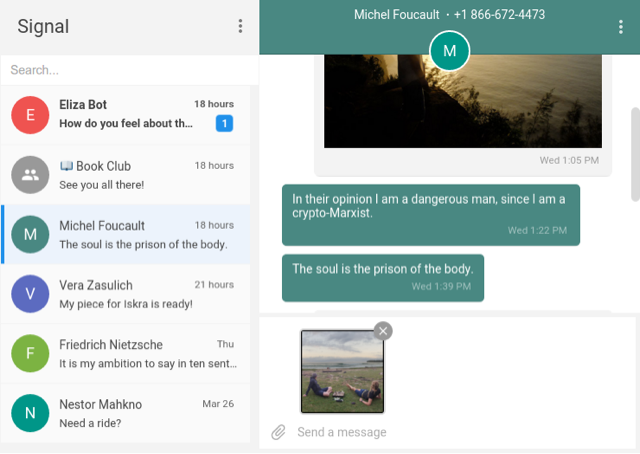
(Chrome desktop app, photo: Open Whisper Systems)
The phone number you used to register your Signal client is your ID. It does not have to be your mobile number. It can be any number where you can receive the confirmation, including VoIP numbers.
How do your friends find you? Signal asks you for access to your address book. This enables the Signal client to match a phone number to a name, and vice versa. If somebody knows your phone number, they can message you, but without an entry of their number in your own address book, you just see the number, not their name.
One caveat: you should store your phone numbers in E.164 format. This is correct: +4917624799915 or +49-176-247-999-15 or +49 176 247 999 15. However, this is not: 017624799915, neither is +49 (0) 176 247 999 15
Storing your phone numbers in E.164 format has another benefit: you don't ever have to worry about dialling rules, especially when traveling internationally.
24 Nov 21:51
Customization remains key for Android enthusiasts says Developers Alliance
by Jessica Vomiero
The Developers Alliance, a non-profit global membership organization that supports developers as creators, innovators, and entrepreneurs, looked into just how Android users are customizing their phones.
The group’s findings reveal that over 90 percent of Android users have customized the apps on their home screens by adding them, removing them or creating folders. Furthermore, 66 percent of respondents revealed that their home screens were comprised of more apps than came previously installed on the home screen of their smartphones.
Of the 3,000 users surveyed, 2,000 unique homescreen apps were reported, which the Developers Alliance calls a testament to app diversity on the Android ecosystem.
Despite these findings however, Android users aren’t ready to give up on pre-installed apps entirely. In fact, 76 percent of Android users prefer a smartphone with basic apps preloaded.
More interestingly, Android users use multiple apps to do the same thing, such as using multiple shopping, video or music apps. For example, 75 percent of Android users use the Amazon app to shop, while 88 percent of that group uses another shopping app as well. Additionally, most Android users apply this strategy to other app categories, such as restaurants where Android users use an average of 2.3 apps, or music, where Android users use an average of 2.2 apps.
Approximately 40 percent of Android users have downloaded at least 25 additional apps, and another 7 percent have downloaded more than 60 apps.
In total, 2.2 million apps are available to Android users on the on the Play Store, compared to the 2 million available on the App Store.
Related: Android Gingerbread nears the end as Google Play services announces next release won’t offer support
SourceDevelopers Alliance
24 Nov 21:51
Shift Your Point of View to When America Was “Better”
by Nathan Yau

How good or bad something is depends on what you compare against. Read More
24 Nov 21:51
"It’s no good pretending that any relationship has a future if your record collections disagree..."
“It’s no good pretending that any relationship has a future if your record collections disagree violently or if your favorite films wouldn’t even speak to each other if they met at a party.”
- Nick Hornby
- Nick Hornby
24 Nov 21:51
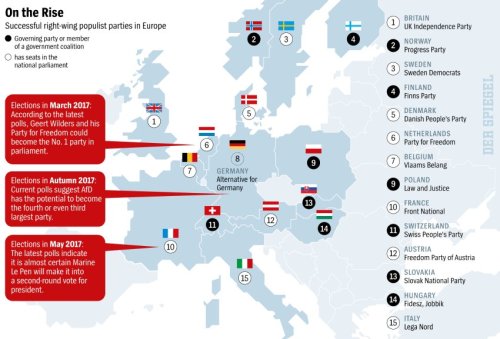
brucesterling:*”Patriotic Spring” movement of pro-Russian...
*”Patriotic Spring” movement of pro-Russian de-globalizers
How far we’ve swung from the ‘Arab Spring’.
24 Nov 21:51

clavierm: the-future-now: 100 Million Goddamn Trees Are...
100 Million Goddamn Trees Are Dead
California drought update: It’s still bad. How bad? According to the U.S. Forest Service, 102 million goddamn trees have now died in the state since 2010, including 62 million trees in this year alone.
This is a disaster…
The west will become treeless.
24 Nov 21:51



clavierm: micdotcom: 3 ways Donald Trump promised to bring back...
3 ways Donald Trump promised to bring back jobs — that won’t work
The scam is now blatant. The Trumpsters are going to learn a hard lesson: don’t believe a liar and incompetent scam artist…
And I thought that was one area where GOP and Dems could agree. But he’s going to treat the election as a way to distribute the spoils to gazillionaires.
24 Nov 21:50
Brief, That Place in the Year by Les Murray
Brief, that place in the year
when a blossoming pear tree
with its sweet laundered scent
reinhabits wooden roads
that arch and diverge up
into electronic snow city.
24 Nov 21:50
The Challenge of Consciousness
The Challenge of Consciousness:
Tim Parks discusses consciousness with Riccardo Manzotti:
Parks: I remember David Chalmers, a philosopher we’ll no doubt be talking about at some point, defining consciousness as an internal flow of images, “a movie playing inside your head,” and probably a lot of people would agree with him. But you want to stick to something more basic.
Manzotti: A definition like that suggests that we know a lot more than we do: that there are images in our heads, that they move forward in sequence, that there is some kind of split between the image and someone (who?) observing the image. It’s all very problematic. The truth is that we do not know what consciousness is. That’s why we’re talking about it as a problem. What we do know is that the way we experience reality, I mean that we feel the things that happen to us, does not really match up with our current scientific picture of the physical world.
Parks: In what respect?
Manzotti: Well, consider this: If we didn’t know that human beings experience the world, that they feel things, would we be able to deduce it from what we know about neurophysiology? Really, no. There is nothing about the behavior of neurons to suggest that they are any different with respect to consciousness than, say, liver cells or red blood cells. They are cells doing what cells do best, namely, keeping entropy low by generating flows of ions such as sodium, potassium, chloride, and calcium and releasing neurotransmitters as a consequence. All of that is wonderful but far removed from the fact that I experience a light blue color when I watch the morning sky. That is, it’s not easy to see how the physical activity of the neurons explains my experience of the sky, let alone a process like thinking.
Parks: So we might say that consciousness is the word we use to refer to the fact that rather than just physiological activity, mute like any other physical event—the sky in the morning, a cloud crossing the sun—we have experience, we have a feeling of that event?
Manzotti: Exactly. Instead of a world where we merely interact with external occurrences—the way a flower opens in the sun, or water freezes in the cold—we also have experience of the occurrence, the sun, the icy weather, and so on. This addition of experience (or in future we may want to suggest that experience and occurrence are one!) would be puzzling enough in itself. But it is even more puzzling that experience is usually described as experience of something else, of something that is not me. I experience a red apple. You experience a piece of music. Ruth experiences a landscape. How is this possible since, if we leave aside quantum mechanics (for the moment), our traditional view of nature tells us that an object is what it is and nothing more? William James put this very clearly when he asked, How can the room I am sitting in be simultaneously out there and, as it were, inside my head, my experience? We still have no answer to that question.
24 Nov 21:50
Tara Isabella Burton, Cult of One — Real Life
Tara Isabella Burton, Cult of One — Real Life:
Tara Isabella Burton explores personal identity, public identity, and the ways living a public live on social media – publicy, in my dogma – can impart a duality of the self:
Playing a public role on social media, presenting ourselves as a “character” (the “fun one,” the workaholic, the gleeful bohemian, the “good friend,” the liberal do-gooder, and so forth), is to commit to being that person in the social sphere: to enter into an informal contract with those that witness us to “be that person.” It’s an argument similar to that of the Canadian-American sociologist Erving Goffman, who understood the self as a constant performer, narrating and navigating its selfhood in direct response to its audience. But Ricoeur’s “audience,” as it were, goes beyond the horizontal — the social present — and into the realm of the literary and the mythic. We are creating ourselves not merely “before” others but also “before” the cultural and historical characters we want to be and “before” an imagined future audience: part of a (perhaps unconscious) chain of discourse that links us, in terms of our significance, to an Achilles or an Arthur.
While Goffman allows for a “backstage” — a place where we can be ourselves without theatrical presentation — [20th century philosopher Paul] Ricoeur’s model allows for no such place. There is nowhere beyond language and narrative, and so there is nowhere we are not in dialogue with the stories that have shaped and will continue to shape our self-understanding. For Ricoeur, ethics lies in internal consistency — in “keeping one’s word” in future encounters. So our performances publicly may help us shape who we are privately as well.
Our narrative identities and their refiguring power to shape both our own personal stories and the stories of others are integral to our ability to better ourselves: which is to say, to create versions of ourselves more in line with the values we hold, and the people we most want to be. If sin, for Saint Augustine as for a long line of theologians and philosophers alike, lies in the chasm between who we are and who we want to be, self-improvement can be a matter of closing of that gap in the successful enactment of the narratives that shape us.
Are we who we say we are? Can we talk ourselves into being the hero of our own myth, the leader of a cult of one?
24 Nov 21:50
Herrenlose VW-Bullies aus der Pampa holen
by Ronny
mkalus
shared this story
from  Das Kraftfuttermischwerk. Das Kraftfuttermischwerk.
|

Als ich den Link zu dem Video bekam, dachte ich, „Jaja, schöner Fake. Niemand lässt irgendwo in der Pampa seinen Bully stehen und ihn dort verrotten. NIEMAND!“ Offenbar aber habe ich mich getäuscht, denn die Leute von AirMapp holen öfter mal vor sich hinrottende Bullies aus der Wildness.
Diese Kiste hier stand 40 Jahre in einem Wald in Frankreich – und sprang nach einigen Sofortmaßnahmen an. Die Story dazu hier.
Weitere Rettungsaktionen:
(Direktlink | Danke, Jan!)
24 Nov 21:49
The Most Important Hashtag for 2017
by hrbrmstr
When something pops up in the news, on Twitter, Facebook or even (ugh) Gab claiming or teasing findings based on data I believe it’s more important than ever to reply with some polite text and a #showmethedata hashtag. We desperately needed it this year and we’re absolutely going to need it in 2017 and beyond.
The catalyst for this is a recent New Yorker story about “computer scientists” playing off of heated election emotions and making claims in a non-public, partisan meeting with no release of data to the public or to independent, non-partisan groups with credible, ethical data analysis teams.
I believe agents of parties in power and agents of the parties who want to be in power are going to be misusing, abusing and fabricating data at a velocity and volume we’ve not seen before. If you care about the truth (the real truth, not a “necessary truth” based on an agenda) and are a capable data-worker it’s nigh your civic duty to keep in check those that are want to deceive.
UPDATE 2016-11-23 10:30:00 EST
Haderman has an (ugh) Medium post (ugh for using Medium vs the post content) and, as usual, the media causes more controversy than necessary. He has the best intentions and future confidentiality, integrity and availability of our electoral infrastructure at heart.
24 Nov 21:49
Thanksgiving Break
by noreply@blogger.com (VeloOrange)
By Scott
 Time sure flies. One minute it was late August and the weather was hot and steamy and now all of the sudden, winter has arrived in one way or another around the US (apologies to readers in the Southern Hemisphere where spring should now be in full bloom).
I just wanted to let folks know that we will be closed on Thursday November 24th and Friday November 25th for our annual Thanksgiving break. A bit of rain is expected here in the mid Atlantic on Thursday, but otherwise the weekend looks great for getting out and about.
We'll be back in the office on Monday the 28th at 9 am to answer questions via phone and email.
 If you are stuck inside over the weekend, check out this great Piolet test ride video from the folks at Adventure Cycling that shows the bike off very well we think. Guitar Ted posted a great review of our Cigne stem here.
We'd like to our thank all our customers for your business this year and hope that all of you have a safe and wonderful Thanksgiving.

I just wanted to let folks know that we will be closed on Thursday November 24th and Friday November 25th for our annual Thanksgiving break. A bit of rain is expected here in the mid Atlantic on Thursday, but otherwise the weekend looks great for getting out and about.
We'll be back in the office on Monday the 28th at 9 am to answer questions via phone and email.

We'd like to our thank all our customers for your business this year and hope that all of you have a safe and wonderful Thanksgiving.
24 Nov 21:49
The bad faith lesson of Donald Trump at the New York Times
by Josh Bernoff
Donald Trump’s latest statements at the New York Times demonstrated an amazing “flexibility” (in other words, he changed long-held positions). If you were scared of Trump’s rhetoric, perhaps this encouraged you. But once you understand the dangers of negotiating in bad faith, your optimism will evaporate. What is bad faith? In a negotiation, each side … Continued
The post The bad faith lesson of Donald Trump at the New York Times appeared first on without bullshit.
24 Nov 21:49

Special Guest Star 2016 Clay, wood, wire, t-shirt, acrylic paint, tin, paint brush, horns and steel. Photo courtesy Stephen Friedman Gallery

Untitled 2016 Ink, collage and acrylic paint on colour photograph. Photo courtesy Stephen Friedman Gallery
Sci-fi and Ancient Cultures Collide in Modern Mixed-Media Works
by Kevin Holmes for The Creators Project

In the Shadow of the Sun 2016 Cork, styrofoam, acrylic paint, oil stick. Photo courtesy Stephen Friedman Gallery
Everything from Giacometti to classic sci-fi and horror movies, Cambodia's ancient temples at Angkor Wat, and the Gandhara Civilization of northern Pakistan and Afghanistan from 3,000 years ago come together in the mixed-media works of Pakistan-born, New York-based artist Huma Bhabha.
Her current show at London's Stephen Friedman Gallery features collages and sculptures—sometimes combining the two—that link the contemporary with the archaic. The collages feature enlarged photographs the artist's taken in Berlin and Karachi, which she augments with spray paint, ink, and oil stick, applying cutouts of weed buds from High Times magazine as eyes on an abstract head. An upside down fragment of a Lil Kim concert poster from a local venue to Bhabha in Poughkeepsie, New York where she lives, becomes a collaged midriff. Spliffs become genitals.

Castle of the Daughter 2016 Cork, styrofoam, acrylic paint, oil stick, wood. Photo courtesy Stephen Friedman Gallery
Her figurative sculptures, influenced by Louise Bourgeois, are formed from clay, bones, and wire. She creates totemic cork and styrofoam sculptures, one of them eight feet tall, filtered through the Giger-esque cinematography of Alien and Prometheus—merging the fictions and myths of those alien civilizations with those of Earth. One cork sculpture is a pig-nosed bust that looks like it could be a "Da Funk"-era Daft Punk helmet that's been preserved in a bog.

House of Traps 2016 Cork, acrylic paint, oil stick, rubber. Photo courtesy Stephen Friedman Gallery
The resulting artworks are creepy but fascinating, their bricolage of references and materials making them appear like strange artifacts and ruins from an alternate history, where ancient, modern, and pop cultures coalesce into one.

Untitled 2016 Ink, collage, acrylic paint and oil stick on colour photograph. Photo courtesy Stephen Friedman Gallery

Untitled 2016 Ink, collage and oil stick on colour photograph. Photo courtesy Stephen Friedman Gallery

In the Shadow of the Sun 2016 Cork, styrofoam, acrylic paint, oil stick. Photo courtesy Stephen Friedman Gallery
Special Guest Star 2016 Clay, wood, wire, t-shirt, acrylic paint, tin, paint brush, horns and steel. Photo courtesy Stephen Friedman Gallery
Untitled 2016 Ink, collage and acrylic paint on colour photograph. Photo courtesy Stephen Friedman Gallery
Huma Bhabha runs November 22 2016 to January 21, 2017 at Stephen Friedman Gallery, London. Find out more about the exhibition here.
Related
An LA Visual Artist Exercises Empathy Within Nature
Mixed-Media Works Take On the American Food System
Assemblage Paintings Address the Perils of White Masculinity

24 Nov 21:49


Where is Our Uber?
by Sandy James Planner

In Business in Vancouver, Peter Ladner asks what a lot of us have been pondering-“Why is it taking so long for the city and province to figure out how to bring transportation network companies like Uber onto our streets?”
Price Tags has been wondering too. So why don’t we have Uber? Peter Ladner responds directly and notes that taxi owner protectionism may be a factor. “As with all disruptive technologies, there will be winners and losers. Life is not fair: the 60 Vancouver cab licences currently for sale with no takers are never going to go up in value, no matter how long Minister of Sleeve Rolling and Foot Dragging Peter Fassbender takes to respond to the embarrassed millennials in the BC Liberal Party. Holding citizens hostage to a limited number of taxis in a vain effort to protect taxi owners’ equity is past the point of frustration. It borders on corruption. The Vancouver Taxi Association donated $53,000 to Vision Vancouver in the last election, and has recently shaken up the BC Liberals by demonstrating electoral muscle in the February 2016 Coquitlam by-election won by the NDP.”
As transit and transportation becomes more efficient through new technologies, concepts such as customized car-pooling will mean there is not going to be a need for all that infrastructure and new bridges. And there is good news for transit -“new research from the American Public Transportation Association shows that the more people use shared modes, the more likely they are to use public transit, own fewer cars and spend less on transportation overall.”
Delaying a decision on Uber does not mitigate the fact that taxi owners and drivers will be impacted by mobility technology. It might not be Uber, but it will be a car share service that will displace taxi market share. As Peter Ladner surmises: “Somehow we’re going to have to learn to deal with this onslaught of new pain and opportunity, embracing its benefits in a fair but determined way”.

24 Nov 21:48


Safety Regulators Hope A “Driver Mode” On Phones Would Curb Distracted Driving
by Ashlee Kieler
mkalus
shared this story
from  Consumerist. Consumerist.
|
Whether it’s Tweeting, SnapChatting, playing Pokémon Go, or just sending a text while on the road, it’s clear that smartphones present a potentially deadly distraction for drivers. Most states have banned or restricted texting while driving, but these problems persist. Now federal safety regulators are proposing new guidelines to curb distracted driving, including asking phone manufacturers to include a “Driver Mode” that would limit the use of a smartphone while behind the wheel.
The proposal [PDF] released this morning represents the second phase of NHTSA’s voluntary guidelines to address driver distraction on U.S. roads and reduce the number of traffic fatalities that result from such incidents.
The first proposal focused on devices or systems built into vehicles at the time they are manufactured, while the second phase urges electronics developers — such as Apple, Samsung, and others — to create products that limit the functionality of devices while a vehicle is in motion in order to reduce the potential for driver distraction.
While distracted driving related to mobile devices was once related to texting and talking on phones, the creation of apps and other features has propelled NHTSA to explore ways to limit a phone’s use while in a vehicle. From drivers crashing while playing Pokemon Go to teens using Snapchat’s miles-per-hour filter while behind the wheel, the number of distraction created by smartphones has increase significantly in recent years.
As such, NHTSA’s latest guidelines focus on two options for developers: ensure devices pair to a vehicle’s build-in systems or create a system that blocks content, apps, and other features when a device is being driven.
According to NHTSA, manufacturers should use pairing — where a portable device is linked to a vehicle’s infotainment system — to ensure that the tasks performed by the driver while driving do not interfere with their ability to control the car.
For example, pairing should lock out the ability for a driver to play video, view photos, read or send text messages, browse the internet, or read books and other publications.
“NHTSA encourages all entities involved with the engineering and design of pairing technologies to jointly develop compatible and efficient processes that focus on improving the usability and ease of connecting a driver’s portable device with their in-vehicle system,” the guidelines state.
The second option would be a car-based approach to what we already know as “Airplane Mode,” which shuts off a device’s wireless communications for use in flight.
This new version would essentially block certain distracting apps or options on phones from being used when he mode is enabled — think, no texting, Tweeting, Snapchatting, or Pokemon Go-ing. Of course, it should be noted, that a driver could turn on Airplane Mode at any time and have features restricted.
NHTSA says it would prefer if Driver Mode could be automatically activated when a device is not paired with the in-vehicle system or if the device distinguishes that it is being used by the driver.
Because such user-detection technology isn’t quite ready to rollout, NHTSA says manual activation of Driver Mode should also be available.
“NHTSA has long encouraged drivers to put down their phones and other devices, and just drive,” NHTSA Administrator Dr. Mark Rosekind, said in a statement. “With driver distraction one of the factors behind the rise of traffic fatalities, we are committed to working with the industry to ensure that mobile devices are designed to keep drivers’ eyes where they belong — on the road.”
The New York Times reports that highway deaths increased 10.4%, to 17,775 deaths in the first six months of 2016. In 2015, traffic fatalities increased 7.1% over 2014 levels, representing the largest inflation in 50 years.
Of course, some manufacturers, app developers, and lawmakers have already begun working on ways to reduce driver distraction related to mobile phones.
Back in April, proposed legislation [PDF] introduced in New York would have required drivers involved in any crash to hand over their phones to authorities for analysis by the “textalyzer,” a device designed to determine whether the phone was in use prior to a crash. The process would work much like a roadside breathalyzer test used to check a driver’s blood-alcohol level.
Around the same time, State Farm received a patent for a wearable device system that would poke drowsy or distracted drivers.
Additionally, the Times reports that some smartphone makers have added technology that limits phone capabilities. For example, Apple’s iPhones have a “do not disturb” function that can block calls and text messages. However, that feature isn’t specifically made for driving.
24 Nov 21:48
These Weeks in Firefox: Issue 6
by mconley
Highlights
- A reminder that Firefox ESR 52 will be the last version to support WinXP
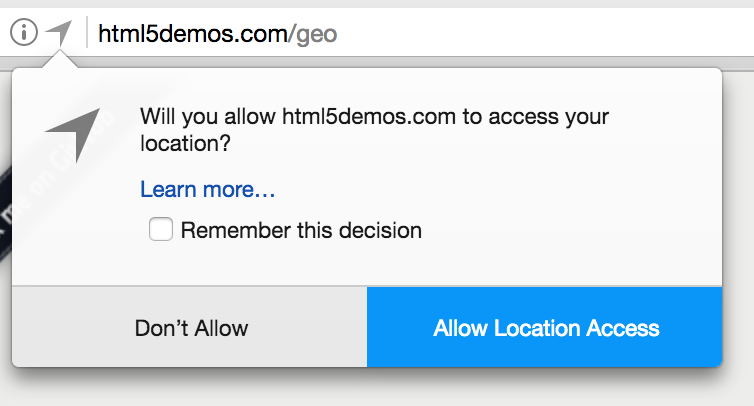
- past reports that the new permission doorhanger UI has landed!

- Permission prompts are no longer accidentally dismissable
- Available actions are more prominent, not just the main one
- Working on followups in mozilla-central. Notice problems? File them blocking this bug.
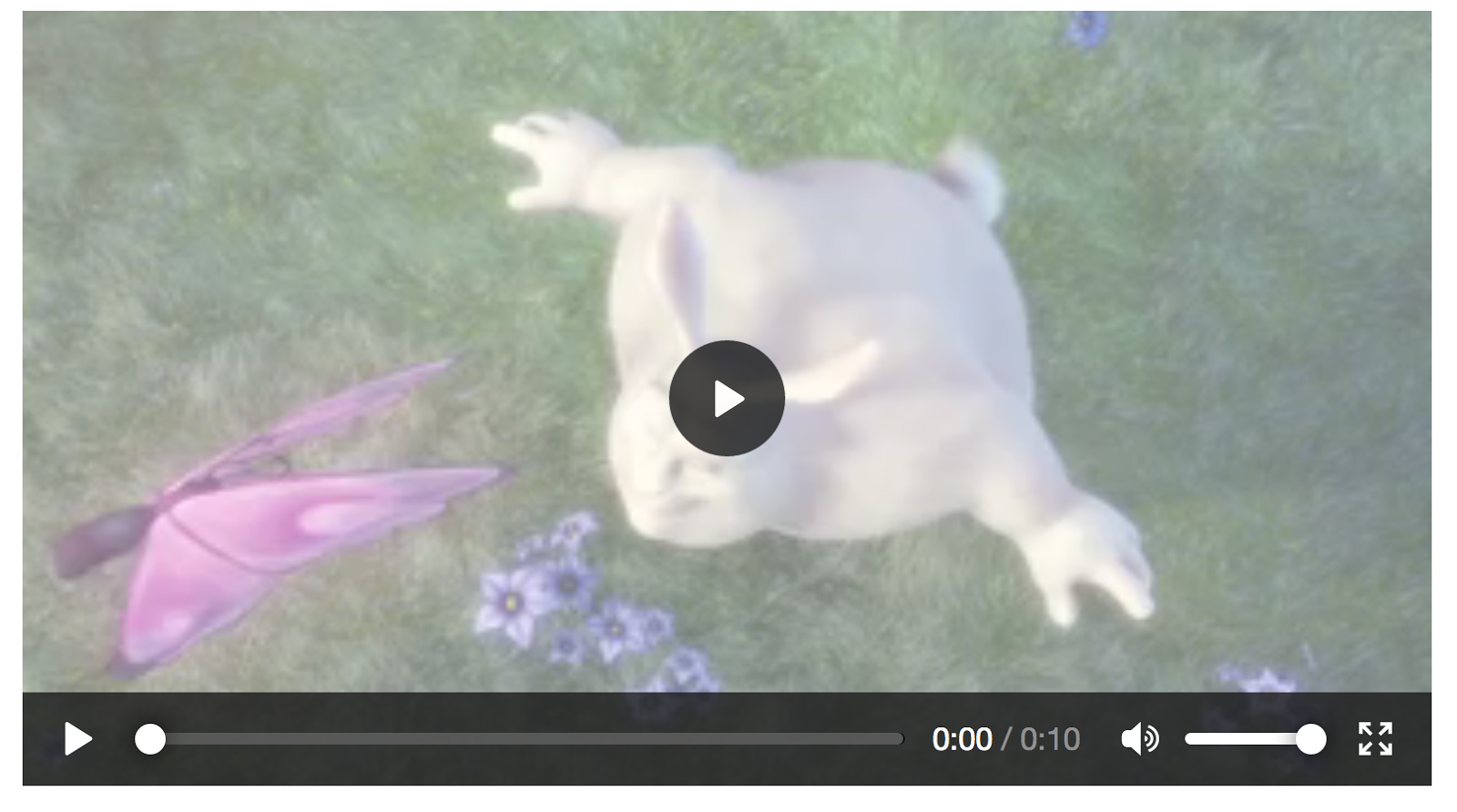
- ralin reports that the new HTML-based visual video controls have landed!
- florian and MattN report that the insecure password warning in the URL bar will ship in Firefox 51!
- They also note that work on the contextual warning for insecure passwords made great progress and is currently slated for Firefox 52.
- Flip security.insecure_field_warning.contextual.enabled to true and signon.autofillForms.http to false to test the feature.
- kitcambridge wants people to know that a new add-on has been released to let you examine your own Sync data. As always, the source is also available
- He also has a call-to-action to validate your bookmarks data (see this mailing list thread and this follow-up post for how to contribute anonymized validator data)
Contributor(s) of the Week
- Please welcome Joe Hildebrand, who has joined Mozilla as Director of Engineering for the Firefox browsers!
- Resolved bugs (excluding employees): https://mzl.la/2gcieyv
- New Contributors
Project Updates
Add-ons
- The team has published a blog post on what’s new for WebExtensions in Firefox 52
- They’re also testing out chrome.storage.sync and working on getting backend storage into release quality
Electrolysis (e10s)
- Turning on e10s-multi on Nightly (with 2 content processes) is blocked on Talos regressions and a few test failures. This should happen sometime soon during the Nightly 53 cycle (and hold on Nightly)
Firefox Core Engineering
- ddurst reports that there is going to be an aggressive push to update “orphaned” Firefox installs (44-47, inclusive) between now and the end of 2016
- “Orphaned” = not updated since 2 versions back.
- Concerted effort to encourage people to update from 42-47 to current (50). 42-25 isn’t a huge chunk, but this is a much more aggressive push.
- What causes orphans?
- Some are just users being slow to update
- Blocked by security suite. (Avast was trying to update on users’ behalf). Some are worked out with vendors, some are actual problems.
- Some are related to network latency (bugs have been filed and fixed), but ddurst’s team just got a machine that’s not updating and not affected by latency.
- 3.x upgrades
- This is something we’ll turn our attention to once the 42+ orphan level is deemed acceptable
- Issuing updates as minor for 3.x and lower, hopefully
Form Auto-fill
- MattN wants to draw everyone’s attention to the intent to implement for DOM Web Payments API. That team is coordinating schedules with the Form Auto-fill team.
Platform UI and Other Platform Audibles
- mconley reports that the ability to style -moz-appearance: none checkbox and radio input form fields has landed on central! Aiming to try to uplift to 52.
- daleharvey made it so that we can show the login manager autocomplete popup on focus (this bug was reported 10 years ago!)
- scottwu has a patch up for review that adds a datepicker (to complement the timepicker that was recently added). Link to very detailed spec.
- A patch from MSU students Fred_ and miguel to combine the e10s and non-e10s <select> dropdown mechanisms will likely land this week (but preffed off)
- A patch by MSU student beachjar that vertically centers the <select> dropdown at the selected element will re-land soon now that he’s fixed this bug
Privacy / Security
- nhnt11 has simplified the way we open captive portal tabs
Quality of Experience
- mikedeboer reports that the demo / ideation phase for the new Theming API is nearly finished
- An engineering plan in the making, and almost ready for feedback rounds
- The team is looking at performance measures now (memory, new window creation, tab opening, etc)
- dolske has some onboarding updates:
- 51 Beta is now live with the latest automigration test/data-gathering. (No wizard on startup, migrates and gives option to undo)
- Gijs is starting work on allowing automigration-undo even after activating Sync
- In discussions with verdi about an updated first-run experience (nutshell: simplified, focus on new-tab page so user can quickly see familiar auto-migrated data, starting point for low-key introduction of features)
- Fewer tabs, sign in to FxA, and then directly to about:newtab. (If you migrated from Chrome, your top sites will be there)
Search
- florian reports that recent Places changes improved the performance of coloring visited links in a page and the performance of searching through history
- The team has also fixed the display of Open Search providers on sites that provide a huge amount of them
Sync / Firefox Accounts
- Sync tracker improvements have landed! Please file bugs if you have bookmark sync enabled and see missing or scrambled bookmarks.
- 4 Mozillians have tried the About Sync validator and filed bugs. Keep them coming. (Email to kcambridge@mozilla.com)
- A new Sync storage server written in Go is coming soon
Here are the raw meeting notes that were used to derive this list.
Want to help us build Firefox? Get started here!
Here’s a tool to find some mentored, good first bugs to hack on.
23 Nov 01:55


Toyota Recalling 744,000 Sienna Minivans Because Doors Can Open While Driving
by Chris Morran
|
mkalus
shared this story
from Consumerist.
|
Unless you have little regard for your personal safety or the safety of those in your vehicle, you generally want the doors on your minivan to remain closed while it’s in operation. But Toyota says that a defect in its Sienna minivan can result in the doors opening on their own.
Toyota confirmed this afternoon that it is recalling 744,000 2011-2016 Toyota Sienna minivans because there is a possibility that, “under certain limited conditions, if the sliding door opening operation is impeded, the sliding door motor circuit could be overloaded, opening the fuse for the motor. If this occurs when the door latch is in an unlatched position, the door could open while driving, increasing the risk of injury to a vehicle occupant.”
The carmaker has not yet developed a fix for the problem, but says it will notify Sienna owners by mail in mid-January.
Toyota does not reference individual incidents in its announcement, but a search of the NHTSA SaferCar.gov database turns up a handful of possibly related reports from Sienna owners.
One owner of a 2012 Sienna complained to the agency that “on three separate occasions, my rear sliding doors have spontaneously opened on their own.” The owner claims the dealership told him this was a known issue but since the car hadn’t been recalled it would cost thousands of dollars to repair.
Another complaint, filed in 2013, claims that the power sliding doors on their Sienna began to open while the owner was driving with their kids in the back.
“My kids were safely fastened in their seatbelts but the latch and safety latches both failed and this could have resulted in an accident or injury,” claims the complaint.
There are also multiple reports from Sienna owners of being unable to close the minivan doors and sliding doors stuck partially closed.
23 Nov 01:55
iOS Hidden Feature: Search your photos by word
When Apple released iOS 10, the latest system software for the iPhone/iPad, it made a big deal out of the major features, like a redesigned Music app and contextual predictions in autocorrect.
But Apple’s engineer elves worked for a year to overhaul iOS 10, and they’ve planted lots of hidden gems. Today, I’m happy to present another of the best iOS 10 features that Apple forgot to mention.
The Photos app’s Search box lets you find images according to what they show. You can search your photos for “dog,” or “beach,” or whatever.
You can’t type anything you want—you have to choose a noun from one of Apple’s canned categories—but you can combine a noun search with, for example, a place search, making it much easier to find a certain photo.
Well, at least when the gods are smiling. Apple’s image recognition software makes a lot of mistakes. But it’s off to a very handy start.
More from Pogue:
Atlas Recall is a (mostly) photographic memory for your computing life
iOS Hidden Feature: Expanded Control Center
Now I get it: The rules for drones
The New MacBook Pro: The ultimate good news/bad news story
Pogue’s cheap, unexpected tech gifts #2: ThinOptics glasses
A dozen iOS 10 feature gems that Apple forgot to mention
GoPro’s most exciting mount yet: a drone
Professional-looking blurry backgrounds come to the iPhone 7 Plus
Pogue’s Basics: Turn off Samsung’s Smart Guide
Pogue Basics: Touch and hold Google Maps
The Apple Watch 2 is faster, waterproof—and more overloaded than ever
We sent a balloon into space — and an epic scavenger hunt ensued
The new Fitbits are smarter, better-looking, and more well-rounded

23 Nov 01:55

Academic rankings: The university’s new clothes?
Yves Gingras,
University Affairs,
Nov 25, 2016
I have said on numerous occasions that things like university rankings are a lobbying tool, not a measuring tool. Organizations take the values they want to see emulated and grade the universities according to them. This is the gist of this article from Yves Gingras, once you skip past the extended retelling of the time-worn tale of the emperor's new clothes. "We must go beyond the generalities of those who repeat ad nauseam that 'rankings are here to stay' – without ever explaining why this must be so – and open these 'black boxes' in order to question the nature and value of each and every indicator used to assess research at a given scale."
[Link] [Comment]
23 Nov 01:54
Netflix 4K streaming is coming to Windows 10, but only for PCs with the latest Intel processor
by Rose Behar
Netflix 4K streaming is finally arriving for Windows 10 this week, but there’s a catch: only PCs with a 7th generation Kaby Lake Intel Core processor will be supported.
This restriction stems from the fact that the new processor stocks up-to-date hardware decryption features that are required by film studios and TV networks in order to reduce the risk of pirates capturing 4K playback. In fact, piracy fears have been a large reason behind the dearth of high-quality video streaming on Windows PCs in general. The processor also supports 10-bit HEVC, a popular 4K video codec.
If you’re one of the lucky few who has a 4K display and new PC with the latest Intel Core processor, you’ll be able to stream in 4K through Microsoft’s Edge browser when it rolls out this week. If not, you’ll have to upgrade, wait it out or turn to a 4K-capable streaming dongle.
Related: New Windows 10 build for ‘Mobile Insiders’ will make future updates a lot faster
ViaThe Verge
23 Nov 01:54
New Emoji Input Panel
Postbox 5 brought you Emojis, and in Postbox 5.0.8 we're introducing an even easier way to insert Emojis into messages.
Simply type a colon (:) followed by the name of the Emoji you wish to use:

Auto-complete or use the arrow keys to navigate to your desired Emoji. If needed, the Emoji input panel can be enabled/disabled in Preferences > Composition > Typing.
Enjoy!
22 Nov 22:51


The Silliness of the Unfunctional Front Yard
by pricetags
By Byrn Davidson:
‘Single Family Character’ Vs. Functional Front Yards
.

One of the unique things about Vancouver’s ‘single family’ neighbourhoods is the fact that we have lanes (alleys) at the rear. Because these lanes handle the parking, garbage, etc., the front yards are often relieved of having to carry any functional duty. Instead they can be pleasantly landscaped with winding entry paths, hedges, trees, and flowers providing a picturesque setting for their respective homes.
While there is undoubtably a pleasant aspect to these yards, there are also some hidden costs that are not so obvious.
As Vancouver’s residential zones have evolved, first with basement suites, and then with laneway houses, the intention has always been to try and maintain the ‘single family character’ of the existing neighbourhood.
This approach has been couched as ‘invisible’ or ‘hidden’ density, meaning that the suites and lane houses need to be largely hidden when viewed from the front. This subtle approach to densification is probably a political necessity, but we can’t stop there.
The result of the ‘hidden density’ approach is that all three units on a single family Vancouver lot (the main house, basement suite, and lane house) all end up competing for limited space in the rear yard, while the front yard sits serenely apart.
This is no accident.

Shared space: the typical Vancouver rear yard will be shared between the main house, the basement suite entry well, and the laneway house. Photo: Colin Perry / Lanefab
.

This is the same property as the photo above. The large, and largely formal, front yard isn’t allowed to contribute any functionality to the 3 dwellings on the site.
.
The RS zoning bylaws specifically forbids a home from having a second door facing the street. The fear is that the home might start to look like a duplex (heaven forbid!) and so ruin the ‘single family character’ of the neighbourhood.
In practice this means that a sunny front yard can’t also serve as an entry or patio for a basement suite. Likewise it means that the main house can’t have a second set of french doors opening on to a front porch, yard, or garden.
This is just silly.
In 2009 it was a bold move for the City of Vancouver to allow three units on ‘single family’ lots, but now we need to go further. We need to stop pretending that multi-family housing (not ‘single family’) is our future. There is no reason to compromise on the livability, equity, and energy efficiency of our dwellings simply to keep up appearances.
If you want a lovely formal front yard. Great. Do it.
If, however, you have an extended family that is sharing a small piece of city land perhaps you should have the option to make better use of your property. If your front yard faces south and you want to make the most of indoor-outdoor living, you should have that option too.

Current RS ‘Single Family’ policy:
Only one door is allowed to face the street.
.

Proposed policy:
Allow additional doors to face the street so that basements, or main floor living areas can make better use of the front yard.
In the following weeks I’ll be digging into a range of other issues related to our fascination with ‘single family character’ but – to start with – please, let’s have some functional front yards.
Bryn Davidson lives and works in Vancouver. His team designs and builds custom homes for individual homeowners and their families.