Shared posts

30 Nov 17:14

Increasing diversity

by Nathan Yau

Dan Keating and Laris Karklis for The Washington Post map the change in diversity since 2000. The color scale, shown in the top right, represents two things: level of diversity and change in diversity. I’m not so sure the dual scale is interesting as a whole, as my brain just wants to split out each category individually or see each one separately. But keep scrolling and you can get that separation, which is a lot more visually helpful.

See also: percentage of white people, majority minorities, and predominant race.

Tags: diversity, Washington Post

30 Nov 16:02

Pressure Mounts For Tesla To Stop Using The Term “Autopilot”

by Ashlee Kieler
mkalus shared this story from Consumerist.

What does the term “autopilot” mean to you? For many people, it applies to a machine that can steer itself with minimal human intervention, but for electric carmaker Tesla it’s a marketing term to describe a feature that is decidedly not hands-off — and which consumer safety advocates believe can cause potentially dangerous confusion.

Consumer Watchdog recently sent a letter [PDF] to California DMV director Jean Shiomoto, urging the agency to act on specific regulations proposed in September that would, in part, put restrictions on how carmakers can advertise self-driving vehicles.

Under the proposed rules [PDF] — which mainly pertain to the future development of self-driving vehicles — no car could be advertised as autonomous unless it meets the definition set forth by vehicle codes and was manufactured by a company that holds a valid autonomous vehicle permit.

Additionally, carmakers would not be able to use terms, such as “self-driving,” “automated,” “auto-pilot,” or other statements that are likely to persuade a “reasonably prudent person to believe a vehicle is autonomous” when it isn’t.

The DMV must immediately start the process to enact these “regulations protecting consumers from misleading advertising that leaves the dangerous – and sometimes fatal – impression that a car is more capable of driving itself than is actually the case,” argues the letter.

Watchdog contends that Tesla’s Autopilot features are the most prominent in the public eye, and the most confusing.

Autopilot – which steers the car more actively than similar systems that rely on automatic braking, steering assist or adaptive cruise control to aid drivers – has been aggressively marketed by the company.

Additionally, the company recently announced that it would make all new cars self-driving, but wouldn’t actually turn the system on yet.

“Manufacturers must not be allowed to advertise cars as, or describe them as, ‘self-driving’ when a human driver must actually monitor or control the vehicle,” the letter states. “Tesla, with its promotion of its so-called Autopilot feature, is a prime example of the deadly consequences of such unjustified hype.”

According to Consumer Watchdog, Tesla CEO Elon Musk has long hyped the feature, leaving the impression that the vehicle is autonomous. The group cites several Tweets, press conferences, and other announcements from Musk that allude to the feature being fully autonomous, including a video in which he sits in the driver’s seat of a Tesla vehicle demonstration with his hands off the steering wheel.

“That is too long to wait to stop Tesla and its CEO from risking even more lives by falsely promoting Autopilot technology as self-driving,” the group claims.

For its part, Tesla has said it would take steps to ensure that drivers or would-be drivers are aware of Autopilot’s functions. Additionally, in September, the carmaker unveiled Version 8 of its Autopilot software, announcing changes to the way in which drivers must keep their hands on the wheel. Tesla says that drivers who ignore three audible warnings in an hour to put their hands on the wheel will have to pull over and restart the vehicle to use Autopilot.

Still, Consumer Watchdog urged the DMV to take immediate action on the advertising portion of the rules, as enacting the full regulation would likely take a year.

“Currently there is nothing to stop the sort of hype spouted by Elon Musk with its potentially deadly consequences,” the letter states. “DMV should extract the advertising regulatory language from the rest of the draft autonomous vehicle regulations and start a formal rulemaking to enact that section immediately.

Consumer Watchdog’s concerns about Autopilot’s marketing was echoed by our colleagues at Consumers Union.

“The ‘Autopilot’ name is misleading to consumers, and Tesla should stop using it,” William Wallace, policy analyst for Consumers Union, said. “What’s more, this type of marketing can be dangerous, by giving consumers a false sense of security in the ability of a car to drive itself when it actually requires the constant attention of a human driver. We support the work of federal and state authorities to crack down on false, misleading, or unfair marketing claims about automated driving systems.”

A rep for Tesla tells the Los Angeles Times that “owners have communicated that they understand how Autopilot works and should be used, and this is clearly explained and reinforced every time a customer uses the feature.”

The company contends that the “inaccurate and sensationalistic view of Autopilot put forth by [Consumer Watchdog] is exactly the kind of misinformation that threatens to harm consumer safety.”

This, of course, is just the latest issue facing Tesla’s Autopilot feature, which was tied to its first fatal crash in June.

The car maker said in July that it would not disable Autopilot after the fatal crash, but a number of consumer safety advocates — including our colleagues at Consumer Reports — have called Tesla out for the potentially confusing messages surrounding the Autopilot feature.

In August, the owner of a Tesla in Beijing said he crashed his vehicle into the side of a vehicle that was partially parked in the road while using the feature. Tesla says the driver is to blame for taking his hands off the wheel, while the driver says he was misled about the Autopilot feature.

Shortly after the incident, Tesla said it removed that word, along with another term that means “self-driving,” from its website for customers in China.

Since then, regulators in Germany have asked the company to rename the “misleading” Autopilot feature to avoid any confusion that could lead to dangerous collisions.

[via Los Angeles Times]


30 Nov 16:01

Houses selling at a loss

by VCI Admin
mkalus shared this story from Vancouver Condo Info.

The great real estate market pause of 2016 seems to be creating some losses out there. Southseacompany pointed out this article that finds 3 homes selling for less than they were purchased for:

Vancouver real estate often gets hailed for excellent returns, but this one has us scratching our head. Three single family detached homes have listed for less than the owners paid for them. The kicker? They were all purchased less than 8 months ago. Is this the beginning of the end for Vancouver’s market or are we just insanely good at finding deals? Check out the listings and you can decide.

The rough estimated losses on those properties range from $73k to $125k if they sell for asking. View all three listings over at BetterDwelling.

30 Nov 16:00

Amazon vs. Google – Open goal

by windsorr

Reply to this post

RFM AvatarSmall


Amazon Echo opens a market for Google Home to dominate. 

  • The Amazon Echo has sold reasonably well but I think that the device is not clever enough nor integrated enough to make it a must have product.
  • This leaves the goal wide open for Google Home to dominate as 60% of Amazon’s customers are already aware of the device category but only 2% of them have bought one.
  • A report from CIRP has found that Amazon has shipped 5.1m Echo devices since inception but only 30% of users use the device for information while 40% use it as a speaker.
  • A very meagre 10% use it to control the home.
  • This is a problem because unless Amazon can convince users to use Echo for things other than listening to music, it will quickly become just another speaker.
  • The problem is that Alexa, the digital assistant that resides inside Echo, is not very clever and much of the time simply does not answer even when it has heard the user.
  • Furthermore, there is no real integration meaning that the other functions of the device are not intuitive and easy to use.
  • For example: the statement “Alexa, I am cold” does not have any effect at all.
  • Instead the user must say “Alexa. Open Nest. Increase to 75 degrees. Close Nest” which can probably be done more intuitively from a mobile phone.
  • This is just one reason why the understanding of natural speech is so important and why apps and services on devices need to be able to talk to each other.
  • Consequently, I think that there is a huge opportunity for Google Home as best-in-class Google Assistant resides in the device and Google understands the importance of integration.
  • Furthermore, I think that Google is the world leader in natural speech recognition and processing and should therefore be able to deliver the best, most easy and fun to use experience of any.
  • The icing on the cake is that Amazon has prepared the market for Google Home as 60% of its customers are aware of a home speaker, that one can ask questions of, but only 2% have bought one.
  • Hence, the main issue for Google Home remains its execution to make the most of this opportunity just as it is for Google Pixel to capitalise on Samsung’s Galaxy Note 7 disaster.
  • This is a rare opportunity for Google to capitalise on the trailblazing and mishaps of its competitors but I still think that all of Alphabet’s upside has already been captured in its share price.
  • Consequently, I still prefer Baidu, Tencent and Microsoft which offer more upside although they have different market exposures to Google.


30 Nov 16:00

Facebook Messenger Adds Games like Pac-Man, Galaga, and More

by Evan Selleck
Facebook sees Messenger as a primary way for people to communicate with friends and family, or even acquaintances, and apparently a little friendly competition isn’t off the table, either. Continue reading →
30 Nov 15:54

Innovation

A while ago someone mentioned that the move to WebExtensions for Firefox was "an end to innovation". I asked that person to move that comment to do a discussion forum so we could chat more. It didn't happen, so I thought I'd write a blog post so you can discuss it in the comments... except I don't have comments, so please file a reply on your blog.

Innovation is great, everyone wants more innovation, how could you possibly not? Innovation is like beer, or cookies, or money, or fresh Caprese salad in Italy whilst sitting on the beach in the sun. You can't possibly want less of it.

But innovation cannot occur in a vacuum there are costs. In the past add-ons have provided innovation and helped Firefox grow. But sadly there has also been a real cost the way they currently exist, here's three reasons: the cost has been the inability of Firefox to innovate, the cost of developers getting into building WebExtensions and the maintenance cost of add-ons.

I touched on some of these points in my blog post "The add-ons burden", but let's unpack a couple of those.

The classic example for Firefox has been multi-process Firefox (or e10s). I've heard multiple stories since being involved in add-ons. One is that it was tried time and time again, but no-one could figure out how to do it without breaking add-ons. There are so many more changes coming down the pipeline like Servo, that will keep breaking add-ons. The ability to innovate Firefox is as important as the ability to innovate Firefox through add-ons. It turns out that add-ons really, really crimp Firefox development.

Building an extension before WebExtensions was complicated, it required knowledge of Firefox and the Mozilla framework. The SDK and other things helped. Getting to a simple content script was made pretty easy by the SDK (which is something like 40% of all add-ons). But with WebExtensions you need to be able to read a limited set of APIs and understand web development. There are more web developers in the world than there are Mozilla developers. By allowing more developers to get involved in extensions, we provide a larger funnel into extensions.

Every day people file bugs against Firefox, many of them. I spend quite a lot of my time in triages trying to understand those bugs, as I'm sure lots of people do at Mozilla. I don't have numbers on this but I bet the first question in many of those bugs is "what happens when you try in a clean profile?" (basically with no add-ons). Add-ons cause so many bugs and issues for Firefox and its users that its crazy. It's also something that most add-on developers don't see. The cost to Mozilla and Firefox is there and its real. It hits end users and Firefox developers every day.

In this case, the legacy add-ons infrastructure exacts such a negative cost on other teams, so it ends up being an overall drag. Until I became involved in Firefox, I didn't see that and the chances are most add-on developers won't unless they too are involved in the many facets of Firefox.

But there are ways to solve this. For the majority of Mozilla the main concern is the the Firefox release channel, what we all think of as Firefox. That's the one with the majority of users. Perhaps we could recognize that we have multiple channels and focus on innovating with add-ons on a non-release channel. That would allow innovation, without the costs.

In the case of Firefox, the ability to innovate is the sum of multiple groups, not just one group and just focusing on yourself doesn't make sense when you've got a product with many millions of users.

30 Nov 15:53

Twitter Favorites: [CanSpice] I don't own a car so my voice against Kinder Morgan counts more, right?

Brad Cavanagh @CanSpice
I don't own a car so my voice against Kinder Morgan counts more, right?
30 Nov 15:53

Canadian developers join Red’s fight against AIDS in new App Store campaign

by Patrick O'Rourke

To commemorate the 10-year anniversary of Apple’s decade-long partnership with Red [(PRODUCT)RED], the tech giant has tasked popular iOS game developers with adding specific Red-branded features to their titles, in order to raise money and awareness surrounding the global initiative to fight HIV and AIDS.

“When we thought about 10 years with Red, we thought okay, ‘Apple’s got to light up Red all the way across [our platforms],” said Lisa Jackson, Apple’s vice-president of environment policy and social initiatives in an interview with MobileSyrup.

Red, founded in 2006 by U2 frontman and activist Paul Hewson (Bono) and Bobby Shriver, has the overarching goal of fighting AIDS through partnerships with various high-profile brands and product manufacturers, including Apple.

projectredcases-3

Each partner releases special, limited edition versions of its popular products that adopt the project’s bright red colour, with 50 percent of the profit earned from Red branded items being donated directly to the Global Fund. Dubbed ‘ethical consumerism,’ the initiative has been an interesting and arguably successful amalgamation of humanitarian aid and for-profit business for the past decade.

More than $360 million USD has been raised through Red since its inception, with Apple, including its Beats brand, contributing $120 million of that sum, making it the largest corporate partner in Red’s Global Fund, according to the organization.

“To give you context, the medicine that we keep talking about costs 30 cents a day. The $120 million that Apple has raised over the past 10 years can provide nearly 400 million days of lifesaving medicine,” said Chrysi Philalithes, Product Red’s chief digital strategist.

outerminds-1

This year Apple has tapped 20 popular video game developers spanning various genres in order to offer limited edition custom Red content via its App Store, with all proceeds stemming from in-app purchases contributing to Red’s Global Fund. In addition to Apple’s App Store offerings, the Cupertino, California-based company has also launched a Red iPhone 7 Smart Battery Case, iPhone SE case, Beats Solo 3 wireless on-ear headphones and a Pill+ portable speaker, with all these branded items now available in Apple Stores around the world. Strangely, and this has become a theme each year with Red, apart from its iPod line, no other Apple device, like the iPhone 7 or iPad for example, are included in the initiative.

In terms of specific game offerings,  Outerminds’ ultra-popular PewDiePie’s Tuber Simulator developer Outerminds, a small team of just 13 based out of Montreal, was contacted by Apple to position their title as one of App Store’s marquee Red in-app titles. Tuber Simulator’s limited edition Red features consist of special in-game items — including a massive room-spanning red race car — and PewDiePie delivering thought-provoking facts about the deadly disease to players in an uncharacteristically thoughtful way. PewDiePie is known for his dry, self-deprecating humour, both on his YouTube channel, which now has 49 million subscribers (that’s more than the population of Canada), as well as his various other multimedia offerings.

“Our demographic is weird because PewDiePie’s audience is young and old, though we know that our demo is a bit younger,” said Outerminds co-founder Guiz de Pessemier, emphasizing that because his title’s audience skews to a mostly a younger audience, he hopes his studio will play a role in building AIDS awareness in a younger generation.

projectredbugatti

“We’re targeting an audience that will hopefully grow up and contribute to the cause,” said de Pessemier. With millions of downloads since its launch a little over two months ago, Tuber Simulator is a ideal example of how Apple’s Product Red partnership is evolving to reach a younger audience.

Kabam, another Canadian developer, is also adding Product Red specific Power Packs to its iOS title Marvel Contest of Champions. Other specific in-game Red features include bonus roll packs in Scopely’s free-to-play version of Yahtzee With Buddies, a game that processes an astounding 40 million turns a day. Natural Motion’s CSR 2, a racing title that features an attention to detail rarely seen in the mobile gaming Space, is adding a unique Red version of Bugatti’s Chiron supercar, as well as mystery crates, with all proceeds set to go directly to Red.

Big name titles like Angry Birds 2, the franchise that arguably helped bring mobile gaming to the level of popularity it currently sits at, particularly when it comes to Apple’s App Store, is also participating in this year’s Red initiative. In Angry Birds 2, for example, the game is branded with a special Red splash screen and ‘Red,’ which is coincidentally also the name of Angry Birds’ famous rouge-coloured disgruntled avian. Red now has a special ability that doles out extra damage. One of Rovio’s popular Angry Birds offshoots, Angry Birds Pop!, is set to include specific red features as well.

projectred

Other games that are participating in Apple’s Red initiative this year include: Best FiendsBest Fiends ForeverBoom Beach, Candy Crush Jelly SagaClash RoyaleClash of ClansFarm Heroes SagaFarmVille: Tropic EscapeFIFA MobileHay Day, Plants vs. Zombies HeroesSimCity BuildIt and War Dragons.

Along with its Red in-app Store offerings, Apple says it’s also donating $1 to Red’s cause for every purchase facilitated through Apple Pay, specifically via Apple.com, the Apple Store, and the App Store; transactions not included in these three platforms will not be part of Red. The total amount of money that can potentially be donated through this portion of Apple’s Red program is capped at $1 million. Apple’s iTune platform is also participating in the initiative by offering The Lazarus Effect for free in order to build AIDS awareness, as well as contributing all proceeds from the Killers’ new compilation holiday album, Don’t Waste Your Wishes, to the Global Fund.

Over 35 million lives have been lost to AIDS since the discovery of the virus and 37 million people are living with HIV or AIDS still today. Every two and a half minutes an adolescent child is infected with the virus. In 2012 One acquired Red as division of One though both organizations are co-founded by Bono and Shriver.

30 Nov 15:53

Developing a Personal Learning Infrastructure

In this workshop we examine the various parts of a personal learning environment and moot the development of a PLE architecture.

OEB 2016, Berlin, Germany (Workshop) Nov 30, 2016 [Comment]
30 Nov 15:53

Offline playback comes to Canadian Netflix

by Patrick O'Rourke

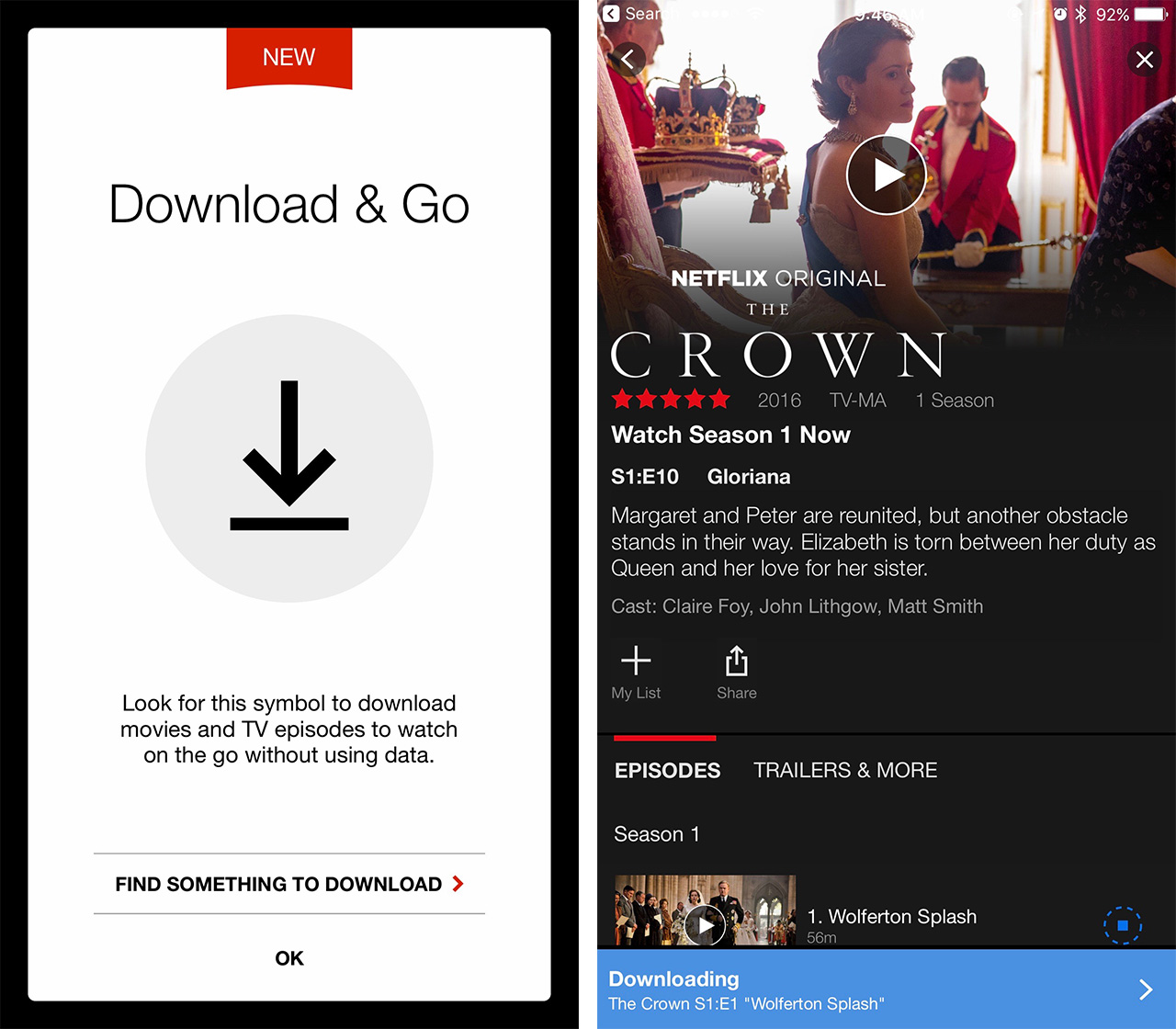
After years of rumours, Netflix is now allowing users to download select movies and TV shows for offline playback, according to an announcement from the streaming giant earlier today.

“While many members enjoy watching Netflix at home, we’ve often heard they also want to continue their Stranger Things binge while on airplanes and other places where Internet is expensive or limited,” writes Netflix in a recent press released about the new feature.

Netflix originals like Orange is The New Black, Narcos and the Crown are all available for offline viewing now. Netflix says the feature is available across all plan levels and only for Android and iOS devices. While it’s still unclear, it doesn’t look like offline playback is available for desktop viewing, though we’ve reached out to Netflix for clarification.

The streaming giant’s executive team has alluded to the release of offline playback for years, with Netflix chief content officer Ted Sarandos alluding to the feature in an interview with CNBC. At the time, however, it seemed like the offline playback would only be available in countries without reliable internet access.

netflixofflineviewing

While most populated areas of Canada have reliable access to some form of internet, the restrictive mobile data caps wireless subscribers are subject to makes viewing mobile Netflix content difficult, making offline viewing particularly useful in Canada.

To download content for offline playback on iOS and Android you first need to update your app. Then to actually download content look for the Netflix download tab.

Contrary to what was initially thought, Netflix’s offline viewing option is not confined only to the service’s originals. Examples of downloadable content beyond Netflix’s own originals include Scarface, The Office, Fury and The Equalizer.

In the world of digital rights, Netflix is considered a subscription video on demand service (SVOD) and downloading a television show or movie requires a new agreement for rights known as an electronic rental that allows content to be downloaded on a temporary basis.

Netflix will need to reach agreements with various content licensers in order to add more content to its new ‘Available for Download’ mobile section.

SourceNetflix
30 Nov 15:53

Two-wheel takeover: bikes outnumber cars for the first time in Copenhagen

Two-wheel takeover: bikes outnumber cars for the first time in Copenhagen:

Copenhagen is the greatest city for people watching, too.

30 Nov 15:52

Spark Arrives on macOS

by John Voorhees

Competition among email clients on the Mac and iOS has heated up over the past couple of years. With that comes innovation, making email clients one of the most interesting app categories.

Today, Readdle released Spark for Mac, bringing its popular iOS email client to the Mac for the first time. Spark excels at bringing order to the chaos of your inbox and providing tools to help you quickly triage common types of email individually, or in bulk. But perhaps the greatest benefit of Spark for Mac is that it’s a solid free solution for fans of the iOS version of the app who felt constrained by the lack of a macOS version.

Spark organizes your inbox into card-like sections, including Personal, Notifications, Newsletters, Pins, and Seen. Spark’s ability to categorize email and customize how they are displayed is key to getting the most out of Spark’s Smart Inbox. Spark’s proficiency at recognizing different types of email is not perfect, but it works more often than not, bringing welcome order to your inbox.

Categories can be displayed in a unified, grouped, or per-account way.

Categories can be displayed in a unified, grouped, or per-account way.

One of the benefits of the Smart Inbox’s grouping is that you can activate a button at the top of each section to mark everything in that group as read, archive messages, or delete them. Spark also supports quick actions tied to trackpad swipes. By default, swiping right reveals options to Snooze or Archive email and swiping left lets you delete or pin emails, but you can also configure swipes to mark messages as read or unread, move messages, or mark them as spam. Snooze times are highly customizable and pinning is like starring in other apps, but places an email in a special Pins section of the Smart Inbox even if it simultaneously resides in another section like Newsletters.

Spark's snooze options are highly customizable.

Spark's snooze options are highly customizable.

An interesting tool that Spark offers and few other emails clients have is Quick Replies. Spark comes with eight built-in Quick Replies, like ‘Thanks,’ which sends a ‘Thank You!’ message with a green checkmark. You can also create your own Quick Replies with an icon and custom response.

Quick Replies are available as a button at the bottom of messages that Spark identifies as being from people. Spark’s canned responses are not as powerful as you could create with apps like TextExpander, but if your needs are simple, Quick Replies may be enough for you.

I have a couple issues with Quick Replies. The first is that they add a little ‘Spark by Readdle’ badge to sent emails that you cannot remove before sending your message. Second, it’s not clear from Spark’s UI whether sending a Quick Reply is the equivalent of ‘Reply’ or ‘Reply to All.’ When I click Quick Reply, there should be some indication whether it is being sent to everyone on an email or just the sender.

Spark badges Quick Replies with 'Spark by Readdle.'

Spark badges Quick Replies with 'Spark by Readdle.'

Spark’s search functionality is fast and is smart enough to know ‘attachments from Federico’ means I want only messages from Federico that have attachments. One odd design choice, however, is that there is no indication in the UI that there is a way to search inside an email. If you type Command+F or select Find from the Edit menu, a search field appears from nowhere in the upper right-hand corner of the window. It’s a useful feature and one that shouldn’t be hidden behind menus or keyboard shortcuts.

Spark has several other nice touches:

  • multiple sets of keyboard shortcuts, including its own set, a user-customizable set, and ones that mimic the shortcuts found in Apple’s Mail app and Gmail;
  • you can share attachments and selected text via the Mac share sheet by right clicking to access the ‘Share’ menu, another useful feature that would benefit from a more obvious spot in Spark’s UI;
  • In-message image resizing; and
  • Touch Bar integration.
Spark supports multiple sets of keyboard shortcuts.

Spark supports multiple sets of keyboard shortcuts.

Spark is not without some shortcomings. Account setup was fast and easy, except if you have two-factor authentication turned on for an iCloud account and forget where to go to get a single-use password. Spark provides an alert where two-factor authentication is required, but it would be helpful if Spark also included specific instructions on how to log in with two-factor authentication. I would also like to see an option for opening links in the background so I don’t have to hop between Spark and Safari windows as often.

Notification handling is also different than most apps. You can mute notifications from strangers and for email that is automated, which is nice. However, Mac apps don’t typically display banner notifications or badge an icon if the app isn’t running, which Spark does and may be jarring to some users.


It’s good to see Spark come to the Mac and I’m sure fans of the iOS app will be pleased that Readdle brought many features of the iOS version to macOS. Despite some rough edges and quirks in version 1.0, Spark’s clean design, email management tools, and ability sync with the iOS version using iCloud make it a solid choice, especially for users of Spark for iOS.

Spark for Mac is available on the Mac App Store as a free download.


Support MacStories Directly

Club MacStories offers exclusive access to extra MacStories content, delivered every week; it’s also a way to support us directly.

Club MacStories will help you discover the best apps for your devices and get the most out of your iPhone, iPad, and Mac. Plus, it’s made in Italy.

Join Now
30 Nov 15:52

Martin Shelton :: Signal for Beginners

by Volker Weber

ZZ6D822056

For some reason, people have gotten pretty interested in mobile security lately. So let’s talk about a secure messaging app called Signal.

Install it, grab my .vcard, send me yours. Let's do this.

More >

30 Nov 05:03

A few words about trust

by Doc Searls

cropped-wst-logo-main[3 December update: Here is a video of the panel.]

So I was on a panel at WebScience@10 in London (@WebScienceTrust, #WebSci10), where the first question asked was, “What are two aspects of ‘trust and the Web’ that you think are most relevant/important at the moment?” My answer went something like this::::

1) The Net is young, and the Web with it.

Both were born in their current forms on 30 April 1995, when the NSFnet backed off on its forbidding commercial traffic on its pipes. This opened the whole Net to absolutely everything, exactly when the graphical Web browser became fully useful.

Twenty-one years in the history of a world is nothing. We’re still just getting started here.

2) The Internet, like nature, did not come with privacy. And privacy is personal. We need to start there.

We arrived naked in this new world, and — like Adam and Eve — still don’t have clothing and shelter.

The browser should have been a private tool in the first place, but it wasn’t; and it won’t be, so long as we leave improving it mostly up to companies with more interest in violating our privacy than providing it.

Just 21 years into this new world, we still need our own clothing, shelter, vehicles and private spaces. Browsers included. We will only get privacy if our tools provide it as a simple fact.

We also need to be the first parties, rather than the second ones, in our social and business agreements. In other words, others need to accept our terms, rather than vice versa. As first parties, we are independent. As second parties, we are dependent. Simple as that. Without independence, without agency, without the ability to initiate, without the ability to obtain agreement on our own terms, it’s all just more of the same old industrial model.

In the physical world, our independence earns respect, and that’s what we give to others as a matter of course. Without that respect, we don’t have civilization. This is why the Web we have today is still largely uncivilized.

We can only civilize the Net and the Web by inventing digital clothing and doors for people, and by providing standard agreements private individuals can assert in their dealings with others.

Inventing yet another wannabe unicorn to provide “privacy as a service” won’t do it. Nor will regulating the likes of Facebook and Google, or expecting them to become interested in building protections, when their businesses depend on the absence of those protections.

Fortunately, work has begun on personal privacy tools, and agreements we can each assert. And we can talk about those.

Save

Save

30 Nov 05:03

Leak before break

by russell davies

'Leak before break' is an engineering principle which suggests that things (like the pipes in a nuclear power station) should be designed to leak (in a detectable, fixable way) before they explode (in a catastrophic, horrible way).

That also seems to speak to some of the virtues of openness in organisation design. An organisation's blogs, twitters etc aren't leaks in themselves, but they are vectors for fixable leaks, so potential disasters can be spotted and averted before they explode in non-fixable ways.

Or something. Anyway.

30 Nov 05:03

Adapt or Die: The Power of the Open Platform

by bkirschner
How Allstate's Arity and the Cleveland Clinic are changing business models
Maybe we should start calling Chi-Town “API-ville.”

Apigee events in Chicago have consistently been well-attended, high-energy affairs, and our final 2016 stop on our Adapt or Die world tour was no exception.

It seemed especially fitting that the setting for storied brands like Allstate and the Cleveland Clinic sharing their vision for digital transformation was an industrial building originally constructed in 1855 and since converted into high-tech conference space.

This was my first opportunity to present and discuss the recent findings from our research partnership with economist Marshall Van Alstyne that the intensity of API use is positively and significantly associated with higher operating revenue.

Even better, attendees got to hear “why” straight from the source.

Arity is a start-up founded by Allstate to monetize the 80 billion miles of driver data the company has collected from over a million instrumented vehicles. As Arity president Gary Hallgren explained: “We thought about monetizing the data just for us, but decided to approach it as a platform for entire industries.”  

Using APIs (naturally), third parties can provide data about drivers or potential drivers and receive an algorithmically-based risk score.

This has some obvious applications in the on-demand ride industry (I personally would prefer a driver with a five-star safe driver score over one rated four stars by passengers for friendly banter or handing out Mentos). But perhaps more importantly, as an open platform even Arity’s competitors become potential customers. (For more on platforms and network effects, check out the keynote presentation slides from Apigee's Chet Kapoor.)

Only time will tell if some of those competitors on whom Allstate has stolen a march will wind up being “Amazoned” as a result of this bold platform play. William Morris, associate CIO at the Cleveland Clinic, provided some sharp insight into the kind of thinking that is likely to determine “who Ubers who.”  

“In healthcare we have to change the model from ‘the doctor will see you now’ to ‘the patient will see you now’.” Digital relaxes the constraints within which every traditional value chain evolved, and gives everyone the tools to make a shift of similar magnitude from inside-out to outside-in.  

As we’ve said in cities across the U.S. in 2016 and will repeat in Sydney and London in early 2017, the operative question is: who will seize the opportunity?

30 Nov 05:03

The Impact of Uber on Transit

by pricetags

From Joe Sulmona:

I predicted the harm that these peer to peer commercial ridesharing services will do to public transit…

Why do we need a Broadway subway when it might very well be cheaper just to subsidize the services instead… Oh, we might need to widen the streets for all the extra cars.

BART’s Oakland Airport Connector Losing Money; Uber, Lyft to Blame? 

Nov. 27–OAKLAND — BART’s Oakland Airport Connector — the sleek trams that whisk riders from the Coliseum station — seems to be falling victim to the ride-booking phenomenon that has also bedeviled taxis, shuttles and other airport transit services.

The $6 one-way fare may not be helping fill seats, either.

Rather than making a projected $2 million profit in its first two years, the service has cost the agency $860,000. And ridership dropped 4.5 percent during the three-month period ending Sept. 30 from the same period a year earlier, as ride-booking services tripled their numbers over the same span.

Social justice advocates blasted the service when it was first proposed as a “shovel ready” candidate for federal stimulus funds, calling the automated people mover a “boondoggle” that does little to benefit the mostly low-income East Oakland communities the trams pass over. And several groups challenged BART’s assumptions that it could use the connector’s high fares to cover its operating costs.

Data recently obtained by this newspaper show those concerns have come to fruition, though not for reasons anyone suspected at the time. The introduction of ride-booking services, such as Uber, Lyft and Wingz, at Oakland International Airport last year have consumed nearly all of the new business from the airport’s growing passenger traffic.

The precipitous rise of ride-booking took everyone by surprise, including the staff at Oakland International Airport, said Stephen Gordon, the airport’s business manager.

“Anybody who said they saw this coming is full of baloney,” he said. “Every month, we continue to be astonished by the growth in the use of (ride-booking).”


30 Nov 05:03

App Review Downtime Announced

by John Voorhees

Each year around the Christmas holiday, Apple’s App Review team takes a break from reviewing the thousands of apps that pour into the App Store on a typical day. During the break, new apps and app updates are not accepted. This year is no different. According to Apple’s Developer news site:

The busiest season on the App Store is almost here. Make sure your apps are up-to-date and ready for the winter holidays. New apps and app updates will not be accepted December 23 to 27 (Pacific Time), so any releases should be submitted, approved, and scheduled in advance. Other iTunes Connect and developer account features will remain available.

→ Source: developer.apple.com

30 Nov 05:03

Privileged to be a Mozillian

by chuttenc

Mike Conley noticed a bug. There was a regression on a particular Firefox Nightly build he was tracking down. It looked like this:

A time series plot with a noticeable regression at November 6

A pretty big difference… only there was a slight problem: there were no relevant changes between the two builds. Being the kind of developer he is, :mconley looked elsewhere and found a probe that only started being included in builds starting November 16.

The plot showed him data starting from November 15.

He brought it up on irc.mozilla.org#telemetry. Roberto Vitillo was around and tried to reproduce, without success. For :mconley the regression was on November 5 and the data on the other probe started November 15. For :rvitillo the regression was on November 6 and the data started November 16. After ruling out addons, they assumed it was the dashboard’s fault and roped me into the discussion. This is what I had to say:

Hey, guess what's different between rvitillo and mconley? About 5 hours.

You see, :mconley is in the Toronto (as in Canada) Mozilla office, and Roberto is in the London (as in England) Mozilla office. There was a bug in how dates were being calculated that made it so the data displayed differently depending on your timezone. If you were on or East of the Prime Meridian you got the right answer. West? Everything looks like it happens one day early.

I hammered out a quick fix, which means the dashboard is now correct… but in thinking back over this bug in a post-mortem-kind-of-way, I realized how beneficial working in a distributed team is.

Having team members in multiple timezones not only provided us with a quick test location for diagnosing and repairing the issue, it equipped us with the mindset to think of timezones as a problematic element in the first place. Working in a distributed fashion has conferred upon us a unique and advantageous set of tools, experiences, thought processes, and mechanisms that allow us to ship amazing software to hundreds of millions of users. You don’t get that from just any cube farm.

#justmozillathings

:chutten


30 Nov 05:03

Awesome new mobile app upgrades

by Allan

Upload to a Photolab kiosk—from anywhere!

In addition to conveniently being able to upload photos to your Photolab account and ordering prints from your mobile phone, the new Photolab mobile app has received a sweet upgrade: now you can also upload your photos to a Photolab kiosk—from anywhere! And by “anywhere” I mean, “without having to be physically present at a London Drugs location and connected to its wireless network.”


In case the awesomeness of this upgrade is eluding you, allow me to present just one of many scenarios where it will make your life easier in an awesome kind of way:


Imagine you and a friend/sibling/spouse are out shopping for holiday gifts, and you stop at a coffeehouse to briefly collect your senses amidst the madness and chaos. Your friend/sibling/spouse takes a sip from their mocha and begins speaking to you without realizing they have a big dollop of whipped cream on their nose. In a flash, you grab your phone and snap a perfect close-up of them before they realize it. You realize that this photo is too perfect NOT to commemorate as a photo gift especially for their mother/other siblings/co-workers.


So what do you do, Hotshot? Here’s what you do:

screenshot1

  1. You open your newly-upgraded Photolab mobile app, with its upgraded menu options—including Upload to Kiosk!

screenshot2

  1. Select & upload the recently taken whipped cream nose photo (not shown).

screenshot3


screenshot4

  1. When the upload is complete, the app displays a code that you can use to access your uploaded photos at ANY Photolab kiosk, at any Photolab location (for a limited time.)


With your prize photo uploaded and waiting, you can make a quick stop to your local Photolab right there in the mall or on your way home and order this comedically priceless gift photo mug or ornament in even less time than before. One little upgrade and your holiday shopping time was substantially reduced. More importantly, you were able to create and order a unique, spur-of-the-moment gift that celebrates and mildly embarrasses your friend in less time than it takes to get through a crowded holiday parking lot.


And that friends is why the Photolab app upgrade is so awesome. So be sure to give it a try before you embark on a long holiday shopping sojourn.


30 Nov 05:02

Passenger Pigeons

by pricetags

Possibly a problem Mobi didn’t anticipate: pigeons (and their consequences) on the seats at the City Centre docking station:

pigeons


30 Nov 05:02

iOS 10 Hidden Feature: Do Not Disturb Emergency Bypass

When Apple released iOS 10, the latest system software for the iPhone/iPad, it made a big deal out of the major features, like a redesigned Music app and contextual predictions in autocorrect.

But Apple’s engineer elves worked for a year to overhaul iOS 10, and they’ve planted lots of hidden gems. Today, I’m happy to present another of the best iOS 10 features that Apple forgot to mention.

This switch means “Let ringtones and vibrations play when this person calls or texts, even when Do Not Disturb is turned on.” A million parents will now get better sleep at night.

To find it, open Contacts; find the important person’s card; tap Edit; tap Ringtone. There’s the Emergency Bypass setting, right at the top.

More from Pogue:

Pogue’s Basics: Money – Extended warranties

Pogue’s cheap, unexpected tech gifts #2: ThinOptics glasses

A dozen iOS 10 feature gems that Apple forgot to mention

GoPro’s most exciting mount yet: a drone

Professional-looking blurry backgrounds come to the iPhone 7 Plus

Pogue’s Basics: Turn off Samsung’s Smart Guide

Pogue Basics: Touch and hold Google Maps

The Apple Watch 2 is faster, waterproof—and more overloaded than ever

We sent a balloon into space — and an epic scavenger hunt ensued

Now I get it: Snapchat

The new Fitbits are smarter, better-looking, and more well-rounded

Apple has killed every jack but one: Meet USB-C

For more Yahoo Tech:

You could soon be using your smartphone to get cash from the ATM

Instagram offers disappearing photos and live broadcasting

You may soon be able to use a drone to catch fish

Amazon offers special deals through Alexa


30 Nov 05:01

quick-tech-news:Flying hoover-boards are a reality, hello from...


quick-tech-news:

Flying hoover-boards are a reality, hello from the future!

Of course they are.

30 Nov 04:07

Mark Busse has a question for you

by pricetags

Mark Busse – “design professional, creative community activist & food fanatic,” as well as host of Creative Mornings – needs to tap other creative minds to answer this question:

Does Vancouver drive away more creative people than it attracts? Affordability aside, what other factors influence this issue? In particular, what are the forces that draw people here? Where does the potential lie?

And we know that Price Tags contributors have a lot to say on that.  You can say it directly to Mark by going to his Facebook page here.  Lots of interesting comments too.  (Or you could go directly here:  6 Things I Learned After Moving from Montreal to Vancouver.)


30 Nov 04:07

Internet Archive creates Canadian back up plan in wake of Donald Trump election win

by Jessica Vomiero

In the wake of Donald Trump’s election, the security of the web has been called into question.

The Internet Archive, a San-Francisco based digital library non-profit, is creating a Canadian archive to ensure the preservation its several petabytes of data.

The non-profit began collecting donations on November 29th for the Internet Archive of Canada, which is designed to create a copy of the archive outside the U.S.

“On November 9th in America, we woke up to a new administration promising radical change. It was a firm reminder that institutions like ours, built for the long-term, need to design for change,” writes founder Brewster Kahle.

“For us, it means keeping our cultural materials safe, private and perpetually accessible. It means preparing for a web that may face greater restrictions. It means serving patrons in a world in which government surveillance is not going away; indeed it looks like it will increase,” continued Kahle. 

The Internet Archive implements several different preservation efforts spanning several mediums. As of 2012, the entire archive held approximately 12 petabytes of data. The Internet Archive is responsible for running the more widely known Wayback Machine.

RelatedCanadian government re-opens privacy debate on access to telecom subscriber info

30 Nov 04:06

In The Orange Dot: Is my kid addicted to tech or am I just old?

by Alex

Is obsession with social media metrics a heritable trait?

That’s the fear that led to my latest piece for The Orange Dot, on the growing preoccupation with social media metrics.  As I write in that piece,

Thoughtful adults may be able to keep their social media narcissism in check by dialing back their metrics—checking when they see signs that it’s getting out of hand, whether it’s looking at your follower numbers on a daily basis or counting the likes on your latest Facebook post every five minutes. But for young people who are still in the process of developing an individual identity—and who are often subject to tremendous peer pressure—these metrics reinforce the message that external validation is more important than personal integrity, and that peer attention matters more than self-reflection.

Read the full post here.

30 Nov 04:06

Resistance is futile: A success story

by Alex

Sometimes success looks like a little boy sobbing his eyes out.

This success story begins yesterday morning, when Peanut showed up at school in his Halloween costume: a Borg cube. For those of you who aren’t Star Trek fans, let me explain that the Borg are a race of terrifying cyborgs. They travel across the galaxy, assimilating other species and declaring that “resistance is futile”. They are emotionless, determined and relentlessly rational. You know, just the kind of cheery creatures any child would embrace.

When his big sister Sweetie decided to dress as a Borg for Halloween, Peanut declared that he would show up as one of the Borg’s cube-shaped ships. OK, he didn’t show up at school in the costume—he didn’t like the feeling of the cardboard box around his neck. But once he got to school he let me pull the hood of his shirt up over his head (thank you, people who make hooded shirts!), which covered his neck enough to make his costume bearable. He wore it for fifteen full minutes before insisting he had to take it Off. Right. Now. Success!

Taking off the costume wasn’t enough to keep Peanut in class for the morning, however. His support worker was home sick for the day, so Peanut declared that he couldn’t even. No support worker meant his whole schedule was thrown off! As soon as his ten minutes of homeroom were up, he retreated to the special ed teacher’s office, where he asked to play on my iPhone. I wouldn’t give him the phone, but I dug into the stash of books I keep in the special ed office, and found the next book in a series he’s recently discovered. He was thrilled, and settled into a chair to read…which meant that I could actually rush to meet a deadline I had all but given up on when our support worker called in sick. I had my work all wrapped up by the time Peanut finished his book. Another success!

At lunch time he put his costume back on so that he could go back into class and lobby his classmates to vote for him in the costume contest. Over the course of the next hour, he took his costume off—and then put it back on—half a dozen times. Each time I fastened him back up, he trotted off to ask someone else for a vote. None of the other kids seemed to be actively campaigning for a costume prize, but his vote requests were perfectly polite and friendly, and apparently well received. Hurray!

After the voting wrapped up Peanut joined in the school Halloween party. I encouraged him to join his class when it was their turn to hear ghost stories, but he didn’t want to go once he found out they would only be listeners, and not storytellers. He also passed on the Halloween arts and crafts. But he spent over an hour in the board game room, playing happily with a couple of classmates, and without any issues over who won or who lost. Yay!

As we approached the time of the costume ceremony, he started watching the clock. “I really want to win the prize for Best Homemade,” he told me. “Or else, Most Creative.”

“What are you going to do if you don’t win?” I asked.

“I’ll shake the hand of the person who wins, and congratulate them, and then I’ll go home and cry.”

It sounded like an impressive plan, but I wasn’t sure he could stick with it. I did a few practice run-throughs, including scenarios in which the winner had a costume that was not nearly as good as his. He seemed ready.

Finally, the Halloween assembly began. Peanut settled into the middle of the crowd, wearing his uncomfortable costume and a big, hopeful smile. His sister (wearing her own Borg costume) sat down next to him and took his hand.

The assembly would present four awards: Best Homemade was the first. When the prize went to another kid, Peanut looked concerned, but kept a tentative smile on his face. Funniest was next—well, that wasn’t a category he’d hoped for. Then the prize for Spookiest: also a long shot. Finally, they announced the winner for Most Creative…and once again, another child took the prize.

As the last winner accepted his prize, I watched Peanut climb out of his own costume. He stood up, a despondent look on his face, and walked quietly out of the assembly.

By the time I caught up with him he had shut himself back into the special ed office; I could hear him crying on the other side of the door. I knocked gently.

“Go away!” he yelled.

“I’m so sorry, buddy,” I called to him. After a few moments, I opened the door.

At the sight of my face, Peanut sobbed even louder. “Why didn’t I win?” he asked, rhetorically. “Why? Why? Why?

I tried to comfort him with a hug, but he pushed me away. I told him I really understood how disappointed he was. And I told him how impressed I was that he had come downstairs to have a cry.

“Lots of people would want to cry in this situation,” I said.

He asked if he could use my iPhone for a bit while he calmed down.

“It’s a special situation,” I said, after quickly thinking it over. “I’m really impressed with how you’ve handled yourself. So yes, I understand if you need a little iPhone time now.”

The phone break saw him through the twenty minutes to the end of the school day, when we returned home for a couple of hours of down time before trick-or-treating. He mentioned his disappointment over the costume contest a few more times, and it was the first thing he told his dad about at the end of the day, but there wasn’t any more sobbing.

As the evening grew dark we reminded him that it would soon be time to go out trick-or-treating. While his sister tweaked her costume and I dug out some warm layers for us all to wear, Peanut watched TV and showed little interest in getting his costume back on. Then all of a sudden, there he was: ready to go out. His dad grabbed a jacket and followed him out the door; Sweetie and I had to play catch up.

That set the tone for the next hour. Peanut was in the lead, zigzagging back and forth across the street in a way that made sense to no one but him. He was very particular about which houses he wanted to visit, and the rest of us acceded to his determination.

Peanut walked up to each door with his sister, but he approached each door like a Borg. I don’t just mean the greeting that the two kids coordinated: “We are Borg. Resistance is futile. Your candy will be assimilated.” I mean the way he went after the candy: picking through each bowl that was offered, asking for additional candy, rejecting candies that didn’t meet his exacting standards. After his first candy negotiation, we talked to him about the importance of being polite and taking what you are offered, but despite returning to this theme throughout the evening, he continued with his relentless approach to candy assimilation.

And then, abruptly, he was done.

“I just want to go home now and eat my candy,” he declared, “And have a cry about losing the costume contest.”

This is a kid who lives for candy—and he was letting the contest overshadow the biggest candy grab of the year? Time to fix that mood.

“Haven’t you seen how many people love your costumes?” I asked. “Look at how much candy you’re getting. And hey, the photo I took of your costume got more than a hundred likes on Facebook—that’s more likes than there are kids in your school! Are you going to let that contest ruin your fun?”

Then I stopped, and remembered last Halloween.

Last year, this same kid had trouble going to school on the Friday that his school celebrated Halloween. But he didn’t just take breaks to get through the day: he spent all of an hour at school, and then headed home—just like he did most of that year. He wasn’t even at school when the costume prizes were announced…but was just as devastated when his sister came home and told him he hadn’t won. So devastated, in fact, that he had a raging meltdown, and threatened to kill himself. We put him on a 24-hour watch—our standard protocol whenever he threatens to hurt himself—and spent Halloween shadowing him to ensure he wouldn’t give in to his temporary despair.

So yes, he once again had a hard time making it through school on Halloween…but he was at school for the full school day. Yes, he opted out of big portions of the school’s festivities…but he found the parts he could enjoy, and dove right in. Yes, he was still heartbroken about losing the costume contest…but he didn’t go ballistic: he took his heartbreak to a private space, and had a cry.

This is what success looks like for my autistic 10-year-old. It doesn’t look like being a “normal” kid: the kind of kid who might feel a bit disappointed about losing a contest, but lets that disappointment wash away with the joys of trick-or-treating.

Instead, it looks like hard work: the hard work of mastering intense emotional responses just enough to keep them private. It looks like flexibility: the flexibility to participate in a school activity that deviates from the usual schedule, even on a day when his support worker isn’t there. And it looks like bravery: the bravery that allows him to actually experience the disappointment I was asking him not to feel.

That was the success I had before me last night, in the person of a little guy who wanted to bail after 45 minutes of trick-or-treating. All I had to do was embrace what success looked like for him. After all, resistance is futile.

30 Nov 04:06

Found Art

by pricetags

Art:

art-large


The artist:

art-2-large

Some symbolism in there somewhere.


30 Nov 04:06

Samsung’s Galaxy S8 will reportedly have a next-generation autofocus selfie cam

by Rose Behar

Samsung is preparing to launch a front-facing camera that will spark new competition in the mobile industry, according to an industry source cited by Korean IT publication ET News.

The forthcoming Samsung Galaxy S8’s front-facing camera will feature autofocus, reports the publication, differentiating itself from previous Galaxy models that used fixed focus front-cameras. The new technology will allow for better focus on objects that are located at varying distances in the photograph.

All this is facilitated by an “encoder-type AF actuator,” reveals ET News‘ source, which adjusts the camera’s lenses automatically in order to find the optimal focal distance according to where the subjects of the photo are located, while still managing to remain slim — an essential attribute for a front-facing camera.

With social media platforms like Snapchat, Instagram and Facebook making ever more use of front-facing mobile cameras, it makes sense that Samsung would put priority on improving the selfie cam experience, and with the mobile market in a period of relative stagnation, front-facing camera specs could be an important new differentiator going forward.

At the very least, it could give the S8 a slight edge in the market, which Samsung needs following its recent period of bad press following the Note 7 battery combustion issue.

Related: Here’s what Samsung’s Android Nougat skin looks like

SourceET News
30 Nov 04:06

SD cards will soon display ratings to show how well they run apps

by Rose Behar

The SD association, an organization comprised of nearly 900 tech companies that set SD card standards, has announced a new ratings system that will show consumers whether or not a memory card is able to run apps in addition to storing media.

“SD Specification 5.1 establishes the new Application Performance Class to meet technical and market requirements to both run and store applications on SD memory cards while still providing storage of pictures, videos, music, documents and other data,” says the organization in a press release.

The first and most basic App Performance level is Class 1, or A1, and will be signalled by one of two labels (pictured below.)

sd card app performance

SD cards that are rated as A1 have a random read input-output access per second (IOPS) of at least 1500, a write IOPS of at least 500 and a sustained sequential performance of at least 10MB/s. Other classes, noted the SD association, will come later.

Running apps in addition to storing media content became more common with the advent of Android Marshmallow in Fall 2015, and consumers who have taken advantage of the function will likely be glad of the reduction in guess-work when it comes to memory card purchasing in the future.

Image credit: EsaRiutta via Pixabay