Shared posts

06 Jan 04:10

Alexa: Amazon’s Operating System

by Ben Thompson

The concept of an operating system is pretty straightforward: it is a piece of software that manages a computer, making said computer’s hardware resources accessible to software through a consistent set of interfaces.
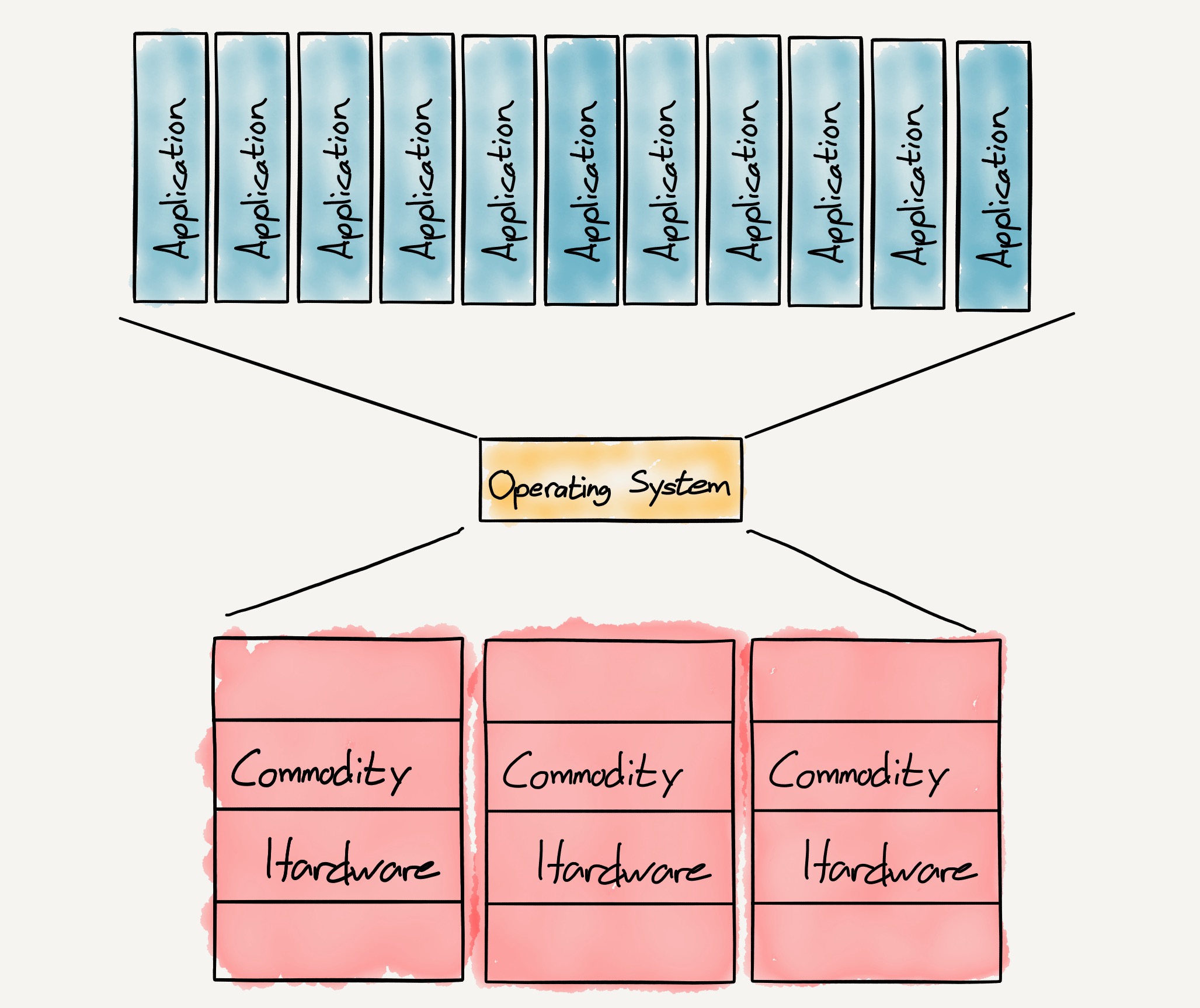
fullsizerender

Operating systems have a special allure to technology companies because of the unique properties that come from being at the center of this diagram:

  • First, by abstracting away the hardware an operating system reduces the plane of competition for hardware providers to pure performance (as opposed to, say, lock-in). In the short term this increases competition amongst hardware providers, which benefits the operating system, and in the long run, when performance becomes “good enough”, hardware is effectively commoditized allowing the operating system to capture the majority of profits in the value chain.
  • Second, by providing a consistent set of interfaces for software, operating systems create network effects: the more users there are of an operating system the more software applications that are developed for that operating system; this in turn drives more users which increases the addressable market for developers further still. In the long run this results in lock-in for both developers and users.
  • Third, operating systems by definition have a direct interface with end users, and owning the user relationship is massively valuable for the leverage it creates over entire ecosystems.

Much of the history of technology, particularly in the consumer space, is about owning the operating system.

Windows: The Perfect Business Model

The most famous operating system, of course, is Windows, which remains the best example of just how powerful owning an operating system can be:

  • Windows fostered and benefited from competition for nearly every piece of hardware in PCs, resulting in massive increases in performance and massive decreases in price.
  • Meanwhile, thanks to IBM, Windows (well, DOS to be precise, Windows’ command line interface-driven predecessor) was the default operating system for enterprise, which meant there was nearly immediately a huge and rapidly growing market for developers, which increased the desirability of Windows in the sort of virtuous cycle I described above.
  • Windows then leveraged its ownership of users to build out two other massive businesses: first its Office franchise, and then its Windows Server line of products.

The end result was one of the most perfect business models ever: commoditized hardware vendors competed to make Windows computers faster and cheaper, while software developers simultaneously made those same Windows computers more capable and harder to leave. And, all along, Microsoft collected a licensing fee that was basically pure profit.1

Mobile Operating Systems

On mobile Microsoft tried to repeat the trick, only to have its market stolen by Google’s Android, which was not only better than Windows Mobile but also free; unfortunately for Google, Android was so successful in its goal of ensuring Microsoft could never profit from the operating system chokepoint on mobile that Google itself was handicapped when it came to making money. Android provides valuable data and indirectly contributes to Google’s search-based profit-engine, but it is not nearly the business that Windows was.

Apple, meanwhile, has always had a different business model: selling hardware. That hardware, though, is differentiated by its own operating system; thanks to the sheer size of the smartphone market this has led to far greater revenue and profits than even Microsoft in its heyday, but the model is ever so slightly more fragile than Windows’ was: Apple has to not only bear the risk inherent to building hardware, but also by definition can only ever own a minority of the market. First, no company could ever build enough phones for the world, and secondly, to serve every customer would ruin the profit margins that make the business model so successful. That, by extension, has meant a duopoly with Android, resulting in most developers serving both markets; Apple still has a moat, but it’s not nearly as deep as Microsoft’s used to be.

Google and the Internet Operating System

This brief history of consumer operating systems is less complete than it seems: Android and iOS have replaced Windows in importance, but in fact Windows lost its lock-in well before Steve Jobs launched the modern smartphone era in 2007. The Internet made the operating system of the computer used to access it irrelevant, and the most dominant company on the Internet was Google.

Of course Google is not an operating system according the strict definition of the term, but in effect Google was the operating system of the Internet. Consider the qualities of operating systems I noted above:

  • While websites could be accessed directly by typing a URL, in practice most websites in the desktop era were reached via search, akin to how computer hardware was accessed via a common operating system. And, just as hardware vendors had no choice but to commoditize themselves, websites had no choice but to make themselves as Google-friendly as possible.
  • The interplay between developers and users created a virtuous cycle that created Windows lock-in; in the case of Google the interplay was between users and the data they generated. Suppose you took two otherwise identical search engines and give one 51% of searches and the other 49%: the former would steadily become better than the latter simply by virtue of having more data on which to iterate. The reality in the case of Google was much more extreme: the company started out with a technological and engineering advantage over its rivals, which earned it market share, which then gave the company data with which to increase its quality lead even further, earning it even more market share; the end result was a monopoly built on user choice.
  • Over time Google has leveraged its relationship with users to build out its own suite of products — or, in many cases, acquired companies that gave it new opportunities to grow.

Google could afford the acquisitions thanks to a new business model for “operating systems”: advertising. Advertising doesn’t make much sense for traditional computer operating systems, which need to be platforms for applications — there is no room for the ads. Google, though, was a platform for attention, not applications, and attention is exactly what advertisers crave. To that end, the business model wasn’t so different after all: operating systems are the chokepoint of the value chain in which they operate, and money always flows to the chokepoints.

Facebook’s Lucky Break

On mobile the most important chokepoint is Facebook (and WeChat in China): the average user spends nearly an hour a day on Facebook, Messenger, and Instagram, and the results are predictable:

  • Facebook’s “suppliers”, in this case publishers, have fully commoditized themselves by not only putting their content on Facebook but even using Facebook’s preferred format; they have no choice.
  • Facebook’s network effect is perhaps the most straightforward of all: it is the people you know (which is one of many reasons why Snapchat is such a threat).
  • Facebook’s ownership of users pays off with its business model as well: not only does Facebook own attention for nearly two billion people, it also has better data about who we are and what we like than any company ever; after all, we told the company ourselves.

What is so fascinating about Facebook’s dominant position on mobile is that it was in many respects a lucky accident: Facebook on the desktop had designs on being something much more akin to a computer operating system, abstracting away the underlying operating system and building an application platform on top. And, when mobile rose to prominence, Facebook tried to build their own phone, convinced that was the only way to own users.

As I just noted, though, an application platform is fundamentally incompatible with an advertising-based business model; by extension, an advertising-based business is not necessarily in conflict with the operating system on which it runs. In the case of Google, the company made its fortune on top of Windows; the dominance of iOS and Android made Facebook just an app, which was the best possible thing that could have happened to the company.

Amazon’s Phone Failure

Amazon made the same mistake as Facebook: convinced it needed its own operating system and the direct access to users that entailed, the company made one of the worst phones in history. The product was misguided for all kinds of reasons, most of them predictable: iOS and Android may have been a duopoly, but their shared developer lock-in was arguably no less imposing than Windows’ had been (as Microsoft itself found out).

More fundamentally, Amazon sought to sell the phone through hardware and OS differentiation, much like Apple, but the company could not be more different organizationally and culturally from the iPhone maker; you don’t make good products because you really want to, you make good products by fostering the conditions in which great products can be made, and Amazon’s deeply rooted culture of modularity and services was completely ill-suited for building a highly differentiated physical product.

One of the things that makes Amazon such an impressive company, though, is that modularity and willingness to make multiple bets: on October 24, 2014 Amazon took a $170 million write-off on the Fire Phone business; two weeks later, the company launched the Amazon Echo.

Amazon’s Operating System

It was apparent on day one that the Echo was a much more compelling product than the Fire Phone:

  • The physical device (the Echo) was simply a conduit for Alexa, Amazon’s new personal assistant. And critically, Alexa was a cloud service, the development of which Amazon is uniquely suited to in terms of culture, organizational structure, and experience.
  • The Echo created its own market: a voice-based personal assistant in the home. Crucially, the home was the one place in the entire world where smartphones were not necessarily the most convenient device, or touch the easiest input method: more often than not your smartphone is charging, and talking to a device doesn’t carry the social baggage it might elsewhere.
  • There was an ecosystem to assemble: more and more “smart” products, from lightbulbs to switches, were coming on the market, but nearly every company trying to be the centerpiece of the connected home was relying on the smartphone.

Amazon seized the opportunity: first, Alexa was remarkably proficient from day one, particularly in terms of speed and accuracy (two factors that are far more important in encouraging regular use than the ability to answer trivia questions). Then, the company moved quickly to build out its ecosystem in two directions:

  • First, the company created a simple “Skills” framework that allowed smart devices to connect to Alexa and be controlled through a relatively strict verbal framework; in a vacuum it was less elegant than, say, Siri’s attempt to interpret natural language, but it was far simpler to implement. The payoff was already obvious at last year’s CES: Alexa support was everywhere.
  • Secondly, “Alexa” and “Echo” are different names because they are different products: Alexa is the voice assistant, and much like AWS and Amazon.com,2 Echo is Alexa’s first customer, but hardly its only one. This year CES announcements are dominated by products that run Alexa, including direct Echo competitors, lamps, set-top boxes, TVs, and more.

In short, Amazon is building the operating system of the home — its name is Alexa — and it has all of the qualities of an operating system you might expect:

  • All kinds of hardware manufacturers are lining up to build Alexa-enabled devices, and will inevitably compete with each other to improve quality and lower prices.
  • Even more devices and appliances are plugging into Alexa’s easy-to-use and flexible framework, creating the conditions for a moat: appliances are a lot more expensive than software, and much longer lasting, which means everyone who buys something that works with Alexa is much less likely to switch

That leaves the business model, and this is perhaps Amazon’s biggest advantage of all: Google doesn’t really have one for voice, and Apple is for now paying an iPhone and Apple Watch strategy tax; should it build a Siri-device in the future it will likely include a healthy significant profit margin.

Amazon, meanwhile, doesn’t need to make a dime on Alexa, at least not directly: the vast majority of purchases are initiated at home; today that may mean creating a shopping list, but in the future it will mean ordering things for delivery, and for Prime customers the future is already here. Alexa just makes it that much easier, furthering Amazon’s goal of being the logistics provider — and tax collector — for basically everyone and everything.

  1. Remember, software has basically no marginal costs
  2. To be clear, AWS was not built using spare Amazon.com capacity, but was built to provide a services infrastructure for Amazon.com
06 Jan 04:10

Star launches free e-learning for all

files/images/star_launches_elearning.jpg


Press Release, Star Pubs, Bars, Jan 07, 2017


Star is a pub and bar company in Britain. You  lease pubs from them then eke out a living. It's in their interest to promote successful pub lessees, and so they've released  this e-learning training package of courses. Why is this important? It shows that online learning can be sustainable even when students aren't paying for it. Via  Eat Out.

[Link] [Comment]
06 Jan 04:10

Tesla Powering Up New Battery-Making Gigafactory

by Mary Beth Quirk
mkalus shared this story from Consumerist.

Tesla CEO Elon Musk’s battery-making dreams are finally coming true with the start of operations at the company’s Gigafactory in Reno, NV.

Though the factory is only a third complete at the moment, it’s already churning out solar-based battery cells on a mass scale, as of today, the company announced. The batteries will be used in Tesla’s Powerwall system for homes (see photo above), its Powerpack business system, and eventually, batteries for its promised Model 3 vehicles.

Tesla claims that its Gigafactory will double world’s production capacity for lithium-ion batteries and employ 6,500 full-time workers in the Reno area.

This isn’t just about Tesla getting its own battery factory up and running, Bloombergnotes, but about proving to investors and customers that it can actually meet a deadline — after missing so many in the past — to introduce its first mass-produced car.

In order to get 500,000 Model 3 vehicles sold by 2018, Tesla has to make its own batteries because there aren’t enough of them made elsewhere to supply its own demand. It’s also much cheaper to make your own products at home.


06 Jan 04:10

Let the next Android security update cycle begin

by Volker Weber

ZZ24CF6E57

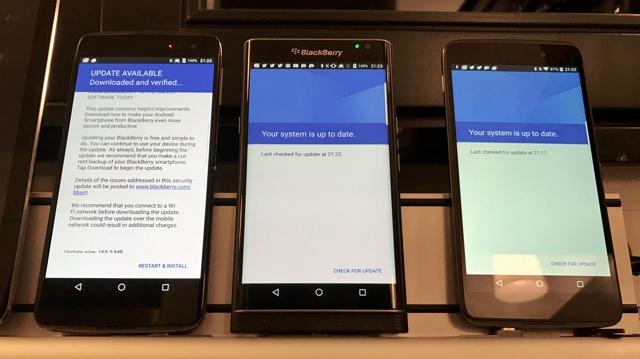
BlackBerry has made their next security update available a day early. My DTEK60 is updating as we speak. I now have three different levels:

  1. DTEK60 BBA100-2 is on 5 Jan 2017 Build AAI470 Kernel 3.18.20
  2. PRIV STV100-4 is on 5 Dec 2016 Build AAH995 Kernel 3.10.84
  3. DTEK50 STH100-2 is on 6 Nov 2016 Build AAH990 Kernet 3.10.84

I have one report of the PRIV STV100-4 on 5 Jan 2017 Build AAI459.

Please report your updates as they occur. The results are public.

[Thanks, Christian]

[Update 6 Jan 2017:] DTEK50 is now receiving the 05 Dec 2016 update. Build AAI482 Kernel 3.10.84. This appears to be the latest build and BlackBerry is still a month behind with Android security patches on DTEK50. This is a not a distribution issue.

06 Jan 04:10

Recommended on Medium: Renewing Medium’s focus

We’ve decided to make some major changes at Medium.

Continue reading on 3 min read »

06 Jan 04:09

Zhi Yong Kang’s killer sentenced

by jnyyz

Today, the woman who killed cyclist Zhi Yong Kang was sentenced to 7 years in prison, as well as a ten year driving ban. In June 2015, she hit Mr. Kang while he was crossing Finch Ave, fled, and was apprehended after a brief police chase. This story in the Star provides some background on the woman who had previous convictions for drunk driving and was driving with a suspended license at the time. Here are some images from one of her social media accounts before the event.

darya-selinevich

From the Star story it appears that the woman is now a model prisoner, and appears to be trying to mend her ways.

Seven years (less time served) is longer than sentences that have been imposed in other recent cases of cyclist deaths with hit and runs, but there were numerous aggravating factors in this case, so it is not clear if this indicates a trend to harsher sentencing.

In any case, we continue the call for vulnerable road user legislation. Cyclists stand united with pedestrians to call for all possible measures to reduce deaths on our streets from automobiles.

Friends and Families for Safe Streets is a new advocacy group that is pushing all levels of government to make measures to make our streets safer for everyone. One of the founding members is Yu Li, a friend of Peter Kang’s, who was also on the memorial ride.

DSC08645

We await judgment (if not justice) in many other cases from the past few years, such as:


06 Jan 04:09

The Real Name Fallacy

files/images/hats-e1483541812663.jpg


J.Nathan Matias, The Coral Project, Jan 07, 2017


Good article that challenges the idea that anonymity is the cause of poor behaviour on social networks (and that things would improve if we required people to use their real names). " the balance of experimental evidence over the past thirty years suggests that this is not the case. Not only would removing anonymity fail to consistently improve online community behavior – forcing  real names in online communities could also  increase  discrimination and worsen harassment." So if it doesn't actually help, why do so many pundits call for an end to anonymity? "This  provided the justification for more advanced advertising-based business models to develop, which collect more of people’ s personal information in the name of  reducing online harm." Via Ben Werdmuller.

[Link] [Comment]
06 Jan 04:09

Today’s Challenge: Trace Viral Photos Upstream

by mikecaulfield

This tweet appeared in my stream yesterday.

2017-01-04_9-04-11

I used the first photo here (guy with feet on fire) as an example in my evolving course materials on how to trace things to a source on the internet.

I also tracked down the other photos as well. It took barely any time at all. Maybe ten minutes for all four combined? (And only because one of them I got stuck on for a bit).

So challenge: can you track down the source of these other photos and tell me if they are real or staged, where they were taken, and if they involved National Geographic shoots? (Two hints: confirming at least one of the photos will involve using Google Translate to translate a page — so look for the translate option when you hit those pages. Also if you get overwhelmed by results, use Google’s date filter to show you only the oldest photos).

If you want to know how to do this in less than a few minutes for each photo, go ahead and read an early draft of the first chapter of the DigiPo course materials.

Photos follow:

c1jgn2oviay53nq

C1JgN2lVEAEMcLl.jpg

c1jgn2lveaaa7ef


06 Jan 02:34

Nikon's Mirrorless Options

Given that Nikon attacked GoPro in the action camera market and also tried to attack the high-end compact market with DLs before they tripped over their own toes, it's only a matter of time before Nikon opens up a new defense in the mirrorless realm. …

06 Jan 02:34

CES Day 0 – Square one.

by windsorr

Reply to this post

RFM AvatarSmall


IoT – everywhere and nowhere.

  • With the press cycle already revved-up well before the official opening of CES, almost everything that is on show is a known device, tool, utensil or appliance that can now work with a smartphone.
  • However, this is pretty much what we saw last year and it feels like the electronics industry remains at square one waiting for the next revolution that will drive it forward.
  • The smartphone remains firmly at the centre with almost every innovation being displayed involving a device of some description that can be controlled by the smartphone.
  • This is what I think off as IoT 1.0 or square one.
  • This is where every device is controlled by the smartphone but where every device exists in glorious isolation to all of the others that are out there.
  • For example, controlling a light bulb or air conditioning unit from my smartphone is great but other than saving on shoe leather, it doesn’t really offer the user any real benefit.
  • However, a system where all of my devices are aware of each other and can be controlled in an integrated way or can control themselves based on the user’s preferences is much more interesting.
  • This is what I refer to as IoT 2.0 and of this there is very little to be found with systems, standards and protocols remaining completely proprietary.
  • This is a problem that Apple is trying to solve with HomeKit and HealthKit and it is very telling that of the multitude of companies that I have seen in the last two days these two words were not mentioned once.
  • I suspect that this is because even the small companies have realised that the real value remains in the data and fear that while HomeKit will allow them to work well with other devices in the home, the real value will accrue to Apple rather than to themselves.
  • This is the deadlock that has to be broken before the utility of smart pet feeders, shoes, sunshades, beer makers, door locks, beds, pillows and so on really come into their own.
  • Of this there is no sign and without it, is suspect that the electronics buying public will be unenthused with paying $179 to be able to control an air conditioner for which it already has a remote control.

 Huawei – Double down. 

  • After a difficult 2016 where it fell to third place in its home market, Huawei is doubling down with the launch of its new flagship the Honor 6X.
  • The 6X is the first device to use 2 rear cameras on a mid-range device and offers a few funky photo modes to try and make its photography offering stand-out.
  • Huawei promises much better performance and battery life and is targeting to ship 30m units, double that of the 5X.
  • Its main differentiator in achieving this goal is price where the device will sell for $250.
  • The problem here is that all of its competitors are doing the same thing and while Huawei might sell 30m units of this product, I am certain that it will make almost no money doing so.
  • Huawei is symptomatic of life in smartphones where a one needs a huge scale advantage or a thriving ecosystem to make money.
  • Huawei has neither and difficulties in its home market are making it more reluctant to really invest to achieve these aims.
06 Jan 02:33

Training Groups To Build And Manage Your Community

by Richard Millington

We’ve done a lot of community training in groups.

What clients want can differ from what they need.

Many pay for the transfer of skills when they need a transfer of passion.

It’s pretty futile to sequester a group of people into a room and force-feed them community building skills.

Until you’ve felt the bug, the skills don’t matter.

And that bug comes from experiencing the community.

That experience includes asking questions, getting responses, building a reputation, seeing first-hand how the community can help them solve their problems and make valuable connections.

Once you have experienced the community, you can see the value in getting more responses to questions, building valuable relationships, and creating useful content etc…You’re eager to overcome your problems.

But you have to want to be in the room to learn those skills first.

A quick tip for anyone about to teach anyone community skills; set a simple task first. Have participants identify a problem they want to solve or a useful connection they want to make and pose this as a question in the community.

(If you don’t have a community, find the closest possible community and ask there instead.)

They have to experience community before you can teach it.

06 Jan 02:33

Will 2017 Be The Year We Admit Ad-Funding Is Ruining Everything?

by Steve

Ad-funding is why we can’t have nice things. I’ve long held this to be true, and have yet to see any useful evidence to the contrary. Pretty much every business idea that relies on it that I’ve come across has to compromise on content, context and impact due to the need for a) massive numbers of page views, and b) the invitation to click away from the thing you’re actually interested in as quickly as possible for the person hosting the thing to get paid for you looking at it.

The Surrender Of Time by Steve Lawson

As a musician, making music because I think the music itself is the thing that matters, that’s clearly useless. I’m not making sonic clickbait – I’m not trying to gather up likes and views in the hope of hoodwinking some company or other into advertising on my site/giving me money/product endorsements/record deals/whatever. The music is the thing I care about, and the process of making it available and telling the story about it is about supporting its existence.

Barnes Law, section h) “keep your art the main focus. it isn’t about you it’s about your art. do what’s good for your art”

With that in mind, this is VERY interesting stuff from Ev Williams (“Renewing Medium’s Focus” – posted on 4th Jan 2017) – he’s the founder of Medium, and interestingly, the co-founder of Twitter, a platform whose social value has nosedived as it has chased advertising money.

I was never enticed by Medium, mostly because the idea of giving away my long-form writing to yet another platform that may well collapse and take the whole lot with it struck me as very shortsighted (burned too many times, most recently by Posterous which Twitter bought and shut down, taking about 17 different websites of mine with it – some are back up in skeleton form at Posthaven, but their value and utlity is destroyed)

But I’m glad that Ev is (finally?) questioning the wisdom of ad-funded media online. This for me, is the key paragraph:

“Upon further reflection, it’s clear that the broken system is ad-driven media on the internet. It simply doesn’t serve people. In fact, it’s not designed to. The vast majority of articles, videos, and other “content” we all consume on a daily basis is paid for — directly or indirectly — by corporations who are funding it in order to advance their goals. And it is measured, amplified, and rewarded based on its ability to do that. Period. As a result, we get…well, what we get. And it’s getting worse.”

The whole thing is worth a read, and it’s worth pondering what these reflections say about the relationship between music and ad-funding… While my music is on a couple of ad-funded sites (most notably YouTube) I’ve consciously chosen not to try and monetise it there at all, but instead just to see Youtube as a place that handily hosts video and has a large user base. That’s it. It’s unlikely to ever feature too heavily in how I pay my bills…

The bill paying bit of my music online is currently entirely based around Bandcamp – alongside gigs, teaching, speaking at events, journalism, session work, that’s where I seek to do good work, try to understanding the world through the whatever lens seems the most useful at the time, and somehow not end up homeless in the process. If you want to be a part of that, my subscription service there is the best possible option for both of us – see stevelawson.bandcamp.com/subscribe for more info. I was teaching a ‘marketing the creative arts’ college class yesterday, looking at Bandcamp, and it brought home just how well the advantages for artists are also the advantages for music buyers – there’s almost no ‘win/lose’ aspect to it for anyone…

What do you think? Does advertising have a future as a way of funding news and art online? Friends in ad-funded business seem to be having a really hard time making it work, certainly making anything of value AND making it work… you either own every step in the equation (ie, you’re Google or Facebook, and you own both the platform, the ad business and the massive global data-harvesting project that is actually the product you sell) or you end up making money for one of those two in the hope that you’ll get somewhere further on down the line… Meanwhile ad-funded start-ups are collapsing all over the place, and musicians are desperate to have a ‘viral’ YouTube hit in the hope that they’ll get some return on their video production costs… That doesn’t sound like the kind of world I want to live in. You?

[addendum – it’s worth pointing out that Bandcamp is a 3rd party site that could also at some point go down leaving me with no sales platform or anything, having put all my eggs in that one basket… my reasons for seeing it as significantly different to Posterous/Medium/Facebook etc. is a subject for another post soon, but it did seem like a thing that was worth flagging up at this point…]

06 Jan 02:32

Twitter Favorites: [ruk] "I Moved to Montreal!" https://t.co/YChOivKwNU

Peter Rukavina @ruk
"I Moved to Montreal!" ruk.ca/content/i-move…
06 Jan 02:32

A business model for Medium (and the rest of online content)

by Josh Bernoff

Medium CEO Ev Williams posted that he’ll be pivoting the company toward a mysterious new business model: [W]e are shifting our resources and attention to defining a new model for writers and creators to be rewarded, based on the value they’re creating for people. And toward building a transformational product for curious humans who want … Continued

The post A business model for Medium (and the rest of online content) appeared first on without bullshit.

06 Jan 02:31

Decoupled Drupal with Ember: Introducing Ember and JSON API

files/images/blackhole.jpg


Preston So, Acquia, Jan 08, 2017


Content management systems are making the transformation from being website hosts to being data services. In this way a single CMS can serve any number of different applications, websites, or data services. This article describes how a Javacript framework called Ember is performing this task with the Drupal CMS.

[Link] [Comment]
06 Jan 02:23

Change in rain, 2016

by Nathan Yau

In some areas of the United States it poured down rain, which caused historic floods, and in other areas there was a lack of rain, which caused historic drought. The Washington Post has a map for that. Purple means less rain than usual, and green means more.

Tags: rain, Washington Post, weather

06 Jan 02:23

3 Ways Photographers can Grow or Diversify

by Gail Mooney

Partner with your competitors.

Chicago 1920's
Chicago 1920’s

I know three successful still photographers working in the Midwest area of the country shooting and competing with one another for regional and national clients. They recently formed a separate production company and are shooting broadcast commercials for the national market. It has proven to be a smart move for them. They’ve expanded their businesses by offering video solutions that meet their clients’ needs and have collaborated with one another by bringing different skill sets to the video production team. I often think that we (photographers) miss out on collaborative opportunities due to our independent nature. But I’ve learned that when I work in a collaborate team and we each bring our own perspective and skills to the whole, it has made me raise my own bar. Partnering doesn’t solely pertain to video production. It works in any business that benefits from scaling up.

Shoot outside your niche. I’ve always been a commercial still photographer working primarily in the editorial and B2B markets. About 15 years ago my partner/husband and I started exploring the motion medium. We began by shooting stock motion footage on 35mm film, which was a very expensive proposition, but I fell in love with this medium. When digital video hit the scene, my passion for storytelling led me straight to it. Digital video enabled me to shoot in the motion genre with our small team and at an affordable cost.

Kelly/Mooney is now a fully integrated still and video production business in the commercial market. We recently embarked into the retail niche offering high quality “Ken Burns” style family biography films (videos).

School children - 1930's
School children – 1930’s

Every family has a story to tell and I wanted to use my craft as a filmmaker to tell their stories for future generations. I’m finding that people desperately want to organize and preserve their family photos whether they are digital images or inherited analog snapshots. I didn’t want to just digitize their family photos and put them on DVD’s. I wanted to capture their family stories with on-camera interviews of their loved ones retelling them in their own voice while they are still here to tell them. It has been well received but it comes with a learning curve and getting to know the retail market.

Shoot what you want to shoot. Shoot something that you are passionate about not because you think it would make a good promotion piece or portfolio sample. It could be that you photograph something you are interested in and have access to. As a female photographer I’ve spent the better part of my career working in a male dominated profession. I decided to seek out other women who work in male dominated fields and create a series of short videos about them. Here are some of the amazing women I met; Natalie Jones a helicopter pilot, Simona deSilvestro a professional racecar driver and Patrice Banks and auto mechanic and engineer. Working on this series not only keeps my skill set sharp but has led to making some great connections.

Don’t think that you have to pursue an overwhelming topic or project. You may just want to explore with your phone. We live in an age that I used to dream about – an age where technology makes it possible and even easy to create the images that only exist in our mind’s eye. Technology has made communicating visually immediate and spontaneous. Think about the power and the opportunities that provides.


Filed under: Business, Family Biography, Marketing & Distribution, Story telling, Video, Women Tagged: #photography#video#FamilyBiographyVideos#gender equality#diversification, Collaboration, digital video, Video Production
06 Jan 02:23

I Like To Make Stuff – Raspberry Pi Builds

by Alex Bate

If you follow us on Facebook or Google+, you’ll probably be aware of my maker crush on Bob Clagett. And if you work in the Pi Towers office, you’ll have noticed the I Like To Make Stuff merchandise that covers my desk.

Subscribers to the I Like To Make Stuff channel will be aware of Bob’s easy-to-follow style of building. I first discovered him when he was building a hidden room behind a bookcase and was instantly hooked…because who wouldn’t want a hidden room behind a bookcase?

More recently, Bob has started to incorporate tech into his builds. Last February, Bob built a gorgeous arcade cabinet for his home, complete with RetroPie innards and a decal of his family as superheroes.

He then moved on to a Pi-powered display sign for his workspace, a micro version of his arcade cabinet running Kodi, and a bar-top gaming cabinet for those with less space.

For anyone wanting to make a RetroPie build, it’s worth watching this playlist. And for anyone wanting a clear tutorial for using Raspberry Pi for signage, you can’t go wrong by checking out his walkthrough.

While we’re talking about subscribing and the internet, make sure to follow our accounts at YouTubeFacebook, Twitter, Instagram, Google+, and Snapchat as we continue to share great projects such as this from makers across the globe. And if you find any that you like the look of, share it with us using the #RaspberryPi hashtag. We get LOADS of mentions daily, so feel free to increase my workload!

The post I Like To Make Stuff – Raspberry Pi Builds appeared first on Raspberry Pi.

06 Jan 02:22

Sears To Sell Craftsman Brand To Black & Decker For $900M

by Ashlee Kieler
mkalus shared this story from Consumerist.

Sears isn’t just trying to stave off the grim reaper by closing stores and borrowing hundreds of millions of dollars from CEO Eddie Lampert twice in two weeks. The beleaguered retailer is selling off its iconic Craftsman brand to Stanley Black & Decker for $900 million.

Sears announced Thursday that it had reached a purchase agreement with Stanley Black & Decker that will allow the Craftsman brand to be sold at an array of other retail outlets.

Through the agreement, Black & Decker will receive the rights to develop, manufacture, and sell Craftsman-branded products in non-Sears Holding retailers, industrial, and online sales channels.

Currently, just 10% of Craftsman-branded products are sold outside of Sears Holdings.

Sears won’t lose all of its ties to the iconic brand it first bought in 1927. Instead, under the agreement, the company will continue to offer Craftsman-branded products through a license from Black & Decker royalty-free for 15 years.

Are you a fan of Craftsman tools? Tell us how you feel about today’s news by shooting us an email with your thoughts at tips@consumerist.com

“We are pleased to reach this agreement, after determining that externalizing the Craftsman brand would accomplish our goals of driving value for Sears Holdings and positioning Craftsman for future growth,” Sears Holding Chairman and CEO Edward Lampert said in a statement.

Stanley CEO James Loree says in a statement that his company plans to invest in the brand and continue “producing quality products at a great value.”

The terms of the deal stipulate that Stanley Black & Decker pay $525 million at closing and $250 million in three years, as well as annual payments on new Stanley Black & decker Craftsman sales for 15 years.

The deal, which has been approved by the Boards of Directors for both companies, is expected to closed sometime in 2017.

The sale of Craftsman is just the latest in a series of moves to generate cash and prop-up the sinking retailer.

In May 2016, the company said it was exploring unspecified alternatives for its other house-brands Kenmore and DieHard. The following month, Sears said it would begin selling Kenmore TVs. However, Bloomberg reports that the brands are still being earmarked for potential sales.

Additionally, just yesterday, Consumerist reported that the company would borrow another $500 million from its CEO until it could sell more stores.

“Did you just say another?” Yes, we did. In Sept. 2014, the company borrowed $400 million from ESL Investments, a hedge fund entirely owned by Lampert. Two years later in Aug. 2016, the company borrowed $300 million from the same hedge fund.

More recently, at the end of the year, company announced it had secured a letter of credit from the hedge fund of at least $200 million maxing out at $500 million, which allows Sears Holdings to keep its cash flow going as it continues to pretend to operate a retail company.

Are you a fan of Craftsman tools? Tell us how you feel about today’s news by shooting us an email with your thoughts at tips@consumerist.com


06 Jan 02:22

Medium shifts direction, away from ads and towards… what, exactly?

by Stowe Boyd

Apparently, the ad model isn’t working

Continue reading on Medium »

06 Jan 02:22

Medium shifts direction, away from ads and towards… what, exactly?

Apparently, the ad model isn’t working.


In another zigging of the zag called Medium, Ev Wiliams and his lieutenants have returned from a winter retreat and decided – despite readership and published posts being up 300% in 2016 – to make major corrections in the company’s direction. 

Of course, the company’s old direction was unclear, and despite his explanation in Renewing Medium’s Focus we are still unclear as to why it was necessary to close the company’s New York and DC offices and lay off 50 sales, support, and business people.

Recall that Medium has zig-zagged before. In May 2015, Ev wrote Medium is not a publishing tool, laying out a case for Medium as a social network:

We started out by building a great tool for writing. And it’s not even the editor itself that created the main value. It was the fact that you could easily write and share a story without the setup, overhead, or commitment level of starting a blog. It’s clear that there are many more people who occasionally have valuable perspectives to share than there are people who want to be “bloggers.” These people love writing on Medium, even if they see it as just a tool to create a nice page to point people to from Twitter.

[… Ev discusses specifics of social affordance on Medium, like comments and highlighting, as areas where Meidum has more to do. …]

But every day we’re seeing growth of this activity and great examples of the network power of Medium being realized.

That’s why I say Medium is not a publishing tool. It’s a network. A network of ideas that build off each other. And people. 

To which I responded in What’s Going On At Medium?,

So, it’s a network, I guess, built around longish form writing.

But unmentioned in his post is the news that the company’s investment in its own publications is reportedly being trimmed, and structural changes are being made. As reported by Business Insider, The Message will now be managed by the team at Matter, while the former ‘writers at Matter’ will now just be ‘Medium writers’. War Is Boring – arguably one of the best investigative journalism site on war – is leaving Medium. Re:form – Medium’s design publication – has been closed after no one stepped up to sponsor after BMW dropped out. Likewise, The Archipelago has been shut down, and those writers are out.

As a Medium user most of this is perhaps irrelevant, except to the degree that the turmoil reflects barriers to adoption of the Medium network/platform. As a user, I would like to see interesting stuff to read, smart people to interact with, and an improving user experience. Much of that has been happening, but I fear that the zigging and zagging of the company’s direction will lead others to quit the network/platform.

So, I am betting that once again back office business realities are intruding at Medium, and these are sparking the course correction and layoffs. The obvious observation is that growth in page views and posts are not linearly related to revenue, so there finances are likely to be the reason for cost cutting, like shuttering offices, and reducing head count in general. 

The specifics of the directional change is less clear. 

Williams says in his post yesterday, 

We are also changing our business model to more directly drive the mission we set out on originally. 

Which he nows states was, and is, to be a new publishing platform (despite the title of his zig-zag post in May 2015). In yesterday’s post he makes this ‘clear’,

Our vision, when we started in 2012, was ambitious: To build a platform that defined a new model for media on the internet. The problem, as we saw it, was that the incentives driving the creation and spread of content were not serving the people consuming it or creating it — or society as a whole. As I wrote at the time, “The current system causes increasing amounts of misinformation…and pressure to put out more content more cheaply — depth, originality, or quality be damned. It’s unsustainable and unsatisfying for producers and consumers alike….We need a new model.”

We set out to build a better publishing platform — one that allowed anyone to offer their stories and ideas to the world and that helped the great ones rise to the top. In 2016, we made big investments in teams and technology aimed at attracting and migrating commercial publishers to Medium. And in order to get these publishers paid, we built out and started selling our first ad products.

Apparently, the ad model isn’t working. 

We had started scaling up the teams to sell and support products that were, at best, incremental improvements on the ad-driven publishing model, not the transformative model we were aiming for.

To continue on this trajectory put us at risk — even if we were successful, business-wise — of becoming an extension of a broken system.

Upon further reflection, it’s clear that the broken system is ad-driven media on the internet.

So, he wants to move to a business model that’s not reliant by the ad system, but one where authors (and publishers, presumably) are ‘rewarded based on the value they’re creating for people’. As he says, 

We believe people who write and share ideas should be rewarded on their ability to enlighten and inform, not simply their ability to attract a few seconds of attention. We believe there are millions of thinking people who want to deepen their understanding of the world and are dissatisfied with what they get from traditional news and their social feeds. We believe that a better system — one that serves people — is possible. In fact, it’s imperative.

So, we are shifting our resources and attention to defining a new model for writers and creators to be rewarded, based on the value they’re creating for people. And toward building a transformational product for curious humans who want to get smarter about the world every day.

So this looks like an adoption of subscription-supported publishing, or pay-per-post, or something else along those lines. Perhaps he wants to allow publishers to build subscriber-supported publications like The Information? Or build a system like Spotify, that distributes royalties based on usage?

At any rate, it’s not clear what he’s going to do, and so to some extent this feels like the frosting troweled onto a layoff. But maybe he has a plan in the making. He just hasn’t laid out the specific yet, so it’s hard to judge.

06 Jan 02:14

Vancouver Winter, Salt and BYOB.

by Sandy James Planner


article-2520578-19f77c8f00000578-869_306x423

Vancouverites could always tell if a vehicle was from out-of-town due to the salt and gritty exteriors of those cars in the winter. Well, that whole paradigm has changed with Vancouver having a winter wonderland twice in late December and with a repeat performance being scheduled handily for the weekend.

Motorists, cyclists and pedestrian commuters have all had their shares of thrills and spills, including the television station that always films cars unfortunate enough to try to go northbound on Oak Street between Broadway and 6th Avenues. Apparently BMWs  fifteen years ago  consisted of a lot of rear wheel drive vehicles. Apparently everyone that has a rear wheel drive forgets this fact until they get to this hill.

2300_bike_lane_snow_rem_vaf0b8v2_tnb_4

So why use salt on sidewalks and roads? While water normally freezes at 0 degrees centigrade, that threshold drops once you add salt, allowing everyone to move around a bit easier. With City Hall back to work after the annual holiday closure,  the fire halls were pressed into service to provide-salt to eager Vancouver residents trying to make the sidewalks and roads in front of their residences a bit more walkable. And there were line ups around fire halls for salt, and even a pile of salt that was allegedly “stolen”-but I expect it has gone to good use on someone’s city sidewalk or roadway. “BYOB” in this case means “Bring Your Own (salt) Bucket”. Originally you were allowed to take two buckets of salt, but demand is now limiting Vancouverites to one free bucket per visit.

salt-frenzy

The City of Vancouver is now working with their 2017 year budget and quickly got to work deploying staff to remind residents that they have to clean off the walk in front of their properties. While all the Metro Vancouver municipalities require this action, when you need to do it by and what the consequences are if you don’t do it differ.  CKNW has created a handy interactive map so you can view the regulations for your metro community.

Vancouver also has a “Snow Angel” program that matches  those that can’t shovel out with someone who can. Enjoy the weather, watch your step, and remember Spring is a mere ten weeks away.

c1riuldw8aeyddh-e1483486322484


06 Jan 02:12

Creeping Ubiquity

by Ken Ohrn

Went to Granville Island yesterday for this n’ that. Found that one of the motor vehicle parking buildings has central, safe lockups for them evil infernal machines — bicycles.

If we don’t take action soon, they’ll be everywhere!! And then where will we be?  Healthier, happier, living in a less expensive city.  Oh my!  When will this madness stop?

ggranville-island-bike-lockup


05 Jan 19:42

These Colorful Patterns Trick Computer Facial Recognition to Fight Surveillance

by Kevin Holmes for The Creators Project


HyperFace OpenCV Prototype©Adam Harvey

Fighting the surveillance state with fashion has been a longterm project of artist Adam Harvey. His camouflage makeup and hair cuts for his CV Dazzle project back in 2012 aimed to throw off the "scent" of facial recognition software by masking your face. Now Harvey is launching a new countersurveillance technique, this time called HyperFace.

The project, a collaboration with interaction studio Hyphen-Labs, features various patterns that are designed to trick facial recognition software into thinking it's seeing eyes, mouths, and the components of a face on the clothing you're wearing. So the pattern can be printed on clothes or textiles and worn round your head or as a scarf or whatever and used to fool the software—software used by the likes of Facebook and retailers—by having it focus on "its face," rather than yours. 

It's "overloading [an algorithm] with what it wants," Harvey says. "Oversaturating an area with faces to divert the gaze of the computer vision algorithm," meaning, it can "modify the environment around you, whether it's somebody next to you, whether you're wearing it around your head. "An early prototype fooled the computer vision face detector into seeing over 1,200 possible face detections or 'confidence mappings.'"


HyperFace. Screengrab via

At the moment Harvey has produced a few prototypes, with different patterns targeting different algorithms—neural networks, OpenCV. The project was first revealed in a talk at the Chaos Communications Congress in Hamburg in December 2016 and the final designs are still being developed. But it will launch as a textile print at the Sundance Film Festival on January 16, 2017, as part of Hyphen Labs' NeuroSpeculative AfroFeminism project, which explores black women and their roles in technology and society. The textile prints will also be commercially available, you can sign up to a mailing list to find out when that will be.

HyperFace seems to work as a compliment to the CV Dazzle, although the way it fools facial recognition is decidedly different. "Conceptually, HyperFace recognizes that completely concealing a face to facial detection algorithms remains a technical and aesthetic challenge," notes the project page. "Instead of seeking computer vision anonymity through minimizing the confidence score of a true face (i.e. CV Dazzle), HyperFace offers a higher confidence score for a nearby false face by exploiting a common algorithmic preference for the highest confidence facial region. In other words, if a computer vision algorithm is expecting a face, give it what it wants."

Harvey notes in his Hamburg talk that in 100 years he thinks we'll have a transformation of fashion, one where we will be styling ourselves to optimize our personal privacy and combat mass surveillance. You can watch Harvey's entire talk from the CCC conference, below.

Learn more about HyperFace on the project's page. Learn more about Adam Harvey at his website here. Learn more about Hyphen-Labs at their website here.

Related

Dutch Designers Just Launched an Anti-Surveillance Coat

Surveillance Art Takes Action in a Post-Snowden World

1984-Inspired Fashion Collection Protects Your Phone With Anti-Surveillance Tech

05 Jan 19:42

CES Unveiled previews 2017’s emerging technology trends

by Tom Emrich

This is a big year for the Consumer Electronics Show (CES) as it turns 50, with the Consumer Technology Association (CTA), the producing organization behind the event, promising 3,800 plus exhibitors.

During a sneak peek media preview event dubbed CES Unveiled, I got the chance to check out many of these exhibitors and saw a number of recurring tech themes while walking the floor. 

All things smart

Catspad-smart-automated-cat-feeder

As expected, there was a number of ‘smart’ products for your home at Unveiled. CTA expects that the smart home market will add up to $3.5 billion USD in revenue this year, with over 29 million units making their way into people’s home. Everything at Unveiled was connected, from cat feeders to shower heads and more. What was new this year were the number of devices that featured Amazon Echo support, such as asking Alexa to find your keys using Trackr, or inquiring about the air quality in your house with Coway’s smart air purifier, Airmega.

As an owner of two cats, I was impressed with Catspad, a connected cat feeder that uses RFID to detect your cat and dispense its food. This automatic feeder lets cat owners control the time, amount and how often your cats are fed and keeps tabs on their eating and drinking habits in the companion mobile app.

hydrao

There were also a number of connected solutions designed to help with water management. Hydrao, for example, uses colour to cue your water usage in the bath tub. Using an integrated LED system, this smart shower head lights up the water spray with different colours depending on the amount of water used. Like all smart things, you can view your water consumption over time via a companion app. 

This year’s Unveiled also featured connected toys, connected beds and connected toothbrushes.

Accessories aim to make VR more natural and immersive

Hand-controllers-part-of-the-Taclim-tactile-VR-system-by-Cerevo

2016 was a banner year for VR HMDs, with both mobile and PC devices hitting the market. According to analytics firm CTA, 2017 will continue to see growth in this space with 2.5 million AR/VR hardware units expected to ship, bringing in $660 million in revenue.

Although there were few new VR HMDs at CES Unveiled apart from a design prototype of LG’s upcoming Windows 10 Holographic VR headset, VR accessories were prevalent. Japanese company Cerevo — which showed off its projector robot Tipron last year — demonstrated Taclim, a set of gloves and shoes with built-in haptic feedback which let users feel the virtual world.

HYPERSUIT-by-Theory-is-a-VR-simulator

Taclim features a total of eight haptic zones across hands and feet which can be individually configured with different patterns and intensity to make VR feel more real. Both the shoes and gloves (and I am using these terms loosely as you can see from the pictures) are also equipped with 9-axis sensors which also make them an input device to capture movement. The system will be available for purchase in the Fall of this year with a hefty price tag between $1,000 to $1,500.

Cerevo wasn’t alone in the quest to put our bodies in VR, either. 3D Rudder’s foot controller, Theory’s elaborate flight simulator, Hypersuit, Xenoma’s 14-sensor motion capture suit, e-skin, and the uSens hand-tracking sensor, Fingo, were also all at Unveiled.

Wearables for everyone

Octopus-watch-for-kids---close-up

With over 250 wearable exhibitors expected at CES, it was no surprised that Unveiled was flooded with wearable tech. There was a wearable for everyone on the floor, from babies to cyclists, to horses and dogs. Amidst this sea of wearables, Joy’s Octopus watch for kids stood out.

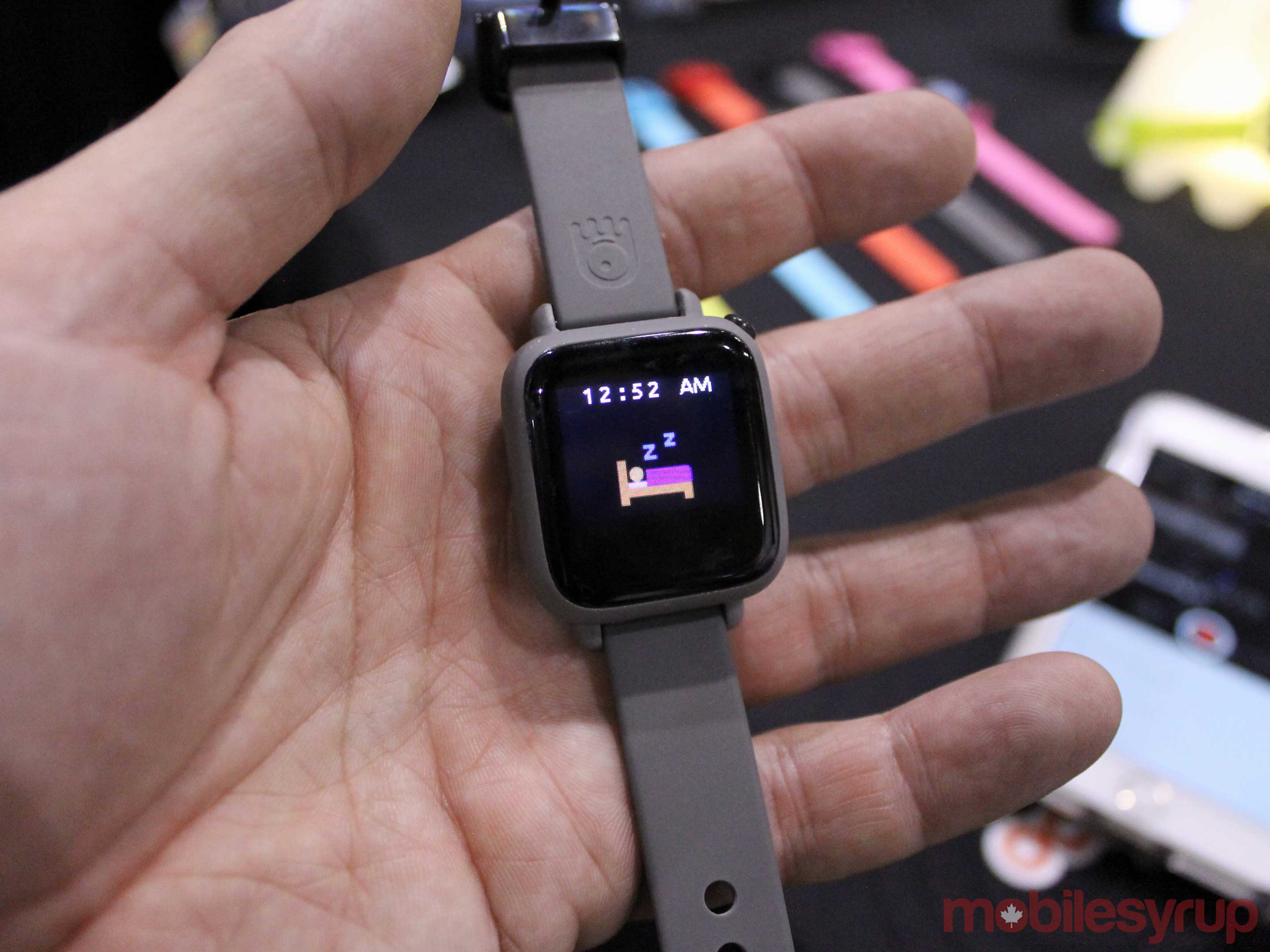
Octopus is a simple smartwatch for kids between 3-8 which uses icons to teach them good habits and the concept of time. Parents use the companion Octopus app to configure reminders leveraging over 500 icons representing anything from ballet class to brushing your teeth. The watch comes in five different colours and is one of the first kid’s devices that is small enough to fit a tiny wrist. Along with the watch, Joy is also offering an optional octopus charging cradle which doubles as a nightlight when the watch is attached.

Flow-by-Plume-is-a-wearable-air-pollution-monitor

From kids to pets, EquiSense was showing off two wearables for horses including a device that measures a horse in action including jumps and various gaits and a harness meant to monitor the overall well-being of the animal. Jagger-Lewis was previewing its smart dog collar, which keeps tabs of your pup’s movements such as eating and sleeping and then uses this data to determine the dog’s behaviour.

Unveiled also featured wearables designed to keep cyclist safe such as In&Motion’s wearable air bag, devices that monitors air quality like Plume’s Flow, and even wearables claiming to make you less nausea such as Reliefband’s latest device the Neurowave.

Hearables want you to personalize your listening experience

LIZN-hearables-in-use

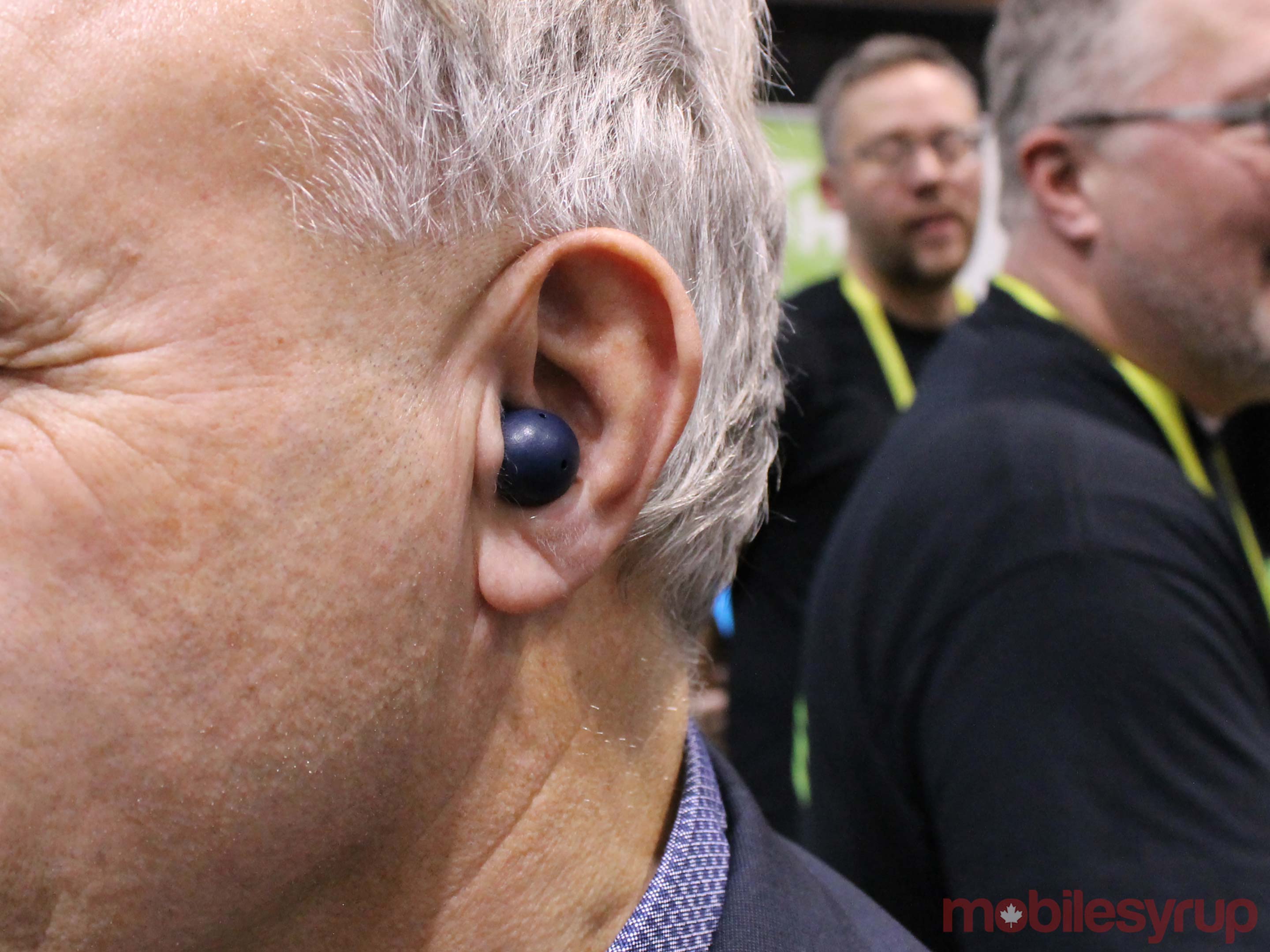
One of the most interesting categories of wearables at Unveiled were connected earbuds that augment how you hear the world around you. Nuheara showed off its wireless IQBuds, which are part Bluetooth earpiece, part noise cancelling headset and part assisted listening device. IQBuds offer dynamic noise control to selectively tune in or out the world around you, blended audio between digital and the real world and advanced speech amplification to enhance your ability to hear speech in crowds. Similarly, Lizn has created a wireless headset which, when you tap on it, triggers its directional microphones to help you hear what someone is saying in a noisy environment.

Hearing aid company, Oticon, was also at Unveiled, showcasing an internet connected hearing aid, Oticon Opn, that uses IFTTT to let users talk directly to smart things in their home such doorbells, thermostats and smoke detectors using the connected Oticon Opn app.

Nuheara-Trio-wide

The app also turns the hearing aid into wireless stereo headphones to listen to TV and music, check the device’s battery life, adjust the volume and even help you find your hearing aid if you’ve misplaced it. Although Oticon is marketing itself more as a hearing aid rather than a consumer device like Nuheara and LINZ, the company’s new connected features along with its offering of many styles could position the company to break into the consumer market as hearing aids continue to be democratized for the general public.      

Drones that will help you capture any moment

GDU-Byrd-drone---another-shot

Drones have quickly become a staple at CES. CTA says that we will see 3.4 million drones ship in 2017, up 40 percent from 2016. Drones that help you capture any moment were a big trend at Unveiled. Zero Zero Robotics featured its ultra-portable selfie drone, the Hover Camera Passport.

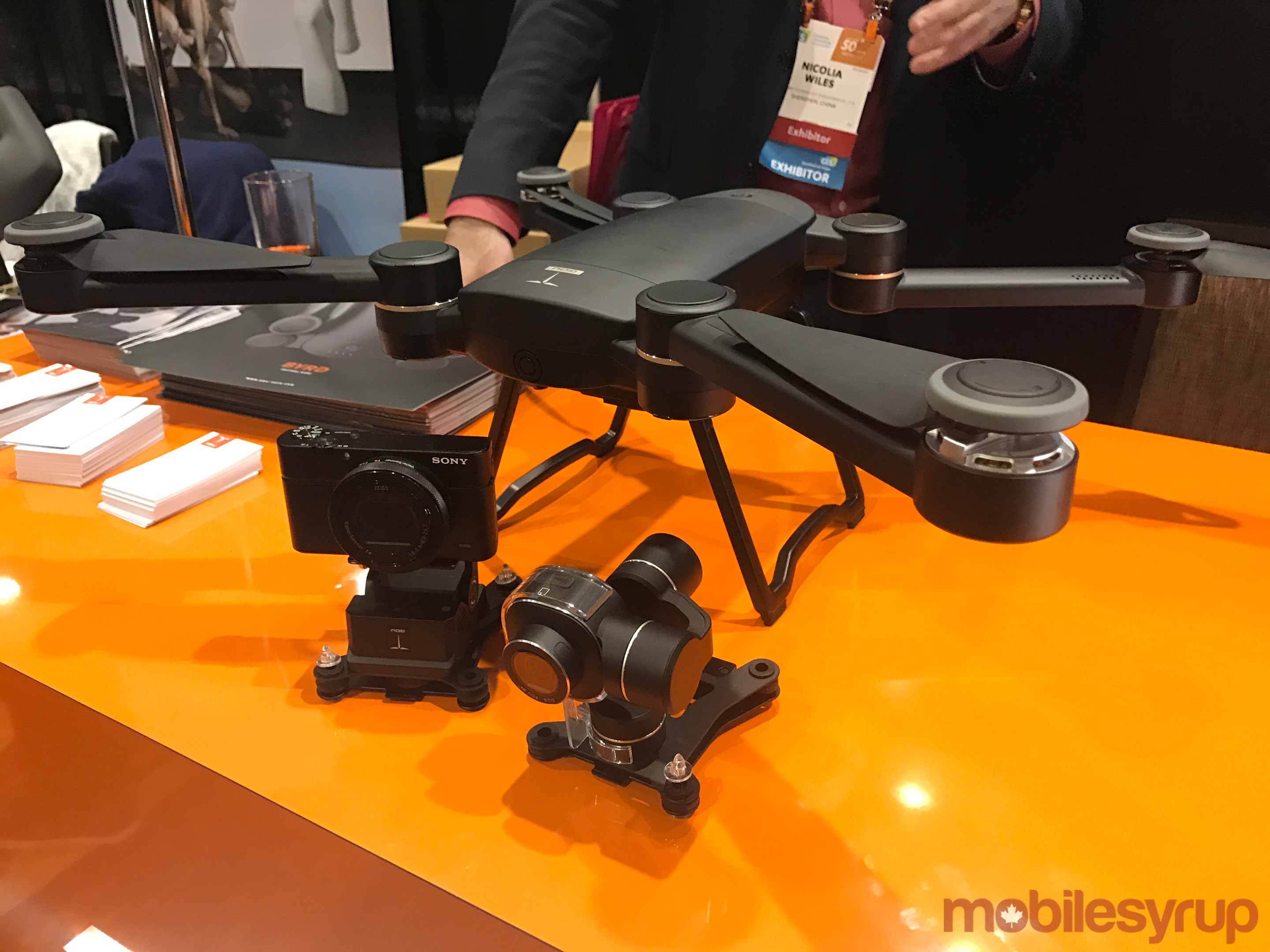
Retailing for $599, this flying camera boasts how easy it is to operate and features auto follow, unique perspectives such as close-range shots and 4K video and 13 megapixel photos. GDU was showcasing its premium drone, Byrd, which features a camera gimbal system which lets you switch out the shooter. 

PowerVision's-PowerRay-underwater-drone-has-optional-VR-Goggles-to-give-you-a-whole-new-POV-on-fish

But perhaps the most unique perspective offered by a drone at Unveiled, was from PowerVision, which debuted its new underwater robot drone, PowerRay. The PowerRay robot can dive as deep as 30 meters or 98 feet underwater, and users can view real-time transmitted photo or video captured by PowerRay’s integrated 4K UHD camera via a the companion app. The PowerRay features an optional add-on fish finder which uses a sonar system to detect fish. PowerRay also supports an optional PowerVision VR Goggle to provide a thrilling underwater view through virtual reality technology. 

The personal robots are coming

Kuri-robot-by-Mayfield-Robotics---another-shot

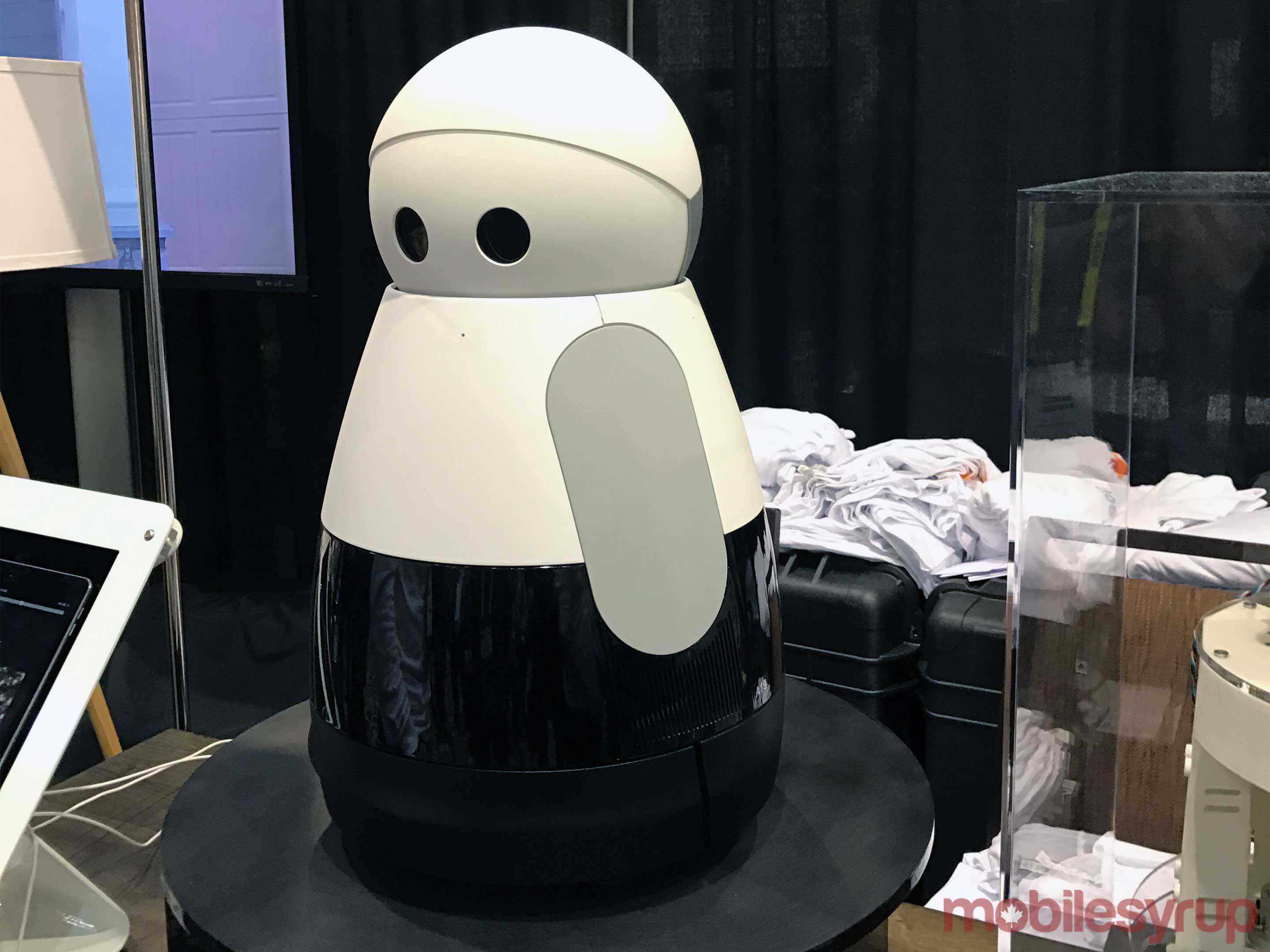
Nothing says the future like a personal robot and I was quite happy to see some robotic faces at Unveiled this year. Mayfield Robotic’s Kuri was the most memorable. This adorable 20-inch tall social robot will keep your child company, play music and respond to voice commands to control your smart home using IFTTT. Kuri also has a built-in HD camera, allowing users to remotely check on their pets while at work. 

The robot has a variety of sensors it uses to map and detect objects and areas in your home and comes with a charging dock which it will return to when it needs to refuel. Mayfield is selling Kuri for $699 USD with a shipping date just in time for the 2017 holiday season.

Cutii-from-Yumii-is-a-robot-that-will-take-care-of-the-elderly

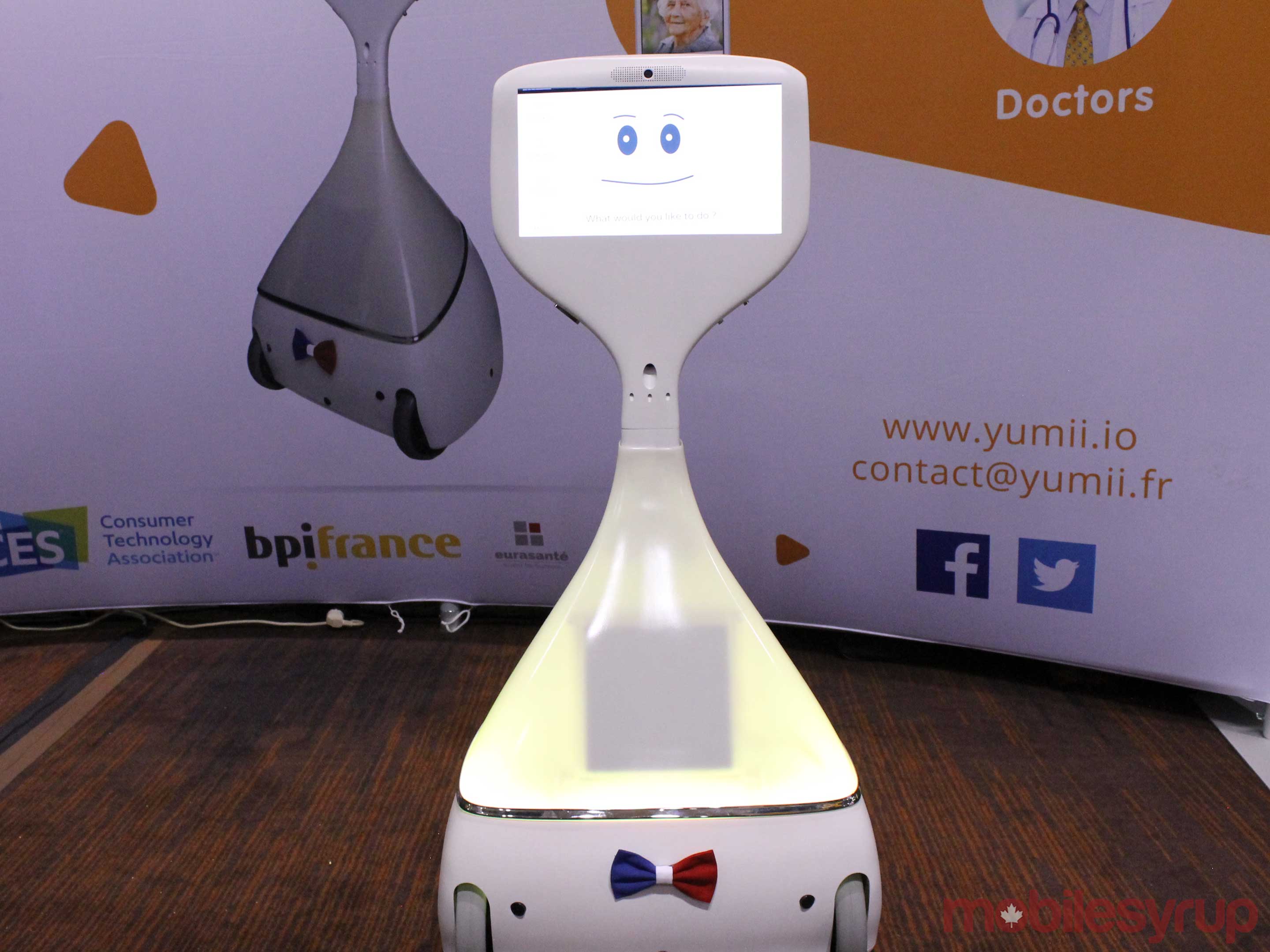
Cutii (pronounced “cutie”) is a robot whose job is to take care of the elderly. Created by Yumii, this robot serves as a collaborative home platform linking family, doctors and helpers to the user to assist them with their everyday living.

The robot uses voice commands to help find information on the web, start a video chat or provide the user with medical information. Yumii hopes that this robot can help solve the problem of isolation in elders which is common as they begin to lose their mobility and independence. 

05 Jan 19:41

University of Waterloo research team help build Renesas autonomous car

by Jessica Galang

Twenty-five researchers from the Waterloo Centre for Automotive Research (WatCAR) contributed to the development of an autonomous vehicle that Renesas Electronics America unveiled at CES in Las Vegas.

The University of Waterloo-based team includes professors Sebastian Fischmeister and Steven Waslander, from Waterloo’s Faculty of Engineering; and Krzysztof Czarnecki, cross-appointed to Waterloo Engineering and the Cheriton School of Computer Science in the Waterloo’s Faculty of Mathematics. The researchers contributed a framework architecture of computer programs to enable the car to operate autonomously, as well as mechanisms to ensure safety in different driving scenarios.

Using sensors and computers, the car is capable of detecting and responding to other vehicles, stop signs, and traffic lights. One of its features include vehicle-to-infrastructure communications allowing the vehicle to detect in advance when a traffic light will change. The car uses the same Lincoln MKZ base model as Autonomoose, Waterloo’s automated car that received approval from the Government of Ontario in November as the first autonomous vehicle approved for testing on public roads in Canada.

Other partners that contributed to the car’s development include BlackBerry QNX. Acerta Systems Analytics, a UWaterloo spinoff, is providing performance and safety monitoring for the autonomous vehicle fleet.

“Working with Renesas, we’ve made great strides in developing a reference design for autonomous driving, and greatly accelerated our research agenda in all-weather autonomy and functional safety,” said Waslander, the autonomy lead on the project and professor in the Department of Mechanical and Mechatronics Engineering at Waterloo.

Waterloo researchers conducted testing of the car at a local test track and in a parking lot in Stratford, Ontario, modelled on the Las Vegas demonstration site with the added complexity of adverse weather conditions.

“We are pleased to have the University of Waterloo as a contributing partner to our new autonomous vehicle,” said Amrit Vivekanand, vice president of the Automotive Business Unit at Renesas Electronics America. “With Waterloo, we have established a deep working relationship, engaging with them beyond traditional academic levels of collaboration.”

The team is demonstrating the prototype on a closed course at CES.

Photo credit: investStratford/Terry Manzo

This article was originally published on BetaKit

05 Jan 19:41

Vine will shut down on January 17 and transition into a camera app

by Rose Behar

Download your loops while you still can.

Vine has tweeted that the six-second looping video app that gave rise to personalities like King Bach and Brittany Furlan will turn into Vine Camera on the 17th of January, 2017.

Vine Camera has a similar concept, but only allows users to post 6.5 second looping videos to Twitter or save them to their camera roll. In its FAQ, Vine warns: “You will not be able to do any of the other things you can currently do with the Vine app. Once the Vine Camera is live, you will no longer be able to download your Vines from the app.”

Those who choose to download their vines also receive their captions as well as number of likes, comments and re-vines per post. They will not, however, be able to retain their followers, or transfer them in any direct way to Twitter — though the app will prompt followers to follow the creator on Twitter.

As for Vine’s website, the app says it will transition into an archive of vine content and users with vanity URLs will continue to have a dedicated profile on the site.

The news has been a blow to the app’s most dedicated fans and will mark the end of an era for a specific type of digital content, though avid viners will no doubt find solace in the fact that the platform will gain a new — if less independent — life on Twitter.

SourceTwitter
05 Jan 19:40

New Years 2017 was the App Store’s biggest sales day ever with over $240M in earnings

by Patrick O'Rourke

At the very end of 2016, Apple’s iOS App Store experienced its biggest day ever, with iOS users spending approximately $240 million USD on apps, according to a recent Apple press release.

While a little surprising since you’d think Christmas day is when most people would get their hands on new iOS devices, it seems New Years is when iOS users really make it rain in the App Store.

All in, Apple says it paid out $20 billion to developers over the course of 2016, a 40 percent increase over last year. In total this means that $60 billion has been paid out to developers since the App Store’s initial launch back in 2008, with that number growing a third over just the past year. It is, however, important to keep in mind that in almost all cases Apple still takes a 30 percent cut from developer revenue earned via the App Store.

Canada didn’t make Apple’s list of the top global markets, with the U.S., China, Japan and the U.K. holding the top grossing spots in the App Store.

China, a relatively new market for Apple and a key geographical area in the company’s future growth strategy, experienced a 90 percent year-over-year increase.

Apple also announced that the iMessage App Store introduced with the launch of iOS 10, now has over 21,000 apps, though most of these applications are likely Sticker packs. For the iMessage app store to really become a viable platform, developers will eventually need to move beyond releasing generic emoji packs.

Perhaps most interestingly, Apple also says that its subscription business has grown to $2.7 billion in 2016, up 74 percent from 2015.

05 Jan 19:40

Google Assistant is coming to Android TV devices in 2017

by Igor Bonifacic

While Google has kept mostly quiet during CES 2017, the search giant won’t have left Las Vegas without at least one major announcement.

Google today announced that Assistant is coming to Android TV.

While the company did not provide an exact release date for the added functionality, merely stating that its personal assistant will become available on Android TVs running Android 6.0 and above “in the coming months,” it did promise that users will soon be able to use their voice to interact with their TVs in a variety of ways.

For instance, saying something like “Play Stranger Things on Netflix,” will queue up the popular series. Alternatively, asking a question like “Tell me about Jurassic Park” will take the user to the movie’s Wikipedia page. That’s just some of the functionality coming to Android TVs courtesy of Assistant.

Google Assistant TV

That said, Canadians may end up having to wait longer than their cousins to the south to start using Assistant on their Android TV. Regarding availability, Google says:

“In the coming months, the Google Assistant on Android TV will come to the Nvidia Shield, along with all Android TVs in the US running Android 6.0 Marshmallow or Android 7.0 Nougat…”

While finding a Canadian retailer that has Nvidia Shield stock available to purchase is near impossible, the set top box did, in fact, make its way to Canada. Moreover, Nvidia announced today that the newest iteration of the Shield will ship to Canada this month (MobileSyrup will have more on that later today).

As such, we’ve reached out to Google to find out if Assistant will be available in Canada via the Nvidia Shield. We’ll update this article once we hear back from the company. Stay tuned.

The company also announced that Assistant will come to other Google-developed platforms like Android Wear 2.0 and Android Auto, though once again the search giant did not provide a timeline for when its personal assistant will make the leap to those platforms.

Update 2017/01/05: Google has informed MobileSyrup that even on the Nvidia Shield the rollout of Google Assistant to will be limited to U.S.-based Android TV devices.

SourceGoogle
05 Jan 19:39

Canadian wireless complaints down by 35 percent since 2014, says CRTC report

by Jessica Vomiero

The Canadian Radio Telecommunications Commission (CRTC) recently released the “Wireless Code Opinion Public Research” detailing a significant drop in wireless complaints over the past two years.

A total of 1,483 people were surveyed to complete the report, which cost the agency approximately $60,000 to produce. The CRTC says the survey was produced to better understand the issues affecting Canadian wireless customers.

Some of the key findings of the report include the necessity of mobile and wireless devices in the everyday lives of Canadians. This report indicates that mobile device ownership shot up from 65 percent to 87 percent between 2015 and 2016.

A wide margin of Canadians use data as part of their wireless plan for accessing the internet (74 percent), reading emails (72 percent), using apps (70 percent), social media (59 percent), maps or navigation (58 percent), banking (45 percent), online gaming (31 percent), work (30 percent) and online shopping (26 percent).

One fifth of Canadians still experience ‘bill shock,’ but complaints are going down

Interestingly however, while the number of Canadians experiencing “bill shock” has dropped by seven percent since 2014, over a fifth of Canadians continue to be surprised by their monthly wireless bills. Younger Canadians ages 18 to 54 are reportedly much more likely to experience bill shock than older wireless customers by a margin of almost 10 percent.

Canadians identified data overage fees and international roaming charges as the main reasons for experiencing bill shock in 2016. It’s also important to note that the amount of unexpected charges varies by a wide margin – from under than $50 to over $1,000 per billing cycle. Over half of all incidents of bill shock are $100 or less.

While Canadians are making fewer complaints about their wireless services, 17 percent of Canadians have filed a complaint to this regard in the past year. Overall, complaints are down by a rate of 35 percent since 2014, though 20 percent of these have occurred in the past six months.

Of the complaints lodged by those surveyed, a quarter of respondents felt that their complaint was not resolved and just under half were not satisfied with the resolution of their complaint, though the CRTC claims that these numbers improved in 2015 and 2016.

Regional analysis of wireless satisfaction rates were also provided in this report, though no major discrepancy was noted in the Prairie provinces despite the presence of a fourth major carrier.

Quebec wireless customers however, were recorded to be the least likely to complain and the least likely to experience bill shock. The report attributes this to the consumer protection legislation introduced by the province in 2009. It’s important to note that Quebec is also home to Videotron, the fourth provincial carrier that operates primarily to serve the French-Canadian population.

Things are improving, but there’s more work to do

CRTC Chairman Jean-Pierre Blais said in a statement sent to MobileSyrup that while progress is being made, there is still more work to be done.

“We are pleased to see that complaints have been decreasing since 2014, but the survey results show that many Canadians are still having issues managing the data and calling minutes they use, as well as international roaming fees.  We will be addressing these results with interveners during the upcoming public hearing.  We want to make sure that the Wireless Code is helping Canadians to remain empowered and informed about their wireless services,” said Blais a statement. 

This survey was produced using the answers from 1,483 Canadian respondents aged 18 and older. 1,277 of these respondents have their own wireless data plan and 206 do not. Research was compiled between the period of September 6th to September 19th, 2016.

The margin of error for this report, which was produced by TNS Canada, is +/-2.5 per cent, 19 times out of 20.

SourceCRTC