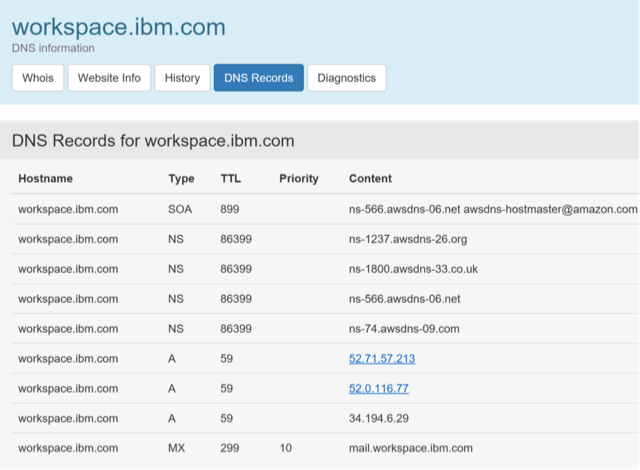
Watson Workspace is an important new initiative for IBM. Given that the company has their own large cloud operation, this looks like a major endorsement for Amazon Web Services.
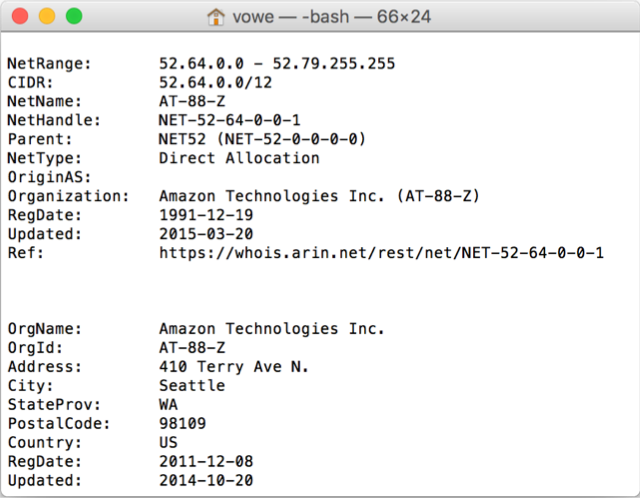
Watson Workspace is an important new initiative for IBM. Given that the company has their own large cloud operation, this looks like a major endorsement for Amazon Web Services.

Elago W3. Cannot find a source in Germany so far. Alternative: Who can print this (in white)?
[Update:] Anton Seissl has found the EU Store.

I had a bit of a rough first date. But after setting the machine up exactly like I want it -- Simplified English (US) with German locale and German as an input language -- we have been coming along nicely. The thing that delights me the most is Windows Hello. This IR camera is better than a keyboard bound fingerprint reader. I use this machine as a tablet a lot.

The keyboard and the trackpad are way better than what I was used to before. So I wrote all of my articles this week on the Surface and in Word Mobile, storing them on OneDrive shared with my editor. That is a perfect fit for me.

No network issues at all. The machine always connected to Wifi immediately and for some large multi-GB transfers I hooked it up to my Gigabit ethernet. With a USB-A port I could reuse a dongle I already had.

My Apple VGA and Belkin HDMI adapter have been collecting dust for a while and I have not tested them yet but I am pretty sure they will work with the DisplayPort.

Connectivity has been great. This is the PhotoFast Memory Cable which lets you charge the iPhone and also transfer files from both ends into memory that is built into the USB-A plug. This is how you quickly transfer a video from Surface to the iPhone or back.

You can achieve the same quick transfers via the built-in MicroSD port that is hiding behind the kickstand. If your camera does not support MicroSD you may want to use the SD/MicroSD adapter that comes with your MicroSD card.

The kickstand folds almost all the way back, unlike the Surface 3 which has three distinct angles that don't go as flat as this kickstand. Great for drawing on a desk.

Surface Pen comes with the machine and is no longer an extra. During Windows setup it is paired with Surface and it has been a great user experience so far. You can attach it to the left side of Surface but I would not put it away in a bag this way or carry the device around outside of my office or home. It's just too easy to brush it off the side and then lose it.

My biggest concern with the i7 (or i5) model was fan noise. And I am happy to report there isn't any. At least not when I am using it. If you render video the fan will come on. I have heard it during large ftp transfers, but it has not bothered me. It's a really quiet fan.
Thumbs up. This machine will get a lot of use and abuse. Editor-refuses-to-give-it-back award. I am sure Microsoft will eventually go to USB Type C, but for now this is my preferred setup.
Toronto commuters will soon be able to use their wireless devices beyond the subway platform and into tunnels next year, something many riders feel is long overdue.
BAI Canada, a subsidiary of Broadcast Australia, was awarded $25 million contract to rollout the TTC’s Wi-Fi network in 2013 and is now active in 51 connected stations across the city. In addition, Freedom Mobile, previously named Wind Mobile, is the only Canadian carrier to offer its customers access to cell service in TTC subway stations.
In 2018, according to TTC’s spokesperson Brad Ross, Wi-Fi connectivity will expand past platforms and be installed in tunnels for continuous connectivity. Unfortunately, specific details regarding which stations will receive continuous Wi-Fi were not listed, and neither was exact timing for the rollout.

In an interview with MobileSyrup last year, BAI Canada’s CEO Ken Ranger said, “Every single time we announce we’ve built something, people generally say, ‘that’s great. We want more.’ It’s a wonderful position to be in.”

Image by artist via
The magic of the macro world of colored fluids is shown in its full psychedelic wonder in the latest video from Russian graphic designer and filmmaker Ruslan Khasanov. For La La La, Khasanov has combined two of his previous works—video piece Odyssey and photography project Lucidity—into one glorious technicolor motion experiment.
Liquids and oil coalesce and repel, swirling and shining, exploding and dividing, dancing about in a chromatic sea that could be, well, whatever you want it to be. Sometimes it looks like CGI, other times it looks like some strange Yellow Submarine-esque whirling landscape. Khasanov shot the footage in 4K on a Sony FE 90mm f/2.8 Macro G and a Sony a7R II, Sonnar T* 55mm f/1.8 ZA with macro lenses and then tinkered with it in Photoshop and After Effects. See the hypnotic results below.

Image by artist via

GIF by Ruslan Khasanov (via)
See more of Ruslan Khasanov's work at his website here or on his Behance page here.
Related
Macro Footage of Liquid Morphs in Susi Sie's New Music Video
Visitors pose in front of a three-story, upside-down house at the Huashan Creative Park in Taipei, Taiwan

Thanks to Tyrone Sui/Reuters via CBC


'
City Cyclist has put together another video for your viewing pleasure – and for educational purposes for our friends at the City of Toronto who promised to keep a number of priority bike lanes cleared. Turns out they haven’t been very consistent in the clearing process this year according to reports on Facebook and this video. (With the fancy cycle track on Sherbourne being one exception, perhaps.)
In Part 1, he rides through the snow squall that Toronto had a few weeks back. Looks like it was a real adventure!
“University Ave. was like a snowy, apocalyptic wasteland. I rode right at the height of the storm – I was actually trying to get home just before it, but that didn't work out! It was still a fun ride, though slippery and treacherous at times,” he told dandyhorse.

Part 2 of the video is a look at how well (or really, mostly how poorly) bike lanes were cleared several days after the snowstorm. The snow squall was on a Thursday, then the city had significant snow over the weekend. On Tuesday, City Cyclist hit the streets again.
“I thought after the City had almost three days to clear the snow, it had to be decent. In many cases…not so much! Side streets [especially] were a mess,” City Cyclist told us.
“If I could give the City one message about bike lane snow and ice clearing it would be to pick designated priority cycling routes – east/west and north/south – and properly clear and maintain them. Give us somewhere we can feel safe. It's such a crappy patchwork at the moment.”
We will have a new interview with the City’s Manager of Road Operations on dandyhorsemagazine.com soon in which we ask: Why is it so hard to keep the bike lanes clear after it snows? Stay tuned.
For more information you can read this story on dandyhorsemagazine.com which followed the City’s initial announcement about its bike lane snow clearance plans. Designated prioritized routes include cycle tracks (including the Roncesvalles bus pads) and contra-flow lanes, as well as St. George/Beverley, Wellesley, Harbord, College, Gerrard, River, Shuter, Lower Simcoe, Lower Yonge, Strachan and Bloor (NEW) plus the Prince Edward Viaduct.

Look out for those "moveable living rooms" out there folks!
Related on dandyhorsemagazine.com
The City's Plan for Winter Bike Lane Maintenance
Bike Spotting on Sherbourne Street: Should the City clear this bike lane of snow?
Plowed bike lanes vital to winter cycling
Curb your enthusiasm: No snow clearance yet in the bike lanes
City Cyclist: Bike Lanes in Toronto
City Cyclist: Construction in the Bike Lane
After opening an investigation into potential abuses by Apple related to its sway with Canadian carriers, the Competition Bureau has found that no such actions were initiated.
The Competition Bureau filed a motion to open the investigation into Apple’s alleged agreements with Canadian carriers in December 2014, though began seeking records from carriers in June, 2015. Any anti-competitive agreements between the two parties would constitute a breach of the Competition Act.
The investigation surrounded the claim that Apple had used its “dominance” in the market to reach agreements with Canadian carriers that limited their ability to discount the smartphones of competing manufacturers.
In March, 2015, Apple submitted 46 thousand documents to the Federal Court of Canada, which subsequently asked carriers to release their iPhone sales records.
In collecting these documents, the Bureau was searching for any contractual evidence through “anti-competitive”clauses that may have led Canadians to pay more for handsets or wireless services than would have otherwise been required.
The carriers asked for insights on the investigation include Bell Mobility (Virgin Mobile), Rogers (Fido), Telus (Koodo Mobile), MTS, Eastlink, SaskTel, Tbaytel and Videotron.
At the time the motion was initially filed, the Competition Bureau spokesperson Gabrielle Tassé stated that there was no evidence of any wrongdoing on the part of Apple, though should any surface, the Bureau would not hesitate to act.
“There is no conclusion of wrongdoing by Apple Canada Inc. at this time, and no application has been filed with the Competition Tribunal or any other court to seek remedies for any alleged anti-competitive conduct. Should evidence indicate that the Competition Act has been contravened, the Commission will not hesitate to take appropriate action,” said Tassé in 2015.
The Competition Bureau’s statement released today confirms the end of its investigation into the smartphone giant, having found no evidence of wrongdoing in the contracts they’d obtained from carriers.
The investigation concluded that Apple had not violated the terms and conditions of the Competition Act.
The post Predictions 2017: A Chain Reaction appeared first on John Battelle's Search Blog.

This is my 14th annual predictions post. And as I look back on the previous 13 and consider what to write, I’m flooded with uncertainty. That’s not like me. Writing these predictions is something I’ve always looked forward to – I don’t prepare in any demonstrable way, but I do gather crumbs over time, filing them away for the day when I sit down and free associate for however long it takes me to complete this post.
But this time, well, for the first time ever I have very little idea what’s about to come out of the keyboard. Honestly, when I consider the coming 12 months, so much feels up for grabs that I wonder whether it’s wise to prognosticate. Then I remember, it’s all of you reading these words who keep me writing in the first place – your encouragement, your wise (and sometimes cutting) commentary, and your willingness to spend a little time with me and my thoughts. One of my New Year’s resolutions is to write more – it’s always been how I make sense of the world, and this year, the world feels like it needs a lot more sense making. So I’ll be writing at least a few times a week going forward, starting with this uncertain post.
Let’s see what happens….
1. The bloom comes off the tech industry rose. Two years ago, I predicted that the tech industry would wake up to the power it had accrued and start giving a shit both about its impact on the world, and about the world’s largest problems, with climate change being the most pressing of them. That didn’t really happen, despite truly commendable philanthropic, social, and climate change work done by all of the “Big 5″ tech companies (Microsoft, Amazon, Google, Apple, Facebook). As of this writing, the technology industry is now the undisputed leader of the business world. Its power has concentrated into demonstrable oligarchy – beyond the Big 5, Uber and Airbnb are now being called to question because of their potential monopolistic, rent extracting behavior. But the industry’s philosophical outlook remains rooted in its days as a challenger brand. This can’t stand. 2017 will be the year the industry is cast as a villain – for its ravenous and largely opaque data collection practices, its closed and self-serving approach to its own platforms, and its refusal to acknowledge or address the very real externalities, particularly in employment, created by its products and services. Some of this backlash will be unfair – but that’s not my point. Society vilifies those in power who appear to be unfairly profiting from that power. And in 2017, tech will be that villain.
2. The conversation economy breaks out. This is certainly related to #1, if oddly oppositional. The Big Five will be in an all out battle to engage us through conversational interfaces this year. If you’ve been reading me for over a decade, you might remember my predictions around the “conversation economy.” I was a bit early (OK, a decade too early), but the technology and the consumer behavior/expectations are now aligned to allow for a breakout year in user experience to finally occur. This began in earnest last year with the hype around chatbots, and the ascendance of Alexa and Google Home, all of which followed on the heels of Google Voice Search and Siri. But what will really shift the experience will be the explosion of smart chatbots that actually get shit done – I’m with Kik CEO Ted Livingston, chat is the new browser. Combine smart chat with voice, and … well, we’ll start to see a new UX for the web. What’s the economic model for this new UX? Good question! But the key will be meaningful interaction between all these services, instead of attempts to create a vertically integrated, locked-down walled garden. But that will only happen if…
3. Open starts to win again. It’s dangerous to link two predictions, because if one doesn’t work out, the other is likely to fail as well. It’s even worse to link your first three… but what the hell. Tech’s hegemony is so great at this point, that the only way I can see it breaking down is through a return to the open standards which bequeathed us the Internet in the first place. 2017 will be the year that open starts to win again as a business model and an approach to creating a developer (and hence consumer) ecosystem. Google can and should be the leader here, given its core DNA, but I’m not sure that will be the case. Now, what do I mean by open? Well, interoperability, for one. It’s great that anyone can create a chatbot on Messenger, or Kik, or WhatsApp, but true innovation will come when anyone can create a chatbot that works with all of them, sharing data and user profiles across platforms. The same goes for the marketing industry – publishers and marketers alike should be able to consolidate and leverage data across all meaningful platforms, instead of cultivating different patches in every service’s walled gardens. The same goes for consumers, of course – I want to know what data is being used to mold the choices being laid out in front of me (including the ads, and yes, my f*cking newsfeed!). There will be meaningful demand from “users” to have more fluid and intuitive controls of their experience. And if my #2 holds true, then voice becomes a literal lingua franca, rendering platform lock in long-term meaningless, because jumping from service to service will be as easy as saying “Alexa, WhatsApp my pal Chris with the results of my Google search on open platforms.” This year won’t be a turning point in this battle, but it will show meaningful progress, in large part because…
4. Privacy will become a strong product category. These linked predictions are certainly becoming a theme. But last year saw strong growth for a number of stand alone privacy products like Signal and Confide, and the inclusion of strong crypto into massive platforms like iOS (remember the FBI fracas?), WhatsApp and Google (via its new Allo and Duo products). Influencers like Fred and many others are predicting a boon in this field, and I agree. But it’s one thing to encrypt your messaging. It’s another to secure your entire online life. That kind of security is hard to do, mainly because it obviates much of the value of the data harvesting which drives convenience in the consumer tech world. But fear of cyber warfare, fraud, and over-reaching marketers and government will create huge openings for consumer friendly versions of currently opaque products like PGP, password managers, and the like. And it’ll also drive political and consumer pressure for more robust consumer control around algorithmically driven consumer experiences. Smart companies won’t resist this trend, they’ll encourage it.
5. Adtech has a ripper of a year. Wait, I just predicted consumers will pivot to caring about privacy, but I’m saying the adtech business is going to have a great year?! Well…yes. Embrace the contradictions, because adtech is ready for its second act. It’s really sucked to be a leader in the advertising technology industry – half of the media industry openly hates your guts, and the other half is convinced your days are numbered because of the Google/Facebook oligarchy. But they’re all wrong. Advertising technology is, at its simplest, the ability to apply data to a decision at scale. And the more open and free flowing that data economy becomes, the better and more valuable the companies which enable it become. If my predictions 1-4 come true, then this one will as well: Independent, high-integrity companies in ad/martech are going to have a banner (no pun intended) year, because they’ll tack into the resistance the large platform players have to the trends I’ve outlined above. Watch: Sovrn Holdings*, AppNexus, Acxiom*, Trade Desk, and OpenX.
6. Apple releases a truly bad hardware product. OK, this one isn’t really tied to the others, but I think Apple’s poised to not just have a boring year (as I predicted it would last year,) but to really lay an egg for the first time in a very long time. It may be their answer to Amazon Echo/Alexa, or Google Home/Assistant, or it may be a follow on to the watch, or perhaps something the company has had up its sleeve for a few years that it feels obliged to roll out given its essentially uninspiring last few years of product releases. But in 2017, the press and the public will find a tangible reason to turn on Apple, and the company will likely respond by reorganizing, repatriating its cash (to curry favor with the current administration), and keep buying its way into the markets where it has repeatedly failed (IE, software as a service, entertainment (NetFlix?!!), and possibly social media).
7. A Fortune 100 company will announce its intention to become a B Corp. Large companies are increasingly under pressure from employees, customers, and society to create value for more than just their shareholders. For decades, business was allowed to tax environmental, social, and societal resources in pursuit of profit. A new generation of consumers and employees are demanding that business ladder to more than simple profit, but rather, have a core purpose—one that makes the world a little (or a lot) better place. Of course, there’s already a corporate governance structure that encourages this approach to running a company—the Public Benefit Corporation, or B Corp. (I wrote about B Corps last year here). My money is on Unilever, which has already been publicly discussing such a move. Two dark horses: Walmart and GE.
8. President Trump leaves Twitter. Ever since Twitter launched, I’ve usually included a Twitter prediction. This one sounds crazy, but it strikes me there are a few ways this might plausibly happen. Perhaps Trump will come to his senses and stop trying to run the country through a series of tweets. OK, that’s not very plausible. More likely is Trump will end up in some kind of a feud with Twitter over something utterly ridiculous, claim he’s the only reason the service is viable anymore, and decamp for Facebook, Snapchat, or who knows, maybe VK (that’s the largest Russian social media network, FWIW). Or maybe someone slips a cure for narcissism into his evening flute of Trump Champagne….
9. Snap soars – then sours. I’m increasingly of the opinion that this company is going to force a total rethink of our online culture. In fact, I think most of us have no idea how over our skis we are when it comes to the power that Snapchat has aggregated. I’m not talking about typical tech power, like number of active users or advertising revenue. I mean the power of the platform to engage and exploit our pleistocene-era social brains. I’m not entirely sure Snap Inc. has fully grokked that power. But Snapchat feels like a step function beyond anything that has come before it. I watch my own children use it, and I’ve watched them fall in love with Facebook, YouTube, Twitter, and countless pretenders (though I’m keeping my eye on Houseparty). Nothing compares to what happens when a group of kids connect on Snapchat. It literally becomes their social geography, and that fact will be widely recognized by the business community when Snap goes public. But almost hand in hand with that will come the Snapchat backlash, as scholars, alarmists, parents and school administrators speak out about the impact the app is having on the structure of society. Spectacles? By the end of 2017, those will seem quaint. Side note: There’ll be an amazing science fiction novel that comes out in early 2017 whose main protagonist will be compared to Snap. And yeah, that’s a fix, because I’ve already read it…
10. Human connection commands a premium in the workforce. OK, OK, this has certainly been the case for all of history, at least – ahem – for a certain kind of connectivity. But in an age where it seems every job can be replaced by AI or a robot (or both), we’ll see a shift in how society values previously under-appreciated jobs that cannot be automated away (or if they can, the automated version fails to deliver human connection). Think about jobs that are socially valuable, require direct human contact, but are currently very poorly remunerated: Teacher, nurse/home care aide, waiter, small business owner, musician/artist come to mind. In 2017, we’ll come to realize that we’re valuing the wrong things, and start a conversation about paying people to connect with each other – because if we can automate the other stuff, why the heck wouldn’t we value each other more?! Related: The conversation around Universal Basic Income (or my preferred term, the Citizens’ Dividend) will become white hot (it’s white hot in the Valley at present, but it’ll move into broader circles in 2017).
Well that’s ten predictions, which seems like a nice round number. As I review them, I realize there’s a pretty high chance I could seriously whiff this year. What do you think?!
—
Follow my work at NewCo with our newsletters!
Related:
The post Predictions 2017: A Chain Reaction appeared first on John Battelle's Search Blog.

Whilst slacking in the Creative Commons Slack channel, a few people were sharing their remote working setups (or for distributed organisations, their normal working setup). So I thought I’d create a quick sketch of mine. On reflection, I seem to have acquired a few boards: White, Chopping and Dart. The Chopping board has been one of the best work-hacks I’ve discovered (costing all of £8 from IKEA). It allows be to work at an angle to my desk, giving me more leg room, a healthier posture, and works a treat with an apple wireless keyboard hooked on the top of the board.
The post My Workspace appeared first on Visual Thinkery.
Things of note for the week ending Friday January 6th, 2017.

Oh hello, 2017. And hello to you too, gorgeous reader (yes, you – you know I’m talking directly to you, don’t you?) – how have you been? Sorry to miss last week. I was busy. Holidays and stuff. We have to take breaks sometimes you know.
OK. I forgot.
But hey, I remembered this week and now have a NEW YEAR and NEW THINGS.
Onwards.
Shall we?
__________
______
__________
1. SOCIAL MEDIA BREAKS. TAKE THEM.

I found the following piece via Jyri Engestrom. He posted it with the following quote highlighted –
“The idea of purposefully introducing into my life a service designed to fragment my attention is as scary to me as the idea of smoking would be to an endurance athlete, and it should be to you if you’re serious about creating things that matter.”
Well, when you put it like that, ‘Quit social media. Your career may depend on it.‘ makes sobering reading.
__________
______
__________
2. THE SLOW TRAIN TO CHINA (FROM BARKING)
You guys, the BBC is reporting that China Railway is going to start a freight train service from Wiwu, China to Barking, London. This is awesome. Alright you can’t actually ride the train itself but STILL, this is awesome.
Look!

How cool is that?! A TRAIN that goes all that way! Amazing.
Admittedly, I may have done something similar before but that was from Moscow to Beijing (via Ulanbataar). Imagine being able to tap in with your Oystercard and then tap out for ACTUAL CHINESE OYSTERS (that worked better in my head).
Brilliant.
__________
______
__________
3. CARRIE FISHER: SCRIPT DOCTOR

You may have read a few things of late about how the late Carrie Fisher was more than a metal bikini and a couple of hair buns. Well, quite. However, the following article if probably the best researched piece I could find on precisely what and how Fisher came to be one of the best script doctors in Hollywood.
Other notable Carrie Fisher things worth reading:
__________
______
__________
4. INTERNET CONNECTED FRIDGE

Any excuse to link to this website, admittedly BUT STILL, what with CES happening as I type, Internet-enabled devices are seemingly, EVERYWHERE. But what if you’re not in Las Vegas / have a ton of cash lying around to spunk on a new-fangled t’internet fridge?
Well, Terence Eden has the answer (and a How To guide).
Off you pop then, go and CONNECT YOUR FRIDGE.
__________
______
__________
5. BEATING MEN AT THEIR OWN GAME

My first job for the team was seat-occupier – in other words, bimbo – sitting next to the famous card counter Ken Uston. That man was so egotistical, I’m surprised he thought I was good-looking enough.
It was 1978, the year Atlantic City opened for gambling. New Jersey’s state legislature had developed the city’s rules for blackjack, but unfortunately they didn’t employ a maths mind to look them over, and so allowed a technical rule that gave card counters even more of an edge.
Consequently, every counter in the world swarmed to the famous boardwalk. When the doors of the new casino, Resorts International, opened at 08:00 in the morning, there was a stampede for seats.
Cat Hulbert, writing for the BBC Magazine section (I didn’t know this was a thing) on her long career as a poker player.
A great read.
__________
______
__________
Bonuses this week are as follows:
AND WE ARE DONE!
WOOOO!

Last thing – The Ogilvy Key Digital Trends 2017 doc that we published mid-last month just passed 100k views. Yay. To celebrate, Marshall and I are hosting a free webinar next week where we’ll basically read the slides to you over the course of an hour.
Fancy that? Sign up here.
LATERS.
x
Friday 06th January, 2017
 by Chris Roos
I recently spent some time investigating the HOTP (HMAC-based) and TOTP (Time-based) one-time password algorithms. You’re probably relying on one of these algorithms if you’ve enabled two-factor authentication for a service (e.g. GitHub) and are using something like Google Authenticator, Authy or 1Password to generate a 6 digit code when signing in.
I’ve enabled two-factor authentication on quite a few services I use and wanted to understand how the one-time password was being generated. I was surprised to learn quite how simple the algorithms are and thought I’d share what I understand. This post describes how to generate HOTPs in Ruby before moving on to demonstrate how the same code can be used to generate TOTPs.
The step numbers (1 to 3) below correspond to the steps in section 5.3 (“Generating an HOTP Value”) of HOTP RFC 4226.
I’m using the key and a counter from the Test Values in Appendix D of HOTP RFC 4226 so that we can verify the output. In the real world you’d be given the key (often encoded in a QR code) by the site that you’re enabling 2FA for.
The resulting HMAC is a 20 byte (160 bit) string.
require 'openssl'

key = '12345678901234567890'
counter = 5
counter_as_byte_string = [counter].pack('Q>')

digest = OpenSSL::Digest.new('sha1')
hmac = OpenSSL::HMAC.digest(digest, key, counter_as_byte_string)

puts hmac.unpack('H*')
#=> 'a37e783d7b7233c083d4f62926c7a25f238d0316'
# Or as an array
# [0xa3, 0x7e, 0x78, 0x3d, 0x7b, 0x72, 0x33, 0xc0, 0x83, 0xd4,
#  0xf6, 0x29, 0x26, 0xc7, 0xa2, 0x5f, 0x23, 0x8d, 0x03, 0x16]
The offset is the number represented by the last 4 bits of the last byte.
offset = hmac.bytes.last & 0x0f
# Equivalent to: 0x16 & 0x0f
# Equals: 0x06
# Or as a decimal: 6
bytes = hmac.bytes[offset..offset + 3]
# Equivalent to: hmac.bytes[6..9]
# Equals: [0x33, 0xc0, 0x83, 0xd4]
# Or as decimals: [51, 192, 131, 212]
To avoid any confusion around signed vs unsigned integers.
bytes[0] = bytes[0] & 0x7f
# Equivalent to: 0x33 & 0x7f
# Equals: 0x33 # No-op in this instance
There are two implementations below. The first uses bit-shifting and the second (suggested by James) uses Array#pack and String#unpack. While the second implementation is more concise, I’ve retained both as I think the first makes it easier to see what’s going on.
# 1. Bit-shifting
bytes_as_integer = (bytes[0] << 24) + (bytes[1] << 16) + (bytes[2] << 8) + bytes[3]
# Equivalent to: (0x33 << 24) + (0xc0 << 16) + (0x83 << 8) + 0xd4
# or in decimal: (51 * (2**24)) + (192 * (2**16)) + (131 * (2**8)) + 212
# Equals: 855638016 + 12582912 + 33536 + 212
# Equals: 868254676

# 2. Using `Array#pack` and `String#unpack`
bytes_as_integer = bytes.pack('c*').unpack('N')[0]
# Equals: 868254676
The OTP is the last n digits (6 by default) of the number we’ve generated.
digits = 6
puts bytes_as_integer.modulo(10 ** digits)
# Equivalent to: 868254676.modulo(1_000_000)
#=> 254676
require 'openssl'

def generate_otp(key, counter, digits = 6)
  counter_as_byte_string = [counter].pack('Q>')
  digest = OpenSSL::Digest.new('sha1')
  hmac = OpenSSL::HMAC.digest(digest, key, counter_as_byte_string)
  offset = hmac.bytes.last & 0x0f
  bytes = hmac.bytes[offset..offset + 3]
  bytes[0] = bytes[0] & 0x7f
  bytes_as_integer = (bytes[0] << 24) + (bytes[1] << 16) + (bytes[2] << 8) + bytes[3]
  bytes_as_integer.modulo(10 ** digits)
end

otp = generate_otp('12345678901234567890', 5)
puts "OTP: %s" % otp
The TOTP algorithm builds on HOTPs by specifying how the value of the counter should be calculated. This avoids the need to synchronise the counter between the server (e.g. GitHub) and the client (e.g. Authy) as both parties can calculate it in the same way.
The counter specified in the TOTP RFC is the number of 30 second intervals in the current unix time.
We can demonstrate the relationship between TOTPs and HOTPs using oathtool from the OATH Toolkit. We start by generating a TOTP based on the current time and then show that we can generate the same HOTP by using the counter we’re given in the verbose output.
# Generate TOTP for current time
$ oathtool --totp --verbose 3132333435363738393031323334353637383930
Hex secret: 3132333435363738393031323334353637383930
Base32 secret: GEZDGNBVGY3TQOJQGEZDGNBVGY3TQOJQ
Digits: 6
Window size: 0
Step size (seconds): 30
Start time: 1970-01-01 00:00:00 UTC (0)
Current time: 2016-12-21 10:52:10 UTC (1482317530)
Counter: 0x2F1F218 (49410584)

744955

# Generate HOTP using counter above
$ oathtool --hotp --counter 49410584 3132333435363738393031323334353637383930
744955
Note that the key we pass to oathtool above is the hex encoded representation of the example key we’re using in our Ruby script.
'12345678901234567890'.unpack('H*')
=> ["3132333435363738393031323334353637383930"]
Now that we know that the only difference is in the value of the counter we can update our Ruby script to generate TOTPs.
counter = Time.now.to_i / 30 # 30 second intervals in current unix time

otp = generate_otp('12345678901234567890', counter)
puts "OTP: %s" % otp
Assuming we’ve saved the Ruby script as totp.rb, we can use oathtool to verify the generated OTP.
$ ruby totp.rb
662110

$ oathtool --totp 3132333435363738393031323334353637383930
662110
I hope this post helps illustrate how relatively simple these two algorithms are. While the code certainly seems to work, there are no tests and I have no idea about its performance. If you’re looking to use something like this in production then you might want to check out The Ruby One Time Password Library (I’ve not tried this but it seems to have some tests) or the OATH Toolkit mentioned earlier.
After reading a draft of this post, Paul pointed me to this How Google Authenticator Works blog post from a couple of years ago. The author also wanted to understand how these one-time passwords are generated and has described the algorithm in their post. It might be worth reading if this post leaves you with unanswered questions.


Screenshots of Windows 10’s forthcoming UI tweak — code named Project Neon — have emerged courtesy of MSPowerUser, revealing an iterative new look with a focus on minimalism, animations and cross-platform consistency.
One new component of the UI is reportedly titled ‘Acrylic’ and blurs the background, sidebar or navigation of the app. It pairs with ‘Conscious UI’ and ‘Connected Animations’ to guide users’ eyes to certain areas of the screen.

The screenshots also show a background animation that highlights a particular navigation item when the pointer is hovering over it — this, says MSPowerUser, will also be useful when it comes to Microsoft’s augmented reality headset, the Hololens, which is directed by gaze or hand movement.

In the screenshots, the toolbar also appears to be slightly changed, though the publication states it does not believe that change will make it to final release.
The new look is expected to debut as an update to Windows 10 following the Creators Update in April, and further details will likely be shared in May, at Microsoft’s annual developer conference Build.
Nine months ago I wrote about the importance of improving Drupal's content workflow capabilities and how we set out to include a common base layer of workflow-related functionality in Drupal 8 core. That base layer would act as the foundation on which we can build a list of great features like cross-site content staging, content branching, site previews, offline browsing and publishing, content recovery and audit logs. Some of these features are really impactful; 5 out of the top 10 most requested features for content authors are related to workflows (features 3-7 on the image below). We will deliver feature requests 3 and 4 as part of the "content workflow initiative" for Drupal 8. Feature requests 5, 6 and 7 are not in scope of the current content workflow initiative but still stand to benefit significantly from it. Today, I'd like to provide an update on the workflow initiative's progress the past 9 months.

While Drupal 8.0 and 8.1 shipped with just two workflow states (Published and Unpublished), Drupal 8.2 (with the the experimental Content moderation module) ships with three: Published, Draft, and Archived. Rather than a single 'Unpublished' workflow state, content creators will be able to distinguish between posts to be published later (drafts) and posts that were published before (archived posts).
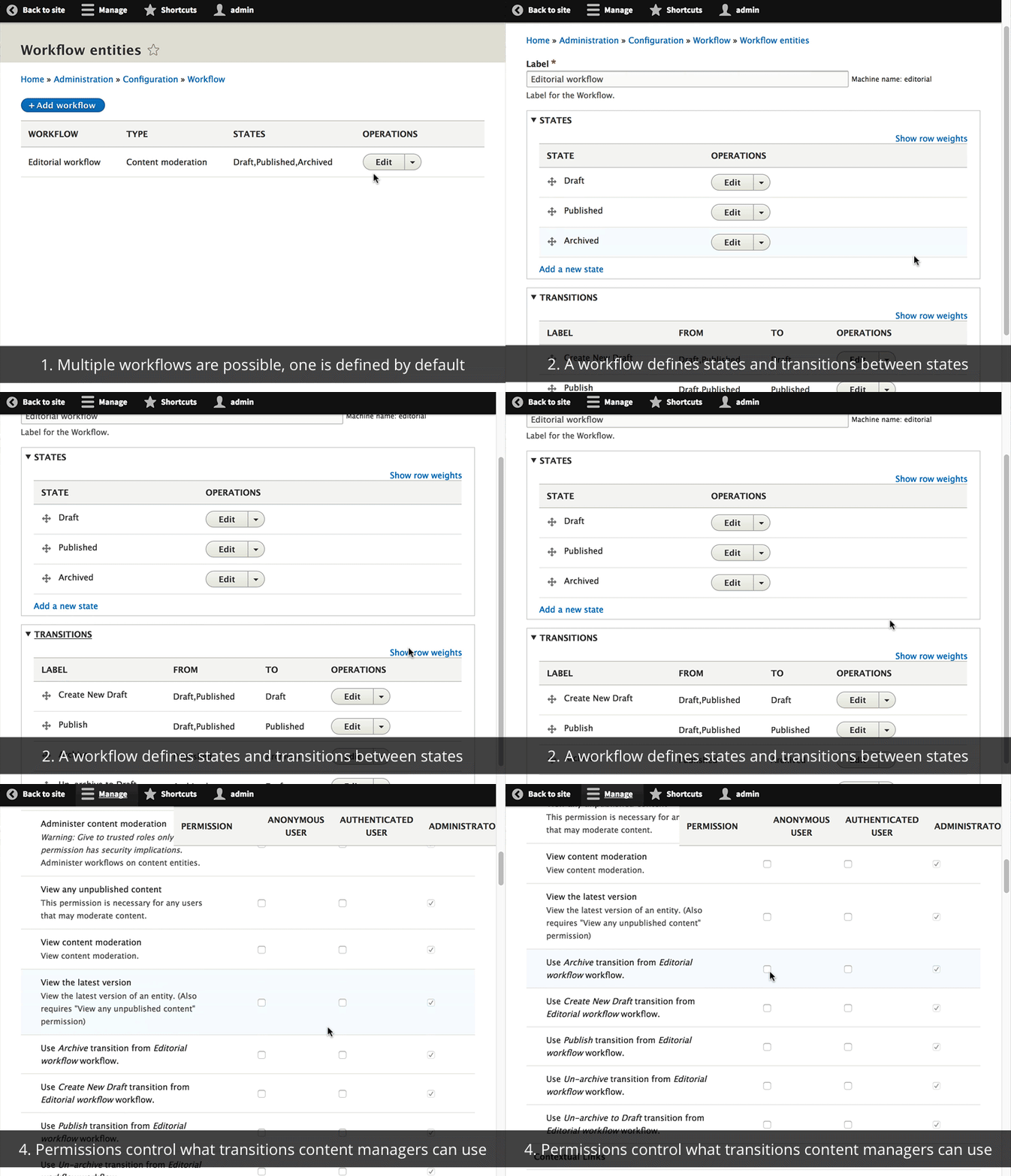
The 'Draft' workflow state is a long-requested usability improvement, but may seem like a small change. What is more exciting is that the list of workflow states is fully configurable: you can add additional workflow states, or replace them with completely different ones. The three workflow states in Drupal 8.2 are just what we decided to be good defaults.
Let's say you manage a website with content that requires legal sign-off before it can be published. You can now create a new workflow state 'Needs legal sign-off' that is only accessible to people in your organization's legal department. In other words, you can set up content workflows that are simple (like the default one with just three states) or that are very complex (for a large organization with complex content workflows and permissions).
This functionality was already available in Drupal 7 thanks to the contributed modules like the Workbench suite. Moving this functionality into core is useful for two reasons. First, it provides a much-requested feature out of the box – this capability meets the third most important feature request for content authors. Second, it encourages contributed modules to be built with configurable workflows in mind. Both should improve the end-user experience.
Drupal 8.3 (still in development, planned to be released in April of 2017) goes one step further and introduces the concept of multiple types of workflows in the experimental Workflows module. This provides a more intuitive way to set up different workflows for different content types. For example, blog posts might not need legal sign-off but legal contracts do. To support this use case, you need to be able to setup different workflows assigned to their appropriate content types.
What is also interesting is that the workflow system in Drupal 8.3 can be applied to things other than traditional content. Let's say that our example site happens to be a website for a membership organization. The new workflow system could be the technical foundation to move members through different workflows (e.g. new member, paying member, honorary member). The reusability of Drupal's components has always been a unique strength and is what differentiates an application from a platform. By enabling people to reuse components in interesting ways, we turn Drupal into a powerful platform for building many different applications.
While workflows for individual content items is very powerful, many sites want to publish multiple content items at once as a group. This is reflected in the fourth-most requested feature for content authors, 'Staging of multiple content changes'. For example, a newspaper website might cover the passing of George Michael in a dedicated section on their site. Such a section could include multiple pages covering his professional career and personal life. These pages would have menus and blocks with links to other resources. 'Workspaces' group all these individual elements (pages, blocks and menus) into a logical package, so they can be prepared, previewed and published as a group. And what is great about the support for multiple different workflows is that content workflows can be applied to workspaces as well as to individual pieces of content.
We are still in the early stages of building out the workspace functionality. Work is being done to introduce the concept of workspaces in the developer API and on designing the user interface. A lot remains to be figured out and implemented, but we hope to introduce this feature in Drupal 8.5 (planned to be released in Q2 of 2018). In the mean time, other Drupal 8 solutions are available as contributed modules.

We discussed work on content workflows and workspaces. The changes being made will also help with other problems like content recovery, cross-site content staging, content branching, site previews, offline browsing and publishing, and audit logs. Check out the larger roadmap of the workflow initiative and the current priorities. We have an exciting roadmap and are always looking for more individuals and organizations to get involved and accelerate our work. If you want to get involved, don't be afraid to raise your hand in the comments of this post.
I tried to make a list of all people and organizations to thank for their work on the workflow initiative but couldn't. The Drupal 8 workflow initiative borrows heavily from years of hard work and learnings from many people and organizations. In addition, there are many people actively working on various aspects of the Drupal 8 workflow initiative. Special thanks to Dick Olsson (Pfizer), Jozef Toth (Pfizer), Tim Millwood (Appnovation), Andrei Jechiu (Pfizer), Andrei Mateescu (Pfizer), Alex Pott (Chapter Three), Dave Hall (Pfizer), Ken Rickard (Palantir.net) and Ani Gupta (Pfizer). Also thank you to Gábor Hojtsy (Acquia) for his contributions to this blog post.

In the the last part of the four-part series, you make a longer animation with more data and annotate. Read More

As reported in Streetsblog the State of New York’s Court of Appeals has made a landmark ruling that may have implications across the U.S.-“New York City and other municipalities can be held liable for failing to redesign streets with a history of traffic injuries and reckless driving.”
The ruling arises from the consideration of a crash where a vehicle being driven over 50 miles per hour in a 30 mile per hour zone crashed into a 12-year-old boy on a bicycle and the boy has been awarded 20 million dollars in damages. Here’s the interesting part –“The court held that departments of transportation (DOT) can be held liable for harm caused by speeding drivers, where the DOT fails to install traffic-calming measures even though it is aware of dangerous speeding, unless the DOT has specifically undertaken a study and determined that traffic calming is not required.”
It turns out that residents had asked the City several times to provide traffic calming measures on Gerritsen Street, which was locally known for speeding vehicles. DOT subsequently conducted studies at three intersections, according to court documents, and “notified police of the speeding problem after each study.” But DOT didn’t look at the incidence of speeding along Gerritsen Avenue as a whole, and failed to look at traffic calming measures to slow down vehicles.
The judge commented: It is known among traffic engineers that straight, wide roads with little interference from pedestrians and other vehicles, such as Gerritsen Avenue, encourage speeding because drivers feel more comfortable on roadways with those characteristics…traffic calming measures deter speeding because they cause drivers to be more cautious, and that such measures are known to reduce the overall speed on roadways.” The upshot? The jury could conclude that “negligence was a proximate cause of the accident”.
Such a ruling will mean that city budgets will include funding for street safety redesigns, and will mean that traffic safety improvements are no longer “subject to debate and contingent on unanimous local opinion.” It also means that in New York State when traffic calming is recommended in studies to reduce road violence,that the municipality is encumbered to install the infrastructure. This is truly a game changer.


Last Friday noted journalist Daphne Bramham wrote in the Vancouver Sun a very cogent article offering a simple solution to pedestrians trying to navigate across streets in our low light and rainy winters-don’t wear black. A lot of responders to her article bristled at the fact that Daphne was brave enough to state the obvious-vehicle operators often cannot see pedestrians.
We live in a province where 280 people are killed annually and 79,000 people maimed in car crashes. This is a big number and serious enough that the Provincial Medical Officer wrote his yearly report on car crashes. What causes them? Dr. Perry Kendall surmised that speed (36%), distraction (29%) and impairment (20%) were largely responsible. Rates of crashes resulting in serious injuries have risen from 38 per cent in 2007 to 46 per cent in 2009. Road design, distraction and speed are major contributors. I’d add visibility as well.
In October 2016, twice as many pedestrians died as were killed in the last six years. The Coroners Service of B.C. lists that from 2010 to October 2016, 396 pedestrians were killed by vehicles in British Columbia. In B.C., Vancouver is the pedestrian death capital of Canada-it has more pedestrian deaths than any other city, and twice those of Toronto per capita. Sixteen per cent or 64 of those deaths were in Vancouver. Thirteen per cent or 50 deaths were in Surrey. Abbotsford, Richmond and Burnaby also had high percentages of pedestrians killed. Of those dying, 57 per cent were male. One third of those dying were 70 years or older. Forty per cent of pedestrian deaths happened at intersections in Metro Vancouver, with two-thirds crossing while the light was green.
But here is the statistic I found remarkable-61 per cent of all the pedestrians killed in British Columbia were over 50 years of age. That is a huge number and a worrying one. While we have focused our attention on road safety to school children, this suggests we also need to address the older part of the population who may not be as nimble or cognitively attune to the fact they are vulnerable. Of course there needs to be a sea change in driver behaviour and education, slower speeds, and municipalities that will redesign intersections to stop the carnage of their citizens. We as citizens also must get angry and insist that politicians pay attention to this road violence needlessly yanking out lives.
In Finland every child going to school must wear three pieces of reflective items on their clothes and backpack. The safety reflector was developed in Finland in the 1960’s and it is the law that walkers wear reflective items in the dark. Wearing reflectors and reflective clothing is completely accepted as daily wear in Scandinavia which also has the lowest incidence of pedestrian accidents. A similar program in Great Britain reduced children’s pedestrian deaths by 51 per cent.
Studies show that reflectors increase the visibility of pedestrians from 25 meters to 140 meters, increasing the reaction time from 2 seconds to 10 seconds for a car being driven at 50 kilometers per hour. That’s eight seconds more for a driver to react, and a pedestrian to survive. We can’t pretend that this is not the wild west for road violence-it is, and in Metro Vancouver we are in the leaders of carnage in Canada. Wearing reflective wear is quite simply the right thing to do, along with lobbying for slower speeds, more campaigns on driver behaviour, and redesigning street intersections as if walkers really mattered.


Sociologist Nathanael Lauster discusses his book “The Life and Death of the Single-Family Home” in this interview with Jeremy Runnalls in Corporate Knights, the Magazine for Clean Capitalism.
I am intrigued by the historical connection Lauster makes between culture, class and zoning; and the way these ideas echo and influence even today. For example, it goes unchallenged when people naturally assume that dense housing should, of course, be built adjacent to arterial roadways. This despite ongoing evidence that such proximity has health hazards built-in. So we assume it’s OK to relegate larger numbers of one class to these hazards, and reserve healthier locations for smaller numbers of another, a.k.a. “la crème de la crème”.
Says Lauster: You see covenants still written into old housing deeds, restrictions that are no longer legal but point to a previously racially-restrictive housing past. Anti-Asian mostly, although there was a historic black neighbourhood that was destroyed in an attempt to build a freeway, not to mention First Nations groups… So it’s intertwined with a lot of these zoning laws. Single-family zones, in particular, were meant to keep out the rabble, which included anyone who couldn’t afford a single-family house. This included the poor, as well as most immigrants and other groups that would be inclined to subdivide up houses into multiple apartments or take in boarders.. . .
What we haven’t seen as much attention paid to are the places zoned for single-family houses. We still have, effectively, about 80 per cent of our residential land base locked away for single-family houses owned by millionaires – despite the ongoing affordability crisis sweeping the city. Only 35 per cent of Vancouverites are able to live in these areas.
This is where the politics comes in. You can’t change this solely through neighbourhood consultations, because local residents are not going to let you. If you want your planning process to have democratic legitimacy, you need to make it a full city-wide process. Community groups should have a seat at the table, but they can’t be the sole deciders of how their neighbourhood is going to change. The very reason it hasn’t changed is because it was built to be exclusionary in the first place.
Lauster’s book has been reviewed many times, including this in the New York Journal of Books.
“I say, my dear, where are the Buicks?”
Many of us have been conditioned by our cultural norms to equate [“home”] with a separate structure under its own peaked roof, standing on an individual plot of land, with yards acting as moats buffering the residential unit from public intrusions. That is, home means the single-family detached house as might be signified by a child’s crude drawing of a square box with a door and windows topped by a triangle boasting a smoking chimney, bordered by a picket fence.
In our culture, becoming a successful adult as measured by a good job, a life partner, and starting a family, traditionally was the cue to buy a house of your own, probably in a leafy suburb like your parents and grandparents. But in this era of globalization, increasing migration and diversity, urban sprawl, and escalating property values, many urbanites are challenged to make themselves at home in the city without the familiar security blanket of the house. . . .
Lauster concludes: “Ultimately, it seems, Vancouver provides the cultural scaffolding for many people to reinterpret their lives as success stories even when they do not own houses.”
A number of his respondents reject the single-family house in favor of alternative visions of the good life. Townhouses, apartments, and the like not only are more affordable but require far less time and energy in maintenance. Furthermore, they turn out to be surprisingly good places to raise children.
Lauster is Associate Professor, Department of Sociology, UBC.


Chatsim has a different take on mobility, offering a messaging-focused service for only $20 CAD a year.
Interestingly, SMS is one of the few kinds of messages you can’t send with a Chatsim. Instead the company offers a data-only service for use with a list of popular messaging apps, including Whatsapp, Facebook Messenger, QQ International, WeChat, LINE, Telegram, BBM, Hike and Kakao.
By default, only text messages and emoji can be sent, but users can also purchase credits to send photos, videos and calls from supported apps. The company’s website offers 2,000 credits for $20. One megabyte of data uses up 50 credits, which Chatsim’s website suggests is enough for sending up to 200 photos, 40 videos, or 80 minutes of talk. After doing the math, this suggests that voice calling is 25 cents a minute, videos are about 50 cents each and photos are approximately 10 cents each. However, those costs would only kick in when using the mobile network, as no credits would be consumed when using Wi-Fi.
The list of supported countries is impressive, with 250 carriers spread across 150 nations, a full list of which is available on their website. Impressively, Chatsim seems to be affiliated with at least one big network in each territory, such as the Bell/Telus network in Canada, and both AT&T and Verizon in the U.S.
Chatsim specifically calls out support for iOS, Android, and Windows tablets and phones. However, there’s no special client software so it should work on any device with a supported app, meaning it should work on BB10, Tizen, and other mobile OSs.
This is an interesting option for people who want to be connected, but don’t need a lot of talk and satisfied with WiFi for their mobile data. I can see parents using this as a cost-effective way to give a child their first mobile service, or as an inexpensive way to stay in touch while roaming.
Watch for a full review of Chatsim in the future.
The first week of the year, also known as New Years Eve Recovery Week, is almost over. We're still sleeping off our hangovers from 2016's final party, so here's a GIF report of how our recovery is going. A wide range of GIF artists capture the emotional lows and highs of each stage, from Linda van Bruggen's colorful animation of a party faux pas to Chkn's Simpsons-inspired nightmares and Zolloc's eerie embodiment of a cottonmouth-ridden tongue in bright pink and blue. Below, we invite you to pass out and relive our recovery with us so you can go into the weekend fresh and caffeinated.
See more hangover GIFs on GIPHY.
Related:
Dreidel We Shall Play | GIF Six-Pack
We pay attention to the now. That’s especially true because Facebook spreads it, instantly. But what matters is not the now, it’s the future. The job of the true analyst is make you care as much about that future as the ephemeral distractions of the present. This came into crystal focus for me when I read Austin … Continued
The post The analyst’s essential role: engage your emotions about the future appeared first on without bullshit.
mkalus
shared this story
from  Consumerist. Consumerist.
|
It’s been a few months of “will-they-won’t-they?” with everyone (okay, some people) wondering whether or not Verizon will go through with the $4.8 billion deal to buy Yahoo after not one, but two massive email breaches. Now, a Verizon executive is admitting that the company isn’t sure what’s going to happen.
After Yahoo’s recent disclosure that one billion users had been affected by the latest breach, Verizon was prompted to ask for better terms for the deal, Reuters reports, but the future of the deal still unclear.
“I can’t sit here today and say with confidence one way or another because we still don’t know,” Marni Walden, president of product innovation and new businesses at Verizon, said at the Citi 2017 Internet, Media & Telecommunications Conference in Las Vegas.
She added that the merits of the deal still make sense, and that the investigation into the breaches hasn’t been completed yet. Though there’s no timeline set for when everything will be sorted out, Verizon is ready to get this thing over with, make no mistake about that.
“We think it will take weeks at least, we don’t have a desire to have it drag on forever, that’s not our intent,” Walden said.
In the meantime, America Online CEO Tim Armstrong seems confident, however, saying he believes the purchase will happen eventually. Verizon bought AOL for $4.4 billion on 2015.
“The hacking news that came out of Yahoo … is something that Verizon and the general counsel of Verizon is dealing directly with Yahoo on,” Armstrong told CNBC. “I remain hopeful the deal will close and I think we’ll see what the outcomes are of the Yahoo investigations in the meantime.”


mkalus
shared this story
from  TorrentFreak. TorrentFreak.
|
 Yesterday an interesting discussion took place on the BBC’s Radio Five. It involved the Federation Against Copyright Theft (FACT), who are the main driving force behind Kodi and IPTV prosecutions in the UK.
As always, it’s worth pointing out that Kodi is a neutral media platform that can be augmented with addons that provide access to infringing content. That is the problem that copyright holders are trying to address.
While broad in scope, one of the main points out of the debate was that copyright holders don’t appear to have much enthusiasm for going after people who use these devices in their own home. On the other hand, they do have an appetite for chasing down box sellers and other players further up the supply chain.
But, according to a lawyer that has successfully prosecuted big piracy cases for FACT, things aren’t always straightforward.
Speaking with Out-Law.com, lawyer Ari Alabhai of QEB Hollis Whitman says that FACT’s tendency to opt for a prosecution under the Fraud Act is partially based on the capacity of a jury to understand the charges.
Fraud can be easier for a jury to understand than the complexities of copyright law, he said, while also noting that such prosecutions have their limitations.
Alabhai, who successfully prosecuted the case against torrent release groups 26K, RemixHD, DTRG and RESiSTANCE, said that showing a conspiracy to defraud is not possible when only one person (such as a box seller) acted alone. In such cases, prosecutors have to try a different approach.
One option involves offences under section 107(2a) of the Copyright, Designs and Patents Act (CDPA).
“A person commits an offense who makes an article specifically designed or adapted for making copies of a particular copyright work..knowing or having reason to believe that it is to be used to make infringing copies for sale or hire or for use in the course of a business,” the section reads.
However, Alabhai told OutLaw that such a prosecution would be very complex and would only be subject to a maximum two-year prison sentence versus the ten years available under the Fraud Act. (Note: this term will be extended to 10 years under the Digital Economy Act)
Another option is the rather intriguing proposition of a prosecution under section 296ZB of the CDPA, which attempts to deal with devices and services designed to circumvent technological measures.
“A person commits an offense if he — in the course of a business — sells or lets for hire, any device, product or component which is primarily designed, produced, or adapted for the purpose of enabling or facilitating the circumvention of effective technological measures,” the section reads.
And we may not have to wait long to discover whether this kind of approach will be successful. The prosecution of UK-based box-seller Brian ‘Tomo’ Thompson looks like it will provide the test case but it’s hardly straightforward and is already in unchartered territory.
According to OutLaw, that case is set to go to trial at Teeside Crown Court in May 2017. Definitely one to watch.
Source: TF, for the latest info on copyright, file-sharing, torrent sites and ANONYMOUS VPN services.
mkalus
shared this story
from  Global Rail News. Global Rail News.
|
Bombardier’s new Class 345 trains for Crossrail, which will be named the Elizabeth line once services commence in 2018, have been undergoing climatic testing in Vienna.
The Rail Tec Arsenal test centre can replicate various different weather conditions at temperatures between -25ºC and +40ºC. Cold, hot, windy and foggy weather, all of which can be expected in the UK at some time or another, can be simulated and used to test traction motors, heating and ventilation systems, windscreen washers and wipers, horns and a host of other systems.
The driving car of one of TfL’s test trains was in Vienna for three weeks before Christmas, undergoing these searching tests.
Dean Taplin, Bombardier’s senior vehicle engineer, commented: “Subjecting the new trains to a range of climatic conditions, including thick snow and ice, is another crucial step towards making sure that the trains perform as intended whatever the weather.”

Bombardier recently commenced series production of the 66 nine-car Aventra trains for Crossrail, having completed the preproduction test trains. One of these is now in London for overnight testing in East London.
The first few trains will go into service, in seven-car configuration, between Liverpool Street and Shenfield in May 2017.
The first nine-car trains will be introduced on to the Paddington-Heathrow service in May 2018 and Elizabeth line services will commence between Paddington and Abbey Wood, running through the new tunnels under London, in December 2018.
Report by Nigel Wordsworth
We sent 11 reporters and editors from The Wirecutter and The Sweethome to explore the show floors, press conferences, and suites of CES 2017 in Las Vegas. From handheld keyboards to multi-thousand-dollar smart fridges, we took it all in and cut through the hype—dismissing a lot of outlandish gizmos that will likely struggle to make store shelves, let alone impress customers—to find the most promising stuff that might be worth buying in the coming year. We’ll be calling in everything we can over the next few months for testing, of course, but these are the gadgets that look most likely to find places in our lives, and in the lives of our readers.
Sign up for our newsletter and let our experts help you find the things you need, even faster.
As four of us huddled around a table meant for two during our all-too-short lunch break, associate editor Kimber Streams remarked, “My favorite part of CES is coming here and seeing companies come up with solutions to problems I’ve been writing about for years.” Based on what we’ve seen so far, of the six years we’ve been covering CES for The Wirecutter, 2017 stands out as particularly promising in that respect. While we didn’t see too many groundbreaking new gadgets, stuff that actually looked practical seemed more abundant. It’s as if the prototypes and technologies we’ve been side-eyeing over the past several years have finally matured in a way that might appeal to most people.