Shared posts

27 Feb 21:31

Flash fiction: Summon

by Crystal Beasley

I kissed his face goodbye, having more than enough reasons to believe it would be for the last time, and slipped out of the party onto the rain black streets. Directing my gaze at an empty parking spot with high-viz L-shapes delineating each corner, I said –

“Summon.”
“Car.”
“E — “

I halted mid-word, remembering at the last moment that I couldn’t afford to rent from Enterprise tonight.

“Summon.”
“Car.”
“Fiat.”

My old, broken down car materialized through the mist. I got in.

09 Jan 03:52

Nokia 6 officially unveiled: Android 7.0 Nougat, 5.5-inch display and 4GB RAM

by Ian Hardy

Nokia’s return to the smartphone market has been rumoured for months and now we’re finally are getting our first official look at the company’s upcoming device.

HMD Global secured the exclusive rights to license the Nokia brand for smartphones late last year and has announced that it will release the Nokia 6 during the first half of 2017, but only in China.

“The Nokia 6 marks the first step in HMD’s ambition to set a new standard in design, material quality and manufacturing innovation across every tier of its products by building on the hallmarks of a true Nokia phone experience,” reads a press release about the smartphone.

In terms of specs, the Nokia 6 features an aluminum build with a 5.5-inch display with a 1080 x 1920 pixel resolution, Snapdragon 430 processor, Adreno 505 GPU, 4GB of RAM With 64GB of internal storage. The Nokia 6 also sports a 16 megapixel rear camera with an 8 megapixel front-facing camera, fingerprint sensor, Quick Charge 3.0, and is set to run Android 7.0 Nougat out of the box.

“With the arrival of Nokia 6, consumers will see superior craftsmanship and design quality in action. It takes 55 minutes to machine a single Nokia 6 from a solid block of 6000 series aluminium. It then receives two separate anodising processes, taking over ten hours to complete, with each phone being polished no less than five times. The end result is an aluminium unibody with the highest level of visual and structural quality,” said Arto Nummela the CEO of HMD Global in a press release sent to MobileSyrup.

The Nokia 6 will be sold directly from JD.com for about $245 (USD). It’s unclear if HMD also has plans to eventually release the phone in other regions.

Source: HMD

09 Jan 03:48

Reply about frost on the sunflower pods

by dangerousmeta

dangerousmeta has posted a comment:

The D500 is like a retriever puppy. The D810 is like a proper old gentleman.

frost on the sunflower pods

08 Jan 02:41

Weeknote 01/2017

by Doug Belshaw

I had a great hiatus and have begun the year fully refreshed and ready to get on with stuff. December is an important month for me each year, as it not only features my birthday and Christmas, but my self-imposed absence from usual routines means I get to reflect more deeply on who I am and what I stand for. I’ll write more about what that means in practice (if I don’t, nudge me!)

Anyway, this week has been a four-day week due to the public holiday in England on Monday. I’ve been:

  • Re-connecting with people, both on Twitter and in our Slack channel. It’s been good to be away, but it’s also great to be back among familiar faces.
  • Sending out Issue #240 of Thought Shrapnel, my weekly newsletter. I’d considered changing the frequency of this, but I settled on just changing the layout and format a bit. It includes links to posts I wrote on other people’s sites during December.
  • Selling lots of stuff on eBay, as I transition away from proprietary, locked-down stuff. Gone is my Chromebook Pixel (eBay), my Mac Mini (eBay), Sony Xperia Z3 Compact (to my son), and Amazon Kindle Paperwhite (to my wife). In their place I’m using a OnePlus One (as it has an unlocked bootloader), a bq Cervantes Touch Light (Linux-based, accepts SD card to store my DRM-stripped Kindle purchases), and my trusty Lenovo X220 Thinkpad until I decide which Linux laptop to get next…
  • Putting together Badge News, a brand new, bi-weekly newsletter from We Are Open Co-op. It’s made possible thanks to some foundational sponsorship and includes the latest updates on the Open Badges specification, featured articles from the community, and details of upcoming events. The first issue went out today!
  • Collaborating and planning with Educators Co-op for an upcoming webinar on badge platform/website design (16:00 UTC, January 16th).
  • Testing out and finalising an automated Open Badges course that Laura Hilliger and I  started after the We Are Open Co-op meetup in December. More on that soon — we don’t want to launch it at the same time as Badge News, as that would just confuse people. We’re also discussing the possibility of sponsorship for this, too.
  • Attending the first community call of the Open Recognition Alliance.
  • Discussing potential work with a UK government department. More on that soon, hopefully.
  • Finalising plans for trips to Jersey, London (I’m at BETT on the Friday afternoon and Saturday), and Geneva over the next month. I’m hopefully heading to Canada towards the end of April, too.
  • Changing the avatar I use online, as I do at the start of every year. You can see it on my Twitter account or start here page if you’re interested. Whereas the one I used in 2016 was ‘business Doug’, this one is ‘on top of a mountain Doug’.  I also took the opportunity to update my description of what I do: “help people and organisations become more productive in their use of technology”.
  • Writing:

Next week I’m at home for my grandmother’s and daughter’s birthdays. I’ve got plenty of stuff to get set up for this year, and from the week after I’m travelling every week for a few weeks.

I’m very much looking forward to this year! April will mark two years of my becoming a consultant, and 1st May will be the first anniversary of We Are Open Co-op. If you’ve got something that you think we might be can help with, please do get in touch! Email addresses below:

Image CC0 Neslihan Gunaydin

08 Jan 02:40

Live Photos and wide colour are now supported on Instagram for iOS

by Zachary Gilbert

In a tweet recent tweet, the co-founder and CTO of Instagram, Mike Krieger, announced that the photo-sharing app now supports two new features.

Starting today, Instagram for iPhone will support the iPhone 7’s wide colour capture, as well as iOS 10’s Live Photo feature.


According to Instagram, this new feature does not require an update and will be pushed out to all devices over the course of today.

SourceTwitter
08 Jan 02:39

The Difference in the Vote

Had Hillary Clinton won Wisconsin, Michigan, and Pennsylvania — states that normally go blue — she would have won an Electoral College majority and she would be President-elect.

She didn’t — despite winning the popular vote by nearly 3 million votes — and Donald Trump is President-elect.

Russia worked to influence the election. Did they succeed? Did their efforts matter?

I don’t know how you’d gauge that. But it’s interesting to note just how close it was.

Wisconsin: 1,405,284 - 1,382,536 = 22,748

Michigan: 2,279,543 - 2,268,839 = 10,704

Pennsylvania: 2,970,733 - 2,926,441 = 44,292

That adds up to Trump winning those states by 77,744 votes.

That’s a small number of votes. That’s 0.06% of the total votes cast (128,824,833) — or 0.82% in Wisconsin, 0.24% in Michigan, and 0.75% in Pennsylvania. Not even 1% in any one of those states.

If you grant that Russia’s efforts had a small effect — well, there’s the difference.

You may think otherwise: you may think their efforts had an even greater effect, or none at all, and I suspect what you think depends on which candidate you backed.

For me: I believe that everything mattered. Russia’s attack on our democracy isn’t the only issue of consequence. But, still, take away just this one thing, and I strongly suspect Clinton would have won.

PS In contrast, Clinton won the popular vote by 2,865,075 votes, which is 2.2% of the popular vote.

08 Jan 02:39

The new photography-focused Kodak Extra Smartphone is coming to Canada for $549

by Rose Behar

Kodak, in collaboration with consumer electronics manufacturer Bullitt, has unveiled its Kodak Ektra photography-focused smartphone to the American market at CES 2017. The companies have also revealed that the $549 device will be available for pre-order in Canada and the U.S. in April 2017, following a previous December 2016 release in Europe.

The Android Marshmallow-powered Ektra features a 21 megapixel main camera with non-reflective lens coating, optical image stabilization (OIS), auto focus and an aperture of f/2.0. It also supports 4K video capture. The 13-megapixel selfie shooter is the real stand-out, with a f/2.2 aperture and phase detection auto focus.

The specs list further reveals a MediaTek Helio X-20 decacore processor, 3,000mAh battery with USB Type-C fast-charging, 3GB RAM and 32GB internal storage (expandable by MicroSD). As for display, it features a 5-inch Full HD IPS display with a 1920 x 1080 pixel resolution and 441 ppi density.

EKTRA_6_1920X0

Apart from the camera setup, the most noteworthy part of the device may be its design, however, which captures the old school appearance of some of Kodak’s classic cameras, especially when paired with the accompany carrying case accessory.

“Since it was first unveiled, the Kodak Ektra Smartphone has generated extraordinary interest from those who appreciate its classic retro design combined with the latest innovations in smartphone photography,” said Kodak CEO Jeff Clarke in a statement.

The camera app itself features a touchscreen dial with haptic feedback that looks like the physical dial you’d find on a DSLR. Modes include smart auto, panorama, portrait and macro and in manual, users can adjust exposure, ISO, focus, white balance and shutter speed. The company also notes in its promotional materials that the device is ergonomically weighted and features a dual-press shutter button on its side.

kodak-ektra-2

Photography fans in both Europe and North America will no doubt find this smartphone tempting considering Kodak’s brand appeal, however, it’s perhaps more important to consider the brand of Bullitt, which chiefly designed and manufactured the device. Bullitt is a U.K.-based company that has previously created rugged smartphones for CAT and JCB and audio equipment for Ted Baker and Ministry of Sound.

Kodak, too, is a much-changed brand from what it once was, bouncing back from 2012 bankruptcy with a focus on printing technology and two divisions dedicated to software and consumer and film.

Those interested in the phone can register for updates (and eventually pre-order) here.

SourceKodak
08 Jan 02:39

Retro-bit is bringing the Game Boy back from the dead

by Patrick O'Rourke

I have fond memories of Nintendo’s iconic Game Boy handheld console.

In fact, the Game Boy was the first video game system that was truly mine, and I begged my parents to buy me one for years in the early 90s. I even still have my classic, yellow Game Boy sitting at home in a drawer, though playing the system today is a painful experience due to its difficult to view monochrome screen that lacks a backlight.

Now, Retro-bit, a manufacturer that’s revived a variety of retro consoles with a fresh gloss of modern technology, has plans to bring Nintendo’s portable console back from the dead. The Super Retro Boy is a clone of the original Game Boy, complete with its highly-recognizable rectangular form factor.

This is where the similarities between both devices end, however. The Super Retro Boy is capable of playing Game Boy, Game Boy Colour and Game Boy Advanced cartridges. The handheld device also comes equipped with a 2,500mAh rechargeable battery that allows it to operate for 10 hours on a single charge, a shatter-resistant TFT HD display, and a surprisingly cheap $80 USD (about $105 CAD) price tag when it launches in North America in August 2017.

Since the Super Retro Boy also supports Gameboy Advance titles, Retro-bit needed to come up with a solution to accommodate that portable console’s additional shoulder buttons. While adding two additional face buttons isn’t an ideal solution, it’s likely the best option given how difficult it would be to reach shoulder buttons with the original Game Boy’s body (though, they could have put the buttons on the back).

I often think about picking up my old Game Boy, but as soon as I do, I put it right back down again because the screen is just too difficult to look at by today’s standards. The Super Retro Boy allows me to circumvent this issue by letting my play classics like Super Mario Land (which I still say is one of the best Mario game), Crash Dummies and the best Game Boy game ever released, The Legend of Zelda: Link’s Awakening, all with a backlit screen.

Given the popularity of Nintendo’s recently released NES Classic, it’s likely that this gaming blast from the past, despite not being developed by the Japanese gaming giant, is going to sell like crazy.

Nintendo’s Game Boy was originally released in 1989 in North America. Combined, the Game Boy and its successor, the Game Boy Colour, have sold 118 million units worldwide. Despite only featuring a monochrome display, the Game Boy destroyed its main competitor, Sega’s Game Gear, in the sales department, largely because of its more affordable price tag and impressive battery life.

SourceRetro-bit
08 Jan 02:29

Moving a Flatter Email Archive

by Eugene Wallingford

I'm not a New Year's resolution person, but I did make a change recently that moved me out of my comfort zone. Here's a quick version of the story.

I'm a hierarchical guy, like a lot of computer scientists, I imagine. That helps me manage a lot of complexity, but sometimes it also consumes more personal time than I'd like.

I'm also a POP mail guy. For many years, Eudora was my client of choice. A while back, I switched to Mail.app on OS X. In both, I had an elaborate filing system in which research mail was kept in a separate folder from teaching mail, which was kept in a separate folder from personal was kept in a separate folder from .... There were a dozen or so top-level folders, each having sub-folders.

Soon after I became department head a decade or so ago, I began to experience the downsides of this approach as much as the upsides. Some messages wanted to live in two folders, but I had to choose one. Even when the choice was easy, I found myself spending too many minutes each week filing away messages I would likely never think of again.

For years now, my browser- and cloud-loving friends have been extolling to me the value of leaving all my mail on the server, hitting 'archive' when I wanted to move a message out of my inbox, and then using the mail client's search feature to find messages when I need them later. I'm not likely to become a cloud email person any time soon, but the cost in time and mental energy of filing messages hierarchically finally became annoying enough that I decided to move into the search era.

January 1 was the day.

But I wasn't ready to go all the way. (Change is hard!) I'd still like to have a gross separation of personal mail from professional mail, and gross separation among email related to teaching, research, professional work, and university administration. If Mail.app had tags or labels, I might use them, but it doesn't. At this point, I have five targeted archive folders:

  • department business (I'm chair)
  • university business
  • TPLoP business (I'm a regional editor)
  • correspondence with my wife and daughters
  • other personal correspondence
  • personal finance and commerce
a folder for the course I am currently teaching, a folder for bulk mail and unavoidable mailing lists, and a folder for everything else. Everything else includes messages from mailing lists I choose to be on, such as the Racket users listserv and personal lists. None of these has subfolders.

I still have three other small hierarchies. The first is where I keep folders for other courses I have taught or plan to teach. I like the idea of keeping course questions and materials easy to find. The second is for hot topics I am working on as department head. For instance, we are currently doing a lot of work on outcomes assessment, and it's helpful to have all those messages in a separate bin. When a topic is no longer hot, I'll transfer its messages to the department archive. The third is is a set of two or three small to-do boxes. Again, it's helpful to an organizer like me to have such messages in a separate bin so that I can find and respond to them quickly; eventually those messages will move to the appropriate flat archive.

Yes, there is still a lot going on here, but it's a big change for me. So far, so good. I've not felt any urges to create subfolders yet, and I've used search to find things when I've needed them. After I become habituated to this new way of living, perhaps I'll feel daring enough to go even flatter.

Let's not talk about folders in my file system, though. Hierarchy reigns supreme there, as it always has.

08 Jan 02:27

Comment about clark park stair icemaggedon day 33 IMG_20170106_152904

by Sweet One

Sweet One has posted a comment:

It's the parks that are especially bad. It's like the Park Board has never seen ice before.

clark park stair icemaggedon day 33 IMG_20170106_152904

08 Jan 02:27

Philippines antidrug crackdown - The Boston Globe

mkalus shared this story .

Philippines antidrug crackdown

Since he took office last June, President Rodrigo Duterte of the Philippines has launched a nationwide antidrug campaign that has so far reportedly led to the deaths of more than 6,000 people, who were allegedly killed in police raids or at the hands of vigilante groups. National and international human rights groups have condemned the campaign and called on Duterte to stop the extrajudicial killings and ensure the protection and rights of people who use drugs. According to media reports, Duterte has rejected that the killings constituted a “crime against humanity”. Filipino presidential spokesperson, Ernesto Abella, while speaking on the administration’s accomplishment over the first six months of its crackdown on drug dealers and cartels, said that President Duterte’s anticrime campaign had resulted in the surrender of more than 900,000 drug addicts and the confiscation of billions of worth of illicit drugs. Abella added that the government had come to regard drugs not only as a national security threat but also a “public health issue” which resulted in the building of rehabilitation facilities all over the country.--By European Pressphoto Agency

1

Bystanders look on as funeral parlor workers prepare to transport the body of an alleged drug user who was shot down by unidentified men in Mandaluyong City, east of Manila, on Nov. 21, 2016. (Mark R. Cristino/EPA)

2

A Filipino woman cries during a drug buy bust operation at a slum area in Manila on Sept. 30, 2016. (Francis R. Malasig/EPA)

3

Police investigators gather evidence after a police operation against illegal drugs in Navotas City, north of Manila, on Oct. 25, 2016. (Mark R. Cristino/EPA)

4

The son of a slain alleged drug pusher rests with relatives during a wake on Christmas Eve in Mandaluyong City, east of Manila. (Mark R. Cristino/EPA)

5

A police investigator takes a picture of a man allegedly involved in drug dealing or consumption on a street after he was shot down by an unidentified gunman on Christmas Eve in Manila. (Mark R. Cristino/EPA)

6

A Filipino boy looks on as mourners burry the coffin of a slain alleged drug dealer, who was allegedly killed in a police operation against illegal drugs, during burial rites at a cemetery in Manila on Oct. 9, 2016. (Francis R. Malasig/EPA)

7

An armed Filipino member of the Special Weapons and Tactics Team stands guard as children look on during an antidrug operation at an informal settlers community in Pasig City, east of Manila, on Nov. 9, 2016. (Francis R. Malasig/EPA)

8

An operative from the Philippine Drug Enforcement Agency mixes chemicals during the destruction of seized materials and paraphernalia used for manufacturing shabu, a cheap form of methamphetamine, at a warehouse in Valenzuela City, north of Manila on Dec. 8, 2016. (Francis R. Malasig/EPA)

9

A Filipino policeman speaks to residents sitting on the ground after they were rounded up for verification by the police during an antidrug operation at an informal settlers community in Pasig City. (Francis R. Malasig/EPA)

10

Malaysian national Nasir Uddin Bin Mohd Hasnan, an alleged drug courier, covers his face after his arrest for allegedly smuggling cocaine at the Bureau of Customs in Pasay City, south of Manila, on Nov. 16, 2016. (Francis R. Malasig/EPA)

11

A Filipino elderly woman reacts as she sees a dead body after a police operation against illegal drugs in Manila, on Nov. 10, 2016. (Francis R. Malasig/EPA)

12

Filipinos arrested during a drug buy bust operation wait to be brought to a police station for verification at a slum area in Manila on Sept. 30, 2016. (Francis R. Malasig/EPA)

13

Filipino relatives of a slain alleged drug dealer, who was allegedly killed in a police operation against illegal drugs, mourn during burial rites at a cemetery in Manila on Oct. 9, 2016. (Francis R. Malasig/EPA)

14

A view of an over crowded prison cell at Quezon City Jail, one of the country's most congested jails, in Quezon City, east of Manila on Oct. 17, 2016. (Francis R. Malasig/EPA)

15

A police investigator assists a police officer with a flash light at a crime scene investigation in Navotas City, north of Manila on Oct. 25, 2016. (Mark R. Cristino/EPA)

16

Funeral parlor workers carry the body of an alleged drug user who was shot down by unidentified men in Mandaluyong City, east of Manila on Nov. 21, 2016. (Mark R. Cristino/EPA)

17

A man plays with a toy gun outside the wake of alleged drug pushers on Christmas Eve in Mandaluyong City, east of Manila. (Mark R. Cristino/EPA)

18

Kimberly (left), the mother of Kristine Joy Sailog, mourns at her daughter's wake after the girl was killed by stray bullets on Christmas Eve in Binan, Laguna, south of Manila. (Mark R. Cristino/EPA)

08 Jan 02:26

I'll Probably Be Climbing Till They Put Me in My Grave

Cafekraft on Vimeo: FOREVER – It ain’t over ‘til it’s over.

I've been climbing for over 20 years now. At least one of my carabiners is old enough to drink. I love that I'll be able to do this basically forever.

Via Devin Bishop.

08 Jan 02:25

Suche Kamera-Empfehlung

by Volker Weber

A photo posted by @karlasabineweber on

Ich kenne mich mit Kameras nicht aus und kann Sabine deshalb nicht raten, was man am besten kauft. Diese Bilder sind überwiegend mit einer Lumix LX-5 geschossen, die Videos und wenige Bilder mit einem iPhone. Die Ergebnisse sind ziemlich gut, wie ich finde. Aber es gibt zwei Limits:

  1. Die LX-5 ist zu langsam und zu kurz, um Vögel zu fotografieren. Die sind zu weit weg und bewegen sich zu schnell.
  2. Die Auflösung der Bilder reicht nur für Abzüge bis etwa DIN A4.

Also neue Kamera. Nebenbedingungen: kleines Budget, wenn möglich Bildstabilisierung. Meine Idee wäre eine Bridge-Kamera mit 1"-Sensor wie Lumix FZ1000 (700 €), Sony RX10 (750 € Mk I) oder Canon PowerShot G3 X (700 €). Die RX10 Mk II und RX10 Mk III scheinen mir zu teuer.

Habt Ihr eine bessere Idee? Oder will jemand gar seine tolle Kamera verkaufen, weil er sich zu Weihnachten noch was besseres gekauft hat?

Schaut Euch in jedem Fall die Bilder an. Und folgt Sabine. :-)

08 Jan 02:25

Apple’s original iPhone prototype surfaces online, and it has a click wheel

by Jessica Vomiero

It might be hard for many of us to remember that the iPhone, though Apple’s most lucrative device, wasn’t its first mobile hit in the tech world.

The original version of the iPhone, which Apple tested before developing its first touchscreen iteration of the iconic device, recently surfaced online, and it bears some resemblance to the smartphone giant’s final design for the smartphone.

iphone-prototype

While the prototype contains some features similar to the first generation iPhone, Sonny Dickson reports that the device’s most notable feature is its iPod-like click wheel.

Furthermore, the entire user interface appears to be taken from Apple’s original iPod line. The software, apparently dubbed Acorn OS, contains an on-screen click wheel on the bottom half of the screen and a menu on the top half.

These images were discovered through one of Apple’s patents, International Application number PCT/US2006/008349. The patent was filed in 2006 after the iPod era and before the dawn of the iPhone. 

08 Jan 02:25

Recognizing heterogeneity in academia: There is no magic bullet for anything

by Raul Pacheco-Vega

While I write about ways in which I have improved my academic writing, or become more systematic and organized in the way I develop my literature reviews, and my own workflow, I am keenly aware that the techniques I use, the hacks I implement and the suggestions I provide can’t be implemented by every single scholar under the sun. If you have ever taken a class with me, that’s basically what I tell you on the first day and what I hope all my students will learn throughout the course of my lectures: Your Mileage May Vary (YMMV). Or in more academic terms: we ought to recognize the heterogeneity of our target populations.

I teach and research on public policy analysis, implementation, evaluation and public policy theories (what is called the policy sciences field). I more than anyone am aware of the need to recognize that we can’t offer blanket advice for everyone, simply because we are all members of different target populations. I wake up every single day at 4 am so that I can start working. Academic mothers, and some academic fathers who may share in baby care duties, will find it next to impossible to wake up at 4 am when they have been basically unable to sleep.

While I have shown symptoms of chronic fatigue, I am in no way afflicted by any type of chronic illness or disability that impedes my working progress. I have no learning disabilities, and while I have several allergies and my visual acuity is reduced, I am for all practical purposes an able-bodied scholar. I am afflicted with Seasonal Affective Disorder when it’s rainy and dark and during those times I will experience some very minor symptoms of depression, but I have never been clinically depressed, nor have I faced anxiety as a clinical condition. Thus, I can’t claim to know what a scholar with depression, bipolar disorder, anxiety, etc. can feel.

I am keenly aware of the fact that we (academics) all belong to different populations, and each individual is unique. Therefore, I really try hard to make sure that everyone who reads my blog post is well aware of the privileged circumstances from where I write. I have smart, hard-working, reliable and dependable research assistants and sometimes teaching assistants. My teaching load is low (2-0 or 2-1, depending on the year). I have been able to win extramural and internal grants and obtain generous funding to do the research I do. I’m on a tenure line position. Not everyone is as lucky and privileged as I am, and I am the first to recognize it. I try to use my privilege to champion for and help those at the margins and disadvantage.

Which brings me to the main point of this blog post, which focuses on the notion of deep work as championed by Cal Newport, and the idea of the slow professor. I am very much sympathetic to, and champion the idea of slow scholarship. But it’s true that not everybody can afford to do “deep work”, not everyone can afford to sit down, think through ideas, relax and publish fewer pieces more well-though-out. Therefore, it is fundamental that we recognize that there is enormous heterogeneity within academia. That those of us who are privileged enough to be able to engage in slow scholarship champion those who aren’t as privileged. That those of us who are able-bodied academics also work to help those who aren’t. Not only do we owe it to ourselves and to our disciplines and profession to use our privilege to help those at the margins, those disadvantaged and marginalized, we also owe it to our society as a whole. We also ought to recognize this inherent heterogeneity and in doing so, accept that not everyone can follow the advice that we so joyfully (and earnestly) offer.

Sometimes, the best advice is NOT giving any advice. Lend an ear, offer syllabi, reading materials, lecture slides to contingent faculty, ask faculty facing challenges such as chronic illness, or mental health issues, or disability – how can I help you? How can I help create better conditions for your work? I have found that sometimes even just listening and educating ourselves on the challenges that these populations face is helpful.

I try to do this online by supporting a few excellent initiatives, such as Chronically Academic, Conditionally Accepted, The Academic Mental Health Collective (AMHC 2016) and the PhDisabled blog. I regularly promote their Twitter accounts and their blog posts. I also run my syllabi through intersectionality tests, and actively promote, cite and teach with the work of women and scholars of color. And whenever anyone who is a member of a marginalized or disadvantaged population reaches out to me, I try really hard to listen, understand and offer whichever help I can.

Moreover, one element that was pointed out to me by a fellow tenure-line assistant professor, Sarah Shulist (who is Mom to two toddlers) is that we need to restructure the conditions of academia in a way that is more accessible to marginalized, under-represented and non-traditional groups. That the set of goals and requirements that we ought to fill (service, teaching, research, and actually having a personal life, fulfilling for us and for our loved ones, and our families) are rather incompatible. Can we actually have it all within academia as it is structured right now? With competing demands for our time and energy, and the large degree of heterogeneity that exists within academic individuals and groups, each one of these demands affects each academic (student, professor, contingent faculty) in differentiated ways.

Only recognizing that yes, we are all part of the same academic community, but that we are all different and that there is inherent heterogeneity in our profession, we may be able to begin outlining different, focalized strategies that can help those at the margins, chronically ill, suffering from mental health issues and facing challenges as disabled people, we will be able to create ways to make our society more equitable. We also ought to recognize that academia itself as a profession and a guild needs to change substantially to offer ways to make those often impossibly hard-to-fulfill tasks more amenable to families and individuals, even more so those facing hardship and health challenges.

Basically, as my friend KJ Shepherd said to me (in a read of a draft of this post), I am “advocating that people who have the privilege to talk about their best practices not unduly center their experiences. And I think that’s important to mention when, on the one hand, we have an extraordinarily hierarchical academic labor system–and, on the other hand, we have social media and blog networks that value the ‘approachable expert.’ It’s easy for those blessed to have status in both environments not to see the systems as they are.”

We need a more human, and humane academia. Let’s work towards that goal.

With thanks to Tressie McMillan Cottom, KJ Shepherd and Sarah Shulist for a very generous and kind read of this post, your insight was very useful!

08 Jan 02:25

Did Media Literacy Backfire?

files/images/US_of_media.jpeg


dana boyd, Points, Jan 10, 2017


Danah boyd, despite the provocative title, sticks to a relatively mainstream analysis of recent media failures. She criticizes people's misuse of what might be called the basic elements of media literacy: questioning sources, empowering readers, and doing your own research. She suggests this leaves people unprepared deal with fake news or to even grasp what counts as truth in a chaotic and confused media landscape, and that media literacy (as depicted here) is leading us (or, at least, the U.S.) deeper into tribalism. But a return to the old order of experts and traditional media (which she seems sometimes to support and sometimes not) will not lead us out of the current morass. Nor, probably, is there a technological solution. We need to learn to see the world differently.

[Link] [Comment]
08 Jan 02:24

"Groupthink being a coinage – and, admittedly, a loaded one – a working definition is in order. We..."

“Groupthink being a coinage – and, admittedly, a loaded one – a working definition is in order. We are not talking about mere instinctive conformity – it is, after all, a perennial failing of mankind. What we are talking about is a rationalized conformity – an open, articulate philosophy which holds that group values are not only expedient but right and good as well.”

-

William H. Whyte, Groupthink

1952 article

08 Jan 02:24

The Teach to One Math Experiment in Mountain View, CA Is a Trainwreck: A Cautionary Tale of Digital Math Education

files/images/640px-TrainwreckACW-e1483720143894.jpg


Dan Colman, Open Culture, Jan 10, 2017


Programmed math instruction is fraught with potential pitfalls, as any designer knows, and some of them appear to have caught the  Teach to One math program being piloted in California. But this article is as much a study in perceptions as it is about technology. In the  letter written to the school board parents complain that (in addition to some bugs in content alignment) the Teach To One system isn't the way it used to be. Look at the criticisms: it doesn't follow a 'logical pathway', it spends less time on some topics, teachers spend less time with students, the content isn't organized by levels, there are no textbooks, and collaboration isn't working. None of these are flaws in and of themselves. If students aren't engaged - yes, that's a real flaw. But it's not wrong just because it's different.

[Link] [Comment]
08 Jan 02:24

The Men Who Started a Thinking Revolution

files/images/tversky-young-and-old.jpg


Stephen J. Dubner, Freakonomics, Jan 10, 2017


I listened to this podcast in the middle of Thursday night, while sleeping, so my first recollection of it is all mixed up with dreams (example: as a social experiment, Danny Kahneman and Amos Tversky swimming together out into the mid-Atlantic to reset standard time as it approaches from Europe). I woke up just enough to realize how good this podcast was, and reading the transcript today reinforces that. The core of their work (at least as interpreted by Freakonomics) is that people make decisions irrationally for a variety of predicable reasons. There is that, but I first  encountered Tversky's work in the 1990s, and to me it made the case for the employment of salience in a definition of  relevant similarity (it's not that people are irrational, it's that they're rational in different ways than economic theory would predict). See also: Select All, where I describe this influence; Tversky and Gati, Studies of Similarity; Kanhneman, Thinking about Thinking.

[Link] [Comment]
08 Jan 02:24

"I’m tired of this back-slappin’ ‘isn’t humanity neat’ bullshit. We’re a virus with..."

“I’m tired of this back-slappin’ ‘isn’t humanity neat’ bullshit. We’re a virus with shoes.”

- Bill Hicks
08 Jan 02:24

"Lead by example with hope, never fear. And know that I will be with you, rooting for you and working..."

“Lead by example with hope, never fear. And know that I will be with you, rooting for you and working to support you for the rest of my life.”

- Michelle Obama
08 Jan 02:23

Word of the Year: “Dumpster fire”

by rands

As a metaphor for a situation that is out of control or poorly handled, dumpster fire came into prominence in 2016, very frequently in the context of the U.S. presidential campaign. It evokes an image of an uncontrolled blaze in a dumpster, a large trash receptacle that originated as a proprietary name. Dumpster was in commercial use beginning in the 1930s before becoming genericized.

Isn’t that two words?

(Via The American Dialect Society.)

#

08 Jan 02:23

Twitter Favorites: [jeffjedras] Just want to say I disliked Assange before it was cool to dislike Assange.

Jeff Jedras @jeffjedras
Just want to say I disliked Assange before it was cool to dislike Assange.
08 Jan 02:23

Twitter Favorites: [camcavers] @sillygwailo at least, you’d hope that it’s a woman and not Steven Tyler https://t.co/h46CV70Lbn

Cam Cavers @camcavers
@sillygwailo at least, you’d hope that it’s a woman and not Steven Tyler pic.twitter.com/h46CV70Lbn
08 Jan 02:23

Twitter Favorites: [knguyen] It is entirely reasonable to hold a company responsible for complying with an authoritarian regime. https://t.co/hAQcSkcR5r

Kevin Nguyen @knguyen
It is entirely reasonable to hold a company responsible for complying with an authoritarian regime. pic.twitter.com/hAQcSkcR5r
08 Jan 02:19

Twitter Favorites: [samzucchi] I had the opposite reaction: as with Asimov, in Chiang's fiction people are props to explore a scientific conceit. https://t.co/m1KMjkeKeX

Sam Zucchi @samzucchi
I had the opposite reaction: as with Asimov, in Chiang's fiction people are props to explore a scientific conceit. newyorker.com/culture/person…
08 Jan 02:19

Apple Releases New Ad Featuring Portrait Mode

by John Voorhees

Apple released a new ad in its ‘practically magic’ series featuring the iPhone 7 Plus Camera app's Portrait mode called ‘Take Mine.’ Set in Greece, the video starts with a young woman arriving to visit her grandmother. They sit in a cafe where the young woman takes a photo of her grandmother using Portrait mode, which simulates a shallow depth of field.

The grandmother gasps when she sees the photograph exclaiming ‘What a great photo!’ which gets the attention of others nearby. That leads to the young woman being asked to take portraits of people all over her grandmother’s village. The action cuts between the woman taking photos and the portraits she takes, ending with the tagline ‘Portrait mode on the iPhone 7 Plus.’


Support MacStories Directly

Club MacStories offers exclusive access to extra MacStories content, delivered every week; it’s also a way to support us directly.

Club MacStories will help you discover the best apps for your devices and get the most out of your iPhone, iPad, and Mac. Plus, it’s made in Italy.

Join Now
08 Jan 02:19

The Age of Noise In Britain

by russell davies

Noneedlessnoise
I went to see a splendid talk on Thursday, by James G Mansell, the author of The Age of Noise in Britain - Hearing Modernity.

It concentrated on the Anti-Noise League, a pressure group, lobbying against, well, you can imagine, particularly active in the 1930s. (That's their logo above)

Things I learned (or possibly misheard):

The Science Museum staged an exhibition about noise abatement in the 1935. The Rubber Growers Association was, rather cannily, a significant sponsor. Their message struck home with at least one visitor.

Milk deliveries were of particular concern to the Anti-Noisers. A clanky, clattery business, I suppose, early in the morning. Interesting how the clinks of milk bottles now signify a golden age of community, not an irritation.

Dan McKenzie was an important anti-noise thinker and his book The City of Din, was a central text. It might be of interest to Dan.

Mr Mansell suggests that the League failed to achieve any traction because they tried to make a medical case for their cause. They maintained that noise caused Neurasthenia. Unfortunately that was soon discredited as not really a thing, and there was no actual evidence that noise was especially unhealthy.

A bit like screens.

DSC01576
He also showed this cartoon and pointed out how gendered and class-based the league's assertions were. They were very concerned about the noise made by women (all that typing!) and the working classes (factories! cinemas!) because of how much they disturbed vital male activity like 'brain-work'.

(All of this rather echoes contemporary angst amongst developers that their essential brain-work is constantly disturbed by the open-plan chatter of lower class people like social media experts. Nothing changes.)

The Anti Noise League apparently used to take factory workers to the countryside so they could experience peace and quiet. To the League's frustration all the workers wanted to do once they'd got there was head off to the cinema or the music hall for some life-affirming din.


08 Jan 02:19

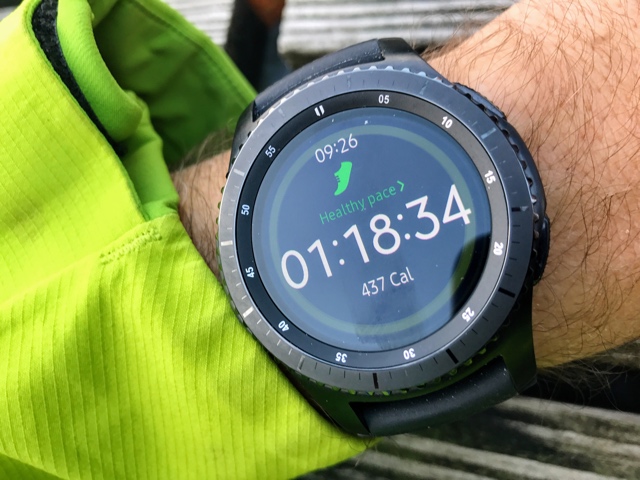
Samsung releases iOS app for Gear S2 and S3

by Volker Weber

ZZ2B9A7F0E

The Gear S app comes out of beta and is now available in the App Store. This makes the Gear S3 an even stronger recommendation. You can keep your watch when you switch devices between iOS and Android, either way.

I have not personally tested the app since I returned the Gear S3 to Samsung last week.

More >

08 Jan 02:19

David Graeber, Despair Fatigue

David Graeber, Despair Fatigue:

David Graeber dissects the stupidity masquerading as policy thinking in the UK, when a ‘bizarrely successful narrative’ took hold, and led to disastrous social engineering based on austerity instead of stimulus:

David Graeber, Despair Fatigue

Almost all British economists understood that the gaping deficits of 2008 and 2009 had been caused by the banking crisis, not the other way around. Likewise, anyone paying attention knew that cutbacks of public services to “save money” reduced economic activity, and hence government tax revenues, and so really had the effect of raising, not lowering deficits. Most also understood that deficits weren’t really much of a problem to begin with. But even the opinion of mainstream economists was, suddenly, excluded from public debate. By 2012, even the IMF was issuing statements urging the Tories to lay off. But you’d never learn any of this from the Times, the Observer, or the BBC.

How could such total, lock-step defiance of reality be maintained in a country with a formally free press and highly educated population? To some degree, you find the familiar bubble effect. Politicians, journalists, lobbyists, CEOs, and corporate bureaucrats rarely talk to anyone except each other. They constitute a distinct intellectual universe. Within this universe, economic policies are designed primarily for political marketability; economic science exists largely to provide impressive diagrams and equations to sell them with. Phrases designed in think tanks and focus groups (“free markets,” “wealth creators,” “personal responsibility,” “shared sacrifice”) are repeated like incantations until it all seems like such unthinking common sense that no one even asks what the resulting picture has to do with social reality. True, the bubble logic can be maintained only by a certain studied ignorance of how the economy really works. One 2014 poll discovered, for instance, that 90 percent of sitting MPs, for all their endless debates on the need to save money, didn’t know where money comes from. (They thought it was created by the Royal Mint.)

The bubble effect is not unique to Britain, of course. Political debate in the United States, Japan, or Germany works much the same way. But in Britain, things have gone so far that we are beginning to see a classic Big Lie reinforcer effect. When the consensus reality gets this completely divorced from actually existing reality, when so many innocent people have suffered as a result, and when anyone pointing this out has been so consistently and aggressively denounced as a tinfoil-hat-wearing flat-earther or Trotskyite, to break ranks would mean admitting that the lunatics were right. There is nothing the established media is more loath to do.

The divorce between consensus and reality has grown so extreme and unworkable that even the technocrats charged with running the system have started to cry foul. In 2014 the Bank of England—its economists apparently exhausted by having to carry out economic policy in a made-up, topsy-turvy world designed only to benefit the rich—issued a statement on “Money Creation in the Modern Economy” that effectively destroyed the entire theoretical basis for austerity. Money, they noted, is not created by governments, or even central bankers, who must be careful not to make too much of it lest they spark inflation; it’s actually created by private banks making loans. Without debt there would be no money. The post-Keynesian heterodox economists, regularly denounced as a lunatic fringe by those commentators willing to acknowledge their existence, were right.

No major news outlet considered this a story; politicians continued preaching their morality tales of the evils of debt exactly as they had before.

And where will this lead?

All this is being carried on in the knowledge that existing economic paradigms—even insofar as they are not simply being mobilized to justify policies designed for purely political purposes—are no longer relevant to the problems humanity is actually facing, in Britain or anywhere else. True, most mainstream economists are capable of seeing through obvious nonsense, like the justifications proposed for fiscal austerity. But the discipline is still trying to solve what is essentially a nineteenth-century problem: how to allocate scarce resources in such a way as to optimize productivity to meet rising consumer demand.

Twenty-first century problems are likely to be entirely different: How, in a world of potentially skyrocketing productivity and decreasing demand for labor, will it be possible to maintain equitable distribution without at the same time destroying the earth? Might the United Kingdom become a pioneer for such a new economic dispensation? The new Labour leadership is making the initial moves: calling for new economic models (“socialism with an iPad”) and seeking potential allies in high-tech industry. If we really are moving toward a future of decentralized, small, high-tech, robotized production, it’s quite possible that the United Kingdom’s peculiar traditions of small-scale enterprise and amateur science—which never made it particularly amenable to the giant bureaucratized conglomerates that did so well in the United States and Germany, in either their capitalist or socialist manifestations—might prove unusually apt. It’s all a colossal gamble. But then, that’s what historical change is like.