Shared posts

27 Feb 21:04

2016: Obligatory year in review

I’m late to the party, I know, but this isn’t a me-too article. This, in many ways, is a reflection and thanksgiving.

This is my first post for 2017, so it makes sense to recap my 2016; both the high points and the low. 2016 was a great year, monumental and life changing on different fronts. So great, I probably didn’t want it to end. Alas, all good things must come to an end.

In no particular order, I’ll try to share a few of the events that took place in my life.

Work & Life

I switched jobs and moved to Andela. It’s been a little over 4 months, and boy, it has been an incredible experience.

In this same year, I lost my last surviving grandparent, Eka Anthony. I miss her to this day. Eka Anthony was the kind of grandmother every child prayed for. God bless her sweet soul.

It wasn’t all bleak, I also became an uncle to an amazing young man, Jessy. In this same year, Lee showed up. Great guy.

I learnt how to drive. Lagos is unfair to those who are getting behind the wheel for the first time. We move (literally).

I finally graduated from the University—big deal.

Speaking & Events.

In November, I spoke at my home church, Honey Streams Christian Center. This is one privilege I’ll never take for granted. Thank you, Pastor Akomaye. Thank you, sir.

I was a panellist at the AfriLabs conference that held in Accra. It was amazing and humbling sharing the stage with industry heavyweights from Microsoft, etc.

I met the amazing community called DevCongress. Prosper and I had the rare privilege of sharing our journeys as engineers, while talking about what makes startups in Nigeria unique. Edem Kumodzi made this possible. Thanks, Chale.

I got an invite to speak at TEDx Unilag, but I somehow managed to botch this one. Poor planning. Who knows, I may get another one this year. I want to speak at a TED event. If you’re a TEDx licensee and you’re interested in having someone share his life story, do reach out.

I spoke about Progressive Web Apps at the DevFest SE season 2016 that held in Port Harcourt. I made a case for PWAs as the new way of building mobile applications moving forward.

I was at HiveCo Lab, Kampala, where I got the opportunity to meet with amazing engineers and feel the pulse of the Uganda technology scene. There, I met Mwesigwa Daniel. Daniel is an amazing guy. He still owes me a Rolex though.
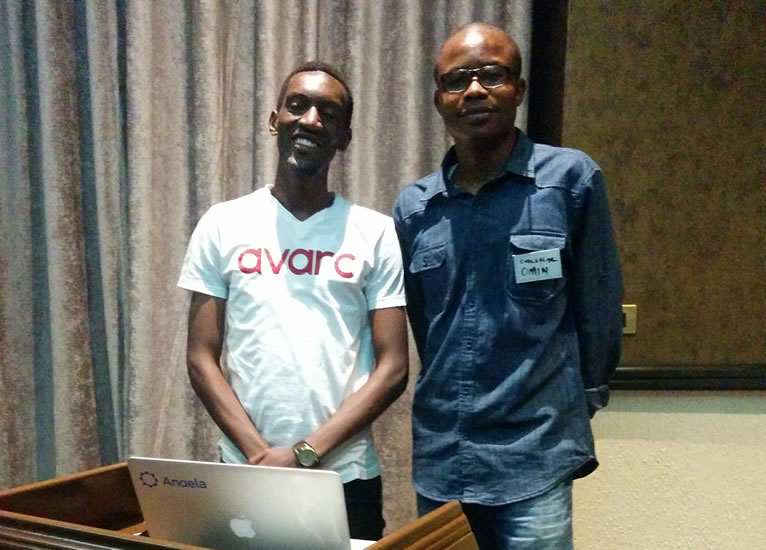
I met egbon Mark Zuckerberg. He still owes me a photograph.

I delivered the Keynote at the DevFest SW event. I spoke on the State of the Web. It was beautiful and nostalgic. For one, it afforded me the opportunity to learn about the history of the web and also examine the lives of those who made it possible. Thank you, Sir Tim Berners-Lee.

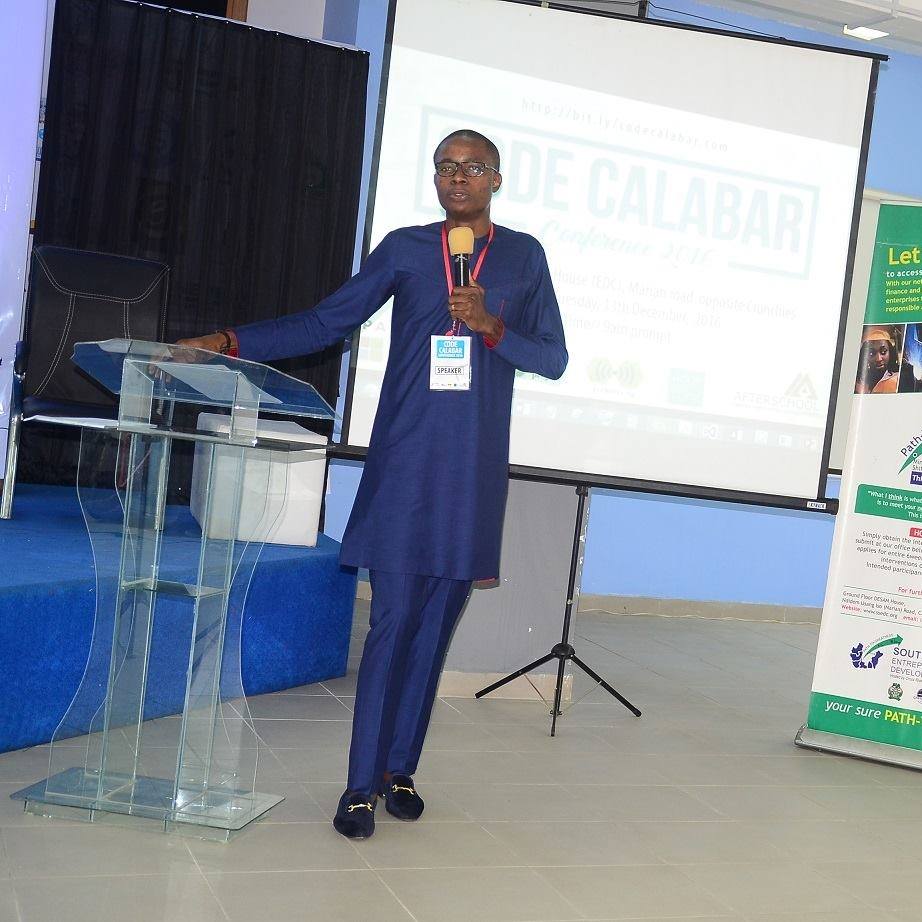
The high point of my 2016 speaking engagement was when I delivered the keynote for the CodeCalabar conference. Calabar isn’t just a city. It’s my city. My autobiography will not be complete if I don’t include this city. Calabar is my genesis.

I was a guest on Hit FM 95.5, Calabar. I spoke about technology and how it affects our everyday life. I made Papa proud.
Writing

I set out to write once every week, but I wasn’t disciplined enough to follow through on this one. I take absolute responsibility for this. No excuses.

In the midst of all of life’s happenings, I managed to scribble a few things. My biggest moment was when I shared my 11-year journey. For some weird reason, it was therapeutic. I could feel the weight off my chest. What was more interesting about this particular article was the fact that I had people emailing me and sharing their own university stories. I had the privilege of counselling with a few of these individuals.

In a bid to step away from my comfort zone—technology and startups—I decided to try my hands on fiction. I wrote about an upwardly mobile couple, Bidemi and Makinde, who had planned this amazing dinner date that almost turned into a disaster. This story isn’t complete, so I may revisit it sometime this year.

I now have renewed respect for every single person who writes fiction for a living or for fun. Fiction is tasking, but it also allows your mind wander and sets your imagination wild.

I did my best to appeal to young people on the need to write complete words and sentences. This particular article was borne out of the fact that I was tired of either ignoring people that start conversations with xup or those that will abuse your senses with tanz 4 ur tym. This gripes me, always.

I made a special appeal to UXers on the need to consider my grandmother when next they are thinking through that app that will connect the next 1 billion people. She, like many other grandparents are just as important.

I contributed to Ventures Africa, iAfrikan, Techpoint and Y!Naija. This year, I’m aiming for Bloomberg, Financial Times, WSJ, and NYTimes. Amen. A boy can dream and dreams do come true.

Reading

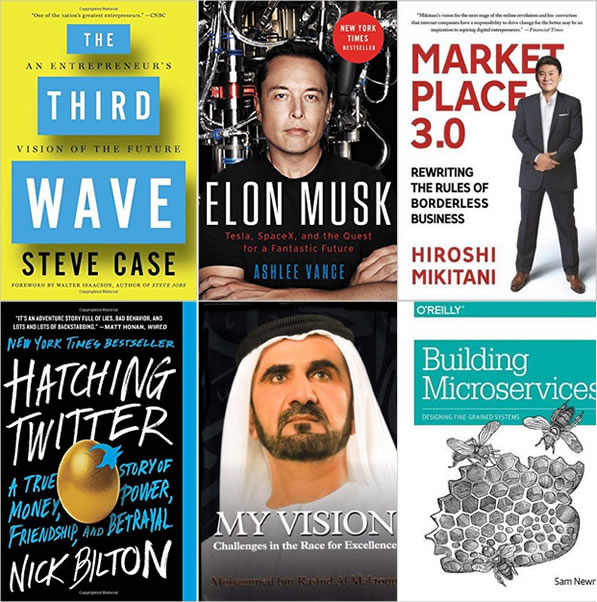
I read a number of books this year and here are some of my favourite:

Traveling

I visited 4 African countries this year; Kenya, Uganda, Ghana and Rwanda (coughs, it was a 2 hour layover). East Africa is beautiful. Yes, I said that.

I got the rare opportunity to taste a crocodile meat—thanks, Lisbi. In a bit to document my culinary experience, I started a trend I tagged culinary journeys—totally lifted from CNN’s show, Culinary Journey. I intend to follow suit this year as I encounter amazing dishes that life brings my way.
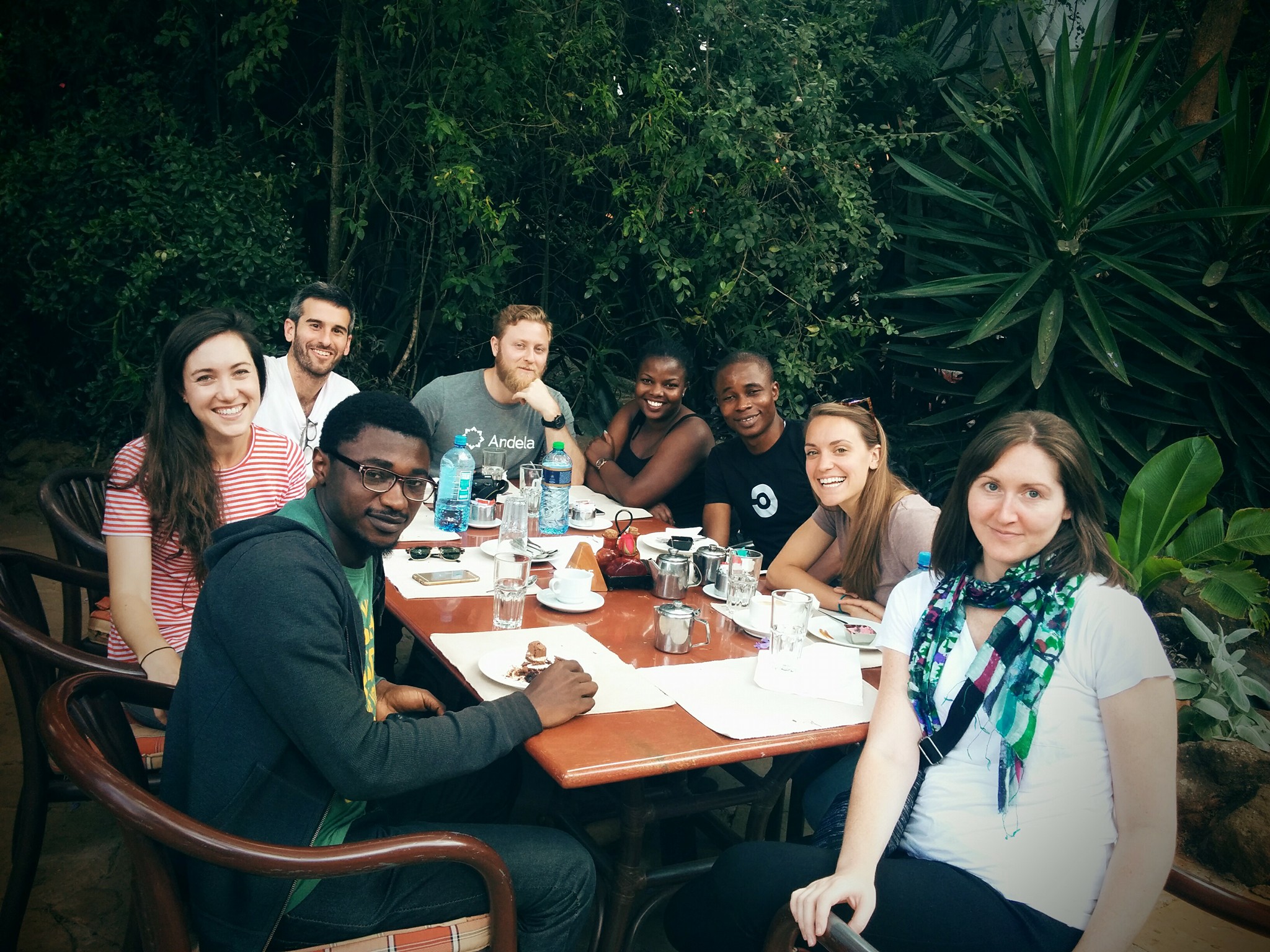
Edem was in Lagos last December, we both had Jollof at Terra Kulture. I guess we can finally lay the Nigerian/Ghana jollof squabble to rest.

Learning

This is one year that I decided to go under the hood and learn the inner workings of a few things. I took the time to explore the not-so-sexy side of MySQL. I’m by no means a database expert, but to say this experience wasn’t invaluable will be me lying.

Elasticsearch has been that one software that is not only beautiful and well designed, it most times felt magical. I did a few digging and you have to give it to the folks at Elastic, they do amazing work.

Ansible, how did I ever exist without you in my life? To RedHat and the amazing community maintaining this project, I say thank you.

2017

The idea is simple, multiple everything here by 10.

In closing, this was one beautiful year. Here’s to a greater and bigger 2017. Cheers.

Image credit: PLURALSIGHT
09 Jan 08:20

Do Not Stand By My Grave And Weep by Mary Elizabeth Frye

I am not there; I do not sleep.
I am a thousand winds that blow,
I am the diamond glints on snow,
I am the sun on ripened grain,
I am the gentle autumn rain.
When you awaken in the morning’s hush
I am the swift uplifting rush
Of quiet birds in circled flight.
I am the soft stars that shine at night.
Do not stand at my grave and cry,
I am not there; I did not die.

09 Jan 08:20

The Four Freedoms, in 2017

by Ethan

I spoke this afternoon at a rally in Pittsfield, Massachusetts my (almost) hometown (I live one town north, in Lanesboro.) The rally honored the four freedoms, articulated in his 1941 state of the union address by FDR: freedom of speech, freedom of worship, freedom from want and freedom from fear. Along with a range of Massachusetts politicians – Senator Ed Market, Pittsfield Mayor Linda Tyer – I was part of a group of community leaders invited to reflect on the four freedoms and our particular moment in time.

James Roosevelt, grandson of FDR, speaking at Four Freedoms rally in Pittsfield, MA, January 7, 2017

We had a remarkable turnout for the event. The Reverend who hosted us told me the church held 1400, and it was filled to capacity, with people sitting in the aisles, and 300 in an overflow seating room. The population of Berkshire county is only 129,000, so the folks who came out to march and listen to speeches total more than 1% of our total citizenry.


When Franklin Delano Roosevelt invoked the four freedoms in his 1941 state of the union address, the world was at war, and the president wanted Americans to support the government in spreading these freedoms around the world. We’re in a very different world now, where decades of international cooperation and unification are giving way to isolationism, nationalism and the demonizing of migrants and marginalized groups. These scary trends aren’t limited to the US – we see them everywhere from Britain to Hungary, France to Russia, Poland to South Africa.

Roosevelt saw the US government as the guarantor of these freedoms around the world, first through war with Japan and Germany, then through the Marshall Plan and through decades of American hard and soft power. That’s another way in which we’re in a different world. In the 1960s, when you asked Americans if they had trust in the federal government to do the right thing, more than 75% said that they did. These days, that number is under 20%. The four freedoms matter more than ever, but even despite the hard work of our representatives here on the stage, many of us don’t believe the government can bring them about. Instead, it’s up to us, individually and collectively.

When Norman Rockwell painted Freedom of Speech, he depicted an Arlington, VT man standing up to dissent at a local town meeting. That’s about as public as most speech could be in the 1940s. But now, every one of us has the power to speak, potentially to a global audience, using nothing more than the phones in our pocket. If you don’t like how the media covers this march, film a video, write a blog post, make your own media.

Our challenge now is not just to speak, but also to listen. When everyone is speaking, it’s too easy to listen just to the people we want to hear. We’ve got to listen deeply and widely, to people in other countries and to people in our own who we don’t agree with.

We’ve got to listen, because people are scared: children whose parents brought them to the US who discover they are not citizens when they apply to college, our Muslim brothers and sisters who are unfairly blamed for acts of terror, human rights defenders who are threatened and challenged around the world. The way we achieve freedom from fear is through solidarity, through listening hard to what people have to say, then using our speech to support them, defend them and stand with them.

This is a scary moment, a time where it looks like the progress we’ve made around the world might reverse, where we go from a world that’s gotten much bigger to one that shrinks. The good news is that we get to decide how big a world we want to live in. We get to decide how to speak, how to listen and how to stand together against fear.

09 Jan 03:52

A Route Planner to Facilitate and Promote Cycling in Metro Vancouver

by Stephen Rees

Now isn’t that a title to stir your heart?

As I am sure most of you know, while I am a cyclist – sometimes – I am a fairly cautious one. That is because I am a fat old man with a dicky ticker. Where I live there are steep hills in three of the four cardinal compass points. We live in a bowl – and Valley Drive is the only flat way out. It is uphill from here to Kerrisdale or Shaughnessy and even Kits requires tackling a short but killer grind up Nanton to the new Greenway. So the idea of a tool that takes topography into account as one of the keys to route choice had an instant appeal to me.

I came across it due to a new twitter account called Vancouver Studies run by my old friend Raul Pacheco-Vega. “This account tweets scholarly studies about the city of Vancouver (BC, Canada).”

screen-shot-2017-01-07-at-7-05-23-pm

So that link took me to the academic publisher Elsevier who, of course, charge an arm and a leg to read research articles – but at least the Abstract provided a link to the program itself. I thought.

With increasing fuel costs, greater awareness of greenhouse gas emissions and increasing obesity levels, cycling is promoted as a health promoting and sustainable transport mode. We developed a cycling route planner (http://cyclevancouver.ubc.ca) for Metro Vancouver, British Columbia, Canada, to facilitate cycling amongst the general public and to facilitate new route location by transportation planners. The geographical information system-based planner incorporates variables that influence choices to travel by bicycle (e.g., distance, elevation gain, safety, route features, air pollution and links to transit) in selecting the preferred routing. Using a familiar and user-friendly Google Maps interface, the planner allows individuals to seek optimized cycling routes throughout the region based on their own preferences. In addition to the incorporation of multiple user preferences in route selection, the planner is unique amongst cycling route planners in its use of topology to minimize data storage redundancy, its reliance on node/vertex index tables to increase efficiency of the route selection process, and the use of web services and asynchronous technologies for quick data delivery. Use of this tool can help promote bicycle travel as a form of active transportation and help lower greenhouse gas carbon dioxide (CO2) and air pollutant emissions by reducing car trips.

I have disabled the link in the quote because that site no longer responds. But Topophilo will give you both the sad story of why this useful tool is no longer available and what else is around to help you.

Cycle Vancouver Is Now Offline

October 31st, 2014

CycleVancouver, Metro Vancouver’s cycling trip planner, has been taken offline because it is no longer receiving funding to be maintained and hosted.

Other useful resources that may be helpful in planning your route are:

and then it also says

The original Cycle Vancouver code has been posted to GitHub for reference.

Which might be good news if we can come up with a rescue plan. Doesn’t this seem to be a Good Idea for crowdfunding? Or maybe support from the City – or even Metro? Isn’t Translink supposed to be into this alternative mode stuff too?

Of course being dead for three years may mean all of this has been tried before – but now the Mayors have come up with some funding for Translink, and even the feds seem interested in less carbon intensive ways of getting around (which wasn’t the case back in 2014) shouldn’t we be trying to resuscitate the patient?

UPDATE Sunday January 8

screen-shot-2017-01-08-at-4-25-56-pm

screen-shot-2017-01-08-at-4-27-50-pm

and because that link won’t work in an image


Filed under: cycling, Transportation Tagged: Bicycle, bicycles, bike, GIS, internet, research, technology, trip planner, UBC
09 Jan 03:48

2017 week 1 in review

by D'Arcy Norman

Work

The first week back after Christmas break – simultaneously slow and quiet, and intensely busy and productive.

TI Learning Spaces

We’re working on improving the tech in the active learning studios in the TI – the biggest visible change is the addition of power bars (3 AC plugs and 3 USB plugs) on each station, so students don’t have to engage in creative engineering to access the plugs in the floor boxes.

more power!

We streamlined the application form for instructors who want to teach university courses in the Taylor Institute, which should help with the next round of applications for Spring and Summer 2017. The process opens on Monday, and runs until Feb. 17, with announcements made about 2 weeks after that.

Team members have met with all of the instructors who will be teaching in the TI this semester, and have consulted with how to adapt the spaces and technologies as appropriate. Lots of interesting courses taking place in the building this semester, from an incredibly diverse range of faculties and departments!

And with that, I think we’re ready for the start of the W2017 semester on Monday. Go team!

#TICONF2017

The Taylor Institute’s 2017 Conference on Post-secondary Learning and Teaching is shaping up nicely. The call for proposals is open now. You should come.

Retwittering

I was… encouraged… to create a Twitter account again, because I was missed online. I never stopped being online. If anything, I was more active and productive online. But, twitter is still a thing, and there’s no sign of things changing soon despite actively trying to explore and shift things away from multi-billion-dollar corporate silos.

I also got tired of tilting at windmills. So. I created another account. My previous 2 accounts were parked by Twitter – the first (@dnorman) was snagged by someone else, the second (@dlnorman) flagged as “suspended” – so I had to create a new one. I’m now @realdlnorman. I’m not sure what I’ll be tweeting about. Likely, the usual nonsense.1

PhD

I’ve been thinking quite a bit about 2 things lately – dimensionality and intermittent reinforcement.

Dimensionality

I finally got my copy of Nick Sousanis’ Unflattening back, and dove in. It’s an amazing dissertation on dimensionality in communication – a PhD dissertation in comic form, exploring the nature of visual vs. textual communication, the nature of self and identity, and of knowledge and learning.

Nick draws on E.A. Abbott’s Flatland, a mental exercise from the perspectives of beings living in 1, 2, and 3 dimensions. If text and audio are one-dimensional (there is forward/backward, before/after), images are 2 dimensional (with the possible addition of a time dimension) with concepts laid out in spatial relations with each other. It’s striking that almost all of academic discourse is one-dimensional – completely textual, with supplementary images, but essentially serially presented. Nick’s dissertation-in-comic-form shows the difference between text (which is natively one-dimensional, but can be presented as interpreted in 2 dimensions) and graphic communication (which is natively two-dimensional). What other forms of natively-two-dimensional publishing would be effective? What would natively-three-dimensional academic discourse look like?

2 quotes, ironically recast as 1-dimensional serialized text rather than 2-dimensional comic form…

“This requires a perceptual shift – a way of thinking – in which a rigid enclosed mind-set is reconceived as an interconnected, inclusive network. Distinct viewpoints still remain, now no longer isolated – viewed as integral to the whole – each informing the other in iterative fashion. In this new integrated landscape lies the potential for a more comprehensive understanding.” P. 31.

“Perception is not dispensable. It’s not mere decoration or afterthought, but integral to thought, a fundamental partner in making meaning. In reuniting thinking and seeing, we expand our thinking and concept of what thinking is.” P. 81.

Intermittent reinforcement

I saw this article by magician/tech ethicist Tristan Harris via Stephen Downes, and it nicely pulls together several aspects of online culture that make it so 1) addictive 2) superficial 3) ossified. Fear of Missing Out. Reload syndrome. Twitter, email, feeds. It’s the techno-magicians who design these online casinos who then want to “fix education” by turning their billion-dollar-gazes at universities and schools. Xenu help us all when they finally get their chance.

Read

Other

Too cold to ski. But the sun is up when I get home from work now, so that’s nice.

  1. Also likely, not campus IT stuff, even if it directly overlaps with my day job and PhD work. Open communication with a muzzle is fun.
09 Jan 03:48

Ransomware Spreading Onto Smart TVs, Is A Pain To Fix – Consumerist

mkalus shared this story from Consumerist.

Streaming TV has been a boon for consumers. Programming is everywhere, right at our fingertips, as soon as we get our screens online. But that connectivity comes with a big risk: wherever there’s an internet connection, there’s a possibility for bad guys to show up. And now they are showing up in the real world, holding TV sets hostage with ransomware and demanding cash to let you access your own stuff.

It’s basically a looming disaster waiting right at the nexus where two worrisome trends meet.

First: Many of the things that make up the so-called Internet of Things are infamously, woefully vulnerable and insecure. It’s a big enough problem that the FTC is now running a $25,000 contest to see if someone can help make it better. Criminals who want to launch traffic-based attacks are already looping “smart” devices into their botnets by the millions, mainly because they can.

Ransomware is a form of extortion that uses malicious software to remotely hold a device hostage until the victim pays for it to be unlocked.
Ransomware has recently begun spreading to internet-connected “smart” TVs, with cybercriminals rendering some TV sets unusable.
You should be able to avoid payment of the ransom by doing a factory reset on your hijacked TV, but some manufacturers do not tell customers how to fully reset their devices.
One TV ransomware victim says LG offered to reset his TV for him, but wanted him to pay nearly as much as the TV is worth.
Keeping your TV’s software up to date — and not downloading anything to your set that comes from questionable sources — could help to minimize the odds of being a ransomware victim.

Related: If you own any of these types of products, change the default password now

A whole pile of increasingly common consumer items, from dishwashers to toasters, now ships with some kind of internet connectivity built in. For a huge percentage of those items, either the software that runs them is out-of-date and vulnerable before you even get your hands on it, or else the default password is hard-coded, absent, or easy to guess. Or both. It adds up to a giant, easily-accessed web of stuff out there in the world that basically any hacker with time and know-how can manipulate.

The second trend: The spread of ransomware, which has been on the rise for phone and PC users for a few years now. That’s malicious software that doesn’t just access your private data to use, sell, or exploit; instead, it locks it up and charges you for the key. It’s a form of extortion: if you don’t pay up the requisite sum (usually in bitcoin) by the stated deadline, then your personal data is either deleted forever or exposed to the whole, seedy world.

Ransomware hits everyone, everywhere. It’s common to find on the web, when otherwise-legitimate sites have their ad-serving software go bad or deliver malicious ads. Apple users are not immune, and it has hit systems as large as the San Francisco transit system. Hospitals, in particular, get slammed with ransomware attacks surprisingly regularly.

Now add to those two trends the existence of smart TVs: insecure, likely not-updated devices hanging out in your living room, that can do the things you want but annoy you when they don’t work, and you’ve got the problem we’re starting to face today.

Back in 2015, one Symantec employee described how quickly he was able to find a brand-new TV filled up with ransomware. That TV, he explained, came with a preinstalled gaming portal, where you can select and install games.

But that connection wasn’t encrypted, meaning basically any man-in-the-middle type attacker can hope into the request and redirect the user to install malicious software instead. The TV the Symantec employee was testing with was running Android-based software, and so Android-based ransomware worked, displaying a ransom note on the screen and rendering the set unusable.

In recent weeks, we’ve seen a real-world case of exactly that. One software developer, Darren Cauthon, shared the story on Twitter.

It began, Cauthon said, when a member of his family downloaded an app for watching movies on the family’s LG smart TV. Shortly thereafter, the TV rebooted — and was being held ransom for $500.

Since 2015, LG has used a different operating system for its devices, called WebOS. But at the time Cauthon’s family got their TV, LG was still using Android-based software. And so their TV was rendered useless by a variant on common Android malware that first started being seen on phones in 2015.

The nice thing about a TV is that it probably isn’t holding a whole lot of data you can’t bear to live without. Your phone has passwords, photos, and other sensitive, personal information on it. A hospital’s computer network has vital, impossible-to-recreate patient data on it. But a TV is mostly just letting you log into accounts that store whatever history and payment information you have on them elsewhere anyway, so one set — or a factory reset on your existing one — is as good as another, unless you’ve connected a USB stick or external hard drive to it for accessing personal files.

But there was another catch: LG doesn’t publicly share the steps to factory resetting its devices. So Cauthon contacted LG for support and was told that he could bring it to a service center where, for $340, an employee would run a factory reset.

As you can currently buy a brand-name 40″ HD smart TV for less than $400 online, that did not strike him as a particularly good deal. So he eventually talked LG into sharing the process for booting the TV into recovery mode with him — which he then uploaded to YouTube for others to follow.

Cauthon’s story, then, ended well. But his family, as PC World notes, was lucky: as a software engineer, Cauthon was comfortable with messing around in the virtual guts of his Android-powered TV in order to repair it (once he knew how to get there). And the malware that infected the TV only locked the screen and prevented functions from being accessed; it didn’t encrypt or delete any files.

But unfortunately, he’s not alone. While Cauthon’s tale of woe seems to be the first known case of TV-bricking ransomware in the U.S., such attacks are on the rise elsewhere. As Infosecurity Magazine reports, Japanese consumers are being particularly hard hit. In 2016, Japan saw a “spike” in ransomware attacks on TVs, the magazine reports. Over 300 TV-based attacks were reported in that nation over the course of the year — and the more people that get hit, the higher a chance that some of them will pay up because they don’t see any other choice.

The good news is, consumers can protect themselves in a few ways.

First, make sure your TV is always up to date. You can search for the make and model and in many cases, find manufacturer directions for updating your set as needed. (LG’s support page on the topic, for example.)

Second, be very, very careful about what you download to your sets. Stick with reputable sources and known apps and if anything seems fishy, just… don’t.

And third, make sure you always have your personal files backed up somewhere recently. That way if someone threatens to delete them, you may just be able to call their bluff.

Was this helpful? We’re a non-profit! You can get more stories like this in our twice weekly ad-free newsletter! Click here to sign up.

09 Jan 03:47

Nokia 6 Is the Company’s First Android Smartphone; Coming to China in Early 2017

by Rajesh Pandey
A few hours after teasing their first handset, HMD Global today unveiled their first Nokia-branded Android smartphone: the Nokia 6. The China-exclusive device features a 5.5-inch Full HD display that is protected by a curved 2.5D Gorilla Glass. Continue reading →
09 Jan 03:46

New Zealand, Older Pedestrians and Road Safety

by Sandy James Planner

lynley_hood_2_280716__medium_

An article in the New Zealand Herald  notes how diminished the pedestrian is for road space in that country.  Lynley Hood is a researcher in Dunedin who is losing her sight and has started a petition asking the government to reduce the number of pedestrians killed on New Zealand roads. In New Zealand pedestrians do not have priority over motor vehicles when crossing side roads and intersections.

Between 2006 and 2015 384 pedestrians were killed on New Zealand roads. Ninety cyclists were killed during the same time. Dr. Hood notes that the government “has more than $350 million invested in a Cycling Safety Action Plan. There is no pedestrian safety plan.” Thirty per cent of the pedestrians killed on the roads were 65 years and older. Ms. Hood notes that the 104 seniors in that 30 per cent of  pedestrians were more than the total of cyclists killed, but that no special funding was available to ameliorate the cause of this carnage.

Ms. Hood had little interest in her work except from New Zealand’s chief coroner. Since the senior population in New Zealand will double in the next two decades that means the pedestrian death rate could also double.

Older people need to walk for exercise, Dr Hood said, and they have to cross roads. They are more unstable, move more slowly and are likely to have sight and hearing problems.When crossing a road they have no protection, and they are generally poorer judges of speed and distance. What’s needed is some commitment by Government to pedestrian safety. There are a lot of young traffic designers who would leap at the chance of tackling the challenge if Government put some money into it. We’re not all petrolheads.”

In New Zealand anything that is not a motorized vehicle uses the sidewalk including scooters, skateboards, mobility scooters and Segways as well as walkers. There is no set standard for width, design, surface or grade. In a country with a population size similar to British Columbia’s it is time for motordom to accept the right of all users, and to give pedestrians the priority for safe access across roads.mot_blames_victims


09 Jan 03:45

Walk Like a Penguin and Ignore the Sand on Spanish Banks

by Sandy James Planner

penguin2-1

As hard as it may seem to everyone else in the country we have not been dealing with the cold, the snow, and especially the icy conditions of the city sidewalks and bike routes too well. Usually a slippery frosty day or two subsides tearfully into rain and all that messy ice disappears. But that hasn’t happened this time, and Price Tags ruefully looks at the vacationing Mayor of Vancouver in Mexico and our own Gordon Price in Buenos Aires with great envy.

There have been some news items about people slipping and falling on the ice and Global News has helpfully let us know that  “German trauma surgeons advised the public on Wednesday to walk like penguins to avoid slipping on pavements with freezing temperatures forecast nationwide over the next few days. An advisory published on the website of the German Society of Orthopaedics and Trauma Surgery said that walking like the aquatic birds involves leaning the torso forward so that the centre of gravity is on the front leg.”

With our shortage of road salt, some ingenious citizens have turned to the city’s beaches to load up on sand. We have all heard about property encroachment on beaches, but never people actually TAKING the beach. As CBC reported, this theft of City sand was accomplished by using scooping tools such as Starbucks cups.

The Parks Board is not happy about the beach sand theft. “Despite the high demand for a fix, Howard Normann — Vancouver’s director of parks — said people shouldn’t look to the beach for a solution. “I know some people are desperate to get something down onto their sidewalks to prevent people from slipping and falling … but we do not want people to start coming down there and start loading up truckloads of beach sand,” he said. “That’s an integral part of our ecosystem and our beachscape.”

Here’s hoping we get warmer weather and rain soon.

white_sand_red_bucket_by_badchess-d652kip


09 Jan 03:45

"We think we tell stories, but stories often tell us, tell us to love or hate, to see or be seen...."

“We think we tell stories, but stories often tell us, tell us to love or hate, to see or be seen. Often, too often, stories saddle us, ride us, whip us onward, tell us what to do, and we do it without questioning. The task of learning to be free requires learning to hear them, to question them, to pause and hear silence, to name them, and then become a story-teller”

- Rebecca Solnit, The Faraway Nearby
09 Jan 03:45

#NowPlaying Teardrop by Massive Attack


#NowPlaying Teardrop by Massive Attack

09 Jan 03:41

"Despite their rifts, they were a post-genre outfit, one that couldn’t separate dub from punk from..."

“Despite their rifts, they were a post-genre outfit, one that couldn’t separate dub from punk from hip-hop from R&B because the basslines all worked together and because classifications are for toe tags.”

-

Nate Patrin, Massive Attack: Mezzanine Album Review

On Mezzanine, Massive Attack tried to escape trip-hop. They nearly tore themselves apart and made its defining document instead. 

One of the greatest, most timeless albums of all time, by the defining band of the trip-hop vanguard.

Oh, and classifications are for toe-tags.

09 Jan 03:40

edgeperspectives:“In any given moment we have two options: to step forward into growth or back into...

edgeperspectives:

“In any given moment we have two options: to step forward into growth or back into safety.” —Abraham Maslow

09 Jan 03:40

David Dunning, We Are All Confident Idiots

David Dunning, We Are All Confident Idiots:

The ignorant are much more likely to give themselves high marks for knowledge they don’t have. This is the Dunning-Kruger effect.

The American author and aphorist William Feather once wrote that being educated means “being able to differentiate between what you know and what you don’t.” As it turns out, this simple ideal is extremely hard to achieve. Although what we know is often perceptible to us, even the broad outlines of what we don’t know are all too often completely invisible. To a great degree, we fail to recognize the frequency and scope of our ignorance.

In 1999, in the Journal of Personality and Social Psychology, my then graduate student Justin Kruger and I published a paper that documented how, in many areas of life, incompetent people do not recognize — scratch that, cannot recognize — just how incompetent they are, a phenomenon that has come to be known as the Dunning-Kruger effect. Logic itself almost demands this lack of self-insight: For poor performers to recognize their ineptitude would require them to possess the very expertise they lack. To know how skilled or unskilled you are at using the rules of grammar, for instance, you must have a good working knowledge of those rules, an impossibility among the incompetent. Poor performers — and we are all poor performers at some things — fail to see the flaws in their thinking or the answers they lack.

What’s curious is that, in many cases, incompetence does not leave people disoriented, perplexed, or cautious. Instead, the incompetent are often blessed with an inappropriate confidence, buoyed by something that feels to them like knowledge.

This isn’t just an armchair theory. A whole battery of studies conducted by myself and others have confirmed that people who don’t know much about a given set of cognitive, technical, or social skills tend to grossly overestimate their prowess and performance, whether it’s grammar, emotional intelligence, logical reasoning, firearm care and safety, debating, or financial knowledge. College students who hand in exams that will earn them Ds and Fs tend to think their efforts will be worthy of far higher grades; low-performing chess players, bridge players, and medical students, and elderly people applying for a renewed driver’s license, similarly overestimate their competence by a long shot.

[…]

An ignorant mind is precisely not a spotless, empty vessel, but one that’s filled with the clutter of irrelevant or misleading life experiences, theories, facts, intuitions, strategies, algorithms, heuristics, metaphors, and hunches that regrettably have the look and feel of useful and accurate knowledge. This clutter is an unfortunate by-product of one of our greatest strengths as a species. We are unbridled pattern recognizers and profligate theorizers. Often, our theories are good enough to get us through the day, or at least to an age when we can procreate. But our genius for creative storytelling, combined with our inability to detect our own ignorance, can sometimes lead to situations that are embarrassing, unfortunate, or downright dangerous — especially in a technologically advanced, complex democratic society that occasionally invests mistaken popular beliefs with immense destructive power (See: crisis, financial; war, Iraq). As the humorist Josh Billings once put it, “It ain’t what you don’t know that gets you into trouble. It’s what you know for sure that just ain’t so.” (Ironically, one thing many people “know” about this quote is that it was first uttered by Mark Twain or Will Rogers — which just ain’t so.)

Because of the way we are built, and because of the way we learn from our environment, we are all engines of misbelief. And the better we understand how our wonderful yet kludge-ridden, Rube Goldberg engine works, the better we — as individuals and as a society — can harness it to navigate toward a more objective understanding of the truth.

In times of technological advance, many are profoundly ignorant of the way the world works. This makes the Dunning-Kruger Effect more prevalent, and so we are living in a world dominated by its outcome.

This is the nutshell:

The incompetent are often blessed with an inappropriate confidence, buoyed by something that feels to them like knowledge.

09 Jan 03:40

@stoweboyd

@stoweboyd:
09 Jan 03:38

Gig Time?

by Ken Ohrn

In a rarity for PT, here’s a 16-month gig looking for a gigee.

LEDlab is hiring!

Job description HERE.

  • Position: LEDlab Project Manager
  • Application Deadline: January 22, 2017
  • Commitment: 16-months full time
  • Start date: March 1, 2017 or earlier
  • Compensation: $50,000-55,000, plus benefits

Half-way through our planned three-year initiative, the Local Economic Development Lab is expanding to meet the demand and opportunity for systemic impact with our work. We are seeking an organized relationship-builder, storyteller, and project manager to lead our 2017/18 cohort of innovative projects, and to help us tell and share stories of impact from the lab and our community partners.

The Local Economic Development Lab, initiated and supported by Ecotrust Canada and RADIUS SFU, partners with community organizations to explore innovative ways to build a more vibrant and inclusive local economy in Vancouver’s Downtown Eastside.

LEDlab is a time-bound, place-based and action-focused initiative. Through it, we will build, test and scale solutions that put money in the pockets of DTES residents; enhance the capacity of individuals, organizations and networks; and disrupt traditional patterns of power and resource use in the community.


09 Jan 03:38

Finding a Balance Between Teaching and Doing

by Eugene Wallingford

In the Paris Review's The Art of Fiction No. 183, the interviewer asks Tobias Wolff how he balances writing with university teaching. Wolff figures that teaching is a pretty good deal:

When I think about the kinds of jobs I've had and the ways I've lived, and still managed to get work done--my God, teaching in a university looks like easy street. I like talking about books, and I like encountering other smart, passionate readers, and feeling the friction of their thoughts against mine. Teaching forces me to articulate what otherwise would remain inchoate in my thoughts about what I read. I find that valuable, to bring things to a boil.

That reflects how I feel, too, as someone who loves to do computer science and write programs. As a teacher, I get to talk about cool ideas every day with my students, to share what I learn as I write software, and to learn from them as they ask the questions I've stopped asking myself. And they pay me. It's a great deal, perhaps the optimal point in the sort of balance that Derek Sivers recommends.

Wolff immediately followed those sentences with a caution that also strikes close to home:

But if I teach too much it begins to weigh on me--I lose my work. I can't afford to do that anymore, so I keep a fairly light teaching schedule.

One has to balance creative work with the other parts of life that feed the work. Professors at research universities, such as Wolff at Stanford, have different points of equilibrium available to them than profs at teaching universities, where course loads are heavier and usually harder to reduce.

I only teach one course a semester, which really does help me to focus creative energies around a smaller set of ideas than a heavier load does. Of course, I also have the administrative duties of a department head. They suffocate time and energy in a much less productive way than teaching does. (That's the subject of another post.)

Why can't Wolff afford to teach too many courses anymore? I suspect the answer is time. When you reach a certain age, you realize that time is no longer an ally. There are only so many years left, and Wolff probably feels the need to write more urgently. This sensation has been seeping into my mind lately, too, though I fear perhaps a bit too slowly.

~~~~

(I previously quoted Wolff from the same interview in a recent entry about writers who give advice that reminds us that there is no right way to write all programs. A lot of readers seemed to like that one.)

09 Jan 03:38

City Reputations – Vancouver #9

by Ken Ohrn

The Reputation Institute gets a lot of attention when it publishes results like this, whether it’s companies, countries or as in this case — cities.

cities-ranking

City RepTrak® is a global survey based on more than 22,000 consumer ratings, collected in the G8 countries, which ranks the world’s 55 most reputable cities based on levels of trust, esteem, admiration and respect. Perceptions are then grouped into three dimensions: Advanced Economy, Effective Government and Appealing Environment. Cities with strong reputations are perceived positively in all three dimensions.

What value is there in this ranking?  Aside from a chance to see ourselves as others see us.  Well, according to Forbes:

The World’s Most Reputable Cities:  There is a direct link between a city’s reputation and people’s willingness to visit, work and live there. By focusing on reputation drivers, cities can improve their reputation scores and benefit from increased support from their stakeholders.”

vancouver-reputation

Scan the list of cities HERE. With a nifty photo gallery.

You’ll need to register to get the full RI report HERE.


09 Jan 03:38

To: Ross Mayfield, re: Universal Basic Income

by Stowe Boyd

You don’t really make a case for or against Universal Basic Income, with the exception of the anti-tech backlash you see coming, which…

Continue reading on Work Futures »

09 Jan 03:33

Making room for automobiles in the ’40s

by michaelkluckner

Jason Vanderhill, collector and historian extraordinaire, posted this newspaper clip on FB about the pending demise in 1946 of a section of “Skid Road” and the characters who were to be displaced. Hard to read in the image below, but this is how it begins:

“It appears, that in the interests of better town planning, certain experts have expressed the opinion that the entire block down in the old Skid-Road district bounded by Water, Carrall, Cordova, and Abbott streets must be razed to the ground in order to provide room for the parking of more motor vehicles.

“Should this be done, I suppose we must bow to the inevitable march of time and accept this harsh decree. However, the destruction of all these old landmarks, peopled by ghosts of the past, will wrench the very heartstrings of many old-timers.”

a2

As it turned out, the block from Water to Abbott survived long enough to be re-imagined by Larry Killam and others in the late 1960s; the commercial and aesthetic potential of Gastown was a key element in the coalition of ideas that formed to fight the freeway in the early 1970s. The concession made to cars at the time was the big parkade, for Woodward’s, which took a chunk out of Water Street a block to the west – part of it became the “Historicum” [sic?] attraction and is now …. ?

a3

The best claim-to-fame for the parkade is its appearance as a set in Jackie Chan’s classic “Rumble in the Bronx.”


09 Jan 03:30

2017-01 Authored Package Updates

by hrbrmstr

The rest of the month is going to be super-hectic and it’s unlikely I’ll be able to do any more to help the push to CRAN 10K, so here’s a breakdown of CRAN and GitHub new packages & package updates that I felt were worth raising awareness on:

epidata

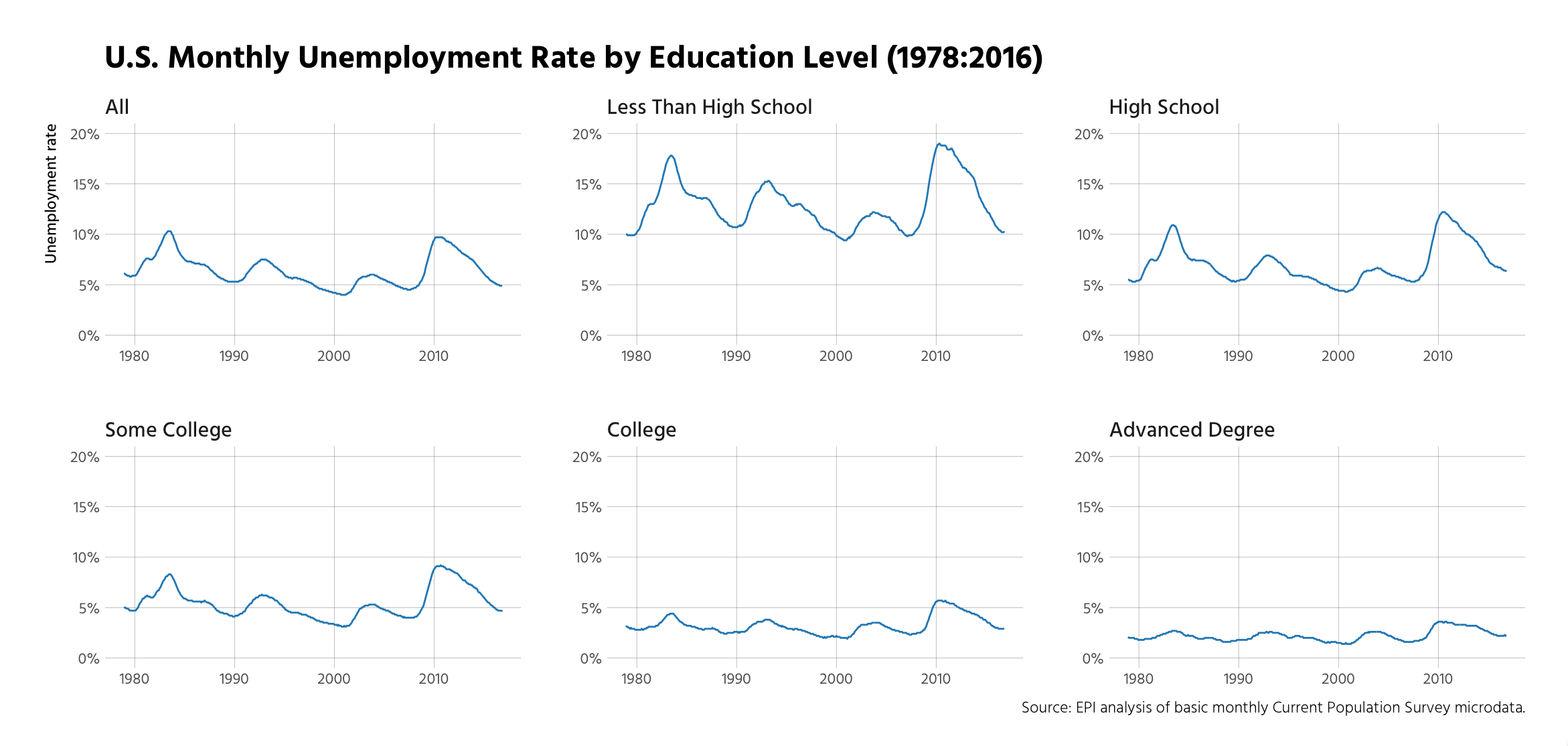
I mentioned this one last week but it wasn’t really a package announcement post. epidata is now on CRAN and is a package to pull data from the Economic Policy Institute (U.S. gov economic data, mostly). Their “hidden” API is well thought out and the data has been nicely curated (and seems to update monthly). It makes it super easy to do things like the following:

library(epidata)
library(tidyverse)
library(stringi)
library(hrbrmisc) # devtools::install_github("hrbrmstr/hrbrmisc")

us_unemp <- get_unemployment("e")

glimpse(us_unemp)
## Observations: 456
## Variables: 7
## $ date            <date> 1978-12-01, 1979-01-01, 1979-02-01, 1979-03-0...
## $ all             <dbl> 0.061, 0.061, 0.060, 0.060, 0.059, 0.059, 0.05...
## $ less_than_hs    <dbl> 0.100, 0.100, 0.099, 0.099, 0.099, 0.099, 0.09...
## $ high_school     <dbl> 0.055, 0.055, 0.054, 0.054, 0.054, 0.053, 0.05...
## $ some_college    <dbl> 0.050, 0.050, 0.050, 0.049, 0.049, 0.049, 0.04...
## $ college         <dbl> 0.032, 0.031, 0.031, 0.030, 0.030, 0.029, 0.03...
## $ advanced_degree <dbl> 0.021, 0.020, 0.020, 0.020, 0.020, 0.020, 0.02...

us_unemp %>%
  gather(level, rate, -date) %>%
  mutate(level=stri_replace_all_fixed(level, "_", " ") %>%
           stri_trans_totitle() %>%
           stri_replace_all_regex(c("Hs$"), c("High School")),
         level=factor(level, levels=unique(level))) -> unemp_by_edu

col <- ggthemes::tableau_color_pal()(10)

ggplot(unemp_by_edu, aes(date, rate, group=level)) +
  geom_line(color=col[1]) +
  scale_y_continuous(labels=scales::percent, limits =c(0, 0.2)) +
  facet_wrap(~level, scales="free") +
  labs(x=NULL, y="Unemployment rate",
       title=sprintf("U.S. Monthly Unemployment Rate by Education Level (%s)", paste0(range(format(us_unemp$date, "%Y")), collapse=":")),
       caption="Source: EPI analysis of basic monthly Current Population Survey microdata.") +
  theme_hrbrmstr(grid="XY")

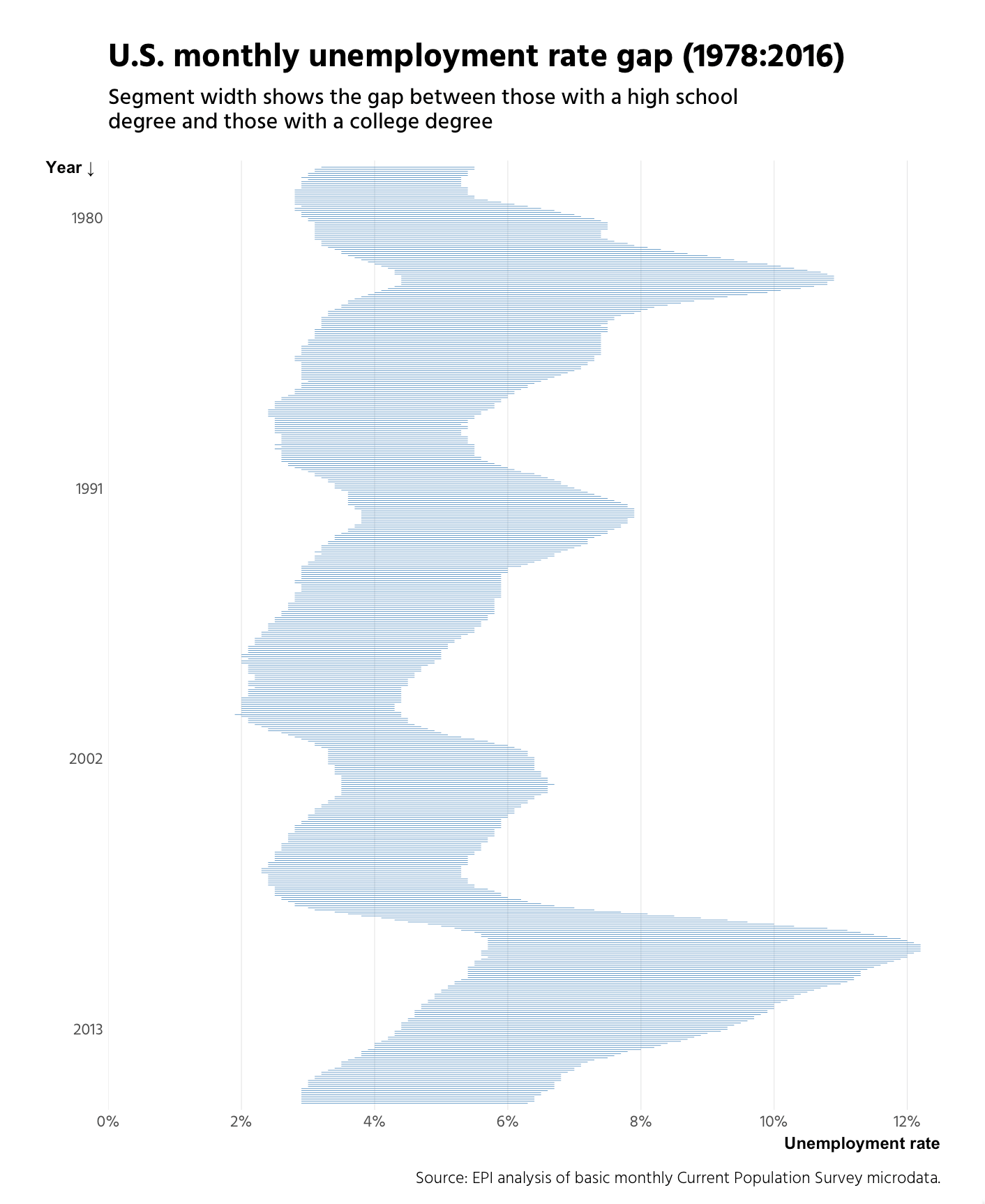
us_unemp %>%
  select(date, high_school, college) %>%
  mutate(date_num=as.numeric(date)) %>%
  ggplot(aes(x=high_school, xend=college, y=date_num, yend=date_num)) +
  geom_segment(size=0.125, color=col[1]) +
  scale_x_continuous(expand=c(0,0), label=scales::percent, breaks=seq(0, 0.12, 0.02), limits=c(0, 0.125)) +
  scale_y_reverse(expand=c(0,100), label=function(x) format(as_date(x), "%Y")) +
  labs(x="Unemployment rate", y="Year ↓",
       title=sprintf("U.S. monthly unemployment rate gap (%s)", paste0(range(format(us_unemp$date, "%Y")), collapse=":")),
       subtitle="Segment width shows the gap between those with a high school\ndegree and those with a college degree",
       caption="Source: EPI analysis of basic monthly Current Population Survey microdata.") +
  theme_hrbrmstr(grid="X") +
  theme(panel.ontop=FALSE) +
  theme(panel.grid.major.x=element_line(size=0.2, color="#2b2b2b25")) +
  theme(axis.title.x=element_text(family="Arial", face="bold")) +
  theme(axis.title.y=element_text(family="Arial", face="bold", angle=0, hjust=1, margin=margin(r=-14)))

(right edge is high school, left edge is college…I’ll annotate it better next time)

censys

Censys is a search engine by one of the cybersecurity research partners we publish data to at work (free for use by all). The API is moderately decent (it’s mostly a thin shim authentication layer to pass on Google BigQuery query strings to the back-end) and the R package to interface to it censys is now on CRAN.

waffle

The seminal square pie chart package waffle has been updated on CRAN to work better with recent ggplot2 2.x changes and has some additional parameters you may want to check out.

cdcfluview

The viral package cdcfluview has had some updates on the GitHub version to add saner behaviour when specifying dates and had to be updated as the CDC hidden API switched to all https URLs (major push in .gov-land to do that to get better scores on their cyber report cards). I’ll be adding some features before the next CRAN push to enable retrieval of additional mortality data.

sergeant

If you work with Apache Drill (if you don’t, you should), the sergeant package (GitHub) will help you whip it into shape. I’ve mentioned it before on the blog but it has a nigh-complete dplyr interface now that works pretty well. It also has a direct REST API interface and RJDBC interface plus many helper utilities that help you avoid typing SQL strings to get cluster status info. Once I add the ability to create parquet files with it I’ll push it up to CRAN.

The one thing I’d like to do with this package is support any user-defined functions (UDFs in Drill-speak) folks have written. So, if you have a UDF you’ve written or use and you want it wrapped in the package, just drop an issue and I’ll layer it in. I’ll be releasing some open source cybersecurity-related UDFs via the work github in a few weeks.

zkcmd

Drill (in non-standalone mode) relies on Apache Zookeeper to keep everything in sync and it’s sometimes necessary to peek at what’s happening inside the zookeeper cluster, so sergeant has a sister package zkcmd that provides an R interface to zookeeper instances.

ggalt

Some helpful folks tweaked ggalt for better ggplot2 2.x compatibility (#ty!) and I added a new geom_cartogram() (before you ask if it makes warped shapefiles: it doesn’t) that restores the old (and what I believe to be the correct/sane/proper) behaviour of geom_map(). I need to get this on CRAN soon as it has both fixes and many new geoms folks will want to play with in a non-GitHub context.

FIN

There have been some awesome packages released by others in the past month+ and you should add R Weekly to your RSS feeds if you aren’t following it already (there are other things you should have there for R updates as well, but that’s for another blog). I’m definitely looking forward to new packages, visualizations, services and utilities that will be coming this year to the R community.

09 Jan 03:29

Word of the Day: Gallimaufry

gal·li·mau·fry

/,ɡaləˈmôfrē/ 

noun 

  1. a confused jumble or medley of things.
  2. a dish made from diced or minced meat, especially a hash or ragout.
09 Jan 03:29

"The future, in retrospect, always seems inevitable."

“The future, in retrospect, always seems inevitable.”

- Greg Satell, How The Future Is Really Built
09 Jan 03:29

This should make (United States of) Americans ashamed.The...


This should make (United States of) Americans ashamed.

The Visceral Abstract 

In 1993, Congress decided to defund the Superconducting Super Collider that was planned to be built in Waxahachie, Texas due to budget concerns.  The Europeans filled the gap and built their Large Hadron Collider in the Alps, where the Higgs Boson was discovered this past year.

After a half century of American dominance, the center of physics has now shifted back to Europe.  However, I don’t get the feeling that Mr. Broun and his colleagues on the Science Committee are concerned.

The Chairman, Ralph Hall isn’t sure whether the earth is warming or freezing.  Another member, Dana Rohrabacher, has suggested that we burn down rain forests in order to protect the environment, while his colleague Todd Akin believes that no pregnancy can result from a “legitimate rape.”

The results are clear.  We now rank 25th and 17th, respectively, in math and science.  We are 34th in infant mortality, 38th in life expectancy and 16th in higher education.  We’ve fallen to 4th in manufacturing competitiveness and 22,000 Americans die annually due to lack of health insurance.  These are facts, they are undeniable and they matter.

The modern world is a place where ideas are far more than mere personal beliefs, they affect our lives.  Ignorance is not a condition, but a willful choice and it has its price.

09 Jan 03:29

"We all have the potential to be monsters, but we recognize the monstrosity within us and still have..."

“We all have the potential to be monsters, but we recognize the monstrosity within us and still have compassion and kindness.”

- Ralph Fiennes
09 Jan 03:29

The Big SUMO Report: 2016

by Michał

Hey there, SUMO Nation!

sumo_logo

Since 2017 has finally arrived (a while ago), our team wanted to share a few numbers and remarks with you. This report is a bit delayed, but we hope it will prove to be worth the extra few days’ wait.

We are on the brink of probably the biggest change to the “way things are” around SUMO in the recent years, so taking a good look back is a great way to make sure we stay focused on the road ahead.

2016 has not been an easy year for many members of our community, for many of reasons. Fortunately, we all persevered and managed to come out stronger / wiser / more prepared on this side of the calendar. We will definitely keep working together on many aspects of our site, our community, and our presence in Mozilla’s mission. Our small core team counts on your presence and strength and you can count on our support. You rock the helpful web.

As for all the data you will see on this page and the ones it links to: remember that while we use some of these numbers to prepare plans for the future and put them into reality, they are just numbers – and as such cannot and will not fully represent the passion, the values, the talent and effort behind every single angry user turned into a happy one thanks to your dedication to making the open web better and more helpful.

For all that we thank you from the bottom of our hearts.

Now, let’s get on with the show!

SUMO 2016 – the major facts

  • We joined forces with the Marketing Team, becoming a part of MarComms, and working more closely with the Mozillians at the heart of Social and PR projects.
  • With Firefox 46, we started publishing SUMO Release Reports, which met with a very positive response from all sides of Mozilla:
  • Kitsune, our home-made support platform went through a LOT of changes, the final of which was the decision to replace it with an external solution, due to our lovely developer team being reassigned to other parts of the Mozilla project. We spent the better part of the second half of the year investigating the next generation of SUMO tech. We should be using the new platform any day now…
  • Social Support and Army of Awesome morphed into two different beasts this year. While trying out a new tool (Sprinklr), a robust social engagement tool used for brand marketing, we engaged many new people, but it took us some time to refine our goals.
    • We started to onboard with a goal of 25 active volunteers and soon found the tool overwhelming for just a few volunteers. Once we moved to another tool (Respond), a new community was created from the retiring Army of Awesome and the 4 main Mozilla Brand Social accounts for English, Spanish, Portuguese, and French languages. After transitioning to the new support tool, 33 people received training and the response rate went up from 10% to 33%.
  • The Knowledge Base articles explaining how to contribute were revised, rewritten and re-read aplenty :-)
  • We kicked off the “Internet Awareness” project – an exploration of a new way of educating users about the web.
  • Safwan saved many a gray hair from appearing for numerous localizers through his Save as Draft feature.
  • We changed a bit the way our Community Meetings worked, and we went full HD, 3D, hypersurround sound with AirMozilla (thanks, Costenslayer!)
  • SUMO went places! #sumotourctg, SUMO@FOSDEM, SUMO Contributor Mentoring Day, SUMO l10n Sprint in Tunisia, Kazakhstan, Ivory Coast, Jakarta,
  • We improved the SUMO Event Kit based on your feedback.
  • This blog had 68 new posts and over 9,200 page views. Some of the best posts this year were written by you! Still, support.mozilla.org seems a bit more popular (see more details on that below) – but we are slowly catching up! ;-)

SUMO 2016 in numbers – the highlights

As you can imagine, our activity and its results can be described in many ways – and by many numbers. It would be a daunting task to put all of them here in a coherent way, so we decided to summarize data showing the potential, reach, and power of SUMO – both as a source of knowledge and help, and as an example of community collaboration.

General site stats

  • Number of total page views: 806,225,837
  • Number of users with at least one recorded session (= visit to the site): 259,584,893
  • Number of sessions (= periods of active user engagement on the site): 446,537,566
  • Percentage of people returning to the site: 45%
  • Average time spent on site per session: 01:39
  • Average number of pages visited per session: 1.81
  • Percentage of single page visits: 25%

Community stats

    • Number of people who created a SUMO account: 57,656
    • Number of people who contributed for the first time: 1,153
    • Percentage of people who visited SUMO using Firefox: 84%
    • Percentage of people who visited SUMO using Chrome: 7% / Safari: 4% / Internet Explorer: 3%

Language & Knowledge Base stats

  • Top visitor 10 languages (by percentage of sessions):
    1. English
    2. German
    3. French
    4. Spanish
    5. Japanese
    6. Russian
    7. Portuguese (Brazil)
    8. Polish
    9. Italian
    10. Chinese (simplified)
  • Top 10 visitor countries (by percentage of sessions):
    1. United States
    2. Germany
    3. Japan
    4. France
    5. Brazil
    6. Russia
    7. India
    8. United Kingdom
    9. Poland
    10. Indonesia
  • An interesting euro-fact: the top 5 countries by percentage of sessions from the European Union region were over 24% of all sessions in 2016.
  • Number of all submitted revisions:
    • for English only: 2,068
    • for the top 20 locales: 14,177
    • in all locales: 21,741 (almost 60 a day on average!)
  • The most active Knowledge Base contributors in 2016 – each and every one of you is an e-linguistic superstar! Major shout-outs go to:
milupo
Tonnes
Alberto Castro
Angela Velo
AliceWyman
wxie
soucet
Michele Rodaro
vesper
Lan
Goofy
Underpass
Artist
Joni
Anticisco Freeman
Jim Spentzos
Unghost
dskmori
Kim Ludvigsen
TyDraniu
pollti
Joergen
Богданцев Сергій
Dinesh
kusavica
Marco Aurélio
Harry
marsf
Michal Stanke
Kéménczy Kálmán
graba
Banban
Peter
Daniel2099
Andreas Pettersson
Pedro Sousa
Cláudio Esperança
Victor Bychek
EricTsai
NIKHIL KURMI ( নিখিল কুর্মী )
danhojin
Vanja Tumbas
Chris Ilias
André Marinho
J2m06
kaneren
Marko Andrejić
ideato
Imen
philipp
Carlo Ranieri
Cynthia Pereira
MozGianluc
Thiago Policena
Mozinet
Teo
Laucon
Selim Şumlu
Airton Zanon
Azharul Islam
Manuela Silva
Michael Buluma
Peter Chen
sandeep
Synergy
YFdyh000
윤석찬(Channy)
Fatma_Ben_Nejma
َMohamed Adib Boukthir
Andy
Cécile
Lobodzets
Modhurima Chowdhury Proma
Macbetha
Artem Polivanchuk
David Kuo
Jayesh KR
plamen71
Jarmo
Zilmar
haard
Mijanur Rahman Rayhan
longxi
Marcelo Ghelman
Tymur Faradzhev
Narae Kim
Yanick
kelimutu
Tacsipacsi
Tobias
dario.be
Kazem Ebrahimi
c-bou
André Marcelo Alvarenga
Lidya
chikoski
Fabio Beneditto
Çağrı AKSOY
Karimun Nahar Nourin
xcffl

(For more general data please check this document)

Support Forum

Here are the top viewed items for 2016, also considered to be the most “popular” in terms of issues raised by users across the board, in no particular order:

The top searched items that are “the usual suspects” are from:
  • users looking for the offline installers for Firefox
  • people who want to how to cast a mobile device to a monitor
  • users wondering how to change the interface language
  • people who have problems using the full screen mode

All in all, it’s been quite a busy year, and there was so much great support from your side that it would not all fit into this blog post (we tried, the blog almost exploded), so do browse the highlight below and make sure you check the document linked at the end of this section. All your dedication and hard work throughout last year paid off and we are all grateful to each and every one of you for making SUMO’s support forums the best official support site for Mozilla’s software! As a bonus, there’s about two million smiles from Rachel for everyone who replied to a question, I hear ;-) Roll on with the numbers!

  • Percentage of users (from 11,604 responses recorded through the Exit Survey):
    • very satisfied with Firefox: 31.6%
    • satisfied with Firefox: 27.3%
    • neutral towards Firefox: 13.0%
    • dissatisfied with Firefox: 11.3%
    • very dissatisfied with Firefox: 11.1%
  • Percentage of users who visited SUMO to:
    • find a solution to a problem: 74,7%
    • learn more about Firefox: 13.2%
    • do something else: 12.1%
  • Percentage of users who:
    • found what they were looking for on SUMO: 40.2%
    • did not find what they were looking for on SUMO: 47.6%
    • don’t know what to say about the result of their visit: 12.2%
  • The most active Support Forum contributors in 2016 – each and every one of you is a guardian angel of cyberspace! Major shout-outs go to:
jFredMcD
jscher2000
cor-el
Matt
the-edmeister
christ1
Zenos
philipp
John99
James
Toad-Hall
Airmail
Wayne Mery
Happy112
Scribe
amanchesterman
Seburo
alex_mayorga
Wesley Branton
guigs
ideato
Michal Stanke
Gnospen
poljos
Ansam
Samuel Santos
sfhowes
Tonnes
Phoxuponyou
Bruce A. Johnson
Oxylatium
Zilmar
alan_r
Marco Aurélio
Chris Ilias
kbrosnan
Tyler Downer
Fabio Beneditto
Diego Victor
Moses
Andrew
AliceWyman
Jhonatas Rodrigues
LasseL
Gert Van Waelvelde
Noah_SUMO
sicle
myanesp
Corey ‘linuxmodder’ Sheldon
Magno Reis
Mauricio Navarro Miranda
Pkshadow
wdot789
Selim Şumlu
Pranav Karakavalasa
David Walczysko
jam70
cliffontheroad
Anticisco Freeman
Grad
rahulparakh678
Fahim
Chandan_Baba
Supreme Eagle
thomas_wilson
Sashoto Seeam
siddheshdixit
Samrat Bhattacharjee
Standard8
Swarnava Sengupta
Amit Kumar Jaiswal
Machine Master
Stephen Fox
mufngruf
Tomi55
water.beetle
soundwave
kriss_88
anf25
Rainer Vitor
Thiago Casagrande
Danilo Costa
Onno Ekker
MaikelSantos
jdc20181
Kyle K.
dario.be
danieldutrech
AaronMT
Emin Mastizada
Estevão Santos
Mijanur Rahman Rayhan
NIKHIL KURMI ( নিখিল কুর্মী )
yetiputer
CiaoBella1
tessiss
Azharul Islam
Marcelo Noguera

You can find a more in-depth analysis of the year’s most popular and memorable forum content here (thank you, Rachel!).

Social Support

Remembering the Awesome… Army of Awesome!

  • We had 390 members of the Army of Awesome contributing until its very last day in 2016
  • They contributed in German, English, French, Galego (!), Hungarian, Italian, Japanese, Norwegian, Dutch, Polish, Portuguese, Romanian, Russian, Tamil, Turkish, Ukrainian, and Chinese… You can see more data about their contributions here.

As a reminder: The Army of Awesome was a self service support program of one to one user support, with a glorious legion of amazing people around the world responding to Firefox (and not only) users in trouble through Twitter. It was morphed into a Social Support program that you can sign up for through form and learn more about from this wiki.

For January to March, please take a look at the project start document here.

Most active contributors on Social: March to September

Contributor Messages
Kristina Gorr 756
Andrew Truong 449
Noah Y 385
Magno Reis 298
Jhonatas Rodrigues Machado 179
Daniela Albarrán 105
Swarnava Sengupta 68
42265 62
Geraldo Barros 25
Cynthia Pereira 23
Rachel McGuigan 23
Marcelo Lauxen 16
Stefan Costen 15
Ghaith Limam 12
Alex Mayorga 8
Rachael Morrill 7
Luis Sanchez 4
Jaime Maretoli 2
Benny Chandra 2

October to December (welcome, Sierra!)

Contributor Messages
Magno Reis 568
Andrew Truong 305
Geraldo Barros 146
Wim Benes 125
Sierra Reed 122
Barend van Rijn 95
Daniela Albarrán 92
syam kumar 66
Alex Mayorga 62
Josh Riley 57
Philipp M 36
Zilmar de Souza Junior 35
Dynisha Faust 33
Noah Y 27
Cynthia Pereira 24
Robert Sayles 24
Nildëala Dorffer 21
Swarnava Sengupta 19
Anubha Maneshwar 15
Emmanuel Sánchez 11
  • Average time to a first reply on Social:
    • 1d 21h (for the period from October to December)
  • The lowest average time to a first reply on Social: 8 hours during one of the weeks in December!

SUMO 2016 in your words

Nope, it’s not enough that this is “probably the longest post on this blog, ever!” This is where we would love to see you step in :-) Please use the comment section to share your best and not so good SUMO (or Mozilla) moments from the last calendar year. If you think we should anything else to the report, please use the comments section as well.

We look forward to hearing from you!


09 Jan 03:28

Twitter Favorites: [edenthecat] It is CRUDE to say "pussy", "cock", etc. Best to use CODE WORDS like "cat friend", "rooster buddy", etc.

ron @edenthecat
It is CRUDE to say "pussy", "cock", etc. Best to use CODE WORDS like "cat friend", "rooster buddy", etc.
09 Jan 02:57

Componentware Revisited

by Jon Udell

I’m not a scholar, nor do I play one on TV, but when I search Google Scholar I find that I’m cited there a few times, most notably for a 1994 BYTE cover story, Componentware. The details there are at best of historical interest but the topic remains evergreen: How do we package software in ways that maximize its reusability while minimizing the level of skill required to achieve reuse?

By 1996 the web had booted up and I reprised the theme in On-Line Componentware1. That’s when it dawned on me that the websites that people “surfed” to were also software components that could be woven together to meet a variety of needs. It was my first glimpse of what we later came to know as SOA (service-oriented architecture), then RESTful APIs, and most recently microservices. Ever since then, wearing one hat or another, I’ve been elaborating the theme of that column: “A powerful capability for ad hoc distributed computing arises naturally from the architecture of the Web.” (link)

That architecture has in some ways remained the same, in other ways evolved dramatically, but its generative power continues to surprise and delight me. And I keep finding new ways to package and reuse web components.

Hypothesis has been a fascinating case study. Our web annotation system has two main components. The web service, written in Python, runs on a web server. The client, written in JavaScript, runs in your browser. Both are available for reuse in many different ways.

One way to reuse the web service is to embed views in web pages, as shown in this example from the Digital Polarization (Digipo) project:

The “Matching Annotations” widget embedded in that page is just this search result wrapped in an iframe. This is one of the most common and powerful ways to reuse web components.

The Hypothesis API affords another way to reuse its server component. The Timeline widget, embedded on that same page, works that way. It searches Hypothesis for the URLs of annotations tagged with the id of the current wiki page. Then it searches the annotations on each of those URLs for another user-assigned tag that signifies the publication date, and arranges those results chronologically. (The Timeline widget could have been written in PHP to run in the wiki server, but I’m more familiar with JavaScript so instead it’s written in JS and runs in the browser.)

The Hypothesis client can also be reused in powerful ways. Most notably, you can add the client to a website by including this simple script tag in the site’s main template:

https://hypothes.is/embed.js

Or you can use the Hypothesis proxy, https://via.hypothes.is/, to inject the client into a web page, for example: https://via.hypothes.is/https://en.wikipedia.org/wiki/Proxy_server.

When you use Hypothesis to annotate a PDF file, it relies on a separate component — Mozilla’s PDF.js — to parse the PDF and render it in the browser so the Hypothesis client can operate on it. PDF.js is available natively in Firefox, the Hypothesis Chrome extension injects it when you annotate a PDF in that browser.

Another Hypothesis component, pdf.js-hypothesis, enables a web server to serve a PDF with PDF.js and Hypothesis both active. That makes PDF annotation available in any browser. We use it in our prototype Canvas app, for example, to serve annotation-enabled PDFs in the Canvas learming management system (LMS).

Still another component enables custom rendering of annotations. You can see it in action at Science in the Classroom, a collection of research papers annotated to serve as teaching materials.

Graduate students use Hypothesis to create the annotations. But Science in the Classroom prefers to display them using its own mechanism, Learning Lens. So when the page loads, it fetches annotations using the Hypothesis API and then paints them on the page using a component that’s part of the Hypothesis client but is also available as the standalone NPM module dom-anchor-text-quote.

I am deliberately blurring the definition of web component because I think it properly encompasses many different things: a web page embedded in an iframe; an API-accessible web service; a rich client application like Hypothesis (or a simple widget like the Timeline) embedded in a web page; a standalone module like dom-anchor-text-quote; a repackaging of Hypothesis as a WordPress plugin or a Canvanas external tool.

This is a rich assortment of ingredients! But there’s one that’s notably absent. We’ve seen lots of ways to use the Hypothesis client as a component that plugs into other environments and makes annotation available there. But what if you want to plug something into the Hypothesis client? There isn’t yet a mechanism for that. The code is open source and can be modified, as Marija Katic and Martin Eve have done with Annotran, a translation tool based on Hypothesis. That’s a great example of code reuse. But it isn’t, at least to my way of thinking, an example of component reuse. Although I recognize many different species of software components, they all share one piece of common DNA: reuse without internal modification.

In an essay on what I learned while building the Canvas app, I noted two critical aspects of the healthy ecosystem that Canvas and other learning management systems inhabit:

1. Standard protocols. In the LMS world, Learning Tools Interoperability (LTI) defines those protocols.

2. Frictionless component reuse. This flows from item 1. An LTI app expects to be launched from an LMS and to run embedded in an iframe there. Again, this is the most common and powerful way to reuse web components.

The question I asked there, and tried to answer: Could an iframe embed web components within a rich web client like Hypothesis? If so that might open the way for features not yet in the Hypothesis core, like controlled tagging, that would otherwise require deep surgery on the Hypothesis client, and intimate knowledge of its JavaScript framework (Angular) and the nonstandard component model dictated by that framework.

I had already tried a couple of experiments to add controlled tagging to the Hypothesis client. In this one, the tag suggestions offered in the tag editor are bound to Hypothesis groups. In this one, tag suggestions are bound to an external web service. Both experiments entailed nontrivial alteration of the Hypothesis client.

In a third experiment, I modified the Hypothesis client in a way that could enable a family of components to plug into it. This customized client embedded an iframe in the annotation editor, and launched a user-defined web application into that iframe, passing it one parameter: the id of the annotation open in the editor. Because it was configured with the credentials of a Hypothesis user, it could work as a pluggable component that communicates with the active annotation and also with the full panoply of web resources. You could, perhaps, think of it as an annotation applet. Here’s a demo.

This approach was intriguing and might serve some useful purposes, but an iframe is an ugly and awkward construct to stick into the middle of a richly-designed web client. And this approach again fails my definition of component reuse because it requires internal modification of the client.

So as I began working to integrate Hypothesis into Digipo I was still looking for a way to control Hypothesis tags without modifying the Hypothesis client. As described in A toolkit for fact checkers, we initially used bookmarklets to do that, then began developing a Chrome extension for the Digipo project.

The Chrome extension immediately solved a couple of vexing problems. It enabled us to cleanly package a growing set of Digipo tools, by making them conveniently right-click-accessible. And it got around the security constraints that increasingly make bookmarklets untenable.

Just as importantly it enabled us to blend together a Digipo-specific set of tools, some but not all of which are Hypothesis-powered. For a Digipo fact checker, Hypothesis isn’t a primary part of the experience. It’s a supporting component that’s brought into the process as and where needed. It’s infrastructure.

The Digipo workflow relies on controlled tagging to accumulate evidence into several buckets associated with each investigation. When you’re on a page that you want to put into a bucket, you can use Digipo’s Tag this Page helper to create a Hypothesis page note with the tag for that investigation. It starts here:

That leads to a page that lists the Digipo investigations.

When you choose one, the extension uses the Hypothesis API to create a page note with the investigation’s tag.

Thanks to Hypothesis direct linking, the interaction flows seamlessly from the Digipo extension to Hypothesis. You land in the annotation editor where you can do more with Hypothesis: add comments and new tags, discuss the target document with other Hypothesis users.

But this arrangement only creates Hypothesis page notes: annotations that refer to a target document but not to a selection within that document. More powerful uses of Hypothesis flow from selections within target documents. Could a selection-based annotation begin in the Digipo extension, acquire a tag, and then flow through to Hypothesis?

Happily the answer is yes. You can see that here.

The Digipo Chrome extension presents one set of helpers when you right-click on a page with nothing selected. Some of the helpers rely on Hypothesis, others just automate parts of the Digipo workflow — for example, launching advanced Google searches. When you right-click with a selection active, the Digipo Chrome extension presents another set of helpers which, again, may or may not rely on Hypothesis. One of them, Tag this Selection, works like Tag this Page in that it uses the Hypothesis API to create an annotation that includes a controlled tag. But Tag this Selection does a bit more work. It sends not only the URL of the target document, but also a Text Quote Selector that anchors the annotation within the document. In this case, too, the interaction then flows seamlessly into Hypothesis where you can edit the newly-created annotation and perhaps discuss the selected passage.

You can see more of the interplay between the Digipo and Hypothesis extensions in this screencast. I’m pretty excited by how this is turning out. The Digipo extension is Chrome-only for now, as is the Hypothesis extension, but WebExtensions should soon enable broader coverage. There’s still a need to plug packaged behavior directly into the Hypothesis client. But much can be accomplished with an extension that cooperates with Hypothesis using its existing set of affordances. The Digipo extension is one example. I can imagine many others, and I’m expanding my definition of componentware to include them.


1 I love how our copy editor insisted on hyphenating On-Line!

09 Jan 02:56

Week 99 complete: Cancer levels dropped

by tyfn

Week 99 Compete: Cancer levels dropped

My December blood test results thankfully show a decrease in my cancer levels (M Protein).

According to my Hematologist (Blood Cancer Specialist): The M Protein (Myeloma Protein) is only my abnormal protein, which is my myeloma or represents the cancer in my body as g/L. The igG and Beta 2 that I discussed before isn’t a complete accurate measure as they consist of good and bad proteins, while the M Protein value is all bad protein. If the M Protein value is zero, then no cancer is detected in my blood.

M Protein (g/L)
Dec = 2.4
Nov = 3.3
Oct = 2.5
Oct = 2.3
Sept = 2.8
Aug = value missing
July = value missing
June = 1.9
May = 1.7
Apr = 2.5
Dec – Mar = 3.0

My Hematology profile (how my body responds overall to being on treatment) looks good.

Hematology Profile
Date WBC Hemoglobin Platelet Count Neutrophils
Reference Range 4.0 – 11.0 135 – 170 150 – 400 2.0 – 8.0
Dec 6.7 128 303 3.4
Nov 5.7 132 325 4.8
Oct 4.3 130 343 3.5
Oct 5.3 126 311 4.2
Sept 7.9 128 295 4.8

Yesterday morning around sunrise I went to Trout Lake. For the first time in 20 years, the lake was open for ice skating. It was really nice to watch people playing hockey and having fun.

To recap: On Sunday, January 1st, I completed Cycle 25 Week 3. I have Multiple Myeloma and anemia, a rare blood cancer. It is incurable, but treatable. From February to November 2013, I received Velcade chemo through weekly in-hospital injections as an outpatient. Since February 9th 2015, I have been on Pomalyst and dexamethasone chemo treatment (Pom/dex).

Weekly chemo-inspired self-portraits can be viewed in my flickr album.

StevestonMay 2014: Steveston

The post Week 99 complete: Cancer levels dropped appeared first on Fade to Play.

09 Jan 02:23

@stoweboyd

@stoweboyd: