
Trip to Moon

Africa warning as India falls into Google’s thrall.
mkalus
shared this story
from  Kickstand Comics featuring Yehuda Moon. Kickstand Comics featuring Yehuda Moon.
|

The post 2017-01-10 appeared first on Kickstand Comics featuring Yehuda Moon.
mkalus
shared this story
from  Aeon. Aeon.
|
A meeting of existential philosophers tends to be the spectacle one might expect: black berets whisper in hushed tones about death and anxiety; nervous hands and pursed lips smoke cigarettes in hotel rooms; throats are cleared to deliver scholarly papers to the chosen few. (What exactly would ‘The Patency of Art: Transubstantiation, Synesthesia, and Self-Touching Touch in Merleau-Ponty’s and Nancy’s Aesthetics’ be about?) There are, however, spectacles you will rarely see: the kind that children leave in their wake.
This is a gathering of predominately male philosophers, and male philosophers are notoriously bad fathers. Of course, there are exceptions, but think of Socrates shooing his family away in his final moments so that he can have alone time with his philosophical buddies, or, even worse, Jean-Jacques Rousseau writing Emile (1762), a tract about raising kids, while abandoning his own. Instead of being bad parents, many of the titans of European existentialism – Friedrich Nietzsche, Søren Kierkegaard, Jean-Paul Sartre – remained childless.
We defied the odds: we are both philosophers, existentialists even, and both of us are fathers. How this happened was not exactly noble or well-considered: honeymoon babies, unexpected, but welcome, babies – that’s how we became fathers. And our tenure as parents has often been a haphazard mess, anything but thoroughly philosophical. Occasionally over the years, though, we’ve drawn on the wisdom of the fathers of philosophy, even the childless fathers of existentialism, and in so doing have become marginally better parents.
First, a word about childlessness: it would be easy to chalk up an existentialist’s avoidance of fatherhood to his guiding ideals of autonomy and freedom. We are, according to Sartre, ‘condemned to be free’, and this strange life sentence means that we must at every point choose our own path forward. This doesn’t suggest that one can’t take influence from another but, ultimately, individuals are solely responsible for the choices they make. The imperative to have children, one that remains widespread, should not therefore have the usual traction for an existentialist. He or she is wholly free in declining to procreate and raise a brood of kids. For an existentialist, there is no shame in this. None whatsoever.
Many philosophers steer clear of child-rearing because of the sheer difficulty of parenting well. ‘Raising children is an uncertain thing,’ the pre-Socratic philosopher Democritus tells us. ‘Success is reached only after a life of battle and worry.’ Many philosophers – many people – are not well-equipped for this battle. Some know it, and opt out. In our culture, it is tempting to interpret avoiding parenting as a refusal to be appropriately responsible. While there is nothing particularly wrong about this interpretation, it exerts a type of pressure that leads many to become horrible parents. Many adults become parents as a matter of course, rather than as an active choice, despite the fact that they might not be wholly prepared or willing.
Get Aeon straight to your inbox
‘Art thou a man entitled to desire a child?’ Nietzsche asks in his childlessness in Thus Spoke Zarathustra (1883-91). ‘Art thou the victorious one, the self-conqueror, the ruler of thy passions, the master of thy virtues? Thus do I ask thee.’ For many people, including Nietzsche, reticence and refusal is the most appropriate response to such difficult questions. In the Republic, Socrates comments that the reluctant ruler is the only one who should lead the polis, and the same might go for parenting: only those who fear and tremble in the face of fatherhood are worthy of assuming its infinite responsibility. Perhaps being scared and running away just means that you are paying attention.
But let’s pretend that an existentialist, after careful consideration or random accident, becomes a father. How can he remain a parent without jumping philosophical ship? According to his essay Anti-Semite and Jew (1946), the core of existential freedom is what Sartre terms ‘authenticity’, the courage to have ‘a true and lucid consciousness of the situation, in assuming the responsibilities and risks it involves, in accepting it in pride or humiliation, sometimes in horror and hate’.
Here is what a ‘true and lucid consciousness of the situation’ of fatherhood might resemble: you watch wide-eyed as your beloved pushes a stranger out of a bodily orifice that seems altogether too small for the labour; when the gore is cleaned up, the stranger becomes your most intimate companion and life-long dependent; existence, from that day forward, is structured around this dependency; and then, if everything goes well, the child will grow up to no longer need you. At the end of the existential day, your tenure as a father will end in one of two ways: either your child will die or you will. As Kierkegaard writes in Either/Or (1843): ‘You will regret both.’
Parenting authentically also involves coming to terms with what children are really like. They are not angels or hellions, sweethearts or monsters: they are little people who, as Kierkegaard suggests, are both angelic and beastly. This banal platitude expresses a deep truth about the human condition, namely that we are the sorts of creatures, perhaps the only ones, who possess radical freedom. Most of adult life is geared to ignoring this aspect of human nature, and modernity sets artificial constraints on behaviour, pretending that these constraints are God-given. Of course, for an existentialist, as for a child, all of this is nonsense – nothing is God-given. The boundaries that define civilised life are, more often than not, self-imposed, which is to say radically contingent. A child knows, in a way that most parents intentionally forget, that the range of life’s possibilities is always profoundly open. And the difficulty of life is to choose for oneself which possibilities should become actual.
Fatherhood has traditionally been about limiting a child’s sense of possibility. The expression ‘father knows best’ has a correlate: ‘child does not’. Obviously, there is something right about this position: a toddler rifling through a detergent cupboard should be stopped. Children occasionally explore possibilities that are harmful – physically and psychologically – and, as parents, it is our place to keep tabs on the threat that existential freedom poses to our kids. But existentialists such as Nietzsche suggest that our overblown risk-aversion doesn’t track the actual danger of a particular situation, but rather our own sense of anxiety.
The more we argue that it is about the kids’ safety, the more obvious that it’s all about us
Anxiety and dread – in everyday life, they are assiduously avoided. More specifically, we avoid the objects (spiders, exams, shots, clowns) that spur us to anxiety and dread. These experiences, however, have very particular meanings for European philosophers of the 19th and 20th centuries, and these thinkers generally agree that they are not the sorts of things that can or should be avoided. According to Kierkegaard, dread has no particular object or cause, but rather emanates uncomfortably from the very pit of being human. It is, in his words, the ‘sense of freedom’s possibility’. Imagine all the possibilities that you have in life, now multiply them by a power of 10, and then another power of 10, and then finally let yourself consider the many options that you have from a very young age forbidden yourself. Those are the ones that we should really talk about. Now, whatever you are feeling – that is something like a weak, attenuated sense of freedom’s infinite possibility. The routine of adulthood usually numbs us to this sort of dread, but children do their best to remind us of its force.
Why do we put limits on our children? Why is a daughter not allowed to climb that tree or jump across a river? Why is a son discouraged from wearing a dress or forced to play ice hockey? Why are neither daughters nor sons allowed to run away? Father knows best. Of course, virtually all fathers think that they are operating in their child’s best interests, but we have been at this long enough to know, if we are honest or authentic, that most of us protect our children, at least in part, because we are avoiding or coming to grips with our own Kierkegaardian anxiety. The more we argue that it is about the kids’ safety, the more obvious it is that it is all about us. Children remind us, in very delightful and painful ways, what it is to be a person. Their untethered curiosity, naïve bravery, complete lack of shame, remind their parents that they too, at one distant point, had these possibilities – and they had no small amount of trouble doing away with them.
Both of us have daughters. We remember the dread, or anxiety, of watching them climb the jungle gym. At a basic level, we thought that we were simply worried about compound fractures but, over the years, it is clear that what we really feared was losing control, relinquishing some of the mastery that we’d acquired over freedom’s dreadful reach. But what our children remind us is that we really have no mastery over freedom. Daughters and (we can only assume) sons have a proclivity for the full range of human potentialities, including the disastrous ones. And this is the truth about children, as far as we see it: parents hinge their self-conception to little beast-angels who are free to self-destruct, but we would like to think that this is not the case. Parenting a toddler is painful for a host of well-worn reasons but, at least for us, its tortures have less to do with the way our daughters defy our specific commands than with the anxiety of caring for someone who often intentionally and joyfully ignores what is obviously in her own best interest, much like the narrator of Fyodor Dostoevsky’s existentialist novella Notes from Underground (1864).
So how do parents deal with the sense of anxiety that mounts as children hit their teenage years (surely the time when freedom’s possibility and limits are sensed most pointedly)? Infantilising or clamping down on the kids for the sake of our own sense of coherence and sanity is the best way to spurn a young adult to all-out revolt. Again, the childless philosophers have a clue in this regard. Sartre maintains that parents might do well to embrace a basic truth about dealing with adults, young and old: ‘Hell is other people.’ This isn’t a pessimistic or dire statement. (Okay, it is pessimistic, but it isn’t dire.) Coexistence is ‘hell’ because it entails the variability, vulnerability and tragedy of living with another human being, one who is wholly free to explore her own freedom exactly as she chooses. We can love her, and we surely do, but this doesn’t mean that she will act in accordance with our will or, even if she does, that this will turn out for the best. Ultimately, it won’t.
More than a century before Sartre, Arthur Schopenhauer, arguably the first existentialist philosopher, suggests that one should adjust his expectations about life or, in this case, life with children. It is best to view it, in Schopenhauer’s words ‘as an unprofitable episode, disturbing the blessed calm of non-existence’. This is not to say that one should hate parenting or think that children don’t do their share in making it bearable or even enjoyable. It’s to suggest that parenting, like the rest of life, is ‘a task to be done’, in Schopenhauer’s words. It is the very difficult journey of negotiating freedom such that, when each of us is delivered to our unceremonious end, there isn’t the nagging sense that one hasn’t lived. When we say that we want our children to be happy and safe, what we should mean is this – that they have grown up to make free decisions that are meaningful and that they are willing to stake their lives on them.
We know that all of this sounds painfully severe. Most parents will want to gloss over the difficulties of parenting and concentrate on its many joys. Existentialists, however, suggest that such optimism is often a form of ‘bad faith’: it is a way of masking the freedom that underpins parenting and being a child. When a parent emphasises only what ‘fits’ into his conception of being a father, or being a child, rather than attending to the specific nuances of day-to-day interaction, existentialists, such as Sartre, would sound the alarm. Life with children is chaos at best. Things slip through the cracks. Daughters fall off jungle gyms. Sons run away. It happens, and not always to someone else’s children. If a man presumes that fatherhood is going to go perfectly smoothly, he is either going to be upset or self-deceived.
At its core, bad faith is a form of self-deception that attempts to hide the unruly remainders of human freedom in acceptable cultural roles. The classic example that Sartre gives is the Parisian waiter who is obviously just playing at serving patrons at a café: his motions are forced and exaggerated; he smiles too broadly and bows too deeply; he embraces a phoney role rather than a form of authentic personhood. Sartre could have picked a better example of bad faith by attending a toddler’s birthday and talking to the parents for three minutes. Soccer mom, helicopter parent, sports-obsessed father, tiger mother – the roles of parenthood abound. More often than not, however, the roles converge on maintaining a single façade: flawlessness. What is at stake for a parent in maintaining the semblance of normality or perfection? It certainly isn’t the mental wellbeing of the children. Schopenhauer suggests that we forego appearances and admit, once and for all, that parenting, along with life in general, is a hell that forever deviates from the scripts we have for it.
There is something paradoxical in accepting Schopenhauer’s dark suggestion. One might think that it makes life harder but, in our experience, when a father takes Schopenhauer’s assertion – to view life as a ‘uselessly disturbing episode’ – the experience of fatherhood somehow becomes more manageable. The shame, disappointment and guilt that so many parents face are often a function of unrealistic expectations. When an existentialist father is at his wit’s end, he has already prepared himself for the experience. It might be painful, but it doesn’t come as a huge shock. In his essay ‘On the Sufferings of the World’ (1850), Schopenhauer writes:
If you accustom yourself to this view of life you will regulate your expectations accordingly, and cease to look upon all its disagreeable incidents, great and small, its sufferings, its worries, its misery, as anything unusual or irregular; nay, you will find that everything is as it should be, in a world where each of us pays the penalty of existence in his own peculiar way.
Many optimists are secretly unhappy people: their hopes and aspirations are dashed with surprising regularity. On the other hand, many pessimists – or shall we call them realists – are actually amazingly buoyant: their hopes and aspirations are well-fitted to a world that ultimately comes up short. This might sound like we are cheating our kids and ourselves out of the chance to ‘dream big’, to take risks, to reach for the stars. Nothing could be further from the truth.
There is a sort of thick, glossy veneer to a helicopter parent that forbids genuine communion. Their kids aren’t allowed in, either
Existentialists encourage their readers to take full responsibility for the course of their lives, and also to venture beyond one’s self-imposed limits. This is what Nietzsche means when he commands us to ‘give birth to a dancing star’. Nietzsche, however, holds that there is no transcendental guarantee of success when a child, or anyone else, explores the full range of human possibilities. When one gives birth to a dancing star, the labour is painful. There is no anaesthesia for the procedure. In the words of Albert Camus, our efforts in life, pitted against the indifference of the world, often resemble the frustrations of Sisyphus, who is fated to push his boulder up an endless mountain. So Nietzsche and Camus, along with existentialists of the 20th century, ultimately counsel resilience – and what better lesson for a young parent with young children.
In recent years, we have come to slowly appreciate the underlying moral of Schopenhauer’s existential worldview. Adjusting one’s unrealistic expectations is the easy part. What he intends for us to realise, or become, is considerably harder. Schopenhauer suggests that the feigned optimism – what later existentialists will call a form of ‘bad faith’ – has the strange consequence of alienating others. Have you ever tried to be real friends with a diehard helicopter parent? We have, and it doesn’t work. There is a sort of thick, glossy veneer that forbids genuine communion. Their kids aren’t allowed in, either. Existentialists ask us to strip away this barrier, to own up to the universal nature of human suffering – the fact that all of us, young and old – will encounter untold tragedies in our lives, despite the best efforts of our parents or guardians.
This truth, according to the dour Schopenhauer, should allow us to cultivate a bit of forbearance for others, including our children, even in the most trying of moments. Life really is brutally hard – for each of us in our own special ways. If we permit ourselves a moment of existential authenticity, a chance to see our kids as they really are rather than what we wish them to be, it is clear that childhood is often terrifying. So is parenthood. This realisation, as dismal as it might seem, grants a parent something that optimism typically forbids: meaningful empathy, the capacity to feel for someone else. ‘This may perhaps sound strange,’ Schopenhauer admits, ‘but it is in keeping with the facts; it puts others in a right light; and it reminds us of that which is after all the most necessary thing in life – the tolerance, patience, regard, and love of neighbour, of which everyone stands in need, and which, therefore, every man owes to his fellow’ – even the very small one.
Our strategic community management course begins in two weeks. If you want something meatier than the average blog post (and to learn the ins and outs of community management at an advanced level), I hope you will consider joining my team and 86+ community professionals at http://www.feverbee.com/scm.
On January 25th, myself and Lithium’s Joe Cothrel are hosting an exclusive event in San Francisco for 20 people working at the Director of Community (and above) level in large customer-support style communities. If you meet the criteria and want to join our exclusive session, send me an email (the event is free, but private).
I’ll be in Pamplona, Spain, from Feb 23 – 24 talking about the real value of online communities at the VIII International Congress of Rural Tourism.
The following week (28th February) I’ll be giving an advanced talk about using data to drive higher levels of engagement at the Game Developer Conference in San Francisco, USA.
Two weeks later I’ll be back in Palo Alto at the 2017 Summit of Customer Engagement sharing the results of our recent research outlining modern techniques B2B brands use to nurture customer advocates in communities.
And feel free to check out our new consultancy page too for more detail on how we work, what we’ve done, and how we might help you increase participation, solve your technology headaches, and train your team. You can still join our community too.
Before an iPhone was lost in a bar in San Francisco, there was Tony Fadell's moment of panic:
He'd just got off a plane, felt his pockets, and... nothing.
"I was walking through every scenario thinking about what could happen," he told me. None of them ended well.
After two hours, relief - thanks to the efforts of a search party that didn’t know what it was trying to find.
"It fell out of my pocket and it was lodged in between the seats!"
Fadell, who was a key player in the development of the iPod, was part of the team that developed the original iPhone. In an interview with the BBC, Fadell argues that the fact that Apple started development from the perspective of the iPod that was important to the iPhone's success because:
While competitors like Microsoft were trying to shrink the PC into a phone, Apple was looking to grow the iPod into something more sophisticated.
At the same time, focusing on the iPod's click wheel had its downsides too:
"We were turning it into a rotary phone from the sixties," Fadell remembered. "We were like, 'This doesn’t work! It's too hard to use'."
Fortunately, another group within Apple was working on a ping-pong table-sized touchscreen that they were able to shrink down to a size that could be used for the iPhone.
The BBC's interview with Fadell is full of interesting anecdotes about the years leading to the announcement of the iPhone and is required reading for iPhone history buffs.
→ Source: bbc.com
The United States has always been a diverse but segregated country. This has shaped American politics profoundly. Yet, throughout history, Americans have had to grapple with divergent views and opinions, political ideologies, and experiences in order to function as a country. Many of the institutions that underpin American democracy force people in the United States to encounter difference. This does not inherently produce tolerance or result in healthy resolution. Hell, the history of the United States is fraught with countless examples of people enslaving and oppressing other people on the basis of difference. This isn’t about our past; this is about our present. And today’s battles over laws and culture are nothing new.
Ironically, in a world in which we have countless tools to connect, we are also watching fragmentation, polarization, and de-diversification happen en masse. The American public is self-segregating, and this is tearing at the social fabric of the country.
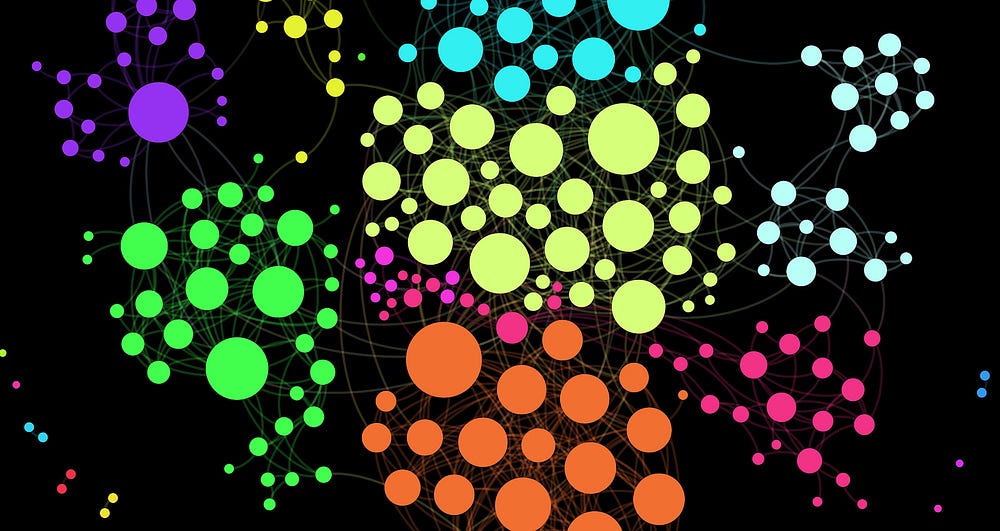
Many in the tech world imagined that the Internet would connect people in unprecedented ways, allow for divisions to be bridged and wounds to heal.It was the kumbaya dream. Today, those same dreamers find it quite unsettling to watch as the tools that were designed to bring people together are used by people to magnify divisions and undermine social solidarity. These tools were built in a bubble, and that bubble has burst.
Nowhere is this more acute than with Facebook. Naive as hell, Mark Zuckerberg dreamed he could build the tools that would connect people at unprecedented scale, both domestically and internationally. I actually feel bad for him as he clings to that hope while facing increasing attacks from people around the world about the role that Facebook is playing in magnifying social divisions. Although critics love to paint him as only motivated by money, he genuinely wants to make the world a better place and sees Facebook as a tool to connect people, not empower them to self-segregate.
The problem is not simply the “filter bubble,” Eli Pariser’s notion that personalization-driven algorithmic systems help silo people into segregated content streams. Facebook’s claim that content personalization plays a small role in shaping what people see compared to their own choices is accurate.And they have every right to be annoyed. I couldn’t imagine TimeWarner being blamed for who watches Duck Dynasty vs. Modern Family. And yet, what Facebook does do is mirror and magnify a trend that’s been unfolding in the United States for the last twenty years, a trend of self-segregation that is enabled by technology in all sorts of complicated ways.
The United States can only function as a healthy democracy if we find a healthy way to diversify our social connections, if we find a way to weave together a strong social fabric that bridges ties across difference.
Yet, we are moving in the opposite direction with serious consequences. To understand this, let’s talk about two contemporary trend lines and then think about the implications going forward.
The voluntary US military is, in many ways, a social engineering project. The public understands the military as a service organization, dedicated to protecting the country’s interests. Yet, when recruits sign up, they are promised training and job opportunities. Individual motivations vary tremendously, but many are enticed by the opportunity to travel the world, participate in a cause with a purpose, and get the heck out of dodge. Everyone expects basic training to be physically hard, but few recognize that some of the most grueling aspects of signing up have to do with the diversification project that is central to the formation of the American military.
When a soldier is in combat, she must trust her fellow soldiers with her life. And she must be willing to do what it takes to protect the rest of her unit. In order to make that possible, the military must wage war on prejudice. This is not an easy task. Plenty of generals fought hard to fight racial desegregation and to limit the role of women in combat. Yet, the US military was desegregated in 1948, six years before Brown v. Board forced desegregation of schools. And the Supreme Court ruled that LGB individuals could openly serve in the military before they could legally marry.

Morale is often raised as the main reason that soldiers should not be forced to entrust their lives to people who are different than them. Yet, time and again, this justification collapses under broader interests to grow the military. As a result, commanders are forced to find ways to build up morale across difference, to actively and intentionally seek to break down barriers to teamwork, and to find a way to gel a group of people whose demographics, values, politics, and ideologies are as varied as the country’s.
In the process, they build one of the most crucial social infrastructures of the country. They build the diverse social fabric that underpins democracy.
Tons of money was poured into defense after 9/11, but the number of people serving in the US military today is far lower than it was throughout the 1980s. Why? Starting in the 1990s and accelerating after 9/11, the US privatized huge chunks of the military. This means that private contractors and their employees play critical roles in everything from providing food services to equipment maintenance to military housing. The impact of this on the role of the military in society is significant. For example, this undermine recruits’ ability to get training to develop critical skills that will be essential for them in civilian life. Instead, while serving on active duty, they spend a much higher amount of time on the front lines and in high-risk battle, increasing the likelihood that they will be physically or psychologically harmed. The impact on skills development and job opportunities is tremendous, but so is the impact on the diversification of the social fabric.
Private vendors are not engaged in the same social engineering project as the military and, as a result, tend to hire and fire people based on their ability to work effectively as a team. Like many companies, they have little incentive to invest in helping diverse teams learn to work together as effectively as possible. Building diverse teams — especially ones in which members depend on each other for their survival — is extremely hard, time-consuming, and emotionally exhausting. As a result, private companies focus on “culture fit,” emphasize teams that get along, and look for people who already have the necessary skills, all of which helps reinforce existing segregation patterns.
The end result is that, in the last 20 years, we’ve watched one of our major structures for diversification collapse without anyone taking notice. And because of how it’s happened, it’s also connected to job opportunities and economic opportunity for many working- and middle-class individuals, seeding resentment and hatred.
If you ask a college admissions officer at an elite institution to describe how they build a class of incoming freshman, you will quickly realize that the American college system is a diversification project. Unlike colleges in most parts of the world, the vast majority of freshman at top tier universities in the United States live on campus with roommates who are assigned to them. Colleges approach housing assignments as an opportunity to pair diverse strangers with one another to build social ties. This makes sense given how many friendships emerge out of freshman dorms. By pairing middle class kids with students from wealthier families, elite institutions help diversify the elites of the future.
This diversification project produces a tremendous amount of conflict. Although plenty of people adore their college roommates and relish the opportunity to get to know people from different walks of life as part of their college experience, there is an amazing amount of angst about dorm assignments and the troubles that brew once folks try to live together in close quarters. At many universities, residential life is often in the business of student therapy as students complain about their roommates and dormmates. Yet, just like in the military, learning how to negotiate conflict and diversity in close quarters can be tremendously effective in sewing the social fabric.

In the springs of 2006, I was doing fieldwork with teenagers at a time when they had just received acceptances to college. I giggled at how many of them immediately wrote to the college in which they intended to enroll, begging for a campus email address so that they could join that school’s Facebook (before Facebook was broadly available). In the previous year, I had watched the previous class look up roommate assignments on MySpace so I was prepared for the fact that they’d use Facebook to do the same. What I wasn’t prepared for was how quickly they would all get on Facebook, map the incoming freshman class, and use this information to ask for a roommate switch. Before they even arrived on campus in August/September of 2006, they had self-segregated as much as possible.
A few years later, I watched another trend hit: cell phones. While these were touted as tools that allowed students to stay connected to parents (which prompted many faculty to complain about “helicopter parents” arriving on campus), they really ended up serving as a crutch to address homesickness, as incoming students focused on maintaining ties to high school friends rather than building new relationships.
Students go to elite universities to “get an education.” Few realize that the true quality product that elite colleges in the US have historically offered is social network diversification. Even when it comes to job acquisition, sociologists have long known that diverse social networks (“weak ties”) are what increase job prospects. By self-segregating on campus, students undermine their own potential while also helping fragment the diversity of the broader social fabric.
Diversity is often touted as highly desirable. Indeed, in professional contexts, we know that more diverse teams often outperform homogeneous teams. Diversity also increases cognitive development, both intellectually and socially. And yet, actually encountering and working through diverse viewpoints, experiences, and perspectives is hard work. It’s uncomfortable. It’s emotionally exhausting. It can be downright frustrating.
Thus, given the opportunity, people typically revert to situations where they can be in homogeneous environments. They look for “safe spaces” and “culture fit.” And systems that are “personalized” are highly desirable. Most people aren’t looking to self-segregate, but they do it anyway. And, increasingly, the technologies and tools around us allow us to self-segregate with ease. Is your uncle annoying you with his political rants? Mute him. Tired of getting ads for irrelevant products? Reveal your preferences. Want your search engine to remember the things that matter to you? Let it capture data. Want to watch a TV show that appeals to your senses? Here are some recommendations.
Any company whose business model is based on advertising revenue and attention is incentivized to engage you by giving you what you want. And what you want in theory is different than what you want in practice.
Consider, for example, what Netflix encountered when it started its streaming offer. Users didn’t watch the movies that they had placed into their queue. Those movies were the movies they thought they wanted, movies that reflected their ideal self — 12 Years a Slave, for example. What they watched when they could stream whatever they were in the mood for at that moment was the equivalent of junk food — reruns of Friends, for example. (This completely undid Netflix’s recommendation infrastructure, which had been trained on people’s idealistic self-images.)
The divisions are not just happening through commercialism though. School choice has led people to self-segregate from childhood on up. The structures of American work life mean that fewer people work alongside others from different socioeconomic backgrounds. Our contemporary culture of retail and service labor means that there’s a huge cultural gap between workers and customers with little opportunity to truly get to know one another. Even many religious institutions are increasingly fragmented such that people have fewer interactions across diverse lines. (Just think about how there are now “family services” and “traditional services” which age-segregate.) In so many parts of public, civic, and professional life, we are self-segregating and the opportunities for doing so are increasing every day.
By and large, the American public wants to have strong connections across divisions. They see the value politically and socially. But they’re not going to work for it. And given the option, they’re going to renew their license remotely, try to get out of jury duty, and use available data to seek out housing and schools that are filled with people like them. This is the conundrum we now face.
Many pundits remarked that, during the 2016 election season, very few Americans were regularly exposed to people whose political ideology conflicted with their own. This is true. But it cannot be fixed by Facebook or news media. Exposing people to content that challenges their perspective doesn’t actually make them more empathetic to those values and perspectives. To the contrary, it polarizes them. What makes people willing to hear difference is knowing and trusting people whose worldview differs from their own. Exposure to content cannot make up for self-segregation.
If we want to develop a healthy democracy, we need a diverse and highly connected social fabric. This requires creating contexts in which the American public voluntarily struggles with the challenges of diversity to build bonds that will last a lifetime. We have been systematically undoing this, and the public has used new technological advances to make their lives easier by self-segregating. This has increased polarization, and we’re going to pay a heavy price for this going forward. Rather than focusing on what media enterprises can and should do, we need to focus instead on building new infrastructures for connection where people have a purpose for coming together across divisions. We need that social infrastructure just as much as we need bridges and roads.
This piece was originally published as part of a series on media, accountability, and the public sphere. See also:
 On Jan 9th, 2007, I was in London, at the IDEO offices, sitting in one of their conference rooms with a bunch of Nokians and IDEO-ans. I do not recall if we were streaming the audio or refreshing a page of someone live blogging from the iPhone launch event [Update: Matt Miz says live streaming.].
We knew the phone was coming. But it was a momentous evening for us, nonetheless. I think we all knew it was the death-knell for Nokia if it couldn’t match what Apple was bringing to the table. We also cynically shared what we thought the executives’ reactions would be. In those reactions was a hint of the fear and the hubris that Nokia Mobile Phones couldn’t overcome.
Alt-history
The reason we were at the IDEO offices was to design a new world, where the internet and the mobile were united.* We envisioned a time when we’d be online with our phones all the time, constantly connected to our people and their content. Nokia was to be the gateway, the interface to a collection of small windows we could peek through or step through, depending on how much we wanted to do. Holding all the morsels of our internet experience together, Nokia would be the essential brand.
But that future never came to be. Though I see elements of what we envisioned spread across the world today.
Ten years on, Google, Apple, and Facebook are losing a grip on their hegemony, much as Nokia did back then. Once more, the players mediating our experience with reality are changing as they offer us new ways to connect, create, share, trade, and transport.
We knew Jan 9th, 2007, would mark a deep line in our lives. Alas, I haven’t seen anything since that has had that kind of built up expectation, reception, and potential impact. Ten years from now, what will we all be looking back to in 2017 as the deep shift in the future as we thought it would be?
Image from Kim Støvring
It’s been a long time since the folks over at Mountain View updated Google Voice in any meaningful way, but in a sign that the service may finally roll out to more countries, including Canada, Google says significant changes are coming to the platform.
The Verge spotted a banner on top of the service’s website that says, “The New Google Voice is here,” with a link that invites users to try out the update. Clicking the link, however, leads to a 404 page.
In a statement issued to the website and other U.S.-based tech publications, Google confirmed it’s preparing to update Voice in a major way.
“Sorry, it looks like we must have dialed the wrong number! But don’t worry, this wasn’t a prank call,” said a spokesperson for the company. “We’re working on some updates to Google Voice right now. We have you on speed dial and we’ll be sure to share what we’ve been up to just as soon as we can.”
Google last pushed a major revision to Voice in October 2015 when it updated the app to support the native display resolutions of the iPhone 6 and iPhone 6 Plus.
From a local perspective, however, the most significant update to Google Voice came when the company added an approved carrier list to the app, preventing Canadian users from using Google Voice even while masking their location with a VPN service.
With news of this latest update, it may be a sign that Google is finally preparing to officially bring Voice to Canada after years of hopeful rumours.
Source: The Verge
Did you know that you can completely replace the “knitting” engine in R Markdown documents? Well, you can!
Why would you want to do this? Well, in the case of this post, to commit the unpardonable sin of creating a clunky jupyter notebook from a pristine Rmd file.
I’m definitely not “a fan” of “notebook-style” interactive data science workflows (apologies to RStudio, but I don’t even like their take on the interactive notebook). However, if you work with folks who are more productive in jupyter-style environments, it can be handy to be able to move back and forth between the ipynb and Rmd formats.
The notedown module and command-line tool does just that. I came across that after seeing this notedown example. There’s a script there to do the conversion but it’s very Windows-specific and it’s a pretty manual endeavour if all you want to do is quickly generate both an ipynb file and a notebook preview html file from an Rmd you’re working on.
We can exploit the fact that you can specify a knit: parameter in the Rmd YAML header. Said parameter can be inline code or be a reference to a function in a package. When you use the “Knit” command from RStudio (button or key-cmd-shortcut) this parameter will cause the Rmd file to be passed to that function and bypass all pandoc processing. Your function has to do all the heavy lifting.
To that end, I modified my (github only for now) markdowntemplates package and added a to_jupyter() function. Provided you have jupyter setup correctly (despite what the python folk say said task is not always as easy as they’d like you to believe) and notedown installed properly, adding knit: markdowntemplates::to_jupyter to the YAML header of (in theory) any Rmd document and knitting it via RStudio will result in
ipynb file being generatedhtml file generated via nbconverting the notebook file, and You can take this test Rmd:
---
knit: markdowntemplates::to_jupyter
---
## Notedown Test

Let's try a python block

```{r engine="python"}
def test(x):
  return x * x
test(2)
```

And a ggplot test

```{r}
suppressPackageStartupMessages(library(ggplot2))
```

We'll use an old friend

```{r}
head(mtcars)
```

and plot it:

```{r}
ggplot(mtcars, aes(wt, mpg)) + geom_point() + ggthemes::theme_fivethirtyeight()
```
and, after doing devtools::install_github("hrbrmstr/markdowntemplates") and ensuring you have notedown working, knit it in RStudio to generate the ipynb file and render an HTML file:
Note the python block is a fully functioning notebook cell. I haven’t tried other magic language cells, but they should work according to the notedown docs.
I’ve only performed light testing (on a MacBook Pro with jupyter running under python 3.x) and I’m sure there will be issues (it’s python, it’s jupyter and this is dark alchemy bridging those two universes), so when you run into errors, please file an issue. Also drop any feature requests to the same location.
It seems SoundCloud could be in more need of an acquisition than previously thought.
The company released its financial results this past week, and ominously revealed that it could run out of money this year, shortly after picking up its search for an acquisition.
SoundCloud’s financial reports revealed that while revenues grew strongly last year, by 21 percent to $22 million USD, its losses grew even more, by 30 percent to $52 million.
SoundCloud’s CEO Alexander Ljung said in a statement that a failure of the company’s newly introduced subscription service to raise sufficient funds, could steer SoundCloud towards running out of money before the end of the year. However, he remains optimistic about the company’s ability to raise capital in the coming year and beyond.
The music industry is currently in the midst of a rapid shift towards subscription-based streaming services, however revenue models have yet to catch up with this trend.
In addition, SoundCloud has found itself competing against wealthier adversaries in the space, such as Apple, Google and Spotify. In response to this competition, SoundCloud introduced a monthly subscription service, SoundCloud Go, at $9.99 per month that offers users an ad-free experience.
SoundCloud reportedly closed out the year with approximately $13 million in the bank, reports Fortune. Furthermore, multiple record labels currently have a stake in the company. Music Business Worldwide, Sony Music, Warner Music, and Universal Music each own between one and fur percent of the company’s shares.
Fortune reports that these record labels have a stake in helping SoundCloud devise an exit, should it be necessary. SoundCloud has been batting around the idea of an acquisition for quite some time, and briefly discussed the possibility with Spotify before it’s believed the streaming giant’s IPO intentions prompted them to pull out of the talks.
Rumours are currently swirling regarding Google potentially acquiring SoundCloud for $500 million — a large drop from SoundCloud’s initial self-valuation.
Source: Fortune

Lawrence M. Fisher,
Strategy+Business,
Jan 13, 2017
This article contains all kinds of goodness as it profiles Terry Winograd, one of the pioneers of human-computer interaction (though I wonder how many people in HCI have even heard of him). Winograd's story is intertwined with the history of philosophy of mind and artificial intelligence (AI) as at MIT he is taught by and interacts with the likes of Marvin Minsky, Hubert Dreyfus and John Searle. Then there's a stint a Xerox PARC. Then at Stanford a student named Larry Page had the good fortune to have him as an advisor. Winograd himself marks the transition from the belief that AI is based on symbolic representations of the world to the belief that AI is based on "bringing forth of the world through the process of living itself.” (All this, as an aside, is also much of the philosophical basis for connectivism.) Don't miss this article.
[Link] [Comment]
mkalus
shared this story
from  Comments on: Safer for cyclists to yield, not stop, at intersections: research. Comments on: Safer for cyclists to yield, not stop, at intersections: research.
|
VICTORIA (NEWS 1130) – As expected the provincial government has announced changes to the homeowner grant. The finance minister releasing details this morning, saying the threshold will increase to $1.6 million in a bid to help keep property taxes affordable.
“This is a 33 per cent increase over last year,” says Mike de Jong. “We are doing our part to help keep housing costs affordable for families. Local governments can also work to keep property taxes at a manageable level for residents by controlling their spending and reigning in the amount of revenue they need to operate.”
In a statement, the provincial government says it’s projected to spend $821 million on these grants in 2017-18, compared to about $809 million in 2016-17.
Victoria has also announced it’s going to reimburse cities for the full cost of the grant to ensure municipalities are not impacted. “The strength of the province’s economy and sound fiscal management have put us in a position to raise the threshold by such a large amount this year to help home owners.”
The government claims the basic grant can lower residential property taxes on an owner’s principal residence by up to $570, or if the home is located in a northern and rural area, up to $770. Another grant is being made available to home owners 65 and older, or those who qualify under the persons with disabilities category, or who are the surviving spouse of a veteran who received specific war-veteran allowances.
Not everyone is happy with today’s move. NDP Housing Critic David Eby notes the $570 grant amount will remain the same. “Nobody is really winning here.”
Eby doesn’t feel this will help people who have stretched their finances to afford a home, only to see their property value assessment rise beyond their means. “It’s especially harsh for people who bought a home in a far-flung suburb of Vancouver, who are commuting a long distance because that’s what they could afford.”
Eby would like to see a regional solution to address areas of BC with different housing challenges. “In Fort Saint John, property values have actually gone down but in areas like Tsawwassen people are seeing their properties increasing by 100 per cent.”
He’s not surprised by the threshold increase but is surprised at how long it took the government to announce the changes.
mkalus
shared this story
from  Comments on: New Cypress ski program seeking future Paralympians. Comments on: New Cypress ski program seeking future Paralympians.
|
VANCOUVER(NEWS 1130) – Is there a future Paralympian in your household?
How about a young girl or boy with mobility issues simply looking to try a new outdoor sport?
A free, cross-country ski program is being offered at Cypress Mountain for young people living with disabilities.
Bruce Passmore is coordinator of the Nordic Racers Adaptive Ski Program and says winter can be a difficult time for people with mobility issues and can make regular physical activity almost impossible.
“We’ve got the opportunity to create this program on Wednesday nights to get people out on the snow for some physical activity and social time.”
He says they provide sit-skis for wheelchair users and skis and poles for standing skiers, such as those living with limited vision or upper body mobility issues.
Passmore says their BC Para-Nordic ski coaches and former Paralympians will support 100 youth to try a sport that is too often inaccessible to them.
In 2010, the club had more athletes in the Winter Games than any other club in BC.
“We do have a path to competitive skiing if folks who try this out really enjoy it. In 2019, we have the World Para-Nordic Skiing Championships in Prince George and we’d love to get more local athletes in the games and this could be a very first step,” adds Passmore.
The program runs for eight weeks and requires pre-registration.
For more info, check out their web site.

Stanley Q. Woodvine writes eloquently in the Georgia Straight about a tiny woman named Linda carrying a very large sign advertising the dispersal of an American Apparel store.Mr. Woodvine notes “Partly it was simply the ridiculous disparity of scale. Here was this petite young woman with bright auburn hair, tromping around in oversized gumboots and gripping in big yellow work gloves a garish plywood and corrugated plastic assemblage that towered over her comparatively diminutive frame—that was a striking enough sight by itself.”
Mr. Woodvine is a homeless writer and graphic artist. He saw the irony of a person making $12.50 an hour to carry a sign for what was a clothing store that tried to be fashion forward with shock advertising and high prices. “The woman’s name, as I’ve already mentioned, was Linda and the huge red, black, and yellow sign that she carried was for the American Apparel store, located just around the corner on Granville Street. It read like an ad for a closing out sale: “Entire store 70-90% off…Nothing held back. Everything must go!”
“More than anything else this was a sign of just how desperate things have gotten for the American Apparel clothing chain, with the U.S. parent company now having filed for bankruptcy protection a second time in a little over a year.But it also arguably signalled the difficult economic plight of all the 20- and 30-somethings who staff these low-paying retail store jobs—if they’re lucky.I’ve been given to understand that quite a large number of well-educated millennials spend their days scrambling between various retail jobs and even lower-paying blue- and white-collar casual-labour jobs—apparently one e-transfer and a college degree away from being evicted and having to live on a friend’s couch—if they’re lucky.”


At the end of the first of the Curriculum Development Hackathon on Reproducible Research using Jupyter Notebooks held at BIDS in Berkeley, yesterday, discussion turned on whether we should include a short how-to on the use of interactive IPython widgets to support exploratory data analysis. This would provide workshop participants with an example of how to rapidly prototype a simple exploratory data analysis application such as an interactive chart, enabling them to explore a range of parameter values associated with the data being plotted in a convenient way.
In summarising how the ipywidgets interact() function works, Fernando Perez made a comment that made wonder whether we could use the idea of creating simple interactive chart explorers as a way of motivating the use of functions.
More specifically, interact() takes a function name and the set of parameters passed into that function and creates a set of appropriate widgets for setting the parameters associated with the function. Changing the widget setting runs the function with the currently selected values of the parameters. If the function returns a chart object, then the function essentially defines an interactive chart explorer application.
So one reason for creating a function is that you may be able to automatically convert into an interactive application using interact().
Here’s a quick first sketch notebook that tries to set up a motivating example: An Alternative Way of Motivating Functions?
PS to embed an image of a rendered widget in the notebook, select the Save notebook with snapshots option from the Widgets menu:

See also: Simple Interactive View Controls for pandas DataFrames Using IPython Widgets in Jupyter Notebooks


It was just last month that Fitbit acquired Pebble, the now defunct wearable startup founded by Canadian Eric Migicovsky, and many of its best software engineers, and already the company is putting those assets to good use.
In an interview with multiple U.S.-based publications at CES 2017, Fitbit CEO James Park said the company intends to launch its own app store “as soon as possible.” He later added, in an interview with The Verge, that the company plans to do so using assets acquired from Pebble, noting that the startup had “worked out a lot of the kinks” that go into building an app marketplace.
Park didn’t say it in so many words, but it’s likely the company will release a new smartwatch to coincide with the launch of its app store.
In the same interview with The Verge, Park said, “there so many different applications [our partners] want to write… from fitness-related ones to pill applications. And we don’t have the support in place for that right now, or any software infrastructure on our devices to run those devices.”
Indeed, Fitbit’s wearables have a limited software scope. For the most part, they do things like step and calorie tracking, but little else. To accommodate the more advanced functionality afforded by third-party apps, it follows then that Fitbit will have to fundamentally rework how devices like the Blaze and Charge 2 work, or, more likely, launch an entirely new device.
Just don’t expect a flood of consumer-focused apps. As evidenced by Park’s statements, Fitbit appears mostly concerned about developing apps to appease its corporate customers.
Via: Android Authority, Forbes, The Verge
While Apple’s wireless AirPods may look a little strange, the headphones’ W1 chip, which improves standard Bluetooth wireless technology in a number of ways in terms of signal and more importantly, connectivity, is impressive.
In a move that has surprised some, but should have been expected, Apple has removed an app called “Finder for AirPods” from the App Store, without an official explanation. The app, which I haven’t tried but has apparently received mixed reviews, used the AirPods’ Bluetooth signal in order to track the headphones down, indicating to users when they are warmer or colder to the headphones as their wireless signal increases and decreases.
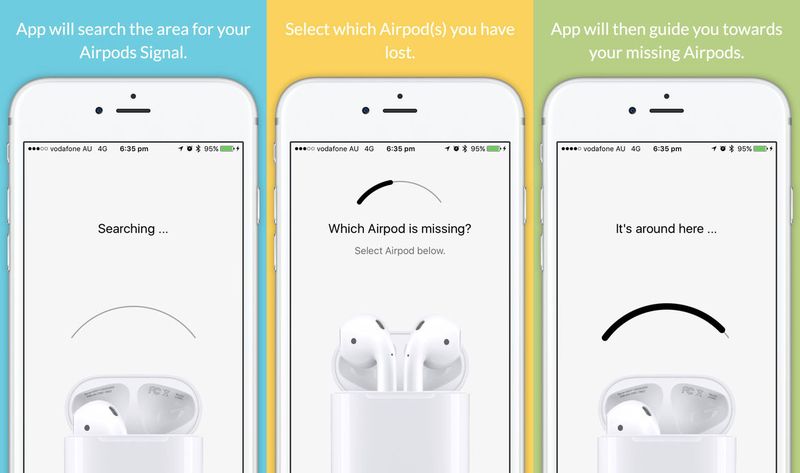
Early reports indicate the app was pretty inaccurate, though locating a lost AirPod is better than shelling out $69 USD for a replacement headphone (we’ve reached out to Apple for specific information regarding Canadian pricing).
Apple has a history of removing apps from its store that eventually plans to add as official iOS functionality. It’s unclear if that’s the case with Finder for AirPods, but given the company’s track record, it could be why the tech giant removed the app.
Via: The Verge
Aspects are a feature of Bazel that are basically like fan-fic, if build rules were stories: aspects let you add features that require intimate knowledge of the build graph, but that that the rule maintainer would never want to add.
For example, let’s say we want to be able to generate Makefiles from a Bazel project’s C++ targets. Bazel isn’t going to add support for this to the built-in C++ rules. However, lots of projects might want to support a couple of build systems, so it would be nice to be able to automatically generate build files for Make. So let’s say we have a simple Bazel C++ project with a couple of rules in the BUILD file:
cc_library(
    name = "lib",
    srcs = ["lib.cc"],
    hdrs = ["lib.h"],
)

cc_binary(
    name = "bin",
    srcs = ["bin.cc"],
    deps = [":lib"],
) |
We can use aspects to piggyback on Bazel’s C++ rules and generate new outputs (Makefiles) from them. It’ll take each Bazel C++ rule and generate a .o-file make target for it. For the cc_binary, it’ll link all of the .o files together. Basically, we’ll end up with a Makefile containing:
bin : bin.o lib.o g++ -o bin bin.o lib.o bin.o : bin.cc g++ -c bin.cc lib.o : lib.cc g++ -c lib.cc |
(If you have any suggestions about how to make this better, please let me know in the comments, I’m definitely not an expert on Makefiles and just wanted something super-simple.) I’m assuming a basic knowledge of Bazel and Skylark (e.g., you’ve written a Skylark macro before).
Create a .bzl file to hold your aspect. I’ll call mine make.bzl. Add the aspect definition:
makefile = aspect(
    implementation = _impl,
    attr_aspects = ["deps"],
) |
This means that the aspect will follow the “deps” attribute to traverse the build graph. We’ll invoke it on //:bin, and it’ll follow //:bin‘s dep to //:lib. The aspect’s implementation will be run on both of these targets.
Add the _impl function. We’ll start by just generating a hard-coded Makefile:
def _impl(target, ctx):
  # If this is a cc_binary, generate the actual Makefile.
  outputs = []
  if ctx.rule.kind == "cc_binary":
    output = ctx.new_file("Makefile")
    content = "bin : bin.cc lib.cc lib.h\n\tg++ -o bin bin.cc lib.cc\n"
    ctx.file_action(content = content, output = output)
    outputs = [output]

return struct(output_groups = {"makefiles" : set(outputs)}) |
Now we can run this:
$ bazel build //:bin --aspects make.bzl%makefile --output_groups=makefiles INFO: Found 1 target... INFO: Elapsed time: 0.901s, Critical Path: 0.00s $ |
Bazel doesn’t print anything, but it has generated bazel-bin/Makefile. Let’s create a symlink to it in our main directory, since we’ll keep regenerating it and trying it out:
$ ln -s bazel-bin/Makefile Makefile $ make g++ -o bin bin.cc lib.cc $ |
The Makefile works, but is totally hard-coded. To make it more dynamic, first we’ll make the aspect generate a .o target for each Bazel rule. For this, we need to look at the sources and propagate that info up.
The base case is:
  source_list= [f.path for src in ctx.rule.attr.srcs for f in src.files]
  cmd = target.label.name + ".o : {sources}\n\tg++ -c {sources}".format(
      sources = " ".join(source_list)
) |
Basically: run g++ on all of the srcs for a target. You can add a print(cmd) to see what cmd ends up looking like. (Note: We should probably do something with headers and include paths here, too, but I’m trying to keep things simple and it isn’t necessary for this example.)
Now we want to collect this command, plus all of the commands we’ve gotten from any dependencies (since this aspect will have already run on them):
  transitive_cmds = [cmd]
  for dep in ctx.rule.attr.deps:
transitive_cmds += dep.cmds |
Finally, at the end of the function, we’ll return this whole list of commands, so that rules “higher up” in the tree have deps with a “cmds” attribute:
  return struct(
      output_groups = {"makefiles" : set(outputs)},
      cmds = transitive_cmds,
) |
Now we can change our output file to use this list:
    ctx.file_action(
        content = "\n\n".join(transitive_cmds) + "\n",
        output = output
) |
Altogether, our aspect implementation now looks like:
def _impl(target, ctx):
  source_list= [f.path for src in ctx.rule.attr.srcs for f in src.files]
  cmd = target.label.name + ".o : {sources}\n\tg++ -c {sources}".format(
      sources = " ".join(source_list)
  )

  # Collect all of the previously generated Makefile targets.
  transitive_cmds = [cmd]
  for dep in ctx.rule.attr.deps:
    transitive_cmds += dep.cmds

  # If this is a cc_binary, generate the actual Makefile.
  outputs = []
  if ctx.rule.kind == "cc_binary":
    output = ctx.new_file("Makefile")
    ctx.file_action(
        content = "\n\n".join(transitive_cmds) + "\n",
        output = output
    )
    outputs = [output]

  return struct(
      output_groups = {"makefiles" : set(outputs)},
      cmds = transitive_cmds,
) |
If we run this, we get the following Makefile:
bin.o : bin.cc g++ -c bin.cc lib.o : lib.cc g++ -c lib.cc |
Getting closer!
Now we need the last “bin” target to be automatically generated, so we need to keep track of all the intermediate .o files we’re going to link together. To do this, we’ll add a “dotos” list that this aspect propagates up the deps.
This is similar to the transitive_cmds list, so add a couple lines to our deps traversal function:
  # Collect all of the previously generated Makefile targets.
  dotos = [ctx.label.name + ".o"]
  transitive_cmds = [cmd]
  for dep in ctx.rule.attr.deps:
    dotos += dep.dotos
transitive_cmds += dep.cmds |
Now propagate them up the tree:
  return struct(
      output_groups = {"makefiles" : set(outputs)},
      cmds = transitive_cmds,
      dotos = dotos,
) |
And finally, add binary target to the Makefile:
  # If this is a cc_binary, generate the actual Makefile.
  outputs = []
  if ctx.rule.kind == "cc_binary":
    output = ctx.new_file("Makefile")
    content = "{binary} : {dotos}\n\tg++ -o {binary} {dotos}\n\n{deps}\n".format(
        binary = target.label.name,
        dotos = " ".join(dotos),
        deps = "\n\n".join(transitive_cmds)
    )
    ctx.file_action(content = content, output = output)
outputs = [output] |
If we run this, we get:
bin : bin.o lib.o g++ -o bin bin.o lib.o bin.o : bin.cc g++ -c bin.cc lib.o : lib.cc g++ -c lib.cc |
Documentation about aspects can be found on bazel.io. Like Skylark rules, I find aspects a little difficult to read because they are inherently recursive functions, but it helps to break it down (and use lots of prints).
Shortly before the winter holidays, Consumer Reports announced that the new MacBook Pro had failed to earn its ‘recommended’ rating due to poor battery life caused by Safari. Apple disputed the testing done by Consumer Reports and worked with it over the holidays to track down the discrepancy between its testing and Consumer Reports’ results. Today, Apple released the following statement to a handful of outlets, including iMore and The Loop:
"We appreciate the opportunity to work with Consumer Reports over the holidays to understand their battery test results," Apple told iMore. "We learned that when testing battery life on Mac notebooks, Consumer Reports uses a hidden Safari setting for developing web sites which turns off the browser cache. This is not a setting used by customers and does not reflect real-world usage. Their use of this developer setting also triggered an obscure and intermittent bug reloading icons which created inconsistent results in their lab. After we asked Consumer Reports to run the same test using normal user settings, they told us their MacBook Pro systems consistently delivered the expected battery life. We have also fixed the bug uncovered in this test. This is the best pro notebook we've ever made, we respect Consumer Reports and we're glad they decided to revisit their findings on the MacBook Pro."
There have been reports of battery life issues with the MacBook Pro that are unrelated to Safari, but this should put the Safari issues raised by Consumer Reports to rest.
Club MacStories offers exclusive access to extra MacStories content, delivered every week; it’s also a way to support us directly.
Club MacStories will help you discover the best apps for your devices and get the most out of your iPhone, iPad, and Mac. Plus, it’s made in Italy.
Join NowUpdate: Chris Lattner has landed at Tesla Motors according to this Tesla blog post and the following tweet from the official Tesla account:
Welcome Chris Lattner https://t.co/AaiG6rHhdF
— Tesla (@TeslaMotors) January 10, 2017
Chris Lattner designed and built most of LLVM as a graduate student. In 2005, he joined Apple where LLVM was integrated into Apple’s developer tools. Beginning in 2010, Lattner designed and built much of Swift, which was introduced to the world by Apple at WWDC in 2014.
Today, Lattner announced on the Swift mailing list that he is leaving Apple:
Since Apple launched Swift at WWDC 2014, the Swift team has worked closely with our developer community. When we made Swift open source and launched Swift.org we put a lot of effort into defining a strong community structure. This structure has enabled Apple and the amazingly vibrant Swift community to work together to evolve Swift into a powerful, mature language powering software used by hundreds of millions of people.
I’m happy to announce that Ted Kremenek will be taking over for me as “Project Lead” for the Swift project, managing the administrative and leadership responsibility for Swift.org. This recognizes the incredible effort he has already been putting into the project, and reflects a decision I’ve made to leave Apple later this month to pursue an opportunity in another space. This decision wasn't made lightly, and I want you all to know that I’m still completely committed to Swift. I plan to remain an active member of the Swift Core Team, as well as a contributor to the swift-evolution mailing list.
Working with many phenomenal teams at Apple to launch Swift has been a unique life experience. Apple is a truly amazing place to be able to assemble the skills, imagination, and discipline to pull something like this off. Swift is in great shape today, and Swift 4 will be a really strong release with Ted as the Project Lead.
Note that this isn’t a change to the structure - just to who sits in which role - so we don’t expect it to impact day-to-day operations in the Swift Core Team in any significant way. Ted and I wanted to let you know what is happening as a part of our commitment to keeping the structure of Swift.org transparent to our community.
Lattner’s contribution to Apple’s developer tools has been enormous. His departure is a big loss for Apple.
→ Source: lists.swift.org
mkalus
shared this story
from  Consumerist. Consumerist.
|
After losing 1.5 billion customer records in two different hacks, what can you possibly pull off for a third act? That’s what Yahoo is wondering right about now. Its answer? Throw the CEO off the board, change names post-haste, and hope that sweet Verizon acquisition is still on track.
The tech and financial worlds pounced last night on Yahoo’s most recent form 8-K filing, a boring-sounding Securities and Exchange Commission document that can often hold surprisingly important nuggets.
In the 8-K it filed late on Jan. 9, Yahoo outlined its intention for what to do with the part of the company that Verizon doesn’t plan to buy. After Verizon snaps up the big purple Yahoo brand and runs away with it, the remnant will change its name to “Altaba Inc.,” and the board of that company will get significantly rearranged such that Yahoo CEO Marissa Mayer, as well as several other executives, no longer have seats.
Why? Because when Verizon and Yahoo announced their deal back in July, both companies made clear that Verizon wanted to acquire Yahoo brand and internet assets for its $4.8 billion, but would not be purchasing the holding company that now makes up the bulk of the ’90s internet giant’s worth.
And what does that holding company hold? a 15% stake in giant Chinese e-commerce business Alibaba, as well as bits of Yahoo’s Japanese business. At the time when the Verizon deal was announced, those slices of Yahoo’s business were much more valuable than its internet work, considered to be worth around $40 billion — eight times the sale value of Yahoo’s internet businesses.
But there’s a catch, now. Because after having to disclose hack one and hack two, Yahoo suddenly doesn’t look like as rosy an acquisition as it did merely six months ago.
Verizon has said both that it’s on Yahoo to prove that the data breaches aren’t “material” events, and that it is waiting for more information before making that call. Meanwhile, the corporate rumor mill is repeatedly surfacing rumors that at the very least, Verizon wants a big discount on the deal, or in fact may still walk away altogether.
If the Verizon acquisition happens, it will be essentially splitting Yahoo into two companies. The non-public-facing investment company will be the one changing names and shuffling the board. If that deal does not close, however, every plan outlined in this 8-K becomes so much chaff in the wind — and Yahoo will have to figure out what to do next.


What’s the collective noun for doodles? An infusion? A gung-ho of doodlewry? I thought so. One of the highlights of the recent stickery campaign was trawling through some supporters social profiles and turning them into a doodle. Each was like a puzzle – with some easier to figure out than others. Needless to say, I couldn’t keep up, but thoroughly enjoyed the sleuthing. Thanks again to these lovely now-stickerful people.
The post Stickerful People appeared first on Visual Thinkery.
 Screencaps by the author, via
In the Nahuatl and Mexica cultures of pre-Hispanic Mexico, the god of war, Tezcatlipoca, took on many transfigurations to make sure that his worlds were in order. From a warrior with an obsidian disk on his chest to a jaguar, he was the god of time, the nocturnal sky, and the embodiment of change through conflict. Tezcatlipoca was fundamental to the cultural and natural phenomena justified by religion at the time. In Tezcatlipoca, a short animation by Robin George, now hosted by FNX First Nations Experience, the artist matched Pyotr Tchaikovsky's "Swan Lake" to the Aztec myth of a deity who descends from heaven in the form of an animal.

In the tradition of Walt Disneys’ Fantasia, the film combines elements of both professional classical musicians and highly skilled animators. The three-minute film follows the journey the jaguar god takes through mountains and volcanoes, determining the movements of nature, on a mission to awaken the volcano and bring the underworld to the surface.

Says George, “Tezcatlipoca is my graduating project from Southern Adventist University's School of Visual Art and Design. It took about a year and a half to take from conception to completion as a solo project. It has been a huge learning experience for me as I inched through each phase; I started with storyboards and animatic, then moved to modeling, rigging, texturing, and preliminary set design, then eventually moved to character animation and ultimately to final sets, backgrounds, lighting, rendering and finally compositing."
See the Robin George's fantastical result below:
Tezcatlipoca from FNX First Nations Experience on Vimeo.
This article originally appeared on The Creators Project Mexico.
Related:
This Is What An Ancient Mayan Batman Suit Might Look Like
Projection Mapped Gods Bring Mexican Trees To Life
Flashing Disco Glitches Meet Mesoamerican Sun Gods In This Wild Music Video
January of 2016 was an emotional roller coaster for David Bowie fans. It began with two triumphant singles from his 25th album Blackstar, careened through the rock legend's 69th birthday, the release of the full album, and then his sudden death from a cancer kept secret from all but his closest confidants. One year later, his death is seen as the first in a string of depressing events that made 2016 synonymous with the words "the worst."
The Thin White Duke's posthumous 70th birthday was Sunday, January 8, and today marks the first anniversary of his death. Instagram's creative class is out in melancholy force, sharing their illustrations, photographs, paintings, sculptures, dolls, and other creative tributes in solidarity—the social media equivalent of a black mourning veil. The artists include Mick Rock, who photographed Bowie's various personas throughout his rise, and Helen Green, known for succinctly animating Bowie's haircut repertoire into a single GIF.

Bowie's producer and longtime friend Tony Visconti said in an interview with The Mirror that he still talks to Bowie in his head all the time. "It’s still very hard to come to terms with," he says. It's a sentiment echoed by his army of inspirees, who in many cases remark that they literally are listening to him through their headphones as they make their tributes. These artworks are part of Ziggy Stardust's extensive legacy on this Earth, which includes personal memories, several films, a multi-million dollar art collection, and 25 innovative albums.
On Saturday, a day before his birthday, the Bowie Vevo channel released a posthumous video for "No Plan," the titular track of a new EP which includes never-before-heard songs from the Bowie-penned musical, Lazarus. Directed by Tom Hingston, the mysterious video sees a crowd gathered around a window display of TVs broadcasting the song's bleak lyrics. The EP also includes “When I Met You” and “Killing a Little Time,” which aren't included on Blackstar. Check out Instagram's tributes to the artist and his new video below.
A photo posted by RIK OOSTENBROEK (@rikoostenbroek) on
Buon compleanno #DavidBowie "You are a Black star" (Inchiostro e pastello su carta) // sold // 2016
A photo posted by Bafefit (@bafefit) on
Secret Life of a Teenage Cat. #cat #sketch #pentelbrushpen #doodle #watercolor #kitty #bowie
A photo posted by lili in La La Land (@finalroughs) on
As long as you love thy grimey self +:) #davidbowie #deladeso
A photo posted by deladeso (@deladeso) on
A photo posted by Margie Lucier (@nohalfmeasures_) on
Happy 70th #davidbowie #draw #drawing #goblinking #illustrate #robisrael
A photo posted by Rob (@robisrael) on
A photo posted by Danielle V Green (@daniellevgreen) on
A photo posted by Caitlin Hazelton (@caithazelton) on
A photo posted by Simone Pieri Official © (@simone_from_mars) on
A photo posted by ANGELO // AVERSANO (@angelo.aversano) on
A photo posted by Mick Rock (@therealmickrock) on
A photo posted by The New Yorker (@newyorkermag) on
Follow The Creators Project on Instagram here.
Related:
You Can Buy David Bowie's Art Collection (If You Have the Cash)
Street Artist Paints Pool Mural of David Bowie, Astronaut
Watch the First Episode of the David Bowie-Inspired Instagram Video Series Now
Something that still always blows my mind is just how close together everything is online, design-wise and conceptually. If you’re ever feeling wrung out, ask your friends about their private online obsessions; not (just) their fetishes, but the websites they end up habitually visiting to kill time or calm themselves down. I do this whenever I want to source some new diversions for myself, or when I want to be newly astounded at the wealth of deeply specific obsessions I can explore from the comfort of my home. Advice forums, gossip blogs, puppy gifs, slime videos, people falling down, ASMR, heated knives melting through inanimate objects, beauty tutorials, cigarette reviews — a couple decades ago, you might have had to stumble into a sex party or art show or group therapy session to discover that these things lit up some previously darkened corner of your brain, to explore all the sensory pleasures and strange combinations the world has to offer. Now, you can tab between potential obsessions in fewer physical movements than it takes to pour yourself a glass of water. Everyone loves everything differently, but we arrive at it all through exactly the same gestural route.
I first discovered Periscope’s Couch Mode feature the same way I found my last few favorite websites — the same way I found my most recent job and my current partner — by clicking something, and then clicking something else. An Instagram post led me to a Twitter feed, a Twitter feed led me to a website, and that website lead me to a fixation I have not been able to shake for months.
Periscope is a livestreaming app owned by Twitter that allows users to watch or broadcast real-time video from their phones. Couch Mode is a feature designed by the app’s developers that’s basically just Periscope on speed — or, if you prefer, a one-sided, dickless Chatroulette. (It’s deeply perplexing how little nakedness I’ve seen on the site; this may have something to do with the fact that a user’s Periscope account is directly linked to their Twitter account or phone number, or maybe it’s just that there are many better, more permissive places to take your clothes off on the internet). Though Couch Mode is technically an offshoot of Periscope, the two things feel both conceptually and aesthetically opposite: Periscope is an app that draws you closer to people you’re already interested in, while Couch Mode is a browser-only website designed to drop you directly into the chaos of the unknown.
Spend enough time clicking through Couch Mode and you’ll start to notice its cycles, themes swell and crest depending on the time
Once you go to the site, there’s a brief pause, and then you’re dropped into a random Periscope stream. Across the bottom of the screen is the name of the feed you’re watching and a counter for the number of other people tuned in, which ticks up and down in real time. On the right-hand side are the likes from other viewers — a stream of hearts that multiply and drift upwards, like helium balloons released into the stratosphere. Watching the pastel-colored hearts bloom their way up the side of the page is an experience so viscerally pleasurable it seems dangerous; the animation feels like a hyperkinetic translation of the same weird, reflexive giddiness that comes from watching the views and likes multiply, as if by magic, on a post you’re secretly proud of.
Once you’re bored, you click the “next” button, and the algorithm drops you into a new stream. That’s it. You can repeat this process as many times as you like, for as long as you please — until your laptop’s battery runs out, or your roommate comes home and asks what you’re doing, or you fall asleep on your bed in your clothes with the lights on, dreaming in pixels and tinny, glitching audio.
I used to feel that good and bad coexisted symbiotically online, the big-picture stuff throwing the pettier things into necessarily relief and vice versa. The mess of living, all of it, onscreen. These days, doing anything on the internet makes me feel a dull ache somewhere in the lower part of my stomach. The facts of the world, plainly reported, scare the shit out of me, while the cadence of social media feels frantic and desperate at best. At worst, it seems like all the information I consume — to say nothing of the systems that deliver it to me — is somehow cancerous. Even the best news curdles in context. But goodness strobes in and out, and the pleasures of Couch Mode feel oddly pure, even under the auspices of Twitter: ordinary life beams through.
Spend enough time clicking through Couch Mode and you’ll start to notice its cycles, the themes that swell and crest depending on what time it is. All day long, the site is lousy with acoustic guitar players, amateur illustrators, kitchen table preachers and self-made self-help types, but aside from that, things vary. In the morning, people walk their dogs, or chat with their followers while they drive to work. In the early afternoon there’s a proliferation of radio hosts and, for some reason, small UK city council meetings. In the evening, as people get home, there’s a lot of dinner-making and creative release: close-up shots of people filling in adult coloring books and throwing pottery. The later it gets, the more people just hang out smoking weed, or staring blankly into the camera while they drink with their friends, or just shooting the shit with their audience. If there’s a big sports game or an arena show or even a political demonstration going down in a large enough city, you’ll likely see it from a few different angles. No matter what time it is, there are always more pets.
It’s easy enough to describe the details of Couch Mode, but hard to make other people understand what makes it mesmerizing. None of this, on its own, sounds particularly impressive; it’s not like it’s hard to find videos of people cooking dinner or walking their dogs on the internet, nor are any of those things uniquely engaging.
The website’s addictive pleasure is located less in the content of the individual feeds it knits together than in the textural experience of skipping through them one by one. Whoever named the feature understands this; Couch Mode couldn’t be less like cable TV content-wise, but the pace and pattern of using it floods me with the same analgesic joy I used to get from methodically channel-surfing as a kid, when our family TV had 35 channels I could cycle through multiple times over the course of an hour.
Clicking through an endless global network of live video feeds might seem like the epitome of Being On the Internet, but the experience feels like something else. Your attention rearranges itself
In theory, the experience of browsing any website shouldn’t be much different from the experience of more “analog” channel-surfing; in both cases you just sit there, sifting through large piles of boring garbage until you find something that appeals. But online, you can be a conductor of time, stopping and restarting an infinite number of narrative arcs at any pace you please. By contrast, in Couch Mode, as on a TV you can’t pause, everything in front of you happens just once. You’re still jumping through stories, but one at a time; each feed holds your attention and then slips away from it in single file. Once you click away, there’s no guarantee you’ll be returned to it again. There’s real, palpable pleasure in this; think of what it feels like to swipe through people’s faces on Tinder, one by one: like you’re crossing a single item off a list, like you’re inviting each new person to come closer. The chaos of an incomprehensibly expansive universe, brought into some kind of order before you. Clicking through an endless global network of live video feeds might seem like the epitome of Being On the Internet, but the experience of browsing through Couch Mode feels like something else entirely. Your attention rearranges itself.
The best Periscope feeds feel like public access TV — like you’re being invited, through a pleasantly anarchic medium, into the inner lives of people who are wonderfully strange. I keep a little notepad on my desk where I write down the best feeds I’ve seen: a guy in a cape and luchador mask doing bong hits he lit with a blowtorch; someone carefully welding together a tiny decorative poké ball in their garage workshop; someone sitting alone on a bench and silently vaping while pointing their camera out at a heartrendingly beautiful sunset; a young woman in her bedroom telling the very long story of a disastrous first date; a historian breathlessly narrating as a gigantic restored clipper ship docked very slowly in a California marina; a very happy-looking man DJing alone in a basement while seven mechanized disco balls spun around him; the locker room of a strip club in Atlanta where women sat around talking shit about the cops, occasionally walking up to the camera and twerking distractedly.
Last week, I spent a purely joyful four minutes watching a woman just hanging out with her pet goat in her bedroom. She and the goat sat on opposite sides of a small table; he rested his chin on its surface and looked up at her, chewing on something with his weird, enormous goat mouth, while she answered questions about his size and social life for her followers. I watched, completely rapt, until the stream went dark, immediately replaced by some guy playing the guitar.
The more mundane a feed is, the more delightful it feels to watch. This has something to do with the honest transmission of desire. Other forms of social media take the desire to be seen or liked and loved and flatten it. Even when people try to show you the mess of their lives in a post or picture, you don’t really get to see it, because they’re trying, and that’s its own kind of monotone. Effort filters everything, changes the light. But on Periscope, you can watch a woman cooking breakfast simply because she wants someone to watch her cook breakfast, without having to pretend or justify or joke it away; you can hang out with a guy who’s staring at a nice sunset just because he wants you to like the sunset as much as he does, or because he doesn’t want to watch it by himself. Instead of eliding its users’ desire to be un-alone, Periscope takes it as a given and keeps moving.
But to get to the good parts, you have to wade through a lot of shit. Periscope isn’t troll-less by a long shot — the site’s interface is designed to accommodate the same abominable behavior its parent company is famous for enabling. (Each video feed has its own comments section that scrolls up the screen’s left side, and, particularly on videos that feature women and people of color, the comments are predictably vile.) The site is basically a free platform for proselytizers, so a lot of its most dedicated broadcasters are pushing something, hard: their self-help schemes, their business scams, their Jesuses, their shitty mixtapes. I’ve been dropped in the middle of racist sermons, anti-choice protests and all kinds of alt-right raving; I’ve wasted minutes of my life trying to figure where I recognized a particular ranting conspiracy theorist before realizing he used to be one of the gigolos from the Showtime series Gigolos.
Just as the best feeds render the minutiae delightful, the worst ones remind you the kind of stuff you find scary is often just someone else’s wallpaper
It’s startling to run into hateful tirades in the middle of Couch Mode’s otherwise mundane, delight-studded trance, but the ideas themselves frighten and disturb differently through this medium than they do on other sites. I’m not naive enough to think that all online bigots lose their power to intimidate once you can see them face-to-face, but hatred lands differently in a live video than it does in text. On Periscope you can actually look into the twitchy eyes of a person spouting hateful garbage as they do it, without editing or cuts of any kind. You can see the sad lighting in their kitchen, hear the tight strain in their voice, watch them stutter. Text-based trolling operates along a gradient of anonymity; the worst things on the internet gain a frightening echo because they seem unattached to any single human being. Untethered, hatred seems endless. In a video feed, it’s embodied. Specific.
At the same time, the most truly frightening videos I’ve encountered on Periscope aren’t the ones where people yell at me. They’re the ones where evil is woven so thoroughly into the fabric of someone’s life that they don’t feel pressed to foreground it. Just as the best feeds render the minutiae of someone else’s daily life delightful, the worst ones remind you that the kind of stuff you find scary is often just someone else’s wallpaper.
I’ve watched MRAs and alt-right trolls hang out in home offices so bland and well-maintained they could be IKEA showrooms, just talking with their fans. I’ve watched a white man in a sunny backyard showing off his gun collection while a sweet-faced yellow lab trailed behind him, and felt lit up with paralytic fear while he kneeled down to stroke the dog with the barrel of an assault rifle. A few months ago, I watched a feed shot from the perspective of a man who was clearly drunk or high or both as he drove an ATV through an empty field, the vehicle perpetually listing to the side as though it were about to flip over completely. The only sounds were the growling engine and the wind whistling past his camera’s microphone. According to the counter in the corner, I was the only person watching, until I clicked away.
My obsession with Couch Mode started well before the election; for months, it was the first place I went on the internet if I was feeling sad or bored or freaked out by the news. After November 8th, I avoided the website for weeks. All social media made me feel choked; the idea of trying to mine delight or distraction from the internet seemed embarrassingly naive. Plus, everything I saw or heard online already filled me with a dark, resonant dread; voluntarily wading further into the murk and tangle of other people’s lives did not feel like the cure.
One of the most perverse things about trauma is that the most tedious parts of your life do not bend or alter in the face of it. Grief always recasts the details of living, but it never erases the need for them; when you are consumed by fear or sadness or anger or depression it seems insane that you are still bound to your idiot body, that you must somehow perform gestures as tiny and mundane as eating or sleeping or shitting — and yet somehow, there you are, making small talk with a cashier or checking your watch, feeling more alien in your body than you’ve ever felt before. Some people learn to find comfort in this; some people learn to use it as an anchor. But it always feels deeply uncanny. The world can literally change its shape around you, and still you have to drive your car, step onto the subway, wait in line, dial the phone.
When I eventually went back to Couch Mode, it still felt impossibly comforting. Though the preachers and trolls abide, there are an overwhelming number of people who still use Periscope the same way they did before — for company, or for attention, or as a kind of incomprehensible reflex, just something to do while you’re at the grocery store or walking your dog. I don’t know if it’s healthy or safe to use the internet as a balm for your feelings of loneliness or your desire to be seen. But I also think those questions matter very little now, less than they ever have before. The world is dangerous, even its magic feels untrustworthy. It is a small gift to come untethered from your perspective, to find some strange delight in two minutes of someone else’s.
Thinkers Stowe Boyd and John Battelle published predictions for 2017. They’re going to be wrong about most of them. Their predictions make you think hard, though, and that’s the value of what they’ve created. If you want to make predictions and be right, that’s easy. For example, I predict that Donald Trump will become president this year, and … Continued
The post The value of predictions (hint: it’s not accuracy) appeared first on without bullshit.


