Shared posts

23 Jun 00:51

Filling the Expo Line

by Brendan Dawe
At a gathering a while back, a friend posed the question "What do we do if the Expo Line fills up?"

The Expo Line is, after all, Vancouver's oldest and most heavily used rapid transit corridor, and has been since 1890 (with a 33 year closure mid-century).  Billions worth of building has been predicated on the presence of this high-frequency, medium-capacity rapid transit line.  And, after all, the line seems very full, with 120 second headways at peak hours and uncomfortable levels of crowding for riders.

But, the Expo Line is not operating at maximum capacity.  During the morning peak, the Expo Line moves around 15,000 people per hour per direction.  In order to max-out the Expo Line's design capacity, another 11,000 peak hour travelers could be crammed onto more and longer trains for 26,000 people per hour worth of people-moving power.  For comparison, at that level of crowding, the Expo Line would be as busy as the busiest segments of the Yonge Line in Toronto, where the subway currently is at capacity (at least until planned signalling upgrades are completed, allowing headways less than 150 seconds.)
Peak Hour Passenger Flow (2011)

Despite the fact that there exists five-freeway lanes worth of latent capacity yet untapped, let us suppose that Downtown Vancouver's current office space boom continues unabated, that residential development around Expo and Millennium Line stations grows considerably, such that Translink finds themselves in a situation that can no longer be solved with more and longer trains. What do you do?

You could, at great expense, lengthen the Expo Line platforms and run even longer trains.  While this might be necessary at some future date, it would be a great disruption to have to dig up the Dunsmuir tunnel and excavate more platform, and it might in some places necessitate reconstruction of the Skytrain guideway, so it would seem advisable to focus on providing ways around the stretch of track with the tightest passenger capacity constraints.

Where is the capacity pinch?  Currently, the capacity pinch is between Commercial-Broadway (transfer point with the Millennium Line and some of the busiest bus routes) and Stadium-Chinatown (where downtown-bound crowds begin to disperse).  For a line extending all the way to Surrey this is a fairly short segment, and if hauling the necessary train capacity to serve this demand out to Surrey and back can be avoided, it should be.  How would this be done?

  • Build the Broadway Subway: Extending the Millennium Line at least as far as Cambie Street for transfers with the Canada Line takes pressure off of the most-crowded segment of the Expo Line. Downtown-bound Millennium Line passengers will now have two interchange points to get to their destinations and, for many, Yaletown-Roundhouse or Vancouver City Centre will suite their needs better than Burrard, Granville, or Stadium-Chinatown.  The Broadway Subway would also redirect passengers bound for Canada Line destinations along Broadway instead of through the downtown-pinch point. Take the example of a trip between Nanaimo Station and Oakridge Mall. The fastest and most frequent route (per Google) is to take the Expo Line and transfer to the Canada Line downtown. Broadway would enable a lower-demand cutoff.
  • Robustify East Vancouver Surface Transit: The Vancouver Bus Network provides a lot of one seat rides to central destinations.  Encouraging more people to ride it all the way instead of transferring to the Skytrain can buy critical capacity on the line.  While bus access from Westside Vancouver is aided by the wide, free-flowing Granville Bridge and Granville Transit Mall, access from the Eastside involves a slow traverse of comparatively congested Hastings, Main Street, Commercial Drive, and other busy streets.  Improving downtown access (and general route quality) would encourage more transit riders to take the one or two-seat bus ride rather than connect to the congested Skytrain.  This could be done by way of dedicated bus lanes, all door boarding, off-board fare-payment, and other bus priority and dwell-reducing measures which have the effect of increasing average speeds and increasing reliability. 
  • Vancouver Transit Improvements
  • East 1st Avenue: I've long thought that the lack of service on Terminal and East 1st Avenue was a glaring hole in the city's grid of bus routes.  A new route could be extended from the West End through the Downtown Core and through East 1st Avenue to Brentwood Town Centre. This would provide direct connection between the centre of Grandview Woodlands with the growing centre at Brentwood and provide better access to Downtown, and False Creek Flats, where the city would like to see more development.
The benefit of focusing on short distance alternatives is that they require relatively little investment. Some times the CN-BNSF freight line through the Grandview Cut is brought up as a source of capacity relief, but the freight line would require considerable capacity upgrades and likely a new bridge at New Westminster in order to get very far, especially if access to Waterfront Station is desired (since Pacific Central is fairly distant from the core of today's central business district). Commuter rail, given that there's only a few good sites for stops on this side of the Fraser River, would be more a project for expanding the reach of rapid transit than relieving existing services. Instead, improving local transit parallel to the Expo Line's most over-capacity segments reduces the demand-imbalance along the line such that peak capacity is less dependent on a few crush-loaded kilometers.  Pushing more peak-traffic onto the West Coast Express could also make room for more commuters between Commercial-Broadway and Downtown.  This could be done with lower fares and longer trains. In 2011, it was already the case that the WCE carried more peak-hour travel volume than the Millennium Line, an impressive achievement for a line with no off-peak or reverse-peak service and only two trains per hour, though given that the WCE already runs ten car trains and adding an additional peak frequency would be expensive, this may be a limited source of growth.  


16 Jan 03:43

This Band Spent Two Years Making a Music Video on Dot Matrix Printers

by Andrew Salomone for The Creators Project

GIF via

Dot matrix printers have already been used to play music, but now a Canadian indie rock band has used them to produce an entire music video. After two years of fastidious trial and error, Young Rival have released a video for the song "Elevator," in which every frame of a digital video was reproduced on Oki Data Turboline 320 dot matrix printers before being scanned back into a computer to create an epic moving image.

Young Rival bassist and music video director John Smith tells The Creators Project how the idea for the video came about: “One day a few years ago, I was reminiscing about the technology that I grew up with and specifically a memory I had of printing images on my family's old dot matrix printer. It might seem funny now in 2017, but at the time printing an image in your own home felt revolutionary.” Smith says that he came up with lots of potential ways to turn dot matrix prints into moving images right away. “Since the paper used with these printers came on 'ribbon feed,' that is, one long tearable stretch of paper with removable sides, I automatically likened it to a strip film.”

Images courtesy the artist

After musing over numerous methods of making the video, Smith eventually determined that the unique character of the prints would stand on their own as a distinct visual effect. “I decided to do a quick print and scan test, using the dot matrix, and after aligning a dozen frames, I realized it was nice to have the quality of the printer made obvious and visible. After all, that was the magic and the aesthetic behind using this particular printer.” In the end, the process that worked best was to edit a digital video that could be printed out and then scanned back into the computer frame by frame. But this process offered its own set of challenges, which is how the video for a song released in 2015 was not finished until 2017.

The video opens on four dot matrix printers sitting on a table, however only one of the four printers is actually shown printing, and there’s a reason for that. “We bought our first printer on ebay, and abused it with so much printing that it stopped working beyond repair. Then we bought another one on ebay, and the same thing happened. Since we are fools, we thought we'd try one more used ebay printer. Same result. We finally caved and bought a brand new one, and that is the one that held out until the bitter end.”

Even using a brand new printer had its pitfalls. Smith says it could only handle about 30 images at a time, and they printed so slowly that he often had to let them print overnight. When left unsupervised it would sometimes jam, and when it did manage to print without jamming, the resulting images often featured glitches. But Smith ultimately chose to use those glitches to his advantage. “Sometimes a bit of machine language would print across a half-printed image. It looked beautiful to me. I saved all the 'outtakes' and used them throughout the final piece.”

IMG_0532.PNG

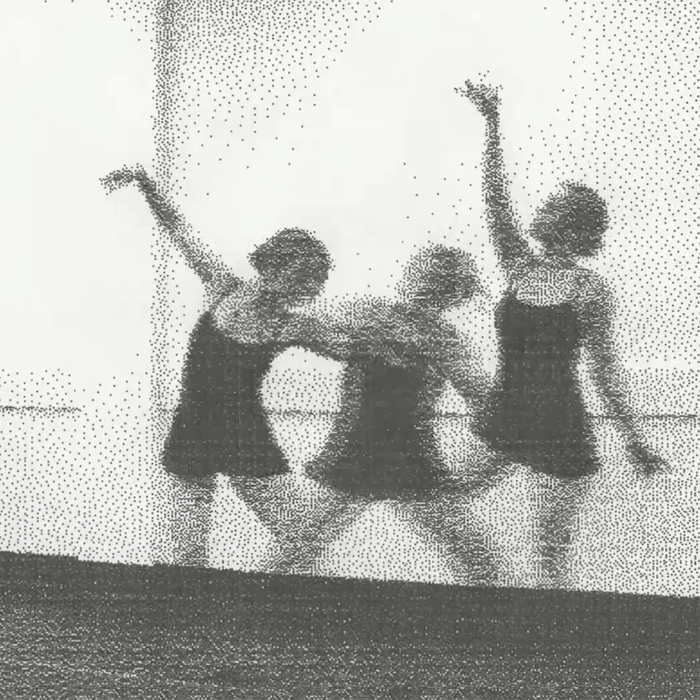
In addition to nostalgia for dot matrix printing, Smith pays homage to a pioneering Canadian filmmaker in the "Elevator" video. “Norman McLaren has been an inspiration to me for years, even before I started experimenting with film and video myself. I was always drawn to his films and the more I researched his technical innovations, the deeper my respects grew. He was a man ahead of his time. He was able to come up with these wild new technical ideas and execute them with such a beautiful end result.” Specifically, Smith references McLaren’s 1968 work Pas de Deux. “It's a work that showcases the movement of dancers against a black background. Their movements become echoed across time.”

"Elevator" isn’t the first Young Rival video to push the visual envelope. A past video, titled "Two Reasons," features a man singing and dancing in a multitude of mind-bending body paint motifs

Despite the time and effort it took Smith to make the "Elevator" video, the project did produce helpful information about dot matrix printers. “Perhaps the most shocking thing I learned in this entire process is that they are in fact still manufactured and sold new, and they aren't exactly cheap.” But, like the time and effort that went into making the video, Smith says that buying one of these printers may actually pay off in the long run. “One huge benefit of dot matrix printers is that they use very little ink. I think we only spent about $40-50 on 6-7 ink ribbons throughout the entire project. I don't think I can buy a single cartridge for that amount for my inkjet printer at home.”

YR-2015-Web.jpgYoung Rival. Photo: Vanessa Heins

Find out more about Young Rival and their innovative music videos on their website.

Related:

Listen To A Hacked Dot Matrix Printer Play 'The Macarena'

A Dancer Multiples Across The Screen In This Dazzling Experimental Film

How (and Why) the Long-Form Music Video Is Making a Comeback

16 Jan 03:43

Celebrate MLK Weekend With This Iconic Edition of FELT Zine

by Nathaniel Ainley for The Creators Project

Images courtesy of FELT Zine

Every Saturday, The Creators Project premieres a new issue from net art platform and artist collective, FELT Zine.

Celebrate the holiday weekend with this special Martin Luther King Jr. themed issue of FELT Zine courtesy of Mark Digital. At the center of this week’s King’s Dream piece is a black digital bust of MLK surrounded with red roses and topped off with a large golden crown reminiscent of the Notorious B.I.G. Toggling your arrow keys moves the center piece in different directions allowing the viewer to examine the bust from all angles. Digital fixed his sculpture of Dr. King with two roses in the place of eyes, an aesthetic choice heavily influenced by the cover art for the "Martin Lucid Dream" album by rapper Denmark Vessey.

King is often remembered for his "I Have A Dream" speech delivered during the March on Washington for Jobs and Freedom in 1963. In this address Dr. King spoke about income inequality and the redistribution of wealth, protesting the Vietnam war, and vilifying the White House. The artist believes the greater message ingrained in that speech has been suppressed over the years in order to promote the image of a Gandhi-inspired peace protestor.

Although Dr. King made tremendous progress for the Civil Rights Movement through peaceful protest, towards the end of his life, his philosophy began to align with the ideals of Malcolm X and other African American leaders now considered radical to mainstream America. The artist tells The Creators Project, “With this piece we hope to take back the narrative of Dr. Martin Luther King Jr. and expand it to remind people he was more than one speech.”

You can check out more of Mark Digital’s work on his Instagram, and click here for more FELT Zine.

Related:

[Premiere] Jeremy McKeehen's Vision of a Transhuman Future

[Premiere] A Digital Living Space Predicts the Home of the Future

[Premiere] Chromatic CGI Artwork Interrogates Empathy in the Digital Age

16 Jan 03:42

Moxie Marlinspike: There is no WhatsApp 'backdoor'

by Volker Weber
We believe that it is important to honestly and accurately evaluate the choices that organizations like WhatsApp or Facebook make. There are many things to criticize Facebook for; running a product that deployed end-to-end encryption by default for over a billion people is not one of them.

We believe that WhatsApp remains a great choice for users concerned with the privacy of their message content.

Moxie calls out The Guardian for their reporting. This developing story also demonstrates something that irritates me in the security scene. There are those like Moxie who create secure systems. And then there are those who create strange edge cases to demonstrate their prowess and make sweeping allegations from there.

The issue with Facebook/Whatsapp is not that they snoop in on your conversation. They can do that in your Facebook posts, likes, and such. The real issue is that they mine your social connections to deliver their advertisement product. But you cannot take offense here when you are using customer loyalty programs at the same time.

It is great that the Guardian thinks privacy is something their readers should be concerned about. However, running a story like this without taking the time to carefully evaluate claims of a "backdoor" will ultimately only hurt their readers. It has the potential to drive them away from a well engineered and carefully considered system to much more dangerous products that make truly false claims.

Signal is not one of those dangerous products. It's the original implementation of the secure protocol.

16 Jan 03:42

BlackBerry does not deliver

by Volker Weber

BlackBerry continues to baffle me with their inability to execute. Ten days ago they released the January Android updates for the DTEK60 and PRIV, one day ahead of time. Like many others I have yet to receive the PRIV update. Let's break it down.

  1. Google shares Android patches with their OEMs in December. Developers integrate those patches into their products. The software gets tested and approved. At the beginning of January, BlackBerry releases their updates and Google publishes the list of vulnerabilities.
  2. BlackBerry starts delivering the updates, using a process that delays these updates for days and weeks. Nobody ever explains the process in a clear and understandable fashion. When you ask BlackBerry what is going on, you are told that the updates are rolling out and that users will be receiving them soon.

And then there is the DTEK50 where engineering is roughly a month behind schedule. This will eventually get fixed and DTEK50 will catch up.

BlackBerry is able to build the update in a timely fashion for DTEK60 and PRIV, but they are unable to execute the delivery time and again, month for month. The issue here is misguided expectations. You cannot claim to build the most secure Android smartphone with timely delivery of security fixes as a primary feature, and then not deliver on that promise.

Please report your BlackBerry Android security updates here >

16 Jan 03:42

Gar nicht so einfach

by Volker Weber

Hundebett

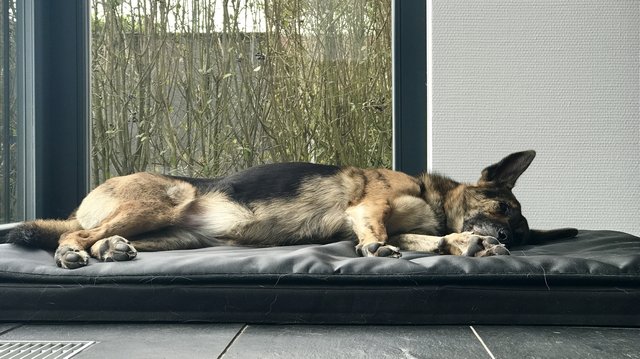
Frau Brandlinger braucht ein Bett. Die perfekte Ecke im Haus hat sie, aber an der Matratze haben wir ein bisschen gearbeitet. Die erste war super, aber leider hat sie die Nähte schnell durchgescheuert. Das ließ sich zwar reparieren, aber das war auf die Dauer lästig. Die zweite Matratze war zwar superweich, aber doch ein bisschen dünn. Und die dritte hat sie doch sehr irritiert, weil sie zwar dick, aber nicht so weich war. Und auch noch raschelte, wenn sich Frau Brandlinger im Kreis drehte. Nun liegt die zweite auf der dritten und Frau Brandlinger hat eine Luxuskonstruktion. Sie grunzt und räkelt sich ausgiebig. Problem gelöst.

Wer sich mal die Augen verderben will, schaut mal auf Amazon nach Hundebett.

16 Jan 03:42

From my inbox

by Volker Weber

b5806bbff333e4fe0ec9d5e6cd42e494
[Quoted with permission from a Signal chat]

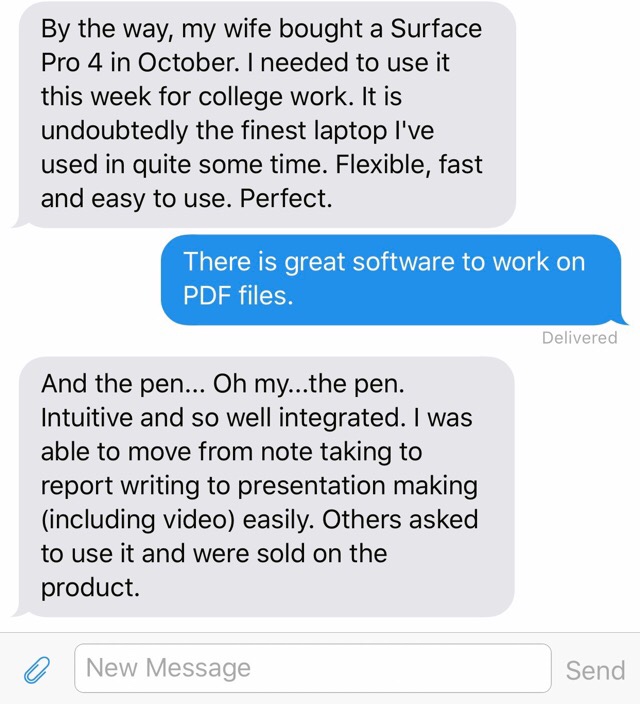
I am not alone with my love for this machine.

Surface Pro 4 is the perfect PC for a student. It covers all use cases. OneNote is very popular as well since you can organize your classes in separate sections and keep adding notes with the pen or the keyboard. Surface Pro 4 also ships with Drawboard PDF, a more advanced solution for annotating PDFs. You can do it all in one device and don't have to switch between a touch tablet and a keyboard notebook. 2-in-1.

16 Jan 03:42

"Desires are already memories."

“Desires are already memories.”

- Italo Calvino, Invisible Cities 
16 Jan 03:42

How to use iOS 10’s new Bedtime feature

by Jessica Vomiero

With iOS 10 came a slew of new — and sometimes tricky — features for iPhone users to enjoy.

Some of those features, however, remain relatively elusive to iPhone owners, among which Bedtime mode is often included. Bedtime is a function in the pre-installed Clock app introduced alongside Apple’s somewhat recent iOS 10 update.

Bedtime is designed to manage the user’s sleeping habits based on some initial information. First and foremost, select the clock app and direct your eyes to the bottom of the screen.

Directly in between World Clock, Alarm, Stopwatch and Timer, you’ll see a bed icon framed with the word “Bedtime” below it. After selecting the icon, a black screen should appear that reads “Introducing Bedtime,” and goes on to briefly explain the benefits of going to bed at the same time each day.

Select the orange ‘Get Started’ icon to move on to the next screen. Next, the app will prompt the user to input what time they would like to wake up. Navigate to the top right hand corner of the screen and select “Next” to move to the following phase.

The user will then be asked what days of the week they’d like the alarm to go off. Because the purpose of Bedtime mode is to encourage you to go to sleep and wake up at the same time every day, the alarm’s default is to go off every day of the week. Select ‘Next’ in the top right corner to move to the next phase.

Users are then asked which days of the week they’d like the alarm to go off. After making their selection and moving on to the next page, they’ll be asked how many hours of sleep they require every night.

After selecting an amount and moving on to the following prompt, the app will ask the user if they’d like a bedtime reminder.

Lastly, the app will take the user to a screen where a series of bars representing a consistent sleep patterns are shown.

According to the app, keeping the bars aligned with each other equates to having consistent sleep habits. Select ‘Save’ in the top right hand corner of the display to save your selections.

Users should now find themselves on a screen containing a dial and an empty sleep analysis bar running alongside the bottom.

That bar will fill up as you begin to track your sleep habits. If you ever decide to turn the feature off, just navigate back to the bed icon in the clock app and flick the Bedtime toggle from on to off.

16 Jan 03:41

Amazon’s Quest to Become the Retail Operating System

by Tristan Louis

Next week, in New York, the retail industry will meet at the National Retail Federation “Big Show”. There will be much talk about the continued impact technology is having on them. One of the topics surely being discussed will be recent announcements made by Amazon about its Amazon Go grocery stores, which is presented as the future of grocery shopping.

While there may be worries about Amazon looking to displace existing incumbents,  what we may see here is the 4th step in Amazon’s continuous effort to become the retail operating system.

Amazon 1.0: The General Store

In its first iteration, Amazon was like most other online retailers, sticking to a set of products (initially books) until it eventually extended to a wider set of categories to become a general store.

Under this model, Amazon was primarily a version of Sears or Walmart, selling products electronically as opposed to selling them in physical stores and leveraging its lack of physical space as a way to present a broader set of products.

Amazon 2.0: The Mall

In the early 2000s, Amazon started showing its wider game, as it created a marketplace allowing 3rd parties to set up shop on the Amazon.com site. By 2002, companies like Target and ill-fated bookseller Borders hosted their digital infrastructure on Amazon, loaning digital retail capabilities from the Seattle company.

This shift represented the beginning of a larger strategy for Amazon, which moved from being an online store to something different, something more like an online version of a mall, giving other shops the ability to sell their products on top of Amazon’s infrastructure and at a convenient Amazon.com address. It also set things up for the next phase of Amazon

Amazon 3.0: The Digital Infrastructure

In a little-noticed announcement in 2006, Amazon moved to leverage extra capacity it had built by renting it out to anyone who wanted to use it. The company started giving third party access to its massive data centers for a fee through a program called “Amazon Web Services.” The initial concept came as a way to lower the cost of rolling out data centers as the company rented out spare capacity it had built with plans for future growth.

Amazon Web Services proved to be a very successful offering, and can now be credited for powering the infrastructure of a large number of internet services ranging from small startups to companies as large as GE, Netflix, AirBnB, Spotify, and Reddit. This success led the company

This success led the company to start launching a series of services mirroring its existing capabilities, moving it from retail mall to full digital infrastructure provider. Amazon can not only host your online presence, either through Amazon marketplace or by hosting your site on Amazon Web Services but retailers can also have Amazon take care of the complete fulfillment of order, for a fee.

This is where Amazon sits today but recent developments seem to point to a wider future.

Amazon 4.0: The Retail Operating System

With the release of Amazon Go, it appears Amazon is expanding into the physical retail space. While the creation of physical by a digital player seem to be out of step with what you might expect from one of the largest e-tailers in the world, the model seems to follow what has now become a routine approach for Amazon:

  • Step 1: Demonstrate a new technology capability through the use of technology under your own brand.
  • Step 2: Provide the technology, for a fee, to other parties so they can mimic what you offer by sitting on your infrastructure
  • Step 3: Expand the capabilities and make more services available to increase the stickiness of your platform with those other parties.
  • Step 4: Repeat

I would contend that the introduction of Amazon Go and of the Amazon bookstores is only the first step in demonstrating how Amazon thinks a physical store should be running. From a store standpoint, they present capabilities that are currently unheard of in the retail world: the ability to walk into a store, pick up physical goods and just walk out without having to deal with the friction of cashier lines and payment takes the Uber experience into retail. But the magic required to make such an experience happen demands the installation of sensors in a very precise order.

I would not be surprised if, within the next couple of years, we heard about grocery stores partnering with Amazon to use Amazon Go on a leased basis. The new model would be one where Amazon employees deploy and manage “Amazon Go” infrastructures in other grocery stores, working as infrastructure providers to the retailers.

When combined with their existing service, Amazon would then be embedded in every aspect of the retail world, recasting itself as the retail operating system.

Why would Amazon go this way?

First of all: Margin. The growth of Amazon Web Services and related offerings has shown to be a much more successful offering for Amazon than its own retail presence. It turns out that providing product and services to third parties is much more lucrative than by the initial seller.

The second reason for the Amazon Retail Operating System is that Amazon may be readying for the end of its dominance in the e-tail space. With companies like Alibaba and Walmart (through the acquisition of Jet.com) gunning for Amazon’s top spot, the battle is about to get very tough. But in the infrastructure world, Amazon is still quite a distance ahead of its competitors. And that may be the big strategic advantage the company wants to retain, as physical integration could mean a decades-long sustainable gain over anyone else trying to follow suit.

16 Jan 03:41

MOOC enrollment drops at HarvardX and MITx after free certifications disappear

files/images/whomoocs.png


Devin Coldewey, TechCrunch, Jan 17, 2017


This article gleans the relevant datum from the  recent study of Harvard and MIT MOOCs. This year saw enrollments drop at each "to about 540,000 at HarvardX and 670,000 at MIT." This is against a background in MOOCs generally where enrollment (as reported by Class Central) doubled over last year. What makes the different at Harvard and MIT? "The leveling off of interest probably has a lot to do with the schools’ choice early in 2016 to no longer offer certain certifications for free — a choice those in charge almost certainly knew must negatively impact enrollment."

[Link] [Comment]
16 Jan 03:41

5 Big Ideas In Education That Don't Work

files/images/measurement-ideas2-ljohnson_custom-e40adbb827523aa54d78e8edfd199c956ef33a20-s1600-c85.jpg


Anya Kamenetz, NPR Ed, Jan 17, 2017


When you say things "don't work" you have some idea of what it would look like if they "worked". In education, however, this definition of an outcome has remained elusive. In simplistic terms, "worked" might mean "got better grades", but according to this article "setting achievement standards" isn't one of the things that works. One might define "worked" as "grew relative to one's previous state", but this implies a direction of growth, which is thus far undefined. Many people prefer growth toward specific "content knowledge", but I think that's only because it's easier to measure (and standardize). Measurement against content knowledge fails, however, when evaluating class size, because the benefit of smaller class size is to personalize the direction of growth toward student interests and inclinations. Similarly with spending; wouldn't "what works" depend on how that money is spent? All this could have been discussed in this article, but wasn't. Pity, as the end result is the generation of misinformation rather than knowledge.

[Link] [Comment]
16 Jan 03:41

Happy New Year 2017

by Mark Watson, author and consultant
Happy New Year everyone!

We live in interesting times. We are witnessing exponential growth in technologies and social and economic change. I am going to share my personal views on these two topics and then conclude with my plans for 2017 for leading a free and inspired life.

It is difficult for us humans to really understand exponential growth, as we are seeing in artificial intelligence and other technologies like genetic engineering. One personal way to come to grips with exponential growth is to conduct a thought experiment: compare the technological changes in the world between the times you were ten and twenty years old and the changes in technology in the last ten years. Even a few years ago my cellphone did a fairly poor job at understanding my spoken speech and now it understands me almost perfectly and speech input is now the way that many of us interact with our mobile devices. In my field of machine learning and artificial intelligence, deep learning neural networks have revolutionized how we do speech recognition, language modeling, recognize images, and build predictive models. I expect that environmentally safe energy advances like solar, storage of electricity, and likely viable fusion power will profoundly alter the world for the better in the next ten years. Also remember that with very inexpensive power, fresh water becomes less of a problem at least near oceans because of desalination.

The outcome of rapid social and economic change is much less clear. I believe that people should think for themselves when it comes to politics, and in general politics gets too much of our attention. My thoughts on how to live a free and inspired life are influenced by Catherine Austin Fitts who suggests that we pay more attention to our own physical, mental, and spiritual health than externalities like politics and the trappings of materialism that do little to improve our lives. Catherine promotes the idea of concentrating on adding value to our work, businesses, and society at large. I tend to divide events in my environment into "things I can affect" and "things that I can't do anything about." In principle I like to put almost all of my energy and creativity into things that I can affect.

In addition to enjoying the company of my family and friends my plans for 2017 include:

  • Spending close to zero time watching the "news" on TV. I believe that 20 or 30 minutes a week reading news on the web, preferably randomly chosen from multiple news agencies in many different countries, is sufficient to understand what I need to know about the world situation. Spending many hours a week in a "mental bubble" watching the same news service on the same TV station in just my own country seems like a colossal waste of time that can be better spent on other activities. In the Data Science sense, I "sample" news sources.
  • I hope to spend even more time writing in 2017. I published Haskell Tutorial and Cookbook at the end of last year and my two current writing projects are Introduction to Cognitive Computing and Haskell Cookbook, Volume 2. My wife Carol helps me with editing my books.
  • Cooking and the science of food is a core personal interest and I hope to spend a fair amount of time applying AI and machine learning to my recipe site cookingspace.com. Currently I use the USDA Nutrition Database to estimate the amount of core nutrients in recipes and use a machine learning model to predict what additional ingredients would taste good with any recipe. I am rewriting the core analysis code in Ruby (the latest version is in Clojure) and I plan on major web site updates and I plan on also using the RubyMotion development tools to write apps that use the same analysis code for iOS, Android, and macOS.
  • Spending even more time hiking, kayaking, and at the gym.


16 Jan 03:41

Instapaper Liked: That's the Hops Talking

(Photo by Jeff Quinn) Y ou don’t need inside knowledge to know that hoppy beers are hyper-trendy these days. The demand seems inexhaustible. In the U.S., “Gimme…
16 Jan 03:41

Instapaper Liked: Emotional Intelligence - Data Driven Wellness

Reference books & URLs from last night's Emotional Intelligence chat at #Vancouver's Data Driven Wellness meetup: https://t.co/GJUJetwGGM — Kris Constable…
16 Jan 03:40

Instapaper Liked: The Cyberpunk Sensibility

“Cyberpunk creeps up on us. Some kind of alchemy transforms its fictions into truths, and draws us towards places we thought unreal.” — @uttunul Conventionally…
16 Jan 03:39

Lies from Paul Ryan about Obamacare

A series of tweets, summarizing Michael Hiltzik’s column, Here are the lies Paul Ryan told about Obamacare during his town hall meeting:

image

He’s lying his ass off, just like the entire GOP backing this stupidity. Facts be damned. 

People whose thinking is ruled by emotions and delusions are considered immature at the least and insane when the condition is extreme. He and his ilk are clearly operating in a fact-free land of falsehoods and ideological blindness, if not outright insanity.

It is a truism that ‘every nation gets the government it deserves’, but it is time for us to say #enough.

16 Jan 03:39

"Every nation gets the government it deserves."

“Every nation gets the government it deserves.”

- Joseph de Maistre
16 Jan 03:39

Laetitia Sadier, of StereoLab and now, Source Ensemble.


Laetitia Sadier, of StereoLab and now, Source Ensemble.

16 Jan 03:39

The perfect desktop image for our time.


The perfect desktop image for our time.

16 Jan 03:39

Anything with Michelle Monaghan.


Anything with Michelle Monaghan.

16 Jan 03:38

So long, and thanks for all the fish

Priceless.

16 Jan 03:38

"The hardest part about being vegan is the apologies. People ask if I miss meat or dairy. I miss..."

“The hardest part about being vegan is the apologies. People ask if I miss meat or dairy. I miss being liked.”

- Julio Torres
16 Jan 03:38

archatlas: Micro Cabin in Ontario In the Ontario forest, off...


archatlas:

Micro Cabin in Ontario

In the Ontario forest, off the grid and with just 98 square feet stands the Micro Cabin by Larocque Elder Architects A wood-burning stove and natural light provide comfort to those seeking escape from everyday life. Clad in dark timber the cabin stands out against the snowy landscape which only includes within its four walls a ground floor living area and a loft bedroom.

I want a tiny cabin on the edge of the water in this picture:

16 Jan 03:03

A new discovery

by Volker Weber

4075b9bcc644bfc09b96b74e025ed5e6

Mathez. A break from the veggies.

16 Jan 03:03

Class

by Volker Weber

I refrain from commenting on politics, domestic and foreign. But you have to watch this. All 38 minutes of it. They are free of politics.

I like to say you should aspire to be the person your dog thinks you are. But Barack Obama and Joe Biden go above and beyond. And I have to assume that Michelle Obama and Dr. Jill Biden would simply blow me away.

The lesson you can take away from this is simple: don't talk about yourself.

16 Jan 03:03

Wrangling Time Periods (such as Financial Year Quarters) In Pandas

by Tony Hirst

Looking at some NHS 111 and A&E data today, the reported data I was interested in was being reported for different sorts of period, specifically, months and quarters.

The pandas python library has quite a few tools for dealing with periods, so here are a couple of examples of tricks I put to use today.

Firstly, casting months to a month period. Monthly periods (in column df['Periodname']) were reported in the form “Dec-10”, “Jan-11”, etc, which is to say a three letter month followed by a two digit year representation. If we create a datetime on the first of the corresponding month, we can then cast that date to a month period for the corresponding month:

#Generate a pandas period for time series indexing purposes
#Create a date from each month (add the first date of the month) then set to period
#Note: if the datetime is an index, drop the .dt.
df['_period']=pd.to_datetime(('01-'+df['Periodname']), \
                             format='%d-%b-%y').dt.to_period('M')

If the datetimes form the dataframe index, we could drop the .dt. element and cast the timeseries index directly to the monthly period. The %b term maps onto the locale specific month description.

The second example had financial years and dates in two columns – Year and Quarter. The months specified in the quarter description mix three letter representations and the fully written name of the month. (As with many NHS datasets, the text used to describe dates can be all over the place, even within a single spreadsheet or datafile!)

If we grab the first three letters of the month, we can identify the month as it’s short form. If we create a date stamp for the first day of the quarter (in the UK, corporate financial years run 1-April, to 31-March (it’s the personal tax year that reports from April 5th?) we can then cast to a quarterly reporting period whose year ends in a particular month, eg March (freq='Q-MAR').

nhs_111

Note that the YearQuarter uses the calendar year in which the financial year ends. We can check the start and end date of the quarters explicitly:

nhs_111_2

One issue when it comes to plotting the financial year quarterly periods is that the chart looks to me as if everything is a year out:

nhs_111_3

That is, I read the year as the calendar year, but it’s actually the calendar year in which a particular financial year ends.

So I’m wondering – should pandas really report and plot the financial year in which the fiscal year starts? Is there a switch for this? Or do I need to submit a bug report (and if so, what’s the bug?)

PS for a notebook worked example, see here: NHS 111 example.


16 Jan 03:02

Lifestyle, Technology, Home & Health: My Top Picks from CES 2017

Let's face it --- the annual Consumer Electronics Show (CES) which is held every year in Las Vegas, can be a dizzying experience. I've been going for about 25 years, almost always repping a product and sometimes more than one, from kids education software and the world's best speech recognition system in my younger days to a myriad of startup innovations ever since. I tend to find the product recaps predominantly male; in other words, most of the top picks tend to center around early adopter products and they tend to fall in the following categories: video, cars, audio, and big screen TV's. While these categories impact all of us, especially car technology, I tend to look at unique designs, products and services which also appeal to women and solutions that help travelers on the road, either be more productive, or have more fun. I've curated a list of 25 products in several categories and some of the factors that I looked at when making the cut include originality, innovation, design, and whether it is or can look at the bigger picture and solve a need beyond what it is doing today. I include wellness, because that matters to me a lot, so much so that we've expanded the Wellness category. In this piece, you'll find the following: Toyota's futuristic car that thinks for you, the easiest to learn electronic guitar you'll ever use, a smart suitcase cover, a smart bed, a personal connected wine bar, a companion robot, the world's smartest air purifier, a fashionable wrist wearable that pairs with headphones, vibrating jeans and swim suits that alert you when to apply more sunscreen, a stylish panoramic camera with 17 lenses, smart dumbbells, a smart skateboard, the world's first electric violin made from a 3D printer, a genetic measuring kit, a smart assistant, a Titanium folding bike, a wireless speaker with a wool covering to integrate with your living room, a wireless antenna so you can cut those ties to Comcast and others, intelligent thermal clothing, a device that helps women increase their readiness and interest in sex, an AI-based smart home hub, a voice operated kitchen assistant, a pocket flying camera that all travelers will love and smart aromatherapy to improve your well-being. I also shot some video of this year's CES, which runs around five minutes but it includes product shots and some on-site experiences, so be sure to tune in.

The Toyota Concept-i

Cars are always fun to see at CES since it allows you to get away from large TV screens, audio and video devices, and in this year's case, Virtual Reality and Connected Home promised life changing innovations everywhere. The new Toyota Concept-i is focused on utilitarian autonomous transport. This car is so futuristic looking that it may be hard to imagine driving, at least if you're a woman that is. It has scissor doors and edgy styling and while it's not available to purchase just yet, it is setting the bar for other manufacturers to meet in this category.
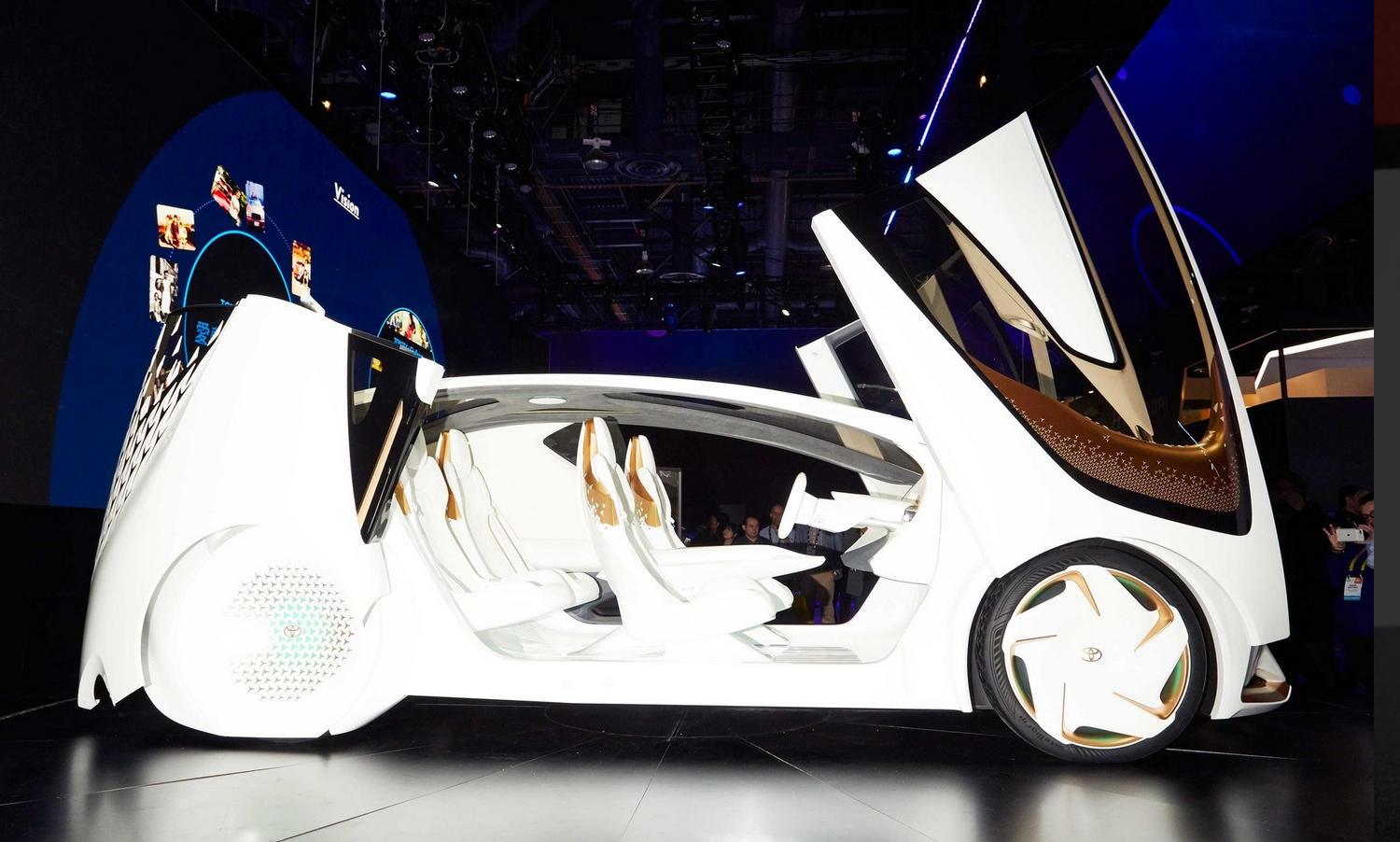
The guys at Calty Design Research center have dreamed up a new concept of automotive UX for Toyota -- intelligent cars that continually learn, and, in turn, keep getting smarter. They idea was to build a brilliant car that gets to know you and your needs, and then starts to anticipate them for you. Yui, in tandem with Artificial Intelligence (AI), anticipates your needs and informs the car so that Concept-i can consider and execute that next action accordingly.

It may sound all too futuristic, right? The key is that you're still in charge of the car however, through biometric sensors throughout the car, Concept-i can detect what you're feeling. That information then gets analyzed by the car's AI after which, automated features kick in. If you're feeling sad, the AI will analyze your emotion, make a recommendation and if necessary, take over and drive you safely to your destination. Yes, really! One of these days, it would be great to test drive this sleek device -- in the meantime, she's beautiful to look at for those into modern and future design.

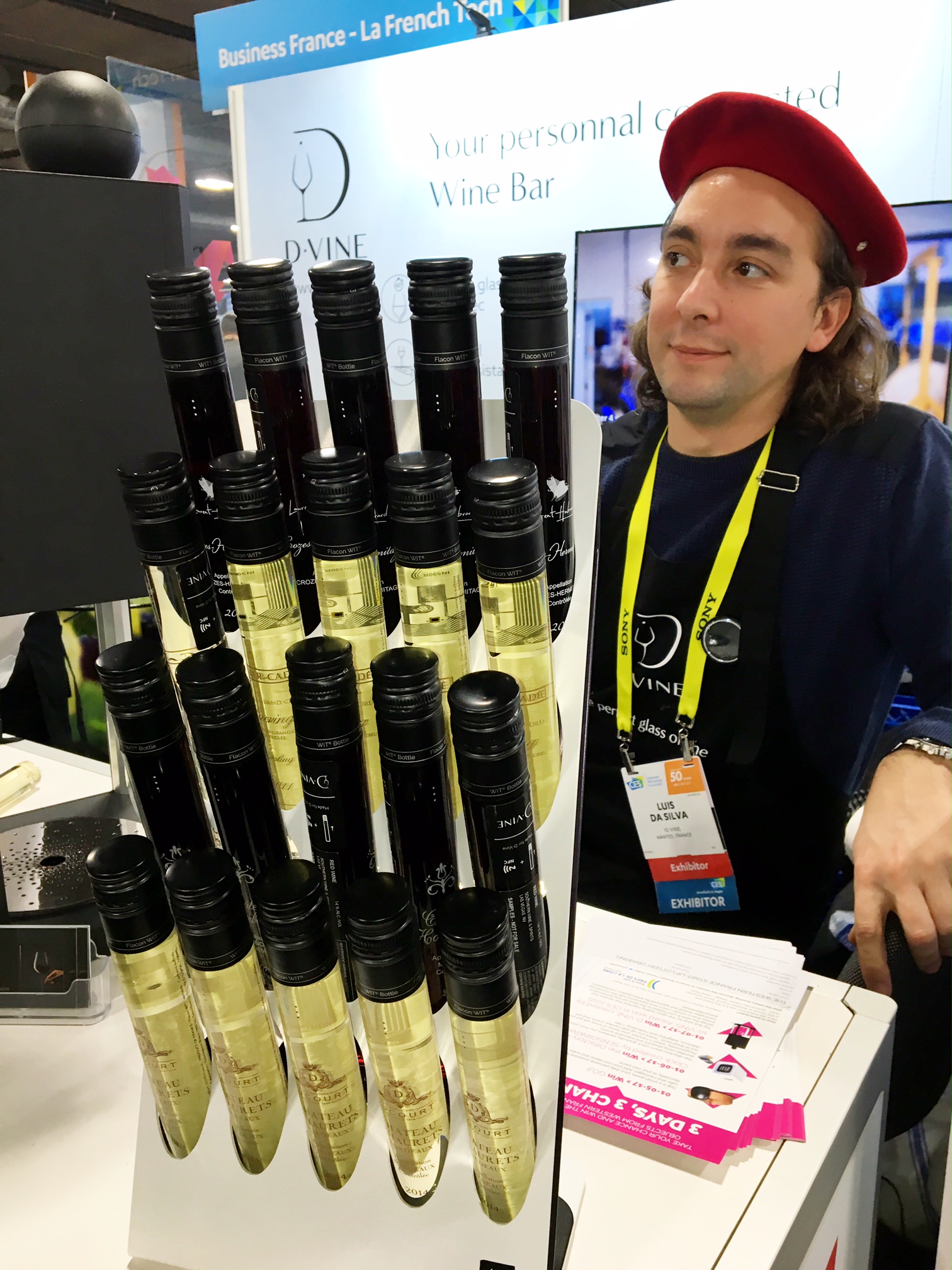
D-Vine Connect, Your Personal Connected Wine Bar

At the Sands in Eureka Park, it seemed as if French startups were dominating the aisles. You couldn't turn around and not hear a French accent or French being spoke. Enter French start-up who apparently launched at last CES but came back with more innovation. Keurig for wine on steroids and beyond? Sort of. Their D-Vine Connect is a 10-Vins’ wine-centric appliance, which allows you to taste a whole lotta wine at home without having to head to a restaurant or a vineyard. Given that we're big foodies here at We Blog the World and have a whole section dedicated to Food/Wine and Restaurant Reviews, we love this innovation. Their product features an interactive built-in touchscreen, which allows you to get top notch information instantly, kinda like having your own sommelier in your own kitchen. Imagine having wine transform into even better wine immediately. In other words, it actually changes the QUALITY of the wine. Additionally, D-Vine Connect helps you pair wine as well. For example, say you'd like to grill a steak with a salad and string beans for dinner. Or alternatively, you're in the mood for a smooth Cabernet Sauvignon or a Chardonnay -- D-Vine Connect will deliver suggestions on dishes, food pairings and so on that will go best with your preferred wine for the evening. This can be incredibly useful when you have guests over or simply don't want to think about it. Given my background in Artificial Intelligence (AI), I was impressed by the AI integration. Yes, this machine learns your tastes over time, so it can even make recommendations to you in the future based on your preferences. Simple, easy and oh so wonderful for wine lovers like me. Bravo! We liked the user interface as well, which makes it easy for anyone to browse through a myriad of wines and learn in the process. It's great for discovery and for making meals that much better. We also love the fact that the D-Vine Connect sets the right temperature for each chosen wine. The machine decants it for you from a dispenser after you make a selection and approve, automatically. Their assistant plays movies with views of the vineyards and explanations from 10-Vins’ oenologist about the wine you’re tasting -- how cool is that? Apparently, it will also analyze data on wine consumption and share it with the wine industry. The D-Vine will be shipping later this year and apparently is planning to open a wine lounge bar in California before the end of the year - we hope that they let us know when they launch this so we can check it out.
Sleep Number 360 Bed

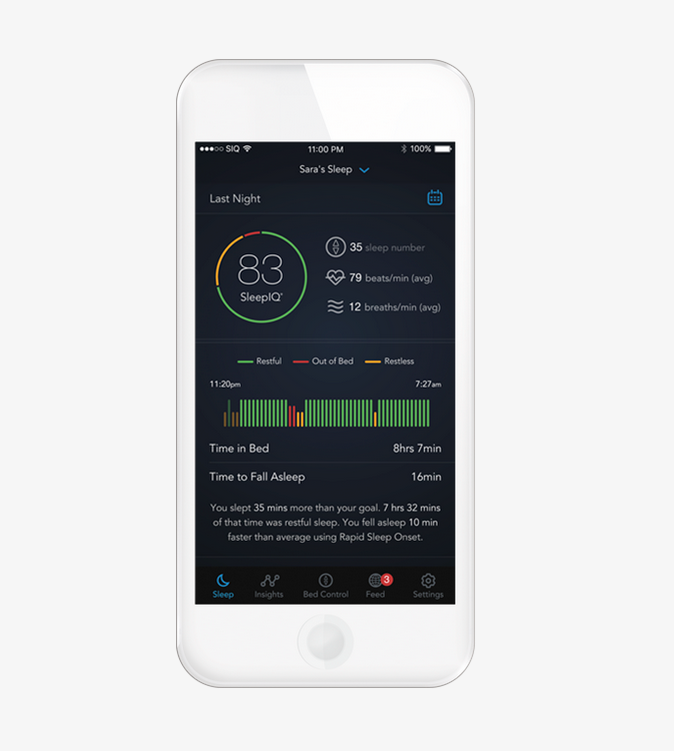
While we're talking lifestyle and home, we should also mention the Sleep Number 360 Bed, which was getting a bit of attention at the show. Imagine being tired after a long day and you're ready to head to bed, but before you do, the Sleep Number 360 automates a process that will keep you toasty warm before you dive under the sheets. Yes, really. The bed will heat up the foot of the bed, which is such a great feature for those who live in cold climates -- oh so lovely right? Photo: BusinessInsider What else is cool is that the bed also adjusts the actual angle as well as the firmness of the mattress as the user moves in his or her sleep, making it a more comfortable and relaxing sleep overall. For example, if you move from your back to your side, it will adjust accordingly. And, this feature will be a godsend for so many -- et hem, but can it work? I call it the Reduce Snoring Feature. In other words, if it senses you or your partner snoring, it will automatically adjust one of the individual headrests to make it stop. Wow, right? Could potentially save a lot of marriages. The bed also has a feature that will alert you to wake up, adjusting your alarm to your own preferences. The Sleep Number 360 smart bed uses SleepIQ technology and intelligent biometrics to sense everything you need so it can customize a sleep experience for you. Yup, the bed is kinda like a smart bed in that it knows how you're sleeping and comes with a mobile app so you can track it. In the morning, you’ll both learn how the Sleep Number 360 smart bed is adjusting to your individual comfort and the effects the bed has on your sleep quality through something they refer to as a SleepIQ score.

BibeliB, the Smart Suitcase Cover

OKAY frequent travelers, take note of this one -- a SMART suitcase cover from a team out of Paris called BibeliB. As you can imagine, they offer a wide range of stylin' cover choices that are brightly covered and fun! I had a chance to chat with BibeliB's CEO William Tala at the show, who showed me a few designs and talked to me about how it works. Right up our alley, right We Blog the World readers?
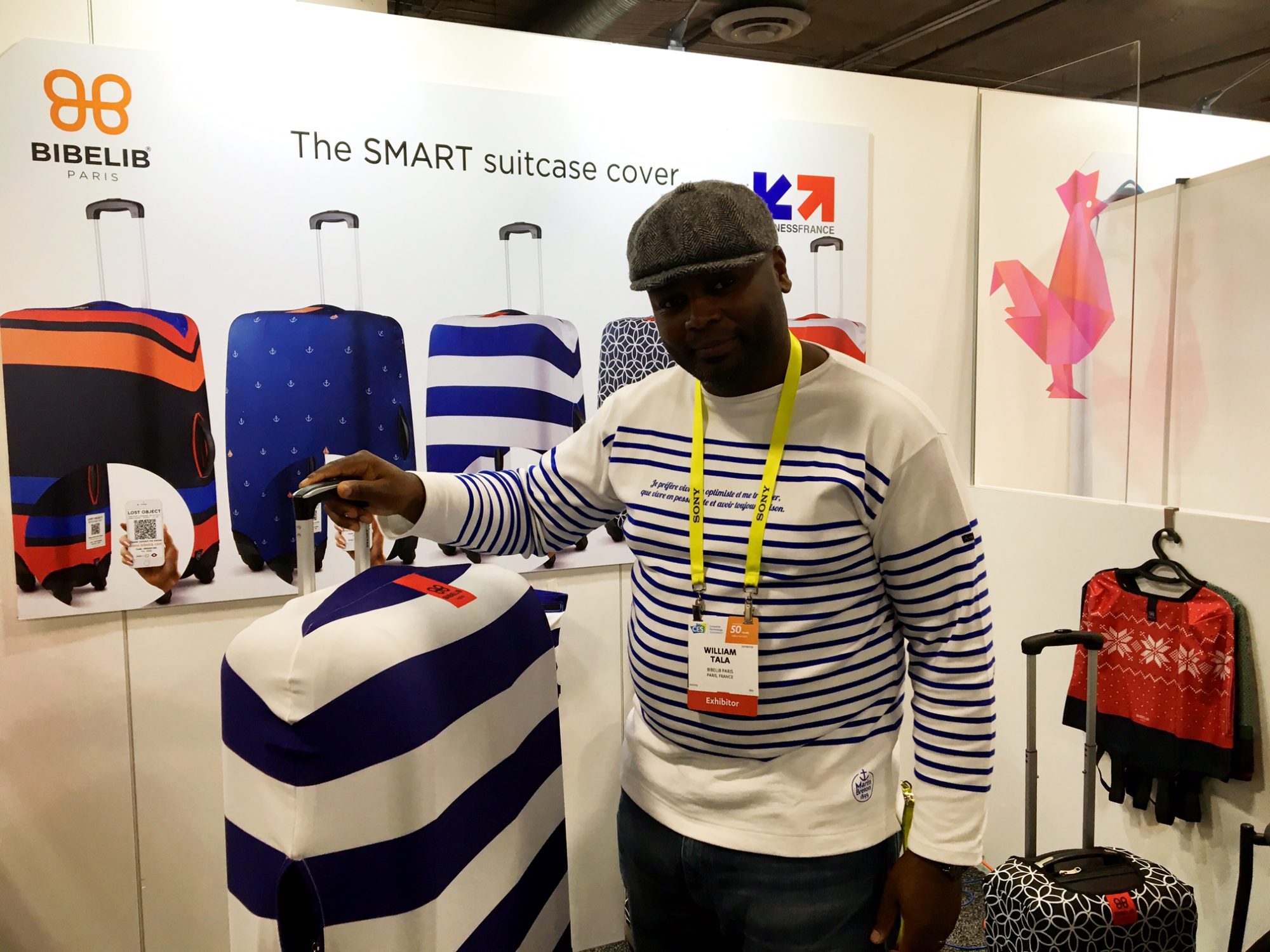
We're eager to test a few of these out as well, so look for it in our Lifestyle Products section sometime in the first half of this year. This smart suitcase cover is designed to be an effective obstacle against intrusion and theft of items packed in your suitcase. What's also nice is that after you use it a few times, you can easily toss it in a machine and wash it to keep it bright and clean -- it also acts as a protector for your luggage against shocks, scratches and minor damages. And, like so many other things I saw at CES this year, it's SMART. Its integrated Lost & Found feature allows you to recover your luggage.
While it's not yet customizable, they say it will be soon, which means great branding opportunities for your company or personal brand. Very easy to use, the cover goes on and comes off in about 30 seconds. The suitcase cover made of polyester and Spandex and are printed using a sublimation printing technology, a process whereby the ink is "transferred by evaporation" in the tissue (sublimate). Using this technique, even the smallest details can be printed apparently and the colors are not affected by washing nor can they disappear. The price is right too! Offered at around 45 pounds (American pricing hasn't been finalized but will be roughly in the same range), it includes the cover, a traceability system and insurance in case the bag is lost. Bravo! We can't wait to test them out on an upcoming trip.

My Buddy Robot

This adorable robot is being pimped as the Companion Robot, a new innovation from San Francisco and Paris-based Blue Frog Robotics. My Buddy Robot has a number of fun and useful features that enhance your home, making it smarter I suppose one could say. On the edutainment side, you can participate in interactive games, math and language learning, which is great if you have kids of the right age. There's also a security component as well. You can use My Buddy to patrol, detect, alert and notify you remotely of any issues at home, including a potential burglar. It can also act as a smart baby monitor, another great family feature in a device that does look like a friendly 'companion.'
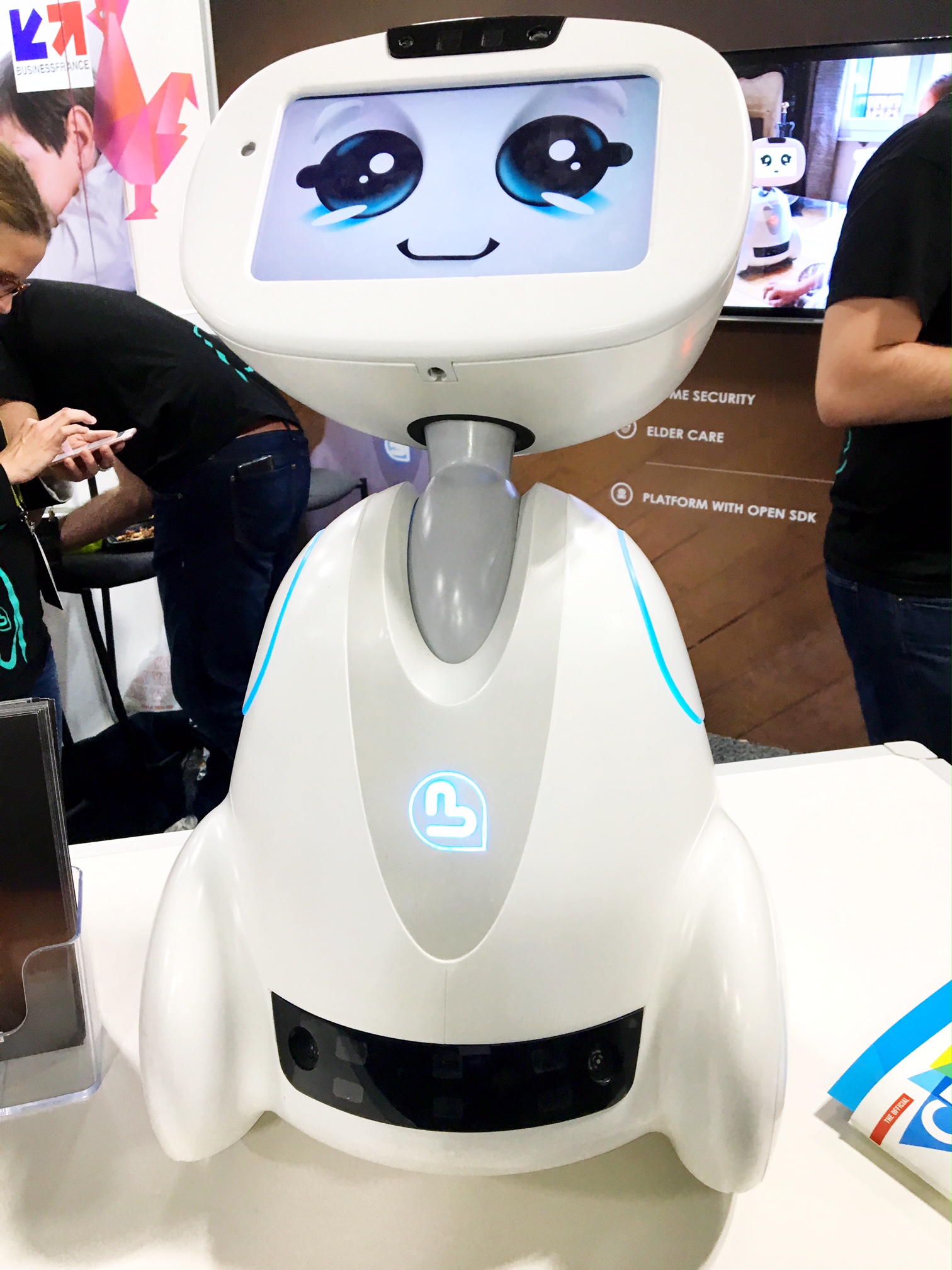
He's adorable right? On the smart home side, My Buddy can act as a hub and connector to IoT and home automation appliances -- think thermostat, smart TV, door locks, motorized curtains, lights, a HiFi station and more. You may not want to enable all of those features depending on your needs and interests, but from climate control to the kitchen, there are useful benefits. Imagine it also acting as a photographer, a concierge, a messenger of daily weather, news, recipes and more.

I also think the elder care piece of it is also a wonderful feature. For example, you can use the robot to detect any falls from an aging parent, and it can maintain social links as well as act as an agenda posology. Cool stuff and.....the design is incredible cute. See a few second video clip of him buzzing around in Vegas in early January.

Helix Cuff

They were pitching the Helix Cuff as the world's first fashion wearable with smart wireless headphones -- on your wrist. Helix Cuff is the flagship product of Ashley Chloe, which caters to fashion-forward consumers who crave sleek digital wearables that are modern and elegant. Helix Cuff aims to bridge the gap between high fashion and functional form, they say. It comes in six fun colors and is paired with a smart app.
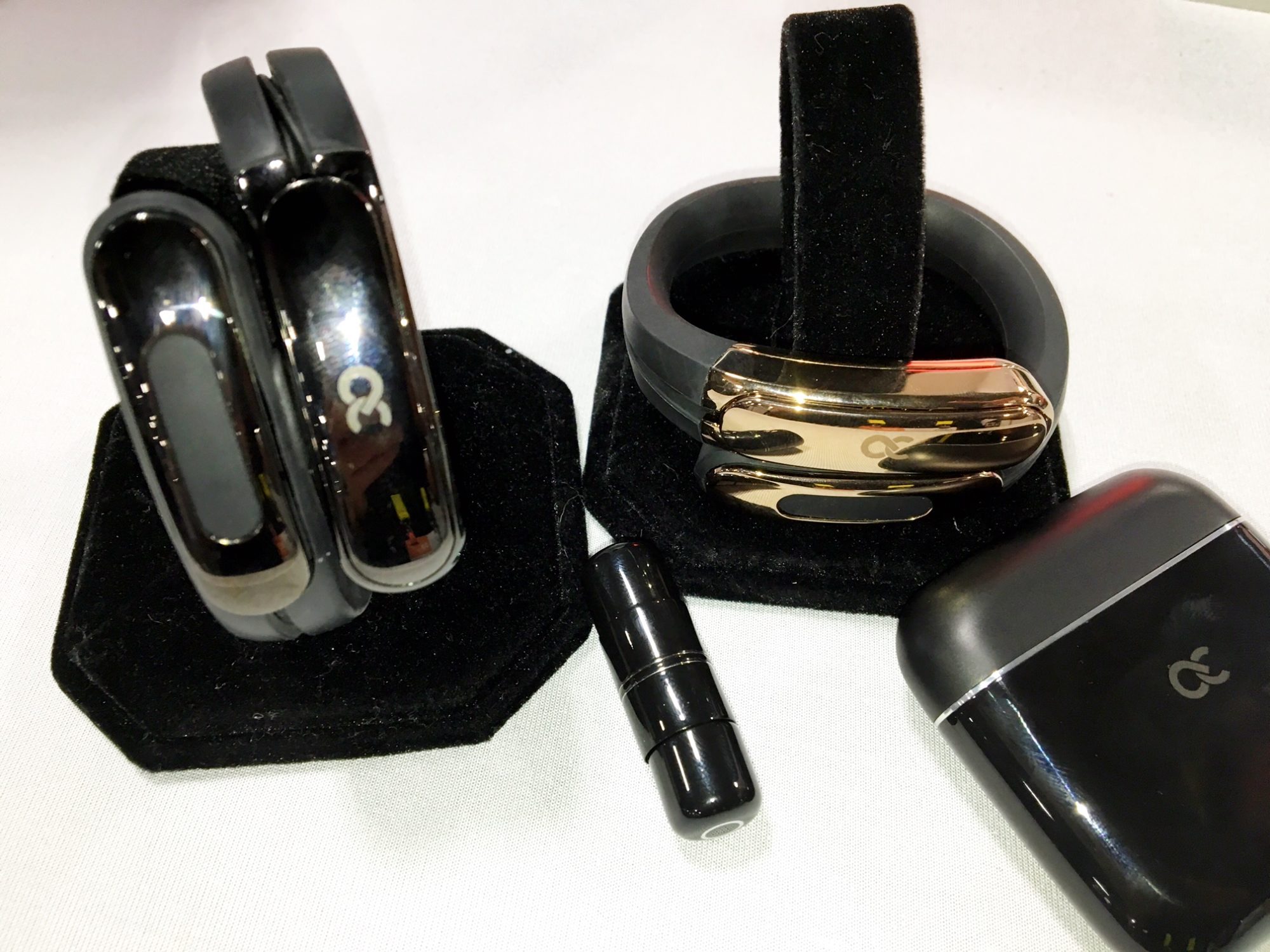
Magic Instruments Guitar

I don't know about you, but I've always wanted to learn how to play guitar. I started playing piano at age 5, have long loved dance and taken many a' lesson over the years, but after two guitar lessons, I gave up. Why? It seemed like it would take years before I could get to a comfort level of playing in front of a crowd, or even for myself. Learning traditional guitar is a lengthy endeavor and it can take months of finger-aching practice before the first song comes together.I love the approach Magic Instruments is taking and at CES this year, they allowed people to 'give it a go' in real time so you could see just how easy it is to learn with their electric guitar. Did I try it out? You betcha and had a blast in the process. You can play your favorite songs immediately while simultaneously practicing and learning traditional guitar skills. You won’t even realize how quickly you’re picking it up -- while the video of me learning may seem as if I clearly don't know how to play guitar, bear in mind that after just a few minutes, I'm already strumming some cords and you can in fact make out that we are attempting 99 Balloons. I simply followed an easy mobile app which guides you from playing a song with one-touch Magic Chords to playing traditional guitar chord fingerings, one chord at a time. Once you’ve learned them all (I didn't get that far btw), you can switch to Traditional Mode, and play it as a normal guitar. A cool feature for travelers? The guitar comes apart so it's easy to store and throw in a carry on bag when you need to get from A to B. We LOVE LOVE LOVE this!
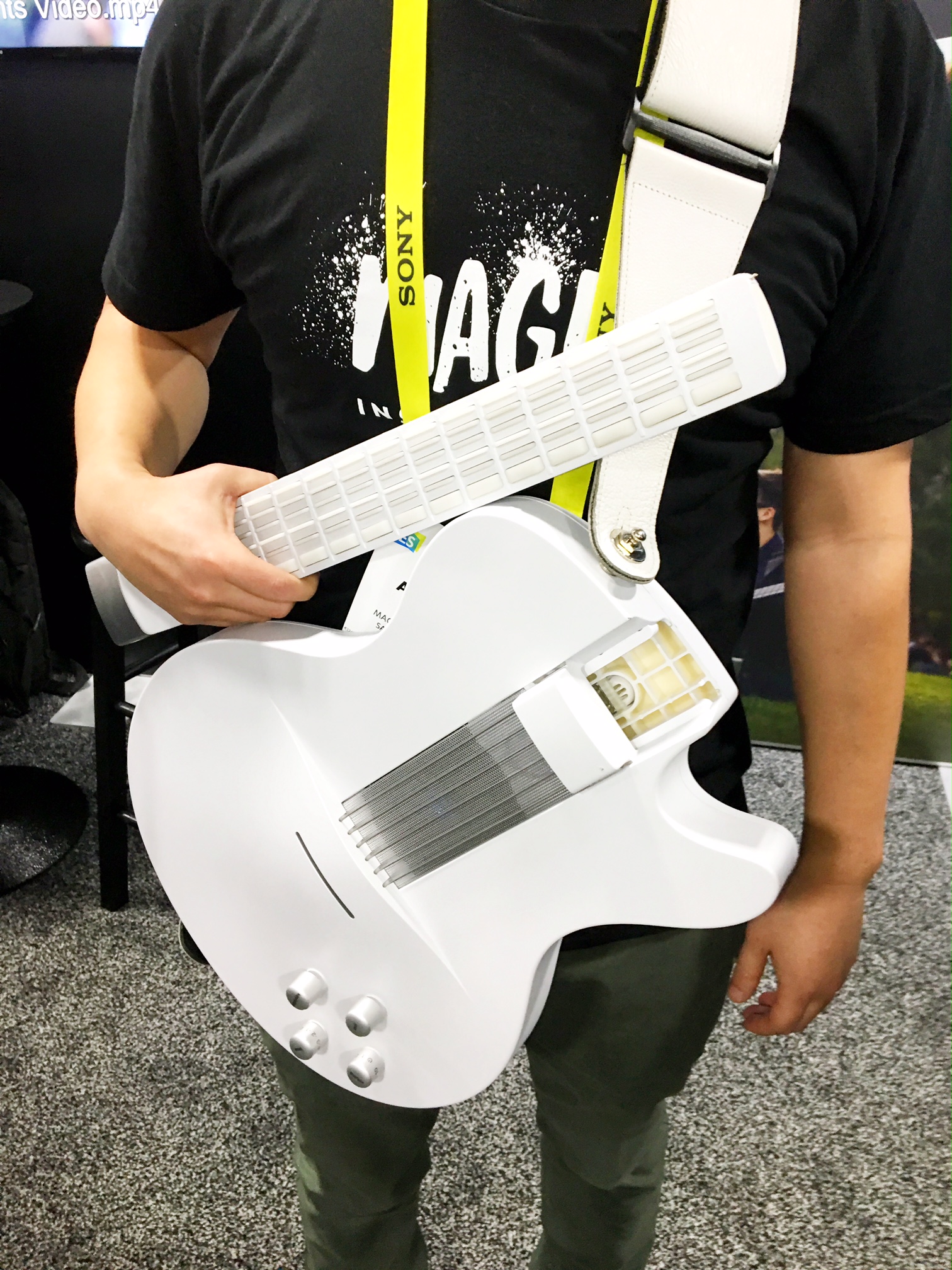
If you love to sing, Magic Instruments elevates your talent by providing you with the power and freedom to accompany yourself. I somehow found myself singing on the Sands show floor ignoring who was watching, simply because I was 'so into the learning process.' Why? Because it was so easy and so much fun. Whether you want to personalize your favorite songs, or create your own original music, the guitar contains an encyclopedia of chords and scales in every key, all instantly available at your fingertips. Since I didn't have enough time to fully go through the process, we're keen on reviewing this fabulous musical device sometime this year, so we'll be covering it in more depth a little later on -- be sure to watch out for it. So far, I'm a huge fan though, so bravo to the team for making learning both easy and fun.

Spinali Design Clothing

Spinali Design produces smart clothes which are designed to integrate with your smartphone with a goal of helping to fight the "burnout" factor in your life. French designed and owned, they manufacture smart clothes (they had their jeans and swim suits at CES) and smart accessories. Their "smart bikini" line Neviano, embeds a device that alerts you when to apply more sunscreen. Cool, right?
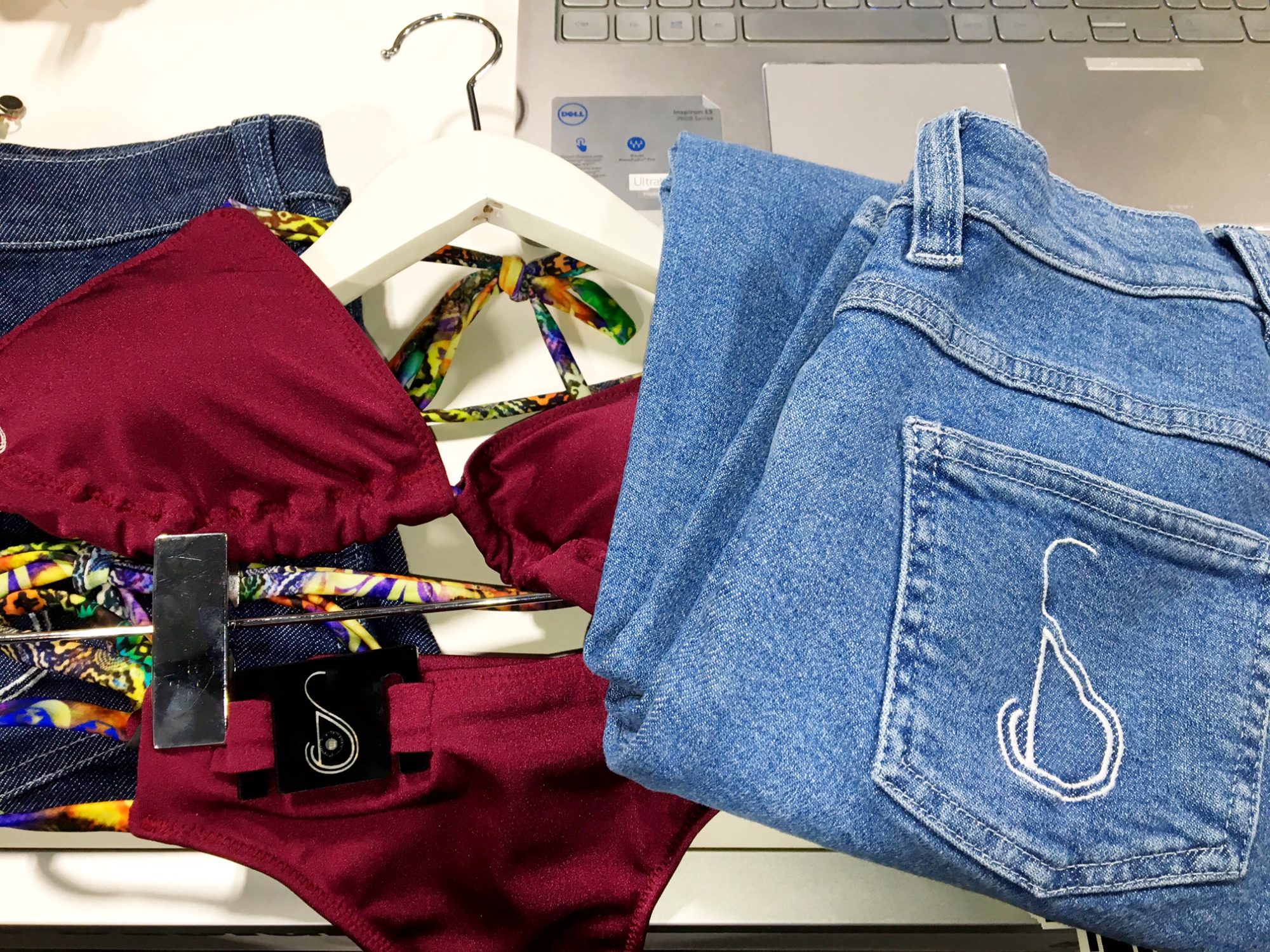
A range of 70 swimsuits numbered from 01 to 06 (from the most covering to the least covering), combine design, sensuality, innovation and technology. The Neviano UV Protect has "suntanning tips" and as noted above, a "sunscreen alert", which integrates the function "Valentine" which makes sure you apply more sunscreen when necessary. The Neviano UV Protect also manages the UV index, the Distance function and the Multisensor function.

Their vibrating jeans (yes, really -- and we hope to review them soon) comes with two vibrating sensors on the belt which is connected to your smartphone via Bluetooth. The geo-location feature allows you to make it easier to find your car or your meeting place. A feature called “Ping” will allow people to interact with their surroundings through a vibration that can be customized by duration, frequency and intensity. They tout this feature for those who want to discreetly attract someone’s attention, for people communicating in open offices, or for students. The system can also be programmed to inform you if you are running late. With its integrated push button, this smart clothing has a variety of uses, from security alerts, home support, geo-location of your children, isolated workers, and more.

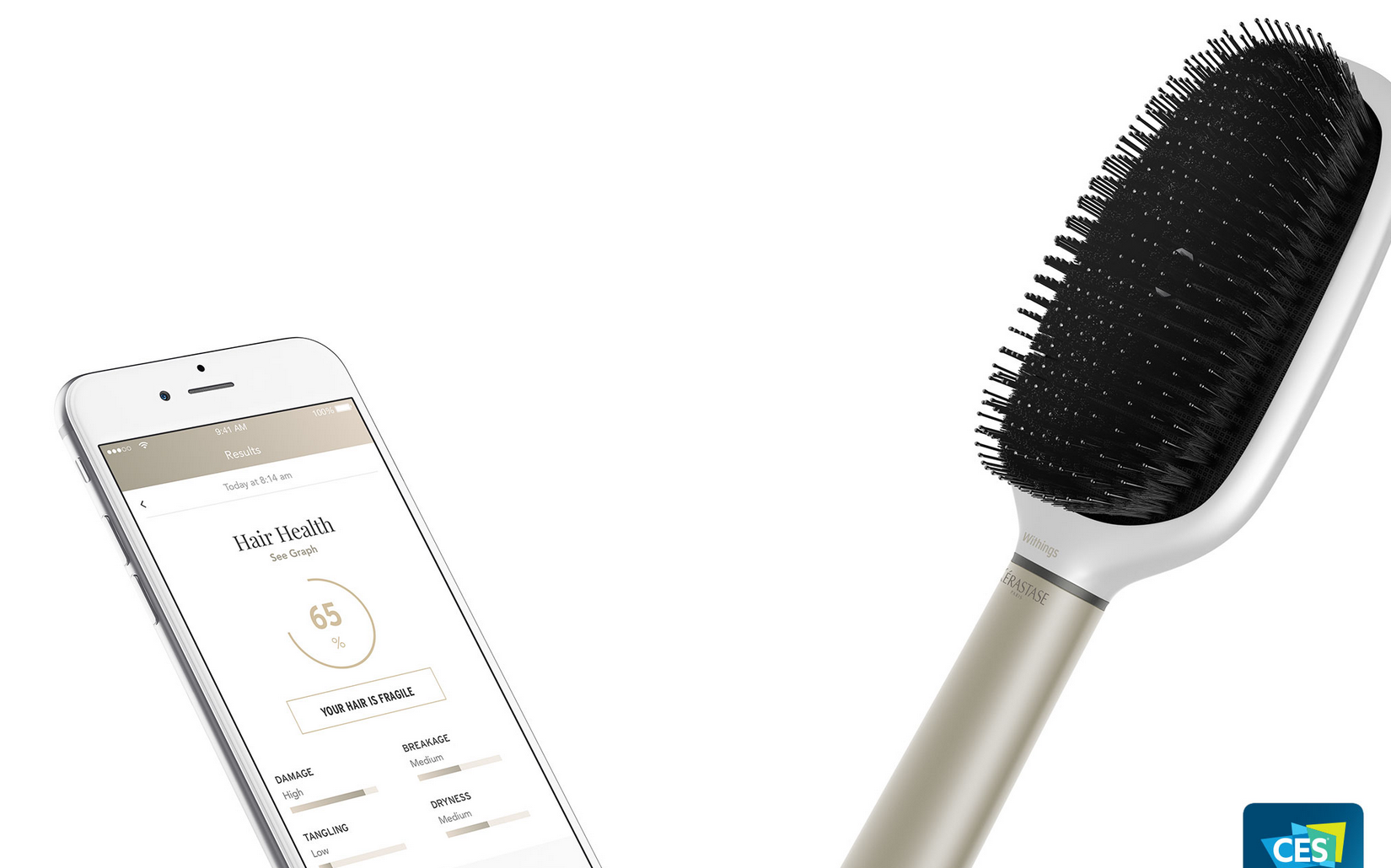
The Hair Coach by Kerastase

You'd expect a hair coach product to come out of a French company wouldn't you? Powered by Withings, I had a chance to see the new hair coach at CES in early January. Totally personalized, they tout this as the world’s first smart hairbrush that empowers you to track and improve hair health over time. This product results from a collaboration between Kérastase, L’Oréal and Withings, which brings state of the art sensors and app connectivity to everyday products. The resulting innovation is a brush that syncs seamlessly to your smartphone to provide valuable insights that can help revolutionize the home beauty routine. I had a chance to chat with someone about their new innovation in their booth, so while the sound isn't great, my short video will give you an idea of the jist of it from a spokesperson at the show. You simply brush and the technology does the rest. For dry hair, you can follow hair elasticity to learn how to avoid dry hair and measure your cuticle damage to help ensure moisture retention. It also helps with breakage and the ability to optimize sebum distribution to avoid tangles. The smart app will measure all of this and provide insight into how to avoid damaging hair. I love this since this so called gesture analysis helps you understand and improve brushing habits. The handle is sleek and lightweight and boasts high density of professional-grade boar and nylon bristles and the brush seamlessly integrates with a mobile app. The brush detects when it is being used and begins data collection automatically. As soon as you complete your brushing session, all data will be sent automatically to your phone via Bluetooth or Wi-Fi. They tell me it should be available sometime in Q3 of this year.
STARO: Panoramic Camera

I love the design of this very cool panoramic camera, STARO, not yet out and only shown as a prototype, at least that was my understanding. This 360 panoramic camera claims to have the highest resolution at 136 mp which avid travelers will love. It's also small,easy to pack and beautiful to look at as well. Of course, I only saw it at their booth so didn't have a chance to test it out though we'd love to sometime this year on a trip where we can catch the best drama of course. The stitching of photos is decent but may require software to make it all come together.
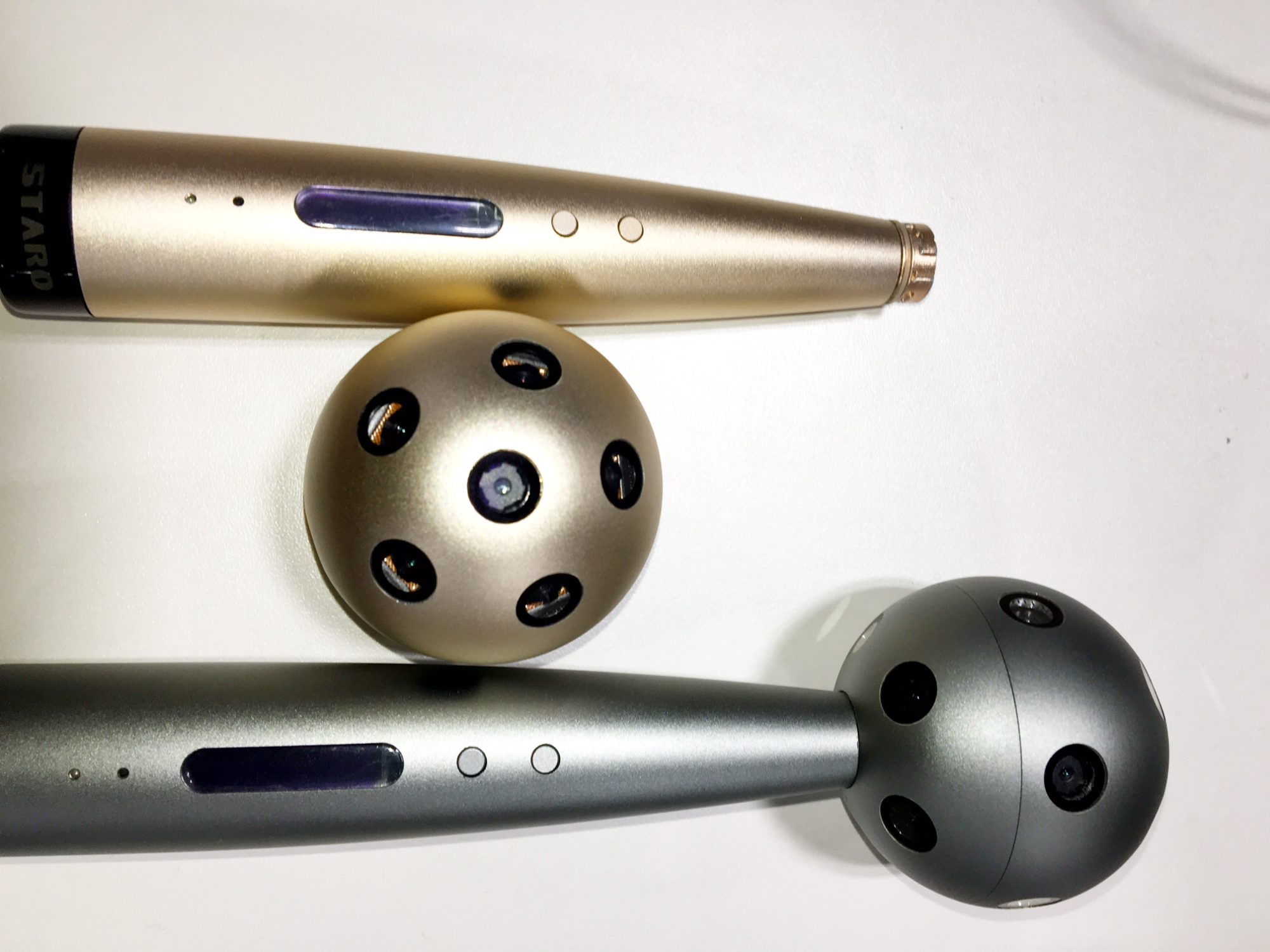
See a sample shot of the Great Wall below, where you can see that the camera was able to capture most of the highlight detail in the clouds, while also showing detail in the wall itself. As noted above, the camera has quite a few lenses -- 17 in total (multi-lense simultanous imaging), which makes shooting sports easy. All lenses can simultaneously photograph and stitch 17 photos into a single panoramic photo with 136 million pixels.

They also boast one touch shoots, all of which can be managed within the Staro mobile app. Three photos in different EV levels automatically do HDR-merge, which is what provides the higher dynamic range they tout as a notable feature. Auto 3D modeling makes scene roaming more fluent and smooth and it is compatible with computers/tablets/smartphones and VR equipment. They offer wifi synchronization as well which makes it easy for travelers on the road to post to social media and share with friends/family at home. Total weight is sweet at only .4 pounds.

This is a standalone device that can supplement other camera devices you may already be using, unlike the Insta360 Nano which I reviewed recently and included in both our Holiday Gift Guide as well as my top picks for 2016. The Insta360 Nano churns out a few different 360 effects and note that the below shot was a selfie I took from inside a balloon on my most recent trip to the Dominican Republic. Here's another shot taken on a boat from the same trip.

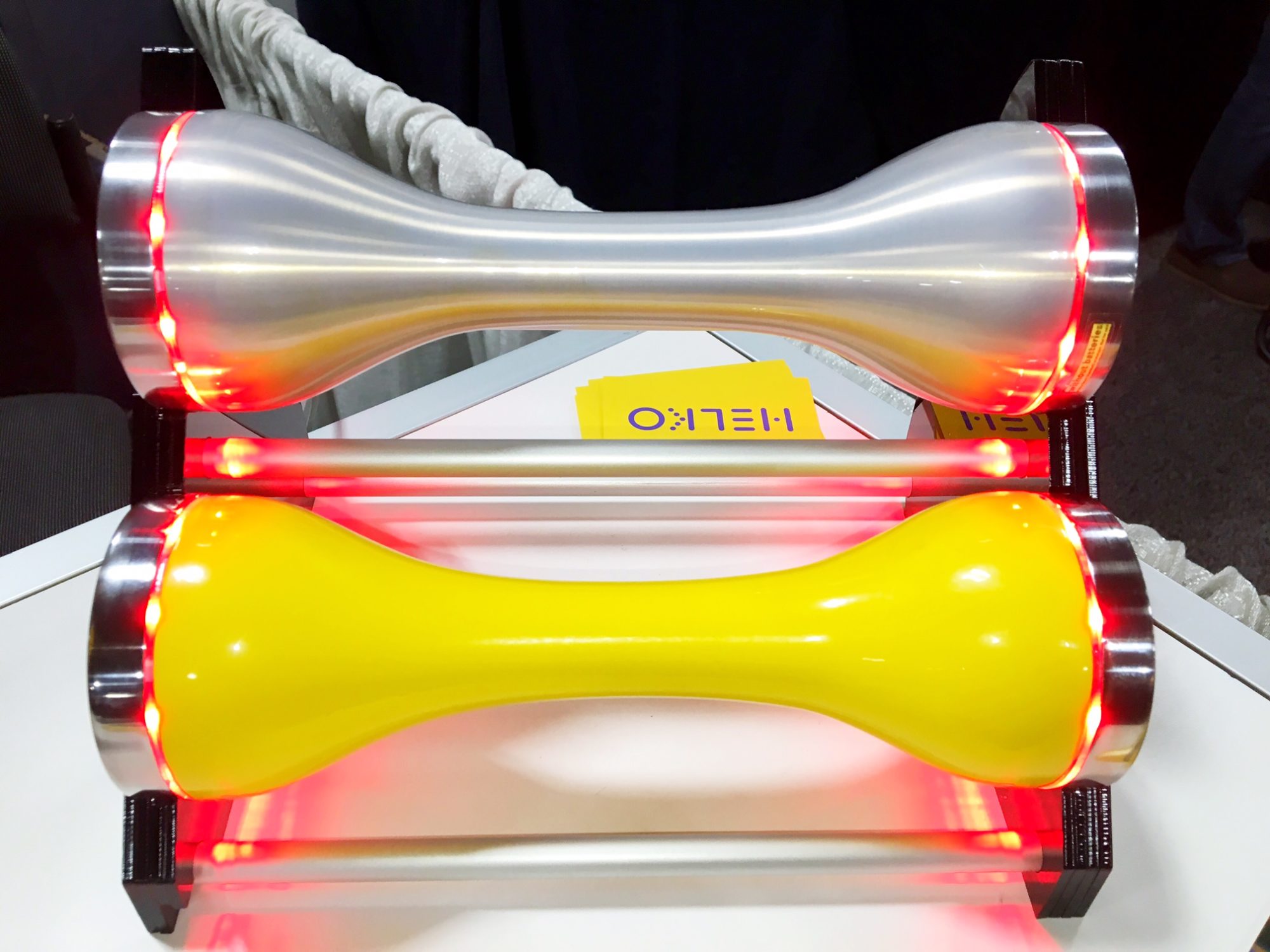
Helko's Smart Dumbbells

Since we're huge fans of wellness and holistic lifestyles here, I was drawn to the smart dumbbells at the show, which bring games to fitness from Helko. It seems to be early days from these guys so I don't have a lot of details on the product itself, except that its goal is to combine universal fitness equipment with multi-functionality of a biotracker and gamepad. These dumbbells are most definitely futuristic in every way with a modern sleek design that is sure to attract women and hipster millennials. They weave games and entertainment together to motivate your workouts -- cool idea and I'm looking forward to hearing more as they get closer to shipping.
SPECTRA: Most Portable & Intelligent Personal Vehicle

While we're talking about transportation, let's visit something smaller but also elegantly looking. Enter the SPECTRA, the most portable and intelligent personal vehicle. Like the Segway, you need to be aware of your posture and stance but it has a lot of great features to help you along the way. Unlike the Segway, it's portable, electric and they say, you're up and running after only five or so minutes of learning.

While this may be a little male dominated (it seems to be a theme for my post, right?), I love what these guys are doing. As a kid, I was a big skateboarder, so this chic innovation really resonated with me. As someone who has always had good balance, the Segway was a natural for me the moment I stepped on one so the SPECTRA in a natural progression, only smaller and cheaper.

Its length is around 19.4 inches, its range can go 11.2 miles at a 12.5 mile (top speed) and it only weighs in at around 12 pounds -- there are heavier laptops than this if you get all of the bells and whistles. The device boasts a 2D posture sensing module which has a series of pressure sensors and an intelligent algorithm, meaning you can control it simply by shifting your weight. Even though I gravitated to it because I'm a former skateboarder, you don't need any skateboarding experience to be able to use it -- they're designing this for everyone.
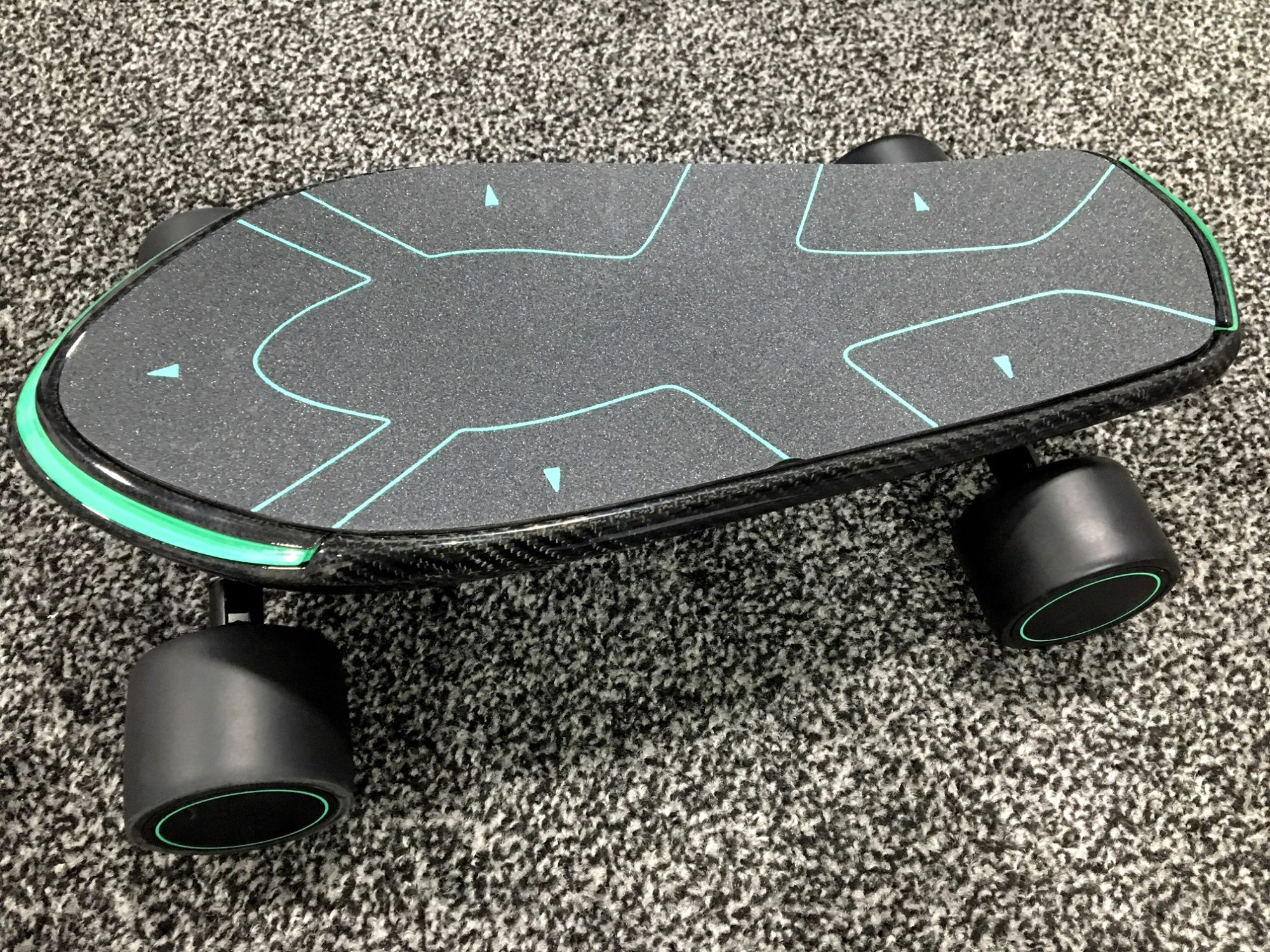
With the same stable structure as a skateboard, SPECTRA is mechanically robust (they say) and adaptive to all kinds of commuting needs. With the dual-hubmotor design in the front, it has the ability to climb up a 20 degree ramp and recharge when decelerating or going down ramp (nice feature!!). It comes with an app, which has a speed mode selection, digital control keys, a battery status and odometer screen, lock mode and sharing economy feature and a path post and SNS. There's also flashing brake lights in both the front and the back and in addition to the brakes on the bub motors, SPECTRA has dual protection with its extra electromagnetic drums. The company is Walnutt Technology and they're planning to do a Kickstarter campaign this spring, with shipping planned for sometime in the late spring or early summer.

Varius, World's First Electronic Violin (from 3D Printing)

3D printing is growing in popularity and is becoming more known among the masses. There seems to be no shortage of new products that can be created from a 3D printer, but an instrument? If you're a serious music guru regardless of what instrument you play (or teach), you may have a hard time thinking that an instrument created through a printer can deliver the same quality of sound as a traditional one. This will largely be a personal opinion of course, but the bottom line is that a 3D printed violin is now possible. Varius claims they're first to market with a 3D printed concert electric violin. Have a listen to a very short video I shot on the CES show floor of someone actually playing it.

Printed as a single piece, the 3D Varius violin departs from traditional musical instrument production technology. This particularity ensures a perfect accuracy of the audio spectrum and a total respect of the musician’s emotion, they say. It was designed to facilitate the transition for all violinists from a classical violin to the 3Dvarius. Its dimensions can be customized and adapted to any morphology. The instrument was also designed to offer a maximal playing comfort as the weight distribution was optimized to re-create the comfort of a classical violin. Its sound sensors, located under each string, were carefully selected to accurately translate the sound frequencies.
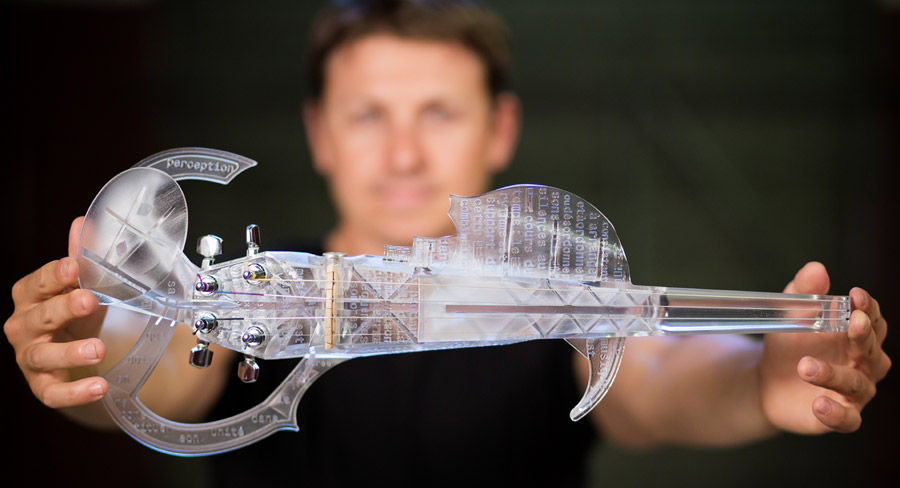
Photo credit: 3Dvarius website/ThomasTetu
They had a successful Kickstarter campaign in early 2016 where they pimped their edge, which is all about combining the precision and power of 3D-printing with ancient violin-making skills. Certainly, its innovative design, marks a further step towards the perfect symbiosis between musician and instrument.

ORIG2N

Join the genetic movement if you haven't already. I love this stuff -- bottom line, the more you know about your personal temple, the more proactive you can be to take better care of it. A very cool genetic assessment kit by Orig2n measures a bunch of things, including food sensitivities, fitcode (exercise, recovery, endurance, etc), your skin and whether you have genes or not for super strength, speed or intelligence (yes, really!).
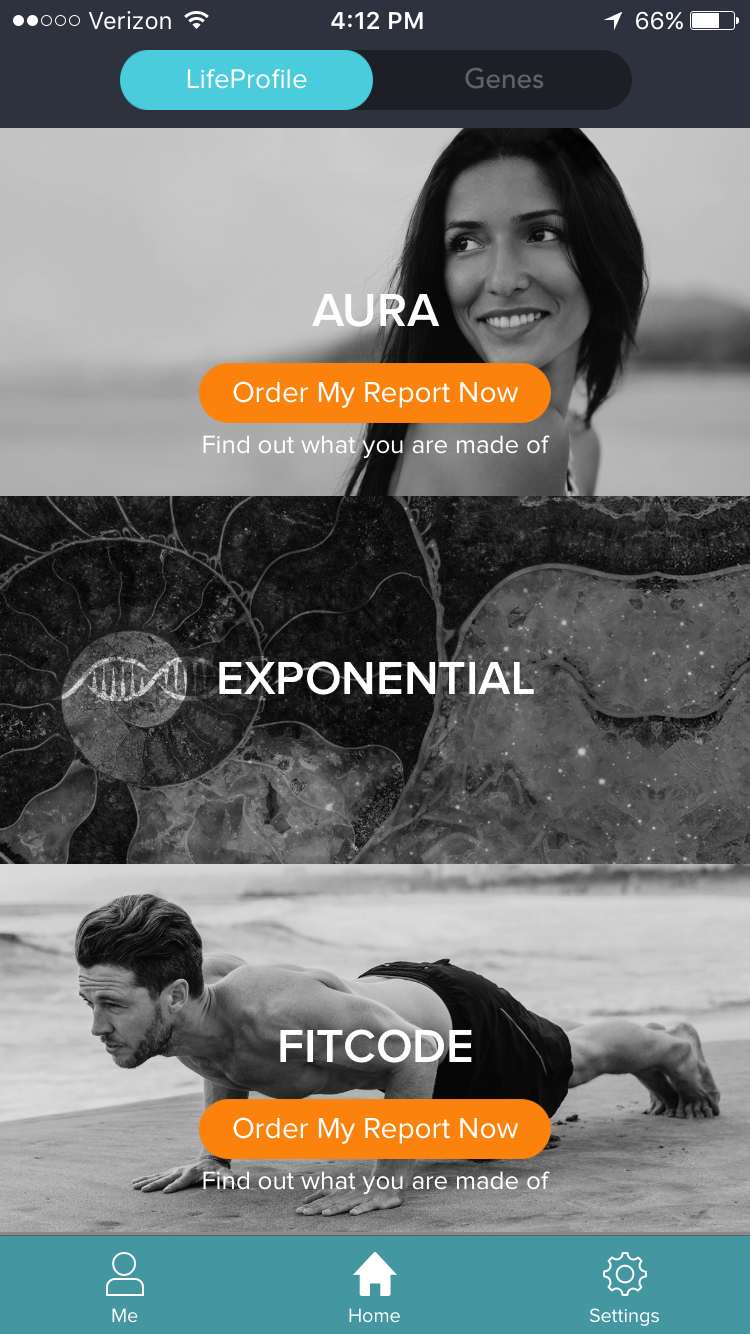
I actually did this test with their team on the show floor so am still waiting for my results and whether I'm a SUPER WOMAN or not. It's a simple and quick process that merely requires you to take a swap of the inside of your cheeks (left and right) and send it in. Genetic assessments can empower you with information about your body so you can make more informed decisions about your fitness, diet and skin health. The company behind this cool test is ORIG3N, which is involved in stem cell research and regenerative medicine and apparently has established the world's largest cell repository in the world - how cool is that?

Based in my former hood and stomping ground -- Boston -- these guys are at the forefront of genetic testing in ways that can directly help consumers. After I get my results back in a month or so, I'll post an update on my experience including using their app.

Lenovo's Alexa Smart Assistant

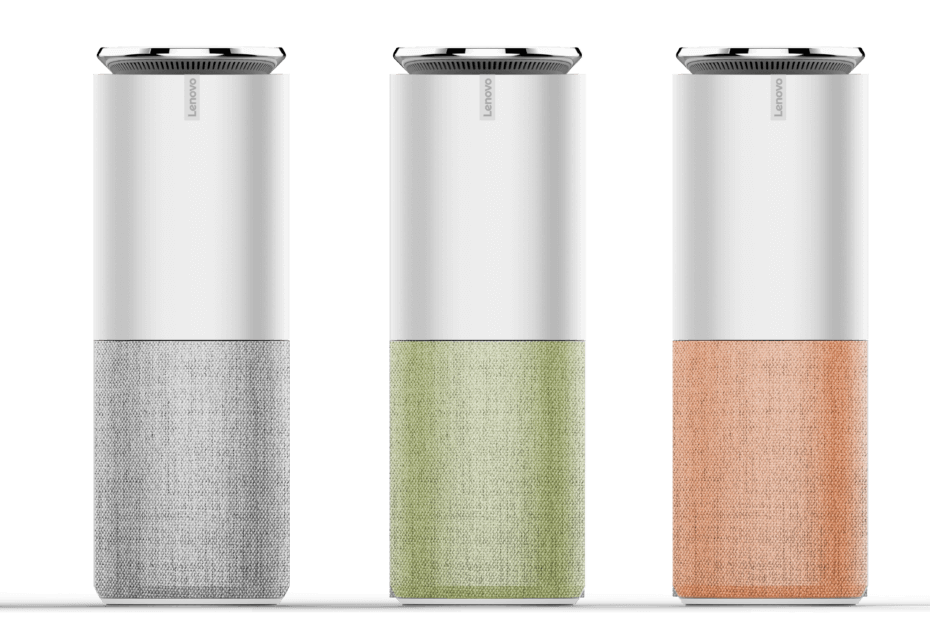
Truth be told, I'm a Lenovo fan and no, I am not a Lenovo ambassador nor have they ever been a client. I've owned a few of their laptops over the years and long for one today after several years of glitches with my MacBook Pro. I don't want to hear it from Mac fan boys -- there are issues despite your love with the simplicity and beauty of a Mac's design and I don't just mean compatibility ones. The Lenovo at CES I'm referring to is not one of their latest laptops however but a speaker...something they refer to as the Alex Smart Assistant, which many in the press room compared to the Amazon Echo although it's a tad cheaper. They call it a smart speaker (of course it has to be smart given the trend at CES in the last couple of years) and it employs Amazon Alexa. The speaker is available in two models and a variety of colors. I cringed when I saw a male writer talk about how he gravitated toward the black edition, which apparently sports Harman Kardon speakers. If you read WBTW often enough, you know that I applaud vendors who think about women buyers and offer a variety of fun colors and I don't mean masculine red, orange and bright blue. Lenovo gives us choices in elegant soft colors - bravo!! I've yet to test them out and would love to review a set, so check back for more when we get our paws on a pair. The basic Lenovo Smart Assistant is priced at only around $129. The Amazon Echo has 7 microphones whereas the Alexa has 8so in addition to their beautiful design, the sound should be top notch as well. The more advanced version (aka the Harman Kardon edition) delivers even better audio apparently.
Seattle Cycles' Titanium Folding Bike

This beautiful prize isn't an option for those on a budget. Starting at around $10K, the gorgeous titanium folding bike on the CES show floor was a stunner. Seattle Cycles tout their latest as the worlds lightest e-bike -- it folds up, is airline 'legal at only 16 inches and weighs about 18 pounds.
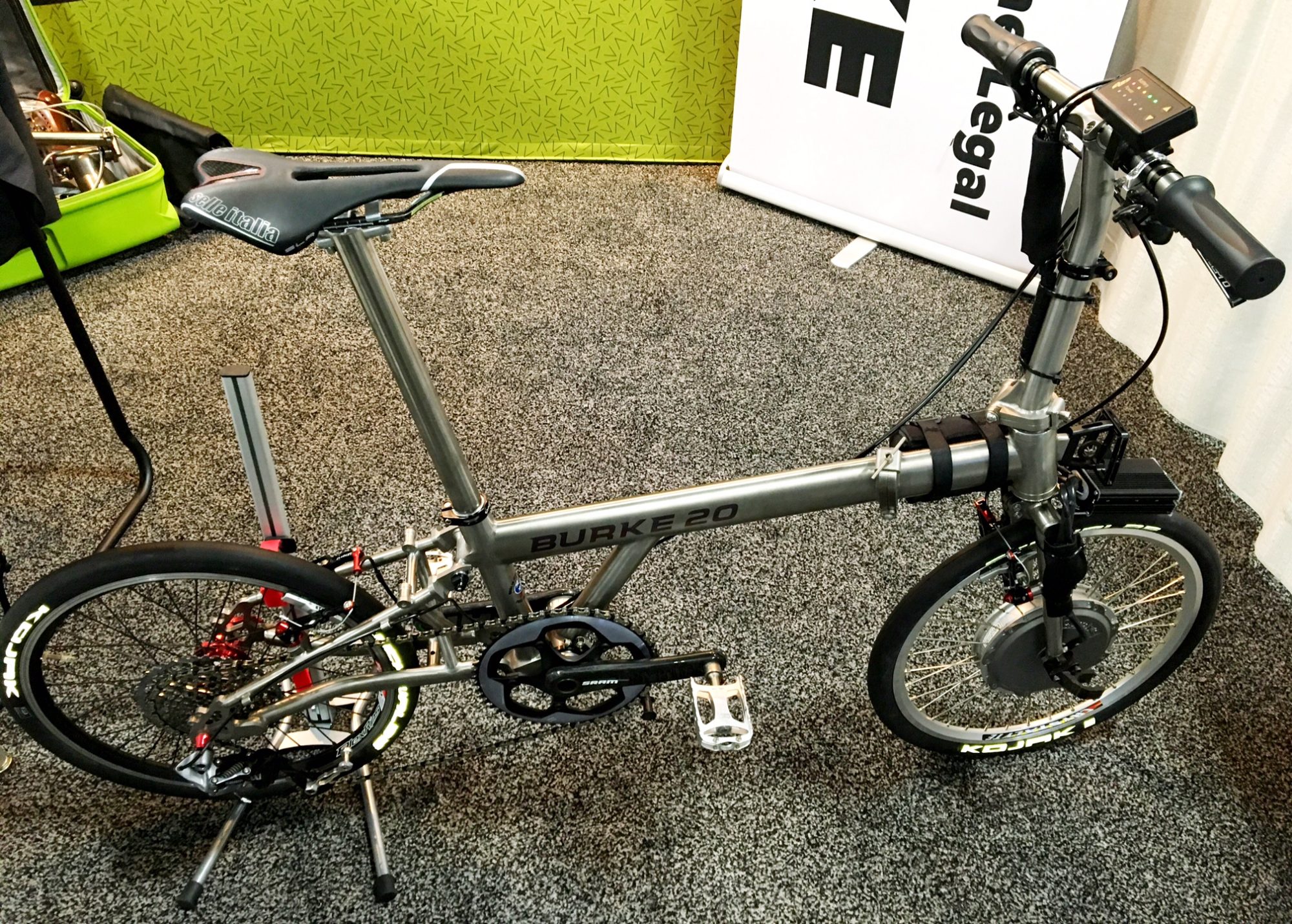
Designed for taking on travels by plane, boat or train, the Burke 20 can be folded and packed into a 28"x22"x12" suitcase in one minute, without disassembly of wheels, handlebar or use of tools. Unfolded, the 20-inch wheels, wide gear range, and a full titanium frame with an extended cockpit give a fast and reassuring ride. It apparently 'fits' like a full-size bike, has adjustable seatpots and handlebars and will work well for any rider from 5' tall to 6'+. It has a leather saddle, foam grip and MKS pedals. They may be targeting men, but I love the design and let's just say, wish I had one in my garage.
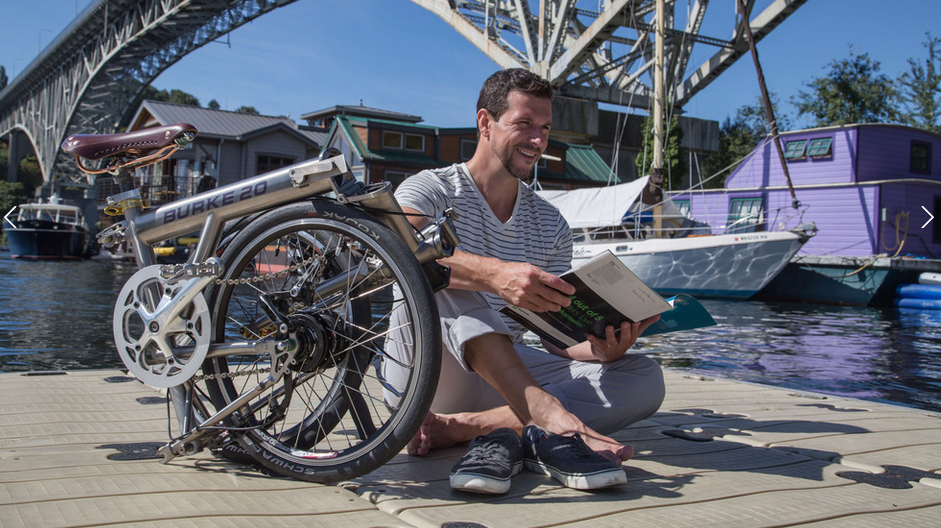
Photo credit: Seattle-Cycles.
It has an internal gear hub, derailleur gears, front and rear bags and of course, fenders and they offer a lifetime warranty on their frame. They plan to make more affordable options with different materials in the future as well to appeal to a broader audience.

Beoplay M5 Speaker

Not quite as attractive as the Alexa Smart Assistant, but a speaker that touts itself as a piece of furniture, the Beoplay M5 is a wireless connected speaker that can function as a standalone or be connected to other speakers across multiple rooms. It is covered in wool so I applaud them for getting away from ugly black and gray, and the material is soft, covering is soft and can integrate well into a living room. Photo: BeoPlay Beoplay's music systems and speakers feature the Bang & Olufsen Signature Sound, sound which they say is honest, clean and with passion. We haven't tested these out yet either, but hope to sometime this year, so stay tuned. All their products are made from premium crafted materials and offer a palette of colors and placement options to match your style and interior. (YAY -- thanks guys!) For technical geeks, you may want to know that it's actually Bang & Olufsen’s sub-brand which is a bit more affordable than some of their higher end solutions. To get your music music to the Beoplay M5, simply connect via Bluetooth, Chromecast, AirPlay, Spotify Connect, or Bang & Olufsen’s Beolink Multiroom. It seems like this is going head-to-head (so to speak) with the Sonos Play:5, however unlike the Sonos, you don't need a dedicated app. With the M5, you can play it all via a regular Bluetooth speaker. Many of us want the ability to have Spotify et al to deliver music directly and have a little more flexibility and freedom for how we use the device. The cost is around $599.

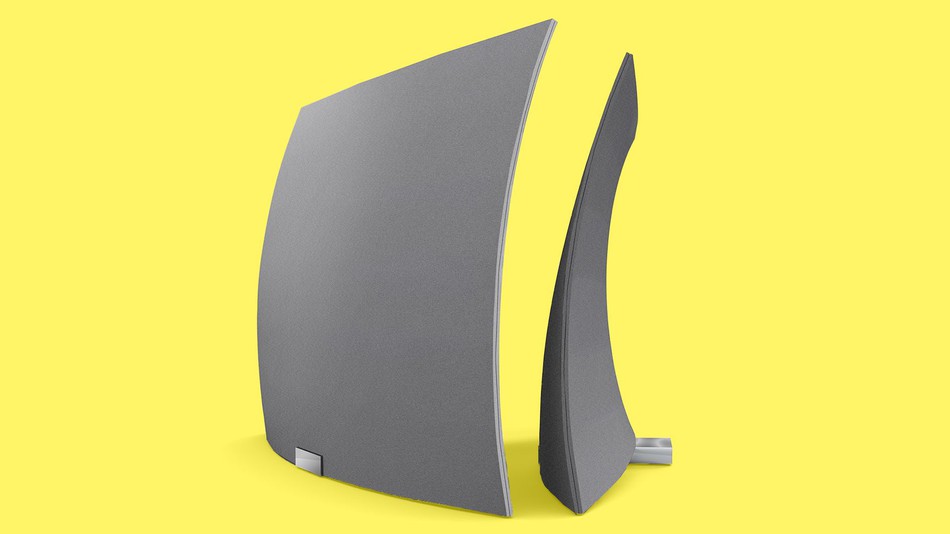
The Mohu AirWave Wireless Antenna

Let's be honest, I HATE dealing with Comcast and am not alone. We've all been at dinner parties or networking events where there's a hate fest discussion over Comcast and it doesn't seem to be any easier to cut ties with them -- believe me, I tried. The last time I called to nuke my TV to bring my cost down and just use them for wifi access, it cost more, a way to keep you tethered to their God awful expensive plans. Also shown at CES, the Mohu AirWave wireless antenna can go anywhere in your house, and I have to admit, I love the fact that you can avoid those ugly wires which none of my engineer friends seem to mind. This flexible feature allows for optimal positioning, so you can access live, local broadcast channels onto your Fire TV, Apple TV, Android, iOS, Roku, and more. They tout this as the industry’s first-of-its-kind wireless over-the-air (OTA) and over-the-top (OTT) device that integrates live, local broadcast TV with free streaming channels across popular streaming devices as noted above. It is really dedicated to people like me who are looking for smart and creative ways to CUT THOSE CABLE CORDS for good. AirWave was built to give cord cutters open, simple and complete wireless access to the live TV and streaming content they enjoy, all in one place and with no monthly fees. Photo: Mohu AirWave wirelessly connects to the Mohu TV application (available for free across all compatible devices), so you can channel up and down through live broadcast content and free streaming content in a familiar, cable-like TV guide. You'll be able to view streaming video in a cable-like program guide, complete with program descriptions and select your favorite channels, while also being able to view up to 14 days of upcoming content. You can set up AirWave anywhere in a home where there is an Internet connection and the price point is sweet at only $149. (available this spring). Bravo!! We can't wait to test this out -- if it works, I'll be their loudest voice and biggest fan!
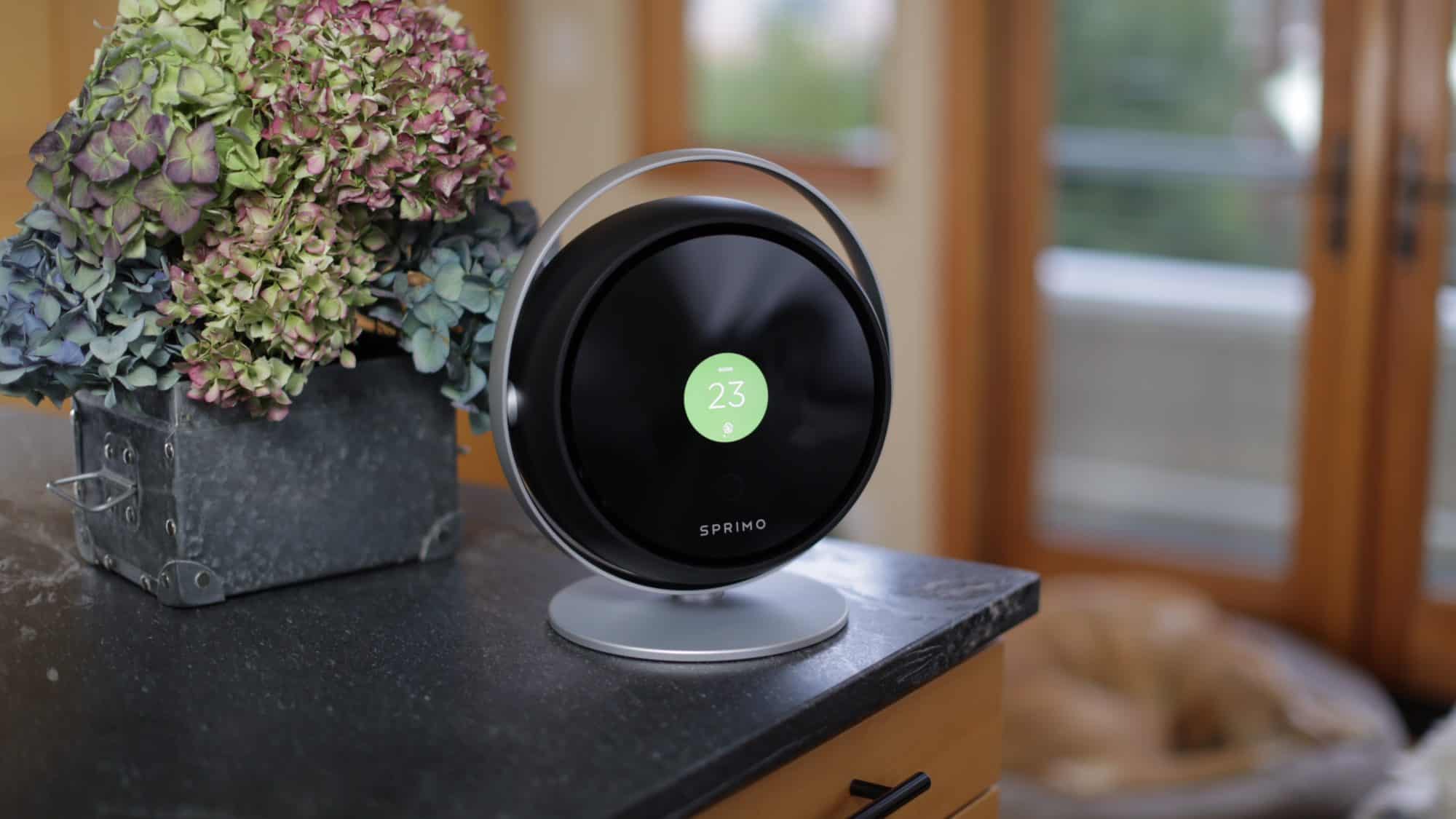
Sprimo, World's Smartest Air Purifier

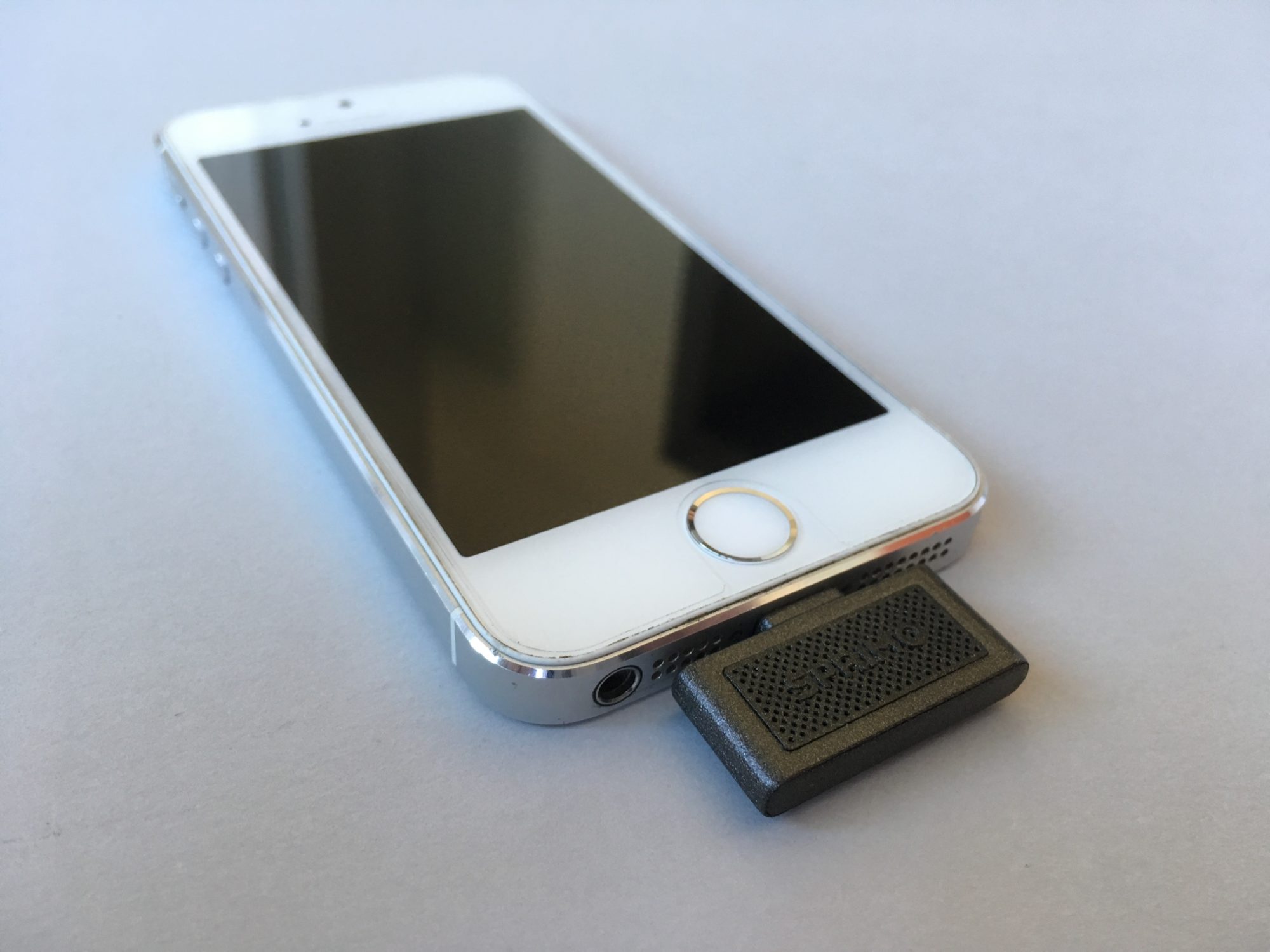
Let’s face it -- indoor Air Pollution is dangerous and climbing at alarming rates. Air pollution in general rise worldwide, killing more than 3.3 million and one study says it could double by 2050. Given that we spend nearly 90% of our time indoors (some research says more) and indoor air pollution is slated to be from 3 to 10 times worse than outdoor air pollution, it’s no wonder that that cases of Asthma and Allergies are climbing and at an all-time high. If you think that all the places where you or your kids spend time is at safe levels, think again. Studies show that 50% of America’s schools have problems linked to indoor air quality and an issue in 6 out of 10 homes worldwide. Purer air is said to improve kid’s productivity and results at school. Bottom line, what we breathe in day after day, can impact the quality of our sleep, energy levels and even life span. Enter Sprimo, the “go-to” product for people who want the best quality air in the personal spaces they work, play or sleep. Unlike traditional air purifiers that focus on large square footage areas to measure success, Sprimo is aimed at improving the quality of life through bursts of clear air instantly. Sprimo’s small, lightweight and nearly silent air purifier is smart and adapts based on people’s issues, from chemicals and dust to seasonal allergens. Anyone who suffers from allergies can benefit from Sprimo as well as those at higher risks, such as children and the aging. The purifier’s low entrainment air flow works as a shield to block contact by reducing the chance of you breathing an airborne virus by up to 60%. Sprimo’s new Personal Air Module (PAM) and cloud-based mobile app delivers real-time data on air quality via your smart phone so you can be alerted wherever you may be. Simply plug it into your iPhone and you’re good to go – you’ll be alerted whether you’re breathing in poor quality air or not. They'll be taking pre-orders starting in March and Sprimo will ship sometime in Q4. See a video of me at their booth - note that the steam you see was made possible by cold ice and merely for the purpose of seeing roughly how large the clean air blanket is around you when using Sprimo.
C-me Pocket Flying Cameras by Hobbico

Truth be told, I didn't have much time to learn about this product at all but I did SEE it briefly and loved the design as well as the fabulous four color options. I've been wanting to test out a drone for awhile now, however the combination of ugly designs, the price and the fact that they seem to cater mostly to men, has held me back. Top all of that with the need to get a certificate, a process of registration that albeit I'm told is easy, is still a barrier. They're also sizeable and I get the feeling there's more of a learning curve then I'm willing to commit to, at least now. And dang, they're noisy.

Travelers will likely be most interested in camera drones, which are typically ready-to-fly quadcopters that have stabilized cameras for shooting both video and stills. Drones with cameras can be used for a variety of things, including video production, search and rescue, agriculture and more. The simplest reason to use one is to simply see the world from above, which is an entirely different perspective than we normally get when we travel. I ran across a small and attractive one that seems to be a great fit for travelers called C-me, which they don't really call a drone, but a pocket flying camera -- they tout it as the smallest micro folding pocket flying camera to be precise. Those who think (like I do) that most drones are ugly, made for geeks and too bulky, take a look at this more consumer-oriented option that comes in fun colors and cloaked in a design that women will love.
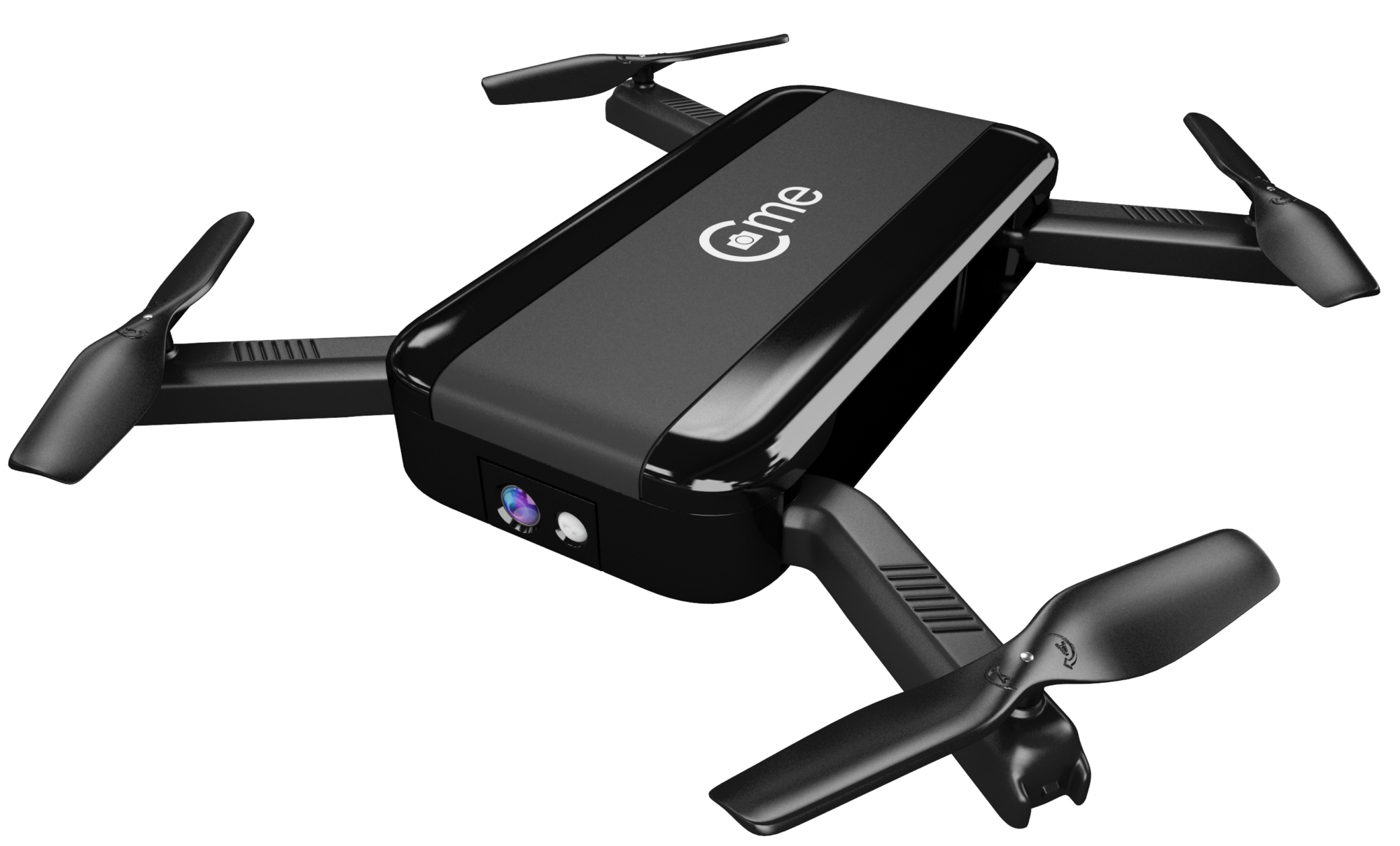
Photo: Hobbico.

It's small enough to fit in your pocket and provides one-touch instantaneous social media sharing of full HD images and videos including selfies - bravo! So, whether you’re taking high-flying selfies or full HD aerial images and videos of your trip to the Grand Canyon, Hobbico’s C-me makes selfies and video easy. It is the first micro folding drone that fits in your pocket, the first device of its kind with a Full HD 8MP digital camera, and the first to feature touch-of-a-button social media sharing to your favorite social channels. It’s also a snap to use – no previous flight experience necessary – as it comes with an innovative single-thumb control interface that can be mastered in only five minutes plus connectivity to the most popular IOS and Android smartphones via their free-to-download C-me app. When not in flight, the arms and propeller blades uniquely fold completely inside the body cavity for the ultimate protection against accidental snagging or catching that can cause damage or imperfection to the blades or arms resulting a less-than-perfect flight performance. A proprietary chip delivers many of the features of a commercial-grade drone for half the price of other camera drones. The device uses a Full HD 8MP digital camera with resolution equivalent to the iPhone 6 and self-generated WiFi, which all travelers will love. There's also a 360° option for panoramic video, a burst mode that captures up to 15 images sequentially with one touch and a feature which I love, a ten second delay timer, although I wish they offered longer options, i.e., 25 seconds and even up to a minute for those harder to take shots when you're on the road. Nature shots come to mind. And look at this fabulous C-me in PURPLE! Although we haven't tried it yet, they tout one-touch takeoff and landing, which for those who fear the drone learning curve, seems like a godsend. It's not quite available yet (dang) but a spokesperson tells me I may be able to get my paws on one sometime in March to review -- we can't wait! Photo: Hobbico.
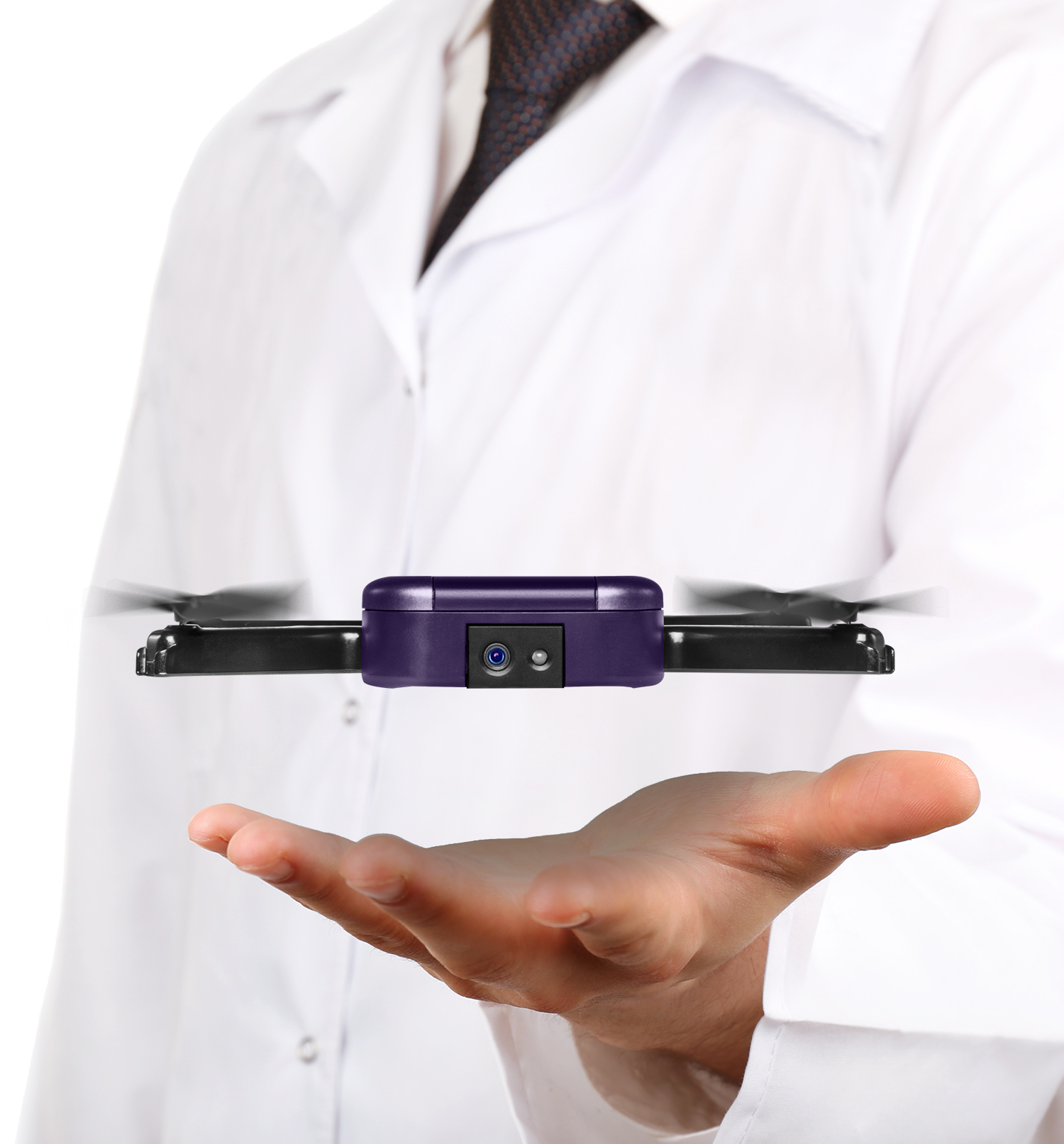
Clim8: Intelligent Thermal Clothing

This is a B2B innovation -- in other words, it's not clothing you can go out and buy, but technology that will be built into clothing you already know, a bit like the Intel chip inside for clothing, but rather than speed, it's about warmth, or more accurately -- regulation. They don't think of themselves as a smart wearable but it absolutely is in that it's smart about regulating the temperature in your body. You can receive what they refer to as thermal consistency in order to maintain personalized comfort, no matter what the weather conditions or activities that you do. Their revolutionary (their word, not mine) textile process, integrates tiny sensors into the yarn, leading to optimal temps. Sensors in the garment monitor skin temperature and their app analyzes your surroundings, activities and skin temperature. From this process, heating zones embedded into the garment activate to adjust skin temperature and maintain thermal comfort. Cool, right? The garment then regulates heat exchanges by evaporation as it matches sweating zones on your body.

Fiera: Personal Care Device for Women

So many online sites cater to the geek in all of us, but let's face it, most of the picks and reads are tailored to men. I read the round-ups and rarely do we find cool innovation picks that's about something a bit more obscure or, hmmm, controversial, like sex. Fiera, which they refer to as a Personal Care Device, is the first hands-free wearable product for women, which is designed to increase interest in and physical readiness for sex, naturally. Fiera is used before sex to help get her mind and body ready for a physical, mental and emotional connection with her partner. Given that the chief 'scientific officer is a woman, I decided to listen for a bit longer when I first heard the pitch at the Showstoppers media event.

Photo: TheVerge/YouTube. The device is typically worn for 5-15 minutes and features pattern and intensity settings for a customizable experience. Fiera uses gentle suction and stimulation to enhance blood flow, increase lubrication and get a woman ready to go, so to speak. The company was founded by ExploraMed Development which is an incubator that has launched a bunch of disruptive healthcare solutions to market apparently. Does it work? Let's just say I haven't tried it yet, but I think it's a cool idea.

WooHoo's Smart Home Hub

WooHoo is an Artificial Intelligence based Smart Home Hub & Cloud-based platform designed by SmartBeings. They were exhibiting at Showstoppers and at the Sands (Eureka Park), so in the early startup category. They say they're the first device with facial recognition, voice recognition, an Internet of Things (IoT) hub and a 7 inch touchscreen all in one. The world's easiest-to-use cloud based SmartHome software is also baked in, they say. Is it the easiest and most innovative? Hard to say since I only had a quick peak at it, but I like the promise. With a name like WooHoo, it's no surprise that they're Silicon Valley based, the home of some of the silliest names I've ever heard. That said, its easy to remember and I suppose....cute! Think of it as an Amazon Echo combined with a Nest Cam except that it also has a touchscreen. Its motion detection is a useful feature as well, meaning you can use it as a security cam for your home (cool) and you can make video calls on it as well, the connection being via Bluetooth, Z-Wave, Wifi, and more. The extra security comes from a number of ways, but some of it has to do with its smart ability to recognize both your voice and your face, as well as your own personal touch, i,e, customize it with your own commands that you use frequently. Photo: WooHoo Its early days, so it's not shipping yet, but I'll be curious to test it out when it is and not one of the earliest shipping ones either - I'd rather wait until any early version bugs are ironed out, but overall, it seems to be a really comprehensive solution with lots of bells and whistles for the price.
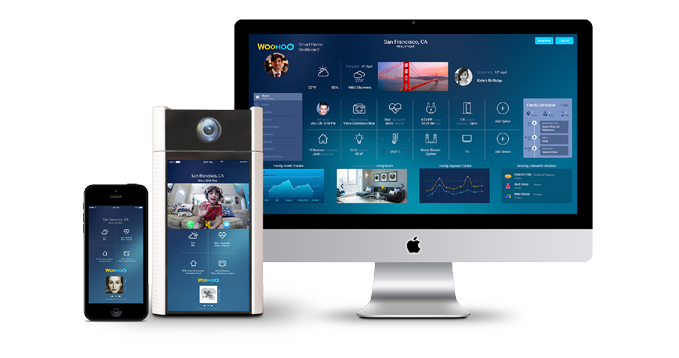
AromaCare, a Wellness Aromatherapy Companion

You know we're huge fans of mind/body balance here at We Blog the World, so much so that we have an entire section dedicated to wellness, from general wellness travel to wellness stays and health-related products and services. I love Aromatherapy and am a huge believer of its value -- we even included essential oils in our holiday gift guidethis past year. Imagine a smart aromatherapy diffuser and a smart app that allows you to control smells through your smartphone. The AromaCare delivers you a blend of essential oils by a simple and calibrated way to improve your well-being and health. Photo: AromaTherapeutics Their connected diffuser creates a well-being bubble for 20 minutes, which they refer to as a “personal and natural care” session. The company behind it, Aroma Therapeutics, has developed six blends as ready-to-use essential oil capsules: Sleep to help improve falling asleep and improve sleep quality, Calm to destress and calm down, Tonic to stimulate the body and soul, Memory to improve concentration, Breath to liberate the lungs and Pollen which provides seasonal support. AromaCare also plans a White capsule for people wishing to use personalized treatments (by using their own essential oils), a feature that I personally love. It works with a mobile App which allows you to control sessions, get access to the consumption as well as coaching - Boost, Air or Zen - sessions over a one-month period in order to obtain longer lasting health benefits.
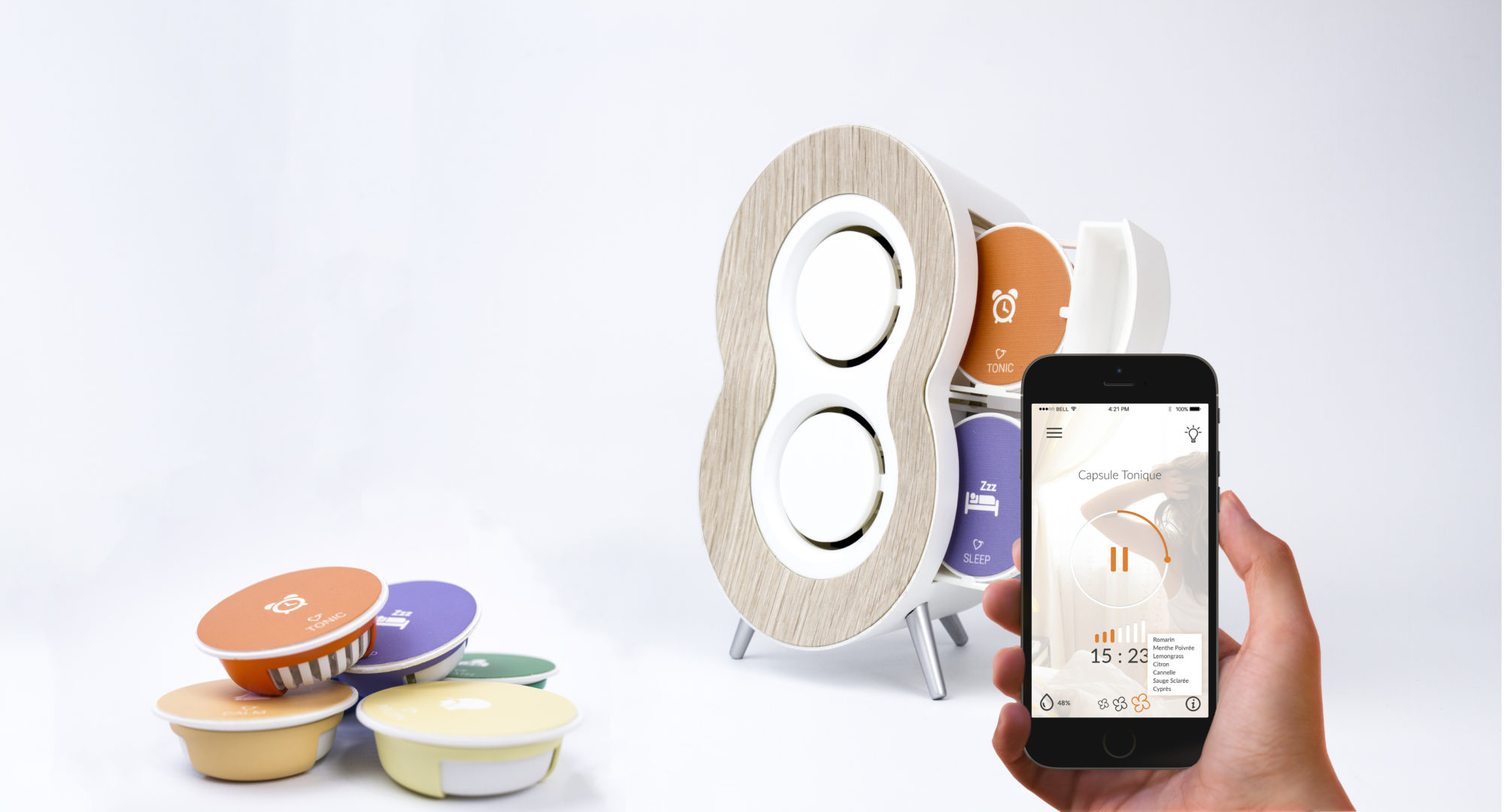
Hello Egg

What a name right? Hello Egg seems like it would be an assistant right? Maybe even one that belongs in the kitchen? This smart voice-operated kitchen assistant from a company called RnD64 (seriously??) has a number of useful features, including the ability to plan your weekly meals and order groceries for you. It will also provide easy-to-follow step-by-step recipes via video RnD64, whose name I'll never remember, unveiled it for the first time at this year's CES. Photo: RnD64 Think of it as a smart digital assistant that can automate your meals for you based on dietary preferences and needs and can also adjusts to unplanned surprises, such as a friend stopping by for a bite and you have very little in the fridge. Hello Egg can also overlook your kitchen pantry, orchestrates your shopping list priorities, and if you want, handles the delivery of your groceries, a godsend for so many single men I know. The device will also answer cooking-related questions and backs you up with 24/7 support of a real cooking experts team -- who couldn't use that? I know I could. Give or take, it will be priced around $350 and available sometime in Q2. My video recap of the show:  

Disclosure: I am an advisor to Sprimo however I decided to work with them because I believe in and love what they are doing so they would have been included here regardless of my professional connection. All opinions expressed above are entirely my own.
16 Jan 03:02

12 Travel Instagrammers Who Inspired Me in 2016!

Truth be told, I tend to hate lists but readers seem to love them. The reason I hate them is because it requires me (or one) to choose. As a parent, if someone asked you if you had a favorite child, it's like asking whether you have more love for one or the other, not necessarily who you align with the most. As a traveler, when someone asks you what your favorite country is, dang....it's hard, at least it is for me. I have my least favorites but even in the gloom of some treacherous experiences I had in China when the doors first opened up to westerners so many moons ago, when our room was broken into in Naples or when we were scammed in India, there were insightful outcomes from all of these incidents. And, as all travelers know, one isn't like the other and as easy as it is to stereotype (and I do at times based on a myriad of similar experiences in one place), one STILL isn't like the other. It's important for us to be open and to constantly yearn to learn, for it is in that openness that magic happens, on the road...or not. Above is a shot I posted on my feed towards the end of 2016 which we took near my home along the northern California coast. There's a little distortion from it when I blew it up to nearly 2,000 pixels, but I love how I felt that day and so here it is. Taken on my iPhone 6. I curate this list with trepidation because there were so many feeds that inspired me this past year and 2016 marked a shift for me with Instagram; I became more addicted to the platform and therefore more engaged. As time consuming as it is, I have begun to think about Instagrammers I have met through my travel world and my foodie one through my food Instagram account @LuxuryFoodies, and their lives on a regular basis. This is building community at its essence, at least in an online world. Unlike other platforms, I learn more about their inner worlds and perspective on life -- it's the combination of carefully thought out language, creative descriptors and powerful photography that even long form blog posts like this one can't capture. Note that I didn't select these because they necessarily have the best photos but because I "felt" something powerful through their posts over time, which included their engagement with me and with others. Taking the time to inspire AND be inspired by others is hard and time consuming and deserves applause. Photo credit: @dotzsoh, taken of Singapore, where she says in her description: Never let a little stumble be the end of your journey! (Hear Hear) As a nature lover, there's no doubt that I have had more photography aha moments from folks like @earth.pro (198K followers), @jacob (443K followers), @nature.geography (1.4m followers), @tree_magic (111K followers), @earthpix (10.3m followers), @destinationfervor (389K followers) and one of the earliest feeds I discovered @dotzsoh (@742K followers) whose tagline is: Live the Life you Love and Love the Life you Live. There's plenty others who have truly inspired and touched me this year (and where I felt 'understood' because they resonated with what I wrote or posted), so this Top 12 List could easily be 100 if I had more time. There's a rawness and authenticity to those on this list however and I love that aspect of their feeds. Note: I have listed them alphabetically to keep things simple.



@ConciergeCouple

Amrita and Rich are Canadian-based and it shows through their authenticity. They share their own shots but occasionally of friends they meet on the road; I love the sharing and pro-community piece of this, which is a gift to us as followers of their feed. Their account is genuine and raw and weaves in questions for us to ponder with real-live shots of both their urban and natural experiences. Their tagline: they want to help inspire the traveler inside everyone.

@Dbtravelphotography

She's more of a new discovery for me. Danielle Ashley calls herself a photographer first, not a traveler and while she doesn't have a lot of posts yet, I love the dreaminess and colors she chooses in her editing process. There's plenty of beach shots and sunsets, something that calms my mind in the flurry of stressful moments when I'm not on the road. Her tagline: This is the incredible world we live in. She hopes that her photography will inspire others to travel.

@EstherJulee

Esther makes me laugh -- she provides insights, asks questions and makes us think. Based in Portland Oregon, her tagline has her moving to a new city every year, which will undoubtedly give her a very unique perspective on the U.S. and the world around her. Bravo!

@JSFTravel

Sarah and Kris call themselves JetSettingFools, so there's a bit of humor in their perspective and feed, which I love. Their tagline: One Life, One World -- we want to experience it, not just exist in it. How can you not love that mantra and way of looking at the world? Experiential travel (and I'd argue life), is what truly transforms us.

@MakeTravelCount

Janie and Scott are independent travelers based in San Francisco and yet we still haven't met. No tagline, but all photos are theirs and I find them everywhere -- in other words, they seem to really take the time to engage with their community with words that go a little deeper than I often have time for, even though I almost always feel more moved than perhaps the words "Fabulous shot" invoke. I should create a glossary of what's going on in my head when I say fabulous versus nice versus awesome versus wow moment versus incredible versus you had me at hello. Who doesn't want to feel seen and heard? They make you feel that way by adding more texture to their shares on a regular basis.

@Must.Travel

I love nature and dreamy skies and it shows in my posts, so it should be no surprise that I connect to photos that bring color to life in unique and creative ways or simply happy and joyous ones. This feed is more realistic in that its not full of pinks and oranges that I often gravitate to in nature or cloud porn that makes me reflect. Colors do pop in this feed however which I love -- it's hard to believe that I have shot so many black and white shots in my life given how much I connect to dreamy colors in my life today. Their tagline? There are on foreign lands, it's the traveler who is foreign. I love this and it's so spot on.

@TangoTraci

Traci shares a lot of street and urban shots as well as nature, posting her own and occasionally highlighting others on her feed. She seems to be present; it's what I feel through her feed although we've never met. Her tagline? Dance me to the end of love -- Leonard Cohen. I so so LOVE this! Let's go on a hike together someday Traci.

@TravelKiwis

Could I be biased because they're kiwis and I absolutely fell in love with the authenticity and generosity I experienced in New Zealand? Who knows, but I do love the energy of Terry and Maura's feed. How brave is this? They sold their home to travel. I do feel like I'm browsing through a photo album of sorts but it just works and they draw me in for reasons I can't explain. Perhaps it reminds me of my first world trip or perhaps its their genuineness that just shines through again and again.

@TheWonderlustBlog

Anthea seems like someone I could travel with and well, she's from South Africa, one of my top countries, so we'd likely share a lot of "favorite spots." Remember I lived there twice and my ex-hubby is South African. Now based in Heidelberg, also a gem destination for photography, her tagline is: Photographer, Traveler, Dreamer and Light Chaser. Simple but beautiful, right? Light is so critical to all that we capture, whether it shows up in reality in our photography or remains just in our mind's eye.

@TravelTalesofLife

I discovered this traveling couple a little more recently. Their tagline is: Travelers. Adventurers. Storytellers. AND, they want to prove that you are never too old to explore. Often, I hear people who say they're too old for adventure travel or to change the way they travel or even live their life. You're never too old for a new perspective or a new routine in your life and let's face it, life truly begins just outside your comfort zone. I love that they seem to be big believers and advocates of this viewpoint and are living their dream with new remarkable views each and every day.

@Travlinmad

Lori seems like she'd be a blast to travel with -- she covers food, culture and experiential travel around the world according to her tagline and this is reflected in the photos she shares. I think food is such a big part of my travels and always used to incorporate food shots into my @weblogtheworld feed and only separated it out over to @LuxuryFoodies in 2016, but I applaud people who can weave both into their feed and make it work. She shares a bit more culture than nature, but she does a great job at both. Two thumbs up! I'd love to explore a village or two with her one day.

@WorldTravelBug

Michaela posts a lot of photos from Asia, especially dreamy sunsets, whether that be traditional beach ones or those from a magical experience like a balloon ride. Words that she uses to define her? Cultural, Stylish and Luxury. Bucharest based, her tagline says she loves Asia, sunsets and sunrises and rooftops. I resonated with rooftops since my grandfather was a roofer and I spent most of my childhood looking at the world from the top of them.....and, I'd argue that it has changed my life. One of these days, I have a feeling our paths will cross.

               
16 Jan 02:58

Proposed Cut of Planned Parenthood Funding by New Administration

As I listened to the discussion over the new Administration’s (can’t even say his name) proposed $250 million cut of Planned Parenthood on NPR this week, I thought "is this a throw-back Thursday joke of some kind?

This de-funding proposal, as all listeners of the latest developments know, is for standard women’s reproductive health services since federal funding doesn’t fund PP abortion. As someone who has lived in Africa twice and helped to bring on TEDx speakers to address the importance of birth control and empowering women in Africa and other developing regions of the world, I find it astounding that in the supposedly most developed country in the world, we’re having this conversation in 2017. Apparently most Americans still support Roe v. Wade (most recent numbers from Pew Research say 69%) and we've come so far with women's equality and rights or have we?

Girls-407685

I was raised by my grandparents which means that my conditioning came from people born in 1915. Think about it. When I went on the pill for the first time after returning to the U.S. from living abroad, it came from Planned Parenthood – I wasn’t in an at risk category but felt safe going there when there were few people I could talk to about birth control. The grandmother who raised me died when I was 16 and I wasn’t about to turn to my grandfather. Yet, an interesting thing happened after I finally disclosed it to him. He said, “smart move – I’m glad you took the initiative, especially without your mother here to guide you.” Then we started talking.

He told me about a hospital scene when my grandmother was giving birth to my dad and the doctor asked him if there were any issues, what his decision was: to save my grandmother or the baby? I asked him with my wide open 21 year old eyes, “What did you say?” “Of course, I told him to save your mother. What kind of question is that?” as if I was a fool for not knowing the answer. My eyes watered up. Pro-lifers will likely say that the baby’s life is equal to the mother’s and sure, it is – after all, in an ethical argument, all lives are equal. After all, if there were labor issues in this scenario, I wouldn’t be here to write this heartfelt stream of consciousness or whatever it is turning into. Moments after his response, it occurred to me that the doctor asked my grandfather to make that decision. “Didn’t mom have the right to make that call herself?” I asked him. “No,” he responded. “It was the man’s decision.”

My grandfather was about as Republican as it gets, conservative about a lot of things and born in 1915, was an adult during times like this and yet he was pro-choice. Here we are having this conversation over a hundred years later as to WHY any government has a right to decide for a woman about her reproductive health? To decide for or in any way, impact a woman’s constitutional rights? Oh United States of America in all of your intellectual, financial, military and world power glory, haven’t you become smarter? Don't you know that women and diversity are the pulse of this powerful land?

How and where did this country get so lost? To a place of putting other desires above honor, truth and dignity. We have charted into a new world and definition of what it means to be an American or at a minimum, what American will now project to and come to be defined by the rest of the world.

Let’s not be so complacent or remotely okay with a new status quo, one which has begun to suggest that a man or woman’s honor, word, integrity, or conduct means nothing. How do we explain that words, conduct, and honor are not fundamental to America's ideology to our children who are watching and listening every single day? Words can’t describe how I feel as a woman listening to what is happening to this country and knowing what is yet to come in the next four years. The PP cut is just the beginning of many decisions that will take us far far back in time.

Meryl Streep summed it up in 5 powerful sentences in a response to the President’s Elect’s distasteful mocking of a reporter’s disability: “It kind of broke my heart when I saw it, I still can’t get it out of my head, because it wasn’t in a move. It was real life. It was the moment when the person asking to sit in the most respected seat in our country imitated a disabled reporter, someone he outranked in privilege, power and the capacity to fight back. This instinct to humiliate, when it’s modeled by someone powerful, it filters down into everybody’s life. Because it kind of gives permission for other people to do the same thing”.