Reply to article Optimist Jan. 20 2017 “Due diligence done on bridge” The Minister of Transportation and Infrastructure Todd Stone makes some statements that need to be answered.
Although the decision has been made to remove the George Massey Tunnel and build a new 10 lane bridge I feel the following information should be shared.
On May 25, 1959 the Deas Tunnel (George Massey Tunnel)as it was known then was opened for traffic. In the first 41 hours 135,000 motorists travelled through the tunnel, this exceeded the tunnel’s rated capacity of 7,000 cars per hour by 300 additional cars. On April 26, 1960 George Massey received a letter from the B.C. Toll Highways and Bridge Authority that stated that 1,000,000 mark in the number of vehicles using the Deas Island Tunnel (GMT) was reached on Oct. 31, 1959. One has to remember that there was no port or ferry terminal at that time.
If the statistics from the BC Ministry of Transportation and Infrastructure are correct that in 2015, the Annual Average Daily Traffic was 80,666. which would equal some 3, 361 vehicle per hour, well below the GMT tunnels capacity of 7,000 cars per hour, why then is there a problem at rush hour?
Could it be that Delta Port is the only major port in North America that does not operate 24/7? The fact that one container or large transport truck could displace up to 1.5 to 4 cars and subject to the fact that heavy trucks take up more space and are slow to accelerate could result in taking up the space of up to several more cars, perhaps up to 10 cars on the road,as at least 13 % of the vehicles using the GMT during rush hour are large heavy duty trucks.
One has to ask why then has the B.C. Ministry of Transport and Infrastructure not even considered a modern day policy of banning all heavy duty large trucks during rush hour, and requiring all receiving and delivery points of cargo to be open 24/7 as is required in most cities around the world?
My second point refers to the statement the Minister made that it is a fallacy how anyone could think that they are removing the GMT so that the Fraser River could be dredged deeper to accommodate deeper ships, and that the province was not part of that project, could not be further from the truth. One part is true that they would not be doing the dredging because that is the responsibility of the federal agency, Port Metro Vancouver.
But building a bridge and removing the tunnel would be their preference. and at the urging of industrial interests of the Pacific Gateway Strategy Plan on the Fraser River they chose the bridge.
A representative from the Ministry of Transportation and Infrastructure was present at meeting of the Pacific Gateway Strategy Plan on April 2006 and on Feb. 2. 2012, the Assistant Deputy Minister of Transportation and Infrastructure of the B.C. government met to discuss the constraints to increasing the Fraser River channel depth because of the existence of the George Massey Tunnel and recommended the removal of the George Massey Tunnel to achieve their goals. So you see Mr. Minister and the public it was not a fallacy but a conspiracy.
For years, owners of the iPhone have been able to track their devices through the company’s “Find My iPhone” system. Now, the company is expanding the tracking system to include its new, wireless earbuds.
The Wall Street Journal reports that Apple’s latest update to the Find My iPhone app allows owners of the company’s recently released AirPods to track the small devices when they become lost.
The AirPods, which are not connected to each other like traditional headphones, were introduced as a companion for the Apple’s latest iPhone that lacks a headphone jack.
When the AirPods were first launched, many customers raised concerns about the inevitability of losing one of the expensive headphones, as they didn’t contain a GPS function.
But with the update, the Find My Phone app will be able to tell owners the current or last known location of the headphones. However, it should be noted that the location will be broad, not a specific pinpoint.
To get a more precise location of the headphone, Apple will allow the app to blast music from the earbud.
Seven months after HP recalled 41,000 laptops because the lithium-ion batteries could overheat, causing explosions and fires, the company is expanding the recall to cover 101,000 additional batteries in HP and Compaq computers.
The expanded recall covers 101,000 lithium-ion batteries shipped with HP, Compaq, HP ProBook, HP ENVY, Compaq Presario, and HP Pavilion notebook computers sold from March 2013 to Oct. 2016.
Since the June 2016 recall of 41,000 batteries was first announced, HP says it has received one additional report of the battery overheating, melting and charring, causing about $1,000 in property damage.
Previously, the company said it was aware of seven reports of battery packs overheating, including four incidents that resulted in about $4,000 in property damage.
HP says that consumers who own the affected computers should immediately stop using the recalled batteries, remove them from the notebook computers, and contact HP for a free replacement battery.
Until a replacement battery is received, consumers should use the notebook computer by plugging it into AC power only.
Affected batteries can be identified by the bar code printed on the back. The batteries include the bar codes starting with: 6BZLU, 6CGFK, 6CGFQ, 6CZMB, 6DEMA, 6DEMH, 6DGAL and 6EBVA.
Consumers who own computers covered by the previous recall should recheck their batteries.
This is the second large computer battery recall this month, In early January, Toshiba expanded a 91,000-laptop recall of lithium-ion battery to include 83,000 additional units.
Was this helpful? We’re a non-profit! You can get more stories like this in our twice weekly ad-free newsletter! Click here to sign up.
Are you syncing your Ulysses writings via Dropbox or another sync service instead of iCloud? If that’s the case, you will be pleased to hear that you can now embed images into your texts. Skip the next paragraph and find out how this works.
If you usually sync your Ulysses sheets via iCloud, or work locally (“On My Mac”), we should probably elaborate a bit: You can use Ulysses to edit plain text files which are stored outside Ulysses’ library, in what we call “External Folders” — for instance, files located inside a Dropbox folder. This may be useful if you want to collaborate with others on these files or access them from a Windows PC. This works, but with some limitations. In Ulysses 2.7, we’ve eliminated one of these limitations: You can now insert images into plain text files stored in External Folders, while keeping the ability to open and edit these files with other text editors.
How It Works
All you need to do is save your plain text files as TextBundle or TextPack. TextBundle was originally conceived as a format to simplify the exchange of data between text editors and Markdown preview apps. Since a TextBundle is not just a file, but a bundle, it can contain additional files such as images. TextPack is similar to TextBundle, but additionally compresses the contents into one file. Both file formats are supported by various applications, such as Marked 2 (macOS) or Smartdown II (Windows).
To begin using TextBundle in External Folders, you only need to change the file extension for new files. On macOS, double-click the External Folder and set “File Extension for New Sheets” to “.textbundle”.
On iOS, go to the Library view, tap “Manage”, select the Dropbox folder, then “Default File Extension” and finally “.textbundle”:
From now on, every new sheet is created as a TextBundle (existing sheets will retain their original format). You can embed images into your texts inside External Folders, just as you would do with a sheet in Ulysses’ library.
These images are saved inside the TextBundle file and are also synced automatically, i.e. when you open the same file on another Mac or iOS device, the image will show right up. Since TextBundle is an open format, you can edit these files in any text editor that supports it.
Both Facebook and Google have expressed interest rolling out several tools in Canada to fight the “fake news” epidemic.
While the problem came to light during the American presidential election that took place last year, The Canadian Pressreports that this issue also exists in Canada.
Conservative leadership hopeful Kellie Leitch’s campaign manager, Nick, Kouvalis has admitted to posting false information about Prime Minister Justin Trudeau and his government to stir up liberal voters.
Google and Facebook have previously confirmed the testing of online tools in the U.S. and the U.K. to combat the spread of fake news, and say they could bring similar tools to Canada in the near future.
Heritage minister Melanie Joly expressed interest in speaking with the social networks and media managers to determine whether Canadians can more easily find reliable information on the internet.
“Each work address the exhibition’s concept through very different lenses, but they all relates to an idea of the after-web world and of technological obsolescence as well,” Bachand tells The Creators Project. “And of course through their own artistic practices, which are positioned at opposite points in some case: from 3D animation to oil painting, just to mention the two most extremes.”
In The Object of the Internet, Projet EVA creates a kinetic installation inspired by Bryon Gysin’s dream machines. Viewers sit on a bench with their heads inside the machine, and when the machine starts moving around its axis the viewer’s face gets “virtualized.” This, according to Projet EVA, creates an immersive spectacle of the viewer’s own face.
“We sort of drifted from [the idea of] a video projection to a purely electro-mechanical reflective machine,” Projet EVA’s Simon Laroche and Etienne Grenier tell The Creators Project. “The use of one-way mirrors as a primary medium allowed us to explore the theme of online narcissism in a novel way.”
Grégory Chatonsky & Dominique Sirois’ Extinct Memories III
Laroche and Grenier built models and mockups with pieces of mirrors, lazy susans, and flashlights before creating the final product. They were only able to see what it could do a week before the show, once they had done the final build with materials and coding.
“We want people to experiment a progressive dissolution of the self in a not-so zen way,” the duo says. “We are hoping that through aggressive abstract modifications of their own reflection, people will think about the vacuity of their online existence.”
In Infinitisme.com Forever A Prototype, artist Frédérique Laliberté envisions an eternally “progressive” web project: a makeshift, autonomous internet that generates semi-random virtual compositions. A web project with a computer as a papier-mâché hard drive that visitors can navigate, it is, as Bachand tells The Creators Project, a desperate attempt to create the internet as a hand-crafted data center.
This desire to resurrect that which is dead is also depicted in Extinct Memories III by Grégory Chatonsky and Dominique Sirois. Now in its third iteration, the installation project imagines an archeological-like exhumation of Internet servers that are still readable. Internet obsessions like the techno-fetishes for devices and cats appear in these servers, amongst other digital artifacts.
Project Eva, The Object of the Internet (2017)
Bachand also included a painting in the show by Julien Boily, which she feels is a bit of a provocation since the Eastern Bloc venue itself is all about digital art. Titled Memento Vastum, the painting features a skull on a desk facing a blank white computer screen, with a recently extinguished candle to its left. As Bachand says, the painting tells of a lost memory—in this case, the loss of know-how, whether artistic or traditional knowledge immediately replaced by the new, often in the form of information or data.
Julie Tremble’s BMP 37093 is a short 3D animation that depicts the death of a star and its slow transformation. With the universe and internet’s deaths comes the birth of a diamond.
Julie Tremble, BPM 37093 (2014)
Bachand hopes The Dead Web - La Fin will get people to rethink their personal relation and our collective to the internet. Ideally, it will also get people to ask themselves what, ultimately, we want from the web.
“Many think that the Internet isolates people from each other, when in fact we are constantly and furiously in communication together,” Bachand says. “I’m currently reading Kenneth Goldsmith’s book Wasting Time on the Internet (2016), and I realize that I never thought about how it actually improved my everyday life on so many levels, often unnoticed.”
“And it seems it won’t stop going further,” she adds. “[I] can’t wait to see the future of the internet—what’s to come we can’t even imagine.”
Welcome to our new and constantly updated list of the best Netflix movies in the UK right now, charting the best movies on Netflix to watch, so you don’t have to endlessly search for something new.
Netflix may have taken the world by storm with its TV output but, as you will see from the following list, there’s plenty of movies on Netflix to devour once you have got all that binge-watching out of your system.
Netflix has had its regular purge of titles, ridding itself of a number of movies for 2017, but it’s also added some fantastic ones too, as you will see in this comprehensive list.
Our Best Netflix Movies list has been broken up into categories to make it easier for you to navigate. To make things neat and tidy we have chosen 10 movies to watch in each category – with further recommendations listed at the bottom.
In all there’s around 150 movies to choose from here, all chosen because they are, simply, the best films on Netflix to watch right now.
From comedy to indie, to horror and kids, there’s a movie category for everyo
It’s not long until we get to see LG’s upcoming flagship, the G6, in its final form at Mobile World Congress on February 26, but until that date there’s still speculation to be done – and the latest rumor flying around is that the phone could be the first phone outside the Pixel line to support Google’s AI voice assistant, Google Assistant.
According to Business Korea, LG has turned to Google for help in integrating an AI system into its latest handset in an effort to strengthen its ties with global companies and bolster its smartphone business.
Considering that many of the leading flagships now have virtual assistants built in, working with Google is a good way for LG to keep up with the competition without straining itself to create a system of its own.
Keeping up with the virtual assistants
It would also give the company a great boost in South Korea itself, as there are currently no phones in that market that support Google Assistant.
This formation of a closer relationship with Google ties in with recent reports that LG is working with the company to develop the first smartwatches that will support Android Wear 2.0 when it launches on February 9.
LG hasn’t confirmed these reports, but all will likely be revealed at LG’s MWC event in Barcelona on February 26 – we’ll be bringing you all the latest news from MWC, so watch this space.
It’s not like Microsoft Word really needs introduction. Unless you’ve been living under a rock that itself is under a pretty sizeable rock, you’ll have heard of Microsoft’s hugely popular word processor. What you might not realize, though, is how good it is on iPad.
Fire up the app and you’re greeted with a selection of handy templates, although you can of course instead use a blank canvas. You then work with something approximating the desktop version of Word, but that’s been carefully optimized for tablets. Your brain keeps arguing it shouldn’t exist, but it does — although things are a bit fiddly on an iPad mini.
Wisely, saved documents can be stored locally rather than you being forced to use Microsoft’s cloud, and they can be shared via email. (A PDF option exists for recipients without Office, although it’s oddly hidden behind the share button in the document toolbar, under ‘Send Attachment’, which may as well have been called ‘beware of the leopard’.)
Something else that’s also missing: full iPad Pro 12.9 support in the free version. On a smaller iPad, you merely need a Microsoft account to gain access to most features. Some advanced stuff — section breaks; columns; tracking changes; insertion of WordArt — requires an Office 365 account, but that won’t limit most users.
Presumably, Microsoft thinks iPad Pro owners have money to burn, though, because for free they just get a viewer. Bah.
UPDATE:Look out for the full season run of Christina Ricci’s Z: The Beginning of Everything, which is available from 27 January.
Welcome to TechRadar’s guide to the best Amazon Prime TV shows around, a constantly updated list of the best shows on Amazon Prime that we have been watching and loving on what has become one of the most popular streaming services around. It wasn’t always this way, though.
In the UK, Amazon had a stuttering start when it came to taking on Netflix in the big streaming battle. This was partly due to a stubborn insistence on Amazon’s part to keep its streaming setup separate, hoping to make Lovefilm (a company it acquired when DVDs were all the rage) into an on-demand brand.
This didn’t work so along came Plan B. Lovefilm didn’t have global appeal, but it did have a backbone on which Amazon built the streaming service we know today – Amazon Prime Video.
Since this move, Amazon Prime has grown into a media powerhouse. Taking, and in some ways surpassing, Netflix’s self-serving model to produce its own content Amazon now has a bevy of television shows that are begging to be watched on its own platform. The choice is expansive and that’s where we come in.
TechRadar has curated a list of the best Amazon Prime shows around. Chosen by the team, these are the shows streamed in the UK that are Instant classics primed to offer up hours of compulsive viewing.
It’s worth noting that these are the best Amazon Prime TV shows that can be watched instantly when you have Amazon Prime access. There are many more shows you can watch through Amazon but these have to be purchased to be viewed. We will keep this list constantly updated if any paid shows become free that we feel need to be included.
Not convinced Amazon is the way forward? Then check out our Best Netflix TV Shows article and see what Amazon’s biggest rival has on its service.
I just noticed that I read about 20 books more than usual last year.
I’m not sure I know why, or how. Perhaps the answer lies in the push to finish Those Trojan Girls, which involved reading a bunch of school stories. Maybe it’s the new car with better audiobook support. Maybe it’s just one of those things.
It’s an interesting bit of data, though, and I only know it because I keep my book notes in Tinderbox.
After leaving her role as a vice president of technology at Nest in 2015 to join Twitter, only to turn down that job to focus on her illness, Yoky Matsuoka found her place with Apple working on the company’s healthcare initiatives.
That, however, didn’t last long. Just seven months after joining Apple’s health team, where she worked on projects like Healthkit, Carekit and Researchkit, Matsuoka has left the company for unknown reasons, rejoining Nest in the process.
In returning to Nest, Matsuoka will be responsible for defining engineering road maps for product teams as well as developing ways for Nest to collaborate with third-party companies and other Alphabet-owned businesses, reports Bloomberg.
Matsuoka is often credited with developing the technology that helps Nest products adapt automatically to changes in the environment and past usage. Furthermore, she’s helped invent a lifelike robotic hand and also co-founded X, the Alphabet research lab responsible for the company’s Google’s driverless car and Google Glass.
This move comes six months after Nest founder and former CEO Tony Fadell left the company. Shortly after, Alphabet reportedly shuffled developers from Nest over to Google to work on its smart home platform.
Nest is currently led by former Charter CTO Marwan Fawaz, though the company hasn’t released anything new categorically since it was bought by Google in 2014.
Apple seeded the first beta of its next major iOS update, iOS 10.3, to developers earlier today. Following updates that focused on photography and emoji, iOS 10.3 will bring a variety of enhancements and tweaks to system apps and services, although it appears to be lacking any meaningful (and highly anticipated) iPad improvements.
The headline feature of iOS 10.3 is, according to The Wall Street Journal and Ars Technica, 'Find My AirPods', an addition to the stock Find My iPhone app that will allow users to quickly find misplaced AirPods. Find My AirPods displays the location of AirPods based on the last place they were in Bluetooth range. From the Find My iPhone app, it's then possible to play a sound effect on both AirPods and mute each one individually after it's been found. According to Apple, the 'Play Sound' option "emits a noise from the AirPods that reaches a high volume after a few seconds", and the company recommends removing the AirPods from your ears before attempting to test the functionality.
In terms of other features spotted in the first developer beta of iOS 10.3, Andrew Cunningham mentions additional options for payment and ride-sharing domains of SiriKit (rides can now be scheduled, and it's possible to check on the status of payments), more weather data available through 3D Touch in Maps, and improvements to iOS 10's Conversation View in Mail.
There are also new settings: Analytics has graduated to a separate screen under Privacy and includes a new option to share iCloud analytics, which will "help Apple improve its products, services, language models, and other intelligent features by allowing analytics of usage and data" from a user's iCloud account. It's not clear what exactly this means for now, but, according to initial tests, the option is part of an iOS device's setup flow in 10.3.
The new profile screen in iOS 10.3.
Furthermore, at the top of the Settings app, a new profile page conveniently collects user-related information and management options such as password and payment settings, devices connected to an Apple ID, iCloud and iTunes shortcuts, and Family Sharing.
iOS 10.3 will also deliver notable changes on the technical front. The next release of Apple's browser, Safari 10.1, will be part of the update featuring Input Events, a Gamepad API to receive input from connected game controllers, wide colors in CSS, a media query to reduce motion for Accessibility purposes, and more. When updating to iOS 10.3, devices will also update their file system to the Apple File System (APFS), first announced at WWDC 2016. The conversion to the new file system will preserve existing user data and settings, but it won't be possible for users to downgrade after the migration.
If Apple follows last year's pattern of the iOS 9.3 release, iOS 10.3 should become available within the next couple of months ahead of Apple's usual developer conference, traditionally held in June in San Francisco.
Support MacStories Directly
Club MacStories offers exclusive access to extra MacStories content, delivered every week; it’s also a way to support us directly.
Club MacStories will help you discover the best apps for your devices and get the most out of your iPhone, iPad, and Mac. Plus, it’s made in Italy.
When you’ve completed most of the research for a writing project, but before writing, you should create a “zeroth draft” — a fat outline. Fat outlines are both easy and helpful, functioning as an onramp to your writing process. But as today’s Ask Dr. Wobs question shows, fat outlines are unfamiliar to people. Dear Dr. Wobs: What … Continued
Toronto-based photo-sharing startup 500px has launched a new tool for its growing user base of more than 10 million photographers to make money off their work. While 500px users can already earn money by selling high-quality copies of their images through the platform’s Marketplace feature, the company’s new tool has the potential to help those same users find a more consistent means of revenue.
Dubbed Directory, the tool is essentially a database that allows well-to-do clients like Google, Airbnb and Lonely Planet to find the perfect photographer for one-off assignments. On a side note, Google’s Wallpaper sources many of its images from 500px, including this shot by Toronto-based photographer Mitul Shah.
“Collaborating with Adobe Stock Premium means added exposure for our photographers as well”
The database allows users to search for images and photographers based on specialty and location. Each profile includes a bio of the photographer in question, as well as a hand-picked selection of their work.
According to 500px, more than 50,000 photographers from 191 countries are already beta testing the service.
“The Directory is a natural extension of our world-class photography-on-demand offerings, making 500px the go-to destination for global image buyers to find the right photographer for any custom job, large or small,” said 500px CEO Andy Yang. “Collaborating with Adobe Stock Premium means added exposure for our photographers as well.”
To add their name and services to the Directory, all users need to do is navigate to their profile page and click on the “Enable Services” button located at the top of the page. From there, it’s a matter of answering some questions and building out one’s portfolio.
The English translation of Martin Luther and Phillip Melancthon’s 1523 Deuttung der czwo grewlichen Figuren, Bapstesels czu Rom und Munchkalbs czu Freyerbeg ijnn Meysszen funden is a 19 page pamphlet describing two monsters: a pope-ass and a monk-calf. The former, a donkey-headed biped with one hand, two hooves, and a chicken’s foot, per Arnold Davidson, represents how “horrible that the Bishop of Rome should be the head of the Church.” The latter, a creature that brings to mind Admiral Akbar (think, “it’s a trap!”), illustrates the “frivolous prattle” of Catholic Sacraments. Davidson explains, “Both of these monsters were interpreted within the context of a polemic against the Roman church. They were prodigies, signs of God’s wrath against the Church which prophesied its imminent ruin.” Fifty-six years after the pamphlet’s original publication in German, Of two wonderful popish monsters was distributed in English.
Nearly 600 years after that, in August of last year, five larger-than-life statues of a naked, blonde, bloated man were affixed to the pavement in highly trafficked areas of Cleveland, San Francisco, New York City, Los Angeles, and Seattle.
The statues, made in the likeness of now President Donald Trump, were created by a Las Vegas-based artist, Ginger, using over 300 pounds of clay and silicone and were commissioned by the anonymous graffiti group, Indecline. In an interview with the Washington Post, Ginger noted that he has “a long history of designing monsters for haunted houses and horror movies.” In fact, he explained, Indecline chose Ginger “‘because of my monster-making abilities.’”
What good are monsters? Is it productive to call our new president one? According to Georges Canguilhem, “the existence of monsters calls into question the capacity of life to teach us order…a living being with negative value…whose value is to be a counterpoint.” The opposite of life is not death, per the philosopher, it is the monster. In this sense, portraying Dear Leader as a monster might indeed be productive: we are forced to consider him the antithesis of the “normal”, the opposite of what we actually want or need. Much like the pope-ass and the monk-calf, we understand what is the other, what is not to be sought after. We can tell our children: do not be like this, you will end up with hooves as hands and varicose veins in your legs.
Ambroise Paré’s 1573 On Monsters and Marvels details 13 “causes of monsters,” including “the glory of God…God’s wrath…too great a quantity of seed…too little a quantity [of seed]” and so on. The heavily illustrated volume is, like Of two wonderful popish monsters, a warning (“women sullied by menstrual blood will conceive monsters”) but also a guidebook: here is what causes monsters…avoid these conditions and your offspring will be healthy. “Monsters are things that appear outside the course of Nature,” he writes, “(and are usually signs of some forthcoming misfortune).”
Approaching our president as monster might leave us with too many reasons to look outside of ourselves—outside the course of Nature. If we, instead, consider Donald Trump to be a human being, we might be more likely to reflect on the structural changes required to prevent his ascendancy to begin with. His story is not the non-normal. The disgusting and soulless decisions he has already made by this, the fifth day of his tenure, are capable of being perpetrated by someone inside the course of Nature. If we consider the critical distinction here—between monster and not (or, as Canguilhem might suggest, between monster and life)—then we must ask where one begins and one ends. And if Trump is, in fact, a monster, is it because of his actions or because of his body?
To be sure, Indecline has proven itself to be a vile, self-promoting group of anarchists. So I can’t say I believe they spent much time considering the ethics of what amounts to petty body-shaming. Back in March, Britney Summit-Gil called out a previous Trump-focused body-shame:
The failure to see why it is toxic to critique Trump based on a presumption about his penis is a failure to see the root problems that allow for the perpetuation of genital shaming, and its often horrific consequences. If we can’t see why penis-shaming Trump is bad, how can we tackle systemic sex- and gender-based oppression?
Ensconced in the statues of Trump, The Monster, is a multitude of complex questions about body-shaming, “freak” culture, disability politics, and more—all of which warrant our attention. But in this moment where our country is falling under the leadership of fascism at its worst, these questions are violently distracting. When a man with the soul of a monster sits in the Oval Office, we must remember that he is not a figure of anyone’s imagination, he is not outside the course of Nature. He is a rapist, a criminal, a pathological liar. And now he’s President of the United States. If, as Davidson writes, “the history of monsters encodes a complicated and changing history of emotion, one that helps to reveal to us the structures and limits of the human community,” then no, this man is no monster. He must be seen as inside the limits of the human community, a lesson of what other humans are capable of. And it is from there that we must fight him: not as a fable or marvel, but as a man.
Gabi Schaffzin is a PhD student at UC San Diego. His physical prowess notwithstanding, he’d quite dutifully punch a Nazi in the face.
With today's release of the first iOS 10.3 beta for developers, Apple announced two changes that have been highly requested by iOS users and the developer community. iOS 10.3 will offer a developer API to standardize how apps can ask users to rate an app or write a review on the App Store, and developers will get the ability to directly respond to customer reviews on both the iOS and Mac App Store.
Starting with iOS 10.3, developers will be able to use an API to ask users to rate or review an app while they're using it without sending them to the App Store. At this stage, it's not clear what the feature will look like in practice – whether there will be an alert displayed to the user, or if an in-app Store page will open in the traditional 'Write a Review' screen. In their documentation, though, Apple explained that developers will have an option to deep-link users to an App Store product page and, specifically, to the screen where users can write a review.
The standardization of this process is a notable change for developers and users: with a native API, developers can now refrain from adopting custom implementations that negatively affect the user experience, while users will get an option in Settings to outright disable in-app ratings and reviews at a system-wide level for every app that adopts the API.
The second improvement to App Store reviews is perhaps an even bigger one, as it's been requested by iOS and Mac developers for severalyears. According to Apple, when iOS 10.3 ships, developers will be able to "respond to customer reviews on the App Store in a way that is available for all customers to see", suggesting that the App Store will receive support for threaded conversations in reviews as well as developer profiles. The Google Play Store for Android apps has offered a similar functionality for quite some time, and it's good to see Apple catching up and listening to the developer community.
It'll be interesting to see how developers will adopt the upcoming in-app review functionality and if Apple will crack down on apps that do not implement the native API to circumvent the toggle to disable review prompts. Similarly, I look forward to changes coming to the App Store for replies to customer reviews, and I'm interested to hear from developers about the challenges and benefits that public replies to reviews will bring.
Support MacStories Directly
Club MacStories offers exclusive access to extra MacStories content, delivered every week; it’s also a way to support us directly.
Club MacStories will help you discover the best apps for your devices and get the most out of your iPhone, iPad, and Mac. Plus, it’s made in Italy.
Apple is also limiting the amount of times developers can ask customers for reviews. Developers will only be able to bring up the review dialog three times a year. If a customer has rated the app, they will not be prompted again. If a customer has dismissed the review prompt three times, they will not be asked to review the app for another year.
In addition, App Store reviews can be marked as ‘Helpful’ using 3D Touch from an iPhone, which is a first.
These limits strike me as fair and should help prevent the new app reviews API from being abused.
Google has been releasing developer previews for Android Wear 2.0 for quite some time, but the public release looks to be right around the corner.
Continue reading →
In 2016 we scratched the surface with URL automation on iOS, but in 2017 we plan to roll out user automation on iOS in a big way across all our apps with a much richer set of capabilities. This automation support won’t be limited to a simple set of URL primitives; instead, we’re adding support for running JavaScript code: code that has the same level of deep support for manipulating the data in our apps as we’ve previously exposed to AppleScript…
Right before the holidays I approached Sal [Soghoian] to review the automation work we’ve been doing, and over the past weeks he’s been enthusiastically exploring the boundaries of what’s already possible as well as helping us see what else we need to build before shipping this.
City of Vancouver’s Council will hear a report today from the Independent Election Task Force. Created in early 2016, the 12-member group realizes that most electoral issues are under Provincial control, and have issued a call for “more choice and flexibility in how municipalities manage their elections . . ”
The broad-brush recommendations are:
Adopt a proportional voting system
Reform campaign financing — including closer scrutiny of ties between matters before council involving donors
Increase voter turnout, in part by extending voter rights to permanent residents (roughly 60,000 such people currently can’t vote)
Make detailed balloting data (in anonymous form) available as open data
Conduct an online voting pilot (a contentious topic, studied and rejected by a Provincial Panel in 2014)
From the Executive Summary: Vancouver City Council established an Independent Election Task Force to recommend changes based on Council directives concerning the delivery of municipal elections in the city of Vancouver. These directives all have the potential, if implemented, to contribute to improved public confidence in the electoral processes at the municipal level and increase voter engagement — with a key goal being to increase voter turnout to at least 60 per cent by 2025.
Thanks to Frances Bula for the heads-up in the Globe and Mail.
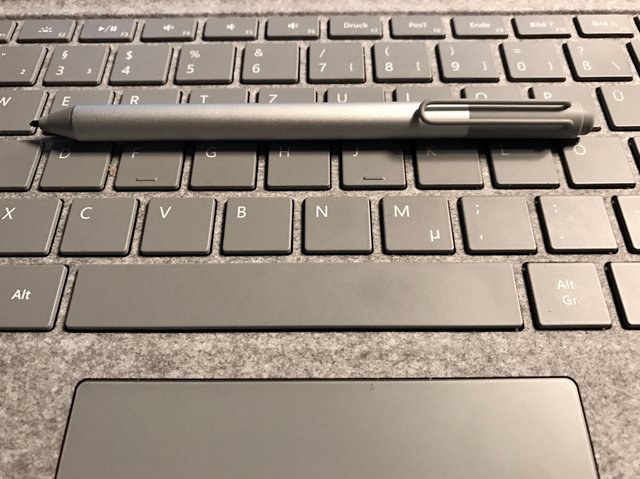
Having used Surface Pro 4 almost exlusively for a month I am now very confused about keybord shortcuts. For those who don't know a Mac, it's Cmd instead of Ctrl for Cut & Paste. But I am not confused about pen support. I want this on my machine. For taking notes or for annotating documents. If I were a student, I would really want this. Google just announced stylus support for Chromebooks, and that type of machine is very successful in education. Add Android apps into the mix, and you are on to something. Google will eventually have to do the homework that Microsoft already did with Windows 10. Pen is integrated well into Windows 10 Anniversary Update and will improve further with the Creators Edition in April. Google plays in a much lower league with their simple stylus support, but it's going to help in Math classes.
The odd one out is Apple. If you want pen support, you can only have it on iPad Pro, in a few select apps. And I don't think that machine is ready to replace notebooks completely. You can get very far, but then you pack your notebook anyway, just to make sure.
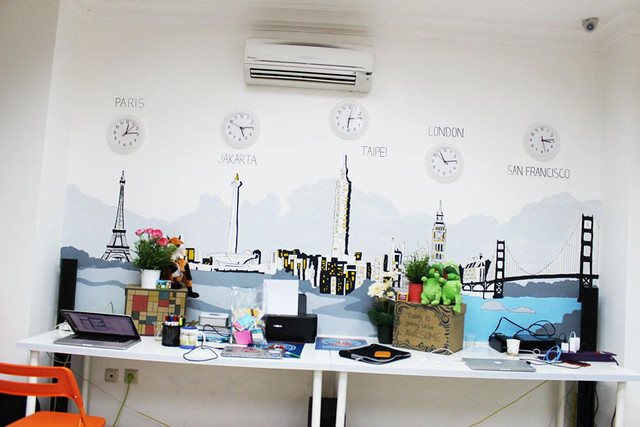
As 2017 gets into full swing, the goal of this post is to reflect on the impact of the Mozilla volunteer-run community spaces we have in Asia. These are the spaces in Jakarta, Manila, and Taipei. I’ll be presenting data and some analysis based on that.
In summary, there was:
351 events
173 Developer focused events, vs 178 other types of events
4832 event attendees
Taipei sees the most traffic, in terms of events and attendees
Yet data only tells some of the story. We’ll be also getting input from space stewards with insights on what worked and what didn’t ‘on the ground’ throughout the year.
What?
First, a reminder of what the community spaces program is all about. It is an initiative to open (or use existing) physical spaces for Mozillians around the world. It’s an experiment to create open spaces for people who are passionate about the open web, to collaborate with other communities, attract more talent into Mozilla, to strengthen local communities. The main hypothesis is that great things will happen. At Mozilla it was started by the WPR team in collaboration with the Community Building team in 2014, and in 2016 the Participation team took over the oversight of the project. Huge hat tip to William Quiviger who led the project until I took over in March.
Here are some hypotheses we wanted to work on in 2016:
We can engage more with developers in the local communities that the spaces are in, to promote what’s new in Firefox and Web technologies in general
We can work with more partners (organisations, companies, individuals, …) to amplify common goals
The local spaces strengthen the local Mozilla communities
Events
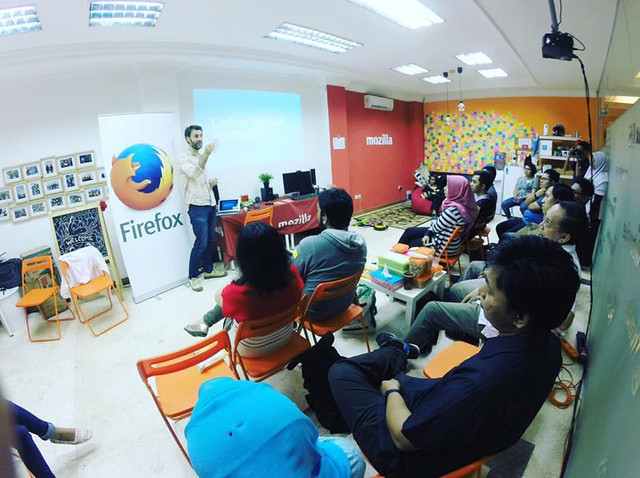
While it can be used for other purposes such as co-working, the main function of the space that we encourage is events. These can be presentations, workshops, hackathons, and so on. The goal is to promote knowledge sharing, learning, building relationships, and of course raising awareness of what Mozilla does from new and exciting technologies for the web platform going into Firefox to the issues campaigns we run to advocate for users and a better Internet.
Focus
In Q2 we teamed up with the developer marketing team to make a targeted effort to have more events in the spaces for developers. The goal was not just to introduce that audience to the latest and greatest technologies coming out of Mozilla, but to talk about the best in Web tech in general. We provided general guidelines on topics to focus on, and tips on how to run effective events. Then we introduced mentors to space stewards, and then left enough room for the magic to happen.
Metrics
So let’s jump in and look at some numbers, with a reminder that these are not for the whole year but from April onwards. Another caveat is that Jakarta has a handicap of only starting events in mid-May, so 1.5 months less than other spaces.
For reference, the full report is here. Thank you to Rizki Kelimutu for putting together this great report based on event data we logged since April.
Events breakdown, in total and per event type
There were 351 events in total, which is almost 1.3 events a day in the collective. This averages out between the three spaces at 117 per space. That’s is a solid rhythm but as you can see the number is not evenly distributed. Taipei comes out on top, with 55.8% of all events.
There is almost an split between developer focused events and other events 173 vs 178. Looking at the breakdown of events between developer focused vs other types, per space they mirror the total however with Taipei a little stronger on developer events and Jakarta stronger on other events.
Event over 3-week periods
The over time trends shown here for each space show consistency, with several peaks and troughs. They can for the most part be attributed to holidays. For example, in Manila the summer vacation saw a peak as people had time to attend events, and the start of college classes in May/June resulted in a drop. During some months Taipei was seeing close to 25-30 events per month, meaning almost one a day! The November to December rise was helped by a visit from Alex and Nina from wizardamigos.com who hosted seven events to help people code for the first time in JavaScript.
Attendees breakdown, both new and returning, and per-event type numbers
In general, the number of attendees reflects the number of events in each space. A couple of things jump out however:
The high number of returning attendees in Taipei. People coming back time after time to the pace shows high positive sentiment and engaging content for the local tech community
Manila attracts significantly more new attendees. This could be for a number of reasons, such as a large local community, compelling new content, a wide variety of different topics covered, or increased awareness in 2016 of the Manila space.
And here is the the space by space comparison of attendees:
Attendees over 3-week periods
What is interesting here is the more frequent ups and downs in new attendees in all spaces, but take note that it is exaggerated by the smaller range (150) than returning (300). Attracting both new and returning visitors is a challenge. At its core however, it is about forming a strong sense of community, and ensuring strong and compelling content for people to learn and grow. In general for new vs returning, more detailed exit surveys would be needed to really find out the real story behind the data.
There is one other topic that warrants a look, and that is the size of events. Here is how we classified them, in terms of number of attendees:
>30 Large
10-30 Medium
<10 Small
Let’s see how the spaces shape up. One thing to keep in mind is that the capacity when comfortably accommodating people is around 30 people, with only Taipei able to fit in more safely by removing tables. So large events would need to happen elsewhere, e.g. there is a cafe below the Jakarta space that they can rent out for bigger events.
So I would say that the main barometer for success in general is that the majority of events lie at the mid-size level. And that seems to be mostly the case in Jakarta and Taipei, with Manila fairing worse with events most months having <10 attendees.
What trends do you see in the report, and what other conclusions would you make from the data? Leave comments on this post if you have anything.
Happenings and Highlights
For me the highlight was visiting the three spaces in 2016. In January I went to Taipei to explore the idea of merging the staff space with the community space. While that didn’t happen this time, I did see up close the prolific and crucial work that volunteers do in the city and more broadly in Taiwan.
In May I visited Jakarta and Manila. The purpose was to be present for the official Jakarta opening as well as: Check the status of the space in Manila, and visit other spaces in the city to see what the co-working/incubator/Maker Space scene is like; Talk to Mozillians in both communities to gauge community health; Monitor progress so far of, and provide guidance for, the developer engagement program; Get a feel for the wider tech scene in both cities to see where Mozilla sits and how we can spread our wings and make new relationships.
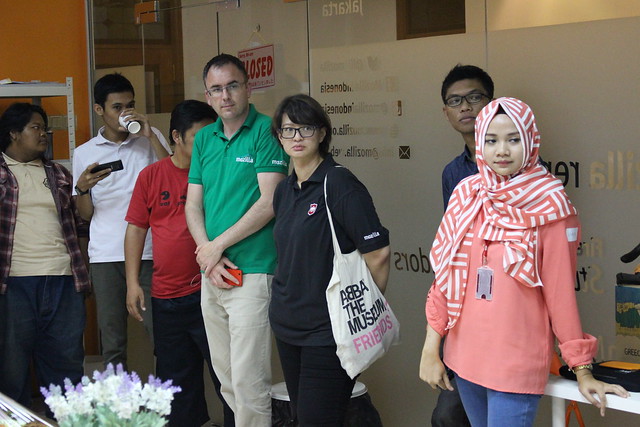
Listening and watching at the Jakarta space opening. Picture by Yofie Setiawan. More photos.
I came away with a fresh appreciation of the intense dedication that a core group of volunteers in the community have towards Mozilla, the impact they have, and more context on the vibrancy of the wider tech scene they are working in.
Here are some more insights and highlights on 2016 from some of the space stewards.
The Jakarta Space has been and continues to take part in campaigns for Mozilla. We are reaching the local Rust community, Developer community, and Web of Things. We took part in the Inter-Connected Community session at Mozilla Festival 2016, and we also support Mozilla’s marketing campaigns throughout the year.
Our space is limited to maximum 25 people that can fit in the space. Already we have run many events that are really inspiring for many people. The Mozilla Community Space Jakarta Launch Party of course was the most crowded event, which happened on May 2016. We invited many inspiring speakers to share knowledge and do workshops at our space.
Our strengths include that we have a good location central in Jakarta, that is easy to access. We have strong relationships with many inspiring people and communities who love to share their knowledge and ideas through Mozilla Community Space.
Some groups or communities that we’ve been working with are:
WebVR Community
PHP Indonesia
Blogger
Framework (NodeJS, Rust, etc)
Rust Community
Python Indonesia
Open SUSE
Linux Community
Our main challenge is managing human resources, especially keyholders who help as volunteers to taking care the space when there are events running. We continually adjust for efficiency, so everything will stay well managed.
We would love to see more events, especially which also relate to the ideas, vision, and mission of Mozilla.
Some categories of events that we are looking forward to are:
The year 2016 saw a couple of firsts for the Mozilla Community Space Manila (MozSpaceMNL). Launched in August of 2014, MozSpaceMNL in 2016 became the venue of choice for new or re-established developer communities around the metropolis.
As for Mozilla Philippines Community’s part, we began conducting Introduction to Rust Programming Language events on a monthly basis. This led to the creation of a RustPH Group and the subsequent formation of a RustPH Mentors Group. Said group is now in the process of formulating a Standard Training Module for people in our locale interested in learning Rust as a second programming language.
In Summer of 2016, MozSpaceMNL played as host for the 2nd run of Maker Party for Kids (several days in the month of May). Conceptualized in 2015, the Maker Party for Kids events were able to train more than ten (10) kids aged 6 to 12 years old on the basics of HTML, CSS and JavaScript the Webmaker’s Thimble as the primary teaching tool.
Also in 2016, a couple of events related to Privacy awareness were held at the Community Space in Manila. Noteworthy was the forum to discuss the Implementing Rules & Regulations (IRR) of the Philippine Data Privacy Act of 2012 with no less than the Deputy Commissioner of the Philippine Privacy Commission as our resource speaker. This event was followed by smaller weekend pocket sessions targeting on students to be aware of issues related with data and online privacy.
Aside from MozillaPH-organized events, MozSpaceMNL also served as venue for meetups of other like-minded organizations:
Several Code Camps co-organized with Developers Connect Philippines (DevConPH)
Emacs Users Group Philippines Meetup
Manila WordPress Meetup (which eventually led to the resumption of Word Camp Manila)
Mechanical Keyboard Warriors Meetup
Philippine Web Designers Organization Meetup
Google Developer Group Philippines (GDGPH) Firebase Live Viewing Party
Virtual Reality Philippines (VRPH) Meetup
In October 2016, MozSpaceMNL participated in the very first Inter-Connected Community Spaces activity during the Maker Festival held in London, England.
For 2017, we plan to continue with at least one Rust-related event per month. Co-organizing developer-related events with like-minded organizations will also continue. MozSpaceMNL’s support to other organizations by means of providing venue for their meetups and the like will still be there. We also hope for more inter-connected community spaces activities soon.
2016 is the third year of Mozilla Community Space Taipei. MozTW and more than 30 local open (source/culture/data/gov) communities together, we had host 320+ various events for 3300 people, and introduced Mozilla and our Mission to more than 600 first time visitors.
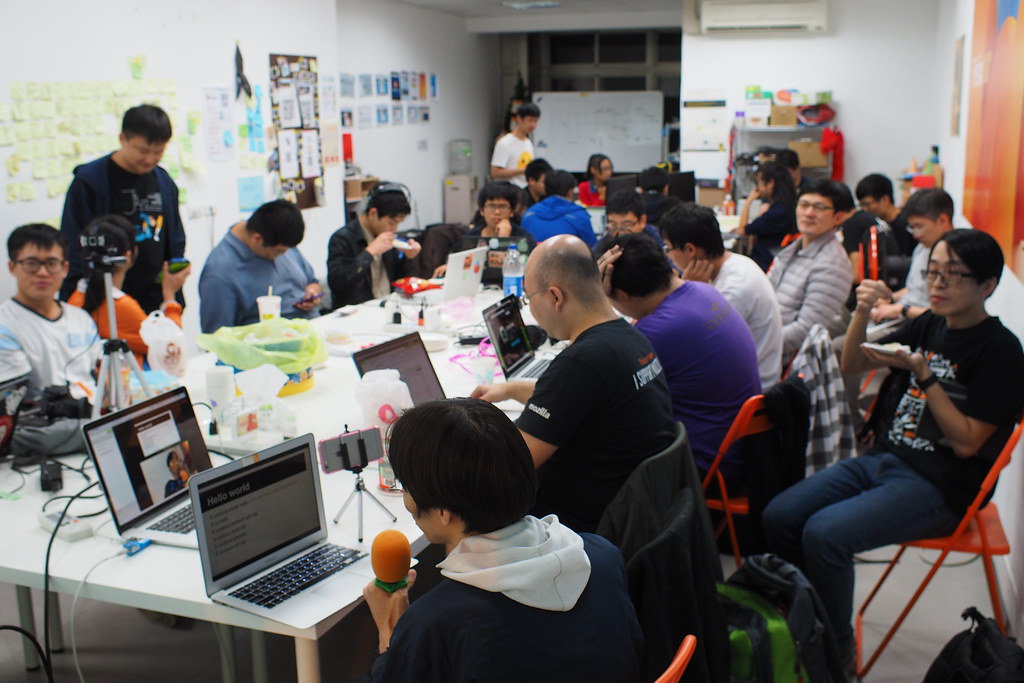
A typical MozTW Lab in a special day
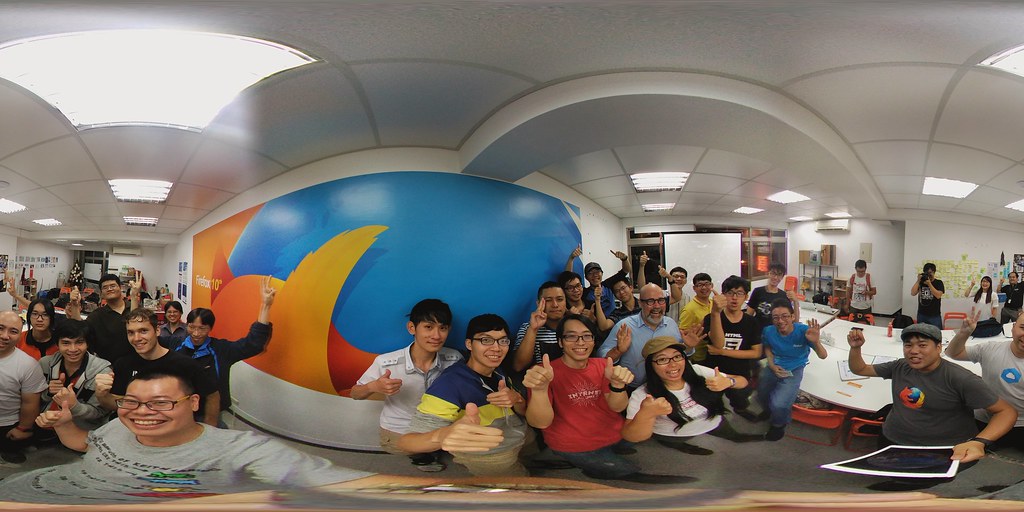
The best event in the space is “MozTW Lab” (as always), the local Mozillian’s weekly meetup. Volunteers gathering each Friday night to socialize, work, and give lightning talks on different topics including Mozilla’s latest update. This meetup had been running for 8 years, and in 2016 we had visitors from all over the world including Mark Surman, Brian King, Larissa Shapiro, William Quiviger, Max Ogden, Fa-ti Fan, 田爱娜 and many more.
Mozillians all around! (click/touch and drag image to explore)
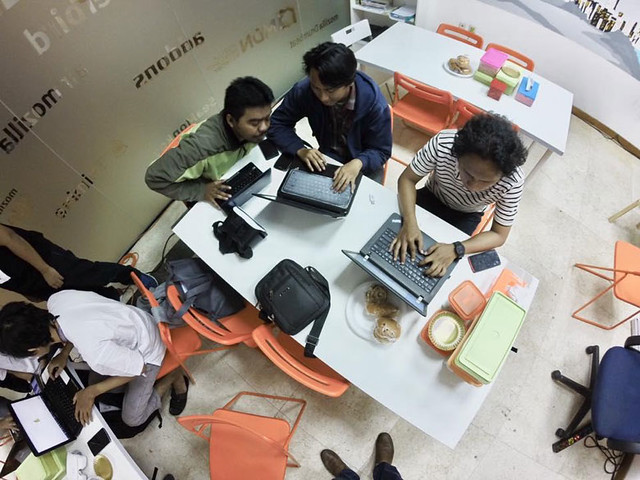
Another highlight of 2016 for the Taipei space is the diversity of the events, visitors and connected communities. There are growing types of the communities, dev-rel, open culture, open source and civil society community host events, workshops, meetups, talks, hackathons, and study groups. Different types of fun almost every night happened in Community Space Taipei.
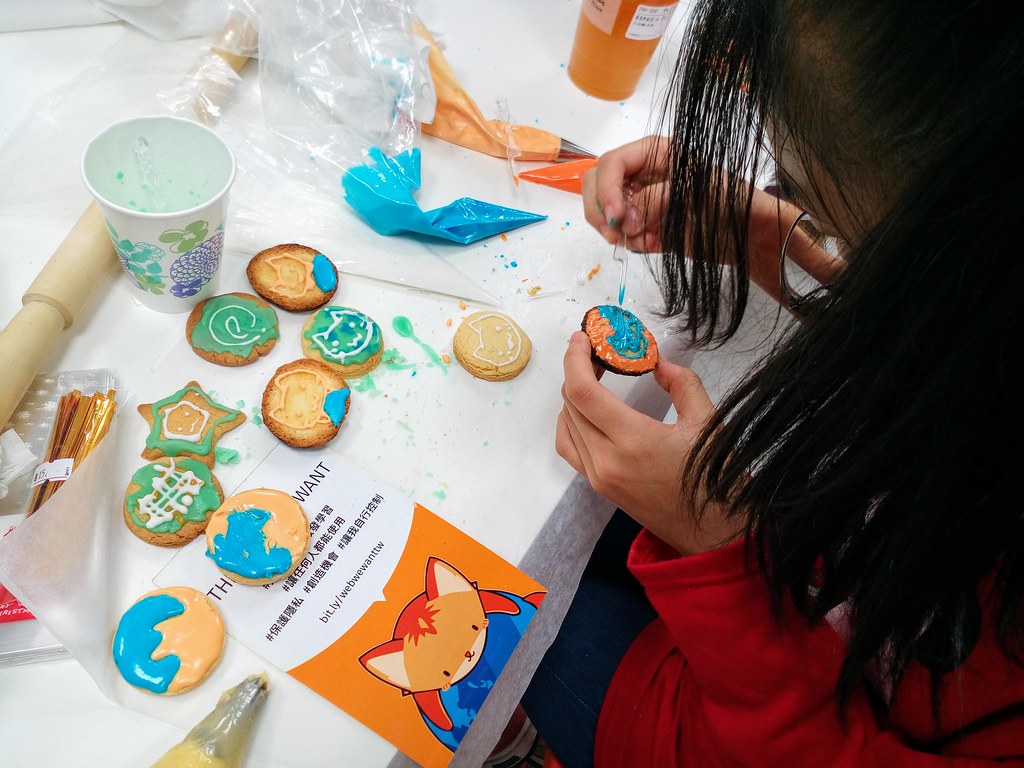
Baking some Firefox cookies
For dev-rel topics, Rust and WebVR workshops are the newest. But people also shared knowledge on JS / NodeJS, Python, Swift, React, Spark, OpenStack, C#, Clojure, Java, D3, Functional Programming, Android App… You can learn and meet community for almost every programming languages, popular or not. We also help by providing the venue for new dev communities such as “WizardAmigos CodeCamp” (local one).
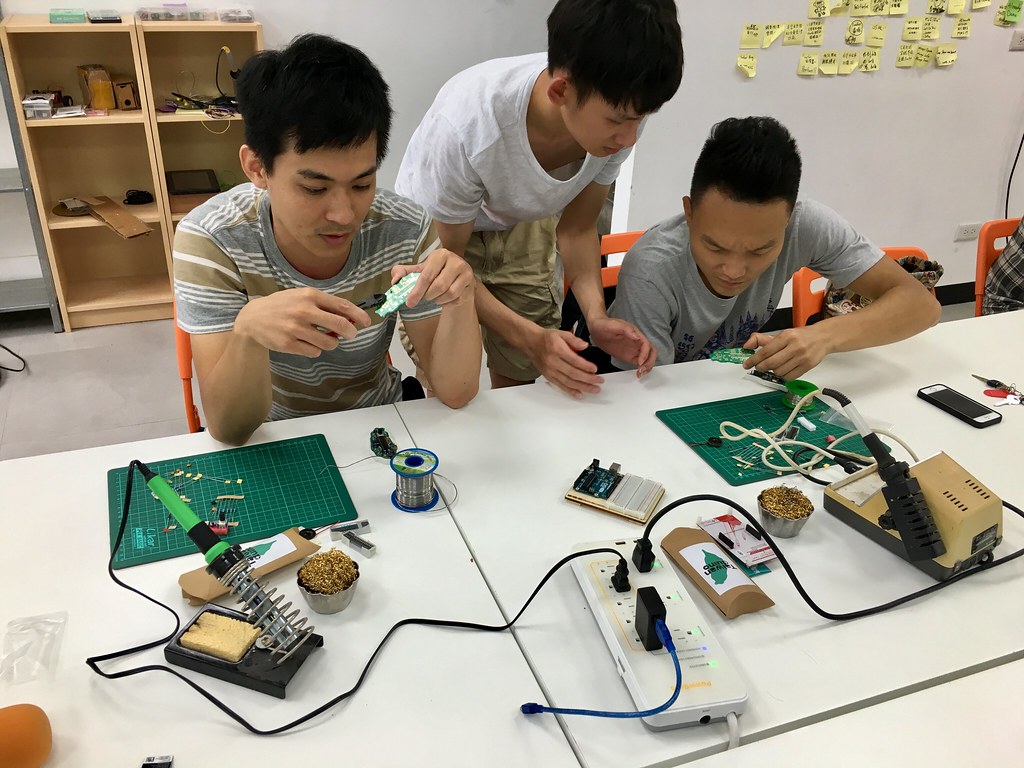
For open culture and non-dev technical events, Wikipedia and OpenStreetMap use Taipei Space for regular meetup, and there are workshops and meetups on Ubuntu, openSUSE, Fedora, R, Arduino, InfoSec, students and many more. There are also many gender based technical communities and events such as WoFOSS, R Ladies, Swift Girls and PyLadies. Larissa Shapiro’s visit in January reminded us of the importance to keep the space a place of diversity and inclusion for all.
Have you ever build your own Arduino?
One of the most special part of the Taipei space is the events and meetups from local civil societies, open government and open culture communities. Gov. hackers and programmers played an important role in democracy development recent years in Taiwan, and Taipei Community Space had become a base for popular open communities such as Open Culture Foundation and G0V. Our keyholders also actively support events about digital human rights or internet governance from Taiwan Association for Human Rights and Citizen Congress Watch. People came to making, hacking and watching not only the technology, but also the human rights, democracy and civil society in the community space.
What do you want to share in Community Space Taipei?
Wrap-up
Let’s revisit our hypotheses and see how we fared.
We can engage more with developers in the local communities that the spaces are in, to promote what’s new in Firefox and Web technologies in general.
We teamed up with developer marketing, and had a total of 173 developer-focused events since April. This was everyone from beginners to experienced developers, on a host of technologies related to the Web.
We can work with more partners (organisations, companies, individuals, …) to amplify common goals
All three spaces have built up a network of all different technology companies and organisations. They engage at different levels, from working together on projects to sharing the space to have events.
The local spaces strengthen the local Mozilla communities
The Philippines community has in recent years been one of our largest and most dynamic, most notably in the area of student engagement. However, 2016 presented a number of challenges that decreased engagement. They have reached out for support from Mozilla and have a desire to bounce back. The communities in Taiwan and and Jakarta have a strong core, and while they have the classic growth challenges that all communities have, they have been trying new things and working in different ways to strengthen the broader open source movement.
On balance, 2016 was a strong year for our community spaces. It has been shown that with the right support, and with alignment with community development and Mozilla goals, spaces can make an impact and raise Mozilla’s profile locally. Other communities around the world have been paying attention, and have requested support for the own spaces leading to an open question is how can we scale this model.
Looking beyond, we can keep momentum going and identify areas for improvement. One thing I would like to see is teams at Mozilla working more directly with the spaces on programs that can help them achieve their goals. So far in conversations I’ve been having, Developer Relations, Developer Marketing, and Connected Devices are interested in doing this. And a broader question is how can the current spaces help with our broader Firefox product goals in Asia.
Many thanks the community space stewards and keyholders who devote their free time to this. It is a great pleasure working with you, and I salute you for what you do!
All year, we're highlighting 50 States of Art projects around the United States, starting with Minnesota, Missouri, New Mexico, Utah, and Florida. To learn more, click here.
Their silence is deafening. A series of emotionally compelling photographs depict a slice of the diverse Minnesota population living far away from their native lands. With earnest eyes and a lack of pretense, the subjects of Selma Fernandez Richter's photography series The Ache for Home yearn with quietude and humility for a life and environment no longer in the background. Richter takes hold of the Maya Angelou quote, “The ache for home lives in all of us, the safe place that we can go as we are and not to be questioned,” and lifts the words to reflect both her own experiences as an immigrant, and those of others. Originally from Mexico, Richter lived in her home country up until 2011, when escalating drug violence in the country made relocation the wisest option for the artist.
She eventually settled in Minnesota, making sure to take her history and culture along with her. Her series, The Ache for Home, reflects not only the lateral hum of Midwestern America, but the vertical twang of homesickness.
“My portraits capture the ambivalence my subjects feel about being in a new environment that both welcomes them and mistrusts difference, and of making the unfamiliar familiar," Richter tells The Creators Project. “[The last few years,] I have photographed recent immigrants to the Twin Cities, primarily from Burma, Bhutan, and Somalia, who have been displaced from their homeland by war, violence, and famine."
In recent years, Richter has shifted her connection with photography. While previous work in Mexico concentrated mostly around commercial projects, now, as she hears the stories of her subjects, displaced by volatile and unliveable conditions, her photographic tone has evolved into something self-reflexive. “I follow their journey as they adapt to a new context while holding on to their culture," she tells us. "My own process of immigrating to America connects me to my subjects.”
See more of Selma Fernandez Richter’s project, The Ache for Home, on her website here.
Computer science is not about computers. It’s about computation, a much wider subject. Creating abstractions, essential representations of things, be they objects, processes, ideas, and manipulating those representations. Manipulating these representations and letting their movements inform and power the outside world. These representations are organized in the computer, but there’s no law saying they have to be. The organizational principles and structures are more fundamental, and can be applied to anything. A cafe, perhaps?
Right now you’re reading this on a computer, and that computer is running an operating system. Windows 10, macOS, one of a billion different linuxes. But what is an operating system?
Modern operating systems do a million things, but their fundamental job is to lie to programs. Each and every program running on your computer thinks it is the only program running on the computer. Programmers like me write programs assuming that no other pesky programs will get in the way. It’s the Operating System’s job to make sure the farce is believable.
The operating system crafts a believable farce by deftly managing the various programs, matching up the resources available with the programs that need them, on the fly, so that the programs never notice there’s anything strange at all. The job of the operating system then, heavily abstracted, is: Given a set of resources I can use to fulfill service requests, and a queue of service requests (each of which may have radically different needs), how do you match up the former to the latter, to make sure that all of the service requests get fulfilled in the most efficient manner possible.
For starters, we need to define efficient. There are many different ways you could, given different priorities. But generally, a weighted measurement of total wait time is used. That is, we want to minimize the total amount of time that service requests spend waiting before they are served. The weighting is used to prevent any one request from having to wait too long. We would prefer two processes each wait a short time, than one wait a long time.
Talking about resources and service requests in this way shows that this is much more abstract and general than just programs and processors. These patterns apply generally to any structure where some clients are waiting on a service resource to be served. Consider the coffee shop.
Starbucks and Tim Hortons are proprietary software architectures for fulfilling caffeinated beverage requests. Each is capable of running in a multi-processor, or multi-barista in the case of coffee shops, environment, typically supporting up to 8 independent processing units. They take in requests using an input queue, and fulfill them efficiently. How do you think these operating systems should work?
Well, the naive solution is always readily available: round-robin servicing. Each barista selects a request off the top of the queue. They fulfill the request, from start to finish. For example, if there are twenty requests in the queue, and four processors, the first four will be processed in full, from taking the order to giving the drink, and the sixteen behind must wait until this finishes before they can be served.
This is a simple queueing model, and it comes into play everywhere in society. The line at the bank, at most grocers, and at Tim Hortons, functions this way. Customers want to get served, they enter the line, and the ‘next available attendant’ serves them until they’re done. It’s a simple system to set up, but it has it’s problems. Consider the following:
There are eight people in line, and three baristas on duty. The first, that one elderly woman who can’t figure out how to write a cheque for a black coffee. Behind her, the father with eight children in tow who is really going to regret giving them all that sugar. Finally, someone with 37 gift cards, each with 15 cents left. You check your watch repeatedly before phoning your wife and telling her you’re going to be half an hour late coming home. You’re stuck waiting behind long-running requests.
How can we do better on this? We can start by separating the coffee service into separate tasks. Specialization worked for capitalism, why can’t it work here? In serving a customer, a few discrete states exist, with well-defined transitions between them. A customer comes up. Their order is taken. Their payment is processed. Their beverage is prepared. Their completed product is delivered. Each of these steps is an independent phase of service that could theoretically, be partitioned. The Tim Hortons model bundles them up together, a simple, honest process. But what happens if we don’t?
Before we can improve on this process, we’ll need to figure out which lies to tell. Computers lie, after all, and whether they’re silicon-and-electron computers, or human-and-coffee computers, the principle is the same. These lies collectively make up the interface to our program. They instruct us as to how to interact with the system. They need not correlate with any specifics at all, so long as the lie is convincing enough that we can rely on it.
In the coffee system, there is only two lies we really have to maintain. One: serve people in the order in which they’ve arrived. Two: process orders as they come in, and don’t stop until they’re done. As you’ll see in a second, we can gain a lot of efficiency if we could violate these requirements, but due to human nature, they are non-negotiable. However, we have the next best thing. We can lie.
Going back to the long-running request example, there are five very quick requests stuck behind three very long requests. If only we could serve the five first, a lot of waiting time would be saved. Doing that, however, would re-order the line, and that’s not acceptable. Is there a way we can re-order the line in practice, while maintaining the lie?
There is, and it’s the first efficiency gain that Starbucks enjoys. The service in Tim Hortons is what’s known as a synchronous response. You order your coffee, and you wait there until it comes. You expect that your interaction starts and ends in one chunk. But Starbucks doesn’t do this. Starbucks operates asynchronously. At Starbucks, you enter the line, and you are processed in “order”. But processing, at Starbucks, only means taking your order and payment. At Starbucks, once you have paid for your drink, you exit the line. You do not wait for your drink to be made. Instead, you go do something else (say, getting a table) while the rest of your order is processed in the background. When it’s done, they alert you and you come get the drink.
This is an asynchronous process, in the sense that the cafe’s actions are not synchronized with your own. Crucially, this lets us re-order the orders without anyone feeling like they have been cut in line. Orders are taken in order, but are not necessarily fulfilled in order. This empowers staff to make point optimizations, such as pouring five black coffees before making three pumpkin spice lattes.
Additionally, it represents a pure improvement over wait times. In the synchronous mode, when you’re waiting in line, it is a busy-wait. You are not able to use that time for anything else. In the asynchronous mode, while you are waiting you are free to use your time for other things.
With our first lie told, it’s time to look at the second. Do we really need to process each order as a unit? Can we get more efficiency gains if we break this constraint? Can we convincingly lie about it?
The second question is the easy one: yes we can. Once someone has left the coffee line, they are not paying attention. In Tim Hortons, we could not easily tell this lie; the customer is interacting with their dedicated barista the entire time. At Starbucks, thanks to lie #1, the customer is safely distracted while waiting for her drink. Behind the counter is a black box to her.
The how is more complex. There are two main strategies that Starbucks uses for this. The first is what is known as ‘preemptive scheduling’. This is a catch-all term for task management strategies that allow interruptions. Going back to the five and three example: How do the baristas know to wait for your fast orders before starting the slow orders, when they don’t yet know what you are ordering. The preemptive scheduling strategy is that they start on the elaborate drinks, and when they get the order for a quick drink, they pause, context-switch, and make the black coffees. The employees can use their discretion to preempt long running drinks to get a few done quickly.
The second strategy Starbucks uses is a concept called pipelining. This is very similar to the idea of mass production, factory conveyor belts, etc. Say there are four baristas on shift at Starbucks. One may be dedicated to the cashier role. The other three may specialize at different stations within the coffee preparation process. Perhaps one is dedicated to brewing coffee, while the other two operate on the more elaborate elements of the process.
This gives us efficiency gains due to specialization. There are fewer context switches, one person can focus on doing one thing more effectively, and there is an efficiency gain as a result. This also creates well-defined break points. After all, it’s just an extension of the first lie. We’re bringing asynchrony behind the counter. As different processes take different amounts of time, baristas can be freed up to do other things while they wait. They can quickly pick this up, as the work needing to be done is discretely parcelled out into small, well-defined chunks, as would be necessary to reap the benefits of specializing on tasks in the first place.
The end result of all this lying is a much more efficient caffeination machine. Using our measurement of minimum total waiting time, we’ve done much better than Tim Hortons. But this has come at a cost. Minimizing that time required re-ordering the service requests. Just as computer OSs do all sorts of things while maintaining simple lies, we were able to re-order requests, while maintaining the fiction that we did not.
And this is an important gain. Machines are often better at accomplishing things than humans. But people often have great difficulty operating within the requirements of a machine. By lying our way into a human-friendly interface, we have improved everybody’s experience. People are served much more rapidly, and with fewer busy-waits. The cafe can prepare many more drinks, with fewer staff members, saving time and money.
Operating systems function over computer hardware, fabricating interfaces out of whole cloth to facilitate the smooth function of a complex machine. Social systems function over human hardware, fabricating narratives out of whole cloth to facilitate the smooth function of a complex society. This applies not just to cafés, but each and every human system, fractally, at every level. Let’s learn from the lies, cross-pollinating between systems, to build better, faster, stronger, more efficient systems.
The Barbican in London is embracing the sounds of American minimalism in its current series The Sounds That Changed America, a brilliantly researched and synergized event series and online exhibition that parallels the lives and works of three American minimalist composers: Steve Reich, Philip Glass, and John Adams.
Though rock and roll is often hailed as the quintessentially American sound and contribution to the global soundscape, this new exhibition argues that minimalist music is equally as American in its style, and fundamentally as groundbreaking in its effect on world music at large. From Reich’s early ambitions as a jazz drummer to Glass’ radio repairman-turned-record collector father to Adams' parents’ big band performances in Lake Winnipesaukee, The Sounds That Changed America, explores the story behind the composers who created a sound that changed America.
Reich at 70, photo by Jeffrey Herman
In addition to concerts of the composers’ symphonies, talks about the innovation of their work, and screenings of films which utilized their compositions, The Barbican has also created a masterful online exhibition and tribute to the composers. The website is tastefully designed and minimalist in its aesthetic. It offers an unparalleled unification of the simultaneous development of all three composers, from childhood to the highest heights of their careers. It combines full-length documentaries, archival photographs, and samples of compositions to contextualize the histories of Reich, Glass, and Adams.
John Adams, photo by Deborah O’Grady
Beyond the rich histories, the website identifies the similarities between the composers in order to formulate an argument for their uniquely American sound and their lasting influence. Narrative touches on Reich recall his works, Tehillim (1982) and The Cave (1993), citing both as Reich’s attempt to identify his own religious and spiritual underpinnings.
Philip Glass, photo by Steve Pyke
For Glass, it is a focus on the American psyche. A quote by Susan McClary describes the opening of his Glassworks (1982) by stating, “before us glimmers once again the romantic soul, decked out with all its requisite emotional trappings—alienation, memories of lost arcadia, and longing for utopia.”
But Adams' version of America may be the most apt. It alludes to his style as bearing “high octane journeys in fast cars and their subsequent valorisation and glamorization in road movies. But there is also a very different America of the moment, one paralysed by fear and self-doubt.” To fully experience this, listen to his composition, “Shaker Loops: 3. Loops and Verses” and wait for the climax from 5:00 on.
The Sounds That Changed America offers a new perspective on minimalist music in America, one that unites the sounds of its greats through investigation into their histories, influences, and reflections.
Samsung has detailed its 2017 business strategy, with a key focus being on mid-to-low end smartphones, display products and artificial intelligence (AI).
In a press release, Samsung said offering new services like AI is important to its plan, as growth in the smartphone market is expected to slow this year.
Referring to the combustion-prone Galaxy Note 7s, some of which still need to be returned, Samsung stressed that quality and safety assurance across all of its devices is a key priority.
The company also said that it “plans to enhance the competitiveness of its mid-to-low end models by introducing water and dust-proof features and fingerprint recognition.”
Additionally, it will seek new 4G/LTE opportunities in emerging markets and expand its Samsung Cloud and Samsung Pay services. For the latter, the upcoming personal assistant app Bixby could allow users to send peer-to-peer payments.
I’ll be tweeting, recording, and schmoozing my way through day one of Bett tomorrow. One thing I sadly won’t be able to do is live-stream to YouTube via drone.
Raspberry Pi Video Streamer Pack Now on Kickstarter! http://kck.st/2ef6gnD for SD Card image and how to write image to SD Card: https://youtu.be/lRd4BhN4BHk for more info: www.sixfab.com
Mahmut uses an LTE shield to supply 4G access to the onboard Raspberry Pi and Camera Module. Then, using the image he supplies here, you’re good to go.
If you want to make your own Pi-powered drone, you’ll find Greg Nichols’s step-by-step guide for building one here. Greg uses a Pi Zero and the total cost comes in under $200.
This video shows a Linux drone made with the PXFmini (http://erlerobotics.com/blog/pxfmini/) autopilot shield for the Raspberry Pi Zero. The drone runs a customized Debian file system with real-time capabilities and the APM flight stack.
The small, lightweight nature of the Raspberry Pi makes it perfect for drone building. If you’ve made your own, we’d love to see it in the comments below.
 Stephen Rees's blog.

 Consumerist.


 Ulysses Blog.


 Kickstand Comics featuring Yehuda Moon.

 Julien Boily, Memento Vastum (2012). Images courtesy the artists and Eastern Bloc
 Grégory Chatonsky & Dominique Sirois’ Extinct Memories III
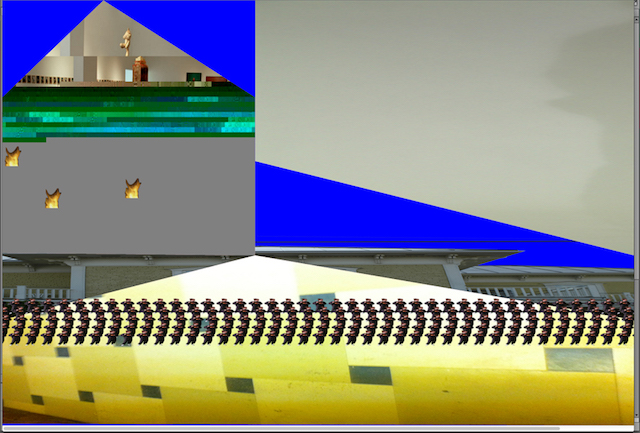 Image from
 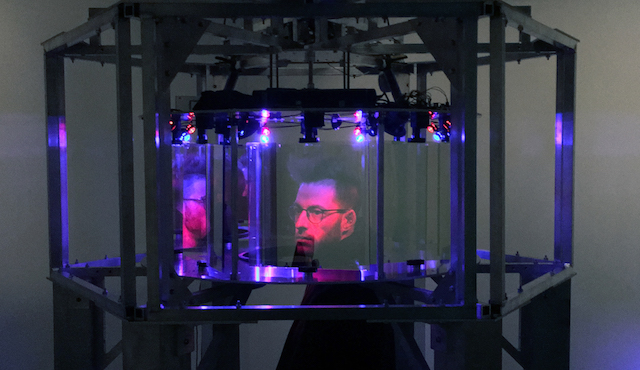 Project Eva, The Object of the Internet (2017)
  Julie Tremble, BPM 37093 (2014)
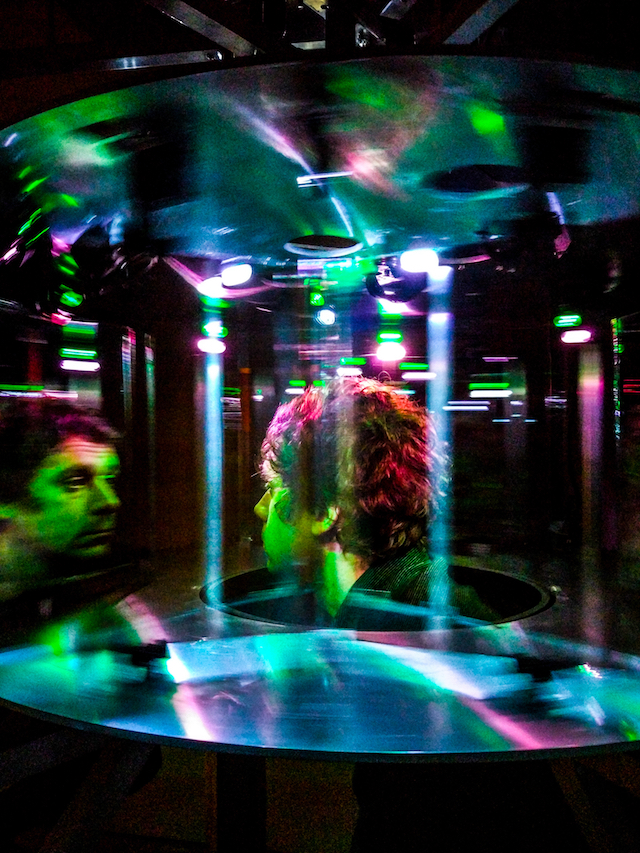 Project Eva, The Object of the Internet (2017)



 The statues, made in the likeness of now President Donald Trump, were created by a Las Vegas-based artist, Ginger, using over 300 pounds of clay and silicone and were commissioned by the anonymous graffiti group, Indecline. In
 Google has been releasing developer previews for Android Wear 2.0 for quite some time, but the public release looks to be right around the corner.
















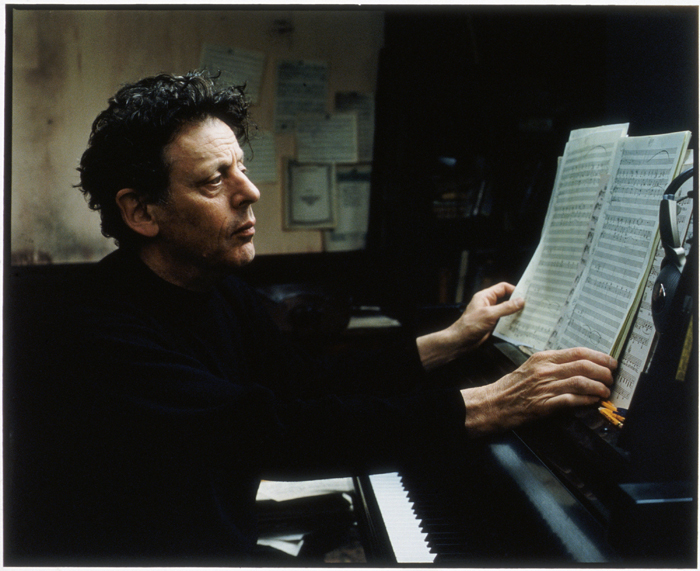 Philip Glass, courtesy The Barbican
  Reich at 70, photo by Jeffrey Herman
 John Adams, photo by Deborah O’Grady
  Philip Glass, photo by Steve Pyke
 Philip Glass at 75, Koyaanisqatsi, Barbican Hall © Mark Allan
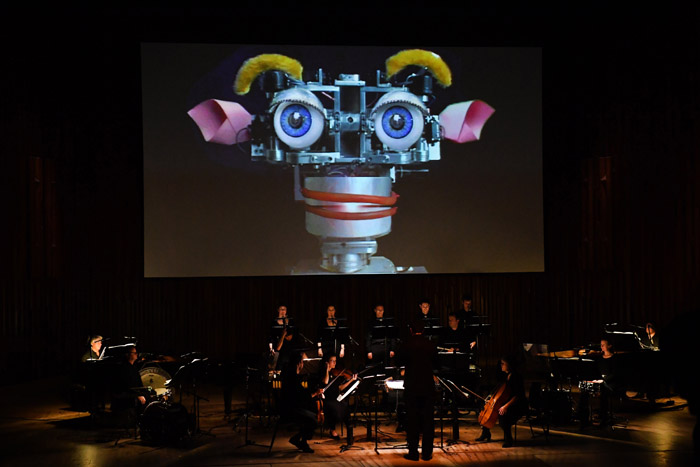 Steve Reich at 80,Three Tales, Barbican Hall © Mark Allan
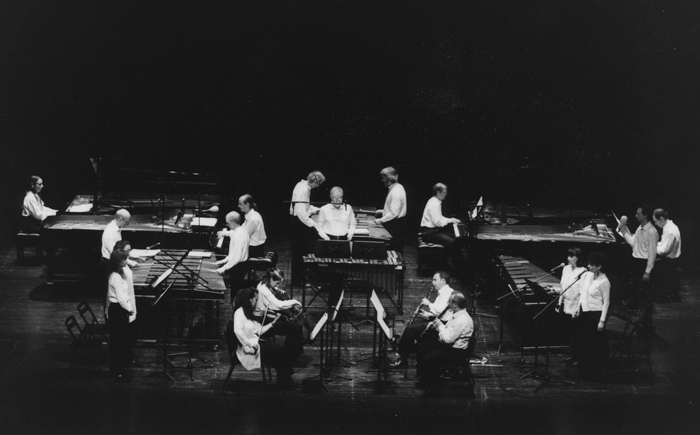 Steve Reich Musicians, Music for 18 Musicians-Tokyo, courtesy The Barbican

