Shared posts

16 Feb 01:45

Geom❤️

by hrbrmstr

ggplot() +
  geom_heart() +
  coord_equal() +
  labs(title="Happy Valentine's Day") +
  theme_heart()

Presented without exposition (since it’s a silly Geom)

This particular ❤️ math pilfered this morning from @dmarcelinobr:

library(ggplot2)

geom_heart <- function(..., colour = "#67001f", size = 0.5, fill = "#b2182b",
                       mul = 1.0, na.rm = FALSE, show.legend = NA, inherit.aes = TRUE) {
  
  data <- data.frame(t=seq(0, 10*pi, by=0.1))
  
  x <- function(t) 16*sin(t)^3
  y <- function(t) 13*cos(t) - 5*cos(2*t) - 2*cos(3*t) - cos(4*t)
  
  data$x <- x(data$t) * mul
  data$y <- y(data$t) * mul
  
  data <- rbind(data, data[1,])
  
  layer(
    data = data,
    mapping = aes(x=x, y=y),
    stat = "identity",
    geom = ggplot2::GeomPolygon,
    position = "identity",
    show.legend = show.legend,
    inherit.aes = inherit.aes,
    params = list(
      na.rm = na.rm,
      size = size,
      colour = colour,
      fill = fill,
      ...
    )
  )
  
}

theme_heart <- function() {
  ggthemes::theme_map(base_family = "Zapfino") +
    theme(plot.title=element_text(hjust=0.5, size=28)) +
    theme(plot.margin=margin(30,30,30,30))
}

16 Feb 01:45

Why those Drive-Through Tims Are Not Good For You

by Sandy James Planner

1297819846575_originalAgain south of the Fraser River the editor of the Delta Optimist weighs in on the need for his morning “double double”. And he is not in a mood to be trifled with. In a surprising 4 to 3 vote Delta council defeated an application to  “build a Tim Hortons on a vacant lot on Ladner Trunk Road just east of 64th Street.”  And the editor states “When you tell people from outside Delta that your town doesn’t have a Tim Hortons, their incredulous response usually includes a query about whether you also lack indoor plumbing. ” 

Kudos to Delta Council who didn’t want to build this ode to idling close to single family houses. This Tim Hortons was a functioning “fuel up drive through ” facility with just a hat trick of seats inside so you wouldn’t get comfortable. 

The drive through facilities particularly impact small communities with populations of less than 15,000. I’ve seen a similar Tim Hortons drive through in Kensington Prince Edward Island take out the winter social spot of that small community and close out the adjacent tea shop. In Arnprior Ontario there is a 24 hour drive through, but there is also a massive eat in facility that has become the farmers’ late night hangout and a place that teens can gather.

Those fast food places love drive throughs. They make a lot of money for minimal customer service and time, taking your money in one window and passing the french fries out the other. Not only are there huge profit margins, but 65 per cent of McDonalds sales in the USA are through those drive in windows, and now 80 per cent of new McDonalds feature the drive through option.  Drive through clientele are regular customers who buy fast food 25 to 30 times a month.   As an industry insider posits “Most drive-thru customers are just stopping to fill their gut”.  Drive through restaurants pride themselves at dealing with a customer within a specified time frame (normally around 200 seconds) and pride themselves at breaking records by pushing through the most cars served an hour.

There  are limited sociability aspects in  drive through fast food restaurant and certainly no way these facilities add to community placemaking. They are perhaps the sports car of fast food, whittling down the time needed to deal with pesky customers by not even allowing them to get out of the car.

But back to the defeated Ladner Tim Hortons.  The editor of the Optimist misses the fact completely that a drive through mug of motordom does not a community make.  His suggestion: “If a 24-hour drive-thru is indeed a deal breaker, perhaps the hours could be reduced or some other modifications made. Something needs to happen because, my dear Delta council members, Ladner needs a Tim Hortons.”

tim-hortons


16 Feb 01:44

Ohrn Image — Jericho Beach In February

by Ken Ohrn

Waiting for summer

jericho-feb-2017

Click for larger version


16 Feb 01:44

Micro-Suites in Vancouver-How Small Is Small?

by Sandy James Planner

o-ubc-nano-570

The Vancouver Sun’s Kent Spencer asks the question-do we really want to live in micro-suites?  And should the City be encouraging these  tiny places?

Vancouver’s restrictions on minimum building sizes are quite sad because so many people want these things,” said Jon Stovell, president of Reliance Properties, which has sold-out micro-suite projects in Surrey and Victoria. “You talk to people on the street and they get it. They’d buy them in a minute. Tiny apartments would alleviate the affordability crisis, he said, with prices starting at $225,000 at a time when the average condo in Vancouver is roughly $550,000, up 40 per cent in the last three years.”

A micro-suite is a tiny apartment in the 250 to 300 square foot range-that is a space ten feet wide and twenty-five feet long. Vancouver planners will review the standard, and currently are uncomfortable with permitting strata units under 400 square feet. The City’s planning department does undertake post occupancy surveys to assess residents’ attitudes about small spaces and to ensure that the spaces are livable.

Developers argue that the multi-functionality of small spaces will mean that there are cost savings, and small places with smaller price tags are the way to go. There are  also some studies that are suggesting that living in small spaces is detrimental to  mental and physical health, without the many steps and tasks that are part of every day living.

The video below of a 225 square foot designer’s apartment in New York City. Should these small size condos be allowed? Or are these  micro-suites just squishing the property owner dream?


16 Feb 01:44

SoundSource: The Sound Control That Should Be Built Into MacOS

by Paul Kafasis

Today, we’re pleased to unveil SoundSource, a tremendously handy new tool offering fast access to all your Mac’s critical sound settings!

From SoundSource’s menu bar icon, you can instantly configure the audio devices your Mac uses for Input, Output and Sound Effects. In seconds, you can adjust the volume for each of your audio devices or switch between connected devices. SoundSource can also enable the soft play-thru of audio from input devices. Use the Play-Thru window to monitor any connected input, such as a microphone, right through your headphones or other output.

SoundSource is a superior sound control in a tremendously convenient package. It tucks out of your way in the menu bar until you need it, then provides easy access to swap audio devices, adjust volumes, and more. It’s the sound control that should be built into MacOS, now available from Rogue Amoeba.1

Get It Now

Visit the SoundSource page to learn more and download our free trial for Mac OS X 10.10 (Yosemite) and higher. When you’re ready, you can purchase SoundSource right through our store.

Find Out More About SoundSource

A Special Offer for Current Rogue Amoeba Customers

As a special bonus for our customers, folks who own a license for any of current MacOS applications are eligible to receive a complimentary license for SoundSource! If you already own one of our other products, click here to redeem this offer.

If you’ve been considering picking up Airfoil, Audio Hijack, or any of our other Mac apps, now’s a great time to do it. When you purchase, you’ll also earn a complimentary copy of SoundSource.


Footnotes:

  1. If the SoundSource name sounds familiar, you may have used our original SoundSource application back in the early 2000s. SoundSource 3 is a modern new version, offering the audio device controls from the original SoundSource, as well as the audio play-thru functionality once found in our LineIn application. Click here to read more. ↩︎

16 Feb 01:44

Prototyping and strategic planning

by Chris Corrigan

My friends over at the Social Labs Revolution website have been fielding questions about the prototyping phase of labwork and today published a nice compilation of prototyping resources. It’s worth a visit. It got me thinking this morning about some of the tools I use for planning these days.

Tools for prototyping abound – discerning what’s needed, trying things out, iterating and learning.  In my experience, working on complex challenges requires us to master first of all the mindset of complexity work and then deploy tools.  We have to be careful about the tools we employ because some are great for linear, predictive planning and others require us to work on challenges differently.  When working with truly complex challenges, we create processes that generate a number of hypotheses about what to do and create very small probes to test the efficacy and coherence of these kinds of interventions.  This is deeply informed by the PROBE – SENSE – RESPOND rubric that Dave Snowden employs for complexity work. 

Disrupting a mindset to enable people to work well in complexity requires groups to confront its assumptions about planning and execution.  When I’m working on truly complex challenges, my process begins with a bit of theory to understand the different kinds of problems we face, through an exploration of the Cynefin framework, which helps to explain the differences between ordered and unordered situations.  Sometimes we even incorporate play, movement and improvisational exercises to remind us of what we already know about complex challenges.

From there we move to exploring and deploying new approaches and toolsets. Recently I’ve begun to think of correlations between tradition strategic planning processes and complexity managing processes.  Traditional strategic planning works well in ordered domains, where the future is predictable and knowable.  But for complex challenges, it goes like this:

Environmental scans vs. discerning patterns.  In traditional strategic planning, scans are given a lot of weight. THe data and observations about a problem that are brought into a planning process determine the rest of the process – they describe the problem to be addressed and they shape the scope of the plans that follow.  In complexity work we begin by working with patterns to look at the present state of the system and discern need. We can use all kinds of sources for this, but the data are also collected through storytelling processes (anecdote circles, in various forms, is my preferred method). Participants in the process then work with the data to cluster and find overarching patterns that we can work with. It’s important in complexity that we understand that not everything can be known about a system or a problem and so beginning with story helps set us off on work that is important.

Visioning and goal setting vs. scenario planning. In traditional strategic planning an emphasis is put on getting the future state right, through visioning, goal setting, and pre-determining outcomes.  In complexity work, we begin by admitting that the future is unpredictable. I address this future looking part of planning by working with scenarios that are created based on stories that we gather. The goal is to create multiple plausible futures, because teams and organization need to be prepared for various outcomes and possibilities. Hanging a strategic plan on one known outcome makes a team blind to opportunity and deviations that might lead them into much better or much worse places.  Having various scenarios at hand helps the teams to keep exploring possibilities and define a territory of action rather than a single point of attack. It helps teams be more agile and aware of the dynamics affecting their work. Creating scenarios has the added benefit of helping a team get clear about the intentions that drive it, and the frames by which they will know what is “good” and what is not.  This replaces the “goals and objectives” part of cascading hierarchical planning.

Goals and objectives vs. probes and prototypes. In linear problems solving, strategic planning meets operational planning at the level of project management. In order to build a bridge, you need to have all the materials and labour arranged and together and you need to organize how they will all be deployed to get your result.  In complexity (and I include in this the work of non-profits and communities) it’s important to probe the system with ideas, to test out hypotheses about what might work, and to amplyfy successes and move away from failures.  We plan by acting and learning rather than creating abstract goals and objectives and then trying to fit our actions into the plan.

Summative evaluation vs. Developmental evaluation and learning. Traditional strategic planning almost unquestioningly uses summative evaluation to measure what happened. How close did you come to your targets? Who is accountable for that hit or miss?  In complexity work we create feedback loops to learn what is going on as it evolves, always gathering information about where we are and what we are doing and what we are learning.  The basic frame of “What? So What? Now What?” is the heuristic we use for evaluating projects and work.  Building developmental evaluation frameworks and using sensemaking processes to collective see, learn, make meaning, and act together is critical.

These four mindset contrasts form the core basis of the way I help teams develop planning skills for complex challenges. Traditional strategic planning methods and project management tools are useful for complicated, ordered challenges, but the complex work requires us to take a step off that old familiar ground and into new ways of doing things.  This is one easier way to begin.


16 Feb 01:44

Unbelievable Turmoil

by rands

One month.

The president has angrily canceled a summit meeting with the Mexican president, hung up on Australia’s prime minister, authorized a commando raid that resulted in the death of a Navy SEAL member, repeatedly lied about the existence of millions of fraudulent votes cast in the 2016 election and engaged in Twitter wars with senators, a sports team owner, a Hollywood actor and a major department store chain. His words and actions have generated almost daily protests around the country.

(Via the New York Times)

#

16 Feb 01:43

The Myth of Apple's Great Design

files/images/iphonemosaic20170213.jpg


Ian Bogost, The Atlantic, Feb 17, 2017


As a counter to yesterday's post celebrating Apple, a couple of articles are out today with the opposite view. One of these points to the longstanding issue of Apple's software (where 'upgrade' is defined as 'removing features people use'). "Take the iPod," writes Ian Bogost. "It made listening to a whole music library easy, but iTunes always made managing that library difficult and confusing— even destructive. The other article asks Is Apple Over? Longtime Mac  aficionado Shelly Palmer writes, "To be incompatible with the competition is expected. But for Apple's products to be incompatible with thousands of dollars' worth of equipment that Apple forced you to purchase borders on insane."

[Link] [Comment]
16 Feb 01:43

Twitter Favorites: [adamrg] Justin Trudeau knows how to shake hands. The Toronto Star is on it. https://t.co/reI3kKox8v https://t.co/96gtMCqTgm

Adam Gessaman @adamrg
Justin Trudeau knows how to shake hands. The Toronto Star is on it. thestar.com/news/world/201… pic.twitter.com/96gtMCqTgm
16 Feb 01:43

Twitter Favorites: [doriantaylor] @lynneux @ReneeStephen i want tabs clustered by domain

Dorian Taylor @doriantaylor
@lynneux @ReneeStephen i want tabs clustered by domain
16 Feb 01:43

Twitter Favorites: [brownpau] Wow, amazing, @PokemonGoApp on Apple Watch is now even more minimalist, a zenlike meditation on the ephemeral natur… https://t.co/xMJ0VaIBPK

how now @brownpau
Wow, amazing, @PokemonGoApp on Apple Watch is now even more minimalist, a zenlike meditation on the ephemeral natur… twitter.com/i/web/status/8…
16 Feb 01:42

Back to the Massey Bridge- Because it’s the 21st Century

by Sandy James Planner

From Price Tags commentator Alex Botta:

enough-already


16 Feb 01:42

You need to actively take note, bookmark.

by Stowe Boyd
16 Feb 01:41

New Macbook Pro power efficiency & time remaining

by Rui Carmo

This is the best piece on the new MacBook’s battery performance I’ve read so far.

My personal experience with the 13” TouchBar model is that I get over a week’s worth of battery life with regular (if short) use in the evenings and weekends, except when I start playing around with graphics or containers (either of which will fire up the GPU or the CPU for longer periods of time), which is perfectly aligned with the article.

16 Feb 01:41

A Weekend in Santa Cruz: Craft Beer Bike Tour

by Thea Adler

 Santa Cruz California has a number of wonderful attractions that has people heading here for the weekend. From the beautiful beaches to the many hiking trails (and bike trails!), to the rock climbing - there are plenty of things to do for a weekend outdoors. But sometimes it's nice to stay closer to town and explore the local spots. In recent years, the craft beer culture in Santa Cruz has been blessed with a number of award-winning breweries. Take an afternoon to explore some of the best by bike. Here are a few of our favorites:  

Sante Adarius Rustic AlesSante Adairius Rustic Ales

Sante Adairius tap room is tucked away in an unassuming corner of Capitola. Riding through a residential neighborhood to get there you almost think you're lost when you find their tap room on the bottom floor of an office building. Yet, you will be nothing but impressed after tasting the ales they brew up in the back. Having won countless awards over the years Sante Adairius Rustic Ales has much to offer on tap and in bottles. 

103 Kennedy Dr, Capitola, CA 9501

try their: Anything, honestly.  

Beer Thirty

This fun spot has 30 rotating taps from near and far and an abundance of bottled beer as well. Their staff is always full of knowledge about beer and can help point you in the right direction. While you're enjoying your beverage, you can choose from a number of outdoor games to play! 
2504 S Main St Soquel, CA 95073

Discretion Brewing

Amidst the bustling 41st avenue, Discretion Brewery offers a quick hideaway for tasty bites and frothy beers. They have a sweet little outdoor patio that allows you to keep an eye on your bike and enjoy a cold beer. 

2703 41st Ave, Soquel, CA 95073

try their: Uncle Daves IPA

Lupulo!

Lupulo Craft Beer house

If you're not quite sure what you want to drink, but know you want a beer, head to Lupulo. With rotating taps from local breweries and beyond, this downtown spot has something for everyone. 

233 Cathcart St, Santa Cruz, CA 95060

Lupulo's taps are constantly rotating. 

Santa Cruz Mountain Brewery 

 We don't like to pick favorites but, if we had to it would be Santa Cruz Mountain Brewing. Everything they brew up is spot on and delicious. Whether it's their devout stout or their good ole IPA you're in for a good ole beer. And to boot, with their huge bike parking area, you can sit pretty much anywhere and still keep an eye on your bike. If you're looking to mingle with other cyclists, this is a good spot. With its proximity to mountain biking trails, it tends to be frequented by people fresh out of the mud. 

402 Ingalls St, Santa Cruz, CA 95060

Try their: Devout Stout 

 Suggested Route?

If you're staying on the west side, enjoy an afternoon cruise along the ocean heading east and start at Sante Adairius while the taste buds are fresh. Next head over to Beer Thirty, it's about a 10 minute right through neighborhoods. Then head over to Discretion Brewery, about 10-15 minutes. Then take the refreshing ride to downtown and head over to Lupulo. It will take about 25 minutes but with an electric bike, it will be a breeze. Make one last stop at Santa Cruz Mountain Brewery on the West Side for a chill brew and easy times. 

For a craft beer map of Santa Cruz, check out this adorable sketch from Edible Monterey Bay. 


16 Feb 01:41

Signal adds video calling

by Volker Weber

5164be094fd056048057ca31e5dee204

Enable in Advanced Settings. Callkit support means you can answer calls from the lock screen. Enable/disable as you like.

But by all means, start using Signal for safe communications. I am now at 144 contacts in Signal, more than half of WhatsApp contacts. We are getting there.

16 Feb 01:41

FOSDEM 2017 in Brussels, Belgium – Report

by elioqoshi

It feels like yesterday when I had my first FOSDEM, Yet more than 3 years passed and my 4th edition of FOSDEM is behind me as well. Throughout all 4 years I have been part of the Mozilla presence, regardless if as a Mozilla Rep, l10n contributor or Tech Speaker. I can only appreciate the great moments we shared with fellow attendees at FOSDEM. It has been a rollercoaster of emotions, sobriety, hangoverness and swag every year, and this year has been no different.

Open Source Design Group Photo at FOSDEM 2017

Open Source Design Group Photo at FOSDEM 2017

Unlike the other years, 10 people from our local Open Labs Hackerspace attended FOSDEM 2017. That’s 10 Albanians too much already.
As part of the Open Source Design collective, I have been helping out with the organization of the Open Source Design (dev)room this year at FOSDEM. I was happy to give a talk about Mozilla Open Design and the new branding of Mozilla introduced just a few weeks ago.

The lovely Tech Speakers present at #mozdem. We’re going to be around #fosdem tomorrow, ask us anything about @mozilla pic.twitter.com/2Cpk3pjxiS

— Mozilla TechSpeakers (@mozTechSpeakers) February 4, 2017


@elioqoshi explaining the open process behind the new #Mozilla visual identity in the open source design room. #Mozdem #Fosdem #fullHouse pic.twitter.com/Ub0N17JM8K

— Redon Skikuli (@rskikuli) February 5, 2017

.@KristiProgri talking about #Diversity in #OpenSource and her experiences at @outreachy at #FOSDEM #mozdem pic.twitter.com/ETizeghS5a

— Elio Qoshi (@elioqoshi) February 4, 2017

In the past year, I have been trying to not break my routine too much while traveling. Conferences are great and inspiring but it can be pretty demanding to fully emerge yourself into the conference experience if you travel frequently. As a part-time introvert, I tend to relax in my hotel for quite a few hours, at least every 2 days, something which has worked for me quite well in the past. Not at FOSDEM however.

#Mozdem info booth team at #Fosdem. Join us at building K 🙂 pic.twitter.com/A4i6cmeR9v

— Redon Skikuli (@rskikuli) February 4, 2017

There are way too many people you want to catch up with and way too much going on as well. With FOSDEM fringe there is also a great number of events which happen before and after FOSDEM, due to so many different projects already having presence during that week, making it easier to meet in person. I failed to meet with several people I wanted to catch up with, but it’s kind of expected at such a large event as FOSDEM.

During peak times, it was reported that 18000 devices were connected to the WiFi network. It’s a good estimate of the number of attendees at the event. Crazy indeed. The proportions of FOSDEM are immense.

There is a Survival Guide by Paul Adams I highly recommend however. If you think of attending FOSDEM next year, be prepared. It’s pretty demanding physically and emotionally, especially if you can’t get used to the feeling of “missing out”. Let me clarify it for you here:

You will miss out a lot of things at FOSDEM. You can not do much about it. Embrace it and you will enjoy it even more.

What I really dislike at FOSDEM is the lack of any relaxing zones and the limited selection of (junk) food. It is very demanding for your mind and body to not have proper food, hydration and sleep. Be prepared for that. If you plan to attend FOSDEM, try to stay an additional night in Brussels (or depart late on Monday) because you need the energy to refuel. If you think you are thick-skinned however, you should be doing quite fine.

FOSDEM post meeting with advocates from EU countries

(from left to right) me, Stefan Krastev, Matija Šuklje, Redon Skikuli, Gijs Hillenius, Giannis Konstantinidis

The day after FOSDEM, we met with some of the key players for Free and Open Source Software in the European Parliament & Commision. We had a great time talking about our experience with our local public administrations and their status regarding Free Software. We are looking forward to continue this discussions at OSCAL’17 which happens in May.

The post FOSDEM 2017 in Brussels, Belgium – Report appeared first on Elio's Corner.

16 Feb 01:39

The self-serving Michael Flynn resignation letter is mostly fluff

by Josh Bernoff

Michael Flynn resigned yesterday as Donald Trump’s national security advisor. Media reports stated that he’d lied to Vice President Mike Pence about the content of his pre-inauguration conversations with the Russian Ambassador. Resignation letters should take responsibility, apologize, and say nothing further — but Flynn’s is strangely full of fluffy praise for Trump. Flynn’s letter is … Continued

The post The self-serving Michael Flynn resignation letter is mostly fluff appeared first on without bullshit.

16 Feb 01:39

The Most Reliable Phone Ever Made

by rands

Nokia will re-launch the 3310, perhaps the best-loved and most resilient phone in history.

I had one of these. I think I still do.

It’s still possible to buy the 3310 on Amazon, though only through its marketplace and not directly from the company itself. The Amazon listing describes a range of features, including a clock, calculator, the ability to store up to ten reminders and four games: Snake II, Pairs II, Space Impact, and Bantumi.

Snake II was the bomb.

(Via The Independent)

#

16 Feb 01:39

Example 1 - Crazy Mike's

(Eve is a new programming language, and this is our development blog. If you’re new to Eve, start here)

What is this?

This small app is pretty straightforward, consisting of a simple webpage with four subpages. The purpose is to demonstrate some basic webpage structure, show how a navigation bar could be implemented, how it changes the view between the different subpages, and how to inject page contents into the page view as you navigate from one subpage to another.

You can play with this example in your browser here.

Page Layout

Containers

I want this app to have three containers: a hero image, a nav bar above the page container, and page contents which are going to change depending on the active section. I draw the basic page structure here and worry about details like drawing the individual tabs for the subpages later. The hero image and the nav bar also have their classes set here because their style never changes. The individual pages may require different styles, so their classes are bound later.

commit @browser
  [#div class:"app-wrapper" children:
    [#div class:"hero-image"]
    [#div class:"nav-bar" #nav-bar]
    [#div #page-contents]]

Subpages

Crazy Mike sells a modest selection of repossessed electronics. I can set all the pages the site is going to have right here, and because I separated this from the page containers above, if I want to add another page and have it appear as a tab on the navigation bar, I can simply add it to this list.

Each page has a name, which is displayed as a label on the navigation button; and an order, which indicates its position in the nav bar.

commit
  [#page name: "Home" order: 1]
  [#page name: "Televisions" order: 3]
  [#page name: "Computers" order: 2]
  [#page name: "Stereos" order: 4]

Initial Landing Site

The #app record is where I’ve decided to keep track of which page is being viewed. I’ve also set page to homepage to begin with so that new customers will land there when they visit the site.

commit
  [#app page:"Home"]

The Navigation Bar

Drawing the Nav Bar

While the hero image was easy, the nav bar gets its own section because it needs a little more love than a background. It needs to make a button for each page of the website, which were committed in the Subpages section, so I take all the #page records and add a child #div to the #nav-bar for each of them.

search @session @browser
  page = [#page]
  nav-bar = [#nav-bar]

bind @browser
  nav-bar.children += [#div sort: page.order, class:"nav-btn", page text: page.name]

Navigation

We start on the home page, but when you click a button on the nav bar, we want to navigate to that page. This listens for a click on any nav button, whose record has a page attached to it, then sets the page attribute of the #app record to match the page attribute of the button that was clicked.

search @browser @session @event
  click = [#click element:[#div page class:"nav-btn"]]
  view = [#app]

commit
  view.page := page.name

Highlighting the Active Page

Purely as a style issue, I want to change the background color of the nav bar button of whichever page we’re on. You could also use this block to bind a new class to nav-btn and use CSS to set the new background color, but this is a little more terse without obfuscating the goal.

search @session @browser
  [#app page]
  nav-btn = [#div page class:"nav-btn"]

bind @browser
  nav-btn.style += [background:"#606060"]

Subpages

Home Page

When the app specifies that we should be looking at the home page, the contents of this block are injected into the #page-contents record that was bound to the browser at the start of the Page Layout section.

search @session @browser
  [#app page: "Home"]
  view = [#page-contents]

bind @browser
  view <- [class: "main-page" children:
    [#h1 text: "Welcome to Crazy Mike's!"]
      [#p text: "Located on the scenic Pulaski Highway in East Baltimore, Crazy Mike's has the region's best selection of used electronics, and our prices are INSANE!"]
    [#p text: "Hours: Tue-Sat 2pm-4am"]
    [#p text: "Contact: (410) 768-7000, Ask for Mike"]]

Computers

Much like the home page, when the app specifies that we want to navigate to the Computers tab, we want to inject this page into #page-contents.

search @session @browser
  [#app page: "Computers"]
  view = [#page-contents]

bind @browser
  view <- [class: "main-page" children:
    [#p text: "Need to compute things? We can help."]
    [#div class:("computer", "pic")]
    [#p text: "One of our many fine products, this War Operations Plan Response supercomputer was repossessed from the US Dept. of Defense in 1984. Comes with classic games such as chess, checkers, backgammon, poker, tic-tac-toe, and Global Thermonuclear War, though it has been known not to play. Open box, comes as-is. Strict no return policy."]]

Televisions

Once more, when we navigate to the Televisions tab, it gets injected into #page-contents.

search @session @browser
  [#app page: "Televisions"]
  view = [#page-contents]

bind @browser
  view <- [class:"main-page" children:
    [#p text: "This is where the TVs live - get you one!"]
    [#div class: "tv pic"]
    [#p text: "Forget the internet, this baby is the real series of tubes. Perfect for your LaserDisc collection."]  ]

Stereos

When we navigate to the Stereos tab, it gets injected into #page-contents.

search @session @browser
  [#app page: "Stereos"]
  view = [#page-contents]

bind @browser
  view <- [class: "main-page" children:
    [#p text: "The hottest audio equipment in town!"]
    [#div class: "radio pic"]
    [#p text: "New stock arriving daily, priced to move."]
  ]

Styles

A little CSS to clean things up and make the page more readable.

.app-wrapper {
  display: flex;
  flex-direction: column;
  position: absolute;
  align-self: center;
  width: 432px;
  height: 768px;
  overflow-y: auto;
  background: #fff;
}

.hero-image {
  height: 300px;
  background-image: url(http://i.imgur.com/L8suaDZ.jpg);
  background-size: cover;
}

.nav-bar {
  display: flex;
  flex-direction: row;
  width: 100%;
  height: 50px;
  align-items: center;
}

.nav-btn {
  flex: 1;
  text-align: center;
  background: #404040;
  line-height: 50px;
  color: #fff;
  user-select: none;
  cursor: pointer;
}

.main-page {
  display: flex;
  flex-direction: column;
  align-items: center;
  padding-top: 20px;
  background: ;
}

.main-page h1 {
  margin: 10px 0px;
  font-size: 26px;
}

.main-page p {
  margin: 5px 25px;
  font-size: 16px;
  text-align: center;
}

.pic {
  margin: 20px 0px;
}

.computer {
  height: 150px;
  width: 320px;
  background: url(http://i.imgur.com/2EbQYGA.jpg) center no-repeat;
  background-size: cover;
}

.tv {
  height: 250px;
  width: 320px;
  background: url(http://i.imgur.com/0kD08WU.jpg) center no-repeat;
  background-size: cover;
}

.radio {
  height: 250px;
  width: 320px;
  background: url(http://i.imgur.com/rs1NW31.jpg) center no-repeat;
  background-size: cover;
}
16 Feb 01:38

I think this is psychobabble.

by Stowe Boyd
16 Feb 01:38

This is what is showing up in Medium?

by Stowe Boyd

Crappy self-help posts are showing up in the list that Medium is curating for me?

Continue reading on Medium »

16 Feb 01:37

Thank you Brian King!

by Emma

Brian King was one of the first people I met at Mozilla.  He is someone whose opinion,  ideas, trust, support and friendship have meant a lot to me – and I know countless others would  similarly describe Brian as someone who made collaborating, working and gathering together as a highlight of their Mozilla experiences, and personal success.

Brian has  been a part of the Mozilla community for nearly 18 years – and even though we are thrilled for his new adventures, we really wanted to find a megaphone to say thank you…   Here are some highlights from my interview with him last week.

Finding Mozilla

Brian came to Mozilla all those years ago, as a developer.  He worked for a company that developed software which promoted minority languages including Basque, Catalan, Frisian, Irish, Welsh.  As many did back in the day – he met people in newsgroups and on IRC, and slowly became immersed in the community – regularly attending developer meetups.  Community, from the very beginning was the reason Brian became grew more deeply involved and connected to Mozilla’s mission.

Shining Brightly

Early contributions were code – becoming involved in with the HTML Editor, then part of the Mozilla Suite. He got a job at Activestate in Vancouver, and worked on the Komodo IDE for dynamic languages. Skipping forward he became more and more invested in transitioning to Add-On contribution, and review – even co-authoring a book “Creating Applications with Mozilla”  – which I did not know!  Very cool. During this time he describes himself as being “very fortunate” to be able to make a living by working in the Mozilla and Web ecosystem while running a consultancy writing Firefox add-ons and other software.

Dear Community – “You had me at Hello”


Something Brian shared with me, was that being part of the community essentially sustained  his connection with Mozilla during times when he was to busy to contribute – and I think many other Mozillians feel this same way  – it’s never goodbye, only see you soon.  On Brian’s next adventure, I think we can take comfort that the open door of community will sustain our connection for years to come.

As Staff

Brian came on as Mozilla staff in 2012 as the European Community Manager, with success in this and overseeing the evolution of the Mozilla Reps program. He was instrumental in successfully building Firefox OS launch teams all around the world. Most recently he has been sharpening that skillset of empowering individuals, teams and communities with support for various programs, regional support, and the Activate campaign.

Proud Moments

With a long string of accomplishments at Mozilla, I asked Brian what his proudest moments were. Some of those he listed were:

  1. AMO editor for a few years reviewing thousands of Addons
  2. Building community in the Balkan area
  3. Building out the Mozilla Reps program, and being a founding council member.
  4. Helping drive Mozilla success at FOSDEM
  5. Building FFOS Launch Teams

But he emphasized, in all of these, the opportunity to bring new people into the community, to nurture and help individuals and groups reach their goals provided an enormous sense of accomplishment and fulfillment.

He didn’t mention it, but I also found this photo of Brian on TV in Transylvania, Romania that looks pretty cool.

Look North!

To wrap up, I asked Brian what he most wanted to see for Mozilla in the next 5 years, leaning on what he knows for years as part of, and leading community:

My hope is that Mozilla finds it’s North Star for the next 5-10 years, doubles down on recent momentum, and as part of that bakes community participation into all parts of the organization. It must be a must-have, and not a nice-to-have.”

Thank you Brian King!

You can give your thanks to Brian with #mozlove #brianking  – share gratitude, laughs and stories.

Save

Save

Save

FacebookTwitterGoogle+Share

16 Feb 01:36

Recommended on Medium: Instapaper Outage Cause & Recovery

The Instapaper service experienced an extended outage between Wednesday, February 9 at 12:30PM PT through Thursday, February 10 at 7:30pm…

Continue reading on Making Instapaper »

16 Feb 01:36

Twitter Favorites: [ReneeStephen] Whenever I tweet about politics I gain/lose followers then whenever I tweet about webdev I gain/lose followers. There's a venn diagram here.

Renée Stephen @ReneeStephen
Whenever I tweet about politics I gain/lose followers then whenever I tweet about webdev I gain/lose followers. There's a venn diagram here.
16 Feb 01:35

Google’s not-so-secret new OS

by Rui Carmo

No matter how flawed and incomplete this overview turns out to be, it casts an interesting light into what Google perceives as their future – in particular, the focus on “post-PC” platforms is very telling, as is their take on long-term compatibility (i.e., it’s there in principle, but let’s see how it will turn out in practice given their tendency to break things).

16 Feb 01:34

Open data from The White House returns no results

by Nathan Yau

When you search for datasets on The White House site, you get nothing. So yeah. That’s where we’re at.

Tags: closed data, government

16 Feb 01:34

How Google Chromebooks conquered schools

files/images/460x.jpg


Anick Jesdanum, Associated Press, Feb 18, 2017


This is an interesting statistic: "Chromebook's share of the U.S. education market was 49 percent last year, up from 40 percent in 2015 and 9 percent in 2013, according to IDC figures released this week." Who would have thought it? But the Chromebook has several advantages: it's cheap, it's lightweight, and it provides access to a full set of tools. That said, "Macs and Windows laptops are still dominant on college campuses." But will this change? And could it go international? The answer to the latter question might be "no" - for example, "Chromebooks are useless in China because the device depends on Google services that aren't available there." But the concept would work, wouldn't it?

[Link] [Comment]
16 Feb 01:34

Brian Clamp Interview

by A Photo Editor

Brian Clamp is the founder and director of the NYC Photo gallery ClampArt. Last summer, he was kind enough to take some time to share thoughts on the state of the gallery industry. Since we spoke, his new gallery space has opened at 247 West 29th Street in Manhattan.

Jonathan Blaustein: How’s the summer treating you in New York City?

Brian Clamp: It’s been weirdly hot. I’ve been in New York for, god, I don’t even know, 23 years? This was one of the hottest summers I ever remember, so it’s been interesting.

JB: Is the baking garbage smell on every corner in Manhattan?

BC: I haven’t noticed that so much, but we have been moving the gallery, so we’ve actually been out in the heat quite a bit. It’s just been brutal.

JB: Right. It’s hard because nobody likes to see you sweat, but in that weather with that humidity, most people really don’t have a say in the matter.

BC: Exactly.

JB: You and I spoke in Houston and you told me you were moving the gallery. You were in Chelsea which had been the pure epicenter of the New York City gallery industry. You were there for a long time, right?

BC: We’ve been in Chelsea since 2000, but we were in the same building from 2003 to 2016. We were one of the first galleries in the building, so we really got to see the neighborhood grow and develop over that time.

The building that we were in had four different owners while we were there, so it just kept changing hands. We had to sit back and adapt to each new owner and the new ideas they had. In the beginning, it was really a wonderful time, but it’s amazing how different the neighborhood is now than it was 14 years ago.

JB: I saw you in Santa Fe last year, and at that time you told me that Target had moved into your gallery’s building on 25th Street?

BC: That was one of the main problems we had. Target took over the entire second floor of the building for their design offices, but they demanded a private entrance, so the landlord completely threw us under the bus and closed our entrance to the street. It made it much harder to find your way into the back part of the building, where we were located.

Obviously, Target was paying a lot more rent than we were paying, so the landlord was willing to do whatever they asked. That made life much more difficult.

But in addition to Target above us, we had Tesla on one side of us and then a baby clothing company down the hall.

A building that once had been all galleries was not-so-slowly transforming into one for corporate tenants. So we were just seeing a repeat of what happened in SoHo in the late 1990s and early 2000s.

JB: Right. Well, that makes more sense because for the life of me, I couldn’t understand how they had a retail Target in a gallery building, but now you’re telling me it was offices. Ever since then, I thought, “How the hell do they have a Target, with all those shopping carts?” But they didn’t.

BC: Well, the second floor were all design offices, but then they took over the biggest ground floor space, which used to the Cue Arts Foundation. They use that enormous ground floor storefront space for events and parties that they host maybe once or twice a month, and the rest of the time it just sits there empty.

So they do have a ground floor presence, but it’s just not really used all that often.
The other thing is that when we moved out, our rent was nearly being doubled, and in my mind I was saying, well good luck finding anyone who’s ever going to pay that kind of price for this back hall space with no direct access to the street.

But, then it seemed as though Target was going to take over our old space and turn it into a conference room. (Last I heard they backed out, and the space is still sitting empty.)

JB: I think our readers probably know this, but outside of a handful of mega-art dealers who are corporations in and of themselves, galleries like yours, like ClampArt, are small businesses. You were a small business…

BC: Exactly.

JB: …competing for retail space with Target. That’s essentially what you’re telling me.

BC: Yeah. Exactly.

JB: You can’t sell enough prints to do that. You can’t possibly sell enough pieces of photo paper to compete with Target.
It’s impossible.

BC: Well, yes—so what’s happening is probably within five years’ time, we’re not going to really see many mid-size and small galleries left in Chelsea. It mainly will be just the mega-galleries who own their real estate – they’ll be the only people left standing.

JB: It seems like that’s just the parallel with what we’re seeing in a lot of the economy: the rich getting richer. It sounds like your industry is in a bit of a crisis. Is that a fair way to put it? Or is that too dramatic?

BC: Yeah, I think you kind of hit the nail on the head. It’s like we’ve been witnessing this ever-increasing income divide in this country. In the art world, people who are that top one percent have more money than ever, and they’re willing to pay whatever price they need to get the top of the top.

So the very high end of the market was doing exceedingly well for a good while there, whereas anything underneath that was much more difficult. And even people who are wealthy and well off, but maybe not the one percent, are probably being much more conservative with spending since the recession than they had been prior to that time.

So generally things haven’t really bounced back as the economy has continued to improve.

JB: You’ve been a gallery owner in New York since 2000. But you’re from Colorado, if I recall.

BC: Yep.

JB: So you’ve been fighting the fight there in New York for a long time, and really, people know your place. You’re respected in the industry, from what I can tell. But you’re telling us straight up that the train is off the tracks a little bit?

BC: Yeah. Or just still radically changing.
In making this decision to move out of that building where we had been for 14 years, there were a lot of things to think about: the viability, the feasibility of the brick-and-mortar space, versus a lot of galleries who have decided just to go online and shop their wares around at art fairs as much as they can.

Ultimately, we decided actually to expand in a new neighborhood with faith that here in New York City, at least, there are still enough devoted art collectors to be able to support the gallery and our artists. But it is a risky speculation, especially as compared to 15 years ago.

JB: So this idea that a gallery might not have a physical space – and I guess you partially explained it by saying that they’re still showing at art fairs, but it seems like, for as long as there have been gallery/artist relationships, the implicit deal was that a gallery offered a space for public exhibition.

The dealer offers the artist the opportunity to engage with the public, which puts a lot of pressure on the gallery to have that space. So now you’re saying some people are walking away from that core tenet?

BC: Yeah. The ability of an artist to mount a full solo show in a gallery setting, to communicate their ideas to an art audience, is still extremely important. But that’s really, in this day and age, being sacrificed quite a bit.

Artists have to be satisfied with just showing maybe one or two or three pieces in the context of an art fair booth with several other artists. Sometimes galleries do show work by just one artist, however, at fairs like Volta.

But more often than not, it’s just a smattering of work by many people in one booth, which will never be the ideal way for an artist to present their work and try to communicate their ideas.

That’s the direction the market has taken, so if artists want their work to be seen at all, and certainly if they want their works to be sold, then they’re agreeing to those realities as the market changes.

JB: And even in this changing market, where we’re talking about essentially less opportunities, not more, is it fair to say that there are as many people desperate for your attention and trying to get your interest as there have ever been? Or are there more people chasing you down? Anecdotally, how do you feel about that?

BC: I would say that that just continues to increase. The number of graduates from BFA and MFA programs feels like it continues to rise, so there are still more and more artists who are looking for gallery representation.

This has always been the case, but maybe more so now than ever. There are just many more artists than there are buyers to support them. And so it does put a lot of pressure on the galleries in the middle.

JB: I’ve been telling this to people for years, frankly. A lot of the people that we canonize, that we lionize in the history as great as they might have been, at the time that they were out there clicking the shutter, there were so few people doing this.

And now we’re talking about tens of thousands of trained fine art photographers, all trying to compete for a handful of spaces that might open up in the big galleries in New York in a given year.

The odds are awful. It doesn’t, to me, seem like a safe way to expect to make any money. And yet, more and more kids are going into huge debt just to play this game. It seems very unsustainable to me, but like I said, I’m sitting a horse pasture in New Mexico, so my opinion is probably less valid than yours.

BC: Not true.

JB: Well, thank you.

BC: You’re 100 percent correct. Like when you look at it in a historical context, the art world was a much smaller place back then than it is now. And that’s changed radically over the past 20 years, for sure.

JB: So what do you do when you talk to students? I know you’ve given lectures. How do you disabuse people of these ideas without trying to sound like a buzz-kill?

BC: Discouraging – yeah. I mean, one thing to stress is the fact that even artists that do have gallery representation – most of them have some sort of second means of income, whether they’re teaching or working at a lab or doing commercial work.

So, to be realistic is important. The idea that you can support yourself solely from the sale of your fine artwork is pretty idealistic, until you’re pretty well into your career. It takes a lot of time to get to that point, so be prepared for that fact when you graduate so it doesn’t take you by surprise.

JB: Let’s use what you just said as an example. The people who are maybe 25 years in and showing a few different places. I know you’re probably not exclusive with your artists. What do you think it takes to actually succeed in a very difficult marketplace, both on your end as the gallery and on the artist’s end? What does it take to actually bust through and persevere?

BC: That’s probably one of the most important things: perseverance. You do have to be aggressive, and you have to persevere in order to make it happen.

But, honestly, you also have to be smart and have good ideas. The artwork itself is what initially speaks for you, and so if the quality of the work is not there in the first place, then you’re not going to get anywhere else.

Then, like we were just saying, there are a lot of probably wonderful artists who are producing strong, relevant, interesting work who maybe haven’t gotten anywhere. That’s where the other things come in like perseverance, aggressiveness.

JB: What attracts you?

BC: Ability.

JB: We’ve already established that everybody wants your attention, so what gets your attention? What kind of work, either stylistically or conceptually, tends to impress you?

BC: I meet with younger artists all the time, and we show a lot of emerging work in our gallery. I’m seeing what’s coming out of the BFA and MFA programs, particularly on the East coast.

It’s got to be a breath of fresh air, something that’s not just rehashing work by a well-known artist. Something original and new.

I’m interested in all kinds of photography and multi-media work, from figurative and portraiture to abstract work, from still imagery to video, and our gallery shows a wide variety of those things, too. We’re kind of heavy on figurative and portraiture, and that reflects my own personal taste. But for a well-balanced roster, you need to have a little smattering of everything.

JB: Do you spend a lot of time, when you look at work, thinking about the particular collectors who support you who might like something? Do you feel compelled to bring on work just because you think your buyers will like it? Or is that not a strong consideration, and you just go with your own gut?

BC: The initial consideration, first and foremost, is entirely personal. Is it something that I relate to? Is it something that interests me?

Then, if it passes that hurdle, yeah. You start to consider other things. Do I think that I have a clientele that would appreciate this work? Or could I build a clientele that would appreciate it?

How does this relate to the other artists who are already on my roster? You have to be sure that it’s perhaps not too similar to something you’re already showing. Maybe it fills in a hole that hasn’t yet been covered. So those considerations come later…

Then you look at a person’s CV and check out where they studied, who they studied under, if they have shown their work much to this point? What sort of exhibitions were they included in—were they group shows or solo shows? And then you start to think deeper.

JB: Typically, when we go to these portfolio reviews, they often describe them as speed dating. And yet, anecdotally at least, I think most photographers want a handshake at the end of 20 minutes, a kiss on the cheek, and a contract, which of course, isn’t going to happen.

But do you find that there is typically a slow-build with the things that you’re interested in, like you’ll meet somebody and then a year or two will go by and you’ll see them again or you’ll get an e-mail blast? Would you confirm that it’s a slow process? Or do you think sometimes you just know right away and then things move quickly?

BC: Much more often than not, a meeting at a portfolio review is the very beginning of a more long-term process, sort of like planting the seeds for what will grow and bloom much further down the road. There might be exceptions to that, but typically, it is a slow burn and a long process.

You might realize that, yeah, I like this person’s work. I like this person’s personality. And you continue to stay in touch and keep an eye on what they’re doing, what shows their work gets into, if they’re winning any residencies or grants, and just continue to touch base until maybe you have ideas for what to do with their work, or you have clientele you think would be interested.

And then you go from there. Sometimes, from the point of meeting someone at a portfolio review until the time that they get a solo show at my gallery, it’s been as long as five or six years.

JB: Right. Speaking of all these same issues, we talked about rising rents in New York and, again, you made the comparison to SoHo.

I just saw a headline in the paper the other day or on Twitter. I didn’t bother reading the article, which was about some neighborhood kicking out a pair of social practice artists because they didn’t want to start gentrification.

There are a lot of complicated issues surrounding gentrification, and how that can change a neighborhood. (The high-line and all that.) But setting that aside, what about the internet? How drastically has the internet changed your ability to do your job?

BC: It’s changed it 100 percent. In many ways, it’s fantastic. The reach that a medium-sized gallery in New York has is far better than it’s ever been. However, then it changed the market, like I said, for a lot of galleries who may not have brick-and-mortar spaces, who are working just completely online, which has its own ramifications.

JB: But why?

BC: It also kind of changes the relationship between artists and their collectors.

JB: That’s where I was going.

BC: There are a lot more collectors who really just want to deal with artists directly. If they start changing the structure of the business, are our art galleries really serving the same role? Are they as needed and necessary as they used to be?

Certainly there are a lot of artists that want to concentrate on producing work, and they don’t want to be dealing with marketing and sales and shipping and insurance and all of those things. But there are other artists who get a charge out of having direct contact with their collectors, and so it’s something complicated for everybody to work out.

JB: Obviously, you’re not somebody who feels that way because you’re making a bigger space and you’re growing and doing well, though we’re not asking about numbers.

I’m starting to get the sense that, as much as every photographer wants a gallery, if the galleries don’t have physical spaces and the collectors can e-mail you and ask to buy a picture – that’s kind of why I used the word “crisis” earlier on. I’m wondering if the entire model isn’t bound to change? I thought you’d be very well positioned to speculate on that.

BC: Yeah.

JB: Is it all going to change?

BC: I think it has been changing. An artist has to question how much of that responsibility they would be willing to take on. And then perhaps if they have just an online gallery representing their work, is the standard 50/50 cut still appropriate in that situation?

That’s something I encourage a lot of artists to think about—especially if they’re already selling well directly from their studio. Do they really need to enter a relationship like that?

Artists need to weigh the pros and cons. I would hope that the artists we represent realize what a gallery brings to the table, but for other kinds of artists and other kinds of work, then it may be perfectly appropriate to sell directly from the studio.

JB: Can you tell us a little bit about the new space, since we’ve mentioned that you’re expanding and moving? Where are you going to be exactly? And what’s it going to look like?

BC: We’re going to be on 29th Street between 7th and 8th Avenues, which is still technically part of Chelsea, but that area of Manhattan has a lot of different names. It’s the flower district, the fur district, and also the garment district.

JB: Near Penn Station.

BC: And it’s close to what used to be called Tin Pan Alley, which is just a little farther east. It’s only two avenues from where we had been located for 14 years, but two avenues in Manhattan can make a world of difference.

It’s a neighborhood with a totally different feel, but still, right now, it really is under transition, too, like a lot of other places. There’s a lot of construction around where we’re going to be, with a trendy gastro pub right across the street, but still certainly a lot of furriers left, too.

There’s also a high-end lighting store on the block, and an art supply store. So it’s still a big mix of things. It’s interesting to see what direction that’s going to take.

JB: Yeah, we all know at the rate NYC changes, you don’t know what a neighborhood will be like in five years.

BC: The exciting thing is those two avenues made a world of difference in terms of price. So for around the same amount of money, we’re getting a storefront with three floors and 19-foot ceilings. There’ll be a mezzanine that overlooks the main gallery with a private office and viewing room.

We’re going to be able to spread out a bit, and it’s going to change the way we’re able to show the work by the artists we represent, which will be a lot more fun.

When you’re in the same space for a long time, you sometimes wonder if things start to become formulaic because you know what works and what doesn’t. So it’s going to be exciting experimenting with a totally different layout and seeing how things shake out.

JB: What’s the opening show? Do you have that planned? (Ed note: again, this interview was conducted last summer, so the opening exhibition has already transpired.)

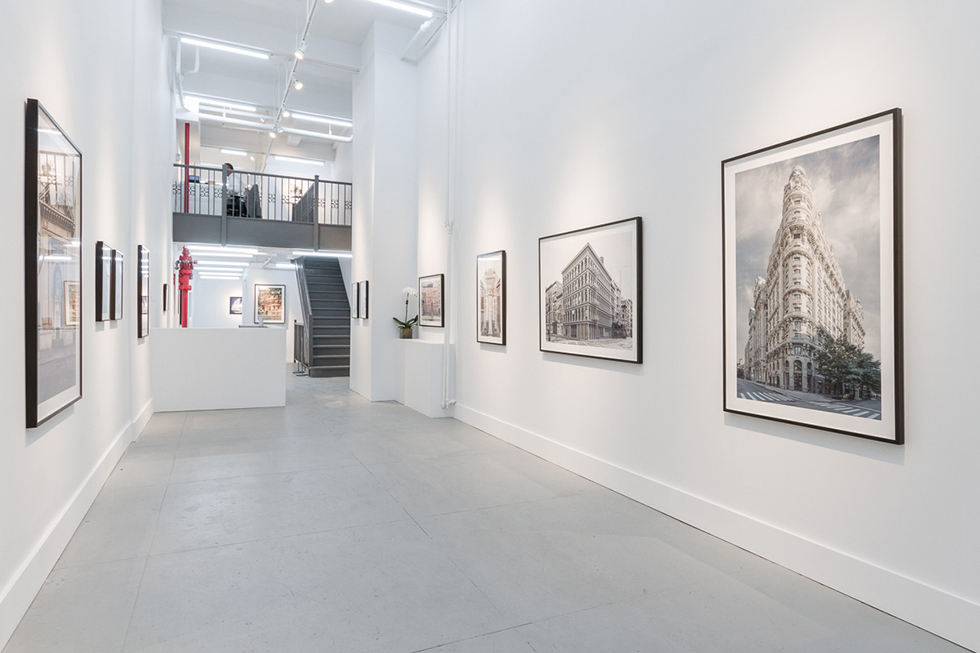
BC: The opening show will be the fifth exhibition at our gallery by an artist named Marc Yankus. We’ve shown his work for a long time, but he’s got a new series that he’s ready to unveil.

He’s one of our most popular artists, and I’m excited about the direction his photography has taken recently.

JB: Mid-October – gotcha. Sometimes when we do these interviews, I warm up very slowly and talk about people’s backgrounds. You and I have known each other for a long time, so I kind of skipped that, but it is fun sometimes to just hear where the bug came from.

How did you fall in love with photography? And what brought you to the place that you’re at now?

BC: I didn’t have any sort of background in art or art history until the second semester of my senior year of high school. For some reason, and I’m still not even sure why, I decided to take a photography course.

I had one extra elective, so on a whim, I took a photography class. The instructor was a younger teacher. She was really enthusiastic and energetic, and did a great job of getting her students excited about the subject matter.

It was mostly a darkroom class. At the beginning of every session, however, there would be 15 minutes of slide lecture, which was basically going through the history of the medium. And I was excited by both – creating photographs in the darkroom and the art history part of class.

I was so excited that when I went off to college the next year as a math major, I found a way to take as many darkroom classes and art history classes as I could.

But it really was that one semester in high school that lit the spark. I remember going to the public library to the section of photography monographs and just randomly pulling things off the shelf and leafing through them and seeing what excited me. And they were probably the same as a lot of other people, but there were a couple of books in particular that really blew the top of my head off.

JB: Like what?

BC: Nan Goldin’s “The Ballad of Sexual Dependency.”

JB: Of course.

BC: And Diane Arbus’s Aperture monograph. Those two in particular, I remember as being extremely excited about.

JB: You grew up in Colorado Springs, right?

BC: No. I grew up in the suburbs of Denver.

JB: Okay. That makes more sense. I had it mis-remembered. I was imagining you out there in that conservative – I don’t want to say wasteland, as I’ll get in trouble. I had a hard time seeing you there. The Denver area makes way more sense.

BC: Well, you know what, though? Back when I was in school, so we’re talking 1988 was when I graduated from high school, Colorado wasn’t the sort of purple state it is now. It was much more redneck, and there was a lot less culture in Denver at that time than there is now.

It’s fun for me to go back now, because people have flooded in from the East and West coasts so much that things have really changed. And now Denver’s kind of a fun place to be. But, I remember back when I was in high school and college, I couldn’t wait to get out.

JB: I bet. And was it always “I can’t wait to go to New York”? Was that a plan?

BC: It was, actually. I came to New York for the first time when I was in 9th grade for a debate tournament, and that was when I fell in love with the city. It’s weird how even when you’re a kid, you know something. It was like I knew I would end up in New York City. Lo and behold! Less than a week after I graduated from CU, Boulder, I had my bags packed and was on my way to New York City. I’ve been here ever since.

JB: Do you think New York is going to stay the center of it all? At least as far as America goes? Is its relative position weakening as other cities grow? What do you think?

BC: It’s interesting. The internet puts everybody at a more level playing field, for sure.

But, a lot of the creative people who helped build this city and make it interesting in the first place are being forced to go to other places. We’ve seen a mass exodus of the creative class in New York, for sure, which will negatively impact things. But, all that being said, there is still a certain cache being in New York City.

I continue to notice it. There are collectors all over the country, but people really do enjoy the experience of coming to New York City and exploring galleries and museums, and buying work here.

So even if they can get the same thing in Los Angeles or Chicago, there’s still a certain thrill of collecting work in New York. Everything will change, and is already changing, but I don’t foresee another city surpassing New York City as the art capital of this country, anyway.

Los Angeles is an interesting city, and there are probably even more artists there at this point than there are in New York. But, even with its world-class museums and impressive galleries, I would still say there’s no competition between Los Angeles and New York in terms of the volume of artwork sold per year.

JB: And you can take a subway in New York. I was just in LA, and it’s like you really get the sense that people on the West side and the East side, they’re living parallel lives. People plan their whole day around not having to get stuck in the kind of traffic that makes you want to hurt somebody, especially when the sun is beating down.

The last time I was in New York, I couldn’t believe that, because of the rising rents, all the pizzerias were going out of business. Can you still get a decent slice of pizza in your neighborhood? Is that a thing of the past?

BC: That’s a really good question. Gosh. Maybe one place by our gallery still has a decent slice. The pizzerias are fewer and farther apart than they ever were. (Laughter)

When I moved to New York, I lived on St. Mark’s Place, and there was a pizza place across the street that had dollar slices. I probably subsisted on that, and dollar falafels, for the first year I was here. I think you would not be able to do that in 2016.

JB: I really, really miss pizza.

BC: One thing we haven’t really talked about is that a lot of the defection of small and medium-sized galleries from Chelsea has been to the Lower East Side. And the notable fact is that they’re probably the same number of galleries in New York right now as there were prior to the recession in 2008, but because of the architecture on the Lower East Side the galleries tend to be in smaller spaces with lower ceilings.

They’re much more compact. The warehouse spaces in West Chelsea lent themselves better to contemporary art. That was another big deal in our transition – finding a space large enough to show a wide range of art.

JB: Was Brooklyn a consideration? Or not really?

BC: Briefly a consideration. Brooklyn at this point is culturally more interesting than Manhattan for emerging work, and certainly almost all of my friends live there now.

But as far as art galleries are concerned, there are all these wonderful places, especially in Bushwick, but for a lot of my collectors, there’s still this psychological hurdle. Perhaps it speaks to my age, or my experience or what have you, but I just felt much more comfortable staying within Manhattan.

JB: Gotcha. There were a ton of galleries in Williamsburg when I lived in Greenpoint, and then I came back to town five years ago and they were all gone. Or most of them were gone and replaced by retail, and it sounds like that is more or less what’s happening in Chelsea – this idea that high-end things that maybe sell more frequently or where they have lower dollar amounts but you sell more volume.

Is that a trend, do you think? Is that part of gentrification? Galleries giving way to boutiques?

BC: Yeah, that’s exactly what’s happening. The amount of handbag stores in New York City is just mindboggling. (Laughter)

But with regard to Williamsburg, some of the hottest young galleries were in Williamsburg prior to the recession. Most of the more interesting ones ended up moving to Chelsea.
But then the others just closed and nothing ever came back once the economy started to improve. Part of that has to do with the fact that Williamsburg just exploded in terms of real estate. It became so expensive that it wasn’t much cheaper than being in Manhattan.

But, as I said, there are some wonderfully exciting places in Bushwick. Artists are subverting the gallery system altogether, and establishing pop-ups and project spaces in apartments and other unexpected locales throughout Brooklyn and Queens.

JB: I did it. I had a gallery called BQE33. I ran a space out of my apartment, because it looked so much like a gallery, just for my Pratt buddies.

But now all those suckers are screwed, right? They’re shutting the “L” train for a year and a half. How are people there going to get to Manhattan?

BC: Yeah.

JB: All that pricey real estate doesn’t do much if you can’t get across the water, right?

BC: I know. That’s going to have such a huge effect on real estate values, on the ability for all these businesses to make money. It’s going to be a nightmare, honestly.

JB: Right. I’m glad it’s not your problem and it’s not my problem. (Laughter)

Let’s just pivot for a second to creative stuff, then. Part of your job is to look, and I would imagine you’ve got to have your guard up almost all the time, because people want something from you. That’s just human nature.

I know you’re going to museums. I know you’re going to see things, just out of joy and out of learning. Have you seen anything in New York or on your travels, any museum shows, anything that was just unbelievably good and reinvigorated you or anything like that?

BC: Yes, right now the Whitney Museum has this portraiture show that’s all drawn from their permanent collection. It’s actually a really nice way not only to reinterpret, but also represent their permanent collection.

A lot of museums will always have the same artworks on display. Even in the old Whitney space, when you went up to the fifth floor, you would always know what pieces you would see. But this exhibition was exciting and fresh, especially in terms of the inclusion of all media, including photography. They had some wonderful stuff there.

JB: I hate putting people on the spot like that, but I kind of have to. It’s part of the job.

BC: Well, yeah. I can think of a lot of things I saw that I didn’t like, but that was one exhibition I really admired.

Another exciting thing was The School, which is Jack Shainman’s gallery that he opened up in Kinderhook, which is about two hours north of the city.

He bought an old schoolhouse that he’s turned into a place to present contemporary art. I think it opened last year, but I just now made it this summer. And I was blown away.

And speaking to some of this migration, Shainman still certainly has a presence in West Chelsea, but now he’s got this other major operation going on outside of the city, which is really exciting.

JB: Cool. A lot of the first half the interview was kind of bleak, because things are not easy out there, and you’re very kind to share this kind of inside information with us.

But if we were going to pivot to something slightly more optimistic for the younger artists out there, or just the people who really, really want in on the industry and haven’t made it yet, is there any advice you might give to help people stay positive?

Obviously, perseverance is a great one, but are there things that you tend to encourage people on to help them understand why making art is important, beyond just trying to sell it? Or anything like that?

BC: Well, first of all, I think one encouraging thing is something that I touched on before. While everything is changing, there probably are still more galleries in New York right now than there ever have been. And a lot of those galleries are smaller, scrappier spaces that have an investment in emerging art.

We talked about a lot of artists who are being forced out of New York City by the rising real estate prices and cost of living, but the good news is, with the internet and FedEx, etc., artists don’t have to live in New York City to have New York City gallery representation.

An artist can set up shop in Pittsburgh or Detroit and still have a chance of making it in other markets and building an audience. There’s more flexibility in those terms which is fantastic.

A lot of what we talked about was sort of bleak, but I still have the energy and the positivity to try to expand and continue to have a space for younger voices. Despite all of these observations, I feel personally optimistic enough that owning a gallery is still viable and something worthwhile.

JB: No doubt. It’s kind of you to share your thoughts with us.

I’ve always try to remind people that the reasons why we started making art, the things it does for our psyche and our sense of self-esteem, the ability to become healthier if you use your art in the right way, these things don’t really have anything to do with getting famous or selling prints for five grand a pop.

Part of how I remain optimistic is to just remind people that there are deep reasons to do this stuff that don’t involve getting 250 likes on your Facebook post about your next show.

BC: You’re completely right. And you need to be able to keep a healthy perspective about fulfillment and achievement. This relates to anything, not just the art industry, but it goes back to looking at yourself and not comparing yourself to others, etc.

JB: Etc, indeed. So we’ll end on a positive note. I wish you nothing but the best in this new venture. On behalf of all our readers, thanks so much for your time.

BC: It’s always good talking to you.
© Randhy Rodriguez http://randhyrodriguez.com/ Marc Yankus exhibition

© Randhy Rodriguez http://randhyrodriguez.com/ Marc Yankus exhibition

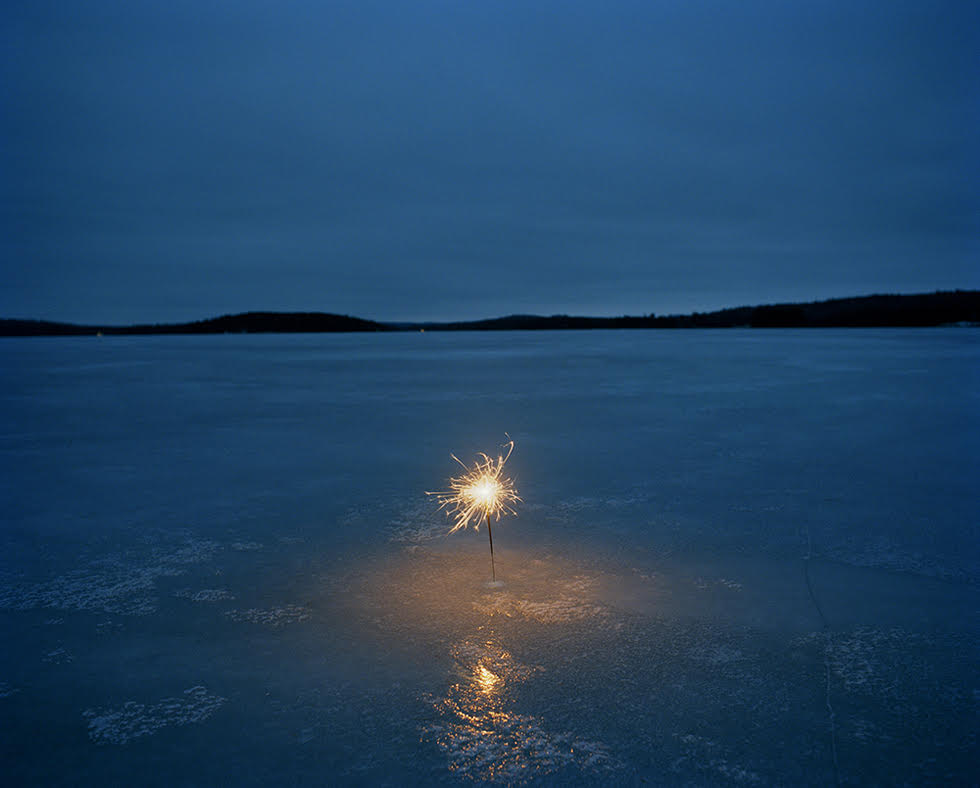
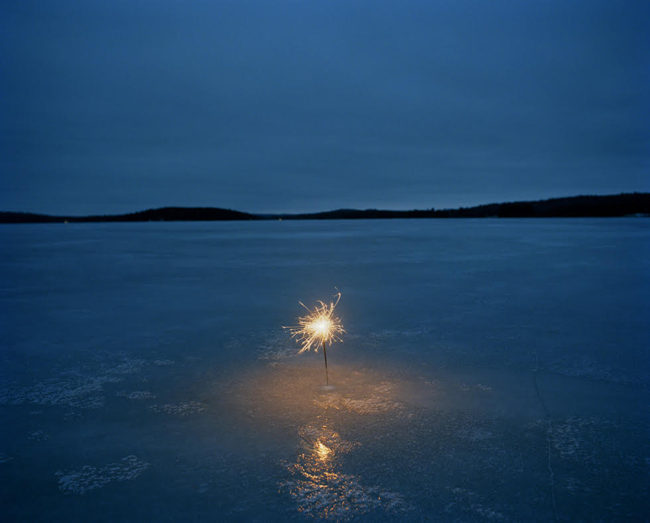
© Adam Ekberg, “A sparkler on a frozen lake,” 2006, Archival pigment print.
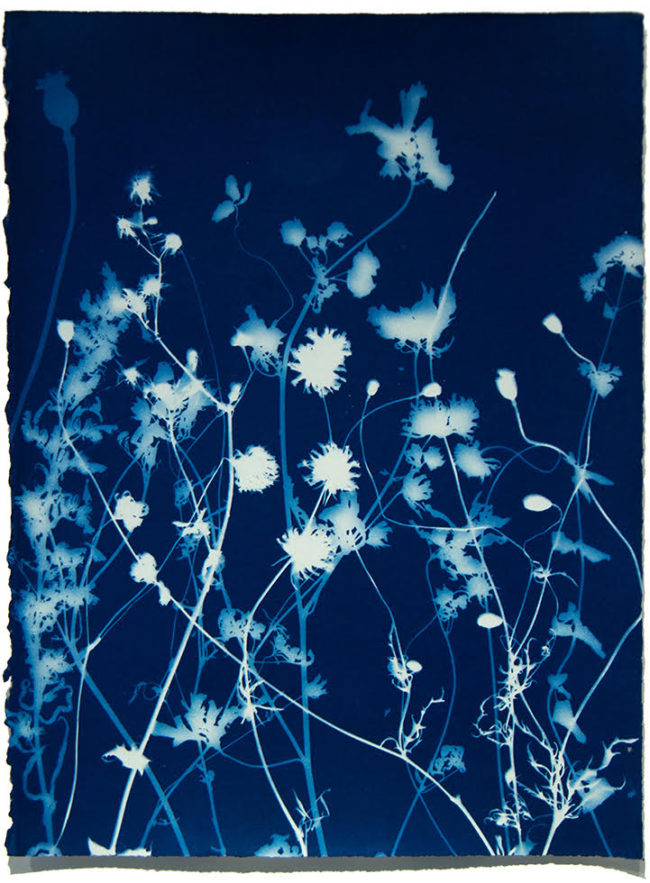
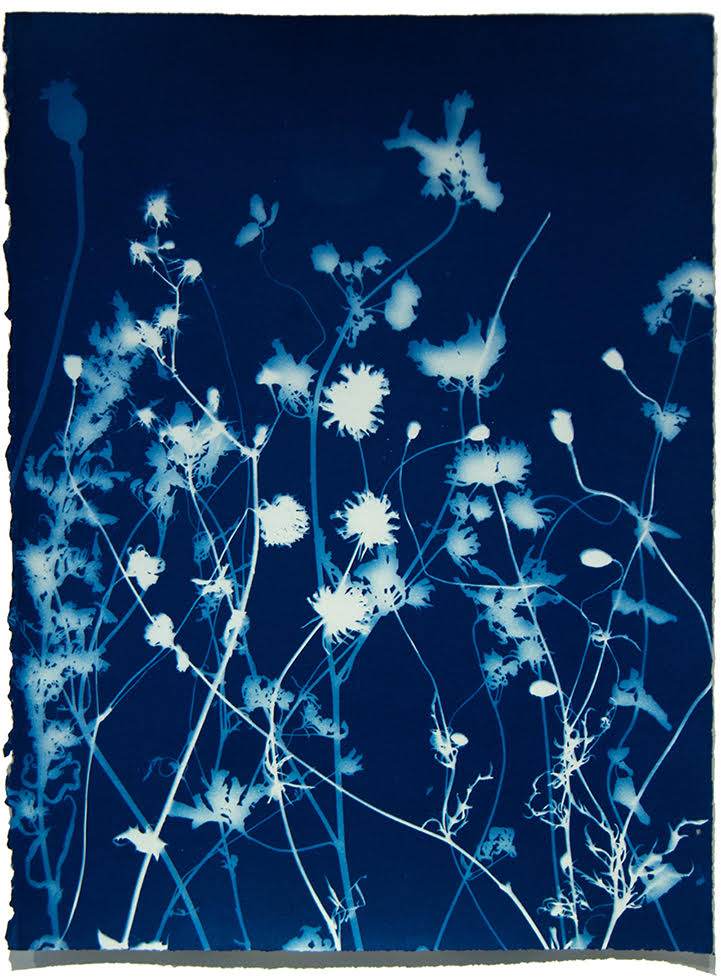
© Pipo Nguyen-duy, “Untitled L30,” 1998, Cyanotype (Unique).

© Jill Greenberg, “Untitled (Ursine #59J-48),” 2006, ARchival pigment print.
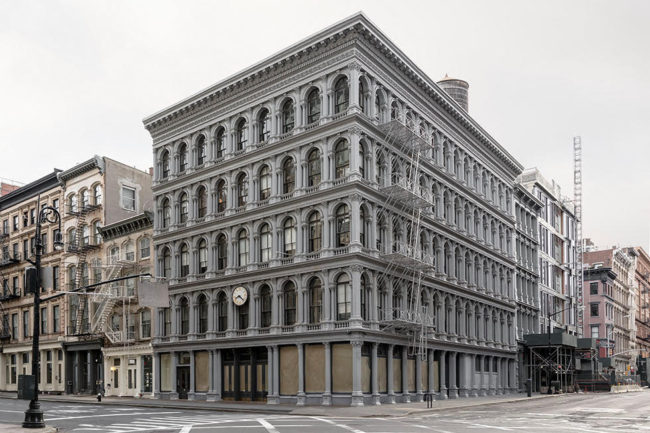
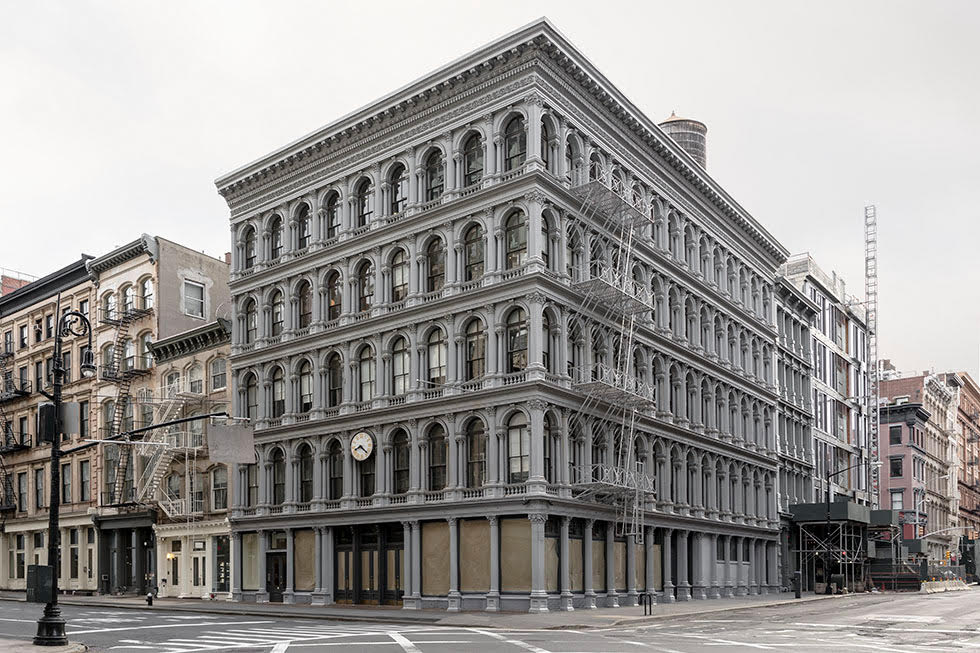
© Marc Yankus, “Haughwout Building,” 2016, ARchival pigment print.
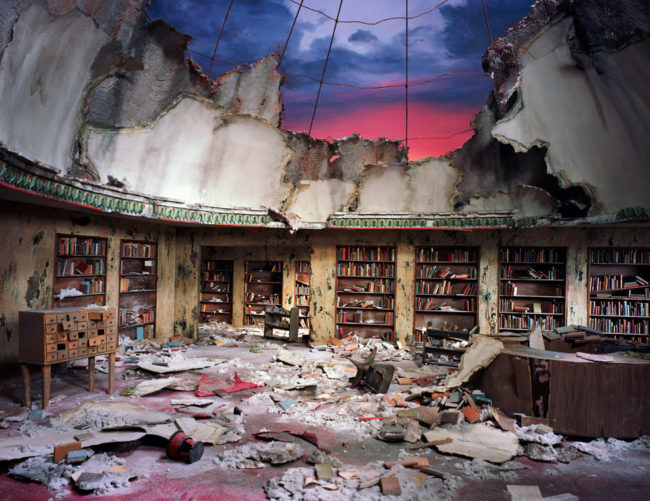
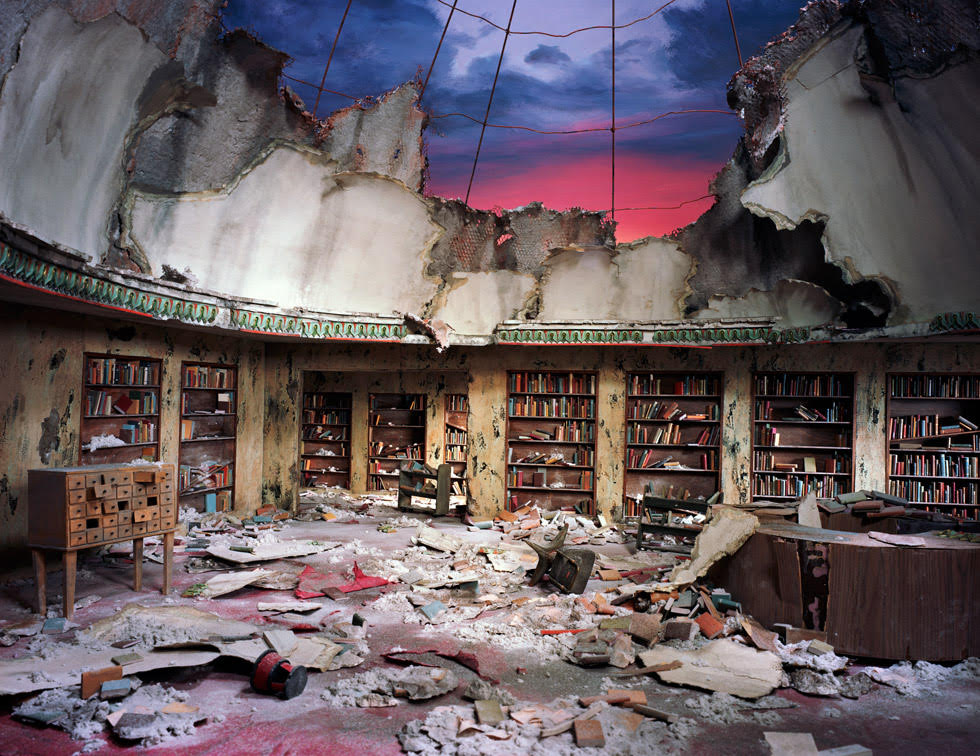
© Lori Nix, “Circulation Desk,” 2012, Archival pigment print.

------------------------

Visit our sponsor Photo Folio, providing websites to professional photographers for over 9 years. Featuring the only customizable template in the world.

------------------------

16 Feb 01:34

Bicycle Safety in 1924

by michaelkluckner

This comes from artist Gary Sim, who will be giving a lecture on Surviving While Being Creative, about artists’ historic travails in BC, to the Vancouver Historical Society at the MoV on Thursday February 23rd at 7:30 pm.

safetyfirst