Since the 2011 suspension of VIA Rail's Malahat, running daily between Victoria and Courtenay, Vancouver Island has been without passenger rail, but for one brief period, there were five rail lines radiating from Victoria
These were, in rough order of construction:
- The Esquimalt & Nanaimo Railway (E&N, in purple). This line was the first and last, and parts of it are still used for freight purposes. Beginning in 1883, it ran from Victoria to Courtenay with branch lines serving the Cowichan Valley, Crofton, Port Alberni and the Great Central Lake, providing a nucleus for many of the towns of the east side of the island. Early on there had been intentions to extend the line to Campbell River bridge over the Johnstone Strait, and build a railway along the cliffs of Bute Inlet connecting to the Canadian Pacific Railway in the interior, though this was never carried out due to the staggering expense required. This line was later adsorbed into Canadian Pacific's transcontinental rail system before being sold in 1998. Today the right-of-way is largely in the hands of the Island Corridor Foundation, a collection of local governments and First Nations who have thus far been unable to restore the line to full operation.
- The Victoria & Sidney Railway (V&S, in orange) This line was first started in 1892, and extended through the centre of the Saanich Peninsula by way of Saanich, Royal Oak and Saanichton to Sydney, where it served ferry connections to the Lower Mainland. Ferries out of Port Guichon, now Ladner in Delta connected to the Victoria Terminal Railway, which was later rebuilt as the BC Rail Port Subdivision. In 1902, the V&S was purchased by the Great Northern Railway, a largely American transcontinental railroad owned by Canadian railway baron James J. Hill. As the next twenty years rolled on, railroad competition grew intense within the narrow confines of the Saanich Peninsula, and the V&S would cease operation by 1919, leaving little but a few trails, property boundaries, and roads.
- The British Columbia Electric Railway (BCER, in yellow). While the BCER or its predecessors had been in operation in Victoria since 1890, they did not expand outside their streetcar network 1913, when the Saanich Interurban was constructed. The Interurban was an electric railway which generally ran up the east side of the peninsula, by way of Brentwood Bay, Saanichton, Patricia Bay and Deep Bay. It provided much more frequent service than its competitors as an electric railway, though it was never a financial success. Built late in the interurban era, it never had time to build up substantial development around itself or generate significant freight traffic as the age of the automobile dawned and two rail competitors competed for passengers and shippers. The BCER ended up closing the interurban in 1924 and retreating back to their streetcar network which lasted in Victoria until the late 1940s. The line is traced out by a number of roads and one of the runways at Victoria International Airport. Map data for this was borrowed from the Canadian Electric Railway Map Collection
- The Canadian Northern Pacific Railway. (CNoR, in red). The CNoR was an ambitious project, attempting to build a second transcontinental mainline to compete with the CPR and the government backed Grand Trunk Pacific project, and they expanded rapidly in this quest, building and purchasing railways from Halifax to Victoria. With this quick pace of growth, they would also go bankrupt shortly assembly and were a component of the 1918 creation of Canadian National Railways (CN), which would continue construction into the 1920s. On the Island, they would build two lines:
- Patricia Bay Line: The CNoR intended to add a third railway to the Saanich Peninsula, running between Victoria and Patricia Bay up the west side of the peninsula by way of Cordova Bay. The Patricia Bay Line was built between 1913 and 1917 and was supposed to link to a ferry service to Port Mann in Surrey near the foot of the bridge of that name. Passenger service would last only two years to 1919 when the Patricia Bay line became freight-only. As the V&S was abandoned that year, CN picked up their connection to Sidney. Most of the line was abandoned in 1935, leaving the peninsula without any sort of rail for the first time since 1892. The route is marked out largely by the Patricia Bay Highway and parts of the Galloping-Goose Trail.
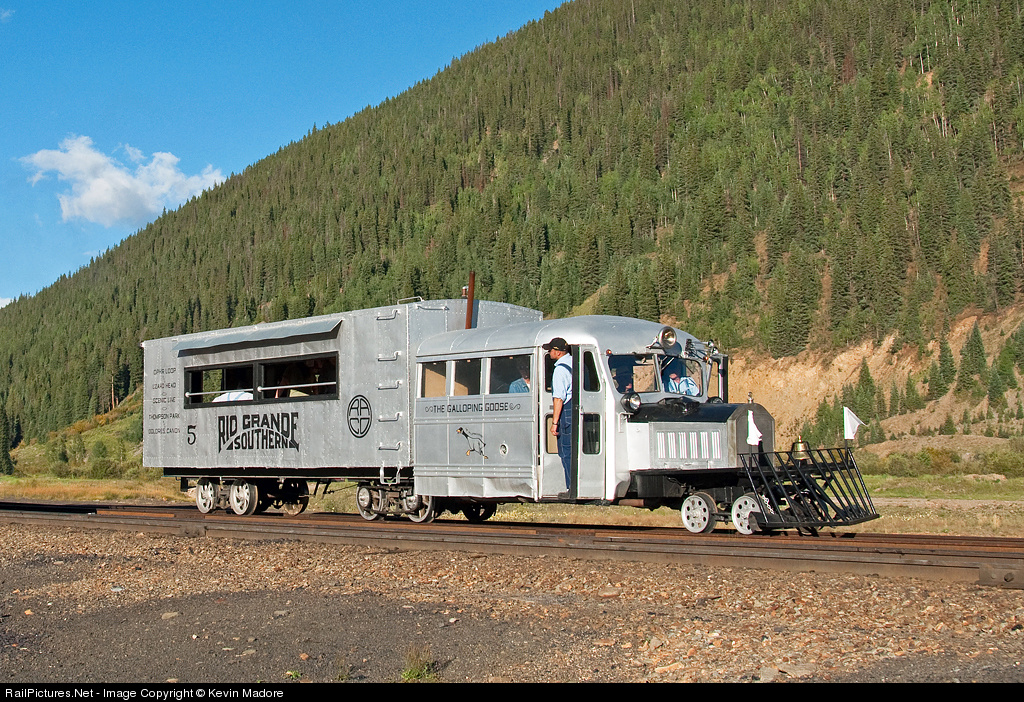
- Cowichan Line: The CNoR had ambitions of building a line through the interior of the island all the way from Victoria to Port Alberni, building by way of Colwood, Sooke, Shawinigan Lake, Lake Cowichan and all the way to the far side of the lake where they ceased building. Construction began in 1911, continuing on to 1928. CN operated passenger service between 1922 and 1931 from Victoria to Sooke and Lake Cowichan using a vehicle similar to a Galloping Goose, an early self-propelled rail car (such as this preserved example from Colorado). CN began cutting back this line in 1957 as logging moved more to trucks and in 1979 the segment connecting the Cowichan Valley and Victoria was abandoned, leaving only the route between Lake Cowichan and a pier in Cowichan Bay to be abandoned in 1990. This route makes up the bulk of the Galloping Goose Trail, which commemorates the railway history of the island.
What could Be
So what does this all have to do with regional rail? The only line offering much more than daily frequencies at the time was the BCER, and it lasted a mere 11 years. While there are many examples passenger railways that seem like the should have been preserved and invested in, with most of these services gone before 1935 Vancouver Island lines would not seem like strong candidates. It is interesting nonetheless to think about how things could have been.
The first and most obvious candidate for contemporary transit needs would be the still-extant E&N, over which CP and then VIA operated Budd DMUs. VIA announced the line was not maintained to safe standards in 2011, ending service and after some time the cars were shipped back to the mainland. While service has been suspended, the line has not been abandoned, and re-activation would not be from square-one.
 |
| The former E&N through suburban Victoria. |
The 2010 VIA Rail timetable scheduled Victoria-Langford at 19 minutes with two intermediate stops. This was using 60 year old Budd rail diesel cars (RDC, or Dayliners). RDC, are essentially 'all-wheel drive' trains and have superior acceleration to a locomotive hauled train like the West Coast Express, and so would have made decent time. However, they were still 60 years-old operating over under-maintained tracks and would not represent the best service possible. Older timetables indicate schedule of 17 minutes, and modern diesel multiple units such as those used on the Trillium Line in Ottawa (or electric multiple units or light rail vehicles) could potentially improve the schedule through better performance. Having more stops for local service would extend the timetable somewhat, but improved tracks and signalling and platforms as high as the train-floor to speed boarding could negate that, making more connections in as much time.
 |
| The "Colwood Crawl" |
What kind of service should run on the line?
That depends on what you think of the rest of the line. The E&N is the island's sole remaining intercity mainline, and thus the question of maintaining the potential for through service needs to be asked. If you believe that the E&N will ever be desirable for passenger or freight through-service to Nanaimo, then transit to a mainline standard is necessary. If not, then it might make more sense to convert the corridor to light rail. The mainline between Goldstream and Duncan is not an especially well-engineered railroad, with some long grades and a great deal of curvature, limiting potential passenger speeds and increasing freight expense, with the added complication that freight to the the mainland must go by rail ferry. It is nonetheless possible that, sharing the burden of maintenance with passenger service, Victoria industries could make economical use of rail freight if it were available.
 |
| E&N Elevation Profile from Victoria (left) to Courtenay (right) |
As an intercity line, the E&N has the advantage of serving the downtowns of most population centers between Courtenay and Victoria. Historic timetables show the 225-kilometer route was run in four hours and ten minutes, averaging a rather unimpressive 54 km/h. Per Google, driving the route would take less than three hours, though the road is only a few kilometers shorter. A car-competitive travel time would thus require an average speed of 90 km/h, which is about as fast as the fastest long distance Amtrak trains, and is unlikely to be achieved on this line, but progress could be made towards that goal. It would take a greater understanding of railroad engineering that I certainly have to say how much more time could be squeezed out of the existing route if someone with money were determined to do so, however its previous existence as an isolated branch line with no more than a train-a-day suggests that it was never optimized for economically fast passenger travel. Such an optimization would improve signalling, add sidings, remove slow orders on under-maintained segments, raise speed limits, re-time crossing signals, and generally raise the standard of construction and maintenance towards the point where trains can run as fast as the route geometry allows (mostly a matter of curvature). While a typical North American mainline passenger service must be built around the need of extremely large, heavy freight trains that tend to drive up maintenance costs for fast passenger trains, as an isolated line with little freight traffic passenger service can be prioritized in ways that are not possible elsewhere.
For Victoria commuter trains, the lowest capital cost operating program for the E&N would be to implement a diesel multiple unit service, using modern versions of the old Budd rail diesels, similar to the Trillium Line in Ottawa. These vehicles are used for mainline rail service in Europe and elsewhere, where they serve rural areas and less used commuter routes. One potential benefit would be that the same vehicle fleet can be used for commuter service and intercity service to Nanaimo and beyond, reducing overall costs, and allowing trains not needed off-peak to continue bringing in revenue. However, any more intensive service requiring electrification would preclude intercity equipment sharing.
More extensive service could make electrification an economical choice, in the form of light rail or mainline electric multiple units. These generally cost less to operate, are cheaper to maintain, and improve acceleration, (which is important for local service with many stops) at the large fixed cost of building and maintaining an electrification system. One option would the use of tram-trains, which are built to both be compatible with mainline vehicles and freight while also being appropriately sized and powered for extensive street running in the manner of a tram. Should Victoria wish to develop a wider light rail network, than light-rail compatible mainline equipment would open opportunities for through-running onto the light rail system. Given the single-point downtown access of the E&N route, this could prove valuable for expanding the service's downtown footprint.
Unfortunately, the E&N is not currently a railroad with a bright future. Large sections have been taken out of service due to low traffic and under-maintenance. The managing Island Corridor Foundation (ICF) are frequently targeted as secretive and ineffective and participating First Nations have moved to take back parts of the right of way in the view that the line is unlikely to ever return to service. There has been a repeated pattern of the ICF, local governments, the Province, and the Federal Government scraping together funding to restore service, only to discover that the line needs far more funding than committed, with all of this to the end of bringing in a once-a-day run with VIA rail's antique Budd cars. While the most recent service proposal involved running trains in such a way as to serve some Victoria commuters during the morning leg, a program of any substantial investment that could make the corridor truly useful to the traveling public would require bolder ideas. Without a larger program, when asked to fund repairs to enable a single train a day to amiably amble between their communities at sub-bus speeds, the public may reasonably ask why they should be bothered.
Unfortunately, the E&N is not currently a railroad with a bright future. Large sections have been taken out of service due to low traffic and under-maintenance. The managing Island Corridor Foundation (ICF) are frequently targeted as secretive and ineffective and participating First Nations have moved to take back parts of the right of way in the view that the line is unlikely to ever return to service. There has been a repeated pattern of the ICF, local governments, the Province, and the Federal Government scraping together funding to restore service, only to discover that the line needs far more funding than committed, with all of this to the end of bringing in a once-a-day run with VIA rail's antique Budd cars. While the most recent service proposal involved running trains in such a way as to serve some Victoria commuters during the morning leg, a program of any substantial investment that could make the corridor truly useful to the traveling public would require bolder ideas. Without a larger program, when asked to fund repairs to enable a single train a day to amiably amble between their communities at sub-bus speeds, the public may reasonably ask why they should be bothered.
What Could have Been
The rest of the islands former railroads are at a distinct disadvantage - they no longer exist, and some have not existed for nearly a century. The most recently extant among them is the former Canadian Northern Pacific/Canadian National Railways lines between Victoria, Cowichan Lake, Cowichan Bay, and Patricia Bay.
The most likely place service could be re-introduced along this line would be roughly between Esquimalt Harbour and Victoria, connected to the E&N to the West and used for access to Victoria instead of the E&N through Esquimalt. The primary benefit of this would be in better access to areas north of Downtown Victoria either by street railway or through old CN private right of way (which is partially grade separated), though this route is longer than the E&N to the old terminal. This has much to do with the CN right of way being used to construct the Trans-Canada Highway through this segment and as such is already impacted. East of Esquimalt Harbour, I believe its fair to reject any reactivation of this line out of hand. The right of way closely parallels the E&N as far as Glen Valley, and population is thin-on-the-ground in Metchosin and Happy Valley which such a line might serve. Unless reactivation were done with the goal of spurring green-field suburban development, there would be few to ride it. The route to Sooke is remote and circuitous, and that description only becomes more apt beyond there.
That leaves us with the three Saanich lines. Is there anything useful to be salvaged here, in a place where passenger rail service was gone completely by 1924? Let us start with the V&S, first line built and first closed in 1919. As a railroad that was abandoned 98 years ago, it is mostly gone. The right of way was parcelled out long ago to area farmers, homeowners, or road builders. Its former route is covered with homes, roads, streets, and backyards such as to make anything resembling it simply impossible to rebuild. However, as the first mover on the peninsula the V&S hit many populated places that other's miss or only pass near. The BCER Interurban is mostly a road. Its route is the most circuitous of the three, and perhaps the least populated, though unlike the others it did serve Brentwood Bay. Part of the route is today an airport runway. The CNoR route might have been the best built route, with a private right of way access to Downtown Victoria where the BCER and V&S ran over city streets. The CNoR also has the least curvature and had the shortest route from Downtown Victoria to the point at Bezan Bay where all three lines nearly come together, potentially allowing for higher speeds. This fairly well-engineered right of way might explain why, between Bezan Bay and Keating, the CNoR right of way was later repurposed as Highway 17. Unfortunately for our purposes, much of the route that isn't highway is suburban street. Given these realities, we lack any sort of easily repurposeable right of way between Sidney and Victoria. The only plausible regional rail connecting Victoria to the ferries is likely to run along Highway 17, and it is debatable whether highway transit is ever really better done than with a bus lane given the problems with heavy investment in freeway rapid transit.
In an alternative timeline, the most sensible thing might have simply been for the BCER to have leased the V&S and converted it to their purposes. On the Mainland, this is how they acquired the Vancouver & Lulu Island Railway, a steam railroad and CPR property which was leased, electrified and operated for many decades as the Steveston and Marpole - New Westminster interurban. One or two lines in Saanich might have been able to generate enough traffic to have become self sustaining, especially combining the reasonable directness of the V&S and the superior speed and service of BCER's electrification, but three managed to break all of them.
This post has addressed three sorts of topics - what rail lines existed, what they could be used for today, and what its fun to imagine them having been used for. I'd like to think that Victoria Regional Rail could be a real live thing in the foreseeable future. I'd more tenuously suspect that useful service could be brought to the E&N were there a serious desire to do so. I'd like to imagine what could have been done to cement together the towns of Saanich with Victoria and the ferries had things been different.
This post has addressed three sorts of topics - what rail lines existed, what they could be used for today, and what its fun to imagine them having been used for. I'd like to think that Victoria Regional Rail could be a real live thing in the foreseeable future. I'd more tenuously suspect that useful service could be brought to the E&N were there a serious desire to do so. I'd like to imagine what could have been done to cement together the towns of Saanich with Victoria and the ferries had things been different.

 I was 19 years old when a some configuration of anonymous people came after me. They got access to my email and shared some of the most sensitive messages on an anonymous forum. This was after some of my girl friends received anonymous voice messages describing how they would be raped. And after the black and Latinx high school students I was mentoring were subject to targeted racist messages whenever they logged into the computer cluster we were all using. I was ostracized for raising all of this to the computer science department’s administration. A year later, when I applied for an internship at Sun Microsystems, an alum known for his connection to the anonymous server that was used actually said to me, “I thought that they managed to force you out of CS by now.”








 Google has put a big focus on photos, understanding that for a lot of people around the globe, it’s the perfect way to preserve memories.