Shared posts

20 Jun 00:43

Antitrust posturing

by Benedict Evans

"You give me the awful impression, I hate to have to say it, of someone who hasn't read any of the arguments against your position ever." - Christopher Hitchens

Late last year the US congress's antitrust committee held a series of hearings, and produced a 400 page report, on competition issues around big tech platforms. The report, co-authored by the new FTC nominee Lina Khan, essentially claimed that these companies are collectively the new Standard Oil, crushing competition and squeezing out innovation across many different fronts.

Unfortunately, this report was also, to be charitable, very rushed, with great chunks of advocacy pasted in without any scrutiny, and with significant errors of fact every few pages. Perhaps the worst example of this was the claim that tech startup creation has 'sharply declined' in the last decade. This is an important claim, and if it was true we would obviously need broad and urgent intervention - but in fact, it was based on a data set that ended in 2011, which was both nine years out of data and just at the end of the financial crisis. People in tech agree on very little, but everyone would agree we're in the hottest market for tech startup creation in history - any relevant data would tell you that tech startup creation has actually risen by three to four times in the last decade.

This report has now been followed by five proposed tech antitrust bills, published on Friday. Given the background, and the current US political environment, these are aggressive. However, like the report, they contain a mix of real concerns, good ideas, and some pretty questionable logic.

The five bills, with their aims, are as follows:

  1. Merger Filing Fee Modernisation Act: raising funds to pay for more rigorous antitrust enforcement

  2. Access Act: user data portability

  3. American Choice and Innovation Online Act: steering and self-preferencing of services

  4. Ending Platform Monopolies Act: bundling, private label, and platform companies competing with services on their platforms

  5. Platform Competition and Opportunity Act: a ban on all M&A

Bills 2 to 5 apply to companies that are a 'covered platform', which is defined as a company that has either net revenue or market cap of at least $600bn and either 50m US consumer MAUs or 100k US business MAUs.*

Collectively, these bills are a catalogue of most of the major arguments made against large consumer tech companies in the last few years, and of the remedies that have been proposed. Unfortunately, some of them also show little sign that their authors have engaged with or even read any of the discussion we've all had around those ideas. I've listed these bills roughly in order of how coherent they are (the first is out of my scope).

Data portability. No company wants to make it easy for you to switch to a competitor, and many regulators are exploring data portability requirements of some kind, from making it easy to export your photos from Facebook, to moving business operations data between enterprise software tools. So, this bill would require covered platforms to make APIs to let you export your data to another tool in some reasonably standardised way, and give the FTC a mandate to regulate that.

What is 'data', though? Four questions: 

  • First, much of this data is highly specific to a given software company's product and infrastructure (and its relation to millions of other users), so the practical value to anyone else might be quite limited. Two competing products might create data from customer inputs in unusably differently ways.

  • Second, who owns that data, exactly? if I 'like' your Instagram photo, is that my data or yours? That doesn't have a simple answer. How much of 'your' data is yours to export?

  • Third, how will this work? We don't know - the bill is 15 page long and punts all the questions to the FTC, which is supposed to just work all this out. So, we have a law that says you must make X portable, without defining X.

  • Finally, one could argue that this doesn't address the most important kind of data - network effects. If I want to compete with Instagram, I don't just need your photos - I need your entire social graph and all your friends activity (and, to repeat, that's not 'your' data to give me). If I want to compete with Google search, I don't need your search history - I need raw search and click data for millions of users. That's where the real competitive value of data lies, and that's not addressed here at all.

Steering, self-preferencing and competing on your platform. Google puts its own restaurant data above Yelp in search results, Apple bans Spotify from asking for a credit card or even telling you that's an option, and Amazon makes private label products that compete with its suppliers. Platforms compete with other people on their own platform. This is a problem, so we should ban it, right? Well, yes and no.

Two of the laws proposed on Friday address these questions ("American Choice' and 'Ending Platform Monopolies'). The first is aimed narrowly and specifically at self-preferencing and steering. Apple could no longer require apps to use in-app payment or ban them from offering a credit card sign-up, and Amazon would be banned from favouring its own products over third parties' in the store. The EU has already made simular decisions, and I've written elsewhere (starting in 2011!) that I think Apple's position on in-app payment and customer communication is a problem. This law, or something like it, looks like a question of how and when, not if, and I wrote a detailed discussion of resetting the App Store here.

So, that law is pretty sensible. Unfortunately, the 'Ending Platform Monopolies' law is impossibly broad. Google, Apple, Facebook, Amazon and Microsoft would be banned from doing anything on their platforms that anyone else might do, and from anything that might be a conflict of interest. They would not just be banned from favouring their own products - they'd be banned from having any products at all that they could theoretically favour.

This of course comes from a framing that 'if you own a platform you can't compete on it' - Apple or Google should not have any products or features that compete with companies on their platforms. That sounds very clear - Elizabeth Warren made it a mantra. But what if I want to sell a camera app for your iPhone? OK, so Apple can't include a camera app - or a clock, or an email app, or indeed a user interface or a file system. An Android phone has its own TCP/IP stack (in the 90s Windows did not, and you had to buy one), but other people would like to sell you that if it wasn't there, so that's a clear conflict of interest and has to go.

There's a very basic misunderstanding at play here - you can't ban a platform from having 'any' feature, service or product that someone else might want to make, because that describes literally every single thing that a platform does. There is, to repeat, a very real problem here - this was the whole Microsoft/Netscape case. You can certainly carve out specific issues, such as Apple Music, or private label on Amazon, though as I wrote here, worrying about private label is a pretty irrational moral panic. But, you'll need to spend a lot more time thinking about how this stuff works and what the word 'platform' really means, because this law wouldn't just ban Apple Music and Google Maps - it would ban iOS and Android. I wrote in detail about the bundling problem here.

Banning M&A. The last law released on Friday is a very straightforward ban on any acquisition of a company that competes with you, or that might in the future, or of any company that might make your products better in any way. Since these are the only reasons to do M&A, this is simply a blanket ban on Google, Apple, Amazon, Facebook or Microsoft buying any company, of any kind, ever again. We all understand the concern with Facebook's acquisition of Instagram and the desire to subject such deals to much greater scrutiny, but it's hard to dignify this proposal as more than neo-Trumpian posturing. 

So.

Setting aside the detail, what lessons can we learn from this? There's no question that there are business practices all over large tech companies that are bad for competition and should be regulated. This is all coming. However, there are also business practices that are bad for individual competitors but good for the consumer and often indeed good for broader competition. And more fundamentally, there are many decisions that are deeply bound up in trade-offs between the product, privacy, competition, ease of use, profitability, innovation, portability and many other things. If you want to solve the problems, you need to understand why they exist and accept that there will be complexity.

When people in tech say 'you don't understand - it's complicated', a common and easy reaction is to think that this is special pleading - a claim that somehow the law should not apply to tech. But in fact, it's the exact opposite - this is a plea that tech policy has the same complexity and trade-offs as any other field of policy. We would all understand that you cannot solve car safety or traffic congestion with a five page bill, and that breaking up GM would solve about two of the fifty reasons we worry about cars. We understand that education policy, energy policy or healthcare policy are complicated and full of trade-offs, and that the only people who think it's simple and easy have their fingers in their ears. Unfortunately, those people wrote some of these bills. 


* People with lawyerly minds will note that you could get under the $600bn cap by swapping equity for debt (this is what EV is for, kids), and ask whether 'business MAUs' means customers or seats - a lot of enterprise software companies have 100k seats. Equally, anyone who's read the US constitution will recall the clause that forbids a 'bill of attainder' - a legislative act that singles out an individual or group for punishment without a trial. Does a law that singles out five particular companies without any analysis or qualitative discussion fit that definition?


20 Jun 00:43

iPad Pro 12.9 deutlich billiger

by Volker Weber

Ich bin ein großer Fan des iPad Pro, und zwar des Modells mit dem großen Bildschirm. Beim kleineren Modell in “normaler” iPad-Größe greift man besser zum iPad Air und spart eine Menge. Dabei ist das neue iPad Pro mit M1 Chipset teurer geworden: 1309 Euro kostet es nun im Amazon Apple Store. Das 2020er Modell aber kostet satte 400 Euro weniger und geht jetzt für 909 Euro und kostet damit kaum mehr als das iPad Air. Das finde ich ein ordentliches Schnäppchen.

20 Jun 00:43

Never Felt Safe

by Dave Pollard

I‘ve been simultaneously reading two books of essays, largely autobiographical, whose authors’ courage at admitting the truth about themselves is disarming, even startling. Melissa Faliveno’s Tomboyland describes growing up in rural Wisconsin and evolving as a queer feminist; here are a few excerpts from this amazing writer (photo above from her website):

I tell her I think this is a cultural thing, a midwestern thing. And maybe what I mean is it’s a class thing. It’s something I think about often, having grown up in a small town — where you do your best to hide your pain, where if you let it go a whole town will know. Talking about your problems I think is something reserved for the upper classes, the educated classes, for families in which a life of the mind is more important than a life of work, and of the body, and of the land. Where my friend Sue comes from, and where I come from — generations of farm families with little money and many mouths to feed — we don’t have time for the kind of trouble that dwells in the brains or heart. We learn this from the stories of our forbears, who were more concerned with the kind of trouble a drought could bring, or whether the crops would yield. We don’t have the tools — the language, the education, the resources — to say some things aloud, to deal in the daylight with our problems. So we keep them to ourselves, and we carry them with us.

In a small midwestern town, darkness gets buried like a secret. I came from a place that kept silence like a curse, a people who stuck to their silence like work. In a place where the land is both fertile and hard, lush and alive then brutally cold — a land we work with our hands until they’re hard, a land that decides our fate no matter the toil — we are silent about our hopes. We are silent about our fears. We are silent about money, unless we think someone has too much. We are silent, most of all, about our bodies, our desires and our pain. In my family, we sat in our silence; we steeped and stewed in it; we kept it packed inside.

•••

“It seems like our job is to figure out what to do with our grief,” my friend Jules says. “Like, do you just drag it behind you? Do you figure out a different way to relate to it? Do you use it to fuel something? Do you make it your own?” No one I ever knew had used the word grief like Jules did. I’d only ever heard the word within the context of death. Jules, instead, talked about grief as if it was just a part of life, that it was something we carried.

“How do I carry it with me?” she says. “Because you can’t cut it off and you can’t leave it behind. I think that might actually become a defining feature of a person — how you relate to your grief and what you do with it. I think we need to expand the definitions of grief. Sometimes you get angry, and sometimes you get sad, and sometimes you profoundly mourn something. And I wish it was more a conversation in general, so it would be seen as a normal part of living, as opposed to the way you’re broken. The reasons I didn’t want kids were all selfish. I didn’t want to watch their hearts break, and I didn’t want to watch them struggle, and I didn’t want my heart to be broken by watching them go through the same things I went through, or things I don’t even know about now — I didn’t want to feel the pain… My mother had such a picture in her mind of what a good mom was, and she tried to do it, but she really didn’t have the ability because no one fucking does.”

•••

“Is there anywhere you feel you can be your full self?” I ask Jules.

“No! Never! I don’t think I’ve ever been my full self anywhere. I don’t even think that’s a thing.”

We laugh, because we understand that on some level the idea of a whole self seems like the dream of a much younger person, who has yet to make the hardest decisions — the kind that thrust a person down one path instead of another; the kind that are immutable. We laugh because we both know now it’s not possible. But as we part ways that night, and I watch the blinking tail-light of her bike disappear into the darkness, I grieve the person who used to think it was.

Vlogbrother John Green’s The Anthropocene Reviewed is a collection of transcriptions of his podcast, which mixes astonishing bits of historical and scientific research with brilliant quotes you’ve never heard, jaw-dropping insights into human nature,  and raw admissions of his struggles to cope with everything from being bullied and beaten up in childhood in Orlando, to his OCD, which has driven him close to the point of madness throughout the current pandemic.

In one essay John (photo above from his website) quotes Amy Krouse Rosenthal‘s words of wisdom: Pay attention to what you pay attention to, and then he adds:

Marvelling at the perfection of [a dying leaf his son had shared with him] I was reminded that aesthetic beauty is as much about how and whether you look as what you see. From the quark to the supernova, the wonders do not cease. It is our attentiveness that is in short supply; our ability and willingness to do the work that awe requires.

In another essay he wonders what moths, irresistibly drawn to all forms of human-made lights, will do when our species has gone: Will they be drawn to the moon? In another, he reveals the astonishing fact that practically all the penicillin ever dispensed descends from the mold on a single cantaloupe, found by accident by bacteriologist Mary Hunt in a grocery store in Peoria in 1942 during the search for sources for what was then a rare antibiotic.

Listen to his podcast on Wonder and Sunsets and it will make you cry with knowing how broken and amazing our sad species is. You can feel the pain he carries in his gentle, fragile, yet reassuring voice.

I love these two books, but there are moments in them I cannot endure — they are simply overwhelming in their self-awareness and their brutal honesty about their narrators, and the human condition.

Over the last decade, with a lot of help, I have finally started to pick away at all the gunk that has been so layered over who I think I am to the point I became unrecognizable, even to me. The insufferable arrogance that I once displayed, largely as a defence mechanism of course, has yielded at least a bit to an awareness that my whole life, and the bulk of the decisions I have made, to do, and not do, things, has been driven almost entirely by fear.

In 2016 I tried to set aside all the self-serving delusional nonsense in my bios and identify the true “story of me”:

My whole life I have been bewildered, unable to really make sense of anything, just muddling my way through, and I have often been quite fearful and socially anxious as a result. I have put great effort into many things but have nothing much to show for it. I’ve had some interesting insights, but nothing that’s of much practical use to anyone. I have been generous, but only when I could easily afford to be. I’ve been very lucky. I have become more joyful and fun-loving, but more pessimistic, more curious, and more skeptical about everything, even whether we as separate ‘selves’ actually exist.

Lost, scared and bewildered, that’s me. Maybe a lot of other people, too, but who am I to say?

And as a result I am just unable to open myself to, and really empathize with, the enormous suffering, sorrow and anguish that dominates so much of so many people’s lives. It hurts too much. It shuts me down. I become catatonic, dysfunctional.

So now I’ve reached this perilous and awkward stage where I’m very content exploring “how the world really works” but am increasingly averse to learning any more about what it means to be a human in times of immense struggle, precarity and danger. I am, most of the time, more contented than I have ever been, less distraught. But that’s in part because I no longer share the anguish of my human colleagues over our personal and collective tragedies and unhappinesses. I can’t face them. I know I’m no use to the world broken, and if I allowed the colossal awfulness of things to affect me as it affects them, I would be forever broken. I could never heal.

That means, then, that I can’t care much about the profound suffering of others. It’s not that I don’t care; it’s that I can’t. It’s too much to bear. It’s so much easier and more tempting to contemplate, and to believe, that the self, and all suffering, is just the affliction of the brain’s misunderstanding of, and disconnection from, what’s really happening, which is actually utterly ‘impersonal’.

All my life I have believed that life should not be so hard and so terrible as it seems to be for the human species. All my life, I have never felt safe. We are not well, I have come to believe, none of us in this mad global cancerous ‘civilized’ human culture, and our severe illness is having a catastrophic effect on our world and on each other.

In her book, Melissa writes: “To live well is to speak one’s truth — even if that truth is just a question.”

So I guess my question is: What’s wrong with us? How and why did we get this way? Why, when wild creatures live lives filled almost entirely with moments of equanimity and moments of enthusiasm, are human lives so filled with dread, anxiety, violence, misery, destruction, anger, shame, and grief — and yet we don’t sensibly just remove ourselves from Gaia’s gene pool and end the suffering. Instead, we invent after-lives that will ‘redeem’ our lifelong unhappiness and misery, we make it illegal to end our own lives peacefully, and we bring yet more human babies into the world with the insane belief that it will somehow be better for them!

And we convince ourselves that there’s nothing wrong with how we live, and that things will inexorably get better, when all the evidence shows the opposite to be true.

What’s wrong with us? I care, but I can’t care. I know, I sense, I remember the anguish and dread and hopelessness and emptiness and self-loathing and gnawing terror that I suspect all but the most inured, psychopathic humans feel much or most of their lives. I’m sorry. I know I can’t fix it, but it’s much worse than that: There’s nothing to fix. That’s not to deny the feelings, and the damage that they do to us. It’s to say we are all deluded about what’s really going on, starting with the belief that we’re apart and separate and have control over what these seeming bodies we feel ourselves inside do, and don’t do.

When I’ve met with people suffering from dementia, the nurses told me not to argue with them, and not to ‘agree’ with their ravings either, but just be present with them and acknowledge that what they see, hear, and fear, is completely real for them, though it “obviously” is not real. I wonder whether that’s exactly what might be called for in all our dealings with all our fellow humans, all of us coping with the ghastly affliction of having and being an endlessly-suffering, tormented, unsatisfiable self.

There is no cure for this affliction, though *%#$ knows we try enough substances to try to medicate ourselves to endure the pain another day. And we all have it, this affliction, save a handful who have no selves but mostly don’t know what they’re missing, and who function just fine without them.

I remember the childlike wonder, long before wonder became something manufactured by corporations and packaged in theme parks. When there are glimpses here, I remember. Suddenly it’s obvious, that this ubiquitous human madness, this ghastly psychosomatic misunderstanding of what the brain has invented, is covering up the stunning, simple wonder of everything being already everything, weightless, without importance. Nothing needed, nothing that must be done.

But then I am back, forgetting, making conceptual nonsense from perceptual sensations. Judging, assigning meaning, taking things personally. Getting angry, ashamed, terrified. Lost, scared and bewildered again. It helps a bit to know it’s all a hallucination, a misunderstanding. But it doesn’t change anything. Just as our lungs cannot decide to stop breathing, I can never let go.

I ache with Melissa’s and John’s struggles and sorrows, and cheer for their accomplishments, their small victories, their moments of sheer joy. But I recognize their lives are, like their books, just stories, fictions, like all our lives are. Their stories are smart, compelling, insightful, and articulate. I feel like I know them, like I really would like to know them in the time I have left to know anything.

But they are still just stories. If only we could get past our stories, lose our selves and just be! But of course, that’s just a story too.

20 Jun 00:41

Celebrating our community: 10 years of the Reps Program

by Rebecca Smith

Mozilla has always been about community and understanding that the internet is a better place when we work together. Ten years ago, Mozilla created the Reps program to add structure to our regional programs, further building off of our open source foundation. Over the last decade, the program has helped activate local communities in over 50 countries, tested Mozilla products and launches before they were released to the public, and collaborated on some of our biggest projects. 

The last decade also has seen big shifts in technology, and it has only made us at Mozilla more thankful for our volunteers and more secure in our belief that community and collaboration are key to making a better internet.  

“As the threats to a healthy internet persist, our network of collaborative communities and contributors continues to provide an essential role in helping us make it better,” said Mitchell Baker, CEO and Chairwoman of Mozilla. “These passionate Mozillians give up their time to educate, empower and mobilize others to support Mozilla’s mission and expand the impact of the open source ecosystem – a critical part of making the internet more accessible and better than how they found it.”

Ahead of our 10 year anniversary virtual celebration for the Reps Mozilla program, or ReMo for short, we connected with six of the 205 current reps to talk about their favorite parts of the internet, why community is so important, and where the Reps program can go from here. 

Please introduce yourself! What community do you represent and how long have you been in the Mozilla Reps program?

Ioana Chiorean: I am the Reps Module Owner at this time. I am part of Mozilla Romania, but have always been involved in technical communities directly, like QA, Firefox OS and support. My latest roles have been more on the advocacy side as Tech Speaker and building the Reps community. I’ve been in the Reps program since 2011.

Irvin Chen: I’m a Mozilla Rep from Taipei, Taiwan. I’m representing the Mozilla Taiwan Community, one of the oldest Mozilla communities.

Lidya Christina: I’m a Mozilla Reps from Jakarta, Indonesia. I’ve been involved in the Reps program for more than two years now. I am also part of the review and resources team, provide operational support for the Mozilla community space in Jakarta, and a translator for the Mozilla localization project.

Michael Kohler: I have been part of the Reps program since 2012, and I am currently a Reps Peer helping out with strategy-related topics within the Reps program. After organizing events and building the community in Switzerland, I moved to Berlin in 2018 and started to help there. In the past 13 years I have worked on different Mozilla products such as Firefox, Firefox OS and Common Voice. 

Pranshu Khanna: I’m Pranshu Khanna, a Reps Council Member for the current term and a Rep from Mozilla Gujarat. I started my journey as a Firefox Student Ambassador from an event in January 2016, where my first contribution was to introduce the world of Open Source to over 150 college students. Since then, I’ve spoken to thousands of people about privacy, open web and open source to people across the world and have been a part of hundreds of events, programs and initiatives.

Robert Sayles: Currently, I reside in Dallas, Texas, and I represent the North American community. I first joined the Mozilla Reps program in 2012, focusing mainly on my volunteer contribution to the Mozilla Festival Volunteer Coordinator 2013. 

What part of the internet do you get the most joy from?

Irvin: For me, the most exciting thing about the internet is that no matter who you are or where you are located, you can always find and make some friends on the internet. For example, apart from each other, we could still collaborate online and successfully host the release party of Firefox in early 2000. Mozilla gives us, the local community contributors, the opportunity to participate, contribute and learn from each other on a global scale.

Michael: Nyan Cat is probably the part of the internet that I get most joy from. Kidding aside, for me the best part of the internet is probably the possibility to learn new astonishing facts about things I otherwise would never have looked up. All the knowledge is a few clicks away.

Pranshu: The most joyful moments from the internet have always come from being connected to people. It was 2006, and the ability to be on chat boards on a dial-up modem on 256Kbps to connect with people about anything, and scraping people on Orkut (remember that?). It’s been a ride, and now I speak to my mother everyday through FaceTime who is thousands of miles away and to my colleagues across the world. I would have been a kid in a small town in India who would not have imagined a world this big without the internet. It helped me embrace the idea of open knowledge and learn so much.

Why did you join the Mozilla family?

Lidya: I started in 2016, when I attended an offline localization event at the Mozilla community space in Jakarta for the first time. I have continued to be involved in localization (L10N) events since then, and I also joined the Mozilla Indonesia community to help manage events and the community space in Jakarta.

What makes me really engage with the community is that I appreciate that it is a supportive environment where the opportunities to learn (locally and globally) are wide. 

Michael: When I was in high school one of my teachers was a Firefox contributor. At some point he showed us what he is working on and that got me hooked into Mozilla. Already back then I had a big interest in open source, however it hadn’t occurred to me to contribute until that moment. I was mostly impressed by the kindness and willingness to help volunteers to contribute to Mozilla’s mission and products. I didn’t have much in-person contact with the community for the first three years, but the more I got to know many more Mozillians all around the world, the more I felt like I belonged in this community. I have found friends from all over the world due to my involvement with Mozilla!

Pranshu: Roots. Mozilla has its roots in activism since the time the internet was born, and my connection with the Mozilla manifesto was instant. I realized that it wasn’t just marketing fluff since this is a community built with passion like the company is, from a small community of developers working to build not just a browser, but user’s freedom of choice. Mozilla’s community is important to how it started and where it’s being taken, and — if you’re committed to be a part of the journey — shape the future of the internet. I have been a part of protesting Aadhaar for user privacy, building India’s National Privacy Law, mentor Open Source Leaders, and much much more. I’m so grateful for being a part of this family that genuinely wants to help people fall in love with what they are doing.

What is your favorite Mozilla product or Firefox project, and why?

Lidya: Beside the browser, my top favorite project/product are Pontoon (localization tool) and Firefox Monitor to get notified if my account was part of a data breach or not.

Michael: My favorite Mozilla product got to be Firefox. I’ve been a Firefox user for a long time and since 2008 I’ve been using Firefox Nightly (appropriately called “Minefield” back then). Since then I have been an avid advocate for Firefox and suggested Firefox to everyone who wasn’t already using Firefox. Thanks to Firefox my software engineering knowledge grew over time and up to this day has helped me in my career. And all that of course apart from being the window to the online world!

Pranshu: I love Common Voice! If I could use emojis, this would be filled with hearts. Common Voice is such a noble project to help people around the world give a voice. The beauty of the project is how it democratizes locales and gives people across all demographics a voice in the binary technological world.

Robert: I enjoyed working with Firefox Flicks many moons ago; as a Mozilla Rep, I had the privilege of interacting with the many talented creators and exploring how they were able to express themselves; I thought it was fantastic.   

Mozilla uses the term “community” quite a bit, and it means different things to different people – what does the Mozilla community mean to you?

Ioana: For me, it literally means the people. Especially those that dedicate their free time to help others, to volunteer. It is the place I grew up as a professional and learned so much about different cultures worldwide.

Pranshu: The Mozilla community is my family. I’ve met so many people across the world who passionately believe in the open web. This is a very different ecosystem than what the world considers a community, we are really close to each other. After all, doing good is a part of all of our code. 

Robert: Mozilla community means everyone brings something different to the table; I have witnessed a powerful movement over the years. When everyone gets together and brings their knowledge to the table, we can make a difference in the world.   

How has the ReMo program evolved over the past decade, and where do you think the program is headed?

Irvin: The Reps program had played an important role in connecting the isolated local communities. With regular meetups and events, we can meet with each other, receive regular updates from various projects, and collaborate on different efforts. As a community with years of history, we can extend our help beyond local users to foreign Mozillians by sharing our experience, such as experiences on community building, planning events, setting up the local website…etc.

Michael: In the past years Reps continued to provide important knowledge about their regions, such as organizing bug hunting events to test local websites to make sure they work for Firefox Quantum. There would have been quite a few bugs without the volunteers testing local websites that Mozilla employees wouldn’t have been able to test themselves. Additionally, Reps have always been great at coordinating communities and helping out with conflicts in the community.

I see a bright future for the Reps program. Mozilla can do so much more with the help of volunteers. Mozilla Reps is the perfect program to help coordinate, find and grow communities to advance Mozilla’s vision and mission over the coming years to come.

Pranshu: In the last decade the ReMo program has evolved from helping people to read, write and build on the internet to making the ecosystem better through creating leaders and helping users focus on their privacy. The program is headed to create pillars in the society that are committed to catalyse collaboration amongst diverse communities together for the common good, destroying silos that divide people. ReMo has Reps across the world, and I can imagine the community building great things together.

The post Celebrating our community: 10 years of the Reps Program appeared first on The Mozilla Blog.

20 Jun 00:41

On the Road with Mayor Brown

by peter@rukavina.net (Peter Rukavina)

It’s Bike Week in Charlottetown this week, a celebration of all things cycling.

To help highlight the utility of bicycles for running everyday errands, Mayor Brown headed off this morning for a cycle, and I tagged along.

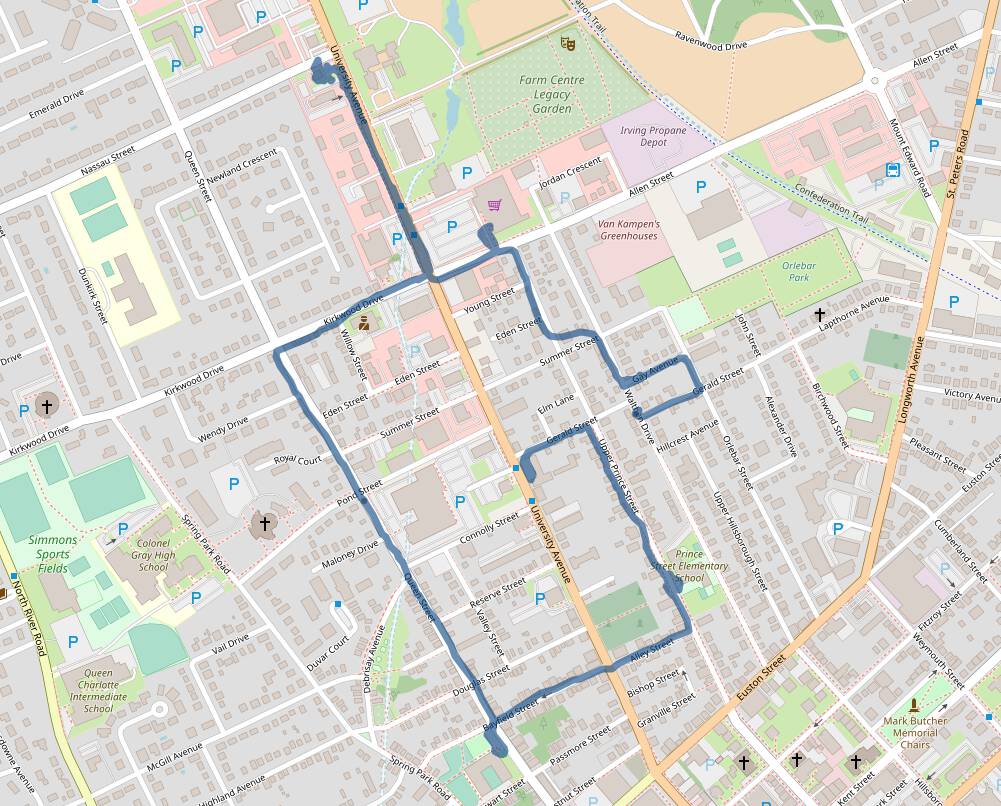
Starting from Outer Limit Sports, we stopped at Prince Street School, St. Jean School, Tim Horton’s, and Sobeys, navigating city streets that started off wet and slick and ended up dry as the sun came out and the day brightened.

Map showing our journey.

In recent memory Charlottetown hasn’t had a mayor who’s as active a cyclist as Mayor Brown, and the city is better for it.

Here’s the Mayor and comms person Robbie Doherty at the tail end of our journey:

Robbie Doherty and Philip Brown

20 Jun 00:38

Why CBC is turning off Facebook comments on news posts for a month

Brodie Fenlon, CBC News, Jun 16, 2021
Icon

To be clear: CBC is only turning off Facebook comments. They continue to continue welcome comments on CBCNews.ca, where they say "we have more moderating tools and can focus our attention better on offering a respectful dialogue about our stories." The reason is simple: "compounding the stress and anxiety of journalists is the vitriol and harassment many of them face on social media platforms and, increasingly, in the field." For the last two days I've been in a long Twitter argument about the users themselves negotiating some sort of social contract for conduct on those sites. Well, I don't think they can. I don't think any real 'negotiation' or 'contract' occurs; it's just one group trying to be more persistent than another. In these discussions, too, people assume that what they think is polite reflects community values (ie., social projection), but if we look at what the community actually does, it's much less polite than that. I think, moreover, that what counts as 'politeness' reflects space, time and privilege.

Web: [Direct Link] [This Post]
20 Jun 00:37

‘Distribution is something computers can do better’: The Globe and Mail’s AI startup begins to make in-roads

Max Willens, Digiday, Jun 16, 2021
Icon

If you're like me, when you get to this article you'll be greeted with a notice that says "We hope you enjoyed your first free article. Become a Digiday subscriber for $349 a year with unlimited access." That's not going to happen, of course, because it's way over my budget for a niche publication. But I do pay for some internet services (ranging from Feedly to No Man's Sky to Netflix to baseball) and the idea here is to offer me free content that the publishers think will convert me to a paying subscriber. That's what the Globe and Mail's new AI Sophi does. It "uses natural language processing and machine learning to do things like assess the likelihood that particular users or pieces of content will convert to subscriptions." And like the Washington Post's platform Arc XP, "Sophi’s long-term goal, Edall said, is to move beyond the media business, and it has made inroads with non-media clients; Sophi has added the financial services company CIBC as a client, Edall said, using the software to automate its marketing messaging."

Web: [Direct Link] [This Post]
20 Jun 00:37

In Online Ed, Content Is No Longer King—Cohorts Are

Wes Kao, Future, Jun 16, 2021
Icon

This article, published on Andreessen Horowitz 's new platform Future (more), makes a good point about the changing state of play in online learning: "the rise of cohort-based courses (CBCs), interactive online courses where a group of students advances through the material together — in 'cohorts' - with hands-on, feedback-based learning at the core." The article points to two major trends: first, the widespread availability of free learning content ("people view learning-related content on YouTube 500 million times every day") and the disappointing completion rates for content-only online learning. Why cohorts? "Live, bi-directional learning leads to more accountability," writes Wes Kao, and "the forced scarcity of fixed start and end dates adds a sense of urgency and focus." Also, " they are bi-directional, as opposed to one-way, meaning there’s an exchange of knowledge between the instructor and students, as well as students with fellow students. It’s a dialogue, not a static lecture."

Web: [Direct Link] [This Post]
20 Jun 00:33

2021-06-17 General

by Ducky

Vaccines

The US just donated 1M Moderna doses to Canada.


Canada received 330K Johnson & Johnson doses, but it’s going to sit on them right now because of concerns about contamination. Canada will also refuse any more J&J shipments.


Today NACI advised Team AZ to get mRNA for the second dose. While I think this is the correct thing to do, I am really puzzled by the timing.

Me, I formed my opinion on mixing vax being preferable to matching vax from a data science background. It sure seems like mixing should be better, but if NACI just wanted to go on a “well, by analogy, mixing should be better” platform, they could have done that years ago. If they decided that the antibody studies were good enough, they could have done that a month ago. Finally, there are no new studies of AZ+Pfizer (“Pfazer”) vs. AZ+AZ (AZ^2) that I have heard of.

There are lots of time in the real world where people are quite confident in something which turns out not to be the case. (Many smart people thought that CureVac would be a great vaccine, for example.) So it seems irresponsible to me for NACI to make this recommendation without evidence from humans in the wild.

And I don’t think NACI is irresponsible or incompetent. Thus I bet what happened is that the UK mix&match researchers quietly leaked their results to NACI, and those results show unambiguously that Pfazer is better than AZ^2.

Or maybe it’s as simple as “we have tons of mRNA now”?


This blog posting looks at the CureVac disaster. CureVac has been trying to explain away their vaccine’s dismal effectivity as being due to variants, but this blogger is having none of it. In the wild, the other mRNA vaxes are doing just fine, thank you very much. He thinks it is most likely that it’s because CureVac went “natural” while Pfizer/Moderna (Pfizerna? Moder?) substituted some artificial letters into their mRNA strings.

Quick explanation: DNA/RNA strings are made up of five “letters”: U, C, A, G, T. Each letter is actually a little molecule, but scientists use shorthands to talk about them so that they can represent DNA strings compactly, like GAGAATAAACTAGTATTCTTCTG etc.

The machinery which reads the DNA/RNA is a little forgiving, and there are some molecules you can swap in which the cellular machinery will read as perfectly fine letters. It’s sort of like if I swap in the Greek character tau (τ) for the Latin t: you’d still be able to read “τhe caτ saτ on τhe maτ”.

However, the immune system doesn’t recognize molecules containing these artificial letters as being Bad Things Which Must Be Destroyed. (There are a number of viruses which are mRNA viruses, so the immune system is on guard against random pieces of mRNA skulking around. It’s likely that any mRNA wandering around outside of the cells is likely to be a baddie, intent on hijacking the cellular machinery for its own nefarious aims.)

The CureVac vaccine (probably, frequently) gets jumped and destroyed by the immune system, which thinks — correctly — that the mRNA wants to hijack the cellular machinery.

Pfizer/Moderna vaccines, however, substitute artificial molecules for two of the letters, so they can brazenly walk right past the immune system and infiltrate the cells. There they hijack the cellular machinery for their own nefarious purpose: to make lots of spike proteins to train the immune system.

Now: why the hell didn’t CureVac do substitutions????? Welllll remember that nobody had ever made an mRNA vaccine before. We didn’t know what was going to work. “We got lucky” that the Pfizer/Moderna vaxes are so FREAKING amazing, but part of that “getting lucky” was taking a lot of shots on goal. Some vaccines worked, some didn’t, and we are enjoying the ones that worked.

(For more on the “source code” of the vaccines, see this awesome article.)

This tweet speculates that the amount of mRNA in the dose was smaller.


This article reports on how the immune response from infection is much more variable than from a vaccination. Get the vax, even if you were sick!


This preprint says that a vaccine, administered nasally, successfully protected some Syrian golden hamsters completely from B.1.1.7 and B.1.351 VOCs. This vaccine uses what I call the “spiky ball” approach, where there’s a little nanoparticle ball with COVID-19 spikes on it. (Novavax also uses the spiky ball approach.)

One nice feature of the spiky ball approach is that you can put spikes from lots of different coronaviruses on each ball. In this case, it used B.1.1.7 and B.1.351 spikes. I believe the plan is to also put spikes from SARS-CoV-1, MERS, and maybe even some common-cold coronaviruses on the ball as well.

Variants

This preprint says that Delta isn’t that vax-evasive, and that Beta and Gamma are different enough from Delta, and that Beta/Gamma resistance (either from getting sick with Beta or Gamma or from a vaccine targeting with Beta or Gamma, like Moderna’s M1a) won’t necessarily protect you against Delta.

Long COVID

This preprint points out the sample bias problems and/or improper controls with most Long COVID studies: taking subjects from Long COVID support groups, comparing mild to severe COVID patients, etc.

The authors did a very careful test with controls and found that mental-health, gastrointestinal and dermatological symptoms in people who tested positive for COVID-19 and had mild-to-moderate symptoms wasn’t actually that different from people who always tested negative for COVID-19. (Basically, the pandemic sucked for everyone’s mental, GI, and dermatological health.)

However, there were clusters of other symptoms — neurological, sensory, and cardiorespiratory — which COVID patients had a higher risk of. Note that these clusters were also present in the controls (wtf? the pandemic is really hard on everyone?) but were more prevalent in the people who had tested positive for COVID.

This paper gave an estimate for long COVID in the UK for 2.2% to 13.7% , which is lower than I’d heard before.

The fact that so many people who never tested positive had Long COVID symptoms makes me wonder if there is something else which the pandemic exposed us to. For example, maybe more people got sick from household mold exposure because people stayed home more?

Recommended Reading

This article on problems at the US CDC is interesting. For example, it talks about re-opening schools and makes me think that BC probably did it right. Warning: long, and very US-centric.

20 Jun 00:33

Linked List: Three Firefox Add-ons for Power Users

by Thejesh GN

A browser is a sandboxed area where you can access, view, and manipulate the data. Somehow the ability to manipulate the data (website) locally; to suit users' needs doesn't get noticed much. This feature is a potent tool in the hands of capable users. The following add-ons will add to that users' power.

Redirector

Redirector is a browser add-on for Firefox, Chrome, Edge and Opera. The add-on lets you create redirects for specific webpages, e.g. always redirect http://bing.com to http://google.com. It was originally done by request for someone on the Mozillazine forums. The redirect patterns can be specified using regular expressions or simple wildcards and the resulting url can use substitutions based on captures from the original url. The add-on can for example be used to redirect a site to its https version, redirect news paper articles to their print versions, redirect pages to use specific proxy servers and more.

Redirector Manual

This a FOSS Firefox add-on. It's also available for other browser platforms. It's easy to set up the forward/redirect rules. They all are stored locally. You can also export/import the rules.

Example use: I use it as a client-side short URL host. For example, http://g.t goes my currently working GitLab project. I have many shortcuts like that.

You can also add other rules, for example, any request to bing, forward it to duckduckgo.

Greasemonkey

Greasemonkey is a Firefox extension that allows you to customize the way webpages look and function.

Greasemonkey

Greasemonkey is a FOSS Firefox add-on. Once installed, you can write scripts in JavaScript to modify any website that you visit. Make it look and behave the way you want. There is also script (called user scripts) hosts who host the scripts. You can download and install them into your Greasemonkey to use it. You can also further edit them to customize if required.

Example use: Make any DOI link, link to sci-hub. This user-script is helpful for any user who reads a lot. Make any selected text along with the URL sent to an API endpoint for archiving. There are so many use-cases; your imagination is the limit.

Dark Reader

Dark Reader is an open-source MIT-licensed browser extension, that is designed to analyzes web pages. Based on its analysis Dark Reader will generate a dark mode based on this. Hereby Dark Reader aims to reduce the eyestrain of the user. Dark Reader is feature-rich and can be configured in many ways throughout the UI.

Dark Reader

Dark Reader is a FOSS Firefox add-on. It's also available for other browsers. It's a must-have add-on if you are a dark mode fan, as many websites don't support dark mode.

The post Linked List: Three Firefox Add-ons for Power Users first appeared on Thejesh GN.
20 Jun 00:32

In the War Against Ticks, This Spray Is My Secret Weapon

by Doug Mahoney
A yellow spray bottle of Sawyer premium insect repellent on a purple background, surrounded by a pink and yellow frame.

Vile, horrible, insidious, and disgusting are just a few of the words I use to describe ticks.

There is absolutely nothing to like about these awful, disease-ridden insects.

They range in size from a sesame seed to a poppy seed. And they can infect you with any number of terrible ailments, such as Lyme disease, Rocky Mountain spotted fever, babesiosis, anaplasmosis, Powassan virus, or alpha-gal syndrome, which makes you allergic to many different types of meat.

Because ticks are so small, feeling them on the skin is difficult. And their bite—which they perform with a horrific, saw-like mouth (video)—is often undetectable.

20 Jun 00:32

Johnson and, um, integrity

by Chris Grey
In my previous post, I argued that I did not think that Joe Biden’s intervention, for all that it was reported to be diplomatically forceful, would make much difference to Boris Johnson’s conduct. In brief, my suggestion was that, by talking in terms of a pragmatic negotiated solution between the UK and the EU to the problems over the Northern Ireland Protocol which did not imperil the Good Friday Agreement, Biden was framing the issue in a way that Johnson could claim as being precisely what he was trying to achieve.

Events since then seem to have confirmed that view. Within hours of the Biden-Johnson meeting, first Foreign Secretary Dominic Raab and then Johnson himself were continuing to talk in the same uncompromising terms as before about the supposedly unacceptable nature of the Northern Ireland Protocol (NIP). In fact, the terms became even more uncompromising. Last week, the ubiquitous complaint was about the “legal purism” with which the EU was enforcing the NIP. Now, perhaps recognizing that this sounded like a rather lame bleat, the language has changed to the much more ominous phrase that the NIP violates the “territorial integrity” of the United Kingdom.

It has a horribly war-like sound to it. That is all the more disturbing if imagined in the ears of “Ulster’s men of violence” who Neil Mackay wrote about in a chilling article this week in The Herald. He warns that “the threat of murder hangs in the air thanks to Johnson’s Brexit”. Yet as Rafael Behr suggested this week (in an article with many other important points): “Johnson’s calculation doesn’t prioritise peace in Northern Ireland … [if it] … is on fire, any insistence from Brussels on maximum implementation of rules on sausage imports will look callous and disproportionate”. 

It need hardly be said – not least as I did so at length last week – that Johnson and his government are being grotesquely dishonest. They are also being deeply irresponsible. The ongoing weaponization of the EU’s brief and aborted proposal to invoke Article 16 in order to legitimate, if not exacerbate, loyalist anger is a prime example. But the latest formulation of insisting that the NIP undermines the UK as a “single territory” is especially odious because, in agreeing the NIP, Johnson agreed that the UK was no longer a single customs and regulatory territory. On the other hand, as the NIP states, and as David Frost confirmed in an appearance before the Northern Ireland Affairs Committee (NIAC) this week, it is not true that it affects the territorial integrity of Northern Ireland in the sense of changing its constitutional status. So there is a double dishonesty in both understating what was agreed and overstating, in the most inflammatory way, what that agreement meant.

What explains the Johnson-Frost approach?

It may seem puzzling that Johnson is so cavalier as to defy US diplomatic and EU economic pressure. But I think that most of the explanation for that is quite easy. He and Frost genuinely believe that their ‘hardball’ tactics pay dividends with the EU and have very little political downside. They believe that they, unlike Theresa May, ‘stood up to’ the EU and that is why the ‘hated backstop’ was removed, even though the EU had said the Withdrawal Agreement was closed. It might be remarked that all they achieved by this was to get the NIP which they now say is unacceptable. But it is clearer than ever that from the outset they saw it as something they could get out of, as they are now trying to do. I am sure that they also believe that it was the threat of the illegal clauses in the Internal Market Bill that served to push the Trade and Cooperation Agreement over the line. And they undoubtedly believe that the unilateral extension of grace periods has shown the EU that the UK will ‘stand up for itself’ whilst attracting limited and slow retaliation from the EU.

Of course all of these beliefs are, at the very least, questionable and some of them are demonstrably absurd* But that doesn’t stop them being genuinely held. In a sense, they represent only the extension of the tactics which the Brexit Ultras used so successfully in the domestic pursuit of their aims: to keep pushing in a harder and harder direction, to refuse to compromise, to bank any compromise offered by others, and then to push for more. In those terms, the EU might currently be seen as caught in the same situation as, back in the day, those moderate Tories who thought that rational compromise was possible with the ERG, and who neither realised the ruthlessness of the Ultras nor were able to match it. It remains to be seen whether the same continues to be true of the EU, so that it, too, will continue to try to find flexibilities and compromises as, indeed, many urge. Or whether it will conclude that enough is enough and start taking a much tougher line.

For Johnson, it hardly matters as this is a win-win situation as regards his domestic political base, which as Behr and many others observe is far more important to him than his, or Britain’s, plummeting international reputation. If he keeps pushing hard and the EU ‘gives in’, or can be represented as doing so, then he claims victory and receives the glowing adoration of his base. If the EU were to push back hard then he claims the heroic status of standing up to ‘foreign aggression’ and also receives the glowing adoration of his base. In the Brexiters’ ever-present vocabulary of the Second World War, for Johnson the first scenario is VE Day, the second Dunkirk. Those of us who do worry about what this does to Britain’s reputation are probably not Johnson’s supporters anyway, whilst those who support him are not so much indifferent to, as unaware of, that reputational damage.

Biden’s limited impact

And what of Biden? For all his manifest sympathies with – and commitments to – the EU and Ireland, his public statements so far are not hugely unhelpful to Johnson and not hugely helpful to the EU. In inviting ‘both sides’ to negotiate, the US pushes the EU as well as the UK and, at least subtly, implies that it is not just a matter of implementing the NIP ‘as agreed’ but seeking an interpretation of it. As Gideon Rachman acutely wrote (£) this week, the Biden administration’s “overriding concern is that the dispute should be settled, not the terms of the settlement”.

There is an important rider to that: the one thing that Biden will clearly not tolerate is a land border between Ireland and Northern Ireland. So simply ripping up the NIP, as the DUP and some Brexiters want, is a non-starter and, notably, Johnson has made no suggestion that he will do so. Instead, the approach is clearly going to be one of pushing to dilute and dismember its substance, pretending all the time that this is just ‘pragmatic implementation’ of what was agreed rather than reneging. And Biden doesn’t seem as if he is going to put much weight behind, for particular example, the EU’s stance on sanitary and phyto-sanitary (SPS) regulatory alignment as against the UK’s demand for regulatory equivalence. Add the threat, and increasingly possible reality, of Loyalist violence into that mix and the UK’s attempts to depict the NIP as undermining the Good Friday (Belfast) Agreement may gain traction.

In other words, despite the increasingly ‘Orbanized’ flavour of Johnson’s regime that Gerhard Schnyder has rightly identified, he isn’t going to risk becoming a genuine international pariah. As I implied in my last post, this actually makes the UK harder to deal with from an EU perspective, since Johnson is dishonest and belligerent without being completely beyond the pale of international relations.

Moreover, leaving all of this to one side, Johnson’s government may well have concluded that, precisely because of Biden’s manifest sympathies, Britain isn’t likely to get many favours (£) from the current administration anyway. So, unless Biden were to decide to put real pressure on, there’s not much to be lost by playing hardball with the EU.

What happens now?

It’s clear from Frost’s NIAC appearance that this will indeed take the form of, in particular, continuing to push for an equivalence agreement on SPS standards. The irony is that one of the biggest obstacles to the EU agreeing to that is because it requires investing a lot of trust in the UK, and it is the UK’s own conduct which makes that an obstacle.

Some of that goes back years – perhaps a defining moment* was in December 2016 when David Davis back-peddled on the phase 1 agreement of the Article 50 talks within days of it being made, saying it was just a ‘statement of intent’. Strikingly, this was the original version of the Irish Sea border solution, subsequently abandoned in favour of the backstop before being, effectively, revived as Johnson’s great new deal. There are also parallels between what Davis said then and the Northern Ireland Secretary Brandon Lewis’s highly dishonest suggestion this week that the NIP is “a policy document as much as anything else” when in fact it is a binding treaty. More generally, the lack of trust has become far worse under Johnson and it is getting worse all the time, precisely because the EU’s concession of allowing a third country to manage the border of the single market is being abused.

In the immediate term, the UK yesterday made a formal request for a three-month extension to the chilled meats grace period. The EU is assessing this but if it doesn’t agree then, very likely, the UK will unilaterally extend, daring the EU to respond, and, in relation to the more general situation will continue to threaten to invoke Article 16 (£) and possibly even do so. Actually, that isn’t the panacea Frost and Johnson appear to believe, at least not for the problems of Northern Ireland, but that wouldn’t be the motivation. Rather, it would enable them to continue to ‘up the ante’ with the EU, citing the rejection of the chilled meats extension as just cause.

My guess is that the EU will agree the extension. This would ‘kick the can down the road’ until October when, in any case, the other grace periods (i.e. those which the UK has unilaterally extended) expire. Obviously that would resolve nothing, but the rationale would be to avoid an immediate crisis during the Northern Ireland marching season. But, sooner or later, a crisis seems inevitable, if only because of the UK’s approach, outlined earlier. Johnson and Frost would read EU acceptance of the chilled meats extension as a victory for their threat to do so unilaterally, and continue to push for an SPS equivalence regime. If that were to be granted then, as per the approach outlined above, Frost would push for something else.

Imperial preference

The other main Brexit-related story this week was the agreement in principle of a UK-Australia trade deal. As discussed in many previous posts the value of this is purely symbolic – for example, what it means for cheaper prices for UK consumers looks likely to amount to 1p per person per week. However, the costs to British farmers may turn out to be considerable. Or perhaps, in practice, it will make little difference to anything. But it is surely telling that, in Australia, it is being reported in terms of the UK’s desperation to sign, and Dmitry Grozoubinski, a former Australian trade negotiator, describes it as an “unprecedented result” for Australia. No ‘hardball’ negotiating strategy from the UK in these talks, it seems, but why would there be when all you want is a deal, any deal, as quickly as possible? (For discussion of the agreement, and links to even more discussion, see Sam Lowe’s latest Most Favoured Nation newsletter).

I think the best way of understanding the symbolism of the deal is to compare it to another story this week, headlined in the Express as “Pounds, inches and pints set for comeback in Brexit freedom overhaul”. There is even the obligatory reference to Churchill, this time in relation to his preference for pint bottles of champagne. This may seem a rather niche issue, but it has always been a live one to a certain segment of Brexiters, going back to the (admittedly absurd) ‘Metric Martyrs’ cases which some even claim led ultimately to Brexit itself. It is an issue which still, as the report shows, burns bright for the rather peculiar Tory MP Philip Davies.

Yet, despite what the headline might be taken to imply, there are in fact no plans to scrap metric measures. What there is – although it was published after the Express story – is a proposal (17.1) in the TIGRR report to allow traders to use imperial measures without the equivalent metric measurement if they wish. How many will do so, and how many customers they will have, is another question. Very few, I would imagine.

Although the Australia story is far more prominent, it is of the same type in that the realities beneath the bold headlines are trivial. It is interesting that for years remainers have been accused of patronising leave voters and insulting their intelligence, yet the Brexiters’ strategy of symbolism over substance in claims of Brexit gains is as patronising and insulting to such voters as could possibly be imagined.

As for the TIGRR (Task Force on Innovation, Growth and Regulatory Reform) report more generally, it is a hodge-podge of platitudes about technology, things which didn’t require Brexit, and things which do but may prove rather foolish if implemented. It is the product of the group chaired by Iain Duncan Smith to identify post-Brexit opportunities (some might say the time to do that was before the referendum) and it has already apparently been superseded by the announcement of a new unit to do the same thing. It seems as if, along with all the extra customs bureaucracy, Brexit is now generating a new form of red tape in the proliferation of bodies charged to identify how Brexit can get rid of red tape. I don’t see much point in reviewing the report’s contents until we see which, if any, of its recommendations actually get adopted (but there has been an initial take from Joe Marshall of the Institute for Government).

A date with Boris Johnson

For understandable reasons, most media attention this week has not been on Brexit but on the slippage of the 21 June date for ending Covid restrictions. But the two are linked, in various ways. In particular, so much of what has driven both his Brexit and Covid policies has been Johnson’s stubborn insistence on setting artificial dates without regard for the consequences. Again, Rafael Behr’s column this week has much of interest to say on this theme, including a particularly acute observation about the Withdrawal Agreement (of which the NIP was of course a part). He says that for Johnson “it was a single-use tool for levering himself out of a tight spot. For Brussels it is the chamber into which Britain levered itself”.

But actions have consequences. Whatever Johnson’s motivations, his actions created a legally-binding treaty with obligations. This cannot just be laid at the door of his pathologically immoral character, because what he agreed was voted for in Parliament by all his party’s MPs (and, let it not be forgotten, by Brexit Party MEPs in the European Parliament). And, unlike his private peccadilloes, the wreckage and pain of now pretending that what was agreed was not agreed will affect us all.


*The link here is to the relevant segment of an interview, conducted by the UK in a Changing Europe centre and published this week, with Stefaan De Rynck, a senior member of Michel Barnier’s Brexit Task Force. The full interview is here.

20 Jun 00:30

Remembering Charles Assey

by Nick Desbarats

In the before-times, I taught workshops in over a dozen countries and, without a doubt, the most interesting and beautiful one was Tanzania. Those workshops were organized by Charles Assey, a management consultant and senior advisor at the Bank of Tanzania.

Charles passed away on June 11th from a long-term illness. This news hit me quite hard since Charles was one of the most remarkable people that I’ve ever met. More than just a brilliant management consultant, Charles had an almost shocking amount of integrity and was one of those rare people who had both the ability and the genuine desire to make the world a better place. This is probably why he was well-connected and admired among global experts in reporting and performance measurement.

Charles always had the courage and selflessness to downplay his illness and deflect any concern about it, and it was devastating to learn that it caught up with him. In a year with so many losses, this one stands out as particularly painful and unfair.

 
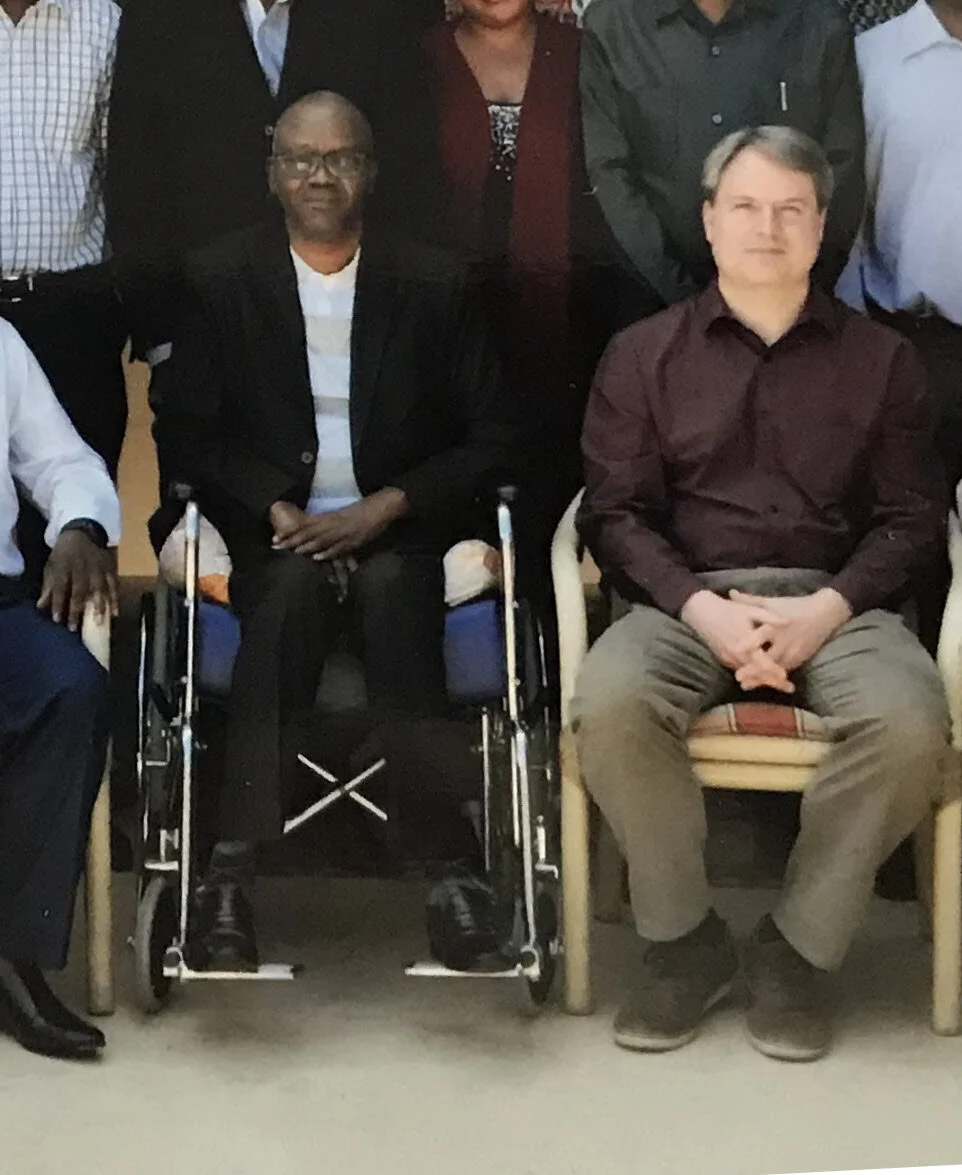
charles-nick.jpg
 
18 Jun 02:05

Twitter Favorites: [RM_Transit] If someone lives or has lived without a car, you should listen to what they say about transit. You'd be amazed what… https://t.co/DAkamM4VlY

Reece Martin @RM_Transit
If someone lives or has lived without a car, you should listen to what they say about transit. You'd be amazed what… twitter.com/i/web/status/1…
18 Jun 00:25

Pre-Order Teaching Machines

Teaching Machines is available for pre-order via the MIT Press website (and anywhere books are sold — consider supporting your local bookseller).

I spent a few days trying to revamp the Teaching Machines website — before deciding that the template I had was just fine. Now I'm in the process of updating all my various social media accounts with a new profile pic based off the cover.

I absolutely love the cover, by the way. I wanted this photo to be used, but I wasn't sure permissions could be arranged. (That is, I wasn't sure the copyright holder could even be found.) I'll be writing more in the coming days and weeks — all before the publication date of August 3 — about various stories in and not in the book. Why this particular photo matters to me is definitely one of those stories.

I am not on social media these days, which is going to make book promotion interesting. But hopefully I can get back in the routine of blogging more often — most likely on the Teaching Machines site for the foreseeable future, although perhaps on my own personal blog too. And at least those who pay attention to the particular bat signal of RSS will know I'm still around. Hack Education, however, remains on hiatus. (So update your feed readers accordingly.)

18 Jun 00:25

2021-06-16 BC

by Ducky

Vaccinations

More vaccination appointments have opened up, which might mean that the big Moderna shipment (of 392K doses) has arrived. If you have already booked, you might be able to move up by doing the following:

  • Find your confirmation email with your booking confirmation number (the email message will be from BCVaccDoNotReply@hlth.gov.bc.ca). (You can also try https://www.getvaccinated.gov.bc.ca/s/cancel-booking .)
  • Enter your booking confirmation code and Personal Health Number, then continue.
  • Enter a city, the select a vaccine center. You’ll see a list of possible dates for that venue (which might be full up, try another vaccination centre).

Hopefully that will get you an earlier date. Let’s make sure that no slot goes unfilled!


The asshole millionaires who flew up to Yukon and pretended to be locals got found guilty and fined.


Some first-dose pop-up clinics in Fraser Health are giving second doses if they aren’t too busy.

Statistics

Today: +113 cases, +4 deaths, +8,881 first doses, +53,356 second doses. Currently 134 in hospital / 41 in ICU, 1,454 active cases, 143,449 recovered.

Zero cases in Northern Health today!

  • BC has given first doses to:
  • 76.3% of adults
  • 74.6% of over-12s
  • 67.7% of all BCers
  • We have given second doses to:
  • 15.7% of adults
  • 15.4% of over-12s
  • 13.9% of of all BCers

NOTE: The dashboard — where I get my supply numbers from — does not add up today. There are 34,100 mystery doses in the total but not allocated to any brand. I credited it to Moderna for now, but all the following numbers are suspect.

We have 430,568 doses in fridges; we’ll use it up in 7.3 days at last week’s rate. We’ve given more doses than we’d received by 8 days ago.

We have 360,199 mRNA doses in fridges; we’ll use it up in 6.0 days at last week’s rate. We’ve given more mRNA doses than we’d received by 7 days ago.

We have 70,369 AZ doses in fridges; we’ll use it in 11.5 days at last week’s rate.

Charts

18 Jun 00:25

2021-06-16 General

by Ducky

Vaccines

Oh, ouch! CureVac has really crappy preliminary Phase 3 results: 49%. CureVac is an mRNA vax, and they had made all kinds of partnerships with really big pharma companies to manufacture it. They were supposed to deliver 300M this year and 1B next year. That hurts.


A survey says that about one in five vax-hesitant Canadians would lie about their vaccine status in order to travel.

Treatments

The RECOVERY testing platform in the UK has looked at Regeneron’s monoclonol antibodies. Verdict: it can help some with people who have not mounted a immune response, but might be harmful to those who have.

Problem #1 is that it’s expensive; problem #2 is that monoclonal antibody production uses a lot of the same equipment and materials that vaccine production uses.

Recommended Reading

WOW. This article talks about making artificial antibody-like things, designing little proteins to stick to the spike like Velcro. It’s in trials, and extremely effective, and in trials as GBP510. (This article is in Recommended Reading and not under Vaccines because I couldn’t figure out how to summarize it.)


This article looks at how cross-institution collaboration has changed during the pandemic. This companion article is similar, but more prescriptive.

18 Jun 00:22

✚ How to Make Alluvial Diagrams

by Nathan Yau

An alluvial diagram is a type of flow chart that is useful to show change over time. You see how individual categories and how the composition of the categories shift.

Incorporate ranking into the mix at each time segment, and you get a good idea of how order changes over time too. The geometry is like a combination of a stacked bar chart and a bump chart.

In this tutorial, I describe not only how to make a basic chart, but how you get from raw data all the way through the design process, to clear and readable graphics, and to the finished project.

Chart generation is the easy part. Everything before and after is what makes the charts better.

Become a member for access to this — plus tutorials, courses, and guides.

18 Jun 00:21

Spatula, a Python library for maintainable web scraping

by Nathan Yau

This looks promising:

While it is often easy, and tempting, to write a scraper as a dirty one-off script, spatula makes an attempt to provide an easy framework that most scrapers fit within without additional overhead.

This reflects the reality that many scraper projects start small but grow quickly, so reaching for a heavyweight tool from the start often does not seem practical.

The initial overhead imposed by the framework should be as light as possible, providing benefits even for authors that do not wish to use every feature available to them.

Although, without my dirty one-off scripts, what will I put in my tmp data folder?

Tags: Python, scraping

17 Jun 20:28

Twitter Favorites: [BCRobyn] Finished reading Ulysses today. I started reading it less than a month ago. What a crazy journey. #Bloomsday

Robyn Hanson @BCRobyn
Finished reading Ulysses today. I started reading it less than a month ago. What a crazy journey. #Bloomsday
17 Jun 20:10

Quotes: Dissing the 15-Minute City

by Katherine Mills
mkalus shared this story from Viewpoint Vancouver.

The 15-minute city “is a model for urban development and mobility developed by Professor Carlos Moreno at the Sorbonne in Paris and widely popularised by Mayor of Paris Anne Hidalgo during her recent re-election campaign. The 15-minute city is one in which daily urban necessities are within a 15-minute commute by bike or on foot.”

More here.

Contrary and qualifying views were put forward at the London School of Economics Urban Age Conference:

Localising Transport Debate Summary

Key takeaways from the third Urban Age Debate

Key Takeaway 2: The 15-minute city is not a catch-all model that can be applied globally with ease, but it’s underlying concepts should be embraced

Overall, none of the speakers were strong advocates of implementing the 15-minute city model, “I’m unconvinced about the 15-minute city and I haven’t seen many urban environments where it can be adapted in the near future,” stated Sir Peter Hendy.

Ed Glaeser took a stronger stance against the 15-minute city, “I am very worried that a focus on enabling upper-middle income people to walk around in their nice little 15-minute neighbourhood precludes the far larger issue, which is how do we make sure our cities once again become places of opportunity for everyone? I am only interested in urban planning concepts that fundamentally solve that and I cannot see how the 15-minute city does.”

Ed went on to explain that some of the underlying elements of the 15-minute city are valuable, “We should praise the good elements of the 15-minute city: accessibility, less driving, embracing congestion pricing, reducing on-street parking requirements. But ultimately, we should bury the idea of a city that is chopped up into 15-minute bits. We must embrace connection post-Covid, we must embrace a re-emergence of the whole city, of humanity that is connected not just with the people next to you, but with all of our metropole, of all of the world.”


Key Takeaway 3: Accessibility of cities for various opportunities remains of utmost importance, especially in rapidly urbanising global contexts  

When discussing the value of mobility and transportation in and around cities, Yolisa Kani claimed that, “Accessing a city in South Africa is not a matter of choice. It’s a matter of survival, you have to be in the city centre.” She went on to stress that, “The 15-minute city is a very noble idea, but for me it’s an old target that we’ve been chasing as cities and is elusive for a developing South African city because of our context.” Yolisa continued by highlighting the challenge of dealing with unintegrated and multi-modal transportation systems across South Africa that would severely limit the application of the 15-minute city idea.

Ed Glaeser picked up on this idea expressing that, “We need to make sure that people can access the wonders of the city and can access the cornucopia of joys that exist throughout an urban area. We particularly need to make sure that we enable people who live in poorer parts of the city to access jobs in richer parts of the city, and there is nothing more important than that.”

These equity concerns underlined the discussion of urban accessibility, as speakers expressed how Covid-19 has drastically revealed the inequities of transportation systems and mobility.

17 Jun 20:09

Kobo Elipsa Review: Dreaming big

by Brad Bennett

The Kobo Elipsa is a new 10.3-inch screen e-reader from Rakuten Kobo that comes with a stylus, allowing you to mark up books or take notes. While this takes what an e-reader can do to the next level, but it also includes a few significant drawbacks.

The device and its stylus are packaged with a lovely leather case, but altogether, the Elipsa costs $499 in Canada, putting it in the same price territory as the iPad, a device it just can’t compete with.

It’s not that the Elpisa is a lousy product. On the contrary, it’s nice to use and works incredibly well for some niche use cases, but the amount of features it provides for a premium tablet price are a little lacking.

Adding features for the sake of adding features

With that in mind, if you’re willing to spend the money, there’s a lot to love about the Elipsa. Even if its large size makes it a bit heavy (389g), the hardware is excellent and overall, it feels like a solid device.

The 1404 x 1872 pixel resolution display screen is sharp too, but for some reason, Kobo got rid of the hue shifting backlight from the Kobo Libra H20. Instead of being able to use a yellow backlight at night, the Elipsa just dims. It does get dark enough to read at night without being distracting, but it would have been nice to have the option at this price point.

The specs inside the Elipsa are also solid. There’s a gigabyte of RAM this time around, so tasks like typing and moving between pages is slightly smoother than with cheaper e-readers like the Kobo Nia. I still wouldn’t call it a perfect experience, but it’s far less rage-inducing than before.

The real meat of this device is its note-taking abilities, which perform reasonably well. The stylus feels reactive, and as you drag it across the screen, the feeling is reminiscent of scribbling with a ballpoint pen on paper.

While this is perfect for note-taking, it’s not the most elegant solution for drawing since there is a bit of input lag. There’s less than you’d expect from a device that needs to refresh parts of its screen every time you type, but it’s not even close to the standard of a Wacom tablet or Apple’s iPad.

Still, the feeling of using the pen is nice and the actual stylus’ hardware feels good too. The pen features two buttons on it, including one for erasing content and another for activating the highlighter function.

You can draw in either a dedicated notes app or in the margins of books. Kobo is even smart enough to save all these margin notes with your highlights and typed notes, so they’re really easy to find later. However, unless you want to add little illustrations or side notes, this functionality was already possible by using typed notes.

The included Sleep Cover is also pleasant to use and the leather front feels great. Plus, it even folds under the tablet to prop it up into a perfect little writing stand. My only gripe with this case is that it’s bulky and since the e-reader/tablet is huge already, it adds more heft than I’d like to the Elipsa. I would have preferred something more reminiscent of an iPad Smart Cover.

Other useful specs and features

The Elipsa features 32GB of onboard storage, so it should be able to hold lots of books and PDFs. The cool thing about the fact that you can load PDFs onto it means you can sign and mark up some documents too. This doesn’t work with all PDFs though and files with DRM won’t work on the Kobo.

All the file types that it supports are EPUB, EPUB3, FlePub, PDF, MOBI, JPEG, GIF, PNG, BMP, TIFF, TXT, HTML, RTF, CBZ and CBR. If you want to compare, all of the file types that an Amazon Kindle can support are available here.

This is also the first Kobo to charge via USB-C, a nice touch that allowed me to take one less charger when I went to visit my parents a few weeks ago. Having said that, like most e-readers, the Elipsa has great battery life that lasts for weeks, so I didn’t even need to charge it.

It’s also worth pointing out that some Elipsa beta features allow you to browse the web, but it’s definitely still in beta and shows you a giant blown-up mobile web page instead of a desktop one. This could be useful to read long-form articles on, but scrolling is a pain, so you’re better offloading them into Pocket and reading web content on the Elipsa that way.

There are also a few games in the beta section that are pretty fun, but the slow screen refresh kind of makes them an exercise in patience to play. There’s a slide puzzle, sudoku, solitaire and word scramble. The worst part about the Sudoku game is that you can’t even use the stylus to fill out the puzzle.

Don’t throw the book at me

The post Kobo Elipsa Review: Dreaming big appeared first on MobileSyrup.

17 Jun 20:03

Tracking Covid-19 From Hundreds of Sources, One Extracted Record at a Time

by The NYT Open Team

How The New York Times maintains a database of United States coronavirus cases and deaths pulled from a patchwork of regional health authorities.

Illustration by Dalbert Vilarino

By Josh Williams and Tiff Fehr

As of this morning, The New York Times has made more than 9.98 million programmatic requests for Covid-19 data from websites around the world. The data we’re collecting are daily snapshots of the virus’s ebb and flow, including for every U.S. state and thousands of U.S. counties, cities and ZIP codes.

You may have seen slices of this data in the daily maps and graphics we publish at The Times, providing cumulative totals and 14-day trends that help readers see their local risk levels and outbreaks. Combined, these pages are the most-viewed collection in the history of nytimes.com. They’re a key component of the package of Covid reporting that won The Times the 2021 Pulitzer Prize for Public Service.

Internally, the depth and breadth of the data has been an invaluable reporting tool, helping us tell stories from the very first U.S. cases through the devastation of the winter wave through the first glimmers of good news as vaccines began to roll out.

The Times’s coronavirus tracking project was one of several efforts that helped fill the gap in the public’s understanding of the pandemic left by the lack of a coordinated governmental response. Another of these was Johns Hopkins University’s Coronavirus Resource Center, which collected both domestic and international case data. The Covid Tracking Project at The Atlantic marshalled an army of volunteers to collect U.S. state data, in addition to testing, demographics and healthcare facility data, each of which included thorny methodological challenges. These public data projects provided an essential and complementary set of sources for in-depth coverage.

At The Times, our coronavirus tracking work began with a single spreadsheet.

In late January 2020, Monica Davey, an editor on the National desk, asked Mitch Smith, a correspondent based in Chicago, to start gathering information in a Google spreadsheet about every individual U.S. case of Covid-19. One row per case, meticulously reported based on public announcements and entered by hand to tell the story of a person infected with the virus, with details like age, location, gender and condition.

We knew little then about the virus’s ability to spread, so our early case-by-case tracking followed a loose model established in the newsroom during other virus outbreaks. Covid-19 case counts in our early stories now seem unimaginably low: A March 1 story about the first confirmed case in Manhattan, for example, reported that “more than 80 people in the United States have been confirmed through laboratory testing.” Just five days later, another story put the total number of confirmed cases over 300.

By mid-March, the virus’s explosive growth proved too much for our workflow. The spreadsheet grew so large it became unresponsive, and reporters did not have enough time to manually report and enter data from the ever-growing list of U.S. states and counties we needed to track.

Building the Core Covid-19 Application

Just as offices (including ours) were shuttered and stay-at-home orders went into effect, many domestic health departments began rolling out Covid-19 reporting efforts and websites to inform their constituents of local spread. The federal government faced early challenges in providing a single, reliable federal data set.

The Times’s database of Covid-19 cases and deaths is sourced from the websites of hundreds of state and county health authorities, using a combination of manual and automated tasks. Credit: Guilbert Gates/The New York Times

The available local data were all over the map, literally and figuratively. Formatting and methodology varied widely from place to place, from rudimentary PDFs to information-rich dashboards. Even the question of what constituted a “case” wasn’t uniform: some places reported confirmed cases, while others reported suspected ones; still others reported both or made no distinction.

Within The Times, a newsroom-based group of software developers was quickly tasked with building tools to augment as much of the data acquisition work as possible.

On March 10, 2020, the day before the World Health Organization declared the virus a pandemic, newsroom developer Will Houp wrote the first lines of code of a NodeJS-based web application capable of scraping Covid-19 data from a growing number of sources. In just a few days, Will, with teammates Ben Smithgall and Andrew Chavez, added features that enabled our journalists to edit, approve and apply custom math to the collected data.

On March 16, the core application largely worked, but the scraper directory sat empty. To tackle this massive effort, we recruited developers from across the company, many with no newsroom experience, to pitch in temporarily to write scrapers.

By the end of April, we were programmatically collecting figures from all 50 states, nearly 200 counties and many ZIP codes, census tracts and cities. The pandemic, our code complexity and our database all seemed to be expanding exponentially, which raised system-architectural concerns on a number of fronts.

We learned early that individual scrapers needed to be strategically fragile: We wanted them to break when the source website changed or failed to respond, to alert us so that our team could figure out whether the issue was with our code or the source website’s changes. In the early days of the pandemic, a few notable sites changed several times in just a couple of weeks, which meant we had to repeatedly rewrite our code.

Between scrapers breaking and a seemingly never-ending list of new target sites, it was time to staff up for real. We needed dedicated developers who could focus their full attention on the project, allowing them to not only maintain the scrapers, but also build up the core application and make the scapers leaner, testable and faster to develop.

From mid-June 2020 on, we have staffed the scraping team with about six developers at any given time, most with prior journalism and data experience. The scraping team was a critical part of the newsroom’s virus tracking project, which would ultimately pull in more than 100 journalists and engineers from across The Times.

As many as 50 people beyond the scraping team have been actively involved in the day-to-day management and verification of the data we collect. Some data is still entered by hand, and all of the data is manually verified by reporters and researchers. This has been a seven-day-a-week operation since March 2020.

In addition to publishing data to The Times’s website, we made our data set publicly available on GitHub in late March 2020 for anyone’s use.

News Judgment, Data Quandaries and Dashboard Changes

The Covid-19 outbreak was an unprecedented challenge for local officials in collecting and presenting public health information quickly. As outsiders hoping to aggregate and automate this data, we watched in real time as health departments across the country scrambled to get websites up.

As our Covid-19 scraping effort grew, our newsroom developers gained just as much fluency in the subject matter as The Times’s reporters. We were trusted and expected to exercise news judgment on a daily basis, puzzling out tricky questions: What page on a state’s website had the most recent and most methodologically clear figures? Which figures meant what? Did we think officials were doing math we could reverse-engineer and confirm? Should we reach out to the state or county to confirm details?

Meanwhile, our targets kept changing.

In all but a handful of cases, the websites for the first few months were being continuously tweaked, requiring us to constantly edit and rewrite our scrapers. Broadly, we saw a pattern of sites transitioning from more rudimentary presentations — like PDFs, hand-edited tables or freeform text descriptions of case numbers — to feature-rich dashboards, usually built with business intelligence tools from major vendors like ArcGIS, Tableau and Microsoft’s Power BI products.

We witnessed hundreds of health departments upgrade their presentations of complex, geographic and public health data across weeks and months.

Public Data !== Open Data

For years, civic-minded organizations who identify with the “open data” movement have pushed governments to release, in usable form, publicly funded data for research and reuse. At all levels of government, this has started to happen. These data portals provide citizens, journalists and researchers access to vast, documented data sets, often with tools to query and visualize them.

The pandemic has made clear, though, that there’s a massive gulf between the ideal of open data and the reality of public data. At a moment when journalists and researchers needed timely access to public health data, the federal government had little to offer, and few local governments were prepared to publish open, accessible data on their own.

Even now, about 18 months in, a very small percentage of our programmatic requests are extracting data from well-maintained, documented, queryable APIs.

And as jurisdictions’ sites grow more sophisticated, the task of scraping data from them can become more complicated. Early Covid-19 sites in plain HTML or PDF format were brittle and ever-changing, but they were usually easy to parse. As sources switched to commercial dashboards, whose underlying architectures vary greatly, it was often more difficult to get the data.

In the best of cases, a dashboard has an easily findable data endpoint with vendor documentation for how to query and retrieve the underlying data as JSON. The problem is, these systems are documented for the providers of the data. The data itself isn’t documented from the municipalities, so even when we find it, there’s often a lot of work to figure out how it relates to data shown in the dashboard.

More typically, commercial dashboards aren’t meant to be queried independent of the pre-configured presentation. In the context of tools designed for business intelligence, this is perfectly reasonable: Most dashboards are private and their metrics are very specific to each company’s needs. But when employed in the service of public health data portals, their data formats are unfriendly to journalists, researchers or citizens who may need to download it.

We suspect none of this friction is intentional. It is reasonable to assume that many health departments have no idea we are pulling their data several times a day, and understandable that their primary concern is their constituents, not the needs of a handful of data aggregators.

Winding Down

From elections to the Olympics, our newsroom developers help The New York Times report and present the news. In most cases, there’s a natural shift in tempo when we transition our effort from active development to maintenance or retirement. For Covid-19, there’s no obvious moment on the horizon, but things are changing.

As vaccinations curb the virus’s toll across the country, we now see a number of health departments and other sources dropping back their staffing and updating their data less often.

A drastic reduction in active cases is great news, which has meant that some of our own custom data collection could be shut down. Since April 2021, our number of programmatic sources has dropped nearly 44 percent.

This was possible in part due to some long-awaited data from the federal government, updated more quickly than what we saw in 2020. In February 2021, the Centers for Disease Control and Prevention expanded their reporting to include comprehensive, county-level figures that had only been partly available in 2020. We are now able to use the new C.D.C. files for much of our county-by-county virus reporting.

Our goal is to get down to about 100 active source targets by late summer or early fall, mainly for tracking potential hot spots. The falling number of cases has helped us return to more normal staffing levels and to rebalance our work and lives, just as our readers are doing.

A version of this article was published on Times Insider and in print on June 24, 2021 in Section A, Page 2 of the New York edition of The New York Times.

Tiff Fehr (@tiffehr) is a staff engineer and project lead with the Interactive News team, a group of technologists embedded in the newsroom of The New York Times. She focuses on newsroom-focused custom software development initiatives, including The Times’s Covid-19 real-time data-acquisition pipeline. She previously worked at msnbc.com, as well as with a few Seattle startups.

Josh Williams (@sjwilliams) is a multimedia editor in the Graphics Department of The New York Times. He works across desks on a variety of visual stories, primarily as a designer and programmer. Before joining The Times in 2011, Josh taught at U.C. Berkeley, led a team of newsroom designers and developers at the Las Vegas Sun, and made exhibits at the Smithsonian Institution.

Tiff and Josh were leaders on The Times’s Covid-19 data collection team, whose efforts were at the heart of the work that won the Pulitzer Prize for Public Service in 2021.


Tracking Covid-19 From Hundreds of Sources, One Extracted Record at a Time was originally published in NYT Open on Medium, where people are continuing the conversation by highlighting and responding to this story.

17 Jun 20:03

Cozy Tech

by Kelly Pendergrast
Full-text audio version of this essay.

Let’s begin, predictably, with an Apple product video. The ad opens on a dark screen, pebbled with stars. As the music swells, our vision pans over a backlit curve — a planet, presumably, as depicted in just about every cinematic space opera — and then the curve reveals itself as a human head, cradled by a large set of headphones. AirPods Max have arrived, unruly product name and all. (They cost $550, and so far the reviews are mixed.)

In an ad like this, one expects “the glint,” the fleeting, digitally-produced flash of light across a smooth surface that Hank Gerba describes in his recent essay, a digital manipulation conjured in “an effort to market a certain kind of immediacy in our interaction with consumer technology.” The glint highlights the physical qualities of the screen on which it is displayed — hard, shiny, sleek, ready to be lit up with sparking evanescence. However, as the Apple headphones come into clear view under an artificial sunrise, the camera takes us flying toward ear cushions covered in a plush, acoustically optimized knit; then skims across the curves of the warp-knit headband, a fantastically knobbed and taut landscape, like Luke through the trenches of the Death Star. The headpiece of the AirPod is matte rather than shiny, and the light blasts through the listener’s tightly shorn hair in a hazy halo. It’s immediately evident that this is a narrative not about smoothness but about texture: yielding, fuzzy, tactile.

In the ad, a curved ceramic mug echoes the rounded side of the smart speaker, a finger strokes a sheepskin rug, another finger strokes a touchscreen

“We choose genuine soft fabrics that are made to be worn,” explained Apple industrial designer Eugene Whang, “rather than fake materials such as vinyl or artificial leather.” Some commentators expressed surprise at the choice of woven textiles for the ear cups, where a more conventionally high-end finish like fine grain leather might be expected. But Apple’s highly engineered knits seem controllable and aesthetically precise in a way that leather could never be. Watching the video, with its moments of gleaming technological perfection colliding with fuzzy sweaters and strands of backlit hair, it’s clear that textiles are being called on to perform some important ideological work.


The embrace of textiles and soft textures isn’t confined to the Apple cinematic universe. Across the product ranges of the big tech hardware makers, especially those making smart home devices, designers are increasingly turning to fiber and cloth. Google’s 2018 installation at Milan Design Week, Softwear, presented a series of rooms featuring staged interior vignettes full of soft but minimal Scandinavian furniture, throw blankets, and hand-hewn bric a brac. Among the armchairs and Montessori blocks were scattered Google Home devices, Pixel phones, and smart speakers. Organic, industrial, technical, textural, all seamlessly compiled in this domestic fantasia.

“We are in front of flat shiny things all of the time,” said Ivy Ross, Google’s vice president of hardware design, at a preview for its 2017 hardware launch. “We wanted to make technology a little more human by putting soft curves on everything.” Since her arrival in 2014, Ross has brought in a design approach centering hominess and tactility, often integrating textiles into a growing array of hardware and, in particular, home devices. “We wanted Home Mini to be like snow had fallen on the form,” she says in a beguiling brand video, which shows fibers woven on an automated loom, yardage sluicing through a rinse cycle with the aid of burly-armed men, and industrial designers pensively rubbing fabric swatches. “My team’s job is to figure out what it feels like to hold Google in your hand.”

The upswing in textiles as a component of tech devices is coincident with the growth of smart home devices as a product category. As technology makers work to ensure internet-connected objects become a ubiquitous presence in domestic spaces, it is essential that these things feel approachable and comforting. “The home is a special intimate place, and people are very selective about what they welcome into it,” says Isabelle Olsson, lead designer for Google Home hardware. The Home Mini’s river-rock cuteness is a supposed antithesis to the “black plastic, complicated buttons, and random blinking lights” of other, less desirable tech devices. In their intimate forgettability, Home Mini and its textured compatriots shoot for a sort of techno-cozyness, a hygge modernism for the contemporary family.

To be “very selective” about what you welcome into the home means employing home safety systems like Google’s Nest family of security cameras and smoke detectors, and rejecting intruders from the outside. These objects — made to be touched, desperate to be at home in your house and in your pocket — deploy textiles as domestic camouflage. A SimpliSafe home security ad, titled “The Feeling of Hygge,” pounds the point home. The commercial opens on an attractive, flaxen-haired family lounging among throw blankets and candles, wearing Nordic sweaters and woolen socks, as an unassuming security device (not fabric covered, but the point remains) glows reassuringly nearby. Technology is perfectly integrated and all is comfy, protected and sheltered against the night outside (which is dark and full of terrors). The images in the ad are eerily reminiscent of Google’s Softwear installation — a curved ceramic mug echoes the rounded side of the smart speaker, a finger strokes a sheepskin rug, another finger strokes a touchscreen. With SimpliSafe, we are told, “not only is your beautiful family protected, so is your sense of design.”


The soothing, tactile appeal of textile-wrapped home devices offers a very different vision from the tech products that preceded them. Google’s earlier foray into hardware with devices like Google Glass epitomized a kind of awkward science fiction. Google Glass gave us the AR glasses and smart contact lenses imagined in films from Terminator to Mission Impossible, manifested in reality as dork-core rectangles that pegged wearers as conspicuous early adopters or techie scum, depending on your perspective. Before its 2018 HomePod smart speaker, Apple’s product line was dominated by seductively sleek and seamless plastic and steel forms, sometimes alien and sometimes biomorphic, but always tending toward gleaming fetishistic finishes. These and other devices gestured toward a future of cyborg connectivity and seamless integration with technology, where we might become one with our tech by implanting it, wearing it, nestling it into our ear canals and around our wrists.

Why the move, from smooth surfaces and cybernetic cool, to warm fibers and domestic textures? Textiles and fabrics don’t meld with the body. They come into intimate contact with us, clothing, draping, and swaddling, but instead of taking on our form they surround us and protect us from the outside world. They lend these qualities — homeliness, warmth, security — to the tech objects they now swaddle. The malleable, shape-shifting nature of textiles makes them the ideal clothing for a device that is trying to insinuate itself into the home.

The description of tech-enabled safety in SimpliSafe’s seductive marketing belies the fact that perhaps you’ve already let the intruder worm its way inside, a wolf in hyggelig clothing. The smart speaker brings surveillance capability into the house, and that surveillance goes both ways. Snippets of your conversation are ferried back and forth as they’re run through speech recognition and natural language processing software. Information about thermostat temperatures, lighting use, and other activity is tallied and aggregated. These digital sentries can help you spot potential intruders or surveil the delivery guy as he drops off your packages, but they’re also delivering packages of information back to base at Google or Amazon. A computer is a rock that we’ve tricked into thinking; Google Home Mini is a rock we’ve been tricked into forgetting is a computer.

Google Home Mini and its cohort are that rare class of digital object: a gadget unencumbered by a preexisting form. It must have a speaker, and it must have electronic innards, but unlike a smart fridge (fridge shaped) or a smart lightbulb (lightbulb shaped), the smart home speaker is an object without qualities. How do we imagine omnipresent technology; how do we imagine computing environments without computer interfaces? It’s an open question, full of possibility. In their recent paper “More work for Big Mother,” Jathan Sadowski, Yolande Strengers, and Jenny Kennedy walk through a short history of smart homes, from Disneyland’s Monsanto House of the Future to The Jetsons. Each example proposes some version of domestic technology as easeful and seamless, with the technology itself just a facilitator of enhanced everyday life. The smart home, the authors write, “is an ingenious way of installing the infrastructure of digital capitalism in the private places that are hardest to reach.” It follows that the formal ambiguity of the smart home speaker is a useful adaptation, allowing its appearance to blend into the furnishings, to go unseen.


Google, SimpliSafe, and other networked homeware purveyors seem to suggest that we can afford to be cozy because we’re watched over by benevolent machines. The technological aura that infuses the smart home becomes a key element of its hygge-ness, imbuing every room and throw blanket with a kind of free-floating potential, alive and special. Spike Jonze’s 2013 film Her presents us with just such a warm, textile vision of technology and domestic space. The Joaquin Phoenix character works in an office full of dust-moted beams of light and wood grained computer enclosures, and lives in a home of blond wood, soft sofas, and embedded technology. Costume designer Casey Storm describes this as a conscious piece of worldbuilding. “In the future, one has access to everything. Why wouldn’t we create a world that is warm and cozy and soothing? Why wouldn’t we gravitate towards colors and fabrics and textures that made us feel comfortable and loved?” Although the world of Her has smartphones and computer screens, the production design succeeds in making the entire mise-en-scene appear permeated with technological potential and comforting tactility, simultaneously.

In this environment of wistful domestic smart-ness, where computers can be soft and anything can be a computer, it’s no real surprise to see textiles enlisted as a literal space of computation. Why shouldn’t the fabrics themselves become smart? Not just smart as in technical, although plenty of technology is required to design ripstop fiber and goretex and performance wicking. No — smart as in alive with information, signals pinging across warp and weft, the woven strands conveying data around the garment or off into the air. Today, smart textile startups are proliferating, with companies embedding sensors in garments or, more ambitiously, weaving capacitive fibers into the fabric itself. Google’s smart fabric initiative, named Project Jacquard after the famous loom builder (whose punch-card operated, automated looms were an early precursor to modern computing technology), weaves conductive threads into jacket cuffs and backpack straps, allowing touch gestures like a swipe, tap, or stroke of the fabric to be translated into commands sent to the user’s phone via bluetooth. This, says project founder Ivan Poupyrev, is a first step towards “making computers and computing invisibly integrated into objects, materials, and clothing.”

A computer is a rock that we’ve tricked into thinking; Google Home Mini is a rock we’ve been tricked into forgetting is a computer

The fantasy is that fabric might be a network, transmitting data in the same way it transmits warmth to a wearer and soundwaves from a speaker. In the AirPods Max product video, the camera eye passes lovingly over the acoustically optimized knit of the ear pieces and the warp knit of the overhead canopy. It looks like a thousand interwoven fibre optic cables, knitted together in a network of light and engineering and responsiveness. One gets the sense that messages might be traveling along the strands.

Science fiction storytelling and science history are flush with smart textiles and attempts at networked fabrics. Murray Leinster’s 1945 novella First Contact describes an electronic device controller built into clothing, a textile button that can be pushed to open a communication link like a kind of woven-in walkie talkie. In A Scanner Darkly, Philip K. Dick turns smart fabric into surveillance evasion with the scramble suit, a “superthin shroud-like membrane” which scrambles the wearer’s physical form and renders them effectively unseeable. More recently, in Marvel’s Black Panther, T’Challa wears a Wakandan version of smart fabric. His panther suit is woven with Vibranium, the superstrong metal that absorbs, stores, and releases kinetic energy, bestowing its wearer with superhuman abilities. In the 2018 film version, teen tech genius Shuri demonstrates the new suit along with a panoply of other advanced gadgets while wearing a form fitting dress with a 3D printed-looking wide weave net textile around the bodice and neckline.

In Black Panther, textiles are cultural heritage, technology, and futurity combined — holistically utopian, the vibranium fabrics are meant to integrate the past with the visionary future. A similar sort of message, stripped of any righteous connotation, can be read through Apple and Google’s marketing, which gestures toward the craft and history of textile production as a way to assuage our fears about unfamiliar surveillance technology, and put a familiar and comforting spin on the “smart” future.


As Project Jacquard hints, textiles and computation were woven together from the start. Beginning in the early 1700s, weavers and loom-builders devised punched paper card patterns that simplified the creation of complex woven designs (a process that was improved and popularized by Joseph Marie Jacquard in 1804). The rows of perforated punch cards acted as a type of “program” that described which rods would pick up which threads, and when strung together, they allowed for a high degree of automation in textile manufacture.

The consequent reduction in the amount of skilled labor required to produce textiles didn’t go unnoticed by workers, many of whom were bitterly opposed to the technology and “who saw in this migration of control a piece of their bodies literally being transferred to the machine,” as Manuel De Landa writes in War In The Age Of Intelligent Machines. From the beginning, computing was used to create fabric, discipline labor, and manage populations — textiles and biopolitics, bodies clothed and bodies counted.

Even before punch cards entered the picture, fabric was an ur-site for abstraction and alienation. “20 yards of linen = one coat” writes Marx, in a thousand different formulations, throughout Capital volume one. Human labor power “becomes value only in its congealed state, when embodied in the form of some object,” and for Marx, linen is an archetypal commodity and ideal example with which to lay out his concept of the value form. While most contemporary tailors would argue that 20 yards of linen is likely more than enough for five coats, the point remains. The transformation of flax into fiber into textile into commodity is a disappearing act, with the variability of plant matter and hard labor transmuted into something consistent, tradable, and covetable.

Google, SimpliSafe, and other networked homeware purveyors seem to suggest that we can afford to be cozy because we’re watched over by benevolent machines

The fabrics I’ve described, from the aggressively domestic soft grey piqué of Home Mini to the pristine acoustic weave of the AirPods Max ear cups, aren’t grown but rather “engineered,” far removed from the field or the spinning wheel. Google’s textiles are spun from “100 percent recycled plastic bottles” — that is, polyester — and Apple’s acoustic mesh is some undisclosed synthetic. These technical fibers, and the extreme level of craft we’re told goes into them, wrench fabric away from its ruddy and earthbound history. If the history of textiles is cotton, the plantation, the sweatshop, then tech fabric is precise, abstracted, lab-grown.

Textiles, in their contemporary use by tech companies, cloak and conceal the function of products where it’s prudent to do so, soothing fears about surveillance and covering ugly mechanisms in muted shades of soft gray cloth. At an even more basic level, these textiles erase their own history. The fabric’s makeup is often purposefully inscrutable — certainly not linen or silk or wool — appearing to be 3D printed or extruded rather than conventionally woven. Tech fabric brings us comfort, protection, and domesticity while stripping away the sweat and stench of raw materials, and the labor that’s implicated in the transformation of agricultural products to fine cloth, as well as in the products it encases. From the factory workers that help manufacture components and assemble the circuitry to the oil workers pumping up feedstock for plastics and fuel for transport, these processes are smoothed and clothed through the soft magic of fabric.

This transmutation — the congealing of labor into value, and the violence hidden within — is an unstable process. Peter Strickland’s 2018 film In Fabric provides one small example. In the film, we watch the commodity take murderous revenge in the form of a haunted red dress that passes through the hands of a number of owners and wreaks havoc on each of them. As Marxist horror podcasters Jon Greenaway and Ash Darrow note, “20 yards of linen = one red dress,” sold to unwitting buyers by mesmerizing and witchy shop clerks. The dress is described in ecstatic terms, with fingers shown caressing the fabric and the satiny folds draping lushly over the wearer’s curves, before the dress turns on its owners and causes them to break out in a rash, destroying their appliances, and upending their lives. At the film’s surreal climax, we see a succession of people huddled over sewing machines in a workroom at the back of the store. Each is hooked to a thin IV tube that draws blood from their vein, which snakes around and threads through the machine to be sewn into the crimson fabric. In Fabric’s commodity is the literal blood of the workers, alienated labor congealed into a haunted dress and sent out to enact retributive violence.

Smart fabrics and the luscious textiles that cover smart home assistants are, if anything, doubly alienated. After the transition of raw material and labor to commodity, the fibers are embedded with sensors or draped over internet-connected speakers, far removed from their earlier function as a cloth that warms and protects, connected to global systems of data collection and capital. What repressed horrors might bubble and reemerge with these strange new fabrics? What animating forces might be smuggled beneath the light-dappled cloth? Perhaps it’s just cloth. But with cloth comes a long history of labor, industry, computation, commodity fetishism, and fantasy. It’s never just cloth.

17 Jun 19:41

Multi-region PostgreSQL on Fly

Multi-region PostgreSQL on Fly

Really interesting piece of architectural design from Fly here. Fly can run your application (as a Docker container run using Firecracker) in multiple regions around the world, and they've now quietly added PostgreSQL multi-region support. The way it works is that all-but-one region can have a read-only replica, and requests sent to application servers can perform read-only queries against their local region's replica. If a request needs to execute a SQL update your application code can return a "fly-replay: region=scl" HTTP header and the Fly CDN will transparently replay the request against the region containing the leader database. This also means you can implement tricks like setting a 10s expiring cookie every time the user performs a write, such that their requests in the next 10s will go straight to the leader and avoid them experiencing any replication lag that hasn't caught up with their latest update.

Via @mrkurt

17 Jun 19:40

Commodius vici of recirculation: the real problem with Syuzhet

Practically everyone in Digital Humanities has been posting increasingly epistemological reflections on Matt Jockers’ Syuzhet package since Annie Swafford posted a set of critiques of its assumptions. I’ve been drafting and redrafting one myself. One of the major reasons I haven’t is that the obligatory list of links keeps growing. Suffice it to say that this here is not a broad methodological disputation, but rather a single idea crystallized after reading Scott Enderle on “sine waves of sentiment.” I’ll say what this all means for the epistemology of the Digital Humanities in a different post, to the extent that that’s helpful.

Here I want to say something much more specific: that Fourier transforms are the wrong “smoothing function” (insofar as that is the appropriate term to use) to choose for plots, because they assume plot arcs are periodic functions in which the beginning must align with the end. I’m pretty sure I’m right about this, but as usual I’m relying on an intuitive understanding of the techniques under discussion here rather than a deeply mathematical one. So let me know if I’m making a total ass of myself, and I’ll withdraw my statements here.

Even before Swafford posted her critique, I felt like there was something quite wrong about using the Fourier transform as a “smoothing” mechanism. Fourier transforms, in my experience with them, are bad at dealing with humanities data, because they rely on a very precise definition of “signal.” I’ve had to use wavelets instead of the Fourier transform in the past even to extract obviously periodic data from time series, because the assumptions of regularity in the fourier transform are so strong that some periods are simply missed.

As I was reading Enderle’s post, it occurred to me that we’ve been graphing these fourier transformed waves with the x axis reading 1 to 100, as if it was a closed domain. But, in fact, if plot is a sum of sine waves, that domain should actually read from 0 to 2*pi. (Or, if you’re so inclined, from 0 to tau). The difference being that waveforms are _cyclical: _this is the fundamental assumption of fourier transforms, whence all of the ringing artifacts that Swafford usefully points out come. After 100 comes 101: but 2 pi is the same as zero. This assumption is true only for novels whose last sentence is aligned to feed back into their first, a rare breed indeed. (Although ironically, given the primacy that _Portrait of the Artist _has played in this debate, Joyce wrote one.)

To put that graphically: this cyclicality means that syuzhet imposes an assumption that the start of plot lines up with the end of a plot. If you generate an artificial plot that starts with sentiment “-5” and ends with sentiment “5”, it looks like this with normal smoothing methods. (Rolling average or loess).


But if you try to use syuzhet’s filter, it comes up looking completely different: wavy.


This holds true on real documents. I ran it on every state of the union address since 1960. I’ve added dashed lines to show the overall sentiment movement in the address. Blue shows loess smoothing from beginning to end, and red shows the fourier transform. As you can see, loess allows plots to get happier or sadder: fourier forces them to return almost to their starting place.

All the code for this is online here: you can try it on your own plots as desired.


I can see no sound reason to do this. Plots can start sad and get happy. But if you look at Jockers’ six “fundamental plots,” all start and end in the same approximate emotional register. This, I think, is an artifact of the assumptions of periodicity built into the Fourier transform, not the underlying plots. There’s no room in this world for Vonnegut’s “From bad to worse,” or for any sort of rags to riches. It treats plot as a zero-sum game.

If I’m not misunderstanding something here, this should convince Jockers to retire the waveform assumptions in favor of something like Loess smoothing or moving averages, so digital humanists can move on to talking about something other than “ringing artifacts.” I don’t think this devastating for the Syuzhet package as a whole: it has absolutely nothing to do with the suitability of sentiment analysis for determining plot, which is a much more interesting question others are contributing to. (I am still undecided whether I think my own method of plotting arcs through multidimensional topic spaces, which I originally came up from my misunderstanding something Jockers said to me a year ago about his idea for syuzhet, is better: I do think it adds something to the conversation.) One of the broader points my unfinished post makes is that we shouldn’t be taking failures in one component of a chain to mean the rest is unsound: that’s an oddly out-of-domain application of falsifiability.


16 Jun 03:07

Quibbling about genocide

by Chris Corrigan

Image by Ken Favrholdt from this article he wrote on the history of the Kamloops Indian Residential School

This has not been an easy thing to confront about Canada’s history, that this country was founded upon acts of genocide against indigenous peoples. In 2015 the TRC was really the first official body to declare that Canada’s colonial policies amounted to cultural genocide, and four years later the National Inquiry on Missing and Murdered Indigenous Women and Children came out and finally said it:

…the information and testimonies collected by the National Inquiry provide serious
reasons to believe that Canada’s past and current policies, omissions, and actions towards First
Nations Peoples, Inuit and Métis amount to genocide…

Now, they knew this was going to be a controversial conslusion and so they provided a 46 page supplementary report (linked above) to outline the legal analysis for this statement, in line with what the UN Convention on Genocide says.

Yesterday, MP Leah Gazan (another of my political heroes) called for Parliament to unanimously recognize the residential school policy as “genocide” and predictably someone opposed it, in this case MP John Barlow. It should be said that the House passes motions, proposes laws, and approves reports on genocide recognition from time to time and many of these statements are brought by John Barlow’s Conservative colleagues. The House has condemned acts of genocide against Uyghurs and Turkic Muslims, Ukrainians, Crimean Tartars, Kurds and other minorities in Iran, Bosnians, Yezidis, Shia Muslims and Christians in Syria and others over the years. Not every motion passes.

So Leah Gazan rose yesterday to propose that the House condemn residential schools as genocidal and someone said no. This was newswirthy enough that Olivia Stefanovich from CBC News wrote an unhelpful article, and went in search of a couple of experts.

She found Frank Chalk who is indeed an expert in Genocide Studies. And to my surprise he said this:

Frank Chalk, a history professor and co-founder the Montreal Institute for Genocide and Human Rights Studies at Concordia University, said he does not see evidence of criminal intent, which is required by the UN convention on genocide.

Instead, Chalk said, he sees evidence of criminal negligence in the attempt to strip Indigenous children of their languages and beliefs.

“All of those steps constitute part of what we call ethnocide — the attempt to destroy a group’s culture,” Chalk said.

Chalk also said the debate over genocide distracts from work the federal government should be doing to advance Indigenous rights.

“If we quibble endlessly over the legal definition of genocide and how it applies to the victims of the residential schools, we will distract ourselves from concrete measures that we need today,” Chalk said.

Which really is astonishing, because as a genocide scholar I would have expected him to have quoted from the legal analysis provided by the National Inquiry, which spent 46 pages outlining the case for genocide in line with this very Convention.

There was no criminal intent? I can think of several acts tied specifically to the residential school policy that would have been criminal according some even to the laws of the day if they had been enacted against white citizens:

  • Taking children against their will from their families
  • Physical and corporal punishment, sometimes to the point of death.
  • Confining them against their will in the schools
  • Preventing them from returning home safely
  • Performing medical experiments on children without consent
  • Forcing children to work in gardens and laundries and kitchens for no pay as indentured slaves.

And these were just the official policies. Then there was the abuse, neglect and outright murder of children that was done by individuals on a scale that makes it systemic.

The debate over genocide is CENTRAL to what the government needs to be doing to address indigenous rights. It is not a “distraction.” The litany of colonial policy, including residential schools, is now well known to have been a deliberate attempt to eliminate indigenous peoples to free up lands and resources for settlers and companies to exploit. Defining it as genocidal is central to the moral imperative for restoring indigenous lands, resources and communities. This was not a mere “ethnocide” as if that is somehow less horrific. Canada’s political and policy power is still firmly pointed in the direction of “we own it all and it would be easier if you would just stay over there while we exploit it.”

With all due respect to Dr. Chalk’s expertise in the field, he got this wrong. And I don’t think anyone wants to be on the wrong side of a “debate” about genocide.

16 Jun 02:55

A tech project is like…

by Bryan Mathers
Rollercoaster ride

Trying to build technology to solve a problem is always a rollercoaster ride. You can’t see the twists and turns up ahead. But if you’ve been on the ride before, you know they’re there. That’s okay – just don’t plan (or budget) for a straight road…

This Thinkery was captured live during a series of workshops by We Are Open, for Catalyst.

The post A tech project is like… appeared first on Open Visual Thinkery.

16 Jun 02:55

Twitter Favorites: [vruba] Some professional news: I changed my Twitter avatar. https://t.co/BMWsq0t1Ar

Charlie Loyd @vruba
Some professional news: I changed my Twitter avatar. bloomberg.com/news/articles/…
16 Jun 02:54

Twitter Favorites: [MrSteveTweedale] Fully vaccinated.

Stephen Tweedale @MrSteveTweedale
Fully vaccinated.