
Running groups are coming pretty close to the most terrifying thing to come across on the street next to a group of teenagers.


| mkalus shared this story . |
The political economist Benjamin Friedman once compared modern Western society to a stable bicycle whose wheels are kept spinning by economic growth. Should that forward-propelling motion slow or cease, the pillars that define our society – democracy, individual liberties, social tolerance and more – would begin to teeter. Our world would become an increasingly ugly place, one defined by a scramble over limited resources and a rejection of anyone outside of our immediate group. Should we find no way to get the wheels back in motion, we’d eventually face total societal collapse.
Such collapses have occurred many times in human history, and no civilisation, no matter how seemingly great, is immune to the vulnerabilities that may lead a society to its end. Regardless of how well things are going in the present moment, the situation can always change. Putting aside species-ending events like an asteroid strike, nuclear winter or deadly pandemic, history tells us that it’s usually a plethora of factors that contribute to collapse. What are they, and which, if any, have already begun to surface? It should come as no surprise that humanity is currently on an unsustainable and uncertain path – but just how close are we to reaching the point of no return?

A South African police van is set on fire following protests about inequality in 2016 (Credit: Getty Images)
While it’s impossible to predict the future with certainty, mathematics, science and history can provide hints about the prospects of Western societies for long-term continuation.
Safa Motesharrei, a systems scientist at the University of Maryland, uses computer models to gain a deeper understanding of the mechanisms that can lead to local or global sustainability or collapse. According to findings that Motesharrei and his colleagues published in 2014, there are two factors that matter: ecological strain and economic stratification. The ecological category is the more widely understood and recognised path to potential doom, especially in terms of depletion of natural resources such as groundwater, soil, fisheries and forests – all of which could be worsened by climate change.
Disaster comes when elites push society toward instability and eventual collapse by hoarding huge quantities of wealth and resources
That economic stratification may lead to collapse on its own, on the other hand, came as more of a surprise to Motesharrei and his colleagues. Under this scenario, elites push society toward instability and eventual collapse by hoarding huge quantities of wealth and resources, and leaving little or none for commoners who vastly outnumber them yet support them with labour. Eventually, the working population crashes because the portion of wealth allocated to them is not enough, followed by collapse of the elites due to the absence of labour. The inequalities we see today both within and between countries already point to such disparities. For example, the top 10% of global income earners are responsible for almost as much total greenhouse gas emissions as the bottom 90% combined. Similarly, about half the world’s population lives on less than $3 per day.
For both scenarios, the models define a carrying capacity – a total population level that a given environment’s resources can sustain over the long term. If the carrying capacity is overshot by too much, collapse becomes inevitable. That fate is avoidable, however. “If we make rational choices to reduce factors such as inequality, explosive population growth, the rate at which we deplete natural resources and the rate of pollution – all perfectly doable things – then we can avoid collapse and stabilise onto a sustainable trajectory,” Motesharrei said. “But we cannot wait forever to make those decisions.”

One of the most important lessons from Rome’s fall is that complexity has a cost (Credit: Getty Images)
Unfortunately, some experts believe such tough decisions exceed our political and psychological capabilities. “The world will not rise to the occasion of solving the climate problem during this century, simply because it is more expensive in the short term to solve the problem than it is to just keep acting as usual,” says Jorgen Randers, a professor emeritus of climate strategy at the BI Norwegian Business School, and author of 2052: A Global Forecast for the Next Forty Years. “The climate problem will get worse and worse and worse because we won’t be able to live up to what we’ve promised to do in the Paris Agreement and elsewhere.”
While we are all in this together, the world’s poorest will feel the effects of collapse first. Indeed, some nations are already serving as canaries in the coal mine for the issues that may eventually pull apart more affluent ones. Syria, for example, enjoyed exceptionally high fertility rates for a time, which fueled rapid population growth. A severe drought in the late 2000s, likely made worse by human-induced climate change, combined with groundwater shortages to cripple agricultural production. That crisis left large numbers of people – especially young men – unemployed, discontent and desperate. Many flooded into urban centres, overwhelming limited resources and services there. Pre-existing ethnic tensions increased, creating fertile grounds for violence and conflict. On top of that, poor governance – including neoliberal policies that eliminated water subsidies in the middle of the drought – tipped the country into civil war in 2011 and sent it careening toward collapse.
Another sign that we’re entering into a danger zone is the increasing occurrence of ‘nonlinearities’, or sudden, unexpected changes in the world’s order
In Syria’s case – as with so many other societal collapses throughout history – it was not one but a plethora of factors that contributed, says Thomas Homer-Dixon, chair of global systems at the Balsillie School of International Affairs in Waterloo, Canada, and author of The Upside of Down. Homer-Dixon calls these combined forces tectonic stresses for the way in which they quietly build up and then abruptly erupt, overloading any stabilising mechanisms that otherwise keep a society in check.
The Syrian case aside, another sign that we’re entering into a danger zone, Homer-Dixon says, is the increasing occurrence of what experts call nonlinearities, or sudden, unexpected changes in the world’s order, such as the 2008 economic crisis, the rise of ISIS, Brexit, or Donald Trump’s election.

Some civilisations simply fade out of existence - becoming the stuff of history not with a bang but a whimper (Credit: iStock)
The past can also provide hints for how the future might play out. Take, for example, the rise and fall of the Roman Empire. By the end of the 100BC the Romans had spread across the Mediterranean, to the places most easily accessed by sea. They should have stopped there, but things were going well and they felt empowered to expand to new frontiers by land. While transportation by sea was economical, however, transportation across land was slow and expensive. All the while, they were overextending themselves and running up costs. The Empire managed to remain stable in the ensuing centuries, but repercussions for spreading themselves too thin caught up with them in the 3rd Century, which was plagued by civil war and invasions. The Empire tried to maintain its core lands, even as the army ate up its budget and inflation climbed ever higher as the government debased its silver currency to try to cover its mounting expenses. While some scholars cite the beginning of collapse as the year 410, when the invading Visigoths sacked the capital, that dramatic event was made possible by a downward spiral spanning more than a century.
Eventually, Rome could no longer afford to prop up its heightened complexities
According to Joseph Tainter, a professor of environment and society at Utah State University and author of The Collapse of Complex Societies, one of the most important lessons from Rome’s fall is that complexity has a cost. As stated in the laws of thermodynamics, it takes energy to maintain any system in a complex, ordered state – and human society is no exception. By the 3rd Century, Rome was increasingly adding new things – an army double the size, a cavalry, subdivided provinces that each needed their own bureaucracies, courts and defences – just to maintain its status quo and keep from sliding backwards. Eventually, it could no longer afford to prop up those heightened complexities. It was fiscal weakness, not war, that did the Empire in.
So far, modern Western societies have largely been able to postpone similar precipitators of collapse through fossil fuels and industrial technologies – think hydraulic fracturing coming along in 2008, just in time to offset soaring oil prices. Tainter suspects this will not always be the case, however. “Imagine the costs if we have to build a seawall around Manhattan, just to protect against storms and rising tides,” he says. Eventually, investment in complexity as a problem-solving strategy reaches a point of diminishing returns, leading to fiscal weakness and vulnerability to collapse. That is, he says “unless we find a way to pay for the complexity, as our ancestors did when they increasingly ran societies on fossil fuels.”

A protest group in Argentina demonstrates against United States interference in the crises in Syria and Venezuela (Credit: Getty Images)
Also paralleling Rome, Homer-Dixon predicts that Western societies’ collapse will be preceded by a retraction of people and resources back to their core homelands. As poorer nations continue to disintegrate amid conflicts and natural disasters, enormous waves of migrants will stream out of failing regions, seeking refuge in more stable states. Western societies will respond with restrictions and even bans on immigration; multi-billion dollar walls and border-patrolling drones and troops; heightened security on who and what gets in; and more authoritarian, populist styles of governing. “It’s almost an immunological attempt by countries to sustain a periphery and push pressure back,” Homer-Dixon says.
Meanwhile, a widening gap between rich and poor within those already vulnerable Western nations will push society toward further instability from the inside. “By 2050, the US and UK will have evolved into two-class societies where a small elite lives a good life and there is declining well-being for the majority,” Randers says. “What will collapse is equity.”
Whether in the US, UK or elsewhere, the more dissatisfied and afraid people become, Homer-Dixon says, the more of a tendency they have to cling to their in-group identity – whether religious, racial or national. Denial, including of the emerging prospect of societal collapse itself, will be widespread, as will rejection of evidence-based fact. If people admit that problems exist at all, they will assign blame for those problems to everyone outside of their in-group, building up resentment. “You’re setting up the psychological and social prerequisites for mass violence,” Homer-Dixon says. When localised violence finally does break out, or another country or group decides to invade, collapse will be difficult to avoid.
Europe, with its close proximity to Africa, its land bridge to the Middle East and its neighbourly status with more politically volatile nations to the East, will feel these pressures first. The US will likely hold out longer, surrounded as it is by ocean buffers.

A severe drought in Syria left many people – especially young men – unemployed, discontent and desperate, which may have been a factor that led to civil war (Credit Getty Images):
As time passes, some empires simply become increasingly inconsequential
On the other hand, Western societies may not meet with a violent, dramatic end. In some cases, civilisations simply fade out of existence – becoming the stuff of history not with a bang but a whimper. The British Empire has been on this path since 1918, Randers says, and other Western nations might go this route as well. As time passes, they will become increasingly inconsequential and, in response to the problems driving their slow fade-out, will also starkly depart from the values they hold dear today. “Western nations are not going to collapse, but the smooth operation and friendly nature of Western society will disappear, because inequity is going to explode,” Randers argues. “Democratic, liberal society will fail, while stronger governments like China will be the winners.”
Some of these forecasts and early warning signs should sound familiar, precisely because they are already underway. While Homer-Dixon is not surprised at the world’s recent turn of events – he predicted some of them in his 2006 book – he didn’t expect these developments to occur before the mid-2020s.
Western civilisation is not a lost cause, however. Using reason and science to guide decisions, paired with extraordinary leadership and exceptional goodwill, human society can progress to higher and higher levels of well-being and development, Homer-Dixon says. Even as we weather the coming stresses of climate change, population growth and dropping energy returns, we can maintain our societies and better them. But that requires resisting the very natural urge, when confronted with such overwhelming pressures, to become less cooperative, less generous and less open to reason. “The question is, how can we manage to preserve some kind of humane world as we make our way through these changes?” Homer-Dixon says.
Join 800,000+ Future fans by liking us on Facebook, or follow us on Twitter.
If you liked this story, sign up for the weekly bbc.com features newsletter, called “If You Only Read 6 Things This Week”. A handpicked selection of stories from BBC Future, Earth, Culture, Capital, and Travel, delivered to your inbox every Friday.
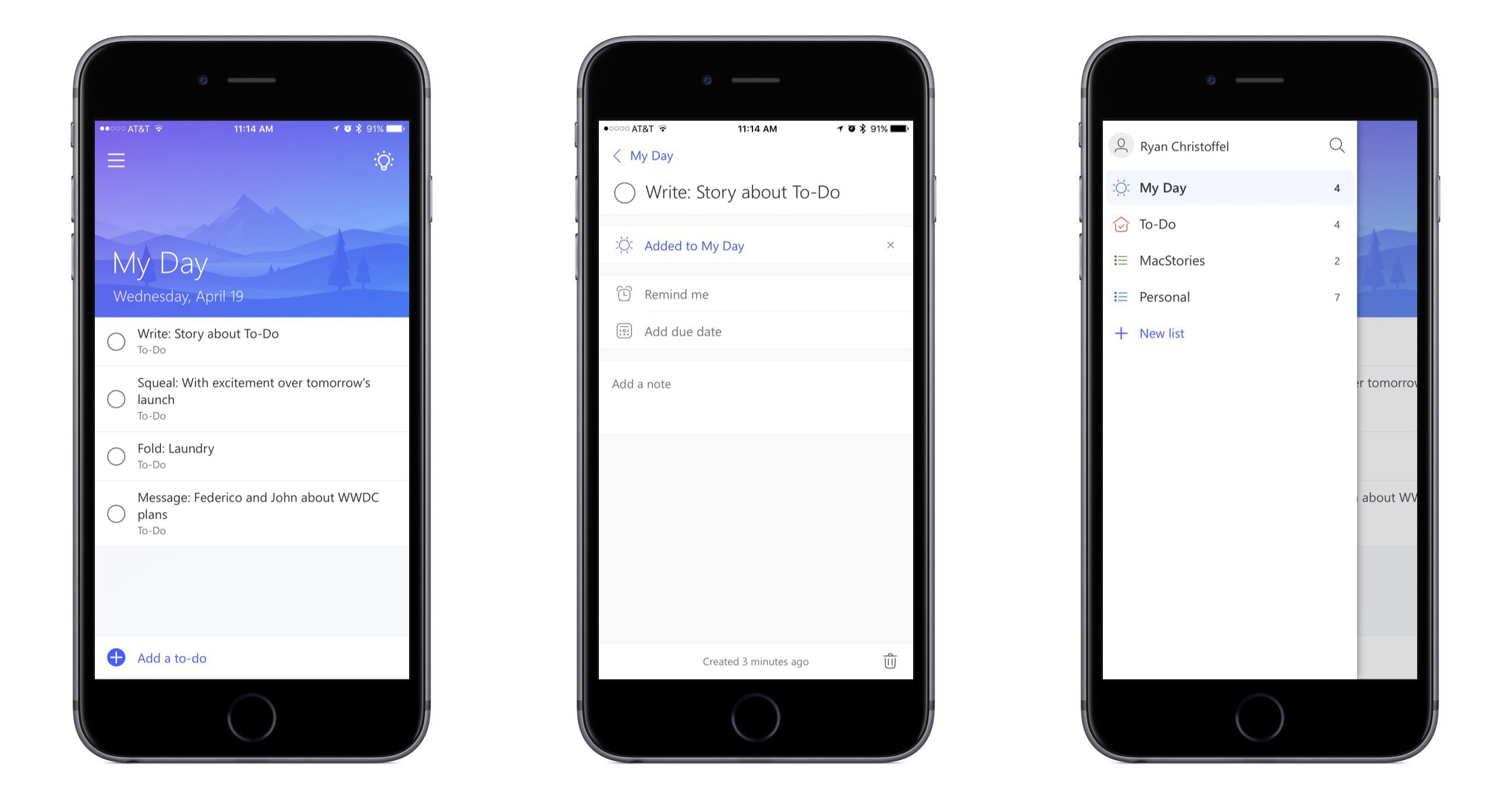
Microsoft To-Do is the official successor to Wunderlist, the popular task management app acquired by Microsoft in mid-2015. Microsoft unveiled To-Do today in Preview, which is essentially a public beta. The service is built on Office 365 technologies, but according to ZDNet it is available to anyone with a Microsoft account; Office 365 is not required.
To-Do launches today on several major platforms, including iPhone, Android, Windows, and the web. Unfortunately iPad and Mac versions are not available at this time, but Microsoft says those apps will be available in the coming months.
After spending some time with To-Do on iPhone, my initial impressions are that it's a beautiful, simple task management tool that very much feels like a worthy successor to Wunderlist.
To-Do is perhaps the best looking task management app I've ever used – though the upcoming Things 3 may steal that title. Each list you create is topped by a beautiful header image and can be customized with a different theme. Text is crisp and clear and colors are pleasant tones. The animations for checking off tasks and navigating the app bring delight to the task management experience.
The level of complexity with To-Do resembles that of Wunderlist. It's extremely quick and easy to add tasks to a list, and if you need to add things like reminders, due dates, or notes to a task, you can do that by tapping on it. Currently To-Do can't do everything that Wunderlist can, such as adding attachments to a task or creating subtasks, but those things may be added in the future. Microsoft has already stated that they plan to add list sharing features soon.

Although the app is very simple overall, one key feature that makes it stand out is Intelligent Suggestions. These are tied to the primary list in To-Do, called 'My Day.' In theory, this list should be empty every morning when you check it (assuming you completed yesterday's tasks). An empty list provides you the chance to daily determine which tasks you'll tackle in the new day and which you won't; this kind of starting-from-scratch approach is where Intelligent Suggestions come in. Tapping the lightbulb icon in the top-right corner of My Day will bring up a list of suggestions for tasks that you can quickly, easily add to your My Day list. The tasks that you've assigned due dates to won't automatically be added to My Day when they're almost due, but they will show up at the top of your Intelligent Suggestions alongside other tasks that To-Do believes you may want to complete today. It's an interesting, clever twist on the classic 'Today' list in other task management apps, allowing you to plan your work with intention and purpose each day.
Another feature worth mentioning is the task importer Microsoft has built. From To-Do's settings menu you can import tasks directly from Wunderlist or Todoist. The importer contains several options so that you can import either all or just some of your tasks from those other services. I used it to import tasks from Todoist and it worked seamlessly.
Alongside To-Do's release comes the unsurprising news that Wunderlist will be retired at an undetermined point in the future. From the company's announcement post: "Once we are confident that we have incorporated the best of Wunderlist into To-Do, we will retire Wunderlist."
To-Do will likely not be an adequate replacement for more powerful task management systems like OmniFocus or Todoist, but for those who want something simpler, Microsoft is off to a great start with To-Do. And this truly is just the start; Microsoft announced that they plan to integrate the service into other Office 365 products, such as Outlook.
Whether you're an Office 365 user or not, To-Do is definitely worth a look.
Microsoft To-Do is available on the App Store.
Club MacStories offers exclusive access to extra MacStories content, delivered every week; it’s also a way to support us directly.
Club MacStories will help you discover the best apps for your devices and get the most out of your iPhone, iPad, and Mac. Plus, it’s made in Italy.
Join NowNate Lanxon reports for Bloomberg on some welcome updates to Apple Maps in Europe:
Apple Inc. is expanding the capabilities of its Maps app in Europe to help users charge their electric vehicles or find bike rental hubs.
The company has added the locations of the U.K.’s electric vehicle charging stations by incorporating data from Munich-based Cirrantic’s Moovility service, which lists re-juicing points for cars made by Tesla and Nissan, among others.
It has also added public bicycle rental and drop-off points to maps of London, New York and Paris in a catch-up to long-time mobile navigation leader Google, which has listed such stations in multiple countries for some time.
Last December Apple added ChargePoint integration to Maps to help users in the U.S. find electric vehicle chargers, so it's nice to see something similar come to Europe.
The bicycle rental information is also welcome as Apple Maps continues branching out from simply providing directions to now being a central hub for various modes of transportation, such as ride sharing and now bicycling.
→ Source: bloomberg.com
Today’s release of Firefox includes the first significant piece of Project Quantum, as well as various visible and the under-the-hood improvements.
The Quantum Compositor speeds up Firefox and prevents graphics crashes on Windows
In case you missed our Project Quantum announcement, we’re building a next-generation browser engine that takes full advantage of modern hardware. Today we’re shipping one of the first important pieces of this effort – what we’ve referred to as the “Quantum Compositor”.
Some technical details – we’ve now extracted a core part of our browser engine (the graphics compositor) to run in a process separate from the main Firefox process. The compositor determines what you see on your screen by flattening into one image all the layers of graphics that the browser computes, kind of like how Photoshop combines layers. Because the Quantum Compositor runs on the GPU instead of the CPU, it’s super fast. And, because of occasional bugs in underlying device drivers, the graphics compositor can sometimes crash. By running the Quantum Compositor in a separate process, if it crashes, it won’t bring down all of Firefox, or even your current tab.
In testing, the Quantum Compositor reduced browser crashes by about 10%. You can learn more about our findings here. The Quantum Compositor will be enabled for about 70% of Firefox users – those on Windows 10, 8, and 7 with the Platform Update, on computers with graphics cards from Intel, NVidia, or AMD.
And if you’re wondering about the Mac – graphics compositing is already so stable on MacOS that a separate process for the compositor is not necessary.
Save screen real estate – and your eyes – with compact themes and tabs
It’s a browser’s job to get you where you want to go, and then get out of the way.
That’s why today’s release of Firefox for desktop ships with two new themes: Compact Light and Compact Dark. Compact Light shrinks the size of the browser’s user interface (the ‘chrome’) while maintaining Firefox’s default light color scheme. The Compact Dark theme inverts colors so it won’t strain your eyes, especially if you’re browsing in the dark. To turn on one of these themes, click the menu button and choose Add-ons. Then select the Appearance panel, and the theme you’d like to activate.

Firefox for Android also ships with a new setting for compact tabs. When you switch tabs, this new setting displays your tabs in two columns, instead of one, so it’s easier to switch tabs when you have several open. To activate compact tabs, go to Settings > General.

Easily control a website’s permission to access device sensors or send you notifications
In order to fully function, many websites must first get your permission to access your hardware or alert you of information. For example, video conferencing apps need to use your camera and microphone, and maps request your location so you don’t have to type it in. Similarly, news sites and social networks often ask to send you notifications of breaking stories or messages.
Today’s Firefox desktop release introduces a redesigned interface for granting and subsequently managing a website’s permissions. Now, when you visit a website that wants to access sensitive hardware or send you a notification, you’ll be prompted with a dialog box that explicitly highlights the permissions that site is requesting. If later on you would like to change a site’s permissions, just click the ‘i’ icon in the Awesome Bar.
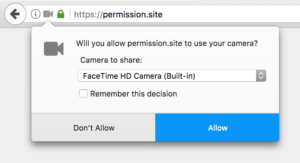
You can learn more about the improvements to Firefox’s permissions in this post.
Lots more new
Check out the Firefox 53 release notes for a full list of what’s new, but here are a few more noteworthy items:
Web developers should check out the Hacks blog for more information about what’s in today’s release.
We hope you enjoy today’s release, and that you’re excited for the even bigger Quantum leaps still ahead.
The post Firefox faster and more stable with the first big bytes of Project Quantum, simpler with compact themes and permissions redesign appeared first on The Mozilla Blog.
mkalus
shared this story
from  Consumerist. Consumerist.
|
United Airlines executives had a goal for the second quarter of the year: To start from a position of strength and boost domestic growth heavily. It’s a very rah-rah, sunny, corporate view of the world that may well be derailed by one big thing: United itself.
As Bloomberg reports, aggressive domestic growth is hard enough for an airline in the current environment… but doing it right after a whole lot of folks started considering swearing off your airline for good is even harder.
United, as most folks are probably aware, has been embroiled in a week-long PR disaster after having a passenger hauled out of his seat and dragged off the plane on an April 9 flight.
The airline’s first few attempts at an apology were widely met with derision, as company CEO Oscar Munoz used corporate-speak to discuss “re-accommodating” the passenger and calling him “disruptive and belligerent” before finally actually saying, “I deeply apologize” and kicking off an apology tour with his fourth statement.
Since then, the airline has said it won’t use law enforcement to drag people off flights anymore, has promised some kind of compensation for every passenger who was on the flight, and has changed its crew travel policies so passengers who have already boarded won’t be booted from the seats they’re in.
That now is the backdrop against which airline president Scott Kirby told analysts that upping the number of domestic passengers it books is United’s big plan.
Kirby says that aggressive growth is not about trying to “invade” other airlines’ hubs and spaces, but rather is, “about restoring United to where it should have been.”
But Kirby, Bloomberg notes, was at the helm over the past seven years too, when, after the United/Continental merger, the airline deliberately shrank its domestic footprint. Meanwhile, the very few other remaining national carriers have much smaller ambitions for their own growth. American and Delta are targeting growth of 1% or less for the second quarter of this year, and an apparently-ambitious Southwest is looking at more like 2.5% for the whole year. In comparison, that makes United’s 5.5% target seem… unlikely at best.
An analyst with Bloomberg also pointed out that in a robust, competitive market, there’s no such thing as making your own business grow without taking away someone else’s.
“There is no ‘natural share,’ everything is market share,” the analyst said. “When you’re expanding, you’re trying to take market share. Delta is going to be ticked.”
About the passenger-dragging incident, meanwhile, United executives said that they have fielded “appropriate questions and concerns” and are launching a review into what happened. That review, of course, is likely to make big news when it’s released — making everyone remember, once again, the whole viral video thing that United wants to be a lot farther behind them than it is.
United Picks a Funny Time to Attract More Passengers [Bloomberg]


|
mkalus
shared this story
from Consumerist.
|
Vehicles that end up in the scrapyard are sometimes dismantled and pieces sold to companies — often repair shops — to be used in other vehicles as replacement parts. While this is perfectly legal, it’s also dangerous, especially when it concerns recalled supplies, such as the deadly shrapnel-shooting Takata airbags.
The Associated Press reports these concerns are very real after one Las Vegas woman was injured in a crash earlier this year when the Takata airbag in her car deployed sending pieces of metal shooting at her throat.
The woman’s 2002 Honda Accord, which was purchased last summer, didn’t originally contain a recalled Takata airbag. Instead, the airbag was likely taken or stolen from a 2001 Accord that was in a salvage yard, a rep for Honda tells the AP.
Engineers with the carmaker inspected the woman’s car following her crash and traced the airbag inflator to the recalled 2001 Accord, which is among those deemed to be the most dangerous when it comes to Takata’s recall.
The Honda rep says the older vehicle’s airbag was removed and then placed in the 2002 vehicle, which had also previously been wrecked, sold to a salvage yard, repaired, and then resold.
The woman’s family says they were unaware of the vehicle’s history, including that it contained parts for a vehicle under recall for the airbag defect.
“It’s a tragedy that shouldn’t have happened,” an attorney for the family tells the AP. ”You would think in today’s age with communications technology these types of things should not be allowed to happen.”
Part of the reason such incidents do happen, however, is that no state or federal agency monitors the re-use of recalled parts, the AP notes.
While consumers can check a VIN against the National Highway Traffic Safety Administration website to check of recalls, that database doesn’t take into account repairs made once a vehicle is deemed to be out of service.
In the case of Accord involved in the Las Vegas crash, the AP notes that the NHTSA site returns no outstanding recalls.
Michael Brooks, acting director of the nonprofit Center for Auto Safety, tells the AP that there should be a program in place to prevent issues like this from happening. Additionally, he warns car shoppers to be wary of cars with salvage titles, as there is no way to know where the parts are coming from.
For its part, Honda has a program to buy back airbags made by Takata in order get them out of circulation, the rep said.


mkalus
shared this story
from  Comments on: ‘It’s the biggest one I ever seen’: Towering iceberg causes Newfoundland traffic jam. Comments on: ‘It’s the biggest one I ever seen’: Towering iceberg causes Newfoundland traffic jam.
|
FERRYLAND, N.L. — A towering iceberg stationed off Newfoundland’s east coast is drawing hundreds of people to the small town sitting in its shadow.
Ferryland Mayor Adrian Kavanagh said Monday it look grounded and could stick around for awhile.
“It’s a huge iceberg, and it’s in so close that people can get a good photograph of it,” he said during a phone interview.
“It’s the biggest one I ever seen around here.”
The massive iceberg has become a tourist attraction in Ferryland, where cars were backed up bumper to bumper Sunday as curious onlookers tried to get a glimpse of it.

U.S. Coast GuardThis March 2017 photo released by the U.S. Coast Guard and made by a robotic camera aboard a reconnaissance aircraft, shows icebergs floating near the Grand Banks of Newfoundland in the North Atlantic Ocean. There were about 450 icebergs near the Grand Banks of Newfoundland as of Monday, April 3, 2017, up from 37 a week earlier, according to the Coast Guard's International Ice Patrol in New London, Conn.
Kavanagh said the number of visitors took him by surprise, adding that the “onslaught” showed that people are interested “in that kind of stuff.”
Hundreds of people have made the trek from the surrounding area and St. John’s, an hour’s drive away, he said.
Pictures have been making the rounds on social media, including one of a helicopter apparently parked on one end, looking insect-sized by comparison to the huge iceberg.
Kavanagh said he’s hearing that the wind could pick up and that could mean more icebergs brushing by his town.
“You can see off in the distance on a clear day, you can see five or six big bergs,” he said.
Kavanagh said while it’s great for tourism, fishermen aren’t so “particular about ice and the icebergs.”
It’s been a busy season for icebergs so far, with 616 already having moved into the North Atlantic shipping lanes compared to 687 by the late-September season’s end last year.
Experts are attributing it to uncommonly strong counter-clockwise winds that are drawing the icebergs south, and perhaps also global warming, which is accelerating the Greenland ice sheet’s shedding of ice.

Christian M. Stracke,
SlideShare,
Apr 22, 2017
This is a set of slides delivered by Christian M. Stracke (newly appointed ICDE Chair in Open Educational Resources (OER)) at the International Lensky Education Forum in Yakutsk. It offers a look at open learning that extends beyond a narrow definition based on the licensing of resources, and considers such things as open pedagogy, open schools and open environments. It also links openness directly with quality. It's a longish presentation and you might just want to download the slides (SlideShare has become really quirky and slow ever since being acquired by LinkedIn).
[Link] [Comment]
With new CEO Joe Natale at the helm, Rogers expects a promising 2017, predicting a between three and five percent increase in 2016 revenue. With total 2016 revenue coming in at $13.7 billion CAD, that means the company expects between $411 million to $685 million more this year than the year previous.
The company reviewed its 2017 guidance numbers at the company’s annual general meeting on April 19th. It also stated it expects an increase of two to four percent in adjusted operating profit, which last year was $5 billion.
“We have the right plan, tremendous strength in our 25,000 dedicated employees and executive team to build on the momentum we have established,” writes board chairman Alan Horn in Rogers 2016 Annual Report.
Horn was the interim president and CEO between previous CEO Guy Laurence’s departure and incoming president and CEO Natale.
In its report on 2016, Rogers noted that it added 286,000 wireless postpaid net additions (an 170 percent increase from 2015) and five percent wireless service revenue growth, compared to two percent in 2015.
The report also shows Rogers decreased by four basis points in wireless postpaid churn — the amount of subscribers lost — to a churn rate of 1.23 percent in 2016. While lowered, that rate still pales in comparison to the 0.98 percent churn rate shown in Telus’ 2016 fourth quarter release. Rogers is no doubt hoping that former Telus president and CEO Natale will help the company improve its churn rate.
It also noted that it saw 11 percent revenue growth in internet, which it calls “the growth engine” of its cable segment, with 97,000 net internet additions (an 162 percent increase from 2015).
Additionally, after instituting new social media channels for customer engagement, it reported a 56 percent increase in self-serve transactions.
In addition to numbers and formal business, new Rogers CEO Joe Natale made comments regarding his key areas of focus during his first day on the job.
The post Rogers expects to earn $685 million more revenue in 2017 than last year appeared first on MobileSyrup.
I’ve analyzed lots of corporate screwups in this space. Most of those companies will recover just fine. But a few now have a permanent reputation for being a bad and hated company, with real costs that will continue for decades. Let’s look at some of the corporate stupidity on display in the last year or so and … Continued
The post United Airlines and the cost of being hated appeared first on without bullshit.

Facebook has announced two new 360-degree cameras that will work with virtual reality headsets like the Oculus Rift. The X-6 and X-24, initially shown at F8, Facebook’s annual developer conference, are named after how many cameras are located on the devices.
Currently Facebook offers the Surround 360, a $30,000 USD 360-degree camera that isn’t aimed at the consumer market. Facebook’s new 360-degree cameras, the tennis-ball sized X-6 and the beach ball sized X-24, the successors to the older device, will not be for the consumer market either and have been designed for content creators. Facebook plans on selling the devices to a select group of partners, according to Engadget.
“We’re trying to make it as close as you can to feeling like you’re there.”
The new cameras gives users the ability to look 360-degrees around them in all directions. Both devices utilize technology called ‘six degrees of freedom’ (6DoF), that refers to the different ways a person can move, front, back, up, down and side to side. This technology could result in the creation of more immersive films, allowing viewers to look up at the snow falling down at their virtual feet. The X-24 and X-6 allow users to move in a small spherical area and interact with the surrounding environment.
“We’re trying to make it as close as you can to feeling like you’re there,” said Facebook CTO Mike Schroepfer in a presentation to journalists last week, as reported by CNET. Content like this is already used for video games but is rarely utilized in filmmaking.
Facebook’s goal for the technology is for it to influence filmmakers to make movies that require VR headsets. Filmmakers would purchase the cameras and capture the film in 360-degrees. The X-6 and X-24 are capable of capturing 8K resolution video that works together with the 6DoF technology, advancing it past the previous Surround 360 that uses 17 cameras and is disc-shaped.
The X-24 and X-6’s 6DoF technology and a 4D theatre could combine to create an all-encompassing experience — something to look forward to if filmmakers take advantage of this new technology.
Source: Engadget
The post The X-24 and X-6 are two new Facebook-made 360-degree cameras for filmmaking appeared first on MobileSyrup.
Back we go to Jack Aubrey and Dr. Maturin, for a study of sustaining dramatic focus while your characters are busy waiting for things to happen. These adventures sustain their energy and tension admirably while their protagonists play Boccherini in C and write letters to their absent wives. Fascinating as ever.
In comments on Em Short’s dismissive review of Those Trojan Girls, someone asks:
I enjoy snarky school stories, but I feel uncomfortable about taking references from Trojan Women, which is a heavy and sad piece about very serious issues, and turning it into yet another story about how annoyingly self-obsessed rich girls are. That may or may not be the actual point of this work, but it’s the feeling I’m getting. There are far, far better sources to draw on for that kind of story.
After a few months, perhaps I might indulge in a response.
Those Trojan Girls does engage with serious issues, and though perhaps it follows Seneca more closely than Euripides, Seneca is also sad.
A central problem in The Trojan Women (as in all new media) is agency: the conquered women have none (or think, at times, they have none), and yet this is their tragedy. Among many other changes, Seneca gives us Polyxena, who accepts her sacrificial fate, comforts her mother, and preserves her modesty in the face of the intolerable. Euripides gives us infant Astyanax, who is a pure victim. My Polly plays a longer game.
Polly Xena is a convict and perhaps a con, and of course she’s a con in another sense: the brutal sacrifice of a pretty teenager, someone we’ve gotten to know and like, is going to get your attention. That was Seneca’s game. But is that fair to Polly, to use her like that? Of course it’s unfair; that didn’t bother Seneca, perhaps, but it should bother us. It’s a game, but it’s not a game: this stuff matters to the people who are getting blown up.
We also have the problem of Helen. What are we to do about her? The Greeks could (possibly) believe that all of this was her fault — or at least that the Trojans might have thought so. We can’t do that: whatever people say, The Occupation is not actually the fault of a schoolgirl.
And yet – and yet. Helen knows that she is free to make her own choices, to assert her sexual autonomy as she pleases. That is her right. Her choices are not convenient, but they are not hers alone. Her lover knows both that this is wrong and that it will end in his ruin, but Love Conquers All. For them, love is everything; for the rest of a school caught up in The Occupation, it is just a surprise.
Love led Mary MacGregor to Franco’s Spain, which in due course led Sandy to put an end to Miss Brodie’s prime. Neither Mary nor Sandy were rich, and you’d likely consider most of my protagonists to be far from wealthy if you bumped into them (as you might) at Schipol. What romantic protagonist is not self-obsessed? “It is a far, far better thing I do:” me, me, me.
I’m interested in plotful hypertext, for which we have few polestars. (I know there are plotful games and that Interactive Fiction (IF) is plotful and sometimes literary. I honor and esteem it. I’ve gotten on the wrong side of the IF community and didn’t mean to.) There’s a lot we don’t know – or, if we know it, I don’t know where it’s written down.
You’re starting an interactive narrative. Will you write it using present tense, or past? Why? What are the consequences of either choice?
You want the consequences of the reader’s choices to be real and to be evident, but you want to avoid the problems of My Friend, Hamlet and you want the reader to be thinking about the characters, not about leveling up their ST or getting another 37 Dingus Stones so they can cast that Apple Spell. How do you manage this?
What about point-of-view shifts in new media: distracting or inviting? How do we choose the best point of view for a scene? For a story?
Recently, we’ve seen some intriguing hypertext with really large granularity: Jennifer Egan’s A Visit From The Goon Squad, Iain Pears’ Arcadia, and I don’t know what else. Is this a promising development or a return to incunabula?
There’s usually a lot of time between fights. In fact, maybe we want the battles offstage entirely; Jack Aubrey can go through an entire volume without firing a shot. How do we keep the plot moving without overt conflict, while we play Bocherini in C or discuss the Rights Of Man? O’Brian does it. Victor Hugo does it. Trollope does it too, some of the time. Nothing actually happens in The Sun Also Rises, or not a hell of a lot, and it moves, and yet we all know new media work that stops dead when the writer starts to get on about trout fishing or bullfighting. So how do you do it?
Speaking of O’Brian, one of the chief character notes of his wonderful Dr. Maturin is an inclination to repeat adjectives so they are unmistakable, clear, lucid. But one of the classic examples of bad Elizabethan verse, from Thomas of Woodstock, does exactly this:
Why suffer their speech? To prison hie,
There let them perish, rot, consume, and die.
Is three a character note, and four a travesty?

Chris Coyier,
CSS Tricks,
Apr 22, 2017
Why doesn't educational technology have something like CodePen? Our field seems to be obsessed with the consumption of content. What we need is a great open application like this that lets people find and work with learning content. "Here's an incomplete list of things I didn't get a chance to tell you about: searching for external assets, tidying your code, analyzing your code, exporting, sharing (gasps for air), global assets, keyboard shortcuts, or all the different views!" Gasps for air indeed!
[Link] [Comment]This notion that no one has an incentive to get drivers out from behind a steering wheel is wrong. Most of the cost of an Uber today is the driver, especially when you refactor out the usurious margins Uber wants, and lease/insurance/permitting associated with a human driver. Car fleets have an enormous incentive to get as autonomous as possible as fast as possible.
Or better yet, turn the largest parking lots into urban farmland.
I disagree, again. Large fleets — like GM, Uber, or the like — might simply self-insure, or at the very least will create national agreements with insurers. This is not going to create massive employment. Municipally-owned systems will follow suit, as well.
People living in major metro areas and not in their suburbs do not have hour-long commutes in autos, today.
Ask most people what makes quality music, and inevitably they reply that it’s the speakers. I’m not sure whether that was ever true, or if the speakers were simply one of the few pieces of hardware that users could choose, but it’s definitely not the case in this age of digital music.
Speakers do matter, of course. However, thanks to printed circuits, selecting them is no longer a matter of the larger the better. Today, you can get the same sound from a eight centimeter high wireless speaker that you once needed a seventy-five centimeter wired speaker for. And, although you still can’t go astray with traditional quality brands such as Bose, other brands like Logitech’s UE (Ultimate Ears) are also worth considering.
If you use headphones or ear buds, the headphone amplifier on your music player takes the place of speakers. For example, Fiio, an up and coming Chinese maker of audio equipment makes several different amplifiers for different listening preferences to accompany its top of the line music player. The cables used to connect headphones or ear buds can also make a difference, with those made from metals like titanium being at the high end.
Then there is the digital file. A 32 bit file is going to capture more nuances than an 8 bit one, and a 192K sample rate more than a 42K one, regardless of what hardware you play them back on. Format also matters, with FLAC being preferred by many audiophiles because of its advanced capabilities.
Still another consideration is the DAC (Digital to Analog Converter), which turns the digital file into sound. Unlike with speakers, with DACs, size still matters – a music player the length of your thumb does not have room for a first-rate DAC, which currently requires a device about the size of a cell phone. Even so, modern DACs deliver quality that was once only available with several bulky boxes many times their weight.
All these considerations are often bundled for you. Download sites, for example, often offer low quality files in MP3 formats, with occasional special offers of files with a higher sampling format. Similarly, headphone amplifiers and DACs are usually not compatible with other brands, or even other formats, although headphones, ear buds, and cables generally are.
If you are ripping your own digital music or selecting a music player and its accessories, take into account where you will play music. An apartment dweller will have little use for Fiio’s A5 headphone amplifier, because they are unlikely to be playing music loud enough to appreciate its ability to keep the bass from distorting at high volumes. Instead, the less specialized A3 headphone amplifier is probably a more reasonable choice. Similarly, if you want music for riding the bus, even with noise-canceling headphone, you will probably have enough external noise that you can’t appreciate a 32bit FLAC file, and it will simply take up extra storage space.
Sorting through all these considerations can be complex. All the same, don’t just stop with the speakers or headphones when you are considering how to play your music. Today, focusing on the speakers is only part of what you need to consider.


mkalus
shared this story
from  METRO NEWS | NEWS | VANCOUVER. METRO NEWS | NEWS | VANCOUVER.
|
The B.C. Liberals are to return nearly $175,000 in improper political donations, according to Elections B.C., while their New Democrat opposition are handing back nearly $11,000 such gifts.
But a “huge loophole” in British Columbia’s election laws may have allowed corporations and unions in B.C. to keep their hefty donations out of the public eye — at least until long after the May 9 election is over.
According to a government transparency watchdog, B.C. voters should ask every would-be MLA one question at campaign stops and all-candidate forums: “Will you disclose your donors before election day,” suggested Duff Conacher, co-founder of Democracy Watch. “Then watch them all squirm.”
The reason for the question, he said, is that under B.C.’s already lax donations rules — which permit unlimited donations, donors outside Canada, and $3,000 in anonymous gifts per candidate — individual candidates don’t have to reveal who gave them money until three months after every election.
It’s in contrast to the annual reporting requirements for parties and riding associations.
“Millions of dollars of donations may be hidden from voters until after election day,” argued Democracy Watch co-founder Duff Conacher in a phone interview. “But voters have a right to know who bankrolled election candidates before they vote.
“Voters have the right to know; they should ask and insist disclosure happens.”
Conacher said he’s concerned because of the millions that have flooded into B.C. politics since the last election, with real estate developers and unions topping the list — supporting the B.C. Liberals and B.C. NDP respectively — with at least $13.5 million given since 2005.
The next most generous industry donors include oil and gas, forestry, mining, and construction. Combined, those sectors gave more than $20 million, almost entirely to the B.C. Liberals.
On March 10, the RCMP’s Sensitive Investigations Unit, part of force’s Federal Serious and Organized Crime division, began investigating “allegations of indirect contributions and other potential contraventions of the Election Act” — after the Globe and Mail reported that lobbyists had donated to the B.C. Liberals in order to gain access to government, and alleged they were then illegally reimbursed by their corporate clients.
“Since April 2016, when we filed our ethics complaint and the Globe and Mail first broke the story of cash-for-access, anyone who wanted to hide a donation would have known what a big issue it would become,” Conacher argued. “(They) had an incentive to route donations to candidates, knowing those donations would not have to be disclosed before election day.
“They’re likely all bankrolled by big money donations, and whoever donated will likely have sway over them if they get elected. But no one will know who they are until 90 days after the election.”
Last month, a Forum Research poll found that seven-in-ten British Columbians want the province to ban corporate and union donations.
According to Elections B.C.’s finance reporting guide for constituency associations, detailed donor lists aren’t required annually but only every four years — after each election: “The Election Act requires all registered constituency associations represented by candidates to file election financing reports within 90 days after General Voting Day.”
And in local ridings’ annual reports, they don’t have to list donors, but simply “the total value of all political contributions received during the year, from all sources,” including “permitted anonymous contributions accepted at functions.”
The non-partisan agency that oversees provincial elections also states that the law does not limit the amount of provincial political contributions that can be made by a contributor,” Elections B.C. said on its website. “The only contribution limits established under the Election Act are for anonymous contributions.”
The B.C. NDP and Greens have pledged to ban corporate and union donations if they win on May 9, with the Green Party refusing such gifts unilaterally ahead of the election.
The B.C. Liberals have committed to reforms requiring parties to report their donors publicly in real-time, and promised "independent panel" to review political donations in B.C. — which Conacher called a “system of legalized bribery” out of step with other provinces.

There is no better proof that technology has made humanity lazy than the fact that I’ll avoid plugging in my smartphone until it dies when all I have to do is grab my charging cord (usually within an arm’s length) and plug it in. And yet, that is the sad truth: plugging my mini computer into my larger computer, or the wall, is a hassle I’d rather not deal with.
It is for degenerates like myself that Jason Kuznicki created the AutoDock, now receiving funding on Kickstarter. The AutoDock has one simple purpose: it makes plugging in your smartphone to charge (or transfer content) easier, not by replacing wired charging with wireless, but by automating the wired connection process.

The prototype video shows two arms extending within the dock when a phone is dropped inside it. The arms hold the device in the correct position and connect it with the charger. A green light then turns on to show the device is charging, while a red light reports a connection that didn’t work, whether due to an awkward angle or because the device was upside down.
To disconnect the device, users pass their hands by the right side of the device which releases their smartphone in order for them to grab it again. The charger can be purchased in MicroUSB, USB-C and Lightning variants and supports all forms of fast charging, including Qualcomm, Samsung and Motorola technologies (as long as the users is employing the appropriate wall adapter, naturally).
The dock is $49 USD (about $64 CAD) at regular price and currently on sale for a ‘late bird’ price of $39 USD (about $54 CAD).
I would be a liar if I said I didn’t want one of these… It would make a perfect addition to my office peripheral game, allowing me to easily throw my device into the dock to charge during down-time. But I’m frankly unsure if my laziness outpaces my cheapness when it comes to the purchase of a $64 accessory that solves a minimal, though frustrating pain point. It’s on my wish list, however, and could also make an ideal gift for Mother’s Day or Father’s Day, especially at its promotional ‘late bird’ price.
Note: This post is part of an ongoing series titled Sticky or Not. Sticky or Not began as a series on MobileSyrup’s Snapchat account in which Rose Behar analyzes new and often bizarre gadgets, rating them sticky (good) or not (bad). Now the series is expanding to include articles, because who doesn’t love a quirky new gadget?
The post Eliminate charging cord fumbling with AutoDock [Sticky or Not?] appeared first on MobileSyrup.
(Eve is a new programming language, and this is our development blog. If you’re new to Eve, start here)
Now that we’ve got the v0.3 preview out the door, we’re ramping up to a more regular release schedule. In that spirit, today we’re releasing the second preview of Eve v0.3, which largely improves built in watchers, but contains some other goodies as well.
If you want to try out this version, we have two routes:
If you’re used to running Eve, you may be looking for the editor and Eve syntax. We’re not finished working on those yet, so they are not included in this preview. If you’d like to use those, please stick with the v0.2.3 branch, and we’ll keep you updated as to when those make it into the main branch. There will be breaking changes though, so any code you write now will have to be rewritten to a degree (for instance, some tags will be changing and databases are being removed from the language.)
Let’s take a look at some of the bigger improvements.
You can now embed Eve rendered elements into your non-Eve application. This is accomplished with the addExternalRoot(tag:string, element:HTMLElement) function, which registers an arbitrary root element to serve as parents to Eve-rendered elements. This block creates a record tagged “my-root” in Eve:
import {Program} from "witheve";

let program = new Program("my program");
let htmlWatcher = program.attach("html");

let someElement = document.querySelector("#eve-wrapper");
htmlWatcher.addExternalRoot("my-root", someElement);
Now you can access that element from within Eve, giving you the ability to use it as a parent for child elements rendered by Eve. This block searches for that record, and that adds a div with some text as a child:
program.bind("render into #eve-wrapper", ({find, record}) => {
  let my_root = find("my-root");
  return [
    my_root.add("children", [
      record("html/element", {tagname: "div", text: "hello, world!"})
    ])
  ];
})
This scenario works well if you have an already existing application, and you’d like to use Eve to render certain elements.
We’ve added and streamlined various watchers that interact with the browser. We’re now at the point where v0.3 is caught up to v0.2.x in terms of the available watchers. Additionally, we’ve added support for more DOM events and triggers in the HTML watcher:
button attribute to all mouse events (values left, right, middle, 4, and 5.double-click, mouse-down, and mouse-up events.html/listener/context-menu tag. If an element with this tag is right clicked, the default context menu will not be shown, allowing you to render your own. You can grab page-relative mouse position off of any of the mouse events as page-x and page-y.key-press event, with support for printable characters and the following control keys: tab, enter, shift, control, alt, escape, left, up, right, down, and meta.focus and blur events.The first v0.3 preview revamped the function definition interface, but still had some limitations. Now you can create expressions with multiple outputs, so we are in a position to bring v0.3 back to parity with v0.2.
string.codepoint_length(text:string) function.You are way too late for that, alas. Look how badly we ave handled the transition of the former manufacturing workforce, which has been going on for decades. And in this case, the transition will be much, much faster.
For almost as long as I’ve covered the urban-issues beat in Vancouver, people have talked about how great it would be if we had fee-simple townhouses — that is, townhouses where the owners don’t have to belong to a strata. They just own their particular row/townhouse individually, with some agreement about how to handle common walls — just as many Ontario and Quebec owners do.
I thought the dream was still unrealized when Michael Geller tweeted out a picture of some fee-simple townhouses in Coquitlam. There was an ensuing Twitter discussion, with me expressing surprise. Then Surrey’s city manager, Jean Lamontagne, contacted me by email to tell me that such rare things were starting to appear in Surrey.
Hence, my story in the Globe, which took a look at the little shoots of experimentation happening in various places, including Nanaimo, on this issue. (Thanks to whomever tweeted about Nanaimo, which also prompted me to call there.)
So why care about this form of housing? As more than one person has told me over the years, a lot of older couples don’t want to move to condos because they don’t want to have to have their lives governed by a committee. As a result, they stay parked in their four-bedroom homes all over the city, which is an inefficient use of housing. If this could catch on, it might encourage more of those people to pass on their homes to people who actually need four bedrooms.
mkalus
shared this story
from  EU referendum and Brexit | The Guardian. EU referendum and Brexit | The Guardian.
|
Dissent is no longer an option in British politics. In Theresa May’s world, the greatest enemies are the enemies within, and democracy must be eliminated for the good of the people
Hatred of dissent, it seems, is the new normal in British politics. “Crush the saboteurs,” screamed the Daily Mail, announcing Theresa May’s calling of a snap election. “Crush pro-EU saboteurs, PM,” advised the Sun for good measure. But what exactly are saboteurs and how should we crush them?
Related: Revenge of the tabloids | Andy Beckett
Continue reading...Durning finds the evidence in The Guardian:

Did Seattle’s mandatory helmet law kill off its bike-share scheme?
Fundamentally, low ridership killed Pronto. The system had 500 bikes at 54 stations. In its first year of operations, there were 142,832 trips or an average of just 0.78 rides per bike per day. According to the National Association of City Transportation Officials, the national average for US bike share systems is 1.8 rides per bike per day. New York City’s CitiBike system gets nearly 3.8.
If you ask five people why Pronto had such low ridership, you’ll get as many answers. Some say Seattle’s helmet law discouraged use. Others say the system was too spread out and never got the expansion it needed. Some say it lost its political support both inside and out of city hall. More still think would-be riders were discouraged by the lack of bike infrastructure in downtown Seattle or the city’s notorious rain and hills.
In truth, all those theories are at least partially correct. It was a series of compounding problems that spiralled over time until the mayor had little incentive to fight to keep Pronto alive. …
Few advocates think the helmet law alone killed Pronto, but Russell Meddin, co-founder of The Bike-Sharing Blog, is among those who think helmets hurt the spontaneity that makes bike share successful. “Helmet laws stop the serendipity of using the system,” he says. “People want convenience. The more convenient a system is, the more it’s used.” …
One of Pronto’s biggest flaws was its lack of station density. According to Meddin, successful systems need 20 to 28 stations per square mile. Seattle’s had closer to 12. …
In February 2016, as the city council debated whether to acquire the system, Pronto’s financial woes came to light. Ridership had fallen short of projections, leaving the system with less fare revenue than planned. On top of that, the non-profit had stopped seeking new sponsorships in 2015 because they’d expected the city to take over sooner than they did. When it came time to vote, Pronto was nearing insolvency and the city needed to spend $1.4m to acquire it and pay off its debts. …
The final straw came when it emerged that Seattle was going to have to scrap all Pronto’s equipment to move forward with its expansion plans. All the leading proposals from the tender process called for starting fresh with new stations and bikes, and the winning bid from Bewegen called for an all-electric assist bike share fleet. “That definitely frustrated some of the more fiscally conservative members of the council who felt like we were had. Bad press leads to bad policy leads to bad outcomes and it spiralled,” explains Padelford. …
Some cycle experts in the city believe new Chinese private bike share companies will set up in the city. Operating on an Uber-like model of implementing first, asking forgiveness later, they have been launching without permission in cities around the world: BlueGoGo launched in San Francisco recently, while Ofo is headed for Cambridge.

