Shared posts

24 Apr 14:24

165 Street Artists Took Over an Abandoned Building in Berlin, and the Results Are Wild

by Taylor Lindsay
mkalus shared this story from creators.

What happens when 165 street artists take over a single building in Berlin? The result is a five-floor urban art labyrinth boasting the work of creators from over 70 countries. There's not a single canvas in sight. Filled with low-lights, sound effects, 3D casts, growing things, unnerving portraiture, tape, stickers, and smells, it feels as far from a traditional gallery as you can get.

This building was once an abandoned bank on the famous avenue Kurfürstendamm (colloquially "Ku'damm"). Now overflowing with indoor street art, it's set to be demolished in June to make way for apartment buildings. But that's part of the fun of it, according to the artists. And until then, anyone willing to brave the two-hour line outside is welcome inside, free of charge.

THE HAUS (tag-lined "Berlin Art Bang") is a project kicked off by Kimo, Bolle and Jörni (all aliases), a trio of creators on the Berlin urban art scene for more than 20 years. While they operate Xi-Design, a hand-painted advertisements company, it's their never-for-profit crew Die Dixons that built THE HAUS. After inviting their expansive network of artists to participate, they created the packed-out platform to put street art in the spotlight, offering a temporary, no-fee experience much like street art itself. "We have a huge network," Kimo tells Creators, "and we're very organized, but all this really came from the heart and from people's willingness to do it."

Courtesy THE HAUS

Kimo let me interview him in the back room of THE HAUS, surrounded by crates of spray paint, beer, and supplies stacked floor-to-ceiling. I later found out it was all donated by supportive businesses. The building materials came from a local construction company. The beer was contributed by Berliner Pilsner. A four-star hotel put up all the artists for a period of the project, free of charge. "This is not a marketing joke," Kimo says. "We want respect for the artists, for them to choose what they want to say and when their work is seen. That's why no one was paid, and nothing is for sale."

The project's magnitude makes more sense after learning a little more about Die Dixons. "We started out like everybody else in street art—illegally. Over time, we went through some training, built our skills, then got jobs. Twenty years later, we have our company Xi-Design. That's why we have a huge network of not only artists but brands and agencies. So the people know us, and they know we're trustworthy guys when it comes to big projects." As for the project's temporary nature, everyone was on board. "We are always painting, it always gets removed, and then comes new art in its place. That's how it works. We don't do it because it lasts, we're looking forward to getting better, working with new materials, new places, other dimensions.

Tape That is a collective of six artists that was founded in 2011 and is based in Berlin

The artists worked from mid-January until March 9. They slept, ate, and built together almost non-stop. "We gave them a few rules," Kimo told us. "No beef, no hating, no bullshit. Like if there's 'Fuck Trump, fuck this, fuck that,' we didn't want it. If it's political with a message everyone can interpret on their own, it's cool. But with 165 artists, we didn't want their work to conflict with each other. In a family project, we want people to see what we can do, how professional and high quality street art can be. There's still a lot you can do without going hard against other people."

OMSK167 started graffiti writing in1993

Artists range from Berlin natives to international activists, established crews to newbie collaborators, and individuals to nonprofit giants. Solo artist Urzula Amen constructed a fake grocery store-like room with graphic health-hazard labels in the style of cigarette warnings. Only rooms away, International Justice Mission created a room to look like an Indian brothel, complete with VR goggles to visualize the plight of a modern-day prostitute.

As for the no-phone zone, it's there for audiences to "get back to the roots," as Kimo puts it. "Use your eyes and feelings and emotions, standing in the rooms. Step back, look again, touch it. Stop looking at things through your phone, or on the internet. Experience it for yourself, and focus on the moment."

Die Dixons are currently exploring new places to build another Haus. "We're getting inquiries from Belgium, The Netherlands, and several other countries," says Kimo. "They're all saying 'we have a building for you!' This will not be the last Haus."

Base23 uses 3D installations in his room at THE HAUS. Image courtesy of Million Motions and the artist.

1UP ("One United Power") is a multinational men & women crew famous for their worldwide graffiti. Image courtesy of Million Motions and the artist.

Felix Rodewaldt's entirely taped room. Image courtesy of Million Motions and the artist.

The collective KOIKATE creates temporary installations, extensive sculptures and eclectic performance work. Image courtesy of Million Motions and the artist.

Emess

Mural by HAUS guests Nick Flatt & Paul Punk. Image courtesy of Million Motions and the artist.

Quintessenz is an artist duo from Hannover & Berlin. Image courtesy of Million Motions and the artist.

Rotkäppchen Goliath is an agency for urban communication that was founded in 2014 in Vienna. Image courtesy of Million Motions and the artist.

THE HAUS will be destroyed at the beginning of June. For a floor plan and extensive artist overview, check out THE HAUS website. Follow them on Instagram @thehausberlin.

Related:

Activists Are Projecting Digital "Calligraffiti" Onto Walls in Berlin

Fantasy Murals by a Hawaiian Street Art Couple Imagine a Sustainable Future

Illuminating Berlin: Finding the Heart of Berlin Art During the Festival of Lights



24 Apr 14:23

Blade Runner


Blade Runner

24 Apr 14:22

Good Answers Can Also Be Unhelpful

by Richard Millington

Many communities today are moving towards simple rating systems in responses.

Readers can select whether a response is helpful or not helpful. Some are measured by this metric (it’s as good a metric as any).

But what if a member asks a question you can answer but not resolve?

What if a member wants a product you no longer sell? Or to request a feature you can’t create?

You can provide the most thoughtful, detailed, answer possible and it’s inevitably going to receive a downvote (or no votes) simply because it didn’t resolve the question.

Ouch!

This becomes an especially big problem during new product launches/changes when people have a lot of questions which can’t easily be solved.

If you’re measured by satisfaction scores (or % of helpful votes), your success will fluctuate randomly regardless of what you do.

This means two things:

  1. You need to tag and exclude the questions which were impossible to resolve in the first place. Be aware of the temptation to tag questions which are likely to be unpopular here too.
     
  2. You need to take a random sample of these scores and compare them. If you don’t want to tag every question, use samples. Take a random sample (>30) of votes on unsolvable questions and unsolvable questions. Compare the two and check for significance. Now you can make relatively safe compensations for drag caused by these questions.

It’s a relatively minor problem unless you’re measured by member satisfaction. In which case it can suddenly become a very big problem indeed.

24 Apr 14:22

Pocket-sized translator that can speak 80 languages launches in China

by Eva Yoo

For expat founders entering the China market, and for Chinese travelers visiting overseas countries, the language difference is the first and essential problem they run into. Aiming to help people have a conversation regardless of their language difference, Travis the Translator recognizes and translates speech in 80 of the most common languages within two seconds and is now launching in China.

Google Translation can be of help, but it eats up your battery if you’re up for a longer period translation work. Targeting China market, Dutch startup is now selling Travis devices through their WeChat public account and will start receiving retail orders starting from the end of May. Their crowdfunding campaign just got funded 746% of their modest $80,000 goal on Indiegogo, summing up to US$ 596,848 with 1 day to go.

The market is huge. There are 7.5 billion people in the world using 7,097 languages, and the 83% speaks only one language. Priced at US$ 139, the translator is a handheld, pocket-sized device and comes with a matching Android app. We couldn’t try out the translation, but Travis sure was light and compact in size.

Travis2

Travis the Translator (Image Credit: TechNode)

The Rotterdam-based company is using IBM and Google’s existing AI principle on translation. They use Google Translate for some language and translates other languages using apps from Microsoft, Systran, IBM and 2 apps that the company refused to disclose. The company does not have an in-house AI scientist.

“The more we use, the better it gets. IBM and Google’s existing AI needs more data to get better. We use our app as an umbrella and link with their open source software,” Lennart Van der Ziel, co-founder & CEO Travis the translator told TechNode at an event in Shanghai.

OLE (Open Learning Education) and Travis partnered to donate 200 devices to refugee centers in Turkey so that they can encourage them to learn a new language. The team is also working closely with the Rotterdam city government. With its 12 hour battery, they are looking to have 100 devices in the tourist center, so that tourists can take the translator and use it for one day.

Travis

Lennart Van der Ziel, co-founder & CEO Travis the translator (Image Credit: TechNode)

Lennart Van der Ziel, co-founder and CEO of Travis the Translator studied law in Rotterdam and decided to leave his position to pursue his dream.

“Lawyer is about fixing the problem of the businesses. When I thought about it, I wanted to work ahead something and have lawyers to help me. I don’t want to solve someone else’s business matters,” Lennart says.

The 29-year-old Dutch founder started a Venture Cafe in Rotterdam, where a huge community of investors and entrepreneurs gathered and also where Lennard teamed up with other co-founders.

To enter the China market, the company is furthering its presence in first-tier cities like Beijing and Shenzhen.

24 Apr 03:15

NewsBlur Blurblog: Is This Normal?

sillygwailo shared this story from TriMet Diaries.

I saw the woman scanning the seats on the #75 as she boarded. It was 6:35pm on a weekday, the bus crowded with commuters and high schoolers, so if she was seeking an empty row, all she found was disappointment. As she settled into the seat next to mine, I said, “Good afternoon.”

This seemed to amuse her. She looked around at the darkness surrounding the bus and said, “I think it might be evening.”

It seemed an unnecessary clarification among strangers on the bus, so I shrugged. “I guess I’m trying to draw out the day.”

As she sorted through a few items in her purse, she said, “I’m glad to be sitting next to someone normal.” She paused, then added, “at least you look normal.”

Riding the bus is like playing the lottery, which is why you see so many books and headphones – some people prefer not to play. I understand that. But it was unusual to hear someone celebrating that they’d won that lottery.

Moreover, if I were to make a list of adjectives to describe myself, normal wouldn’t be on the list. Not that I consider myself abnormal, but the word is meaningless. What’s normal at a library isn’t normal at a strip club (“I’m happy we located your book, but if you stuff another dollar into my pants, I’m calling security”) and what’s normal at a grocery store isn’t normal at a funeral. (“Ma’am, can I ask what you have planned for the shopping cart?”) It’s a subjective descriptor, and the subtext generally means that the person fits a specific definition of acceptable.

I had a suspicion what she meant – she was glad I wasn’t a weirdo. But her comment made me think of photo that had recently made the rounds on social media. It featured a woman in a burka and a drag queen sitting on a commuter train with the caption, “This is the future that liberals want.” The caption became a popular meme (appearing on photos of superheroes on the train or cats riding dogs) but my favorite comment pointed out that only offense these two people had committed was to look “different”. I suspect that when both of the people in that photo got to their destination, they looked perfectly normal.

So what made me normal? Was it my fashion blandness that she found reassuring? My generic middle-aged buzz cut? I can say without self-deprecation that a more accurate adjective to describe me is ordinary – a casting agent could find my stunt double on nearly any rush-hour bus. I look norm-core, but I’d be exactly the same person if I was wearing mascara, or a turban, or dyed my hair pink. Yet those cosmetic differences would likely disqualify me from someone else’s normal.

I probably should have called her out, asked what she meant, maybe confronted her narrow definition of the word. But the fact was, I didn’t know what she meant, and just as I try not to judge the person in the burka or the drag queen, I didn’t want to judge her. I don’t know her life, or what she experiences every day, and frankly, she hadn’t say anything bad about anyone. To her, normal might mean willing to have a conversation. I’m prone to giving people the benefit of the doubt, and I wanted to extend that courtesy to her, so I simply smiled and said, “As long as you have a broad definition of normal, you’re right.”

She smiled back, but we sat in silence for the rest of the ride.

24 Apr 03:15

Each Samsung Galaxy S8 Unit Costs $307.50 To Manufacture

by Rajesh Pandey
A quick cost breakup of the components used inside the Samsung Galaxy S8 suggests that the total bill of material of the handset is around $301.60, with an added $5.9 in manufacturing expenses. Continue reading →
24 Apr 03:15

Ratings and reviews on add-ons.mozilla.org

by Philip Walmsley

Hello!

My name is Philip Walmsley, and I am a Senior Visual Designer on the Firefox UX team. I am also one of the people tasked with making addons.mozilla.org (or, “AMO”) a great place to list and find Firefox extensions and themes.

There are a lot of changes happening in the Firefox and Add-ons ecosystem this year (Quantum, Photon, Web Extensions, etc.), and one of them is a visual and functional redesign of AMO. This has been a long time coming! The internet has progressed in leaps and bounds since our little site was launched many years ago, and it’s time to give it some love. We’ve currently got a top-to-bottom redesign in the works, with the goal of making add-ons more accessible to more users.

I’m here to talk with you about one part of the add-ons experience: ratings and reviews. We have found a few issues with our existing approach:

  • The 5-star rating system is flawed. Star ratings are arbitrary on a user by user basis, and it leads to a muddling of what users really think about an add-on.
  • Some users just want to leave a rating and not write a review. Sometimes this is referred to as “blank page syndrome,” sometimes a user is just in a time-crunch, sometimes a user might have accessibility issues. Forcing users to do both leads to glib, unhelpful, and vague reviews.
  • On that note, what if there was a better way to get reviews from users that may not speak your native tongue? What if instead of writing a review, a user had the option to select tags or qualities describing their experience with an add-on? This would greatly benefit devs (‘80% of the global community think my extension is “Easy to use”!’) and other users (‘80% of the global community believe this extension is “Easy to use”!’).
  • We don’t do a very good job of triaging users actual issues: A user might love an extension but have an (unbeknownst to them) easily-solved technical problem. Instead of leaving a negative 1-star review for this extension that keeps acting weird, can we guide that user to the developer or Mozilla support?
  • We also don’t do a great job of facilitating developer/user communication within AMO. Wouldn’t it be great if you could rectify a user’s issue from within the reviews section on your extension page, changing a negative rating to a positive one?

So, as you can see, we’ve got quite a few issues here. So let’s simplify and tackle these one-by-one: Experience, Tags, Triage.

So many feels

Experience

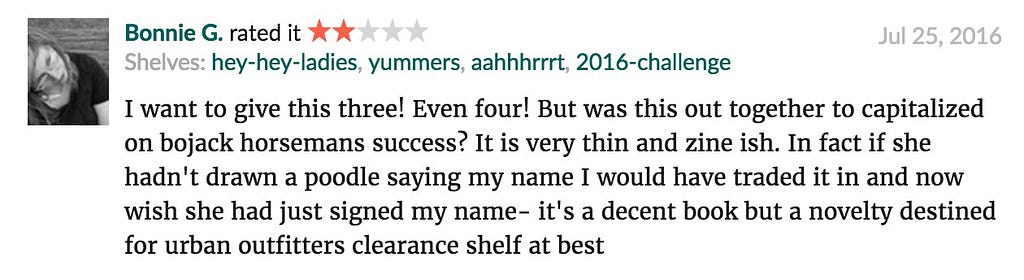
Someone is not familiar with Lisa Hanawalt

The star rating has its place. It is very useful in systems where the rating you leave is relevant to you and you alone. Your music library, for example: you know why you rate one song two stars and another at four. It is a very personal but very arbitrary way of rating something. Unfortunately, this rating system doesn’t scale well when more than one person is reviewing the same thing: If I love something but rate it two stars because it lacks a particular feature, what does that mean to other users or the overall aggregated rating? It drags down the review of a great add-on, and as other users scan reviews and see 2-stars, they might leave and try to find something else. Not great.

What if instead of stars, we used emotions?

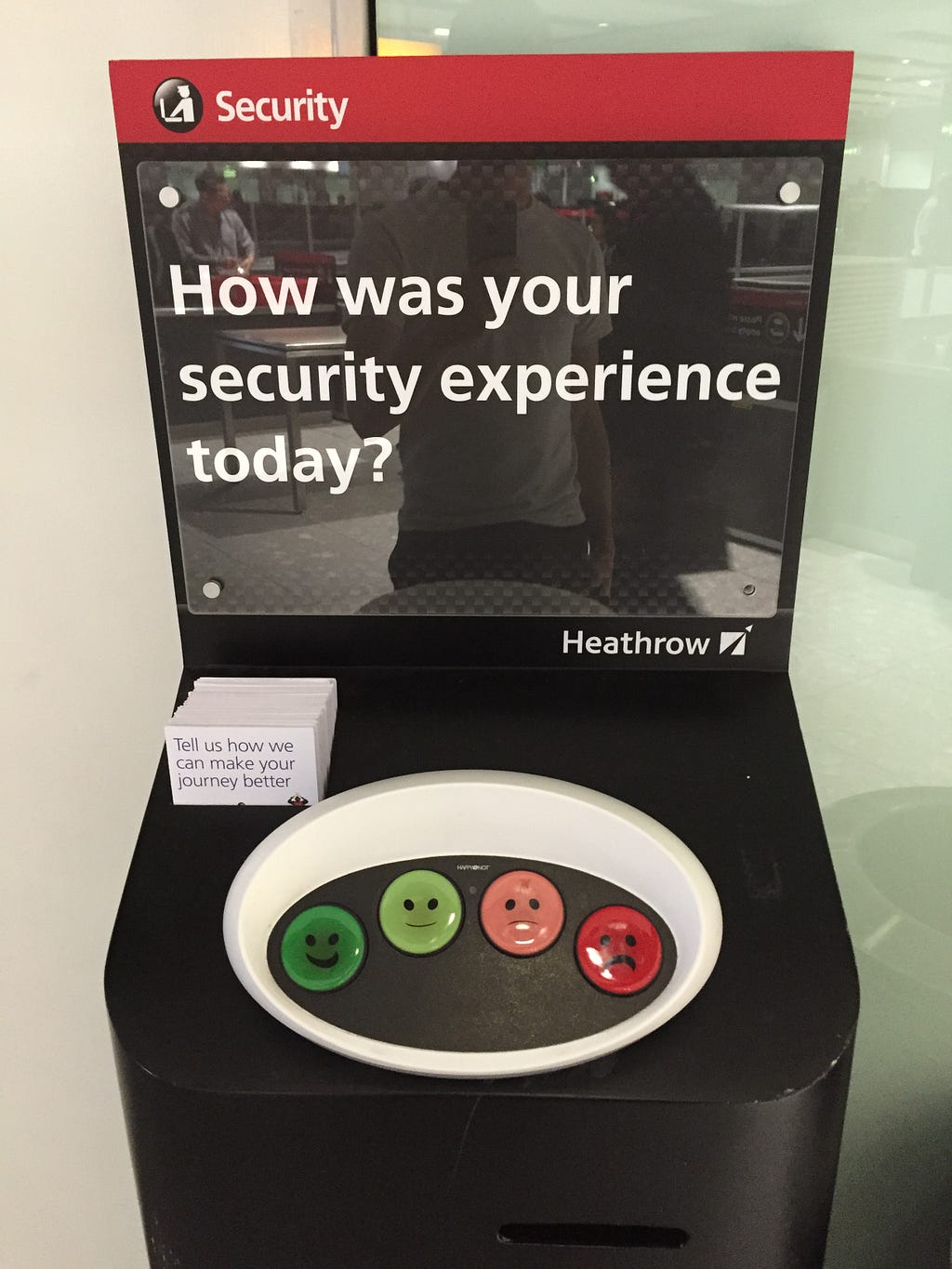
Some of you might have seen these in airports or restrooms. It is a straightforward and fast way for a group of people to indicate “Yep, this restroom is sparkling and well-stocked, great experience.” Or “Someone needs to get in here with a mop, PRONTO.” It changes throughout the day, and an attendant can address issues as they arise. Or, through regular maintenance, they can achieve a happy face rating all day.

What if we applied this method to add-ons? What if the first thing we asked a user once they had used an extension for a day or so was: “How are you enjoying this extension?” and presented them with three faces: Grinning, Meh, and Sad. At a very high level, this gives users and developers a clear, overall impression of how people feel about using this add-on (“90% grinning face for this extension? People must like it, let’s give it a try.”).

So! A user has contributed some useful rating data, which is awesome. At this point, they can leave the flow and continue on their merry way, or we can prompt them to quickly leave a few more bits of even MORE useful review data…

Tags

Not super helpful

Writing a review is hard. Let me rephrase that: Writing a good review is hard. It’s easy to fire off something saying “This add-on is just ok.” It’s hard to write a review explaining in detail why the add-on is “just ok.” Some (read: most) users don’t want to write a detailed review, for many reasons: time, interest, accessibility, etc. What if we provided a way for these users to give feedback in a quick and straightforward way? What if, instead of staring down a blank text field, we displayed a series of tags or descriptors based on the emotion rating the user just gave?

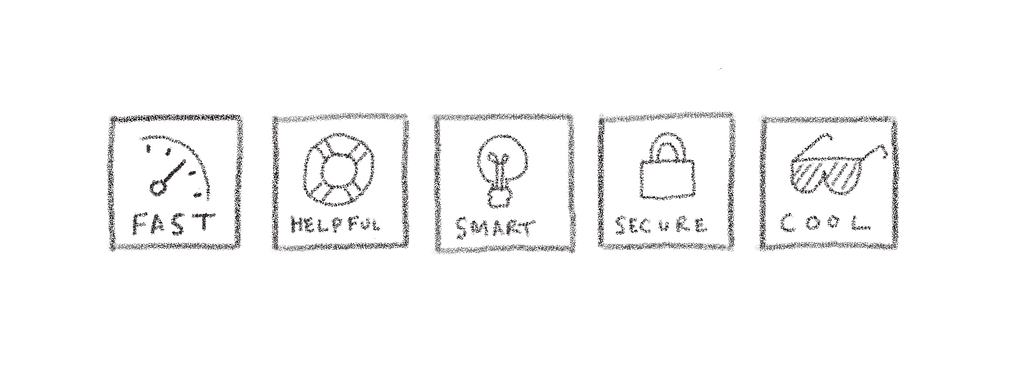
For example, I just clicked a smiling face to review an extension I’m enjoying. Right after that, a grid of tags with associated icons pops up. Words like “fast”, “stable”, “easy to use”, well-designed”, fun”, etc. I liked the speed of this extension, so I click “fast” and “stable” and submit my options. And success: I have submitted two more pieces of data that are useful to devs and users. Developers can find out what users like about their add-on, and users can see what other users are thinking before committing to downloading. We can pop up different tags based on the emotion selected: if a user taps Meh or Sad, we can pop up tags to find out why the user selected that initially. The result is actionable review data that can is translated across all languages spoken by our users! Pretty cool.

Triage

Finally, we reach triage. Once a user submits tag review data, we can present them with a few more options. If a user is happy with this extension and wants to contribute even more, we can present them with an opportunity to write a review, or share it with friends, or contact the developer personally to give them kudos. If a user selected Meh, we could suggest reading some developer-provided documentation, contacting support, or writing a review. If the user selected Sad, we’d show them developer or Mozilla support, extension documentation, file a bug/issue, or write a review. That way we can make sure a user gets the help they need, and we can avoid unnecessary poor reviews. All of these options will also be available on the add-on page as well, so a user always has access to these different actions. If a user leaves a review expressing frustration with an add-on, devs will be able to reply to the review in-line, so other users can see issues being addressed. Once a dev has responded, we will ask the user if this has solved their problem and if they’d like to update their review.

We’ve covered a lot here! Keep in mind that this is still in the early proposal stage and things will change. And that’s good; we want to change this for the better. Is there anything we’ve missed? Other ideas? What’s good about our current rating and review flow? What’s bad? We’d love constructive feedback from AMO users, extension developers, and theme artists.

Please visit this Discourse post to continue the discussion, and thanks for reading!

Philip (@pwalm)
Senior Visual Designer, Firefox UX


Ratings and reviews on add-ons.mozilla.org was originally published in Firefox User Experience on Medium, where people are continuing the conversation by highlighting and responding to this story.

24 Apr 03:15

The Talk Show with Apple’s Lisa Jackson

by Federico Viticci

Special guest Lisa Jackson — Apple’s vice president of Environment, Policy, and Social Initiatives — joins the show for an Earth Day discussion of the state of Apple’s environmental efforts: climate change, renewable energy, responsible packaging, and Apple’s new goal to create a “closed-loop supply chain”, wherein the company’s products would be manufactured entirely from recycled materials.

I enjoyed John Gruber's interview with Apple's Lisa Jackson on the company's approach to various environmental initiatives. It's a fascinating, eye-opening discussion. Take an hour of your time to listen to it. It's obvious that some incredibly smart and talented people are working on these issues at Apple.

→ Source: daringfireball.net

24 Apr 03:15

Tweetbot 4.6 Brings Image Support in DMs, New Compose UI for Replies

by Federico Viticci
The new compose UI for replies in Tweetbot 4.6.

The new compose UI for replies in Tweetbot 4.6.

In an update released today on the App Store, Tapbots has started taking advantage of Twitter's more flexible third-party API to allow users to send images in private conversations (DMs). The feature – which has long been available in Twitter's official app – is limited to static images for now (no videos or animated GIFs), although the Twitter API could make more attachment types possible in the future.

Perhaps more notably, Tweetbot 4.6 comes with a redesigned compose interface for replies. Similarly to Twitter's iPhone app, Tweetbot 4.6 doesn't count usernames against the 140-character limit. To present this change in functionality, Tapbots has opted for a Twitter-like design where usernames aren't displayed in the compose box upon starting a reply. Instead, a "Replying to..." banner at the top of the screen highlights the tweet's original author and other participants in a conversation. Tap the banner, and, like in the Twitter app, you'll be a shown a popup with a list of users you're replying to. The author at the top of the list can't be de-selected; other users in the conversation can be removed by tapping on the blue checkmarks.

Twitter (left) and Tweetbot 4.6.

Twitter (left) and Tweetbot 4.6.

While this design is similar to Twitter's, it should be noted that Tweetbot limits this presentation to the compose view for replies. Unlike Twitter's official apps, usernames are still displayed in the body of a tweet in both the Timeline and Mentions views, providing a familiar format that doesn't force you to tap on the "Replying to..." banner from every section of the app. Personally, I believe Tapbots adopted a better solution than Twitter itself: the compose UI is nicer and usernames are easier to remove, but the timeline retains the familiar @usernames that add context to inline conversations.

I'm curious to see how Twitter's new API roadmap will impact third-party clients such as Tweetbot over the next few months. Tweetbot continues to be my daily Twitter client on every platform, and I hope Tapbots will be able to add even more native Twitter features in future updates (I'd love to have support for polls in Tweetbot).

Tweetbot 4.6 is available on the App Store.


Support MacStories Directly

Club MacStories offers exclusive access to extra MacStories content, delivered every week; it’s also a way to support us directly.

Club MacStories will help you discover the best apps for your devices and get the most out of your iPhone, iPad, and Mac. Plus, it’s made in Italy.

Join Now
24 Apr 03:14

Return Of the Zombie Villain

by Ken Ohrn

Yes, folks, the dope-smoking HIPPIE has returned from its societal graveyard to menace our land. Perhaps you thought this anarchy-promoting villain had died a merciful death in the ’70’s, along with tie-died t-shirts, bell-bottom jeans, communes, peace, love and flower power.

But here they return in a classic PostMedia headline.  Ripped from the dusty cobwebbed vaults of yesteryear.

Keep the hippies off the grass. Find them a proper venue and give them a permit already.

When it comes to riling up the readers of PostMedia’s Vancouver Sun newspaper, it looks like a return to these happy journalistic memories for Matt Robinson.  It’s sure to induce a suburb-wide wonderful glow of nostalgia and a cozily familiar frenzy of pearl-clutching, tut-tutting and sharp intakes of breath.

Here’s two photos from the 2016 event.

4.20.Event.April.2016.3_resize

For those interested, here’s a report from the GM of the Vancouver Board of Parks and Recreation (March 1, 2017) on the permit application from the Vancouver 420 Events Society for the April 20, 2017 event at Sunset Park.  It’s dull as day-old dishwater, of course, with no warning of the insidious resurrection of HIPPIES.  There is mention of Park Board bylaw problems (yawn):  smoking in the park, selling stuff.   Plus concern for health, safety and so on.

While both groups acknowledge the challenging aspects associated with the 420 celebration and protest, they also recognize that the event will occur regardless.  Further, with the impending federal legalization of marijuana, there is recognition that in the foreseeable future, the 420 initiative will likely shift from being a protest to a legal celebration. . . .

.  .  .   CONCLUSION Staff are aware that the 420 celebratory and protest event will be occurring at Sunset Beach Park regardless of whether the Park Board approves the special event permit and by-law exemption that has been requested by the organizers.  As such, the Working Group and Steering Committee continues to refine operational plans that are informed by past learnings.  While taking a provisional approach may provide more mechanisms to regulate the event, staff will use whatever tools are available to ensure that public health and safety is the first priority and that impacts to the park and local community are mitigated to the greatest extent possible.

Personally, I see the recent 420 events as a shrinking protest or celebration, and a growing marketing event at which proto-businesses vie to create and elevate their consumer brands in the impending post-legalization marketplace.  There are major fortunes waiting out there for those who make it to the top of the heap brand-wise.  Not to mention behind-the-scenes business opportunities (see below).

Brands getting major visual space in 2016 included:  The One Stop Shop, Dirty’s 100% Organic, Dab City, Mary Jane’s, CCHQ (Cannabis Culture Headquarters:  “head”, get it?), CannaBliss.

Behind-the-scenes businesses are moving right along:

Invest In Cannabis  (articles on Marijuana ETF’s, US Sales figures, VC-backing opportunities, and so on)

Hill and Gertner Capital Corp::  a merchant bank with design and brand experience, and active involvement in rising brand Tokyo Smoke. A fascinating read.

Is a Dot.Bong Bubble In the Air?:  warns the Globe and Mail about marijuana industry investors, and the usual scam companies:

The hype surrounding this new sector has seen junior mining companies rebrand as medical marijuana firms almost overnight. Amid a flurry of press releases from companies touting future production, stock regulators in Canada and the United States took the unusual step of warning investors to tread carefully around medical marijuana stocks, fearing a bubble is forming and that stock manipulations among small companies on venture exchanges and over-the-counter markets may be taking place.

To round out the breadth of the scene:

From Global News:   The cannabis industry is sparking an interest among investors.

Connor Cruise, CEO of Brassneck Capital Corp., invested in a licensed cannabis company and helped take it public.

“There’s a lot of upside to this,” he said, adding spin-off industries could also thrive as Canada cultivates its pot industry and the government moves to legalize marijuana for recreational use.

“Everything from lighting to fertilizers to technology companies,” he explained. “A lot of larger companies haven’t touched this space because it’s been a grey or black market. But now with it getting legalized, you’re going to see more of that come into it and I think that’s great.”

Marijuana growing companies are also proving to be a safer bet than some more traditional resource investments.

“If you take a look at the stock markets, oil has gone down, but all the marijuana stock have held steady .. last six months,” said Justin Dhaliwal.

For those interested in social satire, here’s a free idea.  A piece on the total corporatization of a future 420 Event — sort of a Car Show or Boat Show or Home Show for the cannabis industry. Imagine the hilarious dislocation and conflict between the marketing crowd (grinning cubicle drones) and the hard-core pot underground holdouts.  Hours of fun.

Oh yes, and a chance to put HIPPIES on display again.


24 Apr 03:14

How We Know


noreply@blogger.com (Stephen Downes), Half an Hour, Apr 25, 2017


It's like recognizing a person. Your mother walks through the train station and you pick her out of the crowd. This recognition is not based on any particular rule or principle, not based on any essential features, not based on any inferential process.

[Link] [Comment]
24 Apr 03:14

Week 114 chemo complete: Early morning at Hinge Park

by tyfn

Week 114 chemo complete: Keep moving forward

Chemo treatment is making me pretty weak mentally, so I’ve been limiting my recent photography adventures to the city. This morning, before sunrise, I headed to Hinge Park in the Olympic Village. As I walked around a bit, I actually observed a beaver renovating a dam in the wetlands there.

Totally made my morning – Nature makes me happy.

To recap: On Sunday, April 16th, I completed Cycle 29 Week 2 I have Multiple Myeloma and anemia, a rare cancer of the immune system. It is a cancer of the plasma cells, a type of immune cell that produces antibodies to fight infection, found in the bone marrow. As a blood cancer, it is incurable, but treatable. Since February 9th 2015, I have been on Pomalyst and dexamethasone chemo treatment (Pom/dex).

Weekly chemo-inspired self-portraits can be viewed in my flickr album.

Steveston - Britannia ShipyardsSteveston – Britannia Shipyards

The post Week 114 chemo complete: Early morning at Hinge Park appeared first on Fade to Play.

24 Apr 03:14

BlackBerry stumbles over April security fix

by Volker Weber

DTEK50 came again first with the April 5 fix and then there was radio silence. Now we learned that BlackBerry had difficulties integrating all the individual patches. But they are handling it differently from the DTEK50 delay in December/January. This time they released the (partial) April 1 fix to PRIV (and DTEK60?). It only weights in at about 20 MB taking the build to AAK689. I wonder how fast they can recover for the May patch which is due in two weeks.

24 Apr 03:14

Marshall Monitor BT

by Volker Weber

ZZ2B0A3B31

The Apple Airpods are my most used headset. They fit my ears, they work well, they sound reasonably nice, they are easy to carry and charge. When you wear them, you look like a complete idiot. And there are things that they cannot play well. When I need to be alone with myself, when I want to blast my ears, I need something more substantial. Enter the Marshall Monitor BT, an over-the-ear-headset with Bluetooth connection to my iPhone and a cable for everything else.

ZZ706BCEB3

They fit my head and my ears, they play for 30 hours between charges, they isolate me from the noise around me, and they are really really loud. And this little brass knob is why I love them so much. Instead of asking Siri to please raise the volume I just push the knob upwards. And then push it again. Downwards is lower volume, but who wants that? Right is next track, left is last track. Push it for three seconds and the headsets turns on and off, push longer for Bluetooth pairing, a short push will pause/play or make/break phone calls. It is one single control and it is effing brilliant.

I can store the folded headset in the included bag for travel, together with the audio and the charge cable. And I can share what I am listening to with a second headset that plugs right into mine.

ZZ1D3498FF

This is not my first Marshall headset. I already used the Major II, which I returned with some hesitance. Those were only on-ear, which somebody called the little sister of an over-ear headset. This one is different.

I have headsets with multipoint Bluetooth connectivity, I have headsets with active noise cancellation, I have headsets that may even sound a bit better. But there is more than technology, there is also emotion. And I swear, my air guitar sounds way better when wearing the Marshall Monitor.

More >

24 Apr 03:13

Twitter Favorites: [sonyaellenmann] "primarily a blogger who's gained some following" — my tombstone

Sonya Mann @sonyaellenmann
"primarily a blogger who's gained some following" — my tombstone
24 Apr 03:02

Twitter Favorites: [knguyen] "Alexa, what's the weather like outside?" "Play-ing Pa-ssion-fruit by Drake on Spo-ti-fy."

Kevin Nguyen @knguyen
"Alexa, what's the weather like outside?" "Play-ing Pa-ssion-fruit by Drake on Spo-ti-fy."
24 Apr 02:49

Icelanders Seek to Keep Their Language Alive and Out of ‘the Latin Bin’

Icelanders Seek to Keep Their Language Alive and Out of ‘the Latin Bin’:

Iceland is being colonized by English: the language, not the people.

The people of Iceland, a rugged North Atlantic island settled by Norsemen about 1,100 years ago, have a unique dialect of Old Norse that has adapted to life at the edge of the Arctic.

Hundslappadrifa, for example, means “heavy snowfall with large flakes occurring in calm wind.”

But the revered Icelandic language, seen by many as a source of identity and pride, is being undermined by the widespread use of English, both in the tourism industry and in the voice-controlled artificial intelligence devices coming into vogue.

Linguistics experts, studying the future of a language spoken by fewer than 400,000 people in an increasingly globalized world, wonder if this is the beginning of the end for the Icelandic tongue.

Former President Vigdis Finnbogadottir said Iceland must take steps to protect its language. Ms. Finnbogadottir is particularly eager for programs to be developed so the language can be easily used in digital technology.

“Otherwise, Icelandic will end in the Latin bin,” she said.

[…]

Asgeir Jonsson, an economics professor at the University of Iceland, said that without a unique language, Iceland could experience a brain drain, particularly among professions in science and the arts.

The problem is compounded because many new computer devices are designed to recognize English but not Icelandic.

“Not being able to speak Icelandic to voice-activated fridges, interactive robots and similar devices would be yet another lost field,” Mr. Jonsson said.

As much as the romanticism of a language enclave might appeal, Icelandic is doomed. My bet is that it will be spoken only by older people or in isolated villages in 100 years. 

Blame the talking fridges if you are looking for a scapegoat.

24 Apr 02:49

A French Campaign Waged Online Adds a Wild Card to the Election

A French Campaign Waged Online Adds a Wild Card to the Election:

Mélenchon is upsetting the pre-digital firmament of French politics, no matter what the outcome of his campaign in this election:

Far-right websites, an ecosystem often referred to as the Fachosphère, have long given oxygen to Marine Le Pen’s far-right National Front, which was the first French party to create a website. And the left has traditionally had intense ideological debates in the mainstream news media.

In this campaign, however, in which the left is split among several candidates, Mr. Mélenchon, a former Trotskyite and longtime Socialist senator before breaking ranks, has more YouTube followers than any rival and a league of active online supporters eager to jump on critics.

“Marine Le Pen has made an effort for years: It’s a sociological vote; it’s a crisis; it’s people who feel shut out of the system,” said Thierry Vedel, a political scientist who conducts election research at Sciences Po, a university in Paris. “Mélenchon is more complicated. Mélenchon’s campaign is trying. We can’t rule out that in the campaign, social media has had an effect.”

Mélenchon is very far left: he wants to renegotiate the pact with the EU, take France out of NATO, raise taxes, eliminate nuclear power, and more. He’s more to the left than I am.

24 Apr 02:49

Learning From Jane Jacobs, Who Saw Today’s City Yesterday

Learning From Jane Jacobs, Who Saw Today’s City Yesterday:

Ginia Bellafante digs into Jane Jacobs’ contributions on the eve of a new documentary, Citizen Jane: Battle for the City by Matt Tyrnauer:

Jacobs had a term, “monstrous hybrids,” for the unhealthy partnerships that can arise between governments and big businesses. From the earliest days of his career, Mr. Trump has operated on the precise model that so unnerved her, relying on contacts in state and city government, as the historian Kim Phillips-Fein recalls in her new book, “Fear City: New York’s Fiscal Crisis and the Rise of Austerity Politics.” In the 1970s, in a deal with the Urban Development Corporation, Mr. Trump acquired the Commodore Hotel, near Grand Central Terminal, in exchange for big tax breaks that would extend for decades. In the author’s view, this was the beginning of the end for New York — the beginning, as she puts it, of displacement for working-class New Yorkers as the city sought to save itself from further decline by ingratiating itself to the wealthy, here and abroad. Oligarchs didn’t just arrive on West 57th Street in 2013; they had, in fact, been systematically courted for a very long time.

Although Jacobs was wrong about many things — most significantly in her refusal to imagine race as something that can shake things up in urban life — she was prescient as well, even in her later years, in books that virtually no one reads today. In 2004, for instance, at age 88, she wrote a book called “Dark Age Ahead,” a title she might have borrowed from Stephen K. Bannon’s diary. It was not widely praised, and yet it precisely pinpointed a cavalcade of pernicious social trends — rising rates of inequality, the factionalization arising from globalization, erosion of nuclear family life, the forfeiture of real academic learning for credentialism — that she felt certain would lead us to a grim place. She did not live to see Mr. Trump ascend to the presidency, but as someone who shared his absolute self-certainty, she surely would have said, “I told you so.”

I’ve just ordered a copy of Dark Age Ahead, which I haven’t read in its entirety: I’ve only seen fragments.

Also, Bellafante’s comment about Jacobs ‘refusal to imagine race as something that  can shake things up in urban life’ may go too far. 

Peter Laurence at Becoming Jane Jacobs wrote about this theme, saying

A recently published biography has contributed to the myth that Jane Jacobs was inattentive to issues of race. A book reviewer in the Literature Review of Canada wrote, “Her inattention to racism, whether in the form of American housing markets or in official policies like redlining, is well known—at least within the academy, and it was noticed before Death and Life was published.”

These confidently made assertions are wrong. Similarly, the source of the assertions, author Robert Kanigel’s claim in Eyes on the Street that Jacobs believed that discrimination against “Negroes” was little different from those of other slum populations and “that was about it” is incorrect and misleading. In The Death and Life of Great American Cities, Jacobs wrote about segregation, discrimination, and racism, with special attention to African-Americans, on multiple occasions and in various ways. She called racism “our country’s most serious social problem” (p. 71). She spoke of Americans’ “tendencies toward master-race psychology” (p. 284). She wrote of housing discrimination, noting that “colored citizens are cruelly overcrowded in their shelter and cruelly overcharged for it” (p. 274). She wrote of credit “blacklisting” (aka redlining), the denial of mortgages and business loans (pp. 299–300). In fact, as early as 1945, in a short history of the United States written for foreign readers when she worked at the Office of War Information, she honestly observed, “The nation’s 13,000,000 Negro citizens do not yet have full economic equality and opportunity" (Becoming Jane Jacobs, p. 296). And in Death and Life itself, she explicitly rejected the “Physical Fallacy,” when she wrote, “I do not mean to imply that a city’s planning and design, or its types of streets and street life, can automatically overcome segregation and discrimination. Too many other kinds of effort are also required to right these injustices” (pp. 71-72).

24 Apr 02:48

"If America has now, in the case of Negroes, reached an effective halt in this process and in general..."

“If America has now, in the case of Negroes, reached an effective halt in this process and in general entered a stage of arrested development— a thought I find both highly improbable and quite intolerable— then it may be that Negro slums cannot effectively unslum in the fashion demonstrated by slums formed by other ethnic populations and population mixtures. In this case, the damage to our cities might be the least of our worries; unslumming is a by-product of other kinds of vigor and other forms of economic and social change.”

-

Jane Jacobs, The Death and Life of Great American Cities

(via Peter Laurence)

24 Apr 02:48

Amanda Petrusich, A Quest to Rename the Williamsburg Bridge for Sonny Rollins

Amanda Petrusich, A Quest to Rename the Williamsburg Bridge for Sonny Rollins:

For jazz musicians, “woodshedding” refers to the taking of a kind of lunatic sabbatical—a retreat to some isolated idyll, wherein the artist disconnects from his community and plays relentlessly and with a pathological focus. The goal is not so much output as self-betterment.

24 Apr 02:48

Embedded-SIM Intro – Part 6 – Companion Devices

by Martin

Wow, this is already part 6 of my introduction series on embedded SIM cards and it’s not going to be the last, there are still a few topics left. Today, a few words about what are referred to as ‘companion’ devices.

As discussed in previous posts, one requirement to download a virtual SIM (a profile) into an eSIM (i.e. the eUICC) is an Internet connection. That’s not a problem for devices such as smartphones and tablets as they can initially use their Wifi interface to download a virtual SIM. But there are other devices such as smartwatches that only include a cellular modem and Bluetooth to talk to other devices nearby, i.e. a paired smartphone. In the ‘companion’ device approach, that watch uses the smartphone and the Bluetooth link to connect to the Internet. Interestingly, this particular mechanism has not been standardized by the GSMA but is vendor specific.

At first I thought that the LPA app runs on the smartphone and interacts with the eUICC on the companion device, e.g. the watch. But this is not the case, the LPA app runs directly on the watch as shown in Chapter 4.8 of GSMA SGP.21. The GSMA spec leaves it open if the LPA offers a user interface for downloading and managing virtual SIM cards directly on the companion device or on the ‘primary’ device, e.g. the smartphone. In many cases a mix might be necessary, for example if the companion device does not have a camera to scan the 2D barcode with.

24 Apr 02:48

Heresy?

files/images/download.png


zudensachen, Apr 25, 2017


This post raises the question of whether "what works" really reduces to "what can be measured", and whether the maximization of "cleverness" is replacing other (and possibly more significant) aspects of education. For example, "setting by ability means setting by socio-economic group, and there isn’ t very much mobility between these groups." So maybe the question of  social mobility should be regarded as equally important, even if more difficult to assess. "To ask the question about what our educational aims really are is to raise the possibility that there might be good reasons for preferring and applying mixed ability teaching even if, in terms of the maximisation of cleverness, we had established that it did not ‘ work’ as well as setting." Via Doug Belshaw.

[Link] [Comment]
24 Apr 02:47

Samsung Galaxy S8 :: The verdict

by Volker Weber

e1cabf7fc0edb6586c8dae5808774eaf

I have used the Galaxy S8 for a week, and by the end of the month, it will be back at Samsung. By and large it behaved exactly like I expected. But I have softened by judgement somewhat.

The S8 is an almost perfect smartphone. There are only two compromises: Samsung had to move the fingerprint sensor to the back, next to the camera. It would have been better placed underneath the camera, but that is where the battery and the wireless charging sit. Yes, you will touch the camera, but that is not a big deal, if you clean it once in a while. The app reminds you to do that. The other compromise is the mono speaker. You can watch beautiful videos in wide screen, but the sound comes out of one end. This device really needs stereo speakers.

With these exceptions, the S8 is best in class. Period.

When you build an Android phone and you want access to Google Play Store and Google Play Services, then Google dictates what you need to deliver with your phone. When you are Samsung and you have ambitions beyond being yet another Android OEM, then you need to also deliver your own software. The user ends up with two of everything. But Samsung is getting better at this. Samsung Experience, formerly known as TouchWiz, is now very elegantly designed, it does not bog down the hardware, and it is actually a joy to use.

Here is my recommendation: if you buy a Galaxy S8, then go with the Samsung Experience. Don't just replace the launcher with the Google Launcher and ignore what Samsung has built. You are fighting with your phone and that will be a frustrating experience. Sign up to a Samsung ID, get Bixby going, help it learn your ways.

And here is my problem: I cannot do that. I do not trust Samsung. Samsung destroyed my trust with their TV. It's not my TV, although I paid for it. Samsung pushes their software and their apps into my TV experience. And I can already smell the same behaviour with Bixby. I never have this feeling with Apple. Microsoft is sort of borderline. But Samsung is not with me. If you don't have my problem, then by all means, buy this machine. You will love it.

The bigger question is of course: do you trust Google?

24 Apr 02:47

Android-Spyware drei Jahre lang im Play Store unentdeckt

mkalus shared this story from heise online News.

(Bild: Zscaler)

Seit 2014 war die Spyware SMSVova unentdeckt im Play Store verfügbar und wurde über eine Million Mal heruntergeladen. Die App hatte Zugriff auf die genauen Standortdaten ihrer Opfer.

Die Spyware war unter dem Namen "System Update" im US-amerikanischen Google Play Store verfügbar und wurde drei Jahre lang nicht entdeckt. Sicherheitsforscher von Zscaler haben sie nun entdeckt und Google gemeldet; sie ist nicht länger verfügbar.

Gehäuft aufkommende negative Bewertungen und leere Screenshots in der App-Beschreibung sowie die fehlenden Details dazu, was die SMSVova-App genau bewirkt, sollen die Experten auf sie aufmerksam gemacht haben. Direkt nach Download der App und dem Versuch, das vermeintliche System-Update zu starten, bekamen Nutzer die Nachricht eingeblendet, dass der Update-Vorgang fehlgeschlagen sei.

Millionen Infizierungen vermutet

Die Spyware wurde den Forschern zwischen 1 und 5 Millionen Mal heruntergeladen und infizierte daraufhin das Smartphone-Betriebssystem. Die genauen Standortdaten der Opfer konnten so in Echtzeit an Cyber-Angreifer weitergegeben werden. Code des DroidJack-Trojaners kommt in der App vor, weshalb Zscaler erfahrene Hintermänner hinter der Malware vermutet. Google nahm bislang keine Stellungnahme dazu, wie die Spyware so lange unentdeckt bleiben konnte. (lel)

24 Apr 02:46

Bring back the mammoth to fight global warming? It’s not as crazy as it sounds

mkalus shared this story from Aeon.

In the barren reaches of Arctic Siberia, Sergey and Nikita Zimov, a Russian father-and-son team of scientists, are working on geoengineering measures that sound as if they’re ripped from the pages of a Michael Crichton novel: reintroduce a massive, bygone ecosystem to the Eurasian steppe, including mammoths developed from elephant-mammoth DNA hybrids. Their plan is not, however, just for their own amusement – it’s to fight global warming. Placed in context, their idea isn’t nearly as farfetched as it sounds: the massive permafrost covering much of Siberia is in grave danger of melting away. If it does, dormant microbes frozen in the soil would wake and release enormous quantities of carbon into the air, creating a potentially disastrous climate feedback loop. According to the Zimovs, a new, thriving steppe ecosystem teeming with large, roaming herbivores – Pleistocene Park, as they call it – could keep the dangerous carbon insulated in the ground. And those mammoths that have been extinct for millennia? Thanks to the new gene-editing technology CRISPR, they could be just years away. At once a rather curious father-son portrait, and a revealing investigation of the inventive and extraordinary measures needed to fight global warming, Mammoth is the US filmmaker Grant Slater’s video companion piece to an article by Ross Andersen, senior editor at The Atlantic and former Aeon deputy editor.

24 Apr 02:46

Decomposing Composers with R

by hrbrmstr

The intrepid @ma_salmon cranked out another blog post, remixing classical music schedule data from Radio Swiss Classic. It’s a fun post and you should read it before continuing here.

Seriously, click the link and go read it before continuing.

No, I mean it. Click the link or the rest of this makes no sense ;-)

OK, good. You finally read her 👍 post.

Now, I’m riffing off of said post here for four reasons. Three of the reasons are short, one is longer.

The first, short one is: be kind to web servers when scraping. If you ran a site and suddenly got hit with 3,000+ immediately sequential requests you might not be able to handle it depending on your server config. At a minimum add a Sys.sleep(sample(seq(0,1,0.25), 1)) before each sequential scrape and — if you can spare the time — sample(5,1) would be even better for a delay.

The second, short one is: purrr::safely() is your bff when it comes to xml2::read_html() and other network-ops. The internet is fundamentally broken. Nodes die. Pages get lost. Links rot. You have to be able to handle exceptions and if you define something like s_read_html <- safely(read_html) then when you do s_read_html("https://example.com/") the $result component will be NULL if the network request failed but will contain valid, parsed HTML if it succeeds. It is silent by default and works quite well (as we’ll see below).

The third, short one is: MPGA (Make Progress-bars Great Again). dplyr::progress_estimated() can really simplify the usage of progress bars in purrr calls (drop a note in the comments if the code is confusing and I’ll add some expository).

The last requires the code example for context:

library(rvest)
library(stringi)
library(lubridate)
library(tidyverse)

s_read_html <- safely(read_html)

# helper for brevity
xtract_nodes <- function(node, css) {
  html_nodes(node, css) %>% html_text(trim = TRUE)
}

get_one_day_program <- function(date=Sys.Date(),
                                base_url="http://www.radioswissclassic.ch/en/music-programme/search/%s",
                                pb=NULL) {

  if (!is.null(pb)) pb$tick()$print()

  Sys.sleep(sample(seq(0,1,0.25), 1)) # ideally, make this sample(5,1)

  date <- ymd(date) # handles case where input is character ISO date

  pg <- s_read_html(sprintf(base_url, format(date, "%Y%m%d")))

  if (!is.null(pg$result)) {

    data_frame(

      date = date,
      duration = xtract_nodes(pg$result, 'div[class="playlist"] *
                                            span[class="time hidden-xs"]') %>% hm() %>% as.numeric(),
      artist = xtract_nodes(pg$result, 'div[class="playlist"] * span[class="titletag"]'),
      title = xtract_nodes(pg$result, 'div[class="playlist"] * span[class="artist"]'),

      hour = purrr::map(0:23, ~{
        if (.x<23) {
          nod <- html_nodes(pg$result,
                             xpath=sprintf(".//div[@id='%02d']/following-sibling::div[contains(@class, 'item-row')
                                                                 and (following-sibling::div[@id='%02d'])]", .x, .x+1))
        } else {
          nod <- html_nodes(pg$result,
                            xpath=sprintf(".//div[@id='%02d']/following-sibling::div[contains(@class, 'item-row')]", .x))
        }
        rep(.x, length(nod))
      }) %>%
        flatten_int()

    )

  } else {
    closeAllConnections()
    NULL
  }

}

search_dates <- seq(from = ymd("2008-09-01"), to = ymd("2017-04-22"), by = "1 day")

pb <- progress_estimated(length(search_dates[1:5]))
programs_df <- map_df(search_dates[1:5], get_one_day_program, pb=pb)
programs_df
## # A tibble: 825 × 5
##          date duration                    artist                                                                         title  hour
##        <date>    <dbl>                     <chr>                                                                         <chr> <int>
## 1  2008-09-01       60   Franz Anton Hoffmeister "Andante grazioso" From Flute Quartet In A Major (After Mozart's KV 331) (CH)     0
## 2  2008-09-01      360     Johann Nepomuk Hummel                              "Rondo brillante" Op. 56 For Piano And Orchestra     0
## 3  2008-09-01     1380            Franz Schubert                       "Andante con moto" From Symphony No. 9 In C Major D 944     0
## 4  2008-09-01     2340       Camille Saint-Saëns                                       Violin Concerto No. 1 In A Major Op. 20     0
## 5  2008-09-01     3000        Alexander Scriabin                                           Nocturne In A Flat Major Op. posth.     0
## 6  2008-09-01     3180        Alexander Glazunov                                          Valse From "Scènes de ballet" Op. 52     0
## 7  2008-09-01     3540 Carl Philipp Emanuel Bach                                                           Symphony In G Major     0
## 8  2008-09-01     4200            Giuseppe Verdi                      "O Signore, dal tetto natio" From The Opera "I Lombardi"     1
## 9  2008-09-01     4440             Franz Krommer                                 Clarinet Concerto In E Flat Major Op. 36 (CH)     1
## 10 2008-09-01     5820            Georges Onslow             "Andantino molto cantabile" From Symphony No. 4 In G Major Op. 71     1
## # ... with 815 more rows

One of the reasons Maëlle created her post was to use XPath. Now, I was around when XML was defined and I have a sad, long history with the format, so XPath & I are old friends adversaries. However, there are simpler ways to target some of the nodes.

xpath="//span[@class='time hidden-xs']//text()" is ++gd XPath but it doesn’t need to be if we switch to using html_nodes() which will automatically translate CSS selectors to XPath for us. That bit of XPath turns into div[class="playlist"] * span[class="time hidden-xs"]. Why the extra selector at the beginning? Read on!

div[class="playlist"] * span[class="time hidden-xs"] actually translates to the following XPath:

selectr::css_to_xpath('div[class="playlist"] * span[class="time hidden-xs"]')
## [1] "descendant-or-self::div[@class = 'playlist']/descendant::*/descendant::span[@class = 'time hidden-xs']"

I use the parent playlist <div> because a few of the code bits in Maëlle’s post have to subtract away the last node because the XPath expression is a bit too greedy and also gets the “now playing” info vs just the “what played that day” info. It’s not strictly necessary for the time-code but it is for the artist & title. You can see that it simplifies the scraping a bit.

However, we can use XPath for to scrape the “hour the song played” and use it to fill the resultant data frame.

This .//div[@id='%02d']/following-sibling::div[contains(@class, 'item-row') and (following-sibling::div[@id='%02d'])] is not the most complex XPath but it is pretty gnarly, yet it also shows the power of XPath. What we’re doing in that purrr::map() call (which said XPath is in) is:

  • if the hour is 0:22, then use get all the sibling target nodes between one <div id="hh"> and the next <div id="hh">.
  • if the hour is 23, then get all the target nodes until there are no sibling
  • for either result, make an integer vector containing the hour repeated n times (n being the length of the number of songs played in the hour)
  • flatten it all into one big integer vector

(also: note that whitespace is your bff as well when it comes to formatting XPath queries)

If any read_html request is “bad” NULL will be returned instead of a data_frame, which purrr::map_df() will ignore.

I only did 5 scrapes since I won’t be using the data, but it’s working well on other random sequences I tried.

I tossed in a few more alternative ways to get some of the data, which you can pick up on if you compare the each code bits to each other.

Drop any questions, jibes or better XPath queries (once you post an XPath query on the internet the XPath wonks — like me 😎 — come out of hiding to prey on innocent bloggers) in the comments.

24 Apr 02:45

Six-page Typography

What happened was, Lauren brought home Bringhurst’s The Elements of Typographic Style and I was instantly captivated, by the book’s beauty and also the power of its message. So I’ve got typography on my mind. Stand by for more on the subject, but it struck me immediately that I’m living a typography lesson at work, in the form of the famous Amazon six-pager.

It’s not a secret; to start with, read Brad Porter’s excellent The Beauty of Amazon’s 6-Pager (although in typo-geek mode, I have to point out that “Six-pager” reads much more nicely than “6-Pager”).

Like Brad says, we put intense work into writing these things, and then others of us put intense work into reading them. I’m at a place in the structure where I find myself doing both; neither is easier than the other.

As a guy who’s invested years into descriptive markup and structured documents and flexible presentation and so on, I ought to be horrified by six-pagers, which are fixed-format paginated word-processor output. But in fact they work great. It saves so much time when you can say “That replication setup, second para on page 3, won’t it murder write throughput?”

You know what I’m starting to see? People putting in line numbers. And that’s an even bigger time-saver, particularly if you want to raise an issue about how this on page 1 relates to that on page 5.

Oh, and we do some initial reviewing electronically, but when it matters, six-pagers are printed. Because of course.

24 Apr 02:45

nevver: Everything

24 Apr 02:44

Photo [Flickr]

by vanderwal

vanderwal posted a photo:

Photo

I'm at Taqueria Habanero! 4sq.com/YmZHCz