Shared posts

25 Apr 20:47

I totally agree with M.G. Seigler:

by Stowe Boyd

I totally agree with M.G. Seigler:

Amazon, for my money, is the most interesting company operating today.

In fact, I sold my Apple stock (which had quadrupled) and bought Amazon with it.

I’m planning a longer writeup of Amazon this week, with real attention on driverless and AI.

25 Apr 20:47

Taking an air taxi to work ‘is closer than many people realize’ with Uber VTOL

by Dean Daley
Uber VTOL a project being worked on by Uber's Elevate team

Uber is looking to the skies with vertical take-off landing technology (VTOL) that would make it possible to use aviation as a method of travel in and out of cities.

Last October Uber’s Elevate team wrote the Elevate Whitepaper, a document outlining how VTOL technology will change our cities and lives. The response from the paper, according to the San Fransisco-based company, was well received and the company will have their first Elevate Summit in Dallas, Texas from April 25th to April 27th.

Uber’s Elevate team will livestream the event here starting April 25th at 10 a.m. CST.

Since the publication of Elevate Whitepaper, Uber says the team has been engaging with the “aviation ecosystem” and working hard to get a “push-a-button-get-a-flight world.”

A viable VTOL network isn’t something that will happen within a day but “this future is closer than many people realize,” according to Uber.

In a press release, the transportation network company says it’s partnered with a variety of manufacturers that will help Uber build a feasible VTOL system. Uber is also in collaboration with businesses that the company needs to develop VTOL vehicles and charging stations. The ride-sharing company says that it has looked into the real estate sector in hopes to find space for vetiports (vertical air ports) necessary for its VTOL vehicles.

Cost, weather hindrances, pilots and more about Uber VTOL are viewable within Uber’s Elevate Whitepaper.

The post Taking an air taxi to work ‘is closer than many people realize’ with Uber VTOL appeared first on MobileSyrup.

25 Apr 20:47

LoRaWAN – An IoT Urban Innovations Platform

by David Vogt

One of the challenges with achieving smart city goals, especially involving citizen participation, is that it isn’t yet easy, or cheap, to get everyday urban things to talk to the Internet.  There’s a variety of staging technologies including Bluetooth, NFC, RFID, WiFi and cellular, but each has a significant range, reliability, or cost limitation.

For example, if I’m a citizen and for whatever reason I want to talk to my bicycle over the Internet, or I run a small company and I want to talk to my fleet of delivery vehicles, such conversations are cumbersome and costly.

Well, a new technology called LoRaWAN (referred to in Rodger Lea’s January 30, 2017 post here) offers a great Low Power Wide Area solution.  With a functional range of several kilometers, a few LoRaWAN gateways can effectively blanket a city. And their sub-$1,000 cost is low enough that hobbyists, technology enthusiasts and businesses can be expected to voluntarily buy a gateway for their area, making it realistic for any city or community to crowd-source a complete network. This, coupled with the availability of very cheap (under $5) low-power devices to do the talking, means that innumerable sensors and things can reliably express themselves within applications – for example, over cell phones.

Urban Opus has been experimenting with Vancouver’s first LoRaWAN gateways since early this year.  Based on these explorations, we now aim to establish a city-wide LoRaWAN network – effectively creating a smart city innovations ‘platform’ by removing technology and cost barriers to participation.  Our objectives align with and extend from The Things Network, a nonprofit global community of LoRaWAN enthusiasts, arising from Smart Amsterdam, already including 84 countries.  We aim to catalyze cities across Canada to join in, to create a national innovation platform.

This is very exciting: a first true launchpad for street-level citizen participation in smart city potentials.  So look forward to gateways, consultations and hackathons coming to your neighborhood very soon.  We welcome all ideas and interest.


25 Apr 20:47

Wherein we still don't have a parklet.

mkalus shared this story from DNA Lounge.

24-Apr-2017 (Mon)

Wherein we still don't have a parklet.

"Maybe Never."

I mentioned a couple of months ago that the last outside impediments to us reinstalling the parklet have finally vanished, now that our sidewalk is complete (nine months after they told us it would be). But our contractor's estimate of how much it will cost has slid upward from $3,000 in labor to $4,000, and there's just no way I can justify spending that. That's almost half of what it cost us to manufacture and install the thing the first time.

We paid for it the first time with a Kickstarter, so it occurred to me that we could do a second one to have it re-installed, but even that seems foolish. If there are people out there who have $4,000 burning a hole in their pocket, and they might be inclined to aim that filthy, filthy cash in a DNA-like direction, I'd sure rather spend that money on payroll and keeping the lights on, because I think that improves the neighborhood way more than a parklet does.

Sigh.

So we are currently investigating ways to half-ass it, and bolt the dumb thing back together ourselves in some highly-less-than-ideal way. Stay tuned.

Oh, but if you are good at welding and willing to donate your time, we may have something for you to help out with!

Speaking of welding, apparently both of our espresso machines are broken. Some café, right, that can't even steam your coffee? We don't know yet how much that is going to cost, but probably a lot, since it seems like every time we have to even talk to the guy at the Vespa shop it costs like fifteen hundred bucks. I guess people who know how to weld pressure vessels get to charge bank. And the machines still go for $6k to $10k used / as-is (and "as-is" didn't really work out so great for us the last time we tried that). Oh, and apparently the espresso machine over at Codeword has been broken for months and I only just found out, because my staff decided that that was A) not that big a deal because who wants coffee, and B) not even worth telling me about, so that was awesome.

Maybe we should replace them with a couple of those "Oxygen Bars" they used to bring in to the raves back at the turn of the century. I'll bet maintenance on those is a lot cheaper.

I always forget to mention when I've made a new mixtape. I've made a new mixtape.


25 Apr 20:47

Christoper Caldwell, The French, Coming Apart

Christoper Caldwell, The French, Coming Apart:

Christopher Caldwell subtitles his City Journal piece about Christophe Guilluy A social thinker illuminates his country’s populist divide. This is someone I have never heard of, perhaps since his several books have not been translated from the French, yet. But Guilluy seems to be something like Paul Mason in this rejection of the industrial era’s left versus right dialectic, and instead finding a cleavage between the globalist, urban elite – whether conservative or liberal – and the rural, disenfranchised working class.

At the heart of Guilluy’s inquiry is globalization. Internationalizing the division of labor has brought significant economic efficiencies. But it has also brought inequalities unseen for a century, demographic upheaval, and cultural disruption. Now we face the question of what—if anything—we should do about it.

A process that Guilluy calls métropolisation has cut French society in two. In 16 dynamic urban areas (Paris, Lyon, Marseille, Aix-en-Provence, Toulouse, Lille, Bordeaux, Nice, Nantes, Strasbourg, Grenoble, Rennes, Rouen, Toulon, Douai-Lens, and Montpellier), the world’s resources have proved a profitable complement to those found in France. These urban areas are home to all the country’s educational and financial institutions, as well as almost all its corporations and the many well-paying jobs that go with them. Here, too, are the individuals—the entrepreneurs and engineers and CEOs, the fashion designers and models, the film directors and chefs and other “symbolic analysts,” as Robert Reich once called them—who shape the country’s tastes, form its opinions, and renew its prestige. Cheap labor, tariff-free consumer goods, and new markets of billions of people have made globalization a windfall for such prosperous places. But globalization has had no such galvanizing effect on the rest of France. Cities that were lively for hundreds of years—Tarbes, Agen, Albi, Béziers—are now, to use Guilluy’s word, “desertified,” haunted by the empty storefronts and blighted downtowns that Rust Belt Americans know well.

Guilluy doubts that anyplace exists in France’s new economy for working people as we’ve traditionally understood them. Paris offers the most striking case. As it has prospered, the City of Light has stratified, resembling, in this regard, London or American cities such as New York and San Francisco. It’s a place for millionaires, immigrants, tourists, and the young, with no room for the median Frenchman. Paris now drives out the people once thought of as synonymous with the city.

Yet economic opportunities for those unable to prosper in Paris are lacking elsewhere in France. Journalists and politicians assume that the stratification of France’s flourishing metropoles results from a glitch in the workings of globalization. Somehow, the rich parts of France have failed to impart their magical formula to the poor ones. Fixing the problem, at least for certain politicians and policy experts, involves coming up with a clever shortcut: perhaps, say, if Romorantin had free wireless, its citizens would soon find themselves wealthy, too. Guilluy disagrees. For him, there’s no reason to expect that Paris (and France’s other dynamic spots) will generate a new middle class or to assume that broad-based prosperity will develop elsewhere in the country (which happens to be where the majority of the population live). If he is right, we can understand why every major Western country has seen the rise of political movements taking aim at the present system.

Guilluy takes on the manifold layers of ‘political correctness’, and suggests that the manipulation of what can and cannot be spoken of, and in what terms, is a means to control discourse:

In France, political correctness is more than a ridiculous set of opinions; it’s also—and primarily—a tool of government coercion. Not only does it tilt any political discussion in favor of one set of arguments; it also gives the ruling class a doubt-expelling myth that provides a constant boost to morale and esprit de corps, much as class systems did in the days before democracy. People tend to snicker when the question of political correctness is raised: its practitioners because no one wants to be thought politically correct; and its targets because no one wants to admit to being coerced. But it determines the current polarity in French politics. Where you stand depends largely on whether you believe that antiracism is a sincere response to a genuine upsurge of public hatred or an opportunistic posture for elites seeking to justify their rule.

Guilluy is ambivalent on the question. He sees deep historical and economic processes at work behind the evolution of France’s residential spaces. “There has been no plan to ‘expel the poor,’ no conspiracy,” he writes. “Just a strict application of market principles.” But he is moving toward a more politically engaged view that the rhetoric of an “open society” is “a smokescreen meant to hide the emergence of a closed society, walled off for the benefit of the upper classes.”

I hope someone will take on the task of translating Guilluy, or at least that more English observers will dig into his thought and writing. At the very least, I will be using his metropolitanism and considering his take on the changes below the surface in France and other industrialized nations in the postnormal.


PS Guy Sorman has an additional article at City Journal, A New Political Spectrum, addressing the notion of a new political realignment along open versus closed society instead of the old left versus right.

25 Apr 20:47

The Myth About Customer Support Communities

by Richard Millington

Don’t confuse a customer support community with any other type.

In support communities, people want quick resolutions.

If your washing machine breaks, you might visit the community to get an answer.

…but you’re not going to spend your spare time talking about washing machines.

And you’re definitely not going to feel a common identity, a strong sense of community, or the need to share your expertise and make friends with owners of the same washing machine.

Yet, Psychology Is Critical To Support Communities Too

In support communities, how you respond to a question has a huge impact on how people feel about you and your business.

Really small things can have a really big impact. Short, terse, responses that make people feel dumb are going to drive people away (even if the answer is correct).

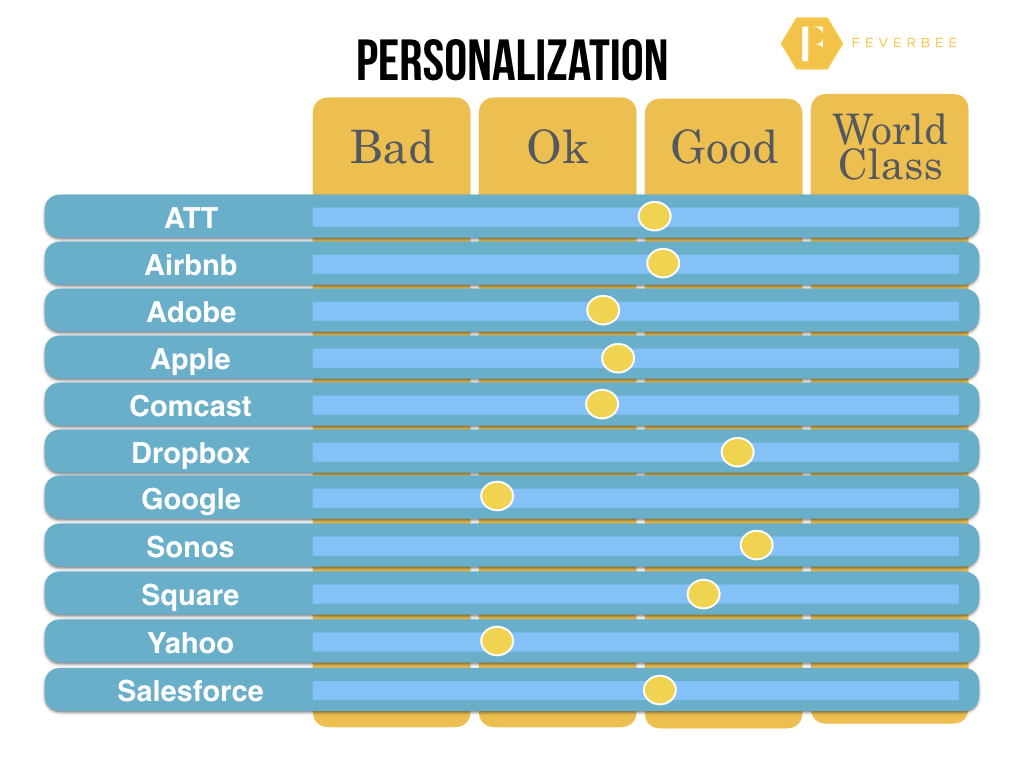
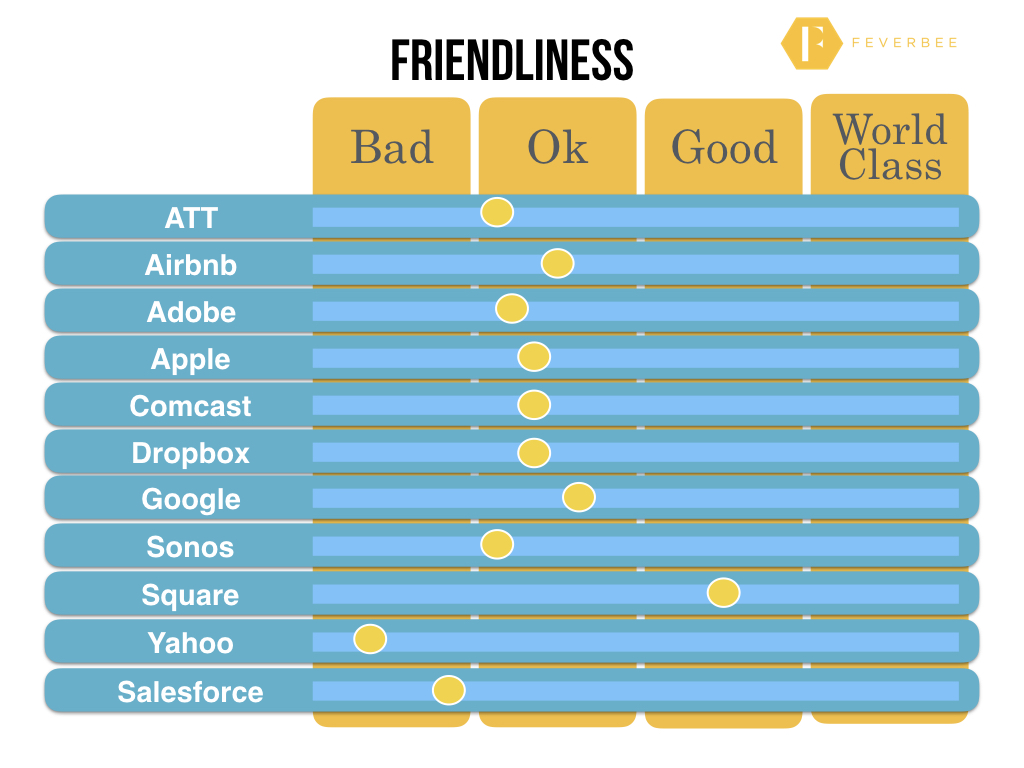
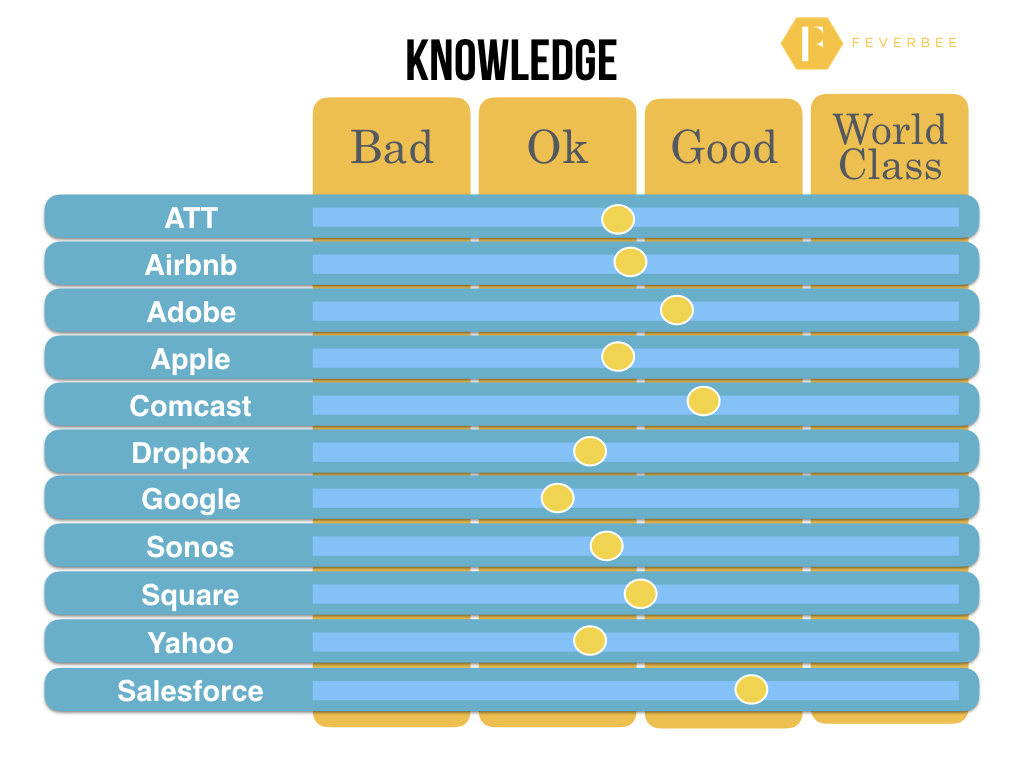
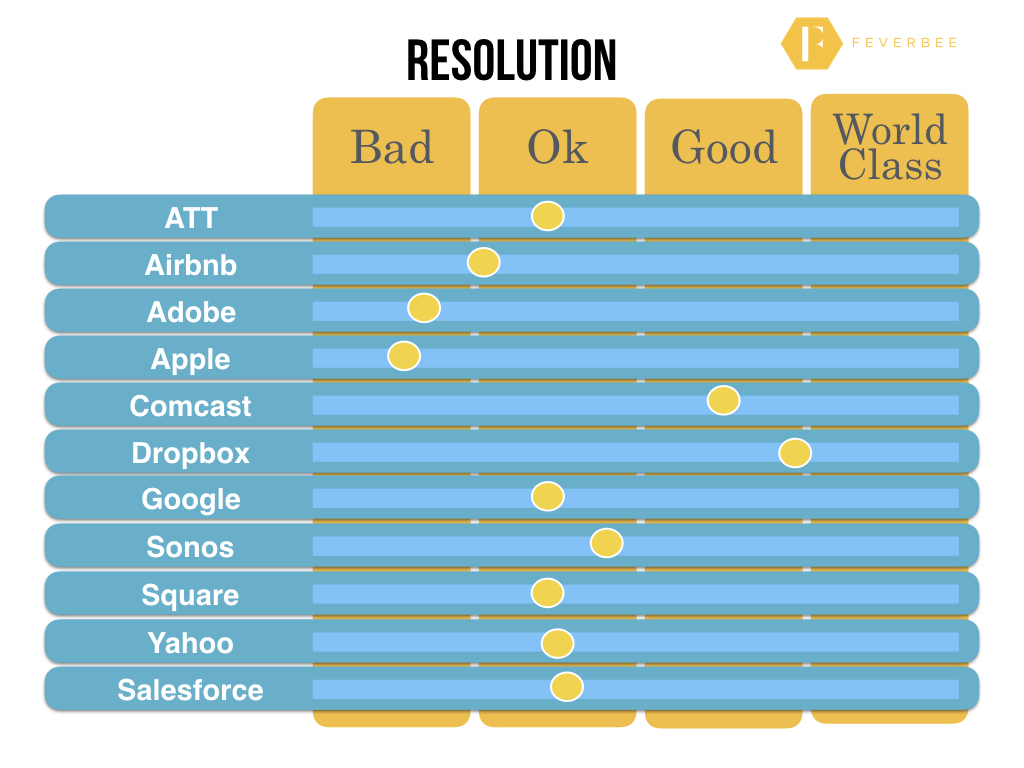
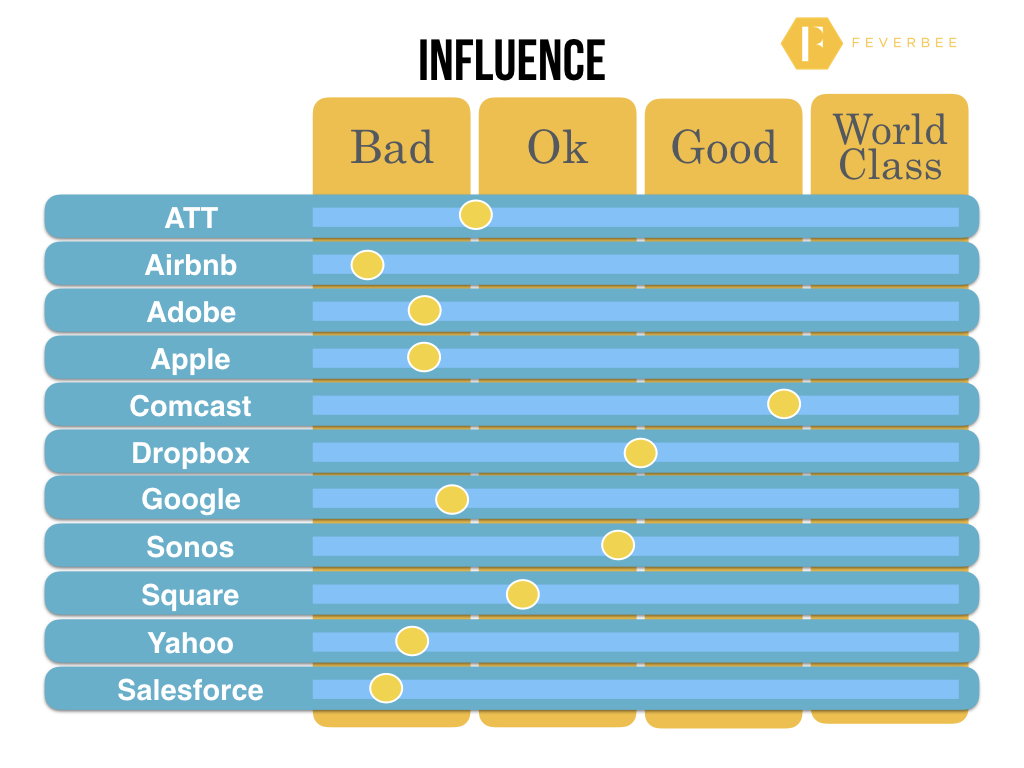
Recently we benchmarked some of the larger support communities were doing against various criteria. The results blew my mind.

You can see a selection below:


(this is very much subjective, I’m sure your ratings would differ).

Yet, we can see there is HUGE scope for most support communities to improve here.

Most people managing most communities can directly improve customer satisfaction metrics simply by improving the quality of their answers.

The exact words you use, how you personalize your response, how you show empathy all matter a huge deal.

Likewise how you clarify the question, how you provide the answer, and the time it takes to receive an answer matter.

Do you even follow up afterward, for example?

As part of the Psychology of Community course, we’re going to take you through the process of doing this extremely well. You’re going to see dozens of real-life case studies and a breakdown of what constitutes terrific responses.

If you feel you or your team would benefit from being terrific at this, I hope you will join us:

p.s. Remember you can also sign up for both our Strategic Community Management program and Psychology of Community for $1,100 USD before the end of this week.

25 Apr 20:46

An Arduino Board with Sigfox + 2 Years Connectivity for 50 Euros

by Martin

When the Raspberry Pi came out it was a game changer as for the first time a cheap and easy to use Linux based board with lots of connectivity became available to the masses. Last week I read about a new Arduino board with a Sigfox chip that could be another game changer.

Advertised for 35 euros and costing 50 euros including taxes and shipping, the MKRFOX1200 Arduino board comes with a Sigfox chip and a 2 years network subscription. For those of you who haven’t heard of Sigfox yet, it’s an Internet of Things, very low data rate, Wide Area Network technology (and a company with the same name behind it) deployed in many places.

What makes the 50 euro package compelling is that it includes 2 years of network access, 140 messages of 12 bytes a day that can be sent and 4 messages that can be received. Note that Sigfox is not an IP network so there’s a Sigfox server at the network edge from where the 12 byte messages can be retrieved by your application (or pushed to) over the Internet. That might seem like a limitation but I’m pretty convinced these days that IoT devices should not have an IP-address anyway.

At the moment 3GPP network operators are working hard to get their LTE networks ready for NB-IoT to offer a similar service. They are not quite there yet but I think this is exactly where they need to get:

  • Having devices on the market with an inexpensive NB-IoT chip
  • A prepaid network subscription included
  • A server at the edge to the Internet with an easy API to interact with the device
  • Easy availability and international availability so people can just pick up a device without hassle and start developing applications around it.

As I’m really interested to see how this works in practice I decided to order one and I’ve received an email that it has been shipped. Let’s see how that plays out.

Hat tip to Heise where I read about this first.

25 Apr 20:46

Google’s Pixel 2 smartphones said to feature Snapdragon 835 chips

by Igor Bonifacic
Pixel smartphone on desk

Google’s two new Pixel smartphones, currently know by their codenames, ‘Walleye’ and ‘Muskie,’ will likely feature Qualcomm’s latest Snapdragon 835 processor, according to references found within the Android Open Source Project (AOSP).

On Monday, WinFuture.de‘s Roland Quandt spotted MSM8998, the Snapdragon 835’s model number, linked to Walleye and Muskie in the code repository.

Quandt also found references to Taimen, likewise said to feature a Snapdragon 835 processor, which may be a Pixel branded tablet, according to an earlier report from Droid Life.

It’s also possible that Google, like Apple, plans to release three smartphones in 2017. According to South Korea’s Electronic Times, Google recently extended an $880.29 million USD investment offer to LG Display to help the company boost its output of curved OLED screens. Due to the limited supply of OLED screens, Google may take a similar approach to Apple wherein just one of the search giant’s phones features a curved screen.

Last year, the Pixel and Pixel XL each came with a Snapdragon 821 chipset. Today’s rumour suggests, contrary to what the company did in 2016, that Qualcomm may not plan to release a mid-year upgrade to its latest chip.

We’ll likely learn more about the Pixel 2 in the weeks and months to come. In the meantime, it’s best to take all of these reports with a good amount of skepticism.

Source: WinFuture.de

The post Google’s Pixel 2 smartphones said to feature Snapdragon 835 chips appeared first on MobileSyrup.

25 Apr 20:45

Amazon Launches Self-Service Marketplace for Subscription Providers

files/images/swa-storefront-example-v2.png

Press Release, Amazon, Apr 28, 2017


Icon

It's hard not to believe that this will have a significant impact on the viability of subscription-based publication models. "Subscribe with  Amazon  is a new way for subscription businesses to sell on  Amazon, offering them targeted customer exposure through popular discovery features such as search and recommendations while also providing customers with a simple way to purchase and manage their subscriptions." It's not quite turnkey; you have to apply to be an approved vendor. But that's actually a good thing, I think. It's also available only to U.S. vendors, which isn't a good thing. See also: CNBC, the Next Web.

[Link] [Comment]
25 Apr 20:45

Wikipedia founder Jimmy Wales launches Wikitribune, a large-scale attempt to combat fake news

files/images/crowdsourcing.jpg

Laura Hazard Owen, Nieman Lab, Apr 28, 2017


Icon

What's interesting is the model: "it’ s a hybrid of the paid and volunteer models. 'You have an operational command structure that’ s based on full-time staff. The pro journalists and editors provide the supervision on how the story moves forward. The crowd does the heavy lifting on a lot of the combing, sifting, searching, checking. You let the crowd do what the crowd is good at.'" But if you're going to pay journalists you have to raise money, and the  crowdfunding campaign  isn't going to be sufficient over the long term. See also: the Guardian, Russia Today, Engadget, BBC, Trusted Reviews, Product Hunt, TechCrunch.

[Link] [Comment]
25 Apr 20:45

People Don’t Want Something Truly New, They Want the Familiar Done Differently.

files/images/virtual_credit_cards.jpg

Nir Eyal, StartupGrind, Medium, Apr 28, 2017


Icon

This is a familiar argument: "the graphical user interface, a milestone in the popularization of the personal computer, used familiar visual metaphors like folders, notepads, windows, and trash cans to appeal to mainstream users." Just so, we had the electric icebox and the horseless carriage. This post introduces the idea with a nifty example (the California roll) and a new product ("the rebranded Apple Wallet helps users feel comfortable with the technology by making payment options look just like mini credit cards").

[Link] [Comment]
25 Apr 20:40

Amazon Prime one-day delivery now available in Calgary and Edmonton

by Igor Bonifacic
Amazon Prime

After expanding to Montreal, before previously launching in Toronto and Vancouver, Amazon Prime one-day delivery is now available in Edmonton and Calgary, the Seattle-based company announced today.

When Prime members place an order that meets or exceeds $25, Amazon promises to deliver the package the next day, even on Saturday and Sunday, by 9:00pm.

Amazon launched its one-day delivery service in the U.S. back in October 2009.

“We are excited to offer faster, free delivery for Prime members in Calgary and Edmonton,” said Mike Strauch, country manager for Amazon.ca. “With a wide selection of over half a million items, Prime FREE One-Day Delivery will make life easier and more convenient for members shipping to Alberta’s two largest cities.”

Source: Amazon Via: Amazon Canada

The post Amazon Prime one-day delivery now available in Calgary and Edmonton appeared first on MobileSyrup.

25 Apr 20:40

Why I’m not using Twitter next month

by Doug Belshaw

TL;DR I’m spending time experimenting with and exploring Mastodon during the month of May. You can connect with me at mastodon.cloud/@dajbelshaw.

Update: I’m now at social.coop/@dajbelshaw, for reasons I expain here.


Back in 2011, when I’d just discovered Open Badges, I led a semester of learning on the concept. Sometimes it’s not enough to play around the edges; you have to jump in with two feet to understand what something’s about. That immersion confirmed my initial thoughts, and I’ve spent the last six years evangelising and advocating for digital credentials based on that particular open standard.

The same was true back in 2007 when I joined Twitter. I thought that this was something revolutionary, something that could not only change the way that professional development was done in schools (I was a classroom teacher at the time) but literally change the world. Unlike Open Badges, of course, Twitter is backed by a for-profit company that floated on the stock exchange a few years ago. It’s a ‘free’ service that requires on advertising to provide shareholder value.

It was easy to forget all that in the early days, as we were giddy with excitement, connecting with like-minded people around the world. Pre-IPO, Twitter seemed like the good guys, being seen as a key tool in people organising to overthrow repressive regimes. In those days, it was easy to use one of a number of Twitter clients, and to route your traffic around the world to avoid censorship. Now, not so much.

Last week, via Hacker News, I came across 8values, a 60-question quiz in the mould of Political Compass. My results are below:

Libertarian Socialism

While I’m aware that this isn’t the most rigorous of ‘tests’, it did set me off on an interesting path. As you can see at the top right of my results, I came out as favouring Libertarian Socialism. I was surprised, as libertarianism is something I usually explicitly argue against.

I decided to do some digging.

The Wikipedia article for Libertarian Socialism is pretty fascinating and, as you’d expect from that site, sends you off on all kinds of tangents via the numerous links in the text. Given that I had an upcoming transatlantic flight coming up, I decided to make use of Wikipedia’s Book Creator. Within five minutes, I had a 500-page PDF on everything from anarcho-syndicalism to the Zapatista Army of National Liberation.

To cut a long story short, my current thinking is that Mutualism seems to best describe my thinking. I’m re-reading Proudhon’s What is Property?. He’s a little naive in places, I think, but I like his style.

Anyway, this is all to say that we need to re-decentralise the Web. I wrote a few years ago about the dangers of newsfeeds that are algorithmically-curated by advertising-fuelled multinational tech companies. What we need to do is quickly replace our reliance on the likes of Facebook and Twitter before politicians think that direct digital democracy through these platforms would be a good idea.

Ethical Design

So I’m experimenting with Mastodon. It’s not radically different from Twitter in terms of look and feel, but it’s what’s under the hood that’s important. The above image from Aral Balkan outlines his approach to ‘ethical design’ — an approach ensures things look good, but also respects us as human beings.

Decentralised systems based on open standards are really our only hope against Venture Capital-backed ‘software with shareholders’. After all, any promising new startups that aren’t decentralised tend to get gobbled-up by the supermassive incumbents (see WhatsApp, Instagram). But to get to scale — which is important in this case, not for shareholder value, but for viability and network effects — people have to use these new platforms.

So that’s what I’m doing. During May, a month when my Twitter timeline will be full of UK General Election nonesense, I’m using Mastodon. The only things I’ll be posting to Twitter are links to things I’ve written. If you’d like to join me, head here, choose an ‘instance’ (I’m on mastodon.cloud) and sign up. You can then add me: mastodon.cloud/@dajbelshaw. As in the early days of Twitter, one of the easiest ways to find good people to follow is to find ‘nodes’. I’ve found Anil Dash (@anildash) to a good starting point.

I look forward to seeing you there. It’s a learning experience for me, but I’m happy to answer any questions below!

Header image CC BY Eric Fischer

25 Apr 20:40

ZTE’s new 6-inch Max XL smartphone comes with Android 7.1.1 and a rear-facing fingerprint sensor

by Igor Bonifacic
ZTE Max XL

ZTE just announced its latest smartphone, the Max XL.

The entry-level phone features a 6-inch 1080p display; a Qualcomm octa-core processor clocked at 1.4GHz; 2GB of RAM; 16GB of expandable storage; a massive 3,990mAh battery; one 13-megapixel rear-facing camera and a 5-megapixel front-facing camera; as well as a headphone jack and a USB-C port for connectivity and charging.

That said, the main selling point of the Max XL is that it will launch with the latest version of Android, 7.1.1. The phone also includes a rear-facing fingerprint sensor. Together, the two are features that one doesn’t see too often on entry-level Android devices, especially in unison.

The Max XL is currently exclusive to Boost Mobile, a carrier that operates networks in the U.S. and Australia. Boost plans to sell the Max XL for $130 USD.

We’ve reached out to ZTE to find out if the company plans to bring the Max XL to Canada. We’ll update this article when the company gets back to us. Stay tuned.

Update: according to a ZTE spokesperson, “there are no plans to bring the Max XL to Canada.”

The post ZTE’s new 6-inch Max XL smartphone comes with Android 7.1.1 and a rear-facing fingerprint sensor appeared first on MobileSyrup.

25 Apr 20:40

Adding IPv6 connectivity support to the Dropbox desktop client

by Nikhil Marathe

Computers on the internet are uniquely identified by an IP address. For decades the world has used Internet Protocol version 4 (IPv4), which allows for about 4 billion unique addresses. As more of the world has come online, and we carry internet-capable devices in our pockets, we have run out of IPv4 addresses. Layers and layers of workarounds have been built to mitigate the problem. The current protocol—Internet Protocol version 6 (IPv6)—fixes various problems with IPv4; it has a significantly expanded address space that allows for the creation of many more unique IP addresses. Unfortunately, IPv6 has suffered from lack of adoption. This is finally changing.

As of April 10, 2017, Google reported IPv6 adoption at 14%, with the United States at just over 30%. ISPs and private networks within enterprises are moving to IPv6-only or dual-stack networks (those that support both IPv6 and IPv4 connections). Cellular carriers are switching to IPv6-only networks, meaning devices have no IPv4 connectivity, but rely on a NAT64/DNS64 gateway to connect to legacy IPv4 internet networks.

Given these trends, we recently took the initiative to add IPv6 support for the Dropbox desktop application. Version 24 of the Dropbox client, released April 17, 2017, supports IPv6-only and dual-stack networks.

Resolving addresses and establishing connections are key to IPv6 support

Adding IPv6 support involves making changes to address resolution and connection establishment. This has to be done in a cross-platform manner and support alternative mechanisms like proxies. Transferring files over the internet is one of Dropbox’s core tasks and users expect that to happen seamlessly and quickly. These changes needed to happen without affecting the user experience. Here is how we implemented IPv6 support while ensuring the client stayed functional for all existing users who are still on IPv4.

Address resolution

Under IPv4, functions like gethostbyname() could be used for address lookup. In addition, functions like inet_aton() and inet_ntoa() could be used to convert between various IP address representations. None of these work with IPv6 addresses.

Using getaddrinfo() for IP address lookup

The function getaddrinfo() has long been the recommended cross-platform way to look up IP addresses for a given host. It accepts a hostname and returns a list of addresses, both IPv6 and IPv4, ordered by the host’s preferred address family. Callers are then expected to iterate through these until a connection succeeds.

Parameters that determine which address families are returned are accepted by getaddrinfo(). In the Berkeley sockets API, a family specifies the socket type. AF_INET (IPv4) and AF_INET6 (IPv6) are two valid socket types. There is an additional constant, AF_UNSPEC, that indicates getaddrinfo() should return all the families that it can. Under the hood, getaddrinfo() will attempt both an A and an AAAA query to the DNS server.

Unfortunately getaddrinfo() has a couple of downsides. It is a blocking function and it does not support caller specified timeouts. Once getaddrinfo() has been called, there is not much the calling thread can do until it returns. The default timeouts implemented by operating systems are within the 30-90 second range. In a naive implementation, we may end up waiting several minutes for the AF_UNSPEC getaddrinfo(), then spend another few seconds falling back to resolving with AF_INET. This adds up to a lot of delay.

To mitigate this, we use a thread pool (specifically Python’s concurrent.futures module) to perform the resolution. We concurrently start both AF_UNSPEC and AF_INET resolutions. Since we want to favor IPv6 connections, we wait a few seconds for AF_UNSPEC to succeed, and otherwise, we select the one that finishes first. Operating systems aggressively cache DNS lookups, so the lookup time and CPU penalty is paid very rarely.

Based on our metrics, about 80% of connection attempts resolve successfully on the AF_UNSPEC call and we don’t need to bother with the result of the AF_INET call. But when the AF_UNSPEC call takes longer than a few seconds, we noticed that both the AF_UNSPEC and AF_INET calls will fail in >86% of cases. This usually indicates the user is on a bad network, or their computer suspended/shut down right when we were attempting to connect. In fact, the odds that only one of the calls will succeed is very low, representing about 0.3% of all connection attempts.

The dual lookups introduce some complexity to our code, but there are no well designed, cross-platform DNS resolution alternatives. Third-party solutions like c-ares exist, but we did not want to introduce overhead for such a simple task.

One interesting implementation detail we discovered is that Python’s non-blocking sockets can encounter delays similar to blocking sockets if the connect()method is passed a DNS hostname, instead of an IP address. This is because it uses getaddrinfo() under the hood. Be sure to perform lookup first if you intend to use non-blocking sockets.

>>> import socket
>>> import time
>>> def connect_nonblocking(host):
...   """This function creates a non-blocking socket and attempts to connect to 'host'.
...    connect() on a non-blocking socket throws an exception with EINPROGRESS."""
...   sock = socket.socket()
...   sock.setblocking(False)
...   start = time.time()
...   try:
...     sock.connect((host, 80))
...   except socket.error:
...     print "non-blocking socket threw exception after %f seconds." % (time.time() - start)
...
>>> # We clear the system DNS cache.
>>> # Then we use the Network Link Conditioner to intentionally introduce a 3 second delay in DNS lookup.
>>> connect_nonblocking('dropbox.com')
non-blocking socket threw exception after 3.009090 seconds.
>>> # At this point, the cache is used so the response is instantaneous.
>>> connect_nonblocking('dropbox.com')
non-blocking socket threw exception after 0.008408 seconds.

Establishing connections

Once we have a list of IP addresses, which may be a mix of IPv6 and IPv4, we can attempt to connect to each of them in order and stop when a connection is successfully established, correct? Unfortunately things are not so easy.

On an IPv4-only or IPv6-only network, if none of the addresses work, the user’s network has a problem. However, on a dual-stack network, it is possible for IPv4 to be functioning, and IPv6 to be down. Why is that?

Functional IPv4 network and broken IPv6 network on a dual-stack network.

Among other reasons, IPv6 networks generally operate a NAT64/DNS64 gateway to allow IPv6 hosts to connect to the IPv4 internet. It is possible for this gateway to be down or slow. What would happen if getaddrinfo() had returned a list of 2 IPv6 addresses followed by 2 IPv4 addresses?

['2001:DB8::1', '2001:DB8::2', '198.51.100.1', '198.51.100.2']

We would have first spent several seconds (we use a 10 second timeout per attempt) trying to connect to 2001:DB8::1 , and another 10s connecting to 2001:DB8::2 , before finally connecting to 198.51.100.1.

That does not sound appealing. There is a clever and simple-to-implement strategy—codified as Happy Eyeballs: Success with Dual-stack hosts—to deal with this situation. We pick the first IPv6 address (2001:DB8::1) and the first IPv4 address (198.51.100.1) from the results. Since we want to favor IPv6, we start the connection to IPv6. If that connection takes too long (the RFC recommends 300ms), we then start the IPv4 connection. Then we pick the winner of the two. In this case, since we have a functioning IPv4 network, we would pick 198.51.100.1. If this sounds similar to our approach for address resolution, it’s because Happy Eyeballs definitely served as inspiration for that solution.

If we were unable to connect to either address, we would try the rest of the addresses—['2001:DB8::2', '198.51.100.2']—in order.

Since Dropbox servers don’t advertise native AAAA records and dual-stack users may connect via IPv4, we can’t say how many Dropbox users actually connect via an IPv6 network; we are working to resolve this. In terms of resolving addresses to both IPv4 and IPv6 addresses, fewer than 0.5% of hosts were able to resolve Dropbox servers to a IPv6 address during connection attempts.

Proxy support

Some Dropbox users connect via proxies and we wanted to support IPv6 wherever it was possible. Dropbox supports SOCKS4, SOCKS5 and HTTP(S) proxies. SOCKS4 and SOCKS5 use a binary protocol to request a connection from the proxy. SOCKS4, and the extension SOCKS4a, do not support IPv6 and will remain unusable on IPv6 networks. For SOCKS5, we added support for x03 ATYP to allow IPv6 addresses. HTTP(S) proxies require no negotiation, so they do not require any client-side changes. The client simply sends the request URL and the proxy uses a connection that that it supports.

Finally, in order to connect to the proxy when both the client and proxy are on an IPv6-only network, we can re-use the logic for establishing connections.

Moving fast without breaking things

To make these critical changes with minimal hiccups, we spent several weeks with features enabled only for in-office and beta builds. This ability to deploy to the office every day allowed us to quickly detect and fix issues. We made extensive use of Google’s publicly available DNS64 servers during development. Combined with the Network Link Conditioner on MacOS, developers could quickly verify code changes.

The safety net provided by out-of-process updaters ensured that if we ended up with a bug that prevented users from connecting to Dropbox, we could fix the bug, release a build, and update users without requiring manual intervention and without users even noticing. When one of the beta builds ended up performing local DNS resolution even for proxies, we were able to roll out a new build quickly and the affected users had functionality restored within days.

Adding IPv6 support was an interesting technical challenge due to the variety of implementations required, and the need to be backwards compatible. There is wealth of information on the internet about migrating to IPv6. We hope this article adds to it and helps others transition to the modern protocol.

25 Apr 20:40

Bike the Blossoms — a Vancouver Tradition. Saturday April 29

by Ken Ohrn

Bike the Blossoms
One of the loveliest and liveliest family-friendly events of the year.  A mass ride through Vancouver streets burgeoning with blossoms.  Bike the Blossoms, my fave event of the Vancouver Cherry Blossom Festival. With thanks to Velopalooza.

FREE Event – Saturday April 29, 2017
Time: 11am-1pm
South side of John Hendry Park (Trout Lake), 3300 Victoria Drive (@ E 19th Ave., close to Lakewood Dr.)

Be sure to get there early to sign the waiver, unless you do it online.


25 Apr 20:40

‘No plans to launch the Watch 2 in Canada right now,’ says Huawei Canada

by Dean Daley
Huawei Watch 2 on wrist

Last week, Huawei treated the U.S to the Huawei Watch 2. The smartwatch, revealed in February during Mobile World Congress, includes features such as Google Assistant, a heart rate monitor and a battery rated to last two full days.

For people waiting on the Huawei Watch 2 to come to Canada, a spokesperson for the company told MobileSyrup, Huawei has “no plans to launch the Watch 2 in Canada right now.”

Not only is the Huawei Watch 2 not available in Canada, Canadians can’t purchase the original model either. In the past, Canadian consumers could buy the Huawei Watch through the Google Store, but as of recently the store now only gives customers the option to join the wait list for the LG Watch Style.

Thankfully, those in search of a smartwatch have other options. The Samsung Gear Frontier 3 and Apple Watch Series 2 are viable alternatives to the Huawei Watch 2. Likewise, the LG Watch Sport will also be a viable alternative when it finally comes to Canada later this year.

The post ‘No plans to launch the Watch 2 in Canada right now,’ says Huawei Canada appeared first on MobileSyrup.

25 Apr 20:39

Apple Launches Store Redesign and Today at Apple Program

by John Voorhees

Apple announced a major redesign of its retail stores today. The changes combine alterations to the physical space of some stores as well as a new series of events called ‘Today at Apple.’

The 100 largest Apple Stores will be redesigned to include live trees, meeting spaces, and screens similar to the upgrades that Apple’s Union Square store in San Francisco received last year. The Genius Bar will be renamed the Genius Grove in a nod to the addition of trees.

Apple Stores will also add a series of educational sessions in 495 locations that will launch at the end of May. The program is called ‘Today at Apple’ and will feature a wide range of presentations and hands-on sessions covering topics like photography, programming, design, art, and music. Sessions will be led by Creative Pros, a new retail store position filled by people with deep domain knowledge in the subjects they teach. In some cities, sessions will also be taught by world-class artists, musicians, and the like.

According to Angela Ahrendts, Apple’s senior vice president of retail, the idea behind ‘Today at Apple’ is to serve local communities better:

Today at Apple’ is one of the ways we’re evolving our experience to better serve local customers and entrepreneurs. We’re creating a modern-day town square, where everyone is welcome in a space where the best of Apple comes together to connect with one another, discover a new passion, or take their skill to the next level. We think it will be a fun and enlightening experience for everyone who joins.

In an interview with CBS News, Ahrendts said:

I’ve told the teams, ‘I’ll know we’ve done a really, really great job if the next generation, if Gen Z says, “Meet me at Apple. Did you see what’s going on at Apple today?”’

Ahrendts’ vision of remaking Apple Stores as a sort of town square where people gather is not that far fetched. Apple’s redesigned Union Square store opened not long before WWDC last year. I had conversations with several people that week who felt drawn to the new store and had arranged to meet friends there. Part of the attraction was the new look of the store; only it was more than that. The space was comfortable and a convenient way to catch up with friends, hang out for a while, and decide what to do next.


Support MacStories Directly

Club MacStories offers exclusive access to extra MacStories content, delivered every week; it’s also a way to support us directly.

Club MacStories will help you discover the best apps for your devices and get the most out of your iPhone, iPad, and Mac. Plus, it’s made in Italy.

Join Now
24 Apr 22:58

Spotify is rumoured to be looking into making its own hardware device

by Dean Daley
Spotify app on S8

Rumours are currently circulating that music streaming giant Spotify, is making a new hardware device akin to Amazon’s Echo, Pebble’s smartwatch and the Snap’s Spectacles, according to a recent Spotify job posting uncovered by ZatzNotFunny.

Spotify has a variety of career opportunities listed, but what stands out is the position of senior product manager of hardware. The job posting states that Spotify is searching for a product manager to work with its platform and partner experience team to create a new a “fully connected device.”

The senior product manager of hardware is set to be in charge of the device’s internet connectivity, software and will “affect the way the world experiences music and talk content.”

Spotify listed another job posting that appears to connect with the senior product manager of hardware job title, product manager of voice. The posting is unclear and could signify more than one thing. Firstly, it appears the post is about using voice recognition software such as Google Assistant, Siri or Cortana to work with Spotify’s app. Spotify’s app being compatible with voice commands on devices like wearables, smartphones, tablets, desktops and more would be useful for many users.

This position could also signify that the music streaming giant is looking to make their own voice recognition system that will work on some form of new hardware. This, however, is all based on speculation as the job posting is vague.

It is unknown whether or not Spotify will actually manufacture a hardware device, but if it does it’s likely it will not be released this year.

Source: ZatzNotFunny

The post Spotify is rumoured to be looking into making its own hardware device appeared first on MobileSyrup.

24 Apr 22:57

Buffering...

by Rui Carmo

Nothing much to report, other than I’ve managed to get caught up in entirely too many threads, with the rather fascinating result that I’m booked pretty much solid halfway through May. So much so that in order to be able to actually get stuff done, I’ve had to refuse a number of otherwise vastly more interesting engagements and put all my personal projects on hold.

Work-life balance, a much ballyhooed topic at the office, is pretty much a mirage at this point – I’m currently powering through my second mini-break reviewing documentation and tinkering with PoCs instead of resting or spending time with the kids (they’re still completely opposite activities), and I haven’t written a single line of (useful) code in a fortnight.

Also, as a direct result of all this running about and stretching myself too thin, I’ve been feeling the initial twinges of RSI and the kind of aching fatigue (including some new minor ailments) that come from spending far too much time at a computer and/or stressed out. Part of it comes from sleeping 5-6 hours a night simply because I need to fill my brain with something genuinely interesting in the evenings after I log off from work, but the real causes boil down to lack of actual challenges.

Oh, don’t get me wrong, things are going well professionally. I just don’t feel I’m learning anything new (well, other than a few tech tidbits now and then that I can’t pursue due to my current role), and am most definitely not building anything of consequence.

So as summertime approaches I’m placing a hard limit on office hours and mulling things in the large. Contact me if you have any interesting ideas.

24 Apr 22:57

35 Years of the ZX Spectrum

by Rui Carmo

It’s amazing how far we’ve come – and how much more there is to improve still.

(My first computer was a ZX81, but the Spectrum was the one that made things interesting.)

24 Apr 22:57

Shen Language Port for Wasp Lisp

This post intersects two of my favourite lispy languages. Shen is a functional programming language with a number of interesting features. These include:

  • Optional static type checking
  • Pattern matching
  • Integrated Prolog system
  • Parsing libraries

I've written about Shen Prolog before which gives a bit of a feel for the language.

Wasp Lisp is a small Scheme-like lisp with lightweight concurrency and the ability to send bytecode across the network. It's used in the MOSREF secure remote injection framework. I've written a number of posts about it.

A feature of Shen is that it is designed to run on top of a lighter weight lisp called KLambda. KLambda has only about 46 primitives, many of which already exist in lisp systems, making it possible to write compilers to other languages without too much work. There exist a few Shen ports already. I wanted to port Shen to Wasp Lisp so I can experiment with using the pattern matching, Prolog and types in some of the distributed Wasp code I use.

Wasp Lisp is not actively developed but the author Scott Dunlop monitors the github repository and processes pull requests. Shen requires features that Wasp Lisp doesn't currently support, like real numbers. I maintain a fork on github that implements the features that Shen needs and any features that apply back to core Wasp Lisp I'll upstream.

This port is heavily based on the Shen Scheme implementation. Much of the code is ported from Scheme to Wasp Lisp and the structure is kept the same. The license for code I wrote is the same as the Shen Scheme License, BSD3-Clause.

The Shen Source is written in the Shen language. Using an existing Shen implementation this source is compiled to Klambda:

$ shen-chibi
(0-) (load "make.shen")
(1-) (make)
compiling ...

To port to another language then becomes writing a KLambda interpreter or compiler. In this case it's a compiler from KLambda to Wasp Lisp. Implementing the primitives is also required but there aren't many of them. Some of the characters that KLambda uses in symbols aren't compatible with the Wasp reader so I used an S-expression parser to read the KLambda code and then walked the tree converting expressions as it went. This is written in Wasp code, converted from the original Scheme. In hindsight it probably would have been easier to write this part in Shen and bootstrap it in another Shen instance to make use of Shen's parsing and pattern matching libraries.

Shen makes heavy use of tail calls in code meaning some form of tail call optimisation is needed to be efficient. In a previous post I mentioned some places where Wasp doesn't identify tail calls. These are cases Shen hit a lot, causing performance issues. I made some changes to the optimizer to identify these cases and it improved the Shen on Wasp runtime performance quite a bit.

Current Port State

This is a very early version. I've only just got it working. The Shen tests pass with the exception of the Proof Assistant test which hangs when loading.

Note 2017-04-26: The bug with the proof assistant test not passing is now fixed. It was caused by an integer overflow when computing complexities within the Shen prolog code. Wasp integers are smaller than other Shen implementations which is why none of them hit the issue. The binaries have been updated with this fix.

The port is slower than I'd like - about half the speed of the Shen C interpreter and significantly slower than Shen Scheme and Shen on SBCL. I've done some work on optimizing tail calls in the fork of the Wasp VM for Shen but there's much more work on the entire port that could improve things.

Binaries

The following compiled binaries are available:

shen_static.bz2. This is a static 64-bit linux binary with no dependancies. It should run on any 64-bit Linux system. Decompress with:

$ bunzip2 shen_static.bz2
$ chmod +x shen_static
$ ./shen_static

shen_macos.bz2. 64-bit binary for Mac OS. Decompress with bunzip2 as above.

shen.zip. The zip file contains a Windows 64-bit binary, shen.exe. It should run on any modern 64-bit Windows system.

Building

First step, build the fork of Wasp Lisp needed to run:

$ git clone --branch shen https://github.com/doublec/WaspVM wasp-shen
$ cd wasp-shen
$ make install

Follow the prompts for the location to install the wasp lisp binaries and add that bin directory of that location to your path:

$ export PATH=$PATH:/path/to/install/bin

Shen is provided in source code format from the Shen Sources github repository. The code is written in Shen. It needs a working Shen system to compile that code to KLambda, a small Lisp subset that Shen uses as a virtual machine.

This KLamda code can be found in the kl directory in the shen-wasp repository. These KLambda files are compiled to Wasp Lisp and stored as compiled code in the compiled directory. The shen wasp repository includes a recent version of these files. To generate, or re-generate, run the following commands:

$ git clone https://github.com/doublec/shen-wasp
$ cd shen-wasp
$ rlwrap wasp
>> (import "driver")
>> (compile-all)
Compiling toplevel.kl
Compiling core.kl
Compiling sys.kl
Compiling sequent.kl
Compiling yacc.kl
Compiling reader.kl
Compiling prolog.kl
Compiling track.kl
Compiling load.kl
Compiling writer.kl
Compiling macros.kl
Compiling declarations.kl
Compiling types.kl
Compiling t-star.kl

This will create files with the Wasp Lisp code in the compiled/*.ms files, and the compiled bytecode in compiled/*.mo files.

Creating a Shen executable can be done with:

$ waspc -exe shen shen.ms
$ chmod +x shen
$ rlwrap ./shen
Shen, copyright (C) 2010-2015 Mark Tarver
www.shenlanguage.org, Shen 20.0
running under Wasp Lisp, implementation: WaspVM
port 0.3 ported by Chris Double


(0-) 

Note that it takes a while to startup as it runs through the Shen and KLambda initialization.

Running from the Wasp REPL

Shen can be run and debugged from the Wasp REPL. To load the compiled code and run Shen:

$ rlwrap wasp
>> (import "driver")
>> (load-all)
>> (kl:shen.shen)
Shen, copyright (C) 2010-2015 Mark Tarver
www.shenlanguage.org, Shen 20.0
running under Wasp Lisp, implementation: WaspVM
port 0.3 ported by Chris Double


(0-)

When developing on the compiler it's useful to use eval-all instead of load-all. This will load the KLambda files, compile them to Scheme and eval them:

>> (eval-all)
>> (kl:shen.shen)
...

A single input line of Shen can be entered and run, returning to the Wasp REPL with:

>> (kl:shen.read-evaluate-print) 
(+ 1 2)
3:: 3

KLambda functions can be called from Wasp by prefixing them with kl:. For example:

>> (kl:shen.read-evaluate-print)
(define factorial
  1 -> 1
  X -> (* X (factorial (- X 1))))
factorial:: factorial
>> (kl:factorial 10)
:: 3628800

Shen allows introspecting compiled Shen functions and examining the KLambda code. From the Wasp REPL this is useful for viewing the KLambda and comparing with the generated Wasp Lisp:

>> (kl:ps 'factorial)
:: (defun factorial (V1172) (cond (...) (...)))
>> (pretty (kl:ps 'factorial))
(defun factorial (V1172 ) (cond ((= 1 V1172 ) 1 ) (#t (* V1172 (factorial (- V1172 1 ) ) ) ) ) ) :: null
>> (pretty (kl->wasp (kl:ps 'factorial)))
(begin (register-function-arity (quote factorial ) 1 )
       (define (kl:factorial V1172)
         (cond
           ((kl:= 1 V1172) 1)
           (#t (* V1172 (kl:factorial (- V1172 1))))))
       (quote factorial ) ) :: null

Cross Compilation

Wasp binaries are a small Wasp VM stub plus the compiled Lisp code appended to it. This makes building for other platforms easy as long as you have the stub for that platform. Wasp can be built for Android and static binaries via musl are possible.

I've made the following stubs available for building binaries for other systems:

Decompress them and copy into the lib/waspvm-stubs directory where Wasp Lisp was installed. Shen can then be built on any host platform for 64 bit linux, 64 bit Linux static binaries, 64 bit Windows or 64 bit Mac OS with:

$ waspc -exe shen -platform linux-x86_64 shen.ms
$ waspc -exe shen_static -platform static-linux-x86_64 shen.ms
$ waspc -exe shen.exe -platform win-x86_64 shen.ms
$ waspc -exe shen_macos -platform Darwin-x86_64 shen.ms

Learning Shen

Some places to go to learn Shen:

Other Ports

24 Apr 22:57

Samsung Galaxy S8 and S8+ DeX PC-like desktop dock could be the real deal

by Patrick O'Rourke
S8 DeX dock hooked up to monitor

Over the course of the last decade, many companies have tried to make the smartphone-to-desktop dream a reality with varying degrees of success.

Microsoft, for example, launched Continuum alongside the Lumia 950 to considerable fanfare a few years ago, though most users felt limited by its less feature-rich version of Windows. Looking even further back, Motorola also attempted a similar Android-based solution with the ill-fated Motoblur. Even Samsung has dabbled in the space before with Galaxy S4 and Note 2 mobile docks, though these devices just mirrored Android’s standard user interface on a larger screen.

Dex dock top view

Now Samsung’s Galaxy S8 and S8+, coupled with Qualcomm’s ultra-powerful Snapdragon 835 processor, are taking a stab at joining desktop and mobile into one universal platform.

The Galaxy S8 and S8+ are already great smartphones, but Samsung’s DeX dock, a somewhat lesser-known accessory that allows the smartphone into a desktop-like device, has the potential to eventually evolve into one of its most compelling features.

DeX dock rear view

The dock itself can be plugged into any HDMI compatible monitor and connects to USB or Bluetooth-enabled (as long as it includes a Bluetooth dongle) or standard USB mouse or keyboard. Strangely, DeX does not include an HDMI cable or power cord, instead relying on the Galaxy S8’s USB-C cable and the owner to provide the HDMI cable. In total, DeX features two USB 2.0 ports, an ethernet port and a USB-C port for power.

Samsung also says that while the S8 is connected to DeX, the device is protected by the company’s Knox security platform, which means that no data is transferred between the smartphone and the company’s new desktop-friendly version of Android.

Supported DeX apps

In some ways, using DeX reminds me of the Nintendo Switch, mostly due to its plug-and-play nature. Similar to Nintendo’s console, as soon as you drop the S8 on the dock, DeX instantly activates, switching to a Windows or macOS-like desktop user interface. Unlike the Switch, however, some apps close when DeX is removed from the dock. While a minor issue, this is something I hope Samsung fixes in the future.

On a basic level, those that are familiar with desktop browser staples such as re-sizable windows and contextual menus, will feel right at home with DeX. Samsung has completely redesigned Android’s UI to be optimized for use with a keyboard and mouse, a task that likely wasn’t easy given the operating system’s inherent focus on touchscreen devices.

DeX Microsoft Word

The dock effectively turns your mobile phone into a Chromebook-like PC that’s capable of running productivity apps like Word, PowerPoint and Excel. While I’ve only dabbled with Microsoft’s suite of apps running through DeX for a short period of time, all were surprisingly responsive and also optimized for a desktop display. In fact, I even wrote part of this feature with the S8 docked in DeX, coupled with a wireless keyboard and mouse.

Adobe’s suite of apps, including Adobe Acrobat Reader Mobile and Lightroom Mobile, are also set to be eventually compatible with DeX and feature a user interface that’s been expanded to work with a larger display. Unfortunately these apps have not launched yet and it’s unclear when they will be released.

DeX allows access to remote virtual desktops via apps like VMware and Amazon Web Services, though I didn’t test out this feature during my time with DeX. Those familiar with this software, particularly VMware, could find this feature very useful. Also, similar to most visual desktop environments, DeX users are able to create and move around shortcuts to specific apps.

DeX rear USB

App support is one of DeX’s most significant issues currently, though given that the underlying code of every app likely remains similar to its stock Android counterpart, in theory a simple user interface shift shouldn’t be that difficult for developeers. Still, it remains to be seen how many developers are willing to put in this extra work, especially with DeX only supporting the S8 and the S8+.

While DeX may support more Samsung devices in the future, it’s likely that it only currently works with the S8 and S8+ because of its powerful Snapdragon 835 processor.

It’s worth noting that any Android app can be opened with DeX, even it hasn’t been optimized for desktop. These apps appear in a smaller window and moving the mouse around mimics the functionality of the S8’s touchscreen. Compatibility with this form of interacting with an app is hit or miss, with some app user interfaces being more suited to a mouse and keyboard than others. Further more, it’s strange that pressing enter on an external keyboard doesn’t send a message with apps that don’t support the DeX’s full desktop mode.

Galaxy S8 DeX top view

Looking at specific apps that don’t currently support DeX, Google Chrome actually crashed on me quite frequently. If you’re able to navigate its cumbersome interface, Samsung’s internet browser features a relatively solid full-screen DeX mode. As someone who uses Chrome to sync their personal and work life across multiple devices however, it’s disappointing that the web browser isn’t compatible with DeX at launch, though it’s possible that could change in the future.

The main question surrounding DeX is whether or not the S8’s 10nm Snapdragon 835 processor has the power to push apps to a full-sized desktop. While I’ve only spent a few hours with DeX, the device seems capable of consistently running a light-weight desktop OS, though I’ve only dabbled with Word documents and browsed the internet via Samsung’s proprietary browser app for a few hours.

The only moments of slowdown I encountered were when I was opening more resource intensive websites that feature large images or high-resolution video.

Galaxy S8 DeX with S8 in dock

The most compelling thing about DeX is that it’s capable of handling almost 80 to 90 percent of what the average person uses a PC for. So while I may not be able to do my day-to-day job at MobileSyrup with an S8 and DeX, if I worked in another industry, or was simply just interested in owning a very basic PC, the dock effectively turns Samsung’s latest flagship into a handy 2-in-1 device.

In short, while DeX may not work for me, it could be the ideal device for a lot of other people, though ultimately the future of DeX depends on Samsung and whether or not app developers opt to support the platform.

It’s currently still unclear when DeX is set to be available in Canada, though the dock can currently be purchased in the U.S. DeX sells for $150 USD which comes to approximately $202 CAD. Official Canadian pricing isn’t known right now. Below is a quote sent to MobileSyrup from Samsung regarding Canadian availability of DeX.

“Samsung Canada is excited to confirm that the Gear 360 and DeX will be available to Canadian consumers in 2017. We do not have confirmed pricing or date of availability at this time but will follow up with more information as it becomes available.”

The post Samsung Galaxy S8 and S8+ DeX PC-like desktop dock could be the real deal appeared first on MobileSyrup.

24 Apr 21:11

NFL draft performance vs. expectations

by Nathan Yau

Reuben Fischer-Baum for The Washington Post looks at professional football expectations given their draft picks versus performance.

By comparing how much value teams should get given their set of picks with how much value they actually get, we can calculate which franchises make the most of their draft selections. Approximate Value (AV), a stat created by Pro Football Reference that measures how well a player performed overall in a season, is useful here. Based on this metric, we find that the Browns draftees have underperformed in the NFL given their draft position, especially when compared to the draftees of a team like, say, the Seahawks.

My main takeaway is that teams seem to know what they’re gonna get. Overall at least. Save a few teams who outdid expectations and a few who failed pretty badly, everyone else sticks towards the baseline. But it’s also really random year-to-year, which is essentially what makes sports interesting.

See also the player-level comparison for professional basketball from last year.

And, just a random observation, it felt weird reading this sports piece with “Democracy Dies in Darkness” at the header of The Washington Post site. But maybe that’s just me.

Tags: draft, football, Washington Post

24 Apr 21:10

How disinformation spreads in a network

by Nathan Yau

Disinformation is kind of a problem these days, yeah? Fatih Erikli uses a simulation that works like a disaster spread model applied to social networks to give an idea of how disinformation spreads.

I tried to visualize how a disinformation becomes a post-truth by the people who subscribed in a network. We can think this network as a social media such as Facebook or Twitter. The nodes (points) in the map represent individuals and the edges (lines) shows the relationships between them in the community. The disinformation will be forwarded to their audience by the unconscious internet (community) members.

Set the “consciousness” parameter and select a node to run.

Tags: disinformation, simulation

24 Apr 21:10

Look.Listen.Live aims to educate people about train safety with new VR experience

by Dean Daley
Operation Life Saver

Operation Lifesaver (OL), a national public rail-safety program sponsored by Transport Canada, has unveiled its new rail-safety public awareness campaign, called Look.Listen.Live, that uses virtual reality (VR) technology.

OL intends to give viewers the shocking near-miss experience of being hit by a train with a VR headset. OL unveiled Look.Listen.Live at a press conference at Montreal’s Central Station with the Minister of Transport, Marc Garneau, to mark the first day of Rail Safety Week, running from April 24th to the 30th.

“I applaud Operation Lifesaver for stepping outside the box with this new innovative tool to teach Canadians how to make the right decisions around train tracks. Trespassing on tracks or trying to beat a lowering gate can be an extremely dangerous decision. I encourage all Canadians to look, listen and live,” said Minister Garneau.

Look.Listen.Live features two videos that show someone being hit my an oncoming train. The first video has a person walking over the train tracks that doesn’t hear the train coming while listening to music. In the second video a person decides to drive around the gate at a railroad stop and gets hits by a train. The public can watch both videos with or without a VR headset.

OL viewers can also view the touching story of Scott Sackaney who nearly lost his life when he was ran over by a train five years ago. Viewers can watch the three videos in either French or English on look.listen.live.ca or on their YouTube page. The YouTube videos however, do not offer a 360-degree experience.

OL asks visitors of their website to share #LookListenLive and to get the word out about railroad-safety and to pledge obey railroad signs and to never trespass.

The post Look.Listen.Live aims to educate people about train safety with new VR experience appeared first on MobileSyrup.

24 Apr 21:10

Copyless Pasting coming to Chrome 60 in the near future

by Dean Daley
Google Chrome app

Google is adding a new feature to its Google Assistant software called copyless pasting.

Copyless pasting allows users to look at text on Chrome without selecting it, and then switch to another app where Assistant will suggest terms from the Chrome you were looking at to paste. The code documentation for the new function provides a deeper understanding of the new feature.

“Provide suggestions for text input, based on your recent context. For example, if you looked at a restaurant website and switched to the Maps app, the keyboard would offer the name of that restaurant as a suggestion to enter into the search bar. The data is indexed locally and never sent to the server. It’s disabled in incognito mode.”

This function should be available within the next few months on Chrome 60 for Android. The current coding for Copyless Pasting shows the feature will not work while in Incognito Mode, nor will it be available on low-end devices, according to VentureBeat.

Copyless Pasting is just one of the features coming to Android in the near future. With Google I/O on the horizons — May 17th to May 19th — we’re expecting to see a variety of other new features come to Android devices.

Source: VentureBeat

The post Copyless Pasting coming to Chrome 60 in the near future appeared first on MobileSyrup.

24 Apr 21:10

Worms That Eat Through Plastic Bags Could Help Cut Down On Pollution

by Mary Beth Quirk
mkalus shared this story from Consumerist.

Plastic bags clog up our gutters, landfills, and waterways, but researchers hope that plastic-munching worms may hold a secret to making these messes more manageable.

Wax moth larvae are bred as fish bait, but left to their own devices in the wild, they love to chomp on beeswax — bedeviling beekeepers everywhere. One amateur apiarist and scientist happened to notice one day that a bunch of waxworms she’d put in a plastic bag — to keep them from re-infesting one of her hives — had chewed through the thin walls of their plastic prison.

“I went back to the room where I had left the worms and I found that they were everywhere,” Federica Bertocchini, a researcher at the Spanish National Researcher Council, told The Guardian. “The bag was full of holes.”

Could these worms be put to work breaking down plastic bags? She and a team of scientists at Cambridge University wanted to find out, putting worms to the test in the lab: A subsequent study published in Current Biology found that 100 worms were capable of consuming 92 milligrams of polyethylene in 12 hours.

Researchers believe the grubs use the same enzymes to break down polyethylene that they do to eat beeswax, and are now hoping to identify those enzymes. They could then possibly put those genes into bacteria or phytoplankton to break down plastic in the wild. Or, scientists could breed a whole lot of waxworms and just turn them loose, a plan that would only work if the critters want to keep eating plastic shopping bags.

“We want to know if they’re munching the plastic to use as a food, or just because they want to escape,” Cambridge biochemist Paolo Bombelli told The Guardian. “If they just want to escape, they are going to get fed up very soon. But if they’re munching it to use as an energy source it’s a completely different ball game. We are not yet able to answer this, but we’re working on it.”


24 Apr 21:10

Stop Using Unroll.me, Right Now. It Sold Your Data to Uber.

mkalus shared this story .

Tucked away in a rollicking New York Times profile of amoral Uber CEO Travis Kalanick is a tidbit about Unroll.me, a popular service that aims to rescue your email inbox from unwanted newsletters and promotional messages with an easy automated unsubscribe service. The problem is, it’s been selling you out to advertisers, and you should stop using it immediately.

The Kalanick profile says that Uber previously used Unroll.me data to gauge the health of archrival Lyft:

Uber devoted teams to so-called competitive intelligence, purchasing data from an analytics service called Slice Intelligence. Using an email digest service it owns named Unroll.me, Slice collected its customers’ emailed Lyft receipts from their inboxes and sold the anonymized data to Uber. Uber used the data as a proxy for the health of Lyft’s business. (Lyft, too, operates a competitive intelligence team.)

Slice confirmed that it sells anonymized data (meaning that customers’ names are not attached) based on ride receipts from Uber and Lyft, but declined to disclose who buys the information.

This is a capability it’s safe to wager virtually none of Unroll.me’s users are aware of, let alone comfortable with. Indeed, the company’s CEO and co-founder, Jojo Hedaya, immediately penned a pro forma apology blog for the ages, in which he says he and his staff “weren’t explicit enough” about terms that allow, as Unroll.me’s privacy policy puts it, the company to “collect, use, transfer, sell, and disclose … transactional or relationship messages.” Hedaya joins a historic chorus of Silicon Valley executives who say what they always do when they’ve been found out: “We Can Do Better,” as the title of the CEO’s blog post declares:

I can’t stress enough the importance of your privacy. We never, ever release personal data about you. All data is completely anonymous and related to purchases only. To get a sense of what this data looks like and how it is used, check out the Slice Intelligence blog.

This is by all evidence false: If your privacy were important to Jojo Hedaya, the contents of your email, even if anonymized, would not be for sale. Were he ever serious about keeping your inbox private, an apology blog wouldn’t have been needed to begin with. (Hedaya and his co-founder could not be reached for comment.)

At Hacker News, a sort of virtual startup water cooler, a former web developer named Karl Katzke has further alleged in a series of comments that Unroll.me also secured customer emails poorly and that a company for which Katzke worked declined to acquire Unroll.me due in part to concerns over executives’ honesty. In an email to The Intercept, however, Katzke said that while he stands by those comments, “my information is, at best, third person hearsay based on a rumor that was based on hearsay.”

Still, even just based on the facts Hedaya has openly acknowledged, you shouldn’t trust him or his company and should remove Unroll.me’s unfettered access to your Google account immediately, because that’s just what you gave them when you signed up:

Here’s how to remove Unroll.me (you can also delete your account following the company’s instructions here):

From your Gmail inbox (or any Google page), click the button with your face on it in the top-right corner, then “My Account.”

Under “Sign-in & security,” click “Connected apps & sites,” then “manage apps.”

Find Unroll.me, click it, and then click remove. You might also want to take a very, very close look at any other apps that have been granted the ability to “Read, send, delete, and manage your email.” Do you have a clear assurance that they won’t leverage their access to make money from the likes of Uber? Probably not.

Update: April 24, 2017, 12:48 p.m.

This post has been updated with a link to instructions for those who wish to permanently delete their Unroll.me account.

24 Apr 21:10

Ontario to roll out basic income in Hamilton, Thunder Bay and Lindsay

mkalus shared this story from The Globe and Mail - National RSS feed.

Ontario will provide 4,000 residents in Hamilton, Thunder Bay and Lindsay with free income, part of the government’s plan to test whether the extra funds will help improve their job prospects and quality of life.

The idea is to give the province’s working poor, unemployed and homeless residents a so-called basic income to pay for their basic needs of food and housing.

The recipients will be randomly chosen from the three regions and will start receiving the cash as soon as this summer. A single person could receive up to $16,989 per year. A couple could get up to $24,027 annually.

Opinion: Ontario’s Liberals take a big step to the left

“One income used to be enough for most families,” Ontario Premier Kathleen Wynne said in Hamilton to announce the three-year pilot.

“Now even with two people working, it is tough to feel as though you are getting ahead, and it is tough to feel confident that your job will still be yours or even still be around in 10 years, in five years or even less,” she said.

Ontario has emerged as one of the country’s stronger economies amid the energy downturn, which has wiped out thousands of high-paying jobs in oil-producing Alberta. However, certain parts of Ontario have struggled for years to recover from the loss of major industries.

The provincial government did not provide details on why or how the three regions were selected. Thunder Bay has suffered from the elimination of forestry jobs and Hamilton has undergone years of economic woes with the decline of the steel industry.

Meanwhile, other cities such as Waterloo have experienced strong job growth from the tech sector.

“Technological progress and automation are creating new industries. But they are also creating new pressures, and they are putting existing jobs at risk,” said Ms. Wynne.

The project will cost the province $150-million, or $50-million a year.

About 1,000 recipients will be selected from the Thunder Bay region and 1,000 residents will be chosen from Hamilton, Brantford and Brant County. The remaining 2,000 will be picked from Lindsay.

It’s not just people who are receiving social assistance who will be eligible for basic income. The government is also targeting people earning minimum wage and workers living in poverty.

However, if an individual is receiving income from a job, the government will deduct half of his or her earned income.

For example, if a single person earned $10,000 from a job, the government would provide $11,989 in basic income – the maximum $16,989 minus $5,000 from his or her wages. That recipient would then have a total income of $21,989 for the year.

The Wynne government did not say how it came up with the basic income amount and said it was “something we want to test.”

Chris Ballard, the province’s minister in charge of housing and poverty reduction, said other basic-income projects have shown that it improves people’s lives.

“People get a chance to go back to school. They don’t have to work low-paying dead-end jobs. They get a chance to go finish college or go on to university,” he told reporters.

Providing people with a basic income has gained popularity in Silicon Valley and among some tech executives in Canada, who believe that their creations are helping put people out of work.

The provincial government, which will soon hire researchers to conduct the pilot, plans to mail out requests to those who wish to participate in the program and will include homeless shelters.

The government said it would be examining the impact on health, education and employment over the course of the pilot project.

Ontarians who are already receiving social assistance and other aid, such as free dental and prescription drugs, would not have to give up those benefits.

It will be at least three years until a decision will be made to roll out basic income across the province.

Recipients in the Thunder Bay and Hamilton, Brantford and Brant County areas will be examined to see what kind of impact the extra funds will have on their lives. Lindsay will be analyzed for the impact on the entire community.

A separate program for First Nations people living on reserves will be rolled out later this year; however, First Nations people living in the selected areas are eligible to participate in the pilot.

***

What is basic income?

A guaranteed annual income designed to pay for basic necessities such as food and housing. In Ontario, the provincial government will provide income to certain residents who are living in poverty, unemployed, underemployed or working minimum-wage jobs.

Who qualifies?

Only residents from the following regions: Thunder Bay, Hamilton, Brantford, Brant County and Lindsay. A separate basic income plan for First Nations communities will be rolled out later this year.

Where else in the world do basic income pilots exist?

Finland, Kenya, The Netherlands, and Oakland, California.

Are other provinces looking at Ontario’s pilot project?

PEI lawmakers are supportive of a basic income, but the province would need Ottawa to provide the funding.

At this time, the Trudeau government will not support a basic income plan for the country and has highlighted its child tax benefit as a form of guaranteed income for families with children.

Report Typo/Error

Follow Rachelle Younglai on Twitter: @rachyounglai