Shared posts

01 May 19:35

“B.C.’s economy relies on the selling off of real estate instead of actual jobs. It’s reached the point where we don’t have much to sell, other than the land itself.” – filmmaker Charles Wilkinson

by vreaa
mkalus shared this story from Vancouver Real Estate Anecdote Archive.

Vancouver’s real estate market has attracted angry commentary from a wide variety of sources lately, and not just citizen activist groups rallying for affordable housing.

A couple of weeks ago, U.S. economist Michael Hudson sold out the Rio Theatre to talk about the city’s gone-sideways housing situation, which he compared to “a feudal society.”

Mother Jones magazine has a feature story about Vancouver in its current issue, Hedge City Blues: What happens when global elites invade your town?, which cautions that Seattle is next.

This week, local filmmaker Charles Wilkinson is releasing his film on Vancouver’s crisis, No Fixed Address, which opens May 2 at Toronto’s Hot Docs festival. The film will also screen at Vancouver’s DOXA Documentary Film Festival on May 6.

And in an unusual twist, a member of the region’s development community is incensed enough that he too is weighing in on our spectacular failure to regulate big foreign money.

Consultant Richard Wozny has been a key player in Vancouver’s development industry for 33 years and he just wrote a report: Low Incomes and High House Prices in Metro Vancouver. Mr. Wozny has, as he puts it, worked endlessly to make wealthy developers wealthier. Now nearing retirement, he says he wants “to give something back to society – a little knowledge the public should find useful.”

Mr. Wozny, whose company, Site Economics, has done the financial analysis and strategy for more than $120-billion worth of large-scale residential towers, shopping malls, suburban subdivisions and industrial parks, says he’s analyzed the financial feasibility of projects for all the major developers in Western Canada and the three levels of government.

He’s seen unprecedented financial windfalls in the Lower Mainland’s real estate market. Now Mr. Wozny wants to speak out on behalf of the losers: those residents who rely on their incomes to afford them a place in the property market, be it owning or renting.

He’s studied the situation and has come to several conclusions: that more supply is nothing but fuel for the unaffordability crisis; that house values that are wildly disproportionate to incomes indicate a high level of tax evasion; that government is failing to institute fair tax regulation to ensure infrastructure needs are met; and that all this “growth” is simply not paying for itself.

The result is that a basic necessity – housing – has become a low-risk profit-making tool.

“What would we think of someone who hoarded food? Why is real estate any different?” asks Mr. Wozny. Analyzing data from the Real Estate Board of Greater Vancouver and the Canada Revenue Agency, he found an odd inverse relationship between incomes and housing; the higher the house price, the lower the declared income; the lower the house price, the higher the income. In Vancouver, Richmond, West Vancouver and Burnaby, houses are routinely priced between $1.5-million and $3-million. However, taxpayers report “unusually low taxable median family incomes, well below the regional average.”

Richmond and Vancouver, says his report, are among the highest income-to-house price ratios in the world.

Meanwhile, in Port Moody, Coquitlam, Port Coquitlam, Langley and Maple Ridge, house prices are well below the regional average and reported incomes well above.

If tax returns are a guide, the suburbs are now the high-income earning areas of the region shouldering the greatest tax burden. Those closest to the central core appear to be scraping by with little income, despite their high-cost housing.

The only conclusion to reach is that incomes are not being reported, says Mr. Wozny. A segment of the population is effectively subsidizing a group that refuses to pay its taxes.

He makes the case that a home’s value is due almost entirely to its location within the city. It may provide shelter, but it is the roads and sidewalks, proximity to schools and amenities that determines its worth. The city, and public infrastructure, creates its value. But what of the buyers who capitalize on that value without putting anything back in?

“Over the past 30 years, private residential real estate has become more of an economic ‘free rider,’ enjoying speculative, low-risk increases in value generated by public investment, but avoiding making adequate contributions to the public realm which supports it,” he writes.

Because the majority of our infrastructure was built before 1990, we are continually drawing on that value with massive new developments. Government should be tapping the “vast fortunes being made in real estate” to ensure equal access to public infrastructure,” he says, echoing Mr. Hudson’s argument for far heftier taxes on speculative buying.

“The growth has not paid for itself. Much of the infrastructure is relatively dated and paid for by a generation that was far more generous, and we are drawing down on that, compromising the quality of life without growing the infrastructure. We are creating congestion, whether it’s traffic, or at the hospitals or universities, whatever. There is plenty of money in private growth, so the growth should at least pay for itself. Why should government and the people in the middle foot the bill?

“Somebody doesn’t spend $4-million on your house alone. It’s the region they are buying, not the house. It’s the community that makes it special. It wouldn’t be worth anything if the community were to decay. That’s what we don’t understand.

“Obviously something terrible is happening – the money flooding in is not a sign of a healthy functioning capitalist market.

“The only group at fault are politicians who want growth without having to pay the requisite cost.”

Another group might also be at fault: the general population.

Mr. Wilkinson, whose film will screen in Vancouver at Simon Fraser University on May 6, says a challenge he faced during the filmmaking was the general apathy of average people. He edited down discussion about big inflows of foreign money and corruption because the topic got the thumbs down from a mixed-demographic group he uses for feedback.

“Audiences don’t relate to it, they don’t get it,” says Mr. Wilkinson. “We had a bunch of stuff about corruption and money laundering and people kept saying, ‘I don’t get it. How does money laundering work?’

“Where we struggle with it is that people will often say, ‘So what? That’s just free money into our system, and money is good, right? Who cares if [buyers] are from another country or whoever comes here with $1-billion. It trickles down, right?’

“But they can’t get it in without breaking the law, which affects you,” Mr. Wilkinson says. “And there are people who say, ‘I don’t care if my community is disintegrating. I want to retire in Hawaii with an RV.’ I get that there are people like that and they are making a conscious choice.

“That’s the key focus of the show, for me, is the sense of community that I’ve always felt in Vancouver, and I see it’s under such assault.

“It’s been very frustrating.”

Instead of steering the viewer toward any conclusion, Mr. Wilkinson presents the facts of Vancouver’s affordability crisis in such a way that people can make up their own minds, according to their values. He includes interviews with David Suzuki, Bob Rennie, Raymond Wong, Seth Klein and Sandy Garossino, who is quoted saying: “We manufacture and export condominiums.”

Mr. Wilkinson became something of a media magnet when promoting the film in Toronto recently, because Toronto has entered the speculative frenzy that Vancouver has endured for years.

Toronto, he says, is even more vulnerable than Vancouver, because of its rich history of diverse ethnic communities. They will be crushed under the weight of gentrification, much the way Vancouver is losing its Chinatown.

B.C.’s economy, says Mr. Wilkinson, relies on the selling off of real estate instead of actual jobs, as a result of government inaction.

“It’s reached the point where we don’t have much to sell, other than the land itself. So when the Premier crows about how she’s created all these jobs, in a bizarre and macabre way, she has – by failing to impose any restriction on the real estate market. And of course it’s unsustainable, because there are no jobs anywhere else. When you drive past all these communities in northern B.C., everything is boarded up. Resources are simply gone.

“Jobs here are building speculative housing units.”

He wonders where this selling off of real estate to the highest bidder will eventually get us. Every time a home is sold for millions of dollars to a speculator, that home is likely forever lost to the local income-earner.

“Let’s assume everybody sells out and gets rich. What’s the plan – to build another city? But where am I going to go? This is my home,” Mr. Wilkinson says.

“I don’t feel the government really cares much about my interests, or anybody else I know, so everybody devolves into, ‘every man for himself.’ And that’s the antithesis of community.

“We’re Canadian. We weren’t supposed to be like this.”

– from ‘Housing talk gets louder and angrier in Vancouver’, Kerry Gold, G&M, 28 Apr 2017 [Whole article copied here, for the record. Hat-tip to The Auteur]

Strong feelings about RE are becoming more and more mainstream.
The ‘Anger’ factor is noteworthy. Extreme wealth inequality breeds anger. This is very, very bad for a society.
The mention of the ‘general population’ as a causative factor is good.
And don’t forget the banks allowing leverage with their mortgages, creating money from nowhere, fueling the speculation. Who needs to import money when you can create it from nowhere?
– vreaa



01 May 19:35

A Hike a Day Keeps the Bava Away

by Reverend

CqZSZFIUMAAq_jD

All hail the noiseprofessor

If you live in Trentino for long enough, eventually you will give in to the hiking culture. I found it is simply a matter of time. There are so many beautiful places to see here, and most of them the only way to experience them is by foot. I’ve been hiking on and off since I got here in October of 2015, hell simply walking the kids to school in the morning is a hike at half a mile uphill—I recently learned it’s the equivalent of 21 flights of stairs. Doing that twice a day was brutal for me 18 months ago. In fact, the very idea of it filled me with dread.

Val di Funes

But something changed for me  over the last few months, I actually started to enjoy the hikes. I even had this bizarre desire to do them regularly to get in this thing they call “shape.” I think it really took hold in February during a hiking/skiing trip to Val di Funnes. I snowboarded for the first time in 20 years, and I realized if I get my ass in shape I might enjoy Trento even more than I am currently, an idea that seemed impossible at the time. Yet, almost 3 months later and I have to say it is true. Trento is not best experienced in a car or on a couch, you have to be out and about. And part of this change has been our decision to not buy a car.  We’ve been carless for our entire time here, although early on we depended a bit on Antonella’s mom’s generosity and Trento’s Car Sharing program when we need an automobile. Other than that, we walk or bus pretty much everywhere locally. 

Waiting for her walk

And recently walking has become the primary means of transportation for almost everything. We walk the kids to school, we walk them to swimming practice, we walk downtown, and we walk to the mountains (just a 15 minutes away). Our dog Daphne certainly loves this, and I’m beginning to turn the corner on my Long Island nature-hating ways. I crave walks every day now, and seemingly the longer and steeper the better.  I have set some hiking goals for myself this summer, and I really want to see if I can push myself a bit more.* I have to if I am going to keep up with my partner Tim Owens whose regular regime of exercise over the last two years has been an inspiration—he inspires on and off the internet.

Brave Timmyboy and the 300

So, I decided to write this post to celebrate a minor milestone given April 2017 saw my best month, week and day of hiking yet.† I started tracking my mileage through my phone (something I was loathe to do, but finally gave in and now I’m hopelessly addicted) and I became enthralled by the numbers. I won’t track my weight or anything like that because I have no delusion about how I look, I’m pure charm now, but mileage and elevation is something I am intrigued with. So, in April I climbed an average of 42 flights of stairs a day with an average of 9,190 steps daily. This week I averaged 11,525 steps daily and finally broke 30 miles—I hiked 38 miles total week averaging 50 flights of stairs each day. For many this is nothing, for my one time Lucky Strike smoking, inhaler using ass this is a no mean feat.

Bindisi Hike 4-30-17 Pano

This week the entire family did a local hike to the Bindisi that is the equivalent of 80 flights of stairs twice We just finished the second one earlier today, and the added bonus of doing a fair amount of these jaunts with Antonella and the kids makes it all that much more enjoyable. 

In fact, mountain selfies are the new black in Trento:

Bindisi Selfie 1

My new life in Italy just keeps on giving, and who am I to refuse the awesome?


*Something that will hopefully pay off come snowboarding season this year.
†In fact, it was only 3 weeks in April given the first week I was still in conference mode between Ireland and London.

01 May 19:35

Listen to me witter on about co-ops via @VConnecting at #ccsummit

by Doug Belshaw

At the Creative Commons Summit this weekend I had my first experience as a participant in a Virtually Connecting session. It included others both onsite and online, but ended up with Laura Hilliger and I spending quite a chunk of time talking about co-ops. We start discussing that around the 8-minute mark.


(no video above? click here!)

Many thanks to our hosts for setting the session up. I’m always happy to answer questions about our work, whether We Are Open Co-op specifically or co-operativism more generally.

Image CC BY-ND Bryan Mathers

01 May 19:35

Marijuana decriminalization: Why is Trudeau creating legal limbo?

mkalus shared this story from The Globe and Mail - Opinion.

Daniel Bear is a professor in criminal justice at the School of Social and Community Services, Humber College, Toronto.

For the Dutch, a coffee shop isn’t just a place for a latte or double-double. “Coffee shops” refers to regulated stores found across The Netherlands where adults can purchase small amounts of cannabis. They are easily found, open about what they sell, and technically illegal under the laws of that country. But for more than 30 years the Dutch have instituted a policy of “gedogen,” whereby some crimes are tolerated when the public interest outweighs the needs of law enforcement and changing the law itself is not practical. It isn’t a perfect system, but it works to keep people away from criminal markets and exposure to hard drugs.

Canada also finds itself in a precarious situation regarding cannabis. Prime Minister Justin Trudeau has taken the bold and commendable step of introducing legislation to legalize cannabis by July 1, 2018, but has insisted that there will be no slowdown in the pursuit of cannabis offenders in the interim. This is a mistake that is both harmful to individuals and not in line with the larger goals of legalization.

On Monday, the Prime Minister sat down with Manisha Krishnan of Vice News for a frank discussion about legalization. He stood fast to the idea that the law is the law, pointing out that decriminalization is a half-measure that allows the black market to profit from drug distribution and potentially creates unsafe experiences for users. In this, he is mostly correct. Decriminalization is not something we should strive for as a permanent national model. The Dutch have nice, quiet store fronts selling their cannabis, but the back end of their system is permeated by organized crime and growing operations that have no regulatory oversight.

Thankfully, Canada is already on the pathway to regulation through legalization. In this proposed system, there will be a public health and safety focus, strict regulation of producers, and opportunities for provinces and municipalities to regulate retail sales. Some have said this system would be too restrictive or excessively punitive, and indeed there are troubling aspects such as a 14-year maximum penalty for giving cannabis to a minor. Though stringent, the new system should curtail many of the problems associated with both cannabis prohibition and a decriminalization model.

However, based on numbers from previous years, another 57,000 Canadians could be arrested for cannabis possession before the new legal system comes in to place. This represents more than half of all drug-related incidents in the country each year. A formal or informal declaration of decriminalization would acknowledge that obtaining an arrest or conviction record, or even spending time in jail, is an inappropriate response to a drug the Prime Minister already readily admits is not being regulated appropriately. Mr. Trudeau and his point person on legalization, former Toronto Police chief Bill Blair, have never shied away from the idea that the enforcement of cannabis offences is disproportional against people of colour, but seem unmoved by this injustice to take immediate action.

While it is true that the black market would control drug distribution if cannabis is temporarily decriminalized, this is already the case in our prohibitionist arrangement. A temporary decriminalization would protect users, but leave the status quo in place for distributors, who could still be pursued by police if they represented a harm to local communities. Even if the government is unwilling to act, Crown attorneys and police officers across the country could exercise their discretionary power and avoid pursuing cannabis cases that do not involve harms perpetrated against a community.

Decriminalization, however imperfect it may be, would serve as a stopgap measure to protect users while we figure out exactly what the legal cannabis market will look like. It is a version of the Dutch gedogen policy, where we take account of large public interests over the enforcement of an outdated law. There is no justice in arresting someone today if we know that, by the time they finish their sentence, the thing they were convicted of doing is no longer a crime. To paraphrase former U.S. Secretary of State John Kerry when he appeared before congressional hearings in 1971 to advocate for the end of the Vietnam War, how do you ask a person to be the last person arrested for a mistake?

Report Typo/Error

Follow us on Twitter: @GlobeDebate

01 May 19:35

Merriam-Webster adds ‘sheeple’ to Dictionary, takes shot at Apple in process

by Igor Bonifacic

Typically, one imagines the kind of smart individuals that work at a dictionary publisher wouldn’t get involved in mobile flame wars, but then this is 2017, the year the world will probably end in a flurry of mushroom clouds.

Earlier today, Merriam-Webster tweeted the newest addition to the dictionary, “sheeple.” The word, an informal slight, is defined by the dictionary as a group of people “who are docile, compliant, or easily influenced.”

To illustrate sheeple’s modern usage, Merriam-Webster called on a sentence written by CNN technology columnist Doug Criss. Dated to 2015, the sentence reads, “Apple’s debuted a battery case for the juice-sucking iPhone—an ungainly lumpy case the sheeple will happily shell out $99 for.”

For what it’s worth, sheeple isn’t too common in modern usage. Still, times are tough when tweed-wearing English professors have it out for you.

Source: Merriam-Webster Via: MacRumors

The post Merriam-Webster adds ‘sheeple’ to Dictionary, takes shot at Apple in process appeared first on MobileSyrup.

01 May 19:35

"The purpose of visualization is insight, not pictures."

“The purpose of visualization is insight, not pictures.”

- Ben Shneiderman
01 May 19:35

New union aims to protect renters in Vancouver | 630 CHED

mkalus shared this story .

With the provincial election just around the corner, those facing demovictions and huge rent increases are coming together to create a single voice they hope will ring in some change.

The Vancouver Tenants Union officially launched in Burnaby this Saturday.

The group’s advocates are offering up an extra set of eyes to review landlord-tenant agreements, notably “fixed term leases.”

The room is packed! Heads up, landlords: The Vancouver Tenants Union is being launched tonight! ✊🏽✊🏿✊️#vanpoli #bcpoli #bcelxn17 pic.twitter.com/qwuYsUXgw6

— YVR Tenants Union (@YVRTenantsUnion) April 30, 2017

They will help renters deal with eviction notices.

The union also plans to be very vocal, by protesting demovictions and other issues facing renters.

Membership to the tenants union costs $1 a year.

This Union is going to give tenants power & remind us we are not alone. Half of Vancouverites are renters. #bcpoli #vanpoli

— YVR Tenants Union (@YVRTenantsUnion) April 30, 2017

01 May 19:34

Ex-union boss warns against BC Liberals

mkalus shared this story from Comments on: Number of homeless deaths in BC hits record high: report.

VANCOUVER (NEWS 1130) – BC NDP Leader John Horgan has been forced to deviate from his affordable childcare spiel to address a heckler in Vancouver today.

Horgan’s campaign went to Bobolink Park this morning, where the leader spoke with concerned parents about the NDP’s plans for childcare.

The NDP is promising $10-a-day daycare based on Quebec’s system as one the major planks in its campaign.

But Horgan was distracted from talking to the media by a man yelling about the future of BC kids, and asking how the NDP was going to fund the daycare plan. Horgan didn’t ignore the heckling.

“The numbers, Sir, are fully costed, I’m happy to talk to you about that if you want to sit down and do it, or you can just yell at me from the back of the scrum. It’s your call.”

“…I work hard!” the man yelled back.

“I work hard too, and so do these families Sir,” Horgan responded. “If you want to talk to me afterwards I’m happy to do that. If you want to be part of this you can come and stand here if you like.”

“I suggest you are probably here to just disrupt this.”

The heckler did not take up Horgan’s offer.

Horgan also has stops in Burnaby, Surrey and Coquitlam today.

Liberal leader Christy Clark is in the Kootenays today with stops in Fairmont Hot Springs, Invermere, Kimberley, and Cranbrook.

Andrew Weaver of the Greens is in the Okanagan. He’s holding a rally in Kelowna this afternoon.

Polling stations are open until 8:00 p.m. today for advance voting. General voting day is May 9th.

01 May 19:34

Stefan Hartmann leaving Bauhaus for Tacofino — the hippie food truck that grew

mkalus shared this story from The Globe and Mail - Food & Wine.

Stefan Hartmann’s eyes light up when he talks about tacos.

“What is better than fresh grilled meat in a taco?” asks the outgoing executive chef of Bauhaus Restaurant. (No, he’s not rhapsodizing about Rene Redzepi’s latest pop-up, Noma Mexico.) “The taco is ideal. You can make simple ingredients, but make them perfect, and put them in a taco that everyone will be so happy to eat.”

Mr. Hartmann hasn’t looked this enthused since he arrived in Vancouver two years ago. He had come from Berlin, soon after closing his one-Michelin-starred Hartmanns Restaurant, determined to dazzle the city with his elegant modern-German tasting menus. Unfortunately, fine-dining-averse Vancouverites were more impressed with his à-la-carte schnitzel. It was an excellent schnitzel, all golden-crisped and bubbly. Still, a schnitzel is only a few pounded prep-steps away from a taco. So perhaps it shouldn’t be all that surprising to hear that he is jumping from Bauhaus to Tacofino – yes, Tacofino, the little hippie food truck that grew into a small restaurant chain – where he will soon begin a new position as regional executive chef in charge of menu development and expansion.

And another one bites the chain-gang dust.

In the highly competitive Canadian restaurant sector, one in which customer traffic has remained flat for the past five years, independent full-service restaurants are taking a beating from chain restaurants (defined as three restaurants or more under the same brand). Last year, according to market research firm NPD Group, a record 2,047 independents closed across the country, while the chains continued to grow.

In Metro Vancouver, home base for many of the large, high-quality chains – Cactus Club Café, Earls, Joey Restaurants and The Keg – the independents are being hit even harder by their hyper-local brand awareness, marketing muscle, lockdown on prime real estate (in an incredibly tough market) and immense recruiting strength, from entry-level line cooks (a labour market in critical short supply) to top executive chefs.

“Vancouver has been a culinary hot spot for many years,” says Robert Carter, The NPD Group’s executive director of food service. “It had a lot of innovative independents that flourished. Vancouver also saw the emergence of a great number of chain concepts that may have helped stimulate the market, but are now stealing it away. The independents just can’t compete. ”

Mr. Hartmann is following what has become an increasingly common pattern for some of the most distinguished restaurant chefs in Vancouver: After hustling over a hot stove for upwards of 15 hours a day, six days a week for a couple of decades, he or she reaches the top of their game, gazes down wearily at the rat maze below and thinks, “No, I’d much rather do spreadsheets for taco bowls and burgers, coach some young cooks, work a regular daytime shift and pocket a handsome salary than take out a second mortgage and risk my kid’s college fund on the rapidly diminishing returns of running an independent restaurant in this godforsaken economy.”

The high-level recruitment began almost a decade ago, when the Cactus Club Café hired Iron Chef Rob Feenie as its “food concept architect.” As Cactus now gears up for an aggressive eastward expansion, it has recently added Marc-André Choquette (Mr. Feenie’s chef de cuisine at Lumière back in the day) and Greg McCallum (former chef de cuisine at the award-winning L’Abattoir) to its all-star roster. Last fall, Kristian Eligh, the Hawksworth Restaurant Group’s former culinary director, was recruited by Browns Restaurant Group to join heavyweights Damon Campbell (former executive chef at Toronto’s Bosk in the Shangri-La Hotel) and Michael Steh (executive chef for Toronto’s Chase Hospitality Group). Earls, Joey Restaurants, even the up-and-coming Joseph Richard Group – they have all cherry-picked some of the best chefs, sommeliers and general managers in the business.

After 24 years behind the line, Mr. Hartmann is ready to move on to a more promising future at Tacofino, which is also moving east, where he says his talent will be put to better use teaching others how to make elevated tacos. (Bauhaus, in the meantime, has beefed up its fine-dining kitchen team by hiring a new award-winning German chef, Tim Schulte. He and the current sous chef, David Mueller, will be co-executive chefs).

“What am I doing here, really?” he says, shoulders suddenly sagging as he slumps over the bar at Bauhaus, which is owned by film director Uwe Boll. “It’s just for my ego. Fine dining, if that’s what you call this, it’s tough in a city like Vancouver.”

Earlier this week, Tacofino held a job fair. The company may have hired Mr. Hartmann, but much like every other restaurant in British Columbia, it is still short on sous chefs, line cooks, dishwashers and prep cooks.

“I think this new generation is right in saying that there is no honour in killing yourself,” says Brandon Grossutti, owner-operator of the lauded PiDGiN Restaurant in the Downtown Eastside, which has had numerous ups and downs since it opened four years ago and was picketed by anti-poverty protesters all summer. Since then, his kitchen has gone through three complete turnovers.

“I can’t compete with what the chains are doing, but I’m tired of having really good people move out of the industry or move into those stores. I’m also selfish because I want good cooks – the best in Vancouver.”

To attract and retain them, PiDGiN recently announced a new “life-balance program” in which cooks work a 4 1/2-day week (and are paid for five), not exceeding 45 hours. He does this by overstaffing and having one rotating prep cook come in early to work through all the stations, allowing everyone else to come in a little later and work eight to 10 hours instead of the typical 12 to 15. He also throws in a free fitness-club pass and offers co-paid extended health benefits to full-time employees who have been with the company for more than a year.

“Sure, we’re taking some on the chin and we’re already riding very slim margins. But happy people make good food and rested people can be more creative.”

Ultimately, in order to make the industry truly sustainable, Mr. Grossutti says consumers are going to have to start paying more for their restaurant meals, a sentiment echoed widely. “But like everything else in Vancouver, that’s hard to do when to do when you’re mortgage-poor and barely able to eat at Tacofino.”

----------

Just how bad is Vancouver’s indie-restaurant scene?

Pino Posteraro

Chef-owner, Cioppino’s Mediterranean Grill

“Five to 10 years ago, a very successful restaurant would make 10 per cent [profit-margin share]. Nobody in any other industry works for 10 per cent. Now, because of the cost of living, wages and everything else going up, you are a success if you make between 1 and 3 per cent. The franchises make up to 20 per cent. They are killing fine dining.”

Brandon Grossutti

Owner-operator, PiDGiN Restaurant

“Everyone in Vancouver expects organic, but they all have fast-food wallets. The chains can go to their gigantic national food supply companies and bid down prices [because of their bulk buying power]. Their food cost is 25 per cent; ours, in a good restaurant, is 35 per cent. Yet when we give you a bill, we have to compete with Cactus.”

Christina Cottell

Co-owner, Gringo, Dixie’s BBQ

“This fall, the minimum wage goes up 50 cents across the board. That’s $10,000 for me, directly out of my pocket. I’m not saying that people don’t deserve to get paid more. Hell, yeah. But I’ll be trimming half-hours off shifts where and when I can. It’s death by every nickel.”

Andrey Durbach

Executive chef, Bishop’s; former co-owner-operator, the Sardine Can, La Buca, Pied-a-Terre

“There are two ways you can make a restaurant economically viable, or at least this used to be the model in Vancouver: through continued expansion or constant rationalization and consolidation. You say, ‘Okay, my linen cost is 35 per cent. Next month, I’ll tighten the belt and cut down on towels, which means the cooks will burn their hands, but at least I made it to 33 per cent.’”

Neil Wyles

Former chef-owner, Hamilton Street Grill

“Rents are an issue. But on top of the base rent are the property taxes you have to pay when you have a commercial lease. That’s where people really start to choke, because you’re not in control of that. It’s adjusted year to year. At the end of the day, I was paying about $5,000 a month of property tax for the building as well as the common area.”

Mike Robbins

Co-owner, AnnaLena

“A lot of people say they want to work here. They say they want to learn and cook the same food that they’re cooking at Noma or 11 Madison Park, but they don’t want to work more than 10 hours a day and they want to make $18 an hour. What world do they live in?”

Alexandra Gill

Editor's Note: An earlier version of this story misspelled Greg McCallum's name.

Report Typo/Error

Follow Alexandra Gill on Twitter: @lexxgill

01 May 19:33

Twitter Favorites: [camcavers] I have a theory that the BC Liberals are so sure that #IAmLinda was an NDP plant because they plant trolls at NDP events all the time

Cam Cavers @camcavers
I have a theory that the BC Liberals are so sure that #IAmLinda was an NDP plant because they plant trolls at NDP events all the time
01 May 19:33

How to Drive Stick Shift (Explained with Death Metal)

by tastefullyoffensive.com (noreply@blogger.com)
mkalus shared this story from Tastefully Offensive.


Musical comedy series Riff Shop enlisted heavy metal musician Travis Bartosek to break down the basics of driving a car with a manual transmission in the form of a death metal song.

[via Sherman88]

01 May 19:32

Take Individual Segments Of People At A Time

by Richard Millington

When you begin work today, what are you working towards? What’s your process for systematically improving the value of the community?

Here’s a useful practice. Build up a few profiles of representative community segments and better cater to their needs.

Set up interviews with 3 to 5 community members per week. I promise you the results will be invaluable. Reach out to them with questions.

  1. Who are they (demographics, psychographics etc) and why do they come to the community?
  2. How do they arrive (search, referral or direct visit)?
  3. When do they visit (what triggers the visit?)
  4. What annoys them within the community?
  5. What do they find most valuable in the community?
  6. What are the biggest problems they face at the moment?

Once you have 10 you can begin to build some profiles of your audience. These might be divided by levels of activity (high contributors, low contributors, lurkers), length of membership (newcomers, veterans), location, or any other variable.

Use this information to improve your community. Look at each unique user journey and ensure you’re minimizing the annoyances, satisfying their reason to visit, and identifying a next logical step they can take to resolve their problems.

This is a repeatable process you can use indefinitely to increase the value to your community not just to an elite few but to the many unique types of members you’re working with.

01 May 19:32

Bixby’s Voice Functionality on Samsung Galaxy S8 Goes Live In Korea

by Rajesh Pandey
Samsung is finally rolling out one of the most touted features of its virtual assistant Bixby on the Galaxy S8 in Korea: voice commands. While the Galaxy S8 went on sale last month in most of the major markets of the world, it did so without Bixby being fully operational. Continue reading →

01 May 19:32

100 weeks #dontbreakthechain

by Volker Weber

d9e8692a0db4e2136c1db73208487994

Another week, another month of not breaking the chain. It has now been 100 weeks since I started tracking with Apple Watch. Funny thing is that Apple credits me with 147 weeks of reaching all goals.

2eb43994539d8a264edb2133074a83d4

The Apple Watch hasn't even been on the market for that long. But there is some truth to it. You know that I started on the UP24 and tried a few other products from Withings, Fitbit and Misfit before settling on Apple Watch. Since all of them synced into Apple Health those 147 weeks are very realistic.

bb35545f9c36779ffa5965aa62e3fd89

I never really put my transformation down in numbers, but I lost almost a kg of weight per month over those three years. For the first time since the 80s I am measuring my weight in the 80s. I am no longer considered overweight for my age band, much less obese, which I started with.

If you are overweight, get yourself a nice tracking scale. I recommend Withings. And then step on that scale every morning. You don't have to look at the result but you need to see the long term trend. Weight goes up and down by multiple kg, which shouldn't worry you too much. Don't set yourself a goal, just keep it trending in the right direction.

And don't break the chain.

01 May 19:32

Community Profile: Jillian Ogle

by Alex Bate

This column is from The MagPi issue 53. You can download a PDF of the full issue for free, or subscribe to receive the print edition in your mailbox or the digital edition on your tablet. All proceeds from the print and digital editions help the Raspberry Pi Foundation achieve its charitable goals.

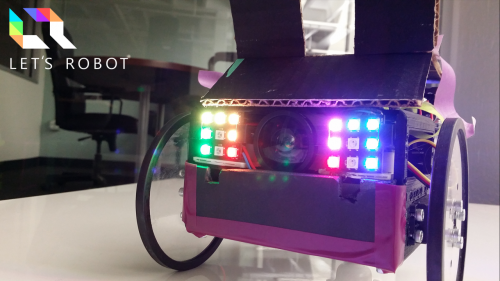
Let’s Robot streams twice a week, Tuesdays and Thursdays, and allows the general public to control a team of robots within an interactive set, often consisting of mazes, clues, challenges, and even the occasional foe. Users work together via the Twitch.tv platform, sending instructions to the robots in order to navigate their terrain and complete the set objectives.

Let's Robot Raspberry Pi Jillian Ogle

Let’s Robot aims to change the way we interact with television, putting the viewer in the driving seat.

Aylobot, the first robot of the project, boasts a LEGO body, while Ninabot, the somewhat 2.0 upgrade of the two, has a gripper, allowing more interaction from users. Both robots have their own cameras that stream to Twitch, so that those in control can see what they’re up to on a more personal level; several new additions have joined the robot team since then, each with their own unique skill.

Let's Robot Raspberry Pi Jillian Ogle

Twice a week, the robots are controlled by the viewers, allowing them the chance to complete tasks such as force-feeding the intern, attempting to write party invitations, and battling in boss fights.

Jillian Ogle

Let’s Robot is the brainchild of Jillian Ogle, who originally set out to make “the world’s first interactive live show using telepresence robots collaboratively controlled by the audience”. However, Jill discovered quite quickly that the robots needed to complete the project simply didn’t exist to the standard required… and so Let’s Robot was born.

After researching various components for the task, Jill decided upon the Raspberry Pi, and it’s this small SBC that now exists within the bodies of Aylobot, Ninabot, and the rest of the Let’s Robot family.

Let's Robot Jillian Ogle Raspberry Pi

“Post-Its I drew for our #LetsRobot subscribers. We put these in the physical sets made for the robots. I still have a lot more to draw…”

In her previous life, Jill worked in art and game design, including a role as art director for Playdom, a subsidiary of Disney Interactive; she moved on to found Aylo Games in 2013 and Let’s Robot in 2015. The hardware side of the builds has been something of a recently discovered skill, with Jill admitting, “Anything I know about hardware I’ve picked up in the last two years while developing this project.”

This was my first ever drone flight, live on #twitch. I think it went well. #letsrobot #robot #robotics #robots #drone #drones #twitchtv #twitchcreative #twitchplays #fail #livestream #raspberrypi #arduino #hardware #mechatronics #mechanicalengineering #makersgonnamake #nailedit #make #electronics

73 Likes, 3 Comments – Jillian Ogle (@letsjill) on Instagram: “This was my first ever drone flight, live on #twitch. I think it went well. #letsrobot #robot…”

Social media funtimes

More recently, as Let’s Robot continues to grow, Jill can be found sharing the antics of the robots across social media, documenting their quests – such as the hilarious attempt to create party invites and the more recent Hillarybot vs Trumpbot balloon head battle, where robots with extendable pin-mounted arms fight to pop each other’s head.

Last night was the robot presidential debate, and here is an early version of candidate #Trump bot. #letsrobot #robotics #robot #raspberrypi #twitch #twitchtv #twitchplays #3dprinting #mechatronics #arduino #iot #robots #crafting #make #battlebots #hardware #twitchcreative #presidentialdebate2016 #donaldtrump #electronics #omgrobots #adafruit #silly

400 Likes, 2 Comments – Jillian Ogle (@letsjill) on Instagram: “Last night was the robot presidential debate, and here is an early version of candidate #Trump bot….”

Gotta catch ’em all

Alongside the robots, Jill has created several other projects that both add to the interactive experience of Let’s Robot and comment on other elements of social trends out in the world. Most notably, there is the Pokémon Go Robot, originally a robot arm that would simulate the throw of an on-screen Poké Ball. It later grew wheels and took to the outside world, hunting down its pocket monster prey.

Let's Robot Pokemon Go Raspberry Pi

Originally sitting on a desk, the Pokémon Go Robot earned itself a new upgrade, gaining the body of a rover to allow it to handle the terrain of the outside world. Paired with the Livestream Goggles, viewers can join in the fun.

It’s also worth noting other builds, such as the WiFi Livestream Goggles that Jill can be seen sporting across several social media posts. The goggles, with a Pi camera fitted between the wearer’s eyes, allow viewers to witness Jill’s work from her perspective. It’s a great build, especially given how open the Let’s Robot team are about their continued work and progression.

Let's Robot Pokemon Go Raspberry Pi

The WiFi-enabled helmet allows viewers the ability to see what Jill sees, offering a new perspective alongside the Let’s Robot bots. The Raspberry Pi camera fits perfectly between the eyes, bringing a true eye level to the viewer. She also created internet-controlled LED eyebrows… see the video!

And finally, one project we are eager to see completed is the ‘in production’ Pi-powered transparent HUD. By incorporating refractive acrylic, Jill aims to create a see-through display that allows her to read user comments via the Twitch live-stream chat, without having to turn her eyes to a separate monitor

Since the publication of this article in The MagPi magazine, Jill and the Let’s Robot team have continued to grow their project. There are some interesting and exciting developments ahead – we’ll cover their progress in a future blog.

The post Community Profile: Jillian Ogle appeared first on Raspberry Pi.

01 May 19:32

Twitter’s first 24/7 video channel to come courtesy of Bloomberg

by Igor Bonifacic
Twitter app on iOS

Ahead of its Q1 earnings call last week, Twitter announced its plan to start live streaming video content on its platform 24 hours a day, seven days a week.

The company has now revealed its first 24/7 video channel will be produced in partnership with Bloomberg. According to The Wall Street Journal, the channel, which has yet to be named, will launch this fall and will feature content that’s not found on the publication’s TV network. Twitter users can also expect to see a selection of curated and verified video pulled from other platform users.

“It is going to be focused on the most important news for an intelligent audience around the globe and it’s going to be broader in focus than our existing network, ” said Bloomberg Media CEO Justin Smith in his interview with the WSJ.

Financial terms of the deal were not disclosed, but the channel is expected to bring in a significant amount of new revenue for the social media platform. During its most recent fiscal quarter, video accounted for the largest portion of Twitter’s ad revenue. Still, the company faces a difficult path toward long-term profitability with competitors like Google and Facebook dominating the space.

Source: Wall Street Journal

Via: The Next Web

The post Twitter’s first 24/7 video channel to come courtesy of Bloomberg appeared first on MobileSyrup.

01 May 19:32

Report questions effectiveness of New Brunswick's tuition access bursary

files/images/chaffin-at-college.jpg

Jordan Gill, CBC News, May 04, 2017


Icon

New Brunswick's free tuition program  for low-income families was only launched last year, but the Atlantic Institute for Market Studies (AIMS) is already criticizing it for not improving completion rates. It's just the latest in a series of unwarranted attacks on the program, including private schools  demanding equal subsidies, allegations  it reaches too few students (only 5100 of 7000 eligible), the obligatory attack  from Irving's media arm, and even a constitutional challenge. The common thread to all this, though, is best summarized by  Robert Burroughs, the executive director of the New Brunswick Student Alliance. "What I'm hearing is ... New Brunswicker taxpayers shouldn't be subsidising poor kids to go to school," said Burroughs. "That's the underlying message that I'm hearing here, which is fundamentally problematic."

[Link] [Comment]
01 May 19:32

The Offensive Logic to Digital Transformation — Customer Experience

by MikeW

Welcome back to my mini-series on digital transformation (DT). This is the 3rd installment of this mini-series. Previous blog entries can be accessed via the following posts:

  1. Successful Digital Transformation Must Go Beyond Digital to the People, Process, and Culture
  2. Why Transform Your Business Digitally? — A History Lesson through the 4 Gears


In my last blog entry, we learned that technology-driven business transformation, such as DT, is not new and has happened throughout human history. History also revealed a defensive argument for companies to transform digitally. Companies must transform themselves to take advantage of the new technologies, otherwise, they won’t exist very long.


More importantly, we introduced the 4 gears model that could guide you through this transformation process. Companies must evolve from the operating norm that only focuses on 2 gears (i.e. acquisition and monetization) to the new model that also focuses on engagement and enlistment. Today, we will examine the 4 gears model in greater detail to reveal the offensive logic for companies to transform their business digitally.


The Ultimate Differentiator in a World of Mass Commoditization 

commoditize apple 350px.pngAs the market becomes more competitive, many products and services are being commoditized, where they become indistinguishable in the consumers’ eyes except their price. Therefore, companies engage in price wars constantly to stay competitive. This squeezes the profit margin of brands and threatens their business. Consequently, brands are struggling to differentiate in order to avert the commoditization of their products/services.


Today, many brands focus on customer experience (CX) as the ultimate differentiator. This is confirmed by a survey conducted by Gartner, which reports that 89% of the companies are expected to compete on CX. There are at least 2 good reasons for this:

  1. Effectiveness: The most powerful and direct way to make consumers truly understand how your brand is different is to make them feel It’s much less effective to tell or even to show consumers how your products/services are different, because they won’t feel it. Besides, consumers will always discount what you said due to their inherent distrust in brands.
  2. Irreplicability: Other competitors may be able to replicate your products/services, but it is operationally much harder to replicate the entire CX throughout the customer journey. Because CX can be affected in so many different touchpoints.


Digital transformation can help companies provide their customers a better CX. If done right, companies can even deliver a unique CX for everyone—a hyper-personalized experience that is optimized for a single individual. In order to deliver a hyper-personalized experience for everyone, brands must master 2 prerequisites as part of their business operation:

  1. Collect enough data about their customer to understand each one’s unique preferences
  2. Deliver a unique (therefore hyper-personalized) experience for each customer based on the individual’s preference data


Digital transformation can help brands realize hyper-personalization because it’s much easier to achieve both prerequisites above in the digital space. That is the digital advantage. Companies that engage their consumers digitally have an edge over those who don’t, because they can:

  1. collect more data about their customers to understand them better
  2. deliver a more relevant and personalized experience to their customers

Surely a hyper-personalized CX will help brands get more attention from their consumers, but it will also help brands win the engagement game and start spinning the engagement (and enlistment) gears.


The 4 Gears Create a Journey, Which Creates Experiences

Over the past century, businesses had much time to optimize the 2 gears model with many technologies that were invented along the way. Consequently, both the acquisition and monetization gears can spin very fast; they are so efficient that they can pretty much happen instantaneously. It only takes a few seconds to swipe your card, tap your phone, or simply click a button to monetize a consumer. Likewise, it takes anywhere from seconds to minute to capture a consumer’s attention with all the media impressions around us. Moreover, consumers expect acquisition and monetization to be fast, so most of them wouldn’t want to spend more than a few minutes with brands on these 2 gears. 

4-gear+customer journey 600px.png


The interesting question is, when do consumers ever seek out and want to spend time with a brand? There are actually 2 windows along the customer journey where this happens.

  1. The pre-purchase window (a.k.a. the explore and evaluate phase)
  2. The post-purchase window (a.k.a. the use and service/care phase)

If we map the 4 gears model to the customer journey, these 2 opportune windows correspond to the 2 new gears. During the pre-purchase window is when you should engage your customers, and during the post-purchase window is when you should enlist them. 


 By introducing the engagement and enlistment gears, the 4 gears model effectively created a journey for businesses that coincides with the customer’s journey. The implication is that brands that take engagement and enlistment seriously will gain many more opportunity to interact with customers throughout their journey. This is important because it serves as the foundation for companies to compete on the basis of CX in a market where everything else is being commoditized.


I must emphasize that a journey is what creates memorable experiences for people. Because acquisition and monetization happen so quickly, there is almost no time for any meaningful experiences to develop. Moreover, you can’t artificially slow down acquisition or monetization either, because consumers would feel that’s an unpleasant experience. By focusing on engagement and enlistment, you could create effective touchpoints that your customers want to interact with. And if you go further to improve the CX at those touchpoints, you could effectively redefine your customers’ experience with the brand.


Conclusion 

customer experience 350px.pngAs you can see, the 4 gears model is really a CX-centric model that helps sustain your business in the digital age. This model has already revealed a defensive reason for businesses to transform themselves digitally (see my previous entry). The logic is simple. They must in order to ensure the long-term viability of their business.


The offensive logic for digital transformation is also simple. Brands have 2 fates in today’s highly competitive world. They can either let competition drive their product and services to mass commoditization, or they can choose to differentiate. Since the ultimate differentiator is CX (due to their effectiveness and irreplicability), brands must transform themselves digitally to exploit the digital advantages that enable them to deliver the optimal CX—personalization.


Interestingly, the 4 gears model also provides the strategic framework that helps brands deliver a better CX. It does so by creating 2 extra gears that force modern enterprises to focus on engagement and enlistment in addition to the 2 conventional gears (i.e. acquisition and monetization). This effectively creates a journey for consumers to engage with brands during their pre- and post-purchase window. Consequently, brands that choose the engage and enlist will gain the golden opportunity to create the optimal (personalized) CX for their customers.


*Image Credit: Webrarian, geralt, and Kavworks Technologies.


Michael Wu, Ph.D.mwu_whiteKangolHat_blog.jpg is CRM2010MKTAWRD_influentials.pngLithium's Chief Scientist. His research includes: deriving insights from big data, understanding the behavioral economics of gamification, engaging + finding true social media influencers, developing predictive + actionable social analytics algorithms, social CRM, and using cyber anthropology + social network analysis to unravel the collective dynamics of communities + social networks.


Michael was voted a 2010 Influential Leader by CRM Magazine for his work on predictive social analytics + its application to Social CRM. He's a blogger on Lithosphere, and you can follow him @mich8elwu or Google+.

01 May 19:30

Sagt mal, könnte eine Webseite wie Facebook nicht ...

mkalus shared this story from Fefes Blog.

Sagt mal, könnte eine Webseite wie Facebook nicht erkennen, in welchem emotionalen Zustand verwundbare Teenager sind, und dann entsprechend teurere Werbung nehmen? Also beispielsweise wenn es jemandem besonders gut geht?

Hold my beer, sagt Facebook!

According to the report, the selling point of this 2017 document is that Facebook's algorithms can determine, and allow advertisers to pinpoint, "moments when young people need a confidence boost." If that phrase isn't clear enough, Facebook's document offers a litany of teen emotional states that the company claims it can estimate based on how teens use the service, including "worthless," "insecure," "defeated," "anxious," "silly," "useless," "stupid," "overwhelmed," "stressed," and "a failure."
Ach du Armer, komm, hier, eine Palette Häagen Dasz und ein paar wertlose selbstwertsteigernde Bullshit-Produkte!
01 May 19:30

NES Classic ends its run with 2.3 million units sold

by Igor Bonifacic
NES Classic

For a device that plays games that more than 30 years old, the NES Classic Edition had an incredible run.

In an interview with TimeNintendo of American president Reggie Fils-Aimé revealed that the company sold 2.3 million NES Classic units across the globe. That figure is almost a million more than the 1.5 million units Nintendo reported back in February. Sales would have likely been even higher had the company properly anticipated demand.

Of course, that’s all something of moot point now that retailers won’t get any new shipments of the micro-console. “We had originally planned for this to be a product for last holiday,” said Fils-Aimé in his interview with Time. “We just didn’t anticipate how incredible the response would be. Once we saw that response, we added shipments and extended the product for as long as we could to meet more of that consumer demand.”

When asked about the possibility of Nintendo reissuing the NES Classic, Fils-Aimé said, “from our perspective, it’s important to recognize where our future is and the key areas that we need to drive. We’ve got a lot going on right now and we don’t have unlimited resources.”

The good news is that we’ll likely get an even better retro console this fall.  According to a recent report from Eurogamer, Nintendo is working on a Super NES micro-console that it plans to release later this year.

Source: Time

The post NES Classic ends its run with 2.3 million units sold appeared first on MobileSyrup.

01 May 19:30

liberalsarecool: Worst president. Worst Cabinet. Worst policies....


liberalsarecool:

Worst president. Worst Cabinet. Worst policies. Worst agenda.

America is being poisoned every day by a rich man who conned ‘Americans left behind by capitalism’ that a landlord with inherited wealth was going to save them and hurt the people they disliked.

Greed and hate are not going to MAGA.


An inept authoritarian rides xenophobia, class identity, and deep antiglobalist localism into the White House. 

The biggest question is the hardest to answer: if our bizarre form of government is theoretically purposefully designed to stop this exact scenario from happening, maybe we can junk the stupid system? Can we please get rid of the the two party/two house legislature/electoral college horseshit? The required four-year term for president? The stranglehold on the future that entrenched politicians maintain for their own benefit and for their paymasters, the corporations and rentiers?

But not quickly. My scenario has the Human Spring coming in 2023, simply because it will take that long for the lines to be clearly drawn, and for everyone to take sides, or be pushed to the sides. 

Today, the great majority of people still don’t believe a  revolution is necessary, that we can evolve out of our troubles. 

I think it was John Steinbeck that said no group of people was more than three missed meals away from a riot. In this case, I think we are three disruptions away from revolution: climate change, AI, and the yawning fissure in society between globalist metropolitanism and localist populism. 

Brace yourself. Trump and his oligopoly is not the worst we could see, although his ascent represents the current low-water mark in modern US history.

01 May 19:29

A Minor Pleasure

I discovered that the Twitter widget on this blog wasn’t working: the tweets were somehow not associated with the right URLs, so if you clicked on a tweet in the right sidebar it would land you on a Twitter error page.  So I searched and found some alternative javascript, installed it – conserving my CSS – and got it all to work. 

Yay. 

A minor pleasure, like making a good meal, or writing a poem.

In such a chaotic and complex world, we can still stay grounded by little things, bounded but strengthened by weeding the garden, making the bed, baking some bread.

01 May 19:29

Amid Brick-and-Mortar Travails, a Tipping Point for Amazon in Apparel

Amid Brick-and-Mortar Travails, a Tipping Point for Amazon in Apparel:

I wonder if Nick Wingfield will regret this prediction in the future?

Amazon is by far the biggest beneficiary of e-commerce growth, accounting for 43 cents of every dollar spent online in the nation last year, estimated Slice Intelligence, a company that measures online shopping.

But there’s little chance Amazon will come to have in apparel the crushing dominance it has established in, say, books, because of the way clothing sales are fragmented among so many retailers. Amazon accounts for half the country’s consumer book market on a unit basis, according to the Codex Group, a book market research firm.

Those two sentences in the last paragraph are incongruous. Why can’t Amazon become dominant in clothing? Just saying that the marketplace is currently fragmented doesn’t mean it can’t be consolidated, given the right systems and price. 

I’m betting against Wingfield. And Amazon is projected to become the largest retailer of clothing in the US later this year, edging out Macy’s.

01 May 19:29

On Trade, a Politically Feisty Trump Risks Economic Damage

On Trade, a Politically Feisty Trump Risks Economic Damage:

One good reason to rejigger NAFTA: the internet. Another: protections for globalist corporations over local regulations.

Nafta was negotiated in the elder George Bush’s administration and signed into law by President Bill Clinton in 1993 — before the web was a commercial force. It lacks rules for e-commerce. It is weak on labor and environmental protections, relegating them to unenforceable side agreements. It gives multinational companies rights to sue for compensation when local regulations damage their profits, tripping concerns about national sovereignty.

01 May 19:29

Moto Z physical keyboard passes $100,000 Indiegogo funding goal

by Bradly Shankar
Moto Z Keyboard Mod

The Keyboard Mod for Moto Z smartphones will officially go into production, following the project surpassing its $100,000 USD funding goal on Indiegogo.

As of now, the crowdfunded device has raised $104,226 from 928 backers, with the project set to remain open for two more days.

Designed by Liangchen Chen and Arrow Electronics, the Mod features a QWERTY keyboard that clips onto the back of the Moto Z and be slid out for typing. A different layout option is also available for QWERTZ, AZERTY and Scandic users.

Keyboards will also feature an LED backlight and can be tilted between zero and 45-degrees for added comfort while typing. The developers also say that they are looking into adding a battery with the keyboard to extend the phone’s battery life.

The keyboard is expected to start shipping out to backers in July.

For more on the Moto Z phone itself, check out MobileSyrup‘s review.

The post Moto Z physical keyboard passes $100,000 Indiegogo funding goal appeared first on MobileSyrup.

01 May 19:29

Action-based belief

by Paul Jarvis

Belief is only the first step to succeeding at something, action must follow. I honestly don’t think successful people are smarter, more driven, or possess some magic skill (from transcendental gnomes) that makes them somehow “better” than other people. I just think successful people assume they’ll succeed and then get to work proving themselves right.

The post Action-based belief appeared first on Paul Jarvis.

30 Apr 17:09

Mutualist Manifesto

[I wrote this in 2012, inspired by a talk from Sara Horowitz of the Freelancers Union.]

In a world where our traditional institutions – and their leaders – are hopelessly out of date and failing at insuring our well being, we know that something new has to take their place. And fast.

Whatever the individual paths that led us to this insight, we need to first find solidarity in a challenging and chaotically changing world, because the financial and political forces that are increasingly influencing our economic and political systems seem to have small concern for us. Consider the growing income inequality in the US, as an example.

We, who have come to realize that we are living precariously, living at great and increasing risk due the actions of failed institutions and broken policies, must rapidly move past the passive, consumerist, individualist mindset of the industrial era.

We, the Precariat, need to create alternative institutions, controlled by us and dedicated to investing in activities that will benefit us, rather than global corporations and the magnates that control them. We need to find common cause and grow local, regional, national, and international mutual associations, owned by the members and dedicated to decreasing the staggering risks that confront us, individually and in common. These organizations can be as diverse as unions dedicated to protecting the interests of freelancers (like the Freelancer’s Union), local food cooperatives, or international policy organizations.

Mutualist Manifesto:

We need to commit ourselves – individually and collectively – to finding common cause and the general recourse to a mutualist response to problems that confront us at every scale: in our neighborhoods, cities, regions, nations and globally. We can’t wait to be saved by others.

Core mutualist principles:

  1. Ownership and governance of new institutions by members.
  2. Benefits-based, not profit-based, organizational principles.
  3. Cooperative orientation toward asset allocation, investment, and distribution of benefits.
  4. Mutual support of the activities of other mutualist organizations.

I am searching for organizations, think tanks, and non-profits dedicated to these – and commonsist – principles.

30 Apr 17:09

R.R. Reno, Republicans Are Now the ‘America First’ Party

R.R. Reno, Republicans Are Now the ‘America First’ Party:

There are incontrovertible truths at the core of antiglobalist populism, as being pitched by Trump and Le Pen, as captured here by R.R. Reno:

Our country has dissolved to a far greater degree than those cloistered on the coasts allow themselves to realize. The once vast and unifying middle class has eroded over the last generation. Today we are increasingly divided into winners and losers. This division involves more than divergent economic prospects and income inequality. Globalism is an ideology of winners who stand astride our society as it is being remade by dramatic economic, demographic and cultural changes.

[…]

Globalism poses a threat to the future of democracy because it disenfranchises the vast majority and empowers a technocratic elite. It’s a telling paradox that the most ardent supporters of a “borderless world” live in gated communities and channel their children toward a narrow set of elite educational institutions with stiff admissions standards that do the work of “border control.” The airport executive lounges are not open and inclusive.

John Q. Public is not stupid. He senses that he no longer counts. And he resents the condescension of globalist elites, which is why Mr. Trump’s regular transgressions against elite-enforced political correctness evoke glee from his supporters.

But Reno’s title is wrong, because many Republicans – elected officials, too – are not America Firsters, they in fact form the conservative wing of the previously ruling unrepentant-neoliberal-globalists party.

Reno is also wrong in attempting to make a retreat to patriotic nationalism the only response to neoliberal globalism. The third alternative is mutualist commonsism.

And the grace note of the elitism inherent in airport executive lounges is a deft touch, suggesting globalist technocrats skirting flyover country. 

If there were an airline structured as a cooperative mutual organization – owned by the employees and customers – what would their airport lounges be like?

30 Apr 17:09

Non-Spoiler @R eview | The Circle (film)

by Rex Hammock

When it was first published, I weighed in on Dave Eggers’ book, The Circle, as I found a lot of the reaction to the book seemed defensive by those who mainline social media Kool-Aid. (You can read the review of the book for the TL;DR version of what I’m about to say about the film.)

I’m not a fan of those who judge a film by how closely it follows the book on which it is based. But I will note there are some backstories that would have been helpful to include, like how did a company emerge that would crush and replace Facebook, Apple, Amazon, and Google? (Non-spoiler answer: The founder of the company developed a non-hackable, secure way for everyone to have a digital identity (called TruYou). TruYou is mentioned a lot, but the disappearance of the current incumbent players is treated merely as a suspension of disbelief — that or the fictional device used when fictional companies, say Stark Industries, or cities, say Gotham City, are used to suggest a real version.

One of the criticisms of the book was Eggers’ boasting in interviews that he didn’t spend a lot of time researching the technology. The film feels the same way (unlike, say, something written by William Gibson). However, the film is more of a satire (not the funny SNL kind, but the literary device) than a techno-thriller, sci-fi drama. Eggers gets the technology “close enough” to make the points he’s trying to make.

Moreover, the past three years of the real-life march of technology has helped prove that Eggers didn’t need to know the workings of technology to predict the outcome that occurs when we start believing that any new announcement by Google or Facebook will lead to a greater good for mankind.

Downside: Unfortunately, the movie is boring at times.

But despite that, the movie is worth seeing for two reasons: Tom Hanks and Emma Thompson. They are allowed to develop as characters and they both have the acting skills to make us believe they are those characters and not the cardboard cutouts seen in most internet-tech films.

Only one other actor rises to his task in the film: the late Bill Paxton as the father of Emma Watson’s character.

Bottomline: The movie, like the book, does point out the unintended consequences of new technology. (Would we be better off today if Twitter was never created?) But it’s not a great movie — it’s not compelling and convincing beyond the two principals.

Recommendation: For people who think Google, Apple, Facebook, and Amazon have taken over the world in evil ways, go see it.

Another Recommendation: Last fall (2016), I wrote a brief review of one episode of in the second season of Black Mirror called Nosedive. It, too, is a satire (the Jonathon Swift kind) of social-reputation gone amoke. While it differs in direction, it displays a lot more intensity by using sci-fi techniques that place it in the “near future” rather than the now future.

30 Apr 17:08

Surrealist Dali Sculpture Makes Temporary Vancouver Debut

by Sandy James Planner

dance-of-time-beverly-hills

From Nuvo Magazine, Vancouver will have a very special visitor this summer to celebrate Canada’s 150th birthday-an original sculpture by Surrealist artist  Salvador Dalí called “Dance of Time 1”. This installation will be situated  close to the waterfront and is a two meter high bronze sculpture of his signature melting stopwatch.

The $750,000 sculpture, on loan from Swiss non-profit art organization the Stratton Institute, has been gifted to the city by Vancouver’s Chali-Rosso Art Gallery in celebration of Canada’s 150th anniversary.”The large-scale piece is the last addition to the private gallery’s Definitely Dalí project: a collection of 100 artworks including smaller sculptures, watercolour paintings, and drawings by the surrealist artist, on display at the Chali-Rosso Gallery.”

Dali was noted for being extremely eccentric in appearance, sporadic in behaviour and the absolutely best publicist for himself. He famously said””It is not necessary for the public to know whether I am joking or whether I am serious, just as it is not necessary for me to know it myself.

I found out what that meant on an Air France flight from Tenerife to Lyon decades ago when the plane was held while Salvador Dali tried to board with his entourage of young women dressed in diaphanous dresses.The flight attendants did not want him taking his personal two meter long walking staff aboard. Dali, who was quite short with a very big waxed moustache, was not getting on the plane without it. He also carried two bouquet of orchids. Like his work, his life was a performance.

The Dali installation at West Hastings and Hornby will be here from May 6 to September 2017.

ed692ed4f604f3a50ac1c45f03aba3be