Last month, it was discovered that due to a demand-supply imbalance of fast UFS NAND memory chips, Huawei was using slower eMMC NAND in certain variants of the P10. Now, it has been discovered that Samsung is doing something similar as well on its flagship handset: the Galaxy S8. The company is using either UFS 2.1 or UFS 2.0 NAND on certain Galaxy S8 variants.
Continue reading →
If you’ve spent almost any time on the Play Store, you’re likely familiar with Google’s Top Developers program.
Launched three years ago, the program was a way for Google to curate the burgeoning number of apps and games making their way to the Play Store by highlighting top tier developers. Developers that the company considered exceptional received a blue arrow next to their name to signify to Android users that their apps were a cut above whatever else was available on the Play Store at the time.
That program is now coming to an end. In an email sent to developers, Google says it will replace the Top Developers program with something new.
“After taking a look at our existing app recognition programs, the Google Play editorial team has decided to focus its efforts on recognizing high quality and innovative apps and games,” says the company. “As a first step, we will be closing the Top Developer program and removing the badging from the Play Store within 30 days. We have exciting plans to recognize more of the great apps and games you create and will be sharing updates soon.”
Google doesn’t state what will replace the Top Developers Program, nor why it made the decision to move in a different direction. That said, it’s likely the value of the badge became diminished when it became associated with companies like Facebook and Twitter.
Uber is launching its first driverless tech-focused research hub outside of the US in Toronto — and is enlisting the help of University of Toronto professor Raquel Urtasun to lead it.
Urtasun specializes in the computer vision software that allows driverless cars to view the world around them, according to Wired. She was also the recent recipient of the E.W.R. Steacie Memorial Fellowship from the Natural Sciences and Engineering Research Council of Canada.
Called The Advanced Technologies Group, the hub will hire dozens of researchers and make a multi-year, multi-million dollar commitment to Toronto’s Vector Institute, of which Urtasun is a founding member.
Asked by Wired about her thoughts on the Uber’s company culture — a culture in which it is still facing public backlash — Urtusan expressed optimism. “I had a lengthy conversation with Travis. I am really convinced he is taking all the necessary steps,” Urtusan told Wired.
I’ve just this week finished wrapping up the scholarship awards for useR!2017 - many thanks to Heather, Gina Gi, Jonathan, Gina, Jasmine and David for pulling it all together, particularly Gina Gi for keeping us on task, Jonathan for handling the finances, and Heather for getting us all together in the first place.
With that done I get to turn my attention to other projects (including more committees because I suck at saying no to things) such as…travel! Yay!
Shocking that the leading "pro-Brexit" papers seem to have a problem with reality/
Piracy has always been a reasonably popular topic in the UK and there can barely be a person alive today who hasn’t either engaged in or been exposed to the phenomenon in some way. Just lately, however, things have really entered the mainstream.
The massive public interest is down to the set-top box craze, which is largely fueled by legal Kodi software augmented with infringing addons that provide free access to premium movies, TV channels and live sports.
While this a topic one might expect technology sites to report on, just recently UK tabloids have flooded the market with largely sensational stories about Kodi and piracy in general, which often recycle the same story time and again with SHOCKING click-bait headlines YOU JUST WON’T BELIEVE.
We’ve had to put up with misleading headlines and stories for months, so a while ago we made an effort to discuss the issues with tabloid reporters. Needless to say, we didn’t get very far. Most ignored our emails, but even those who responded weren’t prepared to do much.
One told us that his publication had decided that articles featuring Kodi were good for traffic while another promised to escalate our comments further up the chain of command. Within days additional articles with similar problems were being published regardless and this week things really boiled over.
10 Years for Kodi users? Hardly
The above report published in the Daily Express is typical of many doing the rounds at the moment. Taking Kodi as the popular search term, it shoe-horns the topic into areas of copyright law that do not apply to it, and ones certainly not covered by the Digital Economy Act cited in the headline.
As reported this week, the Digital Economy Act raises penalties for online copyright infringement offenses from two to ten years, but only in specific circumstances. Users streaming content to their homes via Kodi is absolutely not one of them.
To fall foul of the new law a user would need to communicate a copyrighted work to the public. In piracy terms that means ‘uploading’ and people streaming content via Kodi do nothing of the sort. The Digital Economy Act offers no remedy to deal with users streaming content – period – but let’s not allow the facts to get in the way of a click-inducing headline.
The Mirror has it wrong too
The Mirror article weaves in comments from Kieron Sharp from the Federation Against Copyright Theft. He notes that the new legislation should be targeted at people making a business out of infringement, which will hopefully be the case.
However, the article incorrectly extrapolates Sharp’s comments to mean that the law also applies to people streaming content via Kodi. Only making things more confusing, it then states that people “who casually stream a couple of movies every once in a while are extremely unlikely to be prosecuted to such extremes.”
Again, the Digital Economy Act has nothing to do with people streaming movies via Kodi but if we go along with the charade and agree that people who casually stream movies aren’t going to be prosecuted, why claim “10 year jail sentences for Kodi users” in the headline?
The bottom line is that there is nothing in the article itself that supports the article’s headline claim that Kodi users could go to jail for ten years. In itself, this is problematic from a reporting standpoint.
Published by IPSO, the Editors’ Code of Practice clearly states that “the Press must take care not to publish inaccurate, misleading or distorted information or images, including headlines not supported by the text.”
But singling out the Daily Express and The Mirror on this would be unfair. Dozens of other publications jumped on the same bandwagon, parroting the same misinformation, often with similar click-bait headlines.
For people dealing with these issues every day, the ins-and-outs of piracy alongside developing copyright law can be easier to grasp, so it’s perhaps a little unfair to expect general reporters to understand every detail of what can be extremely complex issues. Mistakes get made by everyone, that’s human nature.
But really, is there any excuse for headlines like this one published by the Sunday Express this morning?
According to the piece, readers of TorrentFreak are also at risk of spending ten years in prison. You couldn’t make this damaging nonsense up. Actually, apparently you can.
In addition to a lack of research, the problem here is the prevalence of click-bait headlines driving traffic and the inability of the underlying articles to live up to the hype. If we can moderate the headlines and report within them, the rest should simply fall into place. Ditch the NEEDLESS capital letters and stick to the facts.
Sometimes, you just want to mess around with photos and make them look goofy.
I do, anyway, so I really enjoyed my time with the Android app 8Bit Photo Lab, which adds delightfully retro effects to your pictures.
You can add text, custom colour palettes and choose from 15 different types, including error diffusion, noise, pattern and checkerboard. Resolution can be adjusted as well.
There’s even a GameBoy filter (with an NES premium option available) if you’re feeling nostalgic.
One feature that I admittedly found very amusing is the ability to add pixellated sprites of figures and objects, such as the green pipes from Super Mario. Below, you’ll see how various robots, emoticons and Mario objects began to invade Mont Royal and Mont Tremblant in Quebec, respectively, with Santa Claus coming to save the day.
Edited photos can be saved and later shared on Facebook or Instagram.
You can download 8Bit Photo Lab on the Google Play Store here.
In recent years, Samsung has made great improvements in terms of camera performance with its flagship Galaxy S smartphones. Last year, the Galaxy S7 had the most impressive cameras found in a smartphone until the Google Pixel arrived. Google, which was known for putting potato cameras on its smartphones all these years, managed to completely change the game with the Pixel’s camera performance last year.
Continue reading →
I’ve gotten a number of inquiries over the last 2 years about my podcasting setup and I’ve been meaning to write about it but….
But here it is! I actually wanted to write this because I felt like there actually wasn’t a ton of good information about this on the Internet that wasn’t for people who wanted to do it professionally but were rather more “casual” podcasters. So here’s what I’ve got.
There are two types of podcasts roughly: The kind you record with everyone in the same room and the kind you record where everyone is in different rooms. They both require slightly different setups so I’ll talk about both. For me, Elizabeth Matsui and I record The Effort Report locally because we’re both at Johns Hopkins. But Hilary Parker and I record Not So Standard Deviations remotely because she’s on the other side of the country most of the time.
Recording Equipment
When Hilary and I first started we just used the microphone attached to the headphones you get with your iPhone or whatever. That’s okay but the sound feels very “narrow” to me. That said, it’s a good way to get started and it likely costs you nothing.
The next level up for many people is the Blue Yeti USB Microphone which is perfectly fine microphone and not too expensive. Also, it uses USB (as opposed to more professional XLR) so it connects to any computer, which is nice. However, it typically retails for $120, which isn’t nothing, and there are probably cheaper microphones that are just as good. For example, Jason Snell recommends the Audio Technica ATR2100 which is only about $70.
If you’re willing to shell out a little more money, I’d highly recommend the Zoom H4n portable recorder. This is actually two things: a microphone and a recorder. It has a nice stero microphone built into the top along with two XLR inputs on the bottom that allow you to record from external mics. It records to SD cards so it’s great for a portable setup where you don’t want to carry a computer around with you. It retails for about $200 so it’s not cheap, but in my opinion it is worth every penny. I’ve been using my H4n for years now.
Because we do a lot or recording for our online courses here, we’ve actually got a bit more equipment in the office. So for in-person podcasts I sometimes record using a Sennheiser MKH416-P48US attached to an Auray MS-5230T microphone stand which is decidedly not cheap but is a great piece of hardware.
By the way, a microphone stand is great to have, if you can get one, so you don’t have to set the microphone on your desk or table. That way if you bump the table by accident or generally like to bang the table, it won’t get picked up on the microphone. It’s not something to get right away, but maybe later when you make the big time.
Recording Software
If you’re recording by yourself, you can just hook up your microphone to your computer and record to any old software that records sound (on the Mac you can use Quicktime). If you have multiple people, you can either
Speak into the same mic and have both your voices recorded on the same audio file
Use separate mics (and separate computers) and record separtely on to separate audio files. This requires synching the audio files in an editor, but that’s not too big a deal if you only have 2-3 people.
For local podcasts, I actually just use the H4n and record directly to the SD card. This creates separate WAV files for each microphone that are already synced so you can just plop them in the editor.
For remote podcasts, you’ll need some communication software. Hilary and I use Zencastr which has its own VoIP system that allows you to talk to anyone by just sending your guests a link. So I create a session in Zencastr, send Hilary the link for the session, she logs in (without needing any credentials) and we just start talking. The web site records the audio directly off of your microphone and then uploads the audio files (one for each guest) to Dropbox. The service is really nice and there are now a few just like it. Zencastr costs $20 a month right now but there is a limited free tier.
The other approach is to use something like Skype and then use something like ecamm call-recorder to record the conversation. The downside with this approach is that if you have any network trouble that messes up the audio, then you will also record that. However, Zencastr (and related services) do not work on iOS devices and other devices that use WebKit based browsers. So if you have someone calling in on a mobile device via Skype or something, then you’ll have to use this approach. Otherwise, I prefer the Zencastr approach and can’t really see any downside except for the cost.
Editing Software
There isn’t a lot of software that’s specifically designed for editing podcasts. I actually started off editing podcasts in Final Cut Pro X (nonlinear video editor) because that’s what I was familiar with. But now I use Logic Pro X, which is not really designed for podcasts, but it’s a real digital audio workstation and has nice features (like strip silence). But I think something like Audacity would be fine for basic editing.
The main thing I need to do with editing is merge the different audio tracks together and cut off any extraneous material at the beginning or the end. I don’t usually do a lot of editing in the middle unless there’s a major mishap like a siren goes by or a cat jumps on the computer. Once the editing is done I bounce to an AAC or MP3 file for uploading.
Hosting
You’ll need a service for hosting your audio files if you don’t have your own server. You can technically host your audio files anywhere, but specific services have niceties like auto-generating the RSS feed. For Not So Standard Deviations I use SoundCloud and for The Effort Report I use Libsyn.
Of the two services, I think I prefer Libsyn, because it’s specifically designed for podcasting and has somewhat better analytics. The web site feels a little bit like it was designed in 2003, but otherwise it works great. Libsyn also has features for things like advertising and subscriptions, but I don’t use any of those. SoundCloud is fine but wasn’t really designed for podcasting and sometimes feels a little unnatural.
Summary
If you’re interested in getting started in podcasting, here’s my bottom line:
Get a partner. It’s more fun that way!
If you and your partner are remote, use Zencastr or something similar.
Splurge for the Zoom H4n if you can, otherwise get a reasonable cheap microphone like the Audio Technica or the Yeti.
Don’t focus too much on editing. Just clip off the beginning and the end.
_Editor’s note: This is the fourth chapter of a book I’m working on called Demystifying Artificial Intelligence. I’ve also added a co-author, Divya Narayanan, a masters student here at Johns Hopkins! The goal of the book is to demystify what modern AI is and does for a general audience. So something to smooth the transition between AI fiction and highly mathematical descriptions of deep learning. We are developing the book over time - so if you buy the book on Leanpub know that there are only four chapters in there so far, but I’ll be adding more over the next few weeks and you get free updates. The cover of the book was inspired by this amazing tweet by Twitter user @notajf. Feedback is welcome and encouraged!_
“A learning machine is any device whose actions are influenced by past experience.” - Nils John Nilsson
Machine learning describes exactly what you would think: a machine that learns. As we described in the previous chapter a machine “learns” just like humans from previous examples. With certain experiences that give them an understanding about a particular concept, machines can be trained to have similar experiences as well, or at least mimic them. With very routine tasks, our brains become attuned to characteristics that define different objects or activities.
Before we can dive into the algorithms - like neural networks - that are most commonly used for artificial intelligence, lets consider a real example to understand how machine learning works in practice.
The Big One
Earthquakes occur when the surface of the Earth experiences a shake due to displacement of the ground, and can readily occur along fault lines where there have already been massive displacements of rock or ground(Wikipedia 2017a). For people living in places like California where earthquakes occur relatively frequently, preparedness and safety are major concerns. One famous fault in southern California, called the San Andreas Fault, is expected to produce the next big earthquake in the foreseeable future, often referred to as the “Big One”. Naturally, some residents are concerned and may like to know more so they are better prepared.
The following data are pulled from fivethirtyeight, a political and sports blogging site, and describe how worried people are about the “Big One” (Hickey 2015). Here’s an example of the first few observations in this dataset:
worry_general
worry_bigone
will_occur
1004
Somewhat worried
Somewhat worried
TRUE
1005
Not at all worried
Not at all worried
FALSE
1006
Not so worried
Not so worried
FALSE
1007
Not at all worried
Not at all worried
FALSE
1008
Not at all worried
Not at all worried
FALSE
1009
Not at all worried
Not at all worried
FALSE
1010
Not so worried
Somewhat worried
FALSE
1011
Not so worried
Extremely worried
FALSE
1012
Not at all worried
Not so worried
FALSE
1013
Somewhat worried
Not so worried
FALSE
Just by looking at this subset of the data, we can already get a feel for how many different ways it could be structured. Here, we see that there are 10 observations which represent 10 individuals. For each individual, we have information on 11 different aspects of earthquake preparedness and experience (only 3 of which are shown here). Data can be stored as text, logical responses (true/false), or numbers. Sometimes, and quite often at that, it may be missing; for example, observation 1013.
So what can we do with this data? For example, we could predict - or classify - whether or not someone was likely to have taken any precautions for an upcoming earthquake, like bolting their shelves to the wall or come up with an evacuation plan. Using this idea, we have now found a question that we’re interested in analyzing: are you prepared for an earthquake or not? And now, based on this question and the data that we have, we can see that you can either be prepared (seen above as “true”) or not (seen above as “false”).
Our question: How well can we predict whether or not someone is prepared for an earthquake?
An Algorithm – what’s that?
With our question in tow, we want to design a way for our machine to determine if someone is prepared for an earthquake or not. To do this, the machine goes through a flowchart-like set of instructions. At each fork in the flowchart, there are different answers which take the machine on a different path to get to the final answer. If you go through the correct series of questions and answers, it can correctly identify a person as being prepared. Here’s a small portion of the final flowchart for the San Andreas data which we will proceed to dissect (note: the ellipses on the right-hand side of the flowchart indicate where the remainder of the algorithm lies. This will be expanded later in the chapter):
The steps that we take through the flowchart, or tree make up the classification algorithm. An algorithm is essentially a set of step-by-step instructions that we follow to organize, or in other words, to make a prediction about our data. In this case, our goal is to classify an individual as prepared or not by working our way through the different branches of the tree. So how did we establish this particular set of questions to be in our framework of identifying a prepared individual?
CART, or a classification and regression tree, is one way to assess which of these characteristics is the most important in terms of splitting up the data into prepared and unprepared individuals (Wikipedia 2017b, Breiman et al. (1984)). There are multiple ways of implementing this method, often times with the earlier branches making larger splits in the data, and later branches making smaller splits.
Within an algorithm, there exists another level of organization composed of features and parameters.
In order to tell if someone is prepared for an earthquake or not, there have to be certain characteristics, known as features, that separate those who are prepared from those who are not. Features are basically the things you measured in your dataset that are chosen to give you insight into an individual and how to best classify them into groups. Looking at our sample data, we can see that some of the possible features are: whether or not an individual is worried about earthquakes in general, prior experiences with earthquakes, or their gender. As we will soon see, certain features will carry more weight in separating an individual into the two groups (prepared vs. unprepared).
If we were looking at how important previously experiencing an earthquake was in classifying someone as prepared, we’d say it plays a pretty big role, since it’s one of the first features that we encounter in our flowchart. The feature that seems to make a bigger split to our data is region, as it appears as the first feature in our algorithm shown above. We would expect that people in the Mountain and Pacific regions have more experience and knowledge about earthquakes, as that part of the country is more prone to experiencing an earthquake. However, someone’s age may not be as important in classifying a prepared individual. Since it doesn’t even show up in the top of our flowchart, it means it wasn’t as crucial to know this information to decide if a person is prepared or not and it didn’t separate the data much.
The second form of organization within an algorithm are the questions and cutoffs for moving one direction or another at each node. These are known as parameters of our algorithm. These parameters give us insight as to how the features we have established define the observation we are trying to identify. Let us consider an example using the feature of region. As we mentioned earlier, we would expect that those in the Mountain and Pacific regions would have more experience with earthquakes, which may reflect in their level of preparedness. Looking back at our abbreviated classification tree, the first node in our tree has a parameter of “Mountain or Pacific” for the feature region, which can be split into “yes” (those living in one of these regions) or “no” (living elsewhere in the US).
If we were looking at a continuous variable, say number of years living in a region, we may set a threshold instead, say greater than 5 years, as opposed to a yes/no distinction. In supervised learning, where we are teaching the machine to identify a prepared individual, we provide the machine multiple observations of prepared individuals and include different parameter values of features to show how a person could be prepared. To illustrate this point, let us consider the 10 sample observations below, and specifically examine the outcome, preparedness, with respect to the features: will_occur, female, and household income.
prepared
will_occur
female
hhold_income
1004
TRUE
TRUE
FALSE
$50,000 to $74,999
1005
FALSE
FALSE
TRUE
$10,000 to $24,999
1006
TRUE
FALSE
TRUE
$200,000 and up
1007
FALSE
FALSE
FALSE
$75,000 to $99,999
1008
FALSE
FALSE
TRUE
Prefer not to answer
1009
FALSE
FALSE
FALSE
Prefer not to answer
1010
TRUE
FALSE
TRUE
$50,000 to $74,999
1011
FALSE
FALSE
TRUE
Prefer not to answer
1012
FALSE
FALSE
TRUE
$50,000 to $74,999
1013
FALSE
FALSE
NA
NA
Of these ten observations, 7 are not prepared for the next earthquake and 3 are. But to make this information more useful, we can look at some of the features to see if there are any similarities that the machine can use as a classifier. For example, of the 3 individuals that are prepared, two are female and only one is male. But notice we get the same distribution of males and females by looking at those who are not prepared: you have 4 females and 2 males, the same 2:1 ratio. From such a small sample, the algorithm may not be able to tell how important gender is in classifying preparedness. But, by looking through the remaining features and a larger sample, it can start to classify individuals. This is what we mean when we say a machine learning algorithm learns.
Now, let us take a closer look at observations 1005, 1011, and 1012, and more specifically the household income feature:
prepared
will_occur
female
hhold_income
1005
FALSE
FALSE
TRUE
$10,000 to $24,999
1011
FALSE
FALSE
TRUE
Prefer not to answer
1012
FALSE
FALSE
TRUE
$50,000 to $74,999
All three of these observations are females and believe that the “Big One” won’t occur in their lifetime. But despite the fact that they are all unprepared, they each report a different household income. Based on just these three observations, we may conclude that household income is not as important in determining preparedness. By showing a machine different examples of which features a prepared individual has (or unprepared, as in this case), it can start to recognize patterns and identify the features, or combination of features, and parameters that are most indicative of preparedness.
In summary, every flowchart will have the following components:
The algorithm - The general workflow or logic that dictates the path the machine travels, based on chosen features and parameter values. In turn, the machine classifies or predicts which group an observation belongs to
Features - The variables or types of information we have about each observation
Parameters - The possible values a particular feature can have
Even with the experience of seeing numerous observations with various feature values, there is no way to show our machine information on every single person that exists in the world. What will it do when it sees a brand new observation that is not identified as prepared or unprepared? Is there a way to improve how well our algorithm performs?
Training and Testing Data
You may have heard of the terms sample and population. In case these terms are unfamiliar, think of the population as the entire group of people we want to get information from, study, and describe. This would be like getting a piece of information, say income, from every single person in the world. Wouldn’t that be a fun exercise!
If we had the resources to do this, we could then take all those incomes and find out the average income of an individual in the world. But since this is not possible, it might be easier to get that information from a smaller number of people, or sample, and use the average income of that smaller pool of people to represent the average income of the world’s population. We could only say that the average income of the sample is representative of the population if the sample of people that we picked have the same characteristics of the population.
For example, if we assumed that our population of interest was a company with 1,000 employees, where 200 of those employees make $60,000 each and 800 of them make $30,000 each. Since we have this information on everyone, we could easily calculate the average income of an employee in the company, which would be $36,000. Now, say we randomly picked a group of 100 individuals from the company as our sample. If all of those 100 individuals came from the group of employees that made $60,000, we might think that the average income for an employee was actually much higher than the true average of the population (the whole company). The opposite would be true if all 100 of those employees came from the group making less money - we would mistakenly think the average income of employees is lower. In order to accurately reflect the distribution of income of the company employees through our sample, or rather to have a representative sample, we would try to pick 20 individuals from the higher income group and 80 individuals from the lower income group to get an accurate representation of this company population.
Now heading back to our earthquake example, our big picture goal is to be able to feed our algorithm a brand new observation of someone who answered information about themselves and earthquake preparedness, and have the machine be able to correctly identify whether or not they are prepared for a future earthquake.
One definition of a population could consist of all individuals in the world. However, since we can’t get access to data on all these individuals, we decide to sample 1013 respondents and ask them earthquake related questions. Remember that in order for our machine to be able to accurately identify an individual as prepared or unprepared, it needs to have had some experience seeing some observations where features identify the individual as prepared, as well as some observations that aren’t. This seems a little counterintuitive though. If we want our algorithm to identify a prepared individual, why wouldn’t we show it all the observations that are prepared?
By showing our machine observations of respondents that are not prepared, it can better strengthen its idea of what features identify a prepared individual. But we also want to make our algorithm as robust as possible. For an algorithm to be robust, it should be able to take in a wide range of values for each feature, and appropriately go through the algorithm to make a classification. If we only show our machine a narrow set of experiences, say people who have an income of between $10,000 and $25,000, it will be harder for the algorithm to correctly classify an individual who has an income of $50,000.
One way we can give our machine this set of experiences is to take all 1013 observations and randomly split them up into two groups. Note: for simplification, any observations that had missing data (total: 7) for the outcome variable were removed from the original dataset, leaving 1006 observations for our analysis.
Training data - This serves as the wide range of experiences that we want our machine to see to have a better understanding of preparedness
Testing data - This data will allow us to evaluate our algorithm and see how well it was able to pick up on features and parameter values that are specific to prepared individuals and correctly label them as such
So what’s the point of splitting up our data into training and testing? We could have easily fed all the data that we have into the algorithm and have it detect the most important features and parameters we have based on the provided observations. But there’s an issue with that, known as overfitting. When an algorithm has overfit the data, it means that it has been fit specifically to the data at hand, and only that data. It would be harder to give our algorithm data that does not fit within the bounds of our training data (though it would perform very well in this sample set). Moreover, the algorithm would only accurately classify a very narrow set of observations. This example nicely illustrates the concept we introduced earlier - robustness - and demonstrates the importance of exposing our algorithm to a wide range of experiences. We want our algorithm to be useful, which means it needs to be able to take in all kinds of data with different distributions, and still be able to accurately classify them.
To create training and testing sets, we can adopt the following idea:
Split the 1006 observations in half: roughly 500 for training, and the remainder for testing
Feed the 500 training observations through the algorithm for the machine to understand what features best classify individuals as prepared or unprepared
Once the machine is trained, feed the remaining test observations through the algorithm and see how well it classifies them
Algorithm Accuracy
Now that we’ve built up our algorithm and split our data into training and test sets, let’s take a look at the full classification algorithm:
Recall the question we set out to answer with respect to the earthquake data: How well can we predict whether or not someone is prepared for an earthquake? In a binary (yes/no) case like this, we can set up our results in a 2x2 table, where the rows represent predicted preparedness (based on the features of our algorithm) and the columns represent true preparedness (what their true label is).
This simple 2x2 table carries quite a bit of information. Essentially, we can grade our machine on how well it learned to tell whether individuals are prepared or unprepared. We can see how well our algorithm did at classifying new observations by calculating the predictive accuracy, done by summing cells A and C and dividing by the total number of observations, or more simply, (A + C) / N. Through this calculation, we see that the algorithm from our example correctly classified individuals as prepared or unprepared 77.9% of the time. Not bad!
When we feed the roughly 500 test observations through the algorithm, it is the first time the machine has seen those observations. As a result, there is a chance that despite going through the algorithm, the machine misclassified someone as prepared, when in fact they were unprepared. To determine how often this happens, we can calculate the test error rate from the 2x2 table from above. To calculate the test error rate, we take the total number of observations that are discordant, or dissimilar between true and predicted status, and divide this total by the total number of observations that were assessed. Based on the above table, the test error rate would be (B + C) / N, or 22.1%.
There are a number of reasons that a test error rate would be high. Depending on the data set, there might be different methods that are better for developing the algorithm. Additionally, despite randomly splitting our data into training and testing sets, there may be some inherent differences between the two (think back to the employee income example above), making it harder for the algorithm to correctly label an observation.
References
Breiman, Leo, Jerome H Friedman, Richard A Olshen, and Charles J Stone. 1984. “Classification and Regression Trees. Wadsworth & Brooks.” Monterey, CA.
This is a short open letter to those that believe scientists have a “liberal bias” and question their objectivity. I suspect that for many conservatives, this Saturday’s March for Science served as confirmation of this fact. In this post I will try to convince you that this is not the case specifically by pointing out how scientists often annoy the left as much as the right.
First, let me emphasize that scientists are highly appreciative of members of Congress and past administrations that have supported Science funding though the DoD, NIH and NSF. Although the current administration did propose a 20% cut to NIH, we are aware that, generally speaking, support for scientific research has traditionally been bipartisan.
It is true that the typical data-driven scientists will disagree, sometimes strongly, with many stances that are considered conservative. For example, most scientists will argue that:
Climate change is real and is driven largely by increased carbon dioxide and other human-made emissions into the atmosphere.
Evolution needs to be part of children’s education and creationism has no place in Science class.
Homosexuality is not a choice.
Science must be publically funded because the free market is not enough to make science thrive.
But scientists will also hold positions that are often criticized heavily by some of those who identify as politically left wing:
Current vaccination programs are safe and need to be enforced: without heard immunity thousands of children would die.
Genetically modified organisms (GMOs) are safe and are indispensable to fight world hunger. There is no need for warning labels.
Using nuclear energy to power our electrical grid is much less harmful than using natural gas, oil and coal and, currently, more viable than renewable energy.
Alternative medicine, such as homeopathy, naturopathy, faith healing, reiki, and acupuncture, is pseudo-scientific quackery.
The timing of the announcement of the March for Science, along with the organizers’ focus on environmental issues and diversity, may have made it seem like a partisan or left-leaning event, but please also note that many scientists criticized the organizers for this very reason and there was much debate in general. Most scientists I know that went to the march did so not necessarily because they are against Republican administrations, but because they are legitimately concerned about some of the choices of this particular administration and the future of our country if we stop funding and trusting science.
If you haven’t already seen this Neil Degrasse Tyson video on the importance of Science to everyone, I highly recommend it.
Yesterday the government of Puerto Rico asked for bankruptcy relief in federal court. Puerto Rico owes about \$70 billion to bondholders and about $50 billion in pension obligations. Before asking for protection the government offered to pay back some of the debt (50% according to some news reports) but bondholders refused. Bondholders will now fight in court to recover as much of what is owed as possible while the government and a federal oversight board will try to lower this amount. What can we expect to happen?
A case like this is unprecedented, but there are plenty of data on restructurings. An op-ed by Juan Lara pointed me to this blog post describing data on 180 debt restructurings. I am not sure how informative these data are with regards to Puerto Rico, but the plot below sheds some light into the variability of previous restructurings. Colors represent regions of the world and the lines join points from the same country. I added data from US cases shown in this paper.
The cluster of points you see below the 30% mark appear to be cases involving particularly poor countries: Albania, Argentina, Bolivia, Ethiopia, Bosnia and Herzegovina, Guinea, Guyana, Honduras, Cameroon, Iraq, Congo, Rep., Costa Rica, Mauritania, Sao Tome and Principe, Mozambique, Senegal, Nicaragua, Niger, Serbia and Montenegro, Sierra Leone, Tanzania, Togo, Uganda, Yemen, and Republic of Zambia. Note also these restructurings happened after 1990.
Bike for Mike is a charity ride in Hamilton that raises money to put kids on bikes, to teach them the rules of the road, and to encourage them to ride to school. Their annual ride was today, and it turned out to be a very pleasant day for biking. I registered for the 50K ride.
Our host, Mark Chamberlain, gives us some facts and figures about their charitable work. This was the 7th annual ride, and in that time, they’ve put 2250 kids on bikes. This year, registration, announcements and some vendors were indoors, rather than outdoors at Waterfront Park as in the past. Worked like a charm: this insured that the weather would be good, despite the lousy forecast all week. Bonus: we all got a beer ticket at registration.
Unfortunately, riding under the neat looking arch meant that you were treated to a water hazard within the first 100 meters of the ride.
Having a wet bottom is not the optimal way to start the day. Note that most of this crowd did not have fenders.
These guys are going to do the 75K with their Bullitt cargo bikes. Bikeables is a Hamilton based goods (food, etc) delivery service. I was told that the fact their bikes also have Toronto listed reflects the fact that their partner coffecology is expanding to Toronto.
In honour of the Giro, I’m wearing socks in the same style as my Italian colleague and rider, Andrea Gallo.
Just before we started, this interesting bike pulled up.
The 50K crowd was about half the size of the 75K group. We were smart enough to stick to the road at the start to avoid the water hazard.
The lead group heading south towards downtown.
Roughly 50 years ago, our family used to live in this apartment building in West Hamilton, and it used to be a huge treat to be allowed to go downstairs to get a treat from the variety store.
The sign that says “Ancaster” gives no indication that we’re about to climb the escarpment.
Fortunately, it is a gradual climb with a marked bike lane on the wide shoulder. Check out that blue sky!
My parents couldn’t quite get their head around the fact that I was going to bike 50K, so they met me in Ancaster to make sure I was doing OK. We took turns taking bad pictures.
The cargo bikers also made it up the hill.
At this point, the two routes split off. I turn right.
Beautiful rolling hills with little car traffic.
2nd rest stop in Dundas, at a cafe called Grupetto. There were some families here resting at the halfway point of their 25K route.
Looking inside, I’m blown away by the cycling theme, along with the TV showing the Giro. Turns out that this is the successor to the very well knows Domestique-Café that out grew its old home.
The frame for this very pretty private label bike was made by Marinoni.
I had a nice chat with the proprietor, Chris (wearing the toque), who started talking to me when he saw my Tamarack. He certainly knew the history of this very obscure brand. When the first wave of 75K riders arrived, he seemed to know many of them.
Setting off again.
Passing through the Mac campus.
Almost finished. I really like this bump outs with bollards that look like they are for traffic calming.
Finished, and cashed in my beer ticket.
A very pleasant ride in support of a great cause. Thanks to our hosts, the Chamberlain family, all the volunteers, and the sponsors, especially Collective Arts Brewing.
Like you, I am on Facebook. In two ways, actually. There’s this public page, which Facebook gives to people who are “public figures.” My story of becoming a Facebook public figure is tortured (years ago, I went Facebook bankrupt after reaching my “friend” limit), but the end result is a place that feels a bit like Twitter, but with more opportunities for me to buy ads that promote my posts (I’ve tried doing that, and while it certainly increases my exposure, I’m not entirely sure why that matters).
Then there’s my “personal” page. Facebook was kind enough to help me fix this up after my “bankruptcy.” On this personal page I try to keep my friends to people I actually know, with mixed success. But the same problems I’ve always had with Facebook are apparent here — some people I’m actually friends with, others I know, but not well enough to call true “friends.” But I don’t want to be an ass…so I click “confirm” and move on.
On my public page, I post stuff from my work. I readily admit I’m not very good at engaging with this page, and I feel shitty whenever I visit, mainly because I don’t like being bad at media (and Facebook is extremely good at surfacing metrics that prove you suck, then suggesting ways to spend money to fix that problem). But, if you want to follow what I’m up to — mostly stuff I write or stuff we post on NewCo Shift, well, it’s probably a pretty decent way to do that.
However, on my personal page, I’m utterly hopeless. Except for the very occasional random post (a picture of my drum kit? a photo of my kids here and there to appease my guilt?), I don’t view Facebook as a place to curate a “feed” of my life. The place kind of creeps me out, in ways I can’t exactly explain. It feels like work, like a responsibility, like a drug I should avoid, so I avoid it. I’ve had enough work (and drugs) in my life.
But unlike me, most of true friends put a lot of care and feeding into their Facebook pages. It’s become a place where they announce important milestones, like births, graduations, separations, deaths, the works. These insanely important moments, alas, are all interspersed with random shots of pie, flowers, cocktails, sunsets, and endless, endless, endless advertisements for shit I really don’t care about.
Taken together, the Facebook newsfeed is a place that I’ve decided isn’t worth the time it demands to truly be useful. I know, I could invest the time to mute this and like that, and perhaps Facebook’s great algos would deliver me a better feed. But I don’t, and I feel alone in this determination. And lately it’s begun to seriously fuck up my relationships with important people in my life, namely, my…true friends.
I won’t go into details (it’s personal, after all), but suffice to say I’ve missed some pretty important events in my friends’ lives because everyone else is paying attention to Facebook, but I am not. As a result, I’ve come off looking like an asshole. No, wait, let me rephrase that. I have become an actual asshole, because the definition of an asshole is someone who puts themself above others, and by not paying attention to Facebook, that’s what I’ve become.
That kind of sucks.
It strikes me that this is entirely fixable. One way, of course, is for me to just swallow my pride and pick up the habit of perusing Facebook every day. I just tried that very thing again this weekend. It takes about half an hour or more each day to cull through the endless stream of posts from my 500+ friends, and the experience is just as terrible as it’s always been. For every one truly important detail I find, I have to endure a hundred things I’d really rather not see. Many of them are trivial, some are annoying, and at least ten or so are downright awful.
And guess what? I’m only seeing a minority of the posts that my friends have actually created! I know Facebook is doing its best to deliver to me the stuff I care about, but for me, it’s utterly failing.
Now, it’s fair to say that I’m an outlier — for most people, Facebook works just fine. The Feed seems to nourish most of its sucklers, and there’s no reason to change it just because one grumpy tech OG is complaining. BUT…my problem with my feed is in fact allegorical to what’s become a massive societal problem with the Feed overall: It’s simply untenable to have one company’s algorithms control the personalized feeds of billions of humans around the world. It’s untenable on so many axes, it’s almost not worth going into, but for a bit of background, read the work of Tristan Harris, who puts it in ethical terms, or Eli Parser, who puts it in political terms, or danah boyd, who frames it in socio-cultural terms. Oh, and then there’s the whole Fake News, trolling, and abuse problem…which despite its cheapening by our president, is actually a Really, Really Big Deal, and one that threatens Facebook in particular (did you see they’re hiring 3,000 people to address it? Does that scale? Really?!)
It’s time for the model to change. And I have a modest and probably far too simple proposal for you to consider.
This proposal breaks all manner of Silicon Valley product high holy-isms, but bear with me. I think at the end of the day, it’s what we need to get beyond the structural limitations of trusting one company with so much power over our informational diets.
The short form version of my solution is this: Give me filter control over my feed. I know — this probably breaks Facebook’s stranglehold on our attention, and therefore, impacts their business model in unacceptable ways. But I could argue the reverse is true (but this is already getting long, and that’s another post.)
So, when I come to Facebook, here’s what I’d love: Ask me what I’m looking for, and present me with simple ways to filter by the things I want to see. As far as I can tell, the only way to filter your Feed today is to toggle between “Top Stories” and “Most Recent.” That’s lame. Here are some possible additions:
Close Friends. Let me see just posts from folks I’m truly close to. Facebook already lets you tag people as “close friends,” but you can’t see only what they post and nothing else. You can “see first” people, but that feels like a half measure at best.
Key Moments. Let everyone tag posts they believe are truly important — the deaths, the births, the divorces, the new job, the graduations. Sure, there will be spammers, but hell, Facebook’s good at catching that shit. I know Facebook lets you tag your posts as “Life Events” (did you know that?! I just found out…), but… why can’t you filter the Feed so you only see the ones that matter?
Outrage. This is a kind of a joke, but with a purpose: let me see just posts that are political rants. This kind of content has overtaken Facebook, so why not give it a filter of its own so you can see it when you want, or filter it out if you don’t?
Kittens. This is the fluff setting. Users, posters, and Facebook’s own AI/Algos can identify this stuff and filter it into a category of its own. This is where the funny videos and pictures of pets go. This is where the endless stream of food porn goes. This is where most of the content from Buzzfeed goes.
Bubble Breaker. Show me posts that present views opposite my own, or that force me to engage with ideas I’ve not considered before. This could become an incredibly powerful feature, if it’s done right.
There are probably tons more, and most likely these examples aren’t even the best ones to focus on. And I am sure the smart folks at Facebook have considered this idea, and determined it’s a terrible one for all manner of fine reasons.
But my point is this: Facebook does not really allow us to decide what the Feed is feeding us, and that’s a major problem. It leaves agency in the hands (digits?) of Facebook’s algorithms, and as much as I’d like to believe the company can create super intelligent AIs that nourish us all, I think the facts on the ground state the opposite. So give us back the power to determine what we want to see. We might just surprise you.
MINNEAPOLIS—The young mother started getting advice early on from friends in the close-knit Somali immigrant community here. Don’t let your children get the vaccine for measles, mumps and rubella — it causes autism, they said.
Suaado Salah listened. And this spring, her 3-year-old boy and 18-month-old girl contracted measles in Minnesota’s largest outbreak of the highly infectious and potentially deadly disease in nearly three decades. Her daughter, who had a rash, high fever and a cough, was hospitalized for four nights and needed intravenous fluids and oxygen.
“I thought: ‘I’m in America. I thought I’m in a safe place and my kids will never get sick in that disease,’ ” said Salah, 26, who has lived in Minnesota for more than a decade. Growing up in Somalia, she’d had measles as a child. A sister died of the disease at age 3.
Salah no longer believes that the MMR vaccine triggers autism, a discredited theory that spread rapidly through the local Somali community, fanned by meetings organized by anti-vaccine groups. The advocates repeatedly invited Andrew Wakefield, the founder of the modern anti-vaccine movement, to talk to worried parents.
Immunization rates plummeted and, last month, the first cases of measles appeared. Soon, there was a full-blown outbreak, one of the starkest consequences of an intensifying anti-vaccine movement in the United States and around the world that has gained traction in part by targeting specific communities.
“It’s remarkable to come in and talk to a population that’s vulnerable and marginalized and who doesn’t necessarily have the capacity for advocacy for themselves, and to take advantage of that,” said Siman Nuurali, a Somali-American clinician who co-ordinates the care of medically complex patients at Children’s Hospitals and Clinics of Minnesota. “It’s abhorrent.”
Although extensive research has disproved any relationship between vaccines and autism, the fear has become entrenched in the community. “I don’t know if we will be able to dig out on our own,” Nuurali said.
Anti-vaccine advocates defend their position and their role, saying they merely provided information to parents.
“The Somalis had decided themselves that they were particularly concerned,” Wakefield said last week. “I was responding to that.”
He maintained that he bears no fault for what is now happening within the community: “I don’t feel responsible at all.”
MMR vaccination rates among U.S.-born children of Somali descent used to be higher than among other children in Minnesota. But the rates plummeted from 92 per cent in 2004 to 42 per cent in 2014, state health department data shows, well below the 92-94 per cent threshold needed to protect a community against measles.
Wakefield, a British activist who now lives in Texas, visited Minneapolis at least three times, in 2010 and 2011, to meet privately with Somali parents of autistic children, according to local anti-vaccine advocates. Wakefield’s prominence stems from a 1998 study he authored, which claimed to show a link between the vaccine and autism. The study was later identified as fraudulent and was retracted by the medical journal that published it, and his medical license was revoked.
The current outbreak was identified in early April. As of Thursday, there were 41 cases, all but two occurring in people who were not vaccinated, and all but one in children 10 and younger. Nearly all have been from the Somali-American community in Hennepin County. A fourth of the patients have been hospitalized. Because of the dangerously low vaccination rates and the disease’s extreme infectiousness, more cases are expected in the weeks ahead.
Measles, which remains endemic in many parts of the world, was eliminated in the United States at the start of this century. It reappeared several years ago as more people — many wealthier, more educated and white — began refusing to vaccinate their children or delaying those shots.
The ramifications already have been significant. A 2014-2015 measles outbreak infected 147 people in seven states and spread to Mexico and Canada. In California, high school students were sent home because of infected classmates. One patient, who was unknowingly infectious, visited a hospital and exposed dozens of pregnant women and babies, including those in the neonatal intensive care unit. Another adult patient was hospitalized and on a breathing machine for three weeks.
Federal guidelines typically recommend that children get the first vaccine dose at 12 to 15 months of age and the second when they are 4 to 6 years old. The combination is 97 per cent effective in preventing the viral disease, which can cause pneumonia, brain swelling, deafness and, in rare instances, death.
Minnesota’s Somali community is the largest in the country. The roots of the outbreak there date to 2008, when parents raised concerns that their children were disproportionately affected by autism spectrum disorder. A limited survey by the state health department the following year found an unexpectedly high number of Somali children in a preschool autism program. But a University of Minnesota study found that Somali children were about as likely as white children to be identified with autism, although they were more likely to have intellectual disabilities.
Around that time, health-care providers began receiving reports of parents refusing the MMR vaccine.
As parents sought to learn more about the disorder, they came across websites of anti-vaccine groups. And activists from those groups started showing up at community health meetings and distributing pamphlets, recalled Lynn Bahta, a longtime state health department nurse who has worked with Somali nurses to counter MMR vaccine resistance within the community.
At one 2011 gathering featuring Wakefield, Bahta recalled, an armed guard barred her, other public health officials and reporters from attending.
Fear of autism runs so deep in the Somali community that parents whose children have recently come down with measles insist that measles is preferable to risking autism. One father, who did not want his family identified to protect their privacy, sat helplessly by his daughter’s bed at Children’s Minnesota hospital last week as she struggled to breathe during coughing fits.
The 23-month-old was on an IV for fluids and had repeatedly pulled out the oxygen tube in her nose. Her older brother, almost 4, endured a milder bout. Neither had received the MMR vaccine.
The children now have antibodies to protect against measles, but they still need the vaccine to prevent mumps and rubella. Their father, who is 33 and studying mechanical engineering while working as a mechanic, wants to wait. His worry: autism. A colleague has a son “who is mute.”
“I would hold off until she’s 3 . . . or until she fluently starts talking,” he explained.
His wife no longer harbours doubts, however. As soon as both children are well, she said, “they are going to get the shot.”
The pervasive mistrust was evident Sunday night during a meeting, sponsored by several anti-vaccine groups, that drew a mostly Somali crowd of 90 to a Somali-owned restaurant here. Patti Carroll, a board member of the Vaccine Safety Council of Minnesota, described its goal as giving parents more information, including their right to refuse to vaccinate. People have been “bullied big time” by doctors and public health officials, she said.
The presentation by anti-vaccine activist Mark Blaxill drew cheers and applause. Blaxill, a Boston businessman whose adult daughter has autism, played down the threat of measles and played up local autism rates.
“When you hear people from the state public health department saying there is no risk, that (vaccines) are safe, this is the sort of thing that should cause you to be skeptical,” Blaxill said.
Two pediatricians in the audience stepped up to a microphone to denounce the claims.
“I am very concerned, especially in the midst of a measles outbreak, to have folks come into a community impacted by this disease and start talking about links between MMR and autism,” said Andrew Kiragu, interim chief of pediatrics at Hennepin County Medical Center in Minneapolis. “This is a travesty.”
He and the other doctors were interrupted by boos and yelling.
“For God’s sake, I want to know if vaccines are safe,” Sahra Osman shouted. She has a nearly adult son who received an autism diagnosis when he was 3. “My people are suffering! We’re not ignorant. I read a lot. I know a lot. I educate myself . . . You don’t know what you are talking about.”
While scores of studies from around the world have shown conclusively that vaccines do not cause autism, that is often not a satisfactory answer for Somali-American parents. They say that if science can explain that vaccines don’t cause autism, science should be able to say what does.
But researchers don’t really know. A growing body of evidence suggests that brain differences associated with autism may be found early in infancy — well before children receive most vaccines. Other studies have found that alterations in brain-cell development related to autism may occur before birth. There are some genetic risk factors for autism, and advanced parental age has been associated with the condition.
Meanwhile, the ongoing spread of the anti-vaccine message is making it harder to control the burgeoning number of measles cases.
The groups continue advising parents, “in the middle of their crisis,” on how to opt out of vaccines, said pediatric nurse practitioner Patsy Stinchfield, an infection-control expert leading the outbreak response at Children’s Minnesota. That message is “exactly the opposite of what clinicians and public health officials are urging, which is to get vaccinated as soon as possible.”
Staffers at her hospital have been working around the clock to vaccinate hundreds of people who may have been exposed; an MMR dose given within 72 hours of exposure can prevent measles.
When their two sick children are well, Suaado Salah and her husband, Tahlil Wehlie, plan to talk to friends and acquaintances to spread the word that the anti-vaccine groups are wrong and that all youngsters should get immunized.
“Because when the kids get sick, it’s going to affect everybody. It’s not going to affect only the family who have the sick kid,” she said. “They make sick for everybody. That’s when you wake up and say, ‘OK, what happened?’ ”
But she understands the apprehension that fed the outbreak. With a parent whose child has autism, she said, “It’s something that you’re looking for an answer for how it happened and what happened to your kid.”
You might be interested in
You might be interested in
Delivered dailyThe Morning Headlines Newsletter
The Toronto Star and <a href="http://thestar.com" rel="nofollow">thestar.com</a>, each property of Toronto Star Newspapers Limited, One Yonge Street, 4th Floor, Toronto, ON, M5E 1E6. You can unsubscribe at any time. Please contact us or see our privacy policy for more information.
David Thomson is the richest man in Canada, with a family net worth of $27.2 billion, according to Forbes magazine.
Among his holdings is the Globe and Mail newspaper. And today, Thomson's newspaper endorsed Christy Clark and the B.C. Liberals for the second straight provincial election.
"On resource development, the Liberals have tried to walk a sensible middle path," the Globe and Mail editorial board intones. "Their dreams of windfalls from the development of a B.C. natural gas export industry have yet to come to fruition – blame global energy prices – but on oil and pipelines, they’ve tried to strike a balance, favouring new projects but demanding environmental assurances and financial returns."
Not surprisingly, this hasn't gone over well with critics of the B.C. Liberals, including local activist and writer Derrick O'Keefe.
The Globe and Mail endorsed the federal Conservatives in the past four elections.
In case you're wondering, here are the headlines for news stories and columns about the B.C. election—including those on turn pages—that have appeared in the Globe's B.C. edition over the past three days:
"Clark defends stand in lumber dispute"
"Ottawa mulling ways to provide help for forest workers"
"Horgan unclear on some issues, unspecific on funding"
"NDP housing plan could use more specific details, professor says"
"Opioid crisis being overlooked as death toll spikes"
"Opioids: Crisis is 'most tragic' emergency in decades, mayor says"
"Will #IamLinda move votes way from Clark?"
"Did Trump rescue Clark's campaign?"
"B.C.'s Clark to target thermal coal regardless of U.S. softwood outcome"
"Gender challenges persist in politics"
"Polls give conflicting results for election"
"Polls: Criticism of pollsters in past election unwarranted, executive says"
"Liberals are the odd party out in Indigenous survey results"
"Gender: Men sometimes 'insist on being run in a winnable seat,' professor says"
"Liberals take back claim woman was NDP plant"
"Linda: Liberals won't apologize"
"Grading schools' 'lost' generation"
"Education: Labour spat to be 'big issue' in election"
"Clark throws in the #IamLinda towel, admits defeat"
Bobbin has introduced two new 8-speed models for 2017: The Hummingbird (pictured above) and the Kingfisher, a diamond frame model. It's available for preorder for £645 (about $839).
Bobbin, based in London, was founded 10 years ago and is cocky enough to call itself a "utopian brand." Bobbin offers many attractive and practical bikes, and most come standard with racks, a chainguard or full chaincase, and fenders.
The Hummingbird and Kingfisher come with front and rear battery-powered lights, Shimano Nexus 8-speed internal gear hubs, and hydraulic disc brakes. The frame is made from an alloy that Bobbin claims (in an instagram post) is a "MUCH lighter alternative to those serious German/Dutch commute bikes."). Apparently, that means it's slightly under 30 pounds. In "midnight blue sparkle," this is a beautiful bike.
The gears are inside.
The specs aren't available on Bobbin's website yet, but you can requeest more information by emailing Bobbin at info@bobbinbicycles.co.uk
In the renaissance of Northwest Coast art, the story of how Raven stole the light is the equivalent of the Madonna and Child in classic European art: sooner or later, most artists produce at least one version of it. Several years ago, I bought Bill Hudson’s version of the story, which shows Raven opening a box labeled Sun Crispies as he sits down at a kitchen table. Now, in James Crawford’s “Raven Steals the Lightbulb – Unscrewed,” I have found another modern updating of the story.
If anyone knows one story from the local First Nations, it is the story of how Raven stole the light from the chieftain who held in locked in his chest. Raven turns himself into a pine-needle and has himself swallowed by the chieftain’s daughter so he can be born as her son. The chieftain dotes on his grandchild, and one day gives him the light as a toy – and Raven promptly flees with it, burning himself black as he escapes through the smokehouse of the longhouse, and scattering the sun, moon, and stars, accidentally creating the world as we know it. With variations, the story is told in many different cultures. Usually, the depiction has Raven holding a sphere of light in his beak as he flees.
Crawford gives a modern rendering of this familiar scene. It is evidently a supernatural light bulb, since it appears to be still radiating light after being unscrewed, and in the upper left is what might be the rising sun. Raven looks mischievously pleased with his theft, or perhaps with the updating of the well-known scene.
However, the print is more than a one-punch piece. Instead, it is one of Crawford’s experiments with lino block prints: images that are carved, then inked and used as a stamp. It is a seldom used technique, although Stan Bevan, one of Crawford’s instructors at the Freda Diesing School, released at least one block print of his own. The effect is totally unlike any other medium, with irregular lines, and an often blocky appearance. It reminds me of the woodcuts in books from the 16th and 17th Centuries, which used a similar technique. The result gives Crawford’s print the eerie impression of being an artifact from some alternate universe in which the local First Nations had European-style printed books.
Needless to say, block prints require tremendous care when they are printed, especially when more than one color is used. Consequently, the print is small, roughly 12 by 25 centimeters. However, the effect is so appealing to my eye that I plan to buy some of Crawford’s other block prints – and to keep an eye on his work in other media as well.
Should I let my kids drink 100-per-cent fruit juice? I’ve heard it’s as bad as pop. How can that be true? How much is too much?
The Answer
When I was a kid, four ounces of orange juice was a breakfast staple. (Remember those tiny appropriate-sized juice glasses?) Fruit juice wasn’t, though, something my brother and I packed in our lunch or quenched our thirst with after school.
That’s doesn’t seem to be the case today.
According to a study published in 2012, Canadian kids are drinking plenty of fruit juice, at least 50 per cent more than current guidelines. What’s more, many two- and three-year-olds guzzle 2.5 times more than the Canadian Pediatric Society’s recommended maximum limit of four ounces (120 millilitres) per day.
That doesn’t surprise me considering that fruit juice is often perceived as being just as healthy as whole fruit. (Juice comes from fruit, right?)
Health Canada seems to think it is. Canada’s food guide positions fruit juice as a nutritionally equivalent alternative to whole fruit.
To be clear, I am referring to unsweetened fruit juice, not fruit drinks, punches and cocktails that contain added sugars.
That doesn’t mean, though, that the naturally occurring sugars in pure fruit juice are harmless. I’ll get to that in a moment.
What fruit juice doesn’t deliver
Squeezing juice from fruit leaves behind the skin and the pulp, which contain nearly all the fibre, a nutrient that keeps you feeling full, slows the absorption of fruit’s natural sugar and helps promote regularity.
Processing fruit into juice can also strip away disease-fighting phytochemicals that, along with fibre, reside in the skin and pulp.
Apple juice, for instance, contains only a fraction of the flavonoids (antioxidants) found in the skin of apples.
Some but not all research has linked regular fruit juice consumption to a greater risk of Type 2 diabetes.
Increased consumption of whole fruit, on the other hand, has been associated with a lower risk. It’s thought that the lack of fibre and phytochemicals in juice many contribute to diabetes risk.
Sugar, calories and weight gain
When it comes to sugar and calorie content, fruit juice is pretty much identical to sugar-sweetened soft drinks.
Consider that a 12-ounce serving of 100-per-cent orange juice delivers 165 calories and 34 grams of sugar (8.5 teaspoons worth). The same amount of regular cola contains 156 calories and 36 grams of sugar.
(One large orange, by the way, has 86 calories and 17 grams of sugar, along with 4.4 grams of fibre.)
The World Health Organization deems 100-per-cent fruit juice to be a “free sugar” even though it contains naturally occurring, not added, sugars. That’s because fruit juice is a concentrated source of simple sugars that the body absorbs quickly.
(Free sugars are the sugars that you and manufacturers add to foods, including white sugar, cane syrup, high-fructose corn syrup, brown rice syrup, honey, maple syrup and many others.)
Based on evidence linking excess free sugars to obesity and tooth decay, the WHO advises that everyone – adults and kids – limit free sugars to less than 10 per cent of daily calories, and even better, the organization says, less than 5 per cent of daily calories. For a 2,000-calorie diet that means no more than 25 grams of free sugar.
Fruit juice is often blamed as a culprit in childhood obesity. Yet, a systematic review and meta-analysis published earlier this year in the journal Pediatrics found that drinking one serving (six to eight ounces) of unsweetened fruit juice was not tied to weight gain in kids 1 and older.
Even so, there did appear to be a risk of gaining weight the longer kids drank fruit juice. And, among the eight observational studies included in the review, three found significant weight gain in toddlers drinking one serving per day.
One concern is that it’s easier to consume a lot of calories from juice than it is from whole fruit. It takes less time to gulp down two eight-ounce glasses of apple juice, for instance, than it does to eat a medium-sized apple. The surplus: 133 calories, an amount that adds up over time.
Another concern: portion size. A typical juice box contains 200 ml, more than the Canadian Pediatric Society’s upper limit of 120 ml. A single-serve bottle of fruit juice can deliver 450 ml along with 220 calories and 40 g of sugar.
Plus, the brain doesn’t register liquid calories the same way as calories from food. Research shows that people don’t offset liquid calories by eating less food later on.
What about fruit smoothies?
A smoothie made by blending whole fruit delivers more fibre, nutrients and phytochemicals than fruit juice.
A 2014 study revealed that juices prepared by blending fruit (apple, pear, orange, persimmon) had stronger antioxidant activity and contained more phytochemicals than juices made by juicing only the flesh.
Keep in mind, though, that pulverizing fruit in a blender or Vitamix changes the structure of fibre in whole fruit, an effect that diminishes its filling factor. And it’s still a liquid that you can consume faster than the time it takes to eat the whole fruit it’s made from.
Advice for kids (and adults)
Pure fruit juice (unsweetened) isn’t a substitute for the real thing (whole fruit). If you drink 100-per-cent juice, don’t substitute it for more than one of your daily fruit and vegetable servings.
Limit portion size to four ounces per day for children 1 to 6 and eight ounces for older kids, including teenagers. Avoid giving fruit juice to children before their first birthdays; some experts advise no juice before 2.
Better yet, eat an orange, an apple or a handful of grapes and save fruit juice for a treat.
When thirsty, encourage kids to drink water to hydrate. Replace juice boxes in lunches with water or shelf-stable unsweetened milk or soy milk boxes, which also deliver protein, calcium and vitamin D.
If you juice your own fruit, include vegetables, too. Use a 3:1 vegetable-to-fruit ratio to maximize nutrients and dilute sugar and calories.
Leslie Beck, a registered dietitian, is based at the Medisys clinic in Toronto.
This post has been inspired by Stephen Dowle, one of my contacts on flickr, in response to something he wrote under one of his pictures recently. The Pleasures of Travel seem to be a thing of the past:
Has there ever been a more horrible means of getting from one place to another than air travel? I am resolved in future to avoid it whenever possible.
I have been avoiding travel to the United States since inauguration of the present President. The people who work in airport security, and those employed by Customs and Border Patrol, have often seemed to me needlessly officious and unpleasant. The arrival of Trump on the scene seems to have encouraged them to ever greater incursions into personal liberties. I am not willing to allow CPB – or indeed Canada’s equivalent – access to my passwords and information on my cell phone, tablet or laptop. Nor am I willing to travel without them to avoid an unwarranted search. I am also tired of being picked “at random” for pat-downs at airports every time I fly.
Airline travel has also become far worse, as a result of the pressures on airlines to cut costs, to make fares seem cheaper, but provide far less in the way of service. I have not at first hand experienced the sort of indignities offered to passengers in recentlyhighly publicisedincidents, but I have to say I am not surprised by any of them.
Our most recent trip seemed to parallel Mr Dowle’s. The flight from Vancouver to Cuba was scheduled to leave at 6am Air Transat TS188 to Varadero calling at Santa Clara. We were expected to be at the airport three hours in advance as is common for international flights. This is actually one of the first departures – and there is not very much activity in security, so the necessity for all this prematurity is not readily apparent
We did not take the precaution of prebooking our seats or a meal. There is not much open in YVR between 3am and 5am. In any event, I do not want to eat when I ought to be sleeping. But I did get quite decent coffee.
By the time the food cart on the plane got to row 41 there were no breakfast sandwiches left – which I would think must happen on this flight every week. It is about two thirds of the way down the cabin. So every time this happens the cabin service crew must be aware of it but have not managed to get anything done to change it. That tells you a lot about how seriously Air Transat treats customer service. All I got to eat all day was one muffin, which was not good for my blood sugar levels. The fact that it was my birthday is entirely irrelevant.
This service ran one hour early due to favourable winds – and thus when it got to Santa Clara there was no gate ready. After the passengers who were going to resorts locally disembarked, the rest of us were told to get off too, so that the plane could be cleaned. We were also told that anything left on board would be regarded as fair game by the cleaners and taken as being abandoned.
We were obliged to stand on the apron as there was nowhere else where we could be accommodated. The few people at the front of the line were apparently treated to the usual search and interrogation procedures for arriving passengers, even though they were going on to Varadero, and were not going to be allowed beyond the airport terminal “quarantine” zone. One small benefit from standing on the apron, wearing clothing suitable for a Canadian winter, in 31º C is a nice clear shot of this bus. There must have been a shortage of security staff since most of us were simply reloaded onto the bus and taken back to our plane.
When we got to Varadero, there was also an arrival of another service from Germany. There were three carousels for the baggage – and no indication of which one was allocated to which flight. So there was an almost comical shuttling backwards and forwards of people searching for their bags as batches of them randomly arrived on one of the three belts. The only people who actually knew where to get their bags from were the German flight crew – who obviously go through this palaver every time they land there.
I did manage to buy a can of cold beer once we got out of the terminal. The vendor was clearly used to taking foreign currency from people who had had no opportunity to get Cuban convertible pesos. In fact on the return trip through the same airport we were asked multiple times by all sorts of people if we would change their Canadian dollars into pesos we would no longer be needing. The terminal itself being “free” of currency controls: they will take anything including your Cuban currency of you still have any. I even got change in Canadian coins!
The bus from Varadero to Havana made drop offs at all the resorts and hotels on the way, and we were among the last to get delivered. Our 5 star hotel did have many restaurants, bars and a café. Most food service was closed at 10 pm – shortly after we got there.
I think if you are going to take flight TS188 you ought to bring your own breakfast and lunch. Unless you are willing to pay extra for those nicer seats at the front of the plane. Which of course is the whole point. Airlines make travelling in the cheap seats as nasty as possible, so that you will consider paying a lot more next time.
UPDATE
On May 16 the Canadian government announced that (at long last) it was going to introduce legislation to give Canadians the consumer protections airline passengers have had in the U.S. since 2002 and in Europe since 2005. Though I think the legislation is necessary, it will not be enough: there needs to be a change in corporate culture in Air Canada (and other airlines) to change how airlines treat passengers in cases like this one. Gabor Lukacs says the Bill is just smoke and mirrors – what is needed is enforcement of existing rules – the CTA is another captive regulator. (Taken from the 4pm CBC TV News Vancouver. At time of writing that is not available but Global is )
So this message turned up in my email this morning
My name is Anuj Agarwal. I’m Founder of Feedspot.
I would like to personally congratulate you as your blog has been selected by our panelist as one of theTop 100 Mass Transit Blogs on the web.
I assume that this is simply a way for Mr Agarwal to promote Feedspot – a service of which I was formerly unaware – and one that I doubt I will use. I did have a quick scan of his list – and happily commend the following who rank way above me
There are also several other rankings offered for the 100 sites – facebook fans, twitter followers and Alexa rank – and I will confess I have no idea what that last one means.
The Gourmet BT8000 is one of those “single use” kitchen devices that many of us have at home. In this case, it’s intended to make you two delicious cups of tea (or coffee).
Oveview
There are only four parts with the device, the machine itself, a metal filter basket, a “steeping container” and carat. The manufacturer claims it can also make coffee, though I haven’t tried it as I find the taste of the coffee is detectable in the tea afterwards and that ruins the experience.
The design is a bit different, it’s essentially a “hollow wall” where the carat and everything else sits in. The “wood” looks okay at a distance, though close up it does look a bit cheap.
There is also a version that is black instead of “wood”.
Operation
The use of the device is pretty simple. It has a total of five buttons:
On / Off Button
Refresh
Light
Medium
Strong
That’s it. There are no controls for water temperature or volume.
The Refresh Button
The refresh button is a bit weirdly named. The manual suggests to use it before actual brewing the tea, it’ll pre-wet the tea leaves and opens them up for the actual infusion. I also found it works well if you have “dusty” tea as it washes the small particles off and they won’t end up in your brewed tea and there is less bitterness because of it.
Making Tea
The process is pretty straight forward. The manual says that the three settings are basically intended for different teas. With Light being used for fruit and other delicate teas, while Medium is intended for green, white and Oolong and the Strong setting is for black teas and if you prefer stronger Oolongs or similarly fermented teas.
As noted earlier, there is no separate temperature control on the device, but the in my experimentation it seems they do adjust the temperature depending on the intensity you select (I did not measure the water temperature, so I can’t fully comment on that aspect.
Results
Light
If you select the light option, the machine acts essentially like a coffee machine. It pours the hot water over the leaves where they run through the leaves and into the carat. The steep time is measured in seconds. I noticed that this works well with fruit teas and teas like peppermint. As you “leach” the flavour out of the tea you can go to medium or strong and get some extra uses out of the leaves.
Medium
Works well with green teas and even early infusions of P’urre teas. With black teas I find it a bit too much on the light side. Overall the same applies as with the light setting, if the tea leaves are “spent” you can get another mug out of it by steeping it on the strong setting.
Strong
Strong works very well with black teas. I have tried anything from first flush to Lipton’s Yellow label as well as my favourite tea bag: PG Tips in it. It consistently produces a decent cup and you can usually do two or three infusions before it becomes too weak for my taste.
Pros and Cons
The thing with single use machines is that they are often taking up counter space, cost money and many people don’t really use them as much as they think they would. So is the machine worth it?
I have to say that I got lucky. Costco had it on sale for $95 when I picked it up, the list price on the website is around US$180 and I have seen it sold on Amazon.ca for a whopping $280. For those prices I’d say get a tea can and a fine mesh filter and do it the old fashioned way. For $100 though I think it is a good deal, not without some caveats though.
Cons
The water tank is pretty small, around 900ml fit into it. The opening is wide enough to easily refill it, but you’d be surprised how often you need to refill it.
It makes a cup at a time. Yes, that’s true too. For reasons that only their inventor knows it fills up maybe half of the carat. Which comes out to about 250ml of tea. Which is fine, that’s a nice cup of tea. But if you’re like me and drink out of mugs you need to run two infusion cycles to get a mug full (with a bit to spare).
No hot plate. There is a small sensor at the bottom plate that makes sure you have a vessel under the steeping container, but no heating element. So your tea will start to cool after it’s finished brewing. Depending on your rate of consumption this may or may not be an issue.
Not dishwasher safe. Or so the manual says, not only the basket and steeping container but the carafe apparently as well.
Pros
Easy to use, and it produces very good cups of tea.
Easy to do multiple infusions and really get the most out of the tea you put in.
Convenient. I find it much easier to use this to make a mug or two of tea than fiddling with a hand filter / tea egg.
Nice design. The cheap wood knockoff not withstanding, the device is actually interesting looking, and does look nice on the kitchen counter.
Final Thoughts
So would I recommend it? Yes, as I said, if you can find it for $100 or less it’s a good buy. If you spend more on it than that though I would suggest to look at some similarly expensive solutions. Breville makes a tea maker that looks nice, though for $350 that is quite a bit of a markup. You can buy a lot of paper filters for that.
Personally though I can say that my tea drinking has greatly increased, if for no other reason than that it’s easy to quickly knock up a mug with little cleanup later.
Well, Abbotsford is all about shitting on homeless, not getting shat on BY homeless.
As one of the leading blog platforms, WordPress.com receives thousands of DMCA takedown requests every year, but nearly half of these are rejected.
Parent company Automattic is known to inspect all notices carefully, and has a track record of defending its users against DMCA abuse. In addition, it occasionally highlights the worst offenders in its own “Hall of Shame.”
This week the company added a new entry for the first time in several months. The dubious honor goes to the City of Abbotsford, Canada, which tried to clean up its ‘image’ with a recent DMCA notice.
The “infringement” Abbotsford reported concerns an article written by a homeless blogger, who highlighted that city officials deliberately spread chicken manure on a camp for homeless people.
To illustrate this unfortunate event with a fitting image, the blogger posted a parody logo of the city, replacing the pine tree with a turd.
Abbotsford’s parody logo
Pretty innocent, one would think, but apparently the city of Abbotsford thought otherwise. Through a marketing company, Abbotsford city council sent a DMCA notice to Automattic, asking it to remove the offending image.
However, since there is a clear fair use case here, the company behind the WordPress blogging platform was not impressed.
“Pardon the pun. It was glaringly obvious that the addition of the hilariously large feces was for the purposes of parody, and tied directly to the criticisms laid out in the post,” Automattic writes.
“As a result, it seems hard to believe that the city council took fair use considerations into account before firing off their ill-advised notice, and trying to wipe up this mess,” the company adds.
Instead of taking the image offline, Automattic referred the takedown notice to the blogger in question. He decided to keep it online as well, adding a massive “parody” watermark just to avoid any further confusion.
PARODY
So, instead of wiping the “crappy” logo from the Internet, the marketing firm actually managed to magnify the issue, entering WordPress’ DMCA Hall of Shame. Since the original article is nearly four years old, they would have been better off ignoring it, but some people have to learn that the hard way.
In its closing comments, Automattic stresses that their use of the ‘shitty’ logo also falls under fair use protection, urging the City counsel to refrain from sending them any additional takedown requests.
“Our use of the Abbotsford city logo in this post is also for the purposes of commentary or criticism, and therefore falls under fair use protections. If anybody on the council happens to be reading, please don’t send us another DMCA takedown.”
At TorrentFreak we would like to repeat Automattic’s argument, also adding a fair use exception for the purpose of news reporting.
The Gourmet BT8000 is one of those “single use” kitchen devices that many of us have at home. In this case, it’s intended to make you two delicious cups of tea (or coffee).
There are only four parts with the device, the machine itself, a metal filter basket, a “steeping container” and carat. The manufacturer claims it can also make coffee, though I haven’t tried it as I find the taste of the coffee is detectable in the tea afterwards and that ruins the experience.
The design is a bit different, it’s essentially a “hollow wall” where the carat and everything else sits in. The “wood” looks okay at a distance, though close up it does look a bit cheap.
There is also a version that is black instead of “wood”.
The use of the device is pretty simple. It has a total of five buttons:
On / Off Button
Refresh
Light
Medium
Strong
That’s it. There are no controls for water temperature or volume.
The Refresh Button
The refresh button is a bit weirdly named. The manual suggests to use it before actual brewing the tea, it’ll pre-wet the tea leaves and opens them up for the actual infusion. I also found it works well if you have “dusty” tea as it washes the small particles off and they won’t end up in your brewed tea and there is less bitterness because of it.
Making Tea
The process is pretty straight forward. The manual says that the three settings are basically intended for different teas. With Light being used for fruit and other delicate teas, while Medium is intended for green, white and Oolong and the Strong setting is for black teas and if you prefer stronger Oolongs or similarly fermented teas.
As noted earlier, there is no separate temperature control on the device, but the in my experimentation it seems they do adjust the temperature depending on the intensity you select (I did not measure the water temperature, so I can’t fully comment on that aspect.
Results
Light
If you select the light option, the machine acts essentially like a coffee machine. It pours the hot water over the leaves where they run through the leaves and into the carat. The steep time is measured in seconds. I noticed that this works well with fruit teas and teas like peppermint. As you “leach” the flavour out of the tea you can go to medium or strong and get some extra uses out of the leaves.
Medium
Works well with green teas and even early infusions of P’urre teas. With black teas I find it a bit too much on the light side. Overall the same applies as with the light setting, if the tea leaves are “spent” you can get another mug out of it by steeping it on the strong setting.
Strong
Strong works very well with black teas. I have tried anything from first flush to Lipton’s Yellow label as well as my favourite tea bag: PG Tips in it. It consistently produces a decent cup and you can usually do two or three infusions before it becomes too weak for my taste.
The thing with single use machines is that they are often taking up counter space, cost money and many people don’t really use them as much as they think they would. So is the machine worth it?
I have to say that I got lucky. Costco had it on sale for $95 when I picked it up, the list price on the website is around US$180 and I have seen it sold on Amazon.ca for a whopping $280. For those prices I’d say get a tea can and a fine mesh filter and do it the old fashioned way. For $100 though I think it is a good deal, not without some caveats though.
Cons
The water tank is pretty small, around 900ml fit into it. The opening is wide enough to easily refill it, but you’d be surprised how often you need to refill it.
It makes a cup at a time. Yes, that’s true too. For reasons that only their inventor knows it fills up maybe half of the carat. Which comes out to about 250ml of tea. Which is fine, that’s a nice cup of tea. But if you’re like me and drink out of mugs you need to run two infusion cycles to get a mug full (with a bit to spare).
No hot plate. There is a small sensor at the bottom plate that makes sure you have a vessel under the steeping container, but no heating element. So your tea will start to cool after it’s finished brewing. Depending on your rate of consumption this may or may not be an issue.
Not dishwasher safe. Or so the manual says, not only the basket and steeping container but the carafe apparently as well.
Pros
Easy to use, and it produces very good cups of tea.
Easy to do multiple infusions and really get the most out of the tea you put in.
Convenient. I find it much easier to use this to make a mug or two of tea than fiddling with a hand filter / tea egg.
Nice design. The cheap wood knockoff not withstanding, the device is actually interesting looking, and does look nice on the kitchen counter.
So would I recommend it? Yes, as I said, if you can find it for $100 or less it’s a good buy. If you spend more on it than that though I would suggest to look at some similarly expensive solutions. Breville makes a tea maker that looks nice, though for $350 that is quite a bit of a markup. You can buy a lot of paper filters for that.
Personally though I can say that my tea drinking has greatly increased, if for no other reason than that it’s easy to quickly knock up a mug with little cleanup later.
Der EU-Kommissionspräsident sprach in Florenz nach ein paar Sätzen demonstrativ auf Französisch. Beginnt nun der Sprachenstreit in der EU?
Es kam gar nicht gut in Großbritannien an, als EU-Präsident Jean-Claude Juncker während einer Rede in Florenz gestern nach den ersten Sätzen auf Englisch ins Französische wechselte und sagte: "Ich zögere zwischen Englisch und Französisch, aber ich habe eine Entscheidung getroffen. Ich werde auf Französisch sprechen, weil Englisch langsam, aber sicher an Bedeutung in Europa verlieren wird."
Im Saal wurde gelacht, wird auf dem Transkript vermerkt. Die Bemerkung kam offenbar an, auch wenn mit dem geplanten Austritt Großbritanniens aus der EU noch lange nicht die Weltsprache Englisch an Bedeutung verlieren wird. Sie ist die kommunikative Grundlage der globalen Wissenschafts- und Mediengesellschaft geworden, was vorerst kaum veränderbar sein dürfte. Gut möglich aber, dass EU-intern vom Drei-Sprachen-Regime Englisch-Französisch-Deutsch auf ein Zwei-Sprachen-Regime umgeschaltet werden könnte, da Englisch nur noch Irland und Malta als Amtssprache haben.
Wird in der EU bald Deutsch gesprochen?
Das muss man auf dem Hintergrund sehen, dass schon darüber diskutiert wurde, nur noch Englisch als Arbeitssprache oder gar als europäische Nationalsprache zu verwenden, was aber auf Widerstand stieß und man weiterhin ein Europa der Vielsprachigkeit kultivierte. In Arbeitsgruppen des Rats der EU wird oft nur noch Englisch verwendet. Zwar sprechen nur 13 Prozent der EU-Bürger Englisch als Muttersprache (inklusive Briten), aber da sie von 38 Prozent als Fremdsprache gesprochen wird, ist sie die meistgesprochene Sprache. Deutschland hat sich allerdings schon länger dafür stark gemacht, Deutsch, das von 32 Prozent gesprochen wird (18 % als Muttersprache, 14 % als Fremdsprache), zu stärken.
Gut möglich, dass neben Deutsch andere Sprachen wie das Italienische, Spanische oder Polnische gestärkt werden, wenn EU-intern das Englische tatsächlich an Bedeutung verlieren sollte. Ohne das Englische, das von den meisten gesprochen oder verstanden wird, wäre eine übergreifende Verständigung weiterhin angewiesen auf teure Übersetzungen, das von der EU geförderte Projekt einer automatischen Übersetzung von einer in alle Sprachen und umgekehrt, ist noch ein Desiderat. EU-intern gibt es für Mitarbeiter von Behörden die Möglichkeit, Dokumente in alle EU-Sprachen zumindest in einer Rohform maschinell übersetzen zu lassen.
Die EU-Kommission bietet allerdings von der Rede Junckers auch keine Übersetzung an. So sprach der EU-Kommissionspräsident also Französisch über die Entwicklung eines Europas der Menschen. Er bedauerte, dass man immer über die Probleme, aber kaum über die Erfolge der EU spreche, und er bedauerte den Austritt Großbritanniens. Das sei eine Tragödie, sagte er, nachdem er erwähnte, dass das Wirtschaftswachstum in der EU doppelt so groß sei wie in den USA. Man werde aber fair mit den "britischen Freunden" verhandeln. Aber er stellte klar, dass Großbritannien die EU verlässt und nicht umgekehrt, was für die Verhandlungen in den nächsten Jahren entscheidend sei. Zuletzt rief er dazu auf, wohl auch mit Blick auf Deutschland, mit Ländern wie Griechenland und Italien solidarischer zu sein.
Konservative gewinnen bei Gemeindewahlen
Juncker hatte mit seinen geleakten Bemerkungen gegenüber Theresa May in Großbritannien für Panik gesorgt. Nach dem Gespräch mit ihr soll er gesagt haben, es sei alles zehnmal schlimmer als gedacht, er warf May vor, unbegründet optimistisch gewesen zu sein. May erklärte auch, Großbritannien werde keinen Penny an die EU zahlen. Tatsächlich hat man den Eindruck, dass der britischen konservativen Regierung erst jetzt dämmert, dass der Brexit auch negative Folgen haben wird und dass zumindest vorerst die EU erst über den Austritt verhandeln will, über ein Wirtschaftsabkommen soll danach gesprochen werden. Konservative Politiker und auch May selbst werfen nun Deutschland und der EU vor, die britische Unterhauswahl im Juni beeinflussen zu wollen (Panik bei den Brexit-Befürwortern).
Bei den Gemeindewahlen haben die Tories zumindest noch große Erfolge erzielt, fraglich ist, ob sich das bei der Unterhauswahl in 5 Wochen wiederholen wird. Verloren hat vor allem die zerrissene Labour-Partei, aber auch Ukip, die Brexit-Partei konnte nicht einmal einen Sitz erreichen. Nach ersten Angaben sollen die Konservativen 38%, Labour 27%, die Liberaldemokraten 18% und Ukip 5% der Stimmen erreicht haben. Allerdings wären die Gewinne damit nicht so groß, wie sich dies aus den Umfragen ergeben hatte, aufgrund derer Theresa May vermutlich auch die Neuwahl angesetzt hatte, um ihre Macht zu sichern.
In Schottland haben die Nationalen der SNP zwar Labour überholt, konnten aber keine Mehrheit erzielen, was möglicherweise keine guten Aussichten für ein zweites Referendum über den Verbleib in Großbritannien sind.
mkalus
shared this story
from EU referendum and Brexit | The Guardian.
Senior Leave backers express concern over approach to immigration and say students should be free to come to UK
The biggest donor to the Brexit campaign has called on Theresa May to unilaterally guarantee the rights of millions of EU nationals already in Britain.
Peter Hargreaves, the billionaire who donated £3.2m to the Leave.EU campaign, said that the prime minister should reassure the three million EU nationals already in the UK that their current rights would be maintained.
Video in which New Westminster Green Party candidate Jonina Campbell speaks about the Green Party’s policy on accessible cycling. The 41st British Columbia general election will be held on 9 May, 2017, to elect members of the Legislative Assembly in the Canadian province of British Columbia. Traditionally a two-horse race between the Liberals and the NDP, this year we have a viable third choice in the Greens, led by Andrew Weaver.
To the surprise of almost no one, demand for tablets continues to wane.
According to the latest report from the International Data Corporation (IDC), total worldwide shipments of slate and detachable tablets decreased to 36.2 million in Q1 2017. That number represents an 8.5 percent drop from the same three month time period last year.
Moreover, Q1 2017 is the tenth straight quarter in which tablet shipments declined. If there’s one bright spot for tablet OEMs, it’s that shipments did not decrease as drastically as they’ve done in previous quarters. Compared to this most recent quarter, IDC has recorded double-digit shipment drops over the past five consecutive quarters.
According to the IDC, large form factor smartphones, as well as convertible laptops like the Surface Pro, have been mostly to blame for consumers’ declining interest in tablets.
On an individual manufacturer level, Apple, the market leader in the space, in some ways fared worse than its competitors. The company saw shipments of its tablets decline for the 13th straight quarter. Moreover, compared to the same period last year, iPad shipments dropped by a precipitous 13 percent.
Meanwhile. Samsung, the number two tablet OEM by volume, fared a bit better after shipments of its slate and detachable devices declined by only 1.1 percent. Of the three companies rounding out the list, Huawei fared the best, with shipments of its increasing by 31.7 percent year-over-year.
 Last month, it was discovered that due to a demand-supply imbalance of fast UFS NAND memory chips, Huawei was using slower eMMC NAND in certain variants of the P10. Now, it has been discovered that Samsung is doing something similar as well on its flagship handset: the Galaxy S8. The company is using either UFS 2.1 or UFS 2.0 NAND on certain Galaxy S8 variants.
Continue reading →
Last month, it was discovered that due to a demand-supply imbalance of fast UFS NAND memory chips, Huawei was using slower eMMC NAND in certain variants of the P10. Now, it has been discovered that Samsung is doing something similar as well on its flagship handset: the Galaxy S8. The company is using either UFS 2.1 or UFS 2.0 NAND on certain Galaxy S8 variants.
Continue reading →


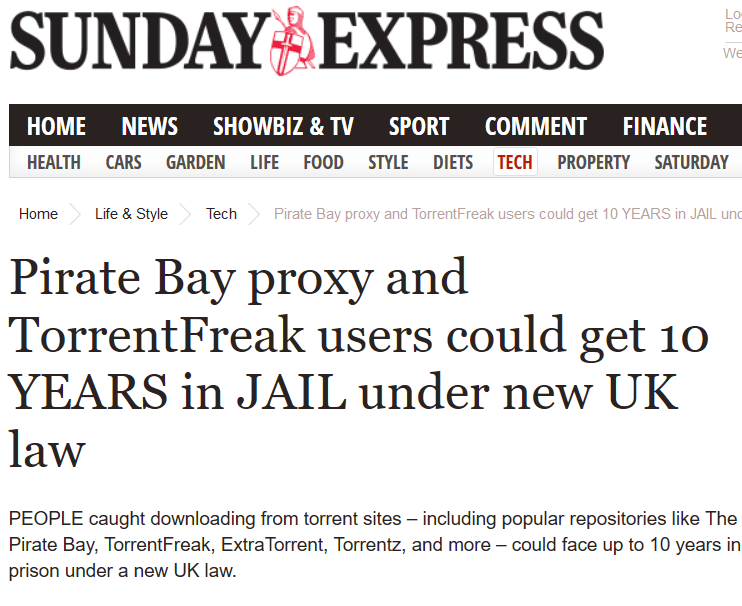


 TorrentFreak:
 Piracy has always been a reasonably popular topic in the UK and there can barely be a person alive today who hasn’t either engaged in or been exposed to the phenomenon in some way. Just lately, however, things have really entered the mainstream.


 In recent years, Samsung has made great improvements in terms of camera performance with its flagship Galaxy S smartphones. Last year, the Galaxy S7 had the most impressive cameras found in a smartphone until the Google Pixel arrived. Google, which was known for putting potato cameras on its smartphones all these years, managed to completely change the game with the Pixel’s camera performance last year.
Continue reading →
In recent years, Samsung has made great improvements in terms of camera performance with its flagship Galaxy S smartphones. Last year, the Galaxy S7 had the most impressive cameras found in a smartphone until the Google Pixel arrived. Google, which was known for putting potato cameras on its smartphones all these years, managed to completely change the game with the Pixel’s camera performance last year.
Continue reading →
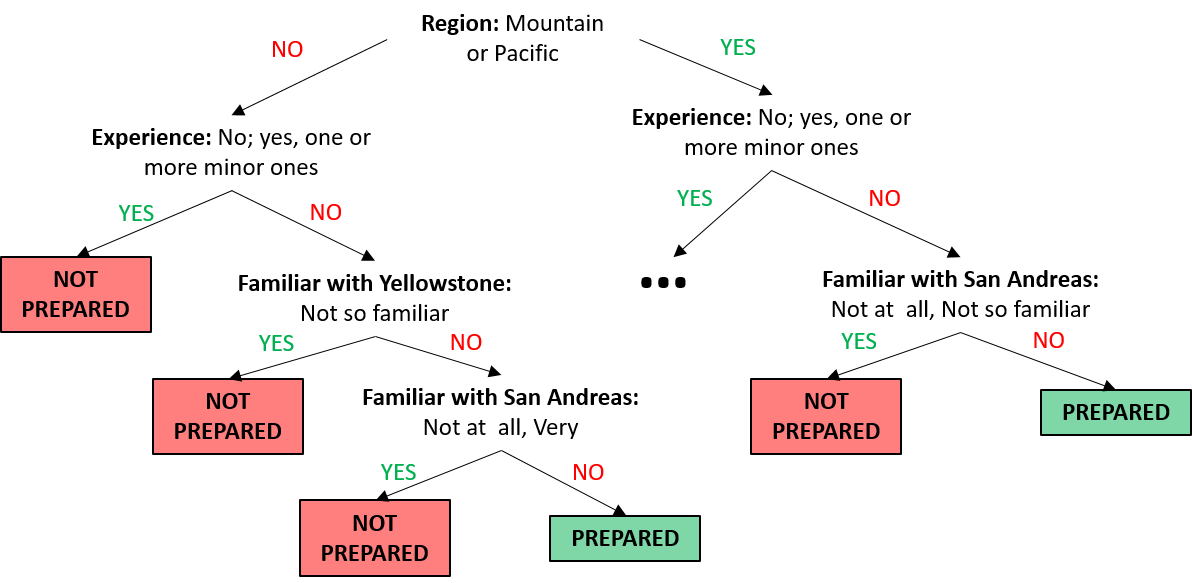
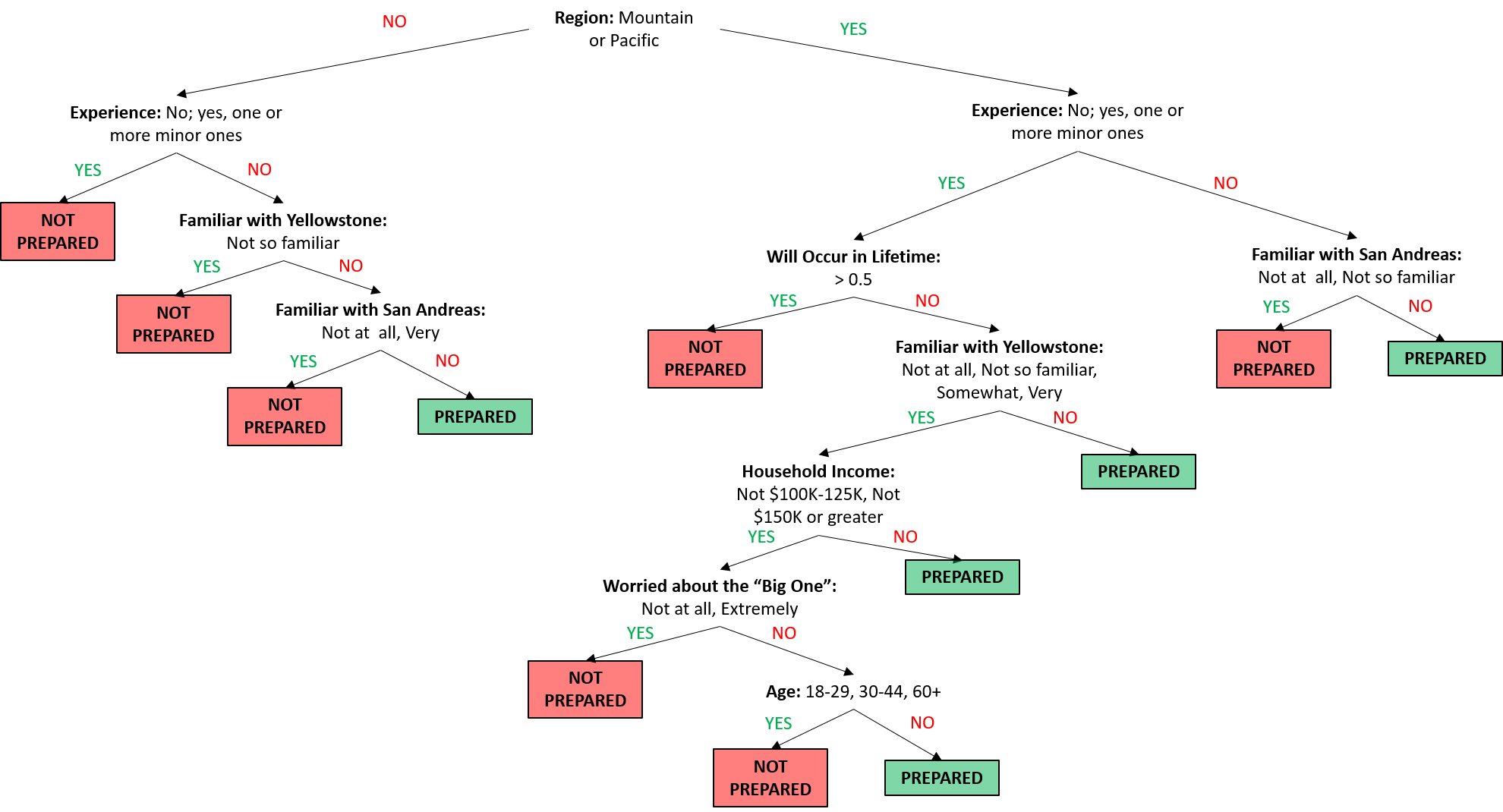

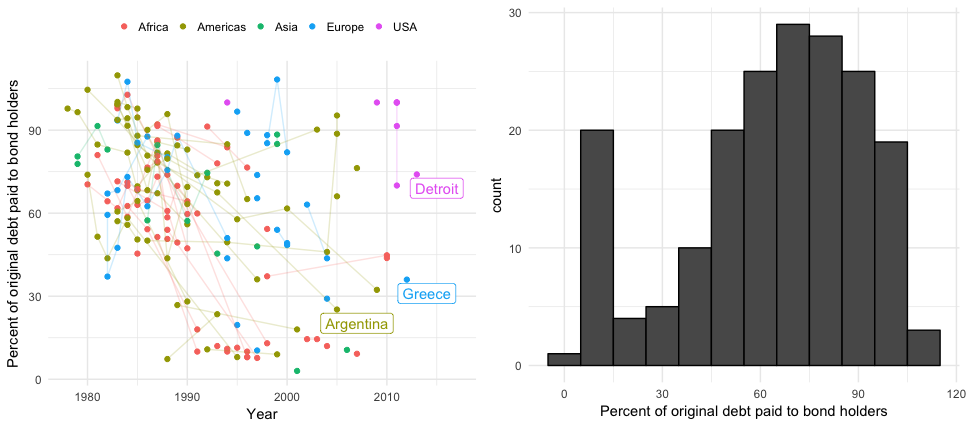


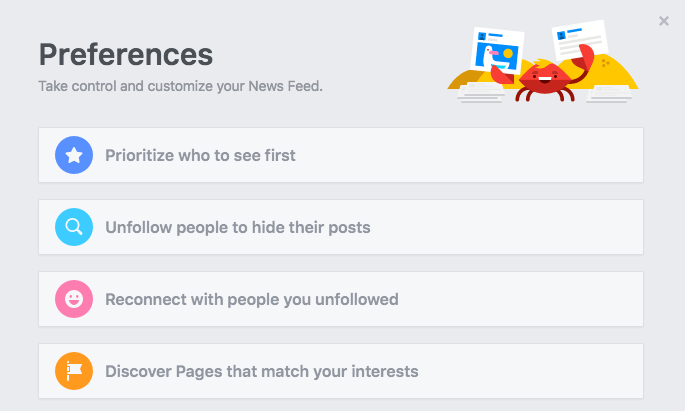


 TORONTO STAR | NEWS | WORLD.





 globeandmail - Health.





![[Gear Review] Gourmia BT8000 Tea Maker](https://c1.staticflickr.com/5/4171/34453777616_9295eacc35_o.jpg)
![[Gear Review] Gourmia BT8000 Tea Maker](https://c1.staticflickr.com/5/4176/34477209035_e73d79da4a_o.jpg)
![[Gear Review] Gourmia BT8000 Tea Maker](https://c1.staticflickr.com/5/4162/33667484163_48db9d47ea_o.jpg)
![[Gear Review] Gourmia BT8000 Tea Maker](https://c1.staticflickr.com/5/4170/33684866763_97ccd0e6a9_o.jpg)
![[Gear Review] Gourmia BT8000 Tea Maker](https://c1.staticflickr.com/5/4180/34109557200_eb4e947654_o.jpg)
![[Gear Review] Gourmia BT8000 Tea Maker](https://c1.staticflickr.com/5/4182/33652575494_99baacca2d_o.jpg)
![[Gear Review] Gourmia BT8000 Tea Maker](https://c1.staticflickr.com/5/4157/33684866693_e8149781d0_c.jpg)


 As one of the leading blog platforms, WordPress.com receives thousands of DMCA takedown requests every year, but nearly half of these are rejected.
 Michael Kalus.ca.
 Telepolis.
 EU referendum and Brexit | The Guardian.
 Video in which New Westminster Green Party candidate Jonina Campbell speaks about the Green Party’s policy on accessible cycling. The 41st British Columbia general election will be held on 9 May, 2017, to elect members of the Legislative Assembly in the Canadian province of British Columbia. Traditionally a two-horse race between the Liberals and the NDP, this year we have a viable third choice in the Greens, led by Andrew Weaver.
