Shared posts

25 May 23:49

Melting glaciers

by Nathan Yau

Glaciers at Glacier National Park in Montana are melting. Using data from the United States Geological Survey and Portland State University, Nadja Popovich for The New York Times maps the shrinking glaciers with their 2015 footprint overlaid on their footprints from 50 years ago.

Tags: environment, glaciers, New York Times

25 May 23:49

NewsBlur Blurblog: Day One Encryption Internal Beta

sillygwailo shared this story from Day One.

Last year we started work in earnest on end-to-end encryption. Since then we have dedicated significant resources to its design and implementation. It has been some time since the last published update and for that I apologize. However today we are pleased to announce that we have reached internal beta stage for encryption. To give some context for where this puts us in relation to a release, the typical product cycle for a Day One product looks something like this:

  1. Initial discussion and design.
  2. Proof of concept and mock ups.
  3. Development sprints (including weekly progress and feedback with the entire team).
  4. Code review.
  5. Internal beta (Day One employees only).
  6. Public beta (Registered beta testers).
  7. App store release
25 May 23:48

Twitter Favorites: [CatherineOmega] Last year, a non-technicial dude told me that making websites requires expertise in more than one language, not jus… https://t.co/AGd5XuFoow

Catherine Winters @CatherineOmega
Last year, a non-technicial dude told me that making websites requires expertise in more than one language, not jus… twitter.com/i/web/status/8…
25 May 23:48

Twitter Favorites: [Stv] I'm 100% certain I'm guilty of the occasional mansplain (hopefully not, but I'm not the best judge). But hopefully… https://t.co/Bip9AZmcw3

Steve @Stv
I'm 100% certain I'm guilty of the occasional mansplain (hopefully not, but I'm not the best judge). But hopefully… twitter.com/i/web/status/8…
25 May 23:48

Twitter Favorites: [skeskali] Every Show Should Handle Sex Like American Gods https://t.co/pstFKrBDHH

Cecily Walker
25 May 23:46

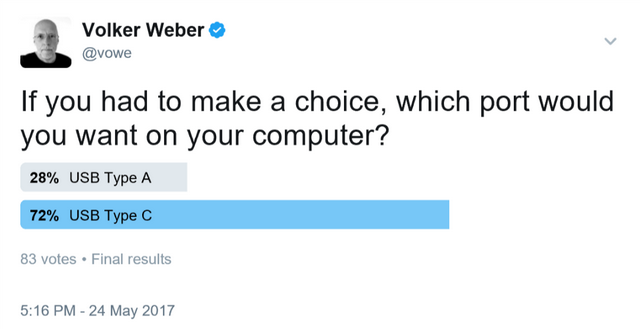
Type A or Type C

by Volker Weber

Sketch

This was a bit of a trick question. You can view it as choice between the past and the future. You can also view it as a question about convenience. I have literally hundreds of things that require a USB Type A connector and I have only three things that have a USB Type C connector. And they all came with a Type A to C cable.

IMG 9868

The question became interesting when Microsoft announced two new computers, the Surface Laptop and the new Surface Pro, and did not provide a Type C connector, drawing much criticism from pundits. Much in the same (or opposite) way that Apple received for their "courageous" decision to provide only Type C connectors on MacBook and MacBook Pro. Panos Panay:

“I love the technology in Type-C, I believe in Type-C,” explains Microsoft’s Surface chief, Panos Panay, in an exclusive interview with The Verge. "When Type-C is ready for our customers, to make it easy for them, we’ll be there.” While Panay isn’t ready to add USB-C to Surface devices just yet, he thinks he has the answer: a dongle. “If you love Type-C, it means you love dongles,” jokes Panay. “We’re giving a dongle to people who love dongles.”

I can't count the number of times people have moaned about their need to bring dongles for their Type A devices. Eventually, the dust will clear and we might have Thunderbolt 3 with Type C connectors but for the time being, this area is very confusing. Power supplies that fry electronics through Type C, cables that aren't complying to standards, confusion between Thunderbolt 3 and USB 3.1 protocols. If it fits, it does not sit.


The ubiquitous connector for Surface is the reversible and magnetic Surface Connector. It connects Surface dock to all mobile Surface computers, it connects the Surface Book clipboard to the base or a dock, it connects to the power supply. This one is going to stay. Eventually there will be Type C Thunderbolt connectors on Surface. In the meantime you will be able to bridge from the Surface Connector to Type C via a dongle. And plug a gazillion of Type A connectors into the device without a dongle.

25 May 23:46

what we are about


In any case, we are using it [price control], and those who doubt that it is necessary or wise should remember that in the incommensurable task of governing this Republic, we often do in practice what we only later find to be justified in principle. [...] Even though we do not like what we are doing, we should understand what we are about.

--John Kenneth Galbraith, A Theory Of Price Control


This entry was originally posted at http://graydon2.dreamwidth.org/249440.html. Please comment there using OpenID.
25 May 23:46

Links for May 25th

by delicious
25 May 23:46

The Domino Effect

by David Rudin

Americans order a lot of pizza: A 2014 survey by the U.S. Department of Agriculture suggested that one in eight Americans eats pizza on any given day. Nowadays it feels as if there are as many options for having a pizza delivered as there are available toppings. If picking up the phone fills you with anxiety, Pizza Hut offers a pair of sneakers with a built-in button for ordering pizza. “Host Hungrybot in your Twitch channel to let your fans order pizza delivery right from your stream,” a startup targeting eSports fans trumpeted. Twitch is one of the few digital realms left untouched by Domino’s, which now offers a series of apps, chatbots, and even the option of tweeting an order using the pizza emoji. Some of these ordering options may exist primarily as marketing gimmicks, but their aggregate effect remains notable: Any interface to which you have access can likely be used to order pizza.

Any interface to which you have access can likely be used to order pizza

This in part stems from pizza’s popularity, but taste is only a small part of the story: The delivery pizza is highly adaptable to the logic and formatted language of communication interfaces. The typical consumer’s mental model of a pizza — dough with sauce, cheese, and toppings baked in an oven — is quite similar to a machine’s conception of pizza, which is quite similar to how a pizza is actually made. The algorithm for pizza is not complex. Ordering a pizza through a chatbot or within a Twitch stream is possible because all parties in the transaction are imagining the same simple process and speaking from the same restricted phrasebook.

Because it is streamlined to be easy to assemble, Pizza (and not the Verace Pizza Napoletana-certified kind) is well-suited for digital abstraction. The fast food burger and the burrito have undergone similar transformations, along with plenty of foods desirable not only for their taste but because they are rationalized and efficient, capable of individual customization without requiring any special trust in the person preparing it at the other end of the interface. Do these interfaces make it simpler to satisfy our tastes, or do they subtly simplify them?


After a bad day at work, you return home to find a turnip, some lettuce, and a desultory chicken breast. That problem was the basic premise of the British cooking show Ready Steady Cook: Members of the public would throw together bags of groceries for a few pounds, and chefs would then make a serviceable meal out of these ingredients. This premise lasted 16 years and 1,895 episodes. Beyond their knife skills, what the chefs on Ready Steady Cook really offer is improvisational intelligence: the ability to come up with solutions to new problems on the spot.

Improvisational intelligence, or the appearance thereof, is a dream of consumer technology. DARPA hired a jazz musician to help teach an AI system to improvise. IBM engineers fed Watson, of Jeopardy! fame, the entirety of Bon Appétit’s archive, combined with insights into human taste and analysis of what ingredients tend to be used together. “With Watson’s help, I cooked some eggplant fritters that made convenient use of every sad, wrinkling root in my refrigerator’s crisper,” Alexandra Kleeman wrote in the New Yorker. But Watson is not in your kitchen yet, and may never be; instead, its example is used to show what the current range of culinary companions cannot do.

Apps encourage us not to trust ourselves, but to think of ourselves as a component of the machine. These tools simplify our lives on the condition that we simplify ourselves for them

The Allrecipes skill for Amazon’s Alexa claims to “quickly [find] recipes that match your desired dish type, ingredients you have on hand, your available cooking time, and/or your preferred cooking method.” But it’s just an interface over a simple dataset — the recipes written and documented by contributors to allrecipes.com — and the appearance of improvisational intelligence is purely a function of the search terms a user enters. JULIA, a chatbot that aims to be “your new BFF in the kitchen” by demonstrating the improvisational power of a master chef, can only answer questions one ingredient at a time — it can provide a recipe for turnip, lettuce, or chicken breast, but not all at once. You can feel your new BFF querying a database in the background. The app regularly responds to queries with “I don’t think I’m qualified to answer that yet,” before linking to a page of tips about how best to chat with the bot.

Generally, predictive services are not predictive so much as reliant on someone else having been in your position before — if you search for the contents of your fridge, odds are someone else will have previously cooked these items together, but you will have sift through their results yourself. The appealing complications of actually cooking a meal remain messy, inconvenient, and human. Apps encourage us not to improvise and trust ourselves, but to undertake the process of itemizing and analyzing our ingredients as data for machines to process; to think of ourselves as a component of the machine itself. These tools simplify our lives on the condition that we simplify ourselves for them.


Ordering in is meant to outsource problems — and labor — to other parties: You pay for other people to buy ingredients, prepare them, and bring them to your door. That workforce is largely invisible, and interfaces like those employed by Seamless or UberEats are designed to conceal the labors of the unknowable number of people involved in preparing your food, making the process appear as little more than a hand-off at the door. These apps make a contradictory promise: to simplify the multipart process involved in creating a meal to a series of clicks, while offering enough options to satisfy an infinite number of cravings. You agree to meet the interface somewhere between what you want and what it knows how to offer, until you want what it knows how to offer.

To narrow down thousands of options to a usable interface, food delivery apps ask that you filter results by category, and encourage you to declare your preferences — even the Domino’s Twitter ordering mechanism is dependent on a customer having registered a preferred order that can later be triggered with an emoji. All these shortcuts and conventions add up to a rudimentary language: a series of words and tics that can be used across ordering interfaces. Grubhub’s lingo is virtually indistinguishable from Seamless, with which it merged in 2013, and insofar as multiple delivery apps are a nuisance for users and restaurants alike, this may presage further consolidation. Nevertheless, these linguistic conventions have emerged with the bare minimum of centralized coordination; this phenomenon reflects the flattening effect of culinary interfaces on how we talk about food. 

These interfaces appropriate both experience and effort, repurposing unseen human labor as machine magic. No one is working for you, only empowering you to make your own decisions

Food delivery interfaces have the habit of reducing epicurean decisions to practical ones, as if buying a meal were no different from buying a mop. But food isn’t just about ingredients; it’s about desire. If rationalizing food consumption were desirable in more than theory, Soylent would be more than a niche taste. The persistence of ideas like “comfort food” speak to its emotional resonance; what do you feel like having for dinner may be the most common phrase in relationships for this very reason. We consume the associations we’ve made with a meal, memories of the times we consumed it, as well as those we prepared it with, those who prepared it for us.


The language of app interfaces makes the complex processes of desiring and preparing food feel like completing a personality test: You simply check off a series of preferences and receive the right meal for you, as if the app’s magic alone had summoned it. This same sort of abstraction holds for other sensory experiences: Spotify’s playlists can be said to flatten the context in which a song was created, trading the artist’s ideas, intentions, cultural cues and environs for preset “moods” generated by the service, while offering artists paltry remuneration. These vitamin-like “moods” then impose categories of experience onto the listener. As we learn to map our desires onto these interfaces, we absorb their vocabulary; human experience is delimited, incrementally, by the limitations of our machines.

These interfaces appropriate both experience and effort, repurposing unseen human labor as machine magic. Food apps, with chatty text, friendly logos, and humanesque voices, are gussied up as our friends in the kitchen — always friends, and never domestic help. No one is working for you, only empowering you to make your own decisions, based on your own tastes, as your tastes slowly shift in a direction that suits the logic of a database. Taste and labor are linked in this domain: Abstracting away the reality of labor creates a permission structure in which you’re more comfortable asking for what you think you want. Perhaps what we want is just to avoid the reality of human contingencies, the reality of other people.

25 May 23:45

GraphQL

files/images/GraphQL.PNG

Facebook, May 28, 2017


Icon

This technology, used already by Coursera and just adopted by GitHub, has the potential to replace REpresentational State Transfer (REST) as the primary language for Application Programming Interfaces (API). This is the way web servers communicate with each other when handling requests. The website explains the difference this way: "GraphQL queries access not just the properties of one resource but also smoothly follow references between them." In other words, it returns a set of data  types, and not just one data type. As a result, "While typical REST APIs require loading from multiple URLs, GraphQL APIs get all the data your app needs in a single request." [Link] [Comment]

25 May 23:35

69 new emoji now available on Twitter

by Igor Bonifacic
Sample of Emoji 5.0 characters

Twitter has become one of the first platforms to support Unicode’s Emoji 5.0 specification. Web users can now call upon 69 new emoji, including the famous Stephen Colbert smiley, when tweeting. The update also adds a number of flags, several food items and a woman with a headscarf.

Unfortunately, it’s currently not possible to see the new emoji on Tweetdeck, nor on Twitter’s iOS and Android app. In the case of the company’s mobile app, it can’t correctly display the emoji until Apple and Google add support for the characters within their respective operating systems.

Bryan Haggerty, the Twitter employee who announced the change, says he expects Apple to add support for all 69 of the new emoji with iOS 11. Android users, meanwhile, can check out the emoji if they install the Android O developer preview to their device. Haggerty says Twitter will update Tweetdeck to support the characters “soon.”

Source: Twitter Via: Engadget

The post 69 new emoji now available on Twitter appeared first on MobileSyrup.

25 May 19:50

Toward tidy analysis

Tidy data at its heart is a set of three rules for organizing a data set:

  1. Each variable forms a column.
  2. Each observation forms a row.
  3. Each type of observational unit forms a table.

This is an incredibly useful abstraction for thinking about organizing data sets for analysis. In particular any data set that can be conveniently rectangled to look like this fun diagram from Jenny Bryan

Data rectangle

Data rectangle

can then be assumed to have a common form and structure. This makes it much easier to write tools that operate on - because the format is standardized. Since then a whole suite of R packages have sprung up called the tidyverse (along with a host of other packages not in the official tidyverse) that operate on data of this variety.

Tidy data is great for a huge fraction of data analyses you might be interested in. It makes organizing, developing, and sharing data a lot easier. Its how I recommend most people share data and I’ve recently even written an entire NIH grant around the idea of tidy health data libraries.

But it starts to feel restrictive when you have to deal with edge cases like nested data sets, or data that are very large and lead to repetitive tidy data, or data that are best operated on as matrices. These non-tidy data represent a relatively small fraction of most data analysis being performed. For those analyses there are smart, organized things you can do, but the usefulness of the absraction often breaks down.

Lately I’ve been thinking a lot about what an equivalent set of rules for data analysis would be. I’ve written a book on data analysis which is essentially an extended checklist of rules of thumb. But I started to wonder, could we come up with a useful and simpler abstraction for data analysis? In particular I was interested in the question of whether we could come up with a set of three rules that would cover the broad majority of data analyses being done in practice and would simplify our evaluation and understanding of those analyses. It would also simplify the tool building for data analysis by restricting the space of choices. By necessity three rules will lead to some discomfort for edge cases just like the tidy data abstraction runs into discomfort around the edges. But for this exercise I’m willing to accept that level of discomfort.

After thinking about it for a little while I settled on the following three rules and I’d love to get peoples feedback. A “tidy” analysis is one where:

  1. It answers a single quantitative question that can be defined in terms of a parameter.
  2. It uses a training set to do all model building and a test set to evaluate all model building.
  3. It uses only linear models.

I’ve told a few people about this idea and I’ve gotten reactions from laughter to lukewarm agreement to pushback. So I thought I’d give some justification for these rules.

A single quantitative question defined by a parameter

As any applied/consulting statistician will tell you, a huge part of the job of working with collaborators is defining the question. In my experience, one of the key predictors of the success of a project is whether we can identify a single concrete and quantifiable question. In most data science/statistical consulting classes, a large amount of effort is dedicated to figuring out what question is being asked and how we can turn that into a quantitative statement. So any tidy analysis will lead with a single question defined in terms of a concrete parameter - this avoids the type of analysis where you see 1000 different plots, sub-analyses, and diversions.

Training and test sets

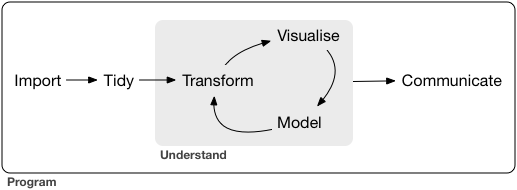
There are various models for the data analytic process, but most of them are defined in terms of a cycle. For example here is the process as defined by Hadley Wickham’s book R for Data Science

Data science

Data science

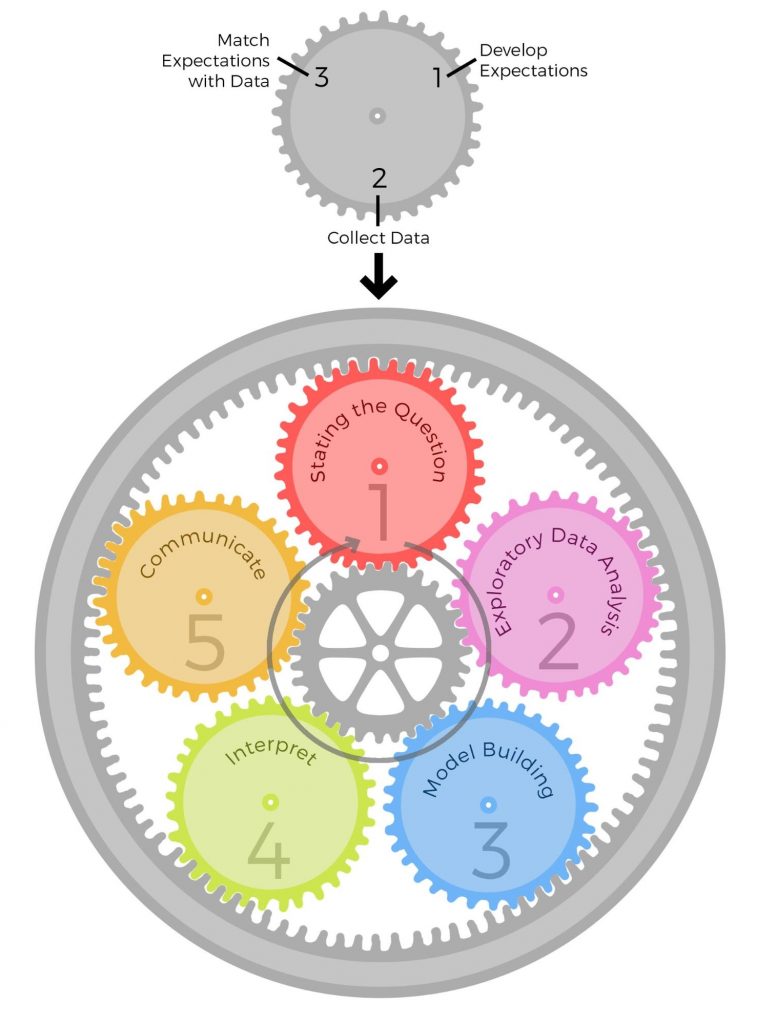
Another example is in the book The Art of Data Science:

Also data science

Also data science

The trouble with this cyclic view of data science is that it opens the door to p-hacking and the garden of forking paths because you never know if the plot, processing step, or analysis you did is following signal or noise. As we have known for a long time the best way to avoid these overfitting problems is to evaluate the results of your analysis in a held out set. This would apply regardless of if you are doing inference, exploratory analysis, or prediction.

Linear models

This one has been the most controversial when I’ve proposed this approach. But I think one of the best solutions to reducing researcher degrees of freedom is to reduce researcher degrees of freedom. Linear models are an incredibly useful tool and can be used for ANOVA, for modeling, for visualization, for prediction and a number of other tasks. Moreover, they have the benefit of being one of the more interpretable models. Perhaps most importantly in a linear model you know the exact relationship between any of the covariates and the outcome you are trying to evaluate.

Early in my career I often made the mistake of trying a linear model first, seeing no or little signal, and then wasting a lot of time trying fancier models. Almost inevitably, if you can’t see the signal with a suitable linear model, you won’t be able to find it with fancier methods. The fancier methods may just serve to make the signal stronger. So as a first pass I’d always like to see the linear model result to establish a baseline.

This does leave out some types of analysis such as unsupervised analysis. But I think that is the point, the goal is to find a set of rules that covers the majority of analyses, allows us to templatize/organize ourselves, and removes the most common barriers to working together.

25 May 04:55

Creating the conditions for learning

by Bryan Mathers
Create the conditions for Learning

I was struck by a comment by Will Richardson on twitter this morning, about creating the conditions for learning. He’d replied to an image I’d created after watching him present some time ago.

In my mind’s eye, I saw a boat, subject to the weather conditions, but supported underneath by the ocean…

The post Creating the conditions for learning appeared first on Visual Thinkery.

25 May 04:55

Samsung’s Galaxy S8 and S8+ DeX dock is releasing in Canada on May 26th for $249

by Patrick O'Rourke
DeX dock

While Samsung’s Galaxy S8 and S8+ DeX dock has been available in the U.S. since the flagship smartphone’s launch, the accessory is only coming to Canada now.

According to Samsung Canada, DeX is set to drop in Canada on May 26th for $249, the same day the Gear 360 camera launches north of the U.S. border.

While DeX is pricey, it’s actually impressive and turns the S8 into a desktop-capable device, complete with specific apps that have been optimized for use with larger displays. The entire experience is very similar to Microsoft’s ill-fated Continuum platform, only more stable and responsive.

App support, however, remains sparse, though Samsung says it expects more developers to begin releasing DeX optimized versions of their apps in the future.

The post Samsung’s Galaxy S8 and S8+ DeX dock is releasing in Canada on May 26th for $249 appeared first on MobileSyrup.

25 May 04:54

The Tools of an HTML Email Workflow

files/images/build-template_zz9ovf.png

Chris Coyier, CSS-Tricks, May 27, 2017


Icon

As someone who has managed an email list for more than a decade, I appreciate the complexity of email and therefore the utility of this list of tools. Chris Coyier runs the gamut from bare metal tools to CSS formatting for email to email-sending applications. I still do it the old fashioned way, with my own software, but that's only because I'm not willing to pay money to send emails. [Link] [Comment]

25 May 04:54

Samsung Canada gears up for the 2018 Olympics by launching a torch-bearing competition

by Sameer Chhabra
Samsung's logo

If you’ve ever dreamed of carrying an Olympic torch, Samsung Canada might just have the answer.

The company is hosting a torch relay contest in honour of the 2018 PyeongChang Olympic games in South Korea.

Each of the contest’s five winners will be awarded with a round-trip flight to South Korea, a two-night stay in the country, a city-tour of Chuncheon, have all of their meals covered, and will also get to keep an Olympic torch.

If you want to enter for a chance to win, visit the Celebrate the Light contest page.

The post Samsung Canada gears up for the 2018 Olympics by launching a torch-bearing competition appeared first on MobileSyrup.

25 May 04:53

You Could Soon Be Unloading A Lot More From Your Checked Bag At Airport Security

by Ashlee Kieler
mkalus shared this story from Consumerist.

The Transportation Security Administration and airlines, alike, have implemented processes at airports designed to take some of the burden out of the security line — from fully automated checkpoints to hiring more screeners. Now, the TSA is working on more changes intended to make the security process more efficient — like removing food from carry-ons and using digital ID scanners. But before we can speed through the checkpoints, some unsuspecting passengers will have serve as guinea pigs. 

The Wall Street Journal reports that the TSA is testing and finalizing these new security checkpoint plans and that they could begin to affect travels as early as this fall.

Possible changes, which could include asking passengers to place food items in separate bins and digitally scanning drivers licenses and passports, are aimed at making it easier for screeners to spot suspicious or dangerous items without manually checking bags, while also moving travelers though security check points more quickly and efficiently.

Removing Items

The WSJ reports that the TSA is taking on customers’ overstuffed, cluttered bags with screening tests at smaller airports around the country. The test range from asking passengers to take out all paper from their checked bags to having flyers remove food or electronics larger than a cell phone from bags before they go through X-ray machines.

TSA agents are currently focusing tests on the items — like food — that can trip up baggage screeners when they show up on X-rays. The idea is to catch these items before they go through a machine. This requires the TSA to ask passengers to remove such items and place them in separate trays at the beginning of the security screening process.

By removing items like chocolate that may show up as a dense blob on the X-ray machines, the TSA is hoping to decrease the chance that bags will have to be manually checked.

From The Beginning

Another change the TSA plans to begin testing next month at Washington D.C.’s Dulles Airport replaces manual checks of passengers’ identification with a digital version.

The new ID verification machines scan IDs and passports, matching the names with passenger lists provided by the airlines.

The agency tested the system with a shipment of fake IDs confiscated by customs agents. Of course, the TSA notes that if a false alarm is triggered, an actual TSA employee can still manually check the ID.

So far, TSA says the results have been mixed, as passengers are often confused by the new requests. Such was the case in Kansas City, MO, where flyers were asked to remove paper from bags, including small notebooks. Those tests were halted after just a few days, the agency tells the WSJ.

Still, officials with the agency say that they are optimistic that the pilot programs are working. However, any new procedures likely won’t begin to show up at airports until later this year, after the busy summer travel period, and aren’t expected to affect the TSA’s PreCheck lines, the WSJ reports.


25 May 04:53

Photokina ab 2018 jährlich | heise online

mkalus shared this story from heise online News.

Marten Siegmann

(Bild: photokina)

Neuer Turnus, neue Tagefolge, neuer Termin, neue Themen: Die Photokina wird neu aufgestellt. Zukünftig soll in Köln jährlich die ganze Bandbreite Imaging-relevanter Produkte, Anwendungen und Dienstleistungen präsentiert werden.

Die weltgrößte Fotomesse, die Photokina in Köln, findet ab 2018 jährlich statt. Das teilten die Veranstalter der Koelnmesse GmbH in einer Pressemeldung mit. Von dem verkürzten Zyklus erhoffe man sich, "die Schnelllebigkeit und die immer kürzer werdenden Innovationszyklen einer zunehmend digitalisierten Branche" besser abzubilden. Außerdem bekommt die Messe ab 2019 einen neuen Termin im Mai anstelle des Septembers.

Auf der Suche nach neuen Zielgruppen

Neben Innovationen aus den Kernbereichen des Imaging Workflows soll in Köln zukünftig die ganze Bandbreite Imaging-relevanter Produkte, Anwendungen und Dienstleistungen vorgestellt werden. Mit diesen Änderungen wollen die Organisatoren den 2016 begonnene Wandlungsprozess fortsetzen: Unter dem Titel "Imaging Unlimited" hatte man im vergangenen Jahr versucht, neue Zielgruppen für die Branche zu erschließen.

Trendbereiche wie Virtual und Augmented Reality, Cloud Computing, sowie Bilderkennung und Holografie sollen in Zukunft noch stärker miteingebunden werden, teilen die Veranstalter mit. Ebenso müsse eine steigende Flut an Bildern und Videos verarbeitet und verwaltet werden, sodass Archivierung und Content Management, Social Media und Communities weiter in den Fokus rücken. Apps und Software-Lösungen seien sowohl für den professionellen Einsatz wie auch den Endverbraucher unverzichtbar geworden. Smart Home Anwendungen und Computer-Generated Imaging würden an Bedeutung gewinnen. Die Photokina solle zukünftig für all diese Themen als Innovationsplattform dienen.

Für die Veranstaltung 2018 ändert sich indes lediglich die Tagefolge: Sie findet von Mittwoch, den 26. bis Samstag, den 29. September statt. So wolle man den Besuchern "ein kompakteres, intensiveres Messeerlebnis" ermöglichen. (msi)

25 May 04:53

Vancouver Challenge Shows Bikes and Transit More Convenient than Cars

by Average Joe Cyclist

Participants gathered at London Drugs in downtown Vancouver to compare commute timesVancouver's latest challenge shows that bikes and transit are more convenient than cars: six people on bikes arrived first and in some cases were twice as fast as their car commuting colleagues.

The post Vancouver Challenge Shows Bikes and Transit More Convenient than Cars appeared first on Average Joe Cyclist.

25 May 04:53

Something’s Afoot on Edmonton’s Jasper Avenue

by Sandy James Planner
mkalus shared this story from Price Tags.

jasper-ave-4-lanes

As noted by the CBC there is a lot happening in Edmonton this summer, and you can add removing the curb lanes of traffic on Jasper Avenue between 109th Street and 115 Street as another improvement. That former car dominated space will become expanded sidewalks and street cafes on this important stretch of street. Council received 78 per cent support for this  $19 million dollar project that will bring this city into this century.

Edmonton has this right-if you want to create social spaces, enhance interaction, and get people to spend money at retailers, you need great walkable streets, accessible to everyone. Citizens living downtown wanted to walk to the stores and to work-an interesting comfortable convenient walkable street is the way to go.

“For the past two years, city staff have been gathering feedback about permanently reducing a stretch of Jasper Avenue between 109th Street and 124th Street from seven lanes of traffic to five, including turning lanes. The sidewalks would be built out and adorned with trees and more lighting. Restaurant owners could potentially take advantage of the space to create patios.

Edmonton is seeing a changing demographic with more people living in the downtown-and with that increase in density walkability is paramount. Kudos to them for taking the first step.


xx-24-edm-jasperavektuong-5-1-size-xxlarge-promo


25 May 04:52

The Tory lie of a ‘global’ Brexit Britain is a divide-and-rule tactic aimed at migrants | Nesrine Malik

by Nesrine Malik
mkalus shared this story from EU referendum and Brexit | The Guardian.

This government does not dream of reaching out to equals, but to economies that it can plunder – you know, as if they were colonies

A global Britain. That was the plan. A Britain that would leave the European Union and pivot confidently towards the rest of the world. Unfettered by the bureaucrats in Brussels, Britain would reap the benefit of lucrative trade with foreign companies and open its arms to overseas citizens whom it could not hitherto embrace.

Non-EU citizens resident in the UK were told that things would get easier for them when the country could take control of EU immigration, and during the referendum campaign Priti Patel launched a “Save our curry houses” appeal. Leave specifically stated that the country’s immigration policy was hamstrung by its EU membership, and thus a vote for Brexit was a vote for fewer restrictions on allowing more immigration from outside Europe.

Continue reading...
25 May 04:52

Daily Scot – Indoor/Outdoor

by Scot Bathgate
mkalus shared this story from Price Tags:
Too bad they closed their other locations (as far as I know).

Great to see the new Musette Cafe taking shape in its new location on Burrard Street.  Yesterday’s warm weather showcased the design of the new voluminous space, specifically the great blurred threshold between the cafe and the streetscape when the massive patio doors are pulled back.

2017-05-23 14.07.01

The openness and prominent display of cycling memorabilia visible from the sidewalk attracts the attention of the passing pedestrian while conversely coffee sippers people watch and connect with the city.  A great simple space.

2017-05-23 16.10.54

Musette Cafe, 1325 Burrard Street, Vancouver, BC.   http://www.musettecaffe.com


25 May 04:52

Another Great Science Field Trip: the VanScienceSocial 2017

by John

Recently I was invited to attend my second science field trip, aka the VanScienceSocial, hosted by Science World. This is fast becoming one my favorite annual events since it combines a lot of stuff that I love: science, technology and new experiences. This year was no different.

The goggles…they do nothing!

My invitation came with this strange VR headset…but it didn’t seem to work…just showed still frames. Whatever. Time to get on the bus.

Last year, we spent a good chunk of time at UBC. This time around, we headed up Burnaby Mountain to SFU to visit a number of their labs and projects.

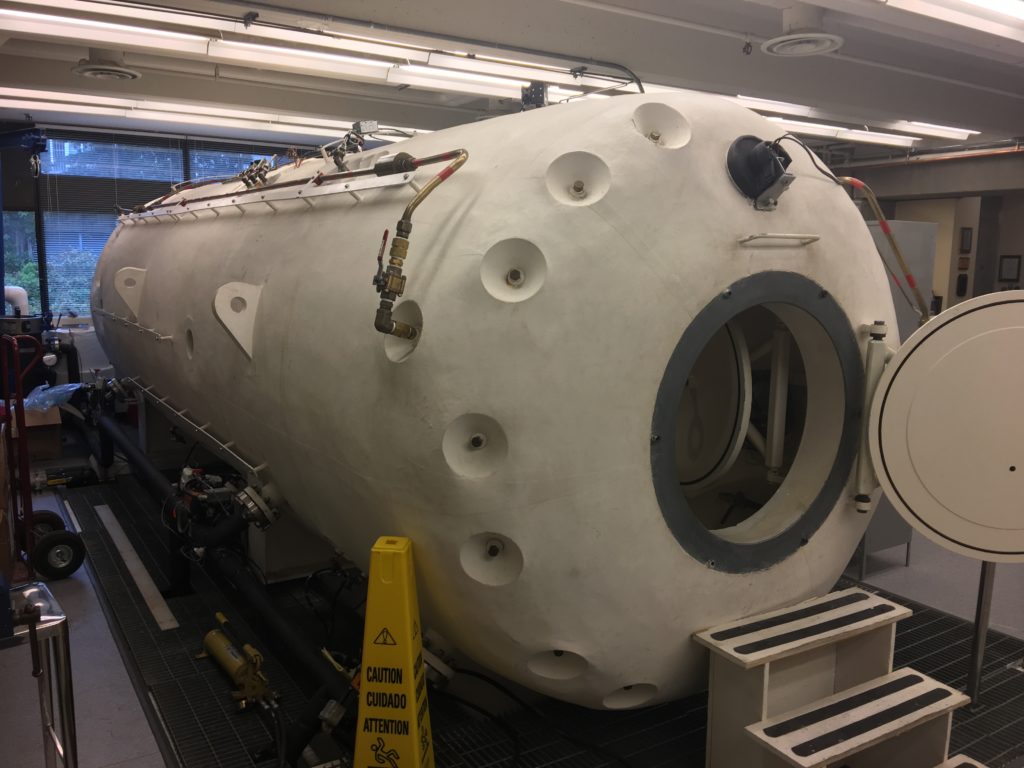
Our first stop was the Environmental Medicine and Physiology Unit where about half of the group chose to go into the hyperbaric chamber.

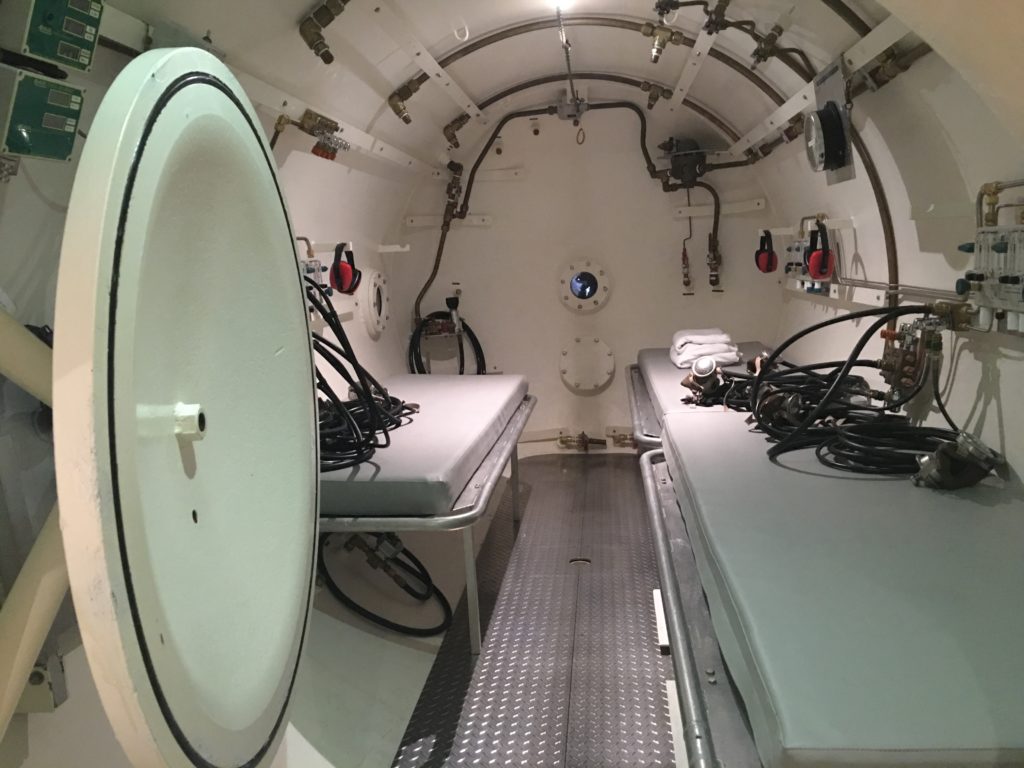
This imposing machinery is used for a number of medical procedures and commonly used to help divers decompress after lengthy underwater dives. After meeting with an onsite doctor, our group got changed into scubs and we got into the tank. The plan was to ‘travel’ to the equivalent pressure depth of 150 ft below the surface. The trip took about 15 minutes to pressurize and get to the ‘bottom’ where we spent a few minutes in the high pressure environment.

I probably watch too many science shows so expected that when we got to the bottom, our voices would be different due to the air pressure in the tank. We basically talked like a snapchat filter (aka chipmunks) but I think most of my fellow ‘travellers’ weren’t expecting that. We had all mostly just met and then were fairly quiet on the ride down. As soon as someone spoke though, the floodgates were open and we couldn’t stop laughing.

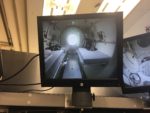
Unfortunately, we weren’t able to bring any cameras into the chamber (my photos were taken before we were pressurized) but Stephen captured us on the closed circuit tv inside the chamber:

A post shared by Stephen Fung (@stephenfung) on

It was a very cool experience…I kept thinking about the scene in the movie, The Abyss, where a bunch of marines go to an underwater station and one of them snaps while under pressure…it’s a little hard to tell from this shot but note the familiar tank they are in:

Fortunately, Michael Kwan didn’t snap and we made it back to the surface just fine.

After returning to the ‘surface’, we were again checked out by the doctor and given a special wristband in case there were any issues from being under pressure. Everyone checked out fine.

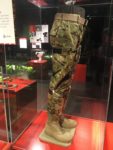
Our next stop was the Neurokinesiology lab just around the corner. This lab had a number of projects and experiments for us to see and try including listening to our muscles with special equipment, a split leg treadmill (different speeds for each leg). My favorite was the bionic exoskeleton being developed for the US Army to power soldiers while in the field who are off the grid.

These essentially work the same way regenerative brakes do in an electric vehicle. Each leg has a battery that is charged by the motions your leg does while walking/running. Science World has a Made in Canada exhibit right now (more on that in a bit) that shows off a more complete version of the exoskeleton that look pretty badass in cammo:

With this on, you could charge your phone (and a lot more) all day while just walking around. The work at SFU is to reduce the size/weight on these.

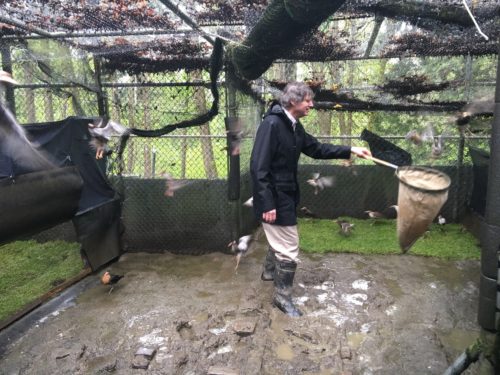
Next up was the Ruffs aviary which is just a few minutes walk from the labs.

Here we learned about the research into the various habits of these birds. Ironically, our guide’s first name was Dove.

Unfortunately, the clouds opened up on us during our visit to the aviary so we didn’t spend a lot of time outside with the birds as it was just pouring down rain.

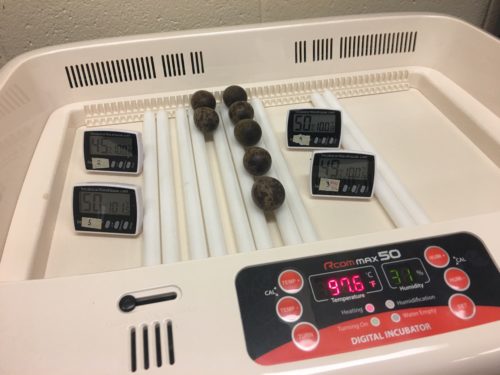
So we went inside and checked out the incubation lab.

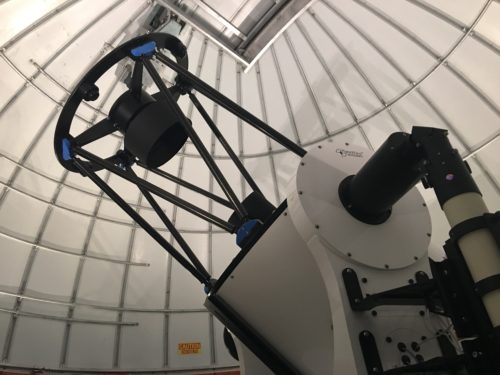
Our last stop at SFU was to the Trottier Observatory. Since it was raining (and the daytime) we didn’t get to look through their telescopes but it was still a fun place to visit and learn about projects and programs there.

The open the observatory to the public a few nights a month. Check out their website to see when the next opportunity is.

We jumped back on the bus to head back to Science World and finish the field trip with a tour through their fantastic Made in Canada exhibit.

I don’t want to spoil the full exhibit since there are some very surprising items on display that I didn’t realize were made by Canadians. Suffice to say, it’s worth the trip to Science World to check out. My favorite time to go (aside from the field trip) is their After Dark events if you want to leave the kids at home.

Sunset view from Science World

Like the After Dark event, I really wish Science World (or someone) offered these kinds of science-themed field trips for the public (kids or not). I think they would be insanely popular and people would pay to go on them. That’s my only issue with the VanScienceSocial – it’s almost too exclusive of an event since only a few of us get to do and experience the things mentioned above. But some of these places/labs wouldn’t get any work done if there was a constant tour going through and I’m not sure how scalable it would be.

That said, I can’t wait to see what they come up with for next year’s field trip!

The post Another Great Science Field Trip: the VanScienceSocial 2017 appeared first on johnbiehler.com.

25 May 04:52

LIVE Programming Workshop

by Jonathan Edwards

Sean McDirmid and I are organizing the LIVE Programming Workshop at SPLASH. Please consider submitting your work – deadline is Aug 1.

25 May 04:52

The first one sucks the joy out of buying books — Quartz

mkalus shared this story .

The joy of the bookstore lies in what might be called the analog experience of the physical space: Hushed page-flipping; the sound of two covers sliding against each other as a book is returned to its spot on the shelf; the quiet murmur of, “Have you read this one?” Luddites and Twitter junkies alike need insulation from the glare of screens and the sounds of speakers.

Tomorrow (May 25), Amazon will open its first brick-and-mortar bookstore in New York City. The store is on the third floor of a shopping behemoth in Columbus Circle, where a Borders closed its doors in 2011, just blocks away from where a massive Barnes & Noble sold books for 16 years before it, too, closed. A second Manhattan location will open on 34th Street this summer, adding to the 13 total bookstores planned to be open by the end of the year (currently, there are six stores open).

The cashless Columbus Circle store is founded on Amazon’s belief that people will want to discover (and buy) books that are rated highly on <a href="http://Amazon.com" rel="nofollow">Amazon.com</a>, with a barrage of in-person signs and data-driven shelving choices. But buying a book in the store is actually more expensive than purchasing on the site if you’re not a Prime member. The upshot is that, while the physical store succeeds as an ad for a Prime membership, it fails to be joyful, or even effective, as a bookstore.

The store is small—about 4,000 sq ft, compared to Barnes & Noble’s typical 25,000. The shelves are tidy, because the books are placed with their covers facing out, meaning the store contains about half of what it could if the books were arranged spines-out—8,000 titles compared to the 3,000 it carries, according to the store.

In the case of children’s books and cookbooks, which comprise two substantial sections of the store, that’s a good thing. Thick cookbooks with handsome covers benefit from being turned out.

But for the most part, the layout creates clutter that mirrors Amazon’s own site, except without the ease of actually getting the book you want quickly and cheaply. The overly verbose store affixes hard-to-read labels beneath each book, giving you a flurry of information in different font sizes—and prominently featuring the opinions of exemplary randos. The store selection is populist, elevating aggregate user ratings; the author’s name is, notably, the smallest thing on each card.

Bookstores typically serve one of two functions: You can lose yourself in the delight of the shelves, and discover something new; or you can go with a purpose, like finding a gift or buying a book for school, and be out quickly. Independent bookstores are good at the first, because they offer humans. They have humans who like books, have a sense of non-corporate humor, and leave little hand-written staff reviews (with those charming, self-effacing comments) that lead you to your next good read. The best indie stores understand their communities, and tailor their selections and displays to the people they know.

If you’re at a bookstore and not looking for a unique brand of shade, you’re probably looking for a book. That’s where Barnes & Noble and <a href="http://Amazon.com" rel="nofollow">Amazon.com</a>, faceless corporations that nonetheless have the books you want, come in. In particular, this is what <a href="http://Amazon.com" rel="nofollow">Amazon.com</a> has excelled at, even more so than chain bookstores: Getting you the books you want, cheap and hassle-free.

But, strangely, the new Amazon Books in New York City doesn’t do this, either. It has a slim fiction section, clearly chosen based on what people buy in print, not what people like to read more generally. I counted just 13 titles in the romance section, for example, even though romance is the best-selling fiction genre in the US. That’s likely because Amazon knows how people behave: Romance buyers, while voracious, tend to buy ebooks. So the fiction section has books the human curators, based on analytics, know will sell well in the store. As a result the children’s fiction section is noticeably massive. Given limited real estate, this is smart. But it also gives one the sense that when you visit Amazon Books, you only see what an algorithm has sloppily decided for you.

When asked about a bestselling gag book mocking the US Democratic party, a store associate told me the store doesn’t carry it. He didn’t offer to order it to the store, either.

I asked him what would be the best way to get the book. “You can order it on Amazon,” he said. Oh.

“We talk about ourselves as a physical extension of Amazon.com,” said Jennifer Cast, vice president of Amazon Books, on a tour for press. Indeed: Amazon Books heavily promotes its data-driven approach all around the store, just like the site does with its many recommendations—and makes Amazon’s Prime service feel irresistible, just like the site does. But by making the store an extension of <a href="http://Amazon.com" rel="nofollow">Amazon.com</a>, rather than a place in which people really want to spend time and forget their screens in lieu of something quieter, Amazon Books takes away one of the greatest pleasures of a bookstore: escapism. With the entire store blinking like a banner ad for Amazon Prime above your head, you lose the ability to fade away into the printed word.

To find out how much a book costs, you need to check it with a device—the Amazon app on your phone, or an in-store scanner. Those unlucky customers who don’t have Amazon Prime have the privilege of paying the full list price. This can be double the price you can get on <a href="http://Amazon.com" rel="nofollow">Amazon.com</a>, even without Prime—so there’s actually a cost to buying a book in the store if you aren’t a Prime member. (Don’t worry, you can remedy that quickly by joining in the store.)

The store doesn’t let you escape the noise of shopping online: One section is for books with more than 10,000 reviews; another display is for “page-turners,” based on ebooks that customers have read in three or fewer days; with a few exceptions, books need a 4-star review to be in the store; to enter, you have to walk around a table showing books 4.8 star-rated or higher.

The store seems to miss the point of buying books in a physical location. Holding out her phone, Cast says, “I call it my ‘mission control’ when I’m in the store.” She clarifies later: “I control how I want to buy [the book], and in the format that I want to buy it, and if I want more information.”

Of course using data to make decisions alone is not a bad thing. What is interesting about Amazon Books is that it is seemingly quick to adapt once it learns what doesn’t work—a challenge for traditional bookstores. Store locations that opened earlier in other cities, for example, placed self-help books near religion, says Cast, but customers said they thought they would be better suited near business books. After consulting its sales data, Amazon decided to change.

25 May 04:51

Apple Watch Proves Most Accurate at Measuring Heart Rate in New Fitness Tracker Study

mkalus shared this story from MacRumors: Mac News and Rumors - All Stories:
Weird, Microsoft Band (no longer available) included, but not something like a Garmin?

In a

new study

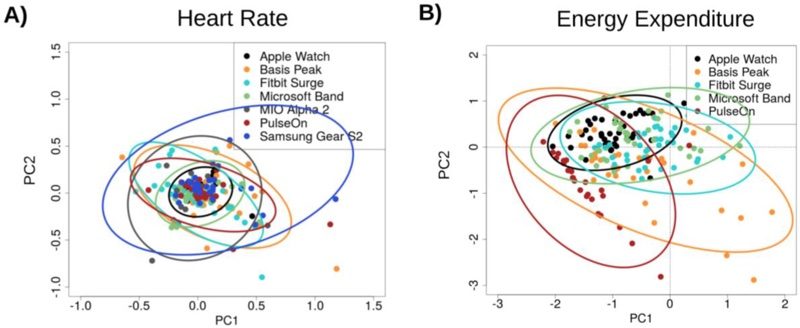
comparing the accuracy of seven different fitness trackers, the Apple Watch was found to have the lowest margin of error when measuring heart rate, beating the Basis Peak, Fitbit Surge, Microsoft Band, Mio Alpha 2, PulseOn, and Samsung Gear S2.


Researchers set out to determine the accuracy of wrist-worn devices at measuring both heart rate and energy expenditure, aka calories burned via physical activity. 60 volunteers participated, including 29 males and 31 females, each of whom wore several fitness trackers and completed activities like cycling, running, and walking.


Data gathered by the fitness devices was compared against a "gold standard" tracking method, which included an electrocardiograph (ECG) for measuring heart rate and clinical grade indirect calorimetry (measuring oxygen and carbon dioxide expelled when breathing) for measuring calories burned. An error rate of 5 percent was determined to be within acceptable limits.


Across all of the modes of activity, the Apple Watch had the lowest median heart rate error at 2 percent (1.2% to 2.8%), while the Samsung Gear S2 had the highest error rate at 6.8 percent (4.6% to 9%). The Apple Watch was also notably more accurate at measuring heart rate during the walking test than competing products.

For the walking task, three of the devices achieved a median error rate below 5%: the Apple Watch, 2.5% (1.1%-3.9%); the PulseOn, 4.9% (1.4%-8.6%); and the Microsoft Band, 5.6% (4.9%-6.3%). The remaining four devices had median error between 6.5% and 8.8%.

When it came to measuring calories, no device, Apple Watch included, managed to accurately determine how many calories were burned through activity. Median error rates across all devices and tasks ranged from 27.4 percent (Fitbit Surge) to 92.6 (PulseOn). Though no device was accurate, the Apple Watch did the best at estimating energy expenditure.


Overall, researchers found that most of the fitness trackers tested were able to measure heart rate with an acceptable error level in a laboratory setting, but calorie estimates are largely inaccurate.

There are three principal findings from the current study. In a diverse group of individuals: (1) most wrist-worn monitoring devices report HR with acceptable error under controlled laboratory conditions of walking, running and cycling; (2) no wrist-worn monitoring devices report EE within an acceptable error range under these conditions; (3) of the devices tested, the Apple Watch had the most favorable error profile while the Samsung Gear S2 had the least favorable error profile.

The full study, conducted by Stanford University and the Swedish School of Sport and Health Services, is

available in the Journal of Personalized Medicine

.


24 May 20:50

pic.twitter.com/mthFLPU1Vx

by fjamie013
mkalus shared this story from fjamie013 on Twitter.


Posted by fjamie013 on Wednesday, May 24th, 2017 4:54pm


3351 likes, 901 retweets
24 May 20:50

Delete your account twitter.com/LifeHacks/stat…

by shutupmikeginn
mkalus shared this story from shutupmikeginn on Twitter.

Delete your account twitter.com/LifeHacks/stat…


Posted by LifeHacks on Wednesday, May 24th, 2017 3:30am


485 likes, 73 retweets

Posted by shutupmikeginn on Wednesday, May 24th, 2017 6:15pm


481 likes, 112 retweets
24 May 20:49

BC coffee roaster acquired by major Italian player

mkalus shared this story from Comments on: BC coffee roaster acquired by major Italian player.

INVERMERE (NEWS 1130) – A BC company that specializes in organic coffee is being taken over by one of the oldest names in the business.

Italian coffee giant Lavazza is acquiring control of Kicking Horse Coffee, buying an 80 per cent stake for $215 million.

The seller is a group led by San Francisco-based private equity firm Swander Pace Capital.

Kicking Horse co-founder Elana Rosenfeld will still have a 20 per cent stake in the Invermere-based company, which would be worth $43 million at the transaction price. She and her former partner started the company in 1996; Lavazza was founded in 1895. The deal was signed this morning in the southeastern BC town.

CEO Antonio Baravalle last week said family-owned Lavazza was interested in acquisitions in the US, Canada, Germany and the UK, with the fast-growing organic and fair-trade business the most attractive area. In a statement today he describes Kicking Horse as leading the segment in North America.

Lavazza last year acquired coffee companies in France and Denmark, part of an industry-wide consolidation. Its full-year revenue rose 29 per cent to 2.2 billion euros, equivalent to $3.3 billion Canadian.

24 May 20:49

Why Does Coffee Make You Poop

by TodayIFoundOut
mkalus shared this story from TodayIFoundOut's YouTube Videos.

From: TodayIFoundOut
Duration: 08:04

→Subscribe for new videos every day!
https://www.youtube.com/user/TodayIFoundOut?sub_confirmation=1
→How "Dick" came to be short for 'Richard': https://youtu.be/BH1NAwwKtcg?list=PLR0XuDegDqP2Acy6g9Ta7hzC0Rr3RDS6q

Never run out of things to say at the water cooler with TodayIFoundOut! Brand new videos 7 days a week!

More from TodayIFoundOut

Why do we Get Ice Cream Headaches
https://youtu.be/0tLMGCBRGmE?list=PLR0XuDegDqP01NqW8KRpOy-_y2m6S2VEF

Why Your Palms Get Sweaty When You're Excited, Scared or Nervous
https://youtu.be/tc4qvUswX40?list=PLR0XuDegDqP01NqW8KRpOy-_y2m6S2VEF

In this video:

As any barista beginning their 5am shift will tell you, a morning cup of coffee is essential for a chipper attitude and a healthy psyche! The dilemma some have is that right after you indulge- it hits you. The #2 train is about to arrive and you don’t want to be stuck in traffic when it does!

Want the text version?: http://www.todayifoundout.com/index.php/2017/03/coffee-makes-poop/

Sources:

https://www.ncbi.nlm.nih.gov/pmc/articles/PMC1378422/?page=1
https://www.ncbi.nlm.nih.gov/pubmed/10499460
https://www.britannica.com/science/cholecystokinin
http://www.vivo.colostate.edu/hbooks/pathphys/digestion/stomach/motility.html
http://www.coffeeresearch.org/science/sourmain.htm
http://www.news-medical.net/health/Caffeine-Pharmacology.aspx
http://ajpgi.physiology.org/content/252/1/G1
http://www.jbc.org/content/254/7/2446.full.pdf+html
https://www.ncbi.nlm.nih.gov/pmc/articles/PMC3163293/
https://www.ncbi.nlm.nih.gov/pmc/articles/PMC3698859/
http://www.businessinsider.com/why-does-coffee-makes-you-poop-2016-12
http://io9.gizmodo.com/5975041/why-does-coffee-make-you-poop

Image Credit:

https://www.bigstockphoto.com/ru/image-127046114/stock-photo-coffee-turkish-coffee-armenian-turkish-coffee-cezve-and-cup-of-coffee-traditional-serving-coffee
https://www.bigstockphoto.com/ru/image-173110622/stock-photo-proffessional-brewing-coffee-bar-details-espresso-coffee-pouring-from-espresso-machine-barista-d
https://www.bigstockphoto.com/ru/image-81179120/stock-photo-enjoying-fresh-coffee-together
https://www.bigstockphoto.com/ru/image-141982475/stock-photo-caffeine-coffee-beverage-drinking-enjoyment-concept
https://www.bigstockphoto.com/ru/image-138014381/stock-photo-handsome-young-man-drinking-coffee-over-blackboard-background-with-drawn-chemical-structure-of-caffeine-molecule
https://www.bigstockphoto.com/ru/image-146904029/stock-photo-myth-word-abstract-isolated-letterpress-wood-type-printing-blocks
https://www.bigstockphoto.com/ru/image-154184045/stock-photo-woman-holding-toilet-paper-roll-in-restroom-diarrhea-concept
https://www.bigstockphoto.com/ru/image-175097467/stock-vector-vector-stock-of-stomach-icon-with-green-acid-fluid-and-bubbles
https://www.bigstockphoto.com/ru/image-184996270/stock-vector-ph-scale-value-%2C-vector-isolated-colorful
https://www.bigstockphoto.com/ru/image-101746832/stock-photo-hormone-gastrin-written-on-book
https://www.bigstockphoto.com/ru/image-101746226/stock-photo-hormone-cholecystokinin-written-on-book
https://www.bigstockphoto.com/ru/image-163494392/stock-vector-gallstones-and-human-silhouette-with-internal-organs-abstract-hexagon-background
https://www.bigstockphoto.com/ru/image-128222078/stock-photo-eating%2C-satisfaction-and-people-concept-happy-full-man-touching-his-tummy-over-kitchen-background
https://www.bigstockphoto.com/ru/image-130115228/stock-photo-coffee-mug-on-the-wooden-background-strong-coffee-morning-coffee-coffee-break-strong-coffee-coffee-cup-cup-of-coffee-coffee-mug
https://www.bigstockphoto.com/ru/image-130920803/stock-vector-gastrointestinal-tract-abstract-background
https://www.bigstockphoto.com/ru/image-182670610/stock-photo-3d-illustration-of-interconnected-neurons-with-electrical-pulses
https://www.bigstockphoto.com/ru/image-153424085/stock-photo-opioids-prescription-drugs-addiction-danger-pills-capsules-3d-illustration

Music from Jukedeck - create your own at http://jukedeck.com.