Shared posts

01 Jun 18:48

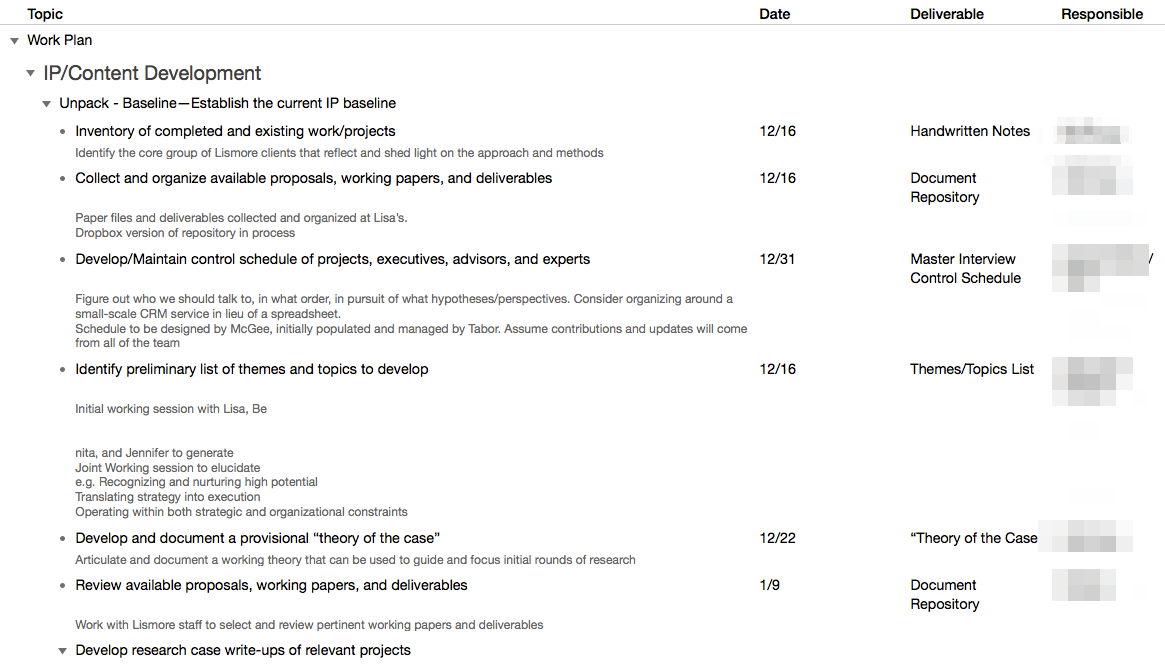
Astroturfing

by Volker Weber

Sketch

Whenever somebody shows up, who has never commented before, then suddently becomes very active and has left no other traces on the Internet, my bullshit detector goes off the scale.

Astroturfing is a career limiting move. Never attempt when your mark owns the platform.

01 Jun 18:48

KEYone is the best BlackBerry since the Passport

by Volker Weber

890ece95580cfd8430ac4c6b4a76d2a6

Passport was not the success that BlackBerry had hoped for. But I was obsessed with it. Very solid hardware, a huge screen, fast at everything but Android. Classic, the next BlackBerry, was equally solid but it was just retro with not enough screen resolution.

PRIV was an outstanding device but it did not feel like a BlackBerry. Its hardware keyboard wasn't much better than the soft keyboard. I like DTEK50 for its no-nonsense utility. DTEK60 didn't click with me. BlackBerrys should not have a delicate glass back.

Ebter the KEYone: It feels like a proper BlackBerry much like the Passport. It's different, in a good way. Editor-refuses-to-give-it-back award. This is now my backup for the iPhone 7 Plus.

01 Jun 18:48

Draft: Kubernetes container development made easy

by Rui Carmo

I simultaneously love and am wary of this. The former is because we need a simple, no frills way for inexperienced people to easily deploy their solutions on Kubernetes, and the latter for exactly the same reasons.

Having a tool that is simple to use cannot replace planning and forethought where it regards application architecture, and I’ve come across too many situations where tooling made complex things deceptively (and dangerously) easy…

But still, baby steps. Thing is, I’m still waiting for people to realize that we’re just trading one kind of complexity for another.

(There’s a sister post with a fancy animation, but this one has a better technical explanation.)

01 Jun 18:46

What If the iPad Smart Keyboard Had a Trackpad?

by Rui Carmo

That would mean Apple would be doing something sensible regarding productivity on the iPad, and I just don’t think they can be open-minded enough for it to happen anytime soon.

(I still use my X1 mouse with Jump Desktop, and it is awesome, so I would really like something like this to happen. I just don’t think they’ll ever do it.)

01 Jun 18:46

How a letter written by a doctor fuelled the opioid epidemic

mkalus shared this story from The Globe and Mail - British Columbia.

Nearly 40 years ago, a respected doctor wrote a letter to the New England Journal of Medicine with some very good news: Out of nearly 40,000 patients given powerful pain drugs in a Boston hospital, only four addictions were documented.

Doctors had been wary of opioids, fearing patients would get hooked. Reassured by the letter, which called this “rare” in those with no history of addiction, they pulled out their prescription pads and spread the good news in their own published reports.

And that is how a one-paragraph letter with no supporting information helped seed a nationwide epidemic of misuse of drugs such as Vicodin and OxyContin by convincing doctors that opioids were safer than we now know them to be.

On Wednesday, the journal published an editor’s note about the 1980 letter and an analysis from Canadian researchers of how often it has been cited – more than 600 times, often inaccurately. Most used it as evidence that addiction was rare, and most did not say it only concerned hospitalized patients, not outpatient or chronic pain situations such as bad backs and severe arthritis that opioids came to be used for.

“This pain population with no abuse history is literally at no risk for addiction,” one citation said. “There have been studies suggesting that addiction rarely evolves in the setting of painful conditions,” said another.

“It’s difficult to overstate the role of this letter,” said David Juurlink of the University of Toronto, who led the analysis. “It was the key bit of literature that helped the opiate manufacturers convince front-line doctors that addiction is not a concern.”

Hospital databases were so limited in 1980 that we can’t be confident there weren’t more problems, or cases discovered after patients were discharged, Dr. Juurlink said.

The letter was written by Hershel Jick, a drug specialist at Boston University Medical Center, and a graduate student.

“I’m essentially mortified that that letter to the editor was used as an excuse to do what these drug companies did,” Dr. Jick told the Associated Press in an interview on Wednesday. “They used this letter to spread the word that these drugs were not very addictive.”

Dr. Jick said his letter only referred to people getting opioids in the hospital for a short period of time and has no bearing on long-term outpatient use. He also said he testified as a government witness in a lawsuit years ago over the marketing of pain drugs.

Use grew in the 1990s when drugs such as OxyContin came on the market, and more people using opioids for chronic pain developed dependence.

The new editor’s note in the journal says: “For reasons of public health, readers should be aware that this letter has been ‘heavily and uncritically cited’ as evidence that addiction is rare with opioid therapy.”

The journal’s top editor, Jeffrey Drazen, said, “People have used the letter to suggest that you’re not going to get addicted to opioids if you get them in a hospital setting. We know that not to be true.”

The journal also published a report from Francis Collins, director of the National Institutes of Health, and Nora Volkow, head of the National Institute on Drug Abuse, pledging to work with industry to develop new ways to reverse and prevent overdoses, to treat addiction, and to find novel, non-addictive drugs for chronic pain.

In the next six weeks, NIH will hold three workshops with drug company leaders to identify next steps, Dr. Collins said. The goal is to cut in half the usual amount of time to develop new treatments – a target borrowed from the Cancer Moonshot project launched by former vice-president Joe Biden to make a decade’s worth of progress toward cures in half that time.

Details have not been worked out, but it could resemble similar partnerships on Alzheimer’s, diabetes and some other diseases where scientists from government and industry determine pressing needs, develop a work plan and split the cost, Dr. Collins said.

“Industry’s interest in this has been muted until recently,” Dr. Collins said. Now, “they feel the responsibility and the opportunity to take part in this and they’re not going to stand back and watch.”

With the Food and Drug Administration wanting to speed work on new pain drugs, “the stars are aligning,” Dr. Collins said.

“I think we can make real progress now.”

Report Typo/Error
01 Jun 18:46

How a deal with the Greens slipped away from Christy Clark’s BC Liberals

mkalus shared this story from The Globe and Mail - British Columbia.

For a moment, it looked like a deal to keep the BC Liberals in power was in reach.

The negotiations to determine who would sit in the Premier’s office in British Columbia in light of the finely balanced results of the May 9 election began in earnest last Thursday – after the final ballots had been counted and the Liberals’ faint hope of picking up an extra seat had been decisively dashed. It made the Liberals flexible and talks, which had started earlier, were suddenly moving quickly.

Green Leader Andrew Weaver had made progress on all three of his stated priorities: official party status, campaign-finance reform and an agreement to work toward changing the electoral system, though Mr. Weaver had to concede a referendum would be needed.

Read more: B.C. left-of-centre alliance would usher in green economic vision

Read more: A look at the policies holding the NDP and Greens together

Gary Mason: Political makeover could leave B.C. unrecognizable

A deal with the Liberals was tantalizing because combined, the two parties would have a comfortable five-seat majority in the legislature. A lengthy collaboration was possible, offering the alliance a chance to get rid of the first-past-the-post electoral system in time for the next vote in 2021, thereby giving the Greens a better chance of increasing their clout.

But heading into last weekend, the province’s three Green MLAs – two of them brand new – were bombarded with outside pressure to reject a Liberal pact. The pressure came from environmental and First Nations groups that increased pressure publicly and through direct calls and e-mails from supporters who did not want them to prop up the Liberal government for another four years.

It was only then that Mr. Weaver and his two colleagues, Sonia Furstenau and Adam Olsen, realized they could not cross the chasm of environmental policy between their party and the Liberals.

The tensions, outreach and difficult decisions faced in negotiations by the three parties were described in a series of interviews with The Globe and Mail by people with knowledge of the proceedings on the condition that no one would be identified.

At the table

The Greens named their negotiating team on May 16, even before the final election ballots were counted, confirming the party would play a pivotal role in determining who would govern B.C. in the wake of the narrow election results.

Mr. Weaver led the negotiations for his party. His team included the Greens’ deputy leader, Ms. Furstenau, chief of staff Liz Lilly and Norman Spector, their consultant on political strategy.

The NDP formed a team similar in balance: Led by Mr. Horgan, with his campaign director Bob Dewar, former party leader and veteran MLA Carole James and Marie Della Mattia, a senior campaign strategist.

Mr. Dewar and Ms. Lilly debated at length whether it was a good idea to have their respective leaders at the table, but in the end the face-to-face talks were critical to reaching a deal.

The Liberals announced their team as former finance minister Carole Taylor, Liberal House Leader Mike de Jong, Education Minister Mike Bernier and Brad Bennett, a senior adviser to the Premier. But Ms. Taylor was replaced after the first meeting by Mike McDonald, the architect of the Liberal Party’s 2013 campaign victory and a long-time friend of Premier Christy Clark.

Premier Christy Clark and Green Party Leader Andrew Weaver, leave the legislature to speak to media during an April 2016 press conference. The pair developed a working relationship in the legislature, for instance when Ms. Clark adopted Mr. Weaver’s proposal to require universities to create sexual assault policies.

CHAD HIPOLITO/For The Globe and Mail

The talks were held in Victoria in different hotels – the NDP used the Grand Pacific next to the legislature buildings as its base, while the Liberals hosted at the Harbour Towers just up the street.

The Greens went into the talks with each party using the the Ontario 1985 NDP-Liberal Accord as its template – the agreement that brought down Ontario premier Frank Miller’s Progressive Conservative government.

The Greens disclosed publicly that they had three demands: A new electoral system, campaign-finance reform, and official status for their party in the legislature.

The talks began in earnest after Elections BC provided the final ballot count on May 24, confirming that the Liberals had lost their majority in the House.

While Elections BC was preparing to announce the final tally, the NDP was meeting with the Greens. The NDP didn’t have far to move on the Greens’ three priorities, as it had campaigned on a similar promise to end “big money” influence in party fundraising, and it agreed that changing the voting system from the current first-past-the-post system to proportional representation was a good thing. The NDP wanted a referendum, the Greens maintained a referendum should come only after the changes were in place.

On that Wednesday, the NDP had a lot of reasons to explain why it would take a long time to make such changes. The Greens’ desire to move fast on proportional representation seemed to take over the talks, and convincing them that such change could not happen without the public’s consent did not happen overnight.

The following day, the Liberals had their next meeting and upped the ante: They agreed to immediately implement campaign-finance reform – a big change from their previous position – and they agreed to put proportional representation to a vote.

They also offered the Greens certainty – together they would have 46 seats in the legislature, a far more manageable and secure balance of power. And because the Liberals are already in office, it would not take long to mobilize and get the promised changes enacted.

The Greens wanted action quickly – they knew their biggest leverage was to achieve changes in the next few months. If a deal with one side or the other fell apart six months from now, it would be more likely that B.C. would simply end up in another election campaign, and the Greens may never again have the same opportunity.

Then came the campaign to stop such a deal.

“I would say they were unsuccessful.”

B.C. Premier Christy Clark on her party’s negotiations with the Greens

Ms. Furstenau appeared on the steps of the legislature at Ms. James’s side to accept boxes of petitions, signed by 18,000 British Columbians, calling on them to do a deal together. That was just the public face of the intense pressure the Green MLAs were facing.

The Greens had campaigned on a promise to change government, and expectations were high that the party would deliver a new government, with an emphasis on climate action and other environmental policies.

Though Mr. Weaver helped craft B.C.’s then-groundbreaking carbon tax with former premier Gordon Campbell, the Liberals under Ms. Clark had campaigned to freeze the carbon tax, to build the Site C hydroelectric dam and to promote a new liquefied-natural-gas industry.

Plus, the Liberal government had inked a deal with Kinder Morgan to approve the expansion of the Trans Mountain oil pipeline. This is a party with a core commitment to natural-resource development. The Green brand could not survive such a match.

Mr. Spector, on his Twitter account, later described that the Greens ultimately “recoiled (sometimes physically) at the prospect of supporting a Liberal government.”

By Friday, the prospect of an accord with the Liberals had all but evaporated. The Greens went into the talks that day with the NDP fully open to a pact, and made huge progress at the table. They focused on the many areas where the parties could agree – raising the carbon tax, saying no to Kinder Morgan and improving social services.

There was also important progress in the relationship between Mr. Weaver and Mr. Horgan. It had been frosty, at best, during the previous four years in the legislature. But in the five sets of talks over about 30 hours, the two men realized they shared commitments to improving the lives of children in government care, and enhancing services to seniors – common ground that they had overlooked in the heat of the campaign.


B.C. Green party leader Andrew Weaver and B.C. NDP leader John Horgan take in the final match between Team Canada and New Zealand during cup final action at the HSBC Canada Women’s Sevens rugby event in Langford, B.C., on Sunday, May 28, 2017.

Chad Hipolito/THE CANADIAN PRESS

Toward the end of the day, Mr. Weaver held a news conference in the Rose Garden – the sunken plot just outside the Premier’s wing of the legislature – to announce that his party was “very, very close” to reaching a deal with either the Liberals or the NDP to establish a minority government in the province.

For the Liberal negotiating team, Mr. Weaver’s comments were a warning that there was very little time left to lay on the table any cards they were holding back. The Liberals had yet to table a formal proposal, and the Greens were getting anxious to reach a resolution.

On Sunday morning, the NDP and Greens nailed down a final major element – a commitment to an immediate review of the Site C dam project, although without halting construction.

The Liberals asked for an extra meeting on Sunday evening. Although the deal was essentially done with the NDP – something the Liberals would be unaware of – the Greens agreed to meet to see what more the Liberals could bring.

The two sides met from 6 p.m. until about 9:30 p.m., but the Greens felt the Liberals had little new to offer. There was still no formal offer from the Liberals. The Greens pressed the Liberals on several environmental issues, and the Greens were visibly uncomfortable with the answers.

Mr. Bernier, after returning to his Dawson Creek home – in the heart of B.C.’s natural-gas industry – from the unsuccessful talks, posted on his Facebook page that the Liberals could not break from their principles to meet the Greens’ demands.

“What became very apparent to me is that in tough times, you need to stand by your principles, and not waver just to make deals.”

B.C. Premier Christy Clark addresses reporters in Vancouver on Tuesday, May 30.

Darryl Dyck/The Canadian Press

When asked Tuesday whether she would characterize how the negotiations went with Mr. Weaver, Ms. Clark replied simply: “I would say they were unsuccessful.”

The Greens made up their minds Sunday night – the deal with the NDP was the best they could reach – but chose to sleep on the decision before announcing it.

The Liberals had a bargaining session planned for Monday. Ms. Clark said later that she had been prepared to go to the table to negotiate directly with Mr. Weaver, but never got the invitation.

Instead, on Monday morning, Ms. Lilly called Mr. Bennett to tell him there would be no further talks. Mr. Weaver and Mr. Horgan then held a news conference to announce their deal.

Mr. Weaver told reporters he had received a telephone call from Ms. Clark on his way over to the news conference.

He let it go to voice mail.


MORE FROM THE GLOBE AND MAIL:
01 Jun 18:45

7 possible reasons that wicked Lamborghini crashed into that lame fire hydrant

mkalus shared this story .

Kudos and Kvetches

Like many people with an excessive amount of time on their hands and an impressive collection of soft, grey jogging pants, K&K’s schadenfreude levels went off the charts last night. The source of our great pleasure was the now-ubiquitous photo of a d-bag green Lamborghini making sweet sweet love to a fire hydrant at the corner of Bute and West Georgia.

How did it get there? What did the driver have against fire hydrants? What do fire hydrants have against bitchin’ cars that cost the same amount as a house in Nanaimo with heart shaped Jacuzzi? (All houses in Nanaimo come with a heart-shaped Jacuzzi, BTW.) Here’s a list of possible reasons for this Greek tragedy of a yuppy traffic accident.

  1.       The girl-grabbing sea lion from the Steveston wharf pulled the driver’s latte out of their hand, causing them to swerve and lose control.
  2.       The Lamborghini was haunted by the so-called ghost of Hotel Vancouver.
  3.       The Vancouver Sun staged the whole thing to get web hits (the car accident, not the ghost story… that would be crass and insensitive to their readers’ well-known obsession with the supernatural).
  4.      The driver was distracted by the city’s new official bird, Anna’s hummingbird. Because Anna’s hummingbirds are terrible.
  5.       A noble and highly intelligent red-tailed hawk swooped down and prevented the driver from crashing into a group of school children, saving dozens of young lives, while still not being recognized by the city as a worthy candidate for official bird status.
  6.      Some damn cyclist and his damn bicycle ruining the roads for every last god-loving vehicle owner in the city. When is Moonbeam’s war on vehicles going to end? How many more green Lamborghinis have to perish?
  7.      Fire hydrants suck.

@KudosKvetches


© 2017 Vancouver Courier

Click here to take part in our readers survey

01 Jun 18:31

This is the Jeff Bezos playbook for preventing Amazon’s demise

This is the Jeff Bezos playbook for preventing Amazon’s demise:

Jeff Bezos is staving off Amazon’s ‘day 2′ when it no longer operates as a nimble upstart:

Embrace External Trends 

The outside world can push you into Day 2 if you won’t or can’t embrace powerful trends quickly. If you fight them, you’re probably fighting the future. Embrace them and you have a tailwind.

Perhaps the most compelling part of Bezo’s letter to the shareholders is about decision-making:

High-Velocity Decision Making

Day 2 companies make high-quality decisions, but they make high-quality decisions slowly. To keep the energy and dynamism of Day 1, you have to somehow make high-quality, high-velocity decisions. Easy for start-ups and very challenging for large organizations. The senior team at Amazon is determined to keep our decision-making velocity high. Speed matters in business – plus a high-velocity decision making environment is more fun too. We don’t know all the answers, but here are some thoughts.

First, never use a one-size-fits-all decision-making process. Many decisions are reversible, two-way doors. Those decisions can use a light-weight process. For those, so what if you’re wrong? I wrote about this in more detail in last year’s letter.

Second, most decisions should probably be made with somewhere around 70% of the information you wish you had. If you wait for 90%, in most cases, you’re probably being slow. Plus, either way, you need to be good at quickly recognizing and correcting bad decisions. If you’re good at course correcting, being wrong may be less costly than you think, whereas being slow is going to be expensive for sure.

Third, use the phrase “disagree and commit.” This phrase will save a lot of time. If you have conviction on a particular direction even though there’s no consensus, it’s helpful to say, “Look, I know we disagree on this but will you gamble with me on it? Disagree and commit?” By the time you’re at this point, no one can know the answer for sure, and you’ll probably get a quick yes.

This isn’t one way. If you’re the boss, you should do this too. I disagree and commit all the time. We recently greenlit a particular Amazon Studios original. I told the team my view: debatable whether it would be interesting enough, complicated to produce, the business terms aren’t that good, and we have lots of other opportunities. They had a completely different opinion and wanted to go ahead. I wrote back right away with “I disagree and commit and hope it becomes the most watched thing we’ve ever made.” Consider how much slower this decision cycle would have been if the team had actually had to convince me rather than simply get my commitment.

Note what this example is not: it’s not me thinking to myself “well, these guys are wrong and missing the point, but this isn’t worth me chasing.” It’s a genuine disagreement of opinion, a candid expression of my view, a chance for the team to weigh my view, and a quick, sincere commitment to go their way. And given that this team has already brought home 11 Emmys, 6 Golden Globes, and 3 Oscars, I’m just glad they let me in the room at all!

Fourth, recognize true misalignment issues early and escalate them immediately. Sometimes teams have different objectives and fundamentally different views. They are not aligned. No amount of discussion, no number of meetings will resolve that deep misalignment. Without escalation, the default dispute resolution mechanism for this scenario is exhaustion. Whoever has more stamina carries the decision.

I’ve seen many examples of sincere misalignment at Amazon over the years. When we decided to invite third party sellers to compete directly against us on our own product detail pages – that was a big one. Many smart, well-intentioned Amazonians were simply not at all aligned with the direction. The big decision set up hundreds of smaller decisions, many of which needed to be escalated to the senior team.

“You’ve worn me down” is an awful decision-making process. It’s slow and de-energizing. Go for quick escalation instead – it’s better.

So, have you settled only for decision quality, or are you mindful of decision velocity too? Are the world’s trends tailwinds for you? Are you falling prey to proxies, or do they serve you? And most important of all, are you delighting customers? We can have the scope and capabilities of a large company and the spirit and heart of a small one. But we have to choose it.

Ka-boom.

I will write something longer on this soon.

01 Jun 18:30

Fighting Factions: How Startups Can Scale Without Mutiny

01 Jun 18:30

The Last Itanium, At Long Last

mkalus shared this story from The Next Platform.

May 23, 2017 Timothy Prickett Morgan

In a world of survival of the fittest coupled with mutations, something always has to be the last of its kind. And so it is with the “Kittson” Itanium 9700 processors, which Intel quietly released earlier this month and which will mostly see action in the last of the Integrity line of midrange and high-end systems from Hewlett Packard Enterprise.

The Itanium line has a complex history, perhaps fitting for a computing architecture that was evolving from the 32-bit X86 architecture inside of Intel and that was taken in a much more experimental and bold direction when the aspiring server chip giant partnered with the old Hewlett Packard to merge some its best ideas about very long instruction word (VLIW) and explicit parallelism (EPIC) in its future PA-RISC chips into Intel’s future silicon. This was the 1990s, when the datacenter was undergoing explosive growth and dramatic transformation, when Sun Microsystems ruled the Unix space that dominated transaction processing, and when AMD was just starting to think about getting into the server racket with the extended memory architecture embodied in its “Hammer” Opteron processors. The server space was a lot less homogenous then than it is now, and it was a lot smaller market, too. So the risks that chip makers took were proportionately bigger but at the same time the options seemed to be wider.

Ironically, in some ways, it is much harder to break into the datacenter today with a server chip then it was two decades ago. The X86 architecture utterly dominates compute, and has a pretty strong hand in storage, too, and some play in virtualized networking. The ecosystem of compute was much more diverse back in the early commercial Internet era, but the hyperscaling of the Web, the maturity of the Windows Server and Linux platforms, and the intense competition from Intel made the X86 architecture – and to be specific, the Xeon species – supreme in the glass house.

This was precisely what Intel had hoped with Itanium, much as it had hoped for the InfiniBand interconnect it developed with IBM as a replacement for a hodge podge of Ethernet, PCI-Express, and other technologies for lashing together client, server, and storage devices. HP started development on the ideas of EPIC back in 1989 as it was clear that its PA-RISC line was going to run out of gas. EPIC was a kind of software-defined chip, to use a modern metaphor, that was designed to make the parallelism in code explicit and have it handled by the compilers instead of various kinds of circuits on the chip. This sounded great on paper, but the amount of explicitly parallel code in enterprise applications was a lot lower back then than it is now. In 1994, HP and Intel formed the Itanium chip partnership, and a year later the RISC/Unix crowd were all starting to commit to porting their operating systems to Itanium because this all seemed so inevitable. The projections certainly made it look this way, and as Itanium chips were delayed and the reality of an extended 64-bit memory addressing for the X86 architecture started sinking in, and then was delivered by AMD in 2003 and copied by Intel the following year, the die was pretty much cast for Itanium. The chip was relegated to fat NUMA servers and database and middleware applications that had been running on RISC/Unix boxes.

This famous Itanium server revenue forecast on Wikipedia encapsulates the enthusiasm for the chip and its deflation rather brilliantly:

The Itanium chip might have given Intel much grief, but it is through difficult and sometimes failed projects that companies learn. IBM has had many failed projects – the Stretch system from the 1950s and the Future Systems follow-on in the 1970s are but two. While Itanium never did take over the PC and server rackets, it did carve out its niche and it probably paid for itself. Itanium did, however, cause Intel a certain amount of public relations heartburn and did leave the door open for AMD’s Opteron to shoot the gap between 32-bit Xeons and 64-bit Itaniums.

In 2009, when Intel put out the “Nehalem” Xeon 5500 processors that basically cloned the Opteron’s architecture, Kirk Skaugen, who ran Intel’s Data Center Group and who now runs the Enterprise Group at Lenovo, said that based on IDC data, the Xeon processors drove about $22 billion in server revenues, with Intel taking in about $4.4 billion of that in chip and chipset sales. Itanium servers accounted for $4 billion in sales, we estimated that Intel got about $1 billion of that for chips and chipsets. AMD’s Opterons, if you can believe it, drove another $3 billion in server sales, leaving $16 billion spent for mainframes, RISC/Unix, and a smattering of proprietary midrange gear. By the time Intel got Itanium working reasonably well, it had changed its roadmaps and delayed processors several times and then Oracle dropped the bomb in 2011, saying it would no longer support its software on Itanium, leaving Intel and HP to defend Itaniums honor and touching off a lawsuit between Oracle and HP in 2012. Oracle had a point. AIX and Solaris never made it to Itanium, Red Hat Enterprise Linux was pulled off the platform in December 2009, and Microsoft pulled the plug on Windows Server and SQL Server in April 2010. But just the same, Oracle lost the suit and rebooted its support on HP-UX Unix on Itanium.

During the course of the Itanium trial, we learned all kinds of things. HP started a port of HP-UX to X86 chips and was even working on a big, fat NUMA machine based on AMD Opteron processors, and then spiked it. These were part of a much broader effort called Project Kinetic, which would eventually see systems that had sockets common to Xeon E7 and Itanium processors. This common socket strategy was set for the “Kittson” generation of Itanium chips, and revealed when the eight-core “Poulson” Itanium 9500 processors were launched in November 2012. This was a year after HP launched “Project Odyssey,” which brought Xeon processor blades to the Superdome NUMA systems that heretofore had been Itanium boxes running HP-UX, NonStop, and OpenVMS platforms. Intel nixed the Xeon-Itanium convergence once and for all in February 2013 – and it was not the first time it had planned this. The common socket idea had been whispered about since 2003, when the Opterons first came out. It was then, in 2013, that the Itanium roadmap was changed, and what was supposed to be a process shrink for Kittson from 22 nanometers to 14 nanometers – the same processes used for the “Broadwell” and “Skylake” Xeons, because a hold steady at 22 nanometers. This means, in essence, that Kittson Itaniums are really just a Poulson+ if you want to be more accurate.

In any event, an Intel spokesperson has confirmed to us what we long suspected, and that is that the Itanium 9700, as this chip is called, is the last of the Itanium line. Here is how the Kittsons stack up to the prior Poulson and Tukwila Itaniums:

As you can see, the Poulsons are really a deep bin sort of the Poulsons, with the Turbo Boost overclocking enabled. This is not really a tick or a tock, in the Intel parlance. But if HPE is not making a fuss about what HP and its customers were promised so many years ago, it doesn’t much matter.

What HPE customers care about is that they have a new processor with some performance advantages, however minor, and continuing support for their large and midrange NUMA boxes. With NVM-Express flash added to the HPE Integrity server platforms, doubling up of the main memory capacity (to 8 TB in a 32-socket Superdome system), and other tweaks in the HP-UX operating system, customers can expect to see around a 30 percent performance boost if they upgrade to the Itanium 9700 chips. By the way, Jeff Kyle, director of product management for Enterprise Servers at HPE, says that HPE will be adding support of Intel’s Optane 3D XPoint memory to the Integrity i6 line using the Itanium 9700s, and that it will be supporting the Itanium-based HP-UX platform on Itanium at least until 2025.

Perhaps more interestingly, HPE is working on porting HP-UX to run atop Linux containers on regular ProLiant Xeon servers. The company has some experience in running emulated environments. Its “Aries” emulation environment from many years ago allowed HP-UX binaries compiled for its PA-RISC processors to run atop Itanium chips.

In the end, HP-UX will end up being just another Linux application, even if it is a fat one wrapped around a database and application servers. In fact, we would not be surprised if many HP-UX shops forego the Itanium 9700 upgrade and wait for these containers running on Xeon Skylake or kicker systems.

Categories: Compute, Enterprise

Tags: Hewlett-Packard, HP-UX, Intel, Itanium

01 Jun 18:30

IMF warns of ‘significant’ risks from Canada’s housing market

mkalus shared this story from The Globe and Mail - Economy.

The International Monetary Fund is urging Canada to take further action in order to address rising household debt levels and the risks of a sharp correction in the housing market.

In a staff statement that followed an annual visit to Canada, the IMF warns of “significant” risks to future growth due to the potential for a housing market decline that impairs bank balance sheets and spreads to the broader economy.

“Credit ratings of Canada’s six largest banks were lowered recently, reflecting concern that high household debt and the rapid appreciation of house prices could weaken asset quality in the future,” the IMF stated.

As a result, Cheng Hoon Lim, an assistant director of the IMF, told a news conference in Ottawa that several specific actions are needed. She called for policies that will further tighten restrictions on speculative investments in the housing sector, greater co-ordination between federal and provincial regulators and better data on real estate transactions, which she noted has been promised by Ottawa.

Ms. Lim’s staff statement also took issue with the foreign buyers tax approach introduced in British Columbia and Ontario that “discriminates against non-resident buyers.” The IMF states that non-resident activity is not the sole driver of housing prices and the provinces should replace the foreign-buyers taxes with more effective tax changes aimed at discouraging speculative activity.

Federal Conservative and Liberal governments have announced several rounds of policy changes since 2008 that are aimed at discouraging home buyers from taking on more debt than they can handle. The most recent round of federal changes were announced in October. British Columbia and Ontario have also announced tightening measures that fall under provincial jurisdiction.

The IMF noted that high debt levels and housing affordability challenges are primarily a concern in Toronto and Vancouver, where many first-time buyers have been priced out of the market. Ms. Lim said the IMF has been studying the effectiveness of all of these policy measures.

“Overall, they have been effective in dampening mortgage credit growth, but less so with respect to house prices. There is an effect, but not as strong,” she said. “What we have found, it’s still a bit too early to tell because these measures were introduced in late 2016, but the measure to make it harder to qualify for mortgages by having a more stringent stress test on interest rates I think is beginning to work.”

The IMF statement touched on a wide-range of issues, including fiscal and monetary policy, infrastructure spending and projections for economic growth.

The IMF projects the Canadian economy will grow by 2.5 per cent in 2017 and 1.9 per cent in 2018. However the medium-term outlook is described as “less upbeat,” as low labour productivity and population aging is expected to limit potential growth to about 1.8 per cent. That’s lower than the historical average of 2.6 per cent growth between 2000 and 2008.

On monetary policy, the IMF said the Bank of Canada’s cautious approach is “justifiable” given the considerable uncertainty in the economic outlook. On the fiscal side, the IMF also approved of Ottawa’s deficit spending and welcomed the pledge to set federal debt-to-GDP on a declining path.

On the issue of the Infrastructure Bank, which is currently a matter of heated debate in the House of Commons as the government moves to pass enacting legislation, the IMF praised the overall concept as an “effective” instrument.

“The success of the CIB will depend on ensuring that the project selection process is transparent and balances public and private interests. Given the potential of the CIB to advance long-term growth, the government and the CIB must address public resistance to user fees as well as skepticism over involving private investors in public infrastructure projects, with education and a clear statement of the CIB’s benefit,” the IMF states.

Report Typo/Error

Follow Bill Curry on Twitter: @curryb

01 Jun 18:29

These 4 failed directions make what ofo it is now

by Emma Lee

The best success stories often begin with failures. What we see are the hefty funding rounds, skyrocketing valuations; what we overlook are the embarrassing first efforts, setbacks and radical change of directions. Ofo, the first company bike rental company to gain unicorn status in the emerging sector, meets nearly every definition we have for a successful startup now. However, they too had their own growing pains.

Dai Wei, the 26-year-old CEO and co-founder of ofo, shared at the MTA Festival a few of their first clumsy steps on its road to success as well as the lessons he learned from those first failures.

Ofo started as a student project by alumnus of China’s prestigious Peking University. Sharing a common passion for cycling, Dai Wei and fellow students decided to found their own project in 2014. But how to achieve this goal was not clear

The now-household name “ofo” was born on February 15, 2014 when Dai was working as a volunteer teacher at Qinghai Province. The team thought of several options and finally named the firm ofo as the letters look like a bike. (Finally, we understand why the company’s name is all in lowercase).

Having a good name in place is a good beginning, but for the one year and seven months after that, ofo’s team suffered the growing pains that most startups have encountered in pushing past the initial launch. In retrospect, bike rental was the right path to take, but entrepreneurship is not only about finding the right road but also the right direction.

1. Ele.me for bikes

2014 saw the online food delivery industry take off. Based on Ele.me’s model, ofo’s founding team developed a platform where bike stores can rent out their bikes to travelers. “It was a total failure. Not a single order was received in five months,” Dai said.

2. Second-hand bike trading for students

The startup’s second try was a second-hand bike-trading platform targeting university students. This direction didn’t gain much traction either.

3. Microloan platform for higher-end bikes

In the wake of the surge in student microloan sites like Fenqile and Qufenqi, ofo shifted to micro-loan platform for higher-end bikes and scooters. “We sold out a dozen bikes, but six of them were purchased by our friends,” Dai recalled. Fortunately, Peking University alumni injected around RMB1.5 million funding gradually, which gains them enough time to try out new directions.

4. Buying users

“We seemingly found a possible exploration point in cycle tourism at the beginning of 2015. The whole online tourism industry was taking off, backed by a whopping RMB 3 trillion market size. We thought it was a trend we can capitalize on,” Dai said. This direction witnessed an uptake, allowing the company to book profits for the first time.

“When we had RMB 1 million in our account, we made a terrible mistake. When the subsidy war in the ride-hailing industry was getting started, we decided to buy customers by burning money,” he said. Ofo managed to record remarkable user growth at first, but their model failed to gain further support from VCs and the money they have soon burned out.

In April 2015, the team only had RMB 400 in their account. The impasse forced ofo to rethink what’s the key problem that leads to previous failures. “We found that all our previous efforts want to link bicycle with some hot market and overlooked whether the product is addressing real pain points of the users,” said Dai. “Then we tried to solve the bike theft problem of college students by offering shared bikes.”

Everyone knows the story that follows this shift. In around two years, ofo has grown into a leading bike-rental company, which operates in nearly 100 cities globally. The company is rising at a dizzying speed with valuation that has hit more than US$2 billion.

Lesssons to remember

Few entrepreneurs can go against the trend and resist the temptation to follow the herd into an emerging hot market. However, those who resist this pressure and reflect deeply on whether their product fits the market are most likely to succeed.

01 Jun 18:23

The Leviathan

01 Jun 18:20

Evergreen

Brent Simmons, whisky-soaked baritone and beloved Mac developer, is writing a new feed reader for MacOS called Evergreen. And it's open source.

This is awesome and I'm hoping this will be the app that'll get me to switch away from NetNewsWire 3.3.2.

01 Jun 18:20

Getting Support For Community By Seeking Advice

by Richard Millington

There’s a common mistake to avoid when trying to gain internal support.

The mistake is to go to other departments and tell them how the community can help.

I know, this sounds like exactly what you should be doing.

However, in practice, this kind of unsolicited help is usually taken either as an insult or a threat.

It’s an insult because the person you’re speaking to considers themselves an expert. You’re effectively saying you have an idea for their domain they weren’t haven’t already considered (I know, it sounds petty…we’re only human).

It’s a threat if the community can help them do something they already feel they’re doing well themselves. Get off their toes!

The simplest way around this isn’t to tell them how the community can help, but ask how the community can help. Even if you know the answer, it’s good practice to ask.

Ask them for their advice and input into the community as well. What would they like to see? What advice can they give you? Let them see their ideas flourishing in the community (you didn’t take this job for the credit right?)

Now you’re not a threat and you’re respecting their expertise. Give it a shot.

01 Jun 18:20

Getting started with soldering

by Alex Bate

In our newest resource video, Content and Curriculum Manager Laura Sach introduces viewers to the basics of soldering.

Getting started with soldering

Learn the basics of how to solder components together, and the safety precautions you need to take. Find a transcript of this video in our accompanying learning resource: raspberrypi.org/learning/getting-started-with-soldering/

So sit down, grab your Raspberry Pi Zero, and prepare to be schooled in the best (and warned about the worst) practices in the realm of soldering.

Do I have to?!

Yes. Yes, you do.

If you are planning to use a Raspberry Pi Zero or Zero W, or to build something magnificent using wires, buttons, lights, and more, you’ll want to practice your soldering technique. Those of us inexperienced in soldering have been jumping for joy since the release of the Pimoroni solderless header. However, if you want to your project to progress from the ‘prototyping with a breadboard’ stage to a durable final build, soldering is the best option for connecting all its components together.

soldering raspberry pi gif

Hot glue just won’t cut it this time. Sorry.

I promise it’s not hard to do, and the final result will give you a warm feeling of accomplishment…made warmer still if, like me, you burn yourself due to your inability to pay attention to instructions. (Please pay attention to the instructions.)

Soldering 101

As Laura explains in the video, there are two types of solder to choose from for your project: the lead-free kind that requires a slightly higher temperature to melt, and the lead-containing kind that – surprise, surprise – has lead in it. Although you’ll find other types of solder, one of these two is what you want for tinkering.

soldering raspberry pi

The decision…is yours.

In order to heat your solder and apply it to your project, you’ll need either Kryptonian heat vision* or, on this planet at least, a soldering iron. There is a variety of soldering irons available on the market, and as your making skills improve you will probably upgrade. But for now, try not to break the bank and choose an iron that’s within your budget. You may also want to ask around, as someone you know might be able to lend you theirs and help you out with your first soldering attempt.

Safety first!

Make sure you always solder in a well-ventilated area. Before you start, remove any small people, four-legged friends, and other trip hazards from the space and check you have everything you need close at hand.

soldering raspberry pi

The lab at Pi Towers is well ventilated thanks to this handy ventilation pipe…thingy.

And never forget, things get hot when you heat them! Always allow a moment for cooling before you handle your wonderful soldering efforts. I remember the first time I tried soldering a button to a Raspberry Pi and…let’s just say that I still bear the scars incured because I didn’t follow my own safety advice.

Let’s do this!

Now you’re geared up and ready to solder, follow along with Laura and fit a header to your Raspberry Pi Zero! You can also read a complete transcript of the video in our free Getting started with soldering resource.

If you use Laura’s video to help you complete a soldering project, make sure to share your final piece with us via social media using the hashtag #ThanksLauraSach.


*spoiler alert!

The post Getting started with soldering appeared first on Raspberry Pi.

01 Jun 18:19

Dear Wirecutter: What’s a Good Wireless Surround-Sound System with HDMI?

by Chris Heinonen

Q: My roommates and I have been having ongoing discussions about home theatre setups. The problem that we’ve been discussing seems almost trivial: Given an apartment-style home (where we cannot run wires through the walls), we would like a setup with enough HDMI inputs to hook up all the things we want to watch in our home theatre system with a great set of speakers, and we cannot abide any kind of wiring across a living room to drive the rear speakers.

I myself am a happy owner of a Vizio 5.1 soundbar system—with the soundbar, the wireless subwoofer, and the two satellite speakers. Unfortunately, the input options in my setup are nonexistent. Would it be possible to set up a home theatre system wherein the front speakers (center, left, right) are wired directly to a receiver, and the rear speakers (subwoofer, rear-left, rear-right) connect to the receiver wirelessly?

01 Jun 18:19

Twitter Favorites: [MrSteveTweedale] I'm cited in this article as a political scientist but for the record I'm a philosophy student. https://t.co/zpn8qPO1r8

Stephen Tweedale @MrSteveTweedale
I'm cited in this article as a political scientist but for the record I'm a philosophy student. globalnews.ca/news/3487781/b…
01 Jun 18:17

Paranoid Android Returns With Android 7.1.2 Builds for Pixel, Nexus, and OnePlus 3T; Features Pie Controls, Color Engine, and More

by Rajesh Pandey
Paranoid Android, the custom ROM which was once known for bringing innovative new features to the table, is now making a comeback with its Nougat flavor. Unlike before, Paranoid Android’s 2017 release is only available for a handful of devices which includes devices from OnePlus and Google’s Nexus and Pixel smartphones. Continue reading →
01 Jun 18:17

Google Has Finally Fixed Broken Trusted Places Functionality in Smart Lock with Google Play Services v11

by Rajesh Pandey
With Marshmallow, Google debuted the handy Smart lock feature that automatically keeps your phone unlocked in a variety of secure scenarios including when you are in a ‘Trusted Place.’ However, the Trusted Place functionality in Smart Lock has been broken for the better part of this year now, with users complaining that their device got locked even after setting up their location as a trusted place.  Continue reading →
01 Jun 18:15

Telus to invest $4.7 billion through 2020 into B.C. communications infrastructure

by Bradly Shankar
Telus logo

Telus has announced that it will invest $4.7 billion in new communications infrastructure across British Columbia through 2020.

Funds will go towards extending the company’s gigabit-enabled Telus PureFibre network to thousands of additional homes and businesses located in rural and urban communities. Moreover, the company plans to further improve 4G LTE wireless service, as well as test and develop future 5G wireless technology at its 5G Living Lab in downtown Vancouver and provide new technologies to services like healthcare and education.

“Our investments across British Columbia have transformed our province into a globally-recognized centre of excellence in respect of technology leadership and world-class networks,” said Telus president and CEO Darren Entwistle in a statement issued to MobileSyrup. “By ensuring British Columbians and Canadians are connected to the people, information and opportunities that matter most, our technology innovation will enable our country to compete and succeed on a global basis for the #Next150 years.”

Telus says it has also recently launched two programs to benefit some of the province’s most vulnerable demographics. “Internet for Good” offers high-speed internet service for less than $10 per month to low-income single-parent families who receive income or disability assistance from the provincial government.

“Mobility for Good,” meanwhile, is a pilot program offered in collaboration with B.C.’s Ministry of Children and Family Development that provides smartphones and fully subsidized Telus Mobility plans to young adults transitioning from foster care.

Overall, Telus says it has invested $150 billion into Canada’s communications operations and infrastructure since 2000.

In other Telus news, the company has recently started migrating former Bell MTS customers. More information on this process can be found here.

Source: Newswire

The post Telus to invest $4.7 billion through 2020 into B.C. communications infrastructure appeared first on MobileSyrup.

01 Jun 18:15

Telus plans to open BlackBerry KEYone sales to all customers

by Dean Daley

Though Telus is selling the BlackBerry KEYone, it’s available only to those who have a business service account with the company. This means that the average consumer can’t actually purchase the device through Telus.

With not even a full day passing since the KEYone has been widely available in the Canadian market, Telus is already notifying its customers a change in this initial plan.

BlackBerry KeyOne for consumers

Though the above post doesn’t say when, it appears Telus will open KEYone sales to all consumers in the near future. Telus seems to have seen significant demand for BlackBerry’s new device.

The BlackBerry KEYone features a 4.5-inch display, Android 7.1 (Nougat), Qualcomm’s Snapdragon 625 chip, a 3,505mAh non-removable battery and a 12-megapixel camera with an 8-megapixel selfie shooter.

Though Telus hasn’t specified how much the KEYone will cost, the carrier is selling the device for as low as $0 on contract and $700 without a contract to its business customers.

Source: Telus

Via: CrackBerry

The post Telus plans to open BlackBerry KEYone sales to all customers appeared first on MobileSyrup.

01 Jun 18:15

Apple’s global app developer community has earned over $70 billion USD since 2008

by Bradly Shankar
Apple Store Sydney

Apple has announced that its global developer community has earned over $70 billion USD (roughly $94.5 billion CAD) since the launch of the App Store in 2008. App downloads have also grown over 70 per cent in the past 12 months.

In a press release, Apple specifically cited noteworthy successful app launches such as Pokémon Go, Super Mario Run, CancerAid, SPACE by THIX, Zones for Training with Exercise Intensity, Vanido, Ace Tennis and Havenly.

“People everywhere love apps and our customers are downloading them in record numbers,” said Philip Schiller, Apple’s senior vice president of Worldwide Marketing, in the press release. “Seventy billion dollars earned by developers is simply mind-blowing. We are amazed at all of the great new apps our developers create.”

Apple also attributes the “new engaging and creative ways [for users] to connect” that were added in last fall’s iOS 10 update. These features include sharing gift cards using Apple Pay or sharing a wide variety of stickers.

Additional earnings have come from the subscription business model made available in September 2016 to developers across all 25 app categories. The subscription integration allows users to enrol in, or make renewals for, various memberships from within an app, including Netflix to dating services, among others. Apple says these subscriptions have risen 58 percent year-over-year.

Some other notable figures in the press release:

  • App Store developers come from over 155 countries
  • Gaming and Entertainment are the top-grossing categories
  • Lifestyle apps, as well as Health and Fitness, have grown over 70 percent in the past year
  • The Photo and Video category is also one of the fastest-growing categories, experiencing nearly 90 per cent growth

June is gearing up to be a big month for Apple and its global network of developers. The Cupertino, California-based tech company will hold its annual Worldwide Developers Conference in San Jose from June 5th-9th, where it will unveil its upcoming tech.

For those interested in watching, Apple will be offering a livestream from its website. MobileSyrup will also be in attendance to provide live coverage from WWDC. It’s unclear what, specifically, may be revealed at the event, but recent reports have suggested that Apple has a Siri-powered wireless speaker and dedicated artificial intelligence chip in the works.

In the meantime, check out MobileSyrup‘s ongoing series that profiles some of the Canadian developer talent that is headed to WWDC. The most recent feature highlights Vancouver-based Leaping Coyote Interactive, the makers of the fitness app RunGo.

Image credit: Wikimedia Commons 

The post Apple’s global app developer community has earned over $70 billion USD since 2008 appeared first on MobileSyrup.

01 Jun 18:15

Nintendo’s confusing Switch voice chat system looks ridiculous

by Patrick O'Rourke
Nintendo Switch voice chat setup

If you were hoping Nintendo’s online multiplayer voice chat system would be seamless and make sense, you’re about to be disappointed.

While it’s been been known for some time that the Nintendo Switch will feature a strange, smartphone-based voice chat solution, the entire setup is decidedly more complicated than expected.

Details gathered from a third-party accessory manufacturer Hori and then translated by Kotaku, give us a glimpse at what the Japanese gaming giant’s still unannounced voice chat system will look like.

Nintendo Switch Splatoon 2 headphones

To use headphones for a purpose beyond just outputting audio with the Switch, users will need to hook a microphone-equipped pair of headphones into an extension adapter that connects to a smartphone for voice chat, and then to the Nintendo Switch itself for game audio.

Essentially, while the game’s sound is still coming to the Switch, it needs to then be rerouted through a dedicated mobile Switch Chat app first. It’s also still unclear exactly how players will connect to each other via the app, though it’s likely the system will be an extension of Nintendo’s somewhat awkward Friend Code platform.

Nintendo Switch voice chat adapter

While this setup may not be that bad in portable mode, imagine trying to get the headset’s 20-inch long cable to your couch when the Switch is docked and running on a television. Any way you look at it, getting voice chat up and running on the Switch is set to be a complicated mess.

An interesting touch, however, is that in Splatoon 2, player’s in-game characters will actually be wearing headphones. With Splatoon 2 set to launch on July 31st and E3 just around the corner, it’s likely we’ll learn more official news regarding Nintendo’s voice chat news in the near future.

Image credit: Twitter 

Source: Kotaku, 4Gamer

The post Nintendo’s confusing Switch voice chat system looks ridiculous appeared first on MobileSyrup.

01 Jun 18:15

Uber is deploying 40 mapping cars in Quebec to improve user experience

by Dean Daley
Uber logo with man

Ride sharing company, Uber, has announced that starting today and over the next few weeks, up to 40 ‘Uber mapping cars’ are set to be driving around Quebec to improve the platform’s customer experience.

Uber mapping cars are set to drive around the region — in this case, the entire province of Quebec — in an effort to map out the most efficient routes for customers. The cars have cameras equipped and are able to share route information with other Uber drivers in the province. Uber mapping includes finding the best drop off or pick up locations, how to quickly access them and mapping traffic patterns throughout the day in specific regions.

“The street imagery captured by our mapping cars will help us improve core elements of the Uber experience, like ideal pick-up and drop-off points and the best routes for riders and drivers in Montreal and Quebec City. That’s why I’m very proud to see Uber invest meaningfully in our city to better serve the tens of thousands of Quebecers who trust Uber get around town,” said Jean-Nicolas Guillemette, Uber Quebec general manager, in a press release.

Source: Uber

The post Uber is deploying 40 mapping cars in Quebec to improve user experience appeared first on MobileSyrup.

01 Jun 18:14

4 ways marketers can use gamification to inspire creativity

by Alex Chu

Are you more motivated by deadlines or rewards? If winning a contest sounds like more fun than crossing off a to-do list, you’re not alone. Lately, more companies have been experimenting with gamification techniques to inspire people to break out of their routines. At Dropbox, we’re pretty serious about finding ways to make work more enjoyable. So we’re curious: how can we make everyday duties feel more like playing a game and less like punching a clock? Let’s take a look at a few ways you could use some fun features in Dropbox Paper to gamify the creative process.

1. Scoreboards and rewards

Here’s a game marketers can use to inspire a little friendly competition between their creative teams. Assign each team a creative task that can be A/B tested and measured. For example, you could have a subject line competition that compares open rates, or see who can get the most pageviews for a blog post, or the most likes, retweets, or shares on a social media post. Create a table in Paper as a running scoreboard. (You could tally metrics for a day, week, month or quarter).

Screenshot of a scoreboard table in Dropbox Paper

2. Turn task lists into tag team races

Passing a baton is more fun than running a marathon alone. So next time you find yourself running out of steam when you’re racing to beat a creative deadline, try sharing the workload. Divide up the project into a task list that can be run like a relay race. In your Paper doc, you can start a task list just by typing [] (left and right brackets) followed by a space. Use the @mention to “tag” your teammates and let them know what they’re assigned to do and when. Next, notify the players that the race has begun and see who can complete their part of the project fastest. Or try dividing into teams that “pass the baton” to the next person on the task list who needs to complete their part to finish the project. Give each team their own emoji mascots to track their progress.

Screenshot of Tag Team Task List in Dropbox Paper

3. Beat the clock

If looming deadlines put a drag on your creative flow, turn the clock into a tool for motivation. Invite a few teammates to a brainstorming session. Explain the topic or problem you’re trying to solve and give everyone five minutes to free associate on each topic. Gather all the ideas into a Paper doc, then ask the team to vote with emoji for the winning headlines or designs. You could even announce the contest winner in a comment with one of the animated stickers available in Paper.

Screenshot showing emoji voting in Dropbox Paper

4. Volley the ball

Writing or ideating doesn’t have to be a lonely chore. If looking at a blank page makes you feel stuck, invite a collaborator into the process. Approach iteration like tennis, volleyball or improv: finish each other’s thoughts. Trading ideas makes the process feel more like a conversation than a monologue. And sharing the responsibility for moving the idea forward takes off some pressure and breaks the isolation that can creep into a creative’s life. See how long you can keep the brainstorm volley going before you get stuck. Whoever takes more than a minute to respond, loses the point.

Want to put some of these tips to the test and see if a little friendly competition could make work feel more like play? Check out Paper (it’s free!)


Create, collaborate and share your work—all in one place

01 Jun 18:14

Swift Playgrounds to Integrate with Real-World Devices

by Ryan Christoffel

Apple announced in a press release today that its Swift Playgrounds app for iPad would soon be able to connect with and control real-world devices.

Apple is working with leading device makers to make it easy to connect to Bluetooth-enabled robots within the Swift Playgrounds app, allowing kids to program and control popular devices, including LEGO MINDSTORMS Education EV3, the Sphero SPRK+, Parrot drones and more. The Swift Playgrounds 1.5 update will be available as a free download on the App Store beginning Monday, June 5.

Since the primary purpose of Swift Playgrounds is education, today's announcement serves as a solid next step toward making coding fun and interesting for children. And the timing is fitting too. Expanding the capabilities of Swift Playgrounds with a 1.5 update Monday is a perfect kickoff to Apple's Worldwide Developers Conference, where the app was first introduced last year.

→ Source: apple.com

01 Jun 18:14

First Attempt at Running the TM351 VM as an AMI on Amazon Web Services

by Tony Hirst

One of the things that’s been on my to do list for ages is trying to get a version of the TM351 virtual machine (VM) up and running on Amazon Web Services (AWS) as an Amazon Machine Instance (AMI). This would allow students who are having trouble running the VM on their own computer to access the services running in the cloud.

(Obviously, it would be preferable if we could offer such a service via OU operated servers, but I can’t do politics well enough, and don’t have the mentality to attend enough of the necessary say-the-same-thing-again-again meetings, to make that sort of thing happen.)

So… a first attempt is up on the eu-west-1 region in all its insecure glory: TM351 AMI v1. The security model is by obscurity as much as anything – there’s no model for setting separate passwords for separate students, for example, or checking back agains an OU auth layer. And I suspect everything runs as root…

(One of the things we have noticed in (brief) testing is that the Getting Started instructions don’t work inside the OU, at least if you try to limit access to your (supposed) IP address. Reminds of when we gave up trying to build the OU VM from machines on the OU network because solving proxy and blocked port issues was an irrelevant problem to have to worry about when working from the outside…)

Open Refine doesn’t seem to want to run with the other services in the free tier micro (1GB) machine instance, but at 2GB everything seems okay. (I don’t know if possible race conditions in starting services means that Open Refine could start and then block the Jupyter service’s request for resource.  I need to do an Apollo 13 style startup sequence exploration to see if all services can run in 1GB, I guess!) One thing I’ve added to the to do list is to split things out so into separate AMIs that will work on the 1GB free tier machines. I also want to check that I can provision the AMI from Vagrant, so students could then launch a local VM or an Amazon Instance that way, just by changing the vagrant provider. (Shared folders/volumes might get a bit messed up in that case, though?)

If services can run one at a time in the 1GB machines, it’d be nice to provide a simple dashboard to start and stop the services to make that easier to manage. Something that looks a bit like this, for example, exposed via an authenticated web page:

This needn’t be too complex – I had in mind a simple Python web app that could run under nginx (which currently provides a simple authentication layer for Open Refine to sit behind) and then just runs simple systemctl start, stop and restart commands on the appropriate service.

#fragment...
import os
os.system('systemctl restart jupyter.service')

I’m not sure how the status should be updated (based on whether a service is running or not) or what heartbeat it should update to. There may be better ways, of course, in which case please let me know via the comments:-)

I did have a quick look round for examples, but the dashboards/monitoring tools that do exist, such as pydash, are far more elaborate than what I had in mind. (If you know of a simple example to do the above, or can knock one up for me, please let me know via the comments. And the simpler the better ;-)

If we are to start exploring the use of browser accessed applications running inside user-managed VMs, this sort of simple application could be really handy… (Another approach would be to use a VM running docker, and then have a container manager running, such as portainer.)


01 Jun 18:13

Ten ways to complain now that the New York Times doesn’t have a public editor

by Michael Sippey

Download Signal?

The New York Times Is Eliminating The Public Editor Role

  1. Write an actual letter to the editor. By hand. Mail it in an envelope. Maybe include a sticker! Or a piece of gum. Or maybe a temporary tattoo! Something to get your letter noticed.
  2. Grab Signal, message the Times pretending to be Jared Kushner delivering a confidential tip, and then confuse the hell out of them by complaining about the coverage of Hillary Clinton during the election.
  3. If you’re a print subscriber, call 800-NYTIMES to complain about delivery service and ask them where your real newspaper is.
  4. Leave a one star rating on the NYT app in the App Store, and go deep into your concerns about the Times’ reporting. Super deep.
  5. Download the NYT Crossword App and fit your angry feedback into the little squares, and just get angrier when the app tells you your answer is “wrong.”
  6. Install the NYT Cooking app, and invent your own genre of “subrecipe-ing” where you collect all the worst dishes you can imagine into a new folder called “What Dean Baquet should eat this weekend.”
  7. Research all your product purchases on Wirecutter and Sweethome, but don’t buy them with their affiliate links. Leave lengthy one-star product reviews on Amazon.com blaming The New York Times for your purchase decision…and artificially introducing jitter into the prediction needle on election night.
  8. Yell at your newspaper delivery guy as he drives by, and hope that he doesn’t have peternatural aim.
  9. Tweet to your followers.
  10. Blog.

Ten ways to complain now that the New York Times doesn’t have a public editor was originally published in stating the obvious on Medium, where people are continuing the conversation by highlighting and responding to this story.

01 Jun 18:01

Project management for the rest of us

by Jim

We operate in a world of projects, yet few of us are trained in how to think about or manage them. Management education focuses on designing for the routine and predictable. Today’s environment is neither. Projects remain foreign to the bulk of managers in organizations who are accustomed to running ongoing operations. What differentiates success from failure in projects bears little resemblance to what drives success in operations.

Although projects are ubiquitous, project management professionals build their reputations by dealing with the largest and most complex efforts. Lost in this quest to push back the edges of project management is the need to equip mainstream managers in organizations to operate in a project-based world. While expert project managers think about work breakdown structures, scope creep, critical-path mapping, and earned value analysis, the rest of us would like some help learning and understanding the essential 20% of project planning and management that applies to any scale project. How do we become reasonably competent amateur project managers?

The end is where to begin

Until you understand what the end result needs to look like, you have no basis to map the effort it will take to create. Imagine what you need to deliver in reasonable detail, however, and you can work backwards to the sequence of tasks that will bring it into being. How clearly you can visualize the desired end product, in fact, sets your horizon. A clear picture of the end result supports a clear plan of the entire path to that result. A fuzzy picture only allows you to move far enough to generate a sharper picture.

The trick is to visualize the end result as a concrete deliverable that you can hand over. Perhaps it is a slip of paper saying “the answer is 42.” Perhaps it is a working software application, or a marketing strategy. Thinking of it in concrete terms helps in two ways. First, it forces you to be clear about who is to receive this deliverable. If you can’t be clear about who the intended recipient is, you can’t be clear on design, structure, or format of the deliverable. Second, a concrete picture of a deliverable makes it easier to imagine a conversation between you and your audience. The more fully you can imagine that conversation, the easier it will be to imagine the path to creating it. If you can’t visualize a deliverable, you can’t specify the path to create it.

Identifying and connecting the dots

Peter Drucker separates knowledge workers from production workers by noting that the first responsibility of a knowledge worker is to ask “what is the task?” This responsibility flows from the need to define deliverables. In production work, there is no need to define deliverables; they are baked into the design of all repeatable processes. In knowledge work, nothing can happen until a deliverable is specified; understanding the shape of the deliverable binds the shape of the task.

If you think I am being too clever by half, consider the following thought experiment. In a production process, I am quite happy to take whatever output of the process rolls off the line next—one BMW 730i had better be undistinguishable from the next. On the other hand, if I am in the market for a new strategy, I will not accept a copy of the last strategy report McKinsey turned out.

Again, Drucker had things figured out before the rest of us. Knowledge work depends on creating and delivering answers that are unique to the situation at hand (see, for example, Balancing Uniqueness and Uniformity in Knowledge Work).

How do I break down the single task of “produce the necessary unique outcome” into a sequence of manageable tasks that I can string together? How do I specify the dots and how do I thread them together into a path that will get me to my destination? For starters, I had better have some meaningful knowledge of the problem domain. Assuming that knowledge base, there are several heuristics for using that knowledge to specify and sequence appropriate tasks. Keep the following phrases in mind as you take your understanding of the deliverables and the domain and translate that into a possible plan.

  • Break things into small chunks (inch pebbles are easier to manage than milestones
  • Do first things first
  • Ask what comes next
  • Group like things together
  • Errors and rework are essential to creative work

If you can see how to get from A to B in a single step, you’re likely looking at a potential task. “Small chunks” is a reminder that the only way to eat an elephant is in small bites. Somewhere between a day and a week’s worth of work for an individual is one useful marker of tasks that belong in a project plan. If you can break your deliverables into components, the components may constitute project tasks. Drafting a section of a report or analyzing one element of a budget are the kinds of chunks that make reasonable tasks on a project list.

An initial list of chunks or potential tasks forms the input to the next three heuristics; do first things first, ask what comes next, group like things together. There is a back and forth interaction among these three that is much of the art of good project planning. The art lies in being clever and insightful about sequencing and clustering activities. Suppose the chunk you are considering is “analyze the Midwest sales region.” What happens next? Do we combine that analysis with the outputs from analyzing other sales regions? Do we know how many sales regions exist? Have we included a step to learn how many regions exist? How about a step to get our hands on the pertinent data? Do we have the knowledge and skills to get the data? Is there someone we need to talk to in order to make sense of the incoming data? Is that a big enough question to warrant its own task in the project plan? Raising and answering these questions calls for good mix of domain knowledge and project insight.

All project managers learn that errors and rework are an essential element of creative work. For routine production work, the goal is to eliminate errors and rework. For project work, the goal is to know that they are inevitable and build time and tasks into the plan to deal with them when they occur. Dwight Eisenhower captures the essence of this point in his observation that “plans are useless, planning is everything.” As the Supreme Commander of the Allied Forces in World War II responsible for planning and leading the D-Day invasion, his words carry weight.

Essential tools

The growing list of chunks can rapidly become overwhelming. There is a substantial industry of vendors and tools promising to bring this complexity under control. As helpful, and possibly necessary, as these tools might be during the execution phase they are more hindrance than help during planning. Two simple tools—a messy outline and a calendar—help better navigate the planning step.

An outline captures the essential need to order and cluster tasks. An outline offers enough structure over a simple todo list to add value without getting lost in the intricacies of a more complex software tool. It helps discover similar tasks, deliverables, or resources that can be grouped together in your plans. It can highlight where preceding or subsequent tasks might be missing. Throughout the iterative process of developing and refining the task outline, a calendar keeps you tuned both to external time constraints and internal deadlines.

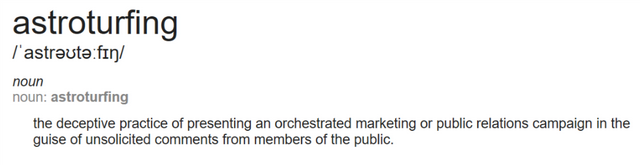
There are many good software tools available for working with outlines. If you’re going to be doing project planning on a regular basis—and you will be—it’s well worth adding one to your software toolkit. If you’re so inclined, you might also take advantage of mindmapping software, which typically has an outlining mode. You can use a spreadsheet program in a pinch, but spreadsheets are as well suited to the dynamic demands of thinking through alternate approaches to a project. Here’s an example of a project plan built using an outlining tool. It has everything you need to plan 80% of the projects you will encounter.

At the outset, we’re focused on the value of simply thinking through what needs to be done in what order before leaping to the first task that appears. That’s why an outline is a more useful tool at this point than Microsoft Project or an other full bore project management software. For those projects of sufficient scale and complexity, more powerful tools can be necessary. For most projects, simple tools are all that you will need. For those that ultimately need full-featured project management software, these same simple tools are often a better place to start.

All knowledge work is project work

Drucker’s observation that knowledge work begins with defining the task implies that knowledge work is essentially project work; the economic engine of today and tomorrow. Yet, projects remain foreign to most managers in organizations who are accustomed to running ongoing operations. What separates success from failure in projects bears little resemblance to what drives success in operations.

Why bother increasing project management capabilities at the base instead of the leading edge? All of us must develop a basic level of knowledge and skill in planning and leading projects if we wish to be competent leaders in today’s organizations. Project management is not only a job for professionals. As knowledge workers, we’re all called on to participate in project planning, and often we must lead projects without benefit of formal education in project management.

The post Project management for the rest of us appeared first on McGee's Musings.