Geoffrey A. Fowler, at the Wall Street Journal,
shares some good first steps for users to to
protect themselves from online tracking, in
Don’t Expose Yourself: A Guide to Online
Privacy. Read the whole thing, even if you have tracking
protection. Lots of up-to-date recommendations on
current tools and opt-out options.
About a week after our launch, I was seated at a dinner next to a major advertising executive. He complimented me on our new site’s quality and on that of a predecessor site we had created and run, AllThingsD.com. I asked him if that meant he’d be placing ads on our fledgling site. He said yes, he’d do that for a little while. And then, after the cookies he placed on Recode helped him to track our desirable audience around the web, his agency would begin removing the ads and placing them on cheaper sites our readers also happened to visit. In other words, our quality journalism was, to him, nothing more than a lead generator for target-rich readers, and would ultimately benefit sites that might care less about quality.
High-reputation sites such as the Wall Street Journal
can't enforce ad standards when an
original content site is in direct competition
with bottom-feeder and fraud sites that claim to
reach the same audience. But when users install privacy tools such as
Better by ind.ie and EFF Privacy
Badger,
a lot of problematic ad inventory
goes away. Crap sites can only make money
from users who are vulnerable to third-party
tracking.
When tracking protection tools keep ad money from
flowing to crappy and fraud sites, then the Wall
Street Journal wins.
Evergreen is a new feed reader for Macs. It’s not actually done yet — in fact, it’s not even alpha yet, much less beta. It’s still in the painful-to-use stage, for sure.
I’ve been working on it (among other things) on nights and weekends for a couple years. For much of the time I planned to make it a for-pay app — the plan was a free Lite version and a for-pay version.
But as time went on I was less and less motivated to make a for-pay app. Doing all that stuff — dealing with licenses, money, a store, support, and everything else that goes along with a commercial app — just didn’t sound like any fun, and it would have taken time away from actually working on the app, which is all I really want to do. I just don’t have time to spare.
So I decided to make it free and open source. (The code is up on GitHub.) This fits with my goals:
Promoting feed-reading as part of promoting the open web.
Publishing a bunch of feed-reading code and an example Mac app that other developers can use.
Giving me something to write about on this blog.
I like developing in public. Publishing the code makes it feel like a performance, a kind of tightwire act. Which suits me.
* * *
The one thing that almost held me back from making it open source was the effect on other developers. There are for-pay Mac feed readers, after all, and I don’t want to take anything away from them.
And I don’t want to send the message that software ought to cost nothing.
I think that making it open source makes it an obvious special case. There is at least one other open source Mac feed reader, and there are other open source Mac apps, and I don’t think that these projects are fueling the race to the bottom with app pricing.
I went over and over this decision for months. It wasn’t easy! But in the end I decided it’s a good thing, and there are always good reasons not to do a good thing.
* * *
The app doesn’t have any icons yet. Brad Ellis, who I’ve worked with before on some versions of my previous feed reader, and who is my favorite designer, is working on icons.
Brad is not only my favorite designer, he’s the favorite designer of people who thought they might be my favorite designer. :)
* * *
At some point it will sync with some existing systems (such as Feedly, FeedBin, and similar) — but probably not till after 1.0, though as top priority.
I have no plans to make an iOS version (though anything could happen). The plan is to make it a great Mac app. Period. But if it syncs with Feedly and so on, then you could use some other reader on iOS and it would sync with Evergreen.
* * *
There is a road not taken here that’s worth exploring, though probably not by me (for reasons of time).
I would love to see a casual feed reader (as opposed to productivity-style) that just provides a timeline, with new stuff at the top. The idea is to make something like a Twitter client but for feeds. You’d get a list of articles, and when you want to read something you’d click (or whatever) to open the article in your browser.
Such an app wouldn’t have per-article read/unread status — instead it would maintain a high-water mark, the date of the newest item you’ve seen in the timeline.
For a little while I was planning to do both styles of reader, since so much of the code would be shared. But that was overly ambitious, so I dropped the idea.
But you could do it.
* * *
I made a Twitter account: evergreen_mac. Though I have no fondness for Twitter, it seems like app makers need to be accessible that way. Most Evergreen users will probably be on Twitter.
I admit, I loved the Lego Movie came out back in 2014. It had something for everybody in what felt like a natural way, not forced by marketing / committee.
And to get straight to the point: So does the Batman movie, with one caveat, namely, you need to be at least a little bit familiar with the Batman world.
The one thing that the two Lego movies so far have managed to do was to create the an experience that entertains both kids and adults, something Disney was really good at for a long time.
Is it “high art”? Nope. But it’s a lot of fun and definitely better than most Superhero movies these days.
A Cure for Wellness
I can forgive dodgy FX shots if the story is good. I can even forgive a somewhat crappy story if the visuals are great. But if neither of that works, then…. well…
So by chance I found out that Gore Verbinski of the original Pirates movie was directing. And it definitely is a dark movie, not the way it is lit, but rather in the tone they are trying to achieve. The set design clearly supports this dark narrative with it’s industrial look.
Unfortunately, for me any away, the establishing shots early on suffer from what I call the “Games of Thrones” effect. That is, where costumes and real life sets are absolutely well done, but the digital backdrops just look uncanny valley like. This is what plagues the early parts of the film and for me set a “bad” tone.
This would have still been forgivable if the story would have moved, at almost 2 1/2 hours long though it goes at a snail’s pace. As interesting as the concept is, the execution could have used with some heavier editing to change the pace up a bit.
Overall: Not bad, definitely slower than it should have been, but not a bad movie / idea overall.
ReVIEW: A Nightmare on Elmstreet 3: Dream Warriors
It has been literally decades since I had seen that movie. I was reminded of it during a video by RedLetter Media. This movie sort of is a good example when bad / cheap / horrible SFX still work with the story. It’s all dream like, so as over the top and weird they are, and “cheap” in that they had no CGI, it still works. The story and the SFX support each other.
It is still a wonderful 1980s teenage horror movie, something we really haven’t seen in 20 years or so. I wonder if it will make a come back soon. A lot of other ’80s youth culture has made a come back after all.
So, thumbs up or down? Up. If you have a soft spot for ‘80s teen horror then two thumbs up.
Books
Fiction
Democracy’s Right - Book 1 — by Christopher Nuttall
I wish I could say this is something “totally new” but like a lot of the books over the last ten years in that category, Democracy’s Right also follow the scheme of society disintegrating and a “hero rises” kind of narrative.
Democracy’s Right is an entertaining read, but I think I am quickly approaching an “overload” when it comes to these kinds of books. Mostly because they always seem to oversimplify the societies they are set in and often have a very narrow focus on “truth”.
Having said all that. Nuttall delivers again, it’s entertaining, fast paced read and if all you want to do is have some escapeism there are far worse books out there.
Castle Federation (Book 1 - 4) — by Glynn Stewart
A “standard” Mil-SciFi book series, though it differs a bit in that it deals a whole lot more with the overall political landscape these fights and battles are fought in. Stewart also came up with a funky idea of having the ability to scan far away targets: probes that are equipped with a wormhole that allows real time communication back to the vessel it’s connected to. I thought that was a neat idea compared to other books in the genre I have read over the last few years.
Nice, fast read with some interesting and likeable characters.
Expeditionary Force - Book 3 - Paradise — by Craig Alanson
Alanson’s “Expeditionary Force” series was a “happy find” earlier this and in book three he continues to entertain. In part it’s because of a smart mouth AI / God like entity that the main protagonist of the story is “attached” to and the hint at a very very large universe.
In book three the story mostly centres around the first planet humans ended up on in book one and how things have gone since then and how the long term outlook for them is.
I admit, so far I still like the series and I am looking forward to book 4.
Genesis Fleet - Book 1 - Vanguard — by Jack Campbell
Jack Campbell’s “Lost Fleet” series was my (re)introduction into Mil-SciFi and so it was a bit surprising to not see him publish anything for almost a year.
With the new series “Genesis Fleet” he’s going way way back. To way before when the Lost Fleet is set and we learn more about the background / history of main character, Frank Greary, from Lost Fleet.
The book is “okay”, I did not really find myself totally hooked at it, but I think part of the problem for me is that I have read the other books and know the “end game”. It’s still entertaining though and I suspect it will pick up with the coming books as we will hurl towards the inevitable “end’ for the character.
Non-Fiction
And then you’re dead: What Really Happens If You Get Swallowed by a Whale, Are Shot from a Cannon, or Go Barreling over Niagara… — by Cody Cassidy & Paul Doherty
The title alone reminded me of this viral video from a few years ago:
And that is pretty much what it is about. It is quite morbidly funny to read the (short) book and realize just how…. creative one can leave this plane of existence.
If you were always curious how many cookies you could eat in one sitting, what would happen if you would really touch someone or how slippery a banana peel really is or in how many different ways you can “pass on”, this is the book for you.
The Diet Myth — by Tim Spector
I had seen this book mentioned a few times over the last two years or so and I finally got around reading it.
There wasn’t a whole lot of new info in it for me. The main argument is that our gut bacteria to a large degree determine how we absorb calories and food and that by “feeding them right” we can coax along the right gut bacteria. I think there is a something to it, based on what I have read about the process before.
The book does not directly provide a “guide” on how to achieve a “better” gut flora, but it does a good job in explaining the science behind it and gives one some starting points.
So if you’re wondering why nothing seems to work, this may be worth a look.
Packing for Mars — by Mary Roach
Mary Roach is not a scientist, but she is someone who gets very curious about, sometimes weird, things.
Packing for Mars is now seven years old and some of the stuff she has described has developed further or been abandoned and replaced with something else by now. But this does not make this book any less curious, in no small part because she also dives into the history of manned space flight.
This book did come out before Baumgartner made his jump but he does appear in the book when she discusses the requirements for a space suit.
Overall it gives you an appreciation just how hard it is to get humans into space and back (and how it is only slightly less hard to do so with Robots).
Irresistible - The rise of addictive technology and the business of keeping us hooked — by Adam Alter
Around a decade ago, a billion trillion years in internet time, the “next big thing” was called “Gamification”. “Irresistible” looks at how these days we are “being gamed” all the time, be it by our smart phones, the internet, games etc. He makes some interesting observations and often backs them up with the (limited) research that is available.
If you can look up from your phone long enough, I recommend reading the book, it may have you re-think the hamster wheel that is social media and on which you are probably running constantly.
Shattered - Inside Hillary Clinton’s Doomed Campaign — by Jonathan Allen / Amie Parnes
Yes, this month I am deep in American system for some weird reason. Shattered is probably the best of the three books. Mostly because it gives a pretty honest and ugly look at the Hillary Campaign and Hillary Clinton herself. Nothing I read in there has changed my opinion on Hillary or the Clintons for the better. If you are still wondering why Clinton lost to Trump this book will give you a pretty good idea.
Now, I would love to read the same book about the Trump Campaign. Hillary’s was such a shit show I can only imagine what must have gone on at Donald’s Court.
Recommended.
The Complacent Class: The Self-Defeating Quest for the American Dream — by Tyler Cowen
I had heard Tyler Cowen in an interview on Econtalk Podcast and had already gotten the book before. Unfortunately I found it lacked a bit of meat on the bones. At least there wasn’t a whole lot new in there.
I think in a lot of ways the book suffers from the same problem that “On Tyranny” does: It’s “too American” to really look at the current state of the US and it’s tax payers (I’d written citizens, but I haven’t heard a politician talk about citizens in quite a while. We’re now all tax payers and the Government is our dealer).
Like with “On Tyranny” I think it is an interesting read, but also is far from where it could have gone. Still, both of them are an interesting read.
On Tyranny: Twenty lessons from the 20th Century — by Timothy Snyder
The best way this can be described is a “call to arms against Trump”. The book was published earlier this week and it has an “obsession” with the Trump administration and how it came to power.
This is both it’s strength and weakness. Strength in that it has a life example to explain the “20 lessons” but at the same time it is a bit “too close” to the topic to be really “universal”.
For one there is an awful obsession with Russia and what Putin is or isn’t doing, with some bizarre “omissions” or just willful blindness to some of the things within Russia. Best I can describe it is that Snyder treats Russia as if it was the US and projects the behaviour of Putin onto the American mainstream. It’s not working well.
The other “bizarre” statement is in the chapter on Patriotism. For one it clearly shows that this is a book by an American for Americans. After all, Patriotism is a huge religion in the US. But most interestingly for me in that chapter was that the author considers “dodging the draft” unpatriotic. The rational for this is that you serve your country not your leaders. The problem with that is pretty obvious for anybody with a little bit of historic knowledge.
Having said that, there are still some good points in it, just be aware of the blind spots the author shows when he wrote this.
Music
Moments — by Andrew Rayel
I do listen to a lot of electronica and Armin van Buuren’s “A State of Trance” is a weekly listen. Mostly because I find this type of music easy to listen to while working or doing other things.
So I found myself a bit surprised when I listened to Andrew Rayel’s “Moments” and felt more like dancing along with a lot of the songs.
Good album. It’ll make you happy if you like Trance.
Running: 59.9.5 km
Cycling: 102.7 km
Walking: 99.7 km
Progress
VO2 Max
Sleep
Floors Climbed
Intensity Minutes
Resting Heart Rate
Steps
Active Calories
Total Distance
Training Status
Progress Pics
Start of the month
End of the month
Summary / Forward Looking
No detailed training log this month. May was a “lost month” due to stupidity on my part and two weeks of a very weird cold. Now that summer is here though I am looking forward to a much more active June.
Google’s work on machine learning has optimized web search, made it easier to browse a smartphone, and will even make it possible to take photos to learn more about the world.
Now, Google’s using machine learning to make creating spreadsheets a little bit easier too.
Users can use the ‘Explore in Sheets’ feature to ask the program to compile and analyze data “in words, not formulas.”
“Instead of manually building charts, ask Explore to do it by typing in ‘histogram of 2017 customer ratings’ or ‘bar chart for ice cream sales,’” reads an excerpt from a Google Sheets media release. “Less time spent building charts means more time acting on new insights.”
Google is also making it easier to automatically sync data across multiple sources.
Simply copy-and-paste data from Sheets to the other Google Drive apps — like Docs and Slides — and tap the ‘Update’ button.
Shawn Micallef@shawnmicallef
NDPers who endlessly snarked & high horsed about Trudeau's similar fit & tailored style are now cool with a politician with style.
A law enforcement team on bikes (one VPD, 2 Translink) wheeled up to the BtWW station at Dunsmuir & Richards yesterday afternoon. One person told me they’d been doing routine enforcement at Stadium Station and were on their way to Granville for more.
We chatted for a few minutes, then the team got interested in the practice bus bike rack, and gave it a try with one of their bikes.
Bewaffnete haben Medienberichten zufolge in der philippinischen Hauptstadt Manila einen Hotel- und Kasinokomplex angegriffen. Augenzeugen berichteten, es seien mehrere Angreifer in dem Gebäude des Resorts "World Manila" und es gebe Verletzte. Die Polizei sei mit starken Kräften angerückt, hieß es. Die Hintergründe waren zunächst unklar.
Das Resort bestätigte den laufenden Angriff auf Twitter: "Resort World Manila ist derzeit abgeriegelt, Berichte über Schüsse von unidentifizierten Männern", hieß es.
Die Dschihadistenmiliz "Islamischer Staat" (IS) reklamierte laut Nachrichtenagentur AFP in einer Botschaft im Internet den "Angriff" für sich.
US-Präsident Donald Trump wurde über die Situation informiert, wie sein Sprecher Sean Spicer auf Twitter schrieb. Das amerikanische Außenministerium rief US-Bürger auf den Philippinen dazu auf, die Gegend um die Anlage zu meiden.
Ein Augenzeuge sagte dem lokalen Radiosender DZMM, er habe einen der Bewaffneten mit schwarzer Gesichtsmaske bei einem Spielkasino gesehen. "Sie zielten nicht auf die Gäste. Wir konnten durch die Notausgänge flüchten", sagte der Augenzeuge.
Auf den Philippinen führt die Armee einen Kampf gegen islamistische Rebellen. Dabei geht sie mit großer Härte gegen die Islamisten vor und hatte dabei aus Versehen auch mindestens elf eigene Soldaten getötet. Die Männer kamen nach Angaben des Verteidigungsministeriums in der umkämpften Stadt Marawi bei einem Luftangriff ums Leben, der eigentlich Aufständischen galt. Damit stieg die Zahl der Todesopfer seit Ausrufung des Kriegsrechts über die Philippinen-Insel Mindanao vergangene Woche bereits auf mehr als 180.
Bei den Islamisten handelt es sich überwiegend um Angehörige einer lokalen Terrorgruppe namens Maute, die IS Treue geschworen hat.
Im Süden der mehrheitlich katholischen Philippinen kämpfen muslimische Separatisten seit den 1960er Jahren für Autonomie.
It may be that whatever response we were making to the challenge of climate change was insufficient. But at least most governments were trying, most citizens cared, most corporations had policy responses – and even lip service indicated a recognition of the issue. Paris allowed for progress.
But this is different. Not only is the withdrawal from Paris by the Trump Administration a setback, it goes further: it’s a sign that, in denial, America will consciously allow climate change to worsen. Indeed, it will deliberately do so. Coal will be burnt as a statement, atmospheric carbon will be increased as a gesture of contempt, and true believers in Trump must double down on rejecting reality.
This then raises an existential question. If Trump and those who follow him are now, without apology and without pretense, prepared to accelerate climate change, what is the allowable moral response?
If, as change in the environment becomes ever more apparent, ever more chaotic, ever more disastrous, and the prospect of civilizational suicide ever more likely, what is not just allowable but demanded of citizens of the world?
Apple Park as of the end
of May
YouTube/Matthew
Roberts
Tucked away in a corner of Apple Park, the company's new
futuristic, custom-designed $5 billion campus in Cupertino,
California, is a particularly low-tech building. It stands out in
a campus of gleaming glass and concrete structures where even the
door handles are
custom designed.
So why did Apple recently construct an early-20th century barn in
the shadow of its massive new "spaceship" campus? Here's a good
picture from a recent drone flyover video filmed by Matthew
Roberts.
YouTube/Matthew Roberts
It turns out, the historic "Glendenning Barn" was on the land
first, and after a former Cupertino mayor asked Apple CEO Tim
Cook what the company planned to do with the barn in the early
stages of campus planning, Apple carefully took it apart and
eventually put it back together, just the way it was constructed
before.
The Glendenning barn, built in 1916, had previously survived
several changes of ownership, as the land around it transformed
from farmland owned by the Glendenning family, to orchards, to an
HP office park, and now, to Apple's new
headquarters. The barn when the area was
still farmland.Cupertino Historical
Society
The barn wasn't specifically protected by local law, but the
Cupertino Historical Society tried to save it, and it was beloved
by the site's previous owners, HP, which used it as a gathering
place for beer bashes and picnics. "I’m anxious to one day see it
again," Ed Miller, a former HP manager,
told the Mercury News.
Apple will store sports equipment and landscaping supplies in the
barn. But its value to Apple is more as a little piece of history
that shows how Silicon Valley has changed.
An environmental impact report commissioned by Apple in 2013
gives the full backstory of the land that Apple's "spaceship"
campus now sits on:
The project site was occupied by Robert and Margaret Howie
Glendenning beginning in the 1850s. The Glendennings, originally
from Scotland, were one of the first European-Americans to
homestead in Cupertino. In 1851, the couple began farming 160
acres of land, living initially in a tent on the land. After
building a house and planting crops, the owners of the Alviso
Land Grant laid claim to the property, and the Glendennings were
compelled to purchase the land at $30 an acre. Margaret
Glendenning finished the land payments upon the death of her
husband in 1868.
By 1884, when Robert and Margaret’s children had come of legal
age, the Glendenning property was divided among the family.
Margaret Howie lived on the southern half of the property and the
northern half was divided amongst the six Glendenning children:
Mary, Margaret C. (Caroline), Ellen (Ella), Joe, Jim, and George.
In 1888, approximately 60 acres of the property contained
orchards and the remaining portion was utilized for grain and hay
production. Margaret Howie had a house built on her property in
1889, where she lived with her daughters, Margaret C. Burrell and
Ellen Glendenning.
In 1914, Margaret Burrell obtained her mother’s parcel and her
daughter and son-in-law, Grace and John Leonard, purchased the
land. Leonard converted 48 acres of the property from dry-farming
(hay and grain production) to irrigated orchards. It is thought
that John Leonard built the Glendenning Barn around this time.
The Leonards established a dehydrating and packing business on
the property.
In 1964, Varian Associates purchased the Glendenning property
from John Leonard and his son, Burrel. The Glendenning parcel was
one of several family properties, including the Lester, Craft,
and Orlando families, to be purchased by Varian. The Varian lands
were pooled into the VALLCO land corporation, the name of which
was derived from the first names of the principal parties
involved in the sale. The Glendenning-Leonard acreages were the
key parcels to be incorporated into VALLCO Park and became the
site of the Varian building, the first constructed in the park.
VALLCO continued minimal farming operations into the 1970s, but a
master plan and associated development phased out farming.
YouTube/Matthew Roberts
VALLCO sold 46 acres to Hewlett-Packard in 1968, followed by
another 50 acres in 1971. Aerial photographs from the 1980s show
the barn, pump house, and windmill tower, but the Glendenning
house built for Margaret Howie Glendenning, Margaret Burrell, and
Ellen Glendenning was demolished in the early 1970s. The
Hewlett-Packard and Ridgeview campuses were constructed in phases
from the mid-1960s to late 1980s. Hewlett-Packard sold the
98-acre office park in November 2010 to Apple as part of its plan
to consolidate employees at its Palo Alto campus. The property is
just north of a 50-acre site Apple bought in 2006 and east of the
main Apple campus. The properties purchased by Apple in 2006 and
2010 are part of the project site.
Last fall, Apple submitted an application to the Federal Communications Commission for an unannounced device with the model number A1844.
At the time, the "wireless device," as it was described in the application, was a mystery. Speculation mounted in some Apple circles as a result. The application said it was a low-powered device with both Bluetooth and near-field communication wireless functionality.
On Sunday, a user manual and photos of the mystery device were published by the FCC.
The mystery device appears to be a badge reader that attaches to a door assembly, most likely for Apple corporate use:
FCC
Here's another look, according to an image included as part of an NFC test:
FCC
The user manual is not intended for general consumers and includes specific backend wiring instructions. Here's what it does, according to the user manual:
Usage Instructions
1. Present the company provided credential to the reader.
2. The reader will indicate granted access by briefly changing color to green and playing a sound. Declined access is indicated by red color and a second sound.
Apple has several smart-home products on the market — most notably software called HomeKit — that enable manufacturers to make smart locks and other products that work with the iPhone.
Apple has never announced plans to sell its own smart lock or other Apple-designed smart-home hardware, and this electronic lock seems specifically designed for Apple corporate or retail use. Apple is putting the finishing touches on its new Apple Park campus, expected to open next month.
When A1844 was revealed in the FCC application, some speculated it could be a new Apple TV or AirPort router, based on the limited information included in the filing. Apple has filed similarly cryptic applications for "wireless device" models, such as A1846, since then.
Apple did not immediately return a request for comment.
Here are all the pictures revealed in the FCC filing:
The world is brimming with must-visit natural locations for cyclists. From dedicated cycling holidays to taking a day trip into the countryside by bike, traveling through an area on two wheels means that you can experience the natural beauty in one of the most exhilarating ways. This post by guest author Nick Ball introduces 5 incredible cycling locations inspired by nature.
While it seems like WWDC 2016 only ended a few months ago, the greatest time of year for Apple fans has returned. From June 5th to the 9th, the tech giant’s annual World Wide Developer Conference will go down, this time in San Jose rather than San Francisco.
We’re expecting to see a to see a lot at WWDC this year, including a dedicated Siri Speaker and new versions of Apple’s various operating systems: iOS, watchOS, tvOS and macOS.
In an interesting twist, it’s also likely that we’ll see a 12-inch MacBook, 13-inch MacBook Pro and 15-inch MacBook Pro, all with upgraded internal hardware, at this year’s show, indicating that Apple could be moving to a faster upgrade cycle when it comes to its desktop and laptop devices.
The most significant rumours heading into this year’s WWDC suggest that that Apple is working on a dedicated Siri device designed to compete with Amazon’s Echo and Google Home.
Rumours suggest that this standalone voice-activated assistant will feature better sound quality when compared to its competitors and that the device will be powered by Beats’ technology. The still unannounced Siri Speaker will also reportedly place an emphasis on controlling HomeKit supported IoT products, and will include direct integration with Apple’s Home app.
The device, however, likely won’t launch until later this year, with Apple utilizing WWDC 2017 as an opportunity to present the product to developers in order to gather additional third-party app support for Siri.
Upgraded MacBooks
In a shift from how the Cupertino, California company typically operates, it’s likely Apple will show off an updated 12-inch MacBook, 13-inch MacBook Pro and 15-inch MacBook Pro, all with improved internal hardware, at this year’s WWDC.
Specifically, the 12-inch MacBook and Apple’s new USB-C MacBook Pro devices will be updated to feature Intel’s latest Kaby Lake processors. Reports also indicate that Apple could be considering reviving the fan favourite MacBook Air with improved internal hardware, though this is unlikely given other rumours indicate the company is abandoning the popular laptop.
In terms of the MacBook Pro updates, these rumours stem from the fact that the shipping date of the 15-inch MacBook Pro has slipped considerably leading into Apple’s WWDC keynote. Strangely, the 13-inch MacBook Pro’s shipping date has not been pushed back yet.
10.5-inch iPad Pro and 12.9-inch iPad Pro 2
Apple is reportedly planning to add a 10.5-inch iPad Pro to its lineup of tablets this year. With slimmer bezels, Apple is able to cram a 10.5-inch display in a tablet body that’s not much larger than its 9.7-inch iPad.
Leaked case images indicate that the 10.5-inch iPad is marginally taller and slightly wider than the 9.7-inch iPad Pro. The 10.5-inch iPad Pro will join the 9.7-inch and massive 12.9-inch model.
It’s also possible Apple could be preparing to reveal the 12.9-inch iPad Pro 2, an upgraded version of the original tablet with a newer processor and other spec bumps, along with an enhanced Apple Pencil 2 that features the ability to annotate content across a variety of iOS apps, including Mail, Messages, Safari and more.
iMac, Mac Mini and Apple TV
At a private press briefing in April 2017, Apple revealed that it’s working on a new version of the iMac and uncharacteristically stated that it believes the Mac Pro was a misstep. It’s likely that the company will use WWDC as an opportunity to show off the upcoming all-in-one iMac device. The Mac Mini, which seems to have been forgotten by Apple to some extent despite being a fan favourite, could also get a spec bump and a price cut, according to some rumours.
The Apple TV, which was last updated in September of 2015, will likely get a new 4K-capable iteration and various tvOS features that are part of the platform’s still U.S.-exclusive TV app.
Finally, despite criticism from many, Apple is staying the course when it comes to the MacBook Pro’s OLED Touch Bar and could be preparing to release a dedicated wireless keyboard that features the company’s sometimes useful customizable function bar.
iOS 11
As always, it’s likely that Apple will reveal the next version of its mobile iPad and iPhone operating system at its annual developer conference.
While little has leaked about iOS 11 so far, rumours point to a variety of updates to Siri, including making the voice-activated assistant sound more natural as well as additional machine learning and artificial intelligence features, perhaps in preparation for the eventual release of the still unannounced ‘Siri Speaker.’
Other rumours indicate that an official Dark Mode could be coming iOS 11 as well.
macOS 10.13
With desktop and laptop devices becoming less of a priority for Apple over the last few years, many are hoping that macOS 10.12 will be a significant overhaul of the once dominant operating system.
The new version of macOS’ name is still unknown, though the rumour mill is leaning towards Mojave, Malibu or possibly another famous location that starts with M. It’s unlikely, however, that macOS 10.13 will end up being the massive shift some are hoping for.
watchOS 4
The release of watchOS 3 was arguably the best move Apple has made for the wearable since its initial launch, giving developers significantly more control over the types of apps they can create for the smartwatch.
watchOS 4 is expected to be an extension of this direction, though with a greater emphasis on fitness features. Speculation points to more Workout app features such as skiing and snowboarding, as well as the possibility of glucose monitoring, possibly in preparing for a version of the Apple Watch designed with diabetics in mind.
tvOS 11
While Apple’s 4th Generation Apple TV initially seemed impressive at launch, the set-top box so far has not lived up to its potential, especially in the gaming space. Other set-top boxes from manufacturers like Roku and Google’s various Android TV partners have also arguably caught up with the once dominant streaming box.
Surprisingly, few rumours have surfaced regarding tvOS 11, though a full-fledged 4K-capable Apple TV could be in the works. We will, however, definitely get a glimpse of Apple’s original content, including Planet of the Apps and Carpool Karaoke.
After spending 20 hours researching telepresence robots and testing two of the most promising models in office and home settings, we don’t think these devices are ready for prime time. But if you want a telepresence robot to give remote employees a physical presence in your office, the Suitable Technologies Beam Enhanced is the only bot that’s reliable and user-friendly enough to consider.
Todd Litman of the VTPI is a well-known researcher on, what else, transportation policy. In THIS 34-page PDF, he summarizes long-standing research and recent experience, and describes a fundamental change to charging for vehicle insurance in BC. Be warned, Mr. Litman is an in-depth kind of guy, and his work is a bad place to look if you simply want to bolster partisan rhetoric.
It’s an interesting way to increase choice, help reduce driving and by doing so, reduce crashes and congestion. Today, most motor vehicle costs are either external or one-time (except for fuel). Converting some costs, like insurance, to distance-based will encourage some people to reduce their motor-vehicle usage.
Personally, I’d like to consider introducing more of society’s motor vehicle costs to operators based on distance travelled — so-called distance-based pricing (road or mobility pricing). It’s all part of travel demand management. By turning external costs of motor vehicle operation into distance-variable costs visible to the vehicle operator, those who decide to reduce their distance travelled should be able to see all the financial savings from doing so.
We are delighted to announce that WebVR will ship on by default for all Windows users with an HTC VIVE or Oculus Rift headset in Firefox 55 (currently scheduled for August 8th). WebVR transforms Virtual Reality (VR) into a first-class experience on the web, giving it the infinite possibilities found in the openness and interoperability of the Web Platform. When coupled with WebGL to render 3D graphics, these APIs transform the browser into a platform that allows VR content to be published to the Web and instantaneously consumed from any capable VR device.
We would like to invite content developers to use A-Frame, a framework used over 10 million times a month, or one of the other amazing web engines and frameworks, such as React VR, to target WebVR and begin to develop VR.
In the eight months since we announced an initial version of WebVR in Firefox Nightly edition (hidden behind a user preference), we’ve co-organized a workshop and incredible cross-vendor and community collaboration on the WebVR specification. This widespread adoption means that you can target WebVR today and expect it to work on every major device:
*
Mozilla Firefox
Google Chrome
Microsoft Edge
Oculus Browser
Samsung Internet
Safari on iOS
HTC Vive
Developer Edition
Chromium Experimental build
–
–
–
–
Oculus Rift
Developer Edition
Chromium Experimental build
–
–
–
–
Windows Mixed Reality
–
–
Windows 10 with Creators Update and Developer Mode enabled
In the coming months, all of the browser makers are working to share our WebVR compliance tests, led by Microsoft and rapidly picked up by other engines. This collaborative effort will help ensure that content works across multiple platforms and implementations, increasing the reach of the content.
See WebVR Rocks for detailed instructions for browsers on all platforms, along with pointers to some incredible content that showcases the power of each of those platforms.
Get an adrenaline rush as you ride along with professional Motocross and Supercross racer, Ronnie Stewart, in the first Lucas Oil Pro Motocross Championship race of the 2017 season, Hangtown MX Classic. Shot, Edited, Stabilized, Augmented and Uploaded all with Garmin VIRB 360 and Garmin’s free editing tool, VIRB Edit.
For the best viewing experience, we recommend you watch 360 videos in the YouTube app on a mobile device or tablet. To view interactive 360 YouTube videos on a desktop, you’ll need Google Chrome, Mozilla Firefox or Microsoft Edge.
If it’s worth remembering, it’s worth a VIRB 360. Find out more about the VIRB 360 here: Garmin.com/VIRB
*Stabilization only available for videos stitched in camera
• 360-DEGREE, 5.7K/30fps Don’t miss a thing. • 4K SPHERICAL STABILIZATION Easily create a smooth, stable video. Stabilization is applied using VIRB® mobile app or VIRB Edit desktop software and is only available for videos stitched in-camera. • 360-DEGREE SPATIAL AUDIO Change your listening perspective, change your experience. • IN-CAMERA STITCHING AT 4K/30fps Ready to share instantly. • G-METRIX™ DATA OVERLAYS Prove how fast, high, and far you went. Augmented reality overlays require mobile or desktop VIRB App before sharing. • CONTROL WITH ONE TOUCH Or use voice control. Voice control available for English (U.S., U.K.) French, Italian, German, Spanish, Swedish, Japanese, and Mandarin
Some jurisdictions regulate or prohibit use of this camera device. It is your responsibility to know and comply with applicable laws and rights to privacy in jurisdictions where you plan to use this device.
A few weeks ago, I wrote an article on the need to hire a tech lead when you consider outsourcing your engineering. This article sparked some interesting conversation and one was about pull requests(PR) and code reviews(CR) and how it should be approached. Today, I will try to talk about code reviews and some of its inherent problems amongst team members, and I’ll also highlight possible ways to overcome some of these problems.
For context, I’ll love to explain what pull request and code reviews are and for the sake of this article, I’ll be using both terms interchangeably.
A pull request(PR) is a method of submitting contributions to a software development project. It is often the preferred way of submitting contributions to a project using a distributed version control system (DVCS) such as Git. A pull request occurs when a developer asks for changes committed to an external repository to be considered for inclusion in a project’s main repository. Source - OSS Watch
Code review is a systematic examination (sometimes referred to as peer review) of computer source code. It is intended to find mistakes overlooked in the initial development phase, improving the overall quality of software. Source - Wikipedia
The problem that I see with most pull request/code review session is when reviewers nitpick on seemingly inconsequential issues and often neglecting the elephant in the room. This does not only degrade the entire reviewing experience, it leads to unnecessary bike shading. This, in my opinion, is one of the few causes of strife within technical teams and it’s unhealthy.
The bike shed story tells of a management committee’s decision to approve a nuclear power plant, which it does so with little argument or deliberation. The story contrasts this with another decision on choosing the color of the bike shed where the management gets into a nit-picking debate and expends far more time and energy than on the nuclear power plant decision.
A pull request should be a learning experience, it’s an opportunity to get good feedback from trusted team members. This feedback could range anywhere from writing more structured and succinct code to better optimisation of algorithms, queries, etc. It’s the time to be open minded and not become unnecessarily defensive.
One issue that I find quite worrying is the fact that most authors come with girded loins when they submit their PRs. You can’t tell them otherwise, after all, they have spent a significant portion of their day solving this complex problem and all they need is your approval and a merge to the base branch. And this is a big problem.
But, as an author of a PR, before you put on your armour, take a second and think through the opinions of your reviewers, and look at the issue from their own lens. Your reviewers are here to uncover your blind spot, they check those things that must have slipped through the cracks, they are meant to guide and help you become better. When authors approach their PR/CR session with the way they would approach an editor, they become aware of things they must have overlooked, uncover new paradigms and fundamentally gain new knowledge. Your reviewers, like editors, are your third eyes.
Are your reviewers always right? Far from it. Your reviewers, like every human, aren’t infallible. They will make mistakes, and it’s your place as the author to help guide them to the obvious and help them understand your thought process to the problem and what led to your solution. One of the problems I have seen with PR sessions is when reviewers are in haste to prove a point without first, understanding the problem domain. They make hasty conclusions and in most cases, miss the main point by a stretch.
As a reviewer, your first task is to understand the problem domain and offer suggestions as opposed to calling people out. This is one of the reasons most authors become defensive. Don’t do that, you don’t want to be that guy. While reviewing, If it helps and where possible, move over to the author’s desk or get on a call and share screen, then you can ask questions as to why the author made some design choice. This does not only reduce any unforeseen tension, it allows you to understand the problem and solution a lot better, see things from author’s perspective thereby giving you an opportunity to give constructive feedback. The other advantage to this approach is that it create’s the sort of bond that will make people more receptive to your ideas.
Authors become defensive when comments left on their PRs make them look stupid. There’s an ego in every human, never forget that. A code review session is a win-win for everyone. The reviewer(s) and author both learn and benefit from the experience. Put extra thought and care into crafting your feedback, they should be suggestive and also offer a better way of solving a problem.
Remember, when a code review session degenerates into a pissing contest, its essence is lost and everybody, both the reviewer(s) and the author loses out big time.
In the last couple of months, I have been obsessed with automation, workflows and infrastructure as code. This obsession led me to explore tools like Ansible and a little bit of Chef and how to better apply them to my everyday work.
In the last few weeks, I have been experimenting with HarshiCorp’s Terraform and I must say, I’m impressed. In this article, I will like to share my findings and also document what I have learnt for posterity.
PS: I’ve created a bootstrapped Vagrant box with Terraform provisioned. You can clone the repository here and follow along.
Terraform, like every other HarshiCorp products have basic commands that can be run from the CLI. But the one most frequently used Terraform command is the terraform apply command. This command allows Terraform to run and communicate with our provider(more on this later). The terraform apply command goes out to our provider and provision the resources that we have declared in our Terraform scripts. In simple terms, it builds or changes our infrastructure.
While the terraform apply command is great, the problem is that it doesn’t give you an early feedback on what you’re doing, luckily, Terraform provides another command terraform plan which does just that. It allows us to see our infrastructure execution plan. To see a full list of all the available Terraform commands, run terraform --help on your terminal.
The Terraform Syntax - HCL
Terraform’s code is written in HarshiCorp’s proprietary language called Hashicorp Configuration Language(HCL). HCL is a structured configuration language that is intended to be both machine friendly and human readable. It’s geared mostly towards DevOps, and in the case of Terraform, its syntax allows us to describe our infrastructure as code. All Terraform codes are written in a file with a .tf extension.
Before we use Terraform and explore its power, we will need to declare a provider. This is the entry point to every Terraform program. As at the time of this post, they are well over ten different Terraform providers and they include; AWS, Digital Ocean, Google cloud, etc. For a complete and up to date list of providers, visit the Terraform providers documentation page.
Declaring a provider is simple, you start with the keyword provider and provide the name of the provider, e.g; aws, digitalocean, google, etc.
provider "digitalocean" {
    # todo
}
Code I
The code above is how a Terraform provider is declared. That simple. The declaration above by itself does nothing and has very limited use. In order to harness its power and begin communication with the Digital Ocean cloud, we will have to provide a valid Digital Ocean token. This is how Terraform will communicate with our Digital Ocean cloud.
To generate a from your Digital Ocean account, simply log in to your account, click the API link on your menu, click on Generate New Token button, enter a token name and generate one. Remember to also keep this token safe and secure as bad things can happen if it gets into the wrong hands.
Digital Ocean generate token page
Now that we have our token ready, we will have to extend our initial code in Code I and add our Digital Ocean token like what we have below:
Our work here isn’t done, we have only told Terraform we want to work with Digital Ocean and nothing more. This, by itself does nothing. Now let’s create create some Digital Ocean droplets. Terraform has a concept of resource, a resource is typically a service offered by your cloud hosting service, a provider, in Terraform’s parlance. These resources include but not limited to; VMs(EC2, droplets), load balancers, database, cache, etc. To create a Digital Ocean droplet, we will declare a droplet resource and pass along arguments like image type—Ubuntu, CentOS, etc, name—hostname of the machine, region—the DO region where we want this resource created, size—size of the droplet.
The human readable form of Code III declared above translates to “create a 64 bit Ubuntu 16.04 droplet in the London 1 region and give it a size of 1gb and a hostname of web-1.” It’s worthy of note that some things in the resource declaration above are standard. The resource keyword is standard, digitalocean_droplet is standard, this is how Terraform represent’s Digital Ocean’s droplets. It varies for other cloud providers, for example, aws_instance for AWS’ EC2 and google_compute_instance for Google’s VM. The web word is arbitrary, it serves the purpose of an identifier in this declaration, as such, you can choose whatever name you’re most comfortable with. The other declaration inside the curly braces are standard and required. For information on how it’s declared for other providers, please consult the Terraform documentation.
With the code above, we have successfully declared a valid Terraform provider and created an associated resource. To run this command and see its effect, we will run terraform apply on our console. At this point, Terraform will initiate a communication link with Digital Ocean and if everything goes well, create us a valid and ready to use droplet. This is a rather simplistic way of doing things and we will be diving deeper in the course of this article.
Variables
In code II, we created a Digital Ocean provider and provided it with an API token. While this get’s the job done, it’s not entirely the best way to deal with this problem. This is where the concept of a variables comes in. Like many traditional programming languages, Terraform also has a concept of a variable, albeit declared differently.
In ES6 for instance, a variable can be declared with either the const or the let keyword. Like what we have below:
const name = "Bob Jones";
let age = 70;
Code IV
But things are a bit different in the Terraform land. Every variable is preceded with the keyword variable followed by the variable name and a set of parameters. Terraform’s variables comes in two different flavours; input and output variables. An input variable is used to send values into a Terraform while the output variable prints result from Terraform to the stdout. Input variables can be sent in a different format; command line, from a file and an environment variable.
To create an assign data to a variable we will start with the variable keyword as seen in Code V.
From the definition in Code V, if we run the Terraform code using terraform apply, Terraform will prompt us to enter a value for the name variable and wouldn’t do same for the second one, token. This is because, in the second declaration, we have provided a default value for the variable which is our Digital Ocean API token and as such, Terraform picks it from there.
If we need to use this variable anywhere, we will have to invoke it like this "${var.token}", so going back to Code II, we can modify the declaration to this format:
The advantage here is that we can use this variable in multiple locations without necessarily repeating the API token itself in multiple location. This provides tremendous power as to how we manage our code.
The output variables follow the same pattern with the input variable with the only distinction being that the output variables uses value in place of default. Below is a sample declaration of the output variable.
output "ip" {
    value = "${digitalocean_droplet.web.ipv4_address}"
}
Code VII
The declaration in Code VII tells Terraform to print the IPV4 address of our droplet to the console.
So far, we have been able to create a Digital Ocean droplet, which is good, but the problem now is that we can’t ssh into our newly minted machine, which is a major issue and will definitely pose a problem for us as we go on. To fix this issue, we will need to add our SSH public key to our droplet. Terraform provides us with an SSH resource aptly named digitalocean_ssh_key. To use this resource we declare it as below:
With the introduction of the SSH key resource, we will need to link it to our droplet. That way, we can SSH in using our private key. For this to happen, we will have to modify our code in Code III. The code in Code VIII uploads allows SSH public key to our droplet. Also, notice that we didn’t copy and paste our SSH key here, instead, we used a Terraform built-in function called file. The file function lets us read a file from a path. It has a basic syntax of
${file(“path/to/file")}.
If you are using the Vagrant box I provided in this article, I strongly advise that you generate a new SSH key as this box comes without one. Generating an SSH key is simple, simply run this command on your terminal ssh-keygen -t rsa -b 4096 -C “your email” and follow the on-screen information. I’ll strongly advise that you don’t set a passphrase for your SSH key.
Unlike procedural languages, Terraform use a declarative language pattern. If you wanted to create a resource say three times, you will wrap them in a for loop, but in terraform, you will use a meta-parameter like count
It’s important to note that the count meta-parameter is available to every terraform resource has a zero-based index, similar to arrays in a traditional programming language. So if you had resource declaration like
From Code XI above, we will have 3 web servers created with names; web.0, web.1, web.2, web.3. Note that the names argument makes use of interpolation syntax; ${count.index}.
If we wanted to check the truthy of a thing before using a resource, we could use another conditional which is similar to the itinerary operator in a regular programming language. It follows the pattern
condition ? trueval : falseval . Let’s declare a resource that will only be available if a certain condition is met.
From the declaration in Code XII, the Digital Ocean load balancer will only exist if the environment is a production environment. Terraform also support operations like !=, >, <, >=, <= && || !.
Comments
One useful part of Terraform is its support for comments. I’m not going to stress the need for code commenting as this one is pretty obvious. In Code I, we have a #todo, this is an example of a comment and this is a single line comment. Terraform also supports multi line comments and they are wrapped in /* */ as seen below
/*
This is a multi
line comment....
*/
Disclaimer
While following the examples outlined in this article, please bear in mind that there’s a cost attached to it. When you run terraform apply and create a real resource at your provider’s end, they start billing you almost immediately. As a word of caution and this apply only in a non-production environment, always try to clean after yourself. For this purpose, Terraform offers us a really handy command called terraform destroy. The terraform destroy command literally goes back to your provider and delete/destroy every single resource that you have created. This is a one-way command and cannot be undone, so I strongly advise you do this in your personal or experimental environment.
In the last couple of years, there has been a strong advocacy for remote work and how it a)improve employees productivity and b)is fast becoming the future of work. Technology companies, especially startups add remote work as one of their benefits.
But things aren’t always rosy in the remote land. one of the problems that I have seen one too many times is that of communication and visibility and the antidote to this is over communication. Voice out every move. The physical office provides some benefit that is almost non-existent when you work remotely, for one, the in-person communication cannot be overemphasised.
Working from the same physical location and actually seeing the people you work with has a huge upside. This benefit becomes apparent when communicating with one another, things like voice tone and body language add fine-grained nuances that technology can’t bridge.
____________
Working and leading a remote team can be daunting without the right tools and processes in place. Getting the right tools very early on will save the team loads of trouble and also improve productivity. I mean, you can only do your best work when you have the right tools. In this article, I’ll try to highlight some of the tools that my team uses daily and why we use them.
Slack: Slack is where the magic happens. I think about this tool like our command centre. It’s pretty much where we start and end our day. With the help of amazing bots and integrations, the possibilities with Slack are endless. We use Slack for our daily stand-ups, file sharing, voice calls and more. I personally use Slack as a personal assistant of some sort; I set reminders for things I am supposed to get back to at specific time using Slack reminders. Slack’s slash command provides a rich suite of operations that can be performed right from the app.
Beyond just the daily communication, we apply Slack to our team’s internal adaptation of ChatOps; a transparent workflow with a high focus on visibility. Take for instance, when a ticket is created or moved on our JIRA project board, a notification is sent to Slack our #developers Slack channel, that way, everyone on the team knows what’s happening at every point in time and who is working or responsible for what. When a comment is added to a GitHub pull request, Slack notifies a channel with the comment and the relevant parties can either continue the conversation using Slack or move it to GitHub.
What is ChatOps? Conversations, put to work. ChatOps is a collaboration model that connects people, tools, process, and automation into a transparent workflow. This flow connects the work needed, the work happening, and the work done in a persistent location staffed by the people, bots, and related tools. Source: Atlassian
We are big believers in the agile methodology, as such, we take things like continuous integration and deployment pretty seriously. Sprint planning, retrospective and stand-up all happen on Slack.
CircleCI: CircleCI is an invaluable and almost indispensable tool. For us, it isn’t just another CI tool, it’s our source of truth. CircleCI plays a critical role in our development cycle and deployment pipeline. It helps with running our test suites and does an auto deployment. The beautiful thing about this tool is how it integrates nicely with our workflow and other tools. For instance, when a build is broken, not only does CircleCI emails the entire team, it also sends a Slack notification to the team. And since we use almost the same Slack handle on our GitHub profile, the build offender —a person who breaks a build…I made this up— is notified immediately, this helps improve our turn around time and it also encourages transparency and accountability.
CirleCI further allows us to enforce some defined standards like a coding style, it lint’s all of our code and this process helps keeps our code base clean and promote consistency.
CircleCI/Slack integration. Photo credit - Igor Davydenko
JIRA and GitHub: are other tools that we use extensively. We use feature branching in our workflow, which means every JIRA ticket is a branch. The integration between JIRA and GitHub allows us to go straight from a JIRA ticket to a GitHub branch, and since we have a PULL_REQUEST_TEMPLATE that requires us to include the JIRA ticket ID, we can easily go back to JIRA from GitHub.
When a branch is pushed into GitHub, JIRA links it automatically to its assigned ticket.
A JIRA ticket, showing the associated GitHub branch, number of commits and pull request status
Screen Hero: Once in a while, people need help with technical issues and this is absolutely normal. When a team member is blocked and needs help with an issue, someone who is free or a team member with the most experience and knowledge of the problem jumps on Scree Hero and pair. One of the benefits of this is that stronger bonds and connections are formed.
How did we get here?
In the beginning, things weren’t always like this, it took a bit of trial and error to find the best workflow. We started out using Slack for just communication but quickly found out that a lot of people didn’t quite know what was happening at every point in time. So, instead of asking “what are you working on?” every so often, we leverage our tools and let them do the talking for us. That way, we can minimise user interruption and just focus on getting work done.
As a distributed team, we use these tools to compensate for our lack of in-person interaction. It could be a little annoying, and quite frankly, frustrating, having to go check on what task a person is working on at any point in time and also check the ticket status. We delegate this to Slack and Slack does the informing when a ticket status is changed. If a ticket moves from In Progress to Code Review, the author doesn’t need to manually inform the team to review their work, Slack handles this and a few extra keystrokes are saved. Everyone is happy :)
Improvements?
We are not where I will want us to be, but honestly, I don’t think we’ll ever get there. It will be a case of constant improvement. In the future, I would love to see us trigger manual deployment via Slack and get performance metrics via Slack too. We will likely experiment with tools like Hubot to see if they work for our team.
In addition, we’ll also explore custom integrations to leverage the APIs of the third party tools that we use. We will explore building an integration to AWS for instance, such that if there is a service degradation from a region that we work with, Slack can notify us in near real-time. This same tool can also be extended to include GitHub status notification etc. With this in place, we will be more proactive than reactive to issues.
PS: Do you work remotely? I will like to know how you work.
The newly-launched Essential Phone, developed by Android co-founder Andy Rubin, features an unlockable bootloader.
The company confirmed that the bootloader is unlockable in response to a Twitter inquiry. A bootloader starts up the Android operating system when a phone turns on. Many bootloaders contain an extra layer of security that ensures the phone only loads an authorized operating system, meaning that users can’t run any operating system that the phone manufacturer doesn’t approve.
Hey there Ruvort, the Essential Phone will have an unlockable bootloader.
Unlocking the bootloader allows users to run a custom ROM, like LineageOS (formerly CyanogenMod). The decision to make the bootloader unlockable is in keeping with the open-source mentality that has pervaded much of Rubin’s career with Android.
Other than the Essential Phone, devices that feature bootloaders that are easy to unlock include Google’s Nexus and Pixel handsets and the near-stock Android OnePlus handset.
The Essential Phone has a 5.7-inch, 19:10, 2560 x 1312 pixel QHD edge-to-edge screen and runs on a Snapdragon 835 chipset with 4GB of RAM.
Anointing bikes with chain oil — a lighthearted event during Bike to Work Week in Metro Vancouver and the “Faith Commuter Challenge”, a part of Bike Month. The religious leaders also blessed Compass Cards (transit) and shoes (walking) in homage to the priorities of transportation choices in Metro.
To me, it shows how far support has travelled in Metro Vancouver around transportation: Priority to walk, then bike, transit, delivery vehicles, and finally private motor vehicle. Not to mention environmental impact reduction when travelling.
Photo by Dan Toulgoet — with thanks
Anglican Bishop Melissa Skelton presided over the second annual “bike blessing” as part of a weeklong “Faith Commuter Challenge.” Eleven Lower Mainland faith communities have signed up for the initiative, which coincides with Bike Month, and encourages worshippers and non-worshippers to reduce their carbon footprint by using means of transportation other than the almighty car.
Thanks to Michael Kissinger in the Vancouver Courier for a fun story with a good message.
With Bell’s recent announcement that it plans on launching an LTE-M network, the question on most minds is: what the heck is LTE-M anyway?
Long Term Evolution, or LTE as its more commonly known, is the name given to the current most up-to-date telecommunications standard.
As anyone who’s ever used an LTE-capable device has probably noticed, LTE is fast. Really fast.
It’s inarguably faster than 3G, and in a lot of situations, an LTE data connection is more stable, more reliable, and faster than a wireless internet connection.
Right now, however, LTE really only connects mobile devices, like smartphones, tablets or laptops that can connect to telecommunications networks.
“[LTE-M] provides the ability to have low power devices operate for years without the requirement to recharge batteries.”
As the tech industry begins to adopt an “always-connected” approach to building consumer products, it’s going to become more and more necessary for devices under the ‘Internet of Things’ (IoT) umbrella to connect to something other than Wi-Fi — especially once IoT extends to public devices, like parking meters, smart electricity meters, and agricultural and industry tools.
Enter Long Term Evolution, category M1 — or LTE-M.
Unlike LTE, which is used in mobile devices, LTE-M is specifically designed to connect IoT devices to the Internet.
Companies like BeWhere — the Bluetooth IoT firm that worked with Bell to test the telecom company’s LTE-M capabilities — are mostly focused on the ways that LTE-M will impact industry.
“[LTE-M] provides the ability to have low power devices operate for years without the requirement to recharge batteries,” said Owen Moore, BeWhere’s CEO. “You [also] get the advantage of a wide cellular network.”
In the agricultural industry, for instance, LTE-M capable sensors can transmit temperature, humidity, air pressure and other data to farmers directly over-the-air, without needing to connect to a separate device to serve as a go-between. LTE-M capable sensors are also able to transmit data over longer distances.
Beyond IoT applications, LTE-M is also useful to daily smartphone users.
Take, for example, the average smartwatch. Most smartwatches — including the Apple Watch — connect to smartphones through Bluetooth.
Bluetooth connections are effective, but they require a Bluetooth radio installed in both a receiving and transmitting device. In the case of smartwatches, this means that both the watch and the paired smartphone lose their charges faster. LTE-M built right into the smartwatch would mean that it would be able to send and receive information.
Beyond IoT applications, LTE-M is also useful to daily smartphone users.
Since LTE-M also purportedly sips battery power, an LTE-M-capable smartwatch would be able to last longer — without excessively draining a smartphone battery either.
There’s a final, more technical and economic reason to be interested in LTE-M: Service costs.
The maximum amount of data that LTE-M can consume is approximately 100 Kbps. This means that carriers would theoretically be able to offer LTE-M at 2G costs, for a network that operates at 4G standards.
Bell’s the first Canadian telecommunications company to openly announce an LTE-M network, and it won’t launch until at least 2018, which means that any and all discussions of service pricing should be taken with several grains of salt.
Also, because LTE-M would most likely be an industry-leaning service, consumers probably shouldn’t worry too much about needing to pay extra for LTE-M service.
Regardless, consumers should get excited about LTE-M, because its arrival marks the next step in the IoT revolution.
Stephen Tweedale@MrSteveTweedale
My dream system for BC: mixed member proportional with existing single-member districts, requiring an overall increase in the number of MLAs
In his commonplace book A Certain World, W.H. Auden
quotes C.S. Lewis on the controversial nature of tramslation:
[T]ranslation, by its very nature, is a continuous implicit
commentary. It can become less tendentious only by becoming
less of a translation.
Lewis was merely acknowledging a truth about language: Translators
must have a point of view, and often that point of view will be
controversial.
I once saw Kurt Vonnegut speak with a foreign language class here
many years ago. One of the students asked him what he thought
about the quality of the translations done for his book. Vonnegut
laughed and said that his books were so peculiar and so steeped in
Americana that translating one was akin to writing a new book. He
said that his translators deserved all the royalties from the books
they created by translating him. They had to write brand new works.
These memories came to mind again recently while I was reading Tyler
Cowen's
conversation with Jhumpa Lahiri,
especially when Lahiri said this:
At one point I was talking about this idea, in antiquity: in
Latin, the word for "translator" is "interpreter". I teach
translation now, and I talk a lot to my students about
translation being the most intimate form of reading and how
there was the time when translating and interpreting and
analyzing were all one thing.
As my mind usually does, it began to think about computer programs.
Like many programmers, I often find myself porting a program from
one language to another. This is clearly translation but, as
Vonnegut and and Lahiri tell us, it is also a form of interpretation.
To port a piece of code, I have to understand its meaning and express
that meaning in a new language. That language has its own constructs,
idioms, patterns, and set of community practices and expectations.
To port a program, one must have a point of view, so the process can
be, to use Lewis's word, tendentious.
I often refactor code, too, both my own programs and programs written
by others. This, too, is a form of translation, even though it
leaves the new code written in the same language as the original.
Refactoring is necessarily an opinionated act, and thus tendentious.
Occasionally, I refactor a program in order to learn what it does and
how it does it. In those cases, I'm not judging the original code as
anything but ill-suited to my current state of knowledge. Even so,
when I get done, I usually like my version better, if only a little
bit. It expresses what I learned in the process of rewriting the code.
It has always been hard for me to port a program without refactoring
it, and now I understand why. Both activities are a kind of
translation, and translation is by its nature an activity that
requires a point of view.
This fall, I will again teach our "Translation of Programming Languages"
course. Writing a compiler requires one to become intimate not only
with specific programs, the behavior of which the compiler must
preserve, but also the language itself. At the end of the project, my
students know the grammar, syntax, and semantics of our source language
in a close, almost personal way. The target language, too. I don't
mind if my students develop a strong point of view, even a
controversial one, along the way. (I'm actually disappointed if the
stronger students do not!) That's a part of writing new software, too.
All of us — even those with the best perception — are always somewhat out of touch with the exact state of the world we live in. Today, every business is living in a time of great change, and the chasm between what leaders and employees believe about the state of things seems to be widening.
The State of Inbound, for example, found large discrepancies between how leaders and employees rate marketing effectiveness, and what tactics they believe are the most effective — from new marketing channels to sales strategies.
A simplistic response to this tension might be to argue that leaders need to be more realistic and ground themselves in the everyday realities confronting the average employee. Equally simplistic is the pressure for employees to get in alignment with the leadership’s goals. But perhaps a different mindset is needed for everyone across the spectrum: resilience.
The company has to make progress even when CEOs have lost faith in cold calling, but the sales staff has not. Or when marketers want to increase investment in blogging, while the CMO thinks they should be creating more YouTube videos. To pursue consensus is a guarantee that an organization will move slowly, creating frustration and dysfunction at every level of the company.
Adopting resilience, however, is a strategy for making progress without the need for consensus.
But the pursuit of resilience over consensus is a new muscle for most organizations. How can companies make progress when different teams and different people have different views on the state of things? How much dissent is beneficial, making the company more resilient and better positioned in a hard-to-predict world, and where does it cross over into obstruction and disunity?
I posed these thoughts to a group of colleagues, asking them to consider these questions. Their responses reveal a new path forward for teams willing to prioritize progress over consensus.
Consensus is easier, but less effective
Esko Kilpi, a leading voice on the future of work, offered his thoughts, reflecting on the notion of getting more people involved, sharing their perceptions, and why that’s good for the business.
“Paradoxically, engaging more people requires more from managers than the current management paradigm.
When the circle of involvement is larger many changes occur. When people see where they fit in the bigger picture they are able to see the interdependencies and are able to respond much, much faster to changing conditions. Our research shows that transparent processes are more than four times faster than corresponding processes where people just see their own part.”
Esko observed that organizations are inherently complex systems, and that they require ‘continuous, responsive coordination to be effective’. So perhaps resilience and a tolerance for dissenting views isn’t some abstract property of organizational culture, but is instead the outcome of close attention on activities that keep us responsive to each other.
And Esko makes the leader’s case for harnessing dissent:
“The leader who isolates himself from dissenting opinions is bound to make disastrous decisions. The role of the effective leader is to widen and deepen communication. Leadership is participating and exercising skills of conversation which uncorrupts information, keeps the necessary paradoxes alive, and keeps on opening up the possibility of new meaning rather than closing down the further development of thought.”
Esko’s views are a reflection of the affirmation of creative uncertainty, and the foundational idea that we should always lean towards approaches that open possibilities and alternatives rather than approaches that limit them. By saying that the leader must ‘keep necessary paradoxes alive’, Esko makes clear that we are living in a time of dilemmas, not simple answers.
Self-aware managers know they don’t know everything
Celine Schillinger, Sanofi-Pasteur’s head of quality innovation and engagement, makes the case that broader diversity in viewpoints internally is the path toward best meeting the needs of diverse customers:
“Only by reflecting the broadest diversity of available competences and viewpoints internally, will the business be able to satisfy the diversity of its customers.”
Celine positions this goal in the context of managerial evolution. She says:
“Managers don’t necessarily have to know and decide everything. We teach them to ‘let go’ and to appreciate to be surprised by their staff’s initiatives (not easy for all of them). Trust, support, help, enable… instead of control, which is not an efficient use of our managerial resources.”
So, another angle on resilience, or maybe its most critical aspect, is self-awareness. The self-aware leader accepts that they don’t know everything. They accept the stretch within themselves between uncertain and certain, and they embrace the consequences.
Celine views dissent as playing a key role in this evolution, and not as something to be tolerated grudgingly, but as an inescapable element of an uncertain world:
“People act without necessarily asking for authorization — meaning that the possibility of dissent is accepted. We don’t try to eliminate it, because the benefits of autonomy are much greater that the drawbacks of dissent.
People co-create without necessarily aiming at a consensus — our [leaning toward a] consensus culture is very strong, leading to a lengthy decision process that kills innovation. We [now] support a new way where if you have an idea, and can make it happen, then do make it happen. Only a better idea from someone able to make it happen is accepted. Mere criticism is not.”
Celine’s final formulation — where the soft veto of criticism is understood to be illegitimate — is a great insight, and is another aspect of the stretchiness of resilient organizations. Dissent is welcome, but dissent without action is not legitimate enough to stop progress.
Deep trust is essential
Euan Semple is a writer and consultant with a deep appreciation for the human aspect of organizations. It came as no surprise that Euan focused on trust as the key ingredient for resilience:
“The only way to deal with the increasing unpredictability and volatility of the workplace is to build on, and enhance, our existing networks. Networks of people who trust each other are the fastest way to share information.”
But adopting the superficial aspects of effective businesses that bridge these gaps in perceptions won’t build the deep networks of trust needed. As Euan says, just adopting the superficial aspects of nimble, flexible organizations — ‘growing hipster beards’, as he puts it — isn’t enough.
Euan sees a conflict between risk-averse and more innovative ways of thinking:
“We need to find a way to cultivate the mindset that allows managers to enable their staff to form and maintain effective networks. These networks need to be made up of autonomous, smart, tolerant, and committed individuals. Most corporate environments have cultivated easily managed, compliant, cautious, risk-averse individuals. Transitioning from one world view to the other is where our real attention has to be focussed.”
Euan is focused on the tug-of-war between those holding onto the past and those pushing hard into an imagined future. Embracing both sides of this apparent conflict is the central dilemma of a resilient organization.
I have no doubt that a great deal of ‘organizational change’ initiatives run aground on that dilemma, operating on the unspoken premise that those inclined to hold onto the risk-averse past are ‘wrong’, and need to be converted or shown the door. But the more difficult course is to have everyone stretch their assumptions, and make room for that dilemma instead of trying to kill it off.
“The biggest change we need in business today is one of mindset. What is desperately needed is a new type of leader who possesses common sense, values life and has a holistic mindset of integration.”
Perhaps ‘holistic’ in this sense represents that acceptance of diversity of views. Perhaps every individual in the organization — not just leadership — has to learn to trust themselves, Ayelet suggests that before dissent can be commonplace:
“The three biggest currencies for this century are trust, relationships, and community. What no one ever teaches us is to trust ourselves. As people of all ages find their voice and choose themselves…we will do the right thing regardless where we are in the organizational structure.”
Ayelet implores us to embrace a new perspective, a conscious application of new values, grounded in asking ourselves what we want, what is our purpose in life and work, and weaving together a richer fabric for the resilient organization from deeper trust, relationships, and a sense of community.
The new way of work means not waiting for someone to tell you what to do
Brian Solis is a world-acclaimed author, speaker, and advisor — and one of my dearest friends — who positions my provocation relative to the mind-bending transitions that challenge leaders today:
“The question is, to what extent does dissonance affect operational performance and potential in an era of digital Darwinism? If technology and society evolve, do businesses operate in unison enough to progress or does fractured or even divergent communication, purpose and efforts slow or completely hinder competition?”
Brian gets to the heart of the question, and zeroes in on the mindset of today’s leader, confronted by a world of future shock:
“Because many executives are caught in either a state of future shock and/or are so caught up with delivering shareholder or stakeholder value quarter-to-quarter, the ability to lead digital transformation or innovation is constrained as a function of everyday out-of-touchness. But that’s still not an excuse. Times, tastes and behaviors change. Ignorance plus arrogance can only equate to irrelevance.
What we’re really talking about is not just functional dissonance but the need for real change and evolution in mindset and beliefs to survive and thrive. We all can attest that the need for change is easier to dismiss than it is to embrace. It’s only natural for people to only want to see a convenient lie rather than an inconvenient truth.”
Brian echoes Ayelet in his call for individuals to step up and take risks, regardless of where they sit in the organization:
“If you’re waiting for someone to tell you what to do, you’re on the wrong side of innovation. This is less about inspiring a resistance as it is about aligning people around a greater good for everyone inside and outside the organization.”
This is a powerful statement and I will likely paraphrase Brian for years to come:
If you’re waiting for someone to tell you what to do, you’re on the wrong side of the new way of work.
Taken to its logical conclusion, smart companies will be built on the premise that people won’t wait, shouldn’t wait, to be told what to do: they will make decisions, take action, move forward. And the company will need to stretch — at a foundational level — to accept that degree of agility and flex, across the board. It’s not that every individual needs to agree on everything about the business, or even the best next move, but we all need to agree that disagreement is a key element of how high-performing teams operate.
Dissent as the force multiplier
Perhaps the largest change in the deepening of today’s culture of work relative to the shallower work culture of ten years ago is a commitment to diversity. This starts with expanding the demographics of who’s included in discussions and decisions, but the end result is a workplace that is comfortable with different viewpoints, opinions, and approaches.
It’s that attitude, the recognition that differing viewpoints and dissent, can be a force multiplier when considered as the basis for resilience — that will typify the most successful companies of the near future and beyond.
We each start with the existential ‘still point of the turning world’, ourselves. Or as Brian Solis put it: “Each of us does not see the world as it really is, we see it with us at the center of everything.” And in many ways, the pursuit of consensus is the pursuit to get everyone to see the world as we see it — an impossible and pointless goal.
A better goal is the pursuit of resilience, cultivating the stretch and flex needed to accept the views of others, and make progress not only in spite of, but also because of dissent.
Learned something? Click the 💚 to say “thanks!” and help other people find this article.
To celebrate the release of Seedfall, I am pricing both Trajectory Book 1 and Book 2 at the absurdly low sale price of 99¢*each for the entire month of June. Everywhere. If you’ve been holding out, or waiting for a price drop on Trajectory Book 2, now’s your chance.
These are brand new editions, freshly edited by Scarlett R. Algee. She did a stellar job enforcing consistency across all three books and making them better reads. During the process, I’ve imported both books into Scrivener and have unified my formatting and build process so each book is as close as possible to one-another going forward. Not exactly an upgrade you can see, but it makes my life easier. Book 1 should now be at v3.0, Book 2 is a legit v2.0.
Why the sale? This’ll be the first time Trajectory 1 & 2 will be offered together. Since they are essentially one book cut in two at the first third, I thought it might be nice to let new readers get into both for a decent price. The indie world lives and dies on the 99¢ sale, so I thought, let’s die twice for a whole month! There’ll be promos and a few additional blasts from friends throughout June that should keep the thunder rollin’.
What’s next? Getting back to Book 4 is tops on my list right now. I’m going to make the best possible effort to get it out this year. The big stuff introduced in Seedfall is going to be taking off, and it’s going to be a pretty wild ride.
I’d still also like to get paperback versions of all three books up, but formatting those is painful. It’ll happen at some point, though. Promise.
Lastly, if you haven’t already, and would like the scoop on more readables for your Kindle, checkout Scifi Explorations and sign up for the newsletter. We have exclusives and special offers twice a month. If you’re an author, with an upcoming promotion, feel free to drop me a note and we’ll see what we can do.








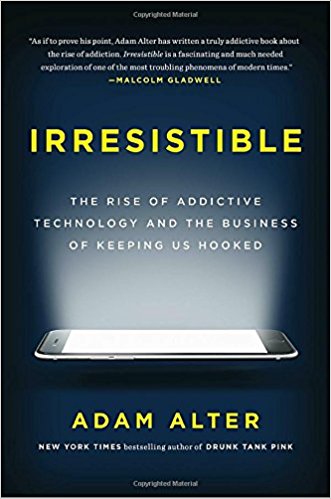

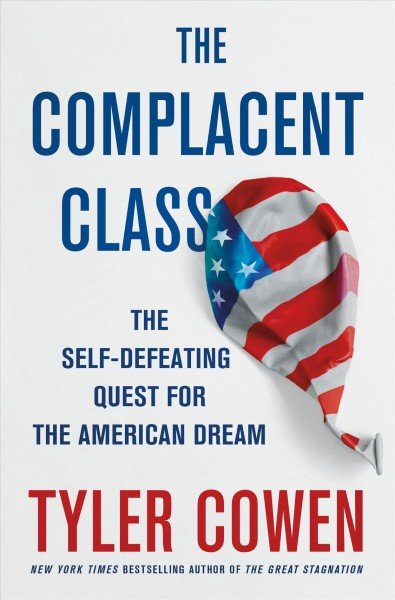
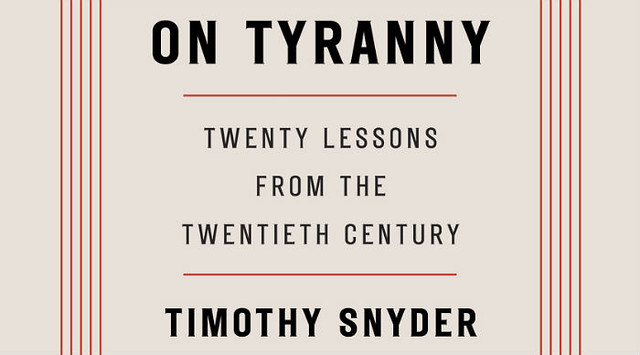

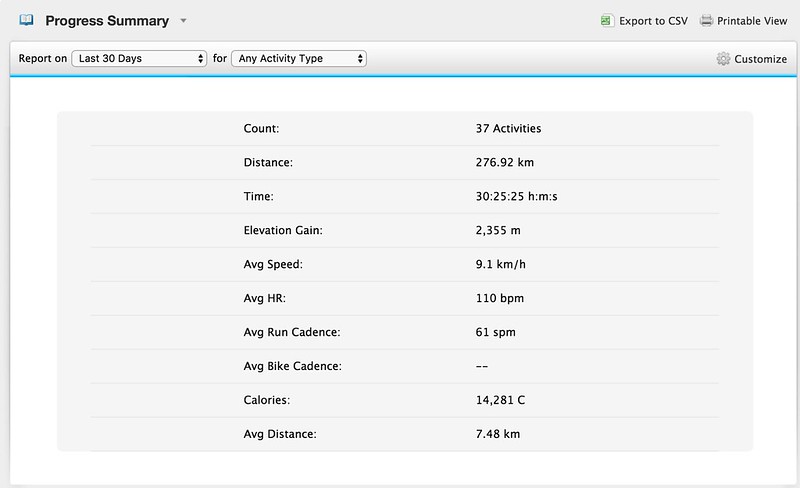

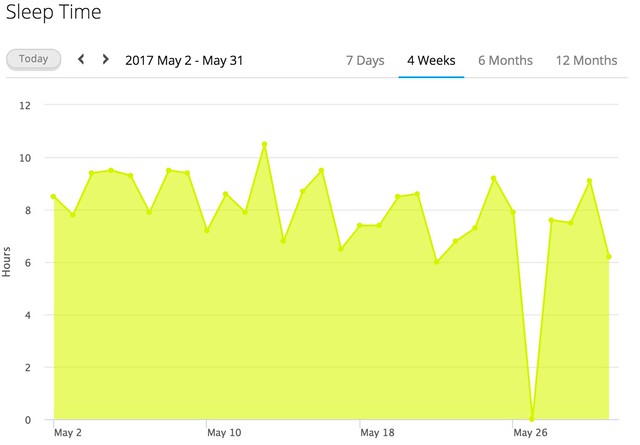
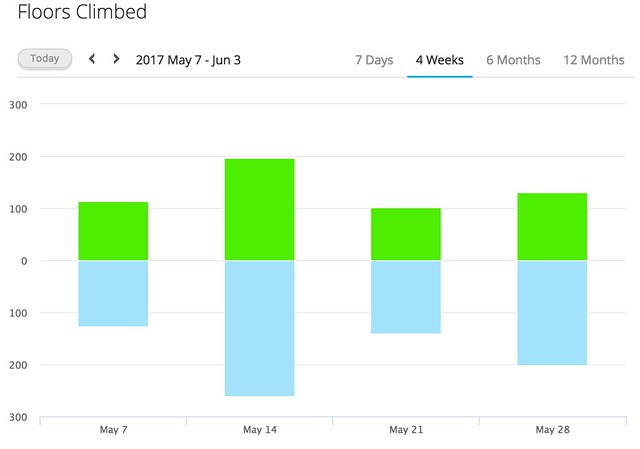
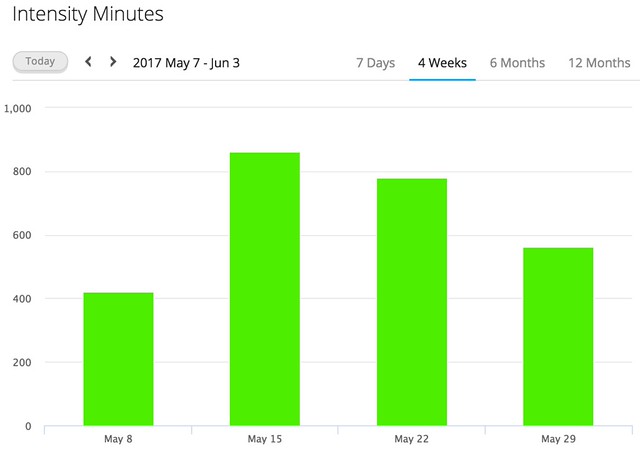
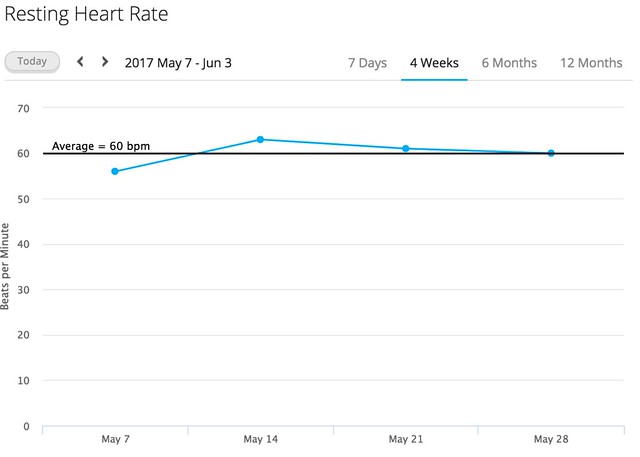
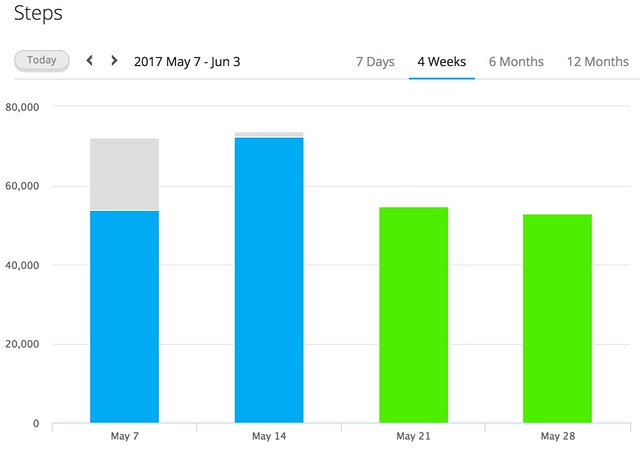
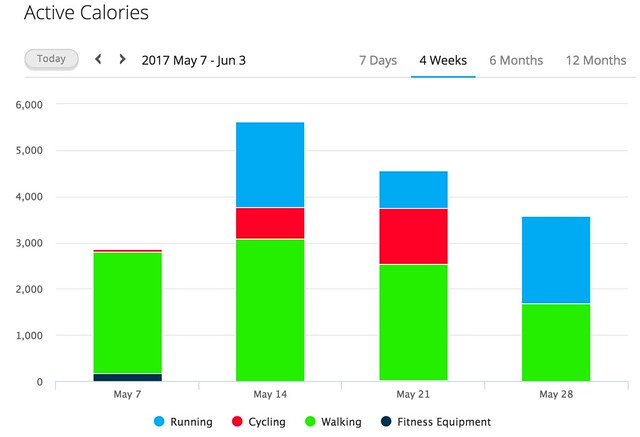
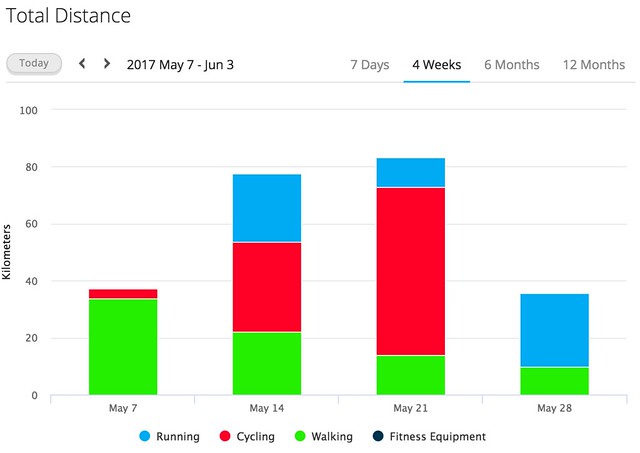
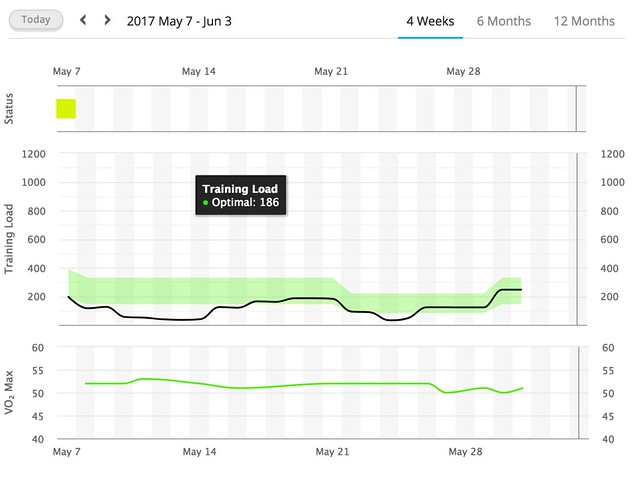







 SPIEGEL ONLINE - Schlagzeilen.


 Tech Insider.
 Apple Park as of the end
of May
YouTube/Matthew
Roberts
Apple Park as of the end
of May
YouTube/Matthew
Roberts
 YouTube/Matthew Roberts
 The barn when the area was
still farmland.Cupertino Historical
Society
The barn when the area was
still farmland.Cupertino Historical
Society
 YouTube/Matthew Roberts
 FCC
FCC FCC
FCC The world is brimming with must-visit natural locations for cyclists. From dedicated cycling holidays to taking a day trip into the countryside by bike, traveling through an area on two wheels means that you can experience the natural beauty in one of the most exhilarating ways. This post by guest author Nick Ball introduces 5 incredible cycling locations inspired by nature.


 garminblog's YouTube Videos:

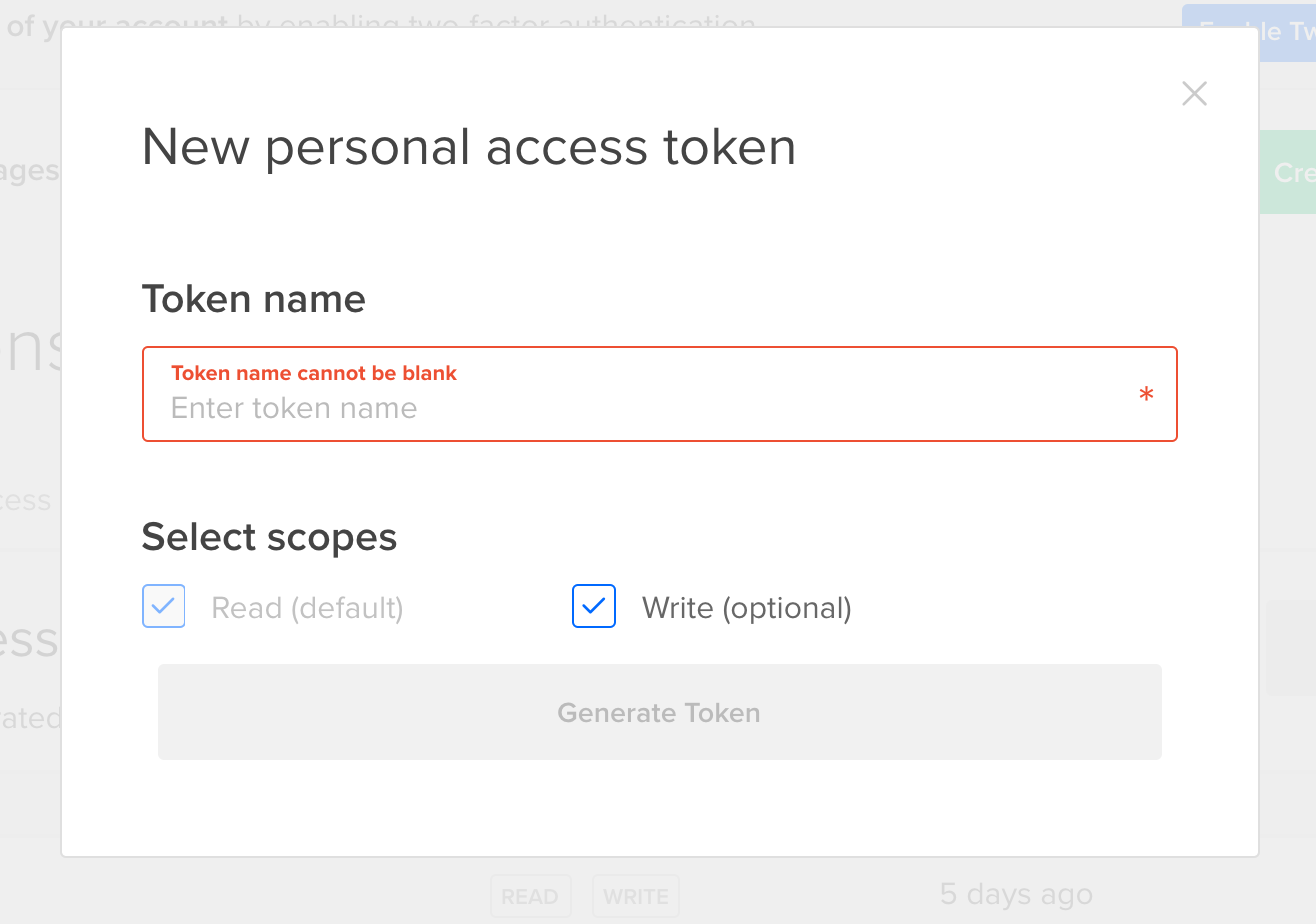 Digital Ocean generate token page
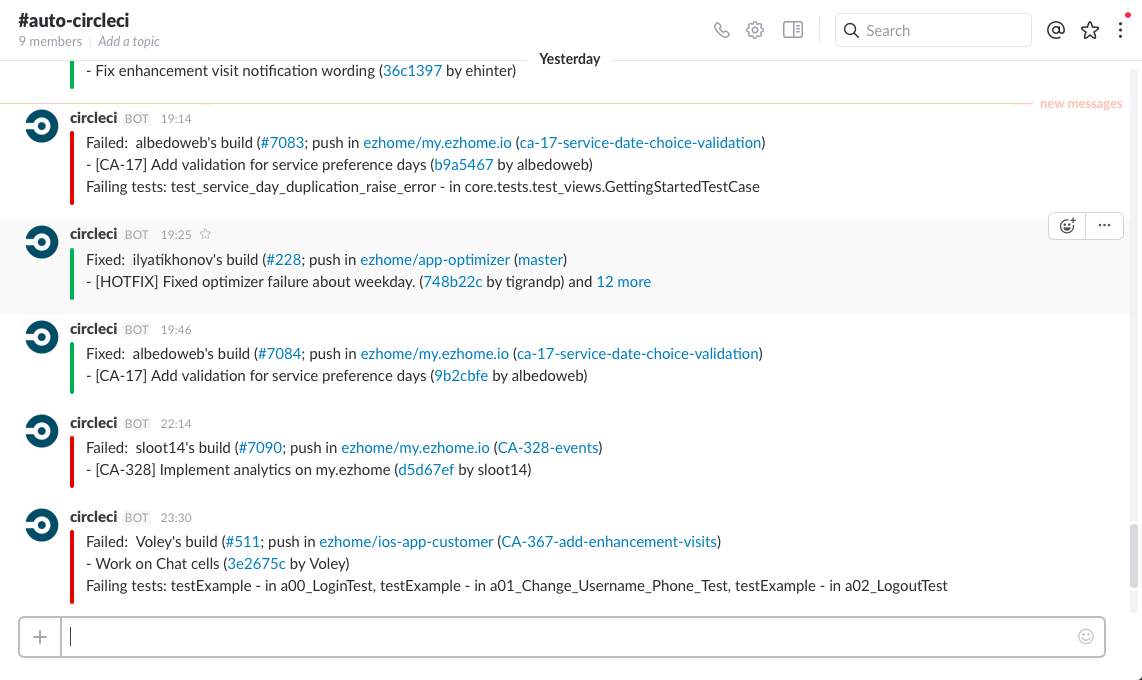 CircleCI/Slack integration. Photo credit - Igor Davydenko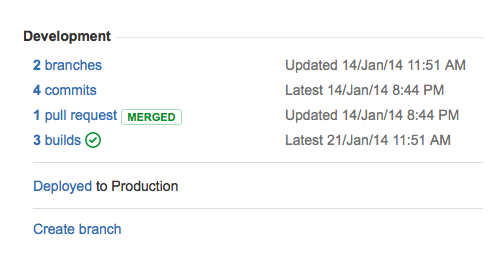

 Price Tags.


 CommitStrip.