Shared posts

23 Jun 18:57

Amazon attracts super talented people. Want proof? Here are 13 startups ex-employees founded (AMZN)

by Jillian D'Onfro

Amazon Jeff Bezos

The e-commerce powerhouse Amazon has spawned a wide range of startups, with its former employees working on everything from cute robots to recruiting software.

If you want proof that Amazon recruits some seriously talented people, just look at what they're doing now. 

Flipkart actually competes head-to-head with Amazon in India.

Flipkart founders Sachin Bansal and Binny Bansal both worked at Amazon before ditching in 2007 to start their own new company with a very similar business model.

The startup took off and Flipkart is now India's largest online marketplace in terms of sales.

Amazon, meanwhile, didn't enter India until 2012 with the price-comparison site Junglee (which it had acquired way back in the late 90s). It opened its official India website in June 2013. A year later, Flipkart raised a mammoth $1 billion funding round. Exactly one day later, Amazon said it was planning to pour $2 billion into its Indian operations. Flipkart currently employees 33,000 people and attracts more than 10 million daily visits.


Hointer founder Nadia Shouraboura brings the principles she learned at Amazon to brick-and-mortar retail.

Nadia Shouraboura worked at Amazon for 8 years, during which she scaled all the way up the corporate ladder into CEO Jeff Bezos’ elite “S-Team” of direct reports.

She eventually left in 2012 to launch Hointer, a futuristic retail store that wants to make the shopping experience as convenient as possible by integrating in-store apps and automating the process as much as possible. In its Seattle store, Hointer whisks clothing in and out of dressing rooms with robots. 


Matt Williams founded Pro.com to make every home improvement project a breeze.

Former Digg CEO, Andreessen Horowitz entrepreneur in residence, and long-time Amazon employee Matt Williams put together an ex-Amazon dream-team to take the pain out of home projects.

Pro.com gives people looking to tackle a home improvement project a price estimate for both materials and labor and then recommends professionals to get the job done.  

During his 12 years at Amazon, Williams did a stint as Jeff Bezos' shadow, an incredibly elite position. Williams has raised upwards of $17 million for Pro and a bunch of his coworkers are ex-Amazoners as well. 

After working at Amazon but before starting Pro, Williams served as Digg's CEO and an Andreessen Horowitz entrepreneur in residence. 


See the rest of the story at Business Insider
23 Jun 18:52

Digital Marketing Tip: One Page On Your Website You Need To Get Right

by Jeff Bullas

This is The One Page On Your Website You Have to Get Right

Impressing your business visitors often starts with that “wow” reception area.

You know…the ones that the lawyers and bankers have….

Glass, views of the harbour and those $50,000 pieces of art….

Marble floors, big leather sofas and grand spaces….. It’s meant to impress.

At the big end of town the investment in creating that right first impression can run into the high six figures….and more.

It’s the start of the seduction.

But the portal to your business is no longer just the front door to your office or shop. It’s your website, blog or even your profile on LinkedIn. The digital door is now where most customers visit you first.

The one page

Many website has have hundreds of pages or even thousands of pages.

One of the most visited is the “about” page….visitors want to know what your about and whether they have come to the right place to help them solve their problem.

The contact page is also vital and can provides a way of contacting via email, phone or even a chat service.

But at the end of the day you need to “convert that traffic”….and online attention into leads and sales. That one page that you need to “nail”… is your “landing page(s)”…. that captures that important email and allows you to communicate, convert and sell.

Want to Learn the 4 Steps To Quickly Grow Your Email List Without Spending All of Your Time On Marketing?

Join us next Tuesday where you will get:

  • The “Rapid List Building Worksheet”
  • The “Rapid List Building Mindmap”
  • Over 1 hour of training

Click here to claim your spot.

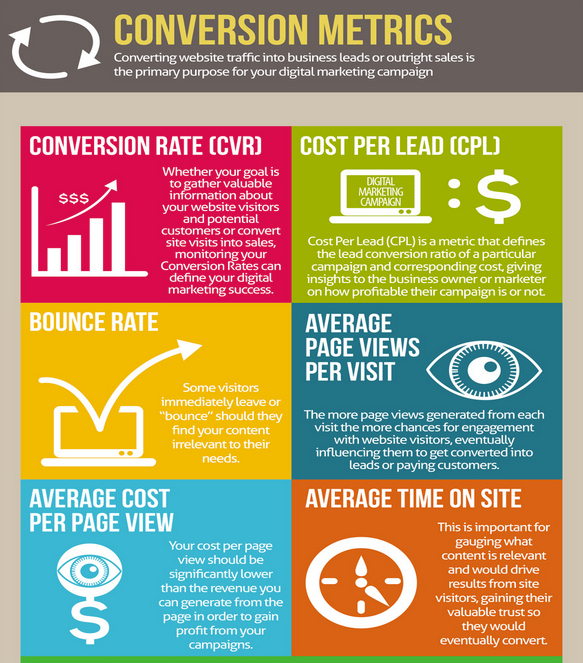
The conversion metrics

Traffic is one thing but conversion is where the action is doe that all important landing page. You need to measure its performance and then keep optimizing it.

Here are some vital conversion metrics to consider for your website and landing page.

Conversion Metrics

Image source: digitalmarketingphilippines.com

4 key types of landing pages

Here are some of the landing pages that are vital for digital marketers to master if they want to keep building their “list” and sell products.

Don’t ignore this digital marketing tip…

The examples below are some of the top performing and best converting pages from Leadpages.net according to their data from millions of data points. What’s great about their service is that you don’t have to get a designer to design and build but just login and easily build your own. Almost everything is editable in a matter of seconds. Title, colors, buttons, images, backgrounds, fonts, font sizes and much more…

How do you use them?

I use them for pop-ups for content upgrades, webinar landing pages and sales and much more. They also integrate into a wide range of marketing automation platforms (Eg Infusionsoft… which I use) and also email marketing software like MailChimp.

Leadpages also provides analytics and A/B split testing to keep optimizing the performance of your landing pages.

1. Basic landing page

Giving away something for free is always a good “lead magnet” and a free book, or PDF is a simple and effective tactic. Below is a simple and high converting landing page that squeezes that lead out of that website visitor.

landing page 1

2. Video landing page

Videos are well know for converting well.

Here is a simple example of a video page that offers a free video as well in return for that important email address. Notice the social proof at the bottom of the page that adds credibility to the brand.

video squeeze page

3. Webinar landing page

Webinars are one of the best ways to capture emails fast.

Free learning combined with a deadline creates scarcity that drives lead acquisition fast and at scale. In just 3-4 days of promotion you can capture 100′s or even thousands of emails if you partner with a high traffic site.

Notice the counter showing the days and hours to when the the webinar starts.

Webinar landing page 1

4. Sales landing page

Leads are great but we all want sales at the end of the day..

It might be a book, a training course or maybe a subscription site. Here is a simple example of a high converting book sale landing page. Just go in add your own book image. Outline of the chapters, testimonials and your brand colours.

sales landing page

23 Jun 18:52

5 Secrets To Make Lead Generation Work For You

by Mary Wallace

Yin Yang is perhaps the most known and documented concept used within TaoismDES-542-Blog-Post-graphic_3-Lead-Gen-Keys. With Yin/Yang, two halves come together to create wholeness.  Examples abound in everyday life: night and day; sun and shade; art and analytics.

Inbound and outbound marketing, when done right, are an example of Yin/Yang – two sides that make a whole.  Inbound marketing techniques draw potential customers to you while outbound techniques go to where the customers are less likely to find you on their own.

Regardless of how leads are generated, both inbound and outbound marketing techniques must fill the pipeline with MQL’s, SQL’s, sales opportunities, and deals.  The more sales opportunities and deals that marketing drives, the better the performance review in the boardroom.

Inbound marketing optimization has limitations.  For example, increasing the frequency of posting new blogs, adding more and more back links, modifying meta tags to comply with modifications in search algorithms might attract new leads.  But at a certain point there is a limited return for all that effort.  Outbound techniques allow marketers to scale their demand gen efforts significantly and produce a steady flow of high quality leads into the sales pipeline.

A Broader Range Of Ways To Engage Audiences

Outbound demand gen techniques provide marketers with a much larger arsenal to generate leads.  The vast audiences made available through paid media outlets – whether they are accessed directly via media buying tech (such as DSPs) or by leveraging the expertise of media partners – exponentially open up marketing’s reach.

Moreover, paid media provides additional channels through which to engage prospective customers.  Not all may be right for your specific audience, but a combination of various inbound and paid media tactics is most likely the Yin-Yang equation you’ll need to scale.

Outbound marketing isn’t easy. To get the most out of your outbound initiatives, you need the strategy and processes (and usually tech as well) to:

  • Identify the right audiences,
  • Engage with them in a meaningful way,
  • Incorporate generated leads into your nurturing tracks, and then
  • Measure everything so you know what’s working (and what’s not).

Finding the right leads at the right time and communicating with them in the right voice is critical to optimizing lead generation.  What follows is five field-proven techniques for getting the most from your outbound lead generation efforts.

Start With The Right Content  

The leads engaging at this part are in the early buying stage.  They’re interesting in solving a problem.  They want to know who may help with their situation.  Grab their attention by selecting an asset that speaks to them and their challenge.  The type of asset is less important than the asset content (though specific personas often have asset preferences).

Target Buyers

What company size, industry, geography, job role, persona is most likely to buy from you or influence the buyer?  Analytics on your existing customers will provide great insight into the optimal customer profile.  Predictive intelligence solutions like 6Sense and AgilOne further refine where to focus.  Filters or segments ensure the generated leads will eventually become customers.

Speak Your Customers Language

The key to engaging prospects and converting leads that become customers is to focus messaging on helping your customers solve problems and address pain points.  Be on-point with your messages and content.  Personalize what you have to say based on the lead’s needs.  Communicating in a plain problem solving voice makes it easy for the customer to see the value that your solution delivers.

Keep The Communications Going

Newly generated leads are seldom ready to buy.  In fact, MarketingSherpa reports that 70 percent of newly generated leads are not sales ready, but long term opportunities worth nurturing.  Forrester expands that point, asserting that companies that excel at lead nurturing generate 50 percent more sales-ready leads at 33 percent lower cost per lead.  A multi-touch nurture program will keep the customer’s needs at the forefront of every message and engage with them leads until they are ready for sales.  Thus, it’s crucial that you get leads into a nurture track as quickly as possible to ensure prospect interest doesn’t fade – velocity is everything.

Review Your Track Record

Analyze the results of your lead generation campaigns.  Can you determine what worked and what didn’t work?  Looking at the results from a multitude of different angles will provide quantitative data to optimize sources, filters, messaging, voice, media channel, etc.  This information can then be used in the next campaigns that you launch to improve results and take another ROI leap.

The benefits of an optimized lead generation effort don’t stop at a strong ROI:

  • Brand messaging is heard loudly by buyers
  • Strong qualitative results reported at the boardroom
  • Lower volume of unwanted leads at the top of the funnel
  • Sales focus is on the right leads at the right time, reducing wasted time and energy
  • Ability to continue conversation with leads that matter

Which side of the yin/yang sphere a lead is generated is of limited importance.  Both inbound and outbound demand generation tactics are essential. The key is to focus the right message, on the right lead at the right time.

Learn how to generate leads effectively

23 Jun 18:52

A 14-Point Credo for the B2B Demand Generation Samurai

by Louis Foong
Louis Foong, lead generation samurai

Me, Louis Foong, in Paris as a Samurai in a video shoot (more info to come)

We are at the halfway mark for 2015. The year has seen a lot happen around the world—good, bad and ugly. From the world’s first fully sustainable, zero-carbon, zero-waste city completing Phase 1 (Masdar City, near Abu Dhabi), to the first self-regulating artificial heart becoming available in the EU, to the first commercial advertisement on the moon by Japanese beverage maker of Pocari Sweat, to horrific events such as the massacres in Nigeria by Boko Haram, the Airbus A320 crash in the French Alps, the devastating earthquakes in Nepal, and many more events that have made 2015 the kind of year we won’t forget in a hurry. With another six months to go before we close out this year, now is as good a time as any to reflect on what we have achieved and where we are headed, what drives our passion, what we aim for and where we can find the inspiration.

Christians have The Ten Commandments, the Torah offers Jews the Shloshah Asar Ikkarim (13 Principles), the Five Pillars of Islam drive the foundation of Muslim life, and every major religion has an ideology or doctrines that help believers stay true to their faith. In our personal lives, we make resolutions at the start of the year; some we forget, and others we continue to strive for. It’s a good ritual to follow, but you need something more than a ritual. You need to think beyond seasonal and annual resolutions to a perennial manifesto, a credo that guides you through life. Should you put this credo in writing? I think it helps to do so, because we forget very easily. Having something to go back to and reflect on when you are distracted and swaying off your path can be very useful. Here is some great advice on how to make your own manifesto.

As a leader, your personal credo can also influence and guide the manifesto for your brand. The values that your organization and your team uphold can benefit hugely from the thought leadership and philosophy that you practice and share. Not sure where to start? Read these tips on creating your brand manifesto.

I was in Paris recently for a one-of-a-kind video shoot (I will share more about this in a future post) where my “role” was that of a Samurai. In order to immerse myself completely into the role, I sought out and deeply reflected on this Samurai Credo. These 16 principles resonate with my personality and the beliefs that have shaped my experiences of life.

Does your organization have a manifesto? Here is an insightful Infographic on the B2B Lead Generation Manifesto. In the complex and ever-evolving world of B2B, you also need a credo that becomes the cornerstone of how you measure everything you do and whether or not it makes the world a better place for your customers.

B2B Demand Generation Credo—14 Principles to Live By

As CMO of your B2B enterprise, you have the power to become the Samurai—the honorable warrior who is dutiful to the organization, a leader of men, loyal unto death when it comes to upholding the values and promise of your brand.

Here is my recommended 14-point Demand Generation Samurai Credo.

  1. Effective lead generation is not a sprint but a marathon. Prepare for the long road. Forget spike marketing and aim for deeper relationships through engagement.
  2. Complexity is the enemy of effective lead generation programs. If you need a whiteboard to explain your lead generation process, you have gone too far. Rally your team around realistic goals and encourage them to take ownership of customer experience.
  3. Pull, don’t push. Resolve to never push leads out to your field force and to your sales channels; it does NOT work. Get them to come and pick up their leads and track progression. Use the transformational, new lead distribution methodology that has won the Best Demand Generation Solution award from one of the largest IT manufacturers in the world.
  4. A lead is a privilege, not a right. Make sure your sales and marketing teams understand this. If you have channel partners, see that they understand this too. Seeing a buyer demonstrate interest in interacting with your brand and moving towards a buying decision is a very important privilege that must be handled with the greatest care. There is tremendous ‘buyer fatigue’ with 24×7 sales talk and pushy sales tactics. Bombarding them with sales messages will only drive them further away and end up making them brand-averse towards your company.
  5. Great sales people close business…let them. Don’t think you can substitute people with systems and the latest tools. Technology is only an enabler; buyers want to deal with real people.
  6. Lead generation is more about the right process and less about the right platform. There are far too many platform specialists touting their platforms as the best one to use. If you don’t have the right process that is tailored to your target personas, your platform will fail, undoubtedly.
  7. Congruency works, misalignment kills. For years now, we have been talking about decentralization, breaking down of silos, achieving marketing and sales alignment, but it hasn’t happened the way it should. Particularly, the large organizations that have too many moving parts and even more talking heads, are still struggling with trying to find the balance.
  8. Reporting and ROI are critical, but drowning in complex metrics and reports creates analysis-paralysis. Make the effort to simplify your reporting and get a 360° view of your B2B lead generation activities. Big Data is only useful if it helps you gain actionable insights that will drive Big Results.
  9. Do not confuse activities with results. It is easy to get carried away by the numbers, especially in social media marketing. The volume of social activity or fans and likes generated mean nothing if you don’t have quality engagements that will help nurture long term relationships.
  10. Less bling, more substance. The shiny new toys are very attractive. Added to that is peer pressure, industry trends and competitor activity. What you need to look for, however, are solutions that will work for your target audience and your brand. Never mind if you don’t have the sparkle and shine, if you have substance, that’s what counts.
  11. Innovate, then innovate some more, then innovate again. Never stop because that is the true purpose of business—to innovate and make life better for others. Tried and true methods are good, so don’t discard what works. That should not stop you however, from making small, significant changes that will hold the attention of your buyers and make your brand stand out.
  12. Business is personal. If your offering is not personalized to your buyers, you are wasting their time and yours. Whether you are a billion dollar, global corporation or a small, local outfit, you need to serve your customers like a boutique that customizes every buyer’s order and delivers an exemplary experience each time.
  13. Beware of legacy issues. “It’s how we have always done it”, is no longer a reason to continue like that. In fact, that should be the driver of growth hacking and disruptive marketing. Shake things up, take some risk, be bold, stand by your decision and take pride in the changes that you see.
  14. Less is more; your content must provide value. Yes, it is the wave of content marketing, but quality, not quantity is what drives conversion. As you continue to create high volumes, check to see if your B2B content is killing sales.
23 Jun 18:52

What’s slowing down your sales development team? You are.

by Chris van Loben Sels

Are your sales development tools overloading your reps?

As a sales development manager, you do everything you can to increase your team’s velocity and get results. But, many of the things you do to make your team more effective also makes them (and you) less efficient.

Sales meetings, sales playbooks, lead tracking — the main tools you have to increase how well your team works — they all drag down how much time your team has to actually sell. We’ve analyzed the blow-by-blow, minute-by-minute work of sales development reps in multiple organizations. Here’s what we’ve found are the three worst speed bumps on the sales development road.

Meet Jane, director of sales development…

Let’s walk through an example: Our hero, Jane, the sales development director, has a new plan to contact leads from a trade show. She wants the team to follow a particular pattern – first call and email, then wait a day to follow up with a second email, then make a call the next day, and so on.  She has different email templates and call scripts for businessperson leads and technical person leads.

It’s all pretty standard stuff, but let’s look at how much time Jane spends to make it happen:

Speed bump 1: Playbooks.

To get ready for this project, Jane spends an entire morning writing up the plan and adding it to the sales playbook in order to train her team.  Sadly, Jane has to write a mini computer manual to cover all the logistics: the step-by-step of how to find the leads in the CRM system, how to claim them, where to find the right template, how to code them in the CRM system, and how to set reminders for when to make the next contact. All of this is on top of the basics of when to call versus email, how many days to wait for the next contact, etc.

Since there’s always a new project, writing playbooks takes up a pretty big slice of Jane’s week, time that she’d rather spend figuring out ways to increase conversions.  But at least this speed bump only takes up Jane’s time – the other two impact the whole team.

Speed bump 2: Training meetings.

Time is of the essence for this project: Jane wants to contact these leads as soon as possible, before the leads forget what they saw at the show (and since competitors are trying to reach them too). So Jane wants the whole team on this job. She takes the whole team off-line for an hour to go over the plan.

The sad thing is, only about 15 minutes of this time is spent covering the actual selling pitch. The rest of the time covers all the logistics, so the team knows how to follow all of the logistical details in the playbook. Jane tries to balance keeping the meeting short with actually feeling like her team understood all of the details of the new project.

Speed bump #3: Bookkeeping.

The most innocuous sounding speed bump – bookkeeping – is actually the most costly. Jane’s reps lose time mucking about with importing and exporting leads before they even get started. Then, before each contact, they have to find the next lead, mark it as theirs, and select the right template.

After they do the actual work of reaching out to the prospect, they have to record what happened in CRM, then look up in the playbook what the next action should be and when, and then create a reminder to do the next action at the right time.

In our work with customers we’ve found that, in many teams, the bookkeeping takes as long as the selling task itself — meaning that all this bookkeeping can consume half of a rep’s day!

Unfortunately, if Jane cuts out down on the bookeeping, her reps won’t be able to track how many times they’ve followed-up — and they’ll either waste time on leads that they’ve already hit ten times, or let valuable leads fall through the cracks.

But wait, don’t we have lots of sales tools?

Sales development is miles ahead of where it was just three years ago. Most teams use a stack of tools. So why is Jane (and the rest of us) still trapped using meetings, calls, and manual bookkeeping?

Let’s look at how today’s common tools help, but don’t solve Jane’s (or her team’s) real problem:

Diallers. Diallers are an incredible invention, but even the best don’t give Jane a way of outlining all of the steps she wants her reps to take. The playbook, the meeting, even manually setting reminders are all still needed.

Sales email tools. While these tools help manage templates, they also don’t give Jane a way to tell reps when to call next. So, again, it’s back to the playbook, the meetings, and the bookkeeping.

Sales automation tools. We have finally begun to see some tools that allow individual reps to set up sequences of emails and tasks. These save the rep the time it takes to set follow-up reminders after each contact. But most are still tools for the indvidual rep, who has to set up the sequence themselves. How do the reps know what to set up? You guessed it, by going to the meeting and reading the playbook.

What does the next level of sales development tools look like?

Most of the tools today are for the individual rep, not for Jane, and not for the team. What Jane and her team need is the ability to just pick the right plan and get back to selling. Once Jane picks the plan, the tool should fetch the leads, show each rep what to do next, fetch and fill the right call and email template. They shouldn’t be doing bookkeeping, they should just be selling.

23 Jun 18:45

In Sales Development, When Does Persistence Become Insanity?

by Chris van Loben Sels

Have your lead follow-ups made your sales development insane?

“If at first you don’t succeed, try, try again.”

“Insanity is doing the same thing over and over again, expecting different results.”

We’ve met sales development teams all over the spectrum between these two quotes – teams that hit a lead once and forget about them and teams that call someone every day for, well, forever.

What’s the happy medium between the two? How many lead follow-ups is too many? How many is too few? First, let’s look at the two extremes:

“Hit ’em once and go.” In this extreme, sales development reps get a list of leads, pound through the list with an email or call or two, then go on to the next list. The manager of the team might not even know he or she is running a “hit ’em once and go” team. We find this approach in teams with minimal tools, metrics, or formal processes.

What’s wrong with this approach? These teams may be leaving 52 percent of the money on the table. According to a much-quoted Velocify study, touching each lead just two more times will increase your conversion rate 50 percent. Sticking with a lead for a total of six touches will increase your conversion rate 94 percent above what you’d get with a single call. It’s simple: it’s critical to catch your leads at the right time. The competitor who keeps trying is more likely to succeed and advance. If that’s not your team, it will be someone else’s.

And then there’s the other extreme…

“I’ve called that lead every day for the last two years. I will call them again tomorrow.” In the opposite extreme, once a rep has a lead, they never let go. Ever. Really, ever. We’ve met folks who have been calling a victim lead consistently over a year.

What’s wrong with this approach? Bad manners and opportunity cost. Going back to the Velocify study, if you go from six touches to nine, you might lift your conversion rate by only 4 percent. If you call a lead 200 times, that’s 200 calls you could have made to leads that would have converted, instad of pounding on one that won’t. Worse, you’ve actually hurt your reputation with this (admittedly stubborn) account, so you’re further behind where you could have been.

So how do you find a happy medium?

The highest performing teams think outside of the “touches per lead” box.

Instead of thinking about touches per lead, high performing teams think about sales development campaigns. Each lead from a particular source may go through three campaigns (each of which may have 10 touches per lead).

These teams vary the call-to-action, message, and approach per campaign. Since they aren’t just beating their head against a wall, conversions go up.

The first campaign always uses a standard sales development approach, stating the value proposition and asking to set up a meeting/call/demo/etc. The rep runs this campaign until the lead has been touched 6 to 10 times.

But when that doesn’t work, they don’t give up there. They start a new campaign. (Though often they let the lead “rest” in marketing for a while first.)

For example, they may have a local event, such as a steak dinner with a traveling exec or tickets to a game – something of value that isn’t tied directly to the product pitch and asking for a meeting. Marc Benioff is famous for using steak dinners to grow Salesforce from a departmental to enterprise solution. And it still works. (For example, David Ulevitch, CEO of OpenDNS recently spoke at Saastr, entitled “Steak Dinners, and Trade Shows – Racing toward $100m+ ARR and Growing 100% YoY through Enterprise Field Sales“).

The campaign approach combines “never let go” relentlessness without slipping into insanity. If your standard pitch doesn’t work after 10 tries, the problem is probably the pitch, not the number of tries.

Sadly, while most marketing tools center on campaigns, most sales development tools don’t. We’ll write more about what makes a good sales development campaign tool soon. But in the meantime?

Stop the insanity, but don’t give up!

23 Jun 18:45

4 Sales Tips from the Big Screen [Infographic]

by Nick Hedges

Hollywood is known for its dramatized portrayal of different character types. Salespeople in particular have been depicted as greedy con men with one motivation: money. On screen, we are accustomed to seeing salespeople wearing fancy suits, schmoozing with potential customers and toying with ethical boundaries. But that stereotype does not always hold true. Some of the best movies get it right and actually illustrate the qualities it takes to be an impactful leader.

In Moneyball, the Oakland A’s general manager, Billy Beane, is a leader who is willing to push the boundaries to prove you can do more with less money. With one of the smallest budgets in the league, he was able to assemble one of the most talented teams. A perfect example of a strategic business thinker, Billy leveraged data and analytics to gain a competitive advantage against his peers.

The main character in Jerry McGuire was a sports agent who also took on the role of a salesman. Jerry demonstrated incredible motivation to achieve his goals, acted with a sense of clear direction and made well thought-out and deliberate decisions. Even though Jerry was ousted from his agency, he was able to make a comeback; through dedication and hard work, he was able to build a successful business based on real relationships.

Both characters are prime examples of leaders who persevered and succeeded in spite of the odds against them. Other movies come loaded with valuable tips that real salespeople could benefit from. For example, the 1992 film Glengarry Glen Ross followed four real estate salesmen as they chased down leads and explored different sales tactics in an attempt to lock down the final deal. Some of their attempts are unscrupulous (or illegal), but others are genuinely meritable, from the finesse it takes to deliver a good sales pitch to motivational tactics that keep your reps focused on the right goals.

The infographic below features four movie quotes that showcase the core values of what it takes to separate good sales organizations from great ones.

4-cinematic-sales-tips

19 Jun 17:14

To succeed while working for a tech startup, master cultural fit first

by Quora
Officeculture
Feed-twFeed-fb

This question originally appeared on Quora.

What are some cultural faux pas when working at a tech startup?

Answer below by Quora user Amin Ariana, technical hacker, founder and advisor.

In my opinion, the biggest faux pas might be claiming absolute knowledge about anything.

In a tech environment, even if you're 100% confident about X being true, you express it with, "I think X might be true" or, "Let's try it with the assumption of X and see if it works," so that you allow room for the possibility that others may contribute something you did not think of.

For example, saying "... and that's the best solution for that problem" during an interview, without taking a few seconds to ponder and argue it logically or without claiming that it's plausible that you're wrong, is one way to slash your odds of being hired. Read more...

More about Quora, Job Search Series, Business, Startups, and Jobs
19 Jun 17:08

This Graphic Teaches You the Basic Elements of Good Design

by Eric Ravenscraft

Any good craft needs a toolbox. If you’re a designer, your toolbox is style, which unfortunately you can’t put into organized drawers. This graphic, however, lays out your basic tools as a designer.

Read more...

19 Jun 17:03

Ideal conditions for more Vancouver tech IPOs as resource sector struggles

by CB Staff
Rnordman

Way to go Brent

CALGARY – Vancouver’s high-tech sector is poised to cash in on Canada’s public listing boom.

The combination of lower returns in traditional resource sectors, alongside a strong pool of tech companies valued in the hundreds of millions, has created ideal conditions for them to go public, Brent Holliday, CEO of Garibaldi Capital Advisors, said in an interview.

“What you see is a thirst for public issues from the institutional investors in the TSX, where they’re going to get some return, where they’re going to get some growth,” said Holliday.

Vancouver-based Mogo Finance Technology Inc., the creator of an online loan platform, is already working through a public listing as it looks to raise $50 million.

The company has reportedly settled on a slightly lower issuing price than the $11 to $13 it was seeking, but Nick Waddell, editor of the technology-focused Cantech Newsletter, says it’s still been a strong showing.

“I think it’s only a lukewarm reception when compared to a Shopify, because coming on the heels of something eight times over subscribed is a tough act to follow.”

Waddell says Vancouver tech companies are growing more confident that they can compete internationally. That has meant fewer companies selling out early as they instead concentrate on growing their business.

“There’s a new attitude among these 20-something, 30-something founders,” says Waddell. “There’s a confidence that we can take on the world, and we’re going to do it.”

Holliday points to the growth of later-stage funding to help their companies grow, rather than being forced to accept a takeover offer.

“Those companies that could have been IPO candidates last decade ended up selling early; they had no other way of growing,” said Holliday.

He points to new funds like OMERS Ventures, the venture capital arm of the Ontario Municipal Employees Retirement System’s pension fund, for helping fill the void in the $10 million to $50 million range of funding.

“That really gives the companies the fuel they need to become global players,” said Holliday.

Vancouver-based Hootsuite is one of the most highly anticipated public listings in Canada, but so far the company hasn’t made any time commitments about going public.

The company is one of many that’s benefitted from late-stage funding, raising $60 million last year from existing investors Accel Partners, Insight Venture Partners and OMERS Ventures.

Hootsuite’s CEO Ryan Holmes has been a champion of growing companies in Vancouver. Back in 2013, he committed to long-term investment in the city in an editorial.

“My colleagues and I want to grow HootSuite into a billion-dollar company right here in Vancouver, then go on to fund a whole new generation of tech ventures in the city. We’ll have the capital and the experience to make a real run at turning Vancouver into a legitimate high-tech centre.”

And while Hootsuite, which helps companies manage their social networks, is one of the more closely followed public listing candidates, there are many others in the city.

Holliday says there are probably 20 technology companies in Canada that could go public, pointing to Vision Critical, which provides customer research, BuildDirect, an online home improvement retailer, and Cymax Stores, an online furniture retailer.

Follow @ibickis on Twitter

The post Ideal conditions for more Vancouver tech IPOs as resource sector struggles appeared first on Canadian Business - Your Source For Business News.

19 Jun 16:56

Advancements in Open Source Assistive Technologies

by Lacey Thoms

Open source software (OSS) positively impacts many large industries from healthcare to education—these effects are now being felt at the individual level as well. The speed of delivery and cost efficiency of OSS enables developers to provide multi-use, flexible and readily available software as opposed to proprietary options. OSS allows software developers to create assistive technologies using open source interfaces that directly improve the day-to-day lives of members of the special needs community or individuals who have physical disabilities.

According to the World Health Organization, nearly 15 percent of the world’s population lives with some type of disability. Individuals with special needs or physical disabilities are looking for innovative technologies to help them function with ease and autonomy in day-to-day tasks and when in the workforce.

Assistive Technology Software is a term used to describe assistive, adaptive or rehabilitative devices that are used by individuals with disabilities to promote increased independence and quality of life. Unfortunately, because individuals with disabilities represent a small percentage of our global population means designing assistive technology has not been a priority. For this reason, most proprietary assistive technology to date has been cost-prohibitive for many people in this community as it is highly specialized.

As such, the flexibility and lower pricing of OSS products have allowed for more easily attainable assistive technology. Provided that users heed open source license compliance when creating and modifying code, they are free to contribute as many new ideas to the OSS assistive technology market as possible.

Due to this freedom and flexibility, there is now a wealth of open source innovations that can support existing software. For instance, Linux has a screen reader support function that can be installed on software like Knoppix and Ubuntu.

In fact, there are now entire code repositories—like Open Source Assistive Technology Software (OATS)—dedicated to storing the increasing number of open source assistive technologies that are currently available today. On the OATS website, users can search for open source software by the type of need it serves, e.g., visual and auditory. It also allows developers to work directly with users and other programmers to work on new features and reuse existing applications.

Recently, the Japanese company exii developed a 3D printed bionic limb who’s source code is freely available. By making the source code available, exii hopes to encourage innovation and accessibility in the maker community and in doing so is bringing game-changing assistive technology within the grasp of many individuals living with physical disabilities.

It is typical of the OSS community to freely share information – opening up files, publishing projects, documentation and demonstrations. This is a community of individuals who want their code to be used in as many applications and for as much good as possible.

The emergence of open source assistive technology showcases the many ways that OSS can improve not only our industry-specific needs, but to improve the day-to-day quality of life for many.

19 Jun 16:56

This chart shows why Google’s smart home bet may be a flop at first

by Cadie Thompson

Nest cam

Google just made a big push to own the smart home. But it’s efforts may be in vain.

Nest, which is owned by the search giant, rolled out its new line of smart home products on Wednesday, and while the update to the devices were impressive, the company still has one big problem. Nobody seems to want a connected home.

According to a recent report from Argus Insights, consumer interest for connected home products slowed dramatically in the first half of 2015 and is continuing to fall.

In May consumer interest in smart home products dropped 15% below where it was a year ago, according to the report.

Connected Home Demand

While Argus’s data is based on the volume of consumer reviews from a slew of different retailers, other data also suggests that U.S. consumers just aren't that into the idea of home automation. 

Only about 13% of U.S. households with broadband report owning at least one smart home device, according to a report  published by Park Associates and the Consumer Electronic Association last year. And 62% are unfamiliar with smart home products, according to the report.

However, it's also worth noting that while this data suggests people aren't interested or educated about home automation devices, Google Trends — which shows what people are searching — shows that people are searching more for things like "smart home," "smart thermostat," and "connected home."

“Crudely speaking, about 10% of US online adults report having and using one of these smart home gadgets. That’s been increasing gradually over the last couple of years. We think there is an early adopter interest there. But we also think it’s going to grow gradually and it’s going to be bumpy,” said Frank Gillett, a technology analyst at Forrester Research.

Part of the reason consumers haven’t fallen in love with the idea of decking out their homes in smart devices is simply because they want to make sure the cost is worth it. While all of Nest’s new products fall into competitive pricing categories, the company will still have to convince the masses that dropping a few hundred dollars here and there will pay off in the long run.

“One of the things that we hear in our qualitative surveys is people being really concerned about value. Some of them are skeptical. They don’t think they need an app for that,” Gillett said.

“But it’s definitely on the early side and people are definitely interested in small, discreet purchases rather than some kind of complex, big thing,” he added.

SEE ALSO: Apple has a smart home problem: People don't know they want it yet

Join the conversation about this story »

NOW WATCH: Here are all of Google's awesome science projects — that we know about

19 Jun 16:56

Is the Future of Twitter in Data and Analytics?

by Fatih Mehtap
Is-the-future-of-twitter-in-data-and-analytics

Image credit: DigitalTrends.com

There’s something to be said about unique companies that have a stellar product, who go IPO, and then suddenly find themselves having difficulty coping with their new public identity. While the ultimate benchmark of success is always going to be their ability to generate consistent revenues, what sometimes gets lost amidst shareholder demands, are the finer nuances of why consumers love the business, and the need to avoid falling into the trap of comparison. As the age-old saying goes, you can’t compare apples to oranges, just because they’re of the same ilk.

Much commentary over the departure of former Twitter CEO Dick Costolo has already been made. The #ThankYouDickC tributes in particular were an apt gesture in saying farewell to a man that transformed Twitter into the technology business it is today. Whether you agree with that or not, is of course your prerogative. But I wanted to write this post to focus on a different, yet related aspect of Twitter’s headline grabbing news: the case for sustainable growth.

I wish I had a more positive experience of working with Twitter’s advertising products as a Marketing buyer. For transparency, I’ll add the disclaimer that this was over a year ago, and the product is bound to have evolved for the better since then, perhaps rendering the points here moot. But it doesn’t change the fact that at the time, there wasn’t a whole lot of value derived. On any given day, angry Twitter users would lambast us for clogging their feed with irrelevant ads, which is not a great outcome, considering the ad campaigns are sold as a targeted communication mechanism. The reporting available was disappointingly high-level and practically anonymous, while I couldn’t quite justify paying for retweets and favourites (a practice that has since changed), when I knew that the key to real engagement was good content, useful information and timely dialogue.

Of course there are always soft benefits to such advertising like brand awareness that are worth mentioning, along with the argument in favor of piloting small marketing projects to see what sticks. But overall my lasting impression of the program was that the targeting criteria Marketers could leverage was limited, and the placement algorithm incredibly weak – a sacrilege considering the amount of rich, personalized data the Company has on user interests. With so many businesses prioritizing data modeling to analyze user behavior and context, you would expect Twitter to have the king of algorithms. And therein lies the problem, and the solution.

For years now, software companies in the business of social monitoring have created lucrative returns mining the data available from social media sites like Twitter. They help companies address a myriad of challenges related to measuring brand health, consumer sentiment, customer service success and overall user engagement, by offering in-depth reporting, analysis and a semantic view into the data. And while Twitter seems to have come to it’s senses to realize what a gold mine they’re sitting on (the GNIP acquisition, restricting ‘firehose’ data access et al), there’s a real urgency to take more radical steps towards regulating access and the governance of this proprietary data.

The revenue Twitter makes from syndicating data plays second fiddle to the star attraction: earnings from advertising. Admittedly, I’m not a fan of their advertising offering, although I still think there are more obvious avenues Twitter has yet to explore – the simplest example being to create an advertising program where companies can hire the wallpaper of subscribed users. Twitter could pay opted-in users a small commission fee in return for being able to rent out such real estate. Consumer brands are already doing this to a degree, working directly with users who have influential followers to plug their products in tweets and pictures. So long as it’s operated within the confines of a structured program, this could be a solution to offering a less intrusive advertising solution.

But by nature, Twitter’s advertising product is always going to have its limitations – and rightfully so, in order to protect the authenticity of the platform. The monetization of user data is where it’s at, a solution that would also go a long way to address the concerns of shareholders. While I appreciate there’s always a case for wanting user growth, Twitter could become an example where the emphasis is less on net-new user acquisition, but more on making better use of how to mine information from the 360 million users active on the platform today. Putting significant resources into creating semantic and semi-semantic views of the data, where outputs relating to trends, activity summaries, user relationships, behavioral interpretations and transactional reviews are easily summarized, would form the basis of a suite of business intelligence reports. Hiring best-in-class data scientists and programmers to build a killer reporting and analytics console with different monetization flavors based on the type and volume of data consumed, would be the logical conclusion.

Organizations have already figured out how to make good use of Twitter’s data to address customer service problems, as part of the social selling equation, to conduct focus groups through listening and monitoring conversations, and to research future trends by building their own data warehouses. There’s no risk to implementing the above – the platform has become too valuable a source of information for companies to give up caring about what users are saying. The most important relationship here i.e. the one with Twitter users themselves, can be maintained unaffected. By securing recurring revenues through a formula that’s much more systematic, the company will be able to re-focus their energies on continuing to deliver an authentic, worthy and engaging user experience.

This article originally appeared on Spilling the Marketing Beans, and has been republished with permission.

19 Jun 16:55

Mark Cuban's 3 fundamental rules for running a business

by Richard Feloni

mark cuban

Mark Cuban is the billionaire investor best known for his roles as a "Shark" and the owner of the Dallas Mavericks.

Throughout his career, he's made over 120 investments, from large companies like Landmark Theatres to startups on "Shark Tank."

For all of the businesses he's been a part of, he's developed a set of "rules that have been almost infallible," he writes in his 2013 book "How to Win at the Sport of Business."

We've summarized the three he's used "religiously."

1. Understand the difference between adding value and benefiting from a bull market.

In the same way that some stock market investors think they're geniuses when they keep picking stocks that go up, failing to acknowledge that all stocks are doing the same thing, Cuban says entrepreneurs can fail to recognize that a good deal of their success is due to a fad or trend.

"There is nothing wrong with going along for the ride and making money at it, but it will catch up with you if you lie to yourself and give yourself credit for the ride," he writes.

Cuban says that he saw this happen with professional sports leagues in the aughts. He says that many team owners became enamored with rising revenues from television rights deals, crediting it to their own "brilliance." He says, however, that he and his Mavericks partners recognized that revenues were actually rising due to competition among cable and satellite providers. Cuban couldn't become complacent.

"It's a bigger challenge to recognize that the bull market may end and our programming needs to be of sufficient value to our customers and viewers for it to maintain or continue to increase in value," he writes.

2. Win the battles you're in before moving onto new ones.

Cuban writes that he had a chance to take Landmark Theatres international but that any time spent on developing a global presence was time not spent growing its national presence, and so he decided against it.

"You do not have unlimited time and/or attention," he writes. "You may work 24 hours a day, but those 24 hours spent winning your core business will pay off far more. It might cost you some longer-term upside, but it will allow you to be the best business you can be."

3. Don't drown in opportunity.

"If you are adding new things when your core businesses are struggling rather than facing the challenge, you are either running away or giving up," Cuban writes. "Rarely is either good for a business."

Melissa Carbone, president of horror attraction company Ten Thirty One Productions, tells Business Insider that after the $2 million deal she made with Cuban on "Shark Tank" went public, she was flooded with partnership and investment offers, some of which were quite attractive.

Cuban told her to take a step back and not let emotions make her impulsive. She says she still hears Cuban's voice in her head reminding her, "Don't drown in opportunity."

SEE ALSO: Billionaire designer Tory Burch shares the best advice she ever got

Join the conversation about this story »

NOW WATCH: Mark Cuban: This Is My Most Successful Investment Ever

19 Jun 16:54

The Five Factors Disrupting The Legacy Marketing Model – And How You Need To Respond

by Jenne Barbour

ANA_Solo_Logo_Green_RGBThe recent special report from the Association of National Advertisers (ANA) is titled 2014 Insights and Marketers’ Top Concerns for 2015, and it’s loaded with insights about how marketers are adjusting to changes in the customer journey.

Most striking to me, the ANA makes the point that even though the traditional marketing model is being bombarded with a variety of disruptive forces, most marketers can’t respond simply because they can’t break free from legacy shackles.

Does this ring true for you? Is your organization struggling to rise to the challenge of omnichannel marketing?

If so, please read on. Here is the ANA’s list of the most disruptive forces and what I see as the path forward:

Disruptive force: A fractured customer experience. Continuously evolving customer expectations are a major disruptive force, but as the ANA explains, marketing is still limited in its ability to shape the entire experience.

Your way forward: Individualized insights. When you use individualized insights, you can improve the customer experience with meaningful interactions based on what your customers truly want and need. More and more marketers are realizing the value of this kind of approach. In fact, in Teradata’s 2015 Global Data-Driven Marketing Survey, 90 percent of marketers said that making their marketing individualized is a priority. What’s more, the number of companies where data driven marketing is either embedded or strategic has more than doubled since we first started studying data-driven marketing trends about 18 months ago. 78 percent of marketers now use data systematically; in 2013, only 36 percent did.

Disruptive force: Content primacy without strategy and operations. The ANA report concludes that brands are confronting a seemingly insatiable demand for fresh content and acquiring the talent to manage it, but they struggle with creating formal content strategies.

Your way forward: Tailored content and delivery. When content and delivery are tailored based on customer data insights, you create relevant interactions. It’s about moving beyond segmentation to true one-to-one individualization in a real-time context. For a real-world example of how this can work, see this earlier post about a new add-on feature within Teradata Digital Marketing Center that can help you start using Facebook advertising more effectively.

Disruptive force: The disconnect between leadership and the front line. The ANA found that even though marketers overwhelmingly agree on the impor­tance of test-and-learn methods as a response to disruptive forces, they aren’t putting in place the agile processes to make experimentation a core competency.

Your way forward: Resolve misperceptions. Earlier this year, Teradata conducted research in partnership with The Economist Intelligence Unit, and the results were very similar to those in the ANA report. Essentially, our study showed that cultural gaps impede companies’ efforts to be data-driven and that CEOs need to remove their rose-colored glasses in order to start developing a shared data-driven vision, one that’s based on insights about the information and experience each customer wants.

Disruptive force: Hiring talent, but not managing it. According to the ANA, bringing on new talent is one of the most important strategies for dealing with disruptions (91 percent), essentially as important as investing in new technology. But are companies doing enough to nurture and accommodate dramatically changing skill sets?

Your way forward: Teradata Strategic Services. Teradata Strategic Services provide you with training, data-driven analytics tools, transformative tactics and unmatched expertise that empower your marketing organization to drive growth by improving the customer experience and maximizing your investment in data.

Disruptive force: Making decisions without data. Lastly, the ANA found that there’s a gap between those who acknowledge the disruptions caused by the complex­ity and fragmentation of marketing (80 percent) and those who are increasing investment in response to this disruption (67 percent).

Your way forward: Tear down silos. Last year, Teradata and Forbes Insights published a research paper and infographic that address issues related to breaking down silos in marketing organizations. This research revealed that marketers feel the best way to collaborate with other functions is to set up integrated processes –what Forbes Insights calls “forcing integration.” Put another way, you need to adopt an integrated marketing approach. You need to put processes in place to knock down the old silos and keep new ones (think social media, content marketing, digital marketing, etc.) from cropping up . . . and the sooner, the better.

So that’s how the ANA and I see things. Please leave a comment below and tell me if you agree. What disruptive forces are you battling? How are you breaking free of legacy shackles and rising to the challenge?

19 Jun 16:53

Here’s more proof that companies are going crazy over cloud services

by Eugene Kim

Bessemer Venture Partners’ Byron Deeter just published a stunning presentation on the state of the cloud industry.

In the report, he identifies some interesting trends and metrics that will help you understand how fast the space is growing.

Over the past decade, cloud services — the term used to describe things like software and infrastructure enabled over the web, instead of physical installations — has been all the rage. The following slides by Deeter are further proof that the cloud won’t be slowing down anytime soon.

The sheer value of public cloud companies has grown significantly over the past 7 years, showing how upbeat investors have been about them. Salesforce, one of the early pioneers in this space, saw its market cap blossom to over $50 billion in that period. In aggregate, the total cloud companies’ market cap has jumped over 7X since 2008.

Screen Shot 2015 06 18 at 12.19.30 PM

And a lot of these cloud companies are generating massive revenue. In 2008, the total cloud revenue was around $5.6 billion. Last year, Salesforce alone had $5.4 billion in revenue, while the total sales by all cloud companies (including both public and private companies) exceeded $56 billion. That number is expected to hit almost $128 billion by 2018. There are still some questions around their profitability, but Deeter argues growth is the best indicator to gauge a cloud company’s worth.

Screen Shot 2015 06 18 at 12.20.32 PM

To see how cloud software is taking over legacy software, look no further than the CRM space (software for sales and marketing people). Half of CRM revenue will come from cloud software and it will only continue to grow in the next two years. Salesforce, the company that pretty much created the cloud CRM space, is already the market leader.

Screen Shot 2015 06 18 at 12.21.11 PM

But Deeter says we’re still in the early innings of this massive shift to the cloud. Only $39 billion of the total $1.4 trillion IT spend (about 3% of total) was allocated to cloud services in 2013. There are 28 cloud companies worth over $1 billion waiting to go public, with thousands more smaller ones in the pipeline.

Screen Shot 2015 06 18 at 12.21.44 PM

Below are the 28 pre-IPO startups valued at more than $1 billion. Most of them are making real money with huge numbers of users around the world. It’s still hard to tell if any of them are making enough money to justify their outsized valuations, but it’s clear investors are placing a huge bet on them.

Screen Shot 2015 06

19 Jun 16:50

Anatomy of a Landing Page (Infographic)

by Louis Foong

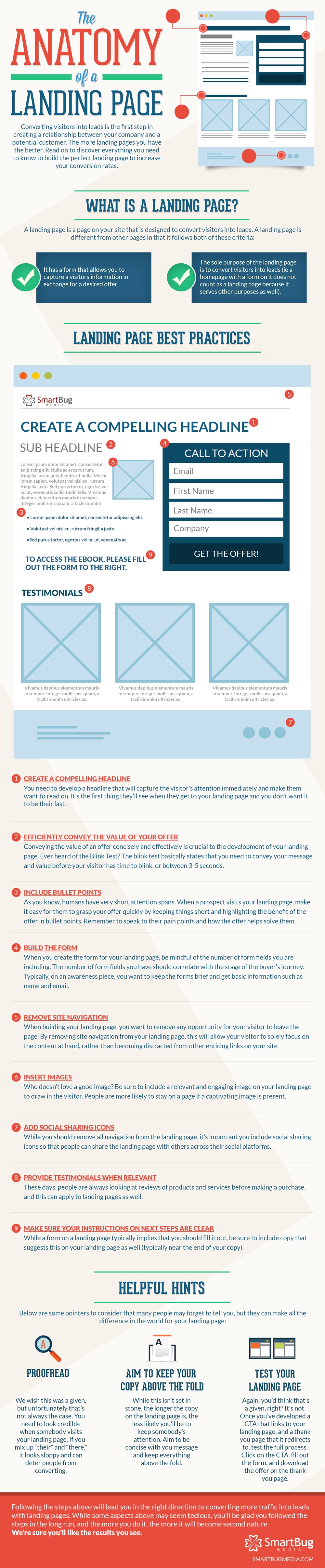
Did you know that your landing pages are just as, if not more important than your website home page? Often, a landing page is your opportunity to not only introduce yourself to new prospects but it also needs to be optimized for as high a conversion rate as possible. SmartBug Media has created an infographic to remind us of the essentials of an effective landing page:

  • Create a Compelling Headline: This step is crucial to encourage people to stay on your landing page. Remember, you can A/B test more than one headline to be as effective as possible.
  • Make Sure Your Instructions on Next Steps Are Clear: Don’t make your visitor work too hard for the end goal – tell them the next steps to take.
  • Provide Testimonials When Relevant
  • Add Social Sharing Icons
  • Insert Images
  • Remove Site Navigation: You may think you are losing opportunity for additional traffic but remember a landing page is hyper focused which means you should only provide your visitor with the one clear path to completion.
  • Build the Form: I have seen studies that say a longer form yields more qualified prospects and other studies that recommend a 2-step optin where there is only a button, not a form. Which approach works best for you?
  • Include Bullet Points
  • Efficiently Convey the Value of Your Offer: I would add to this point that the value of your offer needs to be tied into the solution your prospect is looking for. If it does not, they will leave your landing page quickly.

The Anatomy of a Landing Page

19 Jun 16:49

How To Attract Top Millennial Talent

by Jeremy Boudinet

Five mantras for attracting and obtaining top Millennial talent in your industry.

Much has been made about the challenges associated with Gen-Y employees.

Whether the topic is Millennial management (they’re needy and crave feedback), loyalty (they’re mercenary and impatient about promotions, raises, and leadership opportunities), or focus/motivation (they’re distracted by social media and unmotivated by traditional incentives) – there’s a sense of bewilderment as to universally effective strategies and tactics.

Millenials Labor Force

And yet, attracting top Millennial talent is an increasingly important priority key priority for most hiring manager across all major industries.

As Gen-Y becomes an ever-increasing percentage of the workforce, your organization will be better suited to recruit the top Millennial talent in your industry. Here’s how.

5 Mantras that Attract Top Millennial Talent

Before we jump into the list, let me start by conditioning that – like any other generation – Gen-Y is comprised of millions of unique individuals with an entire spectrum of differing motivations, interests, and skill sets.

Bearing in mind the words of HubSpot CTO Dharmesh Shah (who knows a thing or two about attracting Millennial talent), there are a few overarching principles worth deploying to attract top Millennial talent.

The following is a list of 5 mantras a smart company will implement, and a smart hiring manager will convey, in order to an attractive Gen-Y candidate to their organization.

1. “We value innovation.”

If applicable, it’s important to communicate one of the following to a top Millennial candidate.

  • Your employees don’t feel handicapped by technology in working to accomplish important goals and meet expectations.
  • Better yet, your company has adopted top-flight technologies that give you an edge in your industry.

Whichever the case, you should make that known to a top Millennial candidate. At the same time, it’s critical that you don’t overstate your company’s technological capabilities or budget, for two reasons.

It’s difficult for a candidate coming from a tech-enabled company to adjust to one that lacks those resources.

Expect demands for improved technology and higher churn to accompany candidates who jump from an tech-innovator to a more middle-of-the-pack or bootstrapped company.

Bottom line: If your organization possesses a technological advantage over your competitors or your Millennial candidate’s current company, drive that point home.

Millennials are digital natives who take to technology like water and, in the case of the sales profession, at least, associate tech innovation with a elite organizational performance.

2. “We offer opportunities for mentorship.”

As I noted in my (misleadingly titled) guest editorial for the Daily Muse, Millennials want mentorship.

I’ve heard it, innumerable times, as both a Recruiter and in talking with my fellow Millennials – we need mentors.

Whether your company offers internal mentorship opportunities, access to industry associations and events that facilitate mentoring, or regular seminars and other forms of training, you should make clear to Millennial candidates that opportunities to find a professional mentor will be provided.

3.  “We put performance before productivity.”

A famous member of Gen-X summarized the feelings induced by working for a productivity-first organization:

Despite all my rage, I am still just a rat in a cage.”

If an employee is performing poorly, feeling detached from the rest of his or her team, or just floating aimlessly, nothing adds to the chagrin more than the sensibility of the company could care less, as long as he or she is “working hard.”

Activity does not equal results. Productivity does not equal performance. Which is why it’s important to communicate your organization’s emphasis on the latter metrics.

Employees who are achieving success on key performance objectives feel more empowered than those who are hitting productivity metrics but missing their goals.

Productivity is, of course, important — and employees should be recognized and valued for hitting key productivity metrics.

Yet, it’s important to communicate that your organization values performance the most – and will seek to help those who fail to reach performance goals so that they don’t feel like they’re spinning their wheels.

4. “We promote feedback & team communication.”

The message you need to send: Your employees don’t feel like they’re working in isolation/slowly going insane ala Jack Torrance in The Shining.

If you’re in sales, there’s healthy team competition. If you’re in engineering, there’s seamless team coordination. If you’re in marketing or customer success, there’s constant collaboration with sales, engineering, and operations on who your customer is and how to best meet their needs.

And across all industries, company leadership offers consistent, constructive feedback on performance, and solicits the same from team members.

5. “We accept only the best.”

Whether it’s in terms of employee performance or candidate quality, emphasize that your organization isn’t interested in mediocrity.

There’s obviously a balance here to strike – you don’t want to portray management as a group of taskmasters, after all.

But delivering the message that your organization pushes employees to reach their full potential will attract driven Millennial candidates and discourage candidates looking to coast.

The Laws of Millennial Attraction

Each of these principles is advanced with the caveat – you need clear, real examples that back up your claims.

Be ethical. If your company isn’t technologically advanced or keen on mentorship, don’t exaggerate. If pressed on the subject, be honest and relay feedback to company leadership.

Most importantly, be conscientious of these principles and look for ways to improve your organization’s credibility on each subject moving forward.

19 Jun 16:48

10 Simple Tips to Grow Your Email Marketing List by 400%

by Pam Moore

email marketing list growth tips strategies

Many digital marketers scramble and fight for attention every day to get their message heard on the social networks. Some of them even start depending on spammy marketing and social media tactics such as tweeting 24 hours a day with automated tweets, automated direct messages, blasting Facebook business pages with too many updates, constant cat photos and word puzzles.

They often dilute their brand with these silly tactics when they could be increasing brand equity and building a thriving community who is on the edge of their seat waiting for every word they say.

There is also another group of smart digital marketers who know the value of an email list. They create epic and compelling content offers that inspire, educate, delight and help their ideal customer and audience solve their greatest problems. They earn their trust and email address. They are then able to more easily nurture relationships with a captured audience who WANTS to hear from them.

Unfortunately many business leaders and even smart marketers don’t understand the value of email marketing. They don’t know how to integrate email marketing into their programs and business. They don’t know how to grow an email list and write off email marketing all together.

Did you know that 88% of B2B marketers cite email marketing as their most effective lead generation tactic?

If you are not using email marketing to inspire, connect, delight, entertain and serve your audience you are truly missing out on opportunities to grow your brand and business.

Take a listen to the 141st episode of the Social Zoom Factor podcast to learn 10 tips to grow build and nurture your email list. These are the exact same tactics we have used to grow our list from 12,000 to over 50,000 people over the past 18 months!

In this 30 minute podcast you will learn:

  • Why digital marketers can not ignore email marketing
  • 10 Ways to grow your list by 400%
  • Important foundational elements to implementing email marketing
  • How to choose an email marketing service provider
  • How to integrate email marketing with your other marketing tactics
  • How to integrate social media to grow your email list
  • How to leverage the new call to action button on Facebook to grow your list
  • How to organically attract your ideal customer with relevant, contextual content
  • Importance of managing the entire conversion funnel, end to end
  • Importance of end to end user experience
19 Jun 16:48

Personalized Technology Will Upend the Doctor-Patient Relationship

by Sundar Subramanian
JUN15_19_536907449

In a few years, the idea of receiving medical treatment exclusively at a doctor’s office or hospital will seem quaint. Wearable technologies, implanted devices, and smartphone apps allow continuous monitoring and create a ubiquitous, 24/7, digitized picture of your health that can be accessed and analyzed in real-time, anywhere. Data gathering isn’t the only force moving treatment out of the doctor’s office; telemedicine, home diagnostics, and retail clinics increasingly treat patients where they live and work. In the next decade, these trends will create a veritable gold rush in patient data and consumer options.

With incremental revenue, cost savings, and customer loyalty all up for grabs, a range of players—from consumer product companies to digital and mobile technology firms—are already fiercely staking their claim. As with the original Gold Rush of the 1840s, we believe two principal business models will emerge: Goldminers, who dig deep in one major area, and Bartenders, who offer customized and convenient options to address routine needs.

The Goldminer strategy will typically involve vertically integrated players (large institutions like insurers, hospitals, and physicians’ groups) creating medical value by better managing the health of the heaviest users of healthcare: the 30% of patients with complex conditions that comprise 75% to 80% of all medical spending. By coordinating care more effectively and offering daily support—through mobile communication and remote monitoring—along with community outreach, these companies can help shift care to more timely, home-based, and less costly interventions.

There is clear potential in this approach, yet it is a logical, tech-enabled extension of the traditional approach to healthcare. Providers still make the bulk of the decisions, and patients dutifully follow instructions.

The Bartender strategy represents a much more dramatic transformation. In this approach, new entrant companies (often players from outside healthcare—retail, software, electronics, and apparel) focus on empowering and creating a better experience for consumers by providing detailed, personalized health information and advice. This approach is profoundly disruptive, in that it circumvents the doctor-patient relationship and gives people far greater choice and control over where they receive care, how, and from whom. As Eric Topol of Scripps Health put it, “The digitization of human beings will make a parody out of ‘doctor knows best.’”

Insight Center

For example, consider a woman with random heart palpitations. In the Goldminer approach, she would be enrolled in a preventive care program, the centerpiece of which could be an app for her phone that continually tracks cardiac activity, with the bulk of decisions centrally controlled through a clinical care team.

By contrast, a Bartender approach would be to sell the patient an ECG and lifestyle app for her smartphone and let her retain control over the data. The patient records her daily activity through the app’s intuitive interface and decides whether to send the data to her doctor, to a vendor’s experts, or to a computer for continuous monitoring and interpretation. The app also tracks lifestyle behaviors such as exercise, diet, sleep, and medications. As data accumulates, patterns start to emerge, such as a correlation between certain medications and the severity and frequency of her palpitations. The app can suggest a range of interventions, from text-alert reminders of her medication schedule to automatically notifying a designated contact in an emergency. Every choice represents a potential revenue stream that is up for grabs between incumbents and new players.

One could even imagine the OnStar of healthcare—a subscription service via an implanted device that can detect if a heart attack is imminent, alert the patient to take action, or even send a message to 911 to send an ambulance if necessary. Throughout, the patient retains control over decisions and is continuously empowered by data.

These scenarios are already in play today. Mobile health company Alivecor sells a device that tracks ECGs via smartphone and provides consumers options for sharing and interpreting the data with third-party vendors and doctors. Device and analytic firms such as WellDoc and BlueStar use mobile self-management programs to monitor blood sugar and offer coaching to diabetic patients. Sentrian feeds data from biohealth sensors into IBM’s artificial intelligence engine, Watson, to identify when an intervention may prevent a hospital admission. Apple’s iWatch and Health app opens enormous possibilities for further innovation in wellness through continuous monitoring, particularly given that it comes through a brand that consumers are already passionate about. Technological advances based on the Bartender model will also push the boundaries of healthcare into new retail frontiers. Walgreens, for example, has partnered with Theranos Technology, a company that can conduct lab tests with a pinprick sample, to expand the diagnostics available in its walk-in care locations.

Consumers who subscribe to such offerings will force traditional providers to demonstrate value in new ways. With patients now owning and interpreting their health data, they will enter every medical encounter armed with meaningful, personalized expertise (not just a few pages printed from the internet). They may even choose to crowdsource their diagnosis in a forum like CrowdMed. When expertise becomes tailored to the individual and broadly accessible, providers must add greater value through relationship-building and a deeper understanding of patient needs.

The new companies applying the bartender approach are by no means fringe players. They will fundamentally restructure the flow of money in healthcare—and create enormous medical value in the process. A forthcoming Strategy& study of profit pools in the future U.S. healthcare value chain found that applying the Bartender model could reduce healthcare spending by $400 billion a year by 2025. That is nearly three times the reduction we saw in a scenario in which Goldminers dominated.

The Goldminer approach represents progress. But it is incremental progress within the current healthcare model. Bartenders, by contrast, will accelerate the transformation of the industry by profoundly challenging the industry’s current “one-size-fits-all” standard of care and centralized clinical authority.

19 Jun 16:48

A 24-year-old entrepreneur spent 4 days with Richard Branson — here’s what she learned from him

by Jacquelyn Smith

entrepreneursLast week, 24-year-old Charlotte Cramer was one of three entrepreneurs selected to join the inaugural Virgin Atlantic flight from London to Detroit.

The best part: Billionaire Virgin founder Richard Branson joined them.

Earlier this year, Cramer and her business partner Davide Russo, with whom she cofounded Glow Away, a glow-in-the-dark duvet cover for children, received a $20,000 loan from Virgin Startup, a not-for-profit company founded by Branson that provides entrepreneurs in England with the funding, resources, and advice they need to start a business.

To select entrepreneurs to join Branson on the transatlantic flight, Virgin Startup ran a competition among the businesses they funded. Cramer was one of the lucky winners — along with Sam Morgan, founder of Paria, and George Edwards, founder of Gas Sense.

She spent four "extraordinary days" partying at 38,000 feet, receiving invaluable business advice, and exploring Detroit. "I returned home feeling blessed, inspired, and wondering where my canapés and film crew are," she jokes.

In all seriousness, she says, her time with Branson gave her an incredible insight into the "way he runs his businesses and lives his enviable life," she tells Business Insider. "He is undeniably a pleasure to be around. Our time in his presence shed some light on a few traits we will surely be adopting in hopes that they'll somehow take our businesses one step closer to Virgin-esque world domination, and ourselves to a Branson-degree of lovable."

unnamed 2

Here are the four most important things she learned from him:

1. No matter how busy you are, give others the time of day they deserve.

During the official press conference in Detroit with the CEOs of Virgin Atlantic, Delta, Wayne County Airport, and the Mayor of Detroit, a young woman raised her hand, introduced herself as an entrepreneur, and asked her question, Cramer says. "Sir Richard didn't just answer it — but also invited her to tell him more about his business, giving her the opportunity to pitch it to the room of top-tier journalists and business owners."

This level of "genuine interest in startup businesses, although initially startling," was incredibly insightful into how Branson has earned the respect and admiration of so many people, she says.

"It wasn't surprising that the woman, content with the response, followed with 'I just want to say I think you're an amazing person.'"

2. Find solutions to problems. It can help you change the world.

It's no secret that Branson is a big advocate of businesses that solve problems, Cramer says. "After all, that's how Virgin Atlantic was born: a chartered flight to satisfy the disgruntled customers of a flight, the last of the day, that had been cancelled."

She says Branson passionately explained: "You might as well stick your neck out and do something to make people's lives better!"

"The journey of an entrepreneur is a bumpy one at best, and if you're going to stick with it and see your business through to success then it better go some way to make the world, in some tiny way, a better place," Cramer says. "Branson's emphasis on entrepreneurialism as a means for social impact shed light on something far greater in his motivations: a respectable and influential approach to what we should be creating in the world we live in."

unnamed 13. Know yourself, your strengths, and your weaknesses.

"Having had the opportunity to meet those who manage a number of the Virgin businesses, it was clear that Sir Richard is good at concentrating on his strengths and employing the best talent to fulfill the other roles," she explains.

"He told us to become aware of what we're good at — likely coming up with new ideas — and stressed the value of handing over the general management of the business to have the headspace to innovate," Cramer recalls.

Of course, she says, a degree of groundwork needs to be done initially, "but it felt worth bearing in mind that we should be on the lookout for someone with the skills to manage our business day-to-day better than we ever could, ultimately giving us the time to dream of the future without being tied down by the daily challenges."

branson panel

4. Ask for the things you want and give others what they ask for, when you can.

"We were sitting in the audience of the 'Ain't Too Proud to Pitch' event, which brought together over 500 people and businesses — four of which were pitching their ideas to a panel of famous judges," she explains. "One of the businesses was called Merit. It's a Detroit-branded clothing company that contributes 20% of its profits to college scholarships for Detroit students, and helps ensure that they don't drop out.

"In the middle of their pitch they brought on stage a girl who was part of their program and she half-jokingly said that she wanted to visit London," Cramer says. "Branson immediately said, 'You've got two tickets to London.'"

"It taught me that when you want something, ask for it. And Branson showed that he can, and will, help wherever he can. And when he did, it became clear that he is impeccably in-tune with who he is and how he is perceived. In doing this he is able to play to his strengths with the dexterity and talent of an orchestral conductor: not only creating a thing of beauty but also winning the love and applause of the crowds."

SEE ALSO: These young entrepreneurs got a loan from billionaire Richard Branson — here's how

Join the conversation about this story »

NOW WATCH: Here's Richard Branson's Vision For The Future Of Virgin Galactic

19 Jun 16:46

Experts calling for more data on foreign investment in Canadian real estate

by CB Staff

TORONTO – There is scant data available on how many foreign investors are snatching up Canadian homes, and experts say the knowledge gap needs to be filled if policy makers hope to maintain the stability of the country’s real estate market.

Foreign investment has become a hot-button issue in Vancouver lately, with many residents blaming demand from offshore buyers who are looking for a safe place to stash their money for the city’s soaring home prices.

Critics are also concerned that foreign investors are more likely to pull out of the market at the first sign that prices are heading south, which could exacerbate the extent of a housing correction.

Vancouver Mayor Greg Robertson recently penned a letter to B.C. Premier Christy Clark, suggesting the province introduce a speculation tax on people who flip homes and on luxury properties — a suggestion that Clark shot down.

The B.C. Real Estate Association maintains it’s Vancouver’s constrained geography and limited supply of detached homes — and not demand from foreigners — that’s sending prices through the roof.

But Cameron Muir, the association’s chief economist, admits that hard data is difficult to come by.

“The data is not being collected, currently, by government,” he says.

All of the uproar over Vancouver’s affordability crisis — there is even a popular Twitter hashtag, #IDontHave1Million — has highlighted a national issue: data on foreign investment in Canadian real estate is hard to come by.

“People are putting forward all these solutions on how to fix so-called foreign speculation, but we don’t even know if it’s really happening,” said Kennedy Stewart, the New Democrat MP for Burnaby-Douglas. “This really worries me, because you can really mess up your housing market if you don’t use the right mechanism.”

Canada Mortgage and Housing Corp., the country’s leading mortgage insurer, has tried to fill some of the gaps. Last year, while preparing its annual fall rental vacancies report, the agency polled condominium property managers on the percentage of homes owned by investors whose permanent residence is overseas.

The resulting figures were much lower than many had anticipated. The survey found that roughly 2.4 per cent of Toronto condos and 2.3 per cent of those in Vancouver were owned by offshore investors, although in certain neighbourhoods in Vancouver, the percentage of foreign ownership was as high as 5.8 per cent.

The highest concentration of condos owned by foreigners was 6.9 per cent in certain pockets of Montreal.

The figures are so low that economists say it’s unlikely foreign investment is having a significant impact on the prices of homes.

However, the agency was only able to collect data about condos — not other types of properties, such as detached homes.

CMHC’s chief economist Bob Dugan says the agency is looking at ways to expand the scope of its research.

“We’ve got one piece of the puzzle, but we want to explore ways to add more pieces to that puzzle so we can get as complete a picture as possible,” he said.

Benjamin Tal, deputy chief economist at CIBC World Markets, says one of the challenges with collecting the data is determining who fits the definition of a foreign investor.

Foreign buyers who have no connection to Canada make up only a small portion of the real estate market, says Tal. More common is a situation where the buyer is based overseas, but the property is occupied by his wife and children, who attend Canadian schools and participate in Canadian society.

“So is it domestic money, or is it foreign money?” said Tal. “The concept of foreign investment is much more complex than perceived.”

Follow @alexposadzki on Twitter

The post Experts calling for more data on foreign investment in Canadian real estate appeared first on Canadian Business - Your Source For Business News.

19 Jun 16:44

How To Stop Wasting Time In The Wrong LinkedIn Groups

by Kathleen Glass

Joining and participating in LinkedIn groups is a great way to build your network, establish your voice, and generate leads. However, with more than two million LinkedIn groups, and over 8,000 groups added each day, it can be challenging to find groups with quality discussions and the right group members. Here are my tips to make sure you don’t waste your time in the wrong LinkedIn groups.

Get past crickets and spam

It’s easy to find spam filled groups, and to listen to some naysayers. After a while, you’d start to believe that all LinkedIn groups are filled with junk. I’ve found that with a little bit of research, there are great groups out there. But if you just rely on search, you probably won’t find them right away. If you put your favorite industry or category in the search engine, you’ll get dozens, if not hundreds, of similar sounding groups. Here are two quick ways to find great groups that are on target for you:

Follow the leader

Look up those industry influencers, key members of industry associations, socially active clients, and business partners to see what groups they belong to. I do this when I am looking for a specialized niche, such as PCI compliance. You can often preview the member list, and see your connections. Take a moment and see what other groups these influencers belong to that you might be interested in as well.

Find the right balance

Finding really huge groups with thousands of members isn’t enough. You need a group that’s well moderated and active. Look at group stats under members and activity, and you’ll find a chart that gives you the ratio of comments versus discussion. You want to see numbers that reflect a good balance of engaged discussions each week, not just people posting promotional stuff.

If you join a group and it isn’t working for you, move on. You can only join a maximum of 50 groups, so you don’t want to waste any of those slots. I recommend a balanced mix of industry categories (like cybersecurity), functional categories (like sales or IT), alumni organizations (companies and schools), and associations.

Be a polite guest

Here are six tips for optimal LinkedIn etiquette.

Ease in slowly

You don’t have to jump into a discussion right away. Get to know the group by commenting on existing discussions. Introduce yourself in a genuine, non-salesy way. Read the article, post, or thread thoroughly before commenting. When a question is asked, your priority is to answer the question and add value to the discussion.

Help the host

When you start a discussion thread, keep the conversation going. Reply, like, and thank others for their comments. This is the best way a group discussion stays alive. It’s just like hosting a party – you have an obligation to keep stirring it up, and stimulating the discussion.

Engage, don’t promote

There is a big difference between engaging and promoting. It’s important that you have genuine curiosity and share ideas and content that’s relevant and topical to others. At most, 10% of the time you can share something about you (a company webinar, your company’s newly released research study, etc.). Avoid having it be about you all the time. You don’t want to be “that spammer”.

Don’t feed the trolls

Yes, the Internet has trolls. Those are the folks who love to pick fights or bad mouth others. They exist even in awesome groups. Don’t rise to their bait.

Direct message members once you know them

After you’ve been involved in the group for a while and started to engage in discussion threads with the same folks, take it to the next step by reaching out directly. LinkedIn lets group members direct message other members, which is an ideal way to extend a personalized invitation to connect.

Offer to help moderate

Once your established and well known in a group, offer to help moderate. Moderating is a huge task, and most communities welcome assistance to keep the group active and spam free.

After you get involved in several groups, check your LinkedIn group feed for new suggestions. LinkedIn’s algorithms get better all the time, and once they figure out what looks right for you, they’ll suggest other groups. This gives you a chance to keep your groups fresh. I find that I belong to a core set of groups, and if a group becomes quiet or stale, I replace it with another group that is more interesting and engaged.

Check your groups at least once a week and keep up your level of input. This effort helps you build your influence and increases your relevant profile views.

Learn more about effectively finding LinkedIn contacts with the free ebook below.

linkedin-data-blog-ebook

19 Jun 16:44

Top 5 Rep Performance Metrics for Improving Sales

by Bridget Gleason

No two people are alike. This adage is often forgotten by sales leaders. More time and resources are dedicated to sales team training than 1:1 coaching, and I believe this is a big mistake.

Team training is not as effective as we think. According to a sales performance optimization study by Accenture, 35 percent of Chief Sales Officers are unsure what measurable improvements result from team training. Individual coaching may require more time than team training, but a study by the Aberdeen Group indicates that coaching is worth the extra effort. The study found that 84 percent of the highest performing sales teams provide coaching to under-performing reps.

Luckily, new tools are emerging that make it easier for sales leaders to monitor rep performance. For example, Yesware, the company I work for, offers a free Sales Activity Dashboard app in the Salesforce AppExchange. The dashboard gives sales leaders a clean and simple view of each rep’s activity, so performance issues can easily be identified.

Of course, analytics are useless unless you do something with the insight gained. Here are five performance metrics sales leaders should track regularly for each rep, and some tips on how to act on the data.

1. Outbound Requests vs. Meetings Booked

Sally, a sales rep on my team, was struggling to get meetings booked. She came to me, confused, wondering what she was doing wrong. I looked at her performance metrics and easily identified the root of the issue. Her number of outbound activities — phone calls and emails to prospects — consistently exceeded her teammates. This indicated it wasn’t the quantity of outbound requests causing Sally’s problem, but rather the quality of her phone and email pitches. We worked together to refine her email templates and phone pitches, and as a result, things quickly turned around for Sally, to both of our delight!

2. Meetings Booked vs. Deals Closed

Are your reps booking meetings, but not closing enough deals? These two metrics can help indicate which rep’s demo skills or negotiation tactics need some work. While demo and negotiation skills are commonly addressed with team training, I believe 1:1 coaching is far more effective. A rep may be struggling to close deals during meetings due to a plethora of reasons, from lack of product knowledge to poor eye contact. Without individual coaching, these issues can easily fall under the radar.

3. Number of Accounts Created vs. Average Deal Size

When analyzing metrics, it’s important to compare performance at opposite ends of the sales process. For example, a rep with plenty of accounts but a low average deal size may need help on a variety of levels. Is he doing a poor job qualifying leads? Is he spending too much time qualifying and not enough time negotiating bigger deals? Again, these issues can more easily be addressed in-person, as the underlying problem will vary greatly from rep to rep.

4. Internal Win-Rate

This isn’t a metric you’ll find on any spreadsheet or dashboard. In fact, it’s not driven by data at all. Internal win-rate is how I qualify a rep’s ability to build relationships with other employees. For example, I hired a new sales rep about six months ago, and according to ‘sales metrics,’ he was doing all the right things. But his approach internally was less than collaborative. He was abrasive with members of other departments and people started to shy away from working with him. The ability to sell “internally” is just as important as the ability to sell to customers, and ultimately, we had to let him go.

5. Rep Rank

A rep that consistently beats team averages is a huge opportunity that sales leaders often overlook. Sales leaders should work just as closely with high-performing reps as they do underperforming ones. Working together, a star rep and sales leader can identify what’s driving the rep’s high-performance and set up a system to help other reps replicate the behavior.

The concept of “performance monitoring” can have a bad rap, but if it’s done in the spirit of professional development, both the sales rep and leader will embrace the concept. I’ve found that sales reps enjoy getting feedback regularly and are eager to advance their careers. As a sales leader, I believe it’s your responsibility to help reps achieve their full potential. If you see a rep struggling, make it a top priority to help diagnose the problem and get the rep back on track.

19 Jun 16:44

How to Help PMs Succeed at Selling

by Mel Lester
In my last post I argued that all project managers should be contributing to their firm's sales efforts. Only half do, according to the Zweig Group. A prominent reason for the low participation is that most PMs don't feel competent or comfortable in this role (and this is also true of many who are involved in sales!). As I wrote previously, I'm confident that capable PMs can successfully transfer their project management skills to selling—it's much the same skill set. Here are some suggestions for helping them make that transition:

Train them in a service-centered approach to selling. The problem most PMs have with selling is that they have an overwhelmingly negative impression of salespeople. They have their own experiences as a buyer, and that taints their view of selling. But rather than avoid selling, they should be striving to change the experience for those who buy the firm's services. Serve prospective clients rather than sell to them.

"High-end selling and consulting are not different and separate skills," observes sales researcher Neil Rackham, "When we are watching the very best [seller-doers] in their interactions with clients, we cannot tell whether they are consulting, selling, or delivering." For the A/E professional, this means uncovering needs, offering advice, recommending solutions—giving a meaningful sample of what it will be like working together under contract. This kind of approach takes the sting out of selling for both the PM and the client.

Budget time specifically for sales. The other big excuse for why PMs don't sell is that there isn't enough time. Or more specifically, that spending time developing new business subtracts from time on billable project work. Given the obsession with utilization that exists in many firms, it's hardly surprising that this perception is so prevalent. But the claim is seldom supported by the facts.

Nearly all PMs work a substantial number of nonbillable hours, a portion of which could be devoted to sales activities. The problem is that these hours are rarely budgeted or managed, so that in effect selling is done with leftover time. And who has surplus time left over? You can minimize the concern that selling displaces billable hours by managing your business development efforts like project work, including budgeting a portion existing nonbillable hours for this purpose.

Fit sales responsibilities to PMs' individual strengths. Selling is not as monolithic an activity as many presume, nor does it favor a specific personality type. There is a potential sales role for virtually anyone in your firm, including your PMs. Some are comfortable at networking functions, others better at one-on-one conversations. Some are big-picture strategists, others more analytical problem solvers. Some are competent writers, others better in communicating verbally. Some may be capable in making sales calls, others are better assigned to doing research, writing proposals, or developing solutions. The key is fitting the right people to the right roles.

PMs often claim that they don't have the personality to sell. But the research finds no real correlation between personality type and sales success. Fit, again, is the critical strategy. Help PMs shape their sales responsibilities around both their capabilities and their personality.

Bolster your marketing efforts. Technical professionals typically struggle more in starting the sales process than in closing the sale. They often dislike prospecting for new leads, especially making cold calls, attending networking events, and initiating client relationships. Effective marketing can shorten the sales cycle by bringing interested prospects to your door. Most PMs are much more comfortable picking up the sales effort at this point.

Where to start? Consider the marketing tactics that have proven most effective for professional service firms. These activities typically require significant support from the firm's content experts, which likely will include at least some of your PMs. They don't want to make cold calls or work the room? How about giving a presentation, helping write an article, or contributing to a seminar? Involvement in marketing not only builds the firm's brand, but the personal brands of your PMs—making it easier for them to sell

Increase collaboration. Selling is often a lonely activity, which further magnifies the discomfort most PMs have with it. That's why I favor building your sales team, where those involved in sales regularly meet together, share information, encourage one another, plan sales pursuits, and hold each other accountable. Have members of the team work together on sales calls when that makes sense. The investment you make in promoting collaboration, in my experience, will more than pay off in increased sales productivity. 

Provide ongoing coaching. Sales coaching can dramatically improve results for your PMs engaged in selling. If you do training, as suggested above, you'll need to reinforce it to make it successful—meaning real-time feedback and instruction. Organizing your sales team can provide opportunities for peer-to-peer coaching. Pairing up PMs with your best sellers is another option. Or you may decide to seek outside support from a consultant. A good coach helps build both the PM's capabilities and motivation in the most effective manner—on the job.


19 Jun 16:44

5 Qualities Effective Sales Leaders Need to Have, According to Experts

by dkhim@hubspot.com (David Ly Khim)

Some sales managers hit their targets. Others build teams that consistently outperform, year after year. What makes the difference?

To find out, I spoke with top sales leaders, combed through expert interviews, and listened to hours of podcasts on leadership and performance. The best sales managers don’t just focus on hitting numbers — they build engaged, motivated, and constantly improving teams. They know how to develop talent, navigate challenges, and create a culture where people want to win.

In this piece, I’ll break down the key traits that separate good sales managers from truly exceptional leaders. These insights come straight from the experts, and they might just change the way you think about leading a team.

Table of Contents

5 Essential Sales Personality Traits

sales promotion personality traits

When I conducted my research and spoke to experts, I noticed something curious: the most successful leaders shared specific traits that had nothing to do with sales techniques. These five characteristics showed up repeatedly in how they handled problems, developed their people, and approached everyday decisions.

1. Coaching Mindset and Developmental Focus

This mindset prioritizes genuine development over basic metrics tracking.

According to Forrester's Winter Sales Survey (2022), 62% of sales professionals in B2B organizations report that feedback and coaching from their first-line managers is effective and improves performance.

When coaching is done right — by focusing on skill development rather than just number monitoring — it directly impacts sales success. Instead of merely reviewing KPIs, high-performing managers take the time to guide reps through challenging objections, role-play difficult conversations, and offer constructive, real-time feedback.

If coaching isn't translating into measurable improvement, it may not be coaching at all — it may just be oversight.

In a recent sales podcast, sales leadership expert Shane Gibson highlighted a common misconception. Many managers believe they‘re coaching when they’re actually just monitoring numbers.

"My goal is to really get out from behind the dashboard,” he said.

“Too many sales leaders say, ‘Are you coaching people on your team?’ ‘Oh, yeah, I am.’ Then, I sit on one of their coaching sessions, and they‘re just reviewing metrics. That’s not coaching, that's compliance," explains Gibson.

The distinction matters because reviewing metrics alone doesn’t make reps better. Real coaching pinpoints exact skill gaps — like weak objection handling — shows stronger approaches, and reinforces them with hands-on practice.

Later, in the same podcast discussion about building high-performance sales teams, Gibson elaborated on what good coaching entails:

“You need to add generative coaching, skills development, and deal-specific development to the mix if you're really going to improve and grow the bench strength of your sales team.”

This requires blocking dedicated time for role-playing difficult calls, reviewing call recordings together, and creating personalized development plans for each team member.

2. Authentic Leadership and Vulnerability

Your team won’t follow who you pretend to be. They follow who you really are.

Too many sales managers try to project unshakable confidence, thinking it’s the key to leadership. But real leadership isn’t about having all the answers — it’s about being honest, adaptable, and showing up as your true self.

Our 2024 Sales Trends Report shows that 24% of high-performing sales teams highly rank the importance of building a culture of trust among reps, compared to only 13% of underperforming teams.

Top-performing teams actively cultivate an environment where authenticity, transparency, and trust are prioritized.

“Authentic leadership is the antithesis of imposter syndrome, in my opinion and experience,” says leadership coach Markus Neukom in the Sales Gravy podcast. “I help my clients empower themselves, and once they're empowered, guess what? They can start empowering their people.”

This self-assurance allows leaders to show vulnerability rather than projecting false perfection. But how do you actually practice that?

Start by leading with transparency. In your next team meeting, openly share a challenge you’re facing and how you're approaching it. When a deal falls through, instead of deflecting, break down what could have been done differently.

Neukom reinforces this: “You have to dare to be vulnerable. That's what I basically said to that management team. You have to learn that vulnerability is the key.”

Vulnerability isn’t weakness — it’s a way to build trust. When leaders admit mistakes and limitations, team members feel safe doing the same.

3. Emotional Intelligence and Active Listening

Most sales leaders think they listen. Few actually do.

In tough coaching conversations, it‘s easy to start creating a response before the other person has even finished speaking. That’s not listening — that's waiting for your turn to talk. “Observe, ask questions, learn to listen,” says Neukom. “When you get those two people in a room, and you ask questions, and you let them speak, half of the solution is already there.”

But active listening is more than nodding along. It means paying attention to tone, hesitation, and what isn‘t being said. "Really listening is an art of emotional intelligence," Neukom explains. "It’s literally being open, focused on the other person, and here with all five senses."

According to Jacob Wickett, Founder of Live Digital, a SaaS recruitment agency, “The strongest closers don't just talk well; they listen well. They pick up on subtle buying signals and tailor their pitch accordingly.”

As a sales leader, this isn‘t just a skill to practice personally — it’s a cornerstone capability to develop in your team.

Try this in your next 1:1: After a rep shares a challenge, pause for three full seconds before responding. If they don't add anything, ask, “And what else?” This forces you to stay present — and gives them space to share what they were really thinking.

4. Adaptability and Willingness to Change

New hires bring different expectations, industries shift, and buyers approach decisions differently than they did even a few years ago. A leadership style that worked in the past can quickly become outdated.

Markus Neukom has seen this firsthand.

“The question is not if. The question is when you have to adapt your leadership style,” he says. “In this room of 24 management team members, you already have 1/3 of Generation Y, and they ask you, 'Why?'”

Leaders who struggle with adaptability often see change as a disruption. But those who embrace it recognize it as an advantage. When a team starts questioning the why behind decisions, that‘s not resistance — that’s engagement. Instead of shutting it down, turn it into a conversation.

This evolution extends beyond team management to the entire sales landscape.

“The industry is going through rapid changes, both when it comes to AI, prospect habits, and geopolitical factors that influence the market,” explains Mia Falls, Sales Development Representative from proposal platform Qwilr.

“It's important to stay up to date and adapt to this month's needs instead of relying on a yearly plan. In the past, sales has been like the misinterpretation of 'survival of the fittest'. Those with the thickest skin and biggest bite got ahead. Nowadays, the actual meaning of Darwin's phrase is true — those who are the most adaptable win.”

If you‘re leading the same way you did five years ago, it’s time to rethink your approach. Instead of giving instructions, ask your reps how they‘d solve a problem. Their response may point out hidden strengths, fresh perspectives, or gaps you didn’t know existed.

5. Strategic Vision and Effective Communication

A sales leader without a clear vision is like a team running plays with no strategy — disorganized, reactive, and unlikely to win. A strong vision shows up in daily decisions, team goals, and how leaders communicate priorities.

“90% of achieving any goals is knowing why, and 90% of getting your salespeople to shift their behaviors or implement new disciplines is often about effectively communicating the why,” says Shane Gibson in his sales podcast.

Telling your team what to do isn’t enough. If they don’t understand why it matters, they’ll resist, disengage, or go through the motions without real commitment. People don’t buy into change unless they see how it benefits them.

Gibson emphasizes this: “Are you inspired by it? If you‘re going to communicate your organizational sales vision or a major initiative, you’re the first person who has to buy into it, and have you connected it to their individual needs?”

Before your next team meeting, ask yourself: Would I be excited to hear this? If not, sharpen your message. Show them how the vision fuels their success — how it impacts their targets, growth, and daily work. If they see the value, they’ll own it.

How to Improve Your Sales Skills

sales promotion personality traits, improve skills

Identifying what makes great sales leaders is just the first step — you need practical ways to build those capabilities in yourself and your team. The approaches below have helped sales professionals at every level sharpen their skills and deliver better results.

Each focuses on specific actions you can take this week, not vague suggestions that sound good but rarely translate to real improvement.

Implement regular self-assessment practices.

Day-to-day targets pile up, and it's easy to assume experience alone drives improvement. Without regular self-reflection, small mistakes turn into bad habits, missed opportunities compound, and performance flatlines.

Self-assessment practices like structured reflection, peer feedback, and skill tracking help you improve your weaknesses and hone your strengths.

Our research found that 17% of high-performing sales teams highly rank the importance of making performance data available, compared to only 11% of underperforming teams. The ability to measure, track, and analyze performance transparently makes it easier to identify trends, correct weaknesses, and double down on successful strategies.

“Great leaders are great students. They're highly coachable. They have coaches themselves. They seek mentors for growth in many aspects of their lives, and people want to follow people who are moving somewhere,” says Gibson.

Mia Falls recommends extending this practice across the team:

“Listening to the recordings of successful AE calls every week really helps you understand the product and customers on a deeper level. I'd also recommend finding a tracking system for positive prospect interactions that feels intuitive and works for you. Then, consult it frequently and learn from it. This helps me approach every month with new insights.”

By making these review sessions a regular part of your team's schedule, you normalize the critical self-assessment process.

A structured approach helps here. Gibson suggests using a framework to measure progress:

“I've got a downloadable PDF that's free. You can rate your sales coaching skills and your sales coaching process as an organization to see where you need to improve.”

Set a monthly habit: review recent calls, assess deal wins and losses, and get outside feedback.

Growth starts with awareness. Take 15 minutes this week to reflect: What's one area where you struggled? What feedback have you been avoiding? Write it down, and set a small, specific goal to improve.

Build strategic relationship networks.

Strategic relationship building goes beyond random networking events. It's about intentionally creating a web of relationships that generate opportunities, insights, and support when you need it most.

Think of your network as a living portfolio. Like any good investment strategy, diversification matters. You need connections across different industries, organizational levels, and functional areas. This diversity brings perspective you'd miss in an echo chamber of similar contacts.

For sales leaders, It’s not just about strong external ones, though. Internal ones matter just as much. It's often down to how well you encourage collaboration within your organization.

“I've never had as supportive and motivating of a team as I had in Qwilr and it's completely unleveled my sales game,” shares Falls. “Knowing that you can always ask a quick question, get some additional insight, and share feedback makes such a difference.”

But here's where most sales leaders get it wrong: they focus on quantity over depth. Five authentic relationships with decision-makers who trust you enough to take your call will outperform 500 LinkedIn connections who barely remember your name.

Start by mapping your current network. Identify gaps where strategic relationships could open doors to new markets or opportunities. Then, develop a deliberate plan to nurture existing relationships and cultivate new ones by:

  • Creating value before asking for anything.
  • Following up consistently with personalized outreach.
  • Connecting people within your network who might benefit each other.
  • Sharing industry insights that address your contacts' specific challenges.

When you genuinely invest in others‘ success, your network becomes not just a sales tool, but a competitive advantage that can’t be replicated.

Establish gold standards for key activities.

Creating gold standards forces you as a sales leader to sharpen your own skills first. You can't define excellence without mastering it yourself.

In his podcast, Founder at Cerebral Selling, David Priemer discovered this developmental benefit:

“We told them what to do but never showed them a good version of what that narrative sounded like.”

When Priemer decided to fix this, he had to critically evaluate his own approach: “I had our VP of enterprise sales record what a good version—the gold standard—of that conversation with a customer sounded like.”

Identifying, recording, and analyzing perfect examples compels you to refine your sales techniques. You'll spot gaps in your messaging, discover better transitions, and develop more compelling value propositions.

As Priemer notes, this self-improvement spans multiple skills: “If you have expectations of them — next steps, forecasting, objection handles — show them what good looks like, so you can hold them accountable.”

By clearly stating your standards, you'll identify areas for growth and keep improving your sales skills.

Tips for Selling Authentically

sales promotion personality traits, tips for authentic selling

Authentic sales leadership creates environments where teams can sell honestly and ethically without resorting to high-pressure tactics. As a leader, your job is to show your team how to match products with genuine customer needs rather than pushing whatever makes the biggest commission.

The approaches below help you build a culture where sales conversations focus on solving real problems instead of delivering slick pitches.

Connect personal values with organizational goals.

Don’t assume targets and commissions are enough to drive peak performance. Numbers alone rarely inspire sustainable excellence, and you need to connect company objectives with their team members' personal values and aspirations.

Shane Gibson puts it bluntly: “If I'm communicating my vision in a way that's top-down, not connecting to their values or explaining the overall why for them or their team, I'm already missing the boat. I'm not going to get buy-in from the team.”

This alignment process starts with curiosity: What drives each individual on your team?

For some, it might be financial security to support their family. For others, it could be professional growth, recognition, or making a difference for customers.

The reward for this effort is extraordinary: team members who see their success as connected to company goals approach their work with fresh energy. They solve problems more creatively, push through challenges, and become ambassadors for your vision.

Try these approaches to strengthen this connection:

  • Hold one-on-ones focused solely on understanding personal motivations and career aspirations
  • Reframe company initiatives in terms of how they support team members' individual goals
  • Create personalized development plans that serve both organizational needs and personal growth
  • Celebrate wins in ways that recognize not just results but alignment with core values

When people see how their personal journey connects to the bigger picture, selling becomes less about transactions and more about shared purpose.

Embrace transparency and direct feedback.

Sales teams need clear talk, not careful phrasing.

Gibson champions this approach through specific frameworks: “Radical Candor is a great book on how to give direct and effective feedback. It's important for not just the leader to read it, but their team to agree that we're going to be candid and empathetic with one another in a way that creates trust and transparency.”

According to Dewey Thompson, Senior Account Executive at email platform Omnisend,

“I think that sales is, above all, about showing up every day. If something doesn't work out, be persistent, but also learn to learn from your past mistakes. Ultimately, work on not taking rejection personally.”

As a sales leader, embracing resilience creates an environment where honest feedback feels helpful rather than threatening. When your team understands that feedback is meant to help, not criticize, they'll be more open to direct guidance.

The real payoff comes when this becomes team culture, not just leadership style.

Gibson notes the real-world results: “If we can do this as a team, people are no longer going to be walking on eggshells or holding things back, but actually comfortable and confident to be vulnerable, but also direct.”

This balance — being both honest and human — creates psychological safety where innovation flourishes, problems surface early, and people grow faster.

Share your perspective on difficult topics.

Sales leaders who hide their true thoughts on tough issues undermine their credibility. When you dodge questions about compensation changes, territory shifts, or challenging quotas, your team senses the avoidance.

Priemer notes: “Your team does want to know what you think, and if they don't feel you're being honest, it becomes very difficult to lead them.” He suggests being transparent about your own feelings on topics like compensation changes.

This doesn't mean complaining about company decisions. Rather, it means acknowledging realities while providing context.

When facing a compensation restructure that might disappoint some reps, skilled leaders might say: “I understand this change feels concerning. I had questions about it, too. Here's my perspective on why it could benefit high performers like you...”

This honesty builds trust. Your team won‘t always agree with your viewpoint, but they’ll respect your sharing it openly. This transparency also improves your communication skills by forcing you to articulate complex positions clearly and consider potential objections before they arise.

Thoughtfully sharing your perspective on complex topics strengthens your ability to have challenging conversations throughout your career. This crucial skill distinguishes exceptional sales leaders from merely competent ones.

Measure Leadership Impact Beyond Sales Numbers

Great sales leaders build people who stick around and grow. When you coach your team well, speak plainly, and treat customers fairly, you'll see it in more than revenue.

Look at who stays on your team, what new skills they‘ve mastered, and how customers talk about them. Years from now, your real success won’t be the deals you closed but the sales managers you shaped who still use what you taught them.

19 Jun 16:44

The Sales Snapshot: 3 Ways to Put the Focus Back on Your Customer

by Rachel Clapp Miller

lightbulb_no_shadowThe pace of change continues to accelerate in the B2B sales landscape. Corporate buyers have increasingly greater access to information, across multiple platforms, and in many formats, placing them in greater control of their purchasing process than ever before.

Aberdeen’s Research Report, “Better Buying Connections = Stronger Sales Enablement Results,” identifies and explains key factors that enable best-in-class organizations to thrive in the changing environment, while others continue to struggle. It comes down to an adamant focus on your customer.

Here are the top three areas of focus.

1. “It’s all customer, all the time.”

Peter Ostrow, Aberdeen Research Group Director and author of the report, says the key to sales success lies in accepting that the new environment is all about the buyer. On average, he says, only 23% of organizations pay close attention to the “voice of the customer,” but among Best-in-Class organizations, that percentage is much higher—52% higher, in fact. Ostrow recommends instituting a formal process for collecting customer feedback and using it to inform the sales process. Automatic feedback loops ensure the organization remains tuned to the customer’s value drivers and therefore better able to meet the customer’s needs.

2. Digital Leads

Best-in-Class organizations, says Ostrow, are also “more aggressive adopters of mobile, social, video, and other new modalities.” Even B2B prospects expect to access information 24-7 via their mobile devices, laptops, home computers, social media accounts, email, and web browsers. Leading sales organizations aggressively expand their presence to ensure they are there—digitally—when and where the prospect wants them.

3. Coaching is Critical

Best-in-Class organizations view customer engagement as an evolving process, rather than a traditional linear progression. To ensure field reps and channel partners remain audible-ready, it’s critical that sales and marketing leaders provide real-time deal coaching. “Refining and adjusting the content being presented to specific buyers currently engaged in conversations,” says Ostrow, “can make or break a deal.”

Best-in-Class companies arm their marketing and sales personnel to empower B2B prospects with the right content at the right times, with all the personalization consumers expect.

social media in your sales process

19 Jun 16:43

Map Your Digital Marketing Playbook to Your Company’s Stage of Growth

by Sherry Lamoreaux

During a recent Demand Metric Virtual Summit, Chief Analyst Jerry Rackley interviewed our own Kevin Bobowski, VP of Demand Generation at Act-On Software, on the topic of digital marketing playbooks. Just as you nurture prospects in different ways depending on where they are in the funnel, your own marketing playbook should change as your company goes through its evolving stages of growth.

This transcript has been edited for brevity; you can catch the whole 30-minute session of “Is Your Demand Generation Playbook Outdated?” on our website.

JERRY: What’s your definition of a “playbook”?

Jerry Rackley, Demand Gen

Jerry Rackley
Chief Analyst
Demand Metric

KEVIN: I think of a playbook as being a set of goals, strategies and tactics that you can deploy for a particular situation. Suppose you enter a job as a demand generation person or head of marketing; what is the playbook that you would want to run to elevate and grow the marketing team and the business?

As we go through this presentation we’ll talk about the right set of skills that a demand generation professional should have, depending on the stage of a company’s growth and development.

A demand generation challenge

One interesting challenge for us as marketers is that we always have this desire to emulate more advanced, more successful companies, companies that are further along their growth stages. I think that’s a great thing. We all want to emulate market leaders, we want to be best in class.

But we often see marketers take some of those best practices from more advanced companies and apply them to early stage companies – and find themselves with a set of programs or playbooks that aren’t as successful.

Defining a company’s growth stages

Kevin Bobowski

Kevin Bobowski
VP, Demand Generation
Act-On Software

Let’s first outline the different stages of a company’s growth. For simplicity I’ve broken it down to three broad categories.

  • Early stage companies: usually the primary goal there is seeking product/market fit. The company has a great technology they’ve built. They don’t yet have validity in the marketplace that they solve a specific problem. So they’re going out spending a lot of time in front of customers and prospects, demoing their product, telling their story, and seeing if they solve a problem that exists in the marketplace.
  • Stage two is what I call high growth companies. These are companies that have figured out product-market fit, they’ve seen their business start to scale, and they need to grow fast, they need to scale quickly. These are companies that require lots of resources, lots of coordination with sales.
  • The third is what I call becoming the market leader. And this is where you’ve established your product-market fit, you’re growing like crazy, and now it’s the time for you to emerge as the de facto leader in your market. There are a certain set of demand generation goals and tactics and other marketing programs that can help you become that undisputed leader in the marketplace.

A closer look at the early stage company…

I’ve outlined five key traits of any early stage company.

  1. At this stage, they’re either self-funded or they’ve only raised their series A, so budget’s going to be a bit tight. And the budget and the money and the resources they do have are really going to be focused on product development. So as a marketer you need to focus on earned media. Programs that aren’t paid, but programs where you earn coverage and awareness. Press releases, press coverage, content marketing, SEO, that sort of thing.

Early stage company demand gen

  1. Number two, early stage companies may have a little bit of money for paid acquisition, but not much. And as a matter of fact it’s probably not healthy to spend a lot of money in an early stage company on paid acquisition, because you may end up acquiring the wrong customers who then eventually churn. And really, you don’t want to spend a lot of paid dollars and advertising dollars until you really have established your product market fit.
  1. Often marketers will look at using the product as a marketing tool. So we see the free trial offering, the 30-day free trial. A lot of early stage companies that we know today really evolved from that model. I think Slack is a wonderful example. You can think about Hootsuite several years ago. These are companies that really figured out how to use the product as a marketing device and offered free trials in lieu of paid advertising models.
  1. Another trait of an early stage company is a small sales team. If you have a sales team at all, the cofounder may actually be your lead sales person. They’re out there every day, the CEO calling, leading with prospects. That might be the extent of your sales team, with maybe one or two other folks.
  1. And revenue generation is a company effort. What I mean by that is: at this point, because it’s such a small team, there’s a small sales organization, there’s probably not a lot of paid acquisition budget. The revenue that’s generated is really a shared effort and it’s hard to discern whether it’s coming from marketing or sales because everybody is acting as one team and one unit.

… and the early stage marketer

A great term that we use today is the “full stack marketer.” This is somebody who gets the product, they understand the product, they might have a little bit of product marketing background, and they have a really good sense for the market, the customers’ needs, prospects’ needs. They can actually go out and do demos and play the sales role themselves. They probably have great content marketing and SEO skills, and they really understand digital design and the website.

Keep in mind that a lot of the marketing functions at this point are around all those earned media sources. So this early stage marketer is probably good at social media, they’re probably good at getting a content marketing practice off the ground, and they’re going to build a website up and out to expand that digital presence. That’s a classic example of a full stack marketer. So they’re essentially the whole marketing team doing a lot of tasks and responsibilities, and probably having a blast doing it.

A closer look at the hyper growth company…

Our next stage of growth is the hyper growth companies. These are the companies that have gotten their product market fit. They know they solve a very specific problem in that market and people will pay for that product to solve that problem. These companies may range around $5-$7 million in revenue. In a matter of a couple of years they could be $20, $30, $40, even $50 million businesses. And there are five traits around these hyper growth companies.

  1. Number one is, now that you’ve established product market fit, you’re starting to spend more on paid marketing programs. That’s accelerating, so you need to figure out how to accelerate that spend both efficiently and effectively.

hyper growth demand gen

  1. One of the other things that may be happening is that you’re growing really fast, but you’re growing inefficiently. Say you’re throwing a bunch of leads in the funnel, and many of those leads may not be followed up by sales. There are inefficiencies in your internal process, but it’s all part of growing and scaling very quickly.
  1. The key area of focus during this hyper growth phase – as the company evolves and becomes more mature – is that marketing budgets are going to be tied to what marketing can contribute in terms of revenue. If there’s a revenue target for the company (let’s just say $10 million), marketing will need to own a certain percentage of that number. And from that they’ll be able to back up to the budget that they need and then they can figure out where they deploy that budget to drive the leads, opportunities and deals they need to hit that bookings target.
  1. Another key trait of the hyper growth company is that every day there’s new sales people on the floor. So you’ll walk in, in the morning, with your cup of coffee and you’ll probably see three or four new sales people you hadn’t seen the week before. This is a great sign of a hyper growth company. The focus here is to continue to add sales people, keep growing that sales organization so they can close more and more deals. That puts pressure on us as marketers because we have to feed the funnel as that sales team grows.
  1. The last nuance of a hyper growth company is you’re probably going to find yourself growing internationally. You’ll probably enter the UK, which is a natural extension for lots of companies. But you’ll continue to expand globally. That presents new challenges and new opportunities for the marketer. We start to run into language barriers and translation issues. We talk about how to work more closely with a remote sales team. The notion of growing globally presents some unique challenges and opportunities.

… and the hyper growth marketer

This is the point at a company’s stage where the resources are going into sales and marketing. In the early stage company, our marketer was really strong on product marketing. The difference here is that the hyper growth marketer’s probably very strong on product, and also has a great ability to build relationships between sales and marketing, which are so linked and so tied together.

This person needs to be very fluent in talking to sales, and very fluent on how to operate within the marketing team as well. This person is probably very numbers-driven, they understand sales and maybe even had a sales background at some point, and really, really have an ability to build and lead teams. Because just as the sales team is growing and expanding, the marketing team is too. And so this person’s going to have – must have – the ability to grow and scale teams, recruit great talent, and really set up his or her team to be successful in the future.

Another key component of this person (this is a little bit of a bonus but I think it’s important) is deeper technical skills. And as you think about where marketing is headed, where marketing technology is playing more and more of an important role over time, this person must understand the different marketing technologies out there, understand how to use those technologies, and probably have some good experience in database mining, data modeling, those types of capabilities. This is the person that we would want to see lead a hyper growth marketing team.

JERRY: Marketing needs to not only carry its weight, but it needs to demonstrate its performance, and it needs to be able to show that it’s contributing. I think we all agree about that. Here’s my question for you, how does a playbook help with that?

KEVIN: As a marketer, when you’re in this stage of growth, you need to almost be the CFO of the marketing team. And you need to think about how does marketing transition from a cost center to a revenue center? Specifically, it’s sitting down with the CFO, the head of sales, understanding what your targets are in terms of the revenue. Then you back into a revenue marketing model that you can break down into the number of leads by region, and the marketing budget needed to support all that lead volume and growth. That really becomes the key playbook for these hyper growth companies.

A closer look at the market leader company…

JERRY: So let’s move on now and talk about the last persona, the market leader.

KEVIN: This is the most interesting phase and there are a lot of companies that get to this point. You’ve gone through the early stage, you’ve successfully scaled the organization. And now what you want to do is position your company as the de facto market leader. So here are a couple of key traits that you start to see as you move out of a hyper growth phase and start to move into this market leader phase.

  1. Number one is, a lot of the inbound marketing programs, paid acquisition, those types of programs, are starting to see diminishing returns. You can’t scale them as quickly as you did maybe 12, 18, 24 months ago. As a result, you need new growth playbooks. And those new growth playbooks often involve what I call the outbound marketing team, often called the SDR (sales development reps). These folks don’t handle inbound leads; they’re really calling on top prospects in the market.

Market Leader

  1. In order to make their job easier when they’re doing strategic prospecting, you need to have a great brand. You want your team calling into prospects who say “Gosh I’ve heard of your company, I’m so glad you called, let’s schedule a demo.” So brand, brand awareness, brand development, really become critical as you move to become the market leader.

…and the market leader marketer

JERRY: Let’s talk about becoming a market leader marketer.

Sidebar Product launch as a branding tacticKEVIN: There are a couple of key characteristics of a person in this role. Remember that in the early stage company, you’ve got people who really understand the interaction of product, product marketing and marketing. In the growth phase you’ve got people that really understand the intersection of sales and marketing.

Here you really need somebody who understands how to drive a true go-to-market strategy. And this really comes back to your comment about product launches (see side bar). Because the true go-to-market strategy includes not only sales and marketing, but sales, marketing and product. How do you take product, get it out in the market, how do you get customers and prospects excited about what you’re selling? And it’s really important – and often one of the most overlooked pieces of a product launch – to make sure that everybody in the company is excited about this. Because if you can get your sales team excited about this new product, they will be excited and selling it out to the market.

Everybody in the company participates. Even the people that might be on the phone as a recruiter in HR, I want them to know what that new product is, because if they’re excited they can build excitement with potential prospects and recruits, and get top talent in the door. So this is really across the entire company. The marketer at this stage really understands this alignment between sales, marketing and product, to deliver that big bang in the marketplace and really hone the airwaves.

JERRY: Let me ask you a more philosophical question. Do you think the same person can grow through all three of these stages you’ve identified? Can the marketer who starts with the startup, grow through the hyper growth stage, and still be the right marketing resource for the market leader stage.

KEVIN: Let’s compare this to the role of the CEO. So a founder or a cofounder who’s the CEO, they’re excited, they’re an entrepreneur, they’re fast paced. But over time, if the company grows and evolves, they find out that they’re probably better suited to be a chief product officer. I think the same thing happens a little bit in marketing, where you’ve got these full stack marketers who probably could take the step up to hyper growth company. But their passions and their interests are really at that early stage startup mode where they’re doing a lot of everything within marketing.

At the other end you might have a person who’s running marketing for a market leading company, and they may have had experience in one of those stages in the past. But they’re probably best suited for these companies that are starting to emerge as market leaders.

We see examples all the time of great cofounder CEOs who lead the company – but there’s also a lot of CEOs that say, “Listen, I’m a startup person at heart, I love product, I really want to focus on that.” And I think you see that same thing happening with marketers, where they can certainly take the step if they wanted to, but their interests and desires are often rooted in one of these three stages. And they tend to self-select back to one of those three stages.

JERRY: Interesting observation. I’ve seen some of the same things in my career, Kevin. Thanks to everyone for your attention.

Click the image below to catch the whole 30-minute session of “Is Your Demand Generation Playbook Outdated?

18 Jun 15:52

Why tech companies and banks are offering a service that doesn’t make money

by John Heggestuen

BII US P2P Payments Forecast

A lot of money gets passed around informally every day — when we pay someone back for dinner, pay a babysitter, or pay a roommate for rent.

Now a bunch of different tech companies and banks are offering apps that can make this process easier and all but eliminate the need for cash and checks. The problem: there's no money to be made from facilitating these transactions.

So why are so many businesses clamoring to get into this space? 

The answer is different depending on the company — for banks it's critical to keep up with consumers' account needs while for social messaging apps it's a broader play for the e-commerce market.

In a new report from BI Intelligence, we explore the market for P2P payments, how they work, and the types of businesses that are offering these services and why.

Access the Full Report By Signing Up For A Trial Membership Today >>

Here are some of the key takeaways from the report:

In full, the report:

To access the full report from BI Intelligence, sign up for a 14-day trial here. Members also gain access to new in-depth reportshundreds of charts and datasets, as well as daily newsletters on the digital industry.

Join the conversation about this story »

NOW WATCH: 5 cool tricks your iPhone can do with the latest iOS update

18 Jun 15:52

Are You A LinkedIn Star? Leveraging Social Media To Boost Your Career

by Laura Cole

Social media is a constantly evolving entity, both in terms the number of tools available and their range of features. The rate of growth within this market is also significant, with relatively new additions such as Snapchat quickly accruing over 100 million active monthly users.

Like all social media platforms, LinkedIn has continued to evolve in terms of its purpose and range of features. The result of this is that LinkedIn can now be used by both B2B and B2C organisations, as professionals use the sites resources to create engaging content that effectively targets customers.

If LinkedIn can effectively be used by business owners to target new customers, then it also offers individual professionals and job seekers the opportunity to market themselves and drive their careers forward. If you can optimize your LinkedIn profile, you will have the chance to leverage social media and create a thriving, prosperous network.

Are you a LinkedIn Star? 3 Ways to Optimize your Profile and Boost your Career

With this in mind, what practical steps can you take to optimize your presence on LinkedIn and achieve specific career goals? Consider the following ideas: –

Create a Consistent, Informative and Relevant Profile Page

Your profile page essentially serves as an online resume, so it is crucial that this adequately reflects your skill-sets, experience and future career goals. There are three crucial steps towards achieving this, and you should start by ensuring that the information in your profile in consistent with any existing resumes or job seeker accounts. You should apply this theory to all data, paying particular attention to personal contact details, accreditation details and dates of employment.

The next step is to ensure that your profile is detailed and informative. An incomplete profile page is not appealing to potential collaborators or employers, so you must take the time to fill out all sections that relate to your relevant experience and help to market your credentials. You can also reinforce your expertise with a concise summary paragraph, which clearly defines your proposition and career goals as an individual. You may also want to close with a succinct call to action, which encourages members to interact further.

Finally, it is important that you update your LinkedIn profile on a regular basis. Although you do not necessarily need to alter your historical workplace or educational information, it is crucial that you constantly refresh your work portfolio and add any newly acquired industry qualifications to your profile. This is particularly important in competitive and evolutionary markets such as software development and marketing, as these fields demand a constantly changing skill-set and an awareness of real-time trends.

Use Media-rich Content to add Depth to your Profile and Engage Members

With your profile established, the next step is to effectively engage members and add depth to your page. You can do this through the creation of informative, media-rich content, which is relevant to your connections and capable of developing a platform from which you can establish yourself as a thought leader.

This process starts with LinkedIn’s innovative trending content tools, which can be used to analyse posts and updates before identifying information that is relevant to you, your industry and your connections. From here, you can cultivate topical content ideas that have the best possible chance to engage your audience. LinkedIn has also altered its blogging platform recently, so that you no longer need to be an influencer to craft concise and insightful posts and share these with your connections.

LinkedIn’s video feature is also an underrated business tool; especially in an age where an estimated 71% of marketers believe that audio-visual content delivers a better sales conversion rate. By uploading informative videos or authentic client testimonials to your profile page (for those who have worked independently), you can successfully share your expertise and distinguish yourself in a competitive marketplace.

Optimise your LinkedIn Profile for Search

The final step in this process is to optimise your LinkedIn profile, in the same way that you would enhance your professional website to increase its visibility. After all, the majority of LinkedIn profiles are visually similar, so by optimizing your content you can achieve improved ranking results and set yourself apart from your rivals.

The way to achieve this is to identify the keywords that are synonymous with your industry, as these are the terms that brands use to search for talent. You can use Google’s analytical tools to identify relevant keywords, before integrating these into your profile and published content in an organic manner. Companies will then find it easier to find your profile and enjoy your uniquely crafted industry insights, creating the opportunity for future collaborations and partnerships.

Just be sure to use your chosen keywords sparingly, as overly optimized copy will undermine your core messaging and diminish the value offered to LinkedIn members.