Shared posts

20 Feb 18:20

Sales Development Coaching Framework

by Kristina McMillan

For sales development teams, the activity of coaching is mission-critical, because it ensures continuous improvement of sales development representatives (SDRs). However, SDR coaching is seriously lacking in most organizations today and represents the largest gap in sales development enablement. In …

The post Sales Development Coaching Framework appeared first on TOPO Blog.

16 Jul 23:31

E-book sales are flattening, but does that mean the technology is dying as consumers unplug?

by Hollie Shaw

TORONTO • David Hurst remembers just when he stopped reading e-books.

“It was the Steve Jobs biography,” said the retired Toronto resident, who was browsing through the bestseller stacks recently at a midtown Indigo store.

Hurst bought the Walter Isaacson book digitally to take with him on a vacation to read it on his iPad, but he never finished it.

“It was a long (book), and I had read a couple of things on (the iPad) before, but I just couldn’t get through it,” he said. “I came home and bought the hardcover.”

And it’s not just retirees who may be spurning the technology.

“Unplugging — I think people are getting it,” Heather Reisman, chief executive officer of Indigo Books and Music Inc., said in an interview after the company’s recent annual general meeting of shareholders in Toronto.

“Especially Millennials,” she said, speaking of the demographic aged 18 to 34. “They are the hippest group.”

After years of robust e-book market growth, sales have flattened out in the past two years, while sales of traditional books seem to be stabilizing.

Sales of print books in Canada, at 79 per cent of the market, still outstrip that of e-books at 18 per cent as of the most recent quarter, according to non-profit industry agency Booknet Canada. That’s not much growth since 2013, when e-book sales accounted for about 17 per cent of the market — particularly considering the trajectory from 2008, when Canadian e-book sales accounted for less than one per cent of the market.

“We are all so plugged in so much of the time,” said Reisman. Indigo’s CEO believes e-reading will maintain its place in the market, but may not flourish to become the majority format for all book reading.

“I hear people say, ‘If I read on a Kobo or smartphone or tablet, every three seconds I am checking my email.’ When people want to truly relax, they want to lean back and unplug.”

Considering the disappearance of retail chains such as Blockbuster Video, Tower Records and Black’s Photography, some in the industry believe there is something different about the experience of reading books digitally compared with listening to digital music, or looking at digital movies and pictures.

In contrast to digital music and movies, “the general wisdom is that e-book sales will hit a certain percentage and not grow much — that there are only so many people who will be adopting this technology,” said Bob Gibson, a retail industry analyst at Octagon Capital in Toronto who covers Indigo Books.

Peter J. Thompson/National Post
Peter J. Thompson/National PostSales of print books in Canada, at 79 per cent of the market, still outstrip that of e-books at 18 per cent as of the most recent quarter, according to non-profit industry agency Booknet Canada.

“You saw a huge ramp up in e-book and e-reader sales as people adopted the technology, and there was a decline in hard copy book sales, but now we see it levelling off somewhat. I think the experience was not as positive as maybe people were hoping.”

Some pundits have gone so far as to suggest the e-book market will stagnate or decline completely, comparing slight gains in regular book sales to the revivals of LP records and Polaroid cameras.

Noah Genner, president of Booknet Canada, believes e-books are definitely here to stay, even though it is difficult to predict their trajectory in an industry increasingly shaped by new technology.

“I’ve seen lot of articles with people saying (e-books) are dying and I think that is not the case,” he said. “We are just not seeing the huge growth we saw in the first few years.”

E-book growth in the early years happened rapidly in part because all of the big vendors — including Amazon, Kobo, and Apple — entered the Canadian market around the same time.

Everyone has an iPad, but not everyone is using that iPad to read

Sales often follow an “innovation curve,” Genner noted, where sales spike in a new product when the general population adopts a new technology. It is generally followed by a period of slow to flat growth, he noted. “These peaks and plateaus happen in almost every consumer device all the way back to washing machines.”

Sales are also heavily driven by product pricing, Genner added, and when e-book providers debuted they priced e-books radically lower than print books, particularly in popular genre fiction, in a bid to gain market share over rivals.

“If you saw a new John Grisham book for $33 in hardcover or $9.99 for an e-book, most consumers will go for the $9.99 e-book if they already have a device. But that differential is a lot less than it was in the past. Where it was $30 and $9.99, it is now $33 (for a hardcover) and $17.99 or $19.99 (for an e-book).” Sales of print books, meanwhile, were up very slightly year-over-year in 2014, Indigo reported recently.

“I think the bigger concern we have as an industry is everyone has an iPad, but not everyone is using that iPad to read,” Genner said, citing a worry voiced by other promoters of pursuits that occur away from a screen, from fitness to live music to camping.

“When it comes to the way consumers are changing, I am less concerned about the format than I am about whether or not people are still reading book-like content.”

He predicts e-book sales will continue to grow by a couple of percentage points a year for the foreseeable future.


16 Jul 23:30

4 Mistakes Really Nice Leaders Make

by Peter Stark

We all want to be liked and accepted in both our personal and professional lives. But when it comes to effective leadership, a high need to be liked most often leads to disaster.

I’ve encountered many leaders who were genuinely “nice” people, and would do absolutely anything to support their people and make them happy. Sounds like a wonderful person to work for, right? In reality, these leaders had significant problems on their teams, and very low morale.

Leaders who place a high value on making everyone happy often sacrifice good decisions to do so. There is a difference between doing what is nice, and doing what is right. When leaders fail to do what’s right, they are not acting in the best interest of the organization and its employees. They lose the respect of their staff, create people problems, and cause morale to plummet.

Here are 4 major mistakes to avoid as you walk the fine line between being well-liked and highly respected.

Failing to deal with problem employees. Leaders who have a high need to be liked tend to ignore employee problems. They prefer to manage by “hoping-and-hinting.” First, they hope problem employees will improve and correct their behaviors without any intervention. When this doesn’t happen, they drop a hint. Instead of coaching, counseling, and terminating employees who do not want to improve, overly nice leaders ignore the problems or transfer the problem employee to another department. Doing so further undermines morale, and the leader loses the respect of their employees. Employees know that their manager is shirking responsibility by not dealing with the problems impacting the team. In fact, even the problem employee loses respect for their leader because they know the leader doesn’t have the guts or courage to deal with the situation in an effective manner.

Failing to act on problems quickly. As part of the hope-and-hint strategy, nice managers prefer to wait, hoping that the situation will improve on its own. If problems are not acted on promptly, problems within a department or organization get worse, not better. The problems linger and worsen, and morale suffers. The employees blame management, and management blames employees. When there is a problem, swift action is required. The sooner you eliminate problems, the more respect you will earn as the leader.

Failing to set and maintain high performance standards. Nice leaders are often hesitant to set and maintain high standards of performance. They lower their standards when employees complain about their high expectations. After all, nice managers who have a high desire to be liked listen to their employees and make adjust accordingly. Ironically, it’s impossible to maintain high morale in a department or organization without having consistent standards and expectations.

Equal distribution of rewards for unequal performance. We currently work with several organizations who have phenomenal reward and bonus systems. These organizations consistently provide their employees with above average raises, and they award bonuses to every employee on a regular basis. How can an organization that provides bonuses once a year, or even once a month, ever have low morale? Morale suffers when there is no differentiation in the reward a top-performing team or employee receives versus the reward a low-performing team or employee receives. When rewards are not based upon performance, top performers’ morale and engagement suffers because the reward system is unfair. Why should they consistently go above and beyond, when those who do the bare minimum receive the same reward? In addition, low performers’ morale also suffers because they can’t see how their individual or team contributions are impacting the results.

Strong leaders understand that being respected is far more important than being well-liked by every employee. They take the following actions to ensure they are always acting in the best interests on their employees and organization.

Tell the Truth

Nice leaders tend to communicate in whichever way they think will avoid ruffling people’s feathers. They speak in overly general terms and hedge their words. In reality, people don’t trust or respect leaders who do not communicate honestly and openly. Be honest, and tell it like it is. If a member of your team presents an idea that isn’t in line with the vision and goals of your department, tell them the truth. Don’t mislead them by saying, “That’s a great idea, maybe we can explore it more in the future.”

Go with your Gut

When you think about doing the right thing, your gut will almost always lead you to the right decision. Your head will argue with your gut and encourage you to take the easy way out. If you know in your gut that you should address two team members who are not working well as a team, your head will try to convince you that maybe it will get better next week if you don’t say anything to either of them. Almost always, in these head/heart/gut arguments, the gut is right.

Hold People Accountable

When a vendor, direct report or cross-functional team member is not doing the job you need them to do, it’s important that you shoot straight and communicate the exact expectations that are desired. It is also important to ensure that they see the problem, are committed to fixing it, and are taking the actions necessary to correct the outcome.

Lean into Conflict

Very seldom does conflict in an organization or on a team go away on its own. It may go dormant because one of the counterparts decides they no longer want to bring up or discuss the topic, but it seldom goes away. As a leader, you will gain tremendous respect when everyone knows you are really comfortable leaning into, rather than avoiding conflict, and playing an active role in getting the issue resolved.

Make the Right Decision

Most times, there is a decision that is the right thing to do. Dealing with conflict is the right thing to do. Holding people accountable is the right thing to do. Ensuring that team members treat each other with dignity and respect is the right thing to do. Clarifying strategic direction and being able to articulate how we will go about accomplishing our goals is the right thing to do. Shooting straight and telling the truth is the right thing to do. On all of these examples, the converse will possibly lead to people describing you as “nice” but will not lead to respect for you as a leader.

Happy employees are not the result of leaders who spend their time pleasing every employee. Strong workplace cultures and happy, engaged employees are the result of great leaders who are willing and able to make tough decisions that are in the best interest of the organization. Make sure your actions are not misguided by a desire to be well-liked by everyone.

16 Jul 23:30

10 More Things I Would Train Salespeople On Instead of Social Selling

by S. Anthony Iannarino

Earlier this year I wrote a list of 15 things I would train salespeople on instead of social selling. Here are 10 more skills I would develop before I would worry about training in social selling.

  1. How to defend their pricing: Your pricing is the investment your client needs to make to produce the new results they’re after. When you lower your price, you are also reducing their investment. You defend your price because you defend the investment, ensuring your client gets the results they need.
  2. How to have difficult conversations: Selling is conversations and commitments. Producing results requires difficult conversations about access to other people, about money, and about the right plan to execute. Many of these conversations never happen because the salesperson doesn’t have the language to engage the customer successfully around tough issues.
  3. Befriend the gatekeeper: The role of the gatekeeper has changed. The digital gatekeeper is an obstacle. But gatekeepers now are those with the ability to provide you access to information and people. You need them on the team.
  4. Ask for referrals: Almost no one asks for referrals anymore. The failure to ask for referrals is especially true in business-to-business sales. But the people for whom you create value are more than happy to introduce you.
  5. How to do minimum viable research: It is best to separate research and prospecting. Some sales organizations need to do massive research. But most don’t need to do nearly as much as they believe necessary. You slow down your client acquisition and the results you produce for your clients when you take forever to make your calls.
  6. Prioritize their prospects and territory: Not all prospects are created equal. There are a lot of ways to plan your territory. Geography can work. So can the size of the potential opportunity. Different things work for different companies and different territories. Getting this right improves results, and it improves speed.
  7. How to refuse an RFP or control the process: If you aren’t shaping the decision factors and how the prospect weights them, it is tough to win an RFP. When you are asked to complete a blind RFP, you need to know how to push back in a way that allows you to get back to that shaping. Otherwise, you politely say, “No, thank you.”
  8. How to resolve concerns late in the sales cycle: Towards the end of your sales process, buyers want certainty that they are making the right decision. Leaving them alone to make this decision almost never works out in your favor. You have to control the process and be there for your client.
  9. How to use other-oriented language: I’ve heard a lot of salespeople use self-oriented language. They believe that talking about win-win deals, the need to be profitable, and their costs justify their need for their pricing. But it is self-oriented. “Other-oriented” language focuses on the investment the client needs to make to generate the results they need.
  10. How to plan a sales week: There is no such thing as time management. The only thing you can manage is what you do between the ticks on the clock. Planning that time to focus on doing the right work at the right time is critical to performing well. You need a plan for your whole week, lest you waste it bouncing around on the Internet.

Selling is more difficult than ever. You need chops. Go get some.

The post 10 More Things I Would Train Salespeople On Instead of Social Selling appeared first on The Sales Blog.

16 Jul 23:30

BHP Billiton takes US$2.8bn pre-tax writedown as oil price tumbles

World oil prices collapsed by 60% between June 2014 and January when it hit a low of US, hurt by a global supply glut

Sydney (AFP) - Mining giant BHP Billiton Wednesday said it was taking a US$2.8 billion pre-tax writedown on its onshore assets in the United States as plunging oil prices hit shale gas.

The Anglo-Australian company said the gas-focused Hawkville field at its Eagle Ford operations in south Texas would account for most of the charge, reflecting its geological complexity, product mix, acreage relinquishments and changed development plans.

The remainder stems from an impairment of goodwill from its US$12.1 billion takeover of the Petrohawk Energy Corporation in 2011.

BHP said it expected to book a writedown of US$2 billion post-tax or approximately US$2.8 billion pre-tax in its 2015 financial year results.

Shares in the miner fell 1.70 percent to Aus$26.64 in early Wednesday trade.

"While the impairment of the Hawkville is disappointing, it does not reflect the quality of our broader onshore US business," BHP's petroleum president Tim Cutt said in a statement.

"With industry-leading drilling costs and recoveries, we are well positioned to realise significant value for shareholders as we develop our high-quality resource base."

The world's biggest miner said it would invest US$1.5 billion in its onshore US assets in the 2016 financial year to support the development of 10 operated rigs.

BHP in January cut back its operating US shale oil rigs by 40 percent as prices weakened.

US benchmark West Texas Intermediate for August delivery gained 84 cents at US$53.04 a barrel on the New York Mercantile Exchange after Iran's nuclear deal with six world powers Tuesday.

World oil prices collapsed by 60 percent between June 2014 and January when it hit a low of US$45, hurt by a global supply glut.

While OPEC on Monday revised upward its forecast for global crude oil demand growth for this year, it said that crude output would also continue to increase.

Join the conversation about this story »

16 Jul 23:29

How to Craft the Perfect Elevator Pitch

by ceridon@hubspot.com (Corey Eridon)

baseball_pitcher-2.jpeg

This post originally appeared on HubSpot's Marketing blog. For more content like this, subscribe to Marketing.

I'm going to give it to you straight: Everyone in your organization should be prepared to explain what your company does, and the value of its product or service. That's why one of the first things salespeople and business owners should try to totally nail is their elevator pitch.

It might also be why I wasn't surprised to see that nailing your elevator pitch is the first tip in a book that recently graced my desk, It's Your Business: 183 Essential Tips That Will Transform Your Small Business, by host of MSNBC's Your Business, JJ Ramberg. In fact, that very first tip about giving a killer elevator pitch was provided by our very own CEO, Brian Halligan!

So it got us thinking -- crafting and delivering a fantastic elevator pitch is something every salesperson and marketer should know how to do, yet we've never written about it on this blog of ours. Tsk, tsk.

Well, we can come out of blogger time-out now, because this post is going to explain everything you need to know about how to craft the perfect elevator pitch. So whether you're starting from scratch or just want to brush up your current pitch, here are some tips to keep in mind.

Structuring the Pitch

Many people find it helpful to draft an outline before they write. Why not apply the same concept to your elevator pitch?

Explanation

Start out by explaining -- in one line -- what your company, product, or service does. Make sure this is free of business babble and, particularly if you're talking to people who don't work in your industry, jargon terms that mean nothing outside of your office's four walls.

Value

Come up with some concrete data that demonstrates why your idea is a good one, and why it's valuable for the listener. Data does two things that are really important for an elevator pitch: It says a lot in very few words, and it gives you credibility. If you can't find a data point that's relevant to what you're pitching, find an example that the listener can relate to that paints a picture of how your product or service would fit into their daily lives.

Ask

Say exactly what you're asking for, whether it's to check out your website, a product purchase, investment capital, a partnership ... whatever. Be as explicit and detailed -- yet still concise -- as possible. That means asking that they purchase your $26 acorn twine holder, not that they purchase a product from your inventory of cornucopia-themed kitchen supplies.

That also means, however, that you're not asking them to do something too grandiose. For instance, if your acorn twine holder is studded with diamonds recovered from a pirate shipwreck and is going to run them $260,000, a 20-second pitch isn't exactly enough time to build value. Maybe start with something a little less high-commitment if your business has a long buying cycle or high purchase price.

Try filling in these three sections for your company, and create a few different versions. The first version should be around 20 seconds or fewer; I know, not a lot of time, but we're in an elevator here, people! If you're in a scenario where you might receive some follow-up -- like at a networking event, for example -- feel free to also craft a version of your elevator pitch that's a little bit lengthier (say, a minute or 90 seconds). And of course, anticipate any follow-up questions you're likely to receive after delivering your pitch so you're not caught off guard, and can respond with some quality answers.

Targeting Your Pitch to Different Personas

Alright, you've got your basic elevator pitch down pat, and you even have a couple different versions ... the brief and the extended edition. Now, you might actually need to create a few more.

What?!

It's true, because your pitch, particularly the 'Value' section, might need to change a bit depending on which segment of your target audience you're speaking with. To get started, pull out your buyer personas; if you haven't created them yet, here's the template you need to complete them.

In the section of your persona documentation that explains what the value your organization, product, or service brings to that particular persona, see if that jibes with what you've drafted for the 'Value' section of your elevator pitch. If it doesn't, create a new variation of your elevator pitch that better addresses that target persona's value proposition. You might also want to tweak the 'Ask' section if your personas have very different purchasing habits.

Last but not least, it's a good idea to review the section of your persona documentation in which you figure out how to identify your target persona. I mean, if you can't figure out who you're talking to, how can you figure out which elevator pitch to use?

Nailing the Delivery

The final component to a great elevator pitch is great delivery. The key here is to get the right mix of passion and energy, without seeming so excited that you're distracting or off-putting. Or worse, desperate (gasp)! As Halligan puts it in Ramberg's book, "As small business owners, we often get so excited about our idea that we talk too long or give too much detail in an elevator pitch."

The remedy for this, he advises, is rehearsing your pitch multiple times in front of someone who knows nothing about your business. After you finish, ask them if they know what your company does, and what the value of your product or service is. Then finish by asking whether they'd act on your 'Ask,' or if they don't fall into your target buyer persona, whether you built the value sufficiently for your ask.

Once you've tried your elevator pitch out on a few people, gotten feedback, and refined, practice it a million more times in front of the mirror. The more times you practice, the easier it will be to speak confidently, concisely, and passionately.

Get HubSpot CRM today!


16 Jul 23:29

How to Get Direct Access to the Decision Maker Through Social Media

by lucas@venngage.com (Lucas Walker)

direct_route.jpg

Having access to the decision maker early on can often make or break your sale. Buy-in from the decision maker make negotiations go much more smoothly and make closing the deal go much faster. The best prospectors and sales professionals use social media to not just get to decision makers, but turn them into champions.

Before diving into how we can leverage social selling to get to our key decision makers, let’s take a moment to review what social selling is, and identify some best practices that will help us meet, please, and win with the decision makers at our target accounts.

Social Selling Defined

Social selling is quickly becoming a very hot term, but almost everyone uses it in a slightly different way. Social selling isn’t a magical way to get every decision maker to reply to you and shorten your sales cycle 95% while increasing your deal size 200%. Social selling is best viewed as using your network and social media channels as a way to enhance your existing sales efforts.

Some common and creative examples of social selling include:

  • Sending a tweet to a prospect saying you’re looking forward to meeting later that day.
  • Participating in an Ask Me Anything on Reddit that a prospect is hosting.
  • Commenting on an Instagram photo that a prospect has shared of an event you’re both at.
  • Liking or commenting on a LinkedIn post that a prospect has shared.

Social Selling Best Practices

Social selling gives you a lot of room to maneuver, but if you follow these guidelines, you’ll be much more successful. Social selling is a great tool, but if you abuse the privilege of having easy access to decision makers, it can come back to bite you, ultimately doing more damage than good.

1) Be sincere.

If you’re engaging directly, you have to be sincere. Anything less, and buyers will see right through your thinly veiled attempt. Make sure that your Twitter feed isn’t just you @messaging various prospects.

2) Shorter is better.

Nobody wants to read your novel. Craft and edit your message to three sentences or less.

Twitter is great practice for this. It may be tough to keep your message to 140 characters, but if you’re talking to someone for the first time, you haven’t earned the right to more than a few seconds of their time.

3) Respect everyone you deal with.

Just because you have direct access to a decision maker doesn’t mean you should jump over everyone else’s heads.

4) Don’t go for the hard sell.

Use social media as a way to get access to someone you wouldn’t normally have access to. Don't pitch them right off the bat -- interact, engage, and add value first.

5) Make sure your social presence is in top order.

That means a clean profile on whatever social channels you’re engaging with potential customers, making sure you’ve cleaned up any questionable content, and offering something of value for your target audience.

Leveraging Social Selling to get to the DM

There are three primary ways to use social media to help out your sales cycle, particularly when it comes to getting the attention of a decision maker: Gathering information, establishing a point of reference, and communicating directly with your decision maker.

1) Gathering Information

When you are fortunate enough to book time with a decision maker, you need to make every minute, question, and moment count. If you can skip the basic discovery questions, and get right into the meaty discussions of how your solution can help them, it will go a long way to establishing you as a competent professional.

It’s amazing how much information is willingly shared. You can find out about new hires, new customers, where people are at a given moment -- even what they’ve eaten. All of this can be used to help you sell and make you look better in the eyes of a decision maker.

I investigate the following questions on social media to move faster with the decision makers I talk with at Venngage:

  • Do you have any mutual connections? If you do, are you able to get any “off the record” information, or better yet, a warm introduction?
  • What does the decision maker's schedule look like? If they are posting that they’re going to be attending or speaking at an event, suggest a different time to schedule your next meeting, even if it means your next meeting is a bit further out. It will demonstrate you to be a sales professional who does their homework.
  • What do you have in common with your decision maker? Are you both alumni of the same school, fraternity/sorority or employer, or do you work with the same charitable group? These commonalities can provide a great reason to connect with them.
  • What's happening at the company? Have they just raised a large amount of capital or opened a new office? Have they won any major awards or landed any big name customers? These are all great discussion points. If you were selling into HubSpot, it would be a smart idea to talk about the journey to 15,000 customers and what that means for the future.

Even if you aren’t using social media to chat with the decision maker directly, you can use the information you’ve gathered to get to a meaningful conversation much more quickly during your next chat with them.

2) Point of Reference

The effectiveness of cold calling has been debated since the first dial was made. It’s getting tougher and tougher to book a meeting or demonstration on a call.

Obviously it’s difficult to research everyone that you call up, but for your key accounts, a couple of minutes of research can go a long way to build the instant rapport you need to book a meeting.

Instead of saying something along the lines of “I noticed that you downloaded our ebook on increasing conversions. Would you like to see our conversion increasing software?” you can use social media to create a point of reference. For example, “I noticed that you’re attending INBOUND 2015; want to take a few minutes to discuss the best strategies around increasing conversions before you attend the event?"

One of the most successful ways I’ve leveraged social media to get in with a decision maker is to reference something they’ve done recently right in the subject of the email. For instance: “I saw that you tweeted out … " "Saw your post on LinkedIn … ” For the record, I’ve realized a much higher rate of booking meetings with decision makers through email rather than on the phone and I’ve never had a voicemail returned with any serious intent.

3) Direct Communication

This is very much a double-edged sword. Social media gives you access to just about every decision maker there is in addition to high-ranking influencers.

Though it’s great to be able to send anyone an InMail on LinkedIn, it also means your message needs to be really good, or you’ll get lost in wash. While it may be tempting to send the decision maker a message centered on what you’re selling (after all you’re selling the greatest thing since sliced cheese so who wouldn’t want to hear about it?), the risk of coming off as tacky and self-centered is high.

So instead of pushing your pitch right away, use your ability to communicate directly with decision makers in more tactful ways to help you win the deal.

  • Make yourself known. View the decision maker's LinkedIn profile. If they view you back, then it’s appropriate to send them a message along the lines of, “Noticed we viewed each other's profiles. I’m actually speaking with [coworker] later this week/spoke to [coworker] earlier and came across your profile. If you have any questions about the topic of conversation, let me know how I can help. Always happy to jump on a call.” The same goes for following them on Twitter. 
  • Engage with them on Twitter. Beyond following them, you can also retweet their content. If you do this, also send them a tweet. If it’s an article they wrote or their company wrote, ask them about it. In addition, use Twitter to break the ice before your next meeting with a tweet as simple as "Looking forward to our meeting today," or thanking them for their time. This is a great way to stay top of mind without crowding their inbox. Finally, get creative. Let’s say they send you an automated direct message (DM) thanking them for the follow. Hit reply! Same goes for if they accidentally send you a spam DM -- just let them know. It’s a great way to earn some brownie points.
  • Ask for the meeting. Note: Only if it’s natural! Did you notice that they’re at the same 300-person conference as you or someone from your company? Tell them and set up a meeting! If you're both attending the same conference, trade show, or event and happen to have down time, ask to get together. If you’re following an event hashtag on Instagram or Twitter, leave a comment saying “Booth looks great! Would love to chat for a few minutes -- when would be a good time to swing by?”

Like any tool or tactic, social selling will help you close more deals and increase deal velocity, but it isn’t a standalone practice. Used correctly, social selling will make your cold calls warmer, your meetings easier to book, and decision makers more accessible.

Happy (social) selling! 

Get HubSpot CRM today!

16 Jul 23:29

17 Tips for Writing the Perfect Sales Email [Infographic]

by leslieye@hubspot.com (Leslie Ye)

tips-for-sales-letter.jpg

Mark Twain once said, “Writing is easy. All you have to do is cross out the wrong words.”

While that’s one way to think about good writing, it’s not very actionable advice, especially because writing a good pitch or sales email is a bit like the lexical equivalent of walking a tightrope.

You have to demonstrate that you understand and care about your audience’s needs, explain why you’re reaching out in the first place, offer your help, and somehow hook your audience so they’ll respond.

And the cherry on top? You have to accomplish all this and be concise, too. People are busier than ever -- nobody has time to read a 1,000-word magnum opus.

Thankfully, help is on the way. Some of the world’s foremost copywriters -- including Leo Burnett and David Ogilvy -- have sage advice on how to craft a perfect pitch.

On subject lines:

  • “Five times as many people read the headline as read the body copy. When you have written your headline, you have spent 80 cents out of your dollar.” - David Ogilvy

On knowing your audience:

  • “Study your reader first -- your product second. If you understand his reactions, and present those phases of your product that relate to his needs, then you cannot help but write a good letter.” - Robert Collier

On emphasizing your solution’s value:

  • “Don’t show the wrinkles you propose to remove, but the face as it will appear. Your customers know all about the wrinkles.” - Claude Hopkins

The infographic below from Crazy Egg Analytics has even more helpful tips for how to construct an effective and winning sales letter. Keep this advice in mind, and you’ll be churning out fantastic sales emails in no time at all.

art-of-sales-letter.png

get the free hubspot crm

16 Jul 23:28

How Social Media Is Fighting The ‘Sex Sells’​ Mantra

by Joao Romao

The rise of social media is often cited as a negative societal phenomenon. Accusations include instigating a false sense of connection between people, cyber-bullying, privacy erosion and plain old procrastination – but there is at least one way in which our love for digital networking is positively influencing human behaviour: the standards of our advertising.

The mantra ‘sex sells’ has held sway in advertising circles for decades, despite many studies and marketing luminaries declaring it a misnomer. Because the shock value of sex always causes a stir, advertisers often see it as an easy way to build awareness around brands and products.

But in many ways social media is kicking back against this salacious mantra. Protein World’s ‘Beach body ready’ posters, which conquered the London Underground earlier in 2015, inspired a wave of consternation on social channels, especially Twitter, with folk from all walks of life piping up to express their disgust at the advert.

This advert pretty much sums up everything that I despise about how we treat and value women's bodies. pic.twitter.com/PBZNyn8qop

— Hannah Atkinson (@hatkinson_) April 12, 2015

@VagendaMagazine @cait_gc I went one further: pic.twitter.com/oFGuhxuJy6

— Nicole (@NicoleBurstein) April 24, 2015

The Advertising Standards Authority (ASA) received 378 complaints regarding the advert, which featured a slim woman wearing a yellow bikini and asked commuters whether they were ‘Beach body ready’. Most felt that, at best, the adverts were tacky and offensive, suggesting that only a slim (most likely photoshopped) figure could qualify for a trip to the beach. Social channels exploded with fury, with users attacking Protein World for promoting an unhealthy body image. The social campaign led to an online petition of over 70,000 signatures calling for the advert to be banned.

The advert was eventually banned – although for a more conventional form of false advertising than the campaigners took offence to. The campaign was pulled when it became clear that the so-called health benefits of Protein World’s actual products did not have EU authorisation. In fact, in a recent ruling the ASA decided that the advert was neither offensive or irresponsible, effectively giving a green light to future campaigns wishing to utilise body image anxiety to flog products.

In their ruling, the ASA decreed that the term “beach body” could also carry a broader meaning of “feeling sufficiently comfortable and confident with one’s physical appearance to wear swimwear in a public environment,”

“We considered the claim… prompted readers to think about whether they were in the shape they wanted to be for the summer and we did not consider that the accompanying image implied that a different body shape to that shown was not good enough or was inferior.”

But it is without doubt that the social campaign against Protein World inspired the awareness for the adverts to be banned – whether they were pulled for the right reasons or not.

Which is a win for social, as it has the power the bypass weak bureaucratic systems like the ASA that fail to get to the heart of whether something is socially acceptable or not. Through direct democracy on single-issue campaigns, society now has the ability to override traditional mechanisms of societal rebuke and defeat/shame companies like Protein World who cross the line.

Of course, there are many examples of it being too easy for aggressive social campaigns to gain traction and the digital hustings of Twitter, Facebook et.al are hardly the fairest environment in which to hold a trial. Indeed, even feminist social media campaigns themselves could be accused of adopting the sex sells mantra – remember #freethenipple?

But on the whole the prevailing attitude on social channels is one where substance and quality of information trumps sensationalism and sex. Savvy news titles are beginning to move away from click-bait headlines and social sells, realizing that they erode trust and can kill a readership in the longterm. In the near-future, one can imagine a time when the snowballing integration between society and social media reaches such a point that the ‘sex sells’ mantra will seem as redundant, offensive and nonsensical as Protein World’s ‘beach body ready’.

16 Jul 23:25

Payments companies are trying to fix the massive credit-card fraud problem with these 5 new security protocols

by John Heggestuen

BII Annual Cost Of Fraud_3.15

There is a massive credit card fraud problem in the US. Fraud cost US retailers approximately $32 billion in 2014, up from $23 billion just one year earlier. Much of the fraud problem is the result of the relatively weak security of credit and debit cards.

To solve this problem, a new type of credit card with a microchip, called EMV, is being implemented — but EMV won't be a panacea. It will cause fraud to migrate to other weaker points within the payments ecosystem.

To solve the card fraud problem across in-store, online and mobile payments, payment companies and merchants are implementing new payment protocols that could finally help mitigate fraud.

In a new report from BI Intelligence, we look at how the dynamics of fraud are shifting across in-store and online channels and explain the top new types of security that are gaining traction across each of these channels, including on Apple Pay. 

Get the full report now >>

Here are some of the key takeaways:

In full, the report:

Get the full report now >>

Join the conversation about this story »

16 Jul 23:24

11 things everyone should do before turning 30

by Shana Lebowitz

Young People Meeting at Cafe

For many people, turning 30 marks a kind of turning point — after years of feeling like an overgrown kid, you can finally call yourself a grown-up.

As a result, 30th birthdays often trigger an existential crisis: "What have I accomplished, and what am I planning to do with the rest of my life?!"

To help alleviate the panic, we looked through the Quora thread, "What are 10 things that you should definitely do before turning 30?," and put together a bucket list of skills and experiences you should have by the time you hit the big 3-0.

1. Learn to network.

Approaching people you don't know and trying to make a good first impression can be super-stressful. But it's a key part of your professional and personal development.

Networking is "a great way to find jobs, friends, love, and business opportunities," writes Quora user Siddharth Gurjar.

To become a master networker, make sure you listen while other people are speaking and smile so that they remember you.

2. Find a hobby.

Whether it's knitting or an improv class, find something you do purely for pleasure and personal fulfillment.

"Pursue it on [a] regular basis. It will give you tremendous benefits in the future," writes Deepak Rana.

Those benefits may include social support, if your hobby is something like team sports, and relief from daily stressors, so that you don't burn out in your job.

3. Appreciate your family and close friends.

In your 20s, you might be working hard to launch a successful career and find a romantic partner. With all that's going on, it's easy to forget the people who helped get you to where you are today.

But several Quora users mention the importance of staying in touch with family and friends.

"Talk to your parents, your grandparents, relatives, your friends," writes an anonymous user. "While you are in your 20s, your parents are aging very quickly, your grandparents are getting very old, some day you will not be able to talk to them any more, and your old friends will grow apart from you."

4. Save money.

It might seem hard to sock away a chunk of cash for retirement when you aren't earning as much as you'd like. But the magic of compound interest means that if you save $100 a month in your 20s, it will add up to significantly more than if you save $100 a month in your 40s.

Plenty of people wish they'd acted on this knowledge in their youth: "As a middle-aged woman looking back to my 20s, this is the one thing I regret not doing most," says Shao Wang.

5. Visit a foreign country.

Before you get married, have kids, and become enmeshed in your career, take the time to see a part of the world you've never seen before.

Once you're there, consider ditching the hotel and guided tour and striking out on your own.

"During [your] travels, you learn more than you will glean from any book. Don't be a tourist, travel like a traveler. Meet a lot of people in your travels. Interact with them," Rana says.

Talk to the hand

6. Accept rejection gracefully.

"Whether it's asking someone on a first date or sending in that manuscript, rejection sucks. When that happens, acknowledge the loss, but move on," says Christi Wentz.

That way, you can spend time and energy preparing for the next challenge.

And remember: Some of the most successful people were rejected (often) before they achieved fame and wealth.

7. Develop healthy habits.

Your health is arguably the most important asset you have in life.

That's why Thaís Freitas advises: "Take very good care of your body and your health. Practice sports, work out, eat healthy. That's the only thing that is really important to do before your 30s, and that will allow you to be free, able, and happy in any age."

8. Do something you don't think you'd enjoy.

"Do an activity you've decided you don't like, even though you've never done it — watch a foreign film, or go see an opera, or get a massage, or go to a meditation session ... we all have biases that need vetting," says Milo Grika.

You could discover that your tastes have evolved and you're now an absolute opera fiend (or meditation guru, or foreign film lover, etc.). Worse comes to worst, you'll find you still hate the activity and won't have to do it again.

cooking pancakes

9. Learn to cook.

Resist the siren call of Seamless — at least most of the time.

"Try different recipes each week," suggests Abhishek Chaudhary.

Besides being able to impress friends and family with your new-found culinary prowess, research suggests home-cooked meals are more nutritious than restaurant fare.

10. Travel alone.

It's a good idea to travel abroad in your 20s. It's an even better idea to do it solo. Multiple Quora users recommended that people go on a trip alone in their 20s.

"This teaches you how to survive even if you are left alone," says Sudarshan Thirumalachar.

"Survival" could mean learning how to fend for yourself, but it might also mean knowing how to occupy and entertain yourself without depending on other people to make you happy.

11. Figure out your definition of success.

Maybe you're hoping to launch a killer startup, or maybe you'd like to write bestselling novels. While you're still in the early stages of your career, it's important to figure out what success means to you personally.

Writes Stefan Tasevski, "You should start thriving and [seeing] your meaning of 'success' and how you will eventually get to it."

SEE ALSO: 10 changes to make in your 30s that will set you up for lifelong success

Join the conversation about this story »

NOW WATCH: 5 ways to change your body language to make people like you


16 Jul 23:24

Drive Consistency in Your Sales Planning Process

by Rachel Clapp Miller

lock_and_key2Repeatability and consistency drive effective sales planning. Sales organizations that provide their managers with critical line-of-site are able to create efficiencies in forecasting, account and territory planning and opportunity reviews.

A salesperson’s time is valuable.

High-performing sales organizations put processes in place that ensure their salespeople focus their efforts on the highest value sales opportunities.

If you create a predictable cadence around territory, account and opportunity planning, you’ll improve forecast accuracy and your reps ability to build a healthy pipeline.

Here are key questions to consider when developing a cadence that drives sales planning activities.

  • What are the critical few activities I should focus on?
  • How frequently should I be doing those activities?
  • What tools are available to help me?
  • How will my success be measured?

We call the tool that drives that predictable cadence a Management Operating Rhythm® (MOR). It helps sales leaders focus on executable action with their sales teams. An MOR brings together all of your sales planning and execution processes in one tool. It makes it easy for sales managers to find what they need, when they need it. It also sets clear expectations of job responsibilities with senior management.

When everyone is using the same Management Operating Rhythm®, they’re all speaking the same language and everyone knows the benchmarks they need to create success. As a result, your front-line managers are less burdened and there’s consistency throughout the sales organization. Your sales managers then have the opportunity to become sales leaders, because everything they do has value attached to it, instead of being some sort of compliance exercise.

Providing your front-line sales managers with a repeatable rhythm helps support consistency throughout your sales organization.

Do your front-line managers have a cadence that helps them coach reps to success?

The amount of time your front-line managers waste just trying to keep up with the forecast is valuable time not spent on helping their team sell. Ensure consistency and improve efficiency by giving them tools that make their jobs easier. Develop a sales operating rhythm that provides a consistent language and process around:

  • Territory Reviews
  • Account Reviews
  • Opportunity Reviews
  • Forecast Reviews
  • Active Sales Call Participation and Feedback

Improve Your Sales Planning

16 Jul 23:15

4 Reasons Segmentation Builds Success and Growth

by Orinna Weaver

Segmentation is at the heart of the best marketing campaigns. It allows marketers to target prospects with a high propensity to convert and increase conversions by using the right marketing mix, as opposed to expending resources on the wrong prospects, or creating the wrong offers to the right prospects. Many forward-thinking marketing executives are turning to predictive analytics for greater insight into their customers and markets.

Here are five ways effective segmentation can help you build rapid and predictable success:

Understand Your Best Customers

Granular segmentation allows you to instantly visualize the signals shared among your best customers, which provides a comprehensive view of your ideal buyer profile. A deep understanding of your customers is the first step toward properly aligning product offerings and go-to-market requirements against customer segment needs.

segmentation

Understand Your Market Landscape

Predictive technologies allow you to run dynamic addressable market analysis on size, penetration, and success rates. Successful companies always look beyond their existing market success and constantly try to find new opportunities in markets that can ensure future growth.

Target Your Best Prospects

Look-alike targeting is now possible for B2B. Focus your marketing investment on the prospects that look similar to your current best customers. Segmentation helps you predict your best opportunities early and mobilize marketing and sales teams to drive demand with prospective buyers.

segmentation

Plan Your Go-to-Market Campaigns

Segmentation is a highly efficient way to plan go-to-market and expansion strategies that support your growth objectives. For example, the insights derived from segmentation enable you to craft personalized marketing campaigns tailored to each segment. This can apply to both the messaging you use and the channel through which you market.

Experiment with Your Markets

Segmentation can act as an avenue for experimentation for marketers who aren’t necessarily planning a go-to-market strategy or performing market research. It provides the tools you need to test and stay nimble when you don’t have an immediate execution plan or may not know everywhere your product or offering will have traction. Test with a sample set of segments, measure your results, and adapt as you learn. Jason Hekl, Vice President and Group Director at SiriusDecisions, eloquently explains this experimental, scientific marketing approach:

“A scientific approach is not a constraint, but a great enabler. The scientist marketers that we envision are logical and methodical – but they are also free-spirited, adventurous and expansive in their thinking. They are unencumbered by the biases and constraints that so often restrict how adults think and act” (SiriusDecisions).

16 Jul 23:15

How B2B Buyers Make Purchase Decisions

by Dave Brock

I’m a great fan of Jeff Shore. Recently, he wrote a post, The Buying Formula: Here’s How Your Customers Make Purchase Decisions. It’s brilliant in it’s simplicity and is a great starting point to look at the challenges of B2B Decision-making.

Jeff, makes several critical points.

He poses the question, Why does anyone buy anything? Then answering it, “It all comes down to one simple motivating factor: The desire to improve one’s life.”

It’s easy to understand this in the context of individual or personal purchases, but too often overlooked in B2B sales. We’re trained to look at the business justification for our solutions. It’s critical that we do this, but ultimately, the business justification is the combination of all individual motivations of the extended decision-making group.

Individually, each of us has goals and objectives in our jobs. The goals may be related to expected performance. In sales, we each have quota, revenue, margin, expense and other objectives important to our role in the organization. We have other individual objectives like getting a bonus, getting a promotion, keep our managers off our backs, making our work lives easier, getting home at a reasonable hour, or keeping our jobs.

Each of these is related to the desire to improve one’s [work] life. Each of these things impact the buying formula Jeff establishes: CD x CF > C + F (If you want to know what it means, read Jeff’s article).

Now here’s where it starts to become complicated–from a B2B perspective. The first complication is: This equation is different for each person involved in making or influencing a decision.

What drives the CFO to want to buy a new financial management system is different from what drives the controller, treasurer, A/R manager, A/P manager, and everyone else in the financial function that will be impacted by the system.

But it doesn’t stop there, IT is involved in implementing, migration, and ongoing support of the system (whether it is cloud based or premises). So what drives the CIO in making the decision is different than those in the finance function. Likewise, the Apps Development Manager, the IT ops manager, the manager of Data Security, and so forth.

Then the financial system doesn’t exist in isolation, but other systems supporting other functions both feed it and expect information from that. So the interests of each person impacted by the decision are different. There may be some commonalities, but there will be huge differences in how people assess the purchase and it’s impact on improving their work lives.

Leveraging Jeff’s formula, we have the following challenge:

For the CFO: CDCFO x FPCFO > CCFO + FCFO

For the Controller: CDCTLR x FPCTLR > CCTLR + FCTLR

For the Treasurer: CDTR x FPTR > CTR + FTR

For the CIO: CDCIO x FPCIO > CCIO + FCIO

For the Apps Dev Manager: CDAPPDEV x FPAPPDEV > CAPPDEV + FAPPDEV

For the Security Manager: CDSM x FPSM > CSM + FSM

For Procurement/Contracting: CDPROC x FPPROC > CPROC + FPROC

But the complexity doesn’t stop here. There are actually two other things that happen as B2B buyers make decisions.

First, these equations changes over time–through the buying cycle. Rather than a static equation, in reality it’s a dynamic situation. As the customers learn more through their buying cycle, each element of the equation changes. What they look for in improving their work lives changes. Their individual perceptions of current dissatisfaction, future promise, costs and fear shift. We have to respond and manage these shifts with each person involved in the decision-making process.

Second, when these people get together as a decision-making group, the dynamic of their interaction changes not only their individual perspective, but their group perspective. We have an added equation we have to solve for:

For the Group: CDGROUP x FPGROUP > CGROUP + FGROUP

Readers who are engineers, mathematicians, or scientists, might say the solution to this equation is the sum of the individual equations, but research actually shows it’s very different.* While each perspective contributes to the group decision, the dynamic of the group changes the outcome.

Getting the decision-making group to make a decision is no longer simply an issue of winning over each individual (solving their equations), but in understanding the dynamic of the group interaction and helping the group reach a decision on the collective issues of “Improving their work lives.”

What’s this mean to us as sellers? I don’t want you to get frustrated, throw up your hands and say “F**k It!”

While it’s complex, it’s not as complex as it seems.

First, Jeff’s advice of understanding what “improving the work lives” of individuals is critical. We have to understand the key players, we have to develop the equation with each of them–maturing the views over time.

But that’s insufficient to win, most importantly, we have to work with the group, recognizing the group has it’s own dynamic and equation, that’s not the sum of individual equations. We have to help them align their individual interests, fears, priorities, and agendas. We have to teach, facilitate, and collaborate with the group, helping them reach a decision, ideally one that includes us!

* As usual, the CEB folks are bringing compelling research and provocative perspectives in their follow on to the Challenger Sale. Their new book, The Challenger Customer, addresses these issues and provides interesting perspectives on the dynamics of B2B decision-making and engaging today’s buyers. It’s a fascinating book, I’m still reviewing an early release. Not sure that I agree with everything–but that will provoke some great blog posts and discussions. The launch of the book, The Challenger Customer, by Messrs. Adamson, Dixon, Spenner, Toman will be in September, 2015.

16 Jul 23:15

The Art of the Endorsement

by Aly Saxe

Say “endorsement” and most people think of celebrities and the millions they’re paid to promote products. But an endorsement doesn’t haven’t to mean something quite that big. On a much simpler level, an endorsement is a positive and truthful opinion, given by someone of influence, about your business. And guess what? It’s within your reach, no matter what size or stage your company is at currently. By cultivating favorable feedback on your products and services, you can put your company excellence in the spotlight in a credible and organic way that catches buyer attention.

Here’s why. In the digital age, consumers look as much to each other as to your marketing. Review sites, coworker recommendations and online dialogues all play a strong role in shaping brand perceptions. So do industry influencers and “digital stars” with big social followings. According to Search Engine Land, 76% of consumers regularly or occasionally use online reviews to determine which businesses to use  – and a Nielsen study shows 92 percent of consumers trust recommendations from family and friends more than any other form of marketing.

Why are others opinions so powerful? In a word: authenticity. Today’s buyers are sophisticated, whether they’re B2C or B2B. They understand quite well the strategy and guile that goes into most marketing campaigns. An actual experience from someone they know, however, seems like an accurate prediction of the experience they’d have buying from you – what researchers call “social proof.”

This holds true even when it comes to online strangers. People spend a lot of time on the Internwebs and often put as much credence in social media friends, digital personalities and even anonymous reviewers as they would in a personal friend’s account. In fact, behavioral research by Granify revealed social proof to often be even more influential than “low prices” in purchasing decisions.

Obviously endorsements are an important part of your brand image, making it essential to focus on developing a positive ecosystem of authentic testimonials, reviews, mentions and case studies. You’re likely already familiar with Net Promoter Score (NPS) surveys to measure customer satisfaction and the likelihood of recommendations. If you haven’t tried one of these yet, get on it stat. If you’re a NPS expert, now’s the time to zero in those top customers and see if you can turn their delight into written proof of company performance.

Consider these approaches:

  • Have your PR team work with industry analysts and influencers to get your name in the spotlight. Maybe there’s an industry mover and shaker whose nod of approval would unleash a tidal wave of new prospects. Think beyond the standard reviewer and look for influencers within your industry who would actually use the product beyond that first review.
  • Develop a steady stream of case studies and customer success stories that show just how effective your company is in action. Bringing your product or service to life in a real customer context is always more persuasive than simple marketing copy. In fact, case studies are the second highest content format sought by B2B buyers, with 73 percent using them in purchasing decisions.
  • Speaking of case studies, keep refreshing the customer testimonials. Ask sales reps and customer service folks for the names of your superfans (if you don’t already know) or approach loyalty club members, then offer a giveaway for anyone who submits a testimonial. Pro-tip: to ensure that your testimonials don’t all praise just one feature, invite select groups to say what they think about specific functionalities or items.
  • Encourage customers to leave positive feedback on review sites and local search directories like Yelp, CitySearch and Google Places. Offer incentives for the first five users who comment on your YouTube video, post coupons and discounts on review sites and include special offers for Facebook fans.
  • Work with partners to cross-pollinate each other’s customer bases. Perhaps you’ll write a blog post mentioning their great product, and in turn they’ll invite you to co-host their next webinar. You’ll each tap into an existing wellspring of trust by recommending each other to your brand evangelists and digital communities.
  • Monitor what people say about you online. Someone might praise your business on social media or a personal blog, or mention you in an article. Thank them and see if there’s an opportunity there to expand the positive feeling. Notification systems like Google Alertsand Social Mention can help with this – just be sure to check for your leaders’ names as well as your company and product names.

A few final words of advice. The first: be prepared for negative reviews. You probably won’t see too many from the customers who volunteer for case studies and testimonials, but you may find a few negative comments sprinkled throughout the Internet. The best approach is to respond politely and ask how you can help. The commenter may or may not change their attitude, but others will see that your business was accountable and willing to help.

Also, be sure to stagger your timing when you request reviews and testimonials from customers. A sudden flood in a two-week time frame can look suspicious to readers, so aim for a steady flow.

As the saying goes, trust is the new business currency – and endorsements put plenty of coins in your brand pocket. Go ahead and ask who’s willing to offer their honest experience with your business online and in the community. Your future customers will be glad for the chance to find out about you.

16 Jul 23:14

Put The Phone Down – I’m Not Ready

by Erika Goldwater

No wonder we hate to pick up the phone these days. It’s always a sales call. Seriously. I love technology, marketing automation, CRMs — I couldn’t do my job without them. However, sales teams, please use them wisely or their power will backfire on you.

shutterstock_271058933Yesterday I received a call from a California extension two minutes after I downloaded a piece of content from a California-based organization. I almost didn’t answer the phone because I thought it may be a sales call, but I was also expecting a call today from a 415 number, so I answered it. Big mistake. I didn’t think it was going to be a sales call from the company I just downloaded an eBook from. My reaction to the quickness of the call wasn’t awe – it was awful. The call wasn’t welcome and I wasn’t interested in speaking with someone. I wanted to read the eBook on a subject that I was interested in and nothing more. I was annoyed and resented the interruption.

Why do sales reps think we want to talk to them when we haven’t indicated we are ready? Aren’t they using the technology they have to learn about the buyer before they call? I may have seemed like a potential customer due to my explicit score ( title, role in decision making, company and industry) from my form I was forced to fill out, but I didn’t show any real Engagement behavior (Engage- Nurture-Convert) other than one download. Does that warrant a call? According to a 2015 blog post by Forrester analyst, Lori Wizdo, B2B Buyer Journey Mapping Basics, 74% of buyers report conducting half of their research online before buying offline. And the numbers can be even higher with a large enterprise purchase involving buying committees. Not every download indicates buying behavior!

When to make that first sales call? Only if the buyer does these:

  • Indicates they want a call via self-selection (filled out contact me form or sent an email to please call me)
  • Exhibits Engaged behavior (pattern of downloads over time throughout various stages of journey or binge-downloads of multiple assets)
  • Buyer is one of several from the organization seeking information/active on your site (a buying committee is actively seeking information)
  • Indicated interest via social media (question via LinkedIn group, Facebook, Twitter, etc.)

According to a 2015 McKinsey post, Do You Really Understand How Your Business Customers Buy, on average B2B buyers use at least six channels to obtain information prior to purchase and 65% report frustration due to inconsistent experiences. It’s tough being a buyer today because there is too much noise and too little satisfaction.

Buyers know what they want, they are looking to organizations to help them answer their questions and solve their challenges. However, when sales or marketing tries to make contact before buyers are ready, a true disconnect happens and a buyer will disengage, instead of Engage with the organization. Pay attention to true buying signals and indicators of buyer intent before you call your next (potential) customer. Buyers aren’t shy about letting you know when to connect with them – know your buyers before you call or they might not buy from you at all.

Author: Erika Goldwater CIPP/US @erikawg is VP, Marketing for ANNUITAS

16 Jul 23:14

Simply Put: Simplicity Is A Strategy

by Sherry Lamoreaux

“…A condition of complete simplicity
(Costing not less than everything) …”

That’s a line from a T.S. Eliot poem, Little Gidding. It alludes to the fact that simplicity isn’t easy, and it isn’t cheap … but it’s priceless.

Simplicity, whether in a speech (“Four score and seven years ago…), a tag line (“Just do it”), a product (the pet rock), an app (Dropbox), or a cheese sandwich, takes restraint and courage to produce, but will trump complexity most of the time – in marketing, in business operations, and in your daily life.

The Marketing Value of Simplicity

In both design and messaging (and when the design is the message), simplicity tells a powerful story. It says you know who you are and what you do, and you know who your customers are, and you know what is important to them.

It also illustrates your own confidence that you can deliver the goods, and inspires confidence in others.

Take, for example, search engine interfaces. Here are two screenshots of popular search engines, circa 2000 (thanks, Wayback Machine!):

yahoo

Search Engine Watch maintains that Yahoo was “more relevant than competitors for many years, until the Google-era ushered in crawler-based results that were both comprehensive and highly relevant.”

But: the 2000 interface was noisy and crowded, offering so many choices that the eye isn’t certain where to look first. Using it felt like manipulating static.

In high contrast, Google met the market with the simplest possible interface. From the time it launched, I was hooked. The vast expanse of white space said to me: We know why you are here, you know why you’re here, here’s what to do next to get what you want. The fact that I preferred Google’s results was important too, but they had me at hello with their purist approach.

google

Other people, millions of them, came to prefer Google also. They may have read something different than I did into Google’s elegant simplicity, but whatever it was, it worked for them. That’s another great benefit of simplicity: it leaves room for your buyer, so they can add in their own layers of meaning. That makes it personal, which builds a relationship.

The Business Value of Simplicity

Branding agency Siegel+Gale (“Simple is smart” is their tagline) says that simplicity shortens the distance between the brand and the customer. In 2010 they began an annual Global Brand Simplicity Index to evaluate the “state, significance, and impact of simplicity on brands.” The report ranks more than 500 brands on how simple or complex their service, products, or touch points are perceived to be, by 12,000 consumers.

As Margaret Molloy, the agency’s Global Chief Marketing Officer, puts it in the 2014 Index report: “The results change, but the message is consistent – in a world crowded with complexity, simple experiences stand out. Simplicity brings clarity instead of confusion, and decision instead of doubt. And the rewards are real – greater customer loyalty, more innovation among employees, and increased revenue.”

The 2014 study (watch a summary) found that many people – 38% of them – will pay more for a less complicated experience. And customers are twice as likely to phone for help in more complex industries, raising the cost of service.

simplicity by numbers

The disruptors – emerging companies that are resetting consumer expectations, such as Uber, Airbnb, Warby Parker and Nest – focus on four areas:

  • Empowering consumers. These companies find new ways to shift control to buyers.
  • Reimagining experience. The study points to Warby Parker’s way of making eyeglass-buying online feasible, by making it pleasant and even socially responsible.
  • Removing friction. Find the pain points, then find a way to make them less painful. Or find a painless way around them, or remove them altogether.
  • Saving time. We’re all busy, and we’re all grateful when something takes less time to deliver the same (or better) results than we were getting before.

Consumers were vocal about the faults of the companies at the bottom of the Simplicity Index:

  • LinkedIn: “I can’t figure out why it’s really helpful,” comments one US respondent. Other concerns: security, too much email communication, and a difficult-to-navigate website.
  • Three car rental companies, Avis, Budget, and Hertz made the bottom 10, with comments such as “There are always hidden things you need to look into,” “Advertising materials and the website are misleading.”
  • Two banks made the list, CitiBank and HSBC, with this comment about the latter: “everything harder than it needs to be.”

And they were vocal about the virtues of the companies they appreciated for simplicity:

Brand Simplicity

The bottom line is: The simpler customer experience is usually going to be the better customer experience. And the customer who has a better experience with you than with your competitor, or than with the status quo, is more likely to reward you with their business and their advocacy.

Simplicity is achieved by ruthless editing.

Simplicity is no accident. Strategy is what you say no to, and saying no is the hardest thing possible for many of us (companies and people alike). Knowing who you are is half the job; knowing who you are not is just as important. But it’s the basis of how you begin to simplify your brand, or your product, in order to deliver that less-complicated customer experience.

Nobody ever said it better than Steve Jobs:

Steve Jobs

To go back to the examples we began with: The Yahoo interface was noisy and complicated in 2000, and it still is. It’s distracting, and so it’s harder for the searcher to focus on what they came there for. Google’s deliberate unfussy design still makes it a much more pleasant user experience. I don’t know about you, but I feel smarter when I’m focused and undistracted, so the Google experience makes me feel better about myself. Again, the simplicity fosters a positive personal experience that makes it more likely that I’ll stick with Google.

#Simplicity Pays

Simple Brands Outperform

From Sigel + Gale’s 2014 Global Simplicity Index, here are the 10 questions to ask your company leaders, to evaluate your own level of simplicity and consider what changes you might make:

  1. Is senior leadership committed to providing a simpler customer experience?
  2. Do I know what our brand’s purpose is, and is it articulated in a simple, memorable and inspiring way?
  3. Do we have the tools in place to get everyone to consistently deliver on our brand’s purpose?
  4. Is our brand focused on what drives preference within the market?
  5. Do customers share our view of who we are and what we want to be?
  6. Are our products and services clear and easy to navigate?
  7. Do we know the brand experiences where simplicity would be most appreciated by customers, and inspire greater brand loyalty?
  8. Do we have a simple road map for our customer journey?
  9. Are we actively seeking opportunities to remove points of friction in the customer experience, across all platforms?
  10. Do we regularly ensure that our customer experiences are both unexpectedly clear and remarkably fresh?

None of this is easy. As Jack Welsh said in an interview about reinventing GE:

Real leaders don’t need clutter. People must have the self-confidence to be clear, precise, to be sure that every person in their organization—highest to lowest—understands what the business is trying to achieve. But it’s not easy. You can’t believe how hard it is for people to be simple, how much they fear being simple. They worry that if they’re simple, people will think they’re simpleminded. In reality, of course, it’s just the reverse. Clear, tough-minded people are the most simple.

If you’re wondering what a paean to simplicity is doing in a blog post on a marketing automation site, it’s this:

Act-On began in 2008 by asking potential customers what they wanted most – and least – in a marketing platform. We listened, and then built a platform that said Yes to simplicity and No to bells and whistles. While we improve and expand the system every day (with weekly releases), we still focus on the basics. We also make it very easy for you to plug and play complementary technologies (such as CRM), but we’re not going to build those ourselves. There are excellent systems out there, and we’re intent on making it simple for you to integrate those, so you have control over the complexity of your own platform. We’re committed to bringing you simplicity – on your own terms – without compromise.

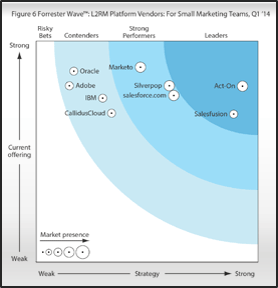
One last thought: in 2014 Forrester Research published The Forrester Wave™ Lead-To-Revenue Forrester SnippetManagement Platform Vendors” which evaluated the use of marketing automation by small marketing teams and large enterprises. (Act-On was a leader in both categories, I might note.)

Forrester’s comments pointed to simplicity as a key factor: “L2RM platform buyers need to remember that more is not better; more is simply more. In fact, when you don’t need — or perhaps can’t use — extra functionality, more is sometimes worse. Small businesses — and small marketing teams in larger enterprises — need to carefully evaluate the L2RM platform Forrester Wave criteria to pick a solution that is right-sized for their needs.”

Download the full the full report here: Forrester Wave™ Lead-to-Revenue Management Platform Vendors.

16 Jul 23:14

We already know who's snapping up all Greece's gorgeous villas

by Lucinda Shen

luxury hotel

Russian buyers are scrambling to buy bargain properties in Greece, as the financial meltdown has eroded luxury real estate prices, reported Damien Sharkov for Newsweek

Just to give you an idea of the scale of sales: Greek real estate agency IRM Aegean Estate has put properties in package deals, with two villas in Corfu—private beach and all — selling together for $4.9 million.

According to German magazine, Bild, the number of luxury Greek villas bought by Russians have more than doubled in the last year, Newsweek reported.

That's partially because of Russia's own currency crisis — rich people are looking for safe places to park cash — but also since real estate prices in Greece have fallen roughly 50 percent since 2009, Bild reported.  

"If a villa on the Greek island of Syros still cost €1.6m a few years ago, it is now selling for just €800,000," said Isabelle Razi, the founder of the Greek real estate agency IRM Aegean Estate to Newsweek. That's a decrease from roughly $1.74 million to $870,000. 

The strengthening relationship between Russian buyers and their Greek holdings is mirrored by ties between their national governments.

Last month, the two countries agreed to build a $2.27 billion gas pipeline reported Damien Sharkov for Newsweek — and some critics are concerned the move signifies a tug-of-war between the West and Russia, as Athens may be inching toward the Kremlin's umbrella of influence.

 Read the original story at Newsweek.


SEE ALSO: Greece is flirting with Russia to make Europe jealous

Join the conversation about this story »

NOW WATCH: This drummer created a whole song by only using the sound of coins

16 Jul 23:13

10 Stats On Why You Need A Marketing Metrics Dashboard For Content

by Mike Clark

10 Stats on Need for Market Metrics Dashboard for Content

Finding your footing with marketing content means equipping yourself with the right tools from the start. Simply put, if you can’t measure your performance, you won’t know where you’re headed.

That’s why a marketing metrics dashboard is such an important tool to have, especially when you’re managing multiple campaigns. By using a marketing metrics dashboard, you’ll be able to gather data on both your internal and external reach, giving you a broader scope of where your campaign strengths and weaknesses lie and where to make adjustments moving forward.

For a deeper look at the how and why of content measurement, check out our eBook, The Blueprint to B2B Content Metrics. Let’s take a look at some stats on why this is so crucial:

Content creation is up by 70% from 2014. (Tweet this!)

With such a dramatic rise, it’s safe to say that by 2016 the demand for new and fresh content will continue to increase at a drastic rate (Content Marketing Institute).

50% of B2B marketers cite the inability to measure content metrics a major challenge. (Tweet this!)

A recent study found that half of B2B enterprise marketers cite the inability to measure the effectiveness of their content as a challenge, demonstrating a felt need among marketers for better tools and processes for effective content metrics. (Content Marketing Institute)

Inefficiencies cost up to 25% of your content budget. (Tweet this!)

Without using a marketing metrics dashboard, you won’t be able to properly track your content and how it’s used. Mid and large-size B2Bs average a loss of $.25 on every dollar due to inefficiency in content building (Content Marketing Institute).

60% of the content journey’s success is in the first and last stage. (Tweet this!)

If you’re using a content journey [[link to content in eBook]] with six standard assets, then the first and last stages are critical. Kapost estimated 30% weight in the Whitepaper (first) stage, and 30% in the Webinar (last) stage.

49% of marketers are only using basic metrics. (Tweet this!)

Refining your metrics to bring deeper insight into your content means you’ll be ahead of over half of marketers trying to track their performance.

70% of B2B enterprises are creating more content than a year ago, with 52% planning to increase spending on content. (Tweet this!)

Over half of the B2B enterprises that increased their content production from 2014 are also planning to increase their content budgets, making it more important to track and measure campaigns with a marketing metrics dashboard (Content Marketing Institute).

70% of B2B content goes unused because content isn’t strategically mapped to buyer interests and topics they care about. (Tweet this!)

If buyers aren’t hearing and seeing what they need, B2B enterprises risk wasting over 70% of their content. (SiriusDecisions).

Most B2Bs are missing these 2 important metrics. (Tweet this!)

While it’s crucial to track your reach, many B2Bs are missing the ability to track across all external channels like social AND internal metrics. In fact, only 27% of marketers say they’re effectively tracking content utilization metrics.

87% of CMOs want more visibility around content performance. (Tweet this!)

If your CMO wants to see results, then having a solid marketing metrics dashboard will improve your reporting.

Content inefficiencies account for an estimated $958 million in overspends. (Tweet this!)

We’ve mentioned this number before but it’s certainly worth repeating. Since metrics are part of your overall content creation and release process, cutting down on wasted time and resources will help you shy away from this massive estimate.

This is just a brief overview of why having a marketing metrics dashboard will improve your B2B organization’s overall performance. Check out Kapost’s full eBook here.

16 Jul 23:12

7 Major Mistakes You May Be Making While Building Your Sales Team

by Dr. Christopher Croner

Without a skilled sales team, your business simply cannot thrive.

frustrated sales reps lead by poor management

Unqualified salespeople may cause the team to repeatedly miss monthly revenue goals and unmotivated salespeople may bring down the morale of the team.

Because of this, it is important for you to hire the right people and handle your current salespeople effectively.

Errors are common among managers who have been tasked with building a sales team. Here are 7 of the most disastrous ones that you may be making:


Top Mistakes Managers Make When Hiring Salespeople


1. Relying on Your Instincts Alone When Hiring

If you are looking to get top results out of your sales team, you need a reliable hiring process that can ensure consistent and objective results. Even if you are an experienced hiring manager, you cannot trust your instincts alone and hire the candidate who seems the most likeable, outgoing or experienced.

Instead, you should take a more strategic approach and base your decision on data whenever possible.

Carefully plan the right questions to ask your candidate and use a sales personality test to evaluate him/her further. You can then use her test results and the quality of her interview answers to determine whether or not she will be a good fit for your team.

Keep in mind that you should trust your instincts about certain things during the interview process. For example, certain red flags, like unpreparedness and poor listening skills, may warn you that a potential hire will not be a good fit.


2. Not Having a Structured Training Program

You will need to constantly develop the skills of your salespeople if you are looking for top results.

Not only should you offer training programs within your business – you should also encourage your team to pursue outside education.

If your salespeople are underperforming, consider an assessment test for tailored mentoring, coaching and training. By testing your sales team, you can help them develop their skills and start performing to their full potential.


3. Overlooking Anyone Who Is Not Extroverted

Too often, hiring decisions are made based solely on personality and performance during the interview.

When this happens, extroverts tend to gain a clear advantage over most introverts and ambiverts. Their natural charisma and social skills can make them seem like an ideal fit for a sales job.

However, personality can be deceiving. You might be surprised to learn that extroverts do not always produce the best sales results. In fact, recent research shows that some ambiverts outsell extroverts by 32 percent. Introverts have been known to outperform extroverts in some scenarios as well due to their ability to focus and their listening skills.


4. Not Leading and Managing Effectively

poor sales management skills

It can be difficult to admit, but sometimes we could be the very ones hindering our own success.

As a sales manager, you must recognize that self-reflection and a proactive approach are keys to building the success of your team.

Instead of just dealing with the team’s day-to-day needs, focus on the bigger picture and make positive changes that will help far into the future. Part of doing this involves making sure that your salespeople view you as an inspiring leader – not just a boss. Show support for your team and let them know that you believe in their ability to succeed.

Understand that even your best salesperson will make mistakes from time to time. When that happens, try to help her learn from the experience so she can avoid the same mistakes moving forward. You can even share your own past mistakes with your team to help them further.

You will also need to re-energize senior sales reps when they feel demotivated. Here are a few ways to do this:

  • Recognize her achievements.
  • Continuously challenge her to do better.
  • Allow her to lead a few sales meetings.
  • Tell her why she is important to the company and praise her for her contributions to the sales team.

When you mentor and coach your team, instead of just telling them what to do, you should build solid working relationships based on trust.

Remember, money is not all that matters to a salesperson. While an attractive compensation plan might draw her in to your business, a strong company culture and good leadership is likely what will make her want to stick around and consistently achieve top results.


5. Failing to Provide Your Salespeople with Useful Technology

Many organizations make the mistake of only providing upper management with the newest technology. What they fail to realize is that salespeople need useful, updated technology to succeed as well.

The right tools will help automate the sales process, saving time and allowing your sales team to work more productively as a whole. Increasing productivity means that your team can handle more customers, giving them more opportunities to make money for your business.


6. Failing to Hire Quickly Enough

Make no mistake – good salespeople are in high demand.

When you find a candidate who demonstrates the Drive needed to succeed in sales and seems to be a good fit with the company culture, do not waste any time – hire that person as soon as you can.

If you make the mistake of waiting too long, you may find out that your perfect candidate has already been hired by another company, forcing you to spend more time looking for another qualified salesperson.

However, this does not mean that you should rush the hiring process. Take your time interviewing and testing candidates so you can make an informed decision that will benefit your company. Just remember to act fast when you do find the right person.


7. Not Using a Sales Personality Test

It is a good idea to administer a sales personality test at the beginning of the hiring process. That way, you can save time by weeding out any candidates who do not possess the one key trait of a highly successful salesperson: Drive. You cannot determine who possesses Drive simply by talking to them and anyone without it will not be able to perform at a high level in sales.

Without a doubt, it is in the best interest of your company to test all candidates for Drive.

Determining Drive is a powerful step that will help you take the guesswork out of hiring salespeople. It will also allow you to avoid many of the mistakes mentioned above, and help you feel confident in your future as a manager, the future of your sales team and the future of your business.


The post 7 Major Mistakes You May Be Making While Building Your Sales Team appeared first on SalesDrive LLC.

16 Jul 23:12

A Simple 2-Step Technique for Improving Lead Follow Up

by Howard J. Sewell

In an era when “demand generation” and “content marketing” are virtually synonymous, most B2B sales leads are the result of a prospect downloading or requesting content. However, whereas promoting marketing assets like white papers, ebooks, analyst reports, and the like is an effective way to feed the sales funnel, the fact is that only a small percentage of “white paper leads” will either convert to sales-ready prospects in the short term, or even result in sales engagement.

Most B2B marketers take for granted that content marketing will, by default, generate a wide spectrum of leads – some of them qualified, perhaps, but most just conducting informal research (the proverbial “tire kickers”). That latter group becomes fodder for ongoing nurturing, in the hope that further education and brand awareness will ultimately result in conversion to qualified leads.
2 step lead followup plan
There is a better way.

The best opportunity for converting raw inquiries to sales-ready status is at the very top of the funnel, immediately upon the prospect expressing interest. This is the point in the process – call it lead follow up – where a formal, systematic lead nurturing program can have the greatest impact on conversion rates. However, many marketing organizations yield control of that initial follow up process to inside sales, and only take up the nurturing process once raw inquiries are rejected or disqualified by that group, often because the inside sales reps are simply unable to reach the prospect by phone or email.

Here then is a simple, proven technique for increasing the rates at which:

1. inside sales reps make contact with, and engage with, new prospects; and, as a result,
2. raw inquiries convert to either MQLs (Marketing Qualified Leads) or better.

Step 1:

Fulfill marketing content via email. When a prospect completes a registration form, direct the prospect to a thank you page that 1) thanks the prospect for his/her interest, 2) lets him/her know that a link to the asset has been sent via email, and 3) presents additional offers or resources that he/she may find of interest. I discuss other compelling reasons to fulfill content via email in this earlier post.

In the fulfillment email, deliver the link as promised, and include the same, “secondary” offers that were featured on the thank you page. If possible, have the fulfillment email come directly (but automatically) from the assigned inside sales rep (BDR) and include that rep’s contact information with an invitation to call or email with any questions.

Step 2:

After 3 days, send one of two follow-up emails:

If the prospect has not yet clicked on the content link in the fulfillment email, send a gentle reminder (again, from the assigned BDR) about the asset he/she requested, with an invitation to call or email if he/she has questions or needs further information.

If the prospect HAS clicked on the link in the fulfillment email, and therefore has likely read the content on offer, send an email that thanks the prospect again for his/her interest, invites him/her to share the same content via social media, offers additional resources, and lastly, invites the prospect to contact the BDR for further information or to discuss their upcoming needs or plans for (insert relevant topic here).

Sending these two emails accomplishes two main goals:

1. It reminds the prospect that he/she downloaded the content in the first place, making him/her more likely to be receptive to actual, live communication from the BDR;

2. It provides multiple opportunities for the prospect to take further steps, of his/her own initiative, by accessing additional content or reaching out personally to his/her assigned BDR.

Either one of these will increase the rate at which BDRs ultimately engage with prospects, and as a result, the rate at which they convert raw inquiries into qualified leads.

You can take this technique one step further by automating the entire BDR follow-up process. I discuss that technique (and the results it generated for one client) here.

16 Jul 23:12

​The Best Way to Calculate Your Lead Consumption Rate

by Michael Hanna

Your lead consumption rate will tell you more about your lead generation process than any other metric. It will help you focus on the quality and quantity of your leads and pipeline.

To get started, you’ll need a CRM system, and a clearly defined process where your BDR team is receiving and converting leads. To specify, I’m defining BDRs as the people in your organization responsible for follow up on those leads, whether it’s inbound or outbound. BDRs are also qualifying them, converting them and handing them over to your field sales reps.

1. Lead Creation Date

With this in place, the first step is to identify the creation date of each lead. Now, the lead may have entered your CRM system directly, they may have been fed from another system, or they may have been nurtured through a marketing automation system. No matter how they entered, you’re specifically looking to track when the lead got in front of your BDR.

2. Lead Conversion Date

The second metric to track is the point in which the BDRs convert those leads when they feel that they’re qualified, and when they feel ready to hand them off to the field reps. Timestamp the point of conversion and make sure that everybody is tracking the conversion the exact same way. Otherwise, you can’t capture that timestamp in a meaningful aggregated way.

3. Lead Disqualification Date

The third metrics is the point in which the BDR rejects the lead. Many companies want to know when they exited the cycle, and that may be a positive exit in the form of a conversion, or a negative exit in the form of a disqualification. No matter what, always capture the timestamp for a disqualified lead.

As part of the third tracking metric, make sure you differentiate between a disqualification and bad data.

  • Disqualification: I followed up on the lead, I did my job, I had a conversation, and they’re not ready
  • Bad data: Johnny is not at the company anymore, so let me get rid of this or update the data

If you don’t differentiate between disqualified and poor data in your tracking, then that poor data is going to falsely affect the tracking.

You’re ultimately after the timestamp out, minus the timestamp in. That will tell you how many days that it’s being processed.

Bringing it all together

The last piece to track is the starting time of the follow-up process. You want to know how long it took for the lead to convert from entrance to follow up. Now you’ve got three points:

  1. When the lead came into the system
  2. When the first follow-up takes place
  3. The concluding exit

If you can capture the timestamp on those three things, then you have all of the information to determine your consumption rate in terms of volume and time.

Now What?

With the lead consumption rate, you can report on:

  • Follow-Up Velocity: How long it takes to follow-up on leads after creation
  • Conversion Velocity: How long it takes to convert a lead into your sales pipeline after follow-up (this may entail multiple steps)
  • Disqualification Velocity: How long it takes to disqualify a lead after follow-up
  • Lead Qualification Rate: What proportion of leads are being converted vs. being disqualified (speaks to the effectiveness of your field marketing and inbound marketing activities)
  • Lead Consumption Rate: How long it takes your leads to convert from the point of creation

Your optimal lead consumption rate tells you how many leads you can process in a given time period before your conversion rate begins to diminish. Leads grow stale over a very short period of time, so the faster your follow up, the more likely you are to convert.

Now you have the visibility required to optimize your lead flow in a predictable way.

Get more lessons on B2B lead generation in the free ebook below.

b2b-lead-gen-ebook

16 Jul 23:11

Simplify Your Marketing With Client Flow

by Ian

Today’s video is, I think, one of the most important I’ve done.

It lays out a simple method for reviewing what you’re doing with your marketing, identifying gaps, areas to improve, and things you can cut out completely. And it’s fairly simple to do.

In the video I walk you through the method and show you how to apply it.

Video Transcript

Hi. It’s Ian here. Welcome to another 5 Minute Marketing video. This week’s video is probably the most important one I’ve done. It’s about a way of systematizing and simplifying your marketing that makes it massively more effective and much easier to do. I’ll explain it all after the break.

Hi. It’s Ian here. Welcome back. I was on a webinar earlier today with Josh Turner, who has a fantastic system for generating leads, building relationships, and winning clients using LinkedIn. Basically, Josh’s system covers a number of key points for LinkedIn. When I thought about it, and as I was listening to the webinar, I realized that it highlighted some of the hallmarks of all effective marketing.

Now I’m going to show you a method you can use with any marketing you’re doing, whether it’s online with LinkedIn or Twitter or Facebook advertising or email marketing, whatever it might be, or offline as well, with networking and seminars and referrals, that’ll allow you to really identify the areas of your marketing that are adding value and that are really delivering you clients, and the areas that aren’t, so you can cut those out and really focus in and narrow down on what’s going to work for you.

The key to it is that all your marketing and sales activities need to be lined up to bring you in new clients, right from that initial identification, so it’s really the client flow process from focusing in on your ideal clients, generating leads, doing ongoing nurture to build relationships, build credibility and trust, and then to win clients. What you can actually do is, if you plot it out like this, you would obviously do it on a piece of paper rather than a flip chart and use a pen rather than a marker, but if you plot it out like this and you write these things down, you can identify what’s working for you and what’s not.

For example, if we take some of the marketing I’m doing for example, I typically will use Facebook ads and to a target audience of interests, and that would identify people who are consultants, coaches, and interested in winning more clients. That’s my focus, is I’m using interest-based targeting to identify people who would be a good fit and who would be interested in buying some of my products. I then generate leads by running the Facebook ads. I run some to landing pages, and I do some straight to a blog post where I do retargeting to landing pages. That’s my lead generation. That’s how I get people, and obviously those that go to the landing pages get people to sign up for emails.

My ongoing nurture is I have a sequence of emails, but it’s not just that. I don’t just write emails in here. What is the actual sequence of emails that people follow, these specific clients follow? Basically I give them the 21 word email. I offer the Re-Ignite program and then offer Momentum Club, and then do a series of nurture emails that relate to the main features of Momentum Club, et cetera, et cetera. I have an ongoing nurture thing. How do I win clients? I have the Re-Ignite offer. It’s around for about 4 days. I have an ongoing mention of Momentum Club in the emails. Now you can do exactly the same, no matter what marketing you are doing.

For example, you might choose that you want to go out and do presentations to groups of business owners, so small business owners might be your focus. You’re going to use presentations to groups of small business owners. The lead generation is the presentation, but the key thing is to generate a lead. It’s collection of a business card, so you have to think, what do I offer to get that business card? Is it a more detailed report on the thing I’ve presented about?

How do you then nurture them? Maybe if it’s a case of a handful of business cards, you nurture the relationships personally, so you follow up with them. You maybe put a few phone calls in, maybe send them some stuff through the post. You maybe do various emails with them, so there’s a personalized nurture. Again, don’t just write down personalized nurturing. Write down what other steps I’m going to take to nurture all the leads I’ve generated through these presentations I’m doing.

What are the actual things I’m going to send them? What are the contacts I’m going to make? How am I going to turn them into actual clients? Am I going to offer them a strategy session? Am I going to invite them to a webinar where I offer them a strategy session? Whatever it might be, what’s your method for turning those nurtured relationships into clients? As I say, no matter what type of marketing you’re doing, you can plot it out on this matrix. What am I doing? Who am I focusing my marketing on? How am I generating those leads specifically? How am I nurturing them specifically? Not just email marketing, but what specific emails am I going to send? What specific sequences am I going to put them on? How am I going to win them as clients? Is it webinars? Is it one-to-one sessions? Is it offers in email? Is it, et cetera, et cetera? Really lay that out.

The key thing is anything that you’re doing in your marketing and sales that’s not on here, so if you end up writing down, “I’m doing networking at Chamber of Commerce meetings,” what are you doing to generate leads from that? “I’m kind of collecting business cards.” Sounds a bit weak. What’s my follow up for that? “I don’t really. I maybe drop them an email afterwards and say thanks for meeting. I’m just hoping that …” You see there’s a big gap there.

Either you cut that out entirely, because it’s not bringing you any value, or you plug in those gaps and you say, “Well, look, I’m generating some leads, but I really need some follow up systems in place and some winning client systems in place to make that deliver me value.” You might find some gaps in there. You might have a great system going, but a gap there. Fill in the gap. You may be doing some activities that don’t quite match, so you’re not sending them down the right sequence for that particular group of people.

If you analyze your marketing using this flow matrix, you can really highlight the gaps and plug those gaps. You can highlight when you’re doing activities that you don’t really need. You can highlight ways of improving those activities by aligning them up to make sure that the lead generation, the ongoing nurture, and the winning client work you do really lines up with the specific clients you’re focusing on and will work for them. That’s my 5 Minute Marketing Tip for this week, as I say, triggered by the webinar with Josh Turner on that. It was a great process for doing this that fills in all those gaps for LinkedIn. If you haven’t watched the webinar replay, probably worth doing so via the link below. I’ll see you next week.

The post Simplify Your Marketing With Client Flow appeared first on How To Get Clients: Proven Strategies to Win More Clients.

16 Jul 23:11

Party Time, Excellent! Why Lead Lifecycles Should Be Modeled after Assembly Lines

by Jeff Coveney

waynes world

Recently, I was in the mood for some silly humor and watched Wayne’s World on Netflix. In the movie, two dimwits named Wayne and Garth work on a beer bottle assembly line before quitting to attend an Alice Cooper concert. Taking Wayne and Garth out of the equation, I got to thinking about the benefits of an assembly line.

It’s not a best practice to hire two dudes like Wayne and Garth, but why do companies roll out assembly lines?

  • Assembly lines are predictable: The manufacturer knows what goes in and what comes out.
  • Assembly lines provide great insights: Management can easily measure production levels to gain intelligence on what to build in the future.
  • Assembly lines are repeatable: Yes, they may take some time to build, but assembly lines bring massive long-term gain as they create efficiencies within the organization.

A lead lifecycle (aka the funnel) refers to how leads move from their creation through to revenue. An organization’s lead lifecycle is very similar to an assembly line, except that instead of an assembly line of goods, the lead lifecycle is an assembly line of leads. The goal is to develop a healthy funnel to optimize leads moving through the system in an efficient and timely fashion. Essentially, create an assembly line-like machine.

Five Prerequisites to Your Lead Assembly Line

Before manufacturers invest millions in their assembly line machines, they start with process definition—a measurable lead lifecycle is no different.

The hardest lead lifecycle work occurs during the early stages when organizations develop the processes and methodologies. Once those are established, automating the lead assembly line from a technology perspective becomes much easier.

In working this process numerous times, I’ve seen where many of the problems exist—you surely can’t take shortcuts. So before you build the lead lifecycle assembly line, here are five prerequisites to ensure long-term success:

1. Align Sales and Marketing

I have seen several instances where marketing attempts to define the methodologies without sales. Inevitably, that leads to failure down the road when it comes time for sales to adopt the processes. Don’t take this shortcut.

Like Beavis and Butthead, Starsky and Hutch, or our friends Wayne and Garth, marketing must have a buddy-buddy relationship with the sales team. Of course, sales and marketing will disagree on some issues, but in the end, a healthy relationship is required in order to achieve lead lifecycle success.

2. Develop Consistent Lifecycle Stages Definitions

Does sales and marketing speak the same language when it comes to the lead lifecycle? Building alignment is tough enough—you don’t need language to become a barrier, too.

If a sales rep thinks MQL stands for “More Qualified Lead”, then you have some work to do. Terminologies are key for getting sales and marketing on the same page and for measuring future success. Make sure your sales and marketing teams consistently answer terminology questions like these:

  • What is a marketing qualified lead (MQL)?
  • What is a sales accepted lead (SAL)?
  • What is a sales qualified lead (SQL)?
  • When do I convert a lead to an opportunity?

3. Establish Service Level Agreements (SLAs)

An SLA is an agreement between marketing and sales that a lead will receive the appropriate attention at the right time. Best practice organizations set SLAs to make sure leads move through the system in a timely fashion. Otherwise, leads have a tendency to stagnate in various stages. Below are a couple of examples to ensure that no lead is left behind.

  • MQL: Call within one business day to ensure a hot prospect is contacted quickly.
  • TAL: Call five times in two weeks to promote appropriate follow-up.

4. Agree on and Follow Process

Imagine trying to build an assembly line with bad processes. Probably the worst day dream you’ve ever had, right?! Automating bad processes is simply impossible.

Many times, sales and marketing leaders sit in a room to determine what the funnel processes should look like. “All the reps need to do is change the lead status from “marketing qualified” to “accepted” status.”

That process may sound easy, but agreeing on the process is only the first step. Having twenty reps follow that process consistently is critical to lead lifecycle success.

And expect to train regularly.

5. Get Management Onboard

Let’s get real: process changes can cause some pain. So, management must be on board to help smooth over those bumps and drive success.

In many cases, the executive team gets in a room upfront and agrees on a process. The team feels great that there is a check off that sales and marketing is aligned. But, I ask you, are the teams really aligned?

The hard work will come when the process changes arrive. Sales and marketing executives must stay on top of these tactical issues or risk losing the long-term vision. Inevitably, some sales reps will not follow a process. For example:

  • What happens when a quarter of the sales reps do not follow up on leads within the agreed upon SLA?
  • What happens when sales reps don’t want to adhere to process?
  • What happens when overdue alerts are ignored?

This is when the rubber meets the road for many organizations where management must step in to make process mandatory. Proactive organizations will anticipate these issues and make them just small speedbumps. Organizations without strong executive support tend to sweep these issues under the rug, putting the entire project at risk.

Final Thoughts

There are a few prerequisites to developing the assembly line and funnel. Sales and marketing alignment is one of these prerequisites. Agreeing on processes and terminology is another. And of course, management must buy in to the whole process to drive success.

Once the above hard work is put in, the easier part is building the assembly line itself in your marketing automation platform of choice.

If you are looking to learn more about developing a repeatable funnel, feel free to download my recently published ebook, Six Steps to Transform Your Lifecycle into a Revenue Machine, which outlines six best practices. Enjoy!

16 Jul 23:10

What are Micro Personas and Do You Need Them?

by Rachel Moore

what_are_micro_personas_and_do_you_need_them

If you’ve read this blog (or, heck, any blog about marketing) before, chances are pretty good you’ve heard some variation of this line before:

Buyer personas are the most important element of a successful inbound strategy because they define whom you’re actually trying to attract, convert, close, and delight. 

Regardless of the type of business you’re in, chances are good that you have at least one buyer persona. In fact, many businesses have more than that: on average, most organizations have somewhere between 3 and 5 real, solid, clearly delineated personas. But for those of us who are on the front lines and actually interacting with customers, clients, prospects, donors, and users on a daily basis, it can sometimes seem like every individual is completely and totally unique – each with their own goals, challenges, role in the sales process, background, and beyond. Over the course of a day of talking to customers, it can feel like you have 10, 20, or more persons – nowhere near the average 3-5 number.

While it’s unlikely most businesses actually have 20 unique personas, it’s quite possible that they may have that many (or more) micro personas.

What is a Micro Persona?

While standard buyer personas (which, in this article, we’ll call macro personas moving forward) differ based on the high level goals, challenges, wants, and/or needs of an organization’s customers or users, micro personas differ based on more subtle features – for example, differing preferred means of communication. One macro persona may have many micro personas, but each micro persona can only be a subset of one macro persona.

Let’s look at a few examples of micro personas and how they relate to macro personas:

Example 1:

Macro persona: 

Marketing Mary is a marketing manager at a company with 50-200 employees whose main goal is to get more leads and prove the ROI of her efforts but feels like she doesn’t have enough hours in the day to accomplish everything she needs to.

Micro personas:

A. Highly tech-savvy, wants an automated solution for everything, and not afraid of using new technology to get the best results.

B.  Not tech-savvy, intimidated by new technology, takes a long time to warm up to new systems.

C.  Has a large team to which she delegates all content creation tasks; is only in charge of high level strategy/budget and hitting numbers

D. Has only one or two people below her and is responsible for doing many tasks herself.

Example 2:

Macro persona:

Stay-at-Home Parent Pat is a full-time parent to two school-aged children. Pat’s spouse works full-time to support the family. Pat’s goal is to be as present and involved in the children’s lives as possible, but Pat sometimes feels pressured to go back to work to reduce the pressure their spouse feels to support the family

Micro personas:

A. Was previously a successful member of the workforce and has many profitable, marketable skills (for example, was a developer).

B. Was previously a successful member of the workforce but skills are not as marketable or profitable (for example, was a call center specialist).

C. Children are in high school and will soon be going to college; soon-to-be “empty nester.”

D. Children are in elementary school and will still be living at home for at least another decade.

Note: In each of the previous examples, there could be many more micro personas (i.e. variations) of the overarching macro persona – there is certainly no rule for how many micro personas each macro persona can or should contain.

In essence, micro personas are the “shades of gray” of each macro persona: they’re not so granular that they define the specific individual people that belong to each persona group, but they are at least one level of detail below that of the overarching macro persona.

Who Needs Micro Personas?

Just like macro personas, any and all businesses can have micro personas. However, since they are, by nature, more detailed, specific segments than their larger macro counterparts, taking the time to develop micro persona (and market to them) isn’t necessarily the best use of every marketer’s time.

Micro personas are most useful for:

  • Organizations with very vague, general, or high-level buyer personas – for instance, those in the ecommerce space
  • Companies with large contact databases and who are in need of ways to segment
  • Organizations with the resources to dedicate to specifically marketing to each micro persona
  • Organizations who believe they have many (i.e., more than 8-10) macro personas – some of these may be subsets of one another and thus, micro personas

How to Use Micro Personas

Sam Mallikarjunan and Mike Ewing, eCommerce experts at HubSpot, explain the value in using micro personas relative to macro personas by suggesting first to visualize a pyramid with macro personas at the top, and micro personas below that. Sam and Mike suggest macro personas should be at the top because “in the initial stages of customer interaction, subtle persona variations make little difference.”

Such “initial stages of customer interaction” include beginning-of-the-buyer’s-journey, top-of-the-funnel marketing activities such as publishing blog posts and creating landing pages, where developing individual assets for twenty different micro personas simply isn’t a practical solution for most organization – relative to the amount of time it would take to complete such a task, the returns would be minimal.

On the other hand, micro personas and creating specific content for them can be much more beneficial in the context of more middle- or bottom-of-the-funnel type content. The subtle variations between persona groups that micro personas highlight hold the greatest value for more specific and focused forms of targeted marketing, such as the e-mail campaigns that are hallmarks of lower-funnel marketing activities.

Inbound marketers have long championed the importance of buyer personas to creating the most targeted content and delivering that content to the precise segments for which it will be most relevant. Many organizations are just now beginning to recognize the need for – and potential role of – micro personas in a comprehensive marketing strategy. While they may not be for every organization, when used correctly, micro personas can greatly benefit an inbound marketing strategy.

16 Jul 23:10

How To Master Network Sales Without Being Awkward

by Piotr Zaniewicz

Mastering network sales is all about trust. When starting a new venture, it’s tough to get your first customers because you don’t have any credentials to help build trust.

People judge by historical performance, but with nothing to show in your portfolio or any sign of a track record, it’s really hard to make people trust you with their money.

Anyone who was struggling to find their first job without previous experience knows this pain.

network sales

Unless you’re this guy… (which you’re not)

What Is Network Sales?

A sales methodology in which salespeople are encouraged to build leads by tapping into their personal and professional networks to find qualified leads by means of referrals. In this method, there are two types of people to look for: potential leads, and well connected individuals who can introduce you to potential leads. 

Network Sales Is About Trust, So Start With People Who Already Trust You

That’s why approaching your nearest network is the best way to earn your first batch of customers.

You don’t have to build trust with people who already trust you, that’s why it’s easiest to start with them.


Approaching your nearest network is the best way to get your first customers on board.
Click To Tweet


Yet, network sales often just seems… awkward.

There a lot of questions that could trouble you:

  • Should I write to this guy I briefly met 3 months ago?
  • How should I approach my close network?

mastering network sales

You don’t wanna be the wolf in this case…

I’ve been using network sales with a lot of success at the beginning of RightHello.

The beauty of it all? I still have friends I can go for a beer with, some of whom are my customers.

I wanted to share my answers for a few important questions I asked myself before starting network sales.

1) Who Should I Approach?

You should not bother people that have nothing to do with the business you are in. It’s a simple rule, but people often go through their whole network and just send the same one email to everyone. That’s super-awkward.

email spam sales hacker

…as long as you don’t spam my mailbox.

Talk to everyone you know that is connected in some way to what you do. You don’t want to bother people that don’t even understand your company or can’t benefit from it somehow.

Just browse your social media lists and try to identify leads. There are two types of people to look for:

1) Could-be customers

2) Well-connected people: they know other could-be customers.

Depending on the size of your network it could be 10 or 100 people. The smaller your list is, the more personal you should get as every one of them counts – in matter of potential deal, feedback, and any other people they could introduce you to.

Think about it this way – if you can provide value, and you don’t offer any to your buddies, you aren’t a good friend.

Imagine if Steve Jobs didn’t want to sell Steve Wozniak an iPod? Silly, isn’t it? Yet I still see many (even successful) founders who don’t want to approach their friends because they’re scared to cripple the relationship.

how to master network sales

…I bet he’d agree

2) How Well Should I Know Someone Before Approaching Them?

Don’t overthink whether you know somebody well enough to approach them. If they’re a part of your social media network, they somehow opted-in to having updates from you sometimes.

I’m talking from the perspective of an entrepreneur – every venture is a part of my life and my network totally understands that.

From my experience, it doesn’t matter whether you’ve met somebody once, or have known somebody since childhood- If they fit the ideal customer profile, it’s worth trying.

3) How Do I Talk To Them?

Network sales is a fairly straightforward process. You know you want them to become customers, but you still don’t know if your product or service will work for them.

The first step is getting honest feedback from your prospect – something that’s hard to get from someone you don’t know. What I always do here is ask for feedback with the intent to revisit them as a future customer.

There’s an overused line that people always add when asking for feedback:

“I’m not looking to sell anything, but since you have so much expertise in… blah blah blah”.

That’s bullshit. Sure, get feedback first, but don’t pretend you don’t want them to be your customer if you know you can add value. In my opinion, people see through that from miles away.

how to master network sales

Here are two examples of e-mails I used to approach my network:

Could-Be Customers:

“Hey {{first_name}},

As you may know I recently started my new venture – RightHello, a tool for building high quality leads. We are just about to release a private beta.

I think this is something you might find useful and I would like to show you what we have. Your feedback would be extremely valuable 🙂

Are you free to grab a coffee and talk it over this week?”

Well-Connected, Asking For An Intro:

“Hey {{first_name}},

As you may know I recently started my new venture – RightHello, a tool for building high quality leads. We are just about to release a private beta.

I’m looking for early adopters to get first feedback – ideally people doing sales in IT. As you have a huge network I thought that you might know someone we could approach. I’d be in your debt if you could check your network for somebody to introduce me to :)”

There are a few things I think are important here:

Be straightforward and to the point

– Not too salesy

– Not too much about yourself

4) Will I Lose My Friends?

Old-time street wisdom tells us not to mix business with personal relations. It’s true that it could be awkward if things go bad, but you have a secret weapon to protect your relationships: honesty.

Don’t spread nonsense about how great your product or service is. You’re just getting started. Your company / product isn’t mature yet, and you have a right to be imperfect.

People from your network will be much more forgiving if you admit that you don’t have it all figured out. Time for hustling will come later.


People will be more forgiving if you admit that you don’t have everything figured out.
Click To Tweet


Secondly, don’t make promises you can’t keep. In normal sales, if you don’t deliver, you only risk your business relationship.

In network sales, people will trust you for who you are, so you are risking your friendship.

It could go really bad if you’re not honest. But if you are – there is 99% chance you’ll be okay.

how to master network sales

…As long as you’re honest.

One of my first customers was a very close friend. Even though we had our problems – honesty and openness maintained our business and personal relationship. He is still a customer, and we still have a beer from time to time.

5) Ask For Introductions

Normally it’s impossible to get a referral from a lead, and it’s not easy to get one from a client. But when you are starting from scratch it works totally different.

how to master network sales

You are an entrepreneur and you are trying to change the world in someway – that’s a kinda romantic thing to do and people will want to help you.

At the start you’re mostly looking for feedback. You don’t need to prove anything, you’re just asking for opinions. In the more mature stage, it’s impossible to use this leverage, so better do it now 🙂

Just ask everyone you talk with for a few introductions. If you get introductions, ask them for more introductions. Trust me, it works in 90% of cases.

6) Be Natural

Asking for help makes everyone feel awkward. But when people see your hard work supporters come naturally. I was surprised at how much help I got along the way “just because it’s cool”

how to master network sales

Be honest, try to do your best – and always keep your promises. This way you approach your network without feeling bad about it – after all, it is a mutual favor.

The post How To Master Network Sales Without Being Awkward appeared first on Sales Hacker.

16 Jul 23:09

Re-Segmenting: When Contacts No Longer Fit Into Their Segments

by Rachel Silver

In previous posts we have explained how to segment your contacts to optimize overall your ROI. But what happens when people in your network no longer fit their segment?

According to eMarketer, with segmentation 39% of people saw better open rates, opt-out rates and unsubscriptions were lower for 28% of people, 24% saw improved email deliverability, leads, and revenue. Cleary, segmentation is key to successful customer nurturing and achieving a good ROI.

segment2.png

http://www.business2community.com/email-marketing/6-ways-to-segment-your-email-list-to-improve-your-success-01268444

Here are ways to think of how to re-segment your contacts:

Physically Reorganize:

Since your contacts change their relationship with you, your strategy to grow your relationship with them needs to change as well. If a customer completes a sale, then tactics to lure them in like a first time customer will not have the same effects, they already know the product and need you to treat them differently. Your strategy needs to shift towards nurturing the current customer to turn them into a repeat buyer.

You can reorganize your contacts in a few different ways. You can change the tags you have associated with the customer on your email to keep their information up to date. You can update their information in your contact lists, so you know what is relevant to their interests. Another method, in Contactually you can rearrange your contacts by changing what bucket they are in. This will allow you to change your contacting schedule.

keep-calm-and-reorganize--2

Change the Time Frame

Nurturing your contacts, leads, customers, and past clients all require different intervals of contact. A sale you are trying to make will require more contact within a follow-up system. You can send them frequent emails explaining how beneficial your product is, and how they benefit from the purchase.

Contrary to a new client, current clients need less attention. Once they have purchased your product, you might contact them in the early post purchase time frame to help them better use the product, but after a while your mail just clogs their inbox and are likely to be deleted without a second thought. When a customer changes what segment they fall under, they will expect different forms of aid from your company.

According to KISSmetrics, the two most important parts of customer service are timely responses and dealing with the least amount of people to resolve an issue. A new client may want you to hold their hand through the trial period, and expect you to answer the phone immediately. Returning customers may have less pressing issues and be more willing to wait for your response, allowing you time to concentrate on your new customers.

Having your customers properly segmented allows you to take care of the client’s issues in a timely manner. Correctly organizing contacts lets your team help clients immediately rather than sending a caller from person to person to get information. Your team will also know the proper amount of time to follow up with the callers based on how the clients are organized.

As mentioned before, with Contactually’s buckets you are able to decide how often you need to follow up with your contacts. Changing what bucket your contacts are organized under allows you to change the time frame of when to follow up and gives you notifications when that time comes.

Even after purchase your contacting the client to give them support shows the client that you value them as a customer rather then just wanting them for their money. Sending an email or posting on social media keeps the good fresh in their mind.

Re-segmenting contacts can be based on what phase of the sales process the client falls under as well as the time period of when they purchased. Contacts can also be segmented based on how often you want to follow up with them.

Try a New Approach

As your contacts shift segments, your focus on how and why you communicate with them evolves. For instance, language for sales and support tend to be different. Before a purchase your sales team constructs a sales program with tailored language, while the marketing team aims to draw in potentials and catch their interest. After snagging their interest you are going to want to change the way you speak to the lead.

As your approach changes depending on the phase of the nurturing process, your segmentation should shift and follow. You can arrange contacts based on how you are focusing on them and the approach for follow-ups and sales. If someone seems unresponsive to one style of contact, change your methods of contact to be a different style.

If you already have your contacts segmented by purchase cycle you can try a segment based on demographic. For instance, contacts originally segmented by age, could be shifted to be based on what type of company they work for or location. You can even use the change is segmentation as a way to reach out to them. For instance, mention news in their area if you changed your segmentation to location, or industry news if you grouped contacts by company type.

Reopen Communication Channels

After a purchase or a cancelation, it is easy to become distant and lose contact. Depending on what type of contact you want to start, you can change how you segmented your contacts to optimize revenue and increase repeat customers.

One way you can restart correspondence is to ask for a review, or what the customer likes or dislikes about your product. If you have a segment for past clients, then you can further break down the grouping by people who did not have a use for your product and those who did not like your product. Past clients who canceled your services due to lack of need, can be related to by discussing how your product can benefit them in ways they didn’t realize.

The past clients who didn’t enjoy your service should be contacted in an attempt to improve your product and possibly bring back these clients.

Lists can be grouped based on what clients hope to get from your product. To discover what your clients want from your product, you need to contact them. Just like past clients, allowing current customers to state their opinions on your product allows them to be more active participants in your company, helping you shape and expand your services based on their responses. When companies respond to their customers via social media the customers tend to spend 20% to 40% more with the company.

Catch the Ones Falling Behind

As mentioned in number four, offer a new and improved product. Not that you need to completely redo or scrap the one you already have, but with every tweak in the product, let your contacts know.

If there is a group of users who seem to be falling behind in their usage, or not consistently using your service, segment them under a group to be updated. The same can be done for eager clients or new clients to keep their interest.

Leaving your contacts in the wrong segments prevents you from effectively communicating. Figure out the best form of segmentation for your contacts then create a method to ensure your contacts are properly segmented.

VjrWJDjWr5

16 Jul 23:09

70 Top Sales Pros Reveal Their Most Impactful Sales Advice Ever

by Rizan Flenner

Let’s be honest:

There’s nothing like the feeling of flying high after closing a massive deal.

But if you’re like most salespeople out there, you’ll also face times where every lead you touch feels colder than a Siberian winter (brrr!).

However, there are sales pros out there who are absolutely shattering their sales goals.

So to find out what keeps them going, I got in touch with 70 of these experts and asked each one:

What’s the single best piece of sales advice you’ve ever received or shared?

Let me tell you, the responses I received were nothing short of amazing.

So whether you’re looking for instantly actionable tips or career-altering advice, here are all 70 of their responses – in their own words:

Free PDF: Get access to a free downloadable PDF version of this post. Contains all 70 of these amazing responses that you can view or print for your daily use.

Sales is a life skill you need everyday

Sales is a life skill you need everyday.

You can’t accomplish anything in life, whether closing a deal, starting a company, raising money for a non-profit, asking for a promotion or getting a new job, without being able to sell a product, an idea or yourself.

twitter-bird-light-bgs Click to tweet this advice

Aaron Ross – Bestselling Author and Consultant, PredictableRevenue.com

Don’t give up, no matter the cost

I’ve received so much advice over the years in my professional selling and sales management career – if I had to cite one thing I would focus on being gritty and having tenacity.

So many people move on once they hear that something is hard, or they call someone a couple times and figure they are not interested.

More times than not, I’ve won opportunities simply because I stuck it out until the end.

I didn’t give up, no matter the cost.

twitter-bird-light-bgs Click to tweet this advice

Lori Richardson – Inside Sales Speaker, Author, and Social Selling Consultant

ScoreMoreSales.com

Never Believe in Never

Years ago, a stranger handed me a business card that simply said:

neverbelieve

When I got back to the office, I put it up on the wall in front of my phone. Every day as I stared at it, the message wormed its way into my thinking: Never believe in Never!

Instead of getting down when I faced tough situations, I simply accepted the reality of them. This mindset was my impetus for learning something new – information or skills – that were vital to my future success.

This saying keeps me growing and learning. It focuses my thinking and it inspires me to be better today than I was yesterday.

I still have this saying tacked up in my office. It’s tattered and battle-scarred after so many years. After all, it’s been with me my entire career and informs everything I do.

twitter-bird-light-bgs Click to tweet this advice

Jill Konrath

Jill Konrath – Sales Keynote Speaker

JillKonrath.com

Listen with the intent to truly and deeply understand your customer

The best sales advice I ever received came from the late Stephen Covey in his book The Seven Habits of Highly Effective People.

Covey wrote:

Most people do not listen with the intent to understand; they listen with the intent to respond.

I realized that during my own sales presentations, while the customer was talking I was thinking to myself, “You know, when you shut up I’ve got something really powerful to say. It’s gonna blow your mind.”

Since then, I’ve tried my best to listen with the intent to truly and deeply understand my customer.

twitter-bird-light-bgs Click to tweet this advice

Jeff Shore

Jeff Shore – Sales Keynote Speaker

JeffShore.com

We can afford to lose clients, deals and money, but not our reputation

The most impactful advice I ever got related to the importance of reputation.

The individual involved impressed on me that we will all make mistakes and bad choices, part of the growth and learning process.

But given that our reputation is the only thing we have when we start out, it is the one thing we need to cherish and protect.

We can afford to lose clients, deals and money, all can be recovered. But once we lose our reputation, we are forever behind.

twitter-bird-light-bgs Click to tweet this advice

36_Tibor_Shanto

Tibor Shanto – Speaker, Author, and Sales Execution Specialist

SellBetter.ca

The goal isn’t to make a sale…

Doug Macdonald, veteran sales manager for Mass Mutual, told me in 1977 that the goal was not to make a sale.

The goal is to make a difference.

And if I couldn’t make a positive difference for my customer then I shouldn’t make that sale to him or her.

Ever since then I’ve seen the value of selling more clearly. That was the beginning of my discovery of what today I call “Relationship Selling.”

twitter-bird-light-bgs Click to tweet this advice

Jim Cathcart – Strategic Advisor, Sales & Marketing Expert

Cathcart.com

Never back down…

“Never back down…”

It’s something I remind myself almost every day.

And every morning I start the day by repeating 4 simple statements:

1. If I want something I have never had, I must do something I have never done.
2. I refuse to waste time worrying about things that I can not control.
3. Everyday, in every way, I am getting better and better by the choices that I make and the work that I do.
4. I’m tough enough to do whatever needs to be done for as long as that takes.

twitter-bird-light-bgs Click to tweet this advice

Dan Waldschmidt – Business Strategist & Popular Speaker

DanWaldschmidt.com

Make one more call…

When you are tired, hungry, worn out, burned out, and ready to go home, make one more call.

Those words are the best advice I ever received and are my mantra.

That “one more call” has returned millions in additional sales.

twitter-bird-light-bgs Click to tweet this advice

Jeb Blount – Author, Speaker and CEO

JebBlount.com

People don’t buy Legos. They buy the ability to build the Millennium Falcon.

People don’t buy Legos. They buy the ability to build the Millennium Falcon.

That quote came from Stephanie Buscemi formerly of SAP and now at Salesforce.com. It has stuck with me for years.

I try to help sales work with buyers to find out what their Millennium Falcon looks like, what happens when they get the Millenium Falcon, and what happens if they don’t.

Legos = little deals. Millennium Falcons are the big deals.

twitter-bird-light-bgs Click to tweet this advice

Craig Rosenberg – TOPO Co-Founder and Editor

Funnelholic.com

Sometimes it pays more to come second!

Our first reaction on learning that our bid has been unsuccessful is to feel let down, disappointed, even resentful, particularly if we have worked on this opportunity for weeks, possibly months.

However, we must immediately contact our prospect and break down that invisible psychological barrier that may have been erected, since we received the news. They are probably feeling guilty, because they know how much cost and effort we invested.

One simple phone call, expressing our thanks for being given the opportunity to bid in the first place, confirming that we would welcome the opportunity to work together again, and… that we are ready to step in, should anything go wrong.

That last part is significant, because obtaining the order is just the beginning of a sale, and so many things can fall over during installation and implementation. We want to be there to pick up the pieces and charge premium rate for doing so.

I cannot possibly count the number of times I have won business like this.

Sometimes it pays more to come second!

twitter-bird-light-bgs Click to tweet this advice

JonathanFarrington

Jonathan Farrington – CEO

Top Sales World

Let your personality come through

Let your personality come through in a manner that allows you to truly connect with your customer.

Yes, this means being passionate about the customers and considering it a privilege to work with them.  I was fortunate to learn this early in my sales career from my sales manager.

This simple, yet profound, advice turned me from being technical in my sales approach to being understanding.

And it allowed me to connect with customers at an entirely different level.

twitter-bird-light-bgs Click to tweet this advice

Mark Hunter – Keynote Speaker, Executive Consultant

TheSalesHunter.com

Sell the hole, not the drill.

Best sales advice ever?

“Sell the hole, not the drill.”

It was actually the CEO of Black & Decker (the maker of drills!) who said this in a presentation once. I quote it all the time.

You aren’t going to be successful selling what your product does, but rather what it does for your customers.

Sell outcomes, not tools.

twitter-bird-light-bgs Click to tweet this advice

Matt Heinz – Founder and President

Heinz Marketing

It’s about the customer; their issues, their goals, their problems…

It’s not about you. No one cares what you want.

It’s about the customer; their issues, their goals, their problems and their business.

They couldn’t give a shit about your quota, your product, your needs, your anything.

It’s all about the client, and once you get that into your head, everything about selling changes.

twitter-bird-light-bgs Click to tweet this advice

Jim Keenan – CEO and Keynote Speaker

ASalesGuy.com

Just because it’s never been done before, is the best reason I know for doing it.

Just because it’s never been done before, is the best reason I know for doing it.

That wisdom was from my manager at my first job out of college.

I was 22 years old, and her words have become a guiding principle in my business and in my life.

twitter-bird-light-bgs Click to tweet this advice

Joanne Black – Sales Consultant and Author

NoMoreColdCalling.com

Become known as an Action-Taker

I have come to value these three pillars in my 30+ year career as salesman, sales leader and company owner:

1. Be an Action-taker.

Everyone has many brilliant ideas throughout their career. Assume you are not the only one with your idea.

The rewards and riches will only be realized by those that take action on those ideas. Bring them out into the open, apply them, test them and measure the results and then try them again.

You have been meaning to get that personal website/blog up, but just don’t get around to it. You want to learn a new skill but don’t make the investment of time or money to learn it.

It is a lock-down 100% guarantee – No Action- No Rewards.

Become known as an action-taker.

2. Always be learning.

The challenge of change is ever present. The pace of this change is on an acceleration curve that will not slow down.

Approach each day and each opportunity with an open mind, ready to explore, discover and learn new ideas, approaches and thinking on everything around you.

Clinging on to something that worked a year ago can prevent you from arriving on a new, higher plateau.

3. Develop deep, mentor-level relationships throughout your career.

Seek out those who have achieved the success that you are striving towards. Spend time with them, ask questions, and listen intently to their answers to your questions and to their guidance.

This group of mentors should not be static, rather growing as your career does. Look at these people as your personal board of directors. They will be able to hold you accountable for the actions you commit to take.

Work hard to maintain these relationships over the long-term.

twitter-bird-light-bgs Click to tweet this advice

Miles Austin – Sales and Marketing Technologist and Speaker

FillTheFunnel.com

The #1 thing you need to be successful in sales…

The best sales advice was actually some business advice I got from Jack Welch.

When I was young and growing my first company, I asked him how I could instill my passion on other people to get them as excited about my company as I was.

He said I was looking at it the wrong way, and that I could never instill my passion on someone else; I needed to hire passion and teach them skills.

This changed my mindset on what it took to be successful in sales and in business.

I now know that the #1 thing you need to be successful in business and more specifically sales is passion and a true belief in what you do.

Sales is the transfer of enthusiasm and you need to truly believe in what you do to make that happen.

twitter-bird-light-bgs Click to tweet this advice

John Barrows – Sales Trainer and Owner

JBarrows.com

Ask for the budget…

Always ask for the budget before discussing price.

twitter-bird-light-bgs Click to tweet this advice

Geoffrey James

Geoffrey James – Contributing Editor

inc.com

Always give 10 times more value than someone asks, expects or pays for…

There are 5 pieces of advice I remember from 3 different sales managers over my journey:

#1 Ask one more question before you leave a sales conversation.

#2 Set a target for phone calls and don’t physically put the phone down until all those calls have been made, in order to stop procrastination and prevent distractions.

#3 Start your day by calling or seeing your best customer first and you will start the day with a spring in your step, and that energy will create momentum.

#4 Always give 10 times more value than someone asks, expects or pays for.

#5 Be yourself.

twitter-bird-light-bgs Click to tweet this advice

Bernadette McClelland – Sales Leadership Speaker & Consultant

Bernadette McClelland Consulting

It’s not about you. It’s about the other person.

It’s not about you. It’s about the other person.

twitter-bird-light-bgs Click to tweet this advice

Daniel Pink – Best-Selling Author and Keynote Speaker

DanPink.com

Understand what problems you solve, and where you excel at delivering results.

My research shows that the first two questions executives ask when approving decisions are:

A) “What Problem Does It Solve / Why Do We Need It?” and
B) “What Is Our Likely Outcome If We Proceed?”

With that in mind, understand what problems you solve, and where you excel at delivering results. Then, seek out customers facing those very issues.

Your customers have to convince you that the problem is worth solving.

If you are more passionate about solving the problem than your customer, then bring your wallet – because you’ll have to pay for it.

twitter-bird-light-bgs Click to tweet this advice

Ian Altman – Keynote Speaker, Bestselling Author, Executive Consultant

GrowMyRevenue.com

The happiest day in the life of a sales person…

The happiest day in the life of a sales person is not when they realize who they are, but rather, what they’re not.

Why?

Because the moment they understand what they’re not, they stop focusing on the wrong prospect and leads. 

They stop trying to be everything to everybody.

And they only get involved with those that are truly a “good fit” for their business.

twitter-bird-light-bgs Click to tweet this advice

Marcus Sheridan – Founder

TheSalesLion.com

Just when your big deal looks like it’s falling apart…

Just when your big deal looks like it’s falling apart that’s often when you’re close to closing.

When the rubber hits the road is when people make last minute demands or seem to panic a little. 

So take a deep breath and buckle in for the ride.

You’re about to get your long awaited deal.

twitter-bird-light-bgs Click to tweet this advice

Nancy Nardin – Sales Productivity Tool Expert

SmartSellingTools.com

People who serve more, sell more…

To be interesting, be interested in something other than yourself.

People who serve more, sell more.

Alway be Listening. Always be Learning. Always be Curious. .

twitter-bird-light-bgs Click to tweet this advice

Jill Rowley – Social Selling Evangelist and Startup Advisor

JillRowley.com

You know what to do, so just do what you know.

When I started my consulting practice, it took off like a bottle rocket. I was insanely busy for the first 18 months doing delivery.

Then, I hit a lull.

I had not been filling the top of my funnel and had spent all of my time doing “the work”.

I totally panicked and called my friend Kristin Lembo who owns Beyond Real Estate. She met me for lunch and said the following:

You know what to do so just do what you know.

Wow… that resonated with me. 

I went back to the office and dedicated part of every day to making outbound calls.

My funnel filled quickly and the rest is history. 

That was 17 years ago and to this day I still try to hit my quota of 10 outbound calls.

I just keeping doing what I know.

twitter-bird-light-bgs Click to tweet this advice

Trish Bertuzzi – President and Chief Strategist

BridgeGroupInc.com

Our industry demands genuine belief in yourself, your employer, and your product.

Our industry demands genuine belief in yourself, your employer, and your product.

Selling is the transference of that belief.

twitter-bird-light-bgs Click to tweet this advice

Kyle Porter – CEO and Founder

SalesLoft.com

You don’t have to present anything…

The best sales advice I ever received was from Bob Jiguere, my regional sales manager back in 1974, who said:

You don’t have to present anything. If they like you, and you ask the right questions and thoroughly qualify, the presentation will be unnecessary.

The gist of that message still applies 40 years later.

twitter-bird-light-bgs Click to tweet this advice

Dave Kurlan – Keynote Speaker, Bestselling Author and CEO

Objective Management Group

Walk tall, and you provide THEM best practices.

When I was 25, I worked at a corporate real estate company. I was nervous calling CFO’s and CEO’s in my first year.

Our CEO once approached me and said, ‘how many real estate deals have you done this year?’

I said “15 or so…”

He then changed my life with:

“Did you know that the average CFO only does 1 real estate deal in their lifetime? That means you’re 15x more knowledgeable. Walk tall, and you provide THEM best practices.”

twitter-bird-light-bgs Click to tweet this advice

Jamie Shanks – Social Selling Consultant

SalesForLife.com

Interest is driven by the search for advantage…

Interest is driven by the search for advantage, choice is driven by fear.

twitter-bird-light-bgs Click to tweet this advice

Tom Searcy – CEO

Hunt Big Sales

It’s harder to sell inside your company than it is to sell to the customer.

1. When I was starting my first sales job with a very large company, a mentor told me:

It’s harder to sell inside your company than it is to sell to the customer.

I didn’t understand the importance until about a year later. 

 The sales person has to get a lot of things done for their customers within the company, whether it’s getting support for a sales effort, getting special terms, or whatever. 

In larger companies, it’s sometimes harder getting what you want done than it is to sell to the customer.

2. Something I tell people:

Sales is pretty simple, it’s really about knowing what problems your company is the best in the world at solving, then finding customers that have those problems.

There’s a lot within that statement about differentiation, value creation, developing and communicating insight, etc. 

I’ll leave it for your readers to figure that out.

twitter-bird-light-bgs Click to tweet this advice

David Brock – President

Partners In EXCELLENCE

The true goal for a salesperson is to help the customer win.

The best sales advice I ever received came from my dad.

He drilled into me at a young age that the true goal for a salesperson is to help the customer win.

My dad taught me that if you’re motivated by helping your customer win then you will always come out on top. That advice permeates much of my sales coaching today and is why I spend so much time helping my clients sharpen their messaging so it’s focused on the outcomes they help their customers achieve, instead of focusing on their offerings.

When we show prospects how we help our customer’s win, they are much more likely to let down their guard and invite us in for further conversation.

twitter-bird-light-bgs Click to tweet this advice

Mike Weinberg – Consultant, Speaker and Bestselling Author

NewSalesCoach.com

People buy first on emotion; justified by logic.

My father was the source. He shared these 2 buying rules many years ago:

“People buy from people they know and trust.”

“People buy first on emotion; justified by logic.”

Dad said like was subject to change and he qualified like as “would I bring them home for dinner.”

I have since added a third “People buy on value unique to them.” This is why salespeople cannot create value, only add or connect to the value drivers of the buyers. IMHO.

twitter-bird-light-bgs Click to tweet this advice

Leanne Hoagland Smith – Sales Consultant and Coach

ProcessSpecialist.com

Have a point of view…but get it across respectfully.

The most impactful sales advice I ever got was from Charles H. Green, author of Trust Based Selling.

I asked him what was the fastest way to earn trust with a new potential client, especially a senior one, and his answer was:

Have a point of view…but get it across respectfully.

I’d expected him to tell me all the usual stuff about relationship building and listening and following up.

But Charlie pointed out that if you haven’t got anything new, different or challenging to say to a senior client or potential client, then you’re wasting their time.

You’re adding no value.

Bringing something new and useful to the table is the fastest way to add trust.

Of course, he added that you have to get it across respectfully so that the potntial client will do something with it rather than just reject it out of hand. A lot of sales people struggle with that side too :)

twitter-bird-light-bgs Click to tweet this advice

Ian Brodie – Management Coach and Consultant

IanBrodie.com

Sometimes you oversell the right solution when the prospect wants to buy the real solution.

Years ago, the best sales manager I have ever worked for (recently deceased) told me that:

Sometimes you oversell the right solution when the prospect wants to buy the real solution.

Another very good sales manager told me that:

In order to get from Chicago to Atlanta you have to leave Chicago.

These are related thoughts because sometimes a buyer cannot visualize the full (“right”) solution – and will only buy what they perceive as the first step (or “real”) solution.

In other words, if the prospect will at least go from Chicago to Louisville on the way to Atlanta, you are better off than if they never left Chicago.

twitter-bird-light-bgs Click to tweet this advice

Dan McDade – President and Founder

PointClear

Serve the customer and you’ll do fine.

The best sales advice I ever got? 

Easy – “It’s not about you.”

What’s tricky is recalling who first told me. I honestly don’t recall, but once I “got” it, I started hearing variations:

“Keep the commitment, detach from the outcome.” Anonymous
“People buy what they need from those who understand what they want.” Brooks & Travesano
“People listen to those who have listened to them.” Robert Cialdini
“The biggest mistake in sales is trying to solve the problem before they’ve finished telling you what it is.” Neil Rackham.

They’re all variations: serve the customer, and you’ll do fine.

It’s not about you.

twitter-bird-light-bgs Click to tweet this advice

Charles Green – CEO

Trusted Advisor Associates

I don’t care what reason you come up with, just show up there!

I don’t care what reason you come up with, just show up there!

Advice my Sales Director gave me in the final days of a competitive battle to win a multi-million dollar data networking deal.

I scuttled my travel plans, flew to visit the prospect that night, and won a seven-figure deal within the week.

twitter-bird-light-bgs Click to tweet this advice

Kurt Shaver – Speaker, Trainer, and Founder

The Sales Foundry

Terrible prospects are not like fine wine…

Terrible prospects are not like fine wine. They do not grow old gracefully. If they are awful to deal before they have given you money, just imagine how bad they will be after they pay you, and figure you owe them!

That was given to me by David Gibbard, President of the former PSSoftware and my first boss in technology sales.

twitter-bird-light-bgs Click to tweet this advice

Colleen Francis – Corporate Sales Consultant, Author and Speaker

Engage Selling Solutions

Always ask questions.

They may not have intended to, but my parents gave me the best sales advice I’ve ever received.

Their advice was to always ask questions.

Dad seldom accepted “I don’t know” as a legitimate answer. Instead, he pushed me to find out by asking questions of people who did know.

Similarly, Mom encouraged my natural curiosity and supported my pursuits that put question-asking skills to good use.

Asking thought-provoking questions is the secret of my success in sales and the bedrock of my strong relationships with clients. 

For me, every pursuit starts with a quality question.

twitter-bird-light-bgs Click to tweet this advice

Deb Calvert – President

People First Productivity Solutions

If it isn’t fun, it isn’t selling…

My mentor Joe Mooney always told me:


Be yourself.

Don’t try be someone you aren’t. Be real, be warm, build a relationship.

I also recommend to everyone to ‘have fun.’

Because: 

“If it isn’t fun, it isn’t selling.”

twitter-bird-light-bgs Click to tweet this advice

Ken Thoreson – Sales Leadership Consultant, Speaker, and President

Acumen Management Group

Always be learning…

Always be learning…

twitter-bird-light-bgs Click to tweet this advice

Sean Burke – CEO

KiteDesk

If you want a prospect to respect you, you can’t be afraid of him…

The best advice I ever received was passed on by Robert Trudeau, the man I worked for before going into business for myself:


To be successful, a salesperson must have the prospect’s respect and be seen as his equal. And if you want a prospect to respect you, you can’t be afraid of him. He puts his pants on one leg at a time, just like you do. He sits down on the toilet the same way you do. He’s just another human being, not a deity; he has no power over you except to say no, and if he exercises that power, so what? In the overall scheme of things, his “no” is meaningless: you knew going in that you weren’t going to sell them all. The losses don’t matter, only the victories count. You have to get the no’s out of the way to get to the yesses.

twitter-bird-light-bgs Click to tweet this advice

Robert Terson – Author, Speaker, and Founder

Selling Fearlessly

Advice about how to figure out what’s right for you, is far better than advice about what to do.

Asking for the single best piece of sales advice is like asking which finger on your hand is your favorite…

Over many years in the field of sales performance, I finally figured out that tips, tricks and advice can be really dangerous when advice-givers are basing them on their experience rather than an analysis of your situation.

I had a sense of this from my own experience, but the person who really crystallized it for me, was Dave Stein, who’s written some excellent posts on the dangers of out-of-context tips and tricks.

Based on my experience and what I’ve culled from Dave, my motto has become:

Advice about how to figure out what’s right for you, is far better than advice about what to do.

twitter-bird-light-bgs Click to tweet this advice

Mike Kunkle – Sales Training and Development Leader

MikeKunkle.com

It’s all about the customer’s wants and needs.

It’s all about the customer’s wants and needs.

My dad, Steve Heiman gave me that advice. 

It doesn’t matter what you want, it only matters what you can do to help the customer reach their goals.

twitter-bird-light-bgs Click to tweet this advice

Alice Heiman – Founder and CSO

Alice Heiman, LLC

Sweeten the deal, gain the sale…

“Sweeten the deal, gain the sale.” Literally.

Upon beginning my sales career and learning I was to knock on every door of my territory, my Sales Manager provided the following advice that paid off huge dividends:

Purchase giant bags of miniature candy bars to hand out to each gatekeeper, on every holiday.

Following his advice enabled my entry into Fortune 100 and 500 corporations.

One guard, with guns at his hips, originally threatened I was to never return. Ignoring that, I returned to give him a candy bar.

It took me literally 15 minutes to talk myself into getting out of the car. When I did, adrenaline took over.

I swung door open with all my might, and wound up my right arm as if I were pitching a ball not too him but at him, and threw the candy bar yelling “Happy Halloween!”

Instantly, tears rolled down his cheeks, and I heard him mumble, “No one ever gave me anything before.”

Then he handed me his secretive black book containing names of everyone in the company!

Fond memories…

twitter-bird-light-bgs Click to tweet this advice

Elinor Stutz – Best-selling Author and CEO

The Smooth Sale

People only remember the #1 and the #2 in any industry…

The sales advice that had a huge impact on me early in my career came from Larry Ellison in the early days at Oracle, before Larry became a billionaire and an industry icon.

I never intended to pursue a career in sales, so I had a lot to learn. I had graduated with a human biology degree, intending to go into a socially responsible field: medicine or public health.

As the company’s first inside sales leader, I just didn’t understand Oracle’s “must win” sales culture – why we had to be so competitive in every customer opportunity.

Larry’s response was clear and simple:

He told me that people only remember the #1 and the #2 in any industry – like Coke and Pepsi.

If we didn’t strive to be #1, we might not make it at all as a company. 

Larry personally taught me many things in those start-up days – not only about business and sales but also how to program in SQL!

twitter-bird-light-bgs Click to tweet this advice

Anneke Seley – CEO and Founder

Reality Works

Don’t tell people how good you are, let your actions show it…

The single best piece of sales advice I have ever received was not actually when I was in a sales role…

I was a Regional Manager for a restaurant chain and while working with a group of potential franchisees, I “beat my chest” to tell them how much experience I had, that they were in good hands, etc.

I wanted to show them that they were making a wise decision buying our franchise. 

Unfortunately, my comments were not received as I planned.

One franchisee said to my boss (the VP Operations), “If this guy doesn’t get off his high horse, we’re not signing the deal.”

After my boss dressed me down he said:

Don’t tell people how good you are, let your actions show it.

That advice has stuck with me for more than 20 years and I keep it in mind during every sales call.

twitter-bird-light-bgs Click to tweet this advice

Kelley Robertson – Sales Keynote Speaker and Senior Sales Trainer

Fearless Selling

Treat everyone equally and with respect…

The best advice I ever received was to treat people as I wanted to be treated. 

Treat everyone equally and with respect is my motto.

You never know when the tiny business will develop into a major player or the major player unexpectedly goes bankrupt.

One of my best customers initially bought a $6 computer cable from me. He later said that unlike other reps, I treated him as if his order was in the thousands – not less than ten dollars.

As his business grew, he pretty much sent every order my way. As for those for who couldn’t be bothered to help him when his business was small, he didn’t give them the time of day when his business grew into the millions.

twitter-bird-light-bgs Click to tweet this advice

Barb Giamanco – Co-author of The New Handshake: Sales Meets Social Media

www.scs-connect.com

People buy from people

People buy from people.

This is so often forgotten but is crucial to success, at least in big healthy deals.

Sell to the individual, then the employee, then the company.

By doing this you create an internal hero that works for you and actively helps move the deal along.

twitter-bird-light-bgs Click to tweet this advice

Max Altschuler – Entrepeneur, Sales Hacker, and Founder

SalesHacker.com

Your clients are entitled to the very best meal…

The best sales advice wasn’t directly sales advice. It was teaching advice and it was from my father.

When I was a new teacher preparing for a class, he said:

Remember you are not just teaching English, you are teaching children.

And that sentiment stuck with me for sales.

As for pure sales advice, when I first started Richardson I was on an airplane and the man next to noticed I was reviewing a proposal. 

He was a sales executive and we got talking.

I expressed that I had a very small company and that I was going up against one of the giants of the industry.

He said:

Your clients are entitled to the very best meal, talk about that and not the kitchen.

It made me more confident about what I would deliver and not defensive about being as small as my company was at that time.

twitter-bird-light-bgs Click to tweet this advice

Linda Richardson – Sales Leader and Consultatnt

LindaRichardson.com

If someone simply doesn’t want to buy from you…

A managing director of a manufacturing company gave me this advice more than twenty years ago:

If someone simply doesn’t want to buy from you, you cannot sell him anything.

In complex B2B, a buying decision often has a much bigger impact on the buyer than on the salesperson. 

For the buyer, it’s not only about business results and risks that have to be considered. Also their intangible, personal wins and risks come into play, especially if the decision covers a topic that’s a new approach to the organization.

Salespeople cannot control the customers’ decision dynamics. What they can do is to decode those decision dynamics along the customer’s journey and to adjust their activities and behaviors accordingly.

That’s all about providing valuable perspectives that enable them to master their challenges in a measurable and tangible way.

twitter-bird-light-bgs Click to tweet this advice

Tamara Schenk – Sales Enablement Leader & Analyst

TamaraSchenk.com

Have a ‘valid business reason’ for making every call…

I think the best piece of sales advice I ever received was from the book Conceptual Selling, by Robert Miller and Stephen Heiman.

That was way back in the 80s, but it did more to shape my sales career than anything else. 

That book (and Strategic Selling, also Miller/Heiman) introduced me to several critical sales concepts that really helped me succeed in the sales profession.

One of the concepts was the idea of having a ‘valid business reason’ for making every call.

I came to understand it more fully years later when I owned a business and had salespeople calling on me without any sense of my business or the challenges I was facing.

Bringing value to each call – in a way that is useful for the customer, not you – is a part of the sales process every salesperson must master to be successful.

twitter-bird-light-bgs Click to tweet this advice

Kelly Riggs – Sales Strategist & Leadership Coach

BizLockerRoom.com

Ask better questions…

Twenty years ago, my Branch Manager at IBM, Scott, did a “ride-along” with me.

I was terrified, but as the meeting got closer I got excited. The prospect liked me and liked IBM.

It would be great to show Scott my relationship skills.

The meeting went well, and I was pumped… until I got into the car with Scott.

He said (in a very nice way): “Craig, how do you think that went?”
Me: “Well! I thought he was engaged, and listening to what we could do for him.”
Scott: “I agree. How do you feel about what you did?”
Me (getting a bit more nervous): “Great!”
Scott (sternly): What kinds of questions did you ask?”
Me (clueless): “Huh?”
Scott (nice, but firm): “Craig, every single question you asked….you should have known the answer to. You asked questions like; ‘How long has this company been in existence?’ and ‘How many people do you have?’ You should have known these answers, and you could have asked better questions. It takes a tiny bit of preparation, but just think how much more insight we could have gotten if you had prepared some good questions.”
Craig (trying not to drive off the road): “Uh huh…”

I never forgot that. Scott gave me GREAT advice that day:

High-performing salespeople get better, more actionable information from their prospects.

Why?

Because they ask better questions. 

Scott taught me to take questions seriously as a tool, and that was a great gift I received that day.

twitter-bird-light-bgs Click to tweet this advice

Craig Wortmann  – Founder and CEO

Sales Engine

Part of a watermelon is better than all of a grape.

Early in my career, the president of the company I worked for introduced me to a great expression.

This expression has become a foundation principle I use in my practice and share with clients:

Part of a watermelon is better than all of a grape.

It encouraged the team to always look at the big picture and drove the growth of our company.

twitter-bird-light-bgs Click to tweet this advice

Lee Salz  – Sales Management Strategist and Founder

Sales Architects

A lead is still a lead…

Perhaps the sales advice that has stuck with me over the years is that a lead is often still a lead six months later.

The prospect may have purchased something that didn’t work out. Or, they may have made no decision at all.

So, if for whatever reason you didn’t pursue it then, get to it now and see what’s happening.

twitter-bird-light-bgs Click to tweet this advice

Kendra Lee – Author, Speaker and President

KLA Group

Resist the itch to pitch…

My most memorable piece of sales advice was the advice I received from one of my original sales managers at HP back in the 80s, but still relevant today:

Many sales people are so anxious to pursue an apparently qualified opportunity that the moment they uncover a prospect with a problem they know they can solve, they rush to pitch their solution.

This habit of “premature elaboration” invariably messes up the deal – they would be far better off sticking with the problem, and trying to really understand its consequences, who else is affected and if and how the prospect has been already trying to solve it.

Only once you’ve really understood the problem can you propose a credible solution. 

You’ve got to resist the itch to pitch!

twitter-bird-light-bgs Click to tweet this advice

Bob Apollo – Founder and Partner

Inflexion-Point

Desire without discipline leads to disillusionment and disappointment.

The single best piece of sales advice I’ve ever received came from my mentor, J. Douglas Edwards, the Father of American Selling. 

I had been struggling in my sales career.

After telling Doug how much desire I had to succeed, he said:

Desire without discipline leads to disillusionment and disappointment.

He helped me to realize that the big “D” to work on developing was DISCIPLINE.

When you’re disciplined, you keep going where others stop. You know what steps to take next, and you work harder on yourself than you do on your job.

twitter-bird-light-bgs Click to tweet this advice

Tom Hopkins – Sales Speaker and Trainer

TomHopkins.com

If you can customize your message, you can double your fee…

A CEO who hired me in my early speaking career wrote me a letter that said:

Your presentation was wonderful and very well received. A few months ago we hired another speaker who was not nearly as good as you as a presenter. 

However, her message was more customized. She charged us double what you did. 

If you can customize your message more you can double your fee.

I learned to customize from George Morrisey CSP, CPAE.

twitter-bird-light-bgs Click to tweet this advice

Patricia Fripp – President and Executive Speech Coach

Fripp Virtual Training

B2B sales is all about money

No question in my mind that this piece of advice earned me a lot of money:

B2B sales is all about money.

When you can talk to your customer’s executive(s) about how your product/service will contribute to improving their business situation, by when, and at what risk, you’re on your way to differentiating yourself from the competition and winning the sale.

I got that from Mack Hanan’s book Consultative Selling. I’ve never turned back.

twitter-bird-light-bgs Click to tweet this advice

Dave Stein – B2B Sales Consultant, Speaker, Author

DaveStein.biz

Forget about yourself…

I like to define closing as “creating an environment where an act of faith can take place.”

My father Bill Gibson gave me some great advice on how to create that faith through deep needs assessment and value identification and here’s what he said:

“Really take the time to truly find out what the client needs. Focus on defining and delivering value before focusing on price, products or even specific solutions. 

Forget about yourself and getting the business, focus on what the ultimate solution would look like for the client. 

Don’t even ask about their budget, stay focused on their core needs, values and outcomes… 

Sometimes the solution ends up being over budget but they go find the additional money because you have truly defined the path to the business success they are looking for.”

twitter-bird-light-bgs Click to tweet this advice

Shane Gibson – International Author, Speaker, and Sales Trainer

ClosingBigger.net

Never prejudge a prospect

Never prejudge a prospect. Never make the buying decision for them. Let them tell you no.

That was given to me by my first sales manager, Mike Radney

twitter-bird-light-bgs Click to tweet this advice

Butch Bellah – Speaker, Sales Trainer, Author

ButchBellah.com

If you take care of the people, the business takes care of itself

The single best piece of sales leadership advice I received was from an old boss who was the president of a company I worked for.

He said:

If you take care of the people, the business takes care of itself.

That applies to sales reps and customers. Sales is still and will always be about the people!

twitter-bird-light-bgs Click to tweet this advice

Steven A. Rosen – Executive Sales Coach, Author, Speaker

STAR Results

Prepare and Ask Great Questions

I used to be a news producer and conducted countless interviews where I went into the conversation knowing that I needed to get the person to say certain things.

The same is true in sales.

If you want to tie your solution to a high level problem, you need your prospect to articulate his/her business pain. You uncover that information by asking great questions.

Conducting a good interview or effective discovery session is a skill. You develop that skill through preparation.

Before your conversation, ask yourself – what do I need from this conversation? What are the outcomes I need?

Then, prepare a question track that will get you there. Start broad and then get specific.

Most importantly, don’t forget to listen.

twitter-bird-light-bgs Click to tweet this advice

Rachel Clapp Miller – Director of Digital Engagement

Force Management

Get 100 No’s as fast as you can…

The best advice I was ever received came from John Rosso, a fellow sales trainer, who was a good mentor in my early years of this business.

He told me to get to a 100 no’s as fast as I could.

As John explained:

Once you hear 100 no’s, you have encountered every stall, excuse and objection from your prospects. 

Now you know how to avoid or deal with them in order to close business.

It immediately changed my paradigm on failing, knowing that hearing a no helped me achieve success. 

Thanks John!

twitter-bird-light-bgs Click to tweet this advice

Colleen Stanley – President and Chief Selling Officer

SalesLeadership Inc.

Be curious about people

The best, most impactful sales advice I ever received:

Be curious about people.

For a guy like me who goes to market and connects with prospects through podcasting, this advice might seem obvious.But this applies to anyone in sales, no matter how you approach your market.

Too many salespeople are focused on effectively delivering their product specs, or perfectly assessing a prospect’s buying signals (or lack thereof), or making the proper amount of cold calls and getting the expected amount of opportunities cataloged into their CRM system.

No. The focus is on the wrong thing.

Instead, care about the person you are talking to. Be curious about what moves them. Be curious about what is going on in their life.

And I promise, everything else follows from there…

twitter-bird-light-bgs Click to tweet this advice

Todd Schnick – CEO

The Intrepid Group

Never sell your integrity for any price…

My first manager told me this:

Never sell your integrity for any price or any client of yours. Always stay true to who you are and build on your strengths.

Click to tweet this advice

Alen Mayer – President and CEO

Mayer Sales Training and Consulting

Put Away Your Sales Hammer

You know the story. You meet a client for the first time, and they ask a couple questions, and BAM! 

Your sales hammer goes off, hitting them with a product slick or an order form.

You feel helpful, but you’re client is wondering how they can get you out of their office.

So slow down and ask more questions:
How do you know this is a problem?
What would happen if you didn’t fix it?
Are you responsible for solving this problem?
What have you tried so far?

When you follow this route, you’re likely to uncover the “real” problem they need help with, the problem that comes with a much deeper solution.

twitter-bird-light-bgs Click to tweet this advice

Brian Farrell – National Sales Director and Coach

findtheclient.com

Don’t let people pay you in compliments or promises…

In the spirit of “showing value” during the sales process, I often gave a lot of time, services, and expertise away to prospects and clients without firm agreement on ever getting paid.

I thought by showing what I would do for them, I would get the business.

 What I found is that I had a handful of people who never would make a commitment to “paid work” because they were getting hours of my time, documents, and consulting free whenever they called.

My mentor told me, “Don’t let people pay you in compliments or promises.”

twitter-bird-light-bgs Click to tweet this advice

Nancy Bleeke – President and Chief Sales Officer

Sales Pro Insider

If you fall down, you are doing it wrong…

The best piece of sales advice I ever received came from a ballet teacher.

My first career was as a dancer and I still take dance classes. I was taking a class recently with Finis Jhung, an internationally known master teacher.

We were working on pirouettes. You have to turn multiple times on one foot, not lose your balance, not fall down and you must land the turn smoothly. The expectation is that you can execute at least 4 or 5 pirouettes.

This is what Finis had to say: 

“If you fall down, you are doing it wrong.”

Well… duh… but he was right. 

Finis was saying that if you’re not able to consistently and easily execute multiple pirouettes then the way you are approaching the pirouettes doesn’t work and you need to do something else.

The same thing actually applies to prospecting and to sales: 

If you are not generating the number of opportunities you need to be generating and if you are not closing enough sales than what you are doing isn’t working and it’s time to do something else.

It is important to evaluate what’s working and what’s not working. Keep what’s working—change the rest.

twitter-bird-light-bgs Click to tweet this advice

Wendy Weiss – The Queen of Cold Calling™

ColdCallingResults.com

You have two ears and one mouth…

The best advice I ever got was from my father:

You have two ears and one mouth, use them in that proportion.

My own advice to young sales people is simple:

“You need to help your prospect realize there is a cost to doing nothing. Pain continues if you don’t do something about it.”

twitter-bird-light-bgs Click to tweet this advice

Michael Nick – Author, President and Founder

ROI4Sales

Make sure you can answer these 3 questions…

As a young, recently promoted, sales manager I was pretty successful in inspiring the team, driving activity, but hitting my forecast was more than lousy.

Deals were slipping, or we had to end up giving huge discounts. 

I really struggled to get a feeling on the deals when my sales were driving the opportunities.

On a coaching session with my manager, he gave me the following advice:

If you cannot be with your reps, make sure they can answer these 3 questions on the opportunity:
Why should your prospect buy any thing?
Why from you?
Why should he buy now?

As simple as they are, they are very powerful, as they give you insight on how much the sales rep is into the deal.

When your reps cannot answer them, the story doesn’t make sense or they are full of assumptions, their deal is at high risk, because these questions will be asked by the board to the prospects so you better make sure you and your allies in the account know the answers.

twitter-bird-light-bgs Click to tweet this advice

Rizan Flenner – CEO and Co-Founder

iSEEit.com

Be accountable to the plan, not the results

I’d been extremely successful in sales and was already nurturing the consulting idea as my next endeavor and this phrase articulated one of the keys to my success that I have employed for many clients:

Be accountable to the plan, not the results.

My VP of Sales at Regus, Sean Deaton, said that in one of his infamous sales calls.

If you create a strategy and actions that execute your strategy, and stick to executing that strategy, the results will come.

If you don’t get results, go back to executing strategy.

twitter-bird-light-bgs Click to tweet this advice

Shawn Karol Sandy – Chief Revenue Officer and Founder

The Selling Agency

WOW!

Pretty epic advice, right?

HUGE thanks to all the experts who contributed to this epic post. If this was at all useful to you, please share!

So, what’s the best piece of sales advice you’ve ever received or shared? Let us know in the comments below!

Get a Free PDF Version of This Post

If you’re ready to boost your sales using these priceless pieces of advice, then I’ve got something special for you:

A free downloadable PDF version of this very post.

Click the link below and enter your email to get the PDF that you can view or print any time.

Free PDF: Get access to a free downloadable PDF version of this post. Contains all 70 of these amazing responses that you can view or print for your daily use.

This post was originally published on iSEEit’s sales intelligence & productivity blog.

16 Jul 23:08

8 Sales Automation Apps That Will Bring Your Leads To Life

by GetApp

HEAD-best sales force automation apps_avaHow much time does your sales force actually spend selling? According to CSO Insights, it’s a worryingly low 37 per cent.

The reality is that sales reps are often burdened with cumbersome administrative tasks, such as data entry and managing their pipeline. But the pay off for automating these processes is significant, with the same CSO Insights study suggesting that increasing selling time to more than 45 percent would mean that, on average, seven percent more of your reps would hit or exceed quota.

The importance, then, of sales force automation software, is clear in terms of improving selling speed and efficiency, something that many companies have already recognized. In fact, in a Software Advice survey, sales automation software was the most requested type of business application, with 76 percent of respondents looking for this kind of app.

As demand for tools that offer sales automation in the cloud increases, existing platforms are feeling the pressure to keep up. Here is our selection of the best apps for sales automation in the cloud.

Zoho CRM

As part of its CRM solution, Zoho offers sales force automation functionality, which automates processes such as lead management, speeding up the time it takes from generating a lead to closing the deal. Other automated processes include pipeline analysis, quota management, and real-time forecasting.

Zoho CRM screenshot

Salesforce Sales Cloud

Salesforce Sales Cloud is a sales force automation app with a strong focus on managing not just leads, but also all the information you need to improve your sales process. With the Visual Workflow feature, you can automate these processes by just dragging and dropping them, while when the system also automatically assigns leads to sales people when the clients are ready to be contacted.

Salesforce Sales Cloud screenshot

Pipedrive

Aimed at boosting sales speed and efficiency, Pipedrive’s sales automation app includes activity reminders that automatically alert you if you need to make contact with a client or need to advance goals you have set (such as deals closed, people contacted etc). The visual pipeline also shows where you are in the sales process, while the system can be integrated with other platforms to get more updates.

Pipedrive screenshot

Infusionsoft

Through Infusionsoft’s Sales Pipeline feature, the company enables not only sales process automation, but also an integration of this into the overall marketing automation strategy. This functionality allows sales reps to understand at a glance exactly where all their clients are at in the pipeline so they can know who they need to talk to next.

Infusionsoft screenshot

ForceManager

ForceManager’s strength lies in its ability to automate sales reports that free up reps time to actually focus on selling. This sales automation system does this by automatically collecting relevant data to provide a deep analysis (in real time if necessary) that helps your workers better understand the impact of their client interactions.

ForceManager screenshot

Pipeliner

Pipeliner is another in the line of CRM systems that comes with sales (and marketing) automation features baked in. The way this cloud app works is by allowing your business to pre-design messages appropriate for all stages of the process, and then enabling automatic sending of these messages. This saves the sales force the time it takes to compose messages or wait for marketing to approve the copy they are sending out.

Pipeliner screenshot

RelateIQ

One of the key ways that RelateIQ uses automation to improve sales productivity is by not only automatically linking email addresses with the CRM system, but also helping sales reps automatically track their interactions with clients. It does this by creating tasks based on previous interactions with emails that clients have not responded to in a while, and giving the whole team visibility of the history and status of all client communication.

RelateIQ screenshot

Nutshell CRM

Nutshell is a great app for automating your sales workflow and processes, so your sales reps always know how to handle leads and what actions they need to take for each one. You can either automate the pre-configured workflows included with this app, or easily build your own processes, which can be tailored to your business needs.

Nutshell CRM screenshot

If you don’t see what you’re looking for in our list, don’t worry as we have other sales force automation options for you on GetApp, and find out how to optimize your leads by following these CRM best practices.

16 Jul 23:08

B2B Lead Generation for Business Growth

by Expert commentator

Businesses must strike the right balance between inbound and outbound techniques to succeed at lead generation

An existing B2B lead generation process may work well with existing products / markets but what happens when a business tries to grow? In this article I present the four most common growth strategies and suggest some associated lead generation techniques.

A Cautionary Tale

To illustrate what can go wrong, an example may help. The company was a dominant force in components for high-reliability markets like oil and gas. Business was good but the company identified the limitations of its existing market and decided there was a need to diversify into commercial markets to grow.

Their approach was to take their most successful products and using different materials and manufacturing methods produce cheaper and simpler variants for the commercial market. They identified potential volume markets for the products, assessed price points and designed and manufactured products to fit. What happened? Suffice to say the results did not live up to expectations

It is perhaps easy to spot what went wrong but to be fair to them ‘hindsight is 20:20 vision’. Fundamentally, they picked the wrong growth strategy then made several key mistakes in the implementation of that strategy. Again, to be fair, I would be prepared to bet there is many a company in the process of following the same doomed strategy today.

Strategies For Growth

Accepted wisdom shows there are four main growth strategies

  • Market penetration.
  • Market development.
  • Product development (upgrade/variant).
  • True new product development.

These I have ranked from lowest to highest risk but also from lowest to highest potential value. The company described above jumped in at product development when perhaps the market penetration or development routes would have been a safer bet.

Market penetration strategies are focused on taking competitor market share in the current market segment and/or increasing the quantity, mix or value of product taken by existing customers. This contrasts with market development which is based on taking existing products to new market segments

Product Development is similar to market development except it is based on taking a variation of an existing product to new market segments. The more risky (but potentially higher reward route) is true new product development based on delivering something that is entirely new to the marketplace

Lead Generation – An Overview

Whichever route to business growth is chosen the steps taken to generate leads are the same, they are:

  • Identify the key market segments
  • Identify the target customers within those segments
  • Research needs of target customers, including their information needs
  • Define products / solutions appropriate to the identified need and segment
  • Decide on the best way to reach the target customers
  • Define an appropriate marketing process

With market segments, target customers and appropriate products or services defined the next important step is to raise market awareness to ultimately generate sales leads. The marketing process will differ according to the growth strategy but in all cases the first important step is to increase the target contact base.

Whatever marketing approach is employed it will only reach a percentage of the total available contact base. Increasing the total therefore increases the number reached and (assuming contacts have been targeted and added appropriately) increases the number of leads.

Market penetration strategies rely on finding more potential customers (and contacts within those customers) in existing segments. Market and product development requires finding new potential customers in new target market segments. The same applies for the new product development growth strategy.

Inbound v Outbound Marketing

Any Ad Hoc approach to marketing is unlikely to generate the high quality sales leads required to support growth. A plan, a process and consistent delivery of that process over the long term is, I suggest, the only way to generate the required results. The problem for many businesses is it takes both belief and courage to see a process through and in demanding market conditions, with a demanding set of stakeholders they both tend to be in short supply.

All the marketing chatter may be around inbound marketing but there are two major problems that are often glossed over. Firstly, it takes time for the results to start to flow and, given the issues discussed above, that is a real problem. Secondly, there is little point creating useful content if it not read and engaged with by the target audience. There are major challenges associated with deciding on the best delivery channels (both online and offline).

The type of content and the channel used will change depending on the growth strategy. For example, for true new products it is necessary to find the early adopters. Where do they source information, what type of information are they looking for?

Outbound techniques remain a valid part of the mix. When used appropriately as part of a process they can take the pressure off to give the inbound process time to work. Perhaps more important they are a route to gently push content out rather than hope that it is found and engaged with by target prospects.

Outbound Is Alive And Well

A recent Institute of direct marketing (IDM) report stated 49% of marketing budget spend was on traditional outbound marketing in 2014. It shows the percentage of B2B marketing spend allocated to outbound tactics as follows

  • Trade shows / exhibitions   15%
  • Email   12%
  • Direct mail 5%
  • Telemarketing   2%
  • Traditional advertising   1%

Insignificant you may say but Trade shows / exhibitions was the largest single tactic. Email ranked higher than SEO/PPC and direct mail was above social media. Just a time lag process as the market adjust to inbound you may think but the survey shows 20% of respondents expected to increase spend on exhibitions in 2015, 36% expected to spend more on Email and, at the lower end 6% expected to increase telemarketing spend!

Yes, businesses make individual bad decisions on spend but as a trend the above cannot be ignored. Yes, the survey shows a shift to inbound marketing but to consider outbound dead and buried is not valid.

Trade shows and seminars remain a great place to make a statement when pursuing market development, product development and true new product development growth strategies. Email remains a great tool to push out high quality content and even telemarketing can be effective if combined with content.

The inbound concept is great in principle but there still must be a means to know your potential customer and to reach out to them. All that has changed is that reach should be softer and supported by valuable content

Process Is The Key

What really matters is not inbound or outbound but a combination of both specifically designed to match the growth strategy. Whatever the process may be it must be fed with high value content. The type of content and the distribution of that content depends on the growth strategy pursued.

SEO

There may be an online loop that includes Website (as the information hub), Blog (and blog promotion), SEO (and perhaps PPC) and Social media. Email marketing may be used (E-Newsletter) as a medium to deliver content directly to potential and existing customers. Content may be distributed via magazines and offline media and telemarketing can be used selectively to engage prospects in a content loop. Carefully selected exhibitions and seminars may complete the process.

The key is to identify a growth strategy, research the market appropriately, evaluate risk then build a plan and process and have the fortitude to execute that plan to deliver the growth the business requires. In my example above the business failed on all counts. They failed to identify the correct growth strategy, their market research was minimal and based on invalid assumptions and they failed to understand the target market and build an appropriate promotional plan to address that market.

Thanks to Phil Smith for sharing his advice and opinions in this post. Phil has over 20 years experience of B2B technology, manufacturing, marketing and blogs about B2B marketing, strategy and sales and marketing alignment. He provides outsourced marketing services with Striga Consulting and you can connect via Twitter or  on LinkedIn.