Shared posts

24 Aug 17:25

4 Things Every Young Salesperson Should Know

by CeCe Bazar

You can know every closing technique, every email tactic and every sales tool on the market, but if you don’t know these four things, you’re in trouble.

1. You don’t know everything

No one knows everything. No one expects you to know everything. And no one likes a know-it- all. Be a learner, not a student. You did it for 18 plus years of your life and it’s a role you know well. Admitting that you don’t know everything about your prospects, company, role and yourself, while scary, puts you at an advantage. You become a vulnerable, genuine and authentic listener, as opposed to an overly-confident, annoyingly-friendly and seemingly-rude talker.

Listen, you don’t know about your prospects pains, because you aren’t in their role. You don’t know everything about your role or company, because at the expansion stage, it’s always evolving. You don’t know everything about yourself, because that would be boring.

And that’s ok.

Establish yourself as the person who is hungry to learn and ready to listen and endear yourself to those with whom you interact by being relevant and contextual with your words. Ask your prospects follow up questions. Don’t claim to understand things you don’t. Know what you know and what you don’t know, and be willing to explore that gray area. Spend time regularly with yourself, your boss and your team retrospecting on what is going well and areas that can be improved.

2. It’s ok to tell people what you want and need

While millennials have never had the reputation of being shy, being direct has never been a strong suit. We hide behind screens, texts and chats and are uncomfortable with confrontation.

But the reality is, it’s not only okay to tell people what you want, they actually prefer it. Tell your prospects what you want them to do next in the buying cycle. Tell your boss what you need from them in order to be successful in your role. Tell your co-workers when you want to focus. And tell yourself, that (while you don’t know everything) you know exactly what you need in order to achieve your goals.

3. Failure isn’t just an option, it’s a reality

Shit happens. It just does. And in sales, if you let those failures knock you off your game, you will never learn, you will never grow and you will never be successful. That’s just the way it goes. You are going to fail. Accept it. Embrace it. And don’t let it get you down.

Even the most successful sales experts have had their moments. And you’re bound to have yours too.

4. Being scared is okay

I hung up the first time I got someone live on the phone. Because I was scared. I was scared that I wasn’t going to sound intelligent or be able to hold a conversation, and I thought that made me bad at my job. But, that was far from true.

Being scared doesn’t mean you’re doing something wrong, it means you care. And that’s exactly what your prospects want and need. Building rapport with your prospects should not be your goal — rather it should be a result of adding value and delivering. The emotions involved in being scared are what should drive you toward that, not keep you from achieving it. Being scared isn’t just ok — it’s great. It’s the adrenaline rush you need to be alert and on-point with your prospects.

While being scared shouldn’t keep you from being confident, it should keep you honest. It should be your internal barometer for how you are doing and where you stand against your daily, weekly, monthly and overall professional goals.

When you’re no longer scared it might just be time to reassess whether or not you’re in the right role or company.

The post 4 Things Every Young Salesperson Should Know appeared first on OpenView Labs.

13 Aug 16:16

Vancouver hosts global electronic artists

Over 150 years after player pianos (and 200 years after music boxes) helped introduce the world to automated instruments, Simon Fraser University’s Arne Eigenfeldt and some colleagues are taking mechanical music-making to a whole new level.
13 Aug 16:02

In a Desperate Moment: Sellers Behaving Badly

by Deb Calvert
Not every sale is a good sale. Some sales are worse than no sale. Bad sales lead to buyer mistrust and explain why buyers dodge calls from sales professionals. A bad sale can damage a company’s brand. It can even cause a buyer to resist buying a similar service or product from anyone, even when they need that product! Here’s […]
13 Aug 16:02

Maclean’s Explains: Canadian condos and foreign ownership

by Nick Taylor-Vaisey
Bayne Stanley/CP

Bayne Stanley/CP

We’re taking a look at burning issues on the campaign trail. Today’s explainer dives into foreign ownership of real estate in Canada’s hottest housing markets. And read our in-depth primers on the campaign’s 12 dominant issues here.

Stephen Harper stood on North Vancouver’s waterfront and, as he hyped his morning pitch to voters, appealed to a softer side. “Our dreams live in our homes,” said the Conservative leader, who lamented the unaffordability of home ownership for so many young families in Canada’s big cities. Vancouver’s crowded downtown core, a backdrop packed with pricey condos, was a powerful visual reminder of a west-coast housing market that prices out young people before they even consider buying a home. Yesterday, a local newspaper’s latest look at foreign ownership of local real estate revived a charged debate about foreign money’s role in killing young dreams of home ownership.

THE PITCH

Today, Harper talked about affordability, and he didn’t shy away from questions about foreign interests. For those hoping to buy their first home, he offered incentives in the form of a $5,000 tax credit (which is not a new measure). For those who fret about making a down payment, he offered an increased limit on tax-free RRSP withdrawals. For those curious about just how many of Vancouver’s houses and condo units are owned by investors from faraway lands, he offered a plan to collect data on foreign-owned real estate in Canada. Today, Harper said, no government in Canada collects this data.

The Prime Minister complained that up to 15 per cent of condos in Vancouver sit empty. And though he didn’t have the hard data to prove it, Harper hinted that foreign speculators might be behind many of the vacancies that so frustrate Vancouverites looking to buy homes. But are 15 per cent of the city’s condos really empty? And are there really no data on the citizenship of homeowners in Canada?

EXPERT OPINION

The Tories sourced their “15 per cent” claim to a 2013 study led by Andy Yan, a senior planner with Bing Thom Architects and a researcher with BTAworks, the firm’s research and development division. He has a slight correction for the Prime Minister, for the record: that 2013 study of Vancouver vacancy rates looked at all housing units, not just condominiums, and the 15-per-cent claim, while not incorrect, masks more precise trends that are even more startling.

The 15-per-cent reference looks at vacancy rates in all of downtown Vancouver, but Yan drilled down even further. He found that a quarter of all units in the Coal Harbour neighbourhood directly across the water from Harper’s announcement were, according to available 2011 census data, without occupants. The numbers are less eye-popping in most other parts of town; proof that the empty-unit epidemic is, Yan says, a phenomenon only in certain neighbourhoods.

It’s conventional wisdom that foreign ownership is having some kind of effect on Vancouver’s housing market. But no matter the anecdotal popularity of the theory that offshore owners are behind the so-called ghost towers quietly gathering dust in Vancouver, Yan says nobody can yet prove anything either way.

On that score, he says, Harper’s data-collection pitch is on to something. Nobody knows conclusively how many Canadian homes, nor how many empty units, are owned by non-citizens. Harper’s plan could address that gap. But it’s not all thumbs up for the Tories. Yan hinted that the elimination of the long-form census, a signature achievement for Conservatives that angered myriad scientists and researchers across the country, reduced the value of what Canadians know about where they live. “We need better information in terms of what is happening in our city and our country,” he says. “Policy without reliable and transparent data is just guessing.”

Yan’s opinion of foreign ownership, whatever the data eventually say, doesn’t take sides. “It’s not a bad thing or it’s not a good thing. It’s just a fact that’s happening in cities around the world,” he says, pointing to similar trends in New York and London, among other cities. “I think modernizing the system we use to measure its impact is pretty important.”

The post Maclean’s Explains: Canadian condos and foreign ownership appeared first on Macleans.ca.

13 Aug 15:48

20 Tips for Better Business Blogging: How to Use Blogging to Generate Leads

by Guest Blogger

Lead Blogging

This is a guest contribution from Zoe Uwem.

Blogging can be an effective lead generation strategy, if done correctly.

The majority of companies that hope to use content marketing to grow their businesses all understand that blogging is one of the most effective ways to go about it.

Big corporations, start-ups and even smaller companies are buying into it. Internet marketers, freelancers and agencies all use blogging as a means of generating qualified leads for their businesses.

Recent statistics show that B2B marketers that use blogs receive 67% more leads than those that do not. In addition, marketers who give precedence to blogging are 13x more likely to enjoy positive ROI.

In another report published on the Huffington Post, members of the Young Entrepreneur Council (YEC) went from agreeing that blogging has great value to listing out 12 benefits of business blogging.

Whether you’re running a sole venture or managing a big corporation, a business blog can work for you in generating leads, even when you’re sleeping or while on vacation in Zurich. There’s no paying for ad space, no paying of affiliate commission, and no offline networking which obviously takes more time and resources.

Not only can a blog serve as an evangelism tool for generating leads for your business, you can also use it to creatively position yourself as an expert in your field.

What’s more, with a blog you can:

  • Reach more customers through strategic content marketing
  • Get the word out about your offering
  • Boost company visibility or even ameliorate your brand image
  • Target a global audience
  • Expose your products and services
  • Increase brand awareness
  • Build loyalty

Blogging is also a great medium for encouraging customer interaction and enhancing engagement.

But, how do you make blogging work for your business? What are the things to do to bring all these benefits of blogging to bear on your business?

If you’d like to build a following for your brand, generate quality leads, and ultimately grow your business through blogging, here are 20 things you can do to pull that off successfully:

1. Start with a Plan

Business blogging, unlike regular blogging, is blogging with a purpose. You’re not blogging just for fun (or as a hobby) but, you’re blogging because there’s a particular goal you want to achieve—to generate leads and grow your business.

With that in mind, if you want to see results, then you need a solid plan in place.

A solid plan here implies setting SMART goals and devising doable strategies. It involves knowing what you want, who you want to attract (the kind of leads you want to generate), where you’re going and how you’ll get there.

Before even writing your first blog post, develop a blueprint with which you’ll meet your business blogging objectives.

There are a lot of factors that can affect your blog business plan, some of which include your target market, your niche, your business size and even your business goals.

So, when making a plan, remember to consider all of these in order to make your goals truly SMART.

Further Reading: Setting Blogging Goals: Why You Need Them, and How to Write Them

2. Blog from Your Business Website

For effectiveness, let your blog be an extension of your business website; this can be a subdomain or a subdirectory of your main business domain.

Subdirectory and Subdomain

Blogging from a separate domain may not produce much results because most site visitors coming from traffic sources like search engines and social media will first land on your blog. It’ll take extra work to get them to go over to your business website where your products and services are displayed.

On the other hand, blogging from your business website helps drive traffic to your product/service page, convert the traffic into leads, and ultimately drive long-term results.

3. Develop a Blogging Culture

By blogging culture, I mean a set of strictly followed practices that are well-thought out and tailored to help you meet your blogging goals.

I love to call this kind of practice “systematized blogging” because it entails following a set system consistently to achieve results.

This involves practices such as following a publishing schedule, planning an editorial calendar, concentrating on the same topic and so on.

Developing your own blogging culture will help you remain focused and help you meet your blogging goals fast.

You might want to follow general rules and tips spread across the blogosphere, but it’s always better to come up with your own rules to see what works for you and what doesn’t, well because all businesses are not the same.

Further Reading: 3 Ways Scheduling Will Make You a Better Blogger

4. Think Long Term

Even though you can get near-quick results from business blogging, it’s vital that you don’t lose focus on the long-term aspect of things.

Can the content you’re creating today still show up in search results five years from now? Or, are you putting up a subnormal body of words that Google will kick out in five months’ time?

Truth is, it’s always better to create evergreen content. It’s always better to think long-term because that’s how to get results that are worth your effort, time and investment.

Evergreen content can drive steady traffic, generate consistent leads and produce regular conversion for a long time.

hubspot quote

Create something that adds value, something that helps people, something that both humans and search engines love. This might even mean investing in great content (see our next point below).

Here are some quick do’s and don’ts of evergreen content by 60 Second Marketer:

Evergreen content

Related: How to Write Great Blog Content

5. Invest in Killer Content that Provides Value and Truly Helps People

Running a blog is primarily about helping people, providing them with valuable information, and answering their questions.

To do this effectively, you need good content; content that provides value. More or less, the quality of your blog posts reflects the quality of leads you generate from your blog.

Successful content marketing now depends on the content quality. To get this right, let your focus be on providing value rather than on selling something.

There are a handful of ways you can provide value to readers. One of such is by helping them solve simple problems that are related to your industry.

For instance, if you operate a marketplace for developers to sell their apps, see about providing the developers (your target customers) with content that can help them improve on their app marketing skills; see about helping them make more money through their sales by offering them tips on how to market their products effectively.

Invest your time, money and resources in truly valuable content. I recommend you hire a professional writer if you don’t have the time or aptitude to create such content yourself.

6. Market your Blog Like it’s the Only Thing that Matters

That’s because the success of your blog (and that of your lead generation campaign) largely depends on how many people know that your blog exists in the first place.

You may have the best content ever, but if nobody knows that the content is there on your blog, of course nobody will go there to read it.

Imagine standing in front of an empty classroom to deliver the best lecture ever. You’d be wasting all that time talking your socks off, right? And worse, nobody is listening.

That’s a bummer and that’s the same way it is when you publish the best content on a virtually empty blog, traffic wise.

This does not rule out having truly quality content on your blog. While having quality content on your blog is vital, it’s even more vital that you get the right people to come to your blog, regularly.

The number of people who visit your blog can determine the number of leads you generate, but not necessarily the quality.

There’re a whole lot of ways you can market your blog, but you have to be tactical and invest your time smartly by focusing only on those strategies that are worth your time and resources.

Guest blogging, advertising, social media marketing and blogger outreach campaigns are some of the strategies you might want to consider.

Growing blog traffic

It’s all about going for targeted traffic, driving them to your blog and getting them to become interested in what you have to offer. Period!

Further Reading: How to Find Readers For Your Blog

7. Practice “Diversified Blogging”

Just because written content is the most widely accepted type of content doesn’t mean you shouldn’t try out other types. Add some fuel to your blog with the help of images, videos, slideshares, infographics and the like.

Publishing diverse kinds of content broadens not only your audience, but also your reach because people will want to share your content on a variety of platforms other than on the traditional bookmarking sites.

Again, you may find that there might be people who prefer other forms of content to written content.

For instance, the chart below shows an increased demand for infographics:

Search demand for infographics

8. Have a Solid Conversion Strategy

As leads begin to verge on your blog, don’t let your blogging effort be in vain by letting them go without purchasing from you or at least leaving their details.

Have a solid conversion channel set up on your blog, for converting ordinary visitors into regular visitors and then into loyal readers and ultimately to purchasing customers.

Some of the best ways to do this are:

  1. Strategically placing well-written calls to action on your blog and website
  2. Collecting visitors details through a well-configured email optin box.
  3. Using every opportunity you have to link to your sales page/landing page from your blog
  4. Systematically integrating your services into your blog articles

To make this even more effective, offer an incentive. It could be a free trial or a truly useful resource that can help them in any way.

Whatever it is, just ensure that it’s attractive enough to reel them in.

A reliable conversion strategy is the tipping point between an ordinary visitor becoming interested in what you sell.

Conversion

Without a solid conversion strategy in place, your whole “blogging for leads” endeavor may not produce as much result as you’d expect, thus the importance of getting this step right.

9. Take Your Blog Seriously and Be Consistent

Want to generate serious leads from your blog without being serious? You can’t be serious!

It’s not all about setting up a blog and creating a solid business blogging plan, you’d have to sit up and be serious with your blog; you’d have to follow your plans and goals seriously in order to turn your blog into a lead-gen machine.

In my escapade as a professional freelance blog writer, I have come across dozens of abandoned business blogs. And, whenever I asked to know the reasons those blogs were abandoned, the blog owners, in general, would blame it on lack of time, no one to create content on a regular basis and all that excuses.

But the truth really is, those who abandon their blogs are not serious about blogging.

For a blog to produce results, you need to take it seriously.

Also, as one blogging to generate leads and attract clients, you have to be consistent, not just in your publishing frequency, but also in your blog topic.

You really shouldn’t be writing about catfish farming this week, and switching to writing about how you partied in an airplane last month.

Maintaining an considerable level of consistency not only show that you know what you’re doing but also show that you’re serious about it and so every other person should be serious with you, too.

No one will probably be serious and consistent in visiting and reading your blog if you aren’t serious and consistent with it yourself.

Further Reading: How to Get Serious About Blogging and Make It Work for Your Business

10. Optimize Your Blog for Search Engines

This is especially important if you’re looking to build a magnetic system that attracts leads to your business on auto-pilot.

One sure way to show up in search results is by regularly updating your blog with epic content. By continually publishing informative and actionable posts that are search engine optimized, your content will rank high on search engines thereby bringing more people to your website, which will ultimately earn you more leads, sales and revenue.

Statistics show that over 70% of buyers use search engines at the beginning of their purchase process.

SEO

Organic search traffic is of extreme importance. If you can build this system, then you will have a sort of always-on-duty marketing tool that’s available 24/7 to bring you quality leads.

11. Be Approachable, Helpful, and Friendly

Sometimes, it’s not all about providing great content. If you really want to create impact that can translate into leads and sales, you may have to condescend and relate with your audience at their level.

For instance, if a reader reaches out to you for help, maybe to ask a question, be kind enough to respond. I would even recommend you sometimes reach to some of them and bring them to the spotlight. This can be done by mentioning a reader in your post or even posting an intelligent question one of them might have asked and answering it there for the rest to benefit from.

One question to answer is, if one of your readers meets you sitting at McDonald’s, can they come up to you freely, without feeling fettered?

Be approachable; be sociable and you’ll find that you can gain more instead of being inimical.

12. Gather Feedback and Encourage Interaction

You want your business to be better than it was yesterday, right? You want to be able to provide your audience with exactly what they need, uh?

The best way to do that is to gather feedback, and there’s only one person that can provide you with genuine, practical feedback— your blog reader.

Continually improving on your approach, strategy and offering is important for remaining indispensable in the hearts of people, especially in today’s fast-changing world of advanced technology.

Gathering customer information and assimilating the same helps you to actually improve.

There are a number of ways through which you can gather customer information. For instance, you can conduct surveys, host live sessions, use in-product request forms, or even encourage them to send in their thoughts via email.

Beyond gathering feedback, you should also encourage interaction. One benefit of interacting with your audience is that it opens doors for opportunities and also gives you the chance to learn from them the things that really matter to them.

Interaction can be achieved through the comment sections of your blog and through social media.

13. Know Your Audience and Know What You’re Doing

Imagine blogging to generate leads without actually knowing the people that are following you. That’s not cool , right?

Sure!

Successful business blogging demands that you not only know the people that are following you but actually care about them.

Do you care about your audience? (Or more honestly, how well do you care about them?) Do you care about the way they respond to your articles? Do you care about the kind of information you pass across to them?

Yet more, do you know their demography? Do you know what they want, where they hang out at (good for promoting your content), what they like, the keywords they use when searching for your kind of product/service, their preferred method of receiving information etc.?

Or, are you just blogging blindly?

Having at least an appreciable knowledge of your audience is vitally important for successfully blogging for leads.

Know your audience plus

Beyond knowing your audience, get to know your stuff; know what you’re doing. Analyze your blog often and make improvement where necessary.

14. Make Your Blog the Hub, But Don’t Be Self-Centered

Your blog should focus on helping your customers (both current and potential) solve problems related to your industry/product. But unfortunately, too many business blogs have been turned into some kind of repository for press releases, company news, and other natters.

News about your company may be interesting to you and your team, but it’s not what will ultimately exert a pull on leads and keep them engaged.

Posting what they care about should be primary. Making announcements can come in second.

However, when it comes to publishing your company news, make your blog the hub.

For instance, if you have any announcement to make, don’t go over to Twitter and rant about it without first talking about it on your blog.

The information should actually emanate from your blog to other sources and not the other way round.

This forces people to visit your blog, encourages link-building which further promotes your blog.

15. Promote Your Product/Service

While sharing helpful and interesting information with your readers, remember the purpose of doing that—to generate leads.

So, in the midst of the valuable information you’re giving out, also strategically promote your business.

You can do this by:

  • Tactically integrating your services/product in some helpful blog posts
  • Displaying some of your important web pages prominently on your blog
  • Linking to your product page or landing page from epic blog posts that receive massive traffic
  • Advertising your services, products, events etc., on your blog sidebar
  • Regularly sending well-crafted marketing emails to your blog subscribers, or by at least remembering to end every email you send with a signature showing your name and company.

Promoting your product/service doesn’t mean asking for the sale, but mildly and continuously keeping your offering in front of people who may likely buy them.

16. Be Professional, But Add a Bit of Personality

It’s important to keep your blog professional, but did you know that readers are equally interested in knowing you as a person?

Don’t be that faceless, robot-like being behind the computer that’s always posting. You have a name, right? So why keep the default “Admin” as the publisher? Maybe a picture of you and your team will do over on a well-written Team Members page.

I know you’ve got awesomely actionable tips but, blog posts with a sense of personal touch tend to do great as well. So, once in a while share a little beautiful story about yourself to inspire and endear your readers to you. That way, they’re likely going to buy from you or at least become loyal visitors which is all good.

Emotional stories work pretty well at this. The charts will help you choose the right emotions to target:

Popular emotions

And another one:

emotions

17. Establish and Portray Yourself as an Authority

That’s because without being or presenting yourself as an expert, nobody may really listen to what you have to say.

Except your mom. And maybe your cat, too.

So, get your skates on, do epic content, talk like you invented that niche, guest blog on some top sites, get interviewed and they’ll listen to you.

Why is it important that people listen to you? Well, it’s because you can only get their attention when they’re listening, and getting their attention is essential for conversion.

Good news is, with a blog, you can set yourself apart, establish & portray yourself as an expert, and grab people’s attention through authoritative posts.

18. Encourage Your Readers to Share your Content

You don’t have to do the work alone; this is why you have to create viral content and have social sharing buttons on every blog post you publish.

When your readers share your content, other people in their network will see the content and head over to your blog, resulting in increased reach and more leads.

Social media and blogs generate real customers

To get readers to share your content, create content that resonate with them, kit out your blog with easy-to-use social sharing buttons, lead the way by sharing first, and openly ask them to share the content if they love it.

Related: 10 Quick Tips for Going Viral

19. Demonstrate Positive Results of Your Product/Service

Use your blog as a medium to demonstrate how remarkably awesome and result-oriented your product and/or service is.

This will egg people on to purchase from you.

You can do this by quickly sharing, in a blog post, a success story of how your product helped a person solve a problem. Case study articles are good for this, too.

Even more, you can interview some of your clients and publish the interview on your blog. You can also invite some of them to share their positive experience through guest posting.

People are more likely to buy from you when they see the positive results your product is producing.

20. Remember to Sell

A lot of businesses that blog to attract customers may end up selling nothing, not because the visitors were never interested in buying from them but because they never sold.

Unlike promoting your product/service mildly but continuously, here, you’re bold to ask for the deal. This shouldn’t be done every time but once in a while, lest you bug your readers.

Wrapping Up

Running a blog for your business holds many benefits especially when following business blogging best practices and the right steps to successful content marketing– developing your goals, building your audience, publishing creative content and so on.

business blogging

Beyond generating leads, you can nurture those leads and eventually convert them into buying customers.

This list of business blogging best practices is far from exhaustive, but if you’d be diligent enough to apply them, you’d be on your way to generating quality leads with a business blog.

Zoe Uwem is an entrepreneur, a successful freelance blog writer, copywriter, and a content marketing expert who is passionate about helping businesses generate quality leads, reach more customers and make more sales. Zoe writes for and helps companies spread the word about their businesses. You can hire him to write for you, too. Find Zoe on his website, ZoeUwem.com, or connect with him on LinkedIn, Twitter, Facebook, or Google+.

Originally at: Blog Tips at ProBlogger
Build a Better Blog in 31 Days

20 Tips for Better Business Blogging: How to Use Blogging to Generate Leads

The post 20 Tips for Better Business Blogging: How to Use Blogging to Generate Leads appeared first on @ProBlogger.

13 Aug 15:48

The 4 Pillars of a Strong Pay Per Call Campaign

by Tanner Hackney

The 4 Pillars of a Strong Pay Per Call Campaign

While many prefer to communicate through instant messaging or email, phone calls remain incredibly effective for generating qualified leads. 75% of consumers claim that a phone call is the fastest way to get a response from a company, and up to 50% of phone calls can result in conversions. For these reasons, you may choose to add pay per call to your advertising arsenal.

But what makes a successful pay per call campaign? The following strategies will encourage calls to your company and ensure optimal lead generation.

Go Mobile

If you haven’t already done so, make your site mobile friendly. This is a must. In the ongoing mobile movement, mobile search continues to dwarf desktop search. If we learned anything from ‘mobilegeddon,’ it’s that not being mobile friendly can cost you a goldmine of search results.

According to Invoca, more than half of all calls start with mobile search. To capture these, optimize your mobile landing page, and A/B test various designs to create the best experience for your prospects.

More importantly, include a phone number. Your number should be visible on both your ad and your website. Consider using a vanity number (i.e. 1-800-Pools) since customers are 33% more likely to call your company when provided with a vanity number. Let your customers know that they can reach you. Encourage calls over other methods of communication.

If they’re already on their phones, your customers are just a few taps away from a call. Make it even easier for them by including a click-to-call extension. This way they don’t even have to punch in your number. You really can’t go wrong with this feature. 70% of mobile users have directly called businesses using the call now button.

Identify Qualified Calls

Before you go answering phone calls, you need to know how to qualify a call. This is pay per call after all. You don’t want to waste your campaign budget on empty calls.

Some services offer ways for you to filter unqualified calls from your bill. eZanga, for example, only charges pay per call clients for phone calls that last past a certain time threshold. You can’t avoid all unqualified calls, but you can avoid paying for them by qualifying calls within that time window.

Even if you’re stuck paying for those empty calls, save time by quickly qualifying your callers. Usually, a call indicates that a customer is already further down the sales funnel and is genuinely interested in your product/service. But you should still establish a set of standards to qualify your caller. This may include:

  • Minimum call duration.
  • Specific caller location.
  • Desired action on an IVR (interactive voice response).
  • Specific answers to qualifier questions.

Once you’ve set a standard for a qualified call, cement it as a gold standard among the employees in your call center. It’s important that everyone is able to identify a qualified lead.

Optimize Your Customer’s Call Experience

Callers hate long hold times. We’ve all been in this position before. By the time someone picks up, your patience is running thin, making you a difficult customer to work with.

Now that you’re on the other end of that call, you have the ability to create a simple, customer-friendly call experience.

Consider restructuring your IVR. Assuming there’s more than one reason someone would call your company, you need to leave a few different options at the beginning of their call (i.e. press 1 for information, press 2 for customer assistance, etc.). It’s important not to include too many options in your IVR, try to limit your IVR to five options or less.

Keep the amount of time you leave your customer on hold to a bare minimum. If they’re left on hold too long they’re likely to feel deprioritized. And once they’re on the line, give them a quick and pleasant experience. Don’t repeat the Comcast disaster that happened Summer 2014.

Listen to Call Recordings

Unlike an email or text message that you can read over and over again, a call requires you to listen closely. There are bound to be various nuances and discrepancies in your customer’s speech. In order to fully understand these, it would be beneficial to use call recording.

By recording your calls, you’re able to look back on the conversations you had with your customer and analyze them. Gain insights you didn’t immediately pick up on while you were on the phone. Listen for how the customer reacted to different offers or suggestions. What made them happy? What frustrated them? What confused them? It can also prevent errors when entering customer information in case you mishear it during the live call. All of this information can be used in future interactions with your customer.

Be sure to ask your customer’s permission to record your call, as neglecting to do so would be an invasion of their privacy and a bad way to start out your relationship with them.

Conclusion

Of course there’s more that goes into pay per call. If it were as easy as reading through just one article, then everyone would do it.

But coming to terms with these fundamental strategies is the first step in starting not only a successful campaign, but one that stands out amongst the crowd. Following these practices are beneficial to you and your customers. Get yourself more qualified leads, lower your cost per lead, and create a more streamlined process for your customer. It’s a win-win.

13 Aug 15:48

4 Best Practices for Follow-Up Emails After Chat

by Comm100

4 Best Practices for  Follow-Up Emails after Chat

By now, you probably already know that live chat can help increase conversions by gently nudging your website visitors forward through the sales journey. Meanwhile, live chat also allows you to answer questions for visitors and potential customers in real time, thus instilling more confidence in your company.

As good as live chat is, though, in helping with the conversion process and building consumer confidence, sometimes more work is required to close customers. Therefore, after you engage a visitor in live chat, you will need to send follow-up emails.

The most obvious method for following up with your live chat visitors is email (assuming you got your visitors’ email addresses during the chat or in the pre-chat survey form.) Before you start firing off follow-up emails, though, here are some best practices that can make the messages more effective.

Say Thank You First!

The very first sentence in your follow-up emails should always contain the words “Thank You.” Use sentences like: “Thank you for using our live chat application to contact us regarding…” or something similar. Sometimes, just a simple thank you goes a long way in gently nudging prospects to reconsider your company for it offerings, products or services.

Offer More Content

When you obtain a lead’s email address during a chat session — either through use of a pre-chat survey or an agent’s hard work — you receive the first bit of information needed to start leading the visitor through the buyer’s journey. However, in order to convert the lead into a customer, you will need to re-engage the visitor and entice him/her to return to your website.

One way to do this is to offer the visitor valuable content in your follow-up emails. After you thank the person for visiting your site and using the live chat application to contact your company, offer him/her a whitepaper, e-book, coupon or another type of content that has value.

Add a call-to-action button to the email that leads to a form on your site that prompts for additional contact information you can use to push the visitor along in the sale’s journey.

Shamelessly Plug Your Social

After you present your content offer to the visitor in your follow-up email, thank him/her for viewing your message. Next, make sure that the email contains buttons to each of your social network accounts and a message that encourages the visitor to follow, like or view your profile or page.

Getting visitors to follow or like you on sites such as Twitter or Facebook will not only help boost the social image of your company but also provide you with additional opportunities to show them content or offers. Placing link buttons at the end of your follow-up emails presents you with an excellent opportunity to gain more followers on social networking sites.

A/B Testing

You should always create more than one follow-up email to send to visitors after they use your live chat application. After you create a couple different variations of your follow-up email, distribute them equally to visitors who use your live chat application – but don’t send both versions to each visitor or they might consider it spam.

Creating two versions of your follow-up email allows you to A/B test them or determine which one is most effective in driving return traffic to your website. This approach is particularly effective if you use an email campaign management application or platform that allows you to view open rates, click rates and other metrics.

If your A/B testing shows that the follow-up emails are not performing up to your expectations, don’t be afraid to tweak or change the messages as needed. When changing the emails, though, change only one element at a time. For instance, before overhauling the text or message completely, start with changing button or text colors. After each tweak or change, keep tracking performance for the emails with your campaign management software.

13 Aug 15:48

Why Most Sales Professionals Have Worthless LinkedIn Profiles

by Kristina Jamarillo

I love to challenge common thoughts, ideas and practices that do not help business leaders and sales and marketing executives turn LinkedIn leads into revenue. Today, I’m challenging how LinkedIn profiles are being created for them (whether they are doing it themselves or hiring a social media firm).

As I’m on LinkedIn all day,  helping technology companies, professional service firms and B2B organizations make the right connections build their niche communities and engage with their prospects (many of which are sales and marketing leaders) – I see hundreds of LinkedIn profiles per day. I’d say that 9 out of 10 business leader and sales and marketing executives’ profiles are worthless as sales and marketing tools.

Why Most LinkedIn Profiles Are Worthless…

Example #1

The real engagement should be done on the personal side and not on the company side of things on LinkedIn because B2B buyers are looking for real relationships with experts, not companies. But profiles are merely a resume. Summaries are like cover letters and then you just see a listing of current and past jobs and accomplishments.

In most cases, business owners and sales and marketing leaders do not communicate the business value that “prospects” are looking for. For example, here’s the LinkedIn profile summary for a Senior Vice President of Sales inside my LinkedIn group:

Driven Sales Executive with demonstrated success meeting and exceeding business development targets. Effective, strategic-thinking leader with exceptional ability to develop strong organizations and creative solutions that balance growth and profitability. Engaging communicator and presenter with the ability to win others over. Establishes expectations and holds others accountable in ways that motivates and produces results. Led new business development focusing on firms with 5,000 plus employees located throughout the U.S. as well as, providing employee benefit solutions to the clients of national consulting firms.

CAREER HIGHLIGHTS

  • Led national sales as the top producer in 2009, 2010 & 2013. Sold nine Fortune 500 accounts during past six years representing over 400,000 eligible employees.
  • Developed new sales territory in central and southwestern U.S. that included 20 states. Sold new premium revenue exceeded $5 million annually in each of the past five years.
  • Grew broker distribution channel by over 325% in four years resulting in a commission growth that exceeded $6 million annually.

As a potential buyer, do I find any “business value” that gives me a reason to connect, ask questions and engage with this (insert position)? No! If I was an employer looking for someone like him, then I’d see the value. But as a prospect, why do I care if had a commission growth that exceeded $6M annually?

And, the boilerplate company information that he puts in the experience section does not give me real insight into his “business value” or his company’s “business value” either.

Example #2

Here’s the LinkedIn profile summary for the President of Active Fund Strategies:

“Jeff McTague gave the best presentation I have seen in eighteen years in the business.” — Mark McCarthy, FC – UBS, Atlanta GA

I use my extensive background (29 years) as a retailer, wholesaler, researcher and lecturer to create and deliver an investment philosophy and process designed to raise the competence, confidence and production of ALL financial advisors.  What makes my program – supported by my two websites  ActiveFundStrategies.com and FundElert.com – different is that every facet of it is supported by fact, rather than opinion.

Over the years, my lectures and continuing education classes have been enthusiastically received by thousands of advisors across the country.  

“Jeff made one of the best presentations I’ve ever heard.  It was powerful, got your attention, and I look forward to his return trip.” — Mark Katzoff, Sales Manager – Legg Mason, Philadelphia PA

While being asked to be part of the training programs at Raymond James and Morgan Keegan, I also have lectured for advisors at firms like:  

  • AG Edwards
  • Ameriprise Financial  
  • CIBC  
  • Janney Montgomery Scott  
  • Legg Mason  
  • McDonald Investments  
  • Morgan Keegan  
  • Piper Jaffrey  
  • Raymond James  
  • RBC Dain Rauscher  
  • Robert W. Baird  
  • SunTrust Investment Services

Now this profile summary was completed by another social media firm (and I know that because Jeff has come to us for help). It’s not the worst profile summary as it includes testimonials and firms that invited Jeff to speak, which gives him credibility.

But I don’t see his story that discusses his first-hand experiences with the challenges that his targeted audiences have. I don’t see his business value and how he is different from others serving the financial advisor industry (except for the fact that his programs are based on fact, not opinion, which we see no proof of!) I don’t see exactly “why” financial advisors need Jeff’s help – and exactly how he has helped financial advisors at some of the top firms.

Although part of Jeff’s business is to get more speeches and lectures, his main goal is to get more enterprise level subscribers to his services and then for the enterprises to invest in his trainings. Yet, his LinkedIn profile and presence has done very little for Jeff. His subscribers are few – and so are his firm contacts.

Example #3

The CEO of a well-known social media firm that offers LinkedIn profile makeovers and LinkedIn services started off talking about it in the summary. From there she discussed how her firm’s programs work and why it works. She mentions who her firm works with and why you should work with her firm. You see, the CEO made it all about her firm. She forgot that prospects connect with you and your story first – not your company.

This CEO put an automatic wall between herself and her prospects because she’s not letting her prospects get to know her with her unique story. I don’t see her unique business value as other social media firms (including my firm GetLinkedInHelp.com that also works with tech companies and professional service firms to build relationships.) She talks about a unique process but I don’t see this unique process in action with case studies that show tech firms that she understands their unique challenges – and that she has the solution.

Because the “business value” that prospects are looking for are taken out of the equation in most cases, there’s a big gap between B2B sales professionals and buyers.

What a Sales Professional’s Profile Should Be Like:

As a sales leader, your LinkedIn profile should be the social “bridge” that has buyers wanting to connect with you, accept your inmail, join your LinkedIn community and most importantly enter into a sales conversation.

To be the “social bridge” your profile needs to:

  • Demonstrate that you understand your buyer’s specific business issues and it needs to clearly articulate how to solve them.
  • Help the business buyer think differently about how to solve their business problems.
  • Share insights not considered before

These are the top 3 things that buyers look for in a sales meeting.  Don’t you think if you communicate the “value” buyers are looking for in your LinkedIn profile, then you’ll attract more key decision makers who want to talk to you?


The post Why Most Sales Professionals Have Worthless LinkedIn Profiles appeared first on Sales Hacker.

12 Aug 22:12

How to Effectively Publish on LinkedIn, Part 1

by Rainmaker.FM

ml-linkedin-publishing-1

Do you want to add LinkedIn publishing to your content marketing mix? Then you will want to listen to this first of three Missing Link episodes on the smart way to publish content on LinkedIn.

In this three-part series, you’ll learn what you need to know to successfully post powerful articles and content that will reach your audience.

In this first part, host Sean Jackson and Mica Gadhia teach you the actual mechanics of posting on LinkedIn. You’ll learn what to look for in your field, what you will need to post successfully, and best practices for sharing your content.

When you publish a post on LinkedIn, you’re actually posting to the Pulse Network — and we want you to do it the right way!

Join Sean and Mica next week for part two, where they’ll cover analytics and real-life case studies.

In this informative episode of The Missing Link, host Sean Jackson and Mica Gadhia discuss:

  • The basics of the Pulse Network
  • Four steps to publishing your best posts
  • Important information on using images
  • Keyword basics and how they work with Pulse
  • A Bonus: Take the LinkedIn post challenge!

Click Here to Listen to
The Missing Link on iTunes

Click Here to Listen on Rainmaker.FM
About the author

Rainmaker.FM


Rainmaker.FM is the premier digital commerce and content marketing podcast network. Get on-demand digital business and marketing advice from experts, whenever and wherever you want it.

The post How to Effectively Publish on LinkedIn, Part 1 appeared first on Copyblogger.

12 Aug 21:40

The Travellers Guide to Driving Etiquette Tells You How to Drive When Traveling

by Melanie Pinola

When you travel to another country or even to another state, it’s best to know the rules of the road, lest you get ticketed or even arrested. The Travellers [sic] Guide to Driving Etiquette offers helpful advice to help you get around.

Read more...

12 Aug 21:30

The Phablet Effect

by Fred Wilson

I am seeing less and less user sessions happening on tablets across our portfolio. I heard someone call that the “Phablet Effect” yesterday.

The idea is that as more and more mobile users adopt “phablets”, like the iPhone 6 Plus or the Nexus 6 which I use, they get less value from a larger form factor like a 7″ or an 11″ tablet.

I went to look at the AVC statistics to see if we are seeing the “phablet effect” and the answer is yes.

Here are user sessions at AVC over the past five or six years by device (click on the image to see a larger version).

Blue is total. Green is desktop. Purple is smartphone. Yellow is tablet.

sessions by device

As you can see tablets came out strong and for a few months in mid/late 2012 were neck and neck with smartphones.

But since then tablets have been flat (and down significantly in 2015 but you can’t really detect that in this chart) while smartphones keep getting closer and closer to desktop sessions and will pass them at some point in the next year or two.

We have a bunch of tablets in our homes. They are occasionally used for reading or other applications, but they are mostly used as remotes for our TVs and music systems. They are great for that.

This begs the question if tablets are a failure as a product category. That’s a strong statement given that 45mm tablets were shipped worldwide last quarter. But when 350mm smartphones are shipped in a quarter vs 50mm tablets, you can see what I’m getting at.

Tablets are niche. Watches are niche. You could even argue that desktops are becoming niche.

Everything pales in comparison to the smartphone it seems.

12 Aug 21:29

Why Faxing Will Outlive Us All

by Immanuel Vinikas

More than 46 million faxes are sent every day. Luckily, not all to the same office.

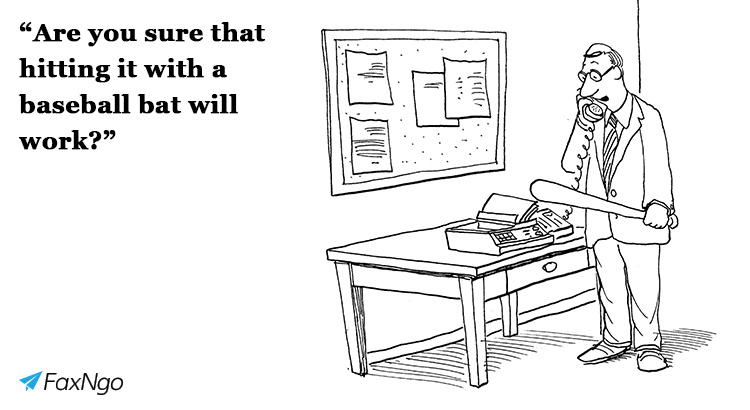
Last year we celebrated 50 years since Xerox first commercialized the fax machine. People marveled at the fact that sending a one-page letter took them only six minutes, as opposed to the few days it took traditional mail to be delivered. By the late 1990s the fax was part of daily office frustrations and bashing a fax machine with a baseball bat became many professionals’ secret fantasy.

Today, people remember the fax machine somewhat amusingly and not without a touch of nostalgia, while kids wonder what to do with this weird button-filled contraption. Recently, the Smithsonian added two fax machines as historical artifacts to its collection. Then why are there still 46.3 million active fax machines in the world, of which 17 million reside in the US? Who are the people who still send 17 billion faxes each year? Unlike many other technologies, faxing seems to be the Chuck Norris of communications. It keeps on surviving and sometimes comes back stronger in the form of online faxing.

Are You Sure That Hitting it With a Baseball Bat Will Work?The fax machine has evolved into a multifunction machine that’s now connected to the computer network and can send a page in as fast as 1.7 seconds. Still, with email, Google Docs, digital signatures and many more fast and convenient ways of communication, most of us haven’t sent a fax in decades. But to dunk the old office fax in the dumpster or not to consider faxing as a necessary communication option for your new business might be a rash decision.

There are still a few advantages of fax machines over its digital substitutes. These advantages mean the fax continues to be a preferred means of communication in certain industries and certain parts of the world.

Global Coverage And Acceptance

faxngoFirst of all, faxing enjoys global coverage and acceptance. You could be dealing with clients or partners overseas who have an office with 30 employees and only one computer. Still today in the US some areas might not have reliable power or internet service, but you can almost always find a working phone line.

Less drastically, directories will generally list phone and fax numbers, but not email addresses. Many companies may choose to reinforce and complete their email campaigns by sending out faxes to contacts for whom the email is unknown, has bounced, or for whom only a general address is known.

Reliability And Confirmation

Even in some countries that are at the forefront of technology, faxing remains the norm for cultural reasons. Japan seems to be one of those countries with a particular affinity for the fax machine, with 100% of its businesses and 45% of private homes owning a fax machine (2011). The Japanese are said to use fax for sending out party invitations.

They particularly appreciate its reliability. Fax delivery notifications inform the sender about success or failure of the delivery. With email, the receiver may choose not to send a read-receipt when they open the message. There’s no risk of a fax ending up in a spam folder for some obscure technical reason. This makes the fax highly traceable and assured.

As a business person, you don’t want to ignore the fact that there are still people and potential clients out there to whom the use of email and Internet does not come intuitively, depending on their location in the world, their age or their social background. Sending a fax is a physical, straightforward and intuitive procedure those people will see as familiar and simple.

Security And Legality

One of the strongest advantages of the fax over the email is that the fax is legally binding, whereas in most countries the email still doesn’t hold in court. The argument here is that no third party could reasonably intercept and/or make changes to the document between the sender and the receiver.

That also explains why the fax is still very popular in industries and organizations that specifically value privacy and security. Any kid with a computer in a basement can hack computers and email accounts these days, but tapping a phone or intercepting faxes would require skills and tools only few people have. That’s why a lot of banking and finance companies, law firms, healthcare organizations, doctors’ practices, and government institutions still rely heavily on the fax for the secure transfer of documents.

In the case of the healthcare industry, the insurance companies and doctors, it goes even a step further than a mere preference. The Health Insurance Portability and Accountability Act of 1996 stipulates that documents transmitted between doctors, labs and insurers have to be secure, making faxing the norm and often times the mandatory method there.

Prioritizing Attention

Email also tends to be the victim of its success. Every day, we’re flooded with personal emails, business emails, newsletters, sales letters and more. To keep our sanity and save our precious time, we skim through messages quickly and easily discard mails that lack priority or without immediately apparent importance. But the fax catches us off-guard. We treat faxes with higher importance since we do not have to spend a lot of time sorting it. This has led some sales and PR professionals to use fax as an effective way to stand out in an increasingly digital crowd.

Nothing Is Certain But Death And Faxes

Since email isn’t likely to overcome these advantages of faxing anytime soon, faxing is here to stay and will most likely outlive us all. So that’s it? We’re obliged to deal with annoying beeps and screaks and paper jams for the rest of our lives? Not necessarily.

The title to this article says that faxing will outlive us all. However, the fax machine in its traditional form will probably retire soon, with faxing over the internet made possible by easy-to-use applications such as FaxNgo. FaxNgo lets you receive, edit, sign and send back faxes from your phone to one or multiple recipients anywhere in the world at no extra cost. All your faxes will be stored on the cloud, safely and accessible from anywhere.

Moreover, FaxNgo resolves the modern issue of the fax not fitting the mobile business model. The growing army of small businesses that don’t have an office or aren’t tied to a particular location find great use in such online fax services as they bridge the previously existing gap between them and the aforementioned businesses that still value the fax for all its advantages.

Why are you still faxing? Have you switched to online faxing yet? Share your stories and experiences in the comments below.

11

12 Aug 21:29

Sales 101: How To Communicate With Confidence

by Brooke Ballard

It’s no secret here at B Squared Media we Think Conversation, Not Campaign™, but we also have to communicate with confidence when selling our tagline, services and ourselves.

Sure, things like body language and speaking with enthusiasm help, but how do you constantly deliver your messages with gumption?

We’ve got an easy-breezy five-step process for the perfect pitch or presentation.

Write it, read it, memorize it and WATCH IT WORK!

communicate-with-confidence

Communicate With Confidence: The 5-Step Process

Nearly two years ago to the day, I admitted to something BIG here on the B Squared Blog. My pitch sucked!

No one really taught me how to pitch, much less gave me a step-by-step process for developing a way to communicate my business (with confidence!).

1. Describe

Describe the types of products you sell or the services you offer. Be brief.

In fact, try to sum up your products and/or services in around two sentences.

For example, I would say something like:

  • Businesses hire me to strategize or consult with them about their online marketing needs.
  • Companies also hire me/our team to manage their social media sites on their behalf.

That’s the meat and potatoes of what we do.

Yes, we do a lot more but there’s no need run through the laundry list with someone who’s given you a minute or two of their time.

2. Add Your Benefit Statements

Take the two sentences you created and add benefit statements to them.

Mine would look something like this:

  • Businesses hire me to strategize or consult with them about their online marketing needs. One of the best compliments I’ve been given was when a client with aggressive deadlines and no experience told me that working with me was like working with an agency at the enterprise level, and that my personalized and reliable attention is everything they hoped to get when hiring a consultant.
  • Companies also hire me/our team to manage their social media sites on their behalf. We often find that too many businesses spend large amounts of time and money on social media without the assurance of results. It’s not your job to dabble and see what works; it’s ours. Our clients love that they can spend precious time elsewhere while we figure out the most efficient strategies for performance.

Depending on how interested the person with whom I’m speaking seems, I can cut those sentences way down.

You can see quite clearly how they add value and state the most obvious benefits our services provide.

Helpful Hint: Not sure what the benefits of your products or service are? ASK! Happy clients are always more than willing to share … at least that’s what we’ve found.

3. BE H-E-L-P-F-U-L

Because it’s about THEM, not YOU.

Create one sentence that sums up how your company/products/services help people.

Again, be brief. Try to use ten words or less.

Mine might look something like this:

  • We believe that when you communicate with customers, the quality of those communications is paramount.
  • Our mantra: Think Conversation, Not Campaign™. (The really brief version — 6 words!)

Obviously you can’t lead in with this statement. It’s only clear once you’ve described your products or services and added the benefits.

4. Qualify

Now you’re entering the part where your companion is either interested or not. You’ll be able to tell by body language and their enthusiasm.

If they’re still interested you can move to qualification — AND, you can communicate with confidence when it comes to the kind of client you’re interested in working with.

Give an example of an AWESOME SAUCE referral. And be specific (use context clues from your conversation!).

My example:

  • Business owners who are finding Facebook irrelevant, hard, or not seeing a return on investment are a perfect fit for our social media management program.

Then give an example of a referral that wouldn’t benefit you; my example:

  • We work with small startups all the way up to billion-dollar brands! We’d love to help everyone, but ideally our clients have a healthy monthly budget somewhere in the neighborhood of $500.

Now you’ve set boundaries (with confidence!). The person you’re presenting or pitching to knows:

  1. If they’re interested
  2. If they’re a qualified lead
  3. If they know of others who may possibly be interested in your business

5. Miscellaneous & Follow-Up

By now the conversation is flowing back and forth and you probably have a good idea of the interest level of the person you’re speaking to.

If all signs point to “KEEP TALKING!” you should take this time to ask questions that will help you custom tailor the end of your pitch.

Ask about (pertaining to your industry/business) their:

  • Likes
  • Dislikes
  • Interests
  • Responsibilities

From here you can really get a feel for follow-up … meaning you need to make a plan for what’s next!

Send a follow-up thank you, ask for a phone date or meeting, jump on a Skype session and demo your product.

From Mind To Matter-Of-Fact

Use this 5-step process to create as many mini pitches as you can.

Read them aloud. Memorize them. Improvise them.

Then? PUT THEM TO WORK!

Communicating with confidence is easy once you’ve given your plan a little insight.

How do you communicate with confidence when touting your business or brand? I’d love to know! Leave me a little love note in the comments section below.

See you in the social sphere!

12 Aug 21:29

Forget your Follower Numbers, It’s Time to Focus on Engagement

by Peter Friedman

These days, consumers are mostly using social media to express themselves and share content that is a direct reflection of their lives at the specific moment. Social platforms are now the tools for making and connecting with friends and a source for getting attention. All of this is accomplished through dialogue and relationships with each other and the brand.

That is to say, social media is now an engagement venue and can deliver amazing benefits to brands if they approach it that way—by fostering engagement among customers and with the brand. If you’re engaging people and they are paying attention to you, that’s a basic form of brand awareness and education. If they share your posts, that’s word of mouth marketing, and in some cases serves as an endorsement. If they comment and tell stories, they are contributing, which is a form of commitment that develops loyalty, advocacy and sales.

This activity, especially the comments, can become valuable sources for insight.

Forget your Follower Numbers focus on engagment

The difference between ‘Like’ and ‘Love’

Large fan numbers alone rarely contribute to a tangible impact on your bottom line.  It’s more of an industry vanity metric. Sometimes, if tied to a promotion, you get results, such as sampling, or short-term sales; but it really just isn’t sustainable over time. In fact, large follower numbers can often lead to a drop in a fan’s perceived value of a brand.

For example, a beverage company offered free samples of their new healthy juice drink to people who “liked” their page. Due to an overwhelming response, they ran out of samples. However, many of those who responded would “like” the page only to get a sample, not for the purpose of engaging with the brand or receiving information about the brand. The cost of the program was worthwhile from a sampling perspective, but the accumulated fans had little value in terms of sustainable engagement because they didn’t “like” the page for the right purpose, nor did the brand follow up with any kind of conversational engagement that might otherwise have built loyalty.

large follower numbers can often lead to a drop in a fan’s perceived value of a brand.

Just building up fan numbers doesn’t create engagement or sustain it. You have to create conversations that are of interest to your customers and empower them to do so as well. For several years brands were primarily focused on amassing fans, but after having built up a certain number, they didn’t necessarily know what to do with them. Customers may “like” or “follow” a brand’s page, but that doesn’t mean they will engage with you. This is partly due to the social nature of the media form.

The value of a ‘Like’

95% of Facebook brand “likes” never return to the brand page, so they only see your content if it shows up in their newsfeed. This happens when you post really good social content on your page, or if you pay for ads that send content to a customer’s page. But even then a customer isn’t necessarily paying attention to that ad. It has to be socially engaging whether it’s done through organic (on your page) or paid (advertising) approaches. Data shows that either organic or paid, the more socially engaging the post the more reach it has and the more attention customers pay to it. This is partly due to the inherantly social nature of humans and partly due to the algorithms the social networks use to control what gets through to users.

Of course you want to have fans so you can engage with them, so building that number up is useful in this context. However the real business goal is engagement. Engagement impacts business, not fan numbers. As such, a smaller number of fans with more engagement are more valuable than a large number of fans with small engagement. As an example: 5,000,000 fans with 1/4% engagement = 12,500 people engaged. 500,000 fans with 5% engagement = 25,000 people engaged. In the latter case, by investing less in fan growth and more in engaging them, the overall cost is lower yet with better results.

The post Forget your Follower Numbers, It’s Time to Focus on Engagement appeared first on Social Media Explorer.

12 Aug 21:29

The 3-Step Formula For Overcoming Sales Objections

by Michaela Cheevers

Learning how to overcome objection is a skill that we all, as human beings, must practice every day. No matter your profession, there will be others who object to your proposals, statements, decisions, etc. From an early age, we must learn ways to back up our own ideas and defeat objection in order to move forward. Whether you are a teenager asking to borrow your parents minivan for the night or a salesperson going in for the close, there is a formula that can be applied to overcome any kind of objection that you are faced with. Without further ado, here is the 3-step objection handling formula explained.

Step 1: Acknowledge

The first step to managing direct objection is to face the opposition head on. Don’t skirt around the issue, as it has now become your first obstacle to getting what you want and cannot be ignored. By ignoring an objection, you fail to reassure the opposing party that their concern is a non-issue and run the risk of coming up against further obstacles down the line. Address the objection and empathize with your prospect. By responding in a way that acknowledges your prospects concerns, you prove that you are actively listening and can provide a solution. You also earn their trust by not totally blowing off what to them, is a very important point.

Example:I understand…(insert objection here).” + Connect + Progress

Step 2: Connect

Once you have acknowledged the initial objection, assure your prospect that this is not the first time you have heard this objection and solved it. To do this, group your prospect with others who have expressed a similar concern and explain how both parties moved forward together. In doing so, you are automatically placing your prospect into a group of others who have objected at first, but then have found a solution and later retracted their objection. They will now be able to relate to and identify with your current customer group. Take a look at the example below of the response for a prospect objecting due to budgetary issues. Explain to your prospect how others in a similar position were able to proceed when they realized the value of your solution.

Example: “I understand…” + “…some of our current clients didn’t initially have dollars in their budget either, but once they realized the extent of our capabilities and comprehensive value, they were able to justify reallocating some overlapping budgetary dollars.” + Progress

Step 3: Progress

Finally, be sure to continue the dialogue by proceeding with another question. An objection should never be the end of a conversation, but rather a statement that provides direction for moving forward. The more your prospect voices their concerns and objects to what you have to say, the more opportunity there is to learn what their needs are and determine if your capabilities would match up with their environment.

Example: “I understand…” + “…some of our current clients didn’t initially have dollars in their budget either, but once they realized the extent of our capabilities and comprehensive value, they were able to justify reallocating some overlapping budgetary dollars.” + “How much would you estimate that you spend performing this process now?

In closing, it is important to understand the difference between an objection that can be resolved and an objection that disqualifies an account as a potential opportunity. For those that can be overcome, objection is never the end all be all. Have you developed a similar formula when overcoming objections? Any tips or tricks that you have learned along the way to help when overcoming sales objections? We would love to hear from you in order to revise our own strategies!

12 Aug 21:27

10 Steps a Leader Can Take to Rebuild Lost Trust

by Peter Stark

Trust is one of the most important leadership competencies a leader can develop and consistently role model for their team members. It can take weeks, months, or even years for a leader to build trust. And, unfortunately, it only takes one misstep or action contrary to the leader’s or organization’s stated values to lose all the trust you worked so hard to earn.

statistic-on-trust-respect

Consider this question; Why are some leaders trusted and spoken positively about (whether they’re in the room or not) and always given the benefit of the doubt, while other leaders are not trusted, even when they should be? Recently, one executive we were coaching was talking about a peer when he stated, “Do you know how to tell when he’s lying?” When I gave him a puzzled look, he added, “His lips are moving.”

People either trust you, or they don’t, and there is very rarely any middle ground. What inspired this blog is our recent work with a highly trusted leader who, over the course of a couple months, lost the trust of almost everyone on her team. When we reviewed what behaviors and actions had eroded this trust, the following were shared by her boss and direct reports:

  1. She had a new boss who raised the bar on what was expected from her as a leader and from her department. This change impacted her level of confidence, causing her to question whether she was the right person for the job.
  2. Instead of giving the department and individual team members credit for the team’s positive results, she started to personally take credit for the successes.
  3. When there were problems, she began publicly blaming individuals on the team instead of focusing on solutions.
  4. Instead of being a proactive communicator, she began cancelling the weekly department meetings.
  5. She lied to team members about what information she did and didn’t know regarding organizational changes.
  6. She made some promises to team members that she knew could not be kept.
  7. As if this long list wasn’t enough, she was also personally going through a divorce.

Fortunately, there is good news in all of this bad news. This leader was able to articulate these examples, and she knew that she had taken actions that had created (possibly irreparable) harm to the trust that her team members had in her as a leader. Her question to me was, “Is there any hope of ever rebuilding this trust?” What a great question, and my response was a tough one. “The easiest thing for you to do is to go find another job. Then, every day, do what trustworthy leaders do.” This wasn’t the answer she was hoping to hear, and her response was, “I don’t want to leave if I don’t have to, and I’ll do whatever it takes to rebuild this team’s trust in me. What do I need to do?”

We have published several blogs on the importance of trust in leadership, and it is one of the central tenets of the Loyalty Connection covered in our white paper, 8 Proven Strategies to Workplace Excellence. If, however, you are in the same boat as our leader above and trying to rebuild trust in the workplace, here are 10 actions you can take:

Recognize that rebuilding trust is going to take a long time. Most people, when they have been burned by a leader, will not respond well when the leader states, “From this point forward, you can trust me.” To expect your employees to instantly trust you again is unreasonable, and will only continue to undermine their trust in your leadership.

Admit you screwed up. Part of re-building trust is letting go of any excuse for why you did what you did to destroy the trust. Coming to confession with your team and telling them, “I made a mistake. If I had to do this over again, I want you know I would not repeat my actions that have caused you to lose trust in me. You have my commitment moving forward that I will handle this differently, and tell you the truth each step of the way.”

Do what you say you’re going to do. To build trust, you need to do what you say you’re going to do, when you say you are going to do it, long after the feeling or desire to do it has left you. If you tell someone you’re going to do something, schedule it in your calendar so you are reminded to do it. There is no good excuse for not doing what you promise others you will do.

Tell the truth. This is so easy and obvious to say, but it is much harder to do on a daily basis. Why? The reason it’s difficult to gain points for trustworthiness by telling the truth is because the only time you gain points for telling the truth is when it costs you something to do so. When an employee comes to you and asks, “Do you have a problem with my performance?” the easy thing to say if you don’t like conflict is, “I’m good with your performance.” The hard but truthful thing to say is, “Larry, that is a great question and I’m glad you took the time to ask me. I do have several problems with your performance and I want to see if you also see these issues as a problem.” Larry may not like me or this performance discussion. Although Larry may not like me, he will now most likely trust that when he asks me a question, I will give him an honest answer. Honestly communicating bad news, and sharing a vision and path to success, is one of the fastest ways to rebuild trust.

Be vulnerable. People find it easier to trust you when you are transparent. When you have the ability to say, “I don’t know the answer,” or, “I might be wrong,” or, “I made a mistake and I am glad you covered for me,” people know that you are human. People who have a high need to defend what they did wrong instead of admitting their mistake are not trusted.

Help and support others…daily. Leaders who go out of their way to help and support others in being successful demonstrate that they are more interested in other’s success than their own. When people feel that their leader truly cares about and supports their success, they will go out of their way to ensure their leader is successful.

Listen. Listening to your boss, direct reports, peers, and customers, and then acting on their feedback, is one of the quicker and more actionable ways to rebuild trust. It communicated to people that you value their opinion and are willing to act on their advice.

Give away the credit… claim the blame. When you team is successful, give all the praise and recognition to your team. When there is a failure, step up to the plate and boldly state, “I take responsibility for ensuring this problem doesn’t happen again.”

Ask for feedback. Let people know you are aware that your actions have eroded the trust of the team, and you are working hard to rebuild it. Ask people for honest feedback on which actions you are taking are working well for the team, and what people think you could do differently to be an even stronger leader.

Hold team members equally accountable. Great leaders do not have favorites. They hold all team members equally accountable to high performance standards. When leaders do this well, there will be days when not every member of the team is happy with them and their decisions. Holding all team members equally accountable means that no employee perceives the leader as having favorites on the team. This point is easy to say but extremely hard to consistently execute on a daily basis.

Gaining back lost trust is easier said than done. It will require patience, perseverance, and most of all, time. Raise your personal leadership standards, commit to them, and do right by your team. Leadership is nonexistent without the relationships you build with your employees. Without trust, you have no followers. And without followers, there is no leader.

12 Aug 21:27

The Very First Steps For Effective Referral Selling

by Noel Ledesma

Referral selling is all about helping you acquire new customers by utilizing a crucial asset: your past and existing customers. It also attacks a serious problem faced by sales professionals: a lack of trust. It creates credence in your ability to deliver results, since the reference is coming from a confident place.

Understanding referral selling is the first step. Next, you must determine who to target.

Identify the perfect customer

Whenever I send a proposal to a prospect, I already know that this company would be a great partner. In the world of referral sales, it is crucial to have a deep understanding of your clients. This understanding will allow you to make an accurate decision as to whether or not a client is the right fit for your company. Taking on a client that doesn’t fit your mold can be as bad for you as it is for your client. Not only will this lead to potential customer dissatisfaction, but the time and effort that you are putting into this client may detract from other clients and lead to their discontent as well. Dissatisfied customers are the bane of referral sales.

Clearly understand your customer

A clear understanding of your client is crucial to providing them with exactly what they want. This not only applies while they’re your client, but before and after they’re your client. This makes them much more likely to partner with you (as well as offer referrals) because they will remember that you always went above and beyond. Here are some sample questions to ask:

  • Can you tell me more about your job?
  • What are your responsibilities?
  • What is your past experience with our type of offering?
  • Can you talk me through your website and your website goals?

Condense their answers into a bulleted format and share it with them. Explain to the prospect that this is what the situation looks like based off of the conversation. Use their answers to lead them in the right direction. Make sure they’re on board. Let them tell you that you’re a complete idiot if you didn’t listen correctly. Put the pieces of the puzzle together with your prospect.

Create a custom proposal

After the consultation with the prospect, and gaining a comprehensive understanding of their needs, you can move to the proposal stage. This is where you can impress your prospective client by providing them with what they want before you’re even been in business together.

Customize each and every proposal to each and every prospective client. At Likeable Advertising, if we’re proposing banner ads, we actually get our Creative Director to understand the prospect and create sample ads. Now you’ve already done work for the prospect, and you’ve provided them with something personalized and tangible. On top of all that, you’ve done it for free. This shows that you’re adding value to your brand regardless of if they decide to launch a campaign or not. This helps the prospect visualize your offering as well as experience what it’s like to work together, and they haven’t paid you a single dollar. Now you will stand out from the myriad companies that send cookie-cutter, one-size-fits-all proposals.

Get more tips for growing your small business with this free RingLead ebook.

12 Aug 21:26

The world's leading education theorist says that all great schools have these 8 things in common

by Chris Weller

ken robinson

Everyone remembers a great teacher they had — someone who made learning fun or challenging, someone who really cared.

Fewer people remember great schools

Sir Ken Robinson — a 30-year veteran of the education industry who has taught in classrooms, worked alongside governments, and researched educational theory worldwide — finds this troubling.

In April, Robinson released a new book called "Creative Schools: The Grassroots Revolution That's Transforming Education." It's a follow-up to his 2006 TED talk, "Do Schools Kill Creativity?," which has since become the the most-viewed talk of all-time.

In "Creative Schools," Robinson outlines eight core competencies that all great schools bestow to their students.

Parents, here are the eight traits you should keep an eye out for:

1. Curiosity

The ability to ask questions and explore how the world works.

Kids are naturally curious. Too often, schools drain them of this curiosity with ineffective education. 

"Knowing how to nurture and guide students' curiosity is the gift of all great teachers," Robinson writes. "They do that by encouraging students to investigate and inquire for themselves, by posing questions rather than only giving answers, and by challenging them to push their thinking deeper by looking further."

2. Creativity

The ability to generate new ideas and to apply them in practice.

Original thinking is critical not just for personal fulfillment, Robinson says, but for "all cultural progress." It's our creativity that has produced humanity's greatest artistic and architectural works. But it's also our creativity that has dreamed up dirty, gas-guzzling cars.

"As the challenges that face students become more complex," Robinson writes, "it's essential that schools help them all to develop their unique capacities for creative thought and action." 

3. Criticism

The ability to analyze information and ideas to form reasoned arguments and judgments.

We're living in the Information Age. That means there's more of a need than ever for young generations to stay skeptical — "to separate fact from opinion, sense from nonsense, and honesty from deception," Robinson explains.

In his view, every discipline taught in school should be infused with an appreciation for criticism. Kids should learn that not everything they're told is true, but to still respect reasons when they're valid.

4. Communication

The ability to express thoughts and feelings clearly and confidently in a range of media and forms.

Living in the modern era, kids can't escape being hyperconnected to others. All throughout their lives they'll need fluency with reading, writing, and numbers.

"We also think in sounds and images, in movements and gesture," Robinson says, "which gives rise to our capacities for music, visual arts, dance, and theater in all their variations."

Together, these tools help kids get their ideas out into the world, so that they stand a fair shot at reaching their full potential.

5. Collaboration

The ability to work constructively with others.

Diverse thoughts drive innovation. That's why hive minds and think tanks are so popular. In schools, group projects allow kids to be more social and work through disagreements. 

"They can learn to negotiate, to resolve conflicts, and to support agreed solutions," Robinson writes. 

In doing so, kids strengthen their sense of teamwork and realize where they lack certain skills, which they can later hone.

6. Compassion

The ability to empathize with others and act accordingly.

Robinson says that compassion is empathy in practice. It's the habit of thinking about other people's motivations and goals in guiding their behavior. 

Kids who cultivate compassion learn not to bully or act impulsively. Over time, they can put that restraint to use in higher education and in wider society. 

Robinson says that "in schools, as elsewhere, compassion has to be practiced, not preached."

7. Composure

The ability to connect with the inner life of feeling and develop a sense of personal harmony and balance.

Schools enjoy the unique power to shape how students feel about both the outside world and their own lives. Too often, the emphasis on standardized testing squashes kids' inner peace — replacing it with anxiety and stress.

Schools can be forces of good, Robinson says. Institutions that practice meditation and promote mindfulness are just two examples he provides. 

8. Citizenship

The ability to engage constructively with society and to participate in the processes that sustain it.

Ultimately, schools must prepare kids for the real world. That means giving them the skills to be an active participant in a democracy, attuned to the needs of others.

Citizenship, Robinson says, "is about championing the need for equal rights, the value of dissent, and the need to balance personal freedoms with the rights of others to live in peace."

Join the conversation about this story »

NOW WATCH: 'The happiest man in the world' explains what makes someone truly happy

12 Aug 21:22

Earn Respect from Buyers with These Simple Tips

by Leah Bell

To be a great sales rep, there are a handful of characteristics you need to have in your skill set. Fearless tenacity on the phone, infectious likability, and a kickass work ethic are among them.

But what about business acumen?

The ability to understand the inner workings of a business and what makes a company tick in record time is an underrated ability in a sales reps arsenal. If a sales rep can speak the language of the buyer execs and earn their respect… you can find a way to make it happen.

There are dozens of different strategies built for developing business acumen, but these simple tips are sure to push you in the right direction:

Be an entrepreneur on your own time.

Buy and sell something to make money. Warren Buffett bought and sold packs of gum from his grandfather’s grocery store at age six. Mark Cuban perfected his pitch selling garbage bags to neighbors at just twelve years old. Building this entrepreneurial spirit can begin at any age — you just have to start.

Hang with CEOs and founders.

It’s an adage for a reason: you are the company you keep. Surround yourself with CEOs and company founders to build a knowledge base set on the foundation of experience. Ask for advice. Watch their decision making. Learn through example.

Go to local networking events.

Not only are breakout sessions informative, they’re also networking hotbeds for entrepreneurs. Networking is a powerful tool, and attending events filled with people who share a passion for business will multiply your web of relationships. Meet as many people as you can. A well-connected sales rep is a valuable sales rep.

Read business books.

You’d read your textbook for a history test. Why wouldn’t you read literature on how to be a better businessperson? SalesLoft sales development reps read The Servant, How to Win Friends and Influence People, and The Challenger Sale, to develop an understanding of business from the top down.

Practice.

What competitive natured sales rep doesn’t want to play a game? There are dozens of games developed specifically to improve business acumen. Salesforce.com plays a business simulation. Zodiak® is a game of finance and strategy for business acumen training. CashFlow® teaches skills in money management and investing. Find what board games are best for business acumen and practice developing your skills.

It’s not enough to be technologically brilliant. We need senior people who understand business processes, too. –Larry Quinlan, Deloitte Chief Information Officer

Expanding the reach of sales development goes hand in hand with expanding the sales industry as a whole. More and more young CEOs are emerging to run things their way, and in order to be a sales leader, you need to think like one. Grow your knowledge base on the fundamentals of business. Keep company with passionate and driven entrepreneurs. Immerse yourself in the language of your buyer execs.

Have more tips for developing business acumen? Comment below and share how you learned to earn the respect of your buyers through keen business sense.

The post Earn Respect from Buyers with These Simple Tips appeared first on SalesLoft.

12 Aug 21:22

Digital Body Language: The Why, What and How of Customer Engagement

by Alison Murdock

DigitalBodyLanguage

Marketing and selling today should be all about the buyer – what they want, need and when you should contact them. Despite 1800+ technology rich marketing tools, B2B marketers are struggling. Deriving actionable information about buyers’ product needs, pain points, and buying intent is a complex business that requires deep expertise and sophisticated data science.

The Why

Digital body language, a concept first made famous by Steve Woods and Paul Teshima, two of the co-founders of Eloqua and now of Nudge Software, is about tapping into the signals and activities buyers are exhibiting that show what they want and when they are likely to raise their hand.

“The traditional B2B transaction has been almost entirely a sales function rooted in face-to-face interactions. Now salespeople are increasingly dependent on their marketing teams to provide insights into which prospects are showing the strongest digital buying signals. To succeed…smart businesses are adapting and realizing that the next frontier is to read and respond to the “Digital Body Language” of their prospects.

A B2B buyer is not just one person with right job title or a Fortune 500 company. It’s a buying committee made up of multiple bodies whose needs and priorities are constantly changing. If you can’t see the digital signals of that buying committee, you’ve missed your chance to get into that deal early.

The What

The art and science of translating intent data from the B2B web, connecting those to static attributes about your ideal buyer, and connecting the dots emanating from your multi-channel campaigns and systems – website visits, downloads, and email clicks — is highly complex.

John Donlon of SiriusDecisions calls it sensors:

When I talk to clients about managing their data, the conversation frequently turns to how they can get access to sensor data (they don’t always call it “sensor data,” but that’s what they’re asking for) that will give them insight into the mindsets and attitudes of their buyers and customers.

He goes on to describe the sources of sensor data available to companies:

  • “Daily data” – data from your internal marketing systems from CRM to marketing automation to social to web;
  • “Untapped internal data” – bookings data, for example, click-to-chat – essentially siloed data that exists in other parts of the company that has the potential to be instructional;
  • “Public data” – think of “inflection points” in your customers’ businesses – office moves, new hires, IPO etc. that would affect how you might speak to your customer;
  • “Private data” – those demographics or firmographics that anyone with a checkbook can purchase – technologies used, contact information, publisher data;
  • “???” – This is the greenfield opportunity to tap into the most powerful data that will tell you the most about ACTUAL buyers versus enthusiasts and lookie-loos. Intent networks contains thousand of sources from search, publishers, forums and more with whom we have direct relationships to track interaction and the digital body language of customers’ target prospects.

The How

The amount of data that is being collected every day is staggering. And understandably a daunting proposition to marketers who know that it is not humanly possible to get a full picture of their customers’ digital body language without help.

And that’s where predictive intelligence comes in. This technology helps customers 1) interpret the digital body language of their prospects and 2) know exactly when to tap them on the shoulder.

This helps them understand engagement and how new “buyer sensors” outside their companies’ four walls represent an untapped ocean (nearly 90 billion rows per month) of insights about B2B buying intent. Couple that with buyer profile info and behavioral data from customers’ marketing systems, and they know when to tap, nudge or maybe even hug their prospects (and who likes hugs and who doesn’t). We help them:

  1. Tap into the signals – Where are their prospects browsing, what are they looking at or searching for, how often and where;
  2. Sync up signals with messages and offers – Would you send a pricing offer to a company that hardly knows you? Stop the guesswork.
  3. Engage your buyers where they are – Use cogent insights to line up your campaigns? Is it a chat, an ad, an email or a phone call?

What’s your plan for understanding the digital body language of your customers?

12 Aug 21:21

5 Things You Need to Know About Social Media So You Won’t Look Stupid in Front of the Interns

by Katie Stow

My dad can be best described as ‘old school’. He’s not the most technology-savvy individual. He has been known to once or twice ‘lose the interweb’ – by minimizing a page – and scares himself with an accidental selfie on a regular basis. However, his most memorable digital blunder happened when I had just started as an intern at g2m Solutions. I had just published my first blog post and my dad, being the proud poppa that he is, wanted to help me out.
“Sure dad, it would be great if you could share it!”

“Not a problem chuck, will do it straight away.”

What a sweetheart.

At dinner that night dad was excited to tell me about how successful his ‘sharing’ had been.

“Katie, the lads in the office loved your blog.”

“Oh really, that’s great! Did they see it on Twitter, Facebook or LinkedIn?”

“Huh? They just looked at the one I printed out and shared with them.”

g2m_blog_dumbinfrontoftheinterns

Clearly my dad has a very different definition of sharing. To me, it means spreading content to the far reaches of the web via social media platforms. To dad it means printing out copies for his mates and perhaps sticking up one on the fridge.

Clearly, we are dealing with a generational issue here. My generation grew up with social media, while my dad’s generation is confronted with an entire new world of technology that throws over everything he ever knew about communicating with people. And it’s tough; social media is a crazy, complicated forum where hundreds and thousands of people are trying to get their message across all at once. To give you an idea of the scale of this, there are over 14 million users on Facebook and 2.7 million on twitter in Australia alone.

After working on social everyday as an intern, I find navigating the whole realm of social media a piece of cake, but it can take a fair bit of time to get your head around it, particularly when you are constantly playing catch-up with new trends. But as a marketing professional, you need to always keep your fingers on the pulse and tackle social media head on – otherwise the interns will get ahead of you!

To keep you from embarrassing yourself in front of the interns and junior staff, I have collated a little cheat sheet to get you through the next social media conversation like a pro.

  1. Have a practice run

Social media can seem daunting to an outsider, so have a sneak peek by setting up your own personal social channels. Take this time to explore the platforms’ tools and features and get familiar with posting, following, communicating and sharing (as this will be what you do most frequently as a business on social media). Whilst doing this, take the time to establish what you do and don’t like on the platform – taking note particularly of the things that irritate you and that could potentially irritate your buyer persona.

  1. Spy on your competitors

Now that you are familiar with the social landscape, it is time to eye up what your fellow industry members are doing. Now would be a great time to make a list of accounts that inspire you – ones that post great content, have the right tone, or are considered ‘influencers’ in the field. While you are at it, make a note of your competitors and their social accounts, mainly to keep an eye on them, but also to make sure that none of your staff quote them in social posts!

  1. Stay alert and know your tools

You should always be checking your social notifications, but it can be a bit of an admin nightmare to scan across every platform. Fortunately, there are lots of tools to keep you in the know. Two pieces of software you should be aware of and mention in front of your interns are:

  • Hubspot: A cracking piece of software that will tend to all of your Inbound Marketing woes, helping you highlight your competitors, communicate with your fans and will even flag up a lead for you so you are ready to charm them into becoming a customer
  • Hootsuite: A platform that lets you store, stalk, chat and schedule posts from multiple accounts. It also has a handy column-like design so you can see and do everything from one screen.

With regards to sourcing content for your social media posts, one easy (and free) way to hunt down the latest industry news is to sign up for Google alerts. You can decide when you want to be emailed content that matches your request. For example, if you signed up for an alert for the tag ‘Inbound Marketing’ then Google will cleverly whip up that week’s best collection of Inbound Marketing news – perhaps with this post included!

  1. Know what to post

By now, you’ve probably noticed the different tones across different platforms. As a general rule, Facebook is extremely relaxed and chatty and a great way to connect with your leads, Twitter is to the point and news-based, and LinkedIn is a corporate playground where content needs to be industry-based and valuable to professionals.

Obviously, you need to stay true to your company’s branding, but adapting your voice slightly for each platform will make you seem socially savvy as well as help you drive up more leads.

  1. Stay trendy

When it comes to social, don’t be afraid to jump on the bandwagon. You should see social media as a giant global conversation. So, if a lot of people are talking about one issue and it is trending online, get involved! Tweet about the topic and make sure you include the trending hashtag (read more on hashtags and why you need them here) to place your copy amongst the conversation. Your audience will easily see that you are active and involved in current trends and topics and you may even capture a new lead or two.

So there you have it – five simple tricks that will help you master the next social media conversation with your know-it-all interns! If you are still unsure about how the whole social thing works, don’t worry, just have a flick through this free eBook to fully understand exactly what we are on about.

Social Media

Go forth and trend my friend!

12 Aug 21:21

Creating Effective B2B Lead Nurturing Programs

by Jessica Bowers

Why Whitepaper Downloads Alone Won’t Increase Revenue…And Other B2B Lead Nurturing Strategies To Employ Today

b2b lead nurturing strategiesOrganizations don’t live and die by whitepaper downloads. Revenue is still the ultimate success factor for organizations. Even the most successful content marketing campaign won’t matter if it doesn’t lead to new revenue, additional revenue, or recurring revenue.

If you’re like the majority of B2B marketers today, your organization struggles with producing enough high-quality custom content for your website, blogs or email marketing campaigns. Today’s consumers are more sophisticated and connected than ever before. Researching product or service solutions is increasingly done on a mobile device, often in the privacy of a prospective customer’s own home.

The Internet is now many consumers’ primary tool for discovering brands, developing preferences, and making decisions. Recent studies by Kissmetrics and InTouch have found that 96% of your first-time website visitors aren’t ready to make a purchase, but as many as 70% may eventually purchase a product or service from your company.

So you how do you connect with those potential customers who are in the beginning stages of interest and stay with them through the decision phase?

It’s all about lead nurturing.

What Lead Nurturing Is Not

A really sophisticated lead nurturing program is ultimately ineffective if your prospects don’t feel like it’s personalized for their specific needs. Every piece of content you send should feel consistent, useful, and perfectly-timed to your prospects. The most effective marketers are careful to always avoid the following:

  • Generic Email Blasts or Quarterly Newsletters
  • Cold-Calling Everyone Who Downloaded Your Content Offers Weekly
  • Sending Tip Sheets, Case Studies or Whitepapers to Your Entire Email List
  • Sharing Brochures or Presentations That Are Actually Glorified Tip Sheets

If your content doesn’t offer value to your contacts in that particular moment, it’s not nurturing your leads. According to Marketo, your lead nurturing programs should offer so much value to your prospects, they’ll be able to gain value even if they don’t ultimately buy your product or service.

Marketing And Sales Collaboration

While many businesses today are heavily focused on eliminating silos from their organization, sales and marketing collaboration is still a hot topic for many business development pros.

In order to effectively nurture leads, it’s critical that marketing and sales remain in constant communication. This is made significantly easier when sales automation technology is integrated directly with a marketing automation system that will track implicit data on lead behavior. Aligning sales and marketing can be a challenge, but allowing technology to carry most of the weight for transparent communications makes things significantly easier.

There are three primary areas that must be addressed in the service-level agreement or collaboration plan your organization ultimately chooses:

  1. A Universally-Accepted Definition of a Sales-Ready Lead, Defined by Shared Lead-Scoring Criteria
  2. Standards on Lead Communication, Cues, and Timing to Define a Sales-Ready Lead
  3. Shared Profiles of Optimal Leads Who Present the Largest Likelihood of Converting to Customers

In order to effectively develop a system where leads are nurtured into sales-ready opportunities, many organizations are choosing to establish a system where marketing and sales’ metrics are intertwined into a common revenue goal, as well as joint recognition for remarkable achievements.

Re-engaging Your Leads

“Some of [your disengaged leads] can be remedied, meaning there’s revenue potential out there in your email list that is sitting untapped.”– Corey Eridon, HubSpot

Every marketer knows the disappointment we feel when a lead’s interest fizzles. If a prospect is not opening your emails or clicking through to your website anymore, there’s a chance that he or she chose your competitor instead. There’s also a chance that his or her journey through your sales funnel has simply taken a detour and can be put back on path with the right re-engagement campaign.

What constitutes an inactive lead for one company may not hold true for another. Your chances of re-engagement can vary significantly depending on your competition, buying cycle, the “necessity” of your product, and other factors. Depending on the length of your sales cycle, 3-6 months could be a general rule of thumb for when a lead should be considered completely lost.

Here are some ideas for re-engagement campaigns that revive even the sleepiest leads:

  • Send an Exclusive Offer: Invite your lead to a special event, or give them first dibs on a limited-entry webinar. Alternatively, provide early access to a not-yet-released download of your next white paper.
  • Provide a Trial or Discount: Give your disengaged leads a chance to extend their trial of your service, or receive a discount on their first purchase.
  • Try Something New: Change the format of the content you’re sending out. Swap eBooks for infographics, and webinars for video.

The Efficacy Of Lead Nurturing

Converting marketing leads into customers isn’t a simple transaction. It’s commonly accepted that the average consumer requires seven touchpoints from you before becoming a customer. Lead nurturing allows you to effectively scale the effort required to keep in contact with a consumer, and answer questions as they research brands and make a decision between you and your competitors. In case you’re wondering if it really works, research indicates that it does:

  • Research shows that 35-50% of sales go to the vendor that responds first.
  • Lead nurturing emails generate an 8% click-through-rate (CTR) compared to general email sends, which generate just a 3% CTR.

By tailoring your content marketing and emails to the buyer’s’ journey, you’re effectively able to deliver value at the right times.

Avoid Over-Nurturing Your Leads

Unfortunately, there’s no magical frequency or pattern for lead nurturing that will allow marketers across all industries to see success. Best practices dictate that once a week is typically a healthy frequency, and the length of your lead nurturing campaigns are likely best dictated by the cost of your product. It’s often true that the higher the price, the longer your sales cycle will be.

Sellingly reports that 80% of sales happen between the 5th and 12th contact, yet only 12% of salespeople follow up with their leads more than three times:

  • 2% of sales are made on the 1st contact
  • 3% of sales are made on the 2nd contact
  • 5% of sales are made on the 3rd contact
  • 10% of sales are made on the 4th contact
  • 80% of sales are made on the 5th-12th contact

Processing Fresh Leads

Incoming lead processing campaigns are how smart marketers establish basic scoring and assign new leads to list segments. In order to establish trust and provide relevant information to your leads, you need to capture an understanding of their needs. Process and segment your incoming leads, by working with your sales department to develop a profile of your ideal customer.

Many organizations have gone beyond the basic qualifying factors to incorporate implicit data on customer behavior and lead source insights:

  • Demographics: Industry, Company Size, and Geographic Location
  • Source of Offer and Its Performance in Existing Closed Loop Analytics
  • BANT: Budget, Authority, Need and Time
  • Thoroughness of Customer Data and Profile
  • Implicit Data on Customer Engagement

By assigning a varied number of points to each of the criteria above, you can develop a score to determine how closely each contact profile aligns with your ideal buyer persona profiles.

Utilizing Implicit Data For Lead Scoring

By integrating marketing automation and CRM software, marketers can compile insight on customer behavior, which is often one of the most accurate insights into need.

Here are a few components that can benefit a more sophisticated lead scoring program:

  • Is the lead visiting your website? Which pages have they visited since becoming alead? Are they “crawling” by exploring the website, or bouncing as soon as they read a single blog article?
  • How Did They Reach Your Website? Whether a person found your website through social media or organic search, what does the first page they visited reveal about his or her sophistication level?
  • Are They Visiting “High Value” Pages? If a prospects chooses to view information on your pricing, or testimonials, it could demonstrate a sense of urgency.
  • Are Their Colleagues Coming By Too? For B2B marketers, signs that multiple team members have visited your website can reveal that you’re being considered as a source for product or service solutions.
  • Are They Opening Emails? Once you start sending prospects an initial lead nurturing campaign, their behavior can reveal troves of insight about their interest. Are they opening emails and clicking through? Are they sharing more information through progressive profiling forms?

Many enterprises are opting to create a “base score” for fresh leads that calculates how well their demographics align with the company’s buyer personas. Implicit data can add to this score. Each website they visit may be worth one point, and offers downloaded an additional two. Using a combined approach to lead scoring that encompasses both implicit and demographic factors can control for prospect interest.

Mapping Lead Nurturing To Your Sales Cycle

One of the primary benefits of having a distinct processing program in place for your incoming leads is being able to determine whether they’re truly interested in receiving further communications from your company. (At a minimum, all marketers based in the U.S. are required to comply with the Federal Trade Commission’s CAN-SPAM act, which prevent communications without the express permission of a contact.) However, you may find that adding more levels to your opt-in process ultimately improves the quality of your leads.

Ask for insight on preferences or set up a double opt-in component.  Adding this step in the process where leads are able to dictate their segment can ensure that permission is truly established, and you’ve set the groundwork for a relationship built on trust.

And that trust will ultimately lead to customer acquisition, increased revenue and ROI for your marketing efforts.

12 Aug 21:21

How To Create Smarter Sales Communication

by Miles Austin

What is the most inefficient part of the sales process? What is the area that causes the most friction on the flow of sale? While every company is different, most will narrow down their focus to one thing – Communication.

Sales commun­icatio­n done right is a results multiplier.

Click to tweet

Tellwise has created a sales tool that provides an elegant, powerful and easy to implement solution that is easy for sellers and enjoyable for buyers. It delivers on it’s goal of improving sales communication. Let me introduce you to

Tellwise Event Sponsor

When I talked with Conrad Bayer, CEO and Co-founder of Tellwise, I asked him why he created the sales tool and his answer told me what I needed to want to explore more.

“Com­munica­tion is the most inefficient part of the sales process”

Click to tweet

Tellwise improves communication throughout the entire sales process.

Note that I did not say that it improves the sales process for sales people. That is important. Tellwise improves the experience and removes friction for the seller AND the buyer. Improving the experience for both buyer and seller is an objective that I have not heard from other solutions.

When trying to explain how Tellwise is different, I explain it as a converged communication platform of email, messaging and analytics. It allows sellers to use tools like email and messaging to make their jobs easier, faster and more productive.

How is this accomplished? Not only does it create a more effective communication process, it tracks and prioritizes prospects, provides integrated real-time communication while analyzing and helping to improve message effectiveness at the same time through what they call Smart Messages.

Smart Messages provide:

  • The reach of email
  • The speed & presence of instant messaging
  • The audience control of social media and
  • The analytics of Google Analytics

This is all done without any apps, even on mobile devices. Email is no longer static. You can now do instant messaging, slide-sharing and learn what is being well-received by your prospect and what is not as effective and engaging. This ensures that your prospects and customer experience zero friction. The buyer experience is very smooth and enjoyable.

Tellwise is also very connectable to other sales and social tools. This allows you to start your campaign directly in Salesforce, Insideview, LinkedIn and many others in addition to working directly in Tellwise. You can send campaign information directly to a spreadsheet if that is helpful.

Tellwise is bringing marketing-automation like capabilities to you as a sales rep. It honestly has the potential to bring a whole new level of productivity to your sales efforts.

It works on desktop, laptops, tablets and smartphones so it can be used anywhere you need to interact.

Imagine what is possible if you now have cross-company and prospect collaboration from any device at any time. If you want an app for your iPhone, there is one. If you’d rather work directly in your browser that is fine as well.

I’ve arranged for a special opportunity for my subscribers and readers to explore Tellwise without risk or cost. They will also provide a 30 minute personalized coaching session with each new Fill the Funnel reader that uses this link. Click and be exposed to the newest way to improve your communication in all aspects of your business. This is one that you really should not overlook or delay. Progressive sales teams like those at F5 Networks, Microsoft, Premera Blue Cross and many others are already getting results with Tellwise. Don’t be left out.

Now that I have been using Tellwise for some time, I can tell you that it is the real deal. It really is a game-changer for the sales profession. Give it a try – I recommend it whole-heartedly.

Original article: How To Create Smarter Sales Communication

©2015 Fill the Funnel. All Rights Reserved.

The post How To Create Smarter Sales Communication appeared first on Fill the Funnel.

        
12 Aug 21:21

Gaining The Attention Of Buyers In A Hyper-Connected World

by Tony Zambito

attention

As we have all experienced, our hyper-connected world is becoming more chaotic with more mediums vying for our attention. Advanced digital technologies have meant more channels to hear, see, and search for information. For many consumers as well as business buyers, the overwhelming availability of choices can create anxiety-laden confusion. Causing a seemingly straightforward effort to turn into an exercise fraught with indecision.

When we strip away the layers and boil down to the kernel, what most businesses are vying for is the attention of buyers. Attention is, nowadays, a very precious jewel organizations strive to possess. Gaining the attention of buyers has become so competitive; we see many organizations devote more resources to getting it.

For instance, we continue to see spending in content marketing rise despite a very high effectiveness failure rate. Surveys by Content Marketing Institute, Forrester, eMarketer, and others have shown B2B marketers continue to struggle, in the past four years, to break through the forty percent mark in terms of being effective or very effective with content marketing. What this basically implies is much of the content being produced is not gaining the attention of buyers today!

Attention Is The Essential Piece Of The Puzzle

As channels have grown, the ability to gain the attention of buyers is proving to be even more difficult. Getting “eyeballs” on an organization and its offering has become far more complicated than the straight TV or Print Ad buys of yesteryear. Consequently, the Cost Of Attention continues to rise. It is also indicative of the recognition that without the critical component of attention, no amount of content, advertising, marketing, and engagement will have an impact.

What can easily trip up companies is they actually forget about attention. In the last few years, this is something marketers can be very prone to do. Primarily, marketing can suffer from tunnel vision on the latest trends, such as seeking engagement via content marketing. And, forget an essential piece of the puzzle such as attention.

Content Designed To Gain Attention

In order for content to be effective, it must first be able to gain the attention of buyers. Marketers today need to distinguish this first step from the generic design of content intent on immediate engagement. A hunch here is a good portion of content strategy fails because the focus is on trying to get buyers to engage without at least gaining their attention.

What this does suggest are a few things. Summed up like this:

  • A lack of understanding on whether buyers are paying attention at all
  • A lack of insight into, if buyers are paying attention, what they are paying attention to
  • Little understanding of how to gain attention on the things they care about
  • Little understanding of, once attention is gained, how to convert into engagement and purchase behavior

Attention Is Linked To Goal-Directed Behaviors

The dilemma facing many organizations today, along with their teams of CMOs and CSOs, is how to gain the attention of buyers in the first place. The path towards doing so lies in a critical understanding associated with attention. Which is, attention is highly correlated to goal-directed behaviors. This correlation has long been studied in the social sciences during the past forty to fifty years.

What this correlation signifies for marketers is people, both in consumer and B2B business buying, will pay attention to things which allows them to explore fulfilling goals and are motivated by goal-directed behaviors.

For example, one Fortune 500 company, a provider of ERP applications in the utility market space, struggled to gain the attention of buyers. Believing new advances in application features would do so but found no measurable bump. After conducting qualitative buyer persona research, what they found was changes and implications of state regulations were on the “attention” radar of senior managers. This attentive behavior was associated with goal-directed behaviors related to avoiding significant fines and penalties due to regulatory violations. The company then developed a monitoring component to their application and also began offering authority-based content on assessing the implications of state regulatory changes. Resulting in a noticeable gain “in attention” from existing and prospective customers.

What the above points to is buyers’ “attention span” or more appropriately, “attention scan”, is closely related to significant goals and goal-directed behaviors.

Gaining The Attention Of Buyers

Marketers and sellers today will need to uncover the various levels of goals and goal-directed behaviors influencing buyers in order to get on the attention radar of buyers. It is important to note that goals and goal-directed behaviors should not be confused with buyer profiling and the focus on initiatives and other related fact-based intelligence. Deep-rooted goals and goal-directed behaviors usually reside in the unarticulated mindset of buyers.

Gaining the attention of buyers requires an investment in learning what buyers pay attention to and the correlation to goal-directed behaviors. Just as important is learning how buyers pay attention. The growth in the omni-channel nature of accessibility to information today makes this an imperative.

What can companies do then to get the attention from buyers they wish for?

  • Do qualitative buyer research on what buyers are paying attention to and why
  • Uncover goals and their related goal-directed behaviors tied to attention
  • Be certain buyer personas are representative of goal-directed behaviors and correlate to attention
  • Design marketing and sales approaches to begin with what is most on the minds of buyers, in terms of gaining attention
  • Map to how buyers pay attention to what they care about

Simply put in this way: if you pay attention to what buyers pay attention to and care about, they will pay you the attention you seek.

12 Aug 21:20

Cold Calling–Chapter 19 from “Selling Fearlessly: A Master Salesman’s Secrets For the One-Call-Close Salesperson”

by Robert Terson
Actor John Wayne said, “Courage is being scared to death—but saddling up anyway.”  If you’re a one-call-close salesperson, this post is for you.  If you’re not a one-call-close salesperson, I suggest you read Sam Richter’s Take the Cold Out of Cold Calling. If you’ve ever perused sales-job ads, you’ve probably noticed many promising “leads, leads, leads—no […]
12 Aug 21:20

Why Your Sales Leads Are Falling Through the Cracks

by Al Davidson

Business owners and sales people are always preoccupied with getting more sales leads – whether it’s from online lead generation (email marketing, SEO, PPC ads, etc.) or traditional outbound lead generation tactics like cold-calling and direct mail. Your business needs a constant influx of fresh business leads in order to survive. Your company has invested lots of time and money to find those new sales leads and lay the groundwork for a future sale – sales leads are a valuable commodity.

So even though we all agree that sales leads are valuable and important, why do so many companies treat their sales leads so carelessly? At many companies, sales leads fall through the cracks – whether it’s poor organization or bad follow-up, there are many sales leads that never result in a sale, and it’s often because the sales team or the company management isn’t doing a good enough job of managing sales leads.

Here are a few key reasons why sales leads tend to fall through the cracks:

No Initial Lead Qualifying

This happens so often that it might shock you, but it’s true – often when companies get new sales leads, they don’t have any initial process in place to qualify the new leads by asking questions and finding out more about how ready the buyers are to make a purchase. Instead, they just hand the leads off to the sales team. This is a terrible mistake, because you’re not getting any real insights into these new prospective customers – you don’t know what they need, you don’t know how urgent their situation is, and you don’t have any basis for starting a real sales conversation. As a result, too many bad sales leads get mixed in with the “good” ones, your sales team gets overwhelmed by chasing bad leads, and the good opportunities get lost in the clutter.

Lack of Lead Nurturing

By the same token, many companies might have an initial lead qualifying process, and they do a decent job of separating the wheat from the chaff to sort out the good sales leads, but then they are too eager to follow up only with the “good” sales leads that are urgently ready to by. As a result, the long-term sales leads that would benefit from more extensive follow-up and relationship building get ignored – when instead they could have build a long-term pipeline by nurturing these leads for several months until they’re ready to buy. Don’t focus only on low-hanging fruit – be ready to invest in building a longer-term dialogue with sales leads.

Disorganized Sales Processes

Some companies have a disorganized sales process. We’ve all seen this in our own lives as consumers or as buyers for our businesses – have you ever gotten 4 different follow-up phone calls from 3 different sales people? Have you ever had your doctor’s office ask you the reason for your visit 3 teams, even though you were just there last week? Sometimes at sales organizations, there is bad information sharing behind the scenes, and the left hand doesn’t know what the right hand is doing. Avoid this by utilizing a good customer relationship management (CRM) system and take regular notes about the results of each customer contact.

Managing sales leads is a long-term, never-ending effort of communicating, listening, building trust and establishing credibility. If your company can change just a few simple things about the way you handle your sales leads – by putting in additional effort on the front end or back end of the process, or by re-examining how you track and share information about your sales leads – you’ll be more likely to win customers’ trust and close more sales!

12 Aug 21:20

6 Tips to Make the Leap From Outside to Inside Sales

by Rick Washington

As an outside sales rep, you know hard work and determination is what it takes to close the deal. You’ve beat the pavement. Knocked on doors. Left countless business cards and spent what would amount to several lifetimes waiting in reception areas. You’re a road warrior and nobody does it better than you.

But the times are a-changing. Inside sales is on the rise while outside sales forces are shrinking.

A recent survey from Salesforce confirmed this trend:

  • Forty percent of large tech companies plan to increase their inside sales headcount by 2016.
  • Smaller high-tech companies and startups already generate 55% of sales from inside teams.

What does that means for outside sales reps? Basically, the days of frequent flyer miles, power lunches, and living out of a suitcase are coming to an end. According to the Harvard Business Review, 46% of businesses are moving to an inside sales model.

Driving the move towards inside sales are the proven analytics of inbound marketing, marketing automation, and online lead generation. Inside sales technologies such as these are often more productive, cost-effective, and pragmatic. Inside sales reps don’t often incur travel expenses, and they can touch more leads each day since they are not spending time traveling to various physical locations. Sophisticated video conferencing software can be used as a proxy for face-to-face meetings.

We're all thinking it, so let's get it out in the open. Is there still a need for outside sales?

If you’re thinking, “Wait a minute -- a face-to-face meeting is necessary or my client may say no to a deal!” you’re probably right. Sales reps might still need to meet in person on occasion to finalize a deal. “Furthermore,” says Mike Moorman, managing principal at ZS Associates, “field sales may still be the best model for companies that hold large accounts because of complex needs and buying processes.”

But before you dust off that suitcase and start packing, Moorman suggests that companies should consider dividing sales models by market segment, stages of the customer engagement process, products/service lines, and geography in order to provide the best customer experience.

If you have to transition to inside sales and take up a cubicle, don't panic. Instead, think of the move to inside sales as an opportunity to learn and master new sales techniques. To help you along the way, here are six tips to build rapport with your coworkers and hone your inside sales skills.

1) Prepare to use new tools that take the place of traveling.

All kinds of new technologies have sprung up to enable inside sales and replace traveling. These tools include web conferencing platforms, intelligent dialers, CRM databases, social selling tools, and presentation analytics. Meetings can take place in cyberspace through communications tools such as Skype or HipChat, which allow for a more fluid conversation compared to email.

2) Think of yourself as part of a team versus a solo soldier.

Gone are the days of the seasoned road warrior who generates leads through grit and self-determination. Instead, you’ll be relying on inside sales technologies to generate qualified leads to follow up on. You’ll also be working with other parts of the organization as well as fellow inside sales reps to close larger sales in less time and drive more revenue.

3) Learn the CRM software.

It’ll make your job much easier. Yes, you’ll have to be more accountable. But it will pay off in the end, because it’ll help you stay organized with your prospects and allow company leaders to verify that their shift in strategy is working.

Because sales teams have been demanding more from their CRM software, many companies have been enhancing their systems with the cloud-based software add-ons mentioned earlier. If you haven’t heard of these types of tools yet, take note. It’s likely that some of your competitors are already using them in one way or another.

4) Practice the subtle art of building rapport with someone you haven’t met.

Today many customers would rather not have an in-person meeting. And Gartner predicts that by 2020, 85% of customer interactions will be handled without talking to humans. Sales is becoming more objective. Prospects want to buy from representatives who can quickly provide the right answers.

As far as building rapport over the phone, you might need additional training and practice. But if you combine the variety of communications tools mentioned above with your established field sales skill set, you’ll be a long-distance master rapport builder before you know it.

To ensure a great customer experience, keep in mind the issues the prospect or customer is looking to solve. This means having data on hand to quickly establish a connection, solve pain points, and close deals. 

5) Embrace the company culture.

As an outside sales rep, the world was your office. But with inside sales, you’ll have to get used to a cubicle. On the upside, embracing the company culture, interacting with colleagues, and cultivating relationships can set you up for long-term success. A company's culture is made up of more than the personalities of a group of employees; it’s an amalgamation of common lifestyles, environment, traditions, and shared goals.

6) Build an inside sales infrastructure.

Gearing up now and learning a more efficient way to sell means a smoother transition. However, your preparation should also include building an inside sales infrastructure. In other words, assemble the relevant technologies and data you'll need to do your job.

Here are a couple stats from a Bridge Group report on why this is a great idea:

  • 88% of the companies surveyed used at least one data provider for contact and account information.
  • 91% used at least one social source. 

If you're not prepping ahead of your transition, you run the risk of falling behind the competition.

For tips that can lend credibility to the products and services you pitch, be sure to check out 5 Pieces of Content Your Sales Will Love and also 7 Traits of Highly Successful Sales Professionals in the Digital Age. If you want to better understand the convergence between inbound and outbound marketing and why humans matter so much in the sales process, then download our ebook How to Create a Love Story Between Inbound and Outbound Marketing.

Get HubSpot CRM today!

12 Aug 21:17

Cold calling: The ethical bait-and-switch trick

by steli@close.io (Steli Efti)

bait and switch

Many different kinds of businesses use the bait-and-switch technique. In some industries, it’s almost become a standard practice we as consumers come to expect (e.g., a flight that’s advertised as $224 after all the fees, taxes, and surcharges costs $826).

The reason why companies keep using this technique is that it’s just damn effective.

Bait-and-switch for sales reps and SDRs

But we’re not interested in how airlines or telecommunication conglomerates nudge their profits up a couple of percentage points. The question we’re concerned with is this: how can you as an individual sales person use the bait-and-switch technique to open more sales conversations with prospects and qualify them.

In the following paragraphs, you’ll learn how to pull the bait-and-switch technique off in an ethical way… in a way that actually provides value to the prospects that take your bait.

If you’ve ever tried to engage a cold prospect on your first call, you know how hard it is and how low the success rate is.

It’s not just a numbers game—there’s more to effective prospecting than that—but it’s also a numbers game: you need to dial a lot of numbers before you get to have a productive conversation with a prospect.

People, especially decision-makers, are very protective of their time and very quickly get their defenses up when they think you are trying to sell them something.

What makes the bait-and-switch technique so effective?

The bait-and-switch technique helps to overcome two of the most common challenges sales people struggle with:

  1. Get the attention of prospective customers
  2. Lower the prospective customers’ guard and make it easy to get them engaged in a productive conversation

Now that we know the bait-and-switch technique can be highly effective, can we find a way to employ it in a way that doesn't make us—or our customers—feel icky?

Isn’t the bait-and-switch just for scammers?

Unfortunately, many people have taken this technique too far. They use the bait-and-switch technique to cheat, mislead, and defraud their customers.

That’s not what I advocate. Everything I share on this blog is based on the assumption that what you’re selling provides true value to your customers and that you have your customers’ best interests at heart—not just your own economic gain.

Founders and sales people sometimes object: “I don’t want to resort to tricks to get customers.”

I don’t want to get too far into semantics here, but don’t think of this as an underhanded maneuver designed to deceive. Instead, think of it as a skillfully-executed technique designed to create meaningful conversations.

trick

Many upstanding and ethical companies, including some highly prominent startups, use the bait-and-switch technique to boost their revenues and compete in saturated markets.

Let’s look at mistakes to avoid and best practices to employ when implementing the bait-and-switch technique.

How not to do the bait-and-switch

Even if you try to do an ethical bait-and-switch with your prospect’s best interest in mind, if you don’t do it skillfully, it won’t work.

Bad example #1: Survey prospects to gather intel (and then sneakily use it against them).

I know of one sales team that would cold call prospective customers and ask them to participate in a survey. The questions were designed to get insights into the prospect’s challenges, wants, and needs. At the end of the call, they’d just say thank you and end the call. No pitch.

The following day, someone else from the sales team would call the same prospect. They would have all the intel the other person had gathered the previous day and use that information to pitch the product to the prospect—without disclosing that they possessed this data or belonged to the same company.

Apart from the dishonesty, it was also a very ineffective approach that sometimes backfired. In some cases, prospects would get suspicious about the coincidence, and in others, they weren’t receptive to listening to the caller in the first place.

The mistake: After having gained trust by getting the prospect to participate in a survey, the sales team abused that trust instead of leveraging it with a more forthright approach.

Bad example #2: Offering an attractive deal

Another sales team offered an attractive and exclusive deal to local businesses. They offered them a way to advertise to the customer base of a local bank, which was a very compelling value proposition for many of the prospects.

Once the prospect expressed interest, the sales person launched into a 5-minute presentation that pitched their offer…completely failing to mention the attractive deal they used to initially get the prospect interested. The prospect disengaged.

The mistake made: The sales team established expectations which they didn’t fulfill. They didn’t bridge the gap between the bait and the switch, which created a strong disconnect and ultimately led to the prospects feeling deceived and becoming disengaged.

How to do the bait-and-switch effectively and ethically

The most important thing is that your bait needs to provide an actual value to your prospects. Even if they never buy from you, your prospects should benefit just from taking the bait.

Once you have your valuable bait, follow these three steps to using the bait-and-switch technique effectively:

  1. Throw your bait.
  2. Once you get the prospect’s attention, and they lower their guard and open up to you… let them have the bait, let them enjoy it.
  3. Transition to your pitch by asking for permission to deliver it, and explicitly make this an optional offer. Don’t force-feed them or try to shove it down their throat just because they’ve taken your bait. Make them understand why it’s in their own interest to listen to your pitch. But if they think otherwise, accept their wish, and don’t pitch your offer.

All of this requires your genuine engagement and care. Sales people like to fret about disengaged prospects who show no interest, but how many of these sales people are truly engaged and interested themselves?

All too often, they deliver their sales pitches without attention and care, mechanically going through the motions. Your prospects won’t give you their attention if you don’t earn it. It’s a two-way street.

Good cold call bait-and-switch example: The survey

A common bait-and-switch technique for sales calls is to ask your prospect if they would like to participate in an industry survey.

Throw your bait

Tell your prospect you’re doing market research in their industry and will release a white paper that will be made available to all participants free of charge.

throwoutbait

“This white paper will contain valuable industry insights and showcase best practices that are working right now for businesses like yours, challenges other companies in your industry are facing, and how they are adjusting to the changing realities of the marketplace.”

(If you want an example of how to deliver this pitch, jump forward to 8:22 seconds into the video)

Qualify

Once you’ve got your prospect’s consent and they’ve answered your questions… ask follow up questions to better understand them and learn more about what their answers really mean. Don’t stay on the surface level—dig deeper so that there’s a real conversation unfolding.

During this conversation, it’s your job to figure out whether this prospect is qualified: is what you have to offer of value to them or not?

Create a really engaging conversation here, and give the other person an opportunity to express and clarify their thoughts and make them feel understood.

If the answers they give you during this survey strongly indicate they’d be a great customer for your product, don’t suddenly switch gears and start pitching. You’re not there yet. In this phase, it’s all about asking questions and understanding the prospect better.

Ask for permission to pitch

At the end of the conversation, thank them. Assuming you’ve identified a qualified prospect, ask them for permission to pitch your offer:

salespitch-1

Sales rep: “Thanks for taking the time to participate. I feel you’ve provided us with really valuable insights here. In this specific case, I’d love to reciprocate and offer something even more valuable than just a copy of the whitepaper. And it’s really your choice, so if you decide to end the conversation here, we’ll hang up, and I’ll send you the whitepaper as soon as it’s ready.”

You’re making it very clear that it’s up to them. If you had a meaningful conversation with them, most of the prospects will give you a couple more minutes at this point.

Sales rep: “We’ve worked with many businesses like yours (same industry, same size, etc.) who face some of the same challenges you mentioned (not getting enough qualified leads, dealing with competitors who undercut prices, etc.) and helped them to achieve their objective (double the number of qualified leads within 60 days, etc.).”

Use what you’ve learned about them during the survey to customize your pitch to their wants and needs.

Sales rep: “I’d be happy to spend three minutes with you to shar how this works. Let me know if you’re interested to learn more. I truly believe this could be the solution to the problems you’re facing, but it’s completely up to you. Would you like to take three more minutes to explore this together?”

Again, very few people will reject this if you’ve gotten this far in the conversation, and they will feel well-treated because you’re giving all the power to them rather than trying to coerce or manipulate them into your pitch.

Will you include the bait-and-switch in your sales process?

Whenever I share this method with founders and sales people, I typically get one of two responses: either they get very excited about it and can’t wait to try it, or they reject it as unethical.

I respect both choices, and whenever I find myself in a situation where I walk a fine line, I ask myself: will this potentially have negative consequences for the other party? How would I feel if someone tried the same technique on me?

I think we’ve all experienced someone trying to use the bait-and-switch technique in a negative, deceitful, way. Have you ever experienced it implemented in a positive way? I’d love to hear from you in the comments below!

Want to learn more about effevtive cold calling? Click below!

B2B cold calling for startups and SMBs

12 Aug 21:15

Crafting Emails to Connect With Your Buyer Personas

by Kevin Page

Crafting Emails to Connect With Your Buyer PersonasHow to create your buyer personas, analyze and segment your contact database, and target your messaging to nurture and convert contacts.One of the most powerful tools for building and sustaining customer relationships is email marketing. It’s cheap, easy-to-use, and is able to reach large quantities of people in no time at all. The problem is you’re probably doing it wrong.

All brands who elect to implement email marketing strive to craft emails that drive recipients to whatever action the brand desires. I am not saying this is a bad thing; you should always have an action-oriented goal in place with any email that is sent on behalf of a brand. However, instead of worrying so much about what you want the recipient of the email to do, think for a second, what action might your target audience want to do. It all starts with your buyer personas.

How to Create Buyer Personas

A buyer persona is a semi-fictional representation of your ideal customer based on market research and real data about your existing customers. A detailed buyer persona will help you determine where to focus your time, guide product development, and allow for alignment across the organization. As a result, you will be able to attract the most valuable visitors, leads, and customers to your business.

In order to craft emails targeted towards your buyer personas, you must first establish what those unique buyer personas look like. When creating your buyer personas, consider including customer demographics, behavior patterns, motivations, and goals. The more detailed you are, the better.

They can be created through research, surveys, and interviews of your target audience including a mix of customers, prospects, and individuals outside of your contact database that are a good fit for your products and/or services.

Tip: Leverage your sales team for information on the contacts they’re interacting with to understand more about the contacts, their FAQs, and their pain points.

Analyze and Segment Your Contact Database

You should have already analyzed your contact database to understand more about your customers and prospects when establishing your buyer personas. However, now it is important to understand the capacity to which you can segment your contact database to target your messaging based on buyer personas.

For example, imagine you are a retail store focused on clothing; one of your buyer personas may be males between the ages of 13-18 who play competitive sports and live in wealthy, suburban neighborhoods (I would encourage you to get even more detailed when creating your buyer personas, however for this example’s purpose, this will have to do). Now imagine we want to target this buyer persona via email to download a coupon for an upcoming sale. Here are some of the questions you need to ask yourself:

  • Can I segment based on gender?
  • Can I segment based on age?
  • Can I segment based on involvement in competitive sports?
  • Can I segment based on postal codes of specific geographical areas?

Next, understand which characteristics your contact database will allow you to segment. If you lack data on sports involvement, you will be unable to segment based on that characteristic. Make sense?

Tip: If you are lacking data for a characteristic that would be beneficial towards segmentation for marketing purposes, add new fields to your web forms that will capture important persona information. If you want to segment based on job title for example, be sure to add “Job Title” as a field on your web forms.

Target Your Messaging

After segmenting distribution lists for email communications to specific buyer personas, you need to figure out what to say. More importantly, you need to figure out what the recipients want to hear based on their situation.

Here are some tips for crafting a specific email to connect with your buyer persona:

  • Leverage the pain points identified through research, surveys, interviews, and feedback from the sales team. More specifically, what problems of theirs can your products and/or services solve?
  • Speak their language. Structure your sentences like your audience would; speak to them on their level.
  • Provide them with a beneficial offer from their perspective. Instead of creating an offer based on the goals of your business, step into their shoes and determine an offer that they would find advantageous.
  • Implement content personalization if possible. People love to feel like brands are reaching out to them personally; try including the contact’s first name in the subject line and their company name somewhere in the body to see the impact of personalization.

Take these tips into consideration when crafting your email messaging and always be sure to measure and analyze the results. Remember, your messaging can ALWAYS be improved.

Now it’s time to go get ‘em! Good luck!

12 Aug 21:15

Sword in the Haystack: 3 Tips for Navigating Local Search

by Steven Miller

optimized for local search listings

Local search is a concept we’re all familiar with, whether we realize it or not: You’re somewhere, you need something, and you look to find the nearest whatever it is – be it sushi, ski lift, or Shih Tzu trainer. And, thanks to the magic of the Internet, you’re presented with a list of options. Simple enough, right?

Not exactly. Whoever ends up in #1 position in Google’s search results isn’t there by accident. The rules behind the system are complex, consistently changing, and in a permanent state of flux. In the last year and a half, Google has released a notable algorithm update every month. It’s difficult for a search industry expert to stay up to date, let alone the average business owner.

The best example I’ve ever come across with regard to local search is the tried-and-true “needle in a haystack” cliché. With the Internet being so vast and offering so many different search experiences online, getting your business to appear in these search results can seem impossible to control. But if you keep consistent business information in a few key areas, you can surprisingly influence how often you’re presented for customers out in the real world. Your digital footprint appears larger and larger and soon enough, that needle starts to look more like a sword.

A little over a year ago, we were approached by a Fortune 500 company whose local search results were in need of some help. The numbers were staggering: Hundreds of locations nationwide, each with different hours of operation, business contact information, and services offered. To complicate matters even further, this particular organization had grown via numerous acquisitions into a corporation known by dozens of different names. Their problem wasn’t one of sales, but rather that current customers couldn’t find the right information when explicitly looking for it. If your customers are struggling to find you in their time of need, that can be extremely problematic.

For the small business owner, managing your online presence is entirely possible, as long as you adhere to a few basic tenets (some of which I covered last summer). But when you’re looking at a corporate presence on a national scale, it’s not so simple. A number of experts have detailed how to approach this multi-faceted conundrum, but here at LaneTerralever we’ve boiled it down to a trio of simple tenets. While I can’t promise this will rocket you to the top of every local search, they will certainly help you find yourself more relevant than those pesky competitors.

Step #1: Start with the Site

In this instance case we had just launched a new corporate website for this particular client. So, our expert user experience, content, and development teams gave us a momentous running start. However, we noticed something peculiar after launch: Although our organic search traffic skyrocketed across the board for broader terms, our localized results didn’t seem to follow the same trajectory.

online local search

This was due to the affect of Google’s algorithm changes over the past few years. With the advent of mobile web traffic eclipsing that of desktop, search engines had come to value proximity just as much, if not more, than general relevancy. It wasn’t any secret either: An April 2015 article by Google indicated searches including the phrase “near me” had increased by 34 times since 2011. Being within a searcher’s vicinity was now one of the most definitive aspects of what made a local result #1 on the list.

The conundrum here was a classic: We had ourselves an organization, with a brand new website, who was larger than almost every single one of their competitors. Yet smaller companies were outranking them simply because the engines knew they were not only relevant, but close in proximity to the searcher. Our shotgun approach was being bested by a bunch of peashooters.

In a perfect world, a corporate site needs to establish the overall message of a brand. But on a local level, those pages should be as personalized as possible. Is there a special service you offer at a certain location that makes it unique? Or perhaps your hours of operation are more flexible than others? Whatever makes your local presence stand out should be featured prominently, as it shows search engines (and, more importantly, the users) a personalized approach that goes a long way in establishing authority.

Step #2: Know your Reach

The best way to think about your website with regard to local search is as a home base with countless roads leading into it. Each of those roads can be referred to as a citation. It’s nothing more than another site, wherever it may be, pointing a user toward you while presumably providing a few details about what they can expect to find there.

The problem with citations is that it’s nearly impossible to track who is linking where. Figuring out who is linking to you, much less how you establish a consistent presence on those sites, is a gargantuan undertaking. This is probably the most overwhelming – and time-consuming – aspect of local search.

That’s why we partnered with Yext to centralize all our location information – including the day-to-day management of Google My Business. Using their platform, we’re able to rapidly update on the 50 largest web directories at a fraction of the time required to submit manual changes. In the past three months alone we’ve more than doubled our client’s “digital footprint” on local directories online, helping contribute to a double-digit increase in organic traffic. Of course, now that our customers are able to find us, that leads to an entirely new undertaking…

Step #3: Learn the Currency of Reviews

With an updated digital presence, we now had customers reaching out to us nearly 10 times as often – and 3 out of 4 of them, on occasion, were submitting a complaint (particularly on Yelp). We recruited an in-house team at the client’s corporate office to begin monitoring and responding to reviews as if they were being received by customers on any other channel.

Any time a business starts engaging in open dialogue online with customers, it can be unnerving, to say the least. But an interesting thing started to happen as we addressed concerns and complaints – users started coming back to revise their reviews. What was an angry 1-star comment became a 4 or 5 star review faster than we could have expected, and the conversations taking place on our pages became overwhelmingly positive (for the Internet, at least). The process has been so successful that we’re in the process of expanding to alternative platforms as well, essentially building an entire reputation management program from the ground up. These customers have gone from frustrated and ignored, to being some of our loudest advocates online.

Like any digital marketing efforts, this didn’t happen overnight. It’s been a cultural shift in our strategy used to find our customers (both current and potential) and required buy-off from our client’s organization. As we move past the 1-year mark, we’re confident this approach is working. Slowly but surely, we’ve gotten away from being the needle in the haystack to being much more like the sword.